Category Archives: Love

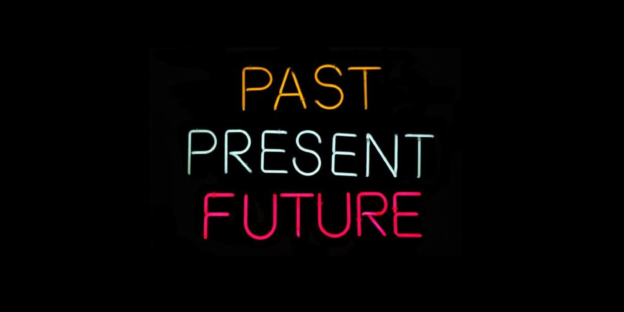
263. Past, Present & Future – Verb Tenses

LEP is back! You might be wondering where I’ve been, or what’s going on at LEP headquarters. In this episode I’m going to explain my absence, fill you in on what’s going on at the moment, and also talk a bit about what’s coming up in the future. [RIGHT-CLICK TO DOWNLOAD]
Small Donate ButtonLanguage Focus
As I talk during this episode I’m going to use a range of different language (some tenses and vocabulary) that relates to the past, the present and the future. See if you can notice the different language I use. What are the different ways that I refer to the past, present and future? I’m trying not to plan this language too much, I’m just going to see what expressions and phrases come out of my mouth naturally. At the end of the episode I’ll review that language so that you can pick it up and start using it yourselves, broadening your English in the process. So, not only am I giving you some news, we’re also doing some language study. You could say that we’re killing two birds with one stone (and not for the first time on LEP).

Here’s the plan for this episode
– Explain why I disappeared for about a month (The past)
– Talk about what’s going on at the moment (The present)
– Mention a few plans, intentions and upcoming events (The future)
– Present and review some grammar & vocabulary

Listen to Everything!
Please listen to the full episode to get the complete experience – remember, this is a podcast and not a blog. It’s all about listening!

Where have you been Luke? (The Past)
– I’ve been super-busy and I haven’t had a chance to get into the sky pod to record anything for a month. I’ve had to focus on other things. It’s been a busy and important time.
– First of all, I got sick with flu. That knocked me off my feet for quite a few days. I lost my voice etc. The #1 priority was to get better and rest! So, everything stopped.
– I had to take time off work – and all those cancelled classes had to be replaced. So, I worked way more than normal. No free time! Also, when I wasn’t working I was knackered and needed to rest!
– I got over the flu, but the cold came back. I’ve still got it now. :(
– By the way – I’m not complaining! I promise! I’m just explaining why I disappeared and I’m being transparent. I think if you understand my situation more clearly it can help you understand my service better.
– Also – I got married! (part 1 – explain a little bit)
So, that’s why I haven’t done a podcast for a while! Sometimes, life is just completely full. Remember, it takes a few hours in total to prepare, record, upload and distribute episodes of LEP. That time is rather precious.

What’s going on at the moment? (The Present)
– I’m still getting over the flu
– I’m doing exams this week (which means that I’m going to have tons of marking to do).
– I’m dealing with the other courses I’m teaching.
– I’m enjoying the extra hours of daylight and sunshine that we’re having.
– I’m enjoying married life very much (although it’s not that different to normal life to be honest)
– My online teaching colleague Gabby Wallace (of Go Natural English) is running a Kickstarter campaign to fund a book she’d like to write. Click here to contribute to the Kickstarter campaign. When she gets enough money she’ll publish the book. It looks good, and this is something I have been intending to do for ages. If it works for her, there’s a good chance I’ll be doing it too! This is a new (and very cool) model of publishing learning-English materials and for it to work we need everyone’s support – from teachers, but also from you the learners too.

Don’t forget, that Audible offer still stands. If you go to audibletrial.com/teacherluke you can sign up to a free 30 day free trial which includes a free download of any audiobook of your choice, and they have over 150,000 titles to choose from. So, check out audibletrial.com/teacherluke or just click one of the audible buttons on my website. You can find all the details and frequently asked questions about this audiobook offer on my website.

What’s coming up over the next few weeks and months? (The Future)
– Wedding part 2 (the big one) is planned for July and that’s fast approaching! So the madness is going to start up again soon. We’ve got loads of things that still need to be done. There are quite a lot of of loose ends that need to be tied up. Ultimately, we’re both just really looking forward to being able to celebrate with our friends and family, and we are keeping our fingers crossed for good weather.
– I’m going to have loads of marking to do, which means I might not have much time in the next few weeks either.
– The end of the university term is in sight, and then I’ll have a bit more breathing space. The thing is, my working plans are still undecided. I’m not completely sure how much I will be working. Will I give up one of my jobs to allow me to focus on online projects? Which one? Will I be able to get by? I’m not sure, but let’s see.
– By the way, I realise that sometimes these podcast episodes are a bit self-centred and I don’t really like that. But sometimes it’s just necessary to explain what’s going on in my life as a way of contextualising the service, so you know exactly what you’re getting.
– The spring holidays are just around the corner. The university will be closed for a couple of weeks. So, I’ve got some time off coming up but I’ll be focusing on marking.
– Preparations for my stag do are underway. The plan is to stay in a house in the countryside, do some outdoor activities and adventure stuff, and no-doubt spend a good deal of time in the pub. My brother is in charge. I’ll just have to wait and see what’s in store for me.
– I’m seeing Kings of Convenience with my wife in May. I can’t believe I’m finally seeing them. They’re probably my (our) favourite group and they don’t tour much.
– I’ve got a few gigs in the diary. I’d like to work on new material. We will have to see about that. The Paris stand-up scene in English is developing more and more all the time. One of these days I will fulfil my dream of having my own one man show, but that requires time for marketing and publicising. I’d love to do two things: Develop a strong one hour show of written material, and regularly record podcast episodes live in front of an audience (interviews, improvised stuff and so on).
– After all this work I’m hoping to devote more time to LEP and LEP related projects – not just doing new episodes but producing other content with a view to giving you opportunities to improve your English in other ways – cool ways that will be beneficial to both you and me.
– Summer is well on its way. In fact, we’re having a little taste of it here and it’s about time!
– A bunch of new Star Wars movies are in the pipeline. In fact, the first one is due this December. I’m trying not to get too drawn into the hype.
– The next big Marvel movie is about to be released, and that will be followed by loads of others. If you thought you’d already seen enough superhero movies, well you ain’t seen nothing yet!
– The UK general election is nearly upon us.
– The EU referendum is on the horizon.

Language Review – Structures and Vocabulary for Talking About The Past, Present & Future
Did you notice the language I used? Let’s re-cap. This might not be everything. If you noticed other stuff then add it in the comments section. Also, try repeating these lines after me, and try using them when you speak English too. That’s the best way to actually add these phrases to your active vocabulary. If you don’t use it, you lose it.

The Past
Present perfect and present perfect continuous – these are both used to refer to actions in a time period that starts in the past and ends now. It’s used to explain recent news. The actions may be finished, but the time period is connected to now because it’s from the recent past until now. We use this tense for ‘catching up on someone’s news’. We often use present perfect with time expressions like ‘for ages’ and ‘for a while’, especially in the negative form.
“I haven’t seen you for ages!”
“How have you been?”
“I’ve been meaning to call you for a while now”
“What have you been up to?”
“What have you been doing?”
“I’ve been super-busy and I haven’t had a chance to get into the skypod to record anything for a month. I’ve had to focus on other things. It’s been a really busy time.”

Past simple tense for actions in a sequence.
These are finished actions that are not connected to now. It’s a sequence of events. It’s not connected to now. The whole sequence is finished. Finished actions – finished time.
“- First of all, I got sick with flu. That knocked me off my feet for quite a few days. I lost my voice etc. The #1 priority was to get better and rest! So, everything stopped.
– I had to take time off work – and all those cancelled classes had to be replaced. So, I worked way more than normal. No free time! Also, when I wasn’t working I was knackered and needed to rest!
– I got over the flu, but the cold came back. I’ve still got it now.”

The Present
Present continuous – be + -ing
This is the most common way to talk about temporary actions and situations right now.
– I’m still getting over the flu
– I’m doing exams this week (which means that I’m going to have tons of marking to do)
– I’m dealing with the other courses I’m teaching
– I’m enjoying the extra hours of daylight and sunshine that we’re having

Obviously, we have present simple for permanent facts and situations too. No need to go into that.

Other language:
Preparations for my stag do are underway.

The Future
In terms of tenses, there’s:
‘will’  (predictions, promises, facts, judgements about the future)
“I’ll have a bit more breathing space.”
‘going to’ (intentions, plans, things you’ve decided to do, predictions based on evidence)
‘present continuous’ (also plans, future plans which are fixed)
“I’m seeing Kings of Convenience with my wife in May”
Modal verbs for different levels of certainty about the future:
“I might not have much time in the next few weeks either”
Future continuous ‘will + be + -ing’ (a bit like ‘going to’ for fixed plans)
“I’ll be focusing on marking”

Other language for talking about the future:
it’s planned
it’s fast approaching
we’ve got things which need to be done
there are lots of loose ends that need to be tied up
we’re both just really looking forward to being able to celebrate with our friends and family
we are keeping our fingers crossed for good weather
The end of the university term is in sight
let’s see
The spring holidays are just around the corner
I’ve got some time off coming up
The plan is to stay in a house in the countryside
I’ll just have to wait and see what’s in store for me
I’ve got a few gigs in the diary
We will have to see about that
One of these days I will fulfil my dream of having my own one man show
I’m hoping to devote more time to LEP
Summer is well on its way
A bunch of new Star Wars movies are in the pipeline. In fact, the first one is due this December
The next big Marvel movie is about to be released
you ain’t seen nothing yet
The UK general election is nearly upon us.
The EU referendum is on the horizon.

Song – You Ain’t Seen Nothing Yet by Bachman Turner Overdrive

Click here for the lyrics

pastpresentfuturepic

Please leave your comments, thoughts and questions below!

11. Men vs Women (Conversation & Vocabulary)

This episode is all about men & women. Are they different? Do they communicate differently? It is inspired by a book called “Men are from Mars, Women are from Venus”, which is a very popular and successful guide to help men and women understand each other. I talk to 2 male friends, and then 2 female friends. There is lots of useful natural English for you to study, remember and copy – and become a more advanced speaker of English! I hope you enjoy the podcast…

Small Donate ButtonRight-Click here to download this episode.

This podcast is all about Men & Women. Are they different? Do they communicate differently? It is inspired by a book called “Men are from Mars, Women are from Venus”, which is a very popular and successful guide to help men and women understand each other. In the podcast today I talk to 2 male friends, and then 2 female friends. There is lots of useful natural English for you to study, remember and copy – and become a more advanced speaker of English! I hope you enjoy the podcast…

Here’s the extract from Men are from Mars, Women are from Venus which is about Martians (Men):

“Martians value power, competency, efficiency and achievement. They fantasize about powerful cars, faster computers, gadgets and new, more powerful technology. They are concerned with outdoor activities like hunting, fishing and racing cars, and are more interested in objects and things than in people and feelings. Martians pride themselves on doing things all by themselves since asking for help when you can do things yourself is perceived as a sign of weakness. So, they will keep their problems to themselves unless they require help from another person to find a solution. When they get upset they prefer not to burden their friends with what is bothering them, and instead retreat into their caves to mull over their problems. If they can’t find a solution, they do something to relax and disengage their mind; or they engage in something more challenging like racing a car, competing in a contest or climbing a mountain.”

And here is the extract about Venusians (Women):

“Venusians value love, beauty and relationships. They find happiness through supporting and helping each other and their sense of identity is defined through sharing and the quality of their relationships. Rather than building highways and tall buildings, they are more interested in living together in harmony, community, and loving co-operation. Communication is very very important and sharing their feelings is much more important than achieving goals and being successful. They pride themselves on being intuitive, and considerate of the feelings of others. When Venusians feel upset, or stressed, or confused or hopeless they find relief by sharing their problems with friends and talking about their problems in detail.”

Language from the conversation with Howard & Nick:

“blokes” – a bloke is a man. It’s an informal word that British people use to say ‘man’. It’s not rude, but it is quite informal. People use this word a lot
“I had a difficult girlfriend and it helped me to deal with her” – to deal with something (e.g. a problem or a difficult person) means to ‘cope with’ it, ‘fix’ it, ‘manage’ it or learn to live with it.
“I found myself turning off and not tuning in” – to ‘turn off’ means to lose concentration and stop being interested in it, e.g. if you’re reading a boring book you might turn off… We also say ‘turn off’ for TVs, lights, radios etc. To ‘tune in’ means that you concentrate or focus on something. We also tune into a radio station on an FM radio.
“it’s a chick’s book” – a chick is a woman. It’s kind of a slang word, and some women think it is a bit rude. A chick also means a baby chicken.
“whinging, going on about stuff, moaning” – all of these words mean ‘complaining’
“just back her up…” – to back someone up means to support & agree with someone
“the bestselling book of two thousand and whatever” – ‘whatever’ is a useful word which can mean ‘I don’t know’ or ‘I don’t care’ or ‘I don’t mind’. Here, Howard used it to mean “I’m not sure which year it was, but it doesn’t matter”.

Transcript of the conversation between Luke, Shirley & Michelle:

Luke: Hello hello, 1 2 3 speak…
Shirley: Hello hello, 1 2 3
Michelle: Hello this is Michelle…
Luke: OK, I thought I needed a female perspective on this, so I’m speaking to Shirley and Michelle about the whole thing, erm, so… First of all, what do you think of the, erm, comments that Nick and Howard just made about this book?
Shirley: Well I think that’s probably the reason the book had to be written in the first place, because of comments like that, I’d say.
Luke: Right, so…
Michelle: Interesting that it was actually written by a bloke though, that’s the thing.
Luke: So it was written by a man
Michelle: It was written by a bloke, yeah. John Grey I think his name is.
Luke: Right, ok, do we know when it was released?
Shirley: Erm…
Michelle: Late 90s?
Shirley: I’m not sure actually
Luke: OK, so late nineties, alright, so, errrm, first of all then, have you read the book?
Shirley: Well, err, a friend of mine gave it to me to read, and I was reading it when I was on holiday but I got a bit bored of it quite quickly actually. Some of it’s funny, I have to say, some of it’s funny and you can really recognise
Michelle: Definitely
Shirley: err, you recognise yourself and whatever in it, but… it’s just it’s a bit repetitive at the end of the day, and I got a bit bored with it
Michelle: Yeah, I’ve only read about half of it as well and, yeah, I also got bored with it and that… well, some of it, I started to find myself quite annoyed with women to be honest. I found myself identifying more with men. I’m not sure what that says about me…
Luke: I’m not sure either!
Michelle: Does it mean I’m from Mars?
Luke: Maybe. I think that… err… One thing that I can say for sure, definitely, is that women aren’t from Venus, men aren’t from Mars. Men and women are both from Earth, right?
Michelle: I think you’re probably right…
Luke: I think they are, aren’t they?
Shirley: I think that’s a fair enough statement Luke, yeah
Luke: Basically what I’m saying is, it’s a bit silly in that sense, but, umm, do you think it’s … well you said it was kind of a bit boring in some places…
Shirley: No, I think it’s valid because, at the end of the day, men and women are different
Luke: yeah
Shirley: It’s as simple as that, and sometimes, y’know, you have miscommunications with someone
Luke: Hmmm
Shirley: Just because of the different ways that you use language, for example
Luke: Yeah, yeah
Shirley: and, err, and so I think something like this is quite valid. I mean, the guy who wrote it, as far as I’m aware, I might be wrong, is a linguist
Luke: Right…
Shirley: and he deals with gender miscommunication
Luke: Right
Shirley: So, erm, so he’s kind of like, erm, it’s got a valid base to it I think
Luke: OK. ERM, One of the things that Howard and Nick identified as being, kind of, true or useful about this book, is the idea that, err, when men are listening to women, they often don’t realise how to listen to women, and that what they do is they offer solutions when they should just be listening. Do you agree with that? Is that true?
Michelle: I think that’s a fair point in the book actually. I did identify with that. Very often if I’ve sort of, got something to complain about or just something I want to get off my chest, that’s all I literally want to do. I’m not looking for solutions, I’m just looking for somebody to listen, or at least pretend to listen
Luke: Yeah
Shirley: Howard!
Michelle: Yeah
Luke: Ha ha, so Howard, you’ve got to learn from that…
Michelle: but, definitely, from, sort of, past relationships I’ve learned that when a bloke is talking to me about problems, especially work related things, y’know, he would always want me to offer a solution, he would always say “what would you do?”, and erm, I’m not aware that I usually ask people that kind of thing in that situation
Shirley: Well I think that is, I mean, just from listening to Nick and Howard having that little discussion, Nick seems to think women can’t make decisions, and Howard just seems to think that they just whine all the time. I think we’re perfectly capable of making decisions, and just by sounding off, and telling somebody how, that something’s going on, doesn’t mean we need you to fix it. We can fix it ourselves.
Michelle: Very often it helps you to come to your own solution to…
Shirley: Yeah, exactly…
Luke: So…
Shirley: Saying that you’re weak because you can’t make a decision…
Luke: Alright, but essentially what you’re saying is that you agree, that when men listen they don’t have to offer solutions, they just need to listen
Shirley: yeah
Michelle: yeah
Luke: OK, umm, so, uhhh, one of the other things that they said, err, I think Nick said this, I might be wrong… I might have agreed with them as well actually… umm, anyway… one of the things that they said is that it seems that the book was written for women, which means that women don’t understand men, and that they said that, well, men are ok because we understand women I think, so do you agree? Who understands who?
Shirley: From the first bit I’d say yes the book is written for women, and I don’t think that a lot of men would be terribly interested in reading it, but I think that that’s not just because women need to understand men, I think women have more of a want to understand
Michelle: Yeah, I’d say that’s a fair comment
Shirley: I think that they’re more interested in working out what it is that’s the miscommunication and trying to fix it .
Luke: Men are more interested in, just…
Shirley: Football
Luke: football, yeah. Michelle?
Michelle: But I also don’t like people talking to me when the football’s on, so, I don’t think that’s necessarily gender
Shirley: You see I don’t like people talking to me when I’m watching a particular programme. Does it matter if it’s football, or…?
Luke/Michelle: It doesn’t matter
Shirley: So, there you go
Luke: The fact is, football tends to last longer than most programmes
Shirley: And it’s, y’know, and, y’know, it might be a controversial topic but it’s incredibly dull
Luke: No it’s not. Football isn’t dull, is it?
Michelle: It’s definitely not dull
Shirley: Well, is it?
Luke: No. Football isn’t dull. Fact. Erm, right, so that’s it. That’s all I wanted to ask you. Thanks very much for…
Michelle: It’s a pleasure
Luke: … agreeing to answer my questions
Shirley: That’s no problem Luke at all
Luke: OK, thanks very much
Shirley: OK, bye…

All the words are written there! Listen to the podcast to hear me explain some of the things that Shirley & Michelle said!

There’s lots of useful language there. Here’s some USEFUL ADVICE:

HOW TO USE LUKE’S ENGLISH PODCAST TO IMPROVE YOUR ENGLISH:
1. Expose yourself to the language – This means Listen and Read a lot.
2. Notice the language – This means, look at the language, think about it, see how it is used, try to see patterns, study the ‘rules’.
3. Think about your language – This means, think about how you use English, and what you would say about the topic.
4. See the difference – What is the difference between your language, and a native’s language?
5. Repeat Repeat Repeat – This means that you should do everything more than once!! Listen to the podcast more than once. Read the transcript more than once. Say the words to yourself more than once.
6. Copy – You can try to copy the native speakers. You can repeat the conversation with a friend and try to use the same language as in the recording. You can try to use the language when you have your conversations in real life or in your English class.

That’s REALLY GOOD ADVICE from a QUALIFIED AND VERY EXPERIENCED ENGLISH TEACHER, and also it is COMPLETELY FREE!!!!

Amazing, isn’t it?

Men Are From Mars, Women Are From Venus – get the book as a .pdf here

Kiyoshi KayT Tanaka’s Music

Here’s a picture of the Baker Street sign featuring Sherlock Holmes
bakerstreetsign