Category Archives: Interview

7. Susan Boyle

This podcast is about Susan Boyle, the Scottish singer who recently became very famous all over the world on YouTube. The language section is about idioms to describe personality.

Small Donate ButtonRight-click here to download.

Transcript available below.

Hello everyone around the world, and thank you very much for downloading the podcast. I’ve had lots of downloads in lots of countries recently.

This podcast is about Susan Boyle, the Scottish singer who recently became very famous all over the world on YouTube. The feature section is about her and her performance of “I Dreamed a Dream” from the musical Les Miserables. Why was it so special? Why have so many people in the world seen it? Why has she become so famous? Why do the Americans love her?

Below this text you can read a transcript of her conversation with the judges on Britain’s Got Talent (TV show), and the lyrics of I Dreamed A Dream. I explain some of the words and expressions from the conversation.

The Language Section is about some common idioms which you can use to describe people’s personality and appearance. You can read the idioms and definitions below.

What do you think of Susan Boyle? Is she famous in your country? What do you think of Luke’s English Podcast? Is it too long? Would you like me to change anything? Email me: luketeacher@hotmail.com

Here’s the transcript of the conversation from the video of Susan Boyle on Britain’s Got Talent. (The tapescript starts from 0.40 seconds into the video:

SC = Simon Cowell AH = Amanda Holden PM = Piers Morgan SB  = Susan Boyle

SC: What’s your name darling? SB: My name is Susan Boyle SC: Ok, err, Susan, err, where are you from? SB: I’m from ??? near Bathgate in West Lothian SC: That’s a big town…? SB: It’s a sort of, a sort of collection of … (she thinks) … villages. I had to think there! SC: And how old are you Susan? SB: I’m 47… and that’s just one side of me!! SC: Ok, and what’s the dream? SB: I’m trying to be a professional singer SC: And why hasn’t it worked out so far Susan? SB: Well, I haven’t been given a chance before, but here’s hoping it’ll change… SC: OK, and who would you like to be as successful as? SB: Elaine Paige… SC: Elaine Paige SB: …something like that PM: What are you gonna sing tonight? SB: I’m going to sing “I Dream The Dream” from Les Miserables

She sings: (A presenter says: You didn’t expect that! Did you?? Did you?? No!)

I dreamed a dream in time gone by When hope was high, And life worth living I dreamed that love would never die I dreamed that God would be forgiving.

Then I was young and unafraid When dreams were made and used, And wasted There was no ransom to be paid No song unsung, No wine untasted.

But the tigers come at night With their voices soft as thunder As they tear your hopes apart As they turn your dreams to shame.

And still I dream he’ll come to me And we will live our lives together But there are dreams that cannot be And there are storms We cannot weather…

I had a dream my life would be So different from this hell I’m living So different now from what it seems Now life has killed The dream I dreamed

She starts walking off the stage when she is finished…

PM: Come back here!! SC: All right, and thank you very much, err, Susan. Piers? PM: Without a doubt that was the biggest surprise I have had in 3 years of this show. When you stood there with that cheeky grin and said “I want to be like Elaine Page”, everyone was laughing at you. No one is laughing now! That was stunning! An incredible performance. Amazing! I’m reeling from the shock. I dunno about you two, but… AH: I am so thrilled because I know everybody was against you. I honestly think we were all being very cynical and I think that’s the biggest wake up call ever, and I just want to way that it was a complete privilege, listening to that. SC: I knew the minute you walked out… SB: Oh Simon! SC: …on that stage that we were gonna hear something extraordinary and I was right. Susan, you are a little tiger, aren’t you. SB: Oh, I don’t know about that. SC: You are. OK, the moment of truth. Piers – yes or no? PM: The biggest yes I have ever given anybody. SC: Amanda? AH: Yes. Definitely. Brilliant. SB: Amanda?! You too?!! SC: Susan Boyle. You can go back to the village with your head held high, because it’s three yesses! Presenter: Well! I think you enjoyed that just a little bit! PM: What a voice. AH: Incredible. Presenter: Congratulations! SB: Oh my God! Oh my God! Presenter: How do you feel? SB: …bloody fantastic! Presenter: Piers says that’s the biggest yes he’s ever given on the show… in 3 series. SB: Oh my God! PM: The most extraordinary shock we’ve ever had. SB: So emotional… Unbelievable and emotional and fantastic…

Here are some of the words and definitions: SB: “That’s just one side of me” = That’s just one part of who I am SC: “Why hasn’t it ‘worked out’ for you?” = why hasn’t it been a success for you? PM: “…with that cheeky grin on your face” = cheeky means a little bit rude, but joking too. A grin is a big smile. A cheeky grin is like a fun, rude smile! PM: “I’m reeling from the shock” – ‘reeling’ means that you’re struggling to recover from the shock AH: “Everyone was against you” = No one was supporting you AH: “We were being very cynical” – Cynical means when you expect bad things to happen because you believe the world is not a good place, you don’t believe people are good, honest, truthful, etc. AH: “It was a complete privelage” = a privilege is like a special opportunity that only a few people have. SC: “Go back to the village with your head held high” – Go back feeling very proud.

Language Section: Idioms to describe character & appearance

“Don’t judge a book by its cover” – You shouldn’t judge people by appearances only. You need to get to know them first before you judge them. “There’s more than meets the eye” – There is more to a person/situation than just how it looks. “A class act” – if someone is a class act, they are excellent at what they do. “A laughing stock” – Someone is a laughing stock if they’ve done something stupid in public, and then everyone is laughing at them and thinks they are stupid. “Moral fibre” – Moral fibre is the inner strength to do what you believe to be right in difficult situations Example: He lacked the moral fibre to be leader . “To have the courage of your convictions” – If you have the courage of your convictions, you are brave enough to do what you feel is right, despite any pressure for you to do something different. “To be bold as brass” – Someone who is as bold as brass is very confident and not worried about how other people will respond. “His bark is worse than his bite” – Someone who’s bark is worse than their bite may well get angry and shout, but doesn’t take action. “A barrel of laughs” – if someone’s a barrel of laughs, they are always joking and you find them funny.

Transcript for this Episode

Episode 7 – Susan Boyle


You are listening to Luke’s English podcast. For more information visit teacherLuke.podamatic.com.

Hello, welcome to Luke’s English podcast. You are listening to episode six. This is Luke of course. Hello, how are you? I hope you are well. I am fine thanks; I am just sitting here in my living room again. It’s a Thursday evening. I always seem to do these podcasts on a Thursday, for some reason. I don’t know why. Maybe it’s because I usually do nothing on a Thursday. But anyway, it’s Thursday evening. I am relaxing, having a nice evening and I have had a few emails recently and I had one email from Miho in Japan again – a regular e-mailer.

Hello, hello Miho, how are you and she emailed me saying: Have you heard about Susan Boyle, right? She is asking me about someone called Susan Boyle and have I heard about her because she is very famous at the moment in Japan and well, it’s funny she’s asked that because I have heard about Susan Boyle, of course, because everybody now knows about Susan Boyle. It seems that she is famous all over the world now, which is incredible. It’s a sort of big incredible story that everybody is talking about. It’s quite interesting for lots of reasons. One of the main ones being that she’s become famous overnight. She is suddenly very, very famous.

Now, if you don’t know who she is, I am going to tell you about her in the feature section of the podcast. So I am going to talk about Susan Boyle. Who is she? Why is she famous? Also I am going to interview a few people – some of my friends – just to see what their opinion of Susan Boyle is. I am going to be teaching you some bits of language that you are going to hear people using in those interviews, and then the language section at the end of the podcast is going to be some idioms – some useful common idioms that people use to describe personality, character and appearance, okay?

It’s section 2 coming up now. The feature section Susan Boyle– here we go….

Right then, Susan Boyle – who is she? Well, I am going to explain it for you now.

Susan Boyle is a Scottish singer who recently appeared on the TV show ‘Britain’s got talent’.

Now ‘Britain’s got talent’ is a very popular show here. It’s broadcast on Saturday night on ITV – that’s one of the TV channels here. It’s very popular and in Britain’s got talent what happens is – you get singers – musicians from all over the country. They may want to become famous. So they are just normal ordinary people – members of the public who want to become famous. And they can go on Britain’s got talent as a chance of becoming famous, okay? So they go on the show and they have to sing a song in front of three judges, okay. So the judges are a man called Simon Cowell who is a kind of music industry executive who has started the careers of lots of British pop stars. So he is a kind of British pop star manager. That’s Simon Cowell.

ITV:Independent Television

The second one is a woman called Amanda Holden. And she is an actress – a very famous actress in Britain and the third judge is called Piers Morgan. And Piers Morgan is a journalist who used to be the editor of the Daily Mirror. That’s one of the biggest newspapers in the UK.

Okay? So those are the three judges and the members of the public come on the show – they sing a song in front of the judges and the judges have to decide if that person is going to go through to the next round, okay? So the judges say yes or no. If they get the right number of yes-votes, these people go through to the next round until eventually you get one person at the end who wins and I think they get a record contract. But the person who wins usually becomes very rich and famous. Now Susan Boyle recently appeared on Britain’s got talent and she sang a song from the musical ‘Les Miserables’ and it was actually a very special moment in the show because…basically when she came onto the stage all of the audience and the judges immediately made judgements about her appearance because she – she’s actually 47 years old. She is very ordinary looking. I mean …It’s not rude, really to say …it might be a bit rude to say it, but she is not pretty. She is not really good-looking.

I mean, she, you know, she is not exactly beautiful, right? So, she is very ordinary looking. She doesn’t look glamorous. She looks a bit like your next door neighbour or something, you know. Very ordinary looking. And she does look a bit strange, as well, actually, to be honest.

So, when she came on stage nobody expected her to be talented at all. In fact, because on the show normally, they get lots of people who are very strange – they get always weird, strange people who think that they are very talented and they sing and they are absolutely terrible and everyone laughs at them and the judges criticise them and they don’t win, right.

So, that’s what happens a lot. So, when Susan Boyle came onto the stage, everyone expected her to be awful and have a terrible voice. But, she didn’t. She had…she actually has a fantastic voice and it was a very touching and a very moving performance. The way she sings and you could see it in the audience and you could see it in the judges faces – everyone was very emotionally touched by her performance and something about the fact that she looks normal, she looks ordinary, but she has got a beautiful singing voice has made Susan Boyle into a massive, international star. She is very, very, very famous in America now. She is famous all over the UK, and she is famous all over the world. Even Miho in Japan knows all about her. You’ve probably heard about her yourself.

The clip of her performance is available to watch on you tube. So if you go to you tube and type in Susan Boyle, you can see it. And more than 100 million people have seen her performance on you tube. More than 100 million people. And I think that is the most watched clip on you tube, ever.

So, it’s amazing. It’s absolutely amazing how famous she is. And this has happened in really just a couple of weeks. So it’s really, really incredible.

Just a bit more information about Susan Boyle.

She is….let’s see …She left school when she was 16 years old and she doesn’t really have many qualifications. She has been unemployed for most of her life. She isn’t married. In fact, she says that she is never been kissed, even.

So she hasn’t really had much of an exciting life, actually. She is very normal, very ordinary. She has never really sung or performed on stage before. She sings karaoke in her village sometimes. But for some reason she has got an incredible voice.

Now, I am actually going to play you a clip from the performance. A clip from Britain’s got talent.

So, what you are going to hear is Susan Boyle coming onto the stage. You are going to hear some people talking. You hear the audience sort of laughing at her. Susan Boyle answers a few questions and then she starts to sing and you can hear the audience’s reaction. They are really amazed and you can hear how beautiful her voice is. I don’t usually like this kind of music. I don’t usually listen to music like this, but even I think that it is a beautiful voice and there is something special about her performance.

So, I am going to play it for you now. There may be some things that you don’t understand in this clip. Don’t worry, because I will teach you or I will explain some of the things that they said after the clip.

Now, if you listen to the song and you can’t understand the words, don’t worry you can read the lyrics, you can read the words to the song on the web page at teacherluke.podomatic.com. You can actually read the words there and I hope you enjoy it. It should give you an idea of why this is so special.

I will also post a link to the video on you tube. So you can actually watch the video on you tube as well.

Okay, here is the clip. I hope you like it.

SC = Simon Cowell AH = Amanda Holden PM = Piers Morgan SB  = Susan Boyle

SC: What’s your name darling? SB: My name is Susan Boyle SC: Ok, err, Susan, err, where are you from? SB: I’m from Blackburn, near Bathgate in West Lothian SC: That’s a big town…? SB: It’s a sort of, a sort of collection of … (she thinks) … villages. I had to think there! SC: And how old are you Susan? SB: I’m 47… and that’s just one side of me!! SC: Ok, and what’s the dream? SB: I’m trying to be a professional singer SC: And why hasn’t it worked out so far Susan? SB: Well, I haven’t been given a chance before, but here’s hoping it’ll change… SC: OK, and who would you like to be as successful as? SB: Elaine Paige… SC: Elaine Paige SB: …something like that PM: What are you gonna sing tonight? SB: I’m going to sing “I Dream The Dream” from Les Miserables

I dreamed a dream in time gone by
When hope was high and life worth living
I dreamed that love would never die
I dreamed that God would be forgiving

Then I was young and unafraid
And dreams were made and used and wasted
There was no ransom to be paid
No song unsung, no wine untasted

But the tigers come at night
With their voices soft as thunder
As they tear your hopes apart
As they turn your dreams to shame

And still I dreamed he’d come to me
That we would live the years together
But there are dreams that cannot be
And there are storms we cannot weather

I had a dream my life would be
So different from this hell I’m living
So different now from what it seemed
Now life has killed the dream I dreamed

PM: Come back here!!

SC: All right, and thank you very much, err, Susan. Piers?

PM: Without a doubt that was the biggest surprise I have had in 3 years of this show. When you stood there with that cheeky grin and said “I want to be like Elaine Page”, everyone was laughing at you. No one is laughing now! That was stunning! An incredible performance. Amazing! I’m reeling from shock. I dunno about you two, but…

AH: I am so thrilled because I know everybody was against you. I honestly think that we were all being very cynical and I think that’s the biggest wake up call ever, and I just want to say that it was a complete privilege, listening to that.

SC: I knew the minute you walked out…

SB: Oh Simon!

SC: …on that stage that we were gonna hear something extraordinary and I was right. Susan, you are a little tiger, aren’t you.

SB: Oh, I don’t know about that.

SC: You are. OK, the moment of truth. Piers – yes or no?

PM: The biggest yes I have ever given anybody.

SC: Amanda?

AH: Yes. Definitely. Brilliant.

SB: Amanda?! You too?!!

SC: Susan Boyle. You can go back to the village with your head held high, because it’s three yesses!

Presenter: Well! I think you enjoyed that just a little bit!

PM: What a voice.

AH: Incredible. Presenter: Congratulations!

SB: Oh my God! Oh my God!

Presenter: How do you feel?

SB: …bloody fantastic!

Presenter: Piers says that’s the biggest yes he’s ever given on the show… in 3 series.

SB: Oh my God!

PM: The most extraordinary shock we’ve ever had.

SB: So emotional… Unbelievable and emotional and fantastic…

Oh my god, oh that’s just so emotional. Och, I am not really crying. But, well quite emotional. Everyone sort of amazed about it. Extraordinary! The most amazing experience in my whole life, right. So, you can see how passionate she was and see how impressed the judges were. Let’s see then. Maybe some language that you heard there, that you didn’t understand. It might have been a bit difficult to understand everything they said. So, go to the web page. You’ll see a script of the conversations and a script of the song, the lyrics so you can read them and understand everything. But I am also going to teach you a few things or explain a few things that they said as well.

So, let’s do that now. First of all Susan Boyle is from Scotland, so she has got a Scottish accent. Sometimes for learners of English that’s a little bit difficult to understand. So she has got a bit of a Scottish accent which makes it hard to understand.

She said….let’s see….Simon Cowell said: .How old are you Susan, and she said I am 47. And that’s just one side of me. When she is saying that’s just one side of me, it means that is just one part of my personality.

So what she is saying is: I am 47. I am a normal, ordinary middle-aged woman but there is another side of me which is exciting and passionate and talented.

So, Simon Cowell said: What’s the dream? She says: I am trying to be a professional singer and Simon Cowell says: Why hasn’t it worked out so far, Susan?

So it is a phrasal verb there. To work out. If something works out it means, it is a success. It is successful. So he said, why hasn’t it worked out so far and he means why haven’t you had any success, yet being a singer.

Okay, so after Susan sang her song, Piers Morgan said: Without a doubt that was the biggest surprise I have had in three years of this show. When you stood there with that cheeky grin and said I want to be like like Elaine Page everyone was laughing at you No one is laughing now.

A cheeky grin, a cheeky grin. Well, a grin is like a smile on your face, yeah? And a cheeky grin is one that …let’s see, it’s difficult to explain. Cheeky means that you are a little bit rude, but you are joking, as well. Like for example, if you have a child in a school. A child who maybe asks a slightly rude question to the teacher, that’s a cheeky child and it’s a collocation. We say cheeky grin. So, it is like a sort of slightly rude little grin on your face, a rude little smile. A cheeky grin. Okay?

Let’s see! Piers Morgan also said: That was stunning, an incredible performance. Well, you know stunning means like shocking, amazing. So amazing that I didn’t know what to do. So amazing that I couldn’t move. It was stunning.

And he said: I am reeling from shock. I am reeling from shock. So, if you are reeling it means you are struggling to recover, okay? You can’t quite recover. So, perhaps you can’t think straight or you can’t control yourself. So, I am reeling from shock.

Amanda Holden said: I am so thrilled because I know everybody was against you. So, to be against something means to disagree with it or to not support it. So, everyone was against Susan Boyle because of her appearance. So she says: I am so thrilled because everybody was against you. I honestly think we were all being very cynical. Now, cynical means, when you expect only bad things. So, for example you expect people to be selfish. We expect people to …not be talented. So, for example when everyone saw Susan Boyle and her appearance, everyone just expected her to be crazy or expected her to be….to have a very bad voice. So, cynical. So being cynical means that you expect only the bad things. So, that’s cynical.

Amanda Holden also said, she said: I just want to say that it was a complete privilege listening to that. So a privilege is like….when you have a very special opportunity to do something. So, a special opportunity that most people don’t have. So for example, Amanda and the audience were very privileged to see Susan Boyle singing because most people didn’t have the opportunity to do it. So she was, you know….. She had a very special opportunity. She was privileged. Okay?

We often say that rich people in society are privileged, because they have more opportunities than everyone else, because they are rich.

Okay, so when Simon says yes, he said: Susan Boyle, you can go back to the village with your head held high because it’s three yesses.

So, to do something with your head held high means that you can do something with a feeling of pride. So you can feel very proud that you’ve done something very well. So, hold your head up high. It’s the opposite of letting your head go down. So, if your head is down, it means you are ashamed or very disappointed, but if you hold your head high, it means you are very proud, very pleased that you have done something.

Right! So those are basically the things that they said in that clip. What I would like to just talk about now is why…why is Susan Boyle such a famous person. What is it that has made her so special? And I’ve done a bit of research. I’ve been kind of reading some different articles about her and so on and it seems that basically this is about appearances and the fact that we judge people by appearances.

So actually, Susan Boyle did an interview with the Washington Post, an American newspaper, and she said it very clearly. She said: Modern society is quick to judge people on their appearances. There is not much you can do about it. It’s the way they think and it’s the way they are. But maybe, this could teach them a lesson or set an example.

So, what she is saying is that these days in society people just judge you by the way you look. But, hopefully this situation could help people to realize that it is not just the appearances that it’s what inside that counts, okay?

Other newspaper articles on the internet said that this situation, this story is really about ….it’s really a victory for talent and artistry. So it is a victory for talent and artists.

In a culture which is obsessed with physical attractiveness and physical presentation, yeah…so

Amanda Holden again said that everyone was cynical when she came out. But listening to her sing was a wake-up call. A wake up call. A wake up call is something that wakes you up. Something that sort of makes you realize something. A wake-up call.

Maybe you get a wake-up-call in a hotel in the morning. That means that the front desk, the …what are they called? The receptionist, the customer services will call your room. So wake you up in the morning. That’s a wake-up-call. But it is also used to mean something that makes you realize something. Something that opens your eyes. So it is the greatest wake-up-call ever.

Other newspapers are saying that this story is interesting because it’s about the contrast between Susan Boyle’s appearance and her singing. So, the fact that, you know, she looks so ordinary, a little bit ugly, but actually her singing was so good. It was a big surprise and it makes it very interesting. It just makes it a kind of exciting experience to watch.

Other people are saying that this is an under-dog story.

Now, an underdog is the person or the team …if it is a football game…the person who you expect to lose, okay. So, that’s the underdog. The person that you expect…or the team that you expect to lose. So for example in a football game ….let’s see…..if it is Manchester United against maybe like a small local Japanese team. So it could be like Manchester United against Shonan Bellmare., who are a kind of low quality Japanese football team. From Chigasaki in Kanagawa Prefecture . So it is Manchester United versus Shonan Bellmare, then obviously Shonan Bellmare is the underdog. Nobody expects them to win. But, people like to support the underdog. And if the underdog wins, it’s fantastic and everyone is very excited and pleased about it. So, really Susan Boyle’s story is an underdog story. It has a very powerful effect on the audience.

Other people are saying that this is really a victory for middle class …sorry…middle-aged women. Not middle class women. Middle aged women. Because usually in our culture, you know, pop-stars and …on TV the media is obsessed with younger women, you know. Like sexy younger women. And that’s all you see in music videos on MTV. But this is really a victory for older women, middle-aged women.

Susan Boyle is an every-woman. She is an every woman. That means that everyone can relate to her. Everyone feels the same as her. Everyone feels like they are similar to her. Everybody knows somebody like Susan Boyle. She could be your next-door-neighbour.

She could be, you know, your math teacher at school or something. So, she is just like everybody else. She is an every-woman. And that means that people can relate to her story.

Also, the Americans love Susan Boyle. And there is something very American about her story. But she is not American. She is Scottish. But the Americans love an underdog and they obviously believe in the American Dream which means that anybody can get to the top. So, even the most normal ordinary person can go straight to the top. And this is a good example of the American dream. Susan Boyle came from nowhere went on this show, sang beautifully and now she is famous all over the world.

So, that’s the story.

Recently she has been in papers here in the UK. There are pictures of her that have been taken. She has had a make-over. So now, you can see her in the newspapers, wearing a leather jacket and a burberri scarf. You know, she looks cool and everything now, but really I think the people will remember her as being the ordinary middle class – sorry – middle-aged Scottish woman who made everyone feel very emotional, and surprised everyone with her fantastic voice.

Now, I expect that Susan Boyle won’t stay famous for very long. She will probably be famous for, you know, a few months or so but after that, I think, people will just forget about her.

The artist, the modern artist Andy Warhol said a famous quote, once. I think in the ninety sixties. He said: In the future everyone will be famous for 15 minutes. And I think this could be proof that Andy Warhol is right and I think that Susan Boyle probably won’t be famous for very long. She will be famous for 15 minutes. Well, not literally 15 minutes, but it means she will have a short period of fame.

I think she is going to release a CD which Simon Carol is going to publish. So you might be able to listen to her singing on CD. She’ll probably become very, very rich, but I expect that she won’t be famous for very, very long. That’s my prediction.

I might be wrong. I might be wrong. She might become, you know, the next big, big thing who is famous for a long, long time. But I think it’s really just that one moment when she appeared on Britain’s got talent that will be remembered.

Okay, so that’s that.

Don’t forget, if you have got questions about that or if you have comments, please let me know. I would like to hear what you think of Susan Boyle. Is she famous in your country? What do you think of her? And do you think that she will be famous forever? Or will she just be famous for a few months.

Okay, now what I am going to do tomorrow is record some of my friends. I am going to interview a few people and ask them what they think of Susan Boyle.

So, I will post those interviews in another podcast. So, I am going to post this podcast on the internet tonight and I will do some interviews tomorrow and I will post those interviews in another extra podcast that you will be able to download. Probably over the weekend, okay?

So, next you are going to hear the language section where I am going to teach you some idioms.

Okay, so, idioms! I thought it would be interesting to teach you some idioms about appearance and about people’s character and personality. I feel like it’s relates to the Susan Boyle situation quite well. Just a little bit of information about idioms.

What is an idiom? Well, an idiom is a fixed expression that people often say as part of their normal conversation. It’s a fixed expression which is very difficult for learners of English to understand. And that’s because you can’t understand it just by looking at the individual words. So if I give you an idiom and you just look up the words in the dictionary, you might not be able to understand what it means.

So, the words together have another meaning. Everyone has idioms. You have…you will have idioms in your languages that would be difficult to explain to someone who is learning the language and we certainly have a lot of idioms in English. And they are rather difficult for learners to learn but they are also difficult to understand when you hear them being used in conversation. Native speakers use idioms all the time when they are talking, when they are writing to each other and so on.

So, I am going to teach you some useful idioms that you can use to describe personality and character.

Okay, so the first idiom is: Don’t judge a book by its cover. Don’t judge a book by its cover.

Now, you could say that that’s not an idiom. You can probably understand what it means, actually. But don’t judge a book by its cover means, you shouldn’t judge somebody just by the way they look. You need to get to know them first before you can make judgements about them.

So just like you wouldn’t judge a book by looking at the cover, by looking at the picture on the cover. You have to judge a book by opening it and reading it.

It is the same about a person. So for example if you look at Susan Boyle you’ll think she is just a boring, middle-aged woman, right? But don’t judge a book by its cover. Actually she is very interesting. She’s got beautiful voice, she is very talented, yeah.

Now, the next one is very similar in meaning and it’s: There is more than meets the eye’. There is more than meets the eye, okay. So there is more than meets the eye means the same thing as don’t judge a book by its cover., really. It means the way someone looks or the way something looks doesn’t show you what is inside. Or doesn’t show you what it really is.

So, again, again, Susan Boyle you look at her and think: Oh, she is just sort of ordinary person. But no, there is more than that. There is more than meets the eye. Actually she is very talented and interesting. Okay, there is more than meets the eye.

The next one is: She is a class act. She is a class act. So a class act is somebody who is excellent of what they do. Somebody who is very, very good what they do. So, Susan Boyle is a class act because she has got a great voice.


Okay, the next one is: He is a laughing stock. He is a laughing stock.

So, a laughing stock is someone who has done something very stupid in public and now everybody is laughing at them. Nobody takes them seriously anymore. And everybody thinks that they are stupid.

So, for example, if Susan Boyle hadn’t sung very well, she had had a very bad voice or she had done something very stupid, then she would be a laughing stock.

She isn’t a laughing stock at all. She is actually great. I think she is fantastic. But a laughing stock is somebody who has done something really stupid and everyone is now laughing at them.

Let’s see, you could say perhaps that George Bush is a bit of a laughing stock because of his bad English, right? He often made bad English mistakes when he spoke and so he is a laughing stock. Particularly in America. I mean, the Americans love to laugh at George Bush now. Some of them don’t, but a lot of them do. Yeah, he is a laughing stock, I think.


The next one is: to have moral fibre. To have moral fibre. So, moral fibre is the inner strength. So, the strength that you have in your personality which helps you to do what you believe is right in a difficult situation. So, for example you could say: He didn’t have the moral fibre to be a leader, right? He didn’t have the moral fibre to be a leader. So, in order to be a leader, you need to have like strength of personality and we describe that as moral fibre.

So, for example you need to have a lot of moral fibre to be a good president.

So, probably Barack Obama seems to have a lot of moral fibre, alright?


Okay, a similar expression is to have the courage of your convictions. To have the courage of your convictions. Now if you have the courage of your convictions, it means you are brave enough to do what you feel is right, even if other people disagree with you.

So, for example, okay let’s take the example of Charles Darwin. Charles Darwin was the man who came up with a theory of evolution. Now he came up with the idea that nobody else believed in evolution.

He was the only one and everyone else disagreed with him, but he had the courage of his convictions. He wrote books about it and now we now, that he was right. That evolution is true.

You know, I believe in evolution. So Darwin had the courage of his convictions and now we know that he was right, actually.


Another expression is: To be bold as brass. To be bold as brass.

Now, if you are bold as brass, it means that you are very confident. You are sort of….you are so confident that you are not worried about how other people will think about you.

So, for example, Susan Boyle walked onto the stage and she was bold as brass. She wasn’t worried about what people thought of her. Bold as brass. Okay.


Another nice expression is: His bark is worse than his bite. His bark is worse than his bite.

This means, if someone’s bark is worse than their bite, it means that they might get angry, they might shout. They might seem to be very frightening and scary but actually, they are not really scary. They won’t do anything dangerous.

A bark and a bite we associate with a dog. So we can use it to talk about a dog who makes a lot of noise bark bark bark bark bark, like that, barking, but the bark is worse than the dog’s bite.

So it barks a lot but it doesn’t bite. It’s bark is worse than his bite.

But we can also use that expression to talk about people. So, if there is someone you know, who is perhaps very angry. They shout, they get angry very easily, but actually they are not very dangerous as a person. Actually, they are quite friendly, you can say: His bark is worse than his bite.

So, maybe someone like Simon Cowell one of the judges on the show, he seems to be a very angry guy and he is critical. But actually when you get to know him, he is probably quite a nice person, I think. He has got a big heart. So his bark is worse than his bite.


And the last idiom I am going to teach you is: She is a barrel of laughs. She is a barrel of laughs.

A barrel of laughs means someone who is really, really good fun. Someone who is very, very funny. Someone who laughs a lot and someone who makes you laugh a lot.

So, for example, if you know someone who is really funny, when you spend time with him, you laugh a lot and you have a really good time, you can say: She is just a barrel of laughs.

Now a barrel is a kind of container, like a wooden container that you can use to keep beer in. You might put beer in it, yeah? So, if you have a barrel full of laughs, right. I think you can imagine what that is: a barrel of laughs. A barrel full of laughs. So we use it to describe someone. He is an absolute barrel of laughs. You have a great time with him.


Okay, so that is the end of the language section.

Don’t forget, look at the web page, teacherLuke.podomatic.com.

You can see all the idioms that I have just introduced to you there on the page with definitions. You can also see a picture of Susan Boyle and you will see a link to the you tube video and you can also read the scripts of the conversation between Susan and the judges and you can read the lyrics of her song.


That’s it! Don’t forget to email me. Luketeacher@hotmail.com.

Let me know what you think of Susan Boyle. Let me know what you think of the podcast. This is the longest podcast I have done, yet. Each podcast is getting longer and longer every time. I hope you don’t mind. This is about 45 minutes long.

So please let me know what you think of the podcast. Give me some feedback, give me some comments. If it’s too long, let me know. I will make them shorter.

That’s the end of the podcast.


Bye, bye, bye, bye, bye, bye

Thanks for downloading Luke’s English podcast.

5. Joaquin Phoenix

An episode all about the mysterious story of Joaquin Phoenix, including an English lesson about modal verbs of deduction in the past and present.

Right click here to download.

Introduction

Joaquin Phoenix is a famous Hollywood A List actor. He appeared in Gladiator and Walk The Line (the Johnny Cash story). Recently he announced that he wants to quit acting to become a rapper. Also, his appearance has become very strange! He looks more like a homeless person than a Hollywood star. His decision has become a Hollywood mystery. Is it real, or is it a joke? No one really knows.

In this episode of the podcast, Luke talks about Joaquin Phoenix with his friend and colleague Howard. You can listen to the conversation – some of the vocabulary is defined below. The language section of the podcast is about making speculations with modal verbs. See below for more information. Also, below you will see some pictures of Joaquin Phoenix, and some YouTube videos – one of him announcing his retirement from acting, and one of him rapping (badly) and then falling off the stage! For more strange Joaquin Phoenix videos, have a look on YouTube. We can’t wait to find out if it is real, or if it is all a big joke. We really hope that it is a joke, because if it isn’t, he could be in real trouble…

Some vocabulary that Luke & Howard used in their conversation + definitions

Howard: “He’s from a famous acting dynasty” – a dynasty means a large and powerful family
Howard: “He looks like a homeless (person), or a tramp or something” – ‘homeless’ and ‘tramp’ both mean someone who doesn’t have a home and has to live on the street. ‘homeless’ is also an adjective
Luke: “He’s making a fly-on-the-wall documentary” – a fly-on-the-wall documentary is a documentary film or programme which is filmed to look like the people in the film are not really aware of the cameras, so they act naturally and it is like the viewer is a ‘fly on the wall’ just watching what is happening. This is not a reality show like Big Brother. It’s a type of documentary.
Luke: “A comedy movie a bit like Borat” – Borat is a satirical comedy about a man called Borat, played by Sacha Baron Cohen
Luke: “The thing about rapping is that you have to have a flow” – a rapper’s ‘flow’ is his rhythmical style of rapping. E.g. Eminem has a fast flow. Joaquin Phoenix’s flow is slow, and elementary.
Howard: “He looks like a twat” – a twat is a slightly rude word which means ‘an idiot’
Luke: “He’s let himself go” – to ‘let yourself go’ means you stop looking after yourself and your appearance goes bad, e.g. you gain wait, your hair grows too long, etc.
Luke: “It sounds like he’s slurring his words” – to ‘slur’ your words means that you don’t pronounce your words properly, like when you are drunk.
Luke: “He’s famous for a method approach to acting” – a method approach is an acting style which involves the actor totally becoming the character he is performing. The actor lives as that character all the time, even at home. Famous method actors are Robert DeNiro and Al Pacino. DeNiro famously put on a lot of weight to become Jake LaMotta in the film Raging Bull (an excellent film!)
Howard: “His family are very eccentric” – ‘eccentric’ means slightly crazy, odd, weird, bizarre, strange
Howard: “A lot of craziness” – craziness is the noun from ‘crazy’
Howard: “A lot of weird and wacky things happening” -wacky is another word for crazy, bizarre, weird, odd, etc
Luke: “I’m a bit sceptical” – ‘I’m sceptical’ means ‘I don’t really believe it is true’
Luke: “Someone in the crowd was heckling him” – to heckle someone means to shout criticisms from the crowd. Comedians are often heckled, by hecklers during stand-up comedy routines – e.g. “That’s not funny!!”
Luke: “It’s a piss take” – a ‘piss take’ is a joke. designed to fool everyone, to make fun of everyone.
Howard: “It sounds like he’s on the edge” – on the edge means ‘close to being crazy’ or ‘close to a nervous breakdown’
Luke: “I’m leaning towards ‘it’s all a joke'” – to be leaning towards something means that you are starting to take that opinion. You are favouring that opinion.
Howard: “I think it might be for real” – ‘for real’ means genuine, not fake.
Luke: “Finally, he’s cracked” – he’s ‘cracked’ means he’s ‘lost his mind’

Summary of Language Section – Modal Verbs:

Use might, must, could or can’t to speculate about things.

1. For present or future use modal + infinitive (without to)
e.g. He may have an emotional problem

or modal + be + -ing for the continuous form
e.g. He may be having emotional problems

2. For speculations about the past, use modal + have + past participle
e.g. He may have got tired of Hollywood

3. Use ‘must’ when you’re sure that something is true
e.g. It must be a joke! (or It has to be a joke!)

4. Use ‘may’ ‘might’ or ‘could’ when you’re less sure that something is true.
e.g. He might be serious, but I’m not sure to be honest.

5. Use ‘can’t’ when you’re sure that something isn’t true or didn’t happen.
e.g. He can’t be for real
e.g. He can’t have given up acting.

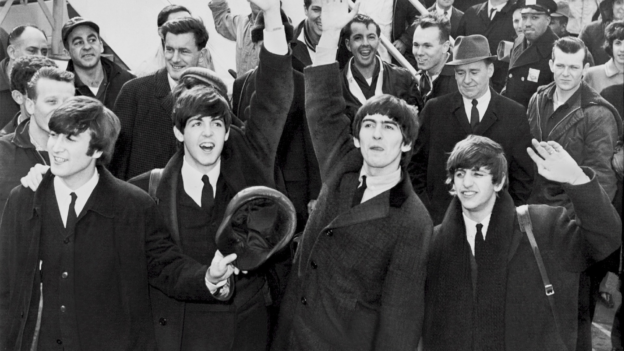
Episode 3 – Music & The Beatles / Interview with Mum / Language Focus: Used to

A conversation with my Mum about The Beatles, and a language point about ‘used to’. Full transcript available below.

Right click here to download this episode.

Transcript of Luke’s ENGLISH Podcast episode: Music / The Beatles

You’re listening to Luke’s English Podcast. For more information visit teacherluke.wordpress.com

Hello and welcome to episode 3 of the podcast. Thanks very much for listening and downloading, and possibly subscribing to the show using iTunes, that’s fantastic. In today’s show we’re going to be talking about music and I’m going to talk to my Mum about The Beatles because she was a big Beatles fan in the 1960s. I’m also going to respond to a couple of emails that I’ve had and then in the last part of the podcast, the language part, I’m gonna talk about habits, habits and behavior in the past. So things like ‘use to’ and ‘would’ and some other useful language. So stay tuned for that.

Now, I’ve had an email from Alessandro in Italy in response to the question that I asked at the end of the last podcast. That question was: What kind of music is popular in your country at the moment? Is it kind of English language music or do you have music that is just exclusive to your country? And Alessandro from Italy says that, he still thinks that ‘Opera’ is the most famous Italian music, of course. Everyone knows Opera, erm, people like Luciano Pavarotti, Andrea Bocelli of course that’s the most famous Italian music, but also in Italy, Rock music is very popular and they have all English language bands, the ones we have, obviously have here as well. Things like, you know, U2, The Red Hot Chili Peppers, Coldplay. All these really big bands are popular in Italy as well. But also there are lots of Italian Rock bands. They’re really popular there but (they) aren’t very well known outside of Italy and I think this is probably true in most countries, erm, I know it’s true in Japan, that there are big very successful bands, they’re just famous in that country and because the lyrics are not in English, they’re not famous in America or in the UK. So it’s probably, hmm, a bit lazy, in terms, sort of British people. We don’t listen to very much music that isn’t in English. We’re probably missing out on quite a lot of good music. So thanks very much for your emails. I appreciate that very much and remember, if you want to email me, you can. It’s luketeacher@hotmail.com and I love hearing from you. So send me your emails and all your comments and stuff and I’ll get back to you through the podcast.

Ask the girl what she wanted to be
She said baby, can’t you see
I wanna be famous, a star of the screen
But you can do something in between
Baby you can drive my car
Yes, I’m gonna be a star
Baby you can drive my car
And maybe I’ll love you

A little bit of Beatles there. That was ‘Drive my car’ from the ‘Rubber Soul album’ and I’m playing that because the Beatles and Apple Corps which is their company and EMI music have finally decided to re-release all of the Beatles studio albums in remastered form. So they’re all going be digitally remastered and so that means you’ll be able to listen to them and hear them sounding better than they’ve ever sounded before. Some of the albums that they released, particularly the early ones were recorded in mono, and there are CD versions of those albums in mono but now they’re going to be digitally remastered, so that they’ll sound really crystal clear and perfect and they’ll be all in stereo which obviously makes the listening experience a lot better. Now, right, so with me here now, is my Mum.

LUKE: Hello Mum

Mum: Hello Luke

LUKE: How are you?

Mum: I’m very well.Thank you.

LUKE: Now, umm, I thought that I’d talk to my Mum today because she used to be, back in the sixties, a massive Beatles fan. Is that right?

Mum: That’s right, yes.

LUKE: Okay, so, umm, right, so I hope you don’t mind if I ask you some questions.

Mum: No, that’s okay.

LUKE: Umm, so how did you first hear about the Beatles then when you were younger

Mum: Umm, oh, it’s very hard to remember but I can, I have, do have one memory of being on the school bus and hearing two other girls talking about this group

LUKE: yeah

Mum: called the Beatles and looking at pictures of them and saying ‘ which is your favorite?’ and I think maybe that was the first time I heard of them but I, I really can’t remember the first, the actual first time.

LUKE: Yeah, now they, they were a really massively popular band, weren’t they?

Mum: They were

LUKE: I mean, everyone was crazy about them. Umm, so, you obviously heard about them from some friends and then started

Mum: And then started to talk about them and look at pictures of them, listen to the music and I didn’t actually buy any records of theirs until the 2nd LP which was called ‘With the Beatles’ which my parents bought me because I didn’t really have much money of my own in those days.

LUKE: That’s nice of them. How old were you in those days, tell me?

Mum: Umm, I would have been about twelve or thirteen, I suppose.

LUKE: Twelve or thirteen, so you would have been the target audience really

Mum: Hum, I suppose so, yes.

LUKE: So why did you like them? Well, they were so popular but why, why did you like them?

Mum: Oh, it’s very hard to explain why. Umm, they were, they were just so unusual, just so different, all the Pop music we’ve had up ’til then seemed to be mainly from America. I mean there were one or two the English people like Cliff Richard and Adam Faith. Umm, but they were just so different. I mean the first time I ever saw a group, you know with three guitars and drums. Before it was just a singer.

LUKE: They had something else about them, didn’t they?

Mum: Oh yes!

LUKE: They had a kind of personality

Mum: Yep !

LUKE: They had a good sense of humor, they were sort of charismatic

Mum: They were from Liverpool, which, and so they had these wonderful Liverpool accents which, um, of course I didn’t really know about in those days. I had never heard about another Liverpudlian I think.

LUKE: Yep

Mum: And they were very witty and very funny and very quick and just wonderful really.

LUKE: Right, so, did you actually ever see them?

Mum: I did, I saw them twice. I think the first time I saw them was in 1963 I think in Wolverhampton and then I saw them again in Birmingham the following year.

LUKE: So they were probably playing in a theatre or something like that, right? Umm, I can’t remember were they were in Wolverhampton. It was probably a Cinema or a Theater or somewhere like that and in Birmingham there were the Odeon in New Street which again was a Cinema but it had a stage and so it could be used for concerts as well.

LUKE: So, what was the experience like? I mean, what was it like actually seeing them, what was the audience like, first of all?

Mum: The audience was completely hysterical. We were all screaming and shouting and it was, I remember, the compere the shows sort of, that’s the man who did, who introduced the acts. When it got to the Beatles because they were the last on the bill and he sort of start the audience up even more by saying ‘Do you want to see them, do you want to see them?’

LUKE: And everyone was like ‘Yeah,

Mum: Everybody was shouting and screaming and the curtain came up and we could see their feet, and then we could see their legs and then you could see them and then the music started and that was all extremely exciting.

LUKE: There’s lots of video footage of The Beatles concerts where they’re playing and you can’t really hear the band. You can just hear all this ridiculous screaming .

Mum: Yes, that’s what is was like. I don’t really think we could hear them properly at all.

LUKE: So, it was just total madness, really.

Mum: Yeah, absolutely.

LUKE: Yah, Yah, I expect probably at the time because it was the early 1960s, young people didn’t really have anything, you know, interesting like The Beatles. They just, I mean, I think, I might be wrong but I think that life was kind of boring, right?

Mum: Umm, no, I never thought it was boring. It’s just the way it was in those days but it was very different from the way it is today. There wasn’t

LUKE: Now, now teenagers have just got so much, so many, you know so much music, so many, hmm, movies and all kind of things there to entertaining them.

Mum: And it’s so much more accessible than it was in my day. You had to actually go to the cinema or buy a record.

LUKE: Yeeah, Yeah

Mum: There was no downloading stuff from the internet or watching DVDs or anything like that.

LUKE: Right, so erm, which Beatle was your favorite because everyone had a favorite Beatle, didn’t they?

Mum: My favorite Beatle was, it was a toss-up between John and Ringo.

LUKE: Yeah, okay

Mum: I think, mainly my favourite was John, because he was so outrageous.

LUKE: Yeah, he was controversial, wasn’t he?

Mum: He was

LUKE: Yah, okay, so just the fact that he was controversial and outrageous, that, that

Mum: That was mainly it, yes he was very witty and very funny.

LUKE: Yah, he was, wasn’t he? Yeah, and what about now? Is John still your favorite now?

Mum: Ha ha,umm, oh it’s hard. I can’t really think of it in those terms anymore really, because I, I just, I’m very fond of George now.

LUKE: Yah

Mum: I appreciate him more now than I did then, I think.

LUKE: Yah, okay. So do you still listen to The Beatles these days?

Mum: Not very much, no,hmm

LUKE: Why not?

Mum: I find it quite strange listening to them now.

LUKE: Hmm

Mum: It just, it’s, hum, I don’t know, it’s very hard to explain. It just reminds me of those days and I don’t really want to go back and think about those days anymore. I’d rather live here and now.

LUKE: Yeah, alright, okay, thanks very much for talking to me.

Mum: It’s a pleasure.

LUKE: Yeah, hmm, alright, well, that’s, that’s it then. Oh, I think I might buy a couple of these new CDs when they come out.

Mum: Okay, right

LUKE: Because you knoz I’m a big fan.

Mum: Yes, well, I might listen to them if you buy them.

LUKE: Yeah, you’ll probably enjoy them.

Mum: Hmm

LUKE: Okay, well

Mum: Okay

LUKE: Thanks very much

Mum: Okay

Okay, so now it’s time to do the language part of the podcast. This is where I teach you something and in the last episode you heard my Dad talking about his Easter experiences when he was a child. And so he was talking about things that he usually did, things that he did regularly or every year when he was a kid. So we’re going to look at some language that he used and that you can use to talk about regular habits in the past. Now there are some really common ways of doing this. The most common way is to use ‘used to’.You’ve probably studied that, you, you probably know about ‘used to’. Erm, so it’s erm, u-s-e-d t-o, used to. So for example, hum, something my Dad said was ‘ we used to paint our easter eggs different colors, okay? Hmm, another example for me would be ‘I used to live in Japan’, right? Or I used to smoke. I don’t smoke anymore, because it’s very bad for your health, right? I used to smoke but then I gave up.
So this is something really useful. Now, you may know about ‘used to’ and you may have studied it but do you actually use it? Now the most, this is very important, you might know about different kinds of grammar. You might have studied different bits of vocabulary but the difference between a learner of English and a native speaker is that a native speaker uses all of this stuff. They actually use it regularly when they speak. They use a variety of different grammar and a variety of vocabulary, okay? And ‘used to’ is something that people use all the time when they are talking about the past, when they’re talking about things they did regularly in the past, okay? So you should use ‘used to’ a lot. You might think that this isn’t a new language for you but the most important thing is that you’re actually using it okay? Umm, something I always tell people is, it’s not important what you know, it’s important what you do in English. So the important thing here is that you actually use something like ‘used to’, okay. Hum, just some other important points about ‘used to’ , pronunciation. So obviously it should be ‘I ‘used to’, so that’s ‘used to’ not used to, and not ‘used to’ or ‘used to’ (listen to the audio to hear the pronunciation Luke is de,onstrating here). Hmm, I sometimes hear people saying ‘used to’ or ‘used to’ but it’s not that , it’s ‘used to’, ‘used to’. Also in negative or in question forms it doesn’t have a ‘d’, so that’s when you write, ‘used to’ in a negative it doesn’t have a ‘d’ . So I didn’t use to smoke. Right? So it’s without a ‘d’. So it’s didn’t u-s-e t-o, right? And it’s the same in questions,right? Did you use to, for example.

Umm, now ‘used to’ is commonly confused with, erm, another, erm, very similar structure and that is ‘to be used to doing something’. For example, I am used to living in London. Okay? So you’ve got ‘used to’, which is ‘I used’ to live in London and ‘be used to doing something’. I am used to doing something. I am used to living in London. So those forms are completely different.

Right? So, hum, I’ve told you about ‘used to’ to talk about past habits, now let me tell you about ‘to be used to doing something’ or ‘I am used to doing something’. Right? Which is totally different from just ‘used to’ okay. So, hum, okay let’s see, so if you say ‘I am used to doing something’ or ‘I got used to doing something’ it means that before something was difficult or strange for you but now it’s okay. Now you’re okay with it. You got accustomed to it. Okay? So for example something that you might say, you might say ‘when I first moved to London I thought it was very difficult to live here but now I’m used to living here. Okay, now I’m used to living here. So, it could be ‘now, I understand the culture a bit more, I can speak better English, I remember that people drive on the left, so I’m used to living here now. So that is totally different from ‘I used to’ live in London, which means that I lived in London in the past but I don’t live in London now. Okay? Right.

So another way of talking about a past habit which is similar to ‘used to’, is the modal verb ‘would’. Now ‘would’ is usually, when it is used to talk about a past habit we use ‘would’ but in the contracted form. Okay? So for example you may have heard my Dad in the last episode say something like this:’ We’d roll our easter eggs down a hill and then we’d eat them at the bottom’ Okay? So, um, this use of ‘would’ in the contracted form, for example ‘we’d eat them at the bottom or ‘ we’d buy each other chocolate eggs every christmas, not christmas, what am I talking about? Not Chrismas! Sorry! We ‘d buy each other chocolate eggs every easter. Right? Um, this use of ‘would’ is very similar to ‘used to’. We use it to talk about things we did regularly in the past. Okay? For example for me, when I lived in Japan, I’d see businessmen asleep on the underground everyday, okay? I’d see businessmen asleep on the underground everyday. Or I’d sometimes get woken up by noisy motor bike gangs in the middle of the night. Right? I’d sometimes get woken up by noisy motorbike gangs in the middle of the night. That’s true actually. I used to get woken up all the time by motorbike gangs because I lived in, I lived near Yokohama and sometimes in the summer there was these big motorcycle gangs, they would ride around, hum, in the city in the middle of the night and that was so loud, so for example, you know, I used to wake up to the noise of these motorbikes and I’d get up and I’d go out onto my balcony and I’d look down on the street and I’d see all these motorbikes riding past. It’s quite frightening because they were quite scary because some of them had samurai swords on their backs which is quite scary.

Anyway, anyway, I was talking about ‘would’ so for example’ I’d sometimes get woken up by noisy motor bike gangs’. Okay? So try to use ‘would’ like that in the contracted form to talk about regular things that happened in the past. Now, it’s very similar to ‘used to’ but it is different. The only difference with ‘used to’ is that we don’t use, we don’t use ‘would’ like this with state verbs, okay? Now, you’ve got state verbs and you got action verbs. Action verbs are the most common ones. Action verbs all describe an action. Right? For example, something that you do rather than a kind of state or condition that you’re in. So an action verb might be to go, to play, to eat, something like that, okay.

Right so we don’t use, okay that’s action verbs. play, go eat an so on. Now, state verbs are not used to describe an action but they describe a situation or a state or a condition. Right? These include verbs like live, know, like, understand, hate, okay? Now, we can’t, we don’t use would in the contracted form to talk about past habits with state verbs. Okay?
So for example, you can say ‘I used to live in London. Right? ‘Live’ is a state verb. You can say I used to live in London but you can’t say ‘I’d live in London’ if you’re talking about the past. Okay? That’s because ‘live’ is a state verb. So you can say ‘when I lived in London, I’d take the underground to school everyday and I’d often go to the pub after school on a friday. So you can say that because ‘take’ is an action verb and ‘go’ is an action verb. Alright?

So, remember that, you can only use, ‘would’ contracted for past habits with action verbs and not state verbs. If you’re interested in, action verbs and state verbs and what the difference is, it’s really simple. Just go to Google. Right? Go to the Google search engine and type ‘state verbs’. Have a look at the results and you’ll see lots of grammar pages from, you know, Oxford, um, University or something like that and they’ll show you lists of state verbs and action verbs and the differences between the two. Okay? Umm, that’s it. That’s, that’s the end of the language section.

Um, so, erm, yeah, I hope you found that useful. Don’t forget you can email me questions. If there is something you don’t understand or there is another question you have about language, email me. The email address is : luketeacher@hotmail.com and I will answer questions that you, that you sent me in the podcast. Now, I might not be able to answer every question that is sent to me because I, I get quite a few questions. So if, if I don’t answer the question, you’ve sent me, I’m sorry. I’ll try to answer all the questions that I get sent but sometimes I can’t answer them all. Umm, okay, so that’s, that’s the end of the podcast.
Now, I’m gonna end with a final question and the question this time, umm, is about skateboarding. Now, it’s about skateboarding because erm, I was talking to my brother recently and he loves skateboarding, right. He’s, he’s a, he’s a skater, he skates a lot. Now, I was talking to him about it recently and I was thinking that I might interview him for the podcast in the future. So I might have an interview with, with my brother James about skateboarding but I’d like to ask you a question about skateboarding. What do you think, is skateboarding popular in your country? Right? And do you think skateboarding is vandalism or is it okay? Now what does vandalism mean? Vandalism is when people damage public property. Okay? So what skateboarders do, is, is, they use public property, umm, for their skateboarding. So they do things like, eh, they will ride on, hmm, on like a bench or they will ride on a handrail for their skating and it damages the bench and it damages the handrail and a lot of people in this country think that skateboarding is vandalism, that it damages public property but a lot of people think it’s kind of like an art form or a sport or something. So what do you think? Do you think skateboarding is vandalism or do you think it’s okay? So that’s the question.

Umm, that’s the end of the podcast. I hope you enjoyed it and don’t forget to email me luketeacher@hotmail.com and I’m looking forward to hearing from you. So, that’s it! Cheers, bye, bye, bye, bye, bye, bye, bye……..
__________________________________________________________________________________________________________________________________________
(Thanks to Bettina for providing this transcript – Thanks Bettina, I appreciate it very much and I’m sure the listeners do too)

2. Easter / Interview with my Dad / Language Focus: Adverbials

A conversation with my Dad about Easter, and a language point about adverbials. Full transcript available below.

Right click here to download this episode.

Small Donate Button This is the transcript to “EPISODE 2 – EASTER”
Hello, and welcome to Luke’s English podcast, the real British English podcast. This is episode two of the podcast and I’m very pleased because I’ve already had a couple of emails from a couple of people who’ve listened to the podcast, and one of those emails comes from Jose Manuel in Alicante in Spain and he asks me about Easter because it’s Easter at the moment. He asks me what we do normally in the UK at Easter and, well it’s funny you should ask that Jose (Jose, I’m sure that’s how you say it) because right now I’m at my parents’ place. I’ve travelled up on the train from London and I’m at my parents house which is in the countryside in Warwickshire and this is a typical thing that people of my age do, they normally travel back to their parents’ houses and they spend time with their families together and actually in this episode I’m going to be joined by my dad so I’m going to interview my dad about Easter, so he’ll tell you some typical things about Easter time in the UK and so that’s going to be our feature in part two and then at the end of the podcast I’m going to talk about some adverbs, some useful adverbs in response to another email that we got and so that’s what’s going to happen in today’s podcast.

Luke: OK, so I’m now joined by my dad, Rick, but obviously I call him Dad, I don’t call him Rick. Hi Dad,
Rick: Hello Luke
Luke: How are you?
Rick: I’m fine, thank you very much
Luke: Good, so, obviously I’m here at my parents’ house because it’s Easter, at your house. This is what I normally do, isn’t it?
Rick: Yes, it is, it’s a time to get together with the family
Luke: Right, ok so, so Easter then. Now Easter is a season when we remember the death and rebirth of Jesus Christ by telling our children that a large rabbit comes in the night and leaves chocolate eggs in the garden, now I don’t know about you but that seems a bit strange to me I don’t know what the connection is between the Jesus thing and a big rabbit and chocolate and eggs and things, what do you think about that?
Rick: Well this idea of the Easter rabbit coming and bringing eggs is a bit of an American idea really and I think that it’s a very interesting mixture between Christianity and old pagan beliefs, I mean, obviously the Christian celebration of Easter is, as you say, about the crucifixion and, after three days, the resurrection of Christ, so it’s a crucial celebration and stands alongside Christmas, the birth of Christ and then the death of Christ, the two big Christian festivals.
Luke: That’s the Christian thing, you said something about Pagan, what does that mean?
Rick: Well of course you know experts will tell you that 2,000 years ago when Christianity started to spread across Europe it did, if you like, take over the Pagan festivals that already existed
Luke: So Pagan is the kind of religion that people had …
Rick: it’s pre-Christian …
Luke: … before christianity,
Rick: Yes and it’s got a lot to do with various gods and superstition and of course pagan times there was a big winter festival and there was a big spring festival and the spring festival was of course the festival of fertility and growth and new growth …
Luke: …and new life
Rick: … of new life and of course if you lived in a society where it was very important that the crops didn’t fail this was a time when you wanted to have all the good luck you could get, to have the gods on your side to make sure that the crops had a very successful season …
Luke: OK, so before Christianity then, Easter was a festival, a pagan festival when people celebrated the start of new life and spring time and good luck for your, you know, farming for that year, right?
Rick: yes
Luke: now I understand the egg connection because an egg is the symbol of new life right? But why … now actually one of my students asked me this last week, why do we have chocolate eggs, why chocolate?
Rick: Well I must admit I’m not entirely sure, but my guess is that people have given each other eggs at Easter time, or if you like, at spring time as a gift because it is, as you say, the time when all the birds are laying their eggs
Luke: right, chickens and stuff
Rick: well chickens but all the wild birds are nesting and making nests and laying eggs and remember that in the old days people used to use the natural resources very very much, the berries and the eggs were a resource …
Luke: so they …
Rick … and they would go out into the countryside and gather the eggs and eat them …
Luke: right, so they used …
Rick … so the egg season came in and people would no doubt give each other eggs and presents and then when we discovered the joys of chocolate I suppose it was a natural thing to give people chocolate eggs instead
Luke: just a sort of gift …
Rick: … a gift which symbolises new life
Luke: so its nicer really to give someone a chocolate egg than just an egg because just an egg, I mean, it’s alright, you can boil it or fry it or something but it’s nicer as a gift to give someone a chocolate egg I suppose
Rick: yes I suppose
Luke: right so let’s see, what do English families usually do then at Easter in the UK? oh um yea, what do English families normally do at Easter?
Rick: well it is a traditional time for the family to get together and it’s a long weekend, Friday, Saturday, Sunday, Monday and those four days is when most families, you know, get together and these days they get in the car and they drive to the parents or the grandparents and it is very much a family get together and they give each other chocolate eggs in most households.
Luke: When I was a kid I remember what you and mum used to do is at Easter you used to hide eggs, you used to hide chocolate eggs around the house or around the garden and me and James, (James and I) would go and try and find the eggs, so that was always fun.
What did you do when you were a child?
Rick: Well I remember I used to go to my grandparents’ house. They lived up in the north of England in the countryside, and they had real boiled eggs, hard boiled eggs which were boiled in water that had been coloured with something so you were given a pink egg or a blue egg or a green egg and we would roll them, this was really quite a well established tradition that you roll the eggs down some kind of bank, down a hill, you roll the eggs down a hill, why I’m not sure but that’s what people did, they used to roll the eggs down the hill and run after them as a kind of game
Luke: so you’d walk up a little hill with your blue or pink eggs and then you would sort of roll them down the hill and then run after them and have a lot of fun running after some blue and pink …
Rick: … that’s right and if your egg broke it didn’t matter because it was hard boiled it was cooked and then you would eat the egg at the bottom of the hill, that’s what you did, you rolled the egg down the hill and you chased after it and you caught it and you ate it.
Luke: Right, well that sounds like lots of fun I suppose these days if … I think probably children are so lazy now that if you hid some chocolate eggs in the house they would probably, you know, be too lazy to get up and try and find them, you’d probably have to leave ipods or something around the garden, because if you left an ipod in the garden then a child would probably get up from in front of the TV and try and find it. I think kids these days are too lazy to do anything really unless there’s an ipod involved.
Rick: I don’t really agree with you Luke and I know you’re really just teasing, but the point is of course is that it’s fun and kids do like to search for things, to hunt for things whether it be a little chocolate egg or indeed a little chocolate rabbit and sometimes you hide little chocolate rabbits around the house and ask the children to find them and they love it.
Luke: I hit a rabbit the other day in the car when I was driving.
Rick: Really?
Luke: There’s lots of rabbits around here, you know I was I – um my parents live in the countryside, listeners – and there’s lots and lots of rabbits especially at this time of year and I was driving the car to the station to pick up my brother James, and a rabbit ran out in front of the car and I didn’t hit the rabbit with the wheels so I didn’t squash it but the rabbit went under the car and I heard a kind of noise …
Rick: … clonk …
Luke: … a kind of dum noise as the rabbit, probably the rabbit hit his head on something under the car. I looked in the mirror and there was just a dead rabbit
Rick: what a horrible thought! Mind you you do see an awful lot of dead rabbits on the roads these days there are thousands of them and they do have a terrible habit, a rabbit habit of running out in front of your car …
Luke: they’re stupid aren’t they?
Rick: … they wait until you’re coming and then they run out
Luke: They’re just stupid really aren’t they. Anyway there are so many of them that it doesn’t matter
Rick: Well it’s a pity for that particular rabbit but there’s nothing much you can do about it when it hurls itself in front of your car
Luke: Well there’s plenty of food for the birds
Rick: That’s quite right lots of birds eat the dead rabbits – the crows, the magpies and the buzzards, they live on the rabbits which are killed on the roads.
Luke: Well, thanks very much Dad for, you know, for agreeing to talk to me, yea, it was very nice, thank you
Rick: ok and I hope you have a very happy Easter Luke
Luke: Yes, happy Easter to you too
Rick: Thank you.

Ok so that was my dad, um a very nice man, very well educated, he knows a lot of things about history and all sorts of things so I’m very lucky to be able to interview him.
Now like I said at the beginning of the show, I had another email about an English question, now I got an email from Miho in Yokohama in Japan and she asked me what ‘basically’ means, because she heard me in the first podcast using the word ‘basically’ a lot and she’s right I do say ‘basically’ quite a lot, it’s a very common word, particularly for me. Lots of people use the word ‘basically’. Now the word ‘basically’ is an adverb and adverbs are great words, very useful words that you can use at the beginning of a sentence. Now a word like ‘basically’ doesn’t really mean very much but people use it almost like a habit. Really, ‘basically’ is used to say … before you say something you use the word ‘basically’ to show that you are going to say something in a simple or basic way, OK? So for example if I use the word ‘basically’ you put it at the beginning of the sentence and you’d say something like this: “basically, this is a podcast to give learners of English some listening practice” OK?
Now there are lots of other adverbs that you can use in a similar way at the beginning of a sentence and you’ll probably know adverbs because most of them end in ly, now we get lots of different kinds of adverbs in different positions in the sentence but the adverbs I’m going to teach you now are ones you can use at the start of a sentence. So we’ve got adverbs like basically, actually, obviously, strangely enough, frankly speaking, recently, unfortunately, amazingly and hopefully. Ok so I’m just going to give you some examples of that now, so we’ll start with ‘actually’:
“Actually this is only the second podcast I have ever done” ok? So there’s an example. Now if you speak Spanish and some other European languages, ‘actually’ in your language means ‘currently’, meaning ‘now’ so actually doesn’t mean ‘now’i t just means ‘as a matter of fact’, right? So, “actually this is only the second podcast I have ever done”.
The third one is ‘obviously’. Now we use “obviously” to say something that is obvious, so say something that everybody knows. Now, football players use ‘obviously’ a lot when they are doing interviews now, just as an example you might say “obviously we were the best team in the competition” right? Now you would say ‘obviously’ because your team won so of course your team was the best one. “Obviously my team was the best team in the competition” for example.
The next one is ‘strangely enough’, now that’s used to say something that is strange. OK, so for example, “strangely enough I don’t really like fish and chips, even though I’m English” right? So that’s strange because most English people like fish and chips, so “strangely enough I don’t really like fish and chips even though I’m English”.
The next one is ‘frankly speaking’, now this is something you would say that’s rather honest, OK, so for example, “frankly speaking it was the worst film I’ve seen in a long long time” so if you are being very honest about something you can say ‘frankly speaking’, “Frankly speaking it was the worst film I’ve ever seen”.
The next one is ‘recently’. Now you probably know ‘recently’, we use it to say something that happened in near or close time. Right? So for example “recently I’ve been listening to lots of Rolling Stones records”. Ok? “Recently I’ve been listening to a lot of Rolling Stones records”.
The next one is ‘unfortunately’, and we use that one to talk about something bad that’s happened, OK? something that you regret, OK? So for example, “unfortunately, I had to leave before the end of the lesson” OK ? “unfortunately I had to leave before the end of the lesson”. So that would be a bad thing because, obviously you want to be in the classroom for the whole lesson, but “unfortunately I had to leave before the end of the lesson and I missed the most important part”, for example.
And finally, the next one I’d like to teach you is ‘amazingly enough’. We use that one to describe something amazing for example “Amazingly enough, I’ve never been to Edinburgh” “Amazingly enough I’ve never seen a musical” and “amazingly enough I’ve never been to Harrods”. Now that’s amazing because I live in London and I’ve never been to Harrods, right? So “amazingly enough I’ve never been to Harrods”, OK?
Oh there’s one more, and that’s ‘hopefully’. Now if you hope for something then you can use ‘hopefully’, for example “hopefully this podcast isn’t boring” right? Ok?
Right, so that’s the end of part three and that’s the end of this podcast. Don’t forget to email me. I’d like to end with a question again now, and the question this time is: what kind of music is popular in your country at the moment? so what are people interested in at the moment in terms of music in your country? So, for example is it mainly English language music so music from American or Britain, or is music from your country more popular than English Language music? So, don’t forget to email me, that’s: luketeacher@hotmail.com and I look forward to hearing from you very soon. That’s the end of the podcast, bye bye bye bye bye…..