Luke’s English Podcast is for people learning English as a foreign language. This episode is about passive verb forms, their use and pronunciation. You can read a transcript below.
Luke’s English Podcast is for people learning English as a foreign language. This episode is about passive verb forms, their use and pronunciation. You can read a transcript below.
Hello, welcome to Luke’s English Podcast. It’s been ages and ages since I last did one. I’ve been really busy with lots of things, but mainly: my music (I’m in two bands at the moment – The school band is playing a concert at Brook Green Hotel in Shepherds Bush on Friday 14th August, and my cousin’s band Neech are playing the Big Chill Festival this Saturday. I’m playing drums in both bands. ) So, I’ve been busy practising with those bands.
Also, I’ve been teaching general English summer courses at my school. They’re usually very busy because we have lots of students in the school, and the teachers have to write their own material- we don’t use books. So, I’ve been using all my energy on music and work. Anyway, now I have some time to do a Podcast.
Hello to everyone who has sent me a message – I don’t have time to name you all. The Podcast is becoming more and more popular. I’m getting messages via email, Twitter, and my comments box on the webpage. If you’re listening on iTunes, go to my site to read a transcript of everything in this podcast. I’m being very generous today and I’m providing a whole transcript! Don’t forget, if you’re a rich Russian business man, or a Saudi oil sheik, you can send me money as a donation – about 2million would be nice. That should be enough to help me make a few more podcasts before I retire to the carribean. Actually, I have made absolutely NO money from this podcast, and at the moment I’m doing it just for the love.
Now, there is useful stuff in this podcast. You’re going to learn about:
Exactly how and why we use passive forms.
Some pronunciation of passive forms.
There will be real examples. The grammar will be carefully explained.
I will provide pronunciation drills – sentences in British English for you to copy and help your accurate speaking.
That’s it – enjoyyyyyyyyyyyyyyy!!
STOP – grammar time.
That’s right, it’s grammar time ladies and gentlemen, and this grammar point is about Passive Forms
At higher levels, the study of grammar becomes more in depth and as a result of this, it becomes a lot more theoretical and complicated. So, it becomes difficult to understandand sometimes boring. I’m sure you’ve all had those boring grammar classes in which you don’t really understand anything, and just make you fall asleep. However, in order to get a full understanding of how the language works and why mistakes are made etc, grammar has to be studied. Using a range of grammatical forms is also a feature of good, fluent, advanced speaking.
This brings us to passive forms. They are used a lot in English. Honestly, they are. In my opinion, there are 3 difficult things for students to deal with when studying the passive:
1) The complicated form – it is hard to manipulate sentences using the passive in different tenses, and after modal verbs etc ( this is because of all the different auxiliary verbs, past participles etc).
2) Understanding how and why the passive is used. Many students say they know how to construct passive sentences, but don’t know when they should use them.
3) The pronunciation of passive forms – it can be difficult to hear all the little words used when native speakers use passive forms. Also, it’s difficult to pronounce them correctly if you’re not a native speaker.
In this podcast I’m going to talk about the passive form, why it is used and the pronunciation of sentences with a variety of passive forms. Later in this podcast you will hear some pronunciation drills which you can (and should) use to develop your pron.
What are passive forms? (point 1)
I am not going to go into great depth about this area. You can look at the back of your textbook or in a good grammar book to look at how the passive form changes in different tenses and after certain verbs. Nevertheless, here is a basic overview of what passive forms are:
Active sentences are in this structure:
SUBJECT/AGENT – VERB – OBJECT
E.g. Michael Jackson – wrote – this song
The subject is the agent (the thing that ‘does’ the verb)
The agent is included because it is important, or is the topic of the sentence (e.g. if the question is “who wrote this song?” it is important to say “Michael Jackson wrote it”)
But, sometimes it is better to order the sentence in a different way. Like this passive sentence:
SUBJECT – VERB – (PREPOSITION + OBJECT/AGENT)
E.g. The song – was written – (by Michael Jackson)
In passive sentences:
The form is different – You always have an auxiliary verb ‘be’ – this can come in many forms, eg. Being, been, was, were, am, are, is
The agent is often not included
If the agent is included, you have to use a preposition (by)
You need to use a past participle verb, and these are sometimes difficult to remember
Why is the passive used? (point 2)
It is sometimes thought that passives are not necessary. “Why bother using them?”. Some students say that they don’t think native speakers use them – and that teachers teach them just because they have to. Some students just don’t use passive forms in their sentences, which is one of the reasons why they don’t go beyond an intermediate level. One thing I can say for sure is that when teachers teach grammar forms – they do it because they are essential for the imporovement of your English. Don’t forget – advanced speakers use a variety of grammatical forms and vocabulary…
They are used a lot, and they are useful. But, why? and how?
Here’s a list of reasons why the passive is used:
The agent is unknown (“What happened to the pizza?” “It was eaten” “by who? “we don’t know”)
The agent is not important (“I don’t care who did it, I’m just angry that my pizza was eaten! I was going to eat it later!”)
The agent is obvious (“The thief was arrested” -obviously it was the police because they usually do that)
The process (the action of the verb) is more important than the agent (the one who did it) “I’m just annoyed that my pizza has been eaten already – I didn’t even get a chance to have any”
The patient (the pizza – it receives the action of the verb) is the topic of the sentence or story, so it is put at the beginning.
Real Examples: BBC News Report
OK, listen to the following news story about Michael Jackson’s death. It contains 10 passive forms, but in complex tenses. Can you find them. Before you listen, let me explain these words:
Paramedics – Doctors who drive ambulances!
Beverly Hills – An area in California where lots of famous people live
Suffer a cardiac arrest – to have a heart attack
To be due to do something – to be arranged to happen. It is going to happen because it is planned
To resuscitate someone – to bring someone to life – using electricity, or breathing or pumping the chest
A post-mortem – a medical examination of a body after it has died
So, there are 10 passive forms. Can you find them?
Pop star Michael Jackson has died in Los Angeles, aged 50.
Paramedics were called to the singer’s Beverly Hills home at about midday on Thursday after he stopped breathing.
He was pronounced dead two hours later at the UCLA medical centre.
Jackson, who had a history of health problems, had been due to perform a series of comeback concerts in the UK, beginning on 13 July. He is believed to have suffered a cardiac arrest.
Speaking on behalf of the Jackson family, Michael’s brother Jermaine said doctors had tried to resuscitate the star for more than an hour without success.
Jackson’s body was flown from UCLA to the LA County Coroner’s office, where a post-mortem was carried out. The results have not yet been published.
Concerns over Michael’s health were raised last month when four of Jackson’s planned comeback concerts were postponed, but organisers insisted the dates had been moved due to the difficulty of organising the show.
Find examples of the passive in the text. There should be 10.
Think about these things:
1. Which tenses are used? (present simple, past simple, passive infinitive)
2. Why has the passive been used in each case? Use the list of reasons from the second page to help you.
Here are the passive sentences:
#
Example
Tense
Why is the passive used?
1
Paramedics were called to the singer’s Beverly Hills home
Past simple
It is not important/we don’t know who called the paramedics
2
He was pronounced dead
Past simple
It’s obvious that doctors at the hospital pronounced him dead
3
Jackson had been due to perform a series of comeback concerts
Past perfect
Actually, it is impossible to put this sentence in an active form. To be due to do something is just a fixed passive expression
4
He is believed to have suffered a cardiac arrest
Present simple
Obviously, doctors/experts/journalists believe this
5
Jackson’s body was flown
Past simple
We don’t know/it’s unimportant/obvious who flew the plane – and the story is all about Jackson’s body.
6
a post-mortem was carried out
Past simple
Obviously, doctors carried out the post mortem
7
The results have not yet been published.
Present perfect
We don’t know/it’s not important/it’s obvious who publish the reports. Doctors or lawyers or something…
8
Concerns over Michael’s health were raised last month
Past simple
We don’t know – just that people were concerned. Putting the concern at the beginning (as a noun) is better than saying ‘people were concerned’ – the important thing is the concern, not the people.
9
four of Jackson’s planned comeback concerts were postponed
Past simple
Obviously, they were postponed by Jackson’s managers & promotors
10
the dates had been moved
Past perfect
Again, we know who moved them – it was his managers
How are passives pronounced in sentences?
In a moment I am going to read some sentences with passives in them. I’m focussing on the way these passives are pronounced. There are two main issues:
Auxiliary verbs pronounced with weak forms so they are difficult to hear.
Past participles (especially –ed) ones are just difficult words to pronounce correctly.
So, listen to me read the sentences. I’ll read each sentence once with all the words individually pronounced. Then I’ll read them with the words linked up. Repeat the linked up sentences. Try to copy exactly how I say it – think about the rhythm and word stress I’m using. You could record yourself – this will really help you.
In these sentences there are passive forms, but also lots of other words. Try to pronounce them correctly too. Try to say the sentence as one long sound with all the words linked together. We don’t always link every word, but it is good pronunciation practice.
Present simple passive:
We’re given a test at the end of the course to check our progress in English
Present continuous passive:
We’re always being encouraged by our teacher to read books in English
Present perfect passive:
My podcast has been downloaded 120 times today already
Past simple passive:
All the the students were given a grammar test as soon as they arrived at school
Past continuous passive:
The students were being interviewed when I arrived at quarter past 10
Past perfect passive:
Everyone had already been put in their classes, except me.
Will + passive:
The podcast will be uploaded onto the iTunes store in the next few days
Going to + passive:
The new Harry Potter film is going to be released on Friday
So, you can go back to those sentences and listen and repeat them again and again.
This episode is about words and expressions related to dating & relationships. In part 1 I talk about what I’ve been doing recently, and talk about the Present Perfect Continuous Tense. Part 2 is the feature section which is about dating & relationships. I play you a BBC TV comedy sketch about a blind date. Part 3 – I teach you some of the most common words and expressions that English people use when they talk about dating & relationships. FULL TRANSCRIPT NOW AVAILABLE BELOW!
Right-click here to download. Hello, and welcome to Luke’s English Podcast. This episode is in 3 parts:
Part 1 – I’m going to talk about what I’ve been doing recently, and I’m going to talk about the Present Perfect Continuous Tense
Part 2 – This is the feature section which is about dating & relationships. I’m going to play you a BBC TV comedy sketch about a blind date.
Part 3 – I’m going to teach you some of the most common words and expressions that English people use when they talk about dating & relationships.
Part 1 – What have you been up to?
A typical conversation between friends who haven’t seen each other for a while would be like this:
A: Hi, how’s it going? (Hi, how are you?)
B: Fine thanks, you?
A: Not bad. What have you been up to?
B: Not much. I’ve been working hard recently. Work is really busy at the moment…
So, we use this question to ask about recent activities: “What have you been up to?” or “What have you been doing?”
‘up to’ – means ‘do’ or ‘doing’.
The tense here is the Present Perfect Continuous tense: have/has + been + -ing
This tense is used in the question and answer: “What have you been doing recently?” “I’ve been working hard”
It’s very common for people to use this when they see their friends.
E.g. “Hi Luke, what have you been up to?”
-I’ve been teaching a legal English course recently
-I’ve been playing football in Regents Park
-I’ve been enjoying the good weather
-I’ve been looking forward to the new Star Trek movie
-I’ve been listening to a lot of funk music
-I’ve been on a couple of dates recently
(Present Perfect Simple tense)
Part 2 – Here’s the transcript of the comedy sketch:
Woman: I’m really glad Lisa set us up together
Man: Me too Woman: I normally hate it when friends pair you off with complete strangers
Man; Yeah
Woman: Thing is… all the guys I’ve been out with recently have been unbelievably stupid… I think you’re different though… well, touch wood! [she knocks on the table]
Man: [thinking it is the front door] Sorry, that’ll be the door… [he walks to the front door]
Woman: Good…
Part 3 – Useful expressions for talking about relationships & dating
To flirt with someone: When you like a boy or girl, you act in a way which shows that you like them. E.g. girls will laugh at a boy’s jokes, she might play with her hair, she might smile at him a lot, she might touch him on the arm and laugh… When a boy flirts with a girl he might try to make her laugh or show her how strong he is.
To fancy someone: This means that you think someone is attractive. E.g. “I really fancy Jane! I think she’s really good looking.”
To chat someone up: This is when you talk to someone to make them fancy you. E.g. when a man sees a nice woman in a bar, he might chat her up by asking her if she wants a drink. “Would you like a drink? Do you come here often? You’ve got beautiful eyes…”
To go out with someone: This has 2 meanings. 1 – It means that you go on a date with someone. 2 – It means you are someone’s boyfriend/girlfriend. E.g. “We’ve been going out with each other for 2 years. We’re getting married next year.”
To ask someone out: This means to ask someone to go on a date. “Would you like to have dinner with me on Friday?” -he asked her out.
To have chemistry: This means there is a natural magic feeling between people who fancy each other. Chemistry is very important in a relationship.
To fall for someone: This means to fall in love with someone
To drift apart: This is when a relationship goes bad. You drift apart when you become interested in different things, and you don’t enjoy being with each other any more. It means that you slowly become bored with your partner.
To split up with someone: This means that the relationship finished. E.g. “Brad Pitt and Jennifer Anniston split up with each other a couple of years ago”
To dump someone: This means that you leave your partner and end the relationship. E.g. “She’s really sad because he dumped her. He told her that he didn’t love her any more and that he didn’t want to see her again…”
OK, so that’s it! Those are really useful expressions for talking about dating. Don’t forget to email me if you have any questions or comments. luketeacher@hotmail.com Bye for now!
p.s. here’s the comedy sketch on YouTube:
The TV show is called Man Stroke Woman (BBC)
TRANSCRIPT TO 8. DATING & RELATIONSHIPS
Hello, welcome to Luke’s English Podcast. Thank you very much for listening and downloading. Um… I’ve been getting various messages from people. Um… Basically saying that they love the podcast and some people are using it just to learn English when they are, for example, driving to work, or travelling on the bus, or on the underground, and some people are teachers who are using the podcasts in their English lessons. So, I’m happy about that, very glad that it’s becoming so popular. Um, you can, of course, find this podcast on iTunes. If you go to the iTunes Store, you can do a search for Luke’s English podcast and you will find it there and you can subscribe to the podcast using iTunes there. And also, you can leave a short review of the podcast on that page. Um… and I’ve had couple of ratings but I haven’t had any reviews yet. So, please leave a review saying how brilliant the podcast is, okay? I mean, I’d like you to say how brilliant it is of course so that way I can get more listeners, yeh? You don’t have to say it is brilliant. I mean you can be honest, for example, and say ‘I think it’s quite good but I found some of the episodes are a bit too long these days’ or something like that. Or you can say ‘I think it’s very useful but the problem is Luke doesn’t write a transcript for the episodes. It would be better if there is a transcript,’ something like that. Just write a comment, leave a message. I’d like this to be an interactive podcast. So the more messages you send me, the better. So you can leave a review on my iTunes page or you can send me an e-mail by teacherLuke… no, it’s luketeacher@hotmail.com.
Now, in today’s podcast, first of all, I’m just going to tell you what I’ve been doing recently. So I’m going to give you an update on things that I’ve been doing. And, when I talk about that, I am going to be telling you as well about the present perfect continuous tense and how useful that can be when you are talking about recent news, okay? So, the first part would be little bit about my recent news and the present perfect continuous tense. Then, in the feature section, you are going to listen to a small comedy sketch about a date, okay? And then in the language section at the end of the podcast, I’m going to teach you some really really really useful and very important expressions that you can use to talk about dating and relationship, okay?
[3’08” Jingle playing]
Right, so what have I been up to recently? What have I been doing? Well, I’m going to tell you in a second. But before I do that, I’m going to teach you something really useful about English, some really useful and important language, okay? Now when you see your friends, for example, if you haven’t seen your friends for a week or two, in English, it’s very very common to say something like: ‘What have you been up to?’ or ‘What have you been doing?’ Right? ‘What have you been up to?’ or ‘What have you been doing?’ And those questions are about your recent activities, okay? Maybe since the last time you met. So, a common conversation might be something like:
A: Hi, How’s it going?
B: Fine. Thanks. You?
A: Not bad. What have you been up to?
B: Well, …[and then you talk about what you’ve been up to.]
Okay? So that’s ‘Hi, How’s it going.’ ‘How’s it going’ is another way of saying ‘how are you’.
A: How’s it going?
B: Fine. Thanks. You?
A: Not bad. What have you been up to? [‘Up to’ means ‘doing’ actually.]
B: Well, nothing. [Very common for people to say nothing. ]
‘What have you been up to?’
‘Well, nothing.’ [Nothing really or nothing special.]
But sometimes, you know, you can talk about the things that you have been doing. Right? And when we talk about recent news like that, we often use the present perfect continuous tense or sometimes the present perfect tense. Okay? So, the present perfect continuous tense is structured like this, we have ‘have’ or ‘has’ + ‘been’ and then an ‘-ing’ form. For example, ‘I’ve been teaching English’ Right? Or, ‘I’ve been playing a lot of football recently.’ Yeah? I’ve been doing something. And we use that form in the question as well, ‘What have you been doing recently.’ Yeah? So, for example, if you ask me: ‘Hi, Luke. How’s it going?’ And I’d say: ‘I’m fine. Thanks.’ And you’d say: ‘What’ve you been up to recently?’ Well, I’d say:
I’ve been teaching a legal English class recently. Um… At school at the moment, I’m teaching a law course – Legal English, which is very interesting. It’s quite difficult. Some of the language is a little bit complicated. But it’s very interesting to be teaching a different kind of English, in this case, English that is used to describe a legal system or civil court procedures and so on and so forth. That’s very interesting. Also, I’ve been playing football in Regents Park. Regents Park is one of the many parks in London. It’s very beautiful there actually. It’s close to London Zoo. And it’s right in the middle of the city. And every Wednesday, I play football in Regents Park. So, I’ve been playing football in Regents Park recently. Um, I’ve been enjoying the good weather. At the moment, it’s spring here in the London and the sun is shining and the birds are singer and it’s really really nice. London is so much better when the weather is good. It’s really fantastic. So, I’ve been enjoying the good weather. Um… Let see, what else… I’ve been looking forward to the new Star Trek movie. So ‘looking forward to’ means waiting for something because you want it to happen, right? So, waiting for something that is good. Something that is good is going to happen. I’ve been looking forward to the new Star Trek movie. Now I’m not like a big Star Trek fan. I prefer Star Wars actually. But all the critiques say that the new Star Trek film is very very good. So, I’m looking forward to seeing it. I might see it later today actually. And then I can tell you what it’s like. You can see the trailer for the new Star Trek film on the Internet if you go to YouTube and type Star Trek movie. It should be a very good science friction movie, very entertaining. Um… I’ve been listening to a lot of funk music recently. Now, I love music, right? And probably my favourite genre of music is funk or jazz funk. And that sort of music that was being made in the 70s and it’s good music to dance to. And it also got some jazz in it. So there’s [re] some really great solos in jazz funk or funk music. And the musicians are excellent. So it’s really a real pleasure for me to listen to that kind of music. If you don’t know what jazz funk or funk sound like, well, it sounds a bit like this.
[8’35” Funk music playing]
I think you get the idea. Isn’t great? Sounds fantastic, doesn’t? Um, you might say that it’s a little bit cheesy. Right. But I love it. I love that kind of music. Anyway, what else have I been doing recently? Well, I’ve been listening to a lot of funk music like that. And also I’ve been on a couple of dates recently. Um… Now, I’m single at the moment and I’ve been trying to meet someone. So, I went on a[n] online dating service. Now, you might think: Ugh, online dating? That’s a bit sad, isn’t it? Well, I mean it’s not really sad anymore. In London lot and lot of people sign up to online dating services. A lot of my friends are on various online dating services. Lot of people do it here in London. It’s actually a good way to meet people I think. It’s not really sad anymore to do that. So, I signed up for one called Guardian Soulmates, which is run by the Guardian newspaper here. And I’ve had a couple of dates actually from it, which is great. Now, I’m not going to tell you any more about that because it’s person and private. And it’s, well, it’s none of your business really, is it. Yeah, so, I’m not going to tell you any more about that. You will just have to use your imagination to try and guess how those dates went and what the girl was like and all those things. So, yes, I’m not going to tell you any more about it. Instead, I’m going to move very quickly on to the feature section of this podcast, which is all about dating, actually. So, there you go. Just before we move onto the feature section, let me just summarise the little bit of grammar that I told you about there. So, we use present perfect continuous to talk about things that like activities that we have done recently. And, so, you should start using present perfect continuous like that. When you have conversations with your friends. So:
Hi! How’s it going?
Fine. Thanks. You?
Pretty good. What have you been doing recently?
Well, I’ve been listening to Luke’s English podcast.
Luke’s English podcast, what’s that? It sounds fantastic.
Well, it is fantastic actually. It’s brilliant. It’s a really interesting and useful way to learn English.
Wow, what’s the address?
Well, it’s teacherluke.podomatic.com and so on.
Okay? So, don’t forget to use present perfect continuous to talk about your recent activities. Now, let’s move on to the feature section of the podcast. Here we go.
[11’54” Jingle playing]
Okay, so, the feature section today is about dating. Um… Right, going out with people. Trying to find someone so that you can have a relationship with them. Now, in England, people meet their girlfriend of boyfriend in lots of different ways. Um, so, how do people meet each other? Well, it might be that their friends hook them up, right? If your friends hook you up with someone, it means that they know you and they know you are single, they also know someone else. So, it might be they know you but they also know a girl, or a boy that they think will like you. And, so, they arrange for you to meet. So they hook you up, right?
Um… And it could be a blind date, for example. They might hook you up on a blind date. So you end up meeting somebody that you’ve never met before. And that’s usually quite a difficult kind of date to go on because it can be very embarrassing if you don’t like each other. It can be a bit difficult and you have to try to make conversation. Ugh, it’s usually quite an awkward situation – a blind date. But a lot of people meet like that. How else? Some people meet at work. You know, I think actually most people in relationships meet their boyfriend or girlfriend at work. It’s very very common.
So, they might, for example, meet at work and flirt with each other and chat each other up at work, and then go out with each other. It might be the guy if he fancies a girl at work. They might flirt with each other and then he might ask her out. And then they go on a date and then you know, who knows, they might fall in love or something. I think it’s very common. By the way, I might use some English expressions in this part of the podcast that you don’t understand. But don’t worry, I m going to teach you those useful expressions at the end of the podcast, okay? Listen to this now and if you don’t understand something, I will explain it later. Also you can send me an email of course if you got any questions.
Okay. So they might meet at work. A lot of people meet in a bar or in a pub or in a nightclub, and it’s a very very common way to meet someone actually. People tend to go out on a Friday or Saturday night, they dress up in their best cloths, they put some perfume or aftershave on and they go out and they drink usually so they get a little bit drunk, which makes it easier to meet someone I think. And they go out and they dance with people and they chat each other up. And then eventually maybe get a telephone number form them and then arrange to meet up on a date in the future. Right? So a lot of people meet each other when they are drinking in a pub or in a club or something. Some people, especially these days, meet each other on the Internet.
So, if you are single, you might decide that you’re going to sign up to an online dating agency. And then you can find someone very quickly and very easily. But the problem is that there are so many people on the Internet that you have to kind of go through a lot of people before you find someone who is right for you. As well as that, a lot of people meet on holiday. [It is] very popular to go to places like Ibiza or Spain or other popular holiday destinations and you meet lots of other people who are at the same age as you. And something being on a holiday means that it’s a romantic situation. And so lots of people have meet[met] their boyfriend or girlfriend on a romantic holiday or something.
And these days some people go speed dating. Now, speed dating is a kind of very quick way to meet lots of people in one night. What happens in speed date is you go to a bar and first of all you have to sign up, so you apply to do it over the telephone. And then you go to a bar, and there might be about 10 or 15 tables in the bar and all the girls sit at the tables. And all the boys have… Well, you have 3 minutes, basically, to try and chat each other up. And after 3-minute, someone rings a bell – ding, ding ,ding – and then you have to move, all the boys move onto the next table. And you talk to the next person. And you got 3 minutes to talk to them. And then the bell rings again and you move to the next table and meet the next girl and talk to them and after about an hour, you have met about 15 people in one night. And then at the end, you write little comments on a piece of paper about them. And you can decide who[m] you’d like to meet again. If both people say that they’d like to meet each other, then they can exchange telephone numbers and have a date in the future. So, it’s very popular these days. A lot of people do it.
Um… Now, you’re going to… I’m going to play you, now, the audio from a little comedy sketch, which is from a BBC television programme, a comedy programme. Now, in this sketch, you are going to hear a conversation between a man and woman who are on a blind date. Okay? Now their friends have set them up, they’ve hooked them up with each other. And you hear the girl talking about how usually it’s very difficult when her friends hook her up with men. And usually, the men that her friends hook her up with are very stupid. But she is very pleased that this guy seems to be different. So, she’s very happy that they met each other. But there is a little joke, a comedy joke in the sketch. Now, I’m not going to explain any more about it. I’m just going to play it to you now. And I’d like you to see if you can understand what is funny about it. What’s the funny thing about this little sketch, okay? So, I’ll explain it to you afterward if you don’t understand. So, here is the sketch:
[18’57” Comedy sketch playing]
Woman: I’m really glad Lisa set us up together Man: Me too
Woman: I normally hate it when friends pair you off with complete strangers Man; Yeah Woman: Thing is… all the guys I’ve been out with recently have been unbelievably stupid… I think you’re different though… well, touch wood! [she knocks on the table] Man: [thinking it is the front door] Sorry, that’ll be the door… [he walks to the front door] Woman: Good…
Okay. Now, don’t worry if you didn’t understand that or you didn’t find it funny. Um… It’s very difficult to understand comedy if you are learning the language. And probably comedy is one of the things that you will appreciate or enjoy later when you become a more advanced speaker of English. So don’t worry if you didn’t find it funny. The main thing here that I’d like to do is to help you understand what happened in that sketch. Now, maybe you understood it but if you didn’t, I’m going to explain it for you bit by bit now. So let’s just quickly listen to some of the sketch again. So here is the first little bit:
Woman: I’m really glad Lisa set us up together
Man: Me too
Okay. So she says, ‘I’m so glad that Lisa set us up together,’ and he says, ‘me too.’ So, I’m so glad that Lisa, that’s her friend, set us up, that means arranged for us to meet. Okay? ‘I’m so glad that Lisa set us up together.’ ‘I’m so glad that Lisa arranged for us up to meet.’ And he said me too. Fine, easy. Now, here is the next bit.
Woman: I normally hate it when friends pair you off with complete strangers
Man: Yeah
I normally hate it when friends pair you off with complete strangers. Okay? So, when a friend pairs you off with someone, it means that your friend put you in a pair with someone. So, your friends arrange for you to meet someone so that you’d become a pair, you’d become a partner. Okay? Now, a complete stranger is someone that you’ve never met before. So, she means I usually hate it when my friends put me on a blind date with someone. Okay? Right, here is the next bit.
Woman: Thing is… all the guys I’ve been out with recently have been unbelievably stupid…
The thing is all the guys I’ve been out with recently have been unbelievably stupid. Okay? Now, ‘the thing is’, that’s like saying, ‘the problem is,’ all the guys I’ve been out with recently. So, to go out with someone means to go on a date with them. Right. So, all the guys I’ve gone on a date with recently have been unbelievably stupid. So, ‘unbelievably stupid’ means really really stupid. Okay? Now, so, here is the next bit.
Woman: I think you’re different though
Okay, she said, ‘But I think you’re different though.’ But I think you’re different though. She thinks that he’s not like the other guys that he’s not unbelievably stupid. Okay. Well, she hopes so anyway.
Woman: Well, touch wood!
Okay, there she says, ‘well, touch wood.’ Now, to touch wood in England is a superstition. It’s like a kind of good luck thing. So, if you hope that something will happen or you hoped something is true, you touch wood like that. Okay? So, she’s saying ‘you’re not stupid like the other guys’. Well, I hope you are not anyway. Touch wood, right. Yeah, so, that’s what that bit means.
Man: That’ll be the door
Woman: Good…
He says, ‘Oh, that will be the door.’ Right, so, what happen is, she said, ‘I hoped you are not like the other guys, I think you are not like the other guys. Well, touch wood. Actually, he thought that was somebody knocking on the door. So he is very very stupid actually. Because when she went touch wood, he said that would be the door and he left the table because he thought somebody was knocking on the front door. So, he is very very stupid, yeh, or an idiot. And then she said ‘good’ at t he end but she doesn’t really mean it. I think she is shocked or surprised. So, I’m just going to play you the whole sketch again, so that you can listen to it from the start to the finish.
[23’24” Comedy sketch playing]
Okay, so there it is. I hope you enjoy that, I hope you find it funny. Now, in the next section – the language section, I’m going to teach you really useful expressions to talk about dating and relationships.
[23’56” Jangle playing]
Okay, in English, there are numbers of expressions that we always use when we are talking about romantic relationships, boyfriends, girlfriends, and going on a date. Okay? And you really have to learn these expressions because people always use them when they are talking about this subject, okay? So, these expressions are really important and really useful for you. So, I recommend that you learn them and use them, okay? Now, I used some of these expressions in the feature section when I was talking about dating, okay? So, you… I’m going to explain some of those expressions for you now. Okay, so, let see. First expression is a verb, and it’s ‘to flirt’, to flirt with someone, ‘to flirt’. Um… To flirt with someone is when you… If you like someone, if you think someone is attractive, then you act, you behave in a way show that shows you like them. Okay? So, for example, girls might play with their hair. Right? They often play with their hair when the flirt. Or they laugh at everything that the guy says. So, even if the guy says really bad jokes, she’ll laugh about it. ‘Oh, you’re so funny.’ And she might, for example, back her eye lids at him, or just act in a way that shows she really fancies him, she really likes him, okay? Um… Guys when they flirt, they try to make girls laugh, they might try to show how strong they are, show off their muscles or something, so that’s flirting. And people flirt all the time. When they like someone. Okay?
Another expression is ‘to fancy someone’, ‘to fancy someone’, and ‘fancy’ is a verb. And if you fancy someone, it means you think they are attractive, you think that they are good looking. Okay? So, if you fancy someone, you might start flirting with them, for example. So, ‘fancy’. Yeah. Um…
Next expression is ‘to chat someone up’, ‘to chat someone up’. And that’s a phrasal verb – ‘To chat up, to chat someone up’. If you chat someone up, it means that, first of all, you find them attractive, you fancy them, and then you start talking to them, to try to make them fancy you. Okay? Now I think usually, traditionally, men chat women up. Um… These days, women chat men up a bit as well, but traditionally it’s men who chat women up. And, so, for example, if a man sees a girl in a bar and he fancies her, he might walk over to her and start to chat her up. And there are typically things that man say when they chat women up. So, they’ll say ‘hi, would you like a drink?’ or ‘hi, do you come here often’ or something like that. And then they start chatting, talking to try [to] make the girl fancy him, okay? So, typically things are: ‘Do u come here often,’ ‘Can I buy you a drink,’ or ‘you’ve got lovely eyes,’ that kind of things. So that’s to chat someone up.
Next expression is to go out with someone, to go out with someone. And, there are two meanings of these really. One meaning is to go out with someone means to go on a date, right? So, to go out with someone just means to go on a date. ‘I went out with her last night.’ But we also use ‘to go out’ to mean that you’re someone’s girlfriend or boyfriend. And, often in a continuous form, so, ‘I’m going out with her,’ means she is my girlfriend. Or ‘are you going out with anyone at the moment,’ means do you have a boyfriend or a girlfriend at the moment? Yeah? I’ve been going out with her for 6 months, for example, means she’s been my girlfriend for 6 months. Yeah? ‘To go with someone.’
Another useful expression is ‘to have chemistry with someone’, ‘to have chemistry’. Now if you have chemistry with someone, it means that you get on with each other and there is some like magic between you, so you just really get on with each other and you both fancy each other and just naturally, when you are together, there’s like a magic feeling between you, and that’s called chemistry. And chemistry is really really important in a relationship. You have to have chemistry, because it’s the chemistry actually, the interaction between you that makes it exciting, that makes it interesting, okay? So, for example, if you go on a date with someone, and there is no chemistry, then the date will be really boring. You will think that whatever they are saying is not interesting; it’s not exciting. Yeah? But if there is chemistry, it’s kind of exciting, you fancy each other, you know, you might want to kiss each other, and there’s a good feeling between you and that’s called chemistry. Chemistry is also the word of the name of kind of science. But we also use it to mean good feeling between boy and girl, Chemistry.
Now you can, if you fall in love with someone, you can say that you fall for someone, so ‘to fall for someone’. So, for example, you know, she’s been going out with him for about four weeks, and she really fancies him, and actually, I think she’s starting to fall for him means she’s starting to fall in love with him. So, ‘to fall for someone’. Okay.
Now, for example, if you meet some one, you fancy each other, you flirt with each other, you stat to chat each other up, maybe, if you fancy them, you can ask them out, so, to ask them to go on a date with you. You ask some one out. So, may be the boy fancies her, he asks her out and she says yes, so they go on a date with each other. There is chemistry between them and they start going out with each other so they start becoming boyfriend and girlfriend, and then, maybe the fall for each other And then, eventually, perhaps, who knows, they get engaged and get married and have children and live a lovely happy life.
But sometimes it goes bad; sometimes a relationship will go wrong. Okay? And, so there are few expressions that we can use to describe when a relationship goes bad. For example, you might say that, um… You and your girlfriend are drifting apart. To drift apart, so, that means you are slowly moving away from each other, slowly moving away, so you are drifting apart, okay? Um… And if u are drifting apart, if you don’t love each other anymore, then you may split up with each other. So that’s a phrasal verb, ‘to split up with someone. So if you split up with each other, it means that the relationship is s finished. Okay? So, for example, they were going out with each other, but then they split up with each other and now they are single. Okay? ‘To split up with someone.’ Now, you can also use an expression to mean that you leave some or you’ve finished a relationship, and that is to dump someone. Okay? So, for example, if, you know, she was going out with him for three months. But after three months, she realised that he was really boring and she didn’t fancy him anymore, and so, she dumped him. Right? When you dump someone, you have to tell them a reason, you have to say, ‘look, I’m sorry but I don’t think this is working’ or ‘I’m sorry, but I don’t fancy you anymore’ or ‘I’m sorry, but it’s not you, it’s me you know. I’m not ready for a long relationship.’ Okay? And when you say that, you’d say, ‘I don’t think we should see each other any more.’ Then you dumped that person. It’s very sad. It’s not a good thing to do over the telephone, for example. Although a lot of people do it over the telephone, so to dump someone. So, those are some of the sort of most important expressions, I think, to describe a dating and relationships.
There are more expressions that you can use. And I think that because this is a good subject, I’m going to do more podcasts about this in the future. And, in fact, what I’d like to talk about in the future would be good chat up lines, so that’s good things you can say to chat someone up. And things that people often say when they dump each other. I think it’s a interesting subject, so, hopefully, I’m going to interview some of my friends and get their good chat up lines and things that they might say if they dump someone, okay? Now I will write all of the expressions that I’ve explained on the podcast home page, which is, of course, teacherluke.podomatic.com. You can see all the expressions written and I’ll also write a transcript of the comedy sketch that you listened to. So, don’t forget to visit the site to get some of the words and expressions that I’ve explained for you here. And also, don’t forget to send me an email. I’m going to end this podcast with a question. And the question is, ‘how do people meet each other in your country.’ Now, I told you about how people meet in England, but I know that in some countries like, for example, in Japan, there are different ways to meet your partner. So, how do you meet each other in your country? Send me an email; I’d very much like to hear from you. That’s the end of the podcast. I hope you have a nice day. And I hope you enjoyed listening. Take care. See you soon. Bye. Bye. Bye. Bye. Bye. Bye….
Joaquin Phoenix is a famous Hollywood A List actor. He appeared in Gladiator and Walk The Line (the Johnny Cash story). Recently he announced that he wants to quit acting to become a rapper. Also, his appearance has become very strange! He looks more like a homeless person than a Hollywood star. His decision has become a Hollywood mystery. Is it real, or is it a joke? No one really knows.
In this episode of the podcast, Luke talks about Joaquin Phoenix with his friend and colleague Howard. You can listen to the conversation – some of the vocabulary is defined below. The language section of the podcast is about making speculations with modal verbs. See below for more information. Also, below you will see some pictures of Joaquin Phoenix, and some YouTube videos – one of him announcing his retirement from acting, and one of him rapping (badly) and then falling off the stage! For more strange Joaquin Phoenix videos, have a look on YouTube. We can’t wait to find out if it is real, or if it is all a big joke. We really hope that it is a joke, because if it isn’t, he could be in real trouble…
Some vocabulary that Luke & Howard used in their conversation + definitions
Howard: “He’s from a famous acting dynasty” – a dynasty means a large and powerful family
Howard: “He looks like a homeless (person), or a tramp or something” – ‘homeless’ and ‘tramp’ both mean someone who doesn’t have a home and has to live on the street. ‘homeless’ is also an adjective
Luke: “He’s making a fly-on-the-wall documentary” – a fly-on-the-wall documentary is a documentary film or programme which is filmed to look like the people in the film are not really aware of the cameras, so they act naturally and it is like the viewer is a ‘fly on the wall’ just watching what is happening. This is not a reality show like Big Brother. It’s a type of documentary.
Luke: “A comedy movie a bit like Borat” – Borat is a satirical comedy about a man called Borat, played by Sacha Baron Cohen
Luke: “The thing about rapping is that you have to have a flow” – a rapper’s ‘flow’ is his rhythmical style of rapping. E.g. Eminem has a fast flow. Joaquin Phoenix’s flow is slow, and elementary.
Howard: “He looks like a twat” – a twat is a slightly rude word which means ‘an idiot’
Luke: “He’s let himself go” – to ‘let yourself go’ means you stop looking after yourself and your appearance goes bad, e.g. you gain wait, your hair grows too long, etc.
Luke: “It sounds like he’s slurring his words” – to ‘slur’ your words means that you don’t pronounce your words properly, like when you are drunk.
Luke: “He’s famous for a method approach to acting” – a method approach is an acting style which involves the actor totally becoming the character he is performing. The actor lives as that character all the time, even at home. Famous method actors are Robert DeNiro and Al Pacino. DeNiro famously put on a lot of weight to become Jake LaMotta in the film Raging Bull (an excellent film!)
Howard: “His family are very eccentric” – ‘eccentric’ means slightly crazy, odd, weird, bizarre, strange
Howard: “A lot of craziness” – craziness is the noun from ‘crazy’
Howard: “A lot of weird and wacky things happening” -wacky is another word for crazy, bizarre, weird, odd, etc
Luke: “I’m a bit sceptical” – ‘I’m sceptical’ means ‘I don’t really believe it is true’
Luke: “Someone in the crowd was heckling him” – to heckle someone means to shout criticisms from the crowd. Comedians are often heckled, by hecklers during stand-up comedy routines – e.g. “That’s not funny!!”
Luke: “It’s a piss take” – a ‘piss take’ is a joke. designed to fool everyone, to make fun of everyone.
Howard: “It sounds like he’s on the edge” – on the edge means ‘close to being crazy’ or ‘close to a nervous breakdown’
Luke: “I’m leaning towards ‘it’s all a joke'” – to be leaning towards something means that you are starting to take that opinion. You are favouring that opinion.
Howard: “I think it might be for real” – ‘for real’ means genuine, not fake.
Luke: “Finally, he’s cracked” – he’s ‘cracked’ means he’s ‘lost his mind’
Summary of Language Section – Modal Verbs:
Use might, must, could or can’t to speculate about things.
1. For present or future use modal + infinitive (without to)
e.g. He may have an emotional problem
or modal + be + -ing for the continuous form
e.g. He may be having emotional problems
2. For speculations about the past, use modal + have + past participle
e.g. He may have got tired of Hollywood
3. Use ‘must’ when you’re sure that something is true
e.g. It must be a joke! (or It has to be a joke!)
4. Use ‘may’ ‘might’ or ‘could’ when you’re less sure that something is true.
e.g. He might be serious, but I’m not sure to be honest.
5. Use ‘can’t’ when you’re sure that something isn’t true or didn’t happen.
e.g. He can’t be for real
e.g. He can’t have given up acting.
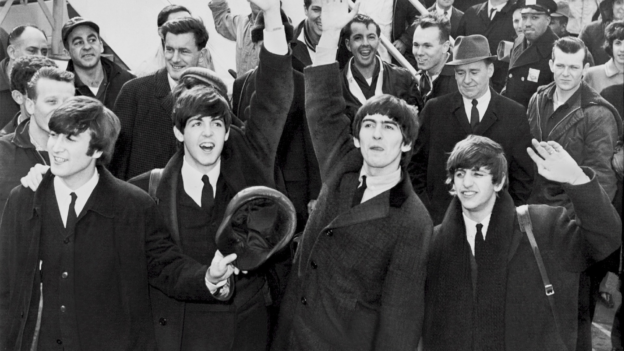
Transcript of Luke’s ENGLISH Podcast episode: Music / The Beatles
You’re listening to Luke’s English Podcast. For more information visit teacherluke.wordpress.com
Hello and welcome to episode 3 of the podcast. Thanks very much for listening and downloading, and possibly subscribing to the show using iTunes, that’s fantastic. In today’s show we’re going to be talking about music and I’m going to talk to my Mum about The Beatles because she was a big Beatles fan in the 1960s. I’m also going to respond to a couple of emails that I’ve had and then in the last part of the podcast, the language part, I’m gonna talk about habits, habits and behavior in the past. So things like ‘use to’ and ‘would’ and some other useful language. So stay tuned for that.
Now, I’ve had an email from Alessandro in Italy in response to the question that I asked at the end of the last podcast. That question was: What kind of music is popular in your country at the moment? Is it kind of English language music or do you have music that is just exclusive to your country? And Alessandro from Italy says that, he still thinks that ‘Opera’ is the most famous Italian music, of course. Everyone knows Opera, erm, people like Luciano Pavarotti, Andrea Bocelli of course that’s the most famous Italian music, but also in Italy, Rock music is very popular and they have all English language bands, the ones we have, obviously have here as well. Things like, you know, U2, The Red Hot Chili Peppers, Coldplay. All these really big bands are popular in Italy as well. But also there are lots of Italian Rock bands. They’re really popular there but (they) aren’t very well known outside of Italy and I think this is probably true in most countries, erm, I know it’s true in Japan, that there are big very successful bands, they’re just famous in that country and because the lyrics are not in English, they’re not famous in America or in the UK. So it’s probably, hmm, a bit lazy, in terms, sort of British people. We don’t listen to very much music that isn’t in English. We’re probably missing out on quite a lot of good music. So thanks very much for your emails. I appreciate that very much and remember, if you want to email me, you can. It’s luketeacher@hotmail.com and I love hearing from you. So send me your emails and all your comments and stuff and I’ll get back to you through the podcast.
Ask the girl what she wanted to be
She said baby, can’t you see
I wanna be famous, a star of the screen
But you can do something in between
Baby you can drive my car
Yes, I’m gonna be a star
Baby you can drive my car
And maybe I’ll love you
A little bit of Beatles there. That was ‘Drive my car’ from the ‘Rubber Soul album’ and I’m playing that because the Beatles and Apple Corps which is their company and EMI music have finally decided to re-release all of the Beatles studio albums in remastered form. So they’re all going be digitally remastered and so that means you’ll be able to listen to them and hear them sounding better than they’ve ever sounded before. Some of the albums that they released, particularly the early ones were recorded in mono, and there are CD versions of those albums in mono but now they’re going to be digitally remastered, so that they’ll sound really crystal clear and perfect and they’ll be all in stereo which obviously makes the listening experience a lot better. Now, right, so with me here now, is my Mum.
LUKE: Hello Mum
Mum: Hello Luke
LUKE: How are you?
Mum: I’m very well.Thank you.
LUKE: Now, umm, I thought that I’d talk to my Mum today because she used to be, back in the sixties, a massive Beatles fan. Is that right?
Mum: That’s right, yes.
LUKE: Okay, so, umm, right, so I hope you don’t mind if I ask you some questions.
Mum: No, that’s okay.
LUKE: Umm, so how did you first hear about the Beatles then when you were younger
Mum: Umm, oh, it’s very hard to remember but I can, I have, do have one memory of being on the school bus and hearing two other girls talking about this group
LUKE: yeah
Mum: called the Beatles and looking at pictures of them and saying ‘ which is your favorite?’ and I think maybe that was the first time I heard of them but I, I really can’t remember the first, the actual first time.
LUKE: Yeah, now they, they were a really massively popular band, weren’t they?
Mum: They were
LUKE: I mean, everyone was crazy about them. Umm, so, you obviously heard about them from some friends and then started
Mum: And then started to talk about them and look at pictures of them, listen to the music and I didn’t actually buy any records of theirs until the 2nd LP which was called ‘With the Beatles’ which my parents bought me because I didn’t really have much money of my own in those days.
LUKE: That’s nice of them. How old were you in those days, tell me?
Mum: Umm, I would have been about twelve or thirteen, I suppose.
LUKE: Twelve or thirteen, so you would have been the target audience really
Mum: Hum, I suppose so, yes.
LUKE: So why did you like them? Well, they were so popular but why, why did you like them?
Mum: Oh, it’s very hard to explain why. Umm, they were, they were just so unusual, just so different, all the Pop music we’ve had up ’til then seemed to be mainly from America. I mean there were one or two the English people like Cliff Richard and Adam Faith. Umm, but they were just so different. I mean the first time I ever saw a group, you know with three guitars and drums. Before it was just a singer.
LUKE: They had something else about them, didn’t they?
Mum: Oh yes!
LUKE: They had a kind of personality
Mum: Yep !
LUKE: They had a good sense of humor, they were sort of charismatic
Mum: They were from Liverpool, which, and so they had these wonderful Liverpool accents which, um, of course I didn’t really know about in those days. I had never heard about another Liverpudlian I think.
LUKE: Yep
Mum: And they were very witty and very funny and very quick and just wonderful really.
LUKE: Right, so, did you actually ever see them?
Mum: I did, I saw them twice. I think the first time I saw them was in 1963 I think in Wolverhampton and then I saw them again in Birmingham the following year.
LUKE: So they were probably playing in a theatre or something like that, right? Umm, I can’t remember were they were in Wolverhampton. It was probably a Cinema or a Theater or somewhere like that and in Birmingham there were the Odeon in New Street which again was a Cinema but it had a stage and so it could be used for concerts as well.
LUKE: So, what was the experience like? I mean, what was it like actually seeing them, what was the audience like, first of all?
Mum: The audience was completely hysterical. We were all screaming and shouting and it was, I remember, the compere the shows sort of, that’s the man who did, who introduced the acts. When it got to the Beatles because they were the last on the bill and he sort of start the audience up even more by saying ‘Do you want to see them, do you want to see them?’
LUKE: And everyone was like ‘Yeah,
Mum: Everybody was shouting and screaming and the curtain came up and we could see their feet, and then we could see their legs and then you could see them and then the music started and that was all extremely exciting.
LUKE: There’s lots of video footage of The Beatles concerts where they’re playing and you can’t really hear the band. You can just hear all this ridiculous screaming .
Mum: Yes, that’s what is was like. I don’t really think we could hear them properly at all.
LUKE: So, it was just total madness, really.
Mum: Yeah, absolutely.
LUKE: Yah, Yah, I expect probably at the time because it was the early 1960s, young people didn’t really have anything, you know, interesting like The Beatles. They just, I mean, I think, I might be wrong but I think that life was kind of boring, right?
Mum: Umm, no, I never thought it was boring. It’s just the way it was in those days but it was very different from the way it is today. There wasn’t
LUKE: Now, now teenagers have just got so much, so many, you know so much music, so many, hmm, movies and all kind of things there to entertaining them.
Mum: And it’s so much more accessible than it was in my day. You had to actually go to the cinema or buy a record.
LUKE: Yeeah, Yeah
Mum: There was no downloading stuff from the internet or watching DVDs or anything like that.
LUKE: Right, so erm, which Beatle was your favorite because everyone had a favorite Beatle, didn’t they?
Mum: My favorite Beatle was, it was a toss-up between John and Ringo.
LUKE: Yeah, okay
Mum: I think, mainly my favourite was John, because he was so outrageous.
LUKE: Yeah, he was controversial, wasn’t he?
Mum: He was
LUKE: Yah, okay, so just the fact that he was controversial and outrageous, that, that
Mum: That was mainly it, yes he was very witty and very funny.
LUKE: Yah, he was, wasn’t he? Yeah, and what about now? Is John still your favorite now?
Mum: Ha ha,umm, oh it’s hard. I can’t really think of it in those terms anymore really, because I, I just, I’m very fond of George now.
LUKE: Yah
Mum: I appreciate him more now than I did then, I think.
LUKE: Yah, okay. So do you still listen to The Beatles these days?
Mum: Not very much, no,hmm
LUKE: Why not?
Mum: I find it quite strange listening to them now.
LUKE: Hmm
Mum: It just, it’s, hum, I don’t know, it’s very hard to explain. It just reminds me of those days and I don’t really want to go back and think about those days anymore. I’d rather live here and now.
LUKE: Yeah, alright, okay, thanks very much for talking to me.
Mum: It’s a pleasure.
LUKE: Yeah, hmm, alright, well, that’s, that’s it then. Oh, I think I might buy a couple of these new CDs when they come out.
Mum: Okay, right
LUKE: Because you knoz I’m a big fan.
Mum: Yes, well, I might listen to them if you buy them.
LUKE: Yeah, you’ll probably enjoy them.
Mum: Hmm
LUKE: Okay, well
Mum: Okay
LUKE: Thanks very much
Mum: Okay
Okay, so now it’s time to do the language part of the podcast. This is where I teach you something and in the last episode you heard my Dad talking about his Easter experiences when he was a child. And so he was talking about things that he usually did, things that he did regularly or every year when he was a kid. So we’re going to look at some language that he used and that you can use to talk about regular habits in the past. Now there are some really common ways of doing this. The most common way is to use ‘used to’.You’ve probably studied that, you, you probably know about ‘used to’. Erm, so it’s erm, u-s-e-d t-o, used to. So for example, hum, something my Dad said was ‘ we used to paint our easter eggs different colors, okay? Hmm, another example for me would be ‘I used to live in Japan’, right? Or I used to smoke. I don’t smoke anymore, because it’s very bad for your health, right? I used to smoke but then I gave up.
So this is something really useful. Now, you may know about ‘used to’ and you may have studied it but do you actually use it? Now the most, this is very important, you might know about different kinds of grammar. You might have studied different bits of vocabulary but the difference between a learner of English and a native speaker is that a native speaker uses all of this stuff. They actually use it regularly when they speak. They use a variety of different grammar and a variety of vocabulary, okay? And ‘used to’ is something that people use all the time when they are talking about the past, when they’re talking about things they did regularly in the past, okay? So you should use ‘used to’ a lot. You might think that this isn’t a new language for you but the most important thing is that you’re actually using it okay? Umm, something I always tell people is, it’s not important what you know, it’s important what you do in English. So the important thing here is that you actually use something like ‘used to’, okay. Hum, just some other important points about ‘used to’ , pronunciation. So obviously it should be ‘I ‘used to’, so that’s ‘used to’ not used to, and not ‘used to’ or ‘used to’ (listen to the audio to hear the pronunciation Luke is de,onstrating here). Hmm, I sometimes hear people saying ‘used to’ or ‘used to’ but it’s not that , it’s ‘used to’, ‘used to’. Also in negative or in question forms it doesn’t have a ‘d’, so that’s when you write, ‘used to’ in a negative it doesn’t have a ‘d’ . So I didn’t use to smoke. Right? So it’s without a ‘d’. So it’s didn’t u-s-e t-o, right? And it’s the same in questions,right? Did you use to, for example.
Umm, now ‘used to’ is commonly confused with, erm, another, erm, very similar structure and that is ‘to be used to doing something’. For example, I am used to living in London. Okay? So you’ve got ‘used to’, which is ‘I used’ to live in London and ‘be used to doing something’. I am used to doing something. I am used to living in London. So those forms are completely different.
Right? So, hum, I’ve told you about ‘used to’ to talk about past habits, now let me tell you about ‘to be used to doing something’ or ‘I am used to doing something’. Right? Which is totally different from just ‘used to’ okay. So, hum, okay let’s see, so if you say ‘I am used to doing something’ or ‘I got used to doing something’ it means that before something was difficult or strange for you but now it’s okay. Now you’re okay with it. You got accustomed to it. Okay? So for example something that you might say, you might say ‘when I first moved to London I thought it was very difficult to live here but now I’m used to living here. Okay, now I’m used to living here. So, it could be ‘now, I understand the culture a bit more, I can speak better English, I remember that people drive on the left, so I’m used to living here now. So that is totally different from ‘I used to’ live in London, which means that I lived in London in the past but I don’t live in London now. Okay? Right.
So another way of talking about a past habit which is similar to ‘used to’, is the modal verb ‘would’. Now ‘would’ is usually, when it is used to talk about a past habit we use ‘would’ but in the contracted form. Okay? So for example you may have heard my Dad in the last episode say something like this:’ We’d roll our easter eggs down a hill and then we’d eat them at the bottom’ Okay? So, um, this use of ‘would’ in the contracted form, for example ‘we’d eat them at the bottom or ‘ we’d buy each other chocolate eggs every christmas, not christmas, what am I talking about? Not Chrismas! Sorry! We ‘d buy each other chocolate eggs every easter. Right? Um, this use of ‘would’ is very similar to ‘used to’. We use it to talk about things we did regularly in the past. Okay? For example for me, when I lived in Japan, I’d see businessmen asleep on the underground everyday, okay? I’d see businessmen asleep on the underground everyday. Or I’d sometimes get woken up by noisy motor bike gangs in the middle of the night. Right? I’d sometimes get woken up by noisy motorbike gangs in the middle of the night. That’s true actually. I used to get woken up all the time by motorbike gangs because I lived in, I lived near Yokohama and sometimes in the summer there was these big motorcycle gangs, they would ride around, hum, in the city in the middle of the night and that was so loud, so for example, you know, I used to wake up to the noise of these motorbikes and I’d get up and I’d go out onto my balcony and I’d look down on the street and I’d see all these motorbikes riding past. It’s quite frightening because they were quite scary because some of them had samurai swords on their backs which is quite scary.
Anyway, anyway, I was talking about ‘would’ so for example’ I’d sometimes get woken up by noisy motor bike gangs’. Okay? So try to use ‘would’ like that in the contracted form to talk about regular things that happened in the past. Now, it’s very similar to ‘used to’ but it is different. The only difference with ‘used to’ is that we don’t use, we don’t use ‘would’ like this with state verbs, okay? Now, you’ve got state verbs and you got action verbs. Action verbs are the most common ones. Action verbs all describe an action. Right? For example, something that you do rather than a kind of state or condition that you’re in. So an action verb might be to go, to play, to eat, something like that, okay.
Right so we don’t use, okay that’s action verbs. play, go eat an so on. Now, state verbs are not used to describe an action but they describe a situation or a state or a condition. Right? These include verbs like live, know, like, understand, hate, okay? Now, we can’t, we don’t use would in the contracted form to talk about past habits with state verbs. Okay?
So for example, you can say ‘I used to live in London. Right? ‘Live’ is a state verb. You can say I used to live in London but you can’t say ‘I’d live in London’ if you’re talking about the past. Okay? That’s because ‘live’ is a state verb. So you can say ‘when I lived in London, I’d take the underground to school everyday and I’d often go to the pub after school on a friday. So you can say that because ‘take’ is an action verb and ‘go’ is an action verb. Alright?
So, remember that, you can only use, ‘would’ contracted for past habits with action verbs and not state verbs. If you’re interested in, action verbs and state verbs and what the difference is, it’s really simple. Just go to Google. Right? Go to the Google search engine and type ‘state verbs’. Have a look at the results and you’ll see lots of grammar pages from, you know, Oxford, um, University or something like that and they’ll show you lists of state verbs and action verbs and the differences between the two. Okay? Umm, that’s it. That’s, that’s the end of the language section.
Um, so, erm, yeah, I hope you found that useful. Don’t forget you can email me questions. If there is something you don’t understand or there is another question you have about language, email me. The email address is : luketeacher@hotmail.com and I will answer questions that you, that you sent me in the podcast. Now, I might not be able to answer every question that is sent to me because I, I get quite a few questions. So if, if I don’t answer the question, you’ve sent me, I’m sorry. I’ll try to answer all the questions that I get sent but sometimes I can’t answer them all. Umm, okay, so that’s, that’s the end of the podcast.
Now, I’m gonna end with a final question and the question this time, umm, is about skateboarding. Now, it’s about skateboarding because erm, I was talking to my brother recently and he loves skateboarding, right. He’s, he’s a, he’s a skater, he skates a lot. Now, I was talking to him about it recently and I was thinking that I might interview him for the podcast in the future. So I might have an interview with, with my brother James about skateboarding but I’d like to ask you a question about skateboarding. What do you think, is skateboarding popular in your country? Right? And do you think skateboarding is vandalism or is it okay? Now what does vandalism mean? Vandalism is when people damage public property. Okay? So what skateboarders do, is, is, they use public property, umm, for their skateboarding. So they do things like, eh, they will ride on, hmm, on like a bench or they will ride on a handrail for their skating and it damages the bench and it damages the handrail and a lot of people in this country think that skateboarding is vandalism, that it damages public property but a lot of people think it’s kind of like an art form or a sport or something. So what do you think? Do you think skateboarding is vandalism or do you think it’s okay? So that’s the question.
Umm, that’s the end of the podcast. I hope you enjoyed it and don’t forget to email me luketeacher@hotmail.com and I’m looking forward to hearing from you. So, that’s it! Cheers, bye, bye, bye, bye, bye, bye, bye……..
__________________________________________________________________________________________________________________________________________
(Thanks to Bettina for providing this transcript – Thanks Bettina, I appreciate it very much and I’m sure the listeners do too)
This is the transcript to “EPISODE 2 – EASTER”
Hello, and welcome to Luke’s English podcast, the real British English podcast. This is episode two of the podcast and I’m very pleased because I’ve already had a couple of emails from a couple of people who’ve listened to the podcast, and one of those emails comes from Jose Manuel in Alicante in Spain and he asks me about Easter because it’s Easter at the moment. He asks me what we do normally in the UK at Easter and, well it’s funny you should ask that Jose (Jose, I’m sure that’s how you say it) because right now I’m at my parents’ place. I’ve travelled up on the train from London and I’m at my parents house which is in the countryside in Warwickshire and this is a typical thing that people of my age do, they normally travel back to their parents’ houses and they spend time with their families together and actually in this episode I’m going to be joined by my dad so I’m going to interview my dad about Easter, so he’ll tell you some typical things about Easter time in the UK and so that’s going to be our feature in part two and then at the end of the podcast I’m going to talk about some adverbs, some useful adverbs in response to another email that we got and so that’s what’s going to happen in today’s podcast.
Luke: OK, so I’m now joined by my dad, Rick, but obviously I call him Dad, I don’t call him Rick. Hi Dad,
Rick: Hello Luke
Luke: How are you?
Rick: I’m fine, thank you very much
Luke: Good, so, obviously I’m here at my parents’ house because it’s Easter, at your house. This is what I normally do, isn’t it?
Rick: Yes, it is, it’s a time to get together with the family
Luke: Right, ok so, so Easter then. Now Easter is a season when we remember the death and rebirth of Jesus Christ by telling our children that a large rabbit comes in the night and leaves chocolate eggs in the garden, now I don’t know about you but that seems a bit strange to me I don’t know what the connection is between the Jesus thing and a big rabbit and chocolate and eggs and things, what do you think about that?
Rick: Well this idea of the Easter rabbit coming and bringing eggs is a bit of an American idea really and I think that it’s a very interesting mixture between Christianity and old pagan beliefs, I mean, obviously the Christian celebration of Easter is, as you say, about the crucifixion and, after three days, the resurrection of Christ, so it’s a crucial celebration and stands alongside Christmas, the birth of Christ and then the death of Christ, the two big Christian festivals.
Luke: That’s the Christian thing, you said something about Pagan, what does that mean?
Rick: Well of course you know experts will tell you that 2,000 years ago when Christianity started to spread across Europe it did, if you like, take over the Pagan festivals that already existed
Luke: So Pagan is the kind of religion that people had …
Rick: it’s pre-Christian …
Luke: … before christianity,
Rick: Yes and it’s got a lot to do with various gods and superstition and of course pagan times there was a big winter festival and there was a big spring festival and the spring festival was of course the festival of fertility and growth and new growth …
Luke: …and new life
Rick: … of new life and of course if you lived in a society where it was very important that the crops didn’t fail this was a time when you wanted to have all the good luck you could get, to have the gods on your side to make sure that the crops had a very successful season …
Luke: OK, so before Christianity then, Easter was a festival, a pagan festival when people celebrated the start of new life and spring time and good luck for your, you know, farming for that year, right?
Rick: yes
Luke: now I understand the egg connection because an egg is the symbol of new life right? But why … now actually one of my students asked me this last week, why do we have chocolate eggs, why chocolate?
Rick: Well I must admit I’m not entirely sure, but my guess is that people have given each other eggs at Easter time, or if you like, at spring time as a gift because it is, as you say, the time when all the birds are laying their eggs
Luke: right, chickens and stuff
Rick: well chickens but all the wild birds are nesting and making nests and laying eggs and remember that in the old days people used to use the natural resources very very much, the berries and the eggs were a resource …
Luke: so they …
Rick … and they would go out into the countryside and gather the eggs and eat them …
Luke: right, so they used …
Rick … so the egg season came in and people would no doubt give each other eggs and presents and then when we discovered the joys of chocolate I suppose it was a natural thing to give people chocolate eggs instead
Luke: just a sort of gift …
Rick: … a gift which symbolises new life
Luke: so its nicer really to give someone a chocolate egg than just an egg because just an egg, I mean, it’s alright, you can boil it or fry it or something but it’s nicer as a gift to give someone a chocolate egg I suppose
Rick: yes I suppose
Luke: right so let’s see, what do English families usually do then at Easter in the UK? oh um yea, what do English families normally do at Easter?
Rick: well it is a traditional time for the family to get together and it’s a long weekend, Friday, Saturday, Sunday, Monday and those four days is when most families, you know, get together and these days they get in the car and they drive to the parents or the grandparents and it is very much a family get together and they give each other chocolate eggs in most households.
Luke: When I was a kid I remember what you and mum used to do is at Easter you used to hide eggs, you used to hide chocolate eggs around the house or around the garden and me and James, (James and I) would go and try and find the eggs, so that was always fun.
What did you do when you were a child?
Rick: Well I remember I used to go to my grandparents’ house. They lived up in the north of England in the countryside, and they had real boiled eggs, hard boiled eggs which were boiled in water that had been coloured with something so you were given a pink egg or a blue egg or a green egg and we would roll them, this was really quite a well established tradition that you roll the eggs down some kind of bank, down a hill, you roll the eggs down a hill, why I’m not sure but that’s what people did, they used to roll the eggs down the hill and run after them as a kind of game
Luke: so you’d walk up a little hill with your blue or pink eggs and then you would sort of roll them down the hill and then run after them and have a lot of fun running after some blue and pink …
Rick: … that’s right and if your egg broke it didn’t matter because it was hard boiled it was cooked and then you would eat the egg at the bottom of the hill, that’s what you did, you rolled the egg down the hill and you chased after it and you caught it and you ate it.
Luke: Right, well that sounds like lots of fun I suppose these days if … I think probably children are so lazy now that if you hid some chocolate eggs in the house they would probably, you know, be too lazy to get up and try and find them, you’d probably have to leave ipods or something around the garden, because if you left an ipod in the garden then a child would probably get up from in front of the TV and try and find it. I think kids these days are too lazy to do anything really unless there’s an ipod involved.
Rick: I don’t really agree with you Luke and I know you’re really just teasing, but the point is of course is that it’s fun and kids do like to search for things, to hunt for things whether it be a little chocolate egg or indeed a little chocolate rabbit and sometimes you hide little chocolate rabbits around the house and ask the children to find them and they love it.
Luke: I hit a rabbit the other day in the car when I was driving.
Rick: Really?
Luke: There’s lots of rabbits around here, you know I was I – um my parents live in the countryside, listeners – and there’s lots and lots of rabbits especially at this time of year and I was driving the car to the station to pick up my brother James, and a rabbit ran out in front of the car and I didn’t hit the rabbit with the wheels so I didn’t squash it but the rabbit went under the car and I heard a kind of noise …
Rick: … clonk …
Luke: … a kind of dum noise as the rabbit, probably the rabbit hit his head on something under the car. I looked in the mirror and there was just a dead rabbit
Rick: what a horrible thought! Mind you you do see an awful lot of dead rabbits on the roads these days there are thousands of them and they do have a terrible habit, a rabbit habit of running out in front of your car …
Luke: they’re stupid aren’t they?
Rick: … they wait until you’re coming and then they run out
Luke: They’re just stupid really aren’t they. Anyway there are so many of them that it doesn’t matter
Rick: Well it’s a pity for that particular rabbit but there’s nothing much you can do about it when it hurls itself in front of your car
Luke: Well there’s plenty of food for the birds
Rick: That’s quite right lots of birds eat the dead rabbits – the crows, the magpies and the buzzards, they live on the rabbits which are killed on the roads.
Luke: Well, thanks very much Dad for, you know, for agreeing to talk to me, yea, it was very nice, thank you
Rick: ok and I hope you have a very happy Easter Luke
Luke: Yes, happy Easter to you too
Rick: Thank you.
Ok so that was my dad, um a very nice man, very well educated, he knows a lot of things about history and all sorts of things so I’m very lucky to be able to interview him.
Now like I said at the beginning of the show, I had another email about an English question, now I got an email from Miho in Yokohama in Japan and she asked me what ‘basically’ means, because she heard me in the first podcast using the word ‘basically’ a lot and she’s right I do say ‘basically’ quite a lot, it’s a very common word, particularly for me. Lots of people use the word ‘basically’. Now the word ‘basically’ is an adverb and adverbs are great words, very useful words that you can use at the beginning of a sentence. Now a word like ‘basically’ doesn’t really mean very much but people use it almost like a habit. Really, ‘basically’ is used to say … before you say something you use the word ‘basically’ to show that you are going to say something in a simple or basic way, OK? So for example if I use the word ‘basically’ you put it at the beginning of the sentence and you’d say something like this: “basically, this is a podcast to give learners of English some listening practice” OK?
Now there are lots of other adverbs that you can use in a similar way at the beginning of a sentence and you’ll probably know adverbs because most of them end in ly, now we get lots of different kinds of adverbs in different positions in the sentence but the adverbs I’m going to teach you now are ones you can use at the start of a sentence. So we’ve got adverbs like basically, actually, obviously, strangely enough, frankly speaking, recently, unfortunately, amazingly and hopefully. Ok so I’m just going to give you some examples of that now, so we’ll start with ‘actually’:
“Actually this is only the second podcast I have ever done” ok? So there’s an example. Now if you speak Spanish and some other European languages, ‘actually’ in your language means ‘currently’, meaning ‘now’ so actually doesn’t mean ‘now’i t just means ‘as a matter of fact’, right? So, “actually this is only the second podcast I have ever done”.
The third one is ‘obviously’. Now we use “obviously” to say something that is obvious, so say something that everybody knows. Now, football players use ‘obviously’ a lot when they are doing interviews now, just as an example you might say “obviously we were the best team in the competition” right? Now you would say ‘obviously’ because your team won so of course your team was the best one. “Obviously my team was the best team in the competition” for example.
The next one is ‘strangely enough’, now that’s used to say something that is strange. OK, so for example, “strangely enough I don’t really like fish and chips, even though I’m English” right? So that’s strange because most English people like fish and chips, so “strangely enough I don’t really like fish and chips even though I’m English”.
The next one is ‘frankly speaking’, now this is something you would say that’s rather honest, OK, so for example, “frankly speaking it was the worst film I’ve seen in a long long time” so if you are being very honest about something you can say ‘frankly speaking’, “Frankly speaking it was the worst film I’ve ever seen”.
The next one is ‘recently’. Now you probably know ‘recently’, we use it to say something that happened in near or close time. Right? So for example “recently I’ve been listening to lots of Rolling Stones records”. Ok? “Recently I’ve been listening to a lot of Rolling Stones records”.
The next one is ‘unfortunately’, and we use that one to talk about something bad that’s happened, OK? something that you regret, OK? So for example, “unfortunately, I had to leave before the end of the lesson” OK ? “unfortunately I had to leave before the end of the lesson”. So that would be a bad thing because, obviously you want to be in the classroom for the whole lesson, but “unfortunately I had to leave before the end of the lesson and I missed the most important part”, for example.
And finally, the next one I’d like to teach you is ‘amazingly enough’. We use that one to describe something amazing for example “Amazingly enough, I’ve never been to Edinburgh” “Amazingly enough I’ve never seen a musical” and “amazingly enough I’ve never been to Harrods”. Now that’s amazing because I live in London and I’ve never been to Harrods, right? So “amazingly enough I’ve never been to Harrods”, OK?
Oh there’s one more, and that’s ‘hopefully’. Now if you hope for something then you can use ‘hopefully’, for example “hopefully this podcast isn’t boring” right? Ok?
Right, so that’s the end of part three and that’s the end of this podcast. Don’t forget to email me. I’d like to end with a question again now, and the question this time is: what kind of music is popular in your country at the moment? so what are people interested in at the moment in terms of music in your country? So, for example is it mainly English language music so music from American or Britain, or is music from your country more popular than English Language music? So, don’t forget to email me, that’s: luketeacher@hotmail.com and I look forward to hearing from you very soon. That’s the end of the podcast, bye bye bye bye bye…..
Cookies on teacherluke.co.uk
Click “Accept All”, to consent to the use of all cookies on this website, or visit "Cookie Settings" to control your consent settings.
This website uses cookies to improve your experience while you navigate through the website. Out of these, the cookies that are categorized as necessary are stored on your browser as they are essential for the working of basic functionalities of the website. We also use third-party cookies that help us analyze and understand how you use this website. These cookies will be stored in your browser only with your consent. You also have the option to opt-out of these cookies. But opting out of some of these cookies may affect your browsing experience.
Necessary cookies are absolutely essential for the website to function properly. These cookies ensure basic functionalities and security features of the website, anonymously.
Cookie
Duration
Description
cookielawinfo-checkbox-analytics
11 months
This cookie is set by GDPR Cookie Consent plugin. The cookie is used to store the user consent for the cookies in the category "Analytics".
cookielawinfo-checkbox-functional
11 months
The cookie is set by GDPR cookie consent to record the user consent for the cookies in the category "Functional".
cookielawinfo-checkbox-necessary
11 months
This cookie is set by GDPR Cookie Consent plugin. The cookies is used to store the user consent for the cookies in the category "Necessary".
cookielawinfo-checkbox-others
11 months
This cookie is set by GDPR Cookie Consent plugin. The cookie is used to store the user consent for the cookies in the category "Other.
cookielawinfo-checkbox-performance
11 months
This cookie is set by GDPR Cookie Consent plugin. The cookie is used to store the user consent for the cookies in the category "Performance".
viewed_cookie_policy
11 months
The cookie is set by the GDPR Cookie Consent plugin and is used to store whether or not user has consented to the use of cookies. It does not store any personal data.
Functional cookies help to perform certain functionalities like sharing the content of the website on social media platforms, collect feedbacks, and other third-party features.
Performance cookies are used to understand and analyze the key performance indexes of the website which helps in delivering a better user experience for the visitors.
Analytical cookies are used to understand how visitors interact with the website. These cookies help provide information on metrics the number of visitors, bounce rate, traffic source, etc.
Advertisement cookies are used to provide visitors with relevant ads and marketing campaigns. These cookies track visitors across websites and collect information to provide customized ads.
 Right-click here to download this episode.