Hi listeners, I hope all’s well. Here’s part 5 in this series which I’m doing about my California road trip. In this episode I’m hoping to talk about these things: The Church of Scientology, Yosemite National Park and our slightly dramatic adventure there, more British and American English, and if time I’ll talk to you about San Francisco, where among other things I met and interviewed AJ Hoge. So let’s get started. [In fact I only managed to talk about Scientology and the Yosemite experience – British & American English, and AJ Hoge will be in the next episode].
[DOWNLOAD]
 Periscope Live Broadcast
While recording this I’m also doing a live-stream on Periscope. You might be thinking – oh, I wish I’d known about that, I would have watched it! You can watch the videos of the live feed here: (and there’s about 45 minutes of extra stuff in the videos that you don’t hear on the podcast)
The Road Trip Continues… 11 August
Prepare to drive to Yosemite – we go to CVS and stock up on water and other supplies, program the SatNav (GPS) to take us via Bakersfield and Fresno, then up Highway 41 into Yosemite, where we have managed to book a spot in a camping ground. We’re both really looking forward to being in the fresh air in the mountains.
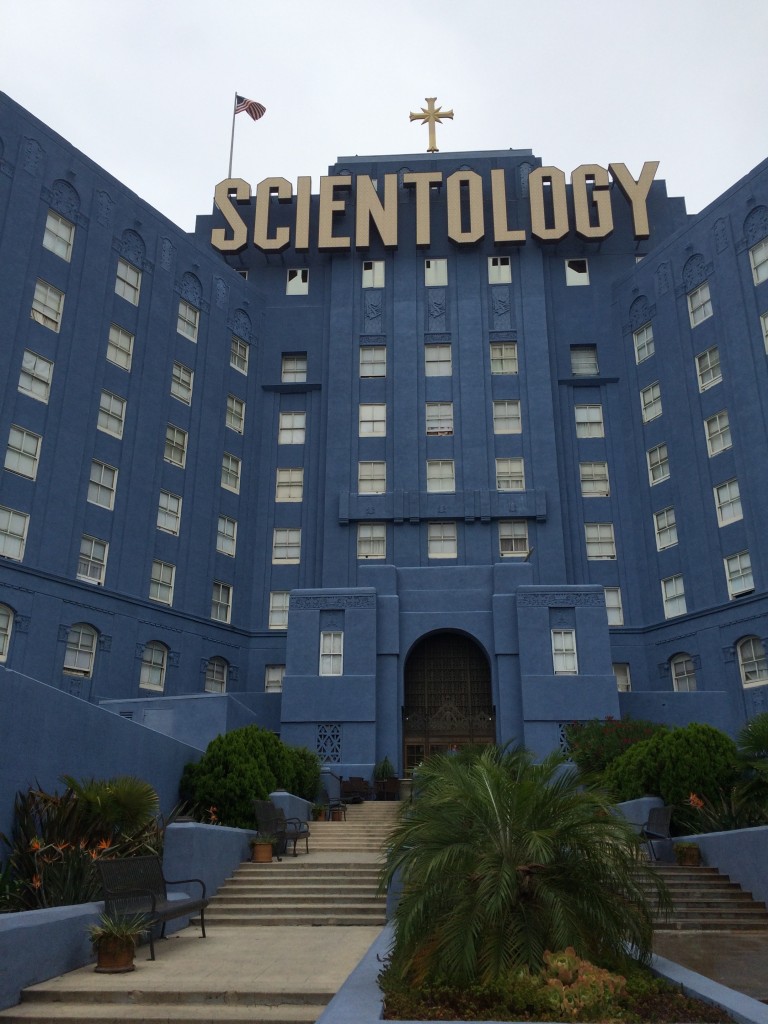
Before leaving we stop for breakfast in a recommended cafe where they do awesome pancakes with whipped cream, maple syrup and free refills of coffee. We park the car and walk up the street and then suddenly come across a huge imposing blue building. It’s massive and weirdly painted bright blue. It’s the headquarters of the Church of Scientology. At this point I’d like to talk a little bit about Scientology, which I consider to be a fascinating and (here’s that word again) mysterious aspect of California life.
What’s the Church of Scientology?
Here’s a recording I made at that moment.
Play the first recording.
It’s a religion, and quite a controversial one. Some people call it a cult. Some of its members are famous celebrities like Tom Cruise and John Travolta. Apparently the church has a lot of influence in Hollywood, and lots of people think it’s really weird and secretive. There are even suggestions that the church has been involved in criminal activity, threats – again these are just allegations, but it’s pretty mysterious and fascinating, like something from a mystery novel.
I recently saw a really interesting documentary about Scientology, called “Going Clear” in which lots of ex-members (people who decided to leave) of the church explain what it’s really like, and they don’t say very positive things. In fact the documentary seems to suggest that it’s a power-hungry cult which takes money from its members and threatens them with retribution if they try to leave. There are also suggestions that the church committed crimes like burglary, theft and intimidation in order to avoid having to pay a huge tax bill to the US government. Bold claims indeed. What’s really going on in this blue building?
A brief history of Scientology
This time I’m going to paraphrase a summary of Scientology that I’ve found on the “For Dummies” website. “For Dummies” is a series of books that help to explain various complex subjects in simple terms. You might know the series – they have distinctive yellow covers. It’s a really good series and they have books on almost every subject. A quick look at the For Dummies series on Audible shows titles like… (read some titles).
Recently I’ve been listening to the audiobook version of “British History for Dummies”, and it’s really good and yes I got that from Audible. You can get it too if you want – just click an audible button on my site or go to www.audibletrial.com/teacherluke and sign up for a trial and you can get a free audiobook. You could choose one of the “For Dummies…” books. Just search Audible for “For Dummies” and you can see all the books available.
Anyway, For Dummies also have a website with clear and fairly brief summaries. So, let’s check out the summary for Scientology. You can check the link here: http://www.dummies.com/how-to/content/what-is-scientology.html
So, what I’m about to say is based on information in that summary, but also what I learned from the Scientology pamphlets I’ve read and what I learned from several documentaries I’ve seen.
The church was set up in 1953 by a writer called L. Ron Hubbard. Hubbard was already fairly successful as a writer of both science fiction stories, and then self-help books. His most successful self-help book explored the relationship between body and mind, and he called it Dianetics. This book became the basis of the religion he then set up called Scientology. Some critics say that Diabetics is just quackery (not proper science or psychiatry) he only set this up as a religion because it was a tax-dodge. In the USA religions don’t have to pay tax, so Hubbard is criticised for having a cynical reason for making his religion in the first place – so that he could make money, or worse – that he was just power-hungry. Whatever the reason, Scientology was set up as a religion in the USA.
Hubbard is loved by the Scientologists, but viewed with a lot more suspicion by many non-members of the church. For example, the French government, who considered him to be a fraudster and tried to convict him of customs violations in the 1970s. “Britain, Greece, Spain, Portugal, and Venezuela all closed their ports to his fleet in the 70s. At one point, a court in Australia revoked the church’s status as a religion.” (Wikipedia page https://en.wikipedia.org/wiki/L._Ron_Hubbard#Life_in_hiding) These are all reasons why he went into hiding in 1970. To go into hiding means to leave the place where you live and go to a place where nobody can find you. He was the leader of the church right up until he died in 1986.
What do Scientologists do?
You can walk into a Scientology centre in many cities in the world now, and have a counselling session. In fact you might be invited in for one. When I used to live in London I used to walk past the Scientology centre in central London and they would sometimes as me if I wanted a stress-test. I always said no because I felt it was just a way for them to get me into the centre. I imagined it would be like this:
“Hi, are you feeling a bit stressed today? Would you like a free stress test?”
and then you go in and they check you out and tell you that you’re feeling all stressed out and that stress is really harmful and that they have all the solutions to how to combat stress and live a more effective life – and it’s Scientology. “Here’s a leaflet” or “Would you like to sign up to a course?” and then you’re in.
Sounds okay doesn’t it? I expect it is helpful at the beginning, for many people. It’s just not for me.
A counselling session at the church is called an audit. Essentially, this is a bit like a psychotherapy session. You’re invited to share deeply personal things in order to free yourself from emotional burdens. It sounds a bit like Freudian psychoanalysis doesn’t it? In fact Scientology completely rejects psychoanalysis. Apparently, Scientology is the only way. During these auditing sessions you are hooked up to a machine which is called an E-meter. According to scientology this can measure your thoughts, well – it’s not just as simple as ‘thoughts’ – apparently it’s related to immortal spirits from space which inhabit our bodies and prevent us from living a healthy and happy life. Auditing allows us to set these spirits free, which makes us feel better. Critics say the e-meter just measures electromagnetic energy in your hands and is no more revealing about your mind than a crude lie detector test. But, according to Scientology if an e-meter is used by a Scientology minster then it really works. Freeing yourself from levels of emotional burden in these auditing sessions is called going clear, and there are different stages of clarity. In order to achieve those levels of clarity you need to do more and more audits, share more and more personal problems, and also contribute more and more things to the church. This costs quite a lot of money as courses of auditing are not cheap, and all of this goes to the church, and also all the private and personal things you’ve said in auditing sessions are recorded and kept by the church. The aim is to free yourself of all your emotional burdens and achieve a state of perfect clarity. Apparently the church of Scientology is very rich as they have purchased some incredible pieces of real estate around the world, such as this massive building in Los Angeles. It’s not clear exactly how much power they have. Some say they exert some influence in Hollywood’s entertainment industry.
What do Scientologists believe?
Scientologists believe that people are in fact just receptacles for immortal spirits which came down to earth many years ago. The church doesn’t like it if these spirits are called aliens. Because, it sounds bad if you believe in aliens. It sounds a bit mad doesn’t it. So let’s not call them aliens. Apparently, these immortal ‘spirits’ live within us. They’re trapped inside us, and they can only be freed by going through auditing sessions, until you get to the top of level of clarity when I guess the aliens, sorry spirits go somewhere else. I’m not sure of the details of what happens to the spirits, or if we are the spirits, or what they look like.
OK, fair enough I suppose! We’re all entitled to our beliefs. What’s so controversial about them?
Here’s what’s written on the page from Scientology for Dummies, by Scott Barnes: http://www.dummies.com/how-to/content/what-is-scientology.html
Scientology is one of the most controversial religious movements of our time. Many people reduce their world view to nothing more than a cult that brainwashes its members and then fleeces (cons) them by charging outrageous fees for some auditing classes. Critics lambast the church for its rejection of established psychiatry, and many people take issue with the church’s “Celebrity Centres,” which are facilities that are technically open to the public but primarily serve the most famous Scientologists in the arts, sports, and government (think Tom Cruise, Isaac Hayes, and Nancy Cartwright).
Reports from some who have left the Church of Scientology are even more incriminating and include stories of church members being held for years against their wills at “rehabilitation camps” for violating certain policies, or sending members to go through the trash of the church’s critics and former members to find material to blackmail them into silence. In 1979, several Scientology members were convicted for participating in the largest theft of government documents in U.S. history. Scientologists have also been accused of tampering with witnesses in court cases and even murder.
In response to these claims, Scientologists state that their religion is genuine and that the movement has been distorted, and that they are being persecuted.
Among the criticisms are: Scientology preys upon people who want to make it in Hollywood by suggesting that they can help, then they force them to stay in the church with the suggestion that they can harm their careers due to their extensive connections in the business, they illegally resisted an investigation into their accounts by the IRS (the US tax office), they bully their members and they blackmail high-profile members like Tom Cruise and John Travolta into staying in the church – remember the church has recordings of all those extensive and deeply personal auditing sessions. These are all allegations and criticisms which have been made against the church – not necessarily my thoughts. I haven’t decided what I think of them yet and I’m just curious.
Is it possible that all of this sinister stuff is going in within these imposing blue buildings that we saw? I wonder…
Play the second recording.
I decided I’d try and talk to someone. I felt a bit excited and a bit nervous because I know the church can be a bit touchy about people doing recordings or making documentaries about them, which I guess is understandable. Anyway, I decided that I wanted to talk to someone so I went over to some of the people in uniform who were walking around the building. I spoke to a woman who was very nice and normal, of course. I told her I was making a holiday diary, and that I had just come across the building and wanted to interview someone about it. She took me into the building and I spoke to someone in reception. I made a recording afterwards.
Play the third recording.
What do you think about Scientology?
The woman I spoke to seemed very happy and proud to be working at the organisation. The place looked very smart and clean. Many members of the church say that it has helped them a lot. But what about all these allegations? Tell me what you think? Is the church a cult? Is it a force for good? Is there a church of Scientology in your country? What do you think?
Yosemite National Park
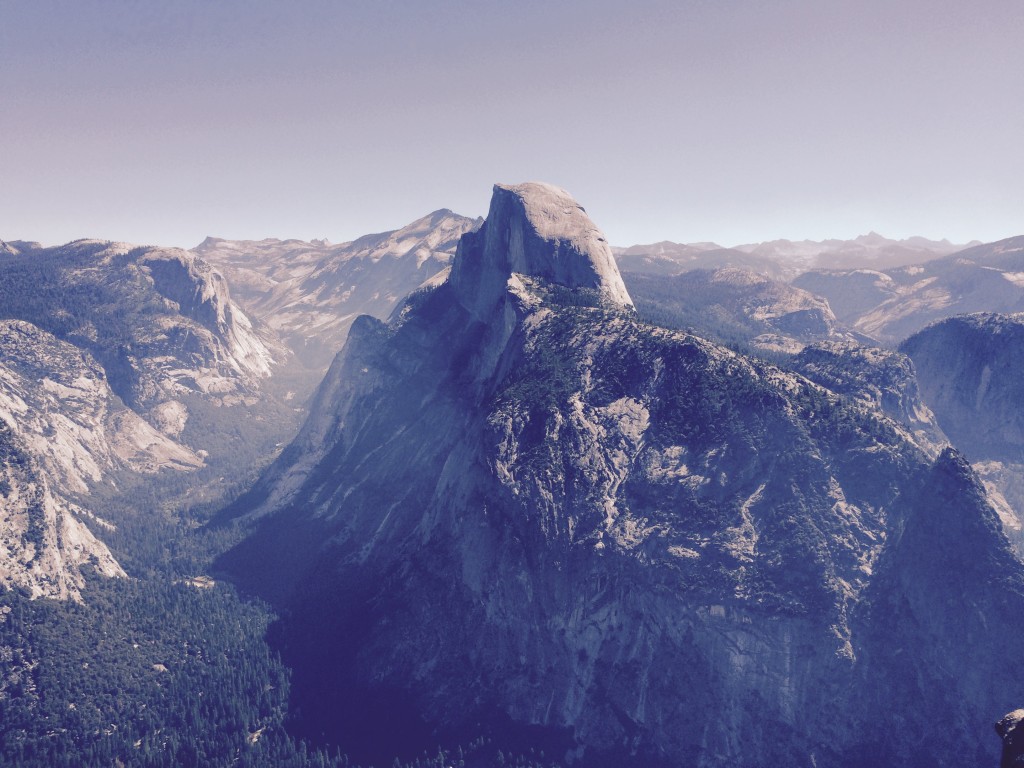
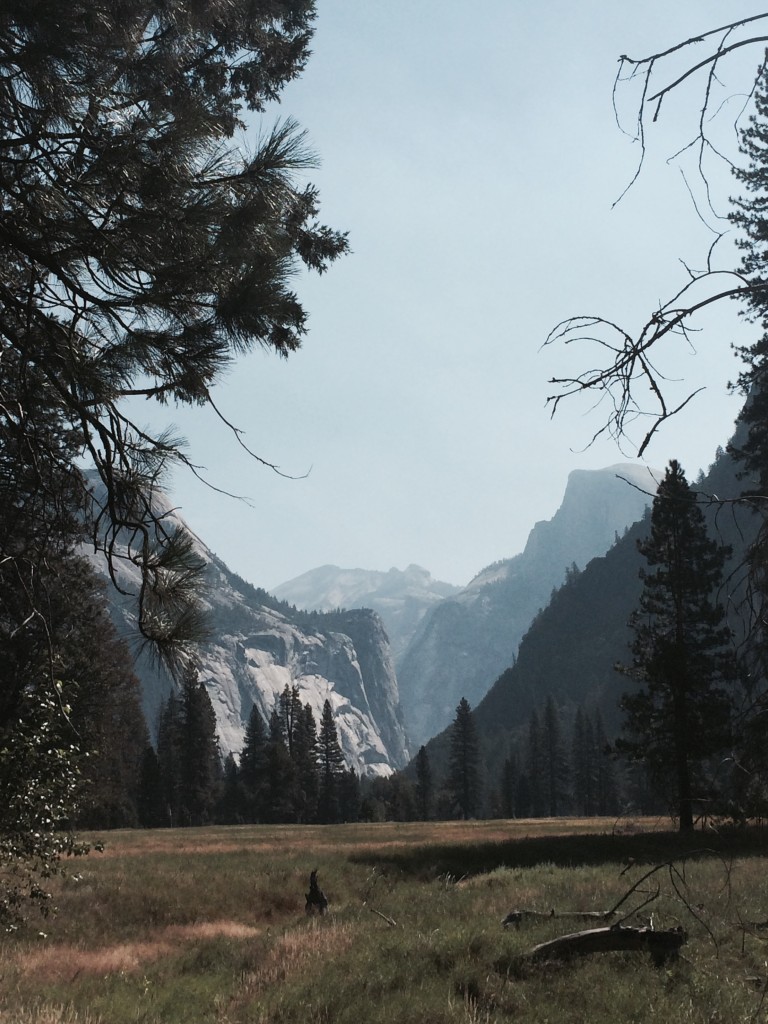
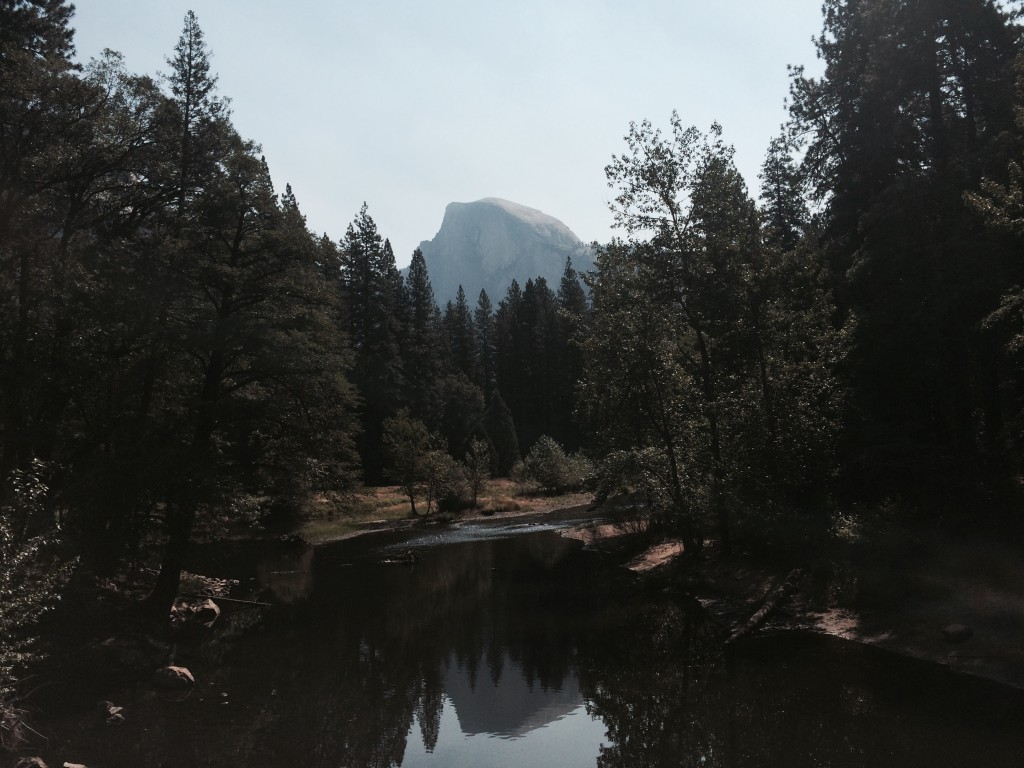
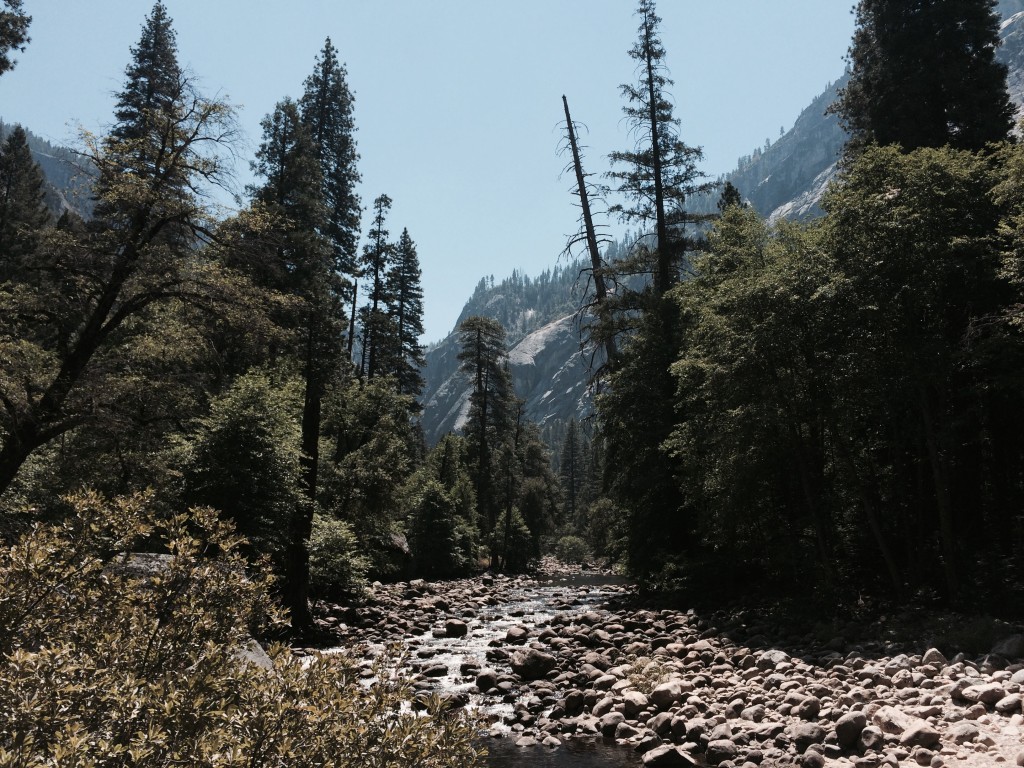
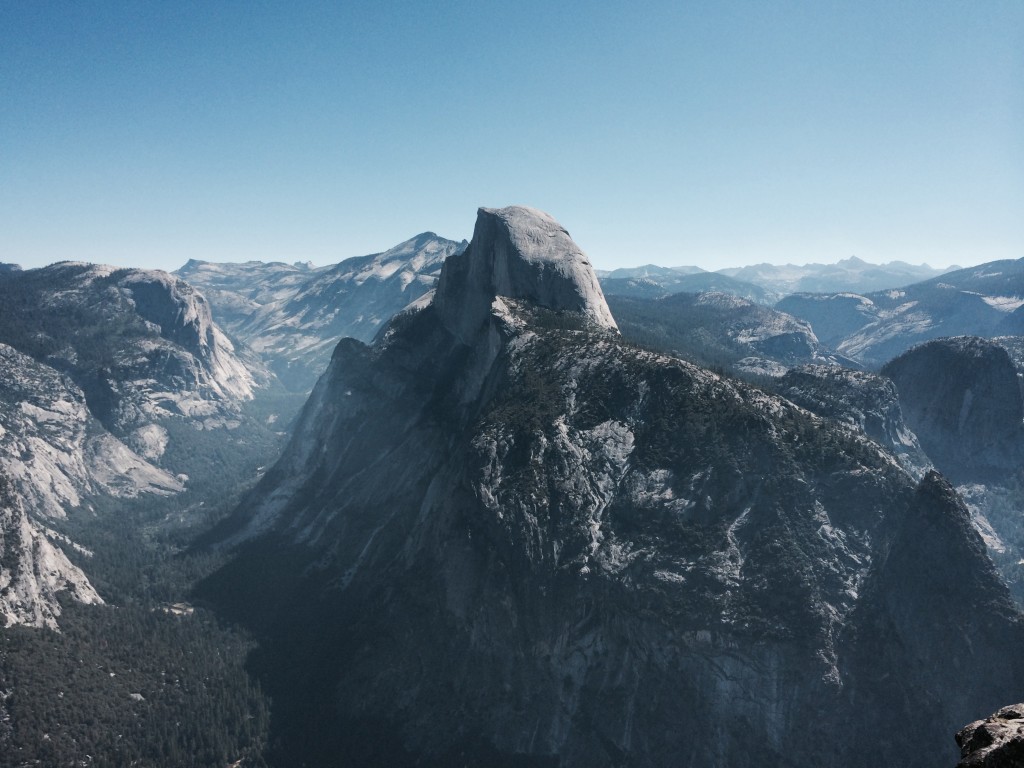
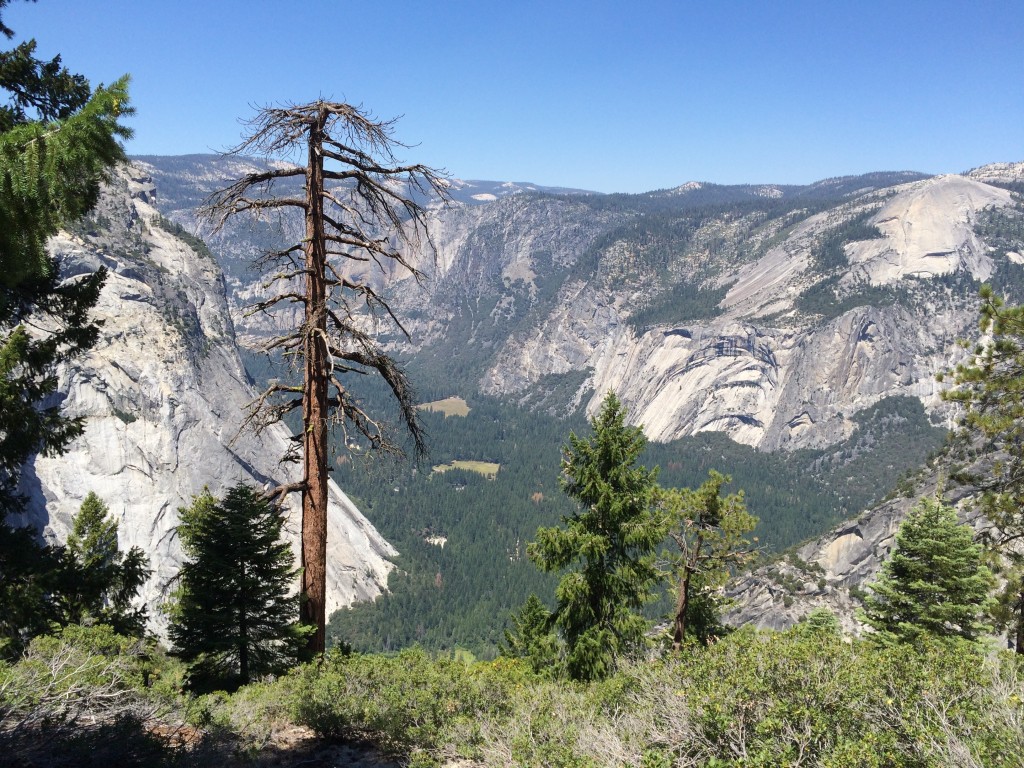
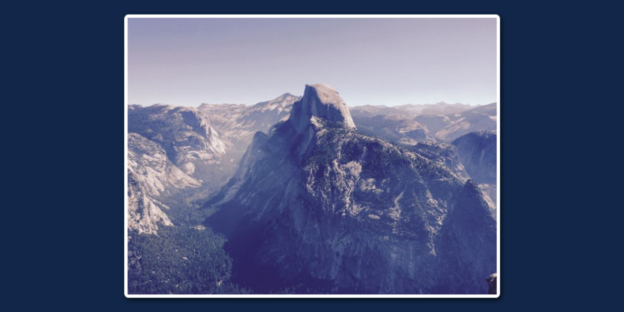
Yosemite is a huge national park, and probably one of the most stunning parks in the world. Most of the tourism there is centred on Yosemite Valley, which is full of meadows, a river and pine trees, and some accommodation and camping grounds. Around the valley you have incredible granite rock formations including stunning mountains. There are granite rock faces like El Capitan, Half Dome, Sentinel Dome and so on, also some of the highest waterfalls in the world. The whole thing combines to be a stunning place to spend time camping, cycling, hiking or rock climbing and it is visited by about 5 million people per year. There are a few roads that go round the central part of the park surrounding the valley. 95% of the park is wilderness and hardly any people go there except experienced hikers, climbers and campers. You might know Yosemite from the Apple Mac operating system. At the time I’m recording this podcast, the most recent OS for mac is Yosemite (I believe the next one is called El Capitan – also a rock face in Yosemite National Park). So if you have a Mac with Yosemite, you’ve probably seem desktop images of the place. It’s absolutely stunning. Being there is a bit like being inside your own Apple Mac, but obviously much much better than that because nothing can compare to seeing it with your own eyes.
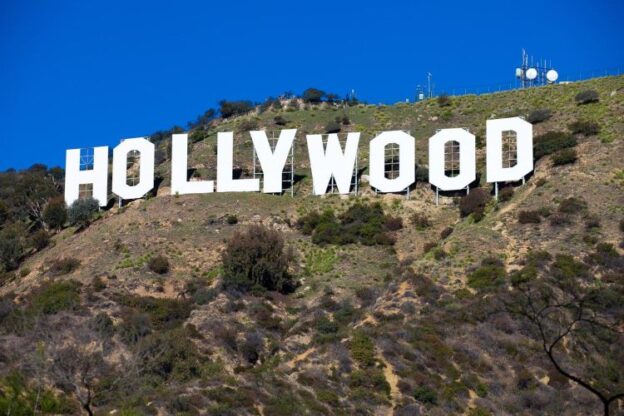
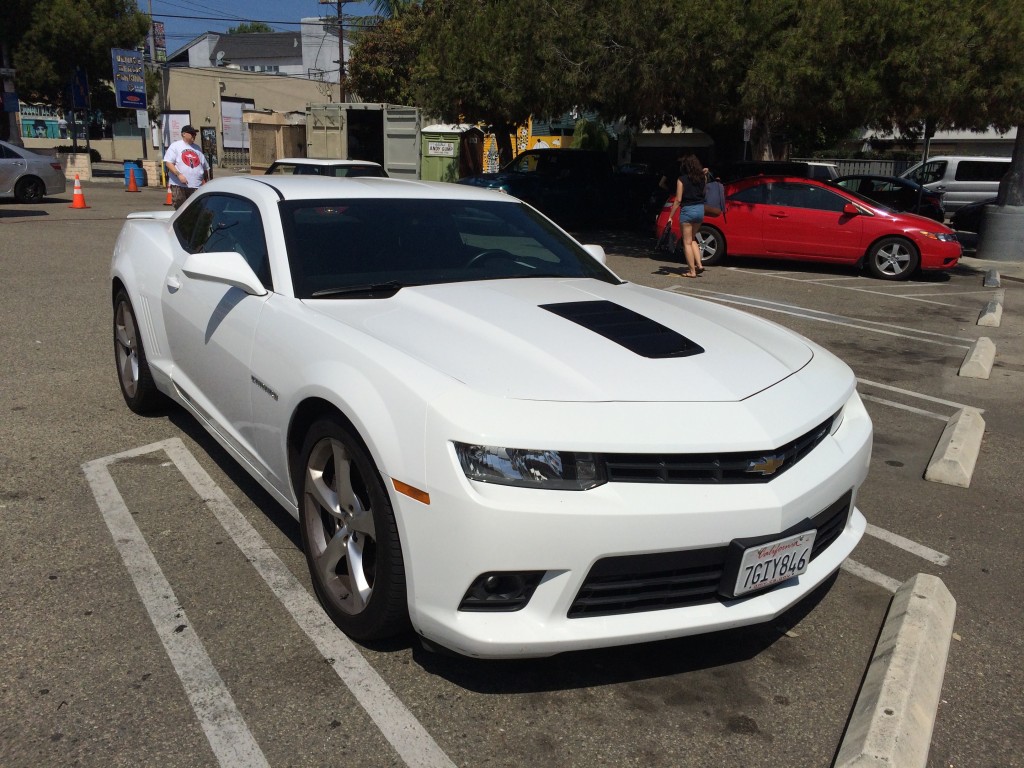
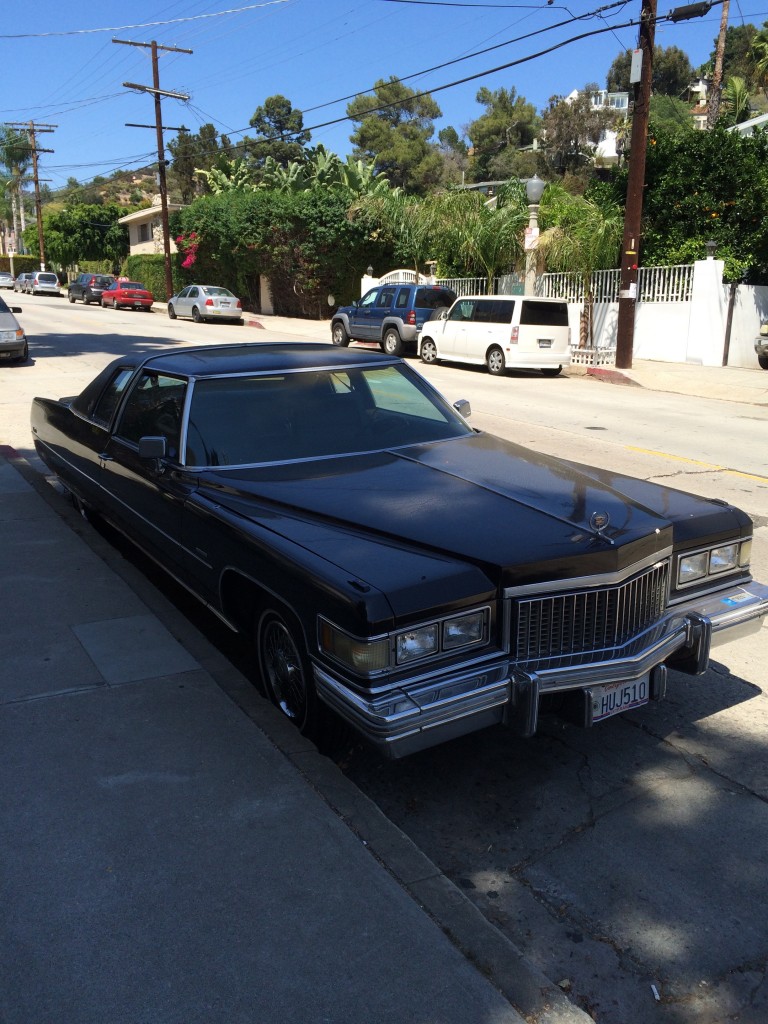
We drove out of LA and the through back end of the Hollywood hills. Handsome countryside with a highway which is great for driving. But the land soon becomes flat boring farmland. The driving is fun in the Camaro, which comes into its own on the open highway (which is rarely open because of all the cars). I realise that I’ve hardly put my for down the whole time. Most of the driving in LA has been slow cruising or edging forwards in traffic.
I floor the Camaro with some space ahead and it reveals masses of hidden power, roaring and leaping forwards with yet more revs all the time. It seems to have about 9 gears and they’re all RAAAAA!
We eat up the highway and eventually arrive in Fresno after about 4 hours. Fresno, aka Mall-land. It seems to be one giant shopping mall. I guess we’re in the commercial district but there is just open mall after open mall. We pick one with a Wholefoods and get sushi, which is not that great. Wholefoods is like Mecca to us. London has a few, Paris none.
What’s great about Wholefoods?
They’re normal in USA but this one isn’t that great, or maybe the expectation was too high.
It’s freezing inside and boiling outside.
We wander around mall-land looking for supplies.
Then the drive to Yosemite in the mid/late afternoon. A couple of hours.
The landscape gets more and more interesting as we climb up and up the winding highway. Wonderful driving and lovely smell of pine cones and pine trees. We drive with the windows open and the sun on our faces through the trees.
Eventually we’re in Yosemite and we glimpse views of stunning granite formations but keep going. We go into a tunnel and on the other side (tunnel view) the whole valley opens out on the left side. It’s my Mac desktop but we’re actually there. Can’t see properly from the Camaro. Terrible visibility.
After an hour of driving in a daze we arrive at our campsite.
Describe the tents.
Friendly atmosphere. Our tent is situated pretty well.
There are strict regulations about bears.
Black Bears in Yosemite
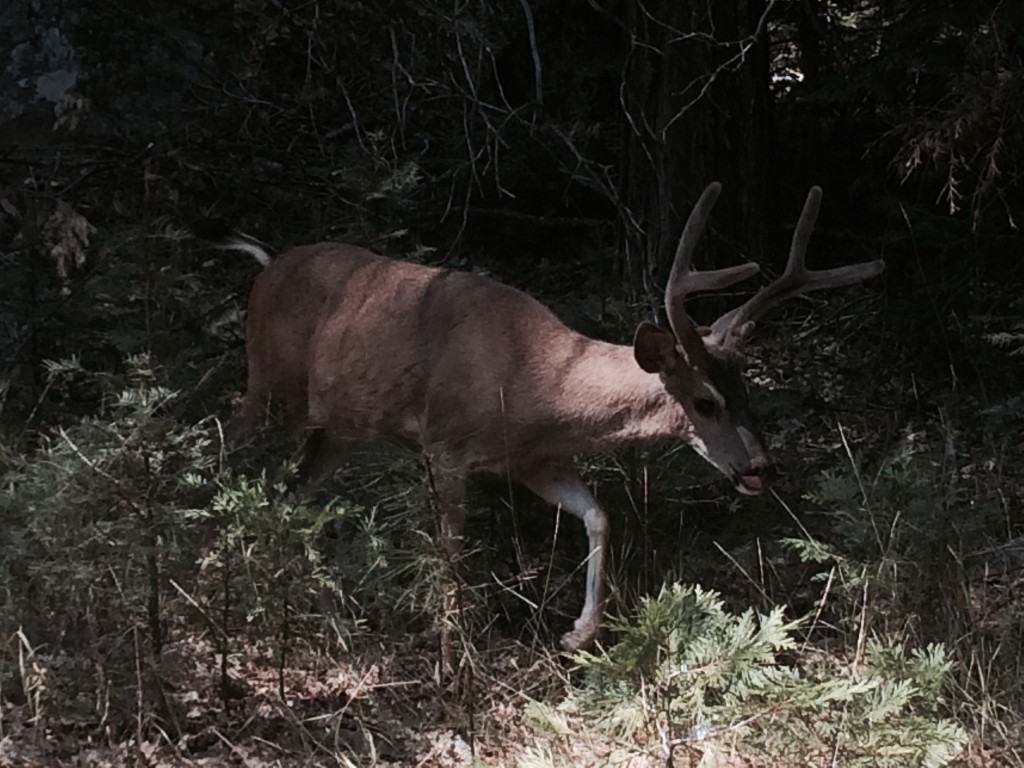
This is bear country and they are all around the park. They come out at night to go on missions into the valley to get food.
Apparently they have over 2x the sense of smell of a bloodhound, are very intelligent and more curious and confident than dogs, they have huge claws and padded hairy feet which make them silent. You must not keep any food or scented products in the tent or car. Everything has to be in the bear boxes which are very sturdy, made of metal and bolted to the ground. Apparently if you leave food out and then turn your back, they can appear and start feeding. Apparently at night, all the black bears head down into the valley under the cover of darkness. Slightly scary.
Naturally it’s pretty exciting to be sleeping in a basic hut with just a curtain separating us in bed and the bears which I imagine to be wandering around our tents at night.
I don’t have to imagine much because that night a bear has a go at the bear box just next to our tent. I hear it trying to open the box before moving on to try another one and another one. I later hear two people walking past talking about the bear they’ve seen. I was frozen solid in bed the whole time.
Apparently if you come across one you should shout at it angrily to try and scare it away.
I wonder what I would shout at it.
What should you say to a bear? What’s the appropriate thing?
I wouldn’t want to be too rude but at the same time it would be necessary to talk in rather strong terms.
I suppose indirect language wouldn’t work.
You have to be direct and clear, yet reasonable.
I’m joking of course. I think I would just scream at it and swear and say any old nonsense.
I imagine some of you would be a bit cooler.
Not me – I’m from the UK. We killed all our bears years ago, and made them fight dogs and other cruel things.
I imagine that any bear meeting me and hearing my London accent would not be that friendly.
So, no need to be cool. Freaking out and panicking is the order of the day here.
The place has a lovely summer camp, hippie Boy Scout feel to it, although it’s a bit crowded and there are lots of kids. It would be nice to have the place to ourselves of course but that’s impossible.
Dinner in the Yosemite Lodge down the road. Modest canteen food. Bought some tourist stuff like a cap and some playing cards.
Then bed after making sure all food and smelly stuff is in the reinforced box, then draw the canvas curtains – definitely not reinforced. Tie them with a good knot. Will it make a difference?
Of course bears won’t be interested in us, but apparently they’re really curious. We’re wearing mosquito repellent coil things. They’re quite interesting and smelly. Maybe a bear will find it interesting.
I would. “Oh what’s that on your wrist” – would the bear equivalent of that be “roar! Let me poke my head into your tent and bite your arm off, or just maul you a bit (because that’s what large dangerous animals do, they maul you).
Slept pretty well in the open air, despite these thoughts in my head and an actual bear or two outside the tent. Had to go to the loo in the night. I did so, noisily, checking the toilet quickly for any bears that might be in there hanging out or whatever. I did my business and had to look over the top of the door before leaving the cubicle, just to make sure there wasn’t a huge bear waiting for me. But it’s all fine.
12 August
Breakfast in the canteen and then a day in the park.
Stayed on the valley floor on bikes. Packed lunches. Wanted to hike but closed. Apparently there was a fire up there.
Amazing seeing the granite up there. Gave me the desire to climb, but that’s not an option without climbing buddies, and my wife hasn’t really done it before. Bikes are a bit awkward – beach cruiser type things. Mountain bikes would have been better. Still, it’s very peaceful and incredibly fresh. Sunshine and cycling are quite tiring so we end up chilling by the river.
I’m a bit worried about tomorrow. What can we do that’s fun and takes advantage of the proper rugged landscape without being too challenging?
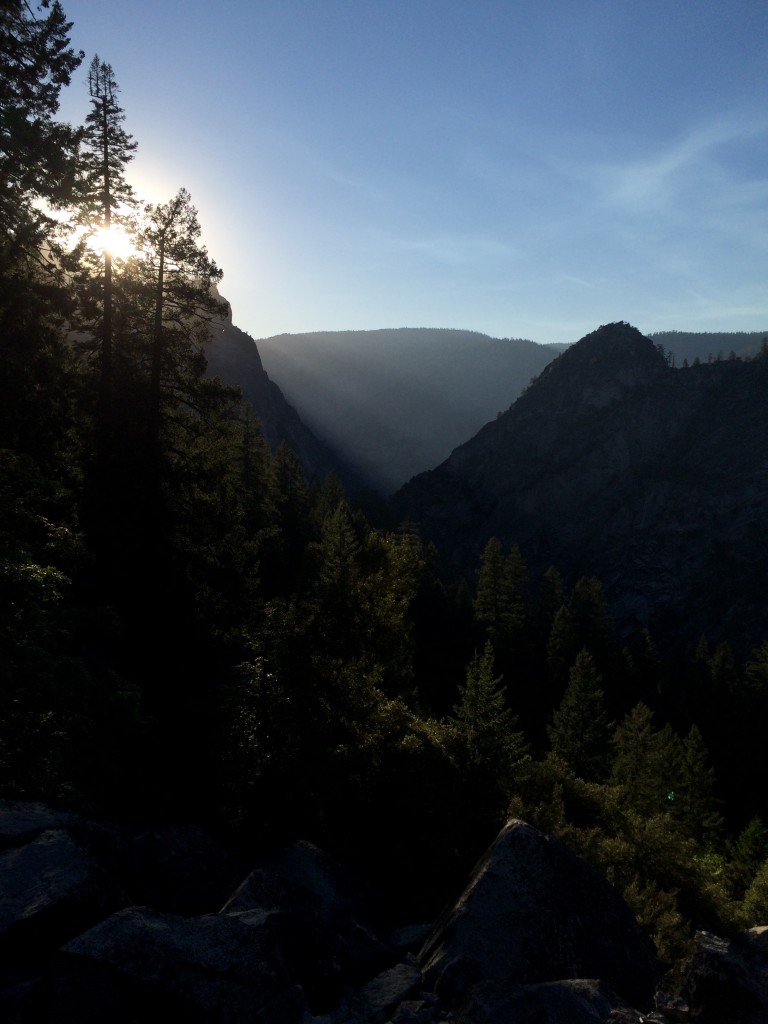
That night I drive us back up to Tunnel Point to see the sunset. We end up staying to look up at the stars, lying on our backs. It’s immensely beautiful as there is hardly any light pollution, so the stars are all revealed in their glory. Millions and millions of tiny points of light. Our galaxy the milky way is so rich that it appears to be like a mist across the sky, but in fact it’s a dense collection of many many stars. We see constellations like Orion’s belt and the plough. Driving back through the valley my wife sleeps in the passenger seat and I stop the car again to lie on the bonnet and look up at the stars some more, but I get totally freaked out by the total darkness around me! We sleep soundly that night, ready for a pretty early start in the morning.
13 August
Early start.
Big breakfast.
Coach trip up to Granite Point. Driver very amusing. 26 years and he has perfected his routine. Full of jokes and dry humour and the story of Yosemite. (What’s the story)
Native Americans.
Granite Point.
Panoramic views and start hike.
Some concern over the preparedness, but in fact we’re well prepared. Our shoes are not climbing shoes, but I think some of that is just marketing, and anyway some of the more recent climbing shoes don’t have ankle protection. 8 miles of hike, mostly downhill. Some uphill bits. Some tricky steps. Should take 4-6 hours.
We do the first 3-4 miles without problem except my wife rolls her heel slightly on a rock. As she’s walking she steps on a small rock, and her heel flexes a bit to the right as her foot slips slightly. I worry for a moment if she’s sprained it but she says she’s fine and carries on.
Amazing views.
Stop at Nevada falls, dip our feet in the pools of cold water, chill out and eat sandwiches.
Time to leave and my wife’s ankle has ceased up completely.
Very painful to walk on and we face 5 miles of downhill trekking. Should take a couple of hours normally but it takes us about half and hour to do about half a mile. She’s holding my hand and using me as a crutch. We have to stop. We’re stuck.
Lots of people stop to ask if we’re ok. People are amazingly nice.
Two women called Jenny and Susan stop. Apparently they’ve just done a training course in safety and first aid.
They take our situation seriously and give us water and food, and then call search and rescue for us. I feel bad for not having done this earlier. Anyway, search and rescue take a full description of the injury and say they’ve sent a ranger up to meet us. Suddenly we’re in a kind of emergency rescue situation with the authorities involved. My wife in particular is gutted and embarrassed. They tell us not to move. We wait for about an hour and then the ranger arrives. Apparently he was on the trail already but he made good time to get to us. I’ve bound my wife’s leg in a bandage given to us J and S. The ranger has crutches and more supplies of water and food. He also has material to give the foot support with a splint.
According to him we should climb back up and then down another way. We realise this is going to take us hours and hours of slow and painful movement for my wife. She’s really pissed off and sorry. So am I.
We walk back the way we’ve come, up to the waterfalls again and it’s slow going. Poor wife has to struggle with crutches or one crutch and my shoulder. Very slow. A 2-3 hour trek looks set to take 5-6 hours. That’s a long time for my wife to hobble along a rocky trail up and downhill on crutches with one ankle in pain and unable to take her weight.
But she’s brave and determined. Every time Josh or I asks if she wants to take a break she says “non!”
She’s determined to get down the trail to the bottom, as quickly as possible.
Describe the trail and the things we saw.
Peregrine Falcons nesting above us.
We talk to Josh and he tells us various things:
There are about 5 fatalities from accidents per year.
That sounds like a lot, as if it’s a really dangerous place, but when you consider that about 5 million people visit every year it’s only 1 in a million who die. Imagine London with its 7 million residents. How many deaths are there in London per year? A lot more. So which is the more dangerous – trekking in Yosemite or cycling to work in London?
Nevertheless, there have been some pretty gruesome accidents, usually as a result of stupid tourists who have no sense of safety or no respect for the nature of the park.
Apparently one of the most common forms of death by accident is from people falling over the waterfalls and falling hundreds of feet to their death on the rocks below.
Apparently they jump around on the huge boulders at the edge of the waterfalls with their cameras and selfie sticks, edging forward trying to get the perfect photo or selfie and they edge forward a little too far and suddenly they’re over the edge.
What happens when a tourist falls off one of the highest waterfalls in the world and lands on granite rocks?
Apparently the rangers have nicknamed it the human water balloon. You can imagine what that looks like to the other trekkers and tourists who witness it happening.
Josh tells us other tales of tourists who are unprepared for the wilderness of Yosemite, even though there are numerous warnings written all over the park.
People who attempt to scale the half dome – a huge granite dome thousands of feet above the valley floor with a sheer vertical drop on one side. It takes at least 12 hours to climb up. Most do it over several days. It’s a proper climb for experienced people and it ends with a long ascent up the dome at a 45 degree angle. To get up there you have to hold onto steel cables which have been bolted into the rock, and use crude wooden blocks also bolted to the granite. Some people lose their grip and down they go. Others lose their cool and panic, with the same result. They fall all the way down to the bottom.
The search and rescue Rangers are called up to the mountainside every day. Sometimes it’s necessary to do helicopter rescues.
According to Josh, this year a woman fell from the half dome but didn’t fall to her death. Instead her shirt got caught on a sharp bit of rock and she hung there for two hours before being rescued.
Earlier that day, Josh had to rescue a guy who had fallen out of a tree. Apparently he was climbing the tree, messing around and he fell out and landed badly on a rock. His ribs broke and pierced his lungs. Josh thinks he probably didn’t make it.
This puts things in perspective somewhat. But still, the crutches and the assisted descent are definitely necessary and we count our lucky stars that it’s not worse. Josh tells us that we’re well prepared with water, food and a torch. Yesterday he rescued a Chinese couple who had tried to climb the half dome without knowing what they were doing. It’s at least a 12 hour climb, often more. They’d started after lunch and were quite high up, coming back down when they realised they would never get to the bottom before sunset and then they’d be stranded in total darkness on the trail. Not fun spending a night out there without food or shelter, especially when you know there are bears around, even 9 foot long mountain lions, although they are rare.
Josh heard the couple screaming for help on the trail, and assisted them to the bottom.
Again, 5 million people enter the park every year. Not all of them know what they’re doing.
We continue to make very slow progress down the trail. My wife is in a lot of discomfort, but mainly she’s frustrated at not being able to go faster. Each step is a mini challenge because of the crutches – she has to place them carefully, and then place her foot carefully too, making sure she doesn’t have to put her weight on the bad ankle.
On the plus side, we get to walk with a ranger and we get the sunset on the trail, with magnificent views of the half dome and other domes in the valley. Again, this all seems so familiar to me because of a computer game – this time it’s Red Dead Redemption, which is set over 100 years ago, and you’re basically a cowboy gunslinger in the wild west. The landscape is very faithfully reproduced in the game, and there is a mountainous area with bears which is really similar to the landscape in Yosemite.
As the sun stretches through the trees onto the trail we are basically alone at this point as it gets to about 8pm. We should have been back 3 hours ago but we still have a long way to go. In this quiet I keep expecting to see a bear cross the path in front of us. Everything seems so still and peaceful that I’m sure any moment now we’re going to come across a bear.
Anyway, the main challenge is to get down the mountain, never mind bears and lions. It’s very rocky, there are lots of steps and boulders and so on. It goes on and on forever until eventually we’re walking in the total darkness with torches on our heads.
I carry my wife for some sections, and it’s a chance to go much faster.
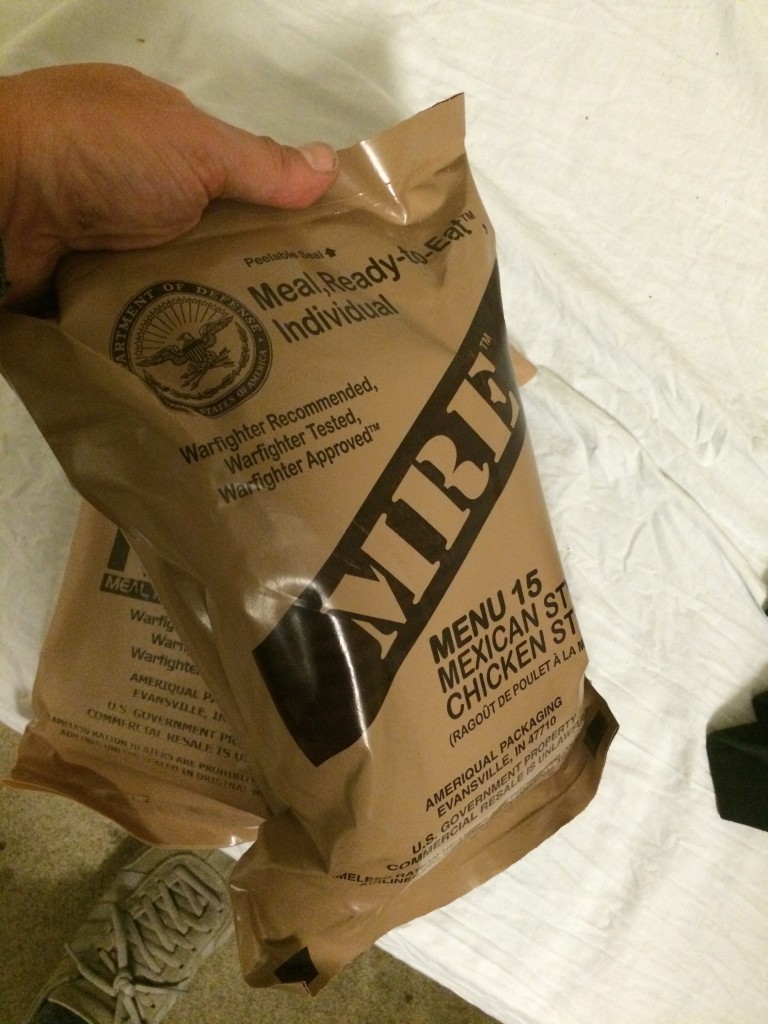
Eventually, after ages and ages, we finally get to the end of the trail at a huge water tank, which is like some massive UFO looming out of the darkness. From there we’re all picked up by a local police officer in his 4×4, which is absolutely huge, like many of the cars. It’s giant, with massive tyres. My wife sits in the cab with the police officer. Between them there is a gun rack with several massive semi-automatic rifles, a shotgun and a few handguns. A typical American cop car! Not only is it a tremendous relief to be off the trail and back in civilisation, but we get a ride in what feels like a tank! The police officer drives us through the forests in the closed area of the park, back to where our car is parked at Yosemite Lodge. We stop at the police station and Josh goes in to get us some food. It’s 11 o’clock and we haven’t eaten since the sandwiches at the waterfall. Josh comes out with two US Army meal rations. These are field packs for soldiers and they contain everything for a full meal including macaroni cheese, tea, coffee, a fruit desert, bread, salt, pepper, butter and the whole things heats themselves up without needing fire. Bonus!
In the end, we are completely knackered and go straight to bed, exhausted after I carefully inspect my wife’s ankle. Thankfully it’s not too swollen or discoloured. In fact, I think she escaped bad injury and her ankle will be fine if she rests it. The next 36 hours will be pretty inactive, with a long sleep and then a fairly long car journey so she can rest it.
End of Part 5! Part 6 coming soon…