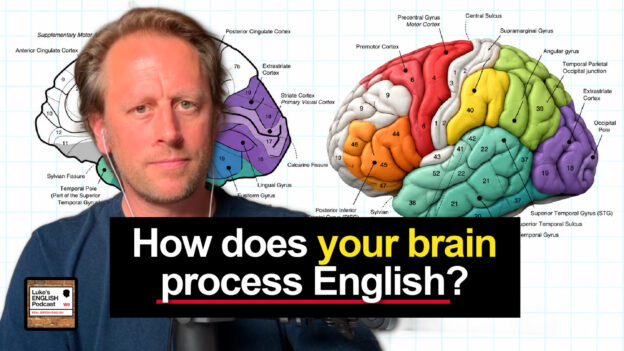
This episode is full of fascinating science-backed insights into how the brain processes language. I read an article, and then explain various conclusions about the best way to learn English, with a lot of practical tips for speaking, listening, grammar and vocabulary. What does neuroscience tell us about the best way to learn a language?
LEP is back after a summer break, and in this episode you can hear messages and questions from listeners, including stories of English learning, and testimonials from LEPsters who have made a significant improvement to their English after listening to this podcast long-term. Also included are some philosophical musings about life & death, an update on the plants in my pod-room, and some research-backed insights into the language learning benefits of listening to my rambling episodes.
Here it is, finally! The long-awaited episode 1000. It has taken me weeks to finish this. If you listen, you will understand why it has taken so long! This is a celebration of this podcast after 17 years and 1000 episodes. It includes a lot of rambling, an interview with my brother, questions from friends and family, and the voices of various guests who have been on this podcast over the last few years. Also, regular interruptions from my daughter and all sorts of other random moments such as the sounds of dogs, woodpeckers, neighbours, and more! Thank you to all the LEPsters around the world and my guests for helping to make this achievement possible! ❤️
Back by popular demand, here is another Sherlock Holmes mystery for episode 999. How will Watson deal with his mini-mission to an opium den, before joining Holmes on one of his most singular cases so far, attempting to solve the disappearance of a gentleman and the suspicious involvement of the man with the twisted lip? Listen to the story and then keep listening as I break it down paragraph by paragraph.
Recorded the day after Argentina beat England in the semi-final 😭 here is World Cup Ramble #4. Zdenek joins me again as we discuss as many talking points as possible, including what on earth happened yesterday, the intense rivalry between Argentina & England, the historical background to that rivalry, Spain eliminating France, predictions for the final and so many other things, including a passionate conversation about cultural differences and communication style, plus the real heroes and villains of this epic World Cup competition. Normal podcasting will continue next week.
Martin returns with a set of questions about childhood, sparking a funny conversation full of stories from school, family holidays, getting into trouble, and formative years of Luke growing up both in urban West London and rural West Midlands. Expect a premium episode dealing with vocabulary in this conversation.
Here is the third World Cup ramble, covering the events of the last 16, predicting the outcomes of the quarter finals and beyond, and discussing the various issues, talking points and controversies. Is the World Cup rigged? Are the referees biased? What about the scandal involving FIFA and Trump? Who is going to win this massive competition? I’m joined by football fan and returning guest Fred Eyangoh. Leave your comments below and join the discussion!
Win any argument in English with these incredible debating skills. Ray Addam joins me for a discussion about the art of debating, including various strategies you can use to help you win arguments, disagreements and debates. With plenty of examples given and techniques explained, this is surely a useful episode for developing your speaking skills in English.
Ray’s Preply profile, where students can book one-to-one English tuition with him 👇
Ray’s school website, where students can access his courses and join live group sessions to practise English together, as well as develop soft skills such as debating and public speaking 👇
There has been an awful heatwave in Europe recently, with really high temperatures and a humid, sticky atmosphere. In this episode I ramble about the conditions, explore vocabulary with the words “hot” and “heat” and show the typical things British people say when the weather is boiling. Expect various funny tangents, anecdotes and improvisations, including a David Attenborough BBC nature documentary about Luke trying to buy lunch on a red-hot Paris boulevard, and plenty more. PDF notes available.
What are the different English accents you can hear if you visit London? In this episode I am talking to Patricio from the YouTube channel Patricio Languages, who makes videos about diverse English accents from around the world. We talk about 4 specific accents that are native to his home town of London, namely Received Pronunciation, Cockney, Estuary English and Multicultural London English. We also chat about Patricio’s study routines for learning Spanish and Portuguese. So, plenty of insights about British English pronunciation, how to understand native English speakers, and some tips for language learning. Perfect topics for another episode of LEP, right? Full transcript available, and listen all the way to the end to hear me turn into a proper cockney geezer.
This website uses cookies to improve your experience while you navigate through the website. Out of these, the cookies that are categorized as necessary are stored on your browser as they are essential for the working of basic functionalities of the website. We also use third-party cookies that help us analyze and understand how you use this website. These cookies will be stored in your browser only with your consent. You also have the option to opt-out of these cookies. But opting out of some of these cookies may affect your browsing experience.
Necessary cookies are absolutely essential for the website to function properly. These cookies ensure basic functionalities and security features of the website, anonymously.
Cookie
Duration
Description
cookielawinfo-checkbox-analytics
11 months
This cookie is set by GDPR Cookie Consent plugin. The cookie is used to store the user consent for the cookies in the category "Analytics".
cookielawinfo-checkbox-functional
11 months
The cookie is set by GDPR cookie consent to record the user consent for the cookies in the category "Functional".
cookielawinfo-checkbox-necessary
11 months
This cookie is set by GDPR Cookie Consent plugin. The cookies is used to store the user consent for the cookies in the category "Necessary".
cookielawinfo-checkbox-others
11 months
This cookie is set by GDPR Cookie Consent plugin. The cookie is used to store the user consent for the cookies in the category "Other.
cookielawinfo-checkbox-performance
11 months
This cookie is set by GDPR Cookie Consent plugin. The cookie is used to store the user consent for the cookies in the category "Performance".
viewed_cookie_policy
11 months
The cookie is set by the GDPR Cookie Consent plugin and is used to store whether or not user has consented to the use of cookies. It does not store any personal data.
Functional cookies help to perform certain functionalities like sharing the content of the website on social media platforms, collect feedbacks, and other third-party features.
Performance cookies are used to understand and analyze the key performance indexes of the website which helps in delivering a better user experience for the visitors.
Analytical cookies are used to understand how visitors interact with the website. These cookies help provide information on metrics the number of visitors, bounce rate, traffic source, etc.
Advertisement cookies are used to provide visitors with relevant ads and marketing campaigns. These cookies track visitors across websites and collect information to provide customized ads.