Category Archives: Culture

226. On a Boat (with Moz, Alex and Paul)

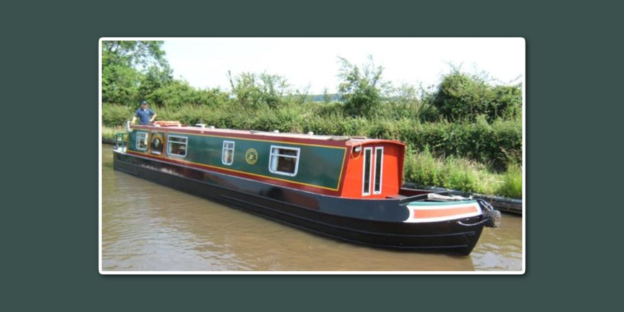
aka “The Boat that Rocked” or “The Drunk Episode 2”. In this episode I spent the evening on a narrowboat on a canal in a part of North London known as Little Venice, with my friends Alex, Paul, Moz and Dave. Join us as we talk about life on a canal boat in London, the first jobs we ever had, answers to a few questions sent in by a long-term listener called Hiroshi, and explanations of various rude expressions and jokes which came up spontaneously during the conversation. Please be aware that this episode contains strong language, rude & explicit content and plenty of bad jokes. Right-click here to download.

Small Donate Button

Introduction Transcript

Hello, this is a special introduction to this episode of Luke’s English Podcast.

Before you listen to the recording in this episode I would just like to warn you that this one contains material which you might find offensive, confusing or just plain stupid, including: failed attempts at humour, bad jokes, vague sexual innuendo, rude words, swearing, references to body parts, disgusting sound effects and general behaviour which would definitely be inappropriate in polite company. The conversation that you’re going to hear in this episode was recorded privately with friends, in a very informal setting. It is not suitable for children. It’s not really suitable for intelligent adults either to be honest. I present it here with great reservation, against my better judgement and with the understanding that some of you may find it purile, unamusing, difficult to understand, offensive or just plain unnecessary, and that publishing this episode may cause you to abandon Luke’s English Podcast, throw your phone into a lake, or even spit onto the ground in pure disgust.

However, despite my reservations to that effect, I also realise there is probably a certain section of my audience who love a bit of filth, and who would like nothing better than to listen in on a conversation between some English friends amusing themselves by talking ‘crap’ together over a few beers. In fact, I publish this conversation with those members of my audience in mind. Are you bored of listening to ‘safe’ English which has had all the rudeness removed from it? Are you fed up with being taught only the ‘nice’ English which you are supposed to speak, but which you suspect no native speakers actually use in their private lives? Do you ever have the lingering feeling that native English speakers present a ‘clean’ version of their language to you in lessons, but in private they speak a rather different form of the language – one that involves plenty of inappropriate and immature dirty jokes? Would you like to have the chance to sit with some Londoners on a canal boat while they drink beer and talk nonsense, without regard for the normal polite conventions of a language classroom or a business meeting? Well, if that’s what you want, then all you have to do is keep listening to this episode of Luke’s English Podcast which was recorded several weeks ago on a canal boat in North London, with a group of slightly drunk idiots. Idiots who I am proud to call my friends, and the group which I happily consider myself a member. Welcome to Luke’s English Podcast…

Vocabulary List & Extracts  (thanks to Jack from the comment section)

Vague
Innuendo
Against my better judgement
Some of you may find it puerile
However, despite my reservations to that effect……
Who would like nothing better than to listen in on a conversation……
I’ve done episodes in an apartment.
I’m doing an episode on a boat.
A canal narrow boat.
How do you want me to elaborate?
I’ve taken up running
Just jogging around a lake.
Just purely pragmatic.
The water levels have receded.
We now know exactly what Paul intended to do when he left the boat.
I suppose it’s a good thing he did leave.
The thing about a fart is that it comes from two angles, it’s like a double punch!
If you farted continuously for 6 years and 9 months you’d produce enough energy to create an atomic bomb!
I speak for the listeners as well.
Dave’s boat is moored.
A bollard.
We are getting more and more suggestive.
Innuendo
You are ducking the question.
Are we going to explain euphemisms?
English is a non inflicted Indo-European language.
That was frank and clear language.
It goes down into a sewer.
Anyone who has turned up on a boat….
I’m not so tight.
I’m of Irish stock.
You are in safe hands now.
You all are my bitches (extremely rude, meaning : I own all of you)
The boat just rocked.
Mr. Langton came down from the gunnels onto the bow and he’s coming into the cabin and that rocked the cabin quite heavily to the right. (17:00)
Tsunami
I’m a posh brummie
I’m a scumbag.
You are a proper brummie.
No-one nicked me (my) car!
I’m quite cultured.
Another example of a euphemism
Loaded with euphemisms.
He hasn’t got hairy feet.
Because I can see he has got Stroud T-shirt on. (21:17)
I bet you could drive a tractor.
I’m not babbling like a baby.
We are thundering into a forest now.
You’ve to keep rowing. (25:00)
Curtains are the things you put over a window to keep the light out.
It’s a fireplace.
Give us a sales pitch for this boat.
Prime sales pitch
This is a very tidy boat indeed.
The proud owner doesn’t know because he has had it for that long.
Lovely tiled fireplace.
Wicker basket.
They are particularly nice.
The last time you were on this podcast….
I bought a flat in London for £215,000 which is a rip off.
…..I own a 50 foot boat which is wood panelled……
Canal stretches through large parts of London.
The great thing about London is that : If you have got a canal boat you can kind of live where ever you want to live as long as you are there for like 14 days and then there is a stipulation that you have got to move on.
I’m moving myself across London kind of like itinerant but with like a big boat.
How does it feel to be cut off like this?
You can’t avoid knowing who Barack Obama is!
I’ve kind of lost the thread here….
I haven’t had my telly on since the last Top Gear.
I walked past the BBC this week…..
If you see your news of what’s going on from other places – I think you are better off.
Cargo containing boat.
And people got whiplash.
This news has been covered in London.
Moorhen, wader, swans.
There was a Turkish man who beheaded a swan.
Mute swans.
Grunting noise.
When they take off.
There’s always someone who pipes up……
Just go to the door, onto the back…..(of the boat)
In a perpetual state of……
Walrus, seal.
You are like a windscreen wiper on a car, sprays out…….
I expect that my listeners are not able to pick up on every little rude joke.
Paul or Dave says : Luke spawns like a blue whale.
……Very rude, very unsophisticated but this the way to let off some steam.
Bespoke specially designed questions for you.
Curve ball
You could do with a little bit of grooming.
Liverpudlian
Luke is a man of refinery when it comes to accents.
Radio conditions please.
He said something that was derogatory in nature.
Don’t dwell on it…..
The BBC is slowly being dismantled.
A chemistry assistant
A shoe shine boy.
They paid me in liquorice, hard liquourice.
A local rag (local newspaper)
Broadsheets, tabloids.
I bet you had to ride a long distance because it was in the countryside.
You’ve definitely got something important to bring to the table.
I was working as a shelf stacker.
Tin foods
Tuna
Can I make an interesting observation here?
I worked for the BBC in compliance.
Index finger
I used to edit out programs.
Parapets
Dave has just come back into the room he went out to get a couple of bottles of local beer.
It could well be…..
We need to draw things to a close
And we’ve got to think what we are going to put out there for you.
We’ve achieved less than nothing.
I’m little bit more coherent this time.
I need to wind down the podcast now.
Paul Langton : I appreciate you for listening to the podcast (Luke screams : LUKE’S ENGLISH PODCAST)
I’m just cocker hoop about every thing.
I would like to thank Hiroshi for providing such insightful questions.
On that bombshell it’s time to end the podcast.
Everyone is looking a bit sheepish.

Moz : Luke was coming over from France and I offered him a place on the boat to say but unfortunately Luke Johnson likes to take 15 showers a week minimum.

Paul : Does he need them?

Moz: Well actually, if you look at Luke that’s not his real skin that’s actually…. His skin’s stripped off – That is a wet suit. And basically he kind of lives in a perpetual state of moisture.

Luke: that’s very interesting assessment there that you have presented for me Moz. Which could quite possibly be on the internet for ever now; for every one to access. If they want to find out all about me they could listen to this and they would listen to your description. Someone might write that in fact as a transcript. Someone might be listening to this and transcribing every word and they are gonna write that down.

Dave: Genesis had a track called The Slipper Man, which I’m picturing now. I always thought about slipper man as somebody wet skinned like a walrus or a seal.

Luke: Really? So you are saying I’m a walrus or a seal!

Alex: Or you might be the eggman.


222. Luke’s Late Night Podcast (Music Mix)

Take a musical trip through Luke’s hard-drive, in the middle of the night. Right-click here to download this episode.

Small Donate ButtonLate one night recently, I decided to record a podcast while randomly picking some pieces of music from my hard-drive and talking to you at the same time. This is the result.

There’s no language agenda in this episode in particular. It’s just me talking to you about various things while interspersing the episode with some music and other bits and pieces from my hard-drive.

Any music or other content in this episode is presented for educational purposes as part of my effort to aid people in their learning of English and culture.

Below you can read lyrics of some songs from this episode if you’d like to read to check your listening comprehension or pick up vocabulary.

Thanks for listening.

p.s. Competition Update: Voting closes this evening, and then I will count votes and eventually publish an episode with the names of the winner(s). Thanks for voting!

Song Lyrics

Arctic Monkeys – “Mardy Bum”
Buy “Mardy Bum” on iTunes here.
Well, now then Mardy Bum
I’ve seen your frown
And it’s like looking down the barrel of a gun
And it goes off
And out come all these words
Oh there’s a very pleasant side to you
A side I much prefer

It’s one that laughs and jokes around
Remember cuddles in the kitchen
Yeah, to get things off the ground
And it was up, up and away
Oh, but it’s right hard to remember
That on a day like today when you’re all argumentative
And you’ve got that face on

Well, now then Mardy Bum
Oh I’m in trouble again, aren’t I?
I thought as much
‘Cause you turned over there
Pulling that silent disappointment face
The one that I can’t bear

Well, can’t we just laugh and joke around
Remember cuddles in the kitchen
Yeah, to get things off the ground
And it was up, up and away
Oh, but it’s right hard to remember
That on a day like today when you’re all argumentative
And you’ve got that face on

Yeah I’m sorry I was late
But I missed the train
And then the traffic was a state
And I can’t be arsed to carry on in this debate
That reoccurs, oh when you say I don’t care
But of course I do, yeah I clearly do!

So laugh and joke around
Remember cuddles in the kitchen
Yeah, to get things off the ground
And it was up, up and away
Oh, but it’s right hard to remember
That on a day like today when you’re all argumentative
And you’ve got that face on

Black Sabbath – “The Wizard”
Buy “The Wizard on iTunes here.
Misty morning, clouds in the sky
Without warning, the wizard walks by
Casting his shadow, weaving his spell
Funny clothes, tinkling bell

Never talking
Just keeps walking
spreading his magic

Evil power disappears
Demons worry when the wizard is near
He turns tears into joy
Everyone’s happy when the wizard walks by

Never talking
Just keeps walking
spreading his magic

Sun is shining, clouds have gone by
All the people give a happy sigh
He has passed by, giving his sign
Left all the people feeling so fine

Never talking
Just keeps walking
spreading his magic

Charles Bukowski – “The Life of the King”
Unfortunately I can’t find the lyrics to this, but here is a video featuring Bukowski reading his poem “The Life of the King”, if you’d like to listen to it again.

Curtis Mayfield – “Pusherman”
Buy “Pusherman” in iTunes here.
I’m your mama, I’m your daddy,
I’m that nigga in the alley.
I’m your doctor when in need.
Want some coke? Have some weed.
You know me, I’m your friend,
Your main boy, thick and thin.
I’m your pusherman.

Ain’t I clean, bad machine
Super cool, super mean
Dealin’ good, for The Man.
Superfly, here I stand.
Secret stash, heavy bread,
Baddest bitches in the bed,
I’m your pusherman

Silent life of crime
A man of odd circumstance,
A victim of ghetto demands.
Feed me money for style
And I’ll let you trip for a while.
Insecure from the past,
How long can a good thing last?
No, no, no

Got to be mellow, y’all
Got to get mellow, now
Pusherman gettin’ mellow, y’all

Heavy mind, every sign
Makin’ money all the time
My LD and just me
For all junkies to see
Ghetto Prince is my thing
Makin’ love’s how I swing
I’m your pusherman

Two bags, please
For a generous fee
Make your world what you want it to be
Got a woman I love desperately
Wanna give her somethin’ better than me
Been told I can’t be nuthin’ else
Just a hustler in spite of myself
I know I can break it
This life just don’t make it
Lord, Lord, yeah

Got to get mellow, now
Gotta be mellow, y’all
Got to get mellow, now

I’m your mama, I’m your daddy,
I’m that nigga in the alley.
I’m your doctor when in need.
Want some coke? Have some weed.
You know me, I’m your friend,
Your main boy, thick and thin.
I’m your pusherman.
I’m your pusherman.
I’m your pusherman.
I’m your pusherman.
Lord, Lord

Victor Wooten – “Music as a Language” Click here for a version with subtitles.

221. A Cup of Tea with Corneliu Dragomirescu (Part 2)

Here’s the rest of my conversation with “The Son of the Dragon Tamer”. Right-click here to download this episode. Click here to listen to part 1.

In Part 2
– The difference “pleasshure” and “pleasure”, “bio” and “B.O.”
– The importance of ‘passion’ in France
– Jamie Oliver’s (fake?) cockney accent
– British & American English
– Corneliu’s experiences in America, his acting and his accent
– Corneliu’s learning experiences with a great teacher when he was a child
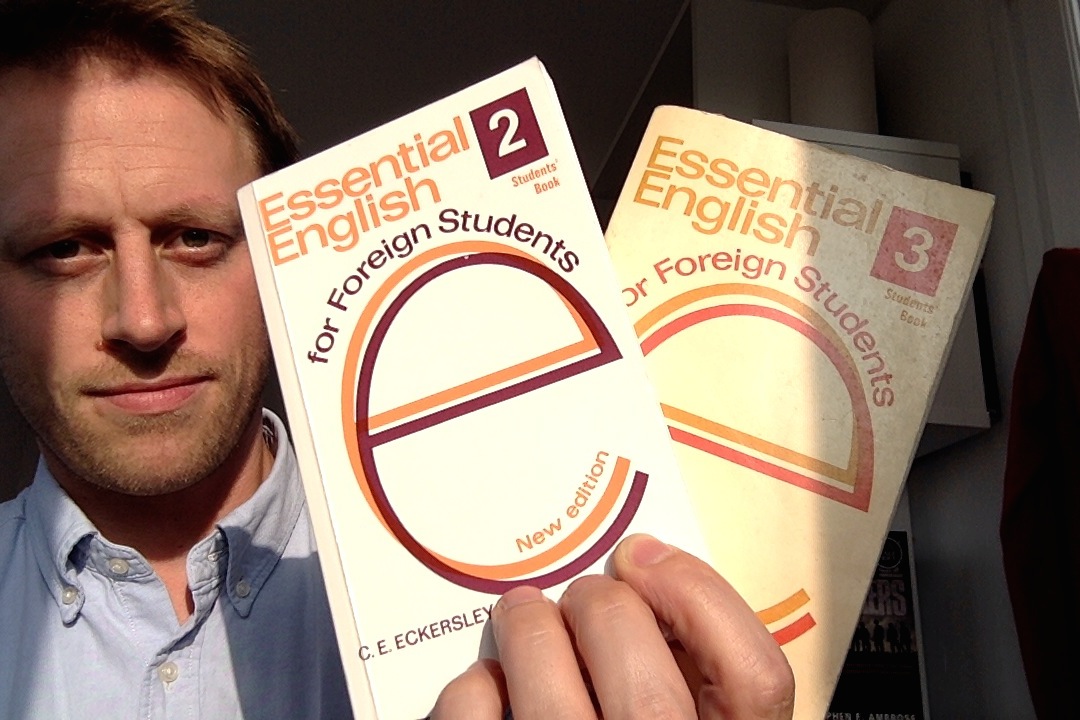
– The interesting course-book (Essential English for Foreign Students by C. E. Eckersley) which Corneliu used in his English lessons
– The myth of ‘the English gentleman’
– Depictions of Englishness in films
– Stereotypes of Romania
– Romania & Bulgaria’s entry into the EU and the media panic related to migrant workers
– Vampires, Dracula and Romania

Please leave your comments in response to this episode! We want to read your thoughts here. Thank you!
Essential English for Foreign Students by C. E. ECKERSLEY

220. A Cup of Tea with Corneliu Dragomirescu

aka “The Son of the Dragon Tamer!” or “The guy with the longest name ever on LEP”
*The conversation starts at 11.39 – so please skip my introduction if you like* Right-click here to download.

Small Donate ButtonThis is one of those episodes in which I invite a friend onto the podcast and we chat about various things. I like these episodes because it gives me a chance to get to know someone on the podcast, and you can listen to some natural free-flowing conversation in English.

Let me tell you a bit about Corneliu. He is a film maker and comedian originally from Romania. He lives in France now where he writes, directs, produces and acts in films and television projects. Corneliu is a polyglot (he speaks Romanian, French and English), he’s a movie-buff and an he’s an all-round great conversationalist and therefore is the perfect guest for another episode of LEP.

Corneliu also has the longest name of anyone ever to appear on LEP so far. His name (first name and surname, but not including middle names) has 9 syllables in it. As far as I know, that’s longest so far on LEP. It’s not a competition or anything – I mean, that’s not the purpose of LEP – to find the guy with the longest name, but still, it’s an achievement of sorts.

Speaking of competitions – thank you for voting for your favourite recordings in the YEP! series of podcasts – episodes 211-218. I’m getting votes all the time. Voting closes at midnight Paris time on 30th September of this year, that’s 2014. I’ll then count the votes and announce the winners – yes, winners. I’ve decided that there will be a winner from each episode. That’s how I roll, okay? Also, if you were wondering about how I will be counting votes, and if I can prevent people voting for themselves again and again – I can see unique codes for every person who comments, so I know when comments are coming from the same computer again and again. I’m not going to count votes which are obviously repeated votes from the same computer, either intentional ones or accidental ones. So, you can put your mind at rest on that one, if indeed you had been thinking about it.

Thank you too if you have left a comment on my last episode which was about Scottish Independence. It’s great to see that lots of people are interested in this subject, and can see parallels with the situations in their countries too in some cases. The referendum is going to take place tomorrow. We’re all waiting with bated breath to see what happens. Will Scotland leave the union? Is the UK as we know it going to change forever? Will the Scottish people make the right decision? Only time will tell.

Now, let’s get back to this episode. Corneliu is an awesome bloke with a proficient level of English and I’m really happy to have him on the podcast. I invited him into the flat and onto the podcast with the intention of asking him some of the usual questions, such as “What do you do?”, “How did you manage to learn English to your current level?”, “Could you tell us about the common myths around your home country?” We ended up chatting for something like 2 hours and got sidetracked by all kinds of interesting things including films, his son, the fall of communism in Romania and 90s pop music. In fact, it felt like it was hard to contain the inspiration in this episode, and the conversation flowed very freely. I hope that comes through in this episode.

Sometimes I find it a bit tricky to begin an episode, and I have to work out a little introduction, but in this one we had already been chatting over a pot of tea for about half an hour and I just hit the record button mid conversation, so we just hit the ground running at the beginning. If you “hit the ground running” it means you start when you’re already moving or in progress. Imagine running in the air, and then you fall, you’d hit the ground running and you’d immediately be off at some speed. That’s what happened in this episode – we hit the ground running because we were already quite deep in conversation and I just hit the record button. That’s why the episode begins quite abruptly.

You will hear a bit of strong language at the beginning – so be prepared for that. I say the “F” word quite early on. What’s the “F” word? Well… it’s the word “Fuck” isn’t it? It’s a bit silly to call it the “F” word – but I suppose it’s a way of referring to the word without actually saying it, because, you know that is a very rude word which you shouldn’t use because it’s not big and it’s not clever. I realise that I’ve just said the word, just a second ago, which defeats the purpose of warning you about the word in the first place… Anyway, you’ll hear me say it in a moment, in the form of the noun phrase “a fuck up” or “a couple of fuck ups”. “to make a fuck up” (noun phrase) = a mistake or “to fuck something up” (verb phrase) = to do something badly, to make a mess of something, to make an error and ruin something. It’s a versatile word – but remember, just because you’ve heard it on LEP it doesn’t mean you should start throwing it around in conversation. Ok, I don’t mean to patronise you, I just felt it was necessary to say that. Anyway, let’s now join my conversation with my mate Corneliu. And here it is…

In Part 1:
– Hitting the ground running, and talking about the challenges of beginning an episode of LEP
– How to say Corneliu’s full name, and how it actually means ‘son of the dragon tamer’, and how awesome that is
– How we know each other
– My (slight) obsession with the film “Taken” starring Liam Neeson
– Fatherhood, Star Wars and how lack of sleep caused Darth Vader turned to the dark side of the force
– The birth of Corneliu’s son Alexander
– The fall of communism in Romania and the film “Independence Day”
– The shock of discovering that Milli Vanilli were fake
– The effect of pop music & capitalist culture on Romania after communism
– Throwing a TV out of a window
– Seeing Hollywood films in Romania in the early 90s
– “Chaplin” by Richard Attenborough, starring Robert Downey Junior
– Martin Scorsese
– Summarising what we’ve said in part 1 so far!

Coming Up In Part 2 (soon):
– The difference “pleasshure” and “pleasure”, “bio” and “B.O.”
– The importance of ‘passion’ in France
– Jamie Oliver’s (fake?) cockney accent
– British & American English
– Corneliu’s experiences in America, his acting and his accent
– Corneliu’s learning experiences with a great teacher when he was a child
– The interesting course-book which Corneliu used in his English lessons
– The myth of ‘the English gentleman’
– Depictions of Englishness in films
– Stereotypes of Romania
– Romania & Bulgaria’s entry into the EU and the media panic related to migrant workers
– Vampires, Dracula and Romania

Please leave your comments in response to this episode! We want to read your thoughts here. Thank you!

219. Scottish Independence

Should Scotland become an independent country? Let’s look at the context, the arguments for & against and the possible outcomes of independence. Right-click here to download this episode.

Small Donate ButtonI know you might be struggling to catch up with all the latest episodes of the podcast – I’ve just uploaded 8 competition episodes, but I suddenly had to record this episode. I’m in a hurry to upload this one, because it’s quite timely and current, and important.

On 18th September the people of Scotland will vote in a referendum to decide if Scotland should remain a part of the UK or become independent. If they vote “yes” and Scotland does become independent from the UK it would cause massive changes to the way the UK is organised. It would be the biggest change in UK history for hundreds of years. It could change everything – not only the lives of the Scottish people, but also the lives of the English, the Welsh and the people of Northern Ireland. In short – this is a massive story for the UK.

This episode contains some audio extracts from this page of The Guardian’s website. I have included these extracts for educational purposes only. The main purpose of this website is to help people with their English. If, however, it is deemed that this is a breach of copyright, I will remove those audio extracts.

I might be a bit late to the subject but I have to talk about it on the podcast.

When you listen to this, the votes may have already been counted, and you’ll know the outcome. But still, I need to talk about it right now. This is a big deal for my country, and it has to be acknowledged.

You might be thinking – oh, but politics is boring. Well, a lot of people find it boring, which is a pity – but really, it shouldn’t be boring. It’s not really an entertaining subject – I mean, there are no jokes in here, but the subject is so important, and really it’s not just about politicians lying and boring the pants off everyone. Really, politics is about the way decisions are made that affect the lives of ordinary people. So, my point is – politics is not boring, it’s fascinating, but you have to focus a bit in order to keep up with it.

In terms of language – in this episode you can expect vocabulary relating to matters of political science and sovereignty, but I’m also planning to play you some extracts of people talking about the subject from different points of view, and all of them are Scottish, so you’re going to hear a few Scottish voices in this episode – and that’s always good for your ears. It’s always good to hear a variety of accents, as you know. Also, we’re going to hear a few politicians advocating their position for or against Scottish Independence – and it’s interesting to notice the ways in which they structure their arguments.

The eyes of the world are on Scotland right now. Let’s look too.

Throughout this episode I’m going to play you short speeches by various people with things to say on this subject. All of them are from Scotland.

Let’s hear now from AL Kennedy, a novelist from Dundee, who gives a kind of overview of this situation.

Also, the situation in Scotland mirrors the situations of many other nations around the world that are seeking independence. Perhaps you can relate to the Scottish situation if you have a similar example in your country.

It makes me think of these things:
How do you define a nation?
If you could start from scratch, and you could create a new country, what kind of constitution would it have? Would it be a monarchy, a republic? Would your nation be part of a union or federation of other nations? How much administrative control would you give to that union? What would your economy be based on? Who would be your trading partners? What currency would you choose? Would you need an army? What kind of foreign policy would you have? How would this affect your neighbours? Would it help them or harm them? Do you care about your neighbours? Why or why not? What is the historical background of your relationship with your neighbours? To what extent does that define your foreign policy towards them? What’s the economic situation in your country? If things are tough and there’s no money – who is to blame for this situation? Should certain people be punished? How can you be sure you’re blaming the right people? What are the dangers of becoming isolated from the rest of the world? What are the dangers of pushing nationalistic propaganda on your people? How will you be seen by the rest of the world? Would you want your new nation to be friends with America, China or Russia? Is it possible to be friends with everyone? Would you like to be in the European Union? What about that little island which exists just off the coast of your country? Are you ready to send your young men out to die fighting for it? Is it worth risking everything in order to feel that old scores have been settled, and that you can proudly hold up your head and say that you’re living in a free country? Who’s going to be the new leader of your new nation? Do you trust this person? Who’s going to be the head of state? How about The Queen? Does it matter what celebrities and rock stars say about your new nation and your policies? Do you have oil in your new country? Are you happy to live in affluence in your country while your neighbours suffer in poverty? Do you have an obligation to look after them? Are flags important? Does it matter what your flag looks like? How about the language people speak in your country? Is it more important that they speak the traditional local language than to be able to communicate with the rest of the world? If a small region wants to govern themselves, should they automatically have the right to do it? Who can really make these decisions with 100% authority and 100% certainty? Don’t people have a right to full representation in a fully functioning parliament? Does democracy even work, or is it too compromised? How are the corporations and capitalists involved in the running of your nation? Is it fair that they have so much influence on decision making? How much of this is about greed, money and capital gain? How much of it is about tribalism and nationalistic rhetoric?

These are the questions which come to mind when I think of this subject, and I think they’re all pretty universal questions that you could apply to any nation. Perhaps you could consider how this applies to your home country, but for now let’s look at Scotland. The land of tartan, kilts, haggis, beautiful rugged countryside, scotch whisky, the Edinburgh festival, gorgeous accents, incomprehensible drunks, Trainspotting, James McAvoy, the Loch Ness monster and so many other wonderful things which I am simply unaware of.

Contents of This Episode
1. A general overview of the Scottish Independence situation: Everything you need to know about Scottish Independence.
2. The arguments for independence.
3. The arguments against independence.
4. The outcome of independence – how would everything change?

1. General Overview
The following are notes and sentences which I used when planning and recording this episode. It is not a full transcription.
18 September.
Biggest constitutional decision in their nation’s history.
“Should Scotland become an independent country?”
What is the UK? What does independence mean?
Scotland & England were united on 1 May, 1707. That’s when the Parliament of Great Britain was formed. They set up shop in Westminster, London. Seem fair?
Ireland joined the union in 1800. Later, in 1920 the ‘southern’ counties of Ireland broke away, leaving just Northern Ireland.
Why did Scotland join?
England didn’t want the Scots to choose a different monarch than the one on the English throne. Scotland & England had been rivals for centuries. They wanted to put a stop to it. Scotland joined primarily for economic reasons. The country was broke. They’d tried to colonise Panama in the late 1690s, throwing all their sovereign wealth into the attempt, but it failed and they lost all their money. England agreed to bail them out in return for union. Perhaps the Scots now feel they’re in a stronger economic position than they were 300 years ago. We’ll see. Perhaps the Scots felt like they were forced into the union in the first place, and they had to pay for their economic mistakes by giving up some sovereignty and decision making power.

The home rule movement – There’s been a home rule movement for ages in Scotland, since the mid-1850s people have been campaigning for some kind of independence. This became more realistic for Scotland in the second half of the last century – after the 1960s basically, which is when the UK decolonising former colonies, particularly in Africa. The Scottish people clearly felt like they wanted a slice of that pie as well.

In the 1990s, under Tony Blair’s government, a ‘devolution agreement’ was signed. Devolution means decentralisation, and it involves Westminster giving more home rule power to Holyrood (Scotland’s parliament), so they can make more decisions that relate only to Scotland, without having full sovereignty. Westminster still can make large decisions that affect many aspects of life in Scotland, but Scotland can also vote on local laws. It’s not full independence.

The leader of the Scottish National Party – SNP is called Alex Salmond. He’s been campaigning for a referendum on Scottish Independence for years. In 2011 his party won control of the Scottish Parliament. This gave him a lot more power to push for a referendum on independence. The UK government agreed to give them the power to hold a referendum. You might think – why did they let them do it?? Why didn’t David Cameron just block it? Well, it’s democracy isn’t it? If the people want it, he can hardly refuse to give it to them. He’s not a dictator. Still, Cameron probably gave him the power because he thought the Scottish people would vote “No”.

So here we are. The referendum is happening on 18 September. A “yes” vote could massively change the UK.

Do Scottish people actually want to be independent?
What do the polls say?
Just a month ago it was about 65% “no” and 35% “yes”. So most people didn’t want independence.
But things have changed as the campaigning has increased.
Now, polls show 49% “no” and 51% “yes”. It seems that slightly more people want to be independent now. In fact, the majority now want independence.
Polls can be misleading. That poll could scare more people into voting “no”. It could also make the “yes” voters more complacent.
Also, in the final moment, people tend to vote for the status quo.
So, I still believe that a “no” vote is more likely, but I could be wrong. It could easily be a “yes” vote.
We’ll find out probably within about 12 hours of the referendum closing, maybe even less.
If it is a “yes” then Alex Salmond has suggested that Scotland’s Independence Day will happen in March 2016.
The SNP would have a massive party after the referendum, and then some very serious and difficult constitutional planning would take place. Currency? Join the EU? How to pay off the national debt? UK flag? Passport control? Ownership of oil fields? Nuclear submarines? Olympic team? The Queen as head of state? We’ll look at this in a bit more detail in a moment.

If “no” then things will still change a lot. Westminster has promised to give Scotland even more devolved power (devo-max) which would allow them to control much more than they do now, without giving them full sovereignty.

Here’s some complex stuff about how the UK is governed, but it’s important to understand this situation. The UK is 4 countries, united. England, Scotland, Wales and Northern Ireland. The government for the UK resides in Westminster, London – in the Houses of Parliament. IN the House of Commons there are seats which represent regions across the UK – small regions all over England, Scotland, Wales & Northern Ireland. Each region is called a ‘constituency’ and for each constituency there is a seat in Westminster, and sitting in each seat there is an MP who was chosen by the people of that constituency. They discuss and vote on decisions that affect the whole UK. Laws are passed for the UK as a whole, but then Scotland, Wales & N.Ireland have ‘devolved parliaments’ of their own – and they can make local laws of their own, or adapt some of the laws from Westminster. England doesn’t have a devolved parliament, so England can’t adapt UK laws – because they’re the same! This is really complicated and weird, and we’ll come back to it.

Anyway, the main point is, there are more English MPs in Westminster than Scottish, Welsh or N.Irish ones. This means that they have more power over decision making. So, the decisions of Westminster tend to favour England, because more English MPs are voting. So, the Scots feel a bit annoyed by this. They don’t feel properly represented, even though they have some local power, it’s not enough for them.

There are two campaigns for and against independence. The campaign ‘for’ is called “Yes Scotland”. The campaign against? It’s not called “No Scotland” – it’s called “Better Together”. Let’s look at their arguments.

2. “Yes Scotland” – Scotland should become an independent country.

    The Scots will be able to decide how their money is spent.

Scotland has oil reserves in the North Sea. If independent, Scotland would be able to claim these reserves of oil, and they could make Scotland one of the wealthiest nations in Europe. At the moment, those oil reserves are claimed by Westminster and exported or sold to energy companies to be used across the whole of the UK. Some people argue that careful managing of this resource could allow Scotland to become a super-rich country, like Norway or Switzerland.
But the money question is not just related to oil. It also means that the Scots would be able to carefully manage how much money they give to their citizens (welfare) and how it would deal with its pensions debt. The “yes” campaigners believe that the Scottish people don’t get fair treatment or representation by the government in London, and independence would allow them to make economic decisions that would be more suitable for Scottish people. For example – winter allowances.
Nicola Sturgeon
MSP and deputy leader of the SNP
The Scots would be able to get rid of spending on the nuclear weapons programme and use that money on welfare for people.

    The Scottish people would be represented by the people they vote for

Generally speaking, England tends to vote conservative, and Scotland votes left. The further north you go, the more people vote Labour or SNP. The further south you go, the more people vote for the conservatives. So in elections the Scots never vote for the Conservatives, but they often get Conservative governments because of all the English people who vote for them, and there are more English people than Scottish people. So, time and time again the Scottish people are represented by Tory governments that they didn’t vote for. So, ultimately, independence would make Scotland a more democratic place – they’d be represented by the people they vote for. A lot of Scottish people are really pissed off with the Conservatives.

The Conservatives are right-wing. They like to cut public spending, so the money doesn’t go to communities in Scotland that really need funding. Also, the Conservatives are made up of elitist, English, posh people who went to exclusive schools in the south of England. Most Scottish people don’t like them, don’t feel they care about them, and don’t want to be represented by them. They’re from a completely different world to most Scottish people. Why should they have them in government. Thatcher, for example, didn’t really seem to care about the Scottish people. She introduced policies that caused massive unemployment and poverty there, and she did it in order to break workers unions in order to get more control over the economy, and who did she serve by doing that? Big businesses who are probably owned by rich conservative English people from the south.

Lesley Riddoch
Community activist

Perhaps this strong “Yes” campaign is a reaction to the strict privatisation and austere economic measures of our current Conservative government. I really hope the Tories don’t ruin everything by alienating the Scottish people.

Ultimately, many people believe that independence would create a more fair and equal society in Scotland, a place that would be able to deal with problems like child poverty and health care. Scotland could redirect more money into areas that are important for its people.

3. The “No” Campaign – aka “Better Together” – Scotland should not become an independent country.

Independence is not a magic solution to all of Scotland’s problems.

It’s easy to get carried away by nationalistic sentiment. It can blind people to the reality of what is going on – that independence could cause more problems than it would solve.

“No” campaigners believe that the SNP’s policy for the future is full of unrealistic and impossible promises, and projections based on a very unpredictable view of the future for Scotland. It’s very tempting to see independence as a great thing – the Braveheart version – but in reality it could be complex and problematic.

Think of the difficult economic situation that exists in Europe at the moment. Is this a good time to go off alone – a small nation in the context of huge global uncertainty. It seems risky from an economic point of view, and the oil is not a permanent solution. It’s likely to run out fairly quickly, and then what?

Johann Lamont
MSP and leader of the Scottish Labour party

Why would Scotland want to break away from friends in the UK? Don’t they care about the people in the rest of the UK who need their support? Independence could be a very selfish act.

Also, the “no” campaign are attempting to remind people that Scotland has an integral part of the way the UK has been built over the last 100 years.

Alistair Darling
MP, former chancellor of the exchequer and head of the Better Together campaign

Devolution has been a success, and it will continue to be – with further devolution on the way. There’s no need to break up the entire UK. They’ll get the powers and representation they want in the form of further devolution.

Ruth Davidson
MSP and leader of the Scottish Conservatives

4. The Outcomes of Independence – What would happen if they vote “Yes”?
It’s not completely clear as all the details have not been decided yet.
Here are some possibilities:
Scotland would not be part of the UK any more. It would be “The United Kingdom of England, Wales and Northern Ireland” but surely, the Welsh and N.Irish would not feel very happy about being dominated by the English, without the balancing force of Scotland on board. They’d probably follow Scotland’s example – or they’d be stuck in a difficult situation.
Scotland would become a republic, and the Queen would not be welcome there any more.
Scotland would keep the Queen as head of state, like in Canada.
They’d keep the pound (not what the UK wants).
They’d take the Euro (not what Scotland wants).
They’d get a new currency (risky, and which one?)
They’d join the EU – but why swap one union for the other? It’s not real independence.
They’d try and strike a deal and join some kind of federation with nordic countries like Norway.
They’d want to get rid of all the military technology, nuclear submarines and so on.
They’d build their own army.
They’d erect border control on the border with England. (unlikely)
It might be necessary to show your passport on entry (for English people). (unlikely)
They might impose greater taxes and tariffs on goods entering the country. (unlikely)
It’s more likely that border controls and trade would stay the same, and would be seamless with the rest of Britain/N.Ireland.
They’d have to negotiate with England their responsibility for the UK national debt – it could be a lot!
They’d need to negotiate their share of North Sea oil. That would be complex because they’d discover it was owned by corporations who would not want to give it up without a fight (a diplomatic one).
All these things would take a great deal of time, effort, discussion, negotiation, law making, admin – by the time they get their independence as they imagined it, the world could be quite a different place and being on their own might not seem like such a good idea any more.

Also, it would effect life in England. Without Scottish votes, the Labour party would be screwed. The right-wing would dominate politics. The Conservatives would be rampant without the balancing force of the left-wing Scottish vote. Also, England might argue that it’s time for them to have a devolved parliament of their own – a kind of English Council or something. That would almost certainly be controlled by the conservatives (maybe led by Boris Johnson). The whole country would shift rather dramatically to the right. The tories should always be held in check by left-wing voters. A right-wing England would not be a pretty place, in my opinion. Do the tories really care about ordinary people? They would probably privatise some of the great institutions that make England a decent country – the National Health Service, The BBC – it could be a big change for the worse. The heads of corporations who went to school with high-ranking conservatives would benefit, those in need (the poor) would feel the squeeze.

Also, what about our flag – what would it look like? It’s not a big deal really, but I quite like the Union Jack. It would be a pity to lose it.

It would be a big punch in the stomach for so many of the things we know and love about the UK.

But, perhaps change is inevitable.

Personally, I hope Scotland stays in the UK – but I hope we can arrange a deal in which they get the powers and representation they crave. I personally think we’re better together, but I realise that I’m saying that as an Englishman.

But that’s the situation, and my opinion.

What do you think?
Please leave your opinions as comments.

FINAL RESULT
Since publishing this episode, the people of Scotland voted “No” for independence, which means that Scotland will remain a part of the UK but Westminster will now give further devolution to Holyrood as promised.
For more information on the result of the referendum and what’s going to happen next, click the links below.

Scottish Independence .gov.uk
Scottish Government Website
209. Travelling in Indonesia (Part 2)

Part 2 of my account of my travelling experience in Indonesia. Please listen to part 1 before listening to this one. Do leave your comments, thoughts and opinions below. Right-click here to download.

Just Notes
Small Donate ButtonWhat you can read here is just notes. It’s not a full transcript. These are notes I wrote to help me remember details about my travelling experience. You should listen to the episode to get the full account.

Write a Transcript
If you would like to write a transcript, just click here to access a google document for this episode.

Notes Start Here (Remember, they’re just notes – they’re not all complete sentences)

What we saw and did in each place
30 hours of travelling? Something like that.
How to deal with jet-lag.
In-flight entertainment.
Podcasting in a toilet on a plane.
Paris to Kuala Lumpur (nice airport)
KL to Jakarta (“My wife’s gone to Indonesia”)
Delayed flight to Yogyakarta. The plane just sits on the runway. Less stress if you’re late, but not if you’re in a hurry to leave!
Surrounded by people at the airport, all trying to get us into their taxi. Quite overwhelming and hard to know who to trust.
Taxi journey to the hotel. Scooter filled streets. Houses, warungs, government buildings, all kinds of shops, garages and other buildings by the side of the dusty roads. Lush green rice fields, coconut trees. More scooters. Colourful flags by the side of the road (don’t know what they represented). Friendly taxi driver but limited English.
D’Omah hotel in Tembi. Owned by an Australian man called Warwick Purser.
Employed people from the village. Worked closely with the local community, and it shows.
Lovely quiet town with friendly people.
It was nearly destroyed in an earthquake.
A labour of love for Mr Purser.
The staff were unbelievably lovely and friendly.
It was a really first class experience, thanks to my girlfriend who is good at finding these places.
We paid a bit more than normal, but we wanted a nice place to start with after our long flight. It was worth it.
Describe the rooms and hotel.
Ristafel on the first night.
Music played by the locals. So charming and sweet – a combination of ukuleles, guitars, a cello, a violin and some traditional wire percussion instruments and drums. It was lovely.
Bintang beer.
Chicken sate and other traditional food.
Yogyakarta – the sultan’s’s palace and the water castle. Apparently there is still a sheik for Yogyakarta. The region is unique as it is governed by him, yet he’s not elected. It seems a bit odd. The people of Yogya can vote in national elections, but they are governed by the sheik. He lets tourists into his palace in the mornings, and relaxes there in the evenings.
Gangs of school kids practising their English.
Broad sandy squares with pagodas for relaxing & playing music.
Galleries presenting beautiful fabrics, paintings of the sheiks through the years and various bits of treasure and so on.
Taman Sari: The water Castle, built at the end of the 18th century – a place where the sheik would spend time with his concubines. There are pools of water where his concubines (women ‘taken’ from different places he had conquered) would wait. The sultan would sit in a tower and watch them, and then pick one or more to then spend time with. He’d probably have sex with them. I wondered how that must have felt – either these women would be horrified (they’d basically been kidnapped) or would they be honoured, because in a way this was an honour and it could mean a slightly better life, and the kids of the sultan born of his concubines had privileges and were considered quite high-status people. It’s amazing that it all occurred there and we were able to see it, including his massive bed and everything.
We were shown around by a guy whose family had lived in the grounds of the castle for generations. He worked as a kind of warden and tour guide, but told us that the modern-day sultan was in the process of selling that land to foreign investors and that in fact it had been sold to Starbucks and they were going to develop it. Imagine what the place might be like in a few years.
Drinks in town – hard to find places. Fun and yet slightly worrying taxi rides in the night into nowhere.
Frogs surrounding the place.
Birds, lizards in the ceiling, a crab in the shower.
Ducks, geese and chicken roaming the village.
Children playing in the streets.
Incredibly loud call to prayer at 4.30AM.
Borobudur – it’s a buddhist temple about an hour from Yogya. It was built in the 9th century. That’s a hell of a long time ago.
6 square platforms with 3 circular platforms on top.
You walk around each platform and look at the carved reliefs on each wall. They tell different stories of the buddha’s life, and of cautionary tales of how a life of pleasure can lead to suffering. There are over 2,500 relief carvings and 504 buddha statues.
The concept/idea of the temple. Attaining Nirvana.
Apparently it was abandoned in the 14th century after the decline of Hindu religion and the introduction of Islam into Javanese culture. It was discovered again in the early 19th century by dutch engineer H.C. Cornelius, on the instruction of the then British ruler of Java Governor-General Sir Thomas Stamford Raffles. H.C. Cornelius set out into the Javanese jungle with some guidelines from the locals. They found it, but it was overgrown, covered in earth and volcanic dust. Gradually over the years it was uncovered and restored. UNESCO did a huge restoration job on it in the 70s and cleaned it up. Now it’s a pilgrimage site and the #1 tourist destination in the country.
We also visited Pranbanan – a hindu temple, similar to Ankor Wat in Cambodia. It’s a number of large temples dedicated to different hindu gods, and with all kinds of carvings on the walls of each temple. Statues of the gods used to be inside each temple but they’re not there any more. Almost the entire thing was knocked to the ground by an earthquake but was rebuilt, although many other surrounding structures are still in rubble. We stayed for the sunset and went home.
There are other things we could have done, including a demonstration of a traditional Ramayana ballet dance telling the old hindu story of King Rama. We didn’t see it in the end – again, we couldn’t do too much!
Flew to Lombok, via Surabaya – a bit of a nightmare to be honest. We stayed in a hotel which we thought was just 10 minutes from the airport, but turned out to be 90 mins away. We had a very long taxi ride in which we were convinced the driver was taking us on a very long route. We arrived at our hotel and it was a bit grim – although nothing too bad! For some reason my g/f was really turned off by it. Other people’s hair in our bed, weird stains, the smell of stale cigarettes and dirty carpet, cigarette burns on the chairs. Nothing too terrible, but enough to freak her out a bit, especially after our long taxi ride into the unknown. We went out to a great hotel (the name escapes me) and had truly delicious chinese food, and wondered why we weren’t staying there instead. We were up very early for our flight to Lombok – stressing that we were going to miss the plane again.

I can’t go into too much detail. Lombok is the next island after Bali and it’s less touristy than Bali, but just as beautiful with lush greenery, sandy beaches, friendly people and a large volcano in the middle. We stayed in the resort area of Senggigi to get some beach-side relaxation. Snorkelling, reading, listening to the live band at sunset, swimming in the pool, enjoying the delicious local food in street side warungs, buying some handicraft in the local market, strolling along the beach at night.
We also started planning our Mount Rinjani climb. I’d like to tell you about that in more detail now.

Mount Rinjani
It’s the second largest volcano in Indonesia, but it’s still pretty massive. It’s nearly 3 times the height of the UK’s highest mountain, Ben Nevis. It’s an active volcano. It rises up about 2,500 metres to the crater rim which is about 7km wide and has a large lake inside, and a smaller volcano which last erupted in 2010. Then the peak of the mountain is on one side of the crater and rises to 3726 metres above sea level.

The Boat Journey (again)
No, we didn’t really capsize in the middle of the sea. The boat arrived safely on the island and we had a lovely 3 days. But, it felt at any moment that things could have gone wrong, and in fact they did go wrong for a similar boat near another Indonesian island just a few days earlier. As I said before in this episode, travelling is an amazing experience, but at times it feels pretty scary! I just wanted to express the adrenaline rush and the fear factor that you can experience in these situations. On that boat ride, and during the Rinjani trek, I really was trying not to panic sometimes. I was trying not to get freaked out by what could have happened. You might be thinking – Luke you worry too much, or something like that, but I think I’m just being realistic. We do have these moments of fear. That’s what makes it exciting. Sometimes you have to get a little close to the edge in order to really experience real life. When everything’s so safe it can get a little boring, can’t it? It’s character building stuff.

206. Summer in London (Part 2)

Hi and welcome back to this special episode of LEP in which you join me on a walk through central London. [Download]

Small Donate ButtonLet’s re-cap on what happened in part 1. (ooh the excitement)
– I recorded this last week when I was on holiday staying at a friend’s flat in Stockwell
– I needed to go into town to visit the doctor’s for a couple of immunisation injections before going on holiday to Indonesia
– I decided to take a nice walking route to the doctors, from Victoria Underground Station, in front of Buckingham Palace, past some Royal Guards and a guy selling skunk, past some ducks, joggers & tourists, across the mall and up towards Picadilly Circus.
– We ended part one with me walking up Haymarket, towards Picadilly Circus in order to get some lunch & coffee in Soho before heading towards Wimpole Street near Oxford Circus for my jabs.
– As I said on the previous episode, London is a very noisy city so I really apologise for any background noise which makes it hard for you to hear what I’m saying. I hope you it doesn’t stop you from enjoying this trip through central London on a hot summer day.

In this episode I’ll take you through some touristy areas, some cool spots, and we’ll also investigate some of the more seedy parts of central London that you might not notice as a tourist.

Let’s go!

Music: “Day on the Town” by Madness. Click here to download it on iTunes.
357544399_ae99ba566f

205. Summer in London (Part 1)

Hello everyone! Welcome to another episode. This one was recorded last week when I was on holiday in London, and in this episode you can listen to me walking through central London and talking to you along the way. I really enjoyed recording this episode and I think you’re going to enjoy listening to it too because it’ll be like you’re actually there with me, strolling around some of my favourite parts of town, hearing all the sounds of London around you as we go. I think it’s going to be great, but before we start I’d just like to mention a couple of things as a preface to the episode. [Right-click here to download]

Small Donate ButtonLondon can be a noisy place and so, unfortunately, a lot of the recording I made on this day was not completely clear enough to broadcast because my voice got a bit drowned out by atmospheric noise. You might find that some of it is a little bit difficult to hear, and in fact I had to completely edit out large sections of the episode because the noise level was just too high. When I listened back to some of it, I was quite annoyed to discover that the sound of busses, cars, trains and wind made it quite difficult to hear my voice clearly. I’ve managed to edit out some of the bad bits, and explain the missing content by talking to you here in post-production, but some of the remaining parts might still be a little difficult to hear. If you do find some of this too noisy to listen to then I’m sorry and I understand, but I still hope it’s possible for you to follow almost all of what I’m saying.

I really wanted to upload this episode despite the noise. I think it will be quite an interesting one, as you can take a personal trip with me through some of my favourite parts of central London and I expect that most of you are probably not bothered by the noise and are happy to join my on a walk. I love London and I’m proud to present it to you, even in audio form, and I think this episode can give you quite a real feeling of actually being there with me. It would be a pity to waste the several hours of talking that I recorded just because some people would not tolerate the noise. So, I’ve decided to just upload it anyway, even if the audio quality is not perfect.

I know what most of you are thinking – it’s fine Luke, it doesn’t matter! Don’t worry about it! I appreciate that. But for those of you who are sensitive to a bit of background noise I just want to say – I know this episode is a bit noisy – but that’s just London for you! It’s a noisy place! I suggest you write a letter to London’s mayor Boris Johnson to complain!

“Dear Mr Johnson,

Recently while listening to an award-winning podcast by Luke Thompson (I’m sure you know it) I was saddened to discover that parts of the episode were inaudible due to frankly unacceptable levels of noise caused by London’s busses and traffic. So, I am writing this letter in order to complain about this matter, and suggest in the strongest possible terms that you do something about it! Maybe introduce a noise-tax, or simply ban busses and taxis from operating within central London. I appreciate that businesses and services need to operate with vehicles, but this simply cannot be allowed to interrupt our enjoyment of Luke’s English Podcast.

Yours sincerely,

L.E. Pepper
The Republic of Freedonia”

OK, I realise I’m going a bit too far, it’s not that big an issue really. In fact, you could say I’m “making a mountain out of a molehill” or “stretching it out of all proportion”. I’m “going overboard”… yes it’s all a bit “over the top” now isn’t it. Alright, that’s enough, I don’t want to “over egg the pudding” by talking about noise levels too much, so it’s time to get on with this episode, so join me now as we go back in time, all the way to last week, on a trip into central London…

Music: “London Town” by Light of the World – Download it from iTunes here.

First gap:
So, I left the flat in bright, warm sunshine and walked towards the tube station, crossing the street at a busy junction in Stockwell, near Brixton, just south of the river. Some people say it’s quite a rough area, I personally think it’s okay. In fact at that time of day there were a couple of homeless people around, an alcoholic-looking guy stumbled out of a betting shop, but generally the area’s okay. In fact, it’s got good transport connections to central London and the rent is not too high. So I crossed the street and walked to Stockwell Underground Station and I stopped to look at a mural on the wall of the station. It’s the picture of Jean Charles De Menezes, a Brazilian man who was tragically and wrongfully killed by police who thought he was a terrorist, back in 2005…

2nd gap:
I left Victoria Station and walked along Buckingham Palace road. Along that road there is a wall, and on the other side of the wall is the garden of Buckingham Palace. You can’t get in there, so you just have to wonder what it looks like. I imagine it’s a beautiful and well kept garden. There are parks in front of the palace – St James’s Park and Green Park and of course the public are allowed to go everywhere they want in those parks, and walk or like down on the grass. There’s a pond with ducks, swans, geese and even pelicans which are large birds that you normally find near the sea – they have huge beaks that can carry loads of fish. A while ago there was a video going around on YouTube of a pelican actually eating a pigeon in St James’ Park!

I walked along Buckingham Palace road next to the palace gardens, as I said, and that’s next to a busy main road, and the noise was a bit too much. I talked about what it must be like being the Queen (I expect it’s a lot of hard work actually, it might be a bit lonely although she lives in luxury, she might be very strict on her children & grandchildren, and very controlling), which I have talked about on the podcast before. I wonder about her sense of humour, and what she’s really like.

I also spoke about the Queen’s power, how our democratic monarchy works and the difference between having a president and a monarch. Unfortunately, a lot of this was drowned out by the sound of traffic, so I’ll try and sum up what I said.

People sometimes wonder about why we have a Queen & a royal family in the UK, and also suggest that it might be better to have a republic instead. It might look like an old feudal system – a kind of medieval system in which the Queen has a covenant with god. What is this game of Thrones? But if you disregard the craziness of monarchy, you can just see it for what it is. It’s a slightly strange system, which works pretty well for the UK.

Without wishing to criticise republicanism (it works fine in plenty of other countries), in the UK democratic monarchy seems to work for us quite well. In a republic, such as USA or France, the president has an executive and representative function. He leads the country and also represents the country in state ceremonies, and as the figurehead of the nation. It’s an incredibly important role. That can lead to some issues. People want to look up to the president, and celebrate him/her as he/she represents their nation, and yet the president also has a responsibility to run the country, and answer to the wishes of his citizens. People shouldn’t be too deferential to the president because ultimately he’s a civil servant who works for the people. Sure, we can respect the president if he does a good job, but often people want a figurehead who is above the political system. In the UK the responsibilities are split between the monarch and the PM. The PM runs the country, and the Queen just ‘represents’. They do have tea once a week, so she has an audience with the PM, she does have minimal powers which she doesn’t use. So Brits can celebrate the Queen as head of state, knowing that she doesn’t have any decision making power and that she doesn’t express a political preference, and then we’re free to criticise our Prime Minister without having to be overly deferential towards him. His job is to run the country. We shouldn’t lift him up to the position of someone super special. He works for us. The Queen’s job is to give us a focal point for national pride without letting political views get in the way. So, that’s how we can celebrate the Queen without it affecting the way our country is run. Hopefully. It’s a very complex issue with all kinds of opinions regarding the pros and cons of having a royal family. I’ve dealt with it before on the podcast, in episode 103. “The Queen & The Royal Family” (featuring EnglishRobot4000).

203. A Cup of Tea with Peter Sidell (The Flatmate from Japan)

English teacher, travel writer, stand-up comic, learner of Japanese, DJ, native English speaker, Machester City fan and former flatmate of Luke from Luke’s English Podcast – Peter Sidell is a guy who keeps himself busy!

[DOWNLOAD AUDIO]
Small Donate Button
I lived with Peter in Tsujidou, Japan for nearly a year. I left at the end of 2003 and he stayed there and I hadn’t seen him for about 11 years until he recently visited Paris and we got the chance to catch up with each other again. Of course I jumped at the chance to interview Peter for LEP, and you can now listen to our conversation here, now.

www.japantravel.com
Peter is a regular contributor to www.japantravel.com where you can read articles and travel advice for Japan. Are you thinking of going to Japan, or would you like to read some interesting articles about Japan in English? Just click www.japantravel.com to find out more. To see a list of articles written by Peter, click here.

During our chat you’ll hear us talking about such things as:
– Peter’s tourist activities in Paris (visiting galleries and looking at ‘crazy modern art’, drinking wine at lunchtime, attempting to deal with waiters)
– The day we first met each other in a McDonalds in 2003
– Living as an ex-pat in Japan
– Where Peter is from, and his accent
– Learning Japanese
– Cultural differences between the UK and Japan
– How it feels to go back to England after living in Japan for years
– Japantravel.com
– Destinations Peter has travelled to
– Doing stand-up in Japan
– How it feels to experience earthquakes in Japan
– The beauty of Mt Fuji seen from Hayama beach
– Luis Suarez

Thanks for listening :)10589716_10152725560062494_74912480_n
222618_5130717493_5217_n

202. British Comedy: Monty Python & The Holy Grail

[The Constitutional Peasants Scene] Here’s another episode about Monty Python’s Flying Circus, and in this one we’re going to be covering some very interesting topics, such as medieval history, old myths legends & folklore, the British monarchy, marxism and radical politics. In terms of language we’re going to look at some old fashioned formal poetic language, some political vocabulary and also some intonation and sentence stress, and we’ll be doing all of that while understanding and hopefully enjoying a funny scene from a classic British comedy film. So, you really are getting everything in this episode (well, maybe not everything but you know what I mean). A lot of this is transcribed at teacherluke.co.uk. If you find this episode on the website you’ll also see a video, a script for that video and more information. So let’s get started. Right-click here to download this episode.

Small Donate Button
Last time I did an episode about Monty Python we had a look at a sketch from the TV show. There are many more sketches which I hope to come back to in the future, but in this episode I’m going to focus on a scene from their first feature film, which is called “Monty Python & The Holy Grail”.

As a reminder: Do consider purchasing MP DVDs, CDs, audio & video downloads and even tickets to see live a live broadcast of their stage show. Details here: http://www.montypythonlive.com

Please remember – this is not a blog post, but an audio podcast episode. To get the full explanations and detail of this episode, you should listen to the whole podcast episode!

Monty Python & The Holy Grail
When was it made, who directed it, and all that stuff?
In 1975. It was written by all the Monty Python team but was directed by Terry Gilliam and Terry Jones. The two Terries were quite controlling & ambitious and decided they wanted to be in charge of the film, and in fact, during the production I think they agreed that the film could be directed by anyone called ‘Terry’, as an effort to keep control of the film.

What’s it about?
It’s about King Arthur’s search for the Holy Grail. It’s set in the 10th century – the middle ages, or ‘dark ages’, a time of mystery and legend! King Arthur is a legendary King of Britain. The legend of Arthur dates back to the 5th & 6th centuries and the story of Arthur has been told many times since. Historians disagree about whether Arthur really existed or not. In the stories, Arthur is said to be the magical leader who defended Britain against real and supernatural enemies. He carried a magical sword called Excalibur, which was given to him by a mysterious spirit known as The Lady of the Lake. The Lady of the Lake is an important figure in the Arthurian legend – she’s a kind of magical woman who got her powers from the wizard Merlin. She’s a bit like Galadriel in the Lord of the Rings stories. In Arthur’s story, This lady emerges from a lake, holding Excalibur and then presents it to Arthur, and in so doing chooses him as the rightful leader of the Britons. It’s hardly a democratic way to choose the executive commander of Britain, but that’s how things were done back in the 5th century!

The Grail in this story is another aspect of Arthurian legend. Apparently, this grail once carried the blood of Jesus, and was sent by Joseph to Britain where it would be protected. Perhaps this is true, perhaps this is just a myth, but the grail is still a potent symbol in British folklore, either as a connection to Jesus, or as a magical cup which can give magical powers to whoever drinks from it (it’s the same cup in the Indiana Jones movie “Indiana Jones and The Last Crusade”)

What happens in the film?
Arthur is sent on a mission by God to find the Holy Grail.
He travels around Britain, visiting castles and collecting a group of knights to help him on his quest.
It’s just an excuse to visit lots of old castles and film a bunch of medieval themed sketches.
Most of it was filmed in Scotland, and the scenery is absolutely beautiful.
It was filmed on a budget of just $400,000, which is tiny in comparison to today’s standards. The Hangover 3, for example, had a budget of $103 million!
The film was financed partly by rock stars Pink Floyd, Led Zeppelin and Elton John.
It’s now considered one of the funniest British comedy films of all time, and in 2005 it was used by Eric Idle as the basis for the Monty Python musical “Spamalot” which you can see in theatres in London and around the world.
There are a few classic sketches in the film, and I’d like to play one of them for you.

“Constitutional Peasants” – King Arthur Has an Argument with Some Left-Wing Peasants
Arthur is travelling the land, trying to recruit knights to join him on his quest. He visits lots of castles. In this scene, he is approaching a castle, and meets some peasants working on the land. The peasants appear to just be collecting mud & filth from the floor in a field. They’re disgusting & dirty, and yet surprisingly articulate in the language of politics (which is part of the joke). King Arthur decides to ask them for information about the owner of the castle. The peasants don’t give him any useful information. Instead he gets into an argument with one of the peasants about the constitution, monarchy, democratic government and the oppression of the masses in an absolute monarchy.

Constitutional Peasants – Video (you’ll find a script below)

What’s So Funny About This?
One of the funny things about this scene is the anachronism (I mean, the fact that different time periods are mixed up). The king is from the medieval period, but the peasants are basically modern working class people. So it mixes up people from different time periods. The scene also mixes two different speech registers and two different political ideologies as the characters represent different political systems, and we see them argue. It’s unexpected because peasants in the middle ages were unaware of Marxist ideology, and certainly wouldn’t have been intelligent or educated enough to criticise the system in such an articulate way. Arthur speaks in a poetic & medieval way, and represents the system of absolute monarchy which was in place at the time. The peasant speaks like a modern left-wing radical using ideas founded by Karl Marx in the 19th century.

It’s also a joke about conventions of movies or stories set in medieval times in which peasants are always presented as old, dirty and inarticulate servants of the king. When these peasants speak like Marxists from the modern era, it’s quite a surprising & amusing shock.

I realise that now I’ve explained this scene, you probably won’t find it that funny, because explaining humour takes all the immediate fun out of it, but so be it. If you get the humour, good for you! The main thing is: We’re learning English aren’t we, so let’s focus on understanding the scene before trying to see the funny side. This scene is very rich in vocabulary, in either a poetic medieval register, or the language of left-wing politics. Listen to it once to see if you understand it all, and then I’ll explain it all to you afterwards. If you find any of it funny, then that’s a bonus as far as I’m concerned. :)

Vocabulary & Explanations
So, in a nutshell, King Arthur wants to know who lives in the castle, and he asks a couple of peasants, but they don’t help him. Instead he gets involved in an irritating argument about the exploitation of the working classes in this medieval monarchy.

Concepts
There are a few concepts which we need to study in order to fully appreciate this scene. Let’s look at some of those concepts before listening to the scene again. These concepts relate to different constitutional frameworks – I mean, different ways in which a country can be run. We’re talking about political systems like ‘absolute monarchy’, ‘democracy’, ‘Marxism’ and ‘anarchism’.

Absolute Monarchy – in this case a king (monarch) is not elected, but gets their supreme power by divine provenance. This means that the monarch has a special agreement with god. God has chosen the monarch to be the leader of these people. Usually, this is tied to old mythical stories which involve some supernatural intervention in which the king is chosen by god. In the case of King Arthur this was when he was given a holy sword (Excalibur) by a magical & mythical woman called The Lady of the Lake. The story goes that this lady is a kind of supernatural & mythical spirit who holds magical and religious authority. In the story she walks out of a lake and presents Arthur with his magical sword, which signifies that he is the divine ruler of Britain. Most monarchies justify their existence by suggesting they have some kind of special connection to god. In this sketch, Arthur believes he is the rightful ruler of the Britons because of his divine right given by god.

Democracy – in this case, the people give executive power (decision making power) to a representative by voting for him/her. The people give this leader a ‘mandate’ – which means a responsibility to run the country. It’s the government by the people, of the people and for the people. Churchill said that democracy is not perfect, but it’s better than the alternatives. In the UK today we have a democratic monarchy, which is basically a democracy (we vote for MPs in elections) but with a monarch as head of state with almost no executive power. The Queen has very minor powers, and she doesn’t exercise them. It’s like there is an understanding between parliament and the monarchy that the monarch just lets parliament run the country. The monarch doesn’t interfere. That’s the way our country works. Some people are concerned that Prince Charles might decide to exercise his power if/when he becomes king, which could cause a constitutional crisis, but that’s another story for another time.

Marxism – this isn’t really a constitutional system, but an political ideology, or a way of understanding the way in which most industrial/post-industrial capitalist systems work. Karl Marx was a German born philosopher, economist, sociologist and historian who basically stated that the ruling classes manage to maintain control of the system by owning the means of production, and that the working classes are therefore dominated and repressed. The only way in which true equality can exist is if the people own their own land, their own factories and the means of producing goods. His ideas formed the basis of many left-wing political models including communism, and also form the basis of many criticisms of the capitalist system in general. In the UK, we sometimes associate Marxist ideologies with certain types of people. Although their views may be valid, I think most ordinary people find Marxists to be a bit extreme and even boring – banging on about politics and the class system all the time, while not necessarily doing anything about it.

Anarchism – this is the idea that there should be no leaders at all, and in fact no formalised system of government or state at all. Instead, local communities should be run by free and open groups with no leader. The idea is, that formalised governments, or power structures are essentially corrupting – that when power is given to one or several representatives, elected or not, that this ultimately will corrupt them and that this leads to inequality. So, anarchists argue that there should be no system at all, and that people should be free to govern themselves in a completely open way – without adopting any kind of political ideology or dogma. For me, in principle this sounds great, but on a practical level it sounds chaotic, confusing and impractical. Ultimately, it would be great to remove the corrupting power of government, but are we ready for it? We’d need an intelligent and activated population. Education is key. The problem, to an extent, is that many people don’t really care about these issues and instead just find political discussion boring, therefore making it very hard for true anarchy to take effect. A bit like Marxism, many people find anarchists to be either boring, confusing or somehow threatening to normal life.

Vocabulary
OK, so we’ve looked at some ideological concepts at the heart of this sketch, but we’re not finished because there’s plenty of language to deal with too. It’s complex isn’t it!? You see – British comedy is intelligent and deep, particularly Monty Python. It’s not just weird.

Here’s some vocabulary that you should know in order to understand this sketch further. Remember that Arthur speaks in old fashioned language, and Dennis the peasant speaks like a modern man with radical political opinions. Listen to the episode to hear all the bold words defined.

What knight lives in that castle over there?
– a knight is (in the Middle Ages) a man who served his sovereign or lord as a mounted soldier in armour. In this context it means a leader.
you automatically treat me like an inferior

exploiting the workers!
– exploiting means to benefit unfairly from the work of (someone), typically by overworking or underpaying them: “women are exploited in the workplace”.

hanging on to outdated imperialist dogma which perpetuates the economic and social differences in our society
-dogma = a principle or set of principles laid down by an authority as incontrovertibly true: the dogmas of faith | [ mass noun ] : “the rejection of political dogma”.

Dennis, there’s some lovely filth down here.

I didn’t know we had a king. I thought we were an autonomous collective.
– autonomous = • having the freedom to act independently: “school governors are legally autonomous”.

You’re fooling yourself. We’re living in a dictatorship: a self-perpetuating autocracy in which the working classes–
– an autocracy = a system of government by one person with absolute power.

Oh, there you go bringing class into it again.

Please! Please, good people. I am in haste. Who lives in that castle?

Dennis: I told you. We’re an anarcho-syndicalist commune. We take it in turns to act as a sort of executive officer for the week,…
Arthur: Yes.
Dennis: …but all the decisions of that officer have to be ratified at a special bi-weekly meeting…
Arthur: Yes, I see.
Dennis: …by a simple majority in the case of purely internal affairs,…
Arthur: Be quiet!
Dennis: …but by a two-thirds majority in the case of more major–
– ratify = sign or give formal consent to (a treaty, contract, or agreement), making it officially valid. “both countries were due to ratify the treaty by the end of the year”.
– a simple majority = this candidate receives more votes than anyone else (but it doesn’t have to be more than 50% of all votes cast) e.g. if Obama, Bush & Clinton are in an election and Clinton gets 40% and Obama & Bush get 30% each, Clinton gets a simple majority. She just gets more votes than the others.
– a two-thirds majority = at least 66% of all the votes
– an absolute majority = at least 51% of all votes

Woman: Well, how did you become King, then?
Arthur: The Lady of the Lake,… [angels sing] …her arm clad in the purest shimmering samite, held aloft Excalibur from the bosom of the water signifying by Divine Providence that I, Arthur, was to carry Excalibur. [singing stops] That is why I am your king!
– samite = a rich silk fabric interwoven with gold and silver threads, used for dressmaking and decoration in the Middle Ages.

Dennis: Listen. Strange women lying in ponds distributing swords is no basis for a system of government. Supreme executive power derives from a mandate from the masses, not from some farcical aquatic ceremony.

I mean, if I went round saying I was an emperor just because some moistened bint had lobbed a scimitar at me, they’d put me away!

Dennis: Oh! Come and see the violence inherent in the system! Help! Help! I’m being repressed!
Arthur: Bloody peasant!
Dennis: Oh, what a give-away. Did you hear that? Did you hear that, eh? That’s what I’m on about. Did you see him repressing me? You saw it, didn’t you?

What I love about this is that it’s a well written script, with different types of English and it manages to mock both the idea of a medieval monarchy, and also the irritating verbosity of political radicals. Monty Python are making fun of history & taking the piss out of everyone, while at the same time celebrating the language. Complex language, delivered at speed by colourful characters is at the heart of the humour in this sketch.

Intonation & Sentence Stress
I really enjoy the performances in this scene – particularly Michael Palin who plays Dennis the peasant. The lines are delivered with quite exaggerated and characterful intonation and sentence stress. To highlight this, I’m going to read the script of this scene, just to make it a bit clearer. You could listen to the original version again in order to, hopefully, appreciate it a bit more.

Constitutional Peasants – Script
Arthur: Old woman!
Dennis: Man!
Arthur: Man. Sorry. What knight lives in that castle over there?
Dennis: I’m thirty-seven.
Arthur: I– what?
Dennis: I’m thirty-seven. I’m not old.
Arthur: Well, I can’t just call you ‘Man’.
Dennis: Well, you could say ‘Dennis’.
Arthur: Well, I didn’t know you were called ‘Dennis’.
Dennis: Well, you didn’t bother to find out, did you?
Arthur: I did say ‘sorry’ about the ‘old woman’, but from the behind you looked–
Dennis: What I object to is that you automatically treat me like an inferior!
Arthur: Well, I am King!
Dennis: Oh, King, eh, very nice. And how do you get that, eh? By exploiting the workers! By hanging on to outdated imperialist dogma which perpetuates the economic and social differences in our society. If there’s ever going to be any progress with the–
Woman: Dennis, there’s some lovely filth down here. Oh! How d’you do?
Arthur: How do you do, good lady? I am Arthur, King of the Britons. Whose castle is that?
Woman: King of the who?
Arthur: The Britons.
Woman: Who are the Britons?
Arthur: Well, we all are. We are all Britons, and I am your king.
Woman: I didn’t know we had a king. I thought we were an autonomous collective.
Dennis: You’re fooling yourself. We’re living in a dictatorship: a self-perpetuating autocracy in which the working classes–
Woman: Oh, there you go bringing class into it again.
Dennis: That’s what it’s all about. If only people were aware of–
Arthur: Please! Please, good people. I am in haste. Who lives in that castle?
Woman: No one lives there.
Arthur: Then who is your lord?
Woman: We don’t have a lord.
Arthur: What?
Dennis: I told you. We’re an anarcho-syndicalist commune. We take it in turns to act as a sort of executive officer for the week,…
Arthur: Yes.
Dennis: …but all the decisions of that officer have to be ratified at a special bi-weekly meeting…
Arthur: Yes, I see.
Dennis: …by a simple majority in the case of purely internal affairs,…
Arthur: Be quiet!
Dennis: …but by a two-thirds majority in the case of more major–
Arthur: Be quiet! I order you to be quiet!
Woman: Order, eh? Who does he think he is? Heh.
Arthur: I am your king!
Woman: Well, I didn’t vote for you.
Arthur: You don’t vote for kings.
Woman: Well, how did you become King, then?
Arthur: The Lady of the Lake,… [angels sing] …her arm clad in the purest shimmering samite, held aloft Excalibur from the bosom of the water signifying by Divine Providence that I, Arthur, was to carry Excalibur. [singing stops] That is why I am your king!
Dennis: Listen. Strange women lying in ponds distributing swords is no basis for a system of government. Supreme executive power derives from a mandate from the masses, not from some farcical aquatic ceremony.
Arthur: Be quiet!
Dennis: Well, but you can’t expect to wield supreme executive power just ’cause some watery tart threw a sword at you!
Arthur: Shut up!
Dennis: I mean, if I went round saying I was an emperor just because some moistened bint had lobbed a scimitar at me, they’d put me away!
Arthur: Shut up, will you? Shut up!
Dennis: Ah, now we see the violence inherent in the system.
Arthur: Shut up!
Dennis: Oh! Come and see the violence inherent in the system! Help! Help! I’m being repressed!
Arthur: Bloody peasant!
Dennis: Oh, what a give-away. Did you hear that? Did you hear that, eh? That’s what I’m on about. Did you see him repressing me? You saw it, didn’t you?