Category Archives: Culture

252. Marooned With My Music: James Thompson

Welcome to Luke’s English Podcast and this special series, called Marooned With My Music. My castaway today is my brother James Thompson. [Download]
Small Donate ButtonSince being born in the mid 1970s in the south of England, it’s hard to say really what James has been doing for the past 39 years of his existence on earth. Nevertheless, he is a man of taste, a man of music and a man of experience. In the 1990s he studied a combined degree in English and Design at a university in Cambridge, before becoming something of an expert in wine tasting, wine selling and indeed wine drinking. Quietly entrepreneurial, James set up a successful t-shirt company in the late 1990s and now works as a freelance designer and artist – with perhaps the pinnacle of his career so far being the logo he designed for Luke’s English Podcast. I’m joking of course – James has contributed design work for various companies and organisations over the years. As well as being an artist, a designer, a wine enjoyer, a t-shirt maker and skateboarder – James has always been a keen lover of music both as a drummer & producer and as a collector of vinyl records, and I imagine that having to choose 8 records to take to his desert island has been something of a challenge for him. Let’s find out…

James’ Choices
(James accidentally choose 9 songs instead of 8)
1. My Girl by Madness
2. Dennis and Louis by Happy Mondays
3. Hole In The Sky by Black Sabbath
4. So Watcha Want by Beastie Boys
5. Clap Your Hands by A Tribe Called Quest
6. Xtal by Aphex Twin
7. Saint Angel by Goldie
8. No Feelings by The Sex Pistols
9. Fisherman by The Congos

Book Choice: The Long Firm by Jake Arnott
Luxury Item: A skateboard

Travis live at Glastonbury 2000 – red T-Shirt by James Thompson
marooned

250. Marooned With My Music: Gill Thompson

Welcome to Luke’s English Podcast and this special series, called Marooned With My Music. My castaway today is my Mum, Gill Thompson. [Download]

Small Donate ButtonBorn as part of the baby boom generation after World War 2, Gill grew up and lived in England during a time of great social change in the latter half of the 20th century. Gill has lived in various parts of the country during her life, including Yorkshire, the Midlands and London, and has had various jobs including time spent at the BBC, at a primary school, at a university, and now in a charity bookshop, but perhaps her most time-consuming and indeed energy-consuming responsibility has been to bring up two boys and manage a household of 3 men, her husband and her two sons. While doing all of that she also studied for a general arts degree with the Open University adding to her now quite considerable knowledge of history, art, literature and philosophy. She is a voracious reader, a fount of knowledge and wisdom, a loving wife and an amazing Mum, and I’m very glad to have her on the programme today.

Mum’s Choices
1. Always by Patsy Cline, written by Irving Berlin
2. I’ll String Along With You by Al Bowlly
3. Harvest Moon by Neil Young
4. Here Comes The Sun by The Beatles
5. Our House by Madness
6. Don’t Forget to Dance by The Kinks
7. Bach Double Violin Concerto – Played by Yehudi Menuhin And David Oistrakh
8. I’ll See You In My Dreams by Joe Brown

Book Choice: The Essays of Michel de Montaigne
Luxury Item: A king-size bed with an everlasting supply of 100% Egyptian cotton sheets
marooned

248. Marooned With My Music: Rick Thompson

Interviewing my dad about his life story through his favourite pieces of music.

“Marooned with my Music” is an interview concept based on a popular and long-running BBC Radio programme called “Desert Island Discs”. In that BBC programme, celebrities and noteworthy people are invited onto the show for an interview. They imagine that they have been stranded on a remote desert island and are only allowed to take certain items with them, namely: 8 pieces of music, one book and one luxury item. During the programme, the interviewee is asked about their life and their musical choices. Desert Island Discs remains one of the BBC’s most beloved radio programmes and has been broadcast on the radio for many years. In my version, “Marooned with my Music” I have decided to interview members of my family: My Dad, my Mum and my Brother. [Download this episode]

Small Donate ButtonWelcome to Marooned With My Music. My castaway today is my Dad Rick Thompson. Rick has been working in broadcast journalism for over 45 years, including nearly 30 years at the BBC where he worked as foreign news editor, and editor of the UK’s flagship daily news programme the 9 O’Clock News. He now runs his own broadcast training company called T-Media, which helps to bring BBC-standard television broadcasting to other countries around the world. Along the way he has become something of an expert in the art of efficiently and effectively delivering information to viewers on television and radio; something which requires a combined interest in all the big stories of the day as well as the values of language and public service. Rick is a man of broad interests and talents, having been a musician, a sportsman and a bird-watcher throughout his life, amongst other things. Last but by no means least, Rick has also been a devoted husband to his wife Gill and father to his two children James and Luke, from Luke’s English Podcast.

Dad’s Choices
1. I Saw Her Standing There by The Beatles
2. So What by Miles Davis
3. Route 66 by The Rolling Stones
4. Far More Drums by The Dave Brubeck Quartet
5. The Planets – IV. Jupiter, The Bringer of Jollity by Gustav Holst
6. All Along The Watchtower by The Jimi Hendrix Experience
7. Waterloo Sunset by The Kinks
8. Fixing A Hole by The Beatles

Book choice: A History of Europe
Luxury item: A never-ending set of paints and canvasses
marooned

247. Understanding The USA (with Sebastian Marx)

This episode is an attempt to understand The USA in more detail, getting beyond the made-up version that we see in movies and on TV in order to get a proper understanding of the country, its culture and its people. I’m joined by an American friend of mine called Sebastian Marx, and during our conversation we go through most of the main events in the history of the USA and discuss some of the most important principles in the story of the country. The ultimate aim: to understand The United States of America. [Download]

As well as being a relaxed conversation between friends, this episode is a summary of some of the main ideas and topics that I’ve covered this semester in my university classes, and in fact our conversation deals with some of the most important issues and concepts that will help you to get a proper understanding of the USA – and you’re getting it all for free in this episode! You’re welcome of course… if you fancy making a donation to support my work you can just click this button here! Small Donate Button

Speaking to Sebastian in this episode allows me to check some of the thoughts I had about the USA with a genuine American guy, as a way of getting the inside story. Ideally I would like ask all the people of the USA for their opinions, but as I can’t do that I have decided to just ask one American guy for his input, and he isn’t even in America at the moment – but that’s more than good enough for me!

You probably know Sebastian from previous episodes of LEP. He was in 130. A Cup of Tea with Sebastian Marx and also 183. Luke’s D-Day Diary (Part 1). He’s a stand-up comic who performs a one-man show in English and French, entitled “A New Yorker in Paris”, and he’s a very funny and interesting bloke. For more info on Sebastian go to www.sebmarx.com.

As usual, I would like to know your opinions, so if anything occurs to you, please leave your comments below this episode. I’m actually quite pleased with the outcome of this one because I think there is some genuine insight in this episode, even if it is delivered by two guys just having a chat.

America

244. Urban Myths

This episode is all about urban myths. Get your thinking hat on in this episode because it’s time to evaluate a few stories and beliefs and decide if they are based in reality or if they’re just the product of an overactive imagination, or rumours, or just plain old-fashioned bullcr*p! I will also teach you some very useful language connected to expressing if you think something is true or not. There are vocabulary notes, transcriptions and more details below. [Download]

Small Donate ButtonIn This Episode we will:
Consider what an urban myth actually is
Look at a news story about a commonly held belief from another country (and decide if it’s really true or not)
Look at some useful language – phrases and sentences we use to say “That’s true” or “That’s not true” – useful, natural vocabulary!
Consider some commonly told and surprising ‘facts’ and decide if they’re true
Talk about some of the UK’s favourite superstitions (if we have time – if not, that will be another episode in the future some time)

What’s an urban myth?
Essentially, this is a story or a fact which people spread around as if it is true, but in fact it is probably just made up. Often these urban myths or urban legends are personal stories or anecdotes, typically 2nd hand ones (like, “this happened to a friend of my brother’s girlfriend’s cousin and it’s absolutely true!”) and often involve something horrible, scary and shocking. Urban myths may also be just commonly held beliefs about something which are not based on any real evidence or fact, but are perpetuated out of misinformation, or as a hoax.

Superstitions on the other hand are similar but not the same. A superstition is the widely held belief that certain actions are lucky or unlucky, like the idea that the number 13 carries some magic power, or that not making eye contact when you take a drink and say “cheers” with someone, you’ll have 7 years of bad sex. Where’s the evidence that this is true? There is none, and yet many rational people still hold on to these ideas. In fact, many rational people still have that element of suspicion in the backs of their minds whenever they do some potentially unlucky behaviour, like walking under a ladder or opening an umbrella inside a house. Perhaps some of these superstitions are grounded in truth, but in many cases they’re just weird little glitches in our thinking. Every culture has its own unique urban myths and superstitions. In this episode we’re going to explore a few urban myths – one from Korea, some from The UK or America. I’ll tell you some things and you can use your critical thinking to decide if they’re really true or just a myth.

Then if we have time I’ll tell you about some of the most commonly held superstitions in the UK.

Examples of urban myths?
I’ll tell you a couple of stories that I remember being told by kids at school as if they were true.
The caller
The worm
The spider’s nest

All those stories are supposed to make you go “Oh my god!” and people make them true just to add some extra horror. None of them are true.

Discuss
1. Do you believe everything you read in the papers?
2. What about things you read on the internet?
3. How about things you hear by word of mouth?
4. Where does misinformation come from? Is it always shared by word of mouth or online?
5. How do you know if a story is true or just an urban myth?

Believe it or not? Truth or Urban Legend?
1. Look at the newspaper headline “The Cool Chill of Death” (The Metro, Monday 14th July) What is the article about? Make some predictions.

Vocabulary (before we read the article)
2. Match these words with their synonyms & definitions before you read the text.
Words & Expressions in the Article
1. on the loose (c)
2. humble (g)
3. rumble & grumble (b)
4. to be convinced that… (d)
5. a vacuum (e)
6. hypothermia (a)
7. an urban myth (f)

Synonyms & Definitions
a. a fatal condition caused by low body temperature
b. scary noises (e.g. made by thunder or a monster)
c. not in prison – free
d. be sure/certain that…
e. a space with no air in it
f. a story which is not true, but which people think is true
g. modest

3. Read the first paragraph & check your predictions.

Reading Comprehension Questions
4. Now read the rest of the article and find answers to these questions.
a. What is fan death?
b. What are two explanations of fan death?
c. Which of these is a realistic explanation?
d. According to Dr Yeon Dong-Su, what two factors could cause hypothermia to occur?
e. According to the article, why is fan death unlikely to be real?
f. What did Robin Prime do?
g. What two things shocked him?
h. How do tall stories become widely held beliefs?
i. Could a fan suck all the air out of a room? Why/why not?

The Metro, 14 July
THE COOL CHILL OF DEATH
Be afraid, be very afraid. For as summer continues, there’s a new killer on the loose. It rumbles and it grumbles and it is the humble electric fan. For in South Korea from Seoul to Seongnam, people are convinced you can die by leaving one turned on in your bedroom overnight.
Various explanations have been given for how the fans kill people – from their cooling effect resulting in hypothermia to the vacuum created around the victim’s face. These explanations fly in the face of medical opinion, yet Korean newspapers report an annual average of ten fan deaths and some Korean doctors are convinced of the hazards of sleeping with a fan switched on.
Clinical support
Dr Yeon Dong-su, dean of Kwandong University’s medical school, has investigated dozens of cases of fan death and insists they do occur. ‘Many people say these victims die from lack of oxygen but that is not true,’ he says. ‘Hypothermia does not only occur in the winter when it is cold. The symptoms can also take place if a person has been drinking and turns on a fan in a closed room. Most people wake up when they feel cold but if you are drunk, you will not wake up, even if your body temperature drops to below 35°C (95 °F), at which point you can die from hypothermia.’
It seems more likely than not that fan death is actually little more than an urban myth – most of the newspaper reports omit other causes of death from heart attack to gunshot wound – but it’s very hard to find a Korean who doesn’t believe in the phenomena – to the point where fans in Korea are fitted with timer switches to ensure their owners avoid certain death.
Possible ‘cot death’
A spokesperson for the Korean tourist board says: ‘This is certainly a serious and widely held belief in Korea. It appears to come from reports of people dying in the night and the common factor is the fan was running. The actual cause of death could have been something totally different, including cases of what people in the West would call cot death.’
Fan death has also become a cult internet phenomenon, thanks to message boards populated by English teachers in Korea who are baffled by their students’ belief in this notion. Robin Prime, who set up the website www.fandeath.net, says: ‘I was shocked at how powerful my Korean friends’ and students’ belief was and at the lack of critical thinking about the issue.’
Urban myth expert Dr Robert Matthews of Aston University explained how a shaggy dog story becomes a widely held belief across a country. ‘Urban myths often have a grain of truth in them that then suffers from the ‘Chinese whisper’ effect, with the facts being lost behind ever more embellishment,’ he says. ‘Clearly, it’s true that an extractor fan could suck all the air from an airtight box. And it’s also true that people sometimes die from inadequate ventilation. It’s a safe bet that many of those deaths will also have occurred in homes fitted with fans simply because many homes in South Korea have them. Hey, presto! You’ve a dodgy link, plus an irrelevant scientific fact to back it up. The truth is, of course, that buildings are notoriously leaky, and fans don’t have a hope of sucking out all the air.

To be clear: Some Koreans (not all) believe that if you go to sleep in a closed room with a fan blowing directly on you, that you can die.

I have spoken about it with numerous Korean students, and many of them were adamant that it is true. But is this true or just a myth? Is this something that happens everywhere, or just something that affects Koreans?

5. Discuss the Article
What do you think of the article?
Do you think the writer is being a bit snobbish about South Koreans?
Do you believe in fan-death?
Do you ever sleep with a fan on at night?
Fan death is said to be just an ‘urban myth’. Do you know any other urban myths like this?

Arguments For Fan Death (by people who say it really is real!)
It slices the oxygen molecules in half, you can’t breathe them and then you suffocate to death.
You can die of hypothermia because the fan prevents you from sweating and then you freeze to death.
It creates an air-sucking vortex, like the eye of a tornado, which creates a vortex/vacuum and then you can’t breathe.

More details & opinion on the Wikipedia page
http://en.wikipedia.org/wiki/Fan_death

Useful Language For Saying “It’s true” or “It’s not true”
Do we use these expressions to say we think something is true or not true?

That’s not true
There’s no way that’s true
That is so obviously made up
It can’t be true
It sounds pretty far-fetched to me
I think it’s not true
It smells a bit fishy to me
It’s possible, but unlikely

That’s true
I reckon that’s definitely true
There’s a good chance that’s true
That sounds pretty likely to me
I’d say that’s probably true
It sounds pretty convincing to me
That might/could be true

More Stories – Are they TRUE or just URBAN MYTHS? – You decide!
You are going to listen to descriptions of 6 stories which people talk about, but which may or may not be true.

Are the stories true, or just myths? You decide.

  1. Coca-Cola used to contain cocaine
  2. If you give alka seltzer to a seagull, it will explode
  3. Walt Disney’s body is cryogenically frozen
  4. There are albino crocodiles living in the New York sewer system
  5. Red Bull contains extracts from bull’s testicles
  6. Santa Claus was invented by Coca-Cola company

Remember the useful language above.

TRANSCRIPTS

Coke used to have cocaine in it
Luke: Hi Deb. Do you like coca-cola?
Deb: It’s ok, it’s very very sweet.
Luke: Yes, but it’s quite moreish don’t you think?
Deb: Yeah, well when I open a bottle I tend to drink most of it in a night.
Luke: Right, which is probably the caffeine.
Deb: Yeah
Luke: There is a lot of caffeine in Coca-Cola, which makes it quite addictive, but apparently there used to be more than just caffeine in it.
Deb: Well, like what?
Luke: Well, apparently in the early days it used to contain cocaine.
Deb: No!
Luke: Yep. Now, as we all known cocaine is a, kind of, an illegal drug, and actually you could find cocaine in Coca-Cola, right?
Deb: So is that, does that explain its name then, where it gets its name from?
Luke: Well, perhaps yeah. I mean, the… Cocaine comes from coca leaves. That’s where it’s derived from, and if you look at the ingredients on a can of Coca-Cola you’ll see coca leaves there, but these days they actually extract the cocaine from the coca leaves before they make the Coca-Cola.
Deb: So you’re not going to get high when you drink Coke nowadays.
Luke: Unfortunately not, but it used to contain cocaine. There you go. So…
Deb: I didn’t know that.

Feed Alka Seltzer to a seagull and it will explode
Luke: Right, Deb, you know Alka Seltzer, right?
Deb: Yeah, that’s the stuff you take if you’ve got a bit of a dodgy stomach, right? Dissolve it in water and it makes you feel better.
Luke: Yep, that’s it, exactly.
Deb: What about it?
Luke: Well, have you ever fed alka seltzer to a seagull?
Deb: No. Why, should I?
Luke: No you shouldn’t.
Deb: Why not?
Luke: Because it’ll, kind of, go off like a bomb. Now, apparently, right, the chemicals and stuff inside a seagull’s stomach react to the Alka Seltzer. There’s a strong reaction and it produces lots of carbon dioxide, and because seagulls can’t burp or fart there’s nowhere for the gas to go and it just builds up inside the seagull until eventually “boom” it just explodes everywhere.
Deb: So the seagull just gets bigger and bigger and bigger and then bang, gone…
Luke: Exploded, splat. Exactly.

Walt Disney is cryogenically frozen
Luke: OK Deb, right, here’s a good one.
Deb: OK
Luke: You know Walt Disney?
Deb: Yes, he created Disneyland, didn’t he?
Luke: That’s right. He was the founder of Disney, the very well-known film studio. Well, apparently, he used to be a very very rich man, you know, when he was alive, of course. He was a very private man, and quite a strange man, right? And actually when he died, yeah, people say that his body was frozen.
Deb: What do you mean, frozen?
Luke: Well, put into liquid nitrogen, in a cryogenic chamber.
Deb: Why would he do something like that?
Luke: Well, it’s that his body could be perfectly preserved in ice so that in the future when the technology is ready, scientists can bring him back to life. He thought when he died that in the future there would be the technology to allow him to be brought back to life.
Deb: It sounds like the kind of film that he would have created.
Luke: It does. It sounds like something out of a science fiction movie.
Deb: Yeah totally.
Luke: It’s pretty strange. If you can imagine Walt Disney frozen in a chamber somewhere in a big castle in Disneyland. It’s a bit like Dracula or something.
Deb: Or sleeping beauty, but you know, he’s not probably…
Luke: I don’t know whether he was good looking or not. Let’s stick with Dracula, it sounds cooler.

There are albino crocodiles living in the New York sewer system
Luke: Right, okay Deb, now, you know New York.
Deb: Yep, Big Apple, big city on the east coast of America.
Luke: That’s right, they call it The Big Apple. I don’t know why. Anyway…
Deb: Maybe they have big apples there.
Luke: Who knows. Apparently New York has a massive sewer system under the city. Huge underground tunnels with big reservoirs of water. There’s, like, lakes of drinking water and tunnel filled with water that run under the whole city.
Deb: It’s all connected to the Hudson isn’t it.
Luke: It’s connected to the Hudson River. It may also be connected to the sea as well in some way. Right, now according to this website that I was looking at, yeah? There are loads of things, like, living down there.
Deb: What, rats and stuff?
Luke: Yeah, but more than rats. I’m talking about alligators.
Deb: Rubbish!
Luke: Well, apparently there’s, like, quite a few down there, and they’ve been there since the 1930s. Originally what happened was, rich families from New York would go on holiday to Florida. There are loads of alligators in Florida, and they’d bring back tiny little baby alligators as pets for the kids, and then when the alligators got too big, yeah, this is like in New York… Once the alligators got too big…
Deb: And then became a bit dangerous I suppose.
Luke: Yeah!
Deb: They might eat the kids.
Luke: Exactly, yeah! Well, once the… even about a foot or two long they’re difficult to keep. They would flush them down the toilet.
Deb: Oh, that’s really mean!
Luke: It is mean, but what happened to those alligators is that they didn’t die. They just went into the sewer system and then survived down there, because apparently it’s quite warm, there’s lots of water, lots of food for them to eat like rats and things, and so they managed to survive, yeah. So, apparently there are reports of sightings of these things by sewer workers, but they’ve never been caught. But what’s interesting about these things is, because they’ve never actually seen the light
Deb: OK because it’s always dark down there
Luke: Because it’s always dark. They’ve gone blind, and the colour of their skin has changed. They’re actually albino.
Deb: So they’re white.
Luke: They’re white with red eyes, and they eat babies.

Red Bull contains extracts from bull’s testicles
Luke: Do you ever drink Red Bull?
Deb: No I can’t stand the stuff. I got drunk on it once, with vodka and it now makes me very ill.
Luke: OK, well apparently, it’s got loads of caffeine in it, which kind of gives you that energy.
Deb: It gives you a high doesn’t it?
Luke: It gives you wings. But apparently, caffeine is not the only thing in Red Bull.
Deb: Water?
Luke: There’s also, well, water and sugar and stuff, but also there’s another ingredient called taurine.
Deb: Taurine.
Luke: Well, taurine basically is extracted from bulls’ testicles. It’s like a magic ingredient which gives you energy and vitality and it comes from bulls’ balls, bulls’ testicles.
Deb: Don’t the bulls mind, people sneaking up on them and taking their taurine!?
Luke: Well, I expect so. I don’t know how they get the stuff out of the bulls’ testicles.
Deb: I wouldn’t want to do that job.
Luke: I wouldn’t want to do that job either! But apparently the taurine is extracted from the testicles, and this is one of the ingredients that gives you the energy. If you think about it, yeah, the word taurine comes from the latin word taurus, which actually means bull, and we know that bulls have a lot of energy and a high sex drive, and they get the taurine from the bull’s testicles and put it in the drink and the result is you get more energy and you become, sort of, more powerful and maybe a better lover.
Deb: GOh so it can affect your sex drive too.
Luke: Yeah, haven’t you ever…? Well,…
Deb: Well I might start drinking it again.

Santa Claus was invented by Coca-Cola
Luke: Ok, Deb, here’s a well-known one.
Deb: OK, go ahead
Luke: We all know the image of Santa Claus, right?
Deb: Yeah, big fat guy, red clothes, big beard.
Luke: White hair, yeah red clothes, very jolly.
Deb: Big rosy cheeks.
Luke: Says “ho ho ho” a lot. He’s the symbol of Christmas.
Deb: Yeah
Luke: Now, what’s the history of Santa?
Deb: It’s got something to do with Germany, hasn’t it? Something to do with Saint Nicholas?
Luke: Yeah, that’s what people say. Some connection to Christianity perhaps. Well, the fact is, it’s actually related to Coca-Cola. Apparently, the Santa that we know today was just created by Coca-Cola for their advertising campaigns.
Deb: Really?
Luke: Yep. It has nothing to do with old folklore or traditional stories or Christianity. It was actually just designed by an artist in the 1930s to sell Coca-Cola. Now, if you think about it, he’s wearing Coke’s corporate colours.
Deb: The red and white.
Luke: Red and white, and Coke have always done big advertising campaigns at Christmas.
Deb: Yeah
Luke: So he was just invented by Coca-Cola.
Deb: Oh that’s really sad. I thought it had a bit more history and tradition to it.
Luke: No, it’s just an advertising campaign.
Deb: Oh, that’s rubbish.

So, which ones do you think are true, and which are not true?
Leave your comments below this episode. Use some of the language in this episode.
I will post the answers here later.

That’s it, thanks for listening!

SHARE YOUR THOUGHTS
Share your thoughts by leaving comments below this episode, and by completing this massive poll!
[socialpoll id=”2233095″]
urbanmyths

URBAN MYTHS – THE ANSWERS

243. A Life-Changing Teaching Experience in Ghana

My friend Mike tells me about his incredible experience of teaching English in Ghana.

Small Donate Button[Download]
Hello and welcome to another episode of Luke’s English Podcast! In this episode I’m going to interview my friend Mike Bruce about his recent teaching experience in Ghana in West Africa. Mike is an old friend and colleague of mine, he’s originally from Scotland, although he doesn’t have a particularly strong accent, and he has lived and worked in places all over the world. I’ve known him for about 13 years and he was one of the first people I ever worked with as a language teacher in Japan. Mike has an amazing CV. He’s taught in lots of countries around the world. He’s very highly qualified, and as well as teaching students of English as a second language he also teaches teachers how to teach. So, he’s pretty much a Jedi Master of English teaching in my opinion.

Mike recently came back from a teaching mission in Ghana, and judging by the Facebook photos and statuses, it was quite an epic experience for him. I thought it would be interesting to talk to him about it on Luke’s English Podcast. My aim for this interview is to have a bit of a chat with Mike, just a bit of a chat, introduce him to the LEPsters? LEPans? LEPians?LEPenese? LEPlanders? LEPish? LEPaholics? and then find out about his African teaching experience.

Below you’ll see questions and notes I used during the interview, and a slide show of Mike’s pictures.

Click here to read more about the Ghana Education Project.

Background
How do we know each other?
What do you remember about that time in our lives?

Mike’s CV
How did you get into teaching in the first place?
How long have you been teaching?
Where have you worked/lived in the past?
Which place was memorable it you? (And why)
What do you do professionally these days?

Ghana
Tell me about the Ghana experience.
Why did you go?
What was the mission? What did you expect?
What were you concerned about or looking forward to?
What were your first impressions?
What were the challenges?
What were the great things?
What did you learn from the experience?
Has it changed you as a teacher? And as a person?


MikeBrucePODPIC

236. OPP: Other People’s Podcasts (Part 1)

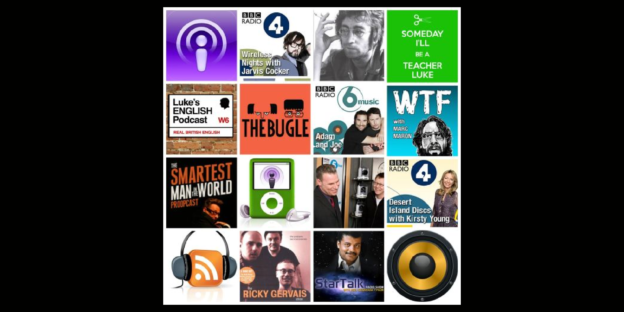
This episode is about other people’s podcasts that I love listening to and that I’d like to share with you. [Download]

Small Donate ButtonThis episode is not about podcasts for learners of English. It’s also not about podcasts made by LEPPERS. It’s just some podcasts that I love to listen to and that I’d like to share. They aren’t for learners of English specifically. This could mean they’re hard to understand for you. However – it could be really good for you to at least try listening to one of these podcasts and see if they click with you. It could be really good for your English, especially if there’s one that really grabs your attention.

I listen to podcasts on my phone, or on my mp3 player when I’m out and about or when I’m doing something. How about you?

LEPPER Podcasts
Zdenek’s English Podcast
Guillaume’s English Podcast (www.talk2learn.ch)
Chris’s English Podcast
Learning with Myself
There’s also a Skype group which you can find out about in the forum. Click here for the LEP Skype thread in the forum.

My Favourite Podcasts
jcwn10. Wireless Nights with Jarvis Cocker (UK)
I just started listening to this so I don’t have much to say except:
– I discovered it on the BBC podcasts website (http://www.bbc.co.uk/podcasts) by just browsing and clicking.
– Jarvis Cocker is great. He used to the lead singer in a band called “Pulp” who were one of the biggest bands in the UK during the 90s (and after). They were one of the top bands in the musical movement known as Britpop, along with groups like Oasis and Blur. Jarvis is a really cool guy. He’s intelligent, ironic, humorous and has really wide-ranging interests. He’s pretty much interested in everything. Also, he’s my neighbour! I recently discovered that he lives just two doors away from me here in Paris and in fact I see him in the street sometimes.
– The podcast is called “Wireless Nights with Jarvis Cocker” and it covers all kinds of different topics. They’re all like mini-documentaries in which he deals with different subjects each time, all with the aim of “taking listeners on a nocturnal journey around stories of night people.” So, it has this cool, late-night atmosphere in which you go on a little journey into a fascinating new world. Recent episodes have covered subjects like The Moon (including tales of people who have somehow been touched by the various manifestations of the moon, including astronauts who actually walked upon its surface) and this one from last week: “In front of a studio audience, Jarvis Cocker and the BBC Philharmonic weave tales of insomnia, nocturnal inspirations and dark imaginings from the world of classical music – against the backdrop of a President embroiled in the Vietnam War.”
– It won the Prix Italia for Extraordinary Originality and Innovation, a top European radio prize. Originally broadcast on BBC Radio 4.
– Let’s listen to a bit from his most recent episode. Play the intro to the Moon episode.

adamandjoe9. Adam & Joe (UK)
This was my absolute favourite podcast for a few years, and it’s probably the podcast that inspired me more than any other. I’ve talked about Adam & Joe on the podcast before (in an episode about anecdotes). Unfortunately they’re not doing the podcast any more, which is a great pity, but they’re all still available in iTunes – not all of them, but what is available is a kind of ‘best of’ selection. By the way – avoid the Adam&Edith episodes – they’re crap, but all the Adam&Joe episodes are great.
– They’re comedians, radio & TV presenters, Joe is a film director.
– Personally I like the podcast because I feel that I’m totally on the same wavelength as them. Their humour is both stupid and clever at the same time. They observe a lot of funny details about life in the UK and typical experiences that everyone shares, like going to the cinema, how it feels to come back from holiday or going to the doctor. The podcast is full of amusing little jingles and ironic jokes. Adam & Joe have been friends since childhood and that really comes through on the podcast. They’re quite childish but really sweet, funny and charming.
– Play a clip called “Bikes on a train / Posh bloke”

041811browimage8. John Lennon – The Rolling Stone Interviews (UK)
As well as being a great musician, John Lennon was also a fascinating speaker. I find all of The Beatles to be really interesting and funny, but John is the one who catches my attention more than the others. Paul is great, but I often get the sense that he’s being careful about his public image and putting on a slightly contrived ‘upbeat’ persona in interviews. George was very funny, dry and honest – in a similar way to John, but sometimes he could be a little bit evasive as well, and his spiritual beliefs could dominate his interviews. Ringo is great but doesn’t really have that much to say. John is perhaps the most open and honest of The Beatles – in a way that draws you into his heart and mind, revealing his vulnerability, his anger, his intelligence and his humour too. He had an extraordinary life, from childhood all the way through to his untimely death. This set of podcasts is an audio interview he did for Rolling Stone magazine in 1971, and it catches him at quite a vulnerable period in his life. At that time he was still dealing with the breakup of the Beatles, attempting to find a place for himself in the world, breaking down the Beatles myth and setting himself up as an individual in his own right, with Yoko Ono by his side. He’s outspoken, sincere, angry, defensive, aggressive, humorous, and passionate in these conversations. If you’re a Beatles fan, this is essential listening because it gives you real insight into the innermost thoughts and feelings of John Lennon, but if you’re not a Beatles fan I think you’d still find this fascinating because it is such an open, honest and frank interview with one of the most extraordinary people of the last century. The audio quality is a bit sketchy because this is taken from the original tape recording of the interview. The interviewer is not really audible – his questions are very quiet, but John’s answers are easy to hear.
Listen to:

startalk-radio-show-by-neil7. Startalk Radio (USA)
Neil De Grasse Tyson is an astrophysicist with a talent for speaking in a very accessible, engaging and entertaining way about science. His podcast deals with all kinds of different subjects from a scientific point of view. For example, he did one all about zombies, one explaining scientific errors in films and others about robots, aliens, hip hop and sex. He brings intelligent guests onto his show, and is almost always joined by a comedian called Eugene Merman who provides some light comic relief. Ultimately, Tyson inspires your thirst for knowledge and wonder and also provides us with a sense that science can be a kind of spiritual pursuit, or certainly a very meaningful and emotional thing, not just a cold and soulless subject. He’s also very funny!
– Listen to the clip “The most astounding fact about the universe”
– Listen to another clip in which he deals with a question about UFOs

did6. Desert Island Discs (UK)
This is an absolute institution on BBC Radio. This programme has been broadcast on the BBC for over 70 years, with a format that has basically remained unchanged for that whole period. As a child the radio was often playing in the kitchen at home and often this is the programme that would be on. It’s now part of the landscape of not only my childhood, but so many other children too. For me it is on the same level as The Beatles, Doctor Who, BBC News and all these other cultural landmarks of my life and childhood over the years.
It’s basically just an interview programme with a twist. The twist is that we, the interviewer and the guest all imagine that the guest is going to be sent to live on a desert island for the rest of their life. The guest (or ‘castaway’) is allowed to take a few things with them – namely, 8 pieces of music, a book and a luxury item. In the interview they talk about their life, explain their musical choices (usually these relate to specific moments or feelings from their life) and explain their choice of luxury item. The format is a success because it creates an intimate atmosphere in which the interviewee is encouraged to share deeply personal reflections on their life so far, and we get to listen to some of their favourite music too. It’s absolutely delightful and a great way to get under the skin of each guest, and there have been some really great guests on the show.
The interviewer has changed a few times. It used to be a woman called Sue Lawley, who spoke with a crisp RP accent. Now it is presented by Kirsty Young who comes from East Kilbride in Scotland. Kirsty’s accent is absolutely delicious – I mean, it’s very lovely to listen to (and it helps to know that she’s a very attractive and intelligent woman). She very deftly and carefully manages to ask some very revealing questions and guests are usually more than glad to take part and share themselves with the audience. The combination of Kirsty’s lovely accent, her intelligent questioning, the candid intimacy of the guests and the little bits of music we can hear make for a really rewarding listening experience. It’s a BBC podcast so the sound quality is excellent.
You can either subscribe to the current podcast with all the latest DID episodes, or search through the DID archives. I’d recommend that you search through the archives and find names of people you know, like Sir Michael Caine, Ricky Gervais, Steve Coogan, Morrissey or Emma Thompson.
Listen to: Morrissey
Search for Desert Island Discs in YouTube.

Click here for part 2.
[socialpoll id=”2232437″]
OPPPIC

234. Making “Choons” with My Brother

Hi everyone, how are you doing? In this episode I’m joined again by my brother James. The last time you heard from him he was talking about how he had dislocated his shoulder after falling off his skateboard. In this episode he gives us an update on his shoulder injury and then we talk about the music (his “choons”) that he has been making recently. What is a “choon”? Basically, it’s a “tune” – a piece of music, typically a piece of dance music, hip-hop, house music, drum & bass or techno. When you hear a really good tune, it’s quite typical to say “Ah this is a CHOOOON!” My brother makes instrumental hip-hop CHOONS. You can hear him talking about his music making process in this episode. [Download this episode] [Update 2021: Jim has lots of new music on Bandcamp which you should check out here –> https://jimthompson.bandcamp.com/music ]

Small Donate ButtonJim’s Choons
Jim is quite modest about his music making, but for years he has been quietly producing lots of instrumental hip-hop on his own using an old Akai MPC2000, which is a bit of music making hardware used by some of the most well known hip-hop, drum and bass and techno producers from the past 15 years or more. Jim bought a second-hand MPC2000 about 5 years ago and he’s been learning how to use it, producing lots of tracks, and they’re getting better and better all the time, and now he’s at a point where he’s released a 10 track album which is available for purchase online via the website Bandcamp – click here to listen to or download his albums. He doesn’t like to talk about his stuff too much because it’s very personal, but in this episode he was quite willing to talk about how he comes up with ideas and how he then turns them into pieces of music. In our conversation you’ll hear us using various technical language related to music and music production.

Download Jim’s Album
Jim’s album is available here: Jim’s page on Bandcamp
You can download it free, or if you think he deserves to be paid, you can choose to purchase the music and you can choose the price! $0 – $1,000,000 – it’s your choice.

Listen to Jim’s tune “Sympathy” (Unofficial remix of “Life’s a Bitch” by Nas) on YouTube here:

images

229. Zombies! (Part 2)

This is the second in a 2-part series all about zombies. In part 1 I talked about the zombie in popular culture, analysis of the zombie as a metaphor and then some rules for surviving the zombie apocalypse. To listen to part 1 – click here. In episode 2 I’m going to take a couple of zombie survival quizzes and then do a language focus on conditionals. [Download]

Small Donate ButtonPart 2: Zombie Survival
The Zombieland 32 Rules of Zombie Survival
Pick a survival quiz and go through it.
The Ultimate Zombie Apocalypse Survival Quiz
The Walking Dead Survival Test

Part 3: Conditionals
I’m going to explain them and give examples. For pronunciation you should repeat the sentences after me. Listen for connected speech and weak forms.

Generally speaking, conditionals refer to sentences with an ‘if’ clause (the conditional clause) and a consequence clause. Sometimes other conjunctions are used, like ‘when’, ‘as soon as’ or ‘unless’.

0 Conditionals
These are used to refer to facts that are always true and the consequences that always happen. It’s a present tense in the ‘if’ clause and a present tense in the consequence clause. For example, “When the sun comes up, the day begins” or “When the sun goes down, the night-time begins and all the evil monsters come out!”
Sometimes we use “when” instead of “if” and this just emphasises that this always happens. Using “if” suggests that it doesn’t always happen, but nevertheless the consequence is always the same. “If I talk about zombies, my girlfriend gets scared”. You could also say, “Every time” or “whenever”.

Also, we can use imperatives in the conditional clause. “If I get bitten, shoot me in the head before I turn into a zombie.”

1st Conditionals
These are used to talk about a future event (which you think is likely) and its logical consequence. It uses a present tense in the ‘if’ clause and a future form in the consequence.
*Don’t put ‘will’ (or any future form) into the ‘if’ clause.
“Shh! Be quiet! If you make too much noise you’ll attract more zombies!”
“If we see another zombie again I’ll lose my mind”
Use ‘when’ to emphasise that you think it’s definitely going to happen.
“When we arrive, we’ll need to check all the rooms for walkers”
Use ‘as soon as’ to emphasise that the consequence will happen immediately.
“As soon as he comes in the room, I’ll smash him in the head with this baseball bat!”

2nd Conditionals
Use these when you’re talking about hypothetical future or present events – not the past. For the future it means things that you don’t expect to happen, but you’re speculating on them anyway. If you think they’re likely, use 1st conditionals. If you think they’re unlikely, use a 2nd conditional. Use a past tense in the ‘if’ clause and then would in the other clause.
*Don’t put ‘would’ in the if clause.
“If I met a zombie in real life, I’d probably be fine”
“You’d be screwed if you met a zombie in real life”
“I reckon I’d survive if a zombie outbreak happened”
It’s also for imagining an alternative present.
“If I was a zombie I’d just stay at home.”
“If I were you I’d get yourself a weapon.”

3rd Conditionals
Here we are imagining an alternative past. It’s not the real past, but a hypothetical one. Use ‘had + past participle’ in the ‘if’ clause and then ‘would + have + past participle’ in the other clause. This one’s tricky because of all the auxiliary verbs.
“If you hadn’t saved me I would have been absolutely fucked” (You saved me and I wasn’t absolutely fucked)
“If he’d been more careful he wouldn’t have got bitten”.
“We wouldn’t have survived very long if we hadn’t stayed together!”

Mixed Conditionals
This could be a hypothetical past action with a present result.
“If he’d been more careful he’d be alive today”

Or a hypothetical present with a past result (yes it’s possible).
“If the government wasn’t so corrupt, this would never have happened.”

That’s it!

228. Zombies! (Part 1)

This is part 1 of a two-part series about zombies! Right-click here to download.

Small Donate ButtonThis episode is all about zombies – the undead, flesh eaters, walkers, biters, the infected – whatever you want to call them, zombies have become an indelible part of our popular culture now. There are zombies in the cinemas, zombies on TV in shows like AMC’s The Walking Dead, zombies in computer games, zombies online, even zombie walks in which people get together in large groups in order to dress up like zombies and walk around going “uhhhhh”. We’re pretty obsessed by zombies, and I am too. I love zombies and zombie films. Maybe that makes me some kind of sick and twisted individual, but I’m not alone. In fact, I think that zombies are perhaps as popular and present in our culture as vampires and ghosts. But, what is some of the history behind the zombie phenomenon? Where do they come from? What do they want? Why are we obsessed by zombies? How can you survive if zombies really attack? And, how do we talk about zombies in English? That’s the focus of this extra-special and extra-creepy episode of Luke’s English Podcast.

This episode is in 3 parts (and 2 episodes). In the first part we’re going to examine the zombie as a popular cultural phenomenon, then in the second part I’m going to test my survival skills by taking a zombie survival quiz. You can join me as I make various decisions that will affect my chances of surviving the zombie apocalypse. In part 3 we’re going to consider some conditional structures. That’s 0, 1st, 2nd, 3rd and mixed conditionals.

Part 1. The Zombie in Popular Culture
Zombies seem to be more popular than ever, but why? (The Walking Dead, zombie films like Zombieland, Shaun of the Dead and computer games like Left 4 Dead or Resident Evil)

The origin of the word “zombie”.
The concept has been popularly associated with the Vodou religion, but it plays no part in that faith’s formal practices.
In Haitian folklore, a zombie is an animated corpse raised by magical means, such as witchcraft. Zombies featured widely in Haitian rural folklore, as dead persons physically revived by the act of necromancy of a bokor sorcerer (the bokor is a witch-like figure). Zombies remain under the control of the bokor as their personal slaves, since they have no will of their own. Some people say that zombie voodoo magic is real, but others claim that it’s just a chemical or hypnotic control of a living person – causing them to act like mindless slaves of the bokor sorcerer. That’s certainly very creepy and fascinating from a social, biological, chemical and psychological point of view.

The history of zombies in movies and games
There were a few books and films made in the 1930s that used the voodoo legend to create creepy stories, but it wasn’t until I Am Legend, a 1954 horror fiction novel by American writer Richard Matheson and then principally the film “Night of the Living Dead” by George A. Romero that zombies properly entered popular culture. Romero’s film created the image of the zombie that we know today: dead people who return from the grave – the undead, who pray on the living and feed on their flesh, a world in chaos, the individual against masses of brainless enemies. One of the most interesting things about Night of the Living Dead is the subtext of the film. The hero is a black man in America, during the era of the civil rights movement. The ending is particularly relevant as we see that not only does the hero have to deal with the zombies, he also has to deal with the living and their prejudice.

George A. Romero went on to make a number of other zombie films, and really defined the genre and the whole zombie subculture, including most of the ‘rules’ for zombies and the general standards by which all other zombie culture is measured. The thing about zombie movies, and zombie culture in general is that there is always some kind of subtext – a criticism of consumer culture, a comment on the horror of the uneducated masses or the brainlessness of the population at large. For example in his 1978 classic “Dawn of the Dead” the main characters find shelter in a large shopping mall. The zombies too choose to go to the mall, but only out of some distant memory of being alive – they brainlessly walk around the mall in death just like they brainlessly walked around the mall in life. I suppose the subtext is that consumer culture is turning us into mindless mall zombies – unable to think for ourselves, acting like sheep, easily manipulated by marketing, branding and the allure of materialism.

Computer games took over from movies in the 1990s with the release of the Japanese computer game series “Resident Evil” which perfectly captured the lingering dread, the sudden horror and enjoyment of the zombie subculture. Resident Evil…

Then around the millennium we got Danny Boyle’s film “24 Days Later” which brought back zombies, but with a twist. They’re now able to run really fast! This re-booted zombie movies and it wasn’t long before we got a remake of Dawn of the Dead complete with running zombies.

The genre began to ‘eat itself’ and got even more postmodern with the brilliant comedy/horror/romcom (zom-rom-com) “Shaun of the Dead” which was directed by Edgar Wright and starred Simon Pegg and Nick Frost. This is such a brilliant film as it combined the romantic comedy with the zombie movie. In it we follow Shaun, who is not going anywhere in his life. In fact, he is becoming increasingly like a zombie by not challenging himself, being lazy and unabitious, getting stuck in a routine. His girlfriend dumps him and he has to grow up, realise his responsibilities, change his life and try to get her back. While this is all happening to him he doesn’t realise that London has become over-run with zombies. He ends up having to battle them while also saving the girl he loves. It works on lots of levels, it’s quite scary and it’s really funny.

More recently the film Zombieland was a big hit. That was an American made comedy featuring zombies and it’s definitely worth checking out. Now we have the massive hit TV show “The Walking Dead” which is one of the most successful American shows on TV at the moment. At it’s worst it’s just a soap opera with zombies. At it’s best it is a terrifying look at the ways in which people have to survive genuine hardship – how it unites people, how it tests courage and fortitude and how it can test the limits of a person’s morality.

Rules of Zombies
Like vampires, zombies have rules too. Let’s just evaluate those rules.
They’re ‘undead’, meaning they were dead and have come back to life.
You have to die to become a zombie.
Usually you become a zombie by being bitten by one. The bite kills you by infecting you with a virus and then you turn into a zombie.
Usually zombies are caused by some kind of virus, but the outbreak can have more mysterious origins.
Often the cause of the outbreak is somehow connected with the actions of secretive government departments. It’s usually the government’s fault. They’ve been doing medical tests, testing on animals, or have caused some kind of radiation leak that somehow causes the dead to come back to life and start feeding on the living.
Zombies have a taste for human flesh, not dead flesh, although they have been known to feast on recently deceased bodies.
They don’t have super powers, although their powers are a bit ambiguous. Do their muscles retain their full strength? Probably. What actually causes them to move? We’re not always sure. I think it’s an infection of the central nervous system which causes the brain to ‘turn’ and then operate the muscles, usually with one intention – to feed on living flesh, especially brains.
How do you kill a zombie?
You have to remove the head or destroy the brain. That’s it.
Zombies are quite sensitive to sound, and they can see.
If you don’t do that, the zombies will keep on coming, even crawling across the floor without legs.
Some things I’m not sure of: How long can zombies keep going? Can they swim? Is it possible to hide among zombies if you copy them? If you remove their jaws and teeth do they become harmless?

What do zombies represent to us? Some different ‘readings’ of the zombie as a metaphor.
– Disease or viral infection
– The herd mentality of people in society – mindless followers of religion, politicians, or social convention and the way that zombies want to annihilate individuality.
– The drudgery of every day life. Habits turn us into zombies.
– Consumer society and cultural imperialism.
– Fear of overpopulation and the potential for catastrophe, or natural disaster.
– Blaming the establishment (it’s usually due to a failing by the government, or some big thing which is out of the control of ordinary people)
– USA Libertarian fantasy
– Back to basics fantasy
– Post-apocalyptic fantasy

Part 2: Zombie Survival
The Zombieland 32 Rules of Zombie Survival

That’s it! Click here for episode 229. Zombies! (Part 2)
Videos
Nick Frost & Simon Pegg’s Guide to zZombies:
Part 1
Part 2
Part 3