Category Archives: History

277. A Chat with Marcus Keeley from Northern Ireland (Part 1)

This episode is the first part of a conversation I had recently with a friend from Northern Ireland. It’s the first time I’ve had someone from that part of the UK before so it’s a chance to get to know him, his country and the accents you find there. In this one we get to know Marcus and give you a chance to hear his accent. There will be two more parts to this episode. Enjoy!

Small Donate Button[DOWNLOAD] [AUDIOBOOK OFFER] [PART 2] [PART 3]
Just before we start I would just like to say thank you for taking part in the quick survey that I launched on teacherluke.co.uk recently. I asked you to select the types of episode of the podcast that you prefer to listen to. You can still do it of course, by going to my website and finding the page for the survey in the archive of episodes. Just click ARCHIVE in the menu and then ARCHIVE – ALL EPISODES and you’ll find the survey between episodes 276 and 277. The feedback will help me to know what kind of thing you prefer in episodes of LEP. Of course, ultimately I have the final decision because I’m the boss – I’m Luke after all, and this is Luke’s English Podcast and I have the final say, like sometimes I think it’s worth presenting you with something more challenging here, more entertaining there, more topic focused here, more pronunciation focused there and so on. But anyway, take my survey and let me know what your preferences are – your thoughts will combine with mine and it can help me to provide the right content for you. Click here to take the survey.

Quick Quiz
Now, quick quiz – what are the four countries that make up the UK?
England, Scotland, Wales and… Northern Ireland.
How much do you know about Northern Ireland?
What’s the capital city? (Belfast)
Another big city there? (some call it Derry, others call it Londonderry)
Where exactly is it? (well, the clue is in the name because it’s the northern part of the island of Ireland – but it’s not part of The Republic of Ireland politically, it’s part of the UK) It’s not far from parts of Northern England and South Western Scotland.
What else? The Titanic was built there, Game of Thrones is filmed there, unfortunately it’s also known for ‘the troubles’ – violence, civil unrest and terrorism.

It’s home to about 1.8 million members of the UK, and they have their own culture, their own accents and their own particular dialect, and in a recent survey the ‘Northern Irish accent’ was voted the sexiest accent in the UK!

Today on the podcast I’m joined by Marcus Keeley, who is a stand-up comedian, improviser and poet who comes from Belfast in Northern Ireland. I know Marcus from the stand-up comedy scene in Paris, as he likes to come here from time to time to visit and do comedy shows with our team. He’s a friendy, interesting and funny gentleman and this is the first time I’ve had someone from Northern Ireland on this podcast.

So, this is one of those episodes in which I have a guest on the show and we explore a number of different things within the context of an authentic conversation between two native speakers of English. If you like you can imagine that you’re there with us, involved in our conversation. After all, we are speaking to you, and for the attention of you, and you can get involved by sharing your comments on the page for this episode.

What are you going to get in this episode?
– Generally, this conversation is presented for people who are either learning English or who have a particular interest in all things British, or perhaps both.
– First we’ll get to know Marcus a little bit, giving you a chance to train your ear to his accent and way of speaking
– We’ll talk about Northern Ireland, and really get to know this often overlooked part of the UK – including a bit of culture, history, politics, things you can do as a visitor and whatever else comes up in our chat
– You’re going to listen to the Belfast accent of Marcus, and talk a little bit about the variety of accents that you can hear in Northern Ireland
– You can learn a few common phrases from the dialect of English that you hear in Northern Ireland

As ever, you can read notes for this episode at teacherluke.co.uk, so if you want to do some studying, you can.
Also, you may hear bits of rude language in this episode – so, you have been warned.
We covered a lot of ground in this conversation, which lasted nearly two hours so this will be a two part episode I expect.
Please leave any comments or questions on the page for this episode.
That’s it – I hope you enjoy our conversation, and that you experience something you haven’t experienced before.
It might be tricky to follow everything Marcus says in this episode because you’re not familiar with his accent. I encourage you to keep going and just try to follow the general flow of the conversation! Best of luck. Let’s get started…

1. Get to know Markus a bit
Where are you from exactly?
What brings you to Paris?
What do you do?
How long have you been doing comedy?
How would you describe your act?
Stephen Nolan Podcast
Markus keeley pic

269. UK General Election 2015 (Part 2)

Welcome back to Part 2 of this episode which is all about the UK general election which is taking place in a couple of days on Thursday 7 May 2015. In this part we’ll hear statements by 7 leaders from 7 of the main parties in this election, we’ll consider exactly what they said, understand some of the vocabulary and key issues, and then look at the possible outcomes and predictions for the result of the election. Most of what you can hear in this episode is written on teacherluke.co.uk. This is episode 269.

Small Donate Button[DOWNLOAD] [PART 1]
The Party Leaders & Their Statements (from a live TV debate)
So, I’ve told you about the context. Let’s now listen to what some of these leaders have to say.
On TV there have been a few live debates between the leaders. They’re fascinating.
I’m going to play you the opening statements of 7 party leaders from one of those televised debates.
Listen to the statements, and just try to follow what they say. I’ll give some comments afterwards to clarify. You can see some transcriptions of these statements on the page for this episode.

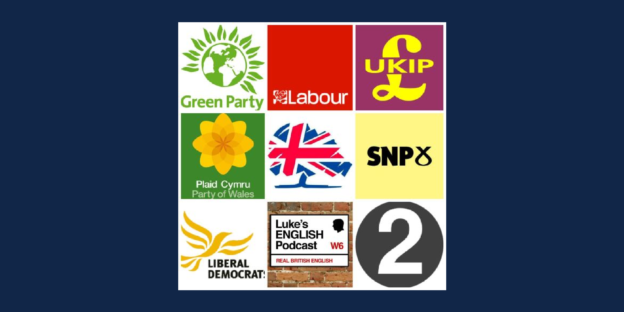
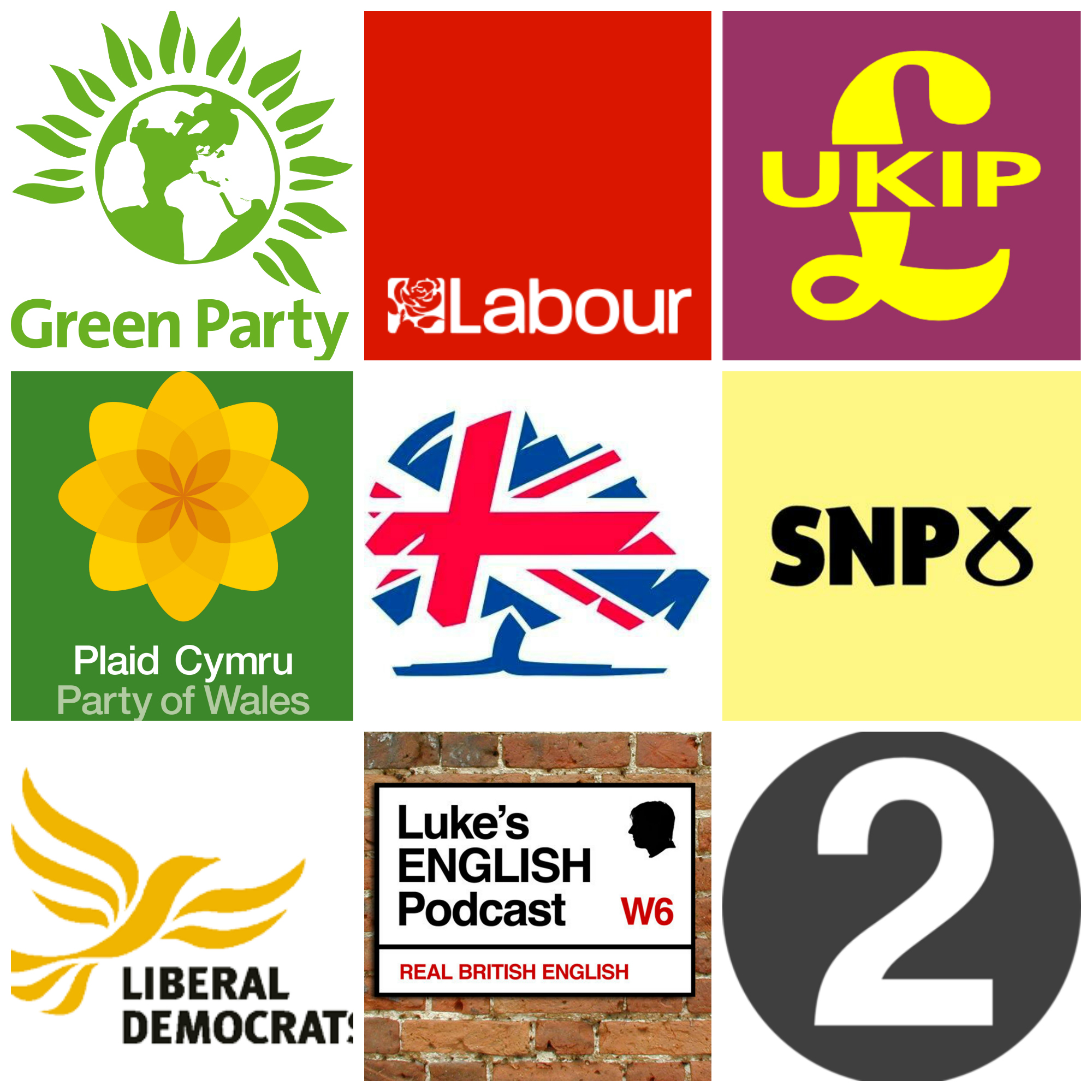
You’re going to hear from these people in this order:
Green (Natalie Bennet)
Liberal Democrats (Nick Clegg)
UKIP (Nigel Farage)
Labour (Ed Miliband)
Plaid Cymru (Leanne Wood)
SNP (Nicola Sturgeon)
Conservatives (David Cameron)

You’ll probably notice a couple of different accents in there, in particular Nicola Sturgeon (from Western Scotland) and Leanne Wood (from Rhondda in South Wales). Also, Natalie Bennet (from Australia, living in the UK since 1999). The others speak with standard UK RP accents, although I think David Cameron’s accent is slightly more posh (upper class) than the others.

Don’t forget, I will clarify afterwards, briefly, and you can also read a lot of this on teacherluke.co.uk

Details – full notes
GREEN
Let’s put principles and values first
Determined to deliver a fair economy
Make sure the poor and disadvantaged don’t pay for the fraud of the bankers
Return the NHS back to its founding principles
No public money going into private profits
Take action on climate change
Don’t demonise immigrants and people on benefits
To build a decent and humane society, we start with hope
Vote for change

UKIP
The other leaders are all the same on the big issues.
They all support membership of the EU.
They all support open door immigration.
This is why trust in politics has broken down to the extent that it has.
UKIP believes Britain should be a self-governing nation.
Open door immigration has depressed wages for ordinary people, made buying houses difficult, made it tough to get a GP appointment, and (generally) not been good for this country.
Alternative: A trade deal with EU, cooperate with them as friends,
but make our own laws.
Let’s take back control of our borders and put in place an Australian-style points system so we can choose the quality and quantity of who comes to Britain.
This will give ordinary working people an even break.

UKIP would join Conservatives to block a Labour/SNP coalition, in return for a guaranteed referendum on Europe.

LIB DEMs
Nobody is going to win this election outright.
So you’re going to choose who’s going to have to work with who(m) (coalition).
Nothing is perfect, although the country is in better shape now than it was 5 years ago.
I admit, I’ve made mistakes, and learned from them.
With Lib Dems you’ll get the grit and the resilience to finish the job of balancing the books.
I’ll always act responsibly & fairly – I’ll make sure nobody imposes ideological cuts on hospitals and schools.
I’ll always serve the whole, not the part of the country.

The whole – not just the right, the rich, the white, or one particular region. He’s suggesting he’s a better option to SNP.
Essentially, he’s showing that he’d be a necessary balancing force in coalition with the tories.

SNP
It’s a chance to change the westminster system so it serves you better.
The SNP will always stand up for Scotland’s best interests. They will make Scotland’s voice heard.
But it’s not just people in Scotland who feel let down.
Message to non-Scottish voters = friendship.
She wants Scotland to be independent.
SNP want to work with others of like mind across the UK to deliver positive change.
Wants an alternative to austerity, an end the bedroom tax, a halt to the privatisation of the NHS.
Scarce resources should be invested in the future not in nuclear weapons (get rid of the trident missile system in Scotland)
SNP stands for Scotland, but also for progressive politics.

They’re about Scotland, but also they have slightly more left wing ideas to Labour.
SNP are ready to join Labour.
Labour say they won’t join SNP, but this is mainly a defence against an attack by the Tories. Maybe Labour will have a more informal deal with SNP – i.e. confidence and supply (Labour will support aspects of the SNP agenda, and the SNP will pay them back in the form of votes) but Miliband has ruled this out too!
When the lure of government is there, they’ll change their tune.

CONSERVATIVES
5 years ago the country was ‘on the brink’ – unemployment, and one of the biggest budget deficits. (i.e. this was Labour’s fault)
Over the last 5 years they’ve been working on a long-term economic plan (austerity) and it’s working.
2 million more people in employment.
Investing in NHS as well as reducing the deficit.
Cut taxes for 30 million working people.
Now UK has the fastest growing economy of any western country.
Other leaders will claim lots of things, but they’re wrong, like they were wrong before.
The choice in this election is sticking with the plan that’s working, or going back to the debt-taxes-borrowing-spending that got us in this mess in the first place.
Let’s continue with the plan and not go back to square one.

PLAID CYMRU
Speaking to voters in Wales
Representing Welsh communities
Jobs and services have been cut to the bone – this can’t continue
Offers hope for a decent future for young people, for thriving & successful communities.
In a hung parliament, Plaid Cymru can win for Wales.
Wants to represent Wales’ voice in Westminster.

They want a coalition deal with Labour. Labour have ruled it out – because Miliband wants votes for Labour in Wales – he wants a clear choice between Labour and Tories, not an ambiguous coalition compromise.
Wood has been criticised for being a bit lightweight. “Please vote for us, we’re really nice!”

LABOUR
UK succeeds when working people succeed.
For 5 years, wages haven’t kept up with bills. The NHS has been going backwards. Young people have been fearing they’ll have a worse life than their parents.
If I’m PM I’ll:
Raise the minimum wage to £8 per hour. (Currently £6.50 per hour – 8.8E)
Ban zero hours contracts.
Reward hard work again.
Rescue the NHS, hire more doctors and nurses.
Build a future for all of our young people.
Cut the tuition fee from £9,000 to £6,000.
Cut the deficit every year & balance the books.
This is not as good as it gets (Tories) – UK can do so much better.

The full TV debate on YouTube

What’s going to happen?
Let’s listen to a YouTube video from The Telegraph newspaper. It’s a good summary of the possible outcomes. It’s a bit quick though. Yes, you can find a transcript on my website. Just find the page for this episode in the ARCHIVE.
You can see the video, produced by The Telegraph below.

Transcript/Notes for the Video – The Telegraph: What are the possible outcomes?
What’s the significance of 326?
It’s the number of seats the Tories or Labour need to win in the general election for an outright majority, something neither party managed last time around.

What happened last time?
Tories got just over one third of the vote and were forced into a coalition with the Lib Dems.

Scenario 1: What do the Tories need to get an outright majority? Can they do it?
They would need to gain 24 seats. To do this they’d need to be 7 points ahead in polls. An outright win is in easy grasp, they claim.

Scenario 2: What do Labour need to get a majority? Can they do it?
Labour need to gain 70 seats to take power. Only once have they gained this many seats since WW2: Tony Blair’s landslide in 1997.

What could happen to the other smaller parties?
SNP: Buoyed by the honourable defeat of the referendum could more than double its share of the Scottish vote to 43%.
UKIP could add to their tally of 2 to get perhaps as many as half a dozen or more.
The Greens think they could go from one to three. They’re gunning for Bristol West and Norwich South.

What happens if Tories or Lab don’t get enough votes for an outright majority?
In a hung parliament, the incumbent PM gets the first chance of forming a government. If he cannot he will have to resign and then the opposition can attempt to form a coalition.

Scenario 3: Conservatives & Lib Dems – Details?
One potential scenario is more of the same.
Tory backbenchers wouldn’t like it, the public may be wary of it but if the Lib Dems can hold enough seats, renewing the coalition may be the obvious choice for David Cameron to stay in power.

Scenario 4: Lab-Lib – Details?
Alternatively, a grand left-wing coalition could see Labour govern with the Liberal Democrats.
Voters torn between the two parties may be delighted.
Senior Lib Dems are bitter about the attacks they’ve taken from Labour, and insist they won’t allow Nick Clegg to be forced out as part of any deal.

Scenario 5: Rainbow Coalition – details?
Neither party may wish to settle with the Liberal Democrats, or they may be too small. There then begins a scramble to assemble a rainbow coalition. It’s likely to be an arrangement known as confidence and supply.
The government will sit without a majority but will be propped up on key bills and protected in confidence votes in exchange for specific policies.

What would the SNP do?
The SNP have said that they will prop up Labour but not the Tories, in exchange for more powers for Scotland, not renewing Trident and easing austerity.

What about UKIP?
Nigel Farage has said that UKIP would do a ‘deal with the devil’ to get an early referendum on membership of the EU.
And look at the Ulster Unionists; conservative, patriotic. David Cameron may ask them to keep him in power.
UUP (Ulster Unionist Party)

On balance:
If the minor parties are sufficiently large then the nationalists or Lib Dems will be the kingmaker.

So, basically, what’s going to happen?
Let me sum up the possibilities in that audio, and look at the bookkeeper’s odds (what are they?)
1. A Tory majority.
I don’t think they can get enough seats. They’ll probably get more than Labour, but a majority is unlikely in my opinion. It’s too much of a stretch. Still, the bookies give odds of 11/2 for this (that’s 5.5/1 – if you bet £1 you’ll win £5.50)
2. A Labour majority.
They need 70 seats to get to 326. They just don’t have enough support for that, especially since they’re losing so many seats to SNP in Scotland. The odds are 40/1 (very unlikely).
3. Con-Lib coalition.
It’s possible, if the Lib Dems get enough seats. But it wouldn’t be that popular with some Tories because they don’t want to be held back by the influence of Lib Dems, and the public might not be happy with another 5 years of the same thing. Odds are: 7/2 = 3.5/1) That’s quite likely.
4. Lab-Lib coalition.
If the Tories can’t join the Lib Dems (maybe because the Tories don’t get enough seats, or because they can’t make an agreement for some reason) this could be a possibility. However, Labour have attacked Nick Clegg lots of times over the past 5 years, and they’ve said they would only join the Lib Dems if they got rid of Clegg. The Lib Dems refuse to let another party choose their leader. So, the negotiations would be seriously tough. Odds are: 10/1 (possible)
5. A minority government – either Labour or Conservative, running a ‘rainbow coalition’.
What the hell is a rainbow coalition? It sounds lovely!
This is when a minority government runs, and does individual deals with different parties on a law by law basis. So, instead of a formal coalition, the government would get support votes from some MPs from other parties, in return for certain laws.
It would be messy, and fragile, and unsatisfying.
However, the bookies seem to think it’s possible:
Labour Minority 13/8 = 1.625/1 (you bet 10 you get back 16.25 profit)
Conservative Minority 4/1

The only thing we know, is that we don’t know what’s going to happen.
Nevertheless, here’s my prediction.
The results will come in on Friday morning, and nobody will get a majority. Then the negotiations will begin – and they’ll continue for days and nights. We might not know what our government will look like until sometime the following week. They will make a decision though – it won’t be like in Belgium where they had no government for ages. We’ll get a government, but it might be messy and compromised.
The tories will probably get more votes than Labour, but they won’t be able to form a coalition with anyone because the Lib Dems won’t get enough votes, and neither will UKIP. Maybe they’d join with both, because Nick Clegg says he’d be happy to have a referendum on the EU (which is what UKIP want) but could the Lib Dems really face being in government with right-wingers like UKIP?
So, I reckon Cameron will have to resign because he won’t be able to make a satisfactory agreement.
Then, Ed Miliband will have a go at forming a coalition.
None of his options are particularly easy.
A deal with SNP would be a fairly obvious choice because they’ll have enough seats to help him reach 326. But Ed Miliband has said he definitely wouldn’t do it (but I think he’d change his mind if it got him power). Of course, the SNP would make various demands in return for helping Labour. Those demands would be to get rid of the nuclear weapons defence system called Trident which is based in Scotland, to raise taxes, so spend even more on public services and possibly to demand another independence referendum.
Doing a deal with the Lib Dems is not easy either, as we’ve already stated.
A Labour minority government would be weak and could break down if all the other parties aren’t satisfied.
We might end up having another general election.
And then I’ll have to do another podcast!

Possible constitutional chaos and then zombies
– The Tories join with UKIP, we get a referendum and the UK leaves the EU, but Scotland demands to remain in the EU because they all voted YES in the EU referendum. The UK leaves the EU and splits up in the process. End result: Zombies.
– The SNP demand another referendum, and get it this time. The UK splits up. End result: Zombies.
– Parliament has no confidence in whatever government is chosen, and Parliament is closed while they try and fix it. The UK proceeds with stalemate and no government. The result: Zombies.
– The SNP dominate UK politics, and conservative MPs demand an English council for English laws. The whole constitutional framework of the UK breaks down in confusion and admin. Result: zombies.
Just joking of course ;)

So, what do YOU think?
What’s your opinion from outside the UK (or inside)?
Do you see any similarities with your country?
election2.2

268. UK General Election 2015 (Part 1)

This podcast contains everything you should know about the general election which is happening across the UK this Thursday 7 May 2015. This could be a long episode, but I’m so determined to cover the whole story that I don’t mind how long it takes. I feel it’s worth spending some time to cover this topic in enough detail to make it genuinely interesting and informative. I’m not there in the UK at the moment, so I’m not able to take part in the discussions, or watch all the coverage on the TV, but I care about this a lot and I’ve just got to get this stuff off my chest – which means, I’ve got a lot of things inside that I want to tell you about. This is an important election (like any election) and it’s interesting because we genuinely don’t know what’s going to happen, and the consequences of the different outcomes could be quite drastic. Voting is on May 7, but I’ve already voted – I did it by post (yes, that’s possible in the UK). No, I’m not going to tell you who I voted for – I’ll let you try and work that out if you want.
Small Donate Button[DOWNLOAD] [PART 2]
I was on TV last week talking about this election last week. I wish I had been as prepared then as I am now! It was a live TV debate on France24. They invited me on at the last minute because they needed a guest who was British and was able to talk about the election. I knew a few things about it because I’ve been covering this topic in my classes this year, and last year and so I agreed to go on the show. Also, I think they were interested in having a comedian on the show, and so they ended up with Luke from Luke’s English Podcast in the studio! 2 hours later I was on live television, and yes I did manage to plug Luke’s English Podcast, as well as suggest to President Francois Hollande that he take English lessons with me. So, Francois – if you’re listening, the offer is still open! I did okay in the TV debate, although I was a little unprepared. Now, after having dealt with this subject in class a few times this week already I feel like I am even more prepared, and actually have a good grasp of the situation, good enough to be able to explain it to you, here, in this podcast, clearly and simply.
That is my challenge in this episode – to get across the complex facts and issues relating to this election in an understandable and engaging way. Your challenge is to just try to follow it step by step! The end result should be that you’re more well-informed about this significant moment in British life, and I’m sure you’re going to pick up plenty of language in the process.

You’ll be glad to know that you can read a lot of what I’m saying here on the page for this episode at teacherluke.co.uk. If you want to follow this, read these words, repeat it yourself, check some of vocabulary in a dictionary or whatever studying method you have, you can do it. Not every word is transcribed as I might improvise and go off script from time to time, but the main content is certainly there for you to read. :)

This subject is relevant to you
You might not think this subject is particularly relevant to you, but I’d like to try and persuade you that it is.
The UK remains one of the world’s most important countries. What happens here is in the interests of the whole world.
If you’re in a European country it is particularly relevant, because what happens in this election could dictate the UK’s relationship with the EU, including steps towards our exit from the union.
This election is fascinating because we really don’t know what’s going to happen. Usually, it’s pretty obvious. Not this time.
It could result in big changes to the UK’s constitution, including the our exit from Europe, Scotland’s exit from the UK, a fairly significant social and economic change of direction for the country, and changes to the way our government operates within Parliament. Is this the end of an age in UK politics? Maybe.
So, I think it is relevant to anyone interested in significant events beyond their borders – and I imagine that if you’re a listener to this podcast, you have some curiosity or relationship with the UK, which could make you want to know more about this big moment.

This is the number 1 story in the UK at the moment. There’s a huge buzz about it in the newspapers, on TV, all over the internet. It’s the big story – much bigger than the birth of the second royal baby, which happened on Saturday, and named yesterday (Charlotte Elizabeth Diana). So, in this episode I’ll explain the main details and nuances of this story, specifically for you as a non-native speaker, so you can understand it’s significance.

And as if that wasn’t enough you’ll get plenty of vocabulary, the opportunity to hear the leaders of 7 political parties in the UK. That’s 7 different voices from 7 different key figures in this election, including 1 Scottish accent and 1 Welsh accent. At the end of this episode, you’ll be far more informed about British politics than you were at the beginning, and we all know that knowledge is power. You may be able to impress people with your ability to chat about UK politics. Honestly, I’m often surprised at how little people understand politics, including fellow Brits. I think everyone benefits when we engage in politics. I’m certainly not cynical about this subject, and I definitely do not find it boring. Cynicism about politics is dangerous, because if we don’t care about politics, and ignore the subject – it doesn’t go away, it just gets dominated by people who do care about it – and often that means people with extreme, fringe ideas. So, let’s engage in politics because it’s not only fascinating, but vitally important.

So, are you convinced? I hope so.

The election is on Thursday, just a couple of days away. So, by the time you listen to this, the voting will probably have finished and there will probably be a new government in power. Many of you may be listening to this ages after the event. I still think it’s relevant, even some time after the election, because it’ll give you insight into not only the background story of what happened in May 2015 and the context of what’s going on in the UK at the moment, but it should also help to explain events that are happening in the future.

Context – the last 5 years
Traditionally, the UK has been dominated by two political parties – Conservatives (right) and Labour (left).
Now we’re seeing a much more diverse set of parties who not only represent different positions on the political spectrum, but also different regions in the UK. This is a story of not just right and left, but of England and Scotland, and also Wales & Northern Ireland of course. It could be the end of the two-party system, and the centralisation of Westminster.

Let’s just have a reminder of some basics of politics in the UK
The whole of the UK is divided into constituencies – these are political areas of the country. Each constituency votes for an MP to represent them in The House of Commons, which is in Parliament, which is in Westminster, which is in London, which is in England, which is in Britain, which is in the UK.
Each constituency has a seat in the House of Commons. There are 650 seats for 650 constituencies. So each seat is occupied by an MP who represents his/her constituency, including the Prime Minister, members of the Cabinet (ministers of different ministries, such as the Ministry of Education, etc) members of the opposition etc.
Those MPs represent different parties of course. That includes the main ones – Conservatives (302), Labour (256), Liberal Democrats (56) and also other ones with smaller numbers of seats, particularly parties that represent specific interests of other nations in the UK, such as the Democratic Unionist Party and Sinn Fein from N.Ireland, the SNP from Scotland and Plaid Cymru from Wales.

Those MPs vote on laws that affect the whole of the UK. After the laws have been passed, and given Royal Assent by The Queen (she basically stamps them “Yes, fine” next! I don’t think she actually does it herself), they are applied in England, Wales, Scotland and Northern Ireland. But, thanks to a process of decentralisation of government power called ‘devolution’, Wales, Northern Ireland and Scotland have their own parliaments which have a certain amount of independent power. They can adapt some of the laws from Westminster, and can write some new laws which apply only to those regions. This is particularly true in Scotland. England doesn’t have a devolved parliament like the other countries. We take laws from Westminster, unchanged. This arrangement has been relatively problem free for England, because the number of MPs from the other 3 countries in Westminster has been quite low, so it’s no big deal. But, if the SNP get lots of votes this year, it means the number of SNP MPs could rise by 40-50 seats, and that means that suddenly a lot of English laws are being voted on by Scottish nationalists. That’s making some English MPs freak out a bit. Do you understand that? Don’t worry if it’s a bit complex. It might make more sense later.

Basically, this is going to be a big year from the Scottish National Party and they’ll probably have a much bigger presence in Parliament than ever before, and that’s going to make a big difference to the way that government is run in the UK. The Scots will have much more influence.

What happened in the last election?
To form a majority government, one party needs to get at least 326 seats in Commons. For example, in 1997 Tony Blair’s Labour Party won 418 seats – that’s a big victory. They assembled a majority government that enjoyed a lot of support from the public (at the beginning). Labour won the next election too, but in the end, Blair lost the public’s support, mainly because he chose to get involved in the Iraq war in 2003 against public opinion. People decided that, with George Bush, he’d lied about his intentions for going to war in the middle east. He said it was about weapons of mass destruction, and it became clear that it was more about imperialism and a struggle for oil. Blair stepped down eventually, and was replaced by another Labour MP called Gordon Brown (an imposing Scottish guy who specialised in economics, was a bit more socialist in nature than Blair, had one eye and was unable to fake a smile on live TV) after a damaging power struggle within the party. Basically, Brown and Blair set up New Labour together in the 90s. They had an agreement that Blair would be the leader, and Brown the finance minister, and that after something like 8 years, Blair would step aside and let Brown have a go at leadership. I think Blair didn’t want to give up the leadership (if we can learn one thing from this episode, it’s that power is massively seductive, and when power is within reach people will be willing to change even their most important principles in order to get it). So there was an internal struggle within the party, and Brown won and became PM, but it left the Labour party divided. Blair is now generally disliked. Brown was also pretty unpopular. He didn’t have the charisma or charm of Blair, and he was PM at the time of the economic crash. A lot of people blame him and Labour for that. This is around 2008, 2009. In 2010 it was time for another election.

There was a lot of voter apathy, and there still is. This is the feeling among voters that voting is a waste of time and effort, because all the candidates are basically the same, they all lie, they don’t keep their promises, they’re corrupt and just seek power and don’t really have our interests at heart. That meant that we had a fairly low voter turnout at the election, and also the nation wasn’t particularly passionate about one candidate in particular. The three main candidates were David Cameron of the Conservatives, Gordon Brown of Labour and Nick Clegg of the Liberal Democrats. None of them did particularly well, and neither Conservatives or Labour got the magic 326 seats to form a majority government. So, the negotiations began. What negotiations? The negotiations to form a coalition government. This is when several parties get together and form a joint government. Usually a smaller party will join a bigger one if they can agree on certain policy ideas and an agenda for government. This involves the usual things you would expect from a negotiation – conditions, concessions, trading powers and so on.

The Conservatives
It was the Tories (Conservatives) and Liberal Democrats who made a deal, and formed the Conservative-Lib Dem coalition which has been in government for the last 5 years. They came into power when the UK was suffering a large budget deficit (the country just didn’t have enough money to pay for everything) as a result of the financial crisis. The Conservative solution to this was to introduce sweeping austerity measures – that means spending cuts. This is one of the key policies of The Conservatives, and part of their ideology. Stop spending money on social services. That means cutting welfare payments or cutting benefit given to people in society who need help, or anything that the state pays for. The logic there is that the state can save money by spending less on its people.

At the same time, they wanted to reduce taxes for the rich, and allow businesses to flourish (to be successful), especially the financial sector (the banks, particularly in London). Don’t tax corporations, banks or businesses too much – let them thrive. If businesses are successful, if there is wealth at the top end of society, that will benefit everyone because the money will come trickling down from top to bottom like a magical waterfall, it will lead to job creation, more people will have spending power and everything will be wonderful. This was the Tory plan. Cut public spending, promote the private sector. The Liberal Democrats, in joining the Conservatives, moved to the right (because Conservatives are a bit right-wing, and the Lib Dems were in the centre, to the left of the Tories). So the Lib Dems moved away from the left in order to get into government. Nick Clegg justified this by promising to protect certain key things – like tuition fees for example (that’s the price you have to pay to go to university in the UK). He promised to make sure the tories didn’t raise tuition fees. But he failed his promise and the government did raise tuition fees. In fact, generally, the coalition has been bad for Nick Clegg because he’s had to compromise lots of his principles, and he keeps having to apologise for it.

So, the Conservative-Liberal coalition went ahead with large spending cuts. Lots of people in the UK protested against the cuts, saying it was unfair and that the conservatives only cared about the rich, and didn’t care about ordinary working people, and they had a point. Anyway, ‘austerity’ has been the big word of this government. Spending cuts. For many people, particularly those in working class or poor communities, this was pretty bad news because suddenly they had fewer services, longer hospital waiting times and so on. So, austerity, austerity, austerity. The tories say “we have a long-term plan for the economy – it’s tough, but it’s necessary”.

Maybe they’re right, because according to lots of analysts, the UK’s economy has had more growth than most other countries in Europe. Maybe it’s been working – but it’s unclear if this growth is due to spending cuts, or if it would have happened anyway. Maybe there are macroeconomic factors which are beyond the control of the tories, which mean that the UK’s economy would grow out of recession quickly anyway, and that if they cared more about communities, then people would generally be happier and quality of life better.

Ultimately, it’s a question of values. We’ll come to that later.

This is long isn’t it! But I hope you’re keeping up!!!

So, the most recent government is David Cameron PM, Nick Clegg deputy PM – conservatives and Lib Dems together, with austerity measures their main economic policy.

The Scottish National Party
Then of course last year we had the high profile Scottish independence referendum. As part of a deal agreed by David Cameron some time before, the Scottish were given the choice to be in or out of the UK. I did a podcast about this before, which was very well received by my listeners. There were two camps – the “Yes Scotland” campaign (for independence) and the “Better Together” campaign (against independence). In the end, 55% of people voted “no” for independence. Scotland stayed in the union. Part of the reason people voted “no” was because it was still a pretty good option for them as all the MPs from England (Lab, Lib and Con) all promised to give Scotland more devolved powers as long as they stayed in the union. “We’ll give you more power – but please don’t leave us!” So, the campaign was such a great advert for Scottish political interests in the UK that the SNP have since attracted loads and loads of support in Scotland. All that campaigning for Scottish rights has been wonderfully helpful for Nicola Sturgeon, the leader of SNP. Now, the SNP are probably going to win a landslide victory in Scotland, stealing a lot of seats from Labour. 40-50 extra Scottish MPs are probably going to arrive in Westminster. How’s that going to affect UK politics?

So, tories are in government, pushing spending cuts and being accused of just looking after their rich friends in the banking industry (who appear to have got away with losing/stealing all our money). Lib Dems have been supporting them, but trying to stop them going to far.
SNP have been getting loads of support in Scotland.

What about Labour?
After losing out in the last election they changed their leader. There was a race for leadership, and it ended up being between two brothers. Ed Miliband and David Miliband. In the end, Ed won, but he had to stab his brother in the back to do it (not literally). Basically, he got ruthless and undermined his brother’s campaign, making friends with key Labour supporters, and pushing a more traditional left wing agenda. So, Ed Miliband became the new Labour leader. The thing is, he’s not particularly impressive. His party is more popular than him really. He’s a bit awkward, makes some clumsy mistakes like forgetting important details in speeches, or stumbling over his words sometimes. He also looks a bit odd, like a character from a Wallace and Gromitt cartoon, and he has a nasal sounding voice. Also, he comes from a fairly wealthy background, despite being quite left wing. All those things work against him, but nevertheless he and his party have consistently challenged David Cameron’s government over their position on social and economic issues. He’s emerged as a candidate who actually cares about ordinary people, and who has the guts to take tough decisions and lead the country. So, although he’s not quite as popular as the Labour Party itself, Miliband could be our next PM. It all depends on small details in the voting on Thursday, and whether the tories can make a coalition deal with other parties or not.

Oh, I forgot something important – UKIP and Nigel Farage.
We’ve seen from history that whenever times are tough and there’s a financial crisis, people get scared and insecure, and they look for a scapegoat to blame for all their problems. That scapegoat is often foreign people, immigrants and their damaging effect on a country. UKIP stands for the United Kingdom Independence Party, and they have, in my opinion, some slightly dangerous, reductive and simplistic solutions to the UK’s financial and social problems.
Essentially, for UKIP, all of our problems are caused by our open door policy on immigration. The government doesn’t have enough money – immigration, we’re spending too much on welfare for immigrants. You can’t get an appointment to see a doctor? Immigration. You can’t find a job? Immigration. There’s too much traffic on the road? Immigration. You’ve got a bit of a headache? Immigration. You keep losing socks in the washing machine? Immigration.
Oh and the other problem is the European Union. According to Nigel Farage, the UK needs to leave Europe. If we do that we can choose our own laws, close the open door to immigrants, and save billions of pounds a year.
Farage has quite a high number of very vocal and loyal supporters. Sometimes they’re accused of racism. Sometimes UKIP members and supporters are racist, and then Farage has to make a statement saying “I’m disappointed in this person, they don’t represent the views of UKIP etc”. I’m sure it’s a familiar story to you – I’m sure there are similar parties in your countries that tell us that the source of all our problems is the dirty, criminal, lazy, disease infected influence of ‘other people’ from across our borders. In my opinion it’s small minded, it’s distorted by prejudice, it’s backwards looking (in the mind of Nigel Farage, Britain was at it’s best when fighting against foreign invaders) and it’s dangerous.
Farage wants the UK to have an early referendum on the EU.

There are arguments for leaving the EU – like that it would save us money, and we could be free to choose other trading partners, but I wonder if there’s real truth in them. If we did leave the EU, surely we would lose billions from all the lost business, the companies that would close or pull out of the country, the trade deals we would lose with our biggest market, the bad faith that would develop between the UK and other European nations, etc etc.

But, lots of people seem to agree with him and there’s a chance that if UKIP get enough support in enough places, that they could gain enough seats to be in a position to form a coalition government with the Conservaties, and that is bound to involve one key condition – a referendum on the EU. So, watch this space – Britain’s exit from the EU (or Brexit) is more likely than you might think. Would the conservatives offer an early referendum on EU membership if it guaranteed them power? Yes, I think they would.

There are also other parties, with less influence, but who could be important in any coalition deals. This includes the left-wing Green Party, Plaid Cymru (representing Welsh interests, also quite left wing) and parties from Northern Ireland such as the Ulster Unionists (would support the conservatives).

End of Part 1 – 1hr05min
Click here to for part 2.
election1.1

262. What is Britishness? (Part 2)

Welcome back to part 2 of this episode in which we are exploring the subject of Britishness. In this one we are looking at how the Brits define and understand their own national identity. [Download]
Image: Gene Bible http://www.genebible.co.uk
Small Donate ButtonHow do British People define “Britishness”?
When you ask the average British person to define “Britishness” I find that they always give certain ‘stock answers’ to this question too. As we know, it’s hard to truly define this concept, so you end up listing various associations, which don’t fully deal with the whole subject in a satisfyingly complete way.

Video
I found a video on YouTube called “What is Britishness?” by Rebecca Devaraj. It’s a short video exploring Britishness for her final-year university project.
It looks like she spent the morning in a local park, asking passers-by the question “What is Britishness?”
Listen to the audio. Can you guess which answer I think is the best?

Some vocab from the video
Having a stiff upper lip and getting on with things
Being accepting and just getting on with it
Bulldog – it has connotations with Churchill, and the advert… https://www.youtube.com/watch?v=wbz-IsEOCKo
Bad weather – torrents (torrents of rain) ***I’ve just realised that they said “tolerance” not torrents! Did you notice that?***
Progress
We get behind our sports teams
You just are British – that’s it really. If you’re British – you enter the mix.

The best comment?
For me it’s the guy (Professor Jeremy Black, author of “A Short History of Britain”) who says this:
“I would have thought that Britishness defines the characteristics of whoever are the citizens of Britain, whatever their origins at any one time. Ordinarily, we would argue that Britishness is linked to notions of liberty and freedom and in fact the very diversity that makes it difficult to define what Britishness means”.

Wikipedia Definition

Britishness is the state or quality of being British,[2][3] or of embodying British characteristics,[3] and is used to refer to that which binds and distinguishes the British people and forms the basis of their unity and identity,[4] or else to explain expressions of British culture—such as habits, behaviours or symbols—that have a common, familiar or iconic quality readily identifiable with the United Kingdom.[5] Dialogue about the legitimacy and authenticity of Britishness is intrinsically tied with power relations and politics;[6] in terms of nationhood and belonging, expressing or recognising one’s Britishness provokes a range of responses and attitudes, such as advocacy, indifference or rejection.[6] Macphee and Poddar state that although the designation of the two differing terms, Britishness and Englishness, is not simple as they are invariably conflated, they are both tied into the identity of the British Empire and nation, since these last two are altering considerably as Englishness and Britishness do too. Thus the slippage between the two words can be seen as a play between these changing dynamics.[7]

That’s interesting.

So, in summary that means it’s:
– Whatever distinguishes British people and culture from other nations, whatever is unique to the UK.
– It includes habits, behaviours, or symbols that are specific or familiar to the UK
– This conversation usually ends up with references to the power structure of the UK – politics and monarchy.
– Expressing Britishness provokes a range of feelings. For example, waving a British flag might cause people (in the UK) to go “Yey!” or “whatever” or “I find that offensive”.
– “Britishness” and “Englishness” are different things, but they are often used to mean the same thing – Britain from an international point of view, especially as an empire.

So, what’s the difference between Britain, and England? (and indeed Scotland, Wales, Northern Ireland)
Why would it be offensive to wave a British flag?

Generally in England it’s less offensive, but in Scotland, Wales or Northern Ireland you might meet people who put their countries before the union of the UK, and in fact feel that the UK was forced on them in some way.
What about waving an English flag?
In England, the UK flag is associated with unity, inclusion, multiculturalism and so on. The English flag on its own is more associated with English nationalism, which in turn is associated with empire building, colonialisation and also football hooligans. Generally, the English flag is displayed when there’s a football match, and the behaviour that goes along with that.

In terms of how Brits define Britishness… This Guardian Article Sums It Up Rather Well
http://www.theguardian.com/uk-news/guardianwitness-blog/2014/jun/09/scottish-independence-10-things-that-sum-up-britishness

What about the Scots, the Welsh & the Northern Irish?
I’m English, and British, so when I talk about Britishness, I’m also talking about Englishness to a certain extent, but Britain also includes Scotland, Wales and N.Ireland. Do they feel included in all this talk of Britishness?
Not necessarily. Some people in those countries feel strongly about independence and resent being ‘lumped in with England’. They believe their countries have unique identities too, which are not always represented when people talk about Britishness. Some would rather not be part of Britain at all, as we say recently in Scotland with the strong independence movement.
Personally, I think Britishness is quite a flexible term, and it does include Scottishness, Welshness and Northern Irishness, but I can understand they get pissed off that their culture is not always represented in this kind of discussion. Personally, I was born and raised in England, and so many of my British associations are also English. I’d like to get more Scottish, Welsh and Irish people on my podcast.
Also, it’s worth remembering that most people don’t feel all that strongly about it. I reckon most people just want to get on and don’t want too much fuss. I’m proud of that too – usually resentment between countries in the UK does not result in violence these days, although that’s not to say violence has not occurred in the past, particularly regarding terrorist attacks related to the troubles in Northern Ireland, which is a subject that deserves to be covered fully in a podcast in the future.

What I think / What I’m proud of
When my students were brainstorming their British associations, I did too. Here’s my list, of personal British associations (in no particular order).

Tolerance and acceptance (although there seems to be a
Freedom (although this is a growing movement against immigration and about taking back the country from unwelcome foreign visitors – that British identity is being lost due to too many foreigners, and the fact we’re run by the EU. Those are views held by a fairly marginal political party called UKIP, who are having a big effect on voting patterns and the political landscape in the UK)
Fairness -“It’s just not cricket” (but are we really fair?)
Pragmatism – getting things done
Humour
Resolve
Music
Comedy
Literature
The land itself
Cricket, Rugby (football too?)
The diverse accents
The NHS
Diversity & Acceptance of Diversity
Certain inventions
Sherlock Holmes & Dr Watson
Drinking Tea with milk, the proper way
Pretending to be proudly British!
Taking the piss
Pubs
Liverpool, Birmingham, London
A slight sense of guilt about Scotland, Wales, Ireland etc – but knowing that is also nonsense, but it’s there a bit.
Tolkein
Monty Python
Ali G
I could go on…

When I came back from Japan, I saw the UK with fairly fresh and objective eyes. I remember the greenness of the place, the relaxedness, the small mindedness. It was very Tolkienesque.

Some things I’m not proud of, like certain racist or small-minded people, poor public services, corruption and elitism, blind national pride, etc…

All in all, I hope that Brits, and English people too, remember that our countries are diverse places and that is what makes us strong.

Billy Bragg – England, Half English (Live)

Lyrics

My mother was half English and I’m half English too
I’m a great big bundle of culture, tied up in the red white and blue
I’m a fine example of your Essex man
And I’m well familiar with the Hindustan (This is an Indian English-language daily newspaper)
‘Cause my neighbors are half English and I’m half English too

My breakfast was half English and so am I, you know
I had a plate of Marmite soldiers, washed down with a cappuccino
And I have a veggie curry about once a week
The next day I fry it up as bubble and squeak
‘Cause my appetites, half English and I’m half English too

Dance with me to this very English melody
From morris dancing to Morrissey
All that stuff came from across the sea

Britannia, she’s half English, she speaks Latin at home
St. George was born in the Lebanon, how he got here I don’t know
And those three lions on your shirt
They never sprang from England’s dirt
Them lions are half English and I’m half English too

Le-li, umma le-li-ya, le-li Umma le-li-ya
Le-li, umma le-li-ya, bledi g’desh akh! Le-li-ya

Oh, my country, what a beautiful country you are.

The conclusion (of sorts)
Britishness, like any cultural identity, is always changing. These things never stay the same. There is always a sense that the culture is being lost. That’s just the sense of the present order slipping away and being replaced by the new one, at every moment of every minute – things are changing and nothing will stay the same. That brings some sense of fear and panic – the idea that we’re going to lose the good things we have.

People also need a clearly defined culture in order to feel secure, so they know where they are and they can trust the people around them. People tend to prefer the things they know and distrust things they don’t know. It’s quite easy to blame others for that frightening sense that things are changing for the worse.

I think this is why a lot of people have fear and hatred of immigrants and foreigners. They’re scared of the unknown agents of change who look and behave differently. I suppose it’s human nature, but it’s sad and unnecessary when it ends up in violence and suffering. Obviously, we shouldn’t tolerate certain behaviour.

Where am I going with this?

What I mean is – there is no such thing as true “Britishness” unless it is just a snapshot of what is happening right at this moment in Britain. What is going on? What are most people thinking and doing? It’s almost impossible to comprehend the subtlety of what Britishness really is at any moment, because it’s so complex. That’s why the question invites the standard mind-numbing responses, like “It’s The Queen, tea, strawberry jam, Monty Python, a game of cricket, 9 pints of lager and a fight outside the chip shop” – people just list things they associate with the UK because there’s no other way of explaining it. Just a bunch of associations.

Britishness is negotiated
Also, I believe that Britishness is not an absolute concept, it’s something which is negotiated. Everyone has their own version of Britishness, and in fact Britishness changes depending on who is in power, who’s got the money, the influence and the cultural capital. In the end, it doesn’t matter how much you say that Britishness is all about cricket, when hardly anyone plays cricket any more because there’s no money in it.

Britishness is a blanket term which is supposed to incorporate all the diverse elements of multiculturalism.
Britishness means diversity, inclusivity and a celebration of the success and positivity of multiculturalism. So, in that sense, Britishness is something which is supposed to unify us, provide us with a sense of pride and therefore duty and obligation to the country we belong to. We’re less likely to smash the system if we believe in it.

Britishness is a unifying force which just keeps everything together
After the 2005 terror attacks, the government were keen to reinforce national pride, to promote the British brand to its own people, in an effort to fight back against the destructive forces behind the attacks. The idea of a Britishness day was suggested, but it didn’t really go anywhere. What could that be? A day when we argue about what Britishness is? Also, it’s all a bit close to nationalism, and we don’t like that in the UK. Nobody wants to be associated with facism, so often people have a defensive attitude to national pride, usually along the lines of “I think it’s fine to be proud of Britain” or “I AM proud of Britain and there’s nothing wrong with that.” It’s usually that sort of thing.

What about all the bad things done in the name of Britain? Are you proud of them too?
Most people seem quite happy to pick and choose which aspects they are proud of. They usually will ignore the atrocities in our colonial past, proudly declaring their pride in English tea – despite the treatment of India during the colonial era.
I’m wary of being too proud of my country because I know that we’ve done some pretty bad things in the past. Also, I think national pride can be blinding, and ultimately quite destructive. It’s good to be proud of your roots, but there is a more important thing to remember – that there is a bigger picture – and that is that it’s stupid to think that one nationality is intrinsically better than others.

You can be whoever the hell you want to be
It doesn’t matter where you pay your taxes you can just define your own identity as you see fit. Just as long as you don’t go out of your way to hurt others, go ahead and be whatever you like. That’s the main thing. Just try to be a good person. The rest is just fluff.

LEPSTERS – What’s it all about?
Leave your comments, thoughts and opinions in the comments section, and practice your English!

Related Episodes
If you found this episode interesting, check out these ones too:
261. What is Britishness? (Part 1)
128. Luke’s Stand Up Comedy Show – Featuring jokes about British food, weather and our Royal family – Now fully transcribed
131. Rickipedia – Conversation with my Dad, in which we answer various questions from listeners, including some things about British culture.
British Slang (A-C)
British Slang (D-G)
British Slang (H-M)
British Slang (N-Z)
156. British Comedy: Ali G
172. British Comedy: Peter Cook & Dudley Moore
177. What Londoners Say vs What They Mean
192. Culture Shock: Life in London (Part 1)
192. Culture Shock: Life in London (Part 2)
195. British Comedy: Monty Python’s Flying Circus
199. The UK/USA Quiz
202. British Comedy: Monty Python & The Holy Grail
219. Scottish Independence – Key notions of national identity

261. What is Britishness? (Part 1)

In this episode I’m going to explore the notion of “Britishness”, including the stereotypes, the reality and the complexity of defining Britishness, or any other national identity. You’ll find that a lot of what I’m saying is transcribed on the page on teacherluke.co.uk for this episode, although not all of it has been prepared in advance, and there will be moments when I go off script and improvise. So, this episode is a mix of scripted and unscripted bits. This might be a long episode – I have no idea at this stage! If it is really really long, I’ll divide it into several episodes, and you’ll just get even more for your money, which is a lot considering it is a free podcast! [Download]
Image: Gene Bible http://www.genebible.co.uk
Small Donate Button

I’m British so…
I must be some kind of 19th century cross between a gentleman and a hooligan, with a newspaper and umbrella under my arm, a cup of milky tea in one hand, and a pint of warm beer in the other, eating a bag of fish and chips while talking in Shakespearean English about the benefits of the rules of cricket and the class system before getting blind drunk at a football match, invading a bunch of developing countries, and then sort of apologising a bit, like Hugh Grant, because basically we’re just a bloody nice bunch of chaps who mean no harm and live in an antique world of Downton Abbey where we all just keep calm and carry on while being awfully polite and well-mannered, except when we’re playing Germany or France at football when we all forget our national anthem before transforming into a gang of brutal thugs who smash up the local town, blame it on illegal immigrants while we continue to eat our bad food under our bad weather using our bad teeth, the whole time making bad jokes in accents that nobody can understand before stopping everything in order to camp outside a hospital to await the birth of some blue blooded bawling British baby, who, if he’s lucky enough to make it to 100 years old, will probably put on a magic golden hat in an old castle to become our unelected and powerless king, like some twisted modern real-life version of Game of Thrones in 3D.

Yes, I’m from Britain. In fact, I’m from London…

Now, what’s all this about?
Well, this episode is all about defining “Britishness”, or attempting to do that.

I asked my students to define “Britishness” and that inspired me to do this episode
Recently in some of my English classes we’ve been studying topics related to the UK, such as the political system, the monarchy, the relationship to Europe and so on. In our first lesson we considered the idea of Britishness, national identity and the citizenship test. As a warm-up exercise I invited my students to try and define “Britishness”. The results were the usual mix of stereotypes and genuine insight. It’s interesting to me, to see the difference between how my students see my country from an outsider’s point of view, and how I see it from the inside.

Britishness is hard to define
It seems that defining “Britishness” is harder than you might expect. In fact, the more you think about it, the more complex it becomes. It’s remarkably hard to put your finger on a universally true definition of Britishness. Instead you end up with the usual stereotypes – either held by foreigners who have their own view of the UK, or by British people themselves who, for one reason or another, define their culture with certain reference points. E.g. it’s fish and chips, or it’s a cup of tea and a game of cricket on the TV. But I want to go a bit deeper than that. So that’s what I want to attempt to cover in this episode – Britishness. What is it? What is it not? I might not be an expert social historian, and I might not have all the answers, but nevertheless, let’s get stuck into this topic and see what we come up with. Essentially, in this episode I’m going to talk about British images in order to give you a broader understanding of the topic, beyond just the usual stereotypes.

To prepare for this question I’ve written myself some notes. I’ll add it to the transcript collaboration page. Also, please feel free to add comments under this episode on teacherluke.co.uk.

So, let’s get started – “What is Britishness?”

The Stereotypes of the UK from Abroad
Here’s what my students all came up with. I asked them to brainstorm things they associate with Britain, including values, people, and any other aspects of culture. You’ll find a lot of that listed below. I’ve also included what I’ve heard from students, and other people I’ve met over the years. I know I’ve talked about some of these things before (and I’ve talked about the fact that I’ve talked about things before, before too, and in fact now I’m pretty sure I’ve talked about talking about talking about things before, before, before too…) Anyway, here’s the list:
Bad food
Fish & chips
Jelly
Tea
The Queen (we worship her, apparently)
Hugh Grant
Bad Weather
Drunkenness
Football hooligans
Politeness
Indirectness
Colonial past
British Empire
Marmalade
Marmite
Margaret Thatcher
The Beatles, The Clash, The Arctic Monkeys, underground music and so on.
British movies (Gritty Brit Flicks?)
Relationship with the US
Literature – Shakespeare, etc
Sherlock Holmes
Confusing differences between the UK, Britain, England, Scotland, Wales, Northern Ireland, Ireland, Republic of Ireland, The British Isles, etc.
Strange “British” humour
…The list goes on – Please add your associations too in the comments. Are they well-informed ones, or just stereotypes. Don’t worry, I’m not going to judge you harshly. I’m interested in what the commonly-held images of the UK are in your country.

End of Part 1 – Click here for part 2

Song – “Autumn Almanac” by The Kinks
It’s song time again. I’d like to play a tune which I feel sums up a lot about British life, particularly English life. It’s called Autumn Almanac by The Kinks, written in 1967 I think.
It describes various aspects of English life. Imagine a picture book of images: Gardening, the weather, the end of summer and the approaching winter, escaping from the lack of sun by staying indoors and drinking tea, eating buttered currant buns, the atmosphere of a pub on a Friday evening, football on Saturdays, a roast lunch on Sundays etc. It has a kind of nostalgic feeling to it, and a slight sense of sadness along with national pride. Perhaps the sadness is the fact that this is a version of England which is slowly disappearing as the country modernises more and more, but perhaps these values and habits will always remain.

Buy “The Kinks – Something Else” (1967) on iTunes
Lyrics & Chords
A B7 E A B7 E
Am7 D7 G
From the dew soaked hedge creeps a crawly caterpillar
D7 C D G D G D7
When the dawn begins to crack, it’s all part of my autumn almanac
Am7 D7 G
Breeze blows leaves of a musty coloured yellow
D7 C D G D G D7
So I sweep them in my sack, yes, yes, yes, it’s my autumn almanac

Em E A9 B7 E A9 B7 E
Friday evening people get together, hiding from the weather
C#m G#7 C#m7
Tea and toasted buttered currant buns
F#7 Amaj7 Ab7
Can’t compensate for lack of sun because the summer’s all gone
Am7 D7 G D7
La-la-la la-la, la la la-la la la-la-la ohh! my poor rheumatic back
C D G D G D
Yes, yes, yes, its my autumn almanac
Am7 D7 G D7
La-la-la la-la, la la la-la la la-la-la ohh! my autumn almanac
C D G D G D
Yes, yes, yes, its my autumn almanac

G D C G G D C G
I like my football on a Saturday, roast beef on Sunday’s alright
G D C G G D C G
I go to Blackpool for my holidays, sit in the open sunlight
Gm Bb Eb F
This is my street and I’m never gonna leave it

F7 Bb Dm Fm G7
And I’m always gonna stay here if I live to be ninety-nine
G7/F C Cm G E7
Cos all the people I meet seem to come from my street
A7 B7 Em B7
And I can’t get away, because it’s calling me (come on home)
G A7
Hear it calling me (come on home)

Am7 D7 G D7
La-la-la la-la, la la la-la la la-la-la ohh! my autumn almanyac
C D G D G D
Yes, yes, yes, it’s my autumn almanac
Am7 D7 G D7
La-la-la la-la, la la la-la la la-la-la ohh! my autumn almanac
C D7 G D7 C D7 G D7 C D7 G
Yes, yes, yes, yes, yes, yes, yes, yes
C D7 G
Bop bop bop-m bop-m ba -ohh! (repeat and fade)

What do you associate with Britishness?
How do you define your own country’s national identity?
Please leave your comments below & practice your English ;)

Related Episodes
If you found this episode interesting, check out these ones too:
262. What is Britishness? (Part 2) – How do British people define Britishness?
128. Luke’s Stand Up Comedy Show – Featuring jokes about British food, weather and our Royal family – Now fully transcribed
131. Rickipedia – Conversation with my Dad, in which we answer various questions from listeners, including some things about British culture.
British Slang (A-C)
British Slang (D-G)
British Slang (H-M)
British Slang (N-Z)
156. British Comedy: Ali G
172. British Comedy: Peter Cook & Dudley Moore
177. What Londoners Say vs What They Mean
192. Culture Shock: Life in London (Part 1)
192. Culture Shock: Life in London (Part 2)
195. British Comedy: Monty Python’s Flying Circus
199. The UK/USA Quiz
202. British Comedy: Monty Python & The Holy Grail
219. Scottish Independence – Key notions of national identity

259. Eulogy for Dennis

Welcome to Luke’s English Podcast. This episode is entitled “Eulogy for Dennis” and it’s devoted to the memory of my Grandfather Dennis, who died at the end of December last year. The music you can hear is by Al Bowly, one of Dennis’ favourites. I hope you find this episode interesting to listen to and if you feel moved to do so – you are welcome to share your thoughts by leaving a comment on the page for this episode which you can find at teacherluke.co.uk – “Eulogy for Dennis” [Download]

Introduction
A ‘eulogy’ is a tribute – either written or spoken, usually celebrating and praising someone who has just died. This episode is a eulogy for my grandfather Dennis, who died recently at the age of 94. Much of what I am saying has been written in advance of recording, so I’m reading from a script. I’ve said plenty of times before that I prefer to record without a script because I think it makes my speaking more natural and authentic, however in this case I felt I had to write a script before recording because I wanted to prepare my thoughts and comments carefully. So this episode is scripted – which is good in one way because it means that it’s there if you want to read what I’m saying. I expect I will go ‘off script’ at times, and express my thoughts as they come to me, so there may be some unscripted parts. Either way, you can follow the bits that are written by going to teacherluke.co.uk and finding the page for this episode.

I hope that you don’t find this episode self-indulgent, or overly personal. I invite you to listen and share some memories of my Grandad, who I regrettably never featured on the podcast in person. I hope this episode can be a sort of celebration of his life, as well as a respectful tribute. I’ve been preparing this episode all morning, and ideally it would be more detailed, with input from the rest of my family, perhaps some readings of his favourite poetry or literature and anecdotes from his childhood. In the end, I realised that I just couldn’t spend too much time on it, and so I’ve just decided to start recording. If I don’t record this episode today, I might never do it.

If you want to make a comment in response to this episode showing some sympathy, and you’re wondering what to write, the appropriate things are usually “I’m really sorry for your loss” or “Condolences to your family”. It’s okay though, don’t feel obliged to write anything. I’m fine of course, although I do miss him, and so does the rest of my family. He had a pretty good innings.

Comments are always welcome, and if you feel like sharing similar experiences or ideas, go ahead. Teacherluke.co.uk. This is episode 259 “Eulogy for Dennis”.

I’m not entirely sure if my podcast is the appropriate place to give a tribute to Dennis – this is a podcast for learning English, but at the same time my podcast is a way for me to communicate and share thoughts with an audience of intelligent people around the world. If the content of each episode is interesting for you to listen to – great. It’s good for your English if you are interested in what you are listening to, and even though I’m not directly teaching you language in this episode, there’s still a lot to be gained from just engaging with what I’m saying, intellectually or emotionally. I hope you can get a lot of comprehensible language input from Luke’s English Podcast, and hopefully more than that too. For me, I want to be able to tell people about my grandad, because now he’s gone and his actions are consigned to history. I just want more people to know what he did, and that he was a good guy.

Although I want to be respectful, there’s no need to be overly sombre or sad in this episode. My grandad had a great sense of humour and he wasn’t the sort of person to dwell on dark and depressing thoughts. I imagine that he wouldn’t want me to take this episode too seriously, and he’d just want everyone to be happy and glad for what they have. It makes me happy to be able to share memories and knowledge about this member of my family.

So, I’m just going to talk about Dennis, just so you know about him too. He was a really popular man, and I hope his quiet charm comes through in this episode. He was also a modest bloke, so if he was here now, he’d probably find this a little bit embarrassing and unnecessary. But he’s not here, so I can do what I like, and I would like to spend some time talking about him! So, that’s what I’m going to do!

Childhood
I don’t know that much about his childhood really. He lived opposite a church. He grew up in quite a large house, and I think he really enjoyed growing up there, with quite a lot of space to play. I can’t really tell you more about his early life, because I don’t know enough. If he were here, I would ask him all about it. Suddenly, I want to know everything about his life story.
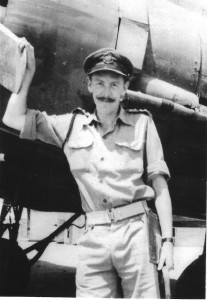
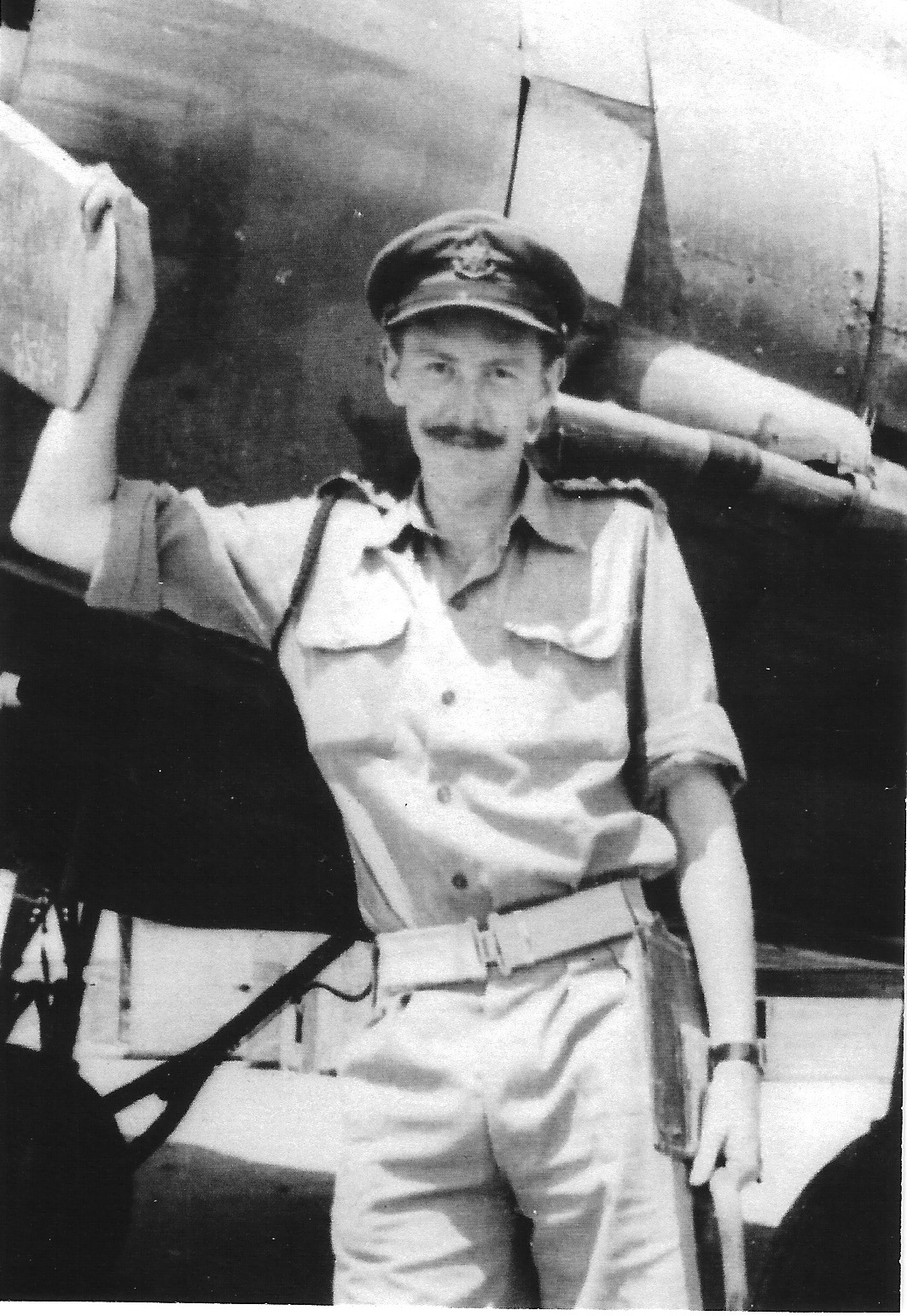
DennisWartime
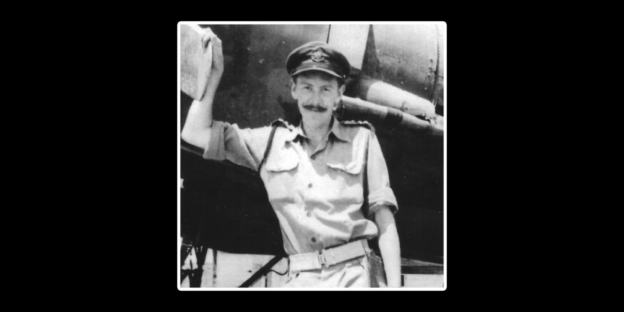
So, in 1939
-No choice but to fight
-He didn’t tell us about the really dangerous and traumatic stuff he must have done
-His report
-Military Cross

Dennis’ Report
THE MILITARY CROSS
LIEUT.D.HALLAM – THE EAST YORKSHIRE REGIMENT
This officer has commanded a platoon in a rifle company continuously since D-Day, showing throughout outstanding gallantry and powers of leadership, especially on patrol.

On the 23rd October 1944 outside VENRAIJ he was leading a daylight patrol which was ambushed at very close range; with complete disregard for his own safety he controlled the withdrawal of the patrol in the face of heavy fire and remained behind himself within about fifty yards of the enemy keeping up a constant stream of smoke grenades until he was certain that everyone was clear. But for his coolness and initiative a large part of the patrol might have been lost.

Prior to the capture of HELLIGENRODE on the 16th April 1945 he led his patrol deep into the enemy’s positions and by deliberately drawing their fire was able to pin-point posts which materially assisted the planning of the subsequent attack.

Following the capture of GR.MACKENSTEDT on the 16th April and again during the mopping up of Bremen, his dash and aggressive action in the face of continual sniping inspired his platoon of very young soldiers with a determination which quickly gained them their objectives.

On the 18th April outside DELMENHORST his company and its support troops were held up by an 88mm gun and an enemy position on their left flank, but with superb initiative LT. Hallam led his troop round a covered flank and by the speed of his attack overwhelmed a position equal in strength to his own and accounted for the entire garrison and the gun.

At all times this officer has been an outstanding source of inspiration to those around him and has shown powers of leadership above his rank.

Family Life
-Photos of him and my Gran. They were younger than I am now. They looked so sweet together. She was gorgeous – very pretty and elegant. He was handsome, and elegant too in his own way. Clever, with a dry sense of humour, and a decorated war hero (although I think Gran was not so impressed by that – I imagine by the end, they both hated the war and just wanted it to end so they could be together. She never really mentioned his war experiences either.)
-Post traumatic stress? They didn’t really believe in that sort of thing in those days.
-My Gran bought a house during the war, and they settled down there. Again, seeing pictures, I feel like I would like to meet them. I can’t help thinking that we would have got on. Well, we did get on of course, really well, but it would be amazing to meet them when they were the same age as me – on the same level of status etc. This makes me think of Back to the Future – a film which I’m hoping to talk about on the podcast soon.
-He didn’t talk about the war much. I expect he wanted to put it behind him.
-My Mum says he was a bit removed at times, and not always emotionally engaged. Maybe this is related to how he dealt with his wartime experience, or maybe he was just an emotionally reserved person. That’s not to say he wasn’t warm – he was. He was kind, loving, and thoughtful, but perhaps a little bit reserved when it came to expressing those things openly. His warmth came through in different ways – like in his humour, his obvious enjoyment of being with the family, his interest in our news and so on. It’s almost impossible to imagine him in a war zone, fighting as a soldier. He was most at home in his armchair, reading, doing crossword puzzles, watching cricket and laughing at jokes or making jokes. Like many other men and women of his generation, he was pulled out of life and forced to engage in bloody combat. Forced, by the need to go to war against the enemy, to fight back against the Nazis. He was forced by events outside his control, which swept him away from his otherwise peaceful life. Conscripted into the army, I imagine he found himself wondering how it had happened. I’m sure he was well aware of what had happened to so many other men of the previous generation in World War 1 (nearly 900,000 of them died) and so I can’t imagine how it felt to be walking into a similar situation. I suppose he took on the challenge like everyone else. He was only one of thousands of other soldiers who were asked to fight for their country. I think he had a sense of national duty, and duty to the king and so on. That probably helped him, and I don’t think he questioned or challenged the allied command, or the general fight against the nazis. I expect he saw it as a necessary move, albeit one that he wished was not at all necessary.

It does make me angry that those who wage war force people like my Grandad into such horrific situations. Many many men lost their lives, and the others suffered in other ways – physical injury but also mental or emotional trauma which must have affected these young men deeply. I think of the powerful men who, motivated by some twisted and distorted sense of justice decide they have the right to decide who lives and who dies, and with a sweep of the hand, cause untold suffering and consequences around the world for generations. What supreme arrogance and small mindedness is it, that causes some power hungry maniacs to believe they can do that? What kind of egomaniac thinks they can play with the lives of millions of people just to satisfy their own hunger for power? What on earth makes one guy think he’s the one to rule the world? It’s sick and it disgusts me that certain autocratic dictators will stop at nothing to satisfy their bruised egos. Anyway, there’s no need to go into it any more – I think enough has been said about war and the causes of war, and I know it is complicated, and I don’t want to open up some debate because there are many shades of grey, and what looks like the actions of a power hungry psychopath to one person, may look like righteous leadership to another person. It depends on your point of view, and what kind of propaganda you’ve been exposed to, but ultimately, with great power comes great responsibility, and in so many cases, those who seek great power rarely manage to behave responsibly. Spiderman taught me that. I’m sure there are leaders who do a great job, and are both powerful and responsible, compassionate, and caring – and it is really hard to keep the peace sometimes. But when you go out of your way to slaughter millions just because you don’t like the way they look, dress, pray, or otherwise live their lives – get a grip on yourself. If I met Hitler, I’d ask him “Who the hell do you think you are, mate?” He’d probably tell me that he was someone special, but it would be the wrong answer. He was just another schmuck. One of the biggest twats in recent memory, along with a bunch of other people who I’m sure you could name.

Just one point, which may be me just stating the obvious, but it wasn’t the Germans that were the enemy, it was the nazis, or whatever you want to call those people – you know what I mean. There were plenty of Germans who suffered at the hands of the nazis. So it’s not ‘Germans’ – it’s facists. The fascists came from all sorts of countries. It was a battle of ideas, not based on where you were from.

Also, I know that Britain doesn’t exactly have a perfect past either. We were a huge colonial power, and Britain/UK/England has done some messed up stuff in history too, in India, in the middle east. Everyone’s involved in war to an extent. But I do believe it’s possible for mankind to exist without war. I know this sounds a bit cheesy, but there you go.

As John and Yoko said, “Give peace a chance” – just entertain the idea for a moment that perhaps war is not the answer, and that the whole world could decide to just get on. I know it is naive, but why not? Communication, diplomacy, talking to each other, using words, listening, finding compromise and trying to solve problems – that must be the way forward, unless you believe in the end of the world and in fact somehow fantasise about it happening. I don’t believe in the end of the world. I think the world will go on for many more years, as long as it is not hit be a huge asteroid (like when the dinosaurs were around). Did you know, the dinosaurs lived way way longer than us? We look back at them as a failed species, but they were around for about 135 million years. We’ve been around, as the dominant species, for about 200,000 years. So, the dinosaurs were around 675 times longer than us. Just to put that in perspective, that’s the equivalent to about 1 day compared to about 2 years. Imagine your first day in a new job. Just the first day – you’re nervous, you don’t know anyone, you find it hard to get along with the other people who work there, you don’t like them at first, you don’t know how to do your job very well, but it’s just the first day, and you’ve got 2 years ahead of you. So for humans, it’s still our first day on the job, as the dominant species. We’ve achieved nothing compared to the dinosaurs, if staying alive is the objective, that is. For us humans, we should learn to get along or we won’t make it as far as the dinosaurs. We haven’t even started really… I don’t really understand what’s going on in the world. It seems so confusing sometimes. Why are there wars? Why does human kind feel the need to smash itself up from time to time? Isn’t survival on the planet hard enough? Perhaps we are hard-wired to fight against each other for our own survival, but we have only recently invented weapons of mass destruction. Our instinct, developed over years of evolution, has maybe equipped us with a keen sense of survival, which includes the will to fight each other, but now we have massively destructive weapons so isn’t it time to use our brains to control those basic instincts towards violence? I mean, just play a video game or go to the gym if you have that much aggression inside you. Do some sit ups maybe, rather than getting all angry and causing world war 3. Just have an ice-cream and chill out. OK, rant over.

How did I end up talking about that? I was just expressing anger about those powerful individuals who wage war. I know I might sound naive when talking about this subject, like you might think “Yes, but war is a necessary evil and blah blah” – well, I’m just saying it’s a pity. You may say I’m a dreamer, but I’m not the only one.

Oh and by the way, my grandfather was not bitter about the people he was fighting in the war. He never spoke badly about anyone really. I think the most outspoken thing he said was that he didn’t agree with women being priests in the Anglican church – a pretty old fashioned view, but there you go, and that’s nothing to do with the war. Other than that he didn’t have a bad word to say about anyone really. In World War 2, Japan was an enemy of the allies, but Dennis was so pleased to meet my Japanese friends when I invited them to my parents’ house at Christmas a few years ago. He was really friendly with them and we had a really great Christmas. Of course we did! Why would he bear a grudge against people who were clearly nothing to do with a war that happened generations ago? There’s no good reason for him to have done that.

I don’t want to go on about war too much. It’s annoying that his generation will forever be associated with it. It was only a small chapter in his life really. There’s no need to dwell on it. It didn’t make him who he was. He was more than that. He did so many other things, including having a family and raising two children. That’s worth celebrating as much as anything else. Of course I’m going to say it, but I love my uncle and my Mum massively. They’re just great, and that’s it.

Eulogy
This is the Eulogy I read out in church during the funeral service. It was written by Dennis’ children – my Mum and my Uncle.
They felt they wouldn’t be able to read it out without getting emotional. So, they asked me to do it. I was so proud to be asked. I didn’t feel too nervous. I was happy to read it. I didn’t get emotional until right at the end, when I my voice started shaking a bit.

Things we will remember about our Dad (words written by my Mum and my uncle)
His quiet, modest, ironic, witty and amusing presence.
His intelligence, erudition and knowledge.
His love of reading, especially Dickens and Trollope, who he re-read many times.
His ability to write – short stories, poems, articles, wonderful letters and inspirational little magazines which he produced during the war to boost the morale of his platoon.
Going with him to the public library to be introduced to the likes of Robert Louis Stevenson, Conan Doyle and PG Wodehouse.
His diverse musical tastes; encompassing Beethoven, Gilbert and Sullivan and Al Bowlly.
His facility for mimicry and pastiche.
His phenomenal memory – “ask Dad he’ll know” was frequently said by all members of the family.
His love of, and pride in, Yorkshire; its cricket team, its landscapes, towns and villages and all the happy memories it held for him of his childhood with his older brother and cousins; and later his pleasure in taking us on family holidays there, climbing Pen y ghent and Ingleborough, brewing up coffee on a primus stove, sheltering from the rain under bridges. And recently his enjoyment of visits with Shirley to Cononley, getting to know and love the village where his grandparents lived.
His affection for his school, Queen Elizabeth Grammar, in Wakefield where he obviously had a great education and whose headmaster A.J Spilsbury, was a life-long hero.
The cardigans he used to wear, the pockets of which always contained stubs of pencils with which he completed the cryptic crosswords he loved and was always so expert at, even up to the last few months of his life.
His love of France and the wonderful holidays he and mum had; travelling the length and breadth of the country, camping or staying in rather primitive gites. And, after Mum died, the holidays based on French courses he attended in various parts of France.
His amazing facility for languages, most particularly French, Spanish and German, the talent for which he has not passed on to us!
His skill with a watercolour brush.
His public spiritedness – volunteering to work at the Cheshire Home every Monday evening for 23 years.
His hatred of computers, but his amazing facility for texting on his mobile phone!
His characteristic silent laugh in which he closed his eyes and threw his head back, while quietly expelling air through his half open mouth – not a sound escaping!
His resilience and, sometimes infuriating, self sufficiency.
His even temper which he only ever lost on one memorable occasion, with very good reason!
The skill he displayed in cooking after Mum died, taking pride in hosting lunch and dinner parties.
His luck – sustaining only one injury during his very active war – a cut lip which he got while playing football! the good health he enjoyed during most of his long life, up to the last two or three years; and, after mum died, to have the companionship of Shirley with whom he had some very happy years; not least because, thanks to her Sky subscription, he was able to watch cricket all day long! They also went on many holidays and trips, and she looked after him so lovingly during his last months.
The modest bravery he displayed in his youth. When we asked about the MC which he won in the war he would say, airily “oh, they were ten a penny..”
His stoicism in the face of his death saying just a couple of days before he died “what will be will be”.
His quiet religious devotion, no doubt instilled in him from the day of his birth in a house just over the road from Beverley Minster, where his father was a chorister.
He was an exceptional example of a past generation.
As Hamlet says of his father:
I shall not look upon his like again.

As a Grandfather we only got the best of Dennis, and that was a lot. I remember him as just a great person to share a joke with. He was always up for a laugh, and as Mum and Nic mentioned, he was brilliant at doing impressions and characters. He was just a lovely, intelligent, mild-mannered and warm presence and we have nothing but joyful memories of our time with him.

My memories
Here are just some of the things I think about when I remember my grandad.
His tone of voice – it was soft, and comforting, humorous.
His general knowledge, and knowledge of history and literature.
His memory.
His love of cricket.
The glasses of sherry he would drink when he came to our place (served by my Dad).
Drinking whiskey with him at Christmas.
His friendly “Hello Luke” and a good firm hand shake.
His slippers which he used to wear.
His sense of humour – he could copy different voices, and he was always funny when he did this.
His style (and the style of my Granny – she was really elegant).
His French cars.
His love of France – and the language. He spoke fluent French and even wrote a few short stories in French too, which were published somewhere. My girlfriend and I used to sit with him and chat in French sometimes. Well, mainly them because my French is a bit limited, to say the least.
His love of Sherlock Holmes stories. We had this in common, and we would sometimes chat about Holmes & Watson. I played him my mystery story from episodes 29&30 of LEP. He enjoyed them. I’m sure he could have written something better.

I could go on. There’s so much to say and I’m sure I have missed some details, but there you go.

My Gran died in 2002, and my Grandad was always there for her. It must have been really hard to lose her after all those years, but he was a survivor, and he kept going, living alone for a while, before after about 6 or 7 years he got himself a girlfriend, called Shirley.

At the time, I didn’t even have a girlfriend, so I was pretty impressed with him.
Shirley & Dennis lived together in the last years of his life, and she looked after him really well. If it hadn’t been for her, he might have ended up in a care home, and he wouldn’t have wanted that.

Grandad stayed mentally alert all the way up to the end of his life. He was brilliant at crossword puzzles, pub quizzes, TV quiz shows and games. In the end, he died as a result of a heart condition. It wasn’t completely unexpected or a shock, but it’s still unavoidably moving and difficult to deal with when a member of the family dies. My Mum was with him when he passed away, holding his hand.

That’s it. He’s gone now. Where did he go? I don’t know.
Some people have their answers to that question, but I can’t be sure.
But it’s okay. All things must pass, it’s the way things are – better accept it.

Song
Here’s a song by George Harrison.
Artist: George Harrison
Song: All Things Must Pass
Album: All Things Must Pass
Tab from UltimateGuitar.com

Verse:
A D/A E** D
Sunrise doesn’t last all morning

A D/A E** D
A cloudburst doesn’t last all day

E A/E E** A**
It seems my love is up and has left you with no warning

E A/E E** A**
It’s not always gonna be this grey

Chorus:
Em D Dsus4 D
All things must pass
A D/A A D/A E** D
All things must pass away

Sunset doesn’t last all evening
A mind can blow those clouds away
After all this my love is up and must be leaving
It’s not always gonna be this grey

Bridge:
Em D Dsus4 D
All things must pass
Em D Dsus4 D
None of life’s strings can last
A D/A
So I must be on my way
E** A
To face another day

Now the darkness only stays the nighttime
In the morning it will fade away
Daylight is good at arriving at the right time
It’s not always gonna be this grey

Second Chorus:

Em D
All things must pass
A D/A A
All things must pass away

A D/A E** D A D/A E** A** E***
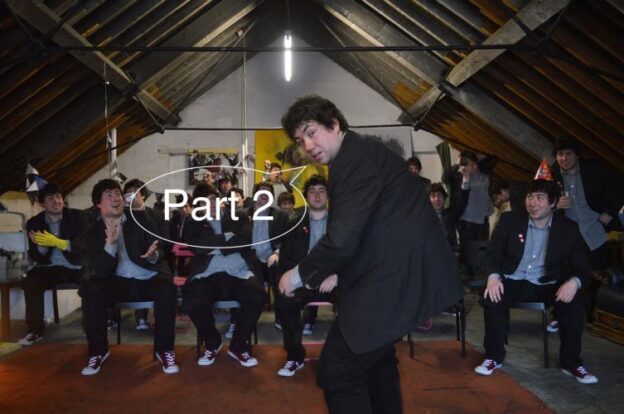
252. Marooned With My Music: James Thompson

Welcome to Luke’s English Podcast and this special series, called Marooned With My Music. My castaway today is my brother James Thompson. [Download]
Small Donate ButtonSince being born in the mid 1970s in the south of England, it’s hard to say really what James has been doing for the past 39 years of his existence on earth. Nevertheless, he is a man of taste, a man of music and a man of experience. In the 1990s he studied a combined degree in English and Design at a university in Cambridge, before becoming something of an expert in wine tasting, wine selling and indeed wine drinking. Quietly entrepreneurial, James set up a successful t-shirt company in the late 1990s and now works as a freelance designer and artist – with perhaps the pinnacle of his career so far being the logo he designed for Luke’s English Podcast. I’m joking of course – James has contributed design work for various companies and organisations over the years. As well as being an artist, a designer, a wine enjoyer, a t-shirt maker and skateboarder – James has always been a keen lover of music both as a drummer & producer and as a collector of vinyl records, and I imagine that having to choose 8 records to take to his desert island has been something of a challenge for him. Let’s find out…

James’ Choices
(James accidentally choose 9 songs instead of 8)
1. My Girl by Madness
2. Dennis and Louis by Happy Mondays
3. Hole In The Sky by Black Sabbath
4. So Watcha Want by Beastie Boys
5. Clap Your Hands by A Tribe Called Quest
6. Xtal by Aphex Twin
7. Saint Angel by Goldie
8. No Feelings by The Sex Pistols
9. Fisherman by The Congos

Book Choice: The Long Firm by Jake Arnott
Luxury Item: A skateboard

Travis live at Glastonbury 2000 – red T-Shirt by James Thompson
marooned

250. Marooned With My Music: Gill Thompson

Welcome to Luke’s English Podcast and this special series, called Marooned With My Music. My castaway today is my Mum, Gill Thompson. [Download]

Small Donate ButtonBorn as part of the baby boom generation after World War 2, Gill grew up and lived in England during a time of great social change in the latter half of the 20th century. Gill has lived in various parts of the country during her life, including Yorkshire, the Midlands and London, and has had various jobs including time spent at the BBC, at a primary school, at a university, and now in a charity bookshop, but perhaps her most time-consuming and indeed energy-consuming responsibility has been to bring up two boys and manage a household of 3 men, her husband and her two sons. While doing all of that she also studied for a general arts degree with the Open University adding to her now quite considerable knowledge of history, art, literature and philosophy. She is a voracious reader, a fount of knowledge and wisdom, a loving wife and an amazing Mum, and I’m very glad to have her on the programme today.

Mum’s Choices
1. Always by Patsy Cline, written by Irving Berlin
2. I’ll String Along With You by Al Bowlly
3. Harvest Moon by Neil Young
4. Here Comes The Sun by The Beatles
5. Our House by Madness
6. Don’t Forget to Dance by The Kinks
7. Bach Double Violin Concerto – Played by Yehudi Menuhin And David Oistrakh
8. I’ll See You In My Dreams by Joe Brown

Book Choice: The Essays of Michel de Montaigne
Luxury Item: A king-size bed with an everlasting supply of 100% Egyptian cotton sheets
marooned

248. Marooned With My Music: Rick Thompson

Interviewing my dad about his life story through his favourite pieces of music.

“Marooned with my Music” is an interview concept based on a popular and long-running BBC Radio programme called “Desert Island Discs”. In that BBC programme, celebrities and noteworthy people are invited onto the show for an interview. They imagine that they have been stranded on a remote desert island and are only allowed to take certain items with them, namely: 8 pieces of music, one book and one luxury item. During the programme, the interviewee is asked about their life and their musical choices. Desert Island Discs remains one of the BBC’s most beloved radio programmes and has been broadcast on the radio for many years. In my version, “Marooned with my Music” I have decided to interview members of my family: My Dad, my Mum and my Brother. [Download this episode]

Small Donate ButtonWelcome to Marooned With My Music. My castaway today is my Dad Rick Thompson. Rick has been working in broadcast journalism for over 45 years, including nearly 30 years at the BBC where he worked as foreign news editor, and editor of the UK’s flagship daily news programme the 9 O’Clock News. He now runs his own broadcast training company called T-Media, which helps to bring BBC-standard television broadcasting to other countries around the world. Along the way he has become something of an expert in the art of efficiently and effectively delivering information to viewers on television and radio; something which requires a combined interest in all the big stories of the day as well as the values of language and public service. Rick is a man of broad interests and talents, having been a musician, a sportsman and a bird-watcher throughout his life, amongst other things. Last but by no means least, Rick has also been a devoted husband to his wife Gill and father to his two children James and Luke, from Luke’s English Podcast.

Dad’s Choices
1. I Saw Her Standing There by The Beatles
2. So What by Miles Davis
3. Route 66 by The Rolling Stones
4. Far More Drums by The Dave Brubeck Quartet
5. The Planets – IV. Jupiter, The Bringer of Jollity by Gustav Holst
6. All Along The Watchtower by The Jimi Hendrix Experience
7. Waterloo Sunset by The Kinks
8. Fixing A Hole by The Beatles

Book choice: A History of Europe
Luxury item: A never-ending set of paints and canvasses
marooned

247. Understanding The USA (with Sebastian Marx)

This episode is an attempt to understand The USA in more detail, getting beyond the made-up version that we see in movies and on TV in order to get a proper understanding of the country, its culture and its people. I’m joined by an American friend of mine called Sebastian Marx, and during our conversation we go through most of the main events in the history of the USA and discuss some of the most important principles in the story of the country. The ultimate aim: to understand The United States of America. [Download]

As well as being a relaxed conversation between friends, this episode is a summary of some of the main ideas and topics that I’ve covered this semester in my university classes, and in fact our conversation deals with some of the most important issues and concepts that will help you to get a proper understanding of the USA – and you’re getting it all for free in this episode! You’re welcome of course… if you fancy making a donation to support my work you can just click this button here! Small Donate Button

Speaking to Sebastian in this episode allows me to check some of the thoughts I had about the USA with a genuine American guy, as a way of getting the inside story. Ideally I would like ask all the people of the USA for their opinions, but as I can’t do that I have decided to just ask one American guy for his input, and he isn’t even in America at the moment – but that’s more than good enough for me!

You probably know Sebastian from previous episodes of LEP. He was in 130. A Cup of Tea with Sebastian Marx and also 183. Luke’s D-Day Diary (Part 1). He’s a stand-up comic who performs a one-man show in English and French, entitled “A New Yorker in Paris”, and he’s a very funny and interesting bloke. For more info on Sebastian go to www.sebmarx.com.

As usual, I would like to know your opinions, so if anything occurs to you, please leave your comments below this episode. I’m actually quite pleased with the outcome of this one because I think there is some genuine insight in this episode, even if it is delivered by two guys just having a chat.

America