This episode is an attempt to understand The USA in more detail, getting beyond the made-up version that we see in movies and on TV in order to get a proper understanding of the country, its culture and its people. I’m joined by an American friend of mine called Sebastian Marx, and during our conversation we go through most of the main events in the history of the USA and discuss some of the most important principles in the story of the country. The ultimate aim: to understand The United States of America. [Download]
As well as being a relaxed conversation between friends, this episode is a summary of some of the main ideas and topics that I’ve covered this semester in my university classes, and in fact our conversation deals with some of the most important issues and concepts that will help you to get a proper understanding of the USA – and you’re getting it all for free in this episode! You’re welcome of course… if you fancy making a donation to support my work you can just click this button here!
Speaking to Sebastian in this episode allows me to check some of the thoughts I had about the USA with a genuine American guy, as a way of getting the inside story. Ideally I would like ask all the people of the USA for their opinions, but as I can’t do that I have decided to just ask one American guy for his input, and he isn’t even in America at the moment – but that’s more than good enough for me!
You probably know Sebastian from previous episodes of LEP. He was in 130. A Cup of Tea with Sebastian Marx and also 183. Luke’s D-Day Diary (Part 1). He’s a stand-up comic who performs a one-man show in English and French, entitled “A New Yorker in Paris”, and he’s a very funny and interesting bloke. For more info on Sebastian go to www.sebmarx.com.
As usual, I would like to know your opinions, so if anything occurs to you, please leave your comments below this episode. I’m actually quite pleased with the outcome of this one because I think there is some genuine insight in this episode, even if it is delivered by two guys just having a chat.
My friend Mike tells me about his incredible experience of teaching English in Ghana.
[Download]
Hello and welcome to another episode of Luke’s English Podcast! In this episode I’m going to interview my friend Mike Bruce about his recent teaching experience in Ghana in West Africa. Mike is an old friend and colleague of mine, he’s originally from Scotland, although he doesn’t have a particularly strong accent, and he has lived and worked in places all over the world. I’ve known him for about 13 years and he was one of the first people I ever worked with as a language teacher in Japan. Mike has an amazing CV. He’s taught in lots of countries around the world. He’s very highly qualified, and as well as teaching students of English as a second language he also teaches teachers how to teach. So, he’s pretty much a Jedi Master of English teaching in my opinion.
Mike recently came back from a teaching mission in Ghana, and judging by the Facebook photos and statuses, it was quite an epic experience for him. I thought it would be interesting to talk to him about it on Luke’s English Podcast. My aim for this interview is to have a bit of a chat with Mike, just a bit of a chat, introduce him to the LEPsters? LEPans? LEPians?LEPenese? LEPlanders? LEPish? LEPaholics? and then find out about his African teaching experience.
Below you’ll see questions and notes I used during the interview, and a slide show of Mike’s pictures.
Background
How do we know each other?
What do you remember about that time in our lives?
Mike’s CV
How did you get into teaching in the first place?
How long have you been teaching?
Where have you worked/lived in the past?
Which place was memorable it you? (And why)
What do you do professionally these days?
Ghana
Tell me about the Ghana experience.
Why did you go?
What was the mission? What did you expect?
What were you concerned about or looking forward to?
What were your first impressions?
What were the challenges?
What were the great things?
What did you learn from the experience?
Has it changed you as a teacher? And as a person?
In this episode we’re going to look at the way politicians deal with tough and challenging questions from TV and radio interviewers. We’ll listen to some examples of politicians avoiding questions in interviews and examine some of the ways they get themselves out of tight situations while also promoting their ideas. [Download]
I’m not sure what you think about politics. I don’t talk about it a lot on Luke’s English Podcast. I did an episode a couple of years ago called “82. Votings, Elections, Government“, in which I talk about the political system, and various vocabulary related to politics, voting and elections. Now, a lot of people find politics to be quite boring, and I used to think that too, but more and more (perhaps because I’m growing up finally!) I think that politics is fascinating and really important. I’m particularly keen on watching debates between politicians, and watching the way in which politicians cleverly deal with challenging questions in interviews. It’s fascinating to watch them very skilfully squirm their way out of tight situations, or use all manner of linguistic and rhetorical skills to persuade people live on TV.
British journalists tend to interview politicians in an aggressive manner. Politicians are getting very good at avoiding questions. And this is what I’m particularly interested in studying in this episode of the podcast. How do politicians avoid questions? Let’s have a listen, and find out.
Here’s a clip from the satirical comedy show “The Day Today”. This programme makes fun of the news. It takes the mickey out of the way that news readers speak, and their interview style. In this clip we hear an interview with a politician who is facing allegations of ministerial misconduct – he’s being accused of lying in front of the House of Commons about a deal. The interviewer is not aggressive or challenging enough, and in the end he lets the politician get away with lying to the house. He’s too nice! Then the newsreader in the studio takes over and has a go at the interviewer for not asking challenging or tough questions. I think it’s really funny. Let’s have a listen and then consider the ways that politicians deal with tough interviews in TV.
That’s just a comedy clip, but in terms of real situations, here’s an example of what I’m talking about. Here the interviewer wants the politician to admit that he was wrong about the Euro. Clearly the politician doesn’t want to admit he was wrong, and so he pushes another line: The UK at the moment is not willing to be part of the Euro. Listen to the way the interviewer asks about his mistake over the Euro, how the politician attempts to avoid the question, and how the interviewer has to quite aggressively force him to deal with the Euro problem.
The politician: The energy secretary Chris Hune (in government)
The issue: He said that the Euro was going to be a big success and that the UK is missing out.
The politician doesn’t want to admit that he’s wrong, and instead wants to push the idea that the UK is not willing to be part of the Euro at the moment.
Some ways that politicians avoid questions
They have a pre-planned message, or line, which they have prepared carefully before going into the interview. Often this is in the form of soundbites – snappy, quotable phrases which can be used in newspapers.
Their aim is to present this line, despite the questions they will be asked.
As long as they are talking on the same topic, and they look presentable, reasonable and professional, we just don’t notice that they are not responding to the question.
Social conventions of politeness and communication make it hard for the interviewer to break this down. If the politician doesn’t really answer the question, it’s hard for the interviewer to a) identify that it has happened, b) respond to it quickly, c) find the right questions that will force the politician to really answer the question.
Smooth interviews break down when an interviewer is tough, aggressive and skeptical. The interviewer has to take an aggressive line in order to fight against the slick tactics of the politician. It’s very hard for these interviewers because they have to go against instinctive social conventions in order to break the politician’s spell. If the interviewer is too aggressive or emotional, the interviewee wins because he comes out of it better – he looks like a calm reasonable person, and the interviewer looks like a mad man. If the interviewer is not precise enough in his questions, the interviewee wins again, because the interviewer does too much talking, while the politician sits there in innocent silence.
The best politicians manage to make it very hard for the interviewer to put them on the spot. They use techniques to distract the conversation away from the tough questions, they don’t get emotional, they manage to come across as reasonable, modest, ordinary people. Likeability is vital to a politician’s career nowadays. We tend to vote for people who we like, rather than thinking purely of their policy, which is a terrible symptom of our image driven culture. So, clever politicians are able to construct a likeable image – as family oriented, hard-working, sympathetic, strong or humorous. That likeablilty acts as a kind of defence mechanism or even a distraction, so that viewers on TV let them avoid questions and so on. Research has shown (and I refer to a Harvard Business Paper called Conversational Blindness: Answering the Wrong Question the Right WayAuthors: Todd Rogers and Michael I. NortonPublisher: Harvard Business School, Working Paper No. 09-048 Date Published: October 2008) that we just don’t notice that a politician has avoided a question when the answer is related to the question asked and is given with confidence and conviction. So, it goes like this:
The interviewer asks a question.
The politician responds with an answer that relates to the topic of the question, but doesn’t really answer the question specifically.
We don’t notice that the question is being avoided, because the answer is on-topic.
Politicians also use the phrase “Let’s be clear…” as a way to redirect their answer towards their point, while making it look like they are clarifying and directly answering the question. “Let’s be clear…” + their point.
This all breaks down, when tough interviewers manage to put politicians on the spot. Perhaps they take them by surprise, perhaps they are willing to come across as crazy by repeating the question over and over, or perhaps they manage to keep the courage of their convictions in order to verbally spar with these master debaters. So, when interviewers bring their A game, it can be pretty fascinating to watch a politician have a really hard time. It’s like car crash TV. It’s also pretty bizarre. These kinds of conversations rarely happen in normal situations. People talking over each other without stopping. People answering direct questions with completely unrelated answers. It’s weird.
Let’s listen to some examples!
“Did you threaten to overrule him?” Paxman vs Michael Howard
The accusation: Paxman questioned Howard relentlessly about a meeting he had had with prisons chief Derek Lewis about the possible dismissal of the head of Parkhurst Prison.
Chloe Smith on Newsnight (total disaster for Chloe Smith)
Excerpt from The Thick of It. “Answer the question you fat fuck!”
Why do interviewers in the UK have such a direct style? Because we believe they should be accountable for everything they do. We don’t have much deference for people in positions of power (and The Queen is not a person in a position of power actually! If she did exercise genuine power over us, we wouldn’t have the same level of respect for her I can assure you) and this style is a way to prevent politicians avoiding the question. If you’re too soft on people (and it’s not just politicians – it’s also heads of corporations or anyone with some duty to the public) then they will just use the interview for their own purposes. Also, I think audiences in the UK (and I’m sure it’s the same in many other places) believe that these people should be given a tough time, especially the ones who are not serving us well, or who are privileged in some way.
If an interviewer is too soft on a politician, we feel that they’ll just get away with murder.
Sometimes it seems to me that interviewers have got into the habit of being tough in interviews, and sometimes they do it when it’s not appropriate or necessary.
The Day Today – Jam Festival
This is funny on two levels: On one hand, it parodies the aggressive style of BBC journalists (especially Paxman). It’s also poking fun at people who do charity work just so they can make themselves look good.
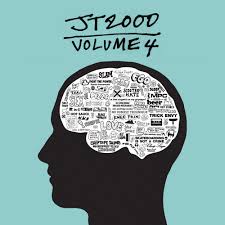
Hi everyone, how are you doing? In this episode I’m joined again by my brother James. The last time you heard from him he was talking about how he had dislocated his shoulder after falling off his skateboard. In this episode he gives us an update on his shoulder injury and then we talk about the music (his “choons”) that he has been making recently. What is a “choon”? Basically, it’s a “tune” – a piece of music, typically a piece of dance music, hip-hop, house music, drum & bass or techno. When you hear a really good tune, it’s quite typical to say “Ah this is a CHOOOON!” My brother makes instrumental hip-hop CHOONS. You can hear him talking about his music making process in this episode. [Download this episode] [Update 2021: Jim has lots of new music on Bandcamp which you should check out here –> https://jimthompson.bandcamp.com/music ]
Jim’s Choons
Jim is quite modest about his music making, but for years he has been quietly producing lots of instrumental hip-hop on his own using an old Akai MPC2000, which is a bit of music making hardware used by some of the most well known hip-hop, drum and bass and techno producers from the past 15 years or more. Jim bought a second-hand MPC2000 about 5 years ago and he’s been learning how to use it, producing lots of tracks, and they’re getting better and better all the time, and now he’s at a point where he’s released a 10 track album which is available for purchase online via the website Bandcamp – click here to listen to or download his albums. He doesn’t like to talk about his stuff too much because it’s very personal, but in this episode he was quite willing to talk about how he comes up with ideas and how he then turns them into pieces of music. In our conversation you’ll hear us using various technical language related to music and music production.
Download Jim’s Album
Jim’s album is available here: Jim’s page on Bandcamp
You can download it free, or if you think he deserves to be paid, you can choose to purchase the music and you can choose the price! $0 – $1,000,000 – it’s your choice.
Listen to Jim’s tune “Sympathy” (Unofficial remix of “Life’s a Bitch” by Nas) on YouTube here:
Here’s my conversation with the overall YEP competition winner, Edgar Hernandez from Mexico (aka Bono Chimp). [Download]
Again, apologies for the slight technical issue in this recording – there’a a bit of a delay which makes it sound like I’m interrupting Edgar. I assure you, it’s a technical fault due to recording via Skype – I’m not really that rude or impatient!
I hope you enjoy the conversation. Now it’s back to business as usual for LEP.
Hi everyone. In this episode you can listen to conversations I had with YEP competition runners up Yannick, Aritz, Phil and Javier. They won their groups in the competition. In the next episode you’ll be able to listen to my conversation with the overall winner, Edgar from Mexico. [Download]
p.s. I’m a little bit frustrated by a technical issue in some of these interviews. There’s a slight delay on some of the Skype recordings – my interviewees responses are a bit late, and my responses come too quickly. It sounds like I’m rudely interrupting my interviewees sometimes. I hope it doesn’t bother you too much, or make me sound too rude!
Here are my conversations with runners up from the YEP competition. In this episode you’ll hear me talk to Kevser from Turkey, Max from Italy and Giovanni from Italy – all of whom won their groups in the competition. In the next episode you’ll hear from the other runners up, Yannick, Aritz, Phil and Javier, and then finally a longer conversation with the main winner Edgar from Mexico. Enjoy! [Download]
p.s. I’m a little bit frustrated by a technical issue in some of these interviews. There’s a slight delay on some of the Skype recordings – my interviewees responses are a bit late, and my responses come too quickly. It sounds like I’m rudely interrupting my interviewees sometimes. I hope it doesn’t bother you too much, or make me sound too rude!
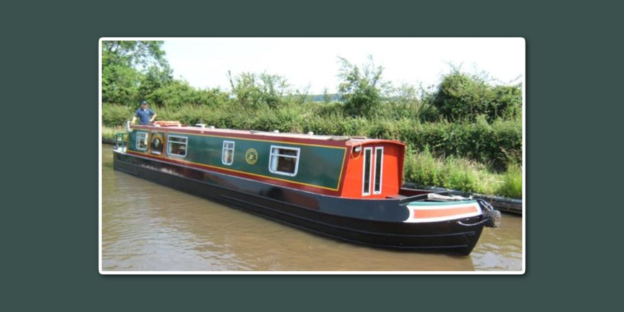
aka “The Boat that Rocked” or “The Drunk Episode 2”. In this episode I spent the evening on a narrowboat on a canal in a part of North London known as Little Venice, with my friends Alex, Paul, Moz and Dave. Join us as we talk about life on a canal boat in London, the first jobs we ever had, answers to a few questions sent in by a long-term listener called Hiroshi, and explanations of various rude expressions and jokes which came up spontaneously during the conversation. Please be aware that this episode contains strong language, rude & explicit content and plenty of bad jokes. Right-click here to download.
Introduction Transcript
Hello, this is a special introduction to this episode of Luke’s English Podcast.
Before you listen to the recording in this episode I would just like to warn you that this one contains material which you might find offensive, confusing or just plain stupid, including: failed attempts at humour, bad jokes, vague sexual innuendo, rude words, swearing, references to body parts, disgusting sound effects and general behaviour which would definitely be inappropriate in polite company. The conversation that you’re going to hear in this episode was recorded privately with friends, in a very informal setting. It is not suitable for children. It’s not really suitable for intelligent adults either to be honest. I present it here with great reservation, against my better judgement and with the understanding that some of you may find it purile, unamusing, difficult to understand, offensive or just plain unnecessary, and that publishing this episode may cause you to abandon Luke’s English Podcast, throw your phone into a lake, or even spit onto the ground in pure disgust.
However, despite my reservations to that effect, I also realise there is probably a certain section of my audience who love a bit of filth, and who would like nothing better than to listen in on a conversation between some English friends amusing themselves by talking ‘crap’ together over a few beers. In fact, I publish this conversation with those members of my audience in mind. Are you bored of listening to ‘safe’ English which has had all the rudeness removed from it? Are you fed up with being taught only the ‘nice’ English which you are supposed to speak, but which you suspect no native speakers actually use in their private lives? Do you ever have the lingering feeling that native English speakers present a ‘clean’ version of their language to you in lessons, but in private they speak a rather different form of the language – one that involves plenty of inappropriate and immature dirty jokes? Would you like to have the chance to sit with some Londoners on a canal boat while they drink beer and talk nonsense, without regard for the normal polite conventions of a language classroom or a business meeting? Well, if that’s what you want, then all you have to do is keep listening to this episode of Luke’s English Podcast which was recorded several weeks ago on a canal boat in North London, with a group of slightly drunk idiots. Idiots who I am proud to call my friends, and the group which I happily consider myself a member. Welcome to Luke’s English Podcast…
Vocabulary List & Extracts (thanks to Jack from the comment section)
Vague
Innuendo
Against my better judgement
Some of you may find it puerile
However, despite my reservations to that effect……
Who would like nothing better than to listen in on a conversation……
I’ve done episodes in an apartment.
I’m doing an episode on a boat.
A canal narrow boat.
How do you want me to elaborate?
I’ve taken up running
Just jogging around a lake.
Just purely pragmatic.
The water levels have receded.
We now know exactly what Paul intended to do when he left the boat.
I suppose it’s a good thing he did leave.
The thing about a fart is that it comes from two angles, it’s like a double punch!
If you farted continuously for 6 years and 9 months you’d produce enough energy to create an atomic bomb!
I speak for the listeners as well.
Dave’s boat is moored.
A bollard.
We are getting more and more suggestive.
Innuendo
You are ducking the question.
Are we going to explain euphemisms?
English is a non inflicted Indo-European language.
That was frank and clear language.
It goes down into a sewer.
Anyone who has turned up on a boat….
I’m not so tight.
I’m of Irish stock.
You are in safe hands now.
You all are my bitches (extremely rude, meaning : I own all of you)
The boat just rocked.
Mr. Langton came down from the gunnels onto the bow and he’s coming into the cabin and that rocked the cabin quite heavily to the right. (17:00)
Tsunami
I’m a posh brummie
I’m a scumbag.
You are a proper brummie.
No-one nicked me (my) car!
I’m quite cultured.
Another example of a euphemism
Loaded with euphemisms.
He hasn’t got hairy feet.
Because I can see he has got Stroud T-shirt on. (21:17)
I bet you could drive a tractor.
I’m not babbling like a baby.
We are thundering into a forest now.
You’ve to keep rowing. (25:00)
Curtains are the things you put over a window to keep the light out.
It’s a fireplace.
Give us a sales pitch for this boat.
Prime sales pitch
This is a very tidy boat indeed.
The proud owner doesn’t know because he has had it for that long.
Lovely tiled fireplace.
Wicker basket.
They are particularly nice.
The last time you were on this podcast….
I bought a flat in London for £215,000 which is a rip off.
…..I own a 50 foot boat which is wood panelled……
Canal stretches through large parts of London.
The great thing about London is that : If you have got a canal boat you can kind of live where ever you want to live as long as you are there for like 14 days and then there is a stipulation that you have got to move on.
I’m moving myself across London kind of like itinerant but with like a big boat.
How does it feel to be cut off like this?
You can’t avoid knowing who Barack Obama is!
I’ve kind of lost the thread here….
I haven’t had my telly on since the last Top Gear.
I walked past the BBC this week…..
If you see your news of what’s going on from other places – I think you are better off.
Cargo containing boat.
And people got whiplash.
This news has been covered in London.
Moorhen, wader, swans.
There was a Turkish man who beheaded a swan.
Mute swans.
Grunting noise.
When they take off.
There’s always someone who pipes up……
Just go to the door, onto the back…..(of the boat)
In a perpetual state of……
Walrus, seal.
You are like a windscreen wiper on a car, sprays out…….
I expect that my listeners are not able to pick up on every little rude joke.
Paul or Dave says : Luke spawns like a blue whale.
……Very rude, very unsophisticated but this the way to let off some steam.
Bespoke specially designed questions for you.
Curve ball
You could do with a little bit of grooming.
Liverpudlian
Luke is a man of refinery when it comes to accents.
Radio conditions please.
He said something that was derogatory in nature.
Don’t dwell on it…..
The BBC is slowly being dismantled.
A chemistry assistant
A shoe shine boy.
They paid me in liquorice, hard liquourice.
A local rag (local newspaper)
Broadsheets, tabloids.
I bet you had to ride a long distance because it was in the countryside.
You’ve definitely got something important to bring to the table.
I was working as a shelf stacker.
Tin foods
Tuna
Can I make an interesting observation here?
I worked for the BBC in compliance.
Index finger
I used to edit out programs.
Parapets
Dave has just come back into the room he went out to get a couple of bottles of local beer.
It could well be…..
We need to draw things to a close
And we’ve got to think what we are going to put out there for you.
We’ve achieved less than nothing.
I’m little bit more coherent this time.
I need to wind down the podcast now.
Paul Langton : I appreciate you for listening to the podcast (Luke screams : LUKE’S ENGLISH PODCAST)
I’m just cocker hoop about every thing.
I would like to thank Hiroshi for providing such insightful questions.
On that bombshell it’s time to end the podcast.
Everyone is looking a bit sheepish.
Moz : Luke was coming over from France and I offered him a place on the boat to say but unfortunately Luke Johnson likes to take 15 showers a week minimum.
Paul : Does he need them?
Moz: Well actually, if you look at Luke that’s not his real skin that’s actually…. His skin’s stripped off – That is a wet suit. And basically he kind of lives in a perpetual state of moisture.
Luke: that’s very interesting assessment there that you have presented for me Moz. Which could quite possibly be on the internet for ever now; for every one to access. If they want to find out all about me they could listen to this and they would listen to your description. Someone might write that in fact as a transcript. Someone might be listening to this and transcribing every word and they are gonna write that down.
Dave: Genesis had a track called The Slipper Man, which I’m picturing now. I always thought about slipper man as somebody wet skinned like a walrus or a seal.
Luke: Really? So you are saying I’m a walrus or a seal!
In Part 2
– The difference “pleasshure” and “pleasure”, “bio” and “B.O.”
– The importance of ‘passion’ in France
– Jamie Oliver’s (fake?) cockney accent
– British & American English
– Corneliu’s experiences in America, his acting and his accent
– Corneliu’s learning experiences with a great teacher when he was a child
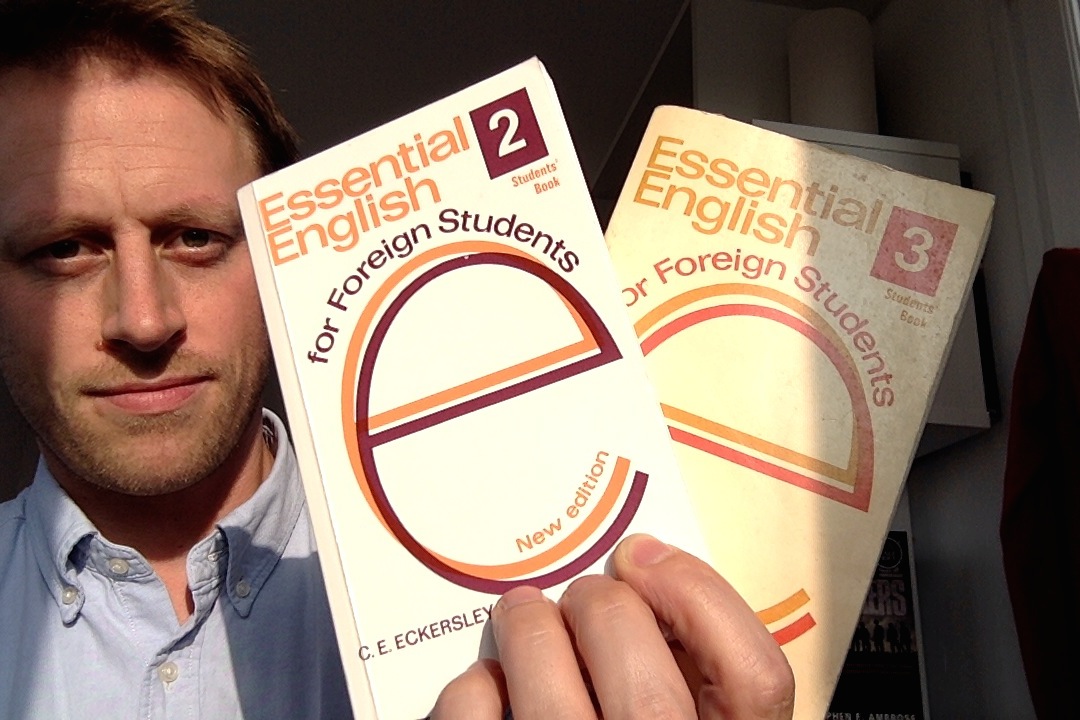
– The interesting course-book (Essential English for Foreign Students by C. E. Eckersley) which Corneliu used in his English lessons
– The myth of ‘the English gentleman’
– Depictions of Englishness in films
– Stereotypes of Romania
– Romania & Bulgaria’s entry into the EU and the media panic related to migrant workers
– Vampires, Dracula and Romania
Please leave your comments in response to this episode! We want to read your thoughts here. Thank you!
aka “The Son of the Dragon Tamer!” or “The guy with the longest name ever on LEP”
*The conversation starts at 11.39 – so please skip my introduction if you like* Right-click here to download.
This is one of those episodes in which I invite a friend onto the podcast and we chat about various things. I like these episodes because it gives me a chance to get to know someone on the podcast, and you can listen to some natural free-flowing conversation in English.
Let me tell you a bit about Corneliu. He is a film maker and comedian originally from Romania. He lives in France now where he writes, directs, produces and acts in films and television projects. Corneliu is a polyglot (he speaks Romanian, French and English), he’s a movie-buff and an he’s an all-round great conversationalist and therefore is the perfect guest for another episode of LEP.
Corneliu also has the longest name of anyone ever to appear on LEP so far. His name (first name and surname, but not including middle names) has 9 syllables in it. As far as I know, that’s longest so far on LEP. It’s not a competition or anything – I mean, that’s not the purpose of LEP – to find the guy with the longest name, but still, it’s an achievement of sorts.
Speaking of competitions – thank you for voting for your favourite recordings in the YEP! series of podcasts – episodes 211-218. I’m getting votes all the time. Voting closes at midnight Paris time on 30th September of this year, that’s 2014. I’ll then count the votes and announce the winners – yes, winners. I’ve decided that there will be a winner from each episode. That’s how I roll, okay? Also, if you were wondering about how I will be counting votes, and if I can prevent people voting for themselves again and again – I can see unique codes for every person who comments, so I know when comments are coming from the same computer again and again. I’m not going to count votes which are obviously repeated votes from the same computer, either intentional ones or accidental ones. So, you can put your mind at rest on that one, if indeed you had been thinking about it.
Thank you too if you have left a comment on my last episode which was about Scottish Independence. It’s great to see that lots of people are interested in this subject, and can see parallels with the situations in their countries too in some cases. The referendum is going to take place tomorrow. We’re all waiting with bated breath to see what happens. Will Scotland leave the union? Is the UK as we know it going to change forever? Will the Scottish people make the right decision? Only time will tell.
Now, let’s get back to this episode. Corneliu is an awesome bloke with a proficient level of English and I’m really happy to have him on the podcast. I invited him into the flat and onto the podcast with the intention of asking him some of the usual questions, such as “What do you do?”, “How did you manage to learn English to your current level?”, “Could you tell us about the common myths around your home country?” We ended up chatting for something like 2 hours and got sidetracked by all kinds of interesting things including films, his son, the fall of communism in Romania and 90s pop music. In fact, it felt like it was hard to contain the inspiration in this episode, and the conversation flowed very freely. I hope that comes through in this episode.
Sometimes I find it a bit tricky to begin an episode, and I have to work out a little introduction, but in this one we had already been chatting over a pot of tea for about half an hour and I just hit the record button mid conversation, so we just hit the ground running at the beginning. If you “hit the ground running” it means you start when you’re already moving or in progress. Imagine running in the air, and then you fall, you’d hit the ground running and you’d immediately be off at some speed. That’s what happened in this episode – we hit the ground running because we were already quite deep in conversation and I just hit the record button. That’s why the episode begins quite abruptly.
You will hear a bit of strong language at the beginning – so be prepared for that. I say the “F” word quite early on. What’s the “F” word? Well… it’s the word “Fuck” isn’t it? It’s a bit silly to call it the “F” word – but I suppose it’s a way of referring to the word without actually saying it, because, you know that is a very rude word which you shouldn’t use because it’s not big and it’s not clever. I realise that I’ve just said the word, just a second ago, which defeats the purpose of warning you about the word in the first place… Anyway, you’ll hear me say it in a moment, in the form of the noun phrase “a fuck up” or “a couple of fuck ups”. “to make a fuck up” (noun phrase) = a mistake or “to fuck something up” (verb phrase) = to do something badly, to make a mess of something, to make an error and ruin something. It’s a versatile word – but remember, just because you’ve heard it on LEP it doesn’t mean you should start throwing it around in conversation. Ok, I don’t mean to patronise you, I just felt it was necessary to say that. Anyway, let’s now join my conversation with my mate Corneliu. And here it is…
In Part 1:
– Hitting the ground running, and talking about the challenges of beginning an episode of LEP
– How to say Corneliu’s full name, and how it actually means ‘son of the dragon tamer’, and how awesome that is
– How we know each other
– My (slight) obsession with the film “Taken” starring Liam Neeson
– Fatherhood, Star Wars and how lack of sleep caused Darth Vader turned to the dark side of the force
– The birth of Corneliu’s son Alexander
– The fall of communism in Romania and the film “Independence Day”
– The shock of discovering that Milli Vanilli were fake
– The effect of pop music & capitalist culture on Romania after communism
– Throwing a TV out of a window
– Seeing Hollywood films in Romania in the early 90s
– “Chaplin” by Richard Attenborough, starring Robert Downey Junior
– Martin Scorsese
– Summarising what we’ve said in part 1 so far!
Coming Up In Part 2 (soon):
– The difference “pleasshure” and “pleasure”, “bio” and “B.O.”
– The importance of ‘passion’ in France
– Jamie Oliver’s (fake?) cockney accent
– British & American English
– Corneliu’s experiences in America, his acting and his accent
– Corneliu’s learning experiences with a great teacher when he was a child
– The interesting course-book which Corneliu used in his English lessons
– The myth of ‘the English gentleman’
– Depictions of Englishness in films
– Stereotypes of Romania
– Romania & Bulgaria’s entry into the EU and the media panic related to migrant workers
– Vampires, Dracula and Romania
Please leave your comments in response to this episode! We want to read your thoughts here. Thank you!
Cookies on teacherluke.co.uk
Click “Accept All”, to consent to the use of all cookies on this website, or visit "Cookie Settings" to control your consent settings.
This website uses cookies to improve your experience while you navigate through the website. Out of these, the cookies that are categorized as necessary are stored on your browser as they are essential for the working of basic functionalities of the website. We also use third-party cookies that help us analyze and understand how you use this website. These cookies will be stored in your browser only with your consent. You also have the option to opt-out of these cookies. But opting out of some of these cookies may affect your browsing experience.
Necessary cookies are absolutely essential for the website to function properly. These cookies ensure basic functionalities and security features of the website, anonymously.
Cookie
Duration
Description
cookielawinfo-checkbox-analytics
11 months
This cookie is set by GDPR Cookie Consent plugin. The cookie is used to store the user consent for the cookies in the category "Analytics".
cookielawinfo-checkbox-functional
11 months
The cookie is set by GDPR cookie consent to record the user consent for the cookies in the category "Functional".
cookielawinfo-checkbox-necessary
11 months
This cookie is set by GDPR Cookie Consent plugin. The cookies is used to store the user consent for the cookies in the category "Necessary".
cookielawinfo-checkbox-others
11 months
This cookie is set by GDPR Cookie Consent plugin. The cookie is used to store the user consent for the cookies in the category "Other.
cookielawinfo-checkbox-performance
11 months
This cookie is set by GDPR Cookie Consent plugin. The cookie is used to store the user consent for the cookies in the category "Performance".
viewed_cookie_policy
11 months
The cookie is set by the GDPR Cookie Consent plugin and is used to store whether or not user has consented to the use of cookies. It does not store any personal data.
Functional cookies help to perform certain functionalities like sharing the content of the website on social media platforms, collect feedbacks, and other third-party features.
Performance cookies are used to understand and analyze the key performance indexes of the website which helps in delivering a better user experience for the visitors.
Analytical cookies are used to understand how visitors interact with the website. These cookies help provide information on metrics the number of visitors, bounce rate, traffic source, etc.
Advertisement cookies are used to provide visitors with relevant ads and marketing campaigns. These cookies track visitors across websites and collect information to provide customized ads.