Luke gives his personal history of computer games.
Right-click here to download this episode.
This episode is all about computer games or video games, from the early days of PONG, Space Invaders and Pac-Man to the multi-billion dollar industry that we have today.
While talking in this episode I use various pieces of vocabulary to describe comptuer games and the games industry. Scroll down this page and you can find a list of expressions, phrases and sentences that I say in the episode.
Also, if you scroll down you can watch some videos about computer games which I think you might enjoy and find interesting.
What’s in this episode?
1. I’ll give you my own personal history of computer games (from my first hand-held Nintendo Game&Watch device, to the PS3 that I now have in my living room).
2. I’ll discuss some questions and issues that relate to computer games.
What do you think? I am very interested to know what you think about games, so please JOIN THE DEBATE by leaving your comments in response to this episode and these questions:
-What do you think of computer games? Do you love them or hate them?
-Do you think they’re sad or cool?
-Do you like all games or just some specific ones?
-Do you prefer any games genres more than others?
-Do you play games often, or do you avoid them completely?
-Are they just for boys or do girls play them too?
-Are they just for children, teenagers or adults?
-Do you think they are a good use of your time, or just a total waste of time?
-Are they bad for us, or do they help to keep us fit and teach us skills?
-Are they a good way to connect with people, or are they anti-social?
-Are they immoral or just a bit of fun?
-Can they be the future of entertainment? Will they replace movies as a way to tell a good story?
-Can computer games ever become an art-form?
Listen to the podcast to hear me discuss some of these questions and please leave your comments below this post.
VOCABULARY, PHRASES, EXPRESSIONS AND SENTENCES FROM THIS EPISODE
You should read these while listening to the episode. This page is not supposed to be read like a blog entry, it is here to help you understand the audio episode.
*I recommend that you double click words you don’t know, then paste into google or an online dictionary to get definitions*
Many people believe that computer games are just something that is used or done by geeky teenage boys with no friends who never go outside, never see the sun and who just spend all of their time indoors playing games and maybe learning how to become a murderer or something like that.
Maybe we can use America as a kind of benchmark for the way games are consumed all over the world.
Generally speaking I think the trends in America are quite reflective of trends in the rest of the world, more or less, when it comes to computer games anyway.
Consoles – e.g. the Playstation 3, the Nintendo Wii and the XBox 360
There’s a massive variety of games now and they come ‘in all shapes and sizes’.
My girlfriend got completely addicted to Angry Birds.
Games still have a long way to go before they can rival art forms like film or novels in the way that they can tell stories, but they have so much potential in terms of the way they are interactive.
I was born in 1977 and computer games had been around for quite a while when I arrived.
Atari were the original, old-school, retro computer games maker. (They weren’t retro at the time, but now they are really retro!)
IN 1972 they came up with a very early computer game concept, called PONG. (In fact Atari were later sued for allegedly stealing the idea of Pong from someone else)
It was very basic, it was very simple and essentially it was a kind of table tennis or tennis simulator.
You might have even played it, maybe on an emulator on your PC.
There was a little white ball, which was basically a tiny square made of probably about 4 pixels.
The white lines represented your bats, your table tennis bats or your tennis rackets.
It was very basic, but somehow very addictive.
There was something satisfying about the analogue sounds that you got from this game – BOP BIP BOP BIP.
It started out as an arcade machine.
A computer games arcade
Coin-operated games machines
It wasn’t until the early 70s that electronic games were introduced.
They introduced the very first games console, which had a space in the top where you could insert cartridges and the cartridges would be different games.
You could plug this thing into your TV and then “bingo” you’ve got your own tennis simulator.
He brought home some sort of Pong copy of some kind, that he borrowed from a friend I think, and he plugged it into the TV and then we started playing Pong.
I remember there were these kind of dials or paddles that we used to control the line going up and down.
The next game that I got was after my Dad had been to Hong Kong on business.
Hand-held games, e.g. the Game Boy
It had a little arm that would come out of the back and you could prop it up on your bedside table. It would work like an alarm clock.
It was a combination between a bedside alarm clock and a computer game.
The guys in the parachutes would slowly descend.
At the start it was easy because they would just come down one by one.
You’ve got to be very fast with your thumbs in order to catch these guys in parachutes.
You see this little shark’s fin coming through the water, and then they get eaten by the shark!
It was quite a lot of fun, and required quite a lot of skill and dexterity in your thumbs.
The Sinclair ZX Spectrum – it had something like 64k of RAM. (not Random Assisted Memory but Random ACCESS Memory)
You could write code so you could program your own games.
You had to load computer games onto it using a tape player.
They were pretty unreliable and they would crash quite a lot.
It crashed and it never worked again.
An AMSTRAD CPC 6128
I wouldn’t say it was a next-generation computer.
You’d put the cassette in the tape machine, rewind it, get the computer ready.
It would go into a ready mode and then you’d press play on the machine.
You could hear the sound of the code going in. It was a kind of analogue code.
Very slowly the game would load.
Probably about 50% of the time, they wouldn’t work.
If you even breathed on the computer, the chances were that it would crash.
The title screen would be some sort of picture to represent the game.
You’d keep your fingers crossed that it would crash.
BMX Simulator had a top down view.
There were these little, very basic looking, little blobs.
You had to avoid puddles of water.
Everyone would have to crowd around the keyboard.
Not very practical but certainly a lot of fun.
You had to type in the code in order to launch a game.
You had to learn a basic set of commands.
You had to control a little car going through a valley.
A valley, made of ‘number 1s’.
We used to actually want to get up early in order to play the games.
The Nintendo Entertainment System (NES) arrived.
I had a paper round. I was a paperboy.
I saved all my money from the paper round and I used it to buy my first NES.
If you don’t know who Mario is then I don’t know where you’ve been.
More American kids were able to identify Super Mario than Mickey Mouse.
A very playable platform adventure.
Super Mario was an Italian plumber.
He used to travel through these green pipes.
Don’t ask me why he was Italian.
They gave him a hat, and they also gave him a mustache.
She was constantly being kidnapped either by Donkey Kong or by Bowser, who was a kind of huge green monster, some sort of evil turtle.
It was up to Mario to find his way through these different worlds in order to defeat Bowser and rescue the princess.
Make sure that you don’t fall in holes.
The sound effects were really great and very memorable.
If you get touched by a turtle, then you would die. I don’t know why if a turtle touches your foot then you would die.
There were various little touches in this game that made it very special.
You felt that he had a sense of weight.
There was a sensation that he had some inertia.
I don’t know what kind of mushrooms Mario was eating.
Not real-world logic there.
All kinds of spin-off games.
It was basically just a grey plastic box with a lid on top.
The Game Boy (1989)
It was a very simple design, very appealing, a very nice aesthetic, very simple layout and everything.
It just oozed charm.
The cute noises that this machine would make.
It was a 2 bit machine.
Any yet with all of these basic limitations, Nintendo managed to produce some really classic games.
It just shows, you don’t need amazing graphics, you don’t need high-quality HD graphics.
All you need is a, kind of, inventive game designer, a simple set of rules and addictive gameplay.
TETRIS
God knows how Nintendo managed to get the rights to put it on the Game Boy.
It’s an interesting story of espionage and computer games.
It was very difficult to master the game.
You get a square, an oblong, a little higgledy-piggledy shape.
You have to make sure that the blocks don’t all pile up.
My parents didn’t really agree with games. They frowned on them. (frowned on / frowned upon)
Once they started playing Tetris, they got hooked, and they couldn’t put it down.
You could play Tetris for hours on end without even realising that the time had gone by.
In fact, if you played Tetris too long you would experience ‘Tetrisitis’!
Eventually you start seeing the graphics wherever you go.
That just shows how engrossing and how, kind of, addictive and fun these games are, that you just get completely sucked into them. Is that a good thing or a bad thing? I wonder, I really do.
So after the NES and after the Game Boy, the next console that I got was the Super Nintendo Entertainment System (SNES or Super Famicon in Japan).
It was a lot more powerful than the NES and it had much better graphics and there was a huge range of new games that you could get for it.
As a result you got lots of innovation.
It also looked cool. It was nicely rounded. It looked like it was out of the Star Wars universe in some way. It was kind of grey plastic and it was kind of rounded. It just looked nice, and when you put the cartridge in the top it made a satisfying ‘clunk’ sound. You’d put the cartridge in and it would go ‘CLUNK’. And there was a big button in the middle to eject the cartridge, and when you ejected it would pop out like a toaster.
I had a particular trick at Christmas time for getting tips as a paperboy.
They then felt obliged to give me a cash tip.
I spent my money, wisely, on a SNES.
I bought a SNES which was packaged with Street Fighter 2.
Essentially Street Fighter 2 is a fighting game, a beat-em-up.
Whenever you get punched your power level goes down a bit until eventually your power level reaches zero and you get knocked out.
The key to the game was learning the particular fighting style for that character, learning all their special moves and mastering them so that you could do the special moves in an instant.
Other characters were ones like Ken and Ryu who were the principle characters in this game, and they had a kind of a … sort of a karate style.
One of their special moves was to throw fireballs. So they’d summon up some special energy and then release it as a burning blue ball of plasma of some kind, and if that hit you then it would take away a lot of energy from you. That was one of their special moves and whenever they did it they would say a special command “HA-DO-KEN!”
It was a very effective move.
The dragon punch could inflict multiple hits.
“HA-RYU-KEN”
These characters were so well drawn, so well rendered, they were like super heroes. They way they looked on screen, they were big tough guys, with rippling muscles. They were like Greek gods.
I always used to think that the characters were saying “HELLO KEN” “HOW ARE YOU KEN?”
When I read the instruction manual (I realised) that no, they were just speaking Japanese.
I was dedicated to Nintendo.
I used to hate Sega. I shouldn’t have done because they had some great games too.
SONY PLAYSTATION
One of the things they managed to do was aim their marketing at older gamers.
What SONY started to do was combine the gaming experience with the home entertainment experience.
You can play Blu-Ray discs.
Now we’ve also go the Nintendo Wii, which is strangely named, because a wee is something you do in the toilet, so now you can have a Wii in your living room!
It brought Nintendo back.
The thing about the Wii is that it’s got motion sensors.
Your body becomes the controller, as it were.
This is a huge step… a huge change.. a huge innovation for Nintendo.
You just replicate the action from the real world.
You swing your arms and the motion sensor in the controller knows what you’re doing and it replicates it on the screen. Wow, amazing!
As a result, loads of girls started playing Wii.
It also allowed people all over the world to smash their TV sets.
Nintendo decided that you had to wear a strap around your wrist.
You just have to take my word for it.
I probably shouldn’t have spent so much time playing games with my friends.
We had a game called Goldeneye.
It allowed you to run around in rooms, as different characters from the James Bond movies, trying to kill each other.
We spent a lot of time murdering each other in virtual reality.
Why didn’t you join the student union radio and become a DJ?
Ultimately, playing games doesn’t allow you to achieve anything, it’s just fun in itself.
After a while I start feeling guilty because I know that I should be using that time to do something important like organising my finances.
Those are all things I should be doing rather than playing Red Dead Redemption.
It’s just like a big Sergio Leone western, except that you’re in it.
They’re really exciting and exhilarating.
Very violent, very gruesome murder.
There are lots of very wholesome games, like farming simulators. (but why not just try farming in the real world??)
A game like Grand Theft Auto is generally considered to be great because it gives you lots of freedom.
You can mug someone, you can shoot someone but you can’t give someone a bunch of flowers.
Why is it that computer games focus so much on bloody violence?
Maybe we all really would love to go outside and blow things up, but obviously we can’t.
I don’t think there is more murder or more killing now than there was before games arrived. I’m sure that the world was a lot more savage, a lot more brutal hundreds of years ago before anyone even considered the idea of computer games.
I don’t think it’s fair to say there are more killings, considering the number of people who play games.
I don’t think the number of police shootings (shootings of policemen) has not significantly increased since the release of that game. (this just speculation of course)
I don’t think it’s as simple as that.
Maybe it’s cathartic. It allows you to release tension or aggression.
The violence is more realistic and artificial intelligence is evolving all the time.
At what point will it become genuinely immoral?
That opens up all sorts of questions which have already been dealt with in films like Blade Runner.
It’s not really anti-social, it’s just a different kind of socialising.
Online people abuse each other, because there’s that sense of anonymity.
Also it allows people to develop genuine kinds of team work.
It allows people to develop a very refined sense of team work skills.
It’s not really that much different to playing a board game like draughts or Monopoly.
Also, some people say that games allow you to develop quick reflexes and basic motor skills, and decision making skills.
Are they analytic decision making skills? Do they involve making really strategic decisions?
It depends on what kind of game you’re playing.
Games are not mindless, not by any means.
They’re on a similar level as a basic Hollywood B movie.
Normally it’s some sort of visceral feeling, like excitement or fear.
I very rarely experience genuine emotion, sadness, I’ve never cried during a game, except maybe during The Legend of Zelda.
I don’t think games really elicit emotions in the same way that watching the subtle ways in which actors’ faces can convey meanings. Movies can be like fine art, but I haven’t yet experienced a game that’s like fine art. Sure some of them are aesthetic, they’re beautiful, some games but they rarely make me feel emotional. And usually the acting in games is appalling. You get these cut-scenes in which the story line moves on, and they’re just like… awful acting, as I’ve said the story lines are predictable and dull, full of cliches, so sorry computer games have got a long way to go before they can reach the same kind of level of emotional complexity that you get from a film.
At best, they’re like exploitative Hollywood ‘B’ movies, horror movies, westerns, that kind of thing.
If you’ve played a game that genuinely moved you, or that you found emotional, then, again let me know.
I think that’s pretty much it for this episode.
CHECK OUT THESE VIDEOS ABOUT COMPUTER GAMES
Charlie Brooker’s “How Videogames Changed The World”. This is a BBC documentary about computer games. It is a satirical and humerous look at the history of computer games.
‘Videogame Nerd’ talks about PONG consoles. My Dad brought home a Pong console some time in the 1980s, and we played it for about 2 weeks, before it disappeared from our living room.
Nintendo Game & Watch – Parachute (This is the first game I had as a child)
A short review of the British home computer, the Sinclair ZX Spectrum, which we had in our home for about 1 day before it crashed and never worked again! It was a classic computer though, and although it was very basic, it was used by lots of British teenagers to write their own computer games. This review gets a bit boring and technical but it does clearly show you the computer and how it worked.
Super Mario Frustration
This is a funny commentary video with someone playing a very difficult level of Super Mario Brothers. He gets very angry and starts shouting at Mario. It always makes me laugh. There is some STRONG LANGUAGE and SWEARING in this video so watch out!
Street Fighter 2 on the SNES. This video makes me feel quite nostalgic. I used to play this quite a lot when I was about 13 or 14 years old. I still play it on my PS3 sometimes these days. “HA DOOO KEN!”
[youtube http://www.youtube.com/watch?v=RPj63Ms_q3M&w=400&h=300]
This is why you should take care when playing Nintendo Wii
Here’s a playthough of the classic western game Red Dead Redemption. The commentator is a game reviewer called Stan Burdman. Don’t take everything he says seriously, as he makes a lot of jokes while he talks. This video should show you how games have developed since they first arrived in the late 60s/early 70s. No real rabbits were harmed during the making of this video.
http://www.youtube.com/watch?v=e5VL3h6XvAE&
How’s life in Paris? Find out in this episode. It’s quite a long one (1hr 30mins) so feel free to listen to it in stages. You don’t have to listen to it all in one go. You can listen to a bit, pause, listen to more later, pause again, finish listening to it. This is easier if you use iTunes to download and listen to the podcast.
There is a transcript to some of this episode. I wrote some of it myself, but the rest was contributed very generously by Krissy. Thank you very much Krissy! So now there is a transcript for THE WHOLE EPISODE! :)
Hello, welcome to Luke’s English Podcast. It’s an absolute pleasure to be talking to you again and I am for some reason speaking in this kind of way. I don’t really know what this intonation or rhythm pattern is that I’m using.
It’s something related to being like a kind of presenter character. I think that on the news or on the radio they sometimes speak like this. That’s why I am doing it. It could also be because I’ve had a little bit too much coffee and that made me do it, because I don’t normally drink coffee. You see, I normally drink tea and so if I have a bit too much coffee, it kind of makes me start to speak as if I am a TV presenter on a very serious television programme. But I’m not gonna keep speaking like that. I’m gonna be normal. Ok, so that’s me being normal now.
OK, so in this episode I’m gonna tell you all about my first impressions of life in Paris. Some of this episode is transcribed. You’ll be glad to know, you can read a transcript of some of this, if you go to the website which is teacherLuke.podamatic.com. You can find the transcript there. You can read it, if you want to. You can sort of read it and listen to me while ..eh you can read it while you are listening to me. That might help. You can just read it, if you want to. If you don’t ..if you can’t stand the sound of my voice anymore, then you can just read it or you can just ignore the transcript completely and just listen. It’s up to you. It’s your choice. I’m just giving you a little bit of extra freedom to decide how you wanna live your life and how you wanna deal with another episode of Luke’s English podcast. So, some of this is transcribed, some of it is not. You hear me kind of speaking off the top of my head as it were.
I am now in Paris. I am sitting in the apartment in which I am living here in Paris and it’s very exciting and very new experience for me, so I am gonna be telling you all about it in this episode. So the transcripts which you’ll find on the website starts here. So if you’r wondering when the transcript is gonna begin. It starts now, okay. So ….
I recently moved to Paris. I’ve been here for about 6 weeks. This episode is all about my first impressions and experiences of living here. It is about my experience of moving to Paris, but it is also about the experience of living in another culture, so in many ways this is a cross-cultural case study. And if the expression ‘cross cultural case-study’ sounds a bit boring, you could always think of this episode as a bit like “Mr Bean in Paris”, in which I am Mr Bean – a kind of bumbling, foolish English man making loads of mistakes and generally making a fool of himself. That might help keep it amusing. Just keep in mind the image of me getting everything wrong in a famous European capital city. It could be a crap ‘fish out of water’-type movie. Like, “He was a boy, she was a girl, he was English, she was French and the city was Paris. When Luke Thompson moved to Europe to be with the girl he loved, he got just a little more than he bargained for!”. That’s a kind of movie trailer for my life in Paris I suppose.
Anyway, if you have ever lived in another country, you may be able to relate to my experiences of being a fish out of water. If you are thinking of moving to another country, you may be able to learn something about what it is like to be out of your comfort zone. If you are from Paris or France, you may like to know what it is like for an English person to live in your city. If you have never been to Paris, but you have always wondered what it is really like, let me share my experiences with you. You may have noticed already that this episode contains lots of vocabulary and expressions relating to cross-cultural experiences. You can read most of what I am saying by visiting my website which is… http://teacherluke.podomatic.com (no longer active) or http://teacherluke.wordpress.com
I must say at the beginning that I only wish to express my own experiences of living in Paris for just a few weeks. If you are Parisian, French or know a lot about
Paris or France you may feel that I haven’t covered the whole picture yet. I don’t consider myself to be an expert on Parisian life by any means. In fact, I feel like there’s so much that I don’t know! So, don’t be offended if I have got the wrong end of the stick and misunderstood certain things about life here in Paris. I don’t imagine you would be offended to be honest.
Let me also say that I have not completely left London behind. The two cities are very close. On the Eurostar (which is a train that connects the two cities – it goes under the sea, yes under the actual sea!) it’s really easy to travel between London and Paris in just a couple of hours. Some people say that London is a Paris suburb, or vice versa. (Obviously, I reckon it’s the other way round because London is bigger than Paris) So, I still maintain my connection with London and with Britain. I will be regularly going back to London to see my friends and my family, to catch up on what’s going on in London and to keep in touch with my work colleagues at The London School of English. So, this is not going to become Luke’s French Podcast. It’s still very much Luke’s English Podcast. In fact moving to France makes me even more aware of my London roots. I’m an Englishman at heart. Living in France gives me more perspective on this, and on the culture of the English language, and hopefully (depending on how things go) here in France I will have more time to devote to doing episodes of the podcast that focus on the English language, culture and all the other things that you have come to expect from Luke’s English Podcast.
So, let me tell you what you’re going to hear in this particular episode.
First, I’m going to talk a bit about cross cultural awareness, just to provide a bit of a context to the whole thing. Then, in no particular order, I’ll go through my general experiences of life in Paris. What I’ve found different or similar to life in London, what I’ve found difficult or challenging, and what I’ve found enjoyable, inspiring, and funny about life here, so far. Please leave your comments if you want to share, and as ever you can always send me a donation to show you care, if you fancy it! It’s completely up to you to decide how much you wish to donate, from just £1, $1 or €1 (to be honest I hope you choose the £1 because, well, it’s worth more because of exchange rates, so if you have to choose, then go for £1 maybe). Well, from, like 1 pound, dollar or Euro to a hundred thousand billion trillion pounds if that’s what you think is appropriate. I am, of course, aware that a hundred thousand billion trillion pounds (£100,000,000,000,000,000,000,000,000 I think…) is more money than there actually is in the world, but, you know, maybe Roman Abramovic listens to this. You never know… You can dream… Anyway, it’s really easy to donate, you just click a donate button on my website and it’s really easy to make a donation really safely using PayPal. OK that’s it. The begging bit is over.
Abramovich is currently the 5th richest person in Russia and the 50th richest person in the world, according to the 2012 Forbes </wiki/Forbes> list, with an estimated fortune of UK£8.4 billion.
I don’t really do any language teaching in this episode, although I will be doing more stuff in the future – getting back to basics and doing more language oriented episodes with grammar, vocabulary and that kind of thing. Alright? I realise I’ve been doing a lot of just sort of random talking into the microphone recently but you can look forward to episodes in which I deal with grammar and vocabulary. The real nuts and bolts of the English language coming soon.
However, I’ve managed to write some pretty detailed notes for this episode, and a transcript of a lot of what I’m saying. I don’t always do that, but this time I have. So, like I said before do check out teacherluke.podomatic.com and you can read a lot of this and that can really help you to work out and learn a lot of the English that I am using.
So, first, a bit about cross-cultural awareness.
Whatever your situation, it is always good to have some sense of perspective about the place that you live in. Remember, you may think that the way of life that you are used to is the normal way. That your way of life is correct, and another way of life is wrong.That’s a pretty basic way to put it but I think we all think this to a certain extent. We take for granted many of the things that we eh….I can’t read my own writing today. Okay, I look at an edit because this is Luke’s English podcast you know. I like to keep it real. So even though I just can’t even read what I’ve written here ..I don’t care. I’m just eh I’m going to keep going. I am not going to edit this bit out just to show you that it’s still the real Luke’ English podcast here.
So, that’s a pretty basic way to put it but I think we all think this to a certain extent. We take for granted many things about the way we live.
It could be little things like the way we dress, or the way we eat. Or it could be bigger things like politics of the country we’re in or the religion or something. I think most of the time we get used to our own way of life and consider it to be normal. It is only when we leave our culture and live in another one that we realise how different life can be, and that maybe our way is not the only one.
Living in another country (not just on holiday, but permanently – for at least a few months) can be confusing, it can be frustrating at times, but it can also be exciting, refreshing, inspiring and humbling. It can open your mind.
I think everyone should experience living in another country for a while. Living abroad can make you more tolerant and patient with other people. It should at least. That’s the idea. Hopefully it doesn’t just confirm any xenophobic attitudes or prejudices you had when you visited the country. I’m sure that’s the case sometimes, but for the most part like to think it helps us to realise that it takes all sorts to make a world. It’s good to remember that our way of life, our habits and familiar routines are not the only way to live. When we step out of our comfort zone we get the chance to realise that we are not always right about everything, and that there are other ways to live your life. Hopefully, living abroad helps to prevent us from getting too arrogant or big headed, like “Oh, the rest of the world is stupid and my country is the best” – I actually think we feel this way more than we like to admit. It means we are more willing to see differences in the world as something to celebrate, rather than something to fight about.
That’s the idea of course. That’s the theory. In reality, on a day to day basis, living abroad can be difficult, confusing, dangerous, infuriating and hilarious. It takes a while to really get used to living in another country. It probably takes about a year to feel that you understand things, but really you never get completely used to it. It’s a constant learning process. But it’s good to keep learning. In my opinion, when we live abroad, certainly at the beginning, we learn about 3 things: About the new culture that we are living in, about the culture we have come from, and about ourselves.
Culture shock. I’ve talked about this before. I don’t really believe it is a shock. When it’s bad you feel frustrated with the other culture, or even angry because you see what they do as wrong or ridiculous. It can also make you question yourself and make you feel pretty small. You might not even realise you are experiencing culture shock. You might just feel a bit annoyed that everyone is apparently doing it all wrong. That’s really common. “These people are stupid”, you might think. You make judgements. You might even offend people without realising it, because you’re not aware of little cultural rules that youre breaking. You might get offended yourself. It depends on why you are there in the first place. So, really it should be re-named ‘culture-frustration’, ‘culture-rage’, ‘culture-depression’ or ‘culture-neurosis’, but of course none of these are particularly catchy titles. Of course, culture shock can also be really great! When it is good the feeling is pretty wild. It feels like a crazy adventure which sweeps you away. You can feel inebriated by the excitement and wonder of a new experience. It can be very liberating to be removed from the shackles and limitations of the culture you come from. Certainly, that is why a lot of people travel or decide to live abroad. Travel broadens the mind. I’m sure I don’t need to convince you of that. But just in case, allow me to share a couple of sayings made by famous people, on the subject of travelling, just so you are absolutely sure that I am 100% right about this (as if there was any doubt about that!
Mark Twain, the famous American author said “Travel is fatal to prejudice, bigotry, and narrow-mindedness.”
Let me say that again but slightly better:
Mark Twain said:
“Travel is fatal to prejudice, bigotry, and narrow-mindedness.”
So what he means is that travel basically kills your predjudice, kills your bigotry and kills your narrow-mindedness.
Bigotry is a kind of sort of very narrow-minded view of things that are different. So if you kind of… if you are a racist or sexist or very old-fashioned in the way that you think then you might be guilty of bigotry and narrow-mindedness that just means you got a very conservative view of world rather than a kind of open-minded liberal approach.
St. Augustine said:
“The world is a book and those who do not travel read only one page.”
I think that’s pretty clear what that one means.
Samuel Johnson said:
“All travel has its advantages. If the passenger visits better countries, he may learn to improve his own. And if fortune carries him to worse, he may learn to enjoy it.”
Anyway enough about all that. Let me tell you about my experiences in Paris.
People back in London keep asking me questions like:
-So, how is Paris then?
-How’s it going?
-What’s it like living in Paris?
-Do you smell of garlic yet?
-Do you feel homesick?
-Is it different to the UK?
-Are you experiencing culture shock?
-How are you enjoying the food?
-What are the people like?
-Do they refuse to speak English to you, even though they could if they wanted to?
-Have you got a job yet?
-Have you learned French yet? What’s it like learning a foreign language? Is it difficult to pronounce the words? Do people really say “ooh la la”, “zut alors!” or even “hoh-hee-hoh-hee-hoh”?
-What do all the buildings look like? Are they beautiful?
-Are people really fashionable and chic?
-Have you put on loads of weight because of all that rich buttery food?
-Are waiters really rude to you in restaurants?
-Do people hate you because you’re English?
-Have you managed to understand the ridculously complicated Metro system yet?
-Have you managed to get an apartment yet? Because apparently that’s really hard if you don’t have a bank account.
-Have you managed to get a bank account yet? Because apparently that’s really hard if you don’t have an apartment.
-What’s it like driving in Paris? Is it strange driving on the other side of the road? Have you driven around L’Arc de Triomphe? Is it as impossible and life-threatening as everyone says?
-What about getting a taxi? Apprarently that’s impossible.
-What about the night life? Have you been to the Moulin Rouge? Is it like that movie? You know, the one about the Moulin Rouge, with Nicole Kidman and Ewan Magregor. I can’t remember what it’s called, but anyway, have you been to the Moulin Rouge?
-Have you seen any sexy French movies yet? You know, the black and white arty ones, in which people lie around on beds smoking and undressing?
-What are the girls like? What are they LIKE? You know, are they…? Do they…? Will they…? Have they…? How often do they…? What about their…? Hmmm? (Sorry, I’ve got no idea what you mean)
-Have you been up the Eiffel Tower? How long did it take? Did you walk all the way up? What’s the view like?
-Have you been to le Louvre? Did you see the Mona Lisa? Did she seem happy or unhappy to you, or somewhere in between?
-Have you had sex with Carla Bruni yet, because everyone else has, apparently?
-Do they really eat snails & frogs’ legs and loads of garlic?
-Does everyone drink champagne and red wine all the time?
-Have you started riding around on a bicycle yet, wearing a stripy top, with a beret on your head, a moustache on your upper lip, a chain of garlic round your neck and some baguettes in the basket? or is that just a cliche?
-In fact, what’s it really like Luke? What does it look like Luke? Look, Luke, like, what’s it like, what does it look like, Luke? I mean do you, like, love it? A lot? or a little? Please, let us listen, Luke, to you, like, letting us learn a lot about living a life in …
uhh I got that completely wrong.
So this is difficult because I wrote this earlier on, okay. I wrote a list stuff because I wanted to do a really well prepared episode of Luke’s English podcast. But maybe you know, I shouldn’t try and write notes down because when I read a sort of script somehow it seems a bit unnatural. It doesn’t seem to be like I am really engaging with you. But anyway there is not much more of this script left.
Let me just try that second bit again. I am sure that you’ll forgive me just bear with me etc etc.
So what’s it really like, Luke? What does it look like, Luke? Look Luke like . What does it like look like, Luke? Do you like love it, a lot or a little?
Please let us listen, Luke to you like letting us learn a lot about living life in
le French capital of Paris.
OK. Let me try and deal with it all. Now I recently noted down some thoughts on Paris, and how it seems a bit difference a life in London.
So this section is not transcribed because I am just talking off the top of my head, but below you can see the notes that I used for this bit. It may contain some of the language that I used.
OK, this section IS now transcribed thanks to the work of Krissy who sent the transcription in. You can read the transcript below. Transcribing takes a lot of work, time and effort but it’s often a rewarding experience because it really focusses you on listening. Thank you Krissy for your transcribing work!
Okay, so I am going off-script now. This bit isn’t transcribed which probably means it’s going to sound a little bit more natural maybe slightly hard for you to understand, but you know let’s make that sacrifice because it’s better, isn’t it, if it sounds authentic and natural. I think so.
So, in no particular order, here are some notes in a little notepad which I scribbled down just recently and so this is in no particular order. This is very random.
So, what does it look like? Well, I remember when I first arrived in Paris I arrived in Gare du Nord Station, that’s the North Station of Paris and it’s not the most beautiful area of Paris but nevertheless, I immediately got a sense of the kind of atmosphere of the place and it sort of struck me as being somehow very 1920s or very kind of old fashioned. Just the way that the bistros look with the front of the restaurants and bistros with the chairs, the beautifully sort of decorated chairs and tables and the canopies that you find outside bistros and restaurants. When I see those things it somehow strikes me as being untouched by time. I can imagine most places looked exactly the same since the whenever like the 1920s or even earlier than that. So you know it’s very evocative kind of the images of Paris that we have seen in old movies or paintings and things like that. So immediately get a sense of this history. It’s like a long history obviously in the buildings there are many very large grand-looking buildings. All over the city and there is a long history many many difference of stories many different things of that occured here, of course, you know with the big things with the French Revolution at the end of the 19th century – I think at the end of 1978 I think.
Okay, I have to do an edit here and correct myself, because what I’ve just said was completely wrong. The French Revolution actually happened near the end of the 18th century basically between seventeen eighteen nine and seventeen ninety nine and as you should know really, it was a period of great socical and political change in France, that had a massive impact on French history and an impact generally around the world. And that was when the monarchy in France was kind of removed and instead of a monarchy it was replaced by a Republic. So basically the Royal family were taken and killed on… I think the storming of the Bastille, the Bastille day is the 14th of July. It’s celebrated here in France. It’s a kind of French Independence day you might say, another way they celebrate Independence day in America where the French Bastille day is basically the day on which they celebrate the end of the monarchy and the beginning of the French Republic, as we know it now. So it happened at the end of the 18th century. I just had to correct myself there because I couldn’t allow myself to tell you something that was wrong. Should have checked it in advance. But there we go. Like I said I’m kind of new here, new here in town so go to forgive me if I made the odd historical mistake. But I have corrected myself now so everything is fine. Good. On with the show. There are a few sort of episodes in the revolution but that’s only one of the biggest differences in terms of the sort of constitutions or the way the state is run in France. That is quite different to the UK because they don’t have a Royal family it’s a Republic. They actually… there was a revolution and they took the royal family and chopped their heads off because they didn’t really like them. Whether that’s really… I mean they celebrate this of course on Bastille day and of course as you may know they used the guillotine. They got a little bit guillotine happy actually in sort of so anyone they.. I don’t really know the deep history of it but it seems a lot of people just ended up getting their heads chopped off. Did it fix all the problems? I don’t know but I think it probaby made a big difference. But anyway there is a very sense that this is a Republic and this is everyone is very much aware of their rights and their sense of equality and brotherhood and all that kind of thing.
That’s the idea whether on a day to day basis when you are walking along the street. I don’t know if people seem that much more together or if society seems that much more fair or well-balanced. I can’t really see whether France being a republic is clearly better than let’s say England being a monarchy. I think in the end it’s still pretty much the same thing.
So, I find that in Paris much of the city is very similar. I mean that maybe that I am new to the place but a lot of the street seem to be really similar very very similarly designed. You get these long terraces, these very large imposing terraces on these long avenues and very grand-looking streets that have big monuments at the end. These avenues which were designed by Houseman. I have mentioned him before this architect who kind of designed many of the streets in Paris. So it does have a kind of uniformity to it, which…It’s not just uniformity in the facades of the buidlings but in the sorts of shops and things that you find in the streets. I find that I get lost really easily in Paris. It could also be the way that the streets are laid out. It’s not like a great system for example as you get in Barcelona or many places in America. You get this very long diagonal streets which all meet to me as kind of a big circular junctions and these big circular junctions like the one that you get at the Arc de Trioumpe have sort of seven or eight streets coming off at a diagonal angles so the city that all seems to be all in diagonal streets which makes it pretty confusing for me. So I get lost easily. All the streets seem to have the same types of shops. There is always a café, a bistro and a tabac which is a tabacconist, a boulangerie and a Japanese restaurant. There is always a Japanese restaurant for some reason. They love Japanese food here. So whenever I was walking around in Paris with my girlfriend quite often when we walked past a boulangerie she’ll go: Oh oh this is, this is the best boulangerie in Paris’ and then we end up down another street she’ll go on: oh no no no this is the best boulangerie in Paris and as far as I can tell there’s about nine best boulangeries in Paris but certainly the quality of the bread is very good. I mean compared to England. The French bread, you know, baguettes and things, I mean, it might seem to be quite a basic simple thing but for me as an English person the bread is like really good quality and really delicious. It’s a bit of a luxury but something that people here enjoy every day. In England we are just used to the normal everyday loaves of bread which, you know are not quite as soft and delicious as you get here. You get these baskets of bread on the tables in restaurants, bread fresh, hot baguettes of bread from the local boulangeries and things. You actually can smell the smell of cooking bread in the streets, and other things like croissants and stuff like that. So it’s lovely it’s luxurious to eat such good quality bread and pastries. A lot of it does seem to contain a lot of butter. I mean croissants such as basically it’s basically butter in kind of solid forms as far as I can tell. How can they manage to get so much butter into these things but I suppose that’s the key to making the taste so good. But they..I don’t think I can eat them every day. They are not really healthy enough. Certainly the eating habits in Paris are different to the eating habits in the UK. I mean, you know in the UK we are not exactly famous for our eating habits, are we? Well, we are famous for for having bad eating habits or at least having bad food. but Paris on the other hand is famous for its cuisine and famous for having excellent food, of course. We all know that. But, then you know there are certain things that are different about the way let’s say dinner habits in this country .
In the UK it’s quite common to have cheese at the end of a meal. So you start with a like a starter of some kind something savoury as your first course. Then the main course then would be, you know, like some sort of meat and vegetables or something and then after that you have a dessert something sweet and you’d have coffee and then right at the end you have cheese.
Well here in France, in Paris it seems they start with an aperitive, often which will be kind of like a kind of sweet tasting alcoholic liquor of some kind and then go on to the first course which could be you know similar to the first course in the Uk really a kind of savoury plate of, I don’t know, it could be some pâté or something like that and then the main course lots of things, lots of steak, raw beef, steak tartar, which is basically for me it looks like just a load like mince beef that the chef forgot to cook. But no that’s the correct way to eat it here and it’s kind of something that peopole eat a lot. Just a plate of raw beef. It’s not really my cup of tea yet but I am sure that I’ll grow to like it. So a kind of main course obviously is not just raw beef. There is loads of different main courses, lots of delicious kinds of food and then desserts and you have these very rich cakes and very delicious desserts and so on. And then after that.. oh no no I am quite wrong. The cheese comes before the dessert I have discovered. This is for meeting dinner at people’s houses they actually serve the cheese first.
Now my girlfriend is French who is kind of very surprised to discover that we have cheese at the end and in, I mean, in many some people’s opinion, some French people’s opinion this makes the English strange. This is just one example of the little differences that we notice when we, you know, live life in another country. Yeah, we have the cheese in the end. In France they have the cheese before the dessert. So in France it kind of goes.. it sort of goes, sweet savoury savoury savoury sweet. They have to end on something sweet. You can’t end on savoury whereas in England we do, we end with the cheese sometimes.
You know, I’m splitting hairs really it’s not a massive difference. Now, I know nothing about wine but it seems that most people here kind of have a fairly decent knowledge of wine and great varieties and things like that. When you order a wine in a restaurant the waiter presents you with a very long wine list and you are supposed to very carefully choose which wine you like to buy where as I am just like: Woa, which one is the cheapest? You know. I don’t really know very much about wine. But you know I hope to learn. I am certainly doing practise.
Café culture is totally different to pub culture. Obviously as you already know from previous episodes of Luke’s English podcast when you go to the pub you you go to the bar. You have to approach the staff at the bar and you get your drinks and your food there and you come back to the table whereas in Paris you go and just sit down and you let the waiter come and serve you, so basically it’s the responsibility of the waiter to know exactly what’s going on. The waiter should be able to observe who has just arrived who is sitting at which table and what their orders are and things like that. So you just go to a café, you just sit down, just relax and wait for the waiter to come and serve you which is lovely. I mean I am really getting used to that now. It’s great to be able to just going to a café to just seat yourself down at a table and just start watching the world go by while the waiter comes, you know, and brings you coffee or you know water or beer or something like that. It’s very pleasant. When I first arrived though I didn’t really know what I was doing. You know I would kind of avoid going to cafés because I was scared. Scared that I would do something wrong and scared also that I would have to speak French because that is slightly stressful for me. My French is improving and I understand of course that for it to improve properly I need to put myself into these slightly stressful situations but I am very very conscious of sort of breaking some little social rules or very conscious of I don’t know coming across as rude. So, you know it’s little bit stressful. So I would kind of go to cafés and I would think: ‘Can I really just sit down, do I just sit at a table? don’t I have to like announce to the waiter that I have arrived and I’m going to to be sitting over there.’ It seems it seemed somehow inappropriate for me to just plonk myself down at a table and expect to be served, you know. But I am getting used to the services. It’s nice, it’s nice.
It’s quite common to actually go and sit at the bar in a café and you get your coffee served directly and just stand at the bar and drink your coffee like that. I see a lot of people in the mornings when they are in a bit of a rush, they kind of manage to stop for a few minutes and just get a quick coffee and it’s a bit cheaper if you buy the coffee at the bar. The coffee is a little bit different here than it is in ,well, in the UK, I suppose and in America. It’s that sort of Italian style, expresso coffee which is really good and the drinking culture not coffee but drinking alcohol is a little bit different. There is less, it seems that there is less ‘binge drinking’. Now ‘binge drinking’ is an expression that you might sort of read in the newspapers in the UK. ‘Binge drinking’ means drinking a lot, quite quickly in a very short period of time in order to get drunk, and a binge is when you, you know, drink or eat a lot of something in a short period of time, so you can do like a ‘chocolate binge’ if you love chocolate and then you feel very guilty afterwards or a decent binge drinking, that’s where you go to the pub with your friends for a few hours and you drink lots, before the pub closes. Now maybe..well people say that binge drinking is a huge public health issue in the UK, because it’s very unhealthy you know and it costs the national Health Services a lot of money and that may well be true. Part of the reason, I think that we have a binge drinking culture in England is that our pub opening hours are a little bit strange. That’s certainly one of the complains that people have when they come to the UK. They go: Why do your pubs close at eleven o’clock? That’s ridiculous. That’s when, you know, we are ready to start drinking not stop.
Well, in England I don’t really know why the pubs close at eleven o’clock. But they do. Even though many of them have 24 hour serving licenses. Most of them still close at eleven or twelve o’clock. As a result, perhaps, what happens is that people go to the pub and they drink quite a lot in quite a short period of time, because they know that at eleven they won’t be able to get any more. So they kind of do all their drinking in just a few hours and then of course you get people coming out onto the street on a Friday night at 12 o’clock just completely pissed out their minds, getting into fight causing trouble and starting chaos in city centres on a Friday night. But I don’t get the impression it’s the same here. The culture is slightly different. People don’t seem to binge drink quite as much and people certainly drink but they don’t do it the seemingly irresponsible way, that we do in the UK. They seem to sit down and eat and drink at the same time, rather than in the UK where people kind of will stand up in very crowded pubs, drinking often, missing out on their dinner and just going straight to the pub and just drinking in the evening, very unhealthy, whereas in France people tend to sit down. They drink with their food, you know, they enjoy savouring the taste of wine rather then just seeing it that they need to drink in order to get drunk.
So that’s pretty good. I think it’s pretty healthy. Of course I have seen French people getting really drunk at parties and things like that, but it’s not quite as common in my experience as it is in the UK. It all seems a little bit more civilized, perhaps. Champagne in France is cheaper than it is in the UK and in the rest of the world. So in England Champagne is a luxury. It’s the sort of thing that you only drink on special occasions, whereas here in Paris, it’s more common to enjoy a glass of Champagne. In fact I have been to a couple of parties here where I have seen loads of bottles of champagne in the baths. So they keep all the champagne in the bath covered in ice. Now, I don’t think it’s that common. My French friends tell me that it’s not very common, but to be honest I have been to four or five parties here and at least two of those parties had bath tubs full of champagne. So either I am hanging out with very decadent people, or it’s sort of more common to drink lots of champagne at a party then it is in the UK.
So, let’s see. I have noticed that often you find that water flows through the streets. So by this I mean the gutters in the streets. The gutters are the bits of the edge of the street, between the pavement and the street. The gutter. That’s where all the water will flow down. So for some reason, I don’t really know why, perhaps if you are French or Parisian, you know the answers of this and you can tell me why. But it seems in the afternoons often, you get lots of water flowing through the gutters, so you’ll get these long streams of water flowing down the gutters in the streets, which is, it seems very clean, perhaps it’s the way they clean the gutters out . . and it’s quite nice to have all this flowing water around, unless of course you step in it, you know, in a pair of converse all stars in which case you may very well get wet feet.
But it’s quite funny to see, quite interesting to see all this flowing water and I think to myself: ‘Isn’t that a huge waste of water?’
But maybe in France or in Paris, you know, water conservation is less of an issue. In England we seem to have to look after our water a lot more. We are very conscious of saving water, but maybe in France that’s less of an issue. And it’s not just in Paris that I have seen water flowing down the gutters of streets. Also I have seen it in towns in the south of France, when I have been there on holiday. In fact I remember as a child, my family we used to go to the south of France every year and we’d spent our summer holidays in little villages and towns in the south and when they used to flow the water through the gutters of the streets my brother and I and my dad and my mum we’d play games. We’d make these paper boats out of pieces of paper and then sail them down the streets. So seeing the water flowing through the streets is kind of…. it creates a nice atmosphere. I suppose it cleans the gutters and it reminds me of my childhood holidays in France. Maybe one of the reasons that they flow water through the streets is because, sometimes the streets are a little bit dirty.
What I mean is there is quite a lot of dog turds there. There are lots of dog turds on the street. Lots of dog poo. I think you know what I am talking about. Dog shit! Yeah, of course, shit is the rude word. Dog poo. There is quite a lot of dog poo on the streets. Now, that for me is slightly ironic considering the buildings are so nicely presented, that people are very smart, they obviously care a lot about their appearance and yet on the streets, you get quite a lot of shit and piss as well. It’s not uncommon to find kind of urine stains on the pavement, because I don’t know, homeless people maybe, maybe homeless people decide that they can just urinate on the pavement. But I am sure, it’s not just homeless people. I think it might be, you know ‘not homeless people’ as well. Maybe on a Friday night after a few drinks, that they need the toilet and they just say: ‘Well, I just go right here in the street.’
For me that’s quite as a Brit, that’s quite odd, because it’s pretty rude or unacceptable to sort of urinate in a public place like that.
And yet often on a Saturday morning, I’ll go out onto the pavement and I see going to piss stains on the streets. I don’t know maybe if you gotta go, you gotta go. But it seemed a little bit strange for me. I haven’t yet pissed in the streets, but maybe, you know, the day will come when I do it myself and then maybe that’s when, you know, I will finally have sort of be initiated into real Paris life.
So yeah, dog poo on the street. So you’re going to watch out when you are walking around. If you don’t watch where you are going you might step in a turd. So, you know, be careful of that. It doesn’t happen very often. Mainly because I think I am quite cautious, quite vigilant and I manage to avoid stepping in the poo. But maybe that’s why they are going to wash the streets a bit. They need to wash away all the crap. I don’t know.
Well, I don’t know. I have yet to see kind of poo floating down the street, but you know. I am sure it’s going to be entertaining when I do see that, yes.
Yeah, so tramp’s piss or other people’s piss, I don’t know.
Every now and then you do get a lingering smell of urine in the air, but that’s balanced out by the lovely smells of perfume and fresh bread but you know, it’s not uncommon to get a little whiff of urban urine, let’s call it.
Let’s see, what else.
Cars, driving. Driving here. I noticed that cars tend to bump into each other a bit more. I think this is because parking spaces are really few and far between. They are really limited. There isn’t much space to park your car. So when you do find even a tiny space, you squeeze all the way into it and even if that means bumping into the car in front of you or into the car behind you. It seems to be fairly common to like bump to even, you know, the cars to press bump against each other in order to fit into a tight space.
In London if you so much as touch another person’s car with your car then you could be in serious trouble. And if you scratch someone else’s car then you, you know, you feel obliged to leave your telephone number or to apologize in some way or to just escape the scene of the crime as quickly as possible. Whereas in Paris it seems to be more of an every day thing that you might bump into people’s cars. I am not a car owner myself, so I don’t really know, but maybe French people, Parisian people get equally as angry if someone bumps into their car as a British person would. It’s just that it happens more often because there is less space for parking here. I don’t know. But I’ve certainly seen cars bumping into each other a bit more. Is that strange. That’s strange, isn’t it? Are they just bad drivers or are they just inconsiderate? Or is it just that there is less space? I haven’t really worked that out, yet. But driving for me is quite a challenge in Paris. Mainly because obviously in the UK we drive on the left. So the car goes on the left side of the road, whereas in Paris, like in most other countries in the world, yes I admit it, most of the other countries in the world drive on the right. In Paris they do the same thing. They drive on the right. You sit on the left of the car, but you drive on the right. So that’s a bit strange for me to get used to, of course, obviously I am used to sitting on the right hand side of the car controlling the gear stick with my left hand, but when I’m in France, I sit on the left side of the car, control the gear stick with my right hand, and I drive on the right side of the road. It’s very complicated, I know. But how it feels is that, when I am in the driving seat it feels like this: Too much car on the right. The car is really big on the right and not enough car on the left. So I am very conscious that somehow I’m going to, you know, crash into something on the right side of the right hand side of the car. So that’s pretty weird. Plus, also, just generally, it seems a bit more chaotic to drive in Paris. I’m really not used to it at all. One of the worst experiences was when I was driving my girlfriend dad’s car. So that was already pretty stressful, but not only that. I was driving into Paris from the country side. So driving into Paris generally means you have to drive around the ring road. There is a big road that goes all way round Paris, and it’s called the Boulevard Peripherique and it’s a ring road that goes around Paris and it’s very busy and it’s kind of.. the drivers can be a bit of aggressive and it’s a bit chaotic trying to find the right exit and so on. You got to be very vigilant and very careful. But the most frightening moment for me was when I was entering the Peripherique from a slip road. So a slip road is the road that you use to get onto another big road. In this case the Boulevard Peripherique, the ring road going around Paris.
Entering from a slip road onto a motorway in England is pretty clear because the slip road goes all the way down and then it joins the motorway with its own lane. You carry on driving on your own lane and after about a kilometre that lane gently feeds into the rest of the traffic. So I am used to like driving down the slip road and you keep going on the slip road for a long time and then you gently join the traffic.
Here in Paris there is no slip road. You just go the road…
Let me explain myself: There is a slip road but it doesn’t continue for a very long time. It just joins, it just throws you directly into the oncoming traffic. So that was a big shock for me in my first time driving on the wrong side of the road in my girlfriend dad’s car. Very conscious that I shouldn’t damage it. My girlfriend in the passenger seat. She doesn’t drive. So she is completely oblivious to the challenge, to the stress that I am under. And I am there like a sort of.. I am there like a pilot trying to crashland a plane and she is just, you know, enjoying a nice drive in Paris. So I am there sweating, trying not to have a nervous breakdown while I drive onto the Boulevard Peripherique and, you know, no long slip roads. So I’m driving along and I think: Oh, it’ll be a while, so just go along the slip road and then I’ll join into the traffic. But then at the last second, I realise there is no more slip road. Traffic! So that was a pretty frightening moment. I had to slam on the brakes, I had to hit the brakes and I was scared that someone was going to crashing into the back of me. It was exciting, ladies and gentlemen, but you’ll be glad to know, you know, well I did it, of course, you know. I managed to do it. I got onto the Boulevard Peripherique. I made it round. I got off. The car was undamaged. I mean, I lost a few hairs in the process. But you live and learn basically. Though driving is pretty strange sometimes.
Motorists don’t always stop. There is ..yeah, it takes a bit of getting used to. That’s it.
I tend to find just generally in the streets people stare a lot more than they do in London. By stare I mean they kind of look at you a lot more. I feel more selfconscious when I go out in the streets in Paris. I feel kind of aware that people may be checking me out. That they are looking at me. And I don’t think, it’s just that I am paranoid and generally think people tend to look at each other or look at each other’s clothes or appearance a lot more here in Paris than they do in London. It could be rude. Sometimes I think it’s rude, frankly, when, for example, I am standing, waiting for a train and I realise that the person next to me is just quite rudely, just looking at me, looking at my clothes. Maybe they don’t consider it’s being rude. But for me..I think that’s pretty rude to stare. And I encounter that more here in Paris than I do back home in London. Maybe I kind of stick out like a sore thumb. Maybe people can’t help looking at me because they think: Who is this weird freak, who is dressed in such a kind of shabby unconventional way. Although to be honest I am not really unconventional but maybe people just check out my clothes. Maybe that is what people do in Paris. But it seems a bit strange to stare like that at people. But I think people do take quite a lot of care over their appearance here.
People in general I think are really quite chic. They dress very well. They dress smart. They wear these nice silk scarves. They tend to wear smarter shirts and trousers. People are very well dressed. So it’s not really a myth. I think it’s true that Parisians… they like to be well presented and so, when you step out in public it’s the done thing to dress yourself up, to look nice. To look presentable.
But does that gives people the justification to stare at each other? I don’t know. I have certainly learning to get used to that.
I don’t know if it’s my imagination but sometimes I feel that people seem a little bit more rude in public. Maybe they are just more direct and in London people are a bit sort of reserved. But I get the impression of people just being a bit more rude, you know. They as I said, they stare a bit more. They don’t seem to be aware of their own personal space in the same way that we are in London. Maybe it’s just that London is a bit up-tight. But I think that in London we are quite careful not to bump into each other. We give each other a bit more personal space in crowded places like on the underground. We are very conscious of like trying to get out of each other’s way. I think certainly on the underground people are quite considerate. They don’t ..they try to avoid bumping into each other. They try to avoid getting in each other’s way. But I find here in Paris people tend to just bump into each other more. They seem to be slightly less aware of their personal space and so you tend to find people pushing and shoving and bumping into each other a little bit more over here.
Yeah, let’s see.
In London, I think that people on one hand are more polite and considerate and on the other hand you get the sense that people just don’t really care about you at all, which I quite like, you know. I have grown to like that. The sense that you’ve got a bit more anonymity and if you want to dress differently, if you want to be a bit eccentric or slightly odd looking, then you can and people aren’t really going to judge you for it and in fact they kind of like.. yeah do whatever you want, you can dress however you like, and nobody cares. That’s the feeling you get in London whereas in Paris it seems that, you know …it feels like a smaller community. And it feels like people are slightly more judgemental of your appearance. That’s the impression I get. I think people, maybe people in Paris are.. I think are a little bit more conservative I must say. Certainly about clothing and things like that and if you dress a little bit weirdly or differently, I think you can get people are going to stare at you and that feels a bit unfriendly at times. I mean it’s not a big problem for me because I don’t really like to dress that strangely. I am not a goth or a punk or anything like that, but certainly I get the impression that people tend to dress slightly more conservatively here. But very smart, very chic, very fashionable. In fact I think being chic is a kind of a way of life. It’s almost as if the kind of grand elegance of Paris, the beautiful presentation of elegance and the formal presentation of Paris is reflected in its people who are also like sort of slightly formally presented and quite nicely dressed. Obviously I can’t make generalisations. There are plenty of people in Paris who don’t dress formally, you know, they wear jeans and T-shirts, trainers and that sort of thing, but generally speaking there is a sense that people are quite fashion-conscious, quite smart, quite chic and well, Paris is famous for this. It’s famous for its fashion and its fashion brands and boutiques and things like that.
I am not sure if it’s just that I don’t understand the culture very well, but people seem to be slightly less humourous or maybe slightly less ready for humour. In London, I get the impression that people are always kind of, people use humour, they use self-effacing humour, irony, they make jokes about themselves as a way of getting rid of any social tension or awkwardness, whereas in Paris people are just a bit more ready to, you know, have a conflict, if that’s the way it’s like. If you bump into someone in the street, then rather than kind of going: Oh, sorry, my mistake, it tends to be like updown, get out of the way you idiot. ‘Putain’ by the way is a word that I hear everyday and it’s a rude French word.
I think, acutally it remains bizarre, I think it means bitch or something like that. Anyway it’s just a bit like equivalent to saying the f-word but people say it all the time without even realising it, you know. It’s very common. I haven’t quite mastered it yet, by the way.
But I don’t know if it’s fair for me to say that people seem less humourous. I think it’s more the case that in London people use humour all the time, you know. It’s like people are always ready to make fools of themselves or to use self-effacing humour. It’s a bit of a to joke around a lot and I certainly don’t believe that the Parisians are against using humour. It’s certainly not the case. I think it’s just reserved for certain situations. For example, waiters in restaurants. They are often really quite humourous and I noticed that waiters tend to banter with customers in a humourous way and that’s where the humour is. Or maybe when you are going to a shop. The shop keeper might be a bit humourous with you. But, it’s not the same kind of ironic deadpan kind of humour that you get in England. In fact in France it seems that when someone tells you a joke, they kind of show you that it is a joke by laughing when they make the joke as well. So they share the joke with you. So it’s like:
‘Ah, now I’m telling you a joke’, you know.
Like that. They slap the knee, show everyone that this is a joke, you know. Whereas in England, because humour is always there to an extent, the delivery of a joke might be less obvious and what often happens is that two people who are sharing a joke, they don’t necessarily laugh about it. They just carry on, speaking in an ironic way and just continue the joke because that’s sort of more funny. You don’t actually have to announce that it is a joke, you just continue living and continue the jokey conversation as if it’s just a normal conversation.
What does that mean? Well, who knows. I am sure, let’s leave that up to the sociologists and the cultural theorists and things about exactly what English humour really means. Perhaps I can try and cover it in a podcast episode some points in the future. So it seems that people are less ironic, less deadpan. When they are funny, it’s more obvious that they are being funny and the humour tends to happen in certain places. Maybe in France they put less value on humour. In the UK, we value humour a lot. It’s like a really important part of our daily lives and we like to go around, making each other laugh. We love comedians and we have comedy shows all over the city and every night in the week, whereas here in Paris comedy is less whitespread. I have seen stand-up comedy, French stand-up comedy on TV and there isn’t very much of it. It’s not like in London, where there is just every channel, there is a comedy show on. In France there is comedy, but it’s more like sort of drama in a way. It’s more like comic drama, rather than .. stand-up comedy.
Anyway, as I said I don’t have all the answers. If you feel like you understand French or Parisian culture better than me, please do leave a comment just, you know, what do you think and even if you recognise any of these things in your country, because obviously I have got listeners from all over the world, leave a comment as well. Does Parisian, French culture sounds similar to yours, or different? In what way?
Let’s see! Yeah, it seems that in France people are a bit more formal. For example, when you meet someone for the first time, it’s quite customary to say: Bonjour Monsieur, Hello Sir, you know.
‘Je suis enchanté de vous connaître’ which is like, you know, it’s: ‘I am enchanted to meet you,’ rather than in England it’s like, ‘Hi, how’s it going, well, thanks, very nice to meet you.’ We are a bit more informal, whereas in Paris people are slightly more formal.
I mean maybe these aren’t like giving airs. If you are French, you might think that’s not true.
We just say, ah bonjour or enchanté or salut or something, but just to give you an example.
When I met my girlfriend’s French parents, you know, my girlfriend said, you got to introduce
yourself in the right way. You got to say: ‘Bonjour Monsieur to my dad, you have to call them
‘vous’ at the beginning, you know in French they have the ‘vous’ form and ‘tu-form’. Vous is the formal you and tu is the informal you. Of course in English we just have you for both. Somehow the impression was that I had to be a bit more formal when I met my girlfriend’s parents whereas when my girlfriend met my parents, she was saying: ‘Oh, what shall I say? How shall I introduce myself’? And I said to her: Just say hi, hi and call my parents by their first names. Hi there, it’s really nice to meet you. And she felt quite uncomfortable about this idea that she could be quite so informal on a first meeting. So I think that’s an example of how the French are slightly more formal than the English. I think also the French language is similar to English in many ways. Often, because of all the Latin words that we share. So Latin origin words. So it’s the Latin words, in my opinion which are usually the more formal ones. And in English we have things like phrasal verbs and other expressions which tend to be less formal, but in French they use what in English is the more formal style, more than we do. So it feels like French is a more formal culture in that way. Obviously once you get to know French people and become their friends, then you know, there is no need for formality any more but you get the sense that at the beginning there is a bit more of a formal protocol than there is in England.
Let’s see other differences. Well of course, they speak a different language. That’s a big difference.
Let’s see, sirens. Sirens are different. I wonder if you know what I am talking about. By sirens I mean the noises that police cars and ambulances make. So in the UK police cars sort of go düüüüüüüüülüüüülüüü that kind of thing., right? Whereas in Paris they are going to go büdu büdu büdu anyway. It seems like a small difference to me. Sorry, might seem like a small difference to you, but when you are used to hearing these sounds in the city and then in France they have like a different sound, feels different. It feels a bit like the French sirens are like a melody of some kind. In fact, maybe the best way to express this is if I let Bill Bailey, the English comedian explain it.
So now you are going to hear Bill Bailey talking about sirens in the UK and sirens in France. And he actually explains it by demonstrating the sirens on his keyboard and he then goes into a kind of French song and he sings some French lyrics.
So have a listen to Bill Bailey talking about the difference between police sirens or ambulance sirens in the UK and ambulance sirens in French. I’ll explain or translate the lyrics of the song which he sings in French afterwards.
Let’s see, by the way Bill Bailey’s French; I am sure is not perfect French. It’s a kind of English approximation of French. Anyway I will explain it to you afterwards, if you don’t understand the French.
So, let’s see. Here we go:
Bill Bailey and ambulance sirens:
[youtube http://www.youtube.com/watch?v=oGSNxkCIln0&w=300&h=169]
We got us Bill Bailey there talking about sirens. You can see the youtube video for that clip on the website of course, if you want to.
Now let me just explain what he said there. I mean sorry, what he was singing because obviously he was singing in French and I expect that most of you don’t speak French so:
Attention
We are injured
We have a man
He’s called Jean-Michel
His leg is broken
With a young girl
She’s called Gisèle
She’s so beautiful
They climbed up a tree
To make love
They adopted the missionary position – It’s popular
He fell
He broke his leg
Attention
So that’s it. I mean, in French obviously it sounds a bit better. So that’s what he was singing.
So yes the sirens sound a bit different. Fine, I think we are done with that one. What else?
The buildings are very grand and beautiful. Yes, the interiors are very lovely and gorgeous and so on. I think that the flats, the accommodations is really good standard. It seems that the accommodations are of a really good high quality. A lot of them have really lovely wooden floors. Just generally they are very well presented in my opinion.
Paris in general is smaller than London. So for me it feels it feels a bit more like a town in a way. Because, I mean, even today I walked from the center of the city back to where we are living and it didn’t really take me that long, whereas in London if you walked from the center to like the residential areas, then, you know it’ll take you an hour or more in many cases. So London is huge, really. Paris seems to be smaller. Maybe it’s just because real Paris, genuine Paris is only the main central area. Infact, many people live in what’s called the superbs all the way round Paris and then outside of that you got some really rough areas. So Paris is weird because it’s quite difficult to live in the centre of Paris, actually. You need to be able to like afford a quite expensive rent and all these sorts of things. It’s really hard to find accommodation. So, what happens is many people who can’t afford to live in the centre get pushed out to the edges of the city. And even there are some areas around the outskirts of Paris where there are lots of kind of very poor people living in quite bad conditions. I haven’t really seen that for myself, but that’s what I have been told, anyway. The feeling in town is: Well it feels a little bit more chilled out, sometimes. It’s kind of bit more laid-back, except obviously at rush-hour when it’s really hectic and chaotic.
I am not completely sure about the music, yet. I haven’t really investigated music in France. Obviously France has got its own musical traditions, sort of chansons, traditional French songs and so on, but it seems.. I may be wrong but it seems to have a less diverse musical heritage than London. Obviously it’s got the opera house and all that sort of thing, but London has got its opera houses too and its classical music. But London also has all those modern musical cultures associated with it. You know, the 60s music, the sort of, all of the British bands that came out of London during the 1960s, all of the British bands that used London as their base. People like the Rolling Stones, The Beatles, The Who, The Small Faces and Jimmy Hendricks even. Even so he was American. Lot of these bands were based in London. Then of course you got the sort Jamaican parts, the Carabian parts of London which give it that kind of Jamacian reggae influence to London. You also associate punk with London and many other types of music too, whereas France is less internationally famous for its music. Maybe because of the language thing, you know. Maybe it’s just because the language of modern pop music is English and so naturally a lot of that is going to come out of London.
But I have been to some live music venues here in Paris and they do some really great live music. So maybe you just have to look a little bit harder before you find the musical culture here. Obviously there is jazz. There is a culture of jazz in France, which is quite traditional and they have these kind of caves in the center of town. These jazz clubs in the caves. The catacombs under the streets and they are really atmospheric and really great places to go and see live jazz and to dance the jazz. It’s very, very good fun.
Let’s see, there isn’t very much curry in France. Obviously Paris is passionate about it’s own food and it has, you know, some international foods, you know African food and Japanese food and as I mentioned Chinese Food and things like that, but there isn’t so much Indian food and in London obviously we got very old connections with India and as a result we have many many Indian restaurants in London. And as a Londoner, you know, I love Indian food. I love curry and I would eat curry regularly. So I miss having curry. I am yet to find a really good curry house in Paris where they serve you a really good, really hot spicy jalfrezi or something like that. So I’m looking forward to having curry. I mean I am sure I would find one in Paris eventually, but I might have to go back to London before I can get a really good hot curry again.
It’s also harder to find a really good cup of tea here. The milk is slightly different. It’s pasteurised in a different way and also it’s not very common to drink tea with milk you might think: Eh, tea with milk. Are you mad? But no, I am not mad, I am definitely ….
Oh hello
we are not finished yet, Luke
for more information
So that shows how long this episode is, because clearly longer than the previous episode because ..it’s not the first time that that happened. I’ve been talking for so long that I’ve reached the ending jingle from the previous episode. I really have to break this up, but, you know, because I have got so many things to say. I’ve got so many things to say about life here in Paris. I realised that sometimes episodes of Luke’s English podcast are very long. But, you know, I I made a decision quite a long time ago that it’s okay to do longer episodes in the podcasts sometimes, because that’s the joy of podcasts. That’s the magical bit. You don’t have to listen to it all in one go. You can listen to a bit, stop, do something else, wait a couple of days if you want, come back to it, listen to the rest. Especially if you are using iTunes, because iTunes is clever. Because with podcasts it will..it will, when you stop it, it knows when you stopped it and you can come back to that position again, so, you know. It’s all right I guess this will be just a longer one. More is more not less as we’s always established in previous episodes. So I will it keep going.
It’s a little bit harder to get a good cup of tea, in my opinion. I mean a good cup of English tea. That’s like a strong black tea with some milk, just the way I like it. But I can do that at home. I’ve got some milk here, I’ve got a milk pot. I brought some tea with me from England. You see, I am still utterly English at heart because – I can’t live without my cups of tea. So, slightly harder to get cups of tea.
The underground, the Metro system.
I found it baffling and confusing. That map seems to be really difficult to understand. I am sure it’s not really that difficult to understand but eh …I don’t know..it seems pretty mind-blowing to me. Maybe it’s just because I am used to looking at the London underground map and that seems so clear to me and the French one is just like looking at a ball strain or something like that. It’s really difficult to get my head around. But I am getting there slowly and surly. So the Metro system… it’s great, of course. I love it, because it’s really quick. It takes you across town really fast and it’s really good. It’s really efficient, but I have to say I don’t think it has the same character – the same kind of personality that the London underground does. Obviously the London undergrond is …yeah, in my opinion less spacious., true because the tunnels they uses tend to be smaller and the trains are a little bit smaller. But I find the Paris Metro to be a little bit dark and a little bit kind of gloomy and I know I am not the first to say this, it does smell of pee quite a lot. I am not the first person and I won’t be the last person to say that. Frankly stinks of piss, sometimes. I don’t really know why. You know, is that because French people like to urinate on the underground? Is that why? Or is it because tramps, homeless people find their way into the stations and even then why are they pissing in the stations? Why? I don’t get it. Who decided that the Metro system was an appropriate place to urinate? I mean, I don’t get it. I don’t even know if that’s the only reason why it smells. Maybe that’s because it’s close to the sewage systems and so sometimes the smell comes through. But I think it does smell a bit. It’s not that bad. It’s not always that bad, but there are times when it definitely gets a sense of …woo that smells bad. Why? Why does that smells so bad? I don’t know. I must say that the underground doesn’t smell sometimes. It does too and the underground is definitely pretty dirty, but Paris Metro is consistently smelly, you have to admit, French people. You have to admit, it’s true. I don’t really know why. I think also Parisian people complain about that, too. I think it’s one of the most common complains that people have in my experience.
I am really finished here.
Okay, so, yes I have mentioned before that people can seem a little bit judgemental. Maybe that’s just the way they come across to meet an English person. They can seem a little bit aloof, you know, a little bit stand-offish, a little bit arrogant. They are kind of quite famous, infamous for seeming to be a little bit arrogant or a little bit…oh, I don’t know. I don’t really have to describe it. A little bit judgemental or pretentious, but in my experience, when you meet French people properly, when you meet them in a friendly way, that they are absolutely lovely and very nice. All of the people I’ve met so far, all the people I’ve made friends have just been really, really nice and sweet people.
Yeah there is that sense of their being slightly unfriendly at first sometimes. Maybe it’s just because I’m not speaking French very well yet.
Well, I mean some people say they are in France, they don’t like to speak English and that they refuse to speak English to you. If you go up to them and say – excuse me can you tell me how to get to the river and they’ll oouu Je ne compros pas when they actually do speak English in my experience they don’t do that and a lot of people will speak English to me even when I make an effort to speak French to them. Come on I’ll speak English to him. So I have found that people generally pretty frienly. Basically if you are nice to them, then they’ll be nice back to you. It’s no good going up to them and just expecting them to speak English when you know, you are in their country of course they go they are not going to be that friendly towards you situation. But if you kind of trying to speak a bit of French first and then you know they are trying to help you by speaking English. You ve kind of give and take my French is not quite good enough yet so a lot of the time I speak a bit of French and then the conversation breaks down and the person kind of decides don’t care see now as a moment to meet to start speaking English to this guy because he is French he is awful. But that’s probably the one I thinking.
Getting apartments I’ve mentioned process is very complicated. There is a lot of bureaucracy a lot of red tape. It seems that landlords before they will accept a tenant need to check out every single aspect of your personel and private history exactly where you are from how much money you’ve got in your bank account how much money you used to have in your bank account and how much money you are going to have in your account. They need copies of your contract, they need copies of your bank account details. They need absolutely everything so make sure that you will pay them on time. So the process of getting an appartment can be very very complicated because of all the hoops or the bureaucratic hoops that you have to jump through.
Ah, let’s see! But you know the light, the light here is beautiful. When the sun shines in the morning when it’s a clear day it’s absolutely beautiful lights and it’s genuinely stunning sometimes. Like when you stand on the top of for example boulevard and look down on the street and it’s stunning. It’s beautiful. The tree-lined boulevards with its grand buildings on either side often big landmarks, and the Eiffel Tower in the distance. I mean it’s a stunningly beautiful place to be. The colour of the stones that is used here in Paris. Places like Jardin de Luxembourg with it’s absolutely beautiful park.
I mean it’s really one of the world’s most beautiful cities. It’s a fantastically gorgeous place. Sometimes it feels a little bit imposing. These very big building facades with their big grand doorways. It can feel like you are very small, you know, and you just feel insignificant compared to these huge grand buildings.
So, yeah it can make kind of feel a little bit insignificant at times, but generally it’s very beautiful.
I find, as an English person, when I go to France, I find I really become aware of how awkward and reserved I am as a Brit. I realise that I am really really English. and I start to get awkward like Hugh Grant when I don’t understand something, whereas the French are a lot more direct what they say, certainly what they think, whereas I am coming going well saying: Hmm … terribly sorry .. and they you know, they are just a bit more direct about it. I find that the culture shock experience has two sides. One side is that you end up judging the new culture. You sort of judge the culture and you say: Oh, this is strange or that’s wrong. These people are weird or the other flick side is that you judge yourself and you end up feeling kind of a bit neurotically or I must be making a fool of myself. I’m an idiot. I am getting it all wrong. So, it kind of … when it’s bad it swings between that kind of like: Oh, all these people are idiots between that feeling and: Oh , my God I am an idiot. You know. But it is all part of the fun, all part of the learning process.
Okay, so yeah, sometimes I feel like I don’t fit in, like I am just sticking out like a sore thumb. I am the English guy, Mister Bean in Paris kind of thing, making a fool of myself, getting everything wrong, getting lost on the metro sytem. Trying to understand where I am in the middle of town. You know, I feel a bit like an alien sometimes. I am scared of making a fool of myself when I talk to people in French. I am worried about comming across as rude or stupid.
You know, but generally, I often feel like: Luke you should be lucky to be here, because it really is an amazing place to be. And quite often I catch myself in Paris and I just sort of realise: Oh, my God I am living in Paris. I can’t believe this.
Here I am on the, you know, Champs-Élysées and I am living a Parisan life. And it really is fantastic. So, you know, I feel lucky to be here and to have this opportunity and I would say to you if you are thinking about to coming to Paris, then I recommend it. I think it’s a stunning place and it’s a very interesting place. Of course it’s different. It’s always going to be different in another country, but that is all part of the fun of living in another country for a while, visiting.
Yeah, that is at least an hour and a half now. I am sure I going to come back to the subjects of French again. Probably I’ll make some reflections on the language, about learning French and speaking French. So I think reflecting on my experiences of learning French could be quite interesting for you beause if you can see how much it’s similar to your experiences of learning English. In fact, I welcome your advise on how I should learn French, but I will be applying my approach to language learning, which is kind of basically just trying try to express myself as much as I can. Just trying work things out from contexts, just practise, trying imitate the locals, obviously it’s much more complicated process than that. But I have run out of time in this episode, so I certainly hope that it was interesting. I hope that I didn’t bore the pants off you by just rambling on and on in my inimitable fashion, but I do hope that you manage to gain something from listening to this. Well, of course you did. You have just listened to an hour and a half of spoken English. But, as well as the English listening practise and the vocabulary that hopefully you have picked up from this, I hope also you gain some sense of what it is like to go and live in another country or to go specifically and live in Paris. If you are thinking of visiting I would say: Go for it. It’s a really a fantastic place.
That’s all for this episode of the podcast. I have got, you know plenty of things to say to you, lots of other ideas for podcasts in the future and hopefully, as I said before, I am going to have a bit more time to devote to doing these episodes. So watch this space. Thanks again, ladies and gentlemen for listening to Luke’s English podcast. We are now on one hour and twenty nine minutes and ten seconds of the podcast. I wonder if I can keep it going into one hour and 30 minutes. I don’t think I will. I think I’m going to stop at one hour and twenty-nine minutes and twenty-nine seconds. Let’s see if I can do that. So just drawing the whole podcast to a close on the one twenty-nine second mark.
Here it is
Bye
Bye
Bye
Sick in Japan – Full Transcript
[STARTS AT 00:00:00]
Hello there! You’re listening to Luke’s English Podcast and this is Luke and I’m talking to you right now in your ears.
You’ve probably realised already that this was Luke’s English Podcast, because, well, first of all there’s a jingle at the beginning of the episode which says:
-”Hello you’re listening to Luke’s English Podcast”
probably when you heard that you thought:
– ”Oh, yeah. This must be Luke’s English Podcast or something”.
So that was probably quite a big clue. Also just the fact that you’ve probably decided to listen to this and it wasn’t just an accident. I doubt that you’ve just started listening to it by accident by, I don’t know, putting a coffee cup down on your computer and then, somehow the computer, just where you put the coffee cup on the keyboard that somehow typed in Luke’s English Podcast into Google and then it opened and then somehow it just started play as a surprise. I doubt that’s what happened. It probably wasn’t an accident. You probably said to yourself: – “I think, I’ll listen to Luke’s English Podcast now” and then you did, and so it, I’m sure it doesn’t come as a surprise that that is actually what’s happening right now.
I don’t really need to keep saying that you’re listening to Luke’s English Podcast even though you are. I’m just telling you what’s happening. Okay? I’m just giving you information. Okay? Good. Right.
Now, I’m glad that I’ve established that. So, anyway, welcome, and I hope you’re well. I hope you enjoy yourself as you listen to this. People tend to do lots a different things while they’re listening to this. That’s one of the joys and one of the brilliant things about podcasting that you can listen to this wherever you are, whatever you’re doing.
Apparently some people like to listen to this while they’re in the gym working out. If you’re on , like, a rowing machine or cycling machine, don’t feel like stopping. Okay? Keep going! Keep pushing yourself! Push yourself to the limit!
In fact, to be honest, I think, you’re probably, the setting that you’re using on that machine is little bit easy, I reckon. I think you can probably work a bit harder. Why don’t you just push the setting up a little bit higher. Just work harder! Come on! You could do better than that! Okay? Push yourself. l I wanna see, I wanna feel your sweat. Okay? I wanna smell the sweat coming through the Internet. That’s how much I believe that you can push yourself harder if you’re in the gym right now. Okay? You’ve got no excuse. I’m telling you push it harder, do a few extra weight lifts or turn up the setting on your running machine or whatever it is.
You might just decide that this is a good thing to listen to while you’re relaxing, which apparently a lot people like to do. Some people will brew themselves a nice relaxing cup of tea, and then sit down on the sofa and just get into a comfortable position. Maybe with some blanket as well just to make them feel extra comfortable – a pillow perhaps, maybe a teddy bear, something like that. Bring that nice and close around so it’s lovely and warm and so you can enjoy that lovely cup of tea you’ve just made. Just relax. Just allow the beautiful sounds of Luke’s English Podcast to enter into your ears and just get you into meditative learning state, where you can just pick up loads of natural fresh English.
Maybe you’re even lying in your bed, because a lot of people like to listen to this while they’re sleeping. I hope that…,I hope that doesn’t mean that somehow you find my voice boring that puts you to sleep. I prefer to believe that I’ve got a soothing tone of voice rather than just generally, extremely boring, monotonous voice which puts people to sleep. I don’t think that’s true. I think that people just generally find it relaxing and soothing, right? So if you’re lying in bed and you’re using this to help you go to sleep then, I hope you’re having, you’re in lovely comfortable position. Isn’t it wonderful just lying there in bed? You can just feel the lovely warmth of the blanket around you in the comfort of that mattress beneath you. I’m jealous personally. I’m very jealous. I’d love to be just lying in bed right now, doing what you’re doing.
Apparently they say that you can learn English when you’re sleeping, I wonder if that’s true. Well, if you do listen to this while you’re asleep then, and you feel like you wake up in the morning and feeling like:
– “Suddenly I feel the incredible potential that I’ve amassed during my sleep to be able to speak or write or understand fluent English”.
Just let me know if that’s the case, because I’d like to know. I just feel like it will help me understand everything a little bit better.
If you’re driving while listening to this – take care! Don’t drive too fast. Don’t break the speed limit! Okay? Don’t tailgate, because that’s dangerous. You should leave at least two car lengths between you and the car in front of you at at all times. Okay? Because if you’re one of those annoying drivers who sits right up behind the car in front of you then, just stop it! Okay? Because you’re probably not going to, it’s not going to help. You’re not going to make that driver go any faster. You’re just going to annoy them. Okay? So, stop doing that, because when I’m driving I can’t stand it when there’s another car sitting right there on my back bumper as if I’m not going fast enough. Well – “Just back off mate, okay? Back off, because that’s dangerous!” So just take it easy, just drive at a nice speed within the legal limits, and try not to piss off any of the other drivers, because road rage it is a problem. Okay? You shouldn’t be part of the problem, you should be part of the cure. Okay? Right. Good, good, good. Now, I’m glad that I’ve sorted that out.
If you’re jogging while you’re listening to this keep jogging. Don’t stop until, well until you get to your destination. Do you go jogging? By the way I’m quite interested in jogging, because well, I don’t go jogging myself. I’ve talked about this before. I must admit, I’ve talked about jogging before. I’m slightly obsessed with it. Obviously I know it’s really great exercise very good thing to do, but I just, I can’t…, my simple mind can’t get over the fact that one would run around somewhere and yet, not run to get somewhere or to get away from something. I don’t know. It’s just me. It’s just me.
Enjoy your jog, and you should feel very good about yourself, because that’s an excellent way to stay fit and healthy. That’s what this episode is about. I usually do this sort of rambling introduction at the beginning, just to get my mouth warmed up, but feeling healthy and keeping yourself in good condition is what this episode is about.
I think, I’ve already mentioned that previously I recorded an episode in which I teach you loads and loads useful expressions, phrases, phrasal verbs, vocabulary about being ill and your health and… If you want to pick up lots of useful words and expressions about health then, I recommend that you go back and revisit that episode. I can’t remember which number it is, but if you visit the website and the page for this episode, which is episode 118. The website of course is teacherluke.wordpress.com If you visit that then you will see a link to the previous episode I’ve just mentioned. You can click on that again, if you’ve never listened to it, I highly recommend it, because it’s a good way to learn some useful expressions about health. If you’ve already listened to it. Hell, why not just listen to it again? Because it’s a good way for revising and refreshing your memory, but for now, in this episode I’m going to tell you the complete story of how I ended up lying down in a hospital bed for two weeks in Japan.
When I went to Japan, I certainly didn’t expect to end up in the hospital on my own. There were no other foreigners in the whole hospital. It was just me and a whole hospital full of Japanese people. I was the only foreigner there. No one in the whole hospital spoke English to a very good level. It was very weird experience and I’m going to tell you all about it.
Now, I have mention this story briefly before in a previous episode. In fact the episode I’ve just mentioned about health, but in this episode I’m going to tell you the whole thing.
Again, I just must suggest that you visit teacherluke.wordpress.com and find episode
118, because you might find various notes or other things there which will help you to either understand this episode or pick up some of the language that I use in this episode. You will find as I read, as I go through this, you’ll find various phrases and things all about health and sickness and stuff, but also I’ll be using a range of verb tenses. So, look out for those, and also very, just phrases that pop out of my mouth as I explain the story. Okay.
Let’s see where should we begin?
Well, “Being Sick In Japan” that’s the title of the story.
Actually just over 10 years ago, I decided to go to Japan. Now, I qualified as an English language teacher in 2001. Just to give you a bit background information. At that time in my life, I’d recently graduated from University. I did a media and cultural studies degree which was really interesting. It’s not one of those degrees that gives you a vocation when you leave. It’s not like being an engineer or being a doctor or something. You don’t get a job at the end of the degree. In fact, my degree was all rather theoretical. I wrote essays about hollywood movies, and understanding the way that advertising works, and architecture, and cultural theories of people like Karl Marx, and the impact Sigmund Freud on modern culture, and that kind of thing. It was fascinating. I wrote a long essay about Lara Croft in Tomb Raider which was really interesting to write, and I got quite good mark for it, but I don’t know really how that, at the time when I finished university I had no idea how that was going to help me to find a job.
So, I was wondering what to do with my life, and so…, for various reasons I decided that I would become an English language teacher. Certainly I needed work. I needed to to find some career in my life. Also I wanted to travel. So, I thought I would kill two birds with one stone. Train to become an English language teacher, get a job, and also get the opportunity to travel.
I did the course. I completed it. I got my initial qualification which allowed me to teach English to quite a high standard, and to get work in other countries, and initially, I thought that I would teach abroad in somewhere in Europe. For some reason I had Barcelona in mind, because it was fairly close to London, and I knew that it was a great city to visit. They’ve got the the beach there. They’ve got some, like, a lot of history, a lot of culture, loads of great things about that city that make it very attractive. Plus there are English-language schools in the city that I could have worked for. I looked to work in Barcelona, I looked to work in Poland for some reason, and various other countries in Europe.
Then I remember I went for a drink with my friend Neil who you have heard on the podcast before in the episode about the Birmingham accident. Neil is my friend. I went for a drink with him. We were talking about where I should apply for work. He suggested that I apply for work in Japan, because I mentioned that there was quite a lot of work available there, but I hadn’t really considered working there, because it was very far away. It was like a very different place. I thought it might be very difficult for me to go and live there. I hadn’t really considered it. But he convinced me that it would be a good idea to go. He said to me:
– ”Why not go like to Japan that would be amazing”
I was saying things like:
– “Oh no, it’s a bit far away. No, it’s very expensive to get there”
and things like that. He was really encouraging me to go there. In the end I realised:
– “Wow! He’s right. Why should I.., If I’m gonna go abroad and live abroad for a while and teach English, why go somewhere close? Why not just go all the way up to the other side of the world? Go somewhere completely different. Somewhere, where the culture is really really different to the culture of the UK, and just have an amazing experience?”
On Neil’s advice I decided I would look for work in Japan.
I looked on the Internet and there were lots of teaching jobs there, because obviously there are so many people in Japan. They’ve got quite an advanced economy. Well, one of the most advanced economies in the world, and they have a lot of need to learn English, because they all need to be competitive in their careers and things. Also they tend to be very interested in Western culture. So, a lot of people in Japan feel it is very important to learn English, and there aren’t very many foreigner English speakers living in Japan. So there was lots of work available. I applied for work, I got a job and I thought:
– ” Wow! This is gonna be great!”, because actually for a while, for quite a long time I’d been really interested in Japan, because they’ve got, like, a really interesting culture and I really still love playing Japanese computer games and watching Japanese manga movies and stuff, and I’d always been fascinated in Japanese life. It just seems so different, so funny, and so interesting, and difficult to understand really. Just certain things about, for example, Japanese movies that just seemed really strange. I was quite curious to go and investigate.
I got the job and the company that I worked for helped to find me an apartment, and find me health insurance, and things like that. I saved up money by working in a restaurant. I saved up my money to pay for my plane ticket, and I had a few months to prepare myself. I learnt some basic Japanese. I read up on some, I read up on some books about Japanese culture and then, I started to get myself ready.
I didn’t feel nervous at all. In fact, I was looking forward to it for the whole time, for months and months, up until I actually left to go to Japan. I was really looking forward to it. Then on the day, when it came for to me to leave, I packed all my bags, and my dad took me to the airport. He took me to Heathrow Airport by car, and when I left, my mum was upset, because she was going to miss me, and she cried as I left.
Now, I’d already lived away from home for a few years. In fact, at university in Liverpool. I’d lived away from home in a shared house for four years. I’d already had experiences living abroad. I’d already had experience at living away from home. It wasn’t like a huge deal for me at that time. It wasn’t like…, wasn’t going to be a huge shock for me. I was alright with it. I was quite okay with it. In fact, I was, to be honest, really looking forward to just getting away. Just getting away from the country, because, after the university I didn’t really know what to do with myself. I was.., I was a bit fed up with my life to be honest, because I just didn’t feel like I was going anywhere and I was a bit frustrated. I was really looking forward to just getting away from it all and going to a completely new place, and just having an adventure.
Yeah, I felt fine. I didn’t feel nervous or anything like that. I feel really confident until I got to the airport. My dad dropped me off there, at the Heathrow Airport with my bags and said goodbye to me, and he left. As soon as he left I just suddenly felt really nervous, and really scared. I was on my own. I was about to travel all around the world to a completely new country, where I didn’t speak the language really. I suddenly felt incredibly nervous. I’d never taken a long flight like that on my own. I was about, “how old was I?”, I was about 23 years old. Suddenly I felt nervous. It was pretty awful, pretty weird. I remember, I had some bags of English coins. I had all these coins with me, and I just thought that I would be able to spend them in the airport, in duty free. But I remember walking around, I was so nervous. Making sure that I had my passport my ticket my bag and everything. I just couldn’t somehow mentally bring myself to get the coins out the bags and spend them on things. I was wandering around with these coins, all these bags of coins in my hands. In fact, I ended up taking them all the way to Japan with me and I had these bags of coins of English money in Japan for the whole time I lived there, which was pretty strange.
I felt very nervous. I got on the plane and I had a very uncomfortable flight. I just couldn’t really relax. There were lots of movies available for me to watch, but I just couldn’t bring myself to watch them, because I just couldn’t relax enough. All I could do was just – sit in my seat and listen to, they have like radio channels, well I found the radio channel with the relaxing classical music, and just listened to this music. I couldn’t eat, because I was too nervous. There was a guy sitting next to me. He was really annoying. He was like really tall and his elbows used up loads and loads of room. He tried to talk to me, but I just wasn’t interested. I just wasn’t in the mood to talk to anyone. I remember at one point looking out the window, and I think we were flying somewhere over Siberia or something. I just remember feeling really strange, really freaked out. I was just thinking:
– “Oh my god this is…, this is all a horrendous mistake! What the hell am I doing with my life? Why I’ve decided to travel all the way to a different country where I can’t speak the language. I’m making a horrible mistake. This is a terrible idea. I should stay in England. I should focus on my career in London. I should be trying to find a job in the media or something. Why am I flying to Japan for god’s sake to work as an English teacher? This was never part of my plan!”
That’s what I was thinking.
I was having horrible moments of panic and self-doubt and everything, and it was awful. Finally, eventually, the plane landed and for some reason, as soon as the plane landed I felt:
– ”Okay”.
We all got off the plane got into the airport, and I realised:
– “Actually, no, this is all right. This is going to be fine, because it’s not going to be that different. Life continues. They still have the same basic things in Japan as they do in England. They’ve still got gravity and stuff like that. It’s not going to be that different. I’m going to be okay. I’m going to, I’m going to enjoy this. This is going to be great. I’m not really going to miss my life in England. In fact my life in England was boring. This is going to be an amazing experience!”,
And immediately I started to enjoy it, and I started to notice things about Japan that were really interesting, and so strange to me like, for example, coming into the airport, immediately I noticed, there was standing at the doorway, there were two guys in uniforms, really fancy looking uniforms standing there with white gloves, and there were these just these two guys standing at the doorway. I couldn’t really see why they were standing there, what their purpose was, but they just stood there with their white gloves on and their suits and I thought:
– “Okay that’s pretty weird. Who are these guys? Is it really necessary for them to just stand by the door doing nothing?”
That was just really the first weird experience that I…, weird thing that I noticed that I didn’t really understand. I mean, now I realise that in Japan – well, it’s just part of their culture to have like these members of staff who dress very smartly and may be wearing white gloves just shows that they’re extra smart, and they stand there as a way of showing you that they’ve got people standing there like, maybe security guards or something to make you feel like you’re safe that this is a high-quality airport, and they have lots of staff who are very well, very professional, and that kind of thing. Now I understand it, but at the time, I was thinking:
– ”Who the hell is this weird guy in a suit and why, what’s the point of that?”
And so, anyway I settled into my my life in in Japan, and it was fine. It was really great, in fact. I settled in. Obviously, I had my periods of feeling homesick which is normal and it goes up and down. Sometimes you feel really comfortable and really excited about living in another country and sometimes you start to feel homesick, and you you realise that you don’t really understand what you’re doing, and the culture seems to be strange and frustrating, but generally speaking it was great.
The company that I work for, basically looked after me. They helped me find my apartment. Helped to sort out health insurance and a mobile phone contract for me, and things like that. They looked after me although they paid me peanuts. I mean, well, not literally peanuts. They didn’t obviously just every month bring me a bag of peanuts. No, that’s just an expression. It’s an idiom which means that they didn’t pay me very much. They paid me peanuts. They just paid me quite low wage. Particularly at the beginning on my probationary period. After about six months I got a pay rise, but at the beginning, really they paid me peanuts.
But really at that time I didn’t really know to be honest how to look after myself. Even after spending four years away from home, at university, where to be honest, I didn’t really look after myself very well either. I mean, I was 23 years old, but I still didn’t really know how to look after myself, how to eat properly and live like a proper healthy life. I didn’t eat a very balanced diet, because I had hardly any money, I would often survive by eating cheap, stuff that I didn’t have to cook myself. For example, in Japan they have these little fast food places that sell bowls rice and beef. It’s called gyudon They have a shop there called Yoshinoya which I was quite fond of, because it is so cheap, I mean really cheap. You can just get like a bowl of rice, beef and onions for just, well the equivalent to just about one or two pounds, and it was tasty as well. Certainly, at the beginning I thought:
– “Wow! This is nice!”
But to be honest it was a bit like the Japanese version of McDonald’s. It’s like Japanese fast food, but I liked it and I survived on that stuff for a while, just because it was so cheap, and easy to get. To be honest I can’t really believe that I ate that stuff every day sometimes, but to be honest, it helped me to save money. In fact, I even worked out mathematically how I could afford to live on gudon for a few weeks, just I could get through each month, before I got paid.
So I did manage to save money, but I didn’t really save when I went to my local bar. There was a bar that was near to my apartment. I used to go there at the weekends, and that’s where I would hang out with, like, some Japanese people that I just met in the bar. I decided one day that I would just go to this bar because I was bored, and I went in there and I met all these local Japanese people, and after a while, they got to know me and it was great. Those were some of the best experiences I ever had in Japan, actually. I was spending some time in this local bar, hanging out with some the local Japanese people I met, playing darts, and just trying to speak Japanese to them. There were some really funny people. The bar was called “Stone Bar”, near Tsujodou station in the Kanagawa area of Japan.
[26.00 Audioboo timecode]
So I lived near Yokohama which is not far from Tokyo in Japan. So yeah. Going to that bar was really one of the best experiences that I ever had. I mostly loved hanging out there, but I probably drank a little bit too much. It’s, to be honest, it’s quite hard to notice the negative effect that drinking can have on your health, and perhaps, that’s one of the things that contributed to me getting a little bit sick later on.
In fact there are a few things which I think contributed to me ending up really sick in a hospital. One of them maybe was the fact that I would sometimes at the weekends stay up quite late drinking cocktails with these friends of mine in this bar. Also work, I think I worked really really hard in the first six months. It was very stressful, because of a very steep learning curve. It was difficult for me to really learn how to teach English well without really breaking my back every day, because it was hard. It’s hard to teach English especially when you’re doing it for eight or nine hours a day without any preparation time. That’s pretty stressful. You end up in front of the students who are all there expecting to learn from you. They’ve all paid their money. They want to learn from you. There’s a lot of pressure there, and so it was quite a stressful experience for me, and eight or nine hours every day I was rushing around without a moment to to relax was quite tough at the beginning. So that I think perhaps contributed to me feeling a bit exhausted.
Also the weather. In England the weather is basically cold and wet during the winter and dark most at the time, in winter. Right? So winter is cold, wet and dark, but in Japan it’s dry and cold in the winter and yet hot and wet in the summer which is different to England which is wet and cold in the winter and hot and dry in the summer. Well I say hot. It’s not as hot as most countries, but hotter than it is in the winter, that’s for sure. In England when the sun comes out in the summer it’s quite normal and natural to throw off your clothes and just get as much sun onto your skin as possible. But when the sun came out in Japan, I did exactly the same thing. In the summer the sun would come out and I was like:
– “Wow! The Sun! Finally!”
I would go outside at the weekend and I’d try to get as much sun as possible which was a mistake, because I underestimated exactly how powerful the sun is over there. For some reason it’s just a lot more powerful than it is in England. I got, well, on one particular occasion I got really badly sunburned. I remember one day the sun was out, and it was at the weekend, and I thought:
– “Wow! Great! This is my chance to go outside and get some sunshine finally!”
I went out without putting any suntan lotion on, and I just had like a pair shorts and a vest and I went out on my bicycle. I had like this of like housewives bicycle in Japan. They call it mama-chari which is a…, imagine the bicycle that housewife would ride. I had one of these bikes, because I bought one really cheaply from a little bike shop around the corner. So I had a big blue mama-chari which had a huge basket on the back, like massive basket which I could put all my shopping in, and a big basket on the front, and I would ride around on this bike. I probably looked completely ridiculous to Japanese locals who would see me. This big weird foreign guy running around on a housewife’s bicycle. They probably thought I was a real freak, but I didn’t really care, because it was a great bike. It was really good. It was a pleasure to ride around on it.
I went out on this particular day on my mama chari housewife’s bicycle getting loads of sun and I spent loads of time in the sunshine and then, I came home that evening and I realised that:
– “Oh my god. Maybe I’ve got a little bit too much sun today.”
Because I was boiling hot, and I remember looking in the mirror, and I realised I was seriously sunburned, and I took off my vest, and it was like, my skin, the skin which had been exposed to the sun was so burnt, it was like pink, like a salmon. In fact when I took the vest off, it looked like, I was wearing a pink t-shirt, like a dark pink t-shirt with a white vest over the top, because the dark pink t-shirt was, well, that was where my skin was all sunburned. That’s what it looked like and then, the white vest was where the other vest, that I’d been wearing, had actually blocked the sun. So it looked like, I was wearing a pink t-shirt with the white vest over the top, but actually I just wasn’t wearing anything. It’s just the pink bits were where my shoulders and my neck had been really really badly sunburned.
They got so badly burned. I was so worried, because they even, my shoulders, they started to blister. I started to get these blisters on my shoulders, which then burst, and they were really painful, horrible experience. I’ve now learned that you must always wear suntan lotion when you go outside, but particularly in a country like Japan, because the sunshine was so much stronger.
Anyway this sunburn didn’t directly cause me to get sick, but it’s just an example of how I wasn’t really prepared for the difference in climate there. It’s just an example of how I wasn’t really looking after myself. Japanese listeners might be feeling a little bit alarmed when I’m telling you all of this, because Japanese people tend to have a great sense of how sensitive the human body is. For example a slight rise in temperature if they take their temperature and realise that it rise[n] just a little bit then, they really can’t go all out. They wrap themselves up in scarves. They take medicine. They wear these ninja style face masks, to make sure that they are looking after themselves. Japanese people tend to look after themselves pretty well, and they can be very health conscious. So, me telling you the stories of how I didn’t really look after myself might be a bit alarming for you. But don’t worry obviously. I’m fine. I’m okay. I’m still standing, and in a way I’m English. I’m naturally tough, even if I am a bit stupid sometimes. So, okay.
This brings me to the Japanese summer. Now, the Japanese summer is different to the summer in the UK as I’ve explained. Generally in Japan its beautiful in May. May comes along and the sun comes out and it’s gorgeous. You get fresh air. It’s not too hot, but it’s nice and sunny. It’s fantastic. It’s a bit like the best days in English summertime. Then at some point in June, it goes very cold and rainy again, and this is something to do with the large front of low pressure which comes across Japan. They call it rainy season, and for a few weeks it’s just cold and it rains all the time. It’s miserable. Okay? But this wet and cold weather wasn’t very strange to me. It wasn’t really a surprise to me, but it was quite disappointing. Obviously it’s a bit depressing when it rains all day every day. Then after rainy season, the humidity and heat arrive. So, that’s like the second half of July. All the way through the rest of July, all the way through August, and to be honest, most of September, and so that period, the humid and hot period was really difficult for me. As I’ve said in the UK, when the sun comes out and we go outside and we enjoy it while it lasts. To be honest a myth about the weather in England is that it rains all the time, and that’s not really true. It does rain a lot, but not all the time. Although our summers recently have been unusually wet, probably due to climate change.
So rather, the main feature of the English weather is it changes a lot. It is changeable. You get.., it might be hot in the summer, but only for a few days and then, it cools down. It might rain a little bit, but then, the sun comes out for a while. The weather changes a lot. I was used to this changeable weather. But in Japan, in the summer, after the rainy season, the weather was just constant. Just consistent. It was consistently very hot and very humid for months, like two and a half to three months of just the same weather all the way through. Now, that was really weird for me, because my body was expecting the weather to change to give me a chance to cool down a bit, but “no”, it didn’t. It was just hot and humid all the time between 30 to 40 degrees (centigrade), and sort of eighty percent humidity or more.
In central Tokyo if you ever go to Tokyo in the middle of summer, it’s about 40 degrees. Because all the air conditioning units are pumping out the heat. The sunlight and heat reflect off all the concrete and so, the heat has nowhere to go. In fact at night it’s even hotter, because the concrete in all the buildings has actually absorbed the heat during the day, and then, at night it releases it. The heat actually comes out of the stone in the ground, and the buildings and everything. It’s incredibly hot.
This was really really difficult for me. My body really couldn’t get used to it. I spent like almost the entire summer sweating. I don’t know how much, I must have lost a lot of weight, but basically 24 hours a day, seven days a week, I was just sweating. At night I was so hot that I slept without any clothes on, and without any bed clothes covering me, and I would still sweat all night. I’d wake up with a wet pillow. Now about air conditioning. You’re probably thinking:
– “ Why didn’t you just put the air conditioning on, you idiot?”
but I couldn’t actually stand the air conditioning either. I really hated air conditioning. I felt like it was dehydrating me. Because the air for my air conditioning in my apartment felt really dirty, dusty. In England, we don’t use a conditioning very much. I wasn’t very used to using it. I just preferred not to use it, and also I’d been given advice that it was best not to use air conditioning too much, and that you should just try to get used to the heat. I decided that I would try not to use the air conditioning very much and I didn’t like the idea of sleeping in my room with the air conditioning on. Blowing cold air down onto my head as I slept. I just didn’t really think that was very healthy.
Anyway I decided I would sleep without air conditioning, without any bed clothes and yet I would still sweat all night long and wake up with a wet pillow. In the morning I’d be sweaty. I’d have my shower. But because it was so hot and humid, almost as soon as I came out the shower and dried myself off I’d be all wet again and sweaty. I remember going to work in a suit. I had to wear a suit, black suit and tie to work every day. I would walk to the station and I would be pouring sweat as soon as I got to the station. Just pouring sweat and then, I’d get on the train and the train is a very heavily air-conditioned. The train is suddenly blowing ice-cold air down the back of my neck with with my sweaty neck and everything and then, after half an hour of being frozen in the air-conditioned train. I’d get back out into the boiling hot street again and walk to work and then, get frozen by air conditioning there. It was like, I’m sure it was very bad for me. I got pretty exhausted. I got stressed out by work. I didn’t really eat a balanced diet. I didn’t drink enough water. I didn’t sleep enough. I didn’t really cover myself up in bed which is a bad idea. I stayed up late at weekends and I probably drank a bit too much.
Also I remember in summer getting bitten by a mosquito. I was very careful to avoid letting mosquitoes into my apartment because we have one of those insect screens. From my bedroom I had like a sliding glass door which I could use to get onto the balcony. I had some plants on the balcony which I would water every now and then. I would be very careful to make sure that I closed the the insect screen every time I went outside. But I remember this one particular time I forgot to close the insect screen, and of course a mosquito came into my room. One lucky mosquito got in there, and I went to bed, went to sleep without my bed covers on, and this mosquito basically had a.., it was like an all-you-can-eat buffet for this mosquito. He just feasted on me. I swear I got bitten about 15 times by this one mosquito. In fact, I remember waking up in the morning, scratching, I was scratching my arm in my sleep and I woke up and I looked at my arm and there was blood on my arm. Because I’d actually killed this mosquito in my sleep. This must have been a very full and very sleepy mosquito at this point. To let it actually be killed by me in my sleep. I’m instinctively scratching my arm where this mosquitoes biting me and then, I realised, …I’m gonna sneeze. Feels good to sneeze…. and then, I realised that this mosquito had beaten me something like fifteen times and that my legs were itching already in my arms were itching. This constant itching was like really annoying it was another thing that prevented me from sleeping properly. I got this weird suspicion that maybe somehow the mosquito got me sick. I don’t know how, but it was about a week after being bitten by this mosquito so many times that I started to feel pretty sick.
I started to feel like I had flu, like I was feeling really tired, headache, chill. Like cold chills, aches and pains in my body, blocked up nose. I felt like my glands were swollen. I felt awful. I took some time off work. I lay in bed resting or at least trying to rest, but of course that was difficult because it was so hot. I couldn’t really rest. I remember one day I felt okay and I thought it would probably be a good idea for me to just get outside a bit, because staying indoors in my apartment was miserable. I just felt depressed. I thought it would be a good idea for me to go out. In fact I went out to a local temple. There was a temple on the hillside. I went for a walk up there and I went to look at the temple. It was an amazing place actually. This place in Kamakura in Kanagawa prefecture in Japan. Where they have a huge bronze statue of the Buddha sitting there in the temple. I went to check out this Buddha,I took some photos and by coincidence very strangely enough, when I was there I met Dave Grohl, who you might know you might not know him, but he’s the drummer from Nirvana. That’s grunge band with Kurt Cobain, Nirvana.
Well, Dave Grohl is the drummer from Nirvana. He is a huge rock star. He’s also in the band Foo Fighters and a few other bands and things. I mean he’s one of my heroes this guy, and just by coincidence I managed to meet him there, which was really strange. All part of this very strange summer that I was having. As I was walking out of the temple I noticed a group of foreign people walking in, like westerners. It’s not very common to see westerns when you’re in Japan. I made eye contact with them as if to say:
-”Oh, hello! You’re westerns as well.”
I remember looking at one of them and thinking
– “I know him. How do I know him?”
and then, as I walked past him, I realised
– “Oh my God! That’s Dave Grohl from the Foo Fighters”
I went back. First of all I thought:
– “No, I’m gonna be cool. I’m not gonna hassle him. He’s probably on holiday”
but then, I went back to him and I plucked up the courage to speak to him. I managed to get a photograph with him. I had a little chat with him. We talked about my mobile phone actually. It was really strange. I said to him:
– “Hey, excuse me. Dave Grohl? You’re Dave Grohl, aren’t you? What the hell are you doing here at this buddhist temple on the side of a hilltop in Japan?”
It was very strange, but they were playing a concert in Tokyo in a couple of day’s time. They were just visiting the temple to do a bit sightseeing. That was amazing. I met Dave Grohl one of my heroes and chatted to him.
Anyway. I felt a little bit better, and I went back to work. I had an eight-day stretch. That’s an eight consecutive days of work. By the end of that eight days I was just knackered. I was absolutely exhausted, and I actually felt worse. I felt ill again. In fact I felt more ill than I did before. I had then three days off. I just tried to rest. I lay in bed trying to sleep. I couldn’t really sleep. I had swollen glands and painful tonsils. Your tonsils are glands at the back of your mouth. It’s quite common to get an infection in your tonsils. Particularly when you’re a teenager or when you’re quite young. I used to get tonsil infections quite a lot when I was exhausted. This particular time I got a really bad tonsil infection. It was incredibly painful. I couldn’t swallow. If you know what swallow means it’s – to go “swallowing” when you eat food or drink. I couldn’t swallow, because it’s too painful. I couldn’t eat. Well all I could eat was banana, because it was soft and miso soup I had always this miso soup and I just tried to drink miso soup, and I tried to eat banana, but really, I couldn’t eat or drink very much.
It was awful. I was in a really bad condition. My girlfriend, I did have a Japanese girlfriend at the time. She was half American half Japanese, because her Dad.., no. She was like quarter American, because her dad was half american and her mom was Japanese. She was like three quarters Japanese in one quarter American. Lovely girl who I was going out with at the time, but she ironically was at that time on holiday with her parents in England while I was in Japan, feeling awful, alone. It was terrible actually. It was a really bad time. All I could do was just try and rest and try and eat. Eventually my girlfriend came back and immediately when she realised that I wasn’t well, she arranged for me to go to the doctors. This was really a horrible experience, because the first doctor that we went to, just I think he just didn’t want to see me because, I don’t know, maybe because I was a foreigner. Over there in Japan they can be a bit strange with foreigners sometimes. I think it was a bit inconvenient for him to have to deal with me the fact that I didn’t speak Japanese. That’s my fault. I didn’t learn Japanese. The doctor was not friendly with me. I had had health insurance, but he still didn’t really want to deal with me.
Eventually my girlfriend persuaded him to to let me into his surgery. It was a very busy surgery too. He didn’t have much time for me. He wasn’t friendly at all. Generally the feeling I got in his doctor’s surgery was that, it was very old-fashioned, kind of Victorian, kind of vibe that I got from it in fact. I got the sense that I wasn’t welcome and the whole thing was just an inconvenience for him. He sat me in this chair which was like an old-fashioned dentist’s chair. I sat very upright with a neck brace around me and what was very, really off-putting for me is that I could see all his medical instruments in a glass cabinet next to me. There were like nurses and other people walking around behind me. It was like a dark room. He took out some of his instruments and he had like a long metal rod with a swab at the end. That’s a piece of cotton at the end.
He dipped it into antiseptic. His way of dealing with my tonsil infection, my throat infection was to, basically, use this swab and paint my tonsils with antiseptic. Now if you can imagine how painful that was, that was awful. It was one of the…, it was just horrible how painful it was. He was there sticking this thing down at the back of my throat covering my tonsils in antiseptic. It was so awful I couldn’t help coughing. I was like coughing the antiseptic back into his face. It was awful. I mean just a disgusting an experience, really really a nightmare. He didn’t even give me any medicine. He didn’t give me any antibiotics for my tonsil infection. He didn’t even give me a blood test to see what was wrong with me. At the time I didn’t really know, I just knew I felt really really bad. He just told me to go away and have rest. I tried to rest. I took another couple days of work. I tried to rest, but it didn’t work. In fact I started to feel even worse, even more exhausted.
Yeah. I continued to get ill. A couple of days later I went back to to this doctor. This was very awkward, because I met my girlfriend’s dad. It was the first time that I’d met her dad which was not really…, it wasn’t really a great situation to be meeting him for the first time. I looked awful. I looked like a zombie basically. It’s as if my girlfriend was going:
– “Well, dad. I would like to meet my boyfriend there he is. He’s an English zombie”
and I walked in
(…….)
not exactly the best way to make a good impression.
Anyway he was very nice to me. He understood that I wasn’t very well. They took me into the doctor’s surgery again in the doctor this time decided that it might be a good idea to give me some antibiotics. He gave me three days’ worth of antibiotics. Antibiotics are those medicines that you need to deal with infection, for example, penicillin is an antibiotic. He gave me three days’ worth of antibiotics – these tiny little antibiotics pills. I knew immediately that this wasn’t going to be enough, because I quite a big guy, I need quite a large dose of antibiotics. I’d already built up a resistance to antibiotics because when I was younger I had the tonsillitis quite regularly when I was young. Tonsillitis if you don’t already realise what that is, that’s an infection of glands at the back of your throat. Glands are parts of your body which are responsible for producing things like hormones or producing saliva or sweat, things like that. You have glands in your throats, you have glands around the back of your head, you have them in your armpits, and in various other parts of your body. I had tonsillitis that’s like a bad infection of the glands in your throat. I’d had tonsillitis quite a few times when I was younger. My doctors in England had given me antibiotics already a lot of times for that. I knew that I needed quite a large dose of antibiotics in order for them to work. I reluctantly went back home to my apartment with these antibiotics. I took them but it didn’t work. I just continued to feel ill.
My girlfriend…, I don’t know, I’m not in touch with this girl anymore. We lost touch for various reasons. It’s a long time ago, but if you’re listening then – God bless you, basically. Because you really looked after me. I really appreciate it.
She found me another doctor, because we decided that this other doctor was just a waste a time. She found me another doctor near my school. Actually he had a surgery near the school that I used to work in. I came into this surgery again like a zombie. I walked in feeling awful and by coincidence this doctor was one of my students. I didn’t realise that this guy was a doctor at the surgery he was just another one of my students. Now I met hundreds of students at this school. One of them was this guy. This was good. This was really nice, because I already had a relationship with this guy. He already knew me. The fact is that as a teacher with him I’d given him a lot of attention and care already. I’d already built up a relationship with the guy. This was really good, because he cared about me a lot more than the other guy did, the other doctors. This doctor took a special interest in me. He decided that he was going to definitely try to make me feel better.
I mean, anyway, that’s what a doctor supposed to do. Right?
It was no great surprise, but anyway. I felt more comfortable with this guy because I already knew him. Not that his English was very good, in fact his English was very basic. Despite the fact that obviously he had the most amazing English teacher in the world – me!
Yeah. Right.
He sorted me out a bit. He gave me a blood test. He put me on an intravenous drip. That’s when basically they put medicine directly into your blood. They attach something to your vein in your arm or in the back of your hand. They then hook up a plastic bag full of medicine which then comes down a small tube and goes directly into your blood. It’s an IV drip. He gave me an IV drip of antibiotics, because he realised that I needed a really good dose of antibiotics. That made me feel much better. I lay there in this bed for half an hour while all the antibiotics went into my arm.
I immediately started to feel better. It was incredible actually. I went home feeling a lot better. Not perfect by any means, but certainly better than I had done. The next day I went back to this doctor in order to get the results of my blood test and I was thinking:
– “I’m gonna be alright. I’m feeling better. I’m sure it was just tonsillitis and now I’ve had these antibiotics I’m feeling a lot better.”
But I still felt pretty awful. I still felt pretty exhausted really in a bad way. I went into the surgery and the doctor gave me the results of the blood test. Now bear in mind that this doctor’s English wasn’t very good and obviously I didn’t speak very good Japanese either. So, a lot of what he said to me was lost in translation. I misunderstood really what he was saying. But what he said to me was:
– “Okay, Luke. You have liver damage. Your liver is damaged.”
He showed me my results and he said:
– “This is what you liver should be”
It was something like fifty, I don’t know really what the numbers meant, but he said:
– “You liver should be around 50. Your liver is about 250.”
I was thinking:
– “Okay. That’s really bad isn’t it?”
He said:
– “You’ve got liver damage. You have to go to hospital. You will need an operation.”
Obviously, immediately I started to panic, because I thought:
– “What? I’ve got liver damage. I need to go to hospital and I need an operation.”
Immediately I was assuming that he meant that I had some liver…, he also said to me:
– “You’ve got the EB virus”
I don’t know what the hell the EB virus was. I was thinking
– ”My God. What is this? Some horrific liver disease? I’m gonna need to go to hospital and I’m gonna need to have a liver operation, I’m gonna have to have my liver changed”
That’s what I was thinking at this time. It completely freaked me out. I was so frightened. I broke down at that point. I was just thinking:
– “Oh my God. I’m really ill. I’m gonna go to hospital to have a liver operation. This is an absolute nightmare”
It was awful. It was just terrible. They took me to hospital. Checked me into hospital. The next thing I was lying in a bed in a Japanese hospital. They took me to Kinugasa hospital in Yokosuka which was near to where I was living. I was in hospital. I had no idea what was wrong with me. As far as I knew, I had some liver disease and I was gonna have to have an operation in a day or two. I lay there. I clearly remember the first night that I had there. When I arrived it was about ten o’clock at night. My girlfriend’s mum and my girlfriend took me to the hospital. They couldn’t really explain what it was. To be honest, I was in such a bad way. I was confused and probably quite paranoid. That was a really bad moment. I remember lying in the bed just trying not to panic basically. Just lying there, trying to sleep, just trying to rest, trying to keep myself calm, just trying to play games with myself in my head to stop me thinking, to stop me worrying about my health. I was lying there, thinking:
– “Okay, just try not to think, try not to worry too much. You’re in hospital now. That’s good.”
Just to keep myself calm I played the ABC game over and over again. That’s where you, you might know the game already. That’s where you pick a subject and just try to list things that begin with each letter of the alphabet for that subject. I just played as many ABC games as I possibly could. I was like:
– ”Okay, boys names. Alright. Andrew, Ben, Chris, Daniel, Edward”
– “Girls names. Okay. Ann, Belinda, Caroline, Denise, Elisa”
I just kept playing this game in my head all night, just to stop me thinking about things. I got to…, I can’t remember all the different subjects that I covered., but just some random things like:
– “Okay. Smells. Different smells. Okay. absinthe, battery”
all these sort of things.
For some reason the letter “Q” and the letter “Z” are always the hardest ones to find words for when you’re playing the ABC game.
Anyway, yeah.
It was horrible. They gave me a lot of drugs. They gave me more intravenous drips. In fact every day I had about…, I had intravenous drips for about five to six hours every day.
Now, you’re probably thinking youself:
– “What? What was was it Luke? How ill were you? What did you have? What was wrong with you?”
Well, I still didn’t really know until my girlfriend’s parents contacted my parents and told them everything that they knew, everything that the doctors had told them. They contacted my parents and told them all of that. I had a mobile phone in the hospital which had email on it. I eventually got an email from my parents. Obviously they were very worried about me. They’d checked out all of the symptoms that I had and everything the doctor had told them via my girlfriend’s parents. They’d checked it all out on the Internet and they’d worked out what I actually had.
They sent me this e-mail which explained everything to me and this was a huge relief because it turns out I didn’t have some horrible life-threatening liver disease. I had “infectious mononucleosis” which is otherwise known as “glandular fever” and that’s actually quite a common virus, let’s say. It’s a virus which infects the glands and the symptoms are that it gives you liver damage, because you’ve got a high white blood cell count in your blood, and your liver is working hard to try to clean out the white blood cells from your blood.
It is a quite common thing. I didn’t need to have an operation. In fact, what the doctor had actually meant was, he said:
– “Okay, you’ve got liver damage. That’s a normal symptom of glandular fever”.
… what was the other thing? You’ve got liver damage.
– “You have to go to hospital”
The reason he told me that was because I had to go to hospital in order to rest. I just needed to rest and to get medicine, treatment, and I just needed rest basically for a few weeks.
– “You will need an operation”
What he meant there was that I would eventually need to have my tonsils removed, because of the frequency at which I was having infections in my tonsils. He decided that it would be a good idea for me to have my tonsils removed. So it was nothing to do with having a liver transplant or anything like that. I was just panicking at that point. When I learned that actually I had quite a common virus…, I mean it’s quite common and the symptoms can be quite serious if you don’t rest. Obviously what I had been doing is going to work, not eating properly, not resting and so I felt absolutely awful. I felt like I was on death’s door.
It wasn’t a life-threatening illness. In fact it’s quite common illness. I was in the right place in hospital, there to relax and take it easy. All of that panic and all that worry and paranoia was unnecessary, and then, as soon as I realised that I was going to be alright I relaxed quite a lot.
In fact, being in that hospital was quite fun in a way. It was quite an interesting experience being in a hospital in Japan. I was the only as I said the only foreign person in the hospital except for the Indonesian guy who worked there as a carpenter or he was a caretaker or something in the hospital. Somehow the staff in the hospital decided that this guy, this Indonesian guy called Chandra should be my interpreter.
Chandra didn’t really speak very much English himself, but he was a lot better than the Japanese staff in the hospital. Chandra-san would come and visit me. He would talk to me, asked me what I wanted to eat for from my lunch and dinner. It was great. I basically lay there in the bed all day. My friends came to visit me which was fantastic and they brought me books and music and stuff. I spent about two weeks lying down in bed having people bring meals to my bed. I had a relaxing ice pillow. Nurses would come and make sure I was okay. In fact all the nurses in the hospital in that particular ward decided they would come and visit me, because I think for them it was like quite exciting, novelty to have an English guy in the hospital. They’d all come to visit me. They’d all want to talk to me. I was like the star of the the hospital ward. Most the time they left me alone. I just lay there listening to ambient music on my headphones, reading “The Lord of the Rings”. I read the whole Lord of the Rings trilogy which was fantastic, because I love those books. They’re really really great. I had a lovely time just lying there in a hospital bed being treated like a king. People would come and visit me as I said. It was lovely.
I mean, it was also a very strange place to be. It was just a very bizarre experience to be on my own in this Japanese hospital on the other side of the world. All sorts of weird and wonderful things happened. But generally I had quite a nice time, although, of course, I felt pretty exhausted. My throat hurt a lot. I had other symptoms. But they gave me loads of drugs which really helped me to feel better.
As I said, every day they would give me intravenous drips. They would give me two large bags of a kind of clear pink fluid directly into my arm, and each bag would take three hours to go into my arm, and to this day I don’t know what it was. I don’t know what they were putting into me. I think it was probably a mix of vitamins and stuff like that, to help me recover. But it would take three hours for each of these bags to go in. I’d be lying there with this pink liquid going into my body. I could taste it in my mouth even. It was very strange. They’d also give me a bag of antibiotics every day. In fact they probably gave me too much antibiotics, because after about 10 days of this I was nearly ready to leave the hospital. I woke up one day with a rash all over my body. A really bad rash. A “Rash” – when you get lots of red spots. They can be very itchy. I suddenly had this rash all over my whole body which was a surprise. But apparently it was a result of having too much antibiotics. Sometimes that happens.
I had to stay in the hospital while the rash went away. But what a bizarre experience. Eventually I was discharged from the hospital. I went back home. I still had some time off from work. The company were quite understanding. They gave me quite a long time to recover. The doctors recommended it. In fact, the doctors sent some…, they wrote letters to my company suggesting that I needed to have time off to recover. I had a couple of fantastic weeks, just relaxing in my flat. I learned to look after myself.
So now, obviously now I’m healthy again. I’m absolutely fine. That was ten years ago. Now I have this story to tell about when I got sick in Japan, and also, I learned a few lessons from the experience. I think we can all learn a few things from the experience that I had. What can we learn from this?
Well, first of all I’ve learnt that you should eat healthily. You should eat a balanced diet with lots of fresh vegetables, because you’ve got to get all those vitamins and minerals into your system, to make sure that you can stay healthy. Also drink plenty of water. You’ve got to keep yourself hydrated. Particularly when you’re in hot places like Japan in the summertime. Keep yourself hydrated. Drink plenty of water. When you go to live in another country, you’ve got be prepared for cultural differences. You’ve got to be ready for things being a bit different, even stuff like the weather. The climate is going to be different. Prepare yourself. Make sure that you’re looking after yourself. Try to follow the ways in which the locals do things. For example, in Japan they would, in the summer, they’d all just take it easy. I would notice people in the street kind of slowing down a lot. They would try to relax. Particularly the people who lived in the houses near the beach where I used to live. I noticed that they would have a very slow pace of life particularly the locals. They just knew how to deal with the hot summer. Take it nice and slow during the summer. Don’t stress out. Take time to chill.
In your home, in the summertime, when it’s really hot, keep the doors open and the windows open to create a draught of natural cool air that will just come through the apartment. Do that rather than using the air conditioning. Wear relaxing clothes. I learnt to get out of my business clothes. Get out of my work shirt and my trousers at the end of each day and I’d change into my a pair of shorts and a pair of flip-flops. I could really get into a relaxed mode. Sleep, when you’re in bed, even if you’re hot. You should have something covering your body, even if it’s just covering your midsection. You should sleep with something over your body, even if you’re hot. You shouldn’t sleep with nothing covering you at all, because even if it’s hot in the room somehow your body will get cold. You need to have something covering you when you’re sleeping at night.
One thing I learnt from some of my students as a way of keeping cool when it’s really hot. You should take some bottles of water and freeze them in the freezer. You’ve got like litre bottles of water frozen in the freezer and then, you can take them out of the freezer and put them in your bed in the evening and then, when you come to to get into bed, because you’ve had all these frozen bottles in their, the bed is like really cool and really nice and comfortable to go to lie down in. That’s kind of a nice tip. Put some frozen bottles of water around the bed and on top of the bed or even in the bed. It’s nice and cool when you go to lie down. Look after yourself. Get plenty of sleep. Stay positive and that’s just a general rule in life. You should always stay positive, because it might not be as bad as you think.
For example for me, I thought I had some life-threatening disease, but in fact I didn’t. I could have panicked. I could have freaked out, but I had to stay positive. I think that’s a good thing to learn in general. Stay positive, because it might not be as bad as you think.
Don’t give up. By the same token. Don’t give up. Don’t decide that it’s all over. Don’t give up.
Don’t drink too much. I mean, don’t drink too much alcohol. Obviously sometimes it’s great to just enjoy yourself, have fun and enjoy yourself, but you shouldn’t drink too much. Ironically my doctor, who I became friends with afterwards, told me:
– “Right. You shouldn’t drink alcohol for a while”
I didn’t drink alcohol and then, he actually invited me to his house for a New Year’s Day party. When I got to the house, he gave me a beer. I said
– “But I thought you said I shouldn’t drink”
…and he was like
– “Oh, no. You can drink today. It’s fine!”
Apparently it was alright to drink on that particular day. I’m sure he know what he was talking about. He’s a doctor. That was a couple of months after I’d been in hospital anyway. I hadn’t drunk anything for two months. I was very well behaved. I really felt the health benefits actually. I just gave up drinking completely. I didn’t drink that much to be honest, not compared to some people I know. But I gave up drinking completely, I felt really good. I felt really fresh and everything. I went to this party at this Japanese doctors house. He was forcing me to drink beer at eleven o’clock in the morning. It was pretty funny. Actually I had a really good time at that party. It shows that sometimes it’s good to drink, just relax and unwind and enjoy yourself.
If you’re living in a foreign country make an effort to learn the language. You should learn like…, I should have learned Japanese, it would have helped me. It would have meant that…, it would have avoided all those weird misunderstandings which made me believe that I was gonna die in a Japanese hospital. You should take time out of your life to relax and take it easy sometimes. Listen to some ambient music I recommend, stuff like Brian Eno, Aphex Twin, The Orb. Listen to that really nice chilled out relaxing music sometimes. It’s good, it helps. I’m sure it lowers your blood pressure and things like that. Enjoy your life. Just enjoy it. It’s healthy to be happy. Accept friendly invitations. For example, the invitation from this doctor that I had. I had such a good time at his party. It really made me feel good about myself. I felt very healthy afterwards, except friendly invitations. Generally you should be nice to people. I was very nice to the doctor in my English lessons. I took a lot of care and attention to make sure that I was teaching him correctly. I gave him lots of good attention. In the end it paid off, because when I became his patient, and he was my doctor, he felt like he should take extra special care over me, because I‘d been careful with him as a teacher. Be nice to people, because in the end you might not…, it’s a good policy to be generally kind and nice to people. Because it will come back to you in the end.
Okay. that’s pretty much it, I think, for this episode. Wow! My god! I’ve been talking for like an hour and 15 minutes. Okay, that’s it. I’m gonna stop now, because otherwise this episode is going to be much too long. I’ve been rambling on and on and on in this episode, but I hope you’ve enjoyed it. Please do feel free to leave your comments on this episode. You can share your own stories if you’ve ever had a similar experience. Just tell us about maybe your experiences of living in another culture. Have you ever lived abroad? Were there anything that’s you found difficult. Have you got any good tips for “How to survive hot summers in foreign countries” Have you got any good little health tips for example?
Do visit the page teacher.co.uk, episode 118. You may well find some useful bits of language which I’ve written there.
That is it for this episode. Stay tuned for more episodes in the future.
But for now – it’s bye bye bye.
[THE END OF THE EPISODE]
Here are some of the things I say in this episode, with some phrases and vocabulary I use. You should listen to the podcast while reading these, or check some of the words in a dictionary afterwards (google: “macmillan online dictionary” or “cambridge online dictionary). The sentences won’t make any sense unless you listen to this episode. I hope this is useful to you. There is also a full transcript for this episode below.
Some phrases and sentences you will hear in this episode
1. Hello, this is Luke’s English Podcast. You probably realised that already, because of the jingle etc. “Oh, this must be Luke’s English Podcast”. It probably wasn’t an accident. You probably said to yourself “I think I’ll listen to Luke’s English Podcast now”.
2. Welcome and I hope that you’re well. People tend to do different things while listening to this. Some people like to listen in the gym while working out. Don’t feel like stopping! Keep going, keep pushing yourself to the limit! I want to smell the sweat coming through the internet.
3. Brew yourself a nice cup of tea. Just relax and allow the sounds of Luke’s English Podcast to go into your ears and get you into a meditative state.
4. I prefer to believe that I have a soothing tone of voice rather than a boring, monotonous tone of voice which puts you to sleep.
5. “Suddenly I feel the incredible potential that I have amassed in my sleep!”
6. Don’t break the speed limit. Don’t tailgate, because that’s dangerous. You should leave at least 2 car lengths between you and the next car.
7. I can’t stand it when there’s another car sitting on my back bumper.
8. Just back off mate!
9. Road rage is a problem and you shouldn’t be part of the problem you should be part of the cure.
10. My simple mind can’t get over the fact that one would run around somewhere and not run to get somewhere or get away from something.
11. I’m going to tell you the complete story of how I ended up lying down in a hospital bed in Japan.
12. Various other phrases that just pop out of my mouth…
13. Just over 10 years ago I decided to go to Japan.
14. At that time in my life I’d recently graduated from university.
15. It’s not one of these degrees that gives you a vocation.
16. My degree was all rather theoretical.
17. The impact of Sigmund Freud on modern culture.
18. I thought I would kill two birds with one stone.
19. Initially I thought that I would teach abroad somewhere in Europe.
20. There are English language schools in the city that I could have worked for.
21. I hadn’t really considered working there.
22. He convinced me that it would be a good idea to go. “Why not go to Japan, that would be amazing!”
23. Why go somewhere close? Why not go all the way to the other side of the world?
24. On Neil’s advice I decided that I would go to work in Japan.
25. They all need to be competitive in their careers.
26. For quite a long time I’d been really interested in Japan.
27. I’d always been kind of fascinated in Japanese life.
28. I was quite curious to go and investigate.
29. I saved up money by working in a restaurant.
30. I read up on some (books about) Japanese culture.
31. I was really looking forward to it.
32. I’d already lived away from home for a few years. At university I lived in a shared house.
33. It wasn’t a huge deal for me at the time.
34. I was alright with it. In fact I was really looking forward to just getting away.
35. I was a bit fed up with my life.
36. My Dad dropped me off at Heathrow airport.
37. I had some coins. I thought that I would be able to spend them in the airport.
38. I couldn’t, mentally, bring myself to get these coins out of the bags and spend them on things.
39. I ended up taking them all the way to Japan with me.
40. I couldn’t bring myself to watch the movies.
41. His elbows used up loads of room.
42. I just wasn’t in the mood to talk to anyone.
43. I just remember feeling really strange, really freaked out. I remember thinking “this is all a horrendous mistake, what the hell am I doing with my life?
44. I should stay in England, I should focus on my career.
45. I was having a horrible moment of panic self doubt.
46. They’ve still got gravity, and stuff like that.
47. There were two guys in uniforms, like really fancy uniforms.
48. At the time I was thinking, who the hell is this weird guy in a suit?
49. I settled into my life in Japan.
50. Obviously I had my periods of feeling homesick. It went up and down.
51. Generally speaking it was great.
52. The company helped to sort out health insurance.
53. They paid me peanuts. They paid me quite a low wage, particularly at the beginning on my probationary period.
54. I didn’t really know how to look after myself.
55. I didn’t eat a very balanced diet.
56. They have a shop there called Yoshinoya, which I was quite fond of.
57. I kind of survived on that for a while.
58. I even worked out mathematically how I could afford to live on Gudon.
59. I used to go to my local bar at weekends. I would hang out there at weekends.
60. Going to that bar was one of the best expriences I had.
61. It’s quite hard to notice the negative effects that drinking can have on your health, and perhaps that’s one of the things that contributed to me getting a bit sick later on. In fact there were a few things which contributed to me ending up really sick in a hospital.
62. Work was very stressful because of a steep learning curve.
63. In England when the sun comes out it’s quite normal and natural to sort of throw off your clothes and get as much sun on your skin as possible.
64. I’d go outside at the weekend and try and get as much sun as possible.
65. I had a big blue ‘mama-chari’.
65. They probably thought I was a real freak.
66. I was boiling hot and I realised I was seriously sunburned.
67. The white vest was where the other vest I’d been wearing had blocked the sun.
68. I got these blisters on my shoulders that would then burst.
69. The sunburn didn’t directly cause me to get sick but it is just an example of how I wasn’t really prepared for the difference in climate there.
70. Japanese listeners might be feeling a little bit alarmed.
71. If they take their temperature and realise that it’s rised [risen!] just a little bit then they go all out. They wrap themselves up in scarves, they take medicine, they wear these, sort of, ninja-style face masks, to make sure that they are looking after themselves [and other people of course]. Japanese people tend to look after themselves pretty well, and they can be pretty health conscious so me telling you these stories of how I didn’t really look after myself might be a bit alarming for you, but don’t worry, obviously I’m fine, I’m okay, I’m still standing, and in a way I am English so I’m naturally tough even if I am a bit stupid sometimes.
72. Okay, this brings me to the Japanese summer.
73. This is something to do with a large front of low pressure which comes across Japan.
74. For a few weeks it’s cold and wet. It’s miserable.
75. After rainy season the humidity and heat arrive.
76. We go outside and we enjoy it while it lasts.
77. The myth about the UK is that it rains all the time.
78. Our summers have been unusually wet and that’s probably due to climate change.
79. The weather was just constant, it was consistent.
80. My body was expecting the weather to change to give me a chance to cool down a bit.
81. The concrete has actually absorbed the heat during the day.
82. My body really couldn’t get used to it.
83. I must have lost a lot of weight.
84. I’d wake up with a wet pillow.
85. I couldn’t actually stand the air conditioning either.
86. I felt like it was dehydrating me.
87. I’d been given advice that it was best not using air conditioning.
88. As soon as I dried myself off I’d be all wet again, and sweaty.
89. I’d walk to the station and I’d be pouring sweat.
90. I got stressed out by work.
91. I stayed up late at weekends.
92. I remember getting bitten by a mosquito.
93. I had some plants on the balcony which I would water every now and then.
94. It was like an all you can eat buffet for this mosquito and he just feasted on me.
95. I woke up scratching.
96. This must have been a very full and very sleepy mosquito at this point to let it actually be killed by me in my sleep. Me instinctively, kind of, scratching my arm where this mosquito was biting me. And then I realised… I’m gonna sneeze! A-CHOO! Ah it feels good to sneeze!
97. And then I realised that this mosquito had bitten me something like 15 times and that my legs were itching already and my arms were itching already.
98. So this constant itching was really annoying. It was another thing that prevented me from sleeping properly.
99. I’ve got this weird suspicion that somehow this mosquito got me sick.
100. I started to feel like I had flu.
101. I was feeling really tired, headache, Cold chills, aches and pains in my body, blocked up nose, I felt like my glands were swollen. I felt awful.
102. I took some time off work. Lay in bed, resting.
103. Staying indoors in my apartment was miserable.
104. I went out to local temple.
105. They have a huge bronze statue of a buddha, sitting there.
106. By coincidence, very strangely enough, I met Dave Grohl. [Drummer from Nirvana, in The Foo Fighters]
107. As I was walking out of the temple I noticed a group of westerners.
108. As I walked past him I realised “Oh my god that’s Dave Grohl from the Foo Fighters!”
109. “Oh I’m going to be cool, I’m not going to hassle him”
110. I managed to get a photo with him.
111. They were playing a concert in Tokyo in a couple of days’ time.
112. I had an eight day stretch. That’s eight consecutive days at work.
113. By the end of that I was knackered. I was absolutely exhausted.
114. I had swollen glands and painful tonsils.
115. It’s quite common to get an infection in your tonsils.
116. I couldn’t swallow because it was too painful.
117. All I could eat was banana, because it was soft, and miso soup.
118. I was just trying to eat miso soup and eat banana.
119. She was three quarters Japanese and one quarter American.
120. She, ironically, was on holiday in England.
121. She arranged for me to go to the doctors.
122. It was a bit inconvenient for him to have to deal with me.
123. That was my fault, because I didn’t learn Japanese.
124. A kind of Victorian vibe.
125. I sat very upright with a neck brace around me.
126. What was very off-putting for me was that I could see all his medical instruments in a glass cabinet next to me.
127. He had, like, a long metal rod with a swab at the end and he dipped it into some antiseptic.
128. His was of dealing with my tonsil infection was to use this swab and paint my tonsils with antiseptic.
129. I couldn’t help coughing. I was coughing the antiseptic back into his face.
130. This was very awkward because I met my girlfriend’s Dad.
131. I looked like a zombie.
132. Not exactly the best way to make a good impression.
133. This time the doctor decided that it might be a good idea to give me some antibiotics. He gave me three day’s worth of antibiotics.
134. I’ve already built up a resistance to antibiotics.
135. Tonsillitis – that’s an infections of glands at the back of your throat.
136. Glands are parts of your body which are responsible for producing things like hormones, or producing saliva or sweat, things like that.
137. I’d had tonsillitis quite a few times when I was younger.
138. I knew that I needed quite a large dose of antibiotics in order for them to work.
139. I, kind of, reluctantly went back to my apartment with these antibiotics and I took them but it didn’t work and I just continued to feel ill.
140. By coincidence, this doctor was one of my students.
141. I’d already built up a kind of relationship with this guy.
142. His English was very basic, despite the fact that he’d had the best English teacher in the world: Me (yeah, right)
143. He put me on an intravenous drip. That’s when, basically, they put medicine directly into your blood. They attach something to your vein in your arm or in the back of your hand, and then they hook up a kind of plastic bag full of medicine which then comes down a small tube and goes directly into your blood – it’s an IV drip.
144. So he gave me an IV drip of antibiotics.
145. Now bear in mind that this doctor’s English was not very good.
146. A lot of what he said to me was lost in translation.
147. You’ve got liver damage, you have to go to hospital and you will need an operation.
148. Immediately I was assuming that I had some sort of horrific liver disease and I’m going to need to go to hospital and I’m going to need to have a liver operation and I’m going to have to have my liver changed.
149. It completely freaked me out.
150. I kind of broke down at that point.
151. They took me into hospital, checked me into hospital and next thing you know I was lying in a bed.
152. As far as I knew I had some kind of liver disease and I was going to have to have an operation in a day or two.
153. I was in such a kind of bad way, I was confused and probably quite paranoid.
154. (ABC game) Smells: err, absinthe, battery…
155. They checked out all of the symptoms that I had and everything that the doctor had told them via my girlfriend’s parents.
156. They checked it all out on the internet and they worked out what I actually had. So they sent me this email, which explained everything to me, and this was a huge relief because it turns out that I didn’t have some sort of horrible life-threatening liver disease. I had infectious mononucleosis, which is otherwise known as glandular fever, and that’s actually quite a common virus, let’s say. It’s a virus which infects the glands, and the symptoms are that it gives you liver damage because you’ve got a high white blood cell count in your blood, and so your liver is working hard to try to clean out the white blood cells from your blood.
157. What the doctor had actually meant was, “okay you’ve got liver damage, that’s a normal symptom of glandular fever… ”
158. “You will need an operation” – what he meant there is that I would eventually need to have my tonsils removed because of the frequency to… at which I was having infections in my tonsils he decided it would be a good idea for me to have my tonsils removed.”
159. So it was nothing to do with having a liver transplant, I was just panicking at that point.
160. I felt like I was on death’s door.
161. All that panic and all that worry and paranoia were unnecessary.
162. Being in that hospital was quite fun, in a way.
163. Nurses would come… I think for them it was quite an exciting novelty to have an English guy in the hospital.
164. I was kind of like the star of the hospital ward.
165. Most of the time they left me alone and I just lay there listening to ambient music on my headphones, reading The Lord of the Rings.
166. It was a very bizarre experience.
167. They would give me 2 large bags of clear pink fluid into my arm.
168. I think it was a mix of vitamins to help me recover.
169. I woke up one day with a rash.
170. Apparently it was a result of having too much antibiotics.
171. Eventually I was discharged from hospital and I went back home. I still had some time off from work. The company were quite understanding. They gave me quite a lot of time to recover.
172. What can we learn from this:
-You should eat healthily
-Drink plenty of water. Keep yourself hydrated.
-When you go to live in another country you’ve got to be prepared for cultural differences.
-Try to follow the ways in which the locals do things. (The locals had a slow pace of live)
-Keep the doors open and the windows open to create a kind of draught.
-When you sleep you should have something over your body, even if it’s just over your mid section.
-Take some bottles of water and freeze them in the freezer.
-Stay positive – and that’s just a general rule. It might not be as bad as you think.
-Don’t give up.
-Don’t drink too much.
-I should have learned Japanese.
-Take some time out to relax
-Listen to some ambient music (Brian Eno, Aphex Twin, The Orb)
-Enjoy your life! It’s healthy to be happy!
-Accept friendly invitations.
-Be nice to people. In the end it will pay off. It will come back to you in the end.
Transcript
In the last episode I told you a story that I felt I had made some kind of mystical connection with a listener to the podcast – that somehow I had developed a connection with one person in particular, and that in a vivid dream I had a conversation with that person which led me to write a detailed personality profile. I then read out the personality profile and asked you to respond if you felt it applied to you.
I must say at this point that the story I told was not true. I didn’t have a dream, I haven’t felt a connection with one listener in particular (beyond the emails and comments which I have received) and that the whole thing was an experiment. I am recording this now on the same day that I recorded the previous episode so I have no idea how my experiment went, if it was a success and if anyone out there felt that the personality profile I wrote related to them in particular. For all I know, my experiment failed and no-one felt I was describing them. Or maybe some of you listened to the last episode and really felt that I was describing you, even down to quite specific details like your relationships, or if you have a scar on your knee. I have no idea what happened, but in this episode I would like to explain the purpose of the experiment I did.
I would also like to apologise sincerely if you feel like you have been conned, duped or misled at all by this experiment. I see the experiment as being like a magic trick really, and magic tricks involve deception and lying to a point, but it is justified because they are interesting and engaging, and that is what I always try to achieve with these podcasts – to be interesting and engaging and to teach you some things. So, if I deceived you with this experiment I apologise and I hope you will forgive me. Now I would like to explain myself, what the experiment was about, and if you were ‘fooled’ by it – I mean, if you felt that personality profile really described you, then I would like to explain exactly how that happened. It can all be explained by linguistic tricks – there is certainly no real magic, psychic power or any other kind of mysticism. It’s all basic psychology and manipulation of language.
OK, so what was the experiment?
I am very interested in magic and related areas such as illusion, mind reading, hypnotism and psychics. By magic I mean the slight of hand techniques used to make playing cards disappear, or how to fool people into picking a certain card etc. By illusion I mean the way in which our senses can be tricked into seeing or not seeing things. By hypnotism I mean the way we can be convinced to do or believe things simply by someone suggesting those ideas into our subconscious. By mind reading I mean the ability to see into someone’s mind and then read what is in there, and by psychics I mean those people who claim they can communicate with the dead and who seem to know deep personal information about you although they have never met you before.
It is psychics and mind-readers that I am particularly interested in at the moment. I want to know if someone really can communicate with the dead, or if someone really can read your mind without even talking to you. Is that stuff real or is it fake? To be honest, I suspect that it’s fake but I can’t be sure. Perhaps some people really can read minds and communicate with the dead, or perhaps they just use other techniques to make it look like they can.
How does this relate to my experiment and the latest episode of the podcast? Well, I wanted to write a personality profile, using very carefully selected words and sentences, and I wanted to see if I could convince people that I had made a psychic connection with them. I also wanted to test some techniques which I believe are used by psychics and which could prove that their methods are psychological rather than genuinely psychic. I wanted to know if it was possible to achieve the same results without being genuinely psychic. Obviously, I still don’t know the results of my experiment but still, let’s proceed.
So, my personality profile was full of what is known as ‘Barnum statements’. These are sentences which are very carefully worded to sound like very specific descriptions of a person, but which could apply to everyone. For example, “At a party you appear to be very social and outgoing – perhaps talkative, funny and outgoing, but after the party you become quite introspective and you might even think carefully about what you and other people said, and worry about how other people see you. In fact, sometimes when you are at a party you feel disconnected as if you are just playing a part in a movie and you are a million miles away from other people”. Now, although the sentence seems specific it is actually very general. Of course if you are at a party you will act in an outgoing and social way. Those are the rules of a party – but it might not be who you really are. Of course we all worry about what other people think of us. We all present a certain version of ourselves to the world, and worry about what other people think. That is something which everyone experiences. So, the Barnum statement seems specific but it is just describing something we all can relate to.
There are other statements in there that could apply to everyone. For example, “You have a scar on your knee or leg which is a result of an accident you had when you were younger”. Well, most of us have a scar on our knee or leg. It’s the most common place to have a scar, and of course it happened because of an accident. No-one really intends to give themself a scar on the leg do they? And of course it happened when you were younger! So, although this statement seems specific it is actually very general and may apply to everyone.
These statements are used in horoscopes, mind-reading and psychic reading all the time. They are just a small part of the complex way in which people give the illusion of reading your mind. The technique becomes even more effective when the person being read wants it to make sense. The reader then starts to look for ways in which the sentences fit. If you really believe in mind-reading then you will want it to work, and so you will find ways to make the statements relate to you personally. For example if you read the sentence, “You had an accident as a child that involved water”, you might search your memory for an accident you had as a child that involved water and make it fit. Add that to the fact that it is very common for children to have accidents with water. Think about it. I’m sure you had an accident involving water as a child. I did. I fell into a canal once when I was fishing with my Dad. My brother spilled hot water on his arm. It’s very common.
Here are some more examples of statements which sound specific but which could apply to anyone:
“I sense that you are experiencing some tension with a friend or relative at the moment” – it’s highly likely that you’re experiencing tension with a friend or a family member. On any given day there’s always someone who I’m having trouble with. It could be my parents, my brother, a friend. If you want it to fit then I’m sure you’ll find something which matches that statement.
“I feel you’re quite an independently minded person and you like to make up your own mind about things” – well who doesn’t feel they are independently minded? Everyone wants to feel they are independent. If you’re not independent then what are you? You’re a sheep or something, and no-one wants to be a sheep.
“Generally you are a cheerful and friendly person but there has been a time in the past when you were very upset. You still think about that moment sometimes and you haven’t fully get over it, or dealt with it yet, but you will in time.” – Everyone has a time in the past that they were upset and which they think about sometimes. It could be a break-up, an exam failure, a death in the family. These things always take time to deal with.
“Very much this will likely lead to you having considered writing a novel or some such, but a fear that you won’t be able to achieve quite what you want stops you from getting on with it. ” – Sorry but everyone considers writing a novel or creating some work of art, but hardly anyone actually achieves it because it’s really hard to finish a novel! But, writing a novel is an intensely personal thing. Again this could apply to anyone and feels very personal and specific.
“Your relationship with your parents (and I get the feeling here that one is no longer around, or at least emotionally absent) is under some strain. ” – Again, everyone has some issue with their parents. That is the nature of the parent/child relationship. I can’t think of anyone who is completely fine with their parents. Then the bit about ‘I get the feeling that one is not around or is emotionally absent’, could apply to everyone too. Either one of your parents has died – and if that doesn’t apply to you then maybe the line about one being emotionally absent, and I think again it’s common for some of us to have lost a parent and even more common to feel that one of your parents is not as emotionally close to you as you’d like.
“There’s also an odd feeling that you should have been born in a different century, like you feel that you would be more suited to another time in the past. ” – Again, it is very common to feel that you don’t really belong in this time, and since we understand the past pretty well we can just pick a time which suits us in the past. For example I often imagine that I would be perfect for life in the sixties, mainly because the music which was made then really appeals to me. In reality, I would be terribly out of place in the 1960s.
“A look around your living space would show a box of photos, not organised into albums, out-of-date medicines, broken items not thrown out, and notes to yourself which are significantly out of date.” – OK, everyone has a box of photos in their home and this is one of the most common lines which psychics use. Photos are very personal and private and yet we all have them in our homes, especially ones which are not in an album because who has time to put all their photos in an album? Also the stuff about out-of-date medicines and broken items. Again, these are things we all have in our homes when you think about it.
The list goes on. Many of the statements are designed to flatter you, such as the line about you having a fantastic sense of humour. Well, everyone loves to believe they have a good sense of humour. Who would say they didn’t have a good sense of humour? It’s very likely that we would believe that applies to us.
So, basically the trick with these statements is to make them sound specific but actually to make them as general as possible to allow people to really make them fit. Naturally, we all look for ways to make the description fit us, so it is you who does all the work. The mind-reader throws out general sounding statements and the subject makes them fit. Now, it’s not as simple as that of course. Mind reading is a complex art form and involves a lot of skill – especially when doing it live in front of a person, or in front of a crowd, but if the psychic is confident and skilled enough he/she can make a live reading even more impressive.
How do psychics read minds in front of a live audience?
Here are some ways that a psychic might do live readings in front of a crowd:
1. The psychic claims to be in communication with the dead, but the messages that come in are vague. Isn’t it funny that the messages are vague at first? Surely the dead would just come out with their statement clearly from the beginning. Psychics never give a good reason for this though.
2. The reading will begin with a name or even just a letter. The psychic will say “I’m getting an Anna or maybe an Anne, does that make sense to anyone in the audience?”, then each person in the audience tries to think of someone they know with the name Anna, Anne or Annie. Because they want to contact a dead relative, they will search for a dead relative called Anne or Anna. It’s a very common name. Surely someone in the audience will say yes because they have a dead relative or someone else called Anna. So immediately the psychic has got a ‘hit’. Then the psychic continues by making more general statements and letting the person explain how they make sense.
3. The psychic will use negative statements. For example, “This person didn’t have an accident involving water, did he?”. Negative statements like this are effective because both a ‘yes’ or a ‘no’ answer will look like a success, or a ‘hit’. For example, “She didn’t have an accident with water did she?” – ‘No.’ No, I didn’t think so. Or “Yes she did”. Ah, that’s what she’s saying to me.
4. The psychic puts the emphasis on the person being read. So if the psychic says something like “I’m getting something about a dog, or a pet” and the person says “No” then the psychic may say “Well, I’m definitely getting something about a dog, can you work harder?” or “Well, it’s definitely a dog so I want you to go away and really think about what that means” and then the person is responsible for finding a connection to a dog.
5. The psychic uses the information from the subject to change the message. E.g. “I’m getting something about a dog” -No, we didn’t have a dog. “Well, it’s a pet maybe a dog or a cat, an animal of some kind in the family”, -Yes my grandfather used to have chickens, “Ah yes that’s it, it was chickens! Well he says he’s still happy with his chickens, and he wants you to know that even now he enjoys his chickens”.
The list of techniques goes on. All of it works very effectively when the audience really wants to believe it is true and so tries to make all the information fit.
But do you agree with me?
Now, you might not agree with me. You might believe that psychics are real, that people really can read minds and that it is because of paranormal activity or powers. That’s fine. Like I said, I have an open mind and I am willing to believe it if it is proved to be true. The problem is, when these paranormal skills are tested under scientific conditions then they just never work. Then the argument might be that a laboratory or other scientific skills will block the psychic skills. So then we have a claim which cannot be tested. It’s like saying, I have a UFO in my back garden but you can’t see it because it’s invisible and if you try to do a scientific test to find it then it will disappear. So, I am a skeptic. I am quite willing to believe in paranormal claims if they can be proven scientifically, and I’m not the only one. Some people have devoted their whole lives to trying to find out if paranormal claims are really true. There’s a magician called James Randi who goes around the world testing paranormal claims. You can see many of his tests on YouTube. They always seem to show that the paranormal skill is not paranormal at all. Certainly under scientific conditions the skills don’t work. In the end I think it comes down to what you want to believe. If you want to believe there are paranormal powers in the world, then you will – even if there is no genuine scientific evidence.
Are psychics fake or not?
Regarding psychics, I think there are a few possibilities:
1. The psychic genuinely does have psychic powers – they can communicate with the dead, etc but for some reason these skills disappear under testing conditions (although why this happens we don’t know).
2. The psychic does not have any powers, but uses secret techniques like Barnum statements etc in order to fake it. The psychics are deceiving their audience, exploiting people who have lost members of their family, and making money by lying to people.
3. The psychic does not have magic powers, but believes that he/she does. He/she uses normal methods (not paranormal ones) and yet believes his/her own bullsh*t to the point that he/she really thinks he/she has psychic powers.
Option 3 really is possible. Maybe some psychics believe their own claims to be psychic. Maybe they use non-psychic methods but interpret them as evidence of psychic power, when actually there are other explanations.
Personally I believe that most psychics are faking it, but I can’t be sure without testing them. It’s interesting that James Randi is so open minded that he has famously offered a $1m prize to any psychic who can prove that their method works under scientific conditions. To date, no-one has won the $1m.
What does this all mean?
I think it means we have to be careful of people who claim they have psychic powers and then use that claim to get money from us. It’s dangerous for us to believe that people have these powers. It’s dangerous to put our trust in these people who just want to deceive us and get our money. I also think it is morally wrong for people to lie like this. I especially think it is morally wrong for people to use people’s grief and desire to connect with dead family members to get money. Still, maybe what’s important is that if these grief stricken people do get genuine relief from psychic readings – if they do go away happy and satisfied, maybe it’s okay and it doesn’t matter if it is all lies. Perhaps the lies are justified by the outcome if people feel happy after a psychic reading. Who knows. One thing is certain: It is a complex and fascinating issue which we still don’t fully understand.
I want to know your opinions. First of all, what did you think of my experiment? Did it work? Was I wrong to do it? Perhaps it didn’t work because I am not a specialist, it was the first time I’d done it, and because doing it over the internet like that just doesn’t work. What do you think of psychics? Do they really have powers or is it fake? Is it wrong to say they contact dead people and to make people cry over the memory of a dead relative? Have you ever had a psychic reading? What happened?
Now I’d like to play you some recordings on this subject. First I will play you the audio track of a clip from a TV show in which a great magician called Derren Brown conducts the experiment which I did on 3 groups of people in 3 different countries. The experiment is a success.
The second clip is an interview with Derren Brown about psychics, Barnum statements and other techniques.
The third clip of a psychic doing some cold reading (that’s reading the audience without any prior information).
I hope you enjoy these clips. You can also see them on the website of course.
Derren Brown – Personality Reading
[youtube http://www.youtube.com/watch?v=haP7Ys9ocTk&w=400&h=300]
Derren Brown Interview about Psychics and Cold Reading
[youtube http://www.youtube.com/watch?v=Xswt8B8-UTM&w=400&h=225]
James Randi Exposes a psychic
[youtube http://www.youtube.com/watch?v=QlfMsZwr8rc&w=400&h=225]
A Psychic completely fails in a cold reading
[youtube http://www.youtube.com/watch?v=t07UzTcApMI&w=400&h=225]
BBC ‘Bullshit’ investigators
[youtube http://www.youtube.com/watch?v=u4qGfNViVN8&w=400&h=225]
Tony Stockwell’s Psychic Reading (the one from the end of the podcast)
[youtube http://www.youtube.com/watch?v=GUsqP0Aj89M&w=400&h=300]
Here are two comments from a YouTube video involving a psychic. I think they sum-up the situation quite well.
Burger Van Dreamz2 months ago:
LOL these people need stopping, its cruel and just plain wrong.
These people are vulnerable, and psychics should be outlawed as its fraudulent abuse!
jmjmartin2 months ago
Some excellent points… (And please understand, I am NOT on the side of the Psychics). But, nobody ‘forces’ these to people to visit Psychics or Mediums. Ok, they pay… But they are comforted, soothed and sympathised with…Is that so bad in a ratbag world we live in, where our neighbours, would step over you, rather than help you up!
Here’s the video they’re referring to:
[youtube http://www.youtube.com/watch?v=82tTr5I33hc&w=500&h=281]
Transcript
Welcome to episode number 116 of Luke’s English Podcast. This episode features an experiment into the linguistic tricks that are used in mind reading and fortune telling. I must say at the beginning that I do not really believe that psychic powers exist. I think mind reading looks like a magic power but actually it is just a trick. This episode and the next one, are about this subject. There is a full transcript for this episode available at http://teacherluke.wordpress.com.
I’ve been interested in magic for a long time. I do a few card tricks and some other things. I’m a complete amateur, but I find it really interesting. Recently I’ve been finding out about mind reading, or psychic reading to find out how it is done. I’d like to do an experiment in this episode to test some of the techniques used by mind readers, psychics and fortune tellers. What I am about to say in this episode is not really true, it’s just an experiment to test some linguistic techniques used by psychics who claim to have supernatural powers. However, I don’t believe in supernatural powers.
Obviously, now I’ve told you that, the experiment into mind reading in this episode probably will not work, but I feel it’s very important for me to be honest with you so that I do not betray a relationship of trust that I have with you my listeners. I could have just said some things which are not true to make my mind reading experiment work, but I don’t believe it is fair to deceive you, even if it is ultimately just for fun.
The reasons I am doing this experiment into mind reading are:
-I want to test some techniques
-I think it could be really interesting and engaging to listen to (and it’s really good for your english to be engaged when you listen)
-This episode should contain lots of useful language which you can read in the tapescript online -Together we can learn about mind reading, psychics, fortune tellers, horoscopes and just the way people’s thinking can be manipulated. It’s quite an interesting study into human nature.
I will explain more in the next episode. I know all this might sound strange, but it’s all part of my effort to keep Luke’s English Podcast interesting! For now, let’s carry on with the episode…
This might sound strange but…
I’ve been doing this podcast for over 3.5 years now. Nearly 4 years in fact. That’s about 116 episodes in which I’ve been talking alone into a microphone. I really try to make it engaging by imagining that I am talking to one person in particular. I imagine there is one person in front of me and I talk to that person. That helps me to make the episodes sound natural and to make a connection between me and the listener. When I first started doing the podcast I didn’t really have a sense of who I was talking to, but now after nearly 4 years of doing this, for some reason I’ve got more and more of a sense that there is someone on the other side, and I don’t just mean that there are people listening, I mean that there’s one person on the other side who I know really well now, and that we have a connection like a friendship or something like that.
It’s a very strange feeling and I don’t know how to explain it but it just feels like there’s a person coming through, like one person who is listening and who I’ve made a connection with, to the point where I really know that person well, I mean really well. And last night I had a really vivid dream that I was talking to you and that we really connected on quite a deep level. I don’t know if it is possible that some kind of connection has been made even though we’ve never met but still I got a strong sense of one personality in particular. Maybe it is because my life has undergone some changes recently that I am more open to these connections. I don’t really know, but the dream was very vivid and clear and now I have a really clear picture of you and your personality in my head. I’m just wondering who you are and if you are out there listening to this right now.
Then what I did this morning as soon as I woke up was to write down a kind of personality profile of the person I’ve been meeting in my dreams. A lot of it is about a personality type, but I also sensed some specific information too. Now, I want to know if the person I had a connection with in the dream is out there, listening to this podcast. Could it be you? Maybe you feel like you’ve got a connection with me which is more than just as a listener. So, please if you feel like this description which I wrote this morning relates to you personally then please let me know by adding a comment. Look for details in this personality profile that seem to relate to your personality. It really could be you that I felt a connection with.
I am looking for one particular person. Is it you? Let me know. Here’s the profile I wrote this morning. If I’m wrong about this, then I’m wrong, but this really came very strongly to me. So here it is.
Personality profile: I feel that you are a person who sometimes goes through periods of self-examination in which you privately analyse your thoughts, your actions and the direction your life is taking, even if this doesn’t always bring you clear results. This is in contrast to the ability you have developed to seem very socially engaged when you are with other people. Despite the fact that in private you are very introspective and sensitive, when you are with other people you manage to be very sociable and even the life and soul of the party, but only in a way that convinces other people. Privately you know that this is just an appearance which you use to make yourself look socially at ease. Sometimes you worry that you think too much about yourself, and that this is not normal. Perhaps you feel you should think less about these deep things and just enjoy your life fully, but ultimately you still find you have to make a lot of effort to be a certain type of person when you are with other people.
This means that you will often be at a gathering (like a party or an occasion when lots of people are together) and find yourself playing a part, as if you are an actor in your own movie. While on the one hand you’ll be talkative and funny, you’ll also be detaching yourself to the point where you will find yourself watching everything going on around you and feeling utterly unable to engage. Later you’ll play conversations back to yourself in your head and wonder what you or other people really meant when they said things. You carefully consider conversations that other people wouldn’t give a second thought to.
How have you learned to deal with this conflict? Through exercising control. You like to show a calm, self-assured and fluid kind of stability to other people, but because this is self-consciously created, it can create periods of frustrated silliness and a delight in extremes, or at least a delight in being seen to be extreme. You most easily recognise this control in how you are with people around you. You have learned to protect yourself by keeping people at a distance. Because in the past you have learned to be disappointed by people (and perhaps because there were issues with you adjusting to your sexuality), you instinctively keep people at arms’ length, until you decide they are allowed over that magic line into your group of close friends. However, once across that line, the problem is that an emotional dependency begins, which leaves you feeling very hurt or rejected if it appears that they have betrayed their status as a trusted friend.
Because you are prone to self-examination, you will probably be aware of these traits that I’m describing. However, you are unusually able to examine even that self-examination, which means that now you have become concerned about who the real you is. You have become all too aware of different sides of yourself which you present to the world, and you wonder if you have lost touch with the real and spontaneous you.
This might sound strange but when you were a child did you have an accident that involved water, or falling? This probably isn’t something you remember completely clearly, in fact you may have just heard older family members telling the story of an accident you had, or a moment when you were in danger as a child. I think you have a scar on your body too, possibly on your knee or leg, which was the result of an accident you had when you were younger.
I feel that you are quite an independently spirited person and you really like to make up your own mind about things. You’re someone who doesn’t just accept what everyone else is doing, but rather you want to find your own way to understand something before you are completely convinced. For example, if there is a band or a movie which everyone seems to like you won’t just accept everyone else’s opinion. Instead you want to make up your own mind about it first. Often you’ll find that although the rest of the world seems overly enthusiastic about this film, band, book or whatever, you can’t help seeing it in a different way and can’t really understand why everyone else seems to love it so much. Actually, when you see friends who just like things because everyone else does then you feel a kind of disappointment in them.
Generally you are a cheerful and friendly person but there has been a time in the past when you were very upset or sad. You still think about that moment sometimes and you haven’t fully get over it, or dealt with it yet, but you will in time.
You are very creative, and have tried different ways to use that ability. It may not be that you specifically, say, paint; it may be that your creativity shows itself in more subtle ways, but you will certainly find yourself having well-formed ideas which are clear to you but which others will find hard to understand.
You set high standards for yourself, and in many ways you are a bit of a perfectionist. The problem is, though, that it means you often don’t finish things you’ve started, because you are frustrated by the idea of doing something that is not perfect, or the idea of starting something again from the beginning makes you tired. However, once your brain is engaged you’ll find yourself moving freely without being blocked. Very much this will likely lead to you having considered writing a novel or something like that, but a fear that you won’t be able to achieve exactly what you want stops you from completing it. Nevertheless, you have a real vision for things, which others don’t really see. Particularly in your academic/college situation, you are currently fighting against things which block your desire to express yourself freely.
I sense that at the moment you are experiencing some tension with a friend or possibly a family member. Your relationship with your parents (and I get the feeling here that one is no longer around, or at least is emotionally absent) is under some strain. You wish to remain fond of them but recent issues are causing frustration – from your side far more than theirs. In fact they seem unaware of your thoughts on the matter. Partly this is because there are ways in which you have been made to feel isolated from certain groups in the past – something of an outsider. Now what is happening is that you are taking that outsider role and defending it to the point of consciously avoiding being part of a group. This will serve you well in your creative and career pursuits. You have an enormous cynicism towards those who prefer to be part of a group rather than risk being an individual, and you always feel a sense of disappointment when you see your ‘close’ friends seeming to follow that route. Deep down it feels like rejection.
However, despite all your introspection, you have developed a fantastic sense of humour that helps you to make connections with other people quickly and cleverly. Sometimes your sense of humour causes you to make jokes or comments that other people don’t really understand, but you enjoy it so much that you’ll often rehearse jokes or amusing voices to yourself in order to ’spontaneously’ impress others with them. This is a healthy desire to impress, and although you hate catching yourself at it, it’s nothing to be very worried about.
There’s also an odd feeling that you should have been born in a different century, like you feel that you would be more suited to another time in the past. You might be able to make more sense of that than I can.
You have a generous nature and you love to give things to other people, or help other people, although sometimes you have acted in quite a selfish way, and this preys on your mind sometimes, leaving you with a slight sense of guilt.
There are some strong monetary changes taking place in your life at the moment. Both in the recent past and what’s in store over the next few months represent quite a change. Perhaps your money situation has been on your mind recently.
You have links at the moment with America, or maybe the UK which are quite interesting, and will quite possibly produce worthwhile results. You’re naturally a little disorganized. A look around your living space would show a box of photos, not organised into albums, out-of-date medicines, broken items not thrown out, and notes to yourself which are significantly out of date. Something related to this is that you lack motivation. Because you’re resourceful and talented enough to be pretty successful when you put your mind to things, this encourages you to put things off. “I’ll do it later” you seem to say to yourself, because you know you can do it later, but then if you don’t do it, you might feel a bit guilty. Equally, you’ve had dreams in the past but you’ve given up on them a little easily when your mind eventually wanted to be somewhere else. There are in your home signs of an adventure into playing a musical instrument, which you have since abandoned, or are finding yourself less interested in. (This may alternatively relate to poetry and creative writing you’ve briefly tried and left behind you.) You have a real capacity for deciding that such-and-such a thing (or so-and-so a person) will be the most important thing in your life and be with you for ever. But you’d rather try and fail, and swing from one extreme to the other, than accept the little that you see others happy with. You would rather take a few risks to get what you really believe in than just be happy to live a comfortable if boring life like some other people you see.
In conclusion: It’s very interesting doing your reading, as you do present something of a puzzle, which won’t surprise you. It’s a little difficult to do your reading – not because of the way I’m doing it online like this but because the person I’m feeling is quite a complex one. This probably isn’t a surprise to you, as you are well aware that your personality is complicated. In fact I feel that even you find it difficult to understand your own thoughts and feelings sometimes, and that this even causes you to experience problems with your sleep occasionally, and that when you can’t sleep all these puzzles with yourself and your relationships with others come back into your head. These feelings are particularly strong during those sleepless nights you experience from time to time.
I get the feeling are certainly bright, but unusually open to life’s possibilities – something not normally found among achieving people like you. I’d say you should probably be less self-absorbed, because it tends to distance you a little from other people. Also you should let go of some of the control you exercise when you present that stylized version of yourself to others. You could let people in a little more, but I am aware that there is a darkness you feel you should hide (much of this is in the personal/relationship/sexual area, and is related to a neediness which you don’t like).
You really have an appealing personality – genuinely. Maybe because you have quite a strong personality that it is coming through to me like this. Many thanks for doing this, and for offering something far more substantial than most other people.
Remember, if you feel that what I have said relates to you personally then please leave a comment under this episode. It’s not the first time I’ve been able to read so much of a person’s character. It has happened to me before, but never over the internet like this. As I said before, maybe I’m wrong and these feelings I’ve had don’t mean anything, but on the other hand if you feel like I have somehow managed to describe your personality then leave a comment and we’ll see if I have managed to make a connection with you.
Stay tuned for the next episode of the podcast in which I will talk more about this. Remember you can see a complete transcript for this episode and you’ll be able to read it more carefully and study some of the words and expressions I have used, or just find exactly how the personality profile refers to you specifically. I am looking forward to your responses.
Contents
What’s been going on? What’s been happening? In this episode, Luke and James talk about recent news stories and current affairs including:
– The London Olympic Games
– The Queen’s Diamond Jubilee
– The Superbowl
– Charles Dickens 200th Anniversary
– The Oscars 2012
– Women drivers
and a number of other fascinating topics! You will find a list of some vocabulary used in the show below. Just scroll down the page, listen to the episode and learning will occur!
You can also hear Luke’s award acceptance speech. I’m now going to shut up about the award!
DICTIONARY UPDATE
Fans of my Facebook page have voted for The Macmillan Phrasal Verbs Dictionary as their prize. So, I will let Macmillan know and then they will send me that dictionary. When I have received it, I will organise some kind of competition so that YOU have a chance to win it from me.
VOCABULARY
Are you a learner of English? Do you like natural English vocabulary? Do you like games? Do you think the world would be a better place if we all stopped taking ourselves so seriously all the time? Well, here’s a great new game you can play to improve your English. It’s called VOCAB HUNTER (in 3D). It’s not actually in 3D but that sounds better than just VOCAB HUNTER! Now, I know what you’re thinking. You’re thinking – how do I play this fascinating game which is called VOCAB HUNTER (in 3D)? Well, simply look at the list of vocab + definitions below while you listen to this episode of Luke’s English Podcast. Whenever you hear a piece of vocab being used by Luke or his brother James, just SHOOT that item (mentally if you don’t have a laser gun or you don’t want to damage your computer) and move on to the next piece of vocab. That’s it. Could you be the best vocab hunter in the world? Can you identify and SHOOT (please don’t actually do any real shooting – just look at the vocab on the screen and say “OK” or “got it” or something) each piece of vocab as you see it? Are you ready to become the world’s greatest VOCAB HUNTER??? There’s only one way to find out, so listen to the conversation between Luke & James, and identify the vocab in this list: (please try to contain your excitement)
This list contains extracts from this podcast. I have typed these bits because I think they contain some phrases, expressions or words that I think you might not know. Use an online dictionary like the Macmillan Online Dictionary or The Cambridge Online Dictionary to get definitions.
James: You shouldn’t be so humble about these things
Luke: Sarcasm
Luke: I won a dictionary
James: We get that. Not that I’m putting that down, it’s a great achievement.
James: I think I’ve heard enough about the dictionary now. That’s all I’m saying. You might have milked that one a bit too much.
Luke: I might have over-egged the pudding
Luke: Which film did you see?
James: I saw ‘Young Adult’
Luke: ‘Young Adult’ – it sounds dodgy
James: Let’s talk about the news. That’s what I’m here for. To cast my expert eye over the week’s events across the media.
Luke: OK what have you come across? What news stories have you come across?
Luke: …the Olympic bid…
Luke: On one hand… all the countries in the world take part and it’s an amazing celebration, but on the other hand London is such a crowded place that it could become an absolute nightmare.
James: Also, during what’s becoming a recession, isn’t it just a massive waste of money? When there’s people having their benefits taken away from them, councils have less and less money to spend on basic services, and the poor are getting poorer, the rich are getting richer, do you really need this pointless festival of sport?
Luke: Ooh let’s see who can run the fastest! In a way, that question is now redundant because we’ve got cars and bicycles.
James: If we had money coming out of our ears and we were very very rich and there was no problems with poverty in this country, which is never going to happen, but if we were living in a sort of utopia, then great, have a festival of sport, but otherwise I just think it’s a complete waste of money.
James: And also I thought the Olympics were supposed to be a very non-commercial event.
Luke: …they are promoting sport by making kids fat, allegedly.
Luke: …but it’s all revenue though isn’t it? It’s all revenue to the government.
James: There has been a lot of regeneration of East London because they want the area to look nice for international visitors, to show off to make London look nice. And in some ways that’s good, and they talk about the legacy, that’s kind of a catchphrase… …it’s not just about the event it’s about the legacy.
James: …a lone wolf terrorist…
James: Let’s move on to the next topic. We’ve cleared that one up.
Luke: We’ve done the Olympics.
James: The best one is when they get on the tube with a massive rucksack on and the tube doors close on their rucksack and they’re basically pinned to the door, trapped like a sort of scared animal and it’s very very funny. Tourists, keep doing that because it really brightens up my day.
Luke: I saw it the other day I saw a Japanese family dithering by the doors of a crowded underground train.
Luke: He was probably pleased because he probably thought “now I can go and get pissed” or something
Luke: Anyway let’s not be too down on the tourists because … we welcome tourists in London.
James: I found myself taking a photo of a van, just an ordinary van
The Queen’s Diamond Jubilee
James: I’d want to stay in bed. I wouldn’t relish that thought.
James: No wonder she’s such a heavy drinker. It’s a well known fact. She hits the sherry by about half eleven most days, by midday she’s onto her second or third. By ,idnight she is hammered.
James: Queen Victoria used to take it.
Luke: She had period pains and arthritis pains
James: I just made that up. I’m lying.
Luke: Mick Jagger is Sir Mick Jagger. He’s a Knight of the Realm.
James: What, for ‘services to paedophilia’?
Luke: Woa there! Where are all these allegations coming from?
James: Sorry I’m just a bit bored today. I’m just trying to liven it up.
The Queen’s Honours; e.g. OBE, CBE, Knighthood
James: cheering on a bunch of knuckleheaded…
Luke: …knuckleheaded sportsmen in armour
James: All you need to play American football is a bloody massive pitch, these weird upside-down goal things
Luke: You can play American football in a park
James: Yeah but not the full game. Not the full contact sport game, because you’d break your neck wouldn’t you. They need all that padding just in order to have a little kick around. You can play touch football I suppose but that’s not the actual game.
James: I used to get into them in the 80s. They used to show them on channel 4.
James: It’s just quite easy to take the mick out of really isn’t it.
Luke: We like making fun
James: Mocking people
Luke: Mocking Americans
James: It’s the screaming and the pointlessness of it all, and the crushing depression
Luke: You’re really negative today. You need to lighten up. Be more positive.
They start talking about the performance at superbowl this year with Madonna and MIA.
James: (About MIA) Her Dad used to be a Tamil Tiger.
Luke: She’s a musician from Sri Lanka
James: “and halfway through the performance she flipped the bird”
James: Not that shocking you might think but apparently people are upset about it… pre-watershed, Christians and that…
James: We’re being a bit mean
Luke: …a bit crazy today
James: a bit crass
James: Co)incidentally her new single’s out today… it’s a publicity stunt… we’re clever enough to say “we don’t care” “we don’t give a toss”.
James: it was okay. Out of ten I’d give it a five.
Luke: She sampled The Clash in that song. That’s the best bit of the song.
James: Mmm, they should have just not sampled the clash and just played The Clash.
Luke: I can play a bit of that song
James: Let’s not bother
Luke: If you’re listening, it’s called “Paper Planes” by MIA
Dickens’ 200th Anniversary
Luke: He was quite a good person
James: He was quite into social reform
James: People talk about things being ‘Dickensian’
Luke: The cliche that London is very old, dark, grey, foggy, smokey, and with lots of gap-toothed urchins, chimney sweeps, basically Charles Dickens…
James: Put that into the popular consciousness
The Oscars:
Luke: The ladies love George (Clooney). He’s often voted the sexiest man in the world, even though he is going grey, he’s got a few grey hairs going on but the ladies still seem to think he’s wonderful. My girlfriend for example, rather annoyingly, still loves George Clooney
James: Bit of jealousy there
Luke: Basically, The Oscars is Hollywood’s way of promoting its assets (itself).
“George Clooney always looks like he’s in an advert for George Clooney” Geoff Dyer in The Times
James: Oh that reminds me, have you seen the trailer for the new Tom Hanks film?
Luke: We don’t really like that kind of cheese in England
James: I hate that kind of really over the top, sentimentality
James: We like understatement. Not everyone, I can’t speak for the whole bloody country
Luke: We do like understatement though, and we prefer it when people aren’t so earnest like that, “well gee Dad I sure love you!”, instead in England it’s a bit like ” you know Dad, you’re alright”
James: Yeah; we’d prefer that. I’d well up at that
Luke: We tend to hide behind jokes. We’re diseased, we’ve got a disease, it’s called a sense of humour. We use it to cover up our awkwardness
James: It’s like Ricky Gervais (said), you’ve got to do a movie about the holocaust,
Luke: A movie about an idiot or a movie about the holocaust is the best way to win an oscar
James: Play a disabled or a jew
Luke: Woa there!!!
James: That’s his words, not mine
Women Drivers
Luke: Women just use a car to go from A to B… They don’t value driving as a way of proving themselves
Luke: The cliche is that women can’t park a car… Surveillance of car parks around Britain, CCTV surveillance around Britain in car parks has revealed that while women take longer than men to get their cars into small spaces, they do it more skillfully. They actually do it more successfully. So all these security cameras all over the country have…
James: Well, the ones that are left and haven’t been crashed into by women
Luke: Ha ha very funny. These security cameras have revealed that women may park more slowly but they do it more successfully.
The stupidest thief
James: There are some very deranged people out there, very disturbed people out there. You should probably say you read that from The Week didn’t you.
Cold weather
James: What disturbed me is, the night of the cold snap, I can’t remember what country it was, like 40 homeless people died, or more, like loads and loads of homeless people died. It’s just such a horrible thought that people haven’t got a home to go to and when it gets that cold you just die.
That’s all I have time to do at the moment. Listeners – if you have some time to kill then please transcribe the last 10mins of this episode and send it to me at luketeacher@hotmail.com
For now, it’s good night.
Now it’s time to say good night
Good night Sleep tight
Now the sun turns out his light
Good night Sleep tight
Dream sweet dreams for me
Dream sweet dreams for you.
Close your eyes and I’ll close mine
Good night Sleep tight
Now the moon begins to shine
Good night Sleep tight
Dream sweet dreams for me
Dream sweet dreams for you.
Close your eyes and I’ll close mine
Good night Sleep tight
Now the sun turns out his light
Good night Sleep tight
Dream sweet dreams for me
Dream sweet dreams for you.
Good night Good night Everybody
Everybody everywhere
Good night.
In this episode I talk to my brother (James) about Christmas, and plenty of other things too!
*Caution – this episode contains some rude language and swearing :)*
This is a natural conversation between my brother and me. We talk mainly about Christmas and what it means to us as Londoners in England, UK. We also talk about other things as we naturally get sidetracked during the conversation.
The intention of the conversation is to explain what Christmas really means to us. Some of the things we say are intended to be humourous, which means sometimes we use irony, but most of the time we are being serious.
It might be difficult for you to follow everything we say, but we explain many things while talking. I have made a list of vocabulary and expressions that we use in the conversation. You will find this list of vocabulary and definitions below. Many of the definitions come from this website: http://www.thefreedictionary.com/, and some of the definitions are written by me.
I recommend that you check the vocabulary and expressions in your own dictionary too, and look for examples of the expressions online by googling them. Listen to this podcast several times to really catch all the expressions and to listen to them being used in the natural context of our conversation. Then try to use the expressions yourself, in your own conversations or just while practising English alone.
TRANSCRIPT Vocabulary is defined below the transcript.
[0:00]
L – Luke
J – James
L: Hello and welcome to this Christmas episode of Luke’s English Podcast. Now, today I’m joined once again by my brother James. Hello James.
J: Hello.
L: And today we’re going to tell you all about what a typical Christmas is for most people in the UK. The UK?
J: Well, yes. I suppose we are specifically Southern England. You know, there are slightly different traditions around the UK such as Scotland may do things slightly differently up north of England things. So, I suppose, we can only really claim to represent Southern England.
L: Or like London. To be honest really, I think, we can only talk for ourselves. So mainly what we’re going to do in this episode is just tell you about what Christmas really means to us.
J: But I suppose it is fairly typical of English and British people.
L: That’s true, that’s absolutely right. So, we’re going to tell you about a typical Christmas for us, here in London, in England, in Britain, in the UK, in Europe, in the world etc. Right? And also we’re going to teach you, along the way… we are going to teach you bits of vocabulary and expressions that relate to Christmas and New Year and all the things and celebrations and various aspects of Christmas. Okay? So, cultural stuff and a bit of vocab in the process.
J: Okay.
L: Yeah. So, how are you doing?
J: I’m okay. I’ve got a bit of a cold, but I’m fine.
(sound of phone ringing)
L: Oh, the flimmin [this is not a word] phone , I bet that’s a cold caller.
(sound of phone ringing)
J: Luke’s just gone to answer the phone. This is sometimes a common thing.
L: (answering the phone ) Hello, Luke’s English Podcast.
(after a while)
L: No.
(sound of hanging up the phone)
J: Yes, very common thing. People get hold of your phone number through the telephone directory and they phone you up trying to sell you stuff or sometimes is just a robotic voice trying to sell you something. Very annoying and very little you can do about it.
L: That was a robot voice then it said: “Hello, this is an important recorded message for Luke Thompson.” And so immediately I knew it was a cold caller. Right?
J: It’s borderline illegal although…
L: It’s very annoying.
J: It’s very annoying. It’s well into the annoying category. Yeah.
L: We call them “cold calling”, because it’s a way for companies to just call someone without any warning…
J: Without any previous interactions, so as sort of a warm contact would be if they already answered a question essay and they wish to receive more information, but in this instance he hadn’t been asked. So that’s why it’s a “cold call”.
L: Because they’re just calling you without any previous contact at all. Cold call, which is ironic, because when the phone rang, you were just telling everyone that you had a cold.
J: Different meaning of cold. Cold is just, well I guess it’s the same around the world, a mild flu.
L: Yeah. It’s like a virus that goes round. And everyone kind of catches it. Because people always say: “Oh yeah, there is a cold going round”, you know. “It goes round” that means that, you know, it passes from person to person.
J: Especially in a place like London, where we have very tight concentration of people on public transport and cold and minor diseases, that sounds disgusting, but sorry it’s true…
L: Minor diseases.
J: Minor diseases can spread quite easily through the handrails and the shared air that you got on the ground.
L: Yeah, it’s right.
J: It’s common thing in London to get cold quite a lot.
L: Basically the London underground is just…
J: …a breeding ground for disease and infection.
L: A breeding ground for disease and infection. So that’s true.
J: There you go. Some people say this podcast is too positive. So, there you go. We’re given you a negative there.
L: My brother believes that sometimes in this podcast I just… I’m just too positive about things. I don’t agree, I think, you haven’t really listened to many of the episodes.
J: No, I’ve hardly listened to any of them, to be honest.
L: You haven’t really listened to the episode that you’re in.
J: No, I haven’t, I was too embarrassing.
L: And I did say “you’re in”, I didn’t say “urine” there.
J: Good.
L: We don’t ever mention urine on the show…
J: …in this house.
L: …until now.
J: Let’s get to the point.
L: Can I just explain what happened there? Sometimes in English words can sound like other words. Right? Like if you say the word “you’re” meaning “you are” and “in”, “you are in” it can sound a bit like the word “urine”. Right? “You’re in”, “urine”.
J: It’s not a very good joke, but some examples of this work better than others.
L: I don’t think that’s really a joke, it’s more just a coincidence.
J: It’s a double meaning.
L: Urine/You’re in.
J: So you could for instance… I don’t know if should say this, if I were to offer you a coffee
[5:00]
L: Go on.
J: I could say: “You’re for coffee?”.
L: Like “You’re for coffee?” as a question like “You’re for coffee?”, but also sounds like a rude word.
J: It sounds a little bit like a…
L: “You’re for coffee?”, “You fuck off-y?”.
J: Okay, okay. I think they get it. Sorry about that.
L: Anyway, so you haven’t really even listened to the episodes that you’re in, have you? Don’t tell me to fuck off at this point.
(laugh)
J: Enough swearing. I think we should delete that bit.
L: Let’s get down to business and talk about Christmas, shall we? But we’re both… before we do that, we both suffering from ever so slight colds.
J: That’s why we sound sort of slightly bunged up. There is a phrase for you.
L: Bunged up. I’ll write this down. I must write down…
J: So write down call cold, bunged up.
L: Urine.
J: No, not that one.
L: I should write it down. Call cold, bunged up.
J: Bunged up, that’s just means blocked up nose.
L: You’re for coffee.
J: We’re not going to do that one.
L: I don’t know, I might write it down anyway. Urine. You’re in.
J: Things not to say in a business meeting for instance. You don’t lean over to the managing director and say “You fuck off-y?”. That would be a social faux pas, which is French.
L: A faux pas. That is. Faux pas is a French word.
J: And some English phrases are just literally a French phrase which we quite like a sound of. It’s been picked up over the years and accepted as English phrases, for instance: cliche, faux pas.
L: Yeah, a cul-de-sac.
J: Yeah.
L: It’s true.
J: Cul-de-sac…
L: Wait, wait, wait. What is first of all… What is a faux pas? What is a cliche? And what is a cul-de-sac? What’s a faux pas? Well it’s a French word.
J: Fake. “Faux” means “fake”, doesn’t it?
L: Maybe. I don’t know what the original…
J: I don’t know what the literal thing means, we’re very embarrassing. If you know, write in the comment underneath.
L: I’m sure. I’ve got lots of listeners who speak French, who can tell us exactly what “faux pas” means in French, but in English…
J: It’s just means a minor mistake.
L: It’s a social mistake.
J: A social mistake, yeah.
L: So for example, if you go to a business meeting and you…
J: …are wearing trainers.
L: …and you’re wearing sport shoes, trainers, sneakers, pumps, that kind of thing, to a business meeting, where you should be dressed in formal way. That would be a faux pas, like a social mistake. Okay. Next one was a cliche, another French word.
J: It’s because that we don’t have a literal translation for that in English, so we use the French, which means a cliche. A kind of… it’s very hard to explain.
L: Welcome to my job.
J: It’s very hard to explain without using the French.
L: I think the cliche is something which has happened many, many, many times and to the point which it’s now become really sort of predictable and not even necessarily true.
J: Slightly embarrassingly obvious, maybe.
L: Obvious, predictable. It’s been repeated many times.
J: So for instance a cliche would be an English bloke swigging lager with an England top on watching the football.
L: So that’s a cultural cliche.
J: A cultural cliche.
L: Which is very similar to a stereotype.
J: It is, that’s the word I was looking for. It’s similar to a stereotype, but it doesn’t just have to fit a person. It could fit a style or…
L: Usually stereotypes describe a type of person, don’t they? Like the German stereotype, the American stereotype, French stereotype.
J: And all the best stereotypes have an element of truth in them as well, obviously.
L: Like the English stereotype. There’s two English stereotypes for me. One is that we are very posh, stuck up, kind of gentlemen…
J: Drinking tea, wearing bowler hats.
L: And being very posh and going “Oh, my dear… my good man…” that kind of thing, which you know the Americans love that kind of English stereotype. But the other stereotype is…
J: It’s a football hooligan. Somebody goes (sound of hooligans).
L: Right? I think actually most English people have both.
J: A bit of both.
L: Yeah. They can be very reserved and polite and “Oh sorry”, but on the other hand they can… if they have a few drinks…
J: They can be quite ignorant and stupid.
L: They become ignorant and stupid.
J: And I include myself in that, unfortunately.
L: I think, you’re more hooligan than gentleman. I am maybe more gentleman than hooligan, but it depends…
J: So you like to think.
L: I don’t know, I don’t know if it’s true. It depends. Sometimes you’re more gentlemanly than I am and sometimes…
J: I don’t watch football, I want to point that out, I don’t follow a team. I never drink lager.
L: How many time have you had a fight in your life? Physical, a physical fight.
J: A few, but they were really asking for it.
This post is divided into pages. To go to the next page, click Page 2 under the social networking sharing buttons below.
Unlike many things on the internet, Luke’s English Podcast is not a distraction! In this episode I tell you some news, share some comments from listeners, share an amusing audio clip about a driving instructor and eat some chocolate!
Actually I realize every single day that I’m living a veritable dream
thanks to your podcast. Poor me, it took me finally more than two
years to wake up !
As you might know I’ve always listened to each of your shows several
times but, and that makes the difference, I rarely got back to listen
to them again. It’s incredible how much I forgot about the precious
advice of each episode.
I even completely forgot most of it. Yah, I’ve to re-listen
intensively to the previous shows as well.
You’re motivating and such a brilliant English teacher and trust me I
don’t say that to flatter you !
Thanks to the Internet I can download your podcast. But
not only that, I can listen to it all the time contrary to your
students who can listen to each of your course only once.
Since I’m writing some transcripts I remember much better vocabulary,
expressions and so much more. I’m overjoyed and maybe you’ll laugh
but I’m not ashamed. Aren’t we so much used to use the
Internet that we forget how amazing it is to have this opportunity?
Well, I think that you’re right, the most important is, to use what
we’ve learnt but we aren’t English native speakers, right? We have to
revise all of the stuff we’ve learnt frequently and that’s the reason
why
from now on, I’ll listen to each episode again and again instead of
only focusing on the new one. It’s great time to revise the whole
interesting stuff. It’s up to us to make the best of it. Yah, it’s all
in
our hands ! Plus, that will not be boring because each of your shows
is different and quite funny. Learning English with fun is the most
important thing.
I could never make the effort to pay for a private English teacher who
helps me to improve but I found you, the best, the most terrific
English teacher who teaches the language. You even proofread my
transcripts and hold on a minute, it’s all for free ! ! ! Can you
believe that? I’m on cloud nine.
English has become my great passion. I’m in my ‘fake’
English world every day. No, I haven’t a great level yet, but is it
really that important? Hmm, I’m not sure! I’m guess my English will
progress, now I finally understand how to learn more efficiently . So,
it’s time to practice the rich material of your podcasts ! I’ve still
so much to learn and I would definitively reach my goal!
Thanks a million from the bottom of my heart.
Bettina
Here’s the Script for the Driving Instructor by Bob Newhart
As I said, there was a thing in the paper tonight about documentaries and I have had an idea for a long time for what I think is a wonderful documentary, which has everything. For instance, you go to work, you come home at night and you never really think about it. It’s mechanical, it’s routine. But there are a group of men who every day when they go to work never know if that night they will return, because they face death in one hundred different ways. And I am talking about America’s driving instructors. I would like to present the first episode in the new tv series called, “The Driving Instructor”. Now I would like to have you picture if you would, I’m the driving instructor and seated next to me is a woman driver.
How do you do?…
Erm, you’re Mrs. Webb, is that right?…
Oh, I see you’ve had one lesson already, who was the instructor on that Mrs. Webb?…
Mr. Adams…
I’m sorry, here it is. Mr. Adams. Just let me read ahead and kind of familiarize myself with the case…
Erm, how fast were you going when Mr. Adams jumped from the car?…
Sev…, Seventy-five. And, and where was that?…
In your driveway…
How far had Mr. Adams gotten in the lesson?…
Backing out…
I see, you were backing out at seventy-five and that’s, that’s when he jumped….
Did he cover starting the car?…
And the other way of stopping?…
What’s the other way of stopping?…
Throwing it in reverse…
that’s, that would do it, you’re right, that would do it…
Erm, alright you want to start the car?…
Uh, Mrs. Webb you just turned on the lights, you want to start the car…
They all look alike, don’t they?…
No, I don’t know why they design them that way…
Erm, alright let’s pull out into traffic…
Now, what’s the first thing we’re going to do before we pull out into traffic?…
What did Mr. Adams do before he let you pull out into traffic?…
Well, I mean besides praying…
No, what I had in mind was checking the rear view mirror…
You see we always want to check the rear…
DON’T PULL OUT !!!…
Erm, please don’t cry…
I’m sorry… but there was this bus, Mrs. Webb…
Oh, alright, the lane is clear is now, you want to pull out?…
Oh, now that wasn’t bad at all, you might try it a little slower next time….
Alright, let’s get up a bit more speed and gradually ease it into second…
Well, I didn’t want to cover reverse this early but as long as you have shifted into it…
Of course you’re nervous…
I’m nervous!…
I’m not just saying that, I’m really, I’m really very nervous…
Well, just don’t pay any attention to their honking….
You’re doing fine…
You’re not blocking anyone’s lane…
No, as long as you are here on the safety island, you are not blocking anyone’s lane…
Oh, alright you want to start the car?…
Oh, while you are turning the lights off, why don’t you turn off the heater?…
Alright, there we are, let’s get up a bit of speed…
That’s the way…
Now let’s practice some turns. Um, the important thing on turns is not to make them too sharp, just kind of make a gradual…
Now that was fine…
That was a wonderful turn…
It’s hard for me to believe you only had two lessons after you make a turn like…
Are you sure you haven’t had more now?…
I find that very difficult to believe…
One little thing…
This is a one way street…
Well, no, no, actually it was partially my fault, you see, but, uh, you were in the left hand lane and you were signaling left, and I just more or less assumed you were going to turn left.
SAME TO YOU, FELLA!!!…
No, no, I don’t know what he said Mrs. Webb…
Um, alright let’s pull into the alley up there, uh, and practice a little alley driving…
This is uh, this is something a lot of the schools leave out and we think it is pretty…
YOU’RE GOING TOO FAST MRS. WEBB!!!…
You were up around sixty and that’s kind of a sharp turn there…
Alright, just drive down the alley, that’s the way…
Oh, Mrs. Webb, maybe we better stop here…
Well, I don’t think you are going to make it between the truck and the building…
Mrs. Webb?…
Mrs. Webb…
I…
Mrs. Webb, I, I …
I don’t think you are going…
MRS. WEBB?…..
I real…
I…
I really didn’t think you were going to MAKE IT….
That just shows we can be wrong too…
No, no, I’ll get out on your side, that’s alright.
Oh, Mrs. Webb, uh, maybe it might be a good idea if we went over to the driving area. They have a student driver area over a few blocks away and maybe traffic throws you, maybe that’s the problem…
Well, turn here on the street…
Right…
And it’s only about a block up…
Alright, turn right here…
Well, now that was my fault again…
You see, I meant the next street. Not this man’s lawn…
Oh, sir, sir… sir, would you mind turning off the sprinkler?…
For just a…
Newly seeded?…
Is that right?…
That’s always the way, isn’t it? Ha! ha!…
I don’t suppose it is so funny!…
Oh, alright Mrs. Webb, you want to back out and get off the man’s…
Creeping bent, is that right…
Yea, just back out, Mrs. Webb…
Thank you very much, sir for…
Oh, now we’ve hit someone Mrs. Webb…
Oh, remember you’re going to watch the rear view mirror, remember we covered that…
The red light blinded you?…
The flashing red light blinded you?…
The flashing red light on the car you hit blinded you?…
Yes, officer, she was just telling me about it…
Um, alright…
Alright, erm, Mrs. Webb…
I am going to have to go with the officer to the police station…
Erm, they don’t believe it and they’d like, they’d like me to describe it…
And now the other officer is going to get into the car and he is going to drive you back to the driving school and then you are to meet us at the police station.
Erm, my name is Frank Dexter, Mrs Webb…
Why do you ask?…
You want to be sure and get me next time???
Introduction
In this episode I decided I’d give myself a challenge: could I just talk non-stop for 45 minutes without planning anything in advance, and keep it interesting? You can decide for yourself if I was successful or not.
I don’t actually teach you anything in this episode, but if you’re a good learner of English you’ll just use this as a chance to listen to 45 minutes of natural authentic English from a native speaker. You might be able to just pick up some expressions, notice features of pronunciation or just enjoy listening to me ramble on about things like Blackberrys Vs iPhones or the way robots always turn evil in movies. I hope it’s useful and/or interesting for you!
Good learners of English try to notice blocks of language. These blocks of language can be certain grammatical structures, phrases, vocabulary or just sentences which contain new words or complex structures. When you notice these bits of language, you can analyse them yourself. What kind of grammar is being used? What does this tell you about your own understanding of how the language works? What exactly do the expressions mean? How can you use them yourself? How would you use the language to talk about your own life or experience?
Here’s a challenge: In this podcast I want you to try to notice some ‘blocks of language’. When you find one you like, just write it as a comment on the bottom of the episode. If lots of people write a block of language from the podcast as a comment it will help other people to pick up vocabulary and expressions. I’ve given you some from the first 10 minutes or so already. You can read them below. Please add some more by writing comments with the language blocks you have heard.
Also, you’ll have to listen to the whole thing to find out why it is called The Ice Cream Episode.
Cheers!
Luke
P.S. A VERY HELPFUL LISTENER HAS WRITTEN A FULL TRANSCRIPT FOR THIS EPISODE. IT MUST HAVE TAKEN A LONG TIME TO WRITE IT. NOW YOU CAN READ IT HERE:
THE ICE CREAM EPISODE – FULL TRANSCRIPT
You’re listening to Luke’s English Podcast. For more information visit teacherluke .podomatic.com
Hello, you’re listening to Luke’s English podcast. This is a podcast and it’s made by someone called Luke.
That’s me and you’re listening to it and it’s about English. So, that’s why I said that you’re listening to Luke’s English podcast. I expect you’re listening to it. That’s normally what you do with a podcast. You kind of listen to it, you maybe… you would download it as well, you might have uploaded it onto your iPhone or iPad or other mp3 device. There are plenty of other mp3 devices out there. It’s not just Apple products despite what you might have
led…been led to believe. There’s lots of them, you’ve got like ones made by Sony and Panasonic and other Japanese companies. Not to mention all of the other companies from different places on the world. Right now in this episode I’ve kind of set myself a stupid random challenge and that is, I’m going to see if I can just keep talking for about forty five minutes. I haven’t planned anything. I haven’t written anything down. I’ve got no preparation at all. I’m just going to see if I can just ramble on about not very much for at least forty five minutes. Now, if you are a regular listener of this podcast you’ll know that at the beginning of each episode there’s often about ten minutes of me just sort of talking and in a slightly self indulgent way, just talking about stuff for about ten minutes before you actually get to the real content. Now, if you don’t like that part of the podcast, if you think that’s boring and you kind of skip through it then you’re probably not going to enjoy this one because I haven’t written any vocabulary notes. I’ve got no phrasal verbs, I’ve got no idioms or anything. I’ve got no useful expressions written down which I’m going to teach you. I’m just going to keep talking. Why am I doing this? I don’t know, I’ve just actually just decided to do it this evening and maybe it’s because I just like the sound of my voice. That could be it. You know, yeah maybe that’s it! Because it would be sad if that’s the only reason I’m doing it because if I like, if I just like the sound of my own voice that means I’m a bit egotistical, but maybe that’s the reason. I don’t know.
Another reason is that I want to do a podcast tonight but I just can’t really be bothered to prepare something because when I do one of these usually, I kind of sit down. I have to think of lots of ideas and I choose a topic or choose an idea and I think, right, I wanna do a podcast about that. And then I have to plan it and prepare it. So, if I have chosen that subject let’s say for example ‘The human body’ right? The human body, that’s actually an idea I had on the bus today. So, I… the human body, that would be an interesting idea for an episode. So what I would then do is think… okay, the human body is the subject, so what am I going to do? Body parts? Parts of the body? I could do that. I could teach you all of the different body parts but actually that’s not really
very useful, not very easy when it’s just audio because really the best way of teaching you different parts of the body would be to kind of show you the different parts of the body on a picture or something like that. I can’t really do that with an audio podcast like this. So I thought, hey, I know, I could do a sort of maybe the verbs, different verbs that you use when describing what different parts of your body do. You know? That would be brilliant wouldn’t it? That would be a really good, really useful podcast.
Well sorry, no, that’s not what you’re going to get with this one. You just going to get lots of random nonsense that’s err, probably doesn’t really help you. Unless of course you think ‘Well just listening to someone who’s just talking constantly like this without really planning anything. Just really naturally, sort of, speaking.’ I don’t know, maybe that isn’t really natural when you have to just talk for forty five minutes. Not very often. But anyway, maybe just listening to someone, just trying to create some continuous, like, discourse, you know just producing a continuous flow of spoken discourse. That might be for some, somehow useful. Maybe if you’re one of those clever
learners of English, you will be able to just sort of pick up bits of vocabulary or pick up expressions that I use to kind of construct this continuous flow of speech and you know if you’re clever as a learner of English you’ll be able to notice little bits of language that I’m using to give structure to what I’m saying to link things and so on. That’s what good learners of English do, right? You kind of notice bits of language and pick them up and start using them yourselves. So really, I suppose in this episode I’m leaving it up to you. It’s up to you to do the kind of language work. I’m just presenting you with forty five minutes of kind of natural British English and it’s up to you to start noticing structures, noticing bits of language and picking them up, right?
So consider this to be a sample of forty five minutes sample of unbroken spoken English, which you can just analyze as much as you like. I’m not going to do any of that, analysis work tonight, just because you know, I don’t wanna sit there for two or three hours this evening, writing down expressions and writing down examples and definitions and then recording it and then uploading it. It could take me kind of four hours or something, to do it. You know, I’ve got stuff to do this evening you know. I’ve got to do my laundry, I’ve got to do. I’ve go to cook for myself and eat, you know. I have to eat, you know, like at least three times a day and I need to drink water, You know.
Those are basic things that I have to do just to survive. I don’t necessarily have lots of time to sit down and prepare and record a podcast. I imagine… I expect that some people who are listening to this will going to be really bored and frustrated with this podcast. Just because there is no real content. It’s just me talking in a very self indulgent way but who cares? Right?
If you’re that kind of person, just, you know stop listening really. But if on the other hand you’re one of these fabulous learners of English who’s able to just tune in mentally to some, you know spoken English you might be able to pick up some really useful things and just generally practice your listening. I mean, it’s probably… it could be a good idea.
Okay, right. So, what might I talk about?
Well, You know I’m just going to basically ramble stupid stuff, you know for forty five minutes like I’ve said just to see if I can do it. It’s just a challenge really. It’s just a personal challenge. Can I just keep talking without stopping for forty five minutes? And hopefully keep it interesting. It could be difficult, particularly the kind of ‘keeping it in interesting’ bit. I think that might be a bit of a challenge.
I think I could probably keep talking for ages but whether or not it would be interesting, that’s another question.
We will see. We will see at the end. You can decide whether it was interesting or not. I imagine, if you just decide to stop listening you’ll think: Oh no, that wasn’t interesting. That was just stupid and you know a waste of time, waste of effort but you know, maybe not.
I kind of… I’m kind of repeating myself here. I expect that would be a general theme of this episode. Me, just making the same points over and over and over again.
So yeah, I think that in almost every episode of Luke’s English podcast, almost every episode, I teach you something. There’s usually some vocabulary or something like that. So you know, you can just go back over those old ones. And there’s loads and loads and loads and loads and loads and loads of language you can get from that.
This one is not one of those episodes. It’s just a kind of rambling stream of consciousness let’s say. No preparation at all. So it’s just, you know, it’s just as it’s occurs to me, as it were.
Now what I might do is when I’ve finished doing all this talking, I might listen back to it again and just write down some expressions that I’ve used and then just put them on the podcast. And that way you can kind of read the expressions, look at them, think about how they’re used, listen to me using them and that will help you to kind of pick them up and so on.
Yeah, so let’s see. Sitting here on my desk, I recently bought a desk for my living room and it’s revolutionized this room because now finally I actually have a place where I can sit like a civilized person. I’m not just sitting on the sofa like some kind of coach potato. I’ve actually got a desk where I can sit up right and it’s good for my back you know, because sitting on a sofa recording a podcast or sitting on the sofa whenever I use the computer, I’m always like hunched over you know with my back bent, It’s like a very uncomfortable position and I get pains in my neck, you know I get like aches and pains in my spine from sitting in uncomfortable positions using the computer. So finally I thought, right, that’s enough! I’ve had enough of all this leaning over.
I’m going to get a desk. So I bought a tiny little desk from Argos.
Now Argos is one of those shops like a high street shop but it’s very clever really, Argos, because you go in there and instead of seeing all the stuff on the selves and having to walk around the shop.
Instead they’ve just got a massive catalog. Yeah right and it’s like the bible, really! I mean, if you’re in to shopping, then the Argos catalog is basically the bible for some, for a materialistic person and you can just flick through the bible and they’ve got everything in this catalogue. Just everything!
Well, you know within reason, not absolutely everything and I mean they haven’t got for example an eight legged pink flying elephant. You know I don’t think so.
I mean, I haven’t checked the index for an eight legged pink flying elephant recently. They might have started doing that. I don’t know. But they don’t have absolutely everything. They’ve just got pretty much everything you need for your life. So if you’re going to go camping, you’re going to get all your camping equipment, if you’re going to go to University, you can get all your dictionaries and your pens and paper and stuff like that. If you play computer games you can get PlayStation 3 and all the latest games and controllers and stuff. You get the idea, don’t you? I think you can get pretty much everything there including furniture. So I thought, right. I’ll just go to Argos. Let’s keep it simple. I don’t want some complicated drawn out shopping experience where I have to walk
around the, you know lots of floors on the department store somewhere trying to find the perfect desk. I don’t have time. I can’t be bothered to do that. So instead I have just realized actually that, when I’m recording this, there might be people outside because I live in a block of flats there might be people outside waiting for the lift who can hear me speaking because I do speak quite loud when I’m recording this. And they are probably listening to me thinking: ‘God, the guy who lives in this flat is a real weirdo, just talking to himself.
Maybe this is very strange behavior, I don’t know. Maybe this means I’m a bit crazy. Who cares? I don’t really care what other people think that much, to be honest. So screw them. I don’t care about them. Anyway ,where was I? I was talking about the Argos experience. So I thought , keep it simple. I’m just going to go to Argos and get like a really cheap desk. This desk here it cost me about thirty pounds. Thirty pounds is cheap. So I had to build it myself. You know, you have… Again one of the clever things about Argos is they’ve just kind of give you the furniture but it’s in a pack and you have to take it home and build it yourself. I guess that’s one of the reasons why it’s cheaper. If it was already made then it would be more expensive, right?
So you go in, you choose the thing you want from the catalog, you mark it down on a piece of paper, you take that to the cash register, and there is usually a person, you know there is a person on the cash register . Usually some sort of miserable person like sales assistant who all day, they just stand there at this counter, just taking money from people. And it must be so boring. I mean, I did work in a shop actually for a year doing just that, just after University. I didn’t know what to do. So I just worked in a shop for a year. I mean I just stood there and I became like a robot. It’s like ‘Hello, next customer please, hello Sir, did you find anything you’re looking for? Thank you, that’s £9.99, please. Thank you. Would you like the receipt in the bag? Thanks very much. Next customer please!’
You know this kind of thing just THAT for nine hours a day, everyday for a year starts to root your brain.
So, understandably that people who serve you… Oops, I just pulled the headphones out. Oh dear, it’s all going wrong. I have some technical difficulties. Okay dear okay, I’m be back in business.
So the people who work in these places they are not exactly the most sort of motivated, enthusiastic people in the world. So they take your money, they give you a piece of paper and they say something like, “please go to collection point 3B, it should be ready in about fifteen minutes! Thank you. Next costumer please.” And so you go to collection point 3B and it’s all a bit mysterious, like a bit of a mysterious process that you have to go through.. You kind of stand there with a code number and you go up to the counter and you say:’ “I’m 3B’ This is connection point 3B. I’m costumer 3N709. I think you have a package for me”. And hopefully then they will find the package in the store room and bring it out for you. There actually is a so strange pleasure, a strange joy in being given your purchase in a box over a counter. It feels
like a sort of secret transaction. Like you’re some kind of a secret agent. You kind of give them a code number and they give you a kind of brown box and you don’t even need to say anything to each other. You just take the box and disappear. I mean, it’s pretty cool, pretty fun. You know in its own unique way and that’s it.
So I got this desk, and that’s cool isn’t it? Yeah, that is brilliant, really.
On my desk here, I’ve got my phone. It’s a Blackberry. Now, recently I got this Blackberry. I used to be an iPhone user. Now, we all know how brilliant the iPhone is. It’s amazing. Oh God, have you checked my new iPhone ? Oh, it’s so good. I didn’t realize how great it was. You know, it’s absolutely fantastic ! That’s what people say. It’s like the iPhone conversation, which everyone has to have at some point. You’ve probably had the iPhone conversation yourself. That’s the one where you kind of see a friend of yours who has recently got an iPhone and they say: ‘Oh, it’s brilliant, oh, I absolutely love it, you know, it’s just intuitive. It really is, the design of it, it’s so intuitive!’
It IS brilliant and very intuitive and user friendly. It also happens to be extremely expensive, the iPhone. I mean, God, they… Apple are clever. They make brilliant technology and then they charge you an absolute fortune for the privilege to use it. So I thought: ‘Right, I’ve had enough of this!’ I can’t effort to use the iPhone anymore. I’m going to downgrade and I’m going to go for a Blackberry. So I got this Blackberry bold and it’s you know what? It’s absolutely fine. When I first started using it, to be honest, I was a bit shocked. I thought, hold on a minute. What are these buttons? These are actual, physical buttons that I have to press on the front of the phone. What’s that??? And you know, that was like going back, sort of, of five or six years. Actually having to press down buttons with my finger. That’s like wasting energy. Pressing buttons. I don’t wanna press buttons. I
wanna touch smooth glass and have it respond. I wanna feel like I’m living in the future when I’m using a telephone but then I thought, actually no, despite having to physically press down buttons, this Blackberry thing is not that bad? It’s alright. It does basically what an iPhone will do. And it’s fine. And I love it now. I’m… as much as you could love a phone. I mean it’s a pretty weird relationship that we have with our mobile phone. Isn’t it? I mean, say twenty years ago, fifteen years ago no one had mobile phones and now… nowadays there’s like these essential things that we have to have in our lives you know, and if you lose it, it’s like game over. Isn’t it?
It’s a total disaster, if you lose your mobile. Actually when I stopped using my iPhone, when I moved to the Blackberry, it took me about a week to get used to using the Blackberry. Right? And in that week like particularly the first day when I realized that the Blackberry wasn’t quite as perfect as the iPhone, then I kind of thought… you know, I was actually emotionally upset. You know losing the iPhone was a bit like you know losing a pet. You know like if you have a dog that you love and the dog dies. You actually feel upset, you feel like crying, you know because you have lost this thing that you loved so much. That’s a bit how I felt when I stopped using the iPhone. I felt like I had lost something important, deeply important to my soul. And I felt like
crying you know. I was upset, I was depressed, I didn’t know what to do with myself. I was unhappy as a result of losing this iPhone which is crazy you know. It’s totally mad, it’s just a piece of technology that we… that provides just the basic function which is the ability to basically just message you friends. You can do it on any old phone. It doesn’t have to be an iPhone. I think it’s… I think we’re really kind of… we have really been really suckered by technology. Particularly the high end technology like the iPad. I mean the iPad is fantastic but it is a luxury. It really is. It is an absolute luxury. No one really needs an iPad. That’s just a luxury and the same goes for the Amazon Kindle which is that thing, that looks a bit like an iPad but it just lets you read books and you can store like a hundred books on it. The Kindle… now, no one really needs that do they? I
mean I’m not fair enough like, oh yeah, you can store hundred books in it but who ever needs to carry around a hundred books? Maybe if you’re a student and you need like to carry books around , so that you can study from those books but I don’t reckon any students who have got Amazon Kindles have got all of these study materials on my Kindle. No, of course they haven’t. What most Kindle users do, they fill the Kindle up with a bunch of books that they feel like they should read and probably loads of books they have already read. I bet half of people who have got Kindles, they get the Kindle and they think:’ Right, I would better put some books on it and then they just fill it up with books that they have already read. What’s the point of that? It’s stupid! You only need one book at a time and anyway, if;ve you got a Kindle, if you’ve got a book that you’re reading you can kind of do anything with it.
One of the fun things about having a book is that you can kind of bend it in your hands. I quite like it when I finish a book, the book is like really sort of soiled. It’s almost like it’s been… it’s go on… like an adventure with me, that book and it doesn’t look the same as when it was new. I mean, it’s an absolute pleasure getting a new book. It’s like perfect, it’s been untouched by human hand almost. It’s clean, it smells beautiful, there’s nothing like the smell of a new book. It’s just, it’s fantastic. Maybe I’m kind… maybe I’ve got like a wired fetish about the way new books smell but I know, I’m not the only one. I’m sure that there are hundreds of you out there who love that smell of a new book. You know, you open the book. Hm, the smell of the clean pages, the fresh print on those pages is a fantastic thing. Then you start reading it and you’re reading it in lots of different positions, on the bus, on the train. You kind of carry it. It maybe gets a bit wet in the rain or you might spill coffee on it. I’ve actually killed insects with books before. I’ve been like sitting there, reading and there is a fly or mosquito buzzing around me . And the book is the perfect way to kill it, you know and just bang, just get it with the book and then there’s that dead insect in the pages somewhere,too. I think I’ve actually bled onto books as well in the past, so I’d spilled blood all sorts of bodily fluid. I’ve sneezed on books before and it all contributes to the sort of character of that book when you’ve finished with it. I like the idea that when you’re half way through a book… the bits of the pages that you’ve read are a little bit stained with… you know, just the marks from your fingers.
You can see it on the side of the book.. It’s like slightly… the pages have a little stain on the ones that you’ve read and the ones you haven’t read are fresh. They haven’t been touched yet. I quite like that. The fact that the book gets slightly damaged and develops a character, a physical character as you read it and it gets creased and folded and so on. I like that about having a book is like a physical relationship you have with it. Yeah, physical relationship you have with the book. Not that kind of a physical relationship, no, but you know what I mean.
But with a Kindle it’s just like a plastic thing that you have to be really careful with because if you spend like a hundred fifty pounds on this thing, you can’t drop it, you can’t fold it. If you do, it’s going to break and then that’s it. Hundred and fifty pounds down the toilet. So, and I hate this idea of taking an Amazon Kindle to the beach or an iPad to the beach. That’s like the worst thing you can do with a bit of high technology is Introduce it to some sand or maybe some salty water. Forget about it! It’s a ridiculous idea but we all know that introducing sand to a book you know, when you got a book on a beach it’s just again just giving it that extra bit of physical character that it’s been in contact with sand or wind or something. It’s brilliant. There’s nothing like having a real good book with you on holiday and the book kind of changes as you read it on that holiday. Yeah, we all know that’s true. So the Kindle and the iPad for me they’re luxuries. I’m not saying, I don’t want an iPad. I would love an iPad. Don’t get me wrong. I would absolutely love one but I know that it’s a luxury. Something I don’t really need. I mean just give me a pad, just give me a normal pad. I’ve got a brain, I’ve got an imagination, I’ve got fingers, I can easily get a pen. There’s a pan here in fact. I’ve got a pen with me now. Just give me a normal pad with paper on it and a pen and my imagination. I’ll come up with some entertaining stuff for myself if I have to. I mean the human race survived for thousands of years without iPads. I think we’re probably alright without them in the future. It’s a luxury but you know, I would love one to be honest. I think they’re amazing.
I wonder what’s going to happen actually … what is going to happen with the future of technology. The iPad is just like the first step in a new direction, really. And that new direction is that we can just sort of have the Internet with us at all times. And now you can use the iPad to do things like … you see people walking through the streets of London with their iPad. You know we used to see tourists with maps. You know like folding maps, walking around with the map in front of them. And now they have just got this iPad and it’s like a SAT NAV. You know, Satellite navigation. They can just walk around the town with the iPad in their hands and it tells them where to go and what to do. And it won’t be long, I guarantee, it wont be long before Google map becomes super advanced because if you have played around with Google maps you know, that you also have Google street view and Google street view is amazing because you can go on to Google map and if you click on the right button you can actually be transported onto the street that you’re looking at. So you can go to New York you can go to Manhattan on Google maps and you can walk down the street. It’s incredible. And you can see pictures, you can zoom in and zoom out and you can walk down almost every street in like major cities like New York or London or Paris and Tokyo. It’s absolutely amazing. And as well as that interesting places like restaurants or Museums or Historical places of interest are actually highlighted on the screen, on the pictures. So you can kind of click on that picture and they’ll give you information about that place. Maybe it’s a
restaurant review, the menu from that restaurant, the telephone number you can use to actually call the restaurant in order to book a table there. You can kind of like do everything on the Internet. I reckon that eventually Google street view will be live. It will actually be live. So won’t just be one picture well it will be rolling video. I mean I wonder if that’s possible with Satellites even now that you can just have like everything. You can look at everything from satellites using video and just see real time live what’s happening. I reckon it’s going to happen soon that you would be able to use Google to just observe many parts of the world just as they are happening
live. That’s going to be amazing but the other thing… And I saw a TV program about this once is there eventually … I mean we already carry around very high quality like high technology computers with us. These are our iPhones and stuff. Eventually they’ll become so good and so fast at processing that we’ll just be able to all sorts of things, just without any time delay at all. And if you can imagine, right, combining a pair of sun glasses with the screen on your iPhone and this is like an amazing iPhone, like the iPhone 19 or something , you know. Combining your sun glasses with… or maybe even contact lenses with your iPhone. So you’ll be able to
put your sun glasses on and then across whatever you’re looking at in the real world you’ve also got the Internet version of that. So you can look around the street and you’ll get little arrows, that will pop up in you vision on your sun glasses whenever you look at something. Suddenly you get a window from Wikipedia or something that’ll tell you information about it and all you need to do is like maybe you might to have a little pad on your hand and you just click the buttons and it’ll allow you to make telephone calls to that place or whatever. Find information about it. People will be walking down the street past you. You’ll be able to look at a person and immediately get access like to their Facebook profile, just by looking at them and then you could click on that person and add them as a friend or just find out various bits of information about them. I mean you can almost do this already using Bluetooth technology. You know, if you’ve got something like a Nintendo DS… a Nintendo 3DS handheld computer device ,then you can actually use Bluetooth to find people like… let’s say on the same bus as you who also have a Nintendo DS. And you can challenge them to a game of like Street Fighter 2 on the bus. And it’s just a random person you know and you can just have a game with them. This…Eventually all of this stuff is going to come together. So we’ll be able to just walk around and look at things and the Internet would be like you know stretched over everything like a Net and like an Internet. And then
you’ll just be able to… like you know use the directions that you get on Google maps. Instead you’ll just have like an arrow in front of you that you’ll be able to see on the screen on your sun glasses. The arrow would just point you in the right direction you know. If you wanna get to the pub like, you just use the arrow and it will point you where you’re going. It’s going to be
amazing. It’s basically the matrix. Eventually we won’t be able to tell the difference between the Internet and the real world. They’re going to combine and who knows eventually they might be able to implant some technology inside your head, that will connect with the electrical systems and nervous system in your brain and actually connect the Internet to your brain so that you’ll be able to feel or make decisions just by thinking about them. That’s going to be amazing. I mean they’ve already got technology which allows you to use your TV with your thoughts. So there’s something has being developed somewhere and it’s like a headset that you put on and it has a little camera I think that looks at your eyes and as you’re looking at the TV you could just think about changing the channel and the channel would change. Don’t ask me how they do it. I read about it today on the Internet. So it must be true. So it’s just one example of the sort of crazy stuff that’s going to happen. It will be the matrix, that’s eventually what’s going to happen and we’ll probably be able to do everything you know. Just travel around the world, visit people, actually have genuine experiences while we just sitting down on the sofa connected to the Internet. It’s quite a frightening thought in some ways but also quite amazing really. The frightening aspect to that is that when all this technology allows so many possibilities there’s the poss… there’s the threat that it’s going to be used for the wrong things, that it could be used to exploit people and that’s already happening with things like identity theft and so on. The people put there all of their personal information on to Facebook and I believe that anything you put on Facebook becomes the propriety of Facebook , I think. I’m not sure about that. I need to check it. So you know you can’t quote me on that but I think that if you’ve uploaded a video, photo onto Facebook then Facebook actually owns that video or that photo. It’s not yours. And they also own all your personal information which if unless you’ve like you’ve chosen the correct security settings, I think they can use that information. They can actually send it to people, they can sell it to marketing companies and so on. So there’s always that threat that your personal information will be used in a way that’s not necessarily good for you. So we have to be very very careful about the Internet and about the way in which it’s used and the content we put on to it. I actually worry about that quite a lot of myself because really I publish a hell of a lot of information about myself on the Internet particularly through this podcast because I sit here and I kind of talk about myself. I describe details, intimate personal details of my life. You know some of them, some of that stuff may be true , may not be true. A lot of the things I say actually are just for the benefit of the language learning that you’re doing but I worry, I think is someone going to be able to use
this for the wrong reasons. Well if they try and do that I will chase them. It will be like that Liam Neeson movie, I think it’s called TAKEN and if they try and do something, I will hunt them down and I will catch them and I will make them pay.
Okay, so if there’s anyone out there, who is listening, if anyone in the world is thinking:’ Ha, I think I’m going to use Luke’s information and steal his identity and steal his money.’
Well, don’t ! Alright because I’ll come after you, I’ll find you and I’ll get you. Alright you know what I’ll do… what I’ll do, so I’ll make you stand up, right and I’ll grab your underpants from behind. I’ll grab hold of your underpants and I’ll pull them really hard all the way over your head and that will hurt your private parts a lot, okay? So don’t do it ! ! !
Don’t mess with my identity. To be honest, it’s not really any point steeling my identity because why would you wanna be ME first of all? There’s not really much that you can get from me. I don’t really have any money. I’m not famous. You can’t really… anyway… enough about that. I don’t only give you any ideas but basically it would be a waste of time stealing my identity, I can tell you.
Yeah so, yeah technology, it’s amazing but it’s also quite frightening. Don’t you think?
I wonder, when you look at sort of the way technology is represented in movies. We don’t trust technology, do we, really? If we see the way that we deal with it in movies, I recently watched that film with Will Smith, I, ROBOT. I don’t know if it’s got a different name in your country but basically in the movie my quick plot synopsis of I, ROBOT is, Will Smith is a cop in the future, right. But he is not like a cop like all the others. He’s a kind of like a… to be honest he’s like a normal guy from now, from the present day. But he just happens to be in the future. He’s kind of normal. He wears a leather jacket, he wears like a beanie hat. He probably listens to like Hip Hop
from the 90s or something. You know he probably has lots of Public Enemy , and A Tribe Called Quest [Hip Hop groups from the 1990s] quotes in his head. He loves Hip Hop and Soul music. He probably listens to Bob Marley. That’s the kind of guy that he is in this movie and surrounding him are all these people from the future. And of course the future world that he lives in, is a kind of cold emotionless place where it’s incredibly efficient because everything is done by robots. But somehow it’s less human. It’s colder and more evil quite frankly because most of the people that he meets are probably evil, particularly the ones who works for big corporations because we know, don’t we, that big corporations are just evil.
Naturally evil. Just by definition, if it’s big and it’s corporate and it’s shiny and it’s not very human and yeah that kind of thing.
Then it’s evil, isn’t it? And also if it’s a robot and it’s very high technology, That’s also going to be evil too. Don’t ask me why, but it will be. And of course what we find is the Will Smith being this normal guy cop investigator, is investigating a murder. But it was a suicide actually. It turns out to be a murder and that’s right. It’s a murder at a robot factory and guess what? The robot is in the factory, they’re evil, that’s right. Why they’re evil? We don’t know. Why are robots in movies evil? No one really knows, but they are, aren’t they? Yeah because we should be frightened and scared of technology because we don’t really understand it. I mean most people don’t really understand technology. As far as I can tell, most of the IT specialists I meet, they don’t understand it either. Think about it. The last time you had a serious problem with your computer, did the IT guy really know what the problem was? He didn’t, really he didn’t! He sort of said, well I think it might be something to do with the server. What did that even mean? Nobody knows what’s going on. Technology, we’re probably a few years away from like ‘The Terminator’ or ‘The Matrix’ that that’s point in time where computers become so intelligent that they actually develop their own sense of survival and they think, oh right, okay, I’m a robot and I’m actually more intelligent than people. Now so obviously, what I have to do is become evil and kill all the people, kill all humans. Is that what’s going to happen? I don’t know but it could be. Why isn’t it that robots become good? You know the more intelligent they are, the more nice they are. That’s… Why doesn’t that happen in movies? Why don’t we get like robots who become super intelligent and say:’ Good morning Luke, would you like a cup of tea Luke?’ You know, that would be good. Wouldn’t it? If they realized that with all their super intelligence that basically all we want, all that’s good for the world is just cups of tea and cake and stuff. That’s the movie I wanna see. I wanna see a movie where Will Smith is in the future and he likes Bob Marley and he’s surrounded by high technology robots and they all just sort of do nice things for him. They kind of take his dog for a walk and they make him cups of tea and they clean his car. They just do nice things to each other. That would be … That’s good and that’s just as likely that happen as all the robots becoming evil. Isn’t it? Hm, maybe it’s not… maybe it’s not though because… Maybe what’s going to happen is that all this technology’s just going to make people more open to exploitation because we know from , don’t we … that from like history of the world. We don’t have a very good record of being nice to each other, do we? We don’t. Let’s face it. Maybe in the last few years we’ve been alright. But for hundreds or thousands of years people have been horrible to each other. They really have. Think of like slavery and stuff. You know like back in… when was it? Probably a few hundred years ago really. It’s, when started to travel around by ship and say, probably around the 17th century. That
kind of time when the British Empire you know was growing, we were really bad. We did some really bad things around the world. The British Empire, I mean you know, we were very good at doing it but we did some horrible things to people. Can I just apologize actually? If you’re a listener to, for example, if you’re in… hum, I don’t know, in India or Africa or some part of the world where the British kind of colonized and basically sort of destroyed your culture or maybe even like just took people from your country and turn them into slaves. Can I just apologize for that? Because that’s terrible. Obviously, it wasn’t my fault. I didn’t do it. It wasn’t even like my
dad’s or my dad’s dad or my dad’s dad’s dad’s dad’s fault but somewhere down the line, people in this country did some pretty bad things to other people in other countries, just because we had more boats you know.. So sorry, sorry about that.
But just generally if you look at the past , you’ll see that people have done some pretty horrible things to each other and maybe that’s going to keep happening when technology allows people to take control over other people’s lives? Maybe we’ll just get another version of slavery again. I hope not !
I think it’s really really important that we have to be good to each other. At the end of the day, that’s what it’s all about. We just have to be nice to each other. We have to try to understand each other and be compassionate and be nice Actually I’m quite pleased that we’ve reached, that I’ve reached this part of the podcast where the conclusion, I guess, to this rambling stream of consciousness is that please, please…
PLEASE can we be nice to each other? Can we try to understand each other a little bit more? Let’s avoid the conflict, let’s avoid the war and the fighting. Let’s try to make the world a better place for each other. Can we please can we just try understand each other? Don’t try and, don’t blow each other up. It’s stupid! Be nice to each other ! Fighting and blowing people up and trying to rule the world doesn’t work. The only way it’ll work is if you understand that we’re all in it together. We’re all on this earth together, we all share the space. Let’s just try and make it easy. Can we please? Good !
It’s… and I have to say these things because all over the world, all the time people are fighting and they’re fighting for ridiculous reasons. I’m not going to mention any specific cases but I think you know what I’m talking about. People are fighting over their beliefs. You know when people believe so strongly in like… I don’t know, like a specific God or something they believe in it so strongly that they’re willing to actually kill and kill people’s children as a result of how strongly they believe in their God. That’s wrong. There’s something deeply wrong about that. We know that all the real, like religions and things… They all preach PEACE ! So waging war in the name of religion is complete nonsense and ridiculous. So STOP doing that please ! ! ! That would be nice. Yeah okay.
Wow, I’ve ended up talking about war and politics and killing children again. God, this is not the first time, I’ve ended up talking about that either. Now, let’s talk about something else. maybe we could talk about Ice Cream. That would be a good idea. Wouldn’t it? Yeah, so, Ice Cream, right? God,I love Ice Cream ! Isn’t it great? Ice Cream is a good invention. I don’t know who invented it. Wasn’t it Italians? I think it might been Italians. I don’t know, if it was them, but they certainly do it well and Ice Cream is a good thing. Let’s have more Ice Cream in the world !
I know that it’s kind of bad for your health but come on. Come on, so what? You know everything is bad for your health isn’t it? I mean we all going to die in the end. We might as well enjoy a little bit of Ice Cream before we go. You know what I mean? And it has some many flavours. You get vanilla of course. That’s like the default flavour for Ice Cream. Isn’t it? I wonder if that was the first flavour. Was that the first flavour for Ice Cream? I don’t know but it’s certainly a good
flavour. It’s the most successful flavor, isn’t it? Vanilla! It’s like standard.. It’s like you know, in terms of… let’s say paper, white paper. It’s like the white paper of Ice Cream, isn’t it? Vanilla… And then of course you’ve got like chocolate and coffee and strawberry and raspberry and I mean the list goes on. I mean, I don’t know if you have ever been to Rome? In Italy but you should go because it’s beautiful. It’s a fantastic place. Go to Rome and check out some of the Ice Cream they’ve got there. It’s brilliant. They’ve got like all kinds of stuff. In some places you get Ice Cream for all sorts of crazy flavours like bubble gum flavored Ice Cream and stuff like that. So let’s stop killing each other, let’s just buy each other Ice Cream and make this world a much better place.
I’m happy that that’s the conclusion of this episode of Luke’s English podcast. It’s all about Ice Cream. So if you… I’m going to name this episode… I think, I’m going to call it ‘THE ICE CREAM
Episode and if you have listened all the way to the end then you’ll understand why it’s called the Ice Cream episode.
That’s it from Luke’s English podcast. Forty five minutes!
Thank you, bye,bye, bye, bye, bye, bye, bye….
SOME BLOCKS OF LANGUAGE FROM THIS EPISODE:
…despite what you might have been led to believe…
…not to mention all the other companies…
…I can’t really be bothered to prepare something…
…I’m leaving it up to you. It’s up to you to do the language work…
…I’m not sitting on a sofa like a couch potato…
…I’ve had enough of all this leaning over…
…let’s keep it simple…
…there’s a strange pleasure in being given your purchase in a box over the counter. It feels like a secret transaction…
What are the similarities between learning a language and learning to play a musical instrument? Listen to this episode to find out, while following an authentic conversation between two native speakers of English who are also musicians.
Right-click here to download this episode.
Learning English and learning music are quite similar actually. In this episode I talk to a great musician and English teacher about how learning English is similar to learning to play music.
Listen carefully to the conversation to get some extended listening practice.
This is a completely natural and authentic conversation between two speakers of British English.
You can sharpen your listening skills, pick up some bits of vocabulary and also just ponder the question of “What are the similarities between learning English and learning music?”
Feel free to send me your comments.
In this episode I talk to Francis, who has been teaching English for nearly 40 years. He is from the UK and he works with me at The London School of English. Francis worked for a while in Colombia where he learned Spanish to a good level. Francis is also an excellent guitarist. He’s been playing guitar for all of his adult life. In fact, we both play in a band together and I can assure you – his playing is great! It is a pleasure for me to be able to interview Francis in this podcast and we all feel lucky to share some of his knowledge and experience.
I recorded the conversation on a Blackberry mobile phone. I apologise for the fairly poor sound quality of the interview. You can imagine you are listening to a telephone conversation, or a conference call over the internet. In fact, listening to this conversation will give you valuable practice in listening to English in realistic conditions – you will often have to communicate with people over the telephone or maybe Skype. This is a good chance for you to practise listening in that situation.
I hope you enjoy the conversation. Below you will find a list of some of the points I make during the conversation.
These are some of the similarities between learning English and learning to play music. Do you agree with me?
Love music / Love English
Live music / Live English
Listen to music a lot / Listen to English a lot
Practise
Do it with others
Learn from masters
Melody and rhythm
Copy others
Choose the type u want
Learn to read it
Learn to improvise
Study the history of it
Watch it happen live
Put it on your iPhone
Do it with your body
Use it to communicate
Realise it is special and personal
Keep your instrument clean
Do it every day, until it hurts
Start early and don’t give up
Use it to entertain others
Enjoy the way it sounds
Record yourself and listen to it
Watch other people do it on YouTube
Think about how it changes depending on the situation
Sing it regularly
Keep it in your heart
Enjoy the different types from around the world
Realise that the english do it best!!! Lol
Transcript of Language and Music – This transcript was sent by a listener, but I have not proofread it yet! There are some gaps (____?___). Please feel free to offer corrections. Just add corrections as a comment. This could become like the Luke’s English Podcast wiki or something ;)
You’re listening to Luke’s English Podcast. For more information visit teacherluke.podomatic.com
Hello again Ladies and Gentlemen and welcome to another edition of Luke’s English podcast. Thank you very much for those of you who sent me emails,
people who have left me comments on each episode, people who have given me reviews on iTunes, people who have responded to me on Facebook and
have left comments on my Facebook page, people who have tweeted me on Twitter and mentioned me in various other forms. thank you very much for all
of you attention and your supports. It’s much appreciated. Thank you if you’re a listener to this podcast a long term, if you’ve been listening since the very
beginning when I’ve started doing this and of course if you ‘re a new listener then welcome of the world of Luke’s English podcast and if you (___)
subscribed to this then well done. I think you’ve probably made a good choice there and if you listen to every episode, you’ll realize it can help your English
a lot and I do get emails from people regularly saying that after listening to lots of episodes they have noticed an improvement in their English. Often
because it’s helps them with their vocabulary but also just listening to this regularly is a very good way of improving your English. Imagine it being like sort
of having a friend that you can meet every now and then and kind of sit with in a café and the pub and just talk to them or listen to them speaking to you. A
real English friend. Just like being in London. Well you can do that here but it coasts you much less money and time. you can just do it by listening to
Luke’s English podcast. Sure you can’t actually speak in responds, you can’t have a conversation but when you’re, you know, in a country where it’s
difficult to meet foreign people, it’s difficult to meet learners, it’s difficult to meet native speakers of English then this is obviously a very good opportunity,
isn’t it? Thank you also if you’ve sent me some donations. I have had a few donations recently. The (_odd_?_) kind of payment here and I’ve appreciate
very much. Hm, it’s certainly helps me to keep doing these things and pay for things like the website subscription and for other things like my microphone
which I’ve recently purchased. Now, in this episode you’re going to here an interview which I did. A conversation really between me and another English
learning teacher who works with me at my school. Now, let me give you a little bit a back round information to this one. Recently I was just thinking about
language learning, learning English and music and particularly learning music, learning to play an instrument. I was thinking actually in many ways they
are quite similar. They are not too different. Now, I have got a big passion for music. I love to play it, I like playing the drums, the bass guitar. I’m trying to
learn the guitar and I’ve played the piano since I was a child and so I got a big passion for music and I often listen to music on my walk man, my mp3
player. So I always get music in my head and obviously as a professional English language teacher, I’m always thinking about ways in which people learn
English and learn language and how they can become masters of English. So actually, I’ve noticed there are many similarities between the two. So what I
thought I would do is, have a conversation about that subject. About the similarities between learning a language, learning English and learning to play
music. So I thought who better to talk to than my college and friend and fellow musician Francis who I work with at school. Now, Francis has being
teaching English for many years. he started way back in the 1970th. I think he went to Colombia originally in South America and he thought English there.
He started in the mid to early seventies and he has been teaching English ever since. So that’s over thirty-five years of experience of teaching English. It’s
incredible isn’t it? He also has learnt Spanish to a very high level after living in South America for many years. He first started to learn Spanish when he
moved to Colombia back in the 70th and as well as that he’s an excellent guitarist. A very very good guitar player. I fact, I play in a band with Francis and
we perform live music in London and we enjoying playing together very much and I can honestly tell you he’s a great guitarist and I respect the way he
plays music very much. So I thought it would be very interesting to talk to Francis about music, about learning English and about learning language in
general. And so I thought, I’d record the conversation, so I can share it with listeners to my podcast. Now, I thought that would be useful for you because
you can just listen to (___) ,natural, authentic conversation between two native speakers of English talking about a subject which I think you will find
interesting, revealing and informative. So let’s just get straight to it. So you can listen to it. Now, I recently changed my mobile phone. I don’t use an iPhone
anymore, because I couldn’t effort it. it’s too expensive for me to use an iPhone these days. So nowadays I’m using a Blackberry, which is fine. i love it very
much, it’s a great phone but some things are not as good as the iPhone and I actually recorded the conversation with Francis using my Blackberry. Now,
you’ll notice that the recording quality is not as good. In fact the sound quality is rather like listening to someone speaking to you over the telephone. So
you’ll probably notice immediately, oh my God, it doesn’t sound perfect! It doesn’t sound perfect. I can’t understand every single word because it is not
perfect. Well, what I would say to you is; I think it’s still a very good exercise for you to listen to this because think about it,.. In real life you’re probably
going to use English over the telephone. Aren’t you? It’s very common for you, you know, if you gonna using English at work, you gonna to listen to
people speaking to you over the telephone, you might be doing conference calls, it could be through Skype and in those situations the sound quality is not
perfect So I think, actually it’s very good practice to you to listen to English when the sound quality is not perfect. So you should listen to the whole
conversation even if you can’t understand everything. It’s very good practice, it helps your ears to get used to hearing English when it’s spoken to you over
the telephone and when you’re using a conference call or Skype or something It’s very good practice for you. Okay? So, stick with it, keep going, don’t give
up even if the sound quality isn’t perfect, okay? there will be more podcasts in the future where the sound quality is excellent. I realized, I’ve recently
bought a microphone in order to improve the sound quality. I hope The sound quality is better. Who knows, maybe it’s exactly the same. I don’t know. You
know, I hope that the sound quality is better. I’ve got a really good microphone which allows me to record in various ways. This one I’m using on the stereo
function. So should get a kind of stereo effect if you’re listening to this on your headphones you might get a kind of stereo effect as I move my head around
the microphone like this and I don’t know if you can hear that if you’re listening to it on headphones you should hear me going from one ear to the next ear
like that. That’s pretty cool. Isn’t it? It’s always like a special effect almost. it’s pretty amazing, isn’t it? Well, I realized, Id just bought this microphone into
improve the sound quality, now I gonna play you a recording which is got pretty low sound quality. But anyway enough nonsense, I’m gonna stop speaking
nonsense because I do this too much. I gonna play the conversation now. Listen carefully to it, try in understand it. If you feel generous enough you could
even try and make a transcript and send it to me, so that other listeners can read it, while they listen and understand it Also if you’re feeling generous, send
me a donation via PayPal. You should find a button on the website. You just click on that and send me a little bit of money, so that I can keep doing this.
That’s it. Now you can listen to the conversation between me and my college and friend and fellow musician Francis. Here it is Ladies and Gentlemen, by
the way I will include some consent from the conversation on the webpage. You’ll see the list of points that I make during the conversation. That’s it for
now. Enjoy the conversation Ladies and Gentlemen. Bye, bye, bye, bye, bye, bye, bye, bye, bye ……
LUKE: So , I’m here with Francis and so we’re just sitting here at work and I’m recording this on my phone. I have never tried to record anything on
this phone before so if it’s sounds rubbish then don’t blame me, blame Blackberry because they aren’t obviously as good as iPhones. So, I’m here at
work with Francis and I’ decided to speak to Francis because I know that you, you play music and also speak Deutsch.
FRANCIS: Spanish, Spanish yah.
LUKE: Yeah okay. So, though I was just thinking about this idea of the similarities between learning a language, about learning English and learning to
play music.
FRANCIS: Yeah.
LUKE: So first of all, I just wanna ask you, well,I mean how long have you been teaching in English now?
FRANCIS: Well about… since 1973
LUKE: Wow!
FRANCIS: As long as I’ve been born. Hahaha… (___) let’s say, ‘ll go 43 years experience or something but now, if you do the same thing every year it’s
just one year experience.
LUKE: Right. So in fact (___), I agree with that.Is that 48 years of experience?
FRANCIS: Yeah something like that.
LUKE: Yeah, it’s very good and okay so you play music, right? What kind of music do you play? What instrument do you play?
FRANCIS: Well, (___)
LUKE: Yeah I know the answer already. Yeah what kind of guitar it is? I mean, what sort of guitar playing do you do?
Well, actually when I started at school, I did every day, an hour a day and then on holidays two hours every day over two years.
LUKE: Right
FRANCIS: And it really was, you know when it’s a sunny day, it was really hard when I just made myself (good or work?) and I might, you get you
know,get random so really to focusing on the movement and the pain of it and it just was difficult. getting it wrong endlessly and just getting back to get lots
and lots and lots of practice and…
LUKE: Frustration and pain and stuff.
FRANCIS:Yah but also concentration but it’s like sort of just like learning Grammar or something. Really thinking because you got a (___) notes and know
which notes it is what it is thinking all the time, where do I got my finger and (hold it ?)something.
LUKE: Hm, well so…
FRANCIS: But so, yeah, so was was one, but at the same times this is good. I played in a band and that was just getting together all these guy who
couldn’t play. Just learning and so it was much less concentrating in a sense because we just had just kind of having fun and it was just, you know…
LUKE: So what (___) you kind of studying but quite hard the art to play a guitar and (___) of British band, you just sort of messing around with the music
as well. It’s quite interesting.
FRANCIS: Yeah, because you learn in a different way with a band, because it is really hard and as you know, you play the guitar, too. When you’re
learning it’s really hard to change from one cord to another, and
LUKE: Yeah at the right time.
FRANCIS: and(___) because (___) you’re playing without the people. You got it, so just you do it.(___) you do it wrong but you do it.
LUKE: A bit like, in a way it’s one of the best ways to learn a language apparently . It’s just you put into a situation where you have to survive.
FRANCIS: You can’t run away.
LUKE: Yeah, like if you have to work in English or something and this is one of the best ways because you’re forced to improve just by survival.
FRANCIS: Yah, that’s right.
LUKE: So just going back to music. What may you want to play because obviously You need to keep all these difficult exercise with your fingers and
everything. You must have had to want to improve. So what was it that made you want to keep playing?
FRANCIS: Well, I think I want,to start there’s not a reason you know,I have had to use a few a cheap guitar before I could play
LUKE: You’ve had a hero?
FRANCIS: Hank Marvin.
LUKE: Hank Marvin from the shadows.
FRANCIS::(_And the Captain and Jeff Beck and…__)
LUKE: Hendrix?
FRANCIS: Yeah, but not, I mean like I could, I never. You know it was no quite so much. I mean I really liked it but It was just on another structure (___)
LUKE: You have these heros where you look up to. So you wanted to be like and that’s what maybe pushed through over the pain on your fingers.
FRANCIS: But I think it was just being a bit obsessive as (___)
LUKE: Right.
FRANCIS: That was complicated.
LUKE: Hm so, okay what about language then? You speak Spanish?
FRANCIS: Yeah.
LUKE: How long have you been speaking Spanish?
FRANCIS: (Whatever?) , probably since 1973.
LUKE: LUKE: Everything started in 1973?
FRANCIS: Yah.
LUKE: You didn’t stop playing guitar in 1973?
FRANCIS: No
LUKE: Okay, so you’ve been speaking Spanish for long time? So how did you end up learning Spanish? Why did you choose to learn Spanish?
FRANCIS: Yeah, well it was amazing but it was(___________) Why? Just because I wanted to go to South America for , just because, just because. Just
because I had met a few people been and I heart some music from there. I just wanted to go to (___) you know. (___) and so it just happened. It wasn’t,
you know, I didn’t want to. It’s just because I went there so I had to learn it.
LUKE: Right, I see. It’s more about because you chose to go to South America then you chose to learn it.
FRANCIS: Yeah, absolutely.
LUKE: What was it like in South America in 1973?
FRANCIS: Yeah it’s great. I mean I’m pretty always good to go, when you’re young and there’s another place it’s just amazing. So it is, it is, yeah, it’s
brilliant. (________) because I remember, because I did French
LUKE: Yeah, I did French at school.
FRANCIS: And I remember for years you don’t (___) and people just (__________) and it was like a horrible torture (___) And everybody hate to do it
because learning the French subjunctive in books. It was just like the hardest thing ever. (_____) and it took two years before (___) to do the subjunctive
and when I finally got to do it , it was just as horrible as (___) It was really hard. Learning Spanish, what happened was, it was just a classic thing. I just ,
somebody point it out to me that what I just said was subjunctive. So I just picked it up just like a parrot. Lots people would say (___) but the way they say
(___) including the subjunctives. So it is (___)
LUKE: So you just picked it up without having to…
FRANCIS: And it was so easy because I picked it , you know. Except of the bits. If one bit of subjunctive which I didn’t pick up and I still can’t did it right.
LUKE: Subjunctive is just a titled verb form isn’t it? This specific kind of verb form that occurs in certain grammatical structures.
FRANCIS: Yah.
LUKE: I mean in English that subjunctive would be like…
FRANCIS: Oh we don’t really have it I think.
LUKE: We got types of it. Haven’t we? Like for example if you say in a second conditional, that is a subjunctive, isn’t it ? Like for example (___)
FRANCIS: Yah but I would say that’s kind of like, that’s like, it’s like the past simple but used in the same way but you know the trouble is that the
subjunctive in Spanish or French, I mean is actually a different form.
LUKE: Okay.
FRANCIS: So you got to learn all these different endings and so as well. At least in English you got he same word.
LUKE: Yeah, in French and English there are like many many different verb forms depending on the subject that you use.So , he, she, it ,they, we, you,
and stuff.
FRANCIS: Yah and there are all these different endings, what would you call that?
LUKE: Conjugations. Endings for verbs depending on …
FRANCIS: And so subjunctive, yah, because you got the present and then you got, you know, all different (___) . There are all the different tenses, there
are all these subjunctive forms and so.
LUKE: Yah, right. Yah, it’s complicated isn’t it?
FRANCIS: Yah.
LUKE: Hum, okay, so then, right , establishing you’re playing music and you’ve learnt a second language. The next question then is really, how can you
become great at music or how can you become great at English. So I’m trying to find some kind of comparison between Learning English ( MUSIC) and
learning a language and what I did, that I was thinking about this the other day and I have just written down a list of things that I think is similar between
learning music and learning language. So, but the first thing I’ve got here on top of the list is to love, you have to love music.If you’re willing to learn how to
play guitar or another instrument very well, you have to have a love of music.
Cookies on teacherluke.co.uk
Click “Accept All”, to consent to the use of all cookies on this website, or visit "Cookie Settings" to control your consent settings.
This website uses cookies to improve your experience while you navigate through the website. Out of these, the cookies that are categorized as necessary are stored on your browser as they are essential for the working of basic functionalities of the website. We also use third-party cookies that help us analyze and understand how you use this website. These cookies will be stored in your browser only with your consent. You also have the option to opt-out of these cookies. But opting out of some of these cookies may affect your browsing experience.
Necessary cookies are absolutely essential for the website to function properly. These cookies ensure basic functionalities and security features of the website, anonymously.
Cookie
Duration
Description
cookielawinfo-checkbox-analytics
11 months
This cookie is set by GDPR Cookie Consent plugin. The cookie is used to store the user consent for the cookies in the category "Analytics".
cookielawinfo-checkbox-functional
11 months
The cookie is set by GDPR cookie consent to record the user consent for the cookies in the category "Functional".
cookielawinfo-checkbox-necessary
11 months
This cookie is set by GDPR Cookie Consent plugin. The cookies is used to store the user consent for the cookies in the category "Necessary".
cookielawinfo-checkbox-others
11 months
This cookie is set by GDPR Cookie Consent plugin. The cookie is used to store the user consent for the cookies in the category "Other.
cookielawinfo-checkbox-performance
11 months
This cookie is set by GDPR Cookie Consent plugin. The cookie is used to store the user consent for the cookies in the category "Performance".
viewed_cookie_policy
11 months
The cookie is set by the GDPR Cookie Consent plugin and is used to store whether or not user has consented to the use of cookies. It does not store any personal data.
Functional cookies help to perform certain functionalities like sharing the content of the website on social media platforms, collect feedbacks, and other third-party features.
Performance cookies are used to understand and analyze the key performance indexes of the website which helps in delivering a better user experience for the visitors.
Analytical cookies are used to understand how visitors interact with the website. These cookies help provide information on metrics the number of visitors, bounce rate, traffic source, etc.
Advertisement cookies are used to provide visitors with relevant ads and marketing campaigns. These cookies track visitors across websites and collect information to provide customized ads.
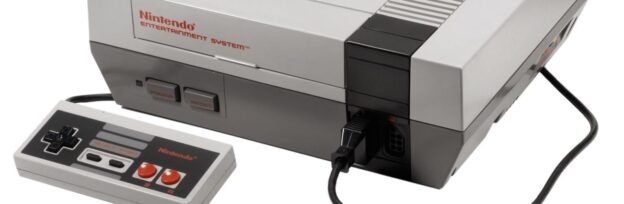
 Right-click here to download this episode.