Hello, in this episode you’re going to hear me talking to my brother about the latest Star Wars film, “Rogue One: A Star Wars Story”, which was released in cinemas just over a month ago.
There will be spoilers – you have been warned.
I’ve had a few comments and messages from listeners expressing their interest in hearing us talk about this film, so here it is – a conversation about Rogue One with James.
What the critics have said about Rogue One
The film has received generally good reviews. Rotten Tomatoes gives the film an 85% rating which basically means that the majority of critics liked it. Their critical summary is this:
Critics Consensus:Rogue One draws deep on Star Wars mythology while breaking new narrative and aesthetic ground — and suggesting a bright blockbuster future for the franchise. (Rotten Tomatoes)
There has been criticism too of course, with some people suggesting the film is just recycling old ideas, doesn’t have enough character development and is basically just a cynical way for Disney to squeeze more money out of the massive cash cow that is the Star Wars universe.
For example, Amy Nicholson of MTV said:
Audiences once packed theaters to gawk at the future; now, it’s to soak in the past. The emphasis is on packing in as much nostalgia as possible and tersely editing it together to resemble a film. (Amy Nicholson, MTV)
For the fans
Rogue One was arguably made to please the fans, and this episode of the podcast is for the Star Wars fans too. As you know, I’m a lifelong Star Wars fan myself. I’m a Jedi. I sometimes talk about Star Wars on this podcast. James and I talked about Episode 7 last year, which we liked. I think that was exactly 100 episodes ago. I also did an episode which was all about Star Wars in general and why I am a fan. That was episode 241. Check the page for this episode to find links to those old episodes from the archive.
If you’re not a Star Wars fan, I hope we manage to get across what we find appealing about the Star Wars universe, while also dissecting the film as a piece of entertainment in itself. Our conversation is quite rambling, and we end up talking about quite a lot of other things along the way, including World War 2 movies, the moral ambiguity of war, the actions of Winston Churchill during WW2, Sherlock Holmes, Carrie Fisher, and some other films including one called “Aaaaaaaah!”, “Trainspotting 2“, “The French Connection 2“, and a couple of Jim Jarmusch films including “Ghost Dog: The Way of the Samurai” (starring Forrest Whittaker – also in Rogue One) and his documentary film about Iggy Pop & The Stooges called “Gimme Danger“.
Also we make up a couple of possible Star Wars crossover films including a Han Solo film starring Indiana Jones in the Star Wars universe and an ObiWan Kenobi film set in Scotland starring Ewan McGregor, in which Obiwan is a heroin addict living in Edinburgh (like in Trainspotting).
Spoiler alert!
There will be major spoilers in this episode because we’re going to give away plot points for Rogue One and the Star Wars universe in general. So if you haven’t seen the films yet, you should probably wait, see the films and then come back to this episode later.
Plot Summary
I don’t actually read this bit in the introduction, but here it is anyway…
This is the 8th Star Wars feature film we’ve ever had, although it is not one of the numbered episodes in the series. It is set right before the events of episode 4. So this is a bit like episode 3.5.
So the Star Wars universe still can’t count, because it’s 4, 5, 6, 1, 2, 3, 7, 3.5. and next will be 8, with possibly a few other spin off films arriving too. I think the plan is to release a Star Wars film every year until the end of time.
Rogue One tells the story of an impossible rebel mission to get the plans for the Empire’s super weapon, the DEATH STAR. We know that they get the plans in the end, because they are used to destroy the Death Star in the next movie, episode 4. But this film shows us how they did it and also explains a couple of plot points for the rest of the series.
The main character, played by British actress Felicity Jones (apparently from Birmingham) Jinn Erso is the daughter of the man who designed the Death Star. She is given a mission to find her father in order to get the death star plans which will allow the Rebels to prevent the Empire from completely dominating the universe forever. The film ends just moments before Star Wars episode 4 begins.
What did James and I think of the film? Well, listen on and you’ll find out.
Leave your comments below. What did you think of Rogue One: A Star Wars Story?
Here’s the final part in this trilogy of episodes recorded at my parents’ house on Boxing Day. In this one my mum, dad and brother tell us a few more anecdotes about their encounters with some well-known people.
The conversation you’re about to hear was recorded with my family on the same day as the last couple of episodes. It was quite late in the evening, after my uncle and aunt had gone home and after dinner and number drinks had been consumed. Picture a very warm and cosy living room with a wood burning stove going in the background.
After listening to Nic describing his encounters with some famous rock stars earlier in the day, the other members of my family wanted to get in on the action too with their stories about brushing shoulders with the stars. So here are a few other anecdotes from my dad, my brother and my mum.
It turns out that my family have met some genuine legends. I didn’t even realise that a couple of these things had happened. You’ll have to wait and see who they are. But here are some slightly cryptic clues.
Can you guess which people I’m talking about?
One of the UK’s favourite authors who wrote a series of beloved books which have also been made into successful films.
A British comic actor who likes eating ice-creams and fighting zombies, criminals and aliens, in his movies (not real life of course).
A small but very important woman who often appears in public but is also a very private person.
A nonagenarian who once said that he was “the only man in the country not allowed to give his name to his own children.” A nonagenerian is someone in their nineties – also, septuagenarian (70s) and octogenarian (80s).
There are others too, including an American punk rock star with lots of tattoos and muscles, a Shakespearean actor who has become a successful film director and an actor who had a bit part in the British TV series The Office.
I should perhaps remind you of several other anecdotes which you might have heard on this podcast before, which are mentioned in this conversation.
The time my brother ended up lost in Hastings and slept on a stranger’s sofa and woke up to discover the guy sitting in a chair next to him. Was the guy just friendly and welcoming, or slightly creepy? Originally told by my bro in this episode https://teacherluke.co.uk/2016/08/09/372-the-importance-of-anecdotes-in-english-narrative-tenses-four-anecdotes
The time my mum met the King of Tonga. Originally told in this episode too https://teacherluke.co.uk/2016/08/09/372-the-importance-of-anecdotes-in-english-narrative-tenses-four-anecdotes
The time I met comedian Eddie Izzard and was a bit lost for words. I sort of went to pieces a bit and made it really awkward and weird by saying “You’re in my head!” – not the right thing to say at all. Originally told be me in this episode https://teacherluke.co.uk/2014/06/10/184-lukes-d-day-diary-part-2/
Anyway, you can now sit back and enjoy some more time with The Thompsons.
***
Outro Transcript + ad-libs
Funny, isn’t he? My brother. I would like him to be on the podcast more often, if he’s up for it. The thing is that he’s a bit modest really and isn’t the sort of outgoing person who likes to broadcast his thoughts and opinions over the internet, although he obviously should because he’s got a lot to offer. He ought to do a podcast or something like that, right? He does have a YouTube channel but it’s mainly skateboarding. https://www.youtube.com/user/VideoDaze/videos
*All the background music in this episode was also made by James*
The people mentioned in this episode
J.R.R. Tolkien, author of The Lord of the Rings
Nick Frost, actor from the Cornetto Trilogy of films with Edgar Wright and Simon Pegg and other great work too on TV and in films
Listen to my uncle Nic telling some stories about British rock stars he has met over the years, including an encounter with one of the most famous musicians in the world!
In this episode I’m going to play you another conversation which I recorded during the recent Christmas holiday. In this one you’re going to hear my brother and me talking to our uncle Nic about some of the amazing rock stars that he’s met over the years.
Nic has always been a huge fan of rock music and because he was born in the early 1950s he saw many of Britain’s greatest rock stars performing live on stage quite early in their careers. I’m talking about the late 1960s, throughout the 70s and beyond.
So, Nic has met a lot of musicians at gigs but he also just has a knack for bumping into rock stars in normal everyday situations and then being very cool, calm and casual in their company. It’s almost like they’re on the same wavelength or something.
Anyway, my brother and I have always enjoyed hearing Nic’s anecdotes and I’m very glad to have recorded some of those stories for this podcast.
If you’re a fan of rock music, especially some of the classic bands of the 60s and 70s then I’m sure you’re going to be impressed by some of the people my uncle has met, talked to, and even had breakfast with.
And there is one person in particular that he once bumped into – who is not only a bonafide legend of the music world, but also just one of the most famous people on the planet today. Any idea who that is? Well, to find out just listen on.
So, here’s a chat with my Uncle Nic, with some help from James.
I say “help” from James, what I mean is that he just takes over the interview at one point because he thinks he can do a better job than me, and maybe he’s right. Anyway, that’s enough rambling… here’s the conversation.
***
Thank you very much to Uncle Nic and belated happy birthday to him too.
Let us know what you think, and which one you think is the most impressive story. Because they are impressive stories, aren’t they. Come on! Paul McCartney of The Beatles. Pink Floyd! Fast Eddie from Motorhead!
[socialpoll id=”2411231″]
I realise there will be people out there who don’t really know a lot of the people we were talking about. I’m sure you know Paul McCartney, but you might not know The Who, Motorhead, Pink Floyd (hard to imagine), The Damned, Slade…
And I’m sure there are others too, not necessarily in the toilet but in other situations, but who knows.
VIDEOS
The Who – Pete Townshend, Keith Moon, Roger Daltry, John Entwistle
https://www.youtube.com/watch?v=sanAHVITCDY
Motorhead – “Fast Eddie” & Lemmy
Free “All Right Now” live at The Isle of White Festival (1970)
Paul McCartney & Wings “Junior’s Farm” (Nic’s favourite)
Pink Floyd recorded at Live 8, Hyde Park in 2005
Slade in 1973
https://www.youtube.com/watch?v=Qu_ozjAu_vM
The Damned
Have you ever met a famous musician? Let us know in the comment section.
Here’s part 2 of this episode all about special days and celebrations in the UK throughout the year. Below you will find a transcript and videos.
[DOWNLOAD] May
1st and 29th – Bank holidays. There are two Mondays in May when people have the day off work or school and (if we’re lucky!) spend some time outdoors enjoying the spring sunshine. The first bank holiday in May is known as the May Day holiday and it is vaguely associated with workers rights (like Labour Day) although this is not expressly stated as the purpose of the day. As I said earlier – officially all bank holidays were set up to give workers some time off.
The second May bank Holiday is known as the Spring Bank Holiday or the Late May Bank Holiday and this one is associated with the beginning of Summer. It always lands on the last Monday of May and often there’s good weather. Typically what happens on this day is that people are surprised by the good weather which leads to a feeling of optimism about the coming summer. People say things like “Ah, summer’s going to be great – let’s have barbecues!” and then they wait for summer to arrive and they wait and wait, and it stays cloudy and rainy, and they wait and it rains and they wait all the way until late September before realising that Summer is over and the week of sunshine we had at the beginning was all we were going to get, and then suddenly at the end of September the sun comes back and we have what’s known as an Indian summer – that’s a late summer.
Usually at the end of May we have the F.A. Cup Final – that’s England’s most traditional football cup and it’s pretty special because all the teams in all the leagues get to play each other and the final happens at Wembley Stadium, and it’s usually pretty sunny when it happens.
13th – The Queen’s Official Birthday. Although the Queen’s real birthday is on the 21st of April, it has been a tradition since 1748 to celebrate the king or queen’s birthday in June.
A military parade known as Trooping the Colour is held in London, attended by the Royal Family. I think the reason the monarch’s official birthday is marked in June is simply because there’s a better chance of good weather for the military parade. It’s as simple as that.
19th – Father’s Day. Father’s Day is a day to show appreciation to fathers, grandfathers, stepfathers and fathers-in-law. Many people in the UK give their father a card or gift, have a meal together or go out for drinks. We don’t do it in my family! This is probably because of a feminist idea that men already have plenty of days and blah blah blah.
21st – Summer solstice – midsummer’s eve – the longest night of the year. The ancient monument of Stonehenge in Wiltshire has its true moment in the sun on this day as people celebrate the longest day and shortest night of the year. Stand inside the monument facing northeast, toward a stone outside the circle called the Heel Stone, and you’ll see the sun rise like a blazing fire – a sight that brings in pagans and sun-lovers of all beliefs! In fact, there’s usually some sort of pagan celebration at Stonehenge on this evening. Everywhere else we just enjoy a really long evening, with long shadows and light until about 11pm or more. Summers in the UK are fantastic for long days and despite what I said earlier about barbecues we do have some wonderful weather sometimes, and I have good memories of these never-ending summers with days that just went on forever. Sitting in a pub garden all evening on the 21st is a particular pleasure.
Wed 21st to Sun 25th – Glastonbury Festival
This is the biggest music festival in Europe and is now one of the most important music festivals in the world. Every year about 200,000 people travel to a farm in Glastonbury in the Somerset countryside not far from Stonehenge in the South West of England. It used to be a hippy music festival a bit like Woodstock. These days it’s a place to check out music and all kinds of other performance art, and all the biggest bands of the moment perform there. It tends to be headlined by the biggest names in music. Recently we’ve had groups like The Rolling Stones, Coldplay, Bruce Springsteen, Neil Young, Beyonce and Kanye West headlining the event. The BBC usually cover Glastonbury throughout the festival. In 2017 one of the headliners will be Radiohead. We don’t know who is going to headline on Saturday yet – it might be Guns & Roses, Rihanna, The Stone Roses, The Foo Fighters, Ed Sheeran – the list of speculations goes on.
I’ve never been to Glasto, but I almost always watch it on TV and I have to say it’s often a bit of a disappointing experience, probably due to the poor sound quality you get through recording a live concert and putting it on TV. It completely lacks the power and punch that you get from seeing someone live. It just sounds like you can’t hear the drums properly and it all sounds weak and clinical sounding. There’s nothing like seeing music live and I think to really enjoy Glasto you need to be there, soaking up the atmosphere, up to your knees in muck. I expect it’s not what it used to be.
Here’s a podcast episode about music festivals from the archives https://teacherluke.co.uk/2009/10/20/summer-music-festivals/
26th – Eid. Marking the end of the month-long fast of Ramadan, Eid is widely celebrated by Muslim communities in the UK. Each community usually organises its own events, but there are some large celebrations and feasts in city centres, such as in London and Birmingham. I’ve never been part of an Eid celebration but I remember when I worked in London that a lot of my students fasted during Ramadan, and then disappeared completely during the Eid celebrations! I wonder what it is like to go without food during the daylight hours – it must be pretty hard. I know that fasting is an important part of Islam (one of the 5 pillars of Islam) and it’s all about abstaining from earthly and material pleasures and focusing on prayer and a sort of spiritual detox. It must be a big celebration when it’s over and you can eat during the day again!
July
Monday 3 July – Sunday 16 July – Wimbledon Tennis Championships. Wimbledon, the world’s oldest tennis tournament, is a summer highlight for sports fans. Held at the All England Club in London since 1877, Wimbledon is known for the tennis players’ white dress code and the tradition for spectators to eat strawberries and cream. For me this is usually something you watch in the evenings while eating summer food like a melon or something. It’s also another opportunity to be disappointed by British sportsmen, although Andy Murray did win in 2013 and this year too. Well done Andy.
Also during the summer we have cricket test matches going on. A test match is one game of cricket that happens as part of a test series. So, a series is 5 matches, and the series goes on throughout the summer – it can take a couple of months for a series to be completed. Each test match lasts up to 5 days. The biggest rivalry we have is with Australia and we regularly play a test match series against the Aussies called The Ashes – it’s been going for decades and it’s a big deal if you like cricket. You might think that 5 days is rather long for a game (and yes they pretty much play all day – from about 10AM until the light fails in the evening – they even stop for tea in the afternoon) but it’s really great when there’s a test match going on because you can keep up with it during the day (just quickly check the scores or listen to it on the radio here and there) and then watch the highlights of the day’s play on the telly in the evening. I should do a whole episode about cricket.
August
Edinburgh Festival Fringe. 4-26 August 2017 (5th–29th August 2016). The largest arts festival in the world, ‘the Fringe’ features over 40,000 performances and more than 2,500 shows at 250 venues. Any type of performance may participate, across theatre, comedy, music and dance, and many students visit Edinburgh to put on their own shows. For more, read our Edinburgh Festivals guide.
Notting Hill Carnival. August Bank Holiday Weekend – last weekend of August (27-28th August 2016) Held in west London over a bank holiday weekend, Notting Hill Carnival is Europe’s biggest street festival. Around 1 million people go to see colourful floats and dancers in flamboyant costumes, hear music from salsa to reggae, and taste Caribbean food from street stalls. Bring your party spirit, enough cash and a lot of patience – it can be very crowded.
Check it out – I did a video podcast about Notting Hill Carnival.
September
18-20th Sept 2017 (16th–20th 2016) London Fashion Week. London Fashion Week sets the global fashion agenda, alongside the other big shows in Paris, Milan and New York. These fashion shows during fashion week are mainly for industry insiders, but you can get tickets to London Fashion Weekend for a taste of the fashion show experience. There are two each year – the first London Fashion Week is in February (3rd weekend). Students get involved too, with events including student and graduate showcases and networking opportunities.
October
31st – Halloween. The modern way of celebrating Halloween is based on the Christian feast of All Hallows’ Eve and the Celtic festival of Samhain. Children go trick-or-treating (knocking on neighbours’ doors to ask for sweets) or carve pumpkins, while older students go to parties and Halloween events at pubs, clubs or Students’ Unions. The important thing is to dress up as gruesomely as you dare!
November
All month – Movember. If you’re seeing more moustaches than usual, you’re not imagining it – throughout November, the charity campaign of Movember invites men to grow a moustache and raise awareness of men’s health issues. It’s a bit annoying and I don’t really know why.
5th – Bonfire night. Historically, this marks the anniversary of Guy Fawkes’ plot to blow up the House of Lords and assassinate King James I in 1605 – the failed ‘gunpowder plot’ is remembered in the children’s rhyme ‘Remember, remember the 5th of November; gunpowder, treason and plot’. Today, it is commemorated with spectacular displays of fireworks.
There will be firework displays in most cities, but one of the best places to be is in the medieval town of Lewes, East Sussex – here, the fireworks are accompanied by colourful parades, music, costumes and the traditional ‘guy’, an effigy made of straw or paper to burn on the bonfire.
11th – Remembrance Day. Each year in the UK, 11 November is a memorial day to honour those who lost their lives in battle – especially during World War 1, so many peace campaigners also support the event. The Royal British Legion charity sells paper poppy flowers to raise funds for veterans and their families (the poppy is a symbol of Remembrance Day), and it is customary to observe a two-minute silence at 11am. Around this time it’s common to see people wearing red poppies on their shirt or jacket. In TV studios they have boxes of poppies on hand so that nobody appears on TV without one, which would not be a good idea because it would make you look disrespectful.
30th – St Andrew’s Day (Scotland). Honouring its patron saint, St Andrew’s Day is Scotland’s national day. There are many events across Scotland, including traditional meals, poetry readings, bagpipe music and country dancing. This is a great opportunity to go to a ceilidh – a party with Gaelic folk music and dancing. Fortunately, there is usually a ‘dance caller’ to teach the steps! I’ve never done it, but apparently this is a thing in Scotland!
Thurs Oct 19 2017 – Diwali. Diwali (or Deepavali) is the Festival of Lights for Hindu, Sikh and Jain communities. Cities including Leicester (which hosts one of the biggest Diwali celebrations outside India), London and Nottingham have extravagant street parties with traditional food, music, crafts and dancing – and of course, displays of lights, lanterns, candles and fireworks.
December
Throughout December, there are loads of winter markets and festive visitor attractions across the UK. Look out for events advertised in local magazines like TimeOut!
Winter Wonderland in London’s Hyde Park. In addition to a traditional Christmas market, this huge site features carnival rides, two circuses, an ice skating rink, fake snow and an exhibition of ice sculptures… and enough hot chocolate and mulled wine to keep you warm.
Hogwarts in the Snow, a wintry version of the Harry Potter tour at Warner Bros. Studios in Leavesden (near London). Watch snow fall over the original model of Hogwarts castle, and see the Great Hall set for Christmas dinner.
Birmingham’s Frankfurt Christmas Market, the largest German market outside Germany and Austria, complete with glühwein (mulled wine), wursts (sausages), pretzels and sweet treats. You can also shop for unique gifts from local artists at the Craft Fair.
The winter festival at the Eden Project in Cornwall. Usually an educational ecology park, in December the Eden Project is transformed with Christmas trees, a choir, real reindeer and an ice rink, with ice skating classes for all ages.
Belfast’s Christmas Market. If you’re studying in Northern Ireland, visit the multicultural market outside Belfast’s City Hall for festive food and drink from around the world, crafts, gifts and Christmas decorations.
Pantomimes. The traditional Christmas ‘panto’ is a mix of slapstick comedy and musical theatre, with silly costumes and audience participation. Pantomimes are usually for children, but it’s worth seeing one for a uniquely British experience.
24th–1st Jan – Hanukkah. Jewish communities across the UK will be celebrating Hanukkah (Chanukah), the Festival of Lights. In London, the Menorah in Trafalgar Square is the largest in Europe. It’s usually lit by the Mayor of London on the first day of Hanukkah, at an event with free doughnuts and live music.
25th – Christmas. Most people in the UK celebrate Christmas, even if they are not religious. There will be Christmas trees, presents, carol singing, mulled wine (warm, spiced red wine), mince pies (small pies with a sweet fruit filling) and if it snows, snowmen and snowball fights! The traditional Christmas dinner is a whole roast turkey with roast potatoes, vegetables, gravy and Christmas pudding for dessert.
26th – Boxing Day. The day after Christmas is called Boxing Day, and is a bank holiday in the UK. It’s believed to have been named after the ‘Christmas box’ of money or gifts which employers used to give to servants and tradesmen. Nowadays, there are no particular Boxing Day customs, but most people spend the day with their families, going for a walk, watching sports or eating the Christmas leftovers.
Other festivals
May 4th is unofficially Star Wars day, just because of the date “May the fourth be with you”. I think some Star Wars fans get together and there might be special screenings but as far as I can see it’s just a chance to post something on Facebook wishing everyone a happy Star Wars day.
A listener to this podcast wanted me to mention Sea Odyssey: Giant Spectacular – a kind of street theatre event that happens sometimes in Liverpool. That looks fantastic.
There are many arts festivals too, where you can sample literature, theatre, arts & craft, dance and poetry. Click here to read more about arts festivals http://www.artsfestivals.co.uk/festival-details
Here’s an episode all about special days and celebrations in the British calendar. You’ll hear cultural information about holidays and customs, and some pronunciation work on how to say dates and the months of the year. Transcript and videos below.
This episode is being recorded before Christmas. I’m going to upload it sometime around Boxing Day I think. You’re probably listening during the Christmas period or the new year period. I hope you’re having a lovely time wherever you are and whatever you’re doing.
This episode is all about British festivals and holidays that occur throughout the year. Let’s look ahead to the coming year of 2017 and see what kinds of things Brits will be doing for certain special occasions.
I’m recording this because at some point earlier this year I got a message from a listener challenging me to talk about all the major British festivals and holidays in one episode and I said “challenge accepted”, and so now, finally, here is that episode! I don’t remember your name – I’m sorry! But here it is ok! The thing is – the challenge was to do it all in one episode and I have a feeling this is more than one episode because I’ve got lots of things to say about this!
The UK calendar is absolutely full of festivals of many kinds. In fact, there are festivals and special days in every month of the year. These festivals mark various special occasions connected to the passing of the seasons, important historical or religious events and significant people in the UK.
In this episode let’s explore those main festivals and public holidays, in rather fast style.
I’m from England, so my version might be a bit Anglo-centric, but I have tried to include a variety of festivals and not just the ones that seem significant to me as an individual.
This episode should be a great little journey through the UK calendar, and it should help you learn some more British culture. Also we’re going to look at how to pronounce the months, dates and days in British English.
So, without further ado, let’s get cracking! Here’s our whistle-stop tour of British festivals and holidays.
So, there are public holidays – days of statutory leave – days off given to us by law, and these are generally known as bank holidays, and there are festivals. Not every festival is a holiday.
So, bank holidays and festivals.
Bank Holidays
If you’ve lived in the UK you’ll know that a bank holiday is usually a wonderful, wonderful thing in theory. They usually happen on a Monday and sometimes on other days, but usually on a Monday. So a bank holiday is a long weekend. They’re usually associated with an old religious occasion or some other important reason for the state.
Three of these bank holidays take place in the summer, so everyone imagines they will be out in the garden having a barbecue or in the park having a picnic or something. In reality they probably involve getting caught in the rain in some way, perhaps while attempting to have a barbecue in the garden or picnic in the park or something.
Having our public holidays on Mondays is a great thing though, because it means you get a day off, and a long weekend. Shops and services are sometimes closed, which can be a bit annoying, but less so these days – in fact the shops tend to do quite well on a bank holiday weekend and so they stay open. So it can be a good day to go out shopping.
Banks are closed though, which can be a bit of a pain in the neck if you need to use your day off work to get something done at the bank.
These public holidays are originally called Bank Holidays because in 1871 certain days were designated in law as being days on which no financial transactions should take place, just like on Christmas Day. I suppose this was to give workers a few guaranteed days off a year – so that they didn’t get completely exhausted working in factories every day of the year. These days people have more statutory paid holidays – in fact everyone is entitled to 5.6 weeks of paid holiday per year. That may or may not include the bank holidays – it’s up to the employer. At the last company I worked for in London we had to work on bank holidays, which sucked a lot. While all my other friends were out attempting to have barbecues and getting caught in the rain, I was teaching English. But, it was a good school to work for so they allowed us to take our bank holidays as ‘days in lieu’ – days off which replaced the bank holidays that we worked. I would always take all my days in lieu during quiet periods at the school in December so I could do all my Christmas shopping.
These so-called Bank Holidays are scattered throughout the year, and they’ve been arranged to land on Mondays, corresponding to certain periods or events in the year.
So, instead of having specific dates, our holidays are matched to Mondays in the year, unlike in France where the public holidays always arrive on the same date – even if it’s a Saturday or Sunday (nightmare). Sometimes public holidays in France land on a Tuesday or Thursday and a lot of people ‘do the bridge’ which means that they take the Monday or Friday off as well, and enjoy a massive long weekend. If that happens, it seems the country grinds to a halt because everyone’s gone on holiday for most of the week.
We have 7 bank holidays in the year in the UK. A bank holiday weekend is a truly wonderful thing about life in the UK. It’s a long weekend, and you’re always guaranteed to get it. There are two in May, which makes that month a particularly good one in the UK. It’s normal to celebrate by having a barbecue or a party, or just going out and having fun in the sunshine.
Upcoming bank holidays in England and Wales
2017
2 January – Monday – New Year’s Day (substitute day) (if it falls on a weekend, they give you the next Monday off, which is nice)
14 April – Friday – Good Friday
17 April – Monday – Easter Monday (Easter is a fantastic 4-day weekend)
1 May – Monday – Early May bank holiday (it’s also called May Day and probably originates from Roman celebrations of the beginning of the summer period – in some countries there is Labour Day on 1 May, which celebrates the rights of workers, but we don’t do Labour Day – instead ours is the early May bank holiday – I think this is because the whole concept of bank holidays covers essentially the same purpose as Labour Day)
29 May – Monday – Spring bank holiday (This is also called the late May bank holiday and is connected to Pentecost – in fact it’s the first Monday after Pentecost. What’s Pentecost? It’s the Christian festival celebrating the descent of the Holy Spirit on the disciples of Jesus after his Ascension, held on the seventh Sunday after Easter. So, the first Monday after the seventh Sunday after Easter. Are you following this? Most people just find out from their employer, from the newspapers, friends or from a calendar they probably got for Christmas.
28 August – Monday – Summer bank holiday (Barbecue & disappointment season – it’s there to mark the end of the summer holidays)
25 December – Monday – Christmas Day
26 December – Tuesday – Boxing Day (Again, if Christmas Day or Boxing Day land on a weekend, then they give you the next available days off – like in 2016 when you get a day off on the 27 because 25 landed on a Sunday)
How to say months and dates
In a moment I’m going to go through festivals and days of celebration or commemoration which happen in every month during the year.
Before I do that – let’s look at the pronunciation of the months of the year. I know you did this at school but I’m often surprised at how people still pronounce the months wrong. So just repeat the months of the year with me and think about how you’re saying them. Think about vowel sounds, the number of syllables and which syllable is stressed.
Let’s go. January – February – March – April – May – June – July – August – September – October – November – December
Also, let’s consider the way we say dates in the UK.
Day first and then month.
When we write we just add the number then the month. We add the little ‘th’ ‘rd’ or ‘st’ as well next to the number, but you don’t always have to. So we write 21 December or 21st December.
But when you say a date you have to remember to add the before the number, the ordinal – 1st, 2nd, 3rd, 4th etc and also of.
So it’s the 21stof December.
What’s the date today?
It’s the 21st of December.
In America they don’t know what they’re doing, so they put the month first.
Just joking, it’s fine. For the Americans they start with the month and don’t always include of.
“It’s December 21st” for example.
“What’s the date Mom? It’s December 21st, honey.”
Tell me these dates.
What date is Christmas Eve?
What date is Christmas Day?
What date is New Year’s Eve?
What date is New Year’s Day?
What date is Valentine’s Day?
What date is St Patrick’s Day? (17 March)
What date is your birthday?
What date is the summer solstice?
What date is Halloween?
What date is it today?
Festivals Throughout the Year
The following information is based on an article by the British Council, although I have paraphrased quite a lot and added quite a lot of stuff. Click here to read the full article where you can read more about each festival http://www.educationuk.org/global/articles/festivals-and-holidays/#january
Here’s a list of the festivals and celebrations throughout the year in the UK. This list includes traditional events, sporting events and I’ve also included some major music festivals in the UK – and if you spend some time in the UK I really recommend that you go to a music festival, they’re usually a lot of fun as long as it doesn’t rain!
January
1st – New Year’s Day. On New Year’s Eve (31 December), it is traditional to celebrate midnight with your friends or family and to sing ‘Auld lang syne’, a folk song with words by the Scottish poet Robert Burns, although to be honest I have never ever sung that song in my life! The party can last well into New Year’s Day! Many people make ‘New Year’s resolutions’, promising to achieve a goal or break a bad habit in the coming year. For me, New Year’s Eve is about these things: struggling to plan something to do, going to a house party and getting drunk, going out to a club or something and then having a nightmare getting home (no taxis), freezing cold outside, staying in and drinking wine, watching Jools Holland on the TV, not really wanting to do anything because you’ve already spent the week drinking and eating too much anyway.
In Scotland, the celebration of the new year is called Hogmanay. There are big parties across the country – expect lots of music, dancing, food and fireworks – but Edinburgh hosts some of the biggest.
25th – Burns’ Night (Scotland). This is the birthday of Robert Burns – who is basically the national poet of Scotland. Many Scottish people hold a special supper (dinner) on Burns’ Night, with toasts and readings of his poetry. Men might wear kilts, there may be bagpipe music, and people will almost certainly eat haggis (the traditional Scottish dish of sheeps’ heart, liver and lungs) with neeps (turnips) and tatties (potatoes). Sounds disgusting? It’s actually pretty tasty. I’ve never been to a Burns Night celebration because I’m English and it’s not our thing, but I bet it’s a lot of fun.
28th – Chinese New Year. Outside Asia, the world’s biggest celebration of Chinese New Year is in London – each year there is a parade through Chinatown in the West End, with free performances of music, dance and acrobatics, a feast of food and fireworks. There are many more events around the UK, so find out what’s on in your area – cities including Manchester, Nottingham, Liverpool and Birmingham usually host colourful street parties.
February
28th – Shrove Tuesday or ‘Pancake Day’. Lent is the traditional Christian period of fasting, which lasts for 40 days. Shrove Tuesday is the day before Lent, when households would traditionally use up their eggs, milk and sugar by making pancakes. Nowadays, even if they are not religious, many people still make and eat pancakes on this day.
Some towns in the UK also hold ‘pancake races’, where contestants toss pancakes in a frying pan while running for the finish line. One of the most famous is in Olney, Buckinghamshire, where it’s believed the first Pancake Day race took place in 1445.
I’ve never been to a pancake race. For me pancake day is all about making your own pancakes, probably ruining the first one because you have to burn one before the pan is ready. My favourite pancakes are just covered in nutella. Far too much nutella.
14th – Valentine’s Day. Historically this was the date of the Feast of St Valentine, nowadays this is a celebration of romance. Many people in the UK go out for dinner with their boyfriends or girlfriends, and give them a Valentine’s card, chocolate or flowers. If you’re single, you might receive an anonymous card from a ‘secret admirer’! For single people, Valentine’s Day can be a bit of a nightmare because you see all these smug couples getting together and going on dates. It can make you feel a bit lonely, or you might just reject it completely and do something totally at odds with the day. But couples can also have a slightly difficult time on Valentine’s Day – usually there’s pressure on the man to come up with some special romantic plan, and generally there is a feeling that Valentine’s Day is a sort of manufactured event by companies and marketing people. It’s actually quite unromantic, and some people just shun it completely, but in my experience if your girlfriend or wife says “Oh you don’t need to do anything for Valentine’s Day” then you definitely DO need to do something. Don’t be fooled by what she says. That also includes birthdays and anniversaries.
March
1st – St David’s Day (Wales). St David is the patron saint of Wales, and March 1 is a celebration of Welsh culture. People in Wales might wear a daffodil and eat a soup of seasonal vegetables and lamb or bacon. I’ve never eaten that in my life and to be honest I’d never ever heard of it, because I’m English. Events are held across Wales, including a large parade in Cardiff. As an English guy I’ve never been part of St David’s Day celebrations. All I remember is some people wearing daffodils at school when I was a kid.
17th – St Patrick’s Day (Northern Ireland). The Feast of St Patrick is a national holiday in Ireland, and is now celebrated by Irish communities all around the world. In the UK, there are St Patrick’s Day events in cities including Birmingham, Nottingham, Manchester and London, as well as Belfast. Many people go out with friends, wearing green or a shamrock symbol (the lucky clover) and drinking Guinness, the Irish dark beer. The tradition is to get completely pissed and wear a massive hat shaped like a Guinness glass or shamrock or some weird combination of the two – a shamrock beer glass hat thing that won’t protect your head against a hangover or any other form of brain damage that you might suffer on this evening as a result of alcohol poisoning, accidents, violence, or all three if it’s a really good night.
26th – Mother’s Day (or Mothering Sunday). Mother’s Day is a day to celebrate motherhood, and to thank mothers for everything they do throughout the year. Many people give their mothers a card or gift, treat them to a day out or cook a meal. I usually send a big bunch of flowers to my Mum and try to make her feel special. It’s the least I can do.
April
1st – April Fools’ Day. For one day of the year, it is acceptable – even encouraged – to play tricks, pranks and practical jokes. Even newspapers, TV and radio shows often feature fake stories on April 1. It’s customary to reveal the joke by saying ‘April fool!’ (the person who falls for the joke is the ‘fool’), and you’re supposed to stop playing tricks at midday. Some famous April fool jokes include ones done by the BBC – like in 1957 when a respected news programme called Panorama broadcasted a report about how spaghetti was harvested from trees in Switzerland.
It showed people climbing ladders to pick spaghetti that was hanging from the trees and collect it in baskets. Needless to say, many Brits were fooled by it.
Other tricks are things like, telling your students they have an emergency test that day, or just changing all the clocks in your house so everyone things they’re late. That kind of thing. It’s all harmless fun, until someone has a terrible accident or someone gets very upset and there’s a huge argument resulting in the end of a relationship or someone getting fired from their job. Just harmless fun.
Here’s that 1957 BBC April Fool’s Joke – check out the old-school heightened RP accent!
14th–17th – Easter weekend. Easter is a Christian holiday celebrating the resurrection of Jesus Christ. The date depends on the next full moon after the Vernal equinox (the first day of spring), so the dates change each year. It is always on a Sunday in March or April (called Easter Sunday), and the previous Friday (Good Friday) and following Monday (Easter Monday) are bank holidays. People celebrate Easter in different ways, but many give each other chocolate eggs and eat ‘hot cross buns’ (sweet buns with a cross design), while children decorate eggs or take part in Easter egg hunts. To listen to an episode I’ve already done about this, click here https://teacherluke.co.uk/2009/04/14/episode-2-easter/
23rd – St George’s Day (England). The legend is that St George was a soldier who killed a dragon to rescue a princess in the middle east somewhere. He is now the patron saint of England, and this is England’s national day. Yes, I don’t understand it either really. You might still see St George’s Cross (a red cross on a white background, England’s national flag) or events with morris dancing (an English folk dance), but it is not a bank holiday and most people don’t hold special celebrations. That’s right – we just don’t really care about St George’s Day. In fact, this is quite interesting as you’ll see that English people are quietly a bit modest about their country. We don’t celebrate the national day, we have some negative associations with our flag (although I’m sure plenty of people would disagree with me – I think it’s true), and we’d rather be patriotic about the UK than about England. Honestly, this is because England has done some pretty naughty things in the past like colonising other countries, going on crusades, smashing up towns after football games, invading our neighbouring countries and tying them into a union with us, then dominating that union with our values – unfortunately these are the values that many people associate with the English flag, and we don’t really know how to celebrate our saint’s day. I think, with Scottish Independence, there are moves to reclaim Englishness from the nationalists, and redefine it, but I feel like whenever someone proudly claims they are English and waves the English flag – it just smells of right-wing nationalism, hooliganism, skinheads, violence and stuff like that. Pity really because there shouldn’t be anything wrong with being English any more, especially if Scotland is given its independence. Also, I guess it is hard for many English people to feel a connection to Saint George considering the story is about a guy who probably wasn’t English anyway – it turns out he was actually born in Turkey and became a Roman soldier – and that confuses us. Still, it is about a knight who killed a dragon which sounds pretty cool.
Here’s a version of the story from a website called “Project Britain” which sounds like it was created by a Brexiteer – but then again my podcast is called “Luke’s English Podcast” which could also sound like a nationalistic right-wing podcast run by the English Defence League or something. You’re listening to Luke’s English Podcast and we want England to be back English again! No thanks.
Anyway, here’s a version of the Saint George & The Dragon Story – I have no idea who wrote it or to what extent it is fact checked or even based on anything that actually happened. In fact it reads like pretty much every other fairy tale story of a knight defeating a dragon to rescue a princess. http://projectbritain.com/stgeorge2.html
First of all, Lord of the Rings is brilliant and it’s nice to talk about it.
Secondly, In the last episode I talked about accents a bit – specifically posh accents, and it made me think about the subject a lot. I started thinking about the different British accents you can hear in Lord of the Rings, and I thought that the movie is so popular and well-known that it could be a good way to get into the subject of accents.
IN this episode, let’s identify the different accents that you can hear in the films and consider the reasons why these accents were chosen for these characters. Along the way the plan is to listen to a few different British accents and get to know them a bit. There will probably be some general chat about LOTR too, but that’s not the main subject of the episode. I’d like to do other episodes later about the story of LOTR.
Actually, this is just one episode about accents that I’ve been inspired to do today. If I have time I might record another one in which I go into some more specific details about “posh” accents and “posh” people.
And I’d like to do similar ones about other accents you can find in the UK.
But this one will cover quite a lot of different accents because there is quite a bit of variety in the LOTR film universe.
Another summary of accents in the UK
It’s based on region – different accents for different regions.
It’s also related to class – generally speaking. People from a working class background tend to speak with the regional accent from the area where they live or grew up. Those regional accents get less strong as you move up the social classes, with middle and upper-middle class people speaking a less region specific-accent known as RP (received pronunciation) or BBC English (like me). There are still some regional variations of RP but generally if people speak like me they’re speaking standard British RP. Then as you continue to the upper-class people, who you might describe as “posh” you start hearing a kind of heightened-RP or “posh” accent. The Queen is the poshest person in the country.
This isn’t always the case of course. You might find someone who comes from a very posh aristocratic family who doesn’t speak heightened-RP. Similarly, you might find someone who is very wealthy and powerful who speaks with a regional accent. There are exceptions, and also there’s an argument to say that the class system doesn’t apply any more, etc. But, honestly I think that it’s still true. Working class background? – You’ll probably speak with a regional accent (unless you lost it somewhere along the way) and if you’re middle class you’re more likely to speak RP like me, and if you’re upper class you’re more likely to speak heightened-RP or “posh” English.
It also relates to time. Heightened-RP used to be a lot more normal and it sounds pretty old fashioned by today’s standards. There was a time when everyone on the BBC spoke with heightened-RP “This is the voice of the BBC”. Nowadays most of the voices are standard-RP and plenty of TV presenters have regional accents, especially on shows that have a broad popular appeal. E.g. An entertainment show which is on the TV at 7pm in the UK and attracts a huge audience features middle-class presenters who speak with slight regional accents because these days people like that. It means you’re a normal person who comes from a normal local place. The news is still read by people with RP, because it’s neutral and sounds educated and therefore well-informed.
We do have certain associations with different accents, and these associations are quite complex. E.g. people say they find certain accents more or less trustworthy, warm, sexy, irritating, urban, rural, high-class, low-class etc.
In the UK people judge each other by their accents all the time, without realising it. It’s a big indicator of social class, education or even wealth for example. We shouldn’t judge each other by our accents, but we do.
I’m not talking here about how you can learn to speak with a British accent. THat’s another topic for another time. One thing I will say is that I think the most important thing is that you speak clearly and the other people around you can understand exactly what you want to say. Let clarity guide you, not how you perceive the social status of different accents. If you’re looking for an accent that makes you sound posh, watch out because other people might not have positive associations with “posh” for example.
“It is impossible for an Englishman to open his mouth without making some other Englishman hate or despise him.”
George Bernard Shaw, Pygmalion (1916) preface
This means that there isn’t one single accent which is completely neutral and free of prejudice from others. This proves that the class system still exists. If I open my mouth in some places, people will immediately assume that I’m well-off and will probably hate me. Just a few people, I hope. E.g. if I went to do a comedy show in Liverpool on a Saturday night in front of a large crowd of slightly drunk Scousers, I’m sure some of them would take an instant dislike to me because I have a middle-class London accent.
So, there is no accent which is universally neutral. The main thing is that you’re clear and that you’re not ashamed of your roots. OK!
What about Lord Of The Rings?
First of all, LOTR is set in a fantasy world. The writer JRR Tolkein created this world originally as an exercise in linguistics. He was a linguist and he created his own languages and then needed a world for them to exist in. He was also interested in the idea of creating a mythology for the UK, because all our old myths and legends had been lost due to all the times we’d been invaded over the years. Our old Celtic mythologies have been replaced by Saxon or Norse ones from Denmark for example, or replaced with Judo-Christian narratives from the Old Testament, or Greek myths and so on. So, he created a made-up world, wrote his own myths and legends and created different languages for the made-up races of people, elves, orcs, dwarves, hobbits, ents and others to speak.
The characters either spoke different languages, or spoke English with different accents. The accents in the book were never aligned with real accents in the real world. We had to just imagine the accents in our heads – but the characters in the book are so well described, and the context is so rich that it’s not difficult to imagine these voices full of richness, roughness, smoothness, humour, spirit, courage, malice etc. We just imagined the accents in our heads, or just had a gut feeling about how the characters would speak.
Gandalf, for example, you imagined could be so warm and entertaining, like a fantastic old teacher in some dusty old school, but then he could be incredibly sharp, complex and frightening too. You imagined the Hobbits to have local accents of the countryside, reflecting their limited worldview, their proximity to nature. It makes you think of local accents from countryside areas of the UK. But the accents were never really directly described in the books.
So, turning the books into films was always going to be a challenge, because the filmmakers had to turn those made-up accents into real-world accents.
Which accents should each character have? This question was probably just as important as choosing what they should look like, or what they should wear. Perhaps it was more difficult because their appearances are clearly explained in the books. Choosing the accents though, was a matter of matching the right accent to the personality traits of the characters.
This is quite interesting because it tells us a little bit about how we immediately judge people based on their accents. E.g. some accents make you think of royalty, of ruralism, of rugged countryside etc. The accents, to an extent, are part of the landscape. The accents are quite closely connected to certain geographical locations in the real world.
So, the rolling hills of Hobbiton, the sharp peaks and deep chasms of the Misty Mountains and the large halls and palaces of Gondor – all of these have accents that seem appropriate to them.
What are the accents in LOTR?
All the accents are British. There are no American accents in the film, even though some of the actors are American, notably Viggo Mortenson (Aragorn), Sean Austin (Sam Gamgee) and Liv Tyler (Arwen). Also there are several Australian actors – Hugo Weaving (Elrond) and Cate Blanchett (Galadriel).
Why are the accents all British? I thought British accents in movies were just for the bad guys?
‘Otherness’
‘Old world’
Recordings of Tolkien’s readings of his own work – Tolkien’s own voice
Characters / Races
Frodo – speaks in standard RP
Hobbits – Generally the Hobbits are associated with a kind of rural, local charm. They’re warm characters with a strong sense of local identity. They work on the land. Imagine any part of England about 100 years ago. Farmers, local shopkeepers and things like that. All the hobbits have accents to give this kind of colour to their characters. Frodo speaks with RP because he’s from a slightly higher class than the others. Interestingly, the Hobbits don’t let their class differences come between them, which is another attractive thing about them.
Sam – comes from the South West – a stereotype of the country ‘bumpkin’. it’s a soft and homely accent. Working class because Sam is definitely a working class country boy to Frodo’s upper-class master.
Pippin – Scottish. Again there’s no real reason for this beyond giving him slightly old-world foreign charm. But it’s a fairly middle-class Scottish accent. Wikipedia: The filmmakers originally planned for Boyd to adopt an English accent for the role, in keeping with the other hobbits; however, Jackson found that Boyd’s comic timing was not as keen when he was not using his native accent. Therefore, it was decided to allow Boyd to play the role with a Scottish accent; the decision was justified by the observation that the Took-land in which the Took clan lived was a very hilly region of the Shire and was therefore vaguely similar to Scotland, and that the Tooks invented the game of golf, just like the Scots.
Merry – the actor comes from Stockport near Manchester and keeps his normal accent. Again, a bit of local ‘colour’. It’s not really strong.
Aragorn, Gandalf, Legolas, Galadriel, Elrond, Saruman – RP / Heightened RP – all slightly old fashioned. These are the high-class people in the story, particularly the elves who all speak high RP (upper RP). An old, posh type of language which makes them all sound like thespians or ex-public schoolboys. This reflects their high status in the story and the richness and depth of their culture.
Boromir – Sean Bean (the actor) has a Yorkshire accent. He could easily have spoken RP just like the other stewards of Gondor but Sean Bean’s natural Yorkshire accent gives his character a bit of authenticity and northern ruggedness. It’s an accent with character and some sense of landscape, like the film. Also, Boromir doesn’t have the same lineage as Aragorn. In the film his family are the stewards of Gondor – they’re just there while the proper royal family is not around. He’s high-class, but not as high-class as Aragorn.
Gimli – Welsh. It’s supposed to be Welsh I think. I guess this reflects the harshness but warmth of the dwarves. Certainly they are parochial and characterful. In The Hobbit the dwarves all have local accents, except Thorin who speaks RP. Basically, if you want characterful accents with an old world flavour, go with British dialects. If you want that old world flavour with a touch of class – it’s old school RP.
Orcs – cockney. We associate this with thugs, gangsters and criminals (not every time of course!)
Other characters: Gollum, Bilbo, Eomer, Theoden, Eowyn, Treebeard, Sauron.
In part 2 let’s listen to some spoken samples in these different accents
I’ve decided to celebrate the 400th episode of LEP by making up an improvised comedy story, just for fun. In fact, this is the long-awaited sequel to The Pink Gorilla Story from episode 125.
[DOWNLOAD]
In this episode I’ve decided to tell you an improvised comedy story in the ‘one-man-show’ style – the whole thing is made up on the spot with different characters and jokes along the way. It’s a challenge for me to do this kind of episode, and it might be a challenge for you to listen to it too, I don’t know! I certainly hope you enjoy it.
This kind of never-ending ridiculous story is often known as ashaggy dog story. It’s an old joke archetype. People have been doing this sort of thing for years. Shaggy dog stories are just jokes that go on and on forever, although I think 80 minutes might be some kind of record.
a shaggy dog story (definition)
a long, rambling story or joke, typically one that is amusing only because it is absurdly inconsequential or pointless.
This episode is actually a sequel to the original Pink Gorilla Story from a few years ago. That one is kind of a cult episode, meaning it is really popular with certain listeners. For some people it’s their favourite episode ever. I really enjoyed recording that one because it was a chance to just have fun, let my mind run and try to think of funny scenarios and dialogues, which is quite liberating. You could try doing it too as an exercise in liberated creative storytelling for fluency or production. Switching off your ‘internal editor’ and letting your mind run free with crazy ideas can be very fun and can open up your creative side, which I think shouldn’t be forgotten in your quest to develop your language skills.
You might want to listen to part 1 of the Pink Gorilla Story first, so that the sequel makes a bit more sense (“makes sense” ha!) You’ll find it on the page for this episode (below), then listen to this one. Or, you could listen to this episode first, then listen to part 1 afterwards. It’s up to you. Either way, I hope you enjoy it and just come along with me on this ride into comedy nonsense-land.
Similar stories I’ve done in the past
I have done other improvised stories like this in the past (linked below), but The Pink Gorilla Story was the first one I did and I’ve been meaning to do a sequel for a while. So, finally, here it is.
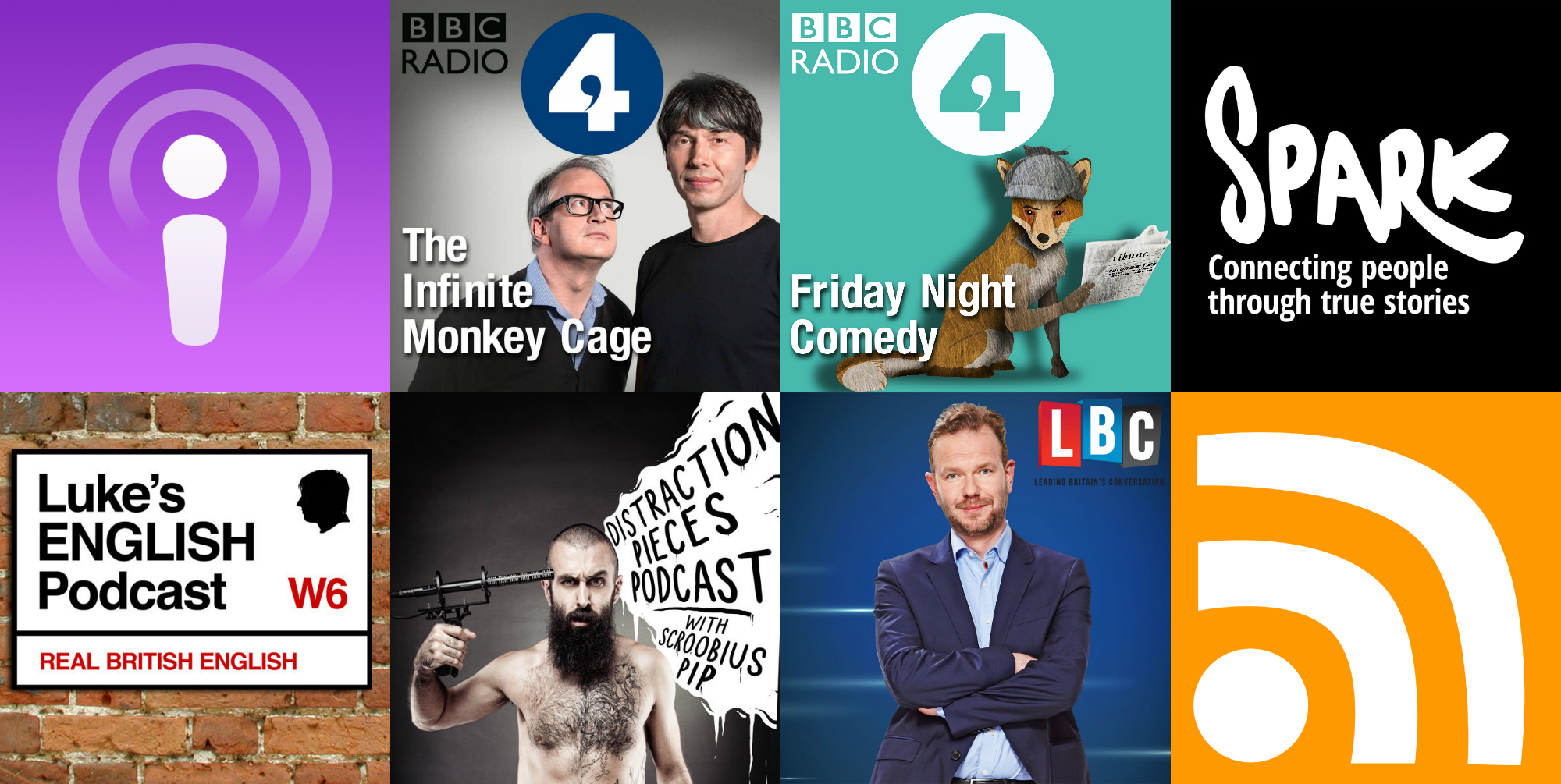
This is part two of a two-part episode about my favourite podcasts. I thought I’d share them because you might like to listen to them too, even if they’re difficult to understand because they’re not specifically for learners of English. It’s good to challenge yourself sometimes, so why not try listening to these. If I like them, you might like them too.
http://www.bbc.co.uk/programmes/p02pc9pj/episodes/downloads
BBC’s flagship radio comedy show. It’s a compilation of comedy shows from the week. The Now Show and Dead Ringers are the best.
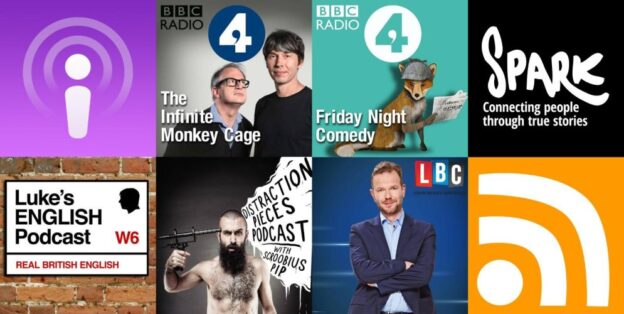
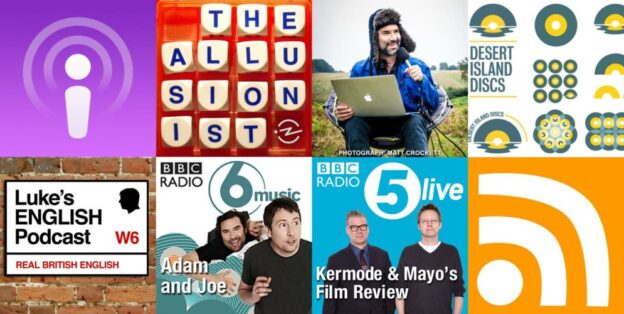
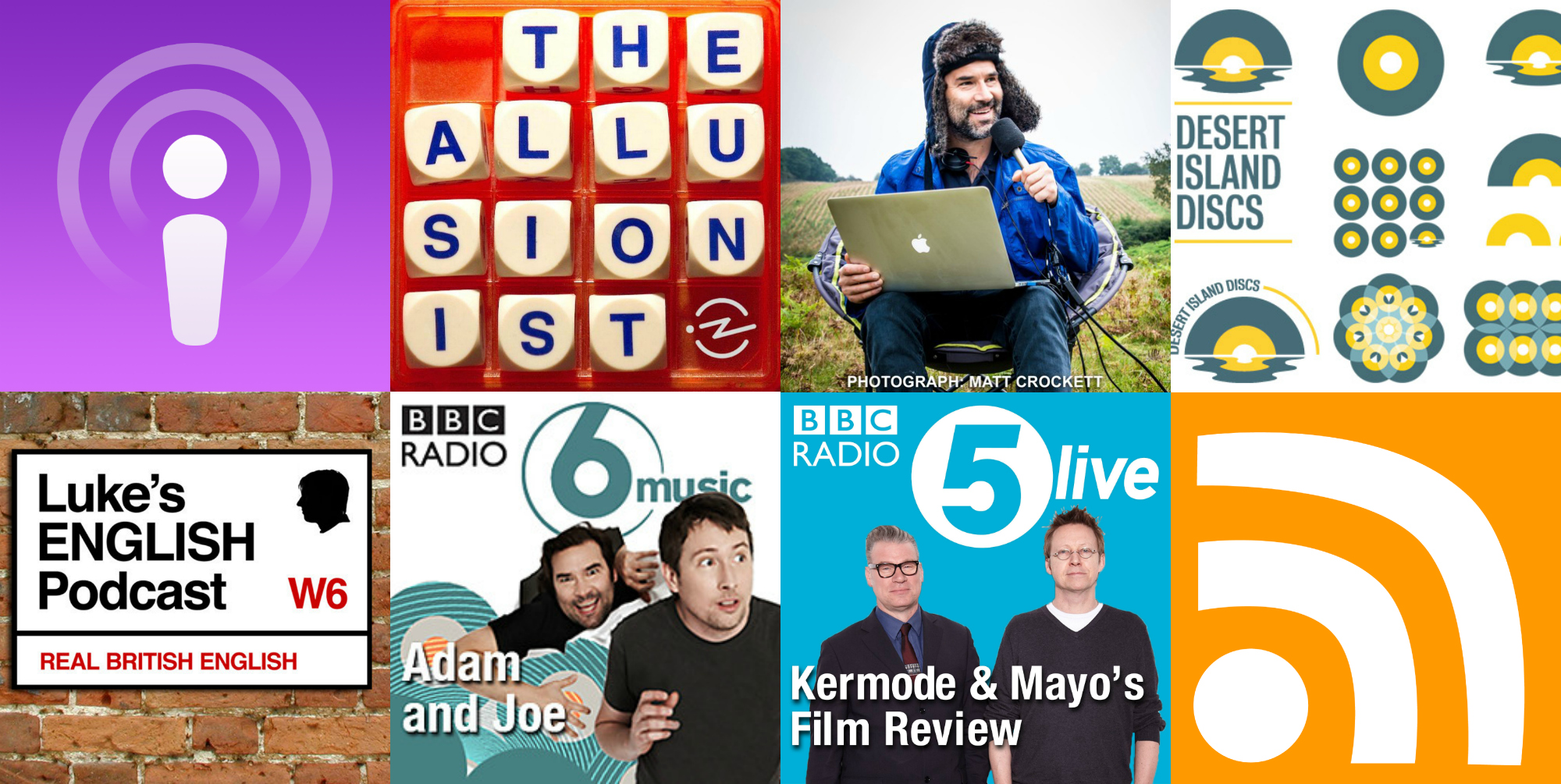
In this episode I’m going to recommend some other people’s podcasts. I have done this before – twice in fact. I did two episodes called OPP (Parts 1 & 2) Last time, in episodes 236 and 237 I recommended some of my favourite podcasts that I like to listen to when I’m out and about with my headphones on. I recommended a mix of British and American podcasts. In this episode I’m going to tell you about some more but we’re focusing only on British podcasts this time – ones that are produced in the UK and on which you can listen to British voices.
Perhaps I shouldn’t be doing this, because like a jealous boyfriend I don’t want you looking at anyone or spending any time with anyone other than me! But then again my desire to share my favourite podcasts is just too great, and I can’t help letting you know which podcasts have been filling my iPhone in recent months. I love listening to podcasts. I genuinely think the podcast as an invention is one of the greatest things in the universe. It’s amazing that we can get all this really interesting audio, completely free and it’s conveniently stored in your pocket and available whenever you want it. It’s different to video because you can listen to it while you’re doing other things, especially travelling around or doing menial tasks like housework. I just really want you to enjoy some of the shows that I enjoy listening to.
These are podcasts for native speakers
This is not a selection of podcasts for learners of English – I’m sure you know about them. As well as LEP there are some very well-known and popular podcasts out there these days. Nope, this is a list of podcasts made by native speakers, for native speakers – although obviously you can listen too. The main thing is that these podcasts are not about learning English or for learning English, they’re about other things: films, science, comedy, in-depth conversation, history and more.
So, they might be difficult to understand
There are some barriers to your enjoyment of these podcasts. The general language level might be rather high. Also these podcasts exist within a culture that you’re probably not that familiar with – and that’s basically British culture, certainly in relation to British comedy, politics and the general mindset of life in the UK. The people in these podcasts will often be talking about stuff that you’re not familiar with, like local British events, British TV, news, political events or pop culture and so on.
But maybe this is exactly what you’re looking for
Then again, those may be the exact reasons why these podcasts will appeal to you. Perhaps you want the authentic British stuff. I know that some of you really want to listen to British people speaking at natural speed about British things.
It’s good for your English
As I said in my recent episode about breaking the intermediate plateau, it’s very important that you listen to things like this, in order to get exposed to normal authentic English. I have said it before and I’ll say it again – it’s important to listen to a mix of content you can understand without too much trouble – like episodes in which I talk on my own in my naturally clear voice, and content which is more challenging, like these podcasts for native speakers. I do try to cover that in my podcast by presenting you with some content that is not too difficult to follow, and some stuff which is more difficult – such as the interviews and conversations I have with various native speakers.
But, if you want some more challenging listening practice beyond the interviews on my podcast – here are some suggestions from me to you.
Also, these podcasts might not be your cup of tea, but there’s only one way to find out – just listen to them and see for yourselves.
So, without any further ado, let’s look at some of my favourite podcasts.
A reminder of some from last time
First, a reminder of some of my selection from last time (British ones)
Adam & Joe No longer running, but many of the episodes are still available here http://www.bbc.co.uk/programmes/p02l57gq/episodes/downloads
Desert Island Discs (UK)Long-running interview show – a national institution! http://www.bbc.co.uk/programmes/b006qnmr
Mark Kermode & Simon Mayo’s Film Review (UK) The BBC’s flagship film review show, and also my favourite podcast of all time – http://www.bbc.co.uk/programmes/b00lvdrj/episodes/downloads
Acast – www.acast.com
It’s a good app for listening to podcasts on your smartphone. It’s free and you can either download within the app or stream episodes. Other apps are available.
The Allusionist
http://www.theallusionist.org/
Helen Zaltzman is an etymologist and historian, specialising in the history of language and specifically words. But this isn’t a boring history podcast. Her episodes are bright, witty and very relevant to the modern world. They’re often fascinating and full of interesting factoids about the way language works.
Helen is the sister of Bugle podcaster Andy Zaltzman, and she is also very funny and clever, like Andy. In fact, she comes across as being both adorable and brilliant. She’s a very charming presenter.
The episodes are very well-prepared with plenty of research done beforehand. These episodes are not rambling conversations but cleverly edited mini-documentaries about aspects of language. You can learn lots of bits and pieces about etymology (origins of words) and also various cultural aspects of how languages work. Also, Helen is very witty and clever.
The Adam Buxton Podcast
https://www.acast.com/adambuxton
Adam Buxton is a huge underground hit in terms of podcasting. In fact, he’s not really underground at all, more alternative. I mean, he’s not a big success with a mainstream audience but the people who listen to his podcasts are very dedicated and he has a very loyal following.
Episodes usually begin with Adam walking in the countryside near his house with his dog Rosie (who he sometimes gives a voice). Then we listen to a conversation between Adam and a guest.
Why do I like it? Adam – he’s a sweet and lovely guy, he’s funny, I feel like he’s one of my people, his jingles are brilliant, the conversations are just interesting and they often cover curious topics like social behaviour, personal fears and motivations and more.
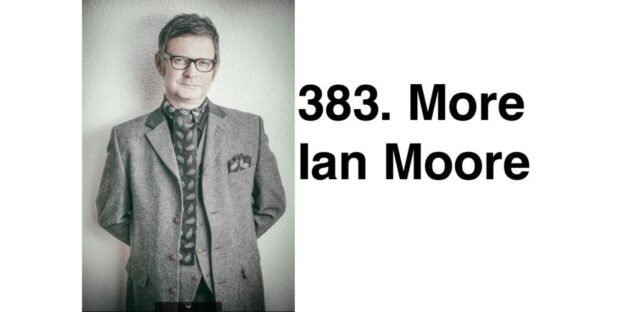
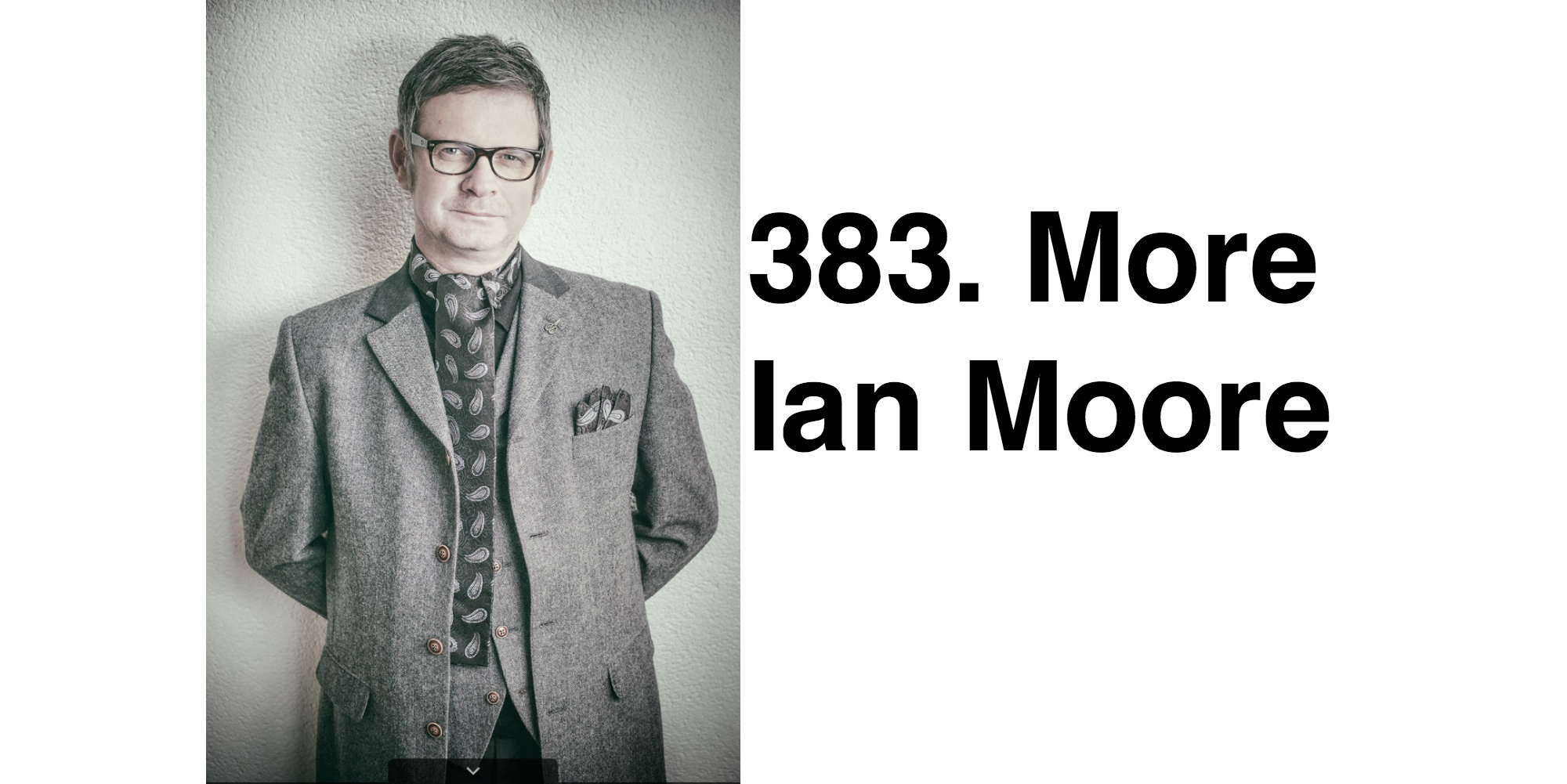
In this episode you are going to hear part 2 of my conversation with Ian Moore and I’ve decided to call this one “More Ian Moore” – do you see what I’ve done there? “more Ian Moore” I bet nobody has ever made that joke about his name before, right? Before we listen to Ian Moore, I just want to mention a few things… (notes continue below)
[DOWNLOAD] My voice – I’ve got a sore throat. It’s not too bad but I can’t talk a lot. I did an episode a few years ago about feeling sick and common symptoms. You can listen to it here (below).
Anecdote Competition. I know it’s challenging because you can’t read from a script.
More Ian Moore
Here is some more Ian Moore for you to listen to. You might want to listen to episode 382 before you hear this one. I know it’s a bit difficult to follow these conversations and I’m not explaining everything for you but here is a quick run-down of what you’ll hear us discussing in this episode.
Things we talk about
Making chutney – Chutney: A condiment (a condiment is something you have on the table when you eat food – e.g. salt, pepper, mustard, ketchup) of Indian origin, made of fruits or vegetables with vinegar, spices, and sugar. (Oxford Dictionary)
The challenges of living in the French countryside, including the time when he had a run-in with some hunters armed with shotguns (a run-in is like a disagreement or fight, or collision)
Doing Michael Caine impressions on stage (Michael Caine is a UK actor famous for lots of film roles, including Alfred in the Christopher Nolan Batman films, and some iconic roles from the 1960s in which he wore some very sharp suits, which is why he’s a bit of a style icon for the mod movement, and for young British men in general. Also, he has a particular way of talking)
The significance of Michael Caine in UK culture
Developing his comedy voice
How he started doing stand up comedy
Gigging in different places around the country
Performing comedy in French
The origin of the term “break a leg“, which is something you say to a performer to wish them luck before they go onstage
Ian’s blog “Full English Brexit” http://ianmoore.info/full-english-brexit/
Visit the page for the episode for links to his books, his blog and for some video footage of Ian on stage. (Hello!)
Thanks for listening, and I hope you enjoy this conversation, recorded for your listening pleasure. I know that it might be difficult to follow this because you’re listening to two native speakers talking at natural speed. All I can do there is encourage you not to give up because the more you listen, the more you will understand in the long-term, and you certainly won’t improve your English at all by giving up and not listening. So, whenever you do understand something – give yourself a pat on the back and keep going!
*CONVERSATION STARTS AT ABOUT 18:00*
So there you go. That was Ian Moore. Let me know how it was for you. Did you manage to keep up with it all?
As he said, he does perform internationally sometimes, so check his website to find out if he is doing comedy in your area soon. In fact, you should find out if there is any English language comedy happening in your area, and go to see it. Many cities around the world have English comedy scenes these days. It might be a small scene, with amateur comics still developing their comedy skills, or it could be a more advanced scene with professionals like Ian, who will always make you laugh. In any case, going to see comedy can be a good thing to do for your English and you might end up meeting some people and making friends, all in English. Don’t be shy, give it a try – and remember not to get demotivated if you don’t understand all the jokes, like if a comedian goes on for 3 minutes about “rushing to the venue” and you don’t understand what he’s talking about. Don’t be bothered by the things you don’t understand, just do your best to work them out and keep going.
Ian Moore performs in French (yes, it’s in French)
This website uses cookies to improve your experience while you navigate through the website. Out of these, the cookies that are categorized as necessary are stored on your browser as they are essential for the working of basic functionalities of the website. We also use third-party cookies that help us analyze and understand how you use this website. These cookies will be stored in your browser only with your consent. You also have the option to opt-out of these cookies. But opting out of some of these cookies may affect your browsing experience.
Necessary cookies are absolutely essential for the website to function properly. These cookies ensure basic functionalities and security features of the website, anonymously.
Cookie
Duration
Description
cookielawinfo-checkbox-analytics
11 months
This cookie is set by GDPR Cookie Consent plugin. The cookie is used to store the user consent for the cookies in the category "Analytics".
cookielawinfo-checkbox-functional
11 months
The cookie is set by GDPR cookie consent to record the user consent for the cookies in the category "Functional".
cookielawinfo-checkbox-necessary
11 months
This cookie is set by GDPR Cookie Consent plugin. The cookies is used to store the user consent for the cookies in the category "Necessary".
cookielawinfo-checkbox-others
11 months
This cookie is set by GDPR Cookie Consent plugin. The cookie is used to store the user consent for the cookies in the category "Other.
cookielawinfo-checkbox-performance
11 months
This cookie is set by GDPR Cookie Consent plugin. The cookie is used to store the user consent for the cookies in the category "Performance".
viewed_cookie_policy
11 months
The cookie is set by the GDPR Cookie Consent plugin and is used to store whether or not user has consented to the use of cookies. It does not store any personal data.
Functional cookies help to perform certain functionalities like sharing the content of the website on social media platforms, collect feedbacks, and other third-party features.
Performance cookies are used to understand and analyze the key performance indexes of the website which helps in delivering a better user experience for the visitors.
Analytical cookies are used to understand how visitors interact with the website. These cookies help provide information on metrics the number of visitors, bounce rate, traffic source, etc.
Advertisement cookies are used to provide visitors with relevant ads and marketing campaigns. These cookies track visitors across websites and collect information to provide customized ads.

 [DOWNLOAD]