Category Archives: Family

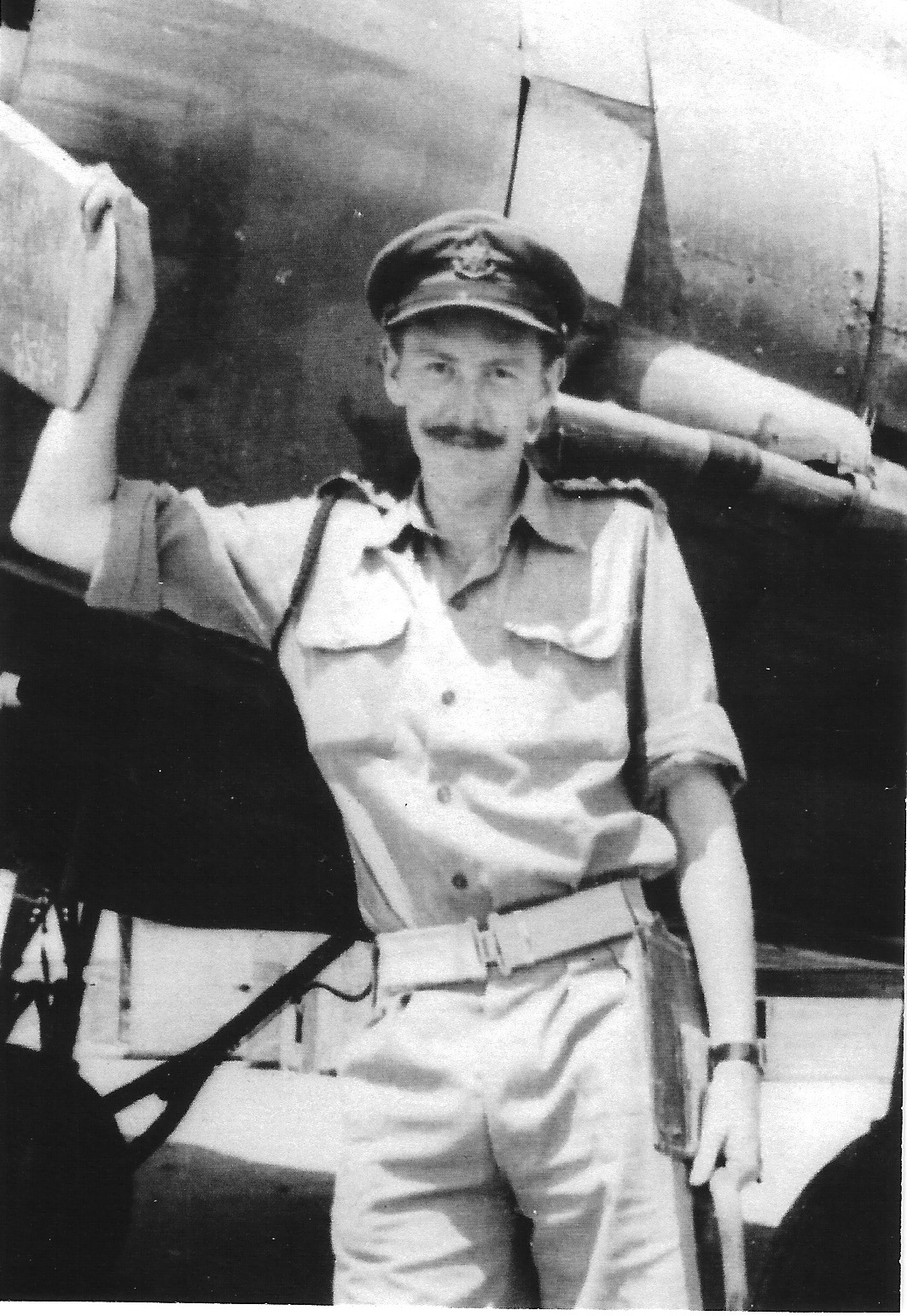
259. Eulogy for Dennis

Welcome to Luke’s English Podcast. This episode is entitled “Eulogy for Dennis” and it’s devoted to the memory of my Grandfather Dennis, who died at the end of December last year. The music you can hear is by Al Bowly, one of Dennis’ favourites. I hope you find this episode interesting to listen to and if you feel moved to do so – you are welcome to share your thoughts by leaving a comment on the page for this episode which you can find at teacherluke.co.uk – “Eulogy for Dennis” [Download]

Introduction
A ‘eulogy’ is a tribute – either written or spoken, usually celebrating and praising someone who has just died. This episode is a eulogy for my grandfather Dennis, who died recently at the age of 94. Much of what I am saying has been written in advance of recording, so I’m reading from a script. I’ve said plenty of times before that I prefer to record without a script because I think it makes my speaking more natural and authentic, however in this case I felt I had to write a script before recording because I wanted to prepare my thoughts and comments carefully. So this episode is scripted – which is good in one way because it means that it’s there if you want to read what I’m saying. I expect I will go ‘off script’ at times, and express my thoughts as they come to me, so there may be some unscripted parts. Either way, you can follow the bits that are written by going to teacherluke.co.uk and finding the page for this episode.

I hope that you don’t find this episode self-indulgent, or overly personal. I invite you to listen and share some memories of my Grandad, who I regrettably never featured on the podcast in person. I hope this episode can be a sort of celebration of his life, as well as a respectful tribute. I’ve been preparing this episode all morning, and ideally it would be more detailed, with input from the rest of my family, perhaps some readings of his favourite poetry or literature and anecdotes from his childhood. In the end, I realised that I just couldn’t spend too much time on it, and so I’ve just decided to start recording. If I don’t record this episode today, I might never do it.

If you want to make a comment in response to this episode showing some sympathy, and you’re wondering what to write, the appropriate things are usually “I’m really sorry for your loss” or “Condolences to your family”. It’s okay though, don’t feel obliged to write anything. I’m fine of course, although I do miss him, and so does the rest of my family. He had a pretty good innings.

Comments are always welcome, and if you feel like sharing similar experiences or ideas, go ahead. Teacherluke.co.uk. This is episode 259 “Eulogy for Dennis”.

I’m not entirely sure if my podcast is the appropriate place to give a tribute to Dennis – this is a podcast for learning English, but at the same time my podcast is a way for me to communicate and share thoughts with an audience of intelligent people around the world. If the content of each episode is interesting for you to listen to – great. It’s good for your English if you are interested in what you are listening to, and even though I’m not directly teaching you language in this episode, there’s still a lot to be gained from just engaging with what I’m saying, intellectually or emotionally. I hope you can get a lot of comprehensible language input from Luke’s English Podcast, and hopefully more than that too. For me, I want to be able to tell people about my grandad, because now he’s gone and his actions are consigned to history. I just want more people to know what he did, and that he was a good guy.

Although I want to be respectful, there’s no need to be overly sombre or sad in this episode. My grandad had a great sense of humour and he wasn’t the sort of person to dwell on dark and depressing thoughts. I imagine that he wouldn’t want me to take this episode too seriously, and he’d just want everyone to be happy and glad for what they have. It makes me happy to be able to share memories and knowledge about this member of my family.

So, I’m just going to talk about Dennis, just so you know about him too. He was a really popular man, and I hope his quiet charm comes through in this episode. He was also a modest bloke, so if he was here now, he’d probably find this a little bit embarrassing and unnecessary. But he’s not here, so I can do what I like, and I would like to spend some time talking about him! So, that’s what I’m going to do!

Childhood
I don’t know that much about his childhood really. He lived opposite a church. He grew up in quite a large house, and I think he really enjoyed growing up there, with quite a lot of space to play. I can’t really tell you more about his early life, because I don’t know enough. If he were here, I would ask him all about it. Suddenly, I want to know everything about his life story.

DennisWartime
So, in 1939
-No choice but to fight
-He didn’t tell us about the really dangerous and traumatic stuff he must have done
-His report
-Military Cross

Dennis’ Report
THE MILITARY CROSS
LIEUT.D.HALLAM – THE EAST YORKSHIRE REGIMENT
This officer has commanded a platoon in a rifle company continuously since D-Day, showing throughout outstanding gallantry and powers of leadership, especially on patrol.

On the 23rd October 1944 outside VENRAIJ he was leading a daylight patrol which was ambushed at very close range; with complete disregard for his own safety he controlled the withdrawal of the patrol in the face of heavy fire and remained behind himself within about fifty yards of the enemy keeping up a constant stream of smoke grenades until he was certain that everyone was clear. But for his coolness and initiative a large part of the patrol might have been lost.

Prior to the capture of HELLIGENRODE on the 16th April 1945 he led his patrol deep into the enemy’s positions and by deliberately drawing their fire was able to pin-point posts which materially assisted the planning of the subsequent attack.

Following the capture of GR.MACKENSTEDT on the 16th April and again during the mopping up of Bremen, his dash and aggressive action in the face of continual sniping inspired his platoon of very young soldiers with a determination which quickly gained them their objectives.

On the 18th April outside DELMENHORST his company and its support troops were held up by an 88mm gun and an enemy position on their left flank, but with superb initiative LT. Hallam led his troop round a covered flank and by the speed of his attack overwhelmed a position equal in strength to his own and accounted for the entire garrison and the gun.

At all times this officer has been an outstanding source of inspiration to those around him and has shown powers of leadership above his rank.

Family Life
-Photos of him and my Gran. They were younger than I am now. They looked so sweet together. She was gorgeous – very pretty and elegant. He was handsome, and elegant too in his own way. Clever, with a dry sense of humour, and a decorated war hero (although I think Gran was not so impressed by that – I imagine by the end, they both hated the war and just wanted it to end so they could be together. She never really mentioned his war experiences either.)
-Post traumatic stress? They didn’t really believe in that sort of thing in those days.
-My Gran bought a house during the war, and they settled down there. Again, seeing pictures, I feel like I would like to meet them. I can’t help thinking that we would have got on. Well, we did get on of course, really well, but it would be amazing to meet them when they were the same age as me – on the same level of status etc. This makes me think of Back to the Future – a film which I’m hoping to talk about on the podcast soon.
-He didn’t talk about the war much. I expect he wanted to put it behind him.
-My Mum says he was a bit removed at times, and not always emotionally engaged. Maybe this is related to how he dealt with his wartime experience, or maybe he was just an emotionally reserved person. That’s not to say he wasn’t warm – he was. He was kind, loving, and thoughtful, but perhaps a little bit reserved when it came to expressing those things openly. His warmth came through in different ways – like in his humour, his obvious enjoyment of being with the family, his interest in our news and so on. It’s almost impossible to imagine him in a war zone, fighting as a soldier. He was most at home in his armchair, reading, doing crossword puzzles, watching cricket and laughing at jokes or making jokes. Like many other men and women of his generation, he was pulled out of life and forced to engage in bloody combat. Forced, by the need to go to war against the enemy, to fight back against the Nazis. He was forced by events outside his control, which swept him away from his otherwise peaceful life. Conscripted into the army, I imagine he found himself wondering how it had happened. I’m sure he was well aware of what had happened to so many other men of the previous generation in World War 1 (nearly 900,000 of them died) and so I can’t imagine how it felt to be walking into a similar situation. I suppose he took on the challenge like everyone else. He was only one of thousands of other soldiers who were asked to fight for their country. I think he had a sense of national duty, and duty to the king and so on. That probably helped him, and I don’t think he questioned or challenged the allied command, or the general fight against the nazis. I expect he saw it as a necessary move, albeit one that he wished was not at all necessary.

It does make me angry that those who wage war force people like my Grandad into such horrific situations. Many many men lost their lives, and the others suffered in other ways – physical injury but also mental or emotional trauma which must have affected these young men deeply. I think of the powerful men who, motivated by some twisted and distorted sense of justice decide they have the right to decide who lives and who dies, and with a sweep of the hand, cause untold suffering and consequences around the world for generations. What supreme arrogance and small mindedness is it, that causes some power hungry maniacs to believe they can do that? What kind of egomaniac thinks they can play with the lives of millions of people just to satisfy their own hunger for power? What on earth makes one guy think he’s the one to rule the world? It’s sick and it disgusts me that certain autocratic dictators will stop at nothing to satisfy their bruised egos. Anyway, there’s no need to go into it any more – I think enough has been said about war and the causes of war, and I know it is complicated, and I don’t want to open up some debate because there are many shades of grey, and what looks like the actions of a power hungry psychopath to one person, may look like righteous leadership to another person. It depends on your point of view, and what kind of propaganda you’ve been exposed to, but ultimately, with great power comes great responsibility, and in so many cases, those who seek great power rarely manage to behave responsibly. Spiderman taught me that. I’m sure there are leaders who do a great job, and are both powerful and responsible, compassionate, and caring – and it is really hard to keep the peace sometimes. But when you go out of your way to slaughter millions just because you don’t like the way they look, dress, pray, or otherwise live their lives – get a grip on yourself. If I met Hitler, I’d ask him “Who the hell do you think you are, mate?” He’d probably tell me that he was someone special, but it would be the wrong answer. He was just another schmuck. One of the biggest twats in recent memory, along with a bunch of other people who I’m sure you could name.

Just one point, which may be me just stating the obvious, but it wasn’t the Germans that were the enemy, it was the nazis, or whatever you want to call those people – you know what I mean. There were plenty of Germans who suffered at the hands of the nazis. So it’s not ‘Germans’ – it’s facists. The fascists came from all sorts of countries. It was a battle of ideas, not based on where you were from.

Also, I know that Britain doesn’t exactly have a perfect past either. We were a huge colonial power, and Britain/UK/England has done some messed up stuff in history too, in India, in the middle east. Everyone’s involved in war to an extent. But I do believe it’s possible for mankind to exist without war. I know this sounds a bit cheesy, but there you go.

As John and Yoko said, “Give peace a chance” – just entertain the idea for a moment that perhaps war is not the answer, and that the whole world could decide to just get on. I know it is naive, but why not? Communication, diplomacy, talking to each other, using words, listening, finding compromise and trying to solve problems – that must be the way forward, unless you believe in the end of the world and in fact somehow fantasise about it happening. I don’t believe in the end of the world. I think the world will go on for many more years, as long as it is not hit be a huge asteroid (like when the dinosaurs were around). Did you know, the dinosaurs lived way way longer than us? We look back at them as a failed species, but they were around for about 135 million years. We’ve been around, as the dominant species, for about 200,000 years. So, the dinosaurs were around 675 times longer than us. Just to put that in perspective, that’s the equivalent to about 1 day compared to about 2 years. Imagine your first day in a new job. Just the first day – you’re nervous, you don’t know anyone, you find it hard to get along with the other people who work there, you don’t like them at first, you don’t know how to do your job very well, but it’s just the first day, and you’ve got 2 years ahead of you. So for humans, it’s still our first day on the job, as the dominant species. We’ve achieved nothing compared to the dinosaurs, if staying alive is the objective, that is. For us humans, we should learn to get along or we won’t make it as far as the dinosaurs. We haven’t even started really… I don’t really understand what’s going on in the world. It seems so confusing sometimes. Why are there wars? Why does human kind feel the need to smash itself up from time to time? Isn’t survival on the planet hard enough? Perhaps we are hard-wired to fight against each other for our own survival, but we have only recently invented weapons of mass destruction. Our instinct, developed over years of evolution, has maybe equipped us with a keen sense of survival, which includes the will to fight each other, but now we have massively destructive weapons so isn’t it time to use our brains to control those basic instincts towards violence? I mean, just play a video game or go to the gym if you have that much aggression inside you. Do some sit ups maybe, rather than getting all angry and causing world war 3. Just have an ice-cream and chill out. OK, rant over.

How did I end up talking about that? I was just expressing anger about those powerful individuals who wage war. I know I might sound naive when talking about this subject, like you might think “Yes, but war is a necessary evil and blah blah” – well, I’m just saying it’s a pity. You may say I’m a dreamer, but I’m not the only one.

Oh and by the way, my grandfather was not bitter about the people he was fighting in the war. He never spoke badly about anyone really. I think the most outspoken thing he said was that he didn’t agree with women being priests in the Anglican church – a pretty old fashioned view, but there you go, and that’s nothing to do with the war. Other than that he didn’t have a bad word to say about anyone really. In World War 2, Japan was an enemy of the allies, but Dennis was so pleased to meet my Japanese friends when I invited them to my parents’ house at Christmas a few years ago. He was really friendly with them and we had a really great Christmas. Of course we did! Why would he bear a grudge against people who were clearly nothing to do with a war that happened generations ago? There’s no good reason for him to have done that.

I don’t want to go on about war too much. It’s annoying that his generation will forever be associated with it. It was only a small chapter in his life really. There’s no need to dwell on it. It didn’t make him who he was. He was more than that. He did so many other things, including having a family and raising two children. That’s worth celebrating as much as anything else. Of course I’m going to say it, but I love my uncle and my Mum massively. They’re just great, and that’s it.

Eulogy
This is the Eulogy I read out in church during the funeral service. It was written by Dennis’ children – my Mum and my Uncle.
They felt they wouldn’t be able to read it out without getting emotional. So, they asked me to do it. I was so proud to be asked. I didn’t feel too nervous. I was happy to read it. I didn’t get emotional until right at the end, when I my voice started shaking a bit.

Things we will remember about our Dad (words written by my Mum and my uncle)
His quiet, modest, ironic, witty and amusing presence.
His intelligence, erudition and knowledge.
His love of reading, especially Dickens and Trollope, who he re-read many times.
His ability to write – short stories, poems, articles, wonderful letters and inspirational little magazines which he produced during the war to boost the morale of his platoon.
Going with him to the public library to be introduced to the likes of Robert Louis Stevenson, Conan Doyle and PG Wodehouse.
His diverse musical tastes; encompassing Beethoven, Gilbert and Sullivan and Al Bowlly.
His facility for mimicry and pastiche.
His phenomenal memory – “ask Dad he’ll know” was frequently said by all members of the family.
His love of, and pride in, Yorkshire; its cricket team, its landscapes, towns and villages and all the happy memories it held for him of his childhood with his older brother and cousins; and later his pleasure in taking us on family holidays there, climbing Pen y ghent and Ingleborough, brewing up coffee on a primus stove, sheltering from the rain under bridges. And recently his enjoyment of visits with Shirley to Cononley, getting to know and love the village where his grandparents lived.
His affection for his school, Queen Elizabeth Grammar, in Wakefield where he obviously had a great education and whose headmaster A.J Spilsbury, was a life-long hero.
The cardigans he used to wear, the pockets of which always contained stubs of pencils with which he completed the cryptic crosswords he loved and was always so expert at, even up to the last few months of his life.
His love of France and the wonderful holidays he and mum had; travelling the length and breadth of the country, camping or staying in rather primitive gites. And, after Mum died, the holidays based on French courses he attended in various parts of France.
His amazing facility for languages, most particularly French, Spanish and German, the talent for which he has not passed on to us!
His skill with a watercolour brush.
His public spiritedness – volunteering to work at the Cheshire Home every Monday evening for 23 years.
His hatred of computers, but his amazing facility for texting on his mobile phone!
His characteristic silent laugh in which he closed his eyes and threw his head back, while quietly expelling air through his half open mouth – not a sound escaping!
His resilience and, sometimes infuriating, self sufficiency.
His even temper which he only ever lost on one memorable occasion, with very good reason!
The skill he displayed in cooking after Mum died, taking pride in hosting lunch and dinner parties.
His luck – sustaining only one injury during his very active war – a cut lip which he got while playing football! the good health he enjoyed during most of his long life, up to the last two or three years; and, after mum died, to have the companionship of Shirley with whom he had some very happy years; not least because, thanks to her Sky subscription, he was able to watch cricket all day long! They also went on many holidays and trips, and she looked after him so lovingly during his last months.
The modest bravery he displayed in his youth. When we asked about the MC which he won in the war he would say, airily “oh, they were ten a penny..”
His stoicism in the face of his death saying just a couple of days before he died “what will be will be”.
His quiet religious devotion, no doubt instilled in him from the day of his birth in a house just over the road from Beverley Minster, where his father was a chorister.
He was an exceptional example of a past generation.
As Hamlet says of his father:
I shall not look upon his like again.

As a Grandfather we only got the best of Dennis, and that was a lot. I remember him as just a great person to share a joke with. He was always up for a laugh, and as Mum and Nic mentioned, he was brilliant at doing impressions and characters. He was just a lovely, intelligent, mild-mannered and warm presence and we have nothing but joyful memories of our time with him.

My memories
Here are just some of the things I think about when I remember my grandad.
His tone of voice – it was soft, and comforting, humorous.
His general knowledge, and knowledge of history and literature.
His memory.
His love of cricket.
The glasses of sherry he would drink when he came to our place (served by my Dad).
Drinking whiskey with him at Christmas.
His friendly “Hello Luke” and a good firm hand shake.
His slippers which he used to wear.
His sense of humour – he could copy different voices, and he was always funny when he did this.
His style (and the style of my Granny – she was really elegant).
His French cars.
His love of France – and the language. He spoke fluent French and even wrote a few short stories in French too, which were published somewhere. My girlfriend and I used to sit with him and chat in French sometimes. Well, mainly them because my French is a bit limited, to say the least.
His love of Sherlock Holmes stories. We had this in common, and we would sometimes chat about Holmes & Watson. I played him my mystery story from episodes 29&30 of LEP. He enjoyed them. I’m sure he could have written something better.

I could go on. There’s so much to say and I’m sure I have missed some details, but there you go.

My Gran died in 2002, and my Grandad was always there for her. It must have been really hard to lose her after all those years, but he was a survivor, and he kept going, living alone for a while, before after about 6 or 7 years he got himself a girlfriend, called Shirley.

At the time, I didn’t even have a girlfriend, so I was pretty impressed with him.
Shirley & Dennis lived together in the last years of his life, and she looked after him really well. If it hadn’t been for her, he might have ended up in a care home, and he wouldn’t have wanted that.

Grandad stayed mentally alert all the way up to the end of his life. He was brilliant at crossword puzzles, pub quizzes, TV quiz shows and games. In the end, he died as a result of a heart condition. It wasn’t completely unexpected or a shock, but it’s still unavoidably moving and difficult to deal with when a member of the family dies. My Mum was with him when he passed away, holding his hand.

That’s it. He’s gone now. Where did he go? I don’t know.
Some people have their answers to that question, but I can’t be sure.
But it’s okay. All things must pass, it’s the way things are – better accept it.

Song
Here’s a song by George Harrison.
Artist: George Harrison
Song: All Things Must Pass
Album: All Things Must Pass
Tab from UltimateGuitar.com

Verse:
A D/A E** D
Sunrise doesn’t last all morning

A D/A E** D
A cloudburst doesn’t last all day

E A/E E** A**
It seems my love is up and has left you with no warning

E A/E E** A**
It’s not always gonna be this grey

Chorus:
Em D Dsus4 D
All things must pass
A D/A A D/A E** D
All things must pass away

Sunset doesn’t last all evening
A mind can blow those clouds away
After all this my love is up and must be leaving
It’s not always gonna be this grey

Bridge:
Em D Dsus4 D
All things must pass
Em D Dsus4 D
None of life’s strings can last
A D/A
So I must be on my way
E** A
To face another day

Now the darkness only stays the nighttime
In the morning it will fade away
Daylight is good at arriving at the right time
It’s not always gonna be this grey

Second Chorus:

Em D
All things must pass
A D/A A
All things must pass away

A D/A E** D A D/A E** A** E***

257. Be Positive

This is an unplanned episode which contains some general thoughts on a range of different things. There is no specific agenda or language focus, but it does contain some news, a few film reviews as well as the usual spoken English and natural phrases which you can pick up if you’re listening carefully enough! The overall theme which emerged during the recording was that of being positive and making the most of what you’ve got. [Download]

Small Donate Button
Transcript
An LEP listener has transcribed this episode. Click this link to view the transcript. To view more transcripts for other episodes, click here to visit the transcript collaboration page.

In this episode I talk about lots of things, including:
Welcome to new listeners.
Getting used to living in Paris.
Going with the flow.
Looking on the bright side.
Seeing where life takes you.
The future is unwritten.
The benefits of staying positive and looking on the bright side.
Don’t let negative thoughts drag you down.
Take responsibility for the good and bad things you do.
Don’t beat yourself up if things go wrong.
See things as learning opportunities. (This is the self-help section of the podcast!)
No regrets.
Is the cup half full or half empty?
Philosophical Conundrums, such as “If a tree falls in the forest and there’s nobody there, does it make a sound?”, “What is the sound of one hand clapping?” and “How long is a piece of string?”
What is the word for a philosophical conundrum? I couldn’t think of it, but do you know the word I mean? Leave your comment below.
Macmillan competition news.
Please tell a friend about LEP.
The transcript collaboration.
Thank you to certain Lepsters who have contributed to the podcast – you’re super-special LEP ninjas.
Some quick film reviews: Imitation Game, It Follows and Foxcatcher.
Eulogy for Dennis, my grandfather.

Please do leave your comments here on the page. I look forward to reading your thoughts, conversations and responses.

Luke

p.s. the word I was looking for was… a paradox. Thanks Edgar for jogging my memory.
[socialpoll id=”2252240″]

252. Marooned With My Music: James Thompson

Welcome to Luke’s English Podcast and this special series, called Marooned With My Music. My castaway today is my brother James Thompson. [Download]
Small Donate ButtonSince being born in the mid 1970s in the south of England, it’s hard to say really what James has been doing for the past 39 years of his existence on earth. Nevertheless, he is a man of taste, a man of music and a man of experience. In the 1990s he studied a combined degree in English and Design at a university in Cambridge, before becoming something of an expert in wine tasting, wine selling and indeed wine drinking. Quietly entrepreneurial, James set up a successful t-shirt company in the late 1990s and now works as a freelance designer and artist – with perhaps the pinnacle of his career so far being the logo he designed for Luke’s English Podcast. I’m joking of course – James has contributed design work for various companies and organisations over the years. As well as being an artist, a designer, a wine enjoyer, a t-shirt maker and skateboarder – James has always been a keen lover of music both as a drummer & producer and as a collector of vinyl records, and I imagine that having to choose 8 records to take to his desert island has been something of a challenge for him. Let’s find out…

James’ Choices
(James accidentally choose 9 songs instead of 8)
1. My Girl by Madness
2. Dennis and Louis by Happy Mondays
3. Hole In The Sky by Black Sabbath
4. So Watcha Want by Beastie Boys
5. Clap Your Hands by A Tribe Called Quest
6. Xtal by Aphex Twin
7. Saint Angel by Goldie
8. No Feelings by The Sex Pistols
9. Fisherman by The Congos

Book Choice: The Long Firm by Jake Arnott
Luxury Item: A skateboard

Travis live at Glastonbury 2000 – red T-Shirt by James Thompson
marooned

250. Marooned With My Music: Gill Thompson

Welcome to Luke’s English Podcast and this special series, called Marooned With My Music. My castaway today is my Mum, Gill Thompson. [Download]

Small Donate ButtonBorn as part of the baby boom generation after World War 2, Gill grew up and lived in England during a time of great social change in the latter half of the 20th century. Gill has lived in various parts of the country during her life, including Yorkshire, the Midlands and London, and has had various jobs including time spent at the BBC, at a primary school, at a university, and now in a charity bookshop, but perhaps her most time-consuming and indeed energy-consuming responsibility has been to bring up two boys and manage a household of 3 men, her husband and her two sons. While doing all of that she also studied for a general arts degree with the Open University adding to her now quite considerable knowledge of history, art, literature and philosophy. She is a voracious reader, a fount of knowledge and wisdom, a loving wife and an amazing Mum, and I’m very glad to have her on the programme today.

Mum’s Choices
1. Always by Patsy Cline, written by Irving Berlin
2. I’ll String Along With You by Al Bowlly
3. Harvest Moon by Neil Young
4. Here Comes The Sun by The Beatles
5. Our House by Madness
6. Don’t Forget to Dance by The Kinks
7. Bach Double Violin Concerto – Played by Yehudi Menuhin And David Oistrakh
8. I’ll See You In My Dreams by Joe Brown

Book Choice: The Essays of Michel de Montaigne
Luxury Item: A king-size bed with an everlasting supply of 100% Egyptian cotton sheets
marooned

248. Marooned With My Music: Rick Thompson

Interviewing my dad about his life story through his favourite pieces of music.

“Marooned with my Music” is an interview concept based on a popular and long-running BBC Radio programme called “Desert Island Discs”. In that BBC programme, celebrities and noteworthy people are invited onto the show for an interview. They imagine that they have been stranded on a remote desert island and are only allowed to take certain items with them, namely: 8 pieces of music, one book and one luxury item. During the programme, the interviewee is asked about their life and their musical choices. Desert Island Discs remains one of the BBC’s most beloved radio programmes and has been broadcast on the radio for many years. In my version, “Marooned with my Music” I have decided to interview members of my family: My Dad, my Mum and my Brother. [Download this episode]

Small Donate ButtonWelcome to Marooned With My Music. My castaway today is my Dad Rick Thompson. Rick has been working in broadcast journalism for over 45 years, including nearly 30 years at the BBC where he worked as foreign news editor, and editor of the UK’s flagship daily news programme the 9 O’Clock News. He now runs his own broadcast training company called T-Media, which helps to bring BBC-standard television broadcasting to other countries around the world. Along the way he has become something of an expert in the art of efficiently and effectively delivering information to viewers on television and radio; something which requires a combined interest in all the big stories of the day as well as the values of language and public service. Rick is a man of broad interests and talents, having been a musician, a sportsman and a bird-watcher throughout his life, amongst other things. Last but by no means least, Rick has also been a devoted husband to his wife Gill and father to his two children James and Luke, from Luke’s English Podcast.

Dad’s Choices
1. I Saw Her Standing There by The Beatles
2. So What by Miles Davis
3. Route 66 by The Rolling Stones
4. Far More Drums by The Dave Brubeck Quartet
5. The Planets – IV. Jupiter, The Bringer of Jollity by Gustav Holst
6. All Along The Watchtower by The Jimi Hendrix Experience
7. Waterloo Sunset by The Kinks
8. Fixing A Hole by The Beatles

Book choice: A History of Europe
Luxury item: A never-ending set of paints and canvasses
marooned

245. Merry Christmas! (+ Other News) + Video!

This is just a chance to wish you all a Merry Christmas and to give you a bit of news. There is a video for this episode, featuring 15 minutes of extra footage which I filmed before recording the audio episode. You can watch it below. [Download audio]

Small Donate ButtonVideo – I started recording this 15 minutes before starting the podcast, so you’ll see me preparing myself to start recording, and I show you what it’s like to record a podcast in the slightly cramped (and badly lit) conditions of the ‘spacepod’ or ‘sky pod’! Unfortunately, the batteries in my camera ran out after about 30 minutes! Never mind – the audio podcast is my main focus anyway. :)

Contents of this episode
1. MEEEERY CHRISTMAS (if you celebrate it)
Click these links for previous episodes about Christmas:
160. The A to Z of Christmas
78. Christmas – It’s all about Family

2. Macmillan Competition

3. Nicknames – LEPPERS, LEPSTERS, LEPPISH, PLEPs, LEP Ninjas, LEP FC, The Cult of LEP, LEP United, LEPPARDS, LEPPANS, LEPIANS, LEPANESE, LEPLANDERS, LEPaholics… what do you think? Which nickname do you prefer? Do you need just one nickname or can we use lots of different aliases? I might do a proper survey on this to let you choose your nickname by committee.

4. Emails – I don’t get many opportunities to properly reply to your emails, and I get loads of them. I’ve tried lots of things – putting them in other folders, forwarding to other inboxes etc. The problem is, I just can’t get around to it. The reason is because I can’t really reply to you all individually. I have to just talk to you as one large group. Sorry if you have sent me an email and I haven’t replied. Really – I am very sorry and it hurts a little bit because you’ve gone out of your way. I love to receive emails but I can’t always reply. I haven’t published my email address on the website and I don’t mention it in the podcast (I used to) because I’d rather the correspondence came via teacherluke.co.uk and was public. That way I’m more likely to reply. Correspondence between me and you privately is very rare. So, if you have comments, do leave them on the website. I genuinely love reading your comments and I’m frequently impressed by what a lovely community of people I have listening to this podcast. It’s quite amazing really, so keep doing that – I’m sure I have a large silent majority out there. Most people don’t correspond with me directly. That’s fine. I never send emails to my favourite podcasters (except a text I sent to the Adam & Joe show once, which they read out!) So I understand that most of you have never commented or anything. I would like to hear from you so do get in touch. You could be a long term listener but first time commenter, or whatever. Anyway, I can’t always reply to specific requests which I get sent by email, and I do get a lot. For example, I often get emails with specific requests like giving you help for the IELTS test, asking for advice on visiting France or The UK or whatever. I would honestly love to reply fully to those mails but I can’t justify sitting down to write a full email when that time must be spent on other things.

What I would like to do is publicly read out some emails. I think this is a great way to give you a voice. If you would like to send me emails that I can reply to live on the podcast, please send your emails to podcastreply@gmail.com, that’s podcastreply@gmail.com. I will assume that if you send any email there that you’re happy for me to read it out on the podcast and reply to it orally. I can’t guarantee that all your emails there will be broadcast, but let’s try it. Send emails you’d like me to read out and respond to on LEP to podcastreply@gmail.com.

I realise there’s a forum section for questions you’ve asked me, and in fact several times I’ve attempted to record episodes in response to those forum questions and for one reason or another I had to abandon recording due to technical errors, and time issues. I’m trying to find a system for giving you a voice on the podcast at the moment. Let’s try a few ways until we get the right one. Perhaps the email inbox idea will give me just a little more discretion regarding which emails I reply to.

I am a little wary of giving you the impression that you can make requests for the podcast. One of the ways I can make this podcast work with my time schedule is to have total control over what I put out. It allows me to be flexible, determine my own schedule, motivate me by allowing me to have creative freedom and also it probably gives the podcast a distinctive and original quality. I do get requests that I’m sure would please a lot of people, but they would require a heck of a lot of preparation. Sometimes I do put a lot of time into episodes, but those are the ones I just seem to be particularly driven to produce, out of some urgent sense of creativity. Essentially, the urge to do episodes has to come from me, or they won’t really get done. So, at the end of the day I decide all of the output of the podcast, but it would be nice to feature your input too. Perhaps podcastreply@gmail.com is a good way of doing that. Send your correspondence there and I will aim to stick it into episodes of the podcast, and comment on your questions that way.

5. Lost podcasts. I’ve recorded a few episodes over the years that were not published or got lost due to a hard drive accident. You will probably never hear them and will never know what they were about…

Thank you for listening and Merry Christmas everyone!

Luke

234. Making “Choons” with My Brother

Hi everyone, how are you doing? In this episode I’m joined again by my brother James. The last time you heard from him he was talking about how he had dislocated his shoulder after falling off his skateboard. In this episode he gives us an update on his shoulder injury and then we talk about the music (his “choons”) that he has been making recently. What is a “choon”? Basically, it’s a “tune” – a piece of music, typically a piece of dance music, hip-hop, house music, drum & bass or techno. When you hear a really good tune, it’s quite typical to say “Ah this is a CHOOOON!” My brother makes instrumental hip-hop CHOONS. You can hear him talking about his music making process in this episode. [Download this episode] [Update 2021: Jim has lots of new music on Bandcamp which you should check out here –> https://jimthompson.bandcamp.com/music ]

Small Donate ButtonJim’s Choons
Jim is quite modest about his music making, but for years he has been quietly producing lots of instrumental hip-hop on his own using an old Akai MPC2000, which is a bit of music making hardware used by some of the most well known hip-hop, drum and bass and techno producers from the past 15 years or more. Jim bought a second-hand MPC2000 about 5 years ago and he’s been learning how to use it, producing lots of tracks, and they’re getting better and better all the time, and now he’s at a point where he’s released a 10 track album which is available for purchase online via the website Bandcamp – click here to listen to or download his albums. He doesn’t like to talk about his stuff too much because it’s very personal, but in this episode he was quite willing to talk about how he comes up with ideas and how he then turns them into pieces of music. In our conversation you’ll hear us using various technical language related to music and music production.

Download Jim’s Album
Jim’s album is available here: Jim’s page on Bandcamp
You can download it free, or if you think he deserves to be paid, you can choose to purchase the music and you can choose the price! $0 – $1,000,000 – it’s your choice.

Listen to Jim’s tune “Sympathy” (Unofficial remix of “Life’s a Bitch” by Nas) on YouTube here:

images

220. A Cup of Tea with Corneliu Dragomirescu

aka “The Son of the Dragon Tamer!” or “The guy with the longest name ever on LEP”
*The conversation starts at 11.39 – so please skip my introduction if you like* Right-click here to download.

Small Donate ButtonThis is one of those episodes in which I invite a friend onto the podcast and we chat about various things. I like these episodes because it gives me a chance to get to know someone on the podcast, and you can listen to some natural free-flowing conversation in English.

Let me tell you a bit about Corneliu. He is a film maker and comedian originally from Romania. He lives in France now where he writes, directs, produces and acts in films and television projects. Corneliu is a polyglot (he speaks Romanian, French and English), he’s a movie-buff and an he’s an all-round great conversationalist and therefore is the perfect guest for another episode of LEP.

Corneliu also has the longest name of anyone ever to appear on LEP so far. His name (first name and surname, but not including middle names) has 9 syllables in it. As far as I know, that’s longest so far on LEP. It’s not a competition or anything – I mean, that’s not the purpose of LEP – to find the guy with the longest name, but still, it’s an achievement of sorts.

Speaking of competitions – thank you for voting for your favourite recordings in the YEP! series of podcasts – episodes 211-218. I’m getting votes all the time. Voting closes at midnight Paris time on 30th September of this year, that’s 2014. I’ll then count the votes and announce the winners – yes, winners. I’ve decided that there will be a winner from each episode. That’s how I roll, okay? Also, if you were wondering about how I will be counting votes, and if I can prevent people voting for themselves again and again – I can see unique codes for every person who comments, so I know when comments are coming from the same computer again and again. I’m not going to count votes which are obviously repeated votes from the same computer, either intentional ones or accidental ones. So, you can put your mind at rest on that one, if indeed you had been thinking about it.

Thank you too if you have left a comment on my last episode which was about Scottish Independence. It’s great to see that lots of people are interested in this subject, and can see parallels with the situations in their countries too in some cases. The referendum is going to take place tomorrow. We’re all waiting with bated breath to see what happens. Will Scotland leave the union? Is the UK as we know it going to change forever? Will the Scottish people make the right decision? Only time will tell.

Now, let’s get back to this episode. Corneliu is an awesome bloke with a proficient level of English and I’m really happy to have him on the podcast. I invited him into the flat and onto the podcast with the intention of asking him some of the usual questions, such as “What do you do?”, “How did you manage to learn English to your current level?”, “Could you tell us about the common myths around your home country?” We ended up chatting for something like 2 hours and got sidetracked by all kinds of interesting things including films, his son, the fall of communism in Romania and 90s pop music. In fact, it felt like it was hard to contain the inspiration in this episode, and the conversation flowed very freely. I hope that comes through in this episode.

Sometimes I find it a bit tricky to begin an episode, and I have to work out a little introduction, but in this one we had already been chatting over a pot of tea for about half an hour and I just hit the record button mid conversation, so we just hit the ground running at the beginning. If you “hit the ground running” it means you start when you’re already moving or in progress. Imagine running in the air, and then you fall, you’d hit the ground running and you’d immediately be off at some speed. That’s what happened in this episode – we hit the ground running because we were already quite deep in conversation and I just hit the record button. That’s why the episode begins quite abruptly.

You will hear a bit of strong language at the beginning – so be prepared for that. I say the “F” word quite early on. What’s the “F” word? Well… it’s the word “Fuck” isn’t it? It’s a bit silly to call it the “F” word – but I suppose it’s a way of referring to the word without actually saying it, because, you know that is a very rude word which you shouldn’t use because it’s not big and it’s not clever. I realise that I’ve just said the word, just a second ago, which defeats the purpose of warning you about the word in the first place… Anyway, you’ll hear me say it in a moment, in the form of the noun phrase “a fuck up” or “a couple of fuck ups”. “to make a fuck up” (noun phrase) = a mistake or “to fuck something up” (verb phrase) = to do something badly, to make a mess of something, to make an error and ruin something. It’s a versatile word – but remember, just because you’ve heard it on LEP it doesn’t mean you should start throwing it around in conversation. Ok, I don’t mean to patronise you, I just felt it was necessary to say that. Anyway, let’s now join my conversation with my mate Corneliu. And here it is…

In Part 1:
– Hitting the ground running, and talking about the challenges of beginning an episode of LEP
– How to say Corneliu’s full name, and how it actually means ‘son of the dragon tamer’, and how awesome that is
– How we know each other
– My (slight) obsession with the film “Taken” starring Liam Neeson
– Fatherhood, Star Wars and how lack of sleep caused Darth Vader turned to the dark side of the force
– The birth of Corneliu’s son Alexander
– The fall of communism in Romania and the film “Independence Day”
– The shock of discovering that Milli Vanilli were fake
– The effect of pop music & capitalist culture on Romania after communism
– Throwing a TV out of a window
– Seeing Hollywood films in Romania in the early 90s
– “Chaplin” by Richard Attenborough, starring Robert Downey Junior
– Martin Scorsese
– Summarising what we’ve said in part 1 so far!

Coming Up In Part 2 (soon):
– The difference “pleasshure” and “pleasure”, “bio” and “B.O.”
– The importance of ‘passion’ in France
– Jamie Oliver’s (fake?) cockney accent
– British & American English
– Corneliu’s experiences in America, his acting and his accent
– Corneliu’s learning experiences with a great teacher when he was a child
– The interesting course-book which Corneliu used in his English lessons
– The myth of ‘the English gentleman’
– Depictions of Englishness in films
– Stereotypes of Romania
– Romania & Bulgaria’s entry into the EU and the media panic related to migrant workers
– Vampires, Dracula and Romania

Please leave your comments in response to this episode! We want to read your thoughts here. Thank you!

190. World Cup 2014 (Part 4: Dad’s Memories of 1966)

In this episode I was planning to give you my ‘brief History of the World Cup’ but I abandoned that idea because I decided it was too boring! Instead I’ve decided to just play you a recorded conversation I had with my Dad about his experience at the 1966 World Cup in London. He saw the semi-final between England and Portugal, and lived in London during the swinging 60s. I asked him to tell me what it was like. I hope you find it interesting. Right-click here to download the episode.

You can still read the script to my history of the World Cup as it is written below.

Don’t forget to add your comments to the World Cup thread in my forum. Just click in the Discussion Forums link in the menu above.

Bye for now ;)

Luke

    Original ‘script’ below

Luke’s Brief History of the World Cup
We continue with part 4 of this series of World Cup podcasts by looking at a brief history of The World Cup. You may be fed up with the World Cup at this stage, and I completely understand. Some of you simply might not be into football, and you can’t escape from it at the moment, and you might be thinking – not you too Luke! You’ve been bitten by the World Cup zombies! Well, for those of you who feel that way, don’t worry, this is just a phase and it will pass very soon, I promise! Who knows, perhaps I can actually get you into football, just for a while. In any case, normal podcasting will resume soon, but for now I’m sticking to the World Cup.

World Cup Fever is still gripping Luke’s English Podcast, even though England are out after losing our first 2 games. It hurts, but never mind. I’m getting over it, and anyway there are plenty of nations who didn’t even get to the finals so I’m not going to complain about it too much. So, as I said, this episode is all about the highlights of World Cup history. You can read a transcript for pretty much everything that I am saying on my website. Just find the page for episode 190.

When I was 14 my Dad bought me a Panini sticker album for World Cup 90. I got all the stickers and all the additional pages. I read all of it again and again during the tournament and I loved reading about the history of international football. It was much more engaging than my history lessons at school, and it gave me a taste of life and culture in other countries. Now, as World Cup history is being made again every day, let’s look back at some of the highlights of the World Cup over the last 84 years. This is my World Cup history. It’s written using a combination of extracts from Wikipedia, my knowledge and memory (I attended The World Cup in Japan in 2002), and some contributions from my Dad, Rick Thompson, who I sometimes call Rickipedia (he attended the World Cup in England in 1966).

A Brief World Cup History (Written by Luke from Luke’s English Podcast, with help from Rickipedia and Wikipedia)

1930
The first World Cup took place in 1930 and was hosted by Uruguay. The first goal in World Cup history was scored by Lucien Laurent of France against Mexico. Four days later, the first World Cup hat-trick was achieved by Bert Patenaude of the USA in the Americans’ 3–0 win against Paraguay. Are you surprised that the USA took part in the original compeition? In the final, Uruguay defeated Argentina 4–2 in front of a crowd of 93,000 people in Montevideo, and became the first nation to win a World Cup.

1934
The 1934 World Cup was hosted by Italy, which caused some political disagreement. Uruguay, the titleholders from 1930 boycotted the 1934 World Cup because they were upset that so many European teams hadn’t attended their original world cup in 1930. Italy won the tournament, beating Czechoslovakia to become the first European team to win the tournament.

1938
The 1938 World Cup competition was also held in Europe, much to the consternation of many South Americans, with Uruguay and Argentina both boycotting. France hosted, but for the first time the hosts did not win the competition, as Italy retained their title, beating Hungary in the final by four goals to two.

1938-1950
Up until about 1950 the World Cup was beset by political disagreements and boycotts. During the 40s The World Cup was overshadowed by a larger, much more serious and massively more aggressive contest. Yes, that’s right, World War 2 kicked off in 1939, which kind of interrupted things slightly. It’s hard to organise an international football tournament when the nations of the world are busy using all their time, money and resources on blowing each other up. So, the 1942 and 1946 games were cancelled.

1950
Competition resumed with the 1950 World Cup in Brazil, which was the first to include British participants. Yey! However, in characteristic fashion the English failed to qualify for the final group round in a campaign that included a 1–0 loss to the United States. Very humiliating! Eastern European countries (such as Hungary, the Soviet Union, and Czechoslovakia) did not enter the tournament. Title-holder Italy did take part, despite the Superga air disaster of 1949 in which the entire Grande Torino team (many who were national team players) were killed. Uruguay were surprise victors over hosts Brazil (in a match which would later be known as Maracanazo) and became champions for the second time. Well done Uruguay. Perhaps you can do it again this year, although you shouldn’t get too pleased with yourself after beating England. Everyone seems to be able to do that nowadays (and one of those goals shouldn’t have been allowed because Suarez was offside, but never mind that now!)

1954
The 1954 World Cup, held in Switzerland, was the first to be televised. The Soviet Union did not participate because of their dismal performance at the 1952 Summer Olympics. It’s not clear why they didn’t join in. Were they just embarrassed? Scotland made their first appearance in the tournament, but were unable to register a win, going out after the group stage. West Germany were the tournament winners, defeating Olympic champions Hungary 3–2 in the final, coming back from being 2-0 down to Hungary. The match is known as the Miracle of Bern in Germany.

1958
Brazil won the 1958 World Cup, held in Sweden, and became the first team to win a World Cup outside their home continent. Only 3 teams have done this to date – Brazil in 1958 (Sweden), 1970 (Mexico), 1994 (USA) and 2002 (JPN/Korea), Argentina in 1986 (Mexico), and Spain in 2010 (South Africa). The Soviet Union participated this time, most likely due to their win at the Melbourne Olympics in 1956. For the first (and so far only) time, all four British teams qualified for the second round. The tournament also saw the emergence of Pelé, who scored two goals in the final. French striker Just Fontaine became the top scorer of the tournament with a still standing record of 13 goals.

1962
Chile hosted the 1962 World Cup. Before play began, an earthquake struck, the largest ever recorded at 9.5 magnitude, prompting officials to rebuild stadiums due to major damage to infrastructure. When the competition began, two of the best players were in poor form as Pelé was injured in Brazil’s second group match vs Czechoslovakia, and USSR saw their goalkeeper Lev Yashin show poor form including a 2–1 loss to hosts Chile as that team, inspired by team spirit captured third place. The competition was also marred by overly defensive and often violent tactics. This poisonous atmosphere culminated in what was known as the Battle of Santiago first round match between Italy and Chile in which Chile won 2–0. Prior to the match, two Italian journalists had written critical articles about the host country. In the match, players on both sides made deliberate attempts to harm (injure) opponents though only two players from Italy were sent off. In the end, the Italian team needed police protection to leave the field in safety. When the final whistle blew, Brazil beat Czechoslovakia for the second World Cup in a row by a final score of 3–1 led by Garrincha and Amarildo, in Pelé’s absence, and retained the Jules Rimet trophy. In this tournament, Colombia’s Marcos Coll made World Cup history when he scored a goal direct from a corner kick (called an Olympic Goal in Latin America) the only one ever made in a World Cup. Not only that, it was also against the legendary goal keeper Lev Yashin, from the Soviet Union.

1966
The 1966 World Cup, hosted by England (UK), was the first to embrace marketing, featuring a mascot and official logo for the first time. The trophy was stolen in the run-up to the tournament but was found a week later by a dog named “Pickles”. North Korea, became the first Asian team to reach the quarter-finals, eliminating Italy in the process. England won the tournament, and Geoff Hurst became the first and to this day the only player to score a hat-trick in a World Cup Final. Eusébio, whose team Portugal were taking part in their first World Cup, was the tournament top-scorer, with 9 goals to his name. *Controversial goal. *Did the ball cross the line (no) *Joy for England in a pretty special year/decade for the country. *Interview with Rick Thompson.

1970
In 1970, The finals were held in Mexico. The group stage clash between defending champions England and Brazil lived up to its billing, and is still remembered for England goalkeeper Gordon Banks’ save from a Pelé header on the six-yard line, arguably the best save ever. Gordon Banks is considered the 2nd best goalkeeper in the world, after Lev Yashin of Soviet Union and before Dino Zoff of Italy. What happened was, England were playing Brazil, with their legendary 1970 team including Pele. Jairzinho crossed the ball from just inside the penalty box, the ball sailed over to the far post where Pele leapt high into the air, beating his defender to head the ball down towards what looked like an open goal. Gordon Banks had been covering the near post and the ball had gone over his head. Pele headed the ball hard and fast downwards towards the open space near the far post. It looked like a definite goal, but somehow Gordon Banks managed to leap over and turn the ball around the post. What made it particularly impressive was that the ball had bounced and was moving upwards from the ground and into the goal. Banks was diving and falling and the ball was bouncing upwards. When he stopped it, the ball was at about chest height. It was a perfectly timed and very athletic save, and is considered by many to be the best save ever.

The tournament is also remembered for the semi-final match between Italy and West Germany, in which 5 goals were scored in extra time, and Franz Beckenbauer played with a broken arm, since Germany had used up all their allowed substitutions. Italy were the eventual 4–3 winners, but were defeated 1–4 in the final by Brazil, who became the first nation to win three World Cups, and were awarded the Jules Rimet trophy permanently for their achievement. This was a legendary Brazilian squad, including players like Pele, captain Carlos Alberto Torres, Jairzinho, Tostão, Gérson and Rivelino. For me this was when the World Cup entered a new era, with superstar players, in colour, with television in many people’s homes.

1974
A new trophy was created for the 1974 World Cup, held in West Germany. Some people make jokes about its appearance. I’ll let you imagine what those jokes are.
The West German hosts won the competition by beating the Netherlands 2–1 in the final, but it was also the revolutionary Total Football system of the Dutch that captured the footballing world’s imagination. Johan Cruyff was one of the stars of this competition, showing off close ball control and dribbling skills, including the legendary “Cruyff Turn”. This is a kind of ‘dummy’ which he used to great effect on the wing. He’d make it look like he was going to kick the ball but then at the last moment he’d use his foot to drag the ball between his legs, then turn and beat his defender before running towards the goal line and crossing at close range. In football, it’s important to “get round the back” which means get around the defensive line by dribbling or passing the ball around the side, and then passing it into the penalty area from a ‘deep’ position. The Cruyff turn was quite a revolution in terms of close ball control. Nowadays it’s really common to use a variety of tricks in order to beat defenders and get through a team’s defensive line. The very well-playing Poland finished third, after defeating Brazil 1–0 (and after defeating Argentina 3–2 and eliminating Italy 2–1 in the initial group play). They ultimately lost 0-1 in terrible rain in the semifinals to West Germany.

1978
The 1978 World Cup was held in Argentina, causing controversy as a military coup had taken place in the country two years earlier. Tunisia won their first match against Mexico 3–1 and became the first African team to ever win a world cup game. There was some on-field controversy as well. During the second round Argentina had an advantage in their match against Peru since the kick off was several hours after Brazil’s match with Poland. Brazil won their match 3–1, so Argentina knew that they had to beat Peru by four goals to advance to the final. Trailing 2–0 at half-time, Peru simply collapsed in the second half, and Argentina eventually won 6–0. Rumors suggested that Peru might have been bribed into allowing Argentina to win the match by such a large margin. Argentina went on to win the final 3–1, Mario Kempes scoring twice, with the Dutch being runners-up for the second time running. Obviously it was a great result for Argentina. The Netherlands still haven’t won the World Cup, despite being one of the great footballing nations of our time.

I was a one-year old baby during this competition, and I wasn’t really developed enough to appreciate either the complexities of dutch footballing strategy or the finer aspects of the socio-political context of World Cup 78. I was more interested in throwing food on the floor and falling asleep. I still am quite interested in those things to be honest, but never mind that now.

1982
Spain hosted an expanded 1982 World Cup which featured 24 teams. The group match between Kuwait and France was stage of a farcical incident. As the French were leading 3–1, the Kuwaiti team stopped playing after hearing a whistle from the stands which they thought had come from the referee, and French defender Maxime Bossis scored while the Kuwaiti team were not playing. As the Kuwaiti team were protesting the goal, Sheikh Fahid Al-Ahmad Al-Sabah, president of the Kuwaiti Football Association, rushed onto the pitch and gave the referee a piece of his mind, who proceeded to disallow the goal. Despite this diplomatic intervention by the Kuwaiti football president, France scored another valid goal a few minutes later and France ultimately won the game 4–1. Also during the group stages Hungary beat El Salvador 10–1, which has been the only occasion to this day that a team has scored 10 goals in a World Cup match. The final was won by Italy (against West Germany), making Italian captain Dino Zoff the oldest player to win the World Cup at 40 years old. You might be thinking, well if Italy win this, will Andrea Pirlo beat that record. Well, no he won’t, because he just looks older than 40. He is in fact, just 35. Italian striker Paolo Rossi, who was making his comeback after a match-fixing scandal and the ensuing ban, was the tournament top-scorer with six goals including a classic hat-trick against Brazil.

1986
Mexico hosted it again. José Batista of Uruguay set a World Cup record after being sent off after just 56 seconds into the game against Scotland. The quarter final match between England and Argentina is remembered for two remarkable Diego Maradona goals, later regarded as player of the tournament. The first was the controversial handball goal, and the second was considered to be the Goal of the Century, in which he dribbled half the length of the field past five English players before casually tapping the ball into the back of the net. It was incredibly cheeky and skilful, as if to say, “I may have scored the previous goal with my hand, but you can’t deny that that one was the probably the best goal you’ve ever seen”. In the final, Argentina beat West Germany 3–2, inspired by Diego Maradona, who was their captain. I watched the quarter final on TV with my family. I was 9 years old.

1990
The 1990 World Cup was held in Italy. Cameroon participating in their second World Cup, made it to the quarter finals after beating Argentina in the opening game. Roger Milla was quite a big personality in the Cameroon team, and they developed a funny dance which they did every time they scored (which was quite a lot). They ran to the corner flag and did a kind of sexy dance. That’s the first time I remember seeing celebrational dancing after scoring a goal. No African country had ever reached the quarter finals before. An unpleasant episode marred the South American qualifying games: during the match between Brazil and Chile, a firework landed close to the Chilean goalkeeper Rojas, who then pretended to be injured. In fact he had cut his own face with a razor blade which he had hidden in his glove. The plan was to have the game cancelled, or to have Brazil eliminated from the tournament as the flare had come from the Brazilian stands. His team refused to continue the match (as they were down a goal at the time). The plot was discovered and resulted in a 12-year suspension for Rojas and Chile were banned from the World Cup in 1994. The final featured the same teams as in 1986. After finishing runners-up in the two previous tournaments, West Germany beat Argentina 1–0 in the final to record their third title. It was a pretty special result for the Germans, with the context of the fall of the Berlin wall a year before. The Republic of Ireland also made their first appearance in the tournament, reaching the quarter-finals without winning a single game (4 draws, with a penalty shoot-out win over Romania in the second round). This is the furthest a team has ever advanced in the World Cup without winning a game. The luck of the Irish?
During this World Cup I was 13/14 years old and obsessed by football. I watched the tournament on TV and I had the fully completed Panini sticker album which my Dad bought for me. I loved that England team, and we nearly got to the final! We got knocked out by Germany in a nail-biting semi-final which we ultimately lost on penalties (the first of our terrible run of penalty-based defeats). I remember the excitement of when Linaker scored our goal against the Germans. The whole family jumped out of our seats screaming. The cat was terrified and ran out of the room. That’s the closest we’ve got to the World Cup final for a long time.

1994
The 1994 World Cup, held in the USA, saw the first World Cup final to be decided on penalties, with Brazil edging out Italy and Roberto Baggio famously failing to score his penalty. Unfortunately Yugoslavia was excluded due to UN sanctions in connection with the war in Bosnia-Herzegovina. Russia (taking the place of USSR which had disintegrated over 1990 and 1991) played their first World Cup competition as a new country, with Greece, Nigeria and Saudi Arabia as the other first-timers. Along with disgrace – Diego Maradona being banned mid-tournament after testing positive for recreational drugs (cocaine). It’s not clear if he was actually on cocaine during the games, but he certainly looked like he was off his head! Without him, Argentina were eliminated in the last 16 by Romania — the tournament also saw tragedy when Colombian defender Andrés Escobar was murdered 10 days after his own-goal against the hosts in their first round match that eliminated Colombia. Apparently, gangsters had threatened the players before the game. So, not only did Escobar have the shame of scoring an own goal, but he may also have known at that point that he would pay the ultimate price for it. Oleg Salenko of Russia became the first player to score five goals in a single World Cup game in his country’s 6–1 win over Cameroon. In the same match, 42-year old Roger Milla scored the only goal for Cameroon, becoming the oldest player ever to score in a World Cup match. England didn’t qualify for this competition, but I watched a lot of the games anyway, although I was less interested in football than I had been 4 years earlier . My interests were more focused on music and girls and that sort of thing. I was 17 and one of my friends had a free house during the final week of the tournament. We all hung out there in a big gang and watched a lot of games together. Fun times.

1998
The 1998 World Cup was held in France. Iran beat the Maldives in qualification by the widest margin in World Cup history: 17–0. Hosts France won the tournament by beating Brazil 3–0 in the final. What a great moment for the French! There was a lot of hype around the Brazilian squad going into the competition, especially around the star player Ronaldo. As the scorer of four goals in the tournament, Ronaldo appeared to be less than a hundred percent in the match, and was unable to make any impact. Some say that he shouldn’t have started the game as he wasn’t fit or healthy enough. I’ve heard suggestions that as team sponsors, Nike put pressure on the team to play Ronaldo, as he was so important for their brand image. Certainly there was a sense that the World Cup had become way too commercialised and more about money making than the true values of the World Cup. Debutants Croatia finished a commendable third. I watched many of the key games at home, on my own :( This is when I was on summer holiday from university, living at my parents house, in the middle of nowhere. We lived in the countryside and I didn’t have a car, so I had to try and persuade my mates to come and collect me so I could watch games with them. A lot of the time I was just stranded on my own, shouting at the TV. I was 21. England were knocked out by Argentina in the 2nd round. Yes, on penalties.

2002
The 2002 World Cup was the first to be held in Asia, and was hosted jointly by South Korea and Japan. Australia defeated American Samoa 31–0 in a preliminary match – a new record for the margin of victory, and the highest-scoring match ever in World Cup history. 31-0??? Australia should have saved some of those goals. The could have used them last week. The tournament was a successful one for teams traditionally regarded as minnows (small fish), with South Korea, Senegal and USA all reaching the last eight. Brazil beat Germany 2–0 in the final for their fifth title. I was in Japan during this competition. I was 25 years old. England were knocked out by Brazil in the 2nd round, not on penalties, but it still hurt. I watched one of the games in Saitama stadium. It was England vs Norway. Most of the crowd were England fans. Japanese England fans. The Japanese loved England, but I think that was mainly because of David Beckham.

2006
The 2006 World Cup was held in Germany. Brazil and England were initially the English bookmakers’ favourites. A strong performance by Germany brought them as far as the semifinals. However, the final match-up was between Italy and France, in which French captain Zinedine Zidane was sent off in the last 10 minutes of extra time for a headbutt to the chest of Italian central defender Marco Materazzi. Apparently Materazzi was whispering some insults into Zidane’s ear, and Zidane just lost it. The headbutt was pretty shocking, but it was also one of the most impressive moments in the game! POW! A headbutt direct to the chest and Materazzi hit the deck! Really, it’s a pity that this happened, because Zidane is one of the best players we’ve had in the world, and this really tainted his image. He’s be celebrated more if it wasn’t for that. Italy went on to win 5–3 in a penalty shootout, the score having been 1–1 after 90 minutes and extra time. I watched this game in my flat in London, joined at half time by a Polish friend called Marek who brought beer, and who might be listening to this. Hello Marek. I was 29 years old.

2010
The 2010 World Cup was held in South Africa. It was the first cup hosted in African, and the cup was won by Spain. The tournament was noted for its highly defensive opening matches, controversies surrounding goal-line technology, and the introduction of vuvuzelas, which some people believe destroyed the atmosphere at many of the games. The noise was pretty annoying. [Play vuvuzela sound] It sounds like a swarm of angry bees or something. The main problem was that it was just a constant droning sound. There was no difference between a goal and normal play. Just a constant AAAAAAAAAAAAAAAAA sound. Though considered as one of the tournament favourites, the Spaniards won the cup despite scoring only 8 goals in 7 games and losing their opening match to Switzerland. In a final which saw a record number of yellow cards distributed and what some considered violent play from the Dutch side, the 10-man Netherlands squad were defeated 1–0 in the 116th minute of extra time by an Andrés Iniesta goal. Maybe the Dutch defeat of Spain last week was a bit of revenge. I watched a lot of this in London with my girlfriend. I was 33. England were pretty rubbish. We seemed to have no team spirit at all. The players didn’t gel, and Rooney was a disappointment. We got smashed by an amazing German team 5-1. Frank Lampard had a goal disallowed by the referee, although it did cross the line. Perhaps this was justice for the non-goal which was allowed back in the 1966 final when England beat West Germany. England were knocked out of the tournament. But I’m still with my girlfriend!

That brings us up to the current world cup, which is of course being held in Brazil. The next one is due to be held in Russia in 2018, and then in Qatar in 2022. Hopefully, I will still be recording Luke’s English Podcast, and I will still be with my girlfriend, who at that point will have become my wife!

So that’s the end of my World Cup History. As usual, leave me your comments. I’ve opened another comments thread in the discussion forum. Write comments there and I will read them out on the podcast when I get the chance.

Bye for now,
Luke