Author Archives: Luke Thompson

About Luke Thompson

I've been teaching English for over 20 years in London, Japan and France. I also do an award-winning podcast for learners of English called "Luke's English Podcast". In my free time I'm a stand-up comedian who regularly performs shows in English in Paris and sometimes London.

378. Holiday in Thailand (Part 2)

Here is part 2 of this description of my recent holiday in Thailand. In this one you can hear more stories and descriptions about different parts of the country, learning how to cook, a conversation with a monk, doing yoga every day, a couple of messages from listeners and some reflections on gratitude, forgiveness and guidance. Transcript and notes below.

Small Donate Button[DOWNLOAD]

Laughs

Part 1 got a bit rude in places, didn’t it? I told you about a couple of embarrassing and slightly difficult experiences, a dodgy joke, and some cultural details about Thailand itself, including some things that you might not know about the country. You might have noticed that I was trying to make you laugh a bit, rather than just explaining each individual thing we did there. Some people left comments on the website expressing how much it made them laugh.

For example:

Hahahha this is such a funny episode! I was laughing out loud in the metro and everyone thought I was crazy ! Really great thanks Luke!

Hello Luke!
Hilarious episode, and of course a great one. I was laughing out loud while roller skating. Everybody was looking at me like a crazy woman but it was worth listening despite that :). Thank you for your great work.

I’m glad you enjoyed it!

I’m going to carry on in this episode with just a few more descriptions of things that happened in Thailand. If you’re thinking of going on holiday there, I would recommend it. A couple of weeks is enough to see and do lots of things. Thailand has a reliable tourist infrastructure which means it’s not difficult to find accommodation, transportation, plenty of places to eat good food, diverse activities and cultural things to see such as temples, art and craft, cooking lessons, night markets, beaches, snorkelling, scuba diving, trekking, kayaking, yoga and meditation. They have the sea, the city and the hills and forests. It’s a diverse and friendly place and a top place to go for a holiday which can be both adventurous and laid back.

My wife and I had a great time there and in this episode I’m going to talk to you about some of the other highlights of the rest of our trip.

Contents

  • Cultural visits in and around Bangkok
  • A couple of dodgy jokes which I came up with and which have to be told
  • Chiang Mai in the north
  • Learning how to cook Thai food
  • In conversation with a monk
  • Koh samui – an island in the south
  • Our yoga retreat – which I expected to be peaceful and relaxing, but which was more like a punishing fitness regime in high temperatures
  • Mouse news (for people who listened to the episode I did before the holiday)

Grand Palace & Wat Pho

This is the temple of the reclining buddha. It’s brilliant, but “Wat Pho” sounds to me like a question, especially if you say it in a kind of hip hop, black American gangster accent.
– I visited the temple of the reclining buddha in Bangkok
Wat pho?
– Just because I thought it would be an interesting thing to see.

Not the strongest joke ever.

Ayutthaya

Former capital, now a place with loads of impressive old temples and archeological sites. It was extremely fascinating and brilliant but we walked around it all day and get extremely hot and tired, and I came up with this joke.

So, I visited the ancient capital of Thailand today.
– Ayutthaya?
Yes, I’m absolutely exhausted!

Again, not the strongest joke ever. But come on, it’s not bad!

Chiang Mai

How the city looks and where it is.
Walking streets.
Cooking class.
Monk chat.

Koh Samui

Yoga retreat
Relaxing? No – quite a punishing regime.
Early starts, cycling, ‘core foundations’, embarrassing yoga. Mix, repeat.
Food = vegan and veggie.
No beer at all.
Met some very nice people including a German lady called Doris who was a lot of fun. Mui Thai, cross fit etc. She could kick me in the head. Taught me important German words like “shveiss!” For sweat. She discovered my podcast and now might be listening. Hopefully I’ve converted her into being a LEPster.
Lots of funny times at the yoga retreat which felt a bit like being in a cult, or some kind of luxurious jail.
Yoga was quite hard – especially for me – my hips and hamstrings are a disaster. They’re very stiff and inflexible. Eg sitting cross legged is really hard.
My body wants to fall over backwards.
My favourite yoga position – lying in my back!
Great instructors including a couple from England – Ellie and David. David was particularly impressive.
I was basically the only man there except for a few other blokes hanging around doing another program, but in our group I was the only man. All the girls, including my wife I should add, all fell in love with David, especially after they googled him and discovered a few things, such as the fact he was a green beret in the marines, he used to be a fire-fighter, he became a black belt in some obscure Philippine martial art ( trained with a grandmaster)
His sessions, particularly ‘core foundations’ we’re pretty punishing and while the girls found it to be enriching and inspiring, I felt like my ego was slowly being crushed like a grape.
Fitness and yoga sessions twice a day.
Sweating all the fluid out of my body twice a day.
Eating noting but super healthy food.
Getting up at 6 each morning and going to bed at about 9.
All that yoga and tons of meditation.
I felt amazing afterwards, and still do – and that was just 5 days.
In the meditation you are encouraged to focus on things inside you quite deeply.
Gratitude.
Forgiveness.
Guidance.
Combined with the hard fitness work and yoga, which is very humbling and detoxifying I found that in my meditation sessions a lot of painful and guilt filled memories came back to me.
It was like all the bad things were being flushed out of my system.
It was quite painful at times – emotionally as well as physically.
I won’t tell you about all the painful memories that came to me while I was contemplating forgiveness / asking to be forgiven, but I can share one or two – just to give you an idea.
Years ago.
Bad time in life.
Young, immature, directionless, not looking after myself.
Identity crisis.
Full of awkwardness.
Not in a good place or where I wanted to be.
Working all day every day in a crappy job.
It seemed that every day was filled with nothing but awkward encounters.
Just crushing social awkwardness in which I just came across as really weird and unable to function normally. People must have thought I was odd. Either that or I was paranoid and imagining it all. I could not tell.
Felt totally out of it.
I was actually very depressed.
There was just one guy really who I got on with.
Older than me, quite shy but with a dark sense of humour. We got on alright.
We were like buddies.
Doing the job just to get by. Hated it.
Playing in a band in the evenings but I hated that too – lots of personal politics. Couldn’t sleep at nights.
Invaded by weird negativity all the time.
Thank goodness I’m in a much much better place these days although sometimes that kind of feeling comes back.
A lot of those feelings and that whole emotional space came back to me when I was searching for forgiveness.
In the end I was really fed up and decided to basically start again.
Went back to my parents. Always feels like a failure.
Anyway, some of the people at the job organised a little leaving drink for me the day after I left. I basically left with them saying “see you tomorrow evening at the pub”.
Walking out of there felt like a huge relief.
The next day for some reason I just didn’t want to go out.
I didn’t go to the drink.
I stood everybody up at my own leaving drink.
It might not feel like a big deal to you now. Not so serious. In fact, people do shitty things like this a lot – ignoring a so called friend that they don’t want in their life any more. Dumping a girl by text message. Shitty things.
Anyway, for some reason this kept coming back to me and it just really bothers me.
The guy I met and struck up a friendship with, that’s the worst. I feel really bad about him making an effort to come to the drink and then I just didn’t turn up.
Anyway, I was asking for forgiveness for that, and a few other things too which I won’t mention because it’s too personal.
So overall it was quite an experience to flush out all these negative things – physical and emotional.
It’s a good thing too. It feels great.

I think holidays are best when you actually have something to do which takes you out of yourself. It helps you deal with your past, enjoy the present and prepare for the future.

Think about something you’re grateful for, something you’d like to be forgiven for or someone you’d like to forgive, and something you’d like guidance for.

Back in Paris – September – back to work at the BC – also on my online work – I think I’m going to launch a new competition – stay tuned.

Mouse News

In the last episode I told you a quick story about how I nearly caught a mouse in a mousetrap, but it escaped even though its back legs weren’t working. I was worried that the mouse would crawl off and die on some little corner of the flat somewhere, and then would make a smell. I didn’t tell my wife about this by the way, because what she doesn’t know can’t hurt her, but I was worried that we’d come back and there would be a bit of a ‘dead mouse smell’, but thankfully our flat smelled fine and actually quite nice (we have lots of plants). So, weirdly, despite wanting to kill the mouse in the first place I am actually quite glad that the mouse is still alive. I wonder if it’s learned from its mistake or not. Perhaps I’ll get it next time around.

That’s it!

Join the mailing list. Subscribe on iTunes or other podcasting software. Watch out for news of a new competition I’m going to launch, and as ever let me know what you’re thinking and practise your English by leaving a comment on the website.

I want to say thank you

  • people who have left me comments following the latest Annual General Meeting episode in which I asked lots of questions. Thank you for your answers – it all helps me to get an idea of what you’re thinking and how I can adapt my episodes slightly to your preferences and things like that
  • people who I have met in person and who have spoken to me personally about the podcast – you know who you are
  • people who have made donations to LEP – you are now LEP stakeholders or patrons and I appreciate it very much indeed. You’re the life-blood of LEP and you help to keep the whole show on the road.
  • transcript collaboration
  • similarly – I would like to thank those of you who chose to use my url codes when signing up with italki and audible. Whenever someone does that I get a small kickback and it all helps to keep the podcast alive, and also to convince people around me that all of this is worth doing. I could be spending my time doing more private English lessons, or doing more teaching at university etc, but both you and I would rather I produced episodes of this podcast, right? Well, donations and sponsors allow me to do that. If I didn’t have those forms of support, it would be hard to justify to myself and my family that I spend so much time doing this. I still plan to make it more of a career for me, with the aim of doing just online content creation as my full-time job, and that’s a work in progress. I know I’ve been saying that for years and it’s way overdue, so watch this space for more content which can help you improve your English in new and improved ways.

 italki offer http://www.teacherluke.co.uk/talk

audible offer http://www.audibletrial.com/teacherluke

image luke cooking

377. Holiday in Thailand (Part 1)

This episode contains stories and descriptions of my recent holiday in Thailand. You’ll hear some facts about Thailand, some descriptions of Bangkok and a few stories about funny experiences that happened while we were there. Part 2 is coming soon. More details and transcriptions below. Enjoy!

Small Donate Button[DOWNLOAD]

Transcript

Hello everybody, I’m back from my holiday so here is a brand new episode for you to listen to. If you’re new to Luke’s English Podcast, then “hello” and welcome to the show. I have no idea how you found the podcast. It was probably on the internet, that’s how it normally happens. I doubt that you actually tripped over it in the street or anything. Oops ,what’s that – oh, it’s Luke’s English Podcast. I might as well have a look. You probably found it online, perhaps through iTunes or a friend recommended it to you perhaps. In any case, regardless of how you found me, welcome. My name’s Luke – and this is my podcast. It’s primarily for learners of English although I also have native English speakers listening to this too. In these episodes I talk to you in a personal way, telling stories, sharing some things about my life, discussing different topics, teaching you English and giving you the motivation to improve your English for yourself. I try to keep the podcast varied and I’m willing to talk about pretty much anything at all as long as it’s interesting. I’m an English teacher from the UK. I speak British English – with a standard accent from the South East of England. I’ve been teaching for more than 15 years so I have lots of experience to draw from. I’m also a stand-up comedian which means that when I’m not teaching English or doing the podcast I like to stand up in front of audiences of people and make them laugh with jokes and stories and things. I regularly perform comedy shows in Paris.

One of the principles which underpins what I do in episodes of this podcast is the understanding that simply listening to natural, spontaneous speech is a vital part of the process of learning English to a good standard. Obviously, you have to get an understanding of the grammar rules, develop an extensive set of active vocabulary, practise pronouncing the language and so on, but doing plenty of listening is an essential foundation. I usually recommend that LEP is best enjoyed as part of a balanced study program. For example I suggest that you also do plenty of speaking in order to activate the English that you passively pick up from these episodes. There are lots of ways to improve your English and you can just listen to previous episodes of the podcast to get my advice on that. At the very least, you can just relax and enjoy listening to my words on a regular basis, and I hope that it’s a fun process too. Certainly, I am sure that my podcast can really help all the other aspects of your English, not just your listening. I also believe it’s important to listen to English which is spoken at a pretty natural speed, which is spontaneous (i.e. not just written from a script) and I think you should listen regularly for fairly long periods, long term. Make it a part of your lifestyle to listen regularly and don’t give up.

I want my podcast to help you to do exactly those things, and so I try to make my episodes genuine, personal and humorous. So, if you’re new to the podcast – welcome and thanks for listening. I hope you stick with it. I believe that if you do continue to listen, you’ll see significant results in your English. Check out the episode archive on my website teacherluke.co.uk and you’ll see that you have plenty of other episodes to explore and enjoy.

If you’re not new to the podcast, and you are in fact a long term LEPster then welcome back! How are you? I hope you’re well. Did you have a good August? Have you listened to all the episodes I published before I went away? I hope so.

In any case, here is a new episode of this podcast and it is about my recent holiday in Thailand.

Holiday in Thailand

Yes, we went to Thailand this year and I’m going to tell you about it in this episode. In fact, in this one I’ll talk about these things:

  1. Why we went to Thailand
  2. Where we went in Thailand
  3. The things most people know about Thailand
  4. Some things you might not know about Thailand
  5. A few anecdotes about what we did and saw during the holiday
  6. A few dodgy jokes!
  7. An embarrassing story involving nudity
  8. A sad old memory that came back to me at a specific moment in the trip
  9. A mouse-related update (if you heard the last episode of the podcast, this will make sense to you)

We got back just the other day. I’m still a bit jet-lagged. I woke up at stupid o’clock this morning. My body is still on Thailand time, so at about 5AM my body woke up saying “hey it’s time to get up and go walking around temples in very hot temperatures! We’re on holiday come on!” No doubt I will randomly fall asleep this afternoon when my body decides that it’s bedtime. I have a sun tan – correction, I had a tan, until the flight back. As a very white English man, I have a slightly tricky relationship with sun tans. At the moment I am sporting the typical English man’s tan.

I have no idea how long this episode will be but I can just split it up into different chapters and it’s all good.

You will find some of this episode transcribed on the episode page on my website. Not all of it is transcribed, but a lot of it is, and you can read my notes too, which might be a good way to check out the spelling of any words you hear me use. They might be written on the page. By the way, if you’re just reading this – I strongly recommend that you listen instead of reading. Remember, anything that is written here is supposed to just accompany what I’m saying in the audio recording.

Why did we choose Thailand?

– My wife and I wanted to go somewhere exotic and far away (we want to explore places which are a bit further before we have kids)
– A break and a chance to get away from it all
– Never been before
– We like food !
– It’s quite diverse in terms of the things you can do – city, culture, beaches
– It’s not too expensive

Why didn’t you do an LEP Live event?

It was a holiday – so I was not working. That means I didn’t organise some sort of LEPster meet-up, or live podcasting stand up comedy extravaganza. I didn’t meet up with Olly Richards even though I have since learned that he was out there too learning Thai – no, it was all about walking around sweating, visiting temples, sweating, exploring street food markets, sweating, worrying about food poisoning, sweating, going to the beach and sweating there, learning how to cook local food, eating the local food with lots of chilli, sweating, doing yoga and meditating, drinking water and sweating! Just the average holiday abroad for a British person!

Where did you go?

In a nutshell, here’s where we went.

Bangkok for a few days, then up north to Chiang Mai for a few days, then down south to Koh Samui for a few days and then back to Bangkok for a few days and then home! Boom!

That’s the usual tourist route. It’s Bangkok in the middle, temples, treks into the forest, elephants, night markets and cooking classes in the north, then islands, beaches, diving, snorkelling and full moon parties in the south.

We didn’t go to the islands on the west side like Phuket because of the climate in August.

Also, just before we left and even while we were there, there were some explosions – some bombings, which was a bit worrying. We even considered not going, but then we thought – well, we live in Paris and we’ve got as much chance of being blown up there as in Thailand, so what the hell!

In fact our time was very peaceful.

Usual things people think about Thailand

The most typical clichés or stereotypes about Thailand: Busy, crowded, amazing food – specifically green curry and pad thai noodles, weird sex tourism in Bangkok, ladyboys, bizarre sex shows involving ping pong balls, full moon beach parties, buckets full of ridiculously full cocktails, kickboxing, temples, westerners being locked up in prison for drug possession, scooters, Sagat from Street Fighter 2 (Tiger uppercut), snakes, golden buddha statues, amazingly friendly and smiling people and the film “The Beach” starring Leonardo DiCaprio.

That’s partly true (perhaps for the average western tourist) but obviously it’s not the full picture, especially for the locals.  I will go into more detail about what it’s really like in this episode.

Things you might not know about Thailand

1. Full name of Bangkok. It’s the longest city name in the world. “Krungthepmahanakhon Amonrattanakosin Mahintharayutthaya Mahadilokphop Noppharatratchathaniburirom Udomratchaniwetmahasathan Amonphimanawatansathit Sakkathattiyawitsanukamprasit.”

https://www.youtube.com/watch?v=-OgUiux9QWw

2. Thailand, or “Prathet Thai” means “land of the free”…

3. Thailand has never been colonised by a foreign power, unlike other neighbouring countries which were colonised by European nations like Britain, France and the Netherlands. Thailand had a few wars with Burma, but was never successfully invaded. Well done Thailand.

4. Thailand has more than 1,400 islands. The most famous ones are in the south, and they are beautiful. Probably the most well known is Koh Phi Phi, which is where The Beach was filmed. (By the way, it’s a rubbish film)

5. It’s illegal to leave the house without underwear on. I don’t know how they enforce this law. Are they doing random underpant checks?

6. Thai currency is called the Baht and it’s illegal to step on Thai Baht. Now, you might be thinking – well, I don’t every go around stepping on currency anyway, so that’s not a problem. But the point is that this is because of the high level of respect that the Thai people have for their royal family. Like in the UK, a picture of the monarch appears on every bank note and the image of the monarch cannot be desecrated, in fact it is a crime to disfigure a picture of the king or queen in any way. Thailand is a constitutional monarchy, a bit like the UK, and they hold their king and queen in high esteem. There are lots and lots of images of them all over the country, sometimes you find little shrines in the street devoted to them.

7. The feet are considered to be very unclean (both clinically and spiritually) and so it is very rude to reveal the soles of your feet to anyone. So, don’t sit with your feet facing outwards, or put your feet up on the table like we do in the west sometimes. It’s also rude to point at people with your feet, which is fine because I literally never do that anyway. I’m sure I heard someone do standup about that and I can’t remember who, but it was very funny.

8. Similarly, the head is the highest point on the body and is considered to be sacred, so don’t touch it, slap it, poke it or whatever. In the west you might rub someone on the top of the head as a sign of affection, or whack someone round the back of the head to express annoyance. Don’t do that in Thailand. To be honest, I wasn’t going to do that either. I rarely touch the head of random strangers that I meet in public. I certainly wouldn’t slap the back of the head of someone. E.g. “Waiter, excuse me – we asked for 2 bowls of rice and you gave me one! Can we have another one? Thank you!” SLAP. No.

9. 95% of people are buddhist. It’s quite common to see Buddhist monks walking around. We talked to one of them and I’ll explain what he said later in this episode. Also there are buddha statues everywhere. There are thousands of them. It’s just buddha buddha buddha buddha buddha buddha buddha buddha buddha. Climb to the top of a mountain, there’s a buddha. Inside a cave? Buddha. Under a nice tree? Buddha. Inside this big temple? Buddha. In front of the big buddha statue, lots of other buddhas. In front of them, buddhas. Buddhas everywhere – which is great. They are beautiful, peaceful images and of all the religions I think Buddhism perhaps makes the most sense. Just try to reach a higher level of consciousness. Realise that everything is connected and that there is one universal vibration which passes through the entire universe. Reject selfish and materialistic urges in favour of achieving individual spiritual enlightenment. Fine.

10. It’s a very hot place – especially Bangkok. The hottest time of year is April where temperatures rise to 40 degrees C or more, with high humidity levels too. In August it’s the rainy season but it still gets really hot – it was regularly in the high 30s and with very high levels of humidity. Showers that happen in the evenings are a welcome break from the heat!

Read more about this on ‘the internet’ http://matadornetwork.com/trips/19-things-probably-didnt-know-thailand/

Bangkok

There are lots of stories about it, like the dodgy ping pong shows, the sex tourism and other weird and lewd things, but of course not everywhere is like that. We avoided the dodgy tourist parts such as Patpong, where there are these weird sex shows. Now, while I am quite curious to learn about the bizarre skills that some women have developed – I mean, some of the things are quite impressive. For example, apparently in these shows, some women are able to launch ping pong balls across the room – and not with their hands if you know what I mean, and some of them can even write letters with a paintbrush or pen, again, not with their hands. THat’s actually quite impressive, but I don’t really need to see it, and apparently the people who run the shows are very dodgy indeed and they lure you in with false prices and then when you try to leave they force you to pay a lot of money and it gets pretty ugly, so no thanks. No ping pong shows for us.

A mix between the chaotic and slightly sketchy places like Vietnam, Cambodia, Laos etc and the more modern JPN, particularly parts of this area where we stayed.

The streets are vibrant, chaotic, noisy, smelly, polluted, full of life. Scooters, cars, crossing the road. Nobody walks! Traffic is incredibly busy. There’s an amazing metro system called the sky train. Tuk tuks, taxis and so on.

Lots of street food, with people cooking all sorts of things on little mobile carts – chicken skewers, lots of seafood, noodles, fruits like mango and some things I didn’t recognise. People eat in the street sitting on little plastic chairs.

Incredible Japanese BBQ. Daimasu.

Massages

Onsen experience

Expectations vs reality.
Naked bald midget.
Only had a tiny towel. Not big enough to go around me.
A bunch of other naked guys, including a group of old men in the corner watching. They broke off their conversation to have a look at me when I walked in.
Only foreigner there.
Not normal in my culture.
I felt really embarrassed. Not because of my size – because I have nothing to be ashamed of in that department. Some might say I’m gifted, I would prefer to say I am average for a guy of my height, but I should add that I have massive hands and feet. Just saying. Anyway, I don’t really need to be ashamed of myself but this was very awkward for me but because I’m not used to being seen, and the natural response is to be self-conscious about your size, even in front of other men. You might think it’s not important what other guys think, but I’d never had to rationalise it before and the fact is, is still matters for some reason.
Size is important, even when it’s other guys. I can’t really explain that.
Of course I shouldn’t be bothered by it at all, but I’m English and it’s just part of our culture. First we don’t ever get naked in a public situation, except perhaps at a sports club but then it’s brief.
Also, for some reason it feels like you’re being judged. I did feel judged. I felt incredibly self co anxious.
Maybe I was being a bit paranoid, maybe not, but people weren’t shy about having a look. The old guys stopped their conversation to take a look at me. Others turned their heads etc.
Nerves = natural body response to protect the Crown Jewels.
Stayed in jet bath.
One by one the guys came over to the adjacent bath and had a look at me. Every time I thought “oh for fucks sake!”
I stayed there for 20 minutes not knowing where to look and absolutely boiling!
Tried to make a break for the next nearest bath but it was the cold one – no way.
Went for the soda bath. High CO2 apparently good for me but I thought I was going to die.
Left and got changed.
An absolute fountain of sweat.
Wife waiting for me, totally dry.

The massage was quite brutal, but ultimately nice.

Holiday = sweating, great discomfort, great comfort and relief, good food, discomfort, sweating, relief, sweating etc.

Rude massage joke


Thanks for listening – subscribe to the email list at the top-right of the page. :)

Luke

I’m going on holiday – no podcasts for a while

This is not a full episode of the podcast – I’m just letting you know that I’m going away for a few weeks so there will be no podcasts for a little while. We’re getting away from it all for a few weeks. I probably won’t be online much, perhaps not at all. A couple of places we’re going to don’t have any internet at all. It’s going to be a bit of a digital detox. So, I won’t be uploading episodes for a while, and I won’t be responding to comments and stuff, but I look forward to reading your comments when I get back.

Small Donate Button[DOWNLOAD]
It might be about 3 possibly even 4 weeks until the next episode of the podcast is uploaded, depending on how busy I am when I get back. This is one of the reasons I’ve uploaded so much stuff lately. I thought – they can just catch up on all the stuff while I’m away. I realise now that the only people to listen to this message are the ones who’ve already listened to all the other episodes. So, the idea that you can catch up on the new output is a bit useless. But you can always delve into the back catalogue and check that all out.

From the archives

Episodes about Travelling
9. Travelling in India http://teacherluke.wordpress.com/2009/10/19/episode-8-travelling-in-india/
47. Travelling in Vietnam http://teacherluke.wordpress.com/2011/10/11/travelling-in-vietnam/
118. Sick in Japan http://teacherluke.wordpress.com/2012/10/17/118-sick-in-japan/
208 & 209. Travelling to Indonesia https://teacherluke.co.uk/2014/08/29/208-travelling-in-indonesia-part-1/ and https://teacherluke.co.uk/2014/08/29/209-travelling-in-indonesia-part-2/
288. The California Road Trip (an 8-part series) https://teacherluke.co.uk/2015/08/26/288-california-road-trip-part-1/

Amber & Paul episodes you might not have heard
158 & 159 A Cup of Tea with Paul Taylor http://teacherluke.wordpress.com/2013/12/23/158-159-a-cup-of-christmas-tea-with-paul-taylor/
161. She’s Having a Baby (with Amber Minogue) http://teacherluke.wordpress.com/2014/01/09/161-shes-having-a-baby/

Keep cool in the summer
140. Ghost Stories http://teacherluke.wordpress.com/2013/07/31/140-ghost-stories/

A little story

Before I go, I have to tell you something that happened today, just because I can’t tell my wife and I have to tell someone so I’m going to tell you…

So, I thought I’d just leave that with you before I go away.

An Anecdote Competition?

As I said, it will be a while before I upload another episode, but I think that when I come back I’m going to launch a new competition and I think this time it will be about anecdotes. So, think about any anecdotes that you have in English that you could send to me. Don’t actually send anything yet, but just start thinking about any little true stories that you have that you could send to me as part of an anecdote competition which I’ll launch later this year. What would be cool is if I could collect a bunch of anecdotes from listeners and then play them all on the podcast and people can vote for their favourites. I wonder what kind of stuff you’ll all come up with. Go back to my recent episode about anecdotes if you want some inspiration.

But for now, that’s it. Have a good summer or winter and I’ll speak to you after a little break.

Bye

Luke

376. A Game of Mini Golf and a Pint (with James)

Hello everyone, here is another episode of this podcast for people interested in listening to authentic conversations and learning British English. I’ve been very prolific recently because I’ve had a bit of time off and I’ve uploaded loads of episodes in quite a short period, but this is going to stop very soon when I go away on holiday for a few weeks. While I’m gone you can listen to all of this new content, or go back into the extensive episode archive to listen to some of the older content.

Small Donate Button[DOWNLOAD]

So, what about this episode. I’ve been staying at my parents’ house in Warwickshire, in England for a few days, enjoying the company of my family and spending time in the sunshine. When the weather is good here one of the things we like to do is go for a walk in the local park, have a look at the local castle and play 18 holes of mini golf. Technically mini-golf is for kids but it’s a lot of fun to play if you’re an adult and you’ve got nothing better to do. I expect you’re aware of the concept of mini-golf. Essentially, it’s like normal golf but mini. There are typically 18 holes. The aim is to put the ball in the hole using the fewest shots possible. The problem is that each hole has lots of obstacles in the way, like bridges, slopes and windmills.

So in this episode my brother James and I decided to go for a game of mini golf and we thought we’d record a podcast while doing it. So, why not join us as we walk through a historic English town, play some golf and then go for a pint of beer in a local pub.

During this episode you’ll hear us talk about a number of different topics, including some history of medieval England, some details about our game of golf, some of the things we can see in the park, some descriptions of the pub, the beer and the crisps, and some comments about what it’s like growing up and living in the countryside versus living in an inner city area like South London. Eventually our conversation turns to slightly more serious things, including the riots that happened exactly 5 years earlier in parts of London. That was a serious series of social disturbances which shocked and confused the nation. Why did so many young people living in cities decide to start vandalising and looting their local areas? Was it just basic criminality or was it a symptom of a bigger problem in our country? We talk about that a bit, and of course there’s some mention of Brexit and why people voted to leave the EU, but then James decided it was all getting a bit too serious, and he’d rather just enjoy his beer, so we stopped. We then get interrupted by a wasp, which is quite typical for an English beer garden during August. At the end you’ll hear James explaining why he sometimes feels awkward about appearing on the podcast, especially when we end up talking about serious things. You’ll see that he doesn’t like to take himself too seriously and he seems to think that nobody is interested in hearing what he has to say about big subjects like the London riots. Now, I wonder if you agree with that, or if you in fact find it interesting to hear him talking about such big topics, even though he’s no expert. I look forward to reading your responses to that question.

Anyway, before we get to all that, let’s start listening to the recording I made the other day on a sunny afternoon in Warwick as James and I head down towards the park to play a game of mini golf. I’ll talk to you again at the other end of this recording, but now let’s get started. Oh and by the way I would like to just warn you that there is a little bit of swearing in this episode, and a couple of instances of us talking with our mouths full. I will let you decide which one you find more offensive – swear words or talking with your mouth full. OK, so without any further ado, let’s go to the park.

*Recording begins*

Mini golf
James and Luke go to the pub
James’ final word

*Recording ends*

So, there you go – that’s the rather anti-climactic ending of that conversation. It ended in the living room, with my brother pacing around, unable to relax and stressing that he sounded too serious and pompous when talking about issues on the podcast. I sort of agree – I also enjoy talking about more light-hearted subjects and having a laugh but I also think it;s worthwhile taking about the more serious stuff from time to time, especially when it’s about real things, like the genuine experience of living in the UK. But also, we’re not experts so that does get a bit tricky sometimes.

But I’m interested to know what you think. Are you interested in hearing my brother’s opinions on things like the London riots and Brexit? Does he need to worry about sounding arrogant on the podcast, or is it genuinely interesting to listen to. Let us know in the comment section. I would very much like to show him what you really think.

That’s it for this episode. By the way, I’ve done loads of episodes recently. I’m going to talk to you about this in another quick episode, but the main reason for that is that I’ve had a little bit of time off and so I’ve been enjoying making a few episodes featuring conversations with my family and friends, but this is going to stop soon because I’ll be going away on holiday for a few weeks, so my thinking is that you can listen to all these new episodes while I’m away.

I’ll talk to you about that a bit more in a quick episode, probably later today, and then that’ll be the last episode for a little while  until I come back from my break.

As ever, sign up to the mailing list to get instant access to the page for the episode for notes, vocab, transcripts and links etc.

I’ll speak to you soon.

Bye.

Luke
2048

375. The LEP Pub Quiz (with Alex Love)

Hello and welcome back to the podcast. In this episode I’m talking to my friend Alex Love. We started this conversation in the previous episode and here is part 2. In this conversation Alex is in Edinburgh in Scotland and I’m in Warwick in England. In the previous episode we talked about pub quizzes and how they’re a common part of pub culture in the UK, so in this episode I thought we would play a kind of pub quiz with each other. The only problem is that neither of us are in a pub, but that doesn’t matter – this is a podcast and you can use your imagination.

Small Donate Button[DOWNLOAD]
The rules of the game are pretty simple. Alex and I have prepared 5 questions each and we take it in turns to ask each other the questions. A correct answer gains one point, an incorrect answer gains nothing. All my questions are related to the English language, and all Alex’s questions are random trick questions and much more difficult than my ones. I’m not hinting at who wins the quiz there. No, not at all. You’ll have to listen to the whole thing to find out who wins, but I should point out that Alex’s questions are not proper questions and they’re designed to make me fail, a bit like my Dad’s questions in our recent game show. But I’m not making excuses or giving away the result of the quiz. No, of course not.

As you listen I think you should try to answer the questions too. You might need to pause the recording in order to give yourself a bit of time. Alex and I both explain our thought processes while answering the questions, and you could do that too. Try pausing the recording when you hear the question and then talking out loud while you think about the answer. Then continue listening and you’ll hear Alex and me doing the same thing – talking about our thought process before giving our answer. You can compare the way you talked about your thoughts and the way we did it. That can be a good way of comparing the language you and we are using.

Either that, or just sit back, brew up a cup of tea, or continue travelling on the bus like a normal person, and just listen to the magic of another episode of this podcast, recorded, produced, edited and published by the very modest me.

Right, without any further ado, let’s start the LEP Pub Quiz.

Questions (Listen to the episode to get the answers)

  1. Where was the lawn-mower invented? (which town)
  2. What is the most common noun in the English language?
  3. Which creature has the largest eyes in the world?
  4. What is the word for when two words come together to create a new word? e.g. ‘spork’
  5. Which mammal can go longest without water?
  6. What is the shortest possible sentence in the English language.
  7. How long was the 100 years war?
  8. What is the only planet in the solar system not named after a god?
  9. Translate this from German into English – Ich habe keine Ahnung 
  10. Name the only two words in the English language that end in the suffix -gry.

6C754F77-BDD6-DCF6-844F23C2E4F3E8B2

374. Alex’s Edinburgh Fringe Report

Hello listeners, this episode features another chat with Alex Love who was on the podcast recently in episodes 366 and 367. I decided I’d get Alex back on the podcast for several reasons. The first reason is because he is now in Edinburgh at the Festival and his show seems to be doing very well. In fact, so far every performance has been completely sold out and he’s making a nice profit. I’m happy to hear that and I thought we could get a little Edinburgh report and actually have a conversation without it being derailed by a poor internet connections and other distractions, and that’s what we’ve managed to do. The second reason I brought him on is to do our own LEP Pub Quiz in which we ask each other questions, and that’s what you’ll hear in part 2.

Small Donate Button[DOWNLOAD]
I have divided this conversation into two parts again, to make it more manageable for you. In part one we talk about Alex’s show, some details about the culture of pub quizzes in the UK and we go off on several quite instructive tangents about stag and hen parties, male strippers, The Smurfs and the anatomy of giant squid, which are large sea creatures with tentacles. That sounds quite random but it’s not really. It’s actually perfectly logical and it will all become clear as you listen to the conversation, and I think there’s quite a lot to learn about British culture in this episode as you’ll see. There’s also quite a lot of vocabulary to watch out for and I will go through that in a moment.

Then in part 2 you’ll hear Alex and I playing our own pub quiz in which we ask each other various questions in order to test our general knowledge.

I expect that by the time you listen to this episode Alex’s Edinburgh show will probably be over and all his shows seem to be sold out anyway, but what the hell – I’ll mention the details of it anyway. It’s called “How to Win a Pub Quiz” and it takes place at 12 o’clock lunchtime at The Stand in rooms 5 & 6 until 14 August. Details and bookings https://tickets.edfringe.com/whats-on/alex-love-how-to-win-a-pub-quiz

Vocab from Part 1 – Watch out for these words and expressions

I’ve made another list of words and phrases from this episode. This is language that you might not know and which you might want to learn. I’m not defining and explaining this vocabulary here, I’m just encouraging you to notice it, and hopefully making it a bit easier for you to notice it. Being mindful of language while you’re listening to this podcast is important. If you’re switched on and attentive, taking mental note of different features of English as you move through these episodes, you’re in a much better position to retain words and phrases and add them to your own active vocabulary. Also, if you’re into studying while you listen you will find all these phrases written on the page for this episode and you can then look them up in a dictionary – and you can try Oxford, Cambridge, Macmillan or Collins dictionaries online. They’re all freely available, which is nice. Now I’m going to just read out each phrase and you can try to notice them as they come up naturally in our conversation.

old habits die hard – it just goes to show that old habits die hard

the love interest – she plays the love interest in the movie

a hen-do – there was a group of girls on a hen-do sitting on the front row

a stag-do – there was a group of lads on a stag-do in the audience

a mixed bag – how was the show? It was a bit of a mixed bag to be honest

self-deprecating – we make lots of self deprecating jokes

a bit hit and miss – the show was a bit hit and miss

inconsistent – it was quite an inconsistent show

bland – it was a bit bland and boring

I died on my arse” – he absolutely died on his arse on stage at the show last night

to slag someone off – We used to slag off the entire audience in our show

to bad-mouth someone – we bad-mouth the audience at the beginning of the show

it’s frowned upon  – being brutal with a hen-do is frowned upon, you’re not supposed to do it, whereas it’s ok to insult a stag-do

a sash – there was a girl on the front row wearing a sash

the first album I ever bought – “Smurfs Go Pop” was the first album I ever bought

anthropomorphic – Smurfs are quite anthropomorphic

the gestation period – humans have a 9 month gestation period

promiscuous – everyone says she’s quite promiscuous

to beat around the bush – don’t beat around the bush, just say it straight

to cast aspersions – I don’t mean to cast aspersions on Smurfette

to hear something

to hear about something

a squid / a giant squid

tentacles – they have ten tentacles, whereas Octopuses have 8 limbs

10 inches in diameter – their eyes are 10 inches in diameter

a beak = what birds have at the end of their faces – like the mouth of a bird, or a squid

your eyes are too big for your stomach

dismal = terrible

to come in third place – Paul is coming in a dismal 3rd place

So, that’s it for the vocabulary and this introduction, let’s now join the conversation I had with Alex Love yesterday afternoon, watch out for the vocabulary and see what you can learn about hen dos, stag dos, male and female strippers, the Smurfs and giant squid. There’s a bit of swearing – so you have been warned.

*Conversation Starts*

Talking talking talking – no robot invasions! – talking talking talking

*Conversation Ends*

That’s it for part 1. Did you notice all the vocabulary I listed at the beginning?

In part 2 we do a pub quiz in which we ask each other various questions, including some questions about the English language. So, if you want to know what our questions are, and who wins, check out part 2 now!

Thanks for listening.

Join the mailing list.

Check out audible and italki

Send a donation if you want to say thanks.

Have a good day, night, morning, evening, afternoon, bus journey, train journey, gym session, walk, nap, jog or sleep.

Speak to you in part 2.

Luke

fringe2

373. Who Wants to Be Good at English? (with Rick Thompson)

This episode is a game show hosted by my Dad, with me as the contestant. The aim of the game is to see how many words I know. My Dad designed this quiz for his students of journalism at the university where he works sometimes. The quiz is specifically designed to highlight what he considers to be common misuses and misunderstandings of words. His opinion is that journalists writing and presenting on television should use words in exactly the right way, even if many people use those words to mean different things in general everyday use.

Small Donate Button[DOWNLOAD]
Frankly this is an evil game show, created by my evil father (a.k.a Darth Vader) and it is designed to make normal people fail, allowing him to then prove a point about using words correctly on TV. Listen to the episode to see how many questions in his evil quiz I got wrong and right! While you listen you can try to guess the correct answers too. Let’s see how many you get right. Can you beat me?

Check out my Dad’s questions (and answers) below.

Screenshot from screen-shot-2016-11-25-at-11-47-13this page from OxfordDictionaries.com about the word ‘inflammable’.


2014-07-07_00022

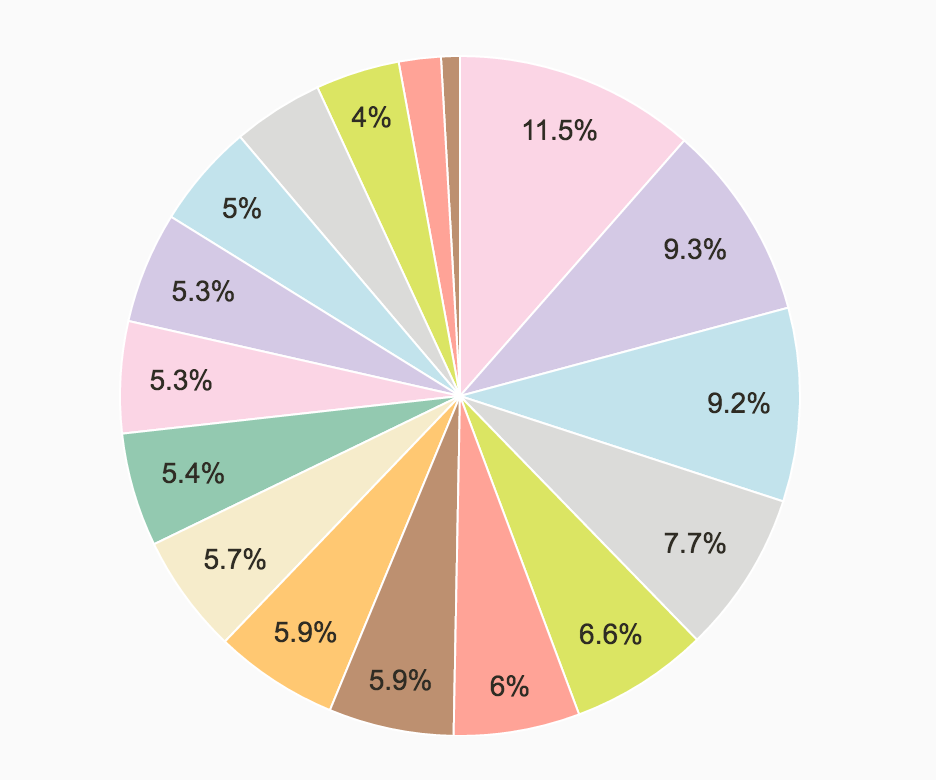
By the way, I know that 1 in 3 is not 25% – it’s 33.33333333333%

372. The Importance of Anecdotes in English / Narrative Tenses / Four Anecdotes

This episode of the podcast is all about telling anecdotes in English. Anecdotes are little stories about our experiences that we share while socialising. It’s important to have a few anecdotes of your own and to know how to tell them properly. In this episode I’m going to give you some advice for how to tell an anecdote and then you’re going to listen to some true anecdotes told by members of my family that I recorded yesterday evening during dinner.

Small Donate Button[DOWNLOAD]

This episode is sponsored by italki. Speaking practice is very important in developing natural, fluent English and this is now really easy to achieve because with italki you can find plenty of native speakers and teachers to talk to, you can set your own schedule and you don’t even need to leave the house – you can do all of it from your own home. If you want to practise telling your anecdotes, do it in conversation on italki. They have lots of friendly and experienced teachers who are ready to help you to learn English your way. Go to http://www.teacherluke.co.uk/talk to get started and to get a voucher worth 100ITC when you get some lessons. OK, let’s get started!

I’m at my parents’ house for a few days. My brother and I are just taking a couple of days off and spending some time here doing the usual things like enjoying the fresh air, talking to my parents and taking advantage of our mum’s cooking.

Yesterday evening we were eating dessert at the end of dinner and we started talking about anecdotes. I think I asked everyone, “Do you have any anecdotes?” I asked them to think of an anecdote they’d told before. We were about to start when I realised that it might be a good idea to record the  talking, so I quickly got my audio recorder and then recorded them telling those anecdotes. Each one is about 5 minutes long.

Before we just listen to their little stories, let’s consider anecdotes and how important they are in English.

From the archives: Another episode about telling anecdotes (episode 44) https://teacherluke.co.uk/2011/10/11/telling-anecdotes/ 

By the way, listen to this episode from the archives about telling anecdotes. I gave some advice for anecdotes and then we listened to a couple of funny ones. This episode develops the ideas I talked about in episode 44.

What are anecdotes and why are they important?

The Collins Online Dictionary defines an anecdote as a short, usually amusing account of an incident, especially a personal or biographical one.

So, essentially anecdotes are little true stories about ourselves. We are usually the protagonists in our anecdotes, and they’re usually told in informal social situations. Sometimes there are moments in our social interactions when we just start sharing little stories about things that have happened to us in our lives. This might happen at a dinner, or when you’re generally spending some extended time with other people. Anecdotes are a really common part of the way we socialise in English. They allow us to entertain the people around us, while letting them know a bit more about us.

Both of those things are vital in my opinion. If you’re trying to build a relationship with people it’s important to both entertain them and also share some personal information with them. Entertaining the people around you is important because it just makes them feel good. If you can make people feel good, they’re much more likely to trust you, to give something to you in return and also, it’s just good to entertain people around you. It’s just fun and enjoyable to hear about people’s experiences. Also, giving away some personal information is a good way of encouraging other people to do the same thing. That’s how you build trust. For building a relationship you can do two things: ask questions and be prepared to give away details about yourself. Anecdotes help you achieve the second one in a fun way.

So, how do you tell an anecdote in English?

Tips for Telling Anecdotes

  1. Find the right moment. Usually they take place in informal anecdote sharing sessions. Don’t just jam your story into a conversation. It should add something to the subject of the conversation. E.g. you might be sharing travelling stories, or stories about weird people you’ve met, or university stories, or dangerous experiences. That’s when it’s appropriate to add your story too. Maybe you’re talking about a particular subject and your anecdote will add something to that conversation. E.g. you might be talking about the difficulty of finding accommodation in your town, and you could tell the story of the crazy landlord you used to have. Perhaps someone has just told a story, and you’ve got one that relates to it too. All of those are good moments to introduce your anecdote. Only tell your story if it relates to the conversation you’re already having.
  2. Keep it short! Don’t get stuck in the details too much. Focus on the impact of the story. What emotion are you attempting to elicit in people? What is the feeling you’re trying to get across? Is it frustration, fear, danger, humour? Focus on communicating a feeling and try not to let the details get in the way. You need to communicate that feeling by explaining the right events. The best anecdotes allow the listeners to discover the same feelings as you did when you felt them, so describe the events and aspects of the situation that made you feel that way. Don’t get caught up in the details. Keep it pretty short and simple. Say the word “anyway” when you get stuck in the details and want to move on to the main stuff.
  3. Use the right narrative tenses. Usually we tell anecdotes in the past. That means you’ll be using past simple, past continuous and past perfect. Here’s a really quick and simple explanation of how you use those tenses. Past simple – this is the tense you use to explain the main actions in the principle part of the story. E.g. I saw a spaceship, I stopped my car, the spaceship flew above me, all the objects in my car started floating, I saw a bright flash of light, then I woke up lying down in the forest with a pain in my backside.” Past simple is usually used for short actions that happen one after the other. Past continuous – we use this to explain the situation at the time the main events happened. It’s for context. It sets the scene. E.g. “I was driving in my car through the countryside late one night when I saw something strange”. Also, it’s for moment by moment action, and it’s when two things happen at the same time. Past continuous is for the longer action of the two. The action starts, is interrupted by a shorter past simple action, and then may or may not continue. E.g. “I was trying to remember where I was when these guys in black suits turned up and started asking me questions.” Past perfect – this is for giving back story. Use past perfect to talk about events that happened before the main events of the story. E.g. I told the guys that I’d just been camping in the forest and that I’d got up in the night to go to the toilet and I’d lost my tent, and that’s why I was sleeping outside like that. I told them I hadn’t seen any aliens or anything like that.” Past perfect is a difficult one to notice when listening. The “had” is often contracted and can be impossible to hear. It’s possible to identify past perfect because of the use of past participles, e.g. “I’d seen it before” and “I saw it before” but when regular verbs are used it can be almost invisible. Compare “I’d finished” and “I finished”. They sound very similar. Sometimes ‘had’ is not completely contracted but pronounced using a weak form, like ‘/həd/’ e.g. “He had been there before”. It might also be part of a continuous form, like “He had been talking to someone else”.
    So, there are the narrative tenses – past simple, past continuous, past perfect. Past simple is the most common one – you could probably just tell the story with that one on its own, but adding the other two will give your stories more depth and range. Think about how you use these three tenses when describing events in the past.
  4. Tell us how you felt. That’s pretty simple. Just give us some emotional content.
  5. Use direct speech. Don’t worry about using reported speech, just use direct quotes. E.g. “He said “What are you doing here?” and I said “I’m just camping!” and they both said “Where’s your tent?” and I said “It got stolen in the night, or I lost it, I can’t remember”. I don’t think they believed me but they told me to be careful and to go home.
  6. Introduce your story with a quick sentence, like “I got abducted by aliens once” or “I saw a weird thing once” or “That sounds like something that happened to me once”. That’s generally a sign that you’ve got a little story to tell. However, if people aren’t really listening, don’t worry about it, this might not be the moment for your story.
  7. When someone has just told a little story, ask a few questions or respond to it in some way. Show some appreciation of the anecdote – like, “Oh my god I can’t believe that!” or “Wow, I can’t believe that you got abducted by aliens!”
  8. Try to make it quite entertaining! If the story doesn’t have much entertainment value, keep it extra short. You can exaggerate the story a bit, but don’t lie, that’s just deceptive. For example, don’t just make up a clearly fictional story about being abducted by aliens. Obviously, it should be very much ‘based on a true story’. Repeating anecdotes a few times is quite common. In fact, people carry anecdotes with them through their lives and repeat them again and again. You probably have a few experiences that you’ve described a few times – they’re your anecdotes. Try converting them into English, and it’s ok to practise those anecdotes a few times because you’re learning the language. Think about experiences you’ve had in your life – how would you describe them fairly quickly in conversation, focusing on the main events and how they made you feel at the time?
  9. Show us when the story is finished. Typically we might say “That’s what happened.” or “And that’s it” or even “That’s my alien abduction story.” It’s nice if your anecdote can end with a funny line or a punchline, but that’s difficult. It might also be good to say what you learned from your experience.

Now, let’s hear my family’s anecdotes shall we? (yes)

By coincidence, all these anecdotes relate to meeting strange people and most of them involve some element of danger (in the case of the boys’ stories) or embarrassment in my Mum’s story.

Imagine you’re at the dinner table with my Mum, Dad and brother. As you listen, think about the things I’ve just mentioned, and try to notice them. You could listen to this episode a few times. Try to notice different things I mentioned about telling anecdotes. Which anecdote do you think is the best? Why is it a good one?

Here are some key points to watch out for.

  • Narrative tenses used – in particular, can you hear when past perfect is used? It’s only used in 3 out of the 4 stories. Watch out for past continuous to set the scene. Is that one used in every story?
  • When someone says “anyway” in order to avoid getting caught in the details
  • What is the main feeling that the person is trying to communicate? Is it danger, embarrassment, weirdness?
  • How does the anecdote end?
  • Any new vocabulary?

I’ll let you listen to the anecdotes, and then I’ll deal with some vocabulary and make any other points afterwards.

Mum’s Anecdote – Meeting the King of Tonga

(Tonga is a Polynesian kingdom of more than 170 islands, many uninhabited)

*some past perfect is used to explain what the king had been doing before mum arrived

It’s going to fall very flat = it’s going to fail to have the intended effect. E.g. if a joke falls flat, it doesn’t make anyone laugh. If a story falls flat, it is not impressive or amusing.

It’s been built up too much = We say this when people’s expectations have been raised. To ‘build something up’ means to raise people’s expectations of something. You’d say this before telling a joke if you feel like everyone’s expectations have been raised. E.g. “What’s this Russian joke? I’ve heard you talking about it a lot, so it must be amazing.” “Well, it’s been built up too much now, it’s just going to fall flat.” or “Have you seen the new Spielberg film Bridge of Spies, oh my god it is amazing!” “Don’t build it up too much!”

I was nothing to do with it = if you have nothing to do with something it means you are not involved or connected to anything at all. E.g. “Mr Thompson, I want to talk to you about the bank robbery that occurred in the town centre last year.” “Bank robbery? I had nothing to do with it officer, I promise!” or simply “There was a royal visit happening, but I had nothing to do with it. I was just there to pick up my husband.”

I was just a hanger-on = a hanger-on is someone who just hangs on. This is someone who is nothing to do with what’s happening but they just hang around. E.g. musicians often have hangers on. These are people that hang around the band even though they’re not contributing to the show at all. They’re just hanging on because it’s cool or fun to be with the band.

I was skulking in the corner = to skulk means to kind of hide or keep out of sight, often in a slightly cowardly way.

He beckoned to me = to beckon to someone is to wave someone over to you with your hand. It’s to do a motion with your hand which encourages someone to come to talk to you.

He was eyeing her up = this means to look at someone because you fancy them – to look at someone with sexual interest. E.g. the king of Tonga was eyeing up my Mum all evening.


James’ Anecdote – Hastings Story

a skate park = a place designed for skateboarding

the ramp’s in the church = a ramp is a thing for skateboarding on. It has sloped sides so skaters can go up and down on it

a hog on a spit = a hog is a pig, and a spit is a stick that goes through the pig, suspending it above a fire

we had too good a time = we had a good time – but if you want to add ‘too’ you need to say “we had too good a time” not “we had a too good time” – this works with the structure in general. “It was too big a pizza for me to eat” or “It was too long a journey to make at that time of night”

I was too drunk – not in a lairy way = to be lairy means to be aggressive and anti-social. It happens when some people get drunk. They get lairy.

I’m bigger than him, I can take him = to ‘take’ someone means beat them in a fight

We crashed out = to crash out means to fall asleep, usually quickly and often in a place where you don’t usually sleep.

I’ve painted everything in hammerite http://www.hammerite.co.uk/ = hammerite is a kind of metallic paint

He was coming round = to come round here means to wake up, or come back to consciousness

I didn’t get interfered with = to interfere with someone could mean to touch them in a sexual manner

*just past simple


Dad’s Anecdote – Hitchhiking in Italy

*all the narrative tenses used

We got a few good lifts = a lift is when someone takes you somewhere in a car. E.g. “Could you give me a lift to the station?”

This car pulled up = this is when a car stops by the side of the road (also – pull over)

He was a slightly dodgy character = dodgy means untrustworthy or suspicious

The car broke down = stopped working

They turned on him and said “What are you doing?” = to turn on someone (not turn someone on) means to suddenly start criticising or attacking someone. In this case, there were curious neighbours listening to the argument and after a while they turned on the guy – they decided that he was wrong and they started criticising him

I managed to jump in and grab the keys from the ignition = to manage to do something (this is an important verb structure) – also ‘the ignition’ is the part where you put the keys in order to start the car, e.g. “You left the keys in the ignition”

I dangled the keys over a grating / a drain = to dangle something over something is to hold something in the air so that it swings from side to side slightly. E.g. We sat on the edge of the bride with our legs dangling in the air.


Luke’s Anecdote – Liverpool StoryLEPcupPOLARIOD

*Includes quite a long passage with past perfect when I described what had happened to the man before he arrived at our front door.

There was some sort of commotion going on in the hallway = a commotion means a period of noise, confusion or excitement

He ran through all the alleyways = alleyways are passages between or behind houses

That’s it for vocabulary!

Which anecdote did you like the best, and why?

[socialpoll id=”2380425″]

371. In Conversation with Rob Ager from Liverpool (PART 2: Film Analysis / Hidden Meanings / Stanley Kubrick / Conspiracy Theory)

This is part 2 of my conversation with Rob Ager from Liverpool, who makes documentaries about films and publishes them himself on his website Collative Learning. If you haven’t heard part 1 yet, you should check that out before listening to part 2. In this conversation we talk about Rob’s approach to film analysis, hidden meanings in films, the work of Stanley Kubrick and the conspiracy theory about the moon landing. More details below.

Small Donate Button[DOWNLOAD]

Click here to visit Rob Ager’s website collativelearning.com

In part 1 we talked about Liverpool and what it’s really like to live there. Then we talked about how he developed his approach to film analysis. In part 2 we talk about films in more detail, including some of the films which struck a chord with him when he was younger, and films which have inspired him to make his analysis videos. We focus on the work of Stanley Kubrick, a filmmaker whose work has really fascinated Rob over the years. We also discuss the idea that directors add hidden messages into their work, and how this is sometimes interpreted wrongly by viewers and critics. We also discuss the so-called conspiracy theory about Stanley Kubrick and the moon landing, and whether there are hidden messages about this in the film The Shining.

Links & Videos

Rob’s website http://www.collativelearning.com

Some interesting videos from Rob’s YouTube channel

https://www.youtube.com/watch?v=hcxLFZdZPw0
10498412_657057634389359_4019296035620832718_o

370. In Conversation with Rob Ager from Liverpool (PART 1: Life in Liverpool / Interest in Film Analysis)

Today on the podcast I’m talking to Rob Ager from Liverpool, who is probably best known for his film analysis videos on YouTube in which he discusses classic Hollywood thrillers, sci-fi and action movies in quite astonishing levels of detail, often focusing on deep psychological and political themes and hidden messages that most viewers probably wouldn’t even notice. His videos are carefully constructed documentaries, made for educational purposes and all of them feature a voice-over commentary by Rob in which he analyses the film and gives his observations.

Small Donate Button[DOWNLOAD]

Click here to visit Rob Ager’s website collatedlearning.com

I think I first came across Rob’s work on YouTube about 5 or 6 years ago. Sometimes I start watching YouTube and I get sucked into a kind of YouTube worm hole. That’s where you start watching one video, and that leads you to watch another one and then another one and eventually you find yourself watching something really fascinating and unexpected and that you wouldn’t normally have come across. I think that’s what happened with Rob’s videos. I think I first came across a short documentary he made about a horror movie called The Thing by John Carpenter, which is one of my favourite films. It’s really scary, tense and well directed, and it has a terrifying monster in it. Also it has a complicated story line which creates an eerie sense of paranoia that invites the viewer to speculate on who is or who isn’t a monster. It was really interesting to listen to Rob talking about The Thing in so much detail and it made me think about the movie in ways that I hadn’t considered before.

Then after that I kept noticing other videos by Rob and I would always watch them with interest. He has videos about The Matrix, Star Wars, The Shining, Alien and more.

Sometimes I find his comments to be a bit too specific, like he is perhaps over-analysing the films, but then again I think this is what’s great about movies – that everyone can interpret them in any way they want – and that a film might mean one thing to you, but mean a completely different thing to someone else. Even the director of the film might have a very specific message in the movie, that most of us don’t even notice. I think most modern film makers understand these ideas and they often leave their movies open to interpretation. Think, for example about the ending of Inception starring Leonardo DiCaprio – what does it really mean? We’re supposed to imagine and discuss our own interpretations of it, and I think it’s one of the strengths of the film and one of the reasons it is so popular. Everyone can leave the movie with their own theory on what it was about and what had happened at the end. Rob Ager takes this principle – that there are multiple readings of a movie – and really runs with it in his documentaries, suggesting that many of these great films that we love could in fact be about political events in the real world, our deep desires and psychological motivations or even about hidden power structures.

Another interesting thing for me is that Rob comes from Liverpool. He’s a scouser (that’s the word for people who come from Liverpool) and he speaks with a scouse accent, which really reminds me of the people I used to meet, talk to and work with when I lived in Liverpool years ago. The Liverpool accent is really distinctive, and I always want to feature different British accents on this podcast, so on this one you’ve got the chance to get used to listening to a scouse accent, or Liverpool accent.

Also, I think Liverpool is a fascinating city and not enough people know about it. Most people know The Beatles or Liverpool and Everton football clubs, but there’s more to Liverpool than that. I’m hoping that Rob will tell me a few things about what it’s really like to live and grow up in this important English city.

His website – CollativeLearning.com reveals all sorts of interesting things – like that fact that Rob is a filmmaker himself and he is very prolific with his analysis videos. He has loads of documentaries which you can download from the website. What becomes clear after reading and watching his work is that Rob is a very observant and articulate person with a great interest in film, but he is also knowledgeable about a wide range of academic theories and he incorporates ideas from psychology, sociology and philosophy in his film analysis. All of that reminds me a lot of the things I read and wrote about while doing my Media & Cultural Studies degree at university in Liverpool. What’s also notable about Rob though is that he has received no formal academic education or training in all of these subjects – he’s completely self-educated.

I’ve never spoken to Rob before, and I’m recording this introduction before our interview, which is due to start in just a few moments. I’ve got no idea how the conversation will go or what directions our conversation will take but I really hope it’s an insightful and engaging listening experience and that Rob and I get on with each other. I suggest that you listen out for differences between my standard Southern British RP accent and Rob’s accent, and let’s see what kind of vocabulary emerges from our talk.

Alright, it’s time to speak to Rob now. So, here we go.

*Conversations starts (after I remembered to press ‘record’ on my device)*

Links & Videos

Rob’s website http://www.collativelearning.com

Some interesting videos from Rob’s YouTube channel

https://www.youtube.com/watch?v=hcxLFZdZPw0

10498412_657057634389359_4019296035620832718_o