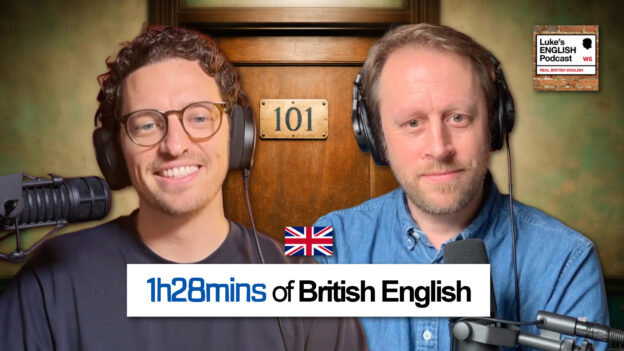
[980] Practise listening to British English conversation and enjoy some complaining, ranting and funny anecdotes in this episode based on the concept of a popular BBC TV chat show. My guest is Charlie Baxter from The British English Podcast. Charlie has chosen 3 things which he wants to be locked inside the mythical “Room 101” 🚪 an imaginary place where all the things you hate in the world are stored forever. What would Charlie like to remove from the world to be kept inside this room? And what is the shocking revelation about a certain popular British English YouTuber 👩🏫that could break the internet? 🤔
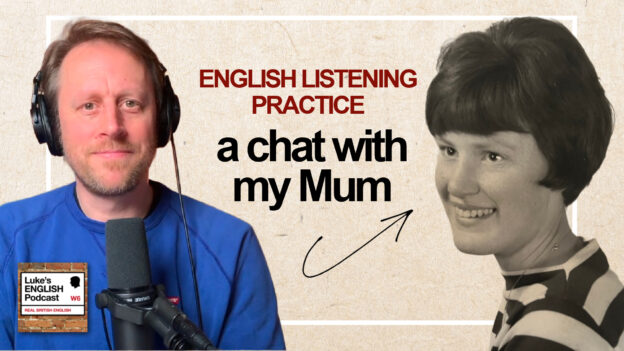
[977] Recently I visited my parents at their home, and while I was there I took the time to record conversations with them both. This first one is with my mum. I asked her questions about her life story, our family history, her memories of growing up and so many other things that I was curious about. The result is this recording. I hope you will find that it is not only good for your English listening practice, but also fascinating and absorbing as a piece of personal history. Full transcript available.
[972] I talk with multilingual actor Ivan Doan about his multicultural background, his learning of languages and his work as an actor. Ivan shares his insights and experiences of learning English, dealing with different accents in film & TV roles, and the importance of mindset and discipline in his life. There are plenty of language learning insights in this episode, which I summarise at the end. Full transcript available.
An 11-point list of practical advice for learning English inspired by this conversation.
1. Learning through doing, not just studying
Use English for real things. Ivan’s English really improved when he started making projects in English (web series, acting work, talking to people), not just studying grammar.
Make English the tool, not the subject. Start a small project: a vlog, a diary, an Instagram account, a DnD group, movie scene re-enactments – anything that requires English.
Theory helps, but it’s not the engine. Grammar explanations are useful, but they’re not what makes you fluent. Real communication is.
2. Multimodal learning: use your whole body & brain
Don’t reduce English to rules + word lists. When Ivan was with the Mormons or on set, he learned from body language, tone of voice, facial expressions, rhythm, context, not just words.
Watch people, not just subtitles. When you watch something in English, pay attention to:
how people look at each other
when they pause
what their hands/face are doing when they say something important
Combine skills. Listen + read + speak + move. For example, repeat a line while copying the actor’s body language and facial expression.
3. Listening & repetition are superpowers
Re-listen on purpose. Take a podcast episode or YouTube clip and:
Listen once for general meaning.
Listen again and note unknown words/phrases.
Look them up.
Listen a third time and catch those items in context.
Notice “repeat offenders”. If a word or chunk keeps appearing, it’s a sign: you probably need it. Put it on a list.
Make targeted vocab lists. Like Ivan did for filmmaking, you can make lists for your world: tech, business, medicine, design, gaming, etc.
4. Discipline beats talent
You don’t need to be “gifted at languages”. Ivan’s message is clear: people think he’s “special”, but in reality, discipline and repetition are doing most of the work.
Be stubborn. Let it bother you (in a good way) that you don’t understand a phrase yet. Go back to it. Again. And again.
Small, realistic goals. For example:
“I want to be able to have a 10-minute small-talk conversation without switching to my language.”
“I want to understand one specific podcast episode without subtitles.”
“I want to tell one story about my life in English clearly.”
Basic conversation – you can talk about everyday things.
More advanced conversation – opinions, stories, feelings, more nuance.
Improvisation – you can react in real time with no preparation.
6. Accents, rhythm & sounding natural
First: learn to hear the accent. You can’t produce what you can’t hear. Choose one accent (e.g. London, General American) and really listen to it.
Find your “accent twin”. Pick a native speaker:
similar age
same gender
whose voice feels close to your natural voice Use them as your model.
Create an “accent map”. Notice:
Which vowels are different from yours?
How do they stress words?
What is the rhythm (fast/slow, chunky/smooth)?
Rhythm & word stress are often more important than perfect vowels. BAna-na vs baNAna can be the difference between confusion and clarity.
Shadowing works. Play 1–2 sentences, then:
say them with the speaker,
match their timing, stress, and melody,
repeat several times until it feels comfortable.
7. It’s okay to exaggerate (caricature as a training tool)
Overdo it first, then calm it down. Like an actor, you can:
exaggerate the British or American intonation
really push the stress and melody Then slowly bring it back to something natural.
This is not “fake”; it’s training. As with acting, you push beyond your comfort zone, then refine.
8. Identity, culture & letting yourself change
To speak like an English speaker, you must allow yourself to “borrow” a new identity. That might feel weird: “This isn’t me.” But that flexibility is part of real fluency.
Different cultures, different communication rules. British politeness isn’t necessarily “fake”; Russian directness isn’t necessarily “rude”. They’re different systems.
Adapting ≠ betraying your culture. You can still be 100% you and also learn to play by local rules when you’re speaking English.
9. Talk to yourself – a lot
Self-talk is powerful, not crazy. Walk around your flat narrating what you’re doing in English, or:
rehearse future conversations,
re-tell a story you heard,
argue with yourself about something.
The goal is to stop translating. Like Ivan said, it’s like changing gears in a car: once you’re “in English gear”, you just drive.
10. Treat English like a role you inhabit
Think like an actor. When you speak English:
step into the “role” of an English-speaking version of you,
use your voice, but with English rhythm and intonation,
add the body language and facial expressions that match.
Use emotion. Don’t just say the words; feel them. This makes you remember the language and sound more authentic.
11. Inspiration: you can do this
Messages implied by Ivan’s story:
You can start with school English that isn’t great and end up working in English internationally.
You don’t need a perfect method; you need consistent action, curiosity, and the courage to interact.
Being “from somewhere else” is not a weakness; it’s often your superpower – a different perspective, more empathy, and a richer identity.
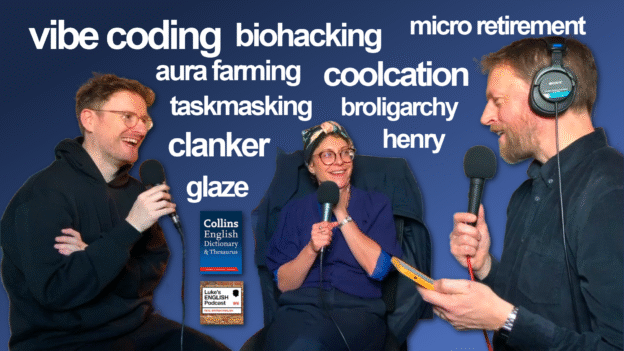
[968] The Collins Dictionary Words of the Year is a list of 10 words which capture the cultural zeitgeist – the spirit of the times that we are living in now. These new words, picked by Collins, reflect issues that people have been talking about over the last 12 months. In this conversation, Amber, Paul & I discuss the impact of AI, the ways social media is affecting people’s behaviour, how people are using technology to control their health, the strange habits of tech leaders, and more. Pick up words to describe new trends, and listen to conversation about big issues in society. Full transcript available.
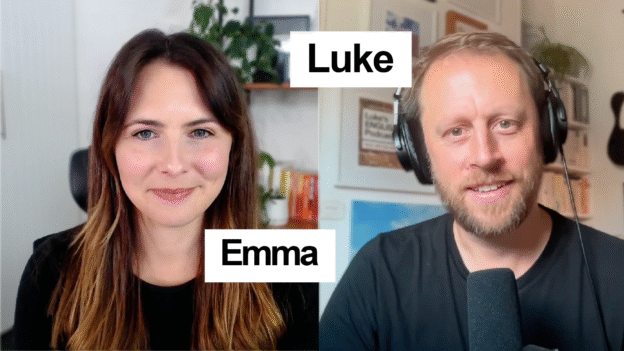
[961] Emma Jakobi is the host of MmmEnglish on YouTube, and now the online community Hey Lady! In this episode Emma joins me for a chat about living on the remote Western coast of Australia, “blowing up” on YouTube, her decision to step away from MmmEnglish to focus on Hey Lady! Also, her thoughts on the rise of AI, and some fun facts about singing in the shower, her vintage Lexus car and her phobias of public speaking (surprising) and leeches (understandable). Full transcript available.
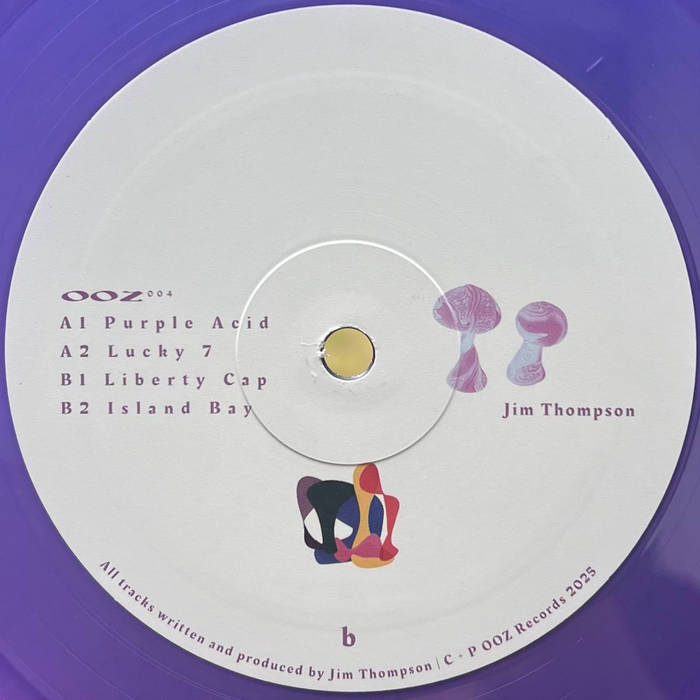
My brother James joins me again on the podcast for a rambling chat about diverse topics such as: trousers 👖 sandwiches 🥪 gangster films 🍿 the work of Edgar Allan Poe 📖 vinyl and cassettes 🎵 memories of living together 🎮 annoying behaviour 😤 and English words and grammar that irritate people 😠 plus James has a new vinyl EP out now on Ooz records. Transcript available 📄.
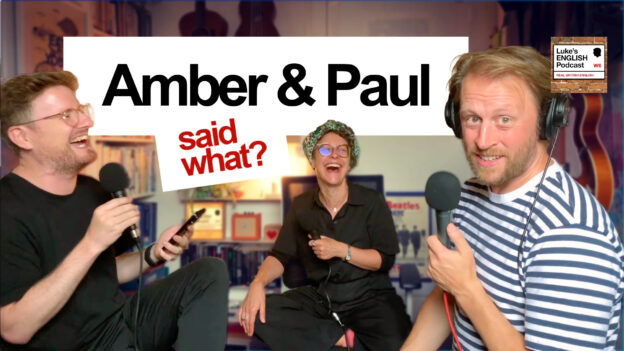
The Pod-Pals are back on the podcast for another catching up session! Recorded just after the summer holidays, there is talk of Paul’s hatred of the beach 🏖️, the English tradition of building epic sandcastles 🏰, other famous people with our names (including an “evil” teacherluke 👿) and what AI gets completely wrong about us 🤦. PDF transcript available. (a.k.a Catching Up with Amber & Paul #15)
Peter, my old flatmate from Japan, is back on the podcast after his previous appearance 11 years ago! We chat about travelling experiences, teaching English in Malaysia and Japan, dealing with jet lag and culture shock, doing stand-up comedy abroad, and some of the funny, strange, and even weird experiences we’ve had while travelling. A relaxed, wide-ranging conversation full of stories, laughs, and cultural insights.
A return to Luke’s Film Club with a conversation about one of the funniest and most controversial films of all time, also voted one of the UK’s favourite films. Antony and I discuss the film’s writing, production, story, famous scenes, deeper meanings and acting by the various members of the Monty Python team. Transcript available.
It’s my birthday 🥳 so join me for a relaxed and light-hearted ramble, first with some comments about recent episodes and other podcast housekeeping, and then a series of talking points with the Spinning Wheel of Random Questions ☸️ including bits about how being an English teacher affects my social interactions 💬, the infamous ice-cream wars of Ice-Cream Island 🏝️, leading an army of English learners into battle on the back of an Elephant 🐘, the title of my (hypothetical) autobiography 📖, and my age revealed at the end of the episode. Full transcript available 📄.
This website uses cookies to improve your experience while you navigate through the website. Out of these, the cookies that are categorized as necessary are stored on your browser as they are essential for the working of basic functionalities of the website. We also use third-party cookies that help us analyze and understand how you use this website. These cookies will be stored in your browser only with your consent. You also have the option to opt-out of these cookies. But opting out of some of these cookies may affect your browsing experience.
Necessary cookies are absolutely essential for the website to function properly. These cookies ensure basic functionalities and security features of the website, anonymously.
Cookie
Duration
Description
cookielawinfo-checkbox-analytics
11 months
This cookie is set by GDPR Cookie Consent plugin. The cookie is used to store the user consent for the cookies in the category "Analytics".
cookielawinfo-checkbox-functional
11 months
The cookie is set by GDPR cookie consent to record the user consent for the cookies in the category "Functional".
cookielawinfo-checkbox-necessary
11 months
This cookie is set by GDPR Cookie Consent plugin. The cookies is used to store the user consent for the cookies in the category "Necessary".
cookielawinfo-checkbox-others
11 months
This cookie is set by GDPR Cookie Consent plugin. The cookie is used to store the user consent for the cookies in the category "Other.
cookielawinfo-checkbox-performance
11 months
This cookie is set by GDPR Cookie Consent plugin. The cookie is used to store the user consent for the cookies in the category "Performance".
viewed_cookie_policy
11 months
The cookie is set by the GDPR Cookie Consent plugin and is used to store whether or not user has consented to the use of cookies. It does not store any personal data.
Functional cookies help to perform certain functionalities like sharing the content of the website on social media platforms, collect feedbacks, and other third-party features.
Performance cookies are used to understand and analyze the key performance indexes of the website which helps in delivering a better user experience for the visitors.
Analytical cookies are used to understand how visitors interact with the website. These cookies help provide information on metrics the number of visitors, bounce rate, traffic source, etc.
Advertisement cookies are used to provide visitors with relevant ads and marketing campaigns. These cookies track visitors across websites and collect information to provide customized ads.