Category Archives: Family

376. A Game of Mini Golf and a Pint (with James)

Hello everyone, here is another episode of this podcast for people interested in listening to authentic conversations and learning British English. I’ve been very prolific recently because I’ve had a bit of time off and I’ve uploaded loads of episodes in quite a short period, but this is going to stop very soon when I go away on holiday for a few weeks. While I’m gone you can listen to all of this new content, or go back into the extensive episode archive to listen to some of the older content.

Small Donate Button[DOWNLOAD]

So, what about this episode. I’ve been staying at my parents’ house in Warwickshire, in England for a few days, enjoying the company of my family and spending time in the sunshine. When the weather is good here one of the things we like to do is go for a walk in the local park, have a look at the local castle and play 18 holes of mini golf. Technically mini-golf is for kids but it’s a lot of fun to play if you’re an adult and you’ve got nothing better to do. I expect you’re aware of the concept of mini-golf. Essentially, it’s like normal golf but mini. There are typically 18 holes. The aim is to put the ball in the hole using the fewest shots possible. The problem is that each hole has lots of obstacles in the way, like bridges, slopes and windmills.

So in this episode my brother James and I decided to go for a game of mini golf and we thought we’d record a podcast while doing it. So, why not join us as we walk through a historic English town, play some golf and then go for a pint of beer in a local pub.

During this episode you’ll hear us talk about a number of different topics, including some history of medieval England, some details about our game of golf, some of the things we can see in the park, some descriptions of the pub, the beer and the crisps, and some comments about what it’s like growing up and living in the countryside versus living in an inner city area like South London. Eventually our conversation turns to slightly more serious things, including the riots that happened exactly 5 years earlier in parts of London. That was a serious series of social disturbances which shocked and confused the nation. Why did so many young people living in cities decide to start vandalising and looting their local areas? Was it just basic criminality or was it a symptom of a bigger problem in our country? We talk about that a bit, and of course there’s some mention of Brexit and why people voted to leave the EU, but then James decided it was all getting a bit too serious, and he’d rather just enjoy his beer, so we stopped. We then get interrupted by a wasp, which is quite typical for an English beer garden during August. At the end you’ll hear James explaining why he sometimes feels awkward about appearing on the podcast, especially when we end up talking about serious things. You’ll see that he doesn’t like to take himself too seriously and he seems to think that nobody is interested in hearing what he has to say about big subjects like the London riots. Now, I wonder if you agree with that, or if you in fact find it interesting to hear him talking about such big topics, even though he’s no expert. I look forward to reading your responses to that question.

Anyway, before we get to all that, let’s start listening to the recording I made the other day on a sunny afternoon in Warwick as James and I head down towards the park to play a game of mini golf. I’ll talk to you again at the other end of this recording, but now let’s get started. Oh and by the way I would like to just warn you that there is a little bit of swearing in this episode, and a couple of instances of us talking with our mouths full. I will let you decide which one you find more offensive – swear words or talking with your mouth full. OK, so without any further ado, let’s go to the park.

*Recording begins*

Mini golf
James and Luke go to the pub
James’ final word

*Recording ends*

So, there you go – that’s the rather anti-climactic ending of that conversation. It ended in the living room, with my brother pacing around, unable to relax and stressing that he sounded too serious and pompous when talking about issues on the podcast. I sort of agree – I also enjoy talking about more light-hearted subjects and having a laugh but I also think it;s worthwhile taking about the more serious stuff from time to time, especially when it’s about real things, like the genuine experience of living in the UK. But also, we’re not experts so that does get a bit tricky sometimes.

But I’m interested to know what you think. Are you interested in hearing my brother’s opinions on things like the London riots and Brexit? Does he need to worry about sounding arrogant on the podcast, or is it genuinely interesting to listen to. Let us know in the comment section. I would very much like to show him what you really think.

That’s it for this episode. By the way, I’ve done loads of episodes recently. I’m going to talk to you about this in another quick episode, but the main reason for that is that I’ve had a little bit of time off and so I’ve been enjoying making a few episodes featuring conversations with my family and friends, but this is going to stop soon because I’ll be going away on holiday for a few weeks, so my thinking is that you can listen to all these new episodes while I’m away.

I’ll talk to you about that a bit more in a quick episode, probably later today, and then that’ll be the last episode for a little while  until I come back from my break.

As ever, sign up to the mailing list to get instant access to the page for the episode for notes, vocab, transcripts and links etc.

I’ll speak to you soon.

Bye.

Luke
2048

373. Who Wants to Be Good at English? (with Rick Thompson)

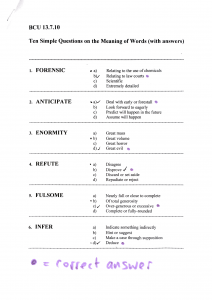
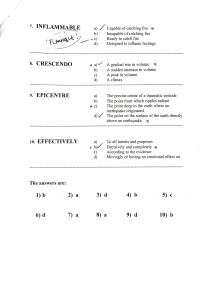
This episode is a game show hosted by my Dad, with me as the contestant. The aim of the game is to see how many words I know. My Dad designed this quiz for his students of journalism at the university where he works sometimes. The quiz is specifically designed to highlight what he considers to be common misuses and misunderstandings of words. His opinion is that journalists writing and presenting on television should use words in exactly the right way, even if many people use those words to mean different things in general everyday use.

Small Donate Button[DOWNLOAD]
Frankly this is an evil game show, created by my evil father (a.k.a Darth Vader) and it is designed to make normal people fail, allowing him to then prove a point about using words correctly on TV. Listen to the episode to see how many questions in his evil quiz I got wrong and right! While you listen you can try to guess the correct answers too. Let’s see how many you get right. Can you beat me?

Check out my Dad’s questions (and answers) below.

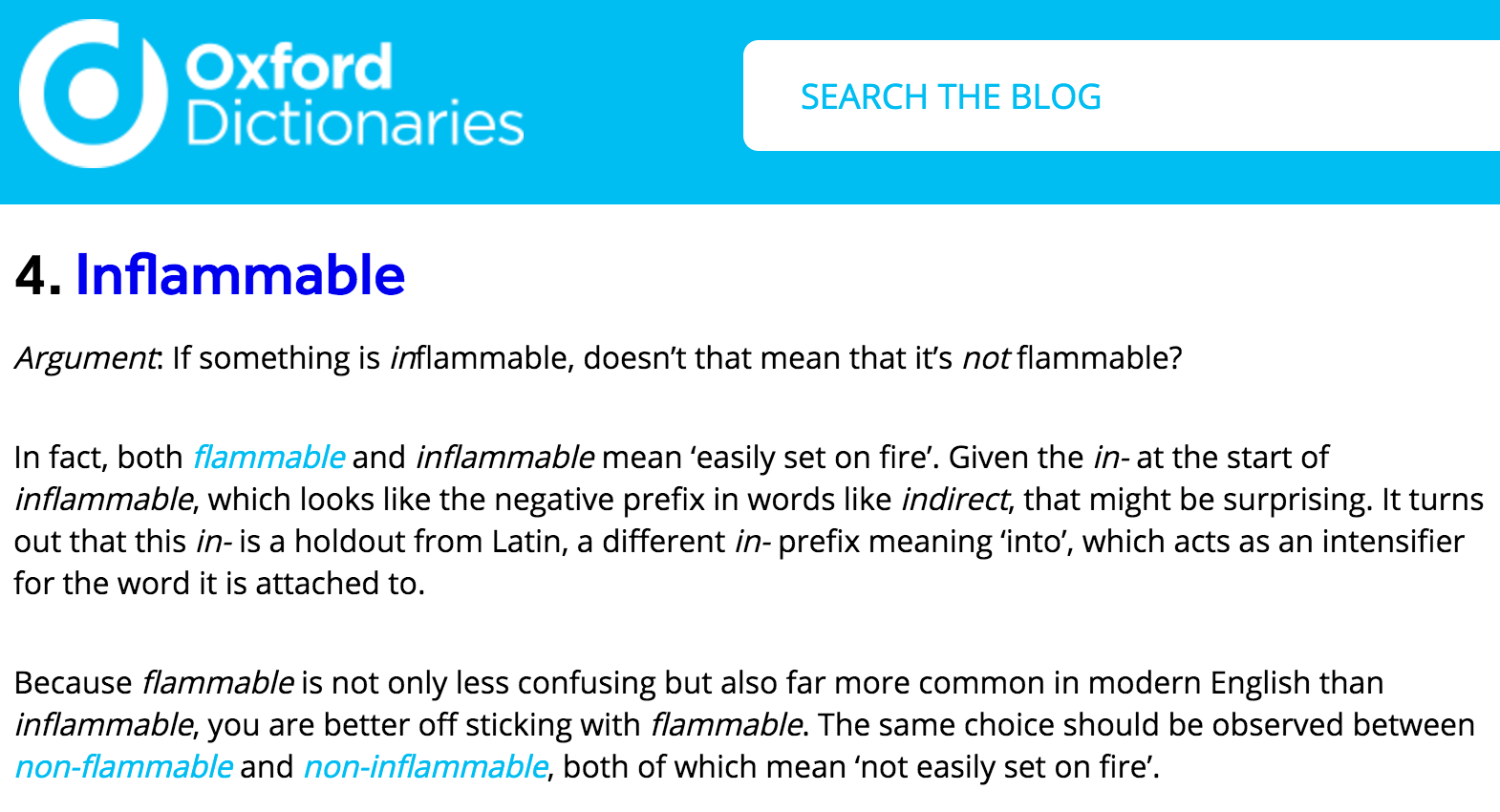
Screenshot from screen-shot-2016-11-25-at-11-47-13this page from OxfordDictionaries.com about the word ‘inflammable’.


2014-07-07_00022

By the way, I know that 1 in 3 is not 25% – it’s 33.33333333333%

372. The Importance of Anecdotes in English / Narrative Tenses / Four Anecdotes

This episode of the podcast is all about telling anecdotes in English. Anecdotes are little stories about our experiences that we share while socialising. It’s important to have a few anecdotes of your own and to know how to tell them properly. In this episode I’m going to give you some advice for how to tell an anecdote and then you’re going to listen to some true anecdotes told by members of my family that I recorded yesterday evening during dinner.

Small Donate Button[DOWNLOAD]

This episode is sponsored by italki. Speaking practice is very important in developing natural, fluent English and this is now really easy to achieve because with italki you can find plenty of native speakers and teachers to talk to, you can set your own schedule and you don’t even need to leave the house – you can do all of it from your own home. If you want to practise telling your anecdotes, do it in conversation on italki. They have lots of friendly and experienced teachers who are ready to help you to learn English your way. Go to http://www.teacherluke.co.uk/talk to get started and to get a voucher worth 100ITC when you get some lessons. OK, let’s get started!

I’m at my parents’ house for a few days. My brother and I are just taking a couple of days off and spending some time here doing the usual things like enjoying the fresh air, talking to my parents and taking advantage of our mum’s cooking.

Yesterday evening we were eating dessert at the end of dinner and we started talking about anecdotes. I think I asked everyone, “Do you have any anecdotes?” I asked them to think of an anecdote they’d told before. We were about to start when I realised that it might be a good idea to record the  talking, so I quickly got my audio recorder and then recorded them telling those anecdotes. Each one is about 5 minutes long.

Before we just listen to their little stories, let’s consider anecdotes and how important they are in English.

From the archives: Another episode about telling anecdotes (episode 44) https://teacherluke.co.uk/2011/10/11/telling-anecdotes/ 

By the way, listen to this episode from the archives about telling anecdotes. I gave some advice for anecdotes and then we listened to a couple of funny ones. This episode develops the ideas I talked about in episode 44.

What are anecdotes and why are they important?

The Collins Online Dictionary defines an anecdote as a short, usually amusing account of an incident, especially a personal or biographical one.

So, essentially anecdotes are little true stories about ourselves. We are usually the protagonists in our anecdotes, and they’re usually told in informal social situations. Sometimes there are moments in our social interactions when we just start sharing little stories about things that have happened to us in our lives. This might happen at a dinner, or when you’re generally spending some extended time with other people. Anecdotes are a really common part of the way we socialise in English. They allow us to entertain the people around us, while letting them know a bit more about us.

Both of those things are vital in my opinion. If you’re trying to build a relationship with people it’s important to both entertain them and also share some personal information with them. Entertaining the people around you is important because it just makes them feel good. If you can make people feel good, they’re much more likely to trust you, to give something to you in return and also, it’s just good to entertain people around you. It’s just fun and enjoyable to hear about people’s experiences. Also, giving away some personal information is a good way of encouraging other people to do the same thing. That’s how you build trust. For building a relationship you can do two things: ask questions and be prepared to give away details about yourself. Anecdotes help you achieve the second one in a fun way.

So, how do you tell an anecdote in English?

Tips for Telling Anecdotes

  1. Find the right moment. Usually they take place in informal anecdote sharing sessions. Don’t just jam your story into a conversation. It should add something to the subject of the conversation. E.g. you might be sharing travelling stories, or stories about weird people you’ve met, or university stories, or dangerous experiences. That’s when it’s appropriate to add your story too. Maybe you’re talking about a particular subject and your anecdote will add something to that conversation. E.g. you might be talking about the difficulty of finding accommodation in your town, and you could tell the story of the crazy landlord you used to have. Perhaps someone has just told a story, and you’ve got one that relates to it too. All of those are good moments to introduce your anecdote. Only tell your story if it relates to the conversation you’re already having.
  2. Keep it short! Don’t get stuck in the details too much. Focus on the impact of the story. What emotion are you attempting to elicit in people? What is the feeling you’re trying to get across? Is it frustration, fear, danger, humour? Focus on communicating a feeling and try not to let the details get in the way. You need to communicate that feeling by explaining the right events. The best anecdotes allow the listeners to discover the same feelings as you did when you felt them, so describe the events and aspects of the situation that made you feel that way. Don’t get caught up in the details. Keep it pretty short and simple. Say the word “anyway” when you get stuck in the details and want to move on to the main stuff.
  3. Use the right narrative tenses. Usually we tell anecdotes in the past. That means you’ll be using past simple, past continuous and past perfect. Here’s a really quick and simple explanation of how you use those tenses. Past simple – this is the tense you use to explain the main actions in the principle part of the story. E.g. I saw a spaceship, I stopped my car, the spaceship flew above me, all the objects in my car started floating, I saw a bright flash of light, then I woke up lying down in the forest with a pain in my backside.” Past simple is usually used for short actions that happen one after the other. Past continuous – we use this to explain the situation at the time the main events happened. It’s for context. It sets the scene. E.g. “I was driving in my car through the countryside late one night when I saw something strange”. Also, it’s for moment by moment action, and it’s when two things happen at the same time. Past continuous is for the longer action of the two. The action starts, is interrupted by a shorter past simple action, and then may or may not continue. E.g. “I was trying to remember where I was when these guys in black suits turned up and started asking me questions.” Past perfect – this is for giving back story. Use past perfect to talk about events that happened before the main events of the story. E.g. I told the guys that I’d just been camping in the forest and that I’d got up in the night to go to the toilet and I’d lost my tent, and that’s why I was sleeping outside like that. I told them I hadn’t seen any aliens or anything like that.” Past perfect is a difficult one to notice when listening. The “had” is often contracted and can be impossible to hear. It’s possible to identify past perfect because of the use of past participles, e.g. “I’d seen it before” and “I saw it before” but when regular verbs are used it can be almost invisible. Compare “I’d finished” and “I finished”. They sound very similar. Sometimes ‘had’ is not completely contracted but pronounced using a weak form, like ‘/həd/’ e.g. “He had been there before”. It might also be part of a continuous form, like “He had been talking to someone else”.
    So, there are the narrative tenses – past simple, past continuous, past perfect. Past simple is the most common one – you could probably just tell the story with that one on its own, but adding the other two will give your stories more depth and range. Think about how you use these three tenses when describing events in the past.
  4. Tell us how you felt. That’s pretty simple. Just give us some emotional content.
  5. Use direct speech. Don’t worry about using reported speech, just use direct quotes. E.g. “He said “What are you doing here?” and I said “I’m just camping!” and they both said “Where’s your tent?” and I said “It got stolen in the night, or I lost it, I can’t remember”. I don’t think they believed me but they told me to be careful and to go home.
  6. Introduce your story with a quick sentence, like “I got abducted by aliens once” or “I saw a weird thing once” or “That sounds like something that happened to me once”. That’s generally a sign that you’ve got a little story to tell. However, if people aren’t really listening, don’t worry about it, this might not be the moment for your story.
  7. When someone has just told a little story, ask a few questions or respond to it in some way. Show some appreciation of the anecdote – like, “Oh my god I can’t believe that!” or “Wow, I can’t believe that you got abducted by aliens!”
  8. Try to make it quite entertaining! If the story doesn’t have much entertainment value, keep it extra short. You can exaggerate the story a bit, but don’t lie, that’s just deceptive. For example, don’t just make up a clearly fictional story about being abducted by aliens. Obviously, it should be very much ‘based on a true story’. Repeating anecdotes a few times is quite common. In fact, people carry anecdotes with them through their lives and repeat them again and again. You probably have a few experiences that you’ve described a few times – they’re your anecdotes. Try converting them into English, and it’s ok to practise those anecdotes a few times because you’re learning the language. Think about experiences you’ve had in your life – how would you describe them fairly quickly in conversation, focusing on the main events and how they made you feel at the time?
  9. Show us when the story is finished. Typically we might say “That’s what happened.” or “And that’s it” or even “That’s my alien abduction story.” It’s nice if your anecdote can end with a funny line or a punchline, but that’s difficult. It might also be good to say what you learned from your experience.

Now, let’s hear my family’s anecdotes shall we? (yes)

By coincidence, all these anecdotes relate to meeting strange people and most of them involve some element of danger (in the case of the boys’ stories) or embarrassment in my Mum’s story.

Imagine you’re at the dinner table with my Mum, Dad and brother. As you listen, think about the things I’ve just mentioned, and try to notice them. You could listen to this episode a few times. Try to notice different things I mentioned about telling anecdotes. Which anecdote do you think is the best? Why is it a good one?

Here are some key points to watch out for.

  • Narrative tenses used – in particular, can you hear when past perfect is used? It’s only used in 3 out of the 4 stories. Watch out for past continuous to set the scene. Is that one used in every story?
  • When someone says “anyway” in order to avoid getting caught in the details
  • What is the main feeling that the person is trying to communicate? Is it danger, embarrassment, weirdness?
  • How does the anecdote end?
  • Any new vocabulary?

I’ll let you listen to the anecdotes, and then I’ll deal with some vocabulary and make any other points afterwards.

Mum’s Anecdote – Meeting the King of Tonga

(Tonga is a Polynesian kingdom of more than 170 islands, many uninhabited)

*some past perfect is used to explain what the king had been doing before mum arrived

It’s going to fall very flat = it’s going to fail to have the intended effect. E.g. if a joke falls flat, it doesn’t make anyone laugh. If a story falls flat, it is not impressive or amusing.

It’s been built up too much = We say this when people’s expectations have been raised. To ‘build something up’ means to raise people’s expectations of something. You’d say this before telling a joke if you feel like everyone’s expectations have been raised. E.g. “What’s this Russian joke? I’ve heard you talking about it a lot, so it must be amazing.” “Well, it’s been built up too much now, it’s just going to fall flat.” or “Have you seen the new Spielberg film Bridge of Spies, oh my god it is amazing!” “Don’t build it up too much!”

I was nothing to do with it = if you have nothing to do with something it means you are not involved or connected to anything at all. E.g. “Mr Thompson, I want to talk to you about the bank robbery that occurred in the town centre last year.” “Bank robbery? I had nothing to do with it officer, I promise!” or simply “There was a royal visit happening, but I had nothing to do with it. I was just there to pick up my husband.”

I was just a hanger-on = a hanger-on is someone who just hangs on. This is someone who is nothing to do with what’s happening but they just hang around. E.g. musicians often have hangers on. These are people that hang around the band even though they’re not contributing to the show at all. They’re just hanging on because it’s cool or fun to be with the band.

I was skulking in the corner = to skulk means to kind of hide or keep out of sight, often in a slightly cowardly way.

He beckoned to me = to beckon to someone is to wave someone over to you with your hand. It’s to do a motion with your hand which encourages someone to come to talk to you.

He was eyeing her up = this means to look at someone because you fancy them – to look at someone with sexual interest. E.g. the king of Tonga was eyeing up my Mum all evening.


James’ Anecdote – Hastings Story

a skate park = a place designed for skateboarding

the ramp’s in the church = a ramp is a thing for skateboarding on. It has sloped sides so skaters can go up and down on it

a hog on a spit = a hog is a pig, and a spit is a stick that goes through the pig, suspending it above a fire

we had too good a time = we had a good time – but if you want to add ‘too’ you need to say “we had too good a time” not “we had a too good time” – this works with the structure in general. “It was too big a pizza for me to eat” or “It was too long a journey to make at that time of night”

I was too drunk – not in a lairy way = to be lairy means to be aggressive and anti-social. It happens when some people get drunk. They get lairy.

I’m bigger than him, I can take him = to ‘take’ someone means beat them in a fight

We crashed out = to crash out means to fall asleep, usually quickly and often in a place where you don’t usually sleep.

I’ve painted everything in hammerite http://www.hammerite.co.uk/ = hammerite is a kind of metallic paint

He was coming round = to come round here means to wake up, or come back to consciousness

I didn’t get interfered with = to interfere with someone could mean to touch them in a sexual manner

*just past simple


Dad’s Anecdote – Hitchhiking in Italy

*all the narrative tenses used

We got a few good lifts = a lift is when someone takes you somewhere in a car. E.g. “Could you give me a lift to the station?”

This car pulled up = this is when a car stops by the side of the road (also – pull over)

He was a slightly dodgy character = dodgy means untrustworthy or suspicious

The car broke down = stopped working

They turned on him and said “What are you doing?” = to turn on someone (not turn someone on) means to suddenly start criticising or attacking someone. In this case, there were curious neighbours listening to the argument and after a while they turned on the guy – they decided that he was wrong and they started criticising him

I managed to jump in and grab the keys from the ignition = to manage to do something (this is an important verb structure) – also ‘the ignition’ is the part where you put the keys in order to start the car, e.g. “You left the keys in the ignition”

I dangled the keys over a grating / a drain = to dangle something over something is to hold something in the air so that it swings from side to side slightly. E.g. We sat on the edge of the bride with our legs dangling in the air.


Luke’s Anecdote – Liverpool StoryLEPcupPOLARIOD
*Includes quite a long passage with past perfect when I described what had happened to the man before he arrived at our front door.

There was some sort of commotion going on in the hallway = a commotion means a period of noise, confusion or excitement

He ran through all the alleyways = alleyways are passages between or behind houses

That’s it for vocabulary!

Which anecdote did you like the best, and why?

[socialpoll id=”2380425″]
365. BREXIT: 3 Weeks Later (A conversation with my Dad) The Rick Thompson Report

Hello! How are you doing? Today on the podcast I’m going to finish this series of episodes I’ve been doing about Brexit in the same way that I started it, by having a conversation with my Dad. Before you listen to that conversation I’m going to say a few words in the introduction and then highlight some vocabulary and phrases which you’ll hear in the main part of the episode.

[DOWNLOAD]

I’ve talked quite a lot about politics and Brexit recently because the events since the referendum have just been so huge. It’s been a strange time with lots of uncertainty, turmoil and changes.  It’s a weird time – what’s going to happen? Is this going to be a really costly and difficult couple of decades? Or is this a great opportunity for Britain?

No more Brexit episodes for a while

I’ve covered all of this in some detail already and I’ve had lots of good responses from you, which seems to show that you’ve found these episodes interesting, informative and useful for your English. But this is probably going to be the last time I talk about British politics and Brexit for a while, unless something else comes up in the news.

I should also say that there have been lots of other big events going on in the world, including the situation in Turkey with the recent attempt at a military coup, and the horrific truck attack in Nice the other day, not to mention other trending topics that the world is talking about, including this new Pokemon game which is not quite as innocent and trivial as it sounds. There are big stories going on all the time and they are worth talking about, but my podcast isn’t a BBC news programme or something so I’m not necessarily in a position to deal with absolutely every current topic of course, even though I would like to.

I’m talking about Brexit a lot because this is a subject that is very close to home for this podcast.

My Dad

So, it seems that you enjoyed listening to my Dad in episode 351. In fact, he’s got some big fans out there in LEPland it seems, judging by the comments I’ve read, and you’re right – he’s really articulate, well-informed and brilliant. So now you can have the pleasure of listening to more of his wise and down-to-earth coverage before I put the whole Brexit subject to bed for a while.

Comprehension Questions

Here are some questions which you can try to find the answers to in this episode.

What has happened since the UK voted to leave the EU?
What’s the state of the nation?
Will EU nationals be thrown out of the country?
Why did David Cameron resign?
Why did Boris Johnson then quit the leadership race?
Who is Theresa May, the new PM?
How did she become the PM?
What is the situation with the opposition party, Labour?
What’s going to happen next in the UK?
What 3 words did my Dad choose to describe how he feels about the situation?
Also, listen all the way to the end for the conversation to hear some of my Dad’s comments about football.
What are my Dad’s predictions for the 2016/2017 season in the FA Premiership?
What does he think of the new Manchester United manager Jose Mourinho?

Vocabulary

As I’ve said, my Dad is very articulate on this subject and he always manages to find exactly the right words to effectively express his ideas. As a result this conversation is a good example of clear spoken English and is very rich in vocabulary. I suggest that you try to notice specific expressions that are used. To make that a bit easier for you I have picked out some words and phrases from the conversation and I’ve put them in a list on the page for this episode. I’ve picked these ones out because I think that you might either not be familiar with them or because they’re nice fixed expressions which you could add to your vocabulary. I’m not going to explain them now because there isn’t time, but I will now read them out to you before playing the conversation.

The point is that I’m encouraging you to notice these phrases in the episode. Just try notice them and how they come up naturally. Whenever you hear a phrase you can make a mental note of it. If you want to actually see the phrases written down in context then check out the page for this episode and you’ll see them all written there for you. You can then check the phrases in an online dictionary – I recommend Oxford or Cambridge’s online dictionaries (you’ll need to select an English-English dictionary or English learner’s dictionary), study the vocab and then add them to your word lists.

So, here we go – here are the phrases I’ve selected. Try to listen out for these phrases as they come up in the conversation.

Vocabulary List

it’s so self-evident (to be self-evident)
to throw out the EU nationals who have settled in the UK (to throw someone out)
Some down-to-earth reasons for staying in the EU (down-to-earth)
Legitimising extreme people who say immigrants should go home (to legitimise someone/something)
An increase in hate-crime (hate-crime)
To assimilate immigrants into the country (to assimilate someone into something)
A gender balance at senior levels (gender balance)
To steady the ship (to steady the ship)
Things have been happening at breathtaking speed (at breathtaking speed)
There might be an economic crisis if we fall into a recession (to fall into a recession)
Economic repercussions (repercussions)
Cameron staked his entire reputation on the result of the referendum (to stake your reputation on something)
The candidates started fighting like rats in a sack (fighting like rats in a sack)
They started stabbing each other in the back (to stab someone in the back)
Michael Gove dumped Boris Johnson (to dump someone)
She was persuaded to step aside (to step aside)
Gove stepped down as well (to step down)
A despicable story from a despicable newspaper (despicable)
They splashed the headline on the front page (to splash a headline on the front page)
Scotland will not be dragged out of the EU against its will (to be dragged into/out of something against your will)
To put her own stamp on the new Parliament (to put your stamp on something)
Michael Gove sabotaged him (to sabotage someone/something)
Allegedly / Reportedly
She has a direct stake in the future of the country (to have a stake in something)
The person with the least number of votes dropped out (to drop out)
Someone who does strange sexual practices with a goat (strange sexual practices with a goat??)
He likes to think he’s very witty (to like to think you are something) (to be witty)
Goodwill is like the grease that lubricates the wheels (like the grease that lubricates the wheels)
I’m hoping that Theresa May will turn out to be a good PM (to turn out to be something)
Article 50 is going to be triggered before the end of the year (to trigger something)
The anti-immigration people have come out of the woodwork (to come out of the woodwork)
The European Union establishment must have had a bit of a shock (to have a bit of a shock)
They ought to take stock and re-assess their priorities to a certain extent (to take stock of something) (to re-assess something)

*Conversation Starts*

So there you are, I hope you enjoyed listening to my Dad again.

Don’t forget to visit the website where you’ll see some extracts from the conversation written, including a lot of nice expressions and phrases for you to add to your vocabulary.

Remember to follow me on social media – Twitter @EnglishPodcast https://twitter.com/EnglishPodcast – Facebook Luke’s English Podcast https://www.facebook.com/LukesEnglishPodcast/ and the mailing list on my website to get an email notification of new content direct to your inbox. It’s the best way to get access to the show notes and download links for my episodes.

I look forward to reading your comments as always.

Have a great day, morning, afternoon, evening, night, lunch break, cigarette break, jog, drive, gym session, sleep, work meeting, English lesson or toilet break wherever you are in this crazy world!

Cheers,

Luke

351. BREXIT: Should the UK leave the EU? (A Conversation with my Dad) The Rick Thompson Report

Hello everyone, I hope you’re well. Here is an episode featuring a conversation with my Dad about Brexit – The UK’s referendum on the EU. Finally! I’ve been mentioning this for a while so here it is. You’ve seen it in the news, you’ve read it in the papers – the UK is having a referendum on membership of the European Union and who knows, we might end up leaving. It’s all over the news and the internet in the UK at the moment, everyone’s talking about it – you can’t escape it and it’s going to get more and more intense the closer we get to 23 June, the date of the referendum. I’ve had plenty of messages from listeners asking me to talk about this on the podcast, so here we go.

Small Donate Button[DOWNLOAD]
button-20

Brexit: A Complex Issue

I’ve been wondering how to approach this topic for ages. It’s actually a very complex issue which I would like to cover properly, taking into account the different arguments in some detail in order to bring some genuine insight to the issue. I think that one of the problems with the subject of the EU and Brexit is that the issues are genuinely difficult to understand, and it takes proper effort and patience to understand them fully. I think it’s fair to say that these days people just don’t feel they have the time or the willingness to look deeply at the issues, and instead just arrive at their opinions based on an emotional reaction. There’s little tolerance for nuance or broad-mindedness it seems. So, I could just skate over the issues and cover this in just one short episode – but you know, I don’t like to do that on this podcast, and in fact podcasting as a medium is generally a great way to have an extended conversation on a topic. You rarely get extended, natural conversations on TV or on the internet about subjects like this. More and more there’s a pressure to make TV broadcasts short and quick, but as a result some of the subtleties are lost. There’s a tendency towards soundbites and short emotion-driven arguments. As a result, some of the more complex arguments are not heard. Certainly with the issue of Brexit in the media – our emotions are being played upon all the time – it’s either ‘fear’ like in the case of David Cameron who suggested that a Brexit could lead to World War 3 or it’s patriotic nationalism on a ridiculous level, like Boris Johnson comparing the EU to Hitler and saying that Britain could be the heroes of Europe. That’s all highly emotional political rhetoric. But let’s have a normal conversation about it shall we?

I think there are several ways to deal with the Brexit subject on this podcast. I could start with the vocabulary and terminology – because there’s a lot of specific language involved in this, when you consider that the whole thing relates to issues like the economy, immigration, sovereignty, legislative procedure, social policy, the environment, security and the workings of the EU institutions. So, I could take a bottom up approach and start with the terminology or the language of Brexit. Or I could go with a top down approach and just talk about the subject. In the end I’ve decided to go with the latter – and that’s to just jump right into the topic here by having a conversation about it. And who better to talk to than my Dad, Rick.

So this is the first thing you’ll hear on the subject – a conversation with my Dad – before I expect to go into Brexit in a bit more detail in some later episodes.

Now, you’ve probably heard my Dad on this podcast before. I thought it could be interesting for you to hear on this podcast a conversation between a well-informed, articulate and intelligent man, and his father. (ha ha)


Just one final point here before we listen to the conversation. The day before I spoke to my Dad for the podcast, I posted a question on social media, saying “My Dad’s going to be on the podcast talking about Brexit – do you have any questions?” I got loads of questions from interested LEPsters. Thank you very much if you wrote one. What I did was to consolidate all your queries and points into a just a few simple questions which I then used as a basis for this discussion. So, I don’t actually read out your questions or mention any names, but thank you for your questions – I think we managed to cover a lot of them in our conversation. Anything we didn’t deal with, I’ll come back to later on.

Alright, so without any further ado, let’s now hear the conversation with my Dad Rick about the UK’s referendum on Europe, and here we go.

*Conversation Begins*

The questions below are a summary of the questions I received from LEPsters on Facebook.

1. WHAT IS BREXIT?

2. WHY HAS THE BREXIT QUESTION COME UP NOW?

3. WHAT ARE THE MAIN ARGUMENTS FOR AND AGAINST BREXIT?

  • The ‘leave’ campaign
  • The ‘remain’ campaign
  • What are the main arguments of the ‘leave’ campaign?
  • What are the main arguments of the ‘remain’ campaign?

4. WHAT WOULD BE THE CONSEQUENCES? (I don’t think we really answered this – so I’ll come back to it)

5. WHAT DO WE THINK PERSONALLY?

*Conversation Ends*

I said there at the end that it’s all a bit complicated. While recording that interview I was thinking that it was bound to be very difficult to follow. Actually, after listening back to that conversation, I think we managed to deal with it in a fairly clear way, especially my Dad, who is very articulate and well-informed on the subject.

I have a variety of listeners with varying levels of knowledge of this subject, so I’m sure some of you followed that without too many problems whereas others might have been a bit lost at times.

So, I do think it’s worth talking more about Brexit on the podcast and I plan to go through some of the key vocabulary associated with this and also revisit the main arguments in forthcoming episodes. Also, as we move closer to the referendum date I am sure more things will happen in the news and it will be interesting to keep an eye on the opinion polls. So watch out for more Brexit-related commentary in the near future.

As ever I am very keen for you to express your opinions on the website. So please leave your comments. What do you think? What do you think about my Dad’s opinions in this episode, and how would you vote in the referendum?
Should the UK leave the EU or should the UK remain a part of the EU?

The LEP EU POLL

In fact, let’s do an LEP EU Referendum of our own, shall we? I wonder how the LEPsters would vote in this referendum.
I have opened up a Brexit poll on my website (you can see it below) – so please visit and cast your vote. It’s anonymous and you don’t need to add your email address.

[socialpoll id=”2363089″]

Thanks very much for listening and take care! BYE!

Luke

Comments & Questions from LEPsters on Facebook

General questions and points of view

Luciano: What is BRETIX??!!
Elizabeth: Right now the UK has some bargaining power. Instead of leaving they should use that to see if they can’t get the worst transgressions off their back. Right?
Roland:  UK has been EU member since 1973. I am wondering why did brexit question come up now? Isn’t it because of the massive migration problem in continental Europe and part of Uk population tend to mix up the two different issues (migration vs. uk-eu renegotiation)?
Mollie:  Happy Birthday , Teacher Luke !
Luciana:  I’d like to know what is the real motivation behind the pro exit campaigners. Will they have any personal gain? Or is it only an ideological matter?
Alessandro:   Hello everybody, hi Luke, I’ve spoken to many Britons so far and all of them are for remaining in Europe. Is there anybody who’s really going to vote leave? In my view many are unable to decide what to do because they have different feelings or there are different things they want. My question is: is the referendum ripping apart British society?
PROs & CONS
What are the main arguments for and against us leaving?
Ricardo:   Hi Luke, my name’s Ricardo and I’m from Brazil. for that Reason I don’t understand why Uk still have a Queen and what’s pro and con for UK’s to be membership of EU.
Aritz:  Hello Richard! Hope you are fine!
My question: why do you think it’ll be better for the UK to stay or to go out? (depending on your point of view).
I’d like a precise answer, and nothing vague please. I’m from Spain and I live and work in London, so I am deeply interested in this issue.Thank you very much!!!
CONSEQUENCES

Anna :  If the UK finally decides to abandon the EU, would it still be a member of Schengen area? Yaron:   I would like to know how it going to affect you personally, if UK will leave (as English man who currently live and work in France)… In addition, I would find it interesting if you will discuss whether UK will leave the EU, would it be the start of the end of the EU. ie, would other countries will also leave the EU eventually (maybe not France and Germany… But other nations)

Kenichi : I would you like to summarise how people supporting the Conservative party or the labour one think about the Brexit. And If the Brexit happens, what would happen on daily goods imported from other EU countries such as wine, beer, sausage, etc. The reason why I’m asking is because I suppose the UK has been getting a lot of benefits from the cheaper trade as a member of EU so far, and those benefits would be lost after the Brexit.

Robert:  If UK leave UE, it will mean that citizens other EU other country (for example Polish) have to leave UK? What do you think. If UK leave UE it would be end of EU?

PERSONAL OPINION

Anna:  Luke, what is your personal attitude towards this issue? How are you going to vote?

Jairo:   I am going to borrow a question from BBC News and ask your dad :

What do you think the EU referendum says about Britain ? ,
tell us in ” six ” words 😊.
Adam:    However, I think I know how you are going to vote, but am curious to hear your father’s point of view, cheers
Piedad:  What will happen with EU citizens already living in UK?
Gabor:  and the same question from a different point of view, what will happen with the UK citizens living abroad in the EU?
Jean:   what will be the real consequences if UK choice to exits from UE… Try, please, to explain us this complicated topic with some examples. Thanks 😉
Abdelhmide:   Hi Luke , my question is ; if the UK leave the EU will you would need visas to go to EU ??Thanks
Other comments from listeners
Burak: Dont exit from EU ..
Adam :  I believe that if Brexit actually happens, the EU will then browbeat the UK to accept some new treaties like those of Switzerland or Norway so that the UK wouldn’t be totally free of the EU anyway. Moreover, this argument is actually being skated around by the Brexit campaigners. Not that I am particularly fond of the EU myself, but still don’t think there is an alternative to it than just being part of the block and fight for a shift.
Nataliya :  Boris Johnson VS David Cameron on this matter
Francesco :  I’m gonna answer you with a Pink Floyd quote: “Together we stand divided we fall”.
Konstantinos : Hello Luke. Thanks for asking.. I don’t think that the Euro-zone has any future in case that the citizens of the United Kingdom, would like / take the decision to continue their destiny as a country, outside from the Europe. The question there is, what are the advantages or disadvantages from this kind of catalytic decision? ..and what’s will be going on with a large group of people who live and work in the UK? Of course, and as we all understand, there’s a domino under the possibility of the negative answer, but from the other side, the British have the opportunity with that referendum to think finally, what are their interests for them and for their country.. My point of view..(?) I think the result surprise us positively.. The sure is that would be a historical moment for the England, which the humanity will remember forever.. and by the way If I have a title earlier in advance for this mini article that would be “The Funeral of the Europe”..
Francesco:   It’s more of an opinion than a question, but here it is: i think it would be really bad for us all if you left the EU and the UK would lose a great deal!


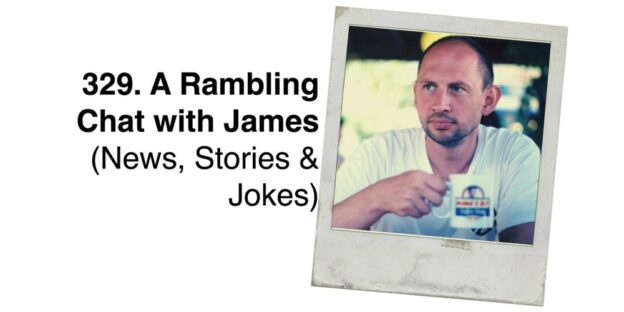
329. A Rambling Chat with James (News, Stories & Jokes)

My brother has been visiting me in Paris this week and so just the other day I made him a cup of tea and got him on the podcast for a rambling chat. We talk about lots of different things including news, politics and some funny stories. I hope you enjoy the conversation. There will be more episodes about language learning coming soon.

Small Donate Button[DOWNLOAD]

In this episode you’ll hear us discussing these things

  • What we’ve been up to in Paris this week
  • Jim’s first stand up comedy performance
  • Last Thursday’s performance of “Sorry, we’re English” with Paul Taylor
  • Differences between Paris and London
  • Some UK politics about the EU referendum
  • Some USA politics about the presidential elections and candidates like Donald Trump, Hilary Clinton and Bernie Sanders
  • Other news stories about drones, eagles, mosquitos and why women yawn more than men
  • Jim’s ‘talking dog’ joke
  • Jim’s dog anecdote

That’s it!

Thanks for listening!

Luke

JimPOD

328. Cooking with Luke – Verbs and Expressions in the Kitchen

I’ve been quite busy marking exams recently and haven’t had a chance to upload any episodes for a few weeks, but today I managed to record this episode while preparing dinner. So in this one you’ll hear me in the kitchen, multitasking – cooking a chicken dinner (recipe below) while describing everything that I’m doing. In this episode you can learn some verbs for preparing food, words for different kitchen utensils and other language related to food and eating. Also, I ramble on about a few other things, as usual! Expect more podcasts to arrive in the near-ish future when I have a bit more time. Thanks for listening!

Small Donate Button[DOWNLOAD]

Vocabulary

Here are some verb phrases you will hear me use in this episode.

to clean up the kitchen
to squeeze as much stuff into the dishwasher (as you can)
to do something by hand
to give something (a bit of a) wash
to turn on the tap
to batter fish (noun = batter)
to deep-fry something
to fry something
to chop some potatoes
to chop up some potatoes
to peel some garlic / peel some potatoes
to drizzle olive oil on something
to slosh some white wine over everything
to season food (with salt and pepper)
to do the washing up / to do the dishes
to fill the dishwasher / to empty the dishwasher
to tidy up
to rinse the vegetables under the tap
to pre-heat the oven
to slide the dish into the oven
to brown the chicken in oven
to set the timer

The Recipe

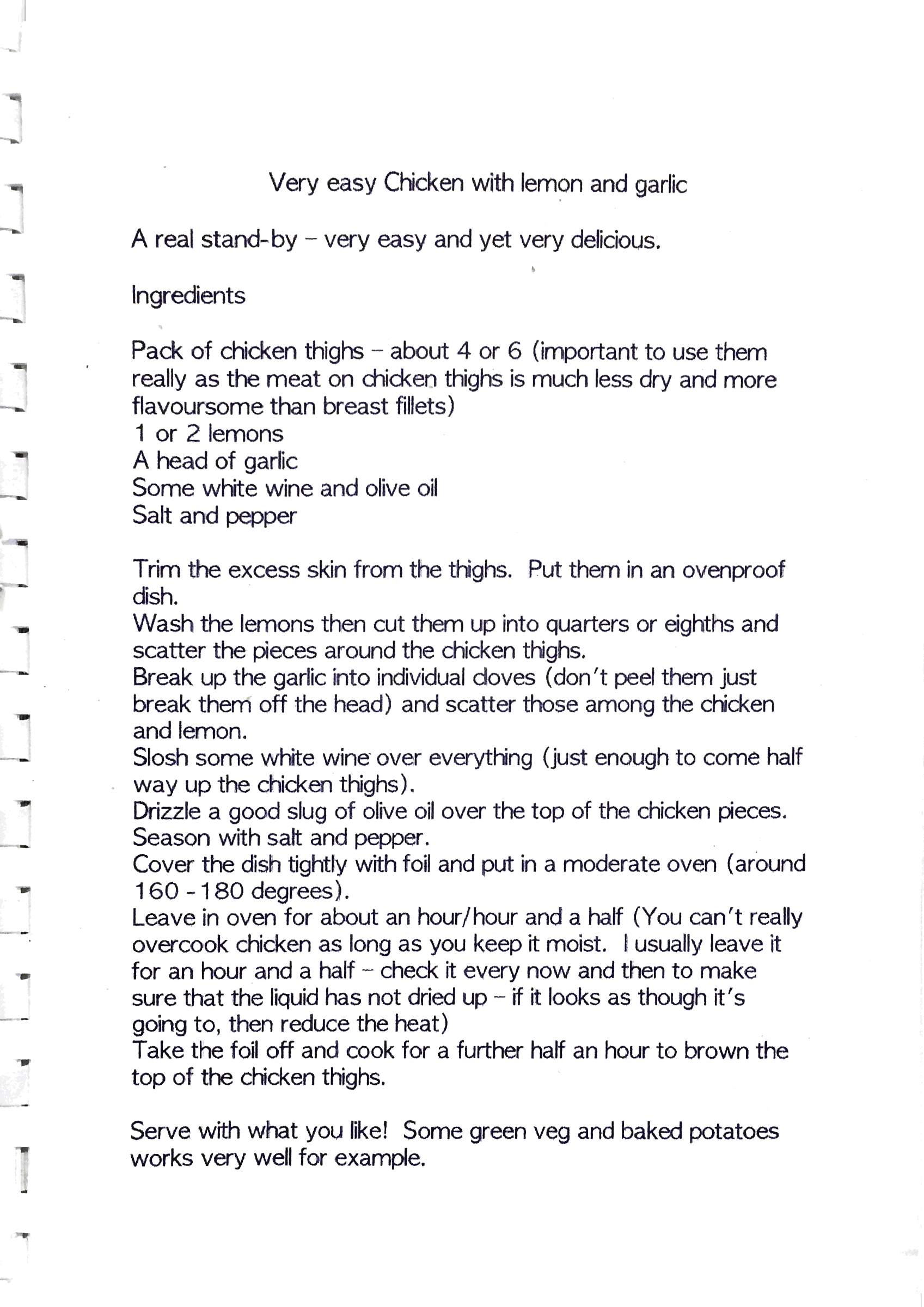
If you’d like to try cooking the dish yourself, here’s my Mum’s simple and easy-to-follow recipe. Enjoy!
Chicken with lemon and garlic

roasted-chicken-thighs-with-lemon-and-oregano-940x600

326. Catching up with Oli (Part 2) Future Predictions

Here’s the second part of the recent chat I had with my cousin Oliver. In this one we talk about becoming a Dad and predictions for the future. What will society be like in the next 10-20 years? What changes will we see in communication, technology, travel and other areas? What kind of world will Oliver’s daughter grow up in? These are all questions we discuss in the episode. Watch out for language related to the future, technology, communication and childcare. Also, listen until the end to hear Oli play a nice tune on the guitar. :)

Small Donate Button[DOWNLOAD]

There is no text related to this episode.  All you have to do is listen. :)

UPDATE – BABY NEWS

Hello everyone – I’m just adding a bit of extra content here after the jingle because I’ve got some good news to tell you! I just wanted to let you know that since I published this episode last week Oliver has become a proud father. Yes, Valentina was born just yesterday. I’m happy to report that both mother and baby are well, and are currently resting, eating, sleeping and generally recovering from the birth. According to Oliver, the baby is not only fit and healthy, but also “perfect”. So, there’s a new Thompson in the world! I can’t wait to meet her. Maybe one day I’ll have her on the podcast. If you want to congratulate Oliver and his wife, you can leave a comment under this episode or even send me an email which I can then pass on to the proud parents. I am sure they are both absolutely delighted. It’s amazing to think that a whole new chapter has just opened in their lives. OK – that’s enough cheese!

However, if you like a bit of cheese, and if you’re wondering what to say when congratulating someone who has had a baby, here are some ideas:

When you meet someone (spoken English)

Hey congratulations (on the new baby)! You must be delighted! That’s fantastic, I’m really happy for you. 

When you write a message (e.g. in a card)

Wishing all the happiness to the new mum and dad! May life be especially sweet for you and your little baby!

You must be sooo happy! Wishing you happy moments with your little girl/boy.

I’m really excited that your little baby has arrived safe and sound! Congratulations on this lovely news.

Congratulations and welcome to the world of parenthood! May little one be blessed with every happiness.

:)

Here’s the Simpsons video I mention in the conversation with Oli.
“So this stuff really works?”
“Certainly does”
“Well, lots of LUCK!”

Oculus Rift

Solar Roadways

A solar roadway sceptic

326pic

325. Catching Up with Oli (Part 1) Past Challenges

Here’s a 2-part episode featuring a conversation with my cousin Oliver in which we talk about first some challenges he faced over the last few years (including dramatic things like a scooter crash, a tropical disease, a burglary and how he completely flooded his own house) and then some more positive things about being a father and predictions for how society will be different in the future. Also, listen for some general news and announcements about Luke’s English Podcast.

Small Donate Button[DOWNLOAD]

Announcements & News

  • I hope you enjoyed the episodes I recorded as a tribute to David Bowie. Unfortunately, so soon after we lost Bowie, the news came that another great person has died – the British actor Alan Rickman, who like Bowie was 69 years old and died from cancer. He’s most famous for playing the part of Severus Snape in the Harry Potter films, and the part of Hans Gruber the bad guy in the film Die Hard with Bruce Willis – both very enjoyable and distinguished performances, but he played many other roles too. Alan Rickman was known for his sardonic humour, his wonderfully rich and unique voice, and for bringing a great amount of weight and humanity as well as humour to his roles. He will be missed too.
  • And, I haven’t even mentioned Lemmy – the lead singer of the group Motorhead, who also died recently. Lemmy played a massive part in the invention of heavy metal music, and was generally a huge personality in the world of British rock. He was on the scene all the way from the 60s until this year when he passed away due to cancer. Lemmy was known for his gravelly voice, his appearance (he looked like a biker dressed in leather with big mutton-chop sideburns and moles on his face – he wasn’t a pretty guy like Bowie by any means), his hard-drinking speed fuelled lifestyle and his bizarre obsession with Nazi regalia – clothing, weapons and so on from the Nazi era. He wasn’t a bad guy, he just liked the designs and imagery from that time – it had nothing to do with the ideology, and at heart he was just committed to playing loud and fast music and living a loud and fast lifestyle – and he will surely go down in history as a true legend of the music world. So, that’s three people, at least. So, can famous British people stop dying please!? If we carry on at this rate there’ll be none left by the end of the year.
  • But let’s not dwell on these dark things any more! I’m glad to present you this episode today because this one is all about the future, and new life because my cousin Oli is going to be a Dad for the first time – his wife is expecting a baby daughter at any time, so let’s look to the future, with new life and positivity and all that stuff! We’ll start that in just a minute, but first – a little bit of admin…
  • The comments issue on the website is fixed. I just needed to do a few updates. You can now post comments on the homepage again. No worries!
  • Email subscribers – are you still receiving emails when I post new episodes? I had a couple of messages from listeners recently who said they hadn’t received emails with new episodes. How about you? If you’re an email subscriber, could you let me know if you received emails for the David Bowie episodes, the episode called With the Thompsons, and the Star Wars spoiler review.
  • Picture comp is finished – so, don’t send me any more photos please! Thank you for the photos I have received in my email account, and, of course, I have loads of pictures. They’ll go up on the website soon and you can pick your favourite. I’m a little bit concerned about how that’s going to work because there are about a billion photos, but I’ll work something out.
  • I’ll be meeting Paul and Amber again soon. Firstly to catch up with them both – because quite a lot has happened since we last spoke on the podcast. Amber went to Costa Rica, and Paul Taylor is now something of a celebrity as his comedy video about kissing in France went super-viral over the last few weeks. His video, “Paul Taylor – La Bise” is about his frustration with the French custom of kissing people when you meet them. It was uploaded onto Robert Hoehn’s YouTube channel French Fried TV on new year’s day and within the space of just a few days it got over 1 million views. He was featured on lots of French websites, radio and TV, and then the video went global on the BBC’s website and more. Paul also has a new solo comedy show every Saturday (as well as the one with me on Thursdays) and it’s completely sold out for the next 10 weeks or something. Wow! Remember when he was on this podcast talking about how he quit his job to do comedy? Remember how difficult it was in Edinburgh? Well, things seem to be working out for him now! Good news!

  • Also, I hope to get Amber and him on this podcast again (if he’ll come on now that he’s such a big celebrity) in order to do that interactive version of the Lying Game – remember that? Listen to “318. The Rematch (Part 2)” to find out the details. Basically, this is a chance for you to get involved in another version of the lying game.  All three of us said some statements, and you now have to write questions in the comments section for episode 318. IN the episode we’ll ask each other your questions, and answer them. Then you can decide if they’re true or lies. Again, listen to 318. The Rematch (Part 2) for all the details (listen until the end).

Introduction to this Episode

As you know at Chrimbo I want back to the UK and stayed with my family, and with my cousin at his home in Bristol. It’s been a while since he was last on the podcast, and quite a lot has changed with him. In our conversation we talk about lots of things and I really think this is an interesting episode, and a very valuable one from a language point of view. The topics we talk about are diverse and quite in-depth and as a result we use lots of different features of grammar and vocabulary. I always encourage you to notice language while listening to native speakers on this podcast, so try to do that in this episode if you can. First we talk about what happened to Oli since the last time he was on the podcast, so watch out for the ways in which we talk about the past – tenses, and other forms. Oli faced a few difficulties and challenges, so watch out for the ways he describes those things. Essentially, he tells me a few anecdotes about some of his difficulties in London, watch out for past tenses and so on. Then we talk about the future, and about various predictions for the next 10-20 years, so naturally you can try to notice the specific language, tenses and modal verbs that we use to describe the future, make predictions and make judgements about the future. As well as that, there’s a lot of vocabulary related to technology, transport and communication.

In my opinion this is a very useful conversation for you to listen to. I loved catching up with Oli and I sincerely hope you enjoy listening to it, and by the way, listen all the way to the end to hear Oli play a bit of guitar – and he’s a really good guitarist.

That’s it!

olipodnew1

322. With The Thompsons

Hello again, how are you? Welcome back to the podcast. Here’s a new episode for your listening pleasure. This one is a rambling conversation with my parents and my brother about everything and nothing.

Small Donate Button[DOWNLOAD]

Some News & Stuff

Just before we get started – here are just three announcements or bits of news.

First: I’ve received loads of emails recently, especially over the Christmas holiday period. I managed to write back to quite a few of them, but unfortunately some of them go unanswered – so I would just like to say sorry if I didn’t get back to you. Even if I don’t reply, I love getting messages from listeners, and please know that I read everything that is sent to me.

Second: The LEP photo competition. I’ve received loads of photos and the competition ends soon. Then I’ll post all the pics and you can vote for your favourites, and the one that gets the most votes will get an LEP mug plus a t-shirt or bag. The runners up will get a mug each. Personally I love seeing the contexts in which you are listening to this podcast. It is really cool! I’m looking forward to sharing them on the site for all to see.

Since we’re talking about competitions, this is usually the time of year that I ask you to vote for me in the Macmillan Love Dictionary Awards, but it seems that they’re not running it this year. Perhaps they got fed up with me winning it every time! I don’t know. But anyway, that’s not happening, but I’d like to ask you a favour – if you know of any other awards at all for learning English websites or online services, please do consider nominating me and my podcast. Awards are a great way of bringing exposure to the podcast. The Macmillan Awards were really helpful for bringing new audience members to the show every year, and for giving the website a bit of kudos too. So, please do nominate LEP for any awards that you’re aware of, if you think I deserve it of course – I would really appreciate it.

Third: Disappearing Comments. *Actually, this is now resolved! I found a way to fix it and you can read comments on the homepage again :) * You might have noticed that comments have disappeared from the front page of my website. Normally I have a load of comments that show up under the text on the front page of my site. It’s important for me because new visitors to the site can see the positive comments and it’s a great endorsement of my podcast, but the comments are gone and I don’t know why. I find that quite annoying. I run my website myself and I’m no expert, as you may be able to tell. The site looks pretty basic but it does the job. I use WordPress to manage the site – so if any of you out there can explain to me why the comments on my front page have disappeared, I’d really appreciate it. The comments box is still there, and the comments are still visible in my admin dashboard, but they’re just not showing up on the front page. Comments are visible on all other pages and posts on my site. I think it may be something to do with the template, and .php files and stuff – but it all gives me a headache and I’m a bit cautious about messing with the template files of my website. So, if you know about this stuff then let me know if you have a solution to my missing comments section.

OK, that’s enough technical stuff – I don’t want to bore you! Let me hurry up and introduce this episode.

Introduction

As you know I was back at home in England this Christmas and while I was there I managed to record a few rambling conversations with various members of my family. You already heard the geeky conversation with James about Star Wars, but in this episode I’m speaking to my Mum and Dad too.

At Christmas time, or in fact whenever we’re together as a family, we like to sit around and talk rubbish for a while, often over a glass of wine or a meal or something. It’s sort of a family tradition – I’m sure it’s the same thing for many of you. I like talking rubbish with my parents, and as a family I think we’re quite good at wittering on about whatever comes into our heads. Usually there’s some disagreement, arguing and bickering involved, like you heard a few years ago in an episode of LEP called Family Arguments and Debates, in which I recorded arguments and discussions with my Mum, Dad and brother about various things. Well, here’s another one.

For this episode I decided I’d like to give you the chance to listen in on one of our family rambling sessions. You can imagine that for an hour you’ve joined us at my family’s home in Warwick, you’ve had a glass of wine or three, and now we’re all sitting around enjoying each others company and generally setting the world to rights.

In terms of language learning – there’s no target language which I’m teaching you in this episode. Instead I’m just letting you hear some natural conversation between native speakers. As usual I recommend that you just follow the conversation, try to understand it all, get carried away with it, think about your own responses to the questions I’m asking, try to notice certain bits of language and grammatical usage as it comes up naturally. My parents are both educated and well-spoken people. They have standard British accents – they speak RP, which is like BBC English. In fact, my Dad worked for the BBC as a news broadcaster for many years. My Mum works in a charity bookshop and also likes to study subjects like art and history in her free time. You’ll also hear my brother James who you already know. He’s a freelance designer who still likes skateboarding in his free time even though he’s getting on a bit now, and last year he fell of his board and dislocated his shoulder. You can hear all about that story in episode 180 “Dislocated Shoulder”. https://teacherluke.co.uk/2014/05/20/180-dislocated-shoulder/

In this episode I wanted to get my family talking a bit, so I prepared some random questions and posed them to the group. If you like you can write your answers to any of the questions in this episode as comments on the page for this episode. It’s a good way to interact and practise your English at the same time.

So now, just sit back, relax and enjoy this rambling conversation about everything and nothing, recorded in the company of the Thompsons at Christmas time.