Category Archives: Culture

408. Catching Up With Amber & Paul #4 (+ videos)

Amber & Paul are back on the podcast and we do the usual catching-up session and go off on a few tangents about Amber’s play, Paul’s showbiz life, marshmallows, microphones, tea & coffee, accents and more. There are videos for the intro and outro of this episode (below).

Small Donate Button[DOWNLOAD]

INTRODUCTION

This episode sees the return of pod PALs Amber Minogue and Paul Taylor, which means that The Talkative Trio are reunited on the podcast once more.

Time was pretty tight for this conversation because Paul was working to a very strict schedule on the day it was recorded, which was yesterday in my flat.

As you’ll hear, Paul arrives a little bit late because he was having lunch with some TV industry people and then he has to leave before the end of the recording to be interviewed on the radio, because he’s so hot right now in the world of showbiz.

Amber has also been very busy recently doing various things including writing and rehearsing a play, so it’s been hard to get the three of us in a room together all at the same time.

As a result this episode was arranged at the last-minute and the conversation was completely unplanned. All I wanted to do was to catch up with the two of them and ask the usual question: What have you been doing?

You’ll hear that things carry on quite rapidly and there are plenty of the usual tangents – those moments when the topic suddenly goes off in a different direction.

It might be hard to follow, so to help you keep up, here’s a basic summary of the main things that we talk about. You’ll find these notes written on the page for this episode, including some words that you might hear in the conversation but not know. You might want to check these notes to see words that you might have missed, to check their spelling etc.

  • First of all Amber tells me about the play for children that she’s been working on with our friend James Simpson.
  • Paul then arrives, you hear the buzzer buzzing and he comes in carrying a bag containing a new iPhone 7, still in its box, which he collected from the shop earlier in the day. It’s a present which all his friends bought for him a few months ago for his 30th birthday, organised by his girlfriend. We all chipped in some money and got him a new phone.
  • Amber tells us some more things about her play, including how it contains a few slapstick moments, meaning some funny scenes of fairly violent physical comedy involving a first-aid box and some marshmallows. Apparently at one point in the play James hits Amber over the head with the first aid box. By the way, a first-aid box is a box that contains basic medical supplies for administering first-aid, that’s why it’s called a first-aid box. It contains, things like plasters, bandages, antiseptic, tiny scissors, and maybe some other little medical things that you don’t understand etc.
  • Also in the play they also fight over a marshmallow, which Amber wants to dip into her tea.
  • This leads us to talk about dipping things into cups of tea, like marshmallows and biscuits, which then causes us to talk about what you put in your tea when you’ve run out of milk, which actually happened to Paul the other day. His solution was to use whipped cream as a substitute.
  • That leads me to ask the question of whether you really can put cream in tea, and we agree that you can definitely put cream in coffee, especially a particular type of coffee which is served with whipped cream on top, which in France is called café Viennois – which I think translates as a Viennese coffee – or a coffee from Vienna.
  • That causes me to ask what they call a Viennese coffee in Vienna, speculating that they might just call it a coffee, which leads to a similar question about the French phrase “creme anglais”, which translates literally as “English cream” – but in the UK we just call it “custard”.
    I then ask Paul and Amber to explain to you my audience what custard is, and Paul suggests that instead of us explaining it at great length, you could just ‘google’ it.
  • I remind Amber & Paul that it is necessary to explain some words sometimes, like the word ‘custard’, because this is Luke’s English Podcast and it’s probably a good idea to explain words sometimes.
  • This prompts Amber to comment on the way that I seem to choose to explain words quite randomly in my episodes – like when I recently spent quite a lot of time explaining the word ‘flea’ in a recent conversation I had with my Dad on the podcast.
  • We then go back to food and talk about typical English puddings which can be served with custard, including crumble, sticky toffee pudding and the oddly named ‘spotted dick’.
    I refer to spotted dick as a dessert, which causes Amber to comment that this is the wrong choice of word and that I should say that it’s a “pudding” not a “dessert”.
  • This brings up the slightly confusing and long-running debate about the correct choice of words to describe certain things in Britain, especially in relation to the dinner table. This all relates to British rules of etiquette and language in polite society, perhaps relating to French vocabulary we sometimes use in English. We don’t talk about this very clearly and it might be a bit confusing for you, and really the whole subject of the rules of British etiquette and social class deserves an episode of it’s own.
  • Nevertheless, in order to clear it up a bit, here’s a quote from a book called “Watching the English” by Kate Fox. Kate Fox is a social commentator who writes about social behaviour in England, and “Watching the English” is a good book that explains many things about English life. This is what Kate has to say about the words “pudding” and “dessert” in English. By the way, both these words are used to refer generally to sweet food which is served after the main course. You have the starter, then main course, then the pudding/dessert. Your choice of the word ‘pudding’ or ‘dessert’ seems to depend on your level of class, and apparently according to upper-class culture the word “dessert” is vulgar. Kate Fox: ‘The upper-middle and upper classes insist that the sweet course at the end of the meal is called the ‘pudding’ – never the ‘sweet’, or ‘afters’, or ‘dessert’, all of which are déclassé and unacceptable’ (Fox, 2005, p79). So, according to upper-class etiquette, pudding is the correct term for the sweet course that comes at the end of the meal. Fine. Amber seems to think this is because the word “dessert” is of French origin, but I’m not sure. By the way, in some places (e.g. France and Japan) pudding is a specific kind of dish. For example in Japan ‘pudding’ is a sort of caramel or custard creme dish. In the UK it just means the sweet course at the end of the meal and can include all kinds of things, like cakes, pies, ice-cream, trifle, Eton mess, bread and butter pudding or even jelly. “What’s for pudding?” for example.
  • I try to explain all of this, but I can’t manage it, instead saying “This is tangent city” when I realise that we keep going off on mad tangents and it’s probably quite confusing for the audience – that’s you.
  • Our talk of pudding then causes us to start talking about Pudong, an area in Shanghai, and specifically the Pudong River in Shanghai. Paul tells us a bit about that and then there are a couple of references to the slightly rude sounding English words ‘poo’ and ‘dong’ before things settle down a bit and we start talking about Paul’s recent showbiz news, including how he is going to be interviewed on a radio station called “Oui FM” later in the afternoon, so we go from poo to wee in just a few sentences.
  • At one point Paul nearly uses quite a clever word – ‘concise’ but then doesn’t use it, preferring instead to choose a more simple way of putting things “using the least words possible” (which means to be concise).
  • We talk about responses to Paul’s recent videos including a few YouTube comments & some criticism he received from a serious person in an email (the criticism was in the email, not the person – you can’t put a person in an email).
  • Things get quite geeky when I then start talking about cameras and microphones and the challenges of capturing good audio when you’re recording videos.
  • There’s some talk of different types of microphone, including boom mics, lapel mics, dynamic mics and shotgun mics but then Amber decides it’s all getting a bit too geeky and we move onto something else.
  • We make plans to hang out again on Thursday on the set of Paul’s TV show while they’re doing some filming, and we decide to record a podcast while we’re there.
  • Following on from my recent episodes about accents, I ask Paul & Amber what their accents are, and what they think my Dad’s accent is, and Amber declares her love for my Dad.
  • Then Paul has to go for his radio interview on “Oui FM” and leaves, and Amber & I carry on and talk a bit more about her play before having a massive conversation about Christmas which will probably be uploaded in a forthcoming episode.

So, I hope that helps you understand what you are about to hear from the Tangential Trio. But, now, without any further explaining – here is that conversation as it actually happened!

JINGLE + CONVERSATION

‘OUTRO’

Amber and I started talking about Christmas there and we went on to talk about it for ages – like over an hour of chat about Christmas shopping, games, food, family traditions and everything else relating to the festive time of year. That conversation will continue in the next episode, maybe the episode after.

We talked a little bit about Paul’s English in that conversation.

People sometimes say “Paul’s accent/English is influenced by his French”.
It isn’t. Certainly not his accent anyway.

That’s one of the interesting things about Paul. When he speaks French there is pretty much no trace of an English accent in his speech, and when he speaks English there is no trace of a French accent.

Other announcements

LEP Moscow Get-Together
Hey Luke!
Well, the very first LEP Moscow GET-TOGETHER has just happened! The first of it’s kind, it seems to be a historical :) event in Russia! Everything went great, it was awesome to chat in ENGLISH with like-minded people!!! Personally I felt as if I had known all of the participants for ages – open, nice and smiley friends! I hope somebody else could feel a similar thing.
First, we got to know each other, which was the main achievement! It was interesting to know when and how everyone had found LEP one day, which episodes were our favourite ones, which experiences in English language learning we had (useful Internet resources, grammar books, pronunciation etc.)
A couple of pics and a short audio message from us to you are attached.
Thanks again and again for that announcement and actually for everything you do!!!
We hope to provide more listeners with a chance to meet and speak regularly and one more way to let them know is to “friend” your group on FB with ours https://www.facebook.com/groups/734996946664425/ and VK https://vk.com/clubnu1 .
Have a nice Monday, Jedi-Podmaster!
Dmitry

Here are those Moscow LEPsters saying hello!

Transcript Collaboration
~ well done everyone!
Thank you especially this month to Antonio for managing everything.
There is an email now for the Orion team. Just write a comment on the page for the transcript collaboration and Antonio will let you know what to do.
Make sure you read the rules.
Transcript collaboration page: https://teacherluke.co.uk/episodes-with-transcripts/transcripts/ 

Daniel Goodson – My Fluent Podcast
A LEPster podcast in which you can join Daniel in his quest to become better and better at English.
Daniel interviewed one of the managers of the Transcript Collaboration – Piotr from Poland
http://www.myfluentpodcast.com/e20-interview-with-piotr-from-poland-transcribing-transcript-collaboration/

Zdenek’s English Podcast
Also, on the subject of LEPster podcasts – Zdenek Lukas continues to do his show, called Zdenek’s English Podcast. Recently he’s been doing episodes about his experiences studying for the DELTA (Diploma in English Language Teaching for Adults) which is a seriously challenging postgraduate qualification in English teaching, which involves not only a lot of writing about linguistics and teaching methodologies, but also plenty of assessed teaching sessions too. It’s a difficult course with many challenges and many things to learn. You can listen to Zdenek talking about it on his podcast in some recent episodes.
Get it here https://audioboom.com/channel/zdeneks-english-podcast

Join the mailing list for direct access to the page for every episode, and for any other content I put up, including videos that I might start doing with my new camera soon.

That’s it! Cheers!

VIDEOS

Here’s one of Paul’s “What the F*ck France?” videos. This one’s about how it’s difficult to learn French.

LEP VIDEOS

Here are a couple of bonus videos of me recording the introduction to this episode, and a failed attempt at recording the outro too (I forgot to press ‘record’ on my audio device!)

They’re in black & white because I think it looks cool. The gorilla ↴ is pink, ok! 

Thanks for watching. I’m just experimenting with videos at the moment, but if you like them, I might do more.

The Russian Joke appeared in US TV show Parks & Recreation – watch until the end

https://www.youtube.com/watch?v=VxQ_ywY-luE

Music credits

Jazzy xylophone tune & piano tune by BenSound – www.bensound.com

Other music by me, or by my brother James Thompson.

406. Grammar (Past Continuous Tense) / UK Media Bias / Brazil Football Tragedy

More responses to questions and comments from listeners, including a comparison of past continuous & past simple verb tenses, comments about bias in the UK’s media, the BBC, the newspapers, the Chapecoense Plane Crash in Colombia, and more.

[DOWNLOAD]
Small Donate ButtonIn this episode I’m going to continue going through a few more questions and comments I’ve received from listeners recently. I started this in episode 403 which covered a few things like a WW1 story from a listener, a language question about noun phrases, and some details about my Dad’s accent. I didn’t finish, because I’ve got a couple of questions left and that’s what I’m going to cover in this episode.

A lot of this is scripted because I wrote some notes in preparation, which I’m reading from. So check out the notes on the page for this episode. I expect I’ll go off script at times as well and I’ll try to keep it as natural sounding as possible. If you’re transcribing this, don’t forget to copy + paste these notes into your transcript and just add any other things I say.

Here’s an overview of what I’d like to achieve in this one.

  • A grammar question about the difference between past continuous and past simple tenses
  • A question about media bias in the UK
  • A comment about the Chapecoense Plane Crash (Monday 28 Nov)

There will be a couple of other bits and pieces too I expect.

GRAMMAR – Differences between past simple & past continuous

Vadim G.
Hello, Luke! I have a question. I hear people say:
a)’I worked all day yesterday’
and
b)’I was working all day yesterday’
c)’I waited for you for 3 hours yesterday’
and
d)’I was waiting for you for 3 hours yesterday’
And they say it without any further information. So I can’t see any real difference between those pairs. What’s the difference between a) and b), c) and d)?
I trawled through plenty and plenty of information on that matter, but I’m still confused. I’d appreciate your clearing this up.
Vadim G.

So, what do you think listeners? How would you answer this question? What’s the difference? Are they both correct? Is there a difference?

MY RESPONSE
WIthout more context, sometimes the same sentence in two different tenses can basically mean the same thing. It’s possible. There is a bit of crossover between tenses.

That is probably the simple answer to this question, that in the examples Vadim has given, there’s no difference.

The lack of bigger context and the fact that they both specify a duration “all day” and the time period “yesterday”. Those time expressions narrow down the meaning of the verbs to such an extent that they basically mean the same thing.

Time expressions are important for narrowing down the meaning of a sentence. It’s not all about the verbs, every time. You could even say “I work all day yesterday” and we would know exactly what that means, although it’s incorrect of course because we don’t use a present tense (work) to refer to yesterday.

“I worked all day yesterday” or “I was working all day yesterday”.

So, they do basically mean the same thing here.

But Vadim and indeed everyone else listening, might not be completely satisfied with that quick(ish) answer.

Because we all know that past simple and past continuous are different. So, let’s see if we can go deeper into the difference between these tenses.

Strap yourselves in. Brace yourselves, grammar is coming. Here comes the longer answer. I’ll try to make it easy to understand, without it getting too abstract. Wish me luck!

So – What are the differences between past simple tense and past continuous tense (sometimes called past progressive tense) using these sentences as a starting point?
“I worked all day yesterday” and “I was working all day yesterday”. (I’m exhausted already! But let’s keep going!)

There’s a slight difference in nuance, which would be much easier to establish with more context – understanding the pragmatic concerns of the speakers. Why did the person say these things? The intention of the speaker is massively important, because language is used to convey certain specific ideas at a certain moment, and sometimes the situation itself can lend meaning to an utterance. Language doesn’t exist in a vacuum.

Remember, context is everything.

Vadim says that the speaker doesn’t add any other information beyond the words “all day yesterday”, and we see there are no other accompanying clauses, a second verb or other supporting sentences. We don’t know how the sentences or the situation continues.

But Vadim, I doubt that these were the only utterances or messages that were communicated. These people didn’t just walk up to you out of nowhere, say the sentences and then disappear in a cloud of smoke.

“I was working all day yesterday” – who was that??

What’s the situation? Are these responses to questions? Why is the speaker saying these things? Without this context, the sentences on their own become pretty abstract. Language doesn’t exist in a vacuum. All utterances are given meaning by the context in which they are used.

It’s a bit like the way chords or notes in music only create emotions, they only have emotional resonance, when they are combined with other ones. It’s the same with language. Phrases are given meaning by the implicit meaning of the words but also the situation.

But anyway, without getting too pretentious or anything, let me try to answer the question.

On their own, basically these tenses are used like this:

  • Past simple – “I worked” – single, finished events in finished time periods. E.g. I worked yesterday. The work is considered to be a single, finished thing. It might have taken a long time, but we’re looking back on it now as a finished unit. “I worked yesterday”. Here we have no idea how long you worked, but adding ‘all day’ shows that it happened, from the beginning to the end.
  • Past continuous – “I was working” – emphasises that the action was in progress at a specific moment in the past. The moment could be a time – e.g. with a prepositional phrase like at 8AM, or a clause like when I heard the news.
    “I was working all day yesterday” Pick a moment in the day – I was working at that moment.

10Am? – I was working, just before lunch? – I was working. At 1pm? – I was working. When you called me? – yep, I was working then too.

Compare that with past simple “I worked all day yesterday” – this feels like the speaker is expressing the action as one single unit of activity.

e.g. What did you do last night? “Well, last night I just came home and I went straight to bed, because I worked all day yesterday and I was really tired.” (You might also say “I had worked all day so I was really tired” – past perfect)

Sounds abstract. Yes it is!

So, we need some examples. They’re coming in a moment.

But yes, this stuff does get pretty abstract and quite slippery. That’s quite normal, especially when you’re just looking at grammar on its own without a context.

To an extent we’re groping around in the dark looking for concrete meaning here. You’re looking for an equivalent in your language. Sometimes there is no equivalent.

Examples

Let’s use some examples to illustrate the way these verb tenses are used. This should make it much easier.

Put yourself in the shoes of the teacher. How would you explain this? Trying to teach something is often the best way of learning about it yourself. So, put yourself in the shoes of the teacher and you might learn it more effectively.

E.g. (past continuous) A girlfriend who is upset with her boyfriend.
Why didn’t you phone me? It would only have taken a second, just to let me know you were alright. “Sorry I was working all day yesterday. I didn’t get a single opportunity to use my phone.”

That would seem to be a more satisfying answer than “I worked all day yesterday… etc” It emphasises on a moment by moment basis that you were busy.

E.g. (Past simple) Two friends talking
I feel so tired today!
-why’s that?
I worked all day yesterday without a break. And then I had to drive my brother to the airport and it took ages.

This emphasises the complete nature of the action and therefore the result of it, rather than focusing on the moment-by-moment nature of it.

Past continuous isn’t usually used on its own. It’s usually combined with a time expression or another verb to express a moment.
E.g. He said they tried to deliver the package at 12.
– Ah sorry, I was talking to Jeff on Skype at 12. I must have missed them.
Yeah, well they said they tried to deliver the package every hour and nobody answered the door all day.
– I was working in my studio all afternoon. I must have missed them. When they arrived, I was working.

So, it’s accompanied by another clause – usually past simple. “I was working when Jeff called.” or a specific time “I was working at 12.”

There are other rules about continuous tenses, like the fact that we don’t use them with state verbs. E.g. I was knowing that you had the answer. (wrong) ‘know’ = a state verb.

A rule of thumb about state verbs and action verbs – if you can mime the verb, it’s probably an action verb. If you can’t mime it, it’s probably a state verb.

have (for posession) = a state verb. E.g. I’m having an iphone 5. (wrong) I have an iphone 5. (correct)

But sometimes ‘have’ is an action verb, e.g. when it means ‘eat’.

I’m having an iphone 5 for breakfast. (What??? – this is correct grammatically but obviously a bad idea!)

I’m having toast for breakfast. (correct, and a better idea, especially with strawberry jam – yum)

More examples

Which one do you think is right? Which one sounds more natural to you?

Criteria: Is the verb expressing an event or action as a single unit? (Past simple)
Or is it expressing it as a repeated action, long action, or action in progress at a point or a number of points in time? (Past continuous)

Bloody hell that sounds abstract!

Sometimes I think that way to describe language is far more complex than the actual target language itself!

I finished the book yesterday. (One single, finished action) [listen for examples]
I was finishing the book yesterday. (This sentence seems incomplete)

Sorry I’m late for the meeting. I got lost on the way here. I took a wrong turn and got stuck on the ring road. (normal)
Sorry I’m late for the meeting. I was getting lost on the way here. I was taking a wrong turn. (Strange. Either you’re lost or you’re not lost, so ‘getting lost’ doesn’t make a lot sense. To get lost is a short event – it happens when you realise you are lost – also “I was taking a wrong turn” – what again and again?)

Ronaldo scored a goal in the last 5 minutes. (Sounds normal)
Ronaldo was scoring a goal in the last 5 minutes. (What, was there a glitch in the matrix?)

Sorry I’m late. I found a parking space. (strange – surely that would mean that you shouldn’t be late) More information: “I found a parking space, but it took ages.” or “It took ages to find a parking space”.
Sorry I’m late. I was finding a parking space. (good – it seems like you tried again and again to find one – it was a long or repeated action)

OK! Grammar – DONE

Media Bias – Is the UK’s media biased?

Juliana from Brazil
Comment on the media bias of news outlets
Hey Luke, how r u? I’m a long time Lepster. Your job is amazing! Firstly, let me explain what I’m asking you about. I’m Brazilian and my particular opinion about the media here in Brazil is: it is not impartial, especially, about policy. I’m following the news about Brexit and I usually read the BBC and The Telegraph. I’d like to ask a question: Do you think that the BBC/Telegraph are impartial about policy? Thanks you for your attention! You’re great! (I’m sorry about my english, I’m learning). Best, Juliana

The newspapers aren’t completely neutral. More on that in a few minutes.

Is the BBC neutral?
This is the subject of some debate.
Officially the BBC is neutral. The government has no say over what they broadcast. The content is monitored by independent regulators. The BBC is funded mainly by the licence fee – and they have a duty to try and represent the diversity of licence fee payers in their programmes. BBC News has a network of reporters stationed around the world and tries to get the stories at the source.

Generally the BBC has a long tradition of independent coverage. But I think it’s almost impossible to be completely neutral about everything and the individual decision makers at the BBC have to make choices about what they think is more or less newsworthy – so there will be some value judgement in there when the editors decide to prioritise certain stories over others. But be sure that there are long, complex meetings and discussions between people in which they make these decisions. It’s not all decided by one person with a specific agenda. It’s also not directed by the government like some TV stations.

The BBC is sometimes attacked by critics who argue that it’s biased. But these critics come from various positions. Some people feel the BBC favours left-wing views, others believe it favours right-wing views.

Some think the BBC is too radical, others think it is too conservative. The fact is that they have a duty to present balanced opinions so you often hear both sides of the debate.

This means that if you want to prove that the BBC is biased you can probably find plenty of evidence of that bias in the BBC by just picking the bits that seem to support your case, and ignoring the other bits.

E.g. Let’s say… in a BBC debate about radical islam, the BBC chose to invite a few different people to represent different sides of the debate. This included a right-wing journalist who is a harsh opponent of what was described as radical islam, a moderate and liberal non-muslim guest, a moderate muslim guest and a radical muslim cleric. Now, anti-islamic right-wing groups argued that the BBC was sympathising with radical Islam by inviting the radical cleric onto the show. Equally, more liberal viewers got upset that the right-wing journalist was allowed to express his anti-Islamic views on the TV. So is the BBC a moderate liberal TV channel which somehow sympathises with extremists and apologises for them, or is it pushing a right-wing agenda? If you’re so inclined you can bash the BBC from pretty much any angle.

On balance, I think the BBC is known for trying to be impartial, even if this is almost impossible to achieve. The BBC is essentially a public service and has a certain duty to be neutral.
Other TV news channels have a worse reputation than the BBC. ITV is criticised for focusing more on commercialised output at the expense of standards. Channel 4 news seems pretty good. Sky News in my opinion is not that reliable because they’re owned by Rupert Murdoch who has displayed seriously questionable standards of practice as the owner of many media outlets, including FOX News in the USA and tabloid newspapers in the UK. Murdoch is criticised for putting personal gain, profit and corporate/political coonections ahead of balanced journalism. Of all the TV news outlets we have it seems the BBC is good.

But then again, I have no idea how much we can really believe what we see in the TV news and I wonder if it is just somehow intrinsically limited as an information medium. Is it possible to get a genuinely realistic and rounded view of what’s going on by watching coverage from news media? It’s extremely difficult to get the full picture so your view is always going to be mediated to an extent. That’s why it’s called the media. But on balance I think the BBC takes greater steps to be impartial than many of the newspapers, which proudly present their bias to the public.
Most newspapers have an editorial position. This means that the people who run the paper have pretty-much chosen their position on everything, and they run their stories and comments along those lines.

UK Newspapers
Two types of paper – broadsheets and tabloids.
Main differences & positions.
Another episode in the pipeline?

Talking of news, that brings us to a news story that a listener wrote to me about today.

Brazil’s Chapecoense football team plane crash in Colombia

Roberto Geronimo
Hi Luke, how are things? I do like your work and I believe your website is great not only to learn English but also to be involved in interesting topics. Thinking about that I would like to suggest a topic: As a very cosmopolitan person I guess you’re aware about the flight tragedy involving Chapecoense – a Brazlilian footbal team – It’s devasted people around the world, especially here in Brazil but also in Colombia. This week has been very sad and difficult. Talking with friends about how sports – especially football – can raise such good feelings in all of us and we can use our solidarity to bring some peace to people who are suffering such pain.
I know it’s a very complicated topic, but I also know that you’re a very sensitive person and like to contextualize football and cultural aspects in our modern society.
That’s my suggestion!
Keep doing this great work!
#ForçaChape – Vamo, Vamo, CHAPE!
Hugs, from Brazil!

It’s a terrible tragedy for sure. Apparently Chapecoense were having a great season. They got promoted to the top Brazilian league a couple of years ago and apparently were really on the up. Apparently when the accident happened they were on their way to play in the South American cup final against Athletico Nationale. Reports seem to show that the plane ran out of fuel and had electrical problems, and finally crashed near Medellin, Colombia. Almost everyone on board was killed except for a few survivors. At this stage we’re still not sure why the plane had problems and why it crashed.

This is an awful tragedy and I’m sure it has hit people pretty hard because these these players would have been real heroes and role models for so many people, especially young football fans who look up to football players so much. Football is a sport which unites people, gives them a passion, gives them something to believe in – gives young people a sense that they have opportunities for the future and that they can better themselves and their situations. The importance of a sport like football can’t be understated. It can be a great source of joy and strength for the fans, and also for the players it is a platform for them to achieve truly great things. This team will have been really important to a lot of people. Also, they had done so well to get promoted year after year, beating bigger teams. It’s an underdog story and that makes it even more tragic. For a whole team to be lost in one event is just terrible. I have listeners in Brazil and in Colombia – so, I just want to say on behalf of LEP – if you’re feeling upset by the event, wherever you are, then our thoughts are with you.

A similar thing happened to Manchester United in 1958 when a plane carrying the team crashed during a take-off in Munich and 23 people were killed, many of them young members of the team. It’s similar in that at the time M.U. were a young team full of promise. To the people of Manchester they represented hope and opportunity for the future. This was an amazing team and they could have achieved so much. I don’t know if it’s any consolation but Manchester United since became one of the most driven and successful teams in English football, going to dominate the football league years later.

Anyway, I just wanted to mention that because I got the message from Roberto. Best wishes to you, and I was very sorry to read about what happened.

Other bits and pieces

“Hello to Slava from Ukraine”

Hello to anyone else who has sent me a message recently.

Why don’t you post to VK more often?!
I’ve forgotten my password! Hootsuite doesn’t allow me to post to it automatically. Also, I’m just not on it generally – i.e. all my friends are on FB so I naturally go on there quite a lot, but I should post to VK. If you’re a user of VK there are several LEP pages there – search for Luke’s English Podcast. Feel free to update it for other members of the VK community!

Generally – spread the word about LEP. Word of mouth is always the best form of marketing.

Join the mailing list.

Take part in the transcript collaboration. There’s an email list for that. Go to the Transcript Collaboration page and email antonio, saying “I’d like to take part in the transcript collaboration” You can start by transcribing just 3 minutes of an episode. Then you can do more as you get better and better. Don’t forget to read the rules of the project. It’s all on the transcript collaboration page.

That’s it – thanks for listening! Bye!

papers

404. British Accents in The Lord of the Rings (Part 1)

Talking about the different accents you can hear in the Lord of the Rings movies.

[DOWNLOAD]

Why this subject, Luke?

First of all, Lord of the Rings is brilliant and it’s nice to talk about it.

Secondly, In the last episode I talked about accents a bit – specifically posh accents, and it made me think about the subject a lot. I started thinking about the different British accents you can hear in Lord of the Rings, and I thought that the movie is so popular and well-known that it could be a good way to get into the subject of accents.

IN this episode, let’s identify the different accents that you can hear in the films and consider the reasons why these accents were chosen for these characters. Along the way the plan is to listen to a few different British accents and get to know them a bit. There will probably be some general chat about LOTR too, but that’s not the main subject of the episode. I’d like to do other episodes later about the story of LOTR.

Actually, this is just one episode about accents that I’ve been inspired to do today. If I have time I might record another one in which I go into some more specific details about “posh” accents and “posh” people.

And I’d like to do similar ones about other accents you can find in the UK.

But this one will cover quite a lot of different accents because there is quite a bit of variety in the LOTR film universe.

Another summary of accents in the UK

It’s based on region – different accents for different regions.

It’s also related to class – generally speaking. People from a working class background tend to speak with the regional accent from the area where they live or grew up. Those regional accents get less strong as you move up the social classes, with middle and upper-middle class people speaking a less region specific-accent known as RP (received pronunciation) or BBC English (like me). There are still some regional variations of RP but generally if people speak like me they’re speaking standard British RP. Then as you continue to the upper-class people, who you might describe as “posh” you start hearing a kind of heightened-RP or “posh” accent. The Queen is the poshest person in the country.

This isn’t always the case of course. You might find someone who comes from a very posh aristocratic family who doesn’t speak heightened-RP. Similarly, you might find someone who is very wealthy and powerful who speaks with a regional accent. There are exceptions, and also there’s an argument to say that the class system doesn’t apply any more, etc. But, honestly I think that it’s still true. Working class background? – You’ll probably speak with a regional accent (unless you lost it somewhere along the way) and if you’re middle class you’re more likely to speak RP like me, and if you’re upper class you’re more likely to speak heightened-RP or “posh” English.

It also relates to time. Heightened-RP used to be a lot more normal and it sounds pretty old fashioned by today’s standards. There was a time when everyone on the BBC spoke with heightened-RP “This is the voice of the BBC”. Nowadays most of the voices are standard-RP and plenty of TV presenters have regional accents, especially on shows that have a broad popular appeal. E.g. An entertainment show which is on the TV at 7pm in the UK and attracts a huge audience features middle-class presenters who speak with slight regional accents because these days people like that. It means you’re a normal person who comes from a normal local place. The news is still read by people with RP, because it’s neutral and sounds educated and therefore well-informed.

We do have certain associations with different accents, and these associations are quite complex. E.g. people say they find certain accents more or less trustworthy, warm, sexy, irritating, urban, rural, high-class, low-class etc.

In the UK people judge each other by their accents all the time, without realising it. It’s a big indicator of social class, education or even wealth for example. We shouldn’t judge each other by our accents, but we do.

I’m not talking here about how you can learn to speak with a British accent. THat’s another topic for another time. One thing I will say is that I think the most important thing is that you speak clearly and the other people around you can understand exactly what you want to say. Let clarity guide you, not how you perceive the social status of different accents. If you’re looking for an accent that makes you sound posh, watch out because other people might not have positive associations with “posh” for example.

“It is impossible for an Englishman to open his mouth without making some other Englishman hate or despise him.”
George Bernard Shaw, Pygmalion (1916) preface

This means that there isn’t one single accent which is completely neutral and free of prejudice from others. This proves that the class system still exists. If I open my mouth in some places, people will immediately assume that I’m well-off and will probably hate me. Just a few people, I hope. E.g. if I went to do a comedy show in Liverpool on a Saturday night in front of a large crowd of slightly drunk Scousers, I’m sure some of them would take an instant dislike to me because I have a middle-class London accent.
So, there is no accent which is universally neutral. The main thing is that you’re clear and that you’re not ashamed of your roots. OK!

What about Lord Of The Rings?

First of all, LOTR is set in a fantasy world. The writer JRR Tolkein created this world originally as an exercise in linguistics. He was a linguist and he created his own languages and then needed a world for them to exist in. He was also interested in the idea of creating a mythology for the UK, because all our old myths and legends had been lost due to all the times we’d been invaded over the years. Our old Celtic mythologies have been replaced by Saxon or Norse ones from Denmark for example, or replaced with Judo-Christian narratives from the Old Testament, or Greek myths and so on. So, he created a made-up world, wrote his own myths and legends and created different languages for the made-up races of people, elves, orcs, dwarves, hobbits, ents and others to speak.

The characters either spoke different languages, or spoke English with different accents. The accents in the book were never aligned with real accents in the real world. We had to just imagine the accents in our heads – but the characters in the book are so well described, and the context is so rich that it’s not difficult to imagine these voices full of richness, roughness, smoothness, humour, spirit, courage, malice etc. We just imagined the accents in our heads, or just had a gut feeling about how the characters would speak.

Gandalf, for example, you imagined could be so warm and entertaining, like a fantastic old teacher in some dusty old school, but then he could be incredibly sharp, complex and frightening too. You imagined the Hobbits to have local accents of the countryside, reflecting their limited worldview, their proximity to nature. It makes you think of local accents from countryside areas of the UK. But the accents were never really directly described in the books.

So, turning the books into films was always going to be a challenge, because the filmmakers had to turn those made-up accents into real-world accents.

Which accents should each character have? This question was probably just as important as choosing what they should look like, or what they should wear. Perhaps it was more difficult because their appearances are clearly explained in the books. Choosing the accents though, was a matter of matching the right accent to the personality traits of the characters.

This is quite interesting because it tells us a little bit about how we immediately judge people based on their accents. E.g. some accents make you think of royalty, of ruralism, of rugged countryside etc. The accents, to an extent, are part of the landscape. The accents are quite closely connected to certain geographical locations in the real world.

So, the rolling hills of Hobbiton, the sharp peaks and deep chasms of the Misty Mountains and the large halls and palaces of Gondor – all of these have accents that seem appropriate to them.

What are the accents in LOTR?

All the accents are British. There are no American accents in the film, even though some of the actors are American, notably Viggo Mortenson (Aragorn), Sean Austin (Sam Gamgee) and Liv Tyler (Arwen). Also there are several Australian actors – Hugo Weaving (Elrond) and Cate Blanchett (Galadriel).

Why are the accents all British? I thought British accents in movies were just for the bad guys?
‘Otherness’
‘Old world’
Recordings of Tolkien’s readings of his own work – Tolkien’s own voice

Characters / Races

Frodo – speaks in standard RP

Hobbits – Generally the Hobbits are associated with a kind of rural, local charm. They’re warm characters with a strong sense of local identity. They work on the land. Imagine any part of England about 100 years ago. Farmers, local shopkeepers and things like that. All the hobbits have accents to give this kind of colour to their characters. Frodo speaks with RP because he’s from a slightly higher class than the others. Interestingly, the Hobbits don’t let their class differences come between them, which is another attractive thing about them.

Sam – comes from the South West – a stereotype of the country ‘bumpkin’. it’s a soft and homely accent. Working class because Sam is definitely a working class country boy to Frodo’s upper-class master.

Pippin – Scottish. Again there’s no real reason for this beyond giving him slightly old-world foreign charm. But it’s a fairly middle-class Scottish accent. Wikipedia: The filmmakers originally planned for Boyd to adopt an English accent for the role, in keeping with the other hobbits; however, Jackson found that Boyd’s comic timing was not as keen when he was not using his native accent. Therefore, it was decided to allow Boyd to play the role with a Scottish accent; the decision was justified by the observation that the Took-land in which the Took clan lived was a very hilly region of the Shire and was therefore vaguely similar to Scotland, and that the Tooks invented the game of golf, just like the Scots.

Merry – the actor comes from Stockport near Manchester and keeps his normal accent. Again, a bit of local ‘colour’. It’s not really strong.

Aragorn, Gandalf, Legolas, Galadriel, Elrond, Saruman – RP / Heightened RP – all slightly old fashioned. These are the high-class people in the story, particularly the elves who all speak high RP (upper RP). An old, posh type of language which makes them all sound like thespians or ex-public schoolboys. This reflects their high status in the story and the richness and depth of their culture.

Boromir – Sean Bean (the actor) has a Yorkshire accent. He could easily have spoken RP just like the other stewards of Gondor but Sean Bean’s natural Yorkshire accent gives his character a bit of authenticity and northern ruggedness. It’s an accent with character and some sense of landscape, like the film. Also, Boromir doesn’t have the same lineage as Aragorn. In the film his family are the stewards of Gondor – they’re just there while the proper royal family is not around. He’s high-class, but not as high-class as Aragorn.

Gimli – Welsh. It’s supposed to be Welsh I think. I guess this reflects the harshness but warmth of the dwarves. Certainly they are parochial and characterful. In The Hobbit the dwarves all have local accents, except Thorin who speaks RP. Basically, if you want characterful accents with an old world flavour, go with British dialects. If you want that old world flavour with a touch of class – it’s old school RP.

Orcs – cockney. We associate this with thugs, gangsters and criminals (not every time of course!)

Other characters: Gollum, Bilbo, Eomer, Theoden, Eowyn, Treebeard, Sauron.

In part 2 let’s listen to some spoken samples in these different accents

lotr

394. OPP: Other People’s Podcasts (Part 4)

This is part two of a two-part episode about my favourite podcasts. I thought I’d share them because you might like to listen to them too, even if they’re difficult to understand because they’re not specifically for learners of English. It’s good to challenge yourself sometimes, so why not try listening to these. If I like them, you might like them too.

Small Donate Button[DOWNLOAD]

The Infinite Monkey Cage

http://www.bbc.co.uk/programmes/b00snr0w/episodes/downloads

https://www.youtube.com/watch?v=wim-_Of-bRE

Friday Night Comedy from BBC Radio 4

http://www.bbc.co.uk/programmes/p02pc9pj/episodes/downloads
BBC’s flagship radio comedy show. It’s a compilation of comedy shows from the week. The Now Show and Dead Ringers are the best.

Distractions Pieces with Scroobius Pip

http://www.scroobiuspip.co.uk/distraction-pieces-podcast-archive-2016/

Spark – True Stories Live


http://stories.co.uk/podcast/

James O’Brien’s Mystery Hour

http://lbc.audioagain.com/presenters/6-james-obrien/368-the-mystery-hour-free

The Best of James O’Brien

http://lbc.audioagain.com/presenters/6-james-obrien/395-the-best-of-james-obrien-free

https://www.youtube.com/watch?v=A-NEBerVRo0

opp4

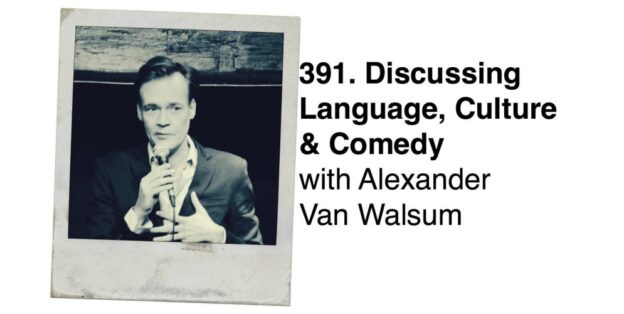
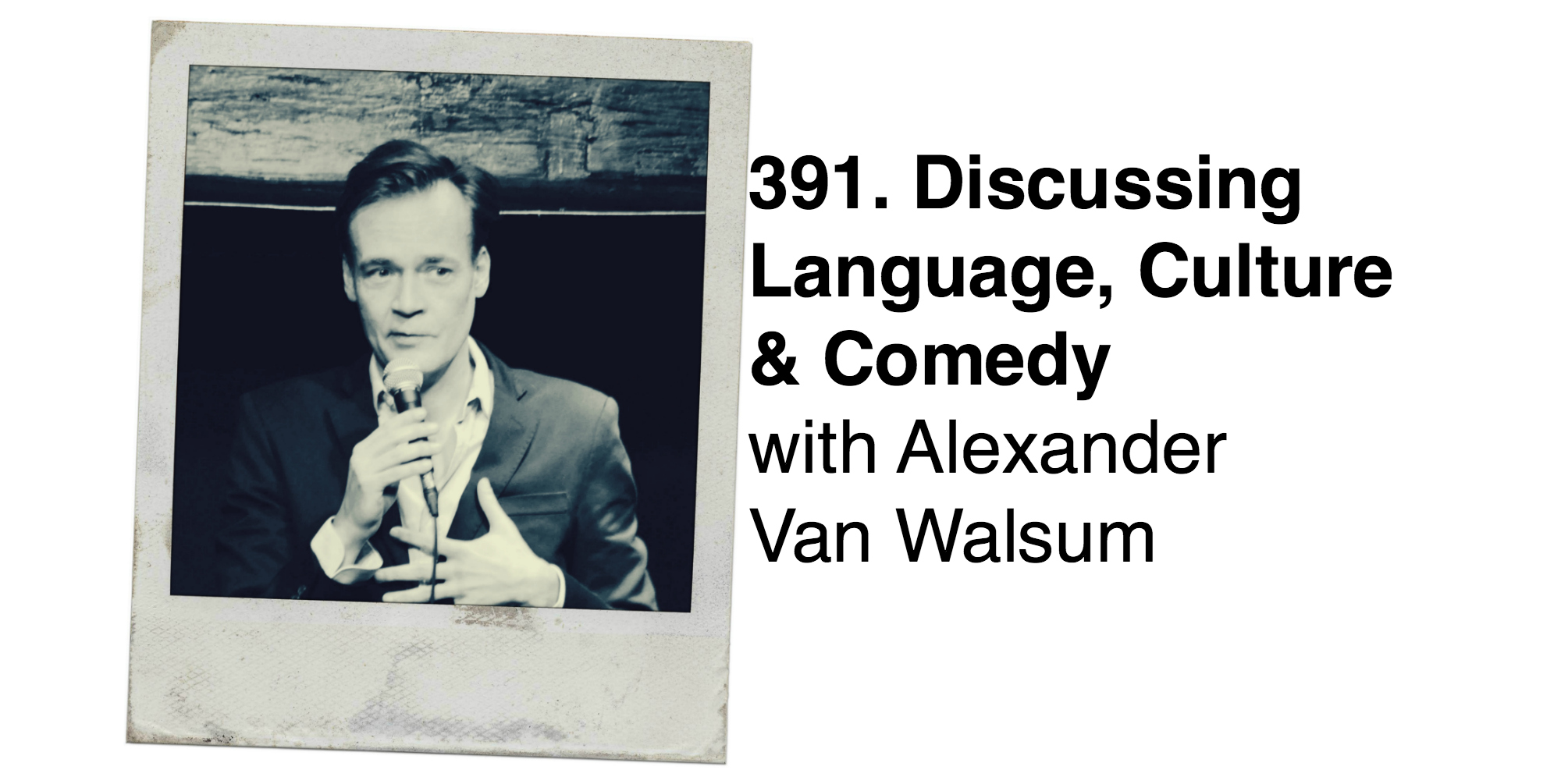
391. Discussing Language, Culture & Comedy with Alexander van Walsum

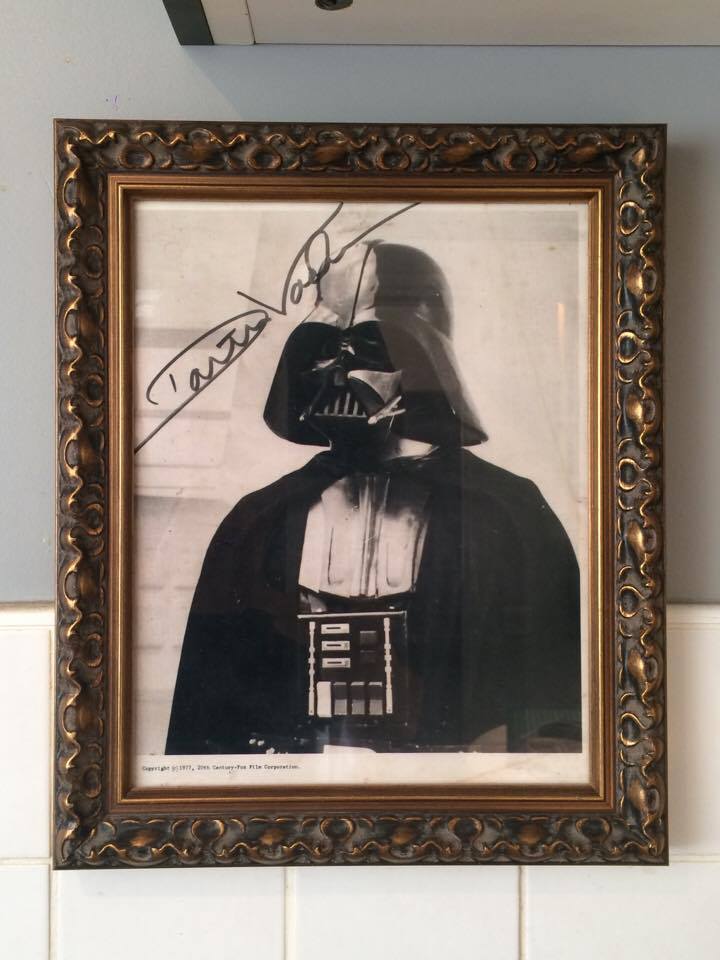
Here is a new episode featuring a conversation with a friend of mine who originally comes from the Netherlands but he has lived all over the world. You’re going to hear us talking about cultural differences, Dutch stereotypes, doing business in France, the UK and the USA, the different communication styles in those places, doing stand up comedy and getting Darth Vader’s signature. I hope you enjoy listening to it as much as we enjoyed recording it.

Small Donate Button[DOWNLOAD]

Alex performing at Le Paname Art Cafe in Paris

https://www.youtube.com/watch?v=TDF_xdTVPpc

You can see Alex performing at “WTF Paris? – Comedy Therapy for Expats” with Amber Minogue at the SoGymnase comedy club in Paris every Friday evening at 8pm. Details here https://www.weezevent.com/wtf-paris
14699828_10154359870410804_763494392_navwpic

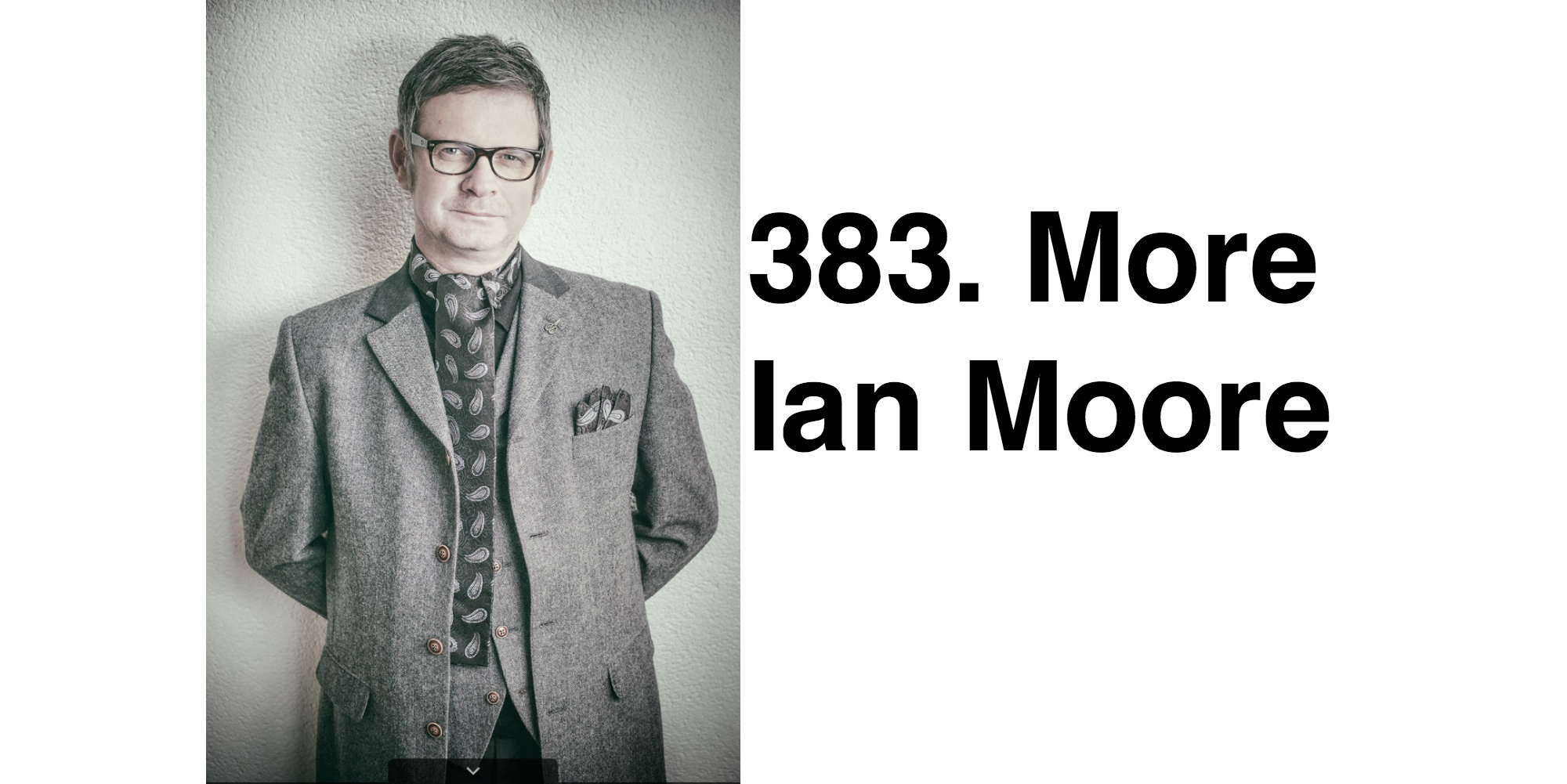
383. More Ian Moore

In this episode you are going to hear part 2 of my conversation with Ian Moore and I’ve decided to call this one “More Ian Moore” – do you see what I’ve done there? “more Ian Moore” I bet nobody has ever made that joke about his name before, right? Before we listen to Ian Moore, I just want to mention a few things… (notes continue below)

Small Donate Button[DOWNLOAD]
My voice – I’ve got a sore throat. It’s not too bad but I can’t talk a lot. I did an episode a few years ago about feeling sick and common symptoms. You can listen to it here (below).

40. Health / Feeling ill – Phrasal Verbs & Expressions

Thanks for taking the survey. If you haven’t done it yet, you still can. Click below:

Please take my survey / Anecdote Competition / ‘Russian Joke’ Video

Anecdote Competition. I know it’s challenging because you can’t read from a script.

More Ian Moore

Here is some more Ian Moore for you to listen to. You might want to listen to episode 382 before you hear this one. I know it’s a bit difficult to follow these conversations and I’m not explaining everything for you but here is a quick run-down of what you’ll hear us discussing in this episode.

Things we talk about

Making chutney – Chutney: A condiment (a condiment is something you have on the table when you eat food – e.g. salt, pepper, mustard, ketchup) of Indian origin, made of fruits or vegetables with vinegar, spices, and sugar. (Oxford Dictionary)

The challenges of living in the French countryside, including the time when he had a run-in with some hunters armed with shotguns (a run-in is like a disagreement or fight, or collision)

Doing Michael Caine impressions on stage (Michael Caine is a UK actor famous for lots of film roles, including Alfred in the Christopher Nolan Batman films, and some iconic roles from the 1960s in which he wore some very sharp suits, which is why he’s a bit of a style icon for the mod movement, and for young British men in general. Also, he has a particular way of talking)

The significance of Michael Caine in UK culture

Developing his comedy voice

How he started doing stand up comedy

Gigging in different places around the country

Performing comedy in French

The origin of the term “break a leg“, which is something you say to a performer to wish them luck before they go onstage

Ian’s blog “Full English Brexit” http://ianmoore.info/full-english-brexit/

Brexit

Chutney again

His books
A la Mod: My So-Called Tranquil Family Life in Rural France

C’est Modnifique!: Adventures of an English Grump in Rural France

Visit the page for the episode for links to his books, his blog and for some video footage of Ian on stage. (Hello!)

Thanks for listening, and I hope you enjoy this conversation, recorded for your listening pleasure. I know that it might be difficult to follow this because you’re listening to two native speakers talking at natural speed. All I can do there is encourage you not to give up because the more you listen, the more you will understand in the long-term, and you certainly won’t improve your English at all by giving up and not listening. So, whenever you do understand something – give yourself a pat on the back and keep going!

*CONVERSATION STARTS AT ABOUT 18:00*

So there you go. That was Ian Moore. Let me know how it was for you. Did you manage to keep up with it all?

As he said, he does perform internationally sometimes, so check his website to find out if he is doing comedy in your area soon. In fact, you should find out if there is any English language comedy happening in your area, and go to see it. Many cities around the world have English comedy scenes these days. It  might be a small scene, with amateur comics still developing their comedy skills, or it could be a more advanced scene with professionals like Ian, who will always make you laugh. In any case, going to see comedy can be a good thing to do for your English and you might end up meeting some people and making friends, all in English. Don’t be shy, give it a try – and remember not to get demotivated if you don’t understand all the jokes, like if a comedian goes on for 3 minutes about “rushing to the venue” and you don’t understand what he’s talking about. Don’t be bothered by the things you don’t understand, just do your best to work them out and keep going.

Ian Moore performs in French (yes, it’s in French)

Ian on stage in English

Shout outs

– driving in his car while listening, possibly stuck in a traffic jam.

Shout out to anyone stuck in traffic.

Beatle fans
Monty Python fans
Star Wars fans
You’re my people

Cat – the Koala Ninja – top commenter on the website this month.

Nadege from France – a new listener.
All other lepsters in France – you’re a rare breed.

All lepsters who listen until the end – you’re wonderful human beings

Venkatesh – an LTL who sent me a message recently. You’ve been listening from day 1 as far as I remember

All LTLs

Mouse update

Jarvis Cocker update

Join the mailing list

Send me an anecdote for the competition. Closing date is 5 October.

Complete the survey I mentioned in the last recording I uploaded.

Thanks! Have a great day.

Luke

ianmoore3

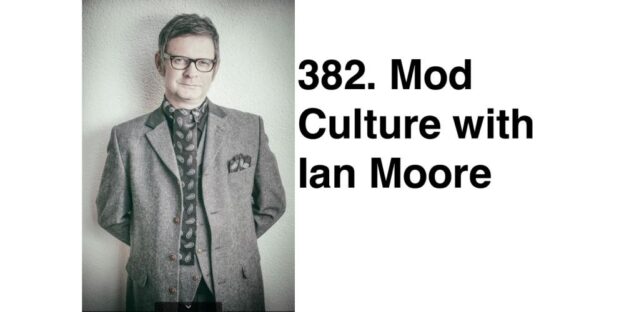
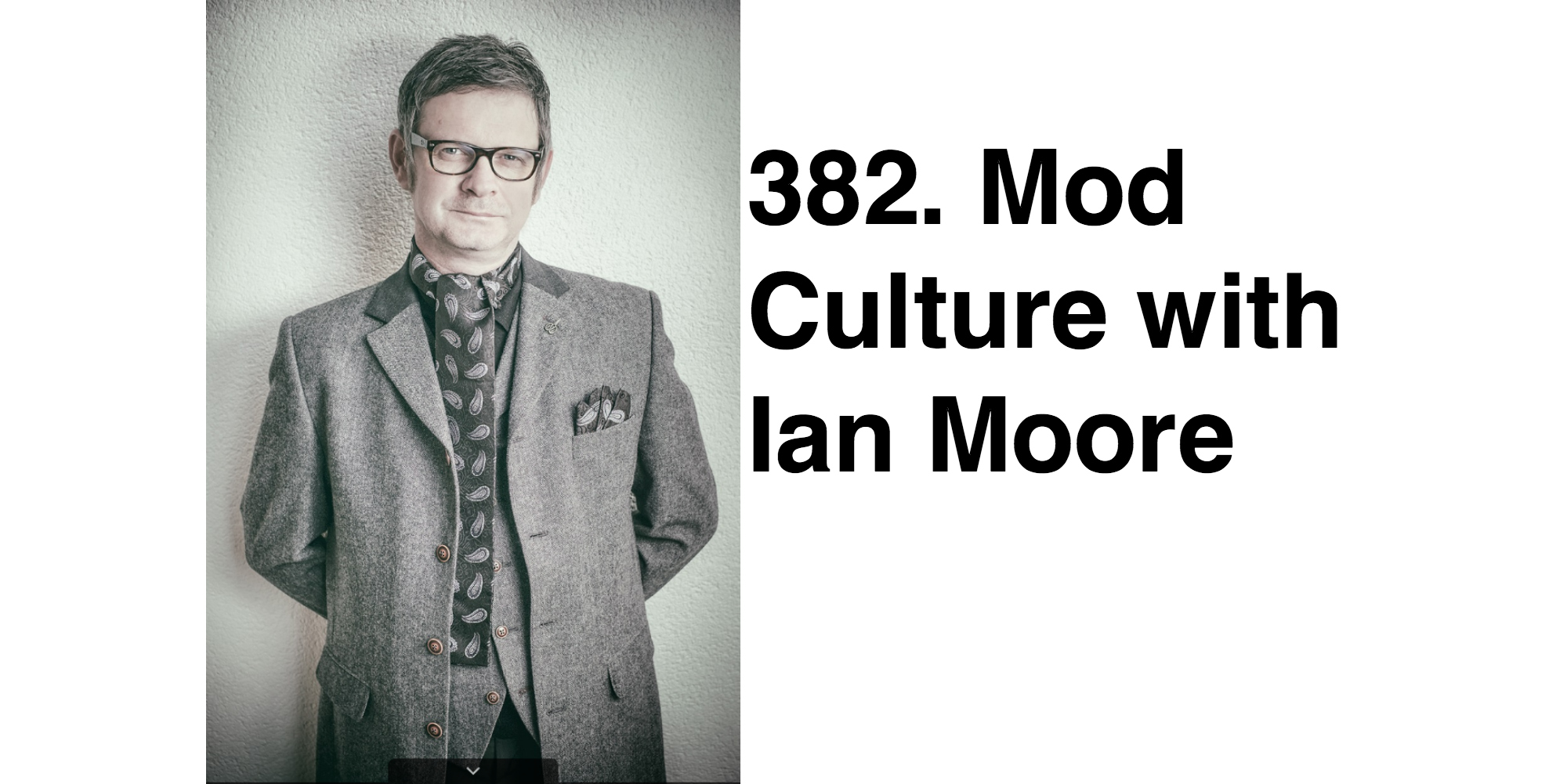
382. Mod Culture with Ian Moore

Today on the podcast I’m talking to Ian Moore, who is a professional stand up comedian, published author and mod from London. Ian is probably the best dressed man ever to appear on this podcast. He is also a professional talker with many things to say.

Small Donate Button[DOWNLOAD]
Photo: Richard Wood @comictog https://twitter.com/comictog

Intro before the intro

Hello listeners, this episode of Luke’s English Podcast is sponsored by italki which is a really convenient way to develop your fluency in English by talking to native speakers online – to claim your voucher worth 100ITC just go to http://www.teacherluke.co.uk/talk or click an italki logo on my website.

This episode features a conversation with English writer and comedian Ian Moore and in this part we talk mainly about mod, which is a British subculture involving clothing and music, but before the interview there is about a 15 minute introduction in which I explain a few things that will help you to fully understand the conversation. This podcast is for learners of English so sometimes it is necessary to give support to my listeners in advance of hearing a natural conversation in order to help them understand it all. My 15 minute intro to this episode is mainly an overview of the history of mod culture, with a few other short explanations. If you want to skip the intro, just move forwards by about 15 minutes and you can jump straight to the conversation. However, the introduction is there to help you to understand the cultural references, some history and other details in our conversation. OK, so that’s my intro before the intro, and now that this intro is nearly finished, I’ll let you listen to the other main intro which is going to come after this intro when this intro is finished, which is now so here is the proper intro, after the jingle, which is going to start as soon as I stop talking which is right about now.

Introduction and Explaining (Skip forwards 15 mins if you don’t want some explanations)

Today on the podcast I’m talking to Ian Moore, who is a professional stand-up comedian, published author and mod from London. Ian is probably the best dressed man ever to appear on this podcast. He is also a professional talker with many things to say.

I first met Ian a few months ago. He was in Paris for a few days and was the headline act at a comedy show where I was also performing. We got talking and our conversation was suitably rambling for me to consider Ian a good guest for this podcast. Also, there are some specific things I wanted to ask Ian, which I thought might be interesting for you my audience to hear.

Mod Culture

First, Ian is a mod. He’s a proper full-time mod. He dresses in all the correct mod clothing and has done for years. That might not mean anything to you and in fact that’s one of the reasons I wanted Ian to talk about it in this episode. Mod culture is quintessentially English. Basically, Mod is a fashion style, a way of life and a whole subculture of its own, and it’s uniquely English I think. Mod is one of the first genuine youth subcultures of the modern era. Nowadays there are many many subcultures (e.g. punk, skinhead, hippy, raver, indie kid, rocker, metal head, skater, etc) to the point that they don’t really mean anything, but back in the late 1950s and early 1960s there weren’t many youth subcultures. Everyone basically dressed the same except between different social classes in society. Certainly young people just dressed and acted like adults. Then in the postwar period young people became more independent and developed their own alternative cultures which were separate from mainstream lifestyles. Young people began to associate themselves with these alternative cultural movements as an expression of their individuality particularly in the form of the clothes they wore and the music they listened to.

Mod culture first became well-known in the UK as a result of a story in the newspapers about rival gangs of ‘mods’ and ‘rockers’ fighting each other on the beach in Brighton in 1964. These were the two main youth subcultures of the time and they hated each other. The rockers wore leather jackets, had their hair quite long and unclean, and rode motorbikes. They listened to rock and roll music. The mods were very sharply dressed in well fitted suits and ties, wore smart leather shoes, had a particular haircut (a bit like the Beatle cut) and rode Italian scooters. They listened to modern jazz, black American rhythm and blues or Jamaican ska. Their rivalry came to a head in the well-documented fighting that happened on the beaches in Brighton. The fight between the mods and the rockers was all over the newspapers and it shocked everyone, causing a kind of moral panic about young people. At that time it was the equivalent of something like the London riots of 2011. Most people couldn’t understand the violence and it was considered a sign of the breakdown of society. It was also the first time that most people became aware of the mod movement.

Since then, Mod has drifted in and out of fashion, going away in the early 70s when it was replaced by things like glam, soul boy and skinhead movements to be revived again at the end of the decade, in the 1980s and again in the 1990s. Being a mod is a way of life and it revolves mostly around the clothing you wear and the music you listen to, but there is a certain philosophy which underpins the movement too and that seems to be based on certain kinds of European existentialist thinking and a kind of open-mindedness to outside influences combined with a great attention to detail in clothing choices. In order to identify a mod, you need to be aware of the right details in the person’s clothing. A certain type of suit, cut in a specific way. Certain brands, types of shoe or coat, and a particular hair cut. The most famous mods are probably people like the musician Paul Weller of The Jam, the groups The Small Faces and The Who (early period), and these days the actor Martin Freeman who likes to wear mod clothing when he’s not acting in a movie or TV show.

While mod culture borrows from many other cultures it is very specifically British and therefore I think it is worth exploring on this podcast.

So, first – Ian is a mod. Secondly, he lives abroad – specifically on a farm in rural France, despite being a very well-dressed city boy from London, and he has lots of stories to tell about this, which form the basis of several books which he has written and which have been published. Both books tell funny true stories of his life as a mod living on a farm in the French countryside, they’re well-reviewed on Amazon and are definitely well-worth a read. They’re amusing, not challenging to read and are full of very entertaining little anecdotes and tales of his double life as a comedian working in London and a farmer in the French countryside. I thought it would be interesting to hear him talk about that on the podcast, and if you’re looking for appropriate books to read in English – I really recommend these ones. There are also audiobook versions read by Ian himself. The first book is called A la Mod, and the second is called C’est Modnifique.

And thirdly, Ian is a professional stand-up comedian – in fact The Guardian newspaper describe him as “One of the country’s top comedians”, which may account for why he’s able to write such funny stories in his books. Ian has been performing in the UK professionally for about 20 years and has travelled all around the country doing big gigs everywhere, including at London’s best venue The Comedy Store in Leicester Square. Ian has also performed in many locations around the world, so naturally I wanted to find out about that too.

So all in all, Ian Moore is a great guest for this podcast and we had a very enjoyable rambling conversation upstairs on my terrace on a very sunny morning this week. This is going to be two episodes, because we talked for over an hour together.

This might be a tricky episode for you to follow because our conversation includes quite a lot of tangents and references to things you might not be familiar with, so let me just give you an overview of the main things you’ll hear.

At the start we talk about the view from my terrace, including the Sacre Coeur basilica, which we can see.

Then we talk about how he met his wife on the steps of the Sacre Coeur when he first moved to France. Then we go on to chat about his first experiences in France and why he fell in love with the country. (He talks about buying a vinyl copy of “Complete Madness” in a supermarket in Nice – Madness are a band which has a large mod and skinhead following).

Then we talk about where Ian comes from, and how he describes his accent. (Basically, he’s got a typical south east / London accent, cockney or ‘mockney’ even though as a child he used to live up north in Blackburn and also in the east in Norfolk. He spent most of his time in London.)

We discuss his level of French, and then move on to talk about being a mod and what that means, including quite a lot of specific descriptions of his clothing and mod style in general, so watch out for some vocabulary to describe clothing in this episode.

But now, without any further ado, let’s join the conversation with Ian Moore and you will first hear us talking about the views of Paris which we can see from my terrace.

*CONVERSATION BEGINS*

We talk mainly about mod culture. The podcast pauses after about 40 minutes.

*CONVERSATION PAUSES*

So, that’s the end of part one of this conversation, in which we mainly covered mod culture. Check out the page for this episode where you’ll find some videos of mod-related things and also some stand-up footage of Ian Moore on stage.

How was that for you? Did you manage to understand what we were saying? I expect it might be a bit tough because we’re talking about things that you might never have heard about before. THat’s one of the main reasons why it’s hard to understand native speakers sometimes. It might be because of the pronunciation – specifically connected speech and the way some sounds are not fully pronounced, it might be the vocabulary being used, but also it’s because of the cultural references being made and the general mindset of the conversation. These are all factors that influence your ability to understand native speakers. Certainly the cultural aspect is very important. If you’re on the same wavelength as the people you’re listening to, or talking to, it makes it far more likely that you’ll understand them. This will help you work out the meaning of words that you don’t know and fill in the words that you didn’t hear. You have to try to tune in to not just the language, but the way of thinking of the people talking and then you’ll understand more and ultimately pick up more of the English yourself. So, listening to conversations like this is vital, even if it’s difficult.

Don’t forget that you also have to activate the English you hear in the podcast by having similar conversations yourselves, perhaps with a language partner on italki. Don’t forget to take advantage of my italki offer by visiting www.teacherluke.co.uk/talk

OK, part 2 of this episode will be available soon and then you can hear Ian talking about his funny experiences of being a mod in the French countryside, dealing with animals of all shapes and sizes, the challenges of living on a farm and the life of a professional stand up comedian. Thanks for listening to this episode, I look forward to reading comments on the website. Have a great day, morning, afternoon, evening or night and I’ll speak to you soon.

Bye.

Luke

Mod culture

Ian Moore on stage

ianmoore1

381. Discussing Cultural Differences (with Amber & Paul)

In this episode I’m talking to my friends Amber and Paul about cultural differences, particularly in the ways we communicate with each other in different countries.

Small Donate Button[DOWNLOAD]
You should know that there is a bit of swearing in this one as well as a few dodgy jokes and references to previous episodes of the podcast, which you should probably listen to before you listen to this one in order to understand a couple of references and in-jokes. The previous episode is number 380. As for the swearing, I see it as just evidence of the fact we are all talking in a totally relaxed, genuine and natural manner, like we normally do in this social situation.

I just want to say that our aim in this conversation was to compare different cultures and not to criticise other cultures. We’re just expressing our own personal experiences from our point of view. Since we all live in France and we’re from England, there are quite a lot of comments about differences between French and English culture. If you’re French I’d love to read your points of view on many of the things we’re talking about and I am sure that you could make loads of similar comments about life in England – like, why the hell do we have separate taps in the bathroom? Or, why do girls go out on a Friday night with hardly any clothes on? Don’t they get freezing cold? And why do Brits drink so much? These are all things that might seem strange to visitors to the UK. So, I’m well aware that all cultures and behaviours can seem strange from the outside and it’s all just a matter of context.

In fact, I have already done several podcast episodes all about culture shock experiences of people moving to the UK (specifically London) from foreign countries. Check out the links to listen to those episodes.

192. Culture Shock: Life in London (Pt.1)

193. Culture Shock: Life in London (Pt.2)

I am sure you have points of view on this that you would like to express, so feel free to leave comments on the page for this episode. Don’t forget to join the mailing list on the website to get easy access to the page for every new episode when it is uploaded.

So without any further ado, here’s a podcast about cultural differences with Amber and Paul.

Discussing Cultural Differences

Luke’s Intro

Although we are all the same, we’re also different.

Ways we’re the same:

We all fall in love, go to the loo, get hungry, get tired, like laughing, listen to LEP.

But we’re all different – individually we are all unique, but we are also different as groups, tribes, nationalities or cultures.

Although it’s bad to generalise, it seems that cultures – like ethnicities or nationalities, tend to have certain shared behaviours and customs that mark them out as different to others. For example, although the English and French share a lot of things in common there are certain things which mark us out as different. Not just the language we speak, but the way we behave and the things we think are important. Like the way we queue.


So anyway, that’s just an example of culture shock I suppose. But it shows that there are cultural differences. Of course there are! Everyone knows it.

If you’ve ever been abroad or had contact with other cultures you’ll know that sometimes it’s incredibly obvious that our cultures are different. Sometimes it’s shockingly obvious, sometimes it’s hilarious, sometimes it’s frustrating, sometimes it’s just weird, but we have to remember that they’re just differences and while they can be confusing, frustrating and also funny, ultimately we need to find ways to look beyond these differences and not let them become a barrier to things like communication, understanding, business, diplomacy and relationships.

In this episode I’d like to have a discussion about cultural differences that we’ve noticed around the world. These could be different types of behaviour, like certain customs and habits, or just different values – like, what people seem to think is important, and how those values reveal themselves in the way things are done.

Amber & Paul

What are your credentials in terms of your cross cultural experiences?

  • How long have you lived in France?
  • Have you visited many other places? Which other places have you been to?
  • Have you had cross cultural experiences?
  • Have you been in a relationship with someone from another culture?
  • Have you done business with people from other cultures?

I have a list of different behaviours and values. Just stuff I’ve noticed or heard about. Well go through the list.

We can answer these questions:

  • Where do they do this?
  • Do we do this in the UK?
  • Do we consider this to be weird behaviour or not? Is there a reason for this behaviour?
  • Do you have any experiences of this? Would you like it if we introduced this into our culture?

The list: (please note that we are not talking about ‘two-taps in the bathroom’)

  • Kissing or hugging someone when you meet them (Paul did a successful video about this)
  • Looking people in the eye
  • Indirectness/diplomacy/politeness (or hypocrisy) vs directness/straightness/clarity (or rudeness) – e.g. certain cultures tend to be indirect when giving negative feedback, other cultures favour direct negative feedback
  • conflict vs non-conflict
  • Smiling in public

earth-1639775_1280


For discussion in future episodes… PLEASE ADD MORE CULTURAL DIFFERENCES IN THE COMMENT SECTION SO WE CAN DISCUSS THEM IN THE FUTURE :) 

  • Eating early vs eating late in the evening
  • Having milk in tea
  • Eating scorpions / spiders / toads / frogs
  • Eating with your hands / chopsticks / a knife and fork / not your left hand
  • Burping or farting after eating
  • Girls wearing miniskirts in the middle of winter
  • Hawking / spitting in the street
  • Saying “good morning” or “good afternoon” in shops/post offices before you can get anything done
  • Kissing in public
  • Begging
  • Crossing the road – waiting for cars to stop vs just walking into the street vs using pedestrian crossings
  • Driving on the left
  • Queuing in an organised and patient way vs Not queuing – “every man for himself” (or something in between)
  • Public transport – following the rules vs no rules (e.g. queueing, letting people off before getting on, etc)
  • Falling asleep on public transport
  • Talking to strangers on public transport
  • Having a strict attitude towards health and safety (e.g. wearing safety belts in cars) vs Having a relaxed attitude towards health and safety (e.g. not wearing safety belts, overtaking on corners)
  • Bribing police or other people
  • Having more than one wife, or having affairs
  • Saying “yes” in order to save face
  • Having carpet in the bathroom
  • Wearing shoes indoors
  • Sitting down to go to the toilet vs Squatting on the floor when you go to the toilet (or any other toilet related comments)
  • Putting The UK at the centre of the map

Is there anything else you’ve found to be weird or different?

380. Catching Up with Amber and Paul #3

In this episode the PODPALS Amber and Paul are back and we’re going to have the normal catching up session in which they talk about what they have been up to recently. As usual we sit on the terrace and get interrupted by insects, the sun, neighbours on their balconies around us (including a naked man eating his lunch) and the inevitable references to a certain Russian joke that always comes up in our conversations.

[DOWNLOAD]
Small Donate ButtonYou should know that there is quite a lot of swearing and rude content in this episode, so be warned if you’re playing this in public or something. I have swearing on this podcast because I am trying to present you with real English – the kind of English I would normally speak with my friends, and the sort of English that isn’t necessarily taught to you in language classrooms. That’s the benefit of podcasting and that’s why the swearing stays in the podcast.

You’ll find a lot of my notes and questions written on the page on the website. Join the mailing list to get a direct link in your inbox every time I upload an episode.

Now, let’s enter the conversation on the terrace. At first Amber and I remind Paul of the last time he was on the podcast, which was in an episode called Would you rather? In that one we asked each other ridiculous questions and talked about things like having accordions for legs. If that sounds a bit strange, check out that episode and it should make a bit more sense.

354. Would You Rather…? (with Amber, Paul & James Simpson)

Then we all catch up with each other and talk about holidays in August, Amber’s son Hugo who is potty training and Paul’s new TV show which is currently showing on French television. Listen for more anecdotes and spontaneous speaking between friends.

And here we go…

*Conversation starts*

Questions

Can you describe the scene?

What have you been up to since you were last on the podcast?

 Amber

  • Did you go away anywhere? Where did you go?
  • How is little Hugo?
  • Are you planning any shows for the coming year?
  • When are you going to start your own podcast for goodness sake?

Paul

  • Did you go away anywhere?
  • How was Louis CK?
  • What about your TV show?
  • You stopped doing the French podcast, but the English one is still going (and that was my plan for my French – to listen to you in French)

pod-pal

378. Holiday in Thailand (Part 2)

Here is part 2 of this description of my recent holiday in Thailand. In this one you can hear more stories and descriptions about different parts of the country, learning how to cook, a conversation with a monk, doing yoga every day, a couple of messages from listeners and some reflections on gratitude, forgiveness and guidance. Transcript and notes below.

Small Donate Button[DOWNLOAD]

Laughs

Part 1 got a bit rude in places, didn’t it? I told you about a couple of embarrassing and slightly difficult experiences, a dodgy joke, and some cultural details about Thailand itself, including some things that you might not know about the country. You might have noticed that I was trying to make you laugh a bit, rather than just explaining each individual thing we did there. Some people left comments on the website expressing how much it made them laugh.

For example:

Hahahha this is such a funny episode! I was laughing out loud in the metro and everyone thought I was crazy ! Really great thanks Luke!

Hello Luke!
Hilarious episode, and of course a great one. I was laughing out loud while roller skating. Everybody was looking at me like a crazy woman but it was worth listening despite that :). Thank you for your great work.

I’m glad you enjoyed it!

I’m going to carry on in this episode with just a few more descriptions of things that happened in Thailand. If you’re thinking of going on holiday there, I would recommend it. A couple of weeks is enough to see and do lots of things. Thailand has a reliable tourist infrastructure which means it’s not difficult to find accommodation, transportation, plenty of places to eat good food, diverse activities and cultural things to see such as temples, art and craft, cooking lessons, night markets, beaches, snorkelling, scuba diving, trekking, kayaking, yoga and meditation. They have the sea, the city and the hills and forests. It’s a diverse and friendly place and a top place to go for a holiday which can be both adventurous and laid back.

My wife and I had a great time there and in this episode I’m going to talk to you about some of the other highlights of the rest of our trip.

Contents

  • Cultural visits in and around Bangkok
  • A couple of dodgy jokes which I came up with and which have to be told
  • Chiang Mai in the north
  • Learning how to cook Thai food
  • In conversation with a monk
  • Koh samui – an island in the south
  • Our yoga retreat – which I expected to be peaceful and relaxing, but which was more like a punishing fitness regime in high temperatures
  • Mouse news (for people who listened to the episode I did before the holiday)

Grand Palace & Wat Pho

This is the temple of the reclining buddha. It’s brilliant, but “Wat Pho” sounds to me like a question, especially if you say it in a kind of hip hop, black American gangster accent.
– I visited the temple of the reclining buddha in Bangkok
Wat pho?
– Just because I thought it would be an interesting thing to see.

Not the strongest joke ever.

Ayutthaya

Former capital, now a place with loads of impressive old temples and archeological sites. It was extremely fascinating and brilliant but we walked around it all day and get extremely hot and tired, and I came up with this joke.

So, I visited the ancient capital of Thailand today.
– Ayutthaya?
Yes, I’m absolutely exhausted!

Again, not the strongest joke ever. But come on, it’s not bad!

Chiang Mai

How the city looks and where it is.
Walking streets.
Cooking class.
Monk chat.

Koh Samui

Yoga retreat
Relaxing? No – quite a punishing regime.
Early starts, cycling, ‘core foundations’, embarrassing yoga. Mix, repeat.
Food = vegan and veggie.
No beer at all.
Met some very nice people including a German lady called Doris who was a lot of fun. Mui Thai, cross fit etc. She could kick me in the head. Taught me important German words like “shveiss!” For sweat. She discovered my podcast and now might be listening. Hopefully I’ve converted her into being a LEPster.
Lots of funny times at the yoga retreat which felt a bit like being in a cult, or some kind of luxurious jail.
Yoga was quite hard – especially for me – my hips and hamstrings are a disaster. They’re very stiff and inflexible. Eg sitting cross legged is really hard.
My body wants to fall over backwards.
My favourite yoga position – lying in my back!
Great instructors including a couple from England – Ellie and David. David was particularly impressive.
I was basically the only man there except for a few other blokes hanging around doing another program, but in our group I was the only man. All the girls, including my wife I should add, all fell in love with David, especially after they googled him and discovered a few things, such as the fact he was a green beret in the marines, he used to be a fire-fighter, he became a black belt in some obscure Philippine martial art ( trained with a grandmaster)
His sessions, particularly ‘core foundations’ we’re pretty punishing and while the girls found it to be enriching and inspiring, I felt like my ego was slowly being crushed like a grape.
Fitness and yoga sessions twice a day.
Sweating all the fluid out of my body twice a day.
Eating noting but super healthy food.
Getting up at 6 each morning and going to bed at about 9.
All that yoga and tons of meditation.
I felt amazing afterwards, and still do – and that was just 5 days.
In the meditation you are encouraged to focus on things inside you quite deeply.
Gratitude.
Forgiveness.
Guidance.
Combined with the hard fitness work and yoga, which is very humbling and detoxifying I found that in my meditation sessions a lot of painful and guilt filled memories came back to me.
It was like all the bad things were being flushed out of my system.
It was quite painful at times – emotionally as well as physically.
I won’t tell you about all the painful memories that came to me while I was contemplating forgiveness / asking to be forgiven, but I can share one or two – just to give you an idea.
Years ago.
Bad time in life.
Young, immature, directionless, not looking after myself.
Identity crisis.
Full of awkwardness.
Not in a good place or where I wanted to be.
Working all day every day in a crappy job.
It seemed that every day was filled with nothing but awkward encounters.
Just crushing social awkwardness in which I just came across as really weird and unable to function normally. People must have thought I was odd. Either that or I was paranoid and imagining it all. I could not tell.
Felt totally out of it.
I was actually very depressed.
There was just one guy really who I got on with.
Older than me, quite shy but with a dark sense of humour. We got on alright.
We were like buddies.
Doing the job just to get by. Hated it.
Playing in a band in the evenings but I hated that too – lots of personal politics. Couldn’t sleep at nights.
Invaded by weird negativity all the time.
Thank goodness I’m in a much much better place these days although sometimes that kind of feeling comes back.
A lot of those feelings and that whole emotional space came back to me when I was searching for forgiveness.
In the end I was really fed up and decided to basically start again.
Went back to my parents. Always feels like a failure.
Anyway, some of the people at the job organised a little leaving drink for me the day after I left. I basically left with them saying “see you tomorrow evening at the pub”.
Walking out of there felt like a huge relief.
The next day for some reason I just didn’t want to go out.
I didn’t go to the drink.
I stood everybody up at my own leaving drink.
It might not feel like a big deal to you now. Not so serious. In fact, people do shitty things like this a lot – ignoring a so called friend that they don’t want in their life any more. Dumping a girl by text message. Shitty things.
Anyway, for some reason this kept coming back to me and it just really bothers me.
The guy I met and struck up a friendship with, that’s the worst. I feel really bad about him making an effort to come to the drink and then I just didn’t turn up.
Anyway, I was asking for forgiveness for that, and a few other things too which I won’t mention because it’s too personal.
So overall it was quite an experience to flush out all these negative things – physical and emotional.
It’s a good thing too. It feels great.

I think holidays are best when you actually have something to do which takes you out of yourself. It helps you deal with your past, enjoy the present and prepare for the future.

Think about something you’re grateful for, something you’d like to be forgiven for or someone you’d like to forgive, and something you’d like guidance for.

Back in Paris – September – back to work at the BC – also on my online work – I think I’m going to launch a new competition – stay tuned.

Mouse News

In the last episode I told you a quick story about how I nearly caught a mouse in a mousetrap, but it escaped even though its back legs weren’t working. I was worried that the mouse would crawl off and die on some little corner of the flat somewhere, and then would make a smell. I didn’t tell my wife about this by the way, because what she doesn’t know can’t hurt her, but I was worried that we’d come back and there would be a bit of a ‘dead mouse smell’, but thankfully our flat smelled fine and actually quite nice (we have lots of plants). So, weirdly, despite wanting to kill the mouse in the first place I am actually quite glad that the mouse is still alive. I wonder if it’s learned from its mistake or not. Perhaps I’ll get it next time around.

That’s it!

Join the mailing list. Subscribe on iTunes or other podcasting software. Watch out for news of a new competition I’m going to launch, and as ever let me know what you’re thinking and practise your English by leaving a comment on the website.

I want to say thank you

  • people who have left me comments following the latest Annual General Meeting episode in which I asked lots of questions. Thank you for your answers – it all helps me to get an idea of what you’re thinking and how I can adapt my episodes slightly to your preferences and things like that
  • people who I have met in person and who have spoken to me personally about the podcast – you know who you are
  • people who have made donations to LEP – you are now LEP stakeholders or patrons and I appreciate it very much indeed. You’re the life-blood of LEP and you help to keep the whole show on the road.
  • transcript collaboration
  • similarly – I would like to thank those of you who chose to use my url codes when signing up with italki and audible. Whenever someone does that I get a small kickback and it all helps to keep the podcast alive, and also to convince people around me that all of this is worth doing. I could be spending my time doing more private English lessons, or doing more teaching at university etc, but both you and I would rather I produced episodes of this podcast, right? Well, donations and sponsors allow me to do that. If I didn’t have those forms of support, it would be hard to justify to myself and my family that I spend so much time doing this. I still plan to make it more of a career for me, with the aim of doing just online content creation as my full-time job, and that’s a work in progress. I know I’ve been saying that for years and it’s way overdue, so watch this space for more content which can help you improve your English in new and improved ways.

 italki offer http://www.teacherluke.co.uk/talk

audible offer http://www.audibletrial.com/teacherluke

image luke cooking