Here is part two of my conversation with Sarah and Sebastian from the USA about the upcoming presidential election. In this episode we turn our attention to Hillary Clinton.
[DOWNLOAD]
[socialpoll id=”2393201″]
So, that was our conversation about the election. There were opinions flying around. There were words flying around. There was a hell of a lot in there. I could spend forever untangling it all and explaining the words, breaking it all down bit by bit so you understand it all. But frankly, that would take me hours and hours and I just can’t do that. In the end, I think perhaps the best thing to do was to play you a natural conversation about it instead, even if it was hard for you to follow.
Perhaps because we were talking rather quickly. Perhaps because we were talking over each other a bit. Perhaps it was difficult because of the American accents of Sebastian and Sarah. Perhaps because you don’t know the subject well and that made it hard to understand. So, if it was a struggle to understand everything, well done for making it through to the end of the episode here.
If it wasn’t a struggle and you feel you understood a lot of the conversation, then well done you!
I expect some Trump fans out there listening to this got triggered by some of our comments. You might have strong feelings. Can I suggest that before you do that you take a deep breath before you start writing. Also, I’m sure there are some anti-Hillary people out there. Again, don’t spread hateful comments on the website. Instead I encourage you to present a developed argument, and not the sort of hateful nonsense you find under the average YouTube video.
Whatever your thoughts and feelings, please join in the conversation and leave your comments on the page for this episode. I have a few questions for you. You can answer as many as you like.
How was the conversation for you? Did you understand it all?
What do you think of Hillary?
What do you think of Trump?
Who do you think will win?
Who do you hope will win?
I look forward to reading your thoughts on the website.
The presidential election in the USA is about a month away and I’ve been meaning to talk about this subject on the podcast for ages. So in this episode you’re going to hear me in conversation with a couple of American friends of mine who you might already know from their previous appearances on this podcast – Sarah Donnelly and Sebastian Marx. We sat down in my flat today to talk about the elections, Hillary Clinton, Donald Trump, their thoughts, feelings, opinions and predictions on the whole thing.
[DOWNLOAD]
The conversation you’re about to hear is very fast moving with quite a lot of specific vocabulary about American politics. It’s quite passionate and opinionated in places. I certainly hope that it is an interesting conversation for you to listen to and that you enjoy hearing about this subject from two American people in their own words.
Because it is so fast moving and we had so many things to say I expect that this will be a difficult one for you to follow. I think this will be a challenging episode. So, if it’s hard to keep up with – don’t be surprised. That’s quite normal because I think this is a fast conversation for any learner of English to keep up with.
Alright, I don’t want to go on about it any more in the introduction here, suffice to say that I know this is a fast moving and opinionated conversation so strap in, focus, listen carefully and I hope you enjoy it.
In this episode you are going to hear part 2 of my conversation with Ian Moore and I’ve decided to call this one “More Ian Moore” – do you see what I’ve done there? “more Ian Moore” I bet nobody has ever made that joke about his name before, right? Before we listen to Ian Moore, I just want to mention a few things… (notes continue below)
[DOWNLOAD] My voice – I’ve got a sore throat. It’s not too bad but I can’t talk a lot. I did an episode a few years ago about feeling sick and common symptoms. You can listen to it here (below).
Anecdote Competition. I know it’s challenging because you can’t read from a script.
More Ian Moore
Here is some more Ian Moore for you to listen to. You might want to listen to episode 382 before you hear this one. I know it’s a bit difficult to follow these conversations and I’m not explaining everything for you but here is a quick run-down of what you’ll hear us discussing in this episode.
Things we talk about
Making chutney – Chutney: A condiment (a condiment is something you have on the table when you eat food – e.g. salt, pepper, mustard, ketchup) of Indian origin, made of fruits or vegetables with vinegar, spices, and sugar. (Oxford Dictionary)
The challenges of living in the French countryside, including the time when he had a run-in with some hunters armed with shotguns (a run-in is like a disagreement or fight, or collision)
Doing Michael Caine impressions on stage (Michael Caine is a UK actor famous for lots of film roles, including Alfred in the Christopher Nolan Batman films, and some iconic roles from the 1960s in which he wore some very sharp suits, which is why he’s a bit of a style icon for the mod movement, and for young British men in general. Also, he has a particular way of talking)
The significance of Michael Caine in UK culture
Developing his comedy voice
How he started doing stand up comedy
Gigging in different places around the country
Performing comedy in French
The origin of the term “break a leg“, which is something you say to a performer to wish them luck before they go onstage
Ian’s blog “Full English Brexit” http://ianmoore.info/full-english-brexit/
Visit the page for the episode for links to his books, his blog and for some video footage of Ian on stage. (Hello!)
Thanks for listening, and I hope you enjoy this conversation, recorded for your listening pleasure. I know that it might be difficult to follow this because you’re listening to two native speakers talking at natural speed. All I can do there is encourage you not to give up because the more you listen, the more you will understand in the long-term, and you certainly won’t improve your English at all by giving up and not listening. So, whenever you do understand something – give yourself a pat on the back and keep going!
*CONVERSATION STARTS AT ABOUT 18:00*
So there you go. That was Ian Moore. Let me know how it was for you. Did you manage to keep up with it all?
As he said, he does perform internationally sometimes, so check his website to find out if he is doing comedy in your area soon. In fact, you should find out if there is any English language comedy happening in your area, and go to see it. Many cities around the world have English comedy scenes these days. It might be a small scene, with amateur comics still developing their comedy skills, or it could be a more advanced scene with professionals like Ian, who will always make you laugh. In any case, going to see comedy can be a good thing to do for your English and you might end up meeting some people and making friends, all in English. Don’t be shy, give it a try – and remember not to get demotivated if you don’t understand all the jokes, like if a comedian goes on for 3 minutes about “rushing to the venue” and you don’t understand what he’s talking about. Don’t be bothered by the things you don’t understand, just do your best to work them out and keep going.
Ian Moore performs in French (yes, it’s in French)
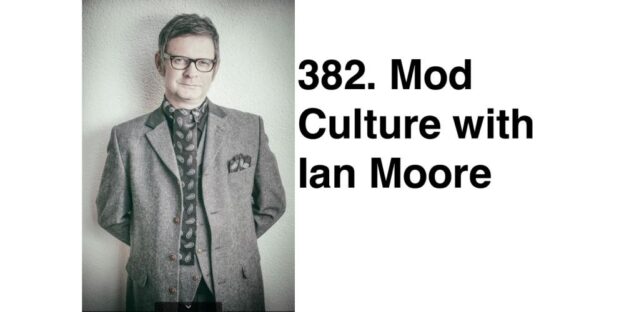
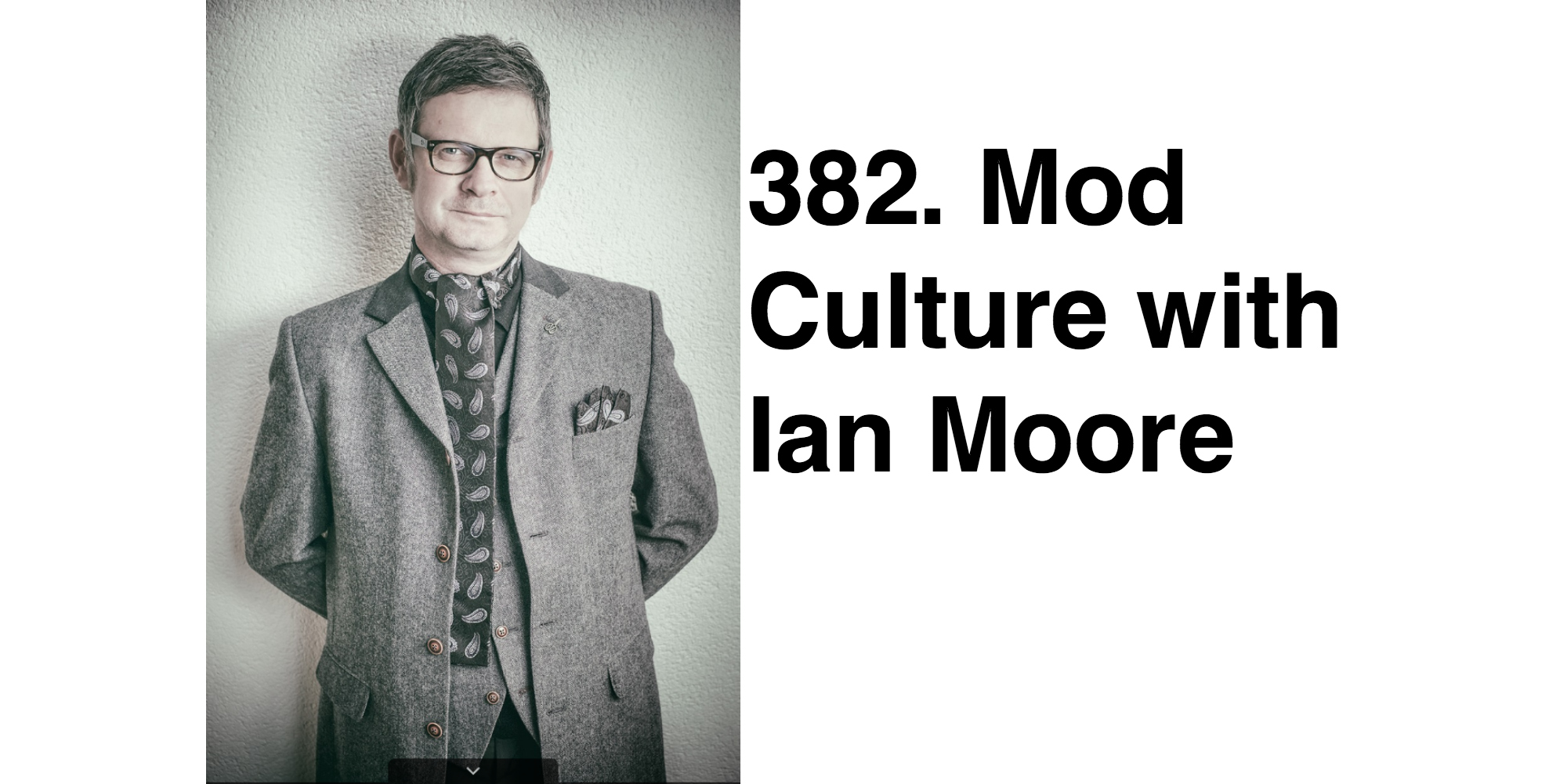
Today on the podcast I’m talking to Ian Moore, who is a professional stand up comedian, published author and mod from London. Ian is probably the best dressed man ever to appear on this podcast. He is also a professional talker with many things to say.
[DOWNLOAD]
Photo: Richard Wood @comictog https://twitter.com/comictog
Intro before the intro
Hello listeners, this episode of Luke’s English Podcast is sponsored by italki which is a really convenient way to develop your fluency in English by talking to native speakers online – to claim your voucher worth 100ITC just go to http://www.teacherluke.co.uk/talk or click an italki logo on my website.
This episode features a conversation with English writer and comedian Ian Moore and in this part we talk mainly about mod, which is a British subculture involving clothing and music, but before the interview there is about a 15 minute introduction in which I explain a few things that will help you to fully understand the conversation. This podcast is for learners of English so sometimes it is necessary to give support to my listeners in advance of hearing a natural conversation in order to help them understand it all. My 15 minute intro to this episode is mainly an overview of the history of mod culture, with a few other short explanations. If you want to skip the intro, just move forwards by about 15 minutes and you can jump straight to the conversation. However, the introduction is there to help you to understand the cultural references, some history and other details in our conversation. OK, so that’s my intro before the intro, and now that this intro is nearly finished, I’ll let you listen to the other main intro which is going to come after this intro when this intro is finished, which is now so here is the proper intro, after the jingle, which is going to start as soon as I stop talking which is right about now.
Introduction and Explaining (Skip forwards 15 mins if you don’t want some explanations)
Today on the podcast I’m talking to Ian Moore, who is a professional stand-up comedian, published author and mod from London. Ian is probably the best dressed man ever to appear on this podcast. He is also a professional talker with many things to say.
I first met Ian a few months ago. He was in Paris for a few days and was the headline act at a comedy show where I was also performing. We got talking and our conversation was suitably rambling for me to consider Ian a good guest for this podcast. Also, there are some specific things I wanted to ask Ian, which I thought might be interesting for you my audience to hear.
Mod Culture
First, Ian is a mod. He’s a proper full-time mod. He dresses in all the correct mod clothing and has done for years. That might not mean anything to you and in fact that’s one of the reasons I wanted Ian to talk about it in this episode. Mod culture is quintessentially English. Basically, Mod is a fashion style, a way of life and a whole subculture of its own, and it’s uniquely English I think. Mod is one of the first genuine youth subcultures of the modern era. Nowadays there are many many subcultures (e.g. punk, skinhead, hippy, raver, indie kid, rocker, metal head, skater, etc) to the point that they don’t really mean anything, but back in the late 1950s and early 1960s there weren’t many youth subcultures. Everyone basically dressed the same except between different social classes in society. Certainly young people just dressed and acted like adults. Then in the postwar period young people became more independent and developed their own alternative cultures which were separate from mainstream lifestyles. Young people began to associate themselves with these alternative cultural movements as an expression of their individuality particularly in the form of the clothes they wore and the music they listened to.
Mod culture first became well-known in the UK as a result of a story in the newspapers about rival gangs of ‘mods’ and ‘rockers’ fighting each other on the beach in Brighton in 1964. These were the two main youth subcultures of the time and they hated each other. The rockers wore leather jackets, had their hair quite long and unclean, and rode motorbikes. They listened to rock and roll music. The mods were very sharply dressed in well fitted suits and ties, wore smart leather shoes, had a particular haircut (a bit like the Beatle cut) and rode Italian scooters. They listened to modern jazz, black American rhythm and blues or Jamaican ska. Their rivalry came to a head in the well-documented fighting that happened on the beaches in Brighton. The fight between the mods and the rockers was all over the newspapers and it shocked everyone, causing a kind of moral panic about young people. At that time it was the equivalent of something like the London riots of 2011. Most people couldn’t understand the violence and it was considered a sign of the breakdown of society. It was also the first time that most people became aware of the mod movement.
Since then, Mod has drifted in and out of fashion, going away in the early 70s when it was replaced by things like glam, soul boy and skinhead movements to be revived again at the end of the decade, in the 1980s and again in the 1990s. Being a mod is a way of life and it revolves mostly around the clothing you wear and the music you listen to, but there is a certain philosophy which underpins the movement too and that seems to be based on certain kinds of European existentialist thinking and a kind of open-mindedness to outside influences combined with a great attention to detail in clothing choices. In order to identify a mod, you need to be aware of the right details in the person’s clothing. A certain type of suit, cut in a specific way. Certain brands, types of shoe or coat, and a particular hair cut. The most famous mods are probably people like the musician Paul Weller of The Jam, the groups The Small Faces and The Who (early period), and these days the actor Martin Freeman who likes to wear mod clothing when he’s not acting in a movie or TV show.
While mod culture borrows from many other cultures it is very specifically British and therefore I think it is worth exploring on this podcast.
So, first – Ian is a mod. Secondly, he lives abroad – specifically on a farm in rural France, despite being a very well-dressed city boy from London, and he has lots of stories to tell about this, which form the basis of several books which he has written and which have been published. Both books tell funny true stories of his life as a mod living on a farm in the French countryside, they’re well-reviewed on Amazon and are definitely well-worth a read. They’re amusing, not challenging to read and are full of very entertaining little anecdotes and tales of his double life as a comedian working in London and a farmer in the French countryside. I thought it would be interesting to hear him talk about that on the podcast, and if you’re looking for appropriate books to read in English – I really recommend these ones. There are also audiobook versions read by Ian himself. The first book is called A la Mod, and the second is called C’est Modnifique.
And thirdly, Ian is a professional stand-up comedian – in fact The Guardian newspaper describe him as “One of the country’s top comedians”, which may account for why he’s able to write such funny stories in his books. Ian has been performing in the UK professionally for about 20 years and has travelled all around the country doing big gigs everywhere, including at London’s best venue The Comedy Store in Leicester Square. Ian has also performed in many locations around the world, so naturally I wanted to find out about that too.
So all in all, Ian Moore is a great guest for this podcast and we had a very enjoyable rambling conversation upstairs on my terrace on a very sunny morning this week. This is going to be two episodes, because we talked for over an hour together.
This might be a tricky episode for you to follow because our conversation includes quite a lot of tangents and references to things you might not be familiar with, so let me just give you an overview of the main things you’ll hear.
At the start we talk about the view from my terrace, including the Sacre Coeur basilica, which we can see.
Then we talk about how he met his wife on the steps of the Sacre Coeur when he first moved to France. Then we go on to chat about his first experiences in France and why he fell in love with the country. (He talks about buying a vinyl copy of “Complete Madness” in a supermarket in Nice – Madness are a band which has a large mod and skinhead following).
Then we talk about where Ian comes from, and how he describes his accent. (Basically, he’s got a typical south east / London accent, cockney or ‘mockney’ even though as a child he used to live up north in Blackburn and also in the east in Norfolk. He spent most of his time in London.)
We discuss his level of French, and then move on to talk about being a mod and what that means, including quite a lot of specific descriptions of his clothing and mod style in general, so watch out for some vocabulary to describe clothing in this episode.
But now, without any further ado, let’s join the conversation with Ian Moore and you will first hear us talking about the views of Paris which we can see from my terrace.
*CONVERSATION BEGINS*
We talk mainly about mod culture. The podcast pauses after about 40 minutes.
*CONVERSATION PAUSES*
So, that’s the end of part one of this conversation, in which we mainly covered mod culture. Check out the page for this episode where you’ll find some videos of mod-related things and also some stand-up footage of Ian Moore on stage.
How was that for you? Did you manage to understand what we were saying? I expect it might be a bit tough because we’re talking about things that you might never have heard about before. THat’s one of the main reasons why it’s hard to understand native speakers sometimes. It might be because of the pronunciation – specifically connected speech and the way some sounds are not fully pronounced, it might be the vocabulary being used, but also it’s because of the cultural references being made and the general mindset of the conversation. These are all factors that influence your ability to understand native speakers. Certainly the cultural aspect is very important. If you’re on the same wavelength as the people you’re listening to, or talking to, it makes it far more likely that you’ll understand them. This will help you work out the meaning of words that you don’t know and fill in the words that you didn’t hear. You have to try to tune in to not just the language, but the way of thinking of the people talking and then you’ll understand more and ultimately pick up more of the English yourself. So, listening to conversations like this is vital, even if it’s difficult.
Don’t forget that you also have to activate the English you hear in the podcast by having similar conversations yourselves, perhaps with a language partner on italki. Don’t forget to take advantage of my italki offer by visiting www.teacherluke.co.uk/talk
OK, part 2 of this episode will be available soon and then you can hear Ian talking about his funny experiences of being a mod in the French countryside, dealing with animals of all shapes and sizes, the challenges of living on a farm and the life of a professional stand up comedian. Thanks for listening to this episode, I look forward to reading comments on the website. Have a great day, morning, afternoon, evening or night and I’ll speak to you soon.
In this episode I’m talking to my friends Amber and Paul about cultural differences, particularly in the ways we communicate with each other in different countries.
[DOWNLOAD]
You should know that there is a bit of swearing in this one as well as a few dodgy jokes and references to previous episodes of the podcast, which you should probably listen to before you listen to this one in order to understand a couple of references and in-jokes. The previous episode is number 380. As for the swearing, I see it as just evidence of the fact we are all talking in a totally relaxed, genuine and natural manner, like we normally do in this social situation.
I just want to say that our aim in this conversation was to compare different cultures and not to criticise other cultures. We’re just expressing our own personal experiences from our point of view. Since we all live in France and we’re from England, there are quite a lot of comments about differences between French and English culture. If you’re French I’d love to read your points of view on many of the things we’re talking about and I am sure that you could make loads of similar comments about life in England – like, why the hell do we have separate taps in the bathroom? Or, why do girls go out on a Friday night with hardly any clothes on? Don’t they get freezing cold? And why do Brits drink so much? These are all things that might seem strange to visitors to the UK. So, I’m well aware that all cultures and behaviours can seem strange from the outside and it’s all just a matter of context.
In fact, I have already done several podcast episodes all about culture shock experiences of people moving to the UK (specifically London) from foreign countries. Check out the links to listen to those episodes.
I am sure you have points of view on this that you would like to express, so feel free to leave comments on the page for this episode. Don’t forget to join the mailing list on the website to get easy access to the page for every new episode when it is uploaded.
So without any further ado, here’s a podcast about cultural differences with Amber and Paul.
Discussing Cultural Differences
Luke’s Intro
Although we are all the same, we’re also different.
Ways we’re the same:
We all fall in love, go to the loo, get hungry, get tired, like laughing, listen to LEP.
But we’re all different – individually we are all unique, but we are also different as groups, tribes, nationalities or cultures.
Although it’s bad to generalise, it seems that cultures – like ethnicities or nationalities, tend to have certain shared behaviours and customs that mark them out as different to others. For example, although the English and French share a lot of things in common there are certain things which mark us out as different. Not just the language we speak, but the way we behave and the things we think are important. Like the way we queue.
So anyway, that’s just an example of culture shock I suppose. But it shows that there are cultural differences. Of course there are! Everyone knows it.
If you’ve ever been abroad or had contact with other cultures you’ll know that sometimes it’s incredibly obvious that our cultures are different. Sometimes it’s shockingly obvious, sometimes it’s hilarious, sometimes it’s frustrating, sometimes it’s just weird, but we have to remember that they’re just differences and while they can be confusing, frustrating and also funny, ultimately we need to find ways to look beyond these differences and not let them become a barrier to things like communication, understanding, business, diplomacy and relationships.
In this episode I’d like to have a discussion about cultural differences that we’ve noticed around the world. These could be different types of behaviour, like certain customs and habits, or just different values – like, what people seem to think is important, and how those values reveal themselves in the way things are done.
Amber & Paul
What are your credentials in terms of your cross cultural experiences?
How long have you lived in France?
Have you visited many other places? Which other places have you been to?
Have you had cross cultural experiences?
Have you been in a relationship with someone from another culture?
Have you done business with people from other cultures?
I have a list of different behaviours and values. Just stuff I’ve noticed or heard about. Well go through the list.
We can answer these questions:
Where do they do this?
Do we do this in the UK?
Do we consider this to be weird behaviour or not? Is there a reason for this behaviour?
Do you have any experiences of this? Would you like it if we introduced this into our culture?
The list: (please note that we are not talking about ‘two-taps in the bathroom’)
Kissing or hugging someone when you meet them (Paul did a successful video about this)
Looking people in the eye
Indirectness/diplomacy/politeness (or hypocrisy) vs directness/straightness/clarity (or rudeness) – e.g. certain cultures tend to be indirect when giving negative feedback, other cultures favour direct negative feedback
conflict vs non-conflict
Smiling in public
For discussion in future episodes… PLEASE ADD MORE CULTURAL DIFFERENCES IN THE COMMENT SECTION SO WE CAN DISCUSS THEM IN THE FUTURE :)
Eating early vs eating late in the evening
Having milk in tea
Eating scorpions / spiders / toads / frogs
Eating with your hands / chopsticks / a knife and fork / not your left hand
Burping or farting after eating
Girls wearing miniskirts in the middle of winter
Hawking / spitting in the street
Saying “good morning” or “good afternoon” in shops/post offices before you can get anything done
Kissing in public
Begging
Crossing the road – waiting for cars to stop vs just walking into the street vs using pedestrian crossings
Driving on the left
Queuing in an organised and patient way vs Not queuing – “every man for himself” (or something in between)
Public transport – following the rules vs no rules (e.g. queueing, letting people off before getting on, etc)
Falling asleep on public transport
Talking to strangers on public transport
Having a strict attitude towards health and safety (e.g. wearing safety belts in cars) vs Having a relaxed attitude towards health and safety (e.g. not wearing safety belts, overtaking on corners)
Bribing police or other people
Having more than one wife, or having affairs
Saying “yes” in order to save face
Having carpet in the bathroom
Wearing shoes indoors
Sitting down to go to the toilet vs Squatting on the floor when you go to the toilet (or any other toilet related comments)
Putting The UK at the centre of the map
Is there anything else you’ve found to be weird or different?
In this episode the PODPALS Amber and Paul are back and we’re going to have the normal catching up session in which they talk about what they have been up to recently. As usual we sit on the terrace and get interrupted by insects, the sun, neighbours on their balconies around us (including a naked man eating his lunch) and the inevitable references to a certain Russian joke that always comes up in our conversations.
[DOWNLOAD] You should know that there is quite a lot of swearing and rude content in this episode, so be warned if you’re playing this in public or something. I have swearing on this podcast because I am trying to present you with real English – the kind of English I would normally speak with my friends, and the sort of English that isn’t necessarily taught to you in language classrooms. That’s the benefit of podcasting and that’s why the swearing stays in the podcast.
You’ll find a lot of my notes and questions written on the page on the website. Join the mailing list to get a direct link in your inbox every time I upload an episode.
Now, let’s enter the conversation on the terrace. At first Amber and I remind Paul of the last time he was on the podcast, which was in an episode called Would you rather? In that one we asked each other ridiculous questions and talked about things like having accordions for legs. If that sounds a bit strange, check out that episode and it should make a bit more sense.
Then we all catch up with each other and talk about holidays in August, Amber’s son Hugo who is potty training and Paul’s new TV show which is currently showing on French television. Listen for more anecdotes and spontaneous speaking between friends.
And here we go…
*Conversation starts*
Questions
Can you describe the scene?
What have you been up to since you were last on the podcast?
Amber
Did you go away anywhere? Where did you go?
How is little Hugo?
Are you planning any shows for the coming year?
When are you going to start your own podcast for goodness sake?
Paul
Did you go away anywhere?
How was Louis CK?
What about your TV show?
You stopped doing the French podcast, but the English one is still going (and that was my plan for my French – to listen to you in French)
Hello everyone, here is another episode of this podcast for people interested in listening to authentic conversations and learning British English. I’ve been very prolific recently because I’ve had a bit of time off and I’ve uploaded loads of episodes in quite a short period, but this is going to stop very soon when I go away on holiday for a few weeks. While I’m gone you can listen to all of this new content, or go back into the extensive episode archive to listen to some of the older content.
So, what about this episode. I’ve been staying at my parents’ house in Warwickshire, in England for a few days, enjoying the company of my family and spending time in the sunshine. When the weather is good here one of the things we like to do is go for a walk in the local park, have a look at the local castle and play 18 holes of mini golf. Technically mini-golf is for kids but it’s a lot of fun to play if you’re an adult and you’ve got nothing better to do. I expect you’re aware of the concept of mini-golf. Essentially, it’s like normal golf but mini. There are typically 18 holes. The aim is to put the ball in the hole using the fewest shots possible. The problem is that each hole has lots of obstacles in the way, like bridges, slopes and windmills.
So in this episode my brother James and I decided to go for a game of mini golf and we thought we’d record a podcast while doing it. So, why not join us as we walk through a historic English town, play some golf and then go for a pint of beer in a local pub.
During this episode you’ll hear us talk about a number of different topics, including some history of medieval England, some details about our game of golf, some of the things we can see in the park, some descriptions of the pub, the beer and the crisps, and some comments about what it’s like growing up and living in the countryside versus living in an inner city area like South London. Eventually our conversation turns to slightly more serious things, including the riots that happened exactly 5 years earlier in parts of London. That was a serious series of social disturbances which shocked and confused the nation. Why did so many young people living in cities decide to start vandalising and looting their local areas? Was it just basic criminality or was it a symptom of a bigger problem in our country? We talk about that a bit, and of course there’s some mention of Brexit and why people voted to leave the EU, but then James decided it was all getting a bit too serious, and he’d rather just enjoy his beer, so we stopped. We then get interrupted by a wasp, which is quite typical for an English beer garden during August. At the end you’ll hear James explaining why he sometimes feels awkward about appearing on the podcast, especially when we end up talking about serious things. You’ll see that he doesn’t like to take himself too seriously and he seems to think that nobody is interested in hearing what he has to say about big subjects like the London riots. Now, I wonder if you agree with that, or if you in fact find it interesting to hear him talking about such big topics, even though he’s no expert. I look forward to reading your responses to that question.
Anyway, before we get to all that, let’s start listening to the recording I made the other day on a sunny afternoon in Warwick as James and I head down towards the park to play a game of mini golf. I’ll talk to you again at the other end of this recording, but now let’s get started. Oh and by the way I would like to just warn you that there is a little bit of swearing in this episode, and a couple of instances of us talking with our mouths full. I will let you decide which one you find more offensive – swear words or talking with your mouth full. OK, so without any further ado, let’s go to the park.
*Recording begins*
Mini golf James and Luke go to the pub James’ final word
*Recording ends*
So, there you go – that’s the rather anti-climactic ending of that conversation. It ended in the living room, with my brother pacing around, unable to relax and stressing that he sounded too serious and pompous when talking about issues on the podcast. I sort of agree – I also enjoy talking about more light-hearted subjects and having a laugh but I also think it;s worthwhile taking about the more serious stuff from time to time, especially when it’s about real things, like the genuine experience of living in the UK. But also, we’re not experts so that does get a bit tricky sometimes.
But I’m interested to know what you think. Are you interested in hearing my brother’s opinions on things like the London riots and Brexit? Does he need to worry about sounding arrogant on the podcast, or is it genuinely interesting to listen to. Let us know in the comment section. I would very much like to show him what you really think.
That’s it for this episode. By the way, I’ve done loads of episodes recently. I’m going to talk to you about this in another quick episode, but the main reason for that is that I’ve had a little bit of time off and so I’ve been enjoying making a few episodes featuring conversations with my family and friends, but this is going to stop soon because I’ll be going away on holiday for a few weeks, so my thinking is that you can listen to all these new episodes while I’m away.
I’ll talk to you about that a bit more in a quick episode, probably later today, and then that’ll be the last episode for a little while until I come back from my break.
As ever, sign up to the mailing list to get instant access to the page for the episode for notes, vocab, transcripts and links etc.
Hello and welcome back to the podcast. In this episode I’m talking to my friend Alex Love. We started this conversation in the previous episode and here is part 2. In this conversation Alex is in Edinburgh in Scotland and I’m in Warwick in England. In the previous episode we talked about pub quizzes and how they’re a common part of pub culture in the UK, so in this episode I thought we would play a kind of pub quiz with each other. The only problem is that neither of us are in a pub, but that doesn’t matter – this is a podcast and you can use your imagination.
[DOWNLOAD]
The rules of the game are pretty simple. Alex and I have prepared 5 questions each and we take it in turns to ask each other the questions. A correct answer gains one point, an incorrect answer gains nothing. All my questions are related to the English language, and all Alex’s questions are random trick questions and much more difficult than my ones. I’m not hinting at who wins the quiz there. No, not at all. You’ll have to listen to the whole thing to find out who wins, but I should point out that Alex’s questions are not proper questions and they’re designed to make me fail, a bit like my Dad’s questions in our recent game show. But I’m not making excuses or giving away the result of the quiz. No, of course not.
As you listen I think you should try to answer the questions too. You might need to pause the recording in order to give yourself a bit of time. Alex and I both explain our thought processes while answering the questions, and you could do that too. Try pausing the recording when you hear the question and then talking out loud while you think about the answer. Then continue listening and you’ll hear Alex and me doing the same thing – talking about our thought process before giving our answer. You can compare the way you talked about your thoughts and the way we did it. That can be a good way of comparing the language you and we are using.
Either that, or just sit back, brew up a cup of tea, or continue travelling on the bus like a normal person, and just listen to the magic of another episode of this podcast, recorded, produced, edited and published by the very modest me.
Right, without any further ado, let’s start the LEP Pub Quiz.
Questions (Listen to the episode to get the answers)
Where was the lawn-mower invented? (which town)
What is the most common noun in the English language?
Which creature has the largest eyes in the world?
What is the word for when two words come together to create a new word? e.g. ‘spork’
Which mammal can go longest without water?
What is the shortest possible sentence in the English language.
How long was the 100 years war?
What is the only planet in the solar system not named after a god?
Translate this from German into English – Ich habe keine Ahnung
Name the only two words in the English language that end in the suffix -gry.
Hello listeners, this episode features another chat with Alex Love who was on the podcast recently in episodes 366 and 367. I decided I’d get Alex back on the podcast for several reasons. The first reason is because he is now in Edinburgh at the Festival and his show seems to be doing very well. In fact, so far every performance has been completely sold out and he’s making a nice profit. I’m happy to hear that and I thought we could get a little Edinburgh report and actually have a conversation without it being derailed by a poor internet connections and other distractions, and that’s what we’ve managed to do. The second reason I brought him on is to do our own LEP Pub Quiz in which we ask each other questions, and that’s what you’ll hear in part 2.
[DOWNLOAD]
I have divided this conversation into two parts again, to make it more manageable for you. In part one we talk about Alex’s show, some details about the culture of pub quizzes in the UK and we go off on several quite instructive tangents about stag and hen parties, male strippers, The Smurfs and the anatomy of giant squid, which are large sea creatures with tentacles. That sounds quite random but it’s not really. It’s actually perfectly logical and it will all become clear as you listen to the conversation, and I think there’s quite a lot to learn about British culture in this episode as you’ll see. There’s also quite a lot of vocabulary to watch out for and I will go through that in a moment.
Then in part 2 you’ll hear Alex and I playing our own pub quiz in which we ask each other various questions in order to test our general knowledge.
I expect that by the time you listen to this episode Alex’s Edinburgh show will probably be over and all his shows seem to be sold out anyway, but what the hell – I’ll mention the details of it anyway. It’s called “How to Win a Pub Quiz” and it takes place at 12 o’clock lunchtime at The Stand in rooms 5 & 6 until 14 August. Details and bookings https://tickets.edfringe.com/whats-on/alex-love-how-to-win-a-pub-quiz
Vocab from Part 1 – Watch out for these words and expressions
I’ve made another list of words and phrases from this episode. This is language that you might not know and which you might want to learn. I’m not defining and explaining this vocabulary here, I’m just encouraging you to notice it, and hopefully making it a bit easier for you to notice it. Being mindful of language while you’re listening to this podcast is important. If you’re switched on and attentive, taking mental note of different features of English as you move through these episodes, you’re in a much better position to retain words and phrases and add them to your own active vocabulary. Also, if you’re into studying while you listen you will find all these phrases written on the page for this episode and you can then look them up in a dictionary – and you can try Oxford, Cambridge, Macmillan or Collins dictionaries online. They’re all freely available, which is nice. Now I’m going to just read out each phrase and you can try to notice them as they come up naturally in our conversation.
old habits die hard – it just goes to show that old habits die hard
the love interest – she plays the love interest in the movie
a hen-do – there was a group of girls on a hen-do sitting on the front row
a stag-do – there was a group of lads on a stag-do in the audience
a mixed bag – how was the show? It was a bit of a mixed bag to be honest
self-deprecating – we make lots of self deprecating jokes
a bit hit and miss – the show was a bit hit and miss
inconsistent – it was quite an inconsistent show
bland – it was a bit bland and boring
“I died on my arse” – he absolutely died on his arse on stage at the show last night
to slag someone off – We used to slag off the entire audience in our show
to bad-mouth someone – we bad-mouth the audience at the beginning of the show
it’s frowned upon – being brutal with a hen-do is frowned upon, you’re not supposed to do it, whereas it’s ok to insult a stag-do
a sash – there was a girl on the front row wearing a sash
the first album I ever bought – “Smurfs Go Pop” was the first album I ever bought
anthropomorphic – Smurfs are quite anthropomorphic
the gestation period – humans have a 9 month gestation period
to beat around the bush – don’t beat around the bush, just say it straight
to cast aspersions – I don’t mean to cast aspersions on Smurfette
to hear something
to hear about something
a squid / a giant squid
tentacles – they have ten tentacles, whereas Octopuses have 8 limbs
10 inches in diameter – their eyes are 10 inches in diameter
a beak = what birds have at the end of their faces – like the mouth of a bird, or a squid
your eyes are too big for your stomach
dismal = terrible
to come in third place – Paul is coming in a dismal 3rd place
So, that’s it for the vocabulary and this introduction, let’s now join the conversation I had with Alex Love yesterday afternoon, watch out for the vocabulary and see what you can learn about hen dos, stag dos, male and female strippers, the Smurfs and giant squid. There’s a bit of swearing – so you have been warned.
That’s it for part 1. Did you notice all the vocabulary I listed at the beginning?
In part 2 we do a pub quiz in which we ask each other various questions, including some questions about the English language. So, if you want to know what our questions are, and who wins, check out part 2 now!
Thanks for listening.
Join the mailing list.
Check out audible and italki
Send a donation if you want to say thanks.
Have a good day, night, morning, evening, afternoon, bus journey, train journey, gym session, walk, nap, jog or sleep.
This is part 2 of my conversation with Rob Ager from Liverpool, who makes documentaries about films and publishes them himself on his website Collative Learning. If you haven’t heard part 1 yet, you should check that out before listening to part 2. In this conversation we talk about Rob’s approach to film analysis, hidden meanings in films, the work of Stanley Kubrick and the conspiracy theory about the moon landing. More details below.
In part 1 we talked about Liverpool and what it’s really like to live there. Then we talked about how he developed his approach to film analysis. In part 2 we talk about films in more detail, including some of the films which struck a chord with him when he was younger, and films which have inspired him to make his analysis videos. We focus on the work of Stanley Kubrick, a filmmaker whose work has really fascinated Rob over the years. We also discuss the idea that directors add hidden messages into their work, and how this is sometimes interpreted wrongly by viewers and critics. We also discuss the so-called conspiracy theory about Stanley Kubrick and the moon landing, and whether there are hidden messages about this in the film The Shining.
Links & Videos
Rob’s website http://www.collativelearning.com
Some interesting videos from Rob’s YouTube channel
https://www.youtube.com/watch?v=hcxLFZdZPw0
Cookies on teacherluke.co.uk
Click “Accept All”, to consent to the use of all cookies on this website, or visit "Cookie Settings" to control your consent settings.
This website uses cookies to improve your experience while you navigate through the website. Out of these, the cookies that are categorized as necessary are stored on your browser as they are essential for the working of basic functionalities of the website. We also use third-party cookies that help us analyze and understand how you use this website. These cookies will be stored in your browser only with your consent. You also have the option to opt-out of these cookies. But opting out of some of these cookies may affect your browsing experience.
Necessary cookies are absolutely essential for the website to function properly. These cookies ensure basic functionalities and security features of the website, anonymously.
Cookie
Duration
Description
cookielawinfo-checkbox-analytics
11 months
This cookie is set by GDPR Cookie Consent plugin. The cookie is used to store the user consent for the cookies in the category "Analytics".
cookielawinfo-checkbox-functional
11 months
The cookie is set by GDPR cookie consent to record the user consent for the cookies in the category "Functional".
cookielawinfo-checkbox-necessary
11 months
This cookie is set by GDPR Cookie Consent plugin. The cookies is used to store the user consent for the cookies in the category "Necessary".
cookielawinfo-checkbox-others
11 months
This cookie is set by GDPR Cookie Consent plugin. The cookie is used to store the user consent for the cookies in the category "Other.
cookielawinfo-checkbox-performance
11 months
This cookie is set by GDPR Cookie Consent plugin. The cookie is used to store the user consent for the cookies in the category "Performance".
viewed_cookie_policy
11 months
The cookie is set by the GDPR Cookie Consent plugin and is used to store whether or not user has consented to the use of cookies. It does not store any personal data.
Functional cookies help to perform certain functionalities like sharing the content of the website on social media platforms, collect feedbacks, and other third-party features.
Performance cookies are used to understand and analyze the key performance indexes of the website which helps in delivering a better user experience for the visitors.
Analytical cookies are used to understand how visitors interact with the website. These cookies help provide information on metrics the number of visitors, bounce rate, traffic source, etc.
Advertisement cookies are used to provide visitors with relevant ads and marketing campaigns. These cookies track visitors across websites and collect information to provide customized ads.