Category Archives: Personal

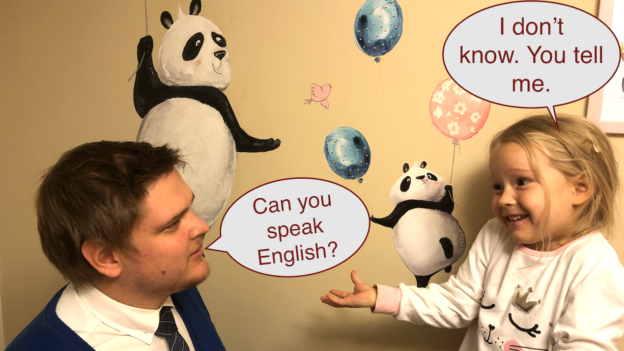
685. Raising Bilingual Children [1] Alex and his daughter Alice, in Moscow

An episode exploring the subject of how to raise a child to speak English. I speak to Alex, an English teacher from Moscow about how he has been speaking exclusively in English to his 4-year-old daughter Alice since she was born. Let’s find out how it’s going.

[DOWNLOAD]

Introduction Transcript

Hello listeners,

Just in case you don’t know. My name is Luke and this is my podcast for learners of English all around the world. Welcome. 

Just a reminder at the start here that this podcast is made possible thanks to donations from listeners and the paid premium subscription that you can sign up for in order to get access to over 100 episodes all devoted to helping you improve your grammar, vocabulary and pronunciation. The library is growing all the time as I publish new premium stuff, and I am currently working on some new episodes which I hope to record and publish soon. Being a Premium LEPster means you get access to all that content, as well as the free stuff, and it also means that you support this whole project too. To get all the information, including the very reasonable prices just go to teacherluke.co.uk/premiuminfo

One other thing – there’s a big vote coming up, a very important election in which one person is going to be chosen and it’s all very tense and historic – everyone’s talking about it – yes that’s right I’m referring to the WISBOLEP competition on LEP (what else?) I just wanted to mention this because people have been asking about it. The competition is closed now and I am working on the next stage of it, which will be to let you hear all the competition entries and then let you vote for your favourites, then based on the results of that vote, I’ll choose a LEPster to be interviewed on the podcast. I can tell you that there have been lots of strong entries so it will be difficult to choose just one person, but that’s what we have to do. So, stay tuned to LEP to hear an episode with everyone’s 2 minute speeches in which they try to convince you to pick them for LEP. That’s coming soon, when I’ve worked out how to manage it all. It’s coming in any case. Right, that’s that then, and now it’s time to start this episode properly, and here is the jingle!

JingleYou’re listening to Luke’s English Podcast, for more information visit teacherluke.co.uk

Hello and welcome back to the podcast everyone. 

This is the first in a series of episodes called Raising Bilingual Children, and it is about exactly that – the topic of bringing up children to speak several languages, or more specifically bringing up children who speak English as well as another language.

Ever since my daughter was born nearly 3 years ago I have been meaning to talk about the topic of raising bilingual children, or at least raising children who speak English fluently.

My podcast is mainly here to help my listeners improve their English, but a lot of you out there have kids and naturally your thoughts turn to them and their English. 

I have had lots of requests from listeners asking me to talk about this topic, so that’s why this series exists, this being the first proper episode on the topic. I’m not sure how often I’ll be doing these, but it’s a topic I plan to return to in various ways in the future. 

Maybe you have children and you want them to speak fluent English as well as another language. This is for you if that is the case. Maybe you don’t have children yet, but you might in the future, in which case you are thinking about how to help your future children learn English. We know that starting early is so important in language development. So, it’s certainly useful to have an awareness of this topic so you can do the right things when children come into your life.

Or maybe for you, having children is not a concern, because you’re not going to have children or you’ve already done it, but I still hope this will be interesting for you, because ultimately it is all about learning English and certain essential principles related to doing that. 

The topic of raising bilingual children is massive. I am by no means an expert on this specifically, although it’s something I’ve been reading about, thinking about, talking about and also I’ve been doing it myself because I am raising a bilingual child, or hoping to, anyway. 

As you may know, I live in France, and I have a young daughter – she’s nearly 3. My wife is French and and we are doing our best to make sure that our daughter learns to use both French and English with ease and confidence. So, I have experience in this area. But I haven’t done a masters degree in this topic or anything like that. My qualifications and experience are in teaching English to adults mainly. So I’m learning about it myself too.

It’s a complex topic.

There are big questions that come up when you start to talk about bilingualism in children, like “What is bilingualism exactly?”, “How do we define “bilingual?” “What is a native speaker?”, “How do children acquire languages? And is this different to the way adults do it?” and more… “What are the standards that we can realistically expect from children who aren’t living in an English speaking country and whose parents aren’t native English speakers?”

Also there are the many combinations of factors involved – many different situations that make it quite hard to get a proper grip on the topic. 

For example, (and let’s just let’s use France as an example here, because that’s where I live,  but you could replace France with any other country and this will still work)

Examples of Different situations

These different situations might require slightly different approaches or they might involve different challenges for parents. 

  • One parent is French, the other is a native English speaker, they live in France. (like my situation) 
  • One parent is French, the other is a native English speaker, they live in England.
  • Both parents are French, neither is a native speaker of English, but they live in England, the child is at school in English.
  • Both parents are English, both are native speakers, but they live in France and the child goes to school in French.
  • This is the holy grail: Both parents are French, neither is a native speaker of English, they live in France and the child is going to school in French.
  • Or similarly, one parent is French and let’s say the other is Korean, neither is a native speaker of English, and they live in Brazil and their child is going to school in Brazilian Portugese. 

There are probably more possible combinations, and also there are other factors to take into account, like whether there is a wider community that exists in the target language (like grandparents who speak English that live nearby) or whether the child is going to a “bilingual school” (and there are various versions of that) or a monolingual school (only in English).

The more you think about the possible combinations, the more complex it gets! Especially from my point of view as I want to cover all the bases.

Also, there are different approaches you can take.

  • One parent, one language. 
  • English in the home, another language outside.
  • English at the weekend and another language during the week. 

Lots of combinations.

But, without getting too academic about it, I think one of the best ways to explore this subject is just to talk to people in various situations who are raising their children to speak English or who have done it, and just find out as much as possible about them. 

Actually there are loads of people I can talk to about this, including my wife, our friends like Amber for example – who lives in France and has two children now, some of my colleagues at the British Council whose job it is to teach English to children and a lot of LEPsters who have success stories to share.

Alex Suvorov and his daughter Alice (4 years old)

This brings me to this episode in which I am talking to a long-term LEPster Alex Suvorov, and his 4-year-old daughter Alice.

I have been meaning to talk to Alex on the podcast about this topic for quite a long time now. 

As you’ll hear, Alex fits into the category of a non-native speaker in a non-English speaking country (I mean one where English is not the first language) who has been raising his child to speak English.

There’s a lot to unpack here, but basically I want to find out firstly how Alex got his English up to its current level, and then talk about his daughter’s English. That’s it, basically.

Hopefully we can shed some light on this whole subject and maybe give you some inspiration or food for thought.

At the beginning of the conversation Alex is joined by Alice, and you’ll be able to hear her speaking a little bit, but after a few minutes she goes into the other room and it’s just Alex and me, but at the end you will be able to hear a short recording that Alex made of him speaking to Alice, which will give you a little idea of what her English is really like.

So, without any further ado, let’s go.


Ending

So that was my conversation with Alex Suvorov, about his approach to giving his daughter a headstart in English. I’d like to say thanks to Alex and his daughter Alice. 

Now, it would be interesting to hear a bit more from Alice so I’m now going to play a quick recording that Alex & his daughter made together, so you can hear her speaking in English. 

This is about 5 minutes long and you’ll hear Alex basically trying to get Alice to show us her English, which is quite hard, because as you might know, it can be quite difficult to get little children to cooperate sometimes, but if you listen carefully you can hear Alice responding to Alex’s questions and prompts and saying little comments here and there.

Bear in mind that she is only 4 years old. So in terms of her English we’re not looking for Dame Judy Dench here – you’re never going to get spectacular and fully formed language from a child of that age, in any language. So don’t expect to hear Amber Minogue here. THat’s not what we’re looking for.

What we are looking for is the ease with which she speaks in English. Listen out for how comfortable she is speaking English. Actually, I don’t hear any grammar or vocabulary errors from Alice but she might be a bit hesitant  or shy – because 4 year old children often are and Alice knew she was being recorded here. Her accent might sound a bit Russian, but as we said near the end of the conversation, for a 4 year old the main thing is that sense of confidence and comfort in English – and I think Alice has that. Specific points of pronunciation can be worked on later. But a foundation of comfort, confidence, fluency and the feeling that English is your own language combined with an instinctive sense of grammar and vocabulary are the most important things you can give a child. I think you can hear that from Alice. 

Anyway, let’s listen…

Listen to Alex and Alice talking…

So that was Alex and Alice.

Some of you will be desperate to say that she has a Russian accent, and maybe she does a bit, but like we said before, that’s fine. We’re not looking for perfection here. We are looking for a baseline or foundation of comfort in English, and I think it’s fair to say that Alice has got that. You heard her producing correct grammar, fairly complex little chunks of English, decent and other things might come later, like her accent, especially if she continues to listen to English from things like cartoons, films, and also audiobooks and so on.

But the main advantage that little Alice has got is that English is part of her life. 

Is Alice “bilingual” – well that depends on how you define bilingualism. 

As Alex said, he estimates her vocabulary to be about 20% behind that of a native speaker of her age. That’s great. Remember: Connection, not perfection. For those of you who cannot get over the fact that Alice still sounds a bit Russian, I would ask you this – Is Alex wasting his time? Would it be better for Alice if her father only spoke Russian to her? Is it realistic to expect Alice to speak like a native speaker, like mini Amber Minogue? Is Alice’s English 20% worse than a native speaker, or is it perhaps 80% better than a child who only ever speaks Russian?

Food for thought there.

Of course it is about personal choice. 

But still, it is worth thinking about.

If you are also raising your child in English to some extent, do get in touch and tell us about your experiences in the comment section of this episode. We’d like to know what you think and what you are doing, including your doubts too.

Thanks again to Alex for talking to us and sharing his story. 

You can find Alex on Instagram by the way, and everything he posts is in English, so check it out. 

https://www.instagram.com/suvorovalexander/

And that website for checking your vocabulary – www.testyourvocab.com

The website’s test is fairly reliable I would say, if you answer it honestly. It’s all based on an academic research project and every time you take the test the data gets added to their database, and the database is there to help with the academic study. Anyway, to cut a long story short, it seems quite reliable, but that’s the best I can say.

I just took the test. It took about 5 minutes. Would you like to know how many words I know? 

Well, apparently I know 31,200 words which is ever so slightly above average for a native speaker of English in my age group. So, this means I am entirely normal, or a tiny amount above normal, which is good to know. So, my English appears to be a very good sample of what the average British person knows, which is quite reassuring.

Do you have a story of raising a bilingual child that you’d like to share? Tell us about it in the comment section below!


683. Feelgood Stories of Flirting with Marie Connolly

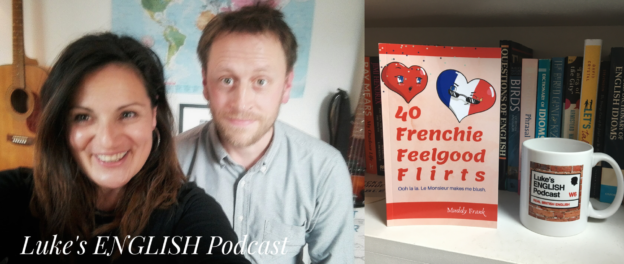
Marie Connolly is an Australian stand-up comedian and TEFL teacher who has written a book of short stories about times when men (from various countries) have flirted with her. In this episode Marie shares some of those stories, tells us about English men vs French men vs Australian men and much more. Small Donate Button[DOWNLOAD]

Transcripts & Vocabulary Notes for this episode (promos, introduction, ending)⤵

LEP Premium Promo

Before we start – a quick mention about LEP Premium. Premium LEPsters, I just want to let you know that P24 is now finished and uploaded. It is an epic series – homophones, jokes, building your vocabulary (which is so important) and also working on your pronunciation. I’ve also uploaded P25 which contains pronunciation drills for the previous free episode (LEP682) which was all about English accents. I said I’d do a pronunciation episode for that, and I’ve done it. You can practise saying the sentences with my normal accent, and also with several regional accents too. The aim being to strengthen both your listening skills and your speaking skills.

WISBOLEP Competition

Second thing – the WISBOLEP competition deadline is 15 October. Is that clear? Originally I said 31 October but the date has changed! The deadline is now the 15 October 2020. If you don’t know what the competition is, check out episode 681. But this is episode 683, and I’m keen to get started, so let’s go…

Introduction

Hello and welcome back to LEP. It’s new episode time again! This is an episode with a guest. So you’re going to be listening to another authentic conversation at natural speed in English which can be difficult to follow but is good training for your English. Before going any further, let me explain the title of this episode. “683. Feelgood Stories of Flirting with Marie Connolly” Feelgood is an adjective (one word) which we use to describe anything that makes you feel good! For example we can say a feelgood film, feelgood food and or feelgood stories, which would be stories that will make you feel good. Feelgood stories of flirting Flirting means interacting with someone in a way that shows that you fancy them, find them attractive, and are probably interested in perhaps getting ‘romantically involved’ with them, let’s say. Synonyms include ‘chatting someone up’ , ‘hitting on someone’ or perhaps ‘trying to pick someone up’. A person can be a flirt, and the adjective is flirtatious. Feelgood stories of flirting with Marie Connolly And Marie Connolly is my guest in this episode.

Marie Connolly

Marie is a stand-up comedian, a ski-instructor, an English teacher and writer. Her latest book is full of short stories about flirting with the opposite sex. Before we meet Marie, let me give you some context to help you understand this conversation, which can ultimately help you learn more English from it. Marie is from Australia but she has lived in a few different countries. It’s a bit of a stereotype that Aussies like to travel away from Australia (this is called Going on Walkabout), but in this case it’s true. Marie has spent time in various places including Brisbane, Syndey, London, Liverpool, The French Alps and now Paris. Marie was born in Australia but her dad was from Liverpool and her mum was from El Savlador in central America, which is quite an interesting combination. For those of you who are interested in accents and pronunciation – Marie has a slight Australian accent because that’s where she grew up. It’s not super strong, but you should be able to notice it a bit. Here are the main things you’re going to hear us talking about: As you might expect we chat a bit about stand-up comedy, what it’s like dealing with tough moments on stage and reasons why it can be hard to do stand-up in front of audiences of non-native speakers. I’m afraid to say that the infamous Russian Joke story makes yet another appearance, which is my fault because as you’ll hear, I’m the one who brings it up. I know, I know. I can’t believe I’m still talking about the Russian Joke, and some of you are now saying “Wait, what’s the Russian Joke?” Long-term listeners will know all about this. Clearly I have deep mental scars from this experience which still haven’t healed. Either that or I secretly love telling this story. If you don’t know what I’m talking about, just keep listening because I am going to tell the story once more. Yes, I know. Marie gives some thoughts on Liverpool where some of her cousins live, and her favourite English shops for buying clothes, which leads to some chat about Marks & Spencer – the quintessentially English clothing and food shop, which also has branches in Paris where you can buy proper tea. (not property, no – they don’t sell flats and houses, no I mean “proper tea” good quality tea) ….I’m now pausing for laughter… Marie tells us about her time living and partying hard in London, and then her decision to move to France to work as a ski instructor at a ski resort in the Alps, while making trips to Paris to perform comedy gigs. You’ll hear some details of Marie’s comedy shows in English and French in Paris. At the moment she is doing her own one-woman show in English called “Sydney, London, Paris, Darling”. You can see it if you’re in town, COVID permitting of course. At the moment, in France, Theatres are still allowed to open and Marie’s show is in a theatre so it’s still on. If you’re in town why not come and check it out? She is very funny and has some great stories to share. Then we move on to talk about the latest book that Marie has written, called “40 Frenchie Feelgood Flirts”. It contains 40 short stories. This is yet another book recommendation on the podcast. I think it could be a really good thing to read, if this is your cup of tea. Short stories are perfect for learners of English, because they’re short – do I need to say more? It’s chick-lit, which means books primarily for women that usually include romantic themes. The stories in Marie’s book are all cute anecdotes about times when men have flirted with her, hit on her, or chatted her up. There’s no explicit sexual stuff in Marie’s book. As Marie says it’s just innocent fun. So it’s less “40 Shades of Grey” and more “40 Shades of Hey, How are you doing?” — I’m now pausing for more laughter and applause, thank you — The rest of the episode is mainly Marie sharing some of her stories of flirty moments with men who she has encountered. She also talks a bit about how French men are different to Australian or English men. What do you think the differences might be? What do you think Marie is going to say about the way a French man will approach her, compared to an English or Australian man? Hmmm, have I piqued your interest? I hope so. Listen on to find out the details.

VOCABULARY

Vocab hunters – Here is some language which you can simply notice as you listen. When you hear these things, take a mental note. I know you are keen to get to the conversation, but bear with me. This will be useful for your English, and that’s what this is all about at the end of the day (and the beginning of the day, and the middle of the day, etc) Trust me, I am a professional. I’m not explaining this all now, I’m just saying it so you can notice it yourself when it comes up naturally. If you don’t understand these phrases, don’t worry. I will explain it later in the episode. But you might be able to work it out from context as you listen. *There is some swearing*
  • To backtrack – “You can’t backtrack” [this one comes up twice]
  • To stick in someone’s craw – “It stuck in my craw. It bothered me.”
  • To be over it – “Maybe I’m not over it”
  • Deep scars – “Maybe there are deep scars”
  • To wilt – “I wilted in front of them”
  • To be sick to your stomach – “I was sick to my stomach”
  • To be swallowed up – “Can I please be swallowed up?”
  • A halterneck top (an item of women’s clothing that is quite revealing) “I was wearing a halterneck top”
  • To snuggle under the duvet – “If I could have, I would have snuggled under the duvet and just stayed in bed for a year.”
  • ______ by name, ______ by nature – “Alex Love, our mutual friend; lovely by name and lovely by nature.”
  • A coping strategy – “Every comedian has their own coping strategy”
  • To rectify – “Get back on stage as soon as possible and rectify”
  • Dainty / pastries – “I’m not used to French dainty pastries, I prefer the big fat Australian ones”
  • Self-soothing
  • To pay through the nose – “I will pay through the nose. I just want the best tea I can get.”
  • A hub / antipodeans – “It was a hub for antipodeans”
  • To be up shit creek (without a paddle) – “Because of Brexit I’m up shit creek.”
  • A snapshot of something – “It’s a snapshot of life in France”
  • To be hit on / to be picked up / to be complimented – “40 times I’ve been hit on, picked up or complimented by men”
  • Abs – “One was very white but he had super-fit abs”
  • White vs Pale (to describe a person)
  • Calf muscles
  • A sand castle
  • To blush – “He would blush and I would feel amazing.”
  • The contents (of a book) / to pique someone’s interest – “Can I read through the contents to pique people’s interest?”
  • To mime – “He started swimming with his hands. He was miming and I was laughing.”
  • A man bun – “He had long hair up in a man bun. I called him Mr Man bun.”
  • Chick-lit
Ok so try to notice those things, maybe try to guess what they mean and I’ll be explaining them on the other side of the conversation. But mainly, I hope you just enjoy listening to this chat. Now, get ready because things are going to speed up a bit, as we meet Marie Connolly…

Ending

Thank you again to Marie. After finishing the recording, we realised there were other stories we’d forgotten to tell, including the time Jerry Seinfeld turned up at one of our little comedy shows in Paris and performed in front of about 20 people including Marie and me, and how it was just a little bit awkward, but still amazing and quite surreal. Jerry Seinfeld at one of our shows? What are the odds? So Marie will have to come back for another episode in which we can describe that experience for you. Just a reminder about Marie’s comedy show (if you’re in Paris) and her books (which you can get anywhere in both paperback and Kindle versions). The One-Woman Comedy Show “Sydney Paris London Darling” you need to check her Facebook page – Marie Connolly Comedy. https://www.facebook.com/marieconnollycomedy/ Marie’s books, including “40 Frenchie Feelgood Flirts” Marie’s page on Amazon where you can find her books. The main one we talked about is “40 Frenchie Feelgood Flirts”. She writes under the pseudonym Muddy Frank (read the titles of the books available)

Explaining the Vocabulary

Let’s go through that vocabulary again, from the beginning of the episode. Did you notice any of the words and phrases I listed before? Did you get a sense of what they mean? Let me go through them again, and I’m going to clarify them as quickly as possible. I’m not giving these phrases the full LEP Premium treatment (because I like to go into lots of detail in those episodes) I might put them into an upcoming episode of LEP Premium so I can make sure you learn the vocabulary properly and we can do the usual memory tests and pronunciation drills as well. But now, this is the sort of quick version. Let’s call it the 10 peso version. The vocabulary is already listed above ⤴️ Still not sure about the meanings? Try using www.oxforddictionaries.com to check them out. Other online dictionaries are available.
And that is the end of this episode. What’s coming up in the future? Who knows – nobody can predict the future, except weather forecasters. As usual I have more episode ideas than time, but I do have a few interviews lined up, including some more friends you might not have heard on the podcast before, and some regular guests that you’re probably waiting to hear from too [yes episodes with Amber & Paul are in the pipeline, it’s just a bit tricky to find times when we are all free]. Basically – more conversations with guests are coming up as well as the usual episodes on my own on various topics. So, it’s going to be more of what you normally get with LEP! Right, I will let you go now. Thank you for listening. Check the episode page on my website where you’ll find transcripts for 95% of what I’m saying in the introduction and ending parts of this episode, plus other things like a photo of Marie and me (oh Luke, a photo!?) plus the comment section and things like that. I often put other things on the website page for you to check out as well, including little YouTube videos relating to the episode or other bits and pieces. I look forward to reading your comments on the website. Follow me on Twitter @englishpodcast which is where I am also quite active. Sign up to LEP Premium to access all the other episodes I make, all focused on helping you build your English in various ways. www.teacherluke.co.uk/premiuminfo Have a good one. Be excellent to each other, and party on in your own sweet way.

Speak to you soon. Bye bye bye…

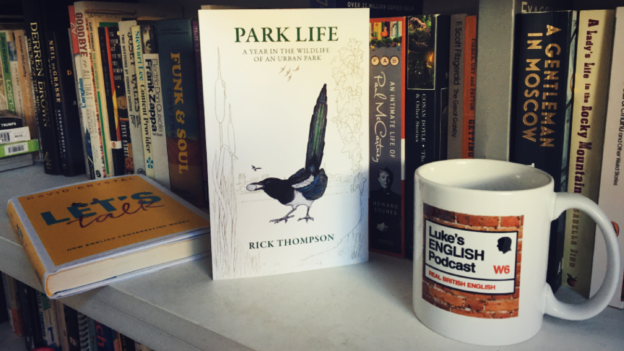
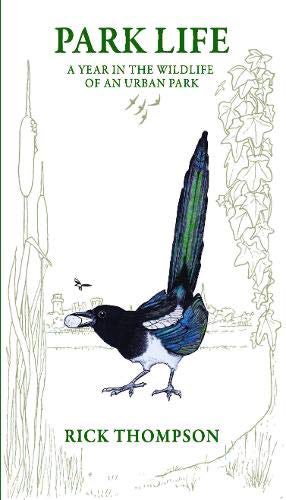
680. Park Life – A Year in The Wildlife Of An Urban Park (by Rick Thompson) / Animal Collective Nouns

My dad has written a book and it’s all about the wildlife you can find in an urban English park. He’s on the podcast to tell us all about it, and there are some collective nouns for animals too, plus some bonus stand up comedy at the end.

[DOWNLOAD]

LEP Premium Promo www.teacherluke.co.uk/premiuminfo 

Hello  listeners, this is a reminder about LEP Premium, which is my other podcast service. With episodes of LEP Premium I focus specifically on language, helping you understand, remember and pronounce target vocab and grammar. I’m currently still deep into premium series 24 which is about homophones, but also you can access an archive of over 80 episodes now both audio and video, all about teaching you the kind of English that I speak, and there are plenty of stupid improvisations and jokes and things too. Get started by going to www.teacherluke.co.uk/premiuminfo 

Introduction Transcript

Welcome back to Luke’s English Podcast – this award-winning podcast for learners of English. Yes, the podcast has won a few awards over the years, but not lately. The last few years have been quiet, on the award front. If you see any competitions for best podcast for learners of English, or something, let me know!

Speaking of competitions, I’ve been thinking of launching another listener competition, and I’m wondering what you think. The competition would involve you recording yourself speaking and sending it into the podcast, then people would vote for their favourite and that person would then get interviewed in a full episode of the podcast. This idea was sent to me some time ago by a listener called Vadim. What do you think? I haven’t fully decided to do it yet, so let me know what you think of this new competition idea from Vadim.

But anyway, what about this episode then?

Park Life – A Year in the Wildlife of an Urban Park

As promised, this episode features my dad, which should be good news for all the Rick Thompson fans out there. As you might know we sometimes call my dad Rickipedia because he knows so much stuff about so many things, although it might be unreliable from time to time.

People often say that my dad should start his own podcast, as his episodes are so popular. He still hasn’t created a podcast of his own, but I am glad to say that he has written a book. 

The book is called “Park Life – A year in the Wildlife of an Urban Park”

The book is available for you to read. You can find it on Amazon.com and also Bookdepository.com (free shipping).

In this episode I’m going to talk to my dad about the book he’s written including a broader discussion of urban parks in the UK – green public spaces which perform an increasingly important role in UK life.

We start by talking about the book, what it’s about, how he was inspired to write it and what style it’s written in. Then we move on to describe some of the wildlife you can find in a local English urban park. Then we discuss some history of urban parks and the health benefits of spending time in green spaces. 

Also there are some collective nouns for different animals, including things like “a murder of crows” and “an unkindness of ravens”. Keep listening to hear some more.

I hope you enjoy the conversation. I’ll chat with you a bit afterwards, but now, here is Rick Thompson talking about his new book.

—–

Ending Transcript

Thanks again to Dad for being on the podcast today. Once again, check Amazon or BookDepository for Rick Thompson Park Life to pick up a copy of my dad’s book for yourself.

In fact the book has already picked up a 5 star rating on Amazon from someone called Princesslizzykins

I have no idea who she is, but this is her review.

5.0 out of 5 stars

 A wonderful read.

Reviewed in the United Kingdom on 5 September 2020

What a beautifully and thoughtfully written book.

A super balance of content between wildlife and local history, with some lovely poetic references thrown in, this book shows how anyone can escape the haste of urban life and take a moment to look at and love the world around them.

I live in Warwick, so have the added benefit of knowing the localities mentioned, but would recommend this to absolutely anyone that has an urban park near them and enjoys a damn good read.

Thumbs up for Dad. Nice one.

We’re not done here yet, I have some more things to do in this episode.

First of all, you heard me mention the stand up comedy gig that I had on Sunday and I did the gig and it went fine. I recorded it so I’ll play a few minutes of that at the end of the episode.

But first, let me go through some more collective nouns for animals. This is a really interesting and curious aspect of English – the way we use different words to collectivise different animals.

You heard us mention some there, and I’ve included them in this list too. So here is a list of common collective nouns for animals.

More Collective Nouns for Animals

  • A school of whales
  • A murmuration of starlings
  • A flock of sheep
  • A nest of rabbits
  • A litter of puppies
  • A flock of pigeons
  • A parliament of owls
  • A troop of monkeys
  • A pride of lions
  • A swarm of insects / flies / bees
  • A colony of gulls
  • A charm of finches
  • A murder of crows
  • A shrewdness of apes
  • A pack of dogs
  • An army of frogs
  • An array of hedgehogs
  • A mischief of mice

That’s it for this episode then! Don’t forget to check out LEP Premium at www.teacherluke.co.uk/premiuminfo 

As promised earlier, here are a few minutes from my stand up set on Sunday evening. There was one LEPster in the audience by the way, who had come because he’d seen the gig advertised on my facebook page https://www.facebook.com/lukecomedian So, shout out to that LEPster!

Anyway, this was my first gig since Christmas, but it was great to be back on stage again and I should be doing more gigs this year, lockdown permitting.

So this is me on stage at the New York Comedy Night in Paris last Sunday. Thanks for listening and speak to you again soon. Bye…

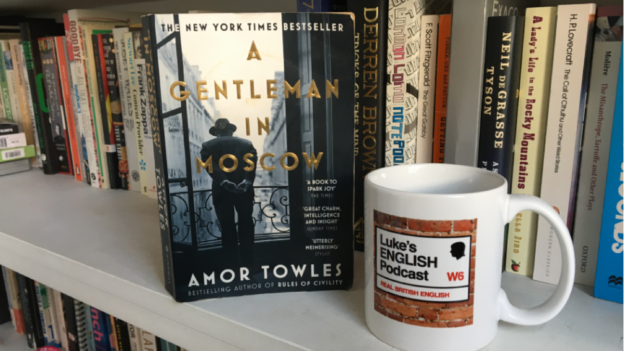
679. Gill’s Book Club: A Gentleman In Moscow

Talking to my mum again about her latest book recommendation. A Gentleman In Moscow is about a Russian Count who is put under house arrest in 1922 in the beautiful Metropol Hotel in Moscow. 

[DOWNLOAD]

LEP Premium Promo

This episode is sponsored by LEP Premium. With Luke’s English Podcast I have two podcasts in fact. There’s the free episodes, which feature monologues, conversations with guests or specific topics. That’s where you get to listen to natural English on a regular basis, presented to you, for you. Then the premium episodes are all about language. Often I take samples from free episodes, then break them down for target language which I teach to you, help you remember and pronounce correctly. So the double whammy is to listen to LEP and also be a premium subscriber, to get the maximum benefit from my work. To get started with LEPP go to www.teacherluke.co.uk/premiuminfo for more info.

Introduction Transcript

Welcome to Gill’s Book Club, on Luke’s English Podcast.

This is the second Gill’s Book Club episode and this is where I talk to my mum, Gill Thompson, about books that she’s enjoyed.

My mum loves books, she’s a voracious reader, a member of a book club with her friends and she works in a second hand bookshop.

She gets through loads of books, and so this is naturally a topic that we can explore together on the podcast.

How does this work?

We pick a book a few months in advance, give people a chance to read it, then talk about it on the podcast, including some of the main plot points (no spoilers) characters, context and details.

Do you have to read the book too?

No. We’ll explain the main plot points without giving away any spoilers.
But you can read the book if you like, or get the audiobook version.

You could read the book first, then listen. Or listen first, then read the book, or just listen without reading the book at all, and enjoy hearing my mum talking about it, the characters, the story and so on. There might also be some nice vocabulary coming up which you can notice as we go along. As usual, check the episode page on my website to see some vocabulary notes and transcripts.

For other episodes I’ve done with advice on reading books to improve your English, check the episode archive.

I said earlier this year that the book we’d be talking about is A Gentleman In Moscow, by Amor Towles, and so that’s the main topic of conversation here.

A Gentleman in Moscow is a 2016 novel by Amor Towles. It is his second novel, following the release of the New York Times bestselling novel Rules of Civility. The novel concerns Count Alexander Ilyich Rostov, a man ordered by a Bolshevik tribunal to spend the rest of his life in a luxury hotel in the heart of Moscow. Wikipedia

There’s a bit of smalltalk at the beginning, and then we get stuck into the book.

I’ll talk to you again on the other side of this conversation, but now, let’s listen to my mum talking about her latest book recommendation.

——

Vocabulary Notes & Questions

Can you comment on these things with reference to the characters and events in the book?
Manners
Integrity
Loyalty
Vocabulary
Class

Do these words apply to Count Alexander Rostov?
Witty
Likeable
Standoffish
Spoiled
Privileged
Glass half full / Glass half empty

Does he change during the book?

House arrest
Did this book make you think of the lockdown?
If you had to be on house arrest, but you can choose any building you like, which building would you choose?
Which building would you choose to be locked inside? (not your own home)

Book club
What did the women from the book club think of it?

Book recommendation
The Year of Reading Dangerously by Andy Miller

Picture of Ivan the Terrible
https://booksyo.files.wordpress.com/2015/01/repin_ivan_terribleivan.jpg

Ivan the Terrible and His Son Ivan on 16 November 1581 is a painting by Russian realist artist Ilya Repin made between 1883 and 1885.

Ivan the Terrible and His Son Ivan on 16 November 1581 is a painting by Russian realist artist Ilya Repin made between 1883 and 1885.

Ending Transcript

So there you are. That was my lovely mum talking about a lovely book and it was all lovely lovely lovely.

Again, check out the page for this episode on my website for vocabulary notes, and the names of the different books and things that we mentioned, plus the chance to see that painting of Ivan the Terrible and more.

I’m still deep inside P24, having published 9 out of 12 parts. More coming for premium subscribers soon…

Later today I’m interviewing my dad.

I don’t like to talk on the podcast about stuff I’m going to do, because I’ve learned that often things don’t go as you expect and it’s unwise to make the listeners think that something is coming when it actually can’t happen because of a technical issue or a scheduling problem or something.

So, who knows, we might not be able to actually do the recording, but the plan is to talk to my dad later today, also about a book. But this isn’t a book that he’s read, written by someone else, it’s actually a book he’s written himself. Yep, he wrote a book during the lockdown. What’s with all these books!? About 5 people I know have written books during the lockdown, including my dad. So stay tuned to LEP in order to (hopefully) listen to a conversation with Rick Thompson about his new book.

Thanks again to my mum for her contribution to this episode.

I hope you all enjoyed listening to it and as ever I look forward to reading your comments and responses to this episode in the comment section on my website, but also on YouTube where you can find all my episodes, and you can keep in touch on social media, my favourite being Twitter and my handle is @EnglishPodcast

Take care everyone. I’ll speak to you again soon, but for now, good bye…

678. The Vintage Furniture Trade in London (with Howard Roach)

Talking to my old teaching colleague Howard Roach about his furniture business in South London.

Small Donate Button

[DOWNLOAD]

Introduction

Hello LEPsters in LEPland, how are you doing today?

I hope you’re all doing well out there in all corners of podcastland, wherever you are, whatever you find yourself doing at this particular moment. You’ve chosen to press play on this podcast episode and I thank you for that. Welcome to the podcast. My name is Luke and I’m an English teacher from London and this is my podcast for learners of English, like you I expect!

Here I am again at my desk in the podcastle, preparing a new free episode for you all.

I’ve taken a little break from the mammoth Premium series I’ve been doing this week about homophones and jokes. Premium lepsters will know that I’ve uploaded 8 parts of series 24 now, and there are still 3 or 4 parts to go! If you haven’t checked them out yet, do so. In the LEP App, in the categories section, you’ll find Premium and also Pronunciation Videos. That’s where you go to get the premium content on your phone. On a computer, go to www.teacherluke.co.uk/premium to get all the premium content there. And for more information and how to sign up go to www.teacherluke.co.uk/premiuminfo

But this is free episode 678 and in this one you’re going to listen to a conversation with a guest who hasn’t been on this podcast for over 10 years. Today I am talking to my friend Howard Roach who first appeared in episode 5, about Joaquin Phoenix, and then he made at least one more appearance in episode 11 (Men vs Women) and then that was it, for nearly 11 years!

I know Howard from our days teaching together at the London school of English. But he’s back again now to talk about something completely different that he’s been doing since he stopped teaching 7 years ago.

Howard now works in the vintage furniture trade in London. He gets hold of pieces of vintage furniture, then sells them on to customers, perhaps restoring the furniture in the process.

This is a business he set up 8 years ago when he decided to transition from being a teacher to being a furniture dealer.

Howard’s business is called Vintique London and this is what it says on their website. 

https://www.vintiquelondon.co.uk/

THE FURNITURE RE-LOVE REVOLUTION.

RETRO, VINTAGE AND MID CENTURY FURNITURE WAREHOUSE LONDON

Based in Peckham, South East London, Vintique London, is an eclectic treasure trove of retro, mid century, vintage and designer furniture and interior accessories.

What started out as a hobby collecting iconic vintage and retro pieces soon turned into a startup business in 2012. Since then we haven’t looked back. 

So I’m going to talk to Howard about the vintage furniture trade in London, what kind of stuff he sells, how he buys, sells and restores interesting and cool items of furniture and if he has any stories about particular purchases or sales that he’s made in the past.

As I mentioned before, Howard also used to be an English teacher, working with me at the London School of English with other guests from this podcast that you might have listened to in the past. So there are also a few tales of teaching from back in the old days in London.

Vocabulary

Let’s have a quick look at some vocab to begin with. Here’s some stuff that might come up and stuff that is relevant to the topic of buying and selling furniture.

  • Furniture (uncountable noun) 
  • a furniture / furnitures some furniture
  • Pieces of furniture
  • Items of furniture
  • Vintage = ​typical of a period in the past and of high quality “Vintage furniture”
  • Retro = using styles or fashions from the recent past “We specialise in selling retro and vintage pieces”
  • Mid-Century = from the middle of the last century – 50s, 60s “Most of our items are mid-century in style”
  • Turn of the century = the beginning of the last century, early 1900s “It is also possible to find pieces from the turn of the century”
  • Antiques / Antique = old and valuable, an old and valuable item – think darker more ornate pieces “and occasional antiques”
  • Darkwood furniture = furniture made from darker woods, like mahogany “and other types of darkwood furniture”
  • Second hand = Previously owned by someone else – “All items are used or second hand, but have been fully restored to their original quality”
  • Used = Same
  • Car-boot sale = an event where people load up their car with stuff from their home or loft and drive to a field, then open the boot and sell the contents to people. It can be a way to pick up antiques. “I first started going to car-boot sales and markets where you can find some real bargains”
  • Auction = an event when things are sold by bidding. An item is presented and the bidding begins at a certain amount, and people in the audience can raise their bids until the item is sold to the highest bidder. It’s like Ebay, but in real life. “I’ve bought a few things at auctions. You can learn a lot from the other dealers”
  • Restored = if an item is restored it means it might be fixed, or certain parts might have been replaced but it’s back to its original look and original quality. “A fully restored mid-century vintage chest of drawers”
  • Quid (30 quid) = “quid” means pounds “Just 75 quid for you mate”

Items of furniture

  • Chest of drawers = a large wide item with drawers
  • Bookcase = an item with space for storing books
  • Sideboard = a low, long piece which is supposed to go against a wall and contains some drawers and some cabinet space. You could put a TV on it.
  • Highboard = like a sideboard but it goes higher against the wall with perhaps a glass cabinet
  • Cabinet (just two doors)
  • Record cabinet = space for a record player and records
  • Dining chairs = chairs for sitting at a table
  • Armchairs = chairs for relaxing in the living room

So let’s get started. As I said earlier, before we get onto the whole topic of Howard’s furniture business, there is some chat about our time as teachers in London with about 15 minutes of stories and reminiscing about teaching and then we get onto the furniture (not literally). We don’t actually climb onto the furniture at any point in the episode.

When we get onto the furniture we are not also literally getting onto the furniture, conducting the interview balanced on chairs and tables.

But anyway, for the first time in over 10 years, let’s welcome back Howard Roach onto Luke’s English Podcast. 


Ending

Ooh a 10% discount for all LEPsters. The website address again:

www.Vintiquelondon.co.uk   

Don’t forget P24 for 8 parts of an episode series about homophones and jokes plus much more

https://www.teacherluke.co.uk/premiuminfo

675. An Unplanned Pre-Holiday Ramble (July 2020)

This episode is unedited and contains all my pauses, mistakes and thoughts while I attempt to talk about what’s coming up on LEP, my recent appearances on other people’s podcasts, comments and emails of the week and a couple of songs on the guitar.

Small Donate Button

[DOWNLOAD]

Luke on Other People’s Podcasts

The Real English Conversations podcast with Amy Whitney

Can you learn English without studying grammar?

Listen here

https://realenglishconversations.com/english-lessons-learning-tips/

Instant Feedback podcast with Markus Keeley

Talking to comedian Markus Keeley from Northern Ireland about identity, accents and a test of my knowledge of the Ulster Scots dialect of English.

https://instant-feedback.pinecast.co/episode/ffccfed122c9438c/32-luke-thompson

————-

Emails / Comments of the Week

An Amazing Beatle-inspired email from Elma

What’s your name? Elma

Do you have any other comments or feedback?: “Please please me” and read this email!

Dear Luke
„Because“ I don‘t know if I deleted my first email or if I sent it „Across the universe“ to the other Luke, I decided to write another special one „ From me to you“ „ With a little help from my friends“! I‘ve been listening to your Podcast since February and „Do you want to know a secret“? The „Chains“ are broken, „I‘ve got a feeling“ for the English language and my listening skills are „Getting better“ and better all the time. I listen to LEP „Here, there and everywhere“ „Eight days a week“!Don‘t „Ask me why“ I discovered it so late. With LEP „In my life“ „I feel fine“ every day, especially in these difficult times.
„Your mother should know“, that she has an amazing, kind, honest, funny and creative son (her two „Boys“ are so special) and an amazing family!
I want to tell you, that LEP is a great „Help“ for English learners! „Yes, it is“! I hope, „It won‘t be long“, till my English is as good as I would like it to be. „Don‘t let me down“ and please keep going in „What you‘re doing“!
I send „All my loving“ to you and your family especially your sweet little „Girl“. I wonder if her name is „Michelle“;) Stay healthy, take care and if it is too much loving at „The end“ because we don’t know each other I just say
„Good night“!
Greetings from Elma


PS. :) I hope, this is not a grammar disaster!! It is not my fault, my friends from Liddypool whispered the words in my ear!;)

Luke’s Reply:

I am the Eng-man! Goo-goo-ga-joob!

Hi Elma,

I love getting emails like this “Any Time At All” because it makes me feel like it’s my “Birthday” or “Something”. I’m “Flying”! I really “Dig It”. “Every Little Thing” in that email is impressive!

Would you mind if I read out the email on the podcast at some point? I’d like to share this with my listeners. I won’t reveal your email address, and If you prefer I can keep your name anonymous, or not – it’s up to you. Some of my listeners don’t want their name to be read out on the podcast for some reason.

Anyway, I should probably “Get Back” to my wife and daughter because “I Don’t Want To Spoil The Party” we are having together this Sunday afternoon.

So, let me say again, “Thank You Girl” for sending your “Words of Love” about my podcast.

More episodes are coming soon, and when you want to listen to something in English, “You Know My Name (Look Up The Number)”.

All the best!

Luke

Another comment of the week from Victoria

This appeared under episode 674 about driving insurance claims and car crashes.

I did some corrections and edits while reading the comment on the podcast. This version is how the comment was originally written.

Really enjoyed this episode! And you singing at the end of episodes is like the cherry on the cake!
And as for the topic of the episode… I’ve never been in a car crash myself, though, Ihave a story to tell.
It happened about 6 years ago when I was in my second year in college.
It was a few minutes after a class started when my friend – Lena – stormed into a classroom and slumped into a chair in front of me. Her winter coat was slightly dirty, her hair was a bit of a mess and her hands were trembling while she was fishing out her textbook and other stuff. Lena is a type of person who always is in a rush and bumps into something. And so knowing that, I didn’t ask her what happened right away. However, as time went on, I noticed that she was rubbing a side of her body and occasionally her knees. My other friend who was sitting right next to me noticed that, too. When we asked Lena what’s wrong she said that a car hit her just a few minutes ago. To say that we were gobsmacked would be an understatement… Her tone of voice was casual and it seemed that she didn’t give much attention to the whole situation. We asked her how she feels and she said that she feels a bit dizzy. My friend and I told her to go to a nurse. But Lena refused and carried on writing in her notebook. We tried several times convince her to go to a nurse but she didn’t want to hear us out, apparently. All this time Lena didn’t stop rubbing some spots on her body… When it was time for a short break we noticed that she was paler than usual. Though, she smiled and chatted with us. She told us that when she was in the middle of a zebra crossing a traffic light changed to red all of a sudden. It was supposed to blink green a few seconds before going red. This traffic light was known for its acting up. She started running towards the other side of a road but was hit by a car. Lena was a lightweight girl. The next thing she registered was that she was laying on a bonnet of that car. Apparently, a driver of the car started pulling off without looking at a zebra crossing so they didn’t notice a rushing pedestrian. Lena hopped off the hood of the car and headed over to a college building. To be honest, I don’t really remember whether the driver got out of the car and offered some help or not. After Lena told us this story she lifted up her sweater slightly and we saw a few forming bruises. Shortly after that she said that she feels worse. In the end, she went to a nurse and then was sent home.
She didn’t show up at classes a few weeks after the incident. She got a concussion.

————-

Song Lyrics

For No One by The Beatles (Paul McCartney was the main writer) 1966

https://www.azlyrics.com/lyrics/beatles/fornoone.html

Here, There & Everywhere by The Beatles (also mainly by Paul McCartney) 1966

https://www.azlyrics.com/lyrics/beatles/herethereandeverywhere.html

The only time John Lennon paid Paul McCartney a compliment (the only time he told Paul he liked one of his songs)

https://www.youtube.com/watch?v=Hho-TIY1L2w

Thanks for listening! Premium content is coming soon, and hopefully some free episodes before I go on holiday in August.

673. Conspiracies / UFOs / Life Hacks (with James)

Talking to my brother about some click-bait topics, with stories, beliefs and a few celebrity impressions. Links, transcripts and videos available.

Small Donate Button

[DOWNLOAD]

Introduction Transcript

Hello listeners, how are you?

This episode is called CONSPIRACIES / UFOs / LIFE HACKS with James and I’m going for the full Joe Rogan clickbait title here, as you will see later.

I’ve said before that I wonder if clickbait titles actually work (I think they do) and whether I should use them (still not sure). I guess we will find out with this episode, which is a rambling conversation with my brother.

Clickbait, by the way, is any content on the internet which is designed just to get you to click it – usually with some sensational title or a promise of amazing exclusive information which is often not actually included. Usually they’re there as bait for clicks which ultimately will be turned into advertising revenue.

E.g. (for example)
“Dermatologists hate her new skin care routine that will save you thousands”
“Why Jabba The Hutt is the key to the Skywalker bloodline in ways you couldn’t imagine”
“10 Life Hacks guaranteed to change the way you live forever”
“Proof that aliens have already landed, and are living among us”
“7 Secrets about COVID-19 that the government don’t want you to know”
“These simple Language Hacks will help you speak like a native OVERNIGHT”

I hate clickbait but as an online content creator I am drawn to and fascinated by the impact of attention grabbing, wildly sensational titles. They obviously work, that’s the thing, because they’re everywhere. But a lot of the time I find clickbait titles annoying and even depressing because it’s so devious and also hackneyed. Anyway…

I’ve gone with the simple: “Conspiracies / UFOs / Life Hacks” as a title. It’s clickbait-ish, with certain buzzwords that seem to attract attention. But really this is just a bit of a joke as you will hear in the episode.

Let’s see if it makes any difference.

Anyway…

What are you going to listen to in this episode then?

The other evening I called my brother James and I started recording our conversation before he answered the call, which I probably shouldn’t have done because he wasn’t expecting a podcast recording this time. But I pressed record before he’d picked up and what resulted was a spontaneous chat that ended up going all Joe Rogan as we talked about UFOs, conspiracy theories and life hacks.

First of all there’s a bit of a catch up and a chat about the COVID situation and how James has been handling it, and then we get on to some of the major topics of our time, including whether we are alone in the universe, how to cook poached eggs, how to walk up stairs, how not to make “British Tea”, The Beatles meeting Elvis, some sketchy impressions of celebrities, a dodgy chair and what you should do with overripe bananas.

I hope you enjoy it. I will be back at the end to chat to you again with some music going in the background as usual.

But now, let’s call my brother and see what happens…


Ending

I hope you enjoyed that. It was really silly in the most fun way possible. I’m glad I recorded it.

This tune in the background is one of James’ own, made on the Akai MPC2000. Those of you who work for the Akai consumer electronics company – James’ MPC2000 is currently on the floor of his living room, with the top off and all the circuits and boards visible. It’s not looking good. There’s something wrong with it and he needs a new one. So, if you’re in a position to provide him with an Akai MPC1 that would definitely help him to help the podcast by providing more background music. Just get in touch with the show if you’d like to help out and we will dedicate a special episode just to the wonderful Akai company and their delightful music making machines!

If you like James’ stuff check out his Soundcloud page where you can hear most of them

As you may know, James is also a DJ and since his MPC broke, he did a brand new LEP DJ set using his record decks and some new vinyl that he got recently. That special, exclusive DJ mix is now available on the page for this episode, it’s also available on the Music Mixes page on my website. Check it out there and have a listen. You’ll hear James introducing the tunes, speaking to you and DJing some music. Alternatively, get the Mixcloud app for your phone and listen to it there.

Here’s a link to James’ Mixcloud page with music mixes across various genres, including Drum & Bass, dub, punk, hip hop and so on

Music and comedy mixes (mostly done by me) on my website

MUSIC

Includes these shows:

  • The Classic Breaks Megamix
  • Moto Mix
  • Luke’s Radio Show
  • Walkman Mix
  • And some of James’ mixes too

Moto Mix (with plenty of silly improvisations, characters and voices by James and me)


Leave your comments below

Have you heard any conspiracies about COVID-19?
Have you ever seen a UFO?
Do you believe aliens exist?
Do you think they’ve made contact with us yet?
Who do you think might be posing as an alien in the world?
Do you think I might be an alien?
Do you have any good life hacks?

More Life Hacks (to justify the title)

OK, here are a few more life hacks. 5 fairly good ones I just found online, just in case you feel there weren’t enough life hacks in this episode.

This meaning of “hack” is something that makes your life easier – it’s like a solution to a problem in life. We talk about life hacks, learning hacks for language learners – simple little tricks you can apply that make your learning more successful.

I think you know what life hacks are then, so here are 5 more half-decent ones just to make sure you don’t feel undersold by the title of the episode, which is not a sentence that many internet content creator feel the need to say very often is it. “Oh yes, after all this video doesn’t quite live up to the promise of its title, sorry about that” – something you never hear. But I like to be different, so here we go.

  • Use a pillow case from a sheet set to keep the sheets in
  • When You Have To Hang Something With Exact Holes, Photocopy The Back And Use As A Template
  • Put a post it note on the wall when you’re drilling a hole
  • The Pomodoro Technique (dunno why it’s called that)
    Work for 25 mins then take a 5 min break. After doing this 4 times, take a 30 minute break. This will dramatically increase your productivity. (I definitely agree – when I was marking exams – 200 or more – I would set the clock for 10 minutes, blast as many as possible in 10 minutes and then perhaps mess around for a few minutes, then do it again. It made a huge difference, compared to just trying to sit and work constantly. Just focus for 10 minutes at a time.
  • Put your phone on airplane mode to charge it faster (but you knew that one already)
  • Dangle a fork into an opened bottle of champagne to keep it fizzy (This is an old myth I think. Apparently it makes no difference).

Noel Gallagher story about champagne
“Arr kid” means his brother Liam

(Liam had a fork in a pint of milk because he thought it would keep it fresh)

That’s the end of this episode, have a lovely morning, day, afternoon or night and I’ll speak to you next time!

670. Language Learning with James Harris

Talking to writer and comedian James Harris about life as a writer, going to Oxford Uni, being an international Brit and learning German, French and Chinese as an adult.

Small Donate Button

[DOWNLOAD]

Transcript

Hello folks and welcome to the podcast. I hope you are doing fine on this particular day. This episode features a conversation, recorded a couple of weeks ago now, with a comedian and writer from the UK about various things, as you’ll see. Your task is to follow along and see what you can pick up and what bits of language learning wisdom you can glean from this conversation.

I don’t really know James that well. I’ve only actually met him once in fact.

He’s a comedian and a writer, he speaks several languages and his twitter feed is good value. He tweets about politics, learning languages, the issues of the day, comedy and various other things. We share a mutual friend – that’s Dharmander Singh from Birmingham, who I used to be in a band with and who is now a stand up comedian in Berlin. The time I met James was in Berlin when I was there on holiday, and I did some stand up on the same show as him.

So why have I invited him on the podcast? Well, it’s mainly because of Twitter. As I said his Twitter feed is interesting. He takes a moderate and balanced view of things, and his interests are pretty wide-ranging, including the fact that he’s very international. He’s married to a Chinese girl, he’s lived abroad, he used to work as a tour guide in several countries, he used to be an English teacher like me, he speaks very good German and French, he’s working on his Chinese, he works as a translator and he’s generally an articulate and interesting guy and so I just thought that he could be worth talking on the podcast.

The language learning thing is obviously very appropriate and I’m always interested in finding out as much as possible about how someone has learned a second language to a very decent level in adulthood, and that is something that we talk about for at least 50% of this conversation. The first half of our chat is basically me getting to know James properly, talking about his work, his studies, his experiences of going to Oxford University, why he chose to move to Germany, being married to a Chinese girl. Then we get into the details of how he learned German mainly, but also French and now how he’s working on his Chinese.

No need to say much more except that I hope you manage to follow the conversation clearly all the way through. Let me know how it was for you and I will speak to you again on the other side of this conversation, probably with some background music going over the top.


Thank you to James for being on the podcast today. Look him up online to read some of his stuff, follow him on social media and help him out by keeping him fuelled up on coffee.

Follow James on Twitter @JamesHarrisNow
Writing, Mini Screenplays https://shoeleatherexpress.org/
BUY A COFFEE FOR JAMES HARRIS https://t.co/8AAQ6P33wJ?amp=1

So, how are you listeners?

Did you pick up any useful nuggets from that conversation? I think there was some pretty good advice there especially the stuff about reading and noting down certain words, being a bit rigorous about your studying and believing that you can do it, really helps.

668. LEP LIVE! Ask Me Anything / Hang Out With Luke (AUDIO VERSION)

Listen to the audio version of the recent LEP Live Stream on YouTube including an audience Q&A, learning English tips, some crap ‘Dad Jokes’ and 3 songs on the guitar.

Small Donate Button

[DOWNLOAD]

Intro Transcript

Hello dear listeners, how are you? I hope that you are well, wherever you are in the world, whatever you are doing, whatever situation you currently find yourself in at this moment in time.

Because we do often just find ourselves in situations, don’t we? I do, anyway. Oh, I’m living in France, and I’m married and I have a daughter now… wow, how did that happen? Now I’m in a French bakery ordering a baguette. Now I’m walking down the street with the baguette under my arm and I’m stopping to say “Bonjour” to a shop owner that I am on speaking terms with. Not something I really planned to be doing a few years ago before I moved here. That’s just life, isn’t it? Wwe just find ourselves in different situations, unless of course your life only contains moments which you have prepared, expected, planned for and constructed. In which case, congratulations. How did you manage that?

And then last Wednesday I found myself sitting in front of my computer about to start live streaming on YouTube, the tube of you – a tube full of you. I was about to start talking into a camera to who knows how many people, to talk about who knows what. I did it. It went fine, I had lots of fun, it was cool to talk so directly to my listeners (or viewers as they were on Wednesday) – maybe you were there – if you were, then hello! I hope you enjoyed it too… and now, in this episode in fact you can listen to the audio of that recent live stream I did on YouTube. That’s what this episode is. 

Obviously, this was a video live stream and I was talking to viewers who could see me and send messages and questions to me via the chat and I was responding to those messages and questions during the live stream and because this was a video live stream, some of this might come across a little bit weirdly in the audio version because you’ll be missing certain visual clues like the expressions on my face, body language, objects I’m showing you on the screen, the text in the chat and so on, but if you prefer to consume your LEP content with your ears rather than your eyes, then here is the audio track of the live stream for your listening pleasure, and I hope it is pleasant to listen to, even if it is a bit different to a normal audio episode.

The experience of doing YouTube lives is a bit odd for me because it’s hard to do anything other than respond to the comments coming in from the chat, which is different to the way I usually record audio episodes, because normally I get to prepare myself more in advance and I know that people aren’t watching me, and it’s not live so I can edit afterwards, in case I say something that, on reflction, I probably shouldn’t say, and that sort of thing. This means that doing live videos is a bit intense, it’s quite hard to think straight and I found myself saying stuff off the top of my head that I might not have said if I had had time to really think about it. But I did find it fun. It’s just a bit different and takes some getting used to. 

You’ll hear me jump from one topic to the next quite quickly. Some of the questions that came in were quite serious, and others were a bit more silly. Also, I sang 3 songs. You can find links to the lyrics to those songs on the page for this episode on my website. There are some crap jokes and In terms of the other stuff it’s a mix of questions related to learning English, some fairly personal questions, slightly bizarre questions and some funny questions.

Anyway, I will let you discover it for yourself. If you haven’t seen the video and would like to, you’ll see the video embedded on the page for this episode on my website. Also you can see it on my YouTube channel (search for Luke’s English Podcast on YouTube – and subscribe / hit the bell icon to get notified if I do more live streams in the future).

If you watch it on my youtube channel you’ll be able to watch the live comment feed as well, so you can see the comments I was reading at the time. I might upload the video to the LEP App as well, but it’s a large file and so it would be a bit costly for me to do so (I get a certain amount of uploading data per month).

Anyway, enough rambling. I’ll now let you listen to the audio from the slightly chaotic but fun YouTube live stream from last Wednesday, 10 June 2020. I’ll speak to you a bit on the other side of this recording.

_____________

Song Lyrics & Chords

Walk On By (Dionne Warwick)
https://tabs.ultimate-guitar.com/tab/dionne-warwick/walk-on-by-chords-848867

Piggy In The Middle (The Rutles)
https://genius.com/The-rutles-piggy-in-the-middle-lyrics

I’m Looking Through you (The Beatles)
https://genius.com/The-beatles-im-looking-through-you-lyrics

_____________

Ending Transcript

Again, to actually watch that video, go to my youtube channel. You’ll also find various other videos there, including last year’s YouTube live for episode 600, plus some videos of me recording a few other episodes from the archive, including a couple of episodes with Amber & Paul and more…

I had fun with this but, to be honest (and don’t tell YouTube) I still prefer doing normal audio episodes of the podcast. This is what I do. I make audio podcasts. I’ll do more YouTube stuff and live streams in the future, but I’m still going to focus my main energy on these audio episodes. I love doing audio content.

If you’re wondering when the next YouTube live will be. Honestly, I don’t know yet. I might even just randomly go live like I did the week before. 

Anyway, if I do another proper live stream I will let you know in advance.

Coming up on the podcast I have some more interview episodes, plus some more episodes with funny stuff like some comedy, plus some more specific content about learning English and plenty of other things.

Thank you to those of you who have sent me messages of encouragement on social media, on my website and by email. It’s great to get your messages, especially when they are basically first hand accounts of how regularly listening to my content has helped with your English. That’s really encouraging. I am always very happy to find out that people enjoy the podcast, but I am especially pleased when people tell me that it has made a genuine difference to their English. I actually find that I am becoming more and more convinced of the value of podcasting for people’s English, so that this is probably the most rewarding teaching experience I have – more rewarding than classroom teaching in many ways.

Anyway, the point is – thank you for your messages and I apologise if I haven’t got back to all of you.

Also, thank you sincerely for donations. You are keeping the project alive.

And thank you to my premium subscribers. I hope you’ve been enjoying the premium content, including P23 which I uploaded recently. I’ve had some great comments about the pronunciation drills in particular recently, proving to me that I am doing the right thing and so I will keep pushing on with that kind of content, so stay tuned for more premium content coming soon, with specific language teaching from me to you.

OK, enough rambling! Thank you for listening and for being a stakeholder in LEP.

Until next time, good bye bye bye bye bye!