Category Archives: Story

288. California Road Trip (Part 1)

Hello! Welcome back to LEP. This should be episode 288. How are you? I hope you’re doing alright. I’m fine thanks. I got back from my honeymoon in California just a couple of days ago. I’m dealing with jet lag. It’s grey and windy here (can you hear the wind noise in the background?) and my sun tan is fading, but it’s good to be back.

Small Donate Button[DOWNLOAD]
Thanks for lots of recent comments on the last few episodes of this podcast. Thank you sooooo much for all the lovely things so many of you wrote in response to the wedding episode of the podcast that I did recently. It’s really touching to read your comments. My wife also found them very sweet and nice.

This episode is about my recent honeymoon trip to California and I have so much to tell you about it. But before we start, let me just say a few things in the first few minutes of this episode.

First of all, I’d just like to say don’t forget to join the mailing list so you’ll get an email whenever I post a new episode, or other bits of content such as videos or blog posts. Also, you can subscribe to comments on this website too. When you leave a comment on a page, you can tick a box that says “Subscribe to comments”. Then whenever anyone else leaves a comment, including responses to your comments, you’ll get an email notification. It’s a good way to keep up with what other LEPsters are writing on teacherluke.co.uk

Secondly, I would like to say a big hello to YOU – yes, YOU – the one who is listening to this episode, and to say thank you for tuning in, using whatever means – either on the website, on iTunes, on your phone, your iPad, your android device, in your car, on your mp3 player, on your internet radio or just hearing it by chance because someone else is playing it to you, like your English teacher or something. If you’re with other people while listening to this, why not just turn to them and say a friendly, “Hi, how are you? Are you alright?”, just as a gesture of goodwill. There, that feels nice doesn’t it? If you’re a regular listener to LEP, then hi – welcome back. If you’re a long term listener then “hello old friend”. If you’re new to the podcast, then welcome to LEP. I’d just like to say that I strongly recommend that you keep listening to this podcast on a long-term basis, because let’s face it – learning a language is a long-term process, and I record this podcast with that thought in mind. Just listen regularly over a fairly long period and you will see improvements in your English – and that’s just from listening. There are other ways of speeding up the learning process by using my podcast and website as a resource (listen to episode 174 for more information on this) but at the very least, just enjoying listening to this podcast regularly is definitely a great way of keeping your English fresh. People often underestimate the importance of doing lots and lots of listening. It can make a big difference to many other areas of your English, including speaking, pronunciation, vocabulary and grammar. It’s particularly useful if you enjoy what you listen to, and you basically understand most of it, and that you feel that the person you are listening to is speaking to you personally. That’s what I aim to give you in these podcasts. The perfect listening resource to help you improve your English. So, I’d like to say thanks for listening, but I’d also like to say “well done” for listening too, in order to remind you of the benefits that you get from listening to this. Well done, you’re doing the right thing and your English will benefit from it as a result. It’s quite simple really. It’s not rocket science. For more information on this kind of thing, just listen to my other episodes, and have a look at my website which is teacherluke.co.uk. You’ll find loads more information and useful content there.

Introduction
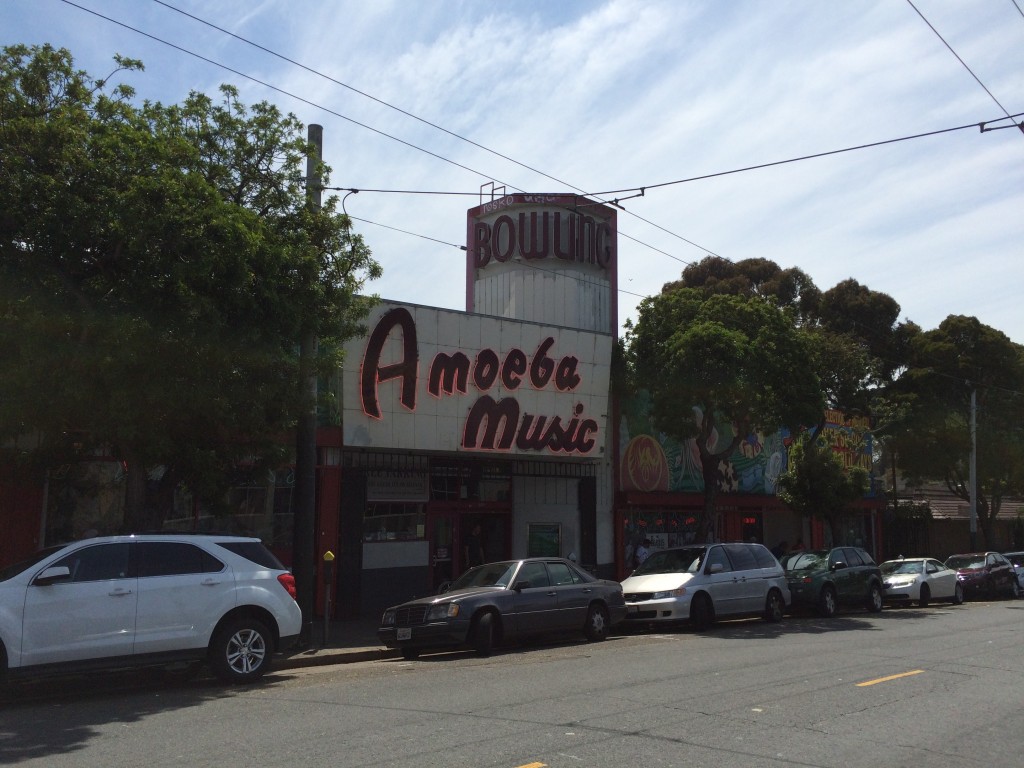
Now, as I mentioned before, this episode is all about my recent trip to California in the USA for my honeymoon! As you probably know, I recently got married and my wife and I decided to go to California, and now I’m back, and my tan is fading, but the memories are still fresh in my mind, and I’d like to share them with you. So, let’s go to the USA in this episode and go on a road trip around California!

Notes & Transcriptions
You will find some notes and some transcriptions on the page for this episode. In fact, if you’re reading them now then you’re reading them now. There they are right in front of your eyes! Just a reminder if you want to find this episode on teacherluke.co.uk – just look in the ALL EPISODES archive for episode 288, or just type in the search bar on the right of the screen the number “288” or the word “California” and you’ll find it easily.

The following words and sentences that you can read on this page are not a full transcription. They’re just notes. Some parts are transcribed, but mostly these are just basic notes, which means that they are not always full sentences. They’re just words and phrases written to help me remember details of the trip.

I wrote these notes on my iPhone during spare moments on holiday, and also when I got back, and I used them to help me record the episode you’re listening to now. I hope you’re listening, and not just reading – remember, this is a podcast and not a blog. It is designed primarily to be listened to.

Here’s what you’re going to get in this episode (or series of episodes)
This is a sort of diary or report of what happened on my honeymoon in California, but it’s not just a description of a honeymoon. It’s more than that, because not only am I going to tell you a few stories about what happened and what we did, but I’ll also explain a bit of cultural and historical information, as well as give you some practical tips, including ways of communicating effectively in various situations.

I’m going to tell you what it’s really like to be in California. It’s a description of the culture, geography, people, history, sights, sounds, smells and more. I’m going to tell you what it’s really like to deal with customer service there, what’s it’s really like to drive in the USA, what it’s like to deal with problems, what some of the linguistic differences are, what the climate is really like, what the food is really like, some of the history and cultural highlights, how to get along with people in the USA, how to develop the right relationship with waiters, hotel staff and other key people. It is a description of my honeymoon, but I also want it to be a lot more than that. I want to take you with me on my holiday, and teach you some things along the way, and it’s all in English of course so not only are you going to join me on a geographical and cultural journey, but also you’re going to plug yourself into a source of natural English spoken from me to you, right here, right now. You can pause it any time you like, you can rewind and listen again, you can slow it down, you can speed it up, you can fall asleep and listen again later, you can transcribe it, you can repeat after me or you can just relax and enjoy listening. So, brew a cup of tea or coffee, get comfortable, get uncomfortable and then get comfortable again, smoke a big cigar, pretend your working on a big excel spreadsheet at work – do whatever you have to do to enjoy the episode. I hope you like it and find it useful.

As usual, I’m not sure how long this episode will be, but I’m pretty sure it will be another mini-series of episodes as I have quite a lot to say about this trip.
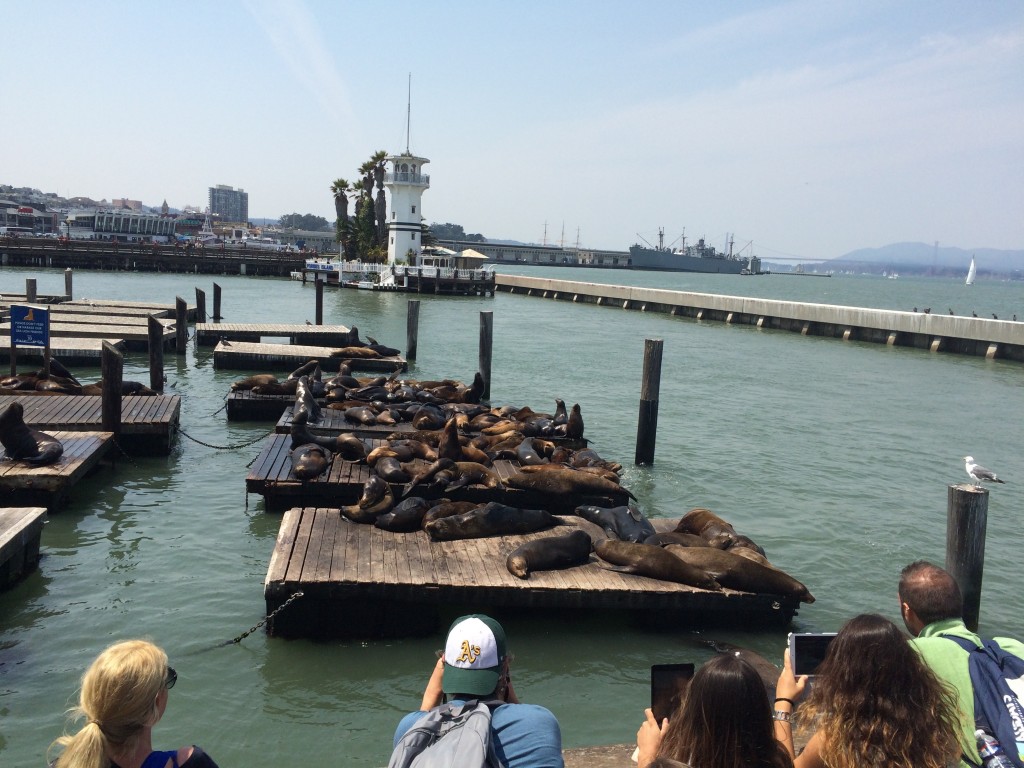
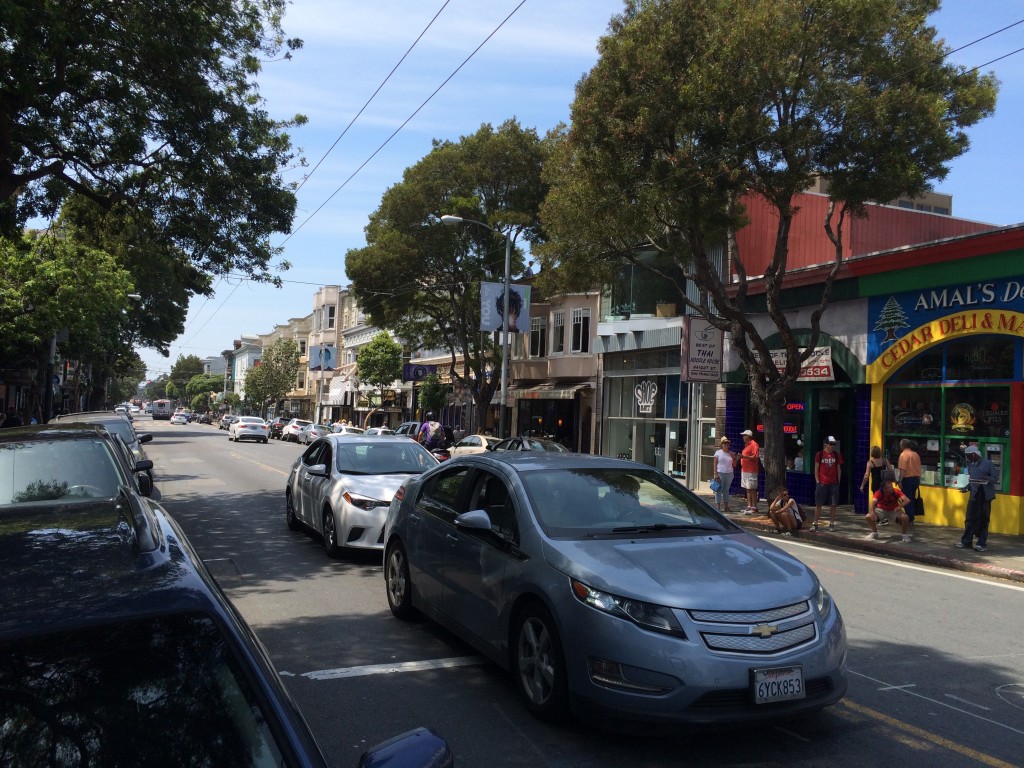
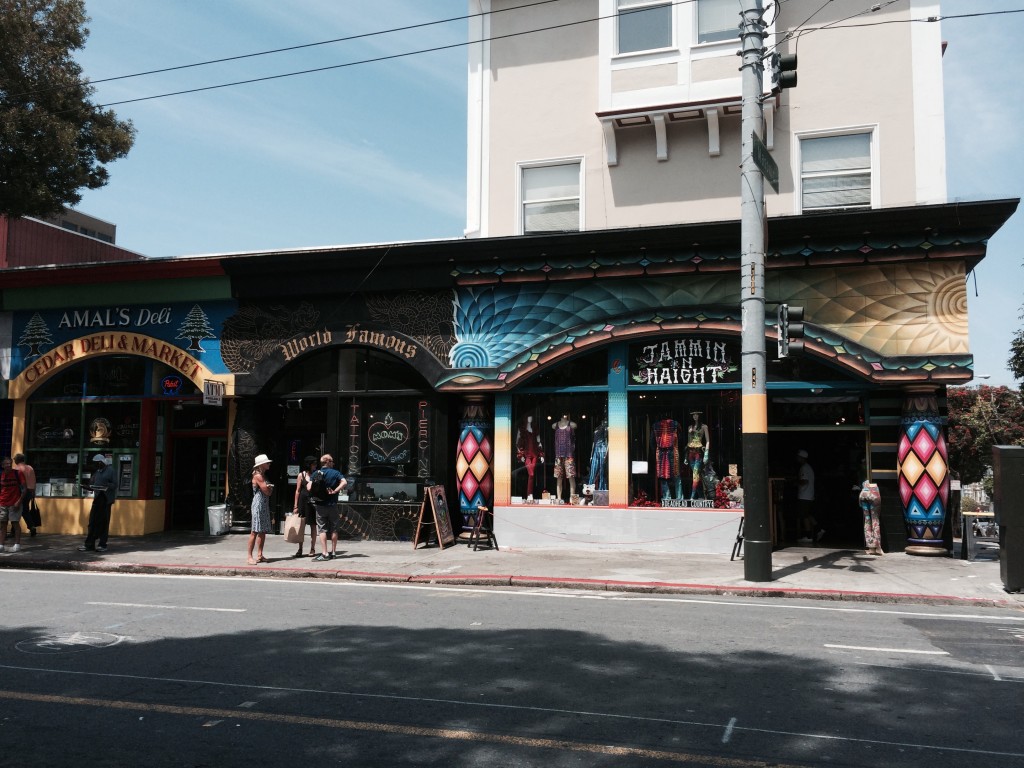
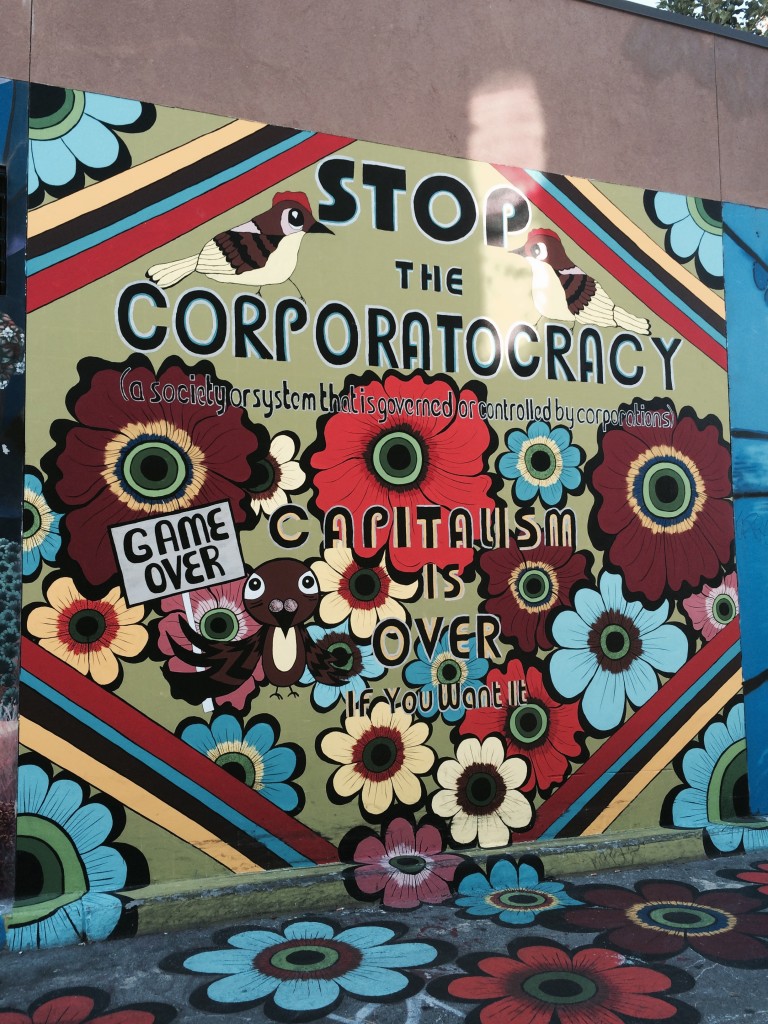
You can visit the page for this episode in order to find some of this episode transcribed, some of the notes I wrote in my phone while I was there and other things like links and photographs of the trip.
Now let’s get started with the first part of this story.

Following the tradition, you are going to hear me doing my first recording in a toilet on a plane.

6 August – Recording 1 – In a toilet on a plane again, above the Atlantic Ocean
You’re listening to Luke’s English Podcast
Where am I? I’m in a toilet on a plane again.
This is becoming a tradition – recording podcasts inside toilets on different modes of transport.
We are going to California for our honeymoon.
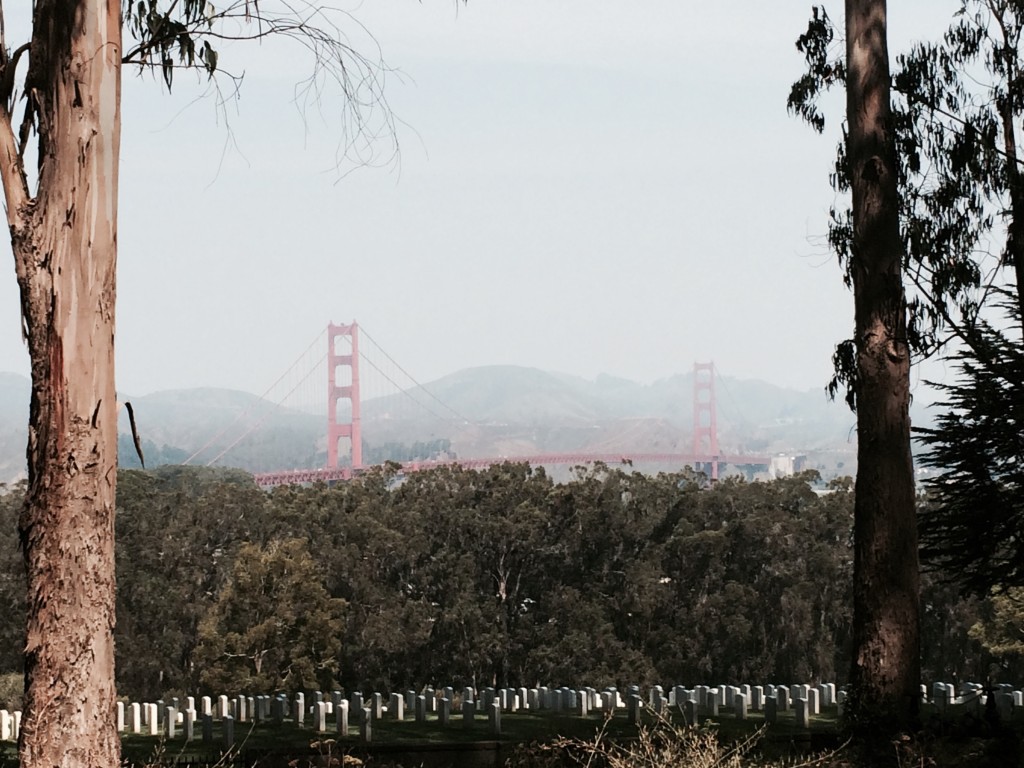
It’s the land of Hollywood, Baywatch, Coastal Highways, the Golden Gate Bridge, Alcatraz, Yosemite national park, the tallest trees in the world and open top cars etc.
I’m hoping to record short episodes at regular times during the holiday.
I’ll try to teach you something in every location, and I’ll just describe what I’m seeing and what it’s like.
I might even interview a few people that I meet because, you know, they speak English in America too of course – a kind of English.
I’m flying to New York.
What happened?
Flight was overbooked. Flight companies overbook their flights to make sure it’s not a loss of money for them.
We checked in, in person, not online. Why? We were hoping to get upgraded because we’re on our honeymoon.
Everyone told us to mention we’re on our honeymoon, as that would be the key to unlock numerous upgrades, rewards and treasures.
We were hoping to be upgraded to business class or something.
In fact we sort of got downgraded.
Talk about the overbooking process.
Mention the change of route.
It’s not that bad.
All’s well that ends well.
Despite the inconvenience and the delay and the stress we are nevertheless on our way. So all’s well that ends well.
(Let’s hope this ends well and that we do get to our destination ok in one piece)
That’s it – this is Luke Thompson in the toilet signing out.

I originally intended to do recordings while I was there, using my mp3 recorder, including some random interviews with American people, but that didn’t really happen in the end. I mean, it was my honeymoon so the main point was to share a special time with my wife. I wasn’t going around with a microphone the whole time, interviewing people and talking to myself.

However, I did manage to get an interview with one person – and that was perfect and really special, and very appropriate to Luke’s English Podcast, which is primarily for people who are learning English as a foreign language. Who did I manage to speak to? Well, it was the one and only AJ Hoge, who you may well be aware of. He’s the internet’s most famous English teacher. You’ve probably come across him at some point. He has an online teaching programme which he has called Effortless English. He’s made a big success of himself as an independent online English teacher, he’s a native speaker of American English and a resident of California, so he’s the perfect person for me to have spoken to. So, in the end that makes up for the fact that I didn’t speak to any locals on the podcast. I got AJ, so that’s fantastic – it happened in San Francisco so you can expect to hear my conversation with him in that part of the story.

Our California Itinerary
California has so much to offer – climate, different environments, famous sights, shopping, good food, beer, wine, musical history, literary ties, connections to counter culture and it’s the place we’ve seen in so many films and TV shows.

Itinerary: LA – Yosemite – SF – Coastal Highway via Monterey, Carmel, San Luis Obispo, Santa Barbara, Malibu – LA.

We only had two weeks, so there was no way that we could do and see everything. In fact, I think you shouldn’t try to do too much on holiday. I’ve said it before: holidays are like pizzas. Don’t put too many toppings on a pizza. Don’t try to do too many things on a holiday. OK, maybe holidays aren’t that similar to pizzas, but you get the idea.

I’m lucky enough to be able to travel
I generally get the chance to travel somewhere on holiday about once a year. This trip was a bit special because it was my honeymoon and we planned to go on a slightly more expensive trip. Anyway, I’m still lucky to have the opportunity to go to different places, quite far away. Not everyone has that luxury. You might not have that luxury. Admittedly, you might have that luxury – I’m sure many of you are very well travelled. But I also know that plenty of the people who listen to this free podcast don’t have the chance to go on many foreign adventures. So, I hope you enjoy the experience of listening to my account and that I give you an idea of what it’s really like to drive around California for a couple of weeks. And if you have had the luxury of going there, then perhaps you can compare your experiences to my experience. Did you experience similar things and have the same thoughts and feelings? What are some of the the thoughts in your head as you listen to my account on this podcast?
As ever, please leave your comments on the page or pages for this episode series. That’s not just for my reading pleasure, but also so you can share thoughts and ideas with your fellow LEPsters.

California Diary Continued – 6 August/7 August
In the taxi we heard “Hotel California” on the radio, and even though it’s a bit of a cliché, it was a perfect soundtrack to the trip. From the taxi we saw silhouettes of palm trees swaying in the breeze, the shapes of the Hollywood hills in the distance, Spanish style villas, lines of headlights of cars on long highways, the warm temperature outside and the spacious streets and empty sidewalks. Wow, we’re in movieland – LA, is it real or just a jet-lagged dream? This is how it felt at the beginning. We felt a million miles from home, and in a strangely familiar environment – one that we’d seen before in a hundred movies. It was like entering a recurring dream.
LA is a big place, but so is the USA as a whole.
We flew over it for hours and hours. It made me think of the people, years ago, who made that journey on foot or horseback. It took them years and years. They travelled in groups, families etc. People died and were born on the journey. Now we see it as an annoying inconvenience that takes 5-6 hours out of our holiday.
LA, Hollywood
Arrived and went for some dinner.
Service – very personalised. “Hi my name’s Derek, I’ll be looking after you this evening. Can I get you something to drink before we start?” Mammoth sized cups of water and ice arrived. I ordered one beer, I got two because of some kind of special offer I wasn’t even aware of. There’s always some kind of deal, discount or offer available. Already we had way more than we needed.

A Note on Customer Service
Generally, in my experience customer service in the USA is good, despite a couple of negative experiences I had there. There’s a bit more ‘back and forth’ than in the UK (I mean, standard things that you say in general interactions with waiters or staff), and it’s a bit like a little game you have to get used to.
For example:
Hi guys, good morning, how are you today?
Fine thanks, and you?
I’m good thanks for asking. If you need anything at all, my name’s Stacey.
What if we don’t need anything, then what’s your name?
I’m sorry?
You said, if we need anything, you name’s Stacey. What if we don’t need anything, is your name still Stacey? It’s… I’m sorry it’s just a joke.
Oh, I see! You’re joking! Hahahaha!
Sorry, I’m English.
No problem! I love your humour, so dry, right?
Yeah.
Well, just enjoy you guys. Let me know if you need anything.
Thanks for your help Stacey.
Have a nice day now.
You too.
I will, thanks for asking!

Staff tend to be friendly, attentive and professional, probably because quite a large part of their wages comes from tips, so they have to make the right impression. Sometimes though, as a foreigner, it seems a little tricky to get through to the staff if you have particular requests, or perhaps because of the cultural/language barrier. I think this applies to the UK too. Because you’re not local, you don’t know the normal ways of doing things, so you need to make a slightly bigger effort to help bridge the cultural gap. You might think – but this is exclusively the job of the waiter, he/she should make all the effort.

Be realistic, the waiter is a person and they’re not always an expert in cross cultural relations either. If you want to achieve something, and get what you want, you just need to make a bit of extra effort yourself. This means greasing the wheels with some niceness, charm, a smile and a willingness to make things work. So, what’s my advice for getting good customer service when you’re in a foreign country? Just that – try to be clear, positive, friendly and remember that the waiter or whoever it is that’s giving you a service is just a person doing a job. It’s easy to let things break down because of slight cultural differences. It’s important to make an effort to help the person to help you. I say that because I’ve seen people in the UK who got offended by what they perceived was bad service, but was in fact just a slight breakdown in communication. Give your communication a chance and be patient, friendly and helpful, and don’t expect the staff member to understand everything you say the first time around.

L.A. Continued… 7 August
Space.
Coffee & breakfast
Car
Weather
Location
Phrases “you got it” “you’re all set” “I’m good”.
Palm Trees, hotel California, film noir, Raymond chandler, Charles Bukowski, a million movies. The whole place is like a movie set.
This is a movie town – everything is fake and it’s all about veneer. As well as being sunny all the time, there is a mysterious and slightly sinister feeling to the place too, which is perfectly captured by the classic detective stories of Raymond Chandler and other writers, and the movie versions of those stories, collectively part of the film noir movement. I’ll talk more about this mysterious atmosphere in a bit, but first…

Recommended Audiobook Download – The Big Sleep by Raymond Chandler
Let’s take a break from the UK’s favourite books for this series, and look at a few recommendations for California-related audiobooks you could download free by going to www.audibletrial.com/teacherluke
Recommendation #1 – The Big Sleep by Raymond Chandler
This is perhaps THE classic American detective story. It’s set in LA and it is absolutely full of dark and mysterious atmosphere, as well as understated cool humour and sizzling tension. It follows private detective Philip Marlowe as he tries to solve a complex case, while dealing with several dangerous and seductive female characters and some violent murderers. It perfectly captures the atmosphere of a film noir movie set in LA, and it’s really well read by Ray Porter. This is the blueprint for so many other detective stories featuring tough and cool, yet ultimately vulnerable heroes. Imagine films starring Humphrey Bogart for example. It’s glamorous, brutal and extremely well written stuff. www.audibletrial.com/teacherluke The Big Sleep by Raymond Chandler. It’s got an average rating of 4.3 out of 5.

California Diary – LA, Continued…
Nothing is real here. There’s a strange feeling that you’re living in some kind of dream, and I don’t think that is entirely the result of breathing in the marijuana vapours which are floating around in the street in so many places.

It’s hard to date the buildings. They could be old, or they could just be built in an old style. LA doesn’t have the same depth of history as in Europe. There’s evidence of a colonial past, but also so many buildings are new but designed to look like they come from another period, like Spanish villas for example.

It’s all like a movie set, and if you took away the facades of the buildings, it’s just a desert underneath. So, the buildings are a kind of facade. Everything is a bit fake, like in a movie. It’s hard to know what is real. The people also seem a bit distant. They’re sweet, and hippyish, if a bit shallow in some circles. It feels like everyone is high, in fact they probably are, because smoking marijuana is more and more popular.

There’s no evidence of smoke when you walk around, but I’m sure people are ‘vaping’ all over the place. I can smell it. In the corridors of our hotel, in the street outside bars.

California’s Marijuana Laws – An Interesting Legal Conflict
California has an interesting position on marijuana use, and this reveals an interesting conflict between state and federal law in the USA.
Is pot legal in California?
What about smoking tobacco?
Do people smoke in the street?
What is ‘vaping’?
Where do people buy weed in California?
Did you see it or smell it there?

More in part 2 soon…
Hollywood-Sign

286. The Wedding Episode

Hi everyone, how are you? As you know I got married a couple of weeks ago (applause & congratulations) and in this episode I’m going to tell you about my wedding day, including the preparation, the thoughts, the feelings, the emotions, and what happened on the day itself. I’m not sure how long the episode will be, but I’ll aim to keep it to just one episode.

Small Donate Button[DOWNLOAD] [AUDIOBOOK OFFER]
So, this is The Wedding Episode. You’re going to hear specific vocabulary related to weddings and you can just follow this personal account of my marriage in France between an English guy (that’s me) and a French girl (that’s my wife, of course). I’m going to describe lots of things in this episode, including how we organised our wedding, the roller coaster of emotions we experienced, why we chose a civil marriage outside and not a religious one in a church, and what marriage really means to me and to my wife. That’s what you can expect in this episode, so strap yourself in and join me on a little journey in to marriage-land, for this special episode of Luke’s English Podcast.

On my wedding day I got a really fantastic surprise which is related to LEP, so I will talk about that in this episode too.

First, let me make a few announcements
– The situation in which I’m recording this episode
– Welcome to any new listeners. I seem to have picked up a lot of new people recently, and I’ve had quite a lot of comments on the website from people saying they’ve just discovered Luke’s English Podcast and that they’re now addicted. That’s great! Welcome to the club. I hope you enjoy being a part of the LEP gang. Join the mailing list. Hello to these recent commenters ROBERTO BISPO DOS SANTOS, Eriko Kato, Kristina Fadeeva, olgaverb, angela, Roberto Geronimo, CFA, deniz from Istanbul, CalMaFdd, Javier (thanks for coming to a recent live show at The Paname), ptholome, Anonymous (a regular contributor), Martin, lotusmar629, Juan Mora, Rhogen Tandayag – I’m not sure where you are all from, some of you are quire regular commenters, not all of you are new, but thank you very much for your comments.
– If you’ve sent me a donation recently then thank you from the bottom of my heart. You are keeping this podcast alive and I wouldn’t be able to do it without your support.
– I joined periscope and did a live broadcast recently. You can see the video on my website (the previous post) and you can follow me on Periscope by searching for my twitter name @englishpodcast or just search for Luke Thompson. You can watch periscopes without the app by clicking here https://watchonperiscope.com/users/englishpodcast/6862923 From time to time I’ll do live broadcasts, probably when recording podcast episodes.
– I’ve been quiet recently and that’s for the usual reasons. Life has been very busy. I got married, we went away to Italy for a quick romantic getaway, I’ve been occupied at The British Council teaching English all day every day, and we’ve been planning our proper honeymoon which begins in just a couple of days. Also, I’ve been doing quite a lot of comedy in the evenings – various opportunities for comedy gigs arrived over the last two weeks and so I’ve been quite busy. That includes a 1 hour special show that I did with Paul Taylor. We did 30 minutes of stand up comedy each, last Thursday evening. The title of our show is “Taylor & Thompson – Sorry, we’re English”. It’s a show that we expect to perform on a regular basis here in Paris, on either Thursday or Friday evenings. More details to follow.
– I’ve had lots of positive responses to episodes I did recently with Paul Taylor and Amber Minogue. I do plan to have them both on the podcast regularly, and in fact I have plans to record something with Paul later this afternoon, and with both Paul and Amber on Tuesday afternoon. Amber has a young child to look after, as well as her normal working life and so on, so it’s a little bit more difficult to get her on LEP but she loves doing it (and recording episodes of the podcast! -joke) so she’s happy to come over and talk when she has the chance.
– I’m going on my honeymoon in a few days. I’ll be gone for a couple of weeks. I’m recording a few podcast episodes in the next couple of days and I plan to upload them all before I go so you’ll have some stuff to listen to. I might record some things when I’m on my honeymoon. We’ll see. I’ll be on holiday with my wife so I’m not sure I’ll be in the mood for podcasting, but then again we’re going to California so there could be some great opportunities to talk with American people and give an account of our trip. We’ll see. My wife is totally cool with me recording stuff while we’re there (in fact she wants me to interview some of the locals) but I’m not sure if I want to be thinking about that when I’m on my honeymoon. I might want to just relax and enjoy being a tourist. Still, I am going to bring a microphone and a recorder, so we will see what happens. If I get a chance to record something from inside a toilet on another mode of transport then I will take it. I’ve never recorded something from inside a helicopter or a hot-air balloon, so we will see if I get the opportunity to do that :)

Now, let’s get down to business and talk about this wedding!
So, I got married and I am now wearing a wedding ring on the fourth finger of my left hand. It’s only been a few weeks since the wedding. We’re in marital bliss, or the honeymoon period as it’s known. Hopefully this feeling will continue for some time.

I am planning to do another episode after this one, in which I deal exclusively with the vocabulary of weddings. But, in this one I’m not going to teach you any words directly, I’m just going to tell you about my wedding, but of course plenty of wedding-related vocabulary will crop up naturally during in my descriptions. I’ll go through that more explicitly in another episode.

You might be thinking – are you really going to reveal so much about your wedding? That’s a bit personal isn’t it? Are you sure it’s wise to tell people so much about your wedding?

Yes, I am aware of those things. I know that I’m revealing quite a lot about myself online. I know, for example, that students of mine at the university might hear this and they will then find out this personal information about their teacher at university, and this might affect my professional relationship with them. But, I don’t feel I have anything to hide, and I share this story with my listeners here with the expectation that you’ll listen to it with a sense of respect for me and my wife, and that you’ll be respectful with the personal info I’m giving here. I share this information in good faith, and that is what I expect in return from you as a listener. Of course, I don’t really need to say these things to the LEP community because I think there is an implicit level of respect there, but still… I’ve said it anyway.

I do realise that revealing personal things about yourself online is a bit risky. The thing about the internet is that whatever I upload here could end up permanently ‘out there’ in the online world. Even if I decide to remove this episode from my website, people could have already (and probably will have) downloaded it, re-uploaded it or whatever – even if I get rid of the original version, it could still be available on torrent sites or file sharing sites, or other places like YouTube or whatever. I don’t mean to say that I’m super important and that information about my wedding, leaked online, could cause world war 3 or anything, no, I just mean that personally I have to be careful about what I upload because ultimately it will be in the public domain forever. Sometimes I think it would be wise for me not to mention anything about myself at all, but I’m willing to do it – but understand that I do it with the expectation that you’ll treat me with the same level of respect that I treat you, and something personal like my wedding I expect you to treat with the suitable level of care and discretion. I’m sure that most of you understand all that, so it’s fine. I just wanted to mention it though.

So let me now tell you the story of my wedding. Remember, I plan to do another whole episode in which I deal specifically with the vocabulary of weddings, so that will come later.

Where on earth should I start?
This series of days was the culmination of not just months and months of planning, but years of a relationship I’ve had with my girlfriend, who is not my girlfriend any more, because she’s now my wife. It was a very emotional few days, full of the joy of life. I’ve never experienced anything like it and my wife and I, and many of our family and friends are still buzzing about it today. It went better than we could have expected. Let me tell you about it.

You might be thinking – but you already got married! You mentioned it in an episode not long ago. Yes, that’s right, but I got married twice! If that’s confusing, don’t worry because I’ll explain it in this episode.

Notes (not a full transcript)

How did you meet your wife?

Was it love at first sight?

Was it hard to keep the relationship going, long distance?

What made you move to France?

Why did you choose to get married?
-I was never a huge fan of marriage, neither of us were. We used to talk about it and agreed that it wasn’t really necessary. It’s never been that important. But somehow, it felt like the right thing to do. In fact, I decided to propose to her not because it was necessary, but because I wanted to do it as a declaration of love and commitment to her – not because I felt any social pressure to do it, because, as I said – I’d never felt any pressure to marry. I’m not from a conservative or religious background. It made my parents happy, and hers too, but they didn’t put pressure on us to marry (I think they’re more keen for us to deliver grandchildren than to get married…)

So, I proposed as a surprise, and as a statement of my love and commitment. That’s the spirit in which we got married.
How did I propose – that’s between me and her. I’m not sharing that.
I’ll talk more about what marriage means to us, and how that affected the wedding day in a moment…

How was the wedding planning?
-Some parts were great, like visiting places in the south of France and doing wine tasting with friends, writing the vows and imagining the event.
But a lot of it was quite stressful and was a lot of work.
We argued a bit, mainly over the fact that she felt she was doing more work than me (I think that was true, but I certainly did a lot too).
We chose to plan it ourselves. We didn’t use a wedding planner. Our parents didn’t organise it. We did it all ourselves. It’s a huge undertaking, with many different things to organise, and it all has to be perfect! That’s a lot of pressure, especially when you’re the ones in the middle of the day. We never really cared about weddings, but suddenly it becomes important because everyone else is going to be there to see it happen, and because of photos and videos, and you only have one wedding day (hopefully) so it becomes more and more important to make it special, unique and wonderful. As a result you end up micro-managing and planning it. That’s time consuming and costly. As a man it’s not my natural position. I mean, I think I can say that most men are more laid back about their wedding. I mean, they don’t require so much detail in the planning. I think that’s generally true. It doesn’t mean we don’t care – of course we care and we want it to be a brilliant day, but we’re probably a bit easier to please. So, what I’m saying is that my wife had a slightly more specific vision of the wedding than me, and that meant she was pretty much the driving force behind the planning. That frustrated her a bit and the argument went something like this: I’m doing everything and you’re doing nothing.
I’m not doing nothing – I’m doing loads of things. That’s unfair, you can’t say I’m doing nothing.
Well, you’re doing less than me.
Yes, well, you don’t let me do more than you. You’re in control everything. You can’t just control everything, and then complain when I’m not doing it.
Hmm, okay I suppose you’re right. In fact, yes Luke I expect you’ll be right about everything from now on and I should just get used to it.
Yes, exactly. Get used to it. When we’re married I’ll always be right. That’s how marriage works.
Obviously, that dialogue at the end became a joke – I’ll never be right again! ;)
Don’t get me wrong – we didn’t argue all the time. Just whenever we did any wedding planning!
No, that was a joke again.
We didn’t argue that much. Most of the planning went fine, and in fact a lot of it was great fun – especially the visiting of locations in the south of France, choosing/tasting the food & wine, writing the vows, practising songs with my brother Jim and my cousin Oli and just looking forward to spending a couple of days in an amazing location with our closest friends and family.

The most difficult things were: choosing the guest list, the table plan, the dress (I was not involved in that), giving people travel and accommodation advice (it was quite complex) and choosing/planning the ceremony.

*Break for Audible offer promotion: www.audibletrial.com/teacherluke*
10. Jane Eyre, Charlotte Brontë
This is the perfect story for this episode about marriage because it is one of the absolute classics of romance fiction. It was published on 16 October 1847 and tells the story of a woman called Jane Eyre who begins her life living through hardships and mistreatment, she gains her independence and education, falls in love with a man who appears to be out of her reach, and enters the tricky world of love, commitment, family and loyalty in the mid 19th century. There are a few twists and turns in the story and plenty of romance! It is read by Juliet Stevenson who is one of the UK’s most beloved actresses. She hasn’t appeared in many international movies, but she’s well known on television, and has an absolutely beautiful and warm voice which is perfect for this kind of story.
The audiobook version has a rating of 4.6 out of 5, which is extremely high. This truly is one of the UK’s favourite books. You can get it from Audible.com free if you’re not already a member. It’s very simple. Just click one of the audible buttons on my site, or go to audibletrial.com/teacherluke to sign up to a trial. You can download any audiobook you want and after 30 days of trial you can cancel your membership but still keep the book. So, the audiobook is free. All the details of this offer are on my website. I highly recommend you make the most of it, and even continue with a full membership of Audible.

What did you have to plan?
-location
-guest list
-invitations
-email addresses and home addresses for contacts
-website
-food menu
-best man and bridesmaids
-music and entertainment (bands, playlists, audio equipment)
-ceremony
-wording and the person to deliver it
-readings in the ceremony
-vows
-location of ceremony
*At this point I skip to the bit below entitled So what happened on the big day? Talk us through it.
-wedding dress
-suit
-dress code
-speeches
-photographer
-gifts for guests
-wine and champagne orders
-other entertainment for the wedding party
-directions for how to get to the wedding (including all the different travel options)
-rental car
-taxis for all the guests
-food for the Sunday brunch

How did you find the location for the wedding?

Did you consider getting a wedding planner?

Why did you get married twice?

What about the London wedding? What happened?

Why did you have a civil marriage? Isn’t it a bit meaningless if you don’t get married in a church?
– No, quite the opposite. I’ll come back to this question.

What about your stag do? And her hen do?

So what happened on the big day? Talk us through it.
-Travelled down on Thursday
-Rented a car and on Friday went to the place.
-Had a small gathering with close friends on the Friday night.
-Rehearsal
-Saturday – less stressful than the London one.
-Late start.
-Very hot indeed!
-Setting up the seats and everything
-Putting up signs and balloons to guide people to the venue
-Getting ready with my best man and friends
-Didn’t see my wife all afternoon
-All guests seated, I lined up with everyone to walk in.
-I walked in with my Mum
-Best man and bridesmaids walked in together
-Flute
-No pictures and no FB please
-My wife arrived on the arm of her Dad and walked very slowly down the aisle.
-Ceremony started, beautiful conditions.
-Readings
-Vows (emotional! Everyone cried)
-Song (too slow)
-Final parts – ring, “you may now kiss the bride”
-Walk out then cocktails, champagne and canapés
-Photo session
-Band playing, people chilling out with their feet in the pool
-Dinner
-Speeches, lighting, food, wine, champagne pyramid
-My song
-Playing music
-The band (Be Combo)
-Dancing & music playlist

THE VIDEO FROM LEPSTERS CONGRATULATING ME!
At this point I’d just like to say a massive thank you to Guillaume and everyone else who contributed to this gift.
So, Guillaume from Switzerland decided to make a video for my wedding day as a way of saying congratulations and also thank you for doing the podcast. He contacted LEPsters all around the world and asked them to record a short video message of congratulations for my wedding day. He then collected the video footage together and edited it all into one video. The cool thing about it is that it looks like a BBC news report, with correspondents from different countries in the world.
There were contributions from Guillaume from Switzerland, Zdenek from the Czech Republic, Jan from the Czech Republic, Daniele from Italy, Denise from Sao Paulo in Brazil, Rafael from Brazil, Sam in the UK, Edison from Colombia, Edgar from Mexico, Chriss from Mexico, Teodora from Romania, Takako from Japan, Trally from Vietman, Gloria from Argentina.
Thank you all so much for the messages. It was absolutely AMAZING to receive them. It was like the icing on the cake. I watched it together with my wife, my brother, my parents and a group of other people and everyone was blown away. They didn’t realise that I was a bit famous around the world. My wife and I were both touched by the messages and the bits of advice about marriage too. We certainly learned that “a marriage is a workshop in which the man works and the woman shops”.
You can see the video on the page for this episode here:

Other stuff (not mentioned on the podcast I think)
-Photo booth
-Bed at 5AM
-Sunday – hangover, hangover cures, food truck, pool, weather
-Sunday evening
-Monday’s plans – massage, lunch, pool, fancy dinner, friends.
-The atmosphere of the location – lavender, nature, landscape, birds, seeing wild boar at night
-Relaxing Tuesday
-The ride home (with too much luggage)
-Back to normal (but marital bliss)

What was good about the wedding?
There are too many things to say really!
The location
The lavender
The weather
The food
The music
The guests

How about the question of the civil marriage – was it meaningless?
It was more meaningful to me than a religious wedding would have been.
Some people, not in our closest circle of friends and family expressed some doubt and scepticism over our decision to have a non-religious wedding in a neutral space (not in a church). Not only is this a little bit disrespectful in my opinion, it’s also a bit short sighted.
Is a non-religious wedding meaningless? Absolutely not. First of all, religion does not have a monopoly on feelings, emotions, sincerity, and sombre promises of faith and respect. These are all things that come from a natural well-spring of humanity that we all have inside us. We’re born with these things, in my opinion, so I believe it’s entirely possible to have a meaningful and emotional wedding without the presence of religious faith. In fact, that’s exactly what happened because it was a very moving and positive marriage.
Ultimately, my wife and I don’t have religious faith, so it would be hypocritical of us to have had a religious marriage.
But it was a very touching wedding – everyone agreed. So many people cried during the ceremony because it was so emotional. But that’s because it was a true and sincere statement of love and commitment from me to my wife. We wrote the words of the ceremony, not a priest. The promises came from us, not from above. The vows were witnessed by our friends and family – and they’re the ones who define the world around us. They’re the communion in which we joined together, and they are the community in which we will continue to be married. It was important for me to share that sincerely with them, and it was their audience that gave the weight and power to the proceedings.
I’ll give you an example. A Japanese couple who I am very close to, but haven’t seen for about 10 years came to the wedding. They travelled all the way from Japan which is a long and expensive flight. It must have been very difficult for them to come, but they did it for us. This is a huge and sincere statement of support for our decision to get married. By travelling so far they reinforced our marriage – I feel the wedding is even more validated by such a sincere act of friendship and support, and I believe the marriage is stronger as a result. They added extra weight to our commitment to be together. We really mean to stay together and hold true to our promise, and we know that our closest friends and family are there to help us stay together. That is genuine, tangible support for our union.
Also, the wedding was a significant moment for me as an ex-pat living away from home in a foreign country. It was an event at which my UK life and my French life joined together (and my online life too). Suddenly my UK friends saw my French life with my French friends. Also, my French friends saw me with my UK friends and understood me more. These friends who didn’t know each other suddenly spent a weekend together. It was very important in bringing my circle of friends closer together, giving me extra security. I feel that my life is less disconnected than it was before. The wedding brought people together and that’s important. Luckily everyone got on with each other and there was very little drama or trouble or anything. That’s just because we’ve got awesome friends and it was really cool to mix them together.
In fact, seeing all my closest friends and family all in one place was quite incredible. Every person there was special to me in some way. It was overwhelming really.
So, the wedding was a celebration of friendship, love and commitment, and it was a success.

What do you expect from marriage in the future?
I don’t expect it to be a solution to problems. I think that’s a mistake. Some people might believe that getting married means that suddenly your problems disappear and that life is all just a mission to get married to the right person, but I don’t agree with that. I’m well aware that it requires work and patience. It can feel restrictive and all that, but I think that if you don’t hide from this reality, and you’re honest with yourself and each other, and you don’t live in fear of conflict, and that you celebrate each other every day in some way, and make an effort to reward each other and communicate and so on, then I think it can be a really wonderful thing. In fact, I already find it very fulfilling and rewarding. How? You might ask… Well, there’s a sense of security and family that you have in joining with someone and becoming an official team. Also, I just enjoy calling her my wife. I’m sure there’ll be moments of hardship, but I really believe you can’t escape the difficulties in life. In the end hardship will come and find you somehow. I was ok with being single, and being alone (because I wasn’t a massive player or anything) but I prefer being in partnership with my wife. I’ve lost my single status and whatever freedoms that involved, but I have gained something more than that – the companionship of my wife and the influence of her on me. I think it’s a good choice. I just hope that we stay close like this for the rest of our marriage and that we find new depths to our relationship, and that it doesn’t go wrong at any point. I think that’s up to us really. As long as the spark is still there, it’s up to us to nurture it and turn it into a warm and nourishing fire.

Are you having a honeymoon?
Yes, we’re going to California (even though it appears to be on fire at the moment, and San Francisco is expecting a big earthquake at any time).
We originally planned to visit South America, but we have postponed that because we left the planning too late. We want to trek the Inca Trail, but it’s fully booked.
It’s easier for us to arrange a Californian holiday, but we will be back in Peru/Bolivia and hopefully other places in the future. We would both love to visit South America, and plenty of other places! In fact, I imagine many of you are thinking – oh Luke don’t go to the USA again, come to our country to celebrate your wedding!

Places we would like to visit:
Mexico
South America (Peru/Bolivia & everywhere else)
Japan
A tour of the UK!

Is your wife going to be on the podcast?
Maybe… we’ll see. Her English is good enough, and I think she’s charming, but I’d quite like to keep her to myself, so we’ll see…
Lavender

275. The Phrasal Verb Chronicles #2

100 episodes ago I recorded The Phrasal Verb Chronicles #1 – remember that? The point of that episode was to improvise a made-up story as a way of reviewing the first 50 phrasal verbs from my other podcast which is called A Phrasal Verb A Day. I had to just come up with a random story, and add in a load of phrasal verbs. Your task was to try and spot the phrasal verbs as I used them, while also following the story. It’s time to do it again because I’ve done over 100 episodes of A Phrasal Verb A Day. So now, in this episode I’m going to attempt to improvise another story using phrasal verbs #51-100. Click here to listen to The Phrasal Verb Chronicles #1.

Small Donate Button[DOWNLOAD] [AUDIBLE AUDIOBOOK OFFER]
Click here to visit Luke’s English Podcast on iTunes and leave a review. :)

Click here to visit A Phrasal Verb a Day on iTunes and leave a review. :)
A quick note about A Phrasal Verb a Day
Do you know about my other podcast? It’s a real thing, there are currently about 107 episodes available free for you. You can find all the details, every episode and the RSS feed and iTunes links on teacherluke.co.uk. Just click “A Phrasal Verb a Day” in the menu. You can also find it in iTunes. I started it at the beginning of last year and my aim was to record an episode every day. I managed to keep up that rhythm of one a day for the first few months, but then I found that I couldn’t keep doing them every day. So, the recording and uploading of APVAD has become very sporadic as my daily routine has been really hectic (as usual). But, it is still alive and kicking and I plan to go back to it regularly to upload more episodes. Eventually, the plan is to hit 365 episodes and then it will be finished. In each episode I teach you a different phrasal verb, give you explanations and provide loads of examples of the different meanings and other things you should know. There are also transcripts for all 104 episodes (to date). Phrasal verbs are a vitally important part of fluent and natural sounding English, and are often one of the hardest aspects of the language to learn. You can use my series as a way to get a grip on this difficult aspect of English. Listening to my short phrasal verb episodes regularly can make a really big difference to your English learning, so if you haven’t already done so I recommend that you check it out today. Teacherluke.co.uk and then click A PHRASAL VERB A DAY in the menu, or just google “A Phrasal Verb a Day”. You can subscribe to it in iTunes, download them, listen to them on my website or whatever is most convenient for you – just like episodes of Luke’s English Podcast.

Now, back to this episode.
It’s important to review vocabulary – it’s vital to go over language again and again and we also know that it’s important to get vivid and meaningful connections to words to help you remember them. Hopefully this story will help that process.

I’ve already gone through meanings and explanations of all these phrases in each phrasal verb episode. If you want to go back and study them in more detail, you can just go back to those individual little episodes – the links to all of them are available on the page for this episode. You’ll see a list, and you can click on each phrasal verb to listen to that episode.

In this episode let’s focus on you just noticing these phrases as they are used in natural speech within the context of a story. You’re going to play a game of Vocab Hunter! (exciting) Does that help to make it interesting? If you need extra excitement you can imagine you’re shooting the vocab from the sky whenever you hear it. You can even do a hand gesture, like you’re shooting a gun, like ‘pow’ every time you hear one. Obviously, watch out if you do that on public transport. People tend to be a bit funny about people pretending to shoot imaginary words that only they can see, while on a bus surrounded by people – but on the plus side, you’ll probably get an empty seat next to you and plenty of space to stretch out and really relax while you listen to this episode and play vocab hunter.

Anyway, as I was saying, it’s important to get used to noticing language as it is being used in context, rather than just being spoon fed vocabulary bit by bit, by a teacher, in a slightly mechanical way. Ultimately, it really helps you pick up language when you actually hear it being used to serve a communicative purpose. So your challenge in this episode is just to try to follow the story while noticing 50 phrasal verbs as they’re being used. The phrasal verbs will appear in alphabetical order. In fact, there may be more than 50 as I’m sure other phrasal verbs will just naturally crop up in my speech (there was one already – to crop up).

My challenge is just try try and make this a coherent story, while including all the phrasal verbs. I have no idea where my story is going to go! I just hope that it all makes sense and that I find a way to use every single phrasal verb in order.

It’s going to be difficult, it’s going to be fun and I hope you enjoy the story. I will go through the list when I’ve finished so you will know which ones you should have noticed. Remember, the list of these phrasal verbs, with mini podcast episodes explaining each one, is available on the page for this episode.

So, let’s begin the phrasal verb chronicles, episode two – phrasal verbs 51-100.

[socialpoll id=”2274157″]
phrasalverbchronicles2.2

244. Urban Myths

This episode is all about urban myths. Get your thinking hat on in this episode because it’s time to evaluate a few stories and beliefs and decide if they are based in reality or if they’re just the product of an overactive imagination, or rumours, or just plain old-fashioned bullcr*p! I will also teach you some very useful language connected to expressing if you think something is true or not. There are vocabulary notes, transcriptions and more details below. [Download]

Small Donate ButtonIn This Episode we will:
Consider what an urban myth actually is
Look at a news story about a commonly held belief from another country (and decide if it’s really true or not)
Look at some useful language – phrases and sentences we use to say “That’s true” or “That’s not true” – useful, natural vocabulary!
Consider some commonly told and surprising ‘facts’ and decide if they’re true
Talk about some of the UK’s favourite superstitions (if we have time – if not, that will be another episode in the future some time)

What’s an urban myth?
Essentially, this is a story or a fact which people spread around as if it is true, but in fact it is probably just made up. Often these urban myths or urban legends are personal stories or anecdotes, typically 2nd hand ones (like, “this happened to a friend of my brother’s girlfriend’s cousin and it’s absolutely true!”) and often involve something horrible, scary and shocking. Urban myths may also be just commonly held beliefs about something which are not based on any real evidence or fact, but are perpetuated out of misinformation, or as a hoax.

Superstitions on the other hand are similar but not the same. A superstition is the widely held belief that certain actions are lucky or unlucky, like the idea that the number 13 carries some magic power, or that not making eye contact when you take a drink and say “cheers” with someone, you’ll have 7 years of bad sex. Where’s the evidence that this is true? There is none, and yet many rational people still hold on to these ideas. In fact, many rational people still have that element of suspicion in the backs of their minds whenever they do some potentially unlucky behaviour, like walking under a ladder or opening an umbrella inside a house. Perhaps some of these superstitions are grounded in truth, but in many cases they’re just weird little glitches in our thinking. Every culture has its own unique urban myths and superstitions. In this episode we’re going to explore a few urban myths – one from Korea, some from The UK or America. I’ll tell you some things and you can use your critical thinking to decide if they’re really true or just a myth.

Then if we have time I’ll tell you about some of the most commonly held superstitions in the UK.

Examples of urban myths?
I’ll tell you a couple of stories that I remember being told by kids at school as if they were true.
The caller
The worm
The spider’s nest

All those stories are supposed to make you go “Oh my god!” and people make them true just to add some extra horror. None of them are true.

Discuss
1. Do you believe everything you read in the papers?
2. What about things you read on the internet?
3. How about things you hear by word of mouth?
4. Where does misinformation come from? Is it always shared by word of mouth or online?
5. How do you know if a story is true or just an urban myth?

Believe it or not? Truth or Urban Legend?
1. Look at the newspaper headline “The Cool Chill of Death” (The Metro, Monday 14th July) What is the article about? Make some predictions.

Vocabulary (before we read the article)
2. Match these words with their synonyms & definitions before you read the text.
Words & Expressions in the Article
1. on the loose (c)
2. humble (g)
3. rumble & grumble (b)
4. to be convinced that… (d)
5. a vacuum (e)
6. hypothermia (a)
7. an urban myth (f)

Synonyms & Definitions
a. a fatal condition caused by low body temperature
b. scary noises (e.g. made by thunder or a monster)
c. not in prison – free
d. be sure/certain that…
e. a space with no air in it
f. a story which is not true, but which people think is true
g. modest

3. Read the first paragraph & check your predictions.

Reading Comprehension Questions
4. Now read the rest of the article and find answers to these questions.
a. What is fan death?
b. What are two explanations of fan death?
c. Which of these is a realistic explanation?
d. According to Dr Yeon Dong-Su, what two factors could cause hypothermia to occur?
e. According to the article, why is fan death unlikely to be real?
f. What did Robin Prime do?
g. What two things shocked him?
h. How do tall stories become widely held beliefs?
i. Could a fan suck all the air out of a room? Why/why not?

The Metro, 14 July
THE COOL CHILL OF DEATH
Be afraid, be very afraid. For as summer continues, there’s a new killer on the loose. It rumbles and it grumbles and it is the humble electric fan. For in South Korea from Seoul to Seongnam, people are convinced you can die by leaving one turned on in your bedroom overnight.
Various explanations have been given for how the fans kill people – from their cooling effect resulting in hypothermia to the vacuum created around the victim’s face. These explanations fly in the face of medical opinion, yet Korean newspapers report an annual average of ten fan deaths and some Korean doctors are convinced of the hazards of sleeping with a fan switched on.
Clinical support
Dr Yeon Dong-su, dean of Kwandong University’s medical school, has investigated dozens of cases of fan death and insists they do occur. ‘Many people say these victims die from lack of oxygen but that is not true,’ he says. ‘Hypothermia does not only occur in the winter when it is cold. The symptoms can also take place if a person has been drinking and turns on a fan in a closed room. Most people wake up when they feel cold but if you are drunk, you will not wake up, even if your body temperature drops to below 35°C (95 °F), at which point you can die from hypothermia.’
It seems more likely than not that fan death is actually little more than an urban myth – most of the newspaper reports omit other causes of death from heart attack to gunshot wound – but it’s very hard to find a Korean who doesn’t believe in the phenomena – to the point where fans in Korea are fitted with timer switches to ensure their owners avoid certain death.
Possible ‘cot death’
A spokesperson for the Korean tourist board says: ‘This is certainly a serious and widely held belief in Korea. It appears to come from reports of people dying in the night and the common factor is the fan was running. The actual cause of death could have been something totally different, including cases of what people in the West would call cot death.’
Fan death has also become a cult internet phenomenon, thanks to message boards populated by English teachers in Korea who are baffled by their students’ belief in this notion. Robin Prime, who set up the website www.fandeath.net, says: ‘I was shocked at how powerful my Korean friends’ and students’ belief was and at the lack of critical thinking about the issue.’
Urban myth expert Dr Robert Matthews of Aston University explained how a shaggy dog story becomes a widely held belief across a country. ‘Urban myths often have a grain of truth in them that then suffers from the ‘Chinese whisper’ effect, with the facts being lost behind ever more embellishment,’ he says. ‘Clearly, it’s true that an extractor fan could suck all the air from an airtight box. And it’s also true that people sometimes die from inadequate ventilation. It’s a safe bet that many of those deaths will also have occurred in homes fitted with fans simply because many homes in South Korea have them. Hey, presto! You’ve a dodgy link, plus an irrelevant scientific fact to back it up. The truth is, of course, that buildings are notoriously leaky, and fans don’t have a hope of sucking out all the air.

To be clear: Some Koreans (not all) believe that if you go to sleep in a closed room with a fan blowing directly on you, that you can die.

I have spoken about it with numerous Korean students, and many of them were adamant that it is true. But is this true or just a myth? Is this something that happens everywhere, or just something that affects Koreans?

5. Discuss the Article
What do you think of the article?
Do you think the writer is being a bit snobbish about South Koreans?
Do you believe in fan-death?
Do you ever sleep with a fan on at night?
Fan death is said to be just an ‘urban myth’. Do you know any other urban myths like this?

Arguments For Fan Death (by people who say it really is real!)
It slices the oxygen molecules in half, you can’t breathe them and then you suffocate to death.
You can die of hypothermia because the fan prevents you from sweating and then you freeze to death.
It creates an air-sucking vortex, like the eye of a tornado, which creates a vortex/vacuum and then you can’t breathe.

More details & opinion on the Wikipedia page
http://en.wikipedia.org/wiki/Fan_death

Useful Language For Saying “It’s true” or “It’s not true”
Do we use these expressions to say we think something is true or not true?

That’s not true
There’s no way that’s true
That is so obviously made up
It can’t be true
It sounds pretty far-fetched to me
I think it’s not true
It smells a bit fishy to me
It’s possible, but unlikely

That’s true
I reckon that’s definitely true
There’s a good chance that’s true
That sounds pretty likely to me
I’d say that’s probably true
It sounds pretty convincing to me
That might/could be true

More Stories – Are they TRUE or just URBAN MYTHS? – You decide!
You are going to listen to descriptions of 6 stories which people talk about, but which may or may not be true.

Are the stories true, or just myths? You decide.

  1. Coca-Cola used to contain cocaine
  2. If you give alka seltzer to a seagull, it will explode
  3. Walt Disney’s body is cryogenically frozen
  4. There are albino crocodiles living in the New York sewer system
  5. Red Bull contains extracts from bull’s testicles
  6. Santa Claus was invented by Coca-Cola company

Remember the useful language above.

TRANSCRIPTS

Coke used to have cocaine in it
Luke: Hi Deb. Do you like coca-cola?
Deb: It’s ok, it’s very very sweet.
Luke: Yes, but it’s quite moreish don’t you think?
Deb: Yeah, well when I open a bottle I tend to drink most of it in a night.
Luke: Right, which is probably the caffeine.
Deb: Yeah
Luke: There is a lot of caffeine in Coca-Cola, which makes it quite addictive, but apparently there used to be more than just caffeine in it.
Deb: Well, like what?
Luke: Well, apparently in the early days it used to contain cocaine.
Deb: No!
Luke: Yep. Now, as we all known cocaine is a, kind of, an illegal drug, and actually you could find cocaine in Coca-Cola, right?
Deb: So is that, does that explain its name then, where it gets its name from?
Luke: Well, perhaps yeah. I mean, the… Cocaine comes from coca leaves. That’s where it’s derived from, and if you look at the ingredients on a can of Coca-Cola you’ll see coca leaves there, but these days they actually extract the cocaine from the coca leaves before they make the Coca-Cola.
Deb: So you’re not going to get high when you drink Coke nowadays.
Luke: Unfortunately not, but it used to contain cocaine. There you go. So…
Deb: I didn’t know that.

Feed Alka Seltzer to a seagull and it will explode
Luke: Right, Deb, you know Alka Seltzer, right?
Deb: Yeah, that’s the stuff you take if you’ve got a bit of a dodgy stomach, right? Dissolve it in water and it makes you feel better.
Luke: Yep, that’s it, exactly.
Deb: What about it?
Luke: Well, have you ever fed alka seltzer to a seagull?
Deb: No. Why, should I?
Luke: No you shouldn’t.
Deb: Why not?
Luke: Because it’ll, kind of, go off like a bomb. Now, apparently, right, the chemicals and stuff inside a seagull’s stomach react to the Alka Seltzer. There’s a strong reaction and it produces lots of carbon dioxide, and because seagulls can’t burp or fart there’s nowhere for the gas to go and it just builds up inside the seagull until eventually “boom” it just explodes everywhere.
Deb: So the seagull just gets bigger and bigger and bigger and then bang, gone…
Luke: Exploded, splat. Exactly.

Walt Disney is cryogenically frozen
Luke: OK Deb, right, here’s a good one.
Deb: OK
Luke: You know Walt Disney?
Deb: Yes, he created Disneyland, didn’t he?
Luke: That’s right. He was the founder of Disney, the very well-known film studio. Well, apparently, he used to be a very very rich man, you know, when he was alive, of course. He was a very private man, and quite a strange man, right? And actually when he died, yeah, people say that his body was frozen.
Deb: What do you mean, frozen?
Luke: Well, put into liquid nitrogen, in a cryogenic chamber.
Deb: Why would he do something like that?
Luke: Well, it’s that his body could be perfectly preserved in ice so that in the future when the technology is ready, scientists can bring him back to life. He thought when he died that in the future there would be the technology to allow him to be brought back to life.
Deb: It sounds like the kind of film that he would have created.
Luke: It does. It sounds like something out of a science fiction movie.
Deb: Yeah totally.
Luke: It’s pretty strange. If you can imagine Walt Disney frozen in a chamber somewhere in a big castle in Disneyland. It’s a bit like Dracula or something.
Deb: Or sleeping beauty, but you know, he’s not probably…
Luke: I don’t know whether he was good looking or not. Let’s stick with Dracula, it sounds cooler.

There are albino crocodiles living in the New York sewer system
Luke: Right, okay Deb, now, you know New York.
Deb: Yep, Big Apple, big city on the east coast of America.
Luke: That’s right, they call it The Big Apple. I don’t know why. Anyway…
Deb: Maybe they have big apples there.
Luke: Who knows. Apparently New York has a massive sewer system under the city. Huge underground tunnels with big reservoirs of water. There’s, like, lakes of drinking water and tunnel filled with water that run under the whole city.
Deb: It’s all connected to the Hudson isn’t it.
Luke: It’s connected to the Hudson River. It may also be connected to the sea as well in some way. Right, now according to this website that I was looking at, yeah? There are loads of things, like, living down there.
Deb: What, rats and stuff?
Luke: Yeah, but more than rats. I’m talking about alligators.
Deb: Rubbish!
Luke: Well, apparently there’s, like, quite a few down there, and they’ve been there since the 1930s. Originally what happened was, rich families from New York would go on holiday to Florida. There are loads of alligators in Florida, and they’d bring back tiny little baby alligators as pets for the kids, and then when the alligators got too big, yeah, this is like in New York… Once the alligators got too big…
Deb: And then became a bit dangerous I suppose.
Luke: Yeah!
Deb: They might eat the kids.
Luke: Exactly, yeah! Well, once the… even about a foot or two long they’re difficult to keep. They would flush them down the toilet.
Deb: Oh, that’s really mean!
Luke: It is mean, but what happened to those alligators is that they didn’t die. They just went into the sewer system and then survived down there, because apparently it’s quite warm, there’s lots of water, lots of food for them to eat like rats and things, and so they managed to survive, yeah. So, apparently there are reports of sightings of these things by sewer workers, but they’ve never been caught. But what’s interesting about these things is, because they’ve never actually seen the light
Deb: OK because it’s always dark down there
Luke: Because it’s always dark. They’ve gone blind, and the colour of their skin has changed. They’re actually albino.
Deb: So they’re white.
Luke: They’re white with red eyes, and they eat babies.

Red Bull contains extracts from bull’s testicles
Luke: Do you ever drink Red Bull?
Deb: No I can’t stand the stuff. I got drunk on it once, with vodka and it now makes me very ill.
Luke: OK, well apparently, it’s got loads of caffeine in it, which kind of gives you that energy.
Deb: It gives you a high doesn’t it?
Luke: It gives you wings. But apparently, caffeine is not the only thing in Red Bull.
Deb: Water?
Luke: There’s also, well, water and sugar and stuff, but also there’s another ingredient called taurine.
Deb: Taurine.
Luke: Well, taurine basically is extracted from bulls’ testicles. It’s like a magic ingredient which gives you energy and vitality and it comes from bulls’ balls, bulls’ testicles.
Deb: Don’t the bulls mind, people sneaking up on them and taking their taurine!?
Luke: Well, I expect so. I don’t know how they get the stuff out of the bulls’ testicles.
Deb: I wouldn’t want to do that job.
Luke: I wouldn’t want to do that job either! But apparently the taurine is extracted from the testicles, and this is one of the ingredients that gives you the energy. If you think about it, yeah, the word taurine comes from the latin word taurus, which actually means bull, and we know that bulls have a lot of energy and a high sex drive, and they get the taurine from the bull’s testicles and put it in the drink and the result is you get more energy and you become, sort of, more powerful and maybe a better lover.
Deb: GOh so it can affect your sex drive too.
Luke: Yeah, haven’t you ever…? Well,…
Deb: Well I might start drinking it again.

Santa Claus was invented by Coca-Cola
Luke: Ok, Deb, here’s a well-known one.
Deb: OK, go ahead
Luke: We all know the image of Santa Claus, right?
Deb: Yeah, big fat guy, red clothes, big beard.
Luke: White hair, yeah red clothes, very jolly.
Deb: Big rosy cheeks.
Luke: Says “ho ho ho” a lot. He’s the symbol of Christmas.
Deb: Yeah
Luke: Now, what’s the history of Santa?
Deb: It’s got something to do with Germany, hasn’t it? Something to do with Saint Nicholas?
Luke: Yeah, that’s what people say. Some connection to Christianity perhaps. Well, the fact is, it’s actually related to Coca-Cola. Apparently, the Santa that we know today was just created by Coca-Cola for their advertising campaigns.
Deb: Really?
Luke: Yep. It has nothing to do with old folklore or traditional stories or Christianity. It was actually just designed by an artist in the 1930s to sell Coca-Cola. Now, if you think about it, he’s wearing Coke’s corporate colours.
Deb: The red and white.
Luke: Red and white, and Coke have always done big advertising campaigns at Christmas.
Deb: Yeah
Luke: So he was just invented by Coca-Cola.
Deb: Oh that’s really sad. I thought it had a bit more history and tradition to it.
Luke: No, it’s just an advertising campaign.
Deb: Oh, that’s rubbish.

So, which ones do you think are true, and which are not true?
Leave your comments below this episode. Use some of the language in this episode.
I will post the answers here later.

That’s it, thanks for listening!

SHARE YOUR THOUGHTS
Share your thoughts by leaving comments below this episode, and by completing this massive poll!
[socialpoll id=”2233095″]
urbanmyths

URBAN MYTHS – THE ANSWERS

239. Prepositions: Verb Collocations + Improvised Story

In the last episode I attempted to explain ways that prepositions are used in English, and I failed because I wasn’t prepared. I managed to get across the idea that prepositions are complicated because they’re used in combination with other words, and that you have to remember vocabulary in ‘chunks’ but the idea was also to present you with some useful lists of preposition collocations. This time around I’ve done some more preparation. I’ve spent a bit more time on it and so for round 2 I think we should get a proper grip on the subject, while also having some fun noticing prepositions in an improvised story. [Download]

Small Donate ButtonWe all know that prepositions are one of the most difficult aspects of English grammar and vocabulary. That’s also why they’re hard to teach. They don’t conform to easy-to-teach rules, like other aspects of grammar. Instead, it’s about patterns and collocations. So, often the best way to learn these collocations is to see them as chunks of vocabulary, and try to notice them as they are used naturally. In this episode the idea is to give you a chance to do that by listening to a made-up story which includes loads of verb + preposition collocations.

Some Facts
Let me break it down in a simple way. Here are some “facts” about prepositions.
1. A preposition is always followed by a noun or something like a noun (e.g. a gerund or a noun phrase).
2. We use prepositions to talk about time, position and movement – and these are the easy ones. For example, “The cat is on the chair, the mouse is under the table, the monkey is on the branch. I’ll see you on Sunday at 3 o’clock. The train went into the station. The monkey fell out of the tree. The cat jumped off the chair.” etc etc. These are ‘easy’ because the prepositions seem to have specific meanings of their own, and they don’t change depending on which noun or verb you’re using.
3. The more difficult part is the way we use prepositions to attach nouns to other parts of the sentence. Prepositions tend to collocate with different adjectives, verbs and nouns. For example we say “He’s been accused of murder” and “I’m accustomed to the smell from the restaurant downstairs” and “This flat has really good access to the underground station”. What does collocate mean? It means that these words ‘just go together’. They’re friends. They always hang out with each other. Why? That’s the difficult thing to explain. I’d say – don’t focus on the individual meanings of prepositions. Instead focus on the way they just collocate with other words, and then learn those words together. So, don’t just learn the word “accuse” but learn the phrase “to accuse someone of something”. Don’t just learn the word “doubtful” but learn the phrase “doubtful about”, don’t just learn the word “comply” but learn the phrase “to comply with” and also the noun “compliance” and “to be in compliance with”.
4. Prepositions can be hard to hear because of the way they’re pronounced. They’re not usually the ‘meaning words’ in sentences, and so they can be pronounced using ‘weak forms’ of pronunciation (schwa sounds). Pay attention to the way prepositions are pronounced by native speakers in fluent speech.

There are 4 key points about prepositions, and also reasons why they’re tricky for learners of English.

Sorry.

Really, I am sorry. This makes life much more difficult for you, but you must get used to it right here and now. Accept that you’re now learning phrases, and once you’ve accepted that, every step you’ll take from now on will be in the right direction.

So, it’s these preposition collocations which are the tricky things. Learners of English struggle to know which preposition to use in the right moments. Sometimes these are influenced by the first language. For example, many French people say “It depends of…” e.g. “It depends of the cost” and of course it should be “it depends on the cost”. Watch out for the L1 influence.

What can you do?
– When you’re learning words – don’t learn them in isolation. See how they connect with other words in a sentence. Remember the prepositions that go with them. This will actually help you to become more fluent as prepositions are good transition words. They help you turn individual words into phrases, and those phrases into full sentences.
– Notice when you listen. Just pay attention to the preposition collocations you hear.
– Listen a lot and read a lot. Eventually, a lot of the most common preposition collocations will just go into your subconscious after being exposed to them so many times. After a while you’ll develop an instinct for the right collocation.
– Check out some lists to help you. You could test yourself by looking at some collocation lists (e.g. on this page). Cover the preposition and then try to remember it. Say it out loud. Check your answer. Say the phrase (it’s important that it passes through your mouth, and across your lips). Make full sentences, in different tenses in order to practise.
– Listen to Luke’s English Podcast (of course!)

Let me explain my approach for this episode of the podcast.
In this episode I’m planning to do this:
– I’ve prepared fairly long lists of common collocations with prepositions. Verb + prep, adjective + prep and noun + prep lists. You can check them out on the webpage if you like. Those lists are really useful in themselves. So this is already a really useful resource.
– I’m not just going to read out the lists. That would be boring and not that useful.
– I’m going to try and just make up some kind of story – completely improvise it – and use as many of the preposition collocations as I can. Try to notice them. You could go through the list and kind of ‘tick’ them off as you hear them, or try to notice them without the list.
– Bear in mind that the story is completely made up. The main thing is I want to keep it fun and interesting, while also presenting some language to you.
– There are 3 lists. They’re all quite long. I don’t know how much I can achieve in one episode. I might end up dividing this into three stories. One for verb + prep collocations, one for adj + prep and one for noun + prep. We’ll see.
– When I’ve finished I’ll go through the lists, and I’ll give you a chance to test yourselves.
– Then you can revise by testing yourselves using the lists, you can write your own stories using the prepositions and vocabulary, or you could record yourself reading or improvising a story. Don’t worry if you can’t improvise. That’s a different thing altogether. You should try to produce meaningful sentences using these phrases though. It’ll help you to remember them. Try to make your sentences personalised and very vivid – that’ll help you remember them all.
– You’ll also be picking up vocabulary here from the verbs, adjectives and nouns that collocate with all these prepositions. Just google them or look them up in a dictionary if you don’t know what they mean. I’m not explaining word meanings here, just presenting language.

That’s it!

Verb + Preposition
Let’s go with the first story.oldbaileycourt-room
*Start by opening your eyes – you’re standing in a courtroom. You ask the lawyer what’s going on. You’ve been accused of stealing a biscuit. You’ve got no idea what happened. Then the judge comes in…*

accuse (someone) of ([doing] something)
add (something) to (something else)
admire (someone) for ([doing] something)
agree on (topic)
agree with (someone)
apologise to (someone) for ([doing] something)
apply to (a place) for (something)
approve of (something)
argue with (someone) about (topic)
arrive at (a building, room, site, event)
arrive in (a city, country)
ask (someone) about (someone/topic)
ask (someone) for (something)
believe in (something)
belong to (someone)
blame (someone) for ([doing] something)
borrow (something) from (someone)
care about (someone/something/topic)
comment on (topic)
compare (something) to/with (something else)
complain to (someone) about (something)
concentrate on ([doing] something)
congratulate (someone) for/on ([doing] something)
consist of (some things)
consent to ([doing] something)
contribute to (something)
count on (someone) to (do something)
cover (something) with (something else)
decide on (topic)
depend on (someone) for (something)
discuss (something) with (someone)
distinguish (something) from (something else)
dream about/of (someone/something)
escape from (somewhere)
explain (topic) to (someone)
excuse (someone) for ([doing] something)
forgive (someone for ([doing] something)
get rid of (something)
graduate from (a place)
happen to (someone)
help (someone) with (something)
hide (something) from (someone)
insist (up)on (something)
introduce (someone) to (someone else)
invite (someone) to (an event)
keep (something) for (someone)
matter to (someone)
object to (something)
participate in (something)
pay (price) for (something)
plan on ([doing] something)
pray for (someone/something)
prefer (something) to (something else)
prevent (someone) from ([doing] something)
prohibit (someone) from ([doing] something)
protect (someone) from (something)
provide (someone) with (something)
recover from (something)
rely (up)on (someone/something)
remind (someone) of (something)
rescue (someone) from (something)
respond to (someone/something)
save (someone) from (something)
search for (something)
separate (something) from (something else)
scold (someone) for ([doing] something)
smile at (someone) for ([doing] something)
speak to/with (someone) about (topic)
stare at (something/someone)
stop (someone) from ([doing] something)
subscribe to (something)
substitute (something) for (something else/someone)
subtract (something) from (something else)
succeed in ([doing] something)
suffer from (something)
take advantage of (someone/something/ situation)
take care of (something/someone)
talk to/with (someone) about (topic)
thank (someone) for ([doing] something)
travel to (somewhere)
vote for (someone)
vouch for (someone)
wait for (someone/something)
wish for (something)
work for (company/something/someone)

Screen Shot 2015-06-01 at 00.20.34

[socialpoll id=”2234099″]

225. Film Club: “Taken”

This episode is all about the film “Taken” starring Liam Neeson as an ex-CIA agent who uses his ‘particular set of skills’ to save his daughter who is kidnapped while on a trip to Paris. Right-click here to download.

Small Donate ButtonYou might remember hearing me talking about this film in a recent episode of the podcast with my friend Corneliu. Remember that? Well, I’m a little bit obsessed by this film, and I talk about it in my stand-up shows, so I’ve decided to devote this episode just to this subject: The film Taken, starring Liam Neeson.

For ages on LEP I’ve been talking about doing episodes about films. I’ve done some movie themed episodes before, but this is the first episode in what I hope will become a series devoted to some classic moments from cinema history. (What Luke, another series – how many series have you started now? – accents, slang, British Comedy, Your English Podcast)
I’ve decided to call the series “Luke’s Film Club” or LFC. (Not Liverpool Football Club)
I could easily have called it “Luke’s Classic Movie Moments” but my brother thought that sounded too American, which put me off slightly. I quite like “Luke’s Classic Movie Moments” or LCMM, for short, so that is the other name of this series.
So, welcome to “Luke’s Film Club” or LFC, which is also known as Luke’s Classic Movie Moments, or LCMM.

taken-filmIn each episode in this series we’re going to look at a classic moment from the movies, and in this one I’ve decided to focus on “Taken” (2008) starring Liam Neeson. Director: Pierre Morel
Writers: Luc Besson, Robert Mark Kamen.

Plot synopsis: A retired CIA agent travels across Europe and relies on his old skills to save his estranged daughter, who has been kidnapped while on a trip to Paris.

Score on IMDB: 7.9/10
Score on Rotten Tomatoes: 58%

This is not one of the greatest works of cinema history. It’s certainly not Citizen Kane or The Godfather or anything. To be honest, it’s a slightly trashy exploitation thriller which pushsd emotional buttons in order to keep you engaged throughout. It has revived the career of Liam Neeson, who is a great actor with a lot of screen presence and gravity. I think Liam Neeson is one of the greatest actors of his generation. Perhaps his most famous role is from Schindler’s List, but he’s been in plenty of other movies and has worked with some of Hollywood’s top talent, including George Lucas, Ridley Scott and Christpher Nolan. Since making Taken, Neeson has become somewhat typecast as this kind of brooding, revenge obsessed middle aged man. He’s made several sequels (Taken 3 is coming soon) and a couple of other similar films since this one.

Now, why have I chosen to bang on about Taken for a whole episode. Well, if you’ve seen the film, you’ll probably agree that it was a wild ride – it’s a thrilling film, but when you think about it, it’s quite ridiculous, and has some very questionable ethics and undertones of racism. But for some reason we’re all expected to leave our brains at the door, and not think about that stuff too much. It pushes some rather strong emotional buttons, and that makes you ignore the dodgy politics and subtext of the film.

I expect a lot of you have seen it because it was a big hit around the world, but many of you won’t have seen it. If you haven’t seen it then don’t worry – I’ll explain the plot and other details you need to know. I should say “Spoiler alert” at this moment – which is something you say before you give away the details of the plot before people have seen it. Don’t worry though, because in my opinion it’s impossible for me to spoil this film. Honestly, it can’t be spoiled. If you’ve seen the trailer for the film you’ll know exactly what happens, and it’s still enjoyable. In fact, the title of the film tells you all you need to know: “Taken” – his daughter is taken (kidnapped) and he does everything he can to get her back. That’s it. It’s a ride, with very few surprises along the way. It does exactly what it says on the tin.
“It does exactly what it says on the tin”

So in this episode we’re going to hear a classic moment from this film, and then I’m going to give you my viewpoint on the film as a whole, and then we’ll go back to analyse some of the language in the classic scene.

You might be thinking: Luke, you’re thinking about it too much. Don’t over-analyse it. Well, I find it hard to leave my brain at the door when I see films and I don’t think I should. Why should I stop thinking when I see a film? No, I like to analyse and intellectualise films, and I LOVE to intellectualise trashy movies like this one. One of my favourite things is to sit around with friends and just take the piss out of a film while watching it. I studied films at university and I learned that any film can be analysed as a text and that everyone is free to take their own interpretation of a movie. I also love talking about films and popular culture in my stand-up routines and I find that they’re a great source of comedy.

So let’s deal with Taken.

1. The classic moment: “I will find you, and I will kill you.”

2. Taken: My point of view (it’s a rant really)

3. Intonation & Sentence stress from the classic scene. (plus some versions in different accents)

The Classic Moment -“I will find you, and I will kill you”
Liam Neeson is a retired CIA agent. While his daughter is on holiday in Paris she is kidnapped. He manages to speak to one of them on his mobile phone. This is his only opportunity to speak to the kidnappers and then save his daughter.

The speech

I don’t know who you are. I don’t know what you want. If you are looking for ransom, I can tell you I don’t have money. But what I do have are a very particular set of skills, skills I have acquired over a very long career. Skills that make me a nightmare for people like you. If you let my daughter go now, that’ll be the end of it. I will not look for you, I will not pursue you. But if you don’t, I will look for you, I will find you, and I will kill you.

[after a long pause] Good luck.

Taken Kill Map

Here’s a review of “Taken” from my favourite film review podcast Mark Kermode & Simon Mayo’s Film Review.

202. British Comedy: Monty Python & The Holy Grail

[The Constitutional Peasants Scene] Here’s another episode about Monty Python’s Flying Circus, and in this one we’re going to be covering some very interesting topics, such as medieval history, old myths legends & folklore, the British monarchy, marxism and radical politics. In terms of language we’re going to look at some old fashioned formal poetic language, some political vocabulary and also some intonation and sentence stress, and we’ll be doing all of that while understanding and hopefully enjoying a funny scene from a classic British comedy film. So, you really are getting everything in this episode (well, maybe not everything but you know what I mean). A lot of this is transcribed at teacherluke.co.uk. If you find this episode on the website you’ll also see a video, a script for that video and more information. So let’s get started. Right-click here to download this episode.

Small Donate Button
Last time I did an episode about Monty Python we had a look at a sketch from the TV show. There are many more sketches which I hope to come back to in the future, but in this episode I’m going to focus on a scene from their first feature film, which is called “Monty Python & The Holy Grail”.

As a reminder: Do consider purchasing MP DVDs, CDs, audio & video downloads and even tickets to see live a live broadcast of their stage show. Details here: http://www.montypythonlive.com

Please remember – this is not a blog post, but an audio podcast episode. To get the full explanations and detail of this episode, you should listen to the whole podcast episode!

Monty Python & The Holy Grail
When was it made, who directed it, and all that stuff?
In 1975. It was written by all the Monty Python team but was directed by Terry Gilliam and Terry Jones. The two Terries were quite controlling & ambitious and decided they wanted to be in charge of the film, and in fact, during the production I think they agreed that the film could be directed by anyone called ‘Terry’, as an effort to keep control of the film.

What’s it about?
It’s about King Arthur’s search for the Holy Grail. It’s set in the 10th century – the middle ages, or ‘dark ages’, a time of mystery and legend! King Arthur is a legendary King of Britain. The legend of Arthur dates back to the 5th & 6th centuries and the story of Arthur has been told many times since. Historians disagree about whether Arthur really existed or not. In the stories, Arthur is said to be the magical leader who defended Britain against real and supernatural enemies. He carried a magical sword called Excalibur, which was given to him by a mysterious spirit known as The Lady of the Lake. The Lady of the Lake is an important figure in the Arthurian legend – she’s a kind of magical woman who got her powers from the wizard Merlin. She’s a bit like Galadriel in the Lord of the Rings stories. In Arthur’s story, This lady emerges from a lake, holding Excalibur and then presents it to Arthur, and in so doing chooses him as the rightful leader of the Britons. It’s hardly a democratic way to choose the executive commander of Britain, but that’s how things were done back in the 5th century!

The Grail in this story is another aspect of Arthurian legend. Apparently, this grail once carried the blood of Jesus, and was sent by Joseph to Britain where it would be protected. Perhaps this is true, perhaps this is just a myth, but the grail is still a potent symbol in British folklore, either as a connection to Jesus, or as a magical cup which can give magical powers to whoever drinks from it (it’s the same cup in the Indiana Jones movie “Indiana Jones and The Last Crusade”)

What happens in the film?
Arthur is sent on a mission by God to find the Holy Grail.
He travels around Britain, visiting castles and collecting a group of knights to help him on his quest.
It’s just an excuse to visit lots of old castles and film a bunch of medieval themed sketches.
Most of it was filmed in Scotland, and the scenery is absolutely beautiful.
It was filmed on a budget of just $400,000, which is tiny in comparison to today’s standards. The Hangover 3, for example, had a budget of $103 million!
The film was financed partly by rock stars Pink Floyd, Led Zeppelin and Elton John.
It’s now considered one of the funniest British comedy films of all time, and in 2005 it was used by Eric Idle as the basis for the Monty Python musical “Spamalot” which you can see in theatres in London and around the world.
There are a few classic sketches in the film, and I’d like to play one of them for you.

“Constitutional Peasants” – King Arthur Has an Argument with Some Left-Wing Peasants
Arthur is travelling the land, trying to recruit knights to join him on his quest. He visits lots of castles. In this scene, he is approaching a castle, and meets some peasants working on the land. The peasants appear to just be collecting mud & filth from the floor in a field. They’re disgusting & dirty, and yet surprisingly articulate in the language of politics (which is part of the joke). King Arthur decides to ask them for information about the owner of the castle. The peasants don’t give him any useful information. Instead he gets into an argument with one of the peasants about the constitution, monarchy, democratic government and the oppression of the masses in an absolute monarchy.

Constitutional Peasants – Video (you’ll find a script below)

What’s So Funny About This?
One of the funny things about this scene is the anachronism (I mean, the fact that different time periods are mixed up). The king is from the medieval period, but the peasants are basically modern working class people. So it mixes up people from different time periods. The scene also mixes two different speech registers and two different political ideologies as the characters represent different political systems, and we see them argue. It’s unexpected because peasants in the middle ages were unaware of Marxist ideology, and certainly wouldn’t have been intelligent or educated enough to criticise the system in such an articulate way. Arthur speaks in a poetic & medieval way, and represents the system of absolute monarchy which was in place at the time. The peasant speaks like a modern left-wing radical using ideas founded by Karl Marx in the 19th century.

It’s also a joke about conventions of movies or stories set in medieval times in which peasants are always presented as old, dirty and inarticulate servants of the king. When these peasants speak like Marxists from the modern era, it’s quite a surprising & amusing shock.

I realise that now I’ve explained this scene, you probably won’t find it that funny, because explaining humour takes all the immediate fun out of it, but so be it. If you get the humour, good for you! The main thing is: We’re learning English aren’t we, so let’s focus on understanding the scene before trying to see the funny side. This scene is very rich in vocabulary, in either a poetic medieval register, or the language of left-wing politics. Listen to it once to see if you understand it all, and then I’ll explain it all to you afterwards. If you find any of it funny, then that’s a bonus as far as I’m concerned. :)

Vocabulary & Explanations
So, in a nutshell, King Arthur wants to know who lives in the castle, and he asks a couple of peasants, but they don’t help him. Instead he gets involved in an irritating argument about the exploitation of the working classes in this medieval monarchy.

Concepts
There are a few concepts which we need to study in order to fully appreciate this scene. Let’s look at some of those concepts before listening to the scene again. These concepts relate to different constitutional frameworks – I mean, different ways in which a country can be run. We’re talking about political systems like ‘absolute monarchy’, ‘democracy’, ‘Marxism’ and ‘anarchism’.

Absolute Monarchy – in this case a king (monarch) is not elected, but gets their supreme power by divine provenance. This means that the monarch has a special agreement with god. God has chosen the monarch to be the leader of these people. Usually, this is tied to old mythical stories which involve some supernatural intervention in which the king is chosen by god. In the case of King Arthur this was when he was given a holy sword (Excalibur) by a magical & mythical woman called The Lady of the Lake. The story goes that this lady is a kind of supernatural & mythical spirit who holds magical and religious authority. In the story she walks out of a lake and presents Arthur with his magical sword, which signifies that he is the divine ruler of Britain. Most monarchies justify their existence by suggesting they have some kind of special connection to god. In this sketch, Arthur believes he is the rightful ruler of the Britons because of his divine right given by god.

Democracy – in this case, the people give executive power (decision making power) to a representative by voting for him/her. The people give this leader a ‘mandate’ – which means a responsibility to run the country. It’s the government by the people, of the people and for the people. Churchill said that democracy is not perfect, but it’s better than the alternatives. In the UK today we have a democratic monarchy, which is basically a democracy (we vote for MPs in elections) but with a monarch as head of state with almost no executive power. The Queen has very minor powers, and she doesn’t exercise them. It’s like there is an understanding between parliament and the monarchy that the monarch just lets parliament run the country. The monarch doesn’t interfere. That’s the way our country works. Some people are concerned that Prince Charles might decide to exercise his power if/when he becomes king, which could cause a constitutional crisis, but that’s another story for another time.

Marxism – this isn’t really a constitutional system, but an political ideology, or a way of understanding the way in which most industrial/post-industrial capitalist systems work. Karl Marx was a German born philosopher, economist, sociologist and historian who basically stated that the ruling classes manage to maintain control of the system by owning the means of production, and that the working classes are therefore dominated and repressed. The only way in which true equality can exist is if the people own their own land, their own factories and the means of producing goods. His ideas formed the basis of many left-wing political models including communism, and also form the basis of many criticisms of the capitalist system in general. In the UK, we sometimes associate Marxist ideologies with certain types of people. Although their views may be valid, I think most ordinary people find Marxists to be a bit extreme and even boring – banging on about politics and the class system all the time, while not necessarily doing anything about it.

Anarchism – this is the idea that there should be no leaders at all, and in fact no formalised system of government or state at all. Instead, local communities should be run by free and open groups with no leader. The idea is, that formalised governments, or power structures are essentially corrupting – that when power is given to one or several representatives, elected or not, that this ultimately will corrupt them and that this leads to inequality. So, anarchists argue that there should be no system at all, and that people should be free to govern themselves in a completely open way – without adopting any kind of political ideology or dogma. For me, in principle this sounds great, but on a practical level it sounds chaotic, confusing and impractical. Ultimately, it would be great to remove the corrupting power of government, but are we ready for it? We’d need an intelligent and activated population. Education is key. The problem, to an extent, is that many people don’t really care about these issues and instead just find political discussion boring, therefore making it very hard for true anarchy to take effect. A bit like Marxism, many people find anarchists to be either boring, confusing or somehow threatening to normal life.

Vocabulary
OK, so we’ve looked at some ideological concepts at the heart of this sketch, but we’re not finished because there’s plenty of language to deal with too. It’s complex isn’t it!? You see – British comedy is intelligent and deep, particularly Monty Python. It’s not just weird.

Here’s some vocabulary that you should know in order to understand this sketch further. Remember that Arthur speaks in old fashioned language, and Dennis the peasant speaks like a modern man with radical political opinions. Listen to the episode to hear all the bold words defined.

What knight lives in that castle over there?
– a knight is (in the Middle Ages) a man who served his sovereign or lord as a mounted soldier in armour. In this context it means a leader.
you automatically treat me like an inferior

exploiting the workers!
– exploiting means to benefit unfairly from the work of (someone), typically by overworking or underpaying them: “women are exploited in the workplace”.

hanging on to outdated imperialist dogma which perpetuates the economic and social differences in our society
-dogma = a principle or set of principles laid down by an authority as incontrovertibly true: the dogmas of faith | [ mass noun ] : “the rejection of political dogma”.

Dennis, there’s some lovely filth down here.

I didn’t know we had a king. I thought we were an autonomous collective.
– autonomous = • having the freedom to act independently: “school governors are legally autonomous”.

You’re fooling yourself. We’re living in a dictatorship: a self-perpetuating autocracy in which the working classes–
– an autocracy = a system of government by one person with absolute power.

Oh, there you go bringing class into it again.

Please! Please, good people. I am in haste. Who lives in that castle?

Dennis: I told you. We’re an anarcho-syndicalist commune. We take it in turns to act as a sort of executive officer for the week,…
Arthur: Yes.
Dennis: …but all the decisions of that officer have to be ratified at a special bi-weekly meeting…
Arthur: Yes, I see.
Dennis: …by a simple majority in the case of purely internal affairs,…
Arthur: Be quiet!
Dennis: …but by a two-thirds majority in the case of more major–
– ratify = sign or give formal consent to (a treaty, contract, or agreement), making it officially valid. “both countries were due to ratify the treaty by the end of the year”.
– a simple majority = this candidate receives more votes than anyone else (but it doesn’t have to be more than 50% of all votes cast) e.g. if Obama, Bush & Clinton are in an election and Clinton gets 40% and Obama & Bush get 30% each, Clinton gets a simple majority. She just gets more votes than the others.
– a two-thirds majority = at least 66% of all the votes
– an absolute majority = at least 51% of all votes

Woman: Well, how did you become King, then?
Arthur: The Lady of the Lake,… [angels sing] …her arm clad in the purest shimmering samite, held aloft Excalibur from the bosom of the water signifying by Divine Providence that I, Arthur, was to carry Excalibur. [singing stops] That is why I am your king!
– samite = a rich silk fabric interwoven with gold and silver threads, used for dressmaking and decoration in the Middle Ages.

Dennis: Listen. Strange women lying in ponds distributing swords is no basis for a system of government. Supreme executive power derives from a mandate from the masses, not from some farcical aquatic ceremony.

I mean, if I went round saying I was an emperor just because some moistened bint had lobbed a scimitar at me, they’d put me away!

Dennis: Oh! Come and see the violence inherent in the system! Help! Help! I’m being repressed!
Arthur: Bloody peasant!
Dennis: Oh, what a give-away. Did you hear that? Did you hear that, eh? That’s what I’m on about. Did you see him repressing me? You saw it, didn’t you?

What I love about this is that it’s a well written script, with different types of English and it manages to mock both the idea of a medieval monarchy, and also the irritating verbosity of political radicals. Monty Python are making fun of history & taking the piss out of everyone, while at the same time celebrating the language. Complex language, delivered at speed by colourful characters is at the heart of the humour in this sketch.

Intonation & Sentence Stress
I really enjoy the performances in this scene – particularly Michael Palin who plays Dennis the peasant. The lines are delivered with quite exaggerated and characterful intonation and sentence stress. To highlight this, I’m going to read the script of this scene, just to make it a bit clearer. You could listen to the original version again in order to, hopefully, appreciate it a bit more.

Constitutional Peasants – Script
Arthur: Old woman!
Dennis: Man!
Arthur: Man. Sorry. What knight lives in that castle over there?
Dennis: I’m thirty-seven.
Arthur: I– what?
Dennis: I’m thirty-seven. I’m not old.
Arthur: Well, I can’t just call you ‘Man’.
Dennis: Well, you could say ‘Dennis’.
Arthur: Well, I didn’t know you were called ‘Dennis’.
Dennis: Well, you didn’t bother to find out, did you?
Arthur: I did say ‘sorry’ about the ‘old woman’, but from the behind you looked–
Dennis: What I object to is that you automatically treat me like an inferior!
Arthur: Well, I am King!
Dennis: Oh, King, eh, very nice. And how do you get that, eh? By exploiting the workers! By hanging on to outdated imperialist dogma which perpetuates the economic and social differences in our society. If there’s ever going to be any progress with the–
Woman: Dennis, there’s some lovely filth down here. Oh! How d’you do?
Arthur: How do you do, good lady? I am Arthur, King of the Britons. Whose castle is that?
Woman: King of the who?
Arthur: The Britons.
Woman: Who are the Britons?
Arthur: Well, we all are. We are all Britons, and I am your king.
Woman: I didn’t know we had a king. I thought we were an autonomous collective.
Dennis: You’re fooling yourself. We’re living in a dictatorship: a self-perpetuating autocracy in which the working classes–
Woman: Oh, there you go bringing class into it again.
Dennis: That’s what it’s all about. If only people were aware of–
Arthur: Please! Please, good people. I am in haste. Who lives in that castle?
Woman: No one lives there.
Arthur: Then who is your lord?
Woman: We don’t have a lord.
Arthur: What?
Dennis: I told you. We’re an anarcho-syndicalist commune. We take it in turns to act as a sort of executive officer for the week,…
Arthur: Yes.
Dennis: …but all the decisions of that officer have to be ratified at a special bi-weekly meeting…
Arthur: Yes, I see.
Dennis: …by a simple majority in the case of purely internal affairs,…
Arthur: Be quiet!
Dennis: …but by a two-thirds majority in the case of more major–
Arthur: Be quiet! I order you to be quiet!
Woman: Order, eh? Who does he think he is? Heh.
Arthur: I am your king!
Woman: Well, I didn’t vote for you.
Arthur: You don’t vote for kings.
Woman: Well, how did you become King, then?
Arthur: The Lady of the Lake,… [angels sing] …her arm clad in the purest shimmering samite, held aloft Excalibur from the bosom of the water signifying by Divine Providence that I, Arthur, was to carry Excalibur. [singing stops] That is why I am your king!
Dennis: Listen. Strange women lying in ponds distributing swords is no basis for a system of government. Supreme executive power derives from a mandate from the masses, not from some farcical aquatic ceremony.
Arthur: Be quiet!
Dennis: Well, but you can’t expect to wield supreme executive power just ’cause some watery tart threw a sword at you!
Arthur: Shut up!
Dennis: I mean, if I went round saying I was an emperor just because some moistened bint had lobbed a scimitar at me, they’d put me away!
Arthur: Shut up, will you? Shut up!
Dennis: Ah, now we see the violence inherent in the system.
Arthur: Shut up!
Dennis: Oh! Come and see the violence inherent in the system! Help! Help! I’m being repressed!
Arthur: Bloody peasant!
Dennis: Oh, what a give-away. Did you hear that? Did you hear that, eh? That’s what I’m on about. Did you see him repressing me? You saw it, didn’t you?

185. The Trip to New York

As promised, here is a description of my holiday in The Big Apple! In this episode I tell you what I did, what I saw and what it was like for me. You can read some vocabulary in the notes (not necessarily full sentences) that I’ve added below. There’s a slideshow of photos at the bottom if you fancy looking at that.

Small Donate Button[DOWNLOAD]

Ambient music in the background – Bloom app by Brian Eno
This is an experiment to see how it sounds and how it affects the episode. I put music on in the background from time to time just to give episodes another element. This might make you fall asleep! I hope not. Well, if you do fall asleep we can blame the music and not me! The music is made using an app developed by Brian Eno. It’s a really clever app that allows you to compose ambient music that slowly loops and evolves over time.

Holiday Stories
People’s holiday stories can be boring, especially if they go to the beach.
People sometimes bore you with holiday photos, or even worse a long video of their holiday.

I certainly hope that this episode holds your attention. It should, because NYC is a very vibrant and interesting place and there are lots of things to say about it. You’ll also hear me using all kinds of phrases and vocabulary during the episode – the sort of language that is used to describe a holiday or a trip, or language for describing places and experiences, although I have not formally planned to teach you any specific items of vocabulary, we’ll just see what comes up.

So, let’s start.
I went in April, and that’s about 6 weeks ago. It’s still pretty fresh in my memory.

Times Square

Times Square

Context: I’ve lived in a few cities. London, Yokohama/Tokyo, Paris, Liverpool. I’ve also visited quite a few other cities, like Berlin, Barcelona, Milan, Rome, Oslo, Ho Chi Min City and others. Each city has its own unique atmosphere, story and appeal. New York though seems to be like the king of cities. I’ve never been to Moscow, Sao Paolo, Madrid, Prague, Seoul (except the airport) or many many other places. One day I would love to go. New York sticks in my imagination as the king of cities though. Perhaps it just has the best marketing – with all the movies and so on. But overall, New York seems to be the best example of a modern metropolis – a super-city.

Also, there are different levels of experience you can have when you visit a place. If you’ve lived there all your life, you’ll know one version of it. If you are a permanent resident, but you’ve lived in other places, you’ll have a different perspective, and if you’re just visiting as a tourist you’ll have another vision. As a tourist I realise I’m just scraping the surface really. The reality of living there must be quite different. I expect it can be a tough place to live just like anywhere else. NYC is know for being quite a stressful place for its residents, with the stereotype of the impatient New Yorkers who rush around, shouting “I’m walking here!” or desperately trying to get a cab, or arguing with someone in the street. Also, New York must hold lots of secrets for the people who know it well. The best places to go, the best food joints, the shortcuts though the streets, and the little tricks that you pick up regarding how to get by in the city. For example, in London you learn fairly quickly that you’re expected to do things in a certain way. Queueing etiquette, how to book a table, areas in town that you should avoid at certain times. So, as a tourist I was just scratching the surface. But NYC has a lot to offer to everyone – either permanent residents or temporary visitors. It’s a vast, sprawling place which has many faces. It’s pretty clear by now that I loved it and I think it’s incredible.

How does New York compare to the USA as a whole.

Why New York? Why not one of the other wonderful places in the world?

The flights
The in-flight entertainment
What it’s like being on a plane for about 7 hours. What are the difficulties and what are the joys?
I pissed off a stewardess and she ignored me forever after that.
They’re not so much there to serve you, but to dictate to you what you must do. She felt like Nurse Ratchet.
“I need you to turn that off for me please”
In-flight entertainment – Walther Mitty, All Is Lost – made me cry. Why do we get more emotional when we’re in the air?
Best and worst places to sit?
Fears about landings and take-offs?
Jerry Seinfeld – Airports & Flying (Seinfeld is the king of observational comedy and this is a classic routine about airports & flying.)

Arriving in America
Views of cars from the air. Big American cars.
Immigration – long queue, quite strict staff (I need you to turn off that cell phone! – Sir! Put the cell phone away! I’m turning it off. You don’t need to turn it off, just put it in your paaackit. etc)
Made jokes with the immigration officer guy. “Is he with you?” “No” Do you have children sir. “Not as far as I know” “Now would be a weird time to find out”…
Arriving in the airport – the first thing that hit us – the smell of french fries, and ketchup. That was the first smell. We took the train – quite loud and aggressive announcements to put bags up, but we couldn’t.
People were immediately friendly and helpful.
We got off at the wrong stop and ended up in New Jersey.
Arrived in Penn station finally – in the middle of Manhattan. Classic New York. Big buildings, yellow cabs, Madison Square Garden. Lots of people.
Everything is BIG!
Buildings, cars and PEOPLE.
Some people seem to be kind of square in shape.
Some classic NYC accents – train staff, police officers, a girl who helped us buy train tickets.
Cab ride to our neighbourhood. Looking out the window at the skyscrapers.
TV in the back of the cab.
Dropped off in our neighbourhood – lower East side. Clinton Street.
Quite downmarket & a bit rough, but very cool and hip. It felt safe, and very trendy. Organic cafes serving bagels and good coffee.
It felt like 100 movies and TV shows.
We were pretty knackered when we arrived.
We unpacked and then discovered the area a bit.

Katz Deli
The first thing we did was go to a place called Katz Delicatessen, which is a famous place for several reasons. 1. It has featured in a few films, notably “When Harry Met Sally”. 2. The food is amazing, particularly the pastrami sandwich. Massive amounts, really delicious. Just what the doctor ordered.
The place was amazing. Super friendly service. Full of locals.

Brooklyn
Sesame Street vibe.
Flea market.
Buildings.
Brownstones. Stoops.
Cops taping off an area with yellow police lines. NYPD Blue?
Ate lunch on steps listening to soulful house music blaring out of a speaker in the market, while a bearded hipster mended fixie bikes and mixed-race families let their kids run around and dance to the music. It was cool and hipsterish, but really it was a good atmosphere with a community spirit.
It reminded me of London – but a massive London on steroids.
Some areas were similar. Brooklyn felt a bit like South London, or the trendy parts of East London. Soho felt exactly like Soho, but massive. Times Square was like Leicester Square/Piccadilly Circus, but much bigger. Parts of Broadway felt like Oxford Street, but, yes, much bigger.
Everything is bigger – have I already said that?
Food portions & drinks – which is convenient because you can always order the small size.
Drink bottles are about 25% bigger than back home.
We walked back from Brooklyn to Manhattan via Williamsburg, which is a super-cool area full of very trendy people and hipster shops and cafes etc. It was very sunny and hot. On the way back we stopped near the river to rest. There was a large open area with a sports field, grass, and bars with big barbecues outside. Lots of people were drinking and eating in the sun, and there was an amazing view of the Manhattan skyline across the river in front of us.
We kept walking and came across a latin bar that was playing loud Salsa music, and loads of people were drinking and dancing outside the bar. This was just on a street corner near the Williamsburg bridge. It was about 6pm. I realised how multicultural the place is. There’s a large latin community and it’s reflected int he music. In fact, New York is famous for its diverse music. There’s the afro-American thing, the latin thing, disco and hip hop, a Caribbean influence, a jazz tradition, funk & soul music and also a folk and rock music tradition. It all combines to create a pretty brilliant melting pot. One of the cool things was to listen to music coming out of people’s cars. All of it sounded good.
The street where we stayed – cars blaring out music.
Took a taxi over Williamsburg Bridge.

Skyscraper district
The cool things about skyscrapers or big buildings that are on the skyline (and Mt Fuji in Japan) is that you see them from lots of different angles in the city. You can be walking around any part of New York and you’ll catch the Empire Stage Building or the Chrysler Building from a new angle and it immediately gives that area a kind of distinction. It happens in London now too. You can see The Shard from the north, south, east and west.
We took the subway to the central part of town and just walked around with our jaws on the floor. Amazing buildings towering above us.
I expected to see Spiderman flying between the buildings or something. We made our way to the Rockefeller Plaza and took a lift way up to the top. The Top of the Rock as it’s called. There’s an amazing view from up there. You can see the entire city and all the skyscrapers. Don’t go up the Empire State because you can’t see The Empire State Building, which is one of the coolest buildings in the city.

Shopping
I bought some shoes.
“Sneakers” as they call them in the states. In NY everyone wears sneakers.
I don’t know why they call them that.
I don’t think anyone’s using them for sneaking. (Walking quietly, like a robber)
It’s not like everyone in New York is going “Shhh! You’ve got to walk quietly! This is New York! don’t make too much noise!”
In the UK we call them “trainers”. I don’t know what I’m training for. Maybe to get some better shoes.
“Sports shoes” although I’m pretty sure I won’t be doing any sport. Probably the opposite of sport – just standing around & drinking.
Customer service culture.
Everything is massive.
Big salads.
You can just buy a small anything. Small drink, small coffee, small salad.

Metropolitan Opera House
Madame Butterfly. Amazing visuals. Beautiful opera house – art deco design. Modern, but classic. Lovely open space and some chic New Yorkers in the audience. The stage is big and it was well used in the production. It was directed by Anthony Minghella – a British director who directed The English Patient, Cold Mountain etc. His films seem to tell similar stories – lovers who are separated by large distances and who live with the impossible hope of reuniting with their lovers. Madame Butterfly tells a story like this. To be honest, I wasn’t impressed by the story, and the script was pretty awful in my opinion. Maybe it’s because it’s a translation from Italian, and because it’s opera. It’s a different medium, not like cinema. Perhaps it’s not about the script, but about the visuals, and the singing. It’s probably more impressive in Italian. Anyway, I found the script and story to be pretty cheesy, and pretty stupid in fact. I don’t mean to be a philistine or anything, but let’s have a quick look at the story. It’s mainly the characters who I don’t like, I think. I fail to see the romance in it, and instead I just see people being really irresponsible. Story…

Weather
Sunny, then snowing and freezing! (It seems that the weather is pretty variable everywhere these days)
Freezing our asses off, and hiding in a meatball bar – drinking beer and eating spaghetti & meatballs while a small storm raged outside. Bliss!

Madison Square Garden & The Basketball Game
The Chicago Bulls vs The New York Knicks.
Amazing American Entertainment. The good and the bad. The food, the constant entertainment. Is it just an excuse to eat hot dogs?

Central Park
It’s like Hyde Park really, but bigger. The combination of the skyline and the greenery is very appealing. It makes you think of all kinds of Hollywood films. It also makes me think of John Lennon and Yoko Ono walking around in the late 1970s. We saw the disco dancers and roller skaters, and the other performers. It’s very crowded and full of tourists.

Other Highlights
The Comedy Cellar + Seeing Louis CK!

The Highline
Wall Street
Wholefoods Supermarkets
Getting fit from walking
Old buildings – it must get very cold
Classy restaurant in Soho

The McKittrick Hotel & “Sleep No More”
It was a surprise.
This turned out to be one of the strangest and mysterious experiences I’ve had for a long time.
The McKittrick Hotel is a 6 or 7 storey building which has been converted into a bar on one floor, and the rest of the floors have been taken over by a theatre company from London called “PunchDrunk”. They’ve converted all these rooms on all these floors (about 100 rooms) into an elaborate and interactive theatre space. Every evening a performance takes place within this space, and you as the audience can just walk around, exploring the space, investigating rooms, and there is a whole performance also going on around you. Sometimes you see performers, sometimes you follow them around from room to room observing the action from inside the space. The closest thing I could compare it to, was a computer game such as Resident Evil 2, or other suspenseful horror mystery games.
Go through the experience from the beginning – that may be the best way to explain it.
Queue up – normal restaurant or night club in New York.
When you enter – you leave your coats, and a silent woman gives you a playing card. I got number 13, and my girlfriend got a different card. Then we walked into a corridor and it was really dark. We laughed a bit at this because the illusion was beginning. We walked up stairs and into a bar, but it was like a scene from Twin Peaks. There was a girl singing a jazz tune, and people in 1920s costumes standing at the bar. The place was dark and smokey and it felt like Twin Peaks or some American noir thriller. I expected to see Jessica Rabbit at any moment. We got some drinks and waited. Every now and then a man in a tuxedo with a posh British accent would call out numbers, and groups of people would disappear out of the room…
Click here to visit the website for Sleep No More at The McKittrick Hotel.

New York Slideshow

183. Luke’s D-Day Diary (Part 1)

Join me on a trip to Normandy for the commemoration of the World War 2 D-Day landings. Podcasting on my feet, some unexpected things happened during this trip.

DOWNLOADSmall Donate Button
Introduction
Friday 6 June this year was the 70th anniversary of the DDay landings in Normandy. My Grandad Dennis was one of the soldiers who landed on the beach that day. Along with thousands of other men he risked his life to fight the Nazis in the 2nd World War. Many of his fellow soldiers did not survive. Last Friday I went to Caen in Northern France to take part in the D-Day commemorations and to see my comedy hero Eddie Izzard performing stand-up in 3 languages. I recorded a podcast during my trip, and some unexpected things happened! Listen to the episode to join me on my adventure.
6 June 1944 – D-Day
D-Day was a very important moment in World War 2. This was when the Allies fought back against the Nazis on the Western European front. It was a key victory for the Allies, but it was also very costly, particularly for the Americans, who lost thousands of men on June 6 alone. For more information about why D-Day was so important, click here to visit the website of the Imperial War Museum in London.

Ultimately, D-Day was a success, but it came with great destruction and loss of human life. The success was due in part to the very careful planning of the Allied forces before the day, but also to the extremely tough fighting in which the Nazis were engaged in the east with the Soviets.

Why was it called D-Day? Click here to find an answer to this question on the BBC Newsround website.

My D-Day Diary
In this episode you’ll join me on my journey to Caen, a town in Normandy that was a very important location during the Normandy campaign in WW2. Caen is where most of the commemorations were taking place (or so I thought). On Friday the town was visited by lots of people including heads of state such as The Queen, Barack Obama, Francoise Hollande, Vladimir Putin and Angela Merkel. They were all very excited to learn that Luke from Luke’s English Podcast was also going to be in town ;)

I was podcasting regularly during the trip. First you hear me on the train, then walking through the streets of Caen on the way to my rented apartment room, then sitting on the steps of a church with my friend Sebastian Marx (from episode 130), then in a car with Yacine, on the street again, and finally in the train on the way home the next day. In the episode I talk about D-Day, my Grandfather’s involvement in D-Day 70 years ago, my experience of seeing Eddie Izzard’s comedy show, the dumbfounding excitement of having dinner with Eddie Izzard. All in all it was quite an emotional experience all round. I hope you enjoy the episode…

My Grandad, Dennis Hallam

Dennis is 94 this year. 70 years ago he was just 24 years old but he was an officer in the army, in charge of 35 young soldiers. It was his responsibility to lead these men off the boat, up the beach and ultimately all the way through France and deep into enemy territory. It was very brave of him, and he fought for my freedom. Without Grandad, I wouldn’t be here today and there would be no Luke’s English Podcast. Thanks Dennis.

Recently my Dad (Dennis’s son-in-law) wrote to Dennis to thank him for what he did on D-Day. Here is a copy of Dennis’s reply, typed onto a computer by my Mum (Dennis’s daughter). Some words are defined below.

Dear Rick,
Thank you for your “Thankyou” card which made me feel both proud and embarrassed – I was only one of thousands.

It was pretty hairy, and for me and many others it started long before we reached the beach. The Channel crossing was vile – I was dreadfully sick. At some point during the night it was my turn to be Duty Army Officer on the bridge and I had to climb up there being sick and miserable. So it was almost a great relief to get onto the beach, even though wet through, having had to wade ashore, and even though there were assorted bits of metal flying around. What amazes and horrifies me is to think that I was just 24 and in charge of and responsible for a platoon of 35 soldiers. If there were privileges attached to commissioned ranks – and there were, of course, I think we deserved them – a lot was asked of us.

However, it was a war that had to be fought, I think, and one simply called on one’s training and did what seemed right at any situation.

I hope the celebrations will go well and it is good to know that what we did is remembered and honoured.

Thank you again – it was very kind of you.

Yours, Dennis.

Thank you too Grandad.

Eddie Izzard
He’s a stand-up comedian from the UK. I’m a huge fan. I won’t write more about him here because I’m planning to do an episode about him soon, in which I’ll play you some of his stand-up comedy. On 6 June he put on a special show, doing 3 performances – one in German, one in English and one in French. That’s really impressive, especially considering he is learning both German and French as second (or third?) languages. I was pretty awestruck to actually meet Eddie on Friday and then sit down to dinner in his company. I still can’t believe it happened because he’s sort of a hero of mine. Listen to the podcast to hear my reactions. I was quite excited.

Here’s some video of Eddie talking about how Anglo-Saxon English evolved, including his version of how English became a non-gendered language, distinct from the gendered French which existed in England at around the same time.

Here is a video showing footage of the D-Day operation. To be honest, the video doesn’t really show us how big the operation was. It was the biggest naval armada the world had ever seen, and has ever seen since. It must have been an overwhelming sight to behold.

War Is Hell

“Some of you young men think that war is all glamour and glory,
but let me tell you, boys, it is all hell!”
-General William T. Sherman