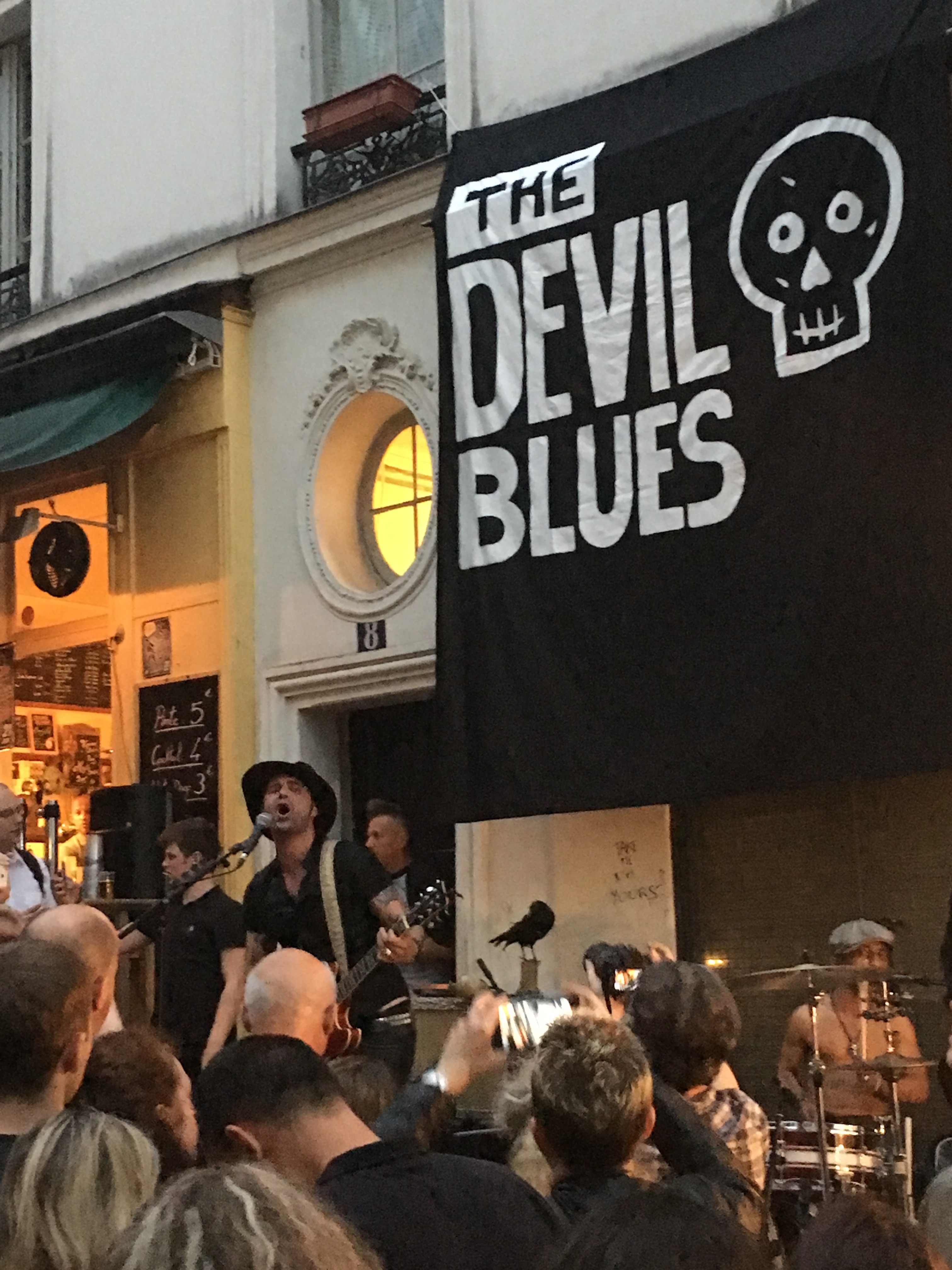
This is the final episode in this superhero series and simply put, I’m going to talk about the latest X-Men movie. Now, you might not be into the superhero stuff and I totally understand, but let me give you a heads up about this episode. Basically, I didn’t like the film and so I’m more interested in making fun of it than talking about it seriously. So, that might make it more fun to listen to than the other superhero ones I’ve done lately. You can just kick back and enjoy me taking the mickey out of this film.
[DOWNLOAD]
Honestly, I really enjoyed recording this. It was more fun than watching the film itself. Sometimes talking about a film is far more enjoyable than actually watching it, especially if the film is a cheesy mess full of cliches, incoherent plot-lines and stereotypical bad guys. So, even if you haven’t seen the film I invite you to listen to this episode, have a bit of a laugh and then move on to the next episode. There are no major plot spoilers in this review. So don’t worry if you haven’t seen it – but my general opinion of the film might have an influence on your enjoyment of it – or maybe not. Perhaps you’ll completely disagree with me.
It’s called X-Men: Apocalypse. It’s actually the 3rd film in the rebooted X-Men franchise and about the 6th film in the X-Men series as a whole, if you don’t include the two Wolverine films and the Deadpool movie. I went to see it the other day, and immediately after coming home I recorded this review.
You know the X-Men, right? … (some improvised stuff about the x-men here)
So, on to the review.
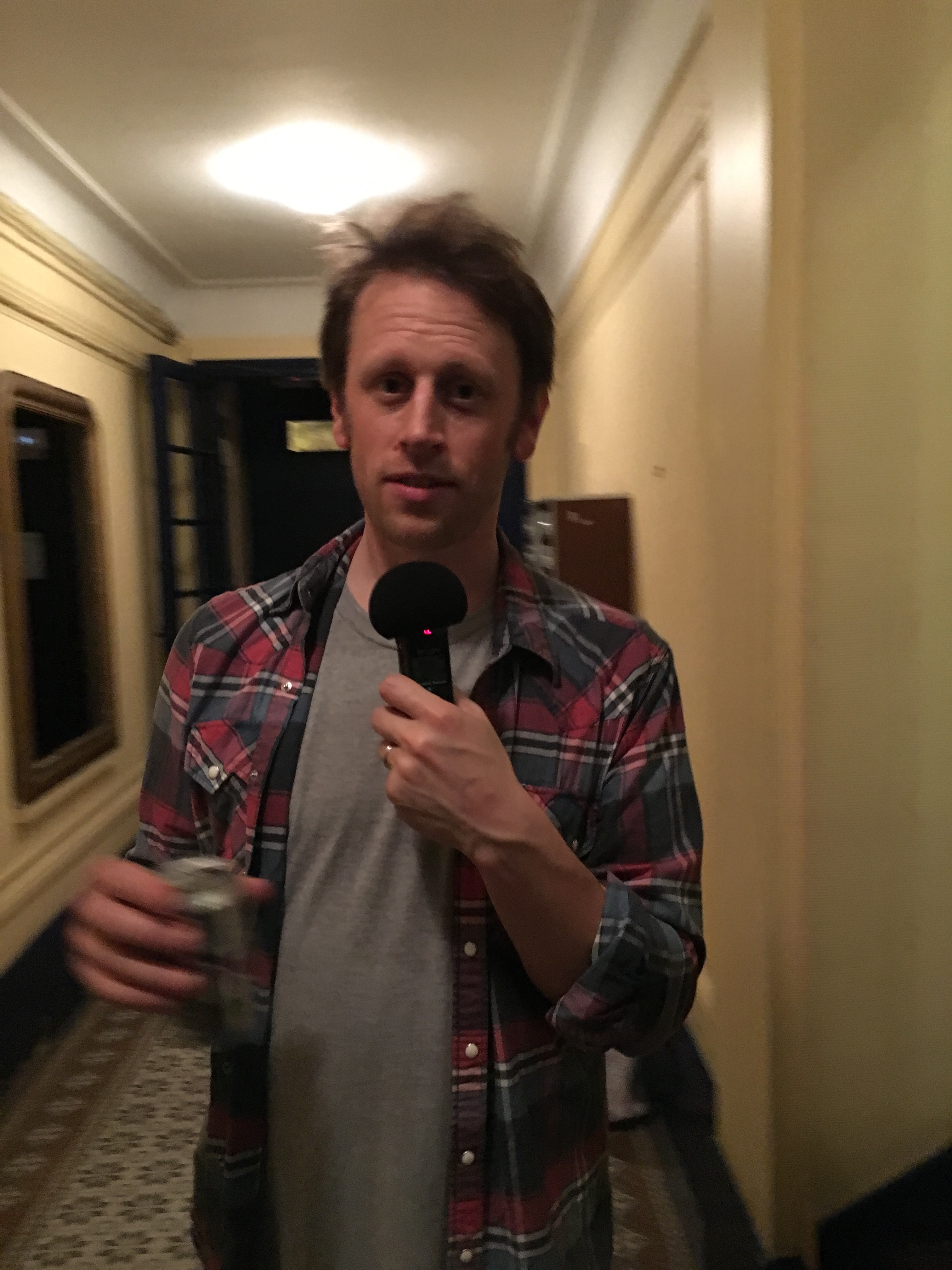
So, imagine me walking home after watching the film, getting into my flat, picking up my microphone and immediately starting to record these comments before I’d even taken off my jacket.
That’s the context, so let’s go, and I’ll speak to you again after my film review.
*Review begins*
So, that’s what I thought of the film. I thought it was a stinker! But I did kind of enjoy watching it. Mainly so I could then make fun of it afterwards.
I was a bit critical of the film. I wonder what you think of it if you’ve seen it. I should also say that it’s far far easier to criticise a film than to make one. Ultimately, it’s really really difficult to make a feature film. I think that most of the films that get made aren’t very good. We only see the ones that get published and given worldwide releases. So, it’s all well and good me talking about how bad it was, but I should give some credit to the filmmakers for actually making the effort in the first place. The audience reaction here though – it paled in comparison to the Captain America movie.
Again, let me know your thoughts in the comment section. I always look forward to reading your comments there.
Some comments from Facebook
Question: Who’s the best superhero?
Francesco: Definitely you Luke! ☺
Hamza: My parents – because they deserve all the respect and the best they give me everything they could, I’ll never forget thier sacrifice <3
Aritz: Hard decision… Batman or Spiderman?? mmmm I’ll go for the latter as we could have now a different debate: should Batman be considered a superhero?
Hien: I always admire soldiers who never betray their country even though they were tortured terribly in war.
Carmen: Deadpool, for sure. He can’t be killed, he’s got a cheeky sense of humour AND he’s aware of his own existence in the books/films he’s in and breaks the 4th wall all the time.
Luciano: Conan, The Barbarian!
Hoang Minh: Dear Luke, please make a podcast about this subject :))
Ricardo: Superman for sure!!
Jean: Super Luke! For sure!
Francesco: Deadpool because he’s a badass.
Тима Салихов: I think is Superman :) Because he is Superman :)
Virginia: Wonderwoman. She’s a Woman!
Gloria: ” El Chapulín Colorado” ( mexican Superhéro ) although he is a coward he manages to overcome his fears . By Chespirito. ❤️
Ricardo: My favorite superhero is Spider-Man because he fights to win his money like me. He is not rich like Batman although Batman kicks ass.
Lê Vũ QC: Iron man because of RDJ’s fantastic potrayal.
Ethan Lee Ok. So the answer is captain america and here’s why: (Roy Wood Jr. Stand-Up 06/12/14)
Anton: Sherlock Holmes without any doubt.
That’s the end of this episode, and also the end of this series on superhero films. The plan now is to turn to more real-world issues because there the UK is due to have its referendum on the EU in less than a month, and there’s plenty to talk about.
OK film fans, that’s it then. Speak to you soon. Bye!
BOOM! POW! BANG! SMASH! Well then! Yesterday I posted an episode called “Can I have a quick word?” and basically in that little episode I expressed my concerns that I was posting too much content and that people would stop listening because they couldn’t keep up. Sometimes I worry too much and since I do this alone I do let these concerns bounce around in my head too much. Clearly I underestimated the devotion and motivation of the LEPsters (just a brief lapse of judgement I assure you) because I immediately got loads of positive and encouraging responses for listeners. My phone has been going crazy with notifications of comments on my website because people have been writing to reassure me that everything’s fine. The general message from people is essentially “No Luke, don’t worry – you can’t post too much stuff, we love it! There’s no need to be worried about posting. Just post all the episodes you have – we’ll either gobble them up like hungry dolphins or we’ll save them for later like squirrels. Yes, we will stock them up like Squirrels hoarding nuts before winter. Except in this case the squirrels are learners of English and the nuts are episodes of my podcast.”
Well, alllllrighty then, that makes me feel much better about myself and thank you for the vote of confidence. Of course, I shouldn’t be surprised – you’re my people, right? My podcast people!
Another thing that I noticed from the comments is that a lot of people are keen to listen to me talking about Brexit. I do have Brexit episodes coming soon, but first let’s finish this little series about movies – and we continue with that theme in this episode and the next one too.
Just before we start here, let me just remind you of my podcast sponsor and that’s italki – I’ve had some positive reports from listeners who are using it and finding it to be a professional and effective service with some friendly and efficient teachers – remember that you can get a discount with italki when you visit through my website. Click an italki logo on my page to get started and the path to fluency in English will open up before your eyes, like a… like a path I suppose. http://www.teacherluke.co.uk/talk
Paul Langton – Ex-Nerd, Former Fanboy,
The whole time I was recording the last episode of this podcast about the new Marvel film, I was thinking – “I should talk to someone who really knows about this subject. I should speak to a geek. I need a nerd. I know, I’ll talk to my mate Paul Langton.” That’s Paul Langton – not Paul Taylor. You might remember Paul from previous episodes such as The Brighton Comedy Festival episodes, Friday Night Banter (aka The Drunk Episode) and On a Boat (aka The Drunk episode 2). These days Paul is a proper grown-up man and everything. He’s married and runs marathons and things like that, but before that he used to be a big time Marvel fanboy and comic book collector.
Basically, he was a nerd up until he met his girlfriend (now wife), because I imagine that she’s not into that sort of thing (she’s a normal grown-up, then) So, he’s an ex-nerd (that’s an ex-nerd not an X-Man – no, he’s not an x-man – he is still a man – he hasn’t had a sex change, he’s not an ‘ex-man’ (hilarious joke).
He’s an ex-nerd, a reformed geek, a former fanboy, but he still knows pretty much everything a person could or indeed should know about Marvel superheroes. So, what better person for me to talk about this subject with? Except Stan Lee maybe. But I couldn’t get Stan Lee – so Paul Langton will suffice.
Obviously, if you’re a Marvel movie fan – you’re probably going to like this. But also, if you are a learner of English who likes a challenge – this is definitely for you too…
…because this is a pretty fast conversation I reckon. My teacher-sense (it’s like spider-sense) is tingling. That’s a kind of 6th sense I have as an English teacher. It tingles when I think something might be difficult for learners of English. My spider sense is tingling a bit with this episode.
The conversation contains a lot of references to comic book culture and Paul speaks quite fast. Two things there which could be barriers to you bathing freely in a lovely warm bath of pure English pleasure during this episode (did you know that’s what I aim to give you in every episode? The sensation of bathing freely in a lovely warm pool of pure English pleasure? Well, it is). So, it might be a bit geeky and fast.
Another challenging aspect of this is that the sound quality is not perfect. It’s no worse than the average dodgy Skype call, but there are a few times where the signal drops out and Paul’s voice isn’t perfectly clear. You could watch out for the language I use to deal with bad connections during a phone call.
What about the way Paul speaks?
Paul is known for being a bit of a motormouth. That means that he talks a lot and he talks quickly. Perhaps it’s his Irish background, because the Irish are known for being big talkers.
Paul’s Mum was Irish I think, but Paul himself was born and raised in central London, so he’s a genuine Londoner with a London accent. He’s not a cockney because cockneys have to be born in the East End of London. Paul was brought up in central London, so he’s not a cockney but he does sound a bit similar to one.
So, you’re going to hear Paul speaking pretty quickly, in a London accent, over a dodgy Skype connection, talking about a specific subject. All these things might make this conversation difficult for you to follow, and that’s why my spider-sense – sorry, teacher-sense is tingling a bit.
By the way, I don’t mean to patronise you of course, I’m sure lots of you won’t have problems understanding this. I just reckon it might be a bit tricky for some of you. So…
Here is a suggested approach for how to listen to this episode.
1. When you understand something in this conversation, you should feel really good and happy with your English. With every single thing that you understand and every phrase that you identify – you should give yourself a good slap on the back, and with every slap on your back (even if you don’t do it) you should feel an ever-increasing sense of warm satisfaction and achievement. Well done you – you understood it and you’re very good at this. No seriously, as you understand more and more, you’ll find that you feel more and more confident and happy with your English and that’s very healthy.
2. But if there are parts that you don’t understand – don’t let it stop you.
This is important to remember because we know that if you only listen to things you understand perfectly, and you give up when things gets difficult – frankly – you won’t make progress.
Challenging yourself with more complex things will help you make more progress. You have to push yourself, even if you feel resistance. I know a lot of you know this because you sometimes tell me things like this “Luke, I understand you perfectly but not other people I hear.” Well, you need practice! You are familiar with my voice and I do speak clearly (but not slowly in my opinion). So, you need to do plenty of practice of listening to other people and you can do that with episodes like this.
So, understand what Paul is saying and when the episode is over you can feel good about yourself. Feel good about the things you understand, and don’t be bothered by the bits you miss as you listen to the whole thing.
So, with those comments in mind, let’s now dive into this conversation with my friend Paul Langton the official LEP comic book consultant and Marvel expert.
Oh, and here’s a quick task for you
Can you guess which character Paul thinks is the strongest? Who’s the strongest character in the Marvel universe according to Paul? Who’s the best superhero? To find out, you’ll have to listen until the end.
Another thing to look out for is the specific language Paul uses to efficiently describe these characters. There’s lots of descriptive vocabulary in this episode for you to pick up.
I will talk to you again briefly on the other side of this chat.
But now, let’s listen to this conversation with Paul Langton…
*Conversation begins*
Some questions I asked Paul during the interview
Hello Paul, how was your day? What do you do? How do we know each other? Have you been on this podcast before? You created my superhero alter-ego: Luke Johnson. (He hasn’t appeared on the podcast for quite a while, but perhaps he’ll be re-awakened by your presence)
Let’s not get bogged down in too much comic-book lore, but I’d like you to give your comments and knowledge as we explore super heroes in more detail, and ultimately fight them against each other in order to see who is the most powerful.
First of all… What are your credentials as my nerd consultant / comic book expert? Have you seen Captain America: Civil War? What about the other films in the MCU? Quick thoughts? What do you think of the MCU, as a comic book fan?
Tell me about the main characters in the Marvel universe. Tell me about their origins, their true identities, their motivations, their abilities/powers, their weaknesses. Let’s start with The Avengers – the characters which have been revealed in the MCU so far. By the way – we can’t cover everyone, so some have just been missed out. Sorry fans!
Definition of a superhero: These are enhanced people. They’re mostly human, some are gods, some are aliens, some are robots or in some cases computer programs.
They’re enhanced by one or more of these things: super abilities, tech, special training.
For example, Captain America has super abilities from the special serum he was exposed to when he became a super-soldier, he is armed with tech – a shield made from vibranium, and he has received special training as a soldier – he’s learned to fight using a combination of fighting styles.
They have origin stories which affect their motivations. They sometimes have to hide their identities from the public. Despite being enhanced superheroes, most of them have weaknesses of some kind which mean they are not completely flawless.
So, let’s talk about the characters with these things in mind: their origins their true identities their motivations their abilities/powers their weaknesses
(some of these might be considered side-characters rather than genuine superheroes) Captain America (Steve Rogers) The Winter Soldier (Bucky Barnes) Falcon (Sam Wilson) Iron Man (Tony Stark) War Machine (James Rhodes) Thor Loki Nick Fury Black Widow (Natasha Romanov) Hawkeye (Clint Barton) Hulk (David Banner) The Guardians of the Galaxy Thanos Ant Man (Scott Lang) Black Panther Spiderman Ultron Vision Scarlet Witch Quicksilver
Marvel characters in other films: Wolverine other X-Men
Who’s the best?
Listen to hear what Paul thinks.
*Conversation ends*
Hello again – So, you listened to the whole thing – NICE ONE!
One thing I’d like to say right now is that conversation was very rich with vocabulary. I think Paul did a very good job of being extremely succinct in his descriptions of each superhero and he did it with some very nicely chosen bits of vocabulary. It would be worth listening to that again and it would be good if I did a vocabulary review episode based on that. In fact I’d like to do vocabulary or language reviews of many of these episodes and it’s something I’m considering doing, perhaps as part of a paid area of my website where I could offer you specially designed learning materials based on episodes of the podcast. I could call it the learning zone and it would be available to super-hero LEPsters and dedicated language learners who would be happy to pay a few pounds lots of extra content. Just an idea at this stage…
I hope you got to know all those superheroes even better after listening to this conversation, because not only have you just improved your English a bit, you’ve also improved your knowledge of popular culture. I think the more you know about these Marvel films, the more you can enjoy them.
If you haven’t seen the latest Captain America film – go out and see it. It’s a lot of fun.
So, in the end you heard that Paul thinks _________________ is the strongest superhero. But what do you think? Do you agree? Who’s the best superhero in your opinion?
Who do you think would win in a fight between these characters?
The Hulk vs Superman
Iron Man vs Batman
Captain America vs Spiderman
or any other combination of characters. You decide.
___________?_____________ vs ___________?_____________
It could be fun to talk about those situations on the podcast, but there’s no time left in this episode. So, you can carry on the discussion in the comment section. Just find the page for this episode on teacherluke.co.uk and do some writing – who’s the best superhero and why?
Now, there’s one more superhero episode in this mini comic-book series. Yes, the season is going to continue because there is now another film in the cinemas and that’s the latest X-Men film, “X-Men: Apocalypse”. I saw it a few days ago and as soon as I got home I recorded an improvised review of it. You’ll have to wait for the next episode to find out what I think, but I’ll give you a clue – I thought it was pants.
That’s the end of this episode. Speak to you soon. Bye!
Luke
Background music from Jukedeck – create your own at jukedeck.com
Here is part 2 of this episode about superhero films and the Marvel cinematic universe. Before you listen to this I suggest that you listen to part 1. Click here for part 1. Where was I at the end of the last episode? I was giving you my history of superhero movies over the last 30-40 years, and the plan is to go into more detail about the recent Marvel films and then review the new Captain America movie. So, let’s continue.
…There was that Incredible Hulk film directed by Ang Lee from I guess around 2002 or 2003. I thought that was actually pretty good but the special effects were a bit dodgy. They didn’t quite get the Hulk right – he looked a bit like a big green angry floaty baby having a tantrum, but the character development was good and I thought Eric Bana did a good job as the main character and there was an amazing scene where hulk fights with his father underwater. Then we had those Fantastic 4 films, which were pretty crap – nothing to mention really. And then there was that new Fantastic Four film that came out last year, which was a disaster so the less said about that the better. The X-Men films which have gone up and down in terms of quality, although I enjoyed the reboot with new actors like Fassbender, James McAvoy and Jennifer Lawrence. Also, I really like Wolverine as a character. He’s probably the outstanding character from the X-Men series and he has had a couple of solo films which have been mixed. I think Wolverine is a character who deserves better films. X-Men movies are always better when Wolverine is involved. There’s a new X-Man movie, which has just come out – X-Man: Apocalypse, and I’m going to see that later today. For some reason it’s all about superhero films at the moment.
So, those Marvel films that I just mentioned are not in fact made by Marvel and they have been a bit mixed in terms of quality but one thing’s for sure – audiences love these characters and if they’re done right then the films are guaranteed to be a huge success. Also, I guess Marvel saw the box office success that DC achieved with the new Batman films, especially The Dark Knight and decided that they would like a piece of that pie.
Marvel’s plan (I think headed by an executive Kevin Feige) was to start financing and producing their own films, rather than licensing them to other people like Sony, 20th Century Fox etc, with characters that they had exclusive rights to, and build a catalogue of awesome films which are all set in the same universe. This would also allow the studio to have creative control, which is a good idea because nobody knows or cares about these characters more than Marvel themselves, except maybe the guy who created most of them – Stan Lee. The characters that were left were principally those involved in the Avengers storyline – so, that’s Iron Man, Captain America, Hulk, Thor, Black Widow, Hawkeye, Falcon, Black Panther, Nick Fury and others.
The overall plan was to establish these characters in their own films, which would essentially be origin stories for the characters, and then bring those characters together at regular intervals in big event movies that would be so irresistible to audiences that all the box office records would be smashed and they’d make tons of money.
That’s exactly what they’ve done.
Starting with Iron Man in 2006, Marvel have brought out 13 films in the last 10 years, not to mention a few TV spin offs like Agents of S.H.I.E.L.D, Agent Carter and Daredevil (and some others too).
Captain America: Civil War is the 13th film in the series and it marks the beginning of Phase 3 in Marvel’s Cinematic Universe.
Yep, the MCU is releasing films in phases. You could consider these films to be like massive, feature-length, high-budget episodes in a huge cinematic series. Every film adds elements to this larger universe. This is a very effective marketing strategy because the success of any one film in the MCU leads to the success of the series as a whole and the movies in which more than one character feature instantly gain a certain value. I mean – it’s exciting when Tony Stark appears in a Hulk movie, or when Ant Man turns up in a Captain America film, or even better – when they all feature in the same movie on the same team, or even against each other.
Oh and by the way, I haven’t mentioned Deadpool yet. So here I am mentioning Deadpool.
Deadpool is a very popular Marvel character who seems to exist in the X-Men universe. He’s a bit different because he is very comical – he constantly breaks the fourth wall – plenty of comments to the audience, winks to the camera and tons of jokes. I haven’t seen the Deadpool film, but apparently it’s brilliant.
The Marvel Cinematic Universe (13 movies so far, plus some spin-off TV shows)
Here’s a summary of the 12 films we’ve had so far and how they fit into the 3 phases of the MCU. Captain America: Civil War is the 13th. I’m reading from the Marvel Cinematic Universe Wikia. Again, I’m no expert, so forgive me if I get any little details wrong. Please feel free to add your comments. The only film I haven’t seen is the Incredible Hulk movie, and I gather that it’s the weakest of the series.
Phase One (origins stories of the superheroes – the creation of the avengers)
http://marvelcinematicuniverse.wikia.com/wiki/Phase_One
Phrase Two (The heroes continue to work alone, new characters are introduced, the infinity stones are revealed to be powerful artefacts that can affect the universe, Thanos is the big bad guy who wants to get all the infinity stones and dominate the universe, The Avengers face the aftermath of their destructive battles to save the world)
http://marvelcinematicuniverse.wikia.com/wiki/Phase_Two
Phase Three (Things get complicated for the Avengers after the damage they caused while fighting various bad guys – should the superheroes be subject to government control or not? the team gets split up, Thanos continues to try and collect infinity stones)
Captain America: Civil War – My Review
I’ll avoid major spoilers.
First thoughts – the action is absolutely wicked. It opens with some amazing fighting by Captain America and his team. He’s got a brutal fighting style and there’s quite a lot of realism in these fight scenes, even if he is an enhanced human. He’s a bit like Jason Bourne, but super-strength. So there’s some bone-crunching combat with Captain America and the others doing all their martial arts and so on. From the start it’s exciting, fun and it puts you on the edge of your seat. It seems original in its realism.
Right mix of realism and comic book fantasy.
*Written notes* – I’m reading from some notes I wrote on paper after I watched the film.
Characters
The Winter Soldier is ace. He’s like an out of control Captain America and he’s got a bionic arm.
Black Panther is pretty cool – even if he is dressed as a panther and I think that’s a bit silly. I’ve always had a problem with characters who have little pointy ears on their suits. But he is mysterious and he’s got wicked style and brilliant martial art. We don’t know much about him at this stage, probably because they’re going to make a Black Panther movie at some point. What I know is that he’s the king of a country called Wakanda, and he does have super powers.
For example there’s a scene in which he is being chased through the streets by Captain America. All the characters are running at about 50kph, including the Black Panther. It’s really well done. Also, they managed to set up his character motivation very efficiently in just a few scenes. The actor who plays him has a certain quiet charisma. I’m looking forward to seeing more from him.
Black Widow – Natasha Romanov is played by Scarlett Johanson and she looks really hot in this film, again. But Black Widow is a lot more than just eye candy of course – she is a formidable character with really impressive fighting skills and an important place within the team.
Ant Man has some great moments in this movie, and Paul Rudd brings a lot of comic charm to the role again.
No surprise that Spiderman is in this one and his appearance is great. They’ve cast a very young actor to play him, and that’s a good move because Spiderman is best when he’s an adolescent just discovering his powers. His appearance is great fun and it’s fantastic to see Spiderman interacting with other Marvel characters finally.
Falcon is not developed as a character much, but as a hero he has some really cool moments – like this amazing double kick that he does, and the way he uses his falcon-drone.
There are other characters too.
The main villain is quite understated but is more original than a lot of movie bad guys.
I’m going to talk more about the individual characters in the next episode when I talk to my Marvel expert friend Paul Langton.
Themes & subtexts
There are political themes and personal themes.
Iron Man’s story = the weapons dealer who realises that military strength needs to be subjected to government control.
Captain America = the soldier who believes that The Avengers are essentially the good guys, and therefore they should be free to use all the power they have at their disposal.
The whole thing could be about US military policy.
The franchise manages to somehow heal wounds of 9/11 by framing the large-scale destruction in New York as a victory for our heroes, albeit a victory at a cost. The films then go on to explore notions of military power, and the complex sense of responsibility that goes along with that power. The Avengers have an obligation to protect the people of earth at all costs, but what about the collateral damage that happens as a result of their fighting?
This centres around an agreement that the UN wants the Avengers to sign, which essentially gives the UN the power to overrule the Avengers, so they essentially work for the UN. Tony Stark thinks it’s necessary, to prevent other catastrophes.
Captain America essentially believes that you can’t make an omelette without breaking some eggs.
This is a pretty complex moral problem.
Should the team be given total freedom – to cross borders etc at the cost of some loss of life?
So those are some themes.
Which one do I agree with Iron Man or Captain America? Which one do I prefer?
In terms of their positions – I sort of agree with both. I think they should be accountable to someone – like the government, but there’s always a chance that governments will become corrupt. So, signing an accord to register The Avengers as ‘government controlled asset’ seems a bit sketchy. Governments always end up being corrupt. But The Avengers can’t just go around causing collateral damage without being accountable for it, so they should have some regulation. It’s a tough call.
In the end the film doesn’t quite deal with those complex political questions and instead it turns into a personal story (because politics is a bit heavy). I think they’ve left it up to us to decide who we think won the civil war. And remember, winning the battle and winning the war are not the same thing. It’ll be interesting to see how the relationship between Cap and Iron Man continues.
IN terms of screen time – I prefer Captain America in the action sequences, and Tony Stark in the dramatic sequences.
Cap is a brilliant soldier and his fight scenes involve a lot of hand to hand combat which is usually done really well, but his dramatic scenes can be a bit dry. He’s quite a simple character really – just a wholesome guy who wants to do the right thing. He’s a little bit bland.
On the other hand, Tony Stark/Iron Man is a fascinating mix of intellect, ego, arrogance and conflicted emotion. Robert Downey Junior is a fascinating actor, with tons of charisma and humanity. You also get the sense that he’s on the edge all the time, which gives Tony Stark a really exciting, dangerous and human quality to him. But I find his action scenes less interesting because essentially it’s a suit flying around – it’s all computer graphics and I find that less appealing – even though the studio has done a really great job on the special effects. Iron Man is a lot better than most other special effects we’ve seen in other movies. You get this feeling that it’s real, it’s heavy and it’s an incredibly complex piece of engineering. But I just prefer Captain America’s bone-crunching stunt work.
Also, I’m never completely convinced by how powerful Tony Stark’s suit is. How powerful are those energy blasts that he has? Can’t he just shoot Captain America’s head off with that?
Problems
– it’s a bit too long (it’s even longer than this episode of the podcast). It was so long that I had to take a toilet break. That’s always like a secret agent mission. A ninja mission. Sneaking out to go to the loo during a film at the cinema.
– I have an issue with the powers of some of these characters. There’s quite a lot of grey area.
E.g. what is Scarlet Witch’s power exactly? If she can control objects, even large ones, then can’t she just pick people up and fling them about, or send them into space? I suppose it takes her a lot of energy and effort. I’m not sure where her power comes from – I think it’s from Loki’s septre, but I’m not sure.
What about The Vision? Can he just be stopped with an electromagnetic pulse? Can you just turn off his wifi? Can you unplug him? If you spin a rainbow umbrella in front of his face will he just pause?
If I ask him to do too many things at the same time will he crash?
He looks a bit silly too. It works in the comics, but in live action he’s strange – especially since I think he can choose how he looks. Why that look? And he’s wearing a sweater in order to try and blend in.
I’m nit picking. Perhaps he’s just discovering his powers. We’ll probably learn more about him in future episodes. I hope so because he’s actually quite interesting. He can lift Thor’s hammer for example.
In the film the Avengers become divided and actually fight each other, but I’m never really convinced that they really want to do damage to each other. So, the fight sequence seems a bit like American Wrestling – big characters beating each other up but you never really believe they’re trying to hurt each other for real, but the large battle sequences are handled very well and there are some interesting twists and humourous surprises.
There are a few plot holes in the film – like aspects of the story that don’t make sense, for example the inconsistencies or vagueness of the super powers of the characters, but really these films don’t need to make sense and I don’t really care about these issues when the film is so enjoyable, dramatic and funny.
So, overall, this film is a bit long but it manages to cram in some really interesting character development, some big themes, a mix of realism and fantasy in the action sequences and some dazzling moments of spectacle. If you like superhero films, this has got to be one of the best so far.
What did you think? Have you seen it? What about other Marvel films? What do you think of them? Which is your favourite? Also, did I miss anything important? Please leave your comments and remember not to give away any big spoilers. Thanks for listening!
Additional
This is the first in a trilogy of superhero-themed podcast episodes. The next one will be that conversation with my Marvel-geek friend Paul Langton in which we talk about the characters in more detail and decide who is the strongest, and the 3rd part is another movie review – yep, just this afternoon I went to see another superhero movie, X-Men: Apocalypse. I have some fairly strong opinions on that, but you’ll have to wait for that to find out what I think of the film.
Phrasal Verbs & Idioms / More NY Stories / Politics / Leicester City / Google Adverts
Welcome back to another podcast episode. It’s nice to be back in your headphones or speakers. In the last episode of this podcast I talked to you about some recent bits and pieces such as the ELTon award nomination, my recent trip to New York and some other stuff. I also gave you a language task to keep you on your toes. I’m going to continue along the same lines in this episode and I have a list of things here to talk about and we’re going to continue with the language spotting exercise.
[DOWNLOAD]
It’s a Friday afternoon, I’ve just seen the latest Marvel movie, the weather is mad, and I’m going to talk to you about various things again but first I’ve got to respond to a couple of comments that have arrived here on my website in just the last hour.
Phrasal Verbs & Idioms Listed Below
But first…
Some comments from listeners
Abensour • 4 minutes ago Hello Luke, Your podcast is fantastic. Nevertheless, could you please speak a bit faster. I guess you must lower the pace when you record your podcasts and it would be very interesting to hear you with your natural english speaking pace.
Jeremie • 1 minute ago By the way, I am a french listener as well! :)
Wesley Hello Luke and LEP listeners, It’s with absolute delight that I receive the news that LEP has been nominated for the 2016 ELTons and I genuinely believe other long-term listeners share the same feeling. The British Council and Cambridge English couldn’t have a better candidate for the Digital Innovation category. One thing that troubled me though was when Luke said it was unlikely that he could win. Luke, I don’t know if you’re being far too English or just trying to be modest but, as I see it, you shouldn’t take this defeatist attitude and underestimate yourself. As you said, LEP is a project you have been working on for over seven years and it keeps getting better as time goes on. Because you’re kind-hearted and keep LEP free, people all over the world listen to you. Your episodes have millions of downloads and are a complete success and, even though you’re up against five other great nominees, I cannot conceive why LEP might not be in the running for the award. LEP is innovative because it allows learners to listen to genuine English – rambling included – outside a classroom environment. Everyone who has reached a proficient level knows how important being in touch with the language is in order to learn it well. LEP is great because it enables us to hear natural English for pleasure and entertainment or while doing housework, cooking and commuting to college. I am not aware of any other equivalent English teaching resource that suits our busy lives just as well as LEP. I believe any sensible judge on the panel will allow for all those reasons when they vote. I wish you luck and I’ll keep my fingers crossed. All the best, Wesley
Language Task – Spot the Phrasal Verbs & Idioms
So, that language task from the previous episode was to listen out for a few phrasal verbs and idioms that I’d taken randomly from a dictionary and which I tried to insert into my speech, seamlessly. You had to identify the ones I had added. The purpose of that is to encourage you to notice lexical items – to notice vocabulary. It’s a good habit for a learner of English. On one hand just follow what I’m saying and connect with that, but also try to notice features of the language you’re listening to. That’s what I’m encouraging you to do.
I chose 5 phrasal verbs and 5 idioms and I managed to slip in just one of those phrasal verbs and two of the idioms.
Remember what they were?
There was “to come up against” something.
Also, “to be on the edge of your seat”
and “to get your knickers in a twist”
There were also plenty of other bits of vocabulary which just cropped up in the episode, including these ones:
– to listen out for something
– to watch out and look out for something (not too complicated)
– to keep your eyes peeled
– to prick up your ears
So, as we move forwards now, watch out for the 4 remaining phrasal verbs and 3 remaining idioms. I’m not telling you what they are in advance. It’s up to you to identify them. You’ll probably hear a few phrasal verbs and idioms, but which are the ones that I took from the dictionary? When we get to the end of this episode I’ll tell you the phrases, and clarify them for you, because I’m nice.
Keep reading – the phrasal verbs and idioms are listed below.
Topics in Today’s Ramble
In this one I’m going to carry on just talking about various subjects, including a couple of other anecdotes about New York, some comments about politics in the USA and in the UK at the moment, some more rambling about movies, and various other bits and pieces that will crop up as we go along.
I’ve got no idea how long this is going to take of course! I could talk the hind legs off a donkey this afternoon, but as ever I’ll just divide the whole thing into several more episodes if necessary. Ultimately – it’s all spoken English from me to you, so here we go…
Some more anecdotes about the time spent in NYC
– The hasidic jews jamming in the music store
https://www.youtube.com/watch?v=3p9-WuQoGdY
– Jack Whitehall at the Comedy Cellar
– Billy Cobham at the Blue Note
https://www.youtube.com/watch?v=6SgFDrWeJGo
Politics
The American presidential elections – Donald Trump, Bernie Sanders and Hillary Clinton
London Mayor – Sadiq Khan is the new mayor
The EU referendum / Brexit
The Panama papers
These are very important political issues that really deserve to be covered in proper depth, and I plan to do that.
I’m particularly keen to talk about Brexit in one more special Brexit themed episodes.
Leicester City won the Premiership.
Small club, 5000-1 odds of winning. The title has been dominated by the big names. Leicester is in the East Midlands and it’s less famous than a lot of the other big cities in England but this is going to help. All in all it’s just fantastic to see a smaller club win this title. They were absolutely fantastic.
Google Adverts I bought some new trainers online and now the internet is madly trying to get me to buy them again. WTF?
Movies
I’ve just seen the new Marvel movie and also there’s a new Star Wars film coming this Christmas, but that’s going to come in another episode soon…
The Phrasal Verbs & Idioms – Definitions and Examples
Thank you to a LEPster called Valeriya for writing these vocabulary notes in the comment section for the benefit of all listeners.
Valeriya: I wrote some notes. Hope they will be useful for the LEPstors.
to ease off/up – to gradually stop or become less
e.g. At last the rain began to ease off.
e.g. I am leaving soon, but I am just waiting for the traffic to ease off a bit.
to ease off/up – to start to work less or do things with less energy
e.g. As he got older, he started to ease up a little.
to ease off/up – to start to treat someone less severely
e.g. I wish his supervisor would ease up on him a bit.
to fork out (on something) – spend a lot of money on something, probably spend a lot of money in one go in order to buy something; to spend a bunch of money on something in one purchase
e.g. If you advertise nice guitars to me for a long enough period of time, eventually I will fork out on a new guitar.
to splash out (on something) – spend a lot of money on something; to spend a lot of money on something which you want but do not need
e.g. He splashed out on the best champagne for the party.
to go down with something – you catch an illness, you get sick; you become sick; to start to suffer from an infectious disease
e.g. Half of Martha’s class has gone down with flu.
to come down with something – to get an illness; заболеть чем-либо
I came down with the flu at Christmas.
e.g. You need to eat lots of fresh fruits and vegetables, so you’ve got lots of vitamins, because if you don’t, you might come down with a cold.
to bring the house down – if someone or something brings the house down during a play or show, they make the people watching it laugh or clap very loudly; you make everyone laugh as part of a performance; to put on a really great performance and to be a huge hit; to make a group of people or an audience react in a very enthusiastic way, especially by laughing
e.g. I saw Jack Whitehall at the Comedy Cellar, and he absolutely brought the house down.
to go on the offensive – you begin to take strong action against people who have been attacking you
e.g. The West African forces went on the offensive in response to attacks on them.
to go on the offensive – to begin to attack or criticize someone who you think is attacking you
Under pressure from his critics, the minister decided to go on the offensive.
Luke was going on the offensive about Google’s Advertising.
to go on the defensive – in an attitude or position of defense, as in being ready to reject criticism; you start defending yourself or something
e.g. He’s so sensitive. Whenever you give him any feedback he immediately goes on the defensive.
to take/bring somebody down a peg or two – to do something to show someone that they are not as good as they thought they were; to lower someone’s high opinion of themselves
e.g. He’s one of these super-confident types who really needs to be brought down a peg or two.
to dabble in something – to try an activity but not seriously, just as an experiment to see if you like it. To do something for a short time, or not regularly, in order to see if you like it. To do something sometimes, but not in a fully serious way, only in a casual way.
e.g. He dabbled in left-wing politics at university.
Breaking News! LEP Nominated for a British Council ELTon Award for Digital Innovation.
In this episode you’ll hear me talking about what’s been going on since I recorded the last episode, including: LEP’s nomination in the British Council ELTon awards, Leonardo DiCaprio fighting a bear in The Revenant, my adventure to the American Museum of Natural History and more. Also – for all the vocab hunters out there – watch out for some phrasal verbs and idioms.
Luke’s English Podcast is nominated for a British Council ELTon Award!
The first thing I’d like to say is that I have some great news for the podcast, and certainly great news for me, and I’d like to share it with you. I’ve been nominated for a British Council ELTon award. This is really fantastic and I feel absolutely delighted. The ELTons are basically the Oscars of the English teaching world. Really, they are. It’s a real honour to be nominated for one. It’s top-level stuff. The ELTons are run by the British Council and by Cambridge English – these are top institutions in the world of English teaching. The ELTons happen every year and they celebrate and reward innovation in English language teaching. I’m nominated in the Digital Innovation category along with 5 other nominees. http://englishagenda.britishcouncil.org/events/eltons/years-eltons/years-eltons
You might be thinking – can we do anything to help you win? Is there a vote or something? Nope. It’s all decided by a panel of judges and they are taking it very seriously, with judging being done following a very thorough and impartial method. I am aware that at this moment, some industry people might be investigating my podcast. Some of the judges might be listening to this right now in fact! If you are a judge in the ELTons or a bigwig of the TEFL industry – hello! Welcome to my podcast. I hope you like it. I hope you consider it to be a genuine innovation in the world of EFL, in its own way. I’m delighted to be nominated and to receive some recognition from the industry after working on this podcast for over 7 years! Let me introduce you to my audience. TEFL industry people, meet the LEPsters. Industry people – lepsters. LEPsters – industry people. There. You’ve been introduced! Everyone’s very nice and friendly around here so just make yourself comfortable. Pull up a chair. Can I take your coat? Feel free to have a biscuit or a cup of tea, or indeed both if you fancy that. Anyway, just relax and take it easy. This is a no-pressure zone. There are some bean bags over there if you want to get more comfortable. Mi casa su casa. That’s Spanish – I don’t normally do that. It’s pretty much 99% English here. Anyway, I’m rambling… but that’s the idea of this podcast as you will see if you stick around!
OK that was a little nod to the ELTons judges or any other high level industry executives listening to this.
There is a red-carpet award ceremony on 2 June and I’ll be going to that. I don’t think I’ll win – I’m competing with some excellent work by the other nominees and I wonder if my work on a podcast will be recognised – I have no idea. I do think podcasting is an innovation because I think it allows teachers to connect with learners of English in a new way and it allows learners to connect with the English language in a new way. I’ve got a sort of long-running relationship with my listeners that I think is tremendously important in allowing you, my listeners, to really plug yourselves into an authentic source of English. I could go on about that more, but I won’t here in this episode. I’ll just say I’d be surprised and completely bowled over to win because the other nominations are brilliant, but I really hope I do win of course because that would just be incredible and unexpected.
As I said – I’ve basically been working away on this podcast on my own for years and, well, you know the story. But anyway, I’m delighted to be nominated. Please keep your fingers crossed for the podcast. I think the more established it becomes the more I am able to do this podcast regularly, and I have so many plans for other entertaining online services for learners of English which I could work on if I had the chance.
So, back to this new episode of the podcast
I’ve been away from the podcast for about 3 weeks! I’m very happy to be back because there are so many things to talk about. Some of those things are about what I’ve been up to (which are not that important really) and other things are about what’s been going on in the world in general (more important), because it seems to be an intensely busy and dynamic time at the moment with all sorts of big events in politics, sport, entertainment and stuff like that.
5 Phrasal Verbs and 5 Idioms
What about Language? Will there be language teaching in this episode?
Well, mainly in this episode I’m just talking to you directly about some topics and anecdotes. But if you are in the mood to focus only on the language, and you couldn’t really give a monkey’s about what I’m saying (ha ha) then here is a little task.
During the course of the episode I am going to use (at least) 5 phrasal verbs and (at least) 5 idiomatic fixed expressions, at certain points.
I’ve randomly chosen these words and expressions from a couple of dictionaries that I have just lying around. This time I’m using the Cambridge Phrasal Verb dictionary and the Oxford Idioms dictionary. Both very nice dictionaries published by very lovely publishers, (hello industry people).
So your challenge is this: Try to notice the 5 phrasal verbs and the 5 idioms as they come up in this episode.
Got it? I’ve picked out 5 phrasal verbs, and 5 idioms and I’m just going to randomly include them in the episode as I go – that’s going to be difficult for me because I don’t want it to be too obvious and easy – and you just have to notice them.
So, as we move forwards you’ll be looking out for any phrasal verbs that come up, and you’ll be keeping your eyes peeled for idioms. I say keeping your eyes peeled – obviously, you’ll be trying to hear them not see them, but you know what I mean.
Don’t you?
Do you know the expression ‘keep your eyes peeled‘?
Well, that was an idiom. ‘To keep your eyes peeled (for something)’ means to be on the lookout for something – to be ready to see or notice something. It means ‘keep your eyes open’. You can imagine an orange – you know you peel and orange – remove the skin. Similarly you can keep your eyes peeled – keep the eyelids open. I like that one. In this case of course you’re listening not looking, but still… Perhaps the equivalent for your ears would be ‘prick up your ears‘ – like a wild animal in a field that hears something, its ears go up a bit – like a cat or a fox, you can imagine its ears suddenly standing to attention. It’s pricking up its ears. So, prick up your ears. If you’re reading a transcript of this then you can keep your eyes peeled. Look out for idioms and phrasal verbs, or listen out for idioms and phrasal verbs.
And yes, there were a couple of phrasal verbs. “Look out for” and “listen out for” – they’re quite easy ones really because the meaning of the phrase is quite obvious, quite literal. Others might be idiomatic – the meaning might be less obvious.
Phrasal Verbs
They’re very common in English. They’re not slang, but they are often a bit more informal than the longer equivalents. They are used all the time in many situations, and are absolutely essential if you want to learn natural English – British and American. Some of you know all about this because you listen to my other podcast, “A Phrasal Verb a Day” – and if you haven’t heard of that, just go to https://teacherluke.co.uk/pv to check out my phrasal verb podcast where you can learn a different phrasal verb in each episode – and I teach them to you properly, quickly, without any messing about or rambling.
So we’ve already had 2 idioms and 2 phrasal verbs and the episode hasn’t even started yet. “To listen out for something”, “to look out for something”, “to keep your eyes peeled” and to “prick up your ears”.
So, I’ve set up a language challenge for the episode – just try to notice 5 phrasal verbs and 5 idioms. At the end I will tell you the answers – I’ll tell you which phrasal verbs and idioms I picked from the dictionary, and I’ll explain what they mean.
Now, there are so many things to talk about that I’m not sure how long this is going to take. I will just keep recording and when I get to about an hour I’ll pause and carry on in the next episode. IS that alright by you? Yes? I’m glad you said that because you haven’t got any choice really have you. No, you don’t.
Anyway, let’s get started properly. I’m going to now ramble on about various things including some personal news, some travelling stories, some world news, some politics, some movie-related stuff and probably some other things that just come to mind while I’m talking – and remember to watch out for those 5 phrasal verbs and 5 idioms.
*JINGLE*
Mayumi’s comment: “Hi, Luke. Hope you are well.”
Hi Mayumi, I’m fine thanks. In fact I’ve been really busy lately so it’s good to be back.
Columbo “My wife…”
The podcast episode continues…
Did you notice any phrasal verbs and idioms?
Do you remember that at the beginning of the episode I chose 5 phrasal verbs and 5 idioms from the dictionaries?
I only used 1 phrasal verb and 2 idioms from the list. Here they are:
to come up against something – “Leonardo DiCaprio comes up against all kinds of problems in the film” = to face difficulties http://www.macmillandictionary.com/dictionary/british/come-up-against
to be on the edge of your seat – “I was on the edge of my seat while watching The Revenant” = to be very excited and interested in something you are watching http://www.macmillandictionary.com/dictionary/british/on-the-edge-of-your-seat-chair
to get your knickers in a twist – “This guy was really getting his knickers in a twist in the museum” = to get upset or angry http://www.macmillandictionary.com/dictionary/british/get-your-knickers-in-a-twist
In this episode I’m joined by podcast pals Amber & Paul and we talk about Paul’s hit youtube video about French kissing habits, his newfound success as a stand-up (he’s the hottest kid in town), some online abuse he’s had and then an anecdote about an audition that we attended recently, which involved a surprising misunderstanding about accents. There’s also a brief language focus on using relative clauses with ‘which’ to extend your sentences when speaking. Enjoy!
Transcript for the intro and outro to this episode
Intro
Hello, welcome back to the podcast. This is episode 342. First of all I’d like to say thanks if you’ve recently left comments on my website, written positive reviews on iTunes or especially if you’ve sent a donation to the podcast. I appreciate all of those things very very much indeed and I hope that you feel like you’ve invested in this podcast, even in a small way. Every little helps. So thank you very much.
In this episode I’m joined again by podcast pals Amber and Paul
If you are a brand new listener and you don’t know them then here are the basics: Essentially, they’re both from the south-east of England, I know them from the stand-up comedy scene here in Paris and they both have super-powers, yes that’s right – super-powers.
Amber is a voice-over artist, actress and tour guide. She has a little 2-year-old son called Hugo (who has featured on the podcast before, making dinosaur noises in episode 297), and Amber’s super power is that she has loveliest voice in the world. Her voice is so lovely it could melt the heart of even the toughest person – like anyone at all. Even Vladimir Putin or Batman would be reduced to a little puppy when listening to Amber’s voice, right listeners? If Amber’s voice was on Darth Vader’s iPod and he listened to her talking, he would immediately give up his devotion to the dark side and turn into an ewok or something. That’s Amber.
Paul used to work for Apple – the company, not the fruit. It would be weird if he worked for an Apple. Anyway, last year he took the brave decision to quit his job in order to focus on becoming a full-time stand-up comedian, performing both in English and in French. Paul has a weekly one-man show called #franglais which he performs every week and he also performs a two-man comedy show with me every Thursday, and that one’s called “Sorry, we’re English”. He has his own podcast, called “Becoming a Comedian”, which you can find at paultaylorcomedy.com. Paul’s super-power is his infectious laugh, which causes podcast listeners to randomly split their sides in different countries around the world, which is nice. I imagine if he had to do battle with Darth Vader, he’d just laugh in his face and Vader would turn into Jar-Jar Binks or something.
The conversation you’re going to hear in this episode was recorded the other day when we were sitting upstairs on my little terrace enjoying some sunshine. We recorded about 3 episodes-worth of stuff that day. Two in the sunshine and one indoors because after a few hours it went cloudy and then started raining, which is typical for April in this part of the world. You already heard the first part of that conversation in episode 341.
But in this conversation Amber and I talk to Paul about recent success in his stand-up career, there’s a surprise phone call from Robert Hoehn, we talk about some online abuse Paul’s received, and then Paul and I tell Amber about an audition we had for a TV show recently, which involved a bit of a misunderstanding about our British accents.
One thing I just want to let you know right now is that I’m aware that this conversation is quite quick and you might not get absolutely every single word that we say, but that’s fine because as we know, listening to native speakers at natural speed is a valuable thing for you to do even if it’s difficult to understand every little thing. Just try to fill in the blanks, tolerate the stuff you don’t understand, read between the lines and keep going. Listening several times will help, but the main thing is to relax and just enjoy spending 45 minutes in the sunshine with us.
Where were we?
Where were we in the conversation at the end of the last episode?
There was a bit of a cliffhanger of sorts. Paul was about to tell us what happened in January, and it’s something about his progress as a comedian. Let’s get an update on how it’s all going.
A bit of language analysis – Paul’s long sentence – using ‘which’
In just a moment I’m going to start playing our conversation to you and it’ll carry on from where it ended last time.
The first you’re going to hear is me saying to Paul, “Give us an update on what happened in January” and then you’ll hear Paul speaking pretty quickly, and producing perhaps the longest sentence in the history of humanity. Actually, long sentences with lots of additional clauses are pretty common in spoken English, especially in spontaneous talking. In writing I think it’s best to keep your sentences short and clear but in speaking we often find ways to extend our sentences to include new thoughts and to keep the rhythm going, particularly with words like ‘and’ or ‘but’ (simple ways) but also with relative pronouns, particularly ‘which’, which we add to nouns and even whole clauses in order to extend sentences (like I just did there – did you notice?) Check out the way Paul uses ‘which’ to extend his sentences and add ideas, adding fluency to his speech.
Here’s the first sentence you’ll hear from Paul in this episode: “Yeah, I think the last time we spoke, I don’t know if we talked about it but I was gearing up for the start of my own show, which was like an hour, my first hour-long solo show, which was starting on January 9th and I was excited (and) nervous because I’d never been on-stage for an hour (and) it was going to be cool, whatever, and then during the month of December, Robert Hoehn, who has been on the podcast previously, he runs an English comedy night and he’s, I guess, seen me do comedy for the last three years and he suggested to me that I make a video out of one of my sketches which I’d been doing on stage, which was around the French, their kissing and saying hello and it’s called La Bise, in France.”
Wow. There are a few examples of ‘which’ in there and also a ‘who’, after he mentions Robert Hoehn, who has been on the podcast previously. Also, there’s the phrase “gearing up for” which means “getting ready for”. OK. Now I’ll let you listen to that sentence in full, spoken by Paul.
One question: How many times does he say “which” and what’s the most common word that comes after it?
*Paul’s long sentence*
Answers:
He says ‘which’ four times and it’s most commonly followed by ‘was’ (3 times) and once it’s followed by ‘had been doing’.
This is often how we add information to stories. I mentioned this language point in the photo competition episode too. That’s episode 327. In Paul’s sentence, “which was” comes after a noun every time, but sometimes it comes after a clause. Question: What is the noun or clause that is followed by ‘which’ in these examples?
“He suggested that I make a video of one of my sketches which I’d been doing on stage which was around the French way of saying hello”.
Answer: Both times it’s ‘one of my sketches’
and “So, we sat on the terrace and just talked for about 2 hours, which was nice”.
Answer: it’s the whole clause ‘we sat on the terrace and just talked for about 2 hours’.
So, there was a little bit of language analysis. But that’s enough of that. I will now let you listen to the rest of the conversation properly, and enjoy another chat with podcast pals Amber & Paul, and by the way, just to let you know in advance – there is a little bit of swearing in this conversation.
*conversation starts*
Watch Paul’s Video about “La Bise”
A France24 TV news report about Paul
Outro – Transcript
We will be back, speaking more ‘crapola’ soon, because we’ll be playing the interactive lying game and that should be the next episode of this podcast.
What’s crapola? It’s just another way of saying ‘crap’ or ‘nonsense’. Crap is poo by the way. Crap is a swear word but it’s not as bad as ‘shit’. Crapola is not such a common word – it’s a variation on the word ‘crap’ and it means ‘nonsense’ or ‘stupid talking’.
Accents
Now, at the end there you heard us talking about accents. That was a slightly heated conversation and since this is my podcast I’d like to try and clarify what I was trying to say.
So, first of all we went for the audition and it was nice, but one of the producers said, “Can you speak with less of a British accent?” and we asked, “You mean you want us to use an American accent?” and she said “Not American, just less British. You know, like the way they speak in New York, because they don’t have an American accent in New York” and we were a bit stunned that doesn’t mean anything. So, first of all I think it’s not possible to have no accent. Everyone has an accent, but you might feel like your accent is the normal, standard position for the language and that every other version is an accent. Even accents which are considered to be the neutral forms are still an accent. So it doesn’t make sense to say that you don’t have an accent or that the people of a particular place don’t have an accent. If they pronounce words, using certain sounds, that’s an accent. Some accents are considered the standard forms, and in the UK and in the USA there are, broadly speaking, two standard accents. There’s Received Pronunciation in the UK, which is generally how I speak (although I have inflections from the midlands and the South East, reflecting the places where I grew up) and in the USA there’s an accent called Standard American, which is a kind of regionless accent. So maybe what the girl meant to say was, can you speak with a standard American accent, or a more trans-Atlantic accent? But then she realised that it could be taken as a bit rude, because it’s like she suggested that there was something wrong with our British accents or something. She didn’t mean any offence of course.
Another thing I often read online is the sentence, “There’s no such thing as a British accent”, which is a bit misleading. Generally people write that in response to comments on Youtube or Reddit or something when an American person has said something like “OMG I love the British accent”, or equally “OH my god the British accent sucks” or something. Then someone gets pissed off and writes a response, like “there’s no such thing as a British accent!” But that’s a bit stupid too. If an accent comes from a part of Britain, it’s a British accent. Obviously British accents exist, but the point is there is not just one British accent – there are many accents from different regions and it’s a bit short-sighted to just imagine there is only one “British accent” when in fact it’s so much more diverse than that, and I suppose that comment “There’s no such thing as a British accent” is the British person’s way of expressing annoyance or frustration over the lack of awareness of the diversity of British accents.
In the UK today we are very sensitive to accents, as Amber mentioned in the conversation. There are many many variations on the way people speak, and those variations indicate things like regional origin and social status. We shouldn’t judge people by their accents, but we do. We also are very affectionate about accents and generally very positive about regional accent variations. We love the diversity of accents in our country and generally it is considered inappropriate and snobbish to laugh at an accent or to suggest that there’s something wrong with speaking in a different way. Being snobbish about regional accents is now quite unfashionable in the UK. Regional accents are generally celebrated these days – and when you watch TV, including the BBC news, you’ll hear lots of different accents being spoken by presenters from around the country, because TV viewers appreciate the regional flavours of the different accents.
So, I suppose part of our surprise at the girl at the audition was just about her lack of awareness of accent variation, but also the slightly clumsy way she talked about the whole subject, suggesting that people in New York had no accent, or that our British way of speaking was just a regional variation of an accent that has its neutral base in Manhattan. But, I understand that identifying regional accents can be very hard when you’re not native to that language, so we didn’t take offence at the girl and it was fine, but we did find it amusing and interesting from a linguistic point of view. So, that’s that.
I must do more episodes about different regional accents on this podcast. There is just so much content to cover and it’s really important that you get a sense of the different accent variations. I have dealt with accents before a bit, but there’s so much more to do on that subject. We’ve only really scratched the surface.
Listen to Adam & Joe talking about British and American actors doing different accents, particularly Ray Winstone (UK – London) pretending to be an American in the film Fool’s Gold. 😂
https://www.youtube.com/watch?v=CIxQFUV_AcA
And this one about Leonardo DiCaprio’s Irish accent and how Hollywood helps actors perform in different accents.
This is turning into another longish episode. It happens so easily, but you heard Paul earlier talking about the ‘pause’ button. I wonder if you use that, because as I’ve said before – you don’t have to listen to these episodes in one go, you can pause and listen to the rest later. If you’re using podcasting software like an app on your phone, it will remember where you were when you paused, even if you close the app or switch off your phone or computer.
Here are some recommended apps: There’s the standard Apple Podcasts app, which is fine. I use PocketCasts which is available on iPhone and android. You can also get it on your computer. There’s Acast which is good. Also, try the Audioboom app. All of them let you listen via an internet connection (wifi or data) and the also let you download episodes onto your phone so you can listen when you’re not online. All those apps will save your position in an episode so you can listen, pause, listen again, pause, come back later and listen to more etc.
You can still just download the files from the website and put them on your mp3 player – just check if there’s a folder in your player for podcasts because if you use that folder the mp3 player will probably save your position, just like the smartphone apps do.
Here is the concluding part of this detective story, which is based on a text adventure by Peter Carlson on www.textadventures.co.uk. In the first part you heard me playing an adventure game in which I have to analyse clues and choose the right options to continue a story and solve a murder. Before listening to this episode you should listen to part 1 of the story. Click here here to listen to part 1: https://teacherluke.co.uk/2016/03/31/338-a-murder-mystery-detective-story/ In this episode (part 2) you’ll hear the rest of the story, and if you don’t understand what’s going on – don’t worry, I’ll explain it at the end and you can read a summary of the story below. Enjoy!
“Wait, wait, wait! I still don’t completely understand what happened in the story!”
OK, me neither. Let’s clarify.
Story summary (Vocabulary check: Do you know all the underlined words? Check them in a dictionary if you like – perhaps the Cambridge Online Dictionary)
First we investigate the scene of a murder. A man has been shot dead but it’s not just a random mugging. It appears to be deeper than that.
We work out the victim’s identity by investigating a smoke shop where he bought some Vietnamese tobacco. The owner of the smoke shop tells us the victim’s name, Mr Gaubert Bouvier, and gives us his address.
We visit the address and discover that it has been trashed. All the objects in the house have been thrown around. Someone else has been here, searching for something. Who? It was 2 Russian brothers. Why were they searching the place? I’m not sure…
We discover a hidden science lab where Bouvier was making bombs. It turns out Bouvier was a chemist who specialised in bomb production.
There’s some action when we discover plans for another bomb attack in a theatre.
We go to the theatre and it’s the first time we spot the Russians, but we don’t follow them. Again, we’ll come back to that.
We manage to prevent the bomb from exploding and then discover that the target of the bomb was a scientist called Sir Joseph Swan. He was planning to patent and sell a new invention called the electric lightbulb. The victim of a previous explosion was also a scientist, working on the lightbulb invention. So, apparently the murderer(s) are targeting the makers of these lightbulbs.
We investigate the whaling ship which we work out is moored in the docks. It was sailing off the coast of Belgium, but it turns now it’s moored in London again.
Investigation of the ship tells us the navigator of the ship was sending instructions to Bouvier the victim to make bombs.
We manage to track down the captain of the ship, who runs away from us. There’s a chase through the streets near the docks. During the chase we glimpse a man with a scar on the left side of his face, but it’s not important. We’re chasing the captain.
We catch the captain. Why was he running? Well, it’s not because he knew about the bomb attacks. It’s for another reason – probably because the ship is involved in some other criminal activity, maybe pirating or perhaps smuggling.
Anyway, the captain tells us the name of the navigator: Yorick Rozencrantz.
This is obviously a fake name because it’s taken from two characters in the Shakespeare play Hamlet.
We decide to investigate those two Russian brothers. We work out that they must be carpenters working on a construction site near the river, so we go to investigate them.
After a fight with the Russians we learn that they were employed by the navigator/Shakespeare/Yorick to plant the bomb at the theatre and to trash Bouvier’s house. (I still don’t know why they trashed Bouvier’s house)
After a bit more deductive reasoning, we later discover that the secretive navigator/Shakespeare/Yorick guy is a former French soldier who was posted in Vietnam, where France had a colony. In fact, in Vietnam he met Mr Bouvier, the victim of the murder.
So, Bouvier and Shakespeare knew each other in Vietnam, and as a soldier Bouvier was an expert in explosives.
With the help of a friend who is an expert on military history, you work out that the Shakespeare character is actually called Renard Voclain. We see a photo of him, and see that he has a scar below his left eye.
Using our amazing photographic memory, or eidetic memory, we manage to remember where we saw this guy before. It turns out he was there during the chase with the captain, hiding in the crowd of Londoners.
Our amazing memory recall and deductive reasoning tell us that he must be living near the docks, where he keeps cats. We know this because we remember seeing cat hairs on his trousers, and some other clues.
We head to the docks and the presence of some cats leads us to the right house.
There we discover Renard Voclain, the navigator/Shakespeare character and master criminal behind both the killing of Bouvier and the bomb attacks.
We learn that Voclain was also trying to develop electric lightbulbs and was killing off his competitors in order to have a monopoly on the industry – not a bad idea considering the massive profits that could be made, although we know that crime doesn’t pay.
After a quick gunfight we manage to catch Voclain, arrest him and send him to Scotland Yard where he’ll be charged and tried in front of a judge in the proper manner.
Results – Am I a Good Detective?
I got pretty average results from my detective work. (Listen to hear me read out my results)
Do you think you can do better? Try playing the game for yourself here.
If you enjoyed it, you can check out other Victorian Detective stories too (I think there are two other ones by the same author) at http://textadventures.co.uk
What do you think?
Why did the two Russian brothers trash Bouvier’s house?
Did I miss any elements of the story?
Have you played Victorian Detective yourself yet? Did you get a different narrative?
In this episode I’m going to read through an interactive text-based adventure story. The story takes place in Victorian-era London (19th century) and we’ll play the part of an expert detective who, like Sherlock Holmes, tries to solve a complex murder mystery. Follow me as I read through the story and attempt to solve the crime in the process. Can you understand the evidence and make the right decisions to solve the case? You can read the text-based adventure story and play the game yourself at http://textadventures.co.uk. The game is afoot!
This is a podcast for people learning English. My main aim in these episodes is to provide you with content that will help you to learn English through listening. Sometimes I teach you directly, and sometimes I just provide you with things that I think will engage your attention, keep you listening and as a result push your English to new levels.
This is one of those episodes in which I take you through a story
Sometimes when I do this I just improvise the stories while recording. At other times I read stories that I’ve written or which I know well. In this case I’m going to read through a story that I don’t know. I have no idea where the story is going and I don’t know the outcome. So, you and I will discover the story at the same time.
What’s the story we’re going to read?
It’s one of those text-based adventures. What’s a text-based adventure? Essentially these are “choose your own adventure” games that allow you to follow a story and make certain choices along the way. Your choices affect the direction of the story. Each choice you make has a consequence, and sometimes stories like these can have more than one outcome.
This is a site that presents lots of different text adventures. They’re created by users of the site, they’re all free and they’re very inventive and of good quality. There are mystery stories, horror stories, detective stories, sci-fi stories, and even stories based on real life situations. I really recommend that you visit this site because there are loads of free text adventures that you can play, and I think they are a fantastic way of improving your English.
How do text adventures work?
You read through a story, and at certain points you are given options. Choose an option and the story will go in a different direction. Sometimes you can click parts of the text to get more information that will help you make the right choice. Keep going through the story until the conclusion. This particular site is good just because of the high level of quality. The stories I’ve seen have been intelligently written. Clearly the writers of these stories have put a lot of time and enthusiasm into these stories. They’re rewarding and fun. For your English they could be great because firstly you’ll do lots of reading and that’s just great on its own, but also because it’s all text you can copy+paste any words you don’t know into an online dictionary and get definitions, or add the words to your word lists or flashcard apps or whatever. The main thing is, these stories are fun and engaging and that should make it easier and more rewarding to read, and the more you read the better – just like listening – the more you listen, the better and the more you read the better too.
In this episode I’ve chosen to do a murder mystery adventure story called simply “Victorian Detective”
This is because it ties in quite neatly with the theme of the last episode and because I love Victorian-era London, and of course this makes us think of Sherlock Holmes. In fact, this story is heavily influenced by Sherlock – the old Sherlock, not the new ones. Yes, we love Sherlock Holmes on this podcast, so let’s imagine we’re a Sherlock-style detective and go through the story together.
Your aim in this one is to simply follow the story, and think with me about choices that I have to make
As we progress through the story, we’ll have to think like a detective, make certain choices based on deductive reasoning and then attempt to solve the mystery at the heart of the story.
I hope to be able to complete this in one episode, but I don’t want it to go on forever, so I might divide it into two separate parts.
Now, I imagine that it might be a bit tricky to follow the story and understand everything
I expect this is going to be a little bit complex. I’d say this – if you don’t understand and you feel lost, here’s a strategy: First, keep listening. I always say this of course, but I think it’s good advice. Good learners of English are able to tolerate some level of confusion and keep going. In the end, if you have the patience and motivation to keep going, you might find it confusing in the short-term but in the long-term your English will benefit from it. To an extent, learning English is a bit like being a detective. Even when things are complex and don’t make any sense, you have to keep going, keep thinking and keep investigating, based on limited information. Keep going, don’t give up and you’ll find that things will eventually become clearer over time, as you slowly start to piece together things like grammatical rules, vocab that you don’t understand and so on. This is true for detective stories as well. There is always a period in the middle of a mystery story where all the events are strange and confusing, but everything comes together in the end. Sherlock Holmes solves the case, and explains how it happened. If you persevere, it will be clearer later.
I strongly recommend that you find this text game and spend some time playing it. That way you can check words you don’t know, actually read the text that I’m reading to you and that will make this episode even more useful for your English. You could even choose to go through the text adventure with me while I’m playing it. Listen to the episode and follow the adventure at the same time. Or, just listen now and then play the game yourself later. If you’re inventive you can find lots of cool ways of improving your English with this episode.
The website again: http://textadventures.co.uk and this story is called “Victorian Detective”. In fact, the full title of the story is “Victorian Detective: The Shakespearean Bomber” by Peter Carlson. All credit goes to Peter Carlson for writing this game. He’s done an excellent job, and again I urge you to visit the website where you can read this story, and many others. And by the way, I don’t work for text adventures.co.uk or anything – I just think it’s a great website and I want to credit them and Peter Carlson for the story that I’m essentially reading out in this episode.
Hello, and welcome back to to the podcast, this episode is called “Murder Mile Walks: Stories of London’s Most Infamous & Shocking Murders”, and in this one we’re going to hear about some true crimes that happened in parts of central London. Yes, all the stories that you will hear in this episode are true, and you should know in advance that this episode does contain some graphic descriptions of horror and extreme violence. And on top of that, there is some swearing at the end of the episode too.
So, this is an adult episode of the podcast, recorded by adults, featuring adult conversation between two adults about adults doing adult things to other adults and it’s presented here by an adult for other adults to listen to OK? So, the point I’m making is that it’s not for kids, this episode. So, if you don’t mind a bit of horror and some strong language – then, great! But if you’re easily shocked then please be cautious. To be honest though it’s no worse than some of the stuff you see in the average horror film, an episode CSI or Grey’s Anatomy or a true crime documentary or something. But anyway, now that I’ve warned you about that let’s continue…
Moz
Welcome to the podcast. This is a conversation with my mate Moz, who has been on the podcast before. You might remember Moz from previous episodes such as the Brighton Fringe Festival series, the drunk episode, and the drunk episode 2, which was recorded on Moz’s boat. So, Moz has been living in London for ages but a couple of years ago he decided to buy a canal barge – a narrow boat, and live in it at various locations in the London canal system. It sounds like a pretty nice life. Instead of just living in one location the whole time he moors the boat at different locations in the canal and river system in London, enjoys a more peaceful side of London life, with all the ducks and geese, and fishing, and pubs, and knife crime. Well, maybe not the knife crime. Let’s hope not anyway.
Anyway, Moz used to work as a producer of comedy TV shows at the BBC. He also produced, wrote and performed in a few of his own comedy theatre shows at the Brighton and Edinburgh Fringe festivals over the years, and all his shows featured slightly dark subject matter but in a comedic way. They were basically horror stories that in the end turn out to be quite funny and sweet.
Murder Mile Tours
Fairly recently Moz launched a small tour company. It’s a company that offers walking tours in the Soho area. You know those tours that you can join, where there’s a tour guide who shows you round some interesting spots in the city, and you follow the guide around as he or she holds an umbrella in the air or something (that’s always a bit weird in my opinion – walking around holding an umbrella followed by loads of disciples – worshipping the holy umbrella!) and the tour guide stops and talks to you at various points, and you’d rather be in a pub or something. They’re nice, but a little boring sometimes, right?
Well, Moz’s tours are quite different, and they’re proving to be very successful already, with some great reviews on the travel website TripAdvisor. The thing about Moz’s tours is that they’re original, because not only are they presented by Moz himself, the tours are all about murder. A lot of murder, in fact, they’re all about real murders that took place on the streets of London, in Soho to be specific.
I’m not going to tell you more, I’ll let Moz do that. You can just listen to find out all the grisly details as they come up in the conversation.
We’re almost ready to start listening to the conversation. But I would like to just give you another warning now before you listen to this episode.
ANOTHER WARNING: Explicit Content
Most of you won’t think this is necessary but I would like to just ask you again to please be aware that this episode contains some descriptions of explicit violence and horror. It we deal with the subject in a grown-up and responsible way but if you are playing this to young listeners, please use the maximum amount of discretion – it’s supposed to be for adults.
Vocabulary
There is loads of great vocabulary in this, not to mention some really good stories all based on proper historical research, and everyone knows that listening to stories is a great way to learn English.
So, as you listen – just try to follow the conversation. I’m not teaching you specific things in this one, I’m just inviting you to listen to some natural conversation between native speakers, but try to notice language as it comes up. Would you like it if I produced a follow-up episode in which I explain all the vocab, like I did with the Craig Wealand interview? Let me know.
[socialpoll id=”2342563″]
Before we get to the murder stories we talk about swearing on TV and on Luke’s English Podcast, and we discuss the question of whether I should bleep out swear words on the podcast. “To bleep or not to bleep?” As a former producer of BBC comedy shows, Moz has some wise words to say about that.
[socialpoll id=”2342764″]
So, a bit of conversation about swearing, and then we get onto the subject of Moz’s new project: Murder Mile Tours.
So that was the chat with Moz. How do you feel? Alright? Personally, I don’t feel too upset or disturbed by those stories, I just find them intriguing. It’s amazing what has happened in the past, what people do and their motivations. People are fascinating and mysterious aren’t they? And isn’t it weird that the woman sensed the site of that plague pit? It’s all very interesting indeed and I can’t wait to go on one of those walks on a Sunday next time I’m in London.
You can check out Murder Mile Tours by visiting http://murdermiletours.com. If you’re going to be in London I think this could be a really cool tour for you to join. You’ll get to see some cool spots in Soho like Denmark Street with its guitar shops, and you can hang out and have a cup of tea and a chat with Moz, and maybe hang out for a bit and go to a pub and drink beer and talk nonsense for a while. Buy him a pint, he might like that.
That’s it from this episode then. Thanks for listening! I look forward to reading your comments on the page for this episode.
Now, wait a moment that’s not the end, because I’m now going to play you an outtake.
Out-take: Some bonus swearing
Earlier in episode the were talking about swearing, and I bleeped out pretty much all those words (partly for comedy purposes) but after we finished our conversation Moz and I kept talking and we came back to the subject of swear words and we decided to let rip a little bit – to let rip – that means just express your emotions or thoughts without holding yourself back. In this case we decided to let rip with some swearing. So here is a mini outtake, sort of like a sequel to the swearing podcast I did a couple of years ago with my brother. So, here is a super-duper x-rated outtake which I recorded with Moz after having finished the interview.
ANOTHER WARNING!
You’re about to hear loads of swearing now. If you’re offended by the rudest words, stop listening now. Got it? If you’re not offended by swearing, then keep listening! It’s pretty simple isn’t it. Do you take the blue pill or the red pill? Your choice.
OK OK that’s enough explaining and justifying – Let the swearing commence…
This episode features another natural conversation with a native English speaker. This time I’m talking to my mate Carrick, who I’ve known for about 10 years now. He is a teacher who used to work in the same school as me, back in London. We have a few things in common, like the fact that we’ve both had strange travelling experiences as English teachers, including the time when he once attended a meeting in Germany that involved not only the usual business work but also the drinking of some very rare and expensive scotch whiskies, which meant that the meeting turned into a kind of musical party with guitar and flute playing, quite a lot of whisky drinking, a late night and then, unsurprisingly, a bit of a hangover the next day. Listen to hear a few anecdotes, some authentic English conversation and more.
[DOWNLOAD]
All this took place in Germany as I said, so you could say that he had a “hangover in Hanover” (Hanover is a city in Germany). Although to be honest he was actually in Frankfurt not Hanover – yeah, I just wanted to use the line “a hangover in Hanover”. Yes, that was supposed to be clever and funny, but never mind. :P
Anecdotes
We also share a few other anecdotes about travelling experiences we’ve had, including the time when I ended up being invited to my Japanese doctor’s house on New Year’s Day to make a kind of traditional cake by bashing a ball of wet rice over and over again with a big wooden mallet while being laughed at by a group of small children. Does that sound familiar at all? Have you ever done that? You might have, if you’re Japanese, or if you’ve spent new year in Japan. Do you have any idea what I’m talking about? Well, keep listening to find out.
Sound Quality
Another quick thing to say now is that admittedly the sound quality during the interview is a bit poor. I recorded it over Skype because I’m in France and Carrick is in England, and Carrick wasn’t able to get to a computer with a good microphone because he was (and still is) completely stuck to his sofa with a very bad back, the poor guy. He’s got a nasty slipped disc in his back which means he can’t move. So during this conversation he was basically lying on his back, talking to me over Skype with his phone in his hand.
So, yes, I know the sound is not 100% great and it might be difficult to hear his words at times, but that’s not necessarily a bad thing. It’s actually very common these days to speak English over Skype or on conference calls – like for example if you’re in an international business meeting talking to someone who’s in another country. The sound isn’t always perfect in those situations, is it? So, I think you need to get used to hearing English in less than perfect conditions. So, Audio quality is a bit bad, but don’t give up – you’ll get used to it after a while. It’s good practice.
While You Listen
As you listen, watch out for these things: the moments when Carrick (intentionally) switches from an English accent to a Scottish accent and back again, the way he describes different types of Scotch Whisky including words to describe their tastes and where they are made. So be mindful of vocabulary and grammar that you’re hearing, but above all – just enjoy being able to listen in on this conversation between a couple of mates. You can imagine you’re in the room with me listening to the conversation on speakerphone.
Ok, that’s it for my introduction. I’ll now get out of the way and let you listen to conversation in full. I’ll speak to you again when the conversation is over.
So, that was Carrick. I really hope his back gets better soon because it must be pretty miserable for him to be just lying there all the time. I expect all of us sometimes think “Ooh, I’d love to spend 3-4 weeks lying on my back all day watching TV, high on a cocktail of prescription drugs.” (well, not everyone thinks that but you know what I mean) but when that lifestyle is forced on you as a result of an accident, it’s not that much fun is it. So, I hope Carrick gets well soon for his own sake, but also I hope he gets well soon for the sake of his wife and kids too, who might want to actually sit on that sofa and watch TV themselves at some point, and I also hope Carrick gets back on his feet soon for the sake of the kids in his school who are probably missing Mr Cameron in their classes!
More Stuff about Sound Quality (actually, it wasn’t that bad, was it?)
So, this is nearly the end of the episode. I wonder how the sound quality was for you? I expect it was a bit difficult to hear every word but you got used to it. Is that right? What’s that? It was difficult at the start but you got used to it? Ah good, I thought so. Sorry? You couldn’t understand everything – it was difficult and possibly a bit frustrating at times? Ah, sorry about that, but I think it’s good practice because your brain has to work a bit harder to guess the things you don’t understand. It’s good training. What was that you said? You’d expect the audio quality to be much higher in future please. Oh, alright, well – sorry but this is a free podcast right? So, you get what you pay for ok?
No, I agree. It would be better if the quality was always perfect, but that’s not always going to happen. Sometimes when I interview people on Skype the sound might be less than perfect, but as I said before – that’s normal in the real world, sometimes the sound quality will not be perfect when you’re using English over the phone or on a conference call. It’s good for you to get used to it.
Things to remember about learning a language (encouragement)
Just remember these things: learning a language is a long-term project and you will encounter various obstacles but you mustn’t give up. One of those obstacles might be that you can’t understand every word in an episode of Luke’s English Podcast, or in a conference call. So, even if you didn’t understand all of that. Don’t give up. I realise I’m preaching to the converted here, because if you’re listening to this it means that you listened to the whole conversation and you didn’t stop. So, well done you.
Shall I do an episode in which I explain the vocab, like in episode 335?
But really, I wonder if you’d like me to record a follow-up to this conversation in which I explain and clarify the content, like I did after the Craig Wealand interview. If you would like me to do that, let me know by leaving a comment or giving me an email at luketeacher@hotmail.com. I value your feedback.
[socialpoll id=”2341953″]
italki
Don’t forget to use italki to find a native speaker for conversations or a teacher for lessons. It really is a great way to push your English to higher and higher levels. Visit https://teacherluke.co.uk/talk to get started and when you make a purchase italki will give you 100 free credits which you can spend on lessons in the future.
One tip: use the “search teachers” function to find the right teacher for you, and that includes special skills like Cambridge Exam preparation and business English. https://teacherluke.co.uk/talk or click an italki logo on my website.
A couple of comments at the end, just before we finish up here.
If you’ve sent me an email recently, or ever, and I haven’t responded I am sorry. I can’t respond to them all but I do read them all I promise! I also send emails to people and don’t get responses and I know how it feels. I’m a huge fan of Greg Proops and Adam Buxton. I met Greg Proops at a book signing in Paris, shook his hand and exchanged a few words (I told him I was a comedian and he nodded sagely). I wanted to talk to him for hours, but I just said “nice one” and left. I then wrote him a long email, telling him how much I enjoyed his podcast called “The Smartest Man in the World” and I wrote a very British invitation to join me on an episode of LEP some time. I never got a reply. I also tweet comments to Adam Buxton all the time, who I am sure is an absolutely lovely person but I never get a reply or a retweet or anything, but that’s ok of course, I don’t mind, but I feel a little bit ignored, you know? Again, I don’t feel entitled to a reply or any attention at all because his part of the deal has already been done – he’s already given me hours of lovely talking on his podcast so he can’t be expected to respond to every tweet or email. Totally fine with it. So, anyway, thanks for your comments, messages, emails, tweets and so on – I appreciate your thoughts very very much.
Again, thank you to my Japanese doctor if he’s listening (I doubt it) for not only saving my skin when I was sick by taking care of me, giving me medicine and arranging for me to spend two weeks in Kinugasa hospital. I liked the video you played to me when we were both drunk on that New Year’s Day (at about 4.30pm I believe) in which you and your band were playing a live version of “Listen to the Music” by The Doobie Brothers. It was awesome.
Hello to anyone who likes whisky – I hope you enjoyed this episode.
Hello to the people of Scotland – I hope you choose to stay in the UK, but I’d understand if you choose to leave. I hope you don’t though. (I didn’t ask Carrick about Scottish Independence – maybe that can be a future episode)
Hello to a Japanese LEPster called Satomi who recently came to one of my shows here in Paris. Satomi, it was very nice to meet you and your friends after the show and I am very glad that you chose to introduce yourself to me. Give my regards to Yoshi – that’s a French guy who she was with, who called himself Yoshi, and not the cute dinosaur who is friends with Super Mario. Yes, I had a Yoshi at my show. In fact, not long ago I had a Luigi at the show too. I’m yet to have a Mario there, but let’s hope so. I wonder what it would be like to have Mario in my audience. I wonder how he would laugh. Maybe he’d go “wawawawawa” (Mario noise), or maybe if I talked for too long without making a joke he’d heckle me by saying “Letsa GO!” and I’d say – “can you stop heckling?” and he’d say “It’s MARIO time!” and I’d say, “*securty* remove this man from the room please he’s disturbing the performance”.
Hello to the lovely Argentinian couple who listen to this podcast and who also came to another one of my recent comedy shows. It was lovely to meet you too!
Let’s go back to Japan for a moment – Hello to all my Japanese listeners. I love Japan very much and I miss it a lot. Whenever I see pics of Japan on Facebook or listen to music from that I used to listen to when I was there I always think “ah 懐かしい” – “Nihon Natukashii ne!” which roughly translates as “Ah, good old Japan!” That phrase is used to express feelings of nostalgia. You know those waves of nostalgia that you feel when you remember something? You might see a photo, or perhaps smell some food that brings you right back, or you might actually go to the place and immediately feel a kind of comfort in being there. That’s exactly how I feel when I drink a really good cup of Yorkshire tea or something, like “Ah, good old Yorkshire tea”, or “Yookusha tea natsukashii da-yo ne?” So, hello Japan, I know you’re listening – “O genki desu ka?” which is a bit like saying “alright?” in English. I do plan to visit Japan with my wife – I must show her around the place a bit, I think she’d love it and I’d be able to say “natsukashii”, “heeee” and “hooooo” all the time. It would be nice to go drinking (in moderation of course) in an izakaya or something. And perhaps someone might go red in the face and fall asleep after having a couple of beers. Look after yourselves, ok!
Photos – check below to see some pics of Carrick’s funny experience at the German business meeting in Frankfurt at Deutche Bahn. If you work at Deutche Bahn – get in touch! Perhaps you know someone who was at the meeting. It’s possible. You should also find a pic of me hammering a ball of rice with a wooden mallet to make mochi, while wondering what was going on in my life! (I now realise what was going on – I was having a lot of fun indeed).
You’ll also find the names of Carrick’s favourite whiskies and the other brand name whiskies we mentioned in the episode, in case you want to check them out.
Thanks again for listening. :)
Carrick’s Top 3 Single-Malt Scotch Whiskies
1. Lagavulin
– from the island of Islay
– It’s delicious
– It’s smokey
– It’s filtered through peat
2. Macallan
– It’s from the Highlands
– It’s got a smooth, creamy texture
– It’s like very alcoholic milk (although it doesn’t look like milk of course)
3. Caol Ila
– It has a subtle flavour
– It’s like Lagavulin but more delicate
Other types of whisky
Blended scotch whisky – it’s made from a blend of different whiskies, it’s cheaper and is easy to find in supermarkets. Typical brands: Teacher’s, Bell’s, Famous Grouse, Chivas Regal.
American brands of bourbon whiskey (they’re not Carrick’s ‘bag’ = he doesn’t really like them, they’re not his cup of tea)
Jack Daniel’s, Jim Beam, Maker’s Mark.
That Japanese “best whisky in the world”
I think Carrick was talking about this one – Nikka Whisky (it doesn’t begin with a Y, unless you mean “Why?” – and the answer is – “Because it tastes so good!”) http://www.worldwhiskiesawards.com/nikka-whisky-taketsuru-pure-malt-17-years-old.13912.html
Photos
Carrick, doing his presentation about single malt whiskies
Tasting single malt whiskies
The presentation continues after some whisky has been drunk. Note that the jacket has been removed.
Let the music play! (note that the bow tie is now gone too)
You can actually see the spirit of Scotland in this picture (and I don’t mean the whiskey)
Greg Proops’ signature & message to me – “Give them the very devil” and an interesting way to write ‘E’.
Greg Proops talking at Shakespeare & Co. – an English bookshop in Paris
This website uses cookies to improve your experience while you navigate through the website. Out of these, the cookies that are categorized as necessary are stored on your browser as they are essential for the working of basic functionalities of the website. We also use third-party cookies that help us analyze and understand how you use this website. These cookies will be stored in your browser only with your consent. You also have the option to opt-out of these cookies. But opting out of some of these cookies may affect your browsing experience.
Necessary cookies are absolutely essential for the website to function properly. These cookies ensure basic functionalities and security features of the website, anonymously.
Cookie
Duration
Description
cookielawinfo-checkbox-analytics
11 months
This cookie is set by GDPR Cookie Consent plugin. The cookie is used to store the user consent for the cookies in the category "Analytics".
cookielawinfo-checkbox-functional
11 months
The cookie is set by GDPR cookie consent to record the user consent for the cookies in the category "Functional".
cookielawinfo-checkbox-necessary
11 months
This cookie is set by GDPR Cookie Consent plugin. The cookies is used to store the user consent for the cookies in the category "Necessary".
cookielawinfo-checkbox-others
11 months
This cookie is set by GDPR Cookie Consent plugin. The cookie is used to store the user consent for the cookies in the category "Other.
cookielawinfo-checkbox-performance
11 months
This cookie is set by GDPR Cookie Consent plugin. The cookie is used to store the user consent for the cookies in the category "Performance".
viewed_cookie_policy
11 months
The cookie is set by the GDPR Cookie Consent plugin and is used to store whether or not user has consented to the use of cookies. It does not store any personal data.
Functional cookies help to perform certain functionalities like sharing the content of the website on social media platforms, collect feedbacks, and other third-party features.
Performance cookies are used to understand and analyze the key performance indexes of the website which helps in delivering a better user experience for the visitors.
Analytical cookies are used to understand how visitors interact with the website. These cookies help provide information on metrics the number of visitors, bounce rate, traffic source, etc.
Advertisement cookies are used to provide visitors with relevant ads and marketing campaigns. These cookies track visitors across websites and collect information to provide customized ads.