Author Archives: Luke Thompson

About Luke Thompson

I've been teaching English for over 20 years in London, Japan and France. I also do an award-winning podcast for learners of English called "Luke's English Podcast". In my free time I'm a stand-up comedian who regularly performs shows in English in Paris and sometimes London.

722. Discussing John Lennon with Antony Rotunno

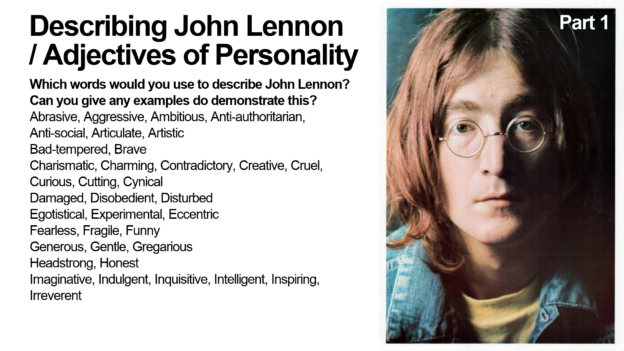
The second in a short series about The Beatles, this one focuses on the life of John Lennon, with an overview of his life story, some thoughts about his psychology and some rambling discussion questions about this iconic British musician, with podcaster, English teacher and musician Antony Rotunno.

Small Donate Button

[DOWNLOAD]

Links to Antony’s Podcasts

Glass Onion: On John Lennon

Film Gold

Life and Life Only

Introduction Transcript

Hello listeners, I hope you’re doing well today and that you are ready for this new episode of my podcast. You join me here in my pod-room as the rain falls down above my head. Conditions are perfect for learning British English. Let’s get started.

This is a continuation of this short series of episodes I’m doing about The Beatles and this one focuses mostly on John Lennon. If you’ve ever wanted to know more about this iconic British musician then this episode is for you. Also, if you’re already a Beatles fan or a John Lennon fan then I’m sure you’ll be glad to hear this conversation too.

My guest for this episode is Antony Rotunno from England and Antony is very knowledgeable about John Lennon and his life. In fact I feel like I couldn’t have found a better person to talk to about this subject.

One of the reasons for that is that Antony is also an English teacher. He’s been teaching English as a foreign language to adults for over 18 years, and for obvious reasons it’s always useful to have a guest who has experience of working with learners of English.

Antony is also a podcaster so he is used to talking to audiences over the internet from his home in England. Antony’s podcast is all about John Lennon.

And he probably knows all there is to know about John Lennon because he’s read everything out there on the subject and for his podcast he has interviewed lots of people connected to Lennon, including authors and people who actually knew John himself – people with first-hand accounts of meeting him.

So Antony really knows a lot about John Lennon.

And we had a really good, really long conversation for this podcast, covering various things like John Lennon’s life story. This is the first part of that conversation.

Let me just explain my reasons for doing this series of episodes about the Beatles. I probably don’t need to explain this, but allow me to give my reasons.

So, this is a 5 part series actually. I published the first part with my mum in episode 717, which was a review of a book about The Beatles, followed by a general Beatles ramble.

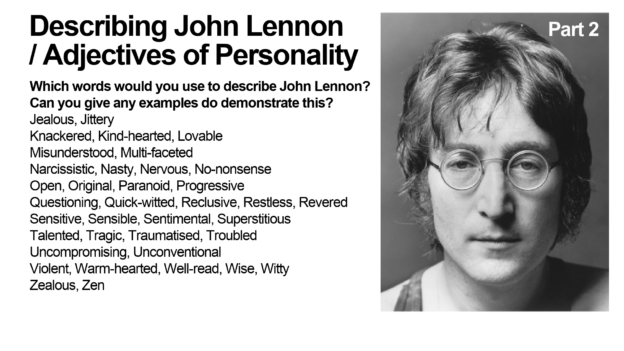
The rest of the series will be this conversation I had with Antony divided into 4 parts. But it’s not just going to be us rambling on about Lennon for all that time. I’ve also decided to employ some of Antony’s English teaching skills in order to cover some language too, specifically in parts 3, 4 and 5 of this series as we focus on descriptive adjectives for describing personality traits, and then some analysis of the lyrics from Beatles songs, with various nice phrases and idioms to learn. So there should be plenty of English learning opportunities to take from this whole series.

John Lennon is a hugely significant person in terms of modern history, and of course being English he is very much part of our culture, and as we move forwards in time it seems that the significance of the Beatles and everyone’s interest in them is not waning. If anything, they continue to grow in stature. 

And even if you’re not into the Beatles, hopefully this can be a chance to learn some new things about this band that is held in such high esteem by so many people.

I promise you – I’m willing to say I promise you here, that if you listen to this, you will know more about John Lennon than before you listened to it.

And if you’re wondering when we’re going to get to the music, part 5 will be all about Beatles lyrics and there will be some guitar playing as well.

First we will get to know Antony a bit and ask him about his podcasts, and then you’ll hear him talk about how he got into The Beatles and John Lennon in particular, then Antony is going to give a brief overview of John’s life and career and finally I’m going to ask Antony a few John Lennon discussion questions.

Let’s get started.

Ending Transcript

So that was episode 2 in this 5 part Beatles mini series, all about John Lennon.

Thanks again to Antony for his expertise. 

The other John Lennon episodes will follow over the next few weeks.

Do you feel that you know more about John Lennon than you did before you  listened to this?

I hope so.

I wonder what new things you learned from this. Feel free to leave your comments below.

I won’t say much more here, except that it’s been really interesting to talk to Antony and I look forward to the next few episodes in which we go into teacher mode and look at some descriptive adjectives and then song lyrics.

But that’s it for this episode. Thanks for listening. Be excellent to each other and I will speak to you soon.

721. Collins Dictionary Word Quizzes / Confusing Words with Fred Eyangoh

This is the second part of my recent conversation with Fred Eyangoh about learning new vocabulary. This one includes a word quiz with homophones and commonly confused words from the Collins Dictionary website.

Small Donate Button

[DOWNLOAD]

Introduction Transcript

Hello listeners, how are you doing today? I trust that all is well in podcastland.

This is the second part of a double episode about learning vocabulary with one of my friends Fred Eyangoh. 

In the last episode you heard about how Fred has been using a spelling game to discover new words, and this led to a discussion about what to do when you come across new bits of vocabulary, including how using online dictionaries can be a really good way to expand your knowledge of words, and also about how just staying curious about new words is very beneficial, and how learning one word leads you to another word and before you know it your vocabulary has expanded exponentially. It certainly works for Fred, whose vocabulary is really strong.

And at the end of the last episode, Fred and I were on the Collins Dictionary website and we were about to do one of the word quizzes that you can find there. The one we chose was about easily confused words. Words that sound the same but are in fact different.

So that’s what happening in this episode. Listen to Fred and me doing a quiz about some homophones – words which have different spelling, different meanings and yet the same pronunciation. So there’s vocabulary, pronunciation and spelling to learn here as we go through various words, but also there are the usual tangents, little jokes and things like that. I hope you learn some things from it and that you have fun while listening.

I will recap the various bits of vocabulary you’ll hear on the other side of this conversation, and it’s a list of at least 30 vocabulary items. I’ll go through that list at the end of the episode to make sure you’ve got it. You’ll see the word list on the page for this episode on my website.

But now, I will let you rejoin my chat with Fred about learning vocabulary, using online dictionaries and a word quiz about homophones.


Click here for Collins Dictionary word quizzes https://www.collinsdictionary.com/quiz/en


Ending Transcript & Vocabulary List

OK so that was Fred and me doing a word quiz about easily confused words on the Collins Dictionary website.

I certainly hope you found that useful, and perhaps you could consider checking out those word quizzes as well on the Collins Dictionary website – again, they don’t sponsor this podcast, but maybe they should. I’ve even got the perfect line for the advert, “Are you confused about which word to use? Just think, ‘What would Colin say?’ and go to collinsdictionary.com”

It’s not actually Colin’s dictionary by the way, a dictionary owned by a man named Colin. “Hello, I’m Colin. This is my dictionary. It’s got lots of words in it.” No, I think that Collins is a surname (double L), like Phil Collins. In fact, the name comes from William Collins, an industrialist from Glasgow who set up a printing press in the 1820s, and in the early 1840s he started printing illustrated dictionaries, and the rest, as they say, is history. The publishing company is now known as HarperCollins, and in fact they are based in Hammersmith in the W6 postcode of London, which is where I was living when I first started my podcast. That’s why there’s a W6 on my logo by the way. It’s because that’s my London postcode. 

So, wow! That’s interesting isn’t it!? In any case, you can find more of those word quizzes and things at www.collinsdictionary.com 

Vocabulary Re-cap

Right, so just like the previous episode about the New York Times spelling bee, there are a few words that I feel I should re-cap at the end here. 

Let me just quickly go through some of those words again, just to make sure you got them.

Words

  • A miner
  • To mine
  • A coal miner
  • A minor (person)
  • Minor key
  • Major key
  • Bleak
  • Evocative – “The minor key is so much more evocative”
  • Seller / Buyer
  • Cellar  (a room below the house for storage)
  • Basement (an underground floor which could be furnished – more common in US English)
  • Attic
  • Loft
  • Steaks
  • Stakes
  • The stakes are high
  • That terrible joke:
A man walks into a butcher’s shop and inquires of the butcher: “Are you a gambling man?” The butcher says yes, so the man says: “I bet you £50 that you can’t reach up and touch that meat hanging on the hooks up there.” The butcher says “I’m not betting on that”, “But I thought you were a gambling man” the man retorts. “Yes I am” says the butcher “but the steaks are too high!”.
  • Bridal
  • Bridle
  • Baby shower
  • Hen do
  • Hen party
  • Bachelorette party
  • Bridal shower
  • Mussels
  • Muscles
  • Molluscs
  • Shellfish (molluscs and crustaceans that we eat)
  • Seafood (food that includes fish, octopus, squid, crab, lobster, shellfish etc)
  • Moolah (a slang word meaning cash)
  • Herbs
  • Thyme / Time

You also heard us talking briefly about Wandavision at the end there. Wandavision is a new-ish TV series by Marvel Studios. We also mentioned The Madalorian, which is a Star Wars TV series. I really must talk about all this new pop culture at some point on the podcast. There’s new Star Wars TV stuff, Marvel TV stuff (like Falcon & The Winter Soldier which I’ve also been watching) and even Zack Snyder’s Justice League, but it’s all going to have to wait I’m afraid. There are so many things to talk about and do on this podcast but there are only so many hours in the day. Also, I have quite a big backlog of episodes in the pipeline at the moment, so I’ll have to publish all of those before I can think about new stuff.

New episodes arriving soon…

720. How Fred Learns Vocabulary with the New York Times Spelling Bee (with Fred Eyangoh)

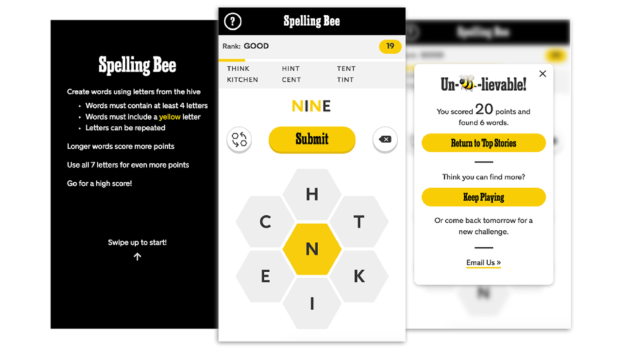
Fred often plays spelling games on his phone during his lunch break, and he has discovered lots of new words as a result. In this episode I talk to Fred about his process of discovering and understanding new words and I talk about learning vocabulary with online dictionaries.

Small Donate Button

[DOWNLOAD]

Introduction Transcript

Hello listeners, 

I hope you are doing well out there in all the various parts of LEPland. Are you ready for a new episode? Yes, you are? That’s why you’re listening to this? Yes, that makes sense. It would be pretty weird if you had pressed play on this episode and thought “Wait wait! I’m not ready! I must immediately reasses my life choices. What am I doing?” I’m assuming you’re ready for this episode, and that you are fully on-board and prepared mentally, physically and spiritually for another dose of English.

This episode is called How Fred Learns Vocabulary with the New York Times Spelling Bee.

Fred Eyangoh is my guest for this one and he is a returning guest, as some longer-term listeners might remember. Fred has been on the podcast a few times before. Basically, I know Fred from doing stand-up comedy at English language comedy shows in Paris. He’s a stand up comedian, like me. Fred is also a bit of a movie geek and he loves to talk about films of various kinds. His last appearance on this podcast was when we talked about Avengers Endgame a couple of years ago.

But this episode is not about films. We decided instead to talk about how Fred expands his vocabulary in English using the New York Times Spelling Bee. 

Do you know what a spelling bee is? It’s not an insect that is good at spelling words and making honey. No. A spelling bee is basically a spelling competition. Often spelling bees are done in the USA in schools. 

But the New York Times Spelling Bee is basically just a spelling game that they publish in their daily newspaper, and it’s for adults or students, not children. It’s the sort of thing you can do on your lunch break or while commuting to work or college or something and it involves trying to spell as many words as possible from a limited number of letters.

In case you’re wondering, the ‘bee’ part in ‘spelling bee’ is nothing to do with the insects that make honey. The word bee here is actually derived from the middle-English word ‘bene’ (spelled B E N E, and middle-English is not used any more of course) which basically meant when neighbours get together to do an activity that helps someone. A sort of group activity in which everyone gets together to help someone in the community. Somehow along the way this word became associated only with these competitions designed to help kids improve their spelling, and the word ended up being spelled “bee”. As far as I know, there are no other uses of the word “bee” like this. So, you can just learn the phrase “spelling bee” to mean a spelling competition.

So, this episode is all about ways to expand your vocabulary. Recently Fred has found that this little spelling game has introduced him to various new words, and this has been an inroad into English for him, so we decided to talk about it on the podcast.

The overall point here is that there are many ways to expand your vocabulary. You can come across words while reading books or articles, you can find them by listening to podcasts, you can find them by checking transcripts and by using subtitles, by playing computer games, by checking song lyrics, or by playing word games. There are probably other ways that you can think of. There are many ways to come across new words.

I should say that as well as doing these word games, Fred is also a big reader of books and a film nerd. He watches loads of films and TV series in English and investigates the English he hears (or sees if he has the subtitles on) and when he came to the flat to record this episode he had a copy of Alice In Wonderland by Lewis Caroll which he had been reading, and that book is full of word play, poetry and little jokes. So, there are many ways that Fred gets English into his life, but in this episode we’re focusing on how Fred uses this particular little spelling game.

This leads to some discussion about the steps I think you should take when discovering new words, and this relates to one of the recommendations made by Michael from Poland which was to use certain online monolingual English/English dictionaries because they help you to find not only definitions of new words, examples and correct pronunciation but also plenty of synonyms and as you explore the definitions of words you end up discovering other words and it all expands outwards like the branches of a tree.

So this is the overall point – find words in whichever way that you enjoy, but try to go a bit further and explore those words using good English/English dictionaries. Notice how one word leads to another, notice what kind of words they are (nouns, adjectives, verbs etc) and how they fit into a sentence (including which other words they usually go with or collocate with, like certain prepositions, and if they are followed by certain forms like -ing verbs or infinitive verbs), notice how the words are pronounced and if there are several acceptable ways to say them, make note of the spelling and watch out for discrepancies between the spelling and pronunciation, consider if the words are from a specific register (e.g. medical language, legal language, old-fashioned literary language or just general English), if they tend to be from American English or British English. All that information is available from a good dictionary. Also, perhaps consider recording your new words in a notebook or a flashcard app like anki, try to use new words yourself and then try to notice the words again and again as you keep listening and reading. That’s the overall point of this episode.

This is a conversation between two people and so you are going to hear the usual moments when we get sidetracked and there are various conversational tangents, little jokes and things as we make each other laugh. So, it might be a bit tricky to keep up with it all, so just bear that in mind and get ready. 

As you will notice, quite a lot of specific items of vocabulary come up during this conversation and it might be a little difficult for you to keep track of them all, but I will be repeating them at the end of the episode, and they’re also written on the episode page on my website if you’d like to take a look.

Right, so I hope you can keep up with all of this. There will be a part 2 of this conversation, where we explore some word quizzes about commonly confused words in English, but now let’s listen to Fred talking about how he uses the New York Times Spelling Bee to expand his vocabulary, and here we go.


Try the New York Times Spelling Bee here (although you need to register to keep playing) https://www.nytimes.com/puzzles/spelling-bee

Ending Transcript

So, that was Fred Eyangoh talking about how the New York Times Spelling Bee has helped with his vocabulary, which in turn helps with things like pronunciation and improving your pronunciation helps with your speaking and also your listening skills, and improving your listening skills helps to improve your ability to understand people, and the more you understand people the more you’re able to notice more language that people are using and the cycle continues, and all the while your confidence is improving. This is the idea anyway. Certain habits or at least certain mindsets can help to put you in a positive cycle of language acquisition.

You also heard at the end there how we were about to start a word quiz on the Collins Dictionary website. In part 2 of this conversation we will continue where we stopped. So the next episode will be another one with Fred, exploring some commonly confused words, most of which are homophones – words which sound the same but are spelled differently. So check out that episode too when it arrives. There should be more learning opportunities for you there, and also some silly jokes and tangents too from Fred and me.

Let me now recap some specific things from the conversation you’ve just heard.

My 5 favourite dictionaries again

Look beyond just the definition. These are resources designed specifically to help you build your vocabulary.

Some of them have other resources too, like vocabulary quizzes based on things like idioms, synonyms and commonly confused words, and you’ll hear more about that in part 2 of this conversation as I just said.

Macmillan Sounds App – helps you learn the phonemic script. Download it from the Macmillan website https://www.macmillaneducationapps.com/soundspron/ 

Words & phrases mentioned

Repeat the word stress and give an example of each.

Admittedly (adv) (use this when you are saying something that weakens the importance or force of what you have just said) “Daily practice is so important in language learning, although admittedly, I don’t follow my own advice when it comes to working on my French”

Horrendous (adj) (something unpleasant or shocking, horrific, appalling, awful, ghastly) “Getting sick in a foreign country can be an absolutely horrendous experience”

Severe (adj) (very intense or serious) “I had to stop working because I had a severe headache”

Word stress

  • Embarrassed 
  • Important 
  • Necessary
  • Accessory

Umbrella terms (all these ones are nouns)

  • Invertebrate
  • Arthropod (invertebrates that include arachnids, insects and crustaceans)
  • Insect (types of arthropod)
  • Flea (types of insect)
  • Arachnid (aka spiders – types of arthropod, but not insects)
  • Crustacean (also types of arthropod which are neither insects or spiders – includes crabs, lobsters, shrimp)

Chitin (what insects’ exoskeletons are made of)

Worms 

Elated (adj) (synonyms – joyful, delighted, excited, proud)

Heart bypass (noun)  – According to the NHS A coronary artery bypass graft (CABG) is a surgical procedure used to treat coronary heart disease. It diverts blood around narrowed or clogged parts of the major arteries to improve blood flow and oxygen supply to the heart. We laughed about the fact that the guy in the example had two heart bypasses, but of course this is a serious procedure that a lot of people have to have. 

To take something with a pinch of salt (UK) – this means to be sceptical about something, or to not completely believe everything that someone says. “Take online medical advice with a pinch of salt. Sometimes it’s not completely accurate.”

To take something with a grain of salt (US)
Allele (noun) (a specific scientific term from genetic biology, pronounced “uh leal” – I remember this word coming up in my biology A level lessons when I was 17, but I haven’t heard it since, until this conversation. I failed that A level by the way.)

Pelf (noun) (money, especially if it has been illegally obtained – this word is hardly ever used today, so don’t worry about it. Collins is the only dictionary that lists it) Synonyms might be swag, booty – but those words aren’t really used either, unless it’s some pirate adventure story set in the 18th century)  

Pilfer (verb) (a slang word meaning to steal – it’s still used but I would probably go for the words “nick” or “pinch” instead) “Someone’s nicked my wallet!” “I pilfered some biscuits from my flatmate’s cupboard.” “Someone’s pinched my mobile phone”.

Quid (noun) (slang word meaning pounds, it’s both the singular and plural form) “A pint of beer in a pub can cost over 7 quid these days. It’s daylight robbery!”

That’s it for this episode then. Part 2 should arrive soon, and it will be called something like Learning Vocabulary with Collins Dictionary Word Quizzes (with Fred Eyangoh) Commonly Confused Words.

So, sit tight until that one arrives!

I hope all is well in LEPland. Don’t be a ninja – write something in the comment section, and by the way, writing one comment like “I’m writing a comment, so I’m not a ninja any more” this doesn’t completely revoke your ninja status, because you have to stay out of the shadows you know!

Speak to you soon, but for now – bye bye bye bye bye

719. Amber & Paul are on the Podcast (Catching Up #11)

Talking to pod-pals Amber & Paul about diverse topics including organ harvesting (yes), favourite fruits (exciting), accent challenges, guess the punchline, British Citizenship tests, What the “great” in Great Britain really means, and Amber’s son Hugo’s astonishing fluency in English.

Small Donate Button

[DOWNLOAD]

Episode Introduction Transcript

Hello listeners and welcome back to my podcast for learners of English. How are you doing today? Doing ok? 

I won’t talk at great length at the start here, suffice to say that as the title of this episode suggests, Amber & Paul are on the podcast again, after a one year absence. 

Yes, the tangential trio are at it again.

I’ve been wondering What on earth I should call this episode. As you will hear, the options I had for a snappy title for this one were a bit tricky because our conversation covers some pretty diverse topics, including some quite dark themes, some potentially controversial moments and the usual fun rambling nonsense. It’s hard to sum it up in one pithy clickbait title. I think I’m just calling it “Amber & Paul are on the Podcast” but that does seem like a bit of a cop out. Anyway, we will see what I ultimately choose as a name for this episode. 

Here’s a quick hint of the diverse topics which we explore. 

Organ harvesting – yes, that’s right, organ harvesting. To get this, you will need to have listened to the previous episode of this podcast (#718), which was a conversation with Michael the hitchhiking shaman from Poland. In that episode Michael explained how, when hitchhiking once, he almost got kidnapped by several people who he suspected were organ harvesters – people involved in the illegal trade of human internal organs. Amber heard that podcast and was sceptical.

This prompted nearly 30 minutes of conversation about the ins and outs of organ harvesting, including how, where, why and who would do this. 

Then we go on to do various random questions & challenges from my list of random questions and challenges, so you will get some accent fun, a thrilling discussion of Amber’s favourite fruit and vegetables, a story about Amber’s son Hugo and his surprising articulacy in English, a joke about Spanish firemen, some British citizenship questions about Easter holidays, British overseas territories and why Great Britain is actually called Great Britain, and plenty more besides. So, other than organ harvesting, there isn’t just one theme for this episode, hence the rather generic title.

It’s a thrill ride of an episode which has everything you could expect from a a conversation with Amber & Paul. I hope you enjoy it. Nothing more needs to be said except that you are about to hear a rapid conversation between friends and it might be difficult to follow, so strap in, hold on tight and let the tangential chat commence…


Episode Ending Transcript

Well, there you have it. Amber & Paul reunited on the podcast once more. We’d been waiting for ages for that to happen, and I hope you were not disappointed.

Just in case you were wondering what “tangential” means (and you’re not a long-term listener)

A tangent or a conversational tangent is when someone starts talking about something that is unrelated from the main topic of the conversation. To go off on a tangent.

Tangential is the adjective and it refers to something different from the subject you were talking about. This is typical of all my podcast conversations, but especially those ones with Amber & Paul, and so we are the tangential trio.

As ever I am curious to know what you think about all of this. 

Sometimes our conversations become quite rude and inappropriate, but I’m just presenting you a natural conversation between friends, and this sort of thing is normal when socialising in English. 

Here are some questions for your consideration:

  • What do you think of Michael’s organ harvesting story? Do you believe it? Is it possible?
  • What is your favourite fruit or vegetable?
  • Why is Great Britain called Great Britain?
  • Did you hear about the Spanish fireman and his two sons?

Let us know your thoughts and comments in the comment section.

I’ve got a ton of episodes in the pipeline which will be coming out over the next few weeks and months.

Here’s a little taster of things to come:

Bahar from Iran

A couple of episodes about expanding your vocabulary using word quizzes and dictionaries with a returning guest

More episodes in the vague Beatles season including some stuff about the psychology of John Lennon, adjectives for describing personality traits and some analysis of Beatle song lyrics, with a sort of expert guest.

Various stories which I have been searching for and then reading out on the podcast, with YouTube versions (this is because the recent Roald Dahl story I read out was a popular one)

More special guests for interviews and collaborations, more bits of comedy analysed and broken down, and plenty of other things too…

I am still waiting for my shiny thing from YouTube but when it arrives I will be doing another YouTube live stream. Who knows, I might do one before it arrives, but I will let you know. 

Premium subscribers, I have the rest of the “What did Rick say” series coming up, and then a similar series called “What did Gill say?” focusing on language from my recent conversation with my mum about The Beatles, following a suggestion from a listener.

So, new premium content is either being published, written or recorded all the time, so watch out for new episodes. www.teacherluke.co.uk/premiuminfo if you’d like to find out more.

I will be back soon with more episodes, but for now it’s time to say goodbye…

718. Michael the Shaman 🇵🇱 (WISBLOEP Runner-Up)

Talking to competition runner-up Michael from Poland about two top English learning tips, scary hitch-hiking stories and the practice of shamanism using psychoactive substances.

Small Donate Button

[DOWNLOAD]

Introduction Transcript

Hello everybody and welcome back to Luke’s English Podcast. How are you today? I hope you’re doing well as you listen to this, wherever you are in the world at this particular moment in time.

This is the 5th in the WISBOLEP competition series – Why I Should Be On Luke’s English Podcast, talking to winners and runner ups from the listener competition I did at the end of last year. 

So far I have spoken to Walaa from Syria, Tasha from China, William from France and Robin from Germany. Now it’s the turn of Michael from Poland, also known as Michael the Shaman (this is the nickname that he often uses, for reasons which will become clear later in this episode). Michael actually came sixth, and Bahar from Iran was fifth, but at the time of recording this I haven’t spoken to Bahar yet. Her interview is coming soon though.

So, let me tell you a little bit about Michael the Shaman, from Poland.

Michael, who for the record is not an English teacher, has a lot to offer both in terms of language-learning tips that have worked for him and some very interesting stories and insights into some pretty deep and fascinating things, and I think this should be a great episode. So, listen closely.

Here’s a quick overview of the things we cover.

First we talk about language learning and those specific tips from Michael. These are resources and approaches that he has used to work on his English, especially his vocabulary and pronunciation, with some success I would say. I won’t go into them now, but pay attention so you can hear him describe these things, how he uses them and how they have helped him make some significant improvements to his English. I will summarise them again at the end and give a few extra comments.

Secondly, Michael tells us some of his hitch-hiking stories. Michael has spent lots of time travelling around in neighbouring countries near Poland and doing it by hitch-hiking, which basically means getting picked up by drivers who are going in the direction he wants to go, and hitching a ride with them as a way of travelling around. Now, this sounds adventurous and possibly a bit risky, because it does involve travelling in the cars of strangers, and Michael has some genuinely frightening and incredible stories of doing this. Again, listen closely to hear the specifics of the edgy situations that Michael has found himself in. 

Then, thirdly we have the topic of shamanism, or being a shaman. Michael is probably better placed to describe this than me, but being a shaman basically refers to the use of certain rituals and practices to enter different states of consciousness, which can lead to new discoveries, new perspectives, new ways of thinking and different ways of seeing the world, or the universe in fact, and our place within it. This is something that Michael has explored and for him it has been very beneficial to his life in various ways. So let’s listen to what Michael has to say about shamanism and the use of psychedelics.

At this point I feel I need to say something about the use of psychedelic substances, which is part of what Michael describes as being a shaman, and we’re talking about using substances that occur in nature, like certain magic mushrooms and ayahuasca as well as the synthetic chemical LSD or acid as it is also known. 

So I would like to just say one or two things about this topic as a sort of disclaimer or preface to our conversation.

First of all, the substances I just mentioned are controlled substances in most countries, which means that they are illegal to some extent. So, we are certainly not suggesting that people go out and start using them. 

By the way, I’m referring to these things here as controlled substances, but in many cases they are also called drugs, and they’re not just prohibited by law, but also in the general culture. For a lot of people drugs are a serious taboo and people often have quite strong and negative feelings towards this subject. I am aware of this, and I hope that you are comfortable listening to us talking about it on this podcast. I think it’s alright, but I am aware that for some people drugs are just not ok, and that’s fine.

I feel it’s necessary to say that in talking about psychedelic drugs here we are not condoning their use in any kind of flippant way, and “condoning” means promoting or supporting something. We take this seriously and as you will hear Michael is very articulate and quite serious about the subject. He’s very well-read and knowledgeable, and we are just talking about his personal experiences and knowledge, which I do think are interesting as well as being new as a subject on this podcast. I’ve never really talked about this kind of thing in depth before on the podcast.

Also I think it’s worth making a distinction between different types of drug or substance.

There are many different types of drug, and they are extremely different to each other. 

People often just say “drugs” without making any distinction between them. They just lump them all together as if they are all the same, basically. But I think it is worth making a distinction. Despite that fact that controlled substances are often grouped together as drugs, they are not really the same as they have very different effects and different levels of risk and we are certainly not talking about things like cocaine, crack cocaine or heroin, which are obviously very dangerous substances and very serious substances. We are not talking about those things here.  

So, I thought it would be worth making that distinction and I’m trying to be responsible about this topic, but I’m also attempting to manage your expectations here because I don’t want you to get the wrong impression or to be shocked or to have a knee-jerk reaction while listening to us mention psychoactive substances in the latter part of this conversation. For many of you, these words are not really necessary, you’re fine with it, but there it is. I felt I should make those points. We’re not promoting any kind of illegal behaviour, we are not talking about those damaging and addictive things that ultimately will destroy a person’s life, instead we are taking what I hope is a more reasonable and rational approach here and discussing the more intellectual and spiritual aspects of shamanism and how certain psychoactive substances are part of that.

Right, now before we get to the talk of psychedelics in the second half of our conversation, you can first hear Michael’s specific language learning tips, which I think are really useful, and then his crazy hitch-hiking stories, which are pretty mind-blowing and entertaining.

Right, no need for me to add anything else here. I really hope you enjoy this conversation. I’ll be recapping and summarising some details later but let’s now meet Michael the Shaman from Poland, another runner up in the WISBOLEP competition. 

Are you ready? Listening carefully? OK, here we go.

Bruce Parry’s short film about Ayahuasca

Ending Transcript

So that was Michael from Poland, and wow, that was awesome stuff, wasn’t it? It got very deep there, and cosmic, didn’t it? I hope you liked it. As usual, I’m very interested to read your responses to the things that Michael said. 

I’m going to sum up some of the things Michael said at the start of the conversation about learning English, because after all that mind-expanding talk of psychedelic trips and also the hitch-hiking stories, it seems like we talked about his language learning methods ages ago, and I think he made some really great recommendations that you could find really useful for your English.

Now, considering Michael’s English again. I think it’s fair to say that it’s good, right? 

I do want to repeat a couple of points.

Don’t compare yourself to others too much

Don’t compare yourself to other people too much. This can lead you to judge yourself a bit harshly, which is totally normal. Whenever we listen to other language learners, the tendency is to either judge their language level, or judge our own level in comparison to theirs, but this isn’t a very healthy thing to do in terms of language learning, and what I’d encourage you to do is only judge yourself by your own success, and rather than comparing yourself to others, try to notice how your English is better than it was before. 

Just compare yourself to yourself at earlier points in your language learning journey. Notice improvements you’ve made, and celebrate them. This is more likely to put you in a better mental space than comparing yourself with others. 

Just think how far you’ve come as a learner of English and take note of your progress. That’s probably healthier than falling into any kind of negative thinking which can happen if we compare ourselves unfavourably to other language learners.

So, try not to judge others too harshly, and don’t compare yourself to others too much. 

And hopefully listening to other language learners can give you some inspiration and some practical ideas which you can use to work on your English in ways you hadn’t considered before. Even little things like changing certain habits can make a big difference to your learning of English. 

And with that in mind, let me quickly just go over the tips Michael had for learning English, which worked for him. Have you tried these things or used these resources?

Michael’s Language Learning Resources

There were two things really:

  • Use English/English dictionaries to expand your vocabulary with correct definitions, examples, phonemic transcriptions and synonyms. My 5 favourites are www.collinsdictionary.com  www.cambridge.dictionary.org  https://www.oxfordlearnersdictionaries.com/ https://www.macmillandictionary.com and Longman Dictionary of Contemporary English https://www.ldoceonline.com/
    I have been planning to do a full episode on using online dictionaries to improve your English (in fact I’ll be touching on this a bit in a couple of upcoming episodes), but I will just say that these dictionaries are fantastic resources not just for getting definitions, but getting synonyms, examples, phonemic transcriptions and more – all of which are really important ways of really getting to know new words. Bookmark the dictionaries, use them all (because they have slightly different examples and details which you can cross reference) and get into the habit of checking words in them and exploring the information they can give you. Never before have we had access to so many wonderful language learning resources, completely free of charge, and at our fingertips at all hours of the day. It’s like living in a massive library. So, use those online dictionaries to explore new words.
  • The second resource Michael mentioned was the website www.dialectsarchive.com  – a website full of voice recordings used by actors and voice coaches trying to learn different accents, and especially the text Comma Gets a Cure, which is designed to reveal a huge variety of pronunciation features in English. You can hear the text being read in different accents, you can shadow the text, repeat it, record yourself repeating it and more. I plan to do some premium episodes using this text and other similar texts too. There is a lot to explore and use there, including some podcast episodes by the creators. www.dialectsarchive.com 

OK, so just two tips there, but they are solid ones.

And returning to the hitch-hiking stories. I just want to sum up the main one, just to be sure you got it. I think it was probably clear, but I want to retell that story just because I think it was such an exciting story, and maybe you didn’t catch the specifics.

Michael’s Hitch-hiking Story – recap

So Michael and his friend Kuba were hitchhiking from Poland to Amsterdam and they got picked up by a couple of very dodgy guys in a van. They didn’t realise it when they first got in the van but these guys were drinking alcohol and smoking some kind of crystal – perhaps crystal meth, like in the TV series Breaking Bad. Meth is a pretty nasty drug.

Michael is an intuitive person and he picked up on a very bad vibe from these guys and became convinced they were planning to do something very nasty with Kuba and him. Like I said, it sounds like something from a horror film. Listening to their comments, watching their demeanour and generally reading between the lines, Michael became convinced these guys were organ traffickers, who are people that kidnap healthy people in order to steal their internal organs and sell them on the black market. Certainly these guys seemed to be very dodgy and probably involved in organised crime.

Michael decided he would subtly let the guys know that he and Kuba were actually not that healthy and therefore their organs were not worth taking, which would convince them to just let them go.

It’s crazy I know, but I kind of know what Michael is talking about when he said he just knew something wasn’t right and that they were in danger. I feel like I’ve been in similar situations before, where you realise that the people you are with are dangerous and up to something, and so you just have to get out. It’s a weird feeling. I can’t remember any specific stories from my own life, but I’ve met guys in pubs before who just seemed dangerous and untrustworthy, even though there were no specific things that would give me that impression. It’s more of a vibe that certain people give off.

Anyway, Michael said that he heard the guys making jokes about stealing their organs, which appeared to be jokes, but there was a sinister undercurrent which suggested that perhaps they were not really joking. Michael’s friend Kuba was not quite as observant maybe and he didn’t seem to realise something was wrong, but anyway Michael sent him text messages to convince him that something wasn’t right. They managed to persuade the drivers to stop the van at a petrol station because Michael needed to be sick or had diarrhea and then they escaped at a petrol station.

They then decided to continue their hitchhiking trip to The Netherlands, but decided they would not accept lifts from any more Polish people, nobody drinking or using drugs and no vans. This is because they didn’t want to risk running into any similar people or perhaps their friends who they suspected were also on the road, but somehow the next car that picked them up, by coincidence maybe, contained the friends of the dodgy guys they had just escaped from. So, it was a case of “out of the frying pan, into the fire”.

Michael said that these other guys seemed more intelligent and perhaps were the bosses of the other two they had met previously, and the only way Michael and Kuba got away without being taken, was because the guys ended up liking them, as they played along with their jokes and generally tried not to antagonise them at all. So, phew! What a lucky escape! 

And Michael said that hitchhiking was not that dangerous! 

Actually I do believe that on balance his experiences of hitch hiking have been much more positive than negative, but what a scary story! And I do believe it is true. I find it very believable. There are dodgy people in the world.

And finally, a few more words on the topic of psychedelics like magic mushrooms.

A final note on Magic Mushrooms

All the things Michael mentioned about Amanita muscaria (Fly Agaric) are definitely worth researching. In his words (from a recent email exchange we had) “I think I talked about maybe 1% of things you can do with this mushroom. I’d like to stress once again that I don’t recommend everybody uses this mushroom. I’m all about education and knowledge. The mushroom can have medical, therapeutic and spiritual effects, but only if one does it correctly. It is not easy to work with this mushroom.

An excellent resource for Amanita muscaria is Amanita Dreamer on YouTube and her website www.AmanitaDreamer.net. Also, a recently published book: ‘Fly Agaric: A compendium of History, Pharmacology, Mythology & Exploration’ by Kevin Feeney is also great.

These resources are essential as there are many dangerous myths regarding Amanita muscaria. Remember, it’s important to make sure that you are fully knowledgeable about this mushroom. You can’t just pick the caps and eat them. 

I think the same goes for all kinds of psychedelic substance that Michael talked about. Please remember that we’re not condoning the use of these things in any kind of casual way. You must be very careful, very well-read and personally very prepared before going any further.

Right then, what did you think of this episode?

Any thoughts on Michael’s language learning resources, his hitchhiking tales or his comments on the use of psychedelics? If you have things to say, just express your thoughts in English, ideally in the comment section on my website.

That’s all from me. Have a good morning, afternoon, evening or night. Be excellent to each other, good luck with your English and do take care.

Speak to you again on the podcast soon, but for now it’s just time to say good bye bye bye bye bye.

717. Gill’s Book Club: “One Two Three Four – The Beatles In Time” by Craig Brown

Talking to my mum about a book which you could read as part of your English learning routine. The book tells the story of The Beatles and their impact on society. We review the book and then discuss many aspects of The Beatles story, especially the four Beatles themselves.

Small Donate Button

[DOWNLOAD]

Introduction Notes & Transcriptions

Hello listeners, and welcome to the podcast. 

This is a new episode of Gill’s Book club and I’m talking again to my mum, Gill Thompson about a specific book which you might want to read as part of your English learning routine. 

Hello Mum, how are you? 

Introduction

The book this time is all about The Beatles, which is a band from England that you *might* have heard of.

You could read this book, and if you did I’m sure you would learn plenty of things both in terms of language and general knowledge, but there’s no pressure to do so. If you like, you can just listen to this conversation with my mum and hopefully this will be interesting and useful enough on its own. 

But if you are looking for a good book to read in English, then this one could be a good choice, and hopefully this conversation will help you to understand the whole thing a bit more, which in turn should help you pick up more English from it. So, my advice is: listen to this conversation with my mum and if you’re inspired, get a copy of the book and read it, or if you prefer, just listen to us without feeling any pressure to read the book at all. Hopefully this will still be enjoyable and interesting even if you haven’t read the book and have no plans to do so.  

Over 700 episodes and 12 years ago, in the 3rd episode of this podcast, I interviewed my mum about her memories of seeing The Beatles performing live on stage in the 1960s, which she did, twice. 

Now, we’re going to talk about the band again, this time focusing on a book which is all about the Beatles phenomenon and their place in history. The plan is to review the book as a text for learners of English, and then have a deeper discussion about The Beatles. 

You probably know that I’m a big fan of The Beatles and grew up with their music, as my parents were (and still are) fans too. For years I’ve been thinking about doing more episodes about The Beatles story, and mentally preparing myself for it, but I have never actually got round to recording anything, mainly because the topic is just too big and there’s too much to say! But finally I have actually recorded some episodes that might scratch the surface of this topic a bit, and hopefully will give you something insightful and interesting to listen to, whether you are a fan of this band or whether you know almost nothing about them at all. 

So this is going to be the first in a series of episodes in which I talk about Beatle-related things. There’s this one with my mum and then a few episodes with another guest who is an English teacher and something of an expert on The Beatles, and John Lennon in particular.

So, Beatle episodes are coming. I suppose, for some of you, episodes about The Beatles are like busses. You wait ages for one and then loads of them arrive at the same time. 

And by the way, I am certainly not forgetting the main focus of this podcast, which is all about helping you learn English. I think The Beatles can help you learn English, reading is very important in learning English, and so why not do some reading about The Beatles? 

Plus, later in this Beatles series there will be some language-focused episodes, using The Beatles as a context – focusing on some specific descriptive vocabulary and also some analysis of the Beatles’ song lyrics.

Maybe you’re not a fan of The Beatles. This is fine. I’m not going to try to convince you that you should like their music. That’s a matter of taste. But I do think that their story is something else entirely. I think it is hard to deny the fact that the story of these 4 individuals, the things that happened to them and the impact they had on the world – this is all simply fascinating. It’s an epic story. So, even if you don’t like the music, I hope you stay just for the story.

Now, let’s start this episode of Gill’s Book Club, talking about a recently published book about The Beatles.

LengthIs it a long book?

It’s long (642 pages) but the chapters are short, so it’s possible to read it in little chunks.

It’s available in audiobook and Kindle versions.

Appropriacy for Learners of English

The language is modern and plain in style. It’s quite literary of course, because it is a book and not a screenplay or something, but generally speaking it is clearly written and should be readable for learners with an Upper Intermediate level or above, although there will be some difficult words of course, but that’s good. I would say that overall the style is modern, neutral and definitely the kind of English that I would recommend as a good model of English for my listeners.

The short chapters make the whole thing quite easy to digest. It’s in bitesize chunks.

You can dip into it and you don’t necessarily have to read it in order. It’s almost like a collection of essays.

Audiobook version

The audiobook version on Audible is good – different voices and voice actors doing different accents, including pretty good impressions of the main people involved.

Why is it called “One Two Three Four”?

This is the first thing you hear on the first song on side 1 of The Beatles’ first album “Please Please Me”, released in early 1963 – You can hear Paul McCartney counting the band in at the start of the song by saying “1, 2 , 3 , 4”. Also, there were four Beatles, so…


Ending

So there you have it, after more than 700 episodes I finally returned to the topic of The Beatles with my mum and I think it’s fair to say that we went into quite a lot more depth than we did in episode 3 back in 2009, although episode 3 does include stuff we didn’t mention here, specifically my mum’s account of actually seeing The Beatles perform live, twice. So check out episode 3 if you haven’t done so.

Also you could check out that episode in which I asked my uncle Nic to tell us about the time he met Paul McCartney. He told the story in episode 414, and not only has he met Paul, he’s also played football with the members of Pink Floyd and hung out with The Who backstage at one of their concerts, and more. So check that one out too. Links for those episodes are on the page for this one on my website of course.

I really hope you enjoyed listening to this episode. I must admit that although I feel compelled to talk about this subject at length, part of me is concerned that this is all too much for my audience but I suppose those people who aren’t into this can just skip this stuff. It’s completely up to you. But do let me know what you think.

Remember, any time you have any thoughts about what you are hearing on this podcast, if you have responses or comments in your head as you listen, you can express them in English and I will read those comments, and so will many other LEPsters. The best place to leave your comments is on the page for the relevant episode on my website. Go to EPISODES in the menu and find the relevant episode page, scroll to the bottom and that’s where you will find the comment section. I am curious to see what you think. Any Beatle fans, get in touch. Non Beatle fans, I want to know what you’re thinking. Remember, sometimes doing this podcast is a bit like talking into the void and not quite knowing what people are thinking while I’m doing it.

I won’t talk much more at the end here, except that of course there are millions of things I wish I could have mentioned or talked about in this conversation.

We didn’t talk enough about Ringo!

There are also loads of other people and events that I wanted to mention.

I hope I didn’t talk too much.

Just in case this wasn’t quite enough rambling about The Beatles on this podcast, remember there are four (count them) four more episodes on The Beatles to come, but hopefully those episodes will be different enough to justify this series. 

Anyway, 4 more Beatle related episodes are coming up.

One is a discussion about John Lennon.

Another two are language focused and we’ll be talking about adjectives for describing personality traits.

And the last one is about Beatles song lyrics and little phrases and idioms that you can learn from them.

So it’s not just rambling about The Beatles, although that will be part of it too.

Thanks again to mum for her great contribution to this episode, and yes I am lucky to have a mum who is this cool. I appreciate that and I’m really glad to get her voice on the podcast along with my other guests.

And thank you as ever for listening all the way to the end, you are the best.

Take care, look after yourselves and each other and I will speak to you again soon. I think the next episode will be Michael from Poland.  But until then it’s time to say good bye bye bye bye bye.

716. Interview with a Pop Star from the 1960s – Megan Brady from The Applejacks

An interview with Megan Brady, who was the bass player in The Applejacks – a pop band from Birmingham in the 1960s who had a top 5 record, met The Beatles and performed on TV shows and at concerts in the UK.

Small Donate Button[DOWNLOAD]

Introduction (After the main LEP Jingle)

Hello listeners. In this episode you’re going to listen to me in conversation with Megan Brady who was a pop star in the 1960s. Yes, a proper pop star. She was in a band which had a top 10 single, she was on the radio, she appeared on a lot of the music TV shows, she met loads of other pop stars of the moment including the Beatles – yes she met The Beatles, and in fact John Lennon and Paul McCartney gave her band a song which they recorded – their second single actually, the band were featured in the music magazines and no doubt many teenagers all over the country had her photo on their bedroom walls. Yeah, proper pop star stuff. So this is the story of Megan’s career in music in the 1960s.

You might be thinking – which band was Megan in? Well the band was called The Applejacks – you might not have heard of them. They’re not one of the big bands that we now think of when we look back at the 1960s, and they didn’t really reach fame on an international level but they were certainly part of the scene, and were well known at the time. My mum was a fan of The Applejacks, for example. 

Of course we know about The Beatles and The Rolling Stones but there was a whole wave of other groups from all over the UK who were playing a new form of music and so many young people were really into it, and that includes The Applejacks who were from the Birmingham area. 

The 1960s was a really fruitful period in terms of modern British culture and I am proud of that part of our history. I find it fascinating, I like the music and I like the stories of the people involved, and I hope you do too.

My guest is Megan Brady (although she was known as Megan Davies in those days) Megan was the bass guitar player in the band, and at the time it was quite uncommon to have a female musician in a group. We’re talking about the early to mid 1960s. There were female singers, but you hardly ever saw girls actually playing instruments in bands, and so that was one of the unique things about The Applejacks. 

So, yes, you’re going to hear Megan talking about all of this, as well as other details like her other career as a clinical physiologist in neurophysiology in the National Health Service (that basically involves studying people’s brain waves) and just stuff about playing the bass guitar, how she’s still working on her technique and things like that.

I know Megan because I’m mates with one of her sons, Jake – or Jacob as she calls him. I met Jake at sixth form college and we played music together in bands over the years.

I was always really impressed by the fact that his parents were both professional musicians, or had been professional musicians at various times because I was so into music from the 60s and 70s including a lot of the artists that Jake’s Mum and Dad had worked with or brushed shoulders with over the years. 

For example, I was really into Jimi Hendrix when I was 16 or 17 and I remember talking to Jake about Hendrix and he told me that they actually had Jimi Hendrix’s wah-wah pedal at their home somewhere. A wah-wah pedal is a kind of guitar pedal. Jake wasn’t bragging really, he thought it was cool too, and he just wanted to share it with me and I believed him! “Hey, you like Jimi Hendrix – check this out, we’ve got Jimi Hendrix’s wah-wah pedal at home! Come over I’ll show it to you!” Whaaat? Etc. 

Also, I went to Jake’s house one day and I was hanging out in his bedroom listening to some of his music, and his mum’s bass guitar was sitting there – a nice Fender Jazz bass – and I picked it up and played it a little bit, and Jake said to me “Oh yeah, Jimi Hendrix played that bass once!” I couldn’t believe it! Hendrix played the same bass that was actually in my hands. It turned out that Jake’s mum knew Hendrix a bit, back in the old days and he once had a little go on her bass guitar – the same one that was in Jake’s bedroom that time.

Eventually I learned more and my parents told me more about Megan and that she had played bass in The Applejacks in the 60s and they were one of the popular groups of the time. 

So that’s how I know Megan. I am friends with her son, and now I’ve finally taken the initiative to interview her on this podcast. Megan is lovely and she was happy to do this, which I really appreciate.

Vocabulary

Before we start, I need to just explain a few words that you’ll hear but you might now know. 

  • The Scouts / The Scout Association / Cub Scouts / Girl Guides / Brownies – The Scouts is a worldwide movement for young people (it used to be just boys, but these days it’s for boys and girls I think), founded as the Boy Scouts in England in 1908 by Lord Baden-Powell with the aim of developing character and responsibility. My brother and I used to be Scouts and so did my dad. What kinds of things did we do?Megan was in the Scouts and so were most of the other members of The Applejacks. That’s how they met.
  • Gang show
  • Cub mistress
  • Scout hut
  • Skiffle
  • Skiffle numbers (songs)
  • The Shadows
  • A cruise / a cruise ship / Cunard Cruises
  • The Queen Mary and the QE2
  • Top of the Pops
  • Great Ormond Street Hospital – a famous hospital in London specialising in pediatric care (medical care for children) Where Megan has worked since the late 1990s.
  • Bass guitar stuff – Just a heads up – things will get a bit geeky and specific sometimes in this conversation as we talk about playing the bass guitar, different types of bass guitar and Megan’s bass playing technique. During lockdown she’s been practising with an online bass guitar teacher called Scott Divine from Scott’s Bass Lessons. I didn’t want to cut those parts out of the conversation because I personally find those things really interesting, Megan was enthusiastic about them and so who’s to say that you won’t find them interesting too?
  • Parts of a guitar – The head, the machine heads & tuning pegs, the neck, the body, the pickups, the scratchplate (or pickguard), the pick, the bridge.
  • Fender Jazz Bass vs Fender Precision Bass

Right, without any further ado then, let’s listen to Megan Brady talking about playing the bass guitar and her story of being a pop star in the 1960s. 

And to lead us into this I’m going to play a little sample of The Applejack’s first and most successful single which was called Tell Me When, released in 1964…


Ending

Ending song – Baby Jane by The Applejacks

Thanks again to Megan for taking the time to talk to us about all of that.

You might be wondering why I didn’t get Megan to play some bass for us, which would have been really nice of course.

I didn’t want to put her on the spot, plus for us to hear it properly she’d need to plug it into something like an amplifier and connecting an electric guitar to a computer and playing the sound during a call is a bit tricky too, so it wasn’t really possible at that particular moment.

But you can hear songs by The Applejacks on Spotify and YouTube.

I’ll be sharing some bits and pieces on the page for this episode, including a video filmed in 1964 I think, of Megan performing with The Applejacks, which is a great little sample of the time and you can see her playing I think her Hohner semi-acoustic bass.

The super-long introduction that I recorded but didn’t use – you’ll find it as bonus audio in the app. I go into more details about how I first met Megan’s son Jake and also some other ramblings about The Applejacks…

Tell Me When (Their biggest hit)

Like Dreamers Do (by Lennon/McCartney)

https://youtu.be/FB7lbucimhI

I Go To Sleep (by Ray Davies of The Kinks)

Baby Jane

The Applejacks on Spotify

715. Catching up with Craig Wealand [LEP/AIRC Swapcast]

Exchanging questions with English teacher Craig Wealand from “Apprender Ingles con Resa y Craig” about COVID-19, living in Europe post-Brexit, my daughter’s English, getting proper tea in France and Spain, teaching English on Zoom, the worst jobs we’ve ever had + more, with a song on the guitar at the end.

Small Donate Button

[DOWNLOAD]

LEP Premium Information / Frequently Asked Questions

Introduction Transcript

Hello listeners,

I hope you are doing well today. Here’s another new episode of my podcast for you to get stuck into as part of your regular English listening practice.

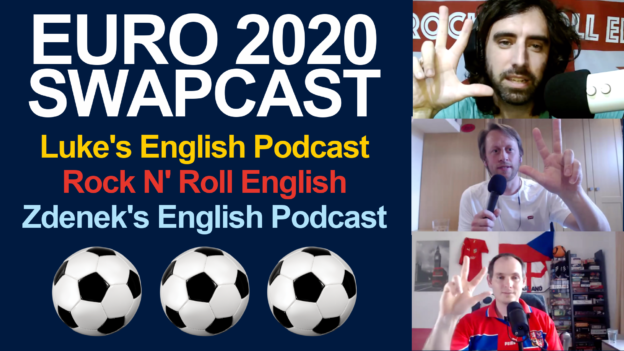
This is episode number 715 and this is the very first swapcast I’ve ever done. After over 12 years of this podcast, here is the first swapcast  and I know what you’re thinking now. You’re thinking “But Luke, what is a swapcast?”

You might be wondering what a swapcast is. A swapcast, in the world of podcasting, is when two podcasters get together to record one episode which is then published, often simultaneously, on the two respective podcast feeds. So, that’s one recording that’s published on both podcasts. It can be a good way to introduce audiences to new podcasts that they might want to listen to, and it’s just a way for podcasters to collaborate with each other. A swapcast. 

And that brings me to the guest I have on this podcast today.

Over 5 years ago now, in early 2016, I spoke to Craig Wealand in episode 334 of this podcast. He also interviewed me on his show as well … and then just recently we decided to do it again, this time in the form of a swapcast.

I feel like using the word swapcast is unnecessary but it’s one of those podcast things. Podcast people kind of like (often say) “OK guys we’re going to do a swapcast this week” and so I feel like “Ooh, I’d like to use the word swapcast too please.” So that’s why I’m saying it! Anyway… Craig Wealand. 

Now some of you will know Craig, not only because you might have heard episode 334, but also because you might listen to his podcast. You’ll hear us talking about it a bit in this conversation, but here are some basic Craig facts.

Craig is originally from England, but for over a decade now he’s been living in Spain, in Valencia, to be more specific … Craig is an English teacher with loads of experience, and he also has a podcast, called Apprender Ingles con Resa y Craig, which he does with his friend Resa, who is also an English teacher. That’s in Spanish. Basically it means Learn English with Resa and Craig.

I really want to recommend AIRC (let’s call it that – as an acronym). I really want to recommend Craig’s podcast – AIRC, as it is also known, to any LEPsters out there who speak Spanish as a first language, because Craig and Resa often focus specifically on teaching English to speakers of Spanish as a first language. They focus on themes and language issues that are relevant to the Spanish speaking world. I think it can also be really interesting for non-Spanish speaking people too, and I think in their audience they have people from various other places as well that don’t have Spanish as a first language, but it is especially useful for Spanish speakers from all over the world. You can find Craig’s podcast in all the usual places, but his website is inglespodcast.com

So for this swapcast we decided to catch up with each other after not having spoken for 5 years. I won’t say much more, but we kind of take turns asking each other questions and our conversation covers things like living in Spain or France post-Brexit, my daughter’s English, teaching English in the post COVID-19 world both in classrooms and on Zoom, and plenty of other things. I’ll let you discover them all as you listen.

One thing I should say is that our interview was plagued by a few interruptions and background noises (on my side of my conversation – for some reason everything was very noisy on this particular day) including the sound of a vacuum cleaner (a Hoover), air-raid sirens in Paris (which make a similarly distracting noise) and also the postman arriving at my door to deliver a package.

*Luke rambles and rants for a few minutes about his postman, who doesn’t want to climb the stairs in the building.

Sorry about all the noises and interruptions that you might hear, but I think I’ve managed to remove most of the noises, so it’s probably not a big issue, and I didn’t even need to say this! But apologies in advance for any distracting noises, and also when you hear Craig and me referring to those interruptions, at least now you’ll know what we’re talking about.

OK, that’s enough for this introduction. I’ll let you now listen to this swapcast conversation which will also be published on the AIRC podcast, between me in Paris and Craig in Valencia. I will chat to you again on the other side of the conversation. But now, let’s get started!

Links for Craig’s podcast and website

Podcast links for Apprender Ingles con Resa 7 Craig

Website link for InglesPodcast.com

Ending Transcript

So that was me talking to Craig Wealand from the Apprender Ingles con Resa y Craig podcast, which is available at inglespodcast.com and wherever you get your podcasts. It was nice to talk to Craig again. It’s always nice to talk to Craig. 

Let’s see. I’m going to ramble a little bit at the end and maybe sing a song right at the end of the episode with my guitar, but I will leave it until the end. Don’t worry if you’re not a fan of my singing, that’s fine.

So, what shall I say? I should say that links to our previous conversations are available on the page for this episode. You can find them easily☝️. That includes Episode 334, and also episode 335 which is a language review of the vocabulary that came up in episode 334, and Episode 335 is similar to the kind of thing I do in LEP Premium episodes these days – going through a conversation, picking out bits of language, highlighting them, demonstrating them, giving more examples, collocations, synonyms, that kind of thing. So episode 335 is a bit similar to the sort of thing I do in premium episodes these days but with a bit less detail and no pronunciation drills. But still, I do recommend that you listen to episode 335 either before or after hearing episode 334.

334. Interview with Craig Wealand (from InglesPodcast)

335. VOCABULARY REVIEW: Phrases & Expressions from Episode 334.

So – 334 and 335. Also you’ll find a link to Craig’s interview with me which actually was published in early 2015.

www.inglespodcast.com

And of course there’s Craig’s version of this conversation which will be published to all his AIRCoholics. You might want to check it out too because it might be slightly different to this one, depending on how Craig chooses to edit it.

I’m quite curious to see how Craig has managed to deal with the various audio issues that we had during this conversation, but Craig is a bit of an audio maestro so he should know what he’s doing. But, the vacuum cleaner, the air raid sirens, the delivery of my Herbie Hancock book and so on. I wonder how Craig’s managed to deal with those bits.

I actually had to cut out entire sections of our conversation due to the high-pitched sound made by the vacuum cleaner in the next room. I thought it was just too distracting. I thought, “No, I’m not going to publish that. There’s, like, EEEEEEEEEE. An EEE sound.” We don’t want that, do we? EEE sounds.

By the way, as you know I normally don’t record with other noises in the background, I try and make sure there aren’t noises around although long-term listeners will remember the sounds in previous episodes. I have been interrupted by different noises in the past, like for example the sounds of police sirens, sounds of police cars in the background when I lived in London and I recorded my podcast in my flat there, also the sound of my washing machine spinning like mad in the background, the sound of breaking glass and the bottle bins being emptied in the street below my sky-pod where I used to record episodes where I used to live, and the sounds of angry drivers beeping their horns and arguing in the streets below me and other things. So there have been noises in the past.

But in this particular case, we had a guy round to our flat to do a spring clean … and he was the one doing the hoovering, the vacuuming and there was just no other time he could do it.

I’m not apologising, in this instance anyway. I just thought you might be wondering who was doing the vacuuming, and if it was my wife. I just got this idea that some of you imagined that my wife was downstairs doing the vacuuming. But here’s a revelation for you – I’m normally the one who operates the hoover in our flat, so there. I do hoovering, washing up, dishwasher stuff, and my wife handles laundry, and we share everything else pretty much.

I’m actually not allowed to do laundry because of all the times I’ve ruined items of my wife’s clothing by washing them on the wrong settings … I’ve shrunk sweaters and spoiled other items of clothing … I’m oversharing now, but anyway, there was a glimpse into my domestic life. Talking of my domestic life – my wife and my daughter, I must get them back onto the podcast at some point, in fact.

As you may know, my wife is like the Royal correspondent for LEP. She’s just slightly obsessed with the royal family in the UK and we might record a royal family update at some point, in which we chat about Prince Philip, who sadly passed away recently, and of course the whole Meghan and Harry thing.

I say “might” because it’s not certain. I’m not completely sure that I want to weigh in on the Meghan and Harry vs Buckingham Palace controversy. I’m not sure what to think about it, and anyway, I feel like the world has moved on from the story recently. Anyway, it would be nice to talk to my wife on the podcast again soon, and it’s encouraging to know that the citizens of LEPland enjoy listening to her contributions.

Also, it’s probably time to do another recording with my daughter in order to observe the progress of her English. As I said to Craig, she does speak quite a lot of French, which is great of course, but for this English podcast we want her to speak English, right? As I said, she still uses a mix of French and English in her sentences, often switching between the two languages mid-sentence.

For example “Can I have some rigolo fromage, please Daddy cherie? Parce-que je like that, me.

That means, “Can I have some funny cheese please Daddy, darling? Because I like that, me.”

… Luke rambles briefly about being judged for his dodgy French…

We’re still waiting for the languages to diverge. They will, eventually, in time. 

Anyway, this is pretty much it now for this episode. Thanks for listening all the way up to this point.

I think I will do a song on the guitar now, so if that’s not your cup of tea then feel free to hit the ejector seat at this point. You can eject at this point if you don’t want to hear my song.

Otherwise, if you carry on listening I’m assuming you’re happy to hear me sing, and so I don’t need to be concerned about you losing your hearing or anything as a result of this.

OK, so I will say bye bye bye bye bye to you now, but stick around for the song if you want.

Thank you for listening as ever, take care, be excellent to each other, good luck with your English. I will speak to you again on the podcast soon, but for now – bye bye bye bye bye.

Song

Tired of Waiting For You by The Kinks

Chords and Lyrics here https://tabs.ultimate-guitar.com/tab/the-kinks/tired-of-waiting-for-you-chords-1055168

714. Robin from Hamburg 🇩🇪 (WISBOLEP Runner-Up)

Talking to another runner-up from last year’s listener competition. Robin from Hamburg had a big setback in his learning of English, but worked hard to overcome it. We talk about his English learning trajectory, and ramble about German language & culture, his podcast for learners of German, podcasting microphones and then Robin teaches me some German words which are difficult to pronounce.

Small Donate Button

[DOWNLOAD]

Introduction Transcript

Hello everybody, welcome back to the podcast. I hope you are all doing alright today, wherever you are and whatever you are doing as you listen to this.

Here is a new episode, and we are returning to the WISBOLEP series with this one – talking to winners of the competition I did at the end of last year in which listeners chose some guests from LEPland to be featured in episodes of this podcast.

LEPland – that’s Luke’s English Podcast land, you see, L E P land – LEPland. Not LAPland, no, that’s Lapland – a real place, somewhere in the north of Finland. But no, I’m not talking about Lapland. I say this because sometimes people write to me and they say “Another listener here from Lapland” really? Are you from Lapland? Or do you mean LEPland. Maybe you are from Lapland, I don’t know. There are people there. If you are in Lapland, then hello to you too. Maybe you are Santa Claus (because Santa comes from Lapland) Maybe Father Christmas listens to this podcast  during the year, just relaxing, taking a break. Anyway, if you are Father Chrismtas then welcome, “welcome” to everyone. But anyway, where was I? So… The competition, last year, Listeners chose some guests from LEPland to be featured in episodes of this podcast.

This episode now is the 4th in that series and the spirit of this whole competition is to let some LEPsters talk on the podcast so we can learn some things from them including insights into how they learned English, perhaps some things about the countries they come from and whatever else they can talk to us about. 

This time it is the turn of Robin who comes from Hamburg in Germany.

Robin came joint 3rd in the competition with William from France. So William and Robin both received exactly the same number of votes and in fact their stories are not dissimilar (which is another way of saying that their stories are quite similar). Yes, their stories are not dissimilar in the sense that they both first learned English at school in their neighbouring countries, and then both chose to pursue English in higher education, both decided to become teachers of English and both spent time as teaching assistants in English schools in the South East of England, helping English schoolkids and students learn French or German in the case of Robin. So, funnily enough, Robin and William both have many things in common, including the fact that they both got exactly the same number of votes, so joint 3rd position, but anyway, this is Robin.

And yes, Robin is also an English teacher, just like the other WISBOLEP winners that we have had so far.

Now I would like to address something at this point and that is the fact that all the winners of this competition so far have been English teachers. Obviously they’ve been, let’s say, non-native speakers from different countries, but yes, the four people I’ve spoken to so far – they have all been English teachers, and I get the impression from reading one or two comments that some people might think it’s a bit unfair, for some reason, that the winners all seem to be English teachers, right? 

Here’s the rationale, or the logic behind this point of view, as far as I can tell, and actually I should also say, the vast majority of comments on these episodes so far have been really positive. People have loved listening to the guests that we’ve had so far and I think people have found them to be interesting and inspiring and thought-provoking and so on. But anyway, I do get the sense that there is maybe this feeling of “All the winners are English teachers. What’s going on?” and so here’s the rationale, or the logic behind this point of view, as far as I can tell. Something like this…

“Hmm, so you can only win this competition if you’re an English teacher. What about the rest of us who don’t have that advantage?”

This sort of comment seems to suggest that non-native speakers of English who are English teachers have improved their level of English as a result of being teachers, that their English improved because they became teachers or as a consequence of being English teachers, and so being an English teacher gave them an unfair advantage in this competition. 

But I think it’s probably the other way round, isn’t it? Surely they reached a proficient level of English before they became teachers, and then became teachers as a consequence of having a good enough level of English. You can’t qualify as a teacher without having a fairly decent level of English first, can you? 

So, I think their progress and achievements in English proficiency are still thanks to their own merit just like anyone else who has got good at English, and so I think this still counts. 

Sure, perhaps their teaching work has meant that they’ve had to do more language study than most people, and that they get to use English in their work on a fairly regular basis. That’s true. So the job has probably tweaked their English that bit further than many other people, but again, I’m sure the majority of their English progress was made before becoming English teachers.

So, I just wanted to point that out in case some people listening felt there was something amiss about the results of the competition. Personally, I think it’s fine and you probably think so too, right? 

But bear with me as I say just one or two other things about this.

Of course there are loads of people who achieve great things in English and who don’t choose to become teachers, and that’s great too. I really don’t mind what people do, as long as they have something to offer to my audience, and I suppose ultimately this is why listeners voted for these people in this competition, because they felt that they would have interesting things to say on the podcast, and probably some insights into improving your English, and I think those things are definitely true. I feel that the 3 interviews we’ve had so far have been very insightful and interesting, and I think that this also applies to the other interviews that you haven’t heard yet. There are three more interviews to listen to. There’s Robin, Michal and Bahar as well.

And I’m sure that even now some people are going “This is unnecessary Luke. You don’t need to justify yourself”. Ok I won’t (as I whack the microphone). 

Anyway, so, after this one with Robin, the next one will be Michal from Poland and he has achieved a decent level of English and he’s not an English teacher. Not yet anyway! I don’t know what he will choose to do in the future, but so far he has not qualified as a teacher. 

Anyway, I don’t think it matters that much in the grand scheme of things, even though I have just devoted a number of minutes to talking about it. I think ultimately it doesn’t really matter that much, does it? Essentially we are listening to LEPsters who other LEPsters wanted to hear on this podcast and you know what – I am really enjoying these episodes, I think that the LEPsters who voted in the competition made some really good choices, and this series has been very well-received overall, which is great.

And this brings us to our 4th WISBOLEP guest – Robin from Hamburg in Germany (just in case you weren’t sure where Hamburg was. That’s right, it’s in Germany) so here we go. 

So I spoke to a few weeks ago. Robin is someone who learned English at school like most people, and liked it, and then chose to pursue his English studies and broaden his English skills while still living in Germany. There were challenges and setbacks, as you will hear, but ultimately he managed to immerse himself in the language and get his English to a good enough level to be able to train to become a teacher of the language in Germany. Later on he went to England to get some work experience as a teaching assistant in German classes at a posh school in the South East.

Along the way Robin also chose to start a podcast for learners of German. So Robin is a podcaster too, just like me. Robin’s podcast is called Auf Deutsch Gesagt, which I hope I’m pronouncing correctly. Speakers of German, indeed Robin, in fact, you could get in the comments section and tell me if I’ve pronounced that correctly. Auf Deutsch Gesagt!

So if you are learning German and you want a podcast that is similar to mine but in German, you could listen to Robin’s podcast Auf Deutsch Gesagt! Which translates as “In plain German” or “In plain language” which I guess means that the German that you can hear in his episodes is the sort of natural German that people use on a daily basis. As Robin has said, he was quite inspired by my approach to LEP, and so I guess Auf Deutsch Gesagt is along similar lines. So that’s Robin’s podcast for people learning German. It’s on Spotify and is available where you normally get your podcasts. 

There are links for his podcast on the page for this episode too. 

Auf Deutsch Gesagt! (Robin’s German Podcast)

Podcast page https://aufdeutschgesagt.libsyn.com/ 

Podcast links https://plinkhq.com/i/1455018378?to=page 

So this conversation ended up being a bit longer than some of the other interviews with WISBOLEP winners, but that’s partly because we found that there were quite a lot of things for us to talk about including Robin’s learning of English after being told by one of his university teachers that he should just give up because he wasn’t good enough, his experience as a teaching assistant at a school in England, some comparisons between English and German language and culture, some slightly geeky stuff about the recording setups and microphones that we use for our podcasts, and then finally we thought it could be fun for Robin to try and teach me a bit of German, so you will hear me struggling to pronounce a few words in German near the end of the conversation, which should give you a bit of a laugh.

So that’s it then for this introduction. I will chat to you again briefly on the other side of this conversation but let’s now meet WISBOLEP runner up Robin from Hamburg, and here we go.


Ending Transcript

So that was Robin from Hamburg, teaching me a bit of German there, which was a bit of fun wasn’t it? I think it was. I hope you enjoyed it, listening to me struggle with another language for a change. 

Again, if you’re learning German and you’re looking for a podcast to listen to, why not check out Auf Deutsch gesagt! (Spell it) So, again, you can just check the page for this episode on my website and you’ll see all of this stuff written. My introduction and this ending part here. It’s all written and you’ll find links to Auf Deutsch gesagt! If you want to listen to it. 

Auf Deutsch Gesagt! (Robin’s German Podcast)

Podcast page https://aufdeutschgesagt.libsyn.com/ 

Podcast links https://plinkhq.com/i/1455018378?to=page 

It is available wherever you get your podcasts, and you will find links on the website to help you find it. (I’ve just said that!) 

As you heard Robin say there, his approach is pretty similar to mine so it might be what you are looking for if you are learning German.

Also, I think it was very interesting to note the trajectory of Robin’s English learning. 

Ooh “Trajectory” – there’s a nice word. (spell it)

Trajectory

Let me just talk about it a little bit. Firstly, it refers to the path that an object takes as it flies through the air. Now we’re talking about the trajectory of Robin’s English journey, but I think the first use or meaning of the word trajectory normally refers to objects flying through the air, and the path that they take as they fly through the air. 

For example the trajectory of a plane from take off to landing. Imagine a line going up from the ground soaring into the air, over distance, then going back down to the ground. Trajectory – it doesn’t always mean it goes down, up and then back down again. It could just be from down to up.  

Also you’ve got the trajectory of a rocket, or the trajectory of a golf ball flying from the ground, up into the air, over the grass and maybe landing on the green, hopefully, if you’re a golfer. The path that an object takes as it moves through the air. That’s the trajectory. 

The second use of the word is metaphorical or idiomatic and it’s used to describe the movement or path of other things, like for example someone’s career trajectory, or the growth trajectory of a company, upward trajectory or downward trajectory. Imagine a line showing the movement of something making a curved line going up and over. It could be a line on a graph. 

So, it is interesting to follow the trajectory of Robin’s English learning, especially that moment when he was told he wasn’t good enough to pursue his studies, and then he kind of doubled down on his English, and the results kind of spoke for themselves. 

Arguably, being told “Oh you’re not good enough, I think you should give up” that is a very damaging thing to say to a learner of English, you would have thought, although not in the case of Robin, because this is the sort of kick up the bum that he needed. This is the kick up the arse that Robin needed apparently. I don’t know, I guess it could go either way. For some people, being told that would just destroy your confidence and you’d never achieve anything as a language learner after being told that. Or it might give you a wake up call and if you’re determined, well, this is the slap in the face that I needed – metaphorical slap in the face that I needed to kind of actually get me going.

Anyway, in the case of Robin it was the thing that kind of made him grasp the challenge. 

So, thankfully Robin took it as a challenge and seriously started to immerse himself in English all the time, and probably did self study from grammar books and other things but basically he just put a lot of time and effort into his English and it paid off, and just listen to him now. 

It seemed to make a lot of difference, right? Then he was able to qualify as a teacher and help other people with their English learning trajectory too, but the key thing is that he took the bull by the horns and took control of his learning himself [There’s a nice phrase! + some rambling about how you shouldn’t actually take a real bull by the horns because you’ll probably get gored in the stomach…] 

The thing is that Robin took the bull by the horns, metaphorically speaking, and took control of his learning himself, realising it was all down to him and he did it in his own way.

Again, I hope you agree that this has been quite inspiring – basically as a way to say, you can do it too if you put your mind to it and you put the time in. 

Again, I will echo my statements from the last of these episodes – I often tell you about the importance of motivation and the importance of doing certain types of practice, but also I just want to say, equally don’t worry about doing anything really. Don’t worry about it too much. Don’t feel bad if you’re not doing the things I often say. At the very least, just listen, enjoy listening, be happy, stay positive and enjoy spending time with English in any way that you like. This is probably the most important thing, that you have to maintain a good and positive feel-good relationship with the language, and when the time is right, you can take more control and really apply yourself by doing different kinds of practice, but don’t worry if you just like listening to English and that’s all you do. That’s fine. It’s all good. It’s all good in the hood.

But if you’re always looking for specific tips on ways to improve your English, if you want to take the bull by the horns and you want to improve your English in more applied ways including your pronunciation and your accent then pay attention to some things that Michal from Poland is going to say in the next WISBOLEP episode, which will arrive in a few weeks. Little sneak preview there of the episode with Michal from Poland.

And of course there’s the ongoing LEP Premium project which is designed to be a service that can help you make sure your English is on the right trajectory. Parts 3 & 4 of P29 are coming very soon – and they are going to cover more solid vocabulary, collocations, synonyms and phrases based on things my dad said in episode 704 of the podcast, with listen & repeat pronunciation exercises in part 2 as well. So if you want to hear that, access the PDFs for it and all the other premium content visit https://www.teacherluke.co.uk/premiuminfo 

But in any case, I hope you enjoyed this episode and thanks again to Robin for his contribution. It was great to talk to him. It was really nice to listen to him and just hear about his story and so on. I apologise if I spoke too much during the conversation, but it was a conversation after all, and that’s fine isn’t it?

As ever, let us know your thoughts in response to this episode in the comments section for this episode, right? 

If you’re looking for the episode page where you can write your comments and also read transcripts for the introduction and ending of episodes like this, you will find the link in the description for this, wherever you are listening. [Luke rambles a bit about the Apple podcasts app] or just go to teacherluke.co.uk and then click EPISODES in the menu.

Well, it’s time to finish, isn’t it? It’s time to end.

Thank you for listening to my podcast again. Good luck with your English and I will speak to you soon, but now it’s just time to say bye bye bye bye bye bye bye.

713. Lucky Dip with Paul Taylor

More random questions, talking points, accent challenges and “guess the idiom” with pod-pal Paul Taylor. Includes discussion of accents in English, cancel culture in comedy, some rude Spanish phrases and more. Video version available.

Audio Version

Small Donate Button

[DOWNLOAD AUDIO]

Video Version

Luke on Paul Taylor’s Happy Hour (5 April 2021)

Transcript for the Introduction

Hello everyone,

I hope you’re doing well today.

Here is a brand new episode, hot on the heels of the last one and my friend Paul Taylor is back on the podcast again this time and I just wanted to add a few things here before we start properly. This is not going to be a 15 minute introduction though, I promise. It’ll be 14 minutes.

Firstly, there is a video version of this episode and you can watch it on my YouTube channel or on the page for this episode on my website and if you’re watching on YouTube, don’t forget to like and subscribe.

By the way, I reached 100,000 subscribers on YouTube the other day, which is nice. Thank you very much if you wrote me a message saying congratulations. It’s a nice milestone and if YouTube decides I’m eligible, I should receive one of those shiny things from them – a kind of plaque which I can proudly display in my pod-room at home. If and when that shiny plaque arrives I’ll do some kind of YouTube livestream in which I unbox the plaque and do some of the usual live streaming shenanigans. So listen out for announcements about the time and date for that on the podcast soon.

*By the way – this text is all written on the page for this episode*

Talking of YouTube live, after recording this episode, Paul invited me onto his Happy Hour Live – his weekly YouTube live stream, and we had a lot of fun celebrating my 100,000 subscriber milestone with a bottle of nice champagne, some funny accent challenges – reading famous lines and quotes from films in different accents, and also we looked at some common French idioms and tried to translate them into English.

You’ll be able to find that on Paul’s YouTube channel for Happy Hour Live and also that will be embedded on page for this episode on my website, along with the video for the episode you are listening to now. So, plenty of video content for you to check out if you like.

This episode is very similar to the last one featuring Paul, which was episode 698, published just before Christmas last year.

I decided to use the same format as last time, with a few random questions and little challenges and things, the idea being that we’d get a selection of different topics and bits of language during the conversation. So, it doesn’t really focus on one thing in particular, but a variety of things, some of them quite silly and others more serious.

You’ll see that this time I chose to call the episode “Lucky Dip with Paul Taylor”. I also could have called it “Pot Luck with Paul Taylor”.

I thought that would be a slightly snappier title than what I went with before, which was “Random Questions with Paul Taylor” although that is more descriptive. It’s possible to overthink the titles of episodes – it probably doesn’t matter that much as I expect or hope that most of you will listen to my episodes regardless of the title. Anyway, I should probably explain what those things mean now.

Lucky Dip and Pot Luck – they both refer to situations where you don’t really know what you are going to get, but you hope they will be good things.

A Lucky Dip is a game that you might play at a funfair or at a children’s party.

This is when some items, or gifts, are put into a bag and you have to dip your hand into the bag, rummage around and pick something out. You don’t know what you’re going to get, although you know it will be some kind of gift, prize or treat – like a bag of sweets, a little toy or something like that.

I thought that was a good title for this one because this episode is a bit like a lucky dip – Paul is essentially blindly dipping into my list of questions and picking things out, not knowing what he’ll get, and it’s just supposed to be a bit of fun.

Pot luck is another phrase which could be used to describe a game like the lucky dip, but it’s also a general phrase for any situation in which you don’t know exactly what you’re going to get, but you hope that it’ll be good.

Here are some examples of pot luck (A couple are from the Oxford Dictionary for Learners of English – other dictionaries are available)

  • It’s pot luck whether you get good advice or not.
  • When you sign up to English lessons at a school it’s pot luck what kind of teacher or fellow classmates you’ll get.

So I think you can see how those phrases relate to the concept for this episode.

Just a heads-up – there is some swearing in this episode, and not just in English. There’s a bit of Spanish swearing in here too, which I hope you don’t mind too much if Spanish is your first language – it’s probably ok isn’t it? I expect so, but I should say that I hope my mum doesn’t listen to this episode. I’ll let you find out more as you listen.

There was certainly no intention for us to be offensive to anyone in particular during this conversation and we only talk about rude expressions in order to understand them and perhaps laugh about them a bit (because some rude expressions in Spanish seem pretty funny when you translate them into English).

Also, there’s the usual fast talking that you get from episodes with my friends, so I hope you’re ready for that.

Alright, that’s it for my introduction then. I just couldn’t help doing some kind of introduction here at the start of the episode, but you can now listen to our conversation in full and completely unedited. So, let’s begin.

Song Lyrics for “I’m Only Sleeping” by The Beatles

https://tabs.ultimate-guitar.com/tab/the-beatles/im-only-sleeping-chords-1768241