Category Archives: Interview

711. William from France 🇫🇷 (WISBOLEP Runner-UP)

William started learning English at 12 years old and continued at university and beyond, spending a couple of years in England as a teaching assistant and then returning to France to work as a school teacher, in some pretty tough classrooms and less-than-perfect teaching conditions. William talks about how he continues to maintain his English, the importance of finding good language exchange partners, and more.

Small Donate Button

[DOWNLOAD]

Notes for the Introduction and Ending Monologues (not a 100% complete transcript)

Hello listeners, I hope you’re doing well. In this episode you’re going to listen to a conversation with another LEPster picked by other LEPsters for an appearance on this podcast. This time it’s the turn of William from France who came joint 3rd in the competition – it was a tie between William and Robin from Hamburg, and Robin will be on the podcast soon as well.

Right so this episode is the latest in the WISBOLEP series and WISBOLEP means Why I Should Be On Luke’s English Podcast and it was a competition I launched last year in which listeners sent in short recordings to persuade members of the audience to vote for them to be chosen for an interview on my podcast. So far I have spoken to the winner – Walaa from Syria and the 2nd place contender Tasha from China. Let’s now return to Europe and talk to William who lives in France. Shout out to all the French LEPsters. Salut les francais, et les francophone, ca va? 

I think these WISBOLEP interviews are really interesting and there is a lot to gain from listening to them.

Sure, there will be some people who will decide that they just can’t listen to another learner of English and only native speakers of English are worth listening to. I can understand that to an extent, but I do think that completely dismissing non-native speakers of English like that is a mistake. 

Learning English is a complex and personal process and I think there is a great deal to be gained from listening to other learners describe their experiences and methods of learning English. This can give you inspiration in terms of specific things you can do to improve your learning, and generally it can give you a lot of perspective about what it really means to be a learner of English or a speaker of English as a second language, what proficiency really is, what fluency really means, how important perfection is compared to having the initiative to just go out there and start using English. Also it can give you a sense of camaraderie with other fellow learners, and it’s very healthy to know that you are part of a community of similar language learners around the world, all of whom are trying to work on their English level in various ways. Some people are better than others, but everyone is going through a similar process.

We are all learners of English in a way, including me, and it’s wrong to think that learning English has a specific end point or conclusion to it. It’s a never ending process and there are always things to learn and ways to improve in terms of how we use this tool to communicate with people more effectively.

Perfection is not necessarily the thing to expect from yourself or others. It’s a high ideal to strive towards but if you only accept perfect English, then prepare to be disappointed, both by yourself and by others. Setting perfection as your ultimate goal is quite unrealistic and doesn’t really reflect the nature of English as a pragmatic language. When you’re using English in the real world, it’s not necessarily about having flawless English but about the results that you achieve with your English. It’s “connection not perfection” as the girls from AEE always say. 

This doesn’t mean that you shouldn’t be ambitious or that you shouldn’t try to do your very best in English. It’s important to try to be better at English of course. But little mistakes are inevitable, holes in your knowledge of English are inevitable and you should not let these things stop you on your journey with this language. We have to try to accept that we will make mistakes and we have to learn from them. You have to be philosophical about it. 

Another idea that strikes me as I listen to these WISBOLEP episodes is that curiosity and a willingness to take a few risks are really important. It seems to help your progress in English if you are willing to go out of your comfort zone a bit and throw yourself into situations that will ultimately help your English to develop. Be curious all the time and keep moving forwards in your quest to know more, learn more and get more control over the language, even if you never really get to the end – in fact there isn’t really an end point. Be patient and don’t let little obstacles get in your way.

I could bang on about this kind of stuff all day, but I will conclude by saying that it’s up to you to find your own motivation to keep going with English. There is no “one perfect way”. Everyone has to find their own path, and I think it’s a long-term thing. At the very least, certainly for the next hour or so I hope you simply enjoy listening to William and me talking about his experiences, with an open mind and a sense of curiosity, and don’t underestimate the value of listening to fellow learners of English. 

I would say, try not to compare yourself to others too much, and equally, don’t judge others too harshly. Just try to take inspiration from other people’s stories and examples.

This brings us to William from France, and in fact this conversation demonstrates a lot of those ideas that I just mentioned. 

Just a little bit of background info on William before we start, just to give you a sense of the context from which he learned English.

William is from a town just outside Paris, called Combs de Ville. His parents are from the French West Indies and more specifically from an island called Guadeloupe, which is a French overseas department and region of France in the Caribbean. So his parents were from there originally and they moved to France in their twenties. William was born in France. He grew up learning French as his first language, but his parents did still speak Creole (the local language from Guadeloupe – but no English. In his own words “Creole and French were the main languages used at home but my parents didn’t want me to use Creole. We were in France so French was the only language I was allowed to use. So it was a bit strange to be able to understand a language without being able to use it.” 

As you’ll hear, English didn’t come into William’s life until he started learning it at school like everyone else in France at the time, at about the age of 12. But he took to it and liked it. I wonder if having several languages in the household growing up had anything to do with that. It’s possible. But in any case, William didn’t get a head start on his peers in terms of English.

I’m not going to explain in advance all the main points in our conversation. Instead, I will let you discover it as you go. What I will say is that I really enjoyed this chat, and you will find that it gets more focused, more specific and more insightful as it goes on. 

That’s it from me now. I will speak to you again on the other side of this conversation with a few reflections and thoughts, but now, let’s hear from William from France, who came joint 3rd in the WISBOLEP competition.

Oh one other thing, before I forget. William wanted me to add something at the start of this episode – and that is to say a big thank you to all the people who voted for him in the competition, giving him the chance to be featured in an episode of the podcast. So, thanks from William.

——-

Ending

So that was William from France. I really enjoyed talking to him. He’s a lovely guy and here are some of the things I took away from this. Here are some thoughts and reflections.

  • English is a journey not a destination.
  • There’s no end point in terms of learning English. It’s like being a musician or a sports player. There’s always training to be done and room to improve in terms of technique, general fitness and fluency and so on. You have to practise all the time and there are always ways in which you can gain more control and more efficiency in how you use English to express ideas. This is true for native speakers of the language as well, including me. I see myself as a work in progress too, in terms of how effective I am as a speaker or writer of English.
  • Finding language partners for language exchanges can be a great way to get regular practice into your life, but you have to find the right person, and this can take a long time, but don’t let that stop you – keep searching, keep talking to different people until you find someone who is right for you. This could be true of one to one teachers as well. Sometimes you need to shop around a bit. Remember, like William you can find language exchange partners, conversation partners and English teachers on italki. Italki is both a sort of marketplace for online teachers, but also a social network which you can use to find other language learners, and that could include fluent English speakers who want to learn your language, and like William you could just informally set up conversations with these people and spend some time speaking English and some time speaking in your language, and if you get the right person that can be an invaluable source of practice for you. To sign up for italki you can still use my link, which is www.teacherluke.co.uk/talk and if you access italki that way and then buy some lessons with a teacher, italki will send you a discount voucher worth 10 dollars which you can use next time.
  • BUt the point there is → be patient, be dedicated, keep searching, don’t give up and you could find someone who you can practise your English with on a regular basis in a mutually beneficial way. It could be a way to make new friends as well.
  • Finally – stay curious, about English – especially in terms of learning about how the language works in order to work on your grammar in a sort of organic way – just trying to work out how the language works, referring to grammar books (a tip could be Practical English Usage by Michael Swan – a good reference book for English grammar and usage) and also stay curious about other people, because this is really important in developing good communication skills. It’s not just about how well you can speak and express yourself, it’s about how well you interact with other people and listening to others is a big part of that. So, be curious about the language, but just be curious about people you meet and be interested in other people when you talk to them and you’ll find that your communication skills will thrive as a result of that. I feel that that’s something William does – he is interested in other people and that’s a strength of his. It’s one reason why he communicates well. 

OK, just some thoughts that occurred to me at the end of this episode here.

Feel free to share your thoughts too in the comment section.

I would also like to say that talking to William gave me a little boost. He said some nice and sincere things about this podcast, about how it has helped him and how I might be helping other people and I appreciated it. So good luck to you William and all the listeners who are still listening all the way up to this point in the episode. 

That’s it from me,

I will speak to you in the next episode. Again – a reminder that I am also working on Premium series 29 – What did Rick Say? And so premium subscribers – look out for new episodes in that series arriving very soon. teacherluke.co.uk/premiuminfo for more details and to sign up.

Have a lovely day, morning, evening, night! Stay safe! Stay positive! Stay curious!

Speak to you soon.

Bye bye bye bye bye.

Song: Don’t Let Me Down by The Beatles

Lyrics here https://www.azlyrics.com/lyrics/beatles/dontletmedown.html

Podcast Image: Cork Map by “Miss Woods” in Barcelona https://misswood.eu/fr/collections/mapas-de-corcho

P.S. I think I found my meme 👇

708. Tasha Liu from China (WISBOLEP Runner-Up) 🇨🇳

This conversation with competition runner-up Tasha Liu is a way to get to know Chinese culture in a more personal way including the story of how Tasha’s father gave up drinking alcohol, and other interesting details about real life in the world’s most populated country.

Small Donate Button[DOWNLOAD]

Introduction Transcript (after the jingle)

Hello everybody,

How are you doing? Thanks for choosing to listen to my podcast today. I hope you enjoy it.

In this episode you’re going to hear me in conversation with Tasha Liu from China, the listener of this podcast who came 2nd in the WISBOLEP competition.

Let me explain quickly what the WISBOLEP competition is, for that one person who doesn’t know.

If that’s you, and you don’t know what WISBOLEP is → Hello! I’m now going to explain it to you in one single sentence. You’re welcome.

Here it is. The competition, summarised in one single sentence.

WISBOLEP stands for Why I Should Be On Luke’s English Podcast and is a competition I ran at the end of last year in which the prize was to be interviewed by me in an episode, the winner of the competition being the one who received the most votes from listeners after I played all of the 2-minute recordings sent in by the competitors in episode 692 of this podcast.

There you go.

Walaa Mouma from Syria was the overall winner. You may have heard her episode. It was published last month. If you haven’t heard it, I highly recommend that you do so! It’s episode 703 and Walaa explained in some detail how she improved her English to a good level, despite the hardships that she faced in her life. It was an inspiring episode, to say the least. We focused on Walaa’s approach to learning English – both her attitude and specific things she has done and continues to do to improve her skills. So the focus was definitely on learning English.

The conversation in this episode though, focuses mostly on cross cultural understanding.

Walaa is quite a hard act to follow, but we’re not comparing here. It’s not a competition you know! Wait, it is a competition, isn’t it? It totally is competition, isn’t it. It was a competition anyway. But for me, the competition part is done, and now it’s just a case of listening to LEPsters who were chosen by the people who voted in this competition.

And the spirit of this competition was always about this: Finding some interesting guests to talk to on the podcast and letting some LEPsters speak a bit and share their experiences. Let’s see what insights we can learn from other learners of English around the world. And let’s celebrate the citizens of LEPland! Everyone has a story to tell. We can all learn things from each other. All we have to do is just listen.

So, now that I have said that, here’s a brief overview of the content of this chat.

  • There’s a bit of “getting to know you”, as this is the first time I’ve ever spoken to Tasha, so we talk a bit about her studies, where she lives and so on.
  • Then we move onto the things she hinted at during her competition recording – and overall these things are ways to get to know China and Chinese culture a little bit more, in a personal way. So this is a cross-cultural exchange here and a chance to get beyond the stereotypes and cliches and find out some real things about life in the most populated country in the world.
  • There’s the story of how her father managed to stop drinking, which might tell us some things about family life in China.
  • Then we talk about some of the commonly-held beliefs about China (particularly beliefs held in the west) such as the way Chinese people eat (do they, as the saying goes, “eat anything with 4 legs except the table, and everything that flies except planes”? (and helicopters I suppose), or are they more discerning in their eating habits than that? Another assumption that people might have is that China is quite undeveloped in certain ways compared to the west, or how it could be ahead of the west in various ways too, like the way technology is used – payment systems for example, and the idea of the cashless society.

And there’s more detail about what it’s really like living in China today.

Just a heads up: There were some technical difficulties during the recording, due to a slightly poor internet connection between the two of us. This meant that sometimes we couldn’t hear each other properly or the connection just failed. I think I’ve saved it in the edit, but there may be a few moments where the bad connection affects our conversation. It shouldn’t be too bad, but I thought I’d mention it anyway.

OK, now I’ve done my introduction, let’s get started properly, and here we go!


Ending Transcript

So that was Tasha Liu from China. It was really interesting to talk to her and I got that amazing feeling that you get when you actually talk to someone who lives in a completely different part of the world and in a different culture but you just connect as human beings.

That’s always special – talking to people from other places and getting a glimpse of how they live their lives and the fact that although we’re different in many ways, we’re also really similar in the fact that we’re still having human experiences ultimately.

It’s easy to forget but I feel like as humans we have many more things in common than differences. We’re all humans living on earth (as far as I know – you might be an alien on another planet as far as I know) but we’re all having a human experience ultimately, and so there are many more things that unite us than divide us, aren’t there?

I’m sounding a bit pretentious there, possibly, but hopefully you know what I mean.

Here are some reflections – just things that I thought about after having that conversation.

These are reflections about cross cultural understanding.

When we think about other cultures or experience them, there is a tendency to not fully understand those other cultures, and as a result we jump to conclusions about them, probably based on the fact that we’ve never had proper experiences of those cultures, never met or talked to those people properly and never observed things from their point of view. This is normal I suppose because we can’t always be everywhere and see everything.

We end up with limited views of other cultures, which might also be informed by other people’s attitudes, like “these people are just unsophisticated” or “it’s such a backward society” and this could be in any direction. It could be, in a broad sense – the west looking at the east, or the east looking at the west, and not just east and west, any culture thinking about another culture – we often don’t see the whole picture. We are all humans, but there are all sorts of complicated reasons why we behave or live slightly differently.

We are all the same, but our contexts are different.

That’s it really. I could ramble on more, but I think I’ve said enough.

I wonder what your thoughts are, now that you’ve listened to this conversation.
What reflections do you have?

I found it really interesting to talk to Tasha, and I just want to thank her again for telling us her stories, and for being willing to share her comments about her country. Also, congratulations to her! 2nd place is certainly nothing to be sniffed at.

Right then. More competition runners up will appear on the podcast in due course.

Next up in the WISBOLEP series will be William from France. That will probably arrive in a couple of episodes’ time. I had a really nice conversation with him, which I think was just as insightful as the other WISBOLEP conversations we’ve had so far. If you’ve enjoyed this conversation with Tasha and the one with Walaa, then I think you’ll like hearing William’s story as well.

That’s coming up on the podcast soon.

I’m working on new content all the time, including new Premium episodes which will arrive in the LEP app before too long.

LEP Premium https://www.teacherluke.co.uk/premiuminfo

LEP App https://teacherluke.co.uk/how-to-download/get-the-lep-app/

705. Kate Billington Returns (and she brought cake)

Listen to another natural conversation with Kate Billington about some listener comments, Chinese New Year, English festivals & food in February, sports day traditions, more cake recipes, various bits of vocabulary and more.

Small Donate Button

[DOWNLOAD]

Introduction Transcript

Hello there, welcome back to my podcast for learners of English. I hope you’re doing well today.

You might have noticed that there’s been a bit of a delay since I published the last episode. It’s been about two weeks, although I have published a couple of premium episodes in that period. So the premium listeners have had something to listen to. 

But there’s been a bit of a delay with the free episodes. 

You might also notice that no transcript is available for this episode, including no text video on YouTube (although automatic subtitles might still be available). 

The reason for this is that I’ve been working with some new software that allows me to edit both the audio and transcription at the same time, which is much more efficient than editing the audio first, then working on the transcript afterwards. This is the software that I’ve been using to make the recent text videos and transcripts.

In theory, this new software is brilliant and should revolutionise the way I work on my episodes – allowing me to produce the transcripts, text videos, and audio all at the same time. This is brilliant in theory, but in practice things are a bit different, and the reason why this episode has been delayed is because for two weeks the software has not been helping me. I won’t bore you with the technical details, but I will say that I’ve been pulling my hair out in frustration, banging my head on the table (sometimes literally) and generally raising a fist to the sky while attempting to persuade this software to do what it’s supposed to do. 

Eventually, I just gave up on it, because it was taking far too long and it was stressing me out too much.

So – apologies for the lack of text video and transcript this time. I’ll try again with the next episode. I always want to provide you with full and accurate transcriptions – I think they’re a great addition to the podcast, but let’s just say that transcripts and text videos are a work in progress. They might not be available every time for every episode, but I am working on a cost-effective and time-efficient way to produce them for you. It’s a work in progress. 

Again, if you’re watching on youTube, try turning on the automatic subtitles – they are usually quite accurate, although they struggle a bit when I’m with a guest, like I am in this episode.

Also, there are lots of vocabulary notes and also transcriptions for the intro and ending parts of this episode on my website, so have a look at that. Just check the archive for episode 705.

Alternatively, you can just forget about transcripts and reading and just focus on your listening skills. It’s a good idea to practise listening to the spoken word without relying on the written word too much, even when it’s a challenge.

OK? Alright. 

So now that I’ve said that, let’s kick off this episode properly and here’s the jingle.


JINGLE

You’re listening to Luke’s English Podcast. For more information, visit teacherluke.co.uk


Hello listeners, how are you doing today? In this episode Kate Billington is back on the podcast. You might remember her from episode 689 which was called something like comedy, speaking Chinese and baking cakes, aka “The Icing on the Cake” with Kate Billington. 

Just to give you a reminder: I know Kate because we work together, teaching English at the British Council. She is also a stand-up comedian like me. She’s from England. She is fluent in French and Chinese. She is a professionally-qualified baker, who loves making cakes and pastries, which is great for those of us who like eating cakes and pastries because she often brings some when she visits, and this time was no exception – she brought cake with her again, which was very generous. Thanks Kate for the cake.

There’s no specific topic for this episode. Instead, the plan was to just be natural and see where the conversation went, and it did go in various directions. Like last time, we spoke pretty quickly with little jokes and things, so please be ready for an advanced level episode today. 

The first 15 minutes in particular might be a bit confusing as we move from topic to topic, but I will help you with that in a moment. 

After the first 15 minutes we do settle down and focus on certain specific things, including some comments from listeners, some details about Chinese New Year – or Lunar New Year as it is also known, which leads us to talk about some English traditions, especially ones that happen around this time of year, and also some funny activities that you might see at a school sports day in England, and more quirky features of English life. There are also plenty of other bits and pieces as we move through the episode. I’ll let you discover it all as you listen.

Now, I really want to help you follow this conversation, especially the first 15 minutes, so here are some phrases you’ll hear and some questions to help you prepare yourself. 

Think about these questions and phrases and then as you listen you can see how they relate to the things we say. This can make a big difference to your ability to pick up English from this conversation, so forgive me for not jumping straight into our chat right away. I’ll be as concise as possible so this will just take a couple of minutes.  

Questions & Some Vocabulary for the first 15 minutes(ish) of this conversation

I will give full answers to these questions at the end of the conversation.

Tinnitus

  • What is tinnitus?
  • Why do I think I might have tinnitus?
  • Sometimes I wonder if I have tinnitus and if it was making me shout while I was talking to Kate before we started recording, but do I have tinnitus, or was I shouting for another reason?

Maelstrom

  • My brain feels a bit like a maelstrom sometimes. 
  • What is a maelstrom?

Violent

  • We know the word violent, like a violent film or a violent attack but can the word “violent” refer to non-physical things in English, for example the way that you speak to someone?
  • I tell a little anecdote about a student who I once encountered when I worked at university in Paris. What did the student want? What did I do? How did he use the word “violent”? (he was speaking French by the way) 

Friendship and getting older (this all sounds so random, but these things are connected in the conversation)

  • Think about making friends. Is it harder to make friends as you get older? 
  • Why would this be the case?

Cake & Eating Cake

  • What kind of cake did Kate bring this time? 
  • What’s the recipe for that cake? The ingredients and the way to make it.

Grooming

  • What are some of the different meanings of the word “grooming”?
  • Why can the word “grooming” be a dodgy word? 
  • Why did I use it? 
  • Maybe Kate somehow implanted the word in my head, like the hypnotist Derren Brown.

Derren Brown (hypnotist)

How does Derren Brown implant words and images into people’s heads, as part of his magic shows?

That’s it for the questions.

As I said, I will clarify those things, and answer the questions at the other end of this conversation.

Right, so let’s now jump into this conversation with Kate Billington. 

OK, here we go! 


Links & Comments

Derren Brown (apparently) using subliminal suggestions in his TV show

https://youtu.be/YQXe1CokWqQ

Some Listener Comments from Episode 689

Tang Qiongyu

Kate’s Chinese is good enough for me to understand so I think she should believe in her competence for Chinese speaking.

However, there is a little mistake. 恭喜发财(gōng xǐ fā cái)means “may you be happy and prosperous” instead of “happy new year”. If Kate wants to say “Happy new year”, the right one is “新年快乐”(xīn nián kuài lè).

By the way, I am greedy for a jar of cookies when I listened this episode before bedtime hahaha. 😋😋😋

IcyFlame 

Hi Luke and Kate, I think Kate’s Chinese is already good enough (I could completely understand. By the way, the translation of librarian in Chinese does make sense and we also say it that way (The library person : ) ). If you really want a more specific way to call them, I would prefer Tú Shū Guân Lî Yuán (Which is the Chinese Pinyin of 图书管理员, But the label on first “a” and “i” should be horizontally symmetric.

Anyway, it is a really interesting episode talking about cake and Kate’s experience. The joke is the icing on the cake!

Reda Zaouiri

If this episode was a cake, it would be a “Puncake” :)

There you go luke !

Ps : Thanks to both of you for the episode, kate was indeed a great guest, and for us listeners, we’ve been able to train our listening skills thanks to Kate’s super fast, natural speaking pace and posh-ish accent ;)

Also, thanks luke for reiterating at your own pace what kate said when you were talking about the first lines and what the senior manager had once said to her : “Oh yeah there’s lot of pregnant people here, if you don’t get pregnant in your first year, we send someone from customer services to do it.”

Ps 2 : Hooray for becoming a Chef !

All the best !

Alexandr Suvorov (Friend of the podcast)

Wow. What a brilliant guest, she’s so clever and fun and also genuinely friendly without it being insincere. 

Kate, if you’re reading this, you’re very inspiring, thank you for being.


Ending

Thanks again to Kate for appearing in this episode. She is on Instagram – @cake_by_cake_paris And that’s where you can see lots of pictures of the cakes she has made, if you want to really savour them with your eyes at least.

Answer the questions from earlier (see notes in the intro) 👆👆

Some other vocabulary to clarify

To flatter someone / flattery

This is usually used in a negative way – as Kate said, saying nice things because you want something from someone.

“Oh Kate your cakes are so delicious and tasty. It would be wonderful if you could bring some more tomorrow” and Kate might say “Oh such flattery will get you nowhere” – meaning, your attempt to say such nice things will not persuade me to make more cake for you” (although knowing Kate, she would probably bring cake anyway”.

Or “Oh, you’re just trying to flatter me now.”)

But

Flattering (adjective) is a more positive word, which we use like this:

“Oh thank you. That’s very flattering.”

Or
“Those jeans are very flattering.” meaning – they give you a good figure.

Savour / savoury

To savour your food = to take time to really enjoy the flavour. I should have savoured the cake that Kate made for me.

Savoury food = food which is not sweet, like a savoury pancake (which could have cheese and ham on it) rather than a sweet pancake (which would have sugar, chocolate etc on it)

I think that will probably do for now!

LEP Premium – www.teacherluke.co.uk/premiuminfo

More episodes coming soon, including some conversations with WISBOLEP runners-up, and other things in the pipeline.

Thank you for listening!

Leave your comments in the comment section below 👇

703. Walaa from Syria – WISBOLEP Competition Winner 🏆

Walaa Mouma from Syria has an amazing and inspiring story for all learners of English around the world, and some specific tips on how to improve your English long-term. Listen to this episode to hear all about it. Transcript and text video available.

Audio Version

Small Donate Button

[DOWNLOAD AUDIO]

Download the Full Transcript

Text Video Version

https://youtu.be/w9ythdvbKKM

Links

  • English with Walaa on Facebook https://www.facebook.com/englishwithwalaa
  • The LEP Listeners’ Page (with Audio/Video from other LEPsters including My Fluent Podcast by Daniel Goodson, The Ricky Sendy Show and Zdenek’s English Podcast) https://teacherluke.co.uk/archive-of-episodes-1-149/listenerspage/
  • Learn English Online – Discord Server https://discord.gg/jaQzatxzg4

Let us know your thoughts in the comment section!

702. Emergency Questions (with James) Funny Conversation Starters

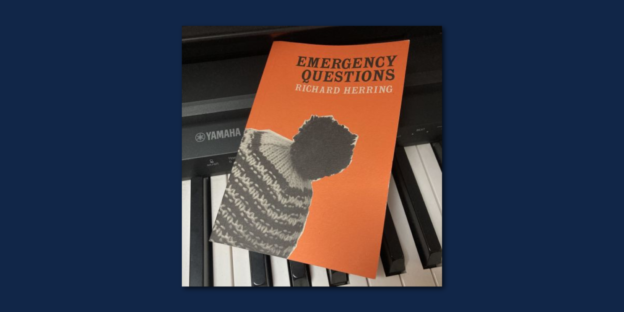
Listen to Luke and James talking about various topics as we answer questions from the book “Emergency Questions” by comedian Richard Herring. Text video and full transcript available.

[DOWNLOAD]

Download Full Transcript

Text Video Version

LEP Premium – https://www.teacherluke.co.uk/premiuminfo

Song – The Urban Spaceman by Bonzo Dog Doo Dah Band

https://songmeanings.com/songs/view/3530822107858579321/

701. Legal English with Louise Kulbicki

Discussing some of the most important terms and concepts in legal English, while also learning about key cases through some amusing stories, with legal English trainer Louise Kulbicki.

Small Donate Button

[DOWNLOAD]

Download Episode Transcript

https://teacherluke.co.uk/wp-content/uploads/2021/01/701.-Legal-English-with-Louise-Kulbicki-PDF-Transcript.pdf

Text Video Version

Uploading soon… here www.youtube.com/lukesenglishpodcast

700. Marooned With My Music: Luke Thompson

Guest host Oli Thompson interviews Luke using a classic format from BBC Radio. Luke is going to be marooned on a desert island but he is allowed to bring 8 pieces of music, one book and a luxury item. For episode 700 this is a chance to get to know Luke and his musical choices a little better. (Transcript and text video versions available)

Small Donate Button

[DOWNLOAD]

Download 100% Transcript

Text Video Version

My 8 Musical Choices

The Return of the Los Palmas 7 by Madness

Cheese & Onions by The Rutles

We’ve Got Johnny Wells by Booker T & The MGs

And Your Bird Can Sing by The Beatles

To Each His Own by Patrice Rushen

Tone Twilight Zone by Cornelius

Bach Cello Concerto in G Major (Yo Yo Ma)

Rule My World by Kings of Convenience

Full Spotify Playlist including loads of music I couldn’t choose as part of my 8 pieces

698. Paul is on the Podcast / Random Questions with Paul Taylor

Paul Taylor joins me for some random questions and challenges, including various little discussion points, accents, citizenship test questions, idioms, jokes and more.

Small Donate Button

[DOWNLOAD]

Links, Notes, etc

Happy Hour Live with Paul Taylor (with Luke Thompson)

UK Swearing / Road Rage compilation

695. Pronunciation, Pragmatics & Procrastination with Emma

Talking to Emma from YouTube channel Pronunciation with Emma about accents, improving your pronunciation, understanding pragmatics in English, and learning English through video games.

Small Donate Button

[DOWNLOAD]

Introduction & Ending Transcripts

Hi listeners, welcome to the podcast. It’s mid December and Christmas is coming very soon. I hope I find you well and in good spirits. You might be wondering about the competition results after having voted for your favourite candidates. Thank you if you did vote, that’s fantastic. I’ll be revealing the results on the podcast soon when I’ve worked out the specifics of how to proceed with the competition. Once I have worked out the details of the next step I will let you know all the results. 

This episode is sponsored by LEP Premium. Go to teacherluke.co.uk/premiuminfo to get the details. Regular lessons with language teaching, memory tests for target language and pronunciation drills to work on your speaking, with plenty of stupid examples, nonsense fun and impressions too. Series 27 is currently being produced and you can expect to get episodes 3-8 in the next few weeks. teacherluke.co.uk/premiuminfo for all the details.

697. Pronunciation, Pragmatics & Procrastination with Emma

Hello listeners,

Welcome to episode 695 which is called “Pronunciation, Pragmatics and Procrastination with Emma” which is quite a mouthful isn’t it? 

Can you say it? Pronunciation, Pragmatics and Procrastination. 

What does this mean exactly? I’m going to tell you in this introduction.

What you’re going to hear is another conversation with a new guest on the podcast. I’ve had lots of guests on the podcast in the last few months. Here’s another one.

This time it’s Emma from the YouTube channel Pronunciation with Emma.

So, what can I say now to set up this conversation for you, and help you to enjoy it and learn from it as much as possible?

Emma is an English teacher with lots of qualifications – in language teaching and linguistics, as you will hear. 

Pronunciation

The pronunciation part is that in her YouTube videos she focuses on helping learners of English improve their knowledge and use of natural English pronunciation – you know, all the different features that make up natural English speech, including things like the specific vowel sounds & consonant sounds, sentence stress, word stress, intonation, elision, connected speech, and so on. 

Emma is particularly interested in pronunciation as it is one of the things that she focused on during her university studies.

So we talk about pronunciation as you might expect, with some bits about different accents and the question of what kind of pronunciation learners of English should aim for, and what kind of accent teachers should present to learners of English. 

Pragmatics

Another thing Emma focused on at university was the linguistic area of pragmatics. When we think about language, we usually analyse it in terms of grammar, vocabulary or pronunciation, but pragmatics is also a very important thing to consider. 

David Crystal says it’s actually the most important factor to consider when looking at how language works. 

According to David Crystal, pragmatics is the study of the choices you make when you use language, the reasons for those choices and effects that those choices convey. That’s a bit abstract at this point, but we do get into some examples during the conversation, examples like how to phrase requests in English, and how different types of requests can give a different impression on the people you are talking to. Or more simply, how certain requests can make you seem more or less rude. 

For example, what’s the difference between these things? And let’s imagine you’re on an aeroplane and the flight attendant wants you to put your bag under your chair. What’s the difference between making that request in these different ways? 

Put your bag under your chair” and “Please put your bag under your chair” and “Can you put your bag under your chair?” and “Could you put your bag under your chair, please?” and “Could you just pop your bag under your chair for me please, thanks.” 

That could also apply to the way people use English when requesting things from me, in comments or emails, for example, as I discussed in a recent episode, if you remember, and if you don’t remember too.

So that’s the bit about pragmatics. 

But this episode is called “Pronunciation, Pragmatics and Procrastination with Emma”. I’ve mentioned the pronunciation and the pragmatics, so what about the procrastination part? 

Procrastination

Well, this relates to Emma’s other online English teaching channel – Procrastination with Emma, which is on Twitch.tv. Basically, Emma also does Twitch live-streams in which she plays computer games and helps people with their English while she’s doing it.

As you may know, procrastination means putting off doing other things which you have to do by wasting time doing something else. Like, for example if you have some important work to do, but you don’t want to do it for some reason, so you end up telling yourself you’ll do it later and then doing something else instead, essentially wasting your time. How do you procrastinate? Let’s say you’ve got English homework to do, but you end up spending your time playing computer games instead. Is playing computer games a waste of time? Maybe not. Maybe it can help you learn English. That’s the spirit behind Emma’s Twitch.tv gaming channel “Procrastination with Emma”.

So, stuff about accents & pronunciation, stuff about the pragmatics of how we make requests in English, and some stuff about improving your English through computer games. 

Actually those things mostly come up in the second half of this conversation. The first half is spent mainly getting to know Emma, finding out the usual things like where she’s from, what her accent sounds like, how she approaches language learning (because she speaks Spanish and also enjoys learning other languages from scratch) and any tips she has about learning English.

I won’t say much more here, except that I really enjoyed talking to Emma and you should certainly check out her YouTube videos and her live streams on Twitch.

Keep listening all the way through and I will chat to you again at the end of the episode, but now, let’s get started!


Links

Pronunciation with Emma on YouTube (Pronunciation videos) – https://www.youtube.com/channel/UCNfm92h83W2i2ijc5Xwp_IA

Emma’s website (Classes & Courses) – https://pronunciationwithemma.com/

Procrastination with Emma on Twitch (Live streaming/Gaming/English) – https://www.twitch.tv/procrastinationwithemma


Ending

So that was pronunciation, pragmatics and procrastination with Emma from Pronunciation with Emma on YouTube and procrastination with Emma on Twitch. That’s quite a mouthful isn’t it, again!

Right, well I hope you got a lot out of that conversation in various ways including just general knowledge, linguistic knowledge and not to mention specific vocabulary and phrases you might have noticed.

Thanks again to Emma for being a great guest on the show.

So Christmas time is approaching fast.

Normally at Christmas I take a break for a couple of weeks, but since I’m not going back to the UK this year I might continue podcasting. I certainly have a few episodes in the pipeline and they’ll drop over the coming weeks. I might take a break in the new year but we will see.

So, episodes in the pipeline include more conversations with guests on different topics and a returning guest who is a friend of the podcast who we haven’t heard from in a while.

Also P27 parts 3-8 are coming with the usual language practise and pronunciation work. Remember all my premium series have a lot of pronunciation drills so you can improve your speaking by simply repeating after me, paying attention to certain little language features as we go. www.teacherluke.co.uk/premiuminfo

In terms of the competition. Thank you to those of you who voted. As I said before, voting is closed now and I am working on the next stage in which I will announce the winner or winners and then the next steps for things like interviews, which will probably happen in the new year.

So hold tight for the results of the competition, and thanks for voting.

That’s all I have to say at this point except that I hope you are well. Please stay safe, stay positive, be excellent to each other and I will speak to you again soon, but for now, goodbye…

691. Jerome Butler – Dialect Coach

How do professional actors change the way they speak for different acting roles? What can learners of English take from the way actors do this, in order to apply it to their language learning? In this conversation I speak to Jerome Butler who is a very experienced dialect coach working in the TV and film industry in the USA, and we discuss these questions.

Small Donate Button

[DOWNLOAD]

Photo by Alison Cohen Rosa https://www.alisoncohenrosa.com/

Introduction Transcript

Hi folks, I just wanted to let you know that I’ve been working on the WISBOLEP competition and it is coming soon. I’ll let you know exactly what I’ve decided, I will play you recordings from listeners and you’ll be able to vote and we’re going to find a LEPster to be interviewed on the podcast. So the next installment of Why I Should Be On LEP is coming soon.

Also some premium content is coming. Just a reminder that I recently uploaded a 28-minute video of one of my comedy shows. It’s me doing stand-up comedy in London a couple of years ago. I’d been holding on to that video for a while, but I finally decided it was time to publish it considering I’m not doing any gigs at the moment and I’m not sure when I will be able to. So, premium subscribers – check it out, as well as all the pronunciation videos I’ve uploaded and at least 100 premium episodes. teacherluke.co.uk/premiuminfo if you want to sign up or know more.

Also you can expect more free episodes, including the next WISBOLEP episode and more conversations with guests. 

I’ve been doing a lot of interviews recently as you’ve probably noticed. It’s been a really good run of guests that we have never heard before on the podcast, but I will go back to the old favourites soon enough, with hopefully Amber & Paul making a return and an episode of Gill’s Book Club – the book in question will be 1, 2, 3, 4: The Beatles in Time by Craig Brown – an interesting, recent book which explores the story of the Beatles in various interesting ways. We’ll be doing that in the new year because I’m getting it for Christmas and I’ll need a chance to read it. I think it will basically be a chance for me to talk about The Beatles with my mum and she was a huge fan back in the Beatlemania days and saw them live twice. So, you might want to get that – 1, 2, 3, 4 by Craig Brown. Anyway, onto this episode and this one is all about pronunciation, so get ready to think about accents and changing the way you speak. It goes quite nicely with other episodes like the recent one I did about Key Features of English Accents (682). So the question is, how can you change your accent? Let’s ask a dialect coach.

Jingle —

Jerome Butler – Dialect Coach 

Hello everyone – here is an episode all about accents and dialects and specifically how to convincingly sound like you come from a different place, with a different accent. 

You’re going to hear me in conversation with Jerome Butler who is a dialect coach. Jerome works with actors who need to change the way they speak. 

To give you an example of what this means, let’s say I’m an actor from England, and I’ve got a part in a TV show that takes place in the USA in a southern state. Perhaps the film is set in Atlanta or something like that (like in The Walking Dead perhaps) and the character I’m playing was born and grew up in that area, and so I need to change my RP English accent to a general Southern accent from the USA for the filming of the show. 

How can I do it? How can I change my voice? How can I consistently speak like I am from a southern state in the USA? Well, I would need a dialect coach, and that is what Jerome does. 

Actually, having to change your accent is quite common for actors in the English language TV and film industry. There are loads of famous actors who have successfully changed the way they speak for different roles. I mentioned The Walking Dead before and it is quite a good example – so many of the actors in that show are from the UK but they sound like they could come from Georgia or a neighbouring state. No doubt those actors worked closely with dialect coaches like Jerome. 

And it’s not just British actors working in the USA, it’s anyone who normally speaks in one way and needs to learn to speak in another way, and remember the English language is so diverse in terms of accents and dialects across different parts of the world that it’s very common for actors to have to make this kind of change in their work.

Now, talking to Jerome about this is actually a great opportunity for us to listen to someone who has a lot of experience and expertise in helping people change their accents. He’s been doing it for years now and has worked on loads of different film and TV projects and with loads of different actors from different parts of the world. Jerome is amazing actually, and we’re really lucky to have him on the podcast. I really enjoyed talking to him and it was very interesting to find out the specifics of what he does in his job.

For you as learners of English this should be particularly interesting, because the whole point of this conversation is to answer two questions really:

  • How can actors change their accents and dialects for different roles?
  • What can learners of English take from the way actors do this, in order to apply it to their language learning?

How can you change your accent?

It’s quite a complicated question as you can expect – it involves many linguistic factors and a lot of work. In just a one-hour conversation we can’t give you all the answers of course. It’s a complex and very personal process, but at least we can get a sort of window into that process by listening to what Jerome has to say.

Let me tell you a bit about Jerome’s CV before we listen to him talking, just so you get an idea of who you are listening to.

Jerome Butler has had a really diverse career working for over 25 years in acting, teaching and dialect coaching. He graduated from The Juilliard School which is one of the most prestigious acting and performance art schools in the USA. Loads of great actors went there, including well-known people like Adam Driver, Jessica Chastain, Oscar Isaacs, Anthony Mackie, Robin Williams and plenty of others.

He’s done various acting roles in theatre, TV and film productions even including episodes of Star Trek Voyager and ER but the majority of the work he has done in the industry is that of a dialect coach and if you look at his IMDB page the list just goes on and on, working on various productions with various performers including names you might recognise, like Emily Mortimer, Tom Hardy, Gerard Butler, Robert Downey Jr., Jonathan Pryce, and Chiwetel Ejiofor. Impressive, most impressive.

OK so I just dropped a bunch of names on you there, but this episode is not a celebrity gossip type thing. It’s not about that. I’m not asking him to tell us what Robert Downey Jnr is really like. I just wanted to let you know that Jerome is a proper, professional dialect coach who has lots of real industry experience, so he knows what he is talking about.

He’s also taught classes at universities like MIT and has been involved in an artistic rehabilitation program in the California prison system. That’s quite a glittering and diverse CV, and of course now he has reached the high point of his professional career – appearing in an episode of Luke’s English Podcast. Haha. 

In this conversation we start by talking about the work he does and what it involves, and the conversation gets more and more specific as it goes, as we try to understand what he does and relate it to your learning of English.

Now, I would also like to say that I think as a learner of English, the decision to change your accent or perhaps I should say the decision to try to sound exactly like a native speaker of English is completely up to you but in the EFL/ESL community this is actually quite a contentious issue. Should learners of English aim to or expect to ultimately sound exactly like native English speakers? People seem to disagree about it. 

Even now I can sense, using my jedi force abilities that some of you are saying “yes we should try to sound like native speakers!” whereas others are saying “no, we shouldn’t” and probably most of you are saying “I don’t really know Luke, I haven’t made up my mind!” and a couple of you are saying “Sorry, what was the question?” 

Let me repeat it.

Should learners of English spend time and effort on trying to sound exactly like native speakers? Should we all aim for “native level speech” as our ultimate goal? Or is it better to keep your accent when you speak English because this is all part of who you are and it’s perhaps even damaging to set such high standards? 

These are questions that are often discussed and people continue to disagree on the answers. 

To an extent it is a question of personal choice – people can do whatever they like and if sounding like a native speaker is your personal goal, then fine. Some people manage to do it really well. 

One thing’s for sure – nobody can argue against the importance of intelligibility – being understandable and clear, but exactly who you should sound like seems to be up to you.

But anyway,  I felt I should mention this whole argument in the introduction here, and Jerome mentions it too before going on to describe the specifics of how someone could shift their accent.

Also keep listening to hear Jerome start training me to speak in that southern American accent that I mentioned earlier. Can he help me learn to speak like I’m in The Walking Dead and I’m from a southern state like Georgia or Tennessee or South Carolina or maybe even Alabama?

OK, I will talk to you again at the end in order to recap and sum up some of the main points that are made in this conversation. But now, let’s start this conversation with me in Paris and Jerome Butler across the Atlantic in New York City.

————————–

Ending Transcript

So, that was dialect coach Jerome Butler. Thank you again to Jerome for all that information he gave us.

So, for me that was fascinating and also reassuring to know that Jermoe uses more or less the same methods and approaches in the TV and film industries as I use in my English teaching. I think Jerome gave us some really valuable insights into how people can change their accents. As I said before, this is a huge and complex subject so we only scratched the surface here. 

If you’d like to know more from Jerome and use the tools he mentioned then visit his website, which is https://dialectcoachescorner.com/ You can create a free profile there and then start exploring and practising. It is for a general American English accent though, as Jerome pointed out.

Let me now just recap and sum up the main bits of advice in that conversation. If you found it a bit difficult to follow or to pick out all the specifics, this summary should help.

Summarising Advice from this conversation

Learn the phonemic script because it will help you become more aware of the different sounds that are used in English. There are apps you can use to do this. Check “Sounds” by Macmillan. This will really help you to identify and then produce specific sounds that are used in English → British English in the case of that. “Sounds” contains various tasks that will help you learn the sounds, practise recognising them, transcribing words phonetically and more. The full name is “Sounds: The Pronunciation App” and the best way to download it is from the Macmillan website https://www.macmillaneducationapps.com/soundspron/ 

Categorise words by the different sounds – for example, what is the vowel sound in the stressed syllable of the word?

You can take all the vowel sounds – monophthongs and diphthongs and consider them to be categories. Try putting different words into those categories.

Vowel sounds would be good. 

Also certain consonant sounds like voiced and unvoiced pairs, TH sounds and so on. Also, -ED endings for regular verbs.

A textbook like Ship or Sheep by Ann Baker can help because in that book all the different vowel sounds are listed chapter by chapter and you can practise recognising, categorising and repeating words with those sounds.

Mechanical practise is important. Repetition is the mother of skill – I think that’s the phrase that Jerome used. It’s reassuring to know this – and he’s a man with a proven track record of results. He knows that to help someone change the way they speak it is a combination of heightening your awareness of the different sounds and how they are made, then mechanical practise with those sounds until they “enter your body” and you acquire the ability to quickly switch between the categories and quickly work out how to say words in the accent you have chosen.

So, again, practise identifying which sound is used – practise categorising words over and over again.

Then practise saying these words by repeating after someone. Again – Ship or Sheep can help because there is an audio CD. Other books or websites may be available.

But there are many things to take into account. It’s not just vowel sounds. If I’d had more time with Jerome we might have got onto other things like intonation, connected speech, elision of sounds, sentence stress, weak forms and all that stuff.

It can be hard to do it on your own so you might also need a personal coach of some kind, like a one to one teacher who can work closely with you.

Let me point you towards Jerome’s website again https://dialectcoachescorner.com/ where you can contact Jerome, create a free account to access all the resources and more. Remember, that is if you are looking for a general American accent, or perhaps more specific regional accents in the USA. For British English, well of course I’d recommend my premium subscription!

So, work with someone, work with resources designed to help you with this.

Alternatively, you can practise simply repeating after someone whose accent you want to copy. 

If you want to copy my accent, you can repeat words and sentences after me. 

Do this either by shadowing – just try to repeat as you listen, or perhaps pause and repeat.

Or you can use the pronunciation drills in my premium episodes, because they are designed to help you repeat after me and I focus my attention on things like sentence stress and other specific features.

Practise practise practise.

Have fun with it too.

But also remember that it is a question of personal choice. Please don’t feel that you have to sound exactly like a native speaker. In my opinion, it is totally fine and reasonable to retain traces of your native language when you speak English. That’s part of who you are. Like Jerome said, perhaps the only reason to completely lose all trace of your first language in your English accent is if you are an actor or a spy. 

Also, I think it requires a lot of time, dedication and effort to work on your accent to the same level as a professional actor. This isn’t always a realistic proposition for learners of English who are also busy in their lives. So, working on being clear is the main thing and if you have a regional accent in English, that’s fine – it’s part of who you are, just like someone from Liverpool has a Liverpool accent, someone from Glasgow has a Glasgow accent, someone from Essex has an Essex accent – you can have an accent from your country, as long as people understand you.

It’s all a question of personal choice at the end of the day – but there it is, I think speaking to Jerome shows us that there are ways of working on the way that you sound, if you are prepared to put in the time and the effort.

I also wonder sometimes if some people are more naturally talented at changing their pronunciation than others, but that is a question I’m not completely able to answer at this moment. What do you think? Do you think some people are naturally better than others at matters of pronunciation?

A Few Expressions in the Episode

My tongue is firmly in my cheek – This just means he’s not being serious. He said calling himself a dialect coach would mean he’d get paid more.

We’re splitting hairs – To split hairs means to make very specific and unnecessary distinctions between things. Jerome could be called an accent coach or a dialect coach and it doesn’t matter – although to be specific, dialect refers to the words and the grammar, and accent refers to the pronunciation.

I’m not going to go into the weeds – This means getting deeply involved in very specific details. He’s not going into all the complex details, he’s just giving us a simple overview.

Links

Here are some of those useful links again