Chatting to Cara Leopold about living in self isolation, the global coronavirus lockdown and how you can work on your English at home using TV shows and films.
Hello ladies and gentlemen of the world, I hope you are doing alright in both body and mind at this particular moment in time.
Welcome to this new episode of my podcast which is here to help you develop your English skills simply by listening to some authentic, unscripted and spontaneous conversation – because we know that regular exposure to spoken English is vital in the learning process, and if listening to this can just keep you company for a while too, then that is an added bonus.
In this episode you’re going to hear a chat with Cara Leopold, an English teacher from the UK currently living on lockdown in the east of France.
Cara has been on this podcast before, two times as you may remember.
The first time was back in episode 523 in which we talked about learning English with films and TV shows.
This time you can hear us chatting about social distancing and being on lockdown during the current coronavirus pandemic, and some more comments about how to improve your English during this period at home using TV series and films.
Yes, there is quite a lot of talking here about the coronavirus. I hope you’re not completely fed up with this topic now. As I’ve said before, I don’t plan to talk about it too much, but I do still want to address the subject a bit, just because it’s on our minds so much and if I ignored it completely it would just end up being the elephant in the room.
Here is a quick rundown of the main points that came up in this conversation, just to help you understand what’s going on.
First we talk about the complex feelings and emotions we’re experiencing during this covid-19 lockdown, including things like anger, guilt, compassion, empathy, helplessness and general feelings of cognitive dissonance as we try to make sense of what’s going on in the world at the moment.
Then we talk about trying to balance the seriousness of the situation with your general mental health on a daily basis. Weighing up the positives and negatives of being stuck inside while the TV news reports on serious events going on around the world every day.
We talk about how much people are following the lockdown rules in our local areas and the vagueness of government positions on those lockdown rules in both France and the UK.
We speculate about Boris Johnson’s cavalier attitude towards social distancing (if you describe someone as ‘cavalier’ it means you’re criticising them for being a bit careless, reckless or not really taking the situation seriously enough) so we talk about Boris Johnson’s cavalier attitude a few weeks ago which resulted in him personally catching the virus.
Breaking news at time of recording: he is now out of intensive care, which seems to be a good sign for his health, even though I expect it might have been touch and go for a while. Of course we wish him well, and anyone else who is suffering at this time.
We discuss the challenge of trying to work out a moral position on all of this, specifically several approaches to dealing with the crisis: social distancing vs herd immunity.
We chat about managing daily life at home, with a 2-year-old child (in my case), and what happens when I leave her unattended for more than 10 minutes.
Then we turn our attention to you and your English – and how you can use online content like TV series and films (for example on Netflix or perhaps on OpenCulture.com) to improve your English at home.
We did cover a lot of that kind of advice in episode 523 – link above.
but I will sum up the main bits of advice we made in that episode at the end of this one, so stay tuned for more comments about how you can use TV series and films to improve your English nearer the end of the chat.
By the way, Cara’s last episode was transcribed by the Orion Transcription team and apparently it was quite a tough transcribing job partly due to the sound quality from Cara’s side of the conversation. I think she may have been in an echoey room or at least a room with lots of flat surfaces around (a kitchen maybe) which caused her voice to be a bit difficult to hear.
So this time Cara made a special effort to create better recording conditions. In fact for the whole conversation she was in a cupboard surrounded by coats – the point being, she was doing her best to get good quality sound. Hopefully she will be a bit clearer this time.
Clarifying Some Reference Points / Vocab
I’d like to clarify a couple of reference points, particularly in the opening minutes of the conversation, to help you follow what we’re saying.
Like an episode of Black Mirror Black Mirror is a TV show which many of you will have seen, but also plenty of you won’t know about it. Episodes of the show typically involve some kind of scary situation, like perhaps a post-apocalyptic world or a world in which certain technology has completely changed our every day lives and not for the better, or it could be life in the context of an environmental or economic crisis or something. But basically “like an episode of Black Mirror” has become a phrase meaning “like we are living in a scary version of the future” or something.
France 3 / BFM –> These are news stations which you get on French TV.
Canal+ –> a TV station / online platform which you have to pay for in France
There are plenty of other reference points and bits of language that I could explain and clarify now but actually I think it’s best to just let you listen to the conversation and simply try to follow it all, notice things as you go, work them out from context and try to find things that you can relate to personally, but in English.
So let’s begin…
Ending
Thanks again to Cara for climbing inside a cupboard and staying there for the duration of our conversation in a bid to improve the sound quality on her side of this conversation. Nice one Cara.
As ever, you can leave your comments on the website. I’m curious where you stand on all of this.
I mentioned before that I would sum up the main points Cara and I made in episode 523 about using TV and films for learning English, with and without subtitles.
I’ve decided to put that into a separate episode, because I think that rather than tacking it onto the end of this conversation it deserves to have a whole episode of its own. Plus there will be people out there who would appreciate having all the advice in one single episode. So that will be the next episode of the podcast – a summary of advice for using Netflix (and other platforms) for improving your English, plus some more specific recommendations for shows and films you can watch.
Cara’s free course on udemy.com “Improve your English Listening Skills with Movie Quotes”
Long term listeners will remember that I have a cousin called Oli who used to be on the podcast quite a lot until he moved to Bristol and I moved to France and we didn’t get the chance to see each other very often. Well he now works for Netflix as a producer at their offices in Los Angeles (I swear I am not sponsored by Netflix!) He moved there a couple of years ago and coincidentally enough I recorded a conversation with him the other day about moving to the USA, what it’s like working for Netflix as a producer and what it’s like to be a Brit living in the USA and communicating with American people every day. That is coming soon. Again, I’m not promoting Netflix – they don’t need me to do that. But anyway, it was a good conversation that covers details of his work and the communication and cultural differences between the UK and USA.
Coronavirus Mini Interviews 1-3 on Zdenek’s English Podcast
If you enjoyed listening to this conversation with Cara, and you enjoy hearing about other people’s experiences of living in lockdown in different countries then I’d like to recommend that you listen to several recent episodes of ZEP including episode 2 which is with me. Links on the page for the episode or just subscribe to Zdenek’s English Podcast.
Episode 1 – Alexander from Russia, Musa from Turkey who is currently living in the UK, Daniel from Switzerland who is also known from My Fluent Podcast, and Daria from Ukraine.
A vocabulary episode with lots of phrases for describing the experience of living in self-isolation. It also includes a bit of a ramble about the situation in the UK, my personal experiences of living in Paris during the lockdown and a song at the end. Vocabulary list & notes available.
Hi everyone, here’s a new episode to keep you company and to help you learn some English that you can use to describe the experience of living in self-isolation. We’ll be looking especially at vocabulary to describe the feelings and emotions that you might be going through during this experience.
Something like 2.5 billion people in the world are in self-isolation at the moment, including me, my wife and our daughter and no doubt many of you too. Not the band.
Some of you out there won’t be in isolation, confined at home or on lockdown, for whatever reason. It depends on the approach that your country is taking to this pandemic.
Maybe you are making personal choices to stay at home even if your government hasn’t imposed it. In the UK for example, the government has only recently imposed it, a week or two late in some people’s opinions. I’m trying not to talk about politics here though, just how it feels to be stuck inside, and as I said – this is mainly a vocabulary episode so I will be talking about expressions like “on lockdown”, “in isolation”, “confinement” and also loads of other things.
In France we are on lockdown and we’re only about a week and a half into it. I’m not sure how long it will go on for. Some people say a couple of weeks, some say it will continue into May, others suggest longer.
If you aren’t sure, being “on lockdown” means being ordered by the government to stay at home for an extended period of time, without a lot of human contact in an attempt to prevent the spread of this virus.
Plenty of countries in the world are on lockdown.
So you might be starved of human contact at this time, or perhaps the opposite. You might be having a bit too much human contact if you are locked up with members of your family, boyfriends, girlfriends, children, flatmates and so on and you’re trying your hardest not to become homicidal under the circumstances.
There are various possibilities in terms of what you might be going through at the moment.
Maybe
You’re just lonely because you’re not used to spending so much time on your own.
You’re frustrated because you can’t stand not being able to do what you want to do (i.e. go out and live normally).
You can’t stand being confined with other people, who you are trying your best to get on with. You might be craving a bit of solitude at this time, just to get away from your family or something.
You are worrying about work.
You are worrying about family and friends who might get the virus, especially those who are in the “at-risk” category (e.g. those with underlying or existing health issues, or elderly people).
Or maybe
You’re strangely enjoying this time.
You are really enjoying having more time to yourself.
You’re managing to do things.
It feels a bit like a stay-at-home holiday, or a “staycation”.
You don’t mind self-isolation. In fact it’s kind of normal for you.
I’m slightly concerned about talking about this, because I am very aware that for some of you out there this is a really hard time and I don’t want to be frivolous about it.
I know that a lot of you are not having a sort of “staycation” (a holiday at home / a vacation in which you stay at home). I mean, this is not a holiday for many of you, but a very difficult and worrying time.
But having said that, I am now going to talk about this a bit.
Here’s the general plan.
In this episode
Teach you some vocabulary to describe isolation, lockdown and the things that might be going through your mind as you experience this – particularly feelings and emotions.
Comment on some recent news about this situation, focusing on the UK mainly again
A couple of corrections from the previous episodes in which I talked about this (651 and 652)
Ramble a little bit about what I’ve been doing these past couple of weeks
1. Vocabulary
I’m not talking about symptoms and health issues. I’ve already done that in episodes 651 and 652.
Basics – Some trending words & phrases
First some basics to describe this situation – words which are trending
Self-isolation To be in self-isolation – “I can’t stand being in self-isolation. It’s doing my head in.” To self isolate – “Boris Jonson has tested positive for COVID-19 and is now self-isolating at home” (more on this later) To isolate yourself (from) – “Those people who are displaying symptoms have been told to stay at home and isolate themselves from other family members.”
Lockdown To be on lockdown – “We are on lockdown. We’ve been on lockdown for a few weeks in Paris.” To be locked down – “Paris is almost completely locked down. You’re only allowed to go out for certain things. You might be stopped by the police and you could face a large fine if you don’t have a written justification for being outside.” The lockdown – “The lockdown is going to last indefinitely”
Confinement To be in confinement – “We’ve been in confinement for nearly 2 weeks now” To be confined at home – “Billions of people around the world are currently confined at home, listening to Luke’s English Podcast and washing their hands.”
Quarantine To be quarantined (keeping a possibly infected person or animal separate from others) “Lots of people have been quarantined at the airport.” To be in quarantine – “They’re currently in quarantine until further notice” To quarantine someone – “If you arrive at immigration, you will be immediately quarantined in an effort to contain the spread of the virus in the country”
Containment To contain the virus – “Visitors to the city have been quarantined in an effort to contain the spread of the virus” The containment of the virus – “We’re confident that the lockdown will result in the containment of the virus.”
Vocabulary to describe this experience – Feelings & Emotions
Words and phrases you might need to talk about what you’re going through (mainly for those of you who are just stuck at home, not the symptoms of the disease)
Bad things
Bad mood / Relationships Bored / boredom
I’m just so bored of being stuck indoors
I’m so sick of this boredom To be at a loose end – “I’m just knocking around the house at a loose end” = bored and with nothing to do Frustrating
It’s frustrating not being able to do what you want to do To be/get frustrated
I’m starting to get frustrated. I need to go outside and get exercise. Depression – “It’s normal to suffer from a bit of depression in conditions like this.” To get depressed – “Try not to get depressed” To feel down – “I must admit I’ve been feeling a bit down today.” It’s getting to me – “It’s getting to me, being locked up. It’s started to get to me.”
It’s starting to get to me To be locked up (with) someone – “I’m not sure I can face being locked up with my family for another 6 weeks!” To irritate someone / To annoy someone / To get on someone’s nerves To be irritating / to be annoying
“Could you use headphones while you’re gaming? It’s just really starting to irritate me.”
“The neighbours have their TV on really loud. It’s so annoying!”
“The sound of them talking is really starting to get on my nerves now” To be at each other’s throats – “They were at each other’s throats after just 3 days!” Familiarity breeds contempt To have enough of someone/something – “I’ve had enough of this. I’m going out.” To be fed up with someone/something – “I’m just so fed up with being stuck indoors all day” To miss people – “I’m missing my friends” To be / To feel cut off (from) someone – “It’s quite hard feeling cut off from my normal circle of friends”
Mental issues / Struggling to deal with the situation I’m struggling to cope = I am finding it difficult to deal with this situation, i.e. I am mentally struggling. I’m feeling upset, emotional, depressed, unable to do anything.
This is like Groundhog Day = A film in which Bill Murray repeats the same day again and again
How am I going to get through this? – to get through something means to progress from start to finish. To be able to move from the start of the experience to the end of the experience without stopping or failing. To get through a tunnel. To get through an experience. To be overwhelmed by fears / doubts / worries – “Try not to let yourself get overwhelmed by fears / doubts / worries” (e.g. about the knock-on effects on the economy, or even more paranoid thoughts about what’s really going on) To get carried away / To let your mind get carried away – “You’re getting carried away. I don’t think things are that bad.” Try not to think too much – “Look, don’t think too much. Try not to think too much. Just take it one day at a time.” To feel paranoid – “I started feeling a bit paranoid the other day when I was outside.” To feel anxious – “It’s easy to feel anxious in this situation” Nervous vs stressed vs annoyed vs angry Try not to worry Don’t panic! Don’t freak out Panic buying – “You see footage on the news of people panic buying toilet roll and pasta. Apparently these are the two most essential things for us. Eating pasta and then wiping our arses when we poo it out.” [?]
Going mad To climb the walls – “My teenage kids are climbing the walls, almost literally” To lose it – “Any more time spent in this room and I’m just going to lose it.” He’s lost it – “Uh oh, Luke’s lost it.” To lose your mind – “I feel like I’m slowly losing my mind.”
Locked in To go stir crazy – “I’m going a bit stir crazy to be honest” = feeling upset, angry, emotional, mad, mentally unwell because you are locked in somewhere, like if you were in prison. (in the 19th century “stir” was a nickname for prison, or specifically Newgate Prison in London, but now it refers to any situation in which you are cooped up)
I’m getting cabin fever To be cooped up = to be locked inside, like you’re a chicken in a chicken coop. “I can’t stand being cooped up all day”. Feeling claustrophobic Feeling trapped To be stuck indoors Stuck (past of stick) To be stuck somewhere – “I’m stuck at home” “They’re stuck in Morocco” “He got stuck in his car for hours” “I was stuck to the TV watching the news for 9 hours.” To be stuck indoors – “I’m stuck indoors and it sucks.”
Others
My hands are chapped – “Have you got any moisturiser? My hands are so chapped from constantly washing them.”
On the front line – to be on the front line means to be doing the hardest and most important work. It was originally used to talk about soldiers in a war, specifically those people who are on the front line of the conflict, facing the enemy and fighting with them directly. This is the first meaning, but these days it is used to refer to the people who are doing the hardest and most important work in any situation.
In the past, working in a language school I have heard people talking about the teachers being the ones who are on the front line, meaning they are the ones who face the clients in the form of students in class, so if the students are unhappy for whatever reason, it’s the teachers who have to deal with that directly, rather than the marketing people, the management, the agents etc.
At the moment this phrase is being used a lot for those people who are working in hospitals, so health workers, doctors, nurses, paramedics and so on. In fact these are the real heroes of the moment.
Any of the negative things I’m mentioning in this episode, including all the boredom, the friction with those you live with, the fears about work, the frustrations and isolation – none of it compares to the struggles, risks and sheer exhaustion of those working on the front line of this situation.
Every evening here in Paris at 8pm people open their windows or go out onto their balconies in order to applaud together as a public display of gratitude for all the health workers who are working on the front line. It’s started happening across the UK as well, and I’m sure it’s the same in many other countries.
And I’d like to echo that. Thank you, if you are a health worker or if you’re involved directly in the fight against this fucking virus. Thank you. (applause)
Oh and by the way, we will beat this. It’s not the end of the world.
Positives
This could be a chance for you to do things Every cloud has a silver lining
Spending a lot more time together Quality time To spend quality time with someone Toreconnect with your family Reconnecting with family To catch up on things
Finally catch up on things you’ve been meaning to do for a while
My friend Vanessa on FB shared this
“Day 9 of lockdown My inner Emily Dickinson is loving this (Emily Dickinson was an American poet who was very withdrawn, introverted and reclusive) I’ve never felt less pressure to go out or accomplish anything. I’m loving the mandated family time. My around-the-world loved ones actually have time to write back to me, quickly! The air quality is the best it’s been in 40 years. There have been no traffic jams, nor annoying honking out my window. The sun shines against a beautiful blue sky. I’m thankful the tragedy of losing someone to covid has not yet become a reality for me. What are you lockdown silver linings? Tell me ⬇️”
Not having to wear a bra to go to work. Lol.
Taking care of your mental health
https://www.mind.org.uk/information-support/coronavirus-and-your-wellbeing/
Try to stay optimistic Focus on the positives
If you’re with other people, just accept that there will be friction. Work on being generous if you can. Keep to a routine Keep active Get as much sunshine and fresh air as possible Keep your mind stimulated Focus on a hobby Meditate Do yoga Play music Read and write Write a diary. Pour out your thoughts into the diary. It can be very rewarding. Cross things off your to-do list To binge watch TV series
To binge listen to podcasts / audiobooks To binge on something To spend time doing something To daydream To let your mind wander
The next episode of Gill’s Book Club:
A Gentleman in Moscow by Amor Towles
Coming in a couple of months I expect
2. Some of the recent news in the UK at the time of recording this
Since I spoke to my Dad in episode 652 and we talked about how the UK government had been pursuing a plan of herd immunity, which basically means → don’t make people stay at home, don’t close restaurants, pubs, gyms and other places (don’t put the country on lockdown) just let everyone get the virus, let every become immune and so what if some people die, at least the economy will be ok.
*I’d like to add a point here after having listened to the recent episode of the Adam Buxton Podcast with Dr Xand Van Tulleken in which they talk about lots of things relating to the situation (I highly recommend it) and I just wanted to add that actually it’s really hard to calculate the human cost of either the coronavirus or the effects of the containment measures. Which will kill more people or cause more suffering? The virus itself or the knock-on effects of all these containment measures and the impact they will have on the economy and also on people’s lives? It’s hard to balance the two things…
Anyway, let’s carry on*
Since then, the government has changed its position and has put the country on lockdown but it was only imposed at the start of this week. Probably a bit late.
I’ll have to talk to my Dad again about this to go into more detail about what’s going on in the UK, although I don’t want to overload you all with coronavirus content.
Also there’s the fact that Prince Charles has tested positive for the coronavirus and today so has Boris Johnson, and you might want to know what I think about those things.
Prince Charles has tested positive for the coronavirus. This doesn’t mean he likes it, it means he’s got it. What do I think? Well, I wish him well of course, like anyone who’s got this. He is in the at-risk category being 71, but apparently his symptoms are fairly mild. I expect he’s got excellent medical care so he’ll probably be alright.
I reckon most people when hearing the news just thought “But what about the Queen, is the Queen OK?” because if the Queen got it that would be very bad news. She’s got good medical care too of course, but still, she’s 93. We know that when The Queen dies it will be so significant that the country will definitely change. It’ll signify the end of an era, there will be national mourning on an unprecedented scale, not necessarily because everyone loves her, but just because she is such a significant figure and one of the only symbols of national unity that we have left. I say national unity, I suppose I mean continuity in the sense that she has been a constant thing for decades, while so many other things have changed and I think the whole of the UK gets some sense of security from that sense of continuity. It’s a complex situation and of course there are various opinions on the monarchy, including many who think that it’s an outdated institution and represents inequality and privilege in society, but still, it’ll be a hugely significant moment when she does die, and the country will grind to a halt (again) for days, with public holidays and various other things happening. So, if she died during this coronavirus lockdown that would be devastating.
And if she got it, died and everyone thought that Charles had given it to her, they’d chop his head off! Obviously they wouldn’t, I’m joking, but let’s just say that the knives would be out (an expression) and it would be extremely bad for his popularity which is already quite shaky. Anyway, this isn’t about the monarchy!
Boris Johnson has tested positive for it too. Apparently he has mild symptoms and is staying at home, working from home. Ironically so does the health secretary Matt Hancock. To be honest, it’s no surprise because until about a week ago the government’s position on this whole thing was to just let everyone get infected, let the population develop herd immunity it’s no big deal really, and if loads of elderly people die and the NHS collapses under the pressure then never mind we’ll just keep calm and carry on.
In fact Boris was bragging only recently during a press-conference about how he had met loads of coronavirus sufferers in hospitals and how he’d shaken their hands and he was shaking everyone’s hands. I expect he is eating his words now. What’s perhaps more serious and shocking is how irresponsible he’s been. Sure, he’s got it now which a) doesn’t help him or the country, or his pregnant girlfriend but also b) he’s possibly spread the virus to loads of other people, potentially thousands (due to the way the virus spreads exponentially) → so congratulations Boris, you have directly helped to make the situation much much worse than it could have been.
Here he is, talking about it in that press conference.
I said that flu was a form of coronavirus. Apparently that’s not true. Coronavirus and flu are totally different, and while flu is a killer, Coronavirus is potentially a much bigger killer, because of the way it spreads.
And for those people out there saying “Flu kills more people per year than Coronavirus, what’s all the fuss about?” here’s a clip of stand up comedian Nico Yearwood talking about it on stage before the lockdown when the comedy clubs were still open.
— Nico Yearwood | Bajan Comedian (@neeksman) March 14, 2020
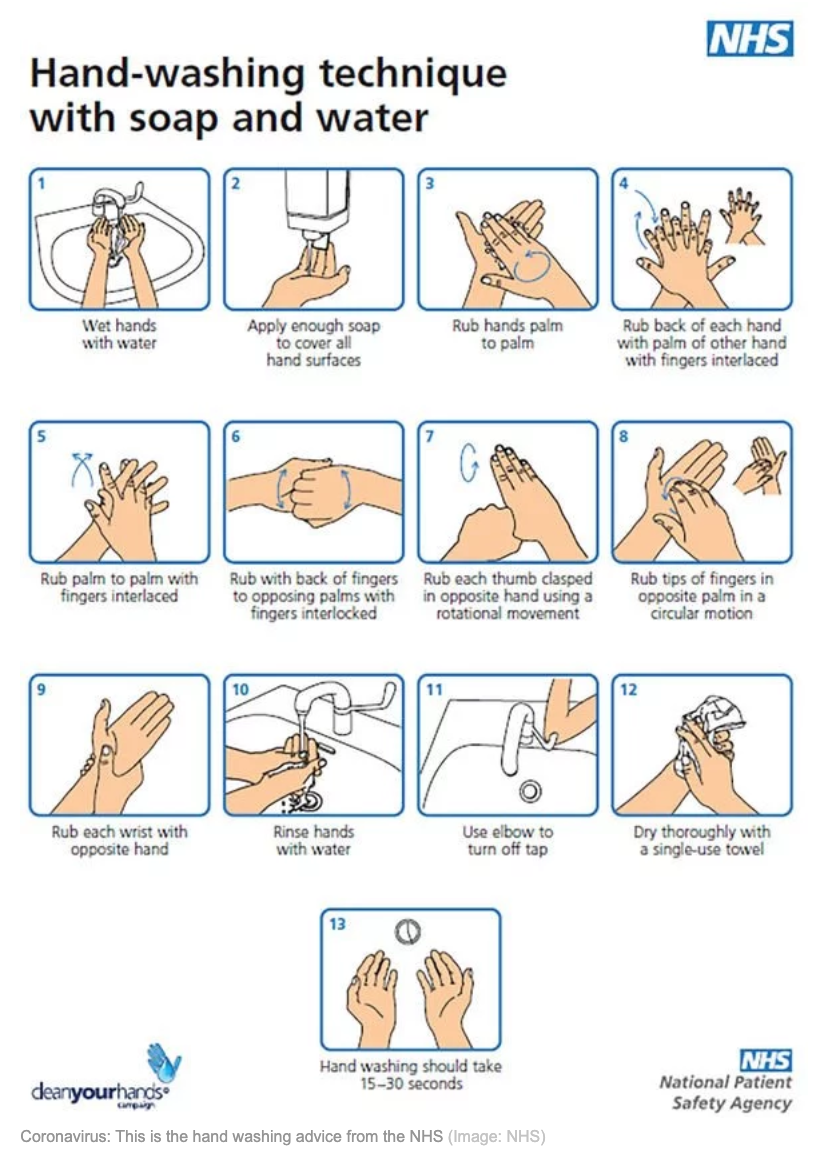
I accidentally said that we should be washing our hands for 20 minutes. Obviously that was just a slip and I meant to say 20 seconds. (We corrected that in the RT report)
I also said that masks don’t stop you from getting the virus. I realise now that I had almost no actual evidence to back that up. It turns out there are several types of mask and some are more effective at protecting you from this than others.
Disposable face masks vs N95 respirator masks
CNET.com Disposable face masks block large particles from entering your mouth (which I suppose means that small droplets containing the virus might still be able to get in, and anyway you can probably still get infected through the eyes and ears too, potentially – but maybe these disposable masks can help prevent you spreading it around),
So that’s the disposable face masks. Then the more tight-fitting N95 respirator masks are far more effective at shielding you from airborne illnesses. Those are the ones with the filters fitted in the front.
Both of these masks could potentially help protect you from getting a viral infection, but US government officials have emphasized that the American public should not purchase face masks to prevent themselves from getting infected. Instead, only people who are displaying symptoms of coronavirus should wear masks to prevent the spread of the disease to others.
Apparently the N95 masks are much harder to find than the standard disposable ones.
ADDITIONAL (added after recording – this doesn’t appear in the episode)
I have just been sent this video on Twitter. The message is clear. It’s better to be safe than sorry. Masks help to prevent the spread of the virus. They might not be perfect, but they’re better than nothing. In the Czech Republic they seem to have been very successful in containing the spread of the virus.
4. Personal experiences of lockdown / self-isolation with a 2-year-old child
Some details about what we’re doing and some of the challenges we’re facing
France has been on full lockdown for nearly 2 weeks now. Almost everything is closed except certain shops selling “essential items” –> note that the wine shops and cheese shops are very much open in our area :)
My daughter isn’t going to creche so we have to look after her all the time. That’s great but also exhausting. I’m not complaining, we knew what we were doing when we created her, so, you know, it’s our fault. Anyway, the thing is, it takes a lot of time and all that, and my wife and I have work to do but it’s not bad, we divide the day and I look after her in the morning and in the afternoon it’s the other way around.
I still teach classes for the British Council but now they are happening on Zoom – the videoconferencing platform. Actually, Zoom are doing pretty well out of this, aren’t they? I had just a few hours to learn how to use the platform but it’s pretty good. It’s not as good as teaching in real life, but it’s not bad. → Talk a bit about teaching on Zoom.
One thing I thought the other day is that this crisis is going to force us to change and will be a driver of change in various ways. Certainly we’re all becoming a lot more familiar with videoconferencing and I think a lot of employers and employees will realise that working from home is really doable and will become more and more normal.
Let me now talk about going outside and staying indoors. Most of our time is spent indoors of course, but we do go outside from time to time.
Going outside
Feeling a bit guilty and also a bit nervous (don’t want to catch the virus, but don’t want to spread it), but going outside is vital for our mental and physical health.
Strict instructions from the government, which we are trying to comply with.
People are getting pretty angry about this on social media.
Only going outside for a bit of exercise, staying max 1km from our home.
Only ever just one of us, or one of us with our daughter.
We just walk around the block, choosing quiet streets, crossing the road to avoid people etc.
It’s like a ghost town
It’s quite eerie
It’s also quite peaceful and wonderful
Paris is a very beautiful city and usually it’s very busy and stressful. Not at the moment. Well, not busy anyway.
The weather has been fantastic, which makes this much easier to deal with.
But it’s also a dirty place, like most inner-city areas.
Rubbish and also general uncleanliness.
I wonder what condition the place will be in after weeks of this. Are the streets usually this dirty or is it just more obvious now?
Rubbish on the floor, dog poo not cleaned up.
I’m teaching my daughter to count and we often count things we see in the street. She now counts the dog poo. There’s nothing I can do about it. At least she knows she should avoid it. (I’m still not sure if there is a taboo about talking about this in Paris, which would be odd. Surely the taboo would be to let your dog do it and then not clean it up.)
Actually, I think Paris is always like that!
Anyway, let’s not dwell on it too long.
Some shops are open – those ones for essential food, supermarkets, boulangeries (bakeries), cheese shops. Yep, I live in Paris!
Queues are more orderly. There are lines on the ground. People know that they have to stay at least 1m away from each other. There’s more politeness actually.
Not touching anything.
Getting our daughter to run while holding my hand.
Jumping onto manhole covers.
Looking into the windows of guitar shops.
Spotting things in the street and counting them.
Staying in
The main challenge for us is: keeping our daughter busy, keeping up her education (even though she’s just two and 3 months), limiting screen time, maintaining our mental health – I mean just trying to stay in a good mood, getting enough physical exercise for all of us but especially the little one, managing to get work done and also keeping in touch with friends and family. I feel like we’re only partly successful in all areas.
Yoga for kids
Reading, reading, reading
Using a pre-school app on the ipad
Worrying about screen time
Playing games for numbers, colours
Listening to music
Limiting screen time
Speaking a lot more English
Showering together
Washing hands and singing happy birthday to celebrities
Overall → things are really not that bad for us at all. We are incredibly lucky.
For some others this might be an impossible time.
Some people have been laid off
Some people who are self-employed are unable to do their work
Some people will be unable to feed their kids because schools are closed (and they rely on those schools to provide a decent meal once a day)
A lot of people will have lost money
Some people will be worried about loved ones who are in vulnerable positions
And of course some people will be sick with the coronavirus and feeling terrible, wondering if they should go to hospital etc.
Hello ladies and gentlemen, here is an episode about the coronavirus (also known as COVID-19), which is the #1 story in the news around the world at the moment. It’s something that we are all facing; me, you, everyone.
In this episode the plan is to;
a) Talk a little bit about the situation where I live and how this might affect me, my family and the podcast.
b) Go through a list of vocabulary items in order to help you learn the right words you need to talk about this situation in English. This will contain various medial words, and also general words being used day to day by people talking about this situation.
c) Go through some language to describe “how to wash your hands”. That’s not public health advice, it’s just quite interesting from a language point of view. How do you describe the process of washing your hands correctly? It’s something many of us are doing, and talking about a lot at the moment. How do you describe it in English?
So, a bit of a ramble and then lots of key vocabulary.
Let’s get started.
I wasn’t planning to talk about this but the situation has just reached a new stage here in France where I live and also people keep asking me to talk about it.
I’d like to echo the comments of Jurgen Klopp the manager of Liverpool FC, which I briefly mentioned in episode 649.
Essentially he said (and I’m paraphrasing) Why do people ask me to talk about it? I’m a football manager, but in terms of the virus, I am the same as you. I’m just a normal person. People should ask experts, not me. I’m just a guy in a baseball cap who hasn’t shaved properly.
I’m a bit wary of talking about the subject because I’m not an expert on viruses. I’m just an English teacher. I’m happy to talk about my personal experiences of it – meaning, what’s going on here in France where I live or back in the UK, but I really don’t want to spread misinformation. I wouldn’t want to get any of the facts wrong. And there are various important facts that I just don’t know, like specific numbers of infected people, where the virus comes from specifically. I understand that it first infected people in the Wuhan area of China, that it probably originated in bats, then spread to an animal called a pangolin (which I had never heard of before this) and then to humans.
Anyway, I’ll talk more specifically later. The point is, I can only talk about it from my own personal point of view, rather than as a really well-informed commentator. I’m just like most of you, probably. Just trying to work out what is going on day by day. I’m wondering if I’m even qualified to talk about it.
Having said that, I think it’s important to address what’s going on. This podcast is for an international audience and this is very much an international thing. We are all united by the fact that we are now facing this global pandemic.
Also I think that most of you don’t really expect me to talk as an expert. You’re probably just interested in hearing about my personal experiences of the matter and learning some vocab.
There are all sorts of issues and questions to discuss. What’s going on? What is the situation in Europe? Why is this such a big deal? How is the UK government responding to this? What is happening in my life? What is going on around me? How am I dealing with this and in fact how might this affect Luke’s English Podcast over the next month or two?
There’s also the question of how to talk about the coronavirus. I mean, how can you talk about it in English? What kind of language is being used in people’s conversations about this?
So here’s what I’m going to do. At least two episodes which I hope to upload over the next couple of days, as long as I can manage my time correctly. I’m actually recording this one at about 11.40pm on 12 March. It’s nearly my bed time! Don’t worry, I’ll make sure I get enough rest.
So, those two episodes.
A vocabulary episode
A conversation with my dad
This is the vocabulary episode (you’re listening to it now) and the aim is to help you learn and then use the right words and expressions in English to describe this situation.
The next episode should be a Rick Thompson report. I say should because I haven’t actually had that conversation with my dad yet. It’s scheduled to happen tomorrow. If all goes according to plan I’ll talk to Dad about it tomorrow lunchtime and hopefully will upload it tomorrow afternoon or tomorrow evening.
This is quite a time-sensitive subject, so I really want to get both these episodes published as soon as possible.
I would also like to say, in terms of podcast content that I am uploading, that the situation has suddenly become a lot more serious here in France where I live.
The French President Emmanuel Macron this evening made an announcement that schools, universities and childcare centres will be closed for the foreseeable future. The country is on semi-lockdown. I’ll be explaining phrases like “on lockdown” in the main part of this episode.
So, because the daycare centre is closed it means that my wife and I will have to look after our daughter all the time. That’s not bad in itself. I mean, we quite like her. Haha.
But it does mean that suddenly a lot of our time will be taken up by looking after her, finding things to do with her and so on. It’s going to change everything in terms of our daily routines.
Also there’s the fact that we have to stay fit and healthy ourselves. It’s not completely clear to me what the risk is to our health. Apparently my wife, my daughter and I are not the ones who are in the danger zone. Elderly people and sick people are more likely to be seriously affected by this. So, touch wood, we will be alright even if we catch the disease. In fact, we might even have it already but not notice because it hasn’t really taken hold. So, fingers crossed, touch wood, we will still be fit and healthy and I will be physically well enough to podcast as well. The main thing is the disruption to our lives that could be caused by the daycare centre being closed, and potentially other things closing in the future like the public transport system, shops, and other services. We’re not at that stage yet. There are quite a lot of unknowns. I’ll talk more about this tomorrow with Dad, hopefully.
So I have no idea how this will affect LEP. It might disrupt the podcast, meaning that I won’t be able to upload new episodes. But equally, it might not. I have the advantage of being flexible. My wife also works for herself. So we’re planning to share time with our daughter, so for example I will look after her in the morning one day and my wife will work and vice versa. So who knows, it might not affect the podcast too much.
Premium subscribers, you might be looking at your apps and thinking, where’s the new content? Well, I have the first part of the new series ready and I was planning to upload it today but this coronavirus situation has taken over a little bit, mainly in the form of people around the world asking me to talk about it and I get the feeling that this is just something that I have to talk about.
So, the premium series (P21) will come straight away after I’ve done this episode and the next one with my dad. Premium episodes will arrive.
We don’t know how long this situation will last. In terms of the podcast (which is now my main job) I’m going to take it step by step. I might be podcasting in the evenings, maybe at night, when my daughter is sleeping, when she’s with my wife.
What about you? How is the coronavirus affecting life where you are?
There’s a good chance that in your country the situation is a lot more advanced than it is in France and the UK. I have a lot of listeners in China, Japan, Korea and Italy, which have been on lockdown for several weeks now. There may be other places which are now on lockdown too. I wonder how you are coping. Good luck out there! Keep your chin up!
English lacks exactly the right phrase for this. In French they say “Bon courage”. In Japanese it’s “Ganbatte!”. In English we say things like “ best of luck!” “Keep going!” “Keep calm and carry on”.
But really. This will be a tough time for many people out there. It could be very disruptive and hard. Hang in there. My thoughts are with you.
Right, so let’s get into some vocabulary.
What I would like to do is to teach you some key words and phrases for talking about this situation.
Remember I am not an expert. I don’t think you expect me to be, but still it is worth saying. I am sure I have listeners to this podcast who are more specialised than me in this area. I invite you to give your input in the comment section.
I’m trying my best to be as accurate as possible here, focusing on the sort of everyday words and phrases people use in normal life. For example, if you had a conversation with a friend or colleague about this, what language would probably come up? This is the stuff I’d like to talk about here. It’ll also be interesting to see if any of these phrases come up in my conversation with my dad tomorrow.
Dad will also be able to give commentary on the political situation in the UK, including how the UK’s government led by Boris Johnson is responding to this situation.
Right, so vocabulary of the coronavirus!
Full disclosure
Info for this comes from Wikipedia (which includes a full list of information sources), the NHS website and a word list on EnglishClub.com
I am reading some words and definitions from a page on EnglishClub.com, a website that publishes a lot of content for learning English, including vocabulary, grammar, infographics and more. They’re really on the ball because they’ve already published quite an extensive list of words and phrases with definitions and examples. So, I’ve picked out some of those phrases, not that they own the phrases or anything, but because I’m working against the clock here, I will be reading out some of the definitions and example sentences that they’ve added to their list. So, some of these details come from there. It probably doesn’t make that much difference to you, but credit where it’s due: EnglishClub.com
I’ve also added other phrases not in their list which I have noticed a lot.
COVID-19 Vocabulary
Information sources used by EnglishClub.com
Must-Know Vocab For COVID-19 (NPR)
Coronavirus (World Health Organization)
Coronavirus disease 2019 (Wikipedia)
Severe acute respiratory syndrome coronavirus 2 (Wikipedia)
What is the coronavirus disease? (EnglishClub.com)
coronavirus (noun): any one of a large family of viruses that can cause disease in the breathing and eating systems of humans and animals (respiratory and digestive systems). Coronavirus diseases can range from the relatively harmless common cold to more severe and potentially fatal diseases such as SARS (Severe Acute Respiratory Syndrome). Seen through a microscope, coronaviruses appear circular with spikes, like crowns 👑, and are named after the Latin for crown, which is corona. Coronaviruses normally originate in animals and usually cannot be passed to humans. But very occasionally a coronavirus mutates and can then be transmitted from animal to human, and then from human to human. This is how the SARS epidemic started in the early 2000s, for example – Did you know that flu is a coronavirus disease?
COVID-19 (noun): official name for the novel coronavirus disease that emerged in China in 2019. COVID-19 = COronaVIrus Disease-2019. All countries are requested to report any new confirmed case of COVID-19 within 48 hours.
Let’s start by going through the first couple of paragraphs on Wikipedia. I’m just going to read through that and explain things as I go.
All sources referenced here https://en.wikipedia.org/wiki/Coronavirus_disease_2019
Recommended measures to prevent the disease include frequent hand washing, maintaining distance from other people, and not touching one’s face.[24] The use of masks is recommended for those who suspect they have the virus and their caregivers, but mask use is not recommended for the general public.[25][26] There is no vaccine or specific antiviral treatment for COVID-19; management involves treatment of symptoms, supportive care, and experimental measures.[27]
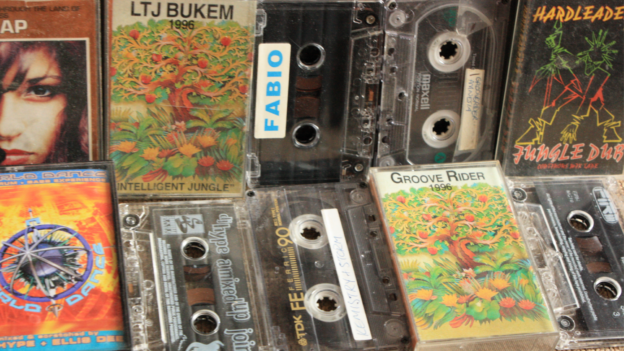
An in-depth episode all about an innovative British form of dance music from the 90s: Jungle (aka Drum & Bass). Includes discussion with James about the origins of the music, how it sounds, its position in UK culture and a few anecdotes too. Notes & music playlists available on the website.
Hello dear listeners, how are you today? I hope you are well. Here is another episode about British Music with James. This one is about jungle – a form of dance music.
We did this one in response to a request from a listener who wrote a comment on the website. While recording the episode we couldn’t remember the name of that listener but I have checked and found his name and his message and it goes like this.
Kirill Hannolainen • 2 months ago (January 2020) Dear Luke, I have already told you how amazing your podcast is in general and how particularly moving those episodes are in which you speak to James about music. They are just brilliant. That’s when the magic happens.
Is there any chance I could suggest a new topic for discussion with James – Electronic music developed in England. I mean your country brought the world irreplaceable genres of music, such as jungle, drum ‘n’ bass, big beat, ambient and stuff like that, and I think these ones are just a few examples. I grew up in the nineties in Saint Petersburg listening to jungle music made by DJ Aphrodite and drum ‘n’ bass provided by Goldie. We had some good times.
Now I’m really into ambient music from the early 1990s – artists such as the Orb, Aphex Twin and the KLF.
I would be over the moon if you could make an episode on this subject. I’m more than sure James and you know a thing or two to tell us about. Thank you in advance.
I’d also like to wish you and your beautiful family Happy New Year! Best wishes for peace and prosperity in 2020.
Thanks Kirill!
We’d been meaning to make an episode about jungle music for a while, even before we got this comment, and James has lots of the old tunes on vinyl. So here it is. This is our attempt to explain this music, where it comes from, what influenced it and more. You’ll also hear little bits of music during this episode, not just jungle music but also other types of music that have inspired it.
You’ll see that this episode is long, but it’s as long as it needed to be for us to cover the subject properly.
The music won’t be for everyone. It’s not to everybody’s taste. I know this is quite a specific topic, but hopefully you can learn things from it and even if you don’t like the music, I hope you can still enjoy listening to the two of us explaining and describing this subject.
This episode is accompanied by detailed notes, links and music on the page for this episode on teacherluke.co.uk, including YouTube videos for almost all the tunes that we talk about, a Spotify playlist and a special jungle mix done by James, especially for you, on his decks using vinyl records in his collection.
We hope you enjoy it. Here we go.
James & Luke start talking together (about 4m30seconds into the episode)
Episode notes used while recording this conversation
THE INTRODUCTION
Hello, we’re going to talk about a British genre of music called Jungle.
What follows is a music documentary of sorts. We will be dipping into James’ vinyl collection as we go through this in order to play you little samples of the music we’re talking about as we continue.
So this is a history of a certain musical genre from England in the 90s: Jungle. Both James and I were really into jungle at that time and it’s also a good example of a uniquely form of British music that doesn’t get talked about much.
The period of time we’re talking about is from around the mid to late eighties to the mid to late nineties, so while the Berlin wall was coming down and so many other changes were going on in the world, this is one of the things that was happening in the UK at the time.
It won’t be for everyone! But I have had requests for this I promise! UK jungle or drum & bass, like UK EDM is pretty big around the world. We usually talk about guitar music on this podcast but this is uniquely British music from a different genre and background.
What is jungle music?
Jungle is a form of dance music that evolved out of the rave scene in the UK (more in a bit) which is personified by fast, intense, looped breakbeats over the top of deep reggae style bass lines with atmospheric sound effects, some vocals (often sampled) and maybe MCing over the top.
Complex drum patterns, and sub bass.
It evolved in the UK in the early to mid 1990s.
It was a really interesting and original new kind of music that was exciting because it kept changing and became really sophisticated and original quite quickly, and went from being a form of music that was considered the lowest of the low to being much more critically accepted by the mainstream.
The music is really intense. We’ll play you some. Listen to this, it’ll blow your socks off.
An example of a jungle track from James’ collection
River Niger – Nookie
When did you get this record? How did it get that scratch? Why have we chosen this one? – Atmosphere – Nice stuff – Heavy stuff – Not an obvious anthem
Why do you want to talk about this on LEP? – Personal connection to it (LEP has always been personal) – Uniquely British (we always talk about British stuff)
It’s not the kind of thing that usually gets talked about and analysed – when you talk about British music from the 90s it’s always Britpop, Blur and Oasis but we weren’t really listening to that. Jungle gets overlooked.
Not understood by the music press originally, which was into guitar music.
They didn’t know how to review it.
Do all British people listen to jungle music? – No
Underground music Criminal music Black music (to an extent)
How did you first get into it? Can you tell the story?
Mystery track (1993/4)
Luke: I heard jungle or rave stuff and always thought it was not for me. It was overheard from cars driven by very dodgy geezers. The compilations were on sale in record shops. It was associated with the slightly scary underground rave scene.
But I was into electronic music like ambient and stuff.
We listened to guitar music and funk from the 70s and Stone Roses and some hip hop.
Matt and Eggy – our friends who were into heavy metal and stuff like that. They were in a car and listened to this tape for a laugh and decided it was amazing and played it to us.
How did we used to get jungle music? How did we have access to it?
Tapes found in small record shops or handed round and copied.
It was mysterious – it was word of mouth, or by discovering them on tapes. You didn’t know what they were called. They were anonymous. It wasn’t like in pop music where there was an image and press, there was really no information about it beyond maybe a weird name.
When/how do you listen to jungle music? – Clubs (although we never really went to the proper jungle and hardcore raves in the early to mid nineties) – Walkman – Travelling – Listening in different contexts (You’re listening to a big rave and you’re on the bus in the countryside, listening in a car with big bass speakers) – DJing – Mixing at home (You need speakers with good bass)
What is the origin of this music?
THE INGREDIENTS
American stuff – techno and hip hop (1980s)
Chicago and Detroit techno, based on Kraftwerk and other influences.
Can you feel it? – Mr Fingers (aka Larry Heard) – Chicago (86)
https://www.youtube.com/watch?v=UeiH9Mm0E5Y
Rhythim is Rhythim (the dance) – Derrick May – Detroit – 1987
NYC hip hop (samples) Run DMC 1990 House Euro techno
DJs in the UK were mixing up everything – techno, hip hop, breakbeats, other obscure stuff, diverse influences
UK hip hop / breaks
20 Seconds to Comply – Silver Bullet (1990) ~including samples from Robocop
Bring Forth The Guillotine – Silver Bullet (B side)
Breakbeats (what are they?) – Luke’s Breakbeat Lecture
A break in the music where the drummer plays alone for a bit – maybe does a solo but probably just keeps the music going. James Brown used them, lots of others too.
Also, musically they are dance beats played with some syncopation.
The drummer uses ghost notes to add extra little beats to help it skip along in a way that you can dance to. I suppose the origins of that skipping breakbeat in funk music goes back to things like jazz, latin influences, R&B and the general shift towards syncopated dance beats that have a pattern which starts and concludes on the first beat of the bar.
Apache – Incredible Bongo Band
Think About It – Lynn Collins
Amen Brother – The Winstons
Hip Hop DJs sampled these drum breaks, often looping them in crude ways with tape machines, or mixing them on decks.
Jungle DJs also created their own breakbeats by chopping them up, and often creating amazingly complex beats that sometimes sound like a jazz drummer chopping it up.
This was the great change that happened in hip hop – where anything and everything became fair game, as long as it had the kind of break that you could rap and dance to, it was ok, with weird stuff being sampled that you wouldn’t expect.
But new music was being made directly using old music. A weird post-modern form of inward cultural appropriation.
V cheap, naive, basic, simple, unsophisticated! (but also great in its own way)
Using samples, early computers like Ataris and Amigas, some hardware like bassline generators or drum machines.
Considered the nasties, lowest, crappiest, low class music listened to by criminals and low level scumbags in cars.
The breakbeat samples get all mixed up – several generations of people sampling and then being sampled.
The sound becomes more and more compressed, The texture changes from speeding it up and adding other drum samples on the top. This was heard in a lot of hip hop and dance music at the time. The same samples being used by everyone and often several samples at the same time.
So in the UK also had a sort of hip hop dance craze that involved sampling breakbeats.
There was also this very nasty music called acid house, rave or hardcore which was very electronic, fast, had some nasty synth sounds and bleepy squidgy noises and stuff. It had an awful reputation. More on that later.
Reggae influence
Also in the UK because of the carribean communities particularly around London and the West Midlands.
Reggae / Dub – deep sub bass, atmospheric sound effects, echo, delay, reverb.
King Tubby – Good Time Dub
https://www.youtube.com/watch?v=IOEcXyD967Y
White Rum – Sly & The Revolutionaries
https://www.youtube.com/watch?v=-ijxB9D0gTY
Scientist mix (1980)
https://www.youtube.com/watch?v=c4XHAZ9hPcs
Reggae sound systems, toasting, MCing, ragga
This was actually hip hop before hip hop. – Big sound systems – Sub bass – MCs toasting over the top of music – People dancing
2nd gen black/carribean kids
Not American – a uniquely UK thing (a multicultural mix)
Eclectic rather than purist
Led by DJs trying to get the right reaction on the dancefloor
Acid / Rave / Hardcore
Jungle came out of a scene called hardcore, which came from rave, which came from acid.
What were raves? Warehouse raves Moral panic Drugs
Generally it was seen as a lawless threat and a disturbance to public peace, and maybe they had a point to an extent.
Before it gained any acceptability it was on the fringes and underground.
Later the raves became legal and took place in clubs and this was all part of how the music became more accepted, ultimately.
1993/1994 – Jungle
Inner City Life – Goldie
This is when jungle started appearing in the mainstream and fully established itself as a genre of music in its own right.
Also there were other forms of music coming from the same origins. It wasn’t a single narrative. (Techno continued, happy hardcore, big beat, “trip hop”, ambient, etc)
Musical differences & features compared to acid, rave, hardcore…
DA FLAVA
What does jungle actually sound like?
What are the distinguishing features, musically?
– 150-170 BPM (James says 168BPM specifically!) – No 4×4 bass drum – Sampled drums from funk records looped and sped up, sometimes re-sequenced and chopped up – Multiple break beats from different samples layered over the top – Gives a sort of jungle feel because – Everything is v compressed, sped up which raises the tone of the drum track – this emphasises the higher frequencies and leaves the mid range quite open and empty and then there are deep sub basslines a bit like reggae basslines – This feeling of space and echo with a deep soft layer at the bottom and a canopy of sound at the top creates this feeling of being in a tropical jungle – quiet a deep and heated atmosphere – like in a rainforest. Sometimes there are the sounds of tropical birds or a drop of water. – Then spacey sounds like synth pads, possibly piano lines, some soulful vocals but plenty of space and sparseness – a bit like in dub reggae – Fast but slow – Fast upper rhythm in double time to a reggae bassline played at half speed – Things come in more slowly with slower patterns – Losing the beat – It can sound like a drum kit falling down the stairs – It might sound like total chaos
What would our Mum think if she listened to it?
Dead Dred – Dred Bass (1994)
Babylon – Splash (1994)
The Spectrum – Wax Doctor (1995)
The Lighter – Sound of the Future
LTJ BUKEM & MC CONRAD “Chrome” Live in Leamington Spa 1995 (this is the tape I used to listen to all the time)
Different types of Jungle
A lot of people disagree about the names etc
Luke: two types → Harder, darker stuff and then the lighter more atmospheric stuff.
Started appearing in adverts and other people’s music
Roni Size win the Mercury Music Prize in 1997 (but it should have been won by Goldie who wasn’t even nominated in 1994)
Heroes – Roni Size (1997)
Little Wonder – David Bowie (1997)
Big DJs and names
– Dillinga – Goldie (didn’t win the Mercury prize in 94) – Grooverider – LTJ Bukem & MC Conrad – Fabio – DJ Rap – Jumping Jack Frost – DJ Hype – DJ Randall – DJ SS – Kenny Ken – Aphrodite Tons of others
Source Direct interview
Ending
I won’t add anything else here really. I don’t want this to be ridiculously long.
All I’ll say is that I sincerely hope you enjoyed this episode. James and I put our heart and soul into this episode so I hope it comes across. It’s a bit ambitious because this music is never going to appeal to everyone, but I hope you’ve got something from this in any case.
If you like some of the things you’ve heard and you’d like to hear more, or if you’d just like to listen again to any of the stuff we’ve been talking about then you should head over to the page for this episode on teacherluke.co.uk where you will find a plethora of music for your ears, including…
YouTube videos or Soundcloud links for almost all the music in this episode – all the tracks, and even some full length mixes
A jungle mix by James, with actual vinyl records (scratches and all) made especially for listeners of this episode (includes some pirate radio MCing by James) uploaded to my Mixcloud page
A Spotify playlist that I’ve made featuring some of the tunes in this episode (it’s called LEP Jungle if you want to find it on Spotify on your phone)
All the notes we used while recording (so you can check some words that you might want to spell)
Thank you for listening, and I’ll speak to you again on the podcast soon.
Spotify playlist for this episode
James’ LEP Jungle mix
For more music mixes (various genres), check out James’ Mixcloud page here
Luke talks on his own without stopping, restarting or editing, including responses to comments about recent episodes, thoughts on the methodology behind this podcast, some vocabulary teaching, a few songs on the guitar and more. This is no-stress episode, and a chance for me to just check in on you and make sure you’re all doing ok out there in the world! 😉
These are just notes and not a full transcript. Some chunks of target vocabulary are highlighted in bold.
In this episode you’re going to hear me talking on my own, which probably means it’s going to be easier to understand and follow what I’m saying than some of the episodes I’ve uploaded recently, because I’ve uploaded some pretty challenging episodes over the last few weeks and months, and years… I try to mix it up a bit, with some challenging ones and some easier ones. Let’s say the easier ones are when I’m on my own and the more challenging ones are when I’m with other people or when we are breaking down recordings of other people.
But this one is just me, and you, because you’re involved. You’re listening aren’t you?
I hope this will come as something of a relief to you, at least to those of you who are pushing yourselves by listening to my podcast, and who might have quite a tough time understanding the more challenging episodes.
I know that some episodes are difficult to follow sometimes, because of the speed of English you’re hearing from my guests and me, and because we might be talking about subjects that you aren’t so familiar with.
Anyway, no stress today, there’s enough stress in the world. The plan here is just to chat to you, have a good old-fashioned ramble on LEP.
So you can have a bit of a breather today and just enjoy listening to this. And I hope you listen to all of it, from start to the finish. If it makes any difference to you, I will sing you a song or two with my guitar at the end. So if you’d like to hear me singing again, as I do at the end of episodes sometimes, then stick with it and keep listening until the end. Don’t be tempted to skip forward. That’s cheating.
Two words: deferred gratification.
It’s important to have a bit of self-discipline and I’m talking to myself there as much as I’m talking to you.
When I decided to do this episode I thought (and it’s always like this, with these rambling episodes as I’ve come to call them) I decided initially to just talk without preparing anything in advance. Just no pressure, no specific agenda, just speak my mind and try to express the ideas which have been building up in my head since the last time I spoke to you like this.
The idea is that I can keep it authentic, in the moment and I don’t have to spend ages working on it before I even start recording. That’s what I think when I decide to do an episode like this.
But that’s easier said than done, because…. (What happens Luke? How do you end up writing so much in advance?)
Basically: I want to talk with no preparation, but then I have to write some things down or I won’t remember to mention them, but then I end up starting to type out everything in advance.
It’s hard to know when to stop preparing and when to start recording.
So I’ve decided to just get started here without worrying too much about having every single detail prepared in advance.
I know it’s probably not an issue for you, but I’m just giving you bit of insight into what goes through my mind when I prepare and record an episode.
So → No more preparing, it’s time to start talking, which might mean there is some rambling here, which is fine and great.
Episode Aims
The main aim of this episode is to check in on you (make sure you’re doing alright) but not check up on you (to investigate, gather information, spy on someone)
And just chat to you about various things on my mind, things that I think are of interest to you as a member of my audience.
Talk a bit about recent episodes, just to establish where we are.
Give a few bits of news.
Respond to a couple of comments I’ve received
Have a bit of a laugh → just have some fun on the podcast because that is one of my favourite things about doing this. Just messing about and having fun, with no stress involved!
Sing one, two or maybe three songs on the guitar, which I will leave until the end.
As we go through all of this, I am sure that there will be various expressions, vocabulary and other language points that will come up. [A lot of it is highlighted for you here]
When I talk in episodes of this podcast I am sure that some people don’t notice what the method is. Most people like to think there is a specific pedagogical method at work and in my experience it is necessary to tell people (my students for example) exactly what the method is in order to put their minds at rest so they know they’re in safe hands.
What I will say is this – it might not be obvious all the time, but there is method to the madness I can assure you. I’ve been teaching for nearly 20 years now and to an extent I am now just always teaching. I’m always in teaching mode. This means that I’m always thinking about what you while I am talking. I’m always thinking about the listener not because I’m so selfless and wonderful but because I know what I’m doing.
*You don’t need to justify it Luke*
Let’s just say this → Even when it’s not obvious that I am teaching you, I am teaching you. Every minute you listen to this (and indeed most other things you could listen to, but the difference here is that I am doing this specifically for you as a learner of English and even more specifically as a LEPster) … every minute you listen to this is a minute in the bank of your English.
I’ll talk more about methodology and this podcast in a bit. I’m still technically in the introduction here.
I have no idea how long this will take, but it usually takes longer than I expect, so this could easily be two episodes.
But seriously, let’s forget about the clock for a while, ok? Don’t worry about how much time is passing. If you need to stop for some reason, just stop. Your podcasting app will remember where you were when you stopped and you can carry on again when you’re ready.
The main thing is: just listen, just try to follow everything. If you can follow it all without trouble, then fantastic, give yourself a little pat on the back. If you can’t follow it all, just do your best, keep going, don’t give up, rewind and listen to certain bits again if you need to.
And this is where your podcasting app will help once more because you should have those helpful buttons which let you skip back by a few seconds. I use them a lot when I’m listening to podcasts, including ones in French (Any good french podcasts to recommend Luke? I’ll add that to the list for this episode – see below)
You will see various notes on the page for this episode. This is all the stuff I wrote down before recording. It’s not a transcript, but if you hear me saying something and you’re wondering what it is, check out the page and you might see it written there.
I understand that checking a website isn’t all that convenient, even when you have a smartphone to hand.
But anyway, it is there. If you’re listening in an app (including the LEP app) check the show notes → There is a link there that takes you right to the relevant page each time. That’s one of the fastest ways to get straight to the correct page. Otherwise, join the mailing list to have the link sent to your inbox, or just check out the episode archive on teacherluke.co.uk where you can find everything.
Is everyone ok out there? Let’s be honest, this is a pretty crazy time. I hope you’re doing ok. Hang in there, stay positive!
Recent episodes
Ian Moore → It’s interesting that Jack in the comment section mentioned that he found it waaaay easier to understand Ian this time compared to last time. This could well mean that his English listening skills have improved in that period – considering there are about 300 episodes between Ian’s first appearance and his second. So, I’m very happy to hear that, basically.
I’m also happy to have had Ian on the podcast again. He really is a very witty man, not to mention well-dressed. There are a few videos of him online, doing comedy, being interviewed on TV and so on, and he is very good.
Alan Partridge episodes
What doesn’t kill you, makes you stronger. (or so they say)
“You can please some of the people some of the time, all of the people some of the time, but you can’t please all of the people all of the time.”(and you shouldn’t try to) ~originally attributed to John Lydgate and then Abraham Lincoln.
Slightly puzzling stats for the AP episodes. Part 4 and 6 have a similar number of listens, but episode 5 has about 25% fewer listens. What’s that all about?
The Intercultural Communication Dance with Sherwood Fleming → The main point is, focus on the message, not how the message has been delivered to you. I would also add: be thoughtful, be respectful, think about the other person, listen to them and pay attention to them, adapt your style accordingly. Ultimately it comes down to compassion. Be compassionate. Think about the other person, think about their situation, be less self-involved. Thinking about the other person, what they want and what they are really trying to say → this helps a lot. It helps you avoid conflict and it helps to bring more respect to you. In theory.
RecentAmber & PaulEpisodes
It was fantastic to speak to them on the podcast recently. I think it’s best when the three of us have a specific aim for an episode, especially if it is a game of some kind.
Amber had her baby! It’s a girl. Mum and baby are both doing fine. I’m hoping to speak to Amber soon about it, with Paul there too. Congratulations to Amber, her husband, and their little boy who now is the brother to a little baby sister.
Quintessentially British Things
James – A few people going Hmmm. Some saying how fun it is to listen to the two of us, a couple of people saying they found James to be a bit rude because he kept cutting me off. We have a close relationship, but like all brothers we fight sometimes etc… conditions for recording, we both had a lot to say, etc. We mention it at the end of an upcoming episode we’ve done about music.
James’ comment
Hi people, sorry if I came across as rude / impatient. It was late, we were tired, and I’m afraid to say I was very, very drunk. ; )
Ones with Mum and Dad – all positive saying they found them interesting and lovely and I’m lucky to have a family like that, and I am. Episodes of Gill’s Book Club (which it will probably be called) should arrive this year. RT report too, when we feel like it!
A lot of conversations with native speakers at normal speed. What is your method, Luke?
Upcoming music episode with James
Thoughts about the challenge of listening to some of my episodes.
I like to consider the thoughts of my listeners but ultimately I have to go with my gut and use my own judgement
The majority of comments come from LEPsters with pretty good English. So I don’t hear from lower-level listeners so much.
Comments on the website → More people came out of the woodwork and that’s great. I’m not concerned. People need to go out of their way to visit the website, find the episode page, find the comment section, possibly sign into the comment section (Disqus) and write a comment in English. Most people just end up being ninjas often because there are various little barriers in the way. I get it!
People comment in various ways → comment section, email, twitter, facebook, Youtube. The LEPsters’ comments are spread out all over the place. So they’re not all consolidated in one place. Maybe I should just stick to ONE platform, but I think this would ultimately make it more complicated for people to listen.
Premium → I am working on new stuff all the time. I say it’s about grammar, vocab & pron, and it is, but that sounds a bit dry doesn’t it? Remember – it’s still me, I’m still trying to do it in the LEP way, which means I make efforts to keep it entertaining at all times, as well as clear. Upcoming episodes will be about common errors I’ve noticed in comments and emails and things.
You’re reading a book, right? What are you reading?
Name: Miguel
Message: Hello there Luke, it is a great pleasure to be one of your thousands of listeners. Must admit that I am on the ninja´s listener side…Just a quick question, What kind of book would you suggest I should read in order to improve my english comprehension? I am going for the c1 advanced by the way and the big deal for me is the huge amount of sources offered on the Internet…
Thanks in advance my friend, carry on the good work!
Luke’s Reply
To be honest Miguel, you should just pick a book that you really want to read and that you will probably enjoy. You could pick the English version of one of your favourite books or perhaps a book of a film you like.
You can also get graded books at the C1 level, which would also be a good idea.
I’m assuming you mean reading novels rather than grammar/vocab books.
French podcasts (difficult to find the right one for me, I must be quite picky)
Un Cafe Au Lot 7 → Louis Dubourg chats with French stand-up comedians, including some of my friends and acquaintances. Paul is interviewed there, so is Seb Marx and also some other big names like Fary and Gad Elmaleh.
French Voices → Conversations with interesting people with some things to look out for in English at the start)
French Your Way Podcast –> Specifically about teaching us French, making things clear and memorable, correcting certain mistakes, a lot of it is in English. Jessica is on maternity leave, starting in June. She’s probably fully involved with her baby. I hope she comes back soon when she is able to.
This comment is sponsored by LEP Premium – www.teacherluke.co.uk/premium
Message: Hello Luke,
I have been a regular listener of your fantastic podcasts since 2018 and I am the one who requested an episode on the topic of “articles” a couple of weeks ago.
I just finished the fifth episode of this series this morning and I must say that it is the most brilliant episode that you have ever recorded. I didn’t not think you were capable of doing that in 2009 because this requires a lot of experience. I do not know if the Lepsters realize the amount of work that you have performed to complete this series. During the last 20 years, I have often searched for such a lesson focused on the right use of articles but I have never found it. There are so many rules but also exceptions that it drives me nuts. As a neuroradiologist at Lille University hospital, I regularlly write scientific papers on neurovascular diseases in international journals and I am frustrated to systematically see the editorial office of the journal change my sentences by adding or removing articles. I feel more confident now even if it takes a long time to master the correct use of articles.
I don’t know if I have correctly used the articles in this message but I am very happy to get a comprehensive document on this topic.
Thanks a lot Luke and keep it up. You are such a lovely person who is very inspiring to me.
Take care
Xavier
Luke’s response
Oh what a wonderful email, thank you very much Xavier.
Yes, you used all the articles correctly in this email. I’m glad to see my episode has helped you!
I’m also very glad to receive emails such as this, from interesting and intelligent people who actually use my content to actively improve their English. It’s very inspiring.
TRANSCRIPTION PROJECT
This is a community effort in which LEPsters can transcribe episodes of the podcast.
I’ve mentioned it before, now I’m mentioning it again.
Antonio’s comment
The transcription project is one of the most powerful options we have in this podcast.
Since I started learning English, I’ve always heard the same piece of advice from teachers I’ve been listening to, which is: “We must read, listen and write to have better English skills.”
Well, the transcription project is the perfect example and could allow us to reach this goal entirely.
The transcription project does not only involve transcribing but also proofreading episodes. That’s why I created two teams. The Orion team makes the transcriptions, and the Andromeda team proofreads and corrects the texts done by the Orion team.
And I want to tell to people, asking to join the project, that we can fulfil our goals staying in this project longer than one or two episodes. Nobody is going to encourage us or give a hug or give a kiss. Still, the joy of seeing this project growing up and becoming better than when we started participating in it is immense. Staying for an extended period allows you to see your real improvement.
When you proofread the episodes you did one year before, you are going to find a lot of mistakes and misheard words. That means that you can hear sounds and terms you couldn’t hear previously. That also means that you are becoming a better English speaker.
As I’ve often said, the transcription project is a hard task to do, sometimes we can feel bored, but we can not forget why we are doing it and what goal we want to reach. Mastering a language when you don’t live with native speakers is very hard. This project and Luke’s English Podcast episodes allow us to fill the gap. However, we need something more to stay in this project longer. We need to have another goal. A different goal than learning English. A goal which means giving back something to others.
Yes! Learning plus giving back is something much more powerful. We learn English for free, and we transcribe episodes and correct them for free.
Doing that we fulfil another goal: We help everyone coming to LEP to learn faster with our transcripts. The number of them is close to 342. (probably more since this was done – because 618. The Climate Crisis is also finished now and needs to be proofread).
I started my collaboration in 2015, and even if I am not as good an English speaker as I want, I know I am much better than then.
Thanks to people joining the Orion and Andromeda teams, staying with me, and helping me to continue with this project.
I don’t think people realise how important it is to keep listening and coming back to the same material, instead of just moving on to the next thing. Your engagement becomes much deeper and you’re more likely to learn and remember the new words, as well as improve your listening skills. I also really like the fact that it’s collaborative and that the transcription improves over time as more people listen to it – a community effort!
Jurgen Klopp’s response when asked about Coronavirus is absolutely class. This man speaks so much sense, absolutely spot on. 👏 pic.twitter.com/NlfxlNQ9Iu
Hello folks! Here is the last of this 3 part series I’ve been doing about quintessentially British things. I’m assuming now that you’ve heard the previous parts of this series and you know what this is all about.
If you haven’t heard those yet, may I gently suggest that you listen to them first? There’s one with my brother and then one with my dad too.
Now it’s my mum’s turn and since she is such a bookworm – she works in a bookshop, is a member of a book club and is a voracious reader, the three things she has chosen are all novels – books about British characters going through typically British experiences, mostly in the early part of the 20th century.
So if you’re looking for some interesting books to read in English, check out these ones which are some of my mum’s favourites.
Have a look at the page for this episode on the website where you will find the names of all the books we mention plus some other references and bits & pieces.
Remember you can sign up to my mailing list on my website to receive an email notification whenever I release a new episode, and that contains a link which will take you straight to the relevant page for that episode.
Now, without any further ado let me allow you to enjoy the nice tones of my mum’s voice as she talks to you about her quintessentially British things.
So that was my mum and her three books. Let me say the titles again. There was “A Month in the Country” by J.L. Carr, “To Serve Them All My Days” by R. F. Delderfield and ““The Forgnight in September” by R.C. Sheriff.
It’s sort of a funny coincidence that all the writers of these books have initials at the start – J.L. Carr, R.F. Delderfield, R.C. Sheriff.
Anyway, I hope you enjoyed listening to that and that you learnt a thing or two about the effects of the world wars on British people, and also that you might consider reading one of those novels yourself.
What do you think of my mum talking about books on this podcast? We did several episodes before together in which we talked a bit about books.
There was episode 488 https://teacherluke.co.uk/2017/10/26/488-a-rambling-conversation-with-mum-part-1-vocabulary/
And 489 https://teacherluke.co.uk/2017/10/30/489-a-rambling-conversation-with-mum-part-2-vocabulary/
Both of which dealt with things like my mum’s favourite podcast, some favourite people and different books she’s been reading.
What would you think of a fairly regular podcast series with my mum in which she talks about books she’s read. It could be called Mum’s Book Club. If you like the sound of that, let me know. I might be able to make it a regular feature, a bit like The Rick Thompson Report (and yes I need to make new one of them).
So would you like to hear more episodes of Mum’s Book Club? If so, let me know.
But that’s it for this episode. What did you think, overall, of this series? Did you learn anything about the UK? Did you get some good recommendations? Did you enjoy listening to my family? Let me know in the comment section.
I’ll speak to you again soon. Don’t forget to download the LEP App from the app store to get loads of bonus episodes, and consider signing up to my premium service to get regular monthly grammar, vocabulary and pronunciation lessons. Find out more at teacherluke.co.uk/premium
But for now, all that remains to be said is, good bye!
Dad picks his 3 British things to talk about in this episode which covers things like ancient history, British northern landscapes and the canal system which built the industrial revolution and changed Britain forever.
Hello everyone and welcome all of you this new episode. You’re listening to number 638 and this is the second part in the series I’ve decided to call Quintessentially British Things (that you might not know about) in which I talk to members of my family about things that they think are significant or typical examples of Britishness in their eyes.
I’m assuming that you’ve heard the previous episode in which James told us about 5 interesting English things, now it’s my dad’s turn and we decided to just go for 3 things this time instead of 5 to make sure the episode didn’t go on too long.
So you’re going to hear my dad describing certain aspects of Britain that include things like ancient history, the geographical and geological nature of these islands and how the industrial revolution changed the country.
There’s plenty of very descriptive language from my dad, plus quite a lot to learn in terms of history and geography.
You’ll notice that it sounds a bit like the Rick Thompson report at the beginning as we discuss what it really means to be British as opposed to English, Scottish, Irish or Welsh and there’s talk of the Scottish independence movement but my Dad assures me that his 3 things can be considered British.
We recorded this together in the living room at my parents’ place on New Years Eve and in fact we were still recording at the stroke of midnight, so you can hear Dad and me wishing each other a happy new year, enjoying some fireworks on TV and seeing in the beginning of the new decade together.
I think you know the concept of the episode now, so I will just let you enjoy listening to my dad talking about some British things that he likes in particular.
Standing stones in Orkney, ScotlandNorman AkroydLindisfarne CastleHatton Locks
Ending
So that was my dad with his 3 quintessentially British things.
As ever I invite you to write your comments in the comment section if you have any, and don’t be a ninja hiding in the shadows like the vast majority of my listeners!
All that remains to be done is for me to remind you to download the LEP app from the app store to get the entire episode archive plus loads of bonus extras, and also to sign up to LEP Premium where I teach you grammar, vocabulary and pronunciation using target language which has occurred naturally in normal episodes of the podcast. To get started with that, go to teacherluke.co.uk/premium
Right then! Thanks for listening and I’ll speak to you again in the next one, which is going to be 3 Quintessentially British Things, with Mum.
Hello and welcome back to Luke’s English Podcast. This is your regular opportunity to practise your listening and develop your knowledge of British English culture.
This is episode 637 and this is the first of a three part series about Quintessentially British Things(that you might not know about).
You might be wondering what quintessential means.
It’s a word that’s often used in front of places, nationalities or cultures.
For example,
A quintessentially English summer
He’s the quintessential New Yorker
5 signs that you’re quintessentially Canadian
Quintessentially British or English is a common one. There are lots of articles and quizzes online to work out if you are quintessentially British and they all contain typical examples of Britishness, like cups of tea, Mr Bean, social awkwardness, the weather and so on.
So quintessential means a typical example of something. A thing which seems to be a perfect, unique example of something specific. Like for example a food which is uniquely British and is a great example of Britishness, like, what fish and chips maybe?
As I said there are plenty of articles about quintessentially British things online, but they always deal with the same tired old stereotypes of Englishness or Britishness that we’ve heard a million times and don’t always just apply to the UK.
For example this one, from BT
Let’s go through it quickly just to get all the usual stereotypes and cliches out of the way first.
But in this series of episodes I wanted to scratch below the surface of British culture a bit, and talk about some perhaps less known things. We all know about the cliches, but what if we go a bit deeper and hear from some English people about their favourite aspects of their culture, be it modern pop stuff, history, literature or geography.
So I decided to ask my Mum, my Dad and my brother to think of some typically British things for us to talk about on the podcast. So that’s what you’re going to get. Hopefully some revealing conversation about a diverse range of British cultural items, but also some good recommendations of other stuff that you can check out in your own time, which could help with your English.
Let’s get started then with this episode with James, my brother. This is quite a long one but stick with it. I asked him to choose 5 quintessentially British things. The next two episodes are shorter as we deal with just 3 things each. But this time it’s 5 and this is what happened, and you should know there is sporadic swearing throughout this conversation, so bear that in mind depending on who you are listening to this with. Check out the page for this episode on the website to see loads of videos and links for the 5 things we talk about.
James’ 5 Quintessentially British Things (that you might not know about)
1. Alan Moore
Writing, publishing, creating, the business of creating and selling books and magazines. Magic, art, politics, religion and the ethical complexity of superheroes in the real world.
https://www.youtube.com/watch?v=uOvgglRkFN8
https://www.youtube.com/watch?v=stA2V_EEZnI
2. Viz Comics
3. The Harrington Jacket
https://www.youtube.com/watch?v=NsjubwSN0jE
4. The Long Firm by Jake Arnott
5. The Fast Show
Ending
There you go, plenty of stuff to check out including interviews with Alan Moore, Viz comics which you can get from the local shop if you’re in the UK, The Fast Show with some videos online, books by Jake Arnott,
All that remains to be said is thanks to James for appearing in another episode. The next one is going to be with my dad and he has picked 3 quintessentially British things, then my Mum will be on the podcast with her three choices.
Thanks as ever for listening and I will speak to you again on the podcast soon!
Coming next…
638. 3 Quintessentially British Things (that you might not know about) with Dad
639. 3 Quintessentially British Things (that you might not know about) with Mum
Luke rambles some more at the start of 2020 about new year’s resolutions, holiday stories, raising his daughter to be bilingual and a tribute to Neil Innes (with a song or two). Notes available below.
Welcome back to Luke’s English Podcast. Here is the second part of this double episode I’m doing here at the beginning of this new decade.
In this episode I’ll be continuing to refresh the podcast for 2020 with this double-ramble in which I’m talking about the kinds of things you normally talk about in the new year period – what I did during my holiday, my new years resolutions, some of my plans for the future for the podcast and also a chance to reestablish some of the main aims for this show. Also I’ll be talking about my daughter’s English and our efforts to bring her up to be bilingual.
This is part 2, you should also listen to part 1 first.
Do you have any new year resolutions?
Luke rambles about motivation and attitude in learning English
Avoid comment sections on YT, Twitter etc
Work hard, get a good routine, eat well, don’t drink too much, be loving with my loved ones, organise things with my wife, get my bike fixed, keep working on the podcast and trying to make it better all the time.
Here’s something I saw Billy Bragg tweet the other day. It’s some New Year’s Rules by folk singer Woody Guthrie in the 50s or 60s. I thought it was quite good and I intend to follow some of these steps.
What did you get for Christmas?
Paul McCartney tickets
My second chance to see him live and my first opportunity to see him do a whole concert.
I’m very excited to see an actual Beatle doing a show and I understand that he puts on a really great show. I am very interested to see which songs he chooses to play, since I am a big fan and I know almost all of his work. I think he does a lot of Beatles songs these days and has a fantastic band that he’s been working with for ages.
Any other stories from your holiday?
Saw The Snowman with our daughter.
What’s The Snowman? In the local church with the stained glass windows and a live orchestra playing along and some singing. They put up a screen in there.
She is now obsessed by snowmen and said “sennan” whenever she sees one, woke up saying sennan sennan in the morning. Must have been dreaming about a snowman. Kept saying sennan! Sennan! When she spotted one in the street or at the airport.
My Daughter’s English
Is she bilingual? Are you raising her to be bilingual? How are you working on her two languages?
I am planning a whole series of podcast episodes about this, but let’s talk about it a bit now.
Principles
Kids need a reason to learn another language. French is obvious, I’m working on the English.
It seems to help if you do English in certain situations or always with a certain person. Major language and minor language. Outside, French is the major language and I’m not worried about her picking it up like a native. She goes to daycare in French, will go to school in French, will have French speaking friends going to French speaking parties. There’s no doubt that she’ll learn French. English is the minor language there because she will use it only sometimes, usually when I’m with her. Then in the house, English is the major language and French the minor one. I speak English with her, I speak English to my wife and my wife speaks a lot of English and some French. We have English books, listen to English songs and also i just play BBC Five Live, 6 Music or Radio 4 in the background quite a lot. She likes watching some cartoons in English and is quite obsessed by The Beatles and often demands to watch Beatle videos on YouTube, which I’m very happy about of course.
Also, when we go back to England she spends all her time in English, talking to my parents, my brother and just people in shops and stuff. Sometimes she sees her cousins and speaks English with them, but they live in the US these days.
In terms of her having a reason for learning English, hopefully it will be obvious but I expect at some point I will have to explain it. English is the language of her dad and all the dad’s side of her family. She is English as well as French and so this is a whole aspect of her personality and her family. Also if she wants to really get to know me she needs to do it in English. The other persuasive things are the fact that a lot of music, TV and films are in English and English can give her way more opportunities in the future. And, hopefully, I can convince her that it’s somehow cool to be able to speak English like an English person.
Her English is coming along. I think her French is a bit better at the moment, but the English is not far behind.
Bilingual kids take a bit longer to speak, but she’s doing fine. (Play recording)
Quintessentially British Things
This is a podcast series that’s coming soon. I think I’ve mentioned it so I won’t go on about it too much but…
Here’s a little preview of what’s to come for the next few episodes.
First there’s the Star Wars 9 megaramble with James, and then a series of 1 to 1 conversations with members of my family.
The idea was that I wanted them to pick a few typically British or English things and then talk about them on the podcast. They could be anything that they thought was interesting or worth talking about → quintessentially British, meaning very typical examples of Britishness, and not the usual cliches like tea, fish and chips, Mr Bean etc.
The result is three conversations about some interesting aspects of British culture, history and geography and also a good chance to get to know each member of my family a bit more, through the British things they like talking about.
So, coming soon to LEP → Quintessentially British Things
Neil Innes
I interviewed James, Dad and Mum for that series, but nobody interviewed me. If they had, my QBT would be Neil Innes, who sadly died on 29 December. Neil was one of my favourite people in the world and I was really sad to know that he’d died as was everyone else in my family because we’re all big fans.
Basically, Neil Innes was a musician, song writer, comedian and a sort of absurdist as well as various other things.
He was a member of The Bonzo Dog Doodah Band (later The Bonzo Dog Band). His song “Urban Spaceman” was produced by Paul McCartney and was a hit. Worked with Roger McGough and Mike McCartney. Worked with Monty Python (the 7th python) and provided music, sketches and performances. Worked with Eric Idle on Rutland Weekend Television, where they invented The Rutles, which later became a feature film. Innes wrote two albums worth of music for it. The whole thing was a Beatles parody, but perfectly done and the music was incredibly spot on. For me The Rutles music is up there with The Beatles. I find them to be as good as a lot of my favourite Beatles songs, and yet there is an added enjoyment in that they’re postmodern comedy songs commenting on the Beatles and their age, through a perfect musical parody of them.
https://www.youtube.com/watch?v=5Vt4ejyosn4
Neil Innes went on to record several albums which had music videos too. The albums span many genres of music and there are a lot of really interesting, funny, and spellbinding songs in his discography.
Neil Innes was a brilliant songwriter, an excellent lyricist, and a very wise, aware man who seemed to live a fairly ordinary suburban life, while also writing psychedelic masterpieces. I think he’s a national treasure, but he’s still not that well known. Still, the papers published obituaries of him and there was a lot of stuff on twitter with various people announcing the sad news and wishing his family well.
But it’s sad knowing that he is not with us any more. I used to like the fact that he was in the world and now he isn’t, so it’s sad.
My mum announced the news when my dad, me and my daughter had been out to the park. She came in with a tear in her eye and said “Neil Innes has died”. We all used to listen to The Rutles songs at home and in the car and watched the film lots of times together. James and Dad even went to see The Rutles perform in London, which was mainly just Neil Innes and his band doing all the songs.
So, a long ramble about SW and then 3 episodes about QBT, which I think you should find interesting.
That’s what’s coming up next on LEP!
As ever, thank you for sticking with the podcast all the way to the end of the episode and for being a loyal listener! Don’t forget to subscribe to the YouTube channel, download the LEP App from the app store and consider becoming a premium subscriber in 2020!
The Rutles – Unfinished Words (lyrics) https://genius.com/The-rutles-unfinished-words-lyrics
Luke wishes you a Happy New year and rambles about recent podcast statistics, new year in the UK, welcoming new listeners to the podcast, and some stories about travelling to the UK with a toddler by plane. Transcript available below.
Hello there and welcome back to Luke’s English Podcast. I hope you’re doing fine wherever you are in the world. I’m back from my holiday and am now ready to record a new episode for you, and here it is – this is it right now, it’s actually happening and you are actually listening to it with your actual ears which should be connected to your actual head which contains your very real brain which is now processing sentences in English as you are hearing them. Welcome back to the podcast!
I have listeners all over the world. Let’s have a look at my top ten countries for 2019 to get a sample of where my audience is located.
In this one I’m going to do a few things, including welcoming any new listeners that I have here at the beginning of this new decade. I’m going to give a reminder about the aims and methods of this podcast for learning English. I’m going to talk about what I did during the Christmas holiday, give an update on my daughter’s English progress, give some news about the podcast and upcoming episodes, new year’s resolutions, a comment about one of my heroes who died on 29 December, and a few other bits and pieces. This might get long so it could be a double-ramble. We’ll see.
How are you?
Where are you?
What are you doing?
What’s the weather like?
How are you listening to this?
How long have you been listening to the podcast?
How’s your English coming along?
New Year – New Decade – New Start → here’s to fresh new challenges for the 2020s and to another decade of listening to English with this podcast. I am looking forward to making more and more episodes this year and into the future, and I can’t wait to actually take ideas that are swimming around in my head and make them happen in upcoming episodes of this podcast. So many things to talk about, so many things to do, so much English to teach you.
Transcript / Notes on the website
By the way, I am reading most of this from a script that I’ve been writing for a couple of weeks. 90% of the episode is transcribed in advance, and the rest is being read from notes.
I haven’t been able to podcast during the last 3 weeks or so, but in spare moments I’ve been writing notes in a google document on my computer and my phone and I’ve put them together to make a sort of transcript for this episode. You can find the transcript on the page for this episode in the archive at teacherluke.co.uk You’re listening to episode 634.
Happy New Year!
Happy new year! I hope you had a good celebration. I expect new year is a bigger celebration around the world than Christmas. Certainly, in my experience living in other countries I’ve noticed that new year’s eve is recognised all over the world as the big event, with fireworks in all the major cities and so on. It’s pretty cool.
I wonder what you did out there in podcastland. What are the typical things that happen on New Year’s Eve or New Year’s Day in your country?
In the UK it sort of depends on your age.
When I was younger it was sort of mandatory to go out to a party or a club or something and when you get back to college or work everyone’s asking each other what they did for New Year’s. I remember many occasions when I went out in the centre of town with some mates for a nightmare evening of loud music, too much drinking, singing, hugging and shaking hands and an impossible mission of getting back home to bed when all the public transport is closed and the taxis are all taken.
I actually had a very quiet New Year’s Eve this year. I generally don’t really like to do much on new years eve these days, maybe because I’m so boring now, or perhaps it’s because I just like the company of friends or family at home to see out the old decade and see in the new one, in some comfort. Also the fact that we’ve got a 2 year old daughter can make it a little bit more tricky to go out and party like I used to.
Anyway, this year I was in, my wife had gone back to Paris a bit early, I was at my parents’ house. My mum went to bed to get her energy back and so Dad and I sat up and from about 11pm we started podcasting, recording a conversation about some of his favourite aspects of Britain, which will be coming in an episode soon. We were actually podcasting while Big Ben counted down to midnight and you’ll be able to hear it soon.
Welcoming New Listeners
First of all I’d like to welcome any new listeners that I have. Welcome! My name is Luke and this is my podcast for learners of English. I expect you’ve found the podcast by searching things like iTunes or Spotify for podcasts for learning English, or maybe a friend recommended it for you or something – leave a comment in the comment section (my website is the best place for that) saying how you found the podcast.
So I’ve been doing this for more than 10 years now and I’ve been teaching English for nearly 20 years now. This podcast has won awards, don’t you know. Yep, 4 awards based on audience votes, a British Council Elton nomination, and I came third in the British Podcast Awards in 2017 – not bad!
In these episodes I talk about all sorts of things, but the main aim is to help you improve your English through listening. The principle is twofold. Firstly, we all know that doing plenty of listening in the target language is a vital part of developing your English. You can’t expect to learn a language unless you actually listen to it, get to know how it sounds, the rhythms of English and also the typical ways in which it is structured. You need to do plenty of listening, regularly, long term – and hopefully this podcast can help you achieve just that.
In each episode you have to just follow what I’m saying or follow a conversation with someone else and just try to keep up. I try to make my episodes entertaining as well as educational. I talk about learning English, give tips and advice, but also talk about loads of other topics in some depth to give you a chance to hear a range of different vocabulary.
The second part of the principle here is that you can develop your vocabulary, grammar and pronunciation a lot through listening. The grammar and vocab come from both trying to notice new language while you’re listening, and from the episodes in which I am specifically teaching or explaining new language to you.
The pronunciation part comes from copying me, shadowing me, and doing the pronunciation drills that I also publish. I also have a premium subscription in which I specifically teach language and give you plenty of pronunciation practice.
So if you keep up with my episodes, follow the advice I give, enjoy the different topics and conversations and follow my instructions for working on your English, you should find that your English improves accordingly.
Of course, this podcast is best consumed as part of a balanced diet. I mean, it’s also necessary to practise your speaking, your reading and your writing too in active ways. You could check out my sponsor italki for the speaking practice and check out my episode archive for plenty of other episodes in which I give specific advice about other areas of your English and also for specific things like the IELTS test.
The best way to listen to my podcast is through the LEP app which is available free in the app store. With the app you have the whole archive, some app-only episodes and access to the premium content. When you listen with a podcast app on your phone, the app will remember where you stopped listening (like at the end of your morning commute to work) and when you press play again (like at the end of your working day) the episode will continue where you left off.
Also on YouTube you can check most of my episodes (just audio but some videos) and there you can find the automatic subtitles which are 99% accurate.
I also have a transcription project done through my website in which a team of keen LEPsters (listeners to this podcast) transcribe my episodes by dividing each one into 3 minute chunks, then each member of the team transcribes his or her chunk and the whole episode is then completed. After that the more high-level listeners proofread the scripts, the end goal being for me to eventually publish them on the website or turn them into an ebook perhaps. Transcribing 3 minute chunks of my episodes is an excellent way to work on your skills as it requires a lot of things – being able to listen intensely for every single word, being able to recognise different words and phrases and how they are actually said by native speakers, being able to write with correct spelling, grammar and punctuation, being able to reproduce exactly what you hear. It’s great training for your English.
Check my website for the entire episode archive and loads of other things. The episode archive on the website also contains loads of other content, like episodes of other people’s podcasts that I’ve been invited on, YouTube interviews with me and so on.
Sometimes I’m featured on other people’s shows and I usually will add a post in the archive so you can listen to it or watch it.
IELTS Speaking with Keith O’Hare
For example, recently I was featured in a video with a YouTube English teacher called Keith O’Hare. He specialises in helping people prepare for the IELTS speaking exam and he’s been doing a series in which he asks other online teachers to take a speaking test on video so you can learn how it is done.
He interviewed me in December and it’s now available on YouTube (link below). So, watch the video in order to see me taking an IELTS speaking test, to learn some of the language I used and also to get feedback from Keith on my performance. I also give some tips for learning English. I’ll be having Keith on the podcast at some point to interview him about IELTS speaking.
So if you are new to the podcast – a hearty welcome to you. I hope you stick around and listen to the other episodes too, and consider becoming part of my online community by putting your comments in the comment section and maybe taking part in the transcription project. You can find the details for that on my website.
More intro…
A New Year Ramble, meaning that I’m talking about all the stuff that has been building up in my brain over the holiday period.
Obviously, it has been very busy, with looking after the little one, travelling to London, Birmingham, other parts of the country, dealing with the stress of Christmas, but also having an amazing time catching up with the family, exchanging presents, eating delicious food cooked by my mum and walking in the park to get some fresh air.
Normally I am podcasting quite a lot during any given week, pouring out ideas or teaching content into my podcast feed. Then I go on holiday and things start backing up a bit – I mean it feels a bit like a traffic jam with things that want to come out but the road is closed. So I’ve been imagining doing this episode and planning the next few episodes ahead.
And this episode is going to be me pouring those things out onto the podcast..
Let me talk you through what I’ve been thinking at certain quiet moments when my mind has been able to think about the podcast a little bit. Sometimes, like when my daughter is having a nap and I sort of have a nap too, or just before I go to sleep or something, my mind drifts to what I’m going to do on the podcast when I come back in January. I think about what my audience seems to like, what excites me about doing this, what things I think would be fun or useful for you to listen to and I turn it all over in my head, planning and thinking about the next episodes and waiting for some kind of inspiration to strike. Normally I keep thinking like this until I get a tangible idea of what the episode is going to be like, then it’s just a case of preparing for it and recording it. But once I know basically where the thing is going to go, the rest is just a case of trying to make the vision in my head into some kind of reality.
So during the holiday, I didn’t have many chances to record things, but plenty of chances to just think about it all.
Order of upcoming episodes and thoughts about previous ones
Whenever I go away on holiday and leave the podcast for a couple of weeks, the most recently uploaded episode gets loads of downloads. It stands to reason. The top episode in the list is going to be listened to more because it’s there. And so if you upload one episode and another one straight after it, the first one gets fewer downloads because they don’t know it’s there. It gets hidden behind the next one, which should be an argument for spacing out your episodes a bit more to give them time to breathe and for the audience to catch up. But then again, you want to keep uploading regularly to keep the interest up. For me, I tend to just upload whatever I make, and I try to give enough time for people to notice and listen to all the episodes, and there are those times when I go away on holiday and everyone can catch up.
But I do have to consider which episode I will be leaving at the top of the list when I go on holiday. This will be the episode that everyone will notice for the next 2 or 3 weeks, and if that’s the new year period it is especially important because a lot of people choose to start listening to podcasts as a resolution, and so they’ll be looking and new people will be finding Luke’s English Podcast, so the first impression is important.
So, sometimes I was worrying a bit, because the last two episodes I uploaded (except for some premium ones) were about Star Wars episode 9 and that’s not really a fair representation of what I do on this podcast. Also, I was stressing because I think the last episode, number 633 is not that great because I couldn’t remember the plot of the film and I was umming and ahhing.
So I wasn’t completely pleased with that episode and also not too pleased it was the episode at the top of the list for all those new listeners.
But I still wasn’t done with Star Wars, because it has become something of a tradition that at Christmas time, James, Dad and I go to see the new Star Wars film and this is the 4th time it has happened. The Force Awakens in 2015, Rogue One in 2016, The Last Jedi in 2017 and then The Rise of Skywalker in 2019 and the tradition also includes a long rambling podcast to dissect the film afterwards, so James and I duly went off to Birmingham on the train to see the film, had a beer afterwards and chose to discuss it all on the podcast. The result I think is very funny and quite interesting, and I’m much more pleased with it than my previous spoiler review. Anyway, I thought “I can’t wait all that time and then upload yet another Star Wars episode, which is nearly 2 hours long!!”
So I’ve decided to record this episode first, which is why it has taken so long. I have already edited and prepared the James & Luke Star Wars Discussion which will go up quite soon after this episode appears. So, it will be there so all you Star Wars fans can check it out and then we will continue with podcasting as usual. More about that later.
Christmas / New Year Holiday? What did you do?
What have you been up to during the break then Luke?
My wife, my daughter and I travelled to the UK -first to London and then to the midlands where my parents live. We spent just over 2 weeks away.
On new year’s eve I was actually with my dad and we decided to do a podcast from 11pm until midnight when the year ended. I’ll mention that again later.
Travelling with a toddler – describe what it’s like taking a child on a plane journey
Years of helping drunk friends in nightclubs to get home has really prepared me for this. Little kids or babies are a lot like drunk friends on a Friday night. They fall over a lot and might hurt themselves. They’re liable to suddenly run into the street. They sing like hooligans. They might break down and start crying, and could easily piss themselves, shit themselves and puke on themselves all at the same time. And they’re quite rowdy, annoying and loud too, which makes them a liability in things like queues and the confines of a seat on a plane, surrounded by other passengers.
Describe taking a toddler on a flight with just one person. With two it’s better, even though you have more bags, but with one adult it’s tricky.
This is what I described to Paul recently, because he basically can’t imagine flying with his daughter because she cries all the time and thinks it would be a huge operation to travel somewhere with all the equipment and baggage that you need for a child, with the travel cot, the car seat, the pram, the bottles and devices, the cleaning stuff and nappies, spare clothes and then all your stuff too! Paul can’t imagine it, and he listened sort of wide eyed as I explained it to him, like this.
I take: One large suitcase (really big) with all our clothes, bottles, powdered milk, powdered cereal, washbag, thermometer, doliprane (paracetamol), books, toys, pacifier, doodoo (teddy bear or comforter), sleeping bag, my computer, my podcast stuff, leads, microphones, recorders, the pram, the waterproof cover for the pram (we’re going to England), A bag with food, drink, snacks, a bag with nappies, wipes and a towel, a change of clothes, some cartoons downloaded on netflix as a last line of defence, colouring books, pencil, sticker book, story book, maybe a farm animal, a book for me which I will never read, passports and my daughter.
So a pram (foldable) a huge suitcase, a backpack and my daughter and me.
Taxi to the airport. It’s expensive, but it’s just a much much smoother and efficient way to get this show on the road and get to the airport. Otherwise it’s taking a metro, walking a lot, then onto the RER, many many lifts and corridors and horrible air. The taxi option is amazing as they drop you right at arrivals.
Cruise through the terminal like a sort of huge articulated lorry, with the pram in front, my daughter probably sitting forwards and taking it all in, then me with my backpack and my other arm dragging the huge suitcase behind on its little wheels. A huge articulated truck moving through the airport.
Straight to the display, then probably to area C to queue up and check in the massive suitcase which could easily be overweight.
At this point JNR (my daughter) is sitting in the pram and probably demanding to be given the passports to be held. This could be her outstretching her hand, pointing at your pocket and saying “hand hand!” or even some mangled version of “passport”.
She’s being very insistent and we’re surrounded by silent queueing zombies so I give her the passports and just hope that she doesn’t drop them. She’s normally pretty good at holding onto them because she knows they’re important, which is why she wants to hold them.
But she has dropped things in airports before. Maybe the last time we were going through the airport and she was holding her doodoo (a teddy bear) . After walking for a while I noticed that bear was not with us any more and I went to JNR, where’s bear? And she looked around herself and then just went “huh!?” like, “Oh my god, where’s bear!?” This is like, worse than losing your phone for her.
So we wheel backwards and retrace our steps, both of us scanning the floor for bear, and I see him on the floor in the distance, lying next to a wall, slumped, and a woman is picking him up and having a look, she’s a member of staff and other people are gathering around. I just get there in time and explain that the bear belongs to my daughter and they are reunited and all’s well that ends well. Everyone sort of laughs and maybe waves at JNR and she says “bye bye “ and maybe “Aassiii” which is a combination of “thank you” and “merci”.
By the way, her languages are coming along quite well. She spends most of her time in French during the day at creche, but at home it’s mostly English. Her French has come on quicker than her English as she has certain standard phrases like “encore” and “oui” and “Cel-la” but the last two weeks she was in the UK really boosted her English.
First we spent some time with my cousin Oli and his family. He’s got three kids, one of whom is a couple of years older than my daughter, and another is the same age as her and they speak English so it was a real boost for her there.
Then with my parents and my brother it was all English for quite a long time, and her English really improved. She was saying things like “and that?” , which is quite a big step I think, and “please” “thank you” “bread” “Nice!” “Happy” “bird” “TV” “Farm” and “Beatles!”
Also a few other sentences that I can’t really remember now. She also babbles a great deal in a weird alien language and makes up songs with nonsense words and sometimes sings like a hooligan while standing on a chair.
Anyway, I give my daughter the passports and she can give them to the woman behind the counter, which is quite cute and a good way to ingratiate myself with the Air France woman, so I can try to get a better seat, maybe with nobody next to us.
She does her best and finds one for me. Air France are pretty awesome. Also, my bag is 26kg and the limit is 23kg but she says she can see it’s for both of us so she lets me off too. Nice.
Then it’s “Operation Get to the Gate” and also “Operation Energy Cancel”.
Operation Get to the Gate basically means getting through all the stuff like passport control, security and duty free and then being able to set up a base from which you can send out the child on exploratory missions to research and discover everything in the general area. That can be difficult because you have to deal with another queue, and then go through x-ray security, which means taking everything out of my backpack, separating all the baby food and water for the milk, take JNR out of the pram, fold it up and put it through as well, then coax my daughter to walk through and pretty much command her to stand in one spot while you get everything off the trays and your belt on and keys in your pocket and everything.
Then there’s a fight because I want her to get back in the pram but she’s not having it. I eventually decide that sometimes there’s no point struggling with a kid who doesn’t want to do something so we agree to walk, I push the pram and she sort of follows along and I have to constantly give her pointers like “this way” and “come on” “we’ve got to get to the gate” and she goes “GATE” and I say “Yes”. And there’s plenty of “no” “stop” Don’t do that, don’t touch. No hands. No, No No. Etc.
I try not to say no too much and to always explain to her what we’re doing and involve her somehow too.
So we keep going and I get her to push the pram, but it gets a bit tricky when we get to the big hall with all the gates because there are loads of distractions and also large open spaces. There are the arcade games and she always wanders in among the games of street fighter, fifa and pac man. I have to go and grab her, pick her up even though she doesn’t want to go and carry her, explaining that we have to get to the gate, then find some water for her and sandwiches for me.
So we get in the queue at Pret a Manger, leaving the pram over there, keeping one eye on it, while my daughter is wandering along the sandwich fridge, picking up salads and I’m telling her to put them back and come here. She wanders around but generally is quite cute and nice so people don’t get too annoyed. She wants to use the card machine and hold my credit card, anything that means she’s involved in what’s happening.
Normally it’s pretty good but sometimes it can be quite difficult following her around and picking her up as she kicks and screams if she doesn’t want to go, but usually it’s fine because I’ve explained exactly what’s happening and she likes that. I explain a day or so before that we’re going to the airport (she has an airport book) and do the motion of a plane in the sky and she knows what that is and she does it too and she goes “fly , fly” and maybe “plane!” or “avion!”. So she knows what’s going on and I’ve tried to explain that she needs her seatbelt, so the seatbelt is always in the story. Now she’s ok with seatbelts and says “seatbelt”.
Then there’s some running around after we’ve found our base of operations at one of the chairs next to our gate, and it’s “Operation Energy Cancel” or energy drain or something. The main aim here is to burn off as much of her energy as possible, and usually this involves running along side her going “run run run run run run run” and she gets really excited and giggly and runs along with you, looking like super mario. Run run run run run run. We do that up and down until she’s pretty tired or we have to queue up for the plane.
This bit might also involve lunch depending on how much time you have, and sometimes lunch is done on the plane. In any case lunch is always more like a drug that you give to your child than an actual meal! You know that when you’ve given them lunch, they’ll probably fall asleep about an hour later, so lunch is more like a sleep drug that you apply to your child so you can have a break. In fact all meals, milk, food are more like drugs that you give to your children.
The aim is to make her tired on the plane. At this point it is difficult to keep everything under control because I have a heavy backpack on my back full of podcasting equipment and kid stuff, a folded pram over my shoulder and my slightly hyper daughter investigating everything and kind of giggling or pointing at things.
When people start queuing for the plane I like to hang back until almost everyone is on board. Why would you want to get on board early and spend even more time sitting in that cramped little seat. I prefer to wait until all the stressed out people have struggled with their bags before sliding in at the end while everyone else watches you get on board and my daughter walks along the aisle looking at everyone. I have a huge backpack and a pram over my shoulder so I’m probably bumping people in the arm or in the head if I turn quickly. I have to shove some bags out of the way to push the folded pram in the overhead locker.
Then it’s operation distraction, subtitled “I hope she goes to sleep”.
There are basically six levels of “kid on a plane”
Level 1
Distracted by something quite wholesome, like drawing, stickers, reading a book. She’s quite happy to sit on your lap and try to pick up stickers and put them in places. I also don’t care at all if she puts stickers all over the seat or the magazine. Not a problem, if my daughter isn’t making a fuss, it’s all good. I might have to try and ingratiate myself with the person next to us, like a smile or just by talking to my daughter and hoping she does something cute, which usually works. So level 1 is – doing an activity.
Level 2
Walking up and down. This one is vital for when level 1 just doesn’t work and your child has some pent up energy. I walk her up and down the plane and also let her hang around at the end near the weird little shelves and kitchen area at the end of the plane. That tends to use up some energy and stop her kicking the chair in front or complaining or making a police siren noise.
Level 3
Changing the nappy. This can be quite a big operation depending on whether it is a #1 or a #2 and if there has been some kind of “leak”.
Obviously the worst possible one is a leaked #2 which can be a sort of Armageddon in the underpants, and can be really tricky to deal with in a plane toilet. You hope to hell that there’s a baby changing table, and if there is my daughter hardly even fits on it. She’s tall for her age. Anyway, I put her on the table and she’s a bit freaked out but very curious about everything in this grotty plane toilet. Then you change the nappy making sure she doesn’t touch it and you use loads of wipes to clean everything up, meanwhile your arse is pressed against the unit behind you, your left shin is pressed against the edge of the toilet and your head might be pressed against the curved ceiling on some planes. It might also be necessary to change her clothes, which is why it is vital to bring the other outfit. So that’s level 3.
Level 4
Watching a video on your phone. This is a sort of fallback position which might help you to get to Level 5. It’s not ideal because you don’t really want your child to be watching a phone for any length of time, and sometimes she tries to play with the phone and ends up going into your emails or photos or something. But it can be a great way to pacify a child who is being boisterous.
We tend to show her Babar The Elephant, which is basically like Downton Abbey for kids. They’re exactly the same thing. In fact it’s the other way round, Downton Abbey is like Babar The Elephant for grown ups.
It’s very cute and they have adorable Canadian accents.
Level 5
Sleep.
Blissful sleep when you can just take a break and even have a nap yourself which is the thing you’ve been craving all this time, ever since you were woken up at 6AM by her crying, then you take her in bed with you and she sort of kicks you and falls asleep until 7AM when she starts wailing for milk like a heroin addict and then after she downs it in about 2 minutes, she spends the next half an hour sort of rolling around and kicking in a half asleep trance, maybe in a bad mood, before sort of waking up and immediately giggling and playing around. So, getting the chance for a nap is just sensational.
Level 6
…is meltdown. There are different stages of meltdown of course, but this is what you are trying to prevent at all times. Wrestling in your arms Refusing to cooperate Pushing your hands away so you end up doing some weird Chinese gung fu together Wailing and crying loudly Police sirens Car alarms Going red, tears Sometimes this develops into a full on raging demonic possession but that has only ever happened once on the Eurostar in the evening when she was really tired but didn’t want to sleep or go in the pram, and it was like The Exorcist or something.
Anyway, normally it is a mix of levels 1-4 which is basically ok. Then there are more queues, more giving her passports and then fighting with her to get her in the pram and possibly failing, waiting for the huge bag and then going to meet my dad, get her in the back of the car and drive, and she always falls asleep within the first 2 minutes of the ride.
I’ll talk a bit more about my daughter later, including some details about her English and her bilingualism.
I don’t normally talk about her this much but I did spend loads of time with her this holiday so it’s pretty fresh in my mind.
That’s it for part 1. Part 2 will be available soon!
Cookies on teacherluke.co.uk
Click “Accept All”, to consent to the use of all cookies on this website, or visit "Cookie Settings" to control your consent settings.
This website uses cookies to improve your experience while you navigate through the website. Out of these, the cookies that are categorized as necessary are stored on your browser as they are essential for the working of basic functionalities of the website. We also use third-party cookies that help us analyze and understand how you use this website. These cookies will be stored in your browser only with your consent. You also have the option to opt-out of these cookies. But opting out of some of these cookies may affect your browsing experience.
Necessary cookies are absolutely essential for the website to function properly. These cookies ensure basic functionalities and security features of the website, anonymously.
Cookie
Duration
Description
cookielawinfo-checkbox-analytics
11 months
This cookie is set by GDPR Cookie Consent plugin. The cookie is used to store the user consent for the cookies in the category "Analytics".
cookielawinfo-checkbox-functional
11 months
The cookie is set by GDPR cookie consent to record the user consent for the cookies in the category "Functional".
cookielawinfo-checkbox-necessary
11 months
This cookie is set by GDPR Cookie Consent plugin. The cookies is used to store the user consent for the cookies in the category "Necessary".
cookielawinfo-checkbox-others
11 months
This cookie is set by GDPR Cookie Consent plugin. The cookie is used to store the user consent for the cookies in the category "Other.
cookielawinfo-checkbox-performance
11 months
This cookie is set by GDPR Cookie Consent plugin. The cookie is used to store the user consent for the cookies in the category "Performance".
viewed_cookie_policy
11 months
The cookie is set by the GDPR Cookie Consent plugin and is used to store whether or not user has consented to the use of cookies. It does not store any personal data.
Functional cookies help to perform certain functionalities like sharing the content of the website on social media platforms, collect feedbacks, and other third-party features.
Performance cookies are used to understand and analyze the key performance indexes of the website which helps in delivering a better user experience for the visitors.
Analytical cookies are used to understand how visitors interact with the website. These cookies help provide information on metrics the number of visitors, bounce rate, traffic source, etc.
Advertisement cookies are used to provide visitors with relevant ads and marketing campaigns. These cookies track visitors across websites and collect information to provide customized ads.