I've been teaching English for over 20 years in London, Japan and France. I also do an award-winning podcast for learners of English called "Luke's English Podcast". In my free time I'm a stand-up comedian who regularly performs shows in English in Paris and sometimes London.
In this unedited episode I share some of the thoughts that have been running through my head, talk about being busy and look at some vocabulary to describe busy times in your life. Video version available.
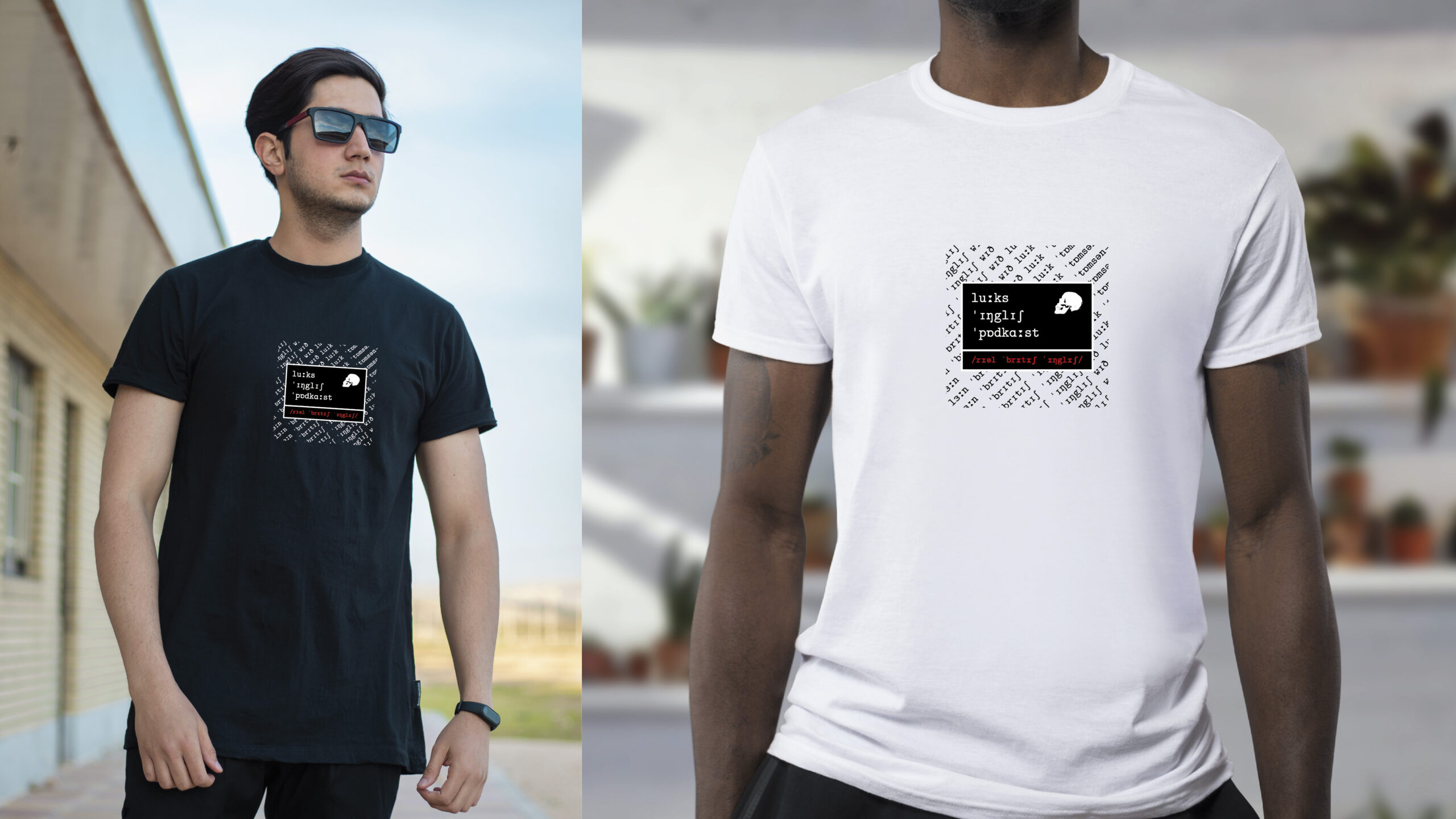
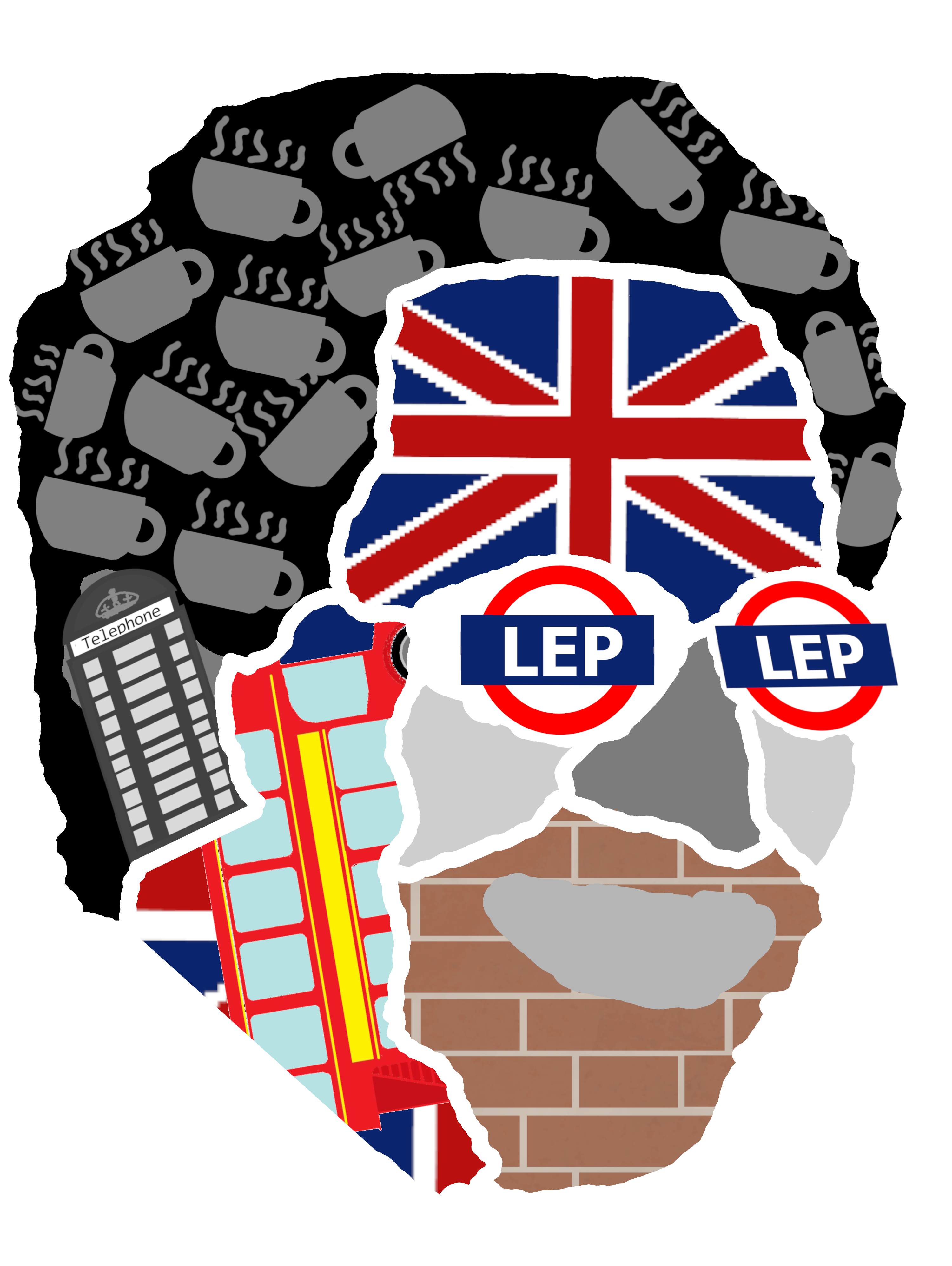
James and Luke discuss designs sent in by listeners, and choose the winner(s). The prize: to have your design featured in the LEP Merch Store, plus an £80 reward! Listen for plenty of descriptive language, diplomatic language and ways of giving positive and feedback in English. Video version also available (with all the designs on screen) below.
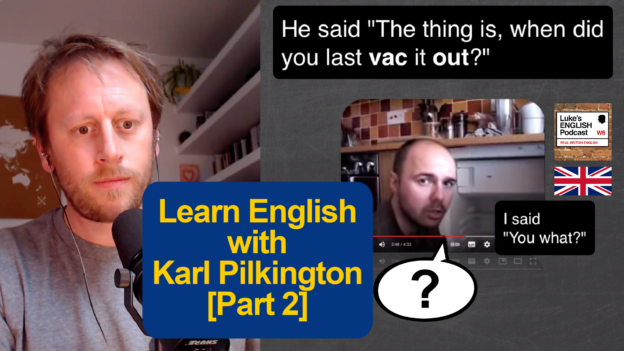
Understand more of Karl Pilkington’s rambling as we learn about the Manchester accent and pick up vocabulary along the way. Video version available on YouTube.
Hello everyone. Welcome back to LEP. This is part 2 of a double Karl Pilkington themed episode. I would recommend that you listen to part 1 of this first – it contains important context about who Karl is plus more details about Karl’s pronunciation and accent.
Listening to that first will help a great deal in understanding this one.
I got plenty of good responses to part 1 of this, so let’s carry on.
In this part we are going to continue as we did before – listening to Karl Pilkington talking about various subjects, understanding exactly what he says, looking at features of his Manchester accent and picking up vocabulary along the way.
Karl is basically just a normal bloke from Manchester and his accent is fairly typical for people from that area so this episode aims to help you understand his accent and pick up vocabulary too.
Some responses to part 1
I disagree with Karl on most things.
Is he arrogant?
I just enjoy the way he puts things. He speaks like a comedian in the way that he expresses a point of view and has a certain way with words, but he’s not a comedian.
This is the enigma of Karl Pilkington – is he really just being himself, or is he playing a comedy character, and in real life he’s a lot more erudite.
I actually think it’s the former not the latter and that he’s just being himself. He just happens to have a funny way of putting his opinions across.
Sometimes the best comedy comes from someone sharing a specific opinion. I think this is what I enjoy about this, rather than the opinions he is expressing, and as I said I disagree with Karl about most things, and some things he says are quite laughable – especially stuff he’s said on the Ricky Gervais podcast, like his Monkey News stories.
One other thing – apparently it is possible to be choked by a live octopus as you eat it. What I meant was that it would be impossible for an octopus to strangle you from the inside, as strangling means choking from the outside of the throat, with your hands for example, but of course a live octopus could choke you from within, by sticking its arms up into your throat or your windpipe. So, fair enough, it is possible for an octopus to choke you.
Also, in the UK we do eat oysters – which are raw seafood, so I think raw fish are generally ok in the UK but most other raw things would be considered a bit strange for us.
Quick Pronunciation Recap
In part 1 we listened to Karl talk about life, health and food and in terms of his accent I talked about H-drops
I’m 32, I think I’ve got the hang of it.
Look, how many do you need?
glottal stops
I’ll have a look at the meteorites.
If you’re going to eat a live animal, don’t eat one that’s got eight arms that can get hold of your neck.
The ‘bath/trap’ split
podcast/podcast
laugh/laugh
path/path
bath/bath
/ʊ/ not /ʌ/
Do you go to the gym much?
Topics: Holidays & Karl’s Fridge
This time he’s going to talk about holidays and his fridge and we will look at more features of his accent.
There’s a video version of this on youtube with text on the screen, plus you will find all the text presented on the page for this episode on my website.
Just one more thing before we start – I have premium episodes in the pipeline for these two episodes of LEP. The Premium episodes will be a chance to review and remember the vocabulary that comes up in these episodes, and then pronunciation drills too. So, I’ll do a sort of memory quiz with you to see how much vocab you remember and then the usual pronunciation drills – but in my accent, not Karl’s.
Karl is on a camping holiday, sitting in a tent and moaning.
Why does Karl think holidays are stressful?
What does Karl think of Lanzarote’s nickname?
What did Karl do on his holiday there?
What’s the problem with holidays in the UK?
What did he think of the seal sanctuary he went to?
What’s the best place Karl has been? Why?
What does Karl think of holidays to the moon?
Vocabulary
You’ve got free time on your hands which you’re not used to.
We ended up walking around this seal sanctuary. 14 quid. £
They were just floating about, hardlymoving.
I’m not having a go, but don’t charge me to come in, or at least let me see them again when they’re better.
The coliseum, they don’t do it up.
There’s no overheads.
That’s a mess. Get it knocked down.
At the end of the day the moon is just a big rock. You may/might as well go to Lanzarote.
PRONUNCIATION #3
Nasal
Alright so I went on holiday and it was great and all that.
I’ll have a look at the meteorites.
If you’re going to eat a live animal, don’t eat one that’s got eight arms that can get hold of your neck.
When’s the last time you heard about a tortoise having a heart attack?
Works well with glottal stops.
Nasal sound in /aʊ/ and /ai/ sounds
/aʊ/ in words like about and now sounds more nasal.
What’s he going on about now?
If there were dinosaurs about now and that.
If we’ve run out we need to go outside and get some more.
Nasal sound in /ai/ sound
The /ai/ sound in words like alive, inside, survive, fighting, riot and dying sounds more nasal.
You’re not supposed to eat them alive.
We’ve got to stay inside if we want to survive.
If they were running about fighting and dying and that.
Running riot (sounds like “roonin raiyut”)
#5 Karl on his fridge
Karl’s fridge is broken and he called out a guy to fix it.
Naturally he’s moaning about workmen who come to your house to do different jobs.
Why does the guy charge £80?
What is Karl’s main problem with engineers, plumbers, workers who have to come to his house?
What advice does the fridge guy give to Karl?
What’s the problem with Karl’s new fridge?
Vocabulary
The fellaturnedup, right.
Yeah, it’s broke. (broken)
That’s why I called you out.
That’s 80 quid.
I said, “you what?”
An 80 quid callout charge.
I tell you. They windmeup.
I had a fella come round to do the tiling.
Turned up late with a carrier bag.
A pot noodle
A copy of the Daily Mirror
A crossword book
He was asking what the pub was like across the road. “What is …. like?”
Having a laugh
When did you last vac it out?
Vacuum cleaner
You’re meant to vac them out, because dustand that gets in.
Can’t afford any food to put in it.
It needswiringin. It’s got one of those fancy plug things.
PRONUNCIATION #4
A lot of other vowel sounds are nasal too.
Turn the corner /ɔː/
They becomes thee
It depends what they do with it.
Why have they only just found that?
How did they miss that?
Also, he adds little fillers like:
(Do you) know what I mean?
Right? (just sounds like a nazal grunt, almost)
… and that
Like that
And whatnot
And stuff like that
Do you know what I mean?
I tell ya…
Watch out for those things if you like.
Ending
Ladies and gentlemen, this brings us to the end of this episode, as we now prepare to exit the world of Karl Pilkington and re-emerge blinking into the light of the normal world.
Welcome back to yourself, your own attitudes and your own personality again.
I urge you to (just wanted to use that phrase) check the page for this episode on my website where you will find a downloadable full transcript, the audio file for download in mp3 format, a text video version of this episode where you can read the entire thing as you listen and it’s all presented in a rather majestic looking font before your very eyes and of course there’s the comment section where you can share your thoughts not to mention the episode archive with all the previous episodes plus lots of bonus extra stuff.
Teacherluke.co.uk
LEP Premium LEP App LEP Merch
Have a good one and I will speak to you again soon, bye!
Talking to Michael Lavers from the Level Up English Podcast about learning Japanese, embarrassing moments in language learning, social awkwardness and some “very British problems”. Are you as socially awkward as a British person? Let’s see how you and Michael would respond to some quiz questions that will test your British awkwardness to the max. Video version available.
Today on the podcast I am talking to Michael Lavers who is an English teacher from Cornwall in the South West of England. Michael also has a podcast for learners of English. It’s called The Level Up English Podcast – you might want to check it out if you haven’t already done so. It’s available wherever you get your podcasts.
As well as being an English teacher, Michael is also a language learner himself and in his podcast episodes he often talks with guests about experiences of learning other languages, including those embarrassing or awkward moments that happen when you feel shy or you make mistakes. Also, Michael has described himself as a socially awkward person who lacks a certain amount of confidence in himself. In fact, he says that one of the reasons he started his podcast was to try and gain some confidence by going out of his comfort zone.
So this is what I thought I would ask Michael about: his language learning experiences and those awkward and embarrassing moments, and then I’d like to chat about social awkwardness and whether this is a uniquely British thing. And we’re going to go into some specific examples of how this so-called British awkwardness manifests itself.
That’s the plan, so now, let’s meet Michael Lavers from the Level Up English Podcast.
Awkward Situations – Very British Problems
Here are some questions based on some tweets by the popular Twitter account, Very British Problems. Each one describes a specific problem that British people typically experience in social situations. They seem to sum up the experience of being a British person. We’re socially awkward – I don’t know why.
Let’s see how you respond to these questions. And listeners, I want you to consider your answers to these questions too, then we’ll see what Michael says, and then we’ll see the original tweets and we can see if they match up.
Questions & Tweets
How do you feel when you walk through the “nothing to declare” gate at an airport?
You’re sitting with a group of people. It’s time for you to leave. What do you say as you kind of slap your hands on your knees and stand up?
If someone says something to you but you don’t hear it, how many times are you willing to ask them to repeat themselves?
What do you say to your taxi driver as they approach the point where you want to get out of the cab?
If you’re on a train, sitting in the window seat with a passenger next to you, and your stop is approaching, what do you do to signal to the passenger in the aisle seat that you will need to get up?
You’re standing at the exit door of the train as it is pulling into the station, slowly coming to a stop, and there is a crowd of other passengers right behind you, eager to get off the train. The “Open door” button isn’t yet illuminated. What do you do? Do you press the button?
How do you feel when the ticket inspector inspects your perfectly valid ticket?
What do you say, modestly, to guests arriving in your home, even though you spent some time before their arrival, tidying things up?
There’s one last roast potato on the table at Sunday lunch. You want to eat it. How do you achieve this?
Just take it and eat it
Ask if you can eat it
Offer it to everyone else first
Do you ever tell your housemates or family that you are “off to bed” but then just stare at your phone in bed for an hour?
Imagine you are walking through a hallway with lots of doors in it, like in a library or something and you’re walking just behind a stranger who keeps having to hold the doors for you. How many different ways of saying “thanks” can you think of?
How do you end an email? Is there a subtly less friendly difference between kind regards and just regards?
What do you do when you get an incoming call from an unknown number?
How good are you at overtaking someone on foot?
Do you feel it necessary to speed up at all, when walking over a zebra crossing?
If you pay for something with exactly the right change, and you know it’s exactly the right change, do you wait for the cashier to count the money?
I have had some entries already. If you’ve sent me something, then thank you. Please send your designs to podcastcomp@gmail.com and my brother and I will review the entries we receive, talk about them on the podcast and pick at least one to be featured in the LEP Merch store.
Think of a t-shirt that LEPsters would want to wear
PRIZE: The winning design will be put on t-shirts, mugs and other merch, and the winner will also win £80!
SPECS: A high-resolution transparent .PNG at 150dpi. Minimum dimensions of at least 1500px by 1995px (not including outer transparent pixels).
CLOSING DATE: 22 October 2021
Send your t-shirt designs to podcastcomp@gmail.com
Understand English as it is spoken by native speakers. Let’s listen to Karl Pilkington rambling about life, the universe & everything, and see what we can understand and learn. Karl is from Manchester, so we’ll be looking at some features of his accent, picking up plenty of vocabulary and having a bit of a laugh along the way.
Welcome back to the podcast. How are you doing today?
In this episode we’re going to do some intensive listening and use it as a chance to learn some vocabulary and pronunciation.
This episode should be a bit of a laugh as we’re going to take a deep dive into the world of Karl Pilkington and listen to his thoughts on some big issues like health, food, animals, holidays and just existence itself.
We’ll be looking at the different features of his Manchester accent, and there will be lots of vocabulary to pick up too as we are covering a range of different topics. You can also consider this as a little intensive listening test, as I will be setting questions that you have to find answers to, then going through each clip in detail and breaking it all down for language.
We last heard about Karl Pilkington on my podcast in episode 656 in which we listened to a couple of his Monkey News stories about a chimp that works on a building site and another chimp that pilots a space rocket.
Do you remember that? If you don’t, then get the LEP app and listen to episode 656. It was a very popular episode and it should make you laugh out loud on a bus maybe.
That was pretty funny stuff, and Karl is very funny even though he’s not actually a comedian.
Who is Karl Pilkington?
To be honest, Karl Pilkington was most well-known about 10 years ago and these days he’s not in the public eye as much as he used to be, but he’s still a fairly well-known person in the UK, especially for Ricky Gervais fans.
Karl is just an ordinary bloke from Manchester who met comedians Ricky Gervais and Stephen Merchant when he worked for them as a radio producer in London.
Later, Ricky invited Karl to be on his podcast in order to broadcast his weird ideas and inane ramblings to the whole world, and the rest is history.
The Ricky Gervais Podcast became a world record-breaker with over 300,000,000 downloads.
In episodes, Ricky, Steve & Karl would talk about big topics like religion, evolution, philosophy, nature, birth and death and Karl would often say some bizarre and hilarious things, apparently without intending to be funny.
Ricky was always slightly obsessed with Karl, and he always described him as “an idiot with a perfectly round head like an orange”.
After being on Ricky’s podcast, Karl went on to become a fairly well-known figure in the UK, doing more podcasts with Ricky, then TV shows, books and documentaries like “An Idiot Abroad”.
Karl is known for his funny and slightly odd musings and observations about life.
He comes from a working class background in the Manchester area, and his accent has many of the features that you would expect from that.
Accent / Pronunciation
We will be going into the specific features of his accent in more detail as we go and this kind of follows on from episode 682 which was all about common features of pronunciation in England which are different to RP.
Which accent should you have?
So this episode is about one of the UK’s regional accents.
You might be thinking – Luke, by doing this episode are you saying that we should all learn to speak like Karl?
I’m not saying that. You can choose your accent, and many learners choose a neutral accent to learn, but it’s not all about learning an accent, it’s also about learning to understand different accents, and learning about the varieties of English that are out there.
So, you might not want to speak like Karl, but I certainly want you to understand Karl and the many millions of other people who speak English in a non-standard way.
So this episode is all about understanding an accent, rather than copying it. But of course you can copy Karl’s Mancunian accent if you like.
Vocabulary
There will also be plenty of vocabulary coming up too as we pick apart the things that Karl says and the way he says them.
You’ll find it listed on the screen on the video version and also presented in text form on the page for this episode on my website.
Video
We’re going to be using a series available on youtube in which Karl ponders certain big questions in just 3 minutes of video, originally broadcast on Channel 4 in the UK as part of their “3 Minute Wonders” series.
These are short videos in which Karl talks about his fridge, health, food, animals and holidays, covering each topic with his usual ramblings, all delivered in that Manchester accent, know what I mean?
I have about 6 recordings, which are about 3 minutes each (this could become two episodes).
Before I play the recording I’ll give you a little bit of context and I’ll set some questions.
Then you listen and try to get the answers.
Then I’ll break it down – listening to each bit again, with some explanations if necessary.
We’ll also pay attention to pronunciation – specifically his Mancunian accent. I’m going to break that down too, exploring the main features of that particular accent.
And I’ll sum up some of the vocab from each clip before moving on to the next one.
#1 Karl on Life
Karl goes around a museum looking at meteorites, dinosaur skeletons and endangered animals (stuffed ones or models) and muses about life in general medical science.
What does Karl wonder about the big bang?
What makes the meteorite room a bit disappointing?
What’s Karl’s main criticism of humanity today?
What does Karl think would happen if a dinosaur got loose and started to “run riot”?
What’s Karl’s main point?
Vocabulary
The big bang
Did it only seem big because there was no other noise to drown it out at the time?
Meteorites (on earth)
Meteors (flying in earth’s atmosphere)
Asteroids (flying in space)
The edge is taken off it because that isn’t the only one.
I’m not surprised they went extinct, they’re all in here.
Enough’s enough. If your body is that done in, call it a day.
The more we know, the more we interfere.
Don’t interfere with nature and that.
Even if it was going round running riot they’d go “We don’t want it to go extinct”
The panda is dying out.
Notes on Karl’s accent
Here’s a summary of the main points regarding Karl’s Manchester accent.
Many of these features are common in people from the Manchester area, although not all people from Manchester will speak like this, and there are different degrees of it.
This is certainly Karl’s Manchester accent in any case.
A lot of what I’m about to say will include things brought up in the episode I did about Key Features of English accents, episode 682.
PRONUNCIATION #1
H dropping
Look, how many do you need?
I’m not surprised they went extinct, they’re all in here.
She’d had a new lung, a new heart
He puts his hand in and goes “Yep, it’s broke”
They weren’t doing anything. They weren’t jumping through hoops. (talking about animals in a zoo)
I don’t know if it’s cruel or not, to have them in there.
I’m 32, I think I’ve got the hang of it.
Glottal stops (/t/ sounds get replaced by /ʔ/ )
I’ll have a look at the meteorites.
If you’re going to eat a live animal, don’t eat one that’s got eight arms that can get hold of your neck.
Let me see them again when they’re better.
Go back to my episode called 682. Features of English Accents, Explained to find out more about glottal stops.
#2 Karl on Health
Karl recounts a conversation he had with a woman about going to the gym.
Does Karl go to the gym?
What does he think of the idea of breathing classes?
What does he think of drinking 7 pints of water a day?
What’s Karl’s argument for not going to the gym? Heart beats, tortoise
Vocabulary
I know what’s probably putting you off – the fact that it’s hard work.
Breathing classes – I’m 32 I think I’ve got the hang of it.
My Dad’s like 60-odd. I’ve never seen him drink a pint of water, yet they’re telling us we should have, like, 7 pints a day or something, and then they wonder why there’s a water drought on.
They keep coming up withdaft ways of keeping fit.
Chucking paint at each other.
PRONUNCIATION #2
/æ/ not /ɑː/ (the “bath/trap split”, again)
Short A sound /æ/ in bath, podcast
(gas and glass have the same vowel sound in Karl’s Manchester accent).
This is normal across all northern accents, and many accents in the midlands. I would use /ɑː/ because although I lived in the midlands for many years (half my childhood), my accent is mostly from the south because I’ve lived there more and my parents don’t have strong regional accents.
Come to my class. We do breathing classes.
/ʊ/ not /ʌ/
The U sound in but, enough and much.
I pronounce it /ʌ/ but Karl pronounces it more like /ʊ/
Do you go to the gym much?
#3 Karl on Food
Karl talks about a new trend – eating things which shouldn’t be eaten.
Coming from England, Karl thinks it’s weird to eat certain things that might be eaten in other cultures, like live octopus, insects, frogs, snails, probably raw meat, raw fish and sushi.
What is the danger of eating a live octopus?
What’s Karl’s issue with kids and food today?
What does Karl think about eating dog?
Vocabulary
They choke you. Why would you want to eat that?
If we’re eating octopuses, why are dogs getting away with it?
Talking to English teacher Ray Addam from Glasgow in Scotland about mental factors in learning English, such as anxiety, confidence, stress and motivation. Video version available on YouTube.
This is a swapcast between LEP and English with Ray, which means we are both uploading this to our podcasts/youtube channels.
Ray is an English teacher from Glasgow in Scotland (and you’ll be able to notice his accent, which is not the strongest Glaswegian accent I’ve ever heard but it’s definitely noticeable – which is great, because I love Scottish accents). Ray has recently started making videos on YouTube for learners of English.
One of his students – Ivan (from Russia I think) who is also a LEPster, suggested to Ray that he start doing that and that he also contact me for an interview, so that’s what you’re going to listen to or watch here. This is Ray Addam interviewing me for his channel.
This is a fairly relaxed and free-ranging conversation, and after chatting a bit about playing music and performing in front of people, we ended up talking about the psychology of learning English, particularly how to manage anxiety or nerves when using English in stressful situations, and then our comments about how to work on your confidence and how to have the right mental approach to learning a language, which is one of the most important steps to take.
So listen on for some comments and tips about how to manage your stress levels in English, how to become more confident in English and how to take control of your communication skills in general.
Thanks to Ray for sending this recording to me. You might want to check out his channel on YouTube, which is called English with Ray. He only has a few videos there at the moment, but everyone’s got to start somewhere. I’ve noticed that Ray also speaks fluent Arabic so any Arabic speaking LEPsters might be particularly interested in Ray’s content as he might have some insights into differences between Arabic and English. I haven’t actually asked him about that yet, but maybe it’s something he could work on in a future video.
Anyway, that’s it for this introduction and I will now let you listen to this conversation with Ray Addam, firstly about playing music in front of audiences of people, and then about the challenges of managing your confidence when using English in stressful situations. I will probably speak to you again briefly at the end of this chat, but for now, let’s get started.
Links for Ray
Take online English lessons with Ray Addam on Preply https://preply.com/en/tutor/447455/
English with Ray on YouTube https://www.youtube.com/c/EnglishWithRay/featured
Song (audio version only) – “Questionnaire” by The Rutles https://genius.com/The-rutles-questionnaire-lyrics
Talking to my dad about the latest in the Brexit saga, including the current fuel crisis due to lack of lorry drivers and other problems which were predicted in the run up to the Brexit referendum in 2016. Video version available on YouTube and below.
This is The Rick Thompson Report, where I talk to my dad about politics, news, current affairs – which almost always means an update to the ongoing Brexit saga.
What’s going on in the UK at the moment? How is Brexit going? Remember before the referendum when predictions were made by experts who recommended that Brexit was a bad idea – do you remember any of the predictions? They were labelled by the pro-Brexit camp as “Project Fear” suggesting that critics of Brexit were just trying to make everyone scared about leaving the EU but it was all baseless and everything was going to be wonderful in a very non-specific way. Well, we are now getting to a stage where we can see if those predictions are coming true or not?
So, how long has the UK actually been out of the EU now? How’s it going?
Talking to author Natasha V Broodie who has written a book which aims to help learners of English understand the subtle codes of polite language when making requests and giving information in professional and personal contexts. In the conversation we explore the topic and consider some tips for making your language more culturally appropriate.
In this episode I am talking to author Natasha V Broodie who has written a book which aims to help learners of English to find the right tone in their speaking and writing. Tone is something which is very much affected by culture and often relates to things like being direct, indirect, formal, informal, the use of modal verbs and phrasal verbs and so on. In English the general tone is often quite friendly, indirect and polite, and this can sometimes cause problems for English speakers coming from different places where codes of politeness or professionalism are different.
Natasha has worked as an English teacher and has also worked in international contexts for the UN and so she has direct experience of observing people communicating in English and not quite getting the tone right.
So in her book, “Give me tea, please. Practical Ingredients for Tasteful Language” she lays out a sort of style guide with theory, practical tips and a glossary of defined vocabulary at the back.
It sounds like an interesting book which could be a worthwhile read for my listeners, so I thought it would be good to chat with Natasha a little bit and explore some of the ideas presented in her book.
“Give me tea, please” is currently available on Amazon but from 24 September should be available from all other providers too.
Right, so now you know what sort of thing we’re going to be talking about, let’s meet Natasha Broodie and find out some of those practical tips for tasteful language.
So that was Natasha V Broodie, talking about her book Give me tea, please – available from all good bookstores. Go ahead and pick up a copy and if you like it, leave a review on Amazon.
Thanks again to Natasha for her contribution in this episode.
A Short Ramble
T-shirts Design comp – link here for details https://teacherluke.co.uk/2021/09/22/742-new-lep-t-shirts-merch-lep-design-competition-2021-with-james/ Premium YouTube
Sneezing caused me to take a trip to tangent town…
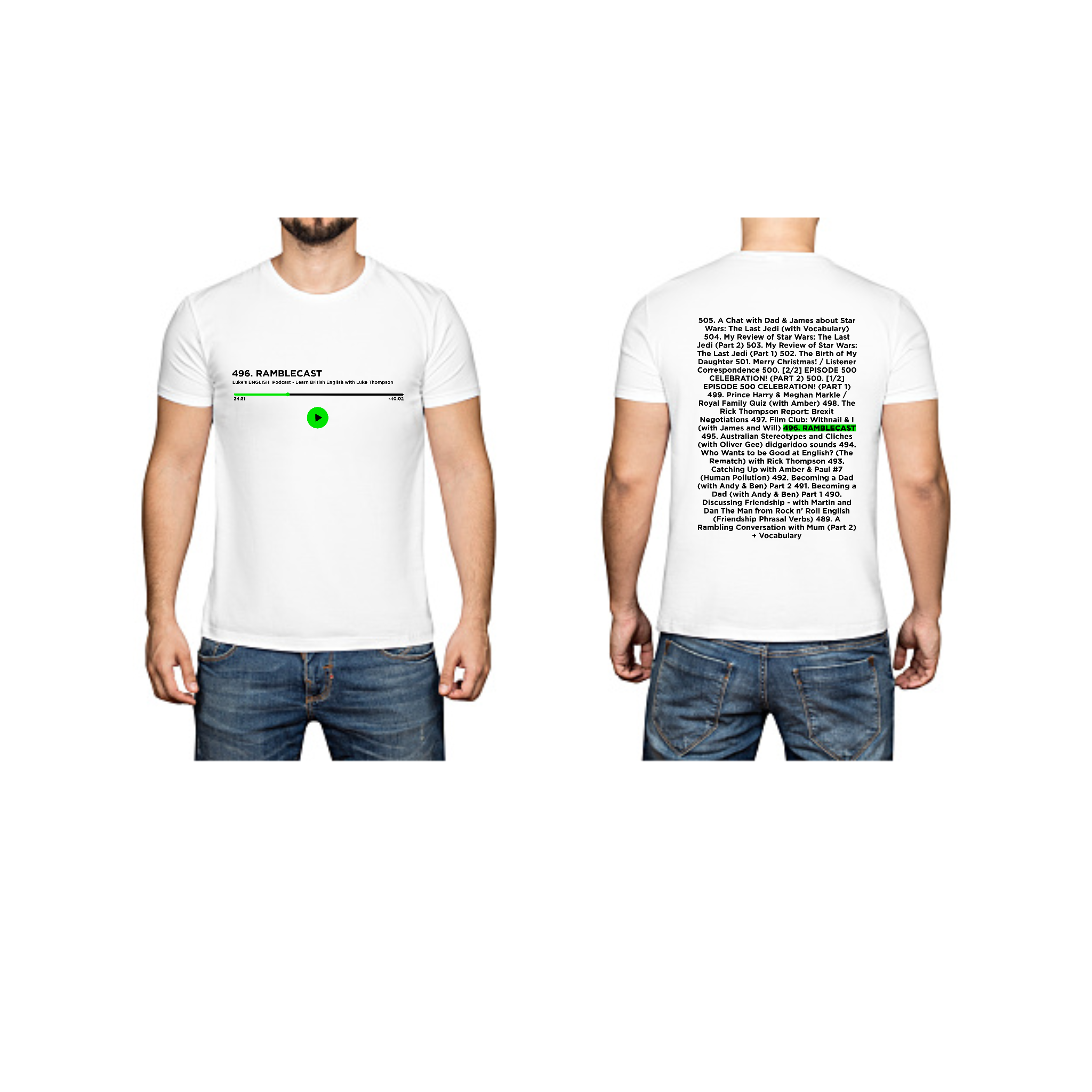
LEP merch is now available, including t-shirts, mugs and more featuring special LEP designs made by James Thompson. Luke and James discuss the new designs and launch a new design competition to give you the chance to get your design in my merch store and a cash prize of £80.
Hello listeners, it’s nice to be talking to you on this fine morning. I’m also joined by James, my brother.
If you’ve seen me on YouTube in a t-shirt with a magnificent LEP logo on the front of it, or drinking tea from a lovely looking mug with an LEP logo on it, or perhaps writing something down on my special LEP notepad, then you might be thinking…
Where can I get one of those t-shirts? Where can I get one of those mugs?
Where do I get one of those amazing pads?
Or even: How can I get one of my designs on some LEP Merch?
Your questions are finally being answered today, because the LEP merch store is back open, and I am launching a design competition to give you the chance to get your design on an LEP t-shirt, and a special cash prize of £80!
The merch store is now open. That’s where you can get t-shirts, sweaters, mugs, stickers and loads of other things with the LEP logo on, but also there are various other new designs which you should love if you are a LEPster.
I suspect that you’re going to want more than just one of the things on offer for you today – In fact I’ve already ordered some and I am wearing one now.
In this episode I’m going to talk a little bit about the different merchandise available just to make sure it’s clear and that you understand everything.
Also in this episode I am launching a design competition – this is your chance to have your design on an official LEP t-shirt. Not only that, but there are cash prizes available too for the winners. I will explain more later.
My brother James is the one who did all the design work to produce the various images which are available across a range of products, so he is joining me for this one.
We’re going to talk about each design one by one, I’ll give you a little tour of the store to make sure you can use it properly, I will give you the full details of the LEP Design competition and then we’re going to open things out to have a larger conversation about merchandising and stories related to that.
I opened this store so Chinese & Russian LEPsters could buy merch too. The website is simple enough. It shows t-shirts in the thumbnail pictures, but check the list on the left to see all available products.
Various types of t-shirt are available.
RedBubble doesn’t do double sided t-shirts.
Avoid buying dark designs on a dark colour t-shirt (although personally I think an LEP Ninja design on a black tri-blend t-shirt looks really cool)
Let me know what other ideas or changes you’d like to make to the store, and I will see what I can do. So, if you have any other design ideas, or suggestions for things you’d like to see in the store, or changes you’d like to make – let me know. luketeacher@hotmail.com
LEP DESIGN COMPETITION 2021
We are looking for cool t-shirt designs by LEPsters, for the LEP Merch Store.
Think of a t-shirt that LEPsters would want to wear
PRIZE: The winning design will be put on t-shirts, mugs and other merch, and the winner will also win £80!
SPECS: A high-resolution transparent .PNG at 150dpi. Minimum dimensions of at least 1500px by 1995px (not including outer transparent pixels).
CLOSING DATE: 22 October 2021
Send your t-shirt designs to podcastcomp@gmail.com
James and I will consider all designs which are sent to me, and a selection of designs will be displayed on the website so you can leave your comments. James and I will also discuss them in a podcast episode.
Ultimately, James and I are the judges and we make the final choice on the winner(s).
Learn English from some jokes in this episode as we go through 9 jokes chosen as the best of the Edinburgh Festival Fringe stand up comedy scene this year (2021). Let me tell you the jokes, see if you understand them, and then I will break them down for language learning opportunities. Video version available.
Hello listeners, hello video viewers. How are you? How is the world treating you today? Not too badly I hope.
Here’s a new episode. So stick with me. Listen closely. Pay attention. You can definitely learn some new English from this. Let’s get started.
Introduction
It’s time to dissect the frog again as we look at some of the most popular jokes from the Edinburgh Festival Fringe of this year 2021. I’m going to read them to you and then explain them so you can understand them fully and also learn some new vocabulary in the process.
This is something I’ve been doing every year at the end of the Ediburgh Festival when the list of the most popular jokes is published in the newspapers.
Last year I didn’t do one of these episodes because Ed Fringe got cancelled due to Covid-19.
But the festival was back this year, so here we go again. Let’s find some popular jokes told by comedians at the fringe and use them to learn English.
Edinburgh Festival Fringe
Just in case you don’t know, the Edinburgh Fringe (full name: The Edinburgh Festival Fringe) is a huge comedy festival that happens every August in Edinburgh, the capital city of Scotland.
Sometimes it’s called The Edinburgh Festival Fringe, Edinburgh Fringe, The Edinburgh Comedy Festival, Ed Fringe, just The Fringe or simply Edinburgh.
It’s one of the biggest comedy festivals in the world, and every August comedians travel to the city in order to perform comedy to the large crowds of people who travel there.
For comedians August in Edinburgh is a huge opportunity to get exposure and experience, but it is very tough, especially at the beginning when you have to drum up an audience of people to come to your shows every day.
Just in case you didn’t know, stand-up is a form of entertainment that involves one comedian standing on stage with a microphone telling stories and jokes in an effort to make the audience laugh. It is an extremely popular form of entertainment in the English speaking world.
This episode is about specific jokes told by comedians during the fringe this year, but stand-up comedians don’t really just go up and tell individual jokes one after the other (except in the case of some specific comedians), rather they fit their jokes into stories, observations about the world or confessions about themselves.
However, this list of the “best jokes from the fringe” just picks simple one or two line jokes from people’s performances.
Lower Your Expectations Now😅
I expect that taking these jokes away from their original performances will not help the jokes.
They will probably be less funny outside the comedy show that they came from because we’re going to remove the context of the joke, the attitude and personality of the comedian who told the joke and what was happening in the room that particular evening. All those elements have a huge impact on how funny the joke will be.
So, it’s not very fair to judge these jokes on their own like this, outside of their original context, but this is still an interesting experiment in learning English, so here we go.
Here’s how we’re going to do this
First I will read each joke one by one.
There are 9 jokes in total.
How many jokes do you “get”?
If you “get” a joke, it means you understand why it is funny.
Ideally you will laugh, but you can also groan.
If you don’t understand it you need to say “I don’t get it!”
The main thing is: You have to notice and acknowledge that a joke has been told to you.
So, listen to the jokes, do you get them all?
Then I will go through each joke one by one and I will break them all down, explaining exactly how they work, showing you double meanings, explaining any specific vocabulary or cultural reference points and giving you all the information you need to be able to understand these jokes properly.
There is a lot of vocabulary to be learned from this, which I will highlight as we go through and recap at the end.
So, get ready, it’s time to dissect the frog again.
Of course, I have to say the quote:
Explaining a joke is like dissecting a frog. You can learn something from it, but the frog dies in the process.
I expect I will be killing all these jokes by explaining them.
You’re not meant to explain jokes, and if you do, the joke suddenly becomes less funny.
Most jokes work by surprise.
Getting the double meaning instantly is usually the only way to find a joke funny.
So I can’t guarantee that you will laugh at these jokes, but this is certainly going to be good for your English in any case.
Joke types
A lot of these jokes use
synonyms (different words with a similar meaning),
common fixed expressions and sayings
homophones (different words that sound the same)
similies (finding similarities between otherwise different things),
pull back & reveal (revealing extra information to change the situation)
Top Jokes from Edinburgh Fringe 2021
I’m getting this list from the website Chortle.co.uk which is the UK’s number 1 comedy website.
1. “I thought the word ‘Caesarean’ began with the letter ‘S’ but when I looked in the dictionary, it was in the ‘C’ section.”
– Masai Graham
2. “My therapist told me, ‘A problem shared, is a hundred quid’.” – Ivor Dembina
3. “Me and my ex were into role play. I’d pretend to be James Bond and she’d pretend she still loved me.”
-Tom Mayhew
4. “The roman emperor’s wife hates playing hide and seek because wherever she goes Julius Caesar.”
– Adele Cliff
5. “Marvin Gaye used to keep a sheep in my vineyard. He’d herd it through the grapevine.”
– Leo Kearse
6 “My grandparents were married for forty years, but everything took longer back then.”
– Will Mars
7. “I think Chewbacca is French because he understands English but refuses to speak it.”
– Sameer Katz
8. “I don’t know what you call a small spillage from a pen but I have an inkling.”
– Rich Pulsford
9. “People say zoos are inhumane. But that’s because they’re for animals.”
– Sameer Katz
Vocabulary Focus
Now let’s go through those jokes again and break them down so you can understand them fully, picking up bits of vocabulary along the way.
Broken down versions (sorry frogs)
1. “I thought the word ‘Caesarean’ began with the letter ‘S’ but when I looked in the dictionary, it was in the ‘C’ section.”
– Masai Graham
Vocabulary
A caesarean
A C-section
2. “My therapist told me, ‘A problem shared, is a hundred quid’.” – Ivor Dembina
Vocabulary
Common phrase: “A problem shared is a problem halved.”
Quid
Halved (verb)
3. “Me and my ex were into role play. I’d pretend to be James Bond and she’d pretend she still loved me.” – Tom Mayhew
Vocabulary
To be into role play
Role play – pretending to be someone else, often during sex to make it more interesting.
To pretend to be someone / to do something
He pretended he was James Bond
She pretended she still loved him.
4. “The Roman emperor’s wife hates playing hide and seek because wherever she goes Julius Caesar.” – Adele Cliff
This is a pun – a word joke and it’s just that one thing sounds like something else.
“Julius Caesar” sounds like Julius sees her, which is why his wife hates playing hide and seek because Julius always sees her. Julius Caesar. I think you get it.
Vocabulary
To play hide and seek
5. “Marvin Gaye used to keep a sheep in my vineyard. He’d herd it through the grapevine.” – Leo Kearse
Oooh, this is a bit of a groaner. That’s where you go Oooooh like it almost hurts.
“Heard it through the grapevine” is one of Marvin Gaye’s most famous songs.
“Herd” can mean to move a group of animals in a certain direction, like sheep or cows. You herd your sheep into a field.
Marvin used to keep a sheep in my vineyard. A vineyard is a place where you grow grapes for wine.
The grapevine is where the grapes grow, but there’s also an idiom “through the grapevine” meaning when you hear people gossiping about something, or you over hear people talking about something.
In the case of the song, he hears that his girlfriend is cheating on him and he hears it through the grapevine.
He heard it through the grapevine. He heard rumours or gossip about it.
He’d herd it through the grapevine. He attempted to move the sheep around through the grapevines of the plants in the vineyard.
Vocabulary
To herd sheep
To hear something on/through the grapevine
Vinyard
This is too much of a stretch and if you get the joke please let me know. Write a comment in the comment section – do you get the Marvin Gaye joke?
6. “My grandparents were married for forty years, but everything took longer back then.” – Will Mars
This is quite a clever little joke. Everything took longer in the past – travelling, communicating etc.
Marriages seemed to last longer, but everything took longer back then.
7. “I think Chewbacca is French because he understands English but refuses to speak it.” – Sameer Katz
This is quite funny and of course it hits two of my favourite notes, well three in fact: Star Wars, France and speaking English.
There is a common misconception that French people arrogantly refuse to speak English in Paris let’s say,
but I find that French people are more willing to speak English than it seems, and in fact they’re a bit more shy than arrogant, and if a French person in Paris speaks French to you, that’s quite normal as you are in France.
Also, rather than being arrogant, a lot of French people just feel quite self conscious about their accent and certain common mistakes that French people often make. They also might have bad memories from English lessons at school which knocked all the confidence out of them, and they’re afraid to be judged by each other. So it’s more likely to be shyness than arrogance.
8. “I don’t know what you call a small spillage from a pen but I have an inkling.” – Rich Pulsford
This is a clever little joke.
To have an inkling means to have a suspicion or an idea of something.
“I don’t know who stole the last biscuit, but I have an inkling. Or I have an inkling of an idea who took that biscuit, and I think it was you!”
But an inkling does sound like a small spillage of ink from a pen. A small puddle of ink, or ink on your hand. An inkling.
What do we call that? I don’t know, but I have an inkling!”
Vocabulary
To have an inkling
A spillage
9. “People say zoos are inhumane. But that’s because they’re for animals.” – Sameer Katz
I’m not sure I have to explain that, do I?
Being humane means treating people in reasonable and humanistic manner.
Treating people with respect, dignity, justice.
Inhumane is the opposite – and although it includes the word human, we do use this word to refer to the cruel treatment of animals.
Keeping animals in a cage is inhumane.
Even though they’re animals, we still use the word inhumane, and this is just a funny little thing that can make you laugh when you notice it.
Vocabulary
Humane
Inhumane
Vocabulary Review
A caesarean
A C-section
“A problem shared is a problem halved.”
Quid
Halve (verb)
To be into role play
To pretend to be someone / to do something
To play hide and seek
To herd sheep
To hear something on/through the grapevine
Vinyard
To have an inkling
A spillage
Humane
Inhumane
Cookies on teacherluke.co.uk
Click “Accept All”, to consent to the use of all cookies on this website, or visit "Cookie Settings" to control your consent settings.
This website uses cookies to improve your experience while you navigate through the website. Out of these, the cookies that are categorized as necessary are stored on your browser as they are essential for the working of basic functionalities of the website. We also use third-party cookies that help us analyze and understand how you use this website. These cookies will be stored in your browser only with your consent. You also have the option to opt-out of these cookies. But opting out of some of these cookies may affect your browsing experience.
Necessary cookies are absolutely essential for the website to function properly. These cookies ensure basic functionalities and security features of the website, anonymously.
Cookie
Duration
Description
cookielawinfo-checkbox-analytics
11 months
This cookie is set by GDPR Cookie Consent plugin. The cookie is used to store the user consent for the cookies in the category "Analytics".
cookielawinfo-checkbox-functional
11 months
The cookie is set by GDPR cookie consent to record the user consent for the cookies in the category "Functional".
cookielawinfo-checkbox-necessary
11 months
This cookie is set by GDPR Cookie Consent plugin. The cookies is used to store the user consent for the cookies in the category "Necessary".
cookielawinfo-checkbox-others
11 months
This cookie is set by GDPR Cookie Consent plugin. The cookie is used to store the user consent for the cookies in the category "Other.
cookielawinfo-checkbox-performance
11 months
This cookie is set by GDPR Cookie Consent plugin. The cookie is used to store the user consent for the cookies in the category "Performance".
viewed_cookie_policy
11 months
The cookie is set by the GDPR Cookie Consent plugin and is used to store whether or not user has consented to the use of cookies. It does not store any personal data.
Functional cookies help to perform certain functionalities like sharing the content of the website on social media platforms, collect feedbacks, and other third-party features.
Performance cookies are used to understand and analyze the key performance indexes of the website which helps in delivering a better user experience for the visitors.
Analytical cookies are used to understand how visitors interact with the website. These cookies help provide information on metrics the number of visitors, bounce rate, traffic source, etc.
Advertisement cookies are used to provide visitors with relevant ads and marketing campaigns. These cookies track visitors across websites and collect information to provide customized ads.