I've been teaching English for over 20 years in London, Japan and France. I also do an award-winning podcast for learners of English called "Luke's English Podcast". In my free time I'm a stand-up comedian who regularly performs shows in English in Paris and sometimes London.
Talking to my dad about what’s happening in the UK at the moment, how serious this pandemic is, what the consequences might be and how the UK’s government is responding to it.
Hello listeners out there in the world. How are you? I hope you’re ok. What a weird time this is on planet earth.
Here’s my second episode about the coronavirus which is currently sweeping across the globe in fairly dramatic fashion.
This one is an episode of the Rick Thompson Report on Luke’s English Podcast and this is where I talk to my dad, who is a semi-retired journalist, about current affairs and politics.
Obviously, the big story at this moment is the coronavirus COVID-19. So let’s hear what my dad has to say about it.
This is the second episode I’ve done on the subject. Yesterday I uploaded an episode which covers some of the key vocabulary relating to this issue. If you’d like to know some specific words and phrases that will help you to talk about this topic, then go back and listen to episode 652. Listening to that first should help you understand this conversation better and the idea is that getting specific teaching from me and then just listening to a conversation about it, you’ll be better equipped with the right language for your own conversations in English.
There’s also another episode in the archive which is all about vocabulary and phrasal verbs for feeling ill. That is episode 40. So, two episodes with specific explanations of high-frequency vocabulary on the coronavirus and on feeling ill in general.
Neither of us are experts on this subject of course but my dad does his best to stay informed about things like this and my listeners often comment that they appreciate the clear way he describes what’s going on.
Our conversation focuses mainly on what’s happening in the UK at the moment, how serious this pandemic is, what the consequences might be and how the UK’s government is responding to it.
Just before we start, I want to give you a quick reminder of two words – a cold and the flu.
A cold or the common cold is what we call a mild virus that people typically catch during the winter. It’s not very serious, just annoying really. Having a cold usually means having a sore throat, a bit of a cough, perhaps a headache or a runny nose, but you can still usually work or do the things you usually do even if you feel a bit run down. That’s a cold and we say ‘to have a cold’ or ‘to have got a cold’ or ‘to catch a cold’ when you refer to the moment you become infected. “I’ve got a cold”, “I’ve caught a cold” or “I’m coming down with a cold” or “I’m getting over a cold” (recovering). So that’s a cold – not serious, but very common.
Then there’s the flu (full name: influenza) which is also very common but much worse because it usually knocks you off your feet. If you have the flu you will have to stay at home, probably stay in bed for several days. The flu gives you much stronger symptoms, like a very bad cough, a high temperature, aches and pains in your body, weakness, very sore throat and sometimes diarrhea. “I’ve got the flu” or “I’ve caught the flu” or “I’m coming down with the flu”. So that’s the flu. More serious than having a cold.
I just wanted to clarify those things because in my experience there’s always some uncertainty from learners of English about the exact difference between a cold and the flu and they are words that come up in this conversation.
OK. I will talk to you again at the end of the episode, but now, let’s talk to my dad and here we go.
Professor Graham Medley on BBC Newsnight yesterday
Ending
Right, so there we go.
Thank you again to Dad for his contribution.
I wonder what you think of the UK’s position on this whole thing? I expect some people will definitely disagree with the apparently casual approach that the government is taking. Is it irresponsible not to close the schools and put the country on lockdown? Is it possible to really stop this happening? Is it better to let the population get exposed to the virus, in order to create herd immunity, or is that just irresponsible? Is it realistic to imagine that putting everyone in isolation will curb this? I don’t know all the answers, but I am curious to read comments from people in different countries.
What is going on where you are?
Get in touch, leave a comment on the website. Where are you? In which country do you live? What is the situation there? What are people doing and saying?
So, this is all pretty weird isn’t it? It’s like something out of a film. The whole world is facing this situation and it is really impacting on our daily lives.
Speaking for myself, I don’t know what the future holds. I don’t know how long this is going to go on. I don’t know the extent to which the country will be on lockdown, and as a result I don’t know how the podcast will be affected. In terms of LEP Premium, as I said, there is a new series coming very soon and I just have to put the finishing touches to it before publishing it as soon as possible. The series is about common errors, this first one dealing specifically with some linking words of contrast, like despite, in spite of and although, plus some spelling and pronunciation of tricky words. To sign up to LEP Premium in order to hear all the episodes (and there are over 60 of them now) go to teacherluke.co.uk/premium.
There are worse ways to spend your time than using my content to really push your English.
My thoughts go out to you if you are directly affected by this.
What more can I say than just “keep calm and carry on”.
I don’t know if I will be referring to this again in future episodes, this isn’t the coronavirus podcast. In future episodes it will just be business as usual, as long as I manage to get the time to produce more content. I might be spending all my time just hanging out with my daughter and keeping her busy. We will see.
But as I said, leave your comments on the website and I will speak to you soon. First in a premium episode and then in other episodes of LEP which are yet to be decided.
Thanks for listening, speak to you next time, but for now, it’s bye bye bye….
Leave your comments to let us know what’s going on where you are.
Hello ladies and gentlemen, here is an episode about the coronavirus (also known as COVID-19), which is the #1 story in the news around the world at the moment. It’s something that we are all facing; me, you, everyone.
In this episode the plan is to;
a) Talk a little bit about the situation where I live and how this might affect me, my family and the podcast.
b) Go through a list of vocabulary items in order to help you learn the right words you need to talk about this situation in English. This will contain various medial words, and also general words being used day to day by people talking about this situation.
c) Go through some language to describe “how to wash your hands”. That’s not public health advice, it’s just quite interesting from a language point of view. How do you describe the process of washing your hands correctly? It’s something many of us are doing, and talking about a lot at the moment. How do you describe it in English?
So, a bit of a ramble and then lots of key vocabulary.
Let’s get started.
I wasn’t planning to talk about this but the situation has just reached a new stage here in France where I live and also people keep asking me to talk about it.
I’d like to echo the comments of Jurgen Klopp the manager of Liverpool FC, which I briefly mentioned in episode 649.
Essentially he said (and I’m paraphrasing) Why do people ask me to talk about it? I’m a football manager, but in terms of the virus, I am the same as you. I’m just a normal person. People should ask experts, not me. I’m just a guy in a baseball cap who hasn’t shaved properly.
I’m a bit wary of talking about the subject because I’m not an expert on viruses. I’m just an English teacher. I’m happy to talk about my personal experiences of it – meaning, what’s going on here in France where I live or back in the UK, but I really don’t want to spread misinformation. I wouldn’t want to get any of the facts wrong. And there are various important facts that I just don’t know, like specific numbers of infected people, where the virus comes from specifically. I understand that it first infected people in the Wuhan area of China, that it probably originated in bats, then spread to an animal called a pangolin (which I had never heard of before this) and then to humans.
Anyway, I’ll talk more specifically later. The point is, I can only talk about it from my own personal point of view, rather than as a really well-informed commentator. I’m just like most of you, probably. Just trying to work out what is going on day by day. I’m wondering if I’m even qualified to talk about it.
Having said that, I think it’s important to address what’s going on. This podcast is for an international audience and this is very much an international thing. We are all united by the fact that we are now facing this global pandemic.
Also I think that most of you don’t really expect me to talk as an expert. You’re probably just interested in hearing about my personal experiences of the matter and learning some vocab.
There are all sorts of issues and questions to discuss. What’s going on? What is the situation in Europe? Why is this such a big deal? How is the UK government responding to this? What is happening in my life? What is going on around me? How am I dealing with this and in fact how might this affect Luke’s English Podcast over the next month or two?
There’s also the question of how to talk about the coronavirus. I mean, how can you talk about it in English? What kind of language is being used in people’s conversations about this?
So here’s what I’m going to do. At least two episodes which I hope to upload over the next couple of days, as long as I can manage my time correctly. I’m actually recording this one at about 11.40pm on 12 March. It’s nearly my bed time! Don’t worry, I’ll make sure I get enough rest.
So, those two episodes.
A vocabulary episode
A conversation with my dad
This is the vocabulary episode (you’re listening to it now) and the aim is to help you learn and then use the right words and expressions in English to describe this situation.
The next episode should be a Rick Thompson report. I say should because I haven’t actually had that conversation with my dad yet. It’s scheduled to happen tomorrow. If all goes according to plan I’ll talk to Dad about it tomorrow lunchtime and hopefully will upload it tomorrow afternoon or tomorrow evening.
This is quite a time-sensitive subject, so I really want to get both these episodes published as soon as possible.
I would also like to say, in terms of podcast content that I am uploading, that the situation has suddenly become a lot more serious here in France where I live.
The French President Emmanuel Macron this evening made an announcement that schools, universities and childcare centres will be closed for the foreseeable future. The country is on semi-lockdown. I’ll be explaining phrases like “on lockdown” in the main part of this episode.
So, because the daycare centre is closed it means that my wife and I will have to look after our daughter all the time. That’s not bad in itself. I mean, we quite like her. Haha.
But it does mean that suddenly a lot of our time will be taken up by looking after her, finding things to do with her and so on. It’s going to change everything in terms of our daily routines.
Also there’s the fact that we have to stay fit and healthy ourselves. It’s not completely clear to me what the risk is to our health. Apparently my wife, my daughter and I are not the ones who are in the danger zone. Elderly people and sick people are more likely to be seriously affected by this. So, touch wood, we will be alright even if we catch the disease. In fact, we might even have it already but not notice because it hasn’t really taken hold. So, fingers crossed, touch wood, we will still be fit and healthy and I will be physically well enough to podcast as well. The main thing is the disruption to our lives that could be caused by the daycare centre being closed, and potentially other things closing in the future like the public transport system, shops, and other services. We’re not at that stage yet. There are quite a lot of unknowns. I’ll talk more about this tomorrow with Dad, hopefully.
So I have no idea how this will affect LEP. It might disrupt the podcast, meaning that I won’t be able to upload new episodes. But equally, it might not. I have the advantage of being flexible. My wife also works for herself. So we’re planning to share time with our daughter, so for example I will look after her in the morning one day and my wife will work and vice versa. So who knows, it might not affect the podcast too much.
Premium subscribers, you might be looking at your apps and thinking, where’s the new content? Well, I have the first part of the new series ready and I was planning to upload it today but this coronavirus situation has taken over a little bit, mainly in the form of people around the world asking me to talk about it and I get the feeling that this is just something that I have to talk about.
So, the premium series (P21) will come straight away after I’ve done this episode and the next one with my dad. Premium episodes will arrive.
We don’t know how long this situation will last. In terms of the podcast (which is now my main job) I’m going to take it step by step. I might be podcasting in the evenings, maybe at night, when my daughter is sleeping, when she’s with my wife.
What about you? How is the coronavirus affecting life where you are?
There’s a good chance that in your country the situation is a lot more advanced than it is in France and the UK. I have a lot of listeners in China, Japan, Korea and Italy, which have been on lockdown for several weeks now. There may be other places which are now on lockdown too. I wonder how you are coping. Good luck out there! Keep your chin up!
English lacks exactly the right phrase for this. In French they say “Bon courage”. In Japanese it’s “Ganbatte!”. In English we say things like “ best of luck!” “Keep going!” “Keep calm and carry on”.
But really. This will be a tough time for many people out there. It could be very disruptive and hard. Hang in there. My thoughts are with you.
Right, so let’s get into some vocabulary.
What I would like to do is to teach you some key words and phrases for talking about this situation.
Remember I am not an expert. I don’t think you expect me to be, but still it is worth saying. I am sure I have listeners to this podcast who are more specialised than me in this area. I invite you to give your input in the comment section.
I’m trying my best to be as accurate as possible here, focusing on the sort of everyday words and phrases people use in normal life. For example, if you had a conversation with a friend or colleague about this, what language would probably come up? This is the stuff I’d like to talk about here. It’ll also be interesting to see if any of these phrases come up in my conversation with my dad tomorrow.
Dad will also be able to give commentary on the political situation in the UK, including how the UK’s government led by Boris Johnson is responding to this situation.
Right, so vocabulary of the coronavirus!
Full disclosure
Info for this comes from Wikipedia (which includes a full list of information sources), the NHS website and a word list on EnglishClub.com
I am reading some words and definitions from a page on EnglishClub.com, a website that publishes a lot of content for learning English, including vocabulary, grammar, infographics and more. They’re really on the ball because they’ve already published quite an extensive list of words and phrases with definitions and examples. So, I’ve picked out some of those phrases, not that they own the phrases or anything, but because I’m working against the clock here, I will be reading out some of the definitions and example sentences that they’ve added to their list. So, some of these details come from there. It probably doesn’t make that much difference to you, but credit where it’s due: EnglishClub.com
I’ve also added other phrases not in their list which I have noticed a lot.
COVID-19 Vocabulary
Information sources used by EnglishClub.com
Must-Know Vocab For COVID-19 (NPR)
Coronavirus (World Health Organization)
Coronavirus disease 2019 (Wikipedia)
Severe acute respiratory syndrome coronavirus 2 (Wikipedia)
What is the coronavirus disease? (EnglishClub.com)
coronavirus (noun): any one of a large family of viruses that can cause disease in the breathing and eating systems of humans and animals (respiratory and digestive systems). Coronavirus diseases can range from the relatively harmless common cold to more severe and potentially fatal diseases such as SARS (Severe Acute Respiratory Syndrome). Seen through a microscope, coronaviruses appear circular with spikes, like crowns 👑, and are named after the Latin for crown, which is corona. Coronaviruses normally originate in animals and usually cannot be passed to humans. But very occasionally a coronavirus mutates and can then be transmitted from animal to human, and then from human to human. This is how the SARS epidemic started in the early 2000s, for example – Did you know that flu is a coronavirus disease?
COVID-19 (noun): official name for the novel coronavirus disease that emerged in China in 2019. COVID-19 = COronaVIrus Disease-2019. All countries are requested to report any new confirmed case of COVID-19 within 48 hours.
Let’s start by going through the first couple of paragraphs on Wikipedia. I’m just going to read through that and explain things as I go.
All sources referenced here https://en.wikipedia.org/wiki/Coronavirus_disease_2019
Recommended measures to prevent the disease include frequent hand washing, maintaining distance from other people, and not touching one’s face.[24] The use of masks is recommended for those who suspect they have the virus and their caregivers, but mask use is not recommended for the general public.[25][26] There is no vaccine or specific antiviral treatment for COVID-19; management involves treatment of symptoms, supportive care, and experimental measures.[27]
An in-depth episode all about an innovative British form of dance music from the 90s: Jungle (aka Drum & Bass). Includes discussion with James about the origins of the music, how it sounds, its position in UK culture and a few anecdotes too. Notes & music playlists available on the website.
Hello dear listeners, how are you today? I hope you are well. Here is another episode about British Music with James. This one is about jungle – a form of dance music.
We did this one in response to a request from a listener who wrote a comment on the website. While recording the episode we couldn’t remember the name of that listener but I have checked and found his name and his message and it goes like this.
Kirill Hannolainen • 2 months ago (January 2020) Dear Luke, I have already told you how amazing your podcast is in general and how particularly moving those episodes are in which you speak to James about music. They are just brilliant. That’s when the magic happens.
Is there any chance I could suggest a new topic for discussion with James – Electronic music developed in England. I mean your country brought the world irreplaceable genres of music, such as jungle, drum ‘n’ bass, big beat, ambient and stuff like that, and I think these ones are just a few examples. I grew up in the nineties in Saint Petersburg listening to jungle music made by DJ Aphrodite and drum ‘n’ bass provided by Goldie. We had some good times.
Now I’m really into ambient music from the early 1990s – artists such as the Orb, Aphex Twin and the KLF.
I would be over the moon if you could make an episode on this subject. I’m more than sure James and you know a thing or two to tell us about. Thank you in advance.
I’d also like to wish you and your beautiful family Happy New Year! Best wishes for peace and prosperity in 2020.
Thanks Kirill!
We’d been meaning to make an episode about jungle music for a while, even before we got this comment, and James has lots of the old tunes on vinyl. So here it is. This is our attempt to explain this music, where it comes from, what influenced it and more. You’ll also hear little bits of music during this episode, not just jungle music but also other types of music that have inspired it.
You’ll see that this episode is long, but it’s as long as it needed to be for us to cover the subject properly.
The music won’t be for everyone. It’s not to everybody’s taste. I know this is quite a specific topic, but hopefully you can learn things from it and even if you don’t like the music, I hope you can still enjoy listening to the two of us explaining and describing this subject.
This episode is accompanied by detailed notes, links and music on the page for this episode on teacherluke.co.uk, including YouTube videos for almost all the tunes that we talk about, a Spotify playlist and a special jungle mix done by James, especially for you, on his decks using vinyl records in his collection.
We hope you enjoy it. Here we go.
James & Luke start talking together (about 4m30seconds into the episode)
Episode notes used while recording this conversation
THE INTRODUCTION
Hello, we’re going to talk about a British genre of music called Jungle.
What follows is a music documentary of sorts. We will be dipping into James’ vinyl collection as we go through this in order to play you little samples of the music we’re talking about as we continue.
So this is a history of a certain musical genre from England in the 90s: Jungle. Both James and I were really into jungle at that time and it’s also a good example of a uniquely form of British music that doesn’t get talked about much.
The period of time we’re talking about is from around the mid to late eighties to the mid to late nineties, so while the Berlin wall was coming down and so many other changes were going on in the world, this is one of the things that was happening in the UK at the time.
It won’t be for everyone! But I have had requests for this I promise! UK jungle or drum & bass, like UK EDM is pretty big around the world. We usually talk about guitar music on this podcast but this is uniquely British music from a different genre and background.
What is jungle music?
Jungle is a form of dance music that evolved out of the rave scene in the UK (more in a bit) which is personified by fast, intense, looped breakbeats over the top of deep reggae style bass lines with atmospheric sound effects, some vocals (often sampled) and maybe MCing over the top.
Complex drum patterns, and sub bass.
It evolved in the UK in the early to mid 1990s.
It was a really interesting and original new kind of music that was exciting because it kept changing and became really sophisticated and original quite quickly, and went from being a form of music that was considered the lowest of the low to being much more critically accepted by the mainstream.
The music is really intense. We’ll play you some. Listen to this, it’ll blow your socks off.
An example of a jungle track from James’ collection
River Niger – Nookie
When did you get this record? How did it get that scratch? Why have we chosen this one? – Atmosphere – Nice stuff – Heavy stuff – Not an obvious anthem
Why do you want to talk about this on LEP? – Personal connection to it (LEP has always been personal) – Uniquely British (we always talk about British stuff)
It’s not the kind of thing that usually gets talked about and analysed – when you talk about British music from the 90s it’s always Britpop, Blur and Oasis but we weren’t really listening to that. Jungle gets overlooked.
Not understood by the music press originally, which was into guitar music.
They didn’t know how to review it.
Do all British people listen to jungle music? – No
Underground music Criminal music Black music (to an extent)
How did you first get into it? Can you tell the story?
Mystery track (1993/4)
Luke: I heard jungle or rave stuff and always thought it was not for me. It was overheard from cars driven by very dodgy geezers. The compilations were on sale in record shops. It was associated with the slightly scary underground rave scene.
But I was into electronic music like ambient and stuff.
We listened to guitar music and funk from the 70s and Stone Roses and some hip hop.
Matt and Eggy – our friends who were into heavy metal and stuff like that. They were in a car and listened to this tape for a laugh and decided it was amazing and played it to us.
How did we used to get jungle music? How did we have access to it?
Tapes found in small record shops or handed round and copied.
It was mysterious – it was word of mouth, or by discovering them on tapes. You didn’t know what they were called. They were anonymous. It wasn’t like in pop music where there was an image and press, there was really no information about it beyond maybe a weird name.
When/how do you listen to jungle music? – Clubs (although we never really went to the proper jungle and hardcore raves in the early to mid nineties) – Walkman – Travelling – Listening in different contexts (You’re listening to a big rave and you’re on the bus in the countryside, listening in a car with big bass speakers) – DJing – Mixing at home (You need speakers with good bass)
What is the origin of this music?
THE INGREDIENTS
American stuff – techno and hip hop (1980s)
Chicago and Detroit techno, based on Kraftwerk and other influences.
Can you feel it? – Mr Fingers (aka Larry Heard) – Chicago (86)
https://www.youtube.com/watch?v=UeiH9Mm0E5Y
Rhythim is Rhythim (the dance) – Derrick May – Detroit – 1987
NYC hip hop (samples) Run DMC 1990 House Euro techno
DJs in the UK were mixing up everything – techno, hip hop, breakbeats, other obscure stuff, diverse influences
UK hip hop / breaks
20 Seconds to Comply – Silver Bullet (1990) ~including samples from Robocop
Bring Forth The Guillotine – Silver Bullet (B side)
Breakbeats (what are they?) – Luke’s Breakbeat Lecture
A break in the music where the drummer plays alone for a bit – maybe does a solo but probably just keeps the music going. James Brown used them, lots of others too.
Also, musically they are dance beats played with some syncopation.
The drummer uses ghost notes to add extra little beats to help it skip along in a way that you can dance to. I suppose the origins of that skipping breakbeat in funk music goes back to things like jazz, latin influences, R&B and the general shift towards syncopated dance beats that have a pattern which starts and concludes on the first beat of the bar.
Apache – Incredible Bongo Band
Think About It – Lynn Collins
Amen Brother – The Winstons
Hip Hop DJs sampled these drum breaks, often looping them in crude ways with tape machines, or mixing them on decks.
Jungle DJs also created their own breakbeats by chopping them up, and often creating amazingly complex beats that sometimes sound like a jazz drummer chopping it up.
This was the great change that happened in hip hop – where anything and everything became fair game, as long as it had the kind of break that you could rap and dance to, it was ok, with weird stuff being sampled that you wouldn’t expect.
But new music was being made directly using old music. A weird post-modern form of inward cultural appropriation.
V cheap, naive, basic, simple, unsophisticated! (but also great in its own way)
Using samples, early computers like Ataris and Amigas, some hardware like bassline generators or drum machines.
Considered the nasties, lowest, crappiest, low class music listened to by criminals and low level scumbags in cars.
The breakbeat samples get all mixed up – several generations of people sampling and then being sampled.
The sound becomes more and more compressed, The texture changes from speeding it up and adding other drum samples on the top. This was heard in a lot of hip hop and dance music at the time. The same samples being used by everyone and often several samples at the same time.
So in the UK also had a sort of hip hop dance craze that involved sampling breakbeats.
There was also this very nasty music called acid house, rave or hardcore which was very electronic, fast, had some nasty synth sounds and bleepy squidgy noises and stuff. It had an awful reputation. More on that later.
Reggae influence
Also in the UK because of the carribean communities particularly around London and the West Midlands.
Reggae / Dub – deep sub bass, atmospheric sound effects, echo, delay, reverb.
King Tubby – Good Time Dub
https://www.youtube.com/watch?v=IOEcXyD967Y
White Rum – Sly & The Revolutionaries
https://www.youtube.com/watch?v=-ijxB9D0gTY
Scientist mix (1980)
https://www.youtube.com/watch?v=c4XHAZ9hPcs
Reggae sound systems, toasting, MCing, ragga
This was actually hip hop before hip hop. – Big sound systems – Sub bass – MCs toasting over the top of music – People dancing
2nd gen black/carribean kids
Not American – a uniquely UK thing (a multicultural mix)
Eclectic rather than purist
Led by DJs trying to get the right reaction on the dancefloor
Acid / Rave / Hardcore
Jungle came out of a scene called hardcore, which came from rave, which came from acid.
What were raves? Warehouse raves Moral panic Drugs
Generally it was seen as a lawless threat and a disturbance to public peace, and maybe they had a point to an extent.
Before it gained any acceptability it was on the fringes and underground.
Later the raves became legal and took place in clubs and this was all part of how the music became more accepted, ultimately.
1993/1994 – Jungle
Inner City Life – Goldie
This is when jungle started appearing in the mainstream and fully established itself as a genre of music in its own right.
Also there were other forms of music coming from the same origins. It wasn’t a single narrative. (Techno continued, happy hardcore, big beat, “trip hop”, ambient, etc)
Musical differences & features compared to acid, rave, hardcore…
DA FLAVA
What does jungle actually sound like?
What are the distinguishing features, musically?
– 150-170 BPM (James says 168BPM specifically!) – No 4×4 bass drum – Sampled drums from funk records looped and sped up, sometimes re-sequenced and chopped up – Multiple break beats from different samples layered over the top – Gives a sort of jungle feel because – Everything is v compressed, sped up which raises the tone of the drum track – this emphasises the higher frequencies and leaves the mid range quite open and empty and then there are deep sub basslines a bit like reggae basslines – This feeling of space and echo with a deep soft layer at the bottom and a canopy of sound at the top creates this feeling of being in a tropical jungle – quiet a deep and heated atmosphere – like in a rainforest. Sometimes there are the sounds of tropical birds or a drop of water. – Then spacey sounds like synth pads, possibly piano lines, some soulful vocals but plenty of space and sparseness – a bit like in dub reggae – Fast but slow – Fast upper rhythm in double time to a reggae bassline played at half speed – Things come in more slowly with slower patterns – Losing the beat – It can sound like a drum kit falling down the stairs – It might sound like total chaos
What would our Mum think if she listened to it?
Dead Dred – Dred Bass (1994)
Babylon – Splash (1994)
The Spectrum – Wax Doctor (1995)
The Lighter – Sound of the Future
LTJ BUKEM & MC CONRAD “Chrome” Live in Leamington Spa 1995 (this is the tape I used to listen to all the time)
Different types of Jungle
A lot of people disagree about the names etc
Luke: two types → Harder, darker stuff and then the lighter more atmospheric stuff.
Started appearing in adverts and other people’s music
Roni Size win the Mercury Music Prize in 1997 (but it should have been won by Goldie who wasn’t even nominated in 1994)
Heroes – Roni Size (1997)
Little Wonder – David Bowie (1997)
Big DJs and names
– Dillinga – Goldie (didn’t win the Mercury prize in 94) – Grooverider – LTJ Bukem & MC Conrad – Fabio – DJ Rap – Jumping Jack Frost – DJ Hype – DJ Randall – DJ SS – Kenny Ken – Aphrodite Tons of others
Source Direct interview
Ending
I won’t add anything else here really. I don’t want this to be ridiculously long.
All I’ll say is that I sincerely hope you enjoyed this episode. James and I put our heart and soul into this episode so I hope it comes across. It’s a bit ambitious because this music is never going to appeal to everyone, but I hope you’ve got something from this in any case.
If you like some of the things you’ve heard and you’d like to hear more, or if you’d just like to listen again to any of the stuff we’ve been talking about then you should head over to the page for this episode on teacherluke.co.uk where you will find a plethora of music for your ears, including…
YouTube videos or Soundcloud links for almost all the music in this episode – all the tracks, and even some full length mixes
A jungle mix by James, with actual vinyl records (scratches and all) made especially for listeners of this episode (includes some pirate radio MCing by James) uploaded to my Mixcloud page
A Spotify playlist that I’ve made featuring some of the tunes in this episode (it’s called LEP Jungle if you want to find it on Spotify on your phone)
All the notes we used while recording (so you can check some words that you might want to spell)
Thank you for listening, and I’ll speak to you again on the podcast soon.
Spotify playlist for this episode
James’ LEP Jungle mix
For more music mixes (various genres), check out James’ Mixcloud page here
Luke talks on his own without stopping, restarting or editing, including responses to comments about recent episodes, thoughts on the methodology behind this podcast, some vocabulary teaching, a few songs on the guitar and more. This is no-stress episode, and a chance for me to just check in on you and make sure you’re all doing ok out there in the world! 😉
These are just notes and not a full transcript. Some chunks of target vocabulary are highlighted in bold.
In this episode you’re going to hear me talking on my own, which probably means it’s going to be easier to understand and follow what I’m saying than some of the episodes I’ve uploaded recently, because I’ve uploaded some pretty challenging episodes over the last few weeks and months, and years… I try to mix it up a bit, with some challenging ones and some easier ones. Let’s say the easier ones are when I’m on my own and the more challenging ones are when I’m with other people or when we are breaking down recordings of other people.
But this one is just me, and you, because you’re involved. You’re listening aren’t you?
I hope this will come as something of a relief to you, at least to those of you who are pushing yourselves by listening to my podcast, and who might have quite a tough time understanding the more challenging episodes.
I know that some episodes are difficult to follow sometimes, because of the speed of English you’re hearing from my guests and me, and because we might be talking about subjects that you aren’t so familiar with.
Anyway, no stress today, there’s enough stress in the world. The plan here is just to chat to you, have a good old-fashioned ramble on LEP.
So you can have a bit of a breather today and just enjoy listening to this. And I hope you listen to all of it, from start to the finish. If it makes any difference to you, I will sing you a song or two with my guitar at the end. So if you’d like to hear me singing again, as I do at the end of episodes sometimes, then stick with it and keep listening until the end. Don’t be tempted to skip forward. That’s cheating.
Two words: deferred gratification.
It’s important to have a bit of self-discipline and I’m talking to myself there as much as I’m talking to you.
When I decided to do this episode I thought (and it’s always like this, with these rambling episodes as I’ve come to call them) I decided initially to just talk without preparing anything in advance. Just no pressure, no specific agenda, just speak my mind and try to express the ideas which have been building up in my head since the last time I spoke to you like this.
The idea is that I can keep it authentic, in the moment and I don’t have to spend ages working on it before I even start recording. That’s what I think when I decide to do an episode like this.
But that’s easier said than done, because…. (What happens Luke? How do you end up writing so much in advance?)
Basically: I want to talk with no preparation, but then I have to write some things down or I won’t remember to mention them, but then I end up starting to type out everything in advance.
It’s hard to know when to stop preparing and when to start recording.
So I’ve decided to just get started here without worrying too much about having every single detail prepared in advance.
I know it’s probably not an issue for you, but I’m just giving you bit of insight into what goes through my mind when I prepare and record an episode.
So → No more preparing, it’s time to start talking, which might mean there is some rambling here, which is fine and great.
Episode Aims
The main aim of this episode is to check in on you (make sure you’re doing alright) but not check up on you (to investigate, gather information, spy on someone)
And just chat to you about various things on my mind, things that I think are of interest to you as a member of my audience.
Talk a bit about recent episodes, just to establish where we are.
Give a few bits of news.
Respond to a couple of comments I’ve received
Have a bit of a laugh → just have some fun on the podcast because that is one of my favourite things about doing this. Just messing about and having fun, with no stress involved!
Sing one, two or maybe three songs on the guitar, which I will leave until the end.
As we go through all of this, I am sure that there will be various expressions, vocabulary and other language points that will come up. [A lot of it is highlighted for you here]
When I talk in episodes of this podcast I am sure that some people don’t notice what the method is. Most people like to think there is a specific pedagogical method at work and in my experience it is necessary to tell people (my students for example) exactly what the method is in order to put their minds at rest so they know they’re in safe hands.
What I will say is this – it might not be obvious all the time, but there is method to the madness I can assure you. I’ve been teaching for nearly 20 years now and to an extent I am now just always teaching. I’m always in teaching mode. This means that I’m always thinking about what you while I am talking. I’m always thinking about the listener not because I’m so selfless and wonderful but because I know what I’m doing.
*You don’t need to justify it Luke*
Let’s just say this → Even when it’s not obvious that I am teaching you, I am teaching you. Every minute you listen to this (and indeed most other things you could listen to, but the difference here is that I am doing this specifically for you as a learner of English and even more specifically as a LEPster) … every minute you listen to this is a minute in the bank of your English.
I’ll talk more about methodology and this podcast in a bit. I’m still technically in the introduction here.
I have no idea how long this will take, but it usually takes longer than I expect, so this could easily be two episodes.
But seriously, let’s forget about the clock for a while, ok? Don’t worry about how much time is passing. If you need to stop for some reason, just stop. Your podcasting app will remember where you were when you stopped and you can carry on again when you’re ready.
The main thing is: just listen, just try to follow everything. If you can follow it all without trouble, then fantastic, give yourself a little pat on the back. If you can’t follow it all, just do your best, keep going, don’t give up, rewind and listen to certain bits again if you need to.
And this is where your podcasting app will help once more because you should have those helpful buttons which let you skip back by a few seconds. I use them a lot when I’m listening to podcasts, including ones in French (Any good french podcasts to recommend Luke? I’ll add that to the list for this episode – see below)
You will see various notes on the page for this episode. This is all the stuff I wrote down before recording. It’s not a transcript, but if you hear me saying something and you’re wondering what it is, check out the page and you might see it written there.
I understand that checking a website isn’t all that convenient, even when you have a smartphone to hand.
But anyway, it is there. If you’re listening in an app (including the LEP app) check the show notes → There is a link there that takes you right to the relevant page each time. That’s one of the fastest ways to get straight to the correct page. Otherwise, join the mailing list to have the link sent to your inbox, or just check out the episode archive on teacherluke.co.uk where you can find everything.
Is everyone ok out there? Let’s be honest, this is a pretty crazy time. I hope you’re doing ok. Hang in there, stay positive!
Recent episodes
Ian Moore → It’s interesting that Jack in the comment section mentioned that he found it waaaay easier to understand Ian this time compared to last time. This could well mean that his English listening skills have improved in that period – considering there are about 300 episodes between Ian’s first appearance and his second. So, I’m very happy to hear that, basically.
I’m also happy to have had Ian on the podcast again. He really is a very witty man, not to mention well-dressed. There are a few videos of him online, doing comedy, being interviewed on TV and so on, and he is very good.
Alan Partridge episodes
What doesn’t kill you, makes you stronger. (or so they say)
“You can please some of the people some of the time, all of the people some of the time, but you can’t please all of the people all of the time.”(and you shouldn’t try to) ~originally attributed to John Lydgate and then Abraham Lincoln.
Slightly puzzling stats for the AP episodes. Part 4 and 6 have a similar number of listens, but episode 5 has about 25% fewer listens. What’s that all about?
The Intercultural Communication Dance with Sherwood Fleming → The main point is, focus on the message, not how the message has been delivered to you. I would also add: be thoughtful, be respectful, think about the other person, listen to them and pay attention to them, adapt your style accordingly. Ultimately it comes down to compassion. Be compassionate. Think about the other person, think about their situation, be less self-involved. Thinking about the other person, what they want and what they are really trying to say → this helps a lot. It helps you avoid conflict and it helps to bring more respect to you. In theory.
RecentAmber & PaulEpisodes
It was fantastic to speak to them on the podcast recently. I think it’s best when the three of us have a specific aim for an episode, especially if it is a game of some kind.
Amber had her baby! It’s a girl. Mum and baby are both doing fine. I’m hoping to speak to Amber soon about it, with Paul there too. Congratulations to Amber, her husband, and their little boy who now is the brother to a little baby sister.
Quintessentially British Things
James – A few people going Hmmm. Some saying how fun it is to listen to the two of us, a couple of people saying they found James to be a bit rude because he kept cutting me off. We have a close relationship, but like all brothers we fight sometimes etc… conditions for recording, we both had a lot to say, etc. We mention it at the end of an upcoming episode we’ve done about music.
James’ comment
Hi people, sorry if I came across as rude / impatient. It was late, we were tired, and I’m afraid to say I was very, very drunk. ; )
Ones with Mum and Dad – all positive saying they found them interesting and lovely and I’m lucky to have a family like that, and I am. Episodes of Gill’s Book Club (which it will probably be called) should arrive this year. RT report too, when we feel like it!
A lot of conversations with native speakers at normal speed. What is your method, Luke?
Upcoming music episode with James
Thoughts about the challenge of listening to some of my episodes.
I like to consider the thoughts of my listeners but ultimately I have to go with my gut and use my own judgement
The majority of comments come from LEPsters with pretty good English. So I don’t hear from lower-level listeners so much.
Comments on the website → More people came out of the woodwork and that’s great. I’m not concerned. People need to go out of their way to visit the website, find the episode page, find the comment section, possibly sign into the comment section (Disqus) and write a comment in English. Most people just end up being ninjas often because there are various little barriers in the way. I get it!
People comment in various ways → comment section, email, twitter, facebook, Youtube. The LEPsters’ comments are spread out all over the place. So they’re not all consolidated in one place. Maybe I should just stick to ONE platform, but I think this would ultimately make it more complicated for people to listen.
Premium → I am working on new stuff all the time. I say it’s about grammar, vocab & pron, and it is, but that sounds a bit dry doesn’t it? Remember – it’s still me, I’m still trying to do it in the LEP way, which means I make efforts to keep it entertaining at all times, as well as clear. Upcoming episodes will be about common errors I’ve noticed in comments and emails and things.
You’re reading a book, right? What are you reading?
Name: Miguel
Message: Hello there Luke, it is a great pleasure to be one of your thousands of listeners. Must admit that I am on the ninja´s listener side…Just a quick question, What kind of book would you suggest I should read in order to improve my english comprehension? I am going for the c1 advanced by the way and the big deal for me is the huge amount of sources offered on the Internet…
Thanks in advance my friend, carry on the good work!
Luke’s Reply
To be honest Miguel, you should just pick a book that you really want to read and that you will probably enjoy. You could pick the English version of one of your favourite books or perhaps a book of a film you like.
You can also get graded books at the C1 level, which would also be a good idea.
I’m assuming you mean reading novels rather than grammar/vocab books.
French podcasts (difficult to find the right one for me, I must be quite picky)
Un Cafe Au Lot 7 → Louis Dubourg chats with French stand-up comedians, including some of my friends and acquaintances. Paul is interviewed there, so is Seb Marx and also some other big names like Fary and Gad Elmaleh.
French Voices → Conversations with interesting people with some things to look out for in English at the start)
French Your Way Podcast –> Specifically about teaching us French, making things clear and memorable, correcting certain mistakes, a lot of it is in English. Jessica is on maternity leave, starting in June. She’s probably fully involved with her baby. I hope she comes back soon when she is able to.
This comment is sponsored by LEP Premium – www.teacherluke.co.uk/premium
Message: Hello Luke,
I have been a regular listener of your fantastic podcasts since 2018 and I am the one who requested an episode on the topic of “articles” a couple of weeks ago.
I just finished the fifth episode of this series this morning and I must say that it is the most brilliant episode that you have ever recorded. I didn’t not think you were capable of doing that in 2009 because this requires a lot of experience. I do not know if the Lepsters realize the amount of work that you have performed to complete this series. During the last 20 years, I have often searched for such a lesson focused on the right use of articles but I have never found it. There are so many rules but also exceptions that it drives me nuts. As a neuroradiologist at Lille University hospital, I regularlly write scientific papers on neurovascular diseases in international journals and I am frustrated to systematically see the editorial office of the journal change my sentences by adding or removing articles. I feel more confident now even if it takes a long time to master the correct use of articles.
I don’t know if I have correctly used the articles in this message but I am very happy to get a comprehensive document on this topic.
Thanks a lot Luke and keep it up. You are such a lovely person who is very inspiring to me.
Take care
Xavier
Luke’s response
Oh what a wonderful email, thank you very much Xavier.
Yes, you used all the articles correctly in this email. I’m glad to see my episode has helped you!
I’m also very glad to receive emails such as this, from interesting and intelligent people who actually use my content to actively improve their English. It’s very inspiring.
TRANSCRIPTION PROJECT
This is a community effort in which LEPsters can transcribe episodes of the podcast.
I’ve mentioned it before, now I’m mentioning it again.
Antonio’s comment
The transcription project is one of the most powerful options we have in this podcast.
Since I started learning English, I’ve always heard the same piece of advice from teachers I’ve been listening to, which is: “We must read, listen and write to have better English skills.”
Well, the transcription project is the perfect example and could allow us to reach this goal entirely.
The transcription project does not only involve transcribing but also proofreading episodes. That’s why I created two teams. The Orion team makes the transcriptions, and the Andromeda team proofreads and corrects the texts done by the Orion team.
And I want to tell to people, asking to join the project, that we can fulfil our goals staying in this project longer than one or two episodes. Nobody is going to encourage us or give a hug or give a kiss. Still, the joy of seeing this project growing up and becoming better than when we started participating in it is immense. Staying for an extended period allows you to see your real improvement.
When you proofread the episodes you did one year before, you are going to find a lot of mistakes and misheard words. That means that you can hear sounds and terms you couldn’t hear previously. That also means that you are becoming a better English speaker.
As I’ve often said, the transcription project is a hard task to do, sometimes we can feel bored, but we can not forget why we are doing it and what goal we want to reach. Mastering a language when you don’t live with native speakers is very hard. This project and Luke’s English Podcast episodes allow us to fill the gap. However, we need something more to stay in this project longer. We need to have another goal. A different goal than learning English. A goal which means giving back something to others.
Yes! Learning plus giving back is something much more powerful. We learn English for free, and we transcribe episodes and correct them for free.
Doing that we fulfil another goal: We help everyone coming to LEP to learn faster with our transcripts. The number of them is close to 342. (probably more since this was done – because 618. The Climate Crisis is also finished now and needs to be proofread).
I started my collaboration in 2015, and even if I am not as good an English speaker as I want, I know I am much better than then.
Thanks to people joining the Orion and Andromeda teams, staying with me, and helping me to continue with this project.
I don’t think people realise how important it is to keep listening and coming back to the same material, instead of just moving on to the next thing. Your engagement becomes much deeper and you’re more likely to learn and remember the new words, as well as improve your listening skills. I also really like the fact that it’s collaborative and that the transcription improves over time as more people listen to it – a community effort!
Jurgen Klopp’s response when asked about Coronavirus is absolutely class. This man speaks so much sense, absolutely spot on. 👏 pic.twitter.com/NlfxlNQ9Iu
Talking again to comedian Ian Moore about favourite films, a trip to New York, British & American audiences, how to iron a shirt, and funny stories about taking the language test to qualify for French citizenship.
Hello everyone and welcome back to this podcast for learners of English and here is your regular dose of English conversation presented here to help you develop your listening skills and pick up grammar and vocabulary along the way.
In this episode of the podcast you can listen to me in conversation with Ian Moore who is back on the podcast after a 3 and a half year absence.
He first appeared in episodes 382 and 383 when we got to know him and talked about mod culture in the UK.
If you haven’t heard those episodes, or if you have heard them and you need me to jog your memory, here is some background info about Ian, just to bring you up to speed.
Ian Moore is a professional stand-up comedian from England. He moved around during his upbringing and is from a combination of places including the north, East Anglia and the London area as you will hear during the conversation.
He has been described by the Guardian newspaper as “one of the country’s top comedians” and he regularly performs in the best stand up comedy venues all around the UK, notably at London’s top stand up comedy club “The Comedy Store” which just off Leicester Square, where he is a frequent host.
He’s a mod – Mod is a British fashion subculture from the 1960s which involves a very particular style featuring certain clothing (like slim Italian suits, green parka coats – and a lot more besides), riding scooters and listening to American R&B music. Ian is definitely the best-dressed guest I have ever had on this podcast and came dressed in a 3-piece 60s Italian suit, gold watch chain, handkerchief in the pocket with a pin and everything.
Ian now lives in rural France on a farm, and has been living there for nearly 15 years, which is at odds with his mod style.
So he has been living a kind of double life – living on the farm in the French countryside, looking after various animals (his wife keeps introducing new animals into the family), making chutney, and commuting to the UK and other cities in Europe to perform stand up comedy.
He has written several books about his double life, which are available from all good book shops including Amazon.
A la Mod: My So-Called Tranquil Family Life in Rural France C’est Modnifique!: Adventures of an English Grump in Rural France
As well as writing these funny autobiographical stories, Ian has also branched out into writing fiction, and his first novel, called “Playing the Martyr” was published a couple of years ago. It’s a crime thriller about an English man who gets murdered in the Loire valley – I don’t know if this is based on Ian’s life at all. I have no idea if there have been attempts on his life for some reason. But anyway, the book is well-reviewed on Amazon and is available in both Kindle and paperback versions.
Ian is also a language learner – French in this instance. He actively works on his French and passed the language test to gain citizenship in France.
There are plenty of things to talk about – all that is just background context, and if you’d like to know more – listen to episodes 382 and 383 (both of which have transcripts written by the Orion Transcription team available in google documents. Just check the transcripts section of my website).
In those episodes you can hear: A full explanation of the mod subculture including the clothing, the music and all the rest of it – and mod is very much a part of British youth culture today – especially the clothing, which influences many high-street British clothing brands. Various stories of Ian’s rural French lifestyle including how his children were once threatened (rather shockingly) by a French hunter armed with a shotgun, some anecdotes about his experiences of performing comedy to audiences in cities all over the UK, accounts of his comedy triumphs and one or two comedy disasters and more ramblings of that nature.
So that’s all background context that you can hear more of in episode 382 and 383 –
This time, I decided to just see where the conversation takes us and the result was an extremely tangential and rambling conversation that takes in such things as
Ian’s favourite films
Ian’s recent trip to New York where he did comedy and spent time as a tourist
The complications of Woody Allen’s current public image
Differences between British and American audiences
Differences between Burlesque and stripping
Ian’s different accents as a child moving from Blackburn to Norfolk to London.
Details of Ian’s clothing
How to iron a shirt properly
Ian’s various health issues and physical complaints and what might be causing them
Comedy shows you can see at The Comedy Store in London
Ian’s stories about learning French and attempting to pass the language test for French citizenship
Watch out for various little jokes and funny stories along the way and try to keep up as the topic of the conversation veers from one thing to another.
But now, let’s listen to my conversation with Ian Moore and here we go…
I won’t talk a lot more here at the end because I don’t want the episode to be too long, but I would like to say thanks again to Ian for being on the podcast.
You can find out more about Ian on his website at https://ianmoore.info/
Well done for managing to follow this entire conversation. I wonder how much you understood, how many little jokes and funny moments you picked up on. It might be worth listening again and I wouldn’t be surprised if the transcription team chose to transcribe this episode like they did with episodes 382 and 383. You can find those transcriptions in the google documents by clicking transcripts in the menu on my website.
That’s it for now then, have a fantastic day, morning, lunch, afternoon, late afternoon, early evening, mid evening, late evening and night and I will speak to you again on the podcast soon.
The final part in this little series following Alan Partridge through a day in his life, and breaking it down for language. Alan is not for everyone, but I hope you’ve enjoyed this series and learned some English from it.
Hello and welcome back. This is the 6th and final part of this particular episode run about Alan Partridge. I might come back to continue with part 7 and onwards at a later date.
But here is part 6 and in this one we’re going to conclude the storyline that we started in part 4 of this.
So we’re listening to some clips from this award-winning TV comedy from 1997 I think. It’s over 20 years old now but Alan Partridge is still a popular character and he is still on TV these days with new shows coming this year or early next year apparently.
But I’ve chosen this episode from 1997 because it follows on from the stuff we listened to in previous episodes.
Again, if you haven’t heard the other parts in this series, I suggest you go back and listen to them first. This won’t make a lot of sense to you if you haven’t heard those parts, and I mean parts 1-5. Check them out.
So we’re going to continue and conclude the story from this episode, which is episode 2 from series 1. It’s actually called “Alan Attraction”.
Here’s a recap of what’s happened in Alan Attraction so far.
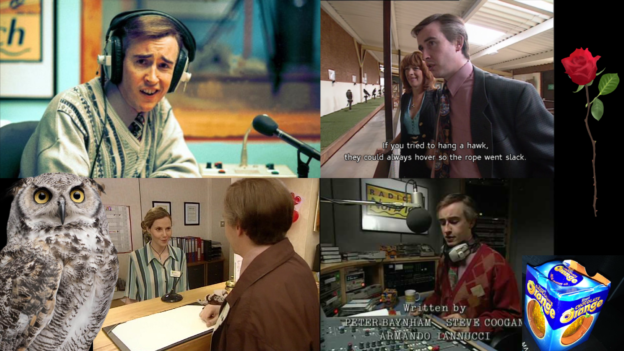
It’s happens to be Valentine’s Day and Alan has been sending chocolate oranges to women he knows aged 50 and under. The thing is, all the chocolate oranges are shop soiled – probably ones that have been on display in shops and then taken off display and sent back to Rawlinsons for some reason, and so Rawlinsons don’t know what to do with all these damaged Chocolate Oranges, so they’ve somehow done a deal with Alan whereby he plugs Chocolate Oranges from Rawlinsons (Just say “Chocolate Oranges are available from Rawlinsons”) and then they give him 50 of the shopsoiled chocolate oranges.
More importantly for Alan, he is struggling financially. He hasn’t been given a second series by the BBC so now he is being forced to make financial changes. He has sacked all the staff in his company Pear Tree Productions and has to trade down his Rover 800 for a smaller model.
In the last episode we heard him go to Pear Tree Productions and sack them all in the most cowardly and pathetic way, except for Jill – the middle aged divorcee that works for him, and who he fancies. He lied to Jill about sacking everyone and then took Jill on a romantic Valentine’s Day trip to a local Owl sanctuary and then he asked her out to dinner at the travel tavern where they have an extremely romantic all-you-can-eat buffet for 6 pounds. It’s all you can eat from an 8-inch plate and Alan is cheating by smuggling in a 12 inch plate from his room.
So in this episode we’re going to hear
What happens on Alan’s date with Jill
Will they get on?
What’s going to go wrong? (because this is Alan – something always goes wrong)
Is Alan going to get involved with Jill?
What kind of lover do you think Alan is?
And is Alan still going to sack Jill like he promised Lynn he would?
I realised just before recording this that I haven’t described the appearance of the characters in the show.
Alan has a kind of middle-aged, middle English kind of look. He wears sensible shoes, brown slacks, a cardigan and shirt or possibly a blue or green blazer with brass buttons. His hair is a sort of side parting but it goes quite wide at the sides. Somehow it is exactly the sort of hair cut that TV presenters had in the mid-nineties.
Lynn looks like a typical middle-aged conservative English churchgoing woman. She is very modestly dressed in a long skirt (grey or brown) a plain blouse, cardigan, overcoat which is light brown or grey maybe. Her look is extremely sensible and plain. Her hair is, again, generic middle aged woman territory but there is absolutely no glamour to Lynn. She is a Baptist, which is quite a strict form of English protestant Christian. She’s very conservative, extremely meek, modest and also completely devoted to Alan. We don’t know why she is so devoted to him but she is. Alan of course takes her devotion for granted. Everyone should be that devoted to him, probably. He is generally quite mean to Lynn although he is also affectionate in some ways. For example, he plays her a song on his radio show as a dedication but feels the need to then say it’s nothing to do with Valentine’s Day.
Then there’s Jill in this episode who I think is also 50 (like Lynn) but she’s far more glamourous and sexy (read: slutty) than Lynn. Really, Jill is very trashy – low cut top (revealing her cleavage), short skirt, hair pushed up, lots of make up. She has tanned (probably fake tanned) skin, smokes fags, wears high heels and makes loads of dirty and flirtatious comments.
Those are the main characters in this episode I think.
Right, so let’s carry on and we’re going to now listen to Alan and Jill having their romantic dinner at the Travel Tavern (a horrible place for a valentines date).
Here are some things to look out for
17:22 Alan and Jill have dinner at the travel tavern Jill has changed into a red dress, Alan is wearing his green blazer. Alan and Jill have just finished dinner. Alan buys Jill a rose. He holds onto his larger (12 inch) plate and Jill orders a chocolate moose, then Alan gets up onto the stage, grabs the mic and does something.
What does Alan do on the stage? What happens?
Jill says “I didn’t know you could sing” – What is Alan’s response about being in the choir when he was a boy?
Lynn arrives. What does she have to tell Alan?
Why was Alan’s phone switched off?
Why is Lynn wearing a “snazzy cardigan”?
What does Lynn suggest to Jill?
What’s Alan’s response?
What does Lynn give to Jill?
What does Jill suggest at the end?
What happends in the video? Basically!
22:00 Alan’s Room
Alan emerges from the bathroom in a bath robe. Jill is in the bed in a nightie.
What does Alan suggest to Jill about the bathroom?
What does Alan think about living in a travel tavern?
Alan puts some change on the bedside table. What does Jill say? What’s Alan’s awkward response?
Alan wants to turn off the light, Jill suggests that they just dim it and Alan slowly dims it to complete darkness. “Bit more, bit more, bit more”
The next bit is perfect because it’s just audio.
Alan in bed with Jill 23:10
What do you think of Alan’s pillow talk?
What does he actually say while they’re having it off?
What do you imagine they’re doing?
What does Alan say about condoms?
Why does Alan want to keep talking?
“People forget that traders need access to Dixons!
They do say it will help people in wheelchairs”
What does Jill do that upsets Alan?
Who knocks at the door?
Alan’s Lovebud
Alan is back in the studio for his morning radio show as Jill is driving home in the taxi. Alan does a feature on his show called “Alan’s Love Bud” which is probably about romantic stories. In this one he tells another story but it’s obviously him and Jill.
Welcome back to this episode about comedy legend Alan Partridge, a character played by Steve Coogan. This is part 5 in a series I started back in 2018. You should listen to the other parts before you listen to this.
What we’re going to do is continue to listen to some clips from an episode of I’m Alan Partridge – you should check out all the AP content out there including the DVDs you can find online.
We’re going to listen to some clips. I’ll give you some things to watch out for. We’ll see how much you can understand. I’ll break it all down and point out funny moments and bits of language.
I hope to be able to cover all of this in this part, so we’ll have to keep things a bit brisk in order to stop the episode going on too long, but there might have to be another episode after this one, depending on how much we get done.
Let’s quickly sum up what happened in the last episode.
I reminded you who Alan Partridge is and what the context is for this episode. We listened to Alan presenting his radio show and plugging chocolate oranges. We heard Alan talking to the staff at the travel tavern and generally being awkward and weird. Then we listened to Alan talking to Lynn about having to fire all the staff at his production company in order to avoid going bankrupt and because he’s not prepared to drive a Mini Metro even if they’ve rebadged it and it’s now the Rover Metro.
So in this episode we’re going to follow Alan as he meets all the members of his production company in order to fire them, even Jill the woman that he fancies and often flirts with.
Alan arrives with Lynn at the offices of Pear Tree Productions
09:15 Alan and the staff at Pear Tree Productions
Watch out for
How Alan flirts with Jill
How Alan lies by telling the staff the news about the second series
How Alan tries to stop people spending too much money
How Alan sacks his members of staff
How Alan manages to escape from everyone
When Jill asks Alan where everyone has gone, what does he say?
Alan and Jill
Watch out for
How Alan establishes if Jill likes him, sex wise, and his reaction
How they flirt really horribly
How Alan asks Jill out on a date
Alan & Jill at the Owl Sanctuary
Watch out for
Alan’s comment about astroturf
What Alan used to think when he saw Jill in the office
How Alan talks about a line of birds of prey they are looking at. He compares it to death row, and then look out for how his rambling comparison goes all weird.
Listening to some more classic British comedy and dissecting it for language. This time we’re listening to some more clips of Alan Partridge, a comedy character played by Steve Coogan. This is part 4 of a series I started in 2018.
Hello there, dear listener, and welcome back to this podcast for learners of English as a foreign or second language or third, or fourth. In these episodes I try to help you learn English while having a laugh at the same time. We cover a lot of British culture in these episodes including lots of stuff about comedy and there’s lots of English to be learned in the process.
Here’s another episode about Alan Partridge, a comedy character played by Steve Coogan. This is part 4 of a series I started in autumn 2018.
You should listen to parts 1-3 (episodes 548-550) before hearing this. Seriously, if you haven’t heard the other parts yet – stop right now and go back to hear them. This will not make much sense to you unless you’ve heard parts 1-3 so go back and listen to them instead, before you listen to this. Alright? OK, so only the people who have already heard parts 1-3 (episodes 548-550) are still with me now then… It should be just those who’ve… what about you there?… yes, you I don’t remember you listening to the other parts. Probably best to hear those first, like I said, so… probably stop and go back… in the archive. (episodes 548-550) Ok you’re still listening. No that’s fine, just ignore, yep, just ignore what I said, yeah, because this doesn’t apply to you does it… just carry on then… don’t blame me though if this doesn’t make sense… not my fault, I did say… just one thing though, when you don’t get it, don’t even think about saying “this is British humour”… no this is not “British humour” ok, “this is poor listening skills and bloody mindedness”. OK, fine. Unbelievable.
I’m just kidding, everyone’s welcome! Here is another episode about British comedy legend Alan Partridge and this is part 4.
When I did parts 1-3 in autumn 2018, I wasn’t sure what people would think, but overall the response was really positive, with lots of people saying they’d like to hear more.
Here’s a comment I just got from a LTL called Aritz, which sums it up quite well I think.
Hey Luke! I wanted to write to you about the Alan Partridge episodes. Thank you so much for taking your time to record them! Although I already knew Steve Coogan, you managed to make me understand the character (Alan) and the comedian in more depth. The episodes were educational, funny and somehow brought us a bit of British culture (something that as a London resident I always appreciate). Seriously good (great!!) stuff! Thanks again!
Well then, let’s enter the world of Alan again then.
What we’re going to do here is listen to some clips of Alan Partridge and break it all down for language learning.
Hmmm, which clips should I choose. There’s so much. We’re spoiled for choice.
I’ve decided to deal with clips from “I’m Alan Partridge” Series 1, episode 2 which follows on from the episode when he has that meeting with Tony Hayers and it goes all wrong and he squishes some cheese into his face.
I’ve chosen this episode because you already know the context of the story and it makes sense to carry on from where we were after hearing that scene. Also, this episode is just brilliant from start to finish (in my opinion of course, other opinions are available)
One thing I would like to say here is that I really want to recommend that you actually buy some Alan Partridge content. It’s really worth it. You should get a DVD or buy a series on iTunes or wherever you can.
I’d strongly recommend getting the DVDs for I’m Alan Partridge series 1 and 2. Also you could check out Mid Morning Matters series 1 and 2 if they’re available. If you’re in the UK you should find most of the AP content on the BBC iPlayer, including the recent series This Time with Alan Partridge (I recommend episode 4).
As well as those, you could get the Alan Partridge books. The first one is called “I, Partridge – We Need to Talk about Alan” and the second one is called “Nomad”. They are both absolutely brilliant and it’s not an exaggeration to say they are literally the best books I’ve ever read. Ok, that is an exaggeration, but it’s really not an exaggeration to say that the audiobook versions really are the best audiobooks I’ve ever heard.
The cool thing about the audiobooks is that they are read out by Alan himself (actually the actor Steve Coogan of course) and this is just amazing. You get hours of Alan reading you both his books and it’s absolutely top drawer comedy writing, and top-drawer voice acting too. Steve Coogan is a genius.
So, you could sign up with Audible and get the two Alan Partridge books.
And it just so happens that my Audible offer is still available!
You download the app on your phone, sign up with Audible and create an account to get the audiobooks, then download them onto your phone.
The offer is: One month of free Audible membership + any audiobook of your choice completely free.
If you like, you can cancel your membership before the end of the month and keep the free book.
So it’s essentially a free audiobook.
www.Audibletrial.com/teacherluke or click an audible logo on my website.
And also there’s the Alan Partridge film, called Alpha Papa, in which Alan gets involved in an armed hostage situation at a radio station and ends up being the hostage negotiator.
So – plenty of Alan content for you to purchase, some of it free.
OK, I just wanted to promote the various bits of Alan Partridge stuff that you can get before we begin.
Right then, so where were we last time?
Context
Alan Partridge is this TV and radio presenter from Norwich in East Anglia in England who basically only cares about getting on television and enjoying the status of being a national broadcaster. He’s convinced he’s A-Grade talent, when in fact he’s at best a D-grade broadcaster or worse. He’s pretty much an awful person, although there are obviously worse people out there. Really, Alan is just lost, deluded, cowardly and deceitful rather than being out and out cruel or evil, although he treats his personal assistant Lynn pretty badly. But there’s something compelling about Alan, even though we certainly don’t want to be him, we might recognise ourselves in him. Is he uniquely British? In a way, yes. We tend to enjoy watching comedy characters who are quite awful, who think they’re better than they are, who are unaware of themselves.
We’re usually quite self-conscious people who try our best to avoid being like Alan, so maybe there’s something quite cathartic about watching someone who is so unaware of himself and so unafflicted by modesty and self-consciousness.
Anyway, I shouldn’t try to explain all of that. I did enough in parts 1-3.
Let’s just get down to business.
So, Alan is a parody (he’s not a real person of course, just a character – that should be clear) a parody of a certain type of TV presenter. He used to be a sports reporter, then he got his own chat show, but accidentally killed a man on live TV. Now he has been thrown out by his wife, their marriage has broken up, probably because of him. In fact it’s all covered in the I, Partridge audiobook. Alan is now living in a roadside motel, or “Travel Tavern”. Somehow he avoided criminal proceedings from what happened on his chat show. Then he failed to get a second series of his show and ended up having a meltdown and punching his boss in the face with a piece of cheese while shouting “Smell my cheese you mother!”
So basically, he doesn’t have a second series and his career is on the rocks.
He’s still presenting a radio show on BBC Radio Norwich, but he’s got the pre-breakfast slot, which is something like 4.30-6.30AM. It’s the graveyard shift, basically. He’s drifting into obscurity.
In this episode, Alan attempts to deal with the fact that he doesn’t have a second series. He’s got to face up to certain financial realities, meaning that he can’t move into his new 5 bedroom house, he has to get a much cheaper car and he’s going to have to lay off (or sack, or fire) almost everyone who he employs at his media production company. He employs about 5 people there, including a middle-aged woman called Jill who he fancies.
Mostly in the episode we follow Alan as he deals with these things, badly in most cases. So he has to sack his production staff, get a smaller car and try to maintain his dignity while living in a shitty travel tavern.
It’s valentine’s day in this episode, so there’s a kind of romantic theme – I say romantic, it’s not romantic at all really, but Alan ends up chatting up Jill from his production company and takes her out on a date. Lynn, his personal assistant seems a bit jealous. The whole thing goes wrong of course.
We’re going to do pretty much the whole episode here.
I’m Alan Partridge S1 E2
There is a laughter track on this, which is a pity, but honestly after a while you start to ignore it.
Alan’s radio show
Opening scenes on BBC Radio Norwich
What to watch out for:
Alan’s dedication to his PA Lynn
Why there’s no telephone Cluedo today
What Alan says about the sound effect (the normal morning cockrel and then the sound of a kiss)
How does Alan define Valentine’s Day?
How Alan gets the tone of a light pre-breakfast radio show completely wrong by talking about syphilis
How Alan ruins Dave Clifton’s joke about valentines cards “It’s valentines day! I came down this morning and I couldn’t open my door. I couldn’t open my door because I’d lost my key” ~terrible joke
How Alan manages to plug chocolate oranges from Rawlinsons
That’s not the sound of someone kissing me, or kissing a cock… cockrel I mean. It’s simply a way of saying “it’s valentines day”, a day upon which mr Al Capone ruined a romantic night out for many diners by massacring them. Died of syphillis he did, so there is some justice.
Alan in the reception
What’s the problem he has with Ben, who he says good morning to?
How does he subtly insult Susan on reception?
What’s the situation with Alan and the chocolate oranges?
What’s Alan’s fat back?
Can Sophie exchange her dark chocolate orange for a milk chocolate one?
Someone says “Excuse me, are you Alan Partridge?” – why?
What’s Alan’s complaint about the soap? (he acts out a washing routine in the shower)
Who sent Sophie a Valentine’s card?
Alan and Lynn talk about finances
What’s the good news?
And the bad news?
What about his Rover 800? Is he willing to drive a Mini Metro to save money?
What does he have to do re: Pear Tree Productions?
Talking to my dad about the latest in the Brexit saga including the general election result, Brexit day on 31 January 2020 and the latest government shenanigans by PM Boris Johnson and co.
Hello everyone this is an episode of The Rick Thompson Report on Luke’s English Podcast. This is where I talk to my dad about politics, especially Brexit and here is the latest update since the last episode in November.
Here’s a quick summary to help you keep up during the conversation. It’ll only take a minute or two. It’s important to understand the overall context when listening to this so you don’t get lost and you can also notice language more easily.
Since the last episode in November
The Tories won their election majority in December and pushed through Boris Johnson’s withdrawal agreement because all their MPs voted for it. Then the UK officially left the EU on 31 January this year (2020 – for any aliens listening to this – the year 2020 in earth years) but nothing really changed because we are now in the transition period in which everything stays the same for a year and the UK and the EU have to bash out a new agreement for things like trade and regulations and stuff – a process that usually takes years. So, did the Tories “Get Brexit Done” like they promised or is there a lot more of this story yet to come?
Also, what has this Conservative majority led by Boris Johnson been doing since coming to power? What about the removal of certain journalists from their lobby briefing, their wish to replace the judiciary, the resignation of chancellor Sajid Javid because 10 Downing Street asked him to fire his team of civil servants.
If none of this makes any sense to you then listen on because you’re going to hear a chat with my dad who has been following this story very carefully as you have heard in previous episodes of the Rick Thompson Report.
Basically, what is the government up to? Who is really pulling the strings of power at the moment and what are they seeking to do? How could Brexit actually be a power grab by a party intent on exerting more executive control on the democratic framework?
Listen on, to find out more…
Ending
So that was another episode of the Rick Thompson Report. How long will this Brexit saga go on? I don’t know. But thanks again to Dad for making another valuable contribution to the podcast again.
So it’s actually valentine’s day as I record this. I hope you have some nice plans, or maybe if you’re single you also have nice plans just doing something else. I have prepared a series of episodes with a valentine’s day theme but I have to publish the RT report as soon as I’ve recorded it because it is quite time-sensitive content. I mean, stuff that’s relevant to the moment, although the RT reports could also serve as a kind of historical document – a history of Brexit. But I can’t publish this series with the VD theme today so that will have to wait. So next week probably you’ll get the first in a series about British comedy and there’s a sort of Valentine’s Day theme running through it. I hope that gives you a little teaser there of what’s coming soon.
Don’t forget about LEP Premium. I recently published a big series about articles which covers all the main errors people make and exactly how we use articles and pronounce them properly too. To sign up go to teacherluke.co.uk/premium
THat’s it for this episode. Have a lovely weekend or week or end or whatever and I will speak to you next time but for now, bye!!
Talking to Sherwood Fleming, author of “Dance of Opinions” about intercultural communication, including common problems and the solutions to help us learn to communicate more effectively across cultures.
Hello you and you and you, welcome back to the podcast. I’m recording this on a very windy Tuesday morning. A storm passed by over the last few days, wreaking havoc across the UK and also here in France we’ve had some pretty strong winds and it’s still very blustery out there.
But here I am in the cosy confines of the Podcastle at LEP headquarters. A pre-lunch recording of this introduction today. I hope you are comfortable. Let’s get started.
Recently I was contacted by a listener called Inna with a suggestion for the podcast.
The message went like this:
Hi Luke,
I’m Inna, one of your regular listeners, as well as a Premium subscriber.
I would like to thank you for your podcast, which is always helpful and always interesting.
She is teaching me how to communicate better in English as a foreign language.
Her lessons changed my vision of what communication is and helped me to understand how to communicate better not only with my foreign colleges but how to communicate better “tout court”. [full stop, period]
Some of my colleagues had the chance to work with her, and it was kind of “a revelation” for all of them every single time.
I strongly believe that this topic would be very useful to all your listeners.
So I got in touch with Sherwood and arranged a call for an interview and that is what you’re going to hear on the podcast today.
Sherwood Fleming
Here’s some intel on Sherwood, from her website.
Sherwood’s expertise is in improving the written and spoken communications of those who use English as a second language and work within intercultural business contexts. She has designed and led seminars for more than 25 years in both Canada and France, helping thousands of participants to communicate more effectively.
Sherwood is the creator of the five-step CLEAR method, which has established a new standard for expressing opinions interculturally. It forms the heart of her recent book, Dance of Opinions: Mastering written and spoken communication for intercultural business using English as a second language, an easy to learn and apply method for intermediate and advanced ESL business people, designed to improve how they express their opinions. Her motto? “We build our futures together, in the words we exchange today.”
OK so this conversation is all about intercultural communication. What are the issues and obstacles that we face when communicating with people from different cultures? How do our different approaches to communication influence the relationships that we build with people? What are the solutions to some of the problems that can arise when communicating across cultures?
Sherwood talks about finding strategies to help you learn to dance to the same tune as the people you’re talking to, and this involves things like the pragmatics of looking beyond the words which are being used and towards the real intentions of communicative acts.
There are some examples of people in business contexts and also how I sometimes struggle with intercultural communication in my everyday life in France.
Our aim for this episode is to help you, the listeners, attain clarity about these issues that you may not even be fully aware of, and once you can see more clearly what these issues are then you’ll be ready to apply the proven solutions, which Sherwood shares during this episode and in her other work, including her book “Dance of Opinion” available on Amazon.
So let’s now listen to Sherwood Fleming and you can consider these questions
What are the typical problems people experience when communicating across cultures?
Can you find some examples?
What are some of the reasons behind those problems?
What are some solutions that we can apply to those problematic situations?
I’ll chat to you again briefly at the end, but now, let’s get started
Thanks again to Sherwood Fleming for being on the podcast today. That was a very interesting conversation about the way we all communicate with each other in different ways.
Conclusions?
It sort of boils down to this I think.
Keep it simple!
Make it explicit what you want and what you’re offering. Dumb down your English in intercultural contexts.
Focus on the main message (the speech act) rather than the form of the message. Some cultures don’t emphasise things that other cultures expect, but the main thing is to focus on specifically what the other person wants, rather than how they are saying or writing it.
Thanks for all your recent comments and emails and stuff it’s great to hear from you, including some choice comments from the last few episodes.
Luke, I have just binged all three episodes with Quintessentially British things and I must say theyre brilliant! You are so blessed to have such an interesting and intellectual family of yours, all the three episodes are completely different and amazing to listen. it’s like I’ve looked at the Britain I’ve never known before. Hats off to you and your beautiful kin!
By the way everyone, it’s mum not mom in British English.
There have been numerous requests for episodes of Gill’s Book Club as it might be called, or Gill’s Culture Club or something. So we’re looking at doing episodes of that sometimes.
There’s also a Rick Thompson report on the way soon.
I’ve had messages thanking me for the recent episode about IELTS with Keith O’Hare and have asked for more so I might do something in the near future.
Hi Luke, I am Uswah from Indonesia. I’ve been thinking about giving comment in each episode particularly everytime Amber and Paul are on the Podcast. However I always feel not sure untill today I heard the fact that there are fewer comments and responses from your listeners.
So here I’m now, I want you to know that I am a faithful listener, I get every joke you make (including Russian jokes and Lion king, LOL), I laugh out loud when three of you are laughing. I am an English teacher basically, but I spend most of my time for sewing, hahaha so I’m a tailor (not Taylor, LOL) at the same time. So I’ve been always listening your podcast when I’m sewing. It’s just sooo fun. So I feel my sewing project is much more fun since that’s the time I listen to your podcast.
So, let me recap: last May, Luke published an episode titled “SLEEP with Amber and Paul”. Now, eight months later, Amber is heavily pregnant. These guys are bringing the concept of modern family to a whole new level…
This website uses cookies to improve your experience while you navigate through the website. Out of these, the cookies that are categorized as necessary are stored on your browser as they are essential for the working of basic functionalities of the website. We also use third-party cookies that help us analyze and understand how you use this website. These cookies will be stored in your browser only with your consent. You also have the option to opt-out of these cookies. But opting out of some of these cookies may affect your browsing experience.
Necessary cookies are absolutely essential for the website to function properly. These cookies ensure basic functionalities and security features of the website, anonymously.
Cookie
Duration
Description
cookielawinfo-checkbox-analytics
11 months
This cookie is set by GDPR Cookie Consent plugin. The cookie is used to store the user consent for the cookies in the category "Analytics".
cookielawinfo-checkbox-functional
11 months
The cookie is set by GDPR cookie consent to record the user consent for the cookies in the category "Functional".
cookielawinfo-checkbox-necessary
11 months
This cookie is set by GDPR Cookie Consent plugin. The cookies is used to store the user consent for the cookies in the category "Necessary".
cookielawinfo-checkbox-others
11 months
This cookie is set by GDPR Cookie Consent plugin. The cookie is used to store the user consent for the cookies in the category "Other.
cookielawinfo-checkbox-performance
11 months
This cookie is set by GDPR Cookie Consent plugin. The cookie is used to store the user consent for the cookies in the category "Performance".
viewed_cookie_policy
11 months
The cookie is set by the GDPR Cookie Consent plugin and is used to store whether or not user has consented to the use of cookies. It does not store any personal data.
Functional cookies help to perform certain functionalities like sharing the content of the website on social media platforms, collect feedbacks, and other third-party features.
Performance cookies are used to understand and analyze the key performance indexes of the website which helps in delivering a better user experience for the visitors.
Analytical cookies are used to understand how visitors interact with the website. These cookies help provide information on metrics the number of visitors, bounce rate, traffic source, etc.
Advertisement cookies are used to provide visitors with relevant ads and marketing campaigns. These cookies track visitors across websites and collect information to provide customized ads.



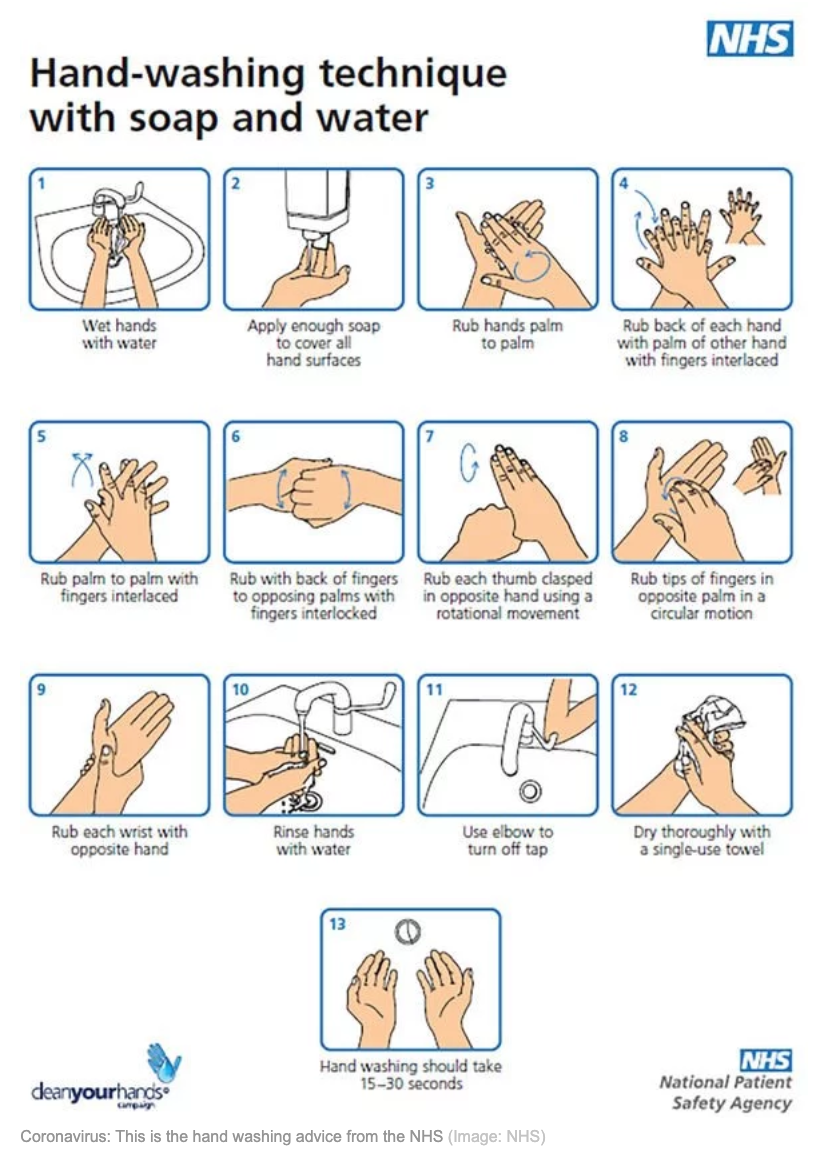
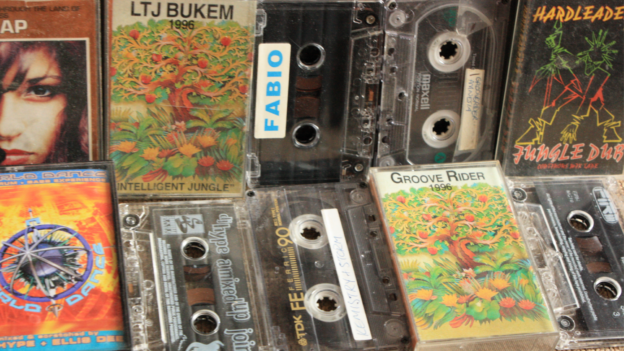



 Lynn looks like a typical middle-aged conservative English churchgoing woman. She is very modestly dressed in a long skirt (grey or brown) a plain blouse, cardigan, overcoat which is light brown or grey maybe. Her look is extremely sensible and plain. Her hair is, again, generic middle aged woman territory but there is absolutely no glamour to Lynn. She is a Baptist, which is quite a strict form of English protestant Christian. She’s very conservative, extremely meek, modest and also completely devoted to Alan. We don’t know why she is so devoted to him but she is. Alan of course takes her devotion for granted. Everyone should be that devoted to him, probably. He is generally quite mean to Lynn although he is also affectionate in some ways. For example, he plays her a song on his radio show as a dedication but feels the need to then say it’s nothing to do with Valentine’s Day.
 Then there’s Jill in this episode who I think is also 50 (like Lynn) but she’s far more glamourous and sexy (read: slutty) than Lynn. Really, Jill is very trashy – low cut top (revealing her cleavage), short skirt, hair pushed up, lots of make up. She has tanned (probably fake tanned) skin, smokes fags, wears high heels and makes loads of dirty and flirtatious comments.