Category Archives: Family

492. Becoming a Dad (with Andy & Ben) Part 2

The second part of this conversation with Andy Johnson and Ben Butler, and we talk about the moment of childbirth and take a quiz about becoming a father. Vocabulary is explained in the second part of the episode. Vocabulary list available.


Small Donate Button
[DOWNLOAD]

Introduction Transcript

Welcome back to part 2 of this double episode called “Becoming a Dad with Andy and Ben” – I may need to rethink that title. It sounds a bit misleading. “Becoming a Dad with Andy & Ben” – It sounds like I’m becoming a Dad with Andy & Ben – as if somehow Andy and Ben are involved. I’m not sure about that idea. I mean, they definitely weren’t involved.

Nevertheless, here is Becoming a Dad with Andy and Ben part 2, in which I am talking to my friends Andy and Ben about their experiences of becoming a father for the first time. I’m trying to learn a few things about what it will be like when I become a Dad in a matter of weeks.

Andy & Ben are like seasoned professionals at this now as they both have two kids.

In part 1 you heard about things like conception, trimesters, epidurals and all sorts of other things.

We left it on a bit of a cliffhanger with me asking Andy & Ben about the moment their first children were born, so we get straight into it here talking about the big day, the moment when it’s time to get to the hospital and all hell breaks loose! Now, this is probably the most crucial moment of the whole process and can also be quite a dangerous day as well, so there is often drama and a lot of nerves. It’s a nerve-wracking experience, and we’ll be talking about it in some detail – so if childbirth is a topic that you are sensitive about, just have a think before embarking on this episode.

I think I’m prepared for the big day (mentally and also in terms of our home) but it’s going to be a big rush to deal with and no doubt quite emotional! Even going for scans is quite a big deal, so it’s a bit hard to imagine what the birth will be like.

Anyway, let’s carry on. See if you can identify the things Andy and Ben are saying and stick around because in the second part I’ll be going through lots of the vocab you’ll be hearing, turning this into a great learning opportunity for you.

—- Conversation Continues —–

So that was my conversation with Andy & Ben. Did you catch everything?

You know what’s happening now, right?

That’s right it’s vocab time.

Let me now go through some vocabulary for you.

Vocabulary List

  1. She told me that she thought her water had broken
  2. I was training someone to fill my role while I was taking paternity leave
  3. The contractions were pretty slow actually
  4. Braxton Hicks
  5. It took her ages to start contracting properly
  6. We went to the hospital after 36 hours of labour
  7. She was already 9cm dilated
  8. My wife was out of it
  9. They just whisked my wife away to the theatre.
  10. I’m not a man for a crisis. I wouldn’t know what to do. I’d be running around like a headless chicken.
  11. My wife developed gestational diabetes.
  12. Too much sugar going through the placenta can make the baby grow too quickly.
  13. We got a cab in and it was great (not a cabin).
  14. The umbilical cord had got wrapped around his neck
  15. They cut the umbilical cord and took him over to the resuscitation table
  16. First of all I saw this massive… junk. Because when babies are born their genitals are swollen. So, first thing I saw was it’s a boy.
  17. That was me finished, I just burst out crying.
  18. And then he weed all over the nurse.
  19. I held it together. I don’t know how I did because I’m quite squeamish.
  20. As soon as I got outside, that’s when I really broke down.
  21. If there are dramas, don’t worry, you’re in safe hands.
  22. You just have to go with the flow and it’s alright in the end.
  23. This is easy, I’ve nailed this parenting lark!
  24. Once they start to wake up, that’s when it kicks in, is it?
  25. If you can manage the people who want to see the baby, who hound you…
  26. I tell you what, I’ve got a little quiz here…
  27. She’s just gone through childbirth so she needs to be pampered
  28. What would the native Americans do? They’d probably use buffalo turds
  29. When the baby is born the mother and father are flooded with a hormone – the happiness hormone.
  30. Your wife is your number 1 person, but she is going to be relegated, and so are you.
  31. They start gurgling and making noises
  32. The youngest, he looks at me and his whole face lights up with a big smile.
  33. You get a good couple of nights’ sleep (in a hotel) and your body remembers and goes “Oh I want more of this” and you end up still being knackered!
  34. Once things have settled down we can have another chat and we can see you with the big bags under your eyes.

Thanks for listening! I look forward to reading your comments.

491. Becoming a Dad (with Andy & Ben) Part 1

A conversation and vocabulary lesson about childbirth and becoming a father, with Andy Johnson and Ben Butler from The London School of English. Listen to Andy and Ben talking about their experiences of becoming parents, how their babies were born and more. Vocabulary is explained in the second half of the episode. Vocabulary list available.


Small Donate Button
[DOWNLOAD]

Introduction Transcript

This episode is all about becoming a Dad.

If you have heard the podcast recently you’ll know that my wife and I are expecting a child… (expecting a child to do what Luke…?) Well, expecting a child to be born… we’re having a baby, well she’s having a baby, as I said before, I will mainly be just standing there, hoping for the best.

“Expecting a child” is just the phrase we use for that – when you’re going to have a baby. We’re going to have a baby daughter in December. Thank you if you have sent me messages saying congratulations, that’s very nice of you.

I don’t plan to talk about children all the time on this podcast. Having a child is a big deal, but I don’t want to sound like a broken record by going on about it all the time, although it’s bound to come into the things I say because it will be major part of my life.

But I thought that it would be worth talking about it in some depth in at least one or two episodes because it is something that a lot of people experience (many of you will have had children, or will go on to have children and if not you then your friends or family – or at least it’s the sort of thing that people talk about a lot) and since this is happening to me I think talking about it could bring some authenticity to an episode, and that can really make it more interesting and therefore more engaging for you to listen to . Also there’s quite a lot of specific vocabulary that will come up that you can learn.

I did record a conversation with Amber nearly 4 years ago when she was pregnant with her son Hugo. She talked about what it was like for her to be pregnant and I did a follow-up episode with vocabulary of the subject too. You can find those two episodes in the episode archive – episodes 161 and 162. That was quite a long time ago, so let’s revisit the subject, and see if any of the same language comes up again.

161. She’s Having a Baby (with Amber Minogue)

162. Having Babies: Vocabulary / A Male Perspective

This time I thought I’d talk to Andy Johnson and Ben Butler about their experiences of becoming parents, to see if they can give me some general advice as I am just about to become a dad for the first time.

They’ve both had several children now, so they’re very experienced at the sort of thing I’m going to start going through in a matter of weeks.

So I’m going to do a lot of listening and learning in this episode, and you can join me too. Let’s see how much we can learn from this.

Watch out for some nice language relating to the whole subject of childbirth, parenting, and so on.

This episode is in two parts – that’s because I’ve decided to spend the second half of each episode explaining some of the vocabulary that comes up in the conversation.

What’s going to happen is that I’ll play you the first part of the conversation in a moment. Just try to follow it. I think it might be difficult for a lot of you. I think that there could be quite a lot of detail that you won’t catch. There are 3 of us, talking on skype, fairly quickly about quite a specific and detailed subject. So, remember, if you don’t understand it all – you should keep listening and hold on because I will be going through a lot of the language and clarifying it afterwards.

That should help you understand more and also turn this into more than just a conversation – it’ll become an English lesson and a chance to learn some natural English expressions. So, don’t worry if you don’t understand it all. I expect to catch a lot of that stuff in the second half.

There’s also a vocabulary list on the page for this episode and the next one.

Now, having children is wonderful and fantastic and all that – but it can also be quite scary – I mean, it’s fairly serious business, especially the moment of birth. I think we’re going to get into some fairly personal details in this conversation, and there will probably be a few descriptions of childbirth experiences which were quite emotional and even frightening at the time so please just bear that in mind if this is a sensitive topic for you for any reason.

Another thing I’m aware of is the fact that there are various cultural differences around childbirth and so the things you will hear about in this conversation might be different to how it is in your country. I’m quite curious to read your comments and to know if things are done at all differently where you are from.

Anyway, let’s now talk to Andy and Ben now and see what they can tell me about becoming a dad, and by the way – this conversation was recorded on Skype. I was at home in Paris and they were in a classroom at the London School of English, which is just next door to where I used to live in my flat in London. In fact, from some of the classrooms there it is possible to see my old flat through the windows. In fact, that’s the first thing that is mentioned in this conversation…

—————————- Part 1 ——————————–

Ok that’s the end of part 1 of the conversation!

What I’m going to do now is go through some of the language you just heard but may have missed. You can hear the rest of the conversation in part 2, which should be available soon.

Now, a lot of the language in this list for this episode is about childbirth and parenting – but not all of this language is about those things. There’s also plenty of vocabulary that you can use to talk about things in general, for example there are a few football analogies that Andy and Ben used as well.

Check out the page for this episode where you’ll see a the word list that I’m going through here. You can take those phrases, put them in your word lists, your flashcard apps, and so on.

Create your own word lists

By the way, it might be a good idea to create a word list of your own. It’s so easy with the internet today. When you find new words online, copy + paste them into a list (maybe on a spreadsheet, a word doc or a google doc or something). Add examples, definitions, pronunciation, even links to podcast episodes or whatever, and also any details that will help you remember the word. That’s so easy to do, right? Just copy + paste and bob’s your uncle. Use an online dictionary like Oxford Dictionary online to get examples and definitions. Then you can keep going back to your list, testing yourself and making sure that you remember these phrases and that you don’t just immediately forget them.

Just a tip there for how you can use word lists, notes or scripts on my website to help expand your active vocabulary with this podcast.

Vocabulary list

  • It’s exciting and slightly nerve-wracking
  • Football expressions (to describe the sequence in which Andy & Ben had kids – as if it was a football match)
    Ben, you went first with your baby and then Andy you came next.
    Andy: I equalised.
    It was 1 – 1.
    It was 1 – 0 (one – nil) and then Andy equalised.
    Then Ben took the lead again.
    Then more recently you drew level again.
    We’re both on a hat trick now but it’s more likely that the match has been abandoned now.
    It’s full time (no more kids!)
    Match abandonedinclement weather.
  • We’re going to call it quits at two.
  • The scans tell us that she’s healthy
  • How am I going to change a nappy?
  • Those kinds of things are easy in hindsight.
  • There was quite a lot of apprehension around the birth.
  • The midwife is talking about the birth in French.
  • Whether you want to have a caesarean section.
  • A natural birth – (in the UK this means a birth in the conventional sense, not a cesarean) but I use it to mean a birth involving no epidural (or pain reducing medication)
    So, here in France, when people say “a natural birth” they mean one with no pain killers.
    In the UK “a natural birth” just means “not a cesarean”.
  • So, will it be a c-section?
  • An epidural – a nerve blocker which goes into the spine
  • She had an epidural and she said it was a game changer
  • We conceived on Valentine’s Day
  • We had IVF so we know exactly when it happened
  • With the second one we were induced
  • My wife would certainly advocate having an epidural because it makes things so much easier
  • A chemical induced state
  • A numb state
  • My wife is pretty hardcore, she’s hard as nails
  • She’s got no qualms about that. She’s happy to just have the epidural.
  • We tried for 3 years and never fell pregnant again
  • In the end we went through IVF
  • They take the eggs out and inseminate them in a test tube and then they go back in
  • Talk about taking the fun out of it! (Talk about… = a way of emphasising something)
  • Our friends were plying us with champagne
  • Did your wives have morning sickness?
  • It’s the first trimester when they get sick
  • She was narcoleptic
  • Her body was generating new cells and it took it out of her
  • When is your due date?
  • You’re almost in the drop zone mate
  • By the time this has been published the sprog might have even arrived
  • Think about your social commitments and try and scale those back

— Part 2 Available Soon —

489. A Rambling Conversation with Mum (Part 2) + Vocabulary

Here’s part 2 of this conversation with my Mum in which you can hear us wittering on about the bookshop where Mum works, some of the books she’s read recently, and some of her podcast and film recommendations. Vocabulary is explained at the end, and there’s a vocabulary list with definitions available below.


Small Donate Button
[DOWNLOAD]

Vocabulary List

  • we’re proud of our shop, we take a great pride in it (or ‘take pride in it‘)
    • to be proud of something / to take pride in something. ‘To take a pride in something’ is less common.
  • Alan Bennett and Geoff Boycott impressions (quite bad ones)
  • Talking about Beyond The Fringe – a comedy group from Cambridge and Oxford Universities
  • second-hand books / used book
  • We get a lot of cook books books with recipes in them
  • A lot of celebrity biographies and autobiographies
    • a biography = the story of someone’s life, written by someone else
    • an autobiography = the story of someone’s life, written by that person
  • A lot of the books I’ve been reading are quite obscure
    • obscure = known only by a few people
  • The Citadel by A J Cronin
  • A lot of problems were caused by infrastructure, like the sewers
    • infrastructure = the basic facilities such as transportcommunications, power supplies, and buildings, which enable a town, city or country to function. (Collins Dictionary)
    • sewers = the underground tunnels that carry all the toilet waste (i.e. the piss and shit) away
  • Lots of enteric diseases
    • enteric diseases = diseases caused by unclean water
  • Entirely preventable diseases, but not easily treated
    • to prevent a disease = to ensure that a disease never infects people
    • to treat someone / to treat a disease = to give treatment to people who are suffering from a disease
    • to cure someone = to make a disease disappear completely, through treatment
  • They find the sewer and they blow it up so the authorities have to replace it
    • to blow something up = make something explode
  • How did they blow it up? With a bomb? With some sticks of dynamite.
    • a bomb = an explosive device
    • sticks of dynamite =  things that look a bit like candles but they explode because they’re made of nitroglycerine (not wax) and have a fuse (not a wick)
  • It starts out with this man who starts out being incredibly idealistic and wanting to improve things and he gradually gets worn down by the system and ends up becoming one of these quacks who gets himself popular with people who have lots of money and treats them for things they haven’t really got, before he’s finally brought up short

    • to start out = to start from the very beginning
    • to be idealistic = to base your behaviour on certain ‘ideals’ or ‘principles’ even if it’s impractical or unrealistic. It’s a bit similar to ‘naive’.
    • to get worn down by something = to become weaker because of difficult experiences over time
    • a quack = a fake doctor
    • to bring someone up short = to suddenly stop someone doing something, often with a surprise
    • to be brought up short (passive version) = to suddenly be stopped (by something) in what you are doing, often with a surprise
  • It’s quite moving = makes you feel a strong emotion
  • There’s this character arc of this guy who starts out innocent and gets seduced by the money
    • a character arc = a narrative or storyline for a particular character which changes from the start to the finish
  • There’s lots of parallels (with today)
    • parallels = similarities
    • there’s a lot of parallels / there’re a lot of parallels
  • It espouses socialist ideas
    • to espouse something = to support it (usually a way of life)
  • Mothering Sunday by Graham Swift
  • This one is very short. It’s a novella.
    • a novella = a short novel
  • It’s a tiny book but it contains a heck of a lot
    • a heck of a lot (of something) = a lot (but emphasised with ‘a heck of’ – also ‘a hell of a lot’)
  • It’s about class, it’s about post-traumatic stress after the First World War, it’s about families losing sons
    • PTSD or post traumatic stress disorder = emotional distress or shock which continues in your life after experiencing extreme danger or stress. It’s common in soldiers who have experienced the shock of combat in war.
  • If English is your second language it can be a bit of a slog sometimes to keep going (reading)
    • a slog = a long, difficult and tiring experience
  • The Old Man and The Sea by Ernest Hemmingway is a short book
  • Tinker Tailor Soldier Spy (film) – it’s not really about spying (says Mark Kermode)
  • The Adam Buxton Podcast (especially episodes with Louis Theroux)
  • People say he (Louis Theroux) is faux naive. He comes across as innocent so he has to ask questions to find out what’s going on.
    • to be faux naive = ‘fake’ naive – pretending to be naive
    • to come across as something = to give an impression of something – e.g. he comes across as a really nice guy (he gives the impression of being a nice guy). Tom Cruise comes across as being a really friendly, fun and hardworking person. I wonder if he is like that in real life. I expect he is hardworking, but I wonder if he really is that friendly and fun all the time.
  • He looks a bit dorky, goofy, geeky.
    • All these are words to describe someone who is not cool. They’re very similar yet slightly different in meaning.
    • dorky = unfashionable, awkward, not socially relaxed and laid back, a bit uptight and uncool.
    • goofy = just a bit ridiculous, but also in appearance – perhaps with teeth that are sticking out or big glasses, big ears – ridiculous looking features. Think of Goofy from the Disney animations.
    • geeky = interested (maybe obsessed) by things like computers, comics, science fiction rather than people. (Louis Theroux definitely isn’t a geek, but he comes across as geeky)
  • He’s quite tall. He’s a bit gangly. His arms and legs are very long.
    • gangly = a description of physical appearance – tall and thin with an awkward appearance and a clumsy manner
  • He’s got this awkward Britishness.
    • Awkward is a word that comes up a lot in my conversations. I often say that British people seem awkward, that I felt awkward in a situation, or that a particular situation was awkward. Louis Theroux can be described as having awkward Britishness.
    • Awkward = uncomfortable, not completely relaxed and loose, a bit embarrassing, a bit shy
  • Do you fancy him?
    • to fancy someone = to find someone physically attractive, in a sexual way (but this is the sort of word that teenagers use)
  • He’d spend time with all sorts of weird fringe groups
    • fringe = edge
    • fringe groups = groups that exist on the edge of society, e.g. cults, religious sects, conspiracy theorists, extremists etc
  • His naive awkward English friendliness is very disarming and as a result people open up to him
    • to be disarming (adj) = to make people less hostile or aggressive, perhaps by being charming.
    • to open up (to someone) = to become more open and revealing with people, e.g. to start talking about personal things
  • The Year of Reading Dangerously by Andrew Miller
  • He’d lost the knack of being able to read for pleasure
    • the knack of doing something = a particular and skillful way of doing something. E.g. There is a certain knack to closing the bedroom door silently in my flat. You have to pull the handle down, pull the door in slowly, let the handle go back and then pull the end of the handle until you hear a little ‘click’. There’s a knack to doing it. In this case, my dad has lost the knack of being able to read for pleasure. ‘to lose the knack of doing something’ is a common way to say that you have lost the specific ability to do a certain thing.
  • Steve Earle – I’ll Never Get Out of This World Alive (book)
  • (It’s about) a doctor in the 1960s who was a junkie
    • a junkie = a drug addict (especially heroin)
  • It was a redemptive tale, a story of redemption
    • to redeem yourself = to change from a life of sin/evil/immorality to a life of good
    • redemption = the process of being redeemed
    • a redemptive tale = a tale of redemption
  • Trainspotting 2 (actually called T2: Trainspotting)
  • They’re all addicted to heroin, and it’s really grim.
    • grim (adj) = unpleasant and depressing
  • It’s directed by… whatsisname, whatdoyoucallim, whojumaflip… Danny Boyle!
    • these are all words for when you can’t remember someone’s name
  • His style – it’s very in-your-face, intense, visceral
    • in-your-face = bold, direct, aggressive, assertive, intense
    • visceral = relating to strong feelings, emotions
  • I was streaming with tears by the end of it
    • streaming with tears = tears were running (streaming) down her face
  • Book: Trainspotting by Irvine Welsh (written in a dialect)
  • When there’s no more time:
  • The time is getting on and we really ought to draw it to a close
  • We’ve run out of time

Those author, comedy, book, film and podcast recommendations again

488. A Rambling Conversation with Mum (Part 1) + Vocabulary

A conversation with my (lovely) mum in which we generally witter on about a number of different things including some British history, ways of describing rain, different expressions for talking (like rambling and wittering), my mum’s accent, what she thinks of this podcast and some of her podcast recommendations. Vocabulary is explained after the conversation and there is a vocabulary list available below.

Small Donate Button
[DOWNLOAD]

Introduction Transcript

Today on the podcast, you’re going to listen to a conversation with my Mum and I’m going to explain some of the vocabulary that comes up naturally in that conversation.

Here are some of the topics that we talked about:

  • a bit of British history from the Regency period (that’s the Jane Austen period of British History) including descriptions of ballroom dances and men in tight trousers
  • some descriptions of how we talk about rain in British English
  • a few expressions related to ways of talking such as the words ‘rambling’ ‘wittering’ and ‘bickering’
  • what my mum thinks of my podcast
  • some of mum’s podcast recommendations – her favourite podcasts that she listens to and how she likes to listen to them
  • and various other things that you can discover as you listen to the conversation in full

At the end I will be going through some of the vocabulary that you are going to hear, which should help you to learn some really nice, natural English phrases, the kind of English that my mum speaks.


Vocabulary List

I’ve highlighted some words and phrases in bold and there are definitions and comments [in brackets].

  • I typed up the minutes of a meeting of a volunteer group I belong to.
    [typed up = converted handwritten notes into a document on a computer]
    [minutes of a meeting = the notes describing what happened in the meeting, usually written, typed up and then kept as a record of what happened]
  • It’s a very tedious job but someone has to do it.
    [tedious = boring]
  • Did you volunteer to do that or did someone delegate that responsibility to you?
    [to delegate something to someone = to give someone a responsibility]
  • *Mum bangs the microphone and apologises* Mum: Oh, sorry I think I just banged the microphone and made a noise. Luke: Flagging it up like that may have just made it worse than it would have been.
    [to flag something up = to bring it to everybody’s attention]
  • The fact that you brushed against the microphone slightly.
    [to brush against something = to touch something a little bit as you move past it, make contact with something as you move past it, probably by accident] [brush up on something also means to improve your skill, e.g. to brush up on your English – but that’s the idiomatic version of the phrase]
  • The building had a complete renovation which was funded by the Heritage Lottery Fund.
    [a renovation = the appearance was changed in order to make the building look new again. The building had a renovation. It was renovated.]
    [it was funded by = it was paid for by the Heritage Lottery Fund. A fund = a collection of money which is collected for a particular purpose. Verb – to fund something = to provide the money for something]
  • One of the conditions was that the town council would stage community events.
    [verb – to stage an event = to organise and present an event. Noun – a stage – a platform where performances happen, e.g. in a theatre]
  • It dates back to the 18th century some time.
    [dates back to = it comes from that time, it originates from that time. E.g. this building dates back to the late 1700s]
  • It was used as a petty sessions court.
    [petty sessions = court sessions or court procedures which are for petty crimes]
  • Petty crimes
    [less serious crimes, also called “summary offences” in legal English. The serious ones are called “indictable offences”]
  • Just fairly petty, trivial offences, like drunkenness etc.
    [trivial = another word for ‘not very important or serious’]
  • We have a lovely Regency ballroom.
    [a ballroom = a fancy looking room where formal dances are staged.
    Regency = a period of British history including the very end of the 18th century and the beginning of the 19th century]
  • Going to the ball was a very good way of meeting people.
    [a ball = a dance]
  • The dances were danced en-masse, like a folk dance.
    [en-masse = in a group, together. It’s a French phrase that we use in English]
    [a folk dance = folk here refers to the traditions and culture of ordinary people, not upper class people or nobility. When I think of ‘folk’ I think of the countryside, farming communities, acoustic instruments, simple clothing and group dances that involve old traditions]
  • Men would be wearing these kinds of frilly shirts and tight trousers, and neckties.
    [ frilly = a design of a shirt that has fabric with lots of folds in it – see the pic]
  • Regency style clothing (from the BBC TV series Pride and Prejuduce) The men wore frilly shirts with neckties. The women wore dresses that were fitted 'under the bust'.

    Regency style clothing (from the BBC TV series Pride and Prejuduce) The men wore frilly shirts with neckties. The women wore dresses that were fitted ‘under the bust’.

    Heaving bosoms (!)
    [ a bosom = a woman’s breasts or ‘bust’. Heaving = full and pushed up]

  • The dresses were fitted under the bust.
    [ the bust = the breasts. “bust” is a singular noun used to describe the whole area of the breasts. It’s a woman’s chest, basically]
  • What with the men’s legs and the ladies’ busts, it was quite interesting! [What with (all the) + noun . This is a way to say “because of” but you put the noun at the beginning of the sentence. E.g. It was difficult to hear him because of all the noise. What with all the noise, it was difficult to hear him. It was quite interesting because of the men’s legs and the ladies’ busts. What with the men’s legs and the ladies’ busts, it was quite interesting!]
  • In common parlance we talk about the Regency era.
    [common parlance = the things that people usually say]
  • If it starts pissing down (with rain)
    [raining heavily – a slightly rude but very common expression]
  • It’s raining cats and dogs
    [raining heavily – an idiom that we don’t really use much any more]
  • It’s bucketing (it) down
    [raining heavily – a common, informal expression]
  • It’s “shuttering” down
    [what my Gran used to say, but nobody else said it I think!]
  • Episode 135 – “Raining Animals” https://teacherluke.co.uk/2013/06/17/135-raining-animals – an episode I did about the subject of heavy rain and whether animals ever do rain down from the sky
  • To ramble / To ramble on
    [to talk for a fairly long time in quite an unfocused way. It’s sometimes annoying because someone doesn’t get to the point. Note – not rumble.]
    [to ramble on  means to continue rambling] to ramble on + about + something
  • To witter / To witter on
    [it’s similar to ‘ramble’. To ‘witter’ means to talk without really saying anything important. It can be used in a negative way, as in “Stop wittering on!”]
    [to witter on = to continue wittering] to witter on + about + something
  • “A ramble chat” as Adam Buxton would say.
    [Adam Buxton calls his conversations ‘ramble chats’ on his podcast]
  • What on earth do people want to hear me wittering on for?
    [what… for? = why. e.g. Why did you do that? What did you do that for?]
  • Why (on earth) do people want to hear me wittering on?
    [Do you enjoy listening to my Mum wittering on? Let us know in the comment section]
  • The kind of English that Jacob Reese Mogg would speak.
    [A Conservative politician who is very posh and upper class, and speaks with an obvious heightened RP accent. My mum doesn’t like him]
  • Don’t go there! Don’t even go there!
    [Don’t start talking about that!]
  • Luke: I think you speak RP. Gill: Yep, I’d go along with that.
    [I’d go along with that = I agree]
  • Some of them are a bit rambly and go on a bit but most of them are excellent.
    [rambly = the adjective for the verb ‘ramble’]
    [to go on a bit = to talk for a bit too long]
  • Backlisted podcast – They do a podcast every fortnight, talking about backlisted books, which are books that are mainly out of print or aren’t popular in bookshops.
    [a fortnight = two weeks – just UK English]
    [backlisted books = books which are out of print – I don’t need to explain that, do I? Still, nice language]
  • They’re so knowledgeable and yet they’re not academic, they’re not stuffy.
    [knowledgeable = knows a lot about things, has a lot of knowledge. Can you say it? He knows a lot. He has lots of knowledge of the subject. He’s very knowledgeable about it.]
    [stuffy = formal and old-fashioned, a negative and disapproving word]
  • The Curious Incident of the Dog in the Night Time by Mark Haddon – it’s written from the point of view of an autistic child.
    [autistic = suffering from autism. Autism = a developmental disorder characterized by impaired social interaction, difficulties in communicating, problems with seeing and hearingrepetitive behavior, etc.]
  • We just peruse the different shelves and tables.
    [to peruse = to browse, read, investigate in a relaxed and casual manner]
  • James is Whatsapping us while we’re on the podcast. How dare he?
    [Whatsapp = a messaging app on your phone. To ‘whatsapp’ someone = to send someone a message on Whatsapp.]
    [How dare he? – usually How dare you? – It’s used when you’re shocked or unhappy with someone’s behaviour]
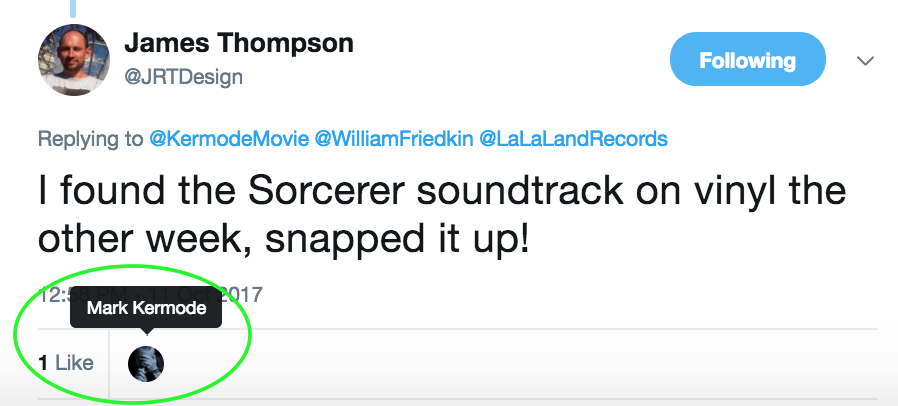
  • James tweeted to Mark Kermode (Mark had tweeted that he was listening to a couple of soundtrack albums for films by William Friedkin, and James replied saying he’d “snapped up” the soundtrack to a Friedkin film called Sorcerer. Mark is a big fan of Friedkin, especially Sorcerer, and he liked the tweet.)
    [snapped up = took quickly, like a crocodile would take something]Screen Shot 2017-10-16 at 18.39.04
  • The Frank Skinner Podcast (Absolute Radio)
  • (Frank Skinner) He’s very witty, very articulate, very quick witted.
    [witty = funny, able to make quick jokes. Quick witted = with a fast brain for making jokes or quick comments]
  • He’s from our neck of the woods. He’s from West Bromwich. It’s in The Black Country. It’s part of the midlands.
    [our neck of the woods = the area where we live]
    [The Black Country is a region of the West Midlands in England, west of Birmingham, and commonly refers to all or part of the four Metropolitan Boroughs of Dudley, Sandwell, Walsall and Wolverhampton. It’s called the Black Country because in the mid 19th century there were many iron working foundries and forges that produced a lot of black smoke and because of the coal mines that produced the black rock and dust from under the ground.
  • People say people from Birmingham sound untrustworthy.
    [untrustworthy = can’t be trusted]
  • Mark Kermode and Simon Mayo’s Film Review (aka The Wittertainment Podcast) @Wittertainment
  • (Mark and Simon) They seem to be on the same wavelength, but they play this game of being irritated with each other all the time.
    [On the same wavelength = they think in the same way]
    [to be irritated with someone = to be annoyed by someone]
  • They just witter away with each other.
    [to witter away = to witter on]
  • They bicker with each other. Bickering, getting at each other, a bit like an old married couple.
    [to bicker with someone = to argue but not very seriously]
    [to get at someone = to criticise someone again and again]
  • As far as I can gather, most of my listeners listen when they’re on public transport.
    [gather = to understand. Gather can also mean ‘collect’, e.g. to gather firewood. Here it means ‘gather information’ or just ‘understand’]

There’s no language quiz this time. The reason for that is that it takes absolutely ages to create them and I wonder how many of you are actually using them! Let me know if you have used the language quizzes that I’ve done for recent episodes of the podcast. If there is enough demand for language quizzes, I can try and bring them back.

Give me your feedback – I need to know what you think.

Podcast and Book Recommendations from Mum

Also mentioned:

There will be more talk of reading books, listening to podcasts and watching films in part 2 of this episode.

474. Holiday Diary (Part 1) New Arrival, New Destinations

Hi everyone, I’m back from my holiday so here’s a new episode of the podcast. In this one you’ll hear me talking about some recent news (including quite a big announcement) and then an account of what we did on holiday including some descriptions, opinions and stories. There’s talk of disturbing political events, dodgy car rental experiences, and a couple of beautiful cities where urban life meets wild nature. Enjoy!


[DOWNLOAD]

Notes & Transcript

Some of this text (below) is a full transcript of what I say in the episode, and other parts are just basic notes which I used while recording. So it’s not a 100% complete script.

Hello! I’m back from holiday!

How are you? Did you have a good August? Did you go anywhere?

Let us know in the comment section what you’ve been up to.

In this episode I want to just tell you about my holiday.

As you know, I’ve been away and it’s become sort of customary for me to give you a sort of holiday report whenever I come back from a trip away, so that’s what I’m going to do in this episode.

I’m going to describe places we visited, things we saw and I’ll tell a few little anecdotes along the way and give you my opinions on some things.

You will find some notes and transcriptions on the page for this episode if you want to read some of the words I’m saying, for example if you hear me say something in particular and you’re not sure what it is, check the episode page it will probably be there.

I don’t know how long this is going to be. I might divide it into a couple of episodes. It’ll be as long as it takes for me to just feel like I’ve told you the things that are on my mind and were on my mind while we were away.

Just before we start

  • Andy interview part 2 (Episode 472) – it seems a lot of people were quite moved by Andy’s story. It was an emotional one. Andy deserves some respect for sharing it with us and for managing to get through such a terrifying experience when he was relatively young. It’s also interesting to see in the comments that many of you have had similar experiences to Andy or your lives have been affected by cancer in some way, and you have used running as a way to deal with it and so you found his account to be particularly poignant. Unfortunately cancer touches many people’s lives in one way or another. But a story in which someone beats it is always a reassuring boost to anyone who knows about it.
  • Website only stuff – I hope you enjoyed some of the website only material I uploaded while I was away. There are three things in the episode archive that you won’t know about if you just subscribe to the audio podcast. One is an episode of Zdenek’s English Podcast in which he recorded us speaking in London when we met there and we had fun teaching some crime-related idioms and just making up some stuff about my supposed criminal past. The second thing is a DVD commentary track that I recorded with James for Star Wars Episode 4. We just sat down in his flat one evening, put on his Star Wars DVD and recorded our own commentary. That’s just for the Star Wars fans I suppose. You can just listen to it, or watch the film and listen at the same time and you’ll hear James and me discussing the various scenes, making fun of the film, doing some impressions of the characters and generally messing around over the top of the film. Then the third thing is a long musical mix that James and I did using his vinyl record collection. He has a lot of vinyl records, many of them original 7inch and 12inch singles from the 60s, 70s and 80s. We went through his records in a long mix and the plan was to go through a history of British music. THe mix has some speaking between the records and you’ll hear music all the way from 1961 to the mid 90s when we ran out of time. If you like music and you’d like to learn a bit about the UK’s musical history, check it out.
  • Transcript projects – The Orion Team and Andromeda Team have been busy producing more and more transcripts. You can now find over 250 finished scripts and also many scripts which are 100% proofread. Go to the transcripts page on my website for more info. I’ll be updating that page soon to make it easier for you to find the transcripts.

So, the holiday.

Where did we go? And why?

We wanted to have kind of a blowout – that’s a fairly big holiday as a celebration because my wife is pregnant. Yes, she’s pregnant, we’re going to have a baby so we wanted to go on another big trip while it’s just the two of us before the baby arrives.

That’s right – my wife is pregnant. We’re going to have a baby in December.
That’s kind of a big deal isn’t it?

If you are now thinking of writing to me by email or in the comment section to send me a message about this, and you’re wondering what to write exactly. Here are some things that would be appropriate.

Congratulations!
Very happy for you!
Fantastic news!
That’s great!
When is it due?
Do you know if it’s a boy or a girl?
Do you have any ideas for names?
Are you ready?

Those are some appropriate things.
Basically, congratulating us and wishing us well.

Needless to say, anything other than that would be inappropriate, right?

No doubt some of you will choose to think about the podcast and how that might be affected by this oncoming change in my life.

Don’t worry, I’m not going to stop doing the podcast because I’m having a baby (correction: my wife is actually the one who is going to have the baby, I’m just going stand there, let her dig her fingernails into the back of my hand and hope for the best.)

It’s true, things are bound to change in my life because of this and certainly at the beginning when the baby is newly born it might be hard to record and upload episodes as regularly as normal, but I definitely plan to carry on the podcast because honestly, this podcast is like my job these days – it is a job because I get income from sponsorship. It is a job I thoroughly enjoy and that I chose for myself.

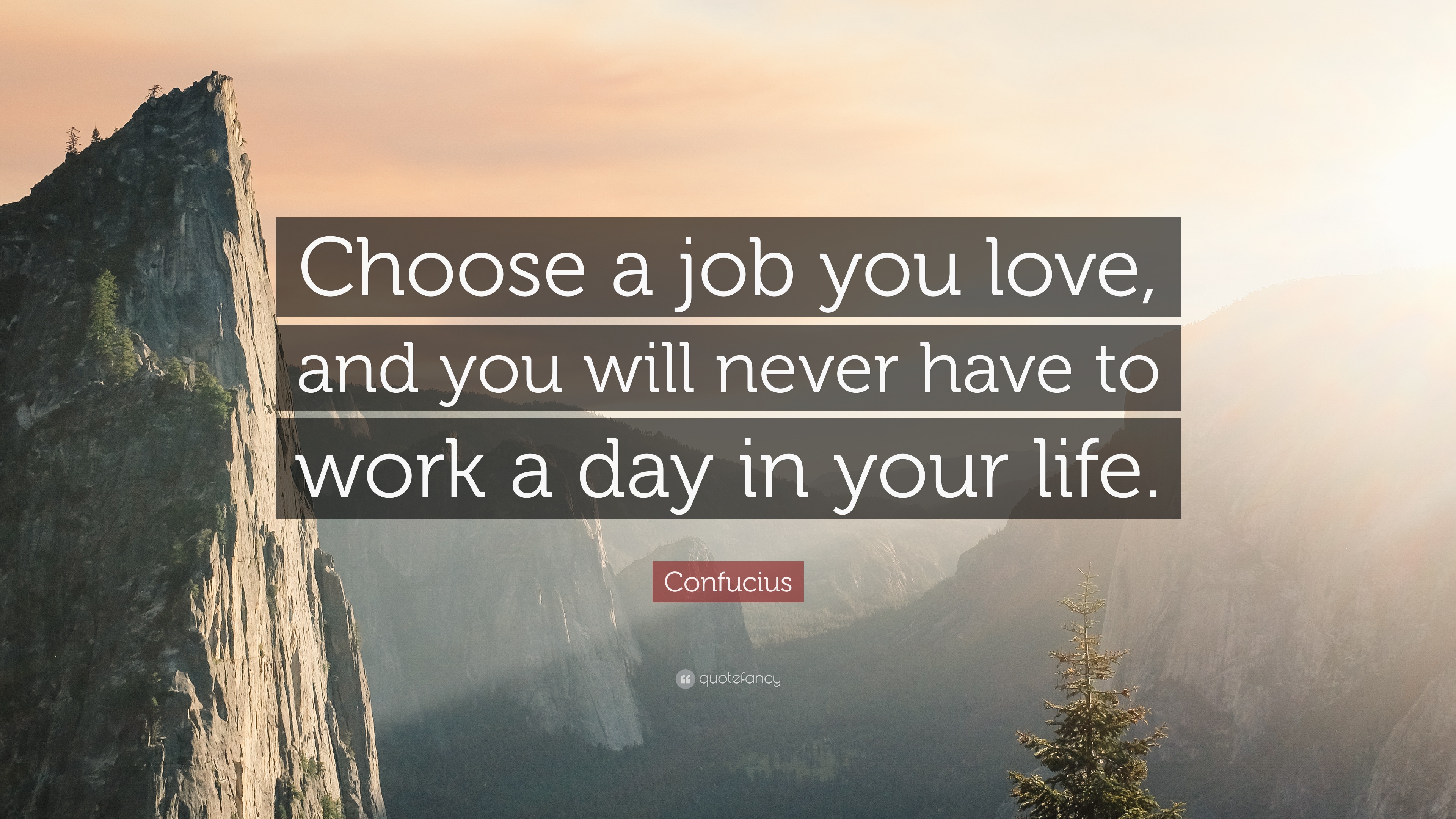
Confucius: Choose a job you love and you’ll never work a day in your life.

Quotefancy-23697-3840x2160

But it is a job nonetheless.

So there are several reasons why I plan to continue doing it. I’m not about to just abandon it.

So we chose to have a big trip to celebrate our last summer holiday just the two of us.

This would be our last holiday just the two of us! We kept saying, “It’s our last summer together!”

We’ve always gone abroad for our recent holidays – it seems alternating between parts of Asia and North America. Indonesia, California, Thailand, Japan.

But we think that with kids it would be easier and also safer to go on holiday in France or the UK.

So, this year we wanted one more fairly big trip!

2 years ago we had our honeymoon in California – we had an amazing time and had a few mini adventures involving bears outside tents and injuries on hiking trails (I made something like 8 podcast episodes about it! Called California Road Trip)

But there were things we didn’t manage to do or see on that trip and we always said “We’ll come back and do it next time” – at the time it helped deal with the disappointment of knowing were missing something, like for example the Grand Canyon or something else we really wanted to experience. “We’ll get it next time” we would say.

You can’t always see everything you want.

So this time we decided to have what we’re calling a ‘babymoon’ by going back to that part of the world to do the things we missed out on last time, just as a big final holiday just the two of us.

So, we went back to the USA – to Southern California for some days and then quite a lot of time exploring the National Parks and areas within the Navajo Nation territories. Places like Zion National Park, Bryce Canyon National Park, Monument Valley, Lake Powell and The Grand Canyon. Incredible landscapes, natural scenery and wild beauty – but also the kind of infrastructure that would make it possible for my pregnant wife to see all that stuff without it being too inconvenient or risky.

So this is like the California Road Trip 2 but this time we went to lots of other states too, including Nevada, Arizona and Utah.

Back to the USA and for some reason I feel slightly sheepish about telling you that.

Feeling sheepish = slightly embarrassed, uncomfortable or unsure about something.

Why?

Politics

Maybe because of the political situation over there which is throwing a weird shadow on everything. It feels like a controversial time to go over there, as if you’re somehow taking part in it, validating it or making a statement about it.

There was nothing political about our trip so that has nothing to do with it.

It was hard to escape the politics there though, but only on the TV, mostly.

In our everyday experience we didn’t see any trouble, unrest, no anti-Trump rallies, no white nationalists marching around. We saw a couple of bumper stickers saying MAGA and also a poster that said “Hillary for Prison 2016” but that was it. A couple of people we met talked about how ashamed they were that Trump was their president and seemed surprised that we still wanted to visit the country.

But generally speaking, everyone we met – including people I imagine had voted for Trump and others who hadn’t – everyone was very polite and nice to us and apparently to each other too.

On the TV though, there were scenes of violence and chaos as fighting broke out between white supremacists and anti-facists in Charlottesville Virginia, on the other side of the country.

On TV it was fighting, chaos, debates, angry tweets, all kinds of drama. I took a look at Twitter a few times and there was a lot of quite angry debate on there with strong opinions on both sides – those who were clearly against the white supremacist groups and those who defended them. It felt at times like the country was in turmoil.

Then we looked out of the window and it was just silence, maybe a car driving by.

It just showed me the sharp contrast between the reality of TV and the internet (because I think the internet is the new mainstream media – despite what all the YouTubers think – it’s fast becoming the mainstream media, especially when they get more views than many TV shows). It showed the contrast between what you get in the media, and what you actually experience, but then again we were just tourists and were probably just scratching the surface.

Reminds me of Bill Hicks https://www.youtube.com/watch?v=tGjuPJskNRE

I could go into all the complicated politics of what happened in Charlottesville but I think I won’t, in this episode.

I could describe the reasons why white nationalists were marching through a town in Virginia (on the other side of the country to California), why they were waving confederate flags, why some of them had swastika flags, why they were shouting Trump Trump Trump and MAGA. I could go into how they fought with anti-facist protestors, and how we’re not sure who started the fighting. I could talk about how someone from the white supremacist side drove a car into the anti-facists, killing a woman and injuring 20 others, and I could go into why many people feel so upset and angry with their president for not taking a clear position on these people who some describe as fascists and neo-Nazis, and how lots of people believe Trump is somehow encouraging these people.

I could go into all of that, but this episode is supposed to be about a travelling experience, not about a fight in a town on the other side of the country.

I might come back to it in another episode. I’ll see how I feel.

The Holiday

Itinerary
Paris – Montreal (half a da) – L.A. (a few days) – Vegas (one evening is enough!) – National Parks & Canyons – Vegas (for about 2 hours) – L.A. (a few more days) – Paris – Bed!

Cities and national parks. Urban areas with metropolitan life and amazing geological features in desert canyons.

Montreal

One afternoon and an evening.

We hung out mainly in the Mont Royal area and the old town.

  • Reasons Montreal is an awesome place
    People are really friendly and polite.
    Everyone’s bilingual, which is amazing. It’s shows that it’s totally possible for a whole city to be bilingual. No need to panic and freak out about several languages being spoken in a city at the same time.
  • It’s really diverse and in a good way because everyone’s really chilled out and there seems to be a lot of mixing between ethnic groups and not a lot of tension or anything.
  • They have this food called “poutine” which is basically French fries covered in cheese and gravy – not that healthy but it is seriously tasty.
  • The city has this nice colonial vibe to it and there’s loads of greenery everywhere. In the streets we walked down there were leafy trees, big bushes outside people’s houses, just plants growing everywhere – some of them planted, some of them weeds, but it felt like there was lots of plant life almost taking over the city, which is great. In Paris, it’s all stone and as a result it can feel a bit brutal. The greenery adds some much-needed calm to the place and also oxygen.
  • The buildings are really cool-looking, with really interesting looking staircases outside them and awesome wrought iron balconies and verandas.
  • Montreal has access to some amazing wilderness areas like local mountains, lakes and forests so you can get into nature really quickly while also enjoying the benefits of living in a city.

We were walking around going, “oh my word this is the perfect city for us”.

But, the bad side is that in winter it’s totally freezing and everything gets covered in 4 feet of snow, which makes life really inconvenient.

I know some of you listening to this live in similar places. What’s that like? How bad is that really?

Anyway, I loved Montreal and would gladly return there one day.

I like all the space, the convenience, the feeling of being in the ‘new world’, the vast natural landscapes and all that, but it’s Canada so you don’t get the feeling you’re in a completely crazy country where people shoot each other and stuff like that. I’d love to go back to Canada again one day. I did travel there for a month when I was 19 with my cousin Oliver and we had an amazing time then too. We’d very much like to go back there. We were even talking of moving there, but we don’t want to leave our family and friends behind.

Left Montreal and Flew to Los Angeles

Nightmare rental car experience with “Right Cars”.

Arrive and the woman at the info desk doesn’t know the company. Not a good start.
We work out that we need to get a shuttle to a car park a couple of kilometres away from the airport. A car park.

Everyone else is getting out of the shuttle at the proper rental places, getting greeted with smiling service agents from Enterprise and Avis.

We’re the last ones on the bus. Dropped off and told to go around the corner. “Round the corner! Round the corner! Just go on round the corner sir.”

At least they called me sir.
Tried to call them. Call centre hell.
Now I’m on hold in blazing sunshine in a car park, or parking lot.

It’s even called the cell phone lot. There’s no chance of not standing there on your cell phone, that’s the name of the place.

Finally get through to someone. There’s a driver coming.
We’re expecting a shuttle.
Dude turns up in a rental car.

We get in, asking questions. He tells us the shuttles are in the garage. Both of them just broke down this week.

OK.

We pick up the car, they add some other charges we didn’t know about like a toll road charge. Never went through a toll road.

And the bill and the receipt didn’t match but we were told it would be sorted out because the guy wasn’t there.

Shady dealings.

I’d ordered a GPS with it too and he said “Do you still want the GPS?” after we’d already paid.

Nah, that’s fine I took a good look at the city from the plane window, I think I’ve got it all worked out. I’ve played a lot of GTA5 I think I know my way around this city.
I watch a lot of movies, I know LA like the back of my hand, I’ll be fine.
Of course we wanted the GPS. “Do you still want it?”
No it’s ok, I’ve decided to just use the force. Thanks.

What’s it like walking around in LA? (I talked about this a bit in previous episodes)
Like being in a movie
GTA5
Sunset Boulevard
Cool looking little shops and bars.
Hippie stuff everywhere.
Shops selling jewelry and cool clothes.
Constant smell of vaping, but not seeing where it came from.
Vegan coffee shops and stuff.
Amazing sunshine, lazy cars drifting past.
50s style burger joints and dudes on cool bicycles.
Tattoo’d people, bikers.
Stopped at a sports bar.
First hearing of Hotel California (this ubiquitous song that you hear everywhere)

Los Angeles is a big city with millions of people, an urban place where everyone drives, but there is a surprising amount of nature there with lots of wild plants, cactuses, trees, animal life, and hills with tree-filled canyons. You feel like it’s not difficult to get into nature quite easily. It’s not exactly like it is in the movies. In many ways, it’s better.

To be continued in Part 2 with some content about: Modern art, astronomy vs astrology, flat-earth conspiracy theories and more descriptions & stories!

Thanks for listening.

Luke

Oasis of calm - in the middle of Silverlake, Los Angeles.

Oasis of calm – in the middle of Silverlake, Los Angeles.

473. Explaining the Rules of Cricket (with Dad)

Everything you need to know about the world’s 2nd most popular spectator sport, cricket. I’m joined by my Dad, Rick Thompson and we describe the rules, the appeal of the game and also some expressions in English that come from cricket.


[DOWNLOAD]

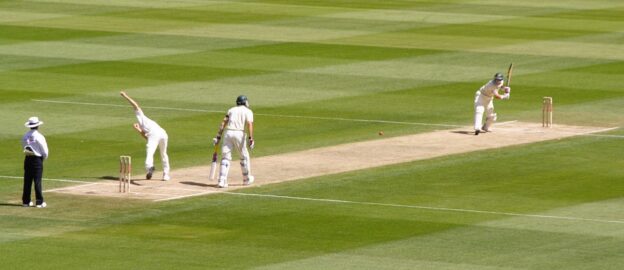
It’s summer in the UK and at this time of year there are various sounds that you might hear in a typical English village, the sound of bees buzzing, kids playing in the playground, an ice-cream van and perhaps the smack of leather on willow (the sound of a cricket ball – a hard, heavy ball covered in leather, being hit by a wooden cricket bat made of willow) those sounds coming from a game of cricket on the local village green.

Also, the sounds of cricket make their way into your home during the summer months as people listen on the radio or watch the coverage on TV.

International test match cricket is a feature of the summertime in England and is somehow deeply rooted into English life. It’s one of those cliches of rural England – sandwiches, afternoon tea and cricket on the green.

But for many foreign people who don’t play cricket it can seem like a weird antiquated slow game with rules that nobody understands. People are surprised that a game of cricket can last several days. Americans are often horrified to discover that games often end in a draw with no winner at the end.

The fact is, cricket is a fantastic game which requires strategy but there are many moments of dramatic action and great skill and ability shown by the players.

My Dad is a big fan of cricket. He used to play it when he was younger and has always followed the matches on the radio. I’ve been threatening for a while to do an episode about cricket, to somehow achieve the impossible and explain cricket to the world, and my Dad is going to join me.

So sit back, have a cup of tea and some cake, and try to get your head around this wonderful game.

And stay tuned for some nice idiomatic expressions which we use in English and which originally came from the game of cricket.


Well, that was a valiant effort by us. I hope you agree! But I wonder if you managed to keep up with all of it! If you are listening all the way to the end and you’re still alive – well done!

You may have got lost at some point along the way, or did you follow all of it? Let me know.

In any case I hope you got something out of that conversation, even if it is a sense that cricket is worth getting enthusiastic about even if you don’t fully understand it, and that it’s a big thing in the UK and many other countries around the world.

I recommend that you have a look at some cricket being played. There are videos showing you different aspects of cricket on the page for this episode, so check them out.

Also, there was that vocabulary.

Let me just go through the vocabulary again here, just to make it clear.

Vocabulary

  • On a sticky wicket = in a difficult situation (We’re on a bit of a sticky wicket here because of the result of the EU referendum) (NYTimes “It’s a sticky wicket for Obama,” said Bruce Buchanan, a political science professor at the University of Texas at Austin, saying any aggressive move on such a high-profile question would be seen as “a slap in the face to his supporters right after they’ve just handed him a chance to realize his presidential dreams.”)
  • To have a good innings = to have a good long life (How old was he when he died? 94? Oh, so he had a good innings)
  • It’s just not cricket = it’s not fair! (Getting queue jumped, it’s just not cricket, is it?)
  • It hit me for six = it surprised, shocked and stunned you. (When my ex-girlfriend told me she was getting married to my best friend it really hit me for six)
  • I was absolutely bowled over = I was really surprised and amazed (“Bowled over” actually comes from bowling not cricket – when a pin is knocked over by the ball) (We were really bowled over by your presentation, you did a fantastic job!)
  • I’m completely stumped. You’ve stumped me there. = I’m unable to answer that question because it’s too complicated. (I did ok in the listening part, but I was completely stumped by the grammar questions)
  • You’ve caught me out there. = You’ve asked me a difficult question which has shown that I’ve made a mistake. (What about the outstanding tax payments on your public accounting report? There’s 300 pounds missing! – Oh, you’ve caught me out there, hah, yes I forgot to include them!)

Videos

Stephen Fry explains LBW in cricket

Shane Warne from Australia – the greatest spin bowler ever

Great bowling

Excellent batting

https://www.youtube.com/watch?v=4zAsa_HFkVw

Amazing catches

https://www.youtube.com/watch?v=TdOoiR_EDiE

Thanks for listening!

472. Andy Johnson at The London School (Part 2) Why Andy runs marathons

Talking to Andy about why he runs marathons, including vocabulary relating to doing exercise, health, fitness, technique, injuries and medical care.

[DOWNLOAD]

Intro Transcript

Here’s the next part of my conversation with Andy Johnson, recorded at The London School of English a few days ago.

Andy is an English teacher, a father of 2 kids, and also a regular runner. He’s done at least one marathon and a few half marathons, and I thought since many of you listening to this podcast will also be runners (in fact some people will be running right now while listening to this) that it might be interesting to hear Andy talking about his reasons for running, the way he does it, the benefits, the difficulties and all the rest of it. So here’s a conversation about running.

If you’re not into running I would still recommend that you listen to this. You might be surprised at how personal it gets when Andy explains his reasons for training for the London marathon 10 years ago. It turns out that running has special significance for Andy and that running the London marathon was a key moment in his life as it marked a significant milestone for him – and running acts as a regular reminder of a particularly difficult experience Andy had when he was younger.

So, this episode is about running, but it’s also about much more than that. I’d like to thank Andy again for taking part in another episode of the podcast and for sharing so much of his story.

Vocab hunters: Watch out for vocabulary relating to doing exercise, health, fitness, technique, injuries and medical care.

So, without further ado you can now listen to our conversation about running.


Outtro Transcript

I just want to thank Andy again for coming on the podcast and telling us about his story. It was a very interesting conversation and I think the closest we’ve come to having tears on the podcast – it was a moving story but no tears this time! I wonder if you held it together out there in podcast land, or did you start welling up at any moment?

Don’t forget that Andy would like you to take his survey about self-directed learning. You can find a link to that on the page for this episode. Andy just wants to know about how you learn English on your own, outside of the classroom environment, and that includes how you use LEP to help with your English.

TAKE ANDY’S SURVEY ABOUT LEARNING

Click the link, the questionnaire will take a couple of minutes and you’ll help Andy with research for his next IATEFL conference talk.

That’s it for this episode. Watch out for some website-only content coming soon. Subscribe to the mailing list to get informed when that is released.

I hope you are continuing to have a good August, if indeed it is August as you listen to this. I’m still on holiday, relaxing and having a lovely time, I hope – I’m actually recording this before I went on holiday, so this is a very weird time situation. Which tense should I be using here, because I’m actually recording right now, in the past, but as I’m talking it’s the future, so my present is your past and your present is my future, so that’s the present past perfect future continuous or something. I am will have been being having a great time and I will have been had been hoped that you will be being having a wonderful time too, in the future.

Thanks for listening to this episode and I’ll speak to you again soon. Bye!

469. British Comedy: John Bishop

Helping you to understand a comedian with a Liverpool accent – learn vocabulary, culture and accents in English.


Small Donate Button
[DOWNLOAD]

London LEPsters MeetUp

There’s going to be a meetup of some London-based LEPsters this coming Sunday 30th July at 7pm at the Fitzroy Tavern on Charlotte Street. It’s just north of Soho and to the west of Tottenham Court Road. There should also be a Facebook link soon.

The Fitzroy Tavern
6 Charlotte St, Fitzrovia, London W1T 2LY, UK
Sunday 30th July 7pm Fitzroy Tavern on Charlotte Street.

Zdenek Lukas of Zdenek’s English podcast will be there with any other London-based LEPsters that choose to come out. The plan is to have conversation, a beer or two and perhaps play some board games, because Zdenek is bringing some board games too. So head on down to practise your English, meet some like-minded people in a cool part of central London.

Episode Notes & Transcripts

Introduction

Hello dear listeners, welcome to the podcast. This is one of those episodes in which I go through some British comedy and help you to understand it. We will cover some vocabulary and also some cultural stuff too.

This is also chance to for you to listen to some Scouse English – the kind of English you might hear in Liverpool.

Scouse – that means from Liverpool. A Scouser is a person from Liverpool, and in that area people speak with a Scouse accent. In fact you find that accent in many parts of Merseyside – which means, Liverpool and its surrounding areas.

I’m going to tell you briefly about a popular stand up comedian from Merseyside (the Liverpool area) called John Bishop, who is often on the TV and on stage across the UK. I think he’s probably one of the most famous scousers in the UK these days. We’re going to listen to one or two of his routines which you can find on YouTube, we’ll understand them and notice some features of his Liverpool accent.

By the end of this episode I expect that you’ll have broadened your vocabulary, you’ll have become more familiar with the way people speak English in Liverpool and you’ll have learned some cultural details about family life in the UK. Also, you’re going to be introduced to the comedy of John Bishop, who you might enjoy. There are various John Bishop videos on YouTube and you can can buy his comedy DVDs which are very popular in the UK. If you like what you hear in this episode, you could get one of those DVDs and use it for both learning English and for your own general amusement.

John Bishop – some info on him

To cut a long story short, he was born in Liverpool and has lived in the Merseyside area for most of his life.

Where is Liverpool? Why is it called Merseyside?

People in Liverpool – amongst other things they are known for having a particular accent which people say is a kind of mix between Irish, Welsh (a lot of Irish and Welsh workers moved into the city during it’s time as a major industrial port in the 19th century), Lancashire and even Scandinavian influences. The accent is instantly recognisable to anyone in the UK.

So, John Bishop was born in Liverpool and has lived in the area for most of his life.

In his 20s he had what seems to have been a fairly boring and ordinary career selling pharmaceuticals. By the age of 30 he was married and had a baby son but he wasn’t particularly happy. He ended up getting separated from his wife and they were going to get divorced. He started doing stand-up during this period because he says it stopped him staying at home on his own in the evenings and drinking. It got him out of the house. The thing is, he found that he was good at it and eventually he quit his job to do stand-up full-time. Basically stand-up saved him and it rescued his marriage too – because one day his wife (who was divorcing him at the time) happened to see him on stage during a show and she went up to him afterwards and said “that was the man I fell in love with years ago” and they got back together. Since then his stand-up comedy career has taken off, and how he’s one of the most popular and well-known comedians in the UK. He’s often on the TV and his stand-up comedy DVDs are very popular.

Now he’s got quite a big family with 3 kids – all of them boys. In his comedy he talks a lot about family life and being a father – the typical frustrations, difficulties and experiences that many parents go through.

He’s definitely a mainstream comedian. I mean, his routines are not political, they’re not particularly challenging or controversial. They’re not super intellectual. It’s just straight forward observational comedy and storytelling. He’s not my #1 favourite, but I just love stand-up and I definitely enjoy his work even if he’s not my absolute favourite. But he is very successful. I think his appeal is that he’s an ordinary guy and his stories and routines are very relatable – people enjoy them because they can relate to them.

Scousers have a reputation in the UK for a few things – one of them is for being funny. This maybe a cliché or a stereotype, but I do think it’s quite true, having lived in Liverpool for 4 years. I met lots of Scousers who were very funny – just characters with stories to tell and who had the gift of the gab and good comic timing.

John Bishop is a good example of that. Partly it’s to do with the Liverpool accent which has so much character and I think helps the delivery of his routines. He tells endearing stories in a relaxed way. He wears a suit and tie so he’s well-presented. He is quite handsome and charming, but in an average kind of way. He’s like the ‘boy next door’ kind of guy. Just a normal bloke. His delivery is quite casual and easy-going, he keeps it pretty short and simple with pauses in the right places which is always a good approach to storytelling.

His attitude on stage is quite dry or deadpan (Wikipedia defines “dry” or “deadpan” like this: Deadpan or dry humor/wit describes the deliberate display of a lack of or no emotion, commonly as a form of comedic delivery to contrast with the ridiculousness of the subject matter. The delivery is meant to be blunt, sarcastic or apparently unintentional).

~

Usually his stories allow us to see that his life is actually quite frustrating and ridiculous – just like normal life is for everyone from time to time. Watching observational comedy like this makes you feel good because you totally understand what he’s going through because in fact your life is quite frustrating and ridiculous too. So it’s therapeutic – that’s what’s great about comedy. It lets you laugh at life and realise that you’re not alone and that we all experience these frustrating things.

Let’s listen to John Bishop, with his Liverpool accent, telling a couple of stories of family life from some of the videos on YouTube and let’s pick up some English in the process.

I’m going to play the first clip to you in just a moment.

As you listen, I wonder what you will be thinking. We’ve done this before, listening to English with different regional accents. You might feel that you can’t understand him completely – I think he speaks pretty clearly, delivering stories in a slow but punctuated way, but the accent might be hard for you to understand. You might think “Oh his accent is too strong”. I wouldn’t be at all surprised. But remember, English is a very diverse language. You might not want to speak like John Bishop (or maybe you do I don’t know) but you certainly should try to understand him. English comes in many different forms – many different accents – and even if you’re not familiar with those accents, they are normal and perfectly valid forms of the language which everyone can not only understand but appreciate.

It would be a pity for you to only understand one standard form of English. It would mean your English was limited. Anyone with a decent sense of English should be exposed to different accents. David Crystal said it, we all know it’s true. So let’s listen to some Scouse English. And please, do not think “Oh god his English is bad”. That’s not fair and it’s simply not true. I understand all of it, so do his audiences. British people do not struggle to understand him at all, quite the opposite – he’s very understandable and relatable. He draws in very large crowds of people to his shows all across the country. All those people understand and enjoy the things he says. His Liverpool accent is a very important part of his charm. If it’s hard to understand him I think it would be wise to consider that maybe you’re just not familiar with his accent, and that you just need to broaden your exposure to English a bit, and that this is a chance for you to do that.

Anyway, maybe you won’t have trouble understanding him at all and you’ll just enjoy listening to his story. Let’s see.

Video

Here’s John talking about going on holiday with teenage kids (I wonder what teenagers are like in your country.)
You’re going to hear him say that he had a massive tour one year and he was away from home a lot so he wanted to spend some quality time with his kids – in a kind of nostalgic way – like he imagines it used to be when he was a kid – go somewhere in the countryside where there’s no internet so he can spend some quality time with his teenage sons, spending a sort of idyllic Christmas and New Year’s Eve sitting around the fireplace playing board games, like it was in the good old days. But, his kids are modern British teenage boys who are addicted to the internet – so that might make things difficult…

You’ll also hear a few sound effects from the video, which you can see on the page for this episode.


Holidays with the kids (video 1)

https://www.youtube.com/watch?v=HMHYtGPpyko

White trainers, growing up, puberty, hormones and getting your head kicked in by your own son. (video 2)

John Bishop gets a new fridge and takes his old one to the dump (video 3)

https://www.youtube.com/watch?v=N9yAJKcIVxk

Language Learned

Here is some of the vocabulary you could learn from this episode.

Going on holiday with the kids (video 1)
Scouse
Scouser
Nostalgic
Quality time
Idyllic christmas
Sitting around a log fire playing board games
Teenagers
Addicted to the internet
Sound effects
A reconstruction
A cottage
It’s on the border between Scotland, england and Narnia
Internet, it’s Berwick son, we haven’t even got ceefax
We turned up at the cottage
In the middle of nowhere
Youse three, go in the living room, put the telly on
Looking at the past through rose-tinted glasses
In the middle of nowhere

White trainers (video 2)
You don’t realise how much of a cock you are
They do your (bleedin) head in don’t they?
Going through puberty
You have a week off school for half term (holiday)
You do P.E. (physical education)
You walk into the showers all self-conscious
Some kid walks in with a beard and bollocks by his knees!
Your voice breaks and that’s when you don’t get control over your voice
The hormones just come flying in and you’ve got no control over them
It’s the funniest thing on the planet bar none
I’m not asking you, I’m telling you!
Get up them (those) stairs and take them off.
Make me
It’s like the little lion is taking on the big line and all the other lions are running around going “it’s kicking off here!”
We’re stood toe to toe
I can take you!
There’s a chance he can take me here.
Thinking you’re going to get your head kicked in with your shoes

Taking the fridge to the dump (video 3)
The fridge
The freezer
The dump
To get rid of some stuff
It’s health and safety gone mad
It’s political correctness gone mad
A silver fridge that’s the size of a bungalow
A bungalow
That hasn’t half changed our lives (that has changed our lives a lot)
Put it next to the sink
I’m saving meself (myself) a yard of walking
We had a spare fridge
I turned up at the dump
There’s a fella there with a yellow vest and a clipboard
He’s done an NVQ in clipboard management
You can’t just dump a fridge now
You’ll have to phone us up
Then we come and get it
Who do I ring?
The phone in his hut rang
A hut
I’m outside dickhead!

468. Punk – Music & Culture (with James)

Talking about punk music and culture from the UK with James.


Small Donate Button
[DOWNLOAD]

A bit of pop culture history in this episode, talking about the musical movement of punk and the social situation in which it happened.

This year we have several anniversaries in British music.

50th anniversary of Sgt Pepper by The Beatles

40th anniversary of Never Mind the Bollocks by The Sex Pistols

A lot changed in British music between the release of those two albums. 1967 was the height of the peace and love movement but 10 years later music was much more gritty, cynical and realistic. In this episode we’re looking at the whole punk movement, understanding what it was all about, what the music was like, who was involved and how the whole thing has now become a sort of pop culture myth.

I’m joined by my brother James who has been a fan of punk music ever since he borrowed a tape of The Sex Pistols from a chef when he was a teenager (I don’t think the fact it was a chef has any significance to the story, but I just like saying he borrowed the tape from a chef. I can imagine a man in a chef’s hat giving James a tape. Just me? Ok) So he discovered punk music later, in the early 90s. He wasn’t actually there at the time the music was made in 1977, he was too young, but he’s collected a lot of records by punk bands, read all the books, seen all the documentaries and even played drums in a few punk bands himself. I think he knows more about punk than anyone else I know, so I think he’s a good person to talk to.

Check out the page for the episode where you’ll see video playlists chosen by James and also a musical punk mix that he did from his vinyl record collection.

But without any further ado, you can now listen to my conversation with James about punk rock music and culture.


Conversation Notes

  • 40 years since Never Mind the Bollocks by The Sex Pistols was released. Is that the seminal punk album?
  • Why are we talking about punk in this episode?
  • What gives you any authority on the subject? Why should we listen to you?
  • Importance of punk for understanding culture
  • What is punk?
  • Origins of U.K. Punk
  • Youth subculture
  • Musical context
  • Political context – state of the country
  • American punk
  • Main bands
    • The Damned
      The Slits
      X-Ray Specs
  • What was the era like / music scene of the time
  • Spirit of punk
  • Purpose of punk music
  • Reaction to punk – tabloids
  • Punk art / design / fashion
  • 2nd wave / post punk / punk influence
  • Reality vs legend / absorption into the culture / establishment

Some Words & Phrases

  • Subculture
  • Subversive
  • Anarchy
  • DIY – Do It Yourself
  • Back to basics

From the archives: Other episodes you might like

134. The Story of Salvo

115. A Chat About Music (with James)

234. Making “Choons” with My Brother

Leave us your thoughts

  • Is or was punk popular in your country?
  • Is or was there a punk movement where you come from?
  • When did it happen?
  • What was it all about?
  • What was the music like?
  • How did they dress?
  • Is it similar or different to British punk?
  • Are British punk bands popular where you’re from? Which ones?

End song clip: 17 by the Sex Pistols

Videos

Sex Pistols on Bill Grundy (the unedited version)

Sex Pistols Christmas 1977 – A must see to show what a weird time / place England was in 1977 – click the video, it should work.

The gig that changed the world (24 Hour Party People)

https://www.youtube.com/watch?v=1vvGp_VPeLI

Classic Albums – Never Mind The Bollocks

https://www.youtube.com/watch?v=Jf50NIjAcsQ&t=64s

The Filth and the Fury trailer

The Sex Pistols absorbed into the mainstream establishment

Brilliant documentary about Joy Division

Cliched memories of punk (parody)

The Damned – New Rose (typical punk song)

Jim’s punk mix

Jim’s Punk Mix

460 Catching Up With Amber & Paul #6 (feat. Sarah Donnelly)

Conversation and language analysis with the podpals and guest Sarah. Hear some conversation about being married to a foreign person, bringing up kids to be bilingual, and learn some slang in Australian and Northern Irish English. Vocabulary is explained at the end.

Small Donate Button
[DOWNLOAD]

Introduction

This episode is choc-a-block with natural conversation and language.

Yesterday I had Amber and Paul over to the flat, and I also invited Sarah Donnelly, a friend of the podcast. Sarah also brought her baby who she had since she was last on the podcast. There’s no relation by the way between her being on the podcast and having a baby. Purely coincidental. Anyway, the four of us sat around the table yesterday in the blistering heat to record some podcast material and that’s what you’re going to hear.

Sometimes you can hear the baby screaming and gurgling in the background but I don’t think it spoils the recording really. She hasn’t learned to talk yet, but who knows being on the podcast might help a little bit in some way.

The conversation is a bit chaotic because there are 4 people, sometimes talking over each other. If you like you can imagine you’re in a business meeting. A business meeting in which no business actually takes place, nobody observes the rules of formality and where the participants just chat with each other. So, not much like a business meeting really, but anyway a meeting of sorts, and this is the kind of thing you might have to deal with in the future if you go to a meeting in English and there are a number of people discussing things and you have to keep up. It’s good practice to listen to this kind of thing to help you prepare for that kind of situation.

This recording was slightly shorter than the usual full-on ramble that we have together. But I’m going to do a bit of language analysis at the end. I’ll pick out a few words and phrases and will clarify them after the conversation has finished.

Also there’s another language-related episode coming soon with Amber, Paul and Sarah.

Here now is a discussion between podpals Amber and Paul, also featuring Sarah Donnelly the American with Irish roots who has been on this podcast before, most recently talking about the US Presidential Elections with Sebastian Marx.

Things we all have in common:

  • We’re all English speaking expats in France
  • We are all with French partners, either married or “paxed”
  • We’re all comedians on the stand up scene too

In this chat we discuss a few things, such as the complexities of being with a foreign partner, bringing up a child in a foreign country to be fully bilingual, getting married and what it feels like for the bride and groom on the big day, Amber’s podcast which was recently released online, Paul’s upcoming gig in Australia, Sarah’s Irish roots and some English slang from New Zealand, Australia and Northern Ireland.

Questions

Here are some questions for you to consider as you listen. This can help you to focus on the content.

  1. Are you or have you ever been with a foreign person in a relationship? What are the difficulties of that?
  2. What’s the best way to bring up a child to be bilingual? Is it possible to raise a bilingual child when only one of you speaks one of the target languages to the child?
  3. Are you married? How did it feel for you on the big day? Did you cry? Have you ever been a guest at a wedding, and did you cry?
  4. Have you heard Amber’s podcast, which is called Paname? It’s now available at panamepodcast.com
  5. Can you identify different English accents and dialects from around the world? How about American vs British, or different areas of the UK? How about Ireland and Northern Ireland? What about Australia and New Zealand? Do you know what their English sounds like?

Right. Consider those questions as you listen to this conversation and hold on until later when I’ll explain some of the vocabulary and some cultural stuff too, maybe touching on different accents, wedding vocabulary and more.

But now you can listen to Amber, Paul, Sarah and me, melting in my boiling hot apartment.


Vocabulary and other language points – Explained

It’s really hot
It’s hot as hell
It’s boiling
It’s sweltering
It’s baking
It’s blisteringly hot

Being partnered with a French person is hard work.
I have one hour’s worth of material on this.
One hour’s worth of something
5 minutes’ worth of something
We’ve got 3 days’ worth of food left
I’ve got about 10 minutes’ worth of battery left

Bringing Up Children
Bringing up
a baby in a foreign country with a foreign partner – will they speak English?
Bring up a baby
Raise a child
Be raised in / to
Grow up
Do you have experience of bringing up a baby to be bilingual? Let us know.
If just one parent speaks English, and the rest of the time it’s French with school, friends and everything else – will the kid be bilingual?
Anglophone
Francophone

Condone/Condemn
I don’t condone the hitting of a child (stupid thing to say actually – but that’s what happens when you joke – sometimes you go over the line a bit – obvs I didn’t mean it)
Condone / condemn

Paul’s Wedding
An out of body experience
We were so stressed out

Crying
To cry
To be in tears
To well up
To choke up

Neither of us cried
I thought everybody would be in tears
I welled up a bit
I was choking up

Walk down the aisle
The altar

Her parents aren’t with her any more. They passed away.
Paul’s dad gave her away. “It was so sweet that it was your dad that was giving her away.”
I’m left-handed
I can’t grip it like I like to grip it. (innuendo)
He’s jumped ahead. (he’s gone to the innuendo before we realised it)

Some ninjas came out of the woodwork. (to come out of the woodwork)
to appear after having been hidden or not active for a long time:
After you’ve been in a relationship for a while all sorts of little secrets start to come out of the woodwork.
Mildly disapproving.
From Cambridge Dictionary Online.

They feel like they’re going to do mistakes. Make mistakes.

Aussie slang http://mentalfloss.com/article/61847/25-awesome-australian-slang-terms
G’day mate, how are you going?
Arvo: afternoon
Barbie: barbeque
Bogan
Chockers
Fair Dinkum
Fuckin’ oath!
Sweet as
Strewth! (Cliche)

Kiwi slang
The slang is pretty similar to Aussie or UK slang, but the accent is different. For years I couldn’t differentiate it from Aussie, but the more you hear the more you realise how different it is. Watch Flight of the Conchords to hear lots of it. Episode in the pipeline.