Category Archives: Humour

629. Do you ever … ? (with James) Strange Habits & Funny Observations

A funny conversation about strange habits that we don’t often talk about, with my brother James. Notes & scripts available below.

Small Donate Button[DOWNLOAD]

Yes, this is a long episode…

…but remember the best way to listen to these episodes is by using a podcast app on your phone. That way you can listen to a bit, pause the episode and when you choose to listen again your app will remember where you previously stopped. If you’re wondering which podcast app to use, let me recommend the Luke’s English Podcast App, which contains the entire episode archive and loads of bonus stuff. Just search for Luke’s English Podcast App in the app store for Apple devices or Google Play store for Android, and yes it’s completely free. Using a podcast app means that you don’t have to listen to an entire episode in one sitting, which is the best way to listen to longer podcasts like this one.

Introduction (after the jingle)

In this episode, let’s just ask each other a bunch of “do you ever?” questions.

This is going to involve using present simple tense a lot. This is the most basic verb tense we have in English, and we use it to talk about permanent facts and habitual behaviour.

In lessons at school this tense is often taught to students at low levels because it’s a really important foundation for general English, but it tends to be a little bit dull – not the way students deal with the tense, but the way it’s presented in textbooks. Usually, materials based around present simple tense just involve daily routines, what time you normally get up, eat lunch, go to bed etc.

Students at that level lack the vocabulary to be able to talk about habits and routines in a more complex way. When they do have more vocabulary at higher levels, the course books always focus on other tenses – e.g. past tenses for telling stories about the past, future tenses for making predictions about the future, conditional sentences and modal verbs for speculating and so on.

The poor present simple tense is left with this boring reputation of just being a low-level bit of grammar which we only use to talk about what time we get up in the morning and how often we go to the gym.

So, let’s come back to present simple tense and see if we can use it to talk about slightly more unusual and fun things.

As a teacher, the main problem I have noticed when students are using present simple tense is just remembering to add ‘s’ or maybe ‘es’ (which often adds another syllable to the word – like ‘I wish’ and ‘he wishes’ for example). Often it’s just missing 3rd person forms. Like someone saying “He go” when it should be “he goes”. It’s so basic but it’s worth self-correcting if it happens.

Anyway, this episode is called “Do you ever?” and I’ve prepared a big list of unusual behaviour which I think we don’t often talk about, but which I think many of us do, or maybe it’s just me.

Now, I don’t necessarily do all of these things. They’re just based on observations I’ve made. Also, some of the things in this list were written by my brother during a conversation we had ages ago about weird little habits that we have.

Let’s see what happens in terms of the language that comes out. Will we switch to other tenses at any point? What kind of vocabulary will emerge? And do you ever do these slightly unusual things?

***Interruption***

I’m interrupting here because, before we go any further, I think it’s necessary to say a few things about this episode in order to help you understand it all a bit better.

First of all, you should know that this is quite a silly and rambling episode and it shouldn’t be taken too seriously. Most of what you’re going to hear is just for fun really and I hope you enjoy it.

There is quite a lot of rude language in the episode and by that I mean things like the F word (you mean the word “Fuck” – err, yes – OKay, thanks. Just checking. Wait – who are you? Never mind, carry on!) So there is some swearing but for me that’s quite normal in an informal situation but obviously – swearing is still not a good idea in polite company or at work for example. But for two people like James and me chatting informally at home, swearing might happen and, you know – I want this to be authentic, as if you’re sitting with us the whole time. So, that’s why there is swearing.

Also, I think it will probably be difficult for many of you to follow this conversation because we talk about some very specific and quite personal things, sometimes we talk quickly because we’re in a rush to say things before the other one interrupts us, we talk over each other sometimes and the topic of conversation changes a lot as we go through each question quite quickly.

So this is definitely going to be a difficult one, depending on your level of English of course. But sometimes you need a challenge!

Generally, I think I am quite easy to understand when I’m talking on my own, even when I’m speaking quickly. I just have a clear voice. But when I’m talking to friends on the podcast I think it becomes a lot more difficult to understand everything and that might demotivate you. But you need a bit of a challenge from time to time. I hope the bits that you understand will carry you through the bits that you don’t understand.

But I do want to help you understand as much as possible, so I’m now going to read out all the Do You Ever…? Questions that we answer in this episode. I’m going to read them all out now, just to give you a chance to understand them all in advance. This can make a big difference to your comprehension of this conversation.

If you have already had a chance to think about the different things that we talk about, you’ll be in a much better position to understand it all.

So, let me now go through this list of “Do you ever…?” questions and I’d like you to concentrate and just try to understand each one and then prepare to hear what we have to say about them in the rest of the conversation.

You should also consider whether you do these particular little things or not, and if you consider them to be normal, funny or weird.

Right, so listen carefully – these are the questions that James and I are going to discuss in this conversation. Here we go…

Do you ever…?

  • Get song lyrics stuck in your head (like an earworm)

  • Aim at things when you pee

  • Use a special system for getting to sleep

  • Have dreams or nightmares

  • Wave at people on boats

  • Look out of the window in a moving car and imagine that you’re running along next to the car like Mario or Sonic, jumping over obstacles, or that you’re cutting everything with a huge saw or laser as you move past

  • Shave your beard into a funny moustache for a moment when shaving

  • Talk to yourself in a different voice, when nobody else is around

  • Wipe while sitting or wipe while standing

  • Imagine doing an amazing performance in front of your old school during an assembly or something

  • Avoid stepping on the cracks in the pavement, or live by any other superstitions

  • Go to the hairdressers and have a really bad time but say nothing about it

  • Drink loads of tea or coffee at work just so you get more toilet breaks

  • Smoke cigarettes because you’re bored, or decide to smoke a cigarette because you see someone in a movie smoking

  • Imagine what you would do if a zombie apocalypse happened right now

  • Count the number of steps it takes you to get up a flight of stairs or go from the sofa to the toilet

  • Flip something, like a remote control, in the air over and over again until you drop it

  • Do fake bets with yourself or your friends

  • Badly need the loo on the way home

  • Listen to songs and completely misunderstand or mishear the lyrics

    Fugzi – Waiting Room

    The lyrics are, “I am a patient boy. I wait, I wait, I wait, I wait.”

    James thought it was, “I am a pastry boy. I weigh, I weigh, I weigh, I weigh.” 

  • Open toilet doors with your elbows

  • Use the back of your hand or certain fingers for touching your face, as if the back of your hand or your knuckle are ‘totally safe’

  • Think “that would be a good name for a band”

  • Fall asleep in public and then suddenly wake up because your head has suddenly moved, you’ve snored or you’ve made another noise, or your head has moved back and your mouth has hung open, or you’ve drooled out of your mouth

  • Throw a ball of paper at the bin, miss, pick up the ball and try again from the exact same spot as before

  • Eat any parts of yourself – e.g nails, dead skin or bogies

  • Tap your foot to the beat of other people’s music which you can overhear from their headphones, in order to show them that you can hear it (or because the music is actually good)

  • Walk past someone you know in the street and go to say hello, then realise they’ve chosen to blank you (to ignore you)

  • Not move down in public transport even though you could, because you want to save space for yourself and because you generally hate other people

  • Fall in love with a stranger on public transport and yet do absolutely nothing about it other than glance at them and hope they don’t notice

  • Add your own voiceover track to films or TV shows

  • Doodle particular things with a pen while you’re on the phone

  • Hate strangers on public transport for no reason

  • Put toast in the toaster, it comes up not done properly, then you put it back and then it’s burnt

  • Lie on your back and throw a ball or maybe an orange into the air, and fail to catch it

  • Walk for ages with a stone in your shoe – it feels massive, then you take it out and it’s tiny

  • Find everything totally fascinating, just before bedtime – especially if you promised yourself earlier in the day that you’d have an early night


Ending

That was the LEP Jingle Megamix that you heard at the end there. I haven’t played that on the podcast for a while. If you’d like to know where all those little samples in that jingle come from, check out the Jingles & Music category in the LEP App. There’s a full episode there in which I go through all the samples and explain where they all come from. It’s called “Deconstructing the LEP Jingle Megamix”.

Well done for listening to all of that. I wonder how many of you have made this far, and how many people just couldn’t handle it any longer for whatever reason, and how many skeletons there are with headphones on right now – skeletons that were perfectly healthy fresh-faced humans when they started listening to this, who slowly perished as the episode went on.

But not you – no, you made it all the way through and there’s a good chance you laughed with us, and perhaps were struck by a profound sense of shared experience when you realised that you also do some of the things we talked about.

But well done to you, in any case and I hope you also picked up some English along the way – because, after all, that is the main purpose of this whole thing, of course. I expect the lower level listeners or the more serious listeners probably stopped listening because they couldn’t keep up or because they felt that they didn’t have time. I’m not going to get into all the stuff about the pros and cons of long episodes vs shorter episodes and things like that. Anyway, the point is – if you made it this far then “nice one” and I wonder what your favourite moments were from this episode. You could share your thoughts in the comment section of course.

Let me thank James again for being on the podcast. I always enjoy our episodes together and I hope that that comes across in the recording.

Right, time to stop talking. There’s no time to mention that you should sign up to LEP Premium at www.teacherluke.co.uk/premium. No time to that, but you should anyway. There are now over 60 premium items available and more premium episodes are coming, I promise. They just take quite a lot of work and preparation. But there will be more coming before Christmas.

All I’ll say now is thank you again for listening and I will speak to you again on the podcast soon, but for now – goodbye!

What’s the music at the end of the episode, Luke?

The music you can hear at the end is called Wonderland and it was produced by James on his Akai MPC2000. You can check it out (and his other tunes) on his Soundcloud page here https://soundcloud.com/jt-2000


628. OASIS (with James)

A conversation with James about the English rock band Oasis, including details about their story, music, lyrics and the sibling rivalry between Noel and Liam Gallagher.

[DOWNLOAD]

Introduction

Hello listeners, how are you today? Welcome to this new episode.

As you can see from the title, this episode is all about Oasis – and yes, that is Oasis the band. Do you know them? Many of you will be thinking “Yes, I know them Luke!” or “Of course we know them – and you like to do impressions of them on the podcast. So yeah we definitely know them!” but some of you will be thinking, “huh?” “who?” “Oasis?” “what?”

The name might be pronounced differently in your country. In France they’re called “owA-zees”. In Japan it’s オアシス “O-wa-shisu” (something like that).  In English it’s a 3-syllable word and the stress is on the second syllable. o-WAY-sis.

Anyway, Oasis man. Do you know what I mean?

*Luke plays some musical clips to make sure you know who Oasis are

Do you know what I mean?

Most of you probably do. But in any case, here is a pithy summary.

Oasis are (I’m saying “are” because it’s a group) a rock band from Manchester in England. They became famous in the early to mid 1990s, but they continued as a band until 2009 when they split up, acrimoniously (which means that they had an argument and fell out).

The most famous members of the group are the Gallagher brothers – Noel and Liam. They were born to Irish parents living in Manchester. So they’re English, Mancunian to be more specific, but with Irish roots.

They are famous for their particular brand of rock & roll music which seemed to be heavily influenced by so many classic British bands from the 60s, 70s and 80s, and their general attitude and demeanour – unpretentious, cool and funny, but also arrogant, cocky, rude and sometimes even violent and aggressive.

There’s a lot more to it than just those things and that is why my brother James and I decided the other day to record an episode all about this band.

Yes, this is a long episode, but it should cover most of the significant details (although I’m sure that we’ve missed certain things).

Remember, you don’t have to listen to this episode all in one go. You can pause and the podcast app on your phone will remember where you stopped, and then you can carry on later. So, break it up a bit if you like.

The aim for the episode is to tell you the main things that I think you need to know about Oasis and their music and to try to explain their cultural significance (in the UK at least) and personal significance (to us). Also, I just want to provide you with more content which I hope is interesting to listen to in order to help with your English.

At the end of the episode you will hopefully be more able to understand and talk about this iconic English band.

Just one other thing before we continue… There is quite a lot of swearing in this episode, so it’s not really for children or the swearing intolerant.

Right then, without any further ado, let’s get fockin’ started man.

Videos (some things we mentioned in the conversation)

Supersonic (Official documentary from 2016) (2 mins)

Oasis perform Supersonic on The Word (1994) The first time they appeared on national TV (3 mins)

How Supersonic was written and recorded (from the documentary) (1min30)

Bad behaviour (1min30sec)

Slide Away (with Lyrics) Every line is like the title of a song or album

Liam and Noel argue, then Liam refuses to sing (I can’t really follow what they’re saying but it’s quite interesting to watch anyway!)

Noel talks about his song being sung by the crowd after the Manchester terrorist attack (3mins)

Champagne Supernova (with Lyrics man)

Kevin & Perry (from BBC’s Harry Enfield’s Television Programme) Perry becomes a proper geezer after a trip to Manchester (2min30sec)

And more videos…

Some other interesting and funny Oasis moments.

Noel Gallagher’s DVD commentary for the Live Forever video (5mins)

Noel Gallagher interview with comedy legend Frank Skinner (30 mins)

Liam listens to other people’s music and gives his opinions (2mins20sec)

Noel talks about why Oasis split up (7mins) “I never had enough of Oasis, I had enough of him [Liam]”

624. 88 English expressions that will confuse everyone (Part 1)

An episode about British English slang and culture, featuring expressions that Brits know but everyone else finds confusing. Here are the first 30 expressions in a list of 88 that I found on independent.co.uk. Includes plenty of funny improvised examples to make you laugh out loud on the bus.


Small Donate Button[DOWNLOAD]

London LEPster MeetUp – 2pm Sunday 17 November

Fitzroy Tavern, 16 Charlotte St, Fitzrovia, London W1T 2LY

From 2PM.

I’ll be there.

Let’s play some board games and have a drink.

Zdenek is organising it. If you could send him an email to let him know you’re coming that would be great. teacherzdenek@gmail.com

The original article on independent.co.uk

https://www.independent.co.uk/life-style/british-phrases-english-language-sayings-britain-england-uk-different-a8138046.html

1. A few sandwiches short of a picnic

He’s a few sandwiches short of a picnic, isn’t he?

2. Anorak

I’m a bit of a Beatles anorak.

3. Bagsie

Bagsie the front seat! Shotgun!

4. The bee’s knees

He’s the bee’s knees.

5. Bender (go on a)

I went on a 3-day bender last weekend. I feel rough as f*ck right now.

6. Blinder (to pull a)

You pulled an absolute blinder in that negotiation.

EDIT 1

My brother has chipped in here with a comment, saying that he thinks the most common collocation with Blinder is “to play a blinder” and I admit that he’s right. Thinking about it, I’ve definitely heard “play a blinder” more than “pull a blinder”.

A quick internet search shows us the same thing.

Collins says it’s when a sports player or musician plays something really well but it’s also applied to when anyone does anything well. For example, you played a blinder in that meeting.

Or You played an absolute blinder getting us front row tickets for this show.

OK, so let’s say “play a blinder” more often than “pull a blinder”.

7. Bloody / Bleedin’

Bloody hell Harry! Bleedin‘ Heck!

8. Bob’s your uncle

Put the bag in the mug, add hot water, then some milk and Bob’s your uncle.

9. Bog-standard

We’re staying in a bog-standard hotel up the road.

10. Boot

Put the money in the boot of the car.

11. Botch(ed) job

You did a real botch(ed) job on that chair. It is a real death-trap. You really made a botch of that, didn’t you?

12. Brolly

Do you need a brolly?

13. Budge up

Come on, budge up a bit. I don’t have much room.

14. Builder’s tea

I like a nice cup of builder’s tea, me.

15. Butcher’s

Give us a butcher’s at that! Have a butcher’s at this.

16. Cack-handed

I’m really cack-handed today. I don’t know what’s the matter with me.

17. Cheeky

You’re such a cheeky little monkey!

18. Chinese whispers

It must have been Chinese whispers.

19. Chinwag

Let’s get together and have a good old chinwag.

20. Chocablock

I tell you what. It’s absolutely chockablock out there. Absolutely chocka.

21. Chuffed

You must be really chuffed!

22. Clanger

You dropped an absolute clanger at the dinner party.

23. Codswallop

What a load of absolute codswallop.

24. Cost a bomb

Those new iPhones cost an absolute bomb.

25. Cream-crackered

I am absolutely cream-crackered. I think I’m going to go straight to bed.

26. Curtain twitcher

Our neighbour is a bit of a curtain twitcher.

27. Dench

I’m going to make some tea. Dench. (?)

EDIT 2

I just want to add something about the word “Dench”.

I said that I didn’t know this and that I don’t use it.

My brother reckons the word is “fake”, by which I think he means that this one isn’t really used.

He’s never heard or used it either.

I don’t know why the Independent would add a fake word in their list, but let’s just say that you can probably avoid the word “Dench” and not worry about it at all.

If you’ve heard or seen the word being used, add a comment to the comment section.

I’ve just done a quick google check and there are entries for the word in Collins (but not an “official” definition – it was added by a user) and Urban Dictionary – both confirming that the word basically means “nice” or “Awesome” but there aren’t that many entries for it.

So I think we can conclude that it is a new phrase, probably only used by a few people, particularly younger generations.

28. Dim

Tim’s a jolly good bloke. A bit dim though.

29. Doddle

That exam was an absolute doddle.

30. Dog’s dinner

You made an absolute dog’s dinner of that.

Follow me on Twitter @EnglishPodcast


623. 13 Terrible Jokes, Explained

Actually, it’s 17 jokes, including some simple one-liners and a few longer story-based jokes for you to remember and practise telling yourself. Listen to Luke read out and explain some pretty awful but enjoyable word puns and shaggy dog stories, and learn some English in the process.


Small Donate Button[DOWNLOAD]

13 Short Jokes

  1. I wasn’t originally going to get a brain transplant but then I changed my mind.

  2. Did you hear about the guy who cut his whole left side off? Luckily he is all right now.

  3. I’d tell you a chemistry joke but it probably wouldn’t get a reaction.

  4. I tried eating a clock. It turns out that it’s very time-consuming.

  5. I am reading a book about anti gravity. It’s impossible to put down.

  6. I accidentally swallowed some food colouring. I feel like I’ve dyed a little inside.

  7. Did you hear about the guy who got cooled to absolute zero? He is OK now.

  8. Asked my dad if we could turn him into a salad ingredient, but he wouldn’t lettuce.

  9. Last night I was dreaming that I had written Lord of the Rings. My bro said I was Tolkien in my sleep.

  10. South Korea is so much more inviting than North Korea.

    North Korea is a Seoulless place.

  11. Have you heard about the difference between a hippo and a zippo?

    One is REALLY heavy, and one is a little lighter.

  12. I used to have a soap addiction,

    But I’m clean now...

  13. Next time you’re cold, go stand in the corner it’s always 90 degrees there.

Longer Jokes

To Absent Brothers

An Irishman walks into a bar in Dublin, orders three pints of Guinness and sits in the back of the room, drinking a sip out of each one in turn.

When he finishes all three, he comes back to the bar and orders three more.
The bartender says to him, ‘You know, a pint goes flat after I draw it; it would taste better if you bought one at a time.’

The Irishman replies, ‘Well, you see, I have two brothers. One is in America, the other in Australia, and I’m here in Dublin. When we all left home, we promised that we’d drink this way to remember the days we all drank together.

The bartender admits that this is a nice custom, and leaves it there.

The Irishman becomes a regular in the bar and always drinks the same way: he orders three pints and drinks the three pints by taking drinks from each of them in turn.

One day, he comes in and orders two pints. All the other regulars in the bar notice and fall silent.

When he comes back to the bar for the second round, the bartender says, ‘I don’t want to intrude on your grief, but I wanted to offer my condolences on your great loss.’
The Irishman looks confused for a moment, then a light dawns in his eye and he laughs. ‘Oh, no, ‘ he says, ‘Everyone is fine. I’ve just quit drinking!

Some Things You Just Can’t Explain

A farmer was sitting in the neighbourhood bar getting drunk.

A man came in and asked the farmer, “Hey, why are you sitting here on this beautiful day, getting drunk?”

The farmer shook his head and replied, “Some things you just can’t explain.”

“So what happened that’s so horrible?” the man asked as he sat down next to the farmer.

“Well,” the farmer said, “today I was sitting by my cow, milking her. Just as I got the bucket full, she lifted her left leg and kicked over the bucket.”

“Okay,” said the man, “but that’s not so bad.” “Some things you just can’t explain,” the farmer replied. “So what happened then?” the man asked. The farmer said, “I took her left leg and tied it to the post on the left.”

“And then?”

“Well, I sat back down and continued to milk her. Just as I got the bucket full, she took her right leg and kicked over the bucket.”

The man laughed and said, “Again?” The farmer replied, “Some things you just can’t explain.” “So, what did you do then?” the man asked.

“I took her right leg this time and tied it to the post on the right.”

“And then?”

“Well, I sat back down and began milking her again. Just as I got the bucket full, the stupid cow knocked over the bucket with her tail.”

“Hmmm,” the man said and nodded his head. “Some things you just can’t explain,” the farmer said.

“So, what did you do?” the man asked.

“Well,” the farmer said, “I didn’t have anymore rope, so I took off my belt and tied her tail to the rafter. In that moment, my pants fell down and my wife walked in … Some things you just can’t explain.”

The British Abroad

Roland, an Englishman went to Spain on a fishing trip.

While there, Roland hired a Spanish guide to help him find the best fishing spots. Since Roland was learning Spanish, he asked the guide to speak to him in Spanish and to correct any mistakes of usage.

Together they were hiking on a mountain trail when a very large, purple and blue fly crossed their path. The Englishmen pointed at the insect with his fishing rod, and announced, ‘Mira el mosca.’

The guide, sensing a teaching opportunity to teach Roland, replied, ‘No, senor, “la mosca”… es feminina.’

Roland looked at him in amazement, then back at the fly, and then said, ‘Good heavens….. you must have incredibly good eyesight.’

Twins

During Desert Storm, an American Air Force officer met a Saudi Air Force officer. Their love of flying bonded them together and soon they became friends. One day, while making small talk, the discussion turned to family. Each expressed how much they missed their wives and children. The Saudi officer decided to pull out his wallet and show pictures of his family to the American.

When the American saw the picture of the Saudi’s family, he was shocked. “Hey, that looks like my son,” he said, referring to one of the Saudi officer’s children. “That looks just like my Juan!”
The Saudi officer explained. “About 15 years ago, I went to Mexico to drill for oil. While I was there, my wife and I decided to adopt a young boy. We named him Amal and he has grown up with us.”

The American said, “Well, about 15 years ago, my wife and I were stationed at the American embassy in Mexico City. We adopted Juan and now he is in high school. I wonder if your boy and mine are twins!”

Excitedly, both officers compared the boys’ birthdays, and sure enough, the boys shared the same day. They agreed that the two boys must be twins. Immediately, they vowed that after the war ended they would meet in Los Angeles and have a big reunion to unite the two long-lost brothers.

When the news media received word of this, they created media frenzy as they eagerly promoted the day when the boys would meet. Eventually, the big day arrived and local, national and international news outlets, as well as several hundred onlookers descended on LAX airport.

There was a festive mood in the air, and representatives from the Mexican, U.S., and Saudi Arabian governments attended.

However, to the disappointment of the assembled crowd, a representative from Saudi Arabian Airlines announced that the plane had been delayed and would be over six hours late.

Juan’s mother took the podium and addressed the crowd saying, “You might as well go home. There’s no point in waiting here.”

“Why would we want to do that?” asked a reporter.
“Well,” she replied, “they’re identical twins. If you’ve seen Juan, you’ve seen Amal.”

Practise telling the jokes until you can do it comfortably without a script!

622. General Ramble (Oct 2019) Learning English / Politics / Recording Setup / Book Recommendation / Beatles / Star Wars / Bill Bailey

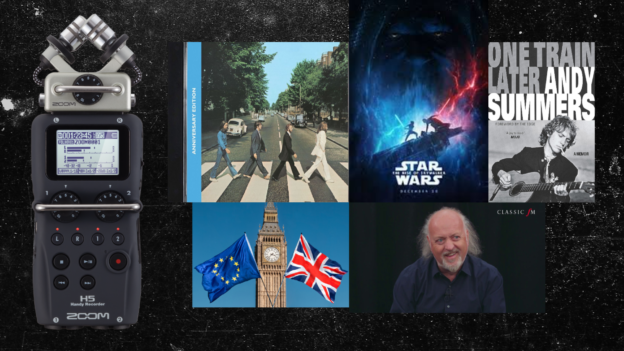
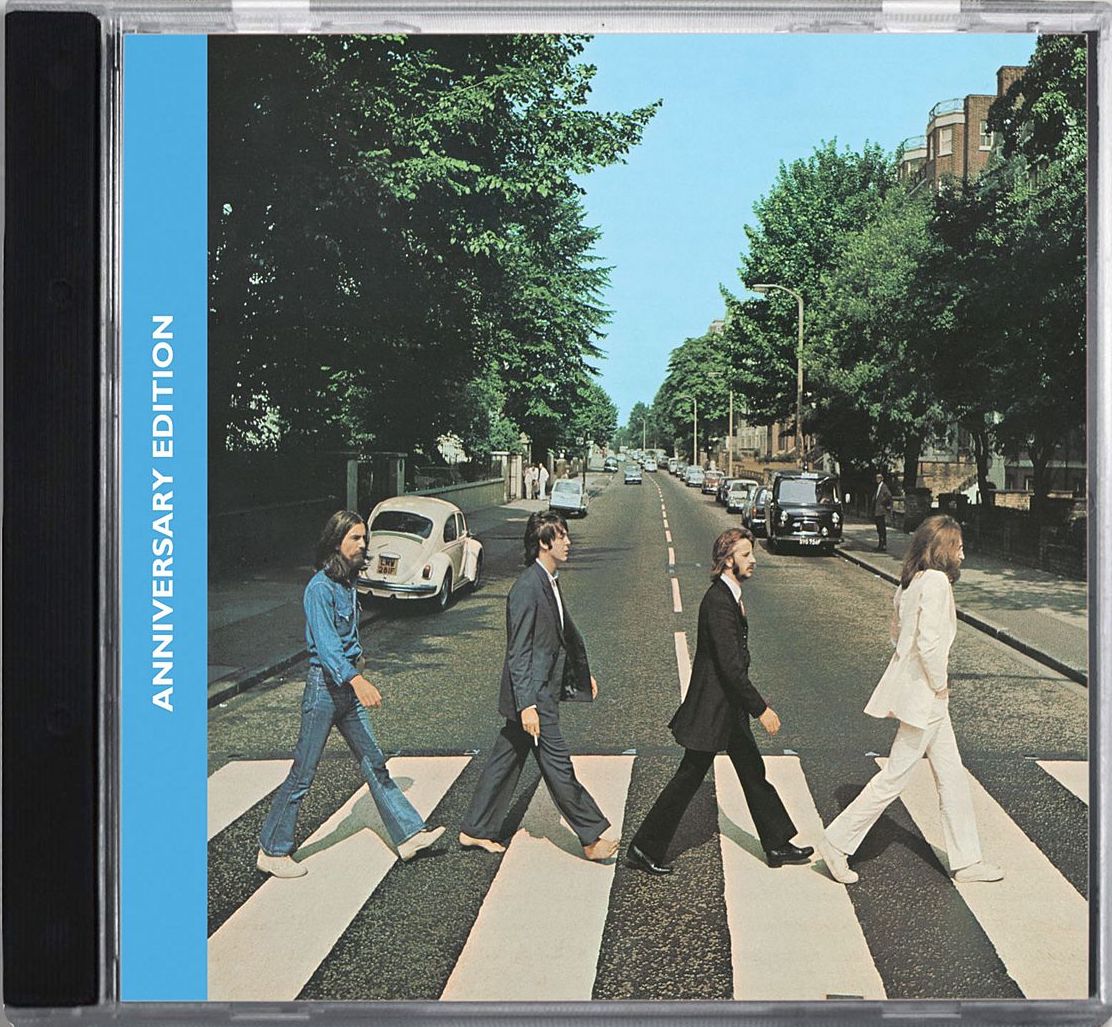
Rambling on my own about all sorts of things including Brexit news, describing my recording setup and microphones, a book recommendation for you, comments about the Beatles Abbey Road 50th Anniversary, the latest Star Wars Episode 9 trailer and Bill Bailey dissecting music in a brilliant way.


Small Donate Button[DOWNLOAD]

Episode Notes & Videos

Rick Thompson Report/Politics

🤷‍♂️

My Recording Setup

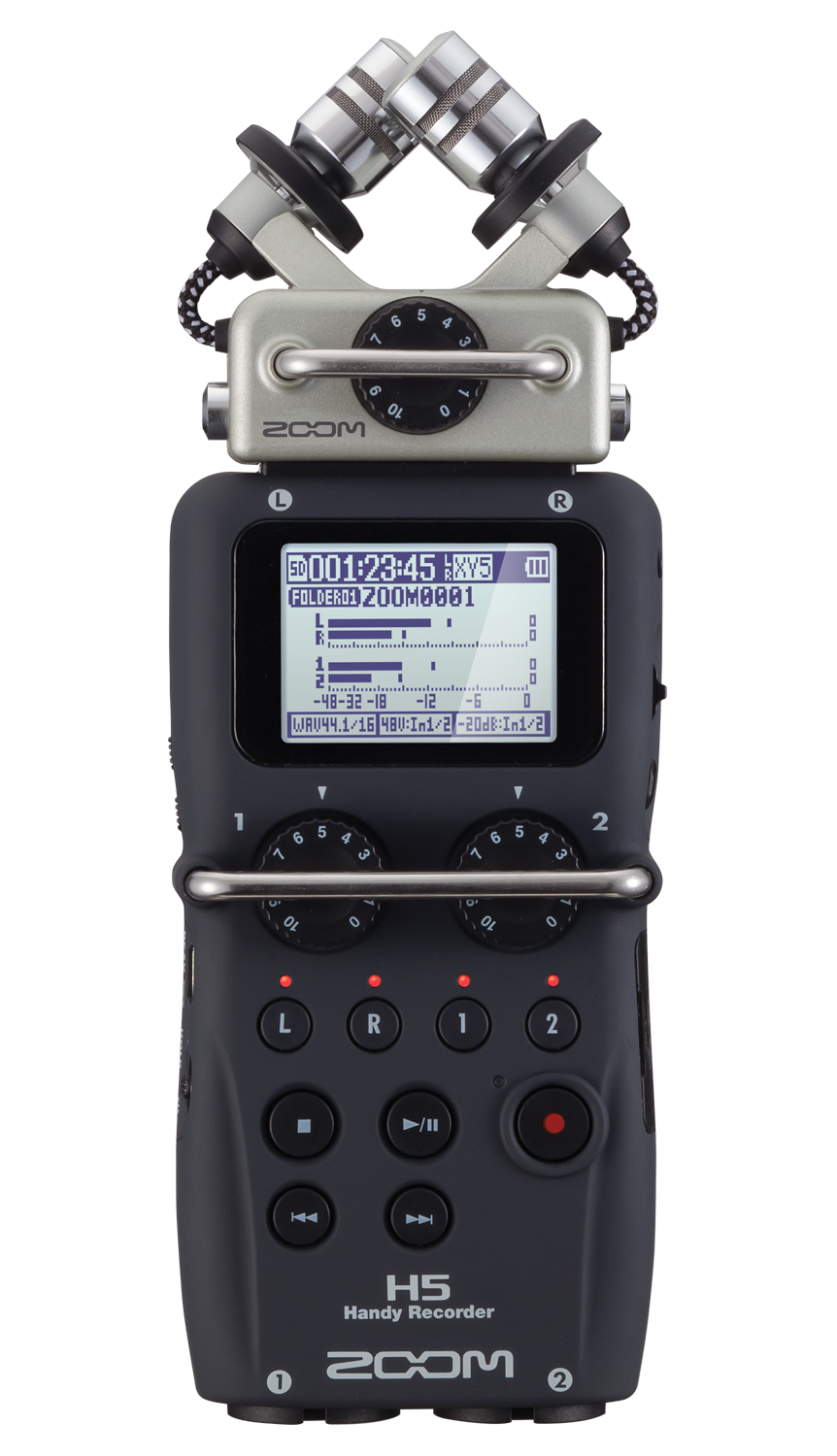
A Shure SM57 into a CL1 Cloudlifter then into a Behringer Q502 and then into the Zoom H5.

Book Recommendation

One Train Later by Andy Summers

The Beatles Abbey Road 50th Anniversary

Star Wars Episode 9 The Rise of Skywalker

Episode 9 Trailer

RedLetterMedia predict the plot of Star Wars 9

Bill Bailey & Music

616. Can you find the 15 idioms? (with Paul Taylor)

Listen to Luke and Paul play a conversation game and try to spot 15 common idioms. All idioms are demonstrated, explained and listed on the website.


Small Donate Button[DOWNLOAD]

Introduction Transcript

Hello everyone and welcome back to this podcast which is made by me in my flat in order to help you learn English and also enjoy learning English too!

If you heard the last episode, you’ll remember that I was planning to play an idioms game with Paul. That’s what you’re going to hear in this episode – a game with Paul in which we have to try to include some idioms into our conversation seamlessly.

What you can do in this episode is not only follow the conversation as usual, but also try to spot all the idioms as they crop up. There are 15 in total. Admittedly, about 3 of them are explained and defined at the beginning, but 12 others are slipped into the conversation and then explained and defined at the end.

So, can you spot all the idioms during the conversation? Do you know them already? Can you work out what they mean from context? This is good practice because it encourages you to pay attention and notice new language as it occurs in natural conversation. Noticing is actually an important skill which can really help with language acquisition.

This from the British Council’s website for teacher development, teachingenglish.org.uk

When learners “notice” new language, they pay special attention to its form, use and meaning. Noticing is regarded as an important part of the process of learning new language, especially in acquisition-driven accounts of language learning, when learners at some point in their acquisition, notice their errors in production. Noticing will only occur when the learner is ready to take on the new language.

Example
A learner might make an error in the use of a preposition, but “notice” its correct use by another learner, or in an authentic text. This might allow them to begin to use it correctly.

https://www.teachingenglish.org.uk/article/noticing

It’s an important skill to develop – to be able to notice language, to identify certain bits of grammar, or certain fixed expressions like idioms, notice the form (all the individual words used to create the idiom) and the meaning. It helps you identify differences between your use of English and the way it is used by natives, and that comparison allows you to then adapt your English accordingly. This awareness of what kind of English you’re aiming for is vital.

Developing noticing skills is an important part of developing learner autonomy and your language acquisition skills. The better you are at noticing, the more you are able to learn English by just listening to audio that you enjoy, rather than going through a language coursebook which teaches you specific language items. So, I encourage you to pay special attention during this episode on idioms and fixed expressions. Obviously idioms are confusing because they’re not literal – the whole phrase means something different to the individual words being used.

About the idioms you will hear. These are all very common ones. Some of them you are bound to have heard before and will not be new to you. In a way though, if you have heard them before I’m not concerned. That just means that you’re starting to learn all our idioms, which is a good thing. Remember that you also have to be able to use these idioms, not just understand them. When you do use them, be extra sure that you’re using them 100% correct – for example you’re not using a wrong little word here or there, or perhaps collocating the phrase with the wrong verb or something.

The topic of conversation just happens to be Paul’s brother Kyle who we talk about on the podcast occasionally. In case you don’t know – Kyle Taylor is a professional footballer who plays for the Premiership team Bournemouth FC, although he is still yet to make his Premiership debut. A debut is your first game. So he hasn’t played in the Premiership yet (he’s only about 20) but he has played in the FA Cup.

Alright, so you can listen to Paul and I discussing Kyle and his footballing career, amongst other things, and you have to spot the idioms, which will all be explained at the end. All the idioms are listed on the page for this episode on the website, so check them out there if you want to see specific things like spellings, the specific form of the idioms and so on.

Right, without any further ado, let’s begin!


Ending

Remember, all those idioms are listed on the page for this episode. So check them out.

The Idioms List from this game

  1. (to go) back to the drawing board
  2. to mind your Ps and Qs
  3. to feel under the weather
  4. to be all ears
  5. to take the bull by the horns
  6. a hat-trick
  7. to save something for a rainy day
  8. to pull your socks up
  9. to be down in the dumps
  10. to let the cat out of the bag
  11. to bend over backwards
  12. to get your skates on
  13. to call a spade a spade
  14. to be full of beans
  15. not a sausage

What did you think of the episodes about the mystery game? I don’t know what you all thought of that? Did you enjoy it? Was it too difficult to follow? Give me your feedback. You can do that on the website.

  • LEP Premium https://www.teacherluke.co.uk/premium
  • LEP App https://teacherluke.co.uk/how-to-download/
  • Mailing list
  • Check out my sponsors https://www.teacherluke.co.uk/talk

Get in touch and let me know how it’s going for you.


611. Top 10 Jokes from Edinburgh Fringe 2019

Listen to 10 jokes from this year’s Edinburgh Festival Fringe comedy shows. Understand the jokes and listen to Luke break them down to help you learn more English.


Small Donate Button[DOWNLOAD]

Video Version (Now available for everyone)

To sign up to LEP Premium, go to https://www.teacherluke.co.uk/premium

Episode notes & transcripts

Hello folks and welcome back. I hope you’re well.

Here is another episode of this podcast for people learning English.

This time we are dissecting the frog again as we are going to be looking at top jokes from this year’s Ed Fringe. I’m going to read all the jokes to you and then dissect them for vocabulary which can help you learn English really effectively.

Explaining a joke is like dissecting a frog. You can learn something from it, but the frog dies in the process.

So let’s dissect the frog again!

A challenge for you:

  • Can you understand the jokes the first time you hear them?
  • Can you repeat the jokes, with the right timing, intonation and stress, to make the joke funny?

The Culture of Joke-Telling in English

Remember, when someone tells you a joke there are certain normal responses you should make. You shouldn’t give no reaction.

You have to show that you see that a joke has happened. Don’t just give no reaction or respond to the question on face value.

So when someone tells you a joke, you have to show that you’ve noticed it.

  • laugh
  • go “awwww” or something
  • Say “I don’t get it”
  • Heard it before

You also have to respond to certain jokes in certain ways.

Knock knock – who’s there?

Any kind of question, especially “What do you call a…?” or “What do you get if you cross xxx with yyy?”

You answer: I don’t know. Then the answer is the punchline.

Jokes from the Edinburgh Fringe 2019

I did one of these last year – episode 547. A whole year has gone by. So I did 64 episodes of the podcast, plus all the premium ones. Quite a productive year for LEP!

Right now stand up comedians all over the UK are having a welcome break and a chance to think about how their Edinburgh run was and what they can learn from it.

The rest of us are reading articles in the press about the best jokes from this year’s fringe, and which new comedians to look out for over the coming year or two.

What’s the Edinburgh Fringe again? (I’ve talked about it a lot on the podcast. Never actually been there.)

From Wikipedia

The Edinburgh Festival Fringe (also referred to as The Fringe or Edinburgh Fringe, or Edinburgh Fringe Festival) is the world’s largest arts festival, which in 2018 spanned 25 days and featured more than 55,000 performances of 3,548 different shows[1] in 317 venues.[2] Established in 1947 as an alternative to the Edinburgh International Festival, it takes place annually in Edinburgh, Scotland, in the month of August.[3] It has been called the “most famous celebration of the arts and entertainment in the world”[4] and an event that “has done more to place Edinburgh in the forefront of world cities than anything else.[4]

It is an open access (or “unjuried“) performing arts festival, meaning there is no selection committee, and anyone may participate, with any type of performance. The official Fringe Programme categorises shows into sections for theatre, comedy, dance, physical theatre, circus, cabaret, children’s shows, musicals, opera, music, spoken word, exhibitions and events. Comedy is the largest section, making up over one-third of the programme and the one that in modern times has the highest public profile, due in part to the Edinburgh Comedy Awards.

Every year hundreds of stand up comedians go to the Fringe to do their shows. It is a sort of make-or-break experience.

Have you ever done it Luke? What’s it like? 

Joke types

I did something about different joke types in the last one of these episodes. I talked about things like “pull back and reveal” and “then I got off the bus”.

Here are about 5 different joke types, or stand-up techniques.

  • Puns (word jokes) – one word or phrase means two things at the same time, maybe because one word can sound like two words – homophones. [Why was 6 afraid of 7? Because 7, 8, 9. —> “8” sounds exactly like “ate”]
  • Pull back and reveal – the situation radically changes when we get more information. [My wife told me: ‘Sex is better on holiday.’ That wasn’t a nice postcard to receive.” Joe Bor 2014]
  • Observational humour – noticing things about everyday life that we all experience, but haven’t put into words yet. [What’s the deal with airline food, right?]
  • Similes – Showing how two things are similar in unexpected and revealing ways. [Explaining a joke is like dissecting a frog…]
  • Common phrases, reinterpreted. This time it seems that most of the jokes are based on well-known common phrases and how they could mean something else if you change the context. It’s like a pun but for a whole phrase. [Conjunctivitis.com – now there’s a site for sore eyes. Tim Vine]

NME.com https://www.nme.com/news/10-funniest-jokes-2019-edinburgh-fringe-festival-2539446 

The top 10 jokes of the Edinburgh Fringe Festival 2019 have been announced, with comedian Olaf Falafel taking the coveted top spot. Check out the full list below.

After previous triumphs from the likes of Tim Vine, Stewart Francis and Zoe Lyons, Falafel scooped the prize with a snappy vegetable themed one-liner.

He took ‘Dave’s Funniest Joke Of The Fringe’ with the gag:

1. “I keep randomly shouting out ‘Broccoli’ and ‘Cauliflower’ – I think I might have florets”.

Florets are chunks of broccoli or cauliflower

Tourette’s is a condition in which people shout out the rudest and most taboo thing in any situation, particularly stressful ones.

The two words sound quite similar.

It’s not the best joke in my opinion.

What makes a really good joke?

If it’s a pun, it should work both ways.

You’re looking at a sentence that means two things at the same time. Ideally, both of those things will make overall sense.

“I keep randomly shouting out ‘Broccoli’ and ‘Cauliflower’ – I think I might have florets”.

So, one sense here is that he has a type of tourette’s which only involves shouting out broccoli and cauliflower. That makes sense, sort of.

But the other meaning doesn’t. Why would he be randomly shouting out the words broccoli and cauliflower if he had some florets in his hand?

So, for me it doesn’t quite work.

Here’s a joke that works both ways

I broke my finger last week. On the other hand, I’m ok.

  1. On the other hand means “But” (the whole sentence still makes sense) He broke his finger but overall he’s ok.
  2. On the other hand means “literally on his other hand” (the whole sentence makes sense again) He broke his finger on one hand, but his other hand is ok.

“I keep randomly shouting out ‘Broccoli’ and ‘Cauliflower’ – I think I might have florets”.

It came from Falafel’s show It’s One Giant Leek For Mankind, which was performed at the Pear Tree.

The comic, who won with 41% of the vote, claims to be “Sweden’s 8th funniest” comedian. He also works as an acclaimed children’s book author.
(This is like a democratic election in which the one that 59% of people (the majority) didn’t vote for, is the one that’s picked.)

Falafel said: “This is a fantastic honour but it’s like I’ve always said, jokes about white sugar are rare, jokes about brown sugar… demerara.”

(How is that like winning this list?🤷‍♂️)

Check out the rest of the top ten below.

2.”Someone stole my antidepressants. Whoever they are, I hope they’re happy” – Richard Stott

I hope you’re happy

https://www.examiner.org/news/114141-councilman-walks-out-of-meeting-resigns

3.”What’s driving Brexit? From here it looks like it’s probably the Duke of Edinburgh” – Milton Jones

https://www.mirror.co.uk/news/uk-news/breaking-prince-philip-crash-duke-13998489

4. “A cowboy asked me if I could help him round up 18 cows. I said, ‘Yes, of course. – That’s 20 cows’” – Jake Lambert

To round something up (two meanings)

5. “A thesaurus is great. There’s no other word for it” – Ross Smith

There’s no other word for it

Fine dining is fancy, there’s no other word for it. Newshub–29 Aug 2019

6. “Sleep is my favourite thing in the world. It’s the reason I get up in the morning” – Ross Smith

It’s the reason I get up in the morning

Oxygen–15 Aug 2019
She added that her dog is “the reason I get up in the morning.”

7. “I accidentally booked myself onto an escapology course; I’m really struggling to get out of it” – Adele Cliff

I’m struggling to get out of it

8. “After learning six hours of basic semaphore, I was flagging” – Richard Pulsford

flagging

9. “To be or not to be a horse rider, that is Equestrian” – Mark Simmons

That is the question

That is equestrian

10. “I’ve got an Eton-themed advent calendar, where all the doors are opened for me by my dad’s contacts” – Ivo Graham

Read more at https://www.nme.com/news/10-funniest-jokes-2019-edinburgh-fringe-festival-2539446#idlDviSDEPGrBuXP.99

Did you get all the jokes?

Did you get them first time?

Did you pick up some language?

Vocab review

  1. florets
  2. tourette’s
  3. I hope they’re happy
  4. To drive something (not a car)
  5. to round something up
  6. There’s no other word for it
  7. It’s the reason I get up in the morning
  8. Struggling to get out of something
  9. Flagging
  10. equestrian
  11. to open doors for someone

Check the LEP App for a video version of this episode!

610. British Comedy: James Acaster

Listen to a lovely bit of stand up comedy that will require quite a lot of breaking down in order for you to understand all the jokes like a native speaker, but there’s lots to learn in the way of language and culture in the process.


Small Donate Button[DOWNLOAD]

Transcripts and Notes

This is LEP episode 610. and it’s called British Comedy: James Acaster.

In this one we’re going to listen to a lovely bit of stand up comedy that will require quite a lot of breaking down in order for you to understand all the jokes like a native speaker, and there’s lots to learn in the way of language and culture in the process.

James Acaster is a popular stand up comedian from the UK who has won various awards, done Netflix specials, Edinburgh shows and who appears on panel shows and TV comedy programmes all the time. He’s now a very popular and well-known stand up in the UK.

I’ve got a clip of one of his performances from the New Zealand Comedy Gala in 2013 on YouTube.

I’m going to play the video in about two parts.

You have to try to understand it – not just what he’s saying, but why is it funny?

Then I’ll go back through the clip, sum it up, go through it line by line, breaking it down for language.

You can then listen again using the video on the page for the episode.

Who is James Acaster? (Wikipedia)
James Acaster is an English comedian originally from Kettering, Northamptonshire. (accent?)
He has performed for several consecutive years at the Edinburgh Festival Fringe and won two Chortle awards in 2015.[3] He has been nominated for Best Show five times at the Edinburgh Fringe.[4] Acaster has appeared on several panel shows, including Mock the Week and Would I Lie to You? He has a 2018 Netflix show entitled Repertoire, consisting of four hour-long stand-up comedy performances.[5] He has also written a book, James Acaster’s Classic Scrapes, consisting of true stories, most of which were originally told on Josh Widdicombe’s show on XFM.[6] He currently hosts panel show Hypothetical alongside Widdicombe and food podcast Off Menu with fellow comedian Ed Gamble.

Accent-wise
He’s originally from Northamptonshire which is in the east midlands. He doesn’t have a strong northern accent or a brummie accent, although I do think he would say “podcast” instead of “podcast” and “bath, grass, laugh” with that short a sound too.

The main thing is that he drops all his “T” sounds and also “TH” sounds.
So, “bring them” sounds like “bring em”
“Sitting in a tree, eating all the apples” sounds like “si’in in a tree, ea’in all the apples”
“Theft” becomes “Feft”
He also says “Raver” instead of “rather”.
All very common features of local English – dropping Ts and TH sounds is common all over the country.

What is his comedy style?
Whimsical (unusual, strange and amusing)
Thoughtful
Thinking of things in a different way, unconventional (quite normal in stand up)
Weird
Acting a bit cool even though he isn’t
Geeky looking, wears sweaters, clothes even a granddad might wear
Ginger-ish hair
Looks a bit like Jarvis Cocker

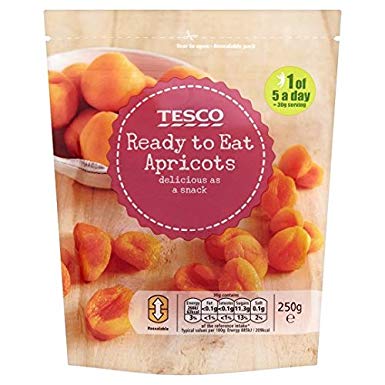
James bought some ‘ready-to-eat Apricots’ and he went on a lads’ night out

Ready-to-eat apricots

You get these bags of fruit in the UK (and elsewhere I’m sure) of fruit which is ready to eat.

It’s been cut up, washed, prepared. It’s ready to eat.

For example, you might get “ready-to-eat apricots”. That’s what James is talking about here.

Also, the expression ”You are what you eat?”

Play the clip: What’s the joke about apricots?

Stop and explain it

What kind of apricots are these?
They are ready-to-eat apricots.
How do you feel?
I feel ready. Ready to eat apricots.
In fact, you could say I was ready to eat these ready-to-eat apricots.
Maybe you’re not ready to eat apricots.
Maybe you just want some, which is why they’re in a resealable bag.
So, they should be renamed ready-to-eat-some-apricots.

A lads’ night out / You wouldn’t bring an apple to an orchard

James went on a night out with a bunch of lads.

For James, this was not an enjoyable night.

It wouldn’t be for me either. I’ve never been one of those guys who likes to go out on a lads’ night out.

Lets me explain what a lads’ night out is like.

Lads are usually English young men, together, doing male things and generally being aggressive, overly sexual, crude, rude and competitive.

  • Lots of alpha male behaviour
  • Heavy drinking
  • Taking the piss and general one-upmanship and aggressive, laddish, competitive behaviour
  • Spending time in bars and clubs that you hate but they think are brilliant (terrible, terrible music, awful people, loud, smelly, horrible)
  • Trying to pick up girls and the general lack of a moral code – cheating, lying, using alcohol – all in an attempt to get lucky with a girl. This includes cheating on your girlfriend if you have one.
  • Medieval-level sexual politics – being openly judgemental about women’s appearances, giving women marks out of ten, saying whether or not you would shag any of the women around, looking at their bodies and comparing notes etc.
  • You get sucked into it through peer pressure and become part of it even though you hate it.

One of the lads, who has a girlfriend and yet plans to pick up a girl at the club, when asked why he didn’t bring his girlfriend, says “You wouldn’t bring an apple to an orchard”

An orchard is a place where apples are grown. It’s full of trees and there are apples everywhere. You might pay to access the orchard and pick the apples.

You wouldn’t bring an apple to an orchard. Presumably because you wouldn’t need to bring one because there are loads there anyway.

How about bringing your girlfriend to a night club. Is it the same?

This leads James to kind of question the logic of that statement and go off an a monologue about bringing an apple to an orchard and how that compares to bringing your girlfriend to a nightclub.

Vocab
To be an accessory to something (like a crime)
An apple a day keeps the doctor away

Play the clip: Do you understand all the comedy about the nightclub and bringing an apple to an orchard?

Stop and explain it

Going to a nightclub with a bunch of lads
One of them cheats on his girlfriend and you become an accessory to it, like it’s a crime and now you’ve become pulled into it. You’re involved in it, without intending to be, and you could go down, like you’re an accessory to a crime.

In this sense, you just have to keep a secret, you’re being expected to lie on behalf of someone else. The guy is a twat basically.

This lad says “You wouldn’t bring an apple to an orchard”.
But then James deconstructs this analogy in a brilliant way.

This is nuanced comedy which is subtly making fun of stupid lad culture in a clever and funny way, with some weirdness and surrealism.

Go through it line by line

One of the reasons I like it is that a lot of people might just say James is being weird and that he’s some sort of loser, but he’s absolutely right in my opinion and he’s just clever and not afraid to be himself and he embraces the slightly weird things in life, because let’s face it, life is weird.

Types of humour / how nuanced & subtle humour can be all about changing the context of the situation in order to reveal new perspectives.

This acknowledges the fact that there are many different perspectives or layers to any situation and a good comedian can make you realise a whole different underlying meaning by just changing one bit of perspective.

Despite the fact that I like this a lot and so do many other people, I’m sure plenty of others don’t find it funny because it’s not fast enough, there aren’t enough dynamic changes (he doesn’t change his voice a lot, a lot of the jokes are left to the audience’s imagination), it’s pretty low energy, maybe little things like (I can’t get into it – I just don’t like his hair cut or his shoes or something) and also some people just don’t really want to look at the world from a different point of view. Some people prefer more direct humour, perhaps with a more obvious target or more relatable things, like observational comedy or something.

As usual, I’m worrying that nobody will get it, but what’s the point of that? Some people just won’t get it because “you can bring a horse to water but you can’t make it drink”.

And it doesn’t matter. If you didn’t find it funny, that’s totally fine. At least you’ve learned some English in the process. :)

Vocab list

  • Ready-to-eat apricots
  • They say “you are what you eat”
  • A resealable bag
  • A lads’ night out
  • Check out the arse on that
  • Big time
  • Normal people perv solo
  • To outnumber someone
  • Sinister
  • A dented suitcase
  • To cheat on someone
  • An accessory to a crime
  • Despicable
  • An orchard
  • Fit birds
  • Eloquent use of language
  • A little bit miffed
  • This godforsaken pisshole of an orchard
  • Who in their right mind compares women to apples?
  • Another saying “An apple a day keeps the doctor away”

Here’s another short clip of James Acaster, this time talking about Brexit and comparing it to a tea bag in a cup.

Should you take the bag out or leave it in?

James Acaster Brexit Tea Bag

Now explain that Luke!

Tea / Brexit

Should you leave the bag in or not?
If the bag stays in, the cup as a whole gets stronger. It might look like the bag is getting weaker in some way but it’s actually part of a good strong cup of tea.
If you take the bag out, the tea is actually quite weak, and the bag goes straight in the bin.

Do I even need to explain how that analogy works with Brexit?

Should the UK stay in or go out?

If the UK remains, the EU as a whole gets stronger. It might look like the UK is getting weaker in some way, but it’s actually part of a good strong union of nations.
If the UK leaves, the EU gets weaker and the UK goes straight in the bin.

Quite clever really.

You can watch James Acaster clips on YouTube.
You can see his Netflix specials “Repertoire” on Netflix
You can read his book “Classic Scrapes” from any half-decent book shop.

That’s it for this episode!

608. The Mass Observation (with Mum)

Listen to my mum talk about a social history project focusing on the lives of everyday people in the UK. Includes discussion of things like protests, plastic, identity, sex education, loneliness, and milk!


[DOWNLOAD]

Introduction Transcript

Hello everyone, this is LEP episode 608 and it’s called The Mass Observation (with Mum).

What’s that all about? You might be thinking. This sounds like some kind of Big Brother thing – like maybe the government observing everyone in some kind of dystopian future, and somehow my mum is involved in it.

Well, I’m afraid it’s far less dramatic than that.

In fact, the mass observation in the title is a social history project that has been going on in the UK, probably for 70 years or more. It’s a project that my mum has fairly recently got involved in.

Basically, the mass observation (now administered by the University of Sussex) aims to record everyday life in Britain through a panel of volunteer observers who either keep diaries or reply to open-ended questionnaires (known as directives). My mum is one of those volunteers and since this project is all about collecting information on everyday life in the UK we thought it might be an interesting episode of Luke’s English Podcast.

So that’s what you’re going to get here. A conversation with my mum on a variety of topics which have come up in the quarterly questionnaires from the Mass Observation.

So, you can expect some rambling conversation between the two of us on things like this:

  • protests
  • plastic
  • identity and gender identity
  • sex education in school
  • loneliness and belonging
  • and milk

There’s also some chat at the start about Prince Harry & Meghan Markle, following on from the last time my mum was on the podcast when we talked about the royal wedding.

So now you can enjoy about an hour’s worth of my mum’s nice voice and accent talking about a variety of issues relating to everyday life in the UK.

I hope you enjoy it. I’ll be back to talk a bit more on the other side of the conversation.

In terms of language learning, your task as ever is to just keep on listening. At the very least, that’s all you have to do here. Just listen, follow the conversation, see what you can learn from it and try to notice any features of English or vocabulary along the way. But the main thing, just enjoy this chat between my mum and me.


Ending

I hope you enjoyed that. I’d like to say a big thank you again to my mum for being on the podcast again, and to all members of my family who make a huge contribution every time they’re on.

So what’s up? Nearly the end of the summer holidays. We’re approaching the end of August.

I hope you’ve had a good summer.

Remember in July I mentioned a couple of times the LEP meetup that was happening in London? Well, I went to it and met about 25-30 LEPsters, had some drinks and conversation with them for a few hours, and what a pleasant experience that was!

In fact we recorded some samples of audio during the meetup, with everyone talking for a minute or two. I think I’ll be putting an episode together with that.

Speak to you again on the podcast soon! Bye!


605. Unexpected Road Trip (with James)

James and Luke go on an accidental road trip in the south-west of England and record a rambling podcast, while slowly going a bit mad. Will they make it to their destination before sunset? Listen to find out what happens and to learn some words and culture in the process. Photos below. 


Small Donate Button[DOWNLOAD]

LEPSTER MEETUP IN LONDON

Where? The Fitzroy Tavern, 16 Charlotte St, Fitzrovia, London W1T 2LY (near Oxford Street/Tottenham Court Road)
When? Sunday 28 July from 2PM (and probably continuing into the afternoon)
Who? English teacher Zdenek Lukas is the host and all LEPsters (and non-LEPsters) are welcome! Also, Luke might be there with his brother and friends.
Email teacherzdenek@gmail.com to let him know you’re coming.
Come to chat, meet people, play board games in English and have fun!

Episode Introduction (after the jingle)

Hello, welcome back to the podcast everyone, I hope you’re all doing well and having a nice summer or winter depending on which hemisphere you are currently residing in.

I am currently in the middle of a very busy teaching schedule – teaching classes all day every day this week and next week, and of course in the evenings I’m looking after my daughter and dealing with all the usual aspects of life in general. So, I have not had a lot of time to work on podcast episodes. That’s why there’s been a delay and that might continue for a few more weeks, we’ll see. But here’s a new episode!

There are actually loads of things I’d like to talk about, including the fact that England are now World Cup winners – yes, we won the World Cup for the first time ever, so it finally came home! I’m not talking about football of course, nope – I’m talking about cricket (yes, that still counts! It’s still a big deal because let me remind you that it is the world’s second most popular spectator sport.) Yes, England are the champions of the world. Those of you who come from cricket-playing countries will know exactly what I’m talking about. Everyone else will probably be confused. And don’t you dare compare it to baseball. Anyway, England won the cricket in dramatic fashion, beating New Zealand in an incredibly close game which went right down to the wire. I’m not going to talk about it in this episode actually, but I did want to mention it because of course I am very proud and I’ve had plenty of requests from listeners in places like India and Pakistan who want me to talk about it. I’ll see if I can cover it in an upcoming episode. If you can’t wait and you want some cricket chat on the podcast, you could always listen to episode 473 in the archive which is a conversation with my dad all about cricket.

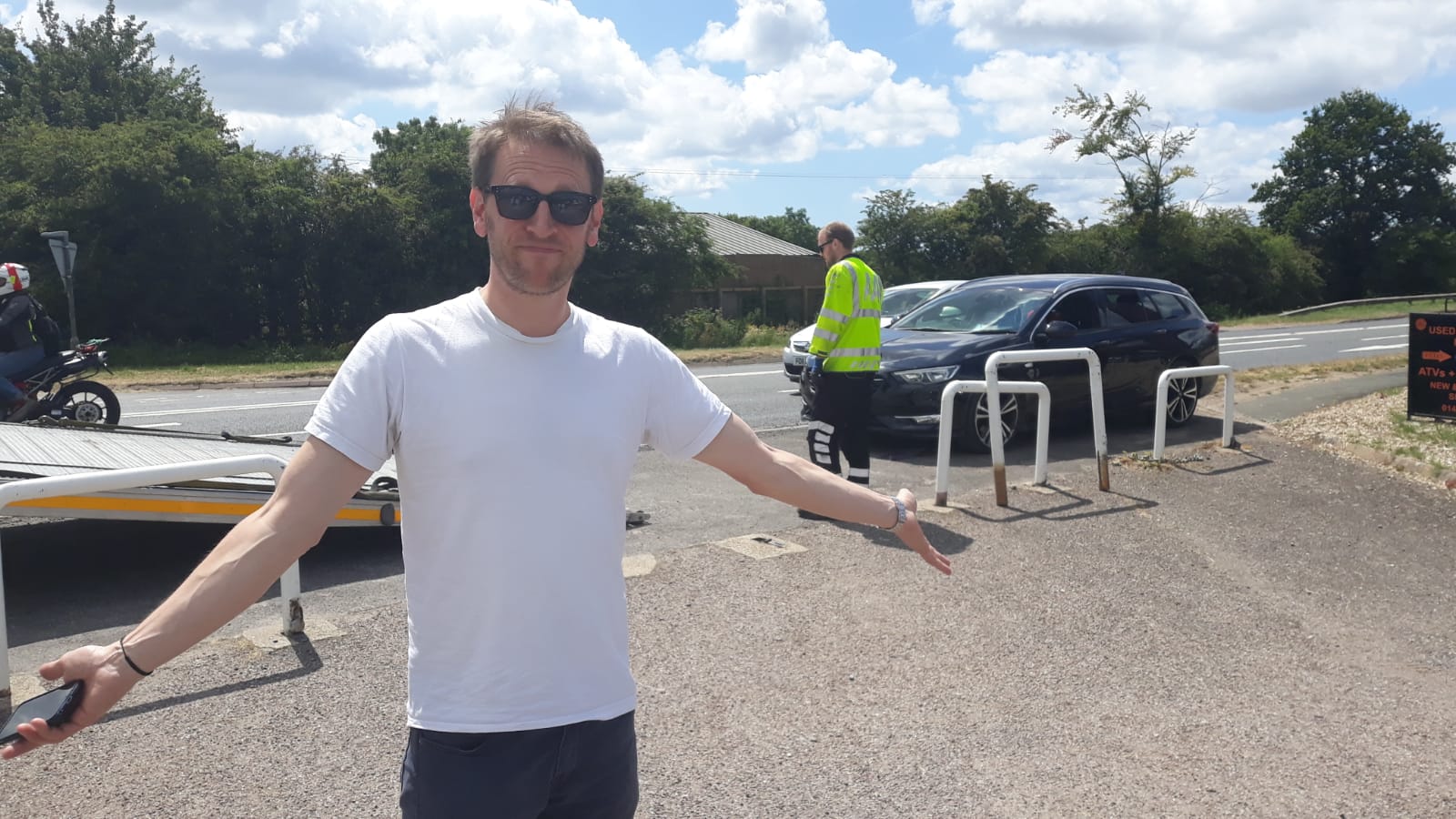
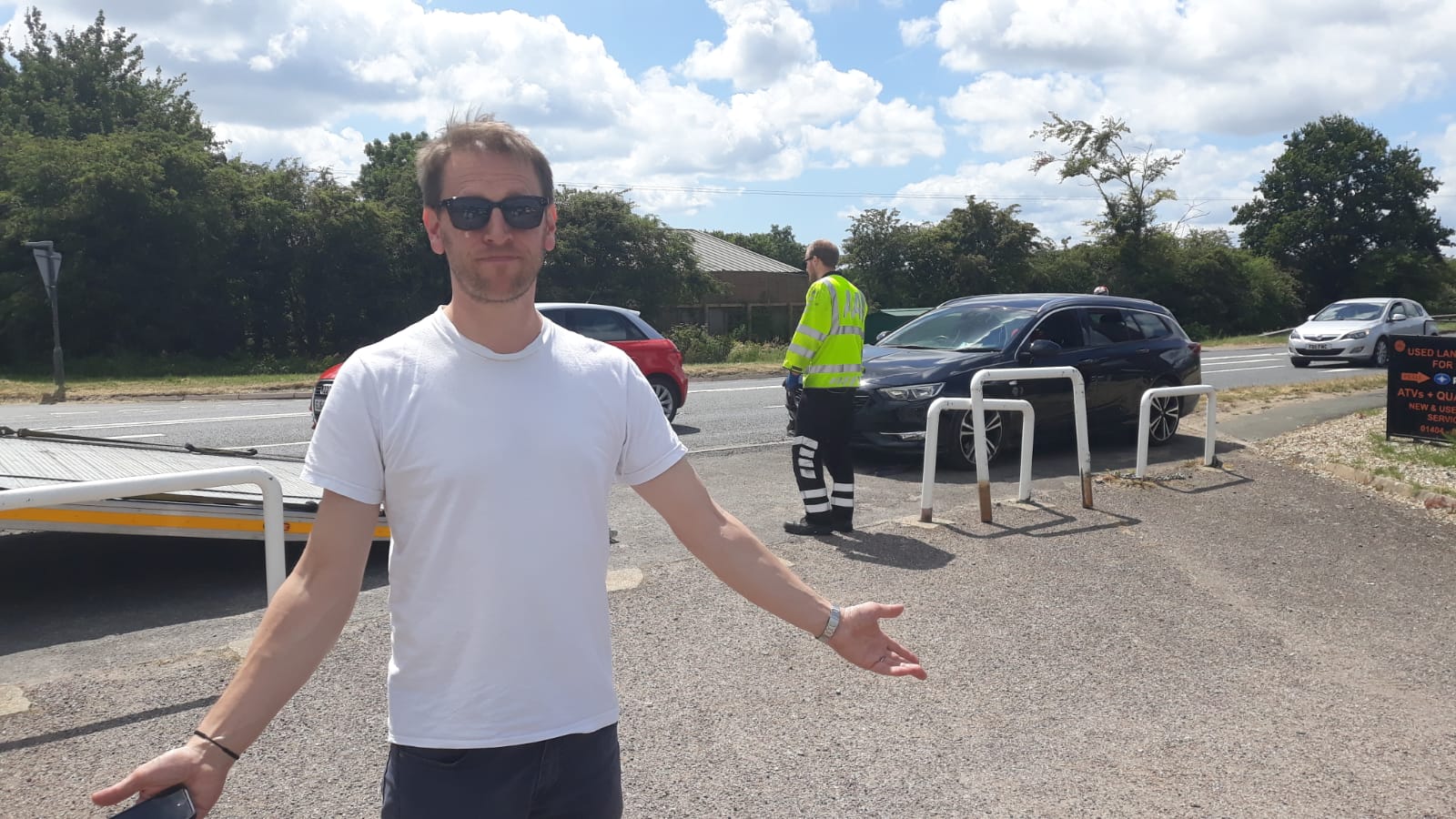
But anyway, this episode is all about an unexpected road trip that I went on with my brother recently.

Last week, I was on holiday with my family. We travelled to England and actually I did manage to record two episodes while I was there. This is the first one and it was completely unplanned and recorded on my brother’s phone during various parts of a long and quite frustrating day that we spent near the end of the holiday.

In fact, this episode is a sort of road trip diary, recorded on the road with James.

In this episode you will be able to hear…
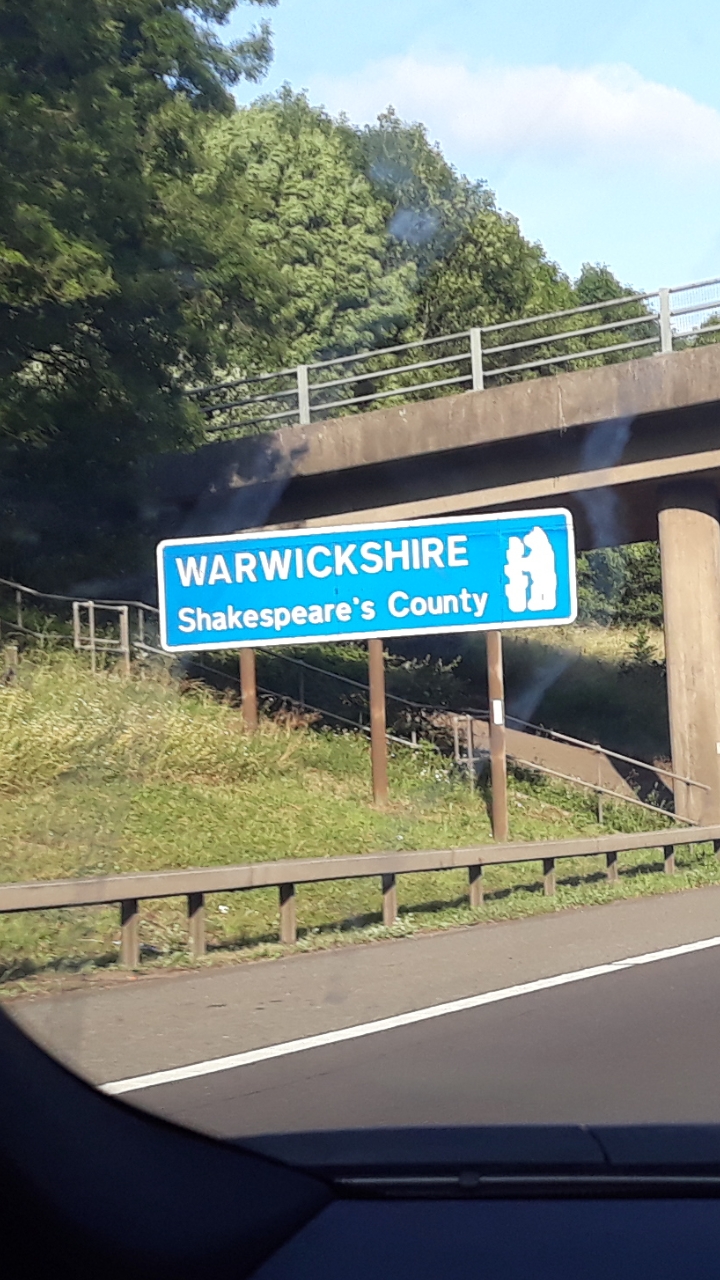
Exactly what happened when I got a flat tyre while driving back from the holiday. A tyre is the rubber part of the wheel of a car or bike, in this case car – the black rubber part of the wheel which is full of air. So I got a flat tyre, which is where the tyre (or inner tube inside the tyre) gets punctured and all the air comes out. In fact I got two flat tyres in the same week, which I think is really unlucky. Anyway, the second one caused my brother and me to end up having to go on an unexpected journey through the lanes and roads of Devon, Dorset, Somerset, Gloucestershire, Worcestershire and Warwickshire. On the way we recorded a series of rambling conversations covering the details of our trip and lots of other topics, and that is what you’re going to listen to.

So why don’t you join us on our accidental road trip and listen to us rambling on about…

  • The specific problem with the car, what happened and how it could be repaired
  • Different words and expressions for feeling angry (because I was very angry with the situation, certainly at the beginning, although you can’t really hear it in my voice because I’m so cool, calm and collected)
  • The dangers of drinking strong coffee and the phenomenon of “coffee rage”
  • The film Robocop and the 2014 Robocop Reboot (a very random tangent)
  • How and why cars might pull each other at nightclubs
  • Going insane while waiting to be rescued by roadside assistance
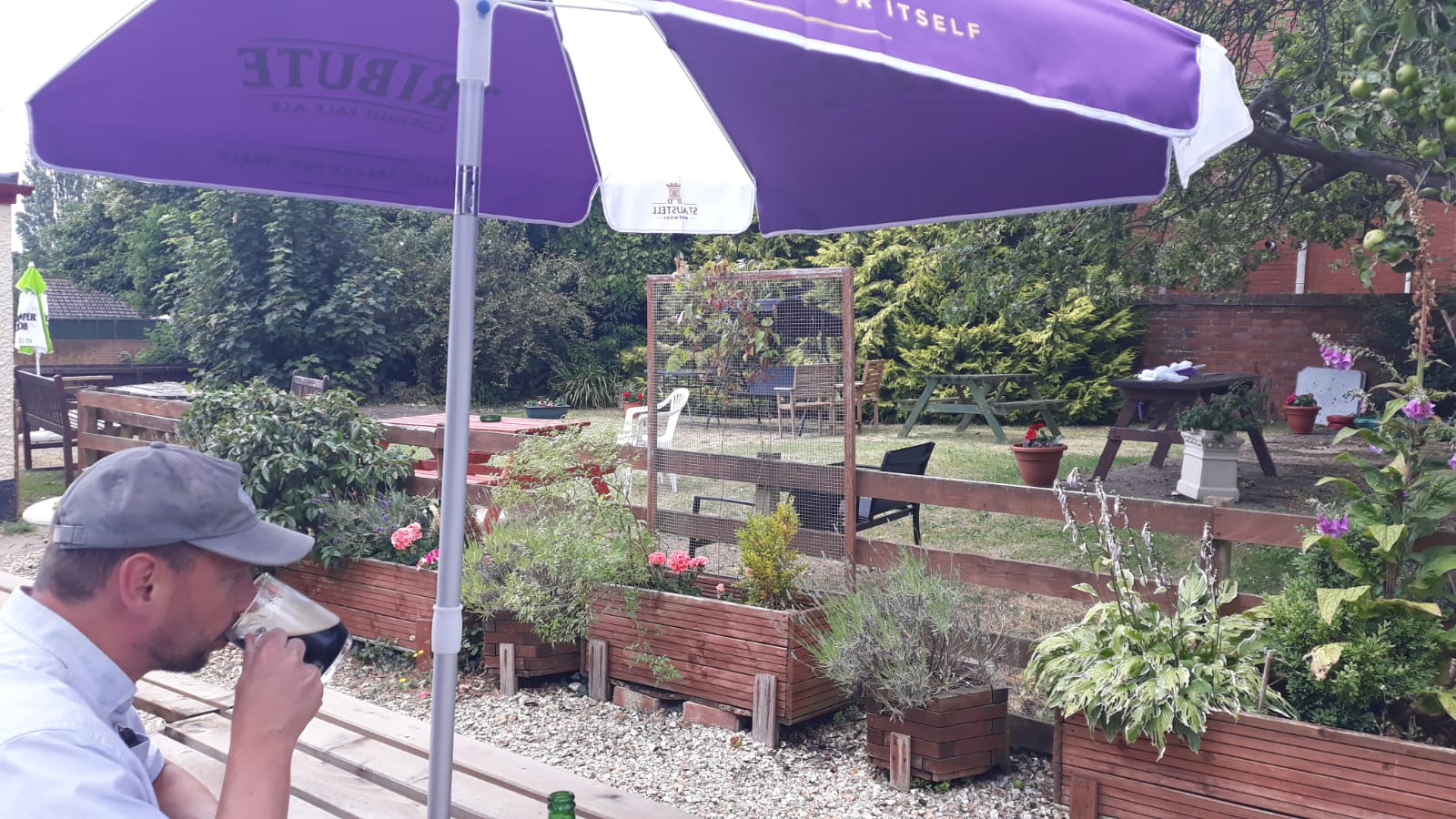
  • Different types of pub, including how to pick the right pub for a drink in England
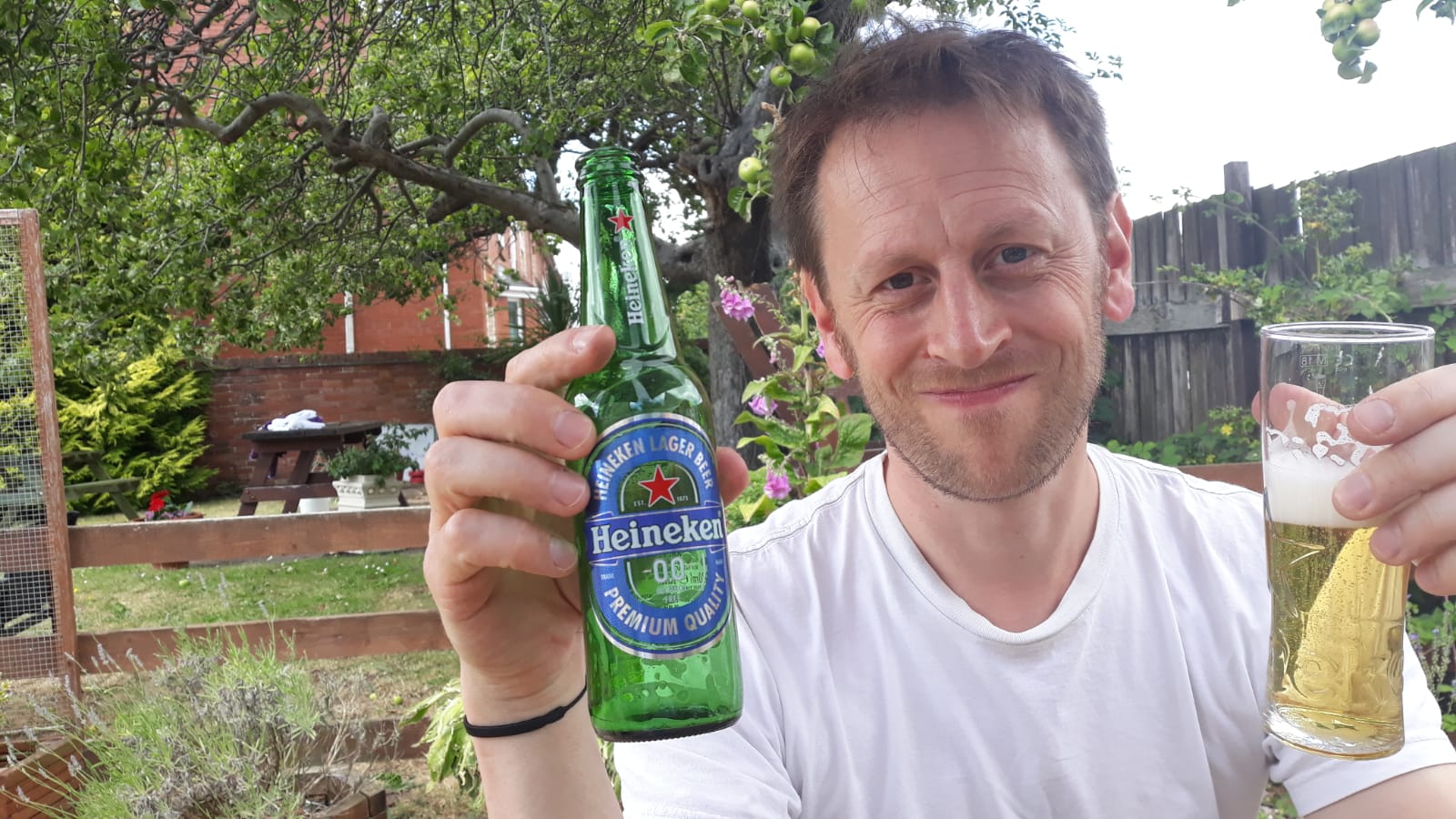
  • The taste of beer, and different types of beer that you can get
  • A close encounter with a famous TV comedian at a motorway service station somewhere near Bristol
  • Fascinating details of the sandwiches that we bought to help sustain us on our adventure
  • The topic of going vegan or at least just eating less meat, and why eating meat is said to be bad for the environment
  • How to actually spell and pronounce the names of some English cities and counties on our trip, including Gloucester, Gloucestershire, Worcester, Worcestershire, Warwick and Warwickshire.

All that and more, coming up in this very rambling episode, spontaneously recorded on James’ mobile phone.

Listen on to find out all the details and to hear the voices of some other members of my family at the end, and by the way there is some strong language (swearing), the sound quality might not be up to the usual high standard because it was recorded on a mobile phone (but I think it’s ok) and also there is a lot of slightly mad rambly nonsense coming up – but I think you’ve probably come to expect that sort of thing from this podcast haven’t you?
YES WE HAVE LUKE – LET’S START!

OK here we go…

Photos