Category Archives: Humour

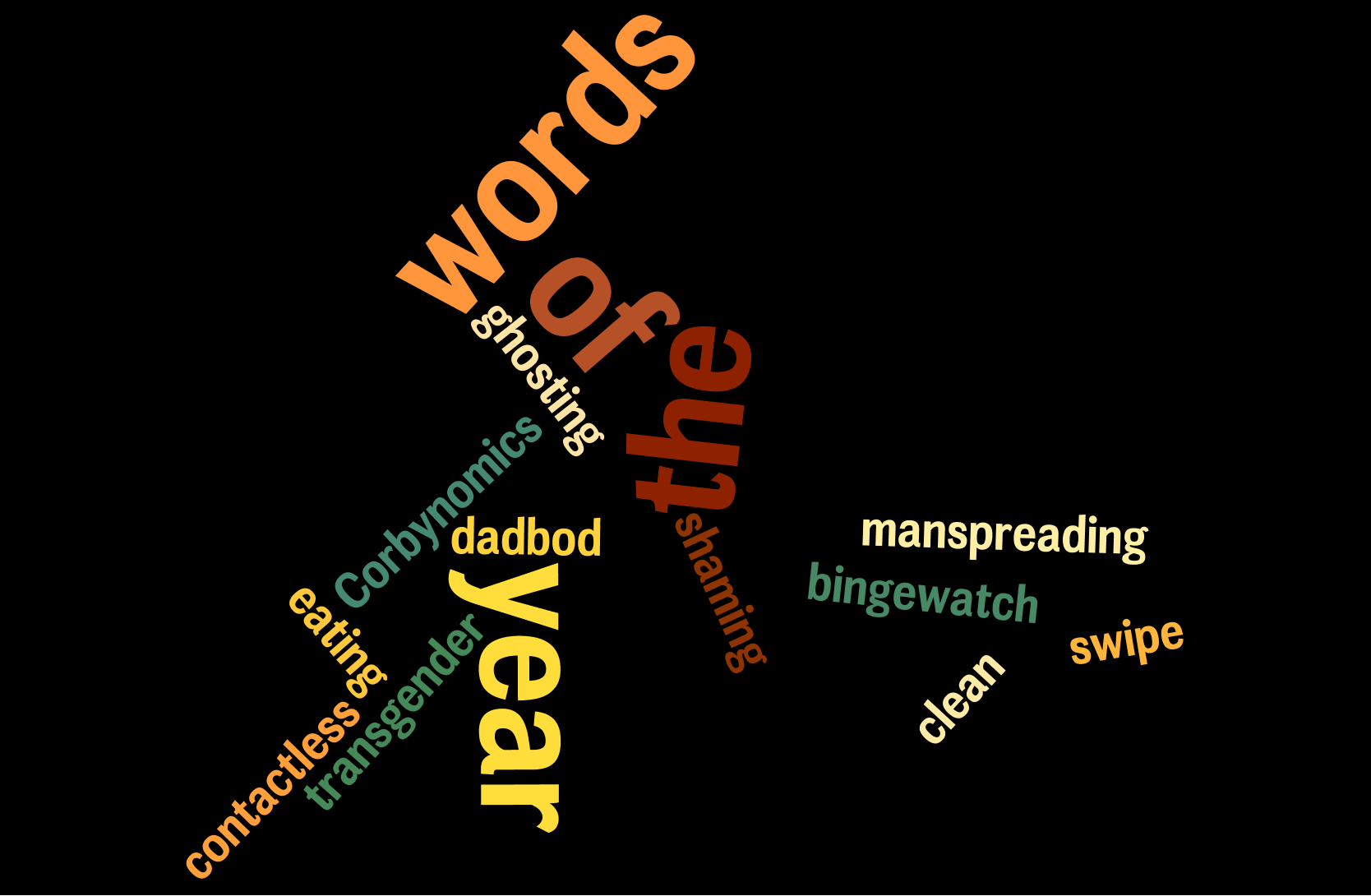
312. The Words of the Year (Part 3) with Amber & Paul

Here’s the third part in this series about the Collins Dictionary Words of the Year 2015. Listen to the episode to hear Amber, Paul and me discuss the rest of the words in the list. I’ll also explain and clarify some vocabulary, grammar and pronunciation from our discussion. There are vocabulary notes below.

Small Donate Button[DOWNLOAD]
Welcome back to another episode of LEP. We’re still talking about the Collins Dictionary Words of the Year.
This is the third episode on the series, and we still have about 7 words to deal with.
I think we can wrap this up inside one episode, but let’s see.
I’m going to keep this intro as short as possible because recently my introductions have got out of control.
So, let me keep it short and simple.
This is the 3rd part in a mini-series about The Collins Dictionary New Words of the Year.
I’m joined by Amber and Paul and we’re talking about this list of new words that Collins are putting into their dictionary this year.
These are new words and their use in both spoken and written form has increased significantly over the last 12 months.
Collins consider them worthy of addition into the dictionary.
But what are these words? What do they mean? And why have we been using them a lot lately?
Amber, Paul and I are going to explain them for you and just ramble on a bit as well.
I’ll play you all of our conversation but every now and then I’ll pause the podcast to explain things you’ve heard in our conversation.
That way you get the best of both worlds: you can listen to us talking to each other naturally, but also you can pick up a lot of new language when I break it down and explain it to you.
Alright, so without any further ado, let’s get started, and here’s word 7 in this list of 10 new words.

Word 7 – “manspreading”
manspreading (noun): the act or an instance of a male passenger in a bus or train splaying his legs in a way that denies space to the passenger sitting next to him
To take up space
well-contained within my seat allocated space
Not spilling over
You’re obliged to sit there, coyly, between his legs
Splaying his legs
You’re sitting there, minding your own business, not taking up much space…
His leg is pressing up against your leg.
If they were a bit too scary I probably wouldn’t say anything. I’d probably just cower.
He went out into the, whatchacallit, into the corridor.
whatchacallit
whatsisname
a thingamajig
a thingamybob
a widget
The corridor in the bus (or the aisle)
Suddenly the bus put the brakes on and he went flying.
Small kids, the metro stops suddenly or people get on and they crush them, they don’t even notice them, so they stand on them.
Children aren’t that strong holding on.
They’re hyperactive. They want to, like, run around.
A grumpy tired child is not good for anyone.

Word 6 – “ghosting”
Ghosting
The act or an instance of ending a romantic relationship by not responding to attempts to communicate by the other party
You’re not manning up or womaning up if you do that (to ‘man up’ = to be strong and act like a real man, or woman)
We got jiggy with it (like the Will Smith song, but in this case it means that we’d had sex, or ‘sexy time’)
Ghosting someone as a way of finishing a relationship is lame. All it takes is a bit of honesty.
It did do my head in for a while. (expression)

Word 5 – “dadbod”
Dadbod
An untoned and slightly plump male physique, especially one considered attractive
Broad shoulders
well-toned muscles
six-pack
I’m a bit more laid back
Comparatively, you’ll feel all saggy and not attractive
Landscape gardener
“Don’t all rush out at once!” (Sarcasm – Paul’s saying that nobody’s going to come. This is a typical way to be sarcastic. E.g. “Don’t all rush out at once!” or “Don’t sound too enthusiastic!” or “Don’t get over excited” or “Don’t everyone rush to my help or anything”)

Word 4 – “corbynomics”
Corbynomics
The economic policies advocated by Jeremy Corbyn, leader of the UK Labour Party from 2015
Reaganomics

Word 3 – “contactless”
Contactless
Referring to payment systems which use RFID technology and do not require the customer’s signature or pin number
To type in a pin or sign
contactless payment
Card details
We’ll be floating around in pods
It’s all going to become fingerprint eyeball scanning, thing.
That’s probably what’s going to happen

Word 2 – “clean eating”
Clean eating
The practice of following a diet that contains only natural foods, and is low in sugar, salt, and fat
If the WHO comes up with it
Audiobook recommendation: Salt Sugar Fat by Michael Moss

Word 1 – “binge-watch”
Binge-watch
To watch a large number of television programmes (especially all the shows from one series) in succession
I can’t help myself
Flipping heck
Flippin’ ‘eck
I find myself pushing the pram around
YOu’re so tired you can barely stay awake to watch it!
Jack Bauer’s Power Hour (what does this mean? N.Irish accent)
The Beatles book – hefty, fat, an extremely large tome, an exhaustive book,
How much of it have I actually read? (pron – weak form of ‘have’)
I finished the whole thing in no time
Audiobook recommendations: David Copperfield by Charles Dickens, read by Martin Jarvis, The Beatles – Tune In: All These Years, by Mark Lewisohn, The Dummies Guide to British History and You Say Potato by David & Ben Crystal.
(stop after I mention “You Say Potato” )

Add some negative comments from The Guardian’s comment section
Here’s a comment from a Guardian reader who basically disagrees with the implied suggestion that there’s some guilt involved in watching many episodes of a TV show back-to-back. RayMullan (pointing out the negative association with the word ‘binge’)
Given that I spent most of my free time last weekend working my way through A Brief History of Seven Killings by Marlon James, was I binge–reading? Of course not. That’s the only way to enjoy a good book. The beauty of bulk access to serialised film and television productions is that we can view an interesting programme in much the same way.
The requirement to follow a serial at a fixed point in the day over several weeks or months are long gone, thankfully. I was barely able to follow the broadcast of Wolf Hall last year, missing one and a half episodes quite simply because I had other things to do. In fact I’m sorry I didn’t just wait for the DVD release and enjoy the production in my own good time — no “binging” about it even if I choose to watch all six parts in a single evening.
Collins should really take a leaf from le livre de l’Académie française and exploit some discretion when it comes to faddish language patterns of teenagers and inarticulate young adults. Most of these new “terms” reflect lazy intellects blunted by the networked chatter of buzzfeeds and will amount to little but crude embarrassment a couple of years from now.

But I think that’s the point – Collins will see if we’re still using these words in 2018 when the printed dictionary comes out. Some of them might survive, some of them might fall away. It depends on what we’re all doing in a few years.

Listen to the post-chat – You’ll hear a quick memory test for the words. Can you remember them all? See if you can guess them from memory.

OK I’M GOING TO STOP NOW! :)

Final thing: I’ve done a lot of explaining in this episode. I want to know if you like that or not. You know I think it’s useful but I want to know what you think.
So, a couple of quick questions:
[socialpoll id=”2311146″]
[socialpoll id=”2311147″]
[socialpoll id=”2311148″]

I will take your comments into account, but in the end it’s Luke’s English Podcast – I’m the boss and I have the final word!

Thanks for listening to the end, you are a wonderful human being and the universe is smiling on you right now.

Remember, the force will be with you… always…

Bye

Here’s some other stuff you heard in the final part of our conversation:
I’m a bloody bloke (bloody – just an old swear word for emphasis, and a bloke is a man of course)
To nationalise the railways (when the state buys something which is privately owned, like the railways for example. The opposite is to privatise something)
Some more chat about drinking games you could play while binge watching, if you want to binge drink and binge watch at the same time (not recommended).
What’s a drinking game? It’s just a fun way to get drunk. There are various games with different rules. I dread drinking games these days because I can’t drink much alcohol any more. People sometimes play drinking games while watching films or TV shows. E.g. taking a drink every time a character in the TV show does something in particular. We mention House of Cards (Frank talks to the camera), Homeland (Claire Danes’ character cries), The X-Files (Scully expresses scepticism etc) and The Walking Dead (when someone kills a zombie, or when you see certain kinds of zombie).
One of the last phrases you’ll hear is “and on that bombshell!” (this is how a comedy character called Alan Partridge ended one of his shows, and then it was taken by Top Gear presenter Jeremy Clarkson as the way to end a TV show. It is used as a sensational end to a broadcast. A bombshell is a sensational moment – for example, a sudden piece of news or a shocking moment. POW! And that’s the end!
words of the year 3

311. The Words of the Year (Part 2) *contains some rude language

Welcome to part two of this series about the Collins Dictionary Words of the year 2015. In this episode you’ll hear me discuss these words with Amber and Paul. I’ll also explain and clarify a lot of the things you’ll hear in our conversation. You can listen to the episode, download and also read vocabulary notes below.

Small Donate Button[DOWNLOAD]
***This episode contains some rude language and explicit content.***
Recently I had Amber and Paul over to the flat and we talked about this list of new words that Collins are introducing into their online dictionary this year. These are all new words we’ve been using a lot this year. Collins have judged them to be worthy of recording in the dictionary. They all relate to new trends in our culture over the last year.
In this series I’m playing you chunks of the conversation with Amber and Paul, and then pausing that and clarifying some of the grammar, vocabulary and pronunciation that you heard.
So, you’re getting to hear some natural conversation, but also you’re getting some intensive language teaching too. Hopefully this is the best of both worlds for you as a listener.

Now, without any further ado, let’s carry on. Let me now play you the next conversation chunk. Here it is – this is word 10 in the list of 10 words. Here we go…

Word 10 – “transgender”
transgender (adjective): of or relating to a person whose gender identity does not fully correspond to the sex assigned to them at birth
He’s transgender.
She’s transgender.
Transgender issues.
He was held up as a great example of an American athlete. (to be held up as something)
He identified as female. (to identify as – this is the expression used to say that someone feels like they have a particular identity, particularly in relation to ethnicity, gender etc – e.g. the case of Rachel Dolezal, who worked as a civil rights leader in Washington. She was criticised in the media (shamed) for lying about her ethnicity – she basically tried to pass herself off as black while campaigning for equal rights issues – but she was actually white. Even her parents were in the media saying “yeah, she’s caucasian”. Pretty weird thing to do, and lots of people got angry saying “you can’t just say you’re black and pretend to be a victim of discrimination, when you’re blatantly white!” When criticised for this, she just said “I identify as black” – not “I am black”. This was also a trending story this year. http://www.buzzfeed.com/claudiakoerner/a-civil-rights-leader-has-disguised-herself-as-black-for-yea#.tiM247b0q
Transvestism / Transvestite (a transvestite is different to a transgender person. Transgender = a man who identifies as a woman even though physically he’s a man – or the other way around, and a transvestite is a person who enjoys dressing as a member of the opposite sex, for whatever reason – usually this is a man who likes dressing as a woman. For some reason this is far more shocking than a woman dressing in male clothes, which nobody seems bothered about)
3 positions (basically): 1. It’s a good thing 2. It’s a bad thing 3. I don’t really care either way.
She’s old school (Germaine Greer). She’s an old school feminist. (old fashioned)
Her position about what feminism should be and how we should address it was important but it has changed and I think she’s not changed with it.
(I talk over Paul quite a lot when he’s talking about same-sex marriage – sorry Paul)
Cisgender (adj)
To misgender someone (not some sort of transgender competition, it’s a verb which means ‘to wrongly gender someone’)
Mx (Mr, Mrs, Miss, Ms and now Mx)

Word 9 – “to swipe” (there’s some rude language and rude content here)
swipe (verb): to move a finger across a touchscreen on a mobile phone in order to approve (swipe right) or dismiss (swipe left) an image
Swipe was already a word, but this is the specific use of ’swipe right or swipe left’ to mean “accept or reject someone on a dating app”.
Tinder (app)
“Tinder” (“TINder??” pronunciation with surprise and disdain)
to sign up
The unwritten rule
To make a match
I will “do” anything (“do” here means “have sex with”)
Naughty pictures.
Dick-pics
Tit-pic?
‘Pussy’-pic?
Don’t go there.
You’re going there.
He’s dipping his toe in.
He’s taken pictures of his phallus. (other words for a penis. Medical/clinical words: penis, phallus. Informal but not rude: willy. Suggestive but not swear words: tadger, member, private part(s). Rude words: prick, cock, dick.)

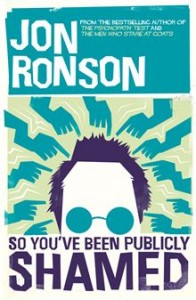
Jon Ronson - So You've Been Publicly Shamed
Word 8 – “shaming”
shaming (noun): attempting to embarrass a person or group by drawing attention to their perceived offence, especially on social media
To be publicly shamed
She was trying to be funny by awkwardly implying that it’s very unfair.
There is this massive problem in Africa, and it’s less of a problem in Europe.
If you put that on Twitter the chances are people are going to misunderstand and they’re going to have a knee-jerk reaction, and they will respond in a very angry way.
An Über driver got beaten up by an executive of Taco Bell.
He was completely wasted and completely off his face.
He was slurring his words (remember that one?)
There’s something un-just about it.
You’re making a judgement call on the way someone looks, or what someone does.
You know there was that whole thing about slut shaming.

Book recommendation: Jon Ronson “So You’ve Been Publicly Shamed” www.audibletrial.com/teacherluke
His voice is a bit off-putting at the beginning but he really draws you into the story.
[socialpoll id=”2310152″]
End of Part 2
words of the year 2

309. The Lying Game (Part 2) with Amber & Paul

Welcome back to the second part of this double episode. In part 1 you heard me playing a speaking game with Paul & Amber. Go back to part 1 for the details of the game, including the rules. Part 1 ended on a cliffhanger, with the scores even at 2-2-2. Even stevens! Listen to this episode to find out more. TEACHERS: At the end there’s a 15 minute section in which I explain exactly how to use this game in your English classes. You can download a simple .pdf worksheet (below) which you can use in your classes (just tell your students about LEP, or send me a little donation). Listen until the end of the episode to get my full instructions on how to use this awesome game to teach your students grammar, pronunciation, vocabulary and speaking skills in a really awesome way.

Small Donate Button[DOWNLOAD]
The Lying Game Part 2

Amber: I used to be a performer at The Rocky Horror Picture Show at Prince Charles Cinema in Soho.

Tie-break round:
Luke: I used to be afraid of the tooth fairy.
Paul: I almost set fire to my parents’ house as a kid.

Final scores:
Luke – 2 / 0 / 1 / 2 / 1 Total = 6 points

Amber – 1 / 1 / 0 / x / x Total = 2 points

Paul – 0 / 2 / 1 / 0 / 0 Total = 3 points

Here’s an example of a Rocky Horror Picture Show Shadowcast (below)

For Teachers – How to use The Lying Game in class

Small Donate ButtonClick here to download a .pdf worksheet to use in Class – The Lying Game Worksheet for Teachers by Luke Thompson teacherluke.co.uk

Listen to the last 15 minutes of this episode of LEP (The Lying Game Part 2) to hear me give detailed instructions on how to use the game in class, including details of the level, procedure, specific language and skills work you can do with students. I can get about 2 hours of class time out of this game, and it’s useful for teaching grammar, pronunciation and vocabulary.

In fact, here are the last 15 minutes of the episode  if you’d like to listen to them again or download for later. :) [DOWNLOAD]

308. The Lying Game (Part 1) with Amber & Paul

Hello, welcome back to LEP. This episode is called the lying game, and it’s one of those ones in which I play a speaking game with my friends Amber and Paul. A transcript for the first 15-20 minutes is available here on the page for this episode. In the introduction you’ll hear me welcome new listeners, talk a bit about my speaking speed on the podcast, mention the importance of listening to native speakers of English (even if it’s a bit difficult to understand every word) and explain some of the content of the conversation you’ll hear between Amber, Paul and me. Then, the speaking game begins properly. I really hope you have as much fun listening to this as we did recording it, because we really enjoyed ourselves! In part 2 (coming soon) you’ll hear the conclusion of the game and I’ll explain how I use this activity with my students in my English classes.

Small Donate Button[DOWNLOAD]
Introduction Transcript Starts Here (+ more information below)
Hello, welcome to LEP. This episode is called the lying game, and it’s one of those ones in which I play a speaking game with my friends Amber and Paul.

Before you listen to that, I’d like to just say a few things here at the beginning of the episode. Firstly, hello to all my regular listeners, the LEPsters as they are sometimes known. How are you all? I hope you’re fine and having a lovely day or night or evening or morning or whatever time of day it is. Thanks for recent comments on my website. It’s always nice to read your messages. Recently I did episodes about The Battle or Britain and Back To The Future, and I’m feeling a lot of love in the comments section – particularly from my Polish listeners because of things I said in episode 303, which is really great. It’s very motivating to read the positive things you have to say in response to my episodes. I do think about my podcast a lot, and I always hope that you’re enjoying it and finding it useful. So, your comments are valuable bits of encouragement. Thanks also to those of you who have never left a comment on my website in your life – you’re my ninja listeners, and I think there are a lot of you out there, choosing to remain silent in the shadows, but listening to everything.

Secondly, just in case you’re new to LEP, let me just quickly introduce myself. My name is Luke Thompson and I’m an English language teacher from England, which is in Britain, which is in the UK, which is in Europe, sort of. I’m originally from London (in the south-east) but I went to university in Liverpool (in the north-west) and I also spent many years growing up in Warwickshire which is near Birmingham, which is in the midlands, which is in England, which is in Britain, which is in Europe, which is on Earth… etc. OK, I’ve been teaching English for nearly 15 years, wow has it been that long? Time flies when you’re having fun, and I do enjoy my job. I’m DELTA qualified, and in my career I have taught English to adults and children from many different countries, at many different levels, at many different times of the day – morning, afternoon, evening and at night sometimes, in any season, in all weather conditions – rain, snow, hail, wind, lightning, and even during a couple of earthquakes. I’ve taught courses in general English, business English, academic English, English for exams, English for doctors, English for pharmacists, English for engineers, English for lawyers, English for HR, English for secretaries of state, English for journalists, English for unemployed people, English for retired people and English for people who haven’t chosen what to do with their lives yet. Basically, if you need English, I’m your man. If I was a superhero for English teaching, you could call me Englishman! Which is appropriate, because I am an English man. Haha, I’m just joking, I’m not a superhero, I’m just an ordinary humble man, well as you can hear from this introduction I may not be that humble, but I am a man – definitely, I checked this morning. I am proud to be an English teacher – a profession which includes many bright and brilliant people all around the world, who have either chosen this vocation, or just ended up doing it because they didn’t know what else to do with their lives. As well as being an English teacher, I’m also a stand-up comedian, and I’m a podcaster. I do a podcast for learners of English called Luke’s English Podcast. You should listen to it. It’s quite popular and I have lots of downloads these days. I’m happy to say that I have a lovely community of people around the world who regularly listen to my podcast episodes in order to improve their English, but also (hopefully) because they just enjoy listening to each episode I produce. Did I mention that the podcast has won a few awards? No. Ok, well, the podcast has won a few awards. Am I sounding a bit arrogant? I hope not. I don’t mean to sound full of myself, I really don’t – it’s just that sometimes I think I should try and sell myself on the podcast, just a little bit, to remind you who I am. I don’t mean to just go on about myself a lot because it’s a bit self-indulgent isn’t it? But I do think it’s important to convince you that listening to this is very good for your English, and that you should keep doing it. It’s not just me who says that, I also have lots of testimonies from listeners of my podcast who have commented on my website, saying some very positive and nice things indeed, like this one which arrived just a couple of days ago, from someone called “Teddy WS” who simply wrote Screen Shot 2015-11-04 at 18.02.11“Thank God I find this page.” He sounds a bit desperate maybe, like he’s been walking through some kind of English teaching desert, and my website is like an oasis for him, where he can drink from this refreshing wellspring of natural English. It’s certainly a positive endorsement.

Thanks Teddy, that’s nice. Now, admittedly, Teddy did make a mistake in his comment – he wrote  “Thank God I find this page” and it should be “Thank God I found this page” but to be fair, he has only just found the page, and he has been walking through a desert for days and days, and he probably hasn’t listened to many of the episodes yet. I expect if Teddy writes on the page again in a few months, after he’s listened to more episodes and refreshed himself, he won’t make a mistake like that. I certainly hope so. Teddy, if you’re listening – don’t feel bad about making that mistake – mistakes are an essential part of the learning experience. Just brush it off, carry on and try not to do it again. By the way Teddy, I’m looking forward to reading another comment from you on my site in the future.

The main philosophy of my podcast is to give learners of English the chance to listen to authentic British English as it is really spoken. Sometimes it’s just me talking, sometimes I have interviews and conversations with friends, family or other interesting people. I try to keep it real – meaning I try not to adapt my language level too much. I don’t want to talk to you in a very simple way because that’s not how people usually speak in the real world. I think I speak clearly on the podcast, but at a fairly normal speed. I believe, ultimately, that’s better for your English.

So, it’s better for your English in the long run, but in the short-term, you might find it difficult to understand every single word I say, or every single word my friends say. So, I often remind you, that if you don’t understand what I’m saying or if you get lost during conversations on the podcast – keep listening! Keep going! Don’t be put off when you lose the thread of the conversation. Persevere, don’t give up. In the long run, it will be better for your English. So don’t stop.

If you want to pay close attention to every single word, and study those words, you can. Many of my episodes have transcripts, or at least some notes which you can read. You can then study the words and phrases I’m using and improve your English that way. Or, you can simply relax and listen to the episodes wherever you are in the world – just find a comfortable place, or even an uncomfortable place – it doesn’t matter that much, but comfortable is better, just put your headphones in, or turn your speakers on, and just listen for fun. It should be enjoyable to listen to English. It doesn’t have to be a boring study exercise. So, I invite you to just relax, kick off your shoes, make a cup of tea, listen to my episodes, and enjoy doing it. :)

This episode is entitled The Lying Game. The title of the episode has absolutely no connection to the things I’ve just said to you in the opening minutes of this introduction.

No, the reason this episode is called The Lying Game, is because in a few moments you’re going to listen to my friends and me playing a speaking game which involves either lying or telling the truth. It’s just a fun guessing game that involves some lying. So that’s why this episode has that title.

So let me tell you what you can expect from this 2-part episode of LEP.

What’s The Lying Game? This is a speaking activity I play with my students in my English language classes. In this episode you’ll hear me playing this game with my friends Amber and Paul, who are native speakers of English.

In a few minutes the episode is going to start (we haven’t started yet, this is still the introduction). I just wanted to say right now, that this was a very fun conversation for Amber, Paul and me. We really enjoyed talking and playing the game. I hope you enjoy it too. The thing is, we got pretty excited during the game and so we speak pretty quickly and sometimes we speak over each other. That might make it difficult for you to understand everything that’s being said. Still, like I said a few moments ago – keep listening anyway, even if you don’t understand everything. OK, I think I’ve made my point about that now!

The recording begins mid conversation. Let me just tell you a few things to help you understand what we’re saying, right from the beginning.

You’ll hear me say to Paul, “Do you really think I change the way I speak?” This is because Paul thought I sometimes change my voice when I’m recording the podcast. Like, I have a podcast voice that comes on when I start recording. We agree that it’s quite normal as a way of catching the attention of the audience from the beginning, or “pulling people in” as Paul says.

Just a couple of other things that will help you understand the beginning of the conversation:

Paul starts whispering subliminal messages into his microphone. This is because just the other day he was on a “film shoot” and he did that to the sound man – he whispered into the microphone and only the sound man could hear him. Just for fun.

I make a (lame) joke about something Amber says about it being a grey day. I thought she said ‘grade A’, referring to the sofa she was sitting on. A grade A sofa would be a top quality sofa. My sofa on the other hand is not that good, so it’s more likely to be a grade B or grade C sofa.

Then we make a few references to things you won’t know about, like my stand up routine, and a joke I made earlier about Philips lightbulbs, you know the technology company called “Philips”. Watch out for that. We found is hilarious. You might be confused by it. Let me know.

Then I realise that we’re having too much fun, and that could be annoying, like my favourite film critic Mark Kermode says that comedy is hard work. If people say they had fun making a comedy you’ll know it’s not funny.

It looks like they had a lot of fun making it which is always a recipe for disaster, when it comes to comedy. Because most really funny comedies are not fun to make – On reviewing Mortdecai 23 Jan 2015 show

So I hope that is not the case for this episode.

So, after that Mark Kermode reference, we settle down a bit, the conversation continues, we talk a bit about lying, and we start playing the game.

OK, I’m now going to stop explaining everything before it’s happened, and just let you listen to the episode. So, here we go!

Intro 2 (This is the second introduction which I say at the beginning of the conversation with Amber & Paul!)
Sometimes I play a fluency speaking game with my students, which involves telling lies. I call it The Lying Game. It’s an imaginative title. It’s just a fun game to practice giving information, and forming questions. I’ve been using it in class for years and it’s always a pretty popular exercise. This time on the podcast I thought I’d play the game with some native speakers. When you listen you can focus on noticing these things: question forms, how people describe events in the past (tenses and pronunciation of ed endings), how people describe present habits (verb forms and adverbs – not just present simple tense) and also the intonation that we use when asking questions in a suspicious, open or challenging way.

With me I have Paul Taylor & Amber Minogue.

How are you?
Do you think you’re good liars? Are you gullible?
Do you ever lie in your life?
Is it wrong to lie? Is it ever ok?
Are you ready to play the game?

Rules

  1. Tell us something – it could be something that happened in the past, a habit, someone you’ve met – anything about you that we don’t already know. Try to make it interesting – partly ridiculous, partly believable.
  2. We will then interrogate you about it, asking you all sorts of questions to investigate your statement. You can expand on it. This is the hilarious bit where we’re not sure if you’re lying or not. Ha ha ha.
  3. Then, when we’ve run out of questions we will say if we think you’re lying or telling the truth, justifying why we think so.
  4. Then, reveal if you were lying or not. It’ll be dramatic and entertaining.
  5. Points: For everyone who guesses wrong, you get two points. Every person who guesses correctly gets 1 point.
  6. Everyone has a go, and at the end we count the scores to see not only who is the best liar, but also who is the most gullible or untrusting person. If you’re gullible, you won’t score much. If you’re too trusting, you won’t score much either. If you’re a bad liar you won’t score much, if you don’t appear trustworthy you won’t score well either. So, the winner of this game will be some kind of psychopath, basically. Or, the winner will be a good liar and good at detecting lies too.

Luke, Paul and Amber’s Statements from the Game

Luke: I once met Dave Grohl (drummer from Nirvana, singer in Foo Fighters) at a buddhist temple in Japan.

Paul: I once spent Valentine’s Day with Elijah Wood and John Hurt.

End of part 1! You can hear Amber’s turn in the next episode, where you will find out what happens and who wins the game in the end! (exciting)

Scores at the end of part 1
At this stage, the scores are like this:

Luke – 2 / 0   Total = 2 points

Amber – 1 / 1   Total = 2 points

Paul – 0 / 2   Total = 2 points

So it’s even stevens!

Listen to part 2 (coming soon) in order to hear Amber’s story, and to see who wins.

The photo of Dave Grohl that I took on my J-Phone:
Dave Grohl

:) Thanks for listening!

The Invention of Lying – Film by Ricky Gervais

Woman with crossed fingers

302. Bad Dentist / Star Wars / Adam Buxton / Headphone Jams / Jarvis Cocker (A rambling episode)

Hi, this is the second part of a two part episode in which I’m telling you a few things about recent trending news stories, some anecdotes and other things that are in my head at the moment. There’s no specific language focus this time. Instead I’m focusing on general cultural information. Last time I talked about David Cameron and the pig, a story of a bad gig, and who the hell is Ronnie Pickering? In this one I’m going to ramble on about a bad trip to the dentist, some rising excitement about the new Star Wars film, Adam Buxton’s new podcast, some music that has been bouncing around inside my head, some news about a new jingle which is in the pipeline and how I want to hunt Jarvis Cocker for my podcast but I don’t know how to do it! If you don’t really understand those things, then listen on! All will be explained! All you have to do is listen. :)

Small Donate Button[DOWNLOAD]
In the previous episode:
1. The UK political situation, and trending news relating to it – this is less boring than you might expect because it seems from recent reports that our Prime Minister David Cameron once had sex with a dead pig. Seriously. (Did PM David Cameron really have sex with a pig? What’s all this about Jeremy Corbyn? What’s going on?)
2. “Sorry, we’re English”
3. Tell a story or anecdote about something.
4. Who is Ronnie Pickering?

In this episode:
5. A trip to the dentist in Paris.
6. Star Wars Episode VII: The Force Awakens – I can hardly contain my excitement, but I am attempting to avoid the hype.
7. OPP: The Adam Buxton Podcast
8. In my headphones recently: The Juan MacLean “A Simple Design”, The Who: “Who Are You?”, Erland Oye: “Lies become part of who you are”, DJ Krush & Ronny Jordan: “Bad Brothers”, Leyla McCalla: “Heart of Gold”. (Plus, the intro song: “Groove Holmes” by Beastie Boys)
9. Jingle news: Possible new jingle in the pipeline
10. Jarvis Cocker
11. That’s probably it, isn’t it?
[socialpoll id=”[socialpoll id=”2301102″]
302

[soundcloud url=”https://api.soundcloud.com/tracks/226256577″ params=”auto_play=false&hide_related=false&show_comments=true&show_user=true&show_reposts=false&visual=true” width=”100%” height=”450″ iframe=”true” /]


301. David Cameron & The Pig / Bad Gig Story / Who is Ronnie Pickering? (A rambling episode)

In this episode I’m going to have a bit of a ramble about some stuff that’s in the news at the moment and a few other things that have come into my brain. I’m not going to teach you anything specific in this one, no language anyway – just some bits and pieces about modern day British life. So generally I’m just going to keep you company for a while and talk to you one to one for the duration of the episode. Just you and me, and perhaps a bus load of commuters.

Small Donate Button[DOWNLOAD]
Download “The In Sound from Way Out” by Beastie Boys on iTunes, here.
Here’s a made-up agenda for the episode:

1. The UK political situation, and trending news relating to it – this is less boring than you might expect because it seems from recent reports that our Prime Minister David Cameron once had sex with a dead pig. Seriously. (Did PM David Cameron really have sex with a pig? What’s all this about Jeremy Corbyn? What’s going on?)
2. “Sorry, we’re English”
3. Tell a story or anecdote about something.
4. Who is Ronnie Pickering?

In the next episode:
5. A trip to the dentist in Paris.
6. Star Wars Episode VII: The Force Awakens – I can hardly contain my excitement, but I am attempting to avoid the hype.
7. OPP: The Adam Buxton Podcast
8. In my headphones recently: The Juan MacLean “A Simple Design”, The Who: “Who Are You?”, Erland Oye: “Lies become part of who you are”, DJ Krush & Ronny Jordan: “Bad Brothers”, Leyla McCalla: “Heart of Gold”. (Plus, the intro song: “Groove Holmes” by Beastie Boys)
9. Jingle news: Possible new jingle in the pipeline
10. Jarvis Cocker
11. That’s probably it, isn’t it?
301b
[socialpoll id=”2300547″]


300. EPISODE 300 (PART 2)

Welcome back to this landmark episode of the podcast. In this one we’re going to carry on listening to messages from guests I’ve featured on the podcast over the years, then we’ll hear messages from some extra-special celebrity fans, as well as some of imitations of me sent in by lepsters.

Small Donate Button[DOWNLOAD]
Messages from Former Guests (continued)
Ben Fisher – 136. Cycling from London to Paris, Cycling from Coast to Coast
Rob Hoehn – 143. A Cup of Tea with Robert Hoehn
Paul Taylor – 158. A Cup of Christmas Tea with Paul Taylor, Catching Up with Paul & Amber, The Bad Haircut Situation, Fixed Expressions, Vocab Battle, The Bank Robbery.
Amber – 161. She’s Having a Baby, Catching Up with Paul & Amber, The Bad Haircut Situation, Vocab Battle, The Bank Robbery.
James Simpson – 165. Premier League Football
Daniel Burt – 169. A Cup of Tea with Daniel Burt
Lindsay – 168. Culture Shock
Peter – 203. The Flatmate from Japan
Noman – 210. A Cup of Tea with Noman Hosni
Corneliu – 220. A Cup of Tea with Corneliu Dragomirescu
Edgar – 223. YEP Competition Winners
Mike – 243. A Life Changing Teaching Experience in Ghana
Jason Levine, aka Fluency MC – 253. Rapping With Fluency MC
Markus – 277. Markus Keeley/Northern Ireland
AJ – 292. California Road Trip (Part 5)
Jessica – 297. Using Humour in the IELTS Speaking Test

Messages from Special Celebrity Fans
David Beckham
Darth Vader
The Queen
Churchill
Elvis
Al Pacino
Robert DeNiro
Gandalf The Grey
Miles Davis
R2D2
Jeff
Gollum
George Harrison
Daniel Lazenby Smythe
Chewbacca
Michael Caine
Roger Moore
Obi Wan Kenobi
Batman
Liam Gallagher
Clint Eastwood
Paddy Considine
Paul McCartney
Yoda

Your impressions of me
A few episodes ago I invited you to send me your impressions of me. Here are the results!
Listen to the podcast to hear them, and my feedback.

Messages from listeners on Facebook
Yury Morozov May the Force be with you, Luke.

Rajesh Vt Thank you so much , Master Luke for all the wonderful podcasts. You are and you will be a great teacher for all the learners of English around the world. I think many generations continue to reap the benefits of your hard work in the years to come. You are a unique teacher with full of kindness and passion for helping the learners and making them learn English effortlessly and joyfully. We thank your parents for giving this world an amazing teacher. May u continue this work for many more years with the support of LEPSTERS.

Freddy Luna Leon Uuuuuuur Ahhhrrr Uhrrrr Ahhhhrrr Arrghh- Chewbacca

Pyae Phyo Kyaw looking forward to hear it soon……keep on going teacher luke …………………….you`re a tremendous teacher for me ……………………………………………i always listening each and every one of your Podcast since you are uploaded in ……..may god bless you ……………………….

Vitaliy Hrechko I say it in Ukranian: “Vitayu!” (it means “Congratulations!” smile emoticon ) and add it in Russian “Pozdravlyayu!” smile emoticon

Vasile Şi Diana Vaganov Thanks Luke for the podcast. It’s unique and special for me. I am looking forward to the 3000 podcast. It’s only the beginning… smile emoticon

Yumiko Okada Congratulations for the 300th episode, Luke! My listening skill has been improved a lot since I took up your podcast. Thank you very much for that and keep going on for us English learners, until it gets 3000th! I really love your voice

Cristina Ricciardo Congratulations Luke, your Podcast makes the difference! Beware of imitations you out there smile emoticon

Jorge Henrique Congrats mate , I still do recall many of the old episodes as well , even your youtube videos asking people what are they thoughts about London, You have done so much towards us ,Incredible.

Jorge Henrique I wonder , How do all your people who have made episodes with you look like. For instance the guys who you have gone with To Brighton when you were performing your gigs, or that lady who made some episodes with you in the very begning , like in this Episode you talked about British expressions , and she talked about Paul mccarney that he had let himself go or something, hehe do you Recall this one Mr Thompson I wonder

Hien Nguyen Hi Luke. I am very happy to welcome episode 300. I recall the first time I have heard your voice, I didn’t understand even one word but I fancy the rhythm of your podcasts. Hope we can keep listening more and more your podcasts in the future and be one of your guests. Many thanks for what you have done, Luke. Congrats

Ivan Korjavin Message:
It’s Luke and there will be 300 more podcats soon.

Daulet Kunadilov Thank you very much teacher Luke for your an uniqiue podcasts!!!!!!!!!!

Aritz Jauregi Oh, 300 episodes!! I still can´t believe what are you doing for us Luke! I think we all should give you a donation the day you upload the 300th episode. That´s my message to all the listeners. And I wonder when I´m going to have the chance to come across with you here in London and get you a beer! tongue emoticon

مختار طلعت Hi Luke,
I am Mokhtar from Egypt. After this large number of episodes, did you achieve one of your goals, or do you want to move to another level in your career?. What are the principles of a happy marriage as you are a husband now?

Yuki Kozakai Dear Luke!
‘m Yuki from Japan. Congratulation for the 300 episodes on Luke’s English podcast. Before listening to your podcast, I have wanted to study abroad to the US. However, your brilliant accent has changed my life. I am actually studying at Keele University in England now because I fell in love with British accent and British culture that you have mentioned in your podcast. Your podcast is very informative, and your podcast is the best one in the entire world smile emoticon Thank you very much!
Hi from Keele Uni smile emoticon From Yuki

Mollie Tai 300 ! 300 ! 300 ! A BIG Milestone ! LEP IS KING !

Francesco Paolo Castiglione People of the world, surrender to the podcasting power of luke’s podcast

Crampo Crampo The best thing is that every time i listen to your new podcast it s like having a chat with an old friend!

Luke’s English Podcast I’m not that old!

Ana Lupan Hi Luke!you are the coolest podcaster on our planet and perhaps in the whole univers :)you are doing great job for us,your lepsters:)thanks a lot!

Petra Dvořáková I love Luke and Luke’s English podcast! Petra from the Czech Republic.

Kwan Kawasemi Luke’s English Podcast is my daily dose of joy. Without you, I can’t imagine how boring my life would be. Thank you teacher Luke. smile emoticon – paquan

Antoinette Santamaria Give thanks, men! To King LukeThompson, and the brave 300! To victory! smile emoticon

Francesco Allen Gaeta Just start randomly swearing out loud!

Mao Tsukeyanagi Hi Luke! I just want to say thank you for everything you’ve done for us and congratulations on your amazing podcast! I really like your style of podcasting:unscripted and rambling on…it’s actually a lot of fun to listen to you getting sidetracked.
Mao from Japan:)

Sergio Téllez I want to say Thank you!! for share with us all of your talent. I discovered this podcast first on you tube, with your videos about ‘what’s London really like?’ And the first episode I heard was ‘sick in Japan’ which is also my favorite. Your podcast is the best!!! it’s really ace!! thank you again.

Dentudix Estalrich The sound of your voice for me is like a good wine and a great meal with a good friend . Thank you so much for your company, it’s been 1 year since I’ve been listening to your podcast and everyday it’s better. Great job.XoXo

René Krsnadasa I can’t get enough of your podcast… Is a bit like Street Fighter 4 for you, do you remember? Hahaha. Have a nice day, mate.

Juan Andrés Congratulations and thankyou, Luke! Your podcast is all and more of what I expected to get. You diserve being well paid for doing it. Big hug!

Eje Carlos Navarro Congratulations! Thank you for sharing your knowledge with us. It is always a pleasure listening to your new stories! One of my favourite features is the length of the episodes because it fits perfectly with my running time!
Congratulation for the 300 episodes on Luke’s English podcast! Saludos desde Barcelona!

Fatoum Azri <3 ur podcasts

Yaron Aharonov My message to the world is that it doesn’t matter what is your first religion, you must acquire also “Lepotheism” as your second religion.

Christian Paga Hey Mr. Puke…erm Luck…erm Luke ;) Wow, 300 episodes!!! That’s a flippin’ lot of episodes! Thank you so much for all your efforts, your dedication, and for teaching us all that important stuff in your own special way. In a perfect world, you should be able to make a living from podcasting – but trust me, as long as you keep up the great work, payday will come. Stay ninja, mate *some random ninja sounds*

Venkatesh Venky Congratulations, master Luke. We love you and your podcasts so much. We wish you all the good luck, prosperity and joy. Your podcasts changed my English a lot and i thank you from the bottom of my heart for that. May you continue this good work for many more years to help learners like me. Once again , thank you so much for all the special podcasts you have made.

Hideki Kanazawa Hello, Luke. Congratulations for 300th episodes! Your podcast is very very interesting and fun, I love it. I was lucky to find your podcast.
Thank you very much for this wonderful podcast. Looking forward to listen 400th episodes!

Thank you to everyone for listening, commenting on the podcast and sharing these episodes. I have the best audience ever.

If you feel like donating, you can do it by clicking this little button. :) Small Donate Button
300bb

297. Using Humour in the IELTS Speaking Test (With Jessica from All Ears English)

On the podcast today I’m talking to Jessica Beck who has been working in English language teaching for over 10 years. She is an instructor, a teacher trainer and an author of 14 textbooks for learning English. You may also know Jessica from her work on the IELTS Energy Podcast (www.ielts.allearsenglish.com), which is part of the All Ears English. I talked to Gabby and Lindsay from AEE on LEP last year about culture shock, remember that? Well, Jessica is part of the All Ears English team, and is known there as the “Examiner of Excellence”. So, she knows a lot about the IELTS test, and he’s got some good advice for any of my listeners who plan to take the test, including how you can improve your speaking score if you have a good sense of humour. If you’re not planning to take the test, these skills can also be applied to your use of English in general life too.

Small Donate Button[DOWNLOAD]
Jessica has kindly written a blog post which includes the tips and useful language she mentions in this episode. You can read that blog post below.

I expect that most of you know what the IELTS test is, In fact, I have done an episode about IELTS before on LEP in which I went through every part of the test in one episode, dispensing various bits of Jedi wisdom to help you get a better score. That episode is called “Tips and Tricks for the IELTS Test”, and is episode number 254 of Luke’s English Podcast.
Check it out here www.teacherluke.co.uk/2015/01/22/254-ielts-tips-tricks/

For those that don’t know, IELTS stands for International English Language Testing System, and it’s now the world’s #1 test of English language level. The test measures your English in 4 areas: reading, writing, listening and speaking. The maximum score in each area is 9 (expert user) and the lowest is 1 (total beginner). Lots of universities, employers and other institutions around the world require an IELTS score as requirement for entry, and 7 is usually the target score, sometimes it’s higher, sometimes lower depending on the institution. Cambridge University in the UK for example requires a minimum of 7.5 overall, with no less than 7 in any of the categories. So, if you want that place at a great British or American university, the first challenge is often to get a really good IELTS score, and what you need is good advice and strategies to help you do your best.

So, in this episode we’re going to meet Jessica, and talk specifically about the IELTS speaking test, in which you have a 15 minute interview with an IELTS examiner and your spoken English is tested in a few ways. Jessica has loads of tips for the speaking exam, and I’m hoping that she can give us some advice on how having a sense of humour can get you a better score in the test. So listen for some more top tips for IELTS in this one.

Also, what do you think would happen if I took the IELTS speaking test? Well, listen to the whole episode and you’ll find out…

Now, let’s meet Jessica the “Examiner of Excellence”.

Read Jessica’s Blog Post:

Humor Increases IELTS Speaking Scores

 Say what??!!

 I’m serious. It does.

 By Jessica Beck from All Ears English IELTS 

Many students, and teachers, for that matter, view all exams as formal and academic. Because of this, they believe that on these exams, test-takers must behave, speak, and write in an academic, formal style all the time.

While this may be true for some tests, there are many reasons why an IELTS candidate should not behave this way on the Speaking exam.

As we discussed on the podcast, a common mistake students make is not learning about what the IELTS examiner is looking for.

Students often look at example questions, memorize high-level words and phrases, and believe this is enough.

It’s not!

You must know what you are graded on, and where to use these words and phrases.

Your score, which can be from 0 to 9, is broken down into 4 aspects- Fluency and Coherence, Vocabulary, Grammar and Pronunciation.

You can read definitions of the band scores in each aspect at https://www.ielts.org/pdf/SpeakingBanddescriptors.pdf.

What you must notice about the band score descriptors is that the examiner wants to hear a range from you- a range in vocabulary, in your ability to communicate about a variety of topics, and in your pronunciation.

The fact is that in Parts 1 and 2 on the IELTS Speaking exam, almost all of the questions are about you. They are personal and informal. Therefore, if you answer these questions in a formal way, you are showing that you do not have a range of communication ability and that you are unable to talk about personal, informal topics.

So, where does humor come in? How does it help you raise your score? Read on!

  • Humor helps you improve your pronunciation score. It helps you relax, allowing you to show your personality and use emotion in your voice. Showing relaxed and expressive pronunciation can push this score up to a 7 or higher!
  • It improves your fluency and coherence score. If you are able to answer some informal questions with a few informal anecdotes, or very short stories, about yourself, this will show that you can communicate appropriately and effectively in informal speaking situations.
  • It improves your vocabulary score, because you show you can use appropriate vocabulary to the question, and you have some knowledge of more interesting words and phrases. Showing the examiner a range of informal vocabulary in Parts 1 and 2, and formal vocabulary in Part 3, pushes your score up to a 7 or higher.
  • NOTE: Even though I’m encouraging you to communicate in a relaxed way, this doesn’t mean that you slump your shoulders and provide one word answers. You must always sit and behave respectfully, and ALWAYS answer in complete sentences.

We gave some examples of how to answer in a humorous manner on the podcast, and the phrase “self-deprecating” came up a few times.

Self-deprecation is the ability to make fun of yourself, or to share information about yourself that shows you make mistakes.

This is a humble way of communicating, and it can endear you to your listeners.

This is true on the exam and in real life!

For example, if the examiner asks, “Do you enjoy taking photographs?” A self-deprecating answer would be, “I’ll admit, I actually love taking selfies. I know this is a silly habit, and that is honestly a bit embarrassing, but I take selfies absolutely everywhere- at home, on the bus, walking up the stairs, waiting for my dry cleaning. However, I post almost none of them, so I guess it’s not that horrible of a habit!”

Other phrases you can use to introduce answers like this are: You won’t believe this, but…, This is crazy, but… and I’m a bit embarrassed to say this, but….

An excellent way to prepare to communicate in this way, on the exam and in real life, is to watch stand-up comedy, or see/listen to interviews with stand-up comedians.

Some podcasts that I recommend are Wait Wait Don’t Tell Me, a news quiz with three stand-ups, How Did This Get Made, a show with 3-4 stand-ups who talk about really bad (but sometimes popular!) movies, and Comedy Bang Bang, an interview show with hilarious skits.

If you challenge yourself to experience this type of Western, English humor, not only will this help you communicate impressively with the IELTS examiner, but it will also help you talk naturally with native speakers, and understand more jokes in movies and TV shows.

Have fun and get your target score!

Click here to get the 7 Easy Steps to a 7 or Higher on IELTS 

Jessica Beck is the IELTS professional at All Ears English IELTS. She has helped hundreds of students reach their target score through her simple, step-by-step systems and strategies. Learn more with Jessica on the IELTS Energy Podcast in iTunes.
IELTSspeaking

296. Learning Comedy is like Learning a Language

This episode features a conversation with my friend Paul Taylor, who you already know from previous episodes of LEP. Paul is back from the Edinburgh fringe, where he was performing for the whole of August in a comedy show, and a couple of days ago he came over to the flat for a cup of tea and a bit of a chat. We started talking about the Edinburgh fringe and how it went for him. It was his first time and I think he found it very challenging because the audiences were hard to please, apparently they had some tough shows where nobody laughed, and he realised that the standard of stand-up comedy in the UK is much higher than he expected, but it was a learning experience. Then we ended up talking about the similarity between learning how to do stand-up comedy and learning a language. During the conversation I quickly decided to record our thoughts so that I could make it into an episode of my podcast. We wrote down a few brief ideas and then went upstairs to start recording. You can now listen to that conversation here in full. Also, listen to the end to hear some funny out-takes from this episode.

Small Donate Button[Download]

The conversation is a little bit rambling, but that is a good thing
It’s a slightly disorganised chat because we didn’t plan fully in advance, but that for me is a strength because it means that you can listen to some authentic English conversation, meaning that it is natural – not scripted. This is English conversation as it happens in the real world. We’re not acting out a dialogue, and this is exactly the sort of conversation that you should try to follow, because ultimately it’s better for your English. It might be harder to hear and understand everything we say, but that’s not a bad thing. It’s good to get used to following a conversation in which you don’t understand or hear every single word.

Conclusions about Language Learning
During our slightly rambling conversation, we do come to some very good conclusions about language learning, which are written below. So, pay attention to the conversation because I think it does contain some good advice. As ever, please add your thoughts to our conversation by leaving a comment below. What do you think about our conclusions for learning a language? Can you add and ideas of your own?

Also, listen carefully in this episode because I will share some of my experiences of learning French, which is something people have been asking me about recently. You’ll see I’m a bit shy about this subject, but I’ll let you listen to the episode to find out why.

Can You Copy The Way I Speak? – Send Me Your Recordings!
In this episode Paul and I ask you to send me recordings of you copying the way I speak. So, please send me about 1 minute of audio of you doing an impression of me.
You can download my jingle here: Download LEP Jingle

Send your 1 minute (or less) impression of Luke from Luke’s English Podcast here: podcastcomp@gmail.com
I can’t wait to hear you copy my voice and my typical introductions.

Also, if you listen all the way until the end of the episode, you’ll hear some fun extra content that I added. So, our conversation lasts about 1 hour, and then you’ll hear some fun extra stuff afterwards.

If you would like to write a transcript for this episode, using a google document, just click this link. Google document for “Learning Comedy is like Learning a Language”. That’s it for my introduction, now here is our conversation.

*Episode begins – Notes below*

Conclusions about Learning Languages & Learning Comedy

  • It’s not what you know, it’s what you can do. You can know lots of vocabulary, you can know methods of learning – but you actually have to do it.
  • Surround yourself with people who are better than you.
  • Throw yourself in at the deep end.
  • Accept that you might have to be a slightly different person.
    E.g. as a comedy performer you might need to exaggerate aspects of your person, or play a role.
    When speaking English, it’s normal that you might feel like a different person with a different personality. Own the person you are in another language.
  • Learn from failure and don’t be afraid to fail.
    Failure is not the problem. How you react to failure is more important. Don’t let failures bring you down. Learn from them. Embrace failure and don’t let the fear of failure hold you back.
  • Don’t take it too personally!
    Be ready to take criticism, and try to look for critical feedback. It will help you to be better.
  • Cheat and cut corners!
    In comedy it helps to arrange the situation to your advantage. For example, prepare some responses for audience interaction – these can make the audience think you’re better than you are.
    Similarly in English, focus on having good pronunciation and people will think your English is great, even if your vocabulary or grammar are not perfect. If your voice sounds pretty good on the surface, this will impress people more than perfect accuracy or range of vocabulary.
  • Be confident, or at least be determined to fake it.
  • But remember to be yourself.

Paul & Luke
public-speaking

293. California Road Trip (Part 6) San Francisco / AJ Hoge Interview / UK & US English

Welcome to episode 293, which is in fact part 6 in this mini series based around my recent trip to California. There’s still a lot to talk about, and in this episode I’ll tell you about our time spent in San Francisco and that’s going to include these things – my interview with AJ Hoge the well-known online English teacher, more British and American English, earthquakes, a short biography of Robin Williams, a history of the peace & love movement in San Francisco, more descriptions of our trip down the west coast of California, and some more tips about how to talk to waiters and customer service staff.

Small Donate Button[DOWNLOAD]
It seems pretty obvious to me that this is too much for one episode, so I think there will probably be a part 7 to this series, and after that we’ll return to normal podcasting and English teaching, with perhaps some more UK oriented topics in future episodes, and more episodes featuring authentic unscripted conversations with my friends Amber and Paul.

Video
Here’s a video of the Periscope live feed I did while recording this episode. Watch the video for about 20 minutes of extra video content, and to watch me recording this episode.

AJ Hoge Interview

I think I should start this episode with my interview with AJ Hoge. This took place in San Francisco in the lobby of the hotel where we were staying.

Who is AJ? http://ajhoge.com and http://effortlessenglishclub.com
AJ is an American-born English teacher who started his career as a social worker (what’s a social worker?) before going into English language teaching. He taught English abroad in Thailand, Japan, Korea and other places, and at home in San Francisco before becoming an independent self-employed teacher on the internet. He has created his own online English teaching courses and has written a book about learning English, and he sells all those things on his websites (see links above). He’s also a public speaker who has been booked to do conferences, speeches and presentations about learning English, sometimes to thousands of people at a time. He’s probably the most well-known English teacher on the internet (yes – more well-known than me – he’s good at marketing himself!) and I’m sure that you’ve come across him. I’m very impressed by what he’s achieved as an independent teacher and it was really interesting to meet him and find out about his work. I recorded our conversation and I’m going to play it to you right now.

Unfortunately I had a bit of a technical problem during my meeting with AJ. I was using a new portable audio recorder and for some unknown reason it kept turning itself off during our conversation, which was very frustrating indeed. So unfortunately some parts of our conversation are lost. That explains why the conversation cuts out a couple of times, particularly at the end. Fortunately, the main part of our conversation was recorded, so let’s listen to it now!

Part 1 – You’ll hear an introduction, but then the recorder switched itself off after a couple of minutes, which is why the conversation stops abruptly.

Part 2 – I started again after discovering that the recorder in my hand had in fact switched itself off again. We spoke for another 20 minutes or so and then the recorder switched itself off again! This is why the conversation stops abruptly before I had the chance to say thanks and goodbye to AJ. We plan to stay in touch though, and we might talk again via Skype in a future episode of the podcast.

More British and American English Vocabulary (Part 3) – Clothing
Trousers – Pants Clothing
Nappy – Diaper Babycare
Jumper – Sweater Clothing
Tights – Pantyhose Clothing
Waistcoat – Vest Clothing
Trainers – Sneakers Footwear
Braces – Suspenders Clothing
Dinner Jacket – Tuxedo Clothing
Polo neck (sweater) – Turtleneck Clothing
Wellington Boots (Wellies) – Galoshes Footwear

August 14
Let’s go back to the day we left Yosemite, before I met AJ in San Fransisco. Remember that this is after we had our long hike in the mountains and my wife sprained her ankle and had to use crutches to walk down.

In the morning my wife tentatively tries walking a bit on her ankle and thankfully seems ok after all that rest, and because she managed to keep her weight off it during the rest of trek with the help of the crutches. She’ll be able to rest it even more in the car, and take it easy for the whole day as we won’t do much walking.

We drive out of Yosemite. It’s a bit of a pity to be leaving all these huge rock formations like El Capitan and the Half Dome. We’ve got to know them quite well, and it’s always an exciting surprise to see them through the gaps in the trees. They’re like the big celebrities in this park and whenever you see them they dazzle you with their charisma and charm. As we’re driving out of the valley we stop a few times to just stare up at them for a while, particularly El Capitan, which I think is one of the biggest vertical rock faces in the world. Rock climbers enjoy climbing it, but it can take 4-5 days to go up the whole thing. The climbers actually sleep on ledges on the rock face, or they set up beds which hang from hooks in the rock face. Imagine sleeping on a tiny camping bed, hanging from the cliff, with thousands of feet of air below you. I’d never be able to sleep in those conditions! But it must be an incredibly thrilling way to enjoy the place.

We’re going to miss these mountains and rock formations, but it’s time to drive to our next stop – a place we’re looking forward to very much. San Francisco.

As I outlined in the second part of this series when I talked about California’s history, SF was originally a Spanish settlement for missionaries, but then when gold was discovered at almost exactly the same time that California became part of the United States, the city grew really fast to be a gold rush town, with thousands and thousands of people moving into the area, including many Americans, but also Europeans and Asians. That multicultural mix is still evident today.

SF is also known for its earthquakes. There was a big one in 1906 that destroyed large parts of the city, but it rose again, like a phoenix from the ashes. In fact, the flag for San Francisco shows a picture of a rising phoenix to commemorate the city’s recovery. There have been a few big earthquakes here over the years, including another one in 1989. The city is still expecting another really big earthquake to hit at any time, which is a bit of a worrying thought, and one that I suppose the residents of the city don’t think about too much. Does that idea give San Francisco a kind of laid back and open-minded atmosphere? Possibly. I suppose if you know in the back of your mind that everything could be destroyed any minute by a big earthquake, it makes you a bit more philosophical, or it makes you enjoy every moment while it lasts. That feeling does pervade the place a bit. It’s got a peaceful, meditative and bohemian atmosphere which is really refreshing.

San Francisco is also known for being the focal point of the beatnik and hippie movements of the 1960s. Haight Ashbury in particular is the district that was associated with those movements. More on that later.

Long drive to SF.
First views, Bay Bridge.
Obligatory Wholefoods stop.
Our hotel and the area. Polk Street. Home for the next few days.
We’re staying near a place called “Nob Hill”. In fact our area is known as “tender nob”, which I found particularly funny, because ‘tender’ means soft, and a ‘nob’, well, it’s a bit rude – it’s a willy, a penis… So…

Being in SF was like being back to civilisation, and a really great kind of civilisation. A really bohemian and cool atmosphere, with interesting places, loads of originality, lots of good little shops, cafes and bars with long lists of local beers, coffees, wines and ciders. We pretty instantly fall in love with the whole Russian Hill/Polk Street area. We walk up the street looking for places to have dinner and breakfast the next day.

Bookshops, bars, cafes, the boardgames shop (Sherlock Holmes boardgame) and pizza & beer. Settle in nicely.

August 15
Next day, explore. Russian Hill, Pacific Heights. Those hilly streets and amazing views!

Have breakfast in a place called “Toast” which seems to me like the most American breakfast place ever, and I order a big American breakfast plate loaded with pancakes and fruit, with butter and maple syrup. It’s absolutely delicious, but later that day I feel like my blood-sugar levels are such a mess that I really shouldn’t eat more food like that and decide to try to be more healthy.
Again, I’m reminded of films which are set here, including Dirty Harry and Bullitt.
Beautiful multicolour houses and quirky doorways. Very expensive neighbourhood.
We come across a tribute to Robin Williams outside a house where they filmed Mrs Doubtfire. It’s exactly one year since he died. We hang around there, thinking about Robin Williams.

Who Was Robin Williams, and What Happened to Him?
Let me give you a brief history of the life and death of this great comedian.
Trained at Juilliard School.
Had a particular gift for improvisational comedy.
Became famous in Mork & Mindy.
Also did stand-up.
Had big problems with alcohol and substance addictions, particularly cocaine.
He managed to quit when his first child was born. Lived as a recovering alcoholic.
Went on to do some very popular movies, in both comic and straight roles.
Won an oscar for his role as a psychiatrist in Matt Damon and Ben Affleck’s film Good Will Hunting.
Apparently he was a very sweet, very generous and warm guy, but he was affected by bouts of depression.
As a performer I find him incredibly versatile and animated. His comedy seems almost to be compulsive in its nature. He’s a whirlwind when in front of an audience, full of impressions, different voices and many bizarre tangents which are often dialogues between different characters, all played by him at break-neck speed.
In interviews he seemed to occupy two modes – the first was the extrovert comedian, the other was the sweet and sincere actor. He seemed a bit bipolar. I guess part of his talent was that wildly free sense of instant creativity, but it might have been quite difficult for him to deal with on his own.
He fell off the wagon (began drinking again) in 2006 while filming in Alaska. It’s kind of understandable that he turned to alcohol again considering the circumstances – I mean, he was in Alaska. (just kidding)
He went into Rehab but I think the return to alcohol was a symptom of a difficult time in his life.
He later had heart surgery which involved part of his heart being replaced, and apparently this affected him quite badly as his physical and mental condition seemed to get worse and apparently from that time forwards he suffered from depression, anxiety and paranoia. He was wrongly diagnosed with Parkinson’s too, and given medication and treatment that didn’t help the real condition that he was experiencing, which is called Lewy Body Dementia, a degenerative condition in which nerves cells in the brain are blocked by protein clumps (bodies) that interfere with function. Apparently the Parkinson’s medication made the Lewy Body Dementia worse and may have exacerbated his low state of mind, pushing him to suicide.
He killed himself almost exactly a year ago to the day that we found ourselves at the shrine to his memory on this San Francisco street.

I couldn’t help feeling a bit sad about this because I really enjoyed Robin William’s comedy, but also it’s just such a pity that he had to go through such misery, and that anyone has to go through any kind of misery caused by physical and mental conditions. I hope with more research and the right kinds of treatment, this sort of thing can be prevented in the future.

Anyway, I just wanted to mention Robin Williams there, as a sort of tribute.

SF continued…
Korean Barbecue

End of Part 6 (Oh my goodness, will I ever finish this series!?) Part 7 coming soon…
Robin4