Category Archives: Interview

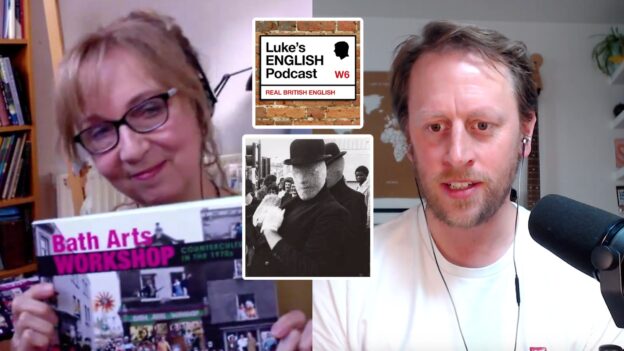
751. Bath Arts Workshop: Counterculture in the 1970s (with Penny Dale)

Chatting to English author & illustrator Penny Dale about her involvement in a counterculture arts movement from the 1970s, the Bath Arts Workshop. Video version and vocabulary list available.

Audio Version (with 30mins extra ramble at the end)

Small Donate Button

[DOWNLOAD AUDIO]

Video Version

Transcripts and Vocabulary Notes

Intro 1 (audio – pre jingle)

Hello everyone and welcome back to Luke’s English Podcast – a podcast for people learning English. British English in this case. My name is Luke. Welcome.

Here is a brand new episode for you. I hope you enjoy it! There’s a video version too on YouTube.

Yes, hello listeners! You might be able to hear my computer’s fan. There’s hiss in the background because my computer is working hard to encode the video version of this. *Luke rambles for a few sentences* 

“Luke you’re rambling again!”

This is an interview episode with a guest. I should say that this might be a difficult one, depending on your level of English of course! My guest and I are talking about a specific artistic and cultural movement that happened in England in the 1970s. I say specific, but it included many different types of art, theatre performance, music and community work – all packaged together in one movement, a movement which was quite revolutionary at the time, but revolutionary in the nicest possible way. That should become clear as you listen to this. Anyway – an alternative, subversive, counterculture arts movement. 

The reasons I think this might be difficult for you to follow are: language (there’s a lot of vocabulary used to describe and discuss art & culture of various kinds) also the fact that there are references to things you might not know about already, including the names of artists, poets, musicians and specific locations in England (obviously, if you don’t know those reference points then things might get confusing), and simply the fact that this is  quite a difficult arts movement to understand for anyone – native and non native speakers alike. Also, my guest and I aren’t really grading our English or slowing down a lot, and I’m aware of that. I am presenting this to you as a piece of authentic listening practise, which, can be really good for your English if you’re willing to tolerate the bits you don’t fully understand.

So it might be tricky to follow, but I do hope you persevere. I think that as you continue to listen, the concepts and events we are discussing will become clearer to you and really exploring things that you might not be familiar with can be a great way to pick up new language

So, this should be a chance to learn about culture and by extension the words we use to describe that culture. 

The video version has some annotations on the screen (with vocabulary and pictures), and the notes on the website will also include a vocabulary list, which will help you if you check it.

Right,  let’s get straight into it then. There will be another little introduction from me, but that’s what I do isn’t it? I’m only trying to help. 

Leave your thoughts and responses in the comment section. I will chat to you again near the end of this conversation, but now it’s time for the jingle, and here it is.

JINGLE

Intro 2 😂 (after the jingle) 

Hello listeners, hello video viewers,

As you know, in episodes of my podcast I often talk about language learning, and I often I teach you specific things such as vocabulary, grammar or pronunciation (especially in Premium episodes), but also on this podcast I do episodes which are not specifically about the English language or about learning or teaching English. I also like to present you with things that I hope are simply interesting to listen to, or episodes which focus on culture rather than language, and this episode is one of those. This is a conversation which focuses on British culture and art and it is an interview about an artistic movement which took place in England in the 1970s. So, it’s not about English, but it is all in English of course and I’m presenting it to you as part of your regular English listening practice.

This is an interview with artist, illustrator and author Penny Dale, who was one of the members of the Bath Arts Workshop.

Let me give you some context to explain how this interview was set up. This will not take 15 minutes, I promise. 

First of all, there is a new book available – it’s just been published. It’s called “Bath Arts Workshop – Counterculture in the 1970s” and as the title suggests it is all about a counterculture arts movement which took place in the South West of England in the 1970s. We’ll explain what a counterculture arts movement means in a few minutes.

One of the people involved in that artistic movement, and also involved in the publishing of this book is Penny Dale. Penny is an illustrator and also an author of children’s books – an award-winning author, I might add. She’s illustrated and written some very popular kids’ books in the UK and we have a lot of them at home – my daughter loves them, but back in the 1970s she hadn’t begun that part of her career yet and was involved in this conceptual and subversive arts movement – The Bath Arts Workshop. 

Penny is a friend of the family. She is a very good friend of my mum and dad, and in fact it was my mum who suggested that Penny could be a good person for me to interview and that both the Bath Arts Workshop and her career as a childrens’ author would be interesting things to ask her about.

So that’s the plan. This will be two separate episodes I think – one about the arts movement, and another one about the writing of childrens’ books. Part 1 and part 2. This is part 1 of course, so let’s focus on the Bath Arts Workshop.

And by the way – Bath is a town in the South West of England – we’re not talking about bath tubs where you go to wash yourself and play with yellow rubber ducks and little boats. No, this isn’t an art movement that involved people sitting in bathtubs – but then again it was the 1970s so that isn’t completely far-fetched.

Ok that’s probably enough of an introduction from me. Let’s now meet Penny and start the interview properly.

Vocabulary list for the Interview

[A premium episode about this language is in the pipeline]

  • Counterculture
  • A workshop
  • Inclusion / inclusivity
  • Countering the elitism of modern art
  • A hub for alternative technology, alternative art, alternative artists
  • Students had grants that they didn’t have to pay back
  • There was time and breathing space
  • Being critical of the current state of affairs
  • It was open to everyone, accessible. That was the ethos
  • Inclusivity was the thing.
  • The workshop had sprung out of the London Arts Lab.
  • He’d written letters to councils from all over the uk.
  • Bath is a medium- size, fairly touristy city but full of incredible Georgian architecture.
  • People coalesced really quickly
  • Some finance was eventually achieved through grants from the local council
  • The first event had been rained off
  • We encountered these events before we knew what the workshop were (yes, “were” for a workshop – a collective noun, like team, government, group, police)
  • A pastiche group
  • I went along to a gig, just to help with costumes and props ostensibly and it was an eye-popping experience.
  • It was a really tight outfit (a band, not clothes)
  • Really glittery clothes
  • You brushed shoulders with the likes of Roxy Music
  • Conventional / unconventional
  • We made domes out of scaffolding. Geodesic domes. https://en.wikipedia.org/wiki/Geodesic_dome 
  • Windmills, solar panels.
  • Allen Ginsburg came and he was a real trooper.
  • A pivotal figure in what came to be known as the counterculture.
  • I’m flagging up these names that are well known, but there were also… the breadth of the programme in these festivals was huge.
  • A wide variety of different things
  • It seems like quite a large and complex organism. It can seem like a chaotic kind of thing. It’s all a bit vague and nebulous.
  • It was potentially quite chaotic, but it wasn’t. It was quite a strong, central hub for arts and community. 
  • One thing was – premises. We had a really good premises for a while, that was a rehearsal space were you could cook and have an office and everything. 
  • premises = the building and land used by a business or organisation
    – It is always wrtten with an S
    – ⚠️ People say “a premises“, 
    – “the premises is” or “the premises are
    – All☝️are considered correct
  • I found the music part the bit I was most intrigued by, myself.
  • It was very all-consuming and busy, but fun.
  • Maybe we can talk about impact. What about the impact of the BAW?
  • Legacy is the word now, isn’t it?

Ending (with a bonus ramble in the audio version)

[This is a transcript of some of the things I said, but there’s a lot of extra, spontaneous talking in the audio version.]

So that was Penny Dale talking about the Bath Arts Workshop. Thanks again to Penny for that. I found it very interesting and it makes me think about my parents’ generation and the approach many of them had to things. That whole baby boom generation and the counterculture movement in general which I suppose includes things like the beat poets, hippies and all that stuff. I especially think of the music and the general ethos, which was that they could change the world with love. Were they idealistic and naive? Or not? I don’t see what’s wrong with a bit of peace, love and understanding myself. Love is all you need, right? Yes, but a bit of cash, a nice car, a decent apartment and maybe a new computer, and to have someone fix our washing machine, oh and a pair of shoes that fit me just right and don’t squeeze the sides of my toes – all those things would definitely help. I don’t know really, but I do think that the Bath Arts Workshop sounds like quite a beautiful venture, if you ask me, and it sounds like they had some great fun while doing it, and so on and so forth. I could go on.

You can leave your comments in the comment section as usual, if you have them. 

Hello there! You’re still listening to the podcast. Nice one! Did you manage to follow this conversation? 

Remember I said at the beginning that I’d put a vocabulary list on the website page for this episode. Well, I’ve done that, with some words or phrases that I think might have been hard, or which are worth picking up from the conversation. 

I’m planning to do a premium episode in which I fly though them, just clarifying them a bit. 

Sometimes I think I might go into too much detail in those premium episodes, and it’s ok to just say a few things about each bit of target language each time. So I will aim to do a kind of express premium episode as a way to recap and highlight some nice language from this conversation. 

Let’s have a mini ramble here – and this is one of those times when I’m doing a written ramble – writing things down which I will record when the time is right. I like to mix up spontaneous speech and pre-written speech on this podcast. There are good and bad points of both. Mainly – the advantage of spontaneous speech is that it’s more natural and authentic and therefore a bit more human and engaging, but the advantage of pre-written stuff is that I can get some more control over what I’m saying. Anyway, I am still rambling here – pre-written or not.

My computer has stopped making that loud noise – it failed to encode the video, because there wasn’t enough storage space left on the hard drive. I’m sure you know the problem. Hard drive storage just gets eaten up so easily. Not only do I have to keep my flat tidy and organised, I also have to keep my computer tidy and organised and free of clutter, and my phone too for that matter! This is the world we live in. I will try encoding the video again later, after throwing a load of unwanted files into the trash – or rubbish bin as it should be called, if computers were British.

What’s going on in podcastland? Well, I’m recording this late on a Friday evening – maybe because I’ve got nothing better to do! Well, I could be watching TV or reading a book, playing the guitar or something else, but my wife and daughter are both asleep downstairs and so I thought I’d take this opportunity to catch up on a bit of podcasting.

I’m recording this probably before recording episode 750. This is episode 751 I think, which I will upload after 750, because that’s how numbers work, but I haven’t recorded 750 yet. 

Does that make sense?  I have a vague plan for episode 750 – probably something about being busy.

I like to record and publish in the same order, so there’s at least some sense of continuity. I know some podcasters will record something and then leave it for ages and kind of publish things in a different order to how they recorded, but I prefer to just publish and record as soon as possible.

I don’t know what I will say in episode 750, which means I don’t know what you have already heard me say, because even though right now I haven’t recorded that episode yet, there’s a good chance you are listening to this later and in your world you might have listened to episode 750 – I wonder what I said in that episode, or should that be, I wonder what I will say, or even, I wonder what I will have said? I’m in that weird limbo land where all those different verb tenses are possible. (Some people are confused now – even more confused than they were earlier). 

Anyway, I think I will call it a day here. In a moment. I said before that things are a bit intense in my life at the moment – I am certainly not complaining, not at all, but I have a lot on my plate which means I’ve got less time for recording, editing etc. This means that I have lots of ideas building up in my head – podcast ideas – they sort of come to me at various moments, like when I’m teaching or when I’m walking to work, but then I can’t really turn those ideas into podcasts because of time constraints, but I’m trying to note them down for later. 

I expect I’m repeating myself here, because I have a vague idea that I’ll talk about being busy and having things on your plate in episode 750. So, no need to continue at the risk of repeating myself, which is obviously a shocking crime that must be met with the harshest of punishments. 

OK, the next episode will also be with Penny and it’s all about how she creates books for children, and this is actually a bit of a scoop because Penny is a really successful author of children’s books. They have won awards. They are in all the bookshops. One of her books was read out on BBCTV by Rob Delaney – a popular comedian. And her work is really great. Her illustrations in particular are absolutely lovely – very cute and adorable. So in episode 752 we can hear her talk about her process of creating these books, and it’s a nice cosy topic and I think it should be of interest to most LEPsters. So that’s something to look forward to.

So, I think this is a good moment to stop. Thank you so much for listening!
Speak to you again soon, but now it’s time to say good bye bye bye!

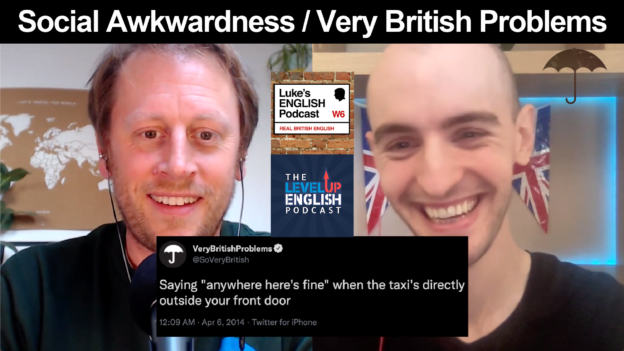
747. Social Awkwardness / Very British Problems (with Michael Lavers from Level Up English)

Talking to Michael Lavers from the Level Up English Podcast about learning Japanese, embarrassing moments in language learning, social awkwardness and some “very British problems”. Are you as socially awkward as a British person? Let’s see how you and Michael would respond to some quiz questions that will test your British awkwardness to the max. Video version available.

Audio Version

Small Donate Button

[DOWNLOAD AUDIO]

Video Version

Introduction Transcript

Hello listeners and video viewers,

Today on the podcast I am talking to Michael Lavers who is an English teacher from Cornwall in the South West of England. Michael also has a podcast for learners of English. It’s called The Level Up English Podcast – you might want to check it out if you haven’t already done so. It’s available wherever you get your podcasts.

As well as being an English teacher, Michael is also a language learner himself and in his podcast episodes he often talks with guests about experiences of learning other languages, including those embarrassing or awkward moments that happen when you feel shy or you make mistakes. Also, Michael has described himself as a socially awkward person who lacks a certain amount of confidence in himself. In fact, he says that one of the reasons he started his podcast was to try and gain some confidence by going out of his comfort zone.

So this is what I thought I would ask Michael about: his language learning experiences and those awkward and embarrassing moments, and then I’d like to chat about social awkwardness and whether this is a uniquely British thing. And we’re going to go into some specific examples of how this so-called British awkwardness manifests itself.

That’s the plan, so now, let’s meet Michael Lavers from the Level Up English Podcast.


Awkward Situations – Very British Problems

Here are some questions based on some tweets by the popular Twitter account, Very British Problems. Each one describes a specific problem that British people typically experience in social situations. They seem to sum up the experience of being a British person. We’re socially awkward – I don’t know why.

Let’s see how you respond to these questions. And listeners, I want you to consider your answers to these questions too, then we’ll see what Michael says, and then we’ll see the original tweets and we can see if they match up.

Questions & Tweets

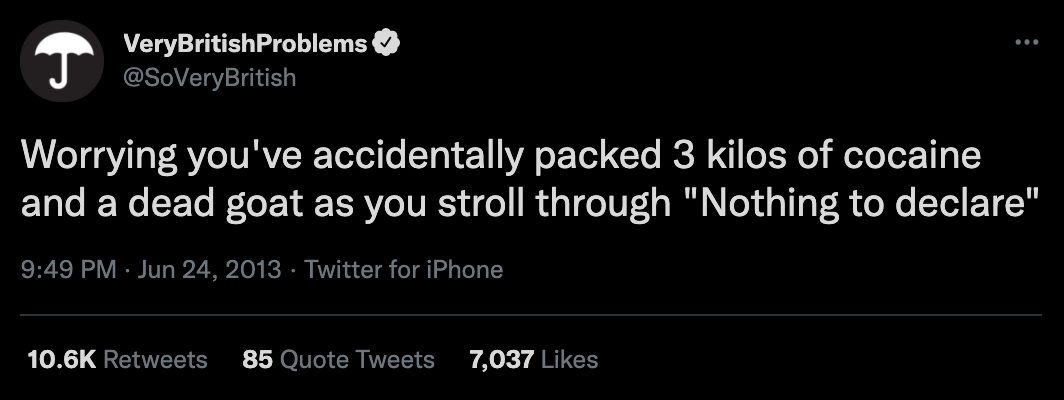
How do you feel when you walk through the “nothing to declare” gate at an airport?

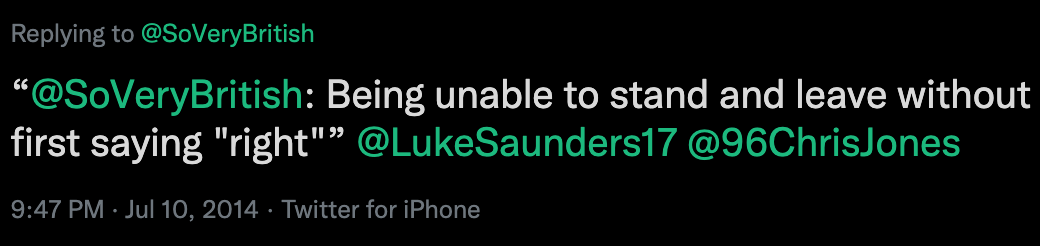
You’re sitting with a group of people. It’s time for you to leave. What do you say as you kind of slap your hands on your knees and stand up?

If someone says something to you but you don’t hear it, how many times are you willing to ask them to repeat themselves?

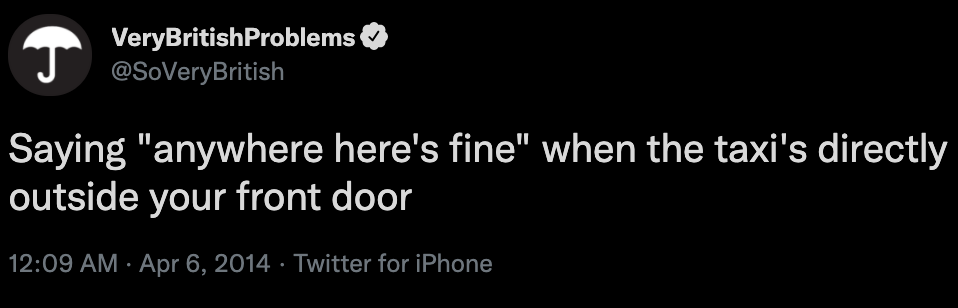
What do you say to your taxi driver as they approach the point where you want to get out of the cab?

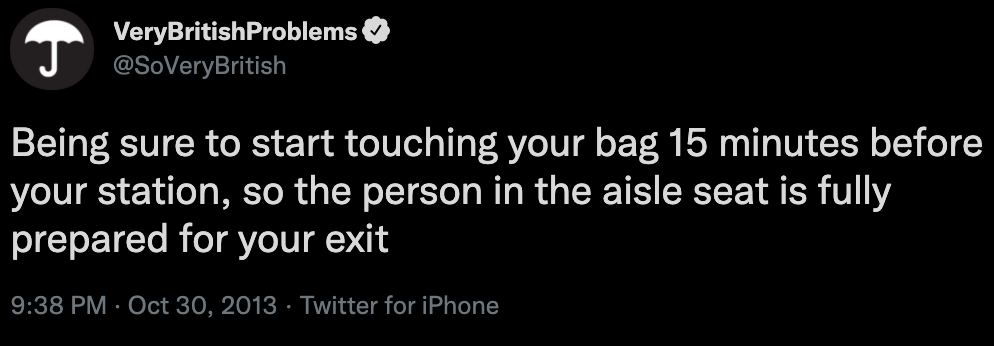
If you’re on a train, sitting in the window seat with a passenger next to you, and your stop is approaching, what do you do to signal to the passenger in the aisle seat that you will need to get up?

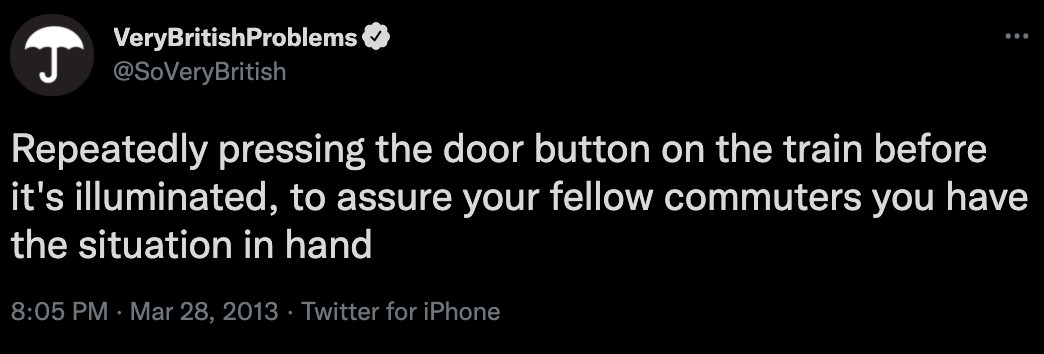
You’re standing at the exit door of the train as it is pulling into the station, slowly coming to a stop, and there is a crowd of other passengers right behind you, eager to get off the train. The “Open door” button isn’t yet illuminated. What do you do? Do you press the button?

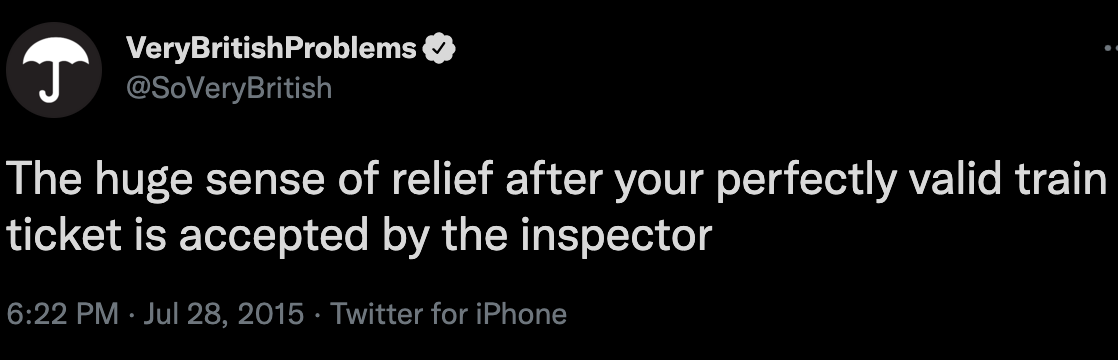
How do you feel when the ticket inspector inspects your perfectly valid ticket?

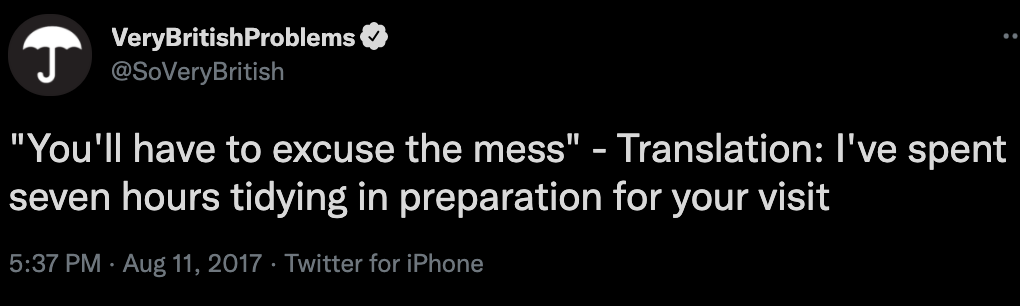
What do you say, modestly, to guests arriving in your home, even though you spent some time before their arrival, tidying things up?

There’s one last roast potato on the table at Sunday lunch. You want to eat it. How do you achieve this?

  1. Just take it and eat it
  2. Ask if you can eat it
  3. Offer it to everyone else first

Do you ever tell your housemates or family that you are “off to bed” but then just stare at your phone in bed for an hour?

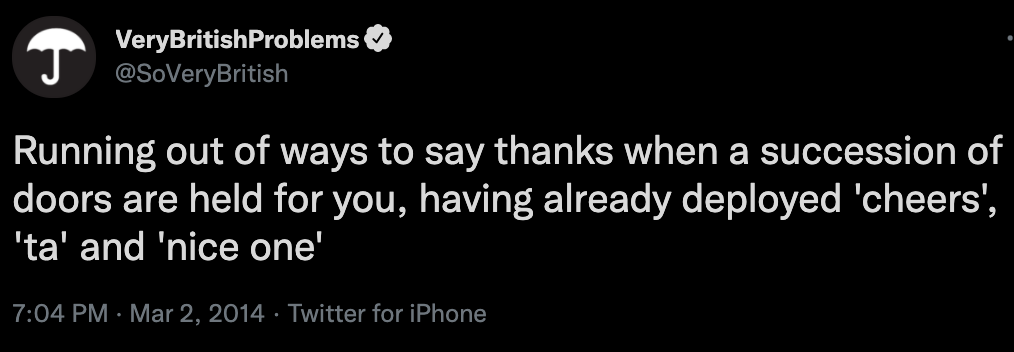
Imagine you are walking through a hallway with lots of doors in it, like in a library or something and you’re walking just behind a stranger who keeps having to hold the doors for you. How many different ways of saying “thanks” can you think of?

How do you end an email? Is there a subtly less friendly difference between kind regards and just regards?

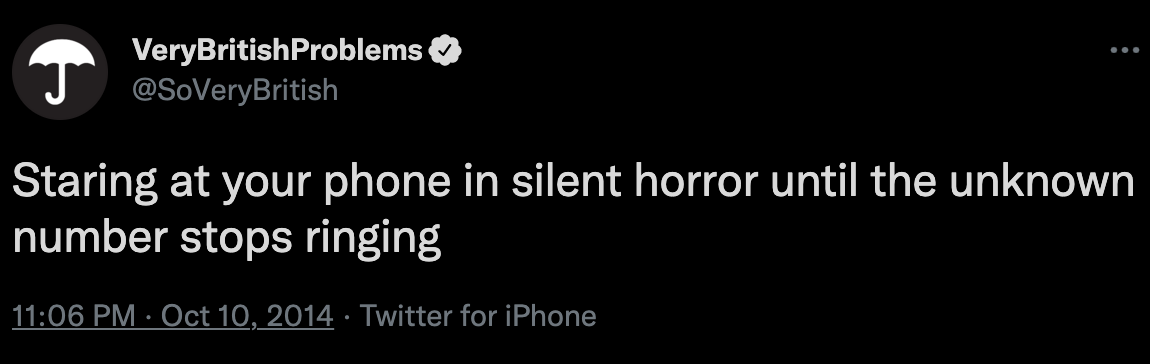
What do you do when you get an incoming call from an unknown number?

How good are you at overtaking someone on foot?

Do you feel it necessary to speed up at all, when walking over a zebra crossing?

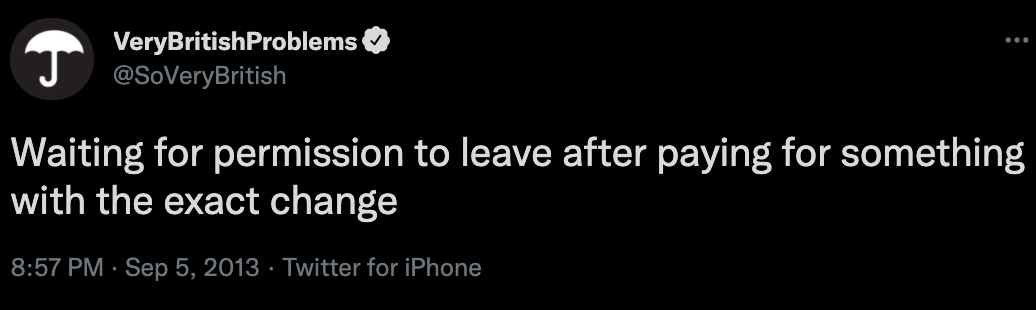
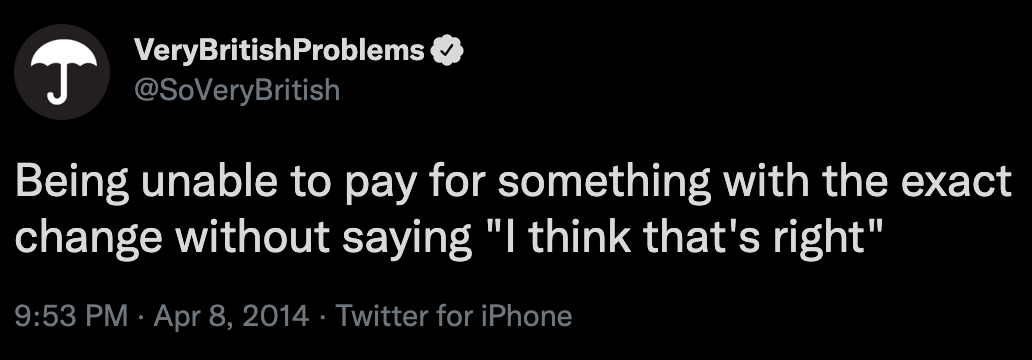
If you pay for something with exactly the right change, and you know it’s exactly the right change, do you wait for the cashier to count the money?

Links

www.ewmichael.com

www.levelupenglish.school

A reminder of the LEP Design Competition

I have had some entries already. If you’ve sent me something, then thank you. Please send your designs to podcastcomp@gmail.com and my brother and I will review the entries we receive, talk about them on the podcast and pick at least one to be featured in the LEP Merch store.

  • Think of a t-shirt that LEPsters would want to wear
  • PRIZE: The winning design will be put on t-shirts, mugs and other merch, and the winner will also win £80!
  • SPECS: A high-resolution transparent .PNG at 150dpi.  Minimum dimensions of at least 1500px by 1995px (not including outer transparent pixels).
  • CLOSING DATE: 22 October 2021
  • Send your t-shirt designs to podcastcomp@gmail.com

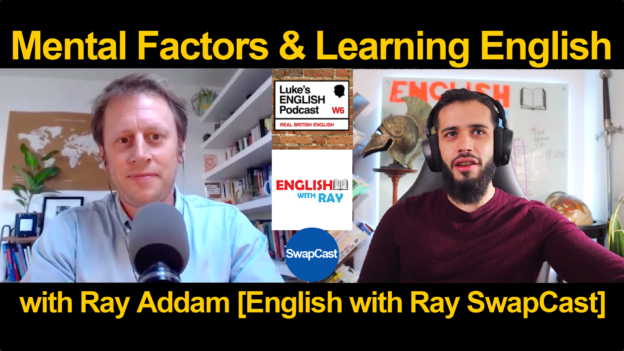
745. Mental Factors in Learning English (with Ray Addam) [English with Ray SwapCast]

Talking to English teacher Ray Addam from Glasgow in Scotland about mental factors in learning English, such as anxiety, confidence, stress and motivation. Video version available on YouTube.

Audio Version (with extra ramble + song)

Small Donate Button

[DOWNLOAD AUDIO]

Video Version

Introduction Transcript

Hello dear listeners,

This is a swapcast between LEP and English with Ray, which means we are both uploading this to our podcasts/youtube channels.

Ray is an English teacher from Glasgow in Scotland (and you’ll be able to notice his accent, which is not the strongest Glaswegian accent I’ve ever heard but it’s definitely noticeable – which is great, because I love Scottish accents). Ray has recently started making videos on YouTube for learners of English. 

One of his students – Ivan (from Russia I think) who is also a LEPster, suggested to Ray that he start doing that and that he also contact me for an interview, so that’s what you’re going to listen to or watch here. This is Ray Addam interviewing me for his channel.

This is a fairly relaxed and free-ranging conversation, and after chatting a bit about playing music and performing in front of people, we ended up talking about the psychology of learning English, particularly how to manage anxiety or nerves when using English in stressful situations, and then our comments about how to work on your confidence and how to have the right mental approach to learning a language, which is one of the most important steps to take.

So listen on for some comments and tips about how to manage your stress levels in English, how to become more confident in English and how to take control of your communication skills in general.

Thanks to Ray for sending this recording to me. You might want to check out his channel on YouTube, which is called English with Ray. He only has a few videos there at the moment, but everyone’s got to start somewhere. I’ve noticed that Ray also speaks fluent Arabic so any Arabic speaking LEPsters might be particularly interested in Ray’s content as he might have some insights into differences between Arabic and English. I haven’t actually asked him about that yet, but maybe it’s something he could work on in a future video.

Anyway, that’s it for this introduction and I will now let you listen to this conversation with Ray Addam, firstly about playing music in front of audiences of people, and then about the challenges of managing your confidence when using English in stressful situations. I will probably speak to you again briefly at the end of this chat, but for now, let’s get started.

Links for Ray

Take online English lessons with Ray Addam on Preply https://preply.com/en/tutor/447455/

English with Ray on YouTube https://www.youtube.com/c/EnglishWithRay/featured

Song (audio version only) – “Questionnaire” by The Rutles https://genius.com/The-rutles-questionnaire-lyrics

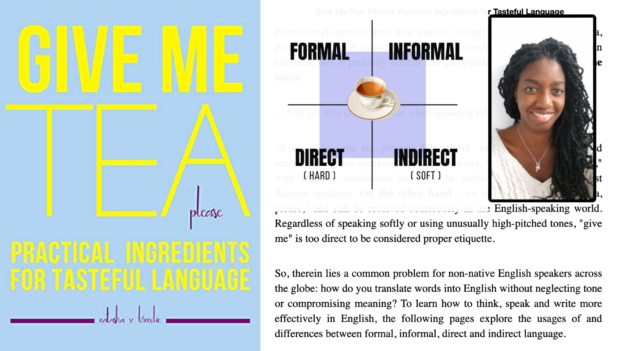
743. Give me Tea, Please – Practical Ingredients for Tasteful Language (with Natasha V Broodie) + ramble / song

Talking to author Natasha V Broodie who has written a book which aims to help learners of English understand the subtle codes of polite language when making requests and giving information in professional and personal contexts. In the conversation we explore the topic and consider some tips for making your language more culturally appropriate.

Small Donate Button

[DOWNLOAD]

Introduction Transcript

Hello listeners,

In this episode I am talking to author Natasha V Broodie who has written a book which aims to help learners of English to find the right tone in their speaking and writing. Tone is something which is very much affected by culture and often relates to things like being direct, indirect, formal, informal, the use of modal verbs and phrasal verbs and so on. In English the general tone is often quite friendly, indirect and polite, and this can sometimes cause problems for English speakers coming from different places where codes of politeness or professionalism are different.

Natasha has worked as an English teacher and has also worked in international contexts for the UN and so she has direct experience of observing people communicating in English and not quite getting the tone right.

So in her book, “Give me tea, please. Practical Ingredients for Tasteful Language” she lays out a sort of style guide with theory, practical tips and a glossary of defined vocabulary at the back.

It sounds like an interesting book which could be a worthwhile read for my listeners, so I thought it would be good to chat with Natasha a little bit and explore some of the ideas presented in her book.

“Give me tea, please” is currently available on Amazon but from 24 September should be available from all other providers too.

Right, so now you know what sort of thing we’re going to be talking about, let’s meet Natasha Broodie and find out some of those practical tips for tasteful language.


Give Me Tea, Please on Amazon


Ending

So that was Natasha V Broodie, talking about her book Give me tea, please – available from all good bookstores. Go ahead and pick up a copy and if you like it, leave a review on Amazon.

Thanks again to Natasha for her contribution in this episode.

A Short Ramble

T-shirts
Design comp – link here for details https://teacherluke.co.uk/2021/09/22/742-new-lep-t-shirts-merch-lep-design-competition-2021-with-james/
Premium
YouTube

Sneezing caused me to take a trip to tangent town…

Song – “Trouble” by Coldplay

https://tabs.ultimate-guitar.com/tab/coldplay/trouble-chords-16491

732. Christian from Canguro English returns

Talking to Christian again about some of the themes and controversial opinions he talks about in his YouTube videos, plus some bits about men wearing thongs on the beach, an obsession with rabbits and if Christian was the Donald Trump of English teaching. Video version available.

Audio Version

Small Donate Button

[DOWNLOAD AUDIO]

Video Version

Introduction Transcript

Hello listeners,

How are you today? You are now listening to episode 732, and in this one I am talking again to Christian Saunders from Canguro English.

This is the second time I’m talking to him on the podcast. I previously interviewed Christian in episode 686 last year and got to know him a bit, but I wanted to talk to him again after having seen some of his most recent videos on YouTube about language and language learning.

In his videos Christian often challenges certain assumptions and myths about language learning, and so I thought it might be interesting to talk to him about those things, so I came up with some questions about language, learning language and teaching English on the internet.

There is a video version of this conversation on my YouTube channel too, so don’t forget to check it out and of course to like and subscribe while you’re there.

There’s no more for me to add here in the introduction. I hope you enjoy this conversation and get some good things from it. Once again, Christian’s YouTube channel is called Canguro English and his website is canguroenglish.com

Let’s get started.


So that was Christian from Canguro English. Thanks again to Christian.

And here we are, at the end of yet another episode. I wonder what you thought of the points which came up in that conversation? Feel free to let us know in the comment section or perhaps under the YouTUbe version of this. Where do you stand on things like comprehensible input, workbooks and clickbait titles? Let us know.

For me, this is one of the last episodes I’m recording before officially starting my summer holiday. As usual I have loads of stuff to record and publish before I go away, and I might end up recording some of it while I am back in the UK. But here’s a little overview of what’s in the pipeline right now.

  • A Summer Ramble
  • War of the Worlds
  • P31

So I have my work cut out.

In terms of holiday – we’re going back to the UK to stay at my parents’ place and we will have to deal with the whole quarantine thing, and the day 2 and day 8 testing process and all that. It’s quite annoying. But after we quarantine we will be going to a posh camp site for some “glamping” and generally spending a couple of weeks in the UK.

Meanwhile our new flat in Paris is being demolished (on the inside) and remade to our specifications. Let’s hope that all goes according to plan.

I’ll talk more about this stuff in that rambling episode which is coming up.

In any case, I will speak to you again soon.

But for now, it’s time to say, good bye bye bye…

730. Marie Connolly Returns (+ 2 songs)

Talking to author Marie Connolly about her new books for children, plus a story about how Jerry Seinfeld came to one of our comedy shows, with two songs on guitar at the end.

Small Donate Button[DOWNLOAD]

Introduction & Ending Transcripts

Hello listeners,

Hello, hello, hello.

How are you doing? How is everything in your particular part of LEPland today as you listen to this? What’s going on? Where are you? How are you? Who are you? How’s your English? OK I hope. 

This podcast is here to help by giving you a source (not sauce) of authentic English to listen to on a regular basis. There are various ways you can use the podcast to improve your English but let’s just keep it simple and say – all you need to do is listen, try to follow what is being said and hopefully enjoy the process, even if it’s a bit difficult to understand every single thing. Sometimes you will find notes and transcripts on the page for each episode on my website. Checking them can also be a good idea.

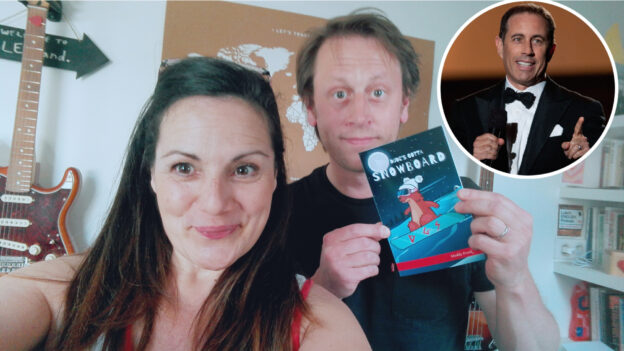
I have another guest today. Marie Connolly is back on the podcast in this episode. She came over to the flat a few weeks ago to record this conversation.

I know Marie from doing stand up comedy both in London and Paris. Like a lot of my friends she does stand-up, and she has also worked as an English teacher but these days the main thing she does is write – she is mainly a writer now – an author – writing books both for adults and for children.

You might remember Marie from episode 683 in October last year, when she told us some funny stories about moments when French men have flirted with her, and the book that she wrote which contains all those stories. Episode number 683 – that’s the last time Marie was on the show.

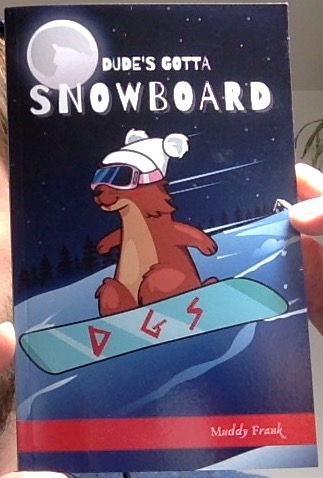
But she is back again to tell us about a new series of books she has written, this time for children. So, if you know any kids aged 8 or above, and you want to encourage them to read something fun in English, these books could be a good choice. They are written for people with English as a first language, so they’re not for beginners, but they are fun and if your kids can read English, they might like these stories.

She’s going to tell us about those stories and the process of writing and self-publishing them  but this conversation also contains lots of other stuff too – including different types of extreme sports, the classic old topic of doing comedy to audiences from different countries, an anecdote about the time Jerry Seinfeld came to one of our comedy shows, some comments from listeners in response to Marie’s last apperance, and more stuff for your listening pleasure.

Right then. So let’s now enjoy the company of Marie Connolly once again. I will speak to you a bit more on the other side of this conversation, and here we go…

—–

Click here for links for Marie’s books: Dude’s Gotta Snowboard & More

—–

Ending Notes

Thanks again to Marie Connolly there. You can find her books on Amazon – her writing alias is Muddy Frank, and you could search for Dude’s Gotta Snowboard. 

There are also links on the page for this episode on my website.

So thanks again to Marie.

So how’s everything going with you?

I will say that things are pretty busy here, with a lot of work going on and also some fairly complicated general life stuff – basically, we are in the process of moving to a new flat, and if you’ve moved flat or moved house, you’ll know how complex and disruptive that can be. 

Of course, all our possessions will have to be packed in boxes, moved to a completely new place and then unpacked, and that’s after all the decoration and work we’re having done on the new place and all that stuff. I will be leaving my pod room, taking everything down. All the books are coming off the shelves, all my equipment will be boxed up, all the guitars are coming down, everything is moving. 

What is cool is that I am going to have my own dedicated office/recording space/pod-room. 

It’s going to be incredibly small – more of a cupboard than an office, but it will be my HQ for LEP, and it’s not going to be part of our new flat. It’s in a completely different location, but it’s 5 minutes on foot from our new place. Anyway, we have a LOT of stuff to get done and our lives will be kind of turned upside down over the next couple of months, plus we want to do a trip to the UK for a holiday and various other things, so I don’t know how this is going to affect the podcast. I suppose there’s a chance I won’t be able to record, which would be a pity, although I’m sure you’d understand. I would have to publish some premium content though.

Luckily I have a few episodes recorded and edited and ready to be published, and they will continue to arrive over the next few weeks, but meanwhile, things in LEP HQ are a little bit chaotic at the moment. I won’t go into it in further detail at this moment, but as I said I will try to publish a rambling episode with news and comments about what’s going on and maybe I’ll respond to some listener comments and stuff like that soon, ok. In any case, podcasts will be arriving as normal at least for the next 4 or 5 weeks, so everything should be ship shape in podcastland, even if things are a bit crazy behind the scenes. We will see if I can continue to create and publish content during the madness of the next few months.

I said I wouldn’t ramble here. I’ll save it all for a full on rambling episode next time.

In any case, I hope you are well out there in podcastland.

At the end of the episode I thought I would sing a couple of songs which I’ve been playing recently. 

They’re both by Beck.

Song Lyrics

Lost Cause by Beck https://genius.com/Beck-lost-cause-lyrics

Dead Melodies by Beck https://genius.com/Beck-dead-melodies-lyrics

728. English with Rob / Games, Music & Jingles

My guest today is Rob from English with Rob (podcast/YouTube). Rob is an English teacher, musician from England, and my former colleague. This episode includes lots of musical fun, some chatting about how we make our podcasts, fun word games and much more. Video version also available on YouTube.

Audio Version

[DOWNLOAD AUDIO]

Video Version

Intro Transcript

Hello listeners, and video viewers.

In this episode I’m talking to Robert Dylan Walker, aka Rob from English with Rob – the podcast and YouTube channel.

Rob and I already know each other in fact as we used to be colleagues at the British Council, until Rob moved to Germany.

Basically – Rob is an English teacher, a YouTuber and a podcaster. He’s also a musician who likes to make music for his podcast, a photographer and video maker, who likes to use various special effects in his videos, and he’s into jokes and films and things like that, so he’s an ideal guest for me to talk to on this podcast.

The plan is to have a bit of a ramble chat, focusing on things like how we both make our podcasts, especially how we include bits of music in our episodes – and later in this episode we will be playing some of our podcast jingles, breaking them down a bit, explaining how we made them, and we had homework for this episode  – to record jingles for each other’s podcasts, but I think that we both ended up recording songs rather than jingles.

So stick around to hear some of our music and generally to get to know Rob a bit, and find out about his podcast and YouTube channel, which you might want to check out as a good resource to help you in your continuing journey to improve your English.

Ending

That was an epic one. Thanks again to Rob for his contribution. Don’t forget to check out English with Rob wherever you get your podcasts and on YouTube.

I hope you enjoyed the bits about music and making jingles and that you didn’t get too exhausted by the length. Hopefully you just got carried away and enjoyed getting a nice big dose of English listening into your week. 

If you’re interested in more stuff about jingles, then check out the Luke’s English Podcast App – free in the app store. It has a category called Jingles where you can hear most of the jingles I’ve made for the podcast, like the Amber & Paul jingle and more. There’s also that full app-only episode in which I break down every single sample from the LEP Jingle Megamix.

And on the subject of music, you can check out my recent tunes, like the English with Rob song that I did for this podcast and some other little bits of music I’ve been making recently – you can check them out on my soundcloud page. 

My user name is LEPTunes. 

Links

The last one is a link to the music page on my website where you can find all the Korg Kaossilator tunes I’ve ever made, and also old music mixes I’ve made with my brother and a few comedy tracks too with James.

So, plenty of music stuff to get into. 

I hope you enjoyed this episode. I will speak to you again on the podcast soon, but for now it’s time to say good bye…

723. Bahar from Iran 🇮🇷 (WISBOLEP Runner-Up)

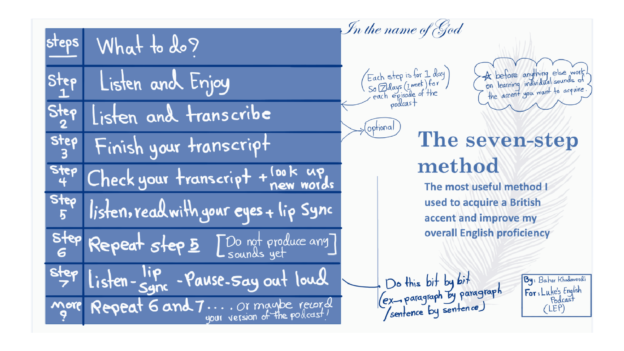
This is the final episode in the WISBOLEP competition series, speaking to Bahar from Iran about the 7-step method she used to improve her English and develop a British-sounding accent. Bahar used to be a terrible student who hated English, but then she made a decision to focus on her English in her own way. Listen to her explain how she did it.

Small Donate Button[DOWNLOAD]

Introduction Transcript

Hello listeners, this is the final episode in the WISBOLEP series – Why I Should Be On Luke’s English Podcast. As you probably know, this was a competition I launched last year in which listeners chose other listeners who they would like to be interviewed in an episode of the podcast, and so far we’ve had 5 people, all of whom have managed to improve their English to a proficient level, while living in a non-English speaking environment for the most part, without having English speaking people in their family or close friends. So these have been stories of English learning success, which I seriously hope have been inspiring and interesting for you to listen to.

This conversation is with Bahar from Iran. Bahar actually came 5th in the competition, but she happened to be the last person I interviewed.

As you will hear, Bahar’s English is excellent but that wasn’t always the case. In fact, according to her she used to be a terrible student who hated English and who couldn’t string a sentence together. But now it’s a completely different story. She is proficient in English, she has a lovely clear accent and is confident and talkative, and loves this language. So how did she do it?

That is the main focus of this episode. Bahar tells us the story of her English journey, and she outlines her 7-step method for improving her English, especially her pronunciation. 

Yes, she has come up with a 7-step method. To be clear, she defined this method in retrospect, meaning that having improved her English to a good level she then looked back at what she had done and consolidated her approach into 7 clear steps, and she’s going to go through the entire thing in this episode.

Now, you can try to follow Bahar’s method, but one of the main points here is that you can actually come up with your own method for improving your English as long as you maintain certain key principles in your learning. 

There’s no need for me to add much more here really, except that you will find links to the various resources Bahar mentions during this conversation. Those are resources that she has found to be especially useful. You’ll find links to those things on the page for this episode on my website.

So now I will let you meet Bahar from Iran, currently living in Italy and here we go.


Ending Transcript

So that was Bahar from Iran. Thanks again to Bahar for her contribution. She definitely put a lot of effort into preparing herself for this conversation, coming up with some clearly defined steps and thinking about how she could go into some specific details about the things that worked for her. So, thanks Bahar for doing that.

You will see the hand drawn infographic that Bahar created to show her 7 steps – you’ll see it on the page for this episode on my website, and as the image for this episode on YouTube.

Perhaps the main point is that you can create your own method for learning English. Just go with whatever works for you. There isn’t one single best approach. You just have to make sure you are working with English on a regular basis, that you do things which bring you some joy (there’s no point slogging away with something that you just don’t like doing), you should attempt to maintain a positive and beneficial cycle in your approach to English, try to find your own personal motivation for learning the language, say to yourself “I’m going to do this and I’m going to do it my way” and then just put the time in. 

Also, don’t underestimate the importance of just spending plenty of time listening and don’t apply too much pressure to yourself. Let it happen naturally and in its own time. I hope my podcast helps to make this easier.

Again, check the page for this episode on my website where you’ll find links to things that Bahar mentioned, including the BBC Sounds of English pronunciation course, British Council Elementary Podcasts and so on.

That’s for this episode. Thank you for listening. Leave your comments and feedback in the comment section and have a fantastic day, night, morning, afternoon or evening and I will speak to you soon.

But now it’s time to say, good bye bye bye bye bye.

Useful Links

The Sounds of English (BBC Pronunciation Course) https://www.bbc.co.uk/learningenglish/oromo/features/the-sounds-of-english

On YouTube https://www.youtube.com/playlist?list=PLD6B222E02447DC07

British Council Podcasts and Listening Resources at Different Levels https://learnenglish.britishcouncil.org/skills/listening

Pearson graded readers https://www.pearson.com/english/catalogue/readers.html

722. Discussing John Lennon with Antony Rotunno

The second in a short series about The Beatles, this one focuses on the life of John Lennon, with an overview of his life story, some thoughts about his psychology and some rambling discussion questions about this iconic British musician, with podcaster, English teacher and musician Antony Rotunno.

Small Donate Button

[DOWNLOAD]

Links to Antony’s Podcasts

Glass Onion: On John Lennon

Film Gold

Life and Life Only

Introduction Transcript

Hello listeners, I hope you’re doing well today and that you are ready for this new episode of my podcast. You join me here in my pod-room as the rain falls down above my head. Conditions are perfect for learning British English. Let’s get started.

This is a continuation of this short series of episodes I’m doing about The Beatles and this one focuses mostly on John Lennon. If you’ve ever wanted to know more about this iconic British musician then this episode is for you. Also, if you’re already a Beatles fan or a John Lennon fan then I’m sure you’ll be glad to hear this conversation too.

My guest for this episode is Antony Rotunno from England and Antony is very knowledgeable about John Lennon and his life. In fact I feel like I couldn’t have found a better person to talk to about this subject.

One of the reasons for that is that Antony is also an English teacher. He’s been teaching English as a foreign language to adults for over 18 years, and for obvious reasons it’s always useful to have a guest who has experience of working with learners of English.

Antony is also a podcaster so he is used to talking to audiences over the internet from his home in England. Antony’s podcast is all about John Lennon.

And he probably knows all there is to know about John Lennon because he’s read everything out there on the subject and for his podcast he has interviewed lots of people connected to Lennon, including authors and people who actually knew John himself – people with first-hand accounts of meeting him.

So Antony really knows a lot about John Lennon.

And we had a really good, really long conversation for this podcast, covering various things like John Lennon’s life story. This is the first part of that conversation.

Let me just explain my reasons for doing this series of episodes about the Beatles. I probably don’t need to explain this, but allow me to give my reasons.

So, this is a 5 part series actually. I published the first part with my mum in episode 717, which was a review of a book about The Beatles, followed by a general Beatles ramble.

The rest of the series will be this conversation I had with Antony divided into 4 parts. But it’s not just going to be us rambling on about Lennon for all that time. I’ve also decided to employ some of Antony’s English teaching skills in order to cover some language too, specifically in parts 3, 4 and 5 of this series as we focus on descriptive adjectives for describing personality traits, and then some analysis of the lyrics from Beatles songs, with various nice phrases and idioms to learn. So there should be plenty of English learning opportunities to take from this whole series.

John Lennon is a hugely significant person in terms of modern history, and of course being English he is very much part of our culture, and as we move forwards in time it seems that the significance of the Beatles and everyone’s interest in them is not waning. If anything, they continue to grow in stature. 

And even if you’re not into the Beatles, hopefully this can be a chance to learn some new things about this band that is held in such high esteem by so many people.

I promise you – I’m willing to say I promise you here, that if you listen to this, you will know more about John Lennon than before you listened to it.

And if you’re wondering when we’re going to get to the music, part 5 will be all about Beatles lyrics and there will be some guitar playing as well.

First we will get to know Antony a bit and ask him about his podcasts, and then you’ll hear him talk about how he got into The Beatles and John Lennon in particular, then Antony is going to give a brief overview of John’s life and career and finally I’m going to ask Antony a few John Lennon discussion questions.

Let’s get started.

Ending Transcript

So that was episode 2 in this 5 part Beatles mini series, all about John Lennon.

Thanks again to Antony for his expertise. 

The other John Lennon episodes will follow over the next few weeks.

Do you feel that you know more about John Lennon than you did before you  listened to this?

I hope so.

I wonder what new things you learned from this. Feel free to leave your comments below.

I won’t say much more here, except that it’s been really interesting to talk to Antony and I look forward to the next few episodes in which we go into teacher mode and look at some descriptive adjectives and then song lyrics.

But that’s it for this episode. Thanks for listening. Be excellent to each other and I will speak to you soon.

716. Interview with a Pop Star from the 1960s – Megan Brady from The Applejacks

An interview with Megan Brady, who was the bass player in The Applejacks – a pop band from Birmingham in the 1960s who had a top 5 record, met The Beatles and performed on TV shows and at concerts in the UK.

Small Donate Button[DOWNLOAD]

Introduction (After the main LEP Jingle)

Hello listeners. In this episode you’re going to listen to me in conversation with Megan Brady who was a pop star in the 1960s. Yes, a proper pop star. She was in a band which had a top 10 single, she was on the radio, she appeared on a lot of the music TV shows, she met loads of other pop stars of the moment including the Beatles – yes she met The Beatles, and in fact John Lennon and Paul McCartney gave her band a song which they recorded – their second single actually, the band were featured in the music magazines and no doubt many teenagers all over the country had her photo on their bedroom walls. Yeah, proper pop star stuff. So this is the story of Megan’s career in music in the 1960s.

You might be thinking – which band was Megan in? Well the band was called The Applejacks – you might not have heard of them. They’re not one of the big bands that we now think of when we look back at the 1960s, and they didn’t really reach fame on an international level but they were certainly part of the scene, and were well known at the time. My mum was a fan of The Applejacks, for example. 

Of course we know about The Beatles and The Rolling Stones but there was a whole wave of other groups from all over the UK who were playing a new form of music and so many young people were really into it, and that includes The Applejacks who were from the Birmingham area. 

The 1960s was a really fruitful period in terms of modern British culture and I am proud of that part of our history. I find it fascinating, I like the music and I like the stories of the people involved, and I hope you do too.

My guest is Megan Brady (although she was known as Megan Davies in those days) Megan was the bass guitar player in the band, and at the time it was quite uncommon to have a female musician in a group. We’re talking about the early to mid 1960s. There were female singers, but you hardly ever saw girls actually playing instruments in bands, and so that was one of the unique things about The Applejacks. 

So, yes, you’re going to hear Megan talking about all of this, as well as other details like her other career as a clinical physiologist in neurophysiology in the National Health Service (that basically involves studying people’s brain waves) and just stuff about playing the bass guitar, how she’s still working on her technique and things like that.

I know Megan because I’m mates with one of her sons, Jake – or Jacob as she calls him. I met Jake at sixth form college and we played music together in bands over the years.

I was always really impressed by the fact that his parents were both professional musicians, or had been professional musicians at various times because I was so into music from the 60s and 70s including a lot of the artists that Jake’s Mum and Dad had worked with or brushed shoulders with over the years. 

For example, I was really into Jimi Hendrix when I was 16 or 17 and I remember talking to Jake about Hendrix and he told me that they actually had Jimi Hendrix’s wah-wah pedal at their home somewhere. A wah-wah pedal is a kind of guitar pedal. Jake wasn’t bragging really, he thought it was cool too, and he just wanted to share it with me and I believed him! “Hey, you like Jimi Hendrix – check this out, we’ve got Jimi Hendrix’s wah-wah pedal at home! Come over I’ll show it to you!” Whaaat? Etc. 

Also, I went to Jake’s house one day and I was hanging out in his bedroom listening to some of his music, and his mum’s bass guitar was sitting there – a nice Fender Jazz bass – and I picked it up and played it a little bit, and Jake said to me “Oh yeah, Jimi Hendrix played that bass once!” I couldn’t believe it! Hendrix played the same bass that was actually in my hands. It turned out that Jake’s mum knew Hendrix a bit, back in the old days and he once had a little go on her bass guitar – the same one that was in Jake’s bedroom that time.

Eventually I learned more and my parents told me more about Megan and that she had played bass in The Applejacks in the 60s and they were one of the popular groups of the time. 

So that’s how I know Megan. I am friends with her son, and now I’ve finally taken the initiative to interview her on this podcast. Megan is lovely and she was happy to do this, which I really appreciate.

Vocabulary

Before we start, I need to just explain a few words that you’ll hear but you might now know. 

  • The Scouts / The Scout Association / Cub Scouts / Girl Guides / Brownies – The Scouts is a worldwide movement for young people (it used to be just boys, but these days it’s for boys and girls I think), founded as the Boy Scouts in England in 1908 by Lord Baden-Powell with the aim of developing character and responsibility. My brother and I used to be Scouts and so did my dad. What kinds of things did we do?Megan was in the Scouts and so were most of the other members of The Applejacks. That’s how they met.
  • Gang show
  • Cub mistress
  • Scout hut
  • Skiffle
  • Skiffle numbers (songs)
  • The Shadows
  • A cruise / a cruise ship / Cunard Cruises
  • The Queen Mary and the QE2
  • Top of the Pops
  • Great Ormond Street Hospital – a famous hospital in London specialising in pediatric care (medical care for children) Where Megan has worked since the late 1990s.
  • Bass guitar stuff – Just a heads up – things will get a bit geeky and specific sometimes in this conversation as we talk about playing the bass guitar, different types of bass guitar and Megan’s bass playing technique. During lockdown she’s been practising with an online bass guitar teacher called Scott Divine from Scott’s Bass Lessons. I didn’t want to cut those parts out of the conversation because I personally find those things really interesting, Megan was enthusiastic about them and so who’s to say that you won’t find them interesting too?
  • Parts of a guitar – The head, the machine heads & tuning pegs, the neck, the body, the pickups, the scratchplate (or pickguard), the pick, the bridge.
  • Fender Jazz Bass vs Fender Precision Bass

Right, without any further ado then, let’s listen to Megan Brady talking about playing the bass guitar and her story of being a pop star in the 1960s. 

And to lead us into this I’m going to play a little sample of The Applejack’s first and most successful single which was called Tell Me When, released in 1964…


Ending

Ending song – Baby Jane by The Applejacks

Thanks again to Megan for taking the time to talk to us about all of that.

You might be wondering why I didn’t get Megan to play some bass for us, which would have been really nice of course.

I didn’t want to put her on the spot, plus for us to hear it properly she’d need to plug it into something like an amplifier and connecting an electric guitar to a computer and playing the sound during a call is a bit tricky too, so it wasn’t really possible at that particular moment.

But you can hear songs by The Applejacks on Spotify and YouTube.

I’ll be sharing some bits and pieces on the page for this episode, including a video filmed in 1964 I think, of Megan performing with The Applejacks, which is a great little sample of the time and you can see her playing I think her Hohner semi-acoustic bass.

The super-long introduction that I recorded but didn’t use – you’ll find it as bonus audio in the app. I go into more details about how I first met Megan’s son Jake and also some other ramblings about The Applejacks…

Tell Me When (Their biggest hit)

Like Dreamers Do (by Lennon/McCartney)

https://youtu.be/FB7lbucimhI

I Go To Sleep (by Ray Davies of The Kinks)

Baby Jane

The Applejacks on Spotify