Category Archives: Vocabulary

616. Can you find the 15 idioms? (with Paul Taylor)

Listen to Luke and Paul play a conversation game and try to spot 15 common idioms. All idioms are demonstrated, explained and listed on the website.


Small Donate Button[DOWNLOAD]

Introduction Transcript

Hello everyone and welcome back to this podcast which is made by me in my flat in order to help you learn English and also enjoy learning English too!

If you heard the last episode, you’ll remember that I was planning to play an idioms game with Paul. That’s what you’re going to hear in this episode – a game with Paul in which we have to try to include some idioms into our conversation seamlessly.

What you can do in this episode is not only follow the conversation as usual, but also try to spot all the idioms as they crop up. There are 15 in total. Admittedly, about 3 of them are explained and defined at the beginning, but 12 others are slipped into the conversation and then explained and defined at the end.

So, can you spot all the idioms during the conversation? Do you know them already? Can you work out what they mean from context? This is good practice because it encourages you to pay attention and notice new language as it occurs in natural conversation. Noticing is actually an important skill which can really help with language acquisition.

This from the British Council’s website for teacher development, teachingenglish.org.uk

When learners “notice” new language, they pay special attention to its form, use and meaning. Noticing is regarded as an important part of the process of learning new language, especially in acquisition-driven accounts of language learning, when learners at some point in their acquisition, notice their errors in production. Noticing will only occur when the learner is ready to take on the new language.

Example
A learner might make an error in the use of a preposition, but “notice” its correct use by another learner, or in an authentic text. This might allow them to begin to use it correctly.

https://www.teachingenglish.org.uk/article/noticing

It’s an important skill to develop – to be able to notice language, to identify certain bits of grammar, or certain fixed expressions like idioms, notice the form (all the individual words used to create the idiom) and the meaning. It helps you identify differences between your use of English and the way it is used by natives, and that comparison allows you to then adapt your English accordingly. This awareness of what kind of English you’re aiming for is vital.

Developing noticing skills is an important part of developing learner autonomy and your language acquisition skills. The better you are at noticing, the more you are able to learn English by just listening to audio that you enjoy, rather than going through a language coursebook which teaches you specific language items. So, I encourage you to pay special attention during this episode on idioms and fixed expressions. Obviously idioms are confusing because they’re not literal – the whole phrase means something different to the individual words being used.

About the idioms you will hear. These are all very common ones. Some of them you are bound to have heard before and will not be new to you. In a way though, if you have heard them before I’m not concerned. That just means that you’re starting to learn all our idioms, which is a good thing. Remember that you also have to be able to use these idioms, not just understand them. When you do use them, be extra sure that you’re using them 100% correct – for example you’re not using a wrong little word here or there, or perhaps collocating the phrase with the wrong verb or something.

The topic of conversation just happens to be Paul’s brother Kyle who we talk about on the podcast occasionally. In case you don’t know – Kyle Taylor is a professional footballer who plays for the Premiership team Bournemouth FC, although he is still yet to make his Premiership debut. A debut is your first game. So he hasn’t played in the Premiership yet (he’s only about 20) but he has played in the FA Cup.

Alright, so you can listen to Paul and I discussing Kyle and his footballing career, amongst other things, and you have to spot the idioms, which will all be explained at the end. All the idioms are listed on the page for this episode on the website, so check them out there if you want to see specific things like spellings, the specific form of the idioms and so on.

Right, without any further ado, let’s begin!


Ending

Remember, all those idioms are listed on the page for this episode. So check them out.

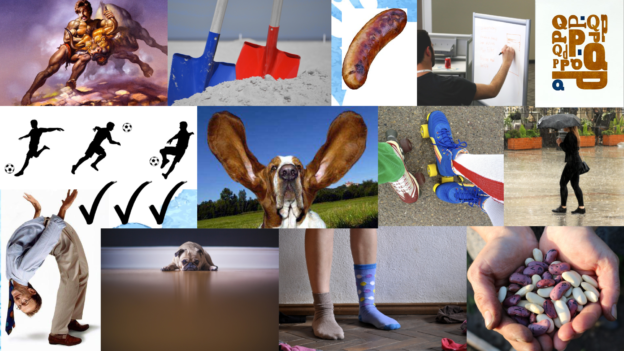
The Idioms List from this game

  1. (to go) back to the drawing board
  2. to mind your Ps and Qs
  3. to feel under the weather
  4. to be all ears
  5. to take the bull by the horns
  6. a hat-trick
  7. to save something for a rainy day
  8. to pull your socks up
  9. to be down in the dumps
  10. to let the cat out of the bag
  11. to bend over backwards
  12. to get your skates on
  13. to call a spade a spade
  14. to be full of beans
  15. not a sausage

What did you think of the episodes about the mystery game? I don’t know what you all thought of that? Did you enjoy it? Was it too difficult to follow? Give me your feedback. You can do that on the website.

  • LEP Premium https://www.teacherluke.co.uk/premium
  • LEP App https://teacherluke.co.uk/how-to-download/
  • Mailing list
  • Check out my sponsors https://www.teacherluke.co.uk/talk

Get in touch and let me know how it’s going for you.


614. Another Murder Mystery Detective Story (Part 3)

Here’s the conclusion of this online murder mystery text adventure game. Vocabulary is reviewed at the end. Video available for premium subscribers.


[DOWNLOAD]

Video versions are now available free on YouTube (after being locked in the premium section for 18 months)

Sign up to LEP Premium to exclusive content https://www.teacherluke.co.uk/premium

Episode notes and transcriptions

Hello listeners and welcome to episode 614. In this episode I’m going to continue reading through this online text adventure that I started in episode 612. This should be the 3rd and final part of this murder mystery story.

You have to listen to parts 1 and 2 first before you listen to this. They are episodes 612 and 613. If you don’t listen to them first, none of this will make any sense, ok!

So I’m assuming you’ve heard those two parts.

Let’s just recap the story quickly.

We’re on the hunt for the killers of 3 prominent academics in London 1861. Intelligent and brilliant people keep turning up dead, completely naked and with their hearts torn out.

After lots of investigation by us (a brilliant Holmes-style detective) and our partner Mardler, we’ve worked out that the killings have been done by a weird religious cult that worships King Cobras and likes to eat the hearts of people as a way of absorbing their intelligence. So they’ve been preying on academics, scientists, surgeons, historians and so on.

We’ve managed to catch two of the principle murderers – a wealthy member of the upper-classes, a woman posing as a nurse in local hospital and now we are on the tracks of the main bad guy, an old man by the name of Lynch who we suspect is currently holding a French intellectual hostage with a plan to murder him and eat his heart in the next few hours. Earlier in the story we got shot and had to jump out of a window so we are nursing an injury and not at our full strength.

We’ve managed to track down Lynch to a house outside London and now we are about to enter the house and hopefully save the life of the French man and bring Lynch to justice. Let’s see what happens next and what kind of score I’m going to get at the end of this game!

I have a feeling that we’re getting close to the end of the story, based on how it’s going. I reckon this should be finished in the next 15-30 minutes, but we will see. If there is time in this episode I will go through a list of vocabulary items that I’ve picked up from the story.

By the way, there are videos for episodes 612, 613 and hopefully this one available for Premium subscribers. You can see me reading through the story, and there are also some bonus extras including a song in 613 part 2. Sign up to LEP premium at teacherluke.co.uk/premium

Right, let’s carry on then!

Word list

  • an acclaimed historian
  • the odour of varnish
  • a furrowed brow
  • a loner
  • Julian chuckles
  • I thought I had you for a minute
  • a raving lunatic
  • a bookmark
  • bags under your eyes
  • confident footsteps
  • a mutilated corpse
  • gutted like an animal
  • She has blisters on her left fingertips from the strings
  • Gray rummages through his desk drawer for a moment
  • Marilyn is taken aback
  • Marilyn hastily digs through her bag
  • her hand returns clutching two ticket stubs
  • This is a pretty good alibi, assuming we can hear from some witnesses that confirm her whereabouts
  • you don’t rule her out as a suspect entirely just yet
  • birch tree pollen
  • They got into a violent scuffle
  • scraping your palms on the hard road
  • You stumble back onto your feet and catch up with Mardler
  • sweat forming on your brow
  • sprint across the road
  • tripping on a discarded piece of garbage
  • Dilated pupils, bloody nose, hoarse voice
  • lurking at Hollowleaf Hospital, he’s trying to score some drugs
  • Dr Yates slumps down on the ground, defeated
  • Another dead end!
  • footprints on the floor
  • dried mud
  • following the faint footprints
  • a fist
  • a bruise on Julian’s face
  • The floorboards creak noisily as you walk over them
  • you tackle him to the ground
  • Most of the doctors and nurses have gone home for the night, but a few stragglers are left caring for the sick and wounded.
  • You wince in pain.
  • Your kneecap and head are throbbing.
  • a cane
  • Sorry I have to ambush you like this
  • gears turning
  • Crisp morning air fills your nostrils
  • You feel winded by the time you reach Palomer’s door
  • a shard of glass
  • Mardler ponders your theory.
  • He was brushing up on German translations when we saw him last
  • You limp into the shop
  • Quentin Lynch was cold and out of breath
  • Discerning detective

Previous detective episodes

338. A Murder Mystery Detective Story (Part 1 of 2) Text Adventure

339. A Murder Mystery Detective Story (Part 2)

425. Thompson, Taylor & Minogue: Victorian Detectives (Part 1) with Amber & Paul

426. Thompson, Taylor & Minogue: Victorian Detectives (Part 2) with Amber & Paul

612. Another Murder Mystery Detective Story (Part 1)

613. Another Murder Mystery Detective Story (Part 2)

611. Top 10 Jokes from Edinburgh Fringe 2019

Listen to 10 jokes from this year’s Edinburgh Festival Fringe comedy shows. Understand the jokes and listen to Luke break them down to help you learn more English.


Small Donate Button[DOWNLOAD]

Video Version (Now available for everyone)

To sign up to LEP Premium, go to https://www.teacherluke.co.uk/premium

Episode notes & transcripts

Hello folks and welcome back. I hope you’re well.

Here is another episode of this podcast for people learning English.

This time we are dissecting the frog again as we are going to be looking at top jokes from this year’s Ed Fringe. I’m going to read all the jokes to you and then dissect them for vocabulary which can help you learn English really effectively.

Explaining a joke is like dissecting a frog. You can learn something from it, but the frog dies in the process.

So let’s dissect the frog again!

A challenge for you:

  • Can you understand the jokes the first time you hear them?
  • Can you repeat the jokes, with the right timing, intonation and stress, to make the joke funny?

The Culture of Joke-Telling in English

Remember, when someone tells you a joke there are certain normal responses you should make. You shouldn’t give no reaction.

You have to show that you see that a joke has happened. Don’t just give no reaction or respond to the question on face value.

So when someone tells you a joke, you have to show that you’ve noticed it.

  • laugh
  • go “awwww” or something
  • Say “I don’t get it”
  • Heard it before

You also have to respond to certain jokes in certain ways.

Knock knock – who’s there?

Any kind of question, especially “What do you call a…?” or “What do you get if you cross xxx with yyy?”

You answer: I don’t know. Then the answer is the punchline.

Jokes from the Edinburgh Fringe 2019

I did one of these last year – episode 547. A whole year has gone by. So I did 64 episodes of the podcast, plus all the premium ones. Quite a productive year for LEP!

Right now stand up comedians all over the UK are having a welcome break and a chance to think about how their Edinburgh run was and what they can learn from it.

The rest of us are reading articles in the press about the best jokes from this year’s fringe, and which new comedians to look out for over the coming year or two.

What’s the Edinburgh Fringe again? (I’ve talked about it a lot on the podcast. Never actually been there.)

From Wikipedia

The Edinburgh Festival Fringe (also referred to as The Fringe or Edinburgh Fringe, or Edinburgh Fringe Festival) is the world’s largest arts festival, which in 2018 spanned 25 days and featured more than 55,000 performances of 3,548 different shows[1] in 317 venues.[2] Established in 1947 as an alternative to the Edinburgh International Festival, it takes place annually in EdinburghScotland, in the month of August.[3] It has been called the “most famous celebration of the arts and entertainment in the world”[4] and an event that “has done more to place Edinburgh in the forefront of world cities than anything else.[4]

It is an open access (or “unjuried“) performing arts festival, meaning there is no selection committee, and anyone may participate, with any type of performance. The official Fringe Programme categorises shows into sections for theatre, comedy, dance, physical theatrecircuscabaret, children’s shows, musicals, opera, music, spoken word, exhibitions and events. Comedy is the largest section, making up over one-third of the programme and the one that in modern times has the highest public profile, due in part to the Edinburgh Comedy Awards.

Every year hundreds of stand up comedians go to the Fringe to do their shows. It is a sort of make-or-break experience.

Have you ever done it Luke? What’s it like? 

Joke types

I did something about different joke types in the last one of these episodes. I talked about things like “pull back and reveal” and “then I got off the bus”.

Here are about 5 different joke types, or stand-up techniques.

  • Puns (word jokes) – one word or phrase means two things at the same time, maybe because one word can sound like two words – homophones. [Why was 6 afraid of 7? Because 7, 8, 9. —> “8” sounds exactly like “ate”]
  • Pull back and reveal – the situation radically changes when we get more information. [My wife told me: ‘Sex is better on holiday.’ That wasn’t a nice postcard to receive.” Joe Bor 2014]
  • Observational humour – noticing things about everyday life that we all experience, but haven’t put into words yet. [What’s the deal with airline food, right?]
  • Similes – Showing how two things are similar in unexpected and revealing ways. [Explaining a joke is like dissecting a frog…]
  • Common phrases, reinterpreted. This time it seems that most of the jokes are based on well-known common phrases and how they could mean something else if you change the context. It’s like a pun but for a whole phrase. [Conjunctivitis.com – now there’s a site for sore eyes. Tim Vine]

NME.com https://www.nme.com/news/10-funniest-jokes-2019-edinburgh-fringe-festival-2539446 

The top 10 jokes of the Edinburgh Fringe Festival 2019 have been announced, with comedian Olaf Falafel taking the coveted top spot. Check out the full list below.

After previous triumphs from the likes of Tim Vine, Stewart Francis and Zoe Lyons, Falafel scooped the prize with a snappy vegetable themed one-liner.

He took ‘Dave’s Funniest Joke Of The Fringe’ with the gag:

1.I keep randomly shouting out ‘Broccoli’ and ‘Cauliflower’ – I think I might have florets”.

Florets are chunks of broccoli or cauliflower

Tourette’s is a condition in which people shout out the rudest and most taboo thing in any situation, particularly stressful ones.

The two words sound quite similar.

It’s not the best joke in my opinion.

What makes a really good joke?

If it’s a pun, it should work both ways.

You’re looking at a sentence that means two things at the same time. Ideally, both of those things will make overall sense.

I keep randomly shouting out ‘Broccoli’ and ‘Cauliflower’ – I think I might have florets”.

So, one sense here is that he has a type of tourette’s which only involves shouting out broccoli and cauliflower. That makes sense, sort of.

But the other meaning doesn’t. Why would he be randomly shouting out the words broccoli and cauliflower if he had some florets in his hand?

So, for me it doesn’t quite work.

Here’s a joke that works both ways

I broke my finger last week. On the other hand, I’m ok.

  1. On the other hand means “But” (the whole sentence still makes sense) He broke his finger but overall he’s ok.
  2. On the other hand means “literally on his other hand” (the whole sentence makes sense again) He broke his finger on one hand, but his other hand is ok.

I keep randomly shouting out ‘Broccoli’ and ‘Cauliflower’ – I think I might have florets”.

It came from Falafel’s show It’s One Giant Leek For Mankind, which was performed at the Pear Tree.

The comic, who won with 41% of the vote, claims to be “Sweden’s 8th funniest” comedian. He also works as an acclaimed children’s book author.
(This is like a democratic election in which the one that 59% of people (the majority) didn’t vote for, is the one that’s picked.)

Falafel said: “This is a fantastic honour but it’s like I’ve always said, jokes about white sugar are rare, jokes about brown sugar… demerara.”

(How is that like winning this list?🤷‍♂️)

Check out the rest of the top ten below.

2.”Someone stole my antidepressants. Whoever they are, I hope they’re happy” – Richard Stott

I hope you’re happy

https://www.examiner.org/news/114141-councilman-walks-out-of-meeting-resigns

3.”What’s driving Brexit? From here it looks like it’s probably the Duke of Edinburgh” – Milton Jones

https://www.mirror.co.uk/news/uk-news/breaking-prince-philip-crash-duke-13998489

4. “A cowboy asked me if I could help him round up 18 cows. I said, ‘Yes, of course. – That’s 20 cows’” – Jake Lambert

To round something up (two meanings)

5. “A thesaurus is great. There’s no other word for it” – Ross Smith

There’s no other word for it

Fine dining is fancy, there’s no other word for itNewshub29 Aug 2019

6. “Sleep is my favourite thing in the world. It’s the reason I get up in the morning” – Ross Smith

It’s the reason I get up in the morning

Oxygen15 Aug 2019
She added that her dog is “the reason I get up in the morning.”

7. “I accidentally booked myself onto an escapology course; I’m really struggling to get out of it” – Adele Cliff

I’m struggling to get out of it

8. “After learning six hours of basic semaphore, I was flagging” – Richard Pulsford

flagging

9. “To be or not to be a horse rider, that is Equestrian” – Mark Simmons

That is the question

That is equestrian

10. “I’ve got an Eton-themed advent calendar, where all the doors are opened for me by my dad’s contacts” – Ivo Graham

Read more at https://www.nme.com/news/10-funniest-jokes-2019-edinburgh-fringe-festival-2539446#idlDviSDEPGrBuXP.99

Did you get all the jokes?

Did you get them first time?

Did you pick up some language?

Vocab review

  1. florets
  2. tourette’s
  3. I hope they’re happy
  4. To drive something (not a car)
  5. to round something up
  6. There’s no other word for it
  7. It’s the reason I get up in the morning
  8. Struggling to get out of something
  9. Flagging
  10. equestrian
  11. to open doors for someone

Check the LEP App for a video version of this episode!

610. British Comedy: James Acaster

Listen to a lovely bit of stand up comedy that will require quite a lot of breaking down in order for you to understand all the jokes like a native speaker, but there’s lots to learn in the way of language and culture in the process.


Small Donate Button[DOWNLOAD]

Transcripts and Notes

This is LEP episode 610. and it’s called British Comedy: James Acaster.

In this one we’re going to listen to a lovely bit of stand up comedy that will require quite a lot of breaking down in order for you to understand all the jokes like a native speaker, and there’s lots to learn in the way of language and culture in the process.

James Acaster is a popular stand up comedian from the UK who has won various awards, done Netflix specials, Edinburgh shows and who appears on panel shows and TV comedy programmes all the time. He’s now a very popular and well-known stand up in the UK.

I’ve got a clip of one of his performances from the New Zealand Comedy Gala in 2013 on YouTube.

I’m going to play the video in about two parts.

You have to try to understand it – not just what he’s saying, but why is it funny?

Then I’ll go back through the clip, sum it up, go through it line by line, breaking it down for language.

You can then listen again using the video on the page for the episode.

Who is James Acaster? (Wikipedia)
James Acaster is an English comedian originally from Kettering, Northamptonshire. (accent?)
He has performed for several consecutive years at the Edinburgh Festival Fringe and won two Chortle awards in 2015.[3] He has been nominated for Best Show five times at the Edinburgh Fringe.[4] Acaster has appeared on several panel shows, including Mock the Week and Would I Lie to You? He has a 2018 Netflix show entitled Repertoire, consisting of four hour-long stand-up comedy performances.[5] He has also written a book, James Acaster’s Classic Scrapes, consisting of true stories, most of which were originally told on Josh Widdicombe’s show on XFM.[6] He currently hosts panel show Hypothetical alongside Widdicombe and food podcast Off Menu with fellow comedian Ed Gamble.

Accent-wise
He’s originally from Northamptonshire which is in the east midlands. He doesn’t have a strong northern accent or a brummie accent, although I do think he would say “podcast” instead of “podcast” and “bath, grass, laugh” with that short a sound too.

The main thing is that he drops all his “T” sounds and also “TH” sounds.
So, “bring them” sounds like “bring em”
“Sitting in a tree, eating all the apples” sounds like “si’in in a tree, ea’in all the apples”
“Theft” becomes “Feft”
He also says “Raver” instead of “rather”.
All very common features of local English – dropping Ts and TH sounds is common all over the country.

What is his comedy style?
Whimsical (unusual, strange and amusing)
Thoughtful
Thinking of things in a different way, unconventional (quite normal in stand up)
Weird
Acting a bit cool even though he isn’t
Geeky looking, wears sweaters, clothes even a granddad might wear
Ginger-ish hair
Looks a bit like Jarvis Cocker

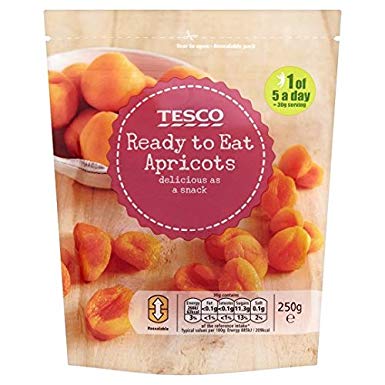
James bought some ‘ready-to-eat Apricots’ and he went on a lads’ night out

Ready-to-eat apricots

You get these bags of fruit in the UK (and elsewhere I’m sure) of fruit which is ready to eat.

It’s been cut up, washed, prepared. It’s ready to eat.

For example, you might get “ready-to-eat apricots”. That’s what James is talking about here.

Also, the expression ”You are what you eat?”

Play the clip: What’s the joke about apricots?

Stop and explain it

What kind of apricots are these?
They are ready-to-eat apricots.
How do you feel?
I feel ready. Ready to eat apricots.
In fact, you could say I was ready to eat these ready-to-eat apricots.
Maybe you’re not ready to eat apricots.
Maybe you just want some, which is why they’re in a resealable bag.
So, they should be renamed ready-to-eat-some-apricots.

A lads’ night out / You wouldn’t bring an apple to an orchard

James went on a night out with a bunch of lads.

For James, this was not an enjoyable night.

It wouldn’t be for me either. I’ve never been one of those guys who likes to go out on a lads’ night out.

Lets me explain what a lads’ night out is like.

Lads are usually English young men, together, doing male things and generally being aggressive, overly sexual, crude, rude and competitive.

  • Lots of alpha male behaviour
  • Heavy drinking
  • Taking the piss and general one-upmanship and aggressive, laddish, competitive behaviour
  • Spending time in bars and clubs that you hate but they think are brilliant (terrible, terrible music, awful people, loud, smelly, horrible)
  • Trying to pick up girls and the general lack of a moral code – cheating, lying, using alcohol – all in an attempt to get lucky with a girl. This includes cheating on your girlfriend if you have one.
  • Medieval-level sexual politics – being openly judgemental about women’s appearances, giving women marks out of ten, saying whether or not you would shag any of the women around, looking at their bodies and comparing notes etc.
  • You get sucked into it through peer pressure and become part of it even though you hate it.

One of the lads, who has a girlfriend and yet plans to pick up a girl at the club, when asked why he didn’t bring his girlfriend, says “You wouldn’t bring an apple to an orchard”

An orchard is a place where apples are grown. It’s full of trees and there are apples everywhere. You might pay to access the orchard and pick the apples.

You wouldn’t bring an apple to an orchard. Presumably because you wouldn’t need to bring one because there are loads there anyway.

How about bringing your girlfriend to a night club. Is it the same?

This leads James to kind of question the logic of that statement and go off an a monologue about bringing an apple to an orchard and how that compares to bringing your girlfriend to a nightclub.

Vocab
To be an accessory to something (like a crime)
An apple a day keeps the doctor away

Play the clip: Do you understand all the comedy about the nightclub and bringing an apple to an orchard?

Stop and explain it

Going to a nightclub with a bunch of lads
One of them cheats on his girlfriend and you become an accessory to it, like it’s a crime and now you’ve become pulled into it. You’re involved in it, without intending to be, and you could go down, like you’re an accessory to a crime.

In this sense, you just have to keep a secret, you’re being expected to lie on behalf of someone else. The guy is a twat basically.

This lad says “You wouldn’t bring an apple to an orchard”.
But then James deconstructs this analogy in a brilliant way.

This is nuanced comedy which is subtly making fun of stupid lad culture in a clever and funny way, with some weirdness and surrealism.

Go through it line by line

One of the reasons I like it is that a lot of people might just say James is being weird and that he’s some sort of loser, but he’s absolutely right in my opinion and he’s just clever and not afraid to be himself and he embraces the slightly weird things in life, because let’s face it, life is weird.

Types of humour / how nuanced & subtle humour can be all about changing the context of the situation in order to reveal new perspectives.

This acknowledges the fact that there are many different perspectives or layers to any situation and a good comedian can make you realise a whole different underlying meaning by just changing one bit of perspective.

Despite the fact that I like this a lot and so do many other people, I’m sure plenty of others don’t find it funny because it’s not fast enough, there aren’t enough dynamic changes (he doesn’t change his voice a lot, a lot of the jokes are left to the audience’s imagination), it’s pretty low energy, maybe little things like (I can’t get into it – I just don’t like his hair cut or his shoes or something) and also some people just don’t really want to look at the world from a different point of view. Some people prefer more direct humour, perhaps with a more obvious target or more relatable things, like observational comedy or something.

As usual, I’m worrying that nobody will get it, but what’s the point of that? Some people just won’t get it because “you can bring a horse to water but you can’t make it drink”.

And it doesn’t matter. If you didn’t find it funny, that’s totally fine. At least you’ve learned some English in the process. :)

Vocab list

  • Ready-to-eat apricots
  • They say “you are what you eat”
  • A resealable bag
  • A lads’ night out
  • Check out the arse on that
  • Big time
  • Normal people perv solo
  • To outnumber someone
  • Sinister
  • A dented suitcase
  • To cheat on someone
  • An accessory to a crime
  • Despicable
  • An orchard
  • Fit birds
  • Eloquent use of language
  • A little bit miffed
  • This godforsaken pisshole of an orchard
  • Who in their right mind compares women to apples?
  • Another saying “An apple a day keeps the doctor away”

Here’s another short clip of James Acaster, this time talking about Brexit and comparing it to a tea bag in a cup.

Should you take the bag out or leave it in?

James Acaster Brexit Tea Bag

Now explain that Luke!

Tea / Brexit

Should you leave the bag in or not?
If the bag stays in, the cup as a whole gets stronger. It might look like the bag is getting weaker in some way but it’s actually part of a good strong cup of tea.
If you take the bag out, the tea is actually quite weak, and the bag goes straight in the bin.

Do I even need to explain how that analogy works with Brexit?

Should the UK stay in or go out?

If the UK remains, the EU as a whole gets stronger. It might look like the UK is getting weaker in some way, but it’s actually part of a good strong union of nations.
If the UK leaves, the EU gets weaker and the UK goes straight in the bin.

Quite clever really.

You can watch James Acaster clips on YouTube.
You can see his Netflix specials “Repertoire” on Netflix
You can read his book “Classic Scrapes” from any half-decent book shop.

That’s it for this episode!

604. London Native Speaker Interviews REVISITED Part 2

Listening to the audio from another old YouTube video of mine, and then exploring it for new vocabulary and English learning opportunities.


Small Donate Button[DOWNLOAD]

Transcript

Hello folks, welcome to a new episode. In this one I’m going to go through some more audio of interviews I did with native speakers of English in London 10 years ago and will mine if for any nice bits of English vocabulary that we find.

Before we begin this episode properly I just want to say a couple of things about the last episode – the one about Queen & Freddy Mercury and also to let you know about my plans for the summer and how that might affect the podcast.

We’ll start with summer plans.

Summer Plans

First of all, I’m going away on holiday during the 2nd week of July, so no podcasts will go up during that time. Then when we get back I’m teaching intensive summer courses at the British Council, which means teaching all day every day. I still have the evenings, but having a lot less time probably means I won’t be able to produce podcasts at the usual rate. So, things might go quiet for the rest of the month. Also, in August we have several holiday plans which are currently coming together and that will mean being away for at least half of the month. So things might go quiet during July and August, only to return at the normal rate in September. I’ll also prioritise premium content, because that is stuff I I feel I have a duty to publish.

Right, so that’s the summer plans and how they will affect the podcast. Things might be a bit quiet as usual at this time of year, but there’s the whole episode archive to explore, all the app-only episodes you might not have heard and all the premium content too.

Audio Quality – Queen Episode

Next let me say a couple of things about the last episode, which was all about Queen, before starting this episode properly in a few minutes.

First of all, I received some nice, enthusiastic responses from people who were very pleased that I was finally talking about Queen on the podcast.

For example, Francisca Lopez Aperador on YouTube wrote:
Hi, Luke, I was waiting for this episode. You really made my day. How could express how thrilled I am. Thanks, thanks, thanks. Cheers from Spain, teacher.

However, some people are saying that Alex is unintelligible in the Queen episode. There weren’t many comments, but I reckon if I just get one or two comments about something, it’s probably representative of what a lot of other people (ninjas) are thinking too.

For example, Arsiney wrote on the website:
I don’t understand any words in this conversation.
Luk`s speech is clear but this guy speaks like alien.

So, is Alex unintelligible? Does he speak like (an) alien?

Personally I understand every single word Alex says and said in the episode and also I noticed that YouTube’s automatic subtitles understood most of what he said (my episodes go up on YouTube now too, so you can see the automatic subtitles, which are 90% correct, going up to 95% correct when I’m on my own).

But there were definitely moments when it was difficult to understand everything he said – largely due to the audio quality during the call and partly due to Alex’s speech, and that probably made it a less satisfying listening experience for you.

Apologies for that. The audio quality wasn’t up to the normal high standard that you have become used to.

Also, Alex doesn’t enunciate as clearly as I do, but then again most people don’t.

This brings us back to this perpetual question of the way I speak on the podcast.

“Luke, do you speak normally or do you slow down because I understand everything you say but I don’t understand other native speakers.”

I do try to be normal and natural but I’m also trying to speak clearly. This is actually how I speak. I always make an effort to speak clearly. That’s who I am – partly as a result of being an English teacher, but also it’s just the way I was brought up to speak.

However, in the real world you’re going to hear people who don’t speak as clearly as me, and you need to prepare for that. I think that most people don’t speak as clearly as I do and it’s not just about speed, it’s about diction. Diction is the manner in which words are pronounced. To an extent you’ve been spoiled by my clear diction. You also have to listen to people who are harder to understand. It trains you to do things like use the context, and other words you can hear to piece together the bits you don’t understand. It’s not always going to be laid out on a plate for you, and you can’t always blame the speaker for not being clear enough for you. As I said, I always understand everything Alex says, so as far as we are concerned, he doesn’t have a problem with his speech. He goes through his life fine, communicating without issues, doing comedy on stage and making people laugh. So, Alex’s pronunciation isn’t a problem in his life. He doesn’t speak as clearly as me, but not many people do.

So, listening to someone like Alex is actually good training.

The Pros and Cons of Audio Quality & Learning English

It’s important to listen to subprime audio.

But I know that some of you will be frustrated that you couldn’t understand or hear everything, and I’m sorry about that. I thought it would be alright. I think the main thing was the audio quality actually.

Understanding what you hear is an important part of the learning process, but be careful of getting used to understanding everything. Sometimes you have to learn to fill in the gaps yourself.

I want you to understand everything you hear. Understanding what you’re hearing is an important part of the enjoyment of this podcast. It’s also an important part of how this works. I’ve talked about the role of comprehensible input. Basically, this is the theory that you learn language when you understand it, and so finding compelling material to listen to that you understand is vital.

So, naturally, clear audio is a part of that and that’s why I spend a lot of time attempting to make sure the audio is of good quality on this podcast. Where possible I even send microphones to guests I’m interviewing by Skype. I’ve sent mics to my dad, my brother, Raphael in Liverpool. I sent a mic to Andy Johnson. I couldn’t send a mic to Alex because he was using his phone, making a whatsapp call over a cellular connection. I expect this meant that the bandwidth of the audio was very narrow, or something like that. Perhaps the audio was compressed so much that there was not much range in the frequency, making it sound squashed or small. I’m not an expert in audio broadcasting so I’m not sure, but it’s probably something like that. Alex doesn’t have wifi at home – believe it or not, and so our only option was to do a voice call. No way for him to plug in a USB microphone. So, that’s one of the reasons for the difficult audio.

I’m probably going too far here and people are going to write to me saying “It’s ok Luke, don’t apologise too much!” etc. I usually go a bit over the top if I’m apologising for something on the podcast – usually because I’ve mispronounced a place name, I’ve made some factual error about your country, like saying your country is part of another country when in fact they’re separate independent nations. You know, stuff like that. Even apologising for uploading too much content. And now, apologising for less-than-perfect audio in one episode. I am probably going too far.

But it’s still worth taking this moment to talk about the pros and cons of good and bad audio, when learning English.

There are good and bad things about having super clear audio and English you can understand easily.

The pros are that you can learn a lot from it (comprehensible input) and you get the satisfaction of understanding it all.

The disadvantage is that you get used to it and then struggle to understand fast native speech.

There are also pros and cons of having audio that’s harder to understand.

Difficult audio trains you to listen more actively and intelligently.

But sometimes it’s frustrating when you don’t understand.

It’s about striking the right balance. Hopefully on my podcast I mix it up and have some audio which is not too difficult to follow, that you can learn from and enjoy, while also presenting you with more difficult things that you have to really focus on.

Now, about this episode you’re listening to right now.

This is London Native Speaker Interviews Revisited part 2.

Recently I uploaded part 1 of this series. That was episode 591.

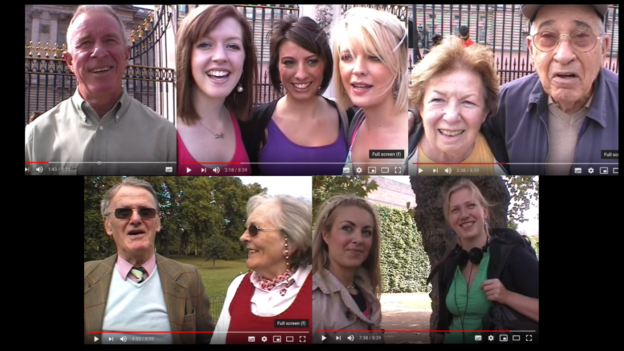
If you remember, what I’m doing is revisiting some videos I made 10 years ago, when I went into central London with my video camera in order to do quick interviews with people about life in London. My question was “What is London really like?” I got loads of little responses from people talking about the good and bad points of life in our capital city and the videos were pretty successful. Two of them now have over a million views. Not bad.

So in these audio episodes what I’m doing is revisiting those videos. We’re going to listen to the audio from the video – see how much you can understand, and then I’m going to break it down in the usual way, clarifying bits of language and helping you to expand your vocabulary.

Also this gives me a chance to be like a film director doing my own DVD commentary track, which is always fun.

How does this relate to the topic of audio quality?

Well, I recorded these video interviews on a basic handheld camera just using the inbuilt microphone. There’s a bit of wind and loads of atmospheric noise (because central London is a very noisy place) and so yes, the audio isn’t as crystal clear as you might expect, but as I’ve said – it’s good practice. This is where we strike that balance between challenging listening and comprehensible listening.

Right, so let’s go! Let’s listen to the audio – we’ll do each mini interview one by one, and then I’ll break them down for language one by one.

We’ll listen to each clip twice. The first time I’ll just ask you the question “What are the good and bad things about living in London?”. Then listen and try to understand. Then we’ll listen again and I’ll break it all down bit by bit, and there’s quite a lot of nice, natural vocabulary to learn from this video.

On the page for this episode on the website you’ll see:

  • The video
  • A transcript for most of this, especially the first part
  • Transcripts for each part of the video
  • Vocabulary notes with definitions, for the bits of vocabulary I explain during the episode

Right, so let’s get started!

Student / Justin Bieber / Ed Sheeran

Transcript

Graphic design student: Hello
Luke: So, how long have you been in London?
Graphic design student: Two weeks
Luke: Really? What do you do?
Graphic design student: Err, graphic design. Camberwell, School of the Arts.
Luke: Ok. So, your first two weeks.
Graphic design student: First two weeks. It’s quite a big impact. Very big, lots of people, and it’s quite expensive as well.
Luke: Ok. What’s the best thing about it?
Graphic design student: Err, night life. Very good night life. It’s got, you know, erm… If you go to the right places… A lot of action, erm, you know, a lot of friendly people as well.
Luke: Excellent. What about the worst thing?
Graphic design student: Depends on where you go. I mean, there’s quite a lot of, err, muggers about, dodgy people looking at you weirdly. You want to just, turn, turn away from them
Luke: Ok yeah
Graphic design student: Apart from that, generally a lot of people are quite nice. I mean, there’s some people that shove about, but, you know, you’ve just got to deal with it.
Luke: Ok, thank you very much
Graphic design student: That’s ok
Luke: Cheers.

Vocabulary
how long have you been in London?
night life
A lot of action
Muggers
dodgy people
looking at you weirdly
Apart from that, generally a lot of people are quite nice
there’s some people that shove about
you’ve just got to deal with it.

Girl in the red scarf

Luke: So, hello
Girl in red scarf: Hello
Luke: Where are you from?
Girl in red scarf: I live in Redhill, which is about half an hour away from London
Luke: Ok, erm, how long have you lived there?
Girl in red scarf: Two weeks!
Luke: Ok. Everyone’s been living in London for two weeks for some reason. So, what’s London really like then?
Girl in red scarf: London, well, London’s a really really massive place which can be quite overwhelming, but it’s not that scary after you’ve, you know, got stuck in there. Erm, London has everything you’d ever want, if you’re into theatres, art, education, night clubs, anything. Erm, I would say, just get stuck in there and go for it!
Luke: Ok, great, and what’s the worst thing about London?
Girl in red scarf: The worst thing… oooh the worst thing… err, I think the worst thing would have to be the pollution. It’s probably not as bad as some countries, but you always feel like you’ve got black fingernails.
Luke: Ok. Thank you very much.
Girl in red scarf: Thank you

Vocabulary
Overwhelming
but it’s not that scary after you’ve, you know, got stuck in there
if you’re into theatres, art, education, night clubs, anything
just get stuck in there and go for it!

Real Londoner

Real Londoner girl (who hates pigeons): Hi!
Luke: So, are you from London too?
Real Londoner girl (who hates pigeons): Yes, I am
Luke: Ok, so how long have you lived here?
Real Londoner girl (who hates pigeons): Err, my whole life. Luke: Ok, so you’re a real Londoner
Real Londoner girl (who hates pigeons): Yes, a real Londoner
Luke: Ok, what’s it really like then, living here?
Real Londoner girl (who hates pigeons): What’s it really like? Erm, well I think it’s fantastic. It’s nice to live in such a cosmopolitan place with lots of things to do. You can never say that you’re bored or have nothing to do because then that’s all down to you, so…
Luke: What’s the best thing about it?
Real Londoner girl (who hates pigeons): Erm…
Luke: You might have just answered that
Real Londoner girl (who hates pigeons): Yes I think I have. Just the variety and everything you want to do. Lots of things for different age groups, there’s always something for someone to do. I would say the best thing is, like, the cultural little occasions that we have, like Chinese New Year and things like that, where you have big street parties. I would say that’s the best thing.
Luke: Ok, what about the worst thing?
Real Londoner girl (who hates pigeons): Oh… I don’t like to answer that question
The girl with the red scarf (off screen): Pigeons!
Real Londoner girl (who hates pigeons): Oh yeah! I hate pigeons! I hate pigeons! They’re just…
Luke: What’s wrong with them?
Real Londoner girl (who hates pigeons): They’re diseased!
Luke: They’re diseased. Flying rats.
Real Londoner girl (who hates pigeons): Yes
Luke: Right?
Real Londoner girl (who hates pigeons): Yeah. That’s the worst thing, I don’t dislike anything else.
Luke: Ok, thank you very much
Real Londoner girl (who hates pigeons): You’re welcome
Luke: Cheers

Vocabulary
It’s nice to live in such a cosmopolitan place
that’s all down to you
I hate pigeons! They’re diseased. Flying rats.

Young Business Couple

Smartly dressed couple: Hi
Luke: So, are you from London
Smartly dressed girl: Err, we’ve just moved here, yeah.
Luke: Just moved here, right, so err… How long have you been here?
Smartly dressed girl: Err… We’ve been here for a couple of weeks.
Luke: Ok. Everyone I’ve interviewed today has been in London for, like, two weeks. I don’t know why… So, what’s London really like then? What do you think?
Smartly dressed guy: Err, it’s a huge place. There must be about 10 million people living here. It’s got a lot of good things, bad things. It’s vibrant, it’s multicultural. It’s got fantastic places to eat, fantastic places to go out in the evening.
Smartly dressed girl: Fantastic theatre, fantastic restaurants. Fantastic museums, art galleries. Absolutely loads of stuff.
Luke: Ok
Smartly dressed guy: It’s a fast paced place. People seem to be moving around a lot faster than in the rest of the country
Smartly dressed girl: Sometimes that can get quite a bit much, you know. People sort of rushing everywhere all the time
Smartly dressed guy: But it’s interesting, but there’s also negatives to living here
Smartly dressed girl: It’s very congested, it’s very expensive. Err, extremely expensive, public transport is expensive. It’s hard… it can take a long time to get anywhere
Smartly dressed guy: And there’s also a lot of pollution, and crime as well. So, if you come to live here I think it’s about finding the right enclave
Smartly dressed girl: Yeah, the right neighbourhood to live in, definitely…
Smartly dressed guy: And having friends. Set up your own community of friends, rather than knowing your next door neighbour.
Luke: Yeah. Ok, thank you very much
Smartly dressed guy: No worries
Luke: Cheers, bye bye
Smartly dressed girl: Cheers, bye

Vocabulary
we’ve just moved here
How long have you been here?
We’ve been here for a couple of weeks.
There must be about 10 million people living here.
It’s vibrant
It’s a fast paced place.
Sometimes that can get quite a bit much, you know
People sort of rushing everywhere all the time
It’s very congested
I think it’s about finding the right enclave

Vocabulary with definitions

Here are some definitions of some of the vocabulary in the video.

night life – social life at night, for example clubs and bars
a lot of action – lots of exciting things happening, and lots of nice girls to meet
muggers – criminals who might steal things from you in public (e.g. attack you and steal your bag)
dodgy people – people who are strange and can’t be trusted
looking at you weirdly – looking at you in a strange way
turn away from them – look/turn in the other direction
shove about – push people when in a large crowd (e.g. pushing people when getting on or off a crowded train)
you’ve just got to deal with it – you have to just learn to live with it. You can’t let it make you unhappy.
massive
overwhelming – having such a great effect on you that you feel confused and do not know how to react
if you’re into theatres, art, education, night clubs, anything – ‘to be into something’ means to be interested in it, or to enjoy it
just get stuck in there – get involved without hesitation or fear
and go for it – just do it!
pollution – dirty air caused by cars, bad air conditioners etc
a cosmopolitan place – a place with lots of people from all over the world (positive adjective)
Pigeons – very common birds which you find in the city (see the video at about 3:33)
vibrant – full of energy and activity in an exciting way
multicultural – involving people from many different cultures
fast paced – with a quick lifestyle (e.g. people rushing about everywhere, walking very quickly, in a hurry)
get quite a bit (too) much – be stressful and annoying
congested – full of traffic, lots of traffic jams
the right enclave – a small area within the city in which you live and feel comfortable
neighbourhood – part of town in which you live

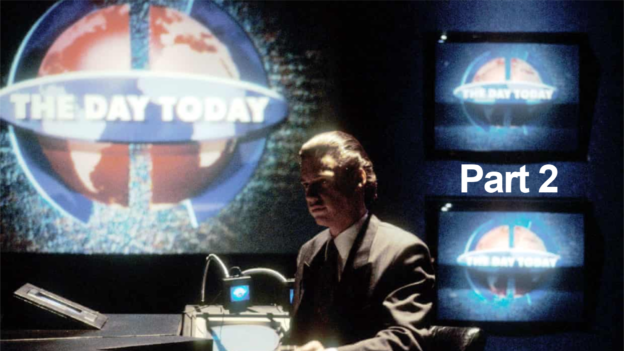
602. British Comedy: The Day Today (Part 2)

The Day Today is an award-winning parody of news and current affairs TV programmes. Let’s listen to some more clips, understand the humour and learn some English in the process.


Small Donate Button
[DOWNLOAD]

Intro Transcript, Notes & Videos

Hello and welcome back to Luke’s English Podcast. How are you? It’s boiling hot here. We’re in the middle of a heat wave and today the temperature is expected to be in the high 30s with a feels-like temperature somewhere in the 40s.

I’ve never understood that. So the temperature is 39 but it feels like 43. So isn’t the temperate 43 then? I don’t get it.

In any case, it is boiling. So if at some point I stop talking, you hear a thud and the podcast goes silent – don’t worry, I’ve just passed out from heat stroke or exhaustion or something. Just joking, but it is very hot.

These aren’t exactly perfect conditions, but my dauntless British spirit is unbowed by any crisis, as we heard in the last episode, so I will be just fine, thank you.

I wonder how it is where you are.

Now, enough idle chit chat, let’s on to this episode.

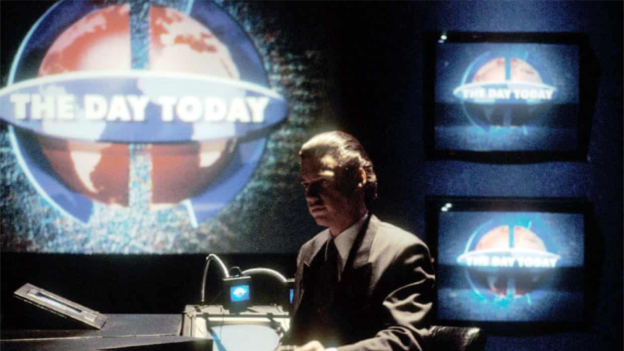
This is episode 602 and it’s the second part of this episode I’m doing about British comedy TV show “The Day Today”.

You should listen to part 1 before listening to this, and also know that there are notes, videos and bits of transcription on the page for this episode on my website. Just go to teacherluke.co.uk and check the episode archive where you will find all the other episode pages, plus some bonus website-only content too.

In the first part of this episode I talked to you about The Day Today – what kind of programme it is, who made it and so on. Then we listened to three clips from that show which you can find on YouTube and then I broke them down for language and to help you understand the humour.

That’s exactly what we’re going to continue doing in this episode. I have 3 more clips, available on YouTube, so let’s do it like this:

  • First I’ll talk to you about the clip we’re going to see, explaining the context, giving you the main details and asking you to listen out for certain things. This part is necessary because it will really help you understand the reference points and bits of humour that you might otherwise miss.
  • Then we’ll listen again bit by bit and I’ll explain specific things including phrases or other features of English

Hopefully through this process you will understand and appreciate the humour and you’ll also pick up some English in the process.

Just a reminder – The Day Today is a parody news programme. None of the stories we’re going to hear about is real. It’s all completely made up parody for comedy purposes. This show makes fun of the conventions and clichés of TV news and current affairs programmes, and does it with a weird and surreal twist.

Also, I want to appeal to you to write to me about these episodes. Whenever I do episodes about comedy I wonder what people are thinking. Part 1 of this is doing well in terms of listens, but in terms of comments there are only a couple on the website and I’ve received maybe one email about this, so I’d like to appeal to you to get into the comments section. As a teacher in a classroom and a stand up comedian in a comedy club I get instant feedback on what I’m saying and doing. On the podcast it’s not like that. I record episodes, publish them and then I have no idea beyond just a few numbers, what people think. So, write to me and let me know what you think of this. Do you understand it all? Does it entertain you or disturb you? What are you thinking? Let me know.

Get The Day Today DVD Box Set on Amazon https://www.amazon.co.uk/Day-Today-Complete-BBC-Disc/dp/B000171RU4/ref=sr_1_1?keywords=the+day+today&qid=1560774228&s=gateway&sr=8-1

OK, so let’s carry on with the first of our three clips.

It’s your blood – “Chopper of Doom” 22:30 (Episode 1)

This is from a feature called “It’s your blood” which is exactly like those old TV shows that told stories of bad accidents and how the emergency services responded to them. We used to have a show called 999 which was exactly the same as this.

They always used reconstructions with actors to remake the accident, and they were very cheaply done with the victims telling the story with a voice over. The presenter was Michael Buerk (again) and he had a certain kind of tone which was serious and stern with a patronising edge as if to say “If you’re stupid enough not to take precautions then you deserve to have an accident” perhaps with a little pause, looking at the camera to say “Don’t be an idiot”.

A little snippet of 999 (12:00)

Listen out for the stern, dramatic and slightly patronising tone of it. Also, it’s presenting itself as a public safety broadcast but really it’s just stories of bad accidents reconstructed for our entertainment.

So this is a little clip from BBC 999. (12:00)

https://www.youtube.com/watch?v=8m6wAK2-gq0

On the Day Today it was called It’s Your Blood.

“Every week on It’s your blood we feature an actual bad accident”.

It’s a parody of that kind of show. Did you have shows like that in your countries? Someone tells the true story of a bad accident that they had and then it’s reconstructed using actors and sometimes the real ambulance workers themselves, who are always terrible actors.

In this clip, the accident is that a farmer flies his helicopter above some fields, but passes out while flying. The helicopter is dangerously out of control in the sky and might crash on some children. Luckily the farmer’s dog is in the helicopter, so the authorities manage to save the situation with the help of a local shepherd who whistles to the dog through the CB radio, instructing him how to land the plane, which he does.

If you’re not listening carefully you could easily miss the fact that the dog is the one that lands the plane, because everything is told in such a serious way. The dog even has a voice over at one point as it explains what it was like to fly in the helicopter.

Listen out for

  • How Chris Morris ramps up the drama by suggesting that the blades of a helicopter could easily kill humans “Helicopters, machines for cutting air, air that’s soft and easy to slice, like human beings.”
  • The perhaps unnecessary levels of drama, violence and suspense in the retelling of the story
  • Making the reconstruction had ethical questions because it forced the victims to face their ordeal again
  • “All bodily fluids are the ones that actually emerged at the time.” Ridiculous and impossible, but somehow exactly the kind of thing they’d say on a show like this. For example, the first 20 seconds of the real BBC 999 show.

https://www.youtube.com/watch?v=Q5tpJ4zdB8w

  • The way he says “For this reason and many others, you may find that the following sequence produces a very powerful sensation in your brain and body” Listen out for how he says the final line “a very powerful sensation in your brain and body” in a kind of tragic way because it involved an actual bad accident. They could just not show this, but for some reason it’s their duty to show it and for us to watch it because a man had an accident and we shouldn’t do it too.
  • The voice over from the sheepdog Lindsay “It was smooth and exhilarating like an aerial motorbike” – that’s the sheepdog actually speaking in voice over
  • Question: What causes the farmer to pass out?
  • The local resident who takes 10 minutes to call for help because she’s too busy filming the disaster on her camcorder
  • Does the story end on a positive note or a negative note?

Clip begins at 22:30

A treat – give a treat to someone, promise someone a treat, get a treat for doing something, to deserve a treat, give a dog a treat
A memento – I decided to video it for him as a memento
Perilous – the helicopter was perilously out of control
To head towards something – the chopper was heading towards a field, heading for a field

REDUNDANCY (Peter O Hanrahanrahan) 5:05 (Episode 6)

Economics Correspondent Peter O Hanrahahanrahan is back. This time the story is that General Motors in Detroit have laid off some workers at their factory.

Some language
A factory / a plant
To lay someone off / to make someone redundant

How many workers have been laid off? Peter O Hanrahahanrahan has the story, live in Detroit. The thing is, he’s got the wrong number.

Chris Morris presses him on this, forcing him to embarrass himself by showing his notes, which have a doodle of a spider in a spider’s web in the corner of the page.

Chris tells Peter off like he’s a naughty schoolboy.

Listen out for

  • Peter’s conviction at the moment that this is “Mass redundancy on an unprecedented scale”
  • How Chris shows his scepticism over Peter’s number.
  • How Peter quickly admits that he’s wrong when Chris asks to see his notes.
  • “You’re lying in a news grave” …what does it say on the gravestone? …news

Clip begins at 5:05

The POOL (Coogan’s bit) 24:21

This is from a spoof fly on the wall documentary about a municipal swimming pool in London and the people that work there.

You know that kind of thing – a camera crew follow people around their working life and reveal little human dramas that go on and tell the story of people in their ordinary lives in their own words.

In this one we’re at a swimming pool and we’re following some of the staff there. We see footage of the staff interacting, dealing with problems. We see what it’s really like to work at a swimming pool. There used to be a lot of shows like this on TV, and they spawned parodies like The Office. The bit I want to look at is Steve Coogan as the pool’s security guard. He’s playing a much older man and it’s pure Peter Cook. It’s a great little comedy character that we have never seen again.

He’s the security guard at the pool and he describes his work including several incidents like when a pigeon got into the pool once. It seems his working life is extremely boring and mundane, but then we learn that one year a person was killed at the pool and there’s a question of whether the security guard is somehow responsible for this. I love the way he responds to the suggestion that he’s liable for the person’s death.

Listen out for

  • Coogan’s tone of voice, accent and other little touches that make this an authentic feeling character
  • The way Coogan’s story about the pigeon has a very boring ending
  • What did he do one night when he found a woman’s swimsuit?
  • What’s his response to the allegation that he was responsible for the death at the pool?

Clip begins at 24:21


Rick Thompson in the DVD extras for The Day Today

The DVD has various bonus extras on it. I remember watching one of those extras with my brother and there was one which was a mini documentary about news broadcasting and how The Day Today uses the style of news for comic effect.

After a couple of minutes, we were surprised to see our dad on screen! He’d been filmed for the documentary and there he was in the BBC newsroom talking about news.

601. British Comedy: The Day Today (Part 1)

Let’s investigate a brilliant British comedy TV show and use it to learn English. The Day Today was originally broadcast on the BBC in the mid-90s and is now considered a groundbreaking parody of news programmes and launched the careers of various comedians, including Steve Coogan.


Small Donate Button[DOWNLOAD]

Introduction Transcript, Notes & Videos

Hello folks, this episode is called British Comedy: The Day Today and in this one we’ll be looking at another classic bit of British TV Comedy.

First I’ll tell you everything you need to know about the show and then we’ll listen to some clips and I’ll explain the language for you.

This time, it’s The Day Today which was originally broadcast on TV in the 1990s, 1994 to be exact – yes, that’s probably before some of you were even born. But we don’t care about whether this is old or brand new, it doesn’t matter. I think good comedy always stands the test of time, and The Day Today is no exception. It’s still relevant and funny now just like it was before. And in any case, I think it’s part of the fabric of British culture now, just like many other classic bits of British TV comedy that we all grew up watching on TV.

What kind of programme is it?

It’s a surreal parody of news and current affairs TV programmes. It’s a comedy version of the news.

Imagine the news, like the BBC 10 o’clock news, but with everything turned up to 11, everything exaggerated. It’s more dramatic, more pompous, more self-important and much more ridiculous than the real news.

But The Day Today isn’t just an impressions show of people copying news readers, it had this amazing surreal twist to it, which made it so much more subversive.

The show made fun specifically of the self-important nature of TV news and used surrealism and absurdity under the guise of a news broadcast.

The news always presents itself as being very important, very serious, very heavy, completely trustworthy, stern, authoritarian even. These days TV news has softened a bit, but not much. It still has this air of superiority, which I suppose is a necessary part of attempting to convey information in a factual, serious and balanced way. But TV news language – both oral and visual has become a cliché (had become a cliché back in the 90s) which makes it very ripe for making parody comedy.

An example of real TV news headlines

Here’s an example of the opening of the BBC 9 o’clock news, which was and still is the flagship news programme for the BBC.

Listen out for the serious tone of the newsreader Michael Beurk, the important and significant sounding music and also Michael Beurk’s slightly old school pronunciation in places. All of these things went into The Day Today. (News begins at 00:50)

The difference between the Day Today and other shows which have parodied the news was the surrealism. Basically this meant taking a silly story and dealing with it in the most serious way possible, but there was more to it than that. The phrases used, the images created and the slight sense of twisted insanity create this version of the news that’s part Monty Python, part Peter Cook and part some kind of high tech dystopian vision of the future.

This is absolutely a show that inspired Charlie Brooker to do work like Black Mirror. In fact, the creator of Black Mirror worked with Chris Morris – the main guy behind The Day Today. So, for me, they come from the same creative community. Clever, satirical, twisted, dark and very funny comedy writing in the UK.

The Day Today was broadcast at 9pm on BBC2 – the same time as the national news on BBC1. Apparently some people mistakenly watched The Day Today, thinking it was the real news, and believed the stories.

The parody of news tropes was spot on. It looked, sounded and smelt like news. The opening titles of the show captured that sense of drama, pomposity and urgency that you get from news programmes. The set looked just right. The different characters were weird and bizarre but perfectly captured the sorts of journalists or presenters that you could find on TV.

Alan Partridge made his first TV appearance on this show as the sports reporter with a chip on his shoulder who was always getting things wrong.

The language is a big part of it. The news readers speak in this kind of news dialect, with a certain kind of intonation, complex sentences that go on too long and mixed metaphors, as we will hear.

Who wrote it and all that stuff?

Wikipedia https://en.wikipedia.org/wiki/The_Day_Today

Excellent performances by the cast, all of whom have gone on to do other great things.

Chris Morris is a talent that people often forget about, but he was fearless, original, very clever, quite ruthless and a bit sick – the perfect recipe for great British comedy. He went on to do another show called Brass Eye, which was similar to The Day Today but more extreme and controversial (and is a potential other episode for LEP), then various weird comedy projects like BlueJam, an ambient mix album with subliminal sketch comedy going on at the same time. Then he became a film director and did the film Four Lions which is about inept terrorists planning an attack in London. The film won various awards, as did The Day Today.

Armando Iannucci went on to make The Thick of It and In The Loop – political satires about life on Whitehall, and then Veep which is the American equivalent following the vice president. He also directed Death of Stalin and has been involved in writing for Alan Partridge and other big projects.

Other notable cast members are Steve Coogan of course who went on to become successful as Alan Partridge but has also starred in a few Hollywood movies and things.

All the other comedians on the show went on to do more great work.
Rebecca Front, Doon Mackichan, Patrick Marber, David Schneider.

Other writers on the show were Graham Linehan and Arthur Matthews who went on to create Father Ted and later The IT Crowd and Black Books (just Graham Linehan).

LET’S LISTEN TO SOME CLIPS AND USE THEM TO LEARN ENGLISH

Alright, enough already. Let’s listen to some clips which you can find on YouTube, and which I have posted on the page for this episode, with time codes to help you find the clips.

There are only 6 episodes of The Day Today but they’re pretty packed with classic stuff.

I’ve been through all 6 episodes and picked out some of my favourite moments to share with you.

The plan is to play them, then break them down sentence by sentence to make sure you understand them 100% and hopefully, get the jokes, although this show doesn’t really use jokes per se, but in any case the aim is to help you understand and appreciate the humour and learn plenty of English in the process.

All the episodes are on YouTube so you could check them all out later if you like, or buy the excellent DVD box set from the BBC, which I own and recommend to you. It’s only £5 on Amazon. Other bookshops are available.

I have played some clips of this show before, and explained them for language. You might remember Alan Partridge’s World Cup Countdown or his Sports Roundup, there was Peter O’Hanrahahanrahan interviewing the minister for ships, and I think also we had the interview with the woman raising money by selling jam.

Anyway, let’s get into it.

First I want to play you the opening titles of an episode, just for the music really, because it sets the tone. There are a few ridiculous headlines too.

CLIP 1: THE DAY TODAY – OPENING TITLES

  • What are the three stories exactly?
  • Luke describes the opening titles

Those headlines again

Remember the way grammar changes in headlines.

FIST HEADED MAN DESTROYS CHURCH
Presumably a man with a fist for a head has destroyed a church. You can imagine him headbutting the walls or something. Don’t think about it too much, it’s supposed to be funny to hear such ridiculous things spoken in that voice using that register.

CAR DRIVES PAST WINDOW IN TOWN
The most boring story. A car drove past a window in a town. It’s accompanied by a video of a car driving past a building.

LEICESTER MAN WINS RIGHT TO EAT SISTER
Presumably a man from Leicester has taken court action to allow him to eat his sister. You could imagine this was a real story if he wanted to ‘wed’ his sister, or cousin, especially if he’s from Leicester, but this is to ‘eat’ his sister.

“Those are the headlines, now fact me till I fart.”

CLIP 2: WAR

Australia and Hong Kong have signed a treaty to create an amazing free trade agreement which will be very beneficial for both places and marks a new beginning of peace and cooperation between them.

Chris Morris interviews the British Minister with special responsibility for the commonwealth (this is the days when HK was still a British dependent territory) and the Australian Foreign Secretary – both men who are responsible for the deal.

The interview seems to start as a celebration of the new deal, but the newsreader Chris Morris manages to manipulate the two of them into a diplomatic fight which ends in a declaration of war.

This is a great sketch. The newsreader causes a war in order to be able to cover it in dramatic fashion on his news show. For me it’s about how the media can sometimes drive the agenda through their reporting. The BBC isn’t officially biased. In fact I think most journalists have an honest intention to report on what’s happening, but they’re always going to impose some of their world view on the way they explain stories. But also you get the sense sometimes that some TV producers and presenters are a bit seduced by their own power and end up pushing things in a certain direction under the guise of critical thinking.

Also, perhaps news programmes thrive on creating drama and reporting on a war is somehow the dream of many broadcast journalists, or at least seems like that because war correspondents have this air of action and adventure which borders on being romantic, and the efficient and lively way that broadcasters deal with stories of war makes it seem like they’re enjoying it somehow. There’s precise technical information, reporters in the middle of the action and loads of dramatic music, graphics and images.

Let’s listen to this sketch, which is about 4mins long.

Over to you

Here are some things to listen out for

  • How Chris Morris stokes up tensions and pushes the two diplomats towards war
  • Chris Morris’s confrontational interview style, typical of BBC presenters like Jeremy Paxman, notorious for bullying politicians on TV
  • The mixed metaphors and clichés like, “The stretched twig of peace is at melting point” and
  • “People here are literally bursting with war.”
  • The glee with which Chris says “YES, IT’S WAR!”
  • The OTT way that the show snaps into action once war has been declared, like they were ready and prepared for this, and as journalists this is what they live for
  • The name of the Day Today smart bomb (which I think is an actual bomb fired by The Day
  • Today, with a camera on it, so they can report from the middle of the fight. The news station have launched their own bombs in this war)
  • The clunky way the show goes to the weather, after all that war

I will be going through all of this again after we’ve heard it and I will break it down to the bare bones and will explain language and all that

CLIP 3: Peter O’hanrahahanrahan – Ich Nichten Lichten (Episode 2)

Ministers in Europe have been involved in difficult discussions about quota rates for trade with the US. I expect they’ve been debating what the rates should be, with some ministers disagreeing about the final decision.

Economics correspondent Peter O’Hanrahahanrahan is in Brussels because he says he’s spoken to the German minister and knows how he feels about the decision.

Peter O Hanrahahanrahan’s name is a joke on a real correspondent called Brian Hanrahan (an irish name I think) who actually used to call our house sometimes to speak to my dad (who used to be a BBC news man). Michael Beurk also came round sometimes. He was one of the presenters of the 9 o’clock news who is parodied by Chris Morris on The Day Today. In fact, I feel like I grew up in a news household because my dad often reviewed videos of presenters, we always watched the news, there were BBC pens and mugs all around the house and we sometimes met BBC TV presenters and news readers. I never met Alan Partridge though.

Peter O’Hanrahahanrahan is incompetent, stupid and also petulant (disobeys orders and lies, childishly). It turns out that Peter hasn’t spoken to the German minister and just stayed in his hotel room the whole time. He’s making up the information and can’t even speak German.

Listen out for

  • The way Chris Morris is sceptical about what Peter is saying, and starts to question his story subtly, before full-on bullying him and telling him off like a naughty schoolboy
  • Peter’s pathetic attempt to speak German, clearly pretending that he knows the language and actually spoke to the German minister, when he doesn’t and didn’t
  • How Peter finally admits that he doesn’t actually know what happened and didn’t speak to the minister at all, like a teenager admitting that he’s lying

Peter O Hanrahahanrahan – Ich nichten lichten (starts at 19m40sec)

CLIP 4: SOME KIND OF DRUBBING INCIDENT  (Episode 3

In this one we start with a sports report from Alan Partridge but it gets interrupted with the news that The Queen and the Prime Minister have had a fight. We then follow the story and learn that during their weekly meeting, the PM (John Major) punched The Queen. This sounds shocking of course, especially now that The Queen is elderly, but that’s not the point.

Instead the show is mocking the way the news would deal with a constitutional crisis, springing into action in order to cover the crisis in full detail. It’s also just ridiculous to imagine The Queen having a brawl with anyone.

Listen out for

  • The report from Jennifer Gumpets in front of Buckingham Palace. This report is so realistic.
  • There isn’t much comedy in it beyond the bizarreness of the story. It’s just a perfect little parody of a report from a correspondent.
  • “And as a result of that broadcast the crisis has deepened dramatically” The news actually makes the situation worse by broadcasting footage of the fight, and then starts reporting on that too.
  • Spartacus Mills (history expert) – “Can you sum it up in a word? No. A sound?” What sound does Spartacus use to sum up the situation?
  • The special broadcast which was pre-recorded and designed to be played at times of crisis. It’s basically a way to say “This is Britain, and everything is all right. It’s ok. It’s fine.” and it’s filled with proud patriotic sentiments. The irony is that this kind of thing is either a) needed now in order to make British people feel that everything’s fine or b) the sort of thing used by the Leave campaign to convince people to vote Brexit.
  • What’s the solution to the crisis which has been agreed by both sides?

Clips start at 5:38 & 19:40/21:10

The PM was seen to leave hurriedly after half and hour

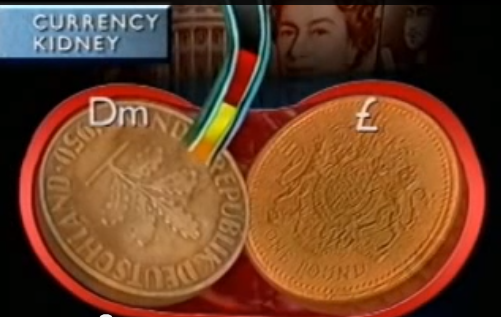
The Currency Kidney

591. London Native Speaker Interviews REVISITED (Part 1)

Revisiting a video I made for YouTube in 2009 and teaching you some descriptive and idiomatic vocabulary in the process. Transcripts and video available.


[DOWNLOAD]

Introduction

Hello, you’re listening to episode 591, which is called London Native Speaker Interviews Revisited Part 1.

The plan in this episode is to revisit some videos I recorded 10 years ago…

We’re going to listen to the audio from one of those videos and break it all down in order to help you understand everything word for word, teaching you some lovely, descriptive and idiomatic vocabulary in the process.

This episode is a bit of a flashback to 10 years ago when I first started doing the podcast.

What happened 10 years ago Luke, in 2009?
Ooh, all sorts of things happened, but one of them was that I went into central London armed with my video camera, an Oyster card and a question to ask some members of the public: What is London really like?

What is London like? = tell me about London, describe London

I interviewed people in the street and edited the footage into a series of 5 videos which I published on YouTube, and the videos actually did very well! Part 1 now has 1.6 million views. Part 2 has 1 million.

You might be thinking – are you rich because of those videos? Nope. Not at all. I didn’t monetise them until after they’d got most of their views, or I couldn’t monetise them because of some background music. Anyway, that’s another story for another time – how YouTubers make or don’t make money from their videos.

I also published the videos and their audio tracks as episodes of this podcast in 2009. Some of you will have heard them and seen those videos.

I thought that this time it would be interesting to revisit those videos on the podcast because there’s loads of English to learn from them. When I published them on the podcast in 2009 I just published them with no commentary from me. It was just the video/audio with transcripts on the website.

But this time I’m not just going to play them again. Instead I’m going to go through the audio from the first video and kind of break it down bit by bit, explaining bits of vocabulary and generally commenting on things as we go. This is going to be a bit like one of those director’s commentary tracks that you get on DVDs, but the focus is mainly going to be on highlighting certain items of vocabulary and bits of pronunciation/accent that come up in the videos.

*Luke mentions his Avengers Endgame Spoiler Review, which you can listen to in the LEP App (in the App-only episodes category).*

If you want to watch the original video that I’m talking about here, you’ll find it embedded on the page for this episode on my website (A script is also available), it’s also in the LEP App (with a script in the notes) which you can download free from the app store on your phone – just search for Luke’s English Podcast App and you can just find it on my YouTube channel, which is Luke’s English Podcast on YouTube. The video is called London Native Speaker Interviews Part 1, or maybe London Video Interviews Part 1 (website), London Interviews Part 1 in the app.

So, let’s now travel back in time to 2009 and revisit Native English Speaker Interviews Part 1.

The theme of the videos is London – what’s it really like to live there? What are the good and bad things about living there?

So there’s a lot of descriptive vocabulary for describing cities and life in cities.

Video script available here https://teacherluke.co.uk/2010/03/25/london-video-interviews-pt-1/

Definitions of some vocabulary and expressions

What’s London really like?
This question: “What is it like?” means “tell me about it” or “how is it?”. It does not mean: “What do you like about London?”
e.g. What is London like? – it’s busy
What do you like about it? – I like the theatres

It’s gone to the dogs = everything is much worse now than it was before

grimy = dirty

to recharge your batteries = to give yourself some energy, by doing something pleasant and stimulating

to shout someone down = to disagree with someone loudly in order to stop them talking

to take advantage of something = to use something good which is available to you

commuting = travelling from home to work every day

588. Punctuation Rules / Book Review (Part 2) Apostrophe, Full Stop, Comma

Part 2 of my episode about punctuation. This one covers punctuation rules for apostrophe, full stop and comma. Also you can hear the rest of my book review of Punctuation..?  by User Design. Transcript available below.

Small Donate Button[DOWNLOAD] [CAMBLY OFFER – USE CODE: TEACHERLUKE]

Introduction

Hello there, you are listening to part 2 of this episode about punctuation. In the last one I talked generally about the importance of punctuation in various types of writing, described a book about pronunciation which has been sent to me for review by a publishing company and also I went through a list of punctuation symbols and described them so you know the names for a lot of the different punctuation marks available to you.

In this episode I’m going to actually teach you various punctuation rules relating to 3 big punctuation symbols.

So, I’m going to talk about how we use apostrophes and how to avoid certain common errors that actually make people’s blood boil, then I’ll give you some tips about full stops and commas. I’m also going to finish reviewing that book which I received in the post recently. It’s a punctuation guide and I’ll be giving my review of it.

Just before recording this I realised that there were some punctuation symbols which I didn’t mention in the last episode and I just want to say them now because you might not know the names we use in English for these symbols. These are ones we see on our computer keyboards and use quite a lot for various things like email addresses and stuff like that.

_ underscore

@ at mark 

& ampersand

# hash

* asterisk or star

Alright, now I’ve mentioned those, let’s carry on with this episode with my comments about apostrophes, full stops and commas and then the rest of my review of the book Punctuation..? by User Design.

Just a reminder – you can find a transcript on the page for this episode on my website so you can read along with me or skim the script later in order to check for any new words. There are also links for the book and some pictures too. Right, let’s carry on.


Some punctuation rules

I don’t have time to go through every single punctuation symbol and explain their rules so I’m just going to focus on a few thing. To get the rest you’ll need to get a copy of this book or one of the others on the market. Other books are available of course.

Also I should say that usually, these days I do this kind of language teaching in my premium episodes. This time I’ve chosen to include this in a free episode, but if you want more of this kind of thing – episodes where I focus specifically on teaching you language then check out my premium episodes and become a premium member at www.teacherluke.co.uk/premium

I’m going to deal with

  • The apostrophe (various uses)
  • Full stop vs dot vs point
  • Comma

I’ve chosen those because they’re really common and people, surprisingly, get them wrong quite a lot. Usually it’s learners of English who get full stops and commas wrong, and errors with apostrophes are common among native speakers. In fact errors with apostrophes make some people really angry. I’ll say more about that in a minute.

One thing to say here is that there is a certain amount of disagreement when it comes to punctuation rules. There isn’t a single agreed set of rules that everyone follows. Some things, yes, everyone agrees on, more or less. I think this includes certain basics like the rules of full stops and apostrophes. But for many other areas of punctuation there are always little points of disagreement, like for example some uses of the comma (The Oxford Comma debate comes to mind. I can’t go into that now though, because we’d be here all day! Just google it to get the full story, perhaps on a website like Grammarly).

https://www.grammarly.com/blog/what-is-the-oxford-comma-and-why-do-people-care-so-much-about-it/

So, be aware that there are some differences of opinion when it comes to style and the application of punctuation. The following information is correct as far as I’m concerned.

Apostrophe

This is not just a brilliant album by Frank Zappa, it’s also one of the most commonly used bits of punctuation, and this is a big one because people get it wrong all the time and it has a few different uses.

I’m paraphrasing from the Punctuation…? book here by the way.

Paraphrasing means taking information that you find in someone else’s work and then putting it into your own words, not copying it word for word, I mean changing the wording so that it’s not the same as before. In fact, paraphrasing really means reading someone’s words, understanding them and then writing the same concepts but using different wording.

Anyone writing essays at university should be well aware of the importance of paraphrasing so you don’t commit copyright infringement. This is a major issue these days because the internet allows people to copy & paste other people’s text so easily, but we shouldn’t do it. We shouldn’t pass off other people’s work as our own. I know that there are plenty of universities that are working on ways to seriously crack down on their students just ‘copy & pasting’ other people’s work into their own essays.

Having worked at a university here in Paris I have seen it done lots of times and I must say it really annoys me. It’s always blatantly obvious and, well, I just can’t stand it. For me the main examples were when I gave my university students presentation tasks to do and they literally just memorised a page from Wikipedia and then recited it to the class with absolutely no effort to even care about or think about what they were saying.

It just looks so terrible when people do that. It’s ok to take information from somewhere, just try to absorb it and then put it in your own words, and please, if you ever do a presentation at university or anywhere for that matter, just try to put some enthusiasm into your work, even if you’re worried about making errors in English. Sorry, I touched a nerve there in myself. Bad memories of some moments when I felt frustrated during my days of being an English teacher at university.

Anyway, for the record, I am paraphrasing the main points that are made by the Punctuation…? book here, with some other ideas of my own thrown in.

What’s the apostrophe?

Think about the title of my podcast – Luke’s English Podcast. There’s an apostrophe in it. L U K E apostrophe S. That one shows a possessive. It’s my podcast. Luke’s podcast.

What does it look like, Luke? (can you repeat that question? haha)

It’s like a little dot with a tail that hangs in the air just to the right of a letter. In the case of possessives, that’s just before the letter S at the end.

It’s for possessives, but also other things. Here’s a list of situations when we use apostrophes.

Possessives

We use apostrophes with singular and plural nouns to show that one thing possesses another thing.

Here are some examples of possessives with singular nouns, in this case Dave is the singular noun.

“That is Dave and that is his car, just over there. Yes, that car belongs to Dave. That is Dave’s car. This is not Dave’s car. This is my car. My car is small, but Dave’s car is really big, unnecessarily big, some might say. I don’t know why he’s been driving such a massive car around the city. Now, as you can see, Dave’s car has crashed into my car. My car is now completely smashed up and will have to be thrown away at the junk yard. Dave’s car on the other hand, is relatively undamaged. So, Dave’s car is fine, but mine is completely smashed up. These are my hands. And this is Dave’s throat. Yes. I am strangling Dave. In my mind.”

Sorry, I got a bit carried away there! Don’t worry folks. It’s just an example. I don’t have a car and none of that ever happened, and anyway Dave’s dead now so it’s fine.

Just kidding.

Anyway, you saw lots of examples of the possessive apostrophe being used there.

You know this already, right? You should do.

We use an apostrophe to show possession when we’re dealing with singular nouns, like Dave. Dave is a singular noun (he’s also a single man, girls, if you’re interested in men called Dave who have large cars but can’t drive them).

It also works for things too, not just people. For example, the word car. “That car’s windscreen is completely smashed, whereas this car’s windscreen is somehow undamaged.”

That’s singular nouns. What about plural nouns, Luke?

What if both cars had their windscreens smashed in the accident?

As you know, plural nouns in English have S at the end. One car, two cars.

So what if you’re talking about the windscreens of two cars?

So, to add possessive S to a plural word which already has an S at the end (like CARS), what do you do? Do you add ‘apostrophe + S’ like with singular nouns? So C A R S ‘ S?

Nope, you can just add the apostrophe to the end, without the final S.

So it’s C A R S ‘

These cars’ windscreens are both smashed.

To be honest, if we’re not talking about a person I’d probably find another way of putting it. I’d probably say

The windscreens on these two cars are smashed.

What about plural names? For example if you have more than one bloke called Dave. Two Daves.

Actually, it’s rare that you have possessive forms of plural names.

It’s just weird to say something like “Daves’ cars crashed into each other” meaning “Dave and Dave’s cars crashed into each other”.

The point is – for plural nouns, whatever they are – people or things, with possessives you can just add an apostrophe.

This is also true for names that end in S, like James, my brother’s name.

You can write James’ Room. That’s J A M E S ‘ R O O M.

I remember that one because when I was a child, my brother and I had separate rooms and we had little signs on our doors. Mine said “Luke’s Room” with an apostrophe after my name and then an S. James’ sign said “James’ Room” with an apostrophe and then no S. I sometimes wondered why they were different. It’s just because James’ name ends in an S.

Fascinating stuff this, isn’t it?

For names ending in S like this you can also just write James’s Room. J A M E S ‘S R O O M.

How do you say that? James’ / James’s —-> /jeimziz/

So actually, for names it can be S’ or S’S.

So that’s possessives for singular nouns, plural nouns with S and names ending in S.

But what about irregular nouns? I mean, nouns where the plural form isn’t made with an S, like “children”.

One child
Two children

Well, we just do the same thing as we do with a singular noun.

So, “The children’s toys are in the bedroom”.

Other examples are things like “Women’s rights”, “The people’s champion” or “The Men’s changing room”.

A common error with apostrophes (Using apostrophes for plurals – don’t do it folks!)

This is a mistake that makes some native speakers get really annoyed.

Sometimes in the UK you will see people use apostrophes just for normal plurals.

For example you might walk through a market and see a sign saying “Orange’s” or “Burger’s” or even “Fish & Chip’s”. Needless to say, there definitely shouldn’t be an apostrophe in those words. They’re just plurals of countable nouns. They’re not possessives and they’re not contractions of verbs.

Those kinds of errors are likely to make people’s blood boil!

If they know you’re a non-native speaker of English, that will make it a bit better, but still – don’t make the sort of mistakes that native speakers make, even if native-level English is what you’re looking for.

We’ll look at a couple of other common errors in a minute.

Apostrophes in contractions to indicate missing letters

Apostrophes are also used to let us know that some letters have been removed to make contracted forms.

Luke’s terrible improvised “joke” (?)
Just let us know when the letters have been moved from the lettuce.
(The words “let us” “letters” and “lettuce” sound really similar, that’s it. Terrible. Not even a joke.)

Apostrophes in contracted forms

Don’t → Do not
Doesn’t → Does not
I’ll → I will
Isn’t → Is not
Let’s → Let us
There’s → There is
You’re → You are

The book says that contracted forms are used for writing out speech, which is a good way of putting it. I’d add that these days we just use contracted forms in any kind of informal and neutral writing, but not in formal writing.

This use of apostrophes isn’t very complicated, is it? But it does cause one particular problem, which is it’s vs its

That’s the difference between the contracted form of it is and the possessive form of the pronoun it.

More common errors: It’s vs its

This is another thing that native speakers get wrong quite a lot.

Think of these two examples. Which ones should contain an apostrophe and which shouldn’t?

Obviously if you’re reading the script for this episode then you’ll be able to see the apostrophe with your eyes because it’s right there. But for those of you who are listening, in which sentence would you add an apostrophe after “it”?

  • It’s a lovely day today!
  • My phone has a crack on its screen.

I feel like I should join those sentences together to make one slightly sad sentence.

It’s a lovely day today, but my phone has a crack on its screen. :(

So, with an apostrophe “it’s” means “it is” or “it has” (like in present perfect).

Without an apostrophe it’s a possessive pronoun, just like my, your, our, their, his, her. My phone, your phone, our phones, their phones, his phone, her phone. None of them have apostrophes either.

We saw a lion and its paw was injured. (possessive pronoun)
Oh no, it’s (it has) injured its (possessive pronoun) paw!

Full stop (also called the ‘period’ in US English)

This one is really simple but it needs to be said because I’m surprised at how often I see missing full stops in students’ writing and also people using commas instead of full stops, incorrectly.

So I’m just going to say – put a full stop at the end of your sentence and a capital letter at the beginning of the sentence!

You don’t need a full stop if you have an exclamation mark or question mark.

How do you know when it’s a full stop and not a comma?
Well, if you’re using a new subject in a new clause without a conjunction (a joining word) to connect them, you need a full stop.

For example

I love cheese, but I can’t eat too much of it.
I love cheese. I can’t eat too much of it.

A basic example there, but there it is.

“Full stop” is a phrase that we use in spoken English to mean “And that’s the end of it! I am not discussing it any more” For example, “I don’t want to see any more smoking in front of the building, full stop!”

In US English they say “Period”.

“God damn it John. You’re a god damn maverick! I want your badge and your gun. You’re off this case. Period!”

“Full stop” is the phrase we use for the dot at the end of the sentence.

We also have other little dots in things like numbers and web addresses. What do we call them?

Dot

Use this in email addresses and websites. Teacherluke.co.uk

Also use it just to describe the shape – a small round mark is a dot, like on a pattered dress.

For example you might have a blue dress with white dots on it.

Also we use the word “dot” for the top part of the letter i or j and also to describe exclamation marks or question marks. It’s just the word we use for a tiny round mark.

Point

This is for numbers, meaning “decimal point”.

For example 3.14159 (Pie) Three point one four…
BBC headline: Women have 1.9 children on average, a record low – BBC News
One point nine children…

Comma

This is the most common punctuation mark in English. Basically, it’s used to make your writing clearer and to indicate some sort of pause in the rhythm of the sentence. We use them to separate items in a list.

For example, “Give me your clothes, your boots, your cigarettes, your Pokemon cards and your motorcycle”.

It’s also used when there is a change in the subject in your sentence. That’s something the Pronunciation…? book said and I think it’s really good.

For example

“I wanted to watch the new Avengers film, but Dave crashed into my car, so I couldn’t.”

There are more little uses of the comma, like the way they’re used in non-defining relative clauses or conditional sentences but to be honest I can’t go into all of those things now!

You’ll have to get a punctuation guide to get all the details.

Alright. This stuff can be hard to keep in your head, even when you already know it! That’s why you need a reference book to keep going back to. Explaining punctuation is not that easy, especially in an audio podcast, so why not use a book like this to save you the effort of working it all out for yourself, or doing loads of google searches and attempting to find consistent answers from different sources.

One thing I will say again is that there is some disagreement about the rules of punctuation and to an extent some of the application of punctuation symbols in your writing is a question of personal style and personal choice but some things are definitely right or wrong so the more you know the more control you’ll have and ultimately the better it will be for your English.

Book Review – Punctuation…? by User Design (continuing my review)

Punctuation..? by User Design (front and back covers)

There are a few books that explain punctuation that already exist on the market, but not that many that only deal with punctuation on its own.

Most of the time you’ll find punctuation guides inside other reference books like dictionaries (for example The Oxford English Dictionary) or grammar guides (like The Oxford A to Z of Grammar and Punctuation). As far as I can tell, the main book people buy when searching for a punctuation guide is The Penguin Guide to Punctuation. So, those things are the mainstream, well-known guides.

This book, “Punctuation…?” should be considered as an alternative.

So, let’s think about this book again. Remember how I described it to you earlier? Let’s go a bit deeper and I’ll give you my thoughts – both the negatives and positives.

I definitely like this book but I think it’s not 100% perfect. Let’s start with the negatives first. This is where I do some nit picking. Nit picking means making small criticisms or critical observations about something. Small criticisms that aren’t really all that important.
Well, perhaps some of these criticisms are important. We’ll see.

Negatives

The design aesthetic of this book is minimal, but it’s a bit too minimal in places, maybe. It doesn’t always give full reasons for some punctuation points and it feels like some things are lacking. For example, the page about colons. I had other questions which weren’t answered, like “Shouldn’t we put a capital letter after a colon? When do we use a capital letter after a colon and when do we not?” Those are questions which might be answered by more thorough and detailed punctuation guides or just by googling it. I sometimes feel there’s more to add, and I expect that in later editions of the book, if they publish them, there will be more details added, or at least I think there probably should be, without spoiling the minimal style of the whole book anyway.

So, yes, the book feels a little bit insubstantial, as if it needs more. For example, it could do with some pages of commentary, generally, about punctuation in general. The book covers each punctuation point succinctly and then it just ends. I would like some comments perhaps from the authors just explaining their process or perhaps giving some opinions about punctuation and style or something like that.

At first I thought that this feeling of “there’s something missing” was because of the minimal design with plenty of white space on the page and the cartoons which look quite sketchy, even if they are good fun. I thought it was just the effect of the design.

But in all honesty, it’s not just the way it looks, it’s also the content. Don’t get me wrong, the pages which are there are great and will definitely teach you good information about punctuation but it’s not really a full book. It’s more like a pamphlet, which is how it is described on Amazon.

The recommended retail price on the back of the book is £10, which is higher than other, more substantial books on punctuation which are available. I think that might be a bit of a sticking point for some customers. You’d expect the price to be a bit lower for the amount of content you’re getting.

Also, some of the examples are a bit weird, which can make them slightly confusing (“The snakes’ hisses”?)

Also, sometimes it’s not completely obvious to me what the connection is between the illustration and the punctuation point being explained. This makes it feel a bit like the pictures aren’t all that helpful beyond just creating a fun atmosphere – but is that what people want when using a punctuation reference guide? By all means, use humour and fun. Of course I believe in that strongly. I think it’s really important to help people to enjoy learning stuff like this but I also think that the fun stuff should be performing a function too and in this case some of the pictures don’t seem to make things clearer, some of them just seem a bit odd.

They’re idiosyncratic which is cool, but not always that helpful, and they might just make the guide somehow less serious, which I think is something people look for in a guide like this. Am I repeating myself? Probably.

This book is after my own heart. https://dictionary.cambridge.org/dictionary/english/after-your-own-heart

In summary, it might lack the seriousness and full commentary that some people expect from this kind of book at this kind of price, even though I like it.

Positives

One of the good things about this book is that it’s just a nice product to own. The paper it’s printed on is nice and thick and feels pleasant to touch. It has a pleasant-looking minimal design. The illustrations are quite fun and give the book more personality than your average dictionary or style guide. Also it would be more appropriate for young people I guess, or people who just want a bit more fun. It’s quite a good coffee table book, which makes it sound frivolous, but it is the sort of book you can enjoy flicking through, picking up some tidbits about punctuation that you might have always wondered about.

The explanations are short enough for you to digest quite easily. For example, there’s pretty much one rule or point per page. Punctuation rules can get pretty complicated but this book does a good job of reducing superfluous information. It gets straight to the point and as a result is very useful.

I said before that the book could do with some more commentary, like perhaps an introduction or conclusion, but on the other hand this book’s minimal approach makes it very accessible.

You will definitely learn things about punctuation by reading this book. Sometimes, very detailed language reference books become impenetrable because there’s so much information to sift through. Not with this book. They keep it short and simple.

Because it’s quite fun and a bit different while also being useful, I think it would be a good gift. You might not choose it in the bookshop if you want a no-nonsense language reference book, but you’d probably be happy to receive it as a present. I actually really like the book and I’m glad I have a copy. I learned a thing or two from reading it and it’s good to see some originality in this kind of reference work.

But it depends on the person I think. Some people might like this book because they will think it is a case of “Less is more”. I mean, some people will like the minimal style, will find the illustrations fun and will appreciate a more light-hearted feel but there are bound to be others who would just like more information, presented more seriously, please.

On the whole, I like the book. It’s original and quirky while also being useful and clear. It might not be the serious reference book that some people are looking for, but the information inside can definitely help you understand and improve your use of punctuation and ultimately that’s the main thing.

What did my wife think?

This morning I was having breakfast with my wife and the book was lying on the table. I pushed the book towards my wife and said, “what do you think of this book? Just give me your first impressions.” She said “I really like the pictures. I love this sort of thing. It looks really useful.” We agreed that it was actually a really cool book.

So if you’re looking for an alternative book about punctuation which has a more fun approach, get this book – either for you or as a gift. I think it’s particularly good as a gift for someone with a bit of a sense of humour, who is curious about punctuation and who also wants to be able to write more clearly.

The book seems to be available from all good bookshops including the main online retailers, certainly the ones which are well-known in the UK.

LINKS

User Design Website https://www.userdesignillustrationandtypesetting.com

Their books https://www.userdesignillustrationandtypesetting.com/books

The page for Punctuation…? Includes all the relevant information, including how to get the book https://www.userdesignillustrationandtypesetting.com/books/punctuation/index.html

Ending

I’d like to say thanks to User Design for sending me the book, and thanks to everyone out there for listening to this!

Owning a book on punctuation is a great idea. If you actually use it, you will see a definite improvement in your awareness of punctuation, which feeds into an overall sense of how you need to be clear when communicating, particularly in your writing.

So, I do recommend getting a punctuation reference book. Either this one, for the reasons I’ve given, or another one if this book isn’t your cup of tea.

587. Punctuation Rules / Book Review (Part 1)

This episode is about the importance of punctuation in writing. I’ll teach you the names of various punctuation symbols and review a cool punctuation reference book that someone sent me recently, and yes I do think it is possible to have a cool book about punctuation! Transcript available.


Small Donate Button[DOWNLOAD] [CAMBLY OFFER]

Introduction

In this episode I’m going to talk about… punctuation!

I’m going to talk about punctuation, teach you the names of most of the main punctuation symbols we use when writing. I’m going to explain the rules/uses of some bits of punctuation (namely the apostrophe, comma and full stop) and also I’ll be doing a review of a book about punctuation that you might be interested in purchasing.

So this is an episode of an audio podcast about punctuation which is a completely visual system, so this might be a bit ambitious and there will be times when I’m trying to describe punctuation symbols, so I expect there will be some bits of descriptive language there to look out for, as well as just loads of commentary and also a book review from me.

What is punctuation?

Just in case you don’t know, punctuation means all the symbols we use to perform various functions when writing. This means things like full stops, commas, apostrophes and things like that.

I don’t often talk about writing on this podcast. The focus is usually on speaking, listening, vocabulary, bits of grammar, pronunciation and of course just talking about various topics in order to help expose you to loads of English through audio, like I talked about in the last episode about the importance of listening in your learning of English.

Writing can be difficult to teach in an audio podcast, and that’s one of the reasons I don’t talk about it that much. But I’d like to deal with it sometimes if it’s possible and punctuation is actually one of those areas of writing that often doesn’t get taught, but it’s a really important part of writing.

First of all, it’s something that a lot of learners of English need to work on. In my experience as a teacher, I’ve seen plenty of issues relating to it in my students’ work. This includes basic things, like just not putting full stops at the end of sentences, or getting confused about the difference between a plural S and a possessive S. So there are certain basic errors that you really should avoid.

Also, learning about punctuation can really help your grammar. The more you understand punctuation, the more you understand the way sentences are constructed and the more you are able to then get control over those things.

Basically – learning about punctuation helps you to write better and that is just one of the things you have to deal with if you would like to get a proper grip on this language.

Also, there’s that famous quote which illustrates perfectly the importance of punctuation, “Punctuation is the difference between knowing your shit and knowing you’re shit.”

Source: Boldmatic.com https://boldomatic.com/p/2FfrVQ/punctuation-the-difference-between-knowing-your-shit-and-knowing-you-re-shit


Is punctuation always important?

I would say that punctuation is always important if you want to be clear and correct, which I assume you want to be. Who would want to be vague and wrong? Nobody, I think!

Does punctuation change depending on the situation or the type of writing we’re doing?
Obviously, the more formal your writing the more important it becomes. If you’re writing external business correspondence, legal contracts, letters of application to university, academic essays and so on, then punctuation is going to be a big consideration for you, because you have to pay very close attention to the clarity of your writing.

But what about informal writing?

Some people might say that you don’t need to worry about punctuation in things like emails to your friends or work colleagues that you know well, or in text messages and comments online and stuff. Arguably there is a different set of conventions for those things, but I still think punctuation is really important even in informal writing like that.

Perhaps some of the rules are a bit different when doing informal writing. For example, I think it’s normal, when having a text chat with a friend, not to put full stops at the end of your sentences. In fact, I think the way we use full stops in text messages has changed recently. I mean, if you’re having a chat, you might leave the full stops out of your final sentences as a way of showing that the conversation is still open. For me, a full stop at the end suggests “that’s it”, which can suggest “this chat is over”. That’s a subtle thing, but I think it’s true.

Article: The Text Message You Should Never Send, by Rachel Feltman

OK, I’m going off on a bit of a tangent here, but here’s an article I just found from The Independent, which I think is interesting. This article is called The Text Message You Should Never Send, written by Rachel Feltman (published in December 2015)

Basically it’s talking about how putting full stops at the end of sentences in text messages looks unfriendly and insincere and that this is backed up by research from Birmingham University.

OK, let’s have a bit of a read and then get back to the point.

https://www.independent.co.uk/life-style/gadgets-and-tech/news/never-end-your-text-messages-with-a-full-stop-a6766011.html

Basically, punctuation is important. Knowing when or when not to use it is an important skill to master.

If you’re serious about improving your written English, you’ve got to get punctuation right. It makes a huge difference to the impression you give to people reading your emails, essays, reports or whatever it is you’re writing, even your text messages or website comments. It’s all about getting more control over your communication, which is what it’s all about, isn’t it?

Think of punctuation being to writing what pronunciation and body language are to speaking.

When we speak we use lots of different ways to add interpretation to our words. We use stress and intonation to give emphasis and tone and we use our faces and hands too. At this point my Italian listeners are saying “Yes Luke, we know all about that.”

So, punctuation is something that is absolutely crucial for your writing.

Let’s get back on track here.

Do you know the words for all the punctuation symbols in English? Do you know how to use them properly?

The plan in this episode, like I said at the start, is to teach you the words for some punctuation marks and symbols we use when writing, explain the rules/uses of these bits of punctuation and also I’ll be doing a review of a book about punctuation that you might be interested in purchasing.

About the book I just mentioned. Let me say a few things about it before we start. You’re now going to hear me describing this book. Watch out for the language I’m using. You can read a lot of this on the transcript for this episode which is available FREE on my website! So, if you hear me using certain words or phrases that you didn’t catch, head to teacherluke.co.uk and find the page for this episode. The script is there for you to read or just skim for vocabulary.

Book: Punctuation..? By User Design

A while ago I was contacted by a listener to this podcast who is an author, illustrator, designer and publisher – yes, all at the same time apparently! He’s published a book about punctuation in English and he offered to send me a copy of the book in return for a little review of it on the podcast. I thought it could be a good opportunity to talk about punctuation, to teach my listeners some of the words for punctuation marks and to give some comments about punctuation rules, so I accepted to do the review. It’s a good deal for everyone – you can hear me talk about punctuation and perhaps learn some things, I get a copy of the book and the author gets a bit of publicity.

The book is called “Punctuation…?” and the author goes by the name User Design, which is actually a service/business name that he’s using. So, let’s call him Mr User Design.

Actually the full name of this guy’s company is “User Design, Illustration and Typesetting”. A quick look on their website shows that they provide various services, and I quote, “We offer a complete graphic communication design, illustration and production service, from books to websites, to many other printed and electronic items.”

You can check out their website at https://www.userdesignillustrationandtypesetting.com/ It’s a nice-looking website. Mr Design clearly has an eye for a functional design aesthetic.

So, one of their products is this handy guide for punctuation. It’s a pretty slim book with a clear contents page where you can see all the main punctuation marks that you should know about, with page numbers as you’d expect. It’s all very minimal and clear. But this isn’t just a boring reference book. One of the first things you notice when you open it is that it contains lots of cartoon illustrations to keep things interesting and fun.

They say you shouldn’t judge a book by its cover. This is a famous saying, which means that you shouldn’t judge a person by their appearance. But in the case of books, I have no idea how you are supposed to judge a book before you have read it. Judging it by its cover is pretty much the only thing you can do, isn’t it! I suppose you can flick through it and maybe read the first few pages, but if you’re standing there in a bookshop reading a book, the person behind the counter might start to get a bit peeved after a while.

Anyway, let’s judge this book by its cover. The front cover is very minimal. It’s black and white. There’s the title, “Punctuation…?”, the author (User Design) and then a cartoon illustration of two people apparently communicating with each other. The one on the left is a girl holding her hand out as if she’s saying something and the one on the right is a guy scratching his head with his other hand in the air, and it looks like he’s confused.

Punctuation..? by User Design (front and back covers)

The illustrations are simple sketches done with a pen. They’re quirky. Thin lines. They look a bit like doodles but they’re quite funny. There isn’t anything else. Now, I reckon most people would not really know what to make of that. Well, maybe there would be two reactions – one would be “oh this looks quirky and cool – a hip book about punctuation” and some others might think “This doesn’t look serious enough and I don’t know why these people are standing there like that – what does that have to do with punctuation?” That’s just the front cover though.

If you look inside and actually read all the pages, it’s clear that this is a clear and simple guide to what the different punctuation symbols are and how they are used. But I reckon most people would expect something a bit more academic, like your average dictionary or reference book.

On the back cover you’ve got some text explaining the book, as usual, and another cartoon illustration.

I’ll read the text to you.

Luke reads the back cover of the book. See the pic above ⤴️⤴️⤴️ 

OK, great. That’s nice and clear.

The illustration shows some kind of nightclub or party with a dreadlocked DJ spinning records on his decks and funny-looking people dancing. You can see (but you have to look pretty carefully – it’s not obvious at first glance) punctuation symbols coming out of the speakers and sort of flying out of the turntables where the DJ is spinning what I assume is some kind of awesome bass-heavy dancehall reggae or maybe drum and bass. It’s cool – and a different way to do a book about punctuation, but I reckon some people won’t really get it.

In my experience, people expect a more serious and academic feel from this kind of thing. I remember once we had a publisher visit The London School of English to get feedback on some new dictionary designs. He had dictionaries from different publishers and asked us which ones we liked and which ones we thought learners of English would like.

We all liked the fresh-looking, minimal, modern-looking dictionaries, but he told us that the most popular ones with learners of English were the ones with slightly old-fashioned designs, older looking fonts (I mean classical-looking fonts – I don’t know all the correct words for fonts – I think serif fonts probably). Basically, learners felt like they trusted dictionaries that looked older, more formal, more established, more old-fashioned, with words like Oxford and perhaps even symbols featuring old buildings and things on them. Also, darker colours were more popular. That’s all probably because those designs made the dictionaries look more serious and full of trustworthy information published by well-established institutions.

So, this book might not give the right impression, but on the whole I think the content is mostly good and it certainly can tell you what you need to know about punctuation.

OK, let’s have a look at the contents page of the book. Some of you at this point will be craving a video for this. Maybe I’ll record one, just to show you the front and back, but it depends if I have time! We’ll see. I think you can just use your imagination though and just follow what I’m saying.

By the way, User Design have given me permission to use some images of the book from their website, so I’ll probably add some of those to the page for this episode on my website, so have a look there to get an idea of the way the book looks and the illustrations I’m talking about.

Right, so the contents page. Here are the things the book covers.

Luke reads out the contents page and describes the different punctuation symbols and gives their names. See pic below for the symbols ⤵️⤵️⤵️

Contents page from Punctuation..? by User Design


OK, we’re going to stop the pod here. This episode will continue in part 2 which should be uploaded very soon and might in fact be available for you now.

In part 2 I’m going to talk about some punctuation rules, focusing on 3 very common bits of punctuation – apostrophes, full stops and commas. I’ll talk about how these symbols are used in writing. I’ll point out some common errors and how to avoid them and I’ll finish my review of the punctuation book I’ve been talking about.

Remember, on the page for this episode on my website you’ll find a pretty much full script for this episode … as well as pictures of the punctuation book and links for information if you’re interested in buying it.

OK! Nothing more to add here then except the usual suggestions that you become a premium LEPster to gain access to the ever-growing library of episodes devoted to language teaching.  Go to www.teacherluke.co.uk/premium for that.

Also, you could consider checking out today’s sponsor, Cambly in order to find teachers for that all-important speaking practice.  Go to www.teacherluke.co.uk/cambly to check it out and use my ambassador code teacherluke to get those 10 free minutes of conversation.

Thanks for listening and supporting this podcast over the years. I received loads of nice messages for the 10th birthday of LEP. I’m very glad to have such a cool audience from around the world. Speak to you again in part 2!

But for now, bye bye bye bye bye!

Luke


LINKS

User Design Website https://www.userdesignillustrationandtypesetting.com

Their books https://www.userdesignillustrationandtypesetting.com/books

The page for Punctuation…? Includes all the relevant information, including how to get the book https://www.userdesignillustrationandtypesetting.com/books/punctuation/index.html