A rambling episode recorded on-stage in front of a live audience in Paris in July 2024. Join my audience and me, as I share scenes from the screenplay for my new Hollywood blockbuster action movie about an English teacher called “Last Lesson”, and the sequel “Last Lesson 2: Fast & Fluent”.
Talking about the story of Lord Lucan, the British aristocrat who disappeared in 1974 after the murder of his nanny and attempted murder of his wife. Lord Lucan is an infamous name in Britain, and the story of his disappearance is a compelling glimpse into a life of privilege, high-stakes gambling, and unresolved mystery. I am joined by Alastair Budge, who covered this story for one of his podcast episodes, and we discuss it in detail.
Lord Lucan’s disappearance followed the brutal murder of his children’s nanny, Sandra Rivett, and the attempted murder of his wife, Lady Lucan, for which he became the prime suspect. The case captivated the public’s imagination, blending elements of scandal, wealth, and the darker side of aristocratic life. Despite numerous alleged sightings and theories over the decades, Lord Lucan’s fate remains one of Britain’s most enduring enigmas. This episode covers the details of his life, the night of the crime, and the subsequent police investigation, offering insights into how a man of such high social standing could vanish so completely.
Join me on another rambling episode as I encourage ninjas to come out of the shadows 🥷, touch on some present perfect continuous verb forms 🔁, give some podcast updates, give a report about the stand-up comedy show 😂 & live podcast recording 🎤, teach some polite and diplomatic language with a dramatic bank robbery scenario 🔫, give a summary of the UK’s general election results 🗳️ & more…
Talking to bilingual journalist Charles Pellegrin (France 24) about how the conventions of broadcast journalism influence the way the English is used in news reports, how Charles started as a journalist, the challenge of making TV news reports, our time at university, the Olympics in Paris, and Charles’ experiences of living and working in China.
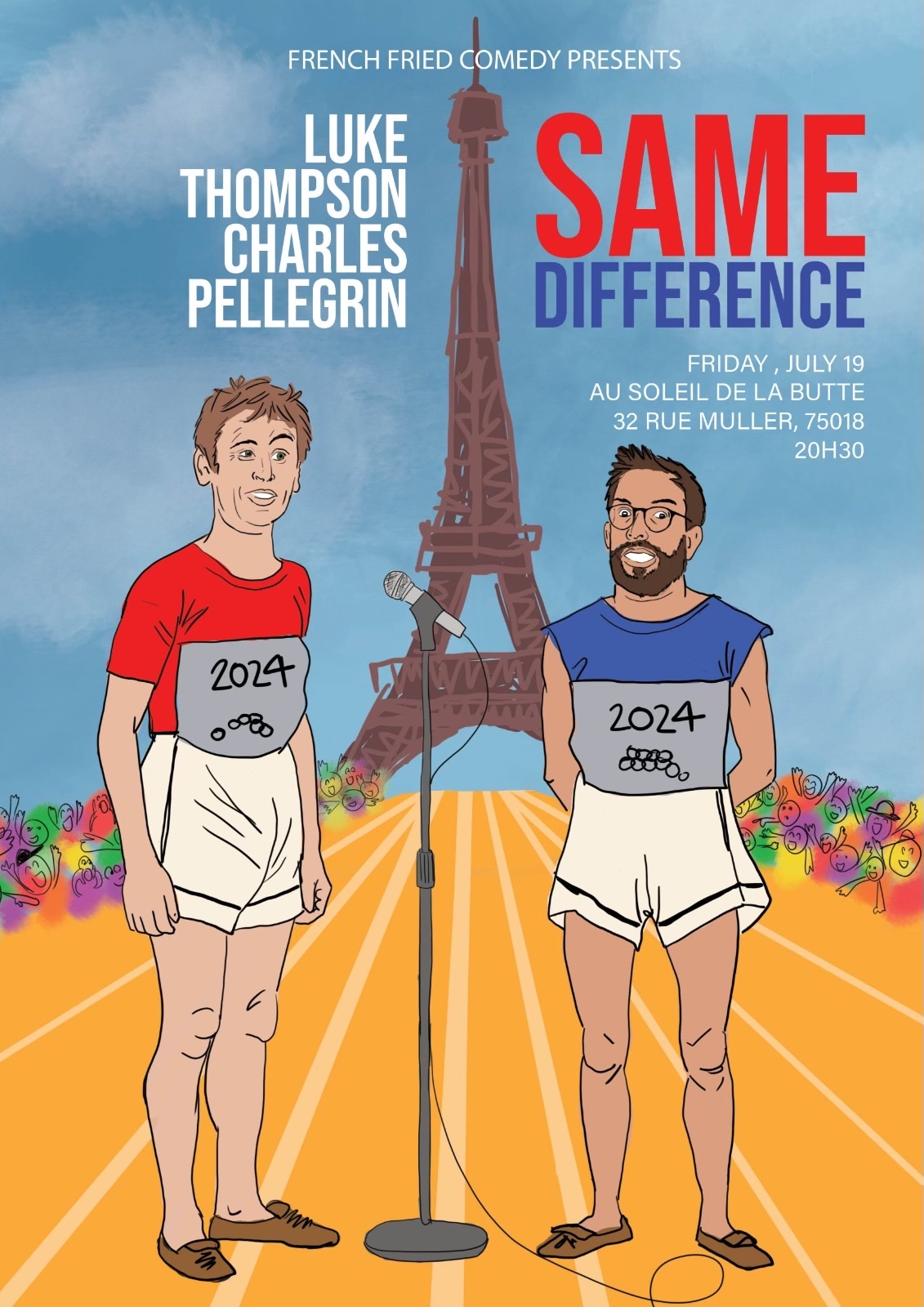
My guest today is Charles Pellegrin, a bilingual (English & French) journalist working for the TV channel France 24. Charles currently works as the presenter of a morning business program, but used to be based in China, where he lived in Beijing for 3 years. Charles also does stand-up comedy in English, which is how I know him, and we are doing a 2-man show together this Friday, 19 July 2024 (details below).
In this conversation we talk about why reporters speak in a certain way when they read the news, how the conventions of broadcast journalism influence the way the English is used, how Charles started as a journalist, the challenge of making TV news reports, our experiences at university, the Olympics in Paris and whether it will be beneficial for France, and Charles’ experiences of living and working in China.
Learn English with a short story. This one is about a man called Edward, who lives an ordinary stress-free life in London, until one day he notices something extraordinary while walking to work, and his world is never the same again. Follow the story, and then let me explain some vocabulary to you. To practise your pronunciation, consider repeating the lines of the story after me.
As the grey light of dawn filtered through the curtains,
Edward Wilson stirred in his bed.
To filter through – phrasal verb
The sunlight came through the windows and the curtains acted like a filter. The sun was less bright (describes a texture or certain look)
Other examples This water is pure and clear, having been filtered through layers of rock and sand In Van Gogh’s paintings, the world is filtered through his unique perception of the world, resulting in a unique style
Air – filtered through a purifier
To stir = move slightly (like a person or an animal waking up) (also stir meaning mix a drink – homonym)
His hazel eyes blinked open, and he yawned, stretching his lean frame.
Hazel – eye colour (brownish green with some amber or gold) Most common eye colours: Brown, blue, hazel (includes amber), green, grey Lean = (adj) thin, but healthy – without a lot of fat We also use lean for business processes – meaning efficient and without waste Frame = his body, especially with reference to his size or build (in this case – lean)
The pale sunlight streamed across the perfectly clean sheets of his bed, and across his spotless floor.
To stream across Tostream = when air, light, liquid or gas flows out continuously A stream = a continuous flow of liquid, air, or gas. “Jane blew out a stream of smoke” To shine across but in streams (shafts of light, rays of light, beams of light, streams of light) The light shone, beamed, streamed out/down/across/in etc Streams of water. To stream music or movies.
Spotless = perfectly clean “I want that car to be completely spotless by the time I get back – I want to be able to see my own reflection in the roof of it” “But it’s a convertible!” etc
He moved back the curtains, pulled open his window blind and stood, squinting at the silent city below his window.
Window blinds
Roller blinds, venetian blinds (in slats), Roman blinds (fold as you raise them), electric blinds shutters (on the outside) curtains (we know)
To squint = To look with your eyes partly closed because you are trying to block out light (like me in the Walk & Talk Paris episode)
Another day in the sprawling metropolis of London awaited him, or so he thought.
Sprawling = spreading out far and wide in a haphazard fashion (in a disorganised or random way) like the way a city does
It could also be: things in nature (a forest or desert) A sprawling story A sprawling universe Anything that spreads out large and wide
A metropolis = a very large city, particularly a huge capital city
Awaited him = waited for him (a more formal/literary style – sometimes more formal language is used in literature to create a more serious tone)
Edward was a software engineer, working diligently at a prestigioustech firm in the city.
To work diligently / to be diligent = to work hard, with a lot of care and attention Prestigious = high status, a lot of people respect it or think it’s good – a top, high level company A tech firm = a technology company (probably software systems, or AI or something like that) A firm = a type of company A law firm, a tech firm, an investment firm
His life was a predictableroutine of coding, coffee, and occasional nights out with friends.
Predictable = you know what is going to happen because it’s always the same – easy to predict (and therefore boring) A routine = the things which you always do, every time (describe Edward’s routine)
His days were ordered, tidy, and conveniently empty.
Ordered = everything arranged in a certain way, things are put in a clear structure or arrangement – no mess Organised is a synonym, but ordered suggests that things are neat, tidy, structured with no mess Conveniently empty – empty – nothing in them – no serious commitments. This is convenient because it makes life easier for him.
He wasn’t troubled too much by anxiety or stress, despite his demanding job, and the busy pace of life in the city.
To be troubled by something / bothered / inconvenienced (that’s less strong) A demanding job = a job that demands a lot from you (asks you to do a lot of things) – hard work, energy, commitment, time, mental load (a demanding job is a difficult job) Pace of life = speed of life
He had no specific emotional ties or commitments.
Ties = things that attach you or limit your freedom in some way Things that tie you down → girlfriend, wife, kids Ties or commitments (these are synonyms) (it’s not uncommon to have several synonymous words used together for emphasis or style)
He was free to live how he wanted, spending his free time exactly as he pleased. However, there had always been a certain feeling in the back of Edward’s mind, a sense that something in his life was not quite right.
In the back of your mind = it refers to thoughts or feelings which are there but you don’t think about them directly or clearly, not dominating your thoughts.
They’re there in the background and might give you a certain general feeling in your life. They might influence the way you think or behave. For Edward, although life seems ordered and fine, something is still not quite right.
Something was missing.
One brisk autumn morning, as Edward was strolling along the Thames Embankment on his way to work, he noticed something unusual.
Brisk = bright, energetic, fast paced, lively, fresh. A brisk morning A brisk walk Strolling = walking in a fairly relaxed way
An object hung in the air above the pavement up ahead.
Hang – hung – hung Was suspended (somehow) – just in the air The pavement (UK) – the sidewalk (US)
Edward walked on for a closer look.
To walk on = to continue walking “On” is sometimes added to a verb to mean “continue doing it” To move on To drive on To carry on To talk on To read on To ramble on To dream on
A seagull was frozen mid-flight, suspended in the sky like a photograph.
A seagull (or just gull) is a type of bird that often lives near the sea (but sometimes in land too – often near water) You often see them at the beach They can be seen in London, particularly by the river Mid-flight = in the middle of flying (an adverb to modify the adjective “frozen”)
Pedestrians around Edward seemed oblivious as they hurried on, engrossed in their conversations or with their faces locked to their phones.
Pedestrians = people walking Oblivious = with no idea that something is happening To hurry on = to move on in a hurry To be engrossed in something = completely involved in it, completely focused on it and not aware of other things Engrossed in a book / engrossed in an episode of LEP (take care when driving and operating heavy machinery)
Edward reached out to touch the frozen seagull, but it vanished in front of his eyes.
Reached out = stretched his arm to touch the bird Adding OUT emphasises that he has to reach his arm quite far away
Edward snapped his hand back suddenly, and stared at the spot where the seagull had been, just seconds earlier.
Snapped his hand back = moved his hand back very quickly Snap = a very fast, sudden movement A crocodile snaps its jaws It also refers to something breaking and making a sound (I snapped my pencil, a stepped on a piece of wood and it snapped) In all cases it refers to quick, sudden movement
He glanced around, to see if anyone else had noticed.
He looked around quickly in different directions. Glance = look quickly Glance around = in different directions
But nobody was watching. The world around him seemed utterly normal.
Utterly = completely They’re synonyms – but “utterly” expresses a slightly more extreme feeling. It’s more emphatic That was utterly boring That was utterly disgusting That film was utterly ridiculous
…and yet for Edward, things would never be the same again.
Slowly, a strange feeling came over him.
A feeling comes over you = the feeling gradually arrives, you gradually start to feel something A feeling of tiredness came over me. Nervousness came over me. A feeling of excitement came over me.
He felt a shiverrun down the length of his spine as he remembered a quote from a famous physicist – “Reality is merely an illusion, albeit a very persistent one.”
A shiver = a cold feeling that makes you feel uncomfortable / when your body shakes probably because it’s cold or you’re afraid To run down the length of his spine = this shiver moved from one end of his spine to the other Length, width, height, depth Merely = only, just, no more than (we use it to say something is not that important) “He’s not important. He’s merely a English language podcaster. He doesn’t pose a threat to us.” Albeit – this is like “but”, “although” or “even though” but it is followed by a noun, adjective or adverbial phrase, but not a clause with a verb in it. It means “although it is”. Although is followed by a clause with a verb: Reality is an illusion, although it is a very persistent one. Albeit, isn’t Reality is an illusion, albeit a very persistent one. The music was great, although it was a little loud for my tastes. The music was great, albeit a little loud for my tastes. Why use it? It gives a slightly more sophisticated literary style.
Edward spent the day working in his usual focused way.
He didn’t mention the bizarre frozen seagull to any of his colleagues, but his curiosity was piqued and that evening he decided to delve deeper.
To pique something (works with fixed expressions) Fixed expressions To pique your interest To pique your curiosity The title of the episode really piqued my interest It aroused or stimulated my interest. It’s not peak (high point) or peek (a quick look) (homophones)
To delve into something (to look/search deeply into something) To delve deeper (to investigate more profoundly) search for more information
He started by searching online for the quote he had remembered which led him down a rabbit hole of philosophy, quantum physics, virtual reality, and artificial intelligence.
Down a rabbit hole Like in Alice in Wonderland, when she follows a rabbit down a hole and gets lost. Going down a rabbit hole means getting very interested in a specific topic and reading about it, researching it and getting lost in the subject. E.g. if you believe that the earth is flat, you might go down a rabbit hole of conspiracy theories about it, reading more and more things and sort of getting deeply obsessed with it In this case, Edward goes down a rabbit hole of philosophy, and physics related to virtual reality and quantum science (in order to investigate what he has seen)
He searched for sightings of similar anomalies, witness accounts and stories from other people like him.
A sighting – when someone sees something (UFO sightings, ghost sightings) Anomalies – things which are not normal, not expected – in this case, apparent “glitches” in reality.
He got lost in that rabbit hole for months, as the world moved around him, normal life passing him by.
To pass you by = to go past without stopping I stood by the side of the road and watched the parade of musicians passing me by. Focusing on my studies (or being a housewife) means I haven’t lived a full life! So many opportunities have passed me by!
Every day was the same.
The busy world of work and commuting, somehow softened by that pale London sunlight.
Commuting = travelling from home to work (when you live in a different place to where you work) To commute A commute A commuter A commuter train
But in the evenings, and at night time, he studied.
The more he learned, the more convinced he became that his world, his life, was not actually real. It was just some sort of illusion.
Every day, the world around him – the people at work, the office spaces and lunchtime cafes, the passers-by in the street – everything became less and less convincing.
A passerby (one word) is a person who walks past you, or passes you by in the street The plural can be passersby (one word) or hyphenated passers-by Not ❌ passerbys and not passersbys ❌
Edward began to feel trapped. Like a prisoner inside a huge trick.
One evening, as he stared into the glow of his computer screen, Edward received an unexpected email.
Glow = the light which comes out from his screen The glow of a fire The glow of a screen The glow of the city lights
The sender’s name was ‘Seraphina’.
The message was mysterious and intriguing:
“Meet me at Westminster Bridge, at midnight.”
it read.
Intriguing = very interesting because it is unusual or mysterious An intriguing question She has an intriguing personality An intriguing fact
The invitation, the name, the sudden yearning for human connection – it leapt into Edward’s heart.
To yearn = to have an intense feeling of longing or desire for something, especially something you can’t have. It has romantic or emotional connotations. Yearning for human connection Yearning for love Yearning for solitude Yearning to travel the world Yearning for a simple life in the countryside Yearn for something / yearn to do something
To leap = to jump quickly and quite a large distance Leap – leapt – leapt A tiger would leap at an animal it wanted to attack To leap into – We we were driving through the safari park, a leopard leapt into the car! Fear leapt into my heart
He knew it could be a scam, but he just couldn’t resist the temptation.
A scam = a trick to deceive someone, usually in order to steal their money You get a message on your computer saying that there is a security problem and a data breach and you need to download certain software, or to give your bank details to pay for someone to repair your computer. It’s a scam because either it’s fake and they just want your money, or because they want to get access to your bank account.
Scam emails – asking for you to send your personal information because they have money to give to you. Often the email looks like an invoice – it says “Please find attached your invoice for $568. Let us know if any information is missing.” but it’s a phishing scam designed to make you download the attached file, which actually contains some sort of malware which hacks your computer.
In this case, Edward is worried that it’s a scam and someone just wants to rob him.
He arrived at the bridge at the stroke of midnight, the imposing Big Ben looming out of the shadows above him.
At the stroke of midnight = when the clock “strokes” midnight – when the hand of the clock touches 12 When the clock strikes 12 (this means a bell ringing or chiming at 12 o’clock)
To loom (over/above/out) If something looms – it’s a large object or thing, which appears in a threatening way – often over you or above you. A building looms out of the shadows. A huge ship loomed above us. Clouds loomed over us in the sky. A huge monster loomed over us. The mountains loomed in the distance.
In the story, Big Ben (actually the Tower of Westminster) looms out of the shadows – creating a scary atmosphere.
The streets were deserted, and the moon casteerie shapes on the ground in the half light.
Deserted – nobody there Cast – projected, sent out (broadcast, podcast) Eerie – strange and a bit creepy, scary or unsettling Eerie music played during the horror film An eerie atmosphere in the church at night The moon cast Eerie shapes – the moonlight projected strange, scary shapes on the ground)
As he waited, the tower’s chimesresonated through the night, and he turned to see a woman emerging from the shadows.
Chimes – the sound of a bell Resonated – when sounds carry through the air, ring out, reverberate Sounds can resonate – the sound carries or continues Things can resonate with you – meaning they have an emotional impact – you feel the emotional resonance (vibration) of it. Luke, your story really resonated with me. I felt similar to the main character. I was able to identify with him. To emerge = to come out
Seraphina appeared to Edward like an enigma, her featuresshrouded in darkness.
An enigma = a mystery or puzzle that you have to work out Someone’s features = the shape or characteristics of their face or body – the way their face or body looks Strong features, soft features.
To be shrouded in darkness A shroud is like a long cloth that might wrap around your body and head, protecting you. In this case, Seraphina appears shrouded in darkness. The darkness covers her body. Maybe she is wearing a dark coat and a hood. Maybe she is standing in the shadow of the tower or trees. Edward can’t see clearly what she looks like.
“You’re Edward, the one who’s been searching for answers,” she said.
Edward nodded. “Yes, I am”. He paused “… and you are?”
To nod your head What’s the opposite? to shake your head
“Call me Seraphina. I’ve been watching you, Edward. I believe you’re right, about this world.”
Her eyes met Edward’s. She paused.
Edward’s heart raced.
“What do you want from me?” he said.
“I need your help, Edward. We need your help” Seraphina replied.
“What are you talking about?” said Edward.
“Edward. You are not alone. There are others. We’re forming a resistance. We want to break free from all this and uncover the truth behind what’s really going on.”
Edward paused.
“What, like in The Matrix?” he said.
“Don’t mention that” whispered Seraphina, glancing away for a moment.
She turned back to Edward. “Look. Just join us” she said. “We need someone like you. With your skills.”
Edward hesitated but found himself drawn to Seraphina.
If you are drawn to someone, you feel like you are moving towards them, like you’re being pulled in their direction.
For once, things didn’t seem so ordered, and empty.
Ordered – neatly organised, tidy
“Wait” said Edward. “One question. Are you… real?”
“Yes. I am real.” said Seraphina, resolutely.
Resolutely = done with firm determination, with strong resolve She said this with strength, integrity, courage and self-assuredness. She’s definitely telling the truth and she means it.
Edward paused.
“But how can I be sure?”
He said.
“Well” Seraphina replied. “You’ll just have to take my word for it, won’t you?
Now, will you join us Edward?”
You’ll just have to take my word for it = you’ll just have to believe what I say, without further proof or evidence. I can’t prove it with evidence, so you will just have to take my word for it – you’ll just have to believe what I say.
Edward stood still, his mind turning.
He glanced at Seraphina again.
“OK. I’ll help” he said. “But how?”
In her hand Seraphina held a small, unassuming device.
Unassuming = doesn’t look very special. Modest, Humble. Ordinary looking.
“This is a disruptor. It can manipulatethe fabric of our world, of… the simulation.”
A disruptor is something that disrupts things – to interrupt or disturb. To stop something from working normally. Stops a system, process or event from working normally. The traffic was disrupted by an accident. The the government’s website was disrupted by a hacker, who wanted to cause problems, as a protest. This disruptor probably disrupts the simulation, somehow. (conveniently this is unexplained but you just have to go along with it)
To manipulate something = to control it The fabric of our world / the fabric of time / the fabric of space Fabric literally means a kind of woven material, like wool or cotton. The fabric of space/time/reality/our world = our world is like a fabric made up of lots of strands woven together It means “the structure of our world”
“The what?” Edward interrupted. “What did you call it?”
“There’s no time to explain, Edward, but I think you know, don’t you?” Seraphina continued.
“Edward. You have skills that I don’t have, ok? I need you to locate the core, the central computer that controls our world, and disrupt it, with this.”
She held the device out to him.
“So? Are you in? Will you come with me?
Edward took one look into Seraphina’s dark eyes and felt himself hurtling through time.
Hurtling = moving at a very fast speed, in a slightly uncontrolled way
He nodded resolutely. “OK”
Done with firm determination
Together, they embarked on a journey that would challenge everything Edward knew about his so-called reality.
To embark on a journey (formal, literary – to set off, to start a journey) So-called ← we use this to say that people call it this, but we are skeptical about it, and want to question it “The so-called expert couldn’t answer basic questions about the subject.” “Her so-called friends abandoned her when she needed them most.”
They visited hidden pockets of the city – places that he had never noticed before.
Pockets of something = small isolated places or groups of things (in this case – hidden ones) Pockets of civilisation in the wilderness Pockets of wealth in an otherwise poor country Hidden pockets of the city
Doorways he had passed without a second glance
Without looking at / without noticing / without checking again / without thinking about “She’d always walked past him without a second glance – assuming there was nothing interesting about him at all”
Dark corners where walls left gaps into vastundiscoveredchambers and corridors,
Gaps – empty spaces Vast – huge, massive, enormous, gigantic Undiscovered – nobody had discovered them before Chambers – huge rooms, or caves
shadows under trees which revealed themselves to be the mouths of unseen tunnels, all leading to the underworld.
The mouth of a tunnel
Here they met others who had also seen through the reality of the simulation, each with their own stories to tell.
To see through something = to see something as it really is, to see beyond the way it looks on the surface
Over time, Edward and Seraphina grew closer.
As Edward’s love for Seraphina blossomedamidst the chaos of their quest, he felt a growing sense of purpose.
Blossomed = developed, grew, like blossom (on a tree) Describes something growing and in bloom (with flowers growing) Amidst = in the middle of Chaos = total disorder, a situation where everything is completely confusing and disorganised A sense of purpose = purpose = a reason why something is done = a sense of purpose is the feeling that there is a reason or objective for what you are doing You understand the purpose of it, you understand why you are doing it
It was a love forged in the belief that they were both fighting for the ultimate truth – the chance to live a human life, in the real world.
To forge something = to make it from metal, using a lot of heat This is a metaphor, meaning to make something with a lot of work and time “We forged a strong friendship while travelling together, or while working together” Passive: “Our friendship was forged on the battlefield” Sounds literary and quite impressive, dramatic
But their journey was not without peril.
Peril = danger / a situation in which there is a lot of risk or threat of harm To face the peril of crossing the street in Hanoi as a tourist. Climbing to the top of the mountain involves great peril as you have to walk along very narrow paths and climb up vertical cliffs
On their way, they encounteredthose who guarded the simulation, and who had been watching them
To encounter someone or something = meet, come across On our walk through the forest we encountered a bear with its cubs. The bear saw us as a threat and attacked us, and we died. 🤷 “Those” = the people / those people Again – literary style And I will strike down upon thee with great vengeance and furious anger those who attempt to poison and destroy my brothers And you will know My name is the Lord when I lay my vengeance upon thee! (Pulp Fiction / The Bible)
There are those who disapprove of all forms of gambling. Those who saw the performance thought it memorable.
Formidableadversaries programmed to maintain the illusion of reality.
Formidable – strong, big, powerful – inspires fear, respect, awe – like a big, powerful warrior which you have to fight against An adversary = someone you have to fight against, an opponent or enemy Not just used for battles – could be for legal cases, sporting competitions etc Adversarial (adj) Strong enemies
Fierce battles ensued, sometimes beyond the confines of normal life, blending the lines between digital hallucination and tangible reality.
Fierce = very aggressive, intense, violent Often for dangerous wild animals “The fierce lion roared, displaying its dominance over the territory.” But other things too “Fierce winds battered the ship throughout the night”, or “Fierce battles took place” Ensued = happened after, followed – happened as a result Beyond the confines = outside the limits – in this case (on the edge of normal life, or on the edge of reality/the normal world) Blending the lines = making the lines less clear (the lines between reality and a digital simulation) A hallucination = things that you see or har which aren’t there – like if someone has taken a drug or is mentally ill Digital hallucinations = somehow caused by digital code (I don’t understand how that could work) Tangible = something that can be touched, felt and is therefore real and not imaginary or abstract Tangible evidence of fraud Tangible improvements in productivity Tangible assets = physical assets that a company owns – e.g. buildings or machinery (as opposed to intangible things like debt owed to the company)
One moonlit night, Edward and Seraphina faced their most formidable adversary yet,
Moonlit = lit by the moon (to light – lit – lit)
a towering figure cloaked in shimmeringpixels and black light, barring their way.
Towering = very tall, like the Tower of Westminster Cloaked = wrapped in some kind of large material (a cloak) synonym of “shrouded” Shimmering = shining and glittering Pixels = individual units of light used in computer displays Black light = a kind of ultraviolet light which is invisible to the human eye Barring – to bar – barred – barred = to block someone from going somewhere He was barred from entering A car barred the way. They were barred from the competition for cheating.
Edward activated the disruptor.
The world around them trembled, and the guardian faltered.
Trembled – shook slightly Faltered – hesitated or stumbled (he lost his balance, fell slightly, stopped, was disrupted)
Seraphina seized the moment and strucka decisive blow, shattering the guardian’s code into fragments.
Seized = grabbed / took (normally take or grab with your hands, but you can also seize a moment, seize the day) Strike a blow = strike = hit, a blow = an impact (she hit him or kicked him) Shattering = breakinging into many little pieces (fragments) Like if you drop a pint glass out of a window, or if you drop a big piece of glass on the ground, or if you do a roundhouse kick to a formidable warrior made of pixels in a digital simulation
With the guardian defeated, they pressed on, beyond the city limits, following a faint signal emanating from the disruptor in Edward’s hands.
Press on = keep going with some difficulty, like on a tough journey Faint = weak (faint signal, faint sound, faint writing) Emanating = coming from, coming out from (coming from a point of origin) Resonate = vibrating through (the chimes of big ben resonated through the streets, the sound emanated from the bell in the tower)
It led them deep into the industrial wastelands on the far outskirts of the city, to a seemingly ordinary building.
Wastelands = areas where things used to happen but not any more – there are old things lying around, everything is old and damaged and wasted Industrial wastelands = areas that used to be used for industrial activity (factories, warehouses) but now are unused The outskirts = the areas on the edge of the city Outskirts vs suburbs Suburbs = residential areas around the outside the city (often nice places where there’s a bit more space and lots of homes) Outskirts = also areas around the city, but the very edge, where the city becomes more rural – less populated, might include unpopulated areas
Inside, they found an unassuming room with one single computer terminal.
Unassuming = looks normal, not special, ordinary no reason to believe there’s any danger
A single cursor blinked on the screen.
Cursor = the little thing that blinks on a screen, showing where you can type. You move it with the mouse or trackpad, or with the keyboard
Edward approached the terminal, his hands trembling with anticipation.
Trembling = shaking slightly Anticipation = with expectation of what’s going to come, getting ready for what’s coming
As he connected the disruptor, the room seemed to ripple, revealing its true nature.
Ripple = move in waves, like the surface of water (e.g. a calm pond if you throw in a small stone – the pond ripples)
It was a control centre, the hub of the simulation.
Hub = central point where things are all connected together An internet hub = a kind of router where all the computers are connected to the internet A transport hub = a place where lots of transport systems all meet (like Heathrow Airport or St Pancras station) In this case – it was the central control centre for the simulation, and where all branches of the simulation were connected (or something)
The screen displayed a message:
“Welcome, Edward Wilson. You have come far. But do you really want to know the truth?”
Edward hesitated, his mind racing with doubts and fears.
He glanced at Seraphina who nodded encouragingly.
With determination, he typed a single word, “Yes.”
Instantly, the simulation began to unravel.
Unravel = come apart into different strands If you have a woolen sweater, with one loose piece of wool. Pull it and the whole sweater will unravel. The strands of the fabric will come apart. If you have wound up some string and it all comes apart.
The cityscapedissolved into streams of code, and Edward and Seraphina found themselves standing in a vast, featurelessvoid.
Dissolved = something solid turned into lots of tiny particles and disappeared Dissolve some aspirin in water The cityscape = the landscape of the city – turned into lots of tiny streams and disappeared Vast – huge, massive, enormous, gigantic Featureless = with no features, blank, empty Void = a space with nothing in it at all (like a vacuum) The world around them slowly disappeared leaving them in a completely blank, empty space
Edward looked at Seraphina. “That was too easy”, he said.
Suddenly, the sound of a voice echoed around them, a voice that seemed to come from everywhere and nowhere.
Echoed = The sound bounced around and repeated (like when you shout in a tall stairwell or in a large stone room with a high ceiling, or a cave) To echo / an echo There’s an echo on the line. Your voice is echoing.
“Congratulations, Edward Wilson. You have chosen the path of truth.
But remember, reality is a complex tapestry, and the threads of your existence are intertwined with the lives of countlessothers.”
A complex tapestry A tapestry is a kind of work of art made from many threads of material – often making a large picture (a bit like a curtain or a carpet) You start with a kind of mesh, and attach lots of threads of cotton or wool of different colours, making designs or a picture Reality is a complex tapestry with many threads of existence all woven together. Intertwined = the threads are all attached or wrapped up together – all connected (like the cables of your headphones when you leave them in your pocket – tangled, but intertwined suggests something more organised) Countless others = so many other people that you can’t count them In real life your existence is connected very closely to millions of other people – you don’t live alone, but everything you do affects people around you. Edward lived a sort of convenient isolated life in the simulation, but it’s not like that in the real world. It’s more complicated.
“Life in reality is neither simple nor easy. You must always choose, and choose wisely, for yourself, and for others.”
“What’s he talking about?” said Edward, turning to Seraphina.
But all of a sudden Seraphina seemed to slip away from him.
Slip away – move away gradually, as if she was standing on an icy hill and started sliding back
In the next few moments, Edward felt a profound sense of disorientation as his memories and experiences shifted and merged with the things around him.
Profound = deep and strong Disorientation = confusion – not knowing where you are, which direction you are in, up, down, left, right – lost and confused. Shifted = moved, changed position Merged = combined or mixed together (mergers and acquisitions)
(he’s coming out of the simulation)
He saw glimpses of different lives, different choices, all part of the intricate tapestry of the simulation.
Glimpses = quick looks Catch a glimpse of something To glimpse something To glance at something To glance around, etc
He saw himself and Seraphina living different, separate lives, never meeting, never knowing each other.
Panicking, Edward shouted for it to stop.
Then, just as suddenly as it had begun, the void collapsed, and Edward and Seraphina finally found themselves back in the real world, or so it seemed.
They stood on a hill overlooking the city, bathed in the warm light of dawn.
Overlooking = above, in a higher position where you can see the whole thing My apartment overlooks a junction My balcony overlooks the park This hill overlooks the city (Primrose Hill in London) Bathed – covered in light (bathe means lie in water, but also cover something in a warm light) Dawn – the sunrise Dusk – the sunset
The cityscape was familiar, yet subtly different.
The cityscape = the Landscape of the city Subtle = with very slight details, nuanced Subtly different → different in ways which are not completely obvious, small differences
Seraphina turned to Edward, a knowing smile on her lips.
A knowing smile = a smile which shows that the person knows something In this case – she knows that they did it. They escaped the simulation, or ended it.
“Welcome to the real world, Edward,” she said. “We made it”.
We made it (doesn’t mean we created it) it means “We did it!” “We were successful – we managed to arrive somewhere” We’re late, but we made it! It took a long time but we made it in the end. We’ll never make it at this rate.
Edward gazed at the transformed city, a sense of awe and wonder filling his heart.
Gazed = Looked at something with wonder (differnt to just “stare” – gaze is with a look of wonder or amazement) A sense of awe (wow – this is awesome) when something is breathtaking, incredible, A sense of wonder
The love he felt for Seraphina was real, and the truth they had uncovered was the most exhilarating adventure of his life.
Uncovered = Revealed Exhilerating = Exciting and intense (like a rollercoaster ride)
As they embraced, the sun rose over the horizon, casting its golden rays upon a world that was now truly their own.
Embraced = held each other in their arms (hug, cuddle, difference?) Embraced is more formal, literary, dramatic sounding. Hug sounds like what you do when you see your grandma. Cuddle is what you do with a teddy bear on the sofa – lasts longer.
“You see?” said Seraphina.
“See what?” said Edward.
“I am real”
She said.
A smile arrived on Edward’s face.
And as Seraphina smiled too, he kissed her lips, and she kissed him back.
Natasha V. Broodie returns to the podcast to talk about her new book, which is full of advice for success in job interviews. Natasha has a lot of job interview experience, and she has learned the importance of self-belief and preparation. In this conversation she talks about some experiences that led her to write the book, and gives advice on what you should do before, during and after job interviews.
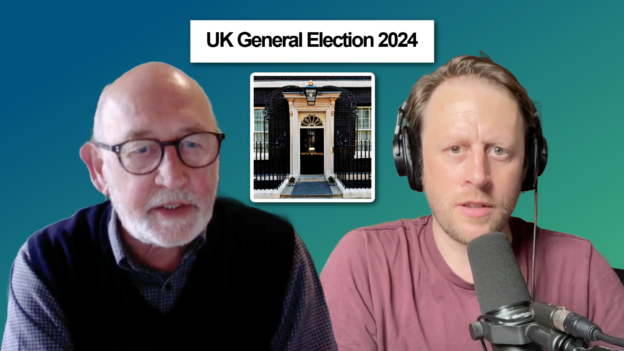
My dad returns to talk about the current political situation in the UK. Prime Minister Rishi Sunak has called a general election to take place on 4 July. Why did Sunak call an election at this moment? What do people think of the Consvervative Party, who have been in power for 14 years? Will we have a new government and a new Prime Minister in the UK in a couple of weeks? Also, what about England’s performances in the Euro 2024 football championship?
Join me as I take a walk along the embankment of the river Seine from Louvre to Pont Marie in the centre of Paris. This time the topic is health and diet. Watch out for the phrasal verbs I use during my ramble!
Do you do exercise or work out in the gym to stay healthy?
Can you share some tips on how to cut down on unhealthy food in your diet?
Have you ever tried giving up a certain kind of food? What was it and how did you manage it?
What are some effective ways to burn off extra calories without going to the gym?
Do you always manage to stick to a healthy eating routine when dining out with friends?
Have you ever experienced a situation where you had to cut back on certain foods for health reasons? Have you decided to cut anything out completely from your diet?
What strategies do you use to fight off cravings for unhealthy foods?
What role do you think is played by genetics our overall health and well-being?
Did the pandemic change your daily routines and affect your health in any way?
Can you share any tips on how to squeeze in forms of exercise during a busy day?
How do you deal with stress, and does it impact your eating habits?
Have you ever had to give in to a food craving and then regretted it later?
Do you have a pet? Does it help to reduce your stress levels, or just make them worse?
Do you manage to get enough sleep? Do you have any tips for getting a good night’s sleep? How do you wind down before bedtime to promote a good night’s sleep?
Have you ever tried cutting back on caffeine intake to improve your sleep quality?
How do you balance out work responsibilities with personal activities for a healthier work-life balance?
Living in (or near) Paris do you often manage to get outside and into nature very often?
Have you ever considered going vegan?
Do you do any brain training exercises or puzzles to keep your mind sharp? How do you fit them into your daily routine?
How’s your screen time? Do you think you have to cut down on screen time before bedtime to improve sleep quality?
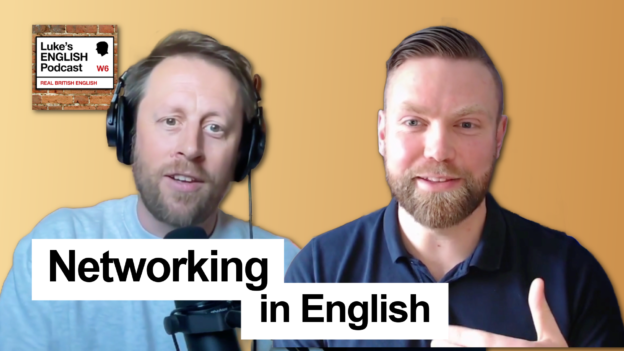
Talking with Rob from The Business English Podcast about networking in English. 🗣️ Networking is when you speak to other people, probably in a professional context, in order to build relationships, expand your social circle and make work contacts that can lead to business opportunities in the future. This is all about socialising, speaking spontaneously, active listening and being aware of cultural factors which can affect everything. Listen to the episode to hear plenty of comments, anecdotes, advice and language tips relating to networking in English in a professional context.
Hang out with me while the rain pours down outside 🌧️ and in this episode I’ll talk about the problem of “faffing around” 😵💫 , podcast news & updates 📲, some stand-up comedy dates 🎤, comments on recent episodes 💬, some common questions from listeners 🙋, a lot of rambling about how I learned to play music 🎵, a tour of all the guitars in my podcast room 🎸 and a song at the end 🎶, with lyrics explained 👨🏫.
This website uses cookies to improve your experience while you navigate through the website. Out of these, the cookies that are categorized as necessary are stored on your browser as they are essential for the working of basic functionalities of the website. We also use third-party cookies that help us analyze and understand how you use this website. These cookies will be stored in your browser only with your consent. You also have the option to opt-out of these cookies. But opting out of some of these cookies may affect your browsing experience.
Necessary cookies are absolutely essential for the website to function properly. These cookies ensure basic functionalities and security features of the website, anonymously.
Cookie
Duration
Description
cookielawinfo-checkbox-analytics
11 months
This cookie is set by GDPR Cookie Consent plugin. The cookie is used to store the user consent for the cookies in the category "Analytics".
cookielawinfo-checkbox-functional
11 months
The cookie is set by GDPR cookie consent to record the user consent for the cookies in the category "Functional".
cookielawinfo-checkbox-necessary
11 months
This cookie is set by GDPR Cookie Consent plugin. The cookies is used to store the user consent for the cookies in the category "Necessary".
cookielawinfo-checkbox-others
11 months
This cookie is set by GDPR Cookie Consent plugin. The cookie is used to store the user consent for the cookies in the category "Other.
cookielawinfo-checkbox-performance
11 months
This cookie is set by GDPR Cookie Consent plugin. The cookie is used to store the user consent for the cookies in the category "Performance".
viewed_cookie_policy
11 months
The cookie is set by the GDPR Cookie Consent plugin and is used to store whether or not user has consented to the use of cookies. It does not store any personal data.
Functional cookies help to perform certain functionalities like sharing the content of the website on social media platforms, collect feedbacks, and other third-party features.
Performance cookies are used to understand and analyze the key performance indexes of the website which helps in delivering a better user experience for the visitors.
Analytical cookies are used to understand how visitors interact with the website. These cookies help provide information on metrics the number of visitors, bounce rate, traffic source, etc.
Advertisement cookies are used to provide visitors with relevant ads and marketing campaigns. These cookies track visitors across websites and collect information to provide customized ads.