Conversation and language analysis with the podpals and guest Sarah. Hear some conversation about being married to a foreign person, bringing up kids to be bilingual, and learn some slang in Australian and Northern Irish English. Vocabulary is explained at the end.
This episode is choc-a-block with natural conversation and language.
Yesterday I had Amber and Paul over to the flat, and I also invited Sarah Donnelly, a friend of the podcast. Sarah also brought her baby who she had since she was last on the podcast. There’s no relation by the way between her being on the podcast and having a baby. Purely coincidental. Anyway, the four of us sat around the table yesterday in the blistering heat to record some podcast material and that’s what you’re going to hear.
Sometimes you can hear the baby screaming and gurgling in the background but I don’t think it spoils the recording really. She hasn’t learned to talk yet, but who knows being on the podcast might help a little bit in some way.
The conversation is a bit chaotic because there are 4 people, sometimes talking over each other. If you like you can imagine you’re in a business meeting. A business meeting in which no business actually takes place, nobody observes the rules of formality and where the participants just chat with each other. So, not much like a business meeting really, but anyway a meeting of sorts, and this is the kind of thing you might have to deal with in the future if you go to a meeting in English and there are a number of people discussing things and you have to keep up. It’s good practice to listen to this kind of thing to help you prepare for that kind of situation.
This recording was slightly shorter than the usual full-on ramble that we have together. But I’m going to do a bit of language analysis at the end. I’ll pick out a few words and phrases and will clarify them after the conversation has finished.
Also there’s another language-related episode coming soon with Amber, Paul and Sarah.
Here now is a discussion between podpals Amber and Paul, also featuring Sarah Donnelly the American with Irish roots who has been on this podcast before, most recently talking about the US Presidential Elections with Sebastian Marx.
Things we all have in common:
We’re all English speaking expats in France
We are all with French partners, either married or “paxed”
We’re all comedians on the stand up scene too
In this chat we discuss a few things, such as the complexities of being with a foreign partner, bringing up a child in a foreign country to be fully bilingual, getting married and what it feels like for the bride and groom on the big day, Amber’s podcast which was recently released online, Paul’s upcoming gig in Australia, Sarah’s Irish roots and some English slang from New Zealand, Australia and Northern Ireland.
Questions
Here are some questions for you to consider as you listen. This can help you to focus on the content.
Are you or have you ever been with a foreign person in a relationship? What are the difficulties of that?
What’s the best way to bring up a child to be bilingual? Is it possible to raise a bilingual child when only one of you speaks one of the target languages to the child?
Are you married? How did it feel for you on the big day? Did you cry? Have you ever been a guest at a wedding, and did you cry?
Have you heard Amber’s podcast, which is called Paname? It’s now available at panamepodcast.com
Can you identify different English accents and dialects from around the world? How about American vs British, or different areas of the UK? How about Ireland and Northern Ireland? What about Australia and New Zealand? Do you know what their English sounds like?
Right. Consider those questions as you listen to this conversation and hold on until later when I’ll explain some of the vocabulary and some cultural stuff too, maybe touching on different accents, wedding vocabulary and more.
But now you can listen to Amber, Paul, Sarah and me, melting in my boiling hot apartment.
Vocabulary and other language points – Explained
It’s really hot
It’s hot as hell
It’s boiling
It’s sweltering
It’s baking
It’s blisteringlyhot
Being partnered with a French person is hard work.
I have one hour’s worth of material on this. One hour’s worth of something 5 minutes’ worth of something
We’ve got 3 days’ worth of food left
I’ve got about 10 minutes’ worth of battery left
Bringing Up Children
Bringing up a baby in a foreign country with a foreign partner – will they speak English? Bring up a baby Raise a child Be raised in / to Grow up
Do you have experience of bringing up a baby to be bilingual? Let us know.
If just one parent speaks English, and the rest of the time it’s French with school, friends and everything else – will the kid be bilingual?
Anglophone
Francophone
Condone/Condemn I don’t condone the hitting of a child (stupid thing to say actually – but that’s what happens when you joke – sometimes you go over the line a bit – obvs I didn’t mean it)
Condone / condemn
Paul’s Wedding
An out of body experience
We were so stressed out
Crying To cry
To be in tears
To well up
To choke up
Neither of us cried
I thought everybody would be in tears
I welled up a bit
I was choking up
Walk down the aisle
The altar
Her parents aren’t with her any more. They passed away.
Paul’s dad gave her away. “It was so sweet that it was your dad that was giving her away.”
I’m left-handed
I can’t grip it like I like to grip it. (innuendo)
He’s jumped ahead. (he’s gone to the innuendo before we realised it)
Some ninjas came out of the woodwork. (to come out of the woodwork) to appear after having been hidden or not active for a long time: After you’ve been in a relationship for a while all sorts of little secrets start to come out of the woodwork. Mildly disapproving. From Cambridge Dictionary Online.
They feel like they’re going to do mistakes. Makemistakes.
Aussie slang http://mentalfloss.com/article/61847/25-awesome-australian-slang-terms
G’day mate, how are you going?
Arvo: afternoon
Barbie: barbeque
Bogan
Chockers
Fair Dinkum
Fuckin’ oath!
Sweet as
Strewth! (Cliche)
Kiwi slang
The slang is pretty similar to Aussie or UK slang, but the accent is different. For years I couldn’t differentiate it from Aussie, but the more you hear the more you realise how different it is. Watch Flight of the Conchords to hear lots of it. Episode in the pipeline.
In this episode I’m just sitting in the sunshine and I just want to ramble with absolutely no preparation. I’ve been doing quite a lot of fairly serious episodes about language, and politics and there’s more to come. But in this one I don’t want to feel obliged to make any serious points at all. Instead I’d much rather just be light hearted and talk about whatever comes into my head in an effort to just relax and have fun.
Nothing is written down. I have literally no idea what I’m going to talk about. I’ve got loads of episodes in the pipeline but for this one, it’s just turn on the microphone and let’s go. It might be pretty inane and stupid. Don’t take too much of it seriously. But who knows what kind of vocab or idioms will pop up, and maybe some other bits.
So – expectations should be a full on ramble with no particular language aim than to just follow the English as it accompanies my stream of consciousness.
Let’s go through 9facts.co.uk. I have no idea if they are actually facts, but it’ll give me a springboard to just ramble about whatever I come across.
http://9facts.co.uk/en/
Images and “facts” from www.9facts.co.uk
Song
The Kinks – Sunny Afternoon https://tabs.ultimate-guitar.com/t/the_kinks/sunny_afternoon_crd.htm
What do you think?
What are your thoughts on the topics that came up doing this episode?
Leave your comments below.
Here we are back once again with an episode of this podcast for learners of English. This one should contain insights about the English language and the process of learning that language, straight from the horse’s mouth.
That’s an expression, “straight from the horse’s mouth” which means you get information directly from a reliable and trusted source. In this case that source (or horse) is Professor David Crystal, who of course isn’t a horse – that would be very bizarre. No, he’s of course, he’s not a horse, he’s a great expert on the English language, the author of many books, known by anyone studying linguistics, he’s described as the world’s leading voice on language. I was very happy to have that leading voice on my podcast and there’s certainly a lot of good information to take in – whether you’re learning English or simply interested in languages and what makes them tick.
In this episode the plan is to go through some of the ideas David talked about and see if I can point out some specific bits of relevance for learners of English.
Let’s unpick the wise words of Prof David Crystal and really clarify some truths, tips and general conclusions about language learning, and perhaps explain some of the vocabulary you heard as well.
Essentially, I am going to repeat the main points DC made here, but the aim is to clarify it all and make it a bit more digestible. I will constantly be attempting to answer the question – how is this useful for learners of English? So, you should be able to take away quite a lot from this episode, in combination with the other two.
Is grammar glamorous?
Glamour and grammar come from the same word – because grammar, language etc used to be considered like magic. But grammar seems to have lost its magic these days, in the way people think about it. These days its considered to be boring, prescriptive and all about rules you learned at school.
It’s not glamorous if you study it like they used to in school. Just parsing sentences and working out what the part of speech is.
It only works if you ask why people are using those forms.
Semantic (focusing on meaning) vs pragmatic (why people say the things they say).
Understanding the motivations of the people who use grammar (the pragmatic side) is the interesting part and that’s when grammar really comes alive and becomes glamorous in the old sense of the word.
For learners of English this means exploring not just the form of the language you’re studying but also the reasons why each different form is used. The challenge is to get the semantic side and the pragmatic side into your studies.
So, don’t just study grammar rules on their own in a list. You need to examine the living language and notice those forms and the way they are used to perform specific functions.
Can you learn English without studying grammar?
Children do it, and you can do it too but it takes a long time for all the language to be assimilated by exposure. You can cut out a lot of that time by studying the rules. As adults we can apply what we already know and take apart the language by studying. So, studying grammar is an essential part of the learning process and goes together with a more long-term process of acquiring English through exposure.
But it’s no good just learning the rules and being able to explain it all on paper, you have to know when and why and where all the grammar is used. So it’s about applying yourself to the pragmatic aspects of the language you’re using and letting that guide your choice of language.
So, as I’ve said before – listen a lot, read a lot – like this podcast or any other material you fancy, but it’s best enjoyed as part of a balanced diet. Do some grammar work too, like self-study exercises in English Grammar in Use or another decent workbook, but make sure you are always asking yourself – why are these people using this language like this? How are the motivations affecting the choice of words and structures? When you’re doing your listening try to notice bits of language which you’ve studied. Could you say the same thing another way? What would be the difference and how is language related to that. Try experimenting with different ways to put something and get used to the slight nuance it adds. E.g. using a passive structure or an active one.
I know you’re not actually an English teacher, but do you have any tips for learners of English who want to improve their grammar?
No! Not a teacher!
Some linguistic-y tips – basically to know what all the grammar is, but also to be aware of the English that’s being used in the real world and how all that applies to the grammar you’ve studied.
I would add:
don’t be afraid of it, it’s more interesting than you might think, you might need to learn some abstract terms but don’t be put off, the more you learn the more you can learn, always look for examples.
Learning about why certain grammar forms are used really opens up the way you can see language. For example, learning that passive forms are used when you don’t want to mention who did the action allows you to see all those situations. You might want to write an impersonal formal letter, or give a general notice, or describe a process or simply talk about something that happened to someone without constantly talking about who did it. E.g. imagine a story about a guy who is a victim. People keep doing things to him but you want the guy to be the centre of the story. Like, John was kidnapped. He was bound and gagged and thrown into the back of a taxi. It took two hours for him to be rescued.
You wrote a political history of grammar in the UK (published online at http://www.davidcrystal.com)
What relationship does the average Brit have with grammar today?
Essentially, Brits have an up and down relationship with grammar, based on the fact that grammar study came in and out of fashion and grammar was learned in a two-dimensional way. People are often a bit prescriptive about grammar as they think it should be about rules and regulations, but they’re really only attempting to impose controls over something which evolves over time.
Knowledge of Grammar in the UK
In the 50s kids all learned basic grammar at school, getting examined at 16. Told to identify parts of speech in a sentence.
Then it went out of fashion in the 70s.
Several generations of kids who didn’t study any grammar at all.
Now they’ve grown up and some of them are teachers.
They don’t know any grammar.
The ones who grew up in the old style had learned grammar.
The younger ones were teaching but had no knowledge of grammar.
“The baby had been thrown out with the bathwater”
A language awareness programme was brought back, with a modicum of grammar back in the syllabus/curriculum.
David had to do lots of basic grammar training for these teachers. He wrote “Rediscover Grammar”.
Now, it’s back again.
Kids are examined for their ability to recognise parts of speech and do sentence parsing.
But the semantics and pragmatics aren’t there – it’s just mechanical analysis of sentences. Some teachers are very unhappy.
Now there are 3 types of audience.
The oldies who are in their 60s who know about the old style grammar teaching,
The middle generation, some of whom know a lot about grammar and some who don’t.
Then the modern generation for whom grammar is back. They have to come to terms with it.
One positive thing for learners of English is that you probably know more grammar than the average native English speaker. You should feel quite good about that.
Questions about language from Amber & Paul
People complain about the decline of the English language. Are standards of English declining?
That Q comes from 2017 but you can see exactly the same question being raised at any time.
The English language is in a state of terminal decline. (according to people)
This also applies to spelling and pronunciation and punctuation, plus discourse politeness. Grammar gets more mentions because there’s less of it to complain about than say ‘vocabulary’. Grammar has only 3000 or so basic points of grammar to master.
So, people feel that if you can’t manage that then there’s something serious to worry about.
People look to contemporary examples to justify their complaints.
IN the 1860s it was because of Americans.
Today the internet gets a lot of the blame, especially texting, tweeting, SMS.
Uneducated people will blame what they sense to be a reason for what they perceive to be a decline.
But when you study it you realise there’s no correlation between the signs of decline and the features they mention.
Usually people cite old prescriptive rules.
You should never end a sentence with a prep. You should never split an infinitive.
The English language has survived very well even though people have been breaking these so-called rules for 200 years.
This is the man I was talking to. – Any modern person realises it’s a stylistic distinction. “To whom” is more formal.
The informal usage also has a history as old as the English language. It’s in Shakespeare. “To be or not to be, that is the question… Or fight others that we know not of.” (ending a sentence with a prep – Hamlet)
It’s a huge puzzle to understand why the old grammarians decided to be so prescriptive.
They were blinded by their views.
For learners of English – realise that the language is always in flux. Keep up with it. Remember also that some people have slightly traditional views about language. E.g. more people in the world say “schedule” with a /k/ sound, but I continue to say “Schedule” with a /sh/ sound because it annoys people to do it the American way. Similarly, I think there’s nothing too bad about splitting an infinitive, but I tend to avoid it because it makes people a bit annoyed too.
They’re grammar nazis who don’t know what they’re talking about, but as far as they’re concerned, they’re right.
It’s not such a big problem for learners of English really. You have your own issues with accuracy. But remember that everyone struggles a bit with the language, even native speakers. We should have a progressive view of how language rules evolve, but a lot of people don’t share those views.
If you encounter people who say “It’s the death of the English language”, they’re talking out of their bum. Remind them that English is alive and well and shows no signs of dying, quite the opposite. They’re just being reactionary and hyperbolic.
Language Death
Almost half the languages in the world are endangered.The reasons are many. It could be linguistic genocide – forbidding the use of the language, or opting not to use it for political reasons (e.g. because you want to side with a particular faction on your country), but when a language is endangered, when another language starts taking over the functions of that language, people no longer find themselves able to use that language for everything – certain facilities kind of disappear because people have got used to doing it in the other language.
Welsh is quite successful these days because of activism, but a few years ago English was taking over Welsh, and also some rules of Welsh grammar weren’t being used. You get a sense that the structure of the language is declining. Certain Welsh structures stopped being used. It looked like a kind of structural erosion of Welsh, because of the influence of English. Vocab is more common – many foreign languages contain English words. #Franglais
But there’s no hint of decline in relation to English which is actually going from strength to strength. Spoken by 2.3 billion people. It’s nowhere near death.
They just mean it’s changing, it’s not death.
Language change is difficult for lots of people to take and they talk about death but it’s irrelevant. The only languages that don’t change are dead ones. They go in very unexpected directions and you can’t predict them.
Petty language gripes don’t bother him. They don’t bother me either.
Partly it’s to do with identity – people are annoyed that British identity is changing or being influenced by American identity. But getting annoyed at the language usage, which is a symptom, is a bit redundant.
Some people don’t like change at all, but David sees it as a natural part of the way languages develop. Be like David.
My mate Paul often says that we’re actually using the language incorrectly because there are more non-native speakers than native speakers of English. Is he right or talking nonsense.
Error: Talking about right and wrong.
Correct: The perception that there are more non-natives than natives.
It’s a global situation now, not local (e.g. North vs South England). Global language differences are the same as local ones – equivalent – just different communities using English differently, on a global scale.
Now it’s Irish English, Indian English, Australian English, New Zealand English, South African English, Singaporean English and many many more including French English, Japanese English and so on – all versions of English spoken by people who have learned it to a proficient level as a 1st or 2nd language.
It’s just different communities that are right in their circumstances.
Standard English and non-standard English.
Standard English is traditionally viewed as the correct version, but NSE has it’s own justification. There are reasons why non-standard English exists and they’re perfectly good ones. Non-standard English and standard English are equal in terms of their status.
A standard promotes intelligibility. Standard English has lots of users, but there’s also a huge number of dialects (international), many different kinds of English reflecting community backgrounds. You can’t say “right and wrong” in these circumstances. It’s just a number of different communities using English in a way that is appropriate for their conditions.
When you start looking at individual cases like a foreign learner is breaking a rule of standard English, then you’ve got a transitional situation. BrE and AmE. They coexist. It’s not possible to say “wrong” or “right” when millions of people are using both versions.
In China there are very fluent speakers of English, not learners but proficient speakers, who have developed a certain usage which is basically Chinese English. Local features of grammar and vocab don’t keep communities apart, we just learn to understand each other.
“Informations” vs “information” – no problem of intelligibility.
Anyway, Chaucer wrote “informations”.
These small differences are expressions of identity and rarely get in the way of intelligibility. This is one of the reasons the UK has proud diversity in its English accents. They’re all statements of local identity, and although we see the differences, we are able to communicate with each other.
It’s a Q of whether it’s appropriate or inappropriate for that circumstance and the two criteria are
Intelligibility – do we understand you. If we understand you, it’s appropriate.
Identity – differences are an expression of local identity. Lang is adapted to reflect the locale, especially the vocab – all the reference points to important things in culture. Local terms, idioms, expressions etc.
If the English you use is wrong for that context because of the way it expresses a certain identity then you have a problem of appropriacy.
If Ali G went to the Houses of Parliament to speak with politicians and civil servants, his English would be considered inappropriate (even if intelligible) because people would think it’s not the proper way to address people and so on. Similarly if Theresa May went to a skatepark and tried to talk to some locals, she’d have a hard time as well.
English is always in tension between intelligibility and identity (against global anonymity)
Local versions need to be different enough to express their identity, but not so different that nobody understands them.
My French students feel a bit bad about their pronunciation.
Do they need to worry?
This is perhaps the #1 concern of my French students who judge each other harshly for their accents and also feel bad about it. It may be the same in your country, but I find in France people are very disdainful of a strong French accent. I don’t mind that much.
The bottom line is, once upon a time they would have felt bad because people would have said “you’re speaking English badly” and that’s not so long ago.
Now, there is no such thing as a single version of universal English accent. RP is spoken by less than 2% of the population of England. It’s a minority accent but a powerful one.
Why should people be expected to speak this minority accent when other accents are now considered acceptable in their own right.
RP is important because of tradition but miniscule compared to American, Indian and so on. It’s no longer possible to condemn an accent because it doesn’t fit in with this small version of the language. You have to analyse it on its own terms, with its local identity. As long as it doesn’t interfere with the need for intelligibility.
So the main thing is – can we understand you? If “yes” then no worries. Does it matter if you sound a bit French? What’s wrong with sounding French?
I was very impressed by Emmanuel Macron who made a speech in English. It wasn’t perfect, but he got his message across and it showed him to be a really open, confident, modern person. Compare that to Francois Hollande who couldn’t string a sentence together. You don’t need to speak English perfectly in the traditional sense, but you do have to speak it. Stop worrying about being 100% accurate – concentrate on being 100% intelligible. The main criteria is “can you express what you want to say?” not “can you express this flawlessly?”
“But my accent isn’t good”
Well, develop a different mindset. Start thinking more positively about all this!
“I don’t speak received pronunciation” (french accent)
“Well nor do I!”
Mixed accents are the norm everywhere.
English accents are much more mixed than ever before.
There are now hundreds of millions of people who understand each other but have local accents as a reflection of their national pride.
Why are the French worried about sounding French?
There’s nothing wrong with sounding a bit French. (But it’s hard to convince them of this – French people can have very negative views about some things, especially their position on the world’s stage – they beat themselves up quite a lot, which is odd. In comedy, they seem ok about being insulted about their national character. They quite enjoy the masochistic approach it seems! Either that or their just happy to have a foreign comedian talking about French things during a show, even if it is criticism. Making fun or insulting people is quite normal in French comedy – I think this is linked to the way French people often beat themselves up about stuff like English.
The main job of the teacher is to expose the students to a wide range of accents. Let them hear the English in different accents, to prepare for the real world, to develop a sense and an awareness of diversity which inevitably will help to change their mindset.
*By hearing lots of different types you get more of an overall understanding of the entire language and how it can have a core structure which is changed slightly in different versions of English.
So – I should keep playing you extracts of English spoken in a variety of accents so that you can hear the whole range.
But also, don’t get hung up on your accent too much. It’s very hard to cut out the traces of your origins, and it’s unnecessary. Just focus on being intelligible – fix your pronunciation, vocab, grammar, punctuation etc following this criteria and you’ll be on the right path.
Talking to the world’s top writer and lecturer on the English language, Professor David Crystal. In this episode, David answers questions from listeners.
Here’s part two of my interview with the famous linguist Professor David Crystal.
In this one I asked him some questions from my listeners. I didn’t get a chance to ask all the questions I received, so if your question isn’t included then I do apologise. I left out some questions because I think he had already answered them in one way or another, or because we just didn’t have time.
But the questions I did ask him covered quite a wide range of different topics, including the way foreign words get absorbed into English, predictions for the future of English, how to deal with the workload of studying linguistics at university, the nature of English syntax, how languages affect the way we think and see the world, why British people use indirect and polite language, the influence of AI on language learning, the effects of Brexit on English in the world, whether it is appropriate to speak like Ali G, some study tips and some comments on the English of Donald Trump and Barack Obama.
Don’t forget to check out http://www.davidcrystal.com where you can see a reading list of David’s books, read his blog, see videos of him in action and even contact him by email.
I would just like to thank David for his time again, and I hope all of you out there in podcast land enjoy listening to our conversation.
QUESTIONS FROM LISTENERS
Influence of foreign languages on English
Hamid Naveed (Pakistan) I’m an English language teacher. My question for David Crystal is: www.oald8.com (The Oxford Learners’ Dictionary) has a lot of new words from Urdu such as ‘ badam’ ‘ chai’ ‘ aloo’ ‘ bagh’ ‘ dharna’ and many more. If English keeps on taking words from Urdu or any other language, then what will be the future of English? I mean English will no longer be English. What is your take on this ? Thanks.
The Future
Jilmani My question for David Crystal is what is the future of the English language? Will it be the same or will it be a little bit different since we know that english has changed over the decades? How do you think English will develop over the next few years? How will non-native speakers be part of this?
Tips for students of Linguistics
Jairo Trujillo García (from Tenerife) I am studying an English and Spanish linguistics ( and philology ) degree , and even though I like it , it can be really hard at times ; What recommendations would you give me to make the burden of vast information more manageable in the time allotted ?
English Syntax
Cat (Originally from Russia, moved to Germany) I’m very confused about English syntax. I spent many years studying German grammar and syntax but it is of little use for learning English. German and English appear so similar (especially the words) and yet so different (for example, the sentence structure) at the same time. I just feel that something is completely different, but cannot point out the difference. Could you please tell us a little bit about the sentence structure and logic (the syntax) of English? (Perhaps you could compare it to the syntax of other languages) As I don’t like doing grammar exercises at all (I’m sorry!), I was wondering, are there some more enjoyable and fun ways to learn English syntax? Maybe some shortcuts and mnemonics what you can offer us? Also what about the punctuation rules between the main and sub clauses? They can be a real pain in the neck for our transcribers. Thank you! Cat
Language and Psychology
Wesley I have several questions for Prof. David Crystal. The first is whether people who speak different languages think differently, I mean, if they understand and perceive the world in different ways. For example, I’ve heard that while in some places people perceive two colours and give each of them a name, somewhere else there might be others who perceive those same two colours as only one because they have only one name for them. Another example I have in mind is how we position adjectives in a sentence in English compared to in Romance languages. In English, adjectives usually come before the noun they describe. Romance languages, on the other hand, tend to place adjectives after the noun. So in English we first refer to the characteristics of something before we say what it is, and in Romance languages we start with a noun and then describe it. Does it affect, in any way, the way we think? If we learn a second language, do we start to think more like the native speakers of that language? Thank you very much! Wesley
Language and culture
Mayumi (Japan) Why do British people tend to use indirect language, hesitate to say “no” and also frequently say “sorry” in various situations? Is there any story from linguistic history? In my Japanese culture, as far as I know we also find similar tendencies because we’ve lived in this tiny island and if people said whatever they wanted, behaved without caring about other people in this small area, or even argued with each other, they could possibly end up being expelled from this small society. This can be one of the reasons why we have these tendencies as well. This is something stuck in my mind for ages from the university class. Did British people had similar experience when they established their culture or could it be an absolutely different story? Cheers!
The Influence of Technology
Antonio (Spain) My question for David Crystal: Apple, Google, Microsoft and other companies are working on translators in real time based on AI. So we can speak in Spanish with a French person and he will hear French while he speaks in French and we hear Spanish. Skype has this option for 8 languages. What do you think about about the AI related to language learning? Will AI replace our need to learn other languages?
Advice for learners of English
Jack – Origin Unknown
(I don’t know why, but Jack always writes comments on my site in an Ali G dialect. I actually think it’s evidence of how good he is at English, because he can clearly write in normal style, but he chooses to adopt this specific form of English – if he can do that it shows great ability to shift between different registers and dialects – if he can break the rules I presume it means he knows that the rules are there in the first place – for some reason he chooses to write comments in this lingo – are you ready?) I is not that learned but I also has got questions for Professor David Crystal. Dear Sir, Booyakasha, It is a well big honour to have you ere on da podcast, you is da only person me respects in the field of linguists after Norman Chomp The Sky and Stephen The Crasher (Naom Chomsky and Stephen Krashen). What advice would you give to an English language learner to improve his / her language ability? Should the student focus on form (grammar, vocab etc) or should the student focus on meaning and let the subconscious do the rest? Well that`s me questions there Big man. I has to say you is the shining crystal in the field of linguistics. Big up yourself Prof Crystal Respek, Westside.
Outtro
There was so much interesting content in what David Crystal said in this conversation and so much to take from it. These two episodes are really worth listening to several times so that you can really get a grip on what he said and really absorb it all.
If you sent in a question that I didn’t ask, then I’m sorry about that.
I should do follow-up episode in which I consolidate a lot of what DC said, and highlight various things that you can apply to your whole approach and attitude towards learning English.
Watch out for that.
Check out David’s work at http://www.davidcrystal.com
He’s got books about grammar, spelling, pronunciation, accents, Shakespeare – pretty much any aspect of English – he’s got it and he always writes in a clear and entertaining style.
I’m not selling his work or anything. It’s just genuinely good stuff that I’d like to share with you. This is why I’m so happy to have spoken to DC on the podcast – he’s ace and you should read his work.
Thanks for listening! I invite you to leave your comments below.
Hello everyone, thank you for choosing to listen to this episode of my podcast. I am particularly pleased to be able to present this episode to you. It is, in fact, a privilege for me to say that today on the podcast I am talking to Professor David Crystal.
I’m now going to give a quick introduction just to make sure that you are all fully aware of the calibre of this guest and to emphasise to you just how lucky we are to have him on the podcast today.
According to The Guardian newspaper, David Crystal is the world’s foremost writer and lecturer on the English language.
He isn’t an English teacher, but he is an expert on linguistics. That’s the study of language and all the issues relating to it.
David Crystal
David Crystal has a worldwide reputation and has published something in the region of 120 books including numerous academic reference works and encyclopedias of language, and books for the general reader covering topics such as English grammar, spelling, punctuation, accents, connections to Shakespeare, the influence of technology and the development of language throughout history.
He is currently patron of the International Association of Teachers of English as a Foreign Language (IATEFL) and the Association for Language Learning (ALL), president of the Society for Editors and Proofreaders and the UK National Literacy Association, and honorary vice-president of both the Institute of Linguists and the Royal College of Speech and Language Therapists.
He is honorary professor of linguistics at the University of Wales and in 1995 he was on the Queen’s honours list when he was awarded the Order of the British Empire (the OBE) for services to the English language. The OBE is the second highest honour which you can receive from The Queen – the highest being the knighthood or damehood.
So he’s Britain’s favourite language expert and he regularly makes appearances at literary festivals and teaching conferences, appears on British radio and television, writes articles for newspapers and magazines and researches all kinds of language-related topics.
But the main thing he does is to write books…
David’s Books
Some of his most popular books include:
The Cambridge Encyclopedia of the English Language
The Oxford Illustrated Shakespeare Dictionary
The Story of English in 100 Words
You Say Potato: The Story of English Accents (written with his son Ben)
Wordsmiths and Warriors: The English-Language Tourist’s Guide to Britain (Written with his wife Hilary)
Txting: The Gr8 Db8
Pronouncing Shakespeare: The Globe Experiment – a fascinating project investigating how English was pronounced by the original actors in the Globe Theatre when Shakespeare was alive
Spell It Out: The Curious, Enthralling and Extraordinary Story of English Spelling
Just A Phrase I’m Going Through: My Life in Language (which is both his autobiography and a highly accessible introduction to the field of linguistics)
And from this year “Making Sense: The Glamorous Story of English Grammar”
Many of those titles can be purchased as ebooks from David Crystal’s website – www.davidcrystal.com or from any good bookseller. There are also audiobook versions which are read out by the man himself.
David Crystal’s writing is clear, entertaining, informative and simply a pleasure to experience. The same can be said about his public speaking. I’m always impressed by his ability to take a complex academic subject like linguistics and turn it into the sort of thing that anyone can understand and enjoy.
I met David once at a teaching conference where he presented Andy Johnson and me with an award for a presentation we did. I had a chat with him afterwards and was delighted to discover how down-to-earth and friendly he is and I’ve always wanted to interview him for this podcast, but it’s only recently that I actually plucked up the courage to ask him. Thankfully he agreed.
David Crystal is a nothing short of a national treasure and I can’t believe I’m talking to him on my podcast.
Right – I think you get the idea now – he’s kind of a big deal for anyone interested in language and language teaching and so without further introduction, here is my conversation about language with Professor David Crystal.
Questions for David Crystal
Grammar
Your recent book from this year is called Making sense: the glamorous story of English grammar.
Is grammar really ‘glamourous’?
In my experience, a lot of learners of English feel a bit bored or intimidated by grammar, leading some teachers out there to say that you can learn English without grammar – learn English without thinking, etc.
Do you think it’s possible to learn English as a second language without studying grammar?
I know you’re not actually an English teacher, but do you have any tips for learners of English who want to improve their grammar?
You recently wrote a political history of grammar in the UK as a supplement to your book “Making Sense”.
What relationship does the average Brit have with grammar today, in your experience?
Has this attitude changed over the years? How has it changed?
Language Decline
I was recently having a conversation about language with a couple of friends on this podcast and we arrived at several questions that we couldn’t really answer. I thought you might be able to help.
People often complain about the so-called decline of the English language – citing things like poor grammar, punctuation, spelling, acronyms or text-speak as evidence that standards of English are slipping. Do you agree with that? Are standards of English declining? How do we even measure that?
People seem to be afraid that what they see as falling standards will result in “the death of the English language”. Has a language ever completely “died out” due to declining standards? What causes languages to die?
Are we better or worse at communicating than we used to be? (answered later)
‘Right’ and ‘Wrong’
Are you bothered by those so-called ‘errors’ in English that make some people angry?
Non-native speakers influence on English
My mate Paul says (as a bit of a joke) that because there are more non-native speakers of English in the world than native speakers, we’re actually the ones who are using the language incorrectly. E.g. because more Chinese people pronounce some English words in a certain way, it’s the native speakers who are pronouncing those words wrong.
Does he have a point or is he talking nonsense like he usually does?
French Pronunciation example
My French students often feel bad about their pronunciation because it’s so ‘French’. We understand everything that they say, but they’re really hung up on the fact that they sound so French – e.g. they can’t pronounce TH sounds in words like strengths, clothes, thirty three etc and it seems to be impossible to fix it.
Do they need to feel so bad about it?
How should my listeners feel about their relationship with English, and the version of English that they speak?
End of part 1
That’s the end of part 1. The conversation will continue in part 2 where you’ll hear me asking some questions sent in by listeners, and there were some really great questions including predictions about English in the future, the role of AI in language learning, the impact of Brexit on English in the world, and the way Donald Trump and Barack Obama use English.
I hope you’re enjoying listening to this, and that you’re able to follow some of the slightly complex points being made.
David gave so many really interesting answers and made some very important and useful points, and he continues to do that in part 2.
I think David speaks very clearly, with that slightly Welsh or Scouse twang in his voice. He lives in Hollyhead, in Northern Wales, not far from Liverpool, and he lived in Liverpool for a while as a child, which accounts for the slight accent that he has, if you noticed that.
As he said, his accent is a mix of different things, caused by the time he has spent living in different places and interacting with different people – RP speakers in the south east, locals in Wales and Liverpool and so on. It all contributes to the way he speaks. He also happens to be very articulate and I really admire the way he expresses his thoughts so clearly.
I hope you agree that we really are rather lucky to have David Crystal on the podcast and I think it’s worth listening to this episode several times so you can really absorb everything he’s saying because he really does know what he’s talking about and there’s a lot of knowlege there.
I think I should do a follow-up episode to this in which I just restate the main points that he made, just to consolidate it all, and I plan to do that. I could also talk about some of the questions which I didn’t have a chance to ask David.
I also hope you noticed that David Crystal helped to clear up some of the things I was discussing with Amber and Paul in episode 452. I should go over those things again if I do a follow-up episode, just to make it “crystal clear” – pun intended. I totally intended to make that joke and I think you should know it’s a brilliant joke which nobody has ever made before and this is sarcasm but it also isn’t.
Don’t forget to check out www.davidcrystal.com for all his work, his blog, videos of him speaking publicly and more information, including the opportunity to send him a message if you want to.
I strongly recommend getting some of his books, which should be available from any good bookseller. You could try “Making Sense: The Glamorous Story of English Grammar” for example.
Also, don’t forget that you can get audiobook versions of his work.
For example, I listened to You Say Potato – the one about accents in the UK and I think the audiobook is better than the printed book because you can actually hear his son Ben doing all the accents. You could get that as part of a trial with Audible – and remember I have that deal with them – you can get a free audiobook if you go to www.audibletrial.com/teacherluke or click an audible logo on my site. They’ve got a lot of DC’s work there. Start a trial, download your audiobook, listen to it using the Audible app on your phone and you can cancel the membership and not pay anything, or continue your membership for about $15 dollars per month and get another free book next month and so on…
So, that’s the end of part 1. Part 2 should be available for you very soon and you can hear David answering questions from listeners, and that’s brilliant because the questions were very diverse and David Crystal answers them – what more do I need to say? I still can’t believe I spoke to him on the podcast. I need to contact other awesome people for interviews now I think.
Thank you very much for listening to this. Don’t forget to join the mailing list to keep up with every new episode and to get convenient access to the page for each one where you’ll find various bits of supporting information, transcriptions, links, videos and the comment section. Just visit teacherluke.co.uk and pop your email address in the subscription form and Bob’s your uncle.
I look forward to reading your comments in the comment section.
Reminders
LEPsters are still getting together and spending time socialising in English.
In Moscow there is a group that hangs out every Sunday. Their FB group is called “Conversational English for Free – Moscow LEP Club”. https://www.facebook.com/groups/734996946664425/
Also in St Petersburg there is a similar group which gets together on Sundays. You can find them on FB by searching for “SPB LEPsters Conversational Club” – I understand they have get togethers on Sundays. Kristina from Russia who won the LEP Anecdote Competition last year often takes part – friendly people, speaking English, playing games, hanging out. https://www.facebook.com/spbenglishLEPclub/
LEPsters in Tokyo have got together a number of times, and I attended one in April to do some stand up – you can hear all about that in my Trip to Japan episodes (part 2).
Also, recently a group got together in Prague in the Czech Republic – in fact you can hear their conversation because it was recorded and published on Zdenek’s English Podcast.
Again I’m flattered because they talked mainly about LEP – including, shock horror, their least favourite or “worst” episodes of the podcast.
Listen to both episodes below.
Also, if you’re in Spain I have heard rumour that there will be at least one meetup group getting together there, somewhere, sometime soon.
If you’re thinking of setting up something similar, let me know because I can publicise it on the podcast and get the word out.
Another film club episode, this time about the Alien franchise and a review of the new film “Alien: Covenant”. The film is in the cinemas now and you could watch the other films at home (with or without subtitles) for some more English listening practice.
Here’s a film club episode about the Alien movies. I hope you’re a fan of those films. If you’re not a fan then this might not be for you I guess, but I hope you listen. In terms of language you’ll hear loads of descriptions of the events and themes of the Alien films and my opinion of “Alien: Covenant”. As ever I encourage you to listen out for language – you might notice some specific phrases. Check out the page for the episode where you’ll see a lot of the notes I made before recording. There are also a few YouTube vids there for you to see as well. OK, let’s get started.
I got a message the other day from a listener in South Korea called Ethan Lee. Ethan asked me if I was going to see the new Alien film “Alien: Covenant” and if I could talk about it on the podcast.
Well, I’m sort of a fan of the Alien movies and today I’m going to see Alien: Covenant, so here’s a film club episode all about the Alien franchise.
I’m going to describe the films, their stories, what makes them great or not so great, including Prometheus from a few years ago.
Then I’m going to go and see Alien: Covenant, the new movie and afterwards I’ll tell you what I think of it.
I’m going to do my best to avoid spoilers throughout this episode while discussing these films, although I’m assuming that you’ve probably seen at least Alien and Aliens and you know some of the big moments – like probably the most famous scene in the original alien film where we first see the alien – when the alien comes to dinner, let’s say.
So I expect you know some stuff, but in any case I’ll try to avoid big plot spoilers.
I’m also going to give mini reviews of the films in the franchise, before focusing on Alien: Covenant
Episode notes
Why are you interested in the Alien films?
First time I heard about it.
First time I saw clips from Aliens in a sci-fi exhibition in America when I was about 14.
First time I saw Aliens when I was a kid.
The Alien franchise – Timeline
Alien
Plot
What type of film is it
Director
Alien
What makes it good
Mystery
Slasher film
The design by HR Geiger
Subtexts about sex, reproduction and motherhood
Limitations in filming
Ridley Scott
Aliens
James Cameron
Action movie
More aliens & explosions
New additions like The Queen
An amazing action sequence at the end where Ripley fights the Queen and then a few shocks at the end.
Annoying marines being macho, but great action sequences and Aliens on top form.
Alien 3
Disappointing
Poor storyline – killing off some of the characters from the last episode
Set on a prison colony
Bland set designs – all these characters with shaved heads
I’ve seen it a few times and even now I can’t remember what it’s all about
Poor CGI aliens
Alien: Resurrection
This was slightly better than Alien 3
It’s about a gang of mercenaries who find out that the military have cloned Ripley and used her to create aliens, which as ever they want to weaponise. The Aliens get loose in the ship and it all goes wrong while the ship heads towards earth.
There are some creepy bits about cloning including the times they’d failed to clone Ripley and also at some point a weird Ripley/Alien mix is created which is quite a horrific monster that just wants to kill everyone except Ripley who she considers to be her mother. The scene where the monster goes is both hideously disgusting but also terribly sad.
All in all it’s a weird, gross film which explored some of the themes of reproduction and motherhood.
Alien vs Predator and Alien vs Predator: Requiem
Never seen these films in full although I’ve caught some of them on TV and watched a bit but didn’t continue.
Quite horrible direction, in the dark, close up, so you can’t see anything. Generally it’s Aliens punching Predators. It could have been great but it’s not. There’s a predalien. Another weird name.
Neither of the Alien vs Predator films are considered ‘canon’.
Prometheus
Ridley Scott, back on board.
Let’s bring back the original world of Alien.
Excessive marketing with Ridley Scott really talking up the film in very high level terms – talking about ancient myths and big themes about humankind dabbling in too much power and the gods taking revenge and all this stuff, the legend of prometheus.
The film deals with humanity’s relationship with the gods—their creators—and the consequence of defying them.
I thought – this sounds amazing.
I binged on the publicity and the hype.
Went to see it expecting something huge.
What I got was cheesy dialogue, B-Movie level plot points and action sequences, pseudo-intellectualism, amazing visuals, some bizarre monsters and some extremely stupid decision making.
All in all I’m not sure what to think of Prometheus, but I am slightly obsessed with it.
There are some great things – the effects, the visuals, the performance of Michael Fassbender as the android David.
Some of the monster scenes are amazing.
It’s also mysterious and makes me wonder what it’s all about really.
It spawned numerous “fan theory” videos on YouTube with people going on at length about all the hidden meanings and real meanings – it all makes my head spin.
Here’s my take on it
Millions of years ago on earth an ‘engineer’ arrives and drinks weird black stuff that makes him disintegrate and spread DNA into the ecostystem on earth, seeding life on earth – probably human life. Alright. I wonder why he has to drink that stuff to do that. It looks cool though.
Then, cut to the present day or the near future or whatever. A couple of scientists have worked out from cave paintings where the engineers come from.
They go to find them, sponsored by the Wayland corporation.
They get there to find a seemingly deserted planet.
Find a spaceship. Apparetly this isn’t the engineers’ home planet. THere’s a ship there with loads of these kind of jars of black goo.
The ship also has some murals including one of a xenomorph. The black jars of goo look a bit like alien eggs, but not.
It looks like the engineers were loading the goo onto the ship and something went wrong. Maybe they got infected by the goo and had a bit of trouble. It looks like it. They’re dead anyway.
Apparently they were heading for earth with this load of black goo.
What’s the black goo? A kind of bioweapon.
David tests it. Doesn’t go well.
Shaw’s weird alien birth.
Two of the crew members are utterly stupid.
Apparently the black goo has infected some worms…
Find an engineer in hypersleep.
Wake him up and he’s angry.
Apparently the engineers were fed up with us and wanted to kill us. Maybe because they’ve been observing us and they’ve thought – no, start again! Humans are rubbish! Look, DOnald Trump, The Kardashians, Brexit – no, kill them all!
The remaining crew members stop the engineer sending all the goo to earth.
Engineer ends up getting impregnated
The ship crashes – stupid running away scene.
“Deacon” is born.
Alien Covenant
It’s been advertised in the same way as Prometheus.
A LOT of youtube videos. A LOT of footage released in trailers. LOADS of different versions of the trailers. LOTS of shots of the alien – as if to say “Look there are definitely aliens in this!”
But I have to say I don’t think it looks good.
Why?
First of all they appear to be repeating the same steps as the original Alien film. It looks like the same thing.
Then there are some clips of moments that look utterly cliched.
For example there’s a person who apparently has been infected by the black goo.
Black goo is rubbish by the way. It’s not as good as the Alien. It’s just goo and it’s really unspecific. If it touches you you become a monster with super strength. The alien with it’s weird reproduction cycle is far more interesting. Black goo just doesn’t make any sense.
Anyway, in the trailer one person apparently is mutating into a monster but it’s the most cliched thing of him standing under a bright light and kind of shaking while apparently possessed. We’ve seen it a million times before.
Then there’s a clip of two people in a shower and the Alien creeps up on them in the shower and you see the tail coming up between their legs while they’re in the shower. Basic sexual imagery – not like the inventive designs of Geiger, just old fashioned Freddie Kruger type stuff.
So, I don’t expect much from this but I feel like I should see it just to find out for sure. Who knows, it could be really great.
So now I’m off to see it so let’s see!
I then went to see Alien: Covenant in the cinema down the road. Listen to the episode to find out what I thought!
https://www.youtube.com/watch?v=RDWZk7Qwedo
What do you think of the Alien films? Leave your comments below.
In this episode I’m going to go through some questions from the comment section and give a bit of news. There will be some grammar, some vocab, some reactions to recent episodes and some bits relating to how you can continue to push your English with this podcast.
The comment section is buzzing with chat. Photos are being shared of people’s running routes and shots of gorgeous spring flowers and blossoms in full bloom. A listener called Sylvia is doing an illustration for every single episode and posting it in the comment section. Regular commenters are having some long and funny conversations – they’re very friendly and like a laugh so get stuck into the comment section and see what all the fuss is about.
The usual commenters are: Cat, Nick, Jack, Agnes, Marta, Antonio, Eri, Hiro, Euoamo, Sylvia, Jilmani, Mayumi, Ethan, Syntropy and more people I have probably forgotten about!
Cat is the top commenter with a total of 2795 COMMENTS
Nick is in 2nd place with 1851 COMMENTS
Jack is in 3rd place with 963 COMMENTS
David Crystal
Bit of news: I’ll be interviewing Prof. David Crystal on the podcast soon.
David Crystal is the foremost writer and lecturer on the English language, with a worldwide reputation and over 100 books to his name. He is honorary professor of linguistics at the University of Wales, Bangor, and in 1995 was awarded the OBE for services to the English language.
I met him in 2012 when he gave me an award (with Andy Johnson). He’s really nice and I’ve always wanted to have him on the podcast.
And I am interviewing him soon, which is a serious treat.
This is the guy who knows everything there is to know about language and I’m going to interview him.
Honestly, I have millions of questions I could ask him, and I could easily fill up several episodes with him just asking all the questions in my head.
But I’d also like to give you a chance to ask a few questions. So leave your questions for David Crystal in the comment section. I can’t guarantee I’ll ask him all of them, but if there are some particularly good ones I’ll ask them.
Otherwise, I might be able to answer some of the questions myself.
Recent Comments on the Website
Here are some comments which arrived recently.
Cat – in reply to the British Humour episode Hi Luke and Amber, thanks for your lovely chat! It was a most enjoyable and also educational episode. I’ve got two questions: 1. You mentioned “NHS” (?) as something that each Brit is proud of. What is it exactly? 2. During the dissection of the Hugh Grant’s quote you said that he was “public school”. What does it mean? Thanks for explanations!
Oil painting by Sasha Sokolova
Thanks for the oil painting! – www.sashasokolova.com
JAPANESE LEPSTER GIFT VIDEO ~ I need to do this!
Paul
Congratulations, teacher Luke, for the podium! Great job and another great podcast, thanks!
“It’s time for me to leave Audioboom.com” = LUKEXIT!!!!!
Amber’s podcast – Paname – it’s not available yet, but soon!
Orion Transcription Team
Just a reminder about the Orion transcription team – they continue to produce transcripts, mainly under the management of Antonio from Spain, and they are always on the lookout for new recruits. Antonio regularly posts messages in the comment section saying “Episode blah blah is now available for transcription” and with a google link. E.g. the latest one is episode 444. The Rick Thompson Report.
Remember, it can be really good for your English so check it out! Transcribe just 3 or 5 minutes. It doesn’t have to be a massive commitment. If you do it regularly you’ll see that it allows you to focus your attention on what you’re hearing and you’ll be surprised at how much that focus allows you to examine the language up close. You could also try repeating out loud some of the things you’re hearing as you transcribe, that could be a good way to convert the process into a speaking exercise.
Turning Input into Intake
Here’s some vaguely academic stuff about Turning input into intake to increase your language acquisition. There’s language input, and there’s language acquisition. Between those two things, there’s intake. Intake is the stuff we really learn from.
This from the University of Austin Texas The term “input” referred to all the exposure to a foreign language that is around us. However, as years went on, researchers realized that input was not enough. If the learners were not noticing or concentrating on the incoming flow of language, comprehension would be limited. So today, researchers in second language acquisition commonly make a distinction between input and intake. Simply put, input is all the written and spoken target language that a learner encounters, whether it is fully comprehended or not. Intake is limited to the comprehended input that impacts the learner’s developing linguistic system. For our purposes, we suggest that technology provides ways to increase the foreign language input that learners are exposed to and enhances the process of how input is converted into intake.
Without getting too fancy, let’s say that to really learn from the things you hear you need to convert what you’re hearing from input into intake.
This means listening to content which is comprehensible – i.e. basically understandable even though there may be some things you don’t get. A mix of things you already know (this is your foundation that allows you to work out the bits you don’t know) and some things you don’t know or don’t understand.
It also means sometimes really focusing and giving all your attention to certain bits of what you’re hearing. Some things might kind of pass you by a bit, but it’s important while you listen to be sort of emotionally involved in it and to interact with it while listening – to really think and feel in response to what you’re hearing. Apparently this helps turn input into intake.
Transcribing pushes this to the max. It forces you to turn everything from mere input into intake – which is the good stuff. I think it’s backed up by not just academic research but by the experiences of transcribers. It helps push your English, and remember you can just do a short chunk, you don’t have to do a whole episode, that’s crazy!
In summary – focusing all your attention on 3-5 minutes of an episode can really help turn input into intake and can maximise your learning potential with this podcast, or any audio resource.
Yuko – language question “shall” Dear Luke, my name is Yuko. I have been a ninja listener of your pod cast for a long time, and I am originally from Japan, which makes my ninja status more authentic, doesn’t it? I am living in New York, but really fond of British English. I have a question. When it comes to the usage of ‘shall’, it is rarely used here except for those two occasions: to suggest something, for example, “shall I do this for you?”, and to use following “Let’s”‘ for example, “let’s go, shall we”. Back in Japan, I learned that shall is also used interchangeably with will for describing the things or action in the future, but, here, all American friends said that shall is never used in daily life except for the examples above, and that if I used shall instead will, it would sound quite archaic. However, I have a sense that sometimes I catch “shall” as description of future in bbc or British dramas even in modern setting. Would you mind telling the use of “shall” in today’s British English? Thank you very much. I always enjoy and admire your witty, and sophisticated subjects, not to mention it was quite honoring that you chose my country as the destination of your latest trip. I hope all is well and both of you and your wife have enjoyed it.
Yuko, all the right info is in your question.
You’re just not sure about it and you need confirmation.
OK then!
Shall – for suggestions (shall I? Shall we?) – after Let’s…
Shall for future (like ‘will’ – yes, old-fashioned and a bit posh, but some people still do it, like my Mum “I shan’t be coming to the cinema.” or “I expect I shall be exhausted by the end of the day!”
Also in contracts for obligations
That’s it!
Agnes – Sport I’m just curious whether Luke is taking some exercise or not, he looks sporty and I suppose that he does some sport activities:-)) I usually jog before going work, early morning – the best time for burning calories.
Anna Mrozek I had an English class today and my classmate asked me “how the hell do you know all these words?!”, so… Thank you Luke, because you deserve the credit for that. :)
Leonid Hi there everyone! Does someone know the accurate meaning of the phrase “to be on E”? Thanks in advance!
Great comment from Cat Just keep listening to Luke’s English Podcast. And try to listen to episodes more than once. It is on the second listen that we start to notice the language consciously and start learning. After some time, you can listen to the episode for the third time. And there you will see how much you have learned in the meanwhile. Do it with your favourite episodes. And try to listen to OPPs as well. And use the same technique. It’s very effective. Also listening during a physical exercise speeds up the learning process. Because your brain is working at 5x of it’s performance capability. So use such shortcuts, especially if you are a bit lazy like I am! ;))
I would add that you can also do some transcribing, or check out previously written transcriptions – either the unproofread ones in google docs, or episodes with published scripts. That can help you notice language too.
Film Club: Touching the Void
Hope you enjoyed the “Touching the Void” episodes. I have had a few comments indicating that it moved a few people. but my stats show the episode hasn’t been listened to as much as normal episodes.
I often worry about uploading too much, but there’s always someone who says “we want more!”
I recorded an episode about Alien Covenant the other day. It’s about an hour of rambling about the Alien franchise. I’m a bit wary of uploading it straight away because it would be 3 film club episodes in a row and this isn’t strictly a film podcast. I probably shouldn’t think about it all that much.
But I’ve been quite productive lately and I have some episodes in the pipeline – Alien, 2 Amber & Paul episodes, one about music and culture with James.
Anyway, going back to Touching the Void, I’m glad to see those of you who have listened to it seemed to enjoy it.
Agnes Have been listening to this story based on facts for the second time today I felt an incredible chill down my back and my hair stood up on both of my hands. Luke, telling us this story, you made me be there, with them, I saw this horribly broken leg, I saw as Joe dropped down, I saw everything, even though I haven’t watched the documentary yet. just thank you
Ethanwlee One step at a time – this is my biggest takeaway from this episode. At the end of the day, that’s the mantra that keeps us going, staying focused. This story leaves me lots of food for thought. Thanks Luke!
Jilmani Thank you so much Luke! It’s an amazing episode I can’t express how amazing it is. I want to tell you my personal story about climbing. My parents are both climbers and they had a club for climbers. They worked there a lot to train and coach also they took a lot of people in trips for camping. And I always went with them when I was a child. I liked climbing and adventurous trips more than anything else. I had always climbed and camped before I had an accident in 2014 in Lebanon. I was terribly injured and they expected that I’d die. Luckily I managed to survive. I needed a lot of eye surgeries because my cornea was damaged. Now I can’t climb at all not because I’m afraid of it, but my doctor prevented me. I got rid of all my pictures and anything that might remind me of climbing or my adventures. I haven’t climbed since that day, but I skydived a lot. Climbing always helped me to relax and forget about the troubles that we have in the Middle East. Also I’m a religious person it always made me feel happy and close to God. My doctor told me that I will be able to climb again when he removes the stitches. Thanks again Luke. I’ll watch the episode tonight luckily I have a Netflix subscription and I love documentaries a lot. Waiting for the next episode!
Luke: Be careful if you climb again! Be like me, just stay at home and watch other people do it on YouTube, it’s safer (except maybe I should do more exercise)
daav Wow! Thank you, Luke! I really appreciate the topic you’ve chosen for a new episode. The film is pretty good and the book as well. I’ve got one in my bookcase. I have just little experience with high mountains because after my wedding I decided to bury my climbing gear to the very bottom of my wardrobe and since that day I’ve been “only” a hiker. But anyone, who has ever spent some time in the mountains without any support, just with a climbing mate on the other end of the rope, an ice axe in hands and a pair of crampons knows, that the fact Joe Simpson survived the Siula Grande ordeal is a …. real miracle, nothing else than a real miracle… If someone wants to buy a book I recommend Bookdepository instead of Amazon. They offer free worldwide delivery which is a real bargain in my opinion. I buy books from them regularly (from The Czech Rep.) and it works well.
Cat Daav, but why did you put away your climbing gear?! It’s like giving up on a part of your true self. Can you be happy with that for long?
daav Hi Cat. At first I must admit I was never a climbing machine. I used to climb few times a year. Let’s say just few weekends and one or two trips to the Tatra Mountains or to the Alps. So it wasn’t so difficult to give up. In the Czech Rep. climbing is very popular and there are many people who spend every possible moment climbing a piece of rock in their surrounding area. So I can’t say I was a climber. I usually say that I have done some climbing :c) One day I considered that my wife meant a lot more to me than climbing. She had never asked me to stop climbing. She had even climbed with me once. But any time I had packed my climbing gear I had seen the same wish in her eyes – please, stay alive. During my last climbing trip I had a minor accident I have never told my wife about. Fortunately nothing comparable to Joe and Simon :c) But I realized that I was being very selfish. I enjoyed it, I liked it, but my parents and other people who truly love me were frightened to death every time I left them with a rope in my bag. Now I know that it wasn’t the climbing that I liked. It was mainly a peaceful and calm space around me. It was the fact I can leave all my daily routine behind me. Now i know it’s not adrenalin that I need. It’s just some kind of feeling I am alone, just on my own in some remote area. So today, long distance hiking is an activity that gives me everything I need. I just pack my rucksack, a tent, a fuel stove, some food, maps and a compass and I just walk. It’s different to climbing. It’s definitely not so dangerous. However it provides me the same pleasure. Unfortunately the Alps are full of people and there are so many huts. But some parts of the Pyrenees are amazing, the western part of Ukraine as well and the Andes are a dream for any hiker. I have many dreams, CDT in USA is one of them as well as many others around the world. The only disadvantage of long distance walking is that it’s very time-consuming compared to climbing. Are you a climber Cat?
Cat Daav, if I were Luke, I would read your comment out in the next episode. It is deeply felt and full of love. :)
daav Thank you Cat. But I’ve noticed that some people don’t like long episodes. And my comment is so long that Luke would have to record an extra episode just to read it out :c)
Success story from Erick in Brazil Hello Luke, This is Erick from Brazil. Today when I was listening to your #429 podcast while running, I felt encouraged to share my listening experience with you. I have been listening to you for about 1,5 years usually when I go running, so you have been my partner twice or three times a week. Strange, but I feel as if I have known you for a long time… I actually think your podcast is more than just a teaching one, but it is more like a variety show with news, entertainment, fun stuff, etc. I really enjoy your ‘long talks’ which can be just some information, funny talk or more deep issues which are very good for getting immersed into the English language. It is gratifying to hear other points of view of the various subjects on the media agenda especially when you bring guests to your show, like your Father, Amber and Paul, etc. Sometimes it can be very hard for me to understand, but I took your advice, I keep going, listening to some episodes more than once, trying to get as much as I can. Now I can say that I broke through the language barrier and I can really understand and talk in English because of you! So, I just have to thank you for all the material that you provide for free and especially for your success in making your podcast so popular and genuine! Cheers from Brazil, Erick Takada
I didn’t share that just to remind you of how wonderful I am, but also to just remind you that if you find it difficult to follow everything you hear on this podcast that you should keep going and battle through the moments of difficulty and you’ll find that bit by bit you build your understanding.
I can’t understand how anyone could expect to learn English properly without listening to a lot of it. I think it’s vital.
Do me a favour!
If you know someone who might like this podcast, share it with them! Recommend it to that person. It’s a good way to spread the word.
Another thing you could do is to write a nice review on iTunes – that’s really good for the podcast because it helps things like algorithms and getting my podcast featured in the ‘recommended’ section on iTunes. Also it looks good when new people check it on iTunes, and it would just make me feel good and put a smile on my face, which ultimately will feed back into the podcast.
Subscribe to the mailing list.
Watch this space for news of a potential LEP app for your phone or tablet which could include some bonus app-only content!
Part 2 of this Film Club episode looking at the award-winning documentary “Touching the Void” which tells the story of a mountain climbing expedition which goes wrong. Listen to this episode and then watch the film on Netflix or DVD for that extra bit of English input.
Their plan was to climb back down the North ridge and then abseil down a part of the north face.
Abseiling is when you use ropes to kind of lower yourself down. But the clouds started coming in again.
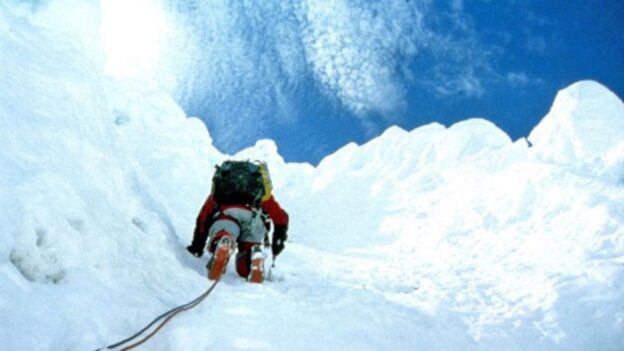
The walk along the north ridge was much harder than expected. It was vertical on one side (with overhangs) and steep flutings (like grooves going down) on the other side. You wouldn’t know if you were stepping on something safe or not.
As they were descending, with the weather setting in, things got a bit out of control.
They got lost and they were in a whiteout – unable to see anything.
Their plan was to get down that day. But, by the time the sun went down they were still very high up the mountain, still over 6,000m up.
That night while they were making a brew of water, their gas ran out.
Day 4
The next day they could see that they’d managed to get down the worst part of the ridge and Simon thought they’d get down the rest of the mountain that day. He thought the whole climb was “in the bag” (if something is ‘in the bag’ it means you’re certain to achieve it, you’re definitely going to get it.)
Simon thought it was in the bag. He was wrong.
Joe was climbing in the front, before Simon. He reached a vertical wall, a fall in front of him, so he started to lower himself off it.
The method of lowering yourself down an ice wall, using pick axes and spikes on your feet.
Joe swung his pick into the ice, and it made a strange sound, so he decided to take it out and place it in again.
He was about to swing again, and the whole piece of ice he was attached to with his left hand just came off like a pancake, so he fell through the air.
And he landed hard, on his leg.
It broke, really badly. Not just a fracture.
Pain flew up his thigh from his knee. Incredibly painful.
I’ve never broken my leg and I hope I never do because I’m sure it’s horrible.
I have injured myself before. Of course, I’ve cut my fingers on knives etc. When you do injure yourself there is a shock, especially a kind of shock where you think it could be serious. That kind of shock lasts a few moments, when you don’t just feel pain but you feel a kind of panic, thinking “I’ve seriously hurt myself”. Most of the time that feeling goes away when you realise it’s not bad.
But if it is serious, you get this dreadful feeling that comes on. A truly dreadful feeling that comes from the realisation of just how difficult and inconvenient things are going to get. Not just the pain, but the fact that you now have this injury which is going to make everything so damn hard for you.
Now imagine that feeling when you’re 6000 metres up the side of a freezing mountain in Peru with no water and no medical services anywhere near you.
I don’t know about you, but I would feel more than dread, I’d feel pretty hopeless. I imagine I would feel more than the pain and the inconvenience, there would also be all this emotion coming, like anger, tragedy, sadness.
Anyway, Joe at this point was mainly feeling the intense pain of a badly broken leg.
Here’s what happened, and this is really horrible, ok?
The impact of the fall caused his knee joint to actually split. The joint split and the bone from the lower leg went up through the knee joint, split the end of his femur (the thigh bone) and carried on up the leg.
Unimaginable really. All those ligaments completely ruined, the bone, cartilage, nerve endings, and of course the blood vessels broken by it.
The whole leg would have been unusable of course, and there was a lot of internal bleeding inside his leg.
Apparently he couldn’t cope with the pain at all at the beginning, but after breathing for a while he started to get a grip on it.
But he thought he was done for. He was still level with the peaks of some of the other mountains.
He tried to stand on the leg – impossible.
Simon eventually arrived, and he describes seeing Joe’s face – a complex mix of terror, pain and anguish.
Simon said “Are you ok” and Joe nearly said “I’m fine thanks” – because that’s what we say to that question, even if you’re not fine!
But he said “No I’ve broken my leg” and immediately Simon thought, “Oh god, we’re stuffed”
Now. What would you do if you were Simon and Joe here?
Let’s imagine you’re Joe.
You say, “mate, you’ve got to help me” or “Go ahead without me, I’m stuffed!” or “Don’t you dare leave me!”
Let’s say you’re Simon, what do you say here?
“Mate, don’t worry. We’ll get you down this mountain.”
“Look, you’re not going to make it. Do you have anything you want me to say to your parents?”
“Wait here, I’ll go and get help. I’ll come back for you I promise!”
Obviously, Joe is the one with the broken leg and the pain, but Simon also is in a difficult situation here because they’re partners.
According to Joe, Simon gave him some painkillers which did nothing, and they didn’t talk about it for a few moments because they both knew that Simon was going to have to leave Joe there, because they couldn’t get Joe down from the mountain without risking both their lives in the process.
Joe thought Simon would leave him there because there was no other choice.
Meanwhile, Richard, the third guy is sitting at base camp wondering what has happened to them, thinking that they both might be dead and that he’d find them at the bottom of the mountain because they’d just fall all the way to the bottom! There wasn’t really anything Richard could do because they were many many miles away from civilisation. There was no ambulance service to call. No mobile phones in the 80s. He just had to wait and see.
Back on the mountain, Simon pulled himself together to think about how he was going to get Joe down the mountain.
He decided to try and save him and had to come up with a practical solution.
The plan was, he’d just lower Joe down the mountain on a rope. Just slide him down.
He tied two 150ft ropes (there are about 3.3 feet per metre) together, with a knot in the middle and Simon was attached to one end, and Joe on the other.
Slide Joe down, letting the rope through the belay device. When the knot got to the belay device, stop letting Joe slide. Joe would stand up to take the weight off the rope. Simon would then unattach the rope from the device, let the knot through, then reattach the rope and then let it continue for the rest of the 150feet.
Then when Joe was at the end of the rope, Simon would downclimb to join him.
They continued like this for quite a long time, repeating the process. Letting Joe slide down, then letting the knot through the rope, letting Joe slide down further, then Simon climbing down.
Simon was letting Joe slide down quite quickly, conscious of the time running out and the fact they needed to get down to the bottom as quickly as possible.
It must have been excruciating for Joe.
But there were still these interpersonal things going on.
Apparently Joe kept wondering if Simon was pissed off.
These are the things you think about when you’re with a friend, doing something. Is he pissed off? Does he mind? Apparently Joe was wondering if Simon was annoyed by it all.
But I think Simon was also suffering from shock and panic too, and to an extent he held a lot of responsibility now for both of them, because Joe was out of action. It was basically a single-handed mountain rescue by Simon, in extremely difficult conditions.
It must have been a desperate desperate feeling for both of them.
What they didn’t know at the time though, was that this was just the start and that it would get a lot worse, and that something awful was approaching that they had no idea about.
They continued going down the mountain in this fashion – Joe badly injured, in shock and losing blood into his leg, both of them exhausted, both dehydrated at altitude and close to hypothermia.
A race against time.
The weather turned bad again, and within an hour or two they were descending in a full storm, with wind chill factor of something like -80 degrees.
They couldn’t dig a cave and rehydrate because they’d run out of gas. There was nothing they could do. Apparently at this point they lost control and started panicking, flying down this mountain in this desperate fashion.
As they made some good progress, albeit in such awful conditions, Simon started feeling a sense of hope because he could see that they were virtually down. Almost down at the bottom.
Things were looking up.
I say “reach the bottom” – in reality there were lots of different sections and terrains between the summit and the camp. From top to bottom it was like this:
Peak
Ridge
Face
Less-steep part of the face (approach to the face)
Glacier (like a huge river of ice that flows from the top of the mountain range down to the river bed at the foot of the mountain – slowly moving down, carving out the valley as it goes, crushing rock underneath it) – full of crevasses (massive cracks in the glacier with drops that went down all the way to the floor – to the river bed of the glacier)
The bottom of the glacier – full of huge boulders and stones, with water trickling deep underneath them.
A long section of this rocky terrain.
The base camp next to a glacial pool.
God knows how far from civilisation this base camp was.
Anyway, they were nearly down the mountain face, approaching the glacier. For Simon, he could see a glimmer of hope.
Until suddenly, Joe slipped off a cliff.
Neither of them realised it was coming, but Joe suddenly felt the ground under him get icier and more and more steep, and he started slipping faster and faster – going like a rollercoaster downwards, screaming at Simon to stop, but Simon couldn’t hear him and had no idea it was happening, just assuming that Joe was going faster over some steeper ground..
And then -whoosh, Joe slipped right off the edge of a cliff and was left dangling in the air, right above a massive crevasse – a huge crack in the mountain that went straight down into pure darkness. Joe was dangling over a huge abyss. About 80 feet between him and the opening of the crevasse.
Describe the problem from Joe’s point of view.
He gave up hope and would have died as hypothermia began to set in.
From Simon’s point of view.
Simon’s decision. What would you have done?
What Simon did.
Night fell – Simon dug a snow cave.
Meanwhile, Joe wasn’t dead. He survived the fall and had landed on a ledge in the crevasse, not far from the top.
Day 5
Follow Simon as he goes down.
He was suffering from shock and was also in a serious condition with dehydration, hypothermia and exhaustion. He was also seriously traumatised by what had happened. Apparently he said he was convinced that he was going to die too.
But what about Joe?
Attached himself to the ice wall of the glacier.
Called for Simon.
Pulled the rope.
Saw it had been cut.
Impossible to get out – broken leg, overhangs. Ice.
Joe lost it.
He came face to face with his own death.
He didn’t have a religious moment. He knew nobody was coming to save him. There was no god, just the abyss. It filled him with fear.
Imagine the worst darkness. Fear of the dark – it’s primal.
He was also extremely angry and felt like this was not the end of his life.
Joe’s bravery and refusal to give up.
One of the most impressive moments that has stuck with me.
“You’ve got to keep making decisions, even if they’re wrong decisions, you know. If you don’t make decisions, you’re stuffed.”
Joe could have stayed on the ledge. He could have given up.
He chose to keep making decisions. He chose to keep moving forwards.
It just shows that you must not let things happen to you. Don’t just let yourself be carried away by events. Don’t stop making decisions and let yourself be carried away.
Even if you feel hopeless, like all options are screwed and that you’ll fail no matter what happens. Don’t stop making decisions.
You have to continue and keep going.
Like the famous quote, often attributed to Churchill – “If you’re going through hell, keep going!”
Don’t give up when things are hard and hellish. Keep going.
Don’t just stop and let things happen to you, especially when you’re in hell.
That’s no time to stop! You’re in hell. Keep moving! You’ll get out.
Joe decided he’d use the remaining rope he had to lower himself into the crevasse and possibly reach the bottom.
Bottom.
Crawled along.
Horrible sound – imagine the fear.
A spot of light. Hope.
The incredible joy of the light and emerging, born again.
But out of the frying pan into the fire.
This was still just the beginning of his challenge.
He started following Simon’s tracks.
Night fell. He crawled in the dark until he couldn’t go further and managed to create a snow cave.
Day 6
Simon’s tracks had gone.
He could see the massive challenge ahead of him. He nearly gave up when he realised how far he had to go. The challenge overwhelmed him almost completely.
He was presented with this massive maze near the bottom of the glacier, where it was full of crevasses, creating all these little pathways with huge holes down the sides. Joe had to shuffle through all of this.
He got to the rocks at the edge.
Much harder terrain.
Created a splint using his sleeping mat. Discarded his other gear.
Horrendous experience of trying to get through the boulders and through the rocks. Hopping, falling onto the rocks, getting up, continue. Falling virtually every hop, like breaking his leg again every time.
Just 25 yards but it took so long and with so much pain.
But he describes himself as insanely stubborn at times (spell it correctly this time!)
This worked to his advantage because he was determined not to be beaten. He wanted to have it his way.
This is where the second most impressive part came.
He broke up the challenge into bits. He said – right, I’ll get to that rock in 20 minutes. Everything became about getting to the next rock in 20 mins, then the next 20 minute challenge and so on.
He became obsessed with these targets. If he got to the rock in 18 minutes he’d be over the moon, ecstatic. If he made it in 22 minutes he’d be furious with himself.
This is another thing we can learn about achieving something big. It’s true – trying to achieve one huge thing can seem impossible. You might look at the whole challenge and think, “oh my god, there’s no way I can do that, it’s too big”. But the key to it is to set a series of small goals and just try to reach that, then another small goal. Break it down into little chunks and you will be able to do it. Looking at the whole challenge doesn’t help. It dwarfs you.
I’ve said this before and I’ll say it again – it’s like something my Dad said to me about how to eat an elephant (that sounds weird because you might think – why are you trying to eat an elephant? But it’s just a metaphor that my Dad said to me once).
The thing about my Dad is that he often tends to be right about things. It’s quite annoying when you’re having a discussion or debate because he always somehow ends up being right, but it’s also great because I have learned some pearls of wisdom from him. I don’t know where he got this one from himself, maybe his Dad.
Anyway, when I was a child I think I was talking about how I was finding a school project difficult – I think we were even walking in the garden, but that sounds like it’s too good to be true – walking in the garden with my Dad and he gives me a piece of wisdom, like something out of a Hollywood movie or something. Tell me father, how can I train in the force and become a jedi? Etc.
Anyway, I said “I can’t do my history project Dad…” and he dropped some wisdom on me, saying “How do you eat an elephant?”
The point is this:
Seeing the challenge as one whole thing can destroy your motivation, but step by step, bit by bit – that’s how you get a big thing done. And don’t give up.
Also, you just have to have drive – you have to be stubborn, you have to be motivated. Listen to that army captain you have in your head and obey him!
Joe says that at times he felt like there were two voices in his head. One saying, “let’s rest here in the sun it’s nice” and another part of him which was completely unsympathetic, saying “No, you’ve got to get to that rock. Now get up and go!”
We all have that inside us. That cold, pragmatic voice, which seems frightening or something, but we just have to listen to it sometimes, just to get things done.
Obviously Joe was in seriously bad physical condition at this point. Exhaustion, the badly broken leg, internal bleeding, shock, frostbite, hunger, injuries from his falls.
But also he started falling apart mentally too.
That feeling of there being several voices in his head or several parts of his mind got stronger and stronger – with one part being this cold pragmatic feeling of just relentlessly getting to the next point and the next after that, and the other part of him was just almost disconnected as his mind wandered away from what was happening as if he was observing it all from a distance. It must have been seriously strange and disturbing.
Sound of water driving him mad.
Night fell and he lay on the rock staring up at the stars and his consciousness became quite unhinged, having psychedelic out-of-body experiences. He says he felt like he was becoming part of the rocks and part of the mountain itself, and he lost all sense of time, feeling that he had lain there for centuries.
Day 7 – Joe still isn’t dead!
Meanwhile, Simon and Richard are preparing to leave the next morning.
Joe finds water.
Peeing himself, enjoying the sensation.
Feeling totally robbed of his dignity.
Realises he could make it.
But hit hard by the realisation that Simon and Richard might have gone.
The delusions – thinking that Simon and Richard were, for some reason, following behind him but choosing not to come and help him because they didn’t want to embarrass him.
Then realising that they weren’t there and feeling utterly hopeless and alone and distraught.
Considered just getting in his sleeping bag. But felt it was too pathetic.
Sun went down and he completely lost it. He couldn’t hold his mind together any more.
Confusion and madness. He tried to look at his watch but couldn’t work out what time it was.
The worst thing – he got a song caught in his head. Boney M – Brown Girl in the Ring. It went on and on for hours.
You know when you can’t sleep and you get a song caught in your head, really vividly. Imagine that but 1000x worse.
Like being trapped in hell.
It really upset him because he really wanted to think of other things but he couldn’t because of the song.
“Bloody hell I’m going to die to Boney M”
He would drift off, then wake up thinking he was in a pub car park drunk, he kept losing it. Totally delirious.
He woke up (or became conscious) because of a strong smell – it acted like smelling salts.
He’d crawled into the toilet area of the camp site.
After all that – he ends up crawling through their own shit at the end.
But it gave him hope that Simon and Richard might still be there. He had reached the camp. He called out to Simon, but got no reply.
That was the end for Joe.
This is when he finally knew he was finished.
He described how he lost himself completely at that moment. Ego death.
Simon and Richard were still in their tents, ready to leave the next morning. Apparently, Richard woke up because he thought he heard something.
Imagine you’re in the tent. This is about 4 days after Simon got back. They both thought Joe was dead.
Imagine you’re in the tent, feeling terrible, ready to leave the next day. Darkness.
The wind, blowing across the fabric of the tent. The shadow of the mountains in the background, with the knowledge that the body of your friend is still up there.
You wake up and you freeze because you’re sure you’ve just heard something.
There it is again, but it can’t be true. It sounded like a voice on the wind.
Apparently Richard waited, listening, and heard it again, and it really scared him because he wasn’t sure if it was real, or he was imagining it, or if it was a ghost.
He decided to check on Simon and discovered that he was already up – Simon had heard it too and was convinced it was Joe.
They searched for him shouting his name and found him on the ground a few minutes from the camp site.
What they found was the body of Joe, like a ghost or some kind of monster.
Joe was in such bad condition, covered in earth, crap, frostbite and sunburned, thin, starving, dehydrated and nearly dead.
They carried him to the camp and began the process of trying to rebuild his strength.
That’s where the story ends. We know that eventually Joe was brought down to a nearby civilisation where he received medical attention.
The challenge was not over there of course. I understand that he received some poor medical help in the basic hospital he ended up in, had to be flown back to the UK and his leg had to be amputated.
About the decision to cut the rope.
Joe has always defended Simon’s decision, saying that he would have done the same thing.
I can’t really understand why anyone would have a problem with what Simon did. Why should they both have died? It doesn’t make sense.
In fact, when you think about it, by cutting the rope, Simon saved Joe’s life, or helped to save him.
If Simon hadn’t cut the rope, they both would have fallen and it’s likely that one of them would have died. Let’s say that Joe would have landed on the ledge like before. Simon would probably have died. It’s unlikely that he would have landed on a ledge too. He probably would have fallen into the crevasse, dragging Joe in too. They both would have died.
Anyway what do you think?
Again, I urge you to watch the documentary film on Netflix, on DVD or on what other platform you can find.
Also, consider reading the book, or Joe Simpson’s other books – because apparently he had even more near death experiences on mountains too!
Let me also leave you with this
If you’re going through hell, keep going.
How do you climb a mountain? One step at a time. How do you get down a mountain? One step at a time too! Or you slide, or you drag yourself, or you hop. But you break down the challenge into achievable steps.
Nobody even broke their leg learning English – so, enjoy your studies and seize the day!
A film club episode about the award-winning documentary film “Touching the Void” about a mountain climbing expedition which goes wrong. It’s an amazing true story and there are lots of things to learn from it, including lessons about motivation and attitude towards any challenge. The film is available on Netflix and DVD. Check it out and use this episode to help you understand it all.
This is a ‘Film Club’ episode of Luke’s English Podcast today because in this one I’m going to talk to you about a really great documentary film that you can watch on Netflix or on DVD. It’s about the true story of a mountain climbing adventure which goes horribly wrong and then turns into an epic battle for survival. It’s an incredible story and a fantastic documentary which won 6 awards including a BAFTA for best British film in 2004. The film is called “Touching the Void”.
It’s not a new one, it’s over 10 years old now, but it is a film which has stayed with me ever since I first watched it. I often remember it and I feel like there’s a lot to learn from it – in terms of language that you can hear in the film, but also life in general.
I’m going to talk about Touching the Void in some detail in order to use the film as a kind of case study for understanding the importance of motivation and attitude in achieving difficult challenges – in this case the challenge of learning English.
But it could apply to any challenge that you face in your life, especially ones that can feel overwhelming and insurmountable.
If you’re thinking – “oh, but I don’t like mountain climbing, so I’ll skip this episode”. I suggest you don’t skip it. The story in this film is amazing – it’s dramatic, it’s scary, it’s a bit funny at times and it’s really profound as well. It’s not just about going up a big piece of rock for no reason. So, stick with it ok. I think it’s worth it. I’ve put some work into this episode.
A lot of the text I’m reading is on the page for this episode, so check it out. Some of this is scripted, and some of it is improvised on the spot. But if you want to read the words I’m saying, or if you hear a particular phrase I say – you can see a lot of it written on this episode’s page.
Also, if you’re transcribing this one, don’t forget to copy+paste these words into your google document and then you can just add any extra bits I say.
You’ll also find links, some other youtube videos and more content you might want to look at because you’ll find it interesting and you can use it to help you learn English, like for example some of the specific vocabulary that you’ll hear me using in this episode.
I said before that in this episode I’d like us to consider the importance of motivation and attitude when dealing with a challenge.
Let’s start by considering the learning of English
Learning English can be tough. There’s no doubt that if you want to get to a really advanced level in adulthood it’s a challenge which must be met with effort and determination. But it can also be really enjoyable of course, and it should be. But if you’re really serious about learning English properly, it is quite a challenge that demands time and effort. You could compare it to climbing a mountain.
Learning English is like Climbing a Mountain
I’ve mentioned this mountain climbing metaphor before on the podcast, but let’s flesh it out a bit more here. When you look at the whole challenge of learning a language from the beginning, from the start point, it can seem really difficult.
It’s comparable to standing at the bottom of a mountain, looking up at the whole thing you are about to climb. Even getting to this point was a long journey, but there it is – the mountain is stretching up to the sky thousands of metres above you. The summit might even be invisible to you – you can’t even see it because it’s above the clouds.
Now, you might think – let’s go! Let’s do this! In fact, I’m sure that many of you relish that kind of challenge! That’s why you’re into learning English. Excellent!
But, I wouldn’t be surprised if sometimes you look at the whole challenge – the whole mountain and think – there’s no way I can get up there, it’s so high and massive, it seems so remote. Certainly, when you compare yourself to the mountain – the relative sizes of you and the mountain, you can feel dwarfed by the challenge.
If you’ve ever climbed a mountain you’ll know what I mean.
Also, if you’ve ever had to learn a language from scratch, you’ll know what I mean.
Sometimes just getting up off your sofa to switch off a light seems like a massive effort. Just getting out of bed in the morning can seem like too much to achieve, especially on those bad days when you’re feeling depressed or something.
Now imagine standing at the bottom of a huge and ancient mountain and looking up to the top. It feels like it’s miles away. It doesn’t seem real. It feels almost unimaginable that you can get to the top of it.
For me, when I consider my French, I feel a bit like this. Every single day I am reminded of the challenge ahead of me, because I hear fluent French being spoken all around me, and even though I do understand a lot of it, it’s like each time I’m trying to play a computer game at an insanely high difficulty setting. I play the game but I rarely feel like I’m winning. So I open my French study books at home and I see the challenge ahead of me. Sometimes getting through just a page is difficult – each verb conjugation, each bit of syntax, it’s a mini challenge of its own, and then I think of all the thousands of other words and sentences I have to master in order to get the level of mastery I want and I get a bit demoralised. I get into a negative frame of mind. I know I shouldn’t, but truth be told – it happens.
I wonder if you ever feel the same about English.
Anyway, the point is, we can do it! We can achieve our goals in the language we’re learning. It’s definitely possible! Where there’s a will, there’s a way. It’s just like any big challenge. Half the battle is in the way you approach the challenge, the way you look at it and the way you choose to deal with it. In fact, some would say it’s all in the mind.
It’s about attitude as much as it is about having the stamina and doing the leg-work. If you get the attitude and motivation right, the work doesn’t feel like work, the impossible challenge becomes possible. It’s mind over matter.
Tips for Mountain Climbing and Language Learning
Here are some tips on how to approach that challenge – the challenge of trying to climb up a mountain or to get to a high level in English, just to give you some motivation to make it up to the top: (in no particular order)
Stop focusing on the top! Instead, aim for a point which is not too far ahead – somewhere attainable, just over there ahead of you and within reach and try to get there, then do that again. Each time, just place the target a few steps beyond you. Break the whole thing down into small chunks. Sometimes that means going one step at a time, just focusing on each single step you make. Sometimes you might even slip back a bit, but you keep going. With the mountain you’re trying to reach the peak of course, but with learning English the sky’s the limit – there’s always more you can learn and more ways you can become a better and better communicator. The end of the process is just the point at which you decide there is nothing left to learn, so really there shouldn’t be a top. (Tbh, this is where the metaphor breaks down a bit!) Instead it’s a repeated, systematic process which you do bit by bit every day. It’s like going to the gym. You don’t stop when you get fit, you just keep doing it, maintaining, improving, diversifying, consolidating, reviewing and covering more and more ground each time.
Be positive! Accentuate the positives, rather than worrying about the challenge as a whole. Enjoy each step, take time to enjoy the view, breathe the air etc. In terms of language, enjoy the things you learn, remember to feel good about what you can do and what you’ve achieved, while also pushing yourself further. It might be difficult and even painful sometimes (for example when you make mistakes or fail to express yourself) but you are capable of great things, you just need to push yourself. When climbing a mountain, you’ll be surprised – you’ll feel exhausted, but if you ask your body to go further, it will. Similarly with learning a language – your brain can remember everything, you can string all these sentences together. It’s just a question of pushing yourself a little bit further and not accepting defeat.
Remember, it’s about the journey not the destination.
Enjoy the process! People climb large mountains all the time and they do it because it’s enjoyable. There’s no reason you can’t do it too as long as you take the right approach and enjoy the journey. Similarly in English, it’s vital that you enjoy it while it’s happening and that you consider it to be something you can enjoy – listening to or reading interesting and entertaining content, discovering a new way to think and express yourself, meeting interesting new people, finding out more about the world and finding your own unique voice and expressing yourself in a new language. It’s all part of the fun, like discovering a new place on your mountain climbing trip.
Rhythm is important. Get a rhythm going and let that rhythm drive you forwards. Getting started is the first challenge, but keeping a habitual rhythm going is the next thing. Keep that up and you’ll make the progress you need! In climbing, it’s good to set a certain pace and keep it up. You don’t notice each step after a while because you’re beating out a rhythm. Similarly in English, set a rhythm of daily practice.
Prepare yourself. Get the right equipment, food and check the weather and all that. For learning English this means – get the right attitude, make a learning plan, get some materials. Notepads, apps, grammar books, podcasts, and then using them!
You might want to get a guide – on the mountain you need someone, maybe a local, who can help lead you along the correct path. In language learning you could find a teacher, italki or something like that, or a language partner, or someone who has already learned English and is a few steps ahead of you.
Do it with other people – it’s fun to share the challenge with a group. It fun to climb with others and enjoy the camaraderie, similarly in English it’s good to have a peer group – e.g. in the comment section or with your conversation club.
Train yourself with some controlled work. Go to the gym and do some intensive strength and fitness work to prepare you for the challenge of climbing the mountain, or for your English do some episode transcriptions with the transcription team here, do some shadowing – listen and repeat drills, or get a grammar self study book and work from that.
OK, I think that’s as far as I can stretch this metaphor!
What do you think? Can you think of any other similarities between climbing a mountain and learning English? What about differences?
Obviously the mountain metaphor is just that – a metaphor
Learning a language is in some ways easier than climbing a mountain. There’s a lot less risk involved for a start. I don’t think anyone has been seriously injured while trying to learn a language.
“Learning a language – be careful, you might break a leg!” “I know a guy who slipped on a phrasal verb and he’s now paralysed” said nobody, ever.
Nobody has ever broken their tongue learning a language, right?
“Oh my god, what happened to you???”
“Yeah, I’m learning French…”
Perhaps you might get a bruised ego. Your confidence might take a knock but there’s no need for emergency helicopters, helmets, ropes, first aid or dramatic documentaries about a fight for survival.
“Jose Gonzales was a student who decided to work on his English one summer. He chose to enrol on an English language course at his local college. Little did he know that this would be the start of an epic fight for survival, from which he would barely escape alive.”
It’s not the stuff of Hollywood action movies.
“Coming this summer – one man – one grammar book – no hope for survival. DUM DUM DUM – It’s too confusing – there are too many verb forms – DUM DUM DUM – help – help! how do you pronounce this adjective? Where’s the word stress – too late motherfucker! Click, bang! – DUM DUM DUM – wait wait wait – it’s a 3rd conditional I’ve got this! – no goddamnit it’s a future prediction based on current evidence – get out of there! – she’s gonna blow! – DUM DUM DUM – in a world where the difference between present perfect and past simple – is the difference between life, and certain death – shoooooOOOO! – – – – DOOOOOOO – – DUM DUM DUM – …it’s a past perfect continuous passive verb form… nooooooo! – DUM DUM DUM – only one man has all the answers – DUM DUM DUM – Arnold Schwarzenegger – “You’ve been conjugated” – Robert DeNiro – “Are you talking to me? – DUM DUM DUM – Al Pacino – “Say hello to my little friend – the auxiliary fucking verb – hoowah! – Christopher Walken – “I like the way you constructed your sentence, but it doesn’t mean shit.” – DUM DUM DUM – Liam Neeson – “I don’t know who you are, I don’t know what you want, because your English is awful…” – Clint Eastwood “Are you gonna conjugate that verb in the 3rd person or are you going to whisle dixie? – Michael Caine – “How many times do I have to tell you – It’s just an auxiliary verb, it’s not that important!” – Al Pacino again “Be – DO – HAVE – You’re breaking my fuckin balls here! – Barack Obama – “I don’t know, why I’m in – this – film” Sir Sean Connery – “If you can say this sentence it’ll save your life – she sells sea shells on the sea shore” – WHat did he say? I don’t know! – tick tick tick tick – BOOOOOM – Just when you thought it was safe to open your mouth – From writer director Raymond Murphy – ENGLISH EXAM 2: Language Feedback Based on a true story.”
Obviously that movie would never get made. Learning English is not that dangerous or dramatic – thank god.
So going back to the mountain climbing analogy – of course, one big difference between learning a language and climbing a mountain is that learning the language is far far safer!
Also, you don’t need a mountain. You can do it anywhere, so it’s probably a lot easier!
Now, on this podcast I like to help you in your language learning process and I try to do that in a few ways, like telling you some stories to (hopefully) keep you engaged while you practise listening, or recommending some resources that you can use to learn English.
In this episode I’m going to try and do both of those things because I’m going to talk about an amazing documentary film that you can get on DVD or watch on Netflix. It’s an amazing true story and I think you can learn a lot of English from it.
Touching the Void
Director: Kevin McDonald (who also did “The Last King of Scotland” and “Marley” the doc about Bob Marley)
A documentary telling the true story of Joe Simpson, Simon Yates and Richard Hawking.
It features the 3 men telling the story in their own words, with some reconstructed scenes on the mountain using actors.
Released in 2003.
Won 6 awards in 2004 including a BAFTA for Best British film.
It is available on Netflix but also on DVD and I strongly recommend that you get a copy. Remember on both Netflix and DVD you can switch on the subtitles and watch like that, or just watch without, or a combination of the two.
Spoilers
So, you should be aware that I’m going to do spoilers for this film in this episode. I’m going to tell the whole story – so, spoiler alert.
That’s not going to ruin the film I think. It could even help you enjoy it more.
First of all, we already know when we watch the film that the characters survived. So, we know the outcome. How the hell they did it, is another question and that’s the interesting thing about the documentary. You get to follow this guy all the way through an unbelievable ordeal.
I think the story is strong enough for it to be engaging every time.
The purpose, ultimately, is to allow you to learn English from this film, and I’m recording this in order to make the film more accessible for you, opening up the story, hopefully creating more interest for you so you can explore the documentary and book in your own time and pick up language from them in your own way.
Suggestions for how to use this episode
You could do this:
Listen to this episode, listen to me telling the story and follow it all, then watch the documentary in English (you can turn on the subtitles if you like) and hopefully you’ll appreciate it more and be able to follow and understand it more.
Or you can stop right now, then watch the documentary and then come back to this episode later.
Or you just listen to this episode and never see the documentary – which I expect many of you will do because for one reason or another you just don’t get round to finding the DVD or getting it on Netflix. But I urge you to watch it because it will grip your attention and you won’t regret it. You get a proper feeling of the conditions, of the beauty of the mountain, and the harsh conditions and the nature of the environment – with the sounds of the ice and snow. It’s terrifically atmospheric. You’ll hear the characters describe it in their own words, which is fantastic. Plus, it will reinforce a lot of the English you’re picking up right now as you listen to this, and generally the English you’ll hear is clear, well-spoken and full of grammar in the form of narrative tenses, ways of talking about the past, descriptive vocabulary of the experience they had and also things like ways of expressing regrets and conditional, hypothetical language for talking about events in the past.
Touching the void on Amazon (DVD)
Touching the Void (book)
I also suggest that you get Joe Simpson’s book, which is also called “Touching the Void” It’s Joe’s full account of the story, so you get all the details in his own voice, and it’s written clearly in good English.
Book https://www.amazon.co.uk/Touching-Void-Joe-Simpson/dp/0099771012/ref=asap_bc?ie=UTF8
Simpson is a writer of a few books actually, all exploring the experiences of climbing and the mad adventures he’s had. Apparently there is a sequel to Touching the Void, which I haven’t read. He’s a successful writer, so you could check out his books.
Right, now let’s get stuck into the story of this film.
The STORY
I hope you’re feeling comfortable and that you’re somewhere warm and cosy, because things are going to get a little bit chilly in this story.
The main protagonists. Joe Simpson and Simon Yates.
Passionate young climbers from the UK. In their 20s. Quite experienced, in peak physical shape, but still a bit immature and probably reckless, like many young men are at that age.
Their reasons for climbing. They did it for fun.
The mountain – Siula Grande (6,344 meters) in the Andes in Peru.
They met Richard, travelling in Lima. He wasn’t a climber, but they convinced him to join them so that he could hang out at base camp.
He didn’t know what he was letting himself in for.
Siula Grande – it had been climbed on the North Face in the 1930s but nobody had ever climbed the west face, although lots of people had tried and failed.
The West face was the one they would attempt to climb.
They, perhaps arrogantly or maybe justifiably, assumed they were better than those others who had failed in the past.
They used ‘alpine style’ – you pack everything in a bag, then you just try and climb the whole mountain in one go (i.e. you don’t go up and pitch your route and then come back and do it again etc) you just go up on your own in one go. It’s risky. If something goes wrong, you’ll die.
No helicopter rescue. No facilities at base camp.
Also, no pre-set route. They just climbed up attached to each other by a rope, the first one attaching pins, devices, screws into the rock or ice and attaching the rope to it, the second one presumably unattaching as they go, so if one person falls they’re caught by the attachment to the rock or by the other guy.
If one fell, you both had to trust the few attachments that had been put into the rock, and the other one had to just hold on too. Absolutely nuts! Trusting your life to a spike of metal hammered into a crack, or screwed into the ice.
To be honest, this was a risky, even stupid thing to do.
But that’s what they lived for, and they were good at it.
The movement of climbing – it’s like ballet and gymnastics. How does it feel to climb? The joy of climbing. Getting away from all the clutter we have in our world.
The fact that they were attached to each other going up meant that they had to have an immense amount of trust in each other. There would have been moments where they thought “Do not fall here for goodness sake”. If your partner falls and his gear rips out – if it all comes out of the wall, you’re going to go to.
Trust is absolutely vital in this kind of climbing. You’re putting your trust in the other person completely. You have to rely on your partner completely.
My experiences of falling.
But for them, the risk was exactly what they were looking for.
We live in a world where there is not so much risk any more. In fact, there are whole industries around the reduction of risk. The world is relatively safe now, compared to before. It’s rare that you’re in great danger. Crossing the street is probably as dangerous as it gets, or driving.
So, some people go searching for risk because it makes them feel more alive.
Day 1
They did a lot of climbing and felt good.
To sleep/rest each night they created snow holes, ate supplies and drank water which they ‘brewed’ from snow by melting it using a gas cooker.
In any day, water is vital of course. Apparently we’re supposed to drink about 2 litres in a day, and that’s just a normal day. Now, imagine going to the gym and getting really hot and doing loads of exercise. You’d need more water, right? Imagine spending the day in the gym. Now imagine doing the whole thing at 4,000-5,000-6,000 metres up. You get a lot more dehydrated at altitude. Your body has less oxygen so it’s generally working a lot harder. I’m not sure of the science, but your body needs more water.
Apparently they needed about 4-5 litres per day, each.
Doing it with a gas stove – it takes about an hour to brew the water, again because of the altitude.
Up there the air is thin, there’s pressure, your heart beats faster and heavier (it goes like nobody’s business – meaning, a lot or fast), it makes you panic a little bit sometimes, you gasp for air, your body gets tired easily, a few steps and you need to rest. Everything takes ages. The air is actually thinner but it’s like somehow the air is thicker because you’re heavier and the air doesn’t satisfy you so much, it almost suffocates you a bit.
Water was essential, and so was the gas that they used to brew water at night in their snow caves.
They brought enough gas for what they expected was just about 3-4 days of climbing.
They also didn’t brew and drink as much as they should have done, because it took so much time and they were conserving their gas.
Little errors, which may have contributed to greater problems later.
Day 2
The started again at an altitude that they’d never climbed at before.
Much of it on day 2 involved ice-climbing. Using ice picks in both hands and spikes on your feet. Hammering in and spiking into the ice and rising bit by bit. I can only imagine that there must have been a lot of moments where they weren’t attached except for their spikes. It terrifies me, if I’m honest.
After a certain amount of time the higher they got the colder it got and the worse the conditions became.
Strong wind, heavy snow. Apparently the powder snow was coming down and across like avalanches. Imagine being on the beach with high wind, the sand gets whipped up into the air and you can’t see. It must have been like that, but at altitude and freezing cold.
The snow would stick to their clothing and then freeze and stick, and it was like wearing a suit of armour.
According to Joe, the last part of the face was some of the most nightmarish climbing he’d ever done. The snow was very unstable because it was made of powder and so he couldn’t get secure footing or anchors.
It took them 5-6 hours to climb 200 feet.
Remember, they were doing Alpine climbing, so while one climbed, the other waited. So, while waiting for Simon to climb, Joe was just motionless on the mountain, getting close to hypothermia.
Hypothermia is a condition caused by getting too cold, as the body loses more heat than it can generate and body temperature drops below 35C (95F).
Symptoms
– Shivering, although as hypothermia worsens, shivering stops.
– Clumsiness or lack of coordination.
– Slurred speech or mumbling.
– Confusion and poor decision-making, such as trying to remove warm clothes.
– Drowsiness or very low energy.
As the sun went down and everything went dark they decided they couldn’t go on so managed to dig a snow cave and rest.
Day 3
In the morning they saw what they’d tried to achieve the previous afternoon and evening.
Apparently the powder snow was all stuck to the side and top of the mountain in these extraordinary shapes – like big marshmallows, meringue and mushrooms, with large fluffy round lumps of snow overhanging from the top. It must have been an absolute nightmare to see. I can’t imagine how they climbed up and over it.
Apparently in the Alps, this kind of powder snow just falls off the mountain but for some reason in the Andes it stuck and formed these extraordinary shapes. For me, seeing the documentary (which contains reconstructions of the climb filmed on the same mountain) it looks like an alien planet or something, and it gives the impression of a strange unknown place with it’s own character, different to the mountains in Europe. Remember, that nobody had ever done it before. It must have been like going into outer space or something – scary but exciting, and otherworldly.
Imagine a massive mushroom made of white powder. It’s like a mushroom because of the overhanging snow.
Now imagine that mushroom 6 km up in the sky.
Now imagine trying to climb over it from the base.
How on earth did they manage it? I have no idea.
Apparently it was extremely precarious (something that could fall at any moment – literally, or figuratively e.g. the economy is in a precarious state) and unnerving (makes you nervous).
They were really scared that they might not make it.
When they got onto the north ridge, they promised never to climb an Andean mountain again. In fact, they considered stopping at that point because they were both exhausted, but they thought “we’ve come all this way, we might as well stand on the top”.
So they ascended the north ridge and made it to the top.
What a feeling. They did it – first people to climb the western face and reach the summit.
Extraordinary shots of the mountain and the feeling of epic space around – above the clouds and just sticking out into the sky.
Talking about one of the UK’s most popular television programmes, Top Gear. This episode features lots of vocabulary related to cars, but a lot more too including your guide to how to speak like Jeremy Clarkson.
More British TV content. This time it’s all about cars. It’s not just a car show though. It’s kind of a comedy entertainment show with cars. And it’s perhaps the BBC’s most popular show for a long time, certainly one of their biggest exports. You’ve probably seen it. It travels well.
Overview of the Episode
The story of Top Gear
Descriptions of Top Gear and the way they speak on Top Gear
Some clips + language
The criticism of the show
The Story of Top Gear
What it used to be like…
“The Jeep Cherokee!”
https://www.youtube.com/watch?v=c_c44ArGoRk
How it came back in 2002.
3 things on Top Gear
Car news and reviews (which are actually quite informative and inventive, even though they focus on unaffordable cars)
Blokey banter between the presenters, where they share car news and take the piss out of each other.
“And then we did THIS.” Ridiculous challenges in which they spend a LOT of money and create some mad entertainment all around cars.
It’s politically incorrect, wilfully irresponsible, male-centric, unapologetically macho and competitive, slightly offensive at times but very well-made television.
I must admit that I always watch it when it’s on, but I’m not completely convinced by the presenters and the general tone, but some of the special episodes were amazingly well made.
The show is popular but also controversial as it has been criticised for being slightly racist or inappropriate. The makers of the show claim they’re not to be taken seriously. Others don’t like it because it promotes irresponsible driving and that it doesn’t take into account any green issues.
The Presenters
James May, who used to live in the building over the road from me. A mischievous motoring journalist who’d never done TV before. He’s tall, scruffy, slow and sardonic. They call him Captain Slow and he’s probably the one you could stand having a drink the pub with. He seems like the nicer, milder one of the three.
Richard Hammond, who comes from the same town as me – Solihull in the West Midlands, the former local radio DJ who also had never done TV work before joining the show. Hammond famously had a big accident during a high-speed dragster race and was seriously injured, spending weeks in hospital recovering from head injuries. They call him Richard “The Hamster” Hammond, even though he’s definitely not a hamster. He’s a man.
Jeremy Clarkson,lives nowhere near me. Used to be a presenter in the early days, and had done talk shows and some other programmes before being part of the Top Gear reboot with his old school friend producer Andy Wilman. Clarkson was fired from the BBC for allegedly punching a producer of the show when he was drunk and hungry. This is what led to them leaving the show.
The BBC found new presenters and continued, but it didn’t pick up the same audience figures or ratings. Apparently the trio of May, Hammond and Clarkson is where the appeal is.
The three of them continue to make a big show about cars now on Amazon Prime in their show The Grand Tour, which as far as I can tell is pretty much the same as Top Gear but with a bigger budget.
A lot of Top Gear is on Netflix and YouTube.
How they speak (Learn how to speak like Jeremy Clarkson)
1. Pauses.
Almost – everything they say – is absolutely full – of pauses.
In fact, some of the pauses are so long – you don’t realise – that’s not even the end of the sentence – because this – is the kind of sentence – that has to end – like THIS.
2. “THIS”
It seems like all the sentences they say have to either begin or end with the word “THIS”
And then we did THIS.
THIS is the kind of car – that my Mum would drive
And THIS – is THIS.
If there’s one word which summarises everything that you need to know about Top Gear, it’s this.
3. Intonation – i.e. Going down heavily at the end of the sentence.
4. Hyperbole “I think it’s quite possibly the best looking car in the world” I’m sure he’s said that about 5 times on the show, about 5 different cars.
“This is the most amazing feeling I have ever had… with my trousers on.”
“The level of torque is biblical.”
“It goes from 0 to 60 in negative 12 seconds. It is so fast that it actually goes back to the future.
If this car was a guitar player, it would be Eric Clapton, Jimi Hendrix and Noel Gallagher all rolled into one.”
5. Humour – some might call it “British humour”, but mainly it’s dry, sarcastic, opinionated hyperbole with loads of jokey banter and piss taking.
Car review
Porsche Carrera GT Car Review
Language
It isn’t styled with the verve or the passion of a Ferrari.
It’s form following function.
He was ready to take on the Mercedes.
Masses of wheel spin off the line.
He has got to tread carefully.
I’m surprised he’s playing his power ballads today
Bit of a wiggle, he’s ok coming up to the hammerhead
This is where he spun it before, cannot afford a mistake now.
This is maximum attack mode.
He’s really opening the taps now.
Really working that manual gearbox.
Wringing out any millisecond advantage.
This is the second to last bend.
Hard on the ceramic brake s.
Keep it steady.
He’s measuring out the power.
Gambon corner. Ooh he’s pushing it now, and there he is!
Blokey Banter
Cows or cars
Vocabulary
Can anyone see a flaw in my plan?
We’ll be out of a job!
Steer (top steer)
The only drawback I can see are cattle grids.
Challenge
Reliant Robin
The Criticisms of Top Gear
Excess
Decadence
Materialistic
misogyny
Casual racism
Climate change
Irresponsibility
Setting a bad example
Stewart Lee on Top Gear “Clarkson. He’s outrageous, politically incorrect – but done just for money. He’s like The Sun. “Hammond – a man who’s been able to carve out his own literary career off the back of his own inability to drive safely.”
Steve Coogan
It’s lazy comedy based on offensive comments. It’s not punching up.
It’s lazy, feckless and flatulent.
What do you think?
Cookies on teacherluke.co.uk
Click “Accept All”, to consent to the use of all cookies on this website, or visit "Cookie Settings" to control your consent settings.
This website uses cookies to improve your experience while you navigate through the website. Out of these, the cookies that are categorized as necessary are stored on your browser as they are essential for the working of basic functionalities of the website. We also use third-party cookies that help us analyze and understand how you use this website. These cookies will be stored in your browser only with your consent. You also have the option to opt-out of these cookies. But opting out of some of these cookies may affect your browsing experience.
Necessary cookies are absolutely essential for the website to function properly. These cookies ensure basic functionalities and security features of the website, anonymously.
Cookie
Duration
Description
cookielawinfo-checkbox-analytics
11 months
This cookie is set by GDPR Cookie Consent plugin. The cookie is used to store the user consent for the cookies in the category "Analytics".
cookielawinfo-checkbox-functional
11 months
The cookie is set by GDPR cookie consent to record the user consent for the cookies in the category "Functional".
cookielawinfo-checkbox-necessary
11 months
This cookie is set by GDPR Cookie Consent plugin. The cookies is used to store the user consent for the cookies in the category "Necessary".
cookielawinfo-checkbox-others
11 months
This cookie is set by GDPR Cookie Consent plugin. The cookie is used to store the user consent for the cookies in the category "Other.
cookielawinfo-checkbox-performance
11 months
This cookie is set by GDPR Cookie Consent plugin. The cookie is used to store the user consent for the cookies in the category "Performance".
viewed_cookie_policy
11 months
The cookie is set by the GDPR Cookie Consent plugin and is used to store whether or not user has consented to the use of cookies. It does not store any personal data.
Functional cookies help to perform certain functionalities like sharing the content of the website on social media platforms, collect feedbacks, and other third-party features.
Performance cookies are used to understand and analyze the key performance indexes of the website which helps in delivering a better user experience for the visitors.
Analytical cookies are used to understand how visitors interact with the website. These cookies help provide information on metrics the number of visitors, bounce rate, traffic source, etc.
Advertisement cookies are used to provide visitors with relevant ads and marketing campaigns. These cookies track visitors across websites and collect information to provide customized ads.



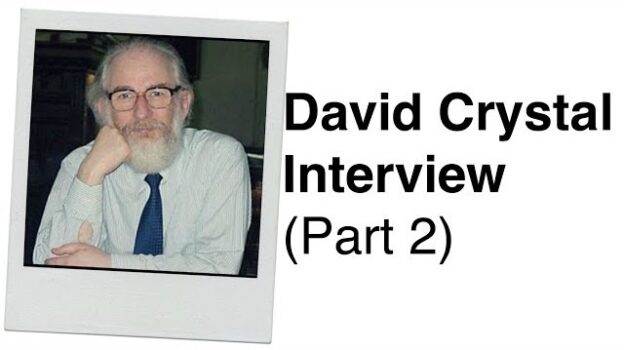



 Oil painting by Sasha Sokolova