I've been teaching English for over 20 years in London, Japan and France. I also do an award-winning podcast for learners of English called "Luke's English Podcast". In my free time I'm a stand-up comedian who regularly performs shows in English in Paris and sometimes London.
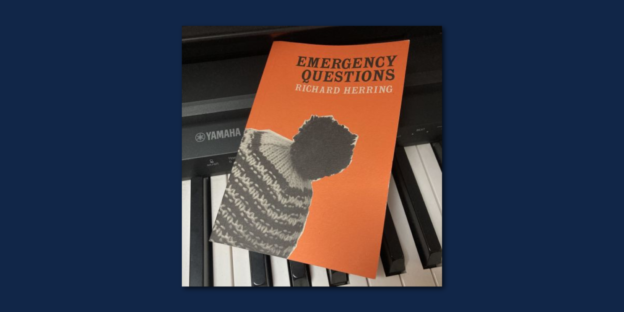
Listen to Luke and James talking about various topics as we answer questions from the book “Emergency Questions” by comedian Richard Herring. Text video and full transcript available.
Discussing some of the most important terms and concepts in legal English, while also learning about key cases through some amusing stories, with legal English trainer Louise Kulbicki.
Guest host Oli Thompson interviews Luke using a classic format from BBC Radio. Luke is going to be marooned on a desert island but he is allowed to bring 8 pieces of music, one book and a luxury item. For episode 700 this is a chance to get to know Luke and his musical choices a little better. (Transcript and text video versions available)
Wishing everyone a happy new year and taking stock of the main aims and methods of this podcast, plus some frequently asked questions. Video version available on YouTube.
In this episode the plan is to wish you a happy new year, welcome back all my regular listeners (and maybe some irregular listeners too) and also say a big hello to any new listeners who might have just discovered this podcast and are wondering what it’s all about. I normally do episodes like this at the start of the year because at this time, during the new year period, it’s normal to turn over a new leaf, make a fresh start, perhaps make some new year’s resolutions and generally try to pick up some good habits for the year to come – and that often includes working on your English and trying to find good listening resources to help you do that.
So, in this episode I’d like to welcome you to LEP or welcome you back to LEP, just summarise what this podcast is all about, restate my objectives for doing this and generally make sure we are all on-track for a good year of podcasting and learning English in 2021.
I’ve decided to answer some Frequently Asked Questions. These are the questions people typically ask me when they find out that I have a podcast for learning English and they want to know more.
So during the episode, you’ll learn or be reminded of what the main ideas are for this podcast, what teaching principles this is based on, what my methods are, what you can expect from my episodes in general, how you can use them to improve your English and also some info about me too, because it’s a good idea to get to know the person you’re listening to, isn’t it? I have always found, as a teacher, that it really helps when I put my personality into my English lessons. It just seems to make things more enjoyable and effective for the learners. Not because I have an award-winning personality or anything, but just that I think learning a language is a deeply personal process and so it makes sense to have a more personal approach to teaching it as well as learning it. It helps if you know who I am. It gives you context, it brings the language to life and it’s just more fun too, isn’t it. If you like, as you listen to this, you can imagine we’re in a cafe or something (even though I’m doing all the talking – but you can pause me at any time and put your thoughts into words if you want. I can’t hear or respond to you, but it’s better than nothing isn’t it? That’s the least you can say about my podcast , haha, “Well, it’s better than listening to nothing”)
By the way, other podcasts are available of course. As you probably know, there are quite a lot of podcasts for learners of English including ones by the BBC and other ones by other people, and they’re great, but obviously I hope you listen to my podcast, don’t I?
So, what’s this podcast? How can it help your English? Who are you listening to? Those are the sorts of questions we’ll be covering, but also plenty of other random bits and pieces.
JINGLE
Happy New Year!
Welcome back to the podcast! I hope you had a fairly good holiday period – as good as it can be during this mad mad time that we are all living in. When’s the world going to go back to normal? When’s that going to happen? We don’t know. Was it even normal in the first place? Probably not. In any case – I hope you’re well and that you’ve started 2021 in a reasonably positive frame of mind and that you’re ready to embark on some new audio adventures with me and my podcast.
If you are a brand new listener – then welcome. I really hope you simply enjoy listening to me talking to you, or talking with my guests in English in these episodes. I hope that this will help you to get regular English listening practise into your life, and that you enjoy it too.
Because enjoying your listening practise is so important. This will help you to listen regularly, listen for longer periods of time and listen long-term in your life as well.
We all know that it is very important and useful to listen to plenty of clear, natural English, spoken at a fairly normal speed, focusing on a variety of topics.
Reading is good. Studying grammar, vocabulary and pronunciation – that’s good. Doing plenty of speaking practice is really important. Watching videos in English is helpful. But do not underestimate the importance of just listening to English – for as long as possible each time. That’s what this podcast aims to help you do – at a very minimum. There is more to it than that of course. A lot more. But basically – I want you to do more listening in English.
The first and most basic aim of this podcast is just to help you to get more English in your life through listening to the spoken word – listening to English as it is spoken naturally, by me in this case, and my guests.
Let’s go through my list of frequently asked questions, which will form the backbone of this episode, which is probably quite long.
What is this podcast?
Is it for me?
It’s for everyone, but it might be difficult if → You’re lower than an intermediate level (intermediate might be hard – you’ll have to be extra motivated) or you are a really visual learner. (My wife doesn’t listen to podcasts – even in French. She can’t really do it. She feels she has to close her eyes or do nothing else, whereas I love just listening to audio and it works really well for me – better than watching videos because I can multi task)
How long have you been doing it?
Why did you start doing this podcast?
Who are you Luke? I mean, can you tell us a bit more about yourself, your background and your career so that we can feel totally confident that you know what you’re talking about and that you’re just some guy who can speak English?
Will it really help my English to listen to this?
Yes.
How do you know? First-hand accounts from listeners.
Common sense. Of course. It’s about a billion times more effective than listening to nothing at all. Plus, what else are you going to do? Watch Netflix with subtitles (yes, do that too, but switch the subs off sometimes) REad books (yes definitely – both graded and non-graded ones if you’re ready) Speak English with people you know who speak English (yes) Take English classes (good idea as long as you take part properly and take responsibility for your learning too). You can do all of those things. But I don’t want to make this complicated. Listen to my podcast regularly and it will help with your English.
Academic studies I’ve done – while preparing my teaching qualifications I read a lot of books and other texts based on proper academic studies into how people learn languages.
Professional experience after having met many thousands of learners of English from many places, and working with them closely to help their English. Observing what works for them, what people respond to, the realities of learning a language.
All of that has shown me that regularly listening to something like my podcast can help your English a lot. I could go into that more (and I have in previous episodes) but that’s all I will say at this point.
Will it help me improve my grammar, vocabulary and pronunciation?
Yes, both directly (when I teach language) and indirectly (through exposure). I can also help you think about the way that you learn, which can make you a more skillful and effective learner.
What’s your method then, Professor Thompson?
5 Ls, 5 Ss, 5 Ps, being a smart-learner, the 5 Ms, DISCIPLINE, commitment. There are many ways to approach language learning. You have to choose one that works for you and that helps you to keep doing it even when it’s tough. Basic: Get as much English into your life as possible and make it meaningful. Hopefully I can help by giving you something you enjoy and want to listen to. More complex: Be a conscious learner too → notice structures and phrases, notice pronunciation (how I say things), try to record them, understand them in context, remember them, record them and repeat them. My premium content is designed specifically to help you do that. I cut out a lot of the annoying work and put it all on a plate for you. Just listen, follow the PDFs and do what I tell you to do – memory tests, repeat after me etc.
Can I really learn English on my own, only by listening to you Luke?
I always recommend my podcast as “part of a balanced diet” and that does include doing other things, especially plenty of speaking practise with real people, probably qualified teachers who can help give you bits of feedback and correct your errors, but also just speaking with people helps you develop the social side of using in English for communication.
I should also mention writing and reading of course, but since this is an audio podcast we focus mainly on the spoken version of English.
What level is it for?
Should I do anything else, other than just listening?
Share your thoughts in the comment section on my website – practise little bits of writing there and chat with other listeners.
Your episodes are quite long. Aren’t they too long, in fact?
How should I listen? (the technology you can use, what you can do while listening, where you listen, how often you listen)
Are there transcripts for these episodes?
What’s your accent Luke?
Do you only have native speakers on your podcast? Most of the time my guests have English as a first language, but sometimes I talk to people who have learned English in adulthood because these people are extremely inspiring as they have done what so many people want to do, and they have great insights into the process of learning English and it’s also really important for you to listen to non-native English speakers speaking English too because it’s vital to hear a variety of English being spoken in your life. English is a diverse language. There are many people around the world using it and speaking it in slightly different ways. It’s important for you to be able to understand all those different varieties. This is true for the different accents and dialects in native English speakers too – you should become accustomed to hearing English spoken with various regional accents. If you only ever listen to my standard RP which is probably very clear to your ears, you might not be able to understand others. Also I really want to encourage you to love the different regional accents and to see their value. Sometimes learners of English will say that they only want RP and they see other accents as somehow being “lower forms of English” with less value. I don’t agree with this of course. The idea that a regional accent makes you sound uneducated or even lazy or something – that idea deserves to stay in the 1950s where it belongs.
Having said that – let me put my cards on the table and be as clear as possible.
What accent should you develop in English?
The first thing is that you need to be clear. People need to understand you. Work on that.
It’s a good idea to pick a certain accent which you can use as a model. This is the accent/pronunciation you can aim for or try to copy. Why not choose RP? It’s a perfectly good choice as most people will be familiar with it. If you have a particular reason for wanting to copy a regional accent, then go for it. Perhaps you live in the north of England and you want to do things like your neighbours. Or maybe you just love a certain regional accent for personal reasons and you’ve decided that this is the one for you. That’s fine too. Go for it. Try to keep things natural. I could talk about this more but I won’t go on about it too much.
Basically – I love all the accents in English. I really do. But I would probably recommend RP as the one to go for, just because it’s still a standard form. I know someone is thinking “but only about 5% of English speakers use RP” yes – but I can’t think of another accent which is more common. Think of British accents in a pie chart. There isn’t one accent that really dominates that chart, I expect. Each segment in the chart is probably around the same size. So which one do you pick? Again, I think RP is fine and makes sense because it’s a standard. I don’t mean you should speak like a posh person, like The Queen or something, because that would be weird.
Listening for understanding others Listening in order to develop your pronunciation
How do I pronounce your name, actually?
How do I pronounce the name of the podcast?
What sort of episodes can we expect?
What are your favourite episodes?
You’re on episode 699 of LEP. Do you have anything special planned for episode 700? No, I don’t! I think it will just be another episode this time. I can’t think of anything specific I can do. Maybe I will do a YouTube livestream “Ask Me Anything” kind of thing. I’ll see. I know that if I do a YouTube live stream then you will all want to know about it in advance. This isn’t always possible. You’ll just have to subscribe to my YouTube channel.
What are LEPsters?
Where are your listeners?
In many places around the world! All over the world.
Why do you talk about ninjas sometimes? What are LEP Ninjas?
Can you explain the Russian Joke please? No.
What do you think of Brexit? It’s a bad idea. I think it was an opportunity for a bunch of nutters to take control of my country and push it in a different direction. I think it’s the wrong direction, but now we have to live with it and make it work. I am not a fan of Boris Johnson and his gang. I feel they’re doing a bad job. That’s probably enough politics isn’t it. Oops, nearly slipped on politics there. Watch out everyone, there’s some politics on the floor. Don’t step in it. “Can someone clean that up please?” (I have made that joke before)
Do you have a team of people helping you to do this? No, it’s just me.
Can we see you perform stand-up comedy on stage?
Are you married and do you have kids and stuff?
What’s your favourite football team?
Do you like music? Do you play music? Do you have any songs stuck in your head today?
Can you sing songs for us on the podcast sometimes? Yes, I do that occasionally, when I feel inspired to do it. I’m not the greatest singer or the greatest guitarist. I’m just learning. But I love it and I feel moved to do it. If I do sing in an episode, most of the time, I do it right at the end of the episode so that people who might not like it don’t feel obliged to listen to it. But the ones who like hearing my versions of other people’s songs (I usually sing cover versions of songs) those people can listen and hopefully enjoy hearing me. I always make an effort to sing clearly so you can hear all the words of the song. I also don’t use any reverb to cover up the imperfections in my voice or guitar playing. I just get the guitar on my lap, point the microphone somewhere between the guitar and my mouth and do my best.
Are you on YouTube?
Yes, I have a YouTube channel as you may know.
I post my audio episodes there, usually with a single static image. I don’t think YouTube is necessarily the best way to listen to my content, but I guess if you are sitting at your computer, perhaps doing something else (like gaming or working or something) then it’s convenient to have one of my episodes running in the background. But also, YouTube’s automatically generated subtitles are usually pretty accurate. When I’m talking on my own, the accuracy is about 95% but when I’m with guests that accuracy can drop to about 85-90% I think. That’s not 100 perfect, but it’s pretty good.
I’m always working on ways to deliver 100% correct transcripts to you because I know how useful and important they are. To an extent I’m just waiting for the technology to catch up. I think it won’t be long before automatic transcriptions are basically perfect but we’ll see.
I’ve been working with some new software which is quite mind-blowing. I don’t want to make any promises about it because I’m just experimenting with it at the moment, but basically it allows me to generate transcripts for episodes in a really convenient way, then edit those transcripts quite easily while also editing the audio. This is too complicated to get into now.
Have you forgotten anything?
Yes, I am certain that I have forgotten to mention something really important, and someone is going to think “Hey you forgot to mention this specific thing! Or You didn’t mention this specific person!” Sorry about that.
You ramble quite a lot Luke, you sometimes talk too much and repeat yourself a bit.
Yes, I do. Sue me. To paraphrase Shakespeare: There is a method in my madness.
From Shakespeare’s Hamlet, 1602. The actual line from the play is ‘Though this be madness yet there is method in it’.
The main message I want to give you here is this:
Listen to my episodes regularly and enjoy doing it.
Download my app to get easy access to all the episodes on your phone. (more than in Spotify and anywhere else)
Become a premium listener if you want to go further in your learning with me.
Don’t be a ninja – come out of the shadows and write a comment from time to time.
Paul Taylor joins me for some random questions and challenges, including various little discussion points, accents, citizenship test questions, idioms, jokes and more.
How are you doing today? I hope you are feeling fine. Are you feeling festive? Is it even possible to feel festive this year? Hopefully you’re finding a way to keep your spirits up as we speed towards Christmas.
I’m attempting to get the conditions just right here. I’m wearing a warm sweater, a nice thick pair of socks and I’ve got a log fire going on here (I haven’t really – it’s just a video loop of a log fire – I couldn’t have a real fire going, it’s far too warm for that, I’ve got the windows open! But let’s imagine I’m in front of a lovely cosy warm log fire and that it’s all snowy and freezing outside and I’ve just taken some time out from wrapping presents and drinking brandy to do this recording for you.)
I’m in Paris at the moment. I’m not making the usual trip with my wife and daughter back to England to see my parents and brother this year, because of obvious reasons. It’s a Parisian Christmas this year, which is also very nice. “Christmas in Paris is such a wonderful thing, red wine and roses, are perfect for staying in” – you could imagine some crooner singing that.
2020 is nearly at an end. It’s been a weird year hasn’t it!?
In this Christmas episode I’m going to go through 11 Christmas themed jokes that might put a smile on your face. These jokes make fun of the year that we’ve just had to deal with – 2020.
I’m going to tell you 11 jokes, then explain them of course one by one, and then I’ll have a bit of a ramble about podcast statistics, upcoming episodes and my best wishes for Christmas.
11 Christmas Cracker Jokes for 2020
What is a Christmas cracker? What is a Christmas cracker joke?
I probably explain this every Christmas time, but let me cover it again briefly. The Christmas cracker joke is a hallmark of a normal Christmas at home with the family. Everyone’s gathered around the table for a feast of roast turkey with all the trimmings and of course there are Christmas crackers decorating the table, one placed in front of each chair.
A cracker is like a tube which is pinched at both ends, and inside the tube there’s a paper party hat, a toy or puzzle or tool and a joke. The jokes are usually pretty awful things like “What does Santa have for breakfast? Snowflakes”. That kind of thing.
But this year I have trawled the internet for some alternative jokes that have some topical elements focusing on things like the British government, the coronavirus and things like that.
These jokes are being shared all over the internet on a lot of newspaper websites at the moment. They’re trending at the moment, especially the one about Dominic Cummings.
It would be good if Christmas crackers contained more topical jokes like these each year, instead of things like “How does Santa keep track of all the fireplaces he’s visited? He keeps a logbook.”
So I’ll read through the jokes, then I’ll explain them one by one. Let’s see how many of these you can get. It might also be a way to review some of the themes which have dominated our lives this year, certainly in the UK.
After I’ve been through the jokes I’m going to have a bit of a ramble again, and will do a little review of the year in podcasting, and wish you all a merry Christmas again.
By the way, this is the official Christmas episode. Happy Christmas everyone! If you don’t celebrate Christmas, then I’ll say simply “Seasons greetings to one and all!” Also, happy new year and good riddance to 2020.
There will be one other episode arriving after this one – that’s an episode with Paul and a hint of Amber too. I’ll release that during the holidays. Then I might take a bit of a break during the holiday, but I’ll be working on premium stuff to be uploaded when possible, and I’ll probably be doing a few little interviews, maybe a conversation or two with James, Dad, Mum. Those will probably be published in the new year, but we will see.
In any case, let’s now go through this list of dodgy jokes for Christmas 2020 and then I’ll ramble on to you a bit more.
11 Christmas Cracker Jokes for 2020
Let’s see how many of these you get. They’re either word jokes or cultural references to things that have happened this year. Also, there are bound to be words and phrases to learn here, and I will be going through all that properly during this episode.
What is Dominic Cummings’ favourite Christmas song? Driving Home for Christmas
Why are Santa’s reindeer allowed to travel on Christmas Eve? They have herd immunity
Why couldn’t Mary and Joseph join their work conference call? Because there was no Zoom at the inn
Why can’t Boris Johnson make his Christmas cake until the last minute? He doesn’t know how many tiers it should have
How is the pandemic like my stomach after Christmas? It’ll take ages to flatten the curve
How can you get out of talking to your boss at this year’s staff Christmas party? Just put him on mute
How is Christmas exactly like your job? You do all the work and some fat guy in a suit gets all the credit.
Why is Parliament like ancient Bethlehem? It takes a miracle to find three wise men there.
Christmas dinner is a lot like Brexit. Half the family were told they needed to make room for Turkey, so opted to leave Brussels.
Why doesn’t Jeremy Corbyn ever visit Santa? Because he struggles in the poles.
Why was the snowman looking through the carrots? He was picking his nose.
A Year in Podcasting
Top 20 episodes this year
I released about 100 episodes this year, including all the premium content and other bits and pieces I’ve created and uploaded this year. That’s got to be the most productive year ever for LEP.
I guess since COVID-19 came along I’ve spent a lot of time indoors this year. Not much travelling and as a result I was very productive and you were also very attentive, listening more this year than in previous years.
In 2020 the podcast got over 13 million downloads (13,663,983 to be exact – at the time of counting – 18 December 2020), which is awesome and I think it’s the biggest year so far.
Here are the top 20 episodes from 2020
676. David Crystal: Let’s Talk – How English Conversation Works
660. Using TV Series & Films to Improve Your English
661. An Englishman in Los Angeles (with Oli)
682. Key Features of English Accents, Explained
655. Coping with Isolation / Describing Feelings and Emotions – Vocabulary & Experiences
663. The Lockdown Lying Game with Amber & Paul
637. 5 Quintessentially English Things (that you might not know about) with James
640. IELTS Speaking Success with Keith O’Hare
673. Conspiracies / UFOs / Life Hacks (with James)
669. How to Learn English
Here are the top countries for 2020
It’s the usual list to be honest!
20 Australia
19 Hong Kong
18 Saudi Arabia
17 France
16 Brazil
15 Vietnam
14 Thailand
13 Turkey
12 Italy
11 Ukraine
10 Korea
9 Germany
8 Spain
7 United States
6 United Kingdom
5 Poland
4 Taiwan
3 Japan
2 Russia
1 China
Top Podcasting Platforms
How are you listening?
Apple Podcasts App
Spotify
Chrome – which must be Google Podcasts I expect, or maybe web browsers.
Castbox
PodcastAddict
The LEP App
Upcoming stuff
Paul’s episode (with a hint of Amber)
Maybe something with James in which we ramble about a load of nonsense.
Something about The Mandalorian (perhaps with James, perhaps with someone else) but I don’t know all the comic book backstories and even the animated series like Star Wars rebels.
Some kind of Rick Thompson report, but we might be waiting until Brexit day, when the transition period ends. Boris Johnson is attempting to create a deal but there’s no way that deal would be better than just being in the EU itself, and anyway he probably won’t even get a deal at this rate. Will there be huge disruption at the borders, lack of stock in the shops and other repercussions?
Gill’s book club – 1,2,3,4 by Craig Brown – the book about the Beatles. McCartney III is out now by the way.
I keep wanting to do something about the Beatles but the topic is so huge that it’s hard to cover it all. Perhaps what I can do is a rambling story of the Beatles episode or series which tells the story, and it is an epic story with many elements to it. It’s hard to tell it because there are 4 people involved and more, but I might have a go at it. I could just try and do it all from memory. Probably be a 10 part series or something like that!
WISBOLEP conversations. These will be dotted out over the next few months I think.
More conversations with guests.
I have something in the pipeline about legal English, which is actually a lot more interesting than it sounds as we look at various aspects of the law and legal English, including stories of landmark cases involving dead snails and jaffa cakes. It should be a bit of an eye opening episode if you’re unfamiliar with legal English, but also just the thing you want if the world of law is your thing.
But now I will bid ye farewell for the time being.
When the Paul episode drops it probably won’t have a long intro or anything. It’ll go straight into the conversation. When I talk to you again, I’m not sure but it shouldn’t be too long before new episodes start arriving again.
So, merry Christmas one and all, seasons greetings and a happy new year to you and yours. Stay safe, be excellent to each other and I will speak to you again next time.
Join me as I potter around my flat and give the results of the WISBOLEP competition then make a cup of tea and have a ramble about things like listening to non-native English speakers, reducing clutter in your home, renting vs owning a property, what it must be like to have only one hand, Zatoichi the blind swordsman, The Mandalorian TV series, Christmas plans and more. Includes a song on the guitar at the end.
Here are the competition results in full. Congratulations to Walaa for taking the top spot!
I’ve decided to talk to the top 6 candidates on the podcast in order to find out their stories, ask for their comments on learning English and more. Walaa will get a full episode for herself, and the others might share several episodes. We’ll see. The episodes will probably be recorded and uploaded in January.
Those people are: Walaa, Bahar, Robin, William, Tasha Liu and Michał. I’ll be in touch by email 👍
WISBOLEP Results (in reverse order)
16th place: Ksenia from LEPland – 29
15th place: Rasul from Ukraine – 92
Joint 13th place: Patrick from LEPland – 113 -&- Leisan from Russia – 113
12th place: Evgenia from Russia – 120
11th place: Priscilla from Indonesia – 121
10th place: Ezio from China – 137
9th place: Vladimir in Moscow – 154
8th place: Vadim from Russia – 173
7th place: Jane from Russia, living in China – 178
6th place: Michał from Poland – 300
5th place: Bahar from Iran – 337
Joint 3rd place: Robin from Hamburg – 361 – William from France – 361
2nd place: Tasha Liu from China – 391
1st place: Walaa from Syria – 2,801
Other words, names and links mentioned in this episode
The Life Changing Magic of Tidying Upby Marie Kondo.
The Japanese art of decluttering (reducing clutter) and organizing.
Zatoichi the Blind Swordsman
All the WISBOLEP Recordings
In case you’d like to listen to all the competition entries again, including the 85 people who you didn’t hear in LEP#692.
https://youtu.be/rsBttoN1UHA
Song Lyrics: “One of those People” by Neil Innes
I’m just one of those people who want to feel good all the time I don’t want no bad news messin’ with my mind I don’t want no smart ass media clown Wising me up and then dumbing me down I’m just one of those people who puts up with crap all the time
Not just ordinary crap I’m talking about a constant stream here Continually getting in my way I’ve got crap in the workplace Crap on TV Crap in the global economy I’m just one of those people who puts up with crap all the time
I’m just one of those people who want to feel good all the time Oh Lord I ask you, is it such a crime? The last thing I need is a feeling of guilt When I’m wading through treacle on balsa wood stilts I’m just one of those people who some people call paranoid
Well who is and who isn’t these days, it’s hard to tell When so many people have so many good reasons to feel more than just a little annoyed What can you do when you’re sure somebody Is fooling around with your reality I’m just one of those people who some people call paranoid
The last thing I need is a feeling of guilt When I’m wading through treacle on balsa wood stilts I’m just one of those people who want to feel good all the time
What can you do when you’re sure somebody Is fooling around with your reality I’m just one of those people who want to feel good all the time
Talking to Emma from YouTube channel Pronunciation with Emma about accents, improving your pronunciation, understanding pragmatics in English, and learning English through video games.
Hi listeners, welcome to the podcast. It’s mid December and Christmas is coming very soon. I hope I find you well and in good spirits. You might be wondering about the competition results after having voted for your favourite candidates. Thank you if you did vote, that’s fantastic. I’ll be revealing the results on the podcast soon when I’ve worked out the specifics of how to proceed with the competition. Once I have worked out the details of the next step I will let you know all the results.
This episode is sponsored by LEP Premium. Go to teacherluke.co.uk/premiuminfo to get the details. Regular lessons with language teaching, memory tests for target language and pronunciation drills to work on your speaking, with plenty of stupid examples, nonsense fun and impressions too. Series 27 is currently being produced and you can expect to get episodes 3-8 in the next few weeks. teacherluke.co.uk/premiuminfo for all the details.
697. Pronunciation, Pragmatics & Procrastination with Emma
Hello listeners,
Welcome to episode 695 which is called “Pronunciation, Pragmatics and Procrastination with Emma” which is quite a mouthful isn’t it?
Can you say it? Pronunciation, Pragmatics and Procrastination.
What does this mean exactly? I’m going to tell you in this introduction.
What you’re going to hear is another conversation with a new guest on the podcast. I’ve had lots of guests on the podcast in the last few months. Here’s another one.
This time it’s Emma from the YouTube channel Pronunciation with Emma.
So, what can I say now to set up this conversation for you, and help you to enjoy it and learn from it as much as possible?
Emma is an English teacher with lots of qualifications – in language teaching and linguistics, as you will hear.
Pronunciation
The pronunciation part is that in her YouTube videos she focuses on helping learners of English improve their knowledge and use of natural English pronunciation – you know, all the different features that make up natural English speech, including things like the specific vowel sounds & consonant sounds, sentence stress, word stress, intonation, elision, connected speech, and so on.
Emma is particularly interested in pronunciation as it is one of the things that she focused on during her university studies.
So we talk about pronunciation as you might expect, with some bits about different accents and the question of what kind of pronunciation learners of English should aim for, and what kind of accent teachers should present to learners of English.
Pragmatics
Another thing Emma focused on at university was the linguistic area of pragmatics. When we think about language, we usually analyse it in terms of grammar, vocabulary or pronunciation, but pragmatics is also a very important thing to consider.
David Crystal says it’s actually the most important factor to consider when looking at how language works.
According to David Crystal, pragmatics is the study of the choices you make when you use language, the reasons for those choices and effects that those choices convey. That’s a bit abstract at this point, but we do get into some examples during the conversation, examples like how to phrase requests in English, and how different types of requests can give a different impression on the people you are talking to. Or more simply, how certain requests can make you seem more or less rude.
For example, what’s the difference between these things? And let’s imagine you’re on an aeroplane and the flight attendant wants you to put your bag under your chair. What’s the difference between making that request in these different ways?
“Put your bag under your chair” and “Please put your bag under your chair” and “Can you put your bag under your chair?” and “Could you put your bag under your chair, please?” and “Could you just pop your bag under your chair for me please, thanks.”
That could also apply to the way people use English when requesting things from me, in comments or emails, for example, as I discussed in a recent episode, if you remember, and if you don’t remember too.
So that’s the bit about pragmatics.
But this episode is called “Pronunciation, Pragmatics and Procrastination with Emma”. I’ve mentioned the pronunciation and the pragmatics, so what about the procrastination part?
Procrastination
Well, this relates to Emma’s other online English teaching channel – Procrastination with Emma, which is on Twitch.tv. Basically, Emma also does Twitch live-streams in which she plays computer games and helps people with their English while she’s doing it.
As you may know, procrastination means putting off doing other things which you have to do by wasting time doing something else. Like, for example if you have some important work to do, but you don’t want to do it for some reason, so you end up telling yourself you’ll do it later and then doing something else instead, essentially wasting your time. How do you procrastinate? Let’s say you’ve got English homework to do, but you end up spending your time playing computer games instead. Is playing computer games a waste of time? Maybe not. Maybe it can help you learn English. That’s the spirit behind Emma’s Twitch.tv gaming channel “Procrastination with Emma”.
So, stuff about accents & pronunciation, stuff about the pragmatics of how we make requests in English, and some stuff about improving your English through computer games.
Actually those things mostly come up in the second half of this conversation. The first half is spent mainly getting to know Emma, finding out the usual things like where she’s from, what her accent sounds like, how she approaches language learning (because she speaks Spanish and also enjoys learning other languages from scratch) and any tips she has about learning English.
I won’t say much more here, except that I really enjoyed talking to Emma and you should certainly check out her YouTube videos and her live streams on Twitch.
Keep listening all the way through and I will chat to you again at the end of the episode, but now, let’s get started!
Links
Pronunciation with Emma on YouTube (Pronunciation videos) – https://www.youtube.com/channel/UCNfm92h83W2i2ijc5Xwp_IA
Procrastination with Emma on Twitch (Live streaming/Gaming/English) – https://www.twitch.tv/procrastinationwithemma
Ending
So that was pronunciation, pragmatics and procrastination with Emma from Pronunciation with Emma on YouTube and procrastination with Emma on Twitch. That’s quite a mouthful isn’t it, again!
Right, well I hope you got a lot out of that conversation in various ways including just general knowledge, linguistic knowledge and not to mention specific vocabulary and phrases you might have noticed.
Thanks again to Emma for being a great guest on the show.
So Christmas time is approaching fast.
Normally at Christmas I take a break for a couple of weeks, but since I’m not going back to the UK this year I might continue podcasting. I certainly have a few episodes in the pipeline and they’ll drop over the coming weeks. I might take a break in the new year but we will see.
So, episodes in the pipeline include more conversations with guests on different topics and a returning guest who is a friend of the podcast who we haven’t heard from in a while.
Also P27 parts 3-8 are coming with the usual language practise and pronunciation work. Remember all my premium series have a lot of pronunciation drills so you can improve your speaking by simply repeating after me, paying attention to certain little language features as we go. www.teacherluke.co.uk/premiuminfo
In terms of the competition. Thank you to those of you who voted. As I said before, voting is closed now and I am working on the next stage in which I will announce the winner or winners and then the next steps for things like interviews, which will probably happen in the new year.
So hold tight for the results of the competition, and thanks for voting.
That’s all I have to say at this point except that I hope you are well. Please stay safe, stay positive, be excellent to each other and I will speak to you again soon, but for now, goodbye…
Talking to my wife about the latest season of the Netflix TV drama The Crown, which follows the life and times of Queen Elizabeth II and her family. We talk about Charles & Diana, Margaret Thatcher, The Queen’s accent, Prince Andrew’s BBC interview and more.
Hello listeners, How are you today? I hope you are doing well. Here’s a new episode of the podcast.
Several things before we start.
WISBOLEP
The voting is over in the WISBOLEP competition. Yep, the voting closed on Sunday 6 December at midnight. I will be announcing the results in an episode of the podcast soon. So, stay tuned for that.
LEP Premium – www.teacherluke.co.uk/premiuminfo
Premium LEPsters – hello. I just want to let you know that I have uploaded several premium episodes covering language from my conversation with Lucy in the last episode. I went through the conversation again and picked out over 50 words and phrases that you might have missed, or that I think are worth highlighting and then I presented them to you with explanations, examples, a memory test and pronunciation drills. That’s P28 parts 1 and 2 and it’s in the premium section now. Also, Premium series 27 is underway and I recently uploaded parts 1 and 2 of that to the premium section – they contain some grammar and vocabulary language tips and practice, with pronunciation drills too. Parts 3-8 will be coming up in the next couple of weeks. If you want to know more about LEP Premium including how to get the episodes, and how they can really help your English in various ways – go to www.teacherluke.co.uk/premiuminfo
— JINGLE —
694. The Crown / The Royal Family (A Royal Ramble with My Wife)
In this episode I am returning once again to the topic of the UK’s Royal Family. This time I’m talking to my lovely wife about the royals because we’ve recently been watching season 4 of The Crown and so royal stuff is definitely on our minds at the moment.
Just in case you don’t know, The Crown is a Netflix TV series about the British Royal family. I expect many of you will be aware of it too and maybe you’ve also been binge-watching season 4 recently, like us. Here’s an episode all about it.
My wife, who is French, is particularly fascinated by the bizarre lives of my country’s monarchs and we often talk about the show and the real events it is based on, so we thought it might be interesting to share some of our thoughts with you in an episode of the podcast.
If you haven’t seen The Crown yet, and you’re worried about spoilers in this conversation, I don’t really think it is possible to spoil this show as it’s all based on real events which most people know about. In fact, listening to this before you watch the show, could even help you understand it and enjoy it a bit more. Also, if you have no plans to watch The Crown, I think that you can still enjoy listening to this. It’s not just for people watching the show.
I know what some of you will be thinking. You’ll be thinking – “Do you recommend this as a good show for learning English?”
Yes, as long as you genuinely enjoy it. I think most people agree that The Crown is good and that it’s interesting – high drama, beautiful to look at, great actors, an interesting topic.
You should also be aware that the characters speak in a very posh accent, which is not how most people speak. It’s not massively different to, let’s say, “normal English” but you should be aware that they do sound very posh and have a posh accent. It’s important to hear a wide variety of accents in English, because this is the nature of the language. It’s a diverse language and you need to take that into account when learning it. You should be able to understand the various accents and hopefully be able to identify them to some extent anyway.
So, overall – yes, I think it’s a good show to watch and can definitely be useful for your English.
To get more specific tips about how to use TV shows like this to improve your English, listen to episode 660 of my podcast.
The Crown is currently in its 4th season, which deals with the period in which Maragaret Thatcher was the Prime Minister, and when Prince Charles married Lady Diana Spencer – later to be known as Princess Diana. So this is the late seventies, the eighties and the early nineties.
In this conversation you will hear us talking in the usual rambling fashion about things like:
What we think of the show, including descriptions of how it looks and the production in general
The performances by some of the actors
Accents you can hear in the show, especially the high RP which is spoken by the Queen and other royals.
What the show makes us think about specific members of the family, their stories, their relationships with each other and how they are represented in the show
What the show makes us think about the institution of the monarchy itself, including some of the pros and cons of having a royal family – for the country as a whole, but also for the individual members of the family itself who enjoy the luxuries of their privilege but are bound by the duties that they have to the crown
We also assess the reign of Elizabeth II, and talk about “Operation London Bridge is Down”, which is the codename that refers to the official plan for what will happen in the days after the death of Queen Elizabeth II, when that inevitably happens. It’s actually quite extraordinary and makes you realise how significant The Queen is to the nation.
We also end up talking about the recent scandal involving Prince Andrew, who is one of The Queen’s four children – he’s the third one in fact. I don’t know if you are aware of this scandal, but it was big news in the UK. It is actually a disturbing and shocking story, but it’s also fascinating. I am referring to Andrew’s association with Jeffrey Epstein, who was convicted of the trafficking and prostitution of underage girls. Epstein died in prison in pretty suspicious circumstances. The official story is that he committed suicide but plenty of people believe that he was killed in order to prevent the truth from coming out. Anyway, Andrew was allegedly one of Epstein’s friends or “associates” let’s say and in fact one girl who was a victim of Epstein’s has made claims against Andrew specifically. In response to those claims, Andrew chose to conduct an interview with the BBC in 2018 . He wanted to deny all the claims against him, but the interview did not go very well and it was a bit of a PR disaster for Andrew. I find it absolutely fascinating as well as disturbing and I’ve been wondering for ages whether I should discuss it on the podcast. Keep listening to find out more about this whole story.
The Royal Family Tree
Before we start properly I think it will really help if I remind you of the basic family tree in the Royal Family.
So there’s The Queen of course. Queen Elizabeth II. She has been Queen since 1952 and that’s the longest reign of a UK monarch in history. Her husband is known as Prince Philip, the Duke of Edinburgh. In season 4 of the show The Queen is played by Olivia Coleman and Philip is played by Tobias Menzies.
The Queen’s mother was also called Elizabeth but she was commonly known as The Queen Mother. She died in 2002.
The Queen had a sister, called Margaret, known as Princess Margaret, played in the show by Helena Bonham Carter. Margaret also died in 2002, less than 2 months before The Queen Mother, in fact.
Queen Elizabeth and Prince Philip had 4 children. The oldest is Charles, the Prince of Wales and the heir to the throne. Charles married Lady Diana Spencer in 1981 and she became Princess Diana of course. They had two children. The first is William, now the Duke of Cambridge and married to Kate Middleton, the Duchess of Cambridge. They have three children. The oldest is George and he is third in line to the throne after Charles and William.
Charles and Diana’s second child is Harry who is now married to Meghan Markle. Harry and Meghan are to some extent cut off from the royal family as they chose to leave their public duties fairly recently, and they were quite heavily criticised for that. William, Kate, Harry and Meghan don’t actually feature in the show, but they do come up in this conversation.
Charles and Diana’s marriage ended in divorce in 1992. Diana of course died tragically in a car crash in Paris in 1997.
Charles later married Camilla Parker-Bowles, who he had been romantically involved with since before he married Diana. Charles and Camilla are now known as the Duke and Duchess of Cornwall.
The Queen’s other children are Princess Anne, Prince Andrew and Prince Edward.
That’s probably enough information about the family tree there, but I decided it was probably a good idea to remind you of their names and their positions in the family, just so you definitely know who we are talking about.
Anyway, I won’t go on much longer here in the introduction, except to say that my wife enjoys being on the podcast from time to time and she loves talking about this topic, but she’s a little bit self-conscious about speaking English in front of my entire audience like this. But I assured her that my audience are all lovely and non-judgemental and that she has nothing to worry about – so, listeners, don’t let me down. OK?
Right then, I hope you now can enjoy sharing some time with us in our living room, having quite a long and rambling conversation about The Crown and all things Royal and here we go…
—–
Video Clips
That moment when Charles said “Whatever love means anyway…”
When The Queen met Michael Fagan after he broke into her bedroom
There’s nothing more for me to add here except this:
What do you think about all of this? I mean about the royal family and all that stuff. Do you feel sympathy for the individual members of the family? Have you seen The Crown? What do you think of it?
We didn’t talk much about Margaret Thatcher, played in this series by Gillian Anderson who first became known for playing Scully in The X Files. We are fans of hers, and my wife thinks her performance in the show was great. I’m not so sure. I partially agree. Anyway, we couldn’t cover everything in this conversation.
Finally, what do you think – should I do an episode all about the Prince Andrew interview on the BBC?
Thank you for listening.
Reminders
Premium LEPsters – check out the app and the website for the latest premium episodes. If you’d like to sign up go to www.teacherluke.co.uk/premiuminfo
WISBOLEP – I’ll be revealing the results and talking about what happens next in a forthcoming episode, soon.
Right, so I will speak to you again soon, but for now – goodbye!
Voting is currently underway in the WISBOLEP competition, as you may know if you have heard the previous episode of this podcast. If you haven’t voted yet, head over to teacherluke.co.uk/wisbolep to hear all the entries and to choose who you think should be interviewed in an episode of the podcast. Find the voting form, tap the names of the people you want to vote for and then click vote. The voting closes on 6 December at midnight CET.
Also, hello premium subscribers – you might have seen that I’ve uploaded parts 1 & 2 of premium series 27. P27 is an error correction series. It’ll be an 8-part series in total. Parts 1 & 2 are available for you now. In that series I’m not just correcting some common errors but using those errors as a starting point to teach various bits of vocabulary, grammar and pronunciation. Check it out in the LEP app or on the website. Premium 27 parts 1 & 2 are already available for you.
Also – coming very soon to LEP Premium (and possibly even available now, depending on when you listen to this) – coming soon is an episode with over 50 phrases from the conversation you’re going to hear in this episode. I’ve picked out over 50 things which I think that you might miss or that you might not know. It will help you to understand this conversation a lot more and will help you use it to expand your English beyond the benefits of only listening to it.
To find out how to access the premium episodes and to get all the relevant information about LEP Premium go to teacherluke.co.uk/premiuminfo
A Conversation with Lucy
In this episode you can hear me in conversation with Lucy Earl from the English with Lucy YouTube channel.
I’d be surprised if you didn’t. She has to be one of the most famous English teachers on YouTube, certainly one of the most well-known British English teachers on that platform.
Her YouTube channel currently has over 5 million subscribers and that number is growing all the time. The last time I checked it was 4.something and then checking today it says 5.06 million, so she’s doing quite well, isn’t she?
Yes, it is a huge success and earlier this year Lucy actually mentioned this podcast in one of her videos and recommended it as a good way to learn English through listening and I thought, “Hello, Lucy knows about LEP, and apparently she likes it. That’s nice. Maybe I should invite her onto the podcast for a bit of a chat.”
So that’s what I did and that’s what you’re going to get here. A friendly chat with Lucy Earl from English with Lucy.
Here is a quick run-down of what comes up in the conversation you are about to hear.
We talk about…
Our accents and how they change sometimes, depending on who we’re with.
Lucy’s educational background & university life.
Learning Spanish and how she managed to get fluent
Getting recognised, or not getting recognised by people who have seen her videos
How she got into teaching and how she started her YouTube channel
Some stories of living and hanging out in London, where she went to university
What it’s like sharing a flat with lots of other people and the conditions we lived in and things we did when we were students
The process of making video content and her approaches to managing her time
The experience of being a content creator at home, including how to stay focused and motivated and avoiding distractions like social media and procrastination in general.
How organised or disorganised we both are, in various aspects of our lives – including how tidy our bedrooms are.
Life on the farm (because Lucy lives on a farm these days) and how the weather is so important
What Lucy plans to do in the future, including some details of a new pronunciation course she has set up.
Spot the moments of humour
As you listen to this I would like you to spot the moments of humour that come up. Maybe you’ll notice them, which is great, but I just want to flag this up as a little thing to focus on. I wonder if you will spot all the humorous moments. Try to listen out for these things.
Self-deprecation —> putting yourself down in order to be modest or not arrogant, perhaps saying things which aren’t really true but saying them just to be humorous and to show that you don’t take yourself too seriously.
Innuendo —> pointing out things that could have a sexual meaning or outright saying things that obviously have a double meaning which is sexual. Basically this means saying things which are rude and sexual but not saying them directly. Just hinting at it, suggesting something that has a sexual meaning, saying something a bit ambiguous that could also be rude if you think about it. This often involves things like the verb “do” which can mean several things including “having sex”.
If you don’t really get what I’m talking about then don’t worry, I will explain it all later in the episode.
But there are a couple of moments of self-deprecation and 4 or 5 specific innuendos to listen out for.
I’ll highlight them more specifically at the end.
Also, there is a video version of this conversation on my youtube channel (just the conversation without my intro and outro). So, if you’d like to watch the two of us speaking, and for example you want to see me blush when at one point Lucy mentions taking off her clothes, then you can. Just go to my channel and check out the video there. Don’t forget to like and subscribe as well, ok guys?Smack that like button. Actually, just clicking it or tapping it is fine. No need to actually smash the like button. You might damage your computer, or phone, or tablet.
Anyway, so I will now let you listen to our chat. Watch out for the things I mentioned, try to keep up and I hope you simply enjoy listening to this conversation with Lucy Earl from English with Lucy. Here we go…
YouTube Version (doesn’t include 25 minutes of intro/ending content)
———
Ending
So, that was my chat with Lucy and it was very nice to actually meet her and chat to her like that, person to person. It’s always lovely to meet people and actually talk to them properly, especially when you only know them from YouTube videos or something.
Don’t forget that you can get a 15% discount on all of Lucy’s new pronunciation courses if you use the offer code LUKE15 (that’s l u k e, not l o o k or l u c k, ok?) A little spelling test there – if you fail to spell my name properly, you will not get the 15% discount.
Use the offer code LUKE15 to get 15% off Lucy’s pronunciation courses.
We’re not done yet. I still have plenty of things to say here.
Those moments of humour
I asked you at the beginning to listen out for certain bits of humour – self-deprecating humour and also some innuendos. Did you notice them? They were probably quite obvious, but let’s see.
Innuendos
A reminder of what an innuendo is – it’s a comment which is indirectly rude or sexual. Not a directly sexual comment, but one which is a bit ambiguous and could have a sexual meaning. I talked about this in episode 447 which was all about British humour with Amber Minogue.
Anyway, here are the innuendos in this episode.
Lucy: A language exchange
Luke: were they just exchanging languages or…
~exchanging languages, or exchanging other things – bodily fluids perhaps, or as Lucy pointed out, tongues. Bear in mind that this was in reference to people in their teens or 20s on Erasmus programmes, socialising at infamous nightclubs like Tiger Tiger in London where people typically go to pick people up or get picked up by people and exchanging tongues is quite a normal thing that happens there.
Lucy: Being with a Spanish guy – that is, I’m sad to say, one of the best ways to get fluent in another language… is to shack up with someone!
Luke: Learning by doing, as it’s called.
~Learning by doing. This normally refers to learning a skill by actually doing it, or perhaps learning English by doing something in that language, such as learning English by doing a cooking course in English. Or learning to cook by actually cooking rather than just being shown how to do it by a cooking instructor.
But “doing” can also mean having sex. Not always of course. It depends heavily on the context. Don’t be scared of the word do. If you said “I’m doing my homework” I don’t think anyone would misunderstand that. It only becomes an innuendo in certain contexts, like this one. Getting into a relationship with someone, and no-doubt getting into bed with them too, can be a great way to learn a language. Learning by doing. You see. OK. I’ve made that joke on the podcast a few times before. Have you ever noticed it before?
Lucy also mentioned the phrase “to shack up with someone”. This is not “to shag someone”, although it sounded like that. To shag someone means to have sex with them. It’s a fairly rude slang expression, which I don’t count as a proper swear word by the way.
Anyway, that’s not what Lucy said. What she said was, “One of the best ways to get fluent is to shack up with someone”. This means to move in with them. It’s quite an informal expression. A shack means a place to live, like a house (specifically it’s a sort of little house made of wood or something) but the point is “to shack up with someone” means to move in with someone and live with them. But the suggestion is also that this means being in a relationship with them too, and the suggestion is also that you’re sleeping with them, right?
Lucy: I have a terrible habit of removing my clothing… Oh, and putting it on the floor.
Luke: Not just removing your clothes.
Lucy: Well that’s another habit, but I’ve had therapy for that. [I don’t think she has actually had therapy for this – she’s just being self-deprecating so she doesn’t sound like an exhibitionist]
Luke: (Talking about shepherds and saying something like “You don’t have sheep on your farm though do you?”)
Lucy: I think his dad did do sheep at one point. I think everyone’s done sheep at one point. You’re not a real farmer unless you’ve tried sheep.
Luke: You mean breeding sheep. Sheep-on-sheep action. Not anything else.
Lucy: Oh lord no!
Luke: You did talk about doing sheep. I felt compelled to highlight the innuendo. I’m very good at digging myself into holes here.
Lucy: I think that’s what the farmers were doing.
Self-deprecating humour
My podcast is massive. It’s got global reach. It’s very influential. I’m working on Vladimir Putin, subliminally. [I’m not really] Sarcasm + self-deprecation
50+ bits of language highlighted in Premium 28, coming soon…
There may be other specifics that you didn’t notice or didn’t understand in this conversation. If you want to make sure you got it all, and learn loads of English from this episode, check out P28 which is either coming very soon or available now, depending on when you listen to this. I’ve got about 50 extracts from this conversation, full of target language for you to pick up and add to your active vocabulary. Check it out. That’s Premium episode 28 in the LEP Premium subscription, available for premium subscribers now or at least very very soon. To find out more about the premium subscription go to www.teacherluke.co.uk/premiuminfo
Song on the Guitar
Some Might Say by Oasis – chords & lyrics here https://www.e-chords.com/chords/oasis/some-might-say
Thanks for listening – speak to you again soon!
Cookies on teacherluke.co.uk
Click “Accept All”, to consent to the use of all cookies on this website, or visit "Cookie Settings" to control your consent settings.
This website uses cookies to improve your experience while you navigate through the website. Out of these, the cookies that are categorized as necessary are stored on your browser as they are essential for the working of basic functionalities of the website. We also use third-party cookies that help us analyze and understand how you use this website. These cookies will be stored in your browser only with your consent. You also have the option to opt-out of these cookies. But opting out of some of these cookies may affect your browsing experience.
Necessary cookies are absolutely essential for the website to function properly. These cookies ensure basic functionalities and security features of the website, anonymously.
Cookie
Duration
Description
cookielawinfo-checkbox-analytics
11 months
This cookie is set by GDPR Cookie Consent plugin. The cookie is used to store the user consent for the cookies in the category "Analytics".
cookielawinfo-checkbox-functional
11 months
The cookie is set by GDPR cookie consent to record the user consent for the cookies in the category "Functional".
cookielawinfo-checkbox-necessary
11 months
This cookie is set by GDPR Cookie Consent plugin. The cookies is used to store the user consent for the cookies in the category "Necessary".
cookielawinfo-checkbox-others
11 months
This cookie is set by GDPR Cookie Consent plugin. The cookie is used to store the user consent for the cookies in the category "Other.
cookielawinfo-checkbox-performance
11 months
This cookie is set by GDPR Cookie Consent plugin. The cookie is used to store the user consent for the cookies in the category "Performance".
viewed_cookie_policy
11 months
The cookie is set by the GDPR Cookie Consent plugin and is used to store whether or not user has consented to the use of cookies. It does not store any personal data.
Functional cookies help to perform certain functionalities like sharing the content of the website on social media platforms, collect feedbacks, and other third-party features.
Performance cookies are used to understand and analyze the key performance indexes of the website which helps in delivering a better user experience for the visitors.
Analytical cookies are used to understand how visitors interact with the website. These cookies help provide information on metrics the number of visitors, bounce rate, traffic source, etc.
Advertisement cookies are used to provide visitors with relevant ads and marketing campaigns. These cookies track visitors across websites and collect information to provide customized ads.