Category Archives: Accents

408. Catching Up With Amber & Paul #4 (+ videos)

Amber & Paul are back on the podcast and we do the usual catching-up session and go off on a few tangents about Amber’s play, Paul’s showbiz life, marshmallows, microphones, tea & coffee, accents and more. There are videos for the intro and outro of this episode (below).

Small Donate Button[DOWNLOAD]

INTRODUCTION

This episode sees the return of pod PALs Amber Minogue and Paul Taylor, which means that The Talkative Trio are reunited on the podcast once more.

Time was pretty tight for this conversation because Paul was working to a very strict schedule on the day it was recorded, which was yesterday in my flat.

As you’ll hear, Paul arrives a little bit late because he was having lunch with some TV industry people and then he has to leave before the end of the recording to be interviewed on the radio, because he’s so hot right now in the world of showbiz.

Amber has also been very busy recently doing various things including writing and rehearsing a play, so it’s been hard to get the three of us in a room together all at the same time.

As a result this episode was arranged at the last-minute and the conversation was completely unplanned. All I wanted to do was to catch up with the two of them and ask the usual question: What have you been doing?

You’ll hear that things carry on quite rapidly and there are plenty of the usual tangents – those moments when the topic suddenly goes off in a different direction.

It might be hard to follow, so to help you keep up, here’s a basic summary of the main things that we talk about. You’ll find these notes written on the page for this episode, including some words that you might hear in the conversation but not know. You might want to check these notes to see words that you might have missed, to check their spelling etc.

  • First of all Amber tells me about the play for children that she’s been working on with our friend James Simpson.
  • Paul then arrives, you hear the buzzer buzzing and he comes in carrying a bag containing a new iPhone 7, still in its box, which he collected from the shop earlier in the day. It’s a present which all his friends bought for him a few months ago for his 30th birthday, organised by his girlfriend. We all chipped in some money and got him a new phone.
  • Amber tells us some more things about her play, including how it contains a few slapstick moments, meaning some funny scenes of fairly violent physical comedy involving a first-aid box and some marshmallows. Apparently at one point in the play James hits Amber over the head with the first aid box. By the way, a first-aid box is a box that contains basic medical supplies for administering first-aid, that’s why it’s called a first-aid box. It contains, things like plasters, bandages, antiseptic, tiny scissors, and maybe some other little medical things that you don’t understand etc.
  • Also in the play they also fight over a marshmallow, which Amber wants to dip into her tea.
  • This leads us to talk about dipping things into cups of tea, like marshmallows and biscuits, which then causes us to talk about what you put in your tea when you’ve run out of milk, which actually happened to Paul the other day. His solution was to use whipped cream as a substitute.
  • That leads me to ask the question of whether you really can put cream in tea, and we agree that you can definitely put cream in coffee, especially a particular type of coffee which is served with whipped cream on top, which in France is called café Viennois – which I think translates as a Viennese coffee – or a coffee from Vienna.
  • That causes me to ask what they call a Viennese coffee in Vienna, speculating that they might just call it a coffee, which leads to a similar question about the French phrase “creme anglais”, which translates literally as “English cream” – but in the UK we just call it “custard”.
    I then ask Paul and Amber to explain to you my audience what custard is, and Paul suggests that instead of us explaining it at great length, you could just ‘google’ it.
  • I remind Amber & Paul that it is necessary to explain some words sometimes, like the word ‘custard’, because this is Luke’s English Podcast and it’s probably a good idea to explain words sometimes.
  • This prompts Amber to comment on the way that I seem to choose to explain words quite randomly in my episodes – like when I recently spent quite a lot of time explaining the word ‘flea’ in a recent conversation I had with my Dad on the podcast.
  • We then go back to food and talk about typical English puddings which can be served with custard, including crumble, sticky toffee pudding and the oddly named ‘spotted dick’.
    I refer to spotted dick as a dessert, which causes Amber to comment that this is the wrong choice of word and that I should say that it’s a “pudding” not a “dessert”.
  • This brings up the slightly confusing and long-running debate about the correct choice of words to describe certain things in Britain, especially in relation to the dinner table. This all relates to British rules of etiquette and language in polite society, perhaps relating to French vocabulary we sometimes use in English. We don’t talk about this very clearly and it might be a bit confusing for you, and really the whole subject of the rules of British etiquette and social class deserves an episode of it’s own.
  • Nevertheless, in order to clear it up a bit, here’s a quote from a book called “Watching the English” by Kate Fox. Kate Fox is a social commentator who writes about social behaviour in England, and “Watching the English” is a good book that explains many things about English life. This is what Kate has to say about the words “pudding” and “dessert” in English. By the way, both these words are used to refer generally to sweet food which is served after the main course. You have the starter, then main course, then the pudding/dessert. Your choice of the word ‘pudding’ or ‘dessert’ seems to depend on your level of class, and apparently according to upper-class culture the word “dessert” is vulgar. Kate Fox: ‘The upper-middle and upper classes insist that the sweet course at the end of the meal is called the ‘pudding’ – never the ‘sweet’, or ‘afters’, or ‘dessert’, all of which are déclassé and unacceptable’ (Fox, 2005, p79). So, according to upper-class etiquette, pudding is the correct term for the sweet course that comes at the end of the meal. Fine. Amber seems to think this is because the word “dessert” is of French origin, but I’m not sure. By the way, in some places (e.g. France and Japan) pudding is a specific kind of dish. For example in Japan ‘pudding’ is a sort of caramel or custard creme dish. In the UK it just means the sweet course at the end of the meal and can include all kinds of things, like cakes, pies, ice-cream, trifle, Eton mess, bread and butter pudding or even jelly. “What’s for pudding?” for example.
  • I try to explain all of this, but I can’t manage it, instead saying “This is tangent city” when I realise that we keep going off on mad tangents and it’s probably quite confusing for the audience – that’s you.
  • Our talk of pudding then causes us to start talking about Pudong, an area in Shanghai, and specifically the Pudong River in Shanghai. Paul tells us a bit about that and then there are a couple of references to the slightly rude sounding English words ‘poo’ and ‘dong’ before things settle down a bit and we start talking about Paul’s recent showbiz news, including how he is going to be interviewed on a radio station called “Oui FM” later in the afternoon, so we go from poo to wee in just a few sentences.
  • At one point Paul nearly uses quite a clever word – ‘concise’ but then doesn’t use it, preferring instead to choose a more simple way of putting things “using the least words possible” (which means to be concise).
  • We talk about responses to Paul’s recent videos including a few YouTube comments & some criticism he received from a serious person in an email (the criticism was in the email, not the person – you can’t put a person in an email).
  • Things get quite geeky when I then start talking about cameras and microphones and the challenges of capturing good audio when you’re recording videos.
  • There’s some talk of different types of microphone, including boom mics, lapel mics, dynamic mics and shotgun mics but then Amber decides it’s all getting a bit too geeky and we move onto something else.
  • We make plans to hang out again on Thursday on the set of Paul’s TV show while they’re doing some filming, and we decide to record a podcast while we’re there.
  • Following on from my recent episodes about accents, I ask Paul & Amber what their accents are, and what they think my Dad’s accent is, and Amber declares her love for my Dad.
  • Then Paul has to go for his radio interview on “Oui FM” and leaves, and Amber & I carry on and talk a bit more about her play before having a massive conversation about Christmas which will probably be uploaded in a forthcoming episode.

So, I hope that helps you understand what you are about to hear from the Tangential Trio. But, now, without any further explaining – here is that conversation as it actually happened!

JINGLE + CONVERSATION

‘OUTRO’

Amber and I started talking about Christmas there and we went on to talk about it for ages – like over an hour of chat about Christmas shopping, games, food, family traditions and everything else relating to the festive time of year. That conversation will continue in the next episode, maybe the episode after.

We talked a little bit about Paul’s English in that conversation.

People sometimes say “Paul’s accent/English is influenced by his French”.
It isn’t. Certainly not his accent anyway.

That’s one of the interesting things about Paul. When he speaks French there is pretty much no trace of an English accent in his speech, and when he speaks English there is no trace of a French accent.

Other announcements

LEP Moscow Get-Together
Hey Luke!
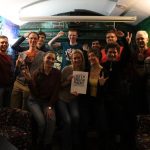
Well, the very first LEP Moscow GET-TOGETHER has just happened! The first of it’s kind, it seems to be a historical :) event in Russia! Everything went great, it was awesome to chat in ENGLISH with like-minded people!!! Personally I felt as if I had known all of the participants for ages – open, nice and smiley friends! I hope somebody else could feel a similar thing.
First, we got to know each other, which was the main achievement! It was interesting to know when and how everyone had found LEP one day, which episodes were our favourite ones, which experiences in English language learning we had (useful Internet resources, grammar books, pronunciation etc.)
A couple of pics and a short audio message from us to you are attached.
Thanks again and again for that announcement and actually for everything you do!!!
We hope to provide more listeners with a chance to meet and speak regularly and one more way to let them know is to “friend” your group on FB with ours https://www.facebook.com/groups/734996946664425/ and VK https://vk.com/clubnu1 .
Have a nice Monday, Jedi-Podmaster!
Dmitry

Here are those Moscow LEPsters saying hello!
Transcript Collaboration
~ well done everyone!
Thank you especially this month to Antonio for managing everything.
There is an email now for the Orion team. Just write a comment on the page for the transcript collaboration and Antonio will let you know what to do.
Make sure you read the rules.
Transcript collaboration page: https://teacherluke.co.uk/episodes-with-transcripts/transcripts/ 

Daniel Goodson – My Fluent Podcast
A LEPster podcast in which you can join Daniel in his quest to become better and better at English.
Daniel interviewed one of the managers of the Transcript Collaboration – Piotr from Poland
http://www.myfluentpodcast.com/e20-interview-with-piotr-from-poland-transcribing-transcript-collaboration/

Zdenek’s English Podcast
Also, on the subject of LEPster podcasts – Zdenek Lukas continues to do his show, called Zdenek’s English Podcast. Recently he’s been doing episodes about his experiences studying for the DELTA (Diploma in English Language Teaching for Adults) which is a seriously challenging postgraduate qualification in English teaching, which involves not only a lot of writing about linguistics and teaching methodologies, but also plenty of assessed teaching sessions too. It’s a difficult course with many challenges and many things to learn. You can listen to Zdenek talking about it on his podcast in some recent episodes.
Get it here https://audioboom.com/channel/zdeneks-english-podcast

Join the mailing list for direct access to the page for every episode, and for any other content I put up, including videos that I might start doing with my new camera soon.

That’s it! Cheers!

VIDEOS

Here’s one of Paul’s “What the F*ck France?” videos. This one’s about how it’s difficult to learn French.

LEP VIDEOS

Here are a couple of bonus videos of me recording the introduction to this episode, and a failed attempt at recording the outro too (I forgot to press ‘record’ on my audio device!)

They’re in black & white because I think it looks cool. The gorilla ↴ is pink, ok! 

Thanks for watching. I’m just experimenting with videos at the moment, but if you like them, I might do more.

The Russian Joke appeared in US TV show Parks & Recreation – watch until the end

https://www.youtube.com/watch?v=VxQ_ywY-luE

Music credits

Jazzy xylophone tune & piano tune by BenSound – www.bensound.com

Other music by me, or by my brother James Thompson.
405. British Accents in The Lord of the Rings (Part 2)

In this episode we continue to analyse the various British accents that you can hear in the film version of The Lord of the Rings. Let’s consider the accents of some of the main characters, such as Frodo, Sam, Pippin, Merry, Treebeard, Elrond, Boromir, Gandalf, Saruman, Legolas, Gimli and the orcs.

Small Donate Button[DOWNLOAD]

Frodo and Sam at the river (Frodo: English RP, Sam: English West Country)

Merry, Pippin & Treebeard (Merry: mild Manchester – Stockport, Pippin: Glasgow Scottish, Treebeard: old fashioned Scottish? RP with traces of Tolkien’s made-up elvish accent?)

Boromir at the Council of Elrond (Elrond: Heightened RP, Boromir: RP with traces of Yorkshire)

Sean Bean interview with Larry King (Sean Bean: Sheffield in Yorkshire, England / Larry King: Brooklyn NYC)

Gandalf and Saruman (Heightened RP / trained thespian actors at their best!)

Gimli & Legolas (Legolas: Heightened RP, Gimli: Welsh, which sounds Scottish at times)

Orcs (Cockney! Oi Oi!)


one-does-not-simply

404. British Accents in The Lord of the Rings (Part 1)

Talking about the different accents you can hear in the Lord of the Rings movies.

[DOWNLOAD]

Why this subject, Luke?

First of all, Lord of the Rings is brilliant and it’s nice to talk about it.

Secondly, In the last episode I talked about accents a bit – specifically posh accents, and it made me think about the subject a lot. I started thinking about the different British accents you can hear in Lord of the Rings, and I thought that the movie is so popular and well-known that it could be a good way to get into the subject of accents.

IN this episode, let’s identify the different accents that you can hear in the films and consider the reasons why these accents were chosen for these characters. Along the way the plan is to listen to a few different British accents and get to know them a bit. There will probably be some general chat about LOTR too, but that’s not the main subject of the episode. I’d like to do other episodes later about the story of LOTR.

Actually, this is just one episode about accents that I’ve been inspired to do today. If I have time I might record another one in which I go into some more specific details about “posh” accents and “posh” people.

And I’d like to do similar ones about other accents you can find in the UK.

But this one will cover quite a lot of different accents because there is quite a bit of variety in the LOTR film universe.

Another summary of accents in the UK

It’s based on region – different accents for different regions.

It’s also related to class – generally speaking. People from a working class background tend to speak with the regional accent from the area where they live or grew up. Those regional accents get less strong as you move up the social classes, with middle and upper-middle class people speaking a less region specific-accent known as RP (received pronunciation) or BBC English (like me). There are still some regional variations of RP but generally if people speak like me they’re speaking standard British RP. Then as you continue to the upper-class people, who you might describe as “posh” you start hearing a kind of heightened-RP or “posh” accent. The Queen is the poshest person in the country.

This isn’t always the case of course. You might find someone who comes from a very posh aristocratic family who doesn’t speak heightened-RP. Similarly, you might find someone who is very wealthy and powerful who speaks with a regional accent. There are exceptions, and also there’s an argument to say that the class system doesn’t apply any more, etc. But, honestly I think that it’s still true. Working class background? – You’ll probably speak with a regional accent (unless you lost it somewhere along the way) and if you’re middle class you’re more likely to speak RP like me, and if you’re upper class you’re more likely to speak heightened-RP or “posh” English.

It also relates to time. Heightened-RP used to be a lot more normal and it sounds pretty old fashioned by today’s standards. There was a time when everyone on the BBC spoke with heightened-RP “This is the voice of the BBC”. Nowadays most of the voices are standard-RP and plenty of TV presenters have regional accents, especially on shows that have a broad popular appeal. E.g. An entertainment show which is on the TV at 7pm in the UK and attracts a huge audience features middle-class presenters who speak with slight regional accents because these days people like that. It means you’re a normal person who comes from a normal local place. The news is still read by people with RP, because it’s neutral and sounds educated and therefore well-informed.

We do have certain associations with different accents, and these associations are quite complex. E.g. people say they find certain accents more or less trustworthy, warm, sexy, irritating, urban, rural, high-class, low-class etc.

In the UK people judge each other by their accents all the time, without realising it. It’s a big indicator of social class, education or even wealth for example. We shouldn’t judge each other by our accents, but we do.

I’m not talking here about how you can learn to speak with a British accent. THat’s another topic for another time. One thing I will say is that I think the most important thing is that you speak clearly and the other people around you can understand exactly what you want to say. Let clarity guide you, not how you perceive the social status of different accents. If you’re looking for an accent that makes you sound posh, watch out because other people might not have positive associations with “posh” for example.

“It is impossible for an Englishman to open his mouth without making some other Englishman hate or despise him.”
George Bernard Shaw, Pygmalion (1916) preface

This means that there isn’t one single accent which is completely neutral and free of prejudice from others. This proves that the class system still exists. If I open my mouth in some places, people will immediately assume that I’m well-off and will probably hate me. Just a few people, I hope. E.g. if I went to do a comedy show in Liverpool on a Saturday night in front of a large crowd of slightly drunk Scousers, I’m sure some of them would take an instant dislike to me because I have a middle-class London accent.
So, there is no accent which is universally neutral. The main thing is that you’re clear and that you’re not ashamed of your roots. OK!

What about Lord Of The Rings?

First of all, LOTR is set in a fantasy world. The writer JRR Tolkein created this world originally as an exercise in linguistics. He was a linguist and he created his own languages and then needed a world for them to exist in. He was also interested in the idea of creating a mythology for the UK, because all our old myths and legends had been lost due to all the times we’d been invaded over the years. Our old Celtic mythologies have been replaced by Saxon or Norse ones from Denmark for example, or replaced with Judo-Christian narratives from the Old Testament, or Greek myths and so on. So, he created a made-up world, wrote his own myths and legends and created different languages for the made-up races of people, elves, orcs, dwarves, hobbits, ents and others to speak.

The characters either spoke different languages, or spoke English with different accents. The accents in the book were never aligned with real accents in the real world. We had to just imagine the accents in our heads – but the characters in the book are so well described, and the context is so rich that it’s not difficult to imagine these voices full of richness, roughness, smoothness, humour, spirit, courage, malice etc. We just imagined the accents in our heads, or just had a gut feeling about how the characters would speak.

Gandalf, for example, you imagined could be so warm and entertaining, like a fantastic old teacher in some dusty old school, but then he could be incredibly sharp, complex and frightening too. You imagined the Hobbits to have local accents of the countryside, reflecting their limited worldview, their proximity to nature. It makes you think of local accents from countryside areas of the UK. But the accents were never really directly described in the books.

So, turning the books into films was always going to be a challenge, because the filmmakers had to turn those made-up accents into real-world accents.

Which accents should each character have? This question was probably just as important as choosing what they should look like, or what they should wear. Perhaps it was more difficult because their appearances are clearly explained in the books. Choosing the accents though, was a matter of matching the right accent to the personality traits of the characters.

This is quite interesting because it tells us a little bit about how we immediately judge people based on their accents. E.g. some accents make you think of royalty, of ruralism, of rugged countryside etc. The accents, to an extent, are part of the landscape. The accents are quite closely connected to certain geographical locations in the real world.

So, the rolling hills of Hobbiton, the sharp peaks and deep chasms of the Misty Mountains and the large halls and palaces of Gondor – all of these have accents that seem appropriate to them.

What are the accents in LOTR?

All the accents are British. There are no American accents in the film, even though some of the actors are American, notably Viggo Mortenson (Aragorn), Sean Austin (Sam Gamgee) and Liv Tyler (Arwen). Also there are several Australian actors – Hugo Weaving (Elrond) and Cate Blanchett (Galadriel).

Why are the accents all British? I thought British accents in movies were just for the bad guys?
‘Otherness’
‘Old world’
Recordings of Tolkien’s readings of his own work – Tolkien’s own voice

Characters / Races

Frodo – speaks in standard RP

Hobbits – Generally the Hobbits are associated with a kind of rural, local charm. They’re warm characters with a strong sense of local identity. They work on the land. Imagine any part of England about 100 years ago. Farmers, local shopkeepers and things like that. All the hobbits have accents to give this kind of colour to their characters. Frodo speaks with RP because he’s from a slightly higher class than the others. Interestingly, the Hobbits don’t let their class differences come between them, which is another attractive thing about them.

Sam – comes from the South West – a stereotype of the country ‘bumpkin’. it’s a soft and homely accent. Working class because Sam is definitely a working class country boy to Frodo’s upper-class master.

Pippin – Scottish. Again there’s no real reason for this beyond giving him slightly old-world foreign charm. But it’s a fairly middle-class Scottish accent. Wikipedia: The filmmakers originally planned for Boyd to adopt an English accent for the role, in keeping with the other hobbits; however, Jackson found that Boyd’s comic timing was not as keen when he was not using his native accent. Therefore, it was decided to allow Boyd to play the role with a Scottish accent; the decision was justified by the observation that the Took-land in which the Took clan lived was a very hilly region of the Shire and was therefore vaguely similar to Scotland, and that the Tooks invented the game of golf, just like the Scots.

Merry – the actor comes from Stockport near Manchester and keeps his normal accent. Again, a bit of local ‘colour’. It’s not really strong.

Aragorn, Gandalf, Legolas, Galadriel, Elrond, Saruman – RP / Heightened RP – all slightly old fashioned. These are the high-class people in the story, particularly the elves who all speak high RP (upper RP). An old, posh type of language which makes them all sound like thespians or ex-public schoolboys. This reflects their high status in the story and the richness and depth of their culture.

Boromir – Sean Bean (the actor) has a Yorkshire accent. He could easily have spoken RP just like the other stewards of Gondor but Sean Bean’s natural Yorkshire accent gives his character a bit of authenticity and northern ruggedness. It’s an accent with character and some sense of landscape, like the film. Also, Boromir doesn’t have the same lineage as Aragorn. In the film his family are the stewards of Gondor – they’re just there while the proper royal family is not around. He’s high-class, but not as high-class as Aragorn.

Gimli – Welsh. It’s supposed to be Welsh I think. I guess this reflects the harshness but warmth of the dwarves. Certainly they are parochial and characterful. In The Hobbit the dwarves all have local accents, except Thorin who speaks RP. Basically, if you want characterful accents with an old world flavour, go with British dialects. If you want that old world flavour with a touch of class – it’s old school RP.

Orcs – cockney. We associate this with thugs, gangsters and criminals (not every time of course!)

Other characters: Gollum, Bilbo, Eomer, Theoden, Eowyn, Treebeard, Sauron.

In part 2 let’s listen to some spoken samples in these different accents

lotr

403. Competition Results / War Story / Grammar & Punctuation / My Dad’s Accent

The final results of the LEP Anecdote Competition, some podcast admin and responses to some comments & emails from listeners including a war story, some grammar & punctuation (noun phrases, possessives & apostrophes) and a question about my Dad’s accent.

[DOWNLOAD]

The LEP Anecdote Competition – Final Results

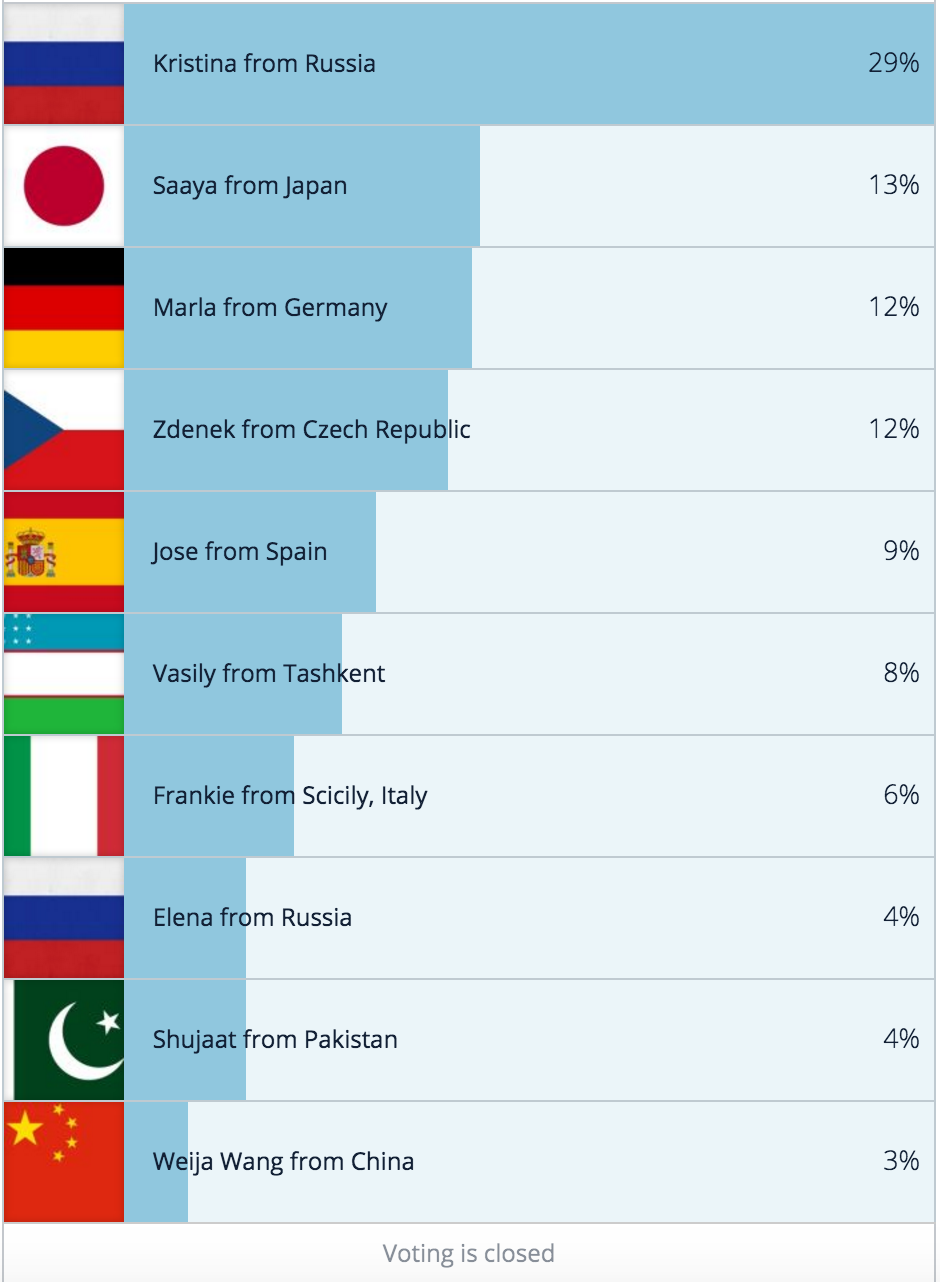
The voting closed at midnight last night. So, here are the results in reverse order.

  • 10th position: Weija Wang from China (talked about how his female friend embarrassed him by admitting that she had fallen in love with him, but he suspects it might have been a practical joke)
  • 9th position: Shujaat from Pakistan (told us the story of how he narrowly avoided a terrorist attack near his college)
  • 8th position: Elena from Russia (told us the nightmare story of how she went on a wild goose chase to find the daughter of one of her friends, who appeared to go missing one Saturday evening)
  • 7th position: Frankie from Sicily, Italy (talked about how he narrowly escaped death in a walk around a lake that turned into the day trip from hell)
  • 6th position: Vasily from Tashkent (told the sweet story of how he met his wife, accompanied by the lovely sound of the accordion – this story was a cult hit in the comment section, prompting lots of speculation about Vasily’s virtuoso accordion playing skills)
  • 5th position: Jose from Spain (told a creepy story about a suspicious character he used to know)
  • 4th position: Zdenek from Czech Republic (told an amusing anecdote about a lesson learned on the London Underground about how to say “please” to strangers)
  • 3rd position: Marla from Germany (in her lovely voice told us about how she found herself on the set of the brilliant BBC TV series “Sherlock”, and met one of the main cast members)
  • 2nd position: Saaya from Japan (Told us a story involving a pyjama-based family coincidence which proved to her that she’s truly is a chip off the old block)
  • 1st position! DRUM ROLL! … Kristina from Russia! (who told us about her nerve-wracking experience of doing a completely unprepared live simultaneous translation for a famous film director, on stage in front of a large audience of people)

CONGRATULATIONS KRISTINA!
Also, congratulations to everyone who took part. It was really great to listen to your stories.
You can still hear the anecdotes, by visiting the page for episode 387 (all anecdotes).
I hope you join me in congratulating the winner and the runners up.
screen-shot-2016-11-29-at-11-10-42

Adverts at the beginning of episodes

You might have heard some adverts being played at the beginning of episodes. For example, you play an episode on your podcasting app or on the website and before the episode begins you hear about 20-30 seconds of advertising. I’m not talking about the bit where I mention my sponsor for the podcast, but another ad – not featuring my voice. The ads are region specific. For example, here in France I hear adverts for Mini (coincidentally enough, voiced by my mate Tom Morton from episode 344). Some of you won’t be hearing these ads, but many of you will, and you might be wondering what they are. Let me explain. They’re not added by me. They’re added by Audioboom and I’m hoping that they’ll be a temporary thing. Audioboom, my audio host, are now inserting ads into podcast content which is hosted by them. I’m one of many podcasts which are hosted by Audioboom. They don’t just do podcasts. They do audio hosting service for lots of other purposes – e.g. for news websites that want to embed audio clips onto their websites, or journalists who want to publish pieces of audio. They’ve recently started featuring adverts on audio content in order to monetise their service. I’m in discussion with them about this. Personally, I don’t really want the ads. I have my own sponsors – italki & Audible and some others that I’m talking to. They’re working pretty well because I like their services, we have a good relationship and they’re services that reflect the aims of my podcast. I don’t really want other ads in addition to those. Some sponsorship is definitely necessary in order to keep this podcast free, and I want it to stay free. But too much advertising is definitely not a good thing. I want to make sure your listening experience is enjoyable, as much as possible. I personally find it annoying and a bit jarring to hear certain types of advertising at the beginning of episodes.

So, I’m in talks with Audioboom about how we can enter a new agreement in which those ads are not featured on my content. That new arrangement is now pending, meaning that we’re in the middle of sorting it out. I’m waiting for Audioboom to get back to me with some other options. Hopefully we’ll find a solution which is satisfying, or I might move to a new podcast host, which would be pretty inconvenient for me, but in the long run might be better for the podcast.

In the meantime, you might hear some ads inserted at the beginning and the end of my episodes, but I expect it won’t be a long-term thing. They’ll just be there until Audioboom and I have figured out a way to either remove them, or improve them to the point that I’m happy to keep them.

You might think – “you could earn money from them Luke, to help monetise your podcast”. Yes, that’s a good point, but as I said, I already have sponsors which I feel are working for me well enough, and allow me to cover costs like website services and just the time I devote to the preparation, recording and production of the podcast. The main thing for me at this stage is that the listening experience is good for you.
I need to balance all these things: the monetary support I might get from advertising or sponsorship, your experience of listening to my episodes, the workload that I have and the time I have to devote to the project.

So, in brief – if you’ve heard slightly intrusive sounding advertising at the beginning of episodes – I am aware of it, I didn’t insert those adverts myself and I expect it will only be a temporary thing until Audioboom and I have reached some kind of agreement.

A family story from WW1 – A Turkish POW in Russia

This is Deniz’s comment after my episodes about D-Day and in relation to the episode I did about my Grandfather, who died at the beginning of 2015.

Related episodes

183. Luke’s D-Day Diary (Part 1)

184. Luke’s D-Day Diary (Part 2)

259. Eulogy for Dennis

In episode 183/184 I went to the D-Day commemoration to remember what happened in Normandy in 1944. My Grandfather was an officer in charge of a group of men on that day. I asked listeners to share any stories they had about family members who got caught up in WW2.

Deniz’s comment

Hey Luke,
This was an intense episode, wasn’t it? I can understand what you feel about your grandpa. I listened this episode recently, and came here to check if any commentator mentions anything about World War 1 or 2, which is related with their family. As a reminder: you asked for it in the podcast.
As you probably know Turkey kept its neutral status during WW2. So as a Turkish person, my family do not have any WW2 memories (except how hard those state of emergency years were) on the other hand WW1 was a really intense chain of events in Turkish history, since so many Turkish people were killed during the battles and even infants had to fight for the very reason after a while it had became “defending the mainland” for Turks.
So here is the memory from the father of my grandfather (my grandfather): The Caucasus Campaign had been a real disaster for the Turks, since fighting with the Russians during winter conditions is always a bad idea and “the sick man of Europe” Ottoman army lacked equipment for such a formidable campaign. In a nutshell, so many Turks died because of the winter conditions and the situation became a piece of cake for the Tsardom of Russia.
The father of my grandfather (my great-grandfather) was really lucky to stay alive and became a POW after the Russians surrounded them. As a POW he had to do whatever the Russians decided for him and in the end he was sold to an aristocratic Russian family and became a stableman for them. After a while that Russian family let him marry since they thought there was no turning back for him anymore. So he married a low-class serf woman, and they even had two babies!
But then… the Tsardom of Russia also collapsed and the October Revolution stormed through all of Russia. This incident had serious effects on aristocratic families, which is not a surprise. So during all that mess, my great-grandpa managed to escape by boat and came back to Turkey again… Of course he had to leave his Russian wife and those 2 children there, because he had no any other choice.
After he came to Turkey, he fought in the Turkish War of Independence and after that finally married a Turkish woman, which led to me, in the long run. So Luke, isn’t it weird? There are some people in Russia, who are my distant relatives in a way, and there is almost no way for us to find each other. I just wanted to share that story here, since I know many Russians listen your podcast and who knows… It’s a small world with weird coincidences. :)
Thank you for all the podcasts!

Does that story sound familiar? If it does – get in touch!

Grammar: Nouns adjuncts, noun phrases, possessive ‘S’ and apostrophes – A question about the title of “An 80-Minute Ramble”

Yaron’s question about the title of episode 397 “An 80-minute ramble”
Hi Luke,
It’s been a while… good to have you back…
I haven’t listened to this episode yet (I probably will in the evening)
Anyhow…I have a small question:
Should it be “An 80 minute Ramble” or “An 80 minutes Ramble”?
I find that all the subjects with the “S” at the end of the word in English to be very confusing (You need to add “S”, with ‘ sign before/after the “S”, etc…. )
I would really appreciate ii if you could clarify it.
Thanks,
Yaron

My reply
Hi Yaron,
It’s ‘an 80 minute ramble’ not ‘an 80 minuteS ramble’.
As you know, plural nouns (unless irregular) do take an ‘S’ – e.g. “I’m going to talk for about 80 minutes” but not in the case of ‘an 80 minute ramble’ because ’80 minute’ here is like an adjective for the word ‘ramble’ and adjectives in English aren’t pluralised.
What kind of ramble? An 80-minute ramble. ’80 minute’ is performing the function of an adjective.
More information https://en.wikipedia.org/wiki/Noun_adjunct

That’s the theory, but it’s a bit abstract isn’t it? It might be easier to learn this when you consider all the common examples of this kind of structure, e.g.

  • a 5 star hotel
  • a 10 pound note
  • a 4 year old girl
  • a 5 minute walk
  • a 10 dollar fine
  • a 10,000 pound reward
  • a 9 hour flight
  • a 4 hour drive
  • 10-year cave-aged cheddar cheese

‘S
This is either: ‘is’, ‘has’, possessive

Check this page from Oxford Dictionaries Online for all the details about how to use ‘S

https://en.oxforddictionaries.com/punctuation/apostrophe

Rick Thompson’s accent

Sebastian
Hi Luke, I hope you’re all right. I’ve got a question: Where’s your Dad’s accent from or what kind is it? Is it posh? Thanks.

The ‘short’ answer:
My Dad speaks standard British RP (Received Pronunciation), also known as BBC English. This type of accent is generally associated with middle and upper-middle class people, probably university educated, from England, particularly the South East of England, but possibly from any other part of the UK too.

I think, by the standards of most Brits his accent is slightly posh because there aren’t many regional inflections in his voice, but I don’t think he is properly posh, like someone who went to Eton school for example.

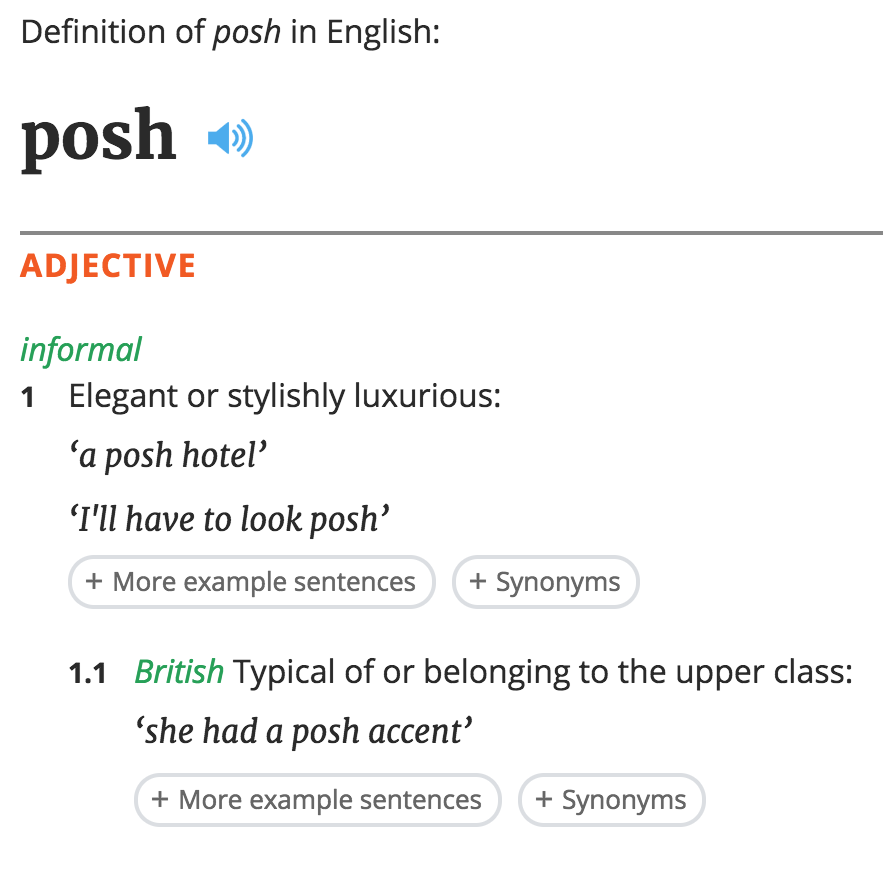
What does ‘posh’ mean? (screenshot from Oxford Dictionaries Online – click it for more details)

From OxfordDictionaries.com

From OxfordDictionaries.com

https://en.oxforddictionaries.com/definition/posh

You could say there are slight regional variations of RP (e.g. in Scotland, the north of England or Wales) But it’s not a truly posh accent, like the way the royal family speaks, or David Cameron speaks, for example.

I reckon you could break it down like this (and this is making it really simple)

  • Regional dialects (strong accents, particular words and phrases used – all specific to certain areas)
  • Regional accents (strong accents specific to certain areas)
  • Standard RP with slight regional variations (e.g. the way some vowel sounds are produced)
  • Standard RP from the South East of England
  • Heightened RP (like David Cameron)
  • Very heightened RP (like The Queen)

Depending on your social background, you’ll consider some accents to be more posh than others. Generally, if the accent is associated with a higher social class (based on the old model) than yours, you’ll say it’s posh.

Posh can be either positive or negative. It depends on your view of the situation.

I guess by a lot of people’s standards, my Dad sounds quite posh. For me he isn’t that posh. He’s just really neutral and clear. I think a truly ‘posh’ accent has different qualities to it.

To do justice to this subject I’ll need to do full episodes on the way different people speak.

That’s it! Speak to you again soon. Bye!

399. The Return of Molly Martinez (with Dane Nightingale)

Talking with two American friends about journalism, how the internet works, the US presidential election results, California’s new marijuana laws and puffins.

Small Donate Button[DOWNLOAD]
In this one you’ll hear me in conversation with Molly Martinez and Dane Nightingale.
Molly has been on the podcast before – she was in episodes 198 and 199 – have you heard those? They’re fun episodes. In those episodes we talked about her studies as a journalist, we tested each other’s general knowledge of the UK and the USA and I tried to teach her how to do different regional accents in British English. That was episodes 198 and 199, in 2014 – ah, 2014, such fun times, such innocent times… Those episodes are still available for you to hear in the episode archive.

198. A Cup of Tea with Molly Martinez

199. The UK/USA Quiz

For a few days Molly is back in Paris seeing friends and visiting her old haunts, and this time she is accompanied by Dane Nightingale, who I think you will agree has a rather fantastic surname. (by the way, a nightingale is a bird that sings a beautiful song but only during the night time).

They’re both here for a couple of days and thankfully I managed to grab them both (not physically of course, just figuratively) for about an hour of conversation on this podcast.

Overview of this episode (to help you keep up)

This episode has a light-hearted bit at the beginning, then quite a serious bit in the middle, then another light-hearted bit at the end. The serious bit is when we start talking about the election, and there is a palpable shift in tone in the conversation at that point – so look out for that.
In the first light-hearted bit we establish these things:
They’re an item – they’re going out with each other – they’re going steady (I think this is the expression in NAmE) – they’re boyfriend & girlfriend, but they don’t live together – so they’re not living in sin, as you’ll hear them say.
Molly is a journalist for CBS in SF. She’s mostly on the production side but she does some on-air stuff (like reports to camera) as well as video editing and writing for anchors.
Molly is also a stand-up comedian who tells jokes on stage. She also tells quite a lot of jokes off-stage too. I think it’s fair to say that she’s something of a compulsive joke teller, which is alright in my book.
You’ll hear that Molly makes a joke about how I’m the heir to the BBC fortune, which makes me sound like I’m set to inherit the entire BBC (quite funny). I then explain in huge detail how in fact the BBC is publicly funded (not very funny).
Dane works for a start-up called Fastly, which makes the internet faster.
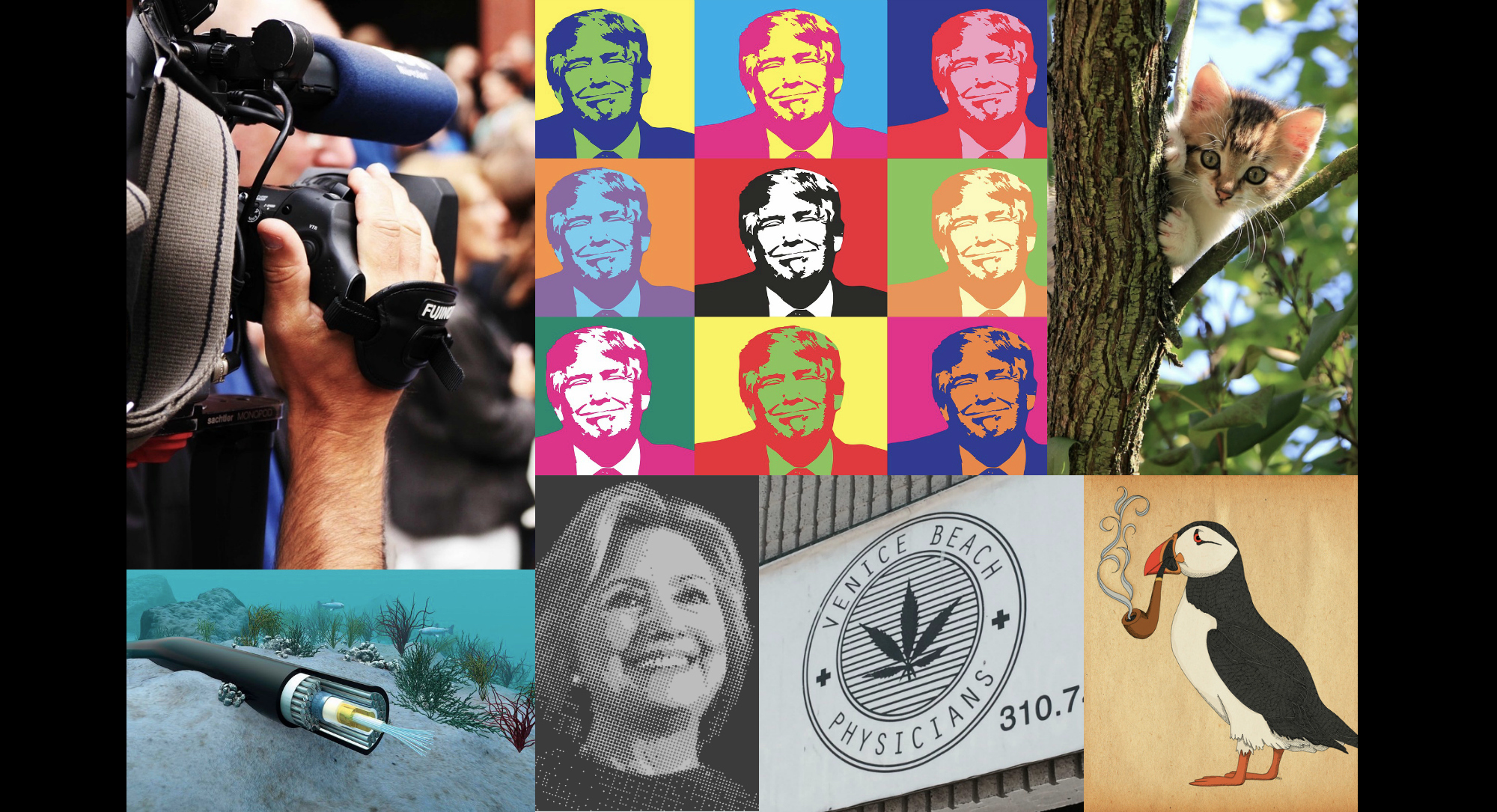
He tells us how the internet is basically just a series of tubes, and how my audio episodes travel from my servers in Tower Bridge, London to users all over the world, and how the start-up company that he works for, Fastly, aims to make this process faster by allowing data to be stored locally. I’m not sure I understand how it works!
Molly tells us about the 5 things that make something newsworthy: relevance, time, novelty, proximity and cats.
Then the serious bit begins when I ask them about their reaction to the US election. Hopefully you’ll find it interesting to hear about this story directly from the mouths of two US citizens from San Francisco. We try to understand how Trump won and Hillary lost, including the motivations of the voters, the campaigns of both candidates and also how the electoral system had an impact on the result.
Then the podcast becomes slightly less serious again and  the conversation turns to the subject of marijuana laws in the USA, how Molly once met Tommy Chong (one half of the stoner comedy duo Cheech & Chong on an airplane – high in the sky, especially him) and then how both Molly and Dane are going to Iceland where it might be very cold, and where people might eat puffins – lovely little birds with colourful beaks.
You should also be aware of the meaning of these two words:

puffin

A puffin, puffing.

Puffins – cute birds which are protected by law in the UK but are very common in Iceland and apparently eaten there as a traditional delicacy.
Puffing – the gerund form of the verb ‘to puff’ which means to take smoke from a cigarette or perhaps a pipe, or a perhaps joint in the case of California. “To puff a joint, or take a puff from a joint, or toke a joint or take a toke from a joint”.

So – “enjoy your puffin”, can have two meanings – enjoy eating a little Icelandic bird as a delicacy, or enjoy smoking some weed (especially in California where it has recently been made legal).

Right, you are now ready to listen to the conversation, so here we go!

*Conversation starts – light-hearted bit – serious bit – light-hearted bit – conversation ends*

I just want to thank Molly and Dane again for coming on the podcast. They took some time out from their holiday to talk to me, and you, and some of that time was spent going over the election, and things did get a little heated during the serious part of that conversation.

Molly expressed her frustration about the standards that people seem to have about women in positions of power – something which Sarah Donnelly also talked about when she was on the podcast talking about Hillary Clinton recently.

Specifically regarding the public’s perception of female candidates, maybe it is harder for a woman to capture the trust of the nation, because she’s expected to have so many conflicting qualities all at the same time. If she’s too warm she’s considered too emotional, but if she keeps the emotions in she’s judged as cold. That’s, I think, what Molly was talking about when she said it’s a double-standard. The point I was trying to make was that I think voters respond to certain personal charisma regardless of their gender, but thinking about it maybe women are judged differently than men and it’s harder for them to strike the right balance.

Anyway, that’s quite enough politics for this episode. I just wanted to say thanks to Molly and Dane for talking about the election because they’re on holiday and this is probably a story that they’re quite sick of, after a year and a half of election coverage in the media back home, and I expect they’re glad to be away from it all for a few days. So, I hope you’ll join me in expressing your gratitude to them for taking the time to talk about it to us on this podcast. I very much enjoyed having them on the podcast, for their honest reactions and for the light-hearted bits at the beginning and the end.

Notes

~Lots of people have shown interest in hearing a conversation with my Dad about the recent news, including the election results and about recent political developments in the UK. I am planning on talking to him soon, so that episode should arrive before long – as long as I don’t get snowed under with work, or snow, or fall into a wormhole or something like that. I’m a bit wary of doing politics too much, for obvious reasons, but many of my listeners have sent me messages assuring me that they appreciate the commentary, so I won’t abandon the subject, but I will be getting on to other topics on this podcast as well as getting back to basics with some episodes about language.

~The next episode is #400, which is cool isn’t it? Not bad really, considering how long some of my episodes are. That must be about 400 hours of podcasting for you to hear. I’m quite proud to have made it this far. It’s mainly thanks to my listeners, your enthusiasm for this podcast, your support and the support of my sponsors. I’m not sure to what extent I’ll celebrate during episode 400 or anything. I did quite a lot of celebrating in episode 300 in which I had contributions from many of the guests I’ve had on this podcast over the years, as well as a few daft celebrity impressions by me and my brother. We’ll see… perhaps I’ll just switch on the mic and have a ramble, perhaps I’ll have some guests. We’ll see.

~Amber and Paul are both very busy at the moment. Paul continues to have success with his TV series which is called WTF France – an affectionate piss-take of French culture from the English point of view. It seems the French, generally speaking, are being very good-natured about it and are lapping it up. The show is now being broadcast now on Saturday evenings on Canal+, which is one of France’s major TV channels. That’s quite a big deal. Paul is now Saturday evening prime time entertainment! Amber and I are proud of him of course, and also pleased because we helped him to write some of the episodes. You can see them all on the YouTube channel called “What The Fuck France”.

“What the Fuck France” – YouTube Channel

Now, you might not understand the appeal of the videos if you don’t understand the specifics of French culture and it might just look like he’s insulting everyone, but the humour comes from the familiarity with French life, particularly in Paris and really he’s saying the sorts of things that most Parisian people think, but doing it in English. Also, the videos are really nicely produced and directed. They look great.

~The LEP anecdote competition is still open – in episode 396 you heard 10 anecdotes so please do vote in the poll. You can find that page by clicking the blue button on my website. I’ve decided that as a prize I’ll spend some time talking to the winner 1-to-1 on Skype. I hope the winner considers that to be a prize. It may or may not be recorded and published, we will see.

~Don’t forget to join the mailing list
~Follow me on FB and Twitter where I post other bits and pieces from time to time.
~Thank you if you have sent me messages in various forms and apologies if I haven’t replied.

More episodes are coming. I have lots of ideas and things in the pipeline, but there’s no telling sometimes what’s coming next. Often I just record and publish on an episode by episode basis – and the topic and content is often decided by whatever inspiration strikes me at a given moment. It seems quite random, but there’s a method to the madness.

Have a lovely day, night, evening, morning or whatever and speak to you soon. X

394. OPP: Other People’s Podcasts (Part 4)

This is part two of a two-part episode about my favourite podcasts. I thought I’d share them because you might like to listen to them too, even if they’re difficult to understand because they’re not specifically for learners of English. It’s good to challenge yourself sometimes, so why not try listening to these. If I like them, you might like them too.

Small Donate Button[DOWNLOAD]

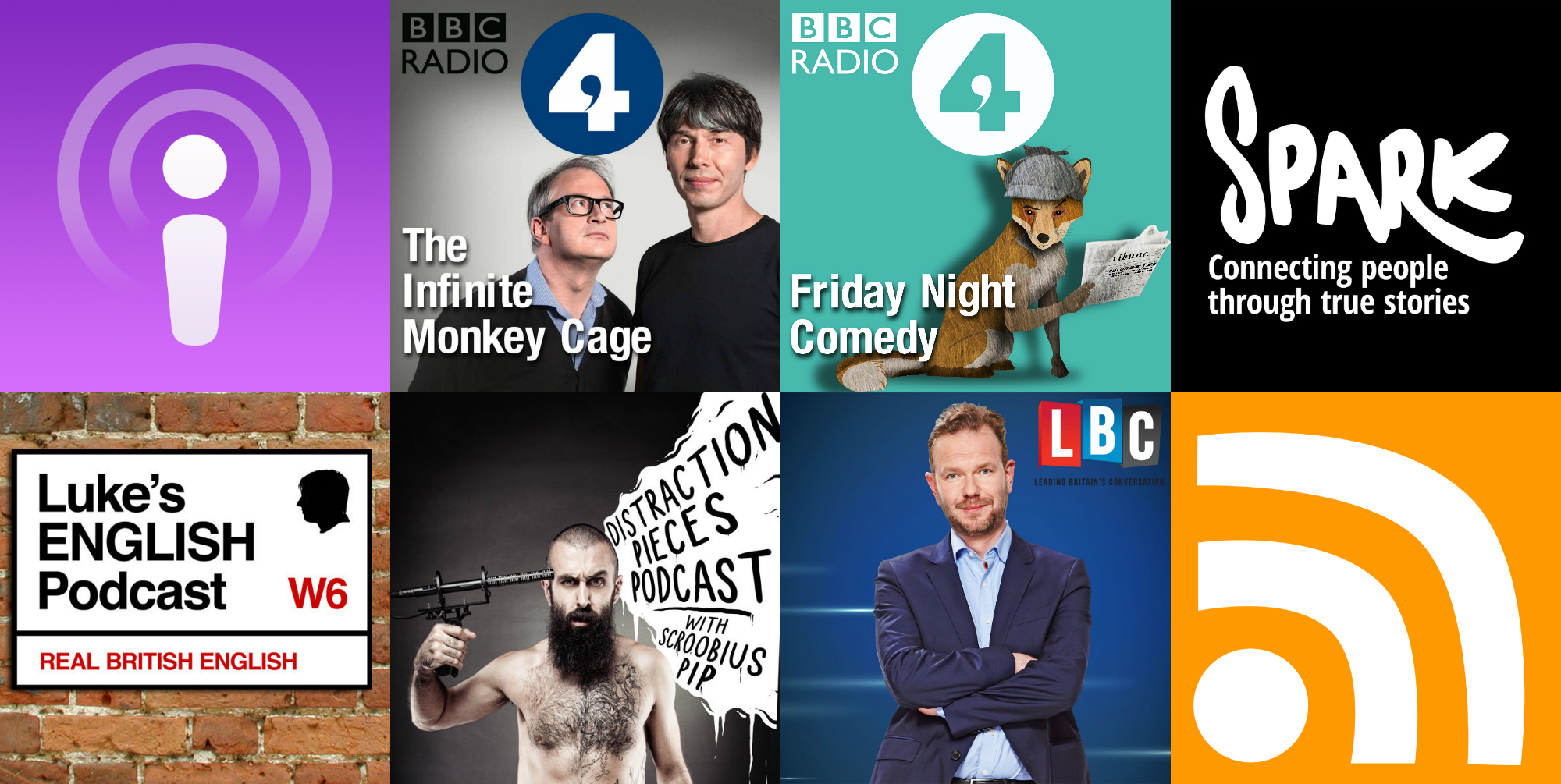
The Infinite Monkey Cage

http://www.bbc.co.uk/programmes/b00snr0w/episodes/downloads

https://www.youtube.com/watch?v=wim-_Of-bRE

Friday Night Comedy from BBC Radio 4

http://www.bbc.co.uk/programmes/p02pc9pj/episodes/downloads
BBC’s flagship radio comedy show. It’s a compilation of comedy shows from the week. The Now Show and Dead Ringers are the best.

Distractions Pieces with Scroobius Pip

http://www.scroobiuspip.co.uk/distraction-pieces-podcast-archive-2016/

Spark – True Stories Live


http://stories.co.uk/podcast/

James O’Brien’s Mystery Hour

http://lbc.audioagain.com/presenters/6-james-obrien/368-the-mystery-hour-free

The Best of James O’Brien

http://lbc.audioagain.com/presenters/6-james-obrien/395-the-best-of-james-obrien-free

https://www.youtube.com/watch?v=A-NEBerVRo0

opp4

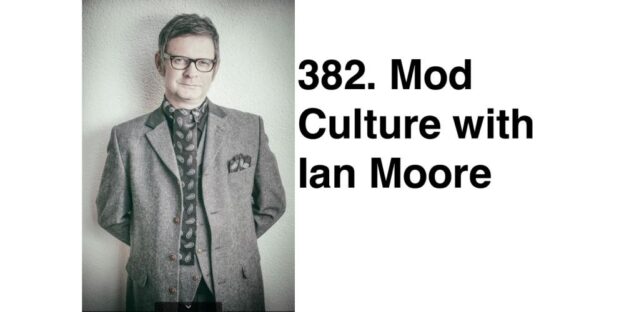
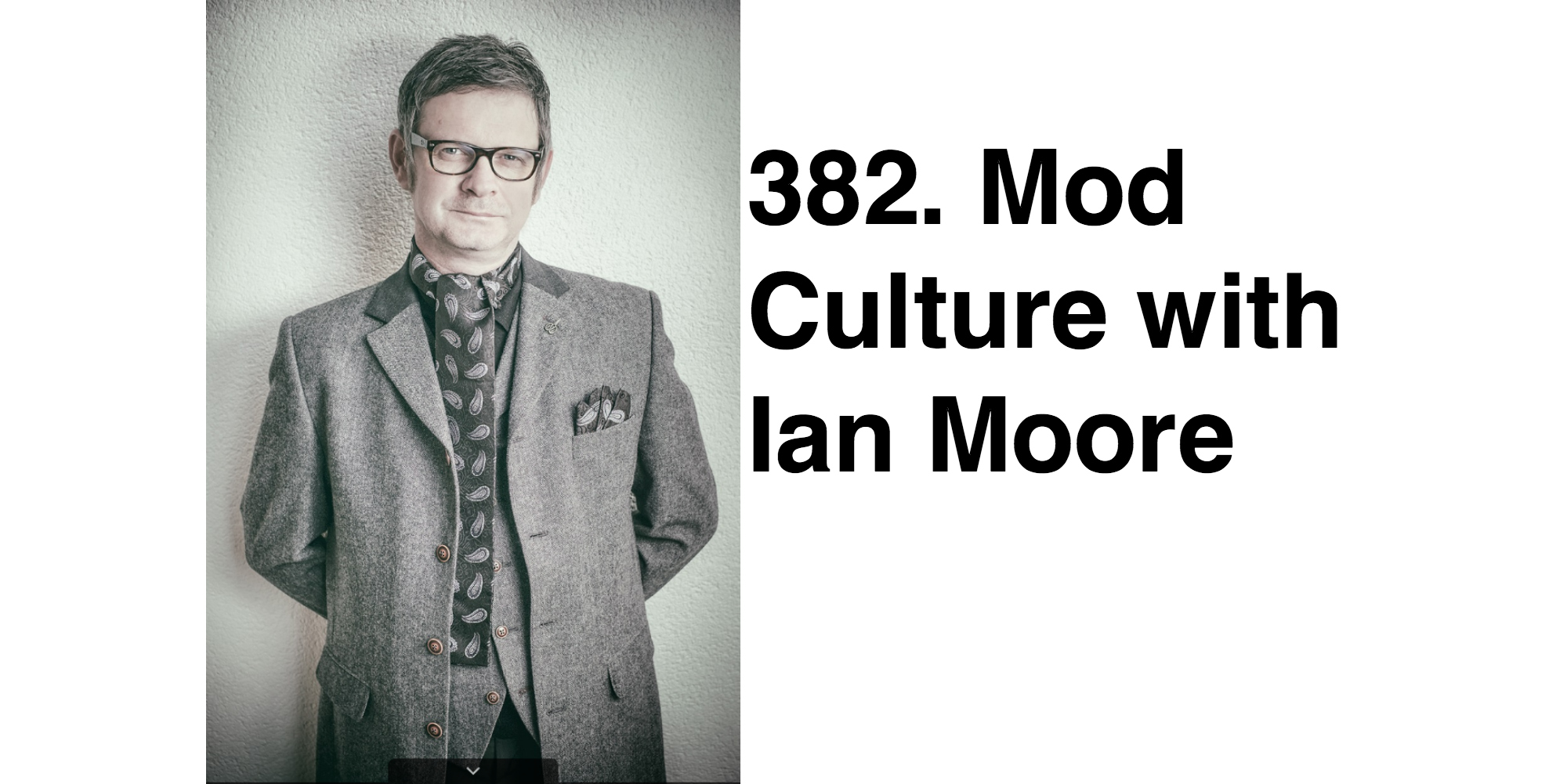
382. Mod Culture with Ian Moore

Today on the podcast I’m talking to Ian Moore, who is a professional stand up comedian, published author and mod from London. Ian is probably the best dressed man ever to appear on this podcast. He is also a professional talker with many things to say.

Small Donate Button[DOWNLOAD]
Photo: Richard Wood @comictog https://twitter.com/comictog

Intro before the intro

Hello listeners, this episode of Luke’s English Podcast is sponsored by italki which is a really convenient way to develop your fluency in English by talking to native speakers online – to claim your voucher worth 100ITC just go to http://www.teacherluke.co.uk/talk or click an italki logo on my website.

This episode features a conversation with English writer and comedian Ian Moore and in this part we talk mainly about mod, which is a British subculture involving clothing and music, but before the interview there is about a 15 minute introduction in which I explain a few things that will help you to fully understand the conversation. This podcast is for learners of English so sometimes it is necessary to give support to my listeners in advance of hearing a natural conversation in order to help them understand it all. My 15 minute intro to this episode is mainly an overview of the history of mod culture, with a few other short explanations. If you want to skip the intro, just move forwards by about 15 minutes and you can jump straight to the conversation. However, the introduction is there to help you to understand the cultural references, some history and other details in our conversation. OK, so that’s my intro before the intro, and now that this intro is nearly finished, I’ll let you listen to the other main intro which is going to come after this intro when this intro is finished, which is now so here is the proper intro, after the jingle, which is going to start as soon as I stop talking which is right about now.

Introduction and Explaining (Skip forwards 15 mins if you don’t want some explanations)

Today on the podcast I’m talking to Ian Moore, who is a professional stand-up comedian, published author and mod from London. Ian is probably the best dressed man ever to appear on this podcast. He is also a professional talker with many things to say.

I first met Ian a few months ago. He was in Paris for a few days and was the headline act at a comedy show where I was also performing. We got talking and our conversation was suitably rambling for me to consider Ian a good guest for this podcast. Also, there are some specific things I wanted to ask Ian, which I thought might be interesting for you my audience to hear.

Mod Culture

First, Ian is a mod. He’s a proper full-time mod. He dresses in all the correct mod clothing and has done for years. That might not mean anything to you and in fact that’s one of the reasons I wanted Ian to talk about it in this episode. Mod culture is quintessentially English. Basically, Mod is a fashion style, a way of life and a whole subculture of its own, and it’s uniquely English I think. Mod is one of the first genuine youth subcultures of the modern era. Nowadays there are many many subcultures (e.g. punk, skinhead, hippy, raver, indie kid, rocker, metal head, skater, etc) to the point that they don’t really mean anything, but back in the late 1950s and early 1960s there weren’t many youth subcultures. Everyone basically dressed the same except between different social classes in society. Certainly young people just dressed and acted like adults. Then in the postwar period young people became more independent and developed their own alternative cultures which were separate from mainstream lifestyles. Young people began to associate themselves with these alternative cultural movements as an expression of their individuality particularly in the form of the clothes they wore and the music they listened to.

Mod culture first became well-known in the UK as a result of a story in the newspapers about rival gangs of ‘mods’ and ‘rockers’ fighting each other on the beach in Brighton in 1964. These were the two main youth subcultures of the time and they hated each other. The rockers wore leather jackets, had their hair quite long and unclean, and rode motorbikes. They listened to rock and roll music. The mods were very sharply dressed in well fitted suits and ties, wore smart leather shoes, had a particular haircut (a bit like the Beatle cut) and rode Italian scooters. They listened to modern jazz, black American rhythm and blues or Jamaican ska. Their rivalry came to a head in the well-documented fighting that happened on the beaches in Brighton. The fight between the mods and the rockers was all over the newspapers and it shocked everyone, causing a kind of moral panic about young people. At that time it was the equivalent of something like the London riots of 2011. Most people couldn’t understand the violence and it was considered a sign of the breakdown of society. It was also the first time that most people became aware of the mod movement.

Since then, Mod has drifted in and out of fashion, going away in the early 70s when it was replaced by things like glam, soul boy and skinhead movements to be revived again at the end of the decade, in the 1980s and again in the 1990s. Being a mod is a way of life and it revolves mostly around the clothing you wear and the music you listen to, but there is a certain philosophy which underpins the movement too and that seems to be based on certain kinds of European existentialist thinking and a kind of open-mindedness to outside influences combined with a great attention to detail in clothing choices. In order to identify a mod, you need to be aware of the right details in the person’s clothing. A certain type of suit, cut in a specific way. Certain brands, types of shoe or coat, and a particular hair cut. The most famous mods are probably people like the musician Paul Weller of The Jam, the groups The Small Faces and The Who (early period), and these days the actor Martin Freeman who likes to wear mod clothing when he’s not acting in a movie or TV show.

While mod culture borrows from many other cultures it is very specifically British and therefore I think it is worth exploring on this podcast.

So, first – Ian is a mod. Secondly, he lives abroad – specifically on a farm in rural France, despite being a very well-dressed city boy from London, and he has lots of stories to tell about this, which form the basis of several books which he has written and which have been published. Both books tell funny true stories of his life as a mod living on a farm in the French countryside, they’re well-reviewed on Amazon and are definitely well-worth a read. They’re amusing, not challenging to read and are full of very entertaining little anecdotes and tales of his double life as a comedian working in London and a farmer in the French countryside. I thought it would be interesting to hear him talk about that on the podcast, and if you’re looking for appropriate books to read in English – I really recommend these ones. There are also audiobook versions read by Ian himself. The first book is called A la Mod, and the second is called C’est Modnifique.

And thirdly, Ian is a professional stand-up comedian – in fact The Guardian newspaper describe him as “One of the country’s top comedians”, which may account for why he’s able to write such funny stories in his books. Ian has been performing in the UK professionally for about 20 years and has travelled all around the country doing big gigs everywhere, including at London’s best venue The Comedy Store in Leicester Square. Ian has also performed in many locations around the world, so naturally I wanted to find out about that too.

So all in all, Ian Moore is a great guest for this podcast and we had a very enjoyable rambling conversation upstairs on my terrace on a very sunny morning this week. This is going to be two episodes, because we talked for over an hour together.

This might be a tricky episode for you to follow because our conversation includes quite a lot of tangents and references to things you might not be familiar with, so let me just give you an overview of the main things you’ll hear.

At the start we talk about the view from my terrace, including the Sacre Coeur basilica, which we can see.

Then we talk about how he met his wife on the steps of the Sacre Coeur when he first moved to France. Then we go on to chat about his first experiences in France and why he fell in love with the country. (He talks about buying a vinyl copy of “Complete Madness” in a supermarket in Nice – Madness are a band which has a large mod and skinhead following).

Then we talk about where Ian comes from, and how he describes his accent. (Basically, he’s got a typical south east / London accent, cockney or ‘mockney’ even though as a child he used to live up north in Blackburn and also in the east in Norfolk. He spent most of his time in London.)

We discuss his level of French, and then move on to talk about being a mod and what that means, including quite a lot of specific descriptions of his clothing and mod style in general, so watch out for some vocabulary to describe clothing in this episode.

But now, without any further ado, let’s join the conversation with Ian Moore and you will first hear us talking about the views of Paris which we can see from my terrace.

*CONVERSATION BEGINS*

We talk mainly about mod culture. The podcast pauses after about 40 minutes.

*CONVERSATION PAUSES*

So, that’s the end of part one of this conversation, in which we mainly covered mod culture. Check out the page for this episode where you’ll find some videos of mod-related things and also some stand-up footage of Ian Moore on stage.

How was that for you? Did you manage to understand what we were saying? I expect it might be a bit tough because we’re talking about things that you might never have heard about before. THat’s one of the main reasons why it’s hard to understand native speakers sometimes. It might be because of the pronunciation – specifically connected speech and the way some sounds are not fully pronounced, it might be the vocabulary being used, but also it’s because of the cultural references being made and the general mindset of the conversation. These are all factors that influence your ability to understand native speakers. Certainly the cultural aspect is very important. If you’re on the same wavelength as the people you’re listening to, or talking to, it makes it far more likely that you’ll understand them. This will help you work out the meaning of words that you don’t know and fill in the words that you didn’t hear. You have to try to tune in to not just the language, but the way of thinking of the people talking and then you’ll understand more and ultimately pick up more of the English yourself. So, listening to conversations like this is vital, even if it’s difficult.

Don’t forget that you also have to activate the English you hear in the podcast by having similar conversations yourselves, perhaps with a language partner on italki. Don’t forget to take advantage of my italki offer by visiting www.teacherluke.co.uk/talk

OK, part 2 of this episode will be available soon and then you can hear Ian talking about his funny experiences of being a mod in the French countryside, dealing with animals of all shapes and sizes, the challenges of living on a farm and the life of a professional stand up comedian. Thanks for listening to this episode, I look forward to reading comments on the website. Have a great day, morning, afternoon, evening or night and I’ll speak to you soon.

Bye.

Luke

Mod culture

Ian Moore on stage

ianmoore1

371. In Conversation with Rob Ager from Liverpool (PART 2: Film Analysis / Hidden Meanings / Stanley Kubrick / Conspiracy Theory)

This is part 2 of my conversation with Rob Ager from Liverpool, who makes documentaries about films and publishes them himself on his website Collative Learning. If you haven’t heard part 1 yet, you should check that out before listening to part 2. In this conversation we talk about Rob’s approach to film analysis, hidden meanings in films, the work of Stanley Kubrick and the conspiracy theory about the moon landing. More details below.

Small Donate Button[DOWNLOAD]

Click here to visit Rob Ager’s website collativelearning.com

In part 1 we talked about Liverpool and what it’s really like to live there. Then we talked about how he developed his approach to film analysis. In part 2 we talk about films in more detail, including some of the films which struck a chord with him when he was younger, and films which have inspired him to make his analysis videos. We focus on the work of Stanley Kubrick, a filmmaker whose work has really fascinated Rob over the years. We also discuss the idea that directors add hidden messages into their work, and how this is sometimes interpreted wrongly by viewers and critics. We also discuss the so-called conspiracy theory about Stanley Kubrick and the moon landing, and whether there are hidden messages about this in the film The Shining.

Links & Videos

Rob’s website http://www.collativelearning.com

Some interesting videos from Rob’s YouTube channel

https://www.youtube.com/watch?v=hcxLFZdZPw0
10498412_657057634389359_4019296035620832718_o

370. In Conversation with Rob Ager from Liverpool (PART 1: Life in Liverpool / Interest in Film Analysis)

Today on the podcast I’m talking to Rob Ager from Liverpool, who is probably best known for his film analysis videos on YouTube in which he discusses classic Hollywood thrillers, sci-fi and action movies in quite astonishing levels of detail, often focusing on deep psychological and political themes and hidden messages that most viewers probably wouldn’t even notice. His videos are carefully constructed documentaries, made for educational purposes and all of them feature a voice-over commentary by Rob in which he analyses the film and gives his observations.

Small Donate Button[DOWNLOAD]

Click here to visit Rob Ager’s website collatedlearning.com

I think I first came across Rob’s work on YouTube about 5 or 6 years ago. Sometimes I start watching YouTube and I get sucked into a kind of YouTube worm hole. That’s where you start watching one video, and that leads you to watch another one and then another one and eventually you find yourself watching something really fascinating and unexpected and that you wouldn’t normally have come across. I think that’s what happened with Rob’s videos. I think I first came across a short documentary he made about a horror movie called The Thing by John Carpenter, which is one of my favourite films. It’s really scary, tense and well directed, and it has a terrifying monster in it. Also it has a complicated story line which creates an eerie sense of paranoia that invites the viewer to speculate on who is or who isn’t a monster. It was really interesting to listen to Rob talking about The Thing in so much detail and it made me think about the movie in ways that I hadn’t considered before.

Then after that I kept noticing other videos by Rob and I would always watch them with interest. He has videos about The Matrix, Star Wars, The Shining, Alien and more.

Sometimes I find his comments to be a bit too specific, like he is perhaps over-analysing the films, but then again I think this is what’s great about movies – that everyone can interpret them in any way they want – and that a film might mean one thing to you, but mean a completely different thing to someone else. Even the director of the film might have a very specific message in the movie, that most of us don’t even notice. I think most modern film makers understand these ideas and they often leave their movies open to interpretation. Think, for example about the ending of Inception starring Leonardo DiCaprio – what does it really mean? We’re supposed to imagine and discuss our own interpretations of it, and I think it’s one of the strengths of the film and one of the reasons it is so popular. Everyone can leave the movie with their own theory on what it was about and what had happened at the end. Rob Ager takes this principle – that there are multiple readings of a movie – and really runs with it in his documentaries, suggesting that many of these great films that we love could in fact be about political events in the real world, our deep desires and psychological motivations or even about hidden power structures.

Another interesting thing for me is that Rob comes from Liverpool. He’s a scouser (that’s the word for people who come from Liverpool) and he speaks with a scouse accent, which really reminds me of the people I used to meet, talk to and work with when I lived in Liverpool years ago. The Liverpool accent is really distinctive, and I always want to feature different British accents on this podcast, so on this one you’ve got the chance to get used to listening to a scouse accent, or Liverpool accent.

Also, I think Liverpool is a fascinating city and not enough people know about it. Most people know The Beatles or Liverpool and Everton football clubs, but there’s more to Liverpool than that. I’m hoping that Rob will tell me a few things about what it’s really like to live and grow up in this important English city.

His website – CollativeLearning.com reveals all sorts of interesting things – like that fact that Rob is a filmmaker himself and he is very prolific with his analysis videos. He has loads of documentaries which you can download from the website. What becomes clear after reading and watching his work is that Rob is a very observant and articulate person with a great interest in film, but he is also knowledgeable about a wide range of academic theories and he incorporates ideas from psychology, sociology and philosophy in his film analysis. All of that reminds me a lot of the things I read and wrote about while doing my Media & Cultural Studies degree at university in Liverpool. What’s also notable about Rob though is that he has received no formal academic education or training in all of these subjects – he’s completely self-educated.

I’ve never spoken to Rob before, and I’m recording this introduction before our interview, which is due to start in just a few moments. I’ve got no idea how the conversation will go or what directions our conversation will take but I really hope it’s an insightful and engaging listening experience and that Rob and I get on with each other. I suggest that you listen out for differences between my standard Southern British RP accent and Rob’s accent, and let’s see what kind of vocabulary emerges from our talk.

Alright, it’s time to speak to Rob now. So, here we go.

*Conversations starts (after I remembered to press ‘record’ on my device)*

Links & Videos

Rob’s website http://www.collativelearning.com

Some interesting videos from Rob’s YouTube channel

https://www.youtube.com/watch?v=hcxLFZdZPw0

10498412_657057634389359_4019296035620832718_o

344. A Totally Terrific Talk on the Terrace with The Tangential Trio (feat. Tom Morton)

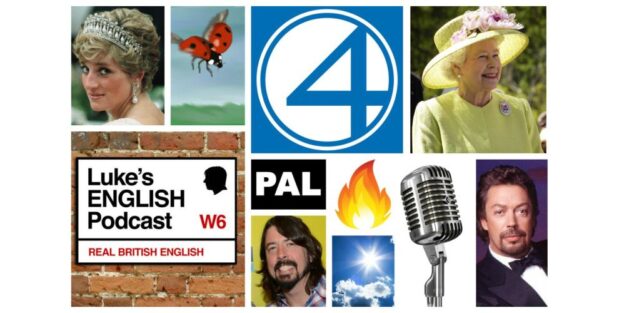
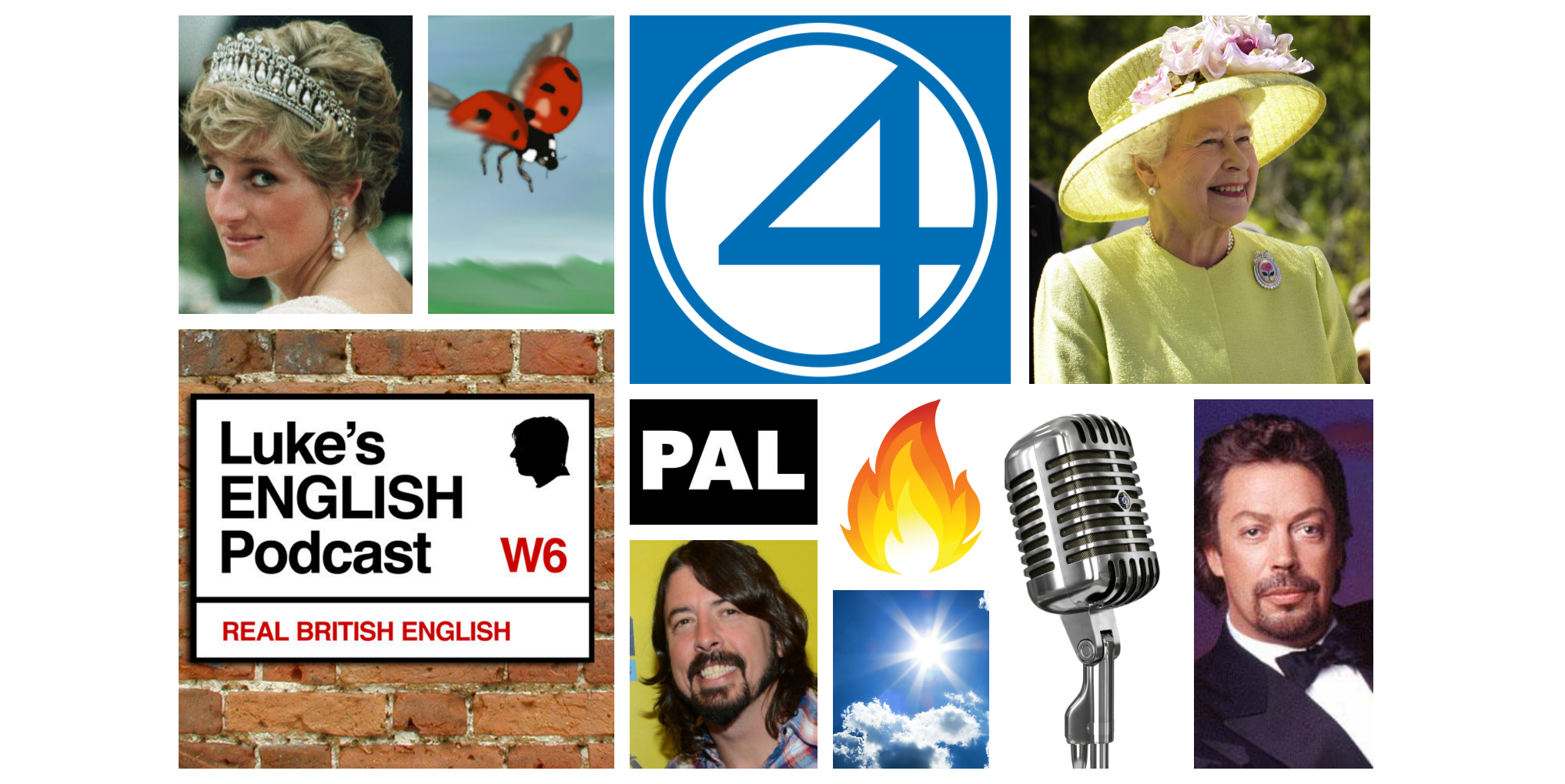
What? Another new episode? Slow down Luke! We can’t keep up! OK I will slow down, I promise. I am going away on holiday tomorrow and I will be quiet for a couple of weeks so I just wanted to upload another podcast before I go. While I’m away you’ll have a chance to catch up with all these new episodes. This is #344 and it’s another rambling conversation with podPALS Amber & Paul, but this time we’re joined by a fourth member of the team. Could this be The Fantastic Four that LEPster Olga mentioned in a recent comment? Only you can decide… Topics of conversation include: jingles, voice overs, the Queen’s birthday, the monarchy, Princess Diana and more…

Small Donate Button[DOWNLOAD]

Groovy background music c/o http://www.bensound.com

Introduction

I’m not going to spend much time on an introduction to this episode (yeah, right) except to say that in this episode you’re going to hear another a fast conversation between 4 native speakers, recorded for you to listen to.

You’ll hear the pod-pals – that’s Amber, Paul  & me (The Thrilling Three or the Tangential Trio) having our weekly chat on the terrace in the sunshine. But this time we are joined by a 4th member to our team in the form of Tom Morton, a friend of ours from the stand-up comedy scene here in Paris. You might remember that Tom has been mentioned briefly on this podcast before and that we’ve established that he looks a bit like Dave Grohl the drummer from Nirvana and Tim Curry the actor from The Rocky Horror Picture Show, and… that’s it! That’s all you know at the moment!

Tom

So, just to fill you in a bit – Tom is a professional actor and voice-over artist. He’s done voice-overs for TV and radio advertisements for companies like Mini, L’Oreal, Sky TV, McVities biscuits and Nintendo Wii. He’s is half English and half French and speaks both English and French like a native. “What’s Tom’s accent?”, you might be wondering. Well you’ll find out for yourself in a bit when you listen to him, but in English he speaks with received pronunciation, which is essentially that neutral accent that we associate with the BBC and the universities – no particular regional inflections although he spent lots of time in West London when he was growing up. So, he speaks a bit like me basically, but he has his own unique sound of course, as you will discover in a moment. As ever I am keen to know what you think. What do you think of Tom’s voice? Leave your comments on the website.

Here’s what you’ll hear in this episode

First you’ll hear the three of us give Tom a sort of job interview as part of his initiation onto the podcast. After a couple of minutes though, the job interview goes downhill and is abandoned. We then just mess around, letting you get to know Tom a bit, doing improvised voice-overs on a few royalty-free Apple jingles, before the conversation goes off on a number of tangents (what a surprise). And those tangents cover these things:

  • the complexities of explaining puns and jokes in English
  • doing voiceovers on adverts for the ‘megaknife’ – a knife that is so sharp it can cut through a shoe
  • the Queen’s birthday
  • what British people think of the monarchy
  • the death of Princess Diana
  • public reactions to tragedies like when a famous person dies (this was recorded just a few hours before we all learned that another celebrity had died – the American musician Prince – just another legend who died this year after Lemmy, David Bowie, George Martin and a bunch of other people including British celebrities Terry Wogan, Paul Daniels, Ronnie Corbett and Victoria Wood – you might not know who they are but they were all much loved comedians and entertainers who died this year) So – public reactions to the death of famous people
  • when old people say racist things, like Prince Philip or your grandparents
  • Amber’s son Hugo has learning a new word
  • getting a letter from the Queen on your 100th birthday
  • the drama of Paul and Luke getting attacked by flying insects (ladybirds)
  • Amber’s story about a woman she saw whose scarf had slipped between her bum cheeks making it look like she had a tail
  • the moment one of my neighbours burps very loudly in the background from another apartment (I’m pretty sure you can’t hear it)
  • then finally, which members of The Fantastic Four we would be – I’m Mr Fantastic (because I’m the leader I suppose), Amber is the invisible woman (because since she had a baby she’s become invisible to men), Paul is The Human Torch (because he’s on fire sitting in the sun, and because he’s so hot right now in the world of comedy), and Tom is The Thing (neither French nor English, just an amorphous blob).

It’s a real mix of both serious and light-hearted topics, and yes, I am aware that the conversation moves pretty fast and we talk over each other quite a lot – that’s just what happens when a bunch of friends get together like this. It might be a difficult episode to follow – or maybe not – maybe you’ll have absolutely no problem keeping up with this, but in any case I hope you just enjoy listening to another completely spontaneous conversation between a group of Brits who are getting a bit too much sun on their heads.

You should know that there’s some swearing in this episode – there you go, you’ve been warned.

Also, we’re not talking about the results of the interactive lying game from episode 343 yet – that’s going to come in an another episode soon.

So that’s enough introduction. I will now just let you listen to another outdoor episode of LEP featuring the The Talkative Trio with Tom Morton.


LEP JINGLE MASHUP 1

*Conversation begins*

LEP JINGLE MASHUP 2


That’s it! Check out the page for the episode. There are a few notes and a brief summary of some of the main points in that conversation, so if you didn’t understand something you can just google it or wikipedia it!

Just a reminder about italki before I say anything else. With italki you can have your own rambling conversations with native English speakers if you like, or if you prefer you can have properly structured English lessons too, and all from the convenience of your own internet connection at home, or anywhere else really. They have loads of qualified teachers to choose from, and when you buy some lessons italki will give you a voucher worth 100ITC which is a nice discount on future English lessons. To get that offer and to check out italki go to teacherluke.co.uk/talk or click an italki logo on my website.

001APVAD1400I’m going to be on holiday for about a week and then I’ll be very busy marking student exam papers so I don’t know when I’ll be able to upload a new episode. But I’m sure it won’t be that long, and anyway I’ve given you so many new episodes lately you could probably do with a little break too – or maybe not! Maybe you’re desperate for more. Don’t forget to check out my other podcast – A Phrasal Verb a Day. There are now over 130 episodes of that. The episodes are much shorter and I get straight to the point in every single episode and just focus on teaching you a new phrasal verb every time – and you shouldn’t underestimate the importance of phrasal verbs in English. They’re a vital part of fluent, natural English. So check out teacherluke.co.uk/pv for the episode archive – some of them have videos too.

Right – enough rambling! I’m off! I’ve got lots of exam marking to do! Have a nice day or night or morning or whatever and I’ll speak to you soon. Cheers! BYE!

344
Photos (clockwise – left to right) Princess Diana, a ladybird, Fantastic Four logo, The Queen, Tim Curry, Dave Grohl, LEP logo.