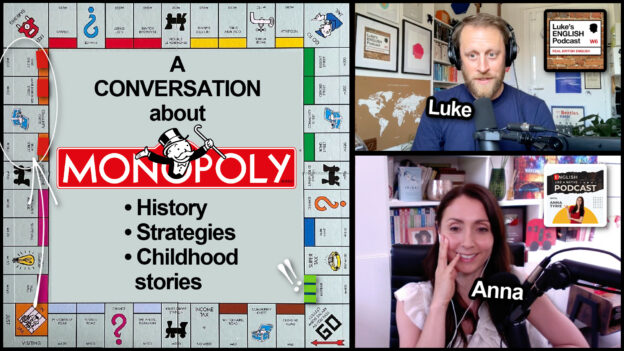
Monopoly is one of the most famous board games of all time. It’s sold in more than 114 countries and has been printed in more than 47 languages. It’s famous for causing arguments and taking forever to finish! But it is a fantastic and fascinating game, so let’s talk about it. In this episode I talk to Anna Tyrie (from English Like a Native) about childhood memories, rules that people don’t follow, winning strategies, the real history of the game and more! I guarantee that with this episode you will learn new things about Monopoly.
Today on the podcast I am joined again by Anna Tyrie from English Like a Native and we are going to have a conversation all about Monopoly, yes Monopoly the board game that you probably played as a child with your family. The game that always takes ages and usually ends in a big family argument.
I actually think this game is fascinating. We’re going to talk all about it – Childhood memories, the rules of game, the strategies, the economics of it, the surprising history, and some fun facts that you might not know.
You know Monopoly, don’t you? It’s that game where you go around a board, buying and trading properties, constructing houses and hotels in order to take as much money as possible from your competitors who are probably other members of your family, who have to pay you rent every time they land on one of your properties.
The aim of the game is to completely dominate the market, so that all the other players go bankrupt and you take all the money, ultimately achieving the status of a monopoly – the one who has total market domination. When that happens, you win, and everyone else hates you.
Monopoly is sold in more than 114 countries and has been printed in more than 47 languages, so there’s a good chance that you know it, but still, I expect that some of you out there in podcastland have really played it and I suppose that some of you have never even heard of it! Well, you’re going find out all about it today, and even if you are an experienced Monopoly player, hopefully you will learn a thing or two from this episode.
Monopoly is a board game. In the English speaking world it is one of the most well-known and successful board games, along with other classics such as Trivial Persuit, Cluedo, Scrabble, Taboo, Pictionary, and of course Chess, Backgammon and Draughts to name but a few.
Listeners, Anna and I have recorded, or will be recording an episode all about board games in general, for Anna’s podcast. We talk about classic board games, our memories of playing board games, using board games to learn English. You’ll be able to find that on Anna’s podcast. But here for my show we are focusing exclusively on Monopoly.
There are loads of different versions of this game for different cities in different countries. In fact, there are over 300 different versions, like ‘Game of Thrones Monopoly’, ‘Star Wars Monopoly’ and ‘Pokemon Monopoly’ and more. There is actually a lot to talk about here. Sure, it can be a frustrating game, but it is certainly one of the most enduring board games in the world and it’s also fascinating. So, let’s have a good long conversation about Monopoly.
Here is a list of curious mysteries, jokes and observations about the English language and life in general. I talk about each interesting point, give some funny comments and explain bits of English vocabulary in the process. Expect to learn a few things, and have a bit of a laugh in the process.
4. Who knew what time it was, when the first clock was made?
*Well, try this now*
Ambiguities of the English Language! Enjoy.!!!
😀
1. I wonder why the word “Funeral” starts with FUN?
Saderall would be better, because you’re all sad.
2. Why isn’t a Fireman called a Water-man?
3. How come Lipstick doesn’t do what it says?
Lipstick – it’s a stick for your lips
It’s not stuff that “sticks to your lips”.
Also, it isn’t a stick made of lips. That would be weird.
4. If money doesn’t grow on trees, how come Banks have Branches?
5. If a Vegetarian eats vegetables, what does a Humanitarian eat?
6. How do you get off a non-stop Flight?
7. Why are goods sent by *ship* called CARGO, and those sent by *truck* SHIPMENT?
ChatGPT has the answer (smartypants)
Goods that are shipped by boat are called cargo because the word “cargo” comes from the Spanish word “cargar,” which means “to load.” This makes sense because when goods are shipped by boat, they are loaded onto the vessel.
In contrast, goods that are shipped by truck are called a shipment because they are being shipped from one place to another. The word “shipment” comes from the Old French word “envoiement,” which means “the act of sending.” So, a shipment is a collection of goods that are being sent from one place to another, regardless of the mode of transportation.
8. Why do we put cups in the “Dishwasher” and the dishes in the “Cupboard“?
The word “cupboard” originated in the Middle English word “cubbert,” which came from the Old French word “couvert,” meaning “covered.” A cupboard is a type of cabinet or closet with shelves or drawers for storing household items.
The name “cupboard” likely comes from the fact that these types of storage units were originally used to store cups and other dishware. Over time, the meaning of the word “cupboard” has expanded to include any type of cabinet or closet used for storage. (yes, ChatGPTagain)
9. Why do doctors “practise” medicine?
I don’t want a doctor who practises medicine, I want one who has learned how to do it!
10. Why is it called “Rush Hour” when traffic moves at its slowest at that time?
11. How come noses run and feet smell?
Shouldn’t it be the other way around?
12. Why do they call it a TV ‘set’ when there is only one?
The know-it-all ChatGPT has the answer *yawn*
The word “set” in this context refers to a complete television system, not just the physical television itself. A television set includes the television, as well as any additional components or accessories that are required to receive and display television signals.
In the past, television sets often included components such as a VCR, DVD player, or cable box, and these additional components were often referred to as “attachments.” Even though most modern televisions are self-contained and do not require additional components, the term “television set” is still used to refer to the entire system.
13. What are you vacating when you go on a “vacation“?
We can never find the answers
Can we❓
If you have the *Spirit* of understanding everything in a positive manner – You’ll enjoy every moment in LIFE, whether it’s *PRESSURE or PLEASURE*
So just enjoy the PUN and FUN of the English language.
😂🤣😂
Enjoy and have fun.😘👍
Hana Fakhoury Hajeer, PhD.
A Note about the words “STUFF” and “THINGS”
Also, just at the end here I thought I could explain a couple of points about the words “stuff” and “thing(s)”.
So, here is a note about that.
Of course you are aware of these words. People use them all the time. They certainly came up in this episode.
For example, at the beginning of the episode I said “Let’s talk about some stuff. Here’s some more stuff to help you learn English” and I think the episode is in fact going to be called
“Things that make you go ‘Hmmm’.”
So what about these words? I often notice that my learners of English don’t use them very much, but I think they are very useful.
Of course you shouldn’t overdo it and use them all the time, when a more specific word is appropriate, but still, they are useful and very common.
The main thing here, the main point, is that the word thing is a countable noun, and the word stuff is uncountable.
That’s the only difference really.
In English, countable and uncountable nouns have different rules regarding their usage. Here’s a general overview.
Countable Nouns
1. Countable nouns refer to items that can be counted as individual units.
2. They can be used in both singular and plural forms.
3. Singular countable nouns are typically preceded by an article (a/an) or a specific determiner (e.g., this, that, my).
4. Plural countable nouns usually take an “s” at the end, but irregular plural forms exist as well.
5. Countable nouns can be quantified using numbers or words like “many,” “few,” “some,” etc.
6. They can be used with “a few,” “several,” or “many” to indicate a specific quantity.
Example sentences
– “I have two cats.”
– “She bought some books.”
– “He needs a new car.”
– “There are many students in the classroom.”
Uncountable Nouns
1. Uncountable nouns refer to substances, concepts, or ideas that cannot be counted as separate units.
2. They are typically singular and do not have a plural form.
3. Uncountable nouns do not usually take an indefinite article (a/an) but can take a definite article (the) when specified.
4. They cannot be quantified directly with numbers, but words like “some,” “a little,” “a lot of,” etc., can be used.
5. To express a specific quantity, you can use measurement words like “a cup of,” “a bottle of,” “a piece of,” etc.
Example sentences
– “I need to buy some milk.”
– “She has a lot of experience.”
– “Could you pass me the salt, please?”
– “He drank a glass of water.”
It’s important to note that some nouns can be both countable and uncountable, depending on the context. For example, “water” can be uncountable (as in “I need water”) or countable (as in “There are three waters on the table”).
Just as a quick test, which word would you use to complete these sentences?
Thing / things or stuff?
There is just one _______ I need to tell you before you go.
Can you pass me one of those _______ on that box over there?
Can I have some more of that _______? It was really good.
Ugh, what’s all that sticky _______ on the table?
I need to go into town to buy one or two _______ for dinner, would you like to come?
Your bag is so heavy. How many _______ do you have in here?
There’s too much _______ in the back of the car. I can’t see out of the window.
How much _______ did you bring with you? You don’t need all of those _______.
Sit down, we have some important _______/_______ to tell you.
Answers
There is just one thing I need to tell you before you go.
Can you pass me one of those things on that box over there?
Can I have some more of that stuff? It was really good.
Ugh, what’s all that sticky stuff on the table?
I need to go into town to buy one or two things for dinner, would you like to come?
Your bag is so heavy. How many things do you have in here?
There’s too much stuff in the back of the car. I can’t see out of the window.
How much stuff did you bring with you? You don’t need all of those things.
Sit down, we have some important things/stuff to tell you.
Errors
❌There are some amazing stuff in this shop. ✅There are some amazing things / There is some amazing stuff
❌Can you pass me that stuff on the table? (talking about one object) ✅Can you pass me that thing on the table?
❌We need to get some more stuffs from the shop. ✅We need to get some more stuff… ✅We need to get some more things…
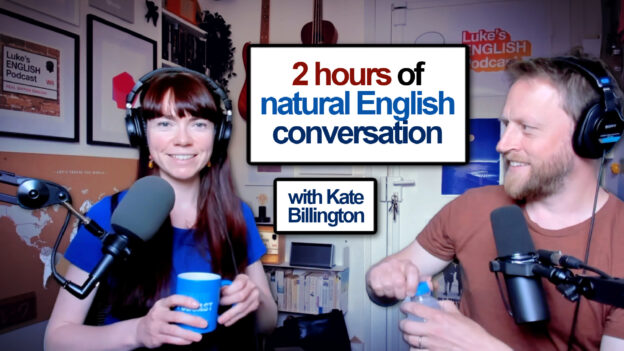
Kate Billington returns for her 4th appearance on LEP to create some fun English conversation for you to listen to. We talk about lots of things, as usual, including her cycling trip to Berlin and a nasty accident she had on her bicycle in Paris earlier this year. Expect tangents, vocab, idioms, jokes, stories, cups of tea and some very “professional” podcast eating.
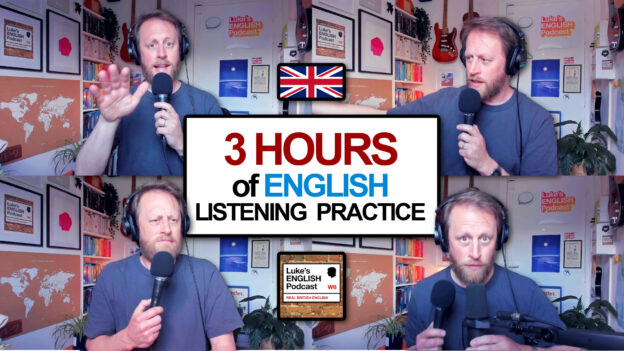
This is the longest episode of LEP so far, and it’s a solo ramble. Relax, follow my words, hang out with me for 3 hours, get stranded on a desert island of the imagination, and then get rescued. Includes a haircut, a sleep and a t-shirt change during the episode.
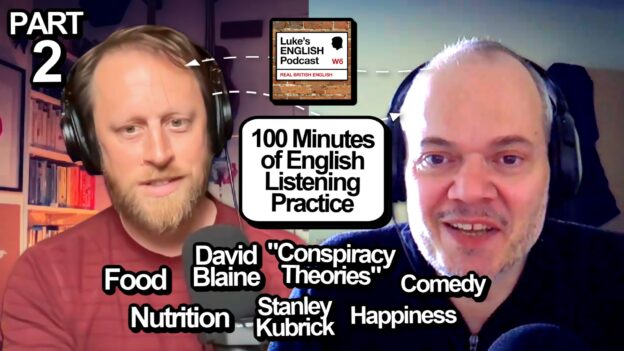
Since recording part 1 of this conversation, Antony caught COVID-19 and lost a bit of weight, but he managed to talk for about 100 minutes here about more topics he has previously covered in episodes of his podcast “Life & Life Only”. Here we discuss diverse things, including the extraordinary feats of endurance by David Blaine 🕴🏻, food and dieting 🍔, Stanley Kubrik’s film “The Shining” 🪓, the term “conspiracy theory” 🤫, the ways that comedy shows can reveal the truth 🎭, and the complex art of happiness 🙂.
Join me as I read through a bizarre online game. Have you ever wondered what it would be like to be a lemon? No? Well, neither had I, until I played this game. Can I escape the kitchen, become human again and avoid being chopped up and turned into a juice! Watch out for some descriptive language and some funny moments along the way! Story by Daniel Champion on www.textadventures.co.uk
Let me read you a classic Sherlock Holmes detective story, by Sir Arthur Conan Doyle. I’ll read the original text and stop regularly in order to explain what is happening.
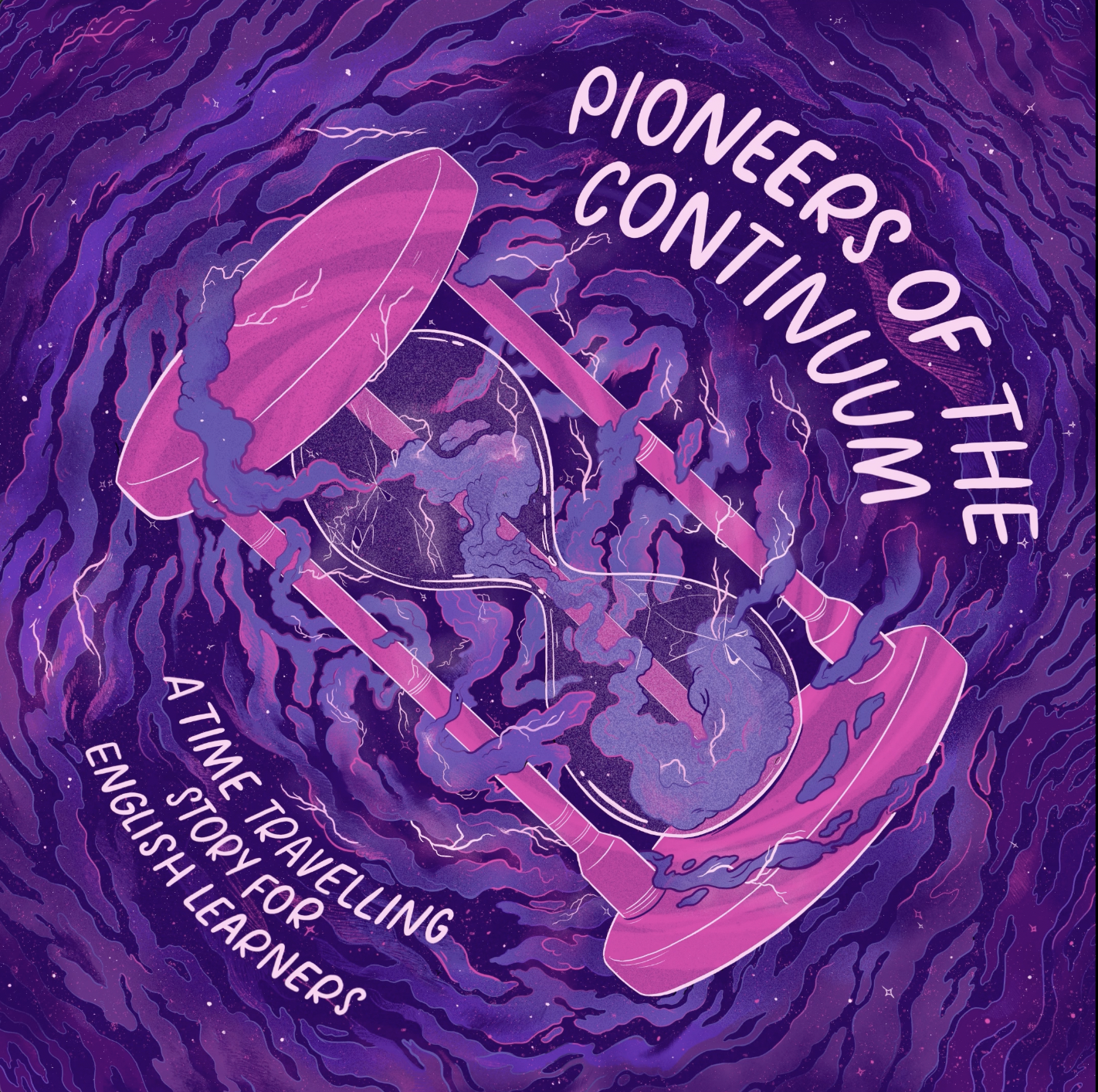
Is that a confusing title? Hopefully not. As you might expect, it’s a little summary of what’s included in the episode. To give you some more details, Alastair Budge is the host of a podcast called “English Learning for Curious Minds” and he has created a new audio drama for English learners called “Pioneers of the Continuum”. It’s a time-travel adventure for English learners, and Alastair asked me to be the narrator for episode 1. In this episode of LEP, we talk about Alastair’s story, living in Malta, learning English by immersion, cliches and complaints from English speakers visiting Paris and Alastair’s story about playing the bagpipes on the streets of Paris. The audio version includes 30+mins of rambling from me at the end. Enjoy!
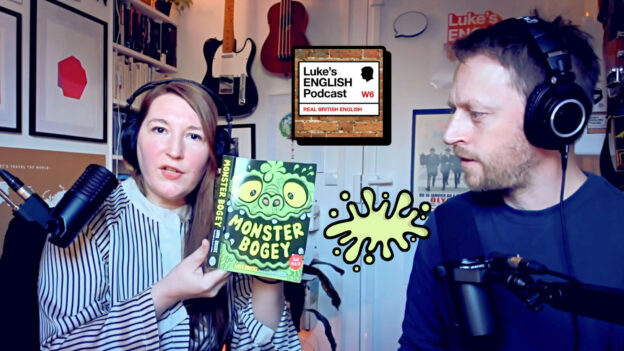
My friend Anna has written a book for children (7+) which has a full publishing contract and is available in all good bookshops now. The book tells the story of a boy who accidentally creates a monster when his secret collection of nose bogeys gets struck by lightning! This conversation includes lots of talk of snot and bogeys, as well as stories from Anna’s time as a travel writer.
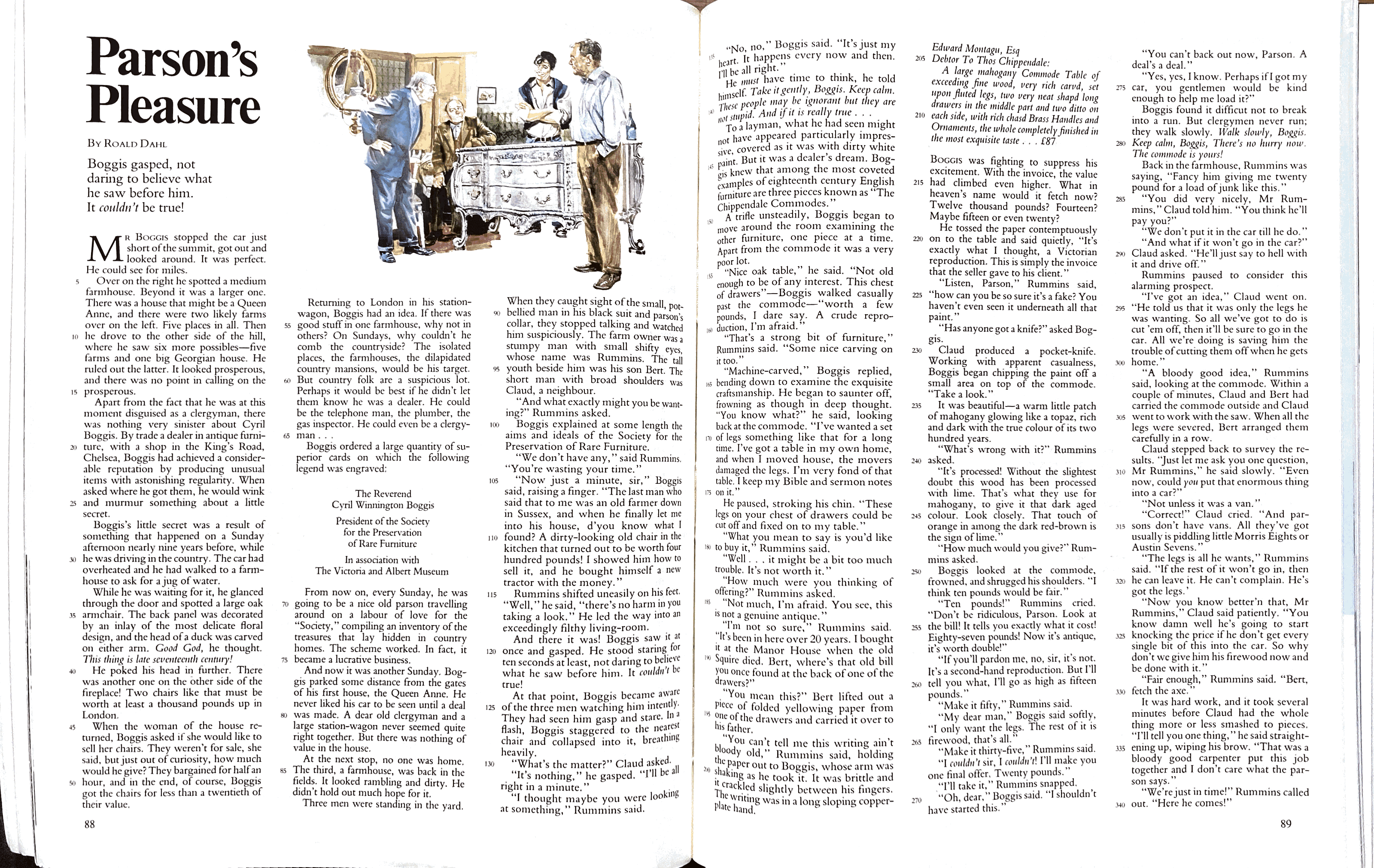
Learn English with another short story. This time it’s Parson’s Pleasure by Roald Dahl, which is an intriguing tale of a dodgy antiques dealer, with a nasty twist at the end. Learn vocabulary while you enjoy a fascinating story.
This website uses cookies to improve your experience while you navigate through the website. Out of these, the cookies that are categorized as necessary are stored on your browser as they are essential for the working of basic functionalities of the website. We also use third-party cookies that help us analyze and understand how you use this website. These cookies will be stored in your browser only with your consent. You also have the option to opt-out of these cookies. But opting out of some of these cookies may affect your browsing experience.
Necessary cookies are absolutely essential for the website to function properly. These cookies ensure basic functionalities and security features of the website, anonymously.
Cookie
Duration
Description
cookielawinfo-checkbox-analytics
11 months
This cookie is set by GDPR Cookie Consent plugin. The cookie is used to store the user consent for the cookies in the category "Analytics".
cookielawinfo-checkbox-functional
11 months
The cookie is set by GDPR cookie consent to record the user consent for the cookies in the category "Functional".
cookielawinfo-checkbox-necessary
11 months
This cookie is set by GDPR Cookie Consent plugin. The cookies is used to store the user consent for the cookies in the category "Necessary".
cookielawinfo-checkbox-others
11 months
This cookie is set by GDPR Cookie Consent plugin. The cookie is used to store the user consent for the cookies in the category "Other.
cookielawinfo-checkbox-performance
11 months
This cookie is set by GDPR Cookie Consent plugin. The cookie is used to store the user consent for the cookies in the category "Performance".
viewed_cookie_policy
11 months
The cookie is set by the GDPR Cookie Consent plugin and is used to store whether or not user has consented to the use of cookies. It does not store any personal data.
Functional cookies help to perform certain functionalities like sharing the content of the website on social media platforms, collect feedbacks, and other third-party features.
Performance cookies are used to understand and analyze the key performance indexes of the website which helps in delivering a better user experience for the visitors.
Analytical cookies are used to understand how visitors interact with the website. These cookies help provide information on metrics the number of visitors, bounce rate, traffic source, etc.
Advertisement cookies are used to provide visitors with relevant ads and marketing campaigns. These cookies track visitors across websites and collect information to provide customized ads.