Category Archives: Native Speaker

481. Holiday Diary (Final Part) “Endeavour to Persevere”

The final part of the holiday diary series. This one is about visiting the Navajo Nation, meeting some Navajo people, seeing more natural wonders at Monument Valley and The Grand Canyon,  a couple of film recommendations our experience of the solar eclipse and a few more anecdotes about the rest of our road trip.


[DOWNLOAD]

MEXICO EARTHQUAKE APPEAL

Please consider making a donation to help people in the affected areas

Organizations like UNICEF Mexico https://www.donaunicef.org.mx/ are looking for monetary donations.

There’s a big need for clothes, water, and food. Giving to places like the Red Cross Mexico https://www.cruzrojamexicana.org.mx/ , Oxfam Mexico www.oxfammexico.org , and Save the Children Mexico http://www.savethechildren.org/  is a way to get resources flowing.

Notes and Transcript for this Episode

Some rambling about how much it rains in Paris…

Then…

So here is the final episode in this series about the things I saw and did on my summer holiday this year. I’ve tried to make this more than just a description of a holiday. It’s also been a chance for me to talk about some topics that I hope are as interesting for you as they were for me when I found out about them.

In the last episode I talked to you about our road trip around the so-called Grand Staircase – a huge area of land where about 2 billion years’ worth of rock are exposed by tectonic activity and erosion, creating canyons and rock formations that are awe-inspiring but also revealing of the earth’s geological history.

In this episode I’d like to bring the series to a close by telling you a few more anecdotes and describing the rest of the trip.

Then, after this episode we’ll be back to normal podcasting with some upcoming episodes featuring conversations with guests.

So, after visiting Zion and Bryce Canyons in Utah in the last episode, we drove South East and across the state border into Arizona and also crossed into the area known as the Navajo Nation Reservation – an area of land that includes parts of Arizona, Utah and New Mexico.

I already knew a few things about native Americans, or American Indians, or just the Navajo tribe, but I sort of hadn’t realised we would be entering their territory and staying there for a few days.

In fact, I didn’t even really know that the Navajo Nation existed.

I knew a bit about the Navajo. I knew that many Indians were moved from the areas they used to inhabit onto reservations in the 19th century.

I knew that many Indian tribes like the Navajo had been forced, in the late 1800s, by the US army to move onto reservations, which in many cases were basically just prisons on inhospitable land, just because the United States government didn’t really know what else to do with them and which, by today’s standards, would be considered a violation of basic human rights.

I also knew that the Navajo’s population had been decimated by these changes and that this was the same story with many Indian tribes across the country.

But I didn’t realise that the Navajo had been given a whole area of land – much bigger than their original reservation, that they could govern themselves, with their own elected president and other official posts.

It’s worth saying a few things about the Navajo Nation because I learned some stuff I didn’t know before.

They’re a sovereign nation with their own elected President.

The land which includes parts of Arizona, New Mexico and Utah is about 27,000 square KM – and on that land you can find various sites of great cultural and spiritual significance to the Navajo. There are over 300,000 people living there.

So, for a few days we were living on Navajo land and met quite a lot of Navajo people who work in the hotels, restaurants and as tour guides to some of the natural monuments.

These days the Navajo are modern people of course, and they don’t live exactly like their ancestors did but the brief bits of contact I had with some of them was interesting. It was really cool for me to chat with some people, particularly a tour guide we met at Antelope Canyon and just realise that although our ancestors were worlds apart (mine would have been English families raised as Anglican Christians in towns in the North of England, theirs lived on this land and hunted for deer and fish, lived in earthen houses called Hogans, fought with the US army) – so although our great grandparents lived utterly different lives, we shared some surprising things in common.

A Short history of the Navajo

They used to live in the Arizona area – living on and the land in simple wood and earth structures, hunting for animals, performing their rituals, living by their beliefs in the importance of living in harmony with the supernatural powers of nature, but as settlers from Europe began moving west and populating more and more land, they clashed with the Navajo, making life difficult for the settlers and prospectors moving through, so they were forced by the American government and the US army to move 300 miles to the east into New Mexico, and they had to walk there, in winter. Everyone. Hundreds of them died on the way and generally the population was nearly wiped out by the general upheaval – the consequences of the move, and the way their whole way of life became severely limited and impossible, by the way they were treated and their reduction in population is now often referred to as a genocide.

It wasn’t until much later, that the remaining Navajo were not only allowed to go back to their land, and claim it again, but they were allowed to govern themselves.

Essentially, during that period of western expansion, native people were considered less than human and were treated that way. Many Indians were killed or simply left to die.

They were just not included in the grand narrative of western expansion that built the USA of the modern age, despite being the original American people. Usually the American Indians are just represented as savage bad guys in western movies, although this has changed in the last few decades when their stories have been told more respectfully.

Also I learned that the Navajo played a really important part in World War 2. When the US was at war with Japan after Pearl Harbour, one of the most important things for the US navy was being able to communicate secretly. They created loads of codes, but the Japanese codebreakers were so clever and sophisticated that pretty much any code the Americans came up with got broken, and this was costing the US army a lot of lives. In the end, they employed bilingual Navajo people to create a code based on the Navajo language, and it was incredibly effective. The Japanese couldn’t break the code because of the nature of the Navajo language. Many words in Navajo can have multiple meanings but it depends how they are pronounced, using different tones. Some words can mean 4 totally different things depending on the tone used when saying them. I suppose in that way it’s like Mandarin Chinese or other tonal languages.

The Navajo people employed by the government to translate messages into code, based on their language, are known as the Navajo Code Talkers and they have been recognised as heroes and given numerous awards by the US government.

It’s a fascinating story of how this American Indian tribe suddenly became vital to American interests and greatly helped the country win the war.

We met a few native people while we were there and I wondered what life is like for them and how they feel they fit into life in the US.

They seem like nice people (but who knows) with a sense of humour. I mean, they could be vindictive and bitter, but they don’t seem to be. In fact the people we met seemed to be quite level-headed and humourous. I think the fact that they govern themselves helps to give them a sense of pride and independence.

Being in this part of the world, seeing the different landscapes and people, this made me think of some films – these are often my reference points because I’ve watched a lot of films over the years.

The Outlaw Josey Wales – Chief Dan George (not a Navajo but an interesting scene)

One particular film I thought of is The Outlaw Josey Wales – directed by and starring Clint Eastwood. It’s about a civil war fugitive who is running from the Union army. At the start of the film he’s a peaceful farmer, but soldiers come and burn his house down, and kill his wife and child. He’s so consumed by revenge that he becomes an outlaw – a sort of avenging ghost (the typical Clint Eastwood western character) and on his way he sort of picks up these odd group of companions and it becomes something of an unconventional family. It was filmed in some of the locations that we visited, and there’s an Indian character in the movie played by an Indian actor called Chief Dan George. The actor isn’t Navajo and neither is his character – his character is a Cherokee – but the Cherokee experienced similar displacement to the Navajo, and they were ordered to walk hundreds of miles away from their land into reservations where and it basically destroyed their whole way of life – a way of life that had developed over many many years and was in harmony with the land, the wildlife and the natural environment in general.

There’s one scene in the film when this character played by Chief Dan George mentions the trail of tears and how him and other members of his tribe actually went to Washington to meet with the Secretary of the Interior to negotiate. They were all proud and wore suits and hats like Abraham Lincoln – because they were naive, but they were simply told to “endeavour to persevere” which basically means “just try to survive”. They were basically told “nope, we’re not going to help you, we’re still moving you into reservations, you’ll just have to try to survive”. The Indian chiefs went away thinking they had achieved something because the language sounded so respectful and important and because they’d been impressed by the posh surroundings in Washington. It wasn’t until later that they thought about those words “Endeavour to persevere” and realised that nothing had changed and they were being left in appalling conditions with nothing other than “try to survive” from Washington – on reservations built on land that wouldn’t yield anything for them. Once they’d thought about it, they declared war on the Union.

I like this scene because Dan George delivers the story with dry humour. It’s funny but also a bit tragic. It’s also a chance to hear English spoken by an American Indian.

Context: Chief Dan George’s character emerges from his home because he thinks someone is approaching. In fact it’s Clint Eastwood’s character just moving through the area. Dan George (Lone Watie) emerges from the house, trying to get an edge (an advantage) on the intruder but Clint’s character manages to sneak up on him. Then he talks about how the white man has been sneaking up on him and his tribe for years. Then he talks about the frock coat he’s wearing – the same coat he wore when he went to Washington, and a top hat like Abraham Lincoln used to wear. Then he tells the story of meeting the Secretary of the Interior and being told to endeavour to persevere.

“Indians vow to ‘Endeavor to Persevere'”

It’s a great performance by Chief Dan George and shows dignity, sadness and humour.

It’s hard not to see the irony when you see Americans today on Twitter complaining about immigrants coming and stealing their land and not assimilating to the culture.

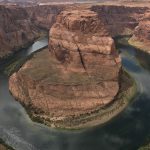
Saw horseshoe bend – a huge natural bend in a river.

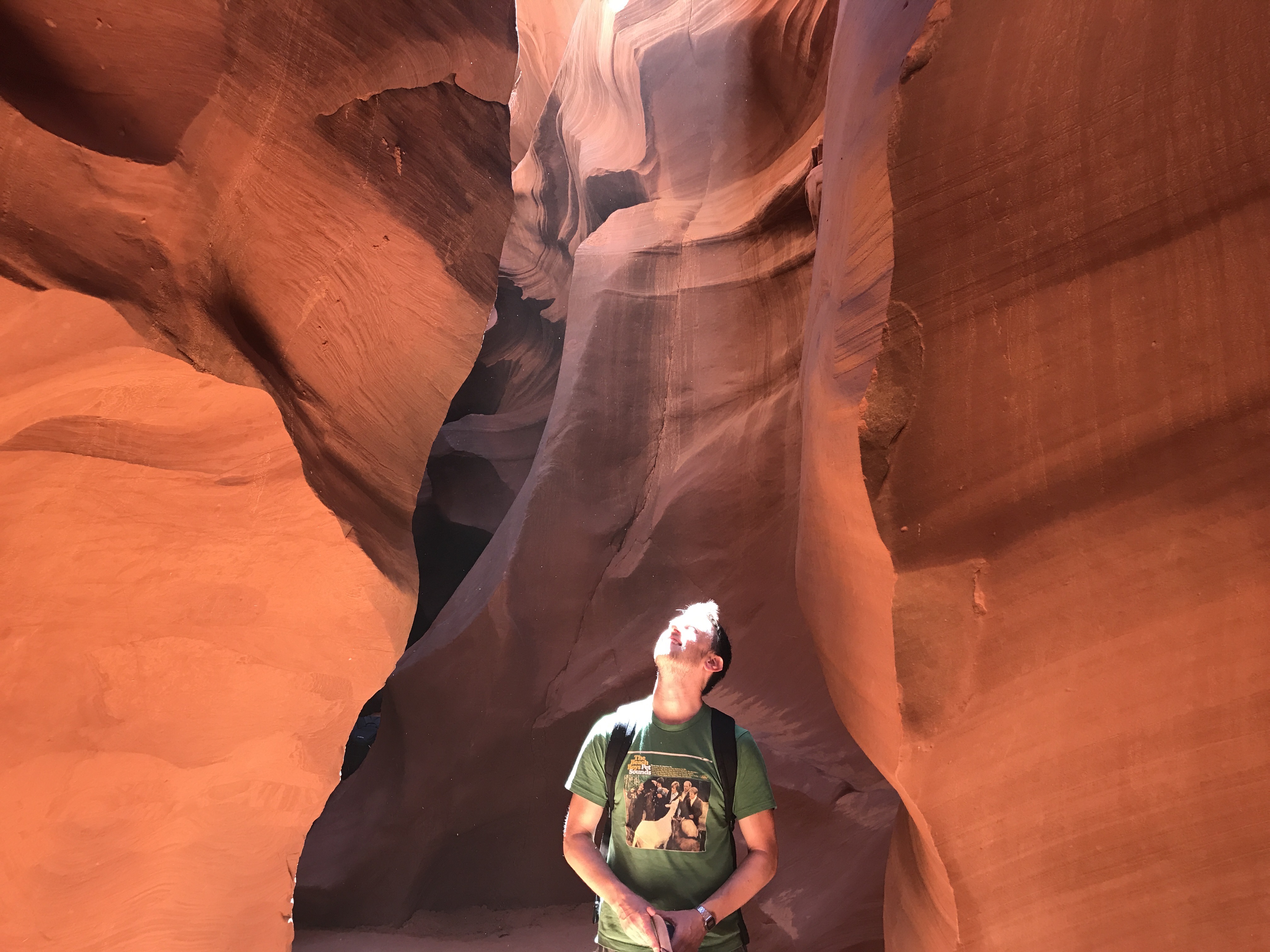
Lower Antelope Canyon (more pics at the bottom of the page)
IMG_6234
(Not looking directly at the sun, by the way)

Video (below) – an example of a Flash flood – the sort of thing that created Antelope Canyon with erosion (this is a scene from 127 Hours, not actually filmed at Antelope Canyon, but just an example of a flash flood)

The tour company is run by the Navajo.

Examples of their dry sense of humour.

We arrived for our 12.20 tour about 30 minutes early because we thought there would be crowds.

We noticed that quite a lot of the tourists were being quite rude with the staff – just being a bit impolite and demanding, which is a pity.

In fact I noticed that the couple in front of us, who weren’t very nice, were demanding to go on the 11.50 tour when theirs was at 12.20 because there wasn’t an air conditioned waiting room (everyone was waiting in the shade in a covered waiting area) but the girl behind the counter told them that there was no space on the 11.50 tour and they just had to wait.

Sure, there wasn’t an air conditioned room, but this particular bit of land is not supposed to have lots of buildings on it and after all this is the desert, what did you expect, etc etc.

It was our turn and we made an effort to be nice.
“Hello! We’ve got a canyon tour booked”
Which tour?
12.20
It’s already gone, sorry.
My wife: What??
The girl just had a straight face.
Then I realised she was joking.
No, I’m just joking, ha ha. You can join the 11.50 one if you want.

I have some time for that attitude. I’ve worked in bars, restaurants, shops, lots of customer service positions. You have to have a sense of humour because people can treat you so badly and they feel that they can be so rude to you.

Meeting Brian Yazzie our tour guide

We were joined by a group of about 10 tourists.

I think that people might be at their worst when in tourist groups. I don’t know why, but groups of tourists can act so rudely, pushing in front of each other, showing no respect to the guide, showing no deference to the incredibly significant monument which they are visiting and also doing stupid and dangerous things – like leaning over cliffs to take selfies or wandering off the path to take photos and stepping on a snake or being stung by a scorpion or something.

Brian dealt with all of this by using some seriously dry humour

Brian’s funny jokes

Can’t remember them? He told us 11 people had been bitten by snakes this week, that a woman fell off a ladder and you can still see the bloodstains if you look carefully, and he also said “travelling thousands of miles to walk through some cracks in the ground, kind of crazy right?”

He knew Penn & Teller and even Derren Brown.

Videos of Brian on YouTube

Some sleight of hand card magic inside Antelope Canyon

Brian tries some tricks on a few French tourists

The chimneys you see in the background of that video are the local power station which provides the whole area (and other states) with electricity. It’s part-owned by the Navajo.

As we were walking to the canyon he told us that his Grandmother used to say that you shouldn’t go down there, because it’s “the home of the winds”.

“So this is sacred ground?” I asked him.

“My grandma thought so”.

“Well, I’m sure everyone appreciates the beauty of it.” I said, but I couldn’t help feeling like we shouldn’t be walking there.

But Brian seemed ok with it.

Monument Valley
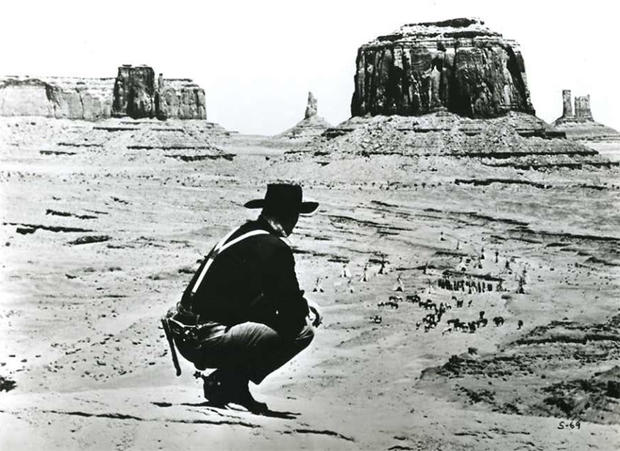
Monument Valley in the film Fort Apache

Monument Valley in the film Fort Apache

Hotel is run by the Navajo.

It has views of the valley and the big rock formations.

It’s also a trading post and a place to eat.

It’s quite neatly built into a piece of high ground at the end of the canyon. It doesn’t stand out too much.

Each room has a view of the valley and there’s a big terrace with full views.

Incredible views. Describe the view.

Again, mad abstract shapes on a clear blue and rust coloured background.

Shadows stretching out across hundreds of metres of land. Amazing huge monoliths with faces in them and old names given by the Navajo.

Sunset.

Movie on the wall with view from our room. We sat, ate our packed dinner and watched the film.

It was called Fort Apache – directed by John Ford, starring John Wayne and Henry Fonda. It features scenes filmed in Monument Valley.

In fact, Monument Valley is famous for being in westerns.

It was amazing to watch the film and then literally turn your head and see the exact same environment just there in front of you.

Also, it was interesting to me that the Navajo chose to screen the film, because usually westerns present rather a bad image of Native Americans as the bad guys.

But this one was different. It was made just after WW2 and the general tone of it is about how foolish leadership and the so-called glory of war usually just leads good young men to die and how the American military misunderstood the complex culture of the native Americans and also underestimated their military strength.

The natives are presented as brave, civilised and great strategists.

All the native American parts (Apache indians) are played to great effect by local Navajo, and the end of the film sees them defeat a garrison of American soldiers.

So it’s pretty clear why the locals like the film. And it’s a really good one. John Ford was a masterful director.

That night, like most nights out in the desert we couldn’t sleep. Not because of jet-lag but I think because we’re quite blown away by all the stimulation. It’s quite hard to take it all in!

So, that night we both lay in our bed trying to sleep, but feeling wide awake, with this incredible and powerful landscape just outside the window.

In the morning we drove down into the valley to see the huge monoliths a bit closer. Again, there were lots of faces and forms seemed to be in the rocks as you look at them. You can imagine how the native Americans must have stared at these rocks and seen all sorts of visions in them.

They are truly inspiring places.

Out of the Navajo Nation and into the national parks again.

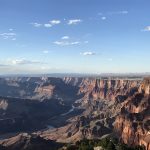
The Grand Canyon

We drive there just before sunset and get to see some incredible early sights of the canyon.

It is just the biggest thing I’ve ever seen.
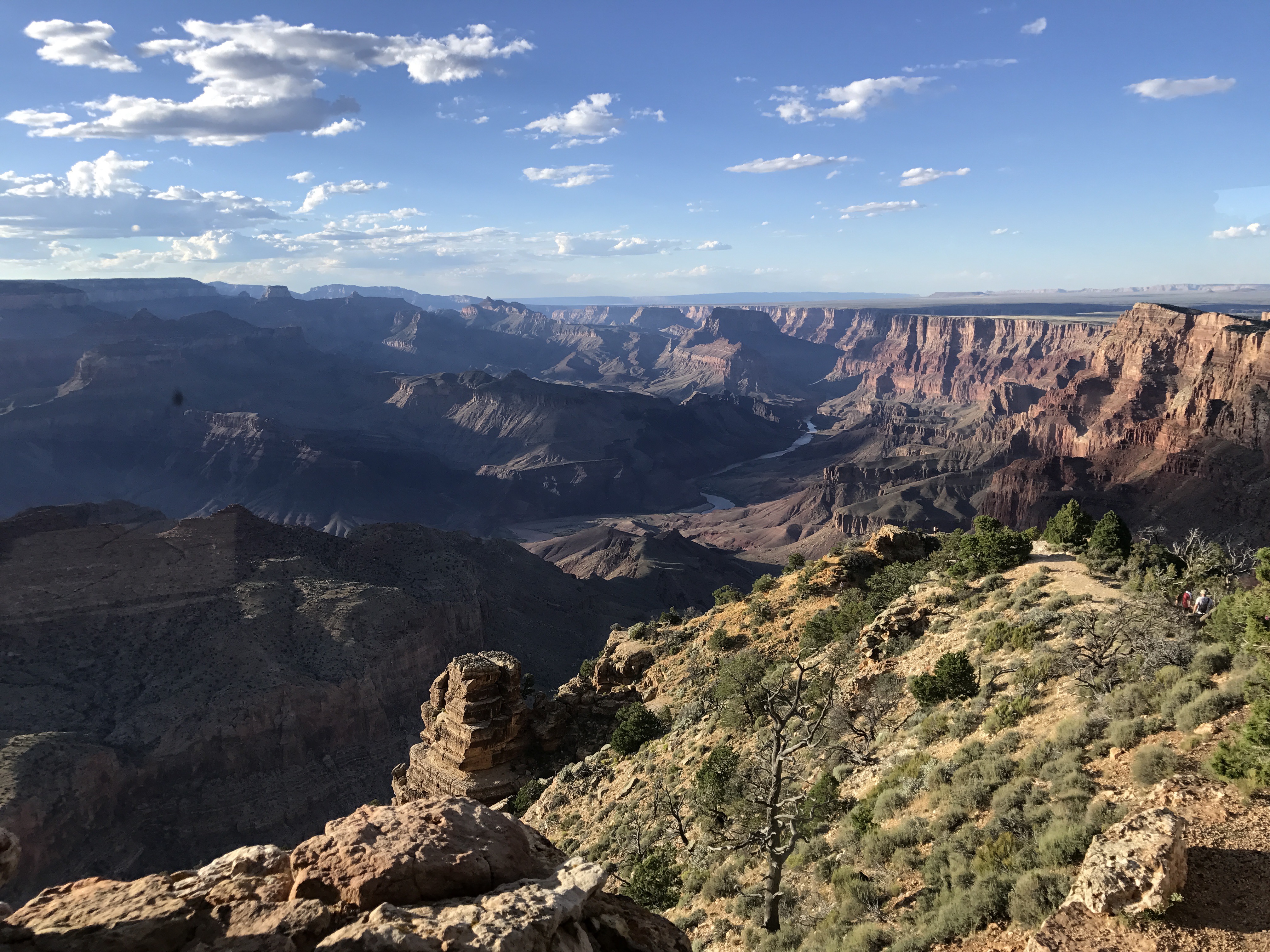
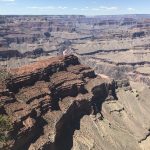
Grand Canyon

(A small corner of) The Grand Canyon

From you to the horizon, a huge network of different canyons, jutting rocks, cracks diving deep into rivers down below.

Imagine seeing 300 canyons all at the same time, all part of one much larger one which bends around the corner. It’s like that.

Saw the sunset and driving home catch views of elk by the side of the road.

Insomnia

We couldn’t sleep (again).

I felt a million and one thoughts come to me while I was lying there wide awake.

Some thoughts were my fears and my worries. My whole life flashing before my eyes.

You know when you can’t sleep and your mind insists on playing back some memories…

But also thoughts of positivity and joy about the future.

…

It’s weird how sometimes when you can’t sleep your mind just takes off and you have to hold on for the ride. You know when you can’t sleep and your mind races around to different things, and you just can’t stop it? You really want to just sleep and switch off, but you can’t. Normally you have ordinary things to deal with that occupy, like remembering to iron your shirt in the morning and dealing with little work-related problems and things like that.

But being away from it all, your thoughts become untethered.

Basically, it’s called “taking stock” and this is what we often do on holiday isn’t it?

I reflected and tried to work things out somehow, while also just trying to get a good night’s sleep.

For example, I am trying to stop worrying about small things because they’re just small things…

I can get quite caught up on details and I can blow small concerns out of proportion. I can make mountains out of molehills, just like we all do, and that causes anxiety and so on. We all do it, right?

But we can’t afford to do that. We can’t put significance onto every little thing. It’s best to let some things slide and to focus on the big stuff. You’ve got to prioritise.

I was also thinking about the whole universe and remembering random episodes from my life, and thinking about starting a family and what it means, also thinking about this podcast and how I’m doing it.

Like, what is it that my audience really wants from me and from this podcast? How can I continue to provide the sort of content that will really benefit people while allowing me to pursue the things I want in life?

There were a lot of strands running through my head, man. But I think I worked a few things out.

From the Grand Canyon we drove down into the lower ground of the desert, back towards Las Vegas – where we would take our quick flight back to Los Angeles for the final part of the trip.

We spent a night an unremarkable in a town called Kingman, and the next day set off by car to Vegas.

This day was all about the eclipse.

The Solar Eclipse

I guess you all know what a solar eclipse is.

It’s when the moon passes in front of the sun and fully eclipses it – hiding it for a few moments before the sun reappears again.

Have you ever experienced one?

It’s seriously weird and amazing.

Firstly, seeing these celestial bodies crossing past each other is like a ballet of cosmic proportions.

This is another thing that makes you realise how small you really are in the grand scheme of things.

It’s also extraordinary that this happens.

Some ancient cultures thought they were extremely significant events.

It’s easy to see why. Everything goes dark like it’s night time. The birds stop singing. Animals behave strangely. The sun is like a black dot in the sky with a shining halo around it.

Then everything goes back to normal.

If you didn’t know it was coming, and you already worshipped the sun, you’d undoubtedly read massive significance into it.

It also looks amazing. You’re not supposed to look directly at it of course, because then you’re basically staring right at the sun which will blind you if you do it for long enough. The light will scorch your retinas.

You have to use special filtering glasses to see it, and on the news they were repeatedly telling everyone not to look at the sun because it could blind you.

Trump looked directly at it of course, as we know. I’m not sure why he did that.

Anyway, the eclipse was visible in certain spots along the breadth of the country. On the road to Vegas we didn’t get the full eclipse, just a partial one and we were in the middle of driving to the airport to catch a plane so we didn’t stop to check it out.

But in any case we wouldn’t have been able to see anything because there was cloud cover.

We did experience a murky half light at the time of the eclipse and everything went spooky.

On the journey there were large black clouds collecting in the distance and some lighter cloud cover over our heads. We started fairly early so the sun was quite low in the sky and with the clouds the light was quite dim.

But as the eclipse happened overhead everything went a murky, dark yellow colour, cars put their headlights on. There were freaky flash rainstorms with massive raindrops.

For about 10 minutes there was a strange end of the world type feeling as the darkening sky was lit up by flashes of lightning in the distance and we saw forked lightning striking rock formations up on our left at the top of a shallow canyon.

We came into Vegas and just went straight to the airport. No need to stop there again.

Arriving in LA had a much better car rental experience.

Within minutes we were in the garage choosing our car.

“Which one would you like? A Japanese one? An American? Hatchback or saloon?”

My wife said “The red one”.

That’s her criteria. Colour.

It turned out to be a Chevrolet Cruze and it was a great car. About the size of a Ford Focus and extremely smooth and responsive.

Maybe this is just how it felt after driving a Jeep for a week.

Compared to that this one felt like a sports car.

Topanga Canyon

Topanga is an awesome place.

Along the coastal highway and up into the hills overlooking the coast.

In those hills are leafy little canyons with communities of people who’ve set up their homes on the hillsides. Topanga was a really cool scene to be part of in the early 1970s and lots of musicians hung out in that area writing their songs. This included people like Neil Young and Crosby, Stills & Nash.

I’m particularly a fan of Neil Young and I’d read his autobiography, so I knew a lot of the stories of the music he wrote and recorded here, and I always thought it sounded amazing. A peaceful retreat among oak trees with sunlight shining through the canopy with wood cabins and cafes serving pie and coffee.

It’s still a lot like that.

We stayed in an AirBnB which was basically a single room wooden cabin with a shower. THe place was extremely well put together. Very tasteful and it felt new. Everything was made of oak with a fantastic and huge stove for cooking. I cooked some food there and drank local beer from bottles. We enjoyed hanging around on the deck outside and lying on the sun lounger looking up at the sky through the leaves and branches of the trees.

We only had a couple of days in this peaceful part of LA so we didn’t do a lot, where you can get lunch and watch people surfing.

Generally it was a pleasure to stay in Topanga and we did not want to leave our cabin and come back to reality.

At night there were coyotes outside the cabin. They make a really strange noise – a kind of whooping, howling and whistling that sounds both ridiculous and scary.

One evening we came back at night and as we drove down the driveway to the cabin there were coyotes hanging around outside the door of the cabin.

These are wild dogs, a bit smaller than wolves.

My wife freaked out a bit so I had to go out of the car, open the door of the cabin and then get her in quickly.

I must admit it was a bit offputting when I heard the coyotes go crazy when they could smell me standing just a few metres away and I heard them all running around in the darkness just beyond my vision making a hell of a racket. I kept telling myself that they were more scared than me, but I didn’t fully convince myself.

I rushed my wife into the house and locked the door! Thankfully we both didn’t get eaten alive by wild dogs because, well, that would have been a pity.

That was a bit scary but we had a good laugh about it!

All in all, this holiday was amazing.

Throughout our trip people were polite, friendly, helpful and often interesting and funny.

We saw some really cool stuff, had a chance to enjoy each other’s company as a couple before the arrival of our child.

The trip also took me by surprise a bit. I didn’t expect to be so moved by the things we saw, particularly out in the desert, at those canyons and in the Navajo Nation.

It was a bit emotional too, watching my wife’s belly get bigger, reflecting on things, not sleeping.

It all felt very real at the time and it was a welcome bit of clarity even if it all happened too quickly.

Now I’m back in Paris amongst all my stuff and all the things that keep me tethered on earth and it’s hard to somehow recreate on a podcast how it really felt to be face to face with the hand of nature creating its mysterious art over billions of years.

I’m not sure it’s possible to, in words, recreate the experience of discovering such beauty, wonder and mystery all through the eyes of people who haven’t slept.

In any case, I hope I’ve managed to communicate to you some of how it felt and that you’ve picked up some more English in the process.

You might have been to the same places as me? What were your thoughts?

Thank you for listening to my Holiday Diary series.

Luke

Neil Young – Tell Me Why (Lyrics)
https://tabs.ultimate-guitar.com/n/neil_young/tell_me_why_ver2_crd.htm

Photos

479. Holiday Diary (Part 6) The Madness of Las Vegas / 11 Gambling Idioms

This episode includes anecdotes and descriptions of our short visit to Las Vegas, including stories of more rental car issues, Las Vegas craziness, winning and losing $$$ and 11 English idioms that come from gambling.


Small Donate Button
[DOWNLOAD]

⬇️ Episode script and notes (Idioms list below) ⬇️

Why Vegas?

It was just as a stopover between L.A. and other areas, and to have a one look in your life, see what all the fuss is about sort of experience.

Take the rental car back to the car rental company.

Remember them, from part 1 of this?

Wrong Cars™

When we picked up the car in LA – just a Nissan hatchback by the way, nothing fancy, at the start of the trip we had to go and wait in a boiling hot car park in Inglewood or somewhere, where I stood waiting on my phone for ages waiting to get through to someone to tell them we had arrived, standing there on hold with my arm going numb and the sun beating down on both me and my pregnant wife, and after about 40 minutes a guy in a rental car came and picked us up, and told us “oh yes, the shuttle busses are in the garage – they broke down on Tuesday”.

We drop off the car, pay the money, ask about the difference in price between the bill and the receipt –
“Sorry Mani, isn’t here today.”

“Can you do it?”

“Sorry, I can’t. He’s the manager.”

(We got fobbed off by the girl behind the counter)

There’s supposed to be a shuttle (bus) service back to the airport.

But it’s obvious that this is a crappy little rental car company that is cutting corners and fobbing everyone off with this talk of the “shuttle” that is mysteriously always in the garage.

Again we’re told that the shuttle is in the garage so we squeeze into another rental car with a German couple this time.

My wife is in the front, and I’m squeezed in with the Germans.

The Germans are quite nice, but it’s pretty clear they didn’t have the best experience with their car and they’ve driven a really long distance, without cruise control (which is standard for rentals usually) and they’re saying to the driver,

“Do you not have cars with cruise control? Because it’s very uncomfortable to drive 4,000 miles without cruise control, you know?”

I’m thinking – 4,000 miles! Without cruise control. His leg must be knackered.

The driver goes “Cruise control? Yes, there is cruise control.”

“No, there is no cruise control in this car.”

“This was your rental?”

Turns out the “shuttle” is just the same car the Germans just rented.

“Yes, there is no cruise control in this car. It was very difficult for us. Do you not have cars with cruise control?”

The driver is not interested in taking questions. He says “Some of them do and some of them don’t.”

“I think it would be good if your cars have the cruise control”

“I’m just the driver man”

I note in my head that our car had cruise control, and I never used it, not once, but I don’t say anything. I don’t think it would have helped.

“Well, our car had cruise control, and guess what we never used it! Ha ha, it would have been useful if we’d swapped, right? I bet you would have appreciated that after the first 3,000 miles!!”

But I didn’t say that. I just ‘enjoyed’ the really awkward vibe in the car, and the knowledge that my wife was pretty much steaming, but keeping herself under control.

After the Germans got out my wife chose to cross-examine the driver.

“So, where are the shuttles?”

“Oh, they’re in the garage, we had some trouble with them.”

“Both of them?”

“Yes, it’s just a coincidence.”

“OK. When did they go in the garage?”

“Oh just on Friday.”

“Well last week you said they broke down on Tuesday.”

“I’m just the driver”

“I know you’re just the driver but…”

“You’re getting driven there, I’m driving you personally…”

“I know but we just don’t appreciate being lied to, that’s all…”

At this point he got really angry and started making it personal.

“OK, you’re getting personal with me now, and I don’t appreciate you making personal attacks against me, ok?”

As I was taking the bags out of the back, I was trying to say, “Look, it’s not personal we’re just commenting on the service. We were told one thing, we get another thing. It’s not you, right? it’s your management, right?”

He just went “Well I deliver you to the airport and you make it personal” and he just got in the car and drove off.

I couldn’t help feeling bad for the guy. I think he probably has no choice but to lie about the shuttle thing because the crappy management of this company keeps telling their customers there will be a shuttle. It’s written in their emails and stuff. I imagine he’s just trying to keep his job.

He couldn’t really say “Yes, well to be honest sir our company is lying to you. We don’t have any shuttles, it’s not worth it – you know? Because we don’t get enough customers to justify using a whole bus, and there’s obviously nowhere for us to park one anyway, so we just use these cars and I’m always dealing with these problems, but it’s because the management keep lying.”

He can’t admit that the company lies or is wrong. It’s unfair on him. I know, I’m making excuses for the guy, but what can he do?

The management should just say they have a personal car service, it would solve the problem.

That’s the solution. We don’t care about shuttles. Just say there’s a personal car service. The driver can introduce himself. “Hi, I’m Carlos, I’m your driver, where are you guys from?” Etc. That would solve the problem. Instead, Carlos (or whatever he’s called) is on the defensive and can’t start talking to the customers because he knows they’re not happy. Poor Carlos, and poor customers.

I wonder what’s really going on there – at this particular franchise of Wrong Cars™.

Anyway, after that we got on our plane for the short flight to Vegas. We could have driven but we planned this to make sure there was as little driving as possible, because when you’re pregnant it’s not good to sit in a vibrating car for hours on end, and anyway it sucks to be stuck in a car all the time.

We arrive in Vegas

It’s hot.

It’s in the middle of the Mojave Desert for goodness sake.

We rent a car from another company this time – more established. Enterprise. Admittedly, it’s a bit more expensive but we don’t want to risk it because we’ll be driving in some fairly deserted spots and we want a car that will not break down and that has customer service that’s actually available by telephone.

So we get to the car rental area – a massive building in airportland. Dazzling service. We’re in the car in a matter of minutes and it looks brand new. We rented a small SUV. The main thing was that it was comfy and could deal with bits of rough terrain if needed. We get a Jeep Renegade. It’s pretty cool. Wife is happy and in comfort. OK.

Staying at New York New York Hotel.

Vegas is completely insane and, honestly, not a great place. In fact it’s the most tawdry, sleazy, tacky place ever.

Pick the most touristy part of any town and amplify it by 1000. It’s like that.

It’s boiling hot outside but inside it’s freezing, and it doesn’t make a lot of sense to build this massive place with all these things like swimming pools, hotels and golf courses in the middle of the desert.

God knows how they get their water.

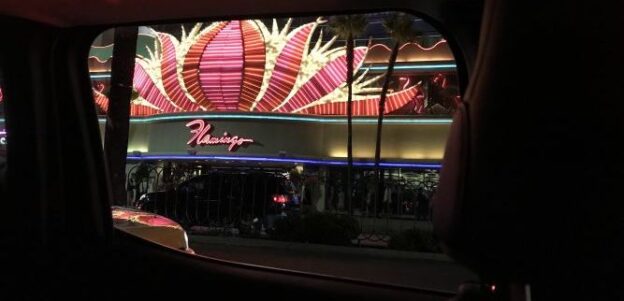
And it’s just a weird place cut off from reality in which you are constantly being seduced and distracted by flashing lights and big things and encouraged to gamble your money away. It’s like one huge sales pitch in the form of a city.

Inside the casinos there are no windows. They’re like huge circus tents on the inside, with big restaurant facades around the edge, tables for gambling – playing poker or roulette or the one where you throw the dice and there are loads of different numbers and letters and it’s a bewildering illusion of choice, big individual gambling machines, lamp posts (inside the hotel), fake little streets, massive Irish pubs (which is never really a bad thing in itself) but all this stuff and you look up to the sky and it’s the black ceiling of the hotel above you, quite high and in the background. It’s probably daylight outside, but you can’t see the desert sun. Inside the hotel’s gambling area there’s this black canopy of the ceiling above all this trashy fake stuff.

It’s so weird to come to the desert and then find yourself in this totally synthetic place all set against a black backdrop.

This is some people’s idea of a wonderful place – a vast plastic playground with so many attractions, but there’s something very unnatural and twisted about it.

Weird things

People smoke indoors and this feels wrong now after 10 years since the smoking ban. No big deal, but still… I think the reason is that they prioritise the gambling, so even though it fills the air with harmful smoke, it means people stay at the tables and don’t go outside to smoke their cigarettes.

There are tourists wandering around, families and stuff but also you spot these grizzled gamblers losing fortunes.

You see some old people who have travelled for miles to spend their money because they don’t really know what else to do with it, so it all goes in these machines.

There are some really drunk people, sitting at the bar.

But also families with kids walking around.

Even some bars have gambling machines built into them, so you can lose money (or maybe win) while you’re taking a break from the bigger tables.

In one casino, where we went to the theatre – there was a girl in suspenders dancing erotically on a table, and kids were wandering around.

Seriously weird.

It was like a strip club in Disneyland. It was like a cross between Disneyland and a lap dancing club. Adult Disneyland, but with families wandering around in it.

Our hotel had a rollercoaster going around it.

Yep, a rollercoaster, with tracks that actually went around the outside of the hotel.

You can stand in the bedroom and every now and then you hear the rumble of the rollercoaster and the muffled screams of people outside the window. This is from inside your hotel room..

If you part the curtains and look out you can see part of the track twisting around past the window and eventually you’ll see the rollercoaster race past, people screaming.

Take a look into the distance and there are the mountains, some desert and then closer to you just weird, big shiny bright buildings and Trump tower. A massive tower with his name at the top in huge gold letters.

“We’ve got the greatest buildings folks, all the best casinos. You’re gonna have fun, and you’re gonna make so much money. We’re gonna Make America Great Again. Believe me folks.”

And the house always wins.
That’s the thing with these casinos.
You have to enjoy the process of it, because you’re basically paying money to experience the excitement of possibility of having more money, even if the probable outcome is that you’ll end up with less.
You’re paying for the excitement of losing, it’s exciting because there’s a possibility that you won’t lose, but the fact is you will probably lose.
So the chances are that you’re going to lose
but you might win
and that’s what makes it exciting
to throw your money away.
The house always wins.
Sometimes somebody wins.
But most people are losing.
And the house is always winning.

Fair enough though, people choose to gamble and they probably enjoy it. People seem to enjoy it – that’s their choice, but it doesn’t appeal to me very much, beyond just having a go to see what the fuss is all about.

But there are some good things about Vegas, ok!

It’s not all awful! It’s fun for a night or maybe two, depending on what you do.

It is a big spectacle – some of the hotels look amazing and massive, and also there are some spectacular shows that you can see – like dance shows such as Cirque du Soleil or Blue Man Group and magic shows like David Copperfield or Penn & Teller.

We chose to go there as a stopover but also to experience it and we did have a laugh!
You have to just go with it a bit and just go ‘ wow, look at that, that’s ridiculous!’

A lot of the time we were walking around, couldn’t believe our eyes, saying “this is insane” “Look at that! It’s a massive Egyptian pyramid!

Our hotel was basically a recreation of the New York skyline. Other hotels have things like an Eiffel Tower, an Egyptian Sphinx, massive fountains and light shows.

It was pretty weird to see the Eiffel Tower considering we see it every day in Paris.

Also, it’s a very convenient place – in the sense that it’s really easy to access the airport, it’s not all that big, things are open 24 hours a day.

People are helpful and friendly.

There was a wholefoods there. In fact there are a few Wholefoods supermarkets there – say no more!

Some of the stuff is good fun.

So, that’s that then isn’t it.

Penn & Teller

https://www.youtube.com/watch?v=oJhYySXzOq0

Gambling in the Casino

We played some one of the “one armed bandits” – the fruit machines. It’s like one dollar to pull the arm and watch some things spinning around. We put aside about 50 dollars for fun. My wife enjoys the one armed bandits and she’s actually very lucky. I’m a lot more sceptical about it.

But she thinks she’s blessed with luck or something.
(Actually she’s blessed with Luke, but anyway… I’m not sure “blessed” is the right word – “married to” is probably better)

In England, when we had first met each other, we took a trip to Brighton, on the south coast, and we went to the pier (a wooden walkway that stretches out over the sea, wooden legs supporting it – a pier) where there are lots of arcade machines and gambling machines and other attractions, and she was convinced she would win money on the machines and I was going “ but the house always wins” and she was saying “no I’m magic!”.

I was shaking my head thinking “there is no magic, only the force” and she put one pound in a slot machine and promptly won £20, and said “I told you I was magic”. We walked away £20 richer. We didn’t continue gambling. I think she’s smart enough to know that you quit while you’re ahead.

The same thing happened years later, we were in a little resort in the north of France where you find some casinos. She’s not a gambling addict or anything. She just likes playing the machines a few times when we’re on holiday sometimes.

We went to a casino and chose to spend no more than 50E. A 50E limit. Ooh, big bucks, right?

We were walking around trying to find a good machine. There were some slightly sad looking people just sitting there plugged into these persuasive light shows – it’s a sort of low level basic addiction (or high level for some people) – an addiction to the sales pitch, basically.

I was being very sceptical, and making various sceptical noises.

We ended up leaving with 80E, 30E up from when we went in.
Not bad.

We quit while we were ahead.

In Vegas we did some gambling on the machines. I was thinking, “Well, she is magic. Maybe we’ll win enough to get a half decent dinner.”

We lost all the money we took in. All of it.

It was a steady one directional flow of us putting money into the machines and getting nothing in return. Las Vegas just ate our 50 dollars like a crocodile eats a chicken. One gulp, all gone, didn’t even chew. It didn’t even touch the sides as it went down.

We won nothing.

Well, almost nothing. We always seemed to win a few credits just before our money ran out, which I’m sure is a little trick to encourage you to put more money in because you think the machine is going to ‘start paying out’ at some point.

Obviously, we didn’t know what we were doing. We had no clue and I’m sure those machines were the wrong ones to be playing, and some of the casinos are better than others, but anyway we weren’t really there for the gambling. We were more interested in playing it safe.

11 Gambling Idioms (that don’t just apply to gambling)

  1. to be on a winning streak (when you’re winning)
  2. to be on a losing streak (when you’re losing and nothing is going your way)
  3. to break even (when you take the same amount of money that you spent – in gambling or in business. No profit, no loss.)
  4. to quit while you’re ahead (stop when you’re winning)
  5. the house always wins
  6. to bet (to gamble) “I bet you £20 that Arsenal win the game” or (a challenge) “I bet you can’t throw this paper ball in the bin from there!” or (an expectation) “I bet all the tickets are sold out”
  7. to show your hand (show the cards in your hand / reveal your position)
  8. a poker face (a facial expression which reveals nothing – used while playing poker, or in any other situation where you keep a straight face)
  9. don’t push your luck (take a big risk and try doing something that could end in failure – it’s a bit like saying “watch what you’re doing” or “be careful”)
  10. to raise the stakes (the stakes = the money which you have to gamble in a round of poker. The expression is used to mean to increase the amount of money you can win or lose in a gambling game, but also to raise the general level of what you can win or lose – e.g. this line from a recent Daily Mail news article “Mr Trump raised the stakes in the escalating crisis over North Korea’s nuclear threats, suggesting drastic economic measures against China and criticising ally South Korea.”
    http://www.dailymail.co.uk/wires/pa/article-4847836/North-Korea-conducts-nuclear-test-making-hydrogen-bomb-claims.html
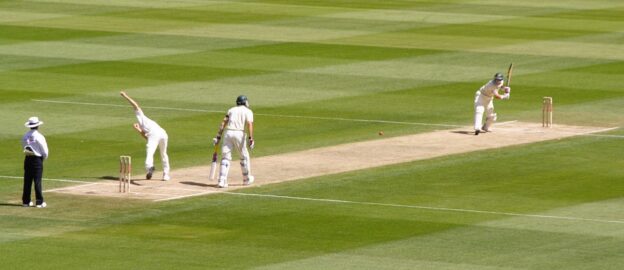
  11. the chips are down (chips = the plastic coins you use while gambling. The expression means – when you’re feeling bad, or when the situation is bad) E.g. in cricket – “When the chips are down for England, Moeen is often the side’s most useful player.”

I once saw a great documentary by Louis Theroux about high stakes gamblers in Vegas. Some of them lose thousands of dollars, but they keep gambling because they think they’re going to eventually start winning it all back. I’ve put some videos from the documentary on the page for this episode. I love Louis Theroux’s documentaries. They’re fascinating.

The phrase that I take away from one of the videos: Louis and a high-stakes gambler are standing in the biggest hotel suite in the city, looking out of the window at the huge hotels and Louis says “Vegas – they didn’t build these casinos on winners you know” and the guy says “I think in the lifetime, everyone’s a loser. But the thrill of being able to win today, lose next month, win the year after. I think it’s the challenge. I think it’s the thrill. I think it’s the entertainment in this city.”

Louis Theroux Gambling Documentary – video clips

Louis hangs out with a high-stakes gambler in a very expensive hotel suite in Las Vegas

Here’s the same guy, after losing about $400,000 dollars in 3 days

Louis gambles with a couple of gambling “enthusiasts” (addicts?)

Louis plays the “one armed bandits” with Martha (these are the machines that took our $50 in just a few minutes) Martha says “I lost 4 million dollars in the casino in 7 years.”

Louis gets lucky playing Baccarat
“Because I resigned myself to failure that night, Lady Luck had decided to tantilise me by making me win.”

How gambling can be dangerous

It seems that this is how it goes:

  • You might begin by winning some money. Then you feel lucky so you bet bigger, but you lose it.
  • You then start digging yourself in deeper and deeper, expecting your luck to change but there is absolutely no certainty that it will.
  • Some people talk about ‘the law of averages’ – suggesting that in time any sequence will balance out. E.g. you might spend a certain amount of time losing, but ultimately this will be balanced out by the number of times you win.
  • But that’s assuming that gambling in a casino is random. Usually it is subtly weighed in favour of the casino so that the pattern is that the casino wins more often than you. Even if you win a lot, the casino can afford it because more people have lost overall.
  • Often these high stakes gamblers keep betting because they think they’ll eventually start winning. They often don’t and then leave utterly devastated by the loss.
  • The house always wins.
  • Then what might happen is that you’ve lost, you’re dejected. You resign yourself to failure but play another game because why not, and then you hit a winning streak.
  • What a powerful combination of defeat and then victory, all out of your control. You’re at the mercy of this external force, playing around with “luck”. (Not Luke)

And the house always wins.

We drove along the strip. It’s madness out there! Just all the flashing lights and the spectacle, it’s like Picadilly Circus on steroids and the steroids are also on steroids.

Unbelievably massive plate of pancakes for breakfast.

Then we got out of town.


I told you I would talk about nature and canyons, and big rocks! All that stuff I really loved seeing, but I got carried away – distracted by tales of gambling in Vegas.

Las Vegas – a place that seems diametrically opposed to somewhere like Bryce National Park or The Grand Canyon.

I’m glad we only spent an afternoon, one evening and a night there.

Natural beauty is so much more real.

Well, anything is more real than Las Vegas, I suppose.

Thanks for listening.

Join the mailing list.
Thanks to the Orion transcription team and Andromeda proofreading team.
Shout out to the comment section crew.
Shout out to the Long-Term LEPsters, you know who you are.
Shout out to the new listeners, I hope you stick with us.
Shout out to every single one of you all around the world, listening to this right now and united by the fact that you are all citizens of LEPland or Podland or whatever we are calling this community which crosses international boundaries.
Be excellent to each other and party on!

Speak to you in the next episode.

Luke

Photos

475. Holiday Diary (Part 2) Modern Art: Is it amazing, or is it rubbish?

Talking about some modern art which I saw while visiting several galleries in Los Angeles. Includes descriptions of different movements in modern art, details about some famous artists and their work, some thoughts about whether modern art is really amazing, or maybe just a load of pretentious rubbish! (Spoiler alert: it depends)


Small Donate Button
[DOWNLOAD]

Notes & Transcriptions for this Episode

Hi everyone, here’s part two of my holiday diary and in this one I’m going to continue describing things I saw and did on my recent holiday in the USA. The plan is not just to describe our trip but also to use it as a springboard to talk about some other subjects in a bit of depth, and in this episode that includes things like modern art (describing some different types of art from the modern period and giving my thoughts on some art work that we saw in a couple of galleries) astronomy and astrology, flat-earth conspiracy theories and probably some other things too, depending on how long this takes! It looks like this is going to be a series of episodes with what I hope will be an interesting variety of topics beyond just me talking about my holiday.

I’m recording this on the same day as I uploaded the last one. So I’m already seeing some messages coming in from people on Twitter and FB and stuff (in response to part 1), so thanks a lot for your kind messages saying congratulations for the fact that we’re going to have a baby.

Ok, let’s carry on!

Just to recap
We went to USA to have a blow-out before the arrival of our baby in December. A final trip just the two of us. Los Angeles via Montreal, then the canyons and Navajo Nation, then back to LA and home again.

Modern Art

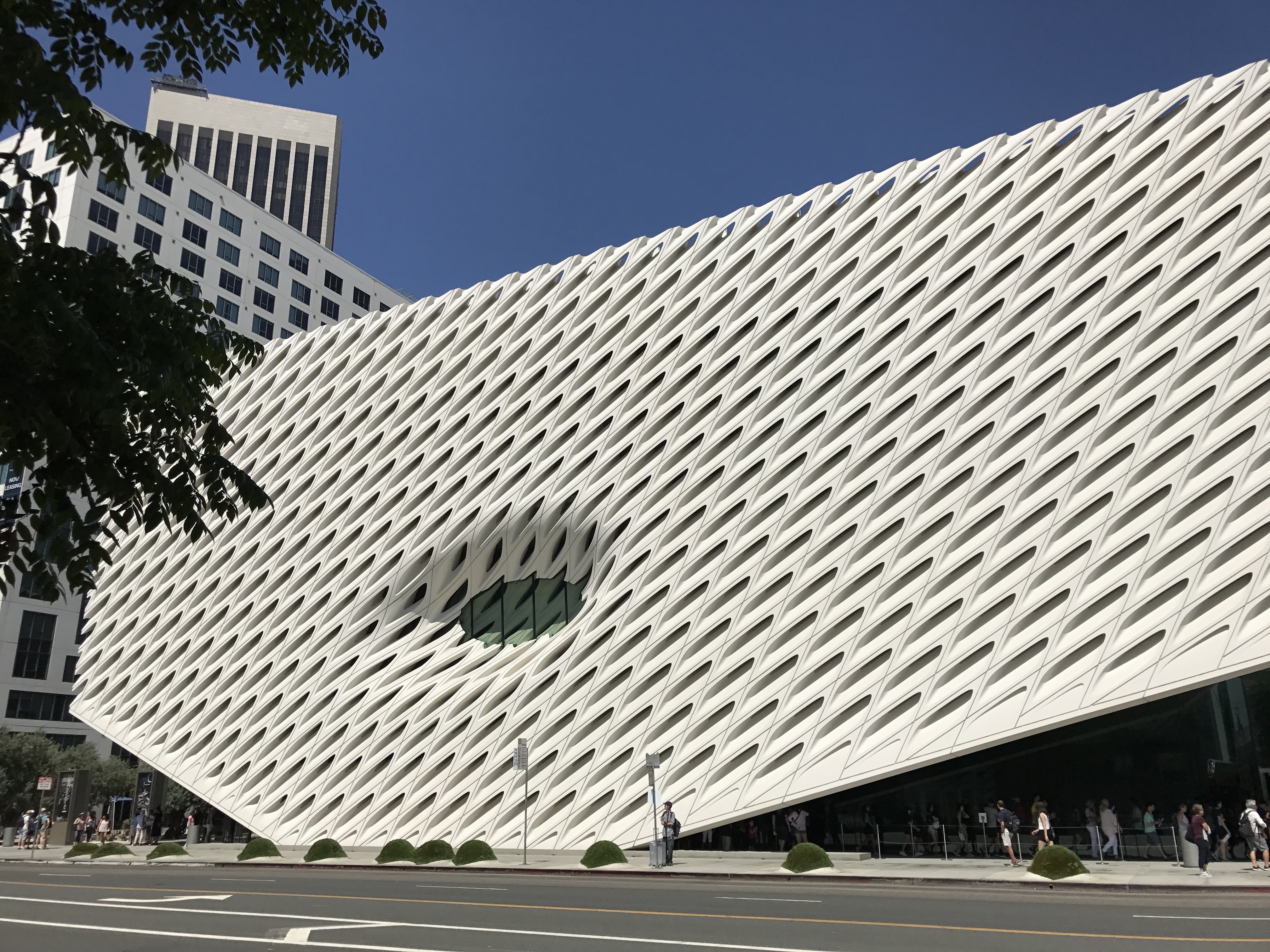
Downtown Los Angeles
Tried to go to an art gallery called The Broad. This is a flashy-looking new art gallery. We went to see an interesting installation by Japanese artist Yayoi Kusama, but there was a huge queue outside – probably attracted by the installation, which is proving really popular. Apparently it’s called “Infinity Mirrored Room — The Souls of Millions of Light Years Away” which is…

“a mirror-lined chamber housing a dazzling and seemingly endless LED light display. This experiential artwork has extremely limited capacity, accommodating one visitor at a time for about a minute” The Broad website.

https://www.thebroad.org/art/exhibitions/yayoi-kusama-infinity-mirrored-room

An installation = a work of art constructed within a space in a gallery.

We ended up in The Museum of Contemporary Art LA, just down the road from the broad.

Also went to LACMA (Los Angeles County Museum of Art) at one point during the trip.

Artists whose work we saw

We saw work by some celebrated artists from several important movements in modern art.

Including:

Pablo Picasso (Spanish, Cubism, surrealism – mainly in the first half of the 20th century and middle of the 20th century)
Jackson Pollock (American, Abstract expressionism – late 1940s)
Rothko (American of Russian Jewish descent, Abstract expressionism, 50s and 60s)
Franz Kline (American, Abstract expressionism, 50s and 60s)
Roy Lichtenstein (American, Pop art, abstract expressionism, 60s)
Andy Warhol (American, Pop art, most well-known stuff is from the 60s)

And lots of others too.

Movements in Modern Art

Here’s a timeline of art movements in history from www.dummies.com

http://www.dummies.com/education/art-appreciation/art-history-timeline/

I’m describing art movements from the early part of the 19th century.

Contemporary art = art being made now
Modern art = art from the modern era – late 19th Century and through the 20th century. Arguably we are now in the post-modern era
Cubism (n) = an art movement in which artists went away from realistic representations of things and instead used geometric shapes, different kinds of perspective, lines, as if objects could be viewed from a number of different points of view all at the same time. Things exist in a kind of prism of perspective and the way you or the artist looks at something, changes its form.
Surrealism (n) = an art movement in which objects or ideas are presented in a strange way, as if in some kind of dream or perhaps representations of the subconscious mind
Abstract (adj) = this concept refers to things that aren’t real or tangible, but which exist in the world of the mind or outside reality as we usually see it (e.g. not just illustrating a bowl of fruit)
Expressionism (n) = representing feelings or emotions rather than objects or things
Abstract expressionism (n) = the name of the post WW2 art movement that combined the freedom of expression from expressionism and the use of abstract forms
Pop art (n) = the name of another art movement, this one involved techniques, methods and styles from popular culture like product design, comic book style or photos of celebrities.

What do you think of contempary art, or modern art?

You might think:
“It’s just a bunch of colours or shapes!”

“Anyone could do that!”

“It’s just a load of pretentious nonsense!”

Very common reactions. I think like that too, quite often, especially if I think it’s not very good art.

What makes art good or bad?

You just know it when you see it. If it really doesn’t move you, please you or interest you, you might say it’s bad art, because ultimately it’s in the eye of the beholder – but not completely, because you also have to invest a bit of time and effort into it and also it helps to understand how the work fits into the overall history of art. You have to have some respect for it in order to start appreciating it as work, and ultimately then it can start to enrich your life in some way, but I think art is quite pretentious, which many people have a problem with.

What does pretentious mean Luke?

Something is pretentious (spell it) when it’s trying to seem important, clever or sophisticated, but it isn’t really.

E.g. talking about a work of art like it is the grandest, most important, most emotionally resonating work of genius in human history, and it’s just a blank piece of paper, or a picture of a willy or something.

I think it’s more than just a willy, it’s a statement about… blah blah blah…

So you might think modern art is rubbish.

Or maybe you’re a fan and you think “I love the way the artist plays with different forms and colours. It’s incredibly liberating and fascinating to experience it. I find it inspiring, moving and fascinating.”

It’s quite difficult to talk about art without sounding pretentious, to be honest.

I have mixed feelings about it. Only the really good stuff tends to move me. I mean, it’s rare that it works on me. But I do enjoy the experience of going around a good gallery, looking at work which has stood the test of time.

I also like talking about it. I like the way modern art or abstract art is so open. You feel like you’re interacting with it, but I always need to talk about it. It’s a chance to be totally open-minded and to try and put it into words.

But it’s not something I’m thinking about all the time.

I’m more moved by music (most kinds), acting, films, TV, books, photography (with real stuff in them – like people’s faces or moments in time captured) but when it’s right modern art can be great. Also it works as decoration, but it’s something you can also look closely at and let your mind wander. (wander like go for a walk, but also wonder meaning think about things, but “let your mind wander” is the right expression”.

Expressionism or abstract expressionism – what’s it all about?

This is just me having a stab at describing abstract art.

It seems to me that it’s about creating abstract spaces with no rules at all.

It’s a system with no external reference points (unlike films) it’s just a series of shapes or forms arranged in space which are designed to create certain emotions or feelings in you at a kind of elemental level, or gut level, or sensory level.

Sometimes thinking about it is what you’re not supposed to do, you just have to experience it. It can be something as simple as how it feels to experience these colours and shapes arranged in a certain way.

It could be the way the colours blend together, or certain forms stand out, or the basic gut reaction you have when looking at the canvas.

It’s supposed to be moving at a very natural level, just the interactions of forms in a physical space.

When you realise that it can be liberating and you feel like you’re entering into a conversation with the artist which is free from the constraints of language.

That’s the idea, but to be honest I often find myself getting absolutely nothing from it.

Art vs the art of nature (pretentious, moi?)

OK, so this is where I’m going to get really pretentious and talk about rocks like they’re works of art, but what are you going to do, sue me?

Some of these work of art were or are created in a way that seems to allow the hand of nature to guide the artist somehow, like Pollock who would often drip paint onto the canvas – he wouldn’t always touch the canvas with his brush, but would somehow involve an element of chance or nature in the way the paint splashed as it fell, combining his own judgement and an element of chaos in terms of how the paint ended up falling on the canvas.

The result is like looking inside the emotional space of the artist and you can feel his experience somehow in a way that you can’t put into words – at the moments of rage, passion, serenity or terror, or just the sense that he was experiencing a lack of control in his life or he was subject to emotions or experiences that he didn’t necessarily have a grip on, and yet experienced in the form of emotion. That sounds really pretentious, I know. But when you look at his work, you can choose to say “this is just bollocks” or you can decide that the guy clearly was very serious about what he was doing so there must be something in it. What was he looking for? Something to do with the balance of colours, the texture created by the many drops of paint and the overall sensory effect it creates.

It’s like entering a mood, and with Pollock that mood isn’t entirely happy.

I have the same feeling with Rothko. He managed to paint these pieces that look like just large blocks of colour, but as you stand in front of them and absorb them, the colours seem to blend slightly and become luminous or darker and you get this sense of depth or space and it fills you with a certain emotion. Often it’s a sadness, wistfulness or even a slight sense of stimulation. It defies description, it’s more of a gut feeling.

And by the way, looking at the real thing is far better than looking at a print or poster version in a frame on the wall of your house.

The real thing is a certain size, presented in certain conditions, proper lighting, you’re seeing the actual strokes of his brush or some sense of how he did it, you see the texture of the finished thing, which is important too.

Going back to Pollock – he would work on these big canvases on the floor and would start from scratch letting the painting develop as he added more and more layers but other artists took a different approach like Franz Klein who would plan his abstract work on a small-scale, just sketching it by hand, before recreating the sketch on massive canvases. What was a few scratched lines on a piece of paper becomes a huge striking piece of work. The effect is a bold mix of broad straight lines that combine in haphazard fashion. We kept thinking his paintings looked like close up images of plane crashes done in black and white, like the vague sense that it looked like a WW1 biplane had crashed. That’s not what they were of course, they were just lines, but the point is that the work has this dynamic urgency. They’re violent, bold and stark. Our brains just interpreted them as somehow like a plane crash.

Those are abstract expressionists.

There are lots of loads of other kinds of art, like pop art (Andy Warhol) which sort of consumed aspects of consumer culture with the idea that art could be mass-produced and that every day consumer objects could be works of art too if presented in that way, and I think we’re still experiencing the influence of that today with things like t-shirts with cool designs on them or the fact that we consume logos and brands as a form of art – on t-shirts, even on posters to decorate our homes. Pop art was also a comment on consumer culture – for example Andy Warhol’s famous work with lots of virtually identical screen prints of movie stars with different coloured backgrounds, or just a tin of Campbell’s tomato soup. It’s like examining everyday branded objects as works of art.

I don’t really understand it all, but it is fun to go to an art gallery, drink a load of coffee and then just stare at this stuff and see what it makes you think about and feel.

Anyone can do art, but to do it well is actually really difficult.

It’s not just a bunch of colours on a canvas, it is backed up by intention, technique and a general appreciation of the aesthetics of shape, colour and texture.

So, we saw some modern art, and it was pretty cool.

But honestly, the art we saw just could not be compared to the truly stunning works of nature that we saw later on in our trip in places like The Grand Canyon – objects and environments that had been formed by natural processes over millions of years.

It seems to me that from the point of view of the observer, the exact same forces are at work.

When you look at art or when you look at a mountain or a rock formation you get the instant emotional and intellectual reaction of seeing these incredible shapes, colours and textures, and you experience the wonder of imagining exactly how they were created and the story that they tell.

I must say I was blown away by the geology we saw on this trip, which I’ll describe in more detail later. It was so stunning that at times I was lost for words and it all resonated with us so much that it was quite hard to come to terms with it.

You might think – oh come on it’s just big rocks. And it is just big rocks of course, but I think we all find these things impressive and I’m just trying to capture that feeling in words.

So, I know this sounds pretentious or something, but literally every day we would arrive at a different location to be greeted by ever more impressive natural spectacles. After spending time in each place, doing some walking, getting quite hot in the sunshine, we would be quite exhausted at the end of each day and we’d have this stunned by stimulated feeling during dinner – trying to comprehend what we’d just seen. We also couldn’t sleep during the night. It was like our brains couldn’t rest until we’d somehow compartmentalized the things we’d seen.

The Grand Canyon is the biggest thing I’ve ever seen. It’s so big it makes you feel so insignificant, like a blink in the eye of history.

In some parts of these national parks you’re looking at geological formations that go back something like 500 million years.

And they’re so big that you feel completely dwarfed by them.

This was far more impressive than the modern art we saw, and it made the modern art just look like primitive cave paintings by humans trying to get a grip on the power of basic shapes and colours.

Basically, what I’m trying to say is that nature is the most powerful artist out there.

And I say nature, because the whole story of nature is in these rocks.

The whole thing has been created by different natural forces over hundreds of millions of years.

It makes total sense that water, over such a long period, could erode the rock into these unbelievable shapes. That ice would break up the rock, forming bizarre shapes, that what was once a crack in the ground could become a huge open canyon with a river at the bottom.

So, nature is what formed these things, simply through the presence of certain elements on earth and the actions of the laws of physics.

Pretty mind-blowing stuff. But the modern art was a good way to get into the mindset of appreciating the aesthetics of things.

Let me know your thoughts on modern art. Is it amazing, or is it rubbish? Leave your comments below.

…and thanks for listening.

Luke

Want to see some examples of the art I described in this episode? Click the links below.

Yayoi Kusama’s Infinity Mirrored Room

Pablo Picasso (Cubist period)
Salvador Dali (Surrealism)
Jackson Pollock
Mark Rothko 
Franz Kline
Roy Lichtenstein
Andy Warhol

The Broad - we couldn't get in because of queues, but it looks cool

The Broad – we couldn’t get in because of queues, but it looks cool.

Andy Warhol - Marilyn Monroe screen prints from Pixabay.com https://pixabay.com/en/marilyn-monroe-andy-warhol-art-1318440/

Andy Warhol – Marilyn Monroe screen prints from Pixabay.com https://pixabay.com/en/marilyn-monroe-andy-warhol-art-1318440/

474. Holiday Diary (Part 1) New Arrival, New Destinations

Hi everyone, I’m back from my holiday so here’s a new episode of the podcast. In this one you’ll hear me talking about some recent news (including quite a big announcement) and then an account of what we did on holiday including some descriptions, opinions and stories. There’s talk of disturbing political events, dodgy car rental experiences, and a couple of beautiful cities where urban life meets wild nature. Enjoy!


[DOWNLOAD]

Notes & Transcript

Some of this text (below) is a full transcript of what I say in the episode, and other parts are just basic notes which I used while recording. So it’s not a 100% complete script.

Hello! I’m back from holiday!

How are you? Did you have a good August? Did you go anywhere?

Let us know in the comment section what you’ve been up to.

In this episode I want to just tell you about my holiday.

As you know, I’ve been away and it’s become sort of customary for me to give you a sort of holiday report whenever I come back from a trip away, so that’s what I’m going to do in this episode.

I’m going to describe places we visited, things we saw and I’ll tell a few little anecdotes along the way and give you my opinions on some things.

You will find some notes and transcriptions on the page for this episode if you want to read some of the words I’m saying, for example if you hear me say something in particular and you’re not sure what it is, check the episode page it will probably be there.

I don’t know how long this is going to be. I might divide it into a couple of episodes. It’ll be as long as it takes for me to just feel like I’ve told you the things that are on my mind and were on my mind while we were away.

Just before we start

  • Andy interview part 2 (Episode 472) – it seems a lot of people were quite moved by Andy’s story. It was an emotional one. Andy deserves some respect for sharing it with us and for managing to get through such a terrifying experience when he was relatively young. It’s also interesting to see in the comments that many of you have had similar experiences to Andy or your lives have been affected by cancer in some way, and you have used running as a way to deal with it and so you found his account to be particularly poignant. Unfortunately cancer touches many people’s lives in one way or another. But a story in which someone beats it is always a reassuring boost to anyone who knows about it.
  • Website only stuff – I hope you enjoyed some of the website only material I uploaded while I was away. There are three things in the episode archive that you won’t know about if you just subscribe to the audio podcast. One is an episode of Zdenek’s English Podcast in which he recorded us speaking in London when we met there and we had fun teaching some crime-related idioms and just making up some stuff about my supposed criminal past. The second thing is a DVD commentary track that I recorded with James for Star Wars Episode 4. We just sat down in his flat one evening, put on his Star Wars DVD and recorded our own commentary. That’s just for the Star Wars fans I suppose. You can just listen to it, or watch the film and listen at the same time and you’ll hear James and me discussing the various scenes, making fun of the film, doing some impressions of the characters and generally messing around over the top of the film. Then the third thing is a long musical mix that James and I did using his vinyl record collection. He has a lot of vinyl records, many of them original 7inch and 12inch singles from the 60s, 70s and 80s. We went through his records in a long mix and the plan was to go through a history of British music. THe mix has some speaking between the records and you’ll hear music all the way from 1961 to the mid 90s when we ran out of time. If you like music and you’d like to learn a bit about the UK’s musical history, check it out.
  • Transcript projects – The Orion Team and Andromeda Team have been busy producing more and more transcripts. You can now find over 250 finished scripts and also many scripts which are 100% proofread. Go to the transcripts page on my website for more info. I’ll be updating that page soon to make it easier for you to find the transcripts.

So, the holiday.

Where did we go? And why?

We wanted to have kind of a blowout – that’s a fairly big holiday as a celebration because my wife is pregnant. Yes, she’s pregnant, we’re going to have a baby so we wanted to go on another big trip while it’s just the two of us before the baby arrives.

That’s right – my wife is pregnant. We’re going to have a baby in December.
That’s kind of a big deal isn’t it?

If you are now thinking of writing to me by email or in the comment section to send me a message about this, and you’re wondering what to write exactly. Here are some things that would be appropriate.

Congratulations!
Very happy for you!
Fantastic news!
That’s great!
When is it due?
Do you know if it’s a boy or a girl?
Do you have any ideas for names?
Are you ready?

Those are some appropriate things.
Basically, congratulating us and wishing us well.

Needless to say, anything other than that would be inappropriate, right?

No doubt some of you will choose to think about the podcast and how that might be affected by this oncoming change in my life.

Don’t worry, I’m not going to stop doing the podcast because I’m having a baby (correction: my wife is actually the one who is going to have the baby, I’m just going stand there, let her dig her fingernails into the back of my hand and hope for the best.)

It’s true, things are bound to change in my life because of this and certainly at the beginning when the baby is newly born it might be hard to record and upload episodes as regularly as normal, but I definitely plan to carry on the podcast because honestly, this podcast is like my job these days – it is a job because I get income from sponsorship. It is a job I thoroughly enjoy and that I chose for myself.

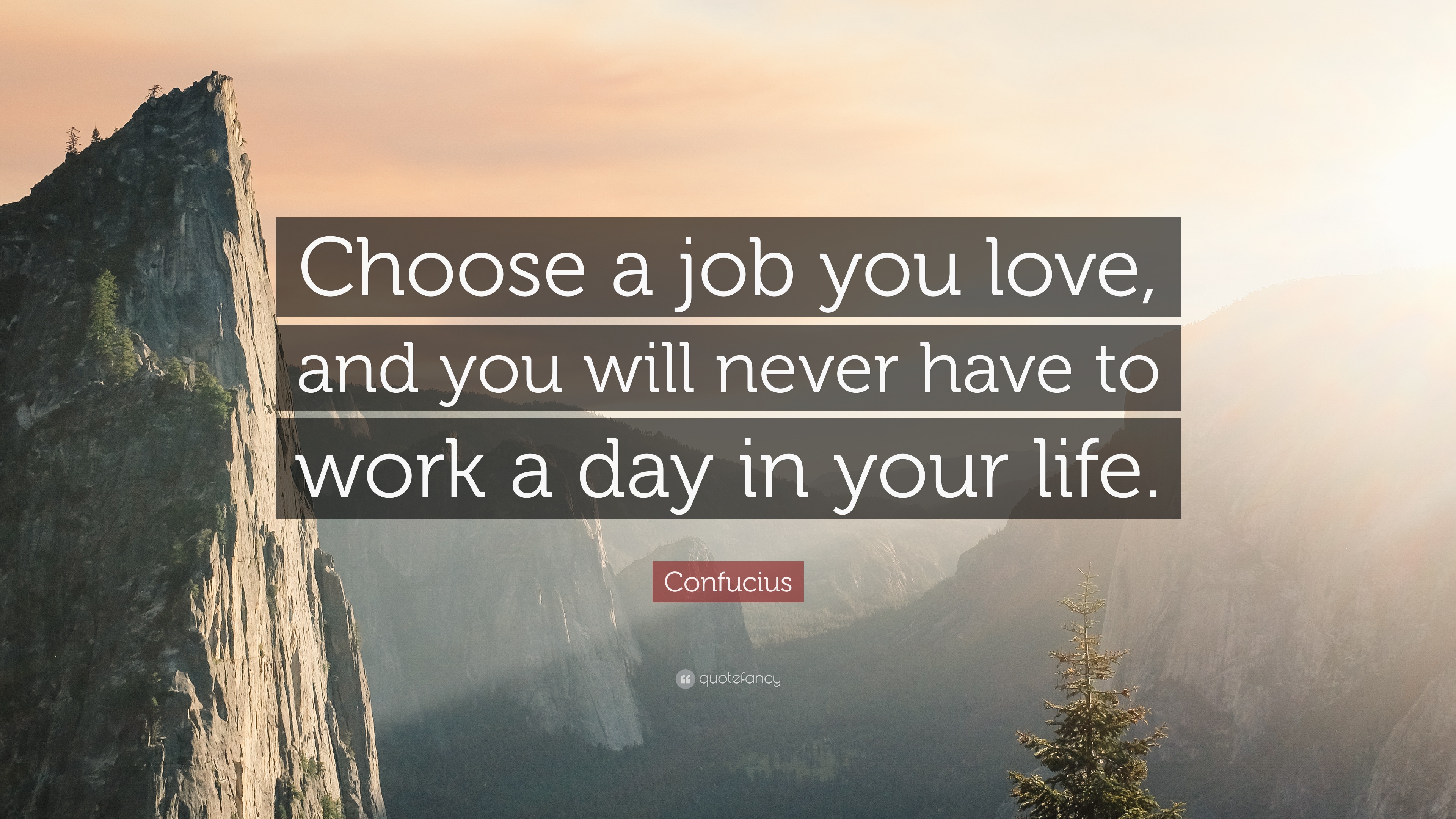
Confucius: Choose a job you love and you’ll never work a day in your life.

Quotefancy-23697-3840x2160

But it is a job nonetheless.

So there are several reasons why I plan to continue doing it. I’m not about to just abandon it.

So we chose to have a big trip to celebrate our last summer holiday just the two of us.

This would be our last holiday just the two of us! We kept saying, “It’s our last summer together!”

We’ve always gone abroad for our recent holidays – it seems alternating between parts of Asia and North America. Indonesia, California, Thailand, Japan.

But we think that with kids it would be easier and also safer to go on holiday in France or the UK.

So, this year we wanted one more fairly big trip!

2 years ago we had our honeymoon in California – we had an amazing time and had a few mini adventures involving bears outside tents and injuries on hiking trails (I made something like 8 podcast episodes about it! Called California Road Trip)

But there were things we didn’t manage to do or see on that trip and we always said “We’ll come back and do it next time” – at the time it helped deal with the disappointment of knowing were missing something, like for example the Grand Canyon or something else we really wanted to experience. “We’ll get it next time” we would say.

You can’t always see everything you want.

So this time we decided to have what we’re calling a ‘babymoon’ by going back to that part of the world to do the things we missed out on last time, just as a big final holiday just the two of us.

So, we went back to the USA – to Southern California for some days and then quite a lot of time exploring the National Parks and areas within the Navajo Nation territories. Places like Zion National Park, Bryce Canyon National Park, Monument Valley, Lake Powell and The Grand Canyon. Incredible landscapes, natural scenery and wild beauty – but also the kind of infrastructure that would make it possible for my pregnant wife to see all that stuff without it being too inconvenient or risky.

So this is like the California Road Trip 2 but this time we went to lots of other states too, including Nevada, Arizona and Utah.

Back to the USA and for some reason I feel slightly sheepish about telling you that.

Feeling sheepish = slightly embarrassed, uncomfortable or unsure about something.

Why?

Politics

Maybe because of the political situation over there which is throwing a weird shadow on everything. It feels like a controversial time to go over there, as if you’re somehow taking part in it, validating it or making a statement about it.

There was nothing political about our trip so that has nothing to do with it.

It was hard to escape the politics there though, but only on the TV, mostly.

In our everyday experience we didn’t see any trouble, unrest, no anti-Trump rallies, no white nationalists marching around. We saw a couple of bumper stickers saying MAGA and also a poster that said “Hillary for Prison 2016” but that was it. A couple of people we met talked about how ashamed they were that Trump was their president and seemed surprised that we still wanted to visit the country.

But generally speaking, everyone we met – including people I imagine had voted for Trump and others who hadn’t – everyone was very polite and nice to us and apparently to each other too.

On the TV though, there were scenes of violence and chaos as fighting broke out between white supremacists and anti-facists in Charlottesville Virginia, on the other side of the country.

On TV it was fighting, chaos, debates, angry tweets, all kinds of drama. I took a look at Twitter a few times and there was a lot of quite angry debate on there with strong opinions on both sides – those who were clearly against the white supremacist groups and those who defended them. It felt at times like the country was in turmoil.

Then we looked out of the window and it was just silence, maybe a car driving by.

It just showed me the sharp contrast between the reality of TV and the internet (because I think the internet is the new mainstream media – despite what all the YouTubers think – it’s fast becoming the mainstream media, especially when they get more views than many TV shows). It showed the contrast between what you get in the media, and what you actually experience, but then again we were just tourists and were probably just scratching the surface.

Reminds me of Bill Hicks https://www.youtube.com/watch?v=tGjuPJskNRE

I could go into all the complicated politics of what happened in Charlottesville but I think I won’t, in this episode.

I could describe the reasons why white nationalists were marching through a town in Virginia (on the other side of the country to California), why they were waving confederate flags, why some of them had swastika flags, why they were shouting Trump Trump Trump and MAGA. I could go into how they fought with anti-facist protestors, and how we’re not sure who started the fighting. I could talk about how someone from the white supremacist side drove a car into the anti-facists, killing a woman and injuring 20 others, and I could go into why many people feel so upset and angry with their president for not taking a clear position on these people who some describe as fascists and neo-Nazis, and how lots of people believe Trump is somehow encouraging these people.

I could go into all of that, but this episode is supposed to be about a travelling experience, not about a fight in a town on the other side of the country.

I might come back to it in another episode. I’ll see how I feel.

The Holiday

Itinerary
Paris – Montreal (half a da) – L.A. (a few days) – Vegas (one evening is enough!) – National Parks & Canyons – Vegas (for about 2 hours) – L.A. (a few more days) – Paris – Bed!

Cities and national parks. Urban areas with metropolitan life and amazing geological features in desert canyons.

Montreal

One afternoon and an evening.

We hung out mainly in the Mont Royal area and the old town.

  • Reasons Montreal is an awesome place
    People are really friendly and polite.
    Everyone’s bilingual, which is amazing. It’s shows that it’s totally possible for a whole city to be bilingual. No need to panic and freak out about several languages being spoken in a city at the same time.
  • It’s really diverse and in a good way because everyone’s really chilled out and there seems to be a lot of mixing between ethnic groups and not a lot of tension or anything.
  • They have this food called “poutine” which is basically French fries covered in cheese and gravy – not that healthy but it is seriously tasty.
  • The city has this nice colonial vibe to it and there’s loads of greenery everywhere. In the streets we walked down there were leafy trees, big bushes outside people’s houses, just plants growing everywhere – some of them planted, some of them weeds, but it felt like there was lots of plant life almost taking over the city, which is great. In Paris, it’s all stone and as a result it can feel a bit brutal. The greenery adds some much-needed calm to the place and also oxygen.
  • The buildings are really cool-looking, with really interesting looking staircases outside them and awesome wrought iron balconies and verandas.
  • Montreal has access to some amazing wilderness areas like local mountains, lakes and forests so you can get into nature really quickly while also enjoying the benefits of living in a city.

We were walking around going, “oh my word this is the perfect city for us”.

But, the bad side is that in winter it’s totally freezing and everything gets covered in 4 feet of snow, which makes life really inconvenient.

I know some of you listening to this live in similar places. What’s that like? How bad is that really?

Anyway, I loved Montreal and would gladly return there one day.

I like all the space, the convenience, the feeling of being in the ‘new world’, the vast natural landscapes and all that, but it’s Canada so you don’t get the feeling you’re in a completely crazy country where people shoot each other and stuff like that. I’d love to go back to Canada again one day. I did travel there for a month when I was 19 with my cousin Oliver and we had an amazing time then too. We’d very much like to go back there. We were even talking of moving there, but we don’t want to leave our family and friends behind.

Left Montreal and Flew to Los Angeles

Nightmare rental car experience with “Right Cars”.

Arrive and the woman at the info desk doesn’t know the company. Not a good start.
We work out that we need to get a shuttle to a car park a couple of kilometres away from the airport. A car park.

Everyone else is getting out of the shuttle at the proper rental places, getting greeted with smiling service agents from Enterprise and Avis.

We’re the last ones on the bus. Dropped off and told to go around the corner. “Round the corner! Round the corner! Just go on round the corner sir.”

At least they called me sir.
Tried to call them. Call centre hell.
Now I’m on hold in blazing sunshine in a car park, or parking lot.

It’s even called the cell phone lot. There’s no chance of not standing there on your cell phone, that’s the name of the place.

Finally get through to someone. There’s a driver coming.
We’re expecting a shuttle.
Dude turns up in a rental car.

We get in, asking questions. He tells us the shuttles are in the garage. Both of them just broke down this week.

OK.

We pick up the car, they add some other charges we didn’t know about like a toll road charge. Never went through a toll road.

And the bill and the receipt didn’t match but we were told it would be sorted out because the guy wasn’t there.

Shady dealings.

I’d ordered a GPS with it too and he said “Do you still want the GPS?” after we’d already paid.

Nah, that’s fine I took a good look at the city from the plane window, I think I’ve got it all worked out. I’ve played a lot of GTA5 I think I know my way around this city.
I watch a lot of movies, I know LA like the back of my hand, I’ll be fine.
Of course we wanted the GPS. “Do you still want it?”
No it’s ok, I’ve decided to just use the force. Thanks.

What’s it like walking around in LA? (I talked about this a bit in previous episodes)
Like being in a movie
GTA5
Sunset Boulevard
Cool looking little shops and bars.
Hippie stuff everywhere.
Shops selling jewelry and cool clothes.
Constant smell of vaping, but not seeing where it came from.
Vegan coffee shops and stuff.
Amazing sunshine, lazy cars drifting past.
50s style burger joints and dudes on cool bicycles.
Tattoo’d people, bikers.
Stopped at a sports bar.
First hearing of Hotel California (this ubiquitous song that you hear everywhere)

Los Angeles is a big city with millions of people, an urban place where everyone drives, but there is a surprising amount of nature there with lots of wild plants, cactuses, trees, animal life, and hills with tree-filled canyons. You feel like it’s not difficult to get into nature quite easily. It’s not exactly like it is in the movies. In many ways, it’s better.

To be continued in Part 2 with some content about: Modern art, astronomy vs astrology, flat-earth conspiracy theories and more descriptions & stories!

Thanks for listening.

Luke

Oasis of calm - in the middle of Silverlake, Los Angeles.

Oasis of calm – in the middle of Silverlake, Los Angeles.

473. Explaining the Rules of Cricket (with Dad)

Everything you need to know about the world’s 2nd most popular spectator sport, cricket. I’m joined by my Dad, Rick Thompson and we describe the rules, the appeal of the game and also some expressions in English that come from cricket.


[DOWNLOAD]

It’s summer in the UK and at this time of year there are various sounds that you might hear in a typical English village, the sound of bees buzzing, kids playing in the playground, an ice-cream van and perhaps the smack of leather on willow (the sound of a cricket ball – a hard, heavy ball covered in leather, being hit by a wooden cricket bat made of willow) those sounds coming from a game of cricket on the local village green.

Also, the sounds of cricket make their way into your home during the summer months as people listen on the radio or watch the coverage on TV.

International test match cricket is a feature of the summertime in England and is somehow deeply rooted into English life. It’s one of those cliches of rural England – sandwiches, afternoon tea and cricket on the green.

But for many foreign people who don’t play cricket it can seem like a weird antiquated slow game with rules that nobody understands. People are surprised that a game of cricket can last several days. Americans are often horrified to discover that games often end in a draw with no winner at the end.

The fact is, cricket is a fantastic game which requires strategy but there are many moments of dramatic action and great skill and ability shown by the players.

My Dad is a big fan of cricket. He used to play it when he was younger and has always followed the matches on the radio. I’ve been threatening for a while to do an episode about cricket, to somehow achieve the impossible and explain cricket to the world, and my Dad is going to join me.

So sit back, have a cup of tea and some cake, and try to get your head around this wonderful game.

And stay tuned for some nice idiomatic expressions which we use in English and which originally came from the game of cricket.


Well, that was a valiant effort by us. I hope you agree! But I wonder if you managed to keep up with all of it! If you are listening all the way to the end and you’re still alive – well done!

You may have got lost at some point along the way, or did you follow all of it? Let me know.

In any case I hope you got something out of that conversation, even if it is a sense that cricket is worth getting enthusiastic about even if you don’t fully understand it, and that it’s a big thing in the UK and many other countries around the world.

I recommend that you have a look at some cricket being played. There are videos showing you different aspects of cricket on the page for this episode, so check them out.

Also, there was that vocabulary.

Let me just go through the vocabulary again here, just to make it clear.

Vocabulary

  • On a sticky wicket = in a difficult situation (We’re on a bit of a sticky wicket here because of the result of the EU referendum) (NYTimes “It’s a sticky wicket for Obama,” said Bruce Buchanan, a political science professor at the University of Texas at Austin, saying any aggressive move on such a high-profile question would be seen as “a slap in the face to his supporters right after they’ve just handed him a chance to realize his presidential dreams.”)
  • To have a good innings = to have a good long life (How old was he when he died? 94? Oh, so he had a good innings)
  • It’s just not cricket = it’s not fair! (Getting queue jumped, it’s just not cricket, is it?)
  • It hit me for six = it surprised, shocked and stunned you. (When my ex-girlfriend told me she was getting married to my best friend it really hit me for six)
  • I was absolutely bowled over = I was really surprised and amazed (“Bowled over” actually comes from bowling not cricket – when a pin is knocked over by the ball) (We were really bowled over by your presentation, you did a fantastic job!)
  • I’m completely stumped. You’ve stumped me there. = I’m unable to answer that question because it’s too complicated. (I did ok in the listening part, but I was completely stumped by the grammar questions)
  • You’ve caught me out there. = You’ve asked me a difficult question which has shown that I’ve made a mistake. (What about the outstanding tax payments on your public accounting report? There’s 300 pounds missing! – Oh, you’ve caught me out there, hah, yes I forgot to include them!)

Videos

Stephen Fry explains LBW in cricket

Shane Warne from Australia – the greatest spin bowler ever

Great bowling

Excellent batting

https://www.youtube.com/watch?v=4zAsa_HFkVw

Amazing catches

https://www.youtube.com/watch?v=TdOoiR_EDiE

Thanks for listening!

Why does the UK have so many accents? (Recorded February 2017)

This episode was originally recorded in February 2017 and is being uploaded in August 2017. In this episode I’m going to answer several questions from listeners about accents, including how regional accents occur in the UK and why there are so many accents there. Video available.


[DOWNLOAD]

Video

I’m not sick, I’m English, and it was winter. ;)

uk accents

Introduction / Transcript

There is a very wide variety of accents in the UK (not to mention the accents you find in other English-speaking countries like Ireland, Canada, the USA, South Africa, Australia, New Zealand and more. English is a hugely diverse language and in my experience foreign learners of English don’t usually know a lot about the different accents – particularly all the regional varieties in the UK, and they often just find it difficult to understand them, and as a result learners of English can’t enjoy the great variety of sounds in English and the sheer diversity of character and personality you get from the different varieties of English, and therefore it’s worth talking about on the podcast.

This is such a big subject that to do it justice would require me to write a whole book about it. Instead I just do episodes about accents fairly regularly in an effort to cover as much of the topic as possible. For example, I recently did some episodes about British accents that you hear in the Lord of the Rings films, which gave me a chance to talk about the different associations we have with different accents in the UK and how those associations were used to provide some colour and character to the movie versions of Tolkein’s Lord of the Rings stories. I also did episodes about the accents you might hear in Glasgow and I spoke to Korean Billy about regional dialects and accents too.

Since uploading those episodes I’ve noticed a few comments from listeners wondering why there are so many accents in the UK, so I’ve prepared this episode which I hope will help you understand that a bit more.

The plan, in this episode (or episodes) is to talk about these things

  • Why there are so many accents in the UK
  • How our accents develop as part of a natural psychological process
  • What this means for learners of English and teachers of English

Also, we’ll listen to someone speaking in a Liverpool accent and I’ll help you understand it

So, this episode is about the way people speak, but it’s also about history, psychology, how to learn English, what my friends sound like, and how to understand a football player from Liverpool.

How are all those things connected? Listen on and you’ll find out!

Why do we have so many accents in the UK? (Communication Accommodation Theory)

One of the things I said in those episodes about LOTR was that there is a really wide variety of accents in the UK, and that your accent reveals lots of things about you such as where in the country you’re from and what social background you come from.

Remember, when I say “Accent” this means simply the way that you pronounce the words you’re using.

If you remember, one of the things I mentioned in one of those episodes was a quote from George Bernard Shaw, which said “It is impossible for an Englishman to open his mouth without making some other Englishman hate or despise him”, George Bernard Shaw.

This gives the impression that we all hate each other of course, and I don’t agree. The point which is made by this quote is that we all have prejudices about each other’s accent and this is an expression of the class system probably. That middle class people probably look down on people with strong regional accents and resent people who speak with very posh accents and so on…

Here’s a comment from Nick in response to those episodes.

Nick 2 hours ago – [These bits in brackets are Luke’s comments]
What a complicated life there in the UK… Everybody resents each other because of their accents… [we don’t resent each other really, but we do judge each other a bit – we also love each others accents too] Wow I never thought that accents in the UK had such an important role in people’s lives. [Yes, they’re very important indicators of our identity – but they’re also a source of great fun, joy, amusement and celebration] Luke, thanks for this episode. You opened up the UK in a new way for me. Even though I knew about different accents in the UK (and from your podcast too) I somehow didn’t realize the deep meaning of accents in English life.
But I don’t really understand how it happened that you have so many accents in quite a small area. I can understand that different levels of society may have different words in their vocabulary, but why they should have SUCH different accents especially when they live in one city or region… maybe it was people’s desire to make something with the language, or at least with pronunciation in order to be somehow unique from others. Like different groups of people or subcultures dress in different clothes or different nations have their own folk costumes.

This is a really good question and there are so many interesting aspects to the answer. I’m now going to try and deal with that question.

Why do we have so many accents in the UK?

It could be explained by “Communication Accommodation Theory” or CAT for short.

Collins dictionary: “Accommodation” – countable noun
Accommodation is a kind of agreement between different people which enables them to exist together without trouble. (not a written agreement, but a social or psychological tendency to come closer to each other and form communities based on shared behaviour)

Communication Accommodation Theory suggests that the way we communicate is an expression of our desire or natural tendency to become part of a social group.

https://en.wikipedia.org/wiki/Communication_accommodation_theory (Wikipedia)

E.g. When I was living in Japan I picked up a lot of the body language because I wanted to fit in, basically. I didn’t even realise I was doing it.

That’s non-verbal communication, but we’re talking about verbal communication.

Also, it’s not just limited to individuals. Imagine whole communities of people, over many many generations being affected by this process.

https://scottthornbury.wordpress.com/2013/01/06/a-is-for-accommodation/ (Thornbury)

This could explain

  • Why there are so many different accents associated with different regions in the UK
    For example, why people in Liverpool speak differently to people in Manchester, or why the ‘cockney’ dialect came about (more on this kind of thing in a bit)
  • Why we naturally change the way we speak depending on the people around us
  • Why speaking to a diverse range of people is very good for your accent
  • Why native English speakers sometimes change the way they speak when talking to foreigners – e.g. when travelling or meeting a foreign person.

The tendency is to unconsciously adapt.

I’m going to try and deal with all these things, but not quite in that order!

Why native speakers sometimes adapt their language when talking to foreigners

According to Scott Thornbury (a well-known teacher and author of teaching materials and a bit of a legend in the world of English teaching) there are two versions – ‘caretaker talk’ and ‘foreigner talk’.

“This is especially obvious in the way we talk to children and non-native speakers, [using] forms of talk called ‘caretaker talk’ and ‘foreigner talk’, respectively. Both varieties are characterized by considerable simplification, although there are significant differences. Caretaker talk is often pitched higher and is slower than talk used with adults, but, while simpler, is nearly always grammatically well-formed. Foreigner talk, on the other hand, tolerates greater use of non-grammatical, pidgin-like forms, as in ‘me wait you here’, or ‘you like drink much, no?’”

I’ve seen this happening to some English teachers. They adapt their speech to the students, speaking this weird form of English that’s easy for foreigners to understand but might not be helping them learn.

It’s really difficult to judge it correctly as a teacher. How much do you grade your language, and how do you do it? It’s important to speak correctly – meaning in the sort of full English that you normally would use and in the same way that most native speakers talk to each other, while making sure it’s comprehensible. If you’re too ‘natural’ your students won’t understand you. But if you simplify your English too much, you end up doing this ‘foreigner talk’ which is just not a good model of the language.

I guess this is part of being a good teacher; knowing how to strike the balance between being comprehensible and yet also realistic and natural.

I always try to keep these things in mind when I speak. It’s probably why my voice becomes more and more like standard RP, which I think is just generally accepted to be clearest version of the language, and that’s how I was brought up to speak by my parents. That’s not to say other versions of the language aren’t correct of course, and as I’ve said many times before I love the different accents.

Do I accommodate when I talk to native speakers with different accents?

Yes I do – a bit – I mean, only to accents that are a part of me. I have a few slightly different accents in me and my speech slides in slightly different directions depending on who I am with. They’re not radical changes because I’m still being myself, but my speech does change a little bit. When I’m back in Birmingham my speech becomes a bit more Brummie. When I’m in London it does the same. Only a little bit of course. This is totally normal.

It’s also why it’s important to speak to other people on this podcast because it’s in the interaction with others that language really becomes most alive and natural. When I’m talking to you on my own I speak in my neutral voice, but when I’m in conversation with others you might hear my voice changing slightly. You might not notice to be honest because it’s a pretty mild change. Perhaps it doesn’t happen that much because I am still aware that I’m being listened to by my audience.

For example, when I spoke to Rob Ager from Liverpool about movies last year, my accent didn’t change that much. But maybe if I’d spent the weekend in Liverpool, just hanging out and talking, my accent might have changed a little bit.

When I lived in Japan I spent a lot of time working with people from Australia and apparently I picked up some of that accent – particularly the rising intonation pattern (my friends at home commented on it when I returned to England). So, the conclusion – I do accommodate a bit, but usually to an accent that I have personal history with, and only if I’m exposed to it for fairly long periods of time and when I’m feeling self-conscious it happens less.

Certainly when I’m back in Birmingham my accent changes a bit, because that’s where I spent a lot time when I was younger.

Cat’s question: What are Paul and Amber’s accents?
Amber & I are pretty similar. It’s just RP. Paul speaks RP too but with a bit more local influence. He’s from Kent so he speaks with some traces of a Kentish accent – e.g. glottal stops. “Native speaker” “Excited” Maybe some “th” sounds sound a bit like “d” or “v” sounds.

Some people seem to think that his voice is influenced by French. It isn’t.

That kind of influence would only happen if French was Paul’s first language, and he’d learned English as a second language in adulthood.

That’s not the case – in fact to an extent he learned both languages while growing up. He’s certainly native level in English, and he probably is native level in French too. He certainly sounds it. So, because he’s got, basically, two native level languages, they exist independently in his head and therefore don’t influence each other much in terms of accent. Every now and then it influences his vocabulary but he instantly recognises it and self-corrects. You might have heard him do it on the podcast sometimes.

Paul speaks very clearly, which is evident in the way people always tell him that they can understand what he’s saying. His English accent is influenced more by where he grew up in the south-east of England and by the wide variety of people he’s spoken to in his life. He spent many years travelling with Apple, studying and living in different parts of the UK. RP again is probably the default setting for someone like Paul, when trying to speak clearly, but those glottal stops and some dropped consonant sounds reveal that his most formative time for English was in Canterbury, and he is also not the sort of person to listen to a lot of BBC Radio 4.

Paul is also a natural mimic. He’s able to hold different accents in his head at the same time and switch between them. He’s something of a chameleon in that way. Put him in with a bunch of Scottish people for a long time and he’d probably emerge with traces of that accent I expect. Anyway, when he’s with Amber and me his accent is pretty much like ours but with traces of his Kentish background, which is why he says “Native speaker” like that.

So, that’s a bit about ‘accommodation theory’ in relation to my friends and me.

What about Nick’s original question about the diversity of accents in the UK? I’m going to talk more specifically about that in a moment.

But first let’s check out a funny example of a professional footballer from Liverpool who moved to France to play for Olympique de Marseille football club.

Now this is an example of an English person accommodating to French people around him, and we see that this is certainly not happening to Paul Taylor

Joey Barton’s weird French accent

An example of Communication Accommodation Theory in action.

Who is Joey Barton? What was the situation? (Barton is from Liverpool and usually has a Liverpool accent but in this video he is speaking to a room full of French journalists and so he unconsciously accommodates his English so it sounds French. It’s funny.)

Joey Barton speaking with this weird French voice

He was heavily criticised for this – a lot of people mocked him and called him stupid.

He’s definitely not stupid. Maybe he wasn’t aware of the different ways he could have changed his voice – e.g. speaking with RP probably just wasn’t something that would occur to him. This lad is a scouser through and through. He’s not going to start speaking RP – he’s going to accommodate to the French instead.

The reason he’s doing it, as explained by accommodation theory, is to make it easier for the French journalists to understand him. His Scouse accent is difficult for the French to understand. He was just trying to be intelligible and he ended up accommodating to their speech.

Also he did it to win social approval. I imagine being the only English guy there, in front of all those French journalists, with the pressure of playing for this big club and not speaking French, he wanted to win their approval.

This probably happens in Football quite a lot because of the emphasis on teamwork. I expect during training and while bantering with other players and staff, Barton had to very quickly adapt his speech to be part of the team. I imagine speaking Scouse English more clearly wouldn’t help the French.

(Joey Barton talks about the French accent incident)

It’s not just speech – it’s also non-verbal communication. Barton does a couple of typically French things, including the kind of ‘sigh’ or blowing of air through the lips which is really common (among French people).

According to research we are naturally wired to copy the speech and behavioural patterns of the people we’re talking to. It’s a natural, neurological process that humans engage in when they want to communicate, be understood and be accepted by others.

Significance for Learning English

For learning English this suggests some of the most important ways to improve your English pronunciation and your English in general are to

a) actually communicate with people in real conversations about real things

b) have the desire to understand others and really be understood by others

c) have the desire to share things (info) with the people you’re communicating with

d) have the desire to be socially accepted by the people you’re talking to.

So, spend time talking naturally with English speakers because you want to! Or at least, practise communicating in English not just because you think it’s important for your career or for your English, but because you are genuinely interested in sharing ideas, finding out about people and the world, and broadening the scope of your identity. The more motivated you are by these things, the more you’re opening yourself up to the natural neurological conditions for language learning.

Got it? Talking to different people with good English and who come from diverse origins about things you are interested in, really helps your English and your accent in particular!

Being engaged in genuine communication because you care about sharing ideas is going to help your brain in a natural process of language learning.

Other work helps too – like studying the phonemic chart, analysing the physical ways we pronounce different sounds, how speech is connected and all that stuff, and doing plenty and plenty of mechanical, physical practice. It’s important too, but certainly this theory suggests that our brains are wired to adapt our speech patterns in the right conditions as part of a social process.

But also, it may be vital for you to learn how to accommodate yourself to the English of the people you’re talking to. This from Scott Thornbury:

So, what are the implications for language teaching? In the interests both of intelligibility and establishing ‘comity’, Joey Barton’s adaptive accent strategy may be the way to go. For learners of English, whose interlocutors may not themselves be native speakers, this may mean learning to adapt to other non-native speaker accents. As Jenkins (2007: 238) argues, ‘in international communication, the ability to accommodate to interlocutors with other first languages than one’s own… is a far more important skill than the ability to imitate the English of a native speaker.’

So, when you’re chatting to other non-native speakers in English, how should you make yourself more intelligible in order to establish good relations? Do you suddenly start sounding like Luke Thompson, or do you accommodate to their way of speaking, following the rule of accommodation theory?

What do you think? Feel free to either agree with accommodation theory here, or disagree with it, but do give a good reason why.

But why are there so many accents in the UK?

It’s a really complex question which probably needs to be answered by someone with a PhD on the subject, but here’s my answer!

It’s probably a big mix of geography, culture, politics, history and human nature.

Tribalism

Perhaps it’s because we’re a small nation with quite a high population.

Geography

We’re an island (a group of islands actually) so that creates a clear land border – meaning that we’re a bit more ‘penned in’ than some other cultures.

The class system

RP was the standardised version, but ordinary folk spoke in their own way and weren’t expected to speak RP because they knew their place. They could never break away from that. We never had a revolution proclaiming everyone as equal, so working people didn’t take on the standard form of English.

Irregular spelling & pronunciation

The irregular relationship between the written word (spelling) and the spoken version means that the spoken version is perhaps more open to interpretation than others. Our written language is not phonetic, therefore the pronunciation is not tied down. There’s no solid rule book on how to pronounce English. There’s the phonetic chart, but that is based on RP and that’s where the class system comes into it. RP is associated with a certain class of people and then identity politics come into play.

Perhaps the multicultural ‘mongrel’ nature of the Brits has something to do with it. We’re a mongrel nation. Maybe the diversity of accents is the result of this patchwork or melting pot of different people and languages. E.g. Celtic, Nordic, Germanic, Norman French, Gallic French, Latin, Irish Celtic, Scots Celtic, Commonwealth nations like Jamaica, India & Pakistan – especially Jamaica which has had a massive influence the way young people in London speak, and now media, like American and Australian English that we hear on a daily basis.

Our islands have been visited, invaded, populated and influenced by migrating people and their voices for many many years. This goes deep into the past and continues to this day, even though the official version of history will suggest that we have one unbroken family line (The Royal Family that we all learn about in school). There’s a lot more diversity than this narrative would suggest. This could result in a wide variety of influences, creating diversity which is not obvious just by looking at people.

It’s also interesting to me that the narrative of the ‘unbroken line of history’ which we get from the monarchy, is also aligned with a certain way of speaking – this old-fashioned RP which is the standard form. Underneath that standard form, or next to it, there is a lot more variety and diversity.

There was a long period before the emergence of the single unifying monarchy in which the country was essentially split up into different, independent areas, ruled by competing monarchs. Tribalism was seriously important. Think: Game of Thrones. Community, loyalty, rejection of others – these were vitally important principles. It was the breeding ground for different local versions of a language. It must be the same in many other countries.

This relates to aspects of the accommodation theory.

Convergence is when people pull together in a community and naturally speak in the same way to express this shared identity. At the same time there is divergence – pulling away from other communities which could be rivals or whatever. If you’re part of one community you’ll speak like them and you won’t speak like the others. Either you’re in one or the other.

This could account for why people in Liverpool and Manchester speak differently even though the two cities are pretty close. Just look at the football fans to see how much of a rivalry there is between the two cities.

I expect a number of other factors have come together to cause the UK to have this wide diversity. But perhaps we’re just a lot more aware of the diversity because the place is really connected. It’s a pretty small island and we’re all squeezed in together with a clear natural border of the sea, and the industrial revolution happened there bringing the train – mass transport which suddenly brought everyone much closer together, making us a lot more aware of our different versions of English. I imagine if you examined other countries you would find similar differences in accent. The USA, for example, has definite differences, and it’s quite a young country in comparison. So, I expect many countries have similar diversity in accent and dialect. Perhaps we’re just a lot more aware of it in the UK.

We also have the class system which has added another dividing line – another factor which pushes communities together (convergence) or pushes them apart (divergence). Perhaps working class communities held onto their accents as a way of expressing their sense of local identity as a contrast to the less region-specific upper classes, who seemed to be less fixed geographically. E.g. The Royal Family has its own geography, which moves between international borders and not just across domestic community borders. I mean, Prince Phillip for example was born in Greece. The Queen’s ancestors were German. Despite the fact that they are the figureheads for the UK, they are not really fixed to local areas within the country.

This also would apply to the nobility – the proper upper classes, who probably owned land that perhaps their families hadn’t lived on for centuries. I expect one area of England for example was ruled by one family for a period, then another family became the rulers – either by conquest, trade, marriage etc. The ruling class probably were quite mobile. The people who lived and worked on the land, were of that land for generations.

So, working class people have stronger regional accents than upper class people. It’s absolutely nothing to do with so-called “lazy pronunciation”. It’s more to do with identity – strengthening local communities by having their own version of the language. Power, identity and economics.

No governing body to standardise English

Powerful people through their influence have guided the narrative that RP is the standard form – this also happens to be the English that the educated, wealthy class use.

So, that’s my fairly long and rambling answer, Nick.

We’re not finished with accents though. I’ve just talked about how C.A.T. might explain why we have so many accents in the UK, and also what the theory can tell us about things like my accent, the accents of my friends and also how you can work on your accent too. I still plan to spend some more time focusing on specific accents and playing around.

Now, I would like to ask all of you a few questions

  • How many different accents can you identify in your country?
  • Are accents in your country related to geography?
  • Is there a standard accent? Is that accent associated with a particular region?
  • What attitudes do people have about accents where you come from?
  • In English, which accent do you prefer? If you don’t know a region, can you think of an individual person whose accent you like? Feel free to say Amber Minogue of course.
  • If you’ve been shipwrecked and you get washed up on a remote island populated by a local tribe of native people who seem to use English as their main language and yet look like they might be hostile, or hungry, or both, what’s the best way to get into their good books? Speak like me, or speak like them? Or get back in the sea and swim?

[Website content] Luke’s Criminal Past (ZEP Episode 185)

Learn some crime-related idioms and find out some things about Luke’s back-story that may or may not be true. This is an episode of Zdenek’s English Podcast, originally posted by Zdenek on 4 August. Download available below.

[DOWNLOAD]

On 30 July I dropped in on the LEP meetup in London and spent an hour or two chatting to Zdenek Lukas, the English teacher from Czech Republic who is also the man behind Zdenek’s English Podcast.

Zdenek almost always has his voice recorder with him, and this was no exception. We ended up recording an episode of his podcast standing outside the pub together.

If you follow Zdenek’s podcast, you might have already heard it. In any case, I’m presenting it to you here as some extra website content that you might enjoy.

Crime Idioms

In this episode, Zdenek had prepared some crime-related idioms and decided to try and simulate some exchanges with me in order to use the idioms and present them to you. Can you notice the idioms? Do you know what they mean, and how to use them?

By the way, most of the time I was exaggerating, making up stories or playing along with Zdenek’s examples. I’m not really a murderer!

Thanks for listening. Watch out for more website content coming soon.

Luke

472. Andy Johnson at The London School (Part 2) Why Andy runs marathons

Talking to Andy about why he runs marathons, including vocabulary relating to doing exercise, health, fitness, technique, injuries and medical care.

[DOWNLOAD]

Intro Transcript

Here’s the next part of my conversation with Andy Johnson, recorded at The London School of English a few days ago.

Andy is an English teacher, a father of 2 kids, and also a regular runner. He’s done at least one marathon and a few half marathons, and I thought since many of you listening to this podcast will also be runners (in fact some people will be running right now while listening to this) that it might be interesting to hear Andy talking about his reasons for running, the way he does it, the benefits, the difficulties and all the rest of it. So here’s a conversation about running.

If you’re not into running I would still recommend that you listen to this. You might be surprised at how personal it gets when Andy explains his reasons for training for the London marathon 10 years ago. It turns out that running has special significance for Andy and that running the London marathon was a key moment in his life as it marked a significant milestone for him – and running acts as a regular reminder of a particularly difficult experience Andy had when he was younger.

So, this episode is about running, but it’s also about much more than that. I’d like to thank Andy again for taking part in another episode of the podcast and for sharing so much of his story.

Vocab hunters: Watch out for vocabulary relating to doing exercise, health, fitness, technique, injuries and medical care.

So, without further ado you can now listen to our conversation about running.


Outtro Transcript

I just want to thank Andy again for coming on the podcast and telling us about his story. It was a very interesting conversation and I think the closest we’ve come to having tears on the podcast – it was a moving story but no tears this time! I wonder if you held it together out there in podcast land, or did you start welling up at any moment?

Don’t forget that Andy would like you to take his survey about self-directed learning. You can find a link to that on the page for this episode. Andy just wants to know about how you learn English on your own, outside of the classroom environment, and that includes how you use LEP to help with your English.

TAKE ANDY’S SURVEY ABOUT LEARNING

Click the link, the questionnaire will take a couple of minutes and you’ll help Andy with research for his next IATEFL conference talk.

That’s it for this episode. Watch out for some website-only content coming soon. Subscribe to the mailing list to get informed when that is released.

I hope you are continuing to have a good August, if indeed it is August as you listen to this. I’m still on holiday, relaxing and having a lovely time, I hope – I’m actually recording this before I went on holiday, so this is a very weird time situation. Which tense should I be using here, because I’m actually recording right now, in the past, but as I’m talking it’s the future, so my present is your past and your present is my future, so that’s the present past perfect future continuous or something. I am will have been being having a great time and I will have been had been hoped that you will be being having a wonderful time too, in the future.

Thanks for listening to this episode and I’ll speak to you again soon. Bye!

471. Andy Johnson at The London School (Part 1) Lego, Self-directed learning, accents

Talking to Andy about stepping on Lego, Andy’s job, self-directed language learning, accent, and British/American English.

[DOWNLOAD]

Intro Transcript

Today on the podcast I’m talking to Andy Johnson my friend and former colleague from the London School of English, who also looks a bit like Moby if you remember.

Andy has been on this podcast 4 or 5 times before so if you’re a regular listener you’ll know his voice already.

Andy is an English teacher, a marathon runner and a father of two children – in fact his second son was born very recently.

In this conversation you will hear us talking about:

  • The pain of stepping on Lego
  • Recording the podcast in what used to be the boss’s office at The London School of English
  • Developments in Andy’s job and his career
  • Andy’s next conference talk about self-directed learning
  • Where Andy comes from and his accent, including the ways we both say certain words like “Bath, grass, laugh, podcast, ask and after.”
  • The time when my Dad visited The London School of English
  • British and American people speaking English

This is part one of a two part conversation.

Without any further ado, here is part 1.


Andy’s survey

At the next IATEFL conference Andy is planning on doing a presentation about self-directed learning. You heard him talking about it in this episode.

Andy would like some help from you in preparing for the talk. He needs to do some research and he’d like to ask you a few questions about your English learning, particularly how you use this podcast, my website and any other resources for learning English.

He’s created a quick questionnaire and you can find it on the page for this episode. Click the link, answer the questions and you’ll help Andy a lot in his next presentation.

CLICK HERE TO TAKE ANDY’S SURVEY

It basically asks how useful LEP / teacherluke.co.uk and other sites are for learning English and how you find these sites. Andy also asks whether you pay for – or would pay for – additional language tuition. He’s trying to investigate why people are choosing LEP over traditional language courses (if indeed they are).

Stay tuned for the next episode, coming soon, in which you will hear Andy talk about his very personal reasons for training to run the London marathon – and I have to say that the conversation was much more surprising than I had expected and was also quite moving for a few reasons, so check that one out when it arrives.

Don’t forget to join the mailing list so that you’ll get email notifications whenever new episodes are uploaded over the coming days and weeks, and don’t forget to watch out for some website-only content coming soon too.

Thanks for listening and have a great morning, afternoon, evening, night or day whichever part of the world you’re in and whatever you’re up to.

Bye!
Andy and Luke

470. Understanding the Liverpool Accent

Helping you to understand and appreciate the Liverpool accent and Scouse English, featuring clips of comedy a short history of Liverpool and interviews with famous footballers, actors and musicians.


Small Donate Button
[DOWNLOAD]

Transcript – Introduction

Hello listeners – how are you doing? In the last episode we listened to some comedy routines by Scouse comedian John Bishop and I said we’d take a closer look at the Liverpool accent, break it down, listen to some more samples and also learn some typical words you might hear being used in Liverpool. So that’s the plan in this episode. All about the Liverpool accent.

There’s nowhere in the UK quite like Liverpool. You probably know it as where The Beatles came from, or because of the football clubs LFC and EFC. Perhaps some of you have visited it or studied there are students, because it’s a big university town.

I lived there for 4 years as a student.

My feelings when I moved there:
It’s definitely in the north! Up north.
First time I lived in the north, and there is a north/south divide in the UK
Climate is different
People are different to the people anywhere else – they’re cheeky, chatty, tough, humourous, a bit tricky sometimes, proud and also quite sentimental and sensitive about the city.

The place has a particular history that isn’t shared by other towns in England. Its cultural mix is different to the rest of the country. The accent in particular is very distinctive, and it’s confined to just the local Liverpool area – a relatively small space when you consider the accent diversity in other larger countries where the same accent may be heard for many miles, like for example in Texas. In England our accents are very specific and very local. Travel 30 minutes by car from Liverpool to neighbouring Manchester and the accent is very different and this is largely because of the history of Liverpool as an international port and the rich diversity of influences.

This is a corner of the country with a strong character and a recognisable accent to go along with it.

Scousers, or people from Liverpool are instantly recognisable by their accent. The sound of a Liverpool accent instantly conjures up certain images, certain cliches, certain reference points and a certain history which is unique to that part of the country.

In this episode the plan is to investigate the Liverpool accent, and to some extent the dialect, listen to some samples, find out some of the pronunciation features, and consider a little bit of Liverpool’s history and culture. We’ll listen to a few different people speaking in a Liverpool accent and I’ll help you to understand it all, and I’m sure you’ll pick up some nice vocabulary on the way – and not just local slang words but words that everybody in the country uses but which the Scousers might just pronounce in their own way.

The aim is to broaden your horizons, broaden your exposure to different accents and to help you get a full appreciation of English in all its forms.

The Milk Advert on TV

Let’s start with an advert that used to be on the TV and which millions of British people watched many times – The famous milk advert.This is what the whole nation (of my generation) might think of as a sample of Scouse English. Many of us heard it lots of times growing up and a lot of us even learned it. I used to be able to recite it word for word when I was a kid.

Picture two children from Liverpool who have been playing football in the garden. They come into the house to get something refreshing to drink from the fridge (or should that be “fridge”). One asks for lemonade, the other one chooses to drink milk because it’s “what Ian Rush drinks”.

Ian Rush was a famous footballer in the 80s. He played for Liverpool for years and scored many goals for them. He was Welsh. By the way, you should also know that there is a place in England called “Accrington” (north of Manchester) and their football team (Accrington Stanley) aren’t very good – so Accrington Stanley is a reference for an unknown football team that nobody wants to play for.

Audio sample 1 – The Milk Advert

Lee Mack making fun of the Scouse accent

Features of the Liverpool Accent

Let’s now take a closer look at the Liverpool accent, considering some of the main features that make Scouse English different to the kind of RP that I speak. Then we’ll listen to some more samples of Scouse speech and you can see if you understand them.


Consonant sounds

  • /k/ can become /x/ like in “loch” “Accrington Stanley” “milk” “Lee Mack”
  • /r/ sounds – alveolar tap “accrington stanley” “I’m afraid I’m not from round here” “alright”
  • /t/ can sound like /s/ “butter” “I’m going to go into town later, do you want something” “Come on then mate, let’s start. Come ed, Let’s get started.”
  • /g/ is pronounced not just with the /ŋ/ but all the way to a /g/ sound “sing” “singer” “Ere mate are you a singer? You gonna sing us a song?”
  • And yet sometimes it’s completely dropped like in “Eh mate what are you doing?” – “what are yew dewin? What are youse doing coming over here like that?” “Milk, that’s disgusting”
  • /h/ sounds are often dropped “That has never happened to be honest”
  • /d/ sounds instead of /th/ sounds – “They do though don’t they though?”

Vowel sounds

  • /ɜː/ like “bird” becomes [ɛː] like “air” – “work”, “first”, “bird” “Are you always the first one to get to work in the morning”
  • /a:/ sounds in the south are like /æ/ in the north (normal in the north generally) “bath” “grass” “laugh”
  • But sometimes it goes wider like aaaa in “card” or “pokemon cards”
  • /ʊ/ in book sounds like /u:/ “book” (but not every time – sometimes they say it like me, and words like ‘took’ and ‘look’ are often pronounced. I don’t know why it’s “book”)
  • /-er/ sounds at the ends of words normally pronounced with schwa sound are pronounced with an /e/ sound “computer” “teacher” “fitter” “singer”
  • /ʌ/ becomes like /ʊ/ or /ɒ/ “but erm… shut up” “shut up will ya”
  • “Errrm“
  • /eə/ sometimes becomes /ɜː/ – “hair” “over there”

All those features are interesting, but there’s a good chance that all just went over your head. Really the best way to get used to hearing scouse English is just to listen to some people using it.

Audio Sample 2 – Jamie Carragher “Butchers” the English Language

Just listen and tell me these things:

  • Who is he?
  • What’s he talking about? (general subject)

https://www.youtube.com/watch?v=nDaTTVR2JXY

Audio sample 3 – Stephen Gerrard, former England captain

  • What is he looking forward to?
  • Is he worried about the regime change with Fabio Cappello (known for being a discipinarian)
  • Does he have a message of hope for England fans?
  • What would it mean to David Beckham to achieve 100 caps?

https://www.youtube.com/watch?v=6cph2TnHW4Y

Audio Sample 4 – Wayne Gerrard – a spoof of Scouse footballers by Paul Whitehouse

Wayne Gerrard (spoof)

Language:

  • Just get my head down
  • Let my feet do the talking
  • Very pleased for the fans
  • Very pleased for the manager
  • One game at a time
  • Keep my head down
  • Let my football do the talking

A short history of Liverpool

Liverpool is in the north west of England. It’s a port town on the river Mersey, just where the north coast of Wales meets the west coast of England.

Liverpool started as a small trading port probably in the 13th or 14th centuries.
By the 17th and 18th centuries it was the primary port for trade with Ireland. There was lots of trade with Ireland, and also ships coming from Norway and Sweden or other scandinavian countries.

The industrial revolution, globalisation and Britain’s colonialism meant that Liverpool became a hugely important port for British ships heading to the Americas in the 19th century.
As a result by the mid 19th century, Liverpool was a hugely important city for trading with the new world.

The population of the city grew quickly with amazing diversity – everyone from around the world was there, including large numbers of Irish and Welsh workers, scandinavian sailors but also Chinese workers, Caribbean workers associated with the slave trade.

Liverpool was one of the most important and most impressive cities in the world at this time.
It was sometimes called the New York of Europe, and you can see evidence of that in some of the buildings – parts of the city resemble some of the style of New York buildings, especially in the old part of town and by the docks.

The diverse history is still evident in the cultural make-up of the city. There is still a large Chinese community and also many families of Caribbean origin in parts of Liverpool.
The biggest influences though were the Welsh and certainly the Irish communities who moved in for the manual work that was available there in the 19th century. Liverpool is heavily influenced by the Irish, and it was described as the capital of Ireland just because so many Irish people lived there.

All of these influences can be heard in the Liverpool accent – some Irish, some features of Welsh (which is a totally different language to English) and also some scandinavian influences and many others that make Liverpool so different. That’s also combined with the local Lancashire accent too. All of it combines to create this particularly rich and vibrant form of English.
The city was very rich and very important during the industrial revolution, but conditions for many people were appalling – living squeezed into dirty and dangeous slums.

Gradually Britain’s position as the global industrial imperial power started slipping, and the two world wars sped up that process. Many young men were killed in World War 1, and between the two wars Liverpool was partly redesigned with many residential areas being built around the outskirts of the city, and lots of the people who previously lived in the slums being relocated there. This changed the nature of the city, with large outlying residential areas with row upon row of terraced houses.

World War 2 was devastating to Liverpool as it was the target of bombing raids by the Luftwaffe. Like many cities in the UK, Liverpool got pounded by bombs night after night and lots of buildings were destroyed, and they stayed destroyed for many years.

When the Beatles were growing up in Liverpool in the 1950s it was common for children to play in bombsites – in the remains of buildings destroyed by bombs, and even when I was living there in the 1990s I saw lots of empty spaces in residential streets where buildings used to exist but still hadn’t been replaced since the war.

With the end of the industrial revolution, Liverpool’s importance slipped and basically since WW2 Liverpool has been a rather tough place to live, with various social problems, unemployment, poverty, and perhaps the sense that the city has been somewhat ignored or forgotten by the country which used to rely on it so much.

These days the city is known for The Beatles, the football clubs and players, some cultural things such as the vibrant art scene and just the scouse people themselves who are known for their humour and their unique character.

Here’s a female voice – Jennifer Ellison, an actress from Liverpool.

Audio sample 5 – Jennifer Ellison “Mum of the Year Awards 2013”

Vocabulary

Here are some bits of the dialect or just typical sounding words.

To be honest, you hear most of these things in many parts of the country, but listen out for how scousers would say these things.

  • ‘Me’ not ‘my’ – “You’ve broken all me biccies!”
  • ‘You’ (plural) – ‘youse’ “Youse are all a bunch of bleedin eejits”
  • Adding “me” at the end of a sentence starting with ‘I’. “I’m dead hungry, me.”
  • Mate – “Alright mate, are you a student?”
  • “Sound” – “He’s alright isn’t he, him? Yeah, he’s sound.”
  • “Boss” – That’s boss that. Have you played FIFA. It’s boss.”
  • “made up”
  • “Eeeerm”
  • “Eh!”
  • “Alright?”
  • “Laa”
  • “Ta-raa”
  • “See ye later”
  • “Come ed”
  • “Go ed” “g’wed”
  • “Alright! Calm daaaawn!” (cliche)
  • “Bevvies”
  • “Nice one son”
  • “Gutted”
  • “Scran”
  • “bevvie”
  • “Bacon barm” – “two bacon barms please”
  • “brekkie”
  • “Chocka block”
  • “Like” – “I was like, walking down the Scotty road and I seen these two like students.”

Lots of people in the UK got to know Scouse very well from watching Brookside, a soap opera that started in the 80s. It was about middle class and working class life in Liverpool and it often showed scenes of social problems including frequent arguments between the main characters. This helped to build the stereotype that Scousers are argumentative and prone to social problems.

Audio sample 6 – Brookside argument

Summary

  • 3 people – Barry, Barry’s mum and Billy
  • Barry wants his money
  • But the account is £500 short
  • Because his Mum lent it to someone else (Billy)
  • So, let’s cut out the middle man, give us the money
  • He hasn’t got it – he needed it to pay the mortgage and the car
  • Barry gets angry with Billy saying “you’ve got it made here”
  • Barry is angry with Billy because he’s borrowing money from his Mum
  • “I’m going to have to go back to the car fella, tell him I can’t have the car”
  • You’ve screwed up our Christmas!
  • Then he pushes him.

Cliche

This cliche of argumentative Scousers was summed up in a series of sketches on a comedy TV show called Harry Enfield’s TV Programme.

This cemented the stereotype of Scousers as:

  • Argumentative & violent – often fighting and infighting
  • From large families with lots of brothers
  • Always wearing shellsuits
  • Unemployed – around the house all day
  • With mustaches and curly permed hair

Audio sample 7 – Harry Enfield – The Scousers (the cliched view)

https://www.youtube.com/watch?v=6k2YEc6dozA

Language:

  • Alright, calm down calm down.
  • Are you telling me to calm down?
  • Alright you two, break it up!
  • What’s going on here eh?
  • Friggin
  • Do you have to make such a friggin fuss about it?
  • Just keep out of it Barry.
  • Are you telling me to keep out of it?

The Beatles

The Beatles are also famously from Liverpool, but nobody seems to really speak like them any more. The accent has become more nazal and harsher. The Beatles spoke in this kind of “Beatle voice” which you don’t hear so much any more.

You can hear the scouse in their voices though if you listen carefully.

Audio sample 8 – Beatles


Audio Sample 9 – Local documentary on YouTube

Mini doc https://www.youtube.com/watch?v=yIcPTpWq5jY