Category Archives: Video

779. [2/2] Poetry Reading: Sir Gawain and The Green Knight (by Simon Armitage)

Luke reads verses from a modernised version of this medieval poem, considered one of the masterpieces of Middle English literature. Listen to hear the rhyme and rhythm of the poetry, the descriptive vocabulary and details of the story, with vocabulary explanations and comments from Luke. This is part 2 of a double episode about this story. Video version available with on-screen text.

[DOWNLOAD AUDIO]

Video Version with on-screen text 👇

Part 1 with Rick Thompson 👇

Book Title

Sir Gawain and The Green Knight by Simon Armitage, published by W. W. Norton & Company (available in all good bookshops)

Introduction Transcript

Hello listeners,

Welcome to episode 779 of my podcast for learners of English. This is in fact part 2 of a 2-part episode. 

In part 1 of this (episode 778), I talked to my dad about an old poem from the medieval period in Britain.

The poem is basically a really mysterious and wonderfully descriptive adventure about a knight from King Arthur’s table at Camelot. 

King Arthur was a mythical king of Britain who people told and wrote stories about, many centuries ago. 

We’re not sure if he really existed, if the stories about him are all fictional, or some combination of those two things. 

Anyway, the Arthurian legends, or stories of King Arthur and his Knights from Camelot are full of magic, chivalry and adventure. 

Chivalry means the rules that all honourable knights had to follow – a code of honour. 

Anyway, the poem I talked about with my dad in the last episode is about one of Arthur’s knights who accepts a strange and dangerous challenge. The poem is called Sir Gawain and The Green Knight.

If you listened to episode 778, you heard my dad describing the story of the poem, the linguistic style and how it fits into British history and the history of the English language. 

At the end of that episode I read some verses from a modernised version of the poem, by Simon Armitage.

In this episode I’d like to read some more verses from the poem, but this time I’d like to explain some of the vocabulary and other aspects of the language while I am doing it.

So here you will be able to hear part of a medieval poem written in middle English, which has been updated into modern English, with explanations and comments from me.

Again, the poem is called Sir Gawain and The Green Knight. 

It was probably written in England in the 14th century (probably around the year 1370).

Since this text was discovered it has been studied and translated and is now considered one of the greatest works of medieval English literature.

Modernised versions have been published, including one by JRR Tolkein and another one more recently by Simon Armitage.

The one I’m going to read from here is the modernised version by Simon Armitage, which is available as a book from W. W. Norton & Company – you can get it in any good bookshop. 

I do recommend it. It has a really interesting introduction and it presents both the modernised version and the original text, side by side.

In terms of language, there are three main things to notice. 

These linguistic features or poetic devices were all present in the original version and Simon Armitage has done a great job of replicating them in this modern version.

  1. Alliteration
    This is when the same sounds are used at the beginnings of words.

    It creates a kind of rhythm or music to the lines.


Examples:

a fearful form appeared, framed in the door

a mountain of a man, immeasurably high,

a hulk of a human from head to hips,

so long and thick in his loins and his limbs

I should genuinely judge him to be a half giant,

or a most massive man, the mightiest of mortals.

  1. The “Bob and Wheel”.
    This is a poetic device which can be found in poems from this era.

    Each “stanza” (group of lines) ends with two syllables (the bob) and then four flowing lines which follow (the wheel)

So listen a little while to my tale if you will

and I’ll tell it as it’s told in the town where it trips from

the tongue; 

and as it has been inked

in stories bold and strong,

through letters which, once linked, 

have lasted loud and long. 

  1. Descriptive vocabulary
    The poem is full of vivid descriptions, and Simon Armitage has managed to modernise the vocabulary so most of the language used here is up-to-date and still used by people today.

So, let’s get into the poem.

I’ll read each verse one by one, and then I’ll go back through and explain the language.

You could try to repeat the lines of the poem after me. That would be a good way to practise your pronunciation.

I’m going to start reading from line 130.

Just to bring you up to speed with the story, here’s what happens between lines 1 and 129.

The poem begins by referring to Greek mythology. It briefly describes the fall of Troy and the foundation of Rome, and it makes a clear connection between King Arthur of Britain and those heroes from Greek and Roman mythology.   

It’s Christmas in Camelot and King Arthur is celebrating with a big feast (a big meal which lasts for a long time). 

The poem describes the celebrations, the food, the games they’ve been playing, the decorations, the seating arrangement with all the knights, ladies and their guests. King Arthur’s wife Guinevere is there, and the poem describes how beautiful she is. 

They are just about to start eating, when the celebration is interrupted by something extraordinary.


Luke reads lines 130 – 466 from the Simon Armitage version of the poem.


What do you think? Leave your comments below 👇

P35 [1/2] StoryTime: Learn English with Stories (free LEP Premium Sample) THE BEAR STORY

This is a free sample of LEP Premium, available for everyone. In this episode I’ll tell you about my technique for learning English with stories and transcripts, with full details about how to improve your English with my stories. Then I’ll tell you a story about a time I had an encounter with a bear, and then I’ll give you some language practice exercises for your grammar and vocabulary, and some pronunciation drills to let you repeat after me. Full PDF transcript available + video version available too.

[DOWNLOAD AUDIO]

Video Version with on-screen transcript

Links, PDFS & Notes

🏆 LEP Premium is a series of bonus episodes from Luke’s English Podcast in which I teach you vocabulary, grammar and pronunciation. LEP Premium is now available on Acast+ Episodes are usually in audio format (with some bonus videos), and you can listen to them in any normal podcast app.

👉 Sign up to LEP Premium on Acast+ https://www.teacherluke.co.uk/premium

👉 Click here for more information about LEP Premium on Acast+ https://www.teacherluke.co.uk/premiuminfo

👉 Already subscribed to LEP Premium on Libsyn/LEP App? Click here for important information about moving your subscription https://www.teacherluke.co.uk/premium/moving

👇 Get the full PDF transcript/worksheet for this episode

📄 PDF in normal size https://teacherluke.co.uk/wp-content/uploads/2022/07/P35-1_1-StoryTime_-Learn-English-with-Stories-free-LEP-Premium-Sample-THE-BEAR-STORY-COMPUTER-VERSION.pdf

📄 PDF with large text for your phone https://teacherluke.co.uk/wp-content/uploads/2022/07/P35-1_1-StoryTime_-Learn-English-with-Stories-free-LEP-Premium-Sample-THE-BEAR-STORY-PHONE-VERSION.pdf

📄 PDF Bear Story Transcript https://teacherluke.co.uk/wp-content/uploads/2022/07/P35-The-Bear-Story-Transcript-COMPUTER-VERSION.pdf

📄 PDF Bear Story Transcript for your phone https://teacherluke.co.uk/wp-content/uploads/2022/07/P35-The-Bear-Story-Transcript-PHONE-VERSION.pdf

774. Learn English with a Scary Story (Camp Stabbiwaka by Peter Carlson)

Listen to Luke reading a text adventure story set in a summer camp. You can read the story at the same time as you listen, or just relax and have fun following this action packed horror story, and read do text adventure later. Includes some vocabulary explanations, differences between British & American English and some very dodgy jokes. Video version available.

[DOWNLOAD]

Video Version (read the text on the screen – automatic subtitles are also available)

📖 👀 Click here to open the story in your browser 📖 👀

Where’s the text? Where’s the transcript? It’s up there, look! 👆👆

769. Film Club: This Is Spinal Tap (with James)

A return to Luke’s Film Club with the classic comedy This Is Spinal Tap, a “mockumentary” about a fictitious rock band from the 1980s. This time I am joined by my brother James and we discuss what was once voted “Funniest comedy film of all time”. Learn some famous quotes from the film, listen to some scenes and understand the comedy with help from James and me.

[DOWNLOAD]

VIDEO VERSION with images on-screen

767. Amber & Paul in the Podcastle (Catching Up #12)

Two hours of PodPal action for your enjoyment. This one has a bit of everything. Some audience questions, an idioms game, some dodgy jokes, accents, impressions and more. Video version available.

[DOWNLOAD]

Introduction Transcript

Hello listeners, welcome to the podcast.

I’ve got a full two hours of Amber & Paul lined up for you here. Actually, it’s about an hour and twenty mins of Amber & Paul and maybe 45 minutes of just Paul as Amber had to leave to pick up her kids.

There’s a bit of everything in this one. It’s just the usual rambling from the podpals but we answer some listener questions, do a few accents, tell some stories and dodgy jokes and Paul and I play an idioms game at the end. It’s a pretty goofy episode which shouldn’t be taken too seriously. There is a video version on YouTube as well.

Just an announcement for any LEPsters in the Paris area. I am doing a live podcast recording and storytelling show at the British Council on 19 May at 7pm. It’s free, everyone’s welcome and all you need to do is sign up to reserve a seat. All the details are available at www.britishcouncil.fr and then click on EVENTS or événements. I’ll be telling the story of how I ended up in a Japanese hospital scared out of my wits. It’s a story of culture shock, comedy and misadventure. If you can’t come, you should be able to listen to it on the podcast, if the recording comes out ok and the show isn’t a complete flop!

Right, so let’s get back to this podpals episode. I want to point out a stupid slip that I make right at the very start. I wanted to say “Hi, I’m Luke and I need a haircut” but for some reason it came out “Hi, I’m Luke and I’m need a haircut”. I suppose it just shows that native speakers make language errors from time to time, although this was more of a slip than an error. A slip is when you make a mistake even though you know the rule. It just comes out wrong accidentally. An error is when you make a mistake because you don’t know something about the language.

Anyway, I will let you enjoy my language mistake and then settle into over 2 hours of Amber and Paul in the podcastle.

765. Travelling Stories / Reverse Culture Shock (with Martin Johnston from Rock n’ Roll English)

Martin joins Luke to talk about moving back to the UK, his fundraiser for Ukrainian refugees and some funny stories about travelling experiences.

[DOWNLOAD]

Introduction Transcript

Hello listeners,

In this episode I am talking to Martin Johnston from the Rock n Roll English Podcast. Do you know the Rock N Roll English Podcast? This is where Martin and his Rock N Roll friends and family do podcasts for learners of English that are unfiltered and frequently involve discussions of taboo subjects, but also plenty of other stuff as well. It’s very funny and bound to be good for your English and general cultural knowledge. Martin featured me in episode 250 of RnR English and we talked about what it’s really like being an English teacher with a podcast. That was a funny chat with lots of memories and funny moments. Episode 250.

In this episode though, we’re going to have a rambling chat about moving to different countries, Martin’s fundraiser for Ukrainian refugees and then some stories of travelling and getting stuck in tricky situations while abroad.  

Martin has recently moved back to England after living in Italy for a number of years, so I thought I would ask him about his experiences of feeling like a foreigner in his own country, and some of his culture shock experiences both abroad and at home. Because this is a thing – reverse culture shock. When you feel like a foreigner in your own country after living abroad for a long time.

Martin has also recently launched a fundraiser for Ukrainian refugees. Basically it is a learning pack with 25 stories, and transcripts and exercises. All the proceeds go to help Ukrainian refugees. You can find out more at www.rocknrollenglish.com/stories 

So this is a very good cause. We know that several millions of people have been forced to flee their homes as a result of this war, invasion, operation – whatever you want to call it. This violence and aggression has separated families and made civilians homeless as well as killing thousands. This is a horrendous thing to be happening on our doorstep and so the least we can do is try to provide support in some way, so I call upon all of you to go ahead and get that PDF with those 25 stories and all the money will go towards helping these refugees. Martin talks about it  during the episode if you want more details. But let’s help out some fellow citizens of LEPland here. Plus, of course, you get tons of stories with audio versions and everything. It sounds like a win win to me.

So we chat about the project a bit, which is all about learning English with stories and this then leads us to have a story-off. This is a sort of battle of stories where Martin and I trade different anecdotes and we see who comes out on top. So there are 4 or 5 funny stories of travelling experiences we’ve had, in the second half of this episode. I hope you enjoy them.

That’s it for the introduction. There is a video version on YouTube. Don’t forget to smash that like button.

I should say there is some fairly explicit content in this episode, which means fairly graphic descriptions of things like nudity, sex and bodily functions, which is completely normal for an episode of Rock n Roll English to be honest.

I’ll speak to you again briefly at the end, but now, let’s get started.


Ending

So there you are, that was Martin Johnston. I hope you enjoyed our stories.

Don’t forget, if you want to get that pack of 25 stories by the RNR English family, go to www.rocknrollenglish.com/stories It costs just 10dollars or pounds, and all the proceeds go to help Ukrainian refugees.

This is obviously a very good cause as so many people have been displaced, made homeless and so on and these people need our help.

If you enjoyed our stories in this episode, you could check out some of the episodes with those stories told in full. 

Check out 118 Sick in Japan (although I should be doing a live version of that next month) and also Holiday in Thailand 

or A Rambling Chat with Moz for more of the spa story

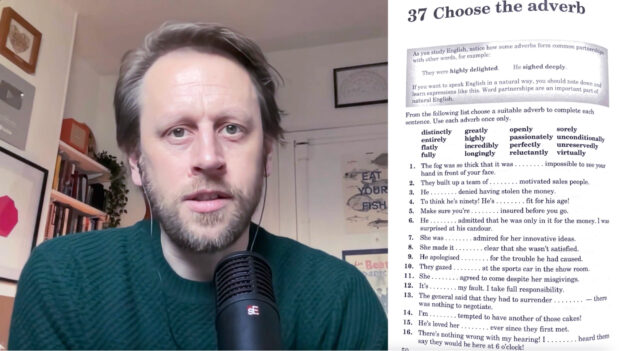
763. Rambling in the new Pod-Room / Choose The Adverb / Deal or No Deal

This is a chance for me to just let loose and have a ramble while inviting you to this kind of housewarming party (or perhaps just the first part of the party) in my new pod-room. In this one I am going to welcome you into the new room and do a ramble challenge in which I am restricted to only talking about things inside the room, plus reading from some random books on my shelves. Grammar rules, adverbial collocations and a game show story.

[DOWNLOAD]

Episode Notes

Private Lessons with British Council English Score Tutors https://www.teacherluke.co.uk/english Episode page

LEP Premium https://www.teacherluke.co.uk/premiuminfo

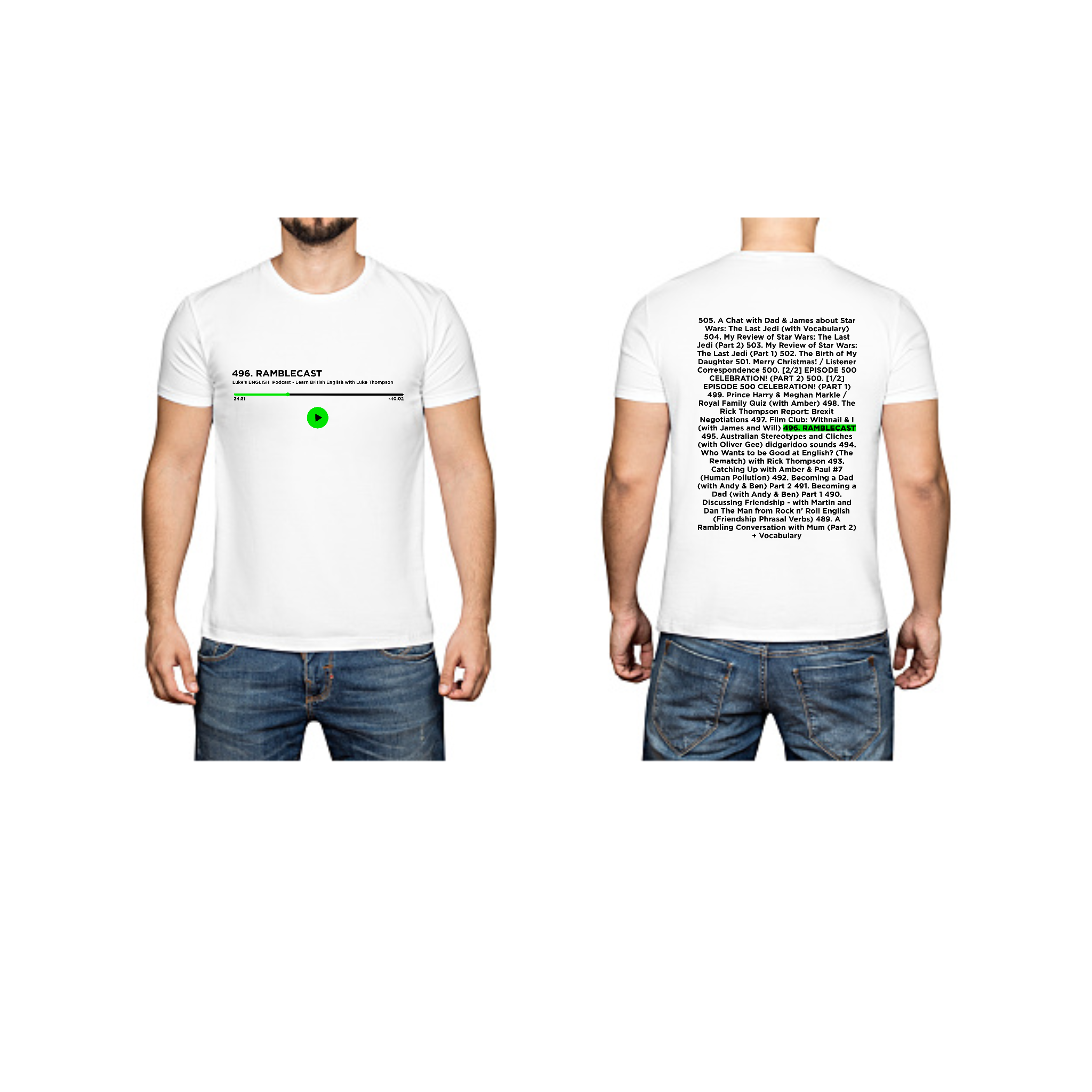
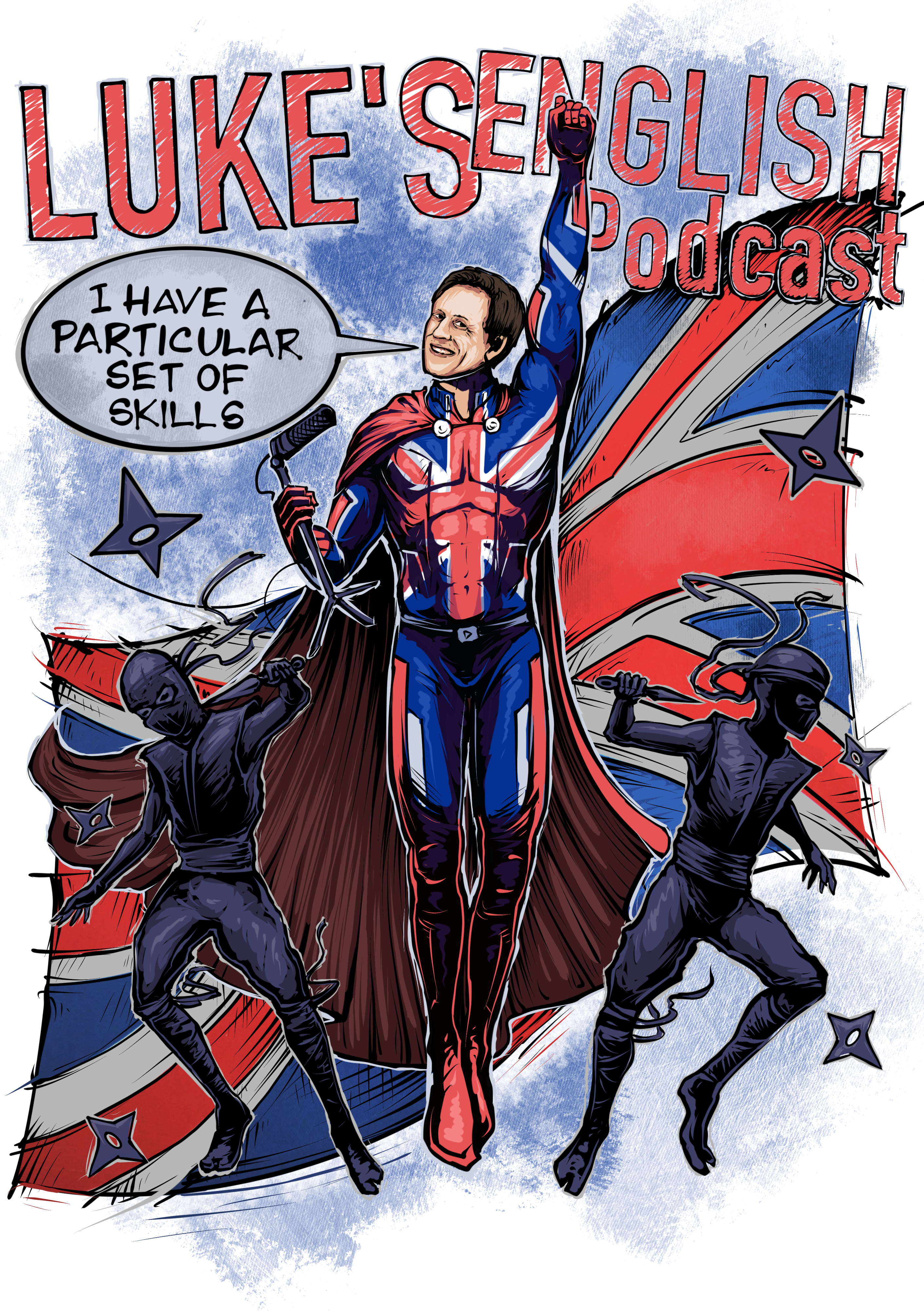
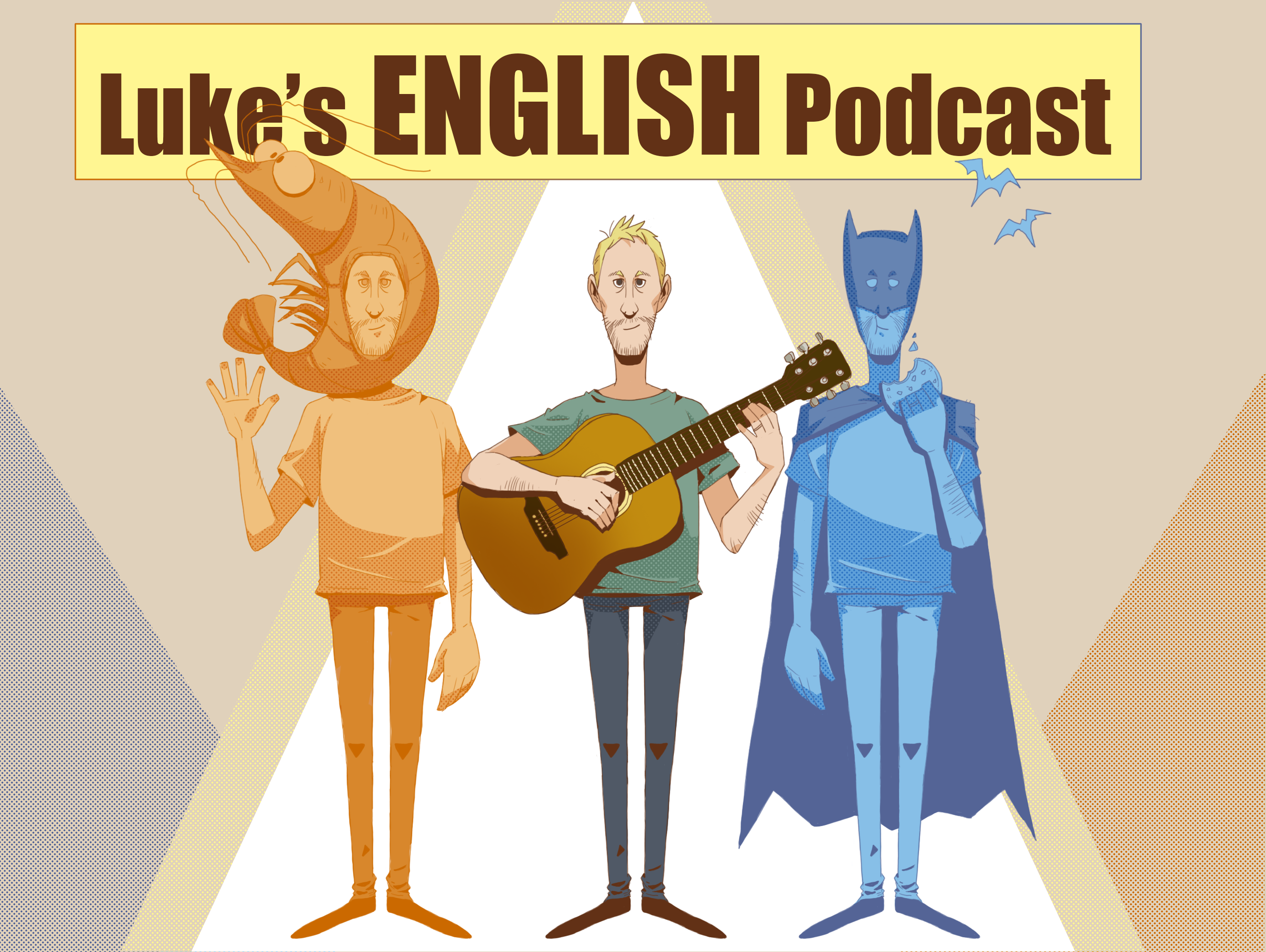
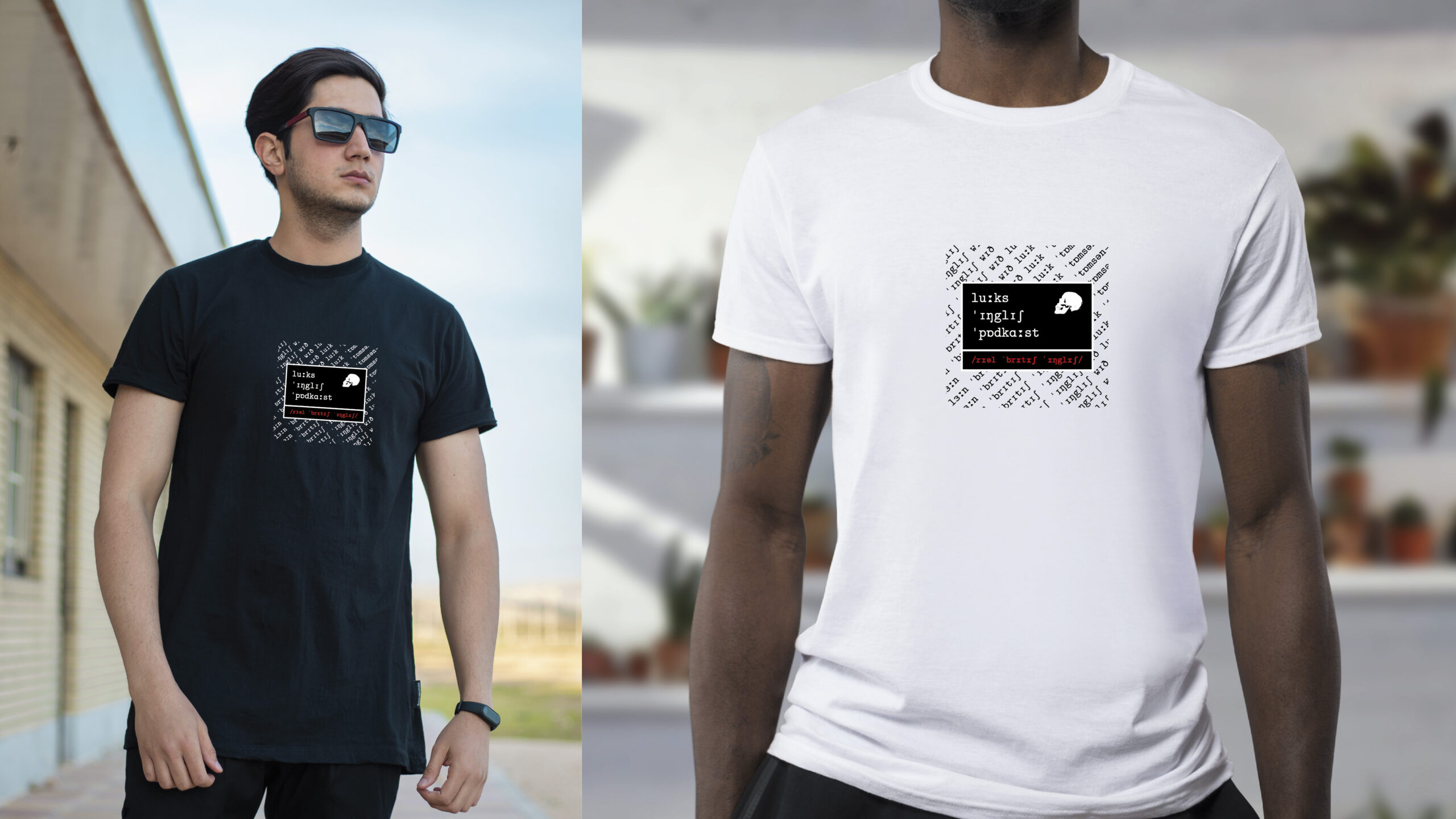
LEP T-Shirts & Merch https://www.teacherluke.co.uk/merch

Rules of the Ramble

  • Welcome everyone to the pod-room.
  • Give a tour.
  • I’m restricted to only talking about things inside the room.
  • Maybe describe some of the items on the walls and pictures.
  • Include some descriptive language.
  • Pick up a book and do a random exercise from it.
  • Keep talking without pausing or saying “errr”.

Contents

  • 00:00:00 Hello
  • 00:00:52 Promo
  • 00:02:30 Introduction
  • 00:03:44 Ramble Rules
  • 00:05:26 Welcome to the new pod-room
  • 00:05:42 The Electricity & Internet Situation
  • 00:10:37 Sound Recording Setup
  • 00:17:01 Let me show you around the room
  • 00:22:32 The desk
  • 00:24:30 A Book from the `Bookshelf
  • 00:25:17 English Grammar in Use by Ramond Murphy
  • 00:25:38 Present Perfect Simple vs Continuous
  • 00:27:04 Build Your Vocabulary 3
  • 00:27:31 Choose The Adverb
  • 00:47:23 Lighting
  • 00:49:25 Random Book: Jon Ronson – Lost At Sea
  • 00:51:01 Deal or No Deal story
  • 01:00:48 Ending

749. LEP DESIGN COMPETITION 2021: Discussing the Entries & Choosing the Winners with James

James and Luke discuss designs sent in by listeners, and choose the winner(s). The prize: to have your design featured in the LEP Merch Store, plus an £80 reward! Listen for plenty of descriptive language, diplomatic language and ways of giving positive and feedback in English. Video version also available (with all the designs on screen) below.

Audio Version

Small Donate Button

[DOWNLOAD AUDIO]

Video Version (with all the designs on the screen, automatic subtitles and chapters for each section of the episode)

LEP Merch – available here: www.teacherluke.co.uk/merch

Do you want an LEP t-shirt, mug or something else? Could be a good Christmas present idea for a LEPster that you know.

DESIGNS FROM LISTENERS 1-18

All designs are presented in the order in which they arrived in my email inbox.

Listen to hear all our comments and to discover the winners.

1. Iwona

2. Kyoungjin Lee

3. Francisca

4. Silvia & Sara

Design 1
Design 2

5. Giuliana

6. Adel

7. Lenka

8. Evgeniya

9. Alyona

10. Denis

Design 1
Design 2

11. Jakub

13. All4Band.com team

14. Sia

15. Andrey

16. Max

17. Sophia

18. Julie

Who won? Listen to the episode to find out!

Thank you to everyone who threw their hat in the ring!

Congratulations to the winners. You will receive emails from me with the next steps.

James’ Music

Click here to find James’ recent music on Bandcamp.

748. Karl Pilkington’s 3-Minute Wonders / Manchester Accent [Part 2]

Understand more of Karl Pilkington’s rambling as we learn about the Manchester accent and pick up vocabulary along the way. Video version available on YouTube.

Audio Version

Small Donate Button

[DOWNLOAD AUDIO]

Video Version

Episode Transcript

Introduction

Hello everyone. Welcome back to LEP. This is part 2 of a double Karl Pilkington themed episode. I would recommend that you listen to part 1 of this first – it contains important context about who Karl is plus more details about Karl’s pronunciation and accent. 

Listening to that first will help a great deal in understanding this one.

I got plenty of good responses to part 1 of this, so let’s carry on.

In this part we are going to continue as we did before – listening to Karl Pilkington talking about various subjects, understanding exactly what he says, looking at features of his Manchester accent and picking up vocabulary along the way.

Karl is basically just a normal bloke from Manchester and his accent is fairly typical for people from that area so this episode aims to help you understand his accent and pick up vocabulary too.

Some responses to part 1

I disagree with Karl on most things.

Is he arrogant?

I just enjoy the way he puts things. He speaks like a comedian in the way that he expresses a point of view and has a certain way with words, but he’s not a comedian.

This is the enigma of Karl Pilkington – is he really just being himself, or is he playing a comedy character, and in real life he’s a lot more erudite.

I actually think it’s the former not the latter and that he’s just being himself. He just happens to have a funny way of putting his opinions across. 

Sometimes the best comedy comes from someone sharing a specific opinion. I think this is what I enjoy about this, rather than the opinions he is expressing, and as I said I disagree with Karl about most things, and some things he says are quite laughable – especially stuff he’s said on the Ricky Gervais podcast, like his Monkey News stories.

One other thing – apparently it is possible to be choked by a live octopus as you eat it. What I meant was that it would be impossible for an octopus to strangle you from the inside, as strangling means choking from the outside of the throat, with your hands for example, but of course a live octopus could choke you from within, by sticking its arms up into your throat or your windpipe. So, fair enough, it is possible for an octopus to choke you.

Also, in the UK we do eat oysters – which are raw seafood, so I think raw fish are generally ok in the UK but most other raw things would be considered a bit strange for us.

Quick Pronunciation Recap

In part 1 we listened to Karl talk about life, health and food and in terms of his accent I talked about H-drops

  • I’m 32, I think I’ve got the hang of it.
  • Look, how many do you need?

glottal stops 

  • I’ll have a look at the meteorites.
  • If you’re going to eat a live animal, don’t eat one that’s got eight arms that can get hold of your neck.

The ‘bath/trap’ split 

  • podcast/podcast
  • laugh/laugh
  • path/path
  • bath/bath

/ʊ/ not /ʌ/

Do you go to the gym much? 

Topics: Holidays & Karl’s Fridge

This time he’s going to talk about holidays and his fridge and we will look at more features of his accent.

There’s a video version of this on youtube with text on the screen, plus you will find all the text presented on the page for this episode on my website. 

Just one more thing before we start – I have premium episodes in the pipeline for these two episodes of LEP. The Premium episodes will be a chance to review and remember the vocabulary that comes up in these episodes, and then pronunciation drills too. So, I’ll do a sort of memory quiz with you to see how much vocab you remember and then the usual pronunciation drills – but in my accent, not Karl’s. 

Sign up to LEP Premium

www.teacherluke.co.uk/premiuminfo 


#4 Karl on Holidays

(not Karl on Holiday)

Karl is on a camping holiday, sitting in a tent and moaning. 

  1. Why does Karl think holidays are stressful?
  2. What does Karl think of Lanzarote’s nickname?
  3. What did Karl do on his holiday there?
  4. What’s the problem with holidays in the UK?
  5. What did he think of the seal sanctuary he went to?
  6. What’s the best place Karl has been? Why?
  7. What does Karl think of holidays to the moon?

Vocabulary

You’ve got free time on your hands which you’re not used to.

We ended up walking around this seal sanctuary. 14 quid. £

They were just floating about, hardly moving.

I’m not having a go, but don’t charge me to come in, or at least let me see them again when they’re better.

The coliseum, they don’t do it up.

There’s no overheads.

That’s a mess. Get it knocked down.

At the end of the day the moon is just a big rock. You may/might as well go to Lanzarote.


PRONUNCIATION #3

Nasal

Alright so I went on holiday and it was great and all that.

  • I’ll have a look at the meteorites.
  • If you’re going to eat a live animal, don’t eat one that’s got eight arms that can get hold of your neck.
  • When’s the last time you heard about a tortoise having a heart attack?

Works well with glottal stops.

Nasal sound in /aʊ/ and /ai/ sounds

/aʊ/ in words like about and now sounds more nasal.

What’s he going on about now?

If there were dinosaurs about now and that.

If we’ve run out we need to go outside and get some more.

Nasal sound in /ai/ sound

The /ai/ sound in words like alive, inside, survive, fighting, riot and dying sounds more nasal.

You’re not supposed to eat them alive.

We’ve got to stay inside if we want to survive.

If they were running about fighting and dying and that.

Running riot (sounds like “roonin raiyut”)


#5 Karl on his fridge

Karl’s fridge is broken and he called out a guy to fix it. 

Naturally he’s moaning about workmen who come to your house to do different jobs.

  1. Why does the guy charge £80?
  2. What is Karl’s main problem with engineers, plumbers, workers who have to come to his house?
  3. What advice does the fridge guy give to Karl?
  4. What’s the problem with Karl’s new fridge?

Vocabulary

The fella turned up, right.

Yeah, it’s broke. (broken)

That’s why I called you out.

That’s 80 quid

I said, “you what?” 

An 80 quid callout charge.

I tell you. They wind me up.

I had a fella come round to do the tiling

Turned up late with a carrier bag.

A pot noodle

A copy of the Daily Mirror

A crossword book

He was asking what the pub was like across the road. “What is …. like?”

Having a laugh

When did you last vac it out

Vacuum cleaner

You’re meant to vac them out, because dust and that gets in.

Can’t afford any food to put in it.

It needs wiring in. It’s got one of those fancy plug things.


PRONUNCIATION #4

A lot of other vowel sounds are nasal too.

Turn the corner /ɔː/

They becomes thee

It depends what they do with it.

Why have they only just found that? 

How did they miss that?

Also, he adds little fillers like:

(Do you) know what I mean?

Right? (just sounds like a nazal grunt, almost)

… and that

Like that

And whatnot

And stuff like that

Do you know what I mean?

I tell ya…

Watch out for those things if you like.


Ending

Ladies and gentlemen, this brings us to the end of this episode, as we now prepare to exit the world of Karl Pilkington and re-emerge blinking into the light of the normal world.

Welcome back to yourself, your own attitudes and your own personality again.

I urge you to (just wanted to use that phrase) check the page for this episode on my website where you will find a downloadable full transcript, the audio file for download in mp3 format, a text video version of this episode where you can read the entire thing as you listen and it’s all presented in a rather majestic looking font before your very eyes and of course there’s the comment section where you can share your thoughts not to mention the episode archive with all the previous episodes plus lots of bonus extra stuff. 

Teacherluke.co.uk

LEP Premium 
LEP App
LEP Merch

Have a good one and I will speak to you again soon, bye!