Tag Archives: english

714. Robin from Hamburg 🇩🇪 (WISBOLEP Runner-Up)

Talking to another runner-up from last year’s listener competition. Robin from Hamburg had a big setback in his learning of English, but worked hard to overcome it. We talk about his English learning trajectory, and ramble about German language & culture, his podcast for learners of German, podcasting microphones and then Robin teaches me some German words which are difficult to pronounce.

Small Donate Button

[DOWNLOAD]

Introduction Transcript

Hello everybody, welcome back to the podcast. I hope you are all doing alright today, wherever you are and whatever you are doing as you listen to this.

Here is a new episode, and we are returning to the WISBOLEP series with this one – talking to winners of the competition I did at the end of last year in which listeners chose some guests from LEPland to be featured in episodes of this podcast.

LEPland – that’s Luke’s English Podcast land, you see, L E P land – LEPland. Not LAPland, no, that’s Lapland – a real place, somewhere in the north of Finland. But no, I’m not talking about Lapland. I say this because sometimes people write to me and they say “Another listener here from Lapland” really? Are you from Lapland? Or do you mean LEPland. Maybe you are from Lapland, I don’t know. There are people there. If you are in Lapland, then hello to you too. Maybe you are Santa Claus (because Santa comes from Lapland) Maybe Father Christmas listens to this podcast  during the year, just relaxing, taking a break. Anyway, if you are Father Chrismtas then welcome, “welcome” to everyone. But anyway, where was I? So… The competition, last year, Listeners chose some guests from LEPland to be featured in episodes of this podcast.

This episode now is the 4th in that series and the spirit of this whole competition is to let some LEPsters talk on the podcast so we can learn some things from them including insights into how they learned English, perhaps some things about the countries they come from and whatever else they can talk to us about. 

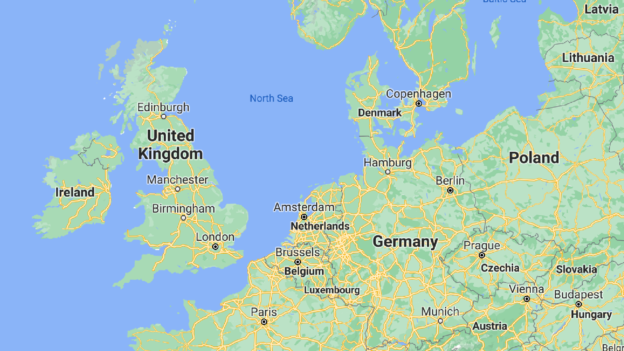
This time it is the turn of Robin who comes from Hamburg in Germany.

Robin came joint 3rd in the competition with William from France. So William and Robin both received exactly the same number of votes and in fact their stories are not dissimilar (which is another way of saying that their stories are quite similar). Yes, their stories are not dissimilar in the sense that they both first learned English at school in their neighbouring countries, and then both chose to pursue English in higher education, both decided to become teachers of English and both spent time as teaching assistants in English schools in the South East of England, helping English schoolkids and students learn French or German in the case of Robin. So, funnily enough, Robin and William both have many things in common, including the fact that they both got exactly the same number of votes, so joint 3rd position, but anyway, this is Robin.

And yes, Robin is also an English teacher, just like the other WISBOLEP winners that we have had so far.

Now I would like to address something at this point and that is the fact that all the winners of this competition so far have been English teachers. Obviously they’ve been, let’s say, non-native speakers from different countries, but yes, the four people I’ve spoken to so far – they have all been English teachers, and I get the impression from reading one or two comments that some people might think it’s a bit unfair, for some reason, that the winners all seem to be English teachers, right? 

Here’s the rationale, or the logic behind this point of view, as far as I can tell, and actually I should also say, the vast majority of comments on these episodes so far have been really positive. People have loved listening to the guests that we’ve had so far and I think people have found them to be interesting and inspiring and thought-provoking and so on. But anyway, I do get the sense that there is maybe this feeling of “All the winners are English teachers. What’s going on?” and so here’s the rationale, or the logic behind this point of view, as far as I can tell. Something like this…

“Hmm, so you can only win this competition if you’re an English teacher. What about the rest of us who don’t have that advantage?”

This sort of comment seems to suggest that non-native speakers of English who are English teachers have improved their level of English as a result of being teachers, that their English improved because they became teachers or as a consequence of being English teachers, and so being an English teacher gave them an unfair advantage in this competition. 

But I think it’s probably the other way round, isn’t it? Surely they reached a proficient level of English before they became teachers, and then became teachers as a consequence of having a good enough level of English. You can’t qualify as a teacher without having a fairly decent level of English first, can you? 

So, I think their progress and achievements in English proficiency are still thanks to their own merit just like anyone else who has got good at English, and so I think this still counts. 

Sure, perhaps their teaching work has meant that they’ve had to do more language study than most people, and that they get to use English in their work on a fairly regular basis. That’s true. So the job has probably tweaked their English that bit further than many other people, but again, I’m sure the majority of their English progress was made before becoming English teachers.

So, I just wanted to point that out in case some people listening felt there was something amiss about the results of the competition. Personally, I think it’s fine and you probably think so too, right? 

But bear with me as I say just one or two other things about this.

Of course there are loads of people who achieve great things in English and who don’t choose to become teachers, and that’s great too. I really don’t mind what people do, as long as they have something to offer to my audience, and I suppose ultimately this is why listeners voted for these people in this competition, because they felt that they would have interesting things to say on the podcast, and probably some insights into improving your English, and I think those things are definitely true. I feel that the 3 interviews we’ve had so far have been very insightful and interesting, and I think that this also applies to the other interviews that you haven’t heard yet. There are three more interviews to listen to. There’s Robin, Michal and Bahar as well.

And I’m sure that even now some people are going “This is unnecessary Luke. You don’t need to justify yourself”. Ok I won’t (as I whack the microphone). 

Anyway, so, after this one with Robin, the next one will be Michal from Poland and he has achieved a decent level of English and he’s not an English teacher. Not yet anyway! I don’t know what he will choose to do in the future, but so far he has not qualified as a teacher. 

Anyway, I don’t think it matters that much in the grand scheme of things, even though I have just devoted a number of minutes to talking about it. I think ultimately it doesn’t really matter that much, does it? Essentially we are listening to LEPsters who other LEPsters wanted to hear on this podcast and you know what – I am really enjoying these episodes, I think that the LEPsters who voted in the competition made some really good choices, and this series has been very well-received overall, which is great.

And this brings us to our 4th WISBOLEP guest – Robin from Hamburg in Germany (just in case you weren’t sure where Hamburg was. That’s right, it’s in Germany) so here we go. 

So I spoke to a few weeks ago. Robin is someone who learned English at school like most people, and liked it, and then chose to pursue his English studies and broaden his English skills while still living in Germany. There were challenges and setbacks, as you will hear, but ultimately he managed to immerse himself in the language and get his English to a good enough level to be able to train to become a teacher of the language in Germany. Later on he went to England to get some work experience as a teaching assistant in German classes at a posh school in the South East.

Along the way Robin also chose to start a podcast for learners of German. So Robin is a podcaster too, just like me. Robin’s podcast is called Auf Deutsch Gesagt, which I hope I’m pronouncing correctly. Speakers of German, indeed Robin, in fact, you could get in the comments section and tell me if I’ve pronounced that correctly. Auf Deutsch Gesagt!

So if you are learning German and you want a podcast that is similar to mine but in German, you could listen to Robin’s podcast Auf Deutsch Gesagt! Which translates as “In plain German” or “In plain language” which I guess means that the German that you can hear in his episodes is the sort of natural German that people use on a daily basis. As Robin has said, he was quite inspired by my approach to LEP, and so I guess Auf Deutsch Gesagt is along similar lines. So that’s Robin’s podcast for people learning German. It’s on Spotify and is available where you normally get your podcasts. 

There are links for his podcast on the page for this episode too. 

Auf Deutsch Gesagt! (Robin’s German Podcast)

Podcast page https://aufdeutschgesagt.libsyn.com/ 

Podcast links https://plinkhq.com/i/1455018378?to=page 

So this conversation ended up being a bit longer than some of the other interviews with WISBOLEP winners, but that’s partly because we found that there were quite a lot of things for us to talk about including Robin’s learning of English after being told by one of his university teachers that he should just give up because he wasn’t good enough, his experience as a teaching assistant at a school in England, some comparisons between English and German language and culture, some slightly geeky stuff about the recording setups and microphones that we use for our podcasts, and then finally we thought it could be fun for Robin to try and teach me a bit of German, so you will hear me struggling to pronounce a few words in German near the end of the conversation, which should give you a bit of a laugh.

So that’s it then for this introduction. I will chat to you again briefly on the other side of this conversation but let’s now meet WISBOLEP runner up Robin from Hamburg, and here we go.


Ending Transcript

So that was Robin from Hamburg, teaching me a bit of German there, which was a bit of fun wasn’t it? I think it was. I hope you enjoyed it, listening to me struggle with another language for a change. 

Again, if you’re learning German and you’re looking for a podcast to listen to, why not check out Auf Deutsch gesagt! (Spell it) So, again, you can just check the page for this episode on my website and you’ll see all of this stuff written. My introduction and this ending part here. It’s all written and you’ll find links to Auf Deutsch gesagt! If you want to listen to it. 

Auf Deutsch Gesagt! (Robin’s German Podcast)

Podcast page https://aufdeutschgesagt.libsyn.com/ 

Podcast links https://plinkhq.com/i/1455018378?to=page 

It is available wherever you get your podcasts, and you will find links on the website to help you find it. (I’ve just said that!) 

As you heard Robin say there, his approach is pretty similar to mine so it might be what you are looking for if you are learning German.

Also, I think it was very interesting to note the trajectory of Robin’s English learning. 

Ooh “Trajectory” – there’s a nice word. (spell it)

Trajectory

Let me just talk about it a little bit. Firstly, it refers to the path that an object takes as it flies through the air. Now we’re talking about the trajectory of Robin’s English journey, but I think the first use or meaning of the word trajectory normally refers to objects flying through the air, and the path that they take as they fly through the air. 

For example the trajectory of a plane from take off to landing. Imagine a line going up from the ground soaring into the air, over distance, then going back down to the ground. Trajectory – it doesn’t always mean it goes down, up and then back down again. It could just be from down to up.  

Also you’ve got the trajectory of a rocket, or the trajectory of a golf ball flying from the ground, up into the air, over the grass and maybe landing on the green, hopefully, if you’re a golfer. The path that an object takes as it moves through the air. That’s the trajectory. 

The second use of the word is metaphorical or idiomatic and it’s used to describe the movement or path of other things, like for example someone’s career trajectory, or the growth trajectory of a company, upward trajectory or downward trajectory. Imagine a line showing the movement of something making a curved line going up and over. It could be a line on a graph. 

So, it is interesting to follow the trajectory of Robin’s English learning, especially that moment when he was told he wasn’t good enough to pursue his studies, and then he kind of doubled down on his English, and the results kind of spoke for themselves. 

Arguably, being told “Oh you’re not good enough, I think you should give up” that is a very damaging thing to say to a learner of English, you would have thought, although not in the case of Robin, because this is the sort of kick up the bum that he needed. This is the kick up the arse that Robin needed apparently. I don’t know, I guess it could go either way. For some people, being told that would just destroy your confidence and you’d never achieve anything as a language learner after being told that. Or it might give you a wake up call and if you’re determined, well, this is the slap in the face that I needed – metaphorical slap in the face that I needed to kind of actually get me going.

Anyway, in the case of Robin it was the thing that kind of made him grasp the challenge. 

So, thankfully Robin took it as a challenge and seriously started to immerse himself in English all the time, and probably did self study from grammar books and other things but basically he just put a lot of time and effort into his English and it paid off, and just listen to him now. 

It seemed to make a lot of difference, right? Then he was able to qualify as a teacher and help other people with their English learning trajectory too, but the key thing is that he took the bull by the horns and took control of his learning himself [There’s a nice phrase! + some rambling about how you shouldn’t actually take a real bull by the horns because you’ll probably get gored in the stomach…] 

The thing is that Robin took the bull by the horns, metaphorically speaking, and took control of his learning himself, realising it was all down to him and he did it in his own way.

Again, I hope you agree that this has been quite inspiring – basically as a way to say, you can do it too if you put your mind to it and you put the time in. 

Again, I will echo my statements from the last of these episodes – I often tell you about the importance of motivation and the importance of doing certain types of practice, but also I just want to say, equally don’t worry about doing anything really. Don’t worry about it too much. Don’t feel bad if you’re not doing the things I often say. At the very least, just listen, enjoy listening, be happy, stay positive and enjoy spending time with English in any way that you like. This is probably the most important thing, that you have to maintain a good and positive feel-good relationship with the language, and when the time is right, you can take more control and really apply yourself by doing different kinds of practice, but don’t worry if you just like listening to English and that’s all you do. That’s fine. It’s all good. It’s all good in the hood.

But if you’re always looking for specific tips on ways to improve your English, if you want to take the bull by the horns and you want to improve your English in more applied ways including your pronunciation and your accent then pay attention to some things that Michal from Poland is going to say in the next WISBOLEP episode, which will arrive in a few weeks. Little sneak preview there of the episode with Michal from Poland.

And of course there’s the ongoing LEP Premium project which is designed to be a service that can help you make sure your English is on the right trajectory. Parts 3 & 4 of P29 are coming very soon – and they are going to cover more solid vocabulary, collocations, synonyms and phrases based on things my dad said in episode 704 of the podcast, with listen & repeat pronunciation exercises in part 2 as well. So if you want to hear that, access the PDFs for it and all the other premium content visit https://www.teacherluke.co.uk/premiuminfo 

But in any case, I hope you enjoyed this episode and thanks again to Robin for his contribution. It was great to talk to him. It was really nice to listen to him and just hear about his story and so on. I apologise if I spoke too much during the conversation, but it was a conversation after all, and that’s fine isn’t it?

As ever, let us know your thoughts in response to this episode in the comments section for this episode, right? 

If you’re looking for the episode page where you can write your comments and also read transcripts for the introduction and ending of episodes like this, you will find the link in the description for this, wherever you are listening. [Luke rambles a bit about the Apple podcasts app] or just go to teacherluke.co.uk and then click EPISODES in the menu.

Well, it’s time to finish, isn’t it? It’s time to end.

Thank you for listening to my podcast again. Good luck with your English and I will speak to you soon, but now it’s just time to say bye bye bye bye bye bye bye.
712. A Chat with Charlie Baxter

Chatting with Charlie from The British English Podcast and Real English with Real Teachers on YouTube. We talk about the north/south divide in England, Charlie’s background in psychology & NLP, his decision to become an online English teacher and his travelling experiences in Chile, Germany and Australia. Video version available.

Audio Version

Small Donate Button

[DOWNLOAD AUDIO]

Video Version

Links for The British English Podcast

Some language notes from my introduction

Typical responses to “How are you?”

Some of these sound a bit negative, but they’re quite normal.

  • Not too bad.
  • Could be worse.
  • Mustn’t grumble.
  • Can’t complain.
  • Not so bad, thanks for asking.

Of course you can say:

  • I’m fine thanks
  • I’m good thanks
  • I’m very well thanks

Or (more positively)

  • I’m radiant (a nice word meaning “glowing with happiness” but nobody really uses it)

-ish

My guest on the podcast in this episode is Charlie Baxter. Charlie is an online English teacher, a YouTuber and a podcaster too and you might well know him from his YouTube channel, which is called Real English with Real Teachers (which he does with his friend Harry) and you might also know him from his newish podcast which is called The British English Podcast

  • I’ll see you at 12-ish.
  • Dave’s car is a kind of greyish-blue colour.
  • Charlie’s podcast is newish. He started it about 6 months ago.

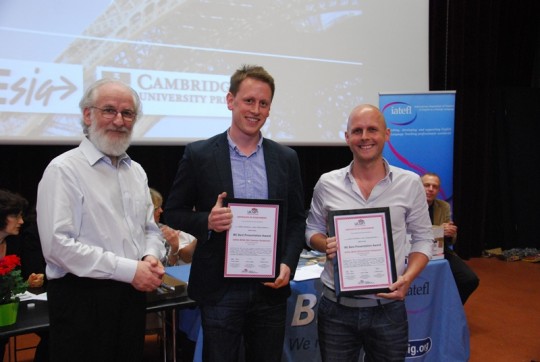
Here’s that photo of David Crystal presenting an award to Andy Johnson and me.

David Crystal, me and Andy Johnson

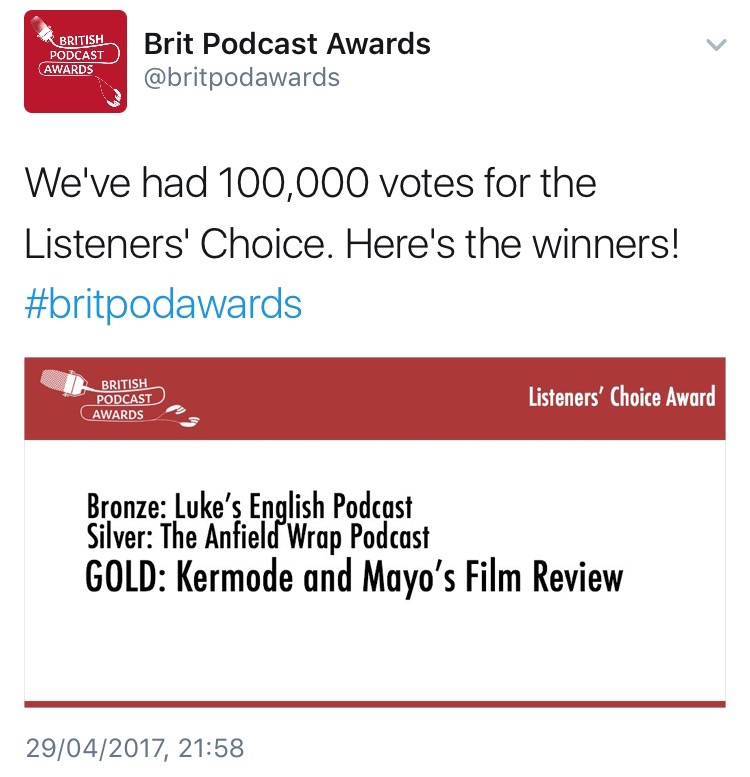
And here’s that tweet from The British Podcast Awards – as proof that I genuinely came 3rd in the competition!

Check out other details of the highly prestigious awards we talked about here https://teacherluke.co.uk/awards-2/

709. The Stoicism of Groundhog Day (with Mum)

This is a conversation with my mum about philosophy, how the film Groundhog Day can help us understand the principles of stoicism, and how this can all help us to feel a bit better about the world.

Small Donate Button

[DOWNLOAD]

Click here for LEP Premium

Links & Videos

More information from experts on stoicism https://modernstoicism.com/

The Stoicism of Groundhog Day by Tim LeBon https://modernstoicism.com/the-stoicism-of-groundhog-dayby-tim-lebon/

Derren Brown talking about stoicism on the Joe Rogan Experience

Groundhog Day Clips

708. Tasha Liu from China (WISBOLEP Runner-Up) 🇨🇳

This conversation with competition runner-up Tasha Liu is a way to get to know Chinese culture in a more personal way including the story of how Tasha’s father gave up drinking alcohol, and other interesting details about real life in the world’s most populated country.

Small Donate Button[DOWNLOAD]

Introduction Transcript (after the jingle)

Hello everybody,

How are you doing? Thanks for choosing to listen to my podcast today. I hope you enjoy it.

In this episode you’re going to hear me in conversation with Tasha Liu from China, the listener of this podcast who came 2nd in the WISBOLEP competition.

Let me explain quickly what the WISBOLEP competition is, for that one person who doesn’t know.

If that’s you, and you don’t know what WISBOLEP is → Hello! I’m now going to explain it to you in one single sentence. You’re welcome.

Here it is. The competition, summarised in one single sentence.

WISBOLEP stands for Why I Should Be On Luke’s English Podcast and is a competition I ran at the end of last year in which the prize was to be interviewed by me in an episode, the winner of the competition being the one who received the most votes from listeners after I played all of the 2-minute recordings sent in by the competitors in episode 692 of this podcast.

There you go.

Walaa Mouma from Syria was the overall winner. You may have heard her episode. It was published last month. If you haven’t heard it, I highly recommend that you do so! It’s episode 703 and Walaa explained in some detail how she improved her English to a good level, despite the hardships that she faced in her life. It was an inspiring episode, to say the least. We focused on Walaa’s approach to learning English – both her attitude and specific things she has done and continues to do to improve her skills. So the focus was definitely on learning English.

The conversation in this episode though, focuses mostly on cross cultural understanding.

Walaa is quite a hard act to follow, but we’re not comparing here. It’s not a competition you know! Wait, it is a competition, isn’t it? It totally is competition, isn’t it. It was a competition anyway. But for me, the competition part is done, and now it’s just a case of listening to LEPsters who were chosen by the people who voted in this competition.

And the spirit of this competition was always about this: Finding some interesting guests to talk to on the podcast and letting some LEPsters speak a bit and share their experiences. Let’s see what insights we can learn from other learners of English around the world. And let’s celebrate the citizens of LEPland! Everyone has a story to tell. We can all learn things from each other. All we have to do is just listen.

So, now that I have said that, here’s a brief overview of the content of this chat.

  • There’s a bit of “getting to know you”, as this is the first time I’ve ever spoken to Tasha, so we talk a bit about her studies, where she lives and so on.
  • Then we move onto the things she hinted at during her competition recording – and overall these things are ways to get to know China and Chinese culture a little bit more, in a personal way. So this is a cross-cultural exchange here and a chance to get beyond the stereotypes and cliches and find out some real things about life in the most populated country in the world.
  • There’s the story of how her father managed to stop drinking, which might tell us some things about family life in China.
  • Then we talk about some of the commonly-held beliefs about China (particularly beliefs held in the west) such as the way Chinese people eat (do they, as the saying goes, “eat anything with 4 legs except the table, and everything that flies except planes”? (and helicopters I suppose), or are they more discerning in their eating habits than that? Another assumption that people might have is that China is quite undeveloped in certain ways compared to the west, or how it could be ahead of the west in various ways too, like the way technology is used – payment systems for example, and the idea of the cashless society.

And there’s more detail about what it’s really like living in China today.

Just a heads up: There were some technical difficulties during the recording, due to a slightly poor internet connection between the two of us. This meant that sometimes we couldn’t hear each other properly or the connection just failed. I think I’ve saved it in the edit, but there may be a few moments where the bad connection affects our conversation. It shouldn’t be too bad, but I thought I’d mention it anyway.

OK, now I’ve done my introduction, let’s get started properly, and here we go!


Ending Transcript

So that was Tasha Liu from China. It was really interesting to talk to her and I got that amazing feeling that you get when you actually talk to someone who lives in a completely different part of the world and in a different culture but you just connect as human beings.

That’s always special – talking to people from other places and getting a glimpse of how they live their lives and the fact that although we’re different in many ways, we’re also really similar in the fact that we’re still having human experiences ultimately.

It’s easy to forget but I feel like as humans we have many more things in common than differences. We’re all humans living on earth (as far as I know – you might be an alien on another planet as far as I know) but we’re all having a human experience ultimately, and so there are many more things that unite us than divide us, aren’t there?

I’m sounding a bit pretentious there, possibly, but hopefully you know what I mean.

Here are some reflections – just things that I thought about after having that conversation.

These are reflections about cross cultural understanding.

When we think about other cultures or experience them, there is a tendency to not fully understand those other cultures, and as a result we jump to conclusions about them, probably based on the fact that we’ve never had proper experiences of those cultures, never met or talked to those people properly and never observed things from their point of view. This is normal I suppose because we can’t always be everywhere and see everything.

We end up with limited views of other cultures, which might also be informed by other people’s attitudes, like “these people are just unsophisticated” or “it’s such a backward society” and this could be in any direction. It could be, in a broad sense – the west looking at the east, or the east looking at the west, and not just east and west, any culture thinking about another culture – we often don’t see the whole picture. We are all humans, but there are all sorts of complicated reasons why we behave or live slightly differently.

We are all the same, but our contexts are different.

That’s it really. I could ramble on more, but I think I’ve said enough.

I wonder what your thoughts are, now that you’ve listened to this conversation.
What reflections do you have?

I found it really interesting to talk to Tasha, and I just want to thank her again for telling us her stories, and for being willing to share her comments about her country. Also, congratulations to her! 2nd place is certainly nothing to be sniffed at.

Right then. More competition runners up will appear on the podcast in due course.

Next up in the WISBOLEP series will be William from France. That will probably arrive in a couple of episodes’ time. I had a really nice conversation with him, which I think was just as insightful as the other WISBOLEP conversations we’ve had so far. If you’ve enjoyed this conversation with Tasha and the one with Walaa, then I think you’ll like hearing William’s story as well.

That’s coming up on the podcast soon.

I’m working on new content all the time, including new Premium episodes which will arrive in the LEP app before too long.

LEP Premium https://www.teacherluke.co.uk/premiuminfo

LEP App https://teacherluke.co.uk/how-to-download/get-the-lep-app/

705. Kate Billington Returns (and she brought cake)

Listen to another natural conversation with Kate Billington about some listener comments, Chinese New Year, English festivals & food in February, sports day traditions, more cake recipes, various bits of vocabulary and more.

Small Donate Button

[DOWNLOAD]

Introduction Transcript

Hello there, welcome back to my podcast for learners of English. I hope you’re doing well today.

You might have noticed that there’s been a bit of a delay since I published the last episode. It’s been about two weeks, although I have published a couple of premium episodes in that period. So the premium listeners have had something to listen to. 

But there’s been a bit of a delay with the free episodes. 

You might also notice that no transcript is available for this episode, including no text video on YouTube (although automatic subtitles might still be available). 

The reason for this is that I’ve been working with some new software that allows me to edit both the audio and transcription at the same time, which is much more efficient than editing the audio first, then working on the transcript afterwards. This is the software that I’ve been using to make the recent text videos and transcripts.

In theory, this new software is brilliant and should revolutionise the way I work on my episodes – allowing me to produce the transcripts, text videos, and audio all at the same time. This is brilliant in theory, but in practice things are a bit different, and the reason why this episode has been delayed is because for two weeks the software has not been helping me. I won’t bore you with the technical details, but I will say that I’ve been pulling my hair out in frustration, banging my head on the table (sometimes literally) and generally raising a fist to the sky while attempting to persuade this software to do what it’s supposed to do. 

Eventually, I just gave up on it, because it was taking far too long and it was stressing me out too much.

So – apologies for the lack of text video and transcript this time. I’ll try again with the next episode. I always want to provide you with full and accurate transcriptions – I think they’re a great addition to the podcast, but let’s just say that transcripts and text videos are a work in progress. They might not be available every time for every episode, but I am working on a cost-effective and time-efficient way to produce them for you. It’s a work in progress. 

Again, if you’re watching on youTube, try turning on the automatic subtitles – they are usually quite accurate, although they struggle a bit when I’m with a guest, like I am in this episode.

Also, there are lots of vocabulary notes and also transcriptions for the intro and ending parts of this episode on my website, so have a look at that. Just check the archive for episode 705.

Alternatively, you can just forget about transcripts and reading and just focus on your listening skills. It’s a good idea to practise listening to the spoken word without relying on the written word too much, even when it’s a challenge.

OK? Alright. 

So now that I’ve said that, let’s kick off this episode properly and here’s the jingle.


JINGLE

You’re listening to Luke’s English Podcast. For more information, visit teacherluke.co.uk


Hello listeners, how are you doing today? In this episode Kate Billington is back on the podcast. You might remember her from episode 689 which was called something like comedy, speaking Chinese and baking cakes, aka “The Icing on the Cake” with Kate Billington. 

Just to give you a reminder: I know Kate because we work together, teaching English at the British Council. She is also a stand-up comedian like me. She’s from England. She is fluent in French and Chinese. She is a professionally-qualified baker, who loves making cakes and pastries, which is great for those of us who like eating cakes and pastries because she often brings some when she visits, and this time was no exception – she brought cake with her again, which was very generous. Thanks Kate for the cake.

There’s no specific topic for this episode. Instead, the plan was to just be natural and see where the conversation went, and it did go in various directions. Like last time, we spoke pretty quickly with little jokes and things, so please be ready for an advanced level episode today. 

The first 15 minutes in particular might be a bit confusing as we move from topic to topic, but I will help you with that in a moment. 

After the first 15 minutes we do settle down and focus on certain specific things, including some comments from listeners, some details about Chinese New Year – or Lunar New Year as it is also known, which leads us to talk about some English traditions, especially ones that happen around this time of year, and also some funny activities that you might see at a school sports day in England, and more quirky features of English life. There are also plenty of other bits and pieces as we move through the episode. I’ll let you discover it all as you listen.

Now, I really want to help you follow this conversation, especially the first 15 minutes, so here are some phrases you’ll hear and some questions to help you prepare yourself. 

Think about these questions and phrases and then as you listen you can see how they relate to the things we say. This can make a big difference to your ability to pick up English from this conversation, so forgive me for not jumping straight into our chat right away. I’ll be as concise as possible so this will just take a couple of minutes.  

Questions & Some Vocabulary for the first 15 minutes(ish) of this conversation

I will give full answers to these questions at the end of the conversation.

Tinnitus

  • What is tinnitus?
  • Why do I think I might have tinnitus?
  • Sometimes I wonder if I have tinnitus and if it was making me shout while I was talking to Kate before we started recording, but do I have tinnitus, or was I shouting for another reason?

Maelstrom

  • My brain feels a bit like a maelstrom sometimes. 
  • What is a maelstrom?

Violent

  • We know the word violent, like a violent film or a violent attack but can the word “violent” refer to non-physical things in English, for example the way that you speak to someone?
  • I tell a little anecdote about a student who I once encountered when I worked at university in Paris. What did the student want? What did I do? How did he use the word “violent”? (he was speaking French by the way) 

Friendship and getting older (this all sounds so random, but these things are connected in the conversation)

  • Think about making friends. Is it harder to make friends as you get older? 
  • Why would this be the case?

Cake & Eating Cake

  • What kind of cake did Kate bring this time? 
  • What’s the recipe for that cake? The ingredients and the way to make it.

Grooming

  • What are some of the different meanings of the word “grooming”?
  • Why can the word “grooming” be a dodgy word? 
  • Why did I use it? 
  • Maybe Kate somehow implanted the word in my head, like the hypnotist Derren Brown.

Derren Brown (hypnotist)

How does Derren Brown implant words and images into people’s heads, as part of his magic shows?

That’s it for the questions.

As I said, I will clarify those things, and answer the questions at the other end of this conversation.

Right, so let’s now jump into this conversation with Kate Billington. 

OK, here we go! 


Links & Comments

Derren Brown (apparently) using subliminal suggestions in his TV show

https://youtu.be/YQXe1CokWqQ

Some Listener Comments from Episode 689

Tang Qiongyu

Kate’s Chinese is good enough for me to understand so I think she should believe in her competence for Chinese speaking.

However, there is a little mistake. 恭喜发财(gōng xǐ fā cái)means “may you be happy and prosperous” instead of “happy new year”. If Kate wants to say “Happy new year”, the right one is “新年快乐”(xīn nián kuài lè).

By the way, I am greedy for a jar of cookies when I listened this episode before bedtime hahaha. 😋😋😋

IcyFlame 

Hi Luke and Kate, I think Kate’s Chinese is already good enough (I could completely understand. By the way, the translation of librarian in Chinese does make sense and we also say it that way (The library person : ) ). If you really want a more specific way to call them, I would prefer Tú Shū Guân Lî Yuán (Which is the Chinese Pinyin of 图书管理员, But the label on first “a” and “i” should be horizontally symmetric.

Anyway, it is a really interesting episode talking about cake and Kate’s experience. The joke is the icing on the cake!

Reda Zaouiri

If this episode was a cake, it would be a “Puncake” :)

There you go luke !

Ps : Thanks to both of you for the episode, kate was indeed a great guest, and for us listeners, we’ve been able to train our listening skills thanks to Kate’s super fast, natural speaking pace and posh-ish accent ;)

Also, thanks luke for reiterating at your own pace what kate said when you were talking about the first lines and what the senior manager had once said to her : “Oh yeah there’s lot of pregnant people here, if you don’t get pregnant in your first year, we send someone from customer services to do it.”

Ps 2 : Hooray for becoming a Chef !

All the best !

Alexandr Suvorov (Friend of the podcast)

Wow. What a brilliant guest, she’s so clever and fun and also genuinely friendly without it being insincere. 

Kate, if you’re reading this, you’re very inspiring, thank you for being.


Ending

Thanks again to Kate for appearing in this episode. She is on Instagram – @cake_by_cake_paris And that’s where you can see lots of pictures of the cakes she has made, if you want to really savour them with your eyes at least.

Answer the questions from earlier (see notes in the intro) 👆👆

Some other vocabulary to clarify

To flatter someone / flattery

This is usually used in a negative way – as Kate said, saying nice things because you want something from someone.

“Oh Kate your cakes are so delicious and tasty. It would be wonderful if you could bring some more tomorrow” and Kate might say “Oh such flattery will get you nowhere” – meaning, your attempt to say such nice things will not persuade me to make more cake for you” (although knowing Kate, she would probably bring cake anyway”.

Or “Oh, you’re just trying to flatter me now.”)

But

Flattering (adjective) is a more positive word, which we use like this:

“Oh thank you. That’s very flattering.”

Or
“Those jeans are very flattering.” meaning – they give you a good figure.

Savour / savoury

To savour your food = to take time to really enjoy the flavour. I should have savoured the cake that Kate made for me.

Savoury food = food which is not sweet, like a savoury pancake (which could have cheese and ham on it) rather than a sweet pancake (which would have sugar, chocolate etc on it)

I think that will probably do for now!

LEP Premium – www.teacherluke.co.uk/premiuminfo

More episodes coming soon, including some conversations with WISBOLEP runners-up, and other things in the pipeline.

Thank you for listening!

Leave your comments in the comment section below 👇

702. Emergency Questions (with James) Funny Conversation Starters

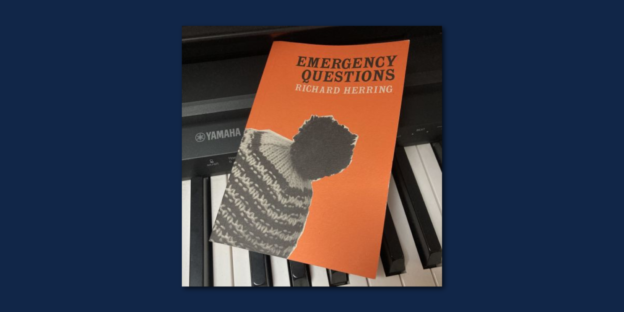
Listen to Luke and James talking about various topics as we answer questions from the book “Emergency Questions” by comedian Richard Herring. Text video and full transcript available.

[DOWNLOAD]

Download Full Transcript

Text Video Version

LEP Premium – https://www.teacherluke.co.uk/premiuminfo

Song – The Urban Spaceman by Bonzo Dog Doo Dah Band

https://songmeanings.com/songs/view/3530822107858579321/

700. Marooned With My Music: Luke Thompson

Guest host Oli Thompson interviews Luke using a classic format from BBC Radio. Luke is going to be marooned on a desert island but he is allowed to bring 8 pieces of music, one book and a luxury item. For episode 700 this is a chance to get to know Luke and his musical choices a little better. (Transcript and text video versions available)

Small Donate Button

[DOWNLOAD]

Download 100% Transcript

Text Video Version

My 8 Musical Choices

The Return of the Los Palmas 7 by Madness

Cheese & Onions by The Rutles

We’ve Got Johnny Wells by Booker T & The MGs

And Your Bird Can Sing by The Beatles

To Each His Own by Patrice Rushen

Tone Twilight Zone by Cornelius

Bach Cello Concerto in G Major (Yo Yo Ma)

Rule My World by Kings of Convenience

Full Spotify Playlist including loads of music I couldn’t choose as part of my 8 pieces

699. Welcome (back) to Luke’s English Podcast / FAQ (January 2021)

Wishing everyone a happy new year and taking stock of the main aims and methods of this podcast, plus some frequently asked questions. Video version available on YouTube.

Small Donate Button

[DOWNLOAD]

Video Version

Episode Notes & Transcript

In this episode the plan is to wish you a happy new year, welcome back all my regular listeners (and maybe some irregular listeners too) and also say a big hello to any new listeners who might have just discovered this podcast and are wondering what it’s all about. I normally do episodes like this at the start of the year because at this time, during the new year period, it’s normal to turn over a new leaf, make a fresh start, perhaps make some new year’s resolutions and generally try to pick up some good habits for the year to come – and that often includes working on your English and trying to find good listening resources to help you do that. 

So, in this episode I’d like to welcome you to LEP or welcome you back to LEP, just summarise what this podcast is all about, restate my objectives for doing this and generally make sure we are all on-track for a good year of podcasting and learning English in 2021.

I’ve decided to answer some Frequently Asked Questions. These are the questions people typically ask me when they find out that I have a podcast for learning English and they want to know more. 

So during the episode, you’ll learn or be reminded of what the main ideas are for this podcast, what teaching principles this is based on, what my methods are, what you can expect from my episodes in general, how you can use them to improve your English and also some info about me too, because it’s a good idea to get to know the person you’re listening to, isn’t it? I have always found, as a teacher, that it really helps when I put my personality into my English lessons. It just seems to make things more enjoyable and effective for the learners. Not because I have an award-winning personality or anything, but just that I think learning a language is a deeply personal process and so it makes sense to have a more personal approach to teaching it as well as learning it. It helps if you know who I am. It gives you context, it brings the language to life and it’s just more fun too, isn’t it. If you like, as you listen to this, you can imagine we’re in a cafe or something (even though I’m doing all the talking – but you can pause me at any time and put your thoughts into words if you want. I can’t hear or respond to you, but it’s better than nothing isn’t it? That’s the least you can say about my podcast , haha, “Well, it’s better than listening to nothing”)

By the way, other podcasts are available of course. As you probably know, there are quite a lot of podcasts for learners of English including ones by the BBC and other ones by other people, and they’re great, but obviously I hope you listen to my podcast, don’t I?

So, what’s this podcast? How can it help your English? Who are you listening to? Those are the sorts of questions we’ll be covering, but also plenty of other random bits and pieces.

JINGLE

Happy New Year!

Welcome back to the podcast! I hope you had a fairly good holiday period – as good as it can be during this mad mad time that we are all living in. When’s the world going to go back to normal? When’s that going to happen? We don’t know. Was it even normal in the first place? Probably not. In any case – I hope you’re well and that you’ve started 2021 in a reasonably positive frame of mind and that you’re ready to embark on some new audio adventures with me and my podcast.

If you are a brand new listener – then welcome. I really hope you simply enjoy listening to me talking to you, or talking with my guests in English in these episodes. I hope that this will help you to get regular English listening practise into your life, and that you enjoy it too.

Because enjoying your listening practise is so important. This will help you to listen regularly, listen for longer periods of time and listen long-term in your life as well. 

We all know that it is very important and useful to listen to plenty of clear, natural English, spoken at a fairly normal speed, focusing on a variety of topics. 

Reading is good. Studying grammar, vocabulary and pronunciation – that’s good. Doing plenty of speaking practice is really important. Watching videos in English is helpful. But do not underestimate the importance of just listening to English – for as long as possible each time. That’s what this podcast aims to help you do – at a very minimum. There is more to it than that of course. A lot more. But basically – I want you to do more listening in English.

The first and most basic aim of this podcast is just to help you to get more English in your life through listening to the spoken word – listening to English as it is spoken naturally, by me in this case, and my guests.

Let’s go through my list of frequently asked questions, which will form the backbone of this episode, which is probably quite long.

  • What is this podcast?
  • Is it for me?
    • It’s for everyone, but it might be difficult if → You’re lower than an intermediate level (intermediate might be hard – you’ll have to be extra motivated) or you are a really visual learner. (My wife doesn’t listen to podcasts – even in French. She can’t really do it. She feels she has to close her eyes or do nothing else, whereas I love just listening to audio and it works really well for me – better than watching videos because I can multi task)
  • How long have you been doing it?
  • Why did you start doing this podcast?
  • Who are you Luke? I mean, can you tell us a bit more about yourself, your background and your career so that we can feel totally confident that you know what you’re talking about and that you’re just some guy who can speak English?
  • Will it really help my English to listen to this?
    • Yes.
  • How do you know?
    First-hand accounts from listeners.

Common sense. Of course. It’s about a billion times more effective than listening to nothing at all. Plus, what else are you going to do? Watch Netflix with subtitles (yes, do that too, but switch the subs off sometimes) REad books (yes definitely – both graded and non-graded ones if you’re ready) Speak English with people you know who speak English (yes) Take English classes (good idea as long as you take part properly and take responsibility for your learning too). You can do all of those things. But I don’t want to make this complicated. Listen to my podcast regularly and it will help with your English. 

Academic studies I’ve done – while preparing my teaching qualifications I read a lot of books and other texts based on proper academic studies into how people learn languages. 

Professional experience after having met many thousands of learners of English from many places, and working with them closely to help their English. Observing what works for them, what people respond to, the realities of learning a language. 

All of that has shown me that regularly listening to something like my podcast can help your English a lot. I could go into that more (and I have in previous episodes) but that’s all I will say at this point.

  • Will it help me improve my grammar, vocabulary and pronunciation?
    • Yes, both directly (when I teach language) and indirectly (through exposure). I can also help you think about the way that you learn, which can make you a more skillful and effective learner.
  • What’s your method then, Professor Thompson?
    • 5 Ls, 5 Ss, 5 Ps, being a smart-learner, the 5 Ms, DISCIPLINE, commitment.
      There are many ways to approach language learning. You have to choose one that works for you and that helps you to keep doing it even when it’s tough.
      Basic: Get as much English into your life as possible and make it meaningful. Hopefully I can help by giving you something you enjoy and want to listen to.
      More complex: Be a conscious learner too → notice structures and phrases, notice pronunciation (how I say things), try to record them, understand them in context, remember them, record them and repeat them. My premium content is designed specifically to help you do that. I cut out a lot of the annoying work and put it all on a plate for you. Just listen, follow the PDFs and do what I tell you to do – memory tests, repeat after me etc.
  • Can I really learn English on my own, only by listening to you Luke? 

I always recommend my podcast as “part of a balanced diet” and that does include doing other things, especially plenty of speaking practise with real people, probably qualified teachers who can help give you bits of feedback and correct your errors, but also just speaking with people helps you develop the social side of using in English for communication. 

I should also mention writing and reading of course, but since this is an audio podcast we focus mainly on the spoken version of English.

  • What level is it for?
  • Should I do anything else, other than just listening?
    • Share your thoughts in the comment section on my website – practise little bits of writing there and chat with other listeners.
  • Your episodes are quite long. Aren’t they too long, in fact?
  • How should I listen? (the technology you can use, what you can do while listening, where you listen, how often you listen)
  • Are there transcripts for these episodes?
  • What’s your accent Luke?
  • Do you only have native speakers on your podcast?
    Most of the time my guests have English as a first language, but sometimes I talk to people who have learned English in adulthood because these people are extremely inspiring as they have done what so many people want to do, and they have great insights into the process of learning English and it’s also really important for you to listen to non-native English speakers speaking English too because it’s vital to hear a variety of English being spoken in your life. English is a diverse language. There are many people around the world using it and speaking it in slightly different ways. It’s important for you to be able to understand all those different varieties. This is true for the different accents and dialects in native English speakers too – you should become accustomed to hearing English spoken with various regional accents. If you only ever listen to my standard RP which is probably very clear to your ears, you might not be able to understand others. Also I really want to encourage you to love the different regional accents and to see their value. Sometimes learners of English will say that they only want RP and they see other accents as somehow being “lower forms of English” with less value. I don’t agree with this of course. The idea that a regional accent makes you sound uneducated or even lazy or something – that idea deserves to stay in the 1950s where it belongs. 

Having said that – let me put my cards on the table and be as clear as possible.

What accent should you develop in English?

The first thing is that you need to be clear. People need to understand you. Work on that.

It’s a good idea to pick a certain accent which you can use as a model. This is the accent/pronunciation you can aim for or try to copy. Why not choose RP? It’s a perfectly good choice as most people will be familiar with it. If you have a particular reason for wanting to copy a regional accent, then go for it. Perhaps you live in the north of England and you want to do things like your neighbours. Or maybe you just love a certain regional accent for personal reasons and you’ve decided that this is the one for you. That’s fine too. Go for it. Try to keep things natural. I could talk about this more but I won’t go on about it too much.

Basically – I love all the accents in English. I really do. But I would probably recommend RP as the one to go for, just because it’s still a standard form. I know someone is thinking “but only about 5% of English speakers use RP” yes – but I can’t think of another accent which is more common. Think of British accents in a pie chart. There isn’t one accent that really dominates that chart, I expect. Each segment in the chart is probably around the same size. So which one do you pick? Again, I think RP is fine and makes sense because it’s a standard. I don’t mean you should speak like a posh person, like The Queen or something, because that would be weird. 

  • Listening for understanding others 
    Listening in order to develop your pronunciation
  • How do I pronounce your name, actually?
  • How do I pronounce the name of the podcast?
  • What sort of episodes can we expect?
  • What are your favourite episodes?
  • You’re on episode 699 of LEP. Do you have anything special planned for episode 700? No, I don’t! I think it will just be another episode this time. I can’t think of anything specific I can do. Maybe I will do a YouTube livestream “Ask Me Anything” kind of thing. I’ll see. I know that if I do a YouTube live stream then you will all want to know about it in advance. This isn’t always possible. You’ll just have to subscribe to my YouTube channel. 
  • What are LEPsters?
  • Where are your listeners?
    • In many places around the world! All over the world.
  • Why do you talk about ninjas sometimes? What are LEP Ninjas?
  • Can you explain the Russian Joke please? No. 
  • What do you think of Brexit? It’s a bad idea. I think it was an opportunity for a bunch of nutters to take control of my country and push it in a different direction. I think it’s the wrong direction, but now we have to live with it and make it work. I am not a fan of Boris Johnson and his gang. I feel they’re doing a bad job. That’s probably enough politics isn’t it. Oops, nearly slipped on politics there. Watch out everyone, there’s some politics on the floor. Don’t step in it. “Can someone clean that up please?”  (I have made that joke before)
  • Do you have a team of people helping you to do this? No, it’s just me. 
  • Can we see you perform stand-up comedy on stage?
  • Are you married and do you have kids and stuff?
  • What’s your favourite football team?
  • Do you like music? Do you play music? Do you have any songs stuck in your head today?
  • Can you sing songs for us on the podcast sometimes?
    Yes, I do that occasionally, when I feel inspired to do it. I’m not the greatest singer or the greatest guitarist. I’m just learning. But I love it and I feel moved to do it. If I do sing in an episode, most of the time, I do it right at the end of the episode so that people who might not like it don’t feel obliged to listen to it. But the ones who like hearing my versions of other people’s songs (I usually sing cover versions of songs) those people can listen and hopefully enjoy hearing me. I always make an effort to sing clearly so you can hear all the words of the song. I also don’t use any reverb to cover up the imperfections in my voice or guitar playing. I just get the guitar on my lap, point the microphone somewhere between the guitar and my mouth and do my best.
  • Are you on YouTube?

Yes, I have a YouTube channel as you may know. 

I post my audio episodes there, usually with a single static image. I don’t think YouTube is necessarily the best way to listen to my content, but I guess if you are sitting at your computer, perhaps doing something else (like gaming or working or something) then it’s convenient to have one of my episodes running in the background. But also, YouTube’s automatically generated subtitles are usually pretty accurate. When I’m talking on my own, the accuracy is about 95% but when I’m with guests that accuracy can drop to about 85-90% I think. That’s not 100 perfect, but it’s pretty good. 

I’m always working on ways to deliver 100% correct transcripts to you because I know how useful and important they are. To an extent I’m just waiting for the technology to catch up. I think it won’t be long before automatic transcriptions are basically perfect but we’ll see.

I’ve been working with some new software which is quite mind-blowing. I don’t want to make any promises about it because I’m just experimenting with it at the moment, but basically it allows me to generate transcripts for episodes in a really convenient way, then edit those transcripts quite easily while also editing the audio. This is too complicated to get into now.

  • Have you forgotten anything? 

Yes, I am certain that I have forgotten to mention something really important, and someone is going to think “Hey you forgot to mention this specific thing! Or You didn’t mention this specific person!” Sorry about that.

You ramble quite a lot Luke, you sometimes talk too much and repeat yourself a bit. 

Yes, I do. Sue me. To paraphrase Shakespeare: There is a method in my madness.

From Shakespeare’s Hamlet, 1602. The actual line from the play is ‘Though this be madness yet there is method in it’.

The main message I want to give you here is this: 

  • Listen to my episodes regularly and enjoy doing it.
  • Download my app to get easy access to all the episodes on your phone. (more than in Spotify and anywhere else)
  • Become a premium listener if you want to go further in your learning with me.
  • Don’t be a ninja – come out of the shadows and write a comment from time to time.

That’s it.

Thanks for listening. 

Happy new year.

Take care and be excellent to each other.

Speak to you next time.

Bye bye bye bye bye

695. Pronunciation, Pragmatics & Procrastination with Emma

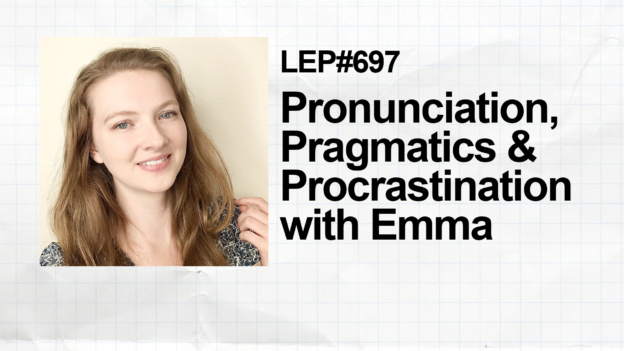
Talking to Emma from YouTube channel Pronunciation with Emma about accents, improving your pronunciation, understanding pragmatics in English, and learning English through video games.

Small Donate Button

[DOWNLOAD]

Introduction & Ending Transcripts

Hi listeners, welcome to the podcast. It’s mid December and Christmas is coming very soon. I hope I find you well and in good spirits. You might be wondering about the competition results after having voted for your favourite candidates. Thank you if you did vote, that’s fantastic. I’ll be revealing the results on the podcast soon when I’ve worked out the specifics of how to proceed with the competition. Once I have worked out the details of the next step I will let you know all the results. 

This episode is sponsored by LEP Premium. Go to teacherluke.co.uk/premiuminfo to get the details. Regular lessons with language teaching, memory tests for target language and pronunciation drills to work on your speaking, with plenty of stupid examples, nonsense fun and impressions too. Series 27 is currently being produced and you can expect to get episodes 3-8 in the next few weeks. teacherluke.co.uk/premiuminfo for all the details.

697. Pronunciation, Pragmatics & Procrastination with Emma

Hello listeners,

Welcome to episode 695 which is called “Pronunciation, Pragmatics and Procrastination with Emma” which is quite a mouthful isn’t it? 

Can you say it? Pronunciation, Pragmatics and Procrastination. 

What does this mean exactly? I’m going to tell you in this introduction.

What you’re going to hear is another conversation with a new guest on the podcast. I’ve had lots of guests on the podcast in the last few months. Here’s another one.

This time it’s Emma from the YouTube channel Pronunciation with Emma.

So, what can I say now to set up this conversation for you, and help you to enjoy it and learn from it as much as possible?

Emma is an English teacher with lots of qualifications – in language teaching and linguistics, as you will hear. 

Pronunciation

The pronunciation part is that in her YouTube videos she focuses on helping learners of English improve their knowledge and use of natural English pronunciation – you know, all the different features that make up natural English speech, including things like the specific vowel sounds & consonant sounds, sentence stress, word stress, intonation, elision, connected speech, and so on. 

Emma is particularly interested in pronunciation as it is one of the things that she focused on during her university studies.

So we talk about pronunciation as you might expect, with some bits about different accents and the question of what kind of pronunciation learners of English should aim for, and what kind of accent teachers should present to learners of English. 

Pragmatics

Another thing Emma focused on at university was the linguistic area of pragmatics. When we think about language, we usually analyse it in terms of grammar, vocabulary or pronunciation, but pragmatics is also a very important thing to consider. 

David Crystal says it’s actually the most important factor to consider when looking at how language works. 

According to David Crystal, pragmatics is the study of the choices you make when you use language, the reasons for those choices and effects that those choices convey. That’s a bit abstract at this point, but we do get into some examples during the conversation, examples like how to phrase requests in English, and how different types of requests can give a different impression on the people you are talking to. Or more simply, how certain requests can make you seem more or less rude. 

For example, what’s the difference between these things? And let’s imagine you’re on an aeroplane and the flight attendant wants you to put your bag under your chair. What’s the difference between making that request in these different ways? 

“Put your bag under your chair” and “Please put your bag under your chair” and “Can you put your bag under your chair?” and “Could you put your bag under your chair, please?” and “Could you just pop your bag under your chair for me please, thanks.” 

That could also apply to the way people use English when requesting things from me, in comments or emails, for example, as I discussed in a recent episode, if you remember, and if you don’t remember too.

So that’s the bit about pragmatics. 

But this episode is called “Pronunciation, Pragmatics and Procrastination with Emma”. I’ve mentioned the pronunciation and the pragmatics, so what about the procrastination part? 

Procrastination

Well, this relates to Emma’s other online English teaching channel – Procrastination with Emma, which is on Twitch.tv. Basically, Emma also does Twitch live-streams in which she plays computer games and helps people with their English while she’s doing it.

As you may know, procrastination means putting off doing other things which you have to do by wasting time doing something else. Like, for example if you have some important work to do, but you don’t want to do it for some reason, so you end up telling yourself you’ll do it later and then doing something else instead, essentially wasting your time. How do you procrastinate? Let’s say you’ve got English homework to do, but you end up spending your time playing computer games instead. Is playing computer games a waste of time? Maybe not. Maybe it can help you learn English. That’s the spirit behind Emma’s Twitch.tv gaming channel “Procrastination with Emma”.

So, stuff about accents & pronunciation, stuff about the pragmatics of how we make requests in English, and some stuff about improving your English through computer games. 

Actually those things mostly come up in the second half of this conversation. The first half is spent mainly getting to know Emma, finding out the usual things like where she’s from, what her accent sounds like, how she approaches language learning (because she speaks Spanish and also enjoys learning other languages from scratch) and any tips she has about learning English.

I won’t say much more here, except that I really enjoyed talking to Emma and you should certainly check out her YouTube videos and her live streams on Twitch.

Keep listening all the way through and I will chat to you again at the end of the episode, but now, let’s get started!


Links

Pronunciation with Emma on YouTube (Pronunciation videos) – https://www.youtube.com/channel/UCNfm92h83W2i2ijc5Xwp_IA

Emma’s website (Classes & Courses) – https://pronunciationwithemma.com/

Procrastination with Emma on Twitch (Live streaming/Gaming/English) – https://www.twitch.tv/procrastinationwithemma


Ending

So that was pronunciation, pragmatics and procrastination with Emma from Pronunciation with Emma on YouTube and procrastination with Emma on Twitch. That’s quite a mouthful isn’t it, again!

Right, well I hope you got a lot out of that conversation in various ways including just general knowledge, linguistic knowledge and not to mention specific vocabulary and phrases you might have noticed.

Thanks again to Emma for being a great guest on the show.

So Christmas time is approaching fast.

Normally at Christmas I take a break for a couple of weeks, but since I’m not going back to the UK this year I might continue podcasting. I certainly have a few episodes in the pipeline and they’ll drop over the coming weeks. I might take a break in the new year but we will see.

So, episodes in the pipeline include more conversations with guests on different topics and a returning guest who is a friend of the podcast who we haven’t heard from in a while.

Also P27 parts 3-8 are coming with the usual language practise and pronunciation work. Remember all my premium series have a lot of pronunciation drills so you can improve your speaking by simply repeating after me, paying attention to certain little language features as we go. www.teacherluke.co.uk/premiuminfo

In terms of the competition. Thank you to those of you who voted. As I said before, voting is closed now and I am working on the next stage in which I will announce the winner or winners and then the next steps for things like interviews, which will probably happen in the new year.

So hold tight for the results of the competition, and thanks for voting.

That’s all I have to say at this point except that I hope you are well. Please stay safe, stay positive, be excellent to each other and I will speak to you again soon, but for now, goodbye…

694. The Crown / The Royal Family (A Royal Ramble with My Wife)

Talking to my wife about the latest season of the Netflix TV drama The Crown, which follows the life and times of Queen Elizabeth II and her family. We talk about Charles & Diana, Margaret Thatcher, The Queen’s accent, Prince Andrew’s BBC interview and more.

Small Donate Button

[DOWNLOAD]

Introduction Transcript

Hello listeners, How are you today? I hope you are doing well. Here’s a new episode of the podcast. 

Several things before we start. 

WISBOLEP

The voting is over in the WISBOLEP competition. Yep, the voting closed on Sunday 6 December at midnight. I will be announcing the results in an episode of the podcast soon. So, stay tuned for that.

LEP Premium – www.teacherluke.co.uk/premiuminfo

Premium LEPsters – hello. I just want to let you know that I have uploaded several premium episodes covering language from my conversation with Lucy in the last episode. I went through the conversation again and picked out over 50 words and phrases that you might have missed, or that I think are worth highlighting and then I presented them to you with explanations, examples, a memory test and pronunciation drills. That’s P28 parts 1 and 2 and it’s in the premium section now. Also, Premium series 27 is underway and I recently uploaded parts 1 and 2 of that to the premium section – they contain some grammar and vocabulary language tips and practice, with pronunciation drills too. Parts 3-8 will be coming up in the next couple of weeks. If you want to know more about LEP Premium including how to get the episodes, and how they can really help your English in various ways – go to www.teacherluke.co.uk/premiuminfo 

— JINGLE —

694. The Crown / The Royal Family (A Royal Ramble with My Wife)

In this episode I am returning once again to the topic of the UK’s Royal Family. This time I’m talking to my lovely wife about the royals because we’ve recently been watching season 4 of The Crown and so royal stuff is definitely on our minds at the moment. 

Just in case you don’t know, The Crown is a Netflix TV series about the British Royal family. I expect many of you will be aware of it too and maybe you’ve also been binge-watching season 4 recently, like us. Here’s an episode all about it. 

My wife, who is French, is particularly fascinated by the bizarre lives of my country’s monarchs and we often talk about the show and the real events it is based on, so we thought it might be interesting to share some of our thoughts with you in an episode of the podcast. 

If you haven’t seen The Crown yet, and you’re worried about spoilers in this conversation, I don’t really think it is possible to spoil this show as it’s all based on real events which most people know about. In fact, listening to this before you watch the show, could even help you understand it and enjoy it a bit more. Also, if you have no plans to watch The Crown, I think that you can still enjoy listening to this. It’s not just for people watching the show.

I know what some of you will be thinking. You’ll be thinking – “Do you recommend this as a good show for learning English?” 

Yes, as long as you genuinely enjoy it.  I think most people agree that The Crown is good and that it’s interesting – high drama, beautiful to look at, great actors, an interesting topic.

You should also be aware that the characters speak in a very posh accent, which is not how most people speak. It’s not massively different to, let’s say, “normal English” but you should be aware that they do sound very posh and have a posh accent. It’s important to hear a wide variety of accents in English, because this is the nature of the language. It’s a diverse language and you need to take that into account when learning it. You should be able to understand the various accents and hopefully be able to identify them to some extent anyway.

So, overall – yes, I think it’s a good show to watch and can definitely be useful for your English.

To get more specific tips about how to use TV shows like this to improve your English, listen to episode 660 of my podcast.

The Crown is currently in its 4th season, which deals with the period in which Maragaret Thatcher was the Prime Minister, and when Prince Charles married Lady Diana Spencer – later to be known as Princess Diana. So this is the late seventies, the eighties and the early nineties. 

In this conversation you will hear us talking in the usual rambling fashion about things like:

  • What we think of the show, including descriptions of how it looks and the production in general
  • The performances by some of the actors 
  • Accents you can hear in the show, especially the high RP which is spoken by the Queen and other royals.
  • What the show makes us think about specific members of the family, their stories, their relationships with each other and how they are represented in the show
  • What the show makes us think about the institution of the monarchy itself, including some of the pros and cons of having a royal family – for the country as a whole, but also for the individual members of the family itself who enjoy the luxuries of their privilege but are bound by the duties that they have to the crown 
  • We also assess the reign of Elizabeth II, and talk about “Operation London Bridge is Down”, which is the codename that refers to the official plan for what will happen in the days after the death of Queen Elizabeth II, when that inevitably happens. It’s actually quite extraordinary and makes you realise how significant The Queen is to the nation.
  • We also end up talking about the recent scandal involving Prince Andrew, who is one of The Queen’s four children – he’s the third one in fact. I don’t know if you are aware of this scandal, but it was big news in the UK. It is actually a disturbing and shocking story, but it’s also fascinating. I am referring to Andrew’s association with Jeffrey Epstein, who was convicted of the trafficking and prostitution of underage girls. Epstein died in prison in pretty suspicious circumstances. The official story is that he committed suicide but plenty of people believe that he was killed in order to prevent the truth from coming out. Anyway, Andrew was allegedly one of Epstein’s friends or “associates” let’s say and in fact one girl who was a victim of Epstein’s has made claims against Andrew specifically. In response to those claims, Andrew chose to conduct an interview with the BBC in 2018 . He wanted to deny all the claims against him, but the interview did not go very well and it was a bit of a PR disaster for Andrew. I find it absolutely fascinating as well as disturbing and I’ve been wondering for ages whether I should discuss it on the podcast. Keep listening to find out more about this whole story.

The Royal Family Tree

Before we start properly I think it will really help if I remind you of the basic family tree in the Royal Family.

So there’s The Queen of course. Queen Elizabeth II. She has been Queen since 1952 and that’s the longest reign of a UK monarch in history. Her husband is known as Prince Philip, the Duke of Edinburgh. In season 4 of the show The Queen is played by Olivia Coleman and Philip is played by Tobias Menzies.

The Queen’s mother was also called Elizabeth but she was commonly known as The Queen Mother. She died in 2002.

The Queen had a sister, called Margaret, known as Princess Margaret, played in the show by Helena Bonham Carter. Margaret also died in 2002, less than 2 months before The Queen Mother, in fact.

Queen Elizabeth and Prince Philip had 4 children. The oldest is Charles, the Prince of Wales and the heir to the throne. Charles married Lady Diana Spencer in 1981 and she became Princess Diana of course. They had two children. The first is William, now the Duke of Cambridge and married to Kate Middleton, the Duchess of Cambridge. They have three children. The oldest is George and he is third in line to the throne after Charles and William. 

Charles and Diana’s second child is Harry who is now married to Meghan Markle. Harry and Meghan are to some extent cut off from the royal family as they chose to leave their public duties fairly recently, and they were quite heavily criticised for that. William, Kate, Harry and Meghan don’t actually feature in the show, but they do come up in this conversation.

Charles and Diana’s marriage ended in divorce in 1992. Diana of course died tragically in a car crash in Paris in 1997.

Charles later married Camilla Parker-Bowles, who he had been romantically involved with since before he married Diana. Charles and Camilla are now known as the Duke and Duchess of Cornwall.

The Queen’s other children are Princess Anne, Prince Andrew and Prince Edward.

That’s probably enough information about the family tree there, but I decided it was probably a good idea to remind you of their names and their positions in the family, just so you definitely know who we are talking about.

Anyway, I won’t go on much longer here in the introduction, except to say that my wife  enjoys being on the podcast from time to time and she loves talking about this topic, but she’s a little bit self-conscious about speaking English in front of my entire audience like this. But I assured her that my audience are all lovely and non-judgemental and that she has nothing to worry about – so, listeners, don’t let me down. OK? 

Right then, I hope you now can enjoy sharing some time with us in our living room, having quite a long and rambling conversation about The Crown and all things Royal and here we go…

—–

Video Clips

That moment when Charles said “Whatever love means anyway…”

When The Queen met Michael Fagan after he broke into her bedroom

https://www.youtube.com/watch?v=M5sDg5Nkqjc&ab_channel=MJLourensMJLourens

Ending

There’s nothing more for me to add here except this:

  • What do you think about all of this? I mean about the royal family and all that stuff. Do you feel sympathy for the individual members of the family?  Have you seen The Crown? What do you think of it?
  • We didn’t talk much about Margaret Thatcher, played in this series by Gillian Anderson who first became known for playing Scully in The X Files. We are fans of hers, and my wife thinks her performance in the show was great. I’m not so sure. I partially agree. Anyway, we couldn’t cover everything in this conversation.
  • Finally, what do you think – should I do an episode all about the Prince Andrew interview on the BBC?

Thank you for listening.

Reminders

Premium LEPsters – check out the app and the website for the latest premium episodes. If you’d  like to sign up go to www.teacherluke.co.uk/premiuminfo 

WISBOLEP – I’ll be revealing the results and talking about what happens next in a forthcoming episode, soon.

Right, so I will speak to you again soon, but for now – goodbye!