Hello website LEPsters! Here is some more listening you can do while waiting for the next episode of LEP.
I was recently invited onto The Earful Tower Podcast by Oliver Gee (remember him from episode 495?) We recorded an episode all about the Paris Metro while riding the Paris Metro. You can listen to it here.
You’ll hear us talking about our experiences of using the Metro, some of the things we find fascinating, funny, weird, cool and even disgusting about it. You can hear various background noises and experience what it’s really like to travel through Paris on line 2 with Oli and me.
Keep listening to the end to hear a cool story from Paris’s history, read by Oliver’s regular storytelling guest Corey Frye.
Oliver Gee is a journalist from Australia now living in Paris. His podcast is all about Paris and episodes include interesting stories, bits of history, chats about language and comments about the cultural differences. It’s all in English and you should check out his episode archive – you’ll find several appearances by Amber Minogue, one episode with Paul Taylor and two with me (including this one). Enjoy!
p.s. You might be wondering whether our baby daughter has been born yet. Well – not yet! We are still waiting. She’s currently one day overdue, but everything’s fine. She could still arrive at any time. We’re waiting with bated breath.
More episodes of LEP coming before too long.
Don’t forget todownload the LEP App and enjoy listening to some full-length episodes only available in the app, plus more bonus content.
Celebrating 500 episodes of LEP with a mega-ramble featuring lots of messages from listeners, expressions of gratitude, a cool announcement for all my listeners, some singing, some talk of becoming a dad, the future of the podcast, Star Wars, and loads of fun and good times. Thank you for listening! Parts 1 & 2 are both available on this page.
Thank you to everyone who took part in episode 500 by sending me a message.
This became a massive celebration. I didn’t expect to receive so many messages. Thank you for all of your kind words, support, and joyful sentiments. I really appreciate it!
Thank you for listening to my podcast all these years. It means a lot to me. I’m looking forward to making more episodes in the future. Seasons greetings for the festive period and have a Happy New Year!
The Luke’s English Podcast APP is NOW AVAILABLE
Get the app on your phone. Download links below.
This is the best way to keep up with episodes of the podcast and get access to special app-only content.
All episodes of LEP are available in the app – every archived episode, all new releases and some exclusive app-only content. Also, check out the bonus gifts and easter eggs, pdfs and more…
Download Luke’s English Podcast App from the Apple App Store, the Google Play Store or the Microsoft App Store. Links below.
This is the most convenient way to access all episodes of Luke’s English Podcast on your iPhone, including special bonus episodes only available in the app.
This app gives you complete access to Luke’s English Podcast and if you’re a fan of the show you will not want to live without it!
The app contains the following features:
* Option to stream or download all episodes for offline listening
* Access to exclusive app-only episodes and pdfs
* Episode notes and transcripts available in the app
* Always updated with the latest episodes – and the full episode archive
* You can *star* your favourite episodes and save them to a list in order to easily enjoy them over and over again
* Speed control so you can listen faster or slower if you want
* Skip forwards or backwards by 30 seconds if you missed something
* Sleep timer so you can fall asleep to my voice without missing anything!
* Playback resume (when interrupted by a call or other distraction)
* Quick access to all the contact methods for Luke like email, website, Facebook and Twitter. Don’t be a ninja! Send me an email through the app whenever you want.
Thank you for downloading this app and supporting the show!
Luke
Luke’s English Podcast is a free audio podcast for learners of English as a foreign language, hosted by Luke Thompson – a comedian and English teacher from London, UK. Listen, learn and have fun while picking up natural British English as it really is spoken.
Talking to Amber about the UK’s Royal Family, including our thoughts on the upcoming wedding between Prince Harry and Meghan Markle, some royal gossip & rumours, and also a Royal Family Quiz with questions about the monarchy today and in history. So, expect to hear our thoughts and some facts about this very traitional British institution. Notes available.
[DOWNLOAD]
Introduction Transcript
Here’s an episode about the Royal family.
You probably know that recently we had the news that Prince Harry is going to marry his gorgeous girlfriend Meghan Markle. I don’t know if that made the news where you are.
There’s going to be another royal wedding next year. This is actually quite a big deal for the UK.
You might be wondering what British people think about all of this. What do we think about Harry and Meghan and what do we think of the Royal family in general?
Well, I can’t ask every single Brit what they think, but I can give you my opinions and the opinions of Amber, who I am talking to in this episode..
Also this gives us an opportunity to chat generally about the Royal Family on the podcast again, and that’s usually a subject which attracts quite a lot of interest from abroad.
Also, in this episode Amber and I have prepared some quiz questions about the royal family.
I wonder if you know the answers.
So first you’ll get a discussion of Harry and Meghan, and then a royal family quiz.
Let’s see how much you know about the royals and hopefully this episode can help you you learn a few things about the British monarchy that you didn’t know before, including some scandals, some rumours, some big moments in history and other interesting facts about this most traditional of British institutions.
—- Conversation Notes and My Quiz Questions —
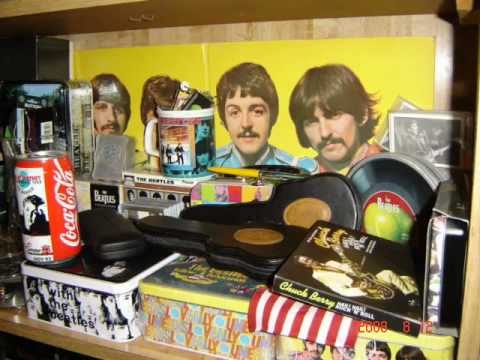
Amber mentions “Christmas-abilia” – this is not a word! She just made it up. She meant ‘bits and bobs relating to Christmas, like decorations and things in her flat.
It sounds like “memorabilia” which means: objects that are collected because they are connected with a person or event that is thought to be very interesting. (Cambridge Dictionary)
e.g. Beatles memorabilia, or memorabilia from the royal wedding. Stuff like this:
Prince Harry is marrying Meghan Markle next May.
Who is Meghan Markle?
An actress from the TV show “Suits”
Background – Rachel Meghan Markle[5][6] is of Dutch, English, and Irish descent through her father. Don’t know about her Mum but apparently she was African-American. She was born on August 4, 1981, in Los Angeles.[7] Describing her parents, she has said, “My dad is Caucasian and my mom is African-American … I have come to embrace [this and] say who I am, to share where I’m from, to voice my pride in being a strong, confident, mixed-race woman.” [8] (Wikipedia)
Divorced
American
Catholic (sounds like Wallace Simpson – the woman Edward VIII chose to marry)
What do we think of her?
Royal Family Quiz – Luke’s Questions
How much does it cost the UK taxpayer per year (on average) to maintain the royal family?
About 66p in 2016. That’s the part that comes from the treasury.
The family also gets money from other places. (see article)
Where do the royals get their money from?
2 or 3 main sources.
Sovereign Grant – about 15% of the profits made by the Crown Estate. That’s money made from all the properties owned by the Queen. I’m not sure how the money comes in – it’s probably rent, ground rent, entry fees for visitors etc. All that money goes to the government, who give back 15% of it two years later.
The Privy Purse – profits from all the land and assets that have been owned by the royal family for generations. Residential, commercial and agricultural properties. It’s about 184 km2. Between 2015-2016 that was about £17.8m. That pays for expenses incurred by other members of the family.
Private savings and personal fortune. The Queen herself owns properties which she inherited from her father, including Balmoral castle in Scotland. She also has a large art collection apparently. This is all worth about £340m.
How many monarchs can you name from the Queen back?
https://en.wikipedia.org/wiki/List_of_British_monarchs
Who has to die for Harry to take the throne? (Can you tell me the line of succession?)
The Queen, Prince Charles, George, Charlotte – they all have to go before Harry can become king.
Queen – Charles – William – George – Charlotte – Harry – Harry’s Kids (none) – Andrew – Andrew’s kids (Beatrice and Eugenie) – Edward – Edward’s kids – Anne – Anne’s kids – no idea.
Queen Elizabeth II (born 1926)
(1) Charles, Prince of Wales (b. 1948) B D W
(2) Prince William, Duke of Cambridge (b. 1982) B D W
(3) Prince George of Cambridge (b. 2013) B D W
(4) Princess Charlotte of Cambridge (b. 2015) B D W
(5) Prince Henry of Wales (Prince Harry) (b. 1984) B D W
(6) Prince Andrew, Duke of York (b. 1960) B D W
(7) Princess Beatrice of York (b. 1988) B D W
(8) Princess Eugenie of York (b. 1990) B D W
(9) Prince Edward, Earl of Wessex (b. 1964) B D W
Which living royals (in the nuclear family) are divorced? Did they have affairs?
Charles
Anne
Andrew
(Diana, Sarah Ferguson – both had affairs which were leaked in the press)
What gives the monarch his/her power?
It’s a covenant with god! Haven’t you seen Monty Python and the Holy Grail?
https://www.youtube.com/watch?v=JvKIWjnEPNY
What would happen if the Queen murdered someone?
Nothing, apparently. She can’t be prosecuted. Amber disagrees.
True or false?
The Queen has her own poet. True – poet laureate is officially the poet to the monarch and is paid in sherry. TRUE
The Queen can fly and regularly pilots her own helicopters and light aircraft. Her favourite is a Harrier Jump Jet which she sometimes flies over Dartmoor where she enjoys blowing up deer. FALSE
By law, all pubs in the UK must display a picture of the Queen behind the bar. FALSE
The Queen and Winston Churchill once had an affair. FALSE
The Queen doesn’t really like Scottish people. FALSE
The Queen smokes cigarettes. FALSE
The Queen smokes pot. DUNNO – probably FALSE. Queen Vic used it.
The Queen owns all dolphins which swim in British waters. TRUE
The Queen owns all the Swans on the River Thames. TRUE
The Queen writes ‘the laws of the land’. FALSE – she gives them ‘royal assent’.
The Queen is in charge of the government, including the PM. FALSE – not really in charge of them, but she officially invites them to form a government on her behalf.
The Queen’s powers include visa free travel, veto (refusal of royal assent) and invisibility. TRUE (except the invisibility – we think)
Will Megan be a princess when she marries Harry?
Which member of the royal family talks to trees and believes in homeopathy?
Outro Transcript
What you just heard there was The Queen’s speech from 2015. That was actually the Queen’s voice. Have you heard her speak before?
She speaks in a heightened RP, or as some might say “very posh English”.
I don’t know if you can recognise it, but to me it’s unmistakable. For you it might just sound like clear speech (which it is – she does speak very clearly), but for me there are certain features of her voice that are a dead giveaway that this person is really posh, and honestly this kind of “posh” accent isn’t how most people speak. For example, my Dad and I speak clearly but we don’t have this posh accent.
Every now and then I’ll hear someone speaking with this kind of accent and it’s a sign that they come from an upper-class background. There’s a lot more to say about this subject and I intend to explore it further in later episodes.
Anyway, thank you for listening to this episode. I look forward to reading your responses in the comment section.
Have a great day, morning, afternoon, evening or night and if you are celebrating Christmas this year I hope you’re starting to get into the Christmas spirit.
By the way, our baby hasn’t arrived yet, but it could be any day now. I don’t know how that will affect the podcast, but if there are no new episodes for a week or two, that’s why. I think I should be able to record something for you, so I don’t think there will be a big delay, but anyway – if you don’t hear from me from a bit, it’s probably because I’m changing nappies, dealing with visiting family members, and generally in a sleep deprived condition.
Alright then, thanks for listening and speak to you soon I hope.
Talking about a classic British film which not many learners of English know about. Listen for explanations of the film, its appeal, descriptions of the characters and events, the type of people who like the film and a few bits of dialogue too. Notes available.
Today on the podcast I am going to be talking about a cult classic of British cinema – a film called Withnail & I.
This is a slightly ambitious episode because in my experience this film is usually very difficult for learners of English to fully appreciate. Even the title of the film somehow fails to register with many people when I tell them.
“Can you recommend British films?” one of my students might say.
And I say “Yes, definitely. You should watch Withnail & I”
And the person’s face creases into an expression of “what was that you just said?” “Withnail and I” I repeat.
But still, this clearly just seems like a noise to this person.
He doesn’t know what to write. He doesn’t know how many words that is. He doesn’t know how to spell “Withnail and I”. He’s lost for a moment.
So I write it on the board “Withnail and I”.
Still, this doesn’t help much. The person doesn’t even recognise the word “Withnail”. It’s difficult to spell, it’s difficult to pronounce, it doesn’t seem to mean anything.
Then I think – “There’s no way this guy is going to enjoy this film, he can’t even get past the title.”
But something inside me says – “Luke, Luke… I am your father…” No, it says “Luke, you need to make these people watch this film. It is your duty as a British person teaching people your language and culture. These people need to see this film. They need to know what a Camberwell Carrot is, they need to know about cake and fine wine, they need to know why all hairdressers are under the employment of the government. It is your duty Luke, to teach these people about the wonderful world of Withnail and I – even if they don’t want it!”
So now I feel duty bound to tell you all about this cult British film. By the way, the title of the film “Withnail and I” – these are just the two characters in the film. Withnail and another guy whose name we don’t know. He’s simply “I”.
If you’re interested in British films, if you like slightly dark comedies with good acting, interesting characters, an excellent script and some top level swearing – this is a film for you.
You might never have heard of it, I realise, and that’s partly why I’m doing this episode. I like to recommend things that you might not know.
Withnail and I is a cult film which means it’s very very popular with a certain group of people. It’s not a mass-appeal sort of film. It might not be the film you think of when you consider typical “British films” – you might think of something like Love Actually or a Jane Austen adaptation, but Withnail & I is a film that you will definitely know if you a proper lover of British films. It is a cult classic and those who love it – really love it with a passion as if they’ve lived the film themselves in their own lives.
But not everybody gets it. Certainly, in the UK it is very highly regarded by people who have a special love for films, but it’s not a film like Four Weddings or James Bond which seem to appeal to everybody. Plenty of Brits don’t get it. Also learners of English hardly ever know about it (because in my experience most learners of English understand British cinema as things like Hugh Grant, Harry Potter and even Mr Bean). It can be a difficult film to understand if you’re not a native speaker from the UK. It’s not well known in the USA even.
But as I said, it’s a cult success in the UK.
Cult has two meanings. A cult can be a sort of small religious group devoted to a particular person, but when cult is used as an adjective with something like “film” then it means that this film is extremely popular with certain people.
What kinds of people like this film?
Why do people love this film so much?
What is the appeal?
What can this film tell us about British culture?
Why should you as a learner of English take any interest in this film at all?
How can you learn some real British English from this?
Let’s find out in this episode of Luke’s Film Club on Luke’s English Podcast all about Withnail & I.
I’m a huge Withnail & I fan but in this episode I’m also joined by several other Withnail fans who are very keen to talk to you about one of their favourite films.
Those two fans are my brother James and his mate Will.
I just sincerely hope that we can somehow explain this film and its appeal, and make this interesting for you to listen to (that’ll be hard considering it’s three blokes with similar voices talking about an obscure film that you’ve probably never seen).
Withnail and Us – a great documentary about the making of the film, by the people who made the film.
https://www.youtube.com/watch?v=-G9WMeGl_Uw
Bruce Robinson interview
https://www.youtube.com/watch?v=d5kZPugLqfs
Bruce Robinson & Richard E Grant at the London BFI
The Hamlet Monologue (Act 2, Scene 2, Page 13)
“I have of late—but wherefore I know not—lost all my mirth, and indeed it goes so heavily with my disposition that this goodly frame, the earth, seems to me a sterile promontory; this most excellent canopy, the air—look you, this brave o’erhanging firmament, this majestical roof fretted with golden fire—why, it appears no other thing to me than a foul and pestilent congregation of vapors. What a piece of work is a man! How noble in reason, how infinite in faculty! In form and moving how express and admirable! In action how like an angel, in apprehension how like a god! The beauty of the world. The paragon of animals. And yet, to me, what is this quintessence of dust? Man delights not me. No, nor woman neither.”
In plain English:
“Recently, though I don’t know why, I’ve lost all sense of fun —the whole world feels sterile and empty. This beautiful canopy we call the sky—this majestic roof decorated with golden sunlight—why, it’s nothing more to me than disease-filled air. What a perfect invention a human is, how noble in his capacity to reason, how unlimited in thinking, how admirable in his shape and movement, how angelic in action, how godlike in understanding! There’s nothing more beautiful. We surpass all other animals. And yet to me, what are we but dust? Men don’t interest me. No—women neither.”
Outtro
What you just heard there is the final scene of the film in which Withnail repeats lines from Hamlet by Shakespeare and it’s quite a tragic ending, but you’ll have to watch the film to find out what happens.
So that was an ambitious episode! I honestly think this one is as ambitious as the one about the rules of cricket. All the way through that conversation alarm bells were ringing in my head.
Sometimes I get alarm bells when I’m teaching. From experience I know what my learners of English will and won’t understand. For example, if there’s a listening that we’re doing and it contains a few phrasal verbs or connected speech or a specific accent, the alarm bells ring in my head and sure enough none of my students have understood it.
So for this episode alarm bells are ringing like mad. First of all the film is like kryptonite to students of English (which is a pity because there’s a lot to enjoy), but also because you were listening to three guys talking with fairly similar voices in a comfortable way – meaning, not graded for learners of English to make it easier, and also we’re talking about a film that you’ve probably never seen. Also the little clips in particular were, I’m sure, rather difficult to follow.
So a big well done if you made it this far. I promise you that this film is an absolute gem and if you give it a chance it will actually improve your life.
I have talked about this film on the podcast before and in fact I do remember getting a message from a listener who said that she had watched the film on my recommendation with her boyfriend and that now they enjoy repeating lines from the script when they are about the house.
So if they can get into it then you can too, although of course this film is not for everyone, that’s why it’s a cult film.
I’ve just remembered, I promised to play the Withnail & I swear-a-thon. That’s like a marathon isn’t it, but with swearing.
Withnail and I is celebrated for its swearing and there is a lot of colourful rude language in the film. For the 20th anniversary DVD box set someone edited together all the swearwords from the film in order. This is the Withnail and I swear-a-thon. Now, as you would expect the next minute or so is going to be absolutely filled with swearing so brace yourselves. YOu’re going to hear all sorts of rude words like bastard, shit, fuck and also cunt. Here we go.
I hope you’ve enjoyed listening to this episode of Luke’s Film Club on Luke’s English Podcast.
Check out the page for the episode for some notes, transcriptions and also a bunch of video documentaries, clips and interviews that are definitely worth watching if you’d like to know more.
Have a great morning, evening, breakfast, lunch, dinner, sleep, commute or run!
Discussing stereotypes and clichés about Australia with podcaster Oliver Gee who comes from a land down under. Learn about Australian English, Aussie accent, Aussie slang and exactly what you should say whenever you meet a true blue Aussie, mate! Vocabulary list available. Hooroo.
Today on the podcast I’m talking to Oliver Gee who comes from Australia.
Oliver lives in Paris these days and is a journalist and podcaster – he does a podcast about Paris for World Radio Paris, which is a sort of radio network in English, based in Paris.
Oliver’s podcast is called The Earful Tower – and it’s available from all good podcasting apps and online at https://theearfultower.com/
If you are a subscriber to my email list then you’ll know that earlier this year Oliver invited me onto The Earful Tower to talk about French people learning English. You can find conversation on the Earful Tower in the episode archive.
This time I thought I’d invite Oliver on to LEP in order to talk about all things Australian.
Australia is of course a country where English is the first language and Australian English is a thing. It’s definitely a thing. I mean, it’s a major type of English in its own right. Everyone always talks about American English and British English as the two types, but of course there are plenty of other types of English – with their own accents, particular words and so on. Australian English, New Zealand English, Irish English, South African English, Canadian English and more…
But let’s turn our attention in this episode to Australia.
Australian English is it’s own thing basically. Originally it was a form of British English, but like American English it has evolved into its own form of the language, with a distinctive accent and vocabulary that reflects the things you might see, experience or feel if you were living in this place which is very far removed from life in the UK. Australian English is also undoubtedly influenced by American English as well to a certain extent.
Now, let’s consider the land down under before listening to this conversation. I want you to think about Australia.
What do you know about Australia? Have you ever met an Australian? Or been to Australia itself? Can you recognise or understand Australian accents? What does an Aussie accent sound like? What should you say to an Australian when you meet them, in order to impress them? What are the stereotypes of Australia? Are they true? And what are Vegemite, Tim Tams and Thongs anyway?
You can now look for answers to those questions as we now talk to Oliver Gee from Australia… (didgeridoo sounds)
Australian Words, Phrases and Reference Points
G’day
Mate
How ya going?
Arvo
Bail – to cancel plans
Barbie – Barbecue
Brekky – Breakfast
Brolly – Umbrella
Choccy Biccy – Chocolate Biscuit
Chrissie – Christmas
Ciggy – a Cigarette
Dunny – Toilet
Good On Ya – Good work
Heaps – loads, lots, many
Maccas – McDonalds
No Worries – it’s Ok
Servo Service Station
Sickie – a sick day off work
Stoked – Happy, Pleased
Straya – Australia
Thongs – Flip Flops. Do not be alarmed if your new found Australian friend asks you to wear thongs to the beach. They are most likely expressing their concern of the hot sand on your delicate feet.
Other references (some clichés)
Crocodiles
Spiders
Snakes
Ugg boots
Didgeridoos
Boomerangs
Flip flops (thongs)
Relaxed people
Beer drinking
Vegemite
Selfies
Baz Lurhman making a film
AC/DC
Sydney Opera house
Heath Ledger
Kylie
Koala bears
The outback
Steve Irwin
Hugh Jackman and Chris Hemsworth
WI FI
Black box recorders
Polymer banknotes
Wine
BBQs
Cricket
Tim tams
Aborigines
The spork
Coffee
Outtro
So that was Oli Gee from Australia mate.
I hope you enjoyed listening to our conversation.
Remember you can listen to Oli’s episodes of The Earful Tower on iTunes or any other good podcasting service. Find the earful tower episode with me talking about French people learning English by dipping into the episode archive on teacherluke.co.uk and search for Earful Tower.
That brings us to the end of this episode.
Thank you for listening .
Check the page for this episode on the website and you’ll find transcriptions of the intro and outtro and some notes for my conversation with Oli including some of the Australian slang and other specific words.
Join the mailing list.
Episode 500 is coming up and I’m thinking of things to do for it.
Please send me your voice messages for episode 500 – luketeacher@hotmail.com
One idea I had was to collect audio messages from you the audience – short ones, and then put them all up in episode 500. So if you have any messages for me, please send them to luketeacher@hotmail.com
What I’d like you to say is:
Your name
Where you’re from
Something else, like:
If you’d like to say something to the audience
If you’d like to say something to me
If you’d like to ask me a question
How you first discovered the podcast
How you learn English with the podcast
Anything else you’d like to say
Make it no more than 30 seconds. I know that’s short but it’s going to be a montage of all the recordings and it’ll be really cool if they’re all pretty short.
So about 30 seconds and don’t forget to say your name and where you’re from. It’s not a competition this time but more of a celebration. I can’t believe I’ve done 500 episodes and they’re all about an hour each or more.
Anyway, it’s been a lot of fun and I’m very happy to have reached 500 episodes. Why don’t you celebrate with me and send a voice message to luketeacher@hotmail.com
A conversation and vocabulary lesson about childbirth and becoming a father, with Andy Johnson and Ben Butler from The London School of English. Listen to Andy and Ben talking about their experiences of becoming parents, how their babies were born and more. Vocabulary is explained in the second half of the episode. Vocabulary list available.
If you have heard the podcast recently you’ll know that my wife and I are expecting a child… (expecting a child to do what Luke…?) Well, expecting a child to be born… we’re having a baby, well she’s having a baby, as I said before, I will mainly be just standing there, hoping for the best.
“Expecting a child” is just the phrase we use for that – when you’re going to have a baby. We’re going to have a baby daughter in December. Thank you if you have sent me messages saying congratulations, that’s very nice of you.
I don’t plan to talk about children all the time on this podcast. Having a child is a big deal, but I don’t want to sound like a broken record by going on about it all the time, although it’s bound to come into the things I say because it will be major part of my life.
But I thought that it would be worth talking about it in some depth in at least one or two episodes because it is something that a lot of people experience (many of you will have had children, or will go on to have children and if not you then your friends or family – or at least it’s the sort of thing that people talk about a lot) and since this is happening to me I think talking about it could bring some authenticity to an episode, and that can really make it more interesting and therefore more engaging for you to listen to . Also there’s quite a lot of specific vocabulary that will come up that you can learn.
I did record a conversation with Amber nearly 4 years ago when she was pregnant with her son Hugo. She talked about what it was like for her to be pregnant and I did a follow-up episode with vocabulary of the subject too. You can find those two episodes in the episode archive – episodes 161 and 162. That was quite a long time ago, so let’s revisit the subject, and see if any of the same language comes up again.
This time I thought I’d talk to Andy Johnson and Ben Butler about their experiences of becoming parents, to see if they can give me some general advice as I am just about to become a dad for the first time.
They’ve both had several children now, so they’re very experienced at the sort of thing I’m going to start going through in a matter of weeks.
So I’m going to do a lot of listening and learning in this episode, and you can join me too. Let’s see how much we can learn from this.
Watch out for some nice language relating to the whole subject of childbirth, parenting, and so on.
This episode is in two parts – that’s because I’ve decided to spend the second half of each episode explaining some of the vocabulary that comes up in the conversation.
What’s going to happen is that I’ll play you the first part of the conversation in a moment. Just try to follow it. I think it might be difficult for a lot of you. I think that there could be quite a lot of detail that you won’t catch. There are 3 of us, talking on skype, fairly quickly about quite a specific and detailed subject. So, remember, if you don’t understand it all – you should keep listening and hold on because I will be going through a lot of the language and clarifying it afterwards.
That should help you understand more and also turn this into more than just a conversation – it’ll become an English lesson and a chance to learn some natural English expressions. So, don’t worry if you don’t understand it all. I expect to catch a lot of that stuff in the second half.
There’s also a vocabulary list on the page for this episode and the next one.
Now, having children is wonderful and fantastic and all that – but it can also be quite scary – I mean, it’s fairly serious business, especially the moment of birth. I think we’re going to get into some fairly personal details in this conversation, and there will probably be a few descriptions of childbirth experiences which were quite emotional and even frightening at the time so please just bear that in mind if this is a sensitive topic for you for any reason.
Another thing I’m aware of is the fact that there are various cultural differences around childbirth and so the things you will hear about in this conversation might be different to how it is in your country. I’m quite curious to read your comments and to know if things are done at all differently where you are from.
Anyway, let’s now talk to Andy and Ben now and see what they can tell me about becoming a dad, and by the way – this conversation was recorded on Skype. I was at home in Paris and they were in a classroom at the London School of English, which is just next door to where I used to live in my flat in London. In fact, from some of the classrooms there it is possible to see my old flat through the windows. In fact, that’s the first thing that is mentioned in this conversation…
—————————- Part 1 ——————————–
Ok that’s the end of part 1 of the conversation!
What I’m going to do now is go through some of the language you just heard but may have missed. You can hear the rest of the conversation in part 2, which should be available soon.
Now, a lot of the language in this list for this episode is about childbirth and parenting – but not all of this language is about those things. There’s also plenty of vocabulary that you can use to talk about things in general, for example there are a few football analogies that Andy and Ben used as well.
Check out the page for this episode where you’ll see a the word list that I’m going through here. You can take those phrases, put them in your word lists, your flashcard apps, and so on.
Create your own word lists
By the way, it might be a good idea to create a word list of your own. It’s so easy with the internet today. When you find new words online, copy + paste them into a list (maybe on a spreadsheet, a word doc or a google doc or something). Add examples, definitions, pronunciation, even links to podcast episodes or whatever, and also any details that will help you remember the word. That’s so easy to do, right? Just copy + paste and bob’s your uncle. Use an online dictionary like Oxford Dictionary online to get examples and definitions. Then you can keep going back to your list, testing yourself and making sure that you remember these phrases and that you don’t just immediately forget them.
Just a tip there for how you can use word lists, notes or scripts on my website to help expand your active vocabulary with this podcast.
Vocabulary list
It’s exciting and slightly nerve-wracking
Football expressions (to describe the sequence in which Andy & Ben had kids – as if it was a football match)
Ben, you went first with your baby and then Andy you came next.
Andy: I equalised.
It was 1 – 1.
It was 1 – 0 (one – nil) and then Andy equalised.
Then Ben took the lead again.
Then more recently you drew level again.
We’re both on a hat trick now but it’s more likely that the match has been abandoned now.
It’s full time (no more kids!)
Match abandoned – inclement weather.
We’re going to call it quits at two.
The scans tell us that she’s healthy
How am I going to change a nappy?
Those kinds of things are easy in hindsight.
There was quite a lot of apprehension around the birth.
The midwife is talking about the birth in French.
Whether you want to have a caesareansection.
A natural birth – (in the UK this means a birth in the conventional sense, not a cesarean) but I use it to mean a birth involving no epidural (or pain reducing medication)
So, here in France, when people say “a natural birth” they mean one with no pain killers.
In the UK “a natural birth” just means “not a cesarean”.
So, will it be a c-section?
An epidural – a nerve blocker which goes into the spine
She had an epidural and she said it was a game changer
We conceived on Valentine’s Day
We had IVF so we know exactly when it happened
With the second one we were induced
My wife would certainly advocate having an epidural because it makes things so much easier
A chemical induced state
A numb state
My wife is pretty hardcore, she’s hard as nails
She’s got no qualms about that. She’s happy to just have the epidural.
We tried for 3 years and never fell pregnant again
In the end we went through IVF
They take the eggs out and inseminate them in a test tube and then they go back in
Talk about taking the fun out of it! (Talk about… = a way of emphasising something)
Our friends were plying us with champagne
Did your wives have morning sickness?
It’s the first trimester when they get sick
She was narcoleptic
Her body was generating new cells and it took it out of her
When is your duedate?
You’re almost in the drop zone mate
By the time this has been published the sprog might have even arrived
Think about your social commitments and try and scale those back
Hello! In this episode of the podcast I am talking to Martin Johnston and his mate Dan The Man from the Rock n Roll English Podcast and we’re going to teach you some phrasal verbs and other expressions relating to friendship, while also putting their friendship to the test. Martin and Dan are lifelong friends. They know each other very well but they spend a lot of their time bickering and getting at each other. What’s going on in this friendship? Do they really like each other or not? Let’s find out in this episode and you can learn lots of vocabulary while we’re doing it. Vocabulary list and explanations below.
Here is a selection of vocabulary, including a lot of phrasal verbs relating to friendship, with definitions and the questions I asked Martin and Dan.
To get on with someone = to have a good, friendly relationship with someone
You often bicker with each other, insult each other, tell each other that you’re stupid, boring, generally shit etc.
How well do you actually get on with each other?
To hang out with someone = to spend time with someone, socially
What’s the maximum amount of time you can actually stand to hang out with each other?
To hit it off = to get on with someone when you first meet them
When you met, did you hit it off straight away? (was it love at first sight)
To get to know someone = to learn about someone personally
How did you first get to know each other?
To go back years / a long time = to have a long relationship with someone
How far back do you go?
To fall out with someone = to stop being friends because of a disagreement or argument
Have you ever fallen out with each other?
What would it take to fall out with each other, do you think?
What would you do in these situations?
Dan, you both go to the pub – you buy a round, but when it’s Martin’s turn he doesn’t buy a round, he just gets himself a drink (it’s a half a lager shandy by the way) and then he leaves early
Martin, Dan suddenly one day starts saying nice things about you in public
Dan, you overhear Martin saying some shit about your nan (grandmother) – he said she was a ‘slag’. (a very rude thing to say about anyone, especially someone’s grandmother – a slag is a woman who has sex with lots of people 😱)
Martin, you get a new girlfriend and then when she meets Dan you realise that she actually prefers him
Dan, you learn that Martin has asked your sister out on a date
Martin, your Dad one day says “Why can’t you be more like Dan?”
Dan, you buy some biscuits and Martin eats them all, even the last one
To make up with each other = to become friends again after falling out
If you did ever fall out, what would be the best way to make up with each other?
Martin, how would you make up with Dan because of the biscuits?
To break up with someone = to end a relationship with your boyfriend or girlfriend, to dump someone
Do you think it’s possible to actually break up with a friend, in the same way you can break up with a girl. I’m not saying that you would, I’m just wondering.
Have you ever been in a situation where you’ve got a friend (probably quite a new friend – or maybe someone who you knew as a kid who has come back into your life) and you feel like it’s just not working and you feel like you have to break up with him? (it’s in an episode of Seinfeld)
Seinfeld (TV show) – Jerry Breaks Up with a friend (it’s funny because you don’t normally ‘break up with’ a friend, only with a ‘romantic partner’)
To drift apart / To lose touch with someone = when your lives just start going in different directions (drift apart) and you stop contacting the person regularly (lose touch with)
You don’t see each other so much any more because you’re in different countries. Are you ever worried that you might drift apart, or lose touch with each other completely? “How’s Martin?” “Oh, I don’t know we just kind of lost touch”
To enjoy someone’s company = to get on with someone, to enjoy spending time with someone
Honestly, how much do you enjoy each other’s company?
To have something in common with someone = to share something similar. E.g. you both like Star Wars.
Do you have a lot of things in common? What things do you have in common?
To be in a relationship with someone = to be dating someone, to be romantically involved with someone
Martin, how do you feel about the fact that Dan is in a relationship? (is there any jealousy there?)
Dan, imagine Martin is going on a date with a girl tonight – what could you say to him as a friend in this situation?
To be on the same wavelength as someone = to have a similar way of thinking as someone
Are you on the same wavelength as each other?
To see something in someone (often → …what someone sees in someone) = to like something about someone, to find a good quality in someone
What do you actually see in each other?
What does Dan’s girlfriend actually see in him?
Other vocabulary you heard (explained at the end of the episode)
Martin: That sounds like the most boring introduction in the world. Dan: Actually, I think it’s quite apt.
I’ve been trying to get rid of him as a friend for a long time now.
Treading in dogshit all day. There’s an abundance of it. I almost tripped up on one the other day.
When they hear my terrible French they gladly switch to English, just to rub it in a bit.
My Italian’s not bad but I can get by.
I did a gig once in London, a charity gig.
You’re an accomplice now, because you planted that idea. (murder)
I’d like to explore the dynamic between you, a dynamic that some might call a bromance.
Martin came here at the weekend and 15 hours later we were both sick to death of each other.
You fall out, you get over it, you bounce back and then move on.
Martin: Dan always says that I’m tight. (mean, tight-fisted, stingy)
Dan’s sister: We all know that Dan is a tight bastard.
In the UK if someone doesn’t buy a round they are ostracised.
Dan: I’m trying to keep you on your toes (by buying Martin Christmas presents)
You overhear Martin saying some shit about your nan. He’s saying that she’s a slag.
I’m digging myself into a hole here.
Those awkward conversations that I just can’thandle. I avoid them at all costs.
The cross-examination of your friendship is over and I have to say I’m none the wiser about the mysterious dynamic that you have.
Here’s part 2 of this conversation with my Mum in which you can hear us wittering on about the bookshop where Mum works, some of the books she’s read recently, and some of her podcast and film recommendations. Vocabulary is explained at the end, and there’s a vocabulary list with definitions available below.
sewers = the underground tunnels that carry all the toilet waste (i.e. the piss and shit) away
Lots of entericdiseases
entericdiseases= diseases caused by unclean water
Entirely preventable diseases, but not easily treated
to prevent a disease = to ensure that a disease never infects people
to treat someone / to treat a disease = to give treatment to people who are suffering from a disease
to cure someone = to make a disease disappear completely, through treatment
They find the sewer and they blow it up so the authorities have to replace it
to blow something up = make something explode
How did they blow it up? With a bomb? With some sticks of dynamite.
a bomb = an explosive device
sticks of dynamite = things that look a bit like candles but they explode because they’re made of nitroglycerine (not wax) and have a fuse (not a wick)
It starts out with this man who starts out being incredibly idealistic and wanting to improve things and he gradually gets worn down by the system and ends up becoming one of these quacks who gets himself popular with people who have lots of money and treats them for things they haven’t really got, before he’s finally brought up short
to start out = to start from the very beginning
to be idealistic = to base your behaviour on certain ‘ideals’ or ‘principles’ even if it’s impractical or unrealistic. It’s a bit similar to ‘naive’.
to get worn down by something = to become weaker because of difficult experiences over time
aquack = a fake doctor
to bring someone up short = to suddenly stop someone doing something, often with a surprise
to be brought up short (passive version) = to suddenly be stopped (by something) in what you are doing, often with a surprise
It’s quite moving = makes you feel a strong emotion
There’s this characterarc of this guy who starts out innocent and gets seduced by the money
a character arc = a narrative or storyline for a particular character which changes from the start to the finish
There’s lots of parallels (with today)
parallels = similarities
there’s a lot of parallels / there’re a lot of parallels
It espouses socialist ideas
to espouse something = to support it (usually a way of life)
a heck of a lot (of something) = a lot (but emphasised with ‘a heck of’ – also ‘a hell of a lot’)
It’s about class, it’s about post-traumatic stress after the First World War, it’s about families losing sons
PTSD or post traumatic stress disorder = emotional distress or shock which continues in your life after experiencing extreme danger or stress. It’s common in soldiers who have experienced the shock of combat in war.
If English is your second language it can be a bit of a slog sometimes to keep going (reading)
People say he (Louis Theroux) is faux naive. He comes across as innocent so he has to ask questions to find out what’s going on.
to be faux naive = ‘fake’ naive – pretending to be naive
to come across as something = to give an impression of something – e.g. he comes across as a really nice guy (he gives the impression of being a nice guy). Tom Cruise comes across as being a really friendly, fun and hardworking person. I wonder if he is like that in real life. I expect he is hardworking, but I wonder if he really is that friendly and fun all the time.
He looks a bit dorky, goofy, geeky.
All these are words to describe someone who is not cool. They’re very similar yet slightly different in meaning.
dorky = unfashionable, awkward, not socially relaxed and laid back, a bit uptight and uncool.
goofy = just a bit ridiculous, but also in appearance – perhaps with teeth that are sticking out or big glasses, big ears – ridiculous looking features. Think of Goofy from the Disney animations.
geeky = interested (maybe obsessed) by things like computers, comics, science fiction rather than people. (Louis Theroux definitely isn’t a geek, but he comes across as geeky)
He’s quite tall. He’s a bit gangly. His arms and legs are very long.
gangly = a description of physical appearance – tall and thin with an awkward appearance and a clumsy manner
He’s got this awkward Britishness.
Awkward is a word that comes up a lot in my conversations. I often say that British people seem awkward, that I felt awkward in a situation, or that a particular situation was awkward. Louis Theroux can be described as having awkward Britishness.
Awkward = uncomfortable, not completely relaxed and loose, a bit embarrassing, a bit shy
Do you fancy him?
to fancy someone = to find someone physically attractive, in a sexual way (but this is the sort of word that teenagers use)
He’d spend time with all sorts of weird fringegroups
fringe = edge
fringe groups = groups that exist on the edge of society, e.g. cults, religious sects, conspiracy theorists, extremists etc
His naive awkward English friendliness is very disarming and as a result people open up to him
to be disarming (adj) = to make people less hostile or aggressive, perhaps by being charming.
to open up (to someone) = to become more open and revealing with people, e.g. to start talking about personal things
He’d lost the knack of being able to read for pleasure
the knack of doing something = a particular and skillful way of doing something. E.g. There is a certain knack to closing the bedroom door silently in my flat. You have to pull the handle down, pull the door in slowly, let the handle go back and then pull the end of the handle until you hear a little ‘click’. There’s a knack to doing it. In this case, my dad has lost the knack of being able to read for pleasure. ‘to lose the knack of doing something’ is a common way to say that you have lost the specific ability to do a certain thing.
A conversation about travelling and learning languages with Ethan from RealLife English. Ethan is very well-travelled, having lived in at least 6 different countries. He’s also learned a few different languages to a good level as an adult. Let’s talk about his advice for adapting to new cultures and learning languages in adulthood. Vocabulary notes and language test available below.
Arrive with an open mind and be ready to try anything
Don’t just hang out with people from your country
You have to make an effort to integrate into the country
Things might be weird, but you’ll end up having some really memorable experiences
Push yourself to live like a local, even if at first you feel like the lifestyle isn’t as good as it is in your country
Get over yourself! Get out of your comfort zone
Don’t go just to learn English, go somewhere for the whole experience – and if you do that you’ll probably learn English more effectively as a result
Ethan’s advice for learning English on your own
Watch a popular TV show with subtitles – it’s important to choose a show that you like.
Listen to music and taking the time to look up the lyrics.
He just talked to people, even though he was really awkward and shy because he made lots of mistakes.
Motivation is key – he fell in love with Catalan and this gave him the motivation to push through the difficult moments, the awkwardness etc. So build and nurture your motivation to learn a language. Realise how good it is for you to come out of your shell and remember that you can get over your barriers if you really want to.
Find the right people to talk to, find people who are understanding and sympathetic to your situation (someone who’s learning a language too).
Do a language exchange because the other person will be much more likely to tolerate your errors, and will be willing to help you out because you’re going to do the same for them. (you can use italki to find language partners in many countries – http://www.teacherluke.co.uk/talk )
Be voraciously curious – cultivate the desire to do more. If you’re listening to music, check the lyrics and look them up. While watching TV use a notepad or an app like Evernote on your phone to note down vocab and then look it up later.
Practice by speaking to other non-native speakers of the language you’re learning. Other learners of the language are likely to be more sympathetic, they’ll probably have more in common with you, they might have some good advice, you’re going through a similar experience. Having peers with whom you can share your experience is really important.
Some language from the first part of the conversation (Quiz below)
Listen to this episode to get some definitions and descriptions of this language.
Refurbished buildings (made to look new again)
You can see some random smokestacks and things sticking up (tall chimneys)
Three blocksfrom the beach. (distance between his place and the beach)
I tend to go running there (I usually go running there. Not – I am used to going running there)
The weather hasn’t really been beach-appropriate (appropriate for a beach!)
We’re just rolling into fall here (entering) (fall = autumn)
I enjoy running by the beach, especially because the whole area around the beach is very iconic from when they had the Olympics here (impressive because it’s a famous symbol of something)
A modernist humongous whale structure (massive)
Every time I look at it I’m just astounded, it’s beautiful. (amazed)
Language for describing Ethan’s background (background – narrative tenses, past simple, past continuous, maybe some past perfect)
I moved back here (already) two months ago.
I was living here two times before, once for a year and a half and once for 3 months. (normally I’d use ‘I lived’ but perhaps he was thinking of it as a temporary thing in both cases)
Ways he talks about his current situation – present perfect to describe past events with a connection to now.
I’ve come back to stay, probably indefinitely, hopefully for a couple of years. (this is the only example actually)
Describing your background and your current situation
Describing your background
You need to use narrative tenses to describe your background story, and you need to learn how to do this in English and to be able to repeat it with some confidence. It might be worth thinking of how you can make your background story quite interesting or entertaining, or at least say how you felt about it. It just helps in social situations.
Remember: Past simple – the main events of the story – the main sequence Past continuous – the situation at the time, or longer events which are interrupted by shorter actions Past perfect – background events to the main events of the story
E.g. I went to university in Liverpool and studied Media & Cultural Studies. It was a really interesting degree, but it wasn’t very useful. I stayed in Liverpool for a while and played music in a band but we didn’t make it and I left and moved back in with my parents which was a bit of a nightmare. I didn’t really know what to do with myself for a while, but I decided I wanted to travel and go somewhere quite different, and I‘d always been curious about teaching, so I trained to be an English teacher and I got my first job in Japan. I stayed there for a couple of years, had a great time but decided that I wanted to come back because of family reasons. I taught English in London for 8 years, did my DELTA, got a job in a good school in London and then I met a French girl and I moved to France so we could be together. I’m very romantic. (actually that was almost exclusively past simple, wasn’t it?)Describing your current situation
Then you also need to talk about your current situation. We do this with present simple (permanent situations) and present continuous (temporary situations) and present perfect to talk about past actions with a connection to now.
E.g. I live in Paris these days. I’ve been here for about 5 years. I’ve worked for a few different schools, teaching English. These days I teach at The British Council. I’ve been there for about 3 years now. I’m also developing some online courses which I hope to release on my website before too long!
I’m from Colorado in the USA. Luke: Oh cool. (I said cool – because you should say cool when someone tells you where they’re from, or at least you should show some interest or curiosity, and be positive about it.)
It’s below Canada and above Mexico, between the Atlantic and Pacific oceans. (my non-specific description of where Colorado is – basically, it’s somewhere in the USA, haha etc)
It’s (to the) north east of Arizona, (to the) east of Utah, above New Mexico.
What’s the difference between ‘east of London’, ‘to the east of London’ and ‘in the east of London‘?
The four corners – it’s just a couple of hours away from the town I grew up in. (how would you put that in your language? “It takes two hours to get there”, “It’s a couple of hours from here”
It’s a tourist trap now. You go and put your hand in the middle and you’re in four states at once. (a place that attracts tourists and is probably best avoided)
I was born in my house. Durango, Colorado. That’s the town I lived in.
When I was 17 I moved to Germany for 6 months.
It’s interesting to see that, when you’ve lived in a place for 20 years, how it evolves. (how it changes gradually over time)
Colorado is wonderful, it’s spectacular. (magnificent, amazing, breathtaking)
We’re so active, we’re always outdoors. There are spectacular hikes you can do.
There are 4,000 or 5,000 metre peaks. (summits, mountain tops)
It’s very different to Europe because you get that kind of old-west feeling. (from the period of western expansion) (wild west – cowboys and lawlessness)
My only criticism is that I lived there for 20 years, which is more than enough. (nice way to start a sentence with something negative in it)…. (more than enough = too much)
I’ve never seen a grizzly, and they are dangerous. (grizzly bear)
Mountain Lions – if you were by yourself and you encountered one, it might not be a great end for you. You might get eaten alive by a huge cat. (You don’t meet a wild animal, you encounter one.)
We have deer and elk and in the north we also have moose, and a lot of, we’d say, critters, like small animals. (deer = animals that look like they have trees growing out of their heads – you know what I mean. Like Santa Claus’ reindeer. Elk = big deer. Moose = really big elk. Critters – little animals like rabbits, squirrels, chipmunks, rats, raccoons, skunks)
In the US you drive from city to city and you see endlessexpanses of mountains and plains. (wide open spaces)
That’s a fun question so I’d have to think. (a nice way to buy time for yourself when someone asks you a question, like saying “that’s a good question, let me think”)
When I was in high school I did a 6 month exchange in Germany and during that time I also got to live in Poland for 2 weeks. (difference between for and during?)
I lived in Spain in Majorca for a year during college, which is when I fell in love with this place.
Some time expressions to help you tell a story:
After that, after school, I moved to Brazil.
I joined RealLife English because they had started a few months before I moved there.
That’s when I moved to Barcelona. Then I moved to Chile for 6 months. Now finally I‘ve moved back here.
After that you can imagine I’m a bit tired of jumping around so much and living out of a back pack. Now I’m here to stay for a while.
This website uses cookies to improve your experience while you navigate through the website. Out of these, the cookies that are categorized as necessary are stored on your browser as they are essential for the working of basic functionalities of the website. We also use third-party cookies that help us analyze and understand how you use this website. These cookies will be stored in your browser only with your consent. You also have the option to opt-out of these cookies. But opting out of some of these cookies may affect your browsing experience.
Necessary cookies are absolutely essential for the website to function properly. These cookies ensure basic functionalities and security features of the website, anonymously.
Cookie
Duration
Description
cookielawinfo-checkbox-analytics
11 months
This cookie is set by GDPR Cookie Consent plugin. The cookie is used to store the user consent for the cookies in the category "Analytics".
cookielawinfo-checkbox-functional
11 months
The cookie is set by GDPR cookie consent to record the user consent for the cookies in the category "Functional".
cookielawinfo-checkbox-necessary
11 months
This cookie is set by GDPR Cookie Consent plugin. The cookies is used to store the user consent for the cookies in the category "Necessary".
cookielawinfo-checkbox-others
11 months
This cookie is set by GDPR Cookie Consent plugin. The cookie is used to store the user consent for the cookies in the category "Other.
cookielawinfo-checkbox-performance
11 months
This cookie is set by GDPR Cookie Consent plugin. The cookie is used to store the user consent for the cookies in the category "Performance".
viewed_cookie_policy
11 months
The cookie is set by the GDPR Cookie Consent plugin and is used to store whether or not user has consented to the use of cookies. It does not store any personal data.
Functional cookies help to perform certain functionalities like sharing the content of the website on social media platforms, collect feedbacks, and other third-party features.
Performance cookies are used to understand and analyze the key performance indexes of the website which helps in delivering a better user experience for the visitors.
Analytical cookies are used to understand how visitors interact with the website. These cookies help provide information on metrics the number of visitors, bounce rate, traffic source, etc.
Advertisement cookies are used to provide visitors with relevant ads and marketing campaigns. These cookies track visitors across websites and collect information to provide customized ads.