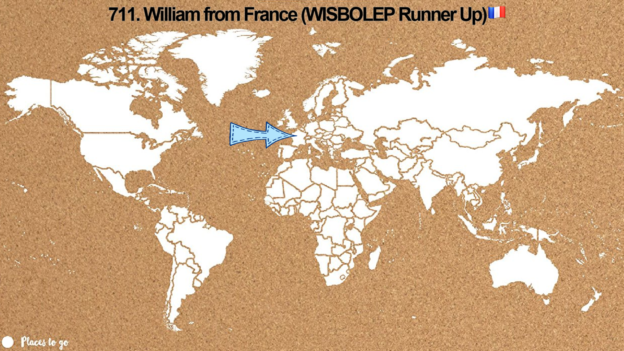
Talking to competition runner-up Michael from Poland about two top English learning tips, scary hitch-hiking stories and the practice of shamanism using psychoactive substances.

[DOWNLOAD]
Introduction Transcript
Hello everybody and welcome back to Luke’s English Podcast. How are you today? I hope you’re doing well as you listen to this, wherever you are in the world at this particular moment in time.
This is the 5th in the WISBOLEP competition series – Why I Should Be On Luke’s English Podcast, talking to winners and runner ups from the listener competition I did at the end of last year.
So far I have spoken to Walaa from Syria, Tasha from China, William from France and Robin from Germany. Now it’s the turn of Michael from Poland, also known as Michael the Shaman (this is the nickname that he often uses, for reasons which will become clear later in this episode). Michael actually came sixth, and Bahar from Iran was fifth, but at the time of recording this I haven’t spoken to Bahar yet. Her interview is coming soon though.
So, let me tell you a little bit about Michael the Shaman, from Poland.
Michael, who for the record is not an English teacher, has a lot to offer both in terms of language-learning tips that have worked for him and some very interesting stories and insights into some pretty deep and fascinating things, and I think this should be a great episode. So, listen closely.
Here’s a quick overview of the things we cover.
First we talk about language learning and those specific tips from Michael. These are resources and approaches that he has used to work on his English, especially his vocabulary and pronunciation, with some success I would say. I won’t go into them now, but pay attention so you can hear him describe these things, how he uses them and how they have helped him make some significant improvements to his English. I will summarise them again at the end and give a few extra comments.
Secondly, Michael tells us some of his hitch-hiking stories. Michael has spent lots of time travelling around in neighbouring countries near Poland and doing it by hitch-hiking, which basically means getting picked up by drivers who are going in the direction he wants to go, and hitching a ride with them as a way of travelling around. Now, this sounds adventurous and possibly a bit risky, because it does involve travelling in the cars of strangers, and Michael has some genuinely frightening and incredible stories of doing this. Again, listen closely to hear the specifics of the edgy situations that Michael has found himself in.
Then, thirdly we have the topic of shamanism, or being a shaman. Michael is probably better placed to describe this than me, but being a shaman basically refers to the use of certain rituals and practices to enter different states of consciousness, which can lead to new discoveries, new perspectives, new ways of thinking and different ways of seeing the world, or the universe in fact, and our place within it. This is something that Michael has explored and for him it has been very beneficial to his life in various ways. So let’s listen to what Michael has to say about shamanism and the use of psychedelics.
At this point I feel I need to say something about the use of psychedelic substances, which is part of what Michael describes as being a shaman, and we’re talking about using substances that occur in nature, like certain magic mushrooms and ayahuasca as well as the synthetic chemical LSD or acid as it is also known.
So I would like to just say one or two things about this topic as a sort of disclaimer or preface to our conversation.
First of all, the substances I just mentioned are controlled substances in most countries, which means that they are illegal to some extent. So, we are certainly not suggesting that people go out and start using them.
By the way, I’m referring to these things here as controlled substances, but in many cases they are also called drugs, and they’re not just prohibited by law, but also in the general culture. For a lot of people drugs are a serious taboo and people often have quite strong and negative feelings towards this subject. I am aware of this, and I hope that you are comfortable listening to us talking about it on this podcast. I think it’s alright, but I am aware that for some people drugs are just not ok, and that’s fine.
I feel it’s necessary to say that in talking about psychedelic drugs here we are not condoning their use in any kind of flippant way, and “condoning” means promoting or supporting something. We take this seriously and as you will hear Michael is very articulate and quite serious about the subject. He’s very well-read and knowledgeable, and we are just talking about his personal experiences and knowledge, which I do think are interesting as well as being new as a subject on this podcast. I’ve never really talked about this kind of thing in depth before on the podcast.
Also I think it’s worth making a distinction between different types of drug or substance.
There are many different types of drug, and they are extremely different to each other.
People often just say “drugs” without making any distinction between them. They just lump them all together as if they are all the same, basically. But I think it is worth making a distinction. Despite that fact that controlled substances are often grouped together as drugs, they are not really the same as they have very different effects and different levels of risk and we are certainly not talking about things like cocaine, crack cocaine or heroin, which are obviously very dangerous substances and very serious substances. We are not talking about those things here.
So, I thought it would be worth making that distinction and I’m trying to be responsible about this topic, but I’m also attempting to manage your expectations here because I don’t want you to get the wrong impression or to be shocked or to have a knee-jerk reaction while listening to us mention psychoactive substances in the latter part of this conversation. For many of you, these words are not really necessary, you’re fine with it, but there it is. I felt I should make those points. We’re not promoting any kind of illegal behaviour, we are not talking about those damaging and addictive things that ultimately will destroy a person’s life, instead we are taking what I hope is a more reasonable and rational approach here and discussing the more intellectual and spiritual aspects of shamanism and how certain psychoactive substances are part of that.
Right, now before we get to the talk of psychedelics in the second half of our conversation, you can first hear Michael’s specific language learning tips, which I think are really useful, and then his crazy hitch-hiking stories, which are pretty mind-blowing and entertaining.
Right, no need for me to add anything else here. I really hope you enjoy this conversation. I’ll be recapping and summarising some details later but let’s now meet Michael the Shaman from Poland, another runner up in the WISBOLEP competition.
Are you ready? Listening carefully? OK, here we go.
Bruce Parry’s short film about Ayahuasca
Ending Transcript
So that was Michael from Poland, and wow, that was awesome stuff, wasn’t it? It got very deep there, and cosmic, didn’t it? I hope you liked it. As usual, I’m very interested to read your responses to the things that Michael said.
I’m going to sum up some of the things Michael said at the start of the conversation about learning English, because after all that mind-expanding talk of psychedelic trips and also the hitch-hiking stories, it seems like we talked about his language learning methods ages ago, and I think he made some really great recommendations that you could find really useful for your English.
Now, considering Michael’s English again. I think it’s fair to say that it’s good, right?
I do want to repeat a couple of points.
Don’t compare yourself to others too much
Don’t compare yourself to other people too much. This can lead you to judge yourself a bit harshly, which is totally normal. Whenever we listen to other language learners, the tendency is to either judge their language level, or judge our own level in comparison to theirs, but this isn’t a very healthy thing to do in terms of language learning, and what I’d encourage you to do is only judge yourself by your own success, and rather than comparing yourself to others, try to notice how your English is better than it was before.
Just compare yourself to yourself at earlier points in your language learning journey. Notice improvements you’ve made, and celebrate them. This is more likely to put you in a better mental space than comparing yourself with others.
Just think how far you’ve come as a learner of English and take note of your progress. That’s probably healthier than falling into any kind of negative thinking which can happen if we compare ourselves unfavourably to other language learners.
So, try not to judge others too harshly, and don’t compare yourself to others too much.
And hopefully listening to other language learners can give you some inspiration and some practical ideas which you can use to work on your English in ways you hadn’t considered before. Even little things like changing certain habits can make a big difference to your learning of English.
And with that in mind, let me quickly just go over the tips Michael had for learning English, which worked for him. Have you tried these things or used these resources?
Michael’s Language Learning Resources
There were two things really:
- Use English/English dictionaries to expand your vocabulary with correct definitions, examples, phonemic transcriptions and synonyms. My 5 favourites are www.collinsdictionary.com www.cambridge.dictionary.org https://www.oxfordlearnersdictionaries.com/ https://www.macmillandictionary.com and Longman Dictionary of Contemporary English https://www.ldoceonline.com/
I have been planning to do a full episode on using online dictionaries to improve your English (in fact I’ll be touching on this a bit in a couple of upcoming episodes), but I will just say that these dictionaries are fantastic resources not just for getting definitions, but getting synonyms, examples, phonemic transcriptions and more – all of which are really important ways of really getting to know new words. Bookmark the dictionaries, use them all (because they have slightly different examples and details which you can cross reference) and get into the habit of checking words in them and exploring the information they can give you. Never before have we had access to so many wonderful language learning resources, completely free of charge, and at our fingertips at all hours of the day. It’s like living in a massive library. So, use those online dictionaries to explore new words. - The second resource Michael mentioned was the website www.dialectsarchive.com – a website full of voice recordings used by actors and voice coaches trying to learn different accents, and especially the text Comma Gets a Cure, which is designed to reveal a huge variety of pronunciation features in English. You can hear the text being read in different accents, you can shadow the text, repeat it, record yourself repeating it and more. I plan to do some premium episodes using this text and other similar texts too. There is a lot to explore and use there, including some podcast episodes by the creators. www.dialectsarchive.com
OK, so just two tips there, but they are solid ones.
And returning to the hitch-hiking stories. I just want to sum up the main one, just to be sure you got it. I think it was probably clear, but I want to retell that story just because I think it was such an exciting story, and maybe you didn’t catch the specifics.
Michael’s Hitch-hiking Story – recap
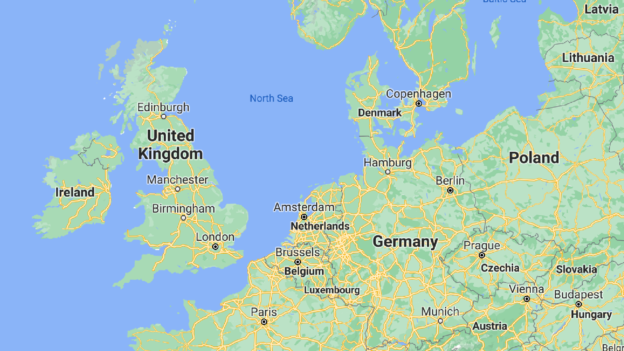
So Michael and his friend Kuba were hitchhiking from Poland to Amsterdam and they got picked up by a couple of very dodgy guys in a van. They didn’t realise it when they first got in the van but these guys were drinking alcohol and smoking some kind of crystal – perhaps crystal meth, like in the TV series Breaking Bad. Meth is a pretty nasty drug.
Michael is an intuitive person and he picked up on a very bad vibe from these guys and became convinced they were planning to do something very nasty with Kuba and him. Like I said, it sounds like something from a horror film. Listening to their comments, watching their demeanour and generally reading between the lines, Michael became convinced these guys were organ traffickers, who are people that kidnap healthy people in order to steal their internal organs and sell them on the black market. Certainly these guys seemed to be very dodgy and probably involved in organised crime.
Michael decided he would subtly let the guys know that he and Kuba were actually not that healthy and therefore their organs were not worth taking, which would convince them to just let them go.
It’s crazy I know, but I kind of know what Michael is talking about when he said he just knew something wasn’t right and that they were in danger. I feel like I’ve been in similar situations before, where you realise that the people you are with are dangerous and up to something, and so you just have to get out. It’s a weird feeling. I can’t remember any specific stories from my own life, but I’ve met guys in pubs before who just seemed dangerous and untrustworthy, even though there were no specific things that would give me that impression. It’s more of a vibe that certain people give off.
Anyway, Michael said that he heard the guys making jokes about stealing their organs, which appeared to be jokes, but there was a sinister undercurrent which suggested that perhaps they were not really joking. Michael’s friend Kuba was not quite as observant maybe and he didn’t seem to realise something was wrong, but anyway Michael sent him text messages to convince him that something wasn’t right. They managed to persuade the drivers to stop the van at a petrol station because Michael needed to be sick or had diarrhea and then they escaped at a petrol station.
They then decided to continue their hitchhiking trip to The Netherlands, but decided they would not accept lifts from any more Polish people, nobody drinking or using drugs and no vans. This is because they didn’t want to risk running into any similar people or perhaps their friends who they suspected were also on the road, but somehow the next car that picked them up, by coincidence maybe, contained the friends of the dodgy guys they had just escaped from. So, it was a case of “out of the frying pan, into the fire”.
Michael said that these other guys seemed more intelligent and perhaps were the bosses of the other two they had met previously, and the only way Michael and Kuba got away without being taken, was because the guys ended up liking them, as they played along with their jokes and generally tried not to antagonise them at all. So, phew! What a lucky escape!
And Michael said that hitchhiking was not that dangerous!
Actually I do believe that on balance his experiences of hitch hiking have been much more positive than negative, but what a scary story! And I do believe it is true. I find it very believable. There are dodgy people in the world.
And finally, a few more words on the topic of psychedelics like magic mushrooms.
A final note on Magic Mushrooms
All the things Michael mentioned about Amanita muscaria (Fly Agaric) are definitely worth researching. In his words (from a recent email exchange we had) “I think I talked about maybe 1% of things you can do with this mushroom. I’d like to stress once again that I don’t recommend everybody uses this mushroom. I’m all about education and knowledge. The mushroom can have medical, therapeutic and spiritual effects, but only if one does it correctly. It is not easy to work with this mushroom.
An excellent resource for Amanita muscaria is Amanita Dreamer on YouTube and her website www.AmanitaDreamer.net. Also, a recently published book: ‘Fly Agaric: A compendium of History, Pharmacology, Mythology & Exploration’ by Kevin Feeney is also great.
These resources are essential as there are many dangerous myths regarding Amanita muscaria. Remember, it’s important to make sure that you are fully knowledgeable about this mushroom. You can’t just pick the caps and eat them.
I think the same goes for all kinds of psychedelic substance that Michael talked about. Please remember that we’re not condoning the use of these things in any kind of casual way. You must be very careful, very well-read and personally very prepared before going any further.
Right then, what did you think of this episode?
Any thoughts on Michael’s language learning resources, his hitchhiking tales or his comments on the use of psychedelics? If you have things to say, just express your thoughts in English, ideally in the comment section on my website.
That’s all from me. Have a good morning, afternoon, evening or night. Be excellent to each other, good luck with your English and do take care.
Speak to you again on the podcast soon, but for now it’s just time to say good bye bye bye bye bye.