Testing Paul Taylor’s knowledge of British life, history and culture and discussing the “Life in the UK” citizenship test. Practise listening to British English natural speech, learn facts about the UK and have a laugh as Paul gets angry about this test for people who want to become UK citizens. Will Paul actually pass the test? Listen to find out what happens. Transcriptions and notes available.
This episode’s guest Paul Taylor is a British stand up comedian, living in France. Check out his YouTube channel here and Twitter here.
Introduction Transcript
In this episode you’re going to listen to my friend Paul Taylor attempting to pass the UK citizenship test.
Every year thousands and thousands of people choose to become British citizens, for various reasons. This year one of those people is Meghan Markle, who is moving to Britain to marry Prince Harry – as everyone knows because it’s all over the news, probably all around the world. In fact the wedding is happening tomorrow! By the time you listen to this they will probably be married. I hope everything goes well for them.
Anyway, there are lots of complicated requirements for becoming “naturalised” as a British citizen, including the fact that you need to prove that your English is at B1 level or above, and you have to pass the Life in the UK Test. This test is supposed to make sure that you have sufficient knowledge of life in the UK in order to integrate into British life. The assumption is that if you can pass this test then you know enough about life in the UK to be considered worthy of being a British citizen.
By the way, quite a lot of people fail this test. I was looking for specific data. I found that in 2016 about 36% of people failed the test. Just over a third.
What is the content of this test?
Do you think you have enough knowledge of “Life in the UK” to pass it?
What kinds of questions do you expect to find in this test?
Is the average British person able to pass the test? You would imagine so, right?
What can you, my listeners, learn from this in terms of “essential British knowledge” and useful British English vocabulary?
And can my mate Paul Taylor, who was born in the UK and has spent much of his life living there, pass this test?
Let’s find out as we take the British Citizenship Test in this episode.
A Long Episode!
This is a long episode, but there is absolutely loads of stuff that you can gain from this in terms of historical and cultural knowledge – both from the past and present, as well as vocabulary and general listening practice and also just the pure enjoyment of listening to Paul becoming increasingly angry about the content of the questions in this test.
Also, there is quite a lot of swearing in this one, and by swearing I mean rude words that you normally shouldn’t use in polite company because they can be very offensive. So, watch out for those rude words – either because you don’t like that sort of thing, or because you love to hear how people swear in British English. In either case – you have been informed – there is rude language in this episode.
So I suggest that you do listen to the entire thing, perhaps in several sections – when you press pause your podcasting app should remember where you stopped listening so you can carry on later. There are notes and scripts for the intro and outro to this episode on the website – so check them out.
Now, without any further ado, let’s get started…
THE “LIFE IN THE UK” CITIZENSHIP TEST
The test is computer based. Applicants coming in from outside the UK need a certain level of English and they need to take this test.
Requirements for British citizenship https://www.gov.uk/becoming-a-british-citizen
⬇Click the link below to take the same test we did⬇
https://lifeintheuktestweb.co.uk/test-1/
Criticisms of the Test
A summary of criticisms and comments on how the test needs to be reformed https://www.theguardian.com/commentisfree/2018/mar/01/british-citizenship-test-meghan-markle-brexit-reform
The criticisms in a nutshell:
While it’s obviously good to know facts about a country’s history – what is the true purpose of a citizenship test? It’s to ensure that people understand the values of that country, and practical knowledge of daily life in order to help them integrate
The questions seem arbitrary and inconsistent
Fair enough, there are questions about certain key moments in our history and in our political system but a lot of important things are missing (e.g. the number of elected representatives in the devolved parliaments, but not the number of MPs in commons? The height of the London Eye?)
They won’t help people integrate, and they won’t help people just get by on a daily basis
It also doesn’t educate people about history – there’s no interpretation of why these things are important. If anything it will just piss people off.
What might be more helpful would be:
Teaching people social rules (e.g. how to order a drink in a pub)
Teaching people about common culture so they know what the hell British people are talking about half the time
Teaching people the essential basics of how to live – like, bank holidays, how to phone for an ambulance, how most Brits are shocked by things like animal rights or racial or sexist jokes
But it’s all wrapped up in politics and perhaps the people who wrote the test didn’t do it to help migrants – the opposite, maybe.
What would you include in the citizenship test?
The “Real” Citizenship test
This is an alternative test based on suggestions by British people on Twitter
http://realcitizenshiptest.co.uk/
‘Outro’ Transcript
I don’t want to extend this episode a lot more but I do want to say “nice one” for getting to the end of this one. I say that because I know it can be hard to follow about 90 minutes of native level speech in English, and Paul does speak pretty quickly as a few of you mentioned to me after hearing the previous episode with him.
I’ve said it before and I’ve said it again – the more you listen, the better, and sometimes listening to fairly quick speaking can be really good training for you. It’s important to mix it up – sometimes listening to content that you understand without too much trouble, and sometimes listening to more challenging things. There is value in both, and basically the important thing is to keep going and not give up. If you’re listening to this it means you didn’t give up even if you didn’t understand everything. Nice one.
Then again, some of you might be thinking – Luke, it was a pleasure and I wish there was more! Well, in that case – great! I agree. This was a fun one.
There’s more to be said on the UK citizenship test so I might be doing another episode on this soon.
But for now – that’s it! Download the LEP App from the app store. Check out the extra content you can find there.
Have a great day, night, morning, afternoon or evening wherever you are in the world and whatever you’re doing. Speak to you again on the podcast soon, but for now… bye!
In this episode I’m talking to friends of the podcast Amber Minogue and Sarah Donnelly about the subject of raising children in a foreign country – in this case, France. So this is an episode all about cross-cultural experiences, specifically relating to parenthood. It’s also about a new podcast and stage show which Amber & Sarah have just started. Transcriptions, notes and links below.
In this episode I’m talking to friends of the podcast Amber Minogue and Sarah Donnelly about the subject of raising children in a foreign country – in this case, France. So this is an episode all about cross-cultural experiences, specifically relating to parenthood. It’s also about a new podcast and stage show which Amber & Sarah have just started.
If you’re a long term listener then I’m sure you know Amber, and you should also remember Sarah because she’s been on the podcast a few times too.
Amber and Sarah are both ex-pats living in Paris, like me. They’re also stand-up comedians who perform on stage in English here, like me. They’re both with French partners, like me. They both have kids here in Paris with their French partners, again, like me; and now they are both podcasters, like me.
Amber (who is from the UK) has been a podcaster for a while, as you may know, with her charming and quirky podcast about the history of Paris – called “Paname” (available at panamepodcast.com and on iTunes or wherever you get your podcasts) , but now Amber has joined forces with Sarah (who is from the USA) in order to work on a new project which is called “Becoming Maman”. “Maman” is the French word for “mum” or “mom”.
The project is primarily a stage show – a kind of “two-woman show” which is all about their experiences of having kids in Paris. I saw the first performance of Becoming Maman a few weeks ago and it was brilliant. The two of them are very funny as a double act and the show was full of very astute and amusing observations, jokes and sketches about life as an English-speaking ex-pat bringing up children in Paris.
As well as the stage show, they’re also doing some videos for Facebook and YouTube and the new podcast which is also called “Becoming Maman”. In the podcast episodes Amber and Sarah typically sit down together and discuss certain issues and experiences relating to raising children in France – particularly the differences in the parenting culture between France and their home countries of the UK and the USA.
If you’re an email subscriber or a regular visitor to my website, you might know all of this already (you might be going “yep, yep – got it, been there, seen that, got the t-shirt, already subscribed to Becoming Maman – I have already become Maman) email subscribers might already know about this because I wrote a post last week to let you know that I had been interviewed by Amber and Sarah on their podcast, and I shared links so you could listen or download that episode and subscribe to the podcast. In that episode of their podcast they asked me about my experiences of becoming a dad, and we talked about how children learn languages. Check it out here.
For more information about their project, check out all the links below.
So – raising kids in France when you’re not French and the differences in the parenting culture between France and the UK and the USA. These are the things that we’re going to talk about in this episode, as well as a few of the usual tangents including some thoughts about differences in the behaviour of boys and girls and whether these differences are caused by innate factors that children are born with or subtle ways in which we encourage certain kinds of behaviour as parents.
Well, just before we begin I’d like you to consider how this topic relates to your life experience in some way. You might not have kids, but since you’re out there, probably learning English, there’s a good chance that your life is, has been, or will be affected by cross-cultural experiences, not just relating to parenthood. Thinking about how you have things in common with us should help you to generally relate to our conversation better, and by extension that should help you just get more out of it in terms of language learning and general enjoyment.
So, here are loads of questions for you to consider before we get stuck into this conversation.
Also, pay attention to certain bits of language relating to childhood and raising kids and let me also remind you of episode 68 which is full of the language of childhood – and that’s vocabulary like “to bring up children” “to raise children” “to grow up” and so on – all explained.
Before you Listen – Questions for your consideration
First of all, what kinds of cross-cultural experiences have you had?
Have you ever lived abroad or spent a good deal of time with people from other cultures?
Did you notice any differences in the way you or other people do things? That could include anything in life – like slightly different ways of doing business or eating food or communicating, but also ways of dealing with children.
What were the challenges associated with the experience you had with another culture or in another country? How did that make your life more difficult, crazy, funny, strange or interesting? E.g. Did you find it hard to work out the administrative system, the work-life balance or the approach to education at school?
Could you imagine settling down in another country and bringing up children there?
If you already have kids, in what situation did you raise your kids or are you raising your kids?
Are you and your partner from the same country, and are your kids growing up in that country too? That’s a monocultural and monolingual situation.
Can you imagine bringing your children up in a foreign country, perhaps with a foreign partner, with several languages involved? So, a bi-cultural or bilingual situation.
How would that make things different?
How could it make life more complicated?
For example – consider the identity of your child or children. Where would you consider your children to be from? How would you feel if they grew up to be from a different culture to you?
Let’s say, if you’re Spanish (or Polish or Chinese or Russian or Brazilian) and you’re bringing up kids in London are your kids still Spanish, Polish or Chinese or Russian or Brazilian, or are they now English – because that’s where they were born and have grown up?
How would living abroad affect your parenting style?
Should you, for example, adapt your parenting style to fit the new culture, or keep doing it how it’s done where you’re from?
What if the parenting style in this other place is quite different to how it’s done where you’re from? What if you don’t really understand the way they do it in this other place?
How would that be challenging for you?
Would you feel somehow stuck in a grey area between the country and culture where you are from, and the country and culture where your kids are growing up?
Are there certain advantages to that situation? Perhaps it can be much a more exciting, diverse and broad-minded lifestyle.
What have you heard about parenting in France, or in the UK or the USA? Do those places have a reputation for particularly good or bad parenting? For what reasons?
Would you like to raise your kids in any of those cultures? The UK, France or The USA?
Have you heard of a book called “French Kids Don’t Throw Food” by Pamela Druckerman? How about any other parenting guides which are about “how they bring up kids in another country”? Do any other countries have a good reputation for bringing up kids as far as you know?
What if you ended up falling in love with someone from France, the UK or the USA or indeed any other place, moving there for love, having an adventure and then finding that you’re starting a family in a completely foreign place? How would you feel?
Maybe that’s exactly what’s happened to you, or you’re in a situation in which it could happen.
And if you don’t have kids in your life, perhaps you could consider the situation in which you grew up. Would you rather have been raised by parents from the same country, or parents from two different countries? How might that have affected your language skills and your identity in general?
Do you think boys and girls behave differently because they’re born that way, or because we encourage them somehow?
And how could you put all of these thoughts into words in English?
With all those questions in mind, let’s now listen to my chat with Amber and Sarah all about the challenges of bringing up kids in a foreign country and what it really means to become not just a mum or a mom, but a “maman”.
Let me remind you that Amber & Sarah’s podcast is now available for you to listen to, including the episode in which they interviewed me about becoming a dad.
Those links again for “Becoming Maman”
For more information about their project, check out all the links below.
As I mentioned before, I do plan to do another episode about raising bilingual kids at some point.
I can also refer you back to episode 68 in which I talked about childhood and school days and explained a lot of phrasal verbs and other vocabulary.
Links for everything on the page for this episode!
In the meantime – I look forward to reading your responses to this episode in the comment section. Did you have any thoughts while listening to this? (I hope so!) Share them in the comment section. Don’t be shy – give it a try.
A couple of other reminders:
Join the mailing list to get a link in your inbox when I post something to the website – it’s usually once or twice a week and my emails aren’t very intrusive or anything.
Download the LEP App for your phone. Check the app store for the Luke’s English Podcast App – it’s not just a place to listen to the podcast, there’s also a lot of other content in there including videos, episodes of my phrasal verb podcast and various app-exclusive episodes and other bonuses.
Thank you if you have donated to this podcast – you’re helping to keep the whole thing alive and I consider your donation to be a very sincere way to say thank you for my work.
Have a lovely morning, lunch, afternoon, evening, night!
Speak to you soon,
Bye!
Vocabulary List for Episode 515 – Provided by Jack from the Comment Section
Juggling
a labour of love
Dig these episodes
Quirky
Expats
Astute
Tangents
Indoctrinate
Stuck in a grey area
Scream your lungs out
Skiing
Oriented
Boisterous
Rowdy
Beat the living day lights out of
Notion
Enamoured
Pragmatic
Coagulated
Starters
Cheese course
Main course
Starch
Cereals
Dessert
On site
Individualism
Flip side
Pedagogical
Crouch down
Babysitter
Pay stubs
Synonymous
Athleisure clothing ( fat Americans feeling good wearing gym clothes while chewing fat)
Trendy
Goldfish crackers
Toned down
Preset
Jacket potato
Chedder
accustomed
Intrusive
TV shows and videos which we mentioned
The BBC’s gender experiment
TV and films that Sarah was watching when she was about 10 years old… a bad influence?
“The Kids on the Hall” – I’m crushing your head
Absolutely Fabulous
https://www.youtube.com/watch?v=Jar7Pk0OCR4
Planet of the Apes (quite scary and weird) “Human see, human do!”
Hello website LEPsters! Here is some more listening you can do while waiting for the next episode of LEP.
I was recently invited onto The Earful Tower Podcast by Oliver Gee (remember him from episode 495?) We recorded an episode all about the Paris Metro while riding the Paris Metro. You can listen to it here.
You’ll hear us talking about our experiences of using the Metro, some of the things we find fascinating, funny, weird, cool and even disgusting about it. You can hear various background noises and experience what it’s really like to travel through Paris on line 2 with Oli and me.
Keep listening to the end to hear a cool story from Paris’s history, read by Oliver’s regular storytelling guest Corey Frye.
Oliver Gee is a journalist from Australia now living in Paris. His podcast is all about Paris and episodes include interesting stories, bits of history, chats about language and comments about the cultural differences. It’s all in English and you should check out his episode archive – you’ll find several appearances by Amber Minogue, one episode with Paul Taylor and two with me (including this one). Enjoy!
p.s. You might be wondering whether our baby daughter has been born yet. Well – not yet! We are still waiting. She’s currently one day overdue, but everything’s fine. She could still arrive at any time. We’re waiting with bated breath.
More episodes of LEP coming before too long.
Don’t forget todownload the LEP App and enjoy listening to some full-length episodes only available in the app, plus more bonus content.
Talking to Amber about the UK’s Royal Family, including our thoughts on the upcoming wedding between Prince Harry and Meghan Markle, some royal gossip & rumours, and also a Royal Family Quiz with questions about the monarchy today and in history. So, expect to hear our thoughts and some facts about this very traitional British institution. Notes available.
[DOWNLOAD]
Introduction Transcript
Here’s an episode about the Royal family.
You probably know that recently we had the news that Prince Harry is going to marry his gorgeous girlfriend Meghan Markle. I don’t know if that made the news where you are.
There’s going to be another royal wedding next year. This is actually quite a big deal for the UK.
You might be wondering what British people think about all of this. What do we think about Harry and Meghan and what do we think of the Royal family in general?
Well, I can’t ask every single Brit what they think, but I can give you my opinions and the opinions of Amber, who I am talking to in this episode..
Also this gives us an opportunity to chat generally about the Royal Family on the podcast again, and that’s usually a subject which attracts quite a lot of interest from abroad.
Also, in this episode Amber and I have prepared some quiz questions about the royal family.
I wonder if you know the answers.
So first you’ll get a discussion of Harry and Meghan, and then a royal family quiz.
Let’s see how much you know about the royals and hopefully this episode can help you you learn a few things about the British monarchy that you didn’t know before, including some scandals, some rumours, some big moments in history and other interesting facts about this most traditional of British institutions.
—- Conversation Notes and My Quiz Questions —
Amber mentions “Christmas-abilia” – this is not a word! She just made it up. She meant ‘bits and bobs relating to Christmas, like decorations and things in her flat.
It sounds like “memorabilia” which means: objects that are collected because they are connected with a person or event that is thought to be very interesting. (Cambridge Dictionary)
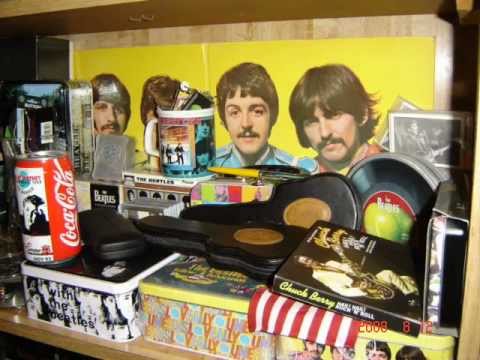
e.g. Beatles memorabilia, or memorabilia from the royal wedding. Stuff like this:
Prince Harry is marrying Meghan Markle next May.
Who is Meghan Markle?
An actress from the TV show “Suits”
Background – Rachel Meghan Markle[5][6] is of Dutch, English, and Irish descent through her father. Don’t know about her Mum but apparently she was African-American. She was born on August 4, 1981, in Los Angeles.[7] Describing her parents, she has said, “My dad is Caucasian and my mom is African-American … I have come to embrace [this and] say who I am, to share where I’m from, to voice my pride in being a strong, confident, mixed-race woman.” [8] (Wikipedia)
Divorced
American
Catholic (sounds like Wallace Simpson – the woman Edward VIII chose to marry)
What do we think of her?
Royal Family Quiz – Luke’s Questions
How much does it cost the UK taxpayer per year (on average) to maintain the royal family?
About 66p in 2016. That’s the part that comes from the treasury.
The family also gets money from other places. (see article)
Where do the royals get their money from?
2 or 3 main sources.
Sovereign Grant – about 15% of the profits made by the Crown Estate. That’s money made from all the properties owned by the Queen. I’m not sure how the money comes in – it’s probably rent, ground rent, entry fees for visitors etc. All that money goes to the government, who give back 15% of it two years later.
The Privy Purse – profits from all the land and assets that have been owned by the royal family for generations. Residential, commercial and agricultural properties. It’s about 184 km2. Between 2015-2016 that was about £17.8m. That pays for expenses incurred by other members of the family.
Private savings and personal fortune. The Queen herself owns properties which she inherited from her father, including Balmoral castle in Scotland. She also has a large art collection apparently. This is all worth about £340m.
How many monarchs can you name from the Queen back?
https://en.wikipedia.org/wiki/List_of_British_monarchs
Who has to die for Harry to take the throne? (Can you tell me the line of succession?)
The Queen, Prince Charles, George, Charlotte – they all have to go before Harry can become king.
Queen – Charles – William – George – Charlotte – Harry – Harry’s Kids (none) – Andrew – Andrew’s kids (Beatrice and Eugenie) – Edward – Edward’s kids – Anne – Anne’s kids – no idea.
Queen Elizabeth II (born 1926)
(1) Charles, Prince of Wales (b. 1948) B D W
(2) Prince William, Duke of Cambridge (b. 1982) B D W
(3) Prince George of Cambridge (b. 2013) B D W
(4) Princess Charlotte of Cambridge (b. 2015) B D W
(5) Prince Henry of Wales (Prince Harry) (b. 1984) B D W
(6) Prince Andrew, Duke of York (b. 1960) B D W
(7) Princess Beatrice of York (b. 1988) B D W
(8) Princess Eugenie of York (b. 1990) B D W
(9) Prince Edward, Earl of Wessex (b. 1964) B D W
Which living royals (in the nuclear family) are divorced? Did they have affairs?
Charles
Anne
Andrew
(Diana, Sarah Ferguson – both had affairs which were leaked in the press)
What gives the monarch his/her power?
It’s a covenant with god! Haven’t you seen Monty Python and the Holy Grail?
https://www.youtube.com/watch?v=JvKIWjnEPNY
What would happen if the Queen murdered someone?
Nothing, apparently. She can’t be prosecuted. Amber disagrees.
True or false?
The Queen has her own poet. True – poet laureate is officially the poet to the monarch and is paid in sherry. TRUE
The Queen can fly and regularly pilots her own helicopters and light aircraft. Her favourite is a Harrier Jump Jet which she sometimes flies over Dartmoor where she enjoys blowing up deer. FALSE
By law, all pubs in the UK must display a picture of the Queen behind the bar. FALSE
The Queen and Winston Churchill once had an affair. FALSE
The Queen doesn’t really like Scottish people. FALSE
The Queen smokes cigarettes. FALSE
The Queen smokes pot. DUNNO – probably FALSE. Queen Vic used it.
The Queen owns all dolphins which swim in British waters. TRUE
The Queen owns all the Swans on the River Thames. TRUE
The Queen writes ‘the laws of the land’. FALSE – she gives them ‘royal assent’.
The Queen is in charge of the government, including the PM. FALSE – not really in charge of them, but she officially invites them to form a government on her behalf.
The Queen’s powers include visa free travel, veto (refusal of royal assent) and invisibility. TRUE (except the invisibility – we think)
Will Megan be a princess when she marries Harry?
Which member of the royal family talks to trees and believes in homeopathy?
Outro Transcript
What you just heard there was The Queen’s speech from 2015. That was actually the Queen’s voice. Have you heard her speak before?
She speaks in a heightened RP, or as some might say “very posh English”.
I don’t know if you can recognise it, but to me it’s unmistakable. For you it might just sound like clear speech (which it is – she does speak very clearly), but for me there are certain features of her voice that are a dead giveaway that this person is really posh, and honestly this kind of “posh” accent isn’t how most people speak. For example, my Dad and I speak clearly but we don’t have this posh accent.
Every now and then I’ll hear someone speaking with this kind of accent and it’s a sign that they come from an upper-class background. There’s a lot more to say about this subject and I intend to explore it further in later episodes.
Anyway, thank you for listening to this episode. I look forward to reading your responses in the comment section.
Have a great day, morning, afternoon, evening or night and if you are celebrating Christmas this year I hope you’re starting to get into the Christmas spirit.
By the way, our baby hasn’t arrived yet, but it could be any day now. I don’t know how that will affect the podcast, but if there are no new episodes for a week or two, that’s why. I think I should be able to record something for you, so I don’t think there will be a big delay, but anyway – if you don’t hear from me from a bit, it’s probably because I’m changing nappies, dealing with visiting family members, and generally in a sleep deprived condition.
Alright then, thanks for listening and speak to you soon I hope.
Talking about a classic British film which not many learners of English know about. Listen for explanations of the film, its appeal, descriptions of the characters and events, the type of people who like the film and a few bits of dialogue too. Notes available.
Today on the podcast I am going to be talking about a cult classic of British cinema – a film called Withnail & I.
This is a slightly ambitious episode because in my experience this film is usually very difficult for learners of English to fully appreciate. Even the title of the film somehow fails to register with many people when I tell them.
“Can you recommend British films?” one of my students might say.
And I say “Yes, definitely. You should watch Withnail & I”
And the person’s face creases into an expression of “what was that you just said?” “Withnail and I” I repeat.
But still, this clearly just seems like a noise to this person.
He doesn’t know what to write. He doesn’t know how many words that is. He doesn’t know how to spell “Withnail and I”. He’s lost for a moment.
So I write it on the board “Withnail and I”.
Still, this doesn’t help much. The person doesn’t even recognise the word “Withnail”. It’s difficult to spell, it’s difficult to pronounce, it doesn’t seem to mean anything.
Then I think – “There’s no way this guy is going to enjoy this film, he can’t even get past the title.”
But something inside me says – “Luke, Luke… I am your father…” No, it says “Luke, you need to make these people watch this film. It is your duty as a British person teaching people your language and culture. These people need to see this film. They need to know what a Camberwell Carrot is, they need to know about cake and fine wine, they need to know why all hairdressers are under the employment of the government. It is your duty Luke, to teach these people about the wonderful world of Withnail and I – even if they don’t want it!”
So now I feel duty bound to tell you all about this cult British film. By the way, the title of the film “Withnail and I” – these are just the two characters in the film. Withnail and another guy whose name we don’t know. He’s simply “I”.
If you’re interested in British films, if you like slightly dark comedies with good acting, interesting characters, an excellent script and some top level swearing – this is a film for you.
You might never have heard of it, I realise, and that’s partly why I’m doing this episode. I like to recommend things that you might not know.
Withnail and I is a cult film which means it’s very very popular with a certain group of people. It’s not a mass-appeal sort of film. It might not be the film you think of when you consider typical “British films” – you might think of something like Love Actually or a Jane Austen adaptation, but Withnail & I is a film that you will definitely know if you a proper lover of British films. It is a cult classic and those who love it – really love it with a passion as if they’ve lived the film themselves in their own lives.
But not everybody gets it. Certainly, in the UK it is very highly regarded by people who have a special love for films, but it’s not a film like Four Weddings or James Bond which seem to appeal to everybody. Plenty of Brits don’t get it. Also learners of English hardly ever know about it (because in my experience most learners of English understand British cinema as things like Hugh Grant, Harry Potter and even Mr Bean). It can be a difficult film to understand if you’re not a native speaker from the UK. It’s not well known in the USA even.
But as I said, it’s a cult success in the UK.
Cult has two meanings. A cult can be a sort of small religious group devoted to a particular person, but when cult is used as an adjective with something like “film” then it means that this film is extremely popular with certain people.
What kinds of people like this film?
Why do people love this film so much?
What is the appeal?
What can this film tell us about British culture?
Why should you as a learner of English take any interest in this film at all?
How can you learn some real British English from this?
Let’s find out in this episode of Luke’s Film Club on Luke’s English Podcast all about Withnail & I.
I’m a huge Withnail & I fan but in this episode I’m also joined by several other Withnail fans who are very keen to talk to you about one of their favourite films.
Those two fans are my brother James and his mate Will.
I just sincerely hope that we can somehow explain this film and its appeal, and make this interesting for you to listen to (that’ll be hard considering it’s three blokes with similar voices talking about an obscure film that you’ve probably never seen).
Withnail and Us – a great documentary about the making of the film, by the people who made the film.
https://www.youtube.com/watch?v=-G9WMeGl_Uw
Bruce Robinson interview
https://www.youtube.com/watch?v=d5kZPugLqfs
Bruce Robinson & Richard E Grant at the London BFI
The Hamlet Monologue (Act 2, Scene 2, Page 13)
“I have of late—but wherefore I know not—lost all my mirth, and indeed it goes so heavily with my disposition that this goodly frame, the earth, seems to me a sterile promontory; this most excellent canopy, the air—look you, this brave o’erhanging firmament, this majestical roof fretted with golden fire—why, it appears no other thing to me than a foul and pestilent congregation of vapors. What a piece of work is a man! How noble in reason, how infinite in faculty! In form and moving how express and admirable! In action how like an angel, in apprehension how like a god! The beauty of the world. The paragon of animals. And yet, to me, what is this quintessence of dust? Man delights not me. No, nor woman neither.”
In plain English:
“Recently, though I don’t know why, I’ve lost all sense of fun —the whole world feels sterile and empty. This beautiful canopy we call the sky—this majestic roof decorated with golden sunlight—why, it’s nothing more to me than disease-filled air. What a perfect invention a human is, how noble in his capacity to reason, how unlimited in thinking, how admirable in his shape and movement, how angelic in action, how godlike in understanding! There’s nothing more beautiful. We surpass all other animals. And yet to me, what are we but dust? Men don’t interest me. No—women neither.”
Outtro
What you just heard there is the final scene of the film in which Withnail repeats lines from Hamlet by Shakespeare and it’s quite a tragic ending, but you’ll have to watch the film to find out what happens.
So that was an ambitious episode! I honestly think this one is as ambitious as the one about the rules of cricket. All the way through that conversation alarm bells were ringing in my head.
Sometimes I get alarm bells when I’m teaching. From experience I know what my learners of English will and won’t understand. For example, if there’s a listening that we’re doing and it contains a few phrasal verbs or connected speech or a specific accent, the alarm bells ring in my head and sure enough none of my students have understood it.
So for this episode alarm bells are ringing like mad. First of all the film is like kryptonite to students of English (which is a pity because there’s a lot to enjoy), but also because you were listening to three guys talking with fairly similar voices in a comfortable way – meaning, not graded for learners of English to make it easier, and also we’re talking about a film that you’ve probably never seen. Also the little clips in particular were, I’m sure, rather difficult to follow.
So a big well done if you made it this far. I promise you that this film is an absolute gem and if you give it a chance it will actually improve your life.
I have talked about this film on the podcast before and in fact I do remember getting a message from a listener who said that she had watched the film on my recommendation with her boyfriend and that now they enjoy repeating lines from the script when they are about the house.
So if they can get into it then you can too, although of course this film is not for everyone, that’s why it’s a cult film.
I’ve just remembered, I promised to play the Withnail & I swear-a-thon. That’s like a marathon isn’t it, but with swearing.
Withnail and I is celebrated for its swearing and there is a lot of colourful rude language in the film. For the 20th anniversary DVD box set someone edited together all the swearwords from the film in order. This is the Withnail and I swear-a-thon. Now, as you would expect the next minute or so is going to be absolutely filled with swearing so brace yourselves. YOu’re going to hear all sorts of rude words like bastard, shit, fuck and also cunt. Here we go.
I hope you’ve enjoyed listening to this episode of Luke’s Film Club on Luke’s English Podcast.
Check out the page for the episode for some notes, transcriptions and also a bunch of video documentaries, clips and interviews that are definitely worth watching if you’d like to know more.
Have a great morning, evening, breakfast, lunch, dinner, sleep, commute or run!
Discussing stereotypes and clichés about Australia with podcaster Oliver Gee who comes from a land down under. Learn about Australian English, Aussie accent, Aussie slang and exactly what you should say whenever you meet a true blue Aussie, mate! Vocabulary list available. Hooroo.
Today on the podcast I’m talking to Oliver Gee who comes from Australia.
Oliver lives in Paris these days and is a journalist and podcaster – he does a podcast about Paris for World Radio Paris, which is a sort of radio network in English, based in Paris.
Oliver’s podcast is called The Earful Tower – and it’s available from all good podcasting apps and online at https://theearfultower.com/
If you are a subscriber to my email list then you’ll know that earlier this year Oliver invited me onto The Earful Tower to talk about French people learning English. You can find conversation on the Earful Tower in the episode archive.
This time I thought I’d invite Oliver on to LEP in order to talk about all things Australian.
Australia is of course a country where English is the first language and Australian English is a thing. It’s definitely a thing. I mean, it’s a major type of English in its own right. Everyone always talks about American English and British English as the two types, but of course there are plenty of other types of English – with their own accents, particular words and so on. Australian English, New Zealand English, Irish English, South African English, Canadian English and more…
But let’s turn our attention in this episode to Australia.
Australian English is it’s own thing basically. Originally it was a form of British English, but like American English it has evolved into its own form of the language, with a distinctive accent and vocabulary that reflects the things you might see, experience or feel if you were living in this place which is very far removed from life in the UK. Australian English is also undoubtedly influenced by American English as well to a certain extent.
Now, let’s consider the land down under before listening to this conversation. I want you to think about Australia.
What do you know about Australia? Have you ever met an Australian? Or been to Australia itself? Can you recognise or understand Australian accents? What does an Aussie accent sound like? What should you say to an Australian when you meet them, in order to impress them? What are the stereotypes of Australia? Are they true? And what are Vegemite, Tim Tams and Thongs anyway?
You can now look for answers to those questions as we now talk to Oliver Gee from Australia… (didgeridoo sounds)
Australian Words, Phrases and Reference Points
G’day
Mate
How ya going?
Arvo
Bail – to cancel plans
Barbie – Barbecue
Brekky – Breakfast
Brolly – Umbrella
Choccy Biccy – Chocolate Biscuit
Chrissie – Christmas
Ciggy – a Cigarette
Dunny – Toilet
Good On Ya – Good work
Heaps – loads, lots, many
Maccas – McDonalds
No Worries – it’s Ok
Servo Service Station
Sickie – a sick day off work
Stoked – Happy, Pleased
Straya – Australia
Thongs – Flip Flops. Do not be alarmed if your new found Australian friend asks you to wear thongs to the beach. They are most likely expressing their concern of the hot sand on your delicate feet.
Other references (some clichés)
Crocodiles
Spiders
Snakes
Ugg boots
Didgeridoos
Boomerangs
Flip flops (thongs)
Relaxed people
Beer drinking
Vegemite
Selfies
Baz Lurhman making a film
AC/DC
Sydney Opera house
Heath Ledger
Kylie
Koala bears
The outback
Steve Irwin
Hugh Jackman and Chris Hemsworth
WI FI
Black box recorders
Polymer banknotes
Wine
BBQs
Cricket
Tim tams
Aborigines
The spork
Coffee
Outtro
So that was Oli Gee from Australia mate.
I hope you enjoyed listening to our conversation.
Remember you can listen to Oli’s episodes of The Earful Tower on iTunes or any other good podcasting service. Find the earful tower episode with me talking about French people learning English by dipping into the episode archive on teacherluke.co.uk and search for Earful Tower.
That brings us to the end of this episode.
Thank you for listening .
Check the page for this episode on the website and you’ll find transcriptions of the intro and outtro and some notes for my conversation with Oli including some of the Australian slang and other specific words.
Join the mailing list.
Episode 500 is coming up and I’m thinking of things to do for it.
Please send me your voice messages for episode 500 – luketeacher@hotmail.com
One idea I had was to collect audio messages from you the audience – short ones, and then put them all up in episode 500. So if you have any messages for me, please send them to luketeacher@hotmail.com
What I’d like you to say is:
Your name
Where you’re from
Something else, like:
If you’d like to say something to the audience
If you’d like to say something to me
If you’d like to ask me a question
How you first discovered the podcast
How you learn English with the podcast
Anything else you’d like to say
Make it no more than 30 seconds. I know that’s short but it’s going to be a montage of all the recordings and it’ll be really cool if they’re all pretty short.
So about 30 seconds and don’t forget to say your name and where you’re from. It’s not a competition this time but more of a celebration. I can’t believe I’ve done 500 episodes and they’re all about an hour each or more.
Anyway, it’s been a lot of fun and I’m very happy to have reached 500 episodes. Why don’t you celebrate with me and send a voice message to luketeacher@hotmail.com
A conversation about travelling and learning languages with Ethan from RealLife English. Ethan is very well-travelled, having lived in at least 6 different countries. He’s also learned a few different languages to a good level as an adult. Let’s talk about his advice for adapting to new cultures and learning languages in adulthood. Vocabulary notes and language test available below.
Arrive with an open mind and be ready to try anything
Don’t just hang out with people from your country
You have to make an effort to integrate into the country
Things might be weird, but you’ll end up having some really memorable experiences
Push yourself to live like a local, even if at first you feel like the lifestyle isn’t as good as it is in your country
Get over yourself! Get out of your comfort zone
Don’t go just to learn English, go somewhere for the whole experience – and if you do that you’ll probably learn English more effectively as a result
Ethan’s advice for learning English on your own
Watch a popular TV show with subtitles – it’s important to choose a show that you like.
Listen to music and taking the time to look up the lyrics.
He just talked to people, even though he was really awkward and shy because he made lots of mistakes.
Motivation is key – he fell in love with Catalan and this gave him the motivation to push through the difficult moments, the awkwardness etc. So build and nurture your motivation to learn a language. Realise how good it is for you to come out of your shell and remember that you can get over your barriers if you really want to.
Find the right people to talk to, find people who are understanding and sympathetic to your situation (someone who’s learning a language too).
Do a language exchange because the other person will be much more likely to tolerate your errors, and will be willing to help you out because you’re going to do the same for them. (you can use italki to find language partners in many countries – http://www.teacherluke.co.uk/talk )
Be voraciously curious – cultivate the desire to do more. If you’re listening to music, check the lyrics and look them up. While watching TV use a notepad or an app like Evernote on your phone to note down vocab and then look it up later.
Practice by speaking to other non-native speakers of the language you’re learning. Other learners of the language are likely to be more sympathetic, they’ll probably have more in common with you, they might have some good advice, you’re going through a similar experience. Having peers with whom you can share your experience is really important.
Some language from the first part of the conversation (Quiz below)
Listen to this episode to get some definitions and descriptions of this language.
Refurbished buildings (made to look new again)
You can see some random smokestacks and things sticking up (tall chimneys)
Three blocksfrom the beach. (distance between his place and the beach)
I tend to go running there (I usually go running there. Not – I am used to going running there)
The weather hasn’t really been beach-appropriate (appropriate for a beach!)
We’re just rolling into fall here (entering) (fall = autumn)
I enjoy running by the beach, especially because the whole area around the beach is very iconic from when they had the Olympics here (impressive because it’s a famous symbol of something)
A modernist humongous whale structure (massive)
Every time I look at it I’m just astounded, it’s beautiful. (amazed)
Language for describing Ethan’s background (background – narrative tenses, past simple, past continuous, maybe some past perfect)
I moved back here (already) two months ago.
I was living here two times before, once for a year and a half and once for 3 months. (normally I’d use ‘I lived’ but perhaps he was thinking of it as a temporary thing in both cases)
Ways he talks about his current situation – present perfect to describe past events with a connection to now.
I’ve come back to stay, probably indefinitely, hopefully for a couple of years. (this is the only example actually)
Describing your background and your current situation
Describing your background
You need to use narrative tenses to describe your background story, and you need to learn how to do this in English and to be able to repeat it with some confidence. It might be worth thinking of how you can make your background story quite interesting or entertaining, or at least say how you felt about it. It just helps in social situations.
Remember: Past simple – the main events of the story – the main sequence Past continuous – the situation at the time, or longer events which are interrupted by shorter actions Past perfect – background events to the main events of the story
E.g. I went to university in Liverpool and studied Media & Cultural Studies. It was a really interesting degree, but it wasn’t very useful. I stayed in Liverpool for a while and played music in a band but we didn’t make it and I left and moved back in with my parents which was a bit of a nightmare. I didn’t really know what to do with myself for a while, but I decided I wanted to travel and go somewhere quite different, and I‘d always been curious about teaching, so I trained to be an English teacher and I got my first job in Japan. I stayed there for a couple of years, had a great time but decided that I wanted to come back because of family reasons. I taught English in London for 8 years, did my DELTA, got a job in a good school in London and then I met a French girl and I moved to France so we could be together. I’m very romantic. (actually that was almost exclusively past simple, wasn’t it?)Describing your current situation
Then you also need to talk about your current situation. We do this with present simple (permanent situations) and present continuous (temporary situations) and present perfect to talk about past actions with a connection to now.
E.g. I live in Paris these days. I’ve been here for about 5 years. I’ve worked for a few different schools, teaching English. These days I teach at The British Council. I’ve been there for about 3 years now. I’m also developing some online courses which I hope to release on my website before too long!
I’m from Colorado in the USA. Luke: Oh cool. (I said cool – because you should say cool when someone tells you where they’re from, or at least you should show some interest or curiosity, and be positive about it.)
It’s below Canada and above Mexico, between the Atlantic and Pacific oceans. (my non-specific description of where Colorado is – basically, it’s somewhere in the USA, haha etc)
It’s (to the) north east of Arizona, (to the) east of Utah, above New Mexico.
What’s the difference between ‘east of London’, ‘to the east of London’ and ‘in the east of London‘?
The four corners – it’s just a couple of hours away from the town I grew up in. (how would you put that in your language? “It takes two hours to get there”, “It’s a couple of hours from here”
It’s a tourist trap now. You go and put your hand in the middle and you’re in four states at once. (a place that attracts tourists and is probably best avoided)
I was born in my house. Durango, Colorado. That’s the town I lived in.
When I was 17 I moved to Germany for 6 months.
It’s interesting to see that, when you’ve lived in a place for 20 years, how it evolves. (how it changes gradually over time)
Colorado is wonderful, it’s spectacular. (magnificent, amazing, breathtaking)
We’re so active, we’re always outdoors. There are spectacular hikes you can do.
There are 4,000 or 5,000 metre peaks. (summits, mountain tops)
It’s very different to Europe because you get that kind of old-west feeling. (from the period of western expansion) (wild west – cowboys and lawlessness)
My only criticism is that I lived there for 20 years, which is more than enough. (nice way to start a sentence with something negative in it)…. (more than enough = too much)
I’ve never seen a grizzly, and they are dangerous. (grizzly bear)
Mountain Lions – if you were by yourself and you encountered one, it might not be a great end for you. You might get eaten alive by a huge cat. (You don’t meet a wild animal, you encounter one.)
We have deer and elk and in the north we also have moose, and a lot of, we’d say, critters, like small animals. (deer = animals that look like they have trees growing out of their heads – you know what I mean. Like Santa Claus’ reindeer. Elk = big deer. Moose = really big elk. Critters – little animals like rabbits, squirrels, chipmunks, rats, raccoons, skunks)
In the US you drive from city to city and you see endlessexpanses of mountains and plains. (wide open spaces)
That’s a fun question so I’d have to think. (a nice way to buy time for yourself when someone asks you a question, like saying “that’s a good question, let me think”)
When I was in high school I did a 6 month exchange in Germany and during that time I also got to live in Poland for 2 weeks. (difference between for and during?)
I lived in Spain in Majorca for a year during college, which is when I fell in love with this place.
Some time expressions to help you tell a story:
After that, after school, I moved to Brazil.
I joined RealLife English because they had started a few months before I moved there.
That’s when I moved to Barcelona. Then I moved to Chile for 6 months. Now finally I‘ve moved back here.
After that you can imagine I’m a bit tired of jumping around so much and living out of a back pack. Now I’m here to stay for a while.
I was on the RealLife English Podcast and we talked about why I became an English teacher, doing James Bond impressions and also comedy & how to use humour in learning English. You can listen to it here. More details about Real Life English below. Enjoy!
Last week I was featured in an episode of the Real Life English podcast and I just wanted to share it with you here on my website.
RealLife English is an online community with a mission to inspire, empower, and connect the world through English, both online and in-person.
It’s run by three English teachers, Justin (USA), Ethan (USA) and Chad (Australia) and they do a podcast, write blog articles, create YouTube videos and also host an online community for social learning. A lot like LEP, they believe in teaching English to the world in a fun, personal and inspiring way.
Recently I spoke to Ethan on the Real Life English podcast (and also recorded an episode of LEP) and we talked about lots of things, including British & American comedy shows, and how to use humour (and alcohol) in learning English. Listen to it above, or on the Real Life English website. I’m sure they’d appreciate some comments from friendly LEPsters.
I’ll be speaking to Ethan in an episode of LEP soon. You can look forward to that in the next few weeks.
This episode includes anecdotes and descriptions of our short visit to Las Vegas, including stories of more rental car issues, Las Vegas craziness, winning and losing $$$ and 11 English idioms that come from gambling.
⬇️ Episode script and notes (Idioms list below) ⬇️
Why Vegas?
It was just as a stopover between L.A. and other areas, and to have a one look in your life, see what all the fuss is about sort of experience.
Take the rental car back to the car rental company.
Remember them, from part 1 of this?
Wrong Cars™
When we picked up the car in LA – just a Nissan hatchback by the way, nothing fancy, at the start of the trip we had to go and wait in a boiling hot car park in Inglewood or somewhere, where I stood waiting on my phone for ages waiting to get through to someone to tell them we had arrived, standing there on hold with my arm going numb and the sun beating down on both me and my pregnant wife, and after about 40 minutes a guy in a rental car came and picked us up, and told us “oh yes, the shuttle busses are in the garage – they broke down on Tuesday”.
We drop off the car, pay the money, ask about the difference in price between the bill and the receipt –
“Sorry Mani, isn’t here today.”
“Can you do it?”
“Sorry, I can’t. He’s the manager.”
(We got fobbed off by the girl behind the counter)
There’s supposed to be a shuttle (bus) service back to the airport.
But it’s obvious that this is a crappy little rental car company that is cutting corners and fobbing everyone off with this talk of the “shuttle” that is mysteriously always in the garage.
Again we’re told that the shuttle is in the garage so we squeeze into another rental car with a German couple this time.
My wife is in the front, and I’m squeezed in with the Germans.
The Germans are quite nice, but it’s pretty clear they didn’t have the best experience with their car and they’ve driven a really long distance, without cruise control (which is standard for rentals usually) and they’re saying to the driver,
“Do you not have cars with cruise control? Because it’s very uncomfortable to drive 4,000 miles without cruise control, you know?”
I’m thinking – 4,000 miles! Without cruise control. His leg must be knackered.
The driver goes “Cruise control? Yes, there is cruise control.”
“No, there is no cruise control in this car.”
“This was your rental?”
Turns out the “shuttle” is just the same car the Germans just rented.
“Yes, there is no cruise control in this car. It was very difficult for us. Do you not have cars with cruise control?”
The driver is not interested in taking questions. He says “Some of them do and some of them don’t.”
“I think it would be good if your cars have the cruise control”
“I’m just the driver man”
I note in my head that our car had cruise control, and I never used it, not once, but I don’t say anything. I don’t think it would have helped.
“Well, our car had cruise control, and guess what we never used it! Ha ha, it would have been useful if we’d swapped, right? I bet you would have appreciated that after the first 3,000 miles!!”
But I didn’t say that. I just ‘enjoyed’ the really awkward vibe in the car, and the knowledge that my wife was pretty much steaming, but keeping herself under control.
After the Germans got out my wife chose to cross-examine the driver.
“So, where are the shuttles?”
“Oh, they’re in the garage, we had some trouble with them.”
“Both of them?”
“Yes, it’s just a coincidence.”
“OK. When did they go in the garage?”
“Oh just on Friday.”
“Well last week you said they broke down on Tuesday.”
“I’m just the driver”
“I know you’re just the driver but…”
“You’re getting driven there, I’m driving you personally…”
“I know but we just don’t appreciate being lied to, that’s all…”
At this point he got really angry and started making it personal.
“OK, you’re getting personal with me now, and I don’t appreciate you making personal attacks against me, ok?”
As I was taking the bags out of the back, I was trying to say, “Look, it’s not personal we’re just commenting on the service. We were told one thing, we get another thing. It’s not you, right? it’s your management, right?”
He just went “Well I deliver you to the airport and you make it personal” and he just got in the car and drove off.
I couldn’t help feeling bad for the guy. I think he probably has no choice but to lie about the shuttle thing because the crappy management of this company keeps telling their customers there will be a shuttle. It’s written in their emails and stuff. I imagine he’s just trying to keep his job.
He couldn’t really say “Yes, well to be honest sir our company is lying to you. We don’t have any shuttles, it’s not worth it – you know? Because we don’t get enough customers to justify using a whole bus, and there’s obviously nowhere for us to park one anyway, so we just use these cars and I’m always dealing with these problems, but it’s because the management keep lying.”
He can’t admit that the company lies or is wrong. It’s unfair on him. I know, I’m making excuses for the guy, but what can he do?
The management should just say they have a personal car service, it would solve the problem.
That’s the solution. We don’t care about shuttles. Just say there’s a personal car service. The driver can introduce himself. “Hi, I’m Carlos, I’m your driver, where are you guys from?” Etc. That would solve the problem. Instead, Carlos (or whatever he’s called) is on the defensive and can’t start talking to the customers because he knows they’re not happy. Poor Carlos, and poor customers.
I wonder what’s really going on there – at this particular franchise of Wrong Cars™.
Anyway, after that we got on our plane for the short flight to Vegas. We could have driven but we planned this to make sure there was as little driving as possible, because when you’re pregnant it’s not good to sit in a vibrating car for hours on end, and anyway it sucks to be stuck in a car all the time.
We arrive in Vegas
It’s hot.
It’s in the middle of the Mojave Desert for goodness sake.
We rent a car from another company this time – more established. Enterprise. Admittedly, it’s a bit more expensive but we don’t want to risk it because we’ll be driving in some fairly deserted spots and we want a car that will not break down and that has customer service that’s actually available by telephone.
So we get to the car rental area – a massive building in airportland. Dazzling service. We’re in the car in a matter of minutes and it looks brand new. We rented a small SUV. The main thing was that it was comfy and could deal with bits of rough terrain if needed. We get a Jeep Renegade. It’s pretty cool. Wife is happy and in comfort. OK.
Staying at New York New York Hotel.
Vegas is completely insane and, honestly, not a great place. In fact it’s the most tawdry, sleazy, tacky place ever.
Pick the most touristy part of any town and amplify it by 1000. It’s like that.
It’s boiling hot outside but inside it’s freezing, and it doesn’t make a lot of sense to build this massive place with all these things like swimming pools, hotels and golf courses in the middle of the desert.
God knows how they get their water.
And it’s just a weird place cut off from reality in which you are constantly being seduced and distracted by flashing lights and big things and encouraged to gamble your money away. It’s like one huge sales pitch in the form of a city.
Inside the casinos there are no windows. They’re like huge circus tents on the inside, with big restaurant facades around the edge, tables for gambling – playing poker or roulette or the one where you throw the dice and there are loads of different numbers and letters and it’s a bewildering illusion of choice, big individual gambling machines, lamp posts (inside the hotel), fake little streets, massive Irish pubs (which is never really a bad thing in itself) but all this stuff and you look up to the sky and it’s the black ceiling of the hotel above you, quite high and in the background. It’s probably daylight outside, but you can’t see the desert sun. Inside the hotel’s gambling area there’s this black canopy of the ceiling above all this trashy fake stuff.
It’s so weird to come to the desert and then find yourself in this totally synthetic place all set against a black backdrop.
This is some people’s idea of a wonderful place – a vast plastic playground with so many attractions, but there’s something very unnatural and twisted about it.
Weird things
People smoke indoors and this feels wrong now after 10 years since the smoking ban. No big deal, but still… I think the reason is that they prioritise the gambling, so even though it fills the air with harmful smoke, it means people stay at the tables and don’t go outside to smoke their cigarettes.
There are tourists wandering around, families and stuff but also you spot these grizzled gamblers losing fortunes.
You see some old people who have travelled for miles to spend their money because they don’t really know what else to do with it, so it all goes in these machines.
There are some really drunk people, sitting at the bar.
But also families with kids walking around.
Even some bars have gambling machines built into them, so you can lose money (or maybe win) while you’re taking a break from the bigger tables.
In one casino, where we went to the theatre – there was a girl in suspenders dancing erotically on a table, and kids were wandering around.
Seriously weird.
It was like a strip club in Disneyland. It was like a cross between Disneyland and a lap dancing club. Adult Disneyland, but with families wandering around in it.
Our hotel had a rollercoaster going around it.
Yep, a rollercoaster, with tracks that actually went around the outside of the hotel.
You can stand in the bedroom and every now and then you hear the rumble of the rollercoaster and the muffled screams of people outside the window. This is from inside your hotel room..
If you part the curtains and look out you can see part of the track twisting around past the window and eventually you’ll see the rollercoaster race past, people screaming.
Take a look into the distance and there are the mountains, some desert and then closer to you just weird, big shiny bright buildings and Trump tower. A massive tower with his name at the top in huge gold letters.
“We’ve got the greatest buildings folks, all the best casinos. You’re gonna have fun, and you’re gonna make so much money. We’re gonna Make America Great Again. Believe me folks.”
And the house always wins.
That’s the thing with these casinos.
You have to enjoy the process of it, because you’re basically paying money to experience the excitement of possibility of having more money, even if the probable outcome is that you’ll end up with less.
You’re paying for the excitement of losing, it’s exciting because there’s a possibility that you won’t lose, but the fact is you will probably lose.
So the chances are that you’re going to lose
but you might win
and that’s what makes it exciting
to throw your money away.
The house always wins.
Sometimes somebody wins.
But most people are losing.
And the house is always winning.
Fair enough though, people choose to gamble and they probably enjoy it. People seem to enjoy it – that’s their choice, but it doesn’t appeal to me very much, beyond just having a go to see what the fuss is all about.
But there are some good things about Vegas, ok!
It’s not all awful! It’s fun for a night or maybe two, depending on what you do.
It is a big spectacle – some of the hotels look amazing and massive, and also there are some spectacular shows that you can see – like dance shows such as Cirque du Soleil or Blue Man Group and magic shows like David Copperfield or Penn & Teller.
We chose to go there as a stopover but also to experience it and we did have a laugh!
You have to just go with it a bit and just go ‘ wow, look at that, that’s ridiculous!’
A lot of the time we were walking around, couldn’t believe our eyes, saying “this is insane” “Look at that! It’s a massive Egyptian pyramid!
Our hotel was basically a recreation of the New York skyline. Other hotels have things like an Eiffel Tower, an Egyptian Sphinx, massive fountains and light shows.
It was pretty weird to see the Eiffel Tower considering we see it every day in Paris.
Also, it’s a very convenient place – in the sense that it’s really easy to access the airport, it’s not all that big, things are open 24 hours a day.
People are helpful and friendly.
There was a wholefoods there. In fact there are a few Wholefoods supermarkets there – say no more!
Some of the stuff is good fun.
So, that’s that then isn’t it.
Penn & Teller
https://www.youtube.com/watch?v=oJhYySXzOq0
Gambling in the Casino
We played some one of the “one armed bandits” – the fruit machines. It’s like one dollar to pull the arm and watch some things spinning around. We put aside about 50 dollars for fun. My wife enjoys the one armed bandits and she’s actually very lucky. I’m a lot more sceptical about it.
But she thinks she’s blessed with luck or something.
(Actually she’s blessed with Luke, but anyway… I’m not sure “blessed” is the right word – “married to” is probably better)
In England, when we had first met each other, we took a trip to Brighton, on the south coast, and we went to the pier (a wooden walkway that stretches out over the sea, wooden legs supporting it – a pier) where there are lots of arcade machines and gambling machines and other attractions, and she was convinced she would win money on the machines and I was going “ but the house always wins” and she was saying “no I’m magic!”.
I was shaking my head thinking “there is no magic, only the force” and she put one pound in a slot machine and promptly won £20, and said “I told you I was magic”. We walked away £20 richer. We didn’t continue gambling. I think she’s smart enough to know that you quit while you’re ahead.
The same thing happened years later, we were in a little resort in the north of France where you find some casinos. She’s not a gambling addict or anything. She just likes playing the machines a few times when we’re on holiday sometimes.
We went to a casino and chose to spend no more than 50E. A 50E limit. Ooh, big bucks, right?
We were walking around trying to find a good machine. There were some slightly sad looking people just sitting there plugged into these persuasive light shows – it’s a sort of low level basic addiction (or high level for some people) – an addiction to the sales pitch, basically.
I was being very sceptical, and making various sceptical noises.
We ended up leaving with 80E, 30E up from when we went in.
Not bad.
We quit while we were ahead.
In Vegas we did some gambling on the machines. I was thinking, “Well, she is magic. Maybe we’ll win enough to get a half decent dinner.”
We lost all the money we took in. All of it.
It was a steady one directional flow of us putting money into the machines and getting nothing in return. Las Vegas just ate our 50 dollars like a crocodile eats a chicken. One gulp, all gone, didn’t even chew. It didn’t even touch the sides as it went down.
We won nothing.
Well, almost nothing. We always seemed to win a few credits just before our money ran out, which I’m sure is a little trick to encourage you to put more money in because you think the machine is going to ‘start paying out’ at some point.
Obviously, we didn’t know what we were doing. We had no clue and I’m sure those machines were the wrong ones to be playing, and some of the casinos are better than others, but anyway we weren’t really there for the gambling. We were more interested in playing it safe.
11 Gambling Idioms (that don’t just apply to gambling)
to be on a winning streak (when you’re winning)
to be on a losing streak (when you’re losing and nothing is going your way)
to break even (when you take the same amount of money that you spent – in gambling or in business. No profit, no loss.)
to quit while you’re ahead (stop when you’re winning)
the house always wins
to bet (to gamble) “I bet you £20 that Arsenal win the game” or (a challenge) “I bet you can’t throw this paper ball in the bin from there!” or (an expectation) “I bet all the tickets are sold out”
to show your hand (show the cards in your hand / reveal your position)
a poker face (a facial expression which reveals nothing – used while playing poker, or in any other situation where you keep a straight face)
don’t push your luck (take a big risk and try doing something that could end in failure – it’s a bit like saying “watch what you’re doing” or “be careful”)
to raise the stakes (the stakes = the money which you have to gamble in a round of poker. The expression is used to mean to increase the amount of money you can win or lose in a gambling game, but also to raise the general level of what you can win or lose – e.g. this line from a recent Daily Mail news article “Mr Trump raised the stakes in the escalating crisis over North Korea’s nuclear threats, suggesting drastic economic measures against China and criticising ally South Korea.”
http://www.dailymail.co.uk/wires/pa/article-4847836/North-Korea-conducts-nuclear-test-making-hydrogen-bomb-claims.html
the chips are down (chips = the plastic coins you use while gambling. The expression means – when you’re feeling bad, or when the situation is bad) E.g. in cricket – “When the chips are down for England, Moeen is often the side’s most useful player.”
I once saw a great documentary by Louis Theroux about high stakes gamblers in Vegas. Some of them lose thousands of dollars, but they keep gambling because they think they’re going to eventually start winning it all back. I’ve put some videos from the documentary on the page for this episode. I love Louis Theroux’s documentaries. They’re fascinating.
The phrase that I take away from one of the videos: Louis and a high-stakes gambler are standing in the biggest hotel suite in the city, looking out of the window at the huge hotels and Louis says “Vegas – they didn’t build these casinos on winners you know” and the guy says “I think in the lifetime, everyone’s a loser. But the thrill of being able to win today, lose next month, win the year after. I think it’s the challenge. I think it’s the thrill. I think it’s the entertainment in this city.”
Louis Theroux Gambling Documentary – video clips
Louis hangs out with a high-stakes gambler in a very expensive hotel suite in Las Vegas
Here’s the same guy, after losing about $400,000 dollars in 3 days
Louis gambles with a couple of gambling “enthusiasts” (addicts?)
Louis plays the “one armed bandits” with Martha (these are the machines that took our $50 in just a few minutes) Martha says “I lost 4 million dollars in the casino in 7 years.”
Louis gets lucky playing Baccarat
“Because I resigned myself to failure that night, Lady Luck had decided to tantilise me by making me win.”
How gambling can be dangerous
It seems that this is how it goes:
You might begin by winning some money. Then you feel lucky so you bet bigger, but you lose it.
You then start digging yourself in deeper and deeper, expecting your luck to change but there is absolutely no certainty that it will.
Some people talk about ‘the law of averages’ – suggesting that in time any sequence will balance out. E.g. you might spend a certain amount of time losing, but ultimately this will be balanced out by the number of times you win.
But that’s assuming that gambling in a casino is random. Usually it is subtly weighed in favour of the casino so that the pattern is that the casino wins more often than you. Even if you win a lot, the casino can afford it because more people have lost overall.
Often these high stakes gamblers keep betting because they think they’ll eventually start winning. They often don’t and then leave utterly devastated by the loss.
The house always wins.
Then what might happen is that you’ve lost, you’re dejected. You resign yourself to failure but play another game because why not, and then you hit a winning streak.
What a powerful combination of defeat and then victory, all out of your control. You’re at the mercy of this external force, playing around with “luck”. (Not Luke)
And the house always wins.
We drove along the strip. It’s madness out there! Just all the flashing lights and the spectacle, it’s like Picadilly Circus on steroids and the steroids are also on steroids.
Unbelievably massive plate of pancakes for breakfast.
Then we got out of town.
I told you I would talk about nature and canyons, and big rocks! All that stuff I really loved seeing, but I got carried away – distracted by tales of gambling in Vegas.
Las Vegas – a place that seems diametrically opposed to somewhere like Bryce National Park or The Grand Canyon.
I’m glad we only spent an afternoon, one evening and a night there.
Natural beauty is so much more real.
Well, anything is more real than Las Vegas, I suppose.
Thanks for listening.
Join the mailing list.
Thanks to the Orion transcription team and Andromeda proofreading team.
Shout out to the comment section crew.
Shout out to the Long-Term LEPsters, you know who you are.
Shout out to the new listeners, I hope you stick with us.
Shout out to every single one of you all around the world, listening to this right now and united by the fact that you are all citizens of LEPland or Podland or whatever we are calling this community which crosses international boundaries.
Be excellent to each other and party on!
The holiday diary continues and in this chapter we visited Bel Air in L.A. and so here is an analysis of the lyrics to Will Smith’s rap from “The Fresh Prince of Bel Air”, a famous TV show (and a very serious piece of work, haha) from the 90s which was set in Bel Air itself. Topics covered: TV pop culture, racial politics, slang English.
By the way, these are flapjacks, just in case you were wondering. Yum.
Flapjacks (these ones are made with honey, oats and peanut butter) Click the pic for the recipe.
Did you get The Fresh Prince of Bel Air on TV in your country?
I used to watch the TV show a lot when I was younger (in the 90s).
Yes, the Fresh Prince is American English but I consider it also to be global English and you should too. Also, I think everyone should know or at least be able to repeat one or two of the lines from this rap, right?
So let’s listen to it and analyse some of the lyrics.
It’s not even a great rap, that’s the thing! It’s just a laugh! It’s not exactly the Wu Tang Clan or anything… Anyway…
The Fresh Prince of Bel Air – language analysis & cultural commentary
Summary of the story
This rap basically sets up the scenario of the show. Did you work out the details of the story?
Will Smith is an ordinary guy from a rough part of Philadelphia. The area where he lives is too rough and dangerous, so his mum decides he has to move in with his aunt and uncle, who happen to live in Bel Air, in Los Angeles. The aunt and uncle are rich and successful. The uncle (Uncle Phil) is a top lawyer. This is obviously possible, but quite rare.
Is it just a funny TV show, or is it about race relations and racial politics in the USA?
I’m not sure I am fully qualified to talk about racial politics in the USA. The fact is, despite the American dream which says anyone can make it, it appears to be much harder for a black guy to become a millionaire than for a white guy to do it. I’m not saying why that is, I’m just saying it. In fact, I’m reporting it as something I’ve heard Chris Rock say, so fine – not my words, the words of Chris Rock.
“Don’t hate the player, hate the game”.
“You don’t get plaques for getting rid of plaque.” (two meanings of the word ‘plaque’ – listen to hear the explanations)
“The black man gotta fly to get something the white man can walk to.”
“I had to host the Oscars to get that house.”
Lyrics
Listen to the episode to hear my language analysis and some comparisons with British English.
I’ll tell you which bits of vocab are “standard” (i.e. not specific slang – the stuff everyone should know) and “slang” (i.e. the stuff that’s more specific to the informal English you might hear from Will Smith or the social group of the time)
Fresh Prince of Bel Air – Rap, Long version Now, this is a story all about how My life got flipped, turned upside down And I’d like to take a minute So just sit right there I’ll tell you how I became the prince of a town called Bel Air
In west Philadelphia born and raised On theplayground was where I spent most of my days Chilling out, maxin‘ relaxin’ all cool And all shootin some b-ball outside of the school When a couple of guys who were up to no good Started making trouble in my neighborhood I got in one little fight and my mom got scared [UK – mum, USA – mom] She said ‘You’re movin’ with your auntie and uncle in Bel Air’
I begged and pleaded with her day after day But she packed my suit case and sent me on my way She gave me a kiss and then she gave me my ticket. I put my Walkman on and said, ‘I might as wellkick it‘.
First class, yo this is bad Drinking orange juice out of a champagne glass. Is this what the people of Bel-Air living like? Hmmmmm this might be alright.
But wait I hear they’re prissy, bourgeois, all that Is this the type of place that they just send this cool cat? I don’t think so I’ll see when I get there I hope they’re prepared for the prince of Bel-Air
Well, the plane landed and when I came out There was a dude who looked like a cop standing there with my name out I ain’t trying to get arrested yet I just got here I sprang with the quickness like lightning, disappeared
I whistled for a cab and when it came near The license plate said “FRESH” and it had dice in (on) the mirror If anything I could say that this cab was rare But I thought ‘Nah, forget it’ – ‘Yo, holmes to Bel Air’
I pulled up to the house about 7 or 8 And I yelled to the cabbie ‘Yo holmes, smell ya later‘ I looked at my kingdom I was finally there To sit on my throne as the Prince of Bel Air
We drove around in Bel Air for a bit looking at houses like weird stalkers.
They’re huge and ostentatious (displaying wealth, showing off).
You get the impression that these people live in a bubble.
We came across Beyoncé and Jay-Z’s house which is unfinished.
Apparently they’re having problems with their neighbours who claim the house is obstructing their view.
I am not surprised because it is a but of a monstrosity.
Apparently they are gettingsued by the neighbours or something. I think they’re claiming that it’s interfering with their enjoyment of their property.
Driving back down we went past another massive house and we could see helicopter rotor blades above the hedge. Someone’s got a helipad on their property. Mental.
Then we swung past the Scientology buildings again on the way home.
To be continued…
Cookies on teacherluke.co.uk
Click “Accept All”, to consent to the use of all cookies on this website, or visit "Cookie Settings" to control your consent settings.
This website uses cookies to improve your experience while you navigate through the website. Out of these, the cookies that are categorized as necessary are stored on your browser as they are essential for the working of basic functionalities of the website. We also use third-party cookies that help us analyze and understand how you use this website. These cookies will be stored in your browser only with your consent. You also have the option to opt-out of these cookies. But opting out of some of these cookies may affect your browsing experience.
Necessary cookies are absolutely essential for the website to function properly. These cookies ensure basic functionalities and security features of the website, anonymously.
Cookie
Duration
Description
cookielawinfo-checkbox-analytics
11 months
This cookie is set by GDPR Cookie Consent plugin. The cookie is used to store the user consent for the cookies in the category "Analytics".
cookielawinfo-checkbox-functional
11 months
The cookie is set by GDPR cookie consent to record the user consent for the cookies in the category "Functional".
cookielawinfo-checkbox-necessary
11 months
This cookie is set by GDPR Cookie Consent plugin. The cookies is used to store the user consent for the cookies in the category "Necessary".
cookielawinfo-checkbox-others
11 months
This cookie is set by GDPR Cookie Consent plugin. The cookie is used to store the user consent for the cookies in the category "Other.
cookielawinfo-checkbox-performance
11 months
This cookie is set by GDPR Cookie Consent plugin. The cookie is used to store the user consent for the cookies in the category "Performance".
viewed_cookie_policy
11 months
The cookie is set by the GDPR Cookie Consent plugin and is used to store whether or not user has consented to the use of cookies. It does not store any personal data.
Functional cookies help to perform certain functionalities like sharing the content of the website on social media platforms, collect feedbacks, and other third-party features.
Performance cookies are used to understand and analyze the key performance indexes of the website which helps in delivering a better user experience for the visitors.
Analytical cookies are used to understand how visitors interact with the website. These cookies help provide information on metrics the number of visitors, bounce rate, traffic source, etc.
Advertisement cookies are used to provide visitors with relevant ads and marketing campaigns. These cookies track visitors across websites and collect information to provide customized ads.