Hello and welcome back to the podcast. In this episode I’m talking to my friend Alex Love. We started this conversation in the previous episode and here is part 2. In this conversation Alex is in Edinburgh in Scotland and I’m in Warwick in England. In the previous episode we talked about pub quizzes and how they’re a common part of pub culture in the UK, so in this episode I thought we would play a kind of pub quiz with each other. The only problem is that neither of us are in a pub, but that doesn’t matter – this is a podcast and you can use your imagination.
[DOWNLOAD]
The rules of the game are pretty simple. Alex and I have prepared 5 questions each and we take it in turns to ask each other the questions. A correct answer gains one point, an incorrect answer gains nothing. All my questions are related to the English language, and all Alex’s questions are random trick questions and much more difficult than my ones. I’m not hinting at who wins the quiz there. No, not at all. You’ll have to listen to the whole thing to find out who wins, but I should point out that Alex’s questions are not proper questions and they’re designed to make me fail, a bit like my Dad’s questions in our recent game show. But I’m not making excuses or giving away the result of the quiz. No, of course not.
As you listen I think you should try to answer the questions too. You might need to pause the recording in order to give yourself a bit of time. Alex and I both explain our thought processes while answering the questions, and you could do that too. Try pausing the recording when you hear the question and then talking out loud while you think about the answer. Then continue listening and you’ll hear Alex and me doing the same thing – talking about our thought process before giving our answer. You can compare the way you talked about your thoughts and the way we did it. That can be a good way of comparing the language you and we are using.
Either that, or just sit back, brew up a cup of tea, or continue travelling on the bus like a normal person, and just listen to the magic of another episode of this podcast, recorded, produced, edited and published by the very modest me.
Right, without any further ado, let’s start the LEP Pub Quiz.
Questions (Listen to the episode to get the answers)
Where was the lawn-mower invented? (which town)
What is the most common noun in the English language?
Which creature has the largest eyes in the world?
What is the word for when two words come together to create a new word? e.g. ‘spork’
Which mammal can go longest without water?
What is the shortest possible sentence in the English language.
How long was the 100 years war?
What is the only planet in the solar system not named after a god?
Translate this from German into English – Ich habe keine Ahnung
Name the only two words in the English language that end in the suffix -gry.
Hello listeners, this episode features another chat with Alex Love who was on the podcast recently in episodes 366 and 367. I decided I’d get Alex back on the podcast for several reasons. The first reason is because he is now in Edinburgh at the Festival and his show seems to be doing very well. In fact, so far every performance has been completely sold out and he’s making a nice profit. I’m happy to hear that and I thought we could get a little Edinburgh report and actually have a conversation without it being derailed by a poor internet connections and other distractions, and that’s what we’ve managed to do. The second reason I brought him on is to do our own LEP Pub Quiz in which we ask each other questions, and that’s what you’ll hear in part 2.
[DOWNLOAD]
I have divided this conversation into two parts again, to make it more manageable for you. In part one we talk about Alex’s show, some details about the culture of pub quizzes in the UK and we go off on several quite instructive tangents about stag and hen parties, male strippers, The Smurfs and the anatomy of giant squid, which are large sea creatures with tentacles. That sounds quite random but it’s not really. It’s actually perfectly logical and it will all become clear as you listen to the conversation, and I think there’s quite a lot to learn about British culture in this episode as you’ll see. There’s also quite a lot of vocabulary to watch out for and I will go through that in a moment.
Then in part 2 you’ll hear Alex and I playing our own pub quiz in which we ask each other various questions in order to test our general knowledge.
I expect that by the time you listen to this episode Alex’s Edinburgh show will probably be over and all his shows seem to be sold out anyway, but what the hell – I’ll mention the details of it anyway. It’s called “How to Win a Pub Quiz” and it takes place at 12 o’clock lunchtime at The Stand in rooms 5 & 6 until 14 August. Details and bookings https://tickets.edfringe.com/whats-on/alex-love-how-to-win-a-pub-quiz
Vocab from Part 1 – Watch out for these words and expressions
I’ve made another list of words and phrases from this episode. This is language that you might not know and which you might want to learn. I’m not defining and explaining this vocabulary here, I’m just encouraging you to notice it, and hopefully making it a bit easier for you to notice it. Being mindful of language while you’re listening to this podcast is important. If you’re switched on and attentive, taking mental note of different features of English as you move through these episodes, you’re in a much better position to retain words and phrases and add them to your own active vocabulary. Also, if you’re into studying while you listen you will find all these phrases written on the page for this episode and you can then look them up in a dictionary – and you can try Oxford, Cambridge, Macmillan or Collins dictionaries online. They’re all freely available, which is nice. Now I’m going to just read out each phrase and you can try to notice them as they come up naturally in our conversation.
old habits die hard – it just goes to show that old habits die hard
the love interest – she plays the love interest in the movie
a hen-do – there was a group of girls on a hen-do sitting on the front row
a stag-do – there was a group of lads on a stag-do in the audience
a mixed bag – how was the show? It was a bit of a mixed bag to be honest
self-deprecating – we make lots of self deprecating jokes
a bit hit and miss – the show was a bit hit and miss
inconsistent – it was quite an inconsistent show
bland – it was a bit bland and boring
“I died on my arse” – he absolutely died on his arse on stage at the show last night
to slag someone off – We used to slag off the entire audience in our show
to bad-mouth someone – we bad-mouth the audience at the beginning of the show
it’s frowned upon – being brutal with a hen-do is frowned upon, you’re not supposed to do it, whereas it’s ok to insult a stag-do
a sash – there was a girl on the front row wearing a sash
the first album I ever bought – “Smurfs Go Pop” was the first album I ever bought
anthropomorphic – Smurfs are quite anthropomorphic
the gestation period – humans have a 9 month gestation period
to beat around the bush – don’t beat around the bush, just say it straight
to cast aspersions – I don’t mean to cast aspersions on Smurfette
to hear something
to hear about something
a squid / a giant squid
tentacles – they have ten tentacles, whereas Octopuses have 8 limbs
10 inches in diameter – their eyes are 10 inches in diameter
a beak = what birds have at the end of their faces – like the mouth of a bird, or a squid
your eyes are too big for your stomach
dismal = terrible
to come in third place – Paul is coming in a dismal 3rd place
So, that’s it for the vocabulary and this introduction, let’s now join the conversation I had with Alex Love yesterday afternoon, watch out for the vocabulary and see what you can learn about hen dos, stag dos, male and female strippers, the Smurfs and giant squid. There’s a bit of swearing – so you have been warned.
That’s it for part 1. Did you notice all the vocabulary I listed at the beginning?
In part 2 we do a pub quiz in which we ask each other various questions, including some questions about the English language. So, if you want to know what our questions are, and who wins, check out part 2 now!
Thanks for listening.
Join the mailing list.
Check out audible and italki
Send a donation if you want to say thanks.
Have a good day, night, morning, evening, afternoon, bus journey, train journey, gym session, walk, nap, jog or sleep.
This is part 2 of my conversation with Rob Ager from Liverpool, who makes documentaries about films and publishes them himself on his website Collative Learning. If you haven’t heard part 1 yet, you should check that out before listening to part 2. In this conversation we talk about Rob’s approach to film analysis, hidden meanings in films, the work of Stanley Kubrick and the conspiracy theory about the moon landing. More details below.
In part 1 we talked about Liverpool and what it’s really like to live there. Then we talked about how he developed his approach to film analysis. In part 2 we talk about films in more detail, including some of the films which struck a chord with him when he was younger, and films which have inspired him to make his analysis videos. We focus on the work of Stanley Kubrick, a filmmaker whose work has really fascinated Rob over the years. We also discuss the idea that directors add hidden messages into their work, and how this is sometimes interpreted wrongly by viewers and critics. We also discuss the so-called conspiracy theory about Stanley Kubrick and the moon landing, and whether there are hidden messages about this in the film The Shining.
Links & Videos
Rob’s website http://www.collativelearning.com
Some interesting videos from Rob’s YouTube channel
Today on the podcast I’m talking to Rob Ager from Liverpool, who is probably best known for his film analysis videos on YouTube in which he discusses classic Hollywood thrillers, sci-fi and action movies in quite astonishing levels of detail, often focusing on deep psychological and political themes and hidden messages that most viewers probably wouldn’t even notice. His videos are carefully constructed documentaries, made for educational purposes and all of them feature a voice-over commentary by Rob in which he analyses the film and gives his observations.
I think I first came across Rob’s work on YouTube about 5 or 6 years ago. Sometimes I start watching YouTube and I get sucked into a kind of YouTube worm hole. That’s where you start watching one video, and that leads you to watch another one and then another one and eventually you find yourself watching something really fascinating and unexpected and that you wouldn’t normally have come across. I think that’s what happened with Rob’s videos. I think I first came across a short documentary he made about a horror movie called The Thing by John Carpenter, which is one of my favourite films. It’s really scary, tense and well directed, and it has a terrifying monster in it. Also it has a complicated story line which creates an eerie sense of paranoia that invites the viewer to speculate on who is or who isn’t a monster. It was really interesting to listen to Rob talking about The Thing in so much detail and it made me think about the movie in ways that I hadn’t considered before.
Then after that I kept noticing other videos by Rob and I would always watch them with interest. He has videos about The Matrix, Star Wars, The Shining, Alien and more.
Sometimes I find his comments to be a bit too specific, like he is perhaps over-analysing the films, but then again I think this is what’s great about movies – that everyone can interpret them in any way they want – and that a film might mean one thing to you, but mean a completely different thing to someone else. Even the director of the film might have a very specific message in the movie, that most of us don’t even notice. I think most modern film makers understand these ideas and they often leave their movies open to interpretation. Think, for example about the ending of Inception starring Leonardo DiCaprio – what does it really mean? We’re supposed to imagine and discuss our own interpretations of it, and I think it’s one of the strengths of the film and one of the reasons it is so popular. Everyone can leave the movie with their own theory on what it was about and what had happened at the end. Rob Ager takes this principle – that there are multiple readings of a movie – and really runs with it in his documentaries, suggesting that many of these great films that we love could in fact be about political events in the real world, our deep desires and psychological motivations or even about hidden power structures.
Another interesting thing for me is that Rob comes from Liverpool. He’s a scouser (that’s the word for people who come from Liverpool) and he speaks with a scouse accent, which really reminds me of the people I used to meet, talk to and work with when I lived in Liverpool years ago. The Liverpool accent is really distinctive, and I always want to feature different British accents on this podcast, so on this one you’ve got the chance to get used to listening to a scouse accent, or Liverpool accent.
Also, I think Liverpool is a fascinating city and not enough people know about it. Most people know The Beatles or Liverpool and Everton football clubs, but there’s more to Liverpool than that. I’m hoping that Rob will tell me a few things about what it’s really like to live and grow up in this important English city.
His website – CollativeLearning.com reveals all sorts of interesting things – like that fact that Rob is a filmmaker himself and he is very prolific with his analysis videos. He has loads of documentaries which you can download from the website. What becomes clear after reading and watching his work is that Rob is a very observant and articulate person with a great interest in film, but he is also knowledgeable about a wide range of academic theories and he incorporates ideas from psychology, sociology and philosophy in his film analysis. All of that reminds me a lot of the things I read and wrote about while doing my Media & Cultural Studies degree at university in Liverpool. What’s also notable about Rob though is that he has received no formal academic education or training in all of these subjects – he’s completely self-educated.
I’ve never spoken to Rob before, and I’m recording this introduction before our interview, which is due to start in just a few moments. I’ve got no idea how the conversation will go or what directions our conversation will take but I really hope it’s an insightful and engaging listening experience and that Rob and I get on with each other. I suggest that you listen out for differences between my standard Southern British RP accent and Rob’s accent, and let’s see what kind of vocabulary emerges from our talk.
Alright, it’s time to speak to Rob now. So, here we go.
*Conversations starts (after I remembered to press ‘record’ on my device)*
Links & Videos
Rob’s website http://www.collativelearning.com
Some interesting videos from Rob’s YouTube channel
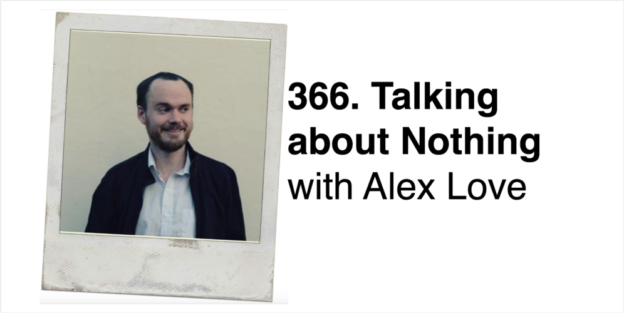
On the podcast today I am in conversation with Alex Love, who you might remember from some previous episodes of this podcast. Alex is a friend of mine who I first met while doing stand-up comedy in London 7 years ago. He has featured in podcast episodes before, like the Brighton Fringe Festival podcasts (ep 104, 105 & 106), 109. The Drunk Episode and 226. On a Boat. All those episodes also featured our friends Paul Langton and Moz – both of whom have been guests on the podcast recently. [DOWNLOAD]
Recent Episodes with Moz and Paul Langton:
Moz’s episode: https://teacherluke.co.uk/2016/03/23/337-murder-mile-walks-stories-of-londons-most-infamous-shocking-murders-some-explicit-content-swearing/
Paul’s episode: https://teacherluke.co.uk/2016/05/24/349-whos-the-best-superhero-with-paul-langton/
Alex Love regularly performs stand-up comedy gigs in London and in Manchester where he now lives. At this moment he’s preparing for the Edinburgh Festival where he will be performing a one-hour show which he has written himself, called “How to Win a Pub Quiz”. The show is a mix of stand-up comedy and pub quiz trivia and it has had some good reviews at previous festivals. If you’re in Edinburgh this August you can see Alex’s show at a venue called The Stand in rooms 5 & 6 (venue 319) at 12 o’clock midday from 4 to 14 August. Bookings: https://tickets.edfringe.com/whats-on/alex-love-how-to-win-a-pub-quiz
As well as doing comedy Alex has also done a number of different jobs in his life, including doing a paper-round, working in a call centre, and writing journalistic pieces for The Guardian newspaper.
I invited Alex onto the podcast today mainly to talk about his Edinburgh show, but in fact, the conversation mainly involves Alex and me just wittering on about nothing in particular! That’s why I’ve called this episode “Talking about Nothing with Alex Love” because although we do talk about his show a little bit, I’ve found it quite hard to put my finger on exactly what it was that we talked about for the majority of this conversation. We just seemed to be talking about nothing and I actually think that’s a really great thing and a worthwhile thing for you to listen to.
Because, in my opinion, regularly listening to unplanned and slightly rambling conversations between friends, like in this episode, is genuinely good for your English, long-term. This is, after all, the way that we communicate with friends in the real world, isn’t it? Real conversations are not scripted or planned out in advance like the recordings you hear in published English learning course books, like this https://www.youtube.com/watch?v=0MVxesy1AFI 5.22. That’s an extract from a Headway course book published by Oxford University Press, which is a very good book and everything, but the audio conversations are a bit fake sounding because they’ve been written in advance and are being used to present certain bits of language. Of course, the vast majority of conversations we have with our friends in the real world are not planned in advance and usually involve responding to little moments that come up in the conversation, changing from one topic to another and simply rambling on about stuff in general. And we build relationships with people by rambling on about stuff in general, we have fun with each other by rambling on about stuff in general and we release stress by just rambling on about stuff in general, and this is why simply rambling on about stuff in general is actually rather a wonderful thing indeed.
So, I invite you, in this episode, to listen to us rambling on about stuff in general. Your job is to try to follow the meandering flow of the conversation, take note of certain phrases or aspects of language that you hear, and generally just let the English wash over you like some kind of refreshing language shower. An English language shower. A languashower if you like, or perhaps an Englashower.
One technical detail before we start: There are some moments when the Skype connection breaks up and Alex sounds a bit like an evil robot. That happened a few times and it actually really annoyed me during the recording because it was quite disruptive to our conversation. For some reason, whenever we started talking about something serious some connection problems occurred and Alex started sounding like an Aphex Twin remix or a drunk robot or something. You’ll hear it happening sometimes in the conversation and you’ll also hear that I got a bit annoyed by it later in the conversation and I said the phrase “This is doing my head in” which means “this is really annoying me and making me angry and frustrated.” To be honest, I have managed to fix the vast majority of the technical issues in the recording because I have done *a lot* of editing, so in fact you probably won’t notice any of these technical issues and all of this explaining that I’m doing here in the introduction is probably completely unnecessary, so I’m now going to stop doing it and just move on.
I hope to have Alex back on the podcast again soon for another episode in which we do a kind of podcast pub quiz of our own, which you can take part in. That would be good, wouldn’t it? Yes of course it would. Everyone likes a pub quiz. That’s another episode for another time, perhaps while Alex is in Edinburgh and has a better internet connection.
I should also mention that there’s a little bit of swearing in this conversation. So, “there’s a little bit of swearing in this episode.” There you go, you’ve been told, and I know that the vast majority of you are now thinking – “fine, that’s absolutely fine Luke. Not a problem. In fact, good – that’s good. We fucking love swearing Luke. IN fact, swearing is sharing.” Well, I don’t know what you’re talking about but I’m glad you’re happy. I encourage you not to swear too much though OK, even if you hear it on the podcast. Do what I say, don’t do what I do. OK.
Well, right then, without any further explaining, let’s now get started, and we’re going to jump straight into the conversation mid-flow right now so this is it, off we go, it’s time to get started so let’s get down to business right away without any further hesitation or messing around or time-wasting and so here it is then, let’s start, we’re all set, you’re set, I’m set, everything’s set and ready to roll so here we go, on your marks, get set, get ready, get steady, let’s get ready to rumble… OK GO.
*Episode Begins*
By the way, what’s a “Pub Quiz”? Well, it’s a quiz that happens in a pub. Typically, pub quizzes happen in the evenings in pubs all over the country where teams of people get together to answer questions which are read out by the quiz master. It’s just a game and a good excuse to get together, have a few drinks and test your general knowledge. The winning team is usually awarded some sort of prize – typically restaurant vouchers, bottles of wine or something like that. Pub quizzes are very popular in the UK. In fact, according to Wikipedia, “a 2009 study put the number of regular weekly pub quizzes in the UK at 22,445.”
Everyone loves a pub quiz, they’re very appealing. So, Alex’s Edinburgh show is quite a clever combination of a stand-up performance and a pub quiz in which the audience have to answer various funny questions read out by Alex.
Title: Alex Love – How to Win a Pub Quiz
Venue: The Stand 5 & 6 (Venue 319) Dates: Aug 4-14 Time: 12:00 lunch time Length: 1 hour
Description from the Ed Fringe website: This highly interactive show is part stand-up, part actual pub quiz. Expand your trivia, compete against other teams, witness results. After playing to capacity crowds in 2015, this unique hour is back with more facts, prizes and niche-referenced nonsense. Reviews: ‘Alex Love is great fun’ (Scotsman). ‘It takes quite a show to create such a sense of engagement that one music question can become a full-blown sing-along, but this is the spirit of How to Win a Pub Quiz.’ (BroadwayBaby.com). ‘Such a quick brain’ (We Are Funny Project). Bookings: https://tickets.edfringe.com/whats-on/alex-love-how-to-win-a-pub-quiz
Alex on Twitter: @thisalexlove https://twitter.com/thisalexlove
Follow me on Twitter @englishpodcast https://twitter.com/englishpodcast
Check out italki and get 100ITC at www.teacherluke.co.uk/talk
Download a free audiobook from Audible at www.audibletrial.com/teacherluke
Now, go and make a jet-pack and your dreams of flying will come true! Yes you can!
;)
Luke
End of Part 1 – ‘Outro’ – Transcript
Hello everyone – I’m interrupting the conversation here because I’ve decided to divide this episode into two parts and I thought that this dramatic moment where Alex has moved into the bathroom to find a better mobile internet signal is a suitable moment to do that. So this is the end of part 1. Part 2 should be ready for you to listen to right away – so go ahead and get stuck into it now.
OK then, so that’s it for part 1. Don’t forget to join the mailing list at teacherluke.co.uk and then you’ll get an email whenever I upload a new episode and the email will direct you straight to the page for that episode where you will find notes, transcriptions, links, videos and other details that relate to the episode.
Thanks for listening, and I’ll talk to you again in part 2.
This is a special episode about Muhammad Ali and the story of one of his most famous fights, “The Rumble in the Jungle”. In the episode you’ll hear me give a biography of Ali and then I go into lots of descriptive detail about the fight, exploring exactly what happened in and out of the ring and why he is now considered not only one of the greatest boxers but one of the most outstanding people of recent times. The episode is almost 100% transcribed. See below for details.
[DOWNLOAD]
It is a cool Wednesday morning here in Paris as I record this episode. Again I’m talking about sport on the podcast today. This time it’s the sport of boxing as I talk about arguably the greatest boxer we’ve ever had, and in fact one of the greatest people of the last 50 years or so – Muhammad Ali. I’ve got a lot to say about the man, so I suspect this could be another long episode of the podcast! I’ve said it before and I’ll say it again – a lot of my episodes are long these days. Now, most of you seem to be fine with that, which is cool. I’ll say that with these episodes you are getting a tremendous amount of English exposure and that is one of the key ingredients in gaining proper English with a wide range of vocabulary and accurate listening skills, which really helps your English in other areas such as your own speaking. You can learn a lot from episodes like this, even if I’m not explicitly teaching language to you. I recommend that you listen closely, get into the story, pay attention and be curious about what’s going to happen next, while noticing the language I’m using to describe the events of Ali’s life and the specific details of his fights. Pay attention to every word, while getting drawn into the story of one of the most extraordinary people of recent years. Look out for not only language for describing the narrative of Ali’s life story but also the specific descriptions of boxing, which will include some complex language to describe body position, movement and technique. I’ve planned this episode quite carefully and took some time to do it. You’ll see almost every word of this transcribed on my website. I strongly recommend that you go and check it out. You could read along with me, or use the script to help you learn English in lots of ways. Alright, that’s my pep talk about learning English with this episode, let’s now get stuck into this subject.
We lost another great person this year, Muhammad Ali. Since Ali died I’ve had quite a lot of messages from listeners saying to me, “Luke, talk about Muhammad Ali!” OK! I would absolutely love to talk about this subject! I am a big fan of Ali, especially his boxing. It’s one of my favourite topics. I’ve never talked about this on the podcast before, but I do have an interest in boxing and martial arts in general and particularly in several fights involving Ali so I am more than happy to talk about this in a special podcast episode to celebrate the life of The People’s Champion, the one and only Muhammed Ali, who truly was The Greatest.
And yes I do consider boxing as a martial art. I think it is a discipline and even though there are rules to boxing that you don’t have in other martial arts, I think true fighters understand that boxing can still be considered a martial art.
On the subject of fighting – I’m one of those people who doesn’t believe in war, doesn’t believe in violence and generally doesn’t like fighting, but I am interested in boxing. I think it is a discipline and it’s a remarkably complex sport which, at the highest level, involves incredible levels of technique, strategy and skill. It’s also a huge mental challenge as well as a physical one.
I would try doing it and I’ve often thought about doing it, but I just know what would happen. I’d go down to the gym and have a go at the punching bags and get into the techniques and the sparring, but as soon as I got into a genuine fight situation all it would take is one punch on my nose and I’d say “OK, stop – stop! That’s enough!” So instead I’m far more comfortable talking about it, reading about it and studying fights on video than actually getting punched in the face myself.
It’s worth mentioning that boxing is a controversial sport and there are arguments to say it should be banned or controlled. That’s a complex argument and I understand that the point of the game is to try to hit the your competitor but I think that as long as the sport is properly regulated and the boxers themselves know exactly what they’re doing, then I think it’s up to them. If they are happy to do it and to take the risks then fair enough. There’s a lot to be gained for young people taking up the sport. I think it can give people a focus, discipline and also it’s a way of earning money as a professional. Many of the people who take up boxing come from difficult backgrounds and going to boxing rings to fight is better than fighting on the street and getting involved in other kinds of trouble.
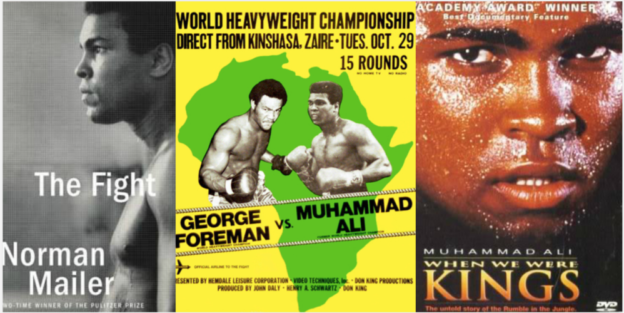
I’ve always been aware of Muhammad Ali. I just remember footage of him on TV. He often appeared on British television and my parents talked about this from time to time. Such a big personality is quite hard to avoid. My interest in Ali as a boxer is mainly as a result of two things. The first is a great documentary called “When We Were Kings”. This is a feature film about Ali’s fight with George Foreman in 1974, which I’m going to talk about in a bit. When I worked at the HMV music and video store in Liverpool for a year “When We Were Kings” was on repeat every day for a week or two. You know the way they play movies in the store, on the big screens. I used to work on the specialist music and computer games counter and the screen was around the corner. I couldn’t see it, but the audio track from the movie was played through the speakers above my head, all day long. I heard the audio from that movie about 5 times a day, but couldn’t see the screen. I just listened to people describing the fight and heard Ali talking, over and over, while I was working.
The other reason I’m interested in Ali’s boxing is a book called “The Fight” by Norman Mailer. That particular book is an incredibly intense account of the same fight featured in the movie I just mentioned. The central chapter of the book is a blow by blow account of the whole 8 rounds, but the book also describes the entire story around the fight including the personal and cultural context. Norman Mailer describes his meetings with Ali and his entourage, the atmosphere of the fight and more. It’s so well written. It’s subjective, personal journalism, which for me brings the subject alive so much, and it’s tremendously evocative of the atmosphere and emotion of the fight. I’ve read it lots of times and it never gets boring to me. I recommend both the film and the book. The book can be a bit tricky to read at first because Mailer writes in a fairly complex and very descriptive style, but this really helps during his descriptions of the fight.
These days I like to watch footage of Ali fighting and watch interviews with him. YouTube is an incredible resource because most of the big moments in Ali’s career can be found there, including his biggest fights and interviews.
For this episode, I’m just going to focus mainly on the aspects of this story that I know the best and that’s really Ali’s boxing. I think if you really want to know about all the other details of Ali’s life story and all the facts and figures – names, dates, places etc then you can just check Wikipedia. What I want to do is celebrate this amazing person who we lost this year, by just telling you what I know and mostly that is related to his boxing and particularly his fight against George Foreman in 1974, which is the subject of that film and book that I enjoy so much.
So now I’m going to try and string together all the thoughts and feelings I have about this incredible guy, while also trying to tell you what I hope will be a captivating and amazing true story.
So let’s go!
Muhammad Ali – His Life
Ali was many things: An Olympic gold medal winning sportsman, a boxer, a poet, a comedian, a philanthropist, a conscientious objector to the Vietnam war, a campaigner for civil rights, a holder of controversial views on race relations, a member of the muslim brotherhood of Elijah Muhammed, a sufferer of Parkinson’s disease and one of the most inspirational and charismatic people of the 20th century. Muhammed Ali was one of those special people who don’t come along very often and who will be remembered for a long long time.
Basic life story – Main events up to the 1974 fight with George Foreman.
He was born in Louisville Kentucky in 1942, and named “Cassius Clay”. Apparently he learned to box when he was 12 in order to get revenge on some kids who stole his bike, and apparently he was talented and continued to do it. Clay went on to become a successful amateur boxer and won at the age of 18 won an Olympic gold medal for boxing in 1960 and then went on to become the world heavyweight boxing champion in 1964. He joined the Muslim Brotherhood – a group of black Americans who followed the preachings of Elijah Muhammad. The group he belonged to sought to gain equal rights for black people in the USA. Part of their vision was a segregated USA in which the blacks were given the freedom to set up their own nation. This was quite an extreme position – segregation, but it came out of the sense that blacks had no faith in white America since centuries earlier they had been forced to leave their land and come to the USA as slaves. Their wish was to be allowed to live and prosper with equal status in the country, but alongside white communities, not part of them. In 1964 (I think) he changed his name from Cassius Clay (which he said was a slave name given to his ancestors by slave masters) to Muhammad Ali. Although his views on segregation as a solution to the inequalities in society are now considered radical and extreme, he expressed his ideas so eloquently and with such grace, charm and humour that it was hard not to listen respectfully to what he had to say. In fact, he comes across in his interviews and discussions as a very thoughtful and respectful person, even if I disagree with some of the views that he expressed at the time. Listening to him speak was fascinating and he was clearly very intelligent. Ali was an amazing role model for many black American people who were struggling against prejudice and inequality on a daily basis in the USA and he was very much a symbol of the civil rights movement of the 1960s.
In 1967 the USA was at war in Vietnam and like thousands of young men in the States he was drafted into the military, but Ali refused to fight, becoming a conscientious objector on religious grounds. He was arrested on draft evasion charges and this caused him to be suspended from boxing for 3-4 years as a punishment for refusing to fight. He was also stripped of all his heavyweight titles. They were taken away from him. He was also banned from travelling to foreign countries to box, because he refused to go to Vietnam to kill for his country. In hindsight, Ali’s argument is hard to disagree with in my opinion. Here’s what he had to say on the matter.
In the first part of this Ali sounds like he’s slurring his words a bit. I think that’s because the interview was done later, when symptoms of Parkinson’s were beginning to show. The second part of the interview is from a debate he had with students.
The first part of that his point is: Why should I go to another part of the world and murder people who’ve never done anything against me. They never called me nigger, they never enslaved me, raped my people, set dogs on me, lynched me. My struggle is against white oppressors at home who I have to defend myself against, not some Vietnamese in another country.
Here’s another quote: “Why should they ask me to put on a uniform and go 10,000 miles from home and drop bombs and bullets on Brown people in Vietnam while so-called Negro people in Louisville are treated like dogs and denied simple human rights? No I’m not going 10,000 miles from home to help murder and burn another poor nation simply to continue the domination of white slave masters of the darker people the world over. This is the day when such evils must come to an end. I have been warned that to take such a stand would cost me millions of dollars. But I have said it once and I will say it again. The real enemy of my people is here. I will not disgrace my religion, my people or myself by becoming a tool to enslave those who are fighting for their own justice, freedom and equality. If I thought the war was going to bring freedom and equality to 22 million of my people they wouldn’t have to draft me, I’d join tomorrow. I have nothing to lose by standing up for my beliefs. So I’ll go to jail, so what? We’ve been in jail for 400 years.”
Again, his actions – this time as a conscientious objector – made him a counter-culture icon and one of the most prominent voices of opposition to the Vietnam war from the beginning.
Ali appealed the decision to stop him boxing and the ban was eventually lifted in 1971 but by that time he hadn’t boxed professionally for 4 years. That’s 4 years when he was in his prime, lost. Interestingly, because the ban was imposed when he was champion, he had never lost a heavyweight title fight, so even though he didn’t have the belt he was still undefeated as a champion.
I want to talk about his famous fight in 1974 against George Foreman so I’m going to focus mainly on that in a moment.
Ali is considered to be one of the greatest boxers ever and he had an amazing record. He was also an extremely entertaining fighter. He was known mainly for his speed and his movement in the ring. He used to dance – constantly in movement, which made it extremely difficult to fight against him. Although he had some weaknesses – specifically a lack of power in his punches he made up for his faults with his amazing speed. Heavyweights aren’t usually so light on their feet or fast with their hands, but Ali was. He has been compared to Bruce Lee in the way he used movement, dancing with his feet, speed of punches, feints and counter attacks. In fact, Bruce Lee said on a number of occasions that he took a lot of influence from watching Ali boxing. Apparently Bruce Lee used to project video of Ali fighting onto a big screen and then shadow his movements, following Ali’s feet and hands. Here’s a Bruce Lee quote about Ali: “Everybody says I must fight Ali someday,” Bruce said. “I’m studying every move he makes. I’m getting to know how he thinks and moves”. Bruce Lee knew he could never win a fight against Ali “look at my hands”, he said. “That’s a little Chinese hand. he’d kill me”
Ali was not just fast at punching, but also at avoiding being punched. He seemed to be amazing at judging distance and would lean back out of the reach of oncoming punches. Looking at some videos he seemed to be unreachable. No one could touch him.
Video of Ali avoiding punches, dancing and using his reflexes.
Ali is wearing the white shorts.
One of his catch phrases was “float like a butterfly, sting like a bee” and it summed up his style. He was light on his feet but he could hurt with his sharp attacks.
About his speed he said:
“I’m so fast that last night I turned off the light switch in my hotel room and was in bed before the room was dark.” Muhammad Ali
Some of his punches were so fast they couldn’t be seen and they didn’t appear on film. For example the punch that knocked out his rival Sonny Liston in 1964 is a bit of a legend. It’s known as the anchor punch and it happened so quickly as part of a counter attack that Sonny Liston didn’t see it coming, but neither did most of the audience or the viewers of the fight on TV. It looked like Liston had suddenly just hit the deck. The fact is that the punch arrived in about 4 100ths of a second. It was a real ‘blink and you’ll miss it’ moment.
As well as his skills as a boxer, Ali was a hugely charismatic, lively and humorous personality and this is another one of the reasons he is so loved.
He used to write funny poems and his conduct in interviews was frequently hilarious. It seemed he was as quick with his responses as he was in the ring. I recommend you watch some of the videos on youTube of his funny moments.
Some funny moments
https://www.youtube.com/watch?v=6igy7hmildM
Ali did win the heavyweight title again in the early 70s but lost it to Joe Frazier. In fact Ali lost a couple of times in that period to his two main rivals Joe Frazier and Ken Norton. By 1974 people were saying that Ali was past his best and people wondered if he might never win another heavyweight title and would retire.
By 1974 a new challenger had arrived on the scene in the form of George Foreman, who was an extremely impressive fighter. Large, very strong and devastatingly effective. Foreman beat both of the fighters who had beaten Ali – Ken Norton and Joe Frazier, and went on to become the heavyweight champion.
Foreman was 25 and in the peak of fitness and had smashed Frazier and Norton in just a few rounds each. Ali was 32 and past his prime.
Nevertheless, Ali chose to have a go at beating Foreman to reclaim the heavyweight title. Boxing promoter Don King knew that it would be a great spectacle to put loudmouth Muhammad Ali the people’s champion against the young dangerous new champion George Foreman and managed to raise the money to pay for a huge high profile title fight between the two men, in which both fighters would be paid $5 million dollars. The only way he could raise the money was to go overseas and in the end it took place in Africa in Zaire, where the dictator president Mobutu put up the money to pay for the fight, knowing it would be good publicity for him and his country. The setting was Zaire, and the fight was called The Rumble in the Jungle.
So this is the story of the Rumble in the Jungle. This is the fight forms the basis of that book I love and that film I listened to so many times while working in the music shop. It’s a great story and it’s a true story, so here we go.
The Rumble in the Jungle
*Tenses – a lot of my descriptions of this fight are in present tenses, even though the fight took place in 1974. Present tenses are sometimes used to bring immediacy to events. It brings them into the present and increases the drama. Past tenses are usually used when you tell a story, but they do create some remoteness, so present tenses are sometimes used to bring the story into the here and now.
Round 1
Ali is the challenger so he arrives first, to great applause. The crowd loves him.
Foreman waits ages to come out. This is probably a tactic to unnerve Ali. It doesn’t seem to work.
Some people in the crowd boo Foreman as he enters the ring.
The fighters psyche each other out.
Foreman uses his physical presence.
Ali is fighting a mental battle with Foreman, using the crowd against him – encouraging them to shout “Ali bomo ye”, shouting and talking all the time at Foreman.
Foreman is silent and has complete faith in himself and his abilities.
They have their gloves put on and then there’s a moment when they stare at each other.
Moments before the bell rings Muhammad Ali has a moment of quiet prayer in his corner.
Foreman is bending over as the bell rings, showing his ass to Ali. Not much dignity or charisma there.
The bell rings.
Ali immediately is on the offensive, leaping towards Foreman.
Ali dances.
Foreman attempts to start cutting off the ring, using his (rear) right hand like a bear’s paw to deal with left jabs. This is part of his technique.
Some boxing principles.
You have a lead hand and a rear hand.
If you’re right handed, your lead is your left hand.
You don’t stand square to your opponent.
You have your left foot forward slightly and the right foot back. The left shoulder forward, and the right shoulder back a bit. The left hand is closer to your opponent, the right hand further away. This means your left hand can jab forward, from the shoulder. The punches can be fast and direct but less powerful. The right hand, the rear hand, is further away and comes across your shoulders. This means it takes longer to reach your opponent, but it carries a lot more force because it carries a lot of your body weight with it. A powerful rear hand punch can carry your whole body weight behind it if you twist your hips and shoulders behind the punch.
So the left hand for jabs, the right hand for longer punches. You rarely lead with the right hand. This is because it takes ages to arrive and the opponent can usually see it coming, and block it, leaving you exposed.
So usually boxers will do combinations of punches, leading with the left. That’s a jab with the left followed immediately by a powerful punch with the right. Punches can be aimed at the head or the body. The can come in a straight line, they can come around the side or from the bottom. Punches from underneath are called uppercuts. You can also punch over the top of someone’s defences too in some cases.
Part of Foreman’s strength was that he had an extended rear hand. He held his rear hand quite far forward in an extended defensive position. He was brilliant at using that extended rear hand (right) to neutralise the opponents leading left hand. He could block the jabs from the left or counter the jabs with the right hand sometimes, and then attack with powerful hooks from both sides.
He combined this with his technique of cutting off the ring. This involves forcing the opponent into the corners or against the ropes by carefully and steadily stepping forwards and to the side. If the opponent attempts to move around, Foreman would sidestep, essentially trapping the opponent and reducing the space in which they can move, and with that extended right hand cutting off the leading jabs of the opponent he could basically trap the opponent in exactly the position he wanted and would then apply his brutally powerful punches to great effect. Often, just a few of these carefully placed punches would be enough to knock the opponent to the floor, or unconscious, like he did with Ken Norton.
Cutting off the ring was exactly the sort of fighting style that could work against Ali.
Ali and Foreman had never faced each other before, so nobody knew how it would go.
Unlike Ali’s fluid, fast and accurate technique. Foreman’s style was not graceful or beautiful. With his extended rear hand and his relentless side stepping and steady movement forwards, Foreman appeared like a bear or like Frankenstein’s monster, slowly but inevitably closing in on his opponent before causing untold damage with those powerful arms and huge fists. Not graceful, but devastatingly effective. This is what had destroyed the only two fighters to beat Ali previously – Ken Norton and Joe Frazier. Foreman appeared not only to beat them with ease, but smash them to pieces. Ali had lost to both these men, but Foreman had taken care of them in just a matter of minutes. He was in his prime both physically and in terms of confidence. According to Foreman, he felt invincible before the fight and was sure he would beat Ali.
This is what Ali was facing and apparently he was scared. Despite all the bravado, he must have been petrified. Watch the video of Foreman beating Norton and Frasier. He’s like an executioner. Everyone was worried that Ali couldn’t win and that he’d get hurt.
Also, Ali was past his prime. He was relatively old and had already fought his best fights. Since his ban, his legs weren’t the same as they used to be. He couldn’t dance like he used to. He was heavier than before, but he was still fast, and there were dimensions to his fighting technique that we hadn’t seen yet.
Everyone wondered what would happen, and how long it would take Foreman to close down Ali. How could Ali escape Foreman? The bell rang for the first round and Ali leapt forward to engage Foreman.
Then he did something that nobody expected.
Something so reckless and brilliant that nobody could believe what they were seeing, and it seemed to work.
He started throwing right hand leads.
A right hand lead is when a fighter leads with their rear hand, which in this case was the right hand.
This is a high risk strategy but if it works it can be very deadly.
Because the right hand has to travel much further, the other fighter has a lot more time to stop it.
However, if a right hand punch connects, it can do a lot more damage, because it carries more body weight.
Remember that Foreman’s technique was to neutralise left hand leads with his extended rear hand – his bear paw. Ali chose to completely avoid this, by leading with heavy right hand punches, taking Foreman completely by surprise.
Ali hit Foreman with 10 or 11 right hand leads. Unbelievable. What a shock! Nobody could believe it.
Some of the right hand leads connect perfectly and you can see Foreman’s head jerk back quickly from the impact. Sweat sprays off his head as the punches land.
The crowd goes wild as Ali manages to land so many right hand punches to George’s face.
Again, Ali is fast and the influence on Bruce Lee is obvious here. His right hand punches are expertly executed. He feints with the left hand and applies the right. He then feints with the right hand, and then strikes with the right. He’s playing a guessing game with Foreman – which hand is going to come next? Foreman keeps being taken by surprise by the right hand of Ali. This just was not what he expected and he keeps falling for it in the first round. At least 10 times, with a few left hands in there too. This didn’t happen with Norton, or Frasier.
This took massive amounts of guts from Ali. It was a very risky move, completely unexpected and unpredictable. Only someone like Ali – who was cocky enough, fast enough and unconventional enough, could have done this. What an extraordinary fighter.
I think Ali’s plan was to knock Foreman down in the first round in a way that nobody could have suspected.
Again and again he hits him with right hand leads.
But Foreman does not go down. The punches hit him and his face puffs up, but he’s just enraged and he continues to advance on Ali and hits him with several punishing blows which must have hurt Ali.
Foreman is incredibly powerful, and the right hand leads must have put him in a huge rage. Some of the punches he delivers to Ali look very heavy. One connecting to the left side of Ali’s head, another to his heart under Ali’s outstretched arm.
But Ali doesn’t seem affected and in fact is visibly talking to Foreman throughout this.
Wrestling – head locks, holding his left glove against Foreman’s neck, talking to him.
Apparently saying things like “Is that the best you can do George? Come on hit me with a real punch!”
The round ends.
Moments in the corner.
Ali whips up the crowd again.
Round 2
Ali’s plan to knock down Foreman in round 1 with unexpected right hand leads hasn’t worked.
Despite landing the punches – about 10 of them. Foreman is still standing and seems ok.
Ali starts to take some punishment here.
This is phase 2 of his strategy.
He stops dancing and goes to the ropes.
To everybody watching it looks like Ali is going to be slaughtered by Foreman.
It’s quite a sad sight, because Ali is not dancing. He’s retreating, letting Foreman come to him and then leaning back against the ropes as Foreman starts laying into him with huge heavy punches to the body and head.
But Ali knows what he’s doing. It’s incredibly brave of him, but it’s calculated.
Most accounts of this fight just say that Ali went to the ropes, blocked most of the punches, let the ropes take the impact and let Foreman ‘punch himself out’, which means to exhaust himself from punching.
This was part of the plan. But Ali’s technique here was more sophisticated than that.
Foreman’s heavy punches – Ali blocks them. He leans back deep into the ropes, ensuring that the ropes take a lot of the force of the punches. The punches hit Ali and the force is transferred into the ropes. Also, Foreman has to lean forwards to hit Ali’s head. Ali is so fast that he avoids or blocks many of the punches. Ali was also a master of absorbing punches.
There were many aspects to Ali’s abilities and he used them all in combination, often highlighting one technique, allowing the other technique to be a surprise. This is part of that.
In a sense, this was a trap for Foreman. It was a risky move by Ali because it involved exposing himself to a lot of punishment, but Ali used one of his techniques – avoiding punches and absorbing impacts with body movement. He was a fluid fighter who relied on speed and quick reactions to limit the effect of punches.
While it looked like Ali was shutting down – not dancing, going to the ropes, essentially letting Foreman attack him, he was using his defensive skills to lure Foreman into a trap.
Foreman had one technique. Use his right hand to prevent left jabs coming around, close off the ring, and then apply massive swinging punches and uppercuts to maximum effect. This is how he’d managed to smash Frazier and Norton.
But Ali got around Foreman’s right hand by punching under it or inside it, and by leading with his right hand, which fighters never do.
Also, when Foreman got too close, Ali would hold his neck, pushing him off balance, preventing him from being able to swing properly. He would place his left hand on the back of his neck and pull his head down. He’d put his weight on Foreman, making Foreman carry some of his weight. Over time this exhausted Foreman.
Also, because Ali kept backing away, Foreman kept moving towards Ali, which gave extra force to Ali’s jabs and counter attacks from his defensive position on the ropes. Foreman was always moving into Ali’s punches, which multiplied their damage.
Also, Ali was using all his charisma, experience and mental strength against Foreman, and was constantly talking to him, teasing him, breaking down his confidence, breaking down his self belief, bit by bit. Apparently he kept telling Foreman “You can’t punch George, you don’t punch you push! Is that the best you’ve got! I’m your master George, you ain’t nothing, you’ve met your match, you’ll see you’ve stepped into the ring with your master, you’re out of your depth George, your punches aren’t hurting me… etc”
This would have seriously affected Foreman’s state of mind, causing him to be distracted and unfocused. It would have chipped away at his confidence, sowing seeds of self-doubt that you just can’t afford to be thinking in that situation.
When you view the fight again from this point of view, you realise that Ali was in control of the fight. He used Foreman’s strengths against him and he dominated Foreman mentally.
You can see in the video the moments when Ali is teasing Foreman and shouting comments at him, and Foreman is momentarily distracted and Ali takes the opportunity to strike lighting fast punches that are carefully aimed. Foreman is almost blind to them as he keeps bearing down on Ali. Also Ali has won the support of the audience, all of whom are willing him to succeed and Foreman to fail. When two fighters are so evenly matched, the mental conditions will give you an edge. In fact I think in sport it’s all in the mind. So much of it is about having the will to succeed and the motivation – like that song Eye of the Tiger!
Foreman’s determination and single mindedness in the ring is becoming a weakness as he keeps walking towards what he thinks is a target backing away or helpless against the ropes. In fact Ali keeps popping off the ropes to apply punches to Foreman’s head. They’re not super powerful blows, but they’re accurate and Foreman is moving towards them.
However, Ali’s strategy took time and Foreman was young. He had a lot of strength and stamina. He was also full of confidence and self-belief, which took a long time for Ali to drain away and Ali had to take a great deal of punishment on the ropes over many rounds, in fact there were times when Ali was just taking punches, absorbing them, doing his best to limit their force and not managing to get many counter punches in on Foreman. It looked like Ali was being destroyed, but it was a long-term plan.
Eventually after a number of rounds of this technique – drawing Foreman in, deflecting and avoiding the punches, wrestling him off balance, constantly talking to him and breaking his nerve with comments, and managing to strike a few jabs and punches while also taking a lot of punches to the body – Foreman got tired. It’s hard to keep punching as hard as you can, while defending yourself.
As an example, just try holding a 4kg weight straight out in front of you for as long as possible. How long can you do it? I would be surprised if you managed more than 5 minutes. If you did it for 10 minutes that is very impressive. A lot of people couldn’t last two minutes. Now think of the last time you had to run for an extended period of time. I know I have a lot of runners who listen to this – but if you don’t run regularly, imagine running at top speed for about 10-15 minutes. That’s actually quite a long time at top speed, as if a bear was chasing you. You’d be knackered probably – you know the feeling, when you’ve just got no wind left in your body, you’re experiencing pain in your legs and in your chest, your lungs just can’t take in enough air quickly enough, completely out of breath. You know the feeling. It’s awful. Now imagine doing both of those things at the same time, while also defending yourself against very powerful punches from perhaps the best fighter in the world. That’s an idea of the challenge faced by both these guys.
So, Foreman got tired. He punched himself out and lost focus. Eventually his guard started to drop a bit and Ali exploited it, even though he was also exhausted. He came off the ropes and applied lots of fast, well placed punches to Foreman’s head. The end of the fight was quite beautiful in an odd way. Ali applied his excellent footwork by coming off the ropes as Foreman’s guard dropped, stepping to the side forcing Foreman to turn to his left, putting him off balance while applying a combination of punches with both hands, his jabs with the left setting up harder punches to the right, and as Ali stepped to Foreman’s right and as Foreman began to turn he lost balance and began to fall, Ali had hit him with a combination of fast punches and then Foreman began to fall while they were turning, slowly yet inevitably falling towards the ground like a huge tree that had been cut down but still hadn’t fallen, but which had no way of staying upright. The whole time Ali had another punch ready, which he held back, ready to strike, but he held it as Foreman turned, and with a strange kind of beauty, Ali just let Foreman fall to the ground without hitting him again. Foreman’s fall seemed to be in slow motion and had an inevitability to it. Ali let it happen and seemed to guide him round, letting him fall as the big man crashed to the ground.
As the old saying goes, “The harder the come, the harder they fall”.
What Ali had done was use his intelligence against Foreman. When you realise what happened in the fight, how Ali won it, you realise what an amazing achievement it was. In the end, Ali was a far more sophisticated and complex person and he outclassed Foreman. As a test of character, Ali passed with flying colours and it’s one of the reasons he is such a legendary figure today.
He demonstrated extreme strength of character, not just physical ability. He dominated Foreman and proved himself to be the greatest.
Here’s what Foreman himself had to say about the fight, and about Ali. This is from CNN, and Foreman begins by talking about how confident he was after so easily beating all his other opponents in previous fights.
https://www.youtube.com/watch?v=kaVpVk_-hO0
He said that his whole life was devastated, and he’s not exaggerating. Apparently after this fight Foreman had a huge nervous breakdown. Essentially, the loss completely ruined his confidence to the point where he lost all sense of who he was up to that point. He described the experience as like falling into a huge black hole in which he stared death in the face. The previous George Foreman essentially died after that experience – not physically, but mentally or personally. It took him quite a lot of time to come back and piece his life together following the fight. This unstoppable fighter had been seriously shaken by the defeat. Foreman retired from boxing a few years later and over the following 15-20 years or so, he completely turned his life around, and later in the 90s I think he came back as a hugely successful business man. He became a multi millionaire by selling his patented “lean mean fat-free grilling machine” – a grill which cooks meat and drains the fat away. It’s a massive success the lean mean grilling machine. Now he’s a very self assured, charismatic and interesting man and a great public speaker. I think he became a born again Christian actually. He found god – that’s what saved him. That’s what worked for him. In fact, it’s fascinating to hear him describe his experience of having a breakdown after the fight, and then finding god. I think this is an anecdote that he has told many many times in his life.
Here he talks about being filled with hatred, feelings of paranoia, wanting revenge. Essentially his ego could not handle the defeat. He kept making excuses for the defeat, but he couldn’t avoid it and ultimately it caused a breakdown in his personality, which led to a remarkable spiritual experience in which he became a born again christian.
As for Ali, well immediately after the referee counted out Foreman and he was announced the winner, the ring was filled with people who jumped in to congratulate him. Apparently he fainted in the middle of the ring, but was resuscitated. He was the world champion again and had proved that he was truly the greatest, but he had taken serious punishment and apparently for weeks or months even he was suffering from the damage to his body. I imagine he was in extreme pain for a long time and could hardly move. Imagine being punched in the kidneys by George Foreman for 8 rounds. Ouch.
What happened next, was that an even bigger fight was set up, with even bigger stakes. At least £5million dollars to both fighters, in another international location – this time in Manilla, Philippines. This fight was arranged for the next year and was to be between Ali and Joe Frasier, the man who had previously defeated him. Frasier was Ali’s old rival, and the Thriller in Manilla became perhaps even more dramatic, dangerous and incredible than The Rumble in the Jungle. In fact, this fight was perhaps the most dangerous moment that both fighters had ever experienced. Ali described it as the closest thing to death he ever experienced, and it pushed both men right to the very limit of their lives. But that is another story for another time.
As we know, Ali was diagnosed with Parkinson’s disease in the early 1980s and it’s frankly very sad what we all saw happen to him. His speed was gone, his fast talking was gone. What was left of the champ was a man debilitated by his illness. It was incredibly sad to have the man taken away from us, just like it’s sad for the loved ones of anyone affected by Parkinson’s, and I know because I have several people in my family who are affected by the disease. We are still trying to find a cure or find more effective treatments for Parkinson’s and I just want to make an appeal to you at this point and ask you to please consider making a donation to Parkinson’s UK – a UK based charity which funds research and care programs for Parkinson’s sufferers. I’m sure there are also local charities for this too. Parkinson’s affects one in 500 people in the UK. There’s no cure but treatments can make a big difference to the lives of people who are affected by it. So please consider making even a small donation because Parkinson’s is no joke. Visit http://www.parkinsons.org.uk/ or just search for Parkinson’s charities in your area.
Muhammad Ali has raised awareness of Parkinson’s around the world so I thought it would only be appropriate to mention the charities here, which are doing great work.
By the way, we still don’t know if boxing is what caused Ali’s Parkinson’s. It’s easy to make the link, but there still isn’t conclusive evidence to suggest it is true. While boxing definitely causes brain damage to people, it’s not necessarily the cause of the disease.
Anyway, I don’t want to end this on a sad note. Ultimately Muhammad Ali was a truly great man who was bigger than boxing. He was an inspiration to many people and someone who will always be remembered. He was opinionated, articulate, charming, charismatic, skilful, unpredictable and very entertaining.
George Foreman describes Ali (min 1.20)
https://www.youtube.com/watch?v=Aj3IdV_KELU
YOU MUST SEE ALI IN ACTION – PLEASE WATCH THESE VIDEOS!
This is an absolutely fascinating and brilliantly written analysis of Ali’s fighting techniques
https://www.youtube.com/watch?v=G1_JW3wnrik
Watch the entire “Rumble in the Jungle” fight here, with commentary from David Frost
Ali having an intelligent discussion on US TV in 1968
Some of Ali’s funny moments
Hilarious comedian Richard Pryor talks about George Foreman vs Ken Norton, and Muhammad Ali
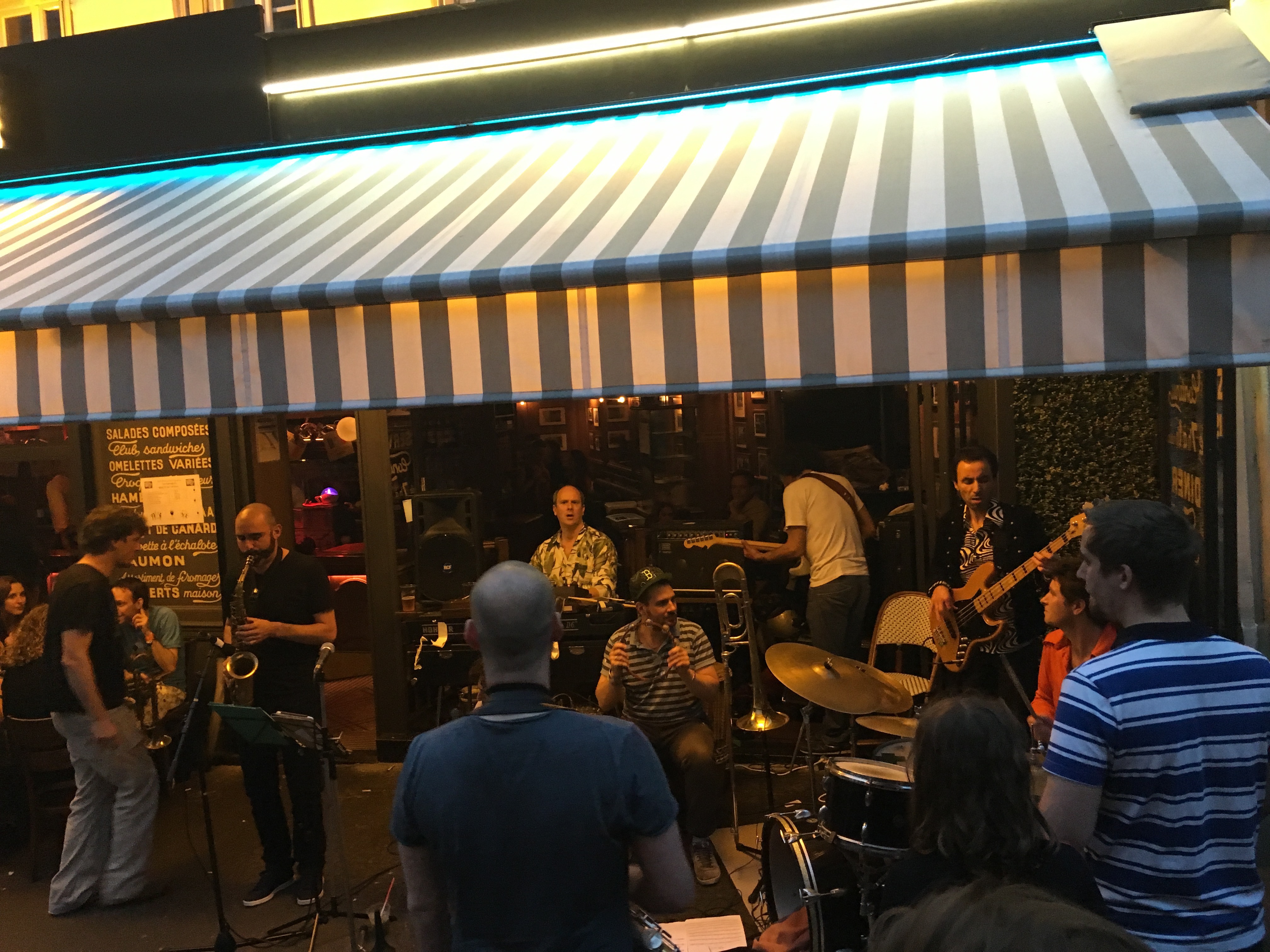
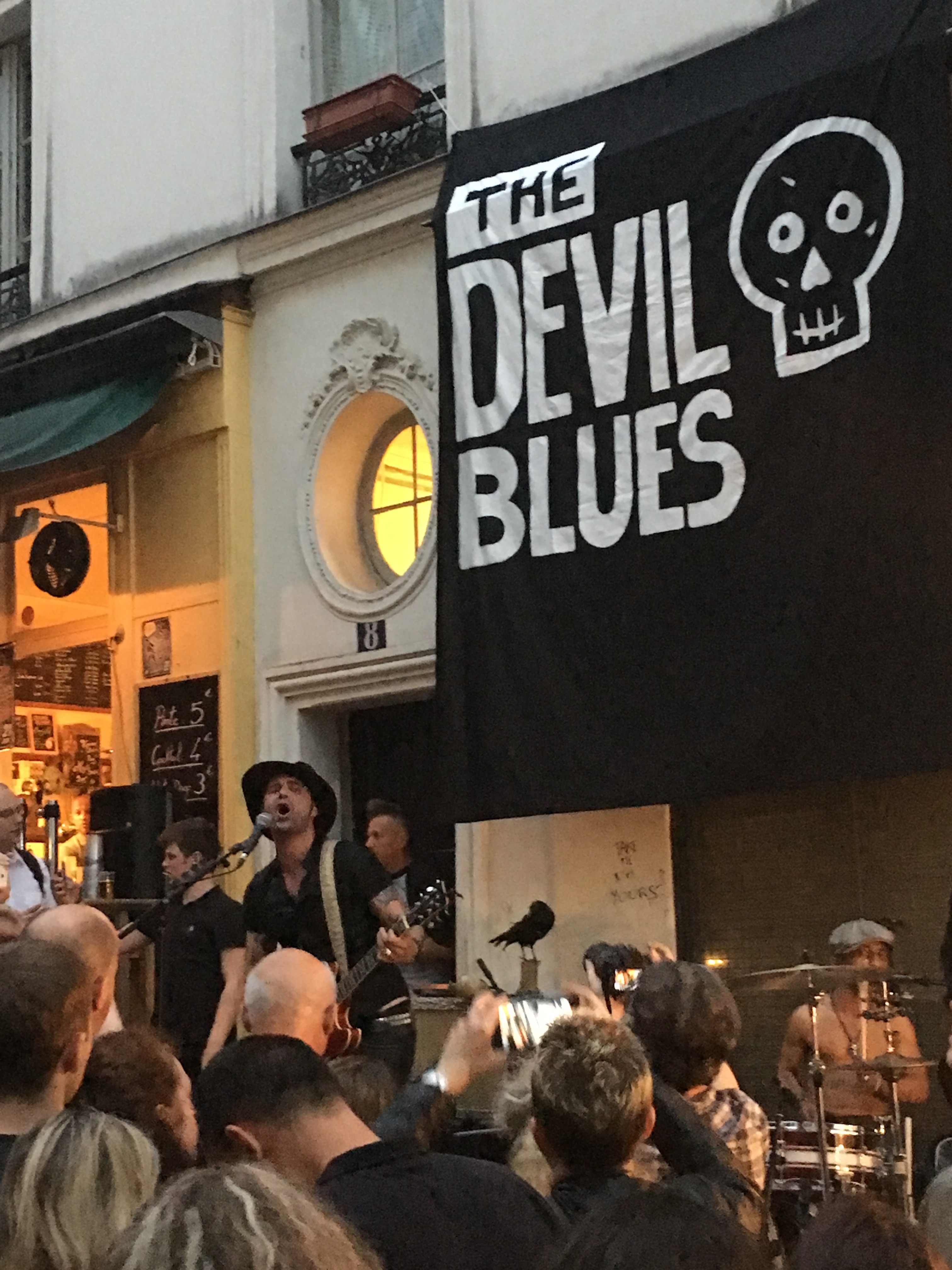
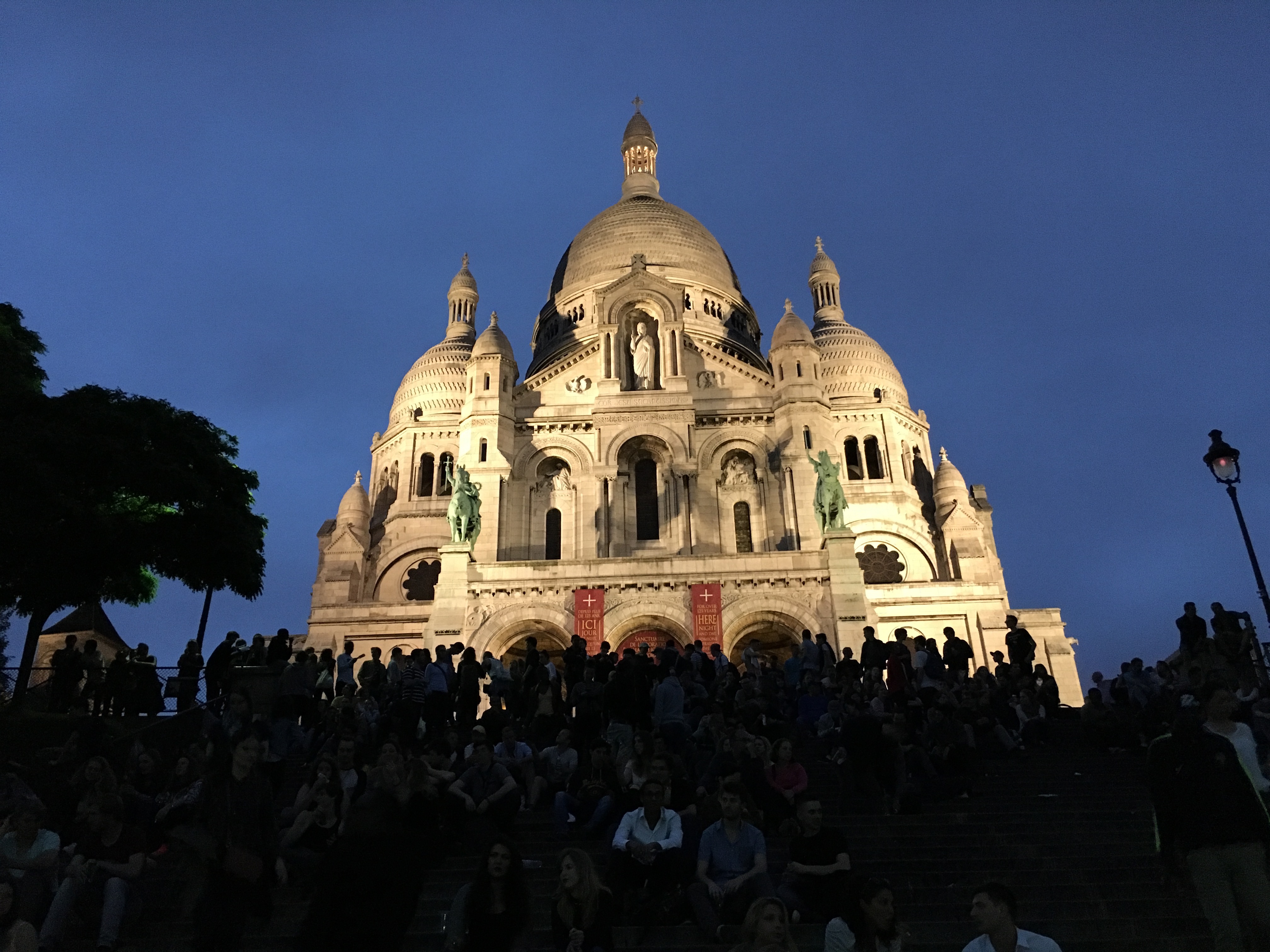
Join my wife and *me as we walk around the streets of Paris during the annual World Music Festival. You’ll hear live music, descriptions of the scene, a couple of conversations with people we met, and the sounds of this amazing evening in the city of light. It’s another long episode, but I hope you listen to all of it because I just really want to share the atmosphere and moments of this special event. Check below for photos.
[DOWNLOAD]
This episode was recorded yesterday evening on 21 June, which is the summer solstice in the northern hemisphere, the longest day of the year. It’s also World Music Day and here in Paris there is always a big music festival on this date, called “Fête de la Musique”. In Paris the whole city comes alive all night as live bands and musicians perform music on every street corner. The whole city becomes a big festival and it’s one of the best nights of the year here. The streets are filled with people partying, having a good time, drinking, socialising and dancing to the music.
So last night my wife and I went out to walk around the area and get into the spirit of the festival and in fact my wife suggested that I do some recordings so I could show another side of life in Paris, because it’s not all just Euro 2016, floods, strikes and terror alerts. There are loads of amazing things going on. Yesterday we had a brilliant evening and I’m really glad I captured it on the podcast.
So, I invite you to join us as we take a stroll through the streets of Paris on this hot summer evening, taking in the various musical performances, getting into the spirit of the evening and meeting a few people along the way. I met a few people during the evening and recorded short interviews with them. They were mainly Brits (a couple of guys from England, a French guy and a Belgian guy who spoke good English and two guys from Northern Ireland) and I asked them a couple of questions about the big stories of the moment like the football and the EU referendum.
You will also hear plenty of live music which I recorded yesterday. On every street corner there was a different band or a DJ playing. There were some moments when I chose just to record the music and not to speak, so you will hear some little musical interludes sometimes in which I’m not actually saying anything and it’s just live music, so you can soak up the atmosphere of what turned out to be a really brilliant evening in Paris. I hope you enjoy being part of it and that you can use your imagination to picture the scenes. The sounds should be in stereo too, so if you’re listening on headphones it should sound pretty cool.
There are some photos on the page for this episode (below), so check them out!
Now, I will let you listen to my audio diary of la fete de la music in Paris. I really enjoyed recording this episode and I really hope you enjoy it too and that you get into the atmosphere of this evening of music and good vibes!
Hello welcome to this LEP meeting. I’ve called this meeting in order to deal with some stuff that’s going on at the moment. On the agenda for today we have some news, some football updates including the England vs Wales game from yesterday, some more Brexit chat and then at the I’ll talk a bit about the incident that happened yesterday involving a British MP called Jo Cox, which is a pretty tragic story. That’s still developing and we don’t know the full facts yet. It just happened yesterday and by the time you listen to this it might have developed further. This episode/meeting is going to start quite light hearted and it’ll gradually get a bit more serious as it goes along.
Just a few recommendations
Join the mailing list.
Like the Facebook page.
Follow me on Twitter.
Leave reviews on iTunes.
Tell your friends about my podcast.
Weather report Sunshine and showers
Lunch report
I’ve just eaten a bento for lunch.
Upcoming episodes
More new episodes are coming soon. As long as everything goes according to plan I’ll be uploading a conversation with Olly Richards and a tribute to Muhammad Ali. I expect I’ll record some other episodes over the coming week or two that are just about what’s going on in the football and with the UK’s EU referendum.
Comedy shows in Paris in English
Sorry, we’re English – with Paul Taylor and me
http://www.panameartcafe.com/stand-up/sorry-were-english/
Every Thursday at 8pm
Le Best-Of French Fried Comedy Night (various comedians)
http://www.billetreduc.com/158326/evtvideo.htm
Théâtre de Dix Heures, Pigalle – Paris
Every Thursday at 9.30pm
Paul Taylor – #Franglais
Every Friday at 8pm
SoGymnase (at the moment)
SoGymnase Comedy Club- Theatre du Gymnase Marie Bell
38, Boulevard Bonne Nouvelle
75010 Paris
FRANCE
And other dates – and he’s moving venue – check Paul’s website for more info http://paultaylorcomedy.com/on-stage-sur-scne/
Also check out Paul’s podcast “Becoming a Comedian”
The New York Comedy Night (Hosted by Sebastian Marx, featuring various comedians) https://www.facebook.com/NewYorkComedyNight/
Every Friday at 9.30
SoGymnase Comedy Club
Sarah Donnelly in “Help, I Married a Frenchman” http://www.sogymnase.com/les-spectacles-shows (scroll down past Paul’s show)
Saturdays at 8pm
SoGymnase Comedy Club
The Great British American Comedy Night http://thegbacn.com
Saturdays at 9.30
SoGymnase Comedy Club
Sebastian Marx – A New Yorker in Paris
Fridays at 8pm I think!
Apollo Théâtre
Salle climatisée
Théâtre (~ 360 places)
18, rue du Faubourg du temple
75011 Paris
French Fried Comedy Open Mic Night with Vanessa Star (an open mic – anyone can perform, just arrive 30mins in advance and put your name on the list)
http://www.panameartcafe.com/stand-up/french-fried-open-mic/
Wednesdays at 6pm
Le Paname
Brexit / Euro 2016
Paris is full of football fans. Last night in Pigalle.
Results.
Violence has stopped I think. That’s good. No need to talk about that any more.
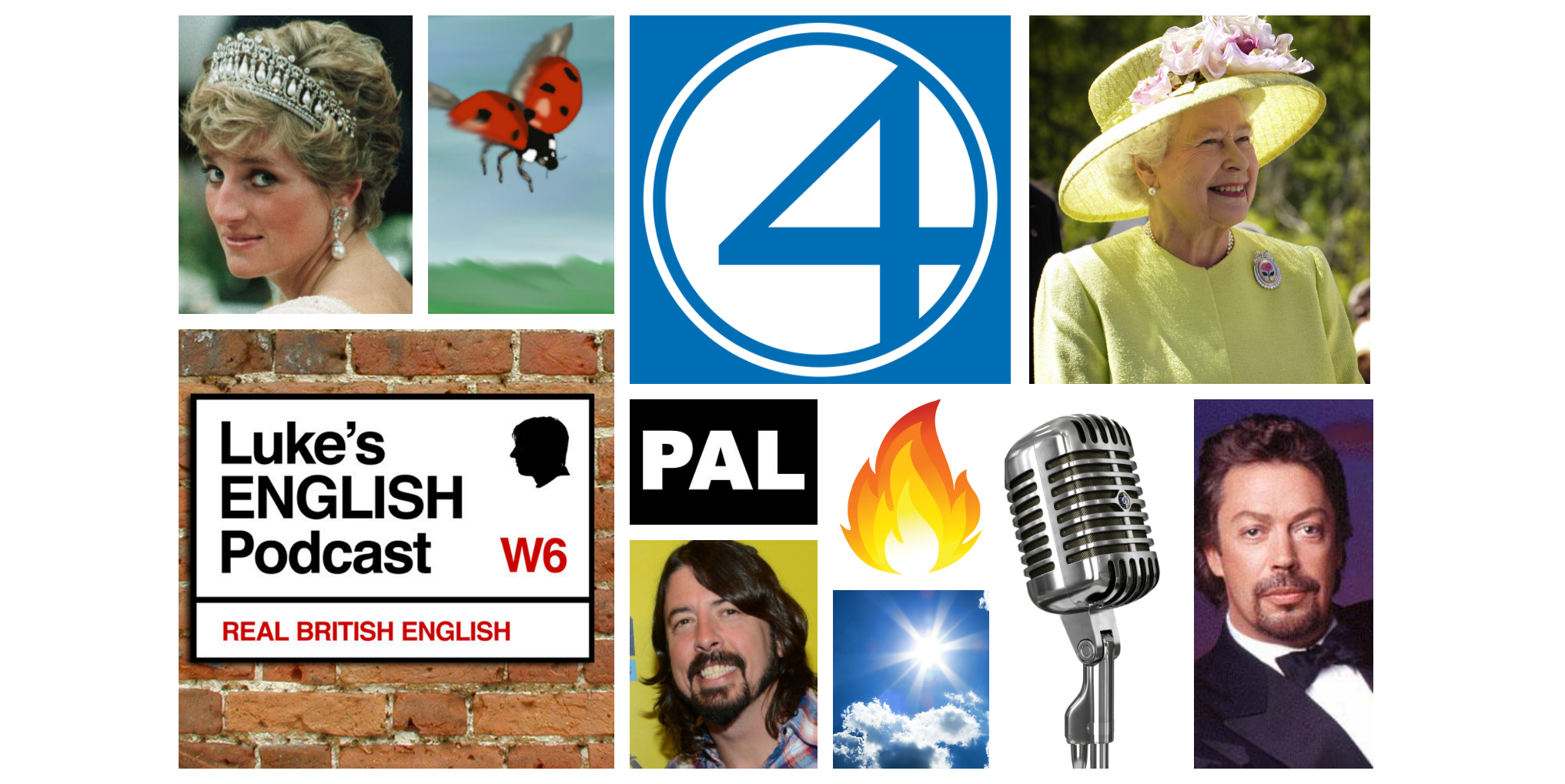
What? Another new episode? Slow down Luke! We can’t keep up! OK I will slow down, I promise. I am going away on holiday tomorrow and I will be quiet for a couple of weeks so I just wanted to upload another podcast before I go. While I’m away you’ll have a chance to catch up with all these new episodes. This is #344 and it’s another rambling conversation with podPALS Amber & Paul, but this time we’re joined by a fourth member of the team. Could this be The Fantastic Four that LEPster Olga mentioned in a recent comment? Only you can decide… Topics of conversation include: jingles, voice overs, the Queen’s birthday, the monarchy, Princess Diana and more…
Groovy background music c/o http://www.bensound.com
Introduction
I’m not going to spend much time on an introduction to this episode (yeah, right) except to say that in this episode you’re going to hear another a fast conversation between 4 native speakers, recorded for you to listen to.
You’ll hear the pod-pals – that’s Amber, Paul & me (The Thrilling Three or the Tangential Trio) having our weekly chat on the terrace in the sunshine. But this time we are joined by a 4th member to our team in the form of Tom Morton, a friend of ours from the stand-up comedy scene here in Paris. You might remember that Tom has been mentioned briefly on this podcast before and that we’ve established that he looks a bit like Dave Grohl the drummer from Nirvana and Tim Curry the actor from The Rocky Horror Picture Show, and… that’s it! That’s all you know at the moment!
Tom
So, just to fill you in a bit – Tom is a professional actor and voice-over artist. He’s done voice-overs for TV and radio advertisements for companies like Mini, L’Oreal, Sky TV, McVities biscuits and Nintendo Wii. He’s is half English and half French and speaks both English and French like a native. “What’s Tom’s accent?”, you might be wondering. Well you’ll find out for yourself in a bit when you listen to him, but in English he speaks with received pronunciation, which is essentially that neutral accent that we associate with the BBC and the universities – no particular regional inflections although he spent lots of time in West London when he was growing up. So, he speaks a bit like me basically, but he has his own unique sound of course, as you will discover in a moment. As ever I am keen to know what you think. What do you think of Tom’s voice? Leave your comments on the website.
Here’s what you’ll hear in this episode
First you’ll hear the three of us give Tom a sort of job interview as part of his initiation onto the podcast. After a couple of minutes though, the job interview goes downhill and is abandoned. We then just mess around, letting you get to know Tom a bit, doing improvised voice-overs on a few royalty-free Apple jingles, before the conversation goes off on a number of tangents (what a surprise). And those tangents cover these things:
the complexities of explaining puns and jokes in English
doing voiceovers on adverts for the ‘megaknife’ – a knife that is so sharp it can cut through a shoe
the Queen’s birthday
what British people think of the monarchy
the death of Princess Diana
public reactions to tragedies like when a famous person dies (this was recorded just a few hours before we all learned that another celebrity had died – the American musician Prince – just another legend who died this year after Lemmy, David Bowie, George Martin and a bunch of other people including British celebrities Terry Wogan, Paul Daniels, Ronnie Corbett and Victoria Wood – you might not know who they are but they were all much loved comedians and entertainers who died this year) So – public reactions to the death of famous people
when old people say racist things, like Prince Philip or your grandparents
Amber’s son Hugo has learning a new word
getting a letter from the Queen on your 100th birthday
the drama of Paul and Luke getting attacked by flying insects (ladybirds)
Amber’s story about a woman she saw whose scarf had slipped between her bum cheeks making it look like she had a tail
the moment one of my neighbours burps very loudly in the background from another apartment (I’m pretty sure you can’t hear it)
then finally, which members of The Fantastic Four we would be – I’m Mr Fantastic (because I’m the leader I suppose), Amber is the invisible woman (because since she had a baby she’s become invisible to men), Paul is The Human Torch (because he’s on fire sitting in the sun, and because he’s so hot right now in the world of comedy), and Tom is The Thing (neither French nor English, just an amorphous blob).
It’s a real mix of both serious and light-hearted topics, and yes, I am aware that the conversation moves pretty fast and we talk over each other quite a lot – that’s just what happens when a bunch of friends get together like this. It might be a difficult episode to follow – or maybe not – maybe you’ll have absolutely no problem keeping up with this, but in any case I hope you just enjoy listening to another completely spontaneous conversation between a group of Brits who are getting a bit too much sun on their heads.
You should know that there’s some swearing in this episode – there you go, you’ve been warned.
Also, we’re not talking about the results of the interactive lying game from episode 343 yet – that’s going to come in an another episode soon.
So that’s enough introduction. I will now just let you listen to another outdoor episode of LEP featuring the The Talkative Trio with Tom Morton.
LEP JINGLE MASHUP 1
*Conversation begins*
LEP JINGLE MASHUP 2
That’s it! Check out the page for the episode. There are a few notes and a brief summary of some of the main points in that conversation, so if you didn’t understand something you can just google it or wikipedia it!
Just a reminder about italki before I say anything else. With italki you can have your own rambling conversations with native English speakers if you like, or if you prefer you can have properly structured English lessons too, and all from the convenience of your own internet connection at home, or anywhere else really. They have loads of qualified teachers to choose from, and when you buy some lessons italki will give you a voucher worth 100ITC which is a nice discount on future English lessons. To get that offer and to check out italki go to teacherluke.co.uk/talk or click an italki logo on my website.
I’m going to be on holiday for about a week and then I’ll be very busy marking student exam papers so I don’t know when I’ll be able to upload a new episode. But I’m sure it won’t be that long, and anyway I’ve given you so many new episodes lately you could probably do with a little break too – or maybe not! Maybe you’re desperate for more. Don’t forget to check out my other podcast – A Phrasal Verb a Day. There are now over 130 episodes of that. The episodes are much shorter and I get straight to the point in every single episode and just focus on teaching you a new phrasal verb every time – and you shouldn’t underestimate the importance of phrasal verbs in English. They’re a vital part of fluent, natural English. So check out teacherluke.co.uk/pv for the episode archive – some of them have videos too.
Right – enough rambling! I’m off! I’ve got lots of exam marking to do! Have a nice day or night or morning or whatever and I’ll speak to you soon. Cheers! BYE!
Photos (clockwise – left to right) Princess Diana, a ladybird, Fantastic Four logo, The Queen, Tim Curry, Dave Grohl, LEP logo.
In this episode the results & winners of the LEP photo competition are announced, and – it’s the 7th birthday of Luke’s English Podcast! This episode is long but you don’t have to listen to it in one go. You can listen, pause, do something else, listen later and so on. Enjoy!
[DOWNLOAD]
Ladies and gentlemen, your attention please because the results of the LEP photo competition are here. Try to contain your excitement. I know we’ve all been waiting for weeks with bated breath to know who has won this most prestigious of prizes, but you can now relax and breathe normally because the wait is over! Yes, in this episode I’m going to give you the results of the photo competition. I’ll tell you the winners and the runners up, I’ll describe the winning photos in some detail including my thoughts and feelings about them, and later in the episdoe I’m going to ramble on about some other stuff.
Also, this is the 7th birthday of my podcast!
Also, I’ve just realised that this is the 7th birthday of LEP! It’s been almost exactly 7 years since I uploaded the very first episode of Luke’s English Podcast. So, this is not just the photo competition episode but also the 7th birthday of Luke’s English Podcast too! Wow. Has it been 7 years? 7 years of my life have gone into this project. I have put a huge amount of time and energy into this over the years and I’ve loved every moment of it. Time flies doesn’t it. Yes it does. I’ll talk more of birthday-related things later, but if you’re feeling like you want to congratulate the podcast, celebrate the birthday, send me a card or a gift, or say thank you for my work or something like that, and you’re wondering what the appropriate thing to do is – well, here are some suggestions:
You could…
leave a lovely comment on the website explaining briefly what LEP means to you. It’s always nice to read your feedback and it helps the podcast because new visitors will see that I have an active, engaged, positive audience and that the podcast is good. It’ll help me reach a wider audience.
give the podcast a review on iTunes. This is really important actually – lots and lots of new people come to my podcast through iTunes and many of them will look at the reviews. So, if you enjoy this podcast and you feel it’s made a difference to your English, leave me a good review on iTunes. Lots of other people will see your review and it will really make a difference to the reputation of the podcast. Just go to https://itunes.apple.com/fr/podcast/lukes-english-podcast-learn/id312059190?l=en&mt=2 , view the podcast in iTunes and leave your review.
the most sincere way to say thanks is to leave me a donation via paypal. You should be able to find a button on every page of the website that says DONATE. This is the most sincere way you can thank me, because it’s like an investment in the podcast. Any contribution you make will support the podcast directly because it’ll help me to cover costs, such as website hosting and other payments, and because it just means I can do things like buy my wife lunch or something, and that’s important for my quality of life and my energy, which then feeds back into the podcast.
Prizes
There will be more birthday celebrations later but first let’s get back to the photo competition, and here is just a quick reminder of what’s up for grabs in terms of prizes (this is where things get very dramatic and exciting – the tension is almost palpable isn’t it?!) First place will get two prizes: an LEP mug and another gift of the winner’s choice (so, another mug, a t-shirt, a pad or a tote bag), the two runners-up will receive one prize: an LEP mug each, and then there’s a surprise 4th prize, in a category that I’ve just added, for the winner of the Luke’s Choice Award (a gift of the winner’s choice from the gift shop).
I know some of you might be listening to this thinking – “What competition?” “What’s he talking about?” If that’s the case it probably means you haven’t listened to episodes 313-327 and so you’re blissfully unaware of this photo competition. Either that or you just forgot about it, or you had your memory wiped by Will Smith and Tommy Lee Jones or something. So, if you don’t remember, go back to episode 313 and 327 to remind yourselves of this competition and to find out more details.
Hey, don’t skip this episode, alright?
Some of you might also be thinking, “Oh, very good Luke, very good, but I might skip this episode because I’m not involved in the competition because I didn’t send a photo and I didn’t vote and yada yada yada”. First of all I should say that I would be deeply shocked and saddened if you skipped an episode. I mean really. It would upset me very much and it would be a huge trauma for me. I might have to go and have a lie down or a cup of tea, just to get over the emotional impact of knowing that you’d decided not to listen. In fact, I’m feeling very emotional about it right now just thinking about that… But if it makes a difference to you I’d like to say – I do hope you stay and listen, because I think there are some good things to be gained from listening to this, and I’ve got some biscuits here. Don’t you want a biscuit? Anyway, this episode is not just about announcing the winners, but it’s also about describing some of the popular photos using words, in English, and sharing thoughts and feelings with the LEP community.
Yes, I will be describing and commenting on the photos during the episode – so you’ll hear some descriptive language. I suggest you check the page for this episode to see the pics I’m talking about. Also, in episode 327 I taught you some very useful little phrases and techniques for describing pictures, which should be very important if you’re taking a Cambridge exam, or if you’d like to learn some useful little phrases and techniques for describing pictures. So, that’s back in episode 327.
Summarising the Competition
Just in case you don’t know, or you’ve forgotten or something, let me quickly sum up the competition again.
Some time late last year I opened up this new contest. I got the idea originally from a Long Term Lepster (LTL) called Guillaume who suggested it to me ages ago by email. He said, “Hey why don’t you do a competition in which you ask your listeners to send you photos of them listening in different situations, and you could share the photos on your website and people could vote for their favourites, and the winner could get a prize like an LEP mug or t-shirt or something?” and I thought, hmm, a competition in which my listeners send me photos of them listening in different locations and I could share the photos on my website and people could vote for their favourites, and the winner could get a prize like an LEP mug or t-shirt or something, that’s not a bad idea! And so I decided to do just that, and in episode 313 ( I think) I said, “I’m launching a competition in which you my listeners can send me photos of you listening in different locations and I’ll share the photos on my website and people can vote for their favourites and the winner could win a prize like an LEP mug or a t-shirt or something. All you have to do is take photos of yourself listening in different situations and I can share them on my website and everyone can vote for their favourite ones, and the winner could win a prize like an LEP mug or a t-shirt or something. What do you think?”
And people said “What? Sorry, can you repeat the sentence?”
Most people seemed up for the competition, which was nice.
There was just one condition , I said – “you have to include something that proves that you’re listening. So, that could be some headphones in the pic, or an LEP logo, or something like that.”
And that’s exactly what happened, everyone sent me pictures of themselves listening in different situations and I shared them on the page for episode 327 and then everyone voted for their favourite ones. I say, everyone – I actually don’t mean everyone – not everyone in the world. I didn’t get 7.125 billion votes, and not even everyone who listens to this podcast voted. In fact, just a small fraction of my listeners voted – which means that there’s a good chance that you, listening to this right now, yes you, the one with the ears – there’s a good chance that you didn’t take part in this at all. And I’d like to ask you why not?? What were you doing? Did you have something better to do? I can’t imagine what could be more important than voting in this competition! Except maybe writing a report for work or something – in fact there might be lots of things that stopped you from voting maybe you were going food shopping to buy food to keep you and your family alive, maybe you were cooking dinner and you couldn’t vote, eating dinner, feeding dinner to your family or friends, cleaning up the kitchen after dinner, digesting food (I can’t vote I’m busy digesting), washing clothes, wearing clothes (sorry, I couldn’t vote, I was too busy wearing clothes), taking your clothes off in the evening – that’s time consuming, sleeping, being woken up by your alarm, putting your alarm on snooze, going back to sleep again, being woken up by your alarm again, putting it on snooze again, going back to sleep again, being woken up by the alarm AGAIN, and putting it on snooze AGAIN, then suddenly realising that you’re really late, smashing the alarm with a hammer, jumping out of bed, putting your clothes back on, having a shower, changing your clothes because they’re all wet, going to the toilet, taking another shower, cancelling 3rd world poverty, making coffee, leaking sensitive legal documents to the media that reveal the hoarding of massive amounts of secret money by a law firm based in Panama as part of a huge multinational tax avoidance scheme involving the leaders of many developed countries and various semi-legal tax avoidance schemes in offshore accounts based in tax-havens all over the world revealing incredible levels of alleged corruption at the highest level, eating a banana, going to work. You know, just the usual daily chores that take up our time. Maybe you were doing one of those things, and you couldn’t vote in the competition. I understand! That’s fine! I think that most people for one reason or another decided not to take part in the competition, and probably said to themselves – “Who? Me? Send pictures of myself listening in different situations so that Luke can share them on his website and then people can vote for their favourite pictures and the winner could win a prize like an LEP mug or a t-shirt or something? That sounds nice, but sorry Luke I’ve got a lot on my plate at the moment – I’ve got a big meeting with the boss this morning, and I’m trying to learn phrasal verbs, I’ve got to shred a few documents at the Panamanian law firm where I work and I have a conference call between with David Cameron, Vladimir Putin and some other world leaders that I have to attend to, and I have to eat these biscuits and I’ve got to escape from this pink gorilla that’s chasing me and I’m trying to learn the phonemic script to improve my English pronunciation… so I can’t do it I’m afraid, I can’t vote – but carry on anyway, it sounds like a lovely plan.”
Right. Are you following this?
I’m just saying that most people didn’t get involved in the voting, but that’s totally fine of course, and in a way it’s perfect because if 7.125 billion people had voted and sent me photos, I would have been impossibly busy over the last few weeks and my website would have crashed and so on… So, all’s well that ends well.
Total number of votes and photos? In fact I received a grand total of about 115 photos and then a total of about 270 votes.
Why did I do the comp?
I wanted to see things from your point of view a bit. Obviously, I do these podcasts on my own, mostly. Sometimes I’m joined by other people, which is lovely. But usually I just sit here on own (sad, lonely music?), I record episodes, publish them, read comments from some of you, and watch the download numbers go up and up and I think – who are all these people? Where are they? What are they doing? What are they thinking? It turns out, you’re all just normal human beings (which shouldn’t be a surprise) – I mean, you’re all normal people (I say normal, of course you’re all extraordinary) but seriously, you’re ordinary people just going about your lives in different countries, in different weather conditions, in different environments and you find time to listen to this podcast while you’re doing it. There’s a pretty diverse range of people out there in different situations, but the cool thing is that you’re all united by the fact that you listen to this podcast. You’re united by other things too of course, like the fact that you’ve all got legs (although, saying that I realise that some of you might not have legs of course and that’s great) or you’re united by the fact that you live on earth and other things, like that you need to drink water regularly, breathe air, eat food, go to the loo sometimes, we’re all united by these things, you probably like eating good food – who doesn’t? and you probably don’t like it when you have a stone in your shoe, it’s annoying when your neighbours play loud music all night, sometimes you run out of sugar or milk or, err, rice, and you get angry, like “Why don’t we have any sugar left!? Oh god!!!” or you find it embarrassing when you drop something in public or you trip over in the street and you’d love to get more sleep in the mornings. Yes, you’re all united by those things, but you’re also united by the fact that you all listen to this podcast.
In all seriousness, I can’t really overstate how amazing that is. It’s amazing. It is amazing. It’s amAAAAYzing. OK? Thanks for listening and thanks for your photos & votes.
But really, I was quite surprised at what a fun and even touching experience it was to look at all the photos that were sent. Did you check out the page for 327? It was a genuinely lovely experience, that was just a little bit heartwarming. Unless you’re a steel-hearted terminator of a person, who doesn’t let emotion defrost the edges of your frozen heart, I imagine that you felt it to be quite sweet as well, to look at all these pics of people around the world.
Not all the photos were outstanding works of photographic genius of course. In fact many of them were probably taken right at the moment that you were listening to episode 313 when I said “just take a pic while you’re listening – just take a pic of whatever you can see right now” and that’s exactly what a lot of you did – so there are some photos of computer screens, or mobile phones, or views from car or bus windows and stuff, but these pictures do have interesting details in the background or on the edges of the frame – just revealing little things that show us the things we have in common but also differences like which part of the world you’re in, or what your life is like – for example, the weather, the landscape, your working environment, other people we can see in the pictures, public spaces, etc.
Luke gets deep and meaningful
I’d like to take this opportunity to get deep and meaningful now and say some profound things about what your contribution to this photo competition means to me personally, and the way it represents something special as we move through life in this crazy world we call ‘earth’, struggling to make sense of what’s going on around us and searching for some oasis of calm and some sincere sentiments outside the usual banal nonsense we are exposed to in the media and in advertising. So, here’s some profundity for you.
So here we are, all living on this planet. We all lead these separate lives in different places with our own unique problems, stresses, responsibilities etc, but at the end of the day when we put our heads down to go to sleep, or when we lose a sock in the washing machine, or when we put our headphones on to listen to LEP, aren’t we all the same in some ways? We essentially care about the same things, don’t we? Despite being in different countries, divided by political boundaries, geo-cultural distinctions, ethnic and religious differences, we are all connected. We live pretty similar lives and we share the world together (cheesy). Things we do, even small things, affect the world around us, and affect other people’s lives – even people we can’t see might be inadvertently affected by our actions in some way, and what’s good for other people is good for the world ultimately is good for us too. You know, it’s like what Cypress Hill said – “What goes around comes around”. (Cypress Hill – “What go around come around!” – I couldn’t have said it better myself, except that it’s “what goES around comeS around”, but other than that, well done Cypress Hill.)
OK this might sound bit cheesy and naive but I think it’s true, and what I’m trying to say is that it’s stupid to divide ourselves up into little groups and isolate from each other, alienate people, stigmatise or scapegoat people and point the finger at others for being different. We should celebrate our differences, like our different customs and behaviour but we shouldn’t let those differences drag us into fighting each other on behalf of people who just care about their own power. Yeah man. Deep. OK, that was a cheesy and slightly preachy message there, but there it is. I think there’s a place for a little bit of cheese and maybe the odd bit of preachiness on this podcast sometimes because I enjoy the fact that my podcast is something that crosses borders and I think these things need to be said. It’s nice. If you don’t agree that we’re all interconnected in complex ways and that humans all basically deserve to be treated with respect, and that we have more things in common than differences – if you don’t agree with me, then leave your comments on the webpage unless you’re too busy shredding documents in an office somewhere.
So, back to the photos
Seeing people’s working lives – it’s awesome to observe the different types of work that my listeners do, and there are some interesting things in there, like Julia from Russia who works with gold for example. Multitasking – it’s great to see so many people managing not just to listen to the podcast but also to do other things at the same time – like playing the piano, cooking, driving or in some cases answering the call of nature – (that means going to the toilet – yes I got a couple of pics of people listening in the loo). Good work (not for the toilet thing – I’m not judging you based on your performance in the toilet) but good work for the multitasking if that’s how you listen to this podcast! Babies listening – There are a couple of little babies (newborn ones) listening too, which I do think is a good way to get the kids started on English. I wonder what this new generation will be like in English – the generation who will grow up with access to English online. It’s possible to raise kids with good English if you just let them interact with it from an early age. It’ll definitely help. Obviously, you should speak to them and get them to speak to you in English too. Hunter in Taiwan – I’m happy to see he’s smiling while listening to the podcast! I know that some of my episodes are really long. I’ve spoken about how I think that’s good for your English. But I realise that your time is precious and I think it’s just brilliant that you choose to spend that time listening to this. So, as ever – thank you for devoting your time to this podcast. I’m glad my work is appreciated.
Obviously it’s a free podcast and I do this in my free-time so really it’s you who should be thanking me – writing me heartfelt messages filled with praise and admiration, sending me generous donations and and religiously recommending my podcast to every single person you meet (literally everyone) but nevertheless, thank you for devoting your time to LEP. In fact, joking aside, many of those things are true – I really do get regular messages from my listeners telling me how appreciative they are. In fact, you may have sent me an email or written a comment or something saying thank you and I appreciate that. Your feedback is great.
Also, congratulations to you for having the sense to listen to a podcast to improve your English, because in my professional opinion it’s a very good thing for you to do and it should give you an edge over other people who don’t do it. Obviously you should also do other practice as well, to activate your English including doing plenty of speaking if you can find ways to do that. But, you know, congrats for adding an English language podcast to your lifestyle. It’s BOUND to have an impact on your English.
So, now that I’ve rambled on about the podcast for a while let me now ANNOUNCE THE WINNERS of the competition and DESCRIBE THE PHOTOS in more detail. (why did I put those words in CAPITALS? …I don’t know – it just seemed more EMPHATIC!)
PHOTO COMP – RESULTS
4 prizes: 2 runners up, the winner, and the Luke’s Choice Award.
RUNNERS-UP (a mug each)
RUNNER UP (3rd place)Walter near Milan in Italy – highest listener? 20 votes.
Walter near Milan in Italy – highest listener?
Thoughts: This is simply an amazing view and it looks like the perfect place to listen to the podcast. Walking in the mountains must be invigorating and energising, and I hope you also get some mental stimulation from the podcast while you’re doing it. I also like the composition of the photo.
RUNNER UP (2nd place)
Photo title: Sergio’s illustration of me as a Jedi in training / Sergio Tellez LEP JEDI and artist! Total = 22 votes
Sergio Tellez LEP JEDI and artist! He decided to draw a picture of me as a Jedi in training! :D I’m Luke Skywalker, finally.
Here’s a closer look at that illustration:
Note: Just describe the photo. What’s yoda whispering in my ear? “Mmmm, strong in the ways of podcasting you have become, but incomplete your training is.” Why master Yoda? What must I do to become a true Jedi Master of English Teaching? “Hmmm, monetise your podcast you must! Yes! Create online courses! Download them people will! Help them learn, you can! Video courses you could produce, yes! Study packs, pdf worksheets. Publish and sell your own materials online you must. Only then, a Jedi you will be.” OK master Yoda. I’ll try. “Hmm speak not of “TRY”. DO or DO NOT. There is no ‘TRY'”. Your voice is a bit weird master Yoda, are you ok?
Thoughts: A lot of effort went into this. The illustration is great, particularly Yoda. You’ve also done a pretty good job of capturing my face, probably based on just one photo. Also, the picture shows a lot of things like the fact that you’re listening while drawing, you’re a Star Wars fan, and you’re aware that I am too. It shows that you’ve been paying attention! I am Luke Skywalker after all. It’s really funny and nice!
OVERALL WINNER (1st place) (a mug + t-shirt, bag or pad)
Gabriella in Italy – listening while doing the housework (29 votes)
Gabriella in Italy – listening while doing the housework
Thoughts: This is a great pic because it shows very clearly the way that many people listen to the podcast – while doing something else. Gabriella is obviously very clever to combine the two, and she seems so happy! Big smile on her face, and it’s just a very striking and colourful picture. There’s something appealing about it. It’s a slice of life. We have a glimpse into your home, and we get a sense of how much you enjoy listening to the podcast. Lovely stuff!
Luke’s Choices for Honourable Mentions (from ones that didn’t win) – and one of these will receive a Luke’s Choice Award (a mug)
These are photos that didn’t win or get runners up prizes, but which I’d like to mention because I like them.
Esther and so many ginger biscuits 9
Dima Okun – listening all the time! 8
Lеksandra Sokolova – an artist who listens while illustrating – sashasokolova.com 8
Denis (Bosnia and Herzegovina) during his Orchestra Rehearsal 9
Thavorn Twinant from Thaliand in San Francisco 10
Hunter in Taiwan listening with 14 day old son 12
Zdenek_Lukas in Czech Republic 13
Sylke Strüber and her pet dog Robin in Germany 13
Meliana and bear in Wroclaw (in Poland), which is this year European Capital of Culture 15
Mateusz from Poland – and his LEP fish 3
Paquan Satamparat in Thaliand with another LEP Ninja – turtley amazing 1
Anna – on the way from China to Vietnam 5
Guido in Milan – giving LEP some free publicity 7
Mayumi padawan learner from Japan just having seen Star Wars 6
Alexander in hospital in Russia – don’t worry he’s ok – and he’s listened to every single episode of LEP while recovering.
Lê Phương Thảo sunrise after staying up all night studying 1 (stayed up all night studying and then chose to listen to my podcast – instead of crashing out in bed, exhausted – you’ll go far my friend)
The ‘Luke’s Choice Award’
This is an award given to one of the photos that didn’t win, but which I personally like.
I like them all, but of the ones that didn’t win, this one stood out for me.
The award goes to: Daria Bokova from Russia living China, cycling through the polluted streets (5 votes)
Daria Bokova from Russia living China, cycling through the polluted streets
Why have I chosen this one?
It’s a slice of life. First of all, we get a sense of daily routine. It seems so busy, with other people cycling past. A sense of movement. A sense of multiculturalism. Environmental issues – with he pollution. A sense of urgency. Although it was probably taken very quickly and it’s essentially a selfie, I like the composition, with the cyclists moving past in the background and to the side, with Daria on the left, quite close engaging us with those lovely blue eyes. It makes me wonder what she’s thinking while surrounded by all this traffic. It must be a stressful daily commute, but she seems calm while listening to the podcast. And she l looks like a ninja, which is cool.
If you’d like to buy some merchandise, click the image below to visit the LEP GIFT SHOP.
Click the image to visit the gift shop where you can buy LEP merchandise.
Other entries and their votes
Lê Phương Thảo sunrise after staying up all night studying 1
Amir Khosh – the Dentist who listens to LEP 1
Sara Viñas in Beijing China with a mask for pollution 1
Gabriel Reis 1
Armando Torres driving in Mexico with the iztaccihuatl volcano in the background 1
Mohsen from Iran 1
Paquan Satamparat in Thaliand with another LEP Ninja – turtley amazing 1
Vlad from Kharkiv in Ukraine, where it looks very cold indeed 1
Alex from Spain making delicious chocolate cookies with the kind help of her two girls 1
Valtesse Maria Thompson – hashtags are enough proof! 1
basma-salman listening in bed I think! 1
Mike in Sri Lanka or India 1
Ewelina – keep on running! (with headphones on) 1
Carolina from Santiago Chile 1
Amaia Garcia – Bilbao in Basque Country – Guggenheim museum 1
Emília Hosszú – she nominated herself in the most boring category – in the UK I think 1
Julien the French stonemason 1
Emma Lee – LEP Ninja from Australia – in her 6 year old son’s room 1
Adam from Poland, now a sheet metal worker in Leicestershire in England 1
Irina Lavrova – another frozen Lepster! 1
Tania from Chile now in Munich 1
Aine Ito – LEP Ninja from Japan now studying in Edinburgh 1
Farid from Algeria now living in Montreal Canada 1
Tetsro – shaving in Japan with Philip’s shaver – did you ask Philip before you borrowed it? 1
Junji Yanagi, from Japan, who prefers walking than taking the train because it gives him more time to listen to LEP – 2
Jonatan Uriel Vidal Carmona in Mexico City 2
Francesco Lotto – a foggy day in Italy 2
romana from höflein, austria – running betwen vineyards 2
Anthony CP from Spain – listening in Northern Ireland 2
Ivan Irikov at the Gym 2
Anna Maria Chachulska (Polish girl living in Netherlands) and Kermit and a gin and tonic 2
A lovely photo of Renato in a typical listening situation 2
Guillaume driving with The Thompsons in Switzerland 2
Ariel Tsai (from China) marking her students homework 2
Quyền Cao commuting and listening 2
Sebastian from Poland – feeling good after a 5 km jog 2
Sergey Abakumoff – somewhere in Russia – spot the headphones 2
Alexey Алексей keeping an eye on the road in Russia 2
playdoh crow multitasking with a nude_potato 3
Mamen – waiting for the snow in Biescas in Spain 3
Mateusz from Poland – and his LEP fish 3
Kaline who listens everywhere! 3
Vasyl Usik on a bike ride in Ukraine 3
Sylke from Germany 3
Marina F with her listening partner – Daniel 3
Achim Winter – Cooking with Luke 3
Facundo Vilicich with a skipping rope in the PLaza Malvinas 3
huda s – favourite place for listening 3
Maxi from San Nicolás, a small town of Argentina – with the view from his kitchen and a cup of mate (local tea) 3
Paulina from Poland – listening in the morning. 3
Hideki from Japan and the Tokyo Skytree 4
Marina in Moscow 4
Jose, who listens while running to the toilet 4
Sabine from Germany – starting the day brushing her teeth in English 4
Leila somewhere in Russia 4
Carlos Rodríguez from Chile – multitasking 4
Alessandro from Rome on a ferry from France to England 5
Anna – on the way from China to Vietnam 5
Kristina listening at -20 degrees C 5
Daria Bokova from Russia living China, cycling through the polluted streets 5
Charleston from Brazil – on the way to his girlfriend’s house in the middle of the night 6
Julia from Minsk in Belarus 6
Eric in France – raising a glass to LEP 6
Mayumi padawan learner from Japan just having seen Star Wars 6
Julia from Russia – a restorer who works with GOLD – note the golden LEP 6
Cristian cooking for his British fiancee – who also is a lepster 7
Joanna from Poland and her comments! 7
Kristina in Moscow – smiling despite the snowstorm 7
Guido in Milan – giving LEP some free publicity 7
Serezha Sergey from Moscow 8
Weijia Wang from China 9
Other stuff
Crikey! It’s the 7th birthday of LEP! I completely forgot about that!
Top countries by download over the last 7 days, 30 days, 90 days, year.
Nicknames for LEPsters
I expect I have many types of listener. Some of you have been listening for ages, some might be quite new. Some of you leave comments, some don’t. Some of you use transcripts, some just listen. I was thinking of nicknames I could use to refer to the different types of listener I have. Here are a few ideas. They’re mainly acronyms. *Let’s see how many of these nicknames I can actually remember in the future! and Let’s see how many get adopted by you*
LEPsters (all people who listen) LEP Ninjas (People who listen but never comment, or people who comment rarely, or people who comment anonomously and then slip away into the darkness) DLLs – Dedicated Language Learners (obviously that’s everyone – but these are people who really go all out to learn using the podcast, like listening numerous times, repeating what they hear, keeping vocabulary records, studying transcripts, or using any kind of serious work ethic while listening) Dudes – Anyone (men or women) who just likes to chill out while listening. You might have a cup of tea and lie down on your nice rug and just listen for the pure enjoyment of it) Civilians or “muggles” (People who don’t listen and who have no idea that it exists) Splitters! (People who used to listen, but decided to stop for some reason – especially if they listen to OPP but not mine) Scrubbers! (People who know the podcast exists but just ignore it, choosing not to listen) Passive smokers / Second hand LEPsters / Significant Others (Wives, girlfriends, boyfriends or husbands who listen because they’re with another LEPster) Younglings (Kids who listen to the podcast) Comrades – I’m referring to fellow English teaching professionals who listen to this podcast. I have a special sense of solidarity with other English teachers. All creatures great and small (any animals who listen) Aliens (just aliens – I imagine they’re scanning all broadcasts on earth) NSA Agents (Those American secret service agents who are listening to this – imagine Agent Smith from The Matrix) LTLs (Long Term Lepsters – people who have been listening for years – maybe since 2009 – early adopters) Newbies – Anyone who’s just started listening recently. The Lost Adventurers – Listeners who are quite lost because they just don’t really understand what’s going on in episodes, but they keep pushing forwards anyway, searching for the truth. I imagine you sort of lost in the jungle, slashing at the foliage with a machete, trying to find the path that will lead you to the temple of English enlightenment. Transcribers (LEPsters who take part in the transcription process) Audiophiles (People who have downloaded audiobooks from Audible) Talkers (People who talk on italki) Cowboys / gunsligners = people who think I talk too much “You talk too much” Readers (People who just read the show notes and transcripts, but don’t actually listen to the episodes) Multitaskers (people who listen to LEP while doing other things) Philanthropists (people who donate money to the podcast out of generosity and kindness)
I’m sure you could think of plenty of other types of listener. So, I invite you to think of other names and add them in the comment section.
POLL – What are the most common types of listener? Complete this poll to find out!
[socialpoll id=”2349285″]
Cookies on teacherluke.co.uk
Click “Accept All”, to consent to the use of all cookies on this website, or visit "Cookie Settings" to control your consent settings.
This website uses cookies to improve your experience while you navigate through the website. Out of these, the cookies that are categorized as necessary are stored on your browser as they are essential for the working of basic functionalities of the website. We also use third-party cookies that help us analyze and understand how you use this website. These cookies will be stored in your browser only with your consent. You also have the option to opt-out of these cookies. But opting out of some of these cookies may affect your browsing experience.
Necessary cookies are absolutely essential for the website to function properly. These cookies ensure basic functionalities and security features of the website, anonymously.
Cookie
Duration
Description
cookielawinfo-checkbox-analytics
11 months
This cookie is set by GDPR Cookie Consent plugin. The cookie is used to store the user consent for the cookies in the category "Analytics".
cookielawinfo-checkbox-functional
11 months
The cookie is set by GDPR cookie consent to record the user consent for the cookies in the category "Functional".
cookielawinfo-checkbox-necessary
11 months
This cookie is set by GDPR Cookie Consent plugin. The cookies is used to store the user consent for the cookies in the category "Necessary".
cookielawinfo-checkbox-others
11 months
This cookie is set by GDPR Cookie Consent plugin. The cookie is used to store the user consent for the cookies in the category "Other.
cookielawinfo-checkbox-performance
11 months
This cookie is set by GDPR Cookie Consent plugin. The cookie is used to store the user consent for the cookies in the category "Performance".
viewed_cookie_policy
11 months
The cookie is set by the GDPR Cookie Consent plugin and is used to store whether or not user has consented to the use of cookies. It does not store any personal data.
Functional cookies help to perform certain functionalities like sharing the content of the website on social media platforms, collect feedbacks, and other third-party features.
Performance cookies are used to understand and analyze the key performance indexes of the website which helps in delivering a better user experience for the visitors.
Analytical cookies are used to understand how visitors interact with the website. These cookies help provide information on metrics the number of visitors, bounce rate, traffic source, etc.
Advertisement cookies are used to provide visitors with relevant ads and marketing campaigns. These cookies track visitors across websites and collect information to provide customized ads.
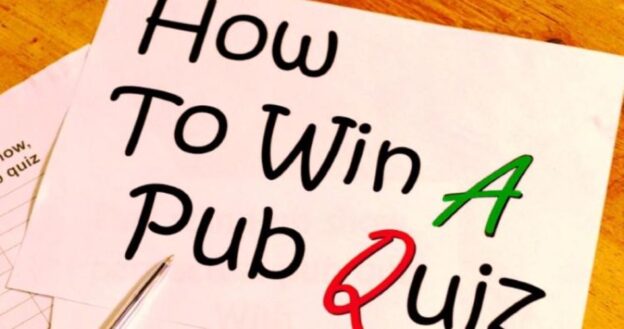
 [DOWNLOAD]