Category Archives: Learning

314. Luke’s Guided Sleep Meditation (Fall Asleep in English)

Fancy brushing up on some grammar while getting a really good night’s sleep? Yes? Well, this episode is for you. It’s a guided sleep meditation to make you feel all drowsy and relaxed, with added hypnopedia – that’s hypnosis and sleep learning both at the same time. So, kick off your shoes, turn down the lights, lie back, relax and drift off into an ambient dream state, while learning some English in the process. Don’t listen to this while driving. Transcript below. zzzzzzzzzZZZZZzzzzzzZZZZZZzzzzzzz

Small Donate Button[DOWNLOAD]
Transcript
Hello everyone, I’m speaking in a slightly different voice today. I’m close to the microphone and I’m speaking a little more softly and calmly than usual. That’s because this episode of LEP is designed to help you fall asleep while listening. Don’t listen to it while driving or operating heavy machinery. If you listen to this carefully, and follow all the instructions I say, then you should be asleep by the end of the episode.

Some people tell me that they listen to LEP while falling asleep. Apparently I’m so boring that it’s the perfect way to help them doze off at night.

I’m just kidding of course, I don’t get that many messages saying that I’m boring, but I know that some people fall asleep while listening to my podcast. I too like to listen to podcasts at night while lying in bed and it’s a lovely experience to drift off while listening to someone’s words.

Something my wife and I have been doing recently, is to find ways to help ourselves go to sleep. Sometimes we feel a bit stressed because of work or whatever and one thing we’ve been doing is to take turns to guide ourselves through a relaxation meditation with the aim of putting each other into a relaxed state that ensures we get a really good night of sleep.

The guided meditation usually involves giving some instructions for relaxation which you both follow step by step. Simply following the instructions allows you to switch off your mind and allow your body to relax fully, and then you drift off into a truly restful and healing slumber.

I find this really helps me, not just to drift off to sleep at night, but also because it relaxes me generally in my life, and the next day I find I have better concentration and sharpness. In fact this kind of relaxation exercise is said to have a cumulative effect. The more you do it, the more relaxed and stress-free you become long term.

Also, there is a theory that you can learn things subconsciously in your sleep. Listening to things while you drift off and while you are in a sleep state has been said to be a good way to internalise information. Is this true? Apparently research on the subject of sleep-learning or hypnopædia have been inconclusive, but studies have shown that the brain does react to stimulation while we are sleeping.

So, what I’m going to do in this episode is to guide you through a relaxation meditation with the aim of helping you to fall into a comfortable deep sleep. Then, once you’re in that sleep state I’m going to read some grammar rules to you. The aim of that is to either a) help you learn the grammatical rules, and b) ensure that you definitely don’t wake up and that you continue to sleep really well.

So this episode is completely devoted to helping you fall asleep. I’m going to try really hard to help you drift off into a state of nourishing and refreshing rest. So, I advise you to listen to this episode while you are lying in bed, or lying on a sofa, prepared to get a really good night’s sleep, somewhere that you can comfortably sleep for a long time. So, not on the bus or train on the way to work, and certainly not while driving. If you have insomnia, this could really help you. Or if you just want to get the full benefit of a good night’s sleep, then this is also for you.

I suggest that this is one of those episodes that you can listen to over and over again, whenever you feel like you want to relax or get a good night of sleep.

However, if you’re driving, operating heavy machinery or simply in charge of a nuclear power station or something I would warn you not to listen to this because, seriously, I’m going to make you fall asleep.

I’m quite serious. I’ve done lots of reading about suggestion and hypnosis techniques, and I am really going to work quite specifically on making you fall asleep in this episode. So, if you are driving a car or doing something that requires you to be fully awake and aware of your surroundings, do not listen to this episode. I must be clear about that – do not listen to this episode while driving. Wait until you are home or in a hotel room, or at work – some place where you don’t need to be fully conscious –  then put the headphones on, lie back and drift away…

OK. Are you clear what’s going to happen?

I’ll guide you through various stages of relaxation, and then into a sleep state. We’ll go down down down through various levels of meditation until you are hopefully completely asleep, or at least so relaxed that you can’t be bothered to open your eyes and do something else. Then when you’re down in the deeper relaxation zone, I’ll read some grammar rules to you. From that point I will add some hypnotic suggestions to ensure that when you wake up you’ll be in a fully positive and energised state, ready to take on whatever life throws at you that day. At the end the episode will slowly drift away into silence, letting you continue your sleep until the next morning when you will wake up refreshed and positive. The main thing is this: As long as you follow my guidance step by step, you will be asleep by the end of this episode.

OK. So the first thing is to prepare the environment around you.
Make sure you’re in relaxing surroundings. Ideally you’ll be in a tidy place, not too disorganised and messy. Oh, that’s a pity you seem to be in your home and, well, it’s not very tidy. Perhaps you should stop listening to this and just clean up a bit and then carry on. Ok good, you’re back, and the room is much neater now, well done. Oh, I see that some of you didn’t bother to do any tidying up. Ok that’s your choice. It doesn’t really matter that much anyway. It’s still possible to get the full benefit of this relaxation exercise without being in a tidy place. But really though, you should think about being more hygienic, that’s , well that’s just not very civilised, especially all that stuff in the corner, and the dust. And would it kill you to do a bit of laundry sometimes? Seriously.

Anyway. Make sure the ambient temperature is the room right. Not too warm, not too cold. If you live in a very cold place, you might consider moving to a different country. Somewhere with a better climate. Not England. No, go to the Mediterranean or something. If that’s not practical right now, not to worry. Just put on an extra jumper or get a blanket or something.

Make sure that you’re either sitting in a relaxed position or ideally you’re lying down comfortably. The best is to be in bed, or at least on a bed. Next to the bed, or just near a bed isn’t good enough. To get maximum benefit you need to be actually on or ideally in a bed. Your bed, preferably. Don’t just get into someone else’s bed, especially without their permission. People tend not to like that sort of thing, unless they fancy you and then they might be glad. I’d say, to be on the safe side, it’s better if you stick to your own bed, in order to avoid confusion or at worst, violence and strong language. “What the hell are you doing in my bed?” or “Who are you? Why are you in my house?? Get OUT!” “I’m sorry, I… I’m just listening to LEP – Luke told me to. it’s the sleep episode, I’m, I’m sorry!” That kind of conversation is not conducive to a relaxing night of sleep, so stay in your own bed. That’s the best thing to do.

Don’t forget to take off your shoes. That’s right.

You might want to draw the curtains as well.
No, put the pencil down, I don’t mean that. No, draw the curtains means, close the curtains. Yes, it’s a homonym. Oh you already knew that. Well done. Yes, very clever. Now don’t get cocky alright. Ok.

I’d also suggest that you take your mobile phone and put it on silent, and if possible just turn it off, or even better, just throw it out of the window. You shouldn’t be distracted by it. Statistics have shown that we think about touching or looking at our phone every 2.35 seconds. Don’t ask me where I got that information, because, frankly I just made it up now on the spot. But it doesn’t matter. Don’t be distracted by your phone. Also, don’t be distracted by this episode of the podcast. In fact, it’s probably better to just stop listening, take the headphones out of your ears and do something else. Me talking to you is probably just going to distract you from the relaxation exercise and keep you awake to be honest.

Only joking. Don’t stop listening that would defeat the purpose of this. But do try to reduce the number of distractions that you have around you. Put your phone on silent and put it on the side, out of the way. Obviously if you’re using your phone to listen to this, it’s better if you keep it near you. Turn down the lights. Maybe light a few candles.

OK so now you’ve prepared the room you’re ready to fall asleep.
get into a comfortable position. I quite like lying on my back with my arms and legs spread out like a star fish. Or sometimes I lie in a straight line with my arms by my sides like a penguin, or perhaps curled up like a snake on my side, or just generally spread out along the bed like some sort of slug. Whatever animal you’d like to copy that’s just great. Animals sleep too and that’s the point of this whole exercise after all isn’t it! Yes it is.

So now you’re comfortable, I’ll start leading you through the initial relaxation stage. I hope you’re not too sleepy yet because we haven’t started properly. If you’re already drifting off then perhaps you should get up and have a bit of a walk around the building or drink a black coffee – we haven’t started yet, so wake up a bit, you don’t want to miss the more important bits do you?

OK let’s begin the initial relaxation stage.

The first thing to do is to fully tighten all the muscles in your body. Clench all the muscles together. That’s it. Pull them all tight so you’re stiff like a board. Hold it! Keep holding it!

Oh, wait, ow! I think I’ve got cramp. OW! Cramp, in my foot… hold on…

Sorry about that I got a bit of cramp.

OK, so hold your muscles tight and then gradually relax them all. Not yet! I haven’t said the magic word, which is “release”. So, keep holding, keep those muscles tight! Don’t relax yet I haven’t said “release”. That wasn’t it by the way… Ok keep holding, and then gradually “releeeeeeeease”.

Good.

Let’s do that again. Tighten all your muscles like you’re made of wood or something. Hold them tight, and then gradually, “releeeeeeease”.

Don’t forget to breathe, that’s very important.
You need to breathe in order to supply oxygen to all your vital organs, especially the brain. And you need oxygen in order to be alive. This isn’t going to work if you’re not alive. So breathe.

In fact, let’s concentrate on your breathing.

Take a deep breath through your nose. Breathe deep into your lungs, and then slowly release it through your mouth, like you’re smoking a big spliff with Bob Marley. Gwan take a deep hit o dat sensimelia man, tek it deep into ya lungs rude bwoy, da ‘erb gwan relax ya mind and tek ya into a deep state a meditation and relaxation maaan, rude bwoy bombaclart rasta, jah, ire feelin jah know, I and I know dat all dem yoot are gonna witness the day that babylaaan gwan faaaaalllll.

Sorry, I just went to Jamaica for a moment. Of my own accord.

Anyway, when you breathe deeply, focus on breathing from your diaphragm. That’s a muscle that sits below your lungs, dividing the thorax from the abdomen. Focus on breathing from there, or from your stomach. That’s the key to drawing in the maximum amount of breath into your body. Don’t just let the ribcage rise, focus on letting your stomach swell first, then the ribs. You’ll find you’re pulling more oxygen deep into your lungs that way, and it will relax you more.

Do this a few times. Take a deep breath in, from the diaphragm, through your nose. Then slowly exhale through the mouth.
Deep breath in… exhale through the mouth.

Now you can continue normal breathing, but for a moment I’d like you to just be aware of the air passing slowly through your nose and then out through your mouth. Don’t force it to go at a particular pace. Just let it happen, being aware of the sensation of the cool air moving in and then out of your face. In, and then out of your face. In, and then out of your face. In and then out again.

Let any thoughts that appear in your mind go by, without attempting to control them or focus on them. Just let your mind be like an open window and the thoughts are like a cool breeze flowing through in a relaxed way. Just observe the feeling of the air passing through your mouth, and the thoughts just drifting through your head, without any need to stop them. Let them continue on their way, just like a breeze through an open window. The window is like your mind. Open, peaceful. There’s blue sky, and the sun is lazily setting in the distance, as the curtains sway in the breeze. They’re slightly old curtains. You’ll need to change them before long.. but never mind that now… just let yourself breathe slowly and allow your mind to wander without feeling the need to control it. Just let yourself go completely…

Now, let’s take you further into a state of relaxation.

*the relaxing every body part bit (even obscure body parts that they might not know, including the area behind the knees that doesn’t really have a name)
Your toenails, your toes, the arch of your foot, your heel, the Achilles heel, your ankle, your uncle, your shins, your calf muscle, your knee cap, your knee in general, the space at the back of your leg behind the knee that nobody has a name for, your thighs, your quadriceps, your groin, your private parts, your bum (both cheeks), the private area of your bum (between the cheeks), your waist, your hips, your navel, your tummy button (the same thing as your navel), your stomach, your abdominal muscles, your solar plexus, your sides, the small of your back, your spine from bottom to top, all your ribs, your chest, your nipples, your arm pits, your shoulder blades, your shoulders in general, your biceps and triceps, your forearms, your wrists, the backs of your hands, the palms of your hands, your knuckles, your fingers, your thumbs, your fingernails, the bits of skin next to your fingernails that you might bite if you get nervous, the cuticles (Those are those bits at the base of your fingernails that women scrape off when they get a manicure), your fingertips, your fingerprints, the back of your neck, your throat, your jaw, your cheeks, your teeth (molars, canines, incisors) your gums, your tongue, your alveolar ridge, your philtrum, your nostrils, the bridge of your nose, the tip of your nose, your nasal hair, your cheekbones, your ears (including your ear lobes and your ear drums) the bit behind your ears that your parents always remind you to wash, your temples, your eyebags, your eyeballs, your eyebrows, your eyelids, your eyelashes, your retinas, your pupils, your optic nerve, your forehead, your monobrow if you’ve got one, your hairline, your scalp, your follicles, your hair, your crown, and last but not least – your brain. It’s all totally relaxed…

* I’d like you to imagine that you are slowly walking down a long corridor towards some steps, and with every step you’re getting more and more sleepy.
* Eventually you walk through a doorway. The door says the word SLEEP on it in blue letters. It’s all fluffy and made of cotton wool. You pass through the door and into the realm of sleep.
*This is where your brain goes when you’re sleeping
*It’s all made of cotton wool clouds under your feet. Everything’s blue and white and smells of fresh blankets.
*Up in the sky you see the clouds twinkling in the distance. It’s a perfectly calm night. Under your feet there are lovely soft blankets, pillows and duvets. You could lie down anywhere and sleep like a baby, but you keep moving, looking for the perfect spot.
*You see some sheep made of cotton wool. “Baaa” one of them says. “Baaa” you say in return. The sheep lazily approach a gate and begin to leap over it, but instead of landing on the other side, these fluffy sheep just continue drifting up into the sky, eventually becoming little fluffy clouds that slowly drift across the night sky into the distance. “Baaa” you hear one go in the distance.
*Every step takes you deeper and deeper into a restful slumber.
*You come across a river – dark, black water. Just going near it makes you drowsy. You lean over to take a drink, and take a couple of drops into your mouth, and slowly you drift off as the water envelopes you, pulling you down into the cool dark waters of deep sleep. As you slowly enter the water each part of you from head to toe enters a deep restful sleep. Under you go, with the lazy fish drifting by, and an old boot on the bottom and a tin can. It’s nice down here, and there’s a blanket which you wrap around you. You can breathe down here. In fact it’s a lot easier to breathe than it was before. Even though you’re safe under the water the air is fresh and healthy, but the water makes you drowsy. There’s a sand bank that looks comfortable with a bunch of clean pillows piled up next to it.
*Next to the sand bank on the bottom the bottom of the river you find a door and you pass through it. It’s wonderfully warm and protective inside. It’s an old school classroom with windows at the top of the walls, and wooden panelling and old wooden desks. The room is surrounded by old radiators that make the room really warm and comfy. All the kids have hung their jackets and coats on the wall and their sitting at their desks, wearing wooden jumpers, shirts and ties. There’s an old man at the front of the school classroom. He invites you to sit. It’s early morning, so early that it’s not light yet and you sit at the old desk. You’re so sleepy that you can hardly stay awake. It’s like when you were a kid and you couldn’t stop falling asleep in those very early morning classes in winter when the room was so warm and you were still sleepy from your night. You sit next to one of the old radiators which keeps your lovely and cosy. It’s safe here. You’re here to learn English from this old man in a tweed suit, with a beard. He looks a bit like god, or father christmas, or the guy at the end of The Matrix Reloaded, or Colonel Sanders from KFC.

He tells you and the other children to take some notes as he reads you some grammar rules. You hold a pencil in your hand and try to write notes in a notebook, but your head is nodding and you just want to lie down on the floor there next to the radiator where it’s lovely and warm, but you can’t. You have to hold this pencil and listen to the wise words of this old teacher. Your eyes are rolling in your head and your head is tipping forwards and backwards as you try to listen to the teacher. The room seems to be spinning. You just want to put your head down and sleep. Your eyes sting, and they feel better when you close them. It would be better if you could just keep your eyes closed and you could just fly away to total peaceful sleep. You manage to look at the other kids. They’re all asleep with their heads on the desks, their eyes firmly closed, breathing deeply. They look so peaceful. You turn your attention to the teacher again and despite your desperate desire to put your head on the table to sleep a sleep of the ancient kings, you try to listen and take notes. This is what the teacher says…

Boring grammar: Relative clauses https://en.wikipedia.org/wiki/Relative_clause

Finally, at the end of the lecture, the teacher says to the class “You may now put down your pencil, put your head on your book, and go to sleep, but make sure your head goes on your book so the words can go in and stay there forever, because every word you have heard in this episode of Luke’s English Podcast, you will remember forever as you sleep, sleep, sleep.

As he’s saying this you manage to look up at the teacher, but he’s sitting back in his chair, his head back, fast asleep and no doubt dreaming of his bed.

Now, finally it’s the time for you to get the rest you desired. You kick off your shoes and curl up on the warm floor next to the radiator. There’s a small mattress and a blanket. It’s so comfortable, better than you ever expected.

And as you feel yourself breathe slowly, and you feel the warmth of the bed you’re lying on, you feel yourself drifting back into a deep sleep again, deeper and deeper, more and more relaxed, and as you listen to these words you know that this is a sleep which will allow you to fully rest, with nothing but slow deep energy growing inside you as you breathe the oxygen in, deeper and deeper, and let it out again without thinking, the fresh air nourishing your warm body as you go further and further into a sleep, and when you wake up in the morning on the other side you will be so refreshed and so healed by this sleep that your brain will be so bright and ready to speak English with total clarity and you’ll remember all the words and all the grammar and all the structures and all the rhythm and all the intonation and pronunciation and vocabulary and expressions will be stored in your mind forever and ever and will always be ready for you to use at any time wherever you are whenever you open the window, and open your mouth and let the words come out like a mountain river on a clear blue day, as the water flows on and on and you sleep steadily, deeper and deeper, longer and longer, letting yourself go further and further into this state of wonderful nourishing and healing sleeeep. Thanks for listening to another episode of Luke’s English Podcast. Good night, and good bye bye bye bye bye!
dreamy-night

313. British Comedy: Tim Vine (Part 1) + LEP Photo Competition

In this episode we’re going to listen to some stand-up comedy by a popular British comedian called Tim Vine, which should be pretty challenging because he tells lots of puns and fast jokes.

But before that, I just want to tell you about a new competition that I’m launching today for listeners to this podcast. This is the Luke’s English Podcast photo competition. See below for all the details, to download this episode and to watch a video of Tim Vine.

[DOWNLOAD] [LISTEN TO PART 2]
The LEP Photo Competition
It’s been a great year for Luke’s English Podcast with loads of new episodes. All kinds of things have happened this year and I’ve talked about a lot of them on the podcast. I’ve had lots of responses from you my listeners and the podcast is still going from strength to strength in terms of audience numbers.

One of the things that’s made it great for me is that I have such awesome listeners all over the planet. It’s great for me to imagine people listening to my podcast in different situations, in different places all over the world. But I’d like to do more than imagine those situations, I’d love to actually see them. I think it would be really cool if you, the listeners of this podcast, could all share photos of your surroundings while listening to LEP.

Maybe you’re on a bus or train, maybe in your car, maybe just walking around, maybe you’re at home with your pets or a cup of tea, maybe you’re climbing a mountain, maybe you’re on the international space station orbiting the earth or something.

Whoever you are, wherever you are, whatever you’re doing – send me your photos. I want you to take a photo that shows the situation you’re in while you listen. Now, you might think “Nah, you don’t want to see a picture of my surroundings…” Yes, I do! Even if you think it’s boring – I want to see it. If you’re on the bus, take a pic of the bus or your view from the window. If you’re walking along a street, take a pic of the street so we can see what it looks like. If you’re on an alien spaceship listening to this from outside the earth’s atmosphere, send me a photo of the spaceship or your view of earth from a distance. Just take a picture of what you can see while you’re listening.

There’s just one rule – the photo has to contain something that shows you’re listening – so include in the photo the LEP logo or some headphones or a screen with the logo on it or some other indication that you’re listening. You don’t have to include a picture of yourself, but you can if you want to. It’s up to you. The main thing is – I want you to show us something that you can see in your surroundings while you listen to LEP and your photo should contain something that proves you’re listening. So if you’re taking a photo of the street, or the view from your hike in the mountains, make sure there’s a headphone in the photo or the LEP logo or even you listening. Yes, just a headphone in the photo is enough for me.

Send your photos by email to podcastcomp@gmail.com. Closing date for photos is Friday 15 January at midnight London time.

When I’ve collected all the photos, I’ll put them all up on the website and you all the LEPsters can vote for their favourite. Then I’ll pick 3 winners. The top winner will get an LEP mug plus another gift of their choice (another mug, a t-shirt or a bag). The two runners up will get LEP mugs. 

OK, so start taking some photos to show us what it’s like where you are while you’re listening to the podcast. Feel free to get creative! Just make sure you insert something in the photo to show that you’re listening. I want it to be a real picture, not a faked one. OK!

Mailing list
From messages I receive it seems that some of my listeners just can’t wait for me to upload new  episodes and they keep going to my page to see if there’s new content there. You should join the mailing list and then you’ll get an email whenever I post a new episode on the website. On my website near the top on the right there’s a field that says “Subscribe by email” just enter your email address there and click confirm.

Top 10 countries this week (number of ‘plays’ in the last 7 days)

Russia 12254
Japan 10443
China 10428
Spain 7434
United Kingdom 6175
Germany 5588
Poland 4740
United States 4570
Italy 4068
South Korea 3038

Do you want your country to go up in the list? Tell your friends!

British Comedy: Tim Vine
Tim Vine is a British stand up comedian who is famous for doing lots of one-liners. He’s one of the UK’s favourite stand-up comedians. His jokes are all clean and family friendly with no rude language or explicit content. He’s a self-deprecating cheeky chappie who makes everyone laugh. The thing that makes Tim Vine different to other comedians is that he always does a succession of one line jokes in his performances. It’s just joke after joke after joke and often they don’t relate to each other at all, it’s just a relentless and rapid stream of unrelated gags and puns.  British audiences love him, but I wonder what you’ll think of his comedy.

I think to an extent, his comedy is quite challenging for non-native speakers of English. By that I mean that he’s the sort of guy that, if you’re a learner of English, you’ll be watching TV with a group of native English speakers, and Tim Vine will come on TV, and all the native speakers (let’s say youre with an English family or some English friends) all of them will suddenly say, “Oh, I love Tim Vine, he’s soooo funny, you’ve got to check this out, you’ll love this, all his jokes are so clever – they’re all based on double meanings and word play, you’ll love it.” You then watch his set, and he tells joke after joke after joke, the audience on TV is loving it, the other people in the room are all laughing, but to you he’s just saying lots of really quick little sentences without pronouncing the words properly, and he’s acting like a total amateur, and he looks all shy and apologetic on stage, and you think – I can’t believe these English people find this guy so funny, what’s wrong with everyone. Or, what’s wrong with me?

There’s nothing wrong with anyone of course, it’s just a language and culture gap that might stop you from enjoying his jokes, and it’s a big pity because there is a lot of joy and pleasure to be gained from watching Tim Vine do comedy.

So, in this episode I’m going to do something a bit ambitious – I’m going to try to help you understand and enjoy one of Tim Vine’s comedy performances. We’re going to listen to about 10 minutes of Tim Vine’s act, and then I’ll break it down and help you understand exactly what he’s saying and why the audience is laughing. If you laugh at his jokes too – fantastic, that’s wonderful. If laughter happens, then success has been achieved. If laughter doesn’t happen – no problem, we’ll still have success because I will explain the language and you’ll learn some really natural English.

I expect that while we listen to Tim Vine some of you will start thinking – this just isn’t funny. Well, let me just say – Tim Vine definitely is funny and many many people agree with that. In fact, I think that  The only reason someone won’t find him funny is because they just don’t get the jokes. He’s not offensive, he’s not rude, he’s a lovely man who just wants to make people laugh. There’s no other reason for not liking him other than the fact that you don’t understand his jokes.

A few facts to prove my point: Tim Vine is the holder of the Guiness World Record for most jokes told in an hour. He told 499 jokes. The criteria for the record is that the jokes received a laugh from the audience. So, 499 jokes got laughs in one hour. That’s over 8 jokes a minute.

He has won the “Joke of the Year” award twice. That’s the prize for the best joke at the Edinburgh Fringe Festival.

My Mum and Dad are both huge fans of Tim. They went to see one of his live shows, and absolutely loved it. And, you should know that my parents have exceptional taste in most things.

Now, if those three things don’t convince you that Tim Vine is funny, then I don’t know what will.

Alright, so now we have agreed that Tim Vine is definitely funny, and that if you don’t find him funny then it’s almost certainly because of the language and cultural gap – let’s listen to Tim telling some jokes and then we’ll work on closing that linguistic and cultural gap. Hopefully the result will be that your understanding of English will be significantly raised in the process, even if it requires a bit of work. In fact, this could be the perfect test – teach – test model for learning English.

I’m not saying that you’re not going to understand any of this – I’m sure many of you will get a lot of the jokes without any problem, but honestly I think that if you’re not proficient at English you’ll struggle to get them. And watch out – don’t assume you’ve understood the joke because you understand the words. There’s always a double meaning.

So, let’s go.

Let’s now listen to the first 3 minutes of Tim Vine’s stand up routine from a show called One Night Stand, which is a popular stand-up comedy show on a British TV channel called Dave.

Stop listening after Tim’s song called “It’s easy”.

Then go back through the jokes one by one. If you already got these jokes, then sorry if I’m telling things you already know.

Cultural point: Tim knows, and the audience knows, that the jokes are pretty stupid and crap. On their own they have pretty much no value. But when the jokes come one by one, relentlessly, so fast they build into a rhythm. You don’t get a chance to think about how silly they are, you just laugh at the pun and the next one comes along immediately. That  part of the enjoyment – and if you don’t understand them, or if you think about the individual jokes too much, that can kill the fun. So, analysing the jokes like this is probably the best way to KILL the humour, but anyway…

Now, you should watch the whole video on the page for this episode. You should do that so you can actually see Tim performing the jokes, including the expressions on his face and everything.

That’s it! Remember – don’t give up even if it’s difficult.

And, remember, the force will be with you, always…

Tim Vine – One Night Stand

The video is no longer available – it was removed from YouTube. :(

Tim Vine’s jokes – explained

A listener called Viviane sent me a list of all the jokes in this episode, with explanations. Here they are.

1. Let’s hear it for my internal organs,
let’s hear it for = invite the audience to applaud
Tim plays his body as you hear the sound of an organ. “organ” has two meanings – something in your body (e.g. your liver or kidneys) and a musical instrument.

2. This bloke said to me: “I’m gonna dress up as a small island off the coast of Italy.”
I said: “Don’t be so silly. (Don’t be Sicilly.)”

3. I think a parachute jump is the scariest thing that I have ever, ever… refused to do.
(You expect him to say “that I’ve ever, ever done.”)
Actually I once did the parachute jump. They got you attached to the instructor, and you jumped out of it together. So in this airplane, they attached me to this bloke, and we jumped out, and it was really frightening, because half way down, he asked me “how long have you been an instructor?”

4. But we’ve all heard the theory that people look like their pets. Well tonight I’m going to test this theory out. You, sir, have you got a llama(秘鲁 骆马)?
The suggestion is that the person looks like a llama.
Just so you know, whoever sitting there I always say “have you got a llama?”, I just got lucky tonight.

5. I went to Sooty’s barbecue, and had a Sweep steak.
hand puppet bear, Sweep is Sooty’s best friend. He’s a dog.
a sweepstake = a sort of bet in which you can win all the money
The suggestion is that Tim ate Sooty’s best friend. This joke isn’t very good because the situation doesn’t make sense. Why would he have a sweepsteak at a barbecue?

6. I met the man who invented the window sills, what a ledge! (what a ledge/legend)
A window sill is a type of ledge.
“What a ledge!” is a way to say that you think someone is brilliant, or a legend.

7. This antique dealer came up to me. He said, What do you think of the Chinese Dynasty? I said, it was very badly dubbed.(配音)
Dynasty: a famous American TV show during the 1980s.
This is because most of the Chinesr movies, for example, kungfu movies from the 80s were always very badly dubbed, so the movement of the person’s mouth and the voice you’ll hear would be completely out of synchronization.

8. I said, I would open a shop in Saudi Arabia. He said, Dubai? (Do you buy?) I said, yeah, and sell!

9. My grandfather was a very controversial artist, he designed the lion in Trafalgar Square. It doesn’t sound very cutting edge, but at the time, it really put the cat amongst the pigeons.
Cutting edge: innovative
Put the cat amongst the pigeons: totally upset the situation.
Trafalgar Square is famous for having lots of pigeons.

10. Someone said to this New Zealand bloke, I’m going to a Swidish furniture shop. He said, Does it look like I care?(IKEA)
“I care” and “IKEA” sound quite similar in a Kiwi accent.

11. I’m going to buy some furniture polish (comes in an aerosal can).
He said, “Pledge?”
I said, “I will give you my word.”
pledge: a brand name. It also means  = to promise

12. You probably think this was all very well, but when do we get to sing with you Tim? The answer is now.
I might be totally deaf, I never thought I’d hear myself say that! (“I never thought I’d hear myself say that” means “I’m surprised that I’m saying that” but it also means that he’s surprised to actually hear himself saying it because he might be deaf.

~It’s easy.~ (It sounds like the introduction to the song, but then you realize that that’s the song. Songs typically will lay down a theme, the introduction will probably be about 4 bars long)

13. This song is called Subtraction, take it away! (What you say in a performance before a song, Let’s start the song!) Hit the music please!
“subtraction” is also the act of subtracting numbers in maths, or ‘taking things away’.

14. ~It’s easy~
Blimey that was hard work, wasn’t it? (so, it wasn’t actually easy)

15. Bnag! That’s bang out of order.
“That’s bang out of order” is what you say when someone is behaving in an unacceptable way.
He’s also talking about the word “BNAG” which is the word “BANG” but with the letters in the wrong order.

16. I don’t know why I put myself through this. (Tim has taken a piece of cardboard, and put his head through the hole.)
To put yourself through something = force yourself to have a difficult experience
He is also literally putting himself through a piece of cardboard.

17. Hello, My name is Bruce Willis, and I was in a diehard film, I shoot people and people shoot back at me. Yes, I am BruceWillis, I was in The Sixth Sense, I am a film star. I’m Bruce Willis. Sorry, I think I might give you the wrong impression.
To give someone the wrong impression = to make someone think the wrong thing about you.
Also “to do an impression” means to copy the voice of someone.
In this joke he has copied Bruce Willis, but with the wrong voice. He’s given us the wrong impression.

18. So I went to the binocular shop. I’ll tell you what, they saw me coming.(“They saw him coming” = They gave him a bad price, they ripped him off – but they literally saw him coming because of the binoculars)

19. Of course, binoculars is plural, and the singular is — telescope!

20. But I love language.
Does every sentence have to contain a vegetable?
I said, “Not nece-celery.”
“Necessarily” can sound like it contains the word “celery”, which is a vegetable.

21. And then there is the word “mortar” 石灰/迫击炮. Mortar has two different meanings, as I discovered when the house I bought exploded.
Mortar = the stuff that attaches the bricks to each other. “bricks and mortar”
Mortar also means a kind of weapon which launches a grenade into the air.

22. So I went down to the local pub.
“Do you like the local jokes?”
“Yeah, me too. They are right up my street.”

affirmative: It’s right up my street. = It’s my kind of thing.
Negative: It’s not my cup of tea.

23. I walked in, there was a very drunk man slumped in a chair. He looked at me and said what do you do for a living? I said, comedian. He said, “I admire anyone who can stand up…”(leave it hanging)

We expect him to say that he admires anyone who can stand up and try and make people laugh, but this man is drunk and he just admires anyone who can just stand up.

24.I said, “I bet you can’t name a single subject I don’t have a joke about.”
You said, “Beavers.”
I said, “Damn” (Dam = a house made by a beaver on a river)

25. I did a gig the other day, and it went very badly. Yeah cheers. And I walked out of stage, and all I could hear was one person clapping. And then I remembered, I was wearing flip-flops 人字拖.

26. I did a gig the night before to a whole bunch of reindeers, and I slayed them!

In comedy, when you make the audience laugh, you can say you kill/slay/smash the audience.
A slay is also a kind of large sled or vehicle that a reindeer would pull, like the kind of thing that Santa uses. So “slay” has two meanings.

27. But you know, the first job I’ve ever had was playing the back part of a pantomime Wasp, and I thought I was the bee’s knees.
the bee’s knees = fantastic
He also thought he was literally the bee’s knees (because he was wearing the back part of a wasp costume, and wasps look like bees)

28. Do you know the other day I got lost in the jungle. Luckily I had a compass 罗盘/圆规 with me, so I was able to draw a perfect circle with a pencil.
“compass” has two meanings – a device for navigation, and a device for drawing perfect circles.

29. A small blue garden bird made of mahogony! It’d be great if I had a related joke, wouldn’t it? (wooden tit)
Tit is the most common kind of garden bird in the UK. (Look at the tits!)

30. ~Waiting can sometimes be lots of fun~ (Every time you expect him to sing, he doesn’t.)
~But not always~

31. Do you know I have a friend who always takes the mickey out of me for having a “pay as you go” phone, who’s always go like “~You’ve got a pay as you go phone~” So eventually I took out a contract, and had him killed.

In the UK, you’ve got two kinds of phone contract: pay as you go (lower status people who don’t have much money), and monthly contract (don’t need to top up your credit)
take out a contract: to ask an assassin to kill sb.

32. So I said to this bloke: “Me and some friends were just talking about you.”
He said, “You disgust (discussed) me.”
I said, “Yes we did.”

33. He said, “Next time you are asleep I’m going to wake you up!”
I said, “That’s disturbing.”
disturbing his sleep, but also disturbing in an emotional way meaning worrying.

34. (visual joke) I’ve nearly finished filling in my CV, it’s got a little bit there.
fill in a CV = complete your CV
fill in = fill something with colour

35. I think my worst invention was this rubber band wind chime 风铃. All right, pipe down.

36. Ladies and gentlemen, I will leave you with this. (meaning “I will say this and then I will leave”. But as he said that, he had his hand on the microphone stand) Because I’ll be honest with you, it doesn’t belong to me, I don’t bring it with me.

37. I was standing on the beach, I walked into the wave holding a tub of Taramasalata ( a kind of dip), and a man said, “What are you doing?” I said, “I’m taking a dip in the sea.”
take a dip: take a short swim
a dip also means a sort of sauce

38. I was steering a yacht with my stomach muscles — ab sailing!
abseiling means climbing down a mountain backwards via a rope

39. This farmer came up to me and said, “I got 68 sheep, can you round them up for me?” I said, “Sure, 70.”
to round up some sheep = to collect all the sheep together into a group
to round up a number = to raise or lower the number to the nearest round number. E.g. 4.9 – round it up to 5

40. But I’m going to be honest with you, ladies and gentlemen, I don’t think I’m going to do this job for much longer. (the audience goes “aahhhh” in sympathy and disappointment) Not enough of you and too long a pause. But what concerns me is that one day, I’ll wind up an old man… and he’ll attack me.

I’ll wind up an old man = I’ll end up being an old man
I’ll wind up an old man = I’ll make an old man angry


296. Learning Comedy is like Learning a Language

This episode features a conversation with my friend Paul Taylor, who you already know from previous episodes of LEP. Paul is back from the Edinburgh fringe, where he was performing for the whole of August in a comedy show, and a couple of days ago he came over to the flat for a cup of tea and a bit of a chat. We started talking about the Edinburgh fringe and how it went for him. It was his first time and I think he found it very challenging because the audiences were hard to please, apparently they had some tough shows where nobody laughed, and he realised that the standard of stand-up comedy in the UK is much higher than he expected, but it was a learning experience. Then we ended up talking about the similarity between learning how to do stand-up comedy and learning a language. During the conversation I quickly decided to record our thoughts so that I could make it into an episode of my podcast. We wrote down a few brief ideas and then went upstairs to start recording. You can now listen to that conversation here in full. Also, listen to the end to hear some funny out-takes from this episode.

Small Donate Button[Download]

The conversation is a little bit rambling, but that is a good thing
It’s a slightly disorganised chat because we didn’t plan fully in advance, but that for me is a strength because it means that you can listen to some authentic English conversation, meaning that it is natural – not scripted. This is English conversation as it happens in the real world. We’re not acting out a dialogue, and this is exactly the sort of conversation that you should try to follow, because ultimately it’s better for your English. It might be harder to hear and understand everything we say, but that’s not a bad thing. It’s good to get used to following a conversation in which you don’t understand or hear every single word.

Conclusions about Language Learning
During our slightly rambling conversation, we do come to some very good conclusions about language learning, which are written below. So, pay attention to the conversation because I think it does contain some good advice. As ever, please add your thoughts to our conversation by leaving a comment below. What do you think about our conclusions for learning a language? Can you add and ideas of your own?

Also, listen carefully in this episode because I will share some of my experiences of learning French, which is something people have been asking me about recently. You’ll see I’m a bit shy about this subject, but I’ll let you listen to the episode to find out why.

Can You Copy The Way I Speak? – Send Me Your Recordings!
In this episode Paul and I ask you to send me recordings of you copying the way I speak. So, please send me about 1 minute of audio of you doing an impression of me.
You can download my jingle here: Download LEP Jingle

Send your 1 minute (or less) impression of Luke from Luke’s English Podcast here: podcastcomp@gmail.com
I can’t wait to hear you copy my voice and my typical introductions.

Also, if you listen all the way until the end of the episode, you’ll hear some fun extra content that I added. So, our conversation lasts about 1 hour, and then you’ll hear some fun extra stuff afterwards.

If you would like to write a transcript for this episode, using a google document, just click this link. Google document for “Learning Comedy is like Learning a Language”. That’s it for my introduction, now here is our conversation.

*Episode begins – Notes below*

Conclusions about Learning Languages & Learning Comedy

  • It’s not what you know, it’s what you can do. You can know lots of vocabulary, you can know methods of learning – but you actually have to do it.
  • Surround yourself with people who are better than you.
  • Throw yourself in at the deep end.
  • Accept that you might have to be a slightly different person.
    E.g. as a comedy performer you might need to exaggerate aspects of your person, or play a role.
    When speaking English, it’s normal that you might feel like a different person with a different personality. Own the person you are in another language.
  • Learn from failure and don’t be afraid to fail.
    Failure is not the problem. How you react to failure is more important. Don’t let failures bring you down. Learn from them. Embrace failure and don’t let the fear of failure hold you back.
  • Don’t take it too personally!
    Be ready to take criticism, and try to look for critical feedback. It will help you to be better.
  • Cheat and cut corners!
    In comedy it helps to arrange the situation to your advantage. For example, prepare some responses for audience interaction – these can make the audience think you’re better than you are.
    Similarly in English, focus on having good pronunciation and people will think your English is great, even if your vocabulary or grammar are not perfect. If your voice sounds pretty good on the surface, this will impress people more than perfect accuracy or range of vocabulary.
  • Be confident, or at least be determined to fake it.
  • But remember to be yourself.

Paul & Luke
public-speaking

293. California Road Trip (Part 6) San Francisco / AJ Hoge Interview / UK & US English

Welcome to episode 293, which is in fact part 6 in this mini series based around my recent trip to California. There’s still a lot to talk about, and in this episode I’ll tell you about our time spent in San Francisco and that’s going to include these things – my interview with AJ Hoge the well-known online English teacher, more British and American English, earthquakes, a short biography of Robin Williams, a history of the peace & love movement in San Francisco, more descriptions of our trip down the west coast of California, and some more tips about how to talk to waiters and customer service staff.

Small Donate Button[DOWNLOAD]
It seems pretty obvious to me that this is too much for one episode, so I think there will probably be a part 7 to this series, and after that we’ll return to normal podcasting and English teaching, with perhaps some more UK oriented topics in future episodes, and more episodes featuring authentic unscripted conversations with my friends Amber and Paul.

Video
Here’s a video of the Periscope live feed I did while recording this episode. Watch the video for about 20 minutes of extra video content, and to watch me recording this episode.

AJ Hoge Interview

I think I should start this episode with my interview with AJ Hoge. This took place in San Francisco in the lobby of the hotel where we were staying.

Who is AJ? http://ajhoge.com and http://effortlessenglishclub.com
AJ is an American-born English teacher who started his career as a social worker (what’s a social worker?) before going into English language teaching. He taught English abroad in Thailand, Japan, Korea and other places, and at home in San Francisco before becoming an independent self-employed teacher on the internet. He has created his own online English teaching courses and has written a book about learning English, and he sells all those things on his websites (see links above). He’s also a public speaker who has been booked to do conferences, speeches and presentations about learning English, sometimes to thousands of people at a time. He’s probably the most well-known English teacher on the internet (yes – more well-known than me – he’s good at marketing himself!) and I’m sure that you’ve come across him. I’m very impressed by what he’s achieved as an independent teacher and it was really interesting to meet him and find out about his work. I recorded our conversation and I’m going to play it to you right now.

Unfortunately I had a bit of a technical problem during my meeting with AJ. I was using a new portable audio recorder and for some unknown reason it kept turning itself off during our conversation, which was very frustrating indeed. So unfortunately some parts of our conversation are lost. That explains why the conversation cuts out a couple of times, particularly at the end. Fortunately, the main part of our conversation was recorded, so let’s listen to it now!

Part 1 – You’ll hear an introduction, but then the recorder switched itself off after a couple of minutes, which is why the conversation stops abruptly.

Part 2 – I started again after discovering that the recorder in my hand had in fact switched itself off again. We spoke for another 20 minutes or so and then the recorder switched itself off again! This is why the conversation stops abruptly before I had the chance to say thanks and goodbye to AJ. We plan to stay in touch though, and we might talk again via Skype in a future episode of the podcast.

More British and American English Vocabulary (Part 3) – Clothing
Trousers – Pants Clothing
Nappy – Diaper Babycare
Jumper – Sweater Clothing
Tights – Pantyhose Clothing
Waistcoat – Vest Clothing
Trainers – Sneakers Footwear
Braces – Suspenders Clothing
Dinner Jacket – Tuxedo Clothing
Polo neck (sweater) – Turtleneck Clothing
Wellington Boots (Wellies) – Galoshes Footwear

August 14
Let’s go back to the day we left Yosemite, before I met AJ in San Fransisco. Remember that this is after we had our long hike in the mountains and my wife sprained her ankle and had to use crutches to walk down.

In the morning my wife tentatively tries walking a bit on her ankle and thankfully seems ok after all that rest, and because she managed to keep her weight off it during the rest of trek with the help of the crutches. She’ll be able to rest it even more in the car, and take it easy for the whole day as we won’t do much walking.

We drive out of Yosemite. It’s a bit of a pity to be leaving all these huge rock formations like El Capitan and the Half Dome. We’ve got to know them quite well, and it’s always an exciting surprise to see them through the gaps in the trees. They’re like the big celebrities in this park and whenever you see them they dazzle you with their charisma and charm. As we’re driving out of the valley we stop a few times to just stare up at them for a while, particularly El Capitan, which I think is one of the biggest vertical rock faces in the world. Rock climbers enjoy climbing it, but it can take 4-5 days to go up the whole thing. The climbers actually sleep on ledges on the rock face, or they set up beds which hang from hooks in the rock face. Imagine sleeping on a tiny camping bed, hanging from the cliff, with thousands of feet of air below you. I’d never be able to sleep in those conditions! But it must be an incredibly thrilling way to enjoy the place.

We’re going to miss these mountains and rock formations, but it’s time to drive to our next stop – a place we’re looking forward to very much. San Francisco.

As I outlined in the second part of this series when I talked about California’s history, SF was originally a Spanish settlement for missionaries, but then when gold was discovered at almost exactly the same time that California became part of the United States, the city grew really fast to be a gold rush town, with thousands and thousands of people moving into the area, including many Americans, but also Europeans and Asians. That multicultural mix is still evident today.

SF is also known for its earthquakes. There was a big one in 1906 that destroyed large parts of the city, but it rose again, like a phoenix from the ashes. In fact, the flag for San Francisco shows a picture of a rising phoenix to commemorate the city’s recovery. There have been a few big earthquakes here over the years, including another one in 1989. The city is still expecting another really big earthquake to hit at any time, which is a bit of a worrying thought, and one that I suppose the residents of the city don’t think about too much. Does that idea give San Francisco a kind of laid back and open-minded atmosphere? Possibly. I suppose if you know in the back of your mind that everything could be destroyed any minute by a big earthquake, it makes you a bit more philosophical, or it makes you enjoy every moment while it lasts. That feeling does pervade the place a bit. It’s got a peaceful, meditative and bohemian atmosphere which is really refreshing.

San Francisco is also known for being the focal point of the beatnik and hippie movements of the 1960s. Haight Ashbury in particular is the district that was associated with those movements. More on that later.

Long drive to SF.
First views, Bay Bridge.
Obligatory Wholefoods stop.
Our hotel and the area. Polk Street. Home for the next few days.
We’re staying near a place called “Nob Hill”. In fact our area is known as “tender nob”, which I found particularly funny, because ‘tender’ means soft, and a ‘nob’, well, it’s a bit rude – it’s a willy, a penis… So…

Being in SF was like being back to civilisation, and a really great kind of civilisation. A really bohemian and cool atmosphere, with interesting places, loads of originality, lots of good little shops, cafes and bars with long lists of local beers, coffees, wines and ciders. We pretty instantly fall in love with the whole Russian Hill/Polk Street area. We walk up the street looking for places to have dinner and breakfast the next day.

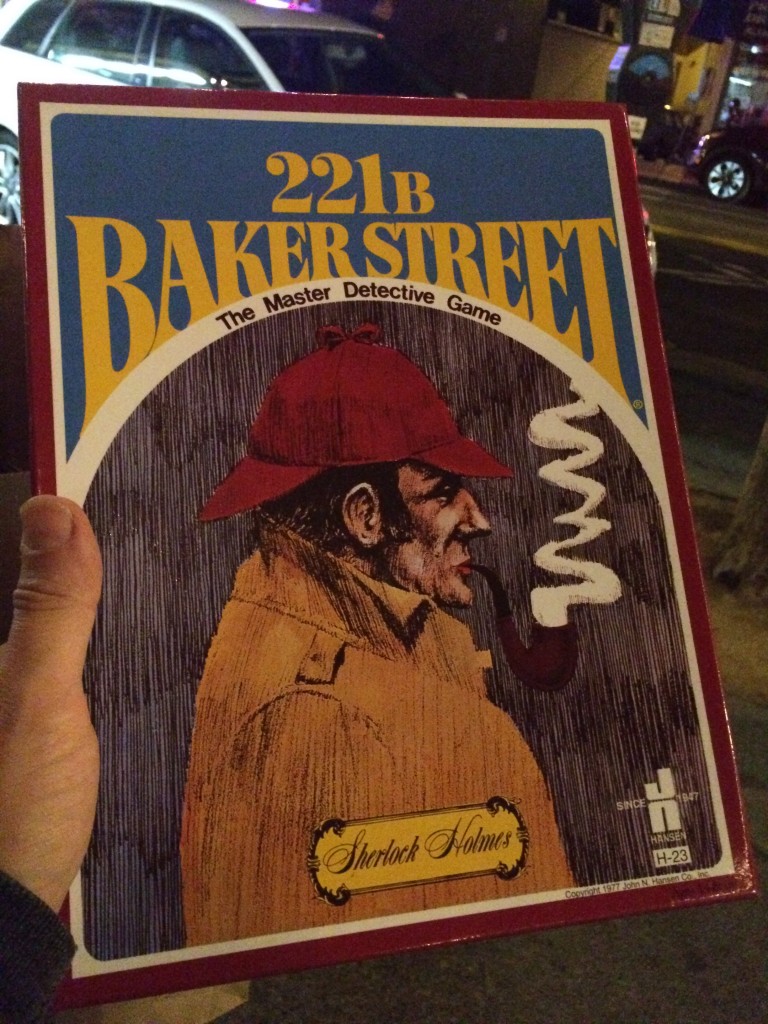
Bookshops, bars, cafes, the boardgames shop (Sherlock Holmes boardgame) and pizza & beer. Settle in nicely.

August 15
Next day, explore. Russian Hill, Pacific Heights. Those hilly streets and amazing views!

Have breakfast in a place called “Toast” which seems to me like the most American breakfast place ever, and I order a big American breakfast plate loaded with pancakes and fruit, with butter and maple syrup. It’s absolutely delicious, but later that day I feel like my blood-sugar levels are such a mess that I really shouldn’t eat more food like that and decide to try to be more healthy.
Again, I’m reminded of films which are set here, including Dirty Harry and Bullitt.
Beautiful multicolour houses and quirky doorways. Very expensive neighbourhood.
We come across a tribute to Robin Williams outside a house where they filmed Mrs Doubtfire. It’s exactly one year since he died. We hang around there, thinking about Robin Williams.

Who Was Robin Williams, and What Happened to Him?
Let me give you a brief history of the life and death of this great comedian.
Trained at Juilliard School.
Had a particular gift for improvisational comedy.
Became famous in Mork & Mindy.
Also did stand-up.
Had big problems with alcohol and substance addictions, particularly cocaine.
He managed to quit when his first child was born. Lived as a recovering alcoholic.
Went on to do some very popular movies, in both comic and straight roles.
Won an oscar for his role as a psychiatrist in Matt Damon and Ben Affleck’s film Good Will Hunting.
Apparently he was a very sweet, very generous and warm guy, but he was affected by bouts of depression.
As a performer I find him incredibly versatile and animated. His comedy seems almost to be compulsive in its nature. He’s a whirlwind when in front of an audience, full of impressions, different voices and many bizarre tangents which are often dialogues between different characters, all played by him at break-neck speed.
In interviews he seemed to occupy two modes – the first was the extrovert comedian, the other was the sweet and sincere actor. He seemed a bit bipolar. I guess part of his talent was that wildly free sense of instant creativity, but it might have been quite difficult for him to deal with on his own.
He fell off the wagon (began drinking again) in 2006 while filming in Alaska. It’s kind of understandable that he turned to alcohol again considering the circumstances – I mean, he was in Alaska. (just kidding)
He went into Rehab but I think the return to alcohol was a symptom of a difficult time in his life.
He later had heart surgery which involved part of his heart being replaced, and apparently this affected him quite badly as his physical and mental condition seemed to get worse and apparently from that time forwards he suffered from depression, anxiety and paranoia. He was wrongly diagnosed with Parkinson’s too, and given medication and treatment that didn’t help the real condition that he was experiencing, which is called Lewy Body Dementia, a degenerative condition in which nerves cells in the brain are blocked by protein clumps (bodies) that interfere with function. Apparently the Parkinson’s medication made the Lewy Body Dementia worse and may have exacerbated his low state of mind, pushing him to suicide.
He killed himself almost exactly a year ago to the day that we found ourselves at the shrine to his memory on this San Francisco street.

I couldn’t help feeling a bit sad about this because I really enjoyed Robin William’s comedy, but also it’s just such a pity that he had to go through such misery, and that anyone has to go through any kind of misery caused by physical and mental conditions. I hope with more research and the right kinds of treatment, this sort of thing can be prevented in the future.

Anyway, I just wanted to mention Robin Williams there, as a sort of tribute.

SF continued…
Korean Barbecue

End of Part 6 (Oh my goodness, will I ever finish this series!?) Part 7 coming soon…
Robin4

287. VOCAB BATTLE!!! WITH AMBER & PAUL (exciting title)

aka “Vocabulary Game with Amber & Paul” or “Fifteen Fixed Expressions” (less exciting titles)
Learn more English expressions in this episode by listening to another vocabulary game with Amber Minogue and Paul Taylor.
The series of episodes featuring ‘fixed expressions’ and vocabulary games continues in this episode. The previous ones, entitled “Ten Fixed Expressions” (283) and “Ten More Fixed Expressions” (285) featured me testing Paul’s knowledge of multi-word expressions in English. He did better in the second episode than the first, although maybe that’s because of the way I explained the expressions rather than because of Paul’s lack of vocabulary. Nevertheless, the wider aim of these episodes is to teach you, my listeners, some vocabulary in the form of multi-word expressions.

Small Donate Button[DOWNLOAD] [AUDIOBOOK OFFER]
What is a ‘fixed expression’?
Essentially, a fixed expression (according to me) is a vocabulary item comprising of a few words that always go together. That includes idioms, sayings, phrasal verbs, well-known quotes and collocations. All these things are lexical items which are included in the catch-all title of ‘fixed expressions’. The words are fixed together. They’re not just individual words combined, but they are discrete items of vocabulary in their own right.

So, fixed expressions are essentially ‘lexical chunks’. They’re not types of shelf unit or ikea furniture or anything like that. They’re just phrases in English. That should be clear.

I realise that the more I explain, the more confusing it is, so I’ll stop explaining now and we can start playing the game.

Let’s Play the Game
This time Amber is involved.
All three of us have short lists of five expressions.
We’re going to do three rounds of this game.
Round 1: Amber vs Paul (Luke is the Question Master)
Round 2: Paul vs Luke (Amber is the Question Master)
Round 3: Luke vs Amber (Paul is the Question Master)

Rules of the Game
The Question Master defines an expression without using the words in the expression.
The QM can also give little hints if necessary.
The two competitors race to guess the expression.
A point is awarded to the one who guesses the question right. If both competitors guess the expression at the same time, they both get a point.
Listeners can try to guess the expressions too. Did you guess them? Did you beat us?
If you don’t know the expression, listen carefully because we will explain, repeat and give examples.

So, it’s a fun game and a learning opportunity too, in one Great British package.

The Expressions in the Game
Here you’ll find lists of the fixed expressions in this episode. Listen to the episode to get the full definitions and examples, or search for the definitions online.

Luke’s Expressions
1. to be hard up
2. to be in the loop / to stay in the loop / to keep someone in the loop
3. “been there, done that, got the t-shirt”
4. to bend over backwards (for someone) (to do something)
5. to give someone the benefit of the doubt

Amber’s Expressions
1. to get your foot in the door
2. to show your true colours
3. over my dead body
4. in mint condition
5. to bite the bullet

Paul’s Expressions – Theme: Body Parts
1. to have two left feet
2. to be/fall head over heels in love with someone
3. (to do something) by the skin of your teeth
4. (give it some) elbow grease / (put some) elbow grease (into it)
5. to put your foot in your mouth

There are plenty of other expressions in this episode, so if you notice any other good ones please add them in the comments section below.

Enjoy!

p.s. I’m going on my honeymoon in a couple of days so there will be no new episodes for a couple of weeks, but LEP will be back :)
VOCABBATTLE

284. Questions from Tea4er.ru (Part 2)

Hi listeners, in this episode I go through some more of the questions sent to me by readers of Tea4er.ru. All the questions and most of my answers are added below, so you can read and listen at the same time if you want to. Enjoy the episode!

Small Donate Button[Download]
Background sounds created using “Bloom” and “Air” apps on iPhone.
Song snippets at the end from the amazing album “Trojan Presents: Roots”. Get it here on Amazon.
Just a few things to mention:
– Join the mailing list.
– Like the Facebook page.
– Leave your comments on the website.
– Donate if you fancy it.
– Take advantage of the audiobook offer.
– Check out the various features you can find on teacherluke.co.uk including – music mixes, some funny jokes & cartoons, ways to contact me, transcripts, a phrasal verb a day, and other stuff in the episode archive.

Questions & Answers

Babikov Gleb
Municipal Educational Institution “Ramenskaya Gymnasia” Moscow Region

Greetings, Luke! Nowadays almost every educator in Russia teaches English using textbooks and common school programs. Don’t you think that teachers should develop more effective ways of teaching students?

Hi Babikov,
I think teachers should always be looking for new ways to develop their teaching. We constantly have to come up with engaging and effective teaching methods and that means understanding how people think, the cultural reference points and so on. It’s often necessary to make your own materials which are adapted from authentic sources, and which are more specifically suited to that group of students. So, thinking outside the box, focusing specifically on the needs of the students, and coming up with new materials regularly are all important ways to develop our teaching skills. Thanks for the question.

Pikalenko Roman

Municipal Educational Institution “Ramenskaya Gymnasia”
Moscow Region

Hi, Luke!

To my mind, every man should be a gentleman. And I would like to know your opinion. Is it essential for a young man to be a gentleman?

Thanks!

Hi Roman,
If by being a gentleman you mean being polite, respectful and considerate then yes I think young men should be like gentlemen. They can act like gentlemen, but not necessarily look or sound like the classic image of the British gentleman. To be honest I hope everyone lived like gentlemen if it meant treating other people with respect. The cliche of the gentleman in a suit and hat is only something you see in movies these days. Thanks for the question. I did a podcast episode about this recently. You can listen to it here 260. Kingsman: The Secret Service.

Strebkov Sergey
Municipal Educational Institution “Ramenskaya Gymnasia”
Moscow Region

Hello, Luke.
I’d like to ask you a question: have you been scared when you started to make blogs? Were there any negative comments?

Thanks.

Hi Sergey,
Generally the feedback I get from my podcast is positive. I’m very aware that the internet is a place where people can be strongly criticised and you get aggressive users or trolls who might write very harsh comments about you online, but generally comments on my website are from really enthusiastic English learners so everything’s nice. I’m really conscious of the fact that I’m revealing a lot about myself in my episodes, so that is something I think about a lot. Thanks for the question.

Stepnova Alina
Municipal Educational Institution “Ramenskaya Gymnasia”
Moscow Region
Hello,Luke!
Why did you decide to become a teacher?
What attracted you to work in Japan?
Do the Japanese students wear school uniforms? How do you think whether Russian students wear school uniform?
School uniform lets students be equal. Without school uniforms complexes and envy may arise among students. Don’t you agree with it?
Thanks! I believe you will answer me.

Hi Alina,
You believed correctly, because I am answering you.
I did a podcast episode about living in Japan. You can listen to it here https://teacherluke.co.uk/2012/10/17/118-sick-in-japan/ I talk about my reasons for going there and some of the experiences I had. About school uniforms, I don’t know about Russian students and school uniforms but in the UK I had to wear uniforms in all the schools I went to. I don’t think there’s anything wrong with it, and it probably does give the students more equal status and may encourage a closer sense of community. Also, there’s a certain discipline in having to prepare specific clothes for your day every morning. I didn’t mind wearing a uniform most of the time, and I rarely thought of the idea of it being banned. I think you’re right, kids might find it more difficult if they are judged on their clothes, so uniforms help to let them blend in with everyone else. Thanks for the question.

Trusova Dasha
Municipal Educational Institution “Ramenskaya Gymnasia”
Moscow Region

Hello Luke!

I know, you are active in social networks. Is it difficult to combine tearcher’s and blogger’s activities?

Thank you.

Hi Dasha,
It’s not hard to combine my teaching and my online work. Generally, they don’t affect each other and I keep them separate. I don’t use my episodes in class, or extracts from them, and in fact I rarely tell my students about my website until the end of the course. This is because I don’t want them to feel pressured to listen to it, and also because I don’t necessarily want them to hear certain things (like the more crazy episodes or personal stories) at the beginning of the course because I am attempting to present a more serious and business like impression. Sometimes my students already know who I am. Others only realise who I am after a while. Once I was teaching in London and at the end of the course I told them about my podcast. One girl in my class gasped! She was a regular listener to my podcast and after 2 weeks in my class she hadn’t realised it was me. She nearly fell off her chair. It was hilarious.

So mainly, I’m concerned about the image my students will have of me if they listen to my podcast. Thanks for the question.

Badalyan Tsogik

Municipal Educational Institution “Ramenskaya Gymnasia”
Moscow Region

Hello, Luke!

If you could live the same day over and over again, what would you prefer to do on this day?

Thank you.

Hi Badalyan,
You mean, like the film Groundhog Day? If I had to live the same day over and over again I would probably do lots of different things every day to make it feel like I was actually living a life. Then I would learn how to do things really well, like in the film. I’d learn how to be an amazing pianist or something. I’d try and enjoy myself. Thanks for the question!

Ludmila Guseva
Municipal Educational Institution “Ramenskaya Gymnasia”
Moscow Region

Luke!
To be or not to be… What does it mean for you???

Thanks a lot in advance for your answer.

Hi Ludmilla,
You mean, the existential questions that Hamlet asks himself when contemplating suicide? I guess we’re talking about the meaning of existence. What’s the meaning of life for me? I’m really not sure what this is all about. In fact, I have a feeling that the whole of the universe is not united in one single purpose and that in fact it’s pretty random. Either that, or we just have no ability to understand the complexity of existence. There may even be parallel worlds or just things we can’t even see. Physics and astrophysics are fascinating to me because they really could learn about what the universe is really doing and how it works. Does it mean anything though? I’m not sure. On a personal level I think we all have a choice to make life run how we want it. We can choose to be positive and take some control over our lives. It doesn’t necessarily have to mean anything more than just making yourself happy and trying to increase the happiness of those around you. Thanks for the question.

Andrey Kirianov
Municipal Educational Institution “Ramenskaya Gymnasia”
Moscow Region

Hi, Luke!
What should be done to avoid racism in the world?
Thank you!

Hi Andrey,
I think travelling and meeting people is important. That tends to make you realise that people around the world are not that different and they’re all entitled to the same treatment as everyone else. It doesn’t help when racism is used by leaders to claim power over their own people. That’s a common way to get power. Blame all the problems on foreign people and use the fear of foreigners to whip up nationalist sentiment and support for the present government. To battle it we need to make sure we have a fully free press, and to educate children against racist attitudes. I think simply allowing people to know more about other cultures, means that they’re less likely to be racist against them. Also, we should have an open mind.
Thanks for your question.

Ludmila Guseva
Municipal Educational Institution “Ramenskaya Gymnasia”
Moscow Region

Luke!
Which is better: to teach or to learn? Or to learn while teaching? Will you share your ideas & experience?
Thanks in advance.
Hi Ludmila,
I’ve certainly learned a lot from teaching. If I want to get to know a subject really well, I teach it. It forces you to really know the subject. As a learner I find it harder to get the motivation to do research. As a teacher I do it incredibly quickly and effectively.
Thanks for the question.

Badalyan Tsogik
Municipal Educational Institution “Ramenskaya Gymnasia”
Moscow Region
Hello,Luke!
If you were given a book with the story of your life, would you read it to the end?
Thank you!

Hi Badalyan,
No, I wouldn’t read it! I don’t want to know yet. Everything at its right time. I prefer to discover my life story as it happens. I also don’t want to be constantly expecting the end scene to arrive. Innocence is bliss! Thanks for the question.

Ivanova Evgenia
Municipal Educational Institution “Ramenskaya Gymnasia”
Moscow Region

Hello, Luke!
I know that you are a teacher.
If you had a chance to return to the past, would you tell about the future to the people there?
Thanks

Hi Evgenia,
If I could return to the past I think I wouldn’t tell them about the future. In the past people didn’t react very well to strange looking people babbling about visions of the future. They might catch me and burn me as a witch! Instead I would travel to the past and then tell the people of the present all about it. I think a good first-hand account of history would help us know the right thing to do now, so that our future is kept safe. The past is something to learn from.
Thanks for the question!

Bezborodova Anna
Municipal Educational Institution “Ramenskaya Gymnasia”
Moscow Region

Hello, Luke!
I’d like to ask you a question:
How much time does it take you to make your podcasts? Is it difficult?
Thank you.

Hi Anna,
Actually, it takes me a lot of time to make my podcasts. It depends on the episode, because I prepare some episodes more than others. But preparing and recording a podcast, completing all the notes on the website, uploading it and then sharing it via social networks can take from 3 to 10 hours. Some episodes are really easy because I don’t prepare them and they just flow out of my mouth, but others prove to be harder to manage, either because of the subject matter or because of the need to edit the content. It can take a lot of energy to do my podcast, but I like it a lot and I hope to eventually be rewarded for my work in some way.
Thanks for the question.

Gorbunov Nikita
Municipal Educational Institution “Ramenskaya Gymnasia”
Moscow Region

Hello, Luke!
How do you think, is music a necessary part of our life? Do you often listen to music? What musical styles do you prefer? Do you believe that music helps us to feel better?
Thank you for the answer!

Hi Nikita,
I think music is absolutely vital to my life. I constantly have music in my head or playing through speakers. I also need to play music myself. It’s a great way to de-stress while also achieving something. Music is really mysterious. It’s something innate that we all share. The language of music is written into us when we’re born and it’s all about the way humans are able to hear certain sounds in a particular scale. Why it causes such strong emotional responses in us is a total mystery and one of the wonders of the universe! Thanks for the question!

I’m Lera Kuvshinkina, Umyotskaya school,Tambov Region
Luke!
You know that there are many kinds of subcultures. If you were a teenager, what subculture you would like to belong to?
Thank you!

Hi Lera,
I’m well aware of subcultures in the UK and it’s one of my favourite subjects. I did that at university in Liverpool. When I was a teenager I didn’t belong to a particular subculture but I was somewhere between: indie, casual, mod and retro 70s. Those are rather specific styles, but there are other more well-known subcultures in the UK like skinheads and punks. I used to know skin-heads and punks in Birmingham (I was in a punk band for a while when I was a teenager) and they were all really nice and funny blokes. I love the different subcultures in the UK and their clothing/musical associations. Thanks for the question!

Zhalialova Liliya
Municipal Educational Institution “Ramenskaya Gymnasia”
Moscow Region

Hello, Luke!

Is it possible to save warm relations being in different cities far away from your sweetheart? How to save this fragile spiritual link from your point of view?

Thanks!

Hi Liliya,
I think it is possible to keep love alive when you live in different cities but it requires communication and a long term plan to be together. You can use Skype and other networks to keep in touch easily, and if you know that you’re going to eventually be together it makes it easier. Also, make the most of the moments when you see each other. The airport greetings and so on. It can be madly romantic and exciting and a period that you will always treasure when you look back on it. Thanks for the question!

END OF PART 2
Tea4er part2

279. Marcus Keeley / Northern Ireland / Accent (Part 3)

Welcome back to part 3 of this short series. In parts 1 and 2 we got to know my guest a bit, and talked about Northern Ireland. Now in part 3 we are going to have a good listen to Marcus’s Northern Irish accent, compare the way he and I speak, and also learn a few common phrases and slang from Northern Ireland. Enjoy!

Small Donate Button[DOWNLOAD] [AUDIOBOOK OFFER] [PART 1] [PART 2]
3. Belfast accent (Check out this page on English in Northern Ireland from the fantastic British Library website)
I want my listeners to at least be aware of the accent(s) in Northern Ireland. Ideally they’ll be able to recognise it, or even copy it (just for fun). I also would like to find out about some of the specific phrases that are used in that part of the English speaking world.
– Is there a variety of accents in Northern Ireland?
– What is Ulster Scots?
– How would you describe your accent?
– Do people judge each other on their accents?
– What do you think of other accents from the UK? What do you assume about a person when you hear their accents? Is it fair to judge people by their accent?
Say some specific things: (These may be stereotypes)
“How now brown cow”
“Sit down”
“How are you?”
“I’m feeling a lot better now thank you”
“This is the first farm in the whole country to produce such excellent cheeses”
“She wanted to pull me into the pool”
“Can’t you see that the lift is completely full, you fool!”
“I can’t get this boot on my foot”
“I love coming to Paris because of the good food”
“I’m from Northern Ireland”
“I took the ferry to Derry and it just cost a penny”

How would you say these things, with specific phrases? (Check out this page with a list of common phrases spoken in Northern Ireland)
– Alright mate?
– I’m going to the shop, do you want anything.
– It’s a really hot day, isn’t it?
– I’m going to bed.
– Oh, go on!
– Look at her face! She’s got a weird looking face.
– Yes. (like, “yes, I’ll have a pint if you’re buying”)
– Come on, now.
– “Get a hold of yourself!”, “Wise up!”
– That film was really great. (or just, That was really great wasn’t it?)
– I agree, totally, good, etc. E.g. “Come on, this isn’t working. Let’s go to the pub” – “Yeah, totally”
– You stupid idiot!
– Could you give me a fag/cigarette?
– The police.
– Have you finished (your tea)?
– Are you mad?
– OK, I’m going home for dinner.
– Good, fine, great, etc. (dead on, cracker, sound)
– Alright, let’s have a little drink.
– Can you lot keep the noise down? I’m trying to sleep in here!
– She looks like your mum.
– What’s “spotty dog” (great) and “wind your neck in?”

Nadine from Girls Aloud “I’m going to give him a bath”

Frostbit Boy (The strongest Northern Irish accent I’ve ever heard!) Basically he’s talking about the difficulty of walking to school in the very cold weather.

Why are there so many accents in Northern Ireland?

Markus keeley pic copy 2

276. Q&A Session #5

Hello and welcome to another episode of the podcast. If you’re new to LEP then you should know that this is a long-running podcast for learners of English. The idea is that I provide you with regular content to help you improve your English. My intention is to provide you with listening material that is not only good for your English but also a pleasant and fun experience to listen to. Check out teacherluke.co.uk where you can add your email address to the mailing for new episodes, or find my podcast on iTunes where you can also subscribe. There are lots of transcripts, discussion forums, videos and all kinds of other stuff at teacherluke.co.uk so check it out. If you’re an old listener, then ahoy there! Welcome back to the good ship LEP.

Small Donate Button[DOWNLOAD] [AUDIOBOOK OFFER]

I’m in the skypod again to record another episode and this time I’m responding to more questions from my listeners. These are all questions that found their way to me via the discussion forum or as comments or emails.  This one is Q&A Session #5.

A Spoonful of Mustard – June 13, 2014 at 1:46 pm
Hello Luke,
This particular question has been bothering me for donkey’s years. Even though it may sound a bit silly, I would be most grateful should you answer it seriously. Let me put you in the picture.
Essentially, the question stems from a sci-fi film I watched a couple of years ago. A part of the plot is set on a planet that orbits three stars in a solar system a zillion light years away from the Earth. At some point in the film, a bunch of fugitive inmates gets stranded on the deserted surface of this remote planet. By and by, the presence of the three stars in the sky dawns, literally and figuratively, on the gang, and one of them yells out, unconvincingly acting-wise, ‘it’s got three suns!’
This particular usage of the word ‘sun’ baffles me. Even though it is crystal clear what the protagonist means, it seems to me he should have said, ‘it’s got three stars!’ since ‘sun’ is the name of the star the Earth goes round. On the other hand, another question comes up: if you were on a planet in a different solar system, could you get a suntan or, indeed, go sunbathing? Could you enjoy watching awe-inspiring sunrise over there, or you would have to resort to relishing observing Alpha Centauri-rise or something of the same sort?
Based on your expert knowledge, what do you think of all this?
All the best,
A Spoonful of Mustard

Luke: So, can we call the stars orbited by other planets in the universe “suns”. Yes, I think we can. I would say that a star being orbited by planets is a sun. We call our sun ‘the sun’ because, for us, it’s the only one. We know there are others, but this is the main one for us. It’s like “Let’s go to the pub” – here we mean our local pub, the one that we live near. Any pub can be “the pub” – it depends where you live, or where you are at that time. If you live near The Kings Head – that’s The Pub. If you live near the Golden Lion, that’s “the pub”. Similarly, if you live on earth then the star at the centre of our solar system is “the sun” but I would say that if you live on another planet in another solar system (please leave a comment if you do – we’d love to hear from you) then I think it’s fair to say that you could call your local star, “the sun” too, or perhaps “our sun” or even “suns” if there are several.
“Look at the sun” means our local sun. But if you were on another planet, and that planet orbited a star – I think it would be fair to call it a sun as well.
Luckily, I don’t think this is something that troubles most of you on a daily basis. :)

Anonymous – April 26, 2015 at 2:09 pm – in the comments section of my website.
The difference between can and can’t.
https://www.youtube.com/watch?v=cahVeRxiZBc
I personally found this extremely difficult to catch! I hope this can help somebody.

Luke:
I think there are a few points to deal with for this question. Also, there are several ways of saying the word can, depending on which side of the Atlantic you’re on – there’s the British way and then the wrong way. Haha that’s a joke. No really, Americans and Brits say the words slightly differently. We’ll come to that in a moment. I’m dealing with the UK version of “can” and “can’t”.
1. The difference between the words when they’re not in a sentence. Can /kæn/ can’t /kɑːnt/ – mainly it’s about the vowel sound (can is short, can’t is long) but also that can’t has a /t/ sound at the end.
2. When the words are used in the middle of a sentence, fluently. Firstly, there’s the issue of the weak form of ‘can’ with a schwa sound, and with ‘can’t’ the /t/ sound can disappear, making it sound a bit like ‘car’.
Weak form of ‘can’
Yes, I can do that. Here, can is /kən/
Elision of /t/ in ‘can’t’
Sorry, I can’t do that. I can’t see it. I can’t wait. – in all of those, the /t/ of ‘can’t’ disappears.
It’s normal for /t/ and /d/ sounds to be lost when followed by another /t/ or /d/ sound, but it’s not just then. Frankly, /t/ sounds are often dropped in fluent speech.
Sorry, I can’t eat it.
So, can and can’t sound alarmingly similar sometimes. But they’re not the same. Native speakers can identify the difference. There is a difference, it’s not telepathy, although context may help too (like, tone of voice or body language)
The key thing is that the vowel sound is still long.
“I can meet you at 3.”
“I can’t meet you at 3.”
Can you hear the difference?
How about the tone or intonation of the sentences?
Listen to these sentences, am I saying ‘can’ or ‘can’t’? Sometimes my intonation or other words might help. Repeat the sentences after me.
a. I can be there earlier if you need me to.
b. I just can’t work this one out.
c. I can just do it for you if you want.
d. You can just take the bus, it’s much easier.
e. He can’t get any reception in his room, so he’s going to use the landline.
f. They can just download it and stick it on the laptop.
g. You can’t help me with this can you?
h. I can’t stop thinking about last night.
i. It can be a bit difficult to hear the difference between can and can’t sometimes, can’t it?

3. American English may be a bit different. “can’t” might sound more distinct.

Daniel – June 13, 2014 at 3:06 pm
Hello Luke,
First of all, I want to say I regard your work with podcasts the best I’ve ever seen for ESL learners so far. You show a 100% spontaneous conversation in English that supports listening skills a lot. Thanks mate!
Getting back to my question for you I have to tell you I’m trying to learn how to speak with authentic British accent, but, it seems the process to me is becoming increasingly slow. I’ve been  self-taught for more than 2 years. In fact, I want to sound like you,and, so that, at the moment, I try to mimic you by memorising what you say and then repeating that as many times as possible. Am I in the right technique? I’m not so sure about that!I’d like some guidance from you as regards the pronunciation learning. So,here are  my questions: how could somebody speed up the process of internalising the British accent ? What method you’d suggest to come near faster and effectively to this accent? Thanks in advance for your attention.

Luke: This kind of relates to the question from Edgar. Let’s say you’ve decided to learn to speak with a British accent (Standard Received Pronunciation I imagine – because there are many British accents, as you know). How can you do it? Here are some ideas: Learn the phonemic script. Learn all those sounds and symbols. This is the palette of English. Once you learn all the sounds that are used in English, you’ll be able to identify and hopefully copy the sounds as they are used by people. Learning the phonemic script is like learning the musical theory. Transcribe words and sentences in phonemic script, and then check a dictionary. Yes, do plenty of listening and repetition. Use the BBC’s pronunciation pages for help http://www.bbc.co.uk/worldservice/learningenglish/grammar/pron/ Use a mirror to see the way you are pronouncing words and compare that to the videos on the BBC’s pronunciation page. Listen to loads of British English and just have fun trying to copy it. Think about things other than the vowel sounds – e.g. intonation, certain phrases that are typical, rhythm, the attitude and mentality, body language. These can all be tags to help you learn. But again, the main thing is that you speak clearly and that you are yourself. Don’t fake it too much, except for fun. If possible, spend time with lots of British people – humans are designed to adapt to be similar to those around us (if you just relax and let it happen) and so spending time with Brits is perhaps the best way. Go drinking with British people! If you can’t do that, just keep listening to Luke’s English Podcast, it’s bound to rub off on you.

Naz – June 13, 2014 at 3:59 pm
I just wanted to ask about my personal problem with English . I know many people have some problem with spoken English but some of them are lazy and they don’t study hard and they are often just complaining. But I am not a lazy person and everyday I regularly try to study English.
I’ve been living in London for two years. When I came here I didn’t know any English words except “yes or no” , couldn’t understand what people talk about. But later I discovered your website and another amazing website like yours. I’ve been listening regularly your podcasts. Now My English has evolved without any course. It really helped me and I appreciate and I am really grateful. Thank you very much for this selfless labour.

My problem is that I can’t make a kind of self-confidence about speaking. My personality doesn’t allow me to speak confidently. I can’t say any words in English especially while I am in Turkish communities who are speaking very well. I am a high perfectionist person and my subconscious is ordering me an excellent speech. I feel like I will not speak without having a perfect fluent English and accent. I never will have this perfection but I cannot tell myself it somehow.

Only for this reason I missed many opportunities about my job in the UK.(architecture) I wish I could see my life from a higher level…

I am sure you will give me some advice about my issue.

Thank you very much,

Naz…

Luke: You’ve got to stop judging yourself. Just relax and try. Nobody starts perfect, you have to fail before you get there. People respect bravery. Be brave, make errors, don’t let them bother you, learn from your mistakes and carry on. Nobody is judging you that much! You’re too hard on yourself. People will respect you for making the effort. I’ve seen it time and time again in classes, and I’m guilty of it myself too – the ones who make progress are the ones who don’t care about making mistakes in front of everyone. They speak up, the make some mistakes (not that many really) and they improve, and they move up to the next class. Everybody respects them. Everyone looks up to them like they’re extraordinarily confident. It’s not a magic quality that only some people have, it’s just about having priorities. Prioritise your learning, your progress and your communication. They’re more important than total perfection. Also, do it step by step. Every successful interaction or bit of communication is something to celebrate and feel good about. You need positive reinforcement and stimulation when you’re learning. Be happy about the progress you’ve made. You’ve done well. Now choose to proceed with confidence. It really is a choice.

Phil – June 13, 2014 at 4:41 pm
Dear Teacher Luke,

I just wanted to ask about the subjunctive mood. I’m still quite confused about it and even my English teacher was not able to answer my questions (she is american, from Chicago).

Partly, I think it may be due to the incorrect use of the subjunctive that many native speakers do and partly to the fact that it is actually a hard topic. I’ve read some grammar websites and that just made me even more confused.I understand that there’s a slight difference between BrE and AmE sometimes too.

THANK YOU =D
CHEERS

Luke: Could you give me a more specific response?

Here’s another example from Phil (I asked him for a more specific example)
Phil: Ok =D
All right I know (from Beyoncé) that I am supposed to say ‘if I were a boy'(though I am actually a boy…Well I conveyed the message at least). On a website I read that there’re actually 2 tenses (present and past subjunctive) but only for the verb ‘to be’ there’s a difference (be and were). For all the other verbs there are the present and past tenses that are actually the same (like work and work). here is the website http://www.englishclub.com/grammar/verbs-subjunctive.htm do you think it’s trustful? And I really wonder if this part is really correct (copied and pasted):

Notice that in these structures the subjunctive is always the same. It does not matter whether the sentence is past or present. Look at these examples:

Present: The President requests that they stop the occupation.
Past: The President requested that they stop the occupation.
Present: It is essential that she be present.
Past: It was essential that she be present.

Thank you Teacher Luke =D whichever comment on this matter will receive my deepest gratitude.

Luke: I’ll refer to a couple of web pages for this. This one for a brief explanation of its form and use: https://www.englishclub.com/grammar/verbs-subjunctive.htm (Englishclub.com)
This one has some lists of verbs and expressions which are followed by the subjunctive http://www.englishpage.com/minitutorials/subjunctive.html (englishpage.com)
P.S. in my zombie episode in which I looked at conditionals, I didn’t say “If I were a zombie”, I said “If I was a zombie” – technically not correct, but so many people do it that it’s considered ok if a bit colloquial.
Q&A5

274. Q&A Session #4

In this episode I’m going to respond to questions that my listeners have asked me in the teacherluke.co.uk discussion forum. I’ll also deal with some other questions I’ve received from listeners in different ways, either on Facebook, twitter, email or as comments posted on my website.

Small Donate Button[DOWNLOAD] [AUDIOBOOK OFFER]
So this is a Q&A episode – Q&A, obviously means Question and Answer. It’s not the first time I’ve done this on the podcast before. The first time was Episode 17 “Hello To My Listeners Around the World”, then episode 51 “Luke Answers Your Emails and Questions”, then episode 126 “Your Emails, Comments and Questions” – and that was the last time I did an episode devoted to your questions and comments, although I did do the “Your English Podcast” series which featured lots of comments from listeners, and some Q&A in other episodes like “Rickipedia” with my Dad or “A Cup of Tea with…” with friends like Pierre Gaspard, Sebastian Marx, Sarah Donnelly, where we answered questions from Facebook. But really, this is in fact the 4th episode devoted solely to answering listeners’ questions. That’s why this episode is called Q&A Session #4. This is something I plan to do more regularly. If you’d like to send me questions to be answered in the podcast, listen up and I’ll tell you the best ways to get in touch with me.

So, thanks for attending the LEP Q&A Session for May 2015. Make yourself comfortable. Pull up a chair, there are plenty available. Help yourself to biscuits. Let’s imagine that this virtual meeting is taking place inside a pod which is orbiting the earth. Let’s hope there’s no space debris like in that film Gravity with Sandra Bullock and George Clooney, that could be disastrous, but also entertaining and with great 3D effects. No, there’s no need to worry – during this Q&A meeting, we’re just going to cruise around the atmosphere in total comfort while I carefully respond to different questions and queries which have been sent in to LEP via the matrix, I mean, the internet.

Just before I answer those questions from listeners, I’d like to just mention a few other things – these are some things that I would like to deal with and I think now is an appropriate time. Feel free to use this moment as a chance to just get comfortable, pour yourself some space coffee, get used to the zero gravity conditions, have a power-nap, whatever you’ve got to do.

Recent Episodes
I’m very glad to see that recent episodes of the podcast have been well received by the international community of LEP. Comments have been encouraging, particularly for the ones involving Amber and Paul which I uploaded over the past week or two. Those episodes were a lot of fun and I plan to feature Amber and Paul with their lovely voices, on the podcast again soon, perhaps to do some more improvisation games and language focus.

Audible Sponsorship
You can’t fail to have noticed that most of my episodes now contain mentions of an audiobook offer from Audible.com. There’s usually a pre-show spot of about 1 minute when I remind you to go to audibletrial.com/teacherluke where you can sign up and get a free audiobook. Now, why am I doing that? Well, it’s quite simple really. I’ve arranged to have sponsorship from Audible for several reasons. The main one is that it’s a way for me to monetise this podcast which I spend so much of my time working on. I love doing LEP and I spend quite a lot of my time on it, and I work alone except for bits of assistance from some LEP Ninjas who manage google docs for transcriptions. Basically, I have to be able to justify doing this – if I can’t get some remuneration for my efforts, then why should I keep spending so much time working essentially for free? Obviously, doing the podcast not completely thankless or anything – it’s wonderful and I love it! I receive so many encouraging comments from my listeners, positive responses, and I am able to connect with so many cool people around the world and that is massively rewarding, and I am so grateful for everyone’s support. However, I think it’s time I made a little bit of cash from my efforts, and sponsorship is one of the ways for me to do that. Also, I’d like to keep LEP free for you to download, rather than making everyone pay for episodes. So, how can I generate some income while keeping the podcast free? Well, sponsorship is one of the answers. Loads of other top podcasts have sponsors – Marc Maron, Serial, This American Life – they’re all sponsored by someone. That’s how they make it work. It’s the industry standard for monetising a podcast. Now, my mentions of audible.com might distract you slightly, or perhaps even make you feel that I’ve gone commercial or something. I understand that. But for me, sponsors are just a normal part of any successful podcast. Also, I believe Audible.com is an appropriate sponsor for LEP. Listening to audiobooks can be a great way to get loads of English input. I know there may be free audiobooks available out there – but frankly they’re not recorded using professional actors who can bring these stories to life. Also, Audible has a really wide range of stuff for you to download, or listen to on their website. I use Audible, and generally I’m happy with the service and I used their 30 day trial, got my free book and continue to use them, getting a new audiobook every month as part of my package. This month I downloaded a book by one of my favourite British journalists called Jon Ronson – the book is called “So You’ve Been Publicly Shamed?” and it’s all about the modern phenomenon of public shaming on social networks (e.g. when someone writes something stupid or controversial on Twitter and is then attacked by hundreds of people in a kind of feeding frenzy of public criticism.) Ronson is a brilliantly insightful and humorous writer and he narrates the book himself. Here’s a link to Jon Ronson’s books if you’re interested.

So, I like Audible, even if their iPhone application sucks. I mean, it used to be great, but since a recent update it hasn’t been working properly so I just download the books to my laptop and listen there, or transfer them to my phone using the cable connection.

So, anyway, what I’m trying to say is: The fact that my podcast is sponsored is absolutely a good thing. It’s good for me, it’s good for the podcast and it is good for you, because you can take advantage of their offer and get yourself an audiobook. You’ll just have to put up with me mentioning my sponsors from time to time – but don’t worry, I’ll try to keep those mentions brief, informative, light-hearted and not too intrusive.

Join The Mailing List
Have you done this yet? You should!
teacherluke.co.uk is my base and this is where I post not only episodes of Luke’s English Podcast but also where I post other things that are worth sharing with you my lovely audience – like for example if I’ve been interviewed one someone else’s podcast or even featured on TV! If you join the mailing list you’ll get an email whenever I post a new episode or something like that. Don’t worry though, I definitely won’t spam you or send you loads of unnecessary things that just fill up your inbox. I hate that. You’ll just get an email with new a notification of a new episode or special extras whenever I add them. To join the mailing list just enter your email address in the space provided in the right of this screen.

How To Get In Touch With Me
There are lots of ways to get in touch with me.
LEP is on Facebook and you can leave comments there or send me a private message. Click here for the FB page.
I’m on Twitter, and you can tweet me there. Click here for my twitter (@englishpodcast)
But the best way is to contact me via my website – either publicly by leaving a comment on one of my episodes, or by sending me an email.
You can email me through the website quite simply. Just click on CONTACT in the menu and you can write your message there. It will be sent to me as a private email.
Also, I always welcome your thoughts, questions and suggestions – so please send me your feedback. I’ve set up a feedback form, and you can find it by mousing over the word CONTACT in the menu on my website.

The Discussion Forum
There’s also the discussion forum which is a cool way to chat with other Lepsters and make friends.
Have you seen it yet? – just visit teacherluke.co.uk and click “Discussion Forums” in the menu.
There are various discussions going on there, on different topics and you can add your own topics and pose your own questions. There’s a Skype group too, where people share Skype details and then chat with each other online. That includes the chatcast which is pretty cool. https://teacherluke.co.uk/forums/forum/general-discussion/

Please send me your questions – I will aim to answer them in episodes of the podcast
I haven’t done a Q&A on the podcast for quite a long time, but I love doing it.
In fact, that’s what this episode is all about – answering your questions and queries.
For future reference, you can send me your questions – either in an email via the CONTACT page, or in the discussion forum.

LEP Q&A
In June 2014 I posted this in the forum:

Luke – June 13, 2014 at 12:18 pm
Send me your questions for the podcast
https://teacherluke.co.uk/forums/topic/send-me-your-questions-for-the-podcast/
This is where you can ask me questions that you’d like me to answer on the podcast.
Ask me a question here and I’ll answer it on the podcast (probably – I do reserve the right to not answer questions if I want).
Feel free to ask me about ANYTHING.
It could be a question you’d like me to discuss, in order to hear my opinion.
It could be a question about English.
It could be just a fun question that you’d like me to ramble on about.
When there are enough questions here I’ll make a podcast and respond to you.
Let the imagination run wild…

Questions from the Forum & Some Other Places
Here are the questions which were sent to me.
The questions are varied – some things about grammar or vocabulary, some questions asking for my opinion about language teaching or learning, some asking for my opinion or thoughts on other topics, some suggestions for future podcasts, some bits of flattering praise (oh thanks!) and some random far-out philosophical musings.

I may have made a few subtle language corrections to the comments you see below, but some errors may still be present – I mean, I haven’t completely re-written the comments or questions.

There are some questions which were written in the forum or sent to me which I am not including in this episode, either because I’ve covered them in the podcast already, or because they have been answered in another way.

So, let’s talk to the LEP community.

Anonymous (actually via FB messenger)
Hey Luke,
What’s the diference between “Never mind” and “(it) doesn’t matter”?

They both have the same effect, which is to mean “It’s not a problem”, although the two phrases achieve this meaning in slightly different ways.
Never mind = don’t worry about it = it’s not a problem (you should never mind about this = you shouldn’t find it important)
It doesn’t matter = it’s not important = it’s not a problem

A Spoonful of Mustard – June 13, 2014 at 12:19 pm
Greetings comrades,
A friend of mine is absolutely convinced that some animals have accents, so to speak. Being a professional rider, she’s quite au fait with horses. Going by her, an Icelandinc colt neighs in a conspicuously different way from, say, an Italian colt of the same breed. Although it sounds preposterous, I don’t think she’s made that up. What do you make of it? Have you ever noticed that everyday, common animals, pets and suchlike, sound slightly different abroad? If you have, please, tell me what animals exactly were those.
Ta-ta.

Comment on the homepage on 23 May 2015
Hello Luke,

Hope you are having a good day.

Needless to say, this is the best English podcast in the whole universe!

I have a question about pronunciation :-)

Could you enlighten me on the differences in pronunciations (British English) between these: “salt” and “[sult]an”, “haul” and “hole”?

Perhaps it’s my ears, but most of the time I hear them pronounced similarly.

Thanks much in advance!

EDGAR HERNÁNDEZ – June 13, 2014 at 1:18 pm
Alright! Luke. Well I would like to know your opinion about this question. Should non-native speakers try to sound like someone who is native. What I’m getting at is that if it isn’t fake or not. Some people believe that if they do so they will lose their identity. What do you think about. What I think is that it is very good way to improve our English. Cheers!!!!

Luke:
1. Clarity is the most important thing. Can people understand you? Is the message being communicated effectively?
2. Some traces of your original accent can be quite charming, and it shows where you’re from. Ultimately, your variety of English is just as valid as another one, as long as you’re able to communicate effectively with the people you’re talking to.
3. You can choose your own accent – but people might judge you for being inauthentic. Authenticity is quite a big issue. It’s your choice in the end.
4. Copying a British accent is a good way of practising and developing your pronunciation, but be careful of faking it in your normal interactions, or at least – if you do fake it, make sure you fake it really well! In the end, it’s your personal qualities and your humanity that will come through – put that first and people will forgive you for faking an accent. Be a genuine person that people can understand clearly. That’s more important than having a specific accent.

That’s all for this episode. My time ran out really quickly, as usual! But I have loads of other questions from listeners and I will do more Q&A sessions in the future.

Remember, if you want to send me questions, use the CONTACT button in the menu.

Thanks for listening,
Luke
[socialpoll id=”2273700″]
Q&A

Chords and Lyrics
Phil Ochs – “Changes”

G A D Em
Sit by my side, come as close as the air,
G A Bm Em A
Share in a memory of grace, and wander in my words,
D Em A D
Dream about he pictures that I play, of changes.

Verse 2
G A D Em
Green leaves of summer, turn red in the fall,
G A Bm Em A
To brown and to yellow they fade, and then they have to die,
D Em A D
Trapped within the circle time parade, of changes.

Verse 3
G A D Em
Scenes of my young years were warm in my mind,
G A Bm Em A
Visions of shadows that chime, ’til one day I returned, and
D Em A D
found they were the victims of the vines, of changes. The

Verse 4
G A D Em
world spinning madly, it drifts in the dark,
G A Bm Em A
Swings through a hollow of haze, a race around that stars, a
D Em A D
journey through the universe ablaze, with changes.

Verse 5
G A D Em
Moments of magic will glow in the night, all
G A Bm Em A
fears of the forest are gone, and when the moment breaks, They’re
D Em A D
swept away by golden drops of dawn, of changes.

Verse 6
G A D Em
Passions will part, to a strange melody, as
G A Bm Em A
fires will sometimes burn cold, like petals in the wind,
D Em A D
We’re puppets to the silver strings of souls, of changes. Your

Verse 7
G A D Em
tears will be trembling, not here, somewhere else, one
G A Bm Em A
last cup of wine we will pour, and I’ll kiss you one more time
D Em A D
And leave you on the rolling river shore, of changes. So

Verse 8
G A D Em
sit by my side, come as close as the air,
G A Bm Em A
Share in a memory of grace, and wander in my words,
D Em A D
Dream about he pictures that I play, of changes.

268. UK General Election 2015 (Part 1)

This podcast contains everything you should know about the general election which is happening across the UK this Thursday 7 May 2015. This could be a long episode, but I’m so determined to cover the whole story that I don’t mind how long it takes. I feel it’s worth spending some time to cover this topic in enough detail to make it genuinely interesting and informative. I’m not there in the UK at the moment, so I’m not able to take part in the discussions, or watch all the coverage on the TV, but I care about this a lot and I’ve just got to get this stuff off my chest – which means, I’ve got a lot of things inside that I want to tell you about. This is an important election (like any election) and it’s interesting because we genuinely don’t know what’s going to happen, and the consequences of the different outcomes could be quite drastic. Voting is on May 7, but I’ve already voted – I did it by post (yes, that’s possible in the UK). No, I’m not going to tell you who I voted for – I’ll let you try and work that out if you want.
Small Donate Button[DOWNLOAD] [PART 2]
I was on TV last week talking about this election last week. I wish I had been as prepared then as I am now! It was a live TV debate on France24. They invited me on at the last minute because they needed a guest who was British and was able to talk about the election. I knew a few things about it because I’ve been covering this topic in my classes this year, and last year and so I agreed to go on the show. Also, I think they were interested in having a comedian on the show, and so they ended up with Luke from Luke’s English Podcast in the studio! 2 hours later I was on live television, and yes I did manage to plug Luke’s English Podcast, as well as suggest to President Francois Hollande that he take English lessons with me. So, Francois – if you’re listening, the offer is still open! I did okay in the TV debate, although I was a little unprepared. Now, after having dealt with this subject in class a few times this week already I feel like I am even more prepared, and actually have a good grasp of the situation, good enough to be able to explain it to you, here, in this podcast, clearly and simply.
That is my challenge in this episode – to get across the complex facts and issues relating to this election in an understandable and engaging way. Your challenge is to just try to follow it step by step! The end result should be that you’re more well-informed about this significant moment in British life, and I’m sure you’re going to pick up plenty of language in the process.

You’ll be glad to know that you can read a lot of what I’m saying here on the page for this episode at teacherluke.co.uk. If you want to follow this, read these words, repeat it yourself, check some of vocabulary in a dictionary or whatever studying method you have, you can do it. Not every word is transcribed as I might improvise and go off script from time to time, but the main content is certainly there for you to read. :)

This subject is relevant to you
You might not think this subject is particularly relevant to you, but I’d like to try and persuade you that it is.
The UK remains one of the world’s most important countries. What happens here is in the interests of the whole world.
If you’re in a European country it is particularly relevant, because what happens in this election could dictate the UK’s relationship with the EU, including steps towards our exit from the union.
This election is fascinating because we really don’t know what’s going to happen. Usually, it’s pretty obvious. Not this time.
It could result in big changes to the UK’s constitution, including the our exit from Europe, Scotland’s exit from the UK, a fairly significant social and economic change of direction for the country, and changes to the way our government operates within Parliament. Is this the end of an age in UK politics? Maybe.
So, I think it is relevant to anyone interested in significant events beyond their borders – and I imagine that if you’re a listener to this podcast, you have some curiosity or relationship with the UK, which could make you want to know more about this big moment.

This is the number 1 story in the UK at the moment. There’s a huge buzz about it in the newspapers, on TV, all over the internet. It’s the big story – much bigger than the birth of the second royal baby, which happened on Saturday, and named yesterday (Charlotte Elizabeth Diana). So, in this episode I’ll explain the main details and nuances of this story, specifically for you as a non-native speaker, so you can understand it’s significance.

And as if that wasn’t enough you’ll get plenty of vocabulary, the opportunity to hear the leaders of 7 political parties in the UK. That’s 7 different voices from 7 different key figures in this election, including 1 Scottish accent and 1 Welsh accent. At the end of this episode, you’ll be far more informed about British politics than you were at the beginning, and we all know that knowledge is power. You may be able to impress people with your ability to chat about UK politics. Honestly, I’m often surprised at how little people understand politics, including fellow Brits. I think everyone benefits when we engage in politics. I’m certainly not cynical about this subject, and I definitely do not find it boring. Cynicism about politics is dangerous, because if we don’t care about politics, and ignore the subject – it doesn’t go away, it just gets dominated by people who do care about it – and often that means people with extreme, fringe ideas. So, let’s engage in politics because it’s not only fascinating, but vitally important.

So, are you convinced? I hope so.

The election is on Thursday, just a couple of days away. So, by the time you listen to this, the voting will probably have finished and there will probably be a new government in power. Many of you may be listening to this ages after the event. I still think it’s relevant, even some time after the election, because it’ll give you insight into not only the background story of what happened in May 2015 and the context of what’s going on in the UK at the moment, but it should also help to explain events that are happening in the future.

Context – the last 5 years
Traditionally, the UK has been dominated by two political parties – Conservatives (right) and Labour (left).
Now we’re seeing a much more diverse set of parties who not only represent different positions on the political spectrum, but also different regions in the UK. This is a story of not just right and left, but of England and Scotland, and also Wales & Northern Ireland of course. It could be the end of the two-party system, and the centralisation of Westminster.

Let’s just have a reminder of some basics of politics in the UK
The whole of the UK is divided into constituencies – these are political areas of the country. Each constituency votes for an MP to represent them in The House of Commons, which is in Parliament, which is in Westminster, which is in London, which is in England, which is in Britain, which is in the UK.
Each constituency has a seat in the House of Commons. There are 650 seats for 650 constituencies. So each seat is occupied by an MP who represents his/her constituency, including the Prime Minister, members of the Cabinet (ministers of different ministries, such as the Ministry of Education, etc) members of the opposition etc.
Those MPs represent different parties of course. That includes the main ones – Conservatives (302), Labour (256), Liberal Democrats (56) and also other ones with smaller numbers of seats, particularly parties that represent specific interests of other nations in the UK, such as the Democratic Unionist Party and Sinn Fein from N.Ireland, the SNP from Scotland and Plaid Cymru from Wales.

Those MPs vote on laws that affect the whole of the UK. After the laws have been passed, and given Royal Assent by The Queen (she basically stamps them “Yes, fine” next! I don’t think she actually does it herself), they are applied in England, Wales, Scotland and Northern Ireland. But, thanks to a process of decentralisation of government power called ‘devolution’, Wales, Northern Ireland and Scotland have their own parliaments which have a certain amount of independent power. They can adapt some of the laws from Westminster, and can write some new laws which apply only to those regions. This is particularly true in Scotland. England doesn’t have a devolved parliament like the other countries. We take laws from Westminster, unchanged. This arrangement has been relatively problem free for England, because the number of MPs from the other 3 countries in Westminster has been quite low, so it’s no big deal. But, if the SNP get lots of votes this year, it means the number of SNP MPs could rise by 40-50 seats, and that means that suddenly a lot of English laws are being voted on by Scottish nationalists. That’s making some English MPs freak out a bit. Do you understand that? Don’t worry if it’s a bit complex. It might make more sense later.

Basically, this is going to be a big year from the Scottish National Party and they’ll probably have a much bigger presence in Parliament than ever before, and that’s going to make a big difference to the way that government is run in the UK. The Scots will have much more influence.

What happened in the last election?
To form a majority government, one party needs to get at least 326 seats in Commons. For example, in 1997 Tony Blair’s Labour Party won 418 seats – that’s a big victory. They assembled a majority government that enjoyed a lot of support from the public (at the beginning). Labour won the next election too, but in the end, Blair lost the public’s support, mainly because he chose to get involved in the Iraq war in 2003 against public opinion. People decided that, with George Bush, he’d lied about his intentions for going to war in the middle east. He said it was about weapons of mass destruction, and it became clear that it was more about imperialism and a struggle for oil. Blair stepped down eventually, and was replaced by another Labour MP called Gordon Brown (an imposing Scottish guy who specialised in economics, was a bit more socialist in nature than Blair, had one eye and was unable to fake a smile on live TV) after a damaging power struggle within the party. Basically, Brown and Blair set up New Labour together in the 90s. They had an agreement that Blair would be the leader, and Brown the finance minister, and that after something like 8 years, Blair would step aside and let Brown have a go at leadership. I think Blair didn’t want to give up the leadership (if we can learn one thing from this episode, it’s that power is massively seductive, and when power is within reach people will be willing to change even their most important principles in order to get it). So there was an internal struggle within the party, and Brown won and became PM, but it left the Labour party divided. Blair is now generally disliked. Brown was also pretty unpopular. He didn’t have the charisma or charm of Blair, and he was PM at the time of the economic crash. A lot of people blame him and Labour for that. This is around 2008, 2009. In 2010 it was time for another election.

There was a lot of voter apathy, and there still is. This is the feeling among voters that voting is a waste of time and effort, because all the candidates are basically the same, they all lie, they don’t keep their promises, they’re corrupt and just seek power and don’t really have our interests at heart. That meant that we had a fairly low voter turnout at the election, and also the nation wasn’t particularly passionate about one candidate in particular. The three main candidates were David Cameron of the Conservatives, Gordon Brown of Labour and Nick Clegg of the Liberal Democrats. None of them did particularly well, and neither Conservatives or Labour got the magic 326 seats to form a majority government. So, the negotiations began. What negotiations? The negotiations to form a coalition government. This is when several parties get together and form a joint government. Usually a smaller party will join a bigger one if they can agree on certain policy ideas and an agenda for government. This involves the usual things you would expect from a negotiation – conditions, concessions, trading powers and so on.

The Conservatives
It was the Tories (Conservatives) and Liberal Democrats who made a deal, and formed the Conservative-Lib Dem coalition which has been in government for the last 5 years. They came into power when the UK was suffering a large budget deficit (the country just didn’t have enough money to pay for everything) as a result of the financial crisis. The Conservative solution to this was to introduce sweeping austerity measures – that means spending cuts. This is one of the key policies of The Conservatives, and part of their ideology. Stop spending money on social services. That means cutting welfare payments or cutting benefit given to people in society who need help, or anything that the state pays for. The logic there is that the state can save money by spending less on its people.

At the same time, they wanted to reduce taxes for the rich, and allow businesses to flourish (to be successful), especially the financial sector (the banks, particularly in London). Don’t tax corporations, banks or businesses too much – let them thrive. If businesses are successful, if there is wealth at the top end of society, that will benefit everyone because the money will come trickling down from top to bottom like a magical waterfall, it will lead to job creation, more people will have spending power and everything will be wonderful. This was the Tory plan. Cut public spending, promote the private sector. The Liberal Democrats, in joining the Conservatives, moved to the right (because Conservatives are a bit right-wing, and the Lib Dems were in the centre, to the left of the Tories). So the Lib Dems moved away from the left in order to get into government. Nick Clegg justified this by promising to protect certain key things – like tuition fees for example (that’s the price you have to pay to go to university in the UK). He promised to make sure the tories didn’t raise tuition fees. But he failed his promise and the government did raise tuition fees. In fact, generally, the coalition has been bad for Nick Clegg because he’s had to compromise lots of his principles, and he keeps having to apologise for it.

So, the Conservative-Liberal coalition went ahead with large spending cuts. Lots of people in the UK protested against the cuts, saying it was unfair and that the conservatives only cared about the rich, and didn’t care about ordinary working people, and they had a point. Anyway, ‘austerity’ has been the big word of this government. Spending cuts. For many people, particularly those in working class or poor communities, this was pretty bad news because suddenly they had fewer services, longer hospital waiting times and so on. So, austerity, austerity, austerity. The tories say “we have a long-term plan for the economy – it’s tough, but it’s necessary”.

Maybe they’re right, because according to lots of analysts, the UK’s economy has had more growth than most other countries in Europe. Maybe it’s been working – but it’s unclear if this growth is due to spending cuts, or if it would have happened anyway. Maybe there are macroeconomic factors which are beyond the control of the tories, which mean that the UK’s economy would grow out of recession quickly anyway, and that if they cared more about communities, then people would generally be happier and quality of life better.

Ultimately, it’s a question of values. We’ll come to that later.

This is long isn’t it! But I hope you’re keeping up!!!

So, the most recent government is David Cameron PM, Nick Clegg deputy PM – conservatives and Lib Dems together, with austerity measures their main economic policy.

The Scottish National Party
Then of course last year we had the high profile Scottish independence referendum. As part of a deal agreed by David Cameron some time before, the Scottish were given the choice to be in or out of the UK. I did a podcast about this before, which was very well received by my listeners. There were two camps – the “Yes Scotland” campaign (for independence) and the “Better Together” campaign (against independence). In the end, 55% of people voted “no” for independence. Scotland stayed in the union. Part of the reason people voted “no” was because it was still a pretty good option for them as all the MPs from England (Lab, Lib and Con) all promised to give Scotland more devolved powers as long as they stayed in the union. “We’ll give you more power – but please don’t leave us!” So, the campaign was such a great advert for Scottish political interests in the UK that the SNP have since attracted loads and loads of support in Scotland. All that campaigning for Scottish rights has been wonderfully helpful for Nicola Sturgeon, the leader of SNP. Now, the SNP are probably going to win a landslide victory in Scotland, stealing a lot of seats from Labour. 40-50 extra Scottish MPs are probably going to arrive in Westminster. How’s that going to affect UK politics?

So, tories are in government, pushing spending cuts and being accused of just looking after their rich friends in the banking industry (who appear to have got away with losing/stealing all our money). Lib Dems have been supporting them, but trying to stop them going to far.
SNP have been getting loads of support in Scotland.

What about Labour?
After losing out in the last election they changed their leader. There was a race for leadership, and it ended up being between two brothers. Ed Miliband and David Miliband. In the end, Ed won, but he had to stab his brother in the back to do it (not literally). Basically, he got ruthless and undermined his brother’s campaign, making friends with key Labour supporters, and pushing a more traditional left wing agenda. So, Ed Miliband became the new Labour leader. The thing is, he’s not particularly impressive. His party is more popular than him really. He’s a bit awkward, makes some clumsy mistakes like forgetting important details in speeches, or stumbling over his words sometimes. He also looks a bit odd, like a character from a Wallace and Gromitt cartoon, and he has a nasal sounding voice. Also, he comes from a fairly wealthy background, despite being quite left wing. All those things work against him, but nevertheless he and his party have consistently challenged David Cameron’s government over their position on social and economic issues. He’s emerged as a candidate who actually cares about ordinary people, and who has the guts to take tough decisions and lead the country. So, although he’s not quite as popular as the Labour Party itself, Miliband could be our next PM. It all depends on small details in the voting on Thursday, and whether the tories can make a coalition deal with other parties or not.

Oh, I forgot something important – UKIP and Nigel Farage.
We’ve seen from history that whenever times are tough and there’s a financial crisis, people get scared and insecure, and they look for a scapegoat to blame for all their problems. That scapegoat is often foreign people, immigrants and their damaging effect on a country. UKIP stands for the United Kingdom Independence Party, and they have, in my opinion, some slightly dangerous, reductive and simplistic solutions to the UK’s financial and social problems.
Essentially, for UKIP, all of our problems are caused by our open door policy on immigration. The government doesn’t have enough money – immigration, we’re spending too much on welfare for immigrants. You can’t get an appointment to see a doctor? Immigration. You can’t find a job? Immigration. There’s too much traffic on the road? Immigration. You’ve got a bit of a headache? Immigration. You keep losing socks in the washing machine? Immigration.
Oh and the other problem is the European Union. According to Nigel Farage, the UK needs to leave Europe. If we do that we can choose our own laws, close the open door to immigrants, and save billions of pounds a year.
Farage has quite a high number of very vocal and loyal supporters. Sometimes they’re accused of racism. Sometimes UKIP members and supporters are racist, and then Farage has to make a statement saying “I’m disappointed in this person, they don’t represent the views of UKIP etc”. I’m sure it’s a familiar story to you – I’m sure there are similar parties in your countries that tell us that the source of all our problems is the dirty, criminal, lazy, disease infected influence of ‘other people’ from across our borders. In my opinion it’s small minded, it’s distorted by prejudice, it’s backwards looking (in the mind of Nigel Farage, Britain was at it’s best when fighting against foreign invaders) and it’s dangerous.
Farage wants the UK to have an early referendum on the EU.

There are arguments for leaving the EU – like that it would save us money, and we could be free to choose other trading partners, but I wonder if there’s real truth in them. If we did leave the EU, surely we would lose billions from all the lost business, the companies that would close or pull out of the country, the trade deals we would lose with our biggest market, the bad faith that would develop between the UK and other European nations, etc etc.

But, lots of people seem to agree with him and there’s a chance that if UKIP get enough support in enough places, that they could gain enough seats to be in a position to form a coalition government with the Conservaties, and that is bound to involve one key condition – a referendum on the EU. So, watch this space – Britain’s exit from the EU (or Brexit) is more likely than you might think. Would the conservatives offer an early referendum on EU membership if it guaranteed them power? Yes, I think they would.

There are also other parties, with less influence, but who could be important in any coalition deals. This includes the left-wing Green Party, Plaid Cymru (representing Welsh interests, also quite left wing) and parties from Northern Ireland such as the Ulster Unionists (would support the conservatives).

End of Part 1 – 1hr05min
Click here to for part 2.
election1.1