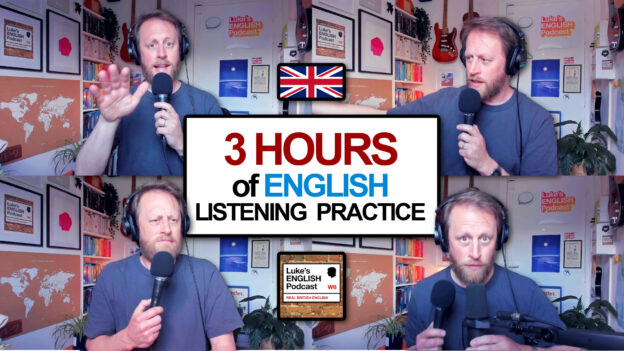
This is the longest episode of LEP so far, and it’s a solo ramble. Relax, follow my words, hang out with me for 3 hours, get stranded on a desert island of the imagination, and then get rescued. Includes a haircut, a sleep and a t-shirt change during the episode.
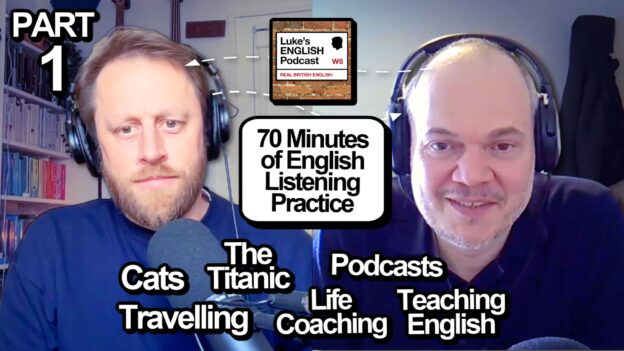
Antony is an English teacher, podcaster, life-coach and writer and he returns to LEP today for a conversation about topics which he has discussed in episodes of his podcast called “Life & Life Only”. Listen to us chat about why cats are good for your health 🐱, what the Titanic disaster tells us about social class 🚢, how losing his backpack while travelling taught Antony a valuable life lesson 🎒, how psychology is involved in English teaching 🧠 and more.
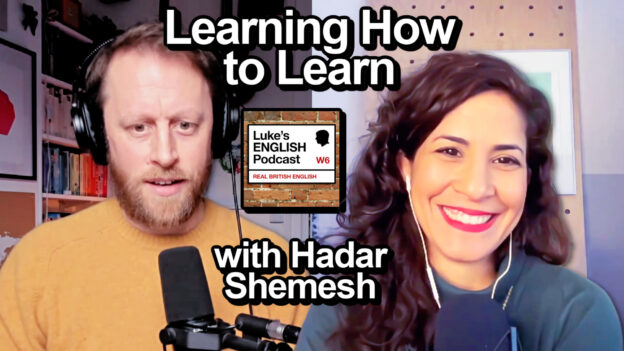
A conversation with Hadar Shemesh, a non-native speaker who has improved her English to a very high level, and who now shares her knowledge and experience with the world through her podcast and YouTube channel. Hadar describes her own experiences of learning English and mastering pronunciation. This episode is all about the voyage of discovery that is learning a language.
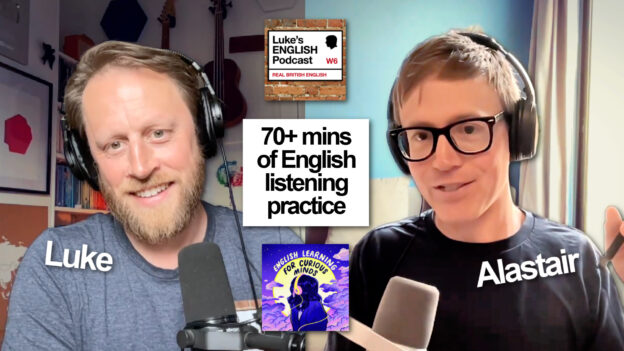
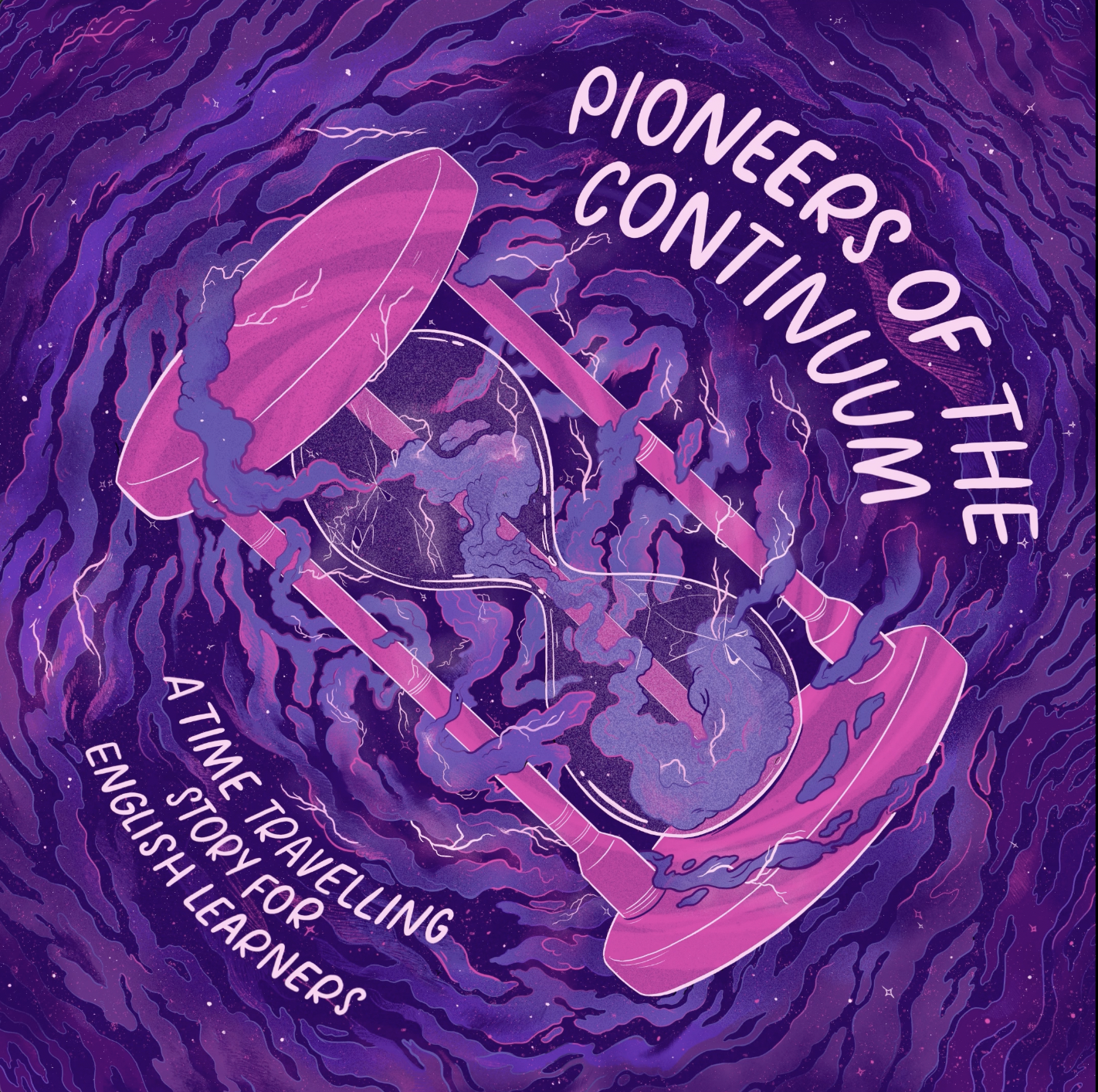
Is that a confusing title? Hopefully not. As you might expect, it’s a little summary of what’s included in the episode. To give you some more details, Alastair Budge is the host of a podcast called “English Learning for Curious Minds” and he has created a new audio drama for English learners called “Pioneers of the Continuum”. It’s a time-travel adventure for English learners, and Alastair asked me to be the narrator for episode 1. In this episode of LEP, we talk about Alastair’s story, living in Malta, learning English by immersion, cliches and complaints from English speakers visiting Paris and Alastair’s story about playing the bagpipes on the streets of Paris. The audio version includes 30+mins of rambling from me at the end. Enjoy!
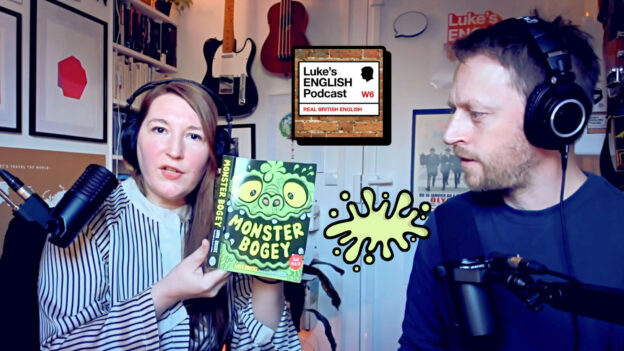
My friend Anna has written a book for children (7+) which has a full publishing contract and is available in all good bookshops now. The book tells the story of a boy who accidentally creates a monster when his secret collection of nose bogeys gets struck by lightning! This conversation includes lots of talk of snot and bogeys, as well as stories from Anna’s time as a travel writer.
Kate Billington returns to LEP for the third time, to drink tea, talk about my pod-room, learning the bassoon, exam results, learning Chinese, responding to listener comments and talking about her videos on TikTok.
Welcome back to Luke’s English Podcast. I hope you are doing fine out there in podcast land.
Kate Billington is back on the podcast today. Of course, you remember her from episodes 689 and 705.
If you heard those episodes I’m sure you will remember Kate and I know that a lot of you out there will be very happy that she is back again and yes, Kate’s return to this podcast is long overdue. She was a very popular guest when she was on the show before. So it’s great to have her back.
Some of you don’t know Kate because you haven’t heard those episodes but there’s no need for me to introduce her fully now in the intro because I kind of do that again during the conversation, except that Kate is an English teacher from England and we work together at the British Council.
People sometimes ask if Kate has her own podcast or YouTube channel or something, because they want to hear more from her.
Well, recently she started making videos for TikTok. We do talk about this during the episode, but that’s not until the end of the conversation, so I just wanted to give you a heads up about that right now at the start.
Kate is part of a team of teachers making content for the British Council’s channel on TikTok. You’ll see that they are making shorter videos (certainly shorter than mine) about things like British English idioms, culture and other entertaining bits and pieces. So, check it out – @BritishCouncilEnglish on TikTok. The link is on the page for this episode on my website.
So, what you are about to hear is another long and rambling conversation with a guest on my podcast. Hopefully you will stay engaged and entertained throughout while practising your English listening in the process.
All you have to do as you listen to this is keep up with the changes and tangents, and enjoy this conversational journey into things like how Kate helped me with the shelves in my pod-room, how Kate doesn’t agree with the way I arrange my books on those shelves, how it feels to be filmed while talking (and yes there is a video version of this on YouTube), we talk about Kate’s academic successes and failures (or maybe I should say “failure” because it seems there’s only been one, and I’m still not sure it counts as a failure), the Chinese classes that Kate has been taking recently, quite a lot of stuff about Korea (hello Korean listeners), our blood types and what they mean, how we both feel about getting older, and how we feel about certain other English teaching video content that you might find on TikTok, Instagram or YouTube. All that, and much more, starting… now.
An episode all about studying at university in the UK, with loads of advice about student visas, funding your studies with scholarships, extra-curricular social activities and opportunities at the Students’ Union and more. Features a conversation with a German student currently studying a master’s in clinical neuropsychology at UCL in London. This bonus episode is published in paid partnership with Study UK and the British Council’s GREAT Britain campaign. For more information, follow the links below.
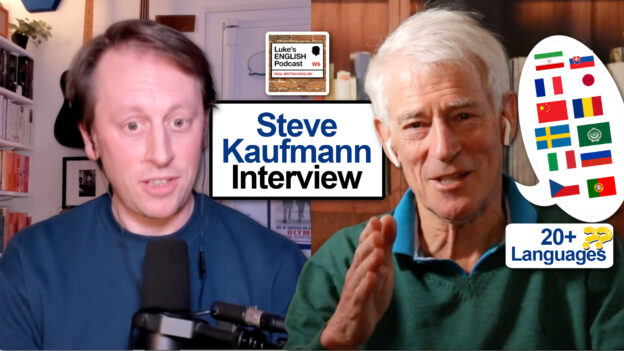
Steve Kaufmann is a very prolific language learner. He has learned at least 20 languages to varying degrees during his life. Some of them he learned during his career as an international diplomat and businessman, and others he has learned during his (semi) retirement. In this interview Steve talks about his language learning experiences, methods and motivations. We talk about various metaphors and similes for language learning including ocean voyages 🚢, cows 🐮, skiing ⛷ and cutting grass🏡, and I ask Steve about cross-cultural experiences he has had during his career. There is a video version but only the audio version contains my intro and ending rambles about getting my hair cut and how you need to remember that you’re a baby cow-shark on skis 🐄🦈🎿😅.
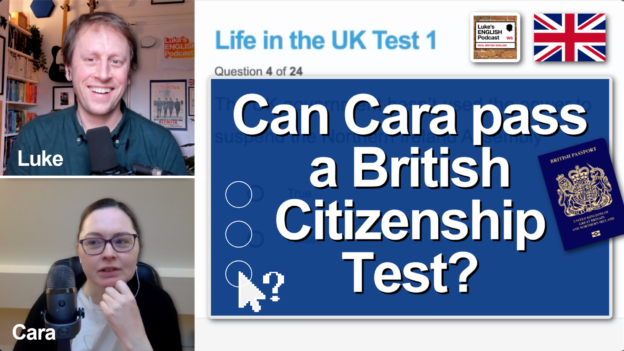
To qualify for British citizenship, one of the requirements is to pass the “Life in the UK” test. Questions cover things like British history, British life & culture, British politics, British geography and principles of modern British life. What do you think? Can you pass the test? Join me as I test online English teacher Cara Leopold (leo-listening.com). How much does she know about her own country of origin? What can you learn about Britain? What IS Britain anyway? Find out in this episode! Video version available.
James Harris is a writer, comedian, English teacher and language learner (French, German, Chinese) from England. In this funny chat, we talk about learning Chinese, being married to a Chinese woman and his semi-autobiographical book, “Midlands” which tells several funny and touching stories about two ex-pats living in Germany; Stuart, who is a stand-up comedian trying to understand the Germans, and Doug who gets involved in a love affair. James reads several passages from the book during the episode.
Stuart describes his early days in Germany, learning German.
Then a chance meeting in a pub had earned him an invitation to Berlin. Laura, Danish and short, was staying there for the summer, rummaging around in the archives for information about a particular Jewish family who had gone on to achieve cultural success in post-war Denmark;
Laura, a snub-nosed Danish girl with glasses who loved Israel and wheat beer. Stuart didn’t care much about her interests but did enjoy spending the days reading on her balcony and socializing with university friends at night;
by the end of the summer his hair had lengthened and his German increased fifty-fold, meaning he now knew about a hundred words. ‘Hallo!’ he would say, then ‘Weltschmerz’ and following a further pause ‘Auf Wiedersehen,’ saying a final farewell to people he would see again the next day.
He also hadn’t yet learnt to ask whether something was sugar or salt, leading to an evening eating some very sweet chips. But even speechless he wasn’t, at last, uneasy in Berlin – it seemed to him a gentle city, where the trains slid in and out and the open spaces pacified tourists drunker and rowdier elsewhere.
It was like the Germans had become one of the peaceful races in Star Trek, the ones introduced by an insert screen of their orderly, verdant planet, Bajorans, say, or some other species permanently threatened by obliteration; and what a change after the tiny cubicles and traffic-jam living of the English, who could only ever be the Borg.
Surrounded by pacifists, Stuart revelled in the license of Englishness, his ability to voice the odd mildly aggressive opinion or wildly over-celebrate during that summer’s football tournament, until England lost. He swam in lakes, and bought a bicycle, and gradually stopped thinking of England and the ashes it had fed him.
In Oxford, where he had been President of the University sketch revue, people had printed gossip about him in the student newspapers, asked him to leave parties, dealt with him as the man who had committed that deepest and most unforgivable of Oxford crimes: failure.
He had failed, as a comedian and a young man, and now publicly; his country had rejected him. He had been humiliated in front of an audience of his contemporaries and sent into an internal exile.
Afterwards, many of these young dilettantes, at the time apparently picturing future lives as bereft of unforeseen distress as possible, lives composed of simply an endless procession of success, successes occurring within a network of contacts which they had built up at University and which would continue to provide them with unstinting support throughout their adult lives, never violating the simple and essential principle that all was permissible as long as it did well – did not want his name on their social CV.
From Chapter 14
Stuart is on-stage doing stand up in Germany.
‘Don’t you sometimes get the feeling,’ said Stuart, years before on the stage in Heidelberg, ‘that if Barack Obama had been German it wouldn’t have been “Yes We Can” but ”Nein das geht nicht”? No you can’t.
‘Everyone would have been chanting it – No you can’t! No you can’t! Of course in this version Obama would not have been black.’
Stuart was closing in on the kill. ‘And this very lack of optimism,’ he said, treading across the stage, limbering, into the really good stuff now, ‘is actually built into the German language itself.
Like for example, when you’re really happy in English, you say “I’m on Cloud Nine.” But in Germany you say, “I’m on Cloud Seven.”
Does this mean that even in their happiest moments the Germans are two clouds less happy than English-speaking people?’
And after developing that bit, which meant moving into a depiction of an exemplary German, Hannes, in his German heaven, with an allotment, board games, juice and an Autobahn heading directly to Mallorca, he noting, somewhat wistfully, the celebratory Anglophones on Cloud Nine who were dancing to ‘Video Killed the Radio Star’, which was an excuse to sing it, following which they – the Anglophones – called down to Cloud Eight “Hey Hannes man! Come and join us here on Cloud Nine” and Hannes replying “No thank you. Everything on Cloud Seven is perfectly satisfactory” then moving on to speculation as to the occupants of the other clouds, the French on Cloud Eight living it up, their motor scooters floating off the cloud and down to Cloud Zero where the Greeks were and below them the Cypriots who’d had to sell the cloud, and were just falling – after all these and other jokes, Stuart had them where he wanted them.
‘Isn’t it funny that, since the Second World War, the Germans have been like’, change voice, German accent, ‘”We Germans. We have done so many things wrong and there is no way we can ever put them right.”
And now Greece is like,’ pause, turn of the head, “Well, actually…”’
They laughed, and laughed, and laughed. They got it.
This website uses cookies to improve your experience while you navigate through the website. Out of these, the cookies that are categorized as necessary are stored on your browser as they are essential for the working of basic functionalities of the website. We also use third-party cookies that help us analyze and understand how you use this website. These cookies will be stored in your browser only with your consent. You also have the option to opt-out of these cookies. But opting out of some of these cookies may affect your browsing experience.
Necessary cookies are absolutely essential for the website to function properly. These cookies ensure basic functionalities and security features of the website, anonymously.
Cookie
Duration
Description
cookielawinfo-checkbox-analytics
11 months
This cookie is set by GDPR Cookie Consent plugin. The cookie is used to store the user consent for the cookies in the category "Analytics".
cookielawinfo-checkbox-functional
11 months
The cookie is set by GDPR cookie consent to record the user consent for the cookies in the category "Functional".
cookielawinfo-checkbox-necessary
11 months
This cookie is set by GDPR Cookie Consent plugin. The cookies is used to store the user consent for the cookies in the category "Necessary".
cookielawinfo-checkbox-others
11 months
This cookie is set by GDPR Cookie Consent plugin. The cookie is used to store the user consent for the cookies in the category "Other.
cookielawinfo-checkbox-performance
11 months
This cookie is set by GDPR Cookie Consent plugin. The cookie is used to store the user consent for the cookies in the category "Performance".
viewed_cookie_policy
11 months
The cookie is set by the GDPR Cookie Consent plugin and is used to store whether or not user has consented to the use of cookies. It does not store any personal data.
Functional cookies help to perform certain functionalities like sharing the content of the website on social media platforms, collect feedbacks, and other third-party features.
Performance cookies are used to understand and analyze the key performance indexes of the website which helps in delivering a better user experience for the visitors.
Analytical cookies are used to understand how visitors interact with the website. These cookies help provide information on metrics the number of visitors, bounce rate, traffic source, etc.
Advertisement cookies are used to provide visitors with relevant ads and marketing campaigns. These cookies track visitors across websites and collect information to provide customized ads.