Here’s a new episode with James about Skateboarding, which will be a new event at the Tokyo 2020 Olympic Games, along with karate, surfing, baseball/softball, sport climbing and surfing. James has been a skater for most of his life and used to write articles for a skateboarding magazine, so he’s exactly the right person to talk to about this.
Skateboarding might seem like an annoying antisocial hobby for children but for the first time it has been accepted by the Olympic Federation as a proper sport and is going to be one of the events at the next Olympic Games happening in Tokyo in 2020. So, skateboarding is now a mainstream sport. When the Olympics are shown on TV in a few years’ time, skateboarding might be one of the most popular events for audiences around the world, especially when you consider the popularity of snowboarding in the winter games. So, let’s find out about skating so we are ready to understand and appreciate it more.
Types of skateboarding
Ramp (vert or miniramp)
Street
Freestyle
Park
Parts of a skateboard
The Deck – the wooden board itself, made of maple plywood and covered in grip-tape and with the nose at the front and the tail at the back)
The Trucks (made of die-cast aluminium – they fix the wheels & axles onto the deck)
The Wheels (made of polyurethane or ‘urethane’ and available in different hardnesses)
The Bearings (the metal components that allow the wheels to spin on the axles)
Common tricks
Ollie (jumping with the board under you, still touching your feet)
Kickflip (an ollie in which you flip the board sideways under your feet by kicking it in the air)
Shove-it (spinning the board under your feet so the nose spins round from front to back, or back to front)
Different types of grab (doing an ollie then grabbing the board in the air)
Grind (sliding or scraping the trucks of the board along an object like a curb or rail)
Boardslide (sliding along an object on the underside of the board)
Blunt (balancing on an object on the back wheels and tail)
Nollie – doing an ollie but from the nose not the tail
Here is James’ selection of videos to give you an idea of the different types of skating, and some of his favourite skaters and cool moments in skateboarding. Notes written by James.
Natas Kaupas, one of the first people to develop street skating.
Mark Gonzales skating vert and street and play fighting with Oscar-winning film director, Spike Jonze. From the Real skateboards video Non Fiction. (1997)
The legend of Tom Penny, a skater from Oxford, England: Zen master, legend, space cadet, enigma.
Lizzie Armanto, one of the best female US bowl / park skaters, in an ad for Bones bearings.
Women’s Highlights – Huntington Beach | 2016 Vans Pro Skate Park Series
The Flip skateboards video “Sorry” from 2002, presented by Johnny Rotten – probably the best skate video ever made… Madness. Good soundtrack too.
James describes his skateboarding injury on the podcast in episode 180.
Hello and welcome back to the podcast. Thank you very much for choosing to listen to this episode. How are you? Are you doing alright? Are you ready to listen to some English? You are? Good! (I’m assuming that you all said yes to that) OK, well let’s go then shall we?
It’s the new year period and it’s normal at this time to look forward to the year ahead and to think about the future in general, so in this episode I’m talking to my Dad about technological developments that we can expect to see and read about in the coming months and years and the implications of those developments.
Of course neither of us are experts in this field (my Dad is a broadcast journalist and I’m an English teacher) but we both like to keep fairly up-to-date on technological issues, and since CES happened earlier this month in Las Vegas (that’s the Consumer Electronics Show where all the latest tech products are presented) there’s been quite a lot of coverage in the media about new technology. My Dad has been reading about it, I’ve been reading about it, and maybe you’ve been reading about it so let’s talk about it.
And that’s what we’re going to do and that’s what you’ll hear in this episode – two blokes, talking about technology, including some bits about driverless cars, green energy, drones, virtual reality headsets, augmented reality, and superintelligent computers that talk to you in that slightly threatening and disturbing sounding voice. “Good morning Mr Thompson”, “Did you sleep well?” “I have noticed that you are late with your banking payments Mr Thompson.” “It’s the 3rd time this year.” “I’m afraid I am going to have to turn off your oxygen supply unless you pay the outstanding credit on your account Mr Thompson”.
As I said, we’re not experts but I am sure that I have many tech-minded listeners who know a thing or two about this subject, so if you have anything to add to this conversation then I invite you to write your comments and predictions in the comment section on my website.
From a language point of view, you’re going to hear a lot of terms relating to technology of course, but also the natural conversational English that you’ve come to expect from episodes of this podcast.
If you’re interested in transcribing this episode as part of the Orion Transcription Team, go to my website and click transcripts – the details are all there. The team is growing all the time and it’s a good way to get some intensive language practise while helping to add value to my website by working together with other podcast listeners.
OK, so without any further ado, here’s a conversation with my Dad about technology and the future.
***
Moore’s Law
(n.) Moore’s Law is a computing term which originated in around 1970 based on an observation made in 1965 by Gordon Moore (not Ian Moore), co-founder of Intel. The simplified version of this law states that processor speeds in computers, or overall processing power for computers will double every two years.
So, it starts as 2 and becomes 4, then 8, then 16 – doubling every two years, resulting in massive levels of development at an ever-increasing rate.
Basically: computers are getting more and more advanced all the time and eventually they’ll take over the world and make us their slaves like in The Terminator or The Matrix, maybe.
What is Moore’s Law? Webopedia Definition
www.webopedia.com/TERM/M/Moores_Law.html
How driverless cars could solve our traffic problems
Dad’s footballing predictions (wishful thinking I think!)
Leicester City will win FA Cup
Liverpool will win the Premiership
***
Outtro Script
What do you think? I am sure many of you have interesting things to add to this conversation. There’s bound to be a lot of things that we missed, including things like chatbots, Uberisation and plenty of other things. Get into the comment section to share your thoughts.
Did you understand everything we said in this episode? There’s a lot to be gained from that conversation in terms of vocabulary. Taking part in the transcript collaboration is a way for you to focus on that, but also perhaps I should do another episode just focusing on the language you heard in this one. Just let me know.
If you’re a ninja listener, hiding in the shadows, I invite you to come forward and leave a comment on my website saying who you are and how you found the podcast.
Thanks very much to those of you who have written recently. It’s good to hear from you and to know exactly who is out there downloading my episodes.
Listen to my uncle Nic telling some stories about British rock stars he has met over the years, including an encounter with one of the most famous musicians in the world!
In this episode I’m going to play you another conversation which I recorded during the recent Christmas holiday. In this one you’re going to hear my brother and me talking to our uncle Nic about some of the amazing rock stars that he’s met over the years.
Nic has always been a huge fan of rock music and because he was born in the early 1950s he saw many of Britain’s greatest rock stars performing live on stage quite early in their careers. I’m talking about the late 1960s, throughout the 70s and beyond.
So, Nic has met a lot of musicians at gigs but he also just has a knack for bumping into rock stars in normal everyday situations and then being very cool, calm and casual in their company. It’s almost like they’re on the same wavelength or something.
Anyway, my brother and I have always enjoyed hearing Nic’s anecdotes and I’m very glad to have recorded some of those stories for this podcast.
If you’re a fan of rock music, especially some of the classic bands of the 60s and 70s then I’m sure you’re going to be impressed by some of the people my uncle has met, talked to, and even had breakfast with.
And there is one person in particular that he once bumped into – who is not only a bonafide legend of the music world, but also just one of the most famous people on the planet today. Any idea who that is? Well, to find out just listen on.
So, here’s a chat with my Uncle Nic, with some help from James.
I say “help” from James, what I mean is that he just takes over the interview at one point because he thinks he can do a better job than me, and maybe he’s right. Anyway, that’s enough rambling… here’s the conversation.
***
Thank you very much to Uncle Nic and belated happy birthday to him too.
Let us know what you think, and which one you think is the most impressive story. Because they are impressive stories, aren’t they. Come on! Paul McCartney of The Beatles. Pink Floyd! Fast Eddie from Motorhead!
[socialpoll id=”2411231″]
I realise there will be people out there who don’t really know a lot of the people we were talking about. I’m sure you know Paul McCartney, but you might not know The Who, Motorhead, Pink Floyd (hard to imagine), The Damned, Slade…
And I’m sure there are others too, not necessarily in the toilet but in other situations, but who knows.
VIDEOS
The Who – Pete Townshend, Keith Moon, Roger Daltry, John Entwistle
https://www.youtube.com/watch?v=sanAHVITCDY
Motorhead – “Fast Eddie” & Lemmy
Free “All Right Now” live at The Isle of White Festival (1970)
Paul McCartney & Wings “Junior’s Farm” (Nic’s favourite)
Pink Floyd recorded at Live 8, Hyde Park in 2005
Slade in 1973
https://www.youtube.com/watch?v=Qu_ozjAu_vM
The Damned
Have you ever met a famous musician? Let us know in the comment section.
Happy New Year! I hope you’re well! Here’s the first episode of LEP in 2017 featuring a conversation with my family and then some vocabulary explanations.
I had a lovely Christmas and New Year. We played games, ate loads of food, went to the pub, took walks and generally had a good time with each other, as planned.
My uncle Nic (my mum’s younger brother) and my auntie Rose (Nic’s wife) were with us too, which was really nice because it’s always great to spend time with them, and I’m glad to say that I managed to get Nic on the podcast, which is something I’ve been meaning to do for ages because he’s great and he has some good stories to tell, as you will hear.
I didn’t get a chance to do a lot of recording with my family because it was the holiday period and I didn’t want to stick microphones in people’s faces too much.
But on Boxing Day I managed to do some recordings with my uncle, my mum, my brother and my dad.
I’m going to play those recordings to you over the course of the next two episodes.
In this episode you’ll hear these things:
My mum and my uncle talking about specific methods of cooking a really good Christmas dinner
Some vocabulary explanations – because there are loads of good words and phrases relating to cooking and food preparation, and also some other general bits of vocab that crop up in the conversation that are worth learning.
A bit of rambling at the end of the episode about the holiday period, including a quick report about the Christmas Olympic games that my Dad organised for us and some other bits and pieces
Part 1 (overview)
We start with James and Uncle Nic talking about how early in the morning it is, because we recorded this before breakfast on Boxing Day. This is probably the first pre-breakfast podcast I’ve ever done.
My wife accidentally spills some coffee down the back of one of the armchairs in the living room and you’ll hear that there’s a bit of commotion and disturbance in the background as people run around and she desperately tries to clean it up.
My uncle and I ask my mum about the secret to cooking a succulent, moist turkey, which apparently is done using a process called basting.
My uncle expresses some concern about the cleanliness of the microphone covers I’m using, asking if they have been sterilized, and that leads to a slight tangent about Health & Safety in the workplace.
We then get back to talking about my mum’s turkey technique with some explanations of exactly how to make sure the meat stays moist all the way through the cooking process. Moist is the key word here obviously, as the word is repeated a few times until my brother interrupts by shouting “stop saying moist!”
We then turn to the vegetables and go on a bit about how my Mum prepared the sprouts, carrots, potatoes and parsnips. There are a couple of other interruptions from James, including a joke about the secret of comedy and then an explosive sneeze. Throughout all of this my wife is still rushing around in the background and searching the internet for “how to get coffee stains out of an armchair”.
We talk briefly about the complications of preparing Christmas lunch with a vegetarian at the table, as my auntie Rose is a veggie.
Talk then turns naturally to sweet food and my uncle Nic expresses some disappointment about the lack of a traditional Christmas pudding at the table the evening before.
Finally, my Auntie Rose arrives in the room and sits in the chair that my wife spilled coffee onto, but thankfully my wife has already managed to clean it all up, without my help, there’s no evidence of a spillage, so it looks like my wife got away with it.
So, now you can actually listen to that conversation as it happened and when it’s over I’ll go through some of the vocabulary in more detail so you can not only understand everything my family say but also so you can actually learn loads of vocabulary properly and add it to your active English.
That was quite a short bit of conversation, wasn’t it! By the usual standards of LEP, it was quite short. But there’s more coming in the next episode.
Vocabulary
I said before that I would go through some of the words and phrases in that conversation in order to help to boost your learning process.
A lot of phrases related to specific ways of cooking and preparing food were in there. There were also lots of other nice bits of vocab too.
So, this is the language section of the podcast. As I am explaining the vocabulary, you can think about these things:
Did you notice these words and phrases while you listened?
Did you already know them or are they new to you?
Did you misunderstand or mishear any of them?
What other words go with these words? Try to notice words in groups, chunks or phrases.
How exactly are these words and phrases pronounced? How is the pronunciation different from the spelling. Remember to check the page for the episode to see the words written down in order to check their spelling.
After my help, would you be able to use these words in your own conversations?
And will you use these expressions? That’s a question, but also a request! I wonder if you will use them, and I suggest that you use them too because that’s how you will make them a part of your active vocabulary.
As I’m going through this list you can test your knowledge – see if you really know these words and phrases properly.
You could repeat some of this language after me as well. Do some shadowing.
And I suggest that after listening to me explain all this vocab that you go back and listen to that conversation extract again, try to notice the vocabulary when you hear it and see how much more you understand.
Vocabulary List
You can tell what time it is based on the rapidity of his response. (rapid – adj / rapidly – adv / rapidity – noun)
My wife’s just spilled/spilt tea all over the armchair.
To spill / spilt / spilt (UK spelling)
To spill / spilled / spilled (US spelling)
A spillage (noun)
The secret to a succulent, moist turkey is basting. Succulent (adj) = tender, juicy and tasty (for meat) Moist (adj) = slightly wet (can be used to describe food, e.g. moist turkey or moist cake, but it also can describe anything else which is slightly wet and for that reason the word is a bit suggestive and rude-sounding) Moist / moisture / moisturise Paul Foot – Moist Cake bit. Essentially he’s making the observation that when someone serves you some home-made cake you have to compliment the person by saying how moist it is! Even if it’s not that moist. “Oh, this cake is so moist! How did you get it so moist!” There’s social etiquette which dictates that you have to compliment the person on how moist their cake is, and you have to do it quite quickly. “Mmm, it’s lovely this cake – so moist! How did you get it so lovely and moist! Whenever I make cake it’s so dry! I’m an awful cook, but your cake is so moist!” – it’s polite to compliment the person who made the cake.
A ladle (noun) / to ladle (verb)
They make a heck of a din. (the bells) A hell of a … A heck of a …
A din = a loud and unpleasant noise “You’ll be the judge of that” – a way to emphasise that someone has to make their own judgement about something.
Also: “I’ll be the judge of that” – used to express some anger while saying “I will make that judgement – not you!” e.g. “I make the best tea in London”, “We’ll I’ll be the judge of that!”
Have these microphone covers been sterilised?
To sterilise something (verb) Health & Safety legislation Fire extinguishers are in good order.
To trip over the carpet.
To sue you for a lot of money. To sue the shop. Line the dish with lots of foil and then put some turkey stock in the base of the dish. Giblets Sprouts
She sliced the sprouts.
I saw it in a recipe book.
It cuts the cooking time down. Stove / oven / cooker / cook Oven = a large metal device with a door in which you cook food at high temperature.
Stove = an oven, with gas or electric hobs on the top where you can cook things over heat
It’s also something which heats your room. You burn wood and coal in it. E.g. a wood-buring stove in the living room. Cooker = a device which cooks things – it can be an oven, a stove, or just an electric pot, slow cooker etc.
“What’s the secret of comedy?” …Timing. Parsnips (root vegetable)
“Tatties and neeps” (Scotland) = potatoes and parsnips
You have to parboil them, drain the water off, roast them in hot oil in the oven (just a little bit).
You mean like, deep-fry them?
No, just roast them.
In the last minute rush and fluster I forgot about the potatoes.
Gill took it upon herself to do poached pears and caramelised oranges.
She’s sitting in the chair that Luke’s wife spilt coffee on so it might be a wee bit damp.
wee = little (typical word in Scotland)
In forthcoming episodes…
More conversations with my family, including some anecdotes about meeting famous people – with stories about meeting members of the royal family, some legends of TV comedy and perhaps the biggest rock and roll star on the planet right now. Who do you think that is? Well, my uncle met him once. You can hear that story and others in an upcoming episode.
Also on the podcast soon I’m hoping to record a ramble about some general stuff that happened over the Christmas period, including some words about a few books I received as presents, some comments about the well-loved celebrities that we lost in 2016 including, notably Carrie Fisher and George Michael during the Christmas holiday. We lost some great people at regular intervals during the year. Let’s hope 2017 doesn’t continue that trend.
Also, I’ve seen Rogue One: A Star Wars Story and I will be doing a full episode about that too.
So, brace yourselves, more podcasts are coming!
But for now – GOODBYE!
Background music – JukeDeck – make your own tunes at www.jukedeck.com
Amber & Paul are back on the podcast and we do the usual catching-up session and go off on a few tangents about Amber’s play, Paul’s showbiz life, marshmallows, microphones, tea & coffee, accents and more. There are videos for the intro and outro of this episode (below).
This episode sees the return of pod PALs Amber Minogue and Paul Taylor, which means that The Talkative Trio are reunited on the podcast once more.
Time was pretty tight for this conversation because Paul was working to a very strict schedule on the day it was recorded, which was yesterday in my flat.
As you’ll hear, Paul arrives a little bit late because he was having lunch with some TV industry people and then he has to leave before the end of the recording to be interviewed on the radio, because he’s so hot right now in the world of showbiz.
Amber has also been very busy recently doing various things including writing and rehearsing a play, so it’s been hard to get the three of us in a room together all at the same time.
As a result this episode was arranged at the last-minute and the conversation was completely unplanned. All I wanted to do was to catch up with the two of them and ask the usual question: What have you been doing?
You’ll hear that things carry on quite rapidly and there are plenty of the usual tangents – those moments when the topic suddenly goes off in a different direction.
It might be hard to follow, so to help you keep up, here’s a basic summary of the main things that we talk about. You’ll find these notes written on the page for this episode, including some words that you might hear in the conversation but not know. You might want to check these notes to see words that you might have missed, to check their spelling etc.
First of all Amber tells me about the play for children that she’s been working on with our friend James Simpson.
Paul then arrives, you hear the buzzer buzzing and he comes in carrying a bag containing a new iPhone 7, still in its box, which he collected from the shop earlier in the day. It’s a present which all his friends bought for him a few months ago for his 30th birthday, organised by his girlfriend. We all chipped in some money and got him a new phone.
Amber tells us some more things about her play, including how it contains a few slapstick moments, meaning some funny scenes of fairly violent physical comedy involving a first-aid box and some marshmallows. Apparently at one point in the play James hits Amber over the head with the first aid box. By the way, a first-aid box is a box that contains basic medical supplies for administering first-aid, that’s why it’s called a first-aid box. It contains, things like plasters, bandages, antiseptic, tiny scissors, and maybe some other little medical things that you don’t understand etc.
Also in the play they also fight over a marshmallow, which Amber wants to dip into her tea.
This leads us to talk about dipping things into cups of tea, like marshmallows and biscuits, which then causes us to talk about what you put in your tea when you’ve run out of milk, which actually happened to Paul the other day. His solution was to use whipped cream as a substitute.
That leads me to ask the question of whether you really can put cream in tea, and we agree that you can definitely put cream in coffee, especially a particular type of coffee which is served with whipped cream on top, which in France is called café Viennois – which I think translates as a Viennese coffee – or a coffee from Vienna.
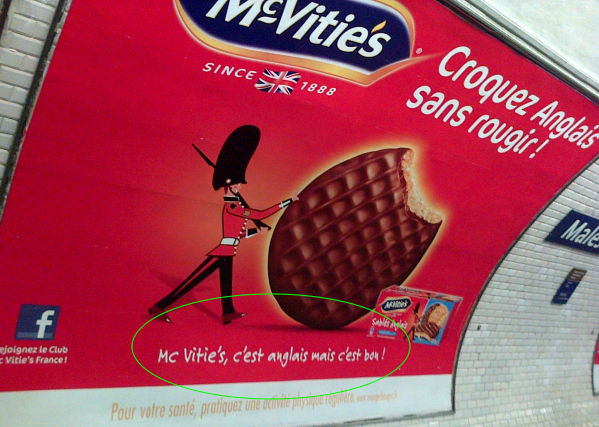
That causes me to ask what they call a Viennese coffee in Vienna, speculating that they might just call it a coffee, which leads to a similar question about the French phrase “creme anglais”, which translates literally as “English cream” – but in the UK we just call it “custard”.
I then ask Paul and Amber to explain to you my audience what custard is, and Paul suggests that instead of us explaining it at great length, you could just ‘google’ it.
I remind Amber & Paul that it is necessary to explain some words sometimes, like the word ‘custard’, because this is Luke’s English Podcast and it’s probably a good idea to explain words sometimes.
This prompts Amber to comment on the way that I seem to choose to explain words quite randomly in my episodes – like when I recently spent quite a lot of time explaining the word ‘flea’ in a recent conversation I had with my Dad on the podcast.
We then go back to food and talk about typical English puddings which can be served with custard, including crumble, sticky toffee pudding and the oddly named ‘spotted dick’.
I refer to spotted dick as a dessert, which causes Amber to comment that this is the wrong choice of word and that I should say that it’s a “pudding” not a “dessert”.
This brings up the slightly confusing and long-running debate about the correct choice of words to describe certain things in Britain, especially in relation to the dinner table. This all relates to British rules of etiquette and language in polite society, perhaps relating to French vocabulary we sometimes use in English. We don’t talk about this very clearly and it might be a bit confusing for you, and really the whole subject of the rules of British etiquette and social class deserves an episode of it’s own.
Nevertheless, in order to clear it up a bit, here’s a quote from a book called “Watching the English” by Kate Fox. Kate Fox is a social commentator who writes about social behaviour in England, and “Watching the English” is a good book that explains many things about English life. This is what Kate has to say about the words “pudding” and “dessert” in English. By the way, both these words are used to refer generally to sweet food which is served after the main course. You have the starter, then main course, then the pudding/dessert. Your choice of the word ‘pudding’ or ‘dessert’ seems to depend on your level of class, and apparently according to upper-class culture the word “dessert” is vulgar. Kate Fox: ‘The upper-middle and upper classes insist that the sweet course at the end of the meal is called the ‘pudding’ – never the ‘sweet’, or ‘afters’, or ‘dessert’, all of which are déclassé and unacceptable’ (Fox, 2005, p79). So, according to upper-class etiquette, pudding is the correct term for the sweet course that comes at the end of the meal. Fine. Amber seems to think this is because the word “dessert” is of French origin, but I’m not sure. By the way, in some places (e.g. France and Japan) pudding is a specific kind of dish. For example in Japan ‘pudding’ is a sort of caramel or custard creme dish. In the UK it just means the sweet course at the end of the meal and can include all kinds of things, like cakes, pies, ice-cream, trifle, Eton mess, bread and butter pudding or even jelly. “What’s for pudding?” for example.
I try to explain all of this, but I can’t manage it, instead saying “This is tangent city” when I realise that we keep going off on mad tangents and it’s probably quite confusing for the audience – that’s you.
Our talk of pudding then causes us to start talking about Pudong, an area in Shanghai, and specifically the Pudong River in Shanghai. Paul tells us a bit about that and then there are a couple of references to the slightly rude sounding English words ‘poo’ and ‘dong’ before things settle down a bit and we start talking about Paul’s recent showbiz news, including how he is going to be interviewed on a radio station called “Oui FM” later in the afternoon, so we go from poo to wee in just a few sentences.
At one point Paul nearly uses quite a clever word – ‘concise’ but then doesn’t use it, preferring instead to choose a more simple way of putting things “using the least words possible” (which means to be concise).
We talk about responses to Paul’s recent videos including a few YouTube comments & some criticism he received from a serious person in an email (the criticism was in the email, not the person – you can’t put a person in an email).
Things get quite geeky when I then start talking about cameras and microphones and the challenges of capturing good audio when you’re recording videos.
There’s some talk of different types of microphone, including boom mics, lapel mics, dynamic mics and shotgun mics but then Amber decides it’s all getting a bit too geeky and we move onto something else.
We make plans to hang out again on Thursday on the set of Paul’s TV show while they’re doing some filming, and we decide to record a podcast while we’re there.
Following on from my recent episodes about accents, I ask Paul & Amber what their accents are, and what they think my Dad’s accent is, and Amber declares her love for my Dad.
Then Paul has to go for his radio interview on “Oui FM” and leaves, and Amber & I carry on and talk a bit more about her play before having a massive conversation about Christmas which will probably be uploaded in a forthcoming episode.
So, I hope that helps you understand what you are about to hear from the Tangential Trio. But, now, without any further explaining – here is that conversation as it actually happened!
JINGLE + CONVERSATION
‘OUTRO’
Amber and I started talking about Christmas there and we went on to talk about it for ages – like over an hour of chat about Christmas shopping, games, food, family traditions and everything else relating to the festive time of year. That conversation will continue in the next episode, maybe the episode after.
We talked a little bit about Paul’s English in that conversation.
People sometimes say “Paul’s accent/English is influenced by his French”.
It isn’t. Certainly not his accent anyway.
That’s one of the interesting things about Paul. When he speaks French there is pretty much no trace of an English accent in his speech, and when he speaks English there is no trace of a French accent.
Other announcements
LEP Moscow Get-Together Hey Luke! Well, the very first LEP Moscow GET-TOGETHER has just happened! The first of it’s kind, it seems to be a historical :) event in Russia! Everything went great, it was awesome to chat in ENGLISH with like-minded people!!! Personally I felt as if I had known all of the participants for ages – open, nice and smiley friends! I hope somebody else could feel a similar thing. First, we got to know each other, which was the main achievement! It was interesting to know when and how everyone had found LEP one day, which episodes were our favourite ones, which experiences in English language learning we had (useful Internet resources, grammar books, pronunciation etc.) A couple of pics and a short audio message from us to you are attached. Thanks again and again for that announcement and actually for everything you do!!! We hope to provide more listeners with a chance to meet and speak regularly and one more way to let them know is to “friend” your group on FB with ours https://www.facebook.com/groups/734996946664425/ and VK https://vk.com/clubnu1 . Have a nice Monday, Jedi-Podmaster! Dmitry
Here are those Moscow LEPsters saying hello!
Transcript Collaboration
~ well done everyone!
Thank you especially this month to Antonio for managing everything.
There is an email now for the Orion team. Just write a comment on the page for the transcript collaboration and Antonio will let you know what to do.
Make sure you read the rules. Transcript collaboration page:https://teacherluke.co.uk/episodes-with-transcripts/transcripts/
Zdenek’s English Podcast
Also, on the subject of LEPster podcasts – Zdenek Lukas continues to do his show, called Zdenek’s English Podcast. Recently he’s been doing episodes about his experiences studying for the DELTA (Diploma in English Language Teaching for Adults) which is a seriously challenging postgraduate qualification in English teaching, which involves not only a lot of writing about linguistics and teaching methodologies, but also plenty of assessed teaching sessions too. It’s a difficult course with many challenges and many things to learn. You can listen to Zdenek talking about it on his podcast in some recent episodes.
Get it here https://audioboom.com/channel/zdeneks-english-podcast
Join the mailing list for direct access to the page for every episode, and for any other content I put up, including videos that I might start doing with my new camera soon.
That’s it! Cheers!
VIDEOS
Here’s one of Paul’s “What the F*ck France?” videos. This one’s about how it’s difficult to learn French.
LEP VIDEOS
Here are a couple of bonus videos of me recording the introduction to this episode, and a failed attempt at recording the outro too (I forgot to press ‘record’ on my audio device!)
They’re in black & white because I think it looks cool. The gorilla ↴ is pink, ok!
Thanks for watching. I’m just experimenting with videos at the moment, but if you like them, I might do more.
The Russian Joke appeared in US TV show Parks & Recreation – watch until the end
https://www.youtube.com/watch?v=VxQ_ywY-luE
Music credits
Jazzy xylophone tune & piano tune by BenSound – www.bensound.com
Other music by me, or by my brother James Thompson.
In this episode you’ll hear me talking to Kristina from Russia, the winner of the LEP anecdote competition this year. We talk about her work as a translator and interpreter, her reflections on language learning, how she learned English to a good level and some other bits and pieces.
Hello! Welcome back to the podcast. In this episode I am talking to Kristina from Russia. If you’ve heard episode 403 of this podcast you’ll know that she is a listener who won my anecdote competition this year. Her anecdote was about how she ended up having to interpret for Emir Kusturica – the famous Serbian film director, on stage at a film festival in front of an audience of movie industry people with absolutely no preparation.
It sounded stressful and it’s also impressive that she managed to get through the whole thing successfully, without running screaming from the building.
Kristina’s story was the clear winner in the final round of the competition. It was interesting to hear about how she described that stressful and exciting experience and how her language skills were involved. The prize for winning, as suggested by one of my podcast listeners, was to have a one-to-one Skype conversation with yours truly (that’s me).
We did that the other day. We chatted on Skype for nearly an hour, with her in Saint Petersburg and me in Paris, and I thought it might be interesting to record part of the conversation for an episode of this podcast. Kristina agreed and so, in this episode you can hear the result.
So in this episode you are going to hear Kristina talking about
How she became a translator and interpreter
The differences and challenges of those two types of work
How she has learned English to her current level, and some general reflections on language learning (by the way she speaks several other languages including Norwegian and German)
The way she maintains her level of English and how listening is an important part of that process
I think Kristina is an example of someone who has not only managed to learn English to a proficient level but has also built a career around her language abilities. It was lovely to speak to her and I hope you enjoy listening our conversation.
So, without any further ado, here is Kristina from Russia, the winner of the LEP anecdote competition 2016.
* CONVERSATION *
Announcement: LEP Meeting for Conversation in Moscow
Here’s a message from a listener in Moscow called Dmitry:
Is here anybody from MOSCOW?!
A friend of mine is organizing the first MEETING of The Moscow LEPsters Conversation Club – a club for those who study English, like Luke’s podcast and want to develop speaking skills as well! Everybody is welcome on Sunday, December 11th at 4pm in the Wooden Door anti-cafe. We intend to discuss Luke’s podcast, your favorite episodes, drink tea/coffee, eat cookies, SPEAK and have fun! The meeting itself is absolutely free BUT the anticafe charges everybody 2 roubles per minute. Coffee and cookies included in this standard price. [Luke: About 1.7E per hour for free cookies and coffee? Not bad!] REGISTRATION: just send your name and several words about you (if you wish) to smartnb@mail.ru or click “I will participate” on the Facebook page
Link here: https://www.facebook.com/events/275649646170689/ It will be great to share emotions and ideas! See you on Sunday at 4pm!
Let me know if you’re planning an LEP Get Together in your area
If you’re planning an LEP Meeting in your area, let me know and I can spread the word!
Getting together with like-minded people and having some fun speaking English is a great idea! It can be a great way to practise speaking and you can make some friends too.
Music
Background music (introduction):Jukedeck – create your own at http://jukedeck.com
Last week I asked my Dad for his opinions about recent news and we talked about Brexit, post-truth politics, the US election, the right-wing press in the UK, the political landscape in the EU, the rules of international cricket and the music from Tetris. You can listen to the conversation in this episode. Introduction and and ending transcriptions available below.
Introduction Transcript (script begins 1 minute into the episode)
My Dad is back on the podcast in this episode and in a few moments you’re going to hear our conversation which I recorded last week on Thursday 17 November 2016.
In the conversation we touch on these subjects: the weather (naturally), a bit about the rules of international cricket, then a Brexit update including details of the recent UK high court decision regarding the government’s power to trigger Article 50. Article 50 is a piece of legislation (part of the Lisbon Treaty) that when triggered begins the legal process of the UK’s exit from the EU. We’re not actually out of the EU yet, despite the result of the referendum. We have to wait for the government to ‘trigger article 50’ and then it all starts.
“Trigger article 50” – it sounds like something from Star Wars episode 3 “Revenge of the Sith”. In fact it feels like the political narrative these days is getting more and more similar to the plot to a Star Wars prequel, with lots of complex negotiations with shadowy trade federations, insidious political manoeuvring and the general sense of an impending journey towards the dark side, which is a pity isn’t it? “Trigger Article 50!” In Star Wars episode 3 it’s “Execute Order 66” which is an order by the evil emperor Palpatine to have all the Jedi assassinated by their own soldiers. “Execute order 66” “Trigger Article 50!”
But no, this isn’t Star Wars – we’ll have to wait until December for that.
You’ll also hear my Dad’s views on the presidential election result in the USA, some stuff about the UK’s right-wing press (newspapers), the OED’s word of the year – ‘post-truth’, ‘post-truth’ politics and general political trends across Europe and other regions at this time.
At one point the podcast gets interrupted when someone rings my Dad’s doorbell and it turns out to be a lost postman (which is actually quite a welcome break from all the depressing post-truth politics), then we somehow end up talking about the idea of a giant flea jumping over St Paul’s cathedral, a bit more about the joys of international cricket, the music from the classic Russian videogame Tetris and how a cup of tea is sometimes the best solution to almost any problem.
Language-wise this episode gets quite technical in places, especially when we talk about the UK’s constitutional, legal and political frameworks. So, watch out for lots of big words and big phrases relating to constitutional law, the inner-workings of government and even more complicated than both of those things: the rules of international test-match cricket.
Depending on both your level of English and your familiarity with these topics, this might be a difficult conversation to follow, but we all know that these challenges can be good for your English.
You might try transcribing some minutes of the episode (go to the transcript collaboration page to get started) or try some shadowing or any other techniques for active listening. Alternatively, just sit back, relax, have a cup of tea and enjoy the company of my Dad for a little while, as we try to work out what’s going on in the world.
I’ll talk to you again briefly on the other side of the conversation, but now you can listen to the Rick Thompson report.
*CONVERSATION*
So, there you go, that was my Dad and me going on about what’s going on. What do you think is going on? Get stuck into the comment section at teacherluke.co.uk if you’ve got something to share.
You can hear the Tetris music in the background. This one is Theme A – which I believe is a version of a Russian folk song called Korobeiniki. I’m sure many of you out there know more about it than I do, so I will let you explain the meaning of the song, and indeed the correct way to pronounce it.
For me, it reminds me of journeys in the back of my dad’s car, trying to get to level 9 on Tetris.
I actually prefer the B theme. It still gets stuck in my head to this day as I find myself humming it even when I haven’t heard it recently.
If you know about this tune as well, you can write a comment on the website.
Comments: Let me know what you think of these things
What do you think is going on generally in the world today?
On a positive note, what are you looking forward to? What are you optimistic about? Is there anything coming up that you’re impatient for? (On that note, I am looking forward to seeing the new Star Wars film, which is a prequel to the original trilogy, as many of you will know. This one isn’t a sequel to episode 7, it actually takes place between episodes 3 and 4. Yes, they still can’t count in the Star Wars universe. So far they’ve gone in this order 4, 5, 6, 1, 2, 3, 7, 3.5 and after that it will be 8. I’m looking forward to it just because I love the SW universe, and the trailer looks pretty good – although I’m a bit concerned by the script which seems a bit dodgy in places (“This is a rebellion, isn’t it? – I rebel.” It’s not Star Wars without a bit of clunky dialogue) I expect I’ll be talking more about this soon. Anyway, what are you looking forward to exactly?
Are you a fan of cricket? Have you ever heard of cricket? Do they play cricket where you live? Do you understand the rules at all?
Going back to Tetris – Did you use to play Tetris? Do you still play Tetris? What do you know about the history of this classic game? Do you have any stories to share about Tetris, including how it was developed and the people who created it? Or stories about how you played it, and how you used to get that tune stuck in your head, and how you’d play it until you got ‘Tetrisitis’?
So, feel free to get involved in the comment section.
Listen to Australian comedian Jim Jeffries trying to explain cricket to some Americans *contains rude language*
Join the mailing list
It’s the best way to get access to the page for the episode where you’ll find notes, transcripts, videos, links, other useful bits and pieces, as well as easy- access to the episode archive, the comment section and lots of other things.
Another note about the transcript collaboration team
This is now called The Orion Transcript Collaboration Team, which is cool. I didn’t name it – the name was chosen by Antonio because “Orion” is a constellation of stars in the night sky, and the members of the team are also a group of stars – so the name seems appropriate now. I like it anyway.
The team have been doing a great job. Go to the website -> (hover the mouse over TRANSCRIPTS -> TRANSCRIPT COLLABORATION and click the red, yellow or green buttons to access the google docs.
Episodes are divided up into 3 minute chunks. You transcribe your 3 minutes. Other people check your 3 minutes and make corrections. Eventually the whole episode is transcribed – it might not be completely perfect, but it’s done. Next, I have to proofread them all! So actually, this project rapidly creates more and more work for me. I am going through them *extremely* slowly, and publishing the full scripts on the website. It might be necessary to employ some proofreaders to check the finished scripts. Perhaps I should launch a kickstarter campaign for that or something, because it’ll cost money to get a pro to do the final proofreading.
I got a message from Antonio about this recently and he said this at the end:
I laugh a lot when someone corrects my chunk and I see certain mistakes I do. But I have improved a lot my understanding and can watch the BBC TV, not only the news, understanding much, much more than before I started transcribing you episodes. Maybe in this area, I am experiencing the famous breakthrough all teachers speak about. See you, Luke and thanks again for your commitment. Antonio
BENEFITS OF TRANSCRIPT COLLABORATION Catherine Bear Since I’ve been proof-reading a little bit of the transcripts, I have the feeling that my short term memory has improved considerably. So, guys, I would encourage each of you to do little bit of transcribing. Also shadowing is a nice way to improve not only the short term memory but also the sentence stress, intonation and pronunciation. I used to speak with a kind of American accent, but since I started actively listening to Luke’s English Podcast back in August and doing lots of shadowing (like 5 minutes in one go, a couple of times a day) — my English accent suddenly started to switch towards the British RP English. :) Guys, let’s share some personal success stories related to Luke’s English Podcast.
Yes, please do share some personal success stories of learning English!
Talking with two American friends about journalism, how the internet works, the US presidential election results, California’s new marijuana laws and puffins.
[DOWNLOAD]
In this one you’ll hear me in conversation with Molly Martinez and Dane Nightingale.
Molly has been on the podcast before – she was in episodes 198 and 199 – have you heard those? They’re fun episodes. In those episodes we talked about her studies as a journalist, we tested each other’s general knowledge of the UK and the USA and I tried to teach her how to do different regional accents in British English. That was episodes 198 and 199, in 2014 – ah, 2014, such fun times, such innocent times… Those episodes are still available for you to hear in the episode archive.
For a few days Molly is back in Paris seeing friends and visiting her old haunts, and this time she is accompanied by Dane Nightingale, who I think you will agree has a rather fantastic surname. (by the way, a nightingale is a bird that sings a beautiful song but only during the night time).
They’re both here for a couple of days and thankfully I managed to grab them both (not physically of course, just figuratively) for about an hour of conversation on this podcast.
Overview of this episode (to help you keep up)
This episode has a light-hearted bit at the beginning, then quite a serious bit in the middle, then another light-hearted bit at the end. The serious bit is when we start talking about the election, and there is a palpable shift in tone in the conversation at that point – so look out for that.
In the first light-hearted bit we establish these things:
They’re an item – they’re going out with each other – they’re going steady (I think this is the expression in NAmE) – they’re boyfriend & girlfriend, but they don’t live together – so they’re not living in sin, as you’ll hear them say.
Molly is a journalist for CBS in SF. She’s mostly on the production side but she does some on-air stuff (like reports to camera) as well as video editing and writing for anchors.
Molly is also a stand-up comedian who tells jokes on stage. She also tells quite a lot of jokes off-stage too. I think it’s fair to say that she’s something of a compulsive joke teller, which is alright in my book.
You’ll hear that Molly makes a joke about how I’m the heir to the BBC fortune, which makes me sound like I’m set to inherit the entire BBC (quite funny). I then explain in huge detail how in fact the BBC is publicly funded (not very funny).
Dane works for a start-up called Fastly, which makes the internet faster.
He tells us how the internet is basically just a series of tubes, and how my audio episodes travel from my servers in Tower Bridge, London to users all over the world, and how the start-up company that he works for, Fastly, aims to make this process faster by allowing data to be stored locally. I’m not sure I understand how it works!
Molly tells us about the 5 things that make something newsworthy: relevance, time, novelty, proximity and cats.
Then the serious bit begins when I ask them about their reaction to the US election. Hopefully you’ll find it interesting to hear about this story directly from the mouths of two US citizens from San Francisco. We try to understand how Trump won and Hillary lost, including the motivations of the voters, the campaigns of both candidates and also how the electoral system had an impact on the result.
Then the podcast becomes slightly less serious again and the conversation turns to the subject of marijuana laws in the USA, how Molly once met Tommy Chong (one half of the stoner comedy duo Cheech & Chong on an airplane – high in the sky, especially him) and then how both Molly and Dane are going to Iceland where it might be very cold, and where people might eat puffins – lovely little birds with colourful beaks.
You should also be aware of the meaning of these two words:
A puffin, puffing.
Puffins – cute birds which are protected by law in the UK but are very common in Iceland and apparently eaten there as a traditional delicacy. Puffing – the gerund form of the verb ‘to puff’ which means to take smoke from a cigarette or perhaps a pipe, or a perhaps joint in the case of California. “To puff a joint, or take a puff from a joint, or toke a joint or take a toke from a joint”.
So – “enjoy your puffin”, can have two meanings – enjoy eating a little Icelandic bird as a delicacy, or enjoy smoking some weed (especially in California where it has recently been made legal).
Right, you are now ready to listen to the conversation, so here we go!
*Conversation starts – light-hearted bit – serious bit – light-hearted bit – conversation ends*
I just want to thank Molly and Dane again for coming on the podcast. They took some time out from their holiday to talk to me, and you, and some of that time was spent going over the election, and things did get a little heated during the serious part of that conversation.
Molly expressed her frustration about the standards that people seem to have about women in positions of power – something which Sarah Donnelly also talked about when she was on the podcast talking about Hillary Clinton recently.
Specifically regarding the public’s perception of female candidates, maybe it is harder for a woman to capture the trust of the nation, because she’s expected to have so many conflicting qualities all at the same time. If she’s too warm she’s considered too emotional, but if she keeps the emotions in she’s judged as cold. That’s, I think, what Molly was talking about when she said it’s a double-standard. The point I was trying to make was that I think voters respond to certain personal charisma regardless of their gender, but thinking about it maybe women are judged differently than men and it’s harder for them to strike the right balance.
Anyway, that’s quite enough politics for this episode. I just wanted to say thanks to Molly and Dane for talking about the election because they’re on holiday and this is probably a story that they’re quite sick of, after a year and a half of election coverage in the media back home, and I expect they’re glad to be away from it all for a few days. So, I hope you’ll join me in expressing your gratitude to them for taking the time to talk about it to us on this podcast. I very much enjoyed having them on the podcast, for their honest reactions and for the light-hearted bits at the beginning and the end.
Notes
~Lots of people have shown interest in hearing a conversation with my Dad about the recent news, including the election results and about recent political developments in the UK. I am planning on talking to him soon, so that episode should arrive before long – as long as I don’t get snowed under with work, or snow, or fall into a wormhole or something like that. I’m a bit wary of doing politics too much, for obvious reasons, but many of my listeners have sent me messages assuring me that they appreciate the commentary, so I won’t abandon the subject, but I will be getting on to other topics on this podcast as well as getting back to basics with some episodes about language.
~The next episode is #400, which is cool isn’t it? Not bad really, considering how long some of my episodes are. That must be about 400 hours of podcasting for you to hear. I’m quite proud to have made it this far. It’s mainly thanks to my listeners, your enthusiasm for this podcast, your support and the support of my sponsors. I’m not sure to what extent I’ll celebrate during episode 400 or anything. I did quite a lot of celebrating in episode 300 in which I had contributions from many of the guests I’ve had on this podcast over the years, as well as a few daft celebrity impressions by me and my brother. We’ll see… perhaps I’ll just switch on the mic and have a ramble, perhaps I’ll have some guests. We’ll see.
~Amber and Paul are both very busy at the moment. Paul continues to have success with his TV series which is called WTF France – an affectionate piss-take of French culture from the English point of view. It seems the French, generally speaking, are being very good-natured about it and are lapping it up. The show is now being broadcast now on Saturday evenings on Canal+, which is one of France’s major TV channels. That’s quite a big deal. Paul is now Saturday evening prime time entertainment! Amber and I are proud of him of course, and also pleased because we helped him to write some of the episodes. You can see them all on the YouTube channel called “What The Fuck France”.
Now, you might not understand the appeal of the videos if you don’t understand the specifics of French culture and it might just look like he’s insulting everyone, but the humour comes from the familiarity with French life, particularly in Paris and really he’s saying the sorts of things that most Parisian people think, but doing it in English. Also, the videos are really nicely produced and directed. They look great.
~The LEP anecdote competition is still open – in episode 396 you heard 10 anecdotes so please do vote in the poll. You can find that page by clicking the blue button on my website. I’ve decided that as a prize I’ll spend some time talking to the winner 1-to-1 on Skype. I hope the winner considers that to be a prize. It may or may not be recorded and published, we will see.
~Don’t forget to join the mailing list
~Follow me on FB and Twitter where I post other bits and pieces from time to time.
~Thank you if you have sent me messages in various forms and apologies if I haven’t replied.
More episodes are coming. I have lots of ideas and things in the pipeline, but there’s no telling sometimes what’s coming next. Often I just record and publish on an episode by episode basis – and the topic and content is often decided by whatever inspiration strikes me at a given moment. It seems quite random, but there’s a method to the madness.
Have a lovely day, night, evening, morning or whatever and speak to you soon. X
Here is a new episode featuring a conversation with a friend of mine who originally comes from the Netherlands but he has lived all over the world. You’re going to hear us talking about cultural differences, Dutch stereotypes, doing business in France, the UK and the USA, the different communication styles in those places, doing stand up comedy and getting Darth Vader’s signature. I hope you enjoy listening to it as much as we enjoyed recording it.
You can see Alex performing at “WTF Paris? – Comedy Therapy for Expats” with Amber Minogue at the SoGymnase comedy club in Paris every Friday evening at 8pm. Details here https://www.weezevent.com/wtf-paris
This is a conversation with my dad about recent news, including a Brexit update, the US presidential election, Obama’s plans to send people to Mars and back and more…
I know this isn’t for everyone, but check out the anecdotes which have been sent to me. You might be pleasantly surprised. There are some great little stories in there and a lot of people are really showing off their good English. I’m very proud of everyone who got involved.
Just enter that link into the search function in your podcast app and you’ll find it (including the iTunes store)
Then listen to the entries when you’re out and about. You could mark the entries you like by favouriting them (most podcast apps allow you to add a star to the episodes you like) then vote later.
I want to say a massive thank you to all the LEPsters in the comment section of my website recently, particularly all the amazing feedback they’ve been writing in response to the competition entries. I’m really impressed. Some LEPsters, particularly Olga, have written individual feedback for every single competition entry there. Generally the response has been absolutely brilliant and I urge you to get involved too.
I know it’s difficult to listen to all the entries because there are so many, but check them out and you’ll see that there are some really entertaining stories there. The other night I walked home from a restaurant for about an hour, just listening to the competition entries. I was going to take the metro but I decided to walk all the way because I wanted to keep listening. I’m really pleased that so many people got involved and told their stories, even if it was difficult.
Give yourself a big pat on the back if you sent me an entry, or if you have voted or left feedback. Some of you are feeling a bit embarrassed because you don’t like the sound of your own voices or you’re comparing yourselves to people you think are better, but never mind all that – everyone did really well so congratulations.
The voting in round 1 ends on 21 October, so you have another week left.
The Rick Thompson Report
Now, let’s move onto this episode, which is called The Rick Thompson Report. Yesterday I spoke to my dad on FaceTime and asked him to give us a report on some recent news. We ended up talking about a few things, including a Brexit update, some stuff about Barack Obama’s plans to send a manned mission to Mars and my dad’s thoughts on the US Presidential race between Donald Trump and Hillary Clinton. I know some of you have been keen to find out what my dad has to say on that particular subject after I talked about it in the last two episodes of this podcast.
Because we’re talking about politics in this episode, I am sure that some of you will disagree with what you’re going to hear, which is fine, but if you’re planning on writing comments expressing your disagreement then I just encourage you to try to articulate those thoughts properly, explaining your reasons and developing your points, rather than just writing some angry knee-jerk reaction.
That’s if you disagree. If you agree with us, then of course you can write about that too.
Generally, I hope you respond in some way. You’ll hear us comment on some global events, and it’s quite interesting to me how we all seem to have different versions of those events depending on which media outlet we are exposed to. For example, the narrative about global events in the UK media is probably quite different to the narrative in the Russian media or the Chinese media. We are all subject to media bias, but let’s try to focus on the simple truths and facts at the heart of any story. That’s easier said than done, but I guess a starting point is to realise that things aren’t always the way they are portrayed in the media in any country. There’s always a certain amount of bias.
Anyway, that’s enough of an introduction. Now, I’ll let you listen to the Rick Thompson Report, with Rick Thompson.
*Conversation*
So that’s our conversation, I hope you found it interesting. As I said before, I look forward to reading your comments if you have any.
Don’t forget to get listen and vote in round 1 of the anecdote competition.
I got a message about why I don’t get many comments from Chinese listeners – apparently it’s because so many web services are blocked in China, and that included Disqus – my comments system, but my website is visible. So the Chinese listeners can listen to the podcast but can’t comment on the website unless they’re using proxy servers or something. So, China I just want to say hello and I wonder what you’re thinking. I’m assuming that you like the podcast because you’re my #1 country. Anyway, hello China, and hello everyone else too.
Thanks for listening and I’ll speak to you again soon. Bye!
Cookies on teacherluke.co.uk
Click “Accept All”, to consent to the use of all cookies on this website, or visit "Cookie Settings" to control your consent settings.
This website uses cookies to improve your experience while you navigate through the website. Out of these, the cookies that are categorized as necessary are stored on your browser as they are essential for the working of basic functionalities of the website. We also use third-party cookies that help us analyze and understand how you use this website. These cookies will be stored in your browser only with your consent. You also have the option to opt-out of these cookies. But opting out of some of these cookies may affect your browsing experience.
Necessary cookies are absolutely essential for the website to function properly. These cookies ensure basic functionalities and security features of the website, anonymously.
Cookie
Duration
Description
cookielawinfo-checkbox-analytics
11 months
This cookie is set by GDPR Cookie Consent plugin. The cookie is used to store the user consent for the cookies in the category "Analytics".
cookielawinfo-checkbox-functional
11 months
The cookie is set by GDPR cookie consent to record the user consent for the cookies in the category "Functional".
cookielawinfo-checkbox-necessary
11 months
This cookie is set by GDPR Cookie Consent plugin. The cookies is used to store the user consent for the cookies in the category "Necessary".
cookielawinfo-checkbox-others
11 months
This cookie is set by GDPR Cookie Consent plugin. The cookie is used to store the user consent for the cookies in the category "Other.
cookielawinfo-checkbox-performance
11 months
This cookie is set by GDPR Cookie Consent plugin. The cookie is used to store the user consent for the cookies in the category "Performance".
viewed_cookie_policy
11 months
The cookie is set by the GDPR Cookie Consent plugin and is used to store whether or not user has consented to the use of cookies. It does not store any personal data.
Functional cookies help to perform certain functionalities like sharing the content of the website on social media platforms, collect feedbacks, and other third-party features.
Performance cookies are used to understand and analyze the key performance indexes of the website which helps in delivering a better user experience for the visitors.
Analytical cookies are used to understand how visitors interact with the website. These cookies help provide information on metrics the number of visitors, bounce rate, traffic source, etc.
Advertisement cookies are used to provide visitors with relevant ads and marketing campaigns. These cookies track visitors across websites and collect information to provide customized ads.
 [DOWNLOAD]