Category Archives: Story

423. With Andy & Ben from The London School of English (Part 1)

Talking to Andy Johnson and Ben Butler from The London School of English about many things including teaching English for specific purposes, and a couple of funny anecdotes.

Small Donate Button[DOWNLOAD]

Pre-Jingle Introduction

This episode features a conversation with my good friends Andy Johnson and Ben Butler who I used to work with at The London School of English. You’re going to hear us talking about lots of different things in this episode, including a few funny old anecdotes, some descriptions of the unusual location in which we were recording and then some discussion about English teaching methods.

The London School of English, where they both work, is known as the world’s oldest accredited language school and they’ve been teaching English as a foreign language to adults there for over 100 years (not Andy and Ben, but the school itself) LSE is generally known for the high standards of its training courses and in my experience it was a good place to work as a teacher. I was there for over 6 years and it’s where I had some of my best and most formative English teaching experiences. I’ve worked at a lot of English schools, some of them good and some of them not so good, and LSE is definitely one of the good ones. I learned a great deal about English teaching from my colleagues there and from my time spent in classrooms teaching various courses.

Andy, Ben and I all joined London School of English as teachers at around the same time and we regularly worked together on projects, sharing classes, developing courses, writing material and just hanging out in the pub a lot after work. I imagine that some of you listening to this might have studied at London School of English too, perhaps with me or with Ben or Andy. If you are a London School of English student, then hello!

Andy and Ben were both really helpful when I started doing this podcast back in 2009, by generally giving advice and ideas. I left London School of English in 2012 when I moved to France so these days I don’t get to see Andy & Ben as much as I would like so I was very glad to see them and have them on the podcast again as you will hear in this episode.

In the last few years Andy & Ben have both been promoted to senior positions at the school. Ben is now the Academic Manager at their centre in Hammersmith, which is just a couple of minutes walk from where I used to live in London. In fact my flat was so close to the school that I could actually see my own front door from inside one of the classrooms when I was teaching. I could actually stand inside my own flat, and look through the peephole in the door and see the school. You might think that’s living a bit too close to your workplace but it had its advantages. It certainly cut down my commute in the mornings. I would sometimes even take my breakfast to work with me in the morning if I was running a bit late. I’d literally walk to school with my bowl of cornflakes and finish it in the teachers’ room to save time. I felt like I practically lived in the school. So, Ben is now in charge of that centre near Hammersmith, and Andy is now in charge of London School Online, and that’s their web platform, because you don’t actually need to go to London to study at London School of English, you can take one of their online courses, and if you’re looking for a good quality and reliable online course in general or business English you might consider a course on London School Online.

And as a matter of fact since recording this episode, Andy and I have managed to work out a little deal that you might be interested in. “What’s the deal, Luke?” you might be asking. Well, Andy is offering you a 10% discount on all their online courses. So, for a limited time you can get a 10% discount on all online courses at London School of English.

Now, that’s not the reason Andy & Ben are on this podcast today, we worked out this offer after doing the recording, and I’m just telling you about it now before the episode starts properly because I think you genuinely might want to check that out. They have fully-developed and in-depth courses for general English, business English, legal English, IELTS and TOEIC exam preparation, and more… So, these are carefully prepared online courses, from a really good school – and if you or someone you know is looking for an online course in English then this might be for you, and that discount is available for you because you know about this podcast.

All you need to do is go to londonschoolonline.com and use the offer code LUKE10 at checkout to get a 10% discount, and that works on all their courses.

http://www.londonschoolonline.com and use the offer code “LUKE10” at checkout.

Alright, now let’s start the episode properly!

***

Outro

Actually, this is a natural place for me to divide this episode. So that’s the end of part 1.

Part 2 should be available very soon for your listening enjoyment.

That pretty much wraps up part 1 of this episode.

Thanks for listening, and as ever, thank you for your messages. I’m glad to hear from random people from around the world who get in touch every day. Sorry if I don’t get a chance to get back to you all.

I’m quite curious to know if any of my former students from London School of English are listening to this episode. If you are, then get in touch! It’s been over 10 years since I started working there and I met loads of different students from around the world – so many interesting people from different backgrounds. If that’s you then get in touch.

Lots of people told me they enjoyed listening to Korean Billy in the last episode. Nice one.

Episode Length

Episodes are getting a bit longer again! Judging by comments on the website and emails I receive, people are fine with that. To be honest, most of the time it’s people who haven’t listened to the podcast who tell me that episodes are long. People expect podcasts for learning English to be short. Anyway, most people who actually listen say they like the longer episodes, but maybe that’s because they actually listen! Those people who stop listening because episodes are a bit long for them probably wouldn’t write a comment. Anyway, I go back to my original position on this: I feel longer episodes are completely normal in other podcasts (in fact many of my favourites have episodes of 2 hours or more), radio shows are usually about an hour long or more, many listeners tell me they like the longer episodes, I think it’s better for your English to listen for longer, you can use the pause button if you want, most podcasting apps will save your position so you can continue later, the most popular episodes of last year were all more than 75 minutes long, and in any case – why would you want less of this!? Maybe that sounds a bit self-important or something, but whatever – if you like it you like it and so that’s that. OK, enough rambling – this is the end of part 1, and this will all continue in part 2 – which you should look forward to because there are some good moments, particularly a couple of stories from Andy which I always enjoy hearing.

Part 2 should be available really soon

Join the mailing list on the website to get an email in your inbox whenever I publish a new episode. That’s a good way to stay up-to-date with the podcast. Also, you can subscribe on iTunes or any other podcasting app, although if you’re in the mailing list you’ll get instant access to the website page for the episode where you’ll find notes, transcriptions, links, videos, the comment section and other extra details.

End of part 1

423b


414. With the Family (Part 2) My Uncle Met a Rock Star

Listen to my uncle Nic telling some stories about British rock stars he has met over the years, including an encounter with one of the most famous musicians in the world!

Small Donate Button[DOWNLOAD]

Introduction (transcript)

In this episode I’m going to play you another conversation which I recorded during the recent Christmas holiday. In this one you’re going to hear my brother and me talking to our uncle Nic about some of the amazing rock stars that he’s met over the years.

Nic has always been a huge fan of rock music and because he was born in the early 1950s he saw many of Britain’s greatest rock stars performing live on stage quite early in their careers. I’m talking about the late 1960s, throughout the 70s and beyond.

So, Nic has met a lot of musicians at gigs but he also just has a knack for bumping into rock stars in normal everyday situations and then being very cool, calm and casual in their company. It’s almost like they’re on the same wavelength or something.

Anyway, my brother and I have always enjoyed hearing Nic’s anecdotes and I’m very glad to have recorded some of those stories for this podcast.

If you’re a fan of rock music, especially some of the classic bands of the 60s and 70s then I’m sure you’re going to be impressed by some of the people my uncle has met, talked to, and even had breakfast with.

And there is one person in particular that he once bumped into – who is not only a bonafide legend of the music world, but also just one of the most famous people on the planet today. Any idea who that is? Well, to find out just listen on.

So, here’s a chat with my Uncle Nic, with some help from James.

I say “help” from James, what I mean is that he just takes over the interview at one point because he thinks he can do a better job than me, and maybe he’s right. Anyway, that’s enough rambling… here’s the conversation.

***

Thank you very much to Uncle Nic and belated happy birthday to him too.

Let us know what you think, and which one you think is the most impressive story. Because they are impressive stories, aren’t they. Come on! Paul McCartney of The Beatles. Pink Floyd! Fast Eddie from Motorhead!

[socialpoll id=”2411231″]

I realise there will be people out there who don’t really know a lot of the people we were talking about. I’m sure you know Paul McCartney, but you might not know The Who, Motorhead, Pink Floyd (hard to imagine), The Damned, Slade…

And I’m sure there are others too, not necessarily in the toilet but in other situations, but who knows.

VIDEOS

The Who – Pete Townshend, Keith Moon, Roger Daltry, John Entwistle

https://www.youtube.com/watch?v=sanAHVITCDY

Motorhead – “Fast Eddie” & Lemmy

Free “All Right Now” live at The Isle of White Festival (1970)

Paul McCartney & Wings “Junior’s Farm” (Nic’s favourite)

Pink Floyd recorded at Live 8, Hyde Park in 2005

Slade in 1973

https://www.youtube.com/watch?v=Qu_ozjAu_vM

The Damned

Have you ever met a famous musician? Let us know in the comment section.

audience-868074_1280

403. Competition Results / War Story / Grammar & Punctuation / My Dad’s Accent

The final results of the LEP Anecdote Competition, some podcast admin and responses to some comments & emails from listeners including a war story, some grammar & punctuation (noun phrases, possessives & apostrophes) and a question about my Dad’s accent.

[DOWNLOAD]

The LEP Anecdote Competition – Final Results

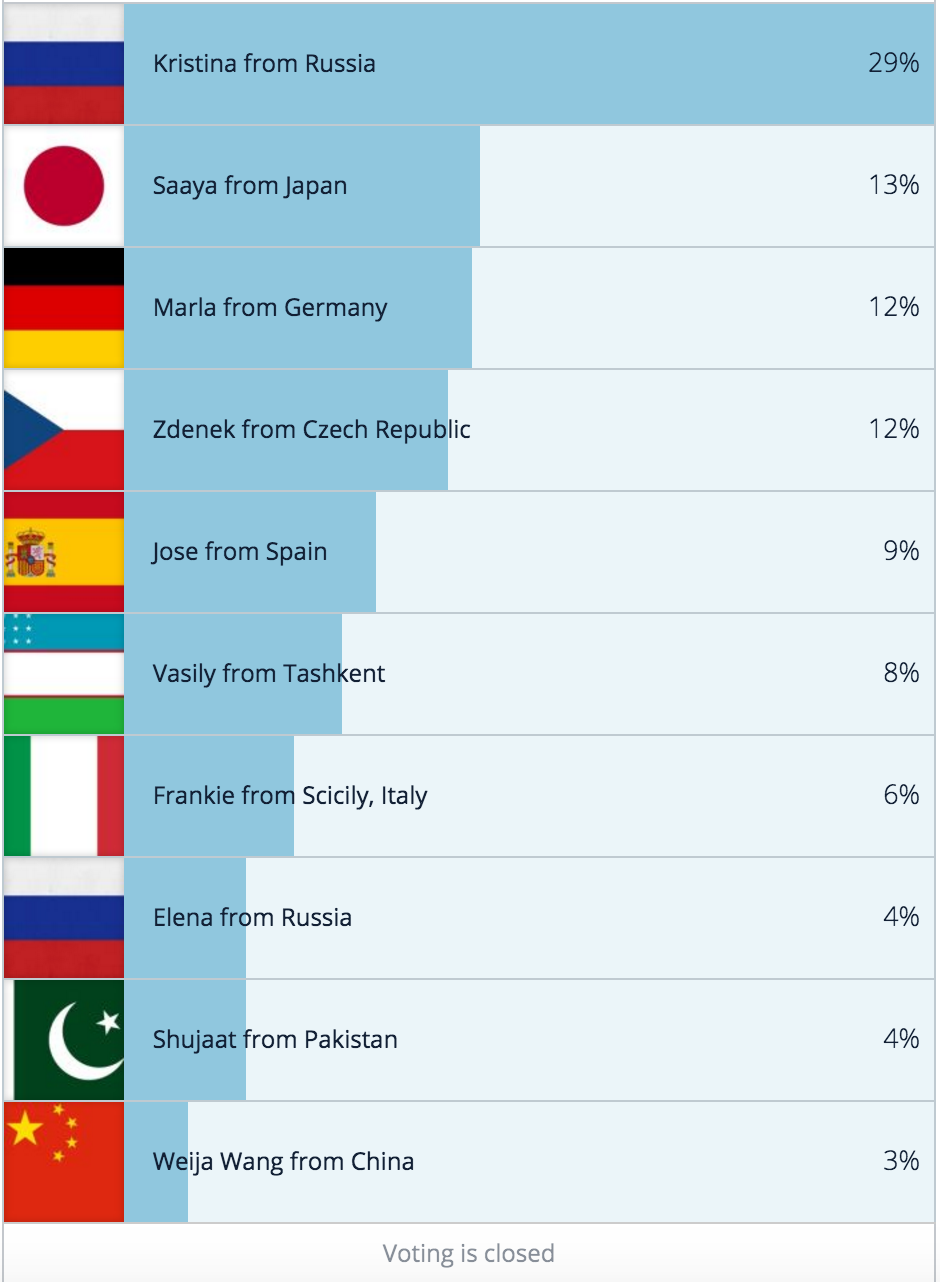
The voting closed at midnight last night. So, here are the results in reverse order.

  • 10th position: Weija Wang from China (talked about how his female friend embarrassed him by admitting that she had fallen in love with him, but he suspects it might have been a practical joke)
  • 9th position: Shujaat from Pakistan (told us the story of how he narrowly avoided a terrorist attack near his college)
  • 8th position: Elena from Russia (told us the nightmare story of how she went on a wild goose chase to find the daughter of one of her friends, who appeared to go missing one Saturday evening)
  • 7th position: Frankie from Sicily, Italy (talked about how he narrowly escaped death in a walk around a lake that turned into the day trip from hell)
  • 6th position: Vasily from Tashkent (told the sweet story of how he met his wife, accompanied by the lovely sound of the accordion – this story was a cult hit in the comment section, prompting lots of speculation about Vasily’s virtuoso accordion playing skills)
  • 5th position: Jose from Spain (told a creepy story about a suspicious character he used to know)
  • 4th position: Zdenek from Czech Republic (told an amusing anecdote about a lesson learned on the London Underground about how to say “please” to strangers)
  • 3rd position: Marla from Germany (in her lovely voice told us about how she found herself on the set of the brilliant BBC TV series “Sherlock”, and met one of the main cast members)
  • 2nd position: Saaya from Japan (Told us a story involving a pyjama-based family coincidence which proved to her that she’s truly is a chip off the old block)
  • 1st position! DRUM ROLL! … Kristina from Russia! (who told us about her nerve-wracking experience of doing a completely unprepared live simultaneous translation for a famous film director, on stage in front of a large audience of people)

CONGRATULATIONS KRISTINA!
Also, congratulations to everyone who took part. It was really great to listen to your stories.
You can still hear the anecdotes, by visiting the page for episode 387 (all anecdotes).
I hope you join me in congratulating the winner and the runners up.
screen-shot-2016-11-29-at-11-10-42

Adverts at the beginning of episodes

You might have heard some adverts being played at the beginning of episodes. For example, you play an episode on your podcasting app or on the website and before the episode begins you hear about 20-30 seconds of advertising. I’m not talking about the bit where I mention my sponsor for the podcast, but another ad – not featuring my voice. The ads are region specific. For example, here in France I hear adverts for Mini (coincidentally enough, voiced by my mate Tom Morton from episode 344). Some of you won’t be hearing these ads, but many of you will, and you might be wondering what they are. Let me explain. They’re not added by me. They’re added by Audioboom and I’m hoping that they’ll be a temporary thing. Audioboom, my audio host, are now inserting ads into podcast content which is hosted by them. I’m one of many podcasts which are hosted by Audioboom. They don’t just do podcasts. They do audio hosting service for lots of other purposes – e.g. for news websites that want to embed audio clips onto their websites, or journalists who want to publish pieces of audio. They’ve recently started featuring adverts on audio content in order to monetise their service. I’m in discussion with them about this. Personally, I don’t really want the ads. I have my own sponsors – italki & Audible and some others that I’m talking to. They’re working pretty well because I like their services, we have a good relationship and they’re services that reflect the aims of my podcast. I don’t really want other ads in addition to those. Some sponsorship is definitely necessary in order to keep this podcast free, and I want it to stay free. But too much advertising is definitely not a good thing. I want to make sure your listening experience is enjoyable, as much as possible. I personally find it annoying and a bit jarring to hear certain types of advertising at the beginning of episodes.

So, I’m in talks with Audioboom about how we can enter a new agreement in which those ads are not featured on my content. That new arrangement is now pending, meaning that we’re in the middle of sorting it out. I’m waiting for Audioboom to get back to me with some other options. Hopefully we’ll find a solution which is satisfying, or I might move to a new podcast host, which would be pretty inconvenient for me, but in the long run might be better for the podcast.

In the meantime, you might hear some ads inserted at the beginning and the end of my episodes, but I expect it won’t be a long-term thing. They’ll just be there until Audioboom and I have figured out a way to either remove them, or improve them to the point that I’m happy to keep them.

You might think – “you could earn money from them Luke, to help monetise your podcast”. Yes, that’s a good point, but as I said, I already have sponsors which I feel are working for me well enough, and allow me to cover costs like website services and just the time I devote to the preparation, recording and production of the podcast. The main thing for me at this stage is that the listening experience is good for you.
I need to balance all these things: the monetary support I might get from advertising or sponsorship, your experience of listening to my episodes, the workload that I have and the time I have to devote to the project.

So, in brief – if you’ve heard slightly intrusive sounding advertising at the beginning of episodes – I am aware of it, I didn’t insert those adverts myself and I expect it will only be a temporary thing until Audioboom and I have reached some kind of agreement.

A family story from WW1 – A Turkish POW in Russia

This is Deniz’s comment after my episodes about D-Day and in relation to the episode I did about my Grandfather, who died at the beginning of 2015.

Related episodes

183. Luke’s D-Day Diary (Part 1)

184. Luke’s D-Day Diary (Part 2)

259. Eulogy for Dennis

In episode 183/184 I went to the D-Day commemoration to remember what happened in Normandy in 1944. My Grandfather was an officer in charge of a group of men on that day. I asked listeners to share any stories they had about family members who got caught up in WW2.

Deniz’s comment

Hey Luke,
This was an intense episode, wasn’t it? I can understand what you feel about your grandpa. I listened this episode recently, and came here to check if any commentator mentions anything about World War 1 or 2, which is related with their family. As a reminder: you asked for it in the podcast.
As you probably know Turkey kept its neutral status during WW2. So as a Turkish person, my family do not have any WW2 memories (except how hard those state of emergency years were) on the other hand WW1 was a really intense chain of events in Turkish history, since so many Turkish people were killed during the battles and even infants had to fight for the very reason after a while it had became “defending the mainland” for Turks.
So here is the memory from the father of my grandfather (my grandfather): The Caucasus Campaign had been a real disaster for the Turks, since fighting with the Russians during winter conditions is always a bad idea and “the sick man of Europe” Ottoman army lacked equipment for such a formidable campaign. In a nutshell, so many Turks died because of the winter conditions and the situation became a piece of cake for the Tsardom of Russia.
The father of my grandfather (my great-grandfather) was really lucky to stay alive and became a POW after the Russians surrounded them. As a POW he had to do whatever the Russians decided for him and in the end he was sold to an aristocratic Russian family and became a stableman for them. After a while that Russian family let him marry since they thought there was no turning back for him anymore. So he married a low-class serf woman, and they even had two babies!
But then… the Tsardom of Russia also collapsed and the October Revolution stormed through all of Russia. This incident had serious effects on aristocratic families, which is not a surprise. So during all that mess, my great-grandpa managed to escape by boat and came back to Turkey again… Of course he had to leave his Russian wife and those 2 children there, because he had no any other choice.
After he came to Turkey, he fought in the Turkish War of Independence and after that finally married a Turkish woman, which led to me, in the long run. So Luke, isn’t it weird? There are some people in Russia, who are my distant relatives in a way, and there is almost no way for us to find each other. I just wanted to share that story here, since I know many Russians listen your podcast and who knows… It’s a small world with weird coincidences. :)
Thank you for all the podcasts!

Does that story sound familiar? If it does – get in touch!

Grammar: Nouns adjuncts, noun phrases, possessive ‘S’ and apostrophes – A question about the title of “An 80-Minute Ramble”

Yaron’s question about the title of episode 397 “An 80-minute ramble”
Hi Luke,
It’s been a while… good to have you back…
I haven’t listened to this episode yet (I probably will in the evening)
Anyhow…I have a small question:
Should it be “An 80 minute Ramble” or “An 80 minutes Ramble”?
I find that all the subjects with the “S” at the end of the word in English to be very confusing (You need to add “S”, with ‘ sign before/after the “S”, etc…. )
I would really appreciate ii if you could clarify it.
Thanks,
Yaron

My reply
Hi Yaron,
It’s ‘an 80 minute ramble’ not ‘an 80 minuteS ramble’.
As you know, plural nouns (unless irregular) do take an ‘S’ – e.g. “I’m going to talk for about 80 minutes” but not in the case of ‘an 80 minute ramble’ because ’80 minute’ here is like an adjective for the word ‘ramble’ and adjectives in English aren’t pluralised.
What kind of ramble? An 80-minute ramble. ’80 minute’ is performing the function of an adjective.
More information https://en.wikipedia.org/wiki/Noun_adjunct

That’s the theory, but it’s a bit abstract isn’t it? It might be easier to learn this when you consider all the common examples of this kind of structure, e.g.

  • a 5 star hotel
  • a 10 pound note
  • a 4 year old girl
  • a 5 minute walk
  • a 10 dollar fine
  • a 10,000 pound reward
  • a 9 hour flight
  • a 4 hour drive
  • 10-year cave-aged cheddar cheese

‘S
This is either: ‘is’, ‘has’, possessive

Check this page from Oxford Dictionaries Online for all the details about how to use ‘S

https://en.oxforddictionaries.com/punctuation/apostrophe

Rick Thompson’s accent

Sebastian
Hi Luke, I hope you’re all right. I’ve got a question: Where’s your Dad’s accent from or what kind is it? Is it posh? Thanks.

The ‘short’ answer:
My Dad speaks standard British RP (Received Pronunciation), also known as BBC English. This type of accent is generally associated with middle and upper-middle class people, probably university educated, from England, particularly the South East of England, but possibly from any other part of the UK too.

I think, by the standards of most Brits his accent is slightly posh because there aren’t many regional inflections in his voice, but I don’t think he is properly posh, like someone who went to Eton school for example.

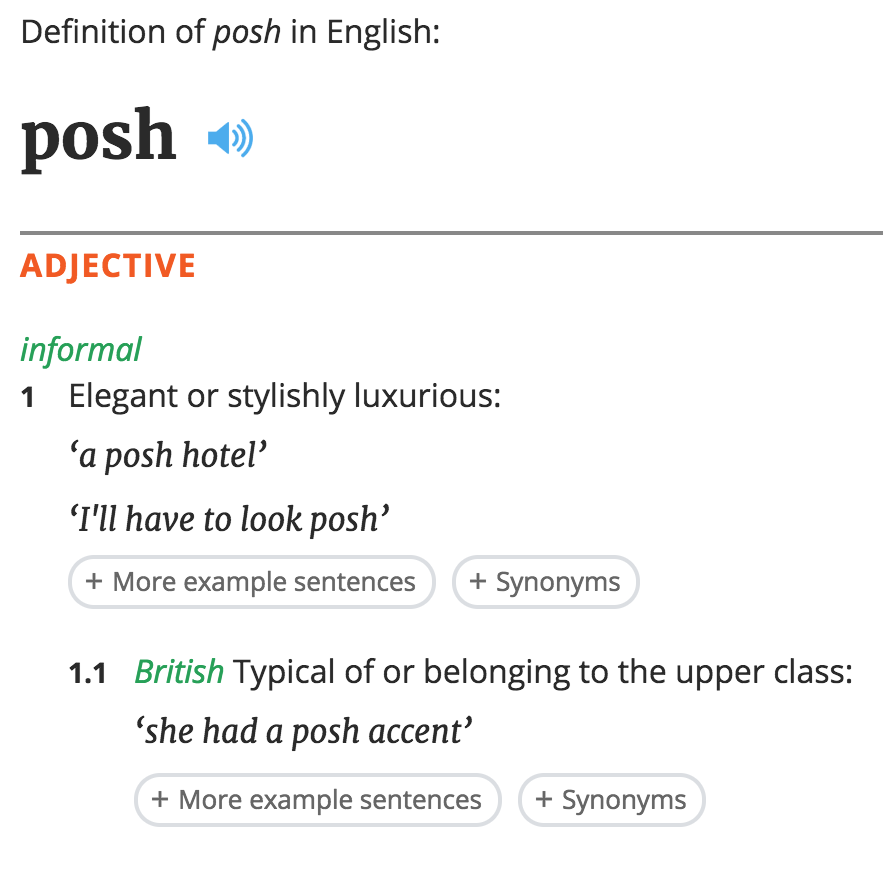
What does ‘posh’ mean? (screenshot from Oxford Dictionaries Online – click it for more details)

From OxfordDictionaries.com

From OxfordDictionaries.com

https://en.oxforddictionaries.com/definition/posh

You could say there are slight regional variations of RP (e.g. in Scotland, the north of England or Wales) But it’s not a truly posh accent, like the way the royal family speaks, or David Cameron speaks, for example.

I reckon you could break it down like this (and this is making it really simple)

  • Regional dialects (strong accents, particular words and phrases used – all specific to certain areas)
  • Regional accents (strong accents specific to certain areas)
  • Standard RP with slight regional variations (e.g. the way some vowel sounds are produced)
  • Standard RP from the South East of England
  • Heightened RP (like David Cameron)
  • Very heightened RP (like The Queen)

Depending on your social background, you’ll consider some accents to be more posh than others. Generally, if the accent is associated with a higher social class (based on the old model) than yours, you’ll say it’s posh.

Posh can be either positive or negative. It depends on your view of the situation.

I guess by a lot of people’s standards, my Dad sounds quite posh. For me he isn’t that posh. He’s just really neutral and clear. I think a truly ‘posh’ accent has different qualities to it.

To do justice to this subject I’ll need to do full episodes on the way different people speak.

That’s it! Speak to you again soon. Bye!

400. The Pink Gorilla Story 2

I’ve decided to celebrate the 400th episode of LEP by making up an improvised comedy story, just for fun. In fact, this is the long-awaited sequel to The Pink Gorilla Story from episode 125.

Small Donate Button[DOWNLOAD]
In this episode I’ve decided to tell you an improvised comedy story in the ‘one-man-show’ style – the whole thing is made up on the spot with different characters and jokes along the way. It’s a challenge for me to do this kind of episode, and it might be a challenge for you to listen to it too, I don’t know! I certainly hope you enjoy it.

This kind of never-ending ridiculous story is often known as a shaggy dog story. It’s an old joke archetype. People have been doing this sort of thing for years. Shaggy dog stories are just jokes that go on and on forever, although I think 80 minutes might be some kind of record.

a shaggy dog story (definition)

a long, rambling story or joke, typically one that is amusing only because it is absurdly inconsequential or pointless.

This episode is actually a sequel to the original Pink Gorilla Story from a few years ago. That one is kind of a cult episode, meaning it is really popular with certain listeners. For some people it’s their favourite episode ever. I really enjoyed recording that one because it was a chance to just have fun, let my mind run and try to think of funny scenarios and dialogues, which is quite liberating. You could try doing it too as an exercise in liberated creative storytelling for fluency or production. Switching off your ‘internal editor’ and letting your mind run free with crazy ideas can be very fun and can open up your creative side, which I think shouldn’t be forgotten in your quest to develop your language skills.

You might want to listen to part 1 of the Pink Gorilla Story first, so that the sequel makes a bit more sense (“makes sense” ha!) You’ll find it on the page for this episode (below), then listen to this one. Or, you could listen to this episode first, then listen to part 1 afterwards. It’s up to you. Either way, I hope you enjoy it and just come along with me on this ride into comedy nonsense-land.

Similar stories I’ve done in the past

I have done other improvised stories like this in the past (linked below), but The Pink Gorilla Story was the first one I did and I’ve been meaning to do a sequel for a while. So, finally, here it is.

125. The Pink Gorilla Story 1

166. The Prawn Story

153. The Talking Dog Story

173. The Curse of the Lambton Worm

175. The Phrasal Verb Chronicles

275. The Phrasal Verb Chronicles 2

239. Prepositions: Verb Collocations

396. The LEP Anecdote Competition – ROUND 2

This episode is round 2 of the LEP anecdote competition. You’ll be able to hear the 10 anecdotes that got the most votes from round one and some language feedback afterwards.

Small Donate Button[DOWNLOAD]

[socialpoll id=”2396716″]

Introduction

This is the LEP Anecdote Competition Round 2. The last time I talked to you about this competition was in episode 387 when I let you know that all the anecdotes were available for you to listen to and vote for.

I got about 60 anecdotes in total and I posted them on the page for episode 387.

People visited the page, listened to the anecdotes and then voted for their favourites using the online poll.

The poll is now closed and I have counted the votes. In this episode I’m going to play you the top 10 anecdotes in terms of votes. You’ll hear them in just a few minutes, and I’d like you to visit the page for this episode and vote for your favourites.

You can find the page on my website in the archive, or by clicking the blue button under the email subscription form on every page. You can’t miss it.

To be honest I still haven’t decided what the prize will be for this competition – it’ll probably be a free mug or tote bag, we shall see. Truly exciting prizes are on offer here in this most prestigious of awards. Forget the Oscars, forget the Nobel Prize. This is the LEP Anecdote Competition – it’s a seriously big deal ladies and gentlemen. No doubt the world’s press will be lining up to interview the winner. Papparazzi will be following him or her everywhere. Haha etc. Anyway, it’s not about the winning, it’s about the taking part, right?

I know that this kind of episode is not for everyone and some of you don’t fancy listening to other listeners, but I still suggest that you check out these recordings because you might be pleasantly surprised. I found it entertaining, enlightening and quite heartwarming to hear the voices of all these people around the world who listen to my podcast. There are some great little stories in there – some funny, some scary, some touching. So, even if you’re a bit sceptical about episodes like this – just give it a try. You might be surprised.

Also, I’d like to remind you that the general spirit of this whole competition is to encourage my listeners in their quest to improve their English. That’s why I did the competition in the first place. I want to support my listeners in their English learning so I’d like to encourage everyone listening and commenting on the website to be positive and encouraging because after all this is all about helping people improve their English.

Just before I play you the ten anecdotes that have qualified for round two I’d just like to say a few things.

Well done to everyone who took part. It does require a bit of bravery to record your voice and then have everyone listen to you, especially if you’re doing it in a language which you’re learning. So if you sent me an anecdote – well done you! I think it’s important to push yourself out of your comfort zone a bit and challenge yourself. I’m really proud of the listeners who sent in their recordings. Only 10 people got through to the second round, but it’s no reflection on the standard of the other 50 or so recordings. Everyone did really well and I’m proud of you all.

A big thank you to everyone who took the time to listen to all the anecdotes and vote for their favourites. There were a lot of recordings in part 1 and it must have taken you a long time to listen to them all. Some people in particular went out of their way to listen to every single recording very carefully and then voted using well-selected judging criteria. Also, some people left individual feedback for every single anecdote. Thank you so much for the attention you gave and the care with which you wrote your comments. I’m really impressed. Thank you for taking part so enthusiastically.

I can’t go into lots of detail about the other recordings which didn’t get through to round 2 – there just isn’t enough time! However, you can still go to the page for episode 387 and read the various comments which you can find there.

I would like to give honourable mentions to everyone, but I’ll specifically mention just a couple of recordings which stuck in my mind.

Jane from Taiwan – she managed to pluck up the courage to escape from a burning building because she was so keen to listen to the next episode of LEP. So, LEP saved Jane’s life! Ha ha!

Akane from Japan – this recording made me laugh a lot. The bit where you sprayed bathroom cleaner all over the cockroach and then it died was really disgusting and it made me laugh out loud!

That’s just a couple of examples. I can’t go into detail about all the other entries because there isn’t time, but go and check out the comments under episode 387 there are some lovely bits of feedback there.

Here are a few rules for round 2

You can vote for as many anecdotes as you like, but you can only vote once.

So listen to this episode and make a note of the anecdotes you like before visiting the page and casting your vote.

It’s very simple to vote. Just use the interactive poll on the page for this episode. It might not work very well on a mobile device but it should work fine on a desktop, laptop or tablet.

Voting closes on Sunday 27 November at 12 midnight, CET.

Then the votes will be counted and the winner will be announced later.

Please please please vote! It will make the competition more fun. It’s very simple to do.

Remember as you listen to these stories that I asked the listeners to tell the stories without reading from a script.

I will let you decide the criteria for your judging – grammar, vocabulary, pronunciation or just the general feeling you get from listening – did you enjoy it? How did it make you feel?

That’s all I have to say. So now, let’s listen to the anecdotes in no particular order.

You can listen to individual anecdotes again below

Kristina from Russia – A story about when Kristina had a very stressful, embarrassing and thrilling experience of working as a translator for a famous film director.

Jose from Spain – Talking about a weird thing that happened when he was a child in the 80s when he was pulled over by a dodgy guy who might have been posing as a police officer. Who was he? Was he really a cop or not? It’s a bit creepy.

Shujaat from Pakistan –  here’s a story about how Shujaat experienced a shooting, the sound of guns being fired and bullets flying from a law court near his college, and then a blast – the sound of a big explosion that he managed to avoid thanks to a man who saved his life. Thankfully Shujaat managed to escape, but it must have been frightening.

Saaya from Japan – Talking about how a couple of embarrassing experiences and then a coincidence made her realise that she really does take after her father.

Vasily from Tashkent The story of how he met his wife, accompanied by himself playing the accordion.

Weija Wang from China – How his female friend totally took him by surprise by telling him she had fallen in love with him, but was it really true?

Elena from Russia –  A nightmare experience that happened one night when Elena lost a girl called Julia, the daughter of her friend. When Julia didn’t come back from a night out at the disco Elena was worried sick and searched all around town in the middle of the night and even nearly got arrested by the police. I think both Elena and Julia learned a few lessons that night!

Frankie from Sicily, Italy – His story about how he went on an adventure with a friend and was threatened by a scary man with a shotgun and nearly got stuck in quicksand!

Zdenek from Czech Republic – a lesson learned on the London underground about how to use or not to use the word ‘please’ in English, and why people generally don’t talk to each other on public transport in London.

Marla from Germany – Her story of a close encounter with London’s most amazing detective!

Language Feedback

journalists – /ɜː/ not /ɔː/

people that are unknownstrangers

strangers = people you don’t know

foreigners = people from another country

go by footgo on foot

bullet fire – gunfire

running like they were saving their livesrunning for their lives

I think I may fall in love with you – I think I may have fallen in love with you, or I think I may be falling in love with you

the only I could do – the only thing I could do

She told that Julia went home – she told me that Julia had gone home, or she said that Julia had gone home

Sand that sucks you in = quicksand

My family and me visited Wales – my family and I visited Wales
microphone-1074362_1280

395. “Have you ever…?” with Paul Taylor and Robert Hoehn

In this episode I’m joined by Paul Taylor and Robert Hoehn and we do a speaking exercise that I often use in my classes to help my students to practise using different grammatical structures in their speaking. I thought it would be interesting to record some native speakers doing the exercise too, so that’s what you’ll hear in this episode, as well as various little anecdotes, a few jokes and general chat. The conversation contains swearing and a few humourous comments which shouldn’t be taken too seriously.

[DOWNLOAD]

Today I’m joined by a couple of guests. First of all I have Paul Taylor with me, fresh from an appearance on French TV.

And also, Robert Hoehn is back on the podcast.

Last time Rob was on was in episode 143, in which we hung out together in Rob’s kitchen, we made some tea cocktails and then Rob offended everyone with some obnoxious comments about American foreign policy.

Since then I have never invited Rob back onto the podcast.

Until now.

I thought it was time to bring him back on since his name has been mentioned a few times recently.

First of all, we have to deal with the fallout from his last appearance (which actually wasn’t that bad) before going on to talk about some other stuff.

How Rob offended everyone last time (well, not everyone…)

Last time Rob said some comments which were not supposed to be taken seriously. Just some stuff about America bombing other countries.

He hasn’t been on the podcast since. (except for a brief appearance during one of the Star Wars episodes, and a telephone call to Paul once)

So I think we need to deal with that and perhaps roast Rob a bit before moving on. Once he’s been roasted, his name will be cleared and his debt to my audience will have been paid.

Jokes from Rob’s roast

A roast is something that American comedians do. It usually happens on someone’s birthday. All the comedians take turns to insult the roastee. It gets pretty harsh and insulting, but that’s the whole point and everyone gets roasted. You’re not supposed to get offended. It’s a tradition.

Here’s what I said during Rob’s roast.

Hanging out with Rob is a profound experience. After you spend time with him you might have a crisis of religious faith. Not because he has persuasive arguments against the existence of god, but because if god does exist that means he has created everything, including Rob – and the question is “Why?” “Why would he bother?” “Why would an intelligent creator choose to invent Rob Hoehn? what would be the point?” It’s impossible. It wouldn’t have happened. So, Rob’s existence is basically proof that we are alone in the universe. No intelligent designer would have decided to create Rob, so there is no god and this is all the result of random chance.

But it’s exciting hanging around with Rob.

I imagine it’s a bit like spending time in the company of a great ape, like an orangutan.

It’s exciting, because you never quite know what he’s going to do next, and it’s fun to speculate on just how intelligent he really is. Whenever he manages to do something, like communicate a complex message it’s always very exciting, “Ooh! he asked for a banana! Ooh he offended everyone! Amazing!” but there’s always a fear that he’s going to get confused and start throwing things around or pull someone’s arms out of their sockets.

Rob of course is American. He’s from Minnesota in the mid-west of the USA, and he’s a great ambassador for the USA because he basically embodies all of the values that we associate with the united states. Basically I’m saying that he’s fat and ignorant.

I invited Rob onto the podcast a few years ago. I thought it would be a good idea. I’d now like to read a selection of comments that I got in response to that episode.

The first one is a message from a regular commenter, someone who regularly commented on every episode I uploaded.

“Hello Luke, as you know we all love your podcasts because they’re authentic and full of life…”

That’s nice.

“…However…”

Ooh

“However, this American was utterly arrogant and full of himself. I’ve never heard such a smart alec person in my whole life, I feel like jumping off a bridge.”

I never heard from that person ever again. Never left a comment ever again. He disappeared. I don’t know what happened to him.

Here’s another one.

“Hello Luke. I’m afraid…”

That’s not a good start.

“Hello Luke. I’m afraid I am completely disgusted by Robert. At 42mins50seconds…”

So this person continued to listen, despite being completely disgusted.

“At 42mins50seconds, on the subject of American attitudes to other countries, he said ‘The truth of the matter is that we just do not fucking care. We do not care at all what anyone thinks, because we Americans know that we can completely dominate everyone and if someone pisses us off too much – BOOM! Smart bomb.”

I’m actually quite proud of these comments because I don’t know if you noticed but they are very well written. In fact, I have used Rob’s comments a few times in class because they are very motivating. The students can’t wait to give all kinds of angry and abusive responses to what he said. They just keep producing more and more English in response to his statements. So thanks Rob you have definitely helped to improve the motivation and productivity of my listeners.

Rob originally moved to France to train to become a clown, which wasn’t necessary, let’s be honest. He wanted to become a clown because he was so inspired by his hero Ronald McDonald.

So there we are Rob – all is forgiven. You’re back to square one again. Welcome back to the podcast.

Have you ever…?

This is a conversation generator that I use in class. I usually use it in fairly low level classes in which they’re just learning to use structures like:

  • present perfect for life experiences – “Have you ever ridden a Segway?” “Yes, I have / No, I haven’t”
  • Questions in past simple tense – “When did you ride it?” “How was it?” “Did you enjoy it?”
  • ‘would like + infinitive / wouldn’t like + infinitive’ – “Would you like to ride a Segway?” “Yes, I would / No, I wouldn’t”

Have you ever…?

  • seen a ufo
  • eaten an insect
  • flown in a helicopter
  • done a jump in a car
  • made a complete fool of yourself in public
  • killed an animal by mistake
  • had a public argument or fight
  • gone scuba diving
  • slept outside (not camping)
  • met a famous person

Tell us about them in the comment section. Have a good day, evening, morning, afternoon or night and I’ll speak to you again on the podcast soon. Bye.

Luke

Paul’s TV Show

Paul is currently having a lot of success on French TV (and on YouTube) with his series of mini TV shows in which he makes fun of French culture. The show is also produced with the help of Rob Hoehn, and Amber and I have writing credits on some episodes. Check out a couple of recent episodes below.


Photos

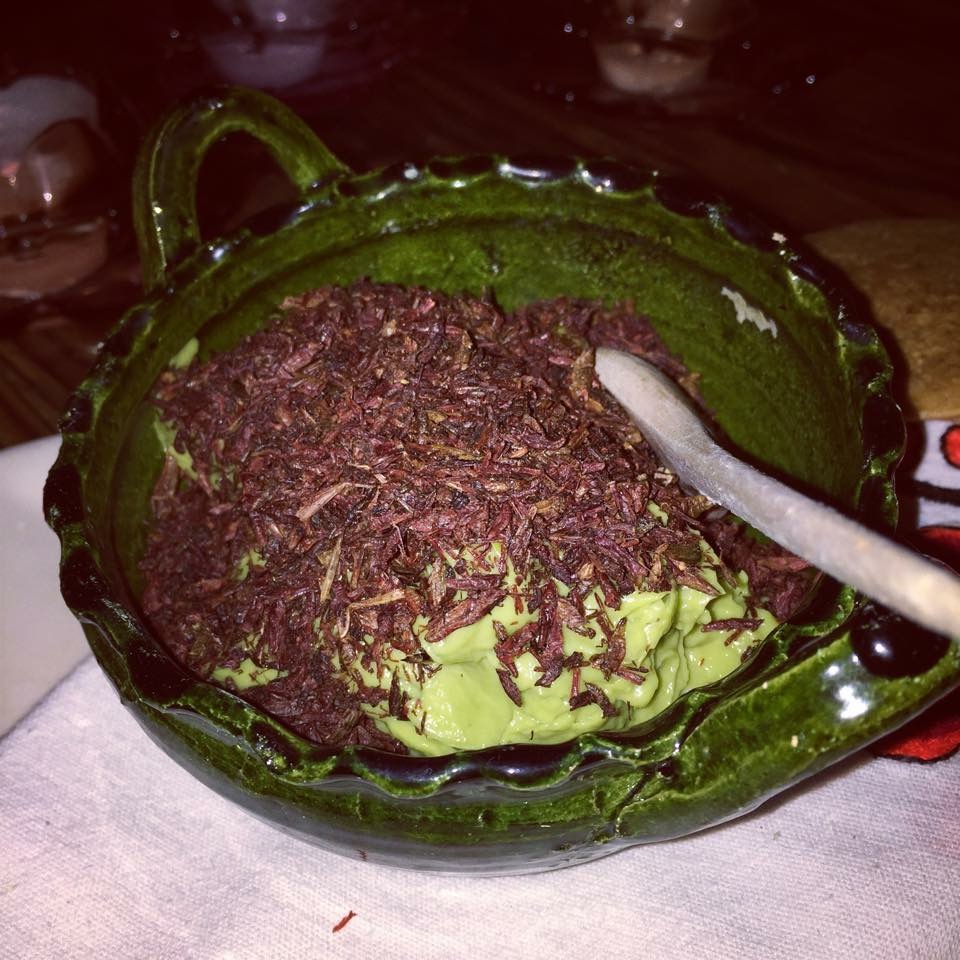
grasshopper-guacamole

Paul’s grasshopper guacamole

384. Teaching Grammar & Social English

In this episode I’m talking about recent things I’ve been teaching in my classes including some grammar and some social English. There’s an absolutely massive amount of grammar crammed into this episode and quite a lot of silly improvisation too!

Small Donate Button[DOWNLOAD]

Introduction

I’ll give an overview of the groups I’m teaching,and what I’m teaching them including some grammar and vocab. Essentially you can learn what my students have been learning. I’ll also talk about some considerations I make as a teacher and activities I use.

The classes are quite low, probably lower than the average listener of this podcast.

Two classes – A2 (pre-intermediate) and B1.2 (good intermediate)

CEFR A0 – A1 – A2 – B1 – B2 – C1 – C2

Needs of the groups

Gradable and ungradable adjectives

I’ve been using Cutting Edge Intermediate 3rd edition, but a little bit of googling reveals several pages online with good sources of info and some exercises, such as this one from Espresso English . net, which I am paraphrasing.

Regular Adjective

Graded with:

  • a little, a bit, slightly, fairly, rather
  • very, extremely, immensely, intensely, hugely
  • Really
  • pretty
Extreme Adjective (absolutely, completely)

Graded with:

  • absolutely
  • completely
  • Utterly
  • Really
  • pretty
angry furious
bad awful, terrible, horrible
big huge, gigantic, massive, enormous
clean spotless
cold freezing
crowded packed
dirty filthy
funny hilarious
good wonderful, fantastic, excellent
hot boiling
hungry starving
interesting fascinating
old ancient
pretty gorgeous
scary terrifying
small tiny, minute
surprising astounding
tired Exhausted, knackered
ugly hideous

Absolute Adjectives

Another type of extreme adjective is called an “absolute” adjective.

These are words that are either “yes or no.” It’s binary, black and white, there’s no grading – not even with words like ‘completely’. For example, dead – you can’t be “a little bit dead” or “very dead” – either YES, you are dead, or NO, you’re not dead.

Here’s a list of some absolute adjectives and their opposites:

It’s fun to play with these ones. I find it funny to grade these absolute adjectives and when you do it knowingly it starts to reveal how you can bend the language to make it humourous or ironic.

Absolute Adjective Opposite
complete incomplete
Equal (all animals are equal…) unequal
essential non-essential; extraneous
dead alive
fatal not fatal
full empty
ideal not ideal
impossible possible
infinite finite
married single / divorced / separated / widowed
perfect imperfect
pregnant not pregnant
unique not unique
universal not universal
unknown known
true false

Exercises here https://www.espressoenglish.net/extreme-adjectives-in-english/

Present simple vs present continuous

Present simple: Facts, always true, habits (things you do every time) and also permanent situations.

Present continuous: What you’re doing right now. Temporary truths. Things that are changing (e.g. social trends). Future plans.

Present continuous, going to & will for future

Social English

Making polite requests

Borrow and lend

Could you lend me your

Could I borrow your

Could I borrow your xxx from you?

Do you mind _ing

Would you mind _ing

I was wondering if you could

Do you think you could…

You couldn’t… could you?

Invitations

What are you doing on Saturday?

I’m not doing anything.

Would you like to have a drink?

Do you fancy having a drink?

Shall we have a drink?

Let’s have a drink shall we?

Do you want to have a drink?

How about we have a drink?

What about having a drink?

Sure that sounds great.

I’d love to.

That sounds great, but…

I’d love to, but…

I can’t

I can’t make it

The Lying Game

Mystery Story Narrative Tenses

Murder Mystery

LEPCUPPIC

379. The LEP Anecdote Competition / Advice & Tips / Inspiration / Some Funny Anecdotes / Rambling

Details of a new LEP competition / Competition rules / Advice & Tips / Inspiration / Some Funny Anecdotes

[DOWNLOAD]

Transcript Starts Here

OK listeners, it’s competition time again on the podcast. This time the competition is all about anecdotes. I did an episode about anecdotes recently. It was number 372. In that one I talked about anecdotes and why it’s important to have a few anecdotes that you can tell in English. I think they’re pretty important and fun. I also gave you some tips on how to tell good anecdotes, and you listened to a few genuine anecdotes from my Mum, my Dad and my brother.

I love stories, especially true ones and I love hearing about people’s experiences. I’m sure that loads of you out there have had some pretty cool experiences too and that there are some lovely little anecdotes just waiting to be told.

So that’s why I’m using anecdotes as the basis of this competition.

I want you to send me your anecdotes. That should be clear.

Now, the last time I launched a competition featuring the voices of my listeners I got a lot of recordings and it ended up being about 8 episodes, which was awesome, but that was quite a lot. I understand that not all of you want to listen to the voices of listeners – you come here to listen to me, or my guests. But it’s still great to have some contributions from listeners, just not too many. So this time I’m going to do it slightly differently. There will be stages, a bit like the World Cup, so that I can filter out some of the competition entries that I get and just present the cream of the crop in an episode of the podcast. I’ll tell you more about the stages and how this will work in a minute. The main thing I want to do now is to strongly encourage you to send me your anecdotes. So, please send me your anecdotes!!!

But first I should say this – don’t worry, your anecdote does not have to be perfect or anything! I promise – it doesn’t have to be perfect, just tell us a little story about yourself – that’s all you have to do. We;re going to have a little anecdote party and everyone has to bring a little anecdote. You know the way that when you’re invited to a party you have to bring cake, or drinks, or crisps. Well, this is just like that except that you have to bring an anecdote. It doesn’t have to be amazing, it just has to fill up the table, ok, and then we can have an anecdote party! But the party will not happen unless you send me that little story you have, so do it! But remember – no pressure, just enjoy yourself.

Now, I constantly tell you anecdotes about my life on this podcast. I do it all the time and I hope you enjoy them. Now, I’ve done a lot of sharing on the podcast and so it’s time for you to share back with your stories. I’m fed up of hearing my own stories. Now I want to hear about your experiences! We’re having an anecdote party and you’re all invited!

I’m presenting this as a competition, but it’s not about the winning, it’s about the taking part. It’s about filling up that table with anecdote cake so we can stand around with cake and drinks and have an anecdote party. So, if you’ve got a personal experience you can tell us about, record it and send it to me! In this episode I’m going to tell you how to do that, and give you some tips and inspiration for your anecdotes.

Competition Rules

First, the rules of the competition. Any half-decent competition has rules, so here are the rules for this one.

1. Record an anecdote and send it to me! Duh! “What’s an anecdote?” you might be asking. It’s a little personal story, told in a social situation. It’s a story about something that happened to you once in your life. For example, it could be a dangerous experience, a funny moment, an embarrassing thing that happened, a surprising thing, an accident, a mystery, a meeting with a person, a run-in with the police or just a misunderstanding. We all have little stories like this from our lives – think about it, what’s a thing that has happened to you – tell us the story of that! Again – it doesn’t have to be perfect! No pressure, just enjoy yourself.
2. Your recording must be no longer than 5 minutes! 5 minutes maximum. Please keep to this rule. Generally anecdotes shouldn’t go on too long (although I am guilty of spinning out my anecdotes quite a lot – for example the hot bath story I told recently). But also, if I get too many anecdotes it will all last too long. 5 minutes max. Feel free to do less than 5 as well. If your anecdote is 2.5 minutes – that’s great! Just don’t go over 5 mins.
3. Your story should be true, but you can exaggerate a bit in order to make it entertaining, that’s normal.
4. Send your anecdotes by email to podcastcomp@gmail.com – or simply go to my website and send me a voicemail using the tab on the right side. You’ll just need to have your microphone connected. If you don’t have a microphone, just use your smartphone to record a voice memo and send it.
5. Closing date for the competition: 5 October (National Teachers Day in the UK)
6. Then round 1 begins. In round one I will publish all the anecdotes on my website. I’m not going to play them in an episode of the podcast at this stage, I’ll just publish them on the website so you can listen to them there.
So, the anecdotes will be published on the website, you will be able to go and listen to them all, and vote for your favourite.
Then I’ll count up the votes and the top 10 anecdotes will make it through to round 2.
7. In round 2 I will publish the top 10 anecdotes in an episode of the podcast and then everyone can listen, and vote for their favourites by using a poll on the website. That way, only 10 anecdotes are actually played on the podcast.
8. After some more voting time I will count the votes. The winner will be interviewed on the podcast, or will get a gift – I haven’t quite decided yet (remember it’s not about the winning, it’s about the taking part). IN any case, the winner will get the glory of being the LEP Anecdote Master, or LEPAM!

9. Don’t read from a script!

Basically – maximum 5 minutes, true story, send your recordings to me, then several stages of voting, 10 best anecdotes and a winner at the end!

Advice

Use a decent microphone. Most iPhones or smartphones have good mics these days.
Try to be in fairly quiet surroundings. Speak closely into the mic.
Practise your anecdote a few times (you could do this with your italki teacher if you like), but always record the first time you tell it. Sometimes the first time is just naturally the best! But then practise it a bit and record it again. Decide which one is best.
Try to keep it spontaneous! So, don’t read it from a script. You should avoid that habit. It’s better if you learn how to say the anecdote without reading it directly from a script.
It doesn’t matter if it’s not word for word perfect, just focus on getting across certain main ideas. If you read from a script it might be obvious, and it tends to sound fake and it’s not so appealing. It immediately will sound more robotic. Make your speech spontaneous, trust me. So no reading from a script.

I have the right to use or not use any recordings I want.

How to tell a good anecdote

Here’s a reminder of my tips from episode 372. You could consider these when you record your anecdote, or if you prefer you can just completely ignore these tips and do it your own way! Be an individual!

First: don’t feel any pressure, and just enjoy yourself. You could forget all the other tips and focus on that – it’s the most important thing. Forget about everything else and just enjoy telling us your little story!
Here are the other rules which you could just ignore to be honest:
1. Don’t get stuck in the details. Just tell us the events and situations which are necessary to show us how you felt. If you get stuck in the details just say “anyway” and move on.
2. Think about the feelings you’re trying to convey, and how they will affect the way you tell the story. Are you expressing fear, surprise, weirdness, luck, sadness, humour, relief, happiness? Let that feeling come through in your storytelling.
3. Use past tenses in the right combination – past simple, past continuous and past perfect. But to be honest, it’s good to keep it simple so you can just use past simple for the entire thing if you like (for example: my brother’s anecdote).
4. Introduce your story with a sentence like “This is a story about how…” and try to set the context of the story by saying something like “This happened when I was…”
5. Give the story an ending, for example, you can just say “And that’s what happened!” or “And that’s it!” or “And that’s why …” (include something you always or never do, a piece of advice or a lesson you learned, for example)
6. If possible, try to explain what that story means to you or what you learned from it.

That’s it in terms of rules and tips. Now it is over to you.

As I said earlier, even though I’ve given you advice on how to make a good anecdote, the first thing to remember is that you shouldn’t feel any pressure, and you should just enjoy yourself! Make sure you achieve that first, before you worry about any of the other things! No pressure and just enjoy yourself! I can’t wait to hear your stories.

I know what you’re thinking

You’re thinking – I’d quite like to take part in this. I’ve got an anecdote I could tell. I think I’m going to take part in this. I’m going to send a story to Luke.
Great! If you are thinking that – then great! But just make sure you do it! Don’t procrastinate. Don’t think: “Oh, I’ll do that later”. Do something now! just send me a little story, I’m dying to hear from you. You have nothing to lose and everything to gain. Your story doesn’t have to be the best in the world. We’re just having an anecdote party and everyone has to bring some anecdote cake or the party won’t work! I’m inviting you, so bring some cake it’s the least you can do!

Think of it like this: your anecdote will be one of a number of stories from my listeners and the overall effect will be so cool that it doesn’t matter if each story on its own is not individually amazing. It doesn’t have to be amazing. So, if you’re even considering sending my something, let me encourage you to definitely do it, and do it sooner rather than later!

Remember: No pressure, and just enjoy yourself!

Inspiration

Here are some questions to give you inspiration:

Can you think of something relating to one of these points?

– an embarrassing thing that happened to you
– a misunderstanding
– a weird person you met
– a famous person you met
– something you found which you still have
– how you met your best friend/girlfriend/boyfriend/husband/wife
– an accident you had
– a scar you’ve got
– a time you got into trouble
– a time you thought you were going to die!
– a time you won something
– something that happened to you while travelling
– an animal-related experience
– something funny that happened in your family
– something that always happens to you, regularly
– a misunderstanding that happened relating to language or culture
– something that happened to you at work
– something that happened in an English lesson
– something that happened as a result of listening to LEP
– something that happened to you while you were listening to LEP
– the worst/weirdest date you ever had
– the worst/weirdest job interview you ever had
– anything else!

Just remember, no pressure and just enjoy yourself!

Send your anecdotes (5 mins max) to podcastcomp@gmail.com or just leave me a voice mail using the tab on my website.

I can’t wait to hear your stupid, terrible, brilliant, funny, boring, confusing and fascinating anecdotes!

Remember the closing date is: 5 October (UK Teachers Day) and please – feel no pressure, relax and just enjoy yourself.

I’m looking forward to hearing from you. Let’s have an anecdote party!

Before we go, there’s a bit of time – so let’s listen to a few little anecdotes that I found online.

Louis CK – Punching a dog in the face to save its life

Essentially this is a story about how Louis’ dog ate chocolate. If dogs eat dark chocolate it can kill them because they lack an enzyme to deal with it. So, Louis had to rush to the pharmacy to get hydrogen peroxide and make the dog drink it, but it’s quite difficult to make a dog eat hydrogen peroxide in order to make it vomit all the chocolate out of its belly. In the end he had to wrestle with the dog and force it to drink the chemical. I love the way Louis tells the story, particularly the way he gives a voice to the dog and explains the emotional motivations of the dog, and highlights the irony of having to attack the dog in order to save it. Don’t worry – your anecdote doesn’t have to be as good as this, but we can learn about story telling from Louis!

Carlo Rota – Meeting Freddie Mercury from Queen

This one is a great little story, but it’s also interesting to hear how Carlo (an Italian-Canadian actor, born in England) uses present tenses, not past tenses, to make his story more engaging. We do this sometimes, although I think you should learn how to use all the right past tenses before you break the rules and use present tenses to tell a story.

A Red Chair story from the Graham Norton about a ‘happy’ donkey

The Graham Norton show is a very popular entertainment chat show on the BBC presented by a comedian called Graham Norton. One of the features on the show is the Red Chair. What happens is that any member of the audience who has a good anecdote is invited to sit in the chair and tell their story. This one is by a guy called Mohammed who went on holiday as a child and saw a donkey, who was, let’s say, feeling quite happy. The other guests on this show were Ricky Gervais and Johnny Depp – you might hear them making comments and laughing in the background.

https://www.youtube.com/watch?v=mIedDFrza00

So, that’s some inspiration and entertainment. Now, get thinking about your anecdotes and send them to me. You’ve got until UK national teachers’ day – 5 October.

Bye bye bye bye bye.

First background music: BenSound www.bensound.com
Jingles: Jake Bullit https://soundcloud.com/jakebullit
Other background music: Luke on Kaossilator https://soundcloud.com/user-896257419

377. Holiday in Thailand (Part 1)

This episode contains stories and descriptions of my recent holiday in Thailand. You’ll hear some facts about Thailand, some descriptions of Bangkok and a few stories about funny experiences that happened while we were there. Part 2 is coming soon. More details and transcriptions below. Enjoy!

Small Donate Button[DOWNLOAD]

Transcript

Hello everybody, I’m back from my holiday so here is a brand new episode for you to listen to. If you’re new to Luke’s English Podcast, then “hello” and welcome to the show. I have no idea how you found the podcast. It was probably on the internet, that’s how it normally happens. I doubt that you actually tripped over it in the street or anything. Oops ,what’s that – oh, it’s Luke’s English Podcast. I might as well have a look. You probably found it online, perhaps through iTunes or a friend recommended it to you perhaps. In any case, regardless of how you found me, welcome. My name’s Luke – and this is my podcast. It’s primarily for learners of English although I also have native English speakers listening to this too. In these episodes I talk to you in a personal way, telling stories, sharing some things about my life, discussing different topics, teaching you English and giving you the motivation to improve your English for yourself. I try to keep the podcast varied and I’m willing to talk about pretty much anything at all as long as it’s interesting. I’m an English teacher from the UK. I speak British English – with a standard accent from the South East of England. I’ve been teaching for more than 15 years so I have lots of experience to draw from. I’m also a stand-up comedian which means that when I’m not teaching English or doing the podcast I like to stand up in front of audiences of people and make them laugh with jokes and stories and things. I regularly perform comedy shows in Paris.

One of the principles which underpins what I do in episodes of this podcast is the understanding that simply listening to natural, spontaneous speech is a vital part of the process of learning English to a good standard. Obviously, you have to get an understanding of the grammar rules, develop an extensive set of active vocabulary, practise pronouncing the language and so on, but doing plenty of listening is an essential foundation. I usually recommend that LEP is best enjoyed as part of a balanced study program. For example I suggest that you also do plenty of speaking in order to activate the English that you passively pick up from these episodes. There are lots of ways to improve your English and you can just listen to previous episodes of the podcast to get my advice on that. At the very least, you can just relax and enjoy listening to my words on a regular basis, and I hope that it’s a fun process too. Certainly, I am sure that my podcast can really help all the other aspects of your English, not just your listening. I also believe it’s important to listen to English which is spoken at a pretty natural speed, which is spontaneous (i.e. not just written from a script) and I think you should listen regularly for fairly long periods, long term. Make it a part of your lifestyle to listen regularly and don’t give up.

I want my podcast to help you to do exactly those things, and so I try to make my episodes genuine, personal and humorous. So, if you’re new to the podcast – welcome and thanks for listening. I hope you stick with it. I believe that if you do continue to listen, you’ll see significant results in your English. Check out the episode archive on my website teacherluke.co.uk and you’ll see that you have plenty of other episodes to explore and enjoy.

If you’re not new to the podcast, and you are in fact a long term LEPster then welcome back! How are you? I hope you’re well. Did you have a good August? Have you listened to all the episodes I published before I went away? I hope so.

In any case, here is a new episode of this podcast and it is about my recent holiday in Thailand.

Holiday in Thailand

Yes, we went to Thailand this year and I’m going to tell you about it in this episode. In fact, in this one I’ll talk about these things:

  1. Why we went to Thailand
  2. Where we went in Thailand
  3. The things most people know about Thailand
  4. Some things you might not know about Thailand
  5. A few anecdotes about what we did and saw during the holiday
  6. A few dodgy jokes!
  7. An embarrassing story involving nudity
  8. A sad old memory that came back to me at a specific moment in the trip
  9. A mouse-related update (if you heard the last episode of the podcast, this will make sense to you)

We got back just the other day. I’m still a bit jet-lagged. I woke up at stupid o’clock this morning. My body is still on Thailand time, so at about 5AM my body woke up saying “hey it’s time to get up and go walking around temples in very hot temperatures! We’re on holiday come on!” No doubt I will randomly fall asleep this afternoon when my body decides that it’s bedtime. I have a sun tan – correction, I had a tan, until the flight back. As a very white English man, I have a slightly tricky relationship with sun tans. At the moment I am sporting the typical English man’s tan.

I have no idea how long this episode will be but I can just split it up into different chapters and it’s all good.

You will find some of this episode transcribed on the episode page on my website. Not all of it is transcribed, but a lot of it is, and you can read my notes too, which might be a good way to check out the spelling of any words you hear me use. They might be written on the page. By the way, if you’re just reading this – I strongly recommend that you listen instead of reading. Remember, anything that is written here is supposed to just accompany what I’m saying in the audio recording.

Why did we choose Thailand?

– My wife and I wanted to go somewhere exotic and far away (we want to explore places which are a bit further before we have kids)
– A break and a chance to get away from it all
– Never been before
– We like food !
– It’s quite diverse in terms of the things you can do – city, culture, beaches
– It’s not too expensive

Why didn’t you do an LEP Live event?

It was a holiday – so I was not working. That means I didn’t organise some sort of LEPster meet-up, or live podcasting stand up comedy extravaganza. I didn’t meet up with Olly Richards even though I have since learned that he was out there too learning Thai – no, it was all about walking around sweating, visiting temples, sweating, exploring street food markets, sweating, worrying about food poisoning, sweating, going to the beach and sweating there, learning how to cook local food, eating the local food with lots of chilli, sweating, doing yoga and meditating, drinking water and sweating! Just the average holiday abroad for a British person!

Where did you go?

In a nutshell, here’s where we went.

Bangkok for a few days, then up north to Chiang Mai for a few days, then down south to Koh Samui for a few days and then back to Bangkok for a few days and then home! Boom!

That’s the usual tourist route. It’s Bangkok in the middle, temples, treks into the forest, elephants, night markets and cooking classes in the north, then islands, beaches, diving, snorkelling and full moon parties in the south.

We didn’t go to the islands on the west side like Phuket because of the climate in August.

Also, just before we left and even while we were there, there were some explosions – some bombings, which was a bit worrying. We even considered not going, but then we thought – well, we live in Paris and we’ve got as much chance of being blown up there as in Thailand, so what the hell!

In fact our time was very peaceful.

Usual things people think about Thailand

The most typical clichés or stereotypes about Thailand: Busy, crowded, amazing food – specifically green curry and pad thai noodles, weird sex tourism in Bangkok, ladyboys, bizarre sex shows involving ping pong balls, full moon beach parties, buckets full of ridiculously full cocktails, kickboxing, temples, westerners being locked up in prison for drug possession, scooters, Sagat from Street Fighter 2 (Tiger uppercut), snakes, golden buddha statues, amazingly friendly and smiling people and the film “The Beach” starring Leonardo DiCaprio.

That’s partly true (perhaps for the average western tourist) but obviously it’s not the full picture, especially for the locals.  I will go into more detail about what it’s really like in this episode.

Things you might not know about Thailand

1. Full name of Bangkok. It’s the longest city name in the world. “Krungthepmahanakhon Amonrattanakosin Mahintharayutthaya Mahadilokphop Noppharatratchathaniburirom Udomratchaniwetmahasathan Amonphimanawatansathit Sakkathattiyawitsanukamprasit.”

https://www.youtube.com/watch?v=-OgUiux9QWw

2. Thailand, or “Prathet Thai” means “land of the free”…

3. Thailand has never been colonised by a foreign power, unlike other neighbouring countries which were colonised by European nations like Britain, France and the Netherlands. Thailand had a few wars with Burma, but was never successfully invaded. Well done Thailand.

4. Thailand has more than 1,400 islands. The most famous ones are in the south, and they are beautiful. Probably the most well known is Koh Phi Phi, which is where The Beach was filmed. (By the way, it’s a rubbish film)

5. It’s illegal to leave the house without underwear on. I don’t know how they enforce this law. Are they doing random underpant checks?

6. Thai currency is called the Baht and it’s illegal to step on Thai Baht. Now, you might be thinking – well, I don’t every go around stepping on currency anyway, so that’s not a problem. But the point is that this is because of the high level of respect that the Thai people have for their royal family. Like in the UK, a picture of the monarch appears on every bank note and the image of the monarch cannot be desecrated, in fact it is a crime to disfigure a picture of the king or queen in any way. Thailand is a constitutional monarchy, a bit like the UK, and they hold their king and queen in high esteem. There are lots and lots of images of them all over the country, sometimes you find little shrines in the street devoted to them.

7. The feet are considered to be very unclean (both clinically and spiritually) and so it is very rude to reveal the soles of your feet to anyone. So, don’t sit with your feet facing outwards, or put your feet up on the table like we do in the west sometimes. It’s also rude to point at people with your feet, which is fine because I literally never do that anyway. I’m sure I heard someone do standup about that and I can’t remember who, but it was very funny.

8. Similarly, the head is the highest point on the body and is considered to be sacred, so don’t touch it, slap it, poke it or whatever. In the west you might rub someone on the top of the head as a sign of affection, or whack someone round the back of the head to express annoyance. Don’t do that in Thailand. To be honest, I wasn’t going to do that either. I rarely touch the head of random strangers that I meet in public. I certainly wouldn’t slap the back of the head of someone. E.g. “Waiter, excuse me – we asked for 2 bowls of rice and you gave me one! Can we have another one? Thank you!” SLAP. No.

9. 95% of people are buddhist. It’s quite common to see Buddhist monks walking around. We talked to one of them and I’ll explain what he said later in this episode. Also there are buddha statues everywhere. There are thousands of them. It’s just buddha buddha buddha buddha buddha buddha buddha buddha buddha. Climb to the top of a mountain, there’s a buddha. Inside a cave? Buddha. Under a nice tree? Buddha. Inside this big temple? Buddha. In front of the big buddha statue, lots of other buddhas. In front of them, buddhas. Buddhas everywhere – which is great. They are beautiful, peaceful images and of all the religions I think Buddhism perhaps makes the most sense. Just try to reach a higher level of consciousness. Realise that everything is connected and that there is one universal vibration which passes through the entire universe. Reject selfish and materialistic urges in favour of achieving individual spiritual enlightenment. Fine.

10. It’s a very hot place – especially Bangkok. The hottest time of year is April where temperatures rise to 40 degrees C or more, with high humidity levels too. In August it’s the rainy season but it still gets really hot – it was regularly in the high 30s and with very high levels of humidity. Showers that happen in the evenings are a welcome break from the heat!

Read more about this on ‘the internet’ http://matadornetwork.com/trips/19-things-probably-didnt-know-thailand/

Bangkok

There are lots of stories about it, like the dodgy ping pong shows, the sex tourism and other weird and lewd things, but of course not everywhere is like that. We avoided the dodgy tourist parts such as Patpong, where there are these weird sex shows. Now, while I am quite curious to learn about the bizarre skills that some women have developed – I mean, some of the things are quite impressive. For example, apparently in these shows, some women are able to launch ping pong balls across the room – and not with their hands if you know what I mean, and some of them can even write letters with a paintbrush or pen, again, not with their hands. THat’s actually quite impressive, but I don’t really need to see it, and apparently the people who run the shows are very dodgy indeed and they lure you in with false prices and then when you try to leave they force you to pay a lot of money and it gets pretty ugly, so no thanks. No ping pong shows for us.

A mix between the chaotic and slightly sketchy places like Vietnam, Cambodia, Laos etc and the more modern JPN, particularly parts of this area where we stayed.

The streets are vibrant, chaotic, noisy, smelly, polluted, full of life. Scooters, cars, crossing the road. Nobody walks! Traffic is incredibly busy. There’s an amazing metro system called the sky train. Tuk tuks, taxis and so on.

Lots of street food, with people cooking all sorts of things on little mobile carts – chicken skewers, lots of seafood, noodles, fruits like mango and some things I didn’t recognise. People eat in the street sitting on little plastic chairs.

Incredible Japanese BBQ. Daimasu.

Massages

Onsen experience

Expectations vs reality.
Naked bald midget.
Only had a tiny towel. Not big enough to go around me.
A bunch of other naked guys, including a group of old men in the corner watching. They broke off their conversation to have a look at me when I walked in.
Only foreigner there.
Not normal in my culture.
I felt really embarrassed. Not because of my size – because I have nothing to be ashamed of in that department. Some might say I’m gifted, I would prefer to say I am average for a guy of my height, but I should add that I have massive hands and feet. Just saying. Anyway, I don’t really need to be ashamed of myself but this was very awkward for me but because I’m not used to being seen, and the natural response is to be self-conscious about your size, even in front of other men. You might think it’s not important what other guys think, but I’d never had to rationalise it before and the fact is, is still matters for some reason.
Size is important, even when it’s other guys. I can’t really explain that.
Of course I shouldn’t be bothered by it at all, but I’m English and it’s just part of our culture. First we don’t ever get naked in a public situation, except perhaps at a sports club but then it’s brief.
Also, for some reason it feels like you’re being judged. I did feel judged. I felt incredibly self co anxious.
Maybe I was being a bit paranoid, maybe not, but people weren’t shy about having a look. The old guys stopped their conversation to take a look at me. Others turned their heads etc.
Nerves = natural body response to protect the Crown Jewels.
Stayed in jet bath.
One by one the guys came over to the adjacent bath and had a look at me. Every time I thought “oh for fucks sake!”
I stayed there for 20 minutes not knowing where to look and absolutely boiling!
Tried to make a break for the next nearest bath but it was the cold one – no way.
Went for the soda bath. High CO2 apparently good for me but I thought I was going to die.
Left and got changed.
An absolute fountain of sweat.
Wife waiting for me, totally dry.

The massage was quite brutal, but ultimately nice.

Holiday = sweating, great discomfort, great comfort and relief, good food, discomfort, sweating, relief, sweating etc.

Rude massage joke


Thanks for listening – subscribe to the email list at the top-right of the page. :)

Luke

372. The Importance of Anecdotes in English / Narrative Tenses / Four Anecdotes

This episode of the podcast is all about telling anecdotes in English. Anecdotes are little stories about our experiences that we share while socialising. It’s important to have a few anecdotes of your own and to know how to tell them properly. In this episode I’m going to give you some advice for how to tell an anecdote and then you’re going to listen to some true anecdotes told by members of my family that I recorded yesterday evening during dinner.

Small Donate Button[DOWNLOAD]

This episode is sponsored by italki. Speaking practice is very important in developing natural, fluent English and this is now really easy to achieve because with italki you can find plenty of native speakers and teachers to talk to, you can set your own schedule and you don’t even need to leave the house – you can do all of it from your own home. If you want to practise telling your anecdotes, do it in conversation on italki. They have lots of friendly and experienced teachers who are ready to help you to learn English your way. Go to http://www.teacherluke.co.uk/talk to get started and to get a voucher worth 100ITC when you get some lessons. OK, let’s get started!

I’m at my parents’ house for a few days. My brother and I are just taking a couple of days off and spending some time here doing the usual things like enjoying the fresh air, talking to my parents and taking advantage of our mum’s cooking.

Yesterday evening we were eating dessert at the end of dinner and we started talking about anecdotes. I think I asked everyone, “Do you have any anecdotes?” I asked them to think of an anecdote they’d told before. We were about to start when I realised that it might be a good idea to record the  talking, so I quickly got my audio recorder and then recorded them telling those anecdotes. Each one is about 5 minutes long.

Before we just listen to their little stories, let’s consider anecdotes and how important they are in English.

From the archives: Another episode about telling anecdotes (episode 44) https://teacherluke.co.uk/2011/10/11/telling-anecdotes/ 

By the way, listen to this episode from the archives about telling anecdotes. I gave some advice for anecdotes and then we listened to a couple of funny ones. This episode develops the ideas I talked about in episode 44.

What are anecdotes and why are they important?

The Collins Online Dictionary defines an anecdote as a short, usually amusing account of an incident, especially a personal or biographical one.

So, essentially anecdotes are little true stories about ourselves. We are usually the protagonists in our anecdotes, and they’re usually told in informal social situations. Sometimes there are moments in our social interactions when we just start sharing little stories about things that have happened to us in our lives. This might happen at a dinner, or when you’re generally spending some extended time with other people. Anecdotes are a really common part of the way we socialise in English. They allow us to entertain the people around us, while letting them know a bit more about us.

Both of those things are vital in my opinion. If you’re trying to build a relationship with people it’s important to both entertain them and also share some personal information with them. Entertaining the people around you is important because it just makes them feel good. If you can make people feel good, they’re much more likely to trust you, to give something to you in return and also, it’s just good to entertain people around you. It’s just fun and enjoyable to hear about people’s experiences. Also, giving away some personal information is a good way of encouraging other people to do the same thing. That’s how you build trust. For building a relationship you can do two things: ask questions and be prepared to give away details about yourself. Anecdotes help you achieve the second one in a fun way.

So, how do you tell an anecdote in English?

Tips for Telling Anecdotes

  1. Find the right moment. Usually they take place in informal anecdote sharing sessions. Don’t just jam your story into a conversation. It should add something to the subject of the conversation. E.g. you might be sharing travelling stories, or stories about weird people you’ve met, or university stories, or dangerous experiences. That’s when it’s appropriate to add your story too. Maybe you’re talking about a particular subject and your anecdote will add something to that conversation. E.g. you might be talking about the difficulty of finding accommodation in your town, and you could tell the story of the crazy landlord you used to have. Perhaps someone has just told a story, and you’ve got one that relates to it too. All of those are good moments to introduce your anecdote. Only tell your story if it relates to the conversation you’re already having.
  2. Keep it short! Don’t get stuck in the details too much. Focus on the impact of the story. What emotion are you attempting to elicit in people? What is the feeling you’re trying to get across? Is it frustration, fear, danger, humour? Focus on communicating a feeling and try not to let the details get in the way. You need to communicate that feeling by explaining the right events. The best anecdotes allow the listeners to discover the same feelings as you did when you felt them, so describe the events and aspects of the situation that made you feel that way. Don’t get caught up in the details. Keep it pretty short and simple. Say the word “anyway” when you get stuck in the details and want to move on to the main stuff.
  3. Use the right narrative tenses. Usually we tell anecdotes in the past. That means you’ll be using past simple, past continuous and past perfect. Here’s a really quick and simple explanation of how you use those tenses. Past simple – this is the tense you use to explain the main actions in the principle part of the story. E.g. I saw a spaceship, I stopped my car, the spaceship flew above me, all the objects in my car started floating, I saw a bright flash of light, then I woke up lying down in the forest with a pain in my backside.” Past simple is usually used for short actions that happen one after the other. Past continuous – we use this to explain the situation at the time the main events happened. It’s for context. It sets the scene. E.g. “I was driving in my car through the countryside late one night when I saw something strange”. Also, it’s for moment by moment action, and it’s when two things happen at the same time. Past continuous is for the longer action of the two. The action starts, is interrupted by a shorter past simple action, and then may or may not continue. E.g. “I was trying to remember where I was when these guys in black suits turned up and started asking me questions.” Past perfect – this is for giving back story. Use past perfect to talk about events that happened before the main events of the story. E.g. I told the guys that I’d just been camping in the forest and that I’d got up in the night to go to the toilet and I’d lost my tent, and that’s why I was sleeping outside like that. I told them I hadn’t seen any aliens or anything like that.” Past perfect is a difficult one to notice when listening. The “had” is often contracted and can be impossible to hear. It’s possible to identify past perfect because of the use of past participles, e.g. “I’d seen it before” and “I saw it before” but when regular verbs are used it can be almost invisible. Compare “I’d finished” and “I finished”. They sound very similar. Sometimes ‘had’ is not completely contracted but pronounced using a weak form, like ‘/həd/’ e.g. “He had been there before”. It might also be part of a continuous form, like “He had been talking to someone else”.
    So, there are the narrative tenses – past simple, past continuous, past perfect. Past simple is the most common one – you could probably just tell the story with that one on its own, but adding the other two will give your stories more depth and range. Think about how you use these three tenses when describing events in the past.
  4. Tell us how you felt. That’s pretty simple. Just give us some emotional content.
  5. Use direct speech. Don’t worry about using reported speech, just use direct quotes. E.g. “He said “What are you doing here?” and I said “I’m just camping!” and they both said “Where’s your tent?” and I said “It got stolen in the night, or I lost it, I can’t remember”. I don’t think they believed me but they told me to be careful and to go home.
  6. Introduce your story with a quick sentence, like “I got abducted by aliens once” or “I saw a weird thing once” or “That sounds like something that happened to me once”. That’s generally a sign that you’ve got a little story to tell. However, if people aren’t really listening, don’t worry about it, this might not be the moment for your story.
  7. When someone has just told a little story, ask a few questions or respond to it in some way. Show some appreciation of the anecdote – like, “Oh my god I can’t believe that!” or “Wow, I can’t believe that you got abducted by aliens!”
  8. Try to make it quite entertaining! If the story doesn’t have much entertainment value, keep it extra short. You can exaggerate the story a bit, but don’t lie, that’s just deceptive. For example, don’t just make up a clearly fictional story about being abducted by aliens. Obviously, it should be very much ‘based on a true story’. Repeating anecdotes a few times is quite common. In fact, people carry anecdotes with them through their lives and repeat them again and again. You probably have a few experiences that you’ve described a few times – they’re your anecdotes. Try converting them into English, and it’s ok to practise those anecdotes a few times because you’re learning the language. Think about experiences you’ve had in your life – how would you describe them fairly quickly in conversation, focusing on the main events and how they made you feel at the time?
  9. Show us when the story is finished. Typically we might say “That’s what happened.” or “And that’s it” or even “That’s my alien abduction story.” It’s nice if your anecdote can end with a funny line or a punchline, but that’s difficult. It might also be good to say what you learned from your experience.

Now, let’s hear my family’s anecdotes shall we? (yes)

By coincidence, all these anecdotes relate to meeting strange people and most of them involve some element of danger (in the case of the boys’ stories) or embarrassment in my Mum’s story.

Imagine you’re at the dinner table with my Mum, Dad and brother. As you listen, think about the things I’ve just mentioned, and try to notice them. You could listen to this episode a few times. Try to notice different things I mentioned about telling anecdotes. Which anecdote do you think is the best? Why is it a good one?

Here are some key points to watch out for.

  • Narrative tenses used – in particular, can you hear when past perfect is used? It’s only used in 3 out of the 4 stories. Watch out for past continuous to set the scene. Is that one used in every story?
  • When someone says “anyway” in order to avoid getting caught in the details
  • What is the main feeling that the person is trying to communicate? Is it danger, embarrassment, weirdness?
  • How does the anecdote end?
  • Any new vocabulary?

I’ll let you listen to the anecdotes, and then I’ll deal with some vocabulary and make any other points afterwards.

Mum’s Anecdote – Meeting the King of Tonga

(Tonga is a Polynesian kingdom of more than 170 islands, many uninhabited)

*some past perfect is used to explain what the king had been doing before mum arrived

It’s going to fall very flat = it’s going to fail to have the intended effect. E.g. if a joke falls flat, it doesn’t make anyone laugh. If a story falls flat, it is not impressive or amusing.

It’s been built up too much = We say this when people’s expectations have been raised. To ‘build something up’ means to raise people’s expectations of something. You’d say this before telling a joke if you feel like everyone’s expectations have been raised. E.g. “What’s this Russian joke? I’ve heard you talking about it a lot, so it must be amazing.” “Well, it’s been built up too much now, it’s just going to fall flat.” or “Have you seen the new Spielberg film Bridge of Spies, oh my god it is amazing!” “Don’t build it up too much!”

I was nothing to do with it = if you have nothing to do with something it means you are not involved or connected to anything at all. E.g. “Mr Thompson, I want to talk to you about the bank robbery that occurred in the town centre last year.” “Bank robbery? I had nothing to do with it officer, I promise!” or simply “There was a royal visit happening, but I had nothing to do with it. I was just there to pick up my husband.”

I was just a hanger-on = a hanger-on is someone who just hangs on. This is someone who is nothing to do with what’s happening but they just hang around. E.g. musicians often have hangers on. These are people that hang around the band even though they’re not contributing to the show at all. They’re just hanging on because it’s cool or fun to be with the band.

I was skulking in the corner = to skulk means to kind of hide or keep out of sight, often in a slightly cowardly way.

He beckoned to me = to beckon to someone is to wave someone over to you with your hand. It’s to do a motion with your hand which encourages someone to come to talk to you.

He was eyeing her up = this means to look at someone because you fancy them – to look at someone with sexual interest. E.g. the king of Tonga was eyeing up my Mum all evening.


James’ Anecdote – Hastings Story

a skate park = a place designed for skateboarding

the ramp’s in the church = a ramp is a thing for skateboarding on. It has sloped sides so skaters can go up and down on it

a hog on a spit = a hog is a pig, and a spit is a stick that goes through the pig, suspending it above a fire

we had too good a time = we had a good time – but if you want to add ‘too’ you need to say “we had too good a time” not “we had a too good time” – this works with the structure in general. “It was too big a pizza for me to eat” or “It was too long a journey to make at that time of night”

I was too drunk – not in a lairy way = to be lairy means to be aggressive and anti-social. It happens when some people get drunk. They get lairy.

I’m bigger than him, I can take him = to ‘take’ someone means beat them in a fight

We crashed out = to crash out means to fall asleep, usually quickly and often in a place where you don’t usually sleep.

I’ve painted everything in hammerite http://www.hammerite.co.uk/ = hammerite is a kind of metallic paint

He was coming round = to come round here means to wake up, or come back to consciousness

I didn’t get interfered with = to interfere with someone could mean to touch them in a sexual manner

*just past simple


Dad’s Anecdote – Hitchhiking in Italy

*all the narrative tenses used

We got a few good lifts = a lift is when someone takes you somewhere in a car. E.g. “Could you give me a lift to the station?”

This car pulled up = this is when a car stops by the side of the road (also – pull over)

He was a slightly dodgy character = dodgy means untrustworthy or suspicious

The car broke down = stopped working

They turned on him and said “What are you doing?” = to turn on someone (not turn someone on) means to suddenly start criticising or attacking someone. In this case, there were curious neighbours listening to the argument and after a while they turned on the guy – they decided that he was wrong and they started criticising him

I managed to jump in and grab the keys from the ignition = to manage to do something (this is an important verb structure) – also ‘the ignition’ is the part where you put the keys in order to start the car, e.g. “You left the keys in the ignition”

I dangled the keys over a grating / a drain = to dangle something over something is to hold something in the air so that it swings from side to side slightly. E.g. We sat on the edge of the bride with our legs dangling in the air.


Luke’s Anecdote – Liverpool StoryLEPcupPOLARIOD

*Includes quite a long passage with past perfect when I described what had happened to the man before he arrived at our front door.

There was some sort of commotion going on in the hallway = a commotion means a period of noise, confusion or excitement

He ran through all the alleyways = alleyways are passages between or behind houses

That’s it for vocabulary!

Which anecdote did you like the best, and why?

[socialpoll id=”2380425″]