Category Archives: Comedy

470. Understanding the Liverpool Accent

Helping you to understand and appreciate the Liverpool accent and Scouse English, featuring clips of comedy a short history of Liverpool and interviews with famous footballers, actors and musicians.


Small Donate Button
[DOWNLOAD]

Transcript – Introduction

Hello listeners – how are you doing? In the last episode we listened to some comedy routines by Scouse comedian John Bishop and I said we’d take a closer look at the Liverpool accent, break it down, listen to some more samples and also learn some typical words you might hear being used in Liverpool. So that’s the plan in this episode. All about the Liverpool accent.

There’s nowhere in the UK quite like Liverpool. You probably know it as where The Beatles came from, or because of the football clubs LFC and EFC. Perhaps some of you have visited it or studied there are students, because it’s a big university town.

I lived there for 4 years as a student.

My feelings when I moved there:
It’s definitely in the north! Up north.
First time I lived in the north, and there is a north/south divide in the UK
Climate is different
People are different to the people anywhere else – they’re cheeky, chatty, tough, humourous, a bit tricky sometimes, proud and also quite sentimental and sensitive about the city.

The place has a particular history that isn’t shared by other towns in England. Its cultural mix is different to the rest of the country. The accent in particular is very distinctive, and it’s confined to just the local Liverpool area – a relatively small space when you consider the accent diversity in other larger countries where the same accent may be heard for many miles, like for example in Texas. In England our accents are very specific and very local. Travel 30 minutes by car from Liverpool to neighbouring Manchester and the accent is very different and this is largely because of the history of Liverpool as an international port and the rich diversity of influences.

This is a corner of the country with a strong character and a recognisable accent to go along with it.

Scousers, or people from Liverpool are instantly recognisable by their accent. The sound of a Liverpool accent instantly conjures up certain images, certain cliches, certain reference points and a certain history which is unique to that part of the country.

In this episode the plan is to investigate the Liverpool accent, and to some extent the dialect, listen to some samples, find out some of the pronunciation features, and consider a little bit of Liverpool’s history and culture. We’ll listen to a few different people speaking in a Liverpool accent and I’ll help you to understand it all, and I’m sure you’ll pick up some nice vocabulary on the way – and not just local slang words but words that everybody in the country uses but which the Scousers might just pronounce in their own way.

The aim is to broaden your horizons, broaden your exposure to different accents and to help you get a full appreciation of English in all its forms.

The Milk Advert on TV

Let’s start with an advert that used to be on the TV and which millions of British people watched many times – The famous milk advert.This is what the whole nation (of my generation) might think of as a sample of Scouse English. Many of us heard it lots of times growing up and a lot of us even learned it. I used to be able to recite it word for word when I was a kid.

Picture two children from Liverpool who have been playing football in the garden. They come into the house to get something refreshing to drink from the fridge (or should that be “fridge”). One asks for lemonade, the other one chooses to drink milk because it’s “what Ian Rush drinks”.

Ian Rush was a famous footballer in the 80s. He played for Liverpool for years and scored many goals for them. He was Welsh. By the way, you should also know that there is a place in England called “Accrington” (north of Manchester) and their football team (Accrington Stanley) aren’t very good – so Accrington Stanley is a reference for an unknown football team that nobody wants to play for.

Audio sample 1 – The Milk Advert

Lee Mack making fun of the Scouse accent

Features of the Liverpool Accent

Let’s now take a closer look at the Liverpool accent, considering some of the main features that make Scouse English different to the kind of RP that I speak. Then we’ll listen to some more samples of Scouse speech and you can see if you understand them.


Consonant sounds

  • /k/ can become /x/ like in “loch” “Accrington Stanley” “milk” “Lee Mack”
  • /r/ sounds – alveolar tap “accrington stanley” “I’m afraid I’m not from round here” “alright”
  • /t/ can sound like /s/ “butter” “I’m going to go into town later, do you want something” “Come on then mate, let’s start. Come ed, Let’s get started.”
  • /g/ is pronounced not just with the /ŋ/ but all the way to a /g/ sound “sing” “singer” “Ere mate are you a singer? You gonna sing us a song?”
  • And yet sometimes it’s completely dropped like in “Eh mate what are you doing?” – “what are yew dewin? What are youse doing coming over here like that?” “Milk, that’s disgusting”
  • /h/ sounds are often dropped “That has never happened to be honest”
  • /d/ sounds instead of /th/ sounds – “They do though don’t they though?”

Vowel sounds

  • /ɜː/ like “bird” becomes [ɛː] like “air” – “work”, “first”, “bird” “Are you always the first one to get to work in the morning”
  • /a:/ sounds in the south are like /æ/ in the north (normal in the north generally) “bath” “grass” “laugh”
  • But sometimes it goes wider like aaaa in “card” or “pokemon cards”
  • /ʊ/ in book sounds like /u:/ “book” (but not every time – sometimes they say it like me, and words like ‘took’ and ‘look’ are often pronounced. I don’t know why it’s “book”)
  • /-er/ sounds at the ends of words normally pronounced with schwa sound are pronounced with an /e/ sound “computer” “teacher” “fitter” “singer”
  • /ʌ/ becomes like /ʊ/ or /ɒ/ “but erm… shut up” “shut up will ya”
  • “Errrm“
  • /eə/ sometimes becomes /ɜː/ – “hair” “over there”

All those features are interesting, but there’s a good chance that all just went over your head. Really the best way to get used to hearing scouse English is just to listen to some people using it.

Audio Sample 2 – Jamie Carragher “Butchers” the English Language

Just listen and tell me these things:

  • Who is he?
  • What’s he talking about? (general subject)

https://www.youtube.com/watch?v=nDaTTVR2JXY

Audio sample 3 – Stephen Gerrard, former England captain

  • What is he looking forward to?
  • Is he worried about the regime change with Fabio Cappello (known for being a discipinarian)
  • Does he have a message of hope for England fans?
  • What would it mean to David Beckham to achieve 100 caps?

https://www.youtube.com/watch?v=6cph2TnHW4Y

Audio Sample 4 – Wayne Gerrard – a spoof of Scouse footballers by Paul Whitehouse

Wayne Gerrard (spoof)

Language:

  • Just get my head down
  • Let my feet do the talking
  • Very pleased for the fans
  • Very pleased for the manager
  • One game at a time
  • Keep my head down
  • Let my football do the talking

A short history of Liverpool

Liverpool is in the north west of England. It’s a port town on the river Mersey, just where the north coast of Wales meets the west coast of England.

Liverpool started as a small trading port probably in the 13th or 14th centuries.
By the 17th and 18th centuries it was the primary port for trade with Ireland. There was lots of trade with Ireland, and also ships coming from Norway and Sweden or other scandinavian countries.

The industrial revolution, globalisation and Britain’s colonialism meant that Liverpool became a hugely important port for British ships heading to the Americas in the 19th century.
As a result by the mid 19th century, Liverpool was a hugely important city for trading with the new world.

The population of the city grew quickly with amazing diversity – everyone from around the world was there, including large numbers of Irish and Welsh workers, scandinavian sailors but also Chinese workers, Caribbean workers associated with the slave trade.

Liverpool was one of the most important and most impressive cities in the world at this time.
It was sometimes called the New York of Europe, and you can see evidence of that in some of the buildings – parts of the city resemble some of the style of New York buildings, especially in the old part of town and by the docks.

The diverse history is still evident in the cultural make-up of the city. There is still a large Chinese community and also many families of Caribbean origin in parts of Liverpool.
The biggest influences though were the Welsh and certainly the Irish communities who moved in for the manual work that was available there in the 19th century. Liverpool is heavily influenced by the Irish, and it was described as the capital of Ireland just because so many Irish people lived there.

All of these influences can be heard in the Liverpool accent – some Irish, some features of Welsh (which is a totally different language to English) and also some scandinavian influences and many others that make Liverpool so different. That’s also combined with the local Lancashire accent too. All of it combines to create this particularly rich and vibrant form of English.
The city was very rich and very important during the industrial revolution, but conditions for many people were appalling – living squeezed into dirty and dangeous slums.

Gradually Britain’s position as the global industrial imperial power started slipping, and the two world wars sped up that process. Many young men were killed in World War 1, and between the two wars Liverpool was partly redesigned with many residential areas being built around the outskirts of the city, and lots of the people who previously lived in the slums being relocated there. This changed the nature of the city, with large outlying residential areas with row upon row of terraced houses.

World War 2 was devastating to Liverpool as it was the target of bombing raids by the Luftwaffe. Like many cities in the UK, Liverpool got pounded by bombs night after night and lots of buildings were destroyed, and they stayed destroyed for many years.

When the Beatles were growing up in Liverpool in the 1950s it was common for children to play in bombsites – in the remains of buildings destroyed by bombs, and even when I was living there in the 1990s I saw lots of empty spaces in residential streets where buildings used to exist but still hadn’t been replaced since the war.

With the end of the industrial revolution, Liverpool’s importance slipped and basically since WW2 Liverpool has been a rather tough place to live, with various social problems, unemployment, poverty, and perhaps the sense that the city has been somewhat ignored or forgotten by the country which used to rely on it so much.

These days the city is known for The Beatles, the football clubs and players, some cultural things such as the vibrant art scene and just the scouse people themselves who are known for their humour and their unique character.

Here’s a female voice – Jennifer Ellison, an actress from Liverpool.

Audio sample 5 – Jennifer Ellison “Mum of the Year Awards 2013”

Vocabulary

Here are some bits of the dialect or just typical sounding words.

To be honest, you hear most of these things in many parts of the country, but listen out for how scousers would say these things.

  • ‘Me’ not ‘my’ – “You’ve broken all me biccies!”
  • ‘You’ (plural) – ‘youse’ “Youse are all a bunch of bleedin eejits”
  • Adding “me” at the end of a sentence starting with ‘I’. “I’m dead hungry, me.”
  • Mate – “Alright mate, are you a student?”
  • “Sound” – “He’s alright isn’t he, him? Yeah, he’s sound.”
  • “Boss” – That’s boss that. Have you played FIFA. It’s boss.”
  • “made up”
  • “Eeeerm”
  • “Eh!”
  • “Alright?”
  • “Laa”
  • “Ta-raa”
  • “See ye later”
  • “Come ed”
  • “Go ed” “g’wed”
  • “Alright! Calm daaaawn!” (cliche)
  • “Bevvies”
  • “Nice one son”
  • “Gutted”
  • “Scran”
  • “bevvie”
  • “Bacon barm” – “two bacon barms please”
  • “brekkie”
  • “Chocka block”
  • “Like” – “I was like, walking down the Scotty road and I seen these two like students.”

Lots of people in the UK got to know Scouse very well from watching Brookside, a soap opera that started in the 80s. It was about middle class and working class life in Liverpool and it often showed scenes of social problems including frequent arguments between the main characters. This helped to build the stereotype that Scousers are argumentative and prone to social problems.

Audio sample 6 – Brookside argument

Summary

  • 3 people – Barry, Barry’s mum and Billy
  • Barry wants his money
  • But the account is £500 short
  • Because his Mum lent it to someone else (Billy)
  • So, let’s cut out the middle man, give us the money
  • He hasn’t got it – he needed it to pay the mortgage and the car
  • Barry gets angry with Billy saying “you’ve got it made here”
  • Barry is angry with Billy because he’s borrowing money from his Mum
  • “I’m going to have to go back to the car fella, tell him I can’t have the car”
  • You’ve screwed up our Christmas!
  • Then he pushes him.

Cliche

This cliche of argumentative Scousers was summed up in a series of sketches on a comedy TV show called Harry Enfield’s TV Programme.

This cemented the stereotype of Scousers as:

  • Argumentative & violent – often fighting and infighting
  • From large families with lots of brothers
  • Always wearing shellsuits
  • Unemployed – around the house all day
  • With mustaches and curly permed hair

Audio sample 7 – Harry Enfield – The Scousers (the cliched view)

https://www.youtube.com/watch?v=6k2YEc6dozA

Language:

  • Alright, calm down calm down.
  • Are you telling me to calm down?
  • Alright you two, break it up!
  • What’s going on here eh?
  • Friggin
  • Do you have to make such a friggin fuss about it?
  • Just keep out of it Barry.
  • Are you telling me to keep out of it?

The Beatles

The Beatles are also famously from Liverpool, but nobody seems to really speak like them any more. The accent has become more nazal and harsher. The Beatles spoke in this kind of “Beatle voice” which you don’t hear so much any more.

You can hear the scouse in their voices though if you listen carefully.

Audio sample 8 – Beatles


Audio Sample 9 – Local documentary on YouTube

Mini doc https://www.youtube.com/watch?v=yIcPTpWq5jY

469. British Comedy: John Bishop

Helping you to understand a comedian with a Liverpool accent – learn vocabulary, culture and accents in English.


Small Donate Button
[DOWNLOAD]

London LEPsters MeetUp

There’s going to be a meetup of some London-based LEPsters this coming Sunday 30th July at 7pm at the Fitzroy Tavern on Charlotte Street. It’s just north of Soho and to the west of Tottenham Court Road. There should also be a Facebook link soon.

The Fitzroy Tavern
6 Charlotte St, Fitzrovia, London W1T 2LY, UK
Sunday 30th July 7pm Fitzroy Tavern on Charlotte Street.

Zdenek Lukas of Zdenek’s English podcast will be there with any other London-based LEPsters that choose to come out. The plan is to have conversation, a beer or two and perhaps play some board games, because Zdenek is bringing some board games too. So head on down to practise your English, meet some like-minded people in a cool part of central London.

Episode Notes & Transcripts

Introduction

Hello dear listeners, welcome to the podcast. This is one of those episodes in which I go through some British comedy and help you to understand it. We will cover some vocabulary and also some cultural stuff too.

This is also chance to for you to listen to some Scouse English – the kind of English you might hear in Liverpool.

Scouse – that means from Liverpool. A Scouser is a person from Liverpool, and in that area people speak with a Scouse accent. In fact you find that accent in many parts of Merseyside – which means, Liverpool and its surrounding areas.

I’m going to tell you briefly about a popular stand up comedian from Merseyside (the Liverpool area) called John Bishop, who is often on the TV and on stage across the UK. I think he’s probably one of the most famous scousers in the UK these days. We’re going to listen to one or two of his routines which you can find on YouTube, we’ll understand them and notice some features of his Liverpool accent.

By the end of this episode I expect that you’ll have broadened your vocabulary, you’ll have become more familiar with the way people speak English in Liverpool and you’ll have learned some cultural details about family life in the UK. Also, you’re going to be introduced to the comedy of John Bishop, who you might enjoy. There are various John Bishop videos on YouTube and you can can buy his comedy DVDs which are very popular in the UK. If you like what you hear in this episode, you could get one of those DVDs and use it for both learning English and for your own general amusement.

John Bishop – some info on him

To cut a long story short, he was born in Liverpool and has lived in the Merseyside area for most of his life.

Where is Liverpool? Why is it called Merseyside?

People in Liverpool – amongst other things they are known for having a particular accent which people say is a kind of mix between Irish, Welsh (a lot of Irish and Welsh workers moved into the city during it’s time as a major industrial port in the 19th century), Lancashire and even Scandinavian influences. The accent is instantly recognisable to anyone in the UK.

So, John Bishop was born in Liverpool and has lived in the area for most of his life.

In his 20s he had what seems to have been a fairly boring and ordinary career selling pharmaceuticals. By the age of 30 he was married and had a baby son but he wasn’t particularly happy. He ended up getting separated from his wife and they were going to get divorced. He started doing stand-up during this period because he says it stopped him staying at home on his own in the evenings and drinking. It got him out of the house. The thing is, he found that he was good at it and eventually he quit his job to do stand-up full-time. Basically stand-up saved him and it rescued his marriage too – because one day his wife (who was divorcing him at the time) happened to see him on stage during a show and she went up to him afterwards and said “that was the man I fell in love with years ago” and they got back together. Since then his stand-up comedy career has taken off, and how he’s one of the most popular and well-known comedians in the UK. He’s often on the TV and his stand-up comedy DVDs are very popular.

Now he’s got quite a big family with 3 kids – all of them boys. In his comedy he talks a lot about family life and being a father – the typical frustrations, difficulties and experiences that many parents go through.

He’s definitely a mainstream comedian. I mean, his routines are not political, they’re not particularly challenging or controversial. They’re not super intellectual. It’s just straight forward observational comedy and storytelling. He’s not my #1 favourite, but I just love stand-up and I definitely enjoy his work even if he’s not my absolute favourite. But he is very successful. I think his appeal is that he’s an ordinary guy and his stories and routines are very relatable – people enjoy them because they can relate to them.

Scousers have a reputation in the UK for a few things – one of them is for being funny. This maybe a cliché or a stereotype, but I do think it’s quite true, having lived in Liverpool for 4 years. I met lots of Scousers who were very funny – just characters with stories to tell and who had the gift of the gab and good comic timing.

John Bishop is a good example of that. Partly it’s to do with the Liverpool accent which has so much character and I think helps the delivery of his routines. He tells endearing stories in a relaxed way. He wears a suit and tie so he’s well-presented. He is quite handsome and charming, but in an average kind of way. He’s like the ‘boy next door’ kind of guy. Just a normal bloke. His delivery is quite casual and easy-going, he keeps it pretty short and simple with pauses in the right places which is always a good approach to storytelling.

His attitude on stage is quite dry or deadpan (Wikipedia defines “dry” or “deadpan” like this: Deadpan or dry humor/wit describes the deliberate display of a lack of or no emotion, commonly as a form of comedic delivery to contrast with the ridiculousness of the subject matter. The delivery is meant to be blunt, sarcastic or apparently unintentional).

~

Usually his stories allow us to see that his life is actually quite frustrating and ridiculous – just like normal life is for everyone from time to time. Watching observational comedy like this makes you feel good because you totally understand what he’s going through because in fact your life is quite frustrating and ridiculous too. So it’s therapeutic – that’s what’s great about comedy. It lets you laugh at life and realise that you’re not alone and that we all experience these frustrating things.

Let’s listen to John Bishop, with his Liverpool accent, telling a couple of stories of family life from some of the videos on YouTube and let’s pick up some English in the process.

I’m going to play the first clip to you in just a moment.

As you listen, I wonder what you will be thinking. We’ve done this before, listening to English with different regional accents. You might feel that you can’t understand him completely – I think he speaks pretty clearly, delivering stories in a slow but punctuated way, but the accent might be hard for you to understand. You might think “Oh his accent is too strong”. I wouldn’t be at all surprised. But remember, English is a very diverse language. You might not want to speak like John Bishop (or maybe you do I don’t know) but you certainly should try to understand him. English comes in many different forms – many different accents – and even if you’re not familiar with those accents, they are normal and perfectly valid forms of the language which everyone can not only understand but appreciate.

It would be a pity for you to only understand one standard form of English. It would mean your English was limited. Anyone with a decent sense of English should be exposed to different accents. David Crystal said it, we all know it’s true. So let’s listen to some Scouse English. And please, do not think “Oh god his English is bad”. That’s not fair and it’s simply not true. I understand all of it, so do his audiences. British people do not struggle to understand him at all, quite the opposite – he’s very understandable and relatable. He draws in very large crowds of people to his shows all across the country. All those people understand and enjoy the things he says. His Liverpool accent is a very important part of his charm. If it’s hard to understand him I think it would be wise to consider that maybe you’re just not familiar with his accent, and that you just need to broaden your exposure to English a bit, and that this is a chance for you to do that.

Anyway, maybe you won’t have trouble understanding him at all and you’ll just enjoy listening to his story. Let’s see.

Video

Here’s John talking about going on holiday with teenage kids (I wonder what teenagers are like in your country.)
You’re going to hear him say that he had a massive tour one year and he was away from home a lot so he wanted to spend some quality time with his kids – in a kind of nostalgic way – like he imagines it used to be when he was a kid – go somewhere in the countryside where there’s no internet so he can spend some quality time with his teenage sons, spending a sort of idyllic Christmas and New Year’s Eve sitting around the fireplace playing board games, like it was in the good old days. But, his kids are modern British teenage boys who are addicted to the internet – so that might make things difficult…

You’ll also hear a few sound effects from the video, which you can see on the page for this episode.


Holidays with the kids (video 1)

https://www.youtube.com/watch?v=HMHYtGPpyko

White trainers, growing up, puberty, hormones and getting your head kicked in by your own son. (video 2)

John Bishop gets a new fridge and takes his old one to the dump (video 3)

https://www.youtube.com/watch?v=N9yAJKcIVxk

Language Learned

Here is some of the vocabulary you could learn from this episode.

Going on holiday with the kids (video 1)
Scouse
Scouser
Nostalgic
Quality time
Idyllic christmas
Sitting around a log fire playing board games
Teenagers
Addicted to the internet
Sound effects
A reconstruction
A cottage
It’s on the border between Scotland, england and Narnia
Internet, it’s Berwick son, we haven’t even got ceefax
We turned up at the cottage
In the middle of nowhere
Youse three, go in the living room, put the telly on
Looking at the past through rose-tinted glasses
In the middle of nowhere

White trainers (video 2)
You don’t realise how much of a cock you are
They do your (bleedin) head in don’t they?
Going through puberty
You have a week off school for half term (holiday)
You do P.E. (physical education)
You walk into the showers all self-conscious
Some kid walks in with a beard and bollocks by his knees!
Your voice breaks and that’s when you don’t get control over your voice
The hormones just come flying in and you’ve got no control over them
It’s the funniest thing on the planet bar none
I’m not asking you, I’m telling you!
Get up them (those) stairs and take them off.
Make me
It’s like the little lion is taking on the big line and all the other lions are running around going “it’s kicking off here!”
We’re stood toe to toe
I can take you!
There’s a chance he can take me here.
Thinking you’re going to get your head kicked in with your shoes

Taking the fridge to the dump (video 3)
The fridge
The freezer
The dump
To get rid of some stuff
It’s health and safety gone mad
It’s political correctness gone mad
A silver fridge that’s the size of a bungalow
A bungalow
That hasn’t half changed our lives (that has changed our lives a lot)
Put it next to the sink
I’m saving meself (myself) a yard of walking
We had a spare fridge
I turned up at the dump
There’s a fella there with a yellow vest and a clipboard
He’s done an NVQ in clipboard management
You can’t just dump a fridge now
You’ll have to phone us up
Then we come and get it
Who do I ring?
The phone in his hut rang
A hut
I’m outside dickhead!

464. How I make episodes of the podcast (Part 1)

Talking about the creative side of making podcast episodes, including some thoughts on how to come up with ideas and how to speak in front of an audience.


[DOWNLOAD]
Small Donate Button

Introduction

Today I’m talking all about how I make episodes of this podcast including details about the technical side (all the gear I use and how I use it) and the creative side (how I come up with ideas and make them into episodes).

I’ve also decided to make sure there’s plenty of language content in this one too. Obviously it’s all English – these are all words, you know.

But what I mean is that later I’m going to highlight certain bits of vocabulary that will come up in my descriptions, including;

  • vocabulary for talking about technical stuff like recording audio
  • some uses of the word “get”, which is one of the most commonly occurring verbs in the English language
  • and also just some other fixed expressions and bits of language I think are worth pointing out to you.

As you listen to this, you can watch out for vocabulary and try to predict which bits you think I will be explaining later.

So, even if you’re not completely married to the subject matter of this episode, you can just try to get through the bits about how I make the podcast, try to spot some vocab and then hold on until the end when you’ll hear me going through that language for you which should help you to get your head around it all.

In fact, did you notice that I’ve already used ‘get’ several times. I said ‘try to get through the bits I say about recording equipment [how I make the podcast]’ and also ‘help you get your head around it all’.

To get through something = to finish it, or pass from one end to the other. “I’ve just got to get through this work.” or “I’ve got a lot of emails to get through” or “I know it’s hard when you have depression, but don’t give up, you’ll get through it.”

To get your head around something = to understand it. It’s often used in the negative form. “I just can’t get my head around all this recording equipment.” or “I can’t get my head around this tax return. It’s a nightmare.”

So, watch out for that kind of thing – other uses of ‘get’ and more expressions, I’ll be highlighting and explaining it later.

Let’s get back to the topic of this episode: How I make episodes of Luke’s English Podcast.

Message from Carlos in Barcelona

Just to explain why I’ve chosen to do this episode, here’s a message I got not long ago from a LEPster in Spain.

Hello Luke,

My name is Carlos and I’m a listener of your Podcast. I’m from Barcelona.

First of all, I’d like to congratulate you, your podcast is excellent. It helps me to improve my English and it’s also fun. Hence, I think it’s a way of learning English without realizing that I’m actually studying it.

In addition, I’d like to suggest a topic to be talked in one of your programmes. It would be great if you told us how you record a podcast, like how you prepare it and record it and what software and hardware you use.

Well, it would be fun to know what the podcast is like. Sometimes, I wonder about the insides of it.

I hope you like my suggestion.

Yours sincerely,
J.Carlos Mena

I do get quite a lot of messages like that, from people asking me either about the technical side of the podcast making process – like what kind of gear I use, or the creative side – like, where I get the inspiration for episodes, how I come up with ideas.

I’ve been meaning to do this episode for a while now and so finally I’m glad to have actually got round to doing it at last.

OK, so let’s talk about what goes into the making of episodes of this podcast – the whole process from me starting from scratch to you listening to the podcast and, if I’m doing it correctly, you learning some English and maybe even getting the giggles on a bus somewhere while people give you weird looks, if I have managed to amuse you at all.

Listen to the episode for all the details… the expressions with ‘get’ will be explained later.

Music created at https://www.jukedeck.com/

463. News, Comments & Questions (A Rambling Episode)

Giving some news, responding to comments & questions, rambling about new shoes and getting lost in the jungle.


Small Donate Button
[DOWNLOAD]

JILMANI’S 15 DAY CHALLENGE

LEP MEETUP GROUPS

ALEXANDER GREK’S DETECTIVE NOVEL

SONG


462. British Comedy: Bill Bailey

In this episode I talk to you about one of my favourite stand up comedians from the UK. We’re going to hear some of his comedy and use it to learn English.


[DOWNLOAD]

Introduction

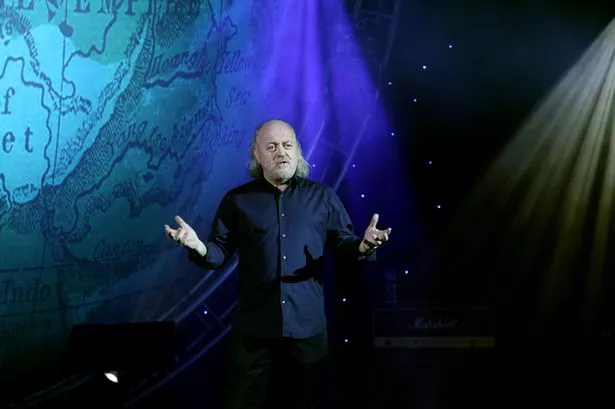
I’ve always been a big fan of Bill Bailey since I first saw him on telly in the 1990s, and I’m glad to say I once saw him performing stand-up in Hammersmith, which is where Bill lives and I used to live too.

Who is Bill Bailey?

Bill Bailey (born 24 February 1964) is an English comedian, musician, actor, TV and radio presenter and author. Bailey is well known for his role in the TV show Black Books in which he plays the part of Mani, and for his appearances on Never Mind the Buzzcocks, Have I Got News for You, and QI as well as his extensive stand-up work, including his DVD specials such as “Part Troll” and “Dandelion Mind”.

Bailey was listed by the Observer newspaper as one of the 50 funniest acts in British comedy in 2003. In 2007 and again in 2010, he was voted the seventh greatest stand-up comic on Channel 4’s 100 Greatest Stand-Ups.
In this episode

This episode

In this episode we’re going to listen to some of Bill’s comedy and we’re going to understand it all so that you can hopefully enjoy it as much as a native speaker. So, lots of language, lots of listening and all the usual stuff.

Obviously, your enjoyment of comedy is subjective and what’s funny to one person isn’t funny to another, but the vast majority of what goes into appreciating a comedian is being able to actually understand the things they are saying. So, don’t judge it until you fully understand it.

I hope there’s a lot for you to learn from this episode and that you also enjoy it and find out about a very funny comedian, who has a lot of videos on YouTube and DVDs that you can buy and enjoy over and over again.

Let’s talk a little bit more about Bill Bailey and then hear some of his comedy.

Here are a few little things that you should know that might help you appreciate his humour a bit more.

Bill’s Appearance
He’s got quite a funny appearance. He looks like an old hippy (even though he associates more with the punk movement) – he has boggly eyes, a bald forehead, long straggly hair, a round face. That sounds almost mean, my description, but Bill is also a lovely person, quite sort of cuddly and is amusing just to look at. He uses his appearance well, making himself look like a crazy person. It helps gain laughs I think. Inside he is a very down to earth guy with a good sense of humour.

Type of comedy
A bit weird, a bit surreal, quite cerebral and intelligent, considering the stranger aspects of life. He’s the sort of comic that some people would say was “random” – meaning he is a bit strange and tends to look at life from a different angle. He doesn’t just do ordinary observational comedy, but instead his work is full of musical parodies and existential thoughts.

Music – parodies, mixing different styles together, observations about musical tropes.

Left-wing politics – He’s a member of the Labour party and his political views come into his comedy in various ways as he tends to make fun of capitalist culture and the establishment.

Drugs – they come into it sometimes when he makes reference to weed and generally it seems that Bill has probably taken a few drugs in his time, as is evident in his surreal style and his existential musings.

Hammersmith – this is where he’s from. It’s in West London where I used to live, but Bill also grew up in the West Country – so he has a slight west country accent, and Wales too. Generally though, he speaks a kind of RP with a West Country or London twang.

So let’s now listen to a few clips, and then I’m going to explain what you hear. There are so many clips on YouTube and I basically like all of them, but I’m going to play you probably about 5 things taken from various TV appearances and live shows over the years. You can find the embedded videos on the page for this episode.

Most of these videos showcase his musical talents as well as his comedy, his story telling and so on.

Let’s get started.

Beethoven loses a penny

Some vocabulary and language
A lot of institutions had to merge due to funding cuts
I attended the Bovington Gurney School of Performing Arts and Owl Sanctuary
I studied Beethoven.
A fascinating character.
A very lonely embittered man, a very drunken man, slovenly, covered in dust, and filth and beer. He was a very unpleasant man. He was prone to dark fits of temper. He would hurl stuff around the house and then scrawl sonatas on big blocks of cheese and then eat them to spite the world.
He channeled his anger into his work.
Rage Over A Lost Penny – inspired by an argument he had with his cleaning lady.
You know when you lose something… how frustrating.
Have you seen my penny?
Can you think where you last had it?
No I can’t remember where it is!
Have you checked your pockets?
Of course I have you stupid b*tch!

Starsky & Hutch and the jazz news

Things you need to know about Starsky & Hutch – it was a show about two cops in the 1970s with groovy music

Dramatic cop action, sometimes they were on a stakeout, they drove a cool fast car, they had an informant called Huggy Bear, sometimes they’d have fights with criminals, mafia guys etc, they’d often have car chases and they’d always drive down alleyways with lots of cardboard boxes and they’d drive through the boxes because it looked good on TV.

Stephen Hawking / A Brief History of Time

Learning Chinese – Owl story

Doorbells

https://www.youtube.com/watch?v=SMNX11y0dVo


460 Catching Up With Amber & Paul #6 (feat. Sarah Donnelly)

Conversation and language analysis with the podpals and guest Sarah. Hear some conversation about being married to a foreign person, bringing up kids to be bilingual, and learn some slang in Australian and Northern Irish English. Vocabulary is explained at the end.

Small Donate Button
[DOWNLOAD]

Introduction

This episode is choc-a-block with natural conversation and language.

Yesterday I had Amber and Paul over to the flat, and I also invited Sarah Donnelly, a friend of the podcast. Sarah also brought her baby who she had since she was last on the podcast. There’s no relation by the way between her being on the podcast and having a baby. Purely coincidental. Anyway, the four of us sat around the table yesterday in the blistering heat to record some podcast material and that’s what you’re going to hear.

Sometimes you can hear the baby screaming and gurgling in the background but I don’t think it spoils the recording really. She hasn’t learned to talk yet, but who knows being on the podcast might help a little bit in some way.

The conversation is a bit chaotic because there are 4 people, sometimes talking over each other. If you like you can imagine you’re in a business meeting. A business meeting in which no business actually takes place, nobody observes the rules of formality and where the participants just chat with each other. So, not much like a business meeting really, but anyway a meeting of sorts, and this is the kind of thing you might have to deal with in the future if you go to a meeting in English and there are a number of people discussing things and you have to keep up. It’s good practice to listen to this kind of thing to help you prepare for that kind of situation.

This recording was slightly shorter than the usual full-on ramble that we have together. But I’m going to do a bit of language analysis at the end. I’ll pick out a few words and phrases and will clarify them after the conversation has finished.

Also there’s another language-related episode coming soon with Amber, Paul and Sarah.

Here now is a discussion between podpals Amber and Paul, also featuring Sarah Donnelly the American with Irish roots who has been on this podcast before, most recently talking about the US Presidential Elections with Sebastian Marx.

Things we all have in common:

  • We’re all English speaking expats in France
  • We are all with French partners, either married or “paxed”
  • We’re all comedians on the stand up scene too

In this chat we discuss a few things, such as the complexities of being with a foreign partner, bringing up a child in a foreign country to be fully bilingual, getting married and what it feels like for the bride and groom on the big day, Amber’s podcast which was recently released online, Paul’s upcoming gig in Australia, Sarah’s Irish roots and some English slang from New Zealand, Australia and Northern Ireland.

Questions

Here are some questions for you to consider as you listen. This can help you to focus on the content.

  1. Are you or have you ever been with a foreign person in a relationship? What are the difficulties of that?
  2. What’s the best way to bring up a child to be bilingual? Is it possible to raise a bilingual child when only one of you speaks one of the target languages to the child?
  3. Are you married? How did it feel for you on the big day? Did you cry? Have you ever been a guest at a wedding, and did you cry?
  4. Have you heard Amber’s podcast, which is called Paname? It’s now available at panamepodcast.com
  5. Can you identify different English accents and dialects from around the world? How about American vs British, or different areas of the UK? How about Ireland and Northern Ireland? What about Australia and New Zealand? Do you know what their English sounds like?

Right. Consider those questions as you listen to this conversation and hold on until later when I’ll explain some of the vocabulary and some cultural stuff too, maybe touching on different accents, wedding vocabulary and more.

But now you can listen to Amber, Paul, Sarah and me, melting in my boiling hot apartment.


Vocabulary and other language points – Explained

It’s really hot
It’s hot as hell
It’s boiling
It’s sweltering
It’s baking
It’s blisteringly hot

Being partnered with a French person is hard work.
I have one hour’s worth of material on this.
One hour’s worth of something
5 minutes’ worth of something
We’ve got 3 days’ worth of food left
I’ve got about 10 minutes’ worth of battery left

Bringing Up Children
Bringing up
a baby in a foreign country with a foreign partner – will they speak English?
Bring up a baby
Raise a child
Be raised in / to
Grow up
Do you have experience of bringing up a baby to be bilingual? Let us know.
If just one parent speaks English, and the rest of the time it’s French with school, friends and everything else – will the kid be bilingual?
Anglophone
Francophone

Condone/Condemn
I don’t condone the hitting of a child (stupid thing to say actually – but that’s what happens when you joke – sometimes you go over the line a bit – obvs I didn’t mean it)
Condone / condemn

Paul’s Wedding
An out of body experience
We were so stressed out

Crying
To cry
To be in tears
To well up
To choke up

Neither of us cried
I thought everybody would be in tears
I welled up a bit
I was choking up

Walk down the aisle
The altar

Her parents aren’t with her any more. They passed away.
Paul’s dad gave her away. “It was so sweet that it was your dad that was giving her away.”
I’m left-handed
I can’t grip it like I like to grip it. (innuendo)
He’s jumped ahead. (he’s gone to the innuendo before we realised it)

Some ninjas came out of the woodwork. (to come out of the woodwork)
to appear after having been hidden or not active for a long time:
After you’ve been in a relationship for a while all sorts of little secrets start to come out of the woodwork.
Mildly disapproving.
From Cambridge Dictionary Online.

They feel like they’re going to do mistakes. Make mistakes.

Aussie slang http://mentalfloss.com/article/61847/25-awesome-australian-slang-terms
G’day mate, how are you going?
Arvo: afternoon
Barbie: barbeque
Bogan
Chockers
Fair Dinkum
Fuckin’ oath!
Sweet as
Strewth! (Cliche)

Kiwi slang
The slang is pretty similar to Aussie or UK slang, but the accent is different. For years I couldn’t differentiate it from Aussie, but the more you hear the more you realise how different it is. Watch Flight of the Conchords to hear lots of it. Episode in the pipeline.

I was on The Rock n’ Roll English Podcast and The Earful Tower Podcast this week

Some news of Other People’s Podcasts

This week I’m featured in episodes of The Rock N Roll English Podcast and The Earful Tower Podcast.

The Rock n’ Roll English Podcast


This one is presented by English teacher Martin Johnston, who lives in Italy. It’s a learning English podcast for intermediate students who want to listen to people talking about normal things like sex, drugs and rock and roll, all of which are completely normal things!

Martin makes an effort to teach the vocabulary that comes up in his conversations that cover fun and interesting topics. It should be easy to understand this one as Martin grades his English a bit so that intermediate students can understand him.

In this episode Martin presented me with some very awkward social situations and we discussed my choices for each one. Often the best option was to just jump into a lake. Listen to the episode above to find out more and visit Martin’s website here.

The Earful Tower


This one was recorded a few weeks ago and has been published now. The Earful Tower podcast is run by Oilver Gee and their goal is to figure out France with the help of a new guest each week – from cooks and comedians to TV hosts and tour guides.

In the past they’ve interviewed Paul Taylor and this week it was my turn. The topic was how French people learn English.

You’ll hear three voices. Oliver Gee the host, who is half Australian and speaks with a bit of an Aussie accent and James his co-host who is half French but speaks English like a native, and me.

This one might be a little difficult to follow as Oliver has a bit of an Australian accent and the three of us talk pretty quickly.

This was a fun discussion about the ways French people approach learning English. There’s one thing I regret saying here and that is that French teachers of English aren’t good at English. What I meant was that this is always what French people say as a kind of excuse for why their English “isn’t good enough”.

It was lots of fun being on The Earful Tower. You can listen to it above and check out their website here and Facebook page here.

Thanks for reading and listening! New episodes of the podcast will be available soon. Hope you’ve been enjoying the Rick Thompson report!

Bye bye bye bye bye

Luke

I was invited onto the “English Across The Pond” Podcast

Hi podcast people,

I was recently invited to appear on another podcast for learners of English, called English Across The Pond presented by Dan (UK) and Jennifer (USA).

You can listen to the episode below and check out their website at www.englishacrossthepond.com

[soundcloud url=”https://api.soundcloud.com/tracks/324515648″ params=”auto_play=false&hide_related=false&show_comments=true&show_user=true&show_reposts=false&visual=true” width=”100%” height=”450″ iframe=”true” /]

Dan and Jen produce quite a lot of extra material to help you learn English from their episodes. Check out this link where you can get a vocabulary list, comprehension questions or just download the full episode guide from their website.

Dan and Jen are really friendly and both have lots of English teaching experience. You might enjoy listening to their podcast too.

Cheers!

Luke

447. What is this, British Humour? (with Amber Minogue)

What is British Humour? Is it funny? Does it even exist? How does it relate to our communication style and culture? In this episode I go through the main points of my British Council Teacher Talk about British Humour. Amber and I discuss the definition of British humour, the way it works, how it’s different or similar to other humour in other places, and some examples of typical humour in the UK.

[DOWNLOAD]

Introduction

Last week I did a Teacher Talk at the British Council in Paris. Teacher Talks are when the BC invites guests to an event involving a talk on a specific topic and then drinks afterwards. All teachers are invited to talk at these events and this time I thought I’d have a go. The topic was completely up to me, so I chose to talk about British humour because it’s always something I’m thinking about and I thought it might also be a way to promote English language comedy in Paris.

The talk was sold out and went well. I was hoping to upload the recording of the talk here but it’s not good enough. It just sounds very echoey and muffled. Next time I will mic myself up properly. So I’m not going to play the recording, which is a big pity because there were some moments of interaction with the audience and some funny things. But it’s just not clear enough on the recording so I’m not publishing it. The room at the BC where we do these talks is a big high ceiling place with mirrors on the back wall and high windows and walls so the sound bounces around a lot.

Anyway, I’ve still got all the ideas in my head so I’m going to put them into this episode, recorded in the normal way. So, I went to Amber’s place and decided I’d discuss all the points in my talk with her, since I think she’s probably got some interesting things to say on the subject. We both have experiences of living in other countries and we both do stand up so we think about humour quite a lot.

So you’re going to hear us attempting to answer questions like: what is British humour, what’s it like?, is it funny? Does it even exist? How does it relate to our communication style? What does it say about us as a culture?

The main aim is just to describe and demystify humour in Britain. You’ll see that I don’t subscribe to the idea that British humour is somehow better than other forms of humour. In fact, in many ways it is very similar to humour in plenty of other places.

But as I describe it here, just think about whether this kind of behaviour is likely to be found in the culture or cultures that you know, and consider the role that humour plays in people’s daily lives where you are from. You might notice differences or similarities.

Let’s now go to Amber’s place and get to the bottom of this.


Main points covered:

British Humour doesn’t exist

OK, it does exist, but we don’t really use any different types of humour than anyone else. We don’t have a monopoly on humour or anything, but we do value it highly.

British Humour isn’t funny

It’s not always designed to make everyone laugh. Instead, humour is used in our interactions to avoid being too serious, keep things light and make you seem like a normal person.

Self-deprecation

This means making fun of yourself. It’s a bit of a crime to take yourself too seriously in the UK, so people make fun of themselves to show that they’re not above everyone else.

Understatement

This is where you make a strong statement sound less strong. E.g. “It’s raining outside is it?” “Yeah, just a bit”

Deadpan delivery

This is where humourous statements are delivered with a straight face, making it hard for some people to notice that a joke has happened.

Sarcasm/Irony

This is where you say one thing but you mean the opposite. It’s used for insults, for disappointments or to make fun of everything in general.

Innuendo

This is when one innocent statement can also mean something quite rude. Innuendo often happens by accident and other people say something to reveal the dirty second meaning.

E.g. “I like the taste of a cox” (apple)   … “I bet you do!”


Other things I didn’t cover

Puns

These are just word jokes. They work when one word means two things at the same time, connecting two previously unrelated ideas together in one statement. The brain explodes because one thing means two things at the same time.

They’re best when they are instant responses to something, rather than pre-planned jokes.

Here are some examples of pre-planned ones

How does Bob Marley like his donuts?
Wi’ jam in.

For more, check out my episodes about telling jokes in English.

Vocabulary
We have a wide variety of synonyms, homonyms which make it easy to say one thing that sounds like another, creating endless opportunities for word jokes (puns) and euphemisms.

Pisstaking
This means making fun of each other. We do this all the time.
Perhaps it’s because we’re incapable of expressing genuine emotions and we tend to avoid sincerity because it makes us feel uncomfortable, so we interact with our loved ones by teasing them, poking fun at them, mocking them and so on.

We’re emotionally crippled, basically.

E.g. I’ll always poke fun at my brother when I see him.
Like, oh my god what have you done to your hair?
Nice of you to have made an effort today.

Pisstaking has two functions:
To express affection
To knock someone down to size if they’re getting too big for their boots

You need to be able to take a joke in the UK. You’ve got to be able to both take a joke and dish it out when necessary.

If you can, you’re alright.

Surreal humour
Essentially surreal humour involves making fun of absolutely everything around you. It makes fun of existence itself. It means making absurd statements to highlight the absurdity in life. It’s about subverting boring reality. Maybe this is something to do with our weather (it’s dull, generally) or it’s a form of indirect anarchy or something.

Inappropriate humour
Although we use humour all the time, it’s worth noting that it can get you into trouble if you do it badly.
If you use self-deprecating humour, you have to be sure that everyone else gets it.
Be careful who/what is the target of your humour. It’s very politically incorrect to make jokes about certain groups in society – particularly groups that are lower status than you. So, these kinds of jokes are generally outlawed: ethnic jokes, sexist jokes. It’s very bad taste and old-fashioned and not cool at all.

Comedy

British comedy shows, the difference with American comedy, some recommended shows…

This is another episode for the future.

Thanks for listening to this episode. I look forward to reading your comments!

438. Hi Luke, I have a question!

Here’s another episode done in a similar style to the last one, with some news, some rambling and some questions and comments from the website. Topics in this episode will include: My live comedy show in Tokyo on 13 April, Differences between Comedy & Humour in France and the UK, Understanding TV shows and movies in English, Talking about Breaking Bad, Logan (the latest Wolverine movie), some grammar teaching and more…

Small Donate Button[DOWNLOAD]

Japan show – 13 April

19.00-22.00
Gamuso in Asagaya
2 Chome-12-5 Asagayakita, Suginami, Tokyo 166-0001, Japan
There will be a few other comedians first, doing comedy in English, then I will take the stage and do a set of stand-up comedy for you to enjoy.
FB Event page: https://www.facebook.com/events/396651460705556/

I’m not sure I’ll be filming or recording it because it’s stand-up and I have to be careful about what stand-up material I film and make public on YouTube.

Sorry to people in Osaka – I can’t be there this time!

London LEPster meetup

Host: MO (in LEP t-shirt)
Hi Luke
I am happy to say that I have finally managed to organise a time and a place. The time is Saturday the 8th of April at 1300hrs I chose this time because it is in the Easter holiday and I am assuming that most of the people are going to be on a break. The place is Costa Coffee and the address is 33-34 Rathbone Place, Fitzrovia, London W1T 1JN. It’s just off Oxford Street. The nearest station is Tottenham court road station. For any enquiries they can send me an email on bayle2003@hotmail.com

Russian LEPsters in St Petersburg

Hi Luke! How are things, man? We have already organised the first Get Together in Saint Petersburg! It will be on 9 April. Will you help us with publicity once we announce this event? :))
The Facebook Group
The Facebook Event on 9 April

Don’t forget to check the ARCHIVE for my recent interviews on ZEP and MFP

Other Comments & Questions

Mattia Andrao

I write this comment just hoping to be mentioned in the next episode…….

Carine (a reference to a message in the last episode from Adam, whose family hates my podcast because Adam forces them to listen)
Hello Luke,
To make you feel better about being hated by Adam’s family, which you do not deserve, I want to let you know that my two 9 year old daughters like your podcast very much and they love to listen to it when we are travelling by car! Listening to your podcast is a family thing we sometimes do the 3 of us together. They particularly enjoyed episodes 425 and 426, the Victorian Detectives. They are also Paul Taylor’s fans now!
Thank you for your funny podcast,
Take care,
Carine from La Rochelle, France.

Hello Carine from La Rochelle and her two 9 year old daughters!
I learned French in school from a book called Tricolore and it was set in La Rochelle.
All the characters, everything, happened in La Rochelle.

Danil Zelichenko
Hi Luke! Thank you for you podcast! I’ve been listening to it since September 2016. It really helps me. I still make a lot of mistakes, but I feel more confident.
I have a few questions
1. Have you ever listened to comedy in other languages with subtitles?
What can you say about the sense of humor in different countries?
French comedy without subtitles. I don’t really understand it! I also feel like their comedy is a bit different to ours. Some differences.
Our humour is self-deprecating, theirs isn’t. French humour is quite combative and involves quite a lot of put downs. We do that too but we also put ourselves down a lot.
Ours involves a lot of understatement, theirs doesn’t.
Comedy – theirs is situational.
Theirs is very visual.
Theirs is quite traditional – it is linked to theatre traditions that go back years.
In the UK we have alternative comedy which is counter-culture and subversive (even though it’s mainstream now) whereas in France it’s still tied into the theatre tradition.
2. Do you listen to other podcasts about learning English? Maybe you can compare your one with others?
Ingles Podcast (mainly focuses on Spanish learners of English, a little slower than mine, they focus more on teaching specific language points and language related questions – I do that less these days, preferring instead to focus on topics)
All Ears English (They’re very bright and energetic, they focus on communication strategies, natural sounding language and everything is focused on learning to communicate like an American native speaker – my episodes are longer and a bit looser than theirs.)
3. I like to listen to your old episodes every now and then, but I found that in iPhone first episodes had disappeared. It starts only from 33 now. Can you do something about it?
Daniel from Moscow (I’m not ninja) :) you can notice (mention) my name if you want.
P.S. I’ve just voted for your podcast!

Ivan
I’d like to listen to you Luke, speaking more about Breaking Bad.

Can’t remember who wrote this!
I have a basic question to you, teacher Luke! Well… maybe most lepsters will laugh at this doubt, but I really can’t notice sometimes the difference between for example: “I did walk” versus “I walked”. I mean… when I should use did or the suffix “ed”. Maybe it’s a basic grammar issue but I hate studying grammar. Thanks!

Christopher
Hi Luke,
How do you do? As a start I want to say thank you for the great work you do. Besides your podcast, I also hear a lot of BBC Stuff. Most of them are political talks or documentaries. I find it very interesting to hear different opinions about a topic. But there is one thing I find really curious and I was hoping that you might be able to help me out of my confusion.
In every talk show the guest addresses the host with his forename. For example:
“Today we are talking with the new director of Strawberry Media, Jackie Smith. Welcome! Thanks Steve… nice to be here…”
In Germany we would find this very informal and it never would happen on a political talk show.
Why do you do that in GB?
Best wishes to France,

Dmitry from Russia
Luke, I really adore your podcasts. But I’ve got a question: When I listen to your podcasts I understand absolutely everything you say, no matter how quick you speak. But when I try to watch something that is made for natives and by natives (movies, also songs) it’s extremely difficult (or sometimes completely impossible) to get what they say. Could you, please, explain this in one of your episodes, why this happens, and also come up with some ideas how to cope with this problem. Thank you in advance. Your podcasts are amazing!!!

Reasons

  • Familiarity with my voice.
  • My clear way of speaking. I try not to speak too slowly but I do make an effort to be clear. I am talking to an audience, I am doing a show. In episodes with guests you hear a slightly more natural speech pattern as I’m in a real conversation, but when I’m talking to you I am making an effort to communicate to you – just like you’d expect from someone doing a presentation. In movies they’re not talking directly to you like that.
  • Films feature people talking to each other – not talking to you. THere’s a difference. It’s easier to understand it when the person is engaging you directly, rather than you listening to other people’s conversations.
  • It’s just me, so no distracting stuff, no interruptions, no sounds etc.
  • Films contain loads of sound effects, music and background noise.
  • It’s recorded to be listened to and for every word to be understood. Movies are not always supposed to be understood completely.
  • Films are realistic. The dialogue is not always audible – many films feature “naturalistic dialogue” – i.e. incomplete sentences mumbled under the breath. This is a totally intentional stylistic choice. It’s supposed to be natural and realistic.
  • Films are confusing. They often don’t make sense. My episodes have a pretty linear structure.
  • My podcast is recorded to be heard – i.e. I use microphones for clear voices. I reduce background noises. Movies aren’t like that. They add noise, they record voices to be blended with the rest of the soundscape.
  • Movies are a visual medium – so much of the message is in the visuals. The audio is an accompaniment to that, so it has secondary importance. Also, you get distracted by the visuals and you end up not concentrating on the audio. You could try just listening to some movies. This sounds a bit strange but try getting the audio from a movie and simply listen to it. Then watch the movie – you might find you understand more of the dialogue that way, because you’re allowing yourself to focus only on the speech.
  • Most films are in US English. I speak British English, although there aren’t that many differences really.
  • Movies also feature lots of different accents and characters who might speak in ways you’re not familiar with.
  • Songs don’t always make sense. There’s a lot of artistic licence. I often can’t catch the lyrics of songs (check out my misheard lyrics episodes). The English isn’t normal English.
  • Sometimes they’re just a stream of consciousness with no proper discourse like in spoken English.

Solutions

  • Watch more movies! Familiarity is important. Getting used to it.
  • It’s just a question of continuing to improve your English.
  • Subtitles sometimes, then no subtitles, then subtitles again.
  • Don’t worry about it too much. Sometimes I can’t catch the things they’re saying in movies either. Realise that there are times when you won’t understand. Realise that movies are hard to understand, and so don’t be shocked when you don’t understand them. Often they’re mysterious or simply don’t make sense. I often struggle. Don’t worry about it too much.
  • Try using headphones so you can hear more clearly.
  • Specific techniques: Practice shadowing specific scenes first without subtitles, then with, then without again. Do this with favourite scenes from films. I do it a lot too and it can be really fun. It will help train yourself to hear and understand movie dialogues more easily.

Jane
Hi Luke!

I really like those episodes you talked about superheroes.
Could you do an episode about the movie, “Logan”, please?
I would love to hear your thoughts!
Thank you soooo much!
Best regards,
Jane