Category Archives: Travel

337. MURDER MILE WALKS: Stories of London’s Most Infamous & Shocking Murders [Some Explicit Content + Swearing] with Moz

Hello, and welcome back to to the podcast, this episode is called “Murder Mile Walks: Stories of London’s Most Infamous & Shocking Murders”, and in this one we’re going to hear about some true crimes that happened in  parts of central London. Yes, all the stories that you will hear in this episode are true, and you should know in advance that this episode does contain some graphic descriptions of horror and extreme violence. And on top of that, there is some swearing at the end of the episode too.

Small Donate Button[RIGHT-CLICK TO DOWNLOAD]

explicit contentAttention: Explicit Content

So, this is an adult episode of the podcast, recorded by adults, featuring adult conversation between two adults about adults doing adult things to other adults and it’s presented here by an adult for other adults to listen to OK? So, the point I’m making is that it’s not for kids, this episode. So, if you don’t mind a bit of horror and some strong language – then, great! But if you’re easily shocked then please be cautious. To be honest though it’s no worse than some of the stuff you see in the average horror film, an episode CSI or Grey’s Anatomy or a true crime documentary or something. But anyway, now that I’ve warned you about that let’s continue…

Moz

Welcome to the podcast. This is a conversation with my mate Moz, who has been on the podcast before. You might remember Moz from previous episodes such as the Brighton Fringe Festival series, the drunk episode, and the drunk episode 2, which was recorded on Moz’s boat. So, Moz has been living in London for ages but a couple of years ago he decided to buy a canal barge – a narrow boat, and live in it at various locations in the London canal system. It sounds like a pretty nice life. Instead of just living in one location the whole time he moors the boat at different locations in the canal and river system in London, enjoys a more peaceful side of London life, with all the ducks and geese, and fishing, and pubs, and knife crime. Well, maybe not the knife crime. Let’s hope not anyway.

Anyway, Moz used to work as a producer of comedy TV shows at the BBC. He also produced, wrote and performed in a few of his own comedy theatre shows at the Brighton and Edinburgh Fringe festivals over the years, and all his shows featured slightly dark subject matter but in a comedic way. They were basically horror stories that in the end turn out to be quite funny and sweet.

Murder Mile Tours

Fairly recently Moz launched a small tour company. It’s a company that offers walking tours in the Soho area. You know those tours that you can join, where there’s a tour guide who shows you round some interesting spots in the city, and you follow the guide around as he or she holds an umbrella in the air or something (that’s always a bit weird in my opinion – walking around holding an umbrella followed by loads of disciples – worshipping the holy umbrella!) and the tour guide stops and talks to you at various points, and you’d rather be in a pub or something. They’re nice, but a little boring sometimes, right?

Well, Moz’s tours are quite different, and they’re proving to be very successful already, with some great reviews on the travel website TripAdvisor. The thing about Moz’s tours is that they’re original, because not only are they presented by Moz himself, the tours are all about murder. A lot of murder, in fact, they’re all about real murders that took place on the streets of London, in Soho to be specific.

I’m not going to tell you more, I’ll let Moz do that. You can just listen to find out all the grisly details as they come up in the conversation.

We’re almost ready to start listening to the conversation. But I would like to just give you another warning now before you listen to this episode.

ANOTHER WARNING: Explicit Content

Most of you won’t think this is necessary but I would like to just ask you again to please be aware that this episode contains some descriptions of explicit violence and horror. It we deal with the subject in a grown-up and responsible way but if you are playing this to young listeners, please use the maximum amount of discretion – it’s supposed to be for adults.

Vocabulary

There is loads of great vocabulary in this, not to mention some really good stories all based on proper historical research, and everyone knows that listening to stories is a great way to learn English.

So, as you listen – just try to follow the conversation. I’m not teaching you specific things in this one, I’m just inviting you to listen to some natural conversation between native speakers, but try to notice language as it comes up. Would you like it if I produced a follow-up episode in which I explain all the vocab, like I did with the Craig Wealand interview? Let me know.

[socialpoll id=”2342563″]

Before we get to the murder stories we talk about swearing on TV and on Luke’s English Podcast, and we discuss the question of whether I should bleep out swear words on the podcast. “To bleep or not to bleep?” As a former producer of BBC comedy shows, Moz has some wise words to say about that.

[socialpoll id=”2342764″]

So, a bit of conversation about swearing, and then we get onto the subject of Moz’s new project: Murder Mile Tours.

So, let’s get started.

*Conversation with Moz begins*

Talking talking talking talking bleep talking talking talking talking murder murder talking talking talking.

*Conversation Ends*

So that was the chat with Moz. How do you feel? Alright? Personally, I don’t feel too upset or disturbed by those stories, I just find them intriguing. It’s amazing what has happened in the past, what people do and their motivations. People are fascinating and mysterious aren’t they? And isn’t it weird that the woman sensed the site of that plague pit? It’s all very interesting indeed and I can’t wait to go on one of those walks on a Sunday next time I’m in London.

You can check out Murder Mile Tours by visiting http://murdermiletours.com. If you’re going to be in London I think this could be a really cool tour for you to join. You’ll get to see some cool spots in Soho like Denmark Street with its guitar shops, and you can hang out and have a cup of tea and a chat with Moz, and maybe hang out for a bit and go to a pub and drink beer and talk nonsense for a while. Buy him a pint, he might like that.

That’s it from this episode then. Thanks for listening! I look forward to reading your comments on the page for this episode.

Now, wait a moment that’s not the end, because I’m now going to play you an outtake.

Out-take: Some bonus swearing

Earlier in episode the were talking about swearing, and I bleeped out pretty much all those words (partly for comedy purposes) but after we finished our conversation Moz and I kept talking and we came back to the subject of swear words and we decided to let rip a little bit – to let rip – that means just express your emotions or thoughts without holding yourself back. In this case we decided to let rip with some swearing. So here is a mini outtake, sort of like a sequel to the swearing podcast I did a couple of years ago with my brother. So, here is a super-duper x-rated outtake which I recorded with Moz after having finished the interview.

ANOTHER WARNING!

You’re about to hear loads of swearing now. If you’re offended by the rudest words, stop listening now. Got it? If you’re not offended by swearing, then keep listening! It’s pretty simple isn’t it. Do you take the blue pill or the red pill? Your choice.

OK OK that’s enough explaining and justifying – Let the swearing commence…

*Swearing outtake starts*

Swearing swearing swearing swearing swearing swearing swearing HELICOPTER swearing swearing swearing HELICOPTER swearing swearing swearing swearing swearing! (Moz gets arrested)

*Swearing out-take ends*

By the way… Did you know that the Royal Family use swear words too?

Thanks for listening! I’m looking forward to reading your comments…

336. Drinking Scottish Whisky at a German Business Meeting While Wearing a Kilt and Playing a Flute… and other stories (with Carrick Cameron)

This episode features another natural conversation with a native English speaker. This time I’m talking to my mate Carrick, who I’ve known for about 10 years now. He is a teacher who used to work in the same school as me, back in London. We have a few things in common, like the fact that we’ve both had strange travelling experiences as English teachers, including the time when he once attended a meeting in Germany that involved not only the usual business work but also the drinking of some very rare and expensive scotch whiskies, which meant that the meeting turned into a kind of musical party with guitar and flute playing, quite a lot of whisky drinking, a late night and then, unsurprisingly, a bit of a hangover the next day. Listen to hear a few anecdotes, some authentic English conversation and more.

Small Donate Button[DOWNLOAD]
All this took place in Germany as I said, so you could say that he had a “hangover in Hanover” (Hanover is a city in Germany). Although to be honest he was actually in Frankfurt not Hanover – yeah, I just wanted to use the line “a hangover in Hanover”. Yes, that was supposed to be clever and funny, but never mind. :P

Anecdotes

We also share a few other anecdotes about travelling experiences we’ve had, including the time when I ended up being invited to my Japanese doctor’s house on New Year’s Day to make a kind of traditional cake by bashing a ball of wet rice over and over again with a big wooden mallet while being laughed at by a group of small children. Does that sound familiar at all? Have you ever done that? You might have, if you’re Japanese, or if you’ve spent new year in Japan. Do you have any idea what I’m talking about? Well, keep listening to find out.

Sound Quality

Another quick thing to say now is that admittedly the sound quality during the interview is a bit poor. I recorded it over Skype because I’m in France and Carrick is in England, and Carrick wasn’t able to get to a computer with a good microphone because he was (and still is) completely stuck to his sofa with a very bad back, the poor guy. He’s got a nasty slipped disc in his back which means he can’t move. So during this conversation he was basically lying on his back, talking to me over Skype with his phone in his hand.

So, yes, I know the sound is not 100% great and it might be difficult to hear his words at times, but that’s not necessarily a bad thing. It’s actually very common these days to speak English over Skype or on conference calls – like for example if you’re in an international business meeting talking to someone who’s in another country. The sound isn’t always perfect in those situations, is it? So, I think you need to get used to hearing English in less than perfect conditions. So, Audio quality is a bit bad, but don’t give up – you’ll get used to it after a while. It’s good practice.

While You Listen

As you listen, watch out for these things: the moments when Carrick (intentionally) switches from an English accent to a Scottish accent and back again, the way he describes different types of Scotch Whisky including words to describe their tastes and where they are made. So be mindful of vocabulary and grammar that you’re hearing, but above all – just enjoy being able to listen in on this conversation between a couple of mates. You can imagine you’re in the room with me listening to the conversation on speakerphone.

Ok, that’s it for my introduction. I’ll now get out of the way and let you listen to conversation in full. I’ll speak to you again when the conversation is over.

*Conversation Begins*

Talking talking talking talking talking talking talking talking talking talking talking talking talking.

*Conversation Ends*

So, that was Carrick. I really hope his back gets better soon because it must be pretty miserable for him to be just lying there all the time. I expect all of us sometimes think “Ooh, I’d love to spend 3-4 weeks lying on my back all day watching TV, high on a cocktail of prescription drugs.” (well, not everyone thinks that but you know what I mean) but when that lifestyle is forced on you as a result of an accident, it’s not that much fun is it. So, I hope Carrick gets well soon for his own sake, but also I hope he gets well soon for the sake of his wife and kids too, who might want to actually sit on that sofa and watch TV themselves at some point, and I also hope Carrick gets back on his feet soon for the sake of the kids in his school who are probably missing Mr Cameron in their classes!

More Stuff about Sound Quality (actually, it wasn’t that bad, was it?)

So, this is nearly the end of the episode. I wonder how the sound quality was for you? I expect it was a bit difficult to hear every word but you got used to it. Is that right? What’s that? It was difficult at the start but you got used to it? Ah good, I thought so. Sorry? You couldn’t understand everything – it was difficult and possibly a bit frustrating at times? Ah, sorry about that, but I think it’s good practice because your brain has to work a bit harder to guess the things you don’t understand. It’s good training. What was that you said? You’d expect the audio quality to be much higher in future please. Oh, alright, well – sorry but this is a free podcast right? So, you get what you pay for ok?

No, I agree. It would be better if the quality was always perfect, but that’s not always going to happen. Sometimes when I interview people on Skype the sound might be less than perfect, but as I said before – that’s normal in the real world, sometimes the sound quality will not be perfect when you’re using English over the phone or on a conference call. It’s good for you to get used to it.

Things to remember about learning a language (encouragement)

Just remember these things: learning a language is a long-term project and you will encounter various obstacles but you mustn’t give up. One of those obstacles might be that you can’t understand every word in an episode of Luke’s English Podcast, or in a conference call. So, even if you didn’t understand all of that. Don’t give up. I realise I’m preaching to the converted here, because if you’re listening to this it means that you listened to the whole conversation and you didn’t stop. So, well done you.

Shall I do an episode in which I explain the vocab, like in episode 335?

But really, I wonder if you’d like me to record a follow-up to this conversation in which I explain and clarify the content, like I did after the Craig Wealand interview. If you would like me to do that, let me know by leaving a comment or giving me an email at luketeacher@hotmail.com. I value your feedback.

[socialpoll id=”2341953″]

italki

Don’t forget to use italki to find a native speaker for conversations or a teacher for lessons. It really is a great way to push your English to higher and higher levels. Visit https://teacherluke.co.uk/talk to get started and when you make a purchase italki will give you 100 free credits which you can spend on lessons in the future.

One tip: use the “search teachers” function to find the right teacher for you, and that includes special skills like Cambridge Exam preparation and business English. https://teacherluke.co.uk/talk or click an italki logo on my website.

italki teacher search page

A couple of comments at the end, just before we finish up here.

  • If you’ve sent me an email recently, or ever, and I haven’t responded I am sorry. I can’t respond to them all but I do read them all I promise! I also send emails to people and don’t get responses and I know how it feels. I’m a huge fan of Greg Proops and Adam Buxton. I met Greg Proops at a book signing in Paris, shook his hand and exchanged a few words (I told him I was a comedian and he nodded sagely). I wanted to talk to him for hours, but I just said “nice one” and left. I then wrote him a long email, telling him how much I enjoyed his podcast called “The Smartest Man in the World” and I wrote a very British invitation to join me on an episode of LEP some time. I never got a reply. I also tweet comments to Adam Buxton all the time, who I am sure is an absolutely lovely person but I never get a reply or a retweet or anything, but that’s ok of course, I don’t mind, but I feel a little bit ignored, you know? Again, I don’t feel entitled to a reply or any attention at all because his part of the deal has already been done – he’s already given me hours of lovely talking on his podcast so he can’t be expected to respond to every tweet or email. Totally fine with it. So, anyway, thanks for your comments, messages, emails, tweets and so on – I appreciate your thoughts very very much.
  • Again, thank you to my Japanese doctor if he’s listening (I doubt it) for not only saving my skin when I was sick by taking care of me, giving me medicine and arranging for me to spend two weeks in Kinugasa hospital. I liked the video you played to me when we were both drunk on that New Year’s Day (at about 4.30pm I believe) in which you and your band were playing a live version of “Listen to the Music” by The Doobie Brothers. It was awesome.
  • Hello to anyone who likes whisky – I hope you enjoyed this episode.
  • Hello to the people of Scotland – I hope you choose to stay in the UK, but I’d understand if you choose to leave. I hope you don’t though. (I didn’t ask Carrick about Scottish Independence – maybe that can be a future episode)
  • Hello to a Japanese LEPster called Satomi who recently came to one of my shows here in Paris. Satomi, it was very nice to meet you and your friends after the show and I am very glad that you chose to introduce yourself to me. Give my regards to Yoshi – that’s a French guy who she was with, who called himself Yoshi, and not the cute dinosaur who is friends with Super Mario. Yes, I had a Yoshi at my show. In fact, not long ago I had a Luigi at the show too. I’m yet to have a Mario there, but let’s hope so. I wonder what it would be like to have Mario in my audience. I wonder how he would laugh. Maybe he’d go “wawawawawa” (Mario noise), or maybe if I talked for too long without making a joke he’d heckle me by saying “Letsa GO!” and I’d say – “can you stop heckling?” and he’d say “It’s MARIO time!” and I’d say, “*securty* remove this man from the room please he’s disturbing the performance”.
  • Hello to the lovely Argentinian couple who listen to this podcast and who also came to another one of my recent comedy shows. It was lovely to meet you too!
  • Let’s go back to Japan for a moment – Hello to all my Japanese listeners. I love Japan very much and I miss it a lot. Whenever I see pics of Japan on Facebook or listen to music from that I used to listen to when I was there I always think “ah 懐かしい” – “Nihon Natukashii ne!” which roughly translates as “Ah, good old Japan!” That phrase is used to express feelings of nostalgia. You know those waves of nostalgia that you feel when you remember something? You might see a photo, or perhaps smell some food that brings you right back, or you might actually go to the place and immediately feel a kind of comfort in being there. That’s exactly how I feel when I drink a really good cup of Yorkshire tea or something, like “Ah, good old Yorkshire tea”, or “Yookusha tea natsukashii da-yo ne?” So, hello Japan, I know you’re listening – “O genki desu ka?” which is a bit like saying “alright?” in English. I do plan to visit Japan with my wife – I must show her around the place a bit, I think she’d love it and I’d be able to say “natsukashii”, “heeee” and “hooooo” all the time. It would be nice to go drinking (in moderation of course) in an izakaya or something. And perhaps someone might go red in the face and fall asleep after having a couple of beers. Look after yourselves, ok!
  • Photos – check below to see some pics of Carrick’s funny experience at the German business meeting in Frankfurt at Deutche Bahn. If you work at Deutche Bahn – get in touch! Perhaps you know someone who was at the meeting. It’s possible. You should also find a pic of me hammering a ball of rice with a wooden mallet to make mochi, while wondering what was going on in my life! (I now realise what was going on – I was having a lot of fun indeed).
  • You’ll also find the names of Carrick’s favourite whiskies and the other brand name whiskies we mentioned in the episode, in case you want to check them out.
  • Thanks again for listening. :)

Carrick’s Top 3 Single-Malt Scotch Whiskies

1. Lagavulin
– from the island of Islay
– It’s delicious
– It’s smokey
– It’s filtered through peat

2. Macallan
– It’s from the Highlands
– It’s got a smooth, creamy texture
– It’s like very alcoholic milk (although it doesn’t look like milk of course)

3. Caol Ila
– It has a subtle flavour
– It’s like Lagavulin but more delicate

Other types of whisky
Blended scotch whisky – it’s made from a blend of different whiskies, it’s cheaper and is easy to find in supermarkets. Typical brands: Teacher’s, Bell’s, Famous Grouse, Chivas Regal.

American brands of bourbon whiskey (they’re not Carrick’s ‘bag’ = he doesn’t really like them, they’re not his cup of tea)
Jack Daniel’s, Jim Beam, Maker’s Mark.

That Japanese “best whisky in the world”
I think Carrick was talking about this one – Nikka Whisky (it doesn’t begin with a Y, unless you mean “Why?” – and the answer is – “Because it tastes so good!”) http://www.worldwhiskiesawards.com/nikka-whisky-taketsuru-pure-malt-17-years-old.13912.html

Photos

Other useful episodes of LEP

This episode featured several anecdotes. Click here to listen to an episode about how to tell anecdotes in English.

Click here to listen to the full story of how I got sick in Japan. 

334. Interview with Craig Wealand (from InglesPodcast)

This episode features an interview with English teacher and podcaster Craig Wealand from InglesPodcast.com Craig is originally from Essex in England, but now lives in Valencia in Spain where he works as an English teacher and Cambridge examiner for the British Council. Craig has been an English teacher for over 20 years, and for the last few years he has also been producing episodes of his learning English podcast, which won the award for Best Educational Podcast in the UK Podcaster awards last year. In the episode we find out about Craig, talk about his career, his teaching experiences, his podcasting and also I ask him some random “quick fire” questions, just like he does with guests on his podcast.

Small Donate Button[DOWNLOAD]

Preamble (some stuff about swearing and vocabulary before the interview begins)

Before we get to the interview, I’m going to do a preamble where I mention a few things about swearing and vocabulary. This might take about 10-15 minutes. The interview is coming! A preamble is a ‘preliminary statement’ or ‘information that comes before the main content’ – before the main, “meat” of the episode. It’s a starter, essentially. This is a 3 course meal, this episode. You’ll get preamble, which is the starter. Then the main course, which is the interview, and then a desert, which is just some more info and announcements at the end. So, here’s the preamble. You don’t mind a preamble do you? Do you? No? Not really? Maybe a little bit? What’s that? Oh, “get on with it Luke?” oh, ok.

swearing-at-workA Note on Swearing in the Podcast

You should know that there is a little bit of swearing in this episode (just a couple of s- words in the middle of the interview). I know most of you don’t mind swearing but I thought I’d let you know just in case you’re particularly bothered by it.

I just want to mention these points about swearing though, just to be clear about it:

  • Swearing is pretty common in English language culture – but it’s still very rude if you use swear words in the wrong situations.
  • Usually, we just swear when we are with close friends, or in certain informal situations like at a football game, in a comedy club, or when we’re particularly angry – like when you’re driving and another driver does something dangerous on the road, or when you hit your thumb with a hammer, or something like that.
  • For you as a learner of English I’d say – just be aware of the impact of swearing in some situations and remember that, of course, you shouldn’t do it in business meetings (usually) or in classrooms, or with your host family or something. In fact, swearing is quite a subtle and complex art and if you do it wrong and in the wrong moment it can make you look really bad. I’d say – if in doubt, don’t swear.
  • However, I want this podcast to be an authentic reflection of natural English and so I include some swearing some times. My aim is not to offend anyone.
  • Personally, I’m not bothered by swearing. I am rarely offended by it, and in fact in the right circumstances I find it quite enjoyable.
  • But I know you might be listening with kids in the car or something, or you might not like these words, so when swearing happens in an episode I’ll just try to give you fair warning in advance.
  • For a while I used to bleep out swear words when they happened in interviews. You might have heard a “BEEP” instead of a swear word. Actually, I got a few messages saying “Why are you beeping out the swear words? I want to hear them? I want to be able to hear every word, especially the swear words!” So – in fact a lot of you really want to hear the swear words. Click here to listen to episode 83. “How to swear in British English”
  • I know what most of you are thinking. You’re thinking – “It’s fine Luke. There’s no need to justify it. We don’t mind. No worries. Now, get on with the podcast! Bring it on!” OK then. Yes, I don’t need to go on about it so let’s carry on. And that brings us back to…

Craig Wealand and his podcast – http://InglesPodcast.com

Craig produces and records episodes of InglesPodcast himself and there are 3 types of episode on the show. There’s “Learn English with Reza and Craig” in which he’s joined by his friend Reza, and there’s “Pass FCE” which is all about the Cambridge FCE exam and then there’s “Mansion Interviews” in which Craig interviews various interesting people that he has discovered in one way or another. Last year Craig contacted me for an interview on his podcast, and I was very happy to be considered interesting enough to be invited on to the show. You can listen to that episode of InglesPodcast, with me, by clicking the link below.

button-16

[DOWNLOAD]

By the way, you ought to know that Craig’s website and podcast are both created specifically for speakers of Spanish, who are learning English. So, if you’re a Spanish speaker you should be particularly interested in Craig Wealand’s work and I suggest that you check it out. But it’s not just for Spanish speakers – the majority of the content on the podcast is for anyone learning English. Some Spanish words crop up every now and then.

 

Craig and I have a few things in common as we are both English teachers who do podcasts and who live in foreign countries, so it was really nice to chat to him and I hope you enjoy listening to this episode as much as we enjoyed recording it.

Just a reminder: Check out http://MansionIngles.com and http://InglesPodcast.com for Craig’s work and his podcast.


Vocabulary

Now, during this conversation various nice chunks of vocabulary came up, and I’d like you to listen out for them. These are just bits of vocabulary that I think you should notice – natural expressions that you could add to your vocabulary. I have listened to the interview again and prepared a list of those expressions and I’ve printed them on the page for this episode – so you can go there, take the expressions, put them in your vocab list or flashcards app or whatever. I’m also going to read them out to you now. As a listening exercise you can then try and notice these expressions as they appear naturally in the conversation. That’s right – you can play a game of vocab hunter! (or just have a cup of tea and a biscuit if you prefer)

Here are the phrases you should try to identify. There are about 35 of them. I’m going to read them out but it’ll be super-duper quick. The main thing is I just want you to be mindful and notice these phrases. I’m not going to explain them all now, I’m just reading them out for you quickly. But, in the next episode of this podcast, which I’ll upload soon, I’m going to go through all these phrases properly, explaining and clarifying them. That should help you to really learn them.

So now, let me quickly just list these expressions like a robot – these are expressions to look out for in the episode. They will be fully explained and clarified in the next episode. OK, here we go…

  1. I thought it was about time that I got you (back) on LEP (it’s about time I did something)
  2. It’s been getting on for 3 years. (to be getting on for xxx years)
  3. How did you end up being an English teacher? (to end up doing something)
  4. He ended up marrying an Israeli girl.
  5. I took part of the credit for that. (to take the credit for something)
  6. I didn’t see myself doing a clerical job. (to see yourself doing something)
  7. You couldn’t just give away money willy nilly. (to do something willy nilly)
  8. You must have brushed shoulders, as it were, with Essex’s finest. (to brush shoulder’s with someone) (Essex’s finest)
  9. As soon as I got over the fear of standing in front of people… (to get over something)
  10. I came back to Spain with my tail between my legs. (with your tail between your legs)
  11. You start looking at things in a different light. (to look at something/see something in a different light)
  12. The grass is always greener on the other side.
  13. I lived in an English cocoon for the first year. (a cocoon)
  14. As drivers, they’re very erratic and dangerous! (erratic)
  15. It was just a scrape – a small dent in the car. (a scrape, a dent)
  16. Lots of tailgating goes on when you’re driving. (tailgating)
  17. Customer service sometimes falls a bit short. (to fall short)
  18. I’m always on a mission to go to the pub. (to be on a mission to do something)
  19. I want to sit in a pub, nursing a pint of Guinness. (to nurse something)
  20. To be constipated.
  21. My French is coming along. (to be coming along)
  22. It’s a question of trying to squeeze (in) bits of learning into the lifestyle. (to squeeze something in)
  23. It doesn’t just magically rub off on you. (to rub off on someone)
  24. They had to use the language in order to get by in a work environment. (to get by)
  25. If I don’t pull out the stops and work on the language then it’s not going to improve. (to pull out the stops)
  26. I’m turning the tables on you now Craig! You’re going to be in the hot-seat this time. (to turn the tables on someone / the hot seat)
  27. I guard my work desk with my life. (to guard something with your life)
  28. If she dares to put a pen on my desk I shout at her and we have an argument. (to dare to do something)
  29. You’d keep them in a bag and every now and then you’d take a look and have a whiff of the petrol. (to have a whiff of something)
  30. They (cats) look down their nose at you.  (to look down your nose at something)
  31. I’ve never been very keen on cats. (to be keen on something)
  32. I can’t talk you round. (to talk someone round)
  33. The thing about dogs is that they’re too needy, too high-maintenance. (needy / high-maintenance)
  34. Doesn’t that bother you, that they’re so fickle? (fickle)

Ok, so there are some phrases that you’re going to hear. Visit the page for this episode to read those expressions – you could google them or look them up in a dictionary, or just wait for the next episode when I will clarify them properly. The interview is about to start. See if you can spot the phrases I just mentioned, or alternatively, just kick back, relax and enjoy this mellow conversation with Craig Wealand.

*Interview Begins*

So, that was my chat with Craig Wealand

Hope you enjoyed it! Head over to his website to check out the podcast, especially if you’re a Spanish speaker and I know there are a lot of you listening to this – but promise me one thing – don’t forget me ok?

Remember all the vocab and expressions I listed earlier in the episode? That’s all going to be explained and clarified in the next episode, unless I get abducted by aliens and I can’t upload it.

So, we’ve had the starter – the preamble, we’ve had the main course – the interview, now here’s the dessert. Let’s say it’s a cake made from announcements.

Some more announcements

Here are just some other announcements and bits of news for you.

I’ll be on Blab, speaking to Craig + guests tomorrow (Thurs 10 March) at 5pm CET
If you enjoyed the conversation in this episode and you’d like to hear more than you might like to check out our blab conversation. We’re going to talk about comedy, and you can join us if you want. Just click this link to check it out https://blab.im/craig-wealand-comedy-with-luke-thompson

That’s really a message for those of you who listen to this as soon as it is published because I expect many of you will have missed the conversation now but never mind – I think you should have a look at Blab anyway, it’s a cool platform which is an interesting way to just listen to people talking online, or do some speaking if you’re feeling up for it.

You might be thinking – What’s Blab, Luke? OK, I’ll tell you.

Blab is an app and a website that allows you to have video conversations online. It’s a bit like Periscope, but 4 people can talk not just one, and everyone else can watch the conversation and add comments and questions. You can get Blab as an app on your phone or just through your web browser on your computer. If you’d like to join us, just click this link  https://blab.im/craig-wealand-comedy-with-luke-thompson (or find the conversation by searching my Twitter feed – I’m @englishpodcast )
To take part you’ll have to sign up with Blab (it’s free and easy to use). Then you can watch the conversation (you’ll see 4 video screens with the 4 people talking to each other), leave comments or questions, or if there is an open spot you can join the conversation yourself, and be one of the 4 people on video in the discussion. It’s fun, it’s free and it’s a chance to just listen to English, ask questions or even do some speaking practice if you feel up for it. Our blab conversation is going to start at 5pm tomorrow (Thurs 10 March). Here’s the link again https://blab.im/craig-wealand-comedy-with-luke-thompson

If you’re too late and you missed that, have a look at Blab anyway. It’s pretty interesting, and I might be doing more things on Blab in the future.

So that’s blab.

italki

Here’s a quick reminder about italki, the sponsor for this podcast. Go to teacherluke.co.uk/talk to check out italki where you can find native English speakers and qualified teachers for conversation or tailored lessons just for you. It’s one of the best ways to improve your spoken fluency and is also cheaper and more convenient than taking language lessons offline. This interview with Craig was done on Skype just like lessons on italki and it’s easy easy easy. Also, because you’re a listener to this podcast italki will give you a voucher worth 100ITC (about 10 dollars) which you can use on subsequent purchases of lessons and stuff. That’s not too shabby! https://teacherluke.co.uk/talk to start talking now! Oh, and if you’re shy – don’t be – the native speakers there are very friendly and it’s a totally cool and relaxed atmosphere in which you can just take your time and start speaking. Don’t be shy, give it a try.
Alright, that’s almost it for this episode, but I would still like to ramble on a bit more about some other podcast-related news and admin.

New comment system

As ever I invite you to leave your comments on the page for this episode.

You might have noticed that I have a new comment system on the website now. I’m now using the Disqus system. That’s basically an in-built comment system on my website. If you’ve seen it, let me know how it’s working for you. It should be smoother and more user-friendly than the previous comment system. For me, the improvements are these things:

You can now easily upload pictures into your comments. So that means you can share images, your own photos, memes etc.

If you include a link in your comment it should appear and will automatically be clickable (the old comment system used to do weird things with links sometimes – make them disappear etc). Some video content will automatically embed, which means that a link to a youtube link will automatically become an embedded youtube video in your comment.

Disqus is used on lots and lots of websites, so if you sign into Disqus you can then comment on lots of other websites using the same profile, and you can keep track of all the comments you’ve made on my website and any other website using Disqus.

Comments can now be deleted or edited by you, so if you’ve made an error or something, you can correct it later.

If you sign up to Disqus you can also get email notifications when other people reply to your comments. So it should now be easier to keep track of the conversations between you and other LEPsters on different pages of my website.

When you leave a comment with the new system, it won’t reload the whole page when you submit your comment. That used to happen with the old system, which was a bit annoying if you wanted to comment and listen at the same time. Now you can listen and comment and it won’t interrupt the episode by reloading the page. Nice.

Show us yer face! The Disqus system lets you show your own photo next to your comments. If you sign in with Twitter or Facebook it’ll show your Twitter or Facebook pic, or you can just upload another photo to your Disqus profile. If you just log in as a guest when you leave a comment (that means you just give a name and an email address but not a full Disqus user) you will appear as an LEP Ninja, with a little photo of an LEP Ninja – as you jump out of the shadows, leave your comment and then disappear into the night. ;)

All the old comments are still there and can still be read. At this moment in time, the website has had about 10,000 comments in total across all the pages on the site. They’re all still there.

The Disqus system should help to build more of a community feeling on teacherluke.co.uk

For full details about comment notifications (and how to control comment notifications from the old WordPress system), just click here: How to control comment notifications from WordPress and Disqus.

It’s good to see that so many of you have written about your commitments to learning English after listening to episode 332 with Olly Richards. It’s also nice to see that Olly himself is getting involved and writing some messages of encouragement there for you in the comment section for episode 332.

Also, I’m glad that lots of you enjoyed the misheard lyrics in the last episode. That was just a bit of a laugh wasn’t it? One thing I’d like to correct is that Meg and Jack from the White Stripes aren’t brother and sister. In fact, they were married to each other for many years. So, I just wanted to clarify that. For some reason I always thought they were siblings, but no – they were an item. That’s a bit weird. Maybe that explains why Jack was so upset about what happened with me at band practice, and why he chucked me out of the band. If you have absolutely no idea what I’m talking about, go back to episode 333 and listen to the whole thing!

Another nice thing I wanted to add here in this post-interview bonus section is that so many people have voted for their favourite pics in the LEP Photo Competition. Voting is now closed for that, so if you forgot to vote, that’s just your hard cheese! I’ll let you know about the winning pictures in due course.

That’s it – remember that the next episode should be about that list of vocab and expressions from the interview with Craig. I’ll explain and clarify them, which should help you both understand and pick up some more vocabulary, in this long and enjoyable journey into the acquisition of natural English. So, next stop – vocabulary in episode 335. (unless for some reason I can’t upload episode 335, like because I get abducted by aliens, or something less exciting, like I have to much work to do).

Small Donate ButtonThanks for listening all the way to the end of another long episode of LEP – you are a truly wonderful, attentive and patient human being and good things are bound to come your way sooner or later if there’s any justice in this world. Bye!

CraigWealandPODPIC

332. Olly Richards: English Polyglot – Top Advice and Strategies for Language Learning

This episode could make a huge difference to your English learning. So listen up and get ready for a motivational boost! Joining me on the podcast today is Olly Richards – a polyglot who speaks 8 languages. Olly has some very motivating and practical advice on how to learn languages as an adult. There’s so much to learn from Olly in this episode, so I really want you to pay attention and have a proper think about the ways in which you are learning English. (I really sound like a teacher, don’t I? – or your Dad or something – “Now pay attention! Sit up straight! Put that down! Stop fidgeting. Listen to the man! This is very important for your English in the future!)

Small Donate Button[DOWNLOAD]

Being Committed to Language Learning

What I’ve personally taken away from this episode is the importance of making a commitment to yourself about your language learning. Commitment is really important for giving you the motivation to get things done, and to add language learning habits into your lifestyle. Commitment, motivation, habit, positivity – these are some of the vital elements for language learning. It’s also about being honest with yourself about what you’re doing to really push your learning forwards. It’s about taking responsibility for learning and finding your own little strategies for adding language learning into your daily routine. Olly is a living example of how it really is possible to learn languages as busy adults.

If you listen until the end of this episode you’ll hear me make a commitment to myself about my French, and it’s a good feeling because I really need to get a grip on that, because my French is not as good as I would like it to be – so you’ll hear Olly encourage me to make a commitment about my French, but also Olly and I invite you to make a commitment about your English too – even a small commitment, and write it in the comments section of this episode. I’ll talk more about that in a moment. But first, let me tell you a bit about Olly Richards.

Olly Richards – English Polyglot

Here are some things that people say about language learning.
People say English people are no good at learning languages, right?
Wrong.
They also say that to learn a language quickly you need to be a child.
Wrong too, apparently.
Another thing people say is that the best way to learn is by signing up to group classes in a language school.
Not necessarily.
Also, it’s often said that to learn a language properly you need to be living in the country where that language is spoken. But that might not be the case.
And, a lot of people say “I’m too busy to learn a language. I don’t have time, and I never meet any native speakers!”
Another thing people say is, “I’m just no good at languages. I think I’m language proof!”
Don’t say that to yourself! A lot of excuses and reasons why we find it difficult to learn English.

Keep listening. (because you’re probably listening to this, not just reading it – right?)

Olly is living proof that English people, just like any other nationality, are perfectly capable of learning a foreign language to a proficient level. In fact, Olly is a polyglot, which means he can speak lots of different languages. In fact, at the moment Olly can speak Spanish, French, Italian, Brazilian Portugese, Japanese, Cantonese and Arabic. Not bad for a guy from England – a country where most people just speak one language, and some people struggle even with just one language, especially after a few drinks.

So, what’s the story with Olly? Is he just a specially gifted person? Was he born with the ‘language gene’, or does he have the force or something? Does he have waaaaay more time in the day than anyone else? Did he go to some really brilliant language schools and follow the amazing methods of a language guru? Did he just learn these languages as a child by growing up in different countries?

The answer to all of these questions seems to be no. No, he isn’t, he wasn’t, he doesn’t, he didn’t. Olly says he doesn’t have a particular gift for language acquisition. He wasn’t born with a language gene. He doesn’t really like learning in a classroom environment so he didn’t just attend some great classes in other languages, and these days he has a busy schedule just like the rest of us, with his job and also the great work he does on his website IWillTeachYouALanguage.com. So it’s not like he’s got acres of spare time at his disposal. Also, Olly didn’t learn any of these languages as a child. They’ve all been learned during adulthood.

So, how has he done it? How has he learned lots of languages and how does he keep them all in his head? What are the techniques for effective language learning as an adult? And, what’s Olly like and what stories can he tell us?

That is essentially what you’re going to get in this episode. All those answers and more. You’ll also hear Olly give me a much needed motivational boost about my French. In fact, while talking to Olly I made a commitment to myself to improve my French in one simple way every day – and that’s simply to do a minimum of 10 minutes of study from my French text book every evening. It doesn’t sound like much, but it’s a starting point and I really believe that if I make that a really fixed daily habit it could make all the difference to my French.

And you can do it too (but with English, not French obviously, unless you’re also learning French, in which case yes you could do it too). In fact in this episode we invite you to make a simple commitment to yourself about learning English, today, and to write that in the comments section. Listen until the end of the conversation to find out all about that.

OK, so it’s time to start the conversation with Olly Richards – the professional English polyglot who has tons of advice on how to learn languages as an adult. Ready? Let’s go!

*Interview begins*

So, that was the interview – I think you’ll agree that there is a lot to learn and to think about.

Make a New Commitment to Your Language Learning – Join Me!

Just think of one specific thing you can do every day, as part of your daily routine. It could be related to pronunciation, vocabulary, grammar, reading or any area you think is important for you. Write your commitment in the comment section of the episode. Then Olly will read your comments and give you some personal encouragement himself. Yes, he’ll write comments to you with some encouragement. For example, your commitment could be, as a starting point, “I will read a novel in English for 10 minutes every morning when I get up.” Just 10 minutes. Think of your commitment and write it in the comment section. Go ahead and give your English a boost! It could make all the difference.

Here are some links to Olly’s work online

Click here to visit Olly’s website, where you can read his blog posts, download his eBook, sign up to his mailing list and listen to his podcast – IWillTeachYouALanguage.com

Here’s a popular post which we mentioned in the episode – My Crazy 5AM Language Learning Routine

You can also find Olly on twitter here, where he tweets things related to language learning: https://twitter.com/Olly_IWTYAL

Other Links

Want to read a book in English? Don’t know which book to choose? Check out my reading list here.

Check out Flashcards Deluxe on the iTunes store here, or in the Google Play store here. There are lots of other free Flashcards apps available too.

Want to know more about using mnemonics and memory techniques for remembering vocabulary? Listen to my episode about that subject here https://teacherluke.co.uk/2014/02/05/167-memory-mnemonics-learning-english/

Click here to check out italki

Click here to check out italki

And finally, let me remind you about the sponsors for this show who decided that they wanted to give my listeners the chance to get 10$ worth of free lessons or speaking sessions. With iTalki you can find teachers or native speakers to give you speaking practice from the comfort of your own home. iTalki uses Skype as a platform and you can pick your teachers and schedule classes based around your specific lifestyle and routine. Speaking to native speakers is a vital way of genuinely accelerating your English. And remember that LEPsters – you get a discount if you sign up by going to https://teacherluke.co.uk/talk.

That’s it for this episode, I hope you enjoyed it. I did. I found Olly to be fascinating and very useful and I’m looking forward to following his advice for my French.

That’s all for now, speak to you soon. Bye!
ollyPIC3

329. A Rambling Chat with James (News, Stories & Jokes)

My brother has been visiting me in Paris this week and so just the other day I made him a cup of tea and got him on the podcast for a rambling chat. We talk about lots of different things including news, politics and some funny stories. I hope you enjoy the conversation. There will be more episodes about language learning coming soon.

Small Donate Button[DOWNLOAD]

In this episode you’ll hear us discussing these things

  • What we’ve been up to in Paris this week
  • Jim’s first stand up comedy performance
  • Last Thursday’s performance of “Sorry, we’re English” with Paul Taylor
  • Differences between Paris and London
  • Some UK politics about the EU referendum
  • Some USA politics about the presidential elections and candidates like Donald Trump, Hilary Clinton and Bernie Sanders
  • Other news stories about drones, eagles, mosquitos and why women yawn more than men
  • Jim’s ‘talking dog’ joke
  • Jim’s dog anecdote

That’s it!

Thanks for listening!

Luke

JimPOD

326. Catching up with Oli (Part 2) Future Predictions

Here’s the second part of the recent chat I had with my cousin Oliver. In this one we talk about becoming a Dad and predictions for the future. What will society be like in the next 10-20 years? What changes will we see in communication, technology, travel and other areas? What kind of world will Oliver’s daughter grow up in? These are all questions we discuss in the episode. Watch out for language related to the future, technology, communication and childcare. Also, listen until the end to hear Oli play a nice tune on the guitar. :)

Small Donate Button[DOWNLOAD]

There is no text related to this episode.  All you have to do is listen. :)

UPDATE – BABY NEWS

Hello everyone – I’m just adding a bit of extra content here after the jingle because I’ve got some good news to tell you! I just wanted to let you know that since I published this episode last week Oliver has become a proud father. Yes, Valentina was born just yesterday. I’m happy to report that both mother and baby are well, and are currently resting, eating, sleeping and generally recovering from the birth. According to Oliver, the baby is not only fit and healthy, but also “perfect”. So, there’s a new Thompson in the world! I can’t wait to meet her. Maybe one day I’ll have her on the podcast. If you want to congratulate Oliver and his wife, you can leave a comment under this episode or even send me an email which I can then pass on to the proud parents. I am sure they are both absolutely delighted. It’s amazing to think that a whole new chapter has just opened in their lives. OK – that’s enough cheese!

However, if you like a bit of cheese, and if you’re wondering what to say when congratulating someone who has had a baby, here are some ideas:

When you meet someone (spoken English)

Hey congratulations (on the new baby)! You must be delighted! That’s fantastic, I’m really happy for you. 

When you write a message (e.g. in a card)

Wishing all the happiness to the new mum and dad! May life be especially sweet for you and your little baby!

You must be sooo happy! Wishing you happy moments with your little girl/boy.

I’m really excited that your little baby has arrived safe and sound! Congratulations on this lovely news.

Congratulations and welcome to the world of parenthood! May little one be blessed with every happiness.

:)

Here’s the Simpsons video I mention in the conversation with Oli.
“So this stuff really works?”
“Certainly does”
“Well, lots of LUCK!”

Oculus Rift

Solar Roadways

A solar roadway sceptic

326pic

295. California Road Trip (Final Part) Customer Service / Highway 101 / UK vs US English

Hi and welcome back to LEP. This is episode 295, and it will be the final part of this 8-part series which is inspired by my trip to the west coast of the US recently. I’m going to talk about the final part of our journey from San Francisco, down the coast via Monterey, Carmel, Big Sur, San Luis Obispo and back to LA. I’ll also talk some more about customer service and give you some tips on how to make complaints in English and how to talk to strangers in slightly sensitive situations, like when you want a person sitting behind you to stop talking because you can’t sleep. You can expect to hear those things and more in this episode.

Small Donate Button[DOWNLOAD]
I started this series on 26 August, which is just under two weeks ago. So, in less than two weeks I’ve uploaded about 8 episodes and each one is about 1 hour 15 minutes long. I realise that’s a lot of content for you to listen to, and I think a lot of my listeners are quite busy catching up with all this new content. I certainly hope that this sudden arrival of 8 new episodes hasn’t put anyone off. I know from experience that when I listen to a podcast and there are lots of episodes that I haven’t heard, that it seems harder to get back into it, like you’re falling behind and it’s difficult to catch up. So, I expect that some listeners are a little overwhelmed by the number of episodes that have arrived. Not you of course! If you’re listening to this I expect it means that you’re keeping up with the series without any problems! If you’re a new listener, then welcome to my podcast. It’s for learners of English. Visit teacherluke.co.uk for more information.

Anyway, I shouldn’t be worrying about anything because I have had lots of encouraging comments on episodes in this series and I’d like to read some out and respond to them here – not all of them, just a selection.

Comments from Listeners
One piece of correspondence from a listener in the USA, called “Lea”, which is worth mentioning:
Leah: “I’ve very much enjoyed hearing all about your trip. But I need to tell you that nobody in the U.S. ever says “galoshes”, lol !! Really it’s true. I do remember when I was in school (grade school & high school), in French class, and in language text books I would see this word.
We just say “boots”, sometimes more specific like, “rain boots”, “snow boots”, “hiking boots”, “riding boots” … But NEVER “galoshes”.
Did you hear someone in California use that term??
Anyhoo, I love the podcast!!! Thank you!”

Luke: “Thanks for the correction. I feel like I should now edit the podcast to include what you said! I might do it actually.”

Leah: “Ha! Just to check myself, I asked my 14 year old son if he knew what “galoshes” were. He said “No”, but he had heard the term used in a cartoon once. He further said that he got that they meant something like, “rain boots” through the context.”

So, I just wanted to agree with Lea and emphasise that it’s not galoshes in the USA, but in fact “rain boots”. In the UK it’s ‘wellies’ or ‘wellington boots’.
Google search results:
“Galoshes”: 454,000 results
“rain boots”: 2,090,000 results

Perhaps in the USA wellies are less a part of the every day culture, and so a well-known nickname hasn’t come up. Whatever the reason, it’s ‘rain boots’ rather than galoshes.

Perhaps it’s not that important that you know the correct term for rain boots in the USA, but who knows – perhaps it could be useful. Maybe in some emergency situation, like a flood or something. “Quick we need some wellies!” “What?” “I mean, we need some galoshes! Quick!” “Sorry, I… I have no idea what you’re talking about. Are you British? I love your accent :)” “This is an emergency flood situation we need galoshes!” “Sorry – that means nothing to me. Have a nice day now, alrighty then, sorry about all this rain, but I guess you must be used to it because you’re British, right?”
“No, you don’t understand, we need rubber boots to protect us from the water, right now!! Boots, for the rain!” “Oh you mean rain boots? Why didn’t you just say?” etc.

Chriss Benitez
September 3, 2015 at 12:13 am
I love craft beer and california is the most famous place for breweries. Hoped you had lots of good Californian beers and American IPA.

I´m waiting for the Camaro photos :P, you get used to it don’t worry. I don’t have one but my Mustang is almost the same.

Great episode!!

ptholome/Antonio
August 29, 2015 at 11:38 am
WOW, WOW, WOW, WOOOOW

Hello Luke, This is a very great work you are presenting to us. I thank you for this huge effort you are doing to teach English to people all around the world.

I would say a lot about your new podcasts but even if I knew the adjectives you deserve I can only say that “Je suis resté sans voix” reading your four incredible podcasts.

I am waiting for the next podcast as impatient as people are waiting for the sixth book of the Game of Thrones.

I really only can say “BRAVO!” AND “CHAPEAU BAS MESSIEURS” (This means “hats off” or “well done!”)

Big Hug Luke

p.s. Why don’t you make a periscope each time you are going to work on a podcast?

Because watching AJ’s Periscopes for several weeks, I am surprised seeing myself waving the hand and saying bye when AJ finishes every Periscope video. I finally have the feeling that he is in front of me. It is a strange feeling, but it is really present.

Try it and be sure you are going to enjoy it, because you are going to have a real direct contact with your students. You have nothing to lose and a lot to find mainly our love and admiration.

See you

mollietai10@yahoo.com
August 27, 2015 at 3:06 pm
FANTASTIC journey with so much to offer . You give us amazing luxury through your account . What a romantic way of teaching English . WELCOME BACK ! Keep it up ! Million thanks !

petrokl
August 27, 2015 at 9:40 am
Dear Luke! Thanks for two very interesting and cognitive episodes. I found out a lot of new stuff about the US.

paquan
Hi Luke, this’s just a trivial comment, but I want to tell you that I like your jelly’s wobbling around noise making. It’s funny and cute. 😀

Rasul Ksirov
September 5, 2015 at 7:56 pm
The Eagles are single-handedly responsible for lots of people in my country mispronouncing the English word hotel as /’houtel/ – i.e. with the stress on the first syllable instead of the second. Which is funny, given that we have the same word in our own languages (Russian/Ukrainian – well, the Russian one lacks the initial h) – and it is stressed on the second syllable. But even fact is overlooked as a clue for correct pronunciation, against the popularity of the Eagles’ hit and its damaging influence on the unsuspecting English learner.

Explain yourself, I hear you say. All right, I will.

The musical metre (or rhythmic structure) employed in the chorus of “Hotel California” dictates that the word “hotel” is stressed on the first syllable thus overriding the actual word stress. Indeed, they do seem to be singing “welcome to the hOtel /’hou.tel/california” in the chorus.

This, coupled with the general notion that English learners tend to have about most two-syllable English words being stressed on the first syllable, gave rise to the infamous pronunciation error.

Myself, I was lucky enough to hear Elvis’s “Heartbreak Hotel” first, before the Eagles had led me astray with their confusing stress patterns.

Thanks for your comments everybody. Now let’s carry on with this series!

The Road Trip Continues – San Francisco
Dinner in Liholiho – an amazing Hawaiian influenced place
Liholiho
We’d never tasted food like this before. Some kind of battered and fried chicken, with fried broccoli and kale with cashew nuts. The broccoli in particular was amazing. Apparently they marinade it overnight and then deep fry it in soy infused oil, and the result is an amazing crunchiness combined with juiciness. We just made loads of noises during the dinner and couldn’t stop raving about the taste. Of course, we ordered way too much because we underestimated the size of the portions and ended up completely stuffed.

In fact, there’s quite a lot of Hawaiian influence in SF. It’s amazing to think that across the ocean there’s Hawaii and then Japan. It’s cool to be on the Pacific Coast. I’m more used to being near the Atlantic myself.

August 18
Extend our time in SF.
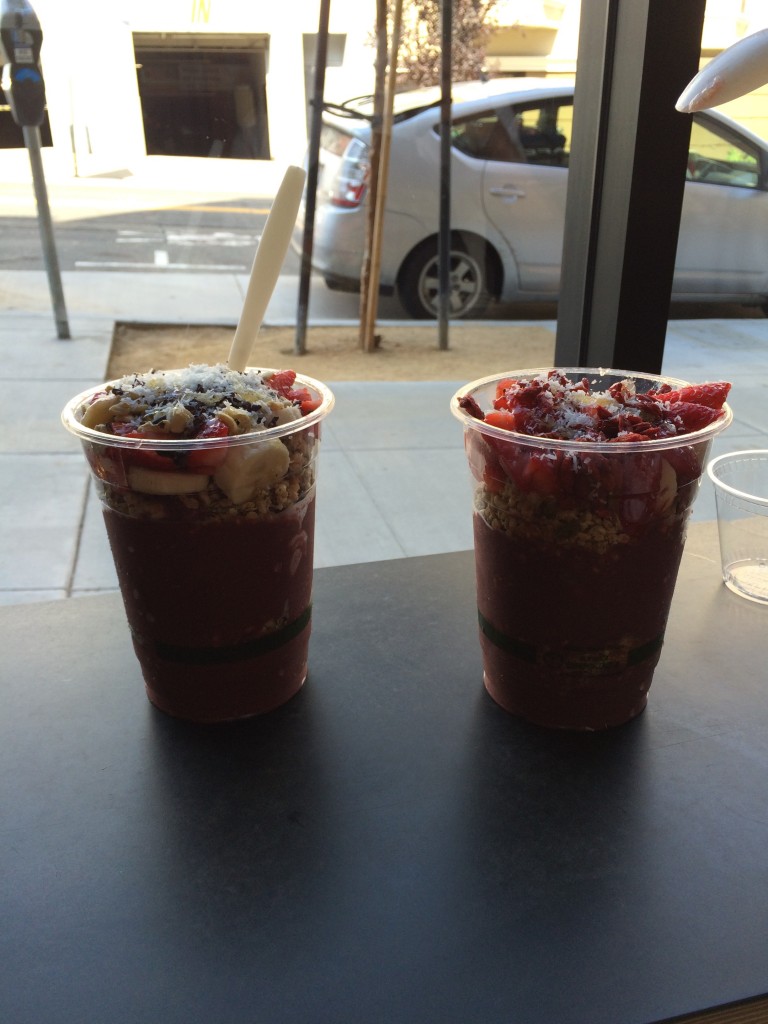
More acai bowls.
Lombard Street.

Grab some coffee in one of the many great looking coffee places on Polk Street.

Comments about annoyingly rude customer service, which happened a couple of times
Generally speaking, the customer service we experienced in California was really amazing and impressive, and maybe we got used to it because when we had bad service it seemed really obvious and annoying. This was usually from young people doing jobs they probably believed were below them, causing them to treat you with a kind of cool disdain, as if to say “I’m above this”. For example, we had a bad experience in a coffee shop in San Francisco. Two trendy girls who were far too cool, in their minds, to be serving people coffee, served us coffee in a really snooty and dismissive manner and it sort of spoiled my morning a little bit (I can’t stand unnecessary rudeness – it really gets my back up and bothers me a lot). I don’t know why. Perhaps it was my accent. Perhaps it was the fact we were tourists. Maybe it’s because it was Monday. Maybe the cafe management treats them so badly that they put in zero effort, maybe it’s the slightly specific coffee request I made, or maybe it’s just because I didn’t order the coffee just right. Maybe I’m making a big deal of it, when in the end it really doesn’t matter at all! In fact I’m probably reading way too much into this encounter and thinking about it too much. But anyway, here’s what happened:

We stood there talking about what we wanted, and there was nobody in the queue behind us. I stepped forward to make my order. There are two girls behind the counter and they’re standing back a bit, having their own private conversation. I notice that the girls are talking about us, and not nicely. They’re sort of talking under their breaths and glancing at us. I wonder what we’ve done wrong and try to ignore it. Time to get the coffee. I wait a little bit for the girl to come over. I feel like I’m annoying her. I start talking to the girl at the cash register.
Her: “Can I help you?”
Me: “Hi, can I have one black coffee of the day…”
Her: *sighs* “So, you mean one regular dark coffee?” (she says, putting the order into the till. There’s probably a button that says “dark coffee” but no button that says “black coffee”)
Me: “Ok, sure. And an espresso, with…”
Her: “And a single espresso”
Me: Yes please, with just a little bit of hot water added.”
Her: *Sighs again and gives her friend a look*
Me: *Thinks: what the f*ck is going on here?*
Her: That’s gonna be 5.25.
Me: OK, here you are.
Her: “Your coffee will be delivered over there”
Me: “Thanks”
Her: No response. She’s already turned away from me. The transaction is finished.
The other girl then shouts “Single espresso with hot water!” even though there are no other customers around and she heard the entire transaction and I’m just standing right there, and puts the coffee on the top.
I go to pick up the coffee from her, and I say thanks, but she’s not looking at me. She’s turned away and is doing something else. I feel totally unwelcome and I don’t know why. Did I just destroy the environment again without realising it? What did I do wrong?
This really ‘did my head in’ for some reason. What happened? Did I order the coffee slightly wrong? Is it because of my accent? Why is it necessary to serve me my coffee in a miserable way because you feel that you’re above this job?
Maybe I’m way too sensitive, and after all it’s just a couple of coffees but this put a downer on me for about an hour until I got over it. (My wife got over it instantly, but I had a little dark cloud over my head for about an hour as a result of it) As we walked around I speculated about why they seemed so rude.

It reminded me of a routine by Louis CK about exactly this topic. I might play it to you right now because you might find it amusing, but there are some swear words that I’ll edit out because I’d like this episode to be a clean one. So, I think I’m going to play that to you, or at least just embed the video on the page for this episode. We’ll see…

So, in the end, there’s no excuse for being so rude!

How to make the right impression on a waiter
I just want to reiterate something I said in an earlier episode about dealing with waiters and other staff, because this struck me as being quite important, and as I was a foreigner in an English-speaking country it made me realise how important this is.
Remember that staff are just doing their job and you can help make it a little easier for them by showing that you understand that.

So, help them to do their job, don’t make it extra hard for them.
Smile, be friendly and respectful. Don’t have the attitude that this person is your own private slave for the evening and they should have infinite patience and they have no right to complain or be unhappy about your behaviour. This is unrealistic and rude. The waiter is a human being and they might be tempted to spit in your salad.
So, smile and be nice.
When the waiter asks how you are, respond positively, and ask how they are too.
Don’t forget to say please and thank you. Definitely show your appreciation if a waiter has done something special for you.

If in doubt, tell them it’s your honeymoon.

-How to ask for an upgrade in a hotel (this worked for us a few times)
Tell them it’s your honeymoon.

-How to make small requests

Certain phrases are useful.
“Is there any chance you could…?”

Tell them it’s your honeymoon.

E.g. “Is there anything you can do or recommend in order to make our stay even more special? It’s our honeymoon, and we want this to be a really special and memorable stay.”

We got a few hotel room upgrades, and also some free fruit and wine, and in one place they wrote a special message on our mirror, and another place gave us a card. One guy gave us some free bottles of water because it was the only thing he could offer. Everyone seemed genuinely happy for us and it broke the ice quite nicely.

California Diary Continued… 18 August
Union Square.
Drive to Monterey.
Another Japanese restaurant!

August 19
Next it’s Monterey. Beautiful coastal town, but not much more than the aquarium.
Touristy place near the old cannery, where the aquarium is now.
I visit, and the wife goes to the beach.
Wildlife from the waterfront (whales, otters, sea elephant “it’s a whale!”)
Then to Carmel.
Beautiful sunset on the beach with whales and dolphins in the water.
All about Carmel.

August 20
Another day there, including the beach.
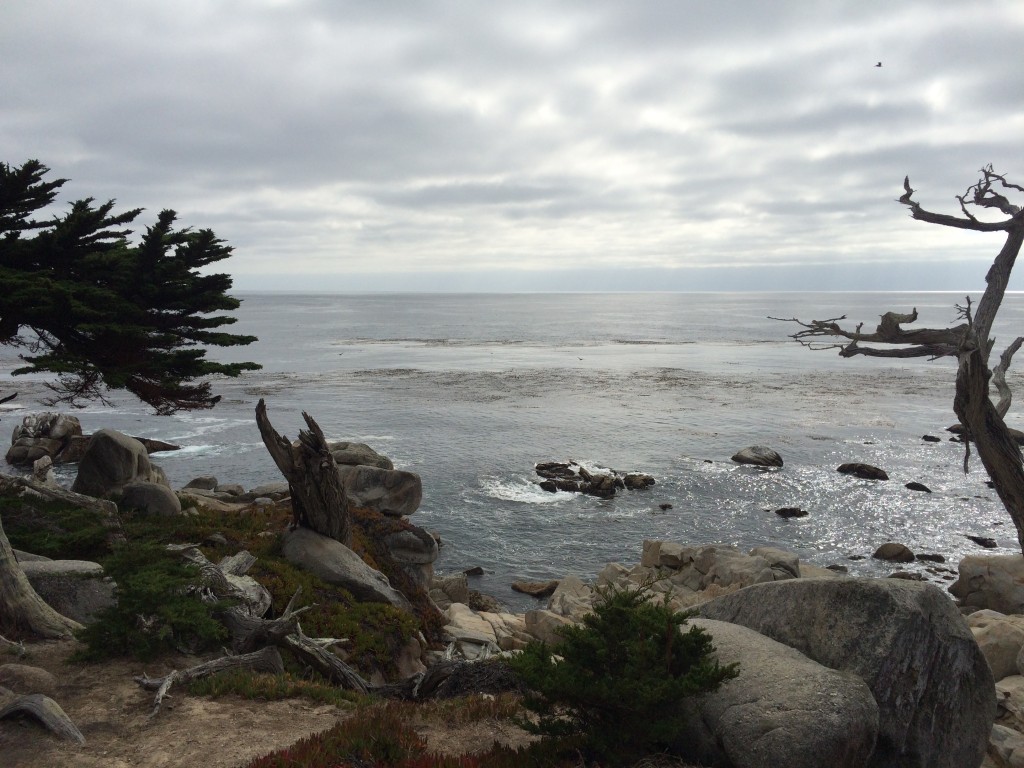
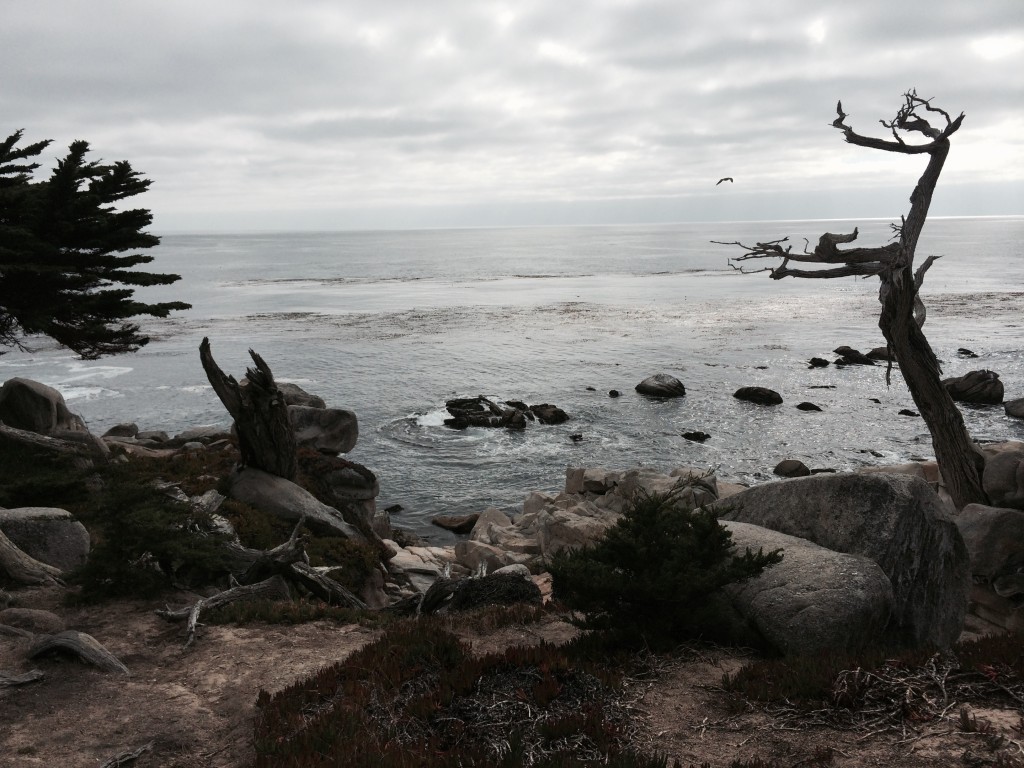
17 Mile Drive.
This is an incredibly beautiful and rugged area with stunning coastline. It’s also right next to the Pebble Beach golf course, which you might know.
More whales and dolphins seen. It’s quite touristy, but nice.
By this time we’ve had lots of sun, sand and sea air and we feel like we’ve really absorbed the atmosphere of the place, so we’re feeling very relaxed and cool.

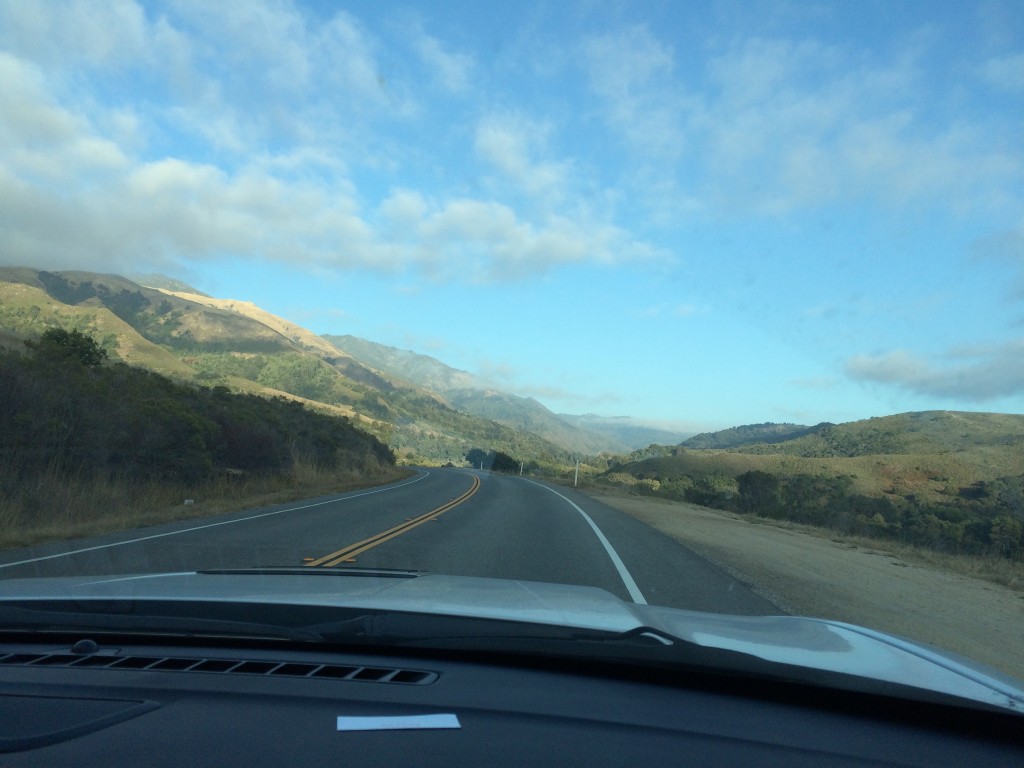
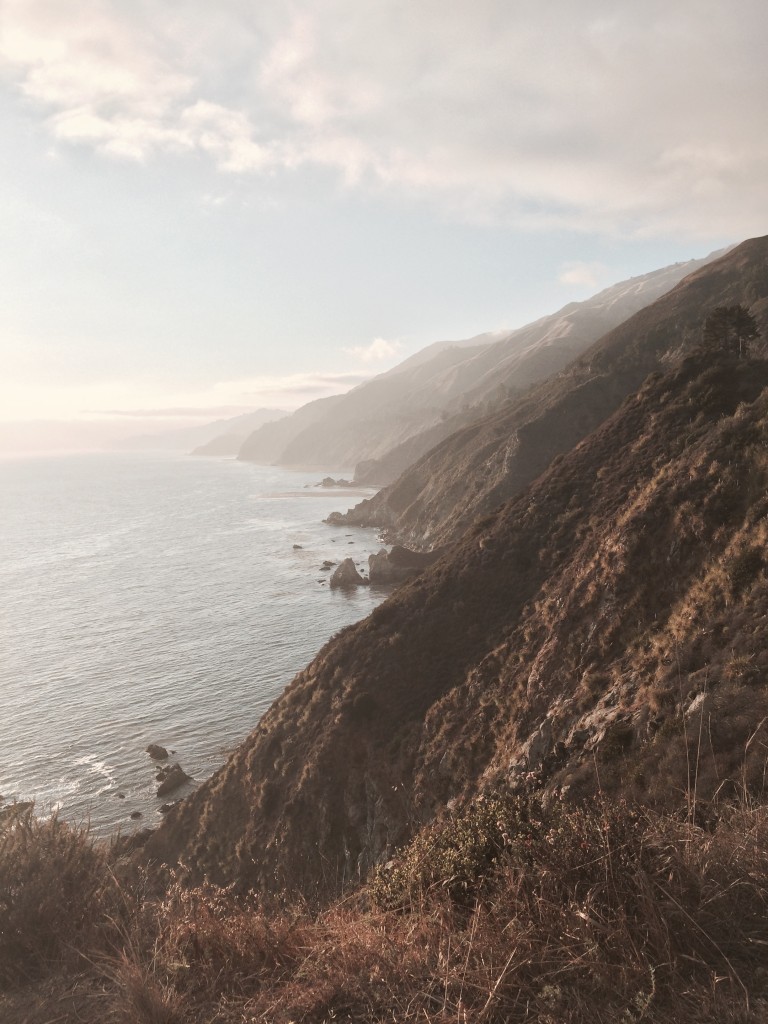
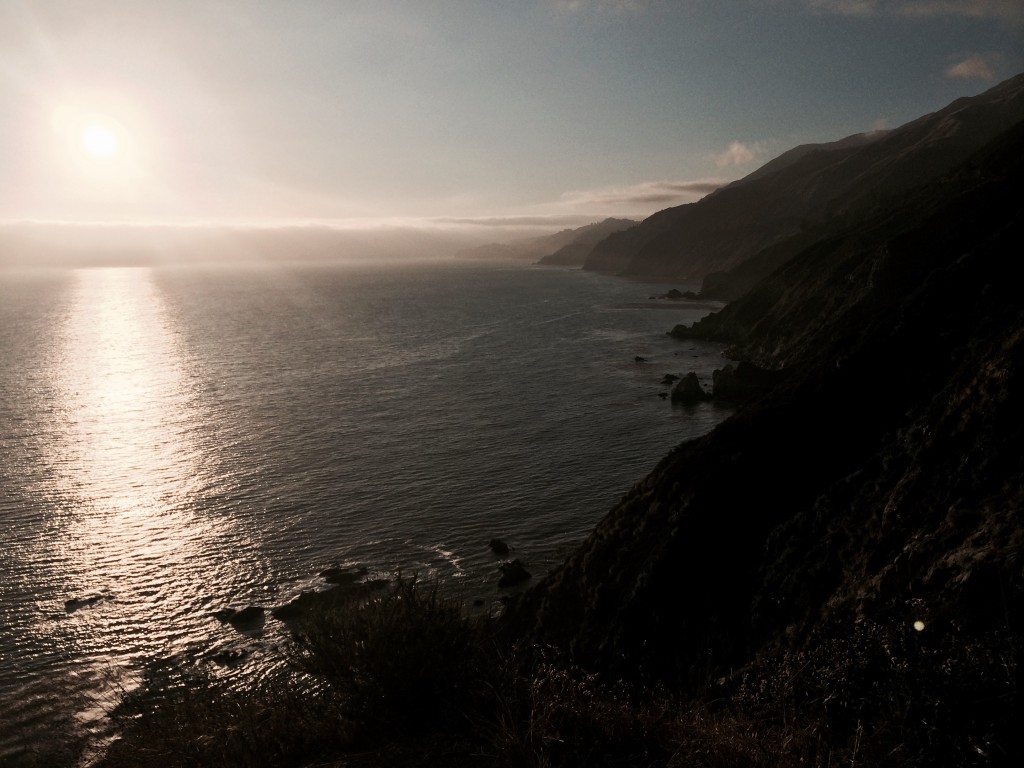
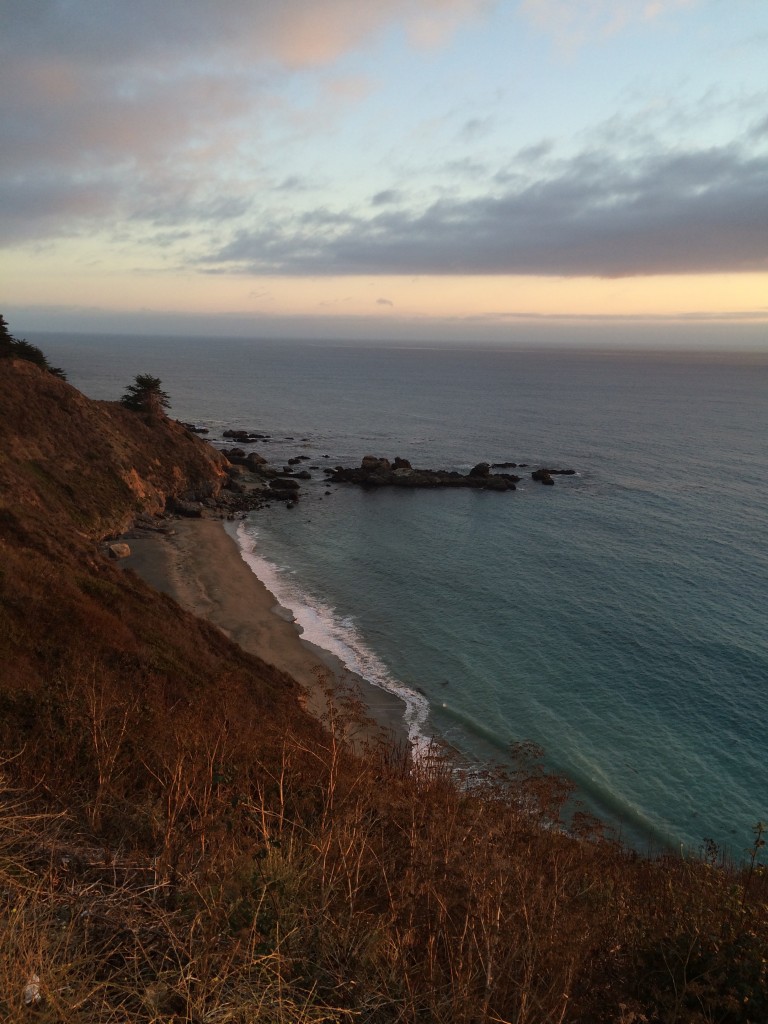
Highway 1 (coastal highway) through Big Sur. Epic views. One of the most stunning and attractive drives ever. Many romantic moments and photos on the way, with the sunset.
San Luis Obispo – the happiest town in America?

Audiobook recommendations
I just wanted to remind you about the audiobooks I’ve recommended in this series. Here are those titles again, just in case you wanted to check them out. Remember you can get a free audiobook if you sign up to a trial membership with Audible.com, which is the internet’s top provider of downloadable audiobooks. They have hundreds of thousands of audiobooks available. Go to audibletrial.com/teacherluke – you can try it out for 30 days, download an audiobook free, and if you don’t like the service just cancel your membership but keep the audiobook. All the details are on my website. Audibletrial.com/teacherluke or click a button on my site that says Audible.
Let’s just re-cap the titles I’ve recommended so far.
The Big Sleep by Raymond Chandler
The Grapes of Wrath by John Steinbeck
Scar Tissue by Anthony Kiedis
The “For Dummies” series – e.g. English History for Dummies
On The Road by Jack Kerouac
One Flew Over The Cuckoo’s Nest by Ken Kesey

August 21
Next day…
Slight miscalculation of distance and a satnav error and we end up missing Malibu and getting stuck in a huge traffic jam in LA.

Last evening – super trendy vegetarian restaurant with a live jazz band. Huge place.

August 22
The problem with the rental car.
Getting fobbed off by Avis.
Fixing it the next day. Describing the story, being clear about what the problem is, taking emotions out of the equation, being clear about what you expect, showing that you’re not happy…
Explaining what happened is very important.
Making sure the person knows exactly what the point is, is very important.

How to make a complaint. (After the Avis situation)
Say that you’d like to register a complaint. Many companies have official channels and ways of dealing with complaints, that might include some rectification. Be clear from the beginning that you are making a complaint, or the staff might just try to fob you off.
Ask to speak to a manager. This shows that you mean business.
Ask for the names of the people involved and write them down. Again, you mean business.
Ask for evidence of anything important – e.g. a print out of a new rental agreement with a price adjustment. Don’t take anyone’s word for it. You’re in a legal area here, so you need paper evidence!
Explain the background story quickly and simply. They need to know what happened.
Be firm and confident and businesslike. Don’t get too personal or emotional.
Explain what you want.
Remember that these people are just doing their jobs.
Tell them it’s your honeymoon.

How to ask people to stop talking on a plane. (During the return flight)
Remember that the people doing the talking are probably going to take it really badly or personally. How would you react if someone told you to be quiet on a plane?
Do not bring all your anger and frustration to the first comment. Be utterly reasonable, giving them no choice but to respect your wishes. If they don’t like you or find you unreasonable, they won’t want to comply.
Say things like “I don’t want you to stop talking, but…”
Explain why you would like them to stop.
Again, don’t get emotional, aggressive or angry, but you can say it firmly without being aggressive.
“I’m really sorry to bother you, I don’t want you to stop talking, but could you please try to do have your conversation more quietly? It’s just that nobody else is talking, and we all need to rest and I can hear every word you are saying!”
It would be pretty hard not to say “Oh, sorry!” in response to this.
If you just turn round angrily and say “shhhhh!” then I’m sure they’d be less willing to comply – remember, they’re not aware of all the anger and frustration that’s been building up inside you, so you’ll just look like an insane person, and you’ll have a couple of enemies on the flight.
Final tip: Tell them it’s your honeymoon.

American English Vocabulary vs British English Vocabulary
This is a mix of things like games, job titles and household items.

Wardrobe – Closet Furniture
Plaster – Band-Aid Personal Care
Ladybird – Ladybug Insect
Noughts and Crosses – Tic Tac Toe Game
Draughts – Checkers Game
Flat – Apartment Housing
Tap – Faucet Furniture (sink)
Lift – Elevator Housing (in a building)
Torch – Flashlight Household Item
Football – Soccer Game
Estate Agent – Realtor Job
Rubber – Eraser Stationery
C.V. (Curriculum Vitae) – Résumé Job
Spanner – Wrench Tool
Autumn – Fall Season
Holiday – Vacation
Canteen – Cafeteria Room

In Conclusion
We had an absolutely fantastic time travelling around California. It has so many things to offer, including lots of things that we didn’t get to see. Two weeks are not enough, and the time went by so fast that it was almost over before it had started! It is a wonderful place for a honeymoon, and in fact for all types of holiday – for single people, honeymooners or families. I would definitely recommend it, although it is a bit expensive in some areas, particularly San Francisco and the coast. All in all the people were really friendly, the weather is fantastic and there are loads of impressive and entertaining things to see and do. There is plenty of really amazing food, which is a contrast to the stereotype of USA with its unhealthy food culture. The landscape is varied and beautiful and there’s a lot of shopping to be done as well. We’d love to go back one day and see lots of other things we missed. We shared a really special two weeks that we’ll remember forever.

I really hope you’ve not only enjoyed this account of my trip, but that you’ve also learned some things too. My intention has been to not just share our travelling experience with you, but also to just invite you to think about the culture, history and geography of the place along the way, as well as teach you some English.

I’m going to upload photos of our California trip on this page, or on each page in this series. Check them out – it might help to bring some of my descriptions to life a bit.

As ever, leave your comments on the pages for these episodes with your thoughts, feelings and questions. Join the conversation at www.teacherluke.co.uk

That’s it for now, until the next episode.

Take it easy.
Luke
17 Mile Drive

294. California Road Trip (Part 7) Earthquakes & Hippies

Hello listeners and welcome back. This is part 7 in this series which is based on my recent trip to California. I didn’t expect this to be a 7-part series, but it just keeps going because I’ve found more and more things to talk to you about! It’s like the podcast episode that refuses to die, it keeps coming back for more! It’s like the Lambton Worm or something – just when I think I’ve finished it off, it gets longer! I think this will be the last episode, but who knows. Time seems to shrink when I’m recording episodes of this podcast. An hour seems to disappear in just a few minutes because I get really involved in what I’m saying. I wonder if it’s the same experience for you. I hope so.

Small Donate Button[DOWNLOAD]
If you haven’t heard the previous 6 episodes in this series then I suggest you go back and listen to them first. So far I’ve talked about lots of things including the history of California, some British & American English, Venice Beach, Segways, Baywatch, The Red Hot Chili Peppers, Hollywood & Celebrity Culture, Hotel California by The Eagles, Yosemite National Park, bears, The church of Scientology, an interview with AJ Hoge from Effortless English, a biography of Robin Williams, and descriptions of the things I did and saw while on my honeymoon with my wife.

In this episode I’m planning to talk about San Francisco, earthquakes, the hippie movement, customer service, the California coast and some more British and American English vocabulary.

A lot of what I am saying is transcribed on the page for this episode at teacherluke.co.uk. Look for episode 294.

*I’m expecting a package to be delivered by the postman at some point, so you might hear a knock at the door or the buzzer. It goes ‘buzz’, so it’s not a doorbell it’s a buzzer.*

Let’s get straight into it.

August 16
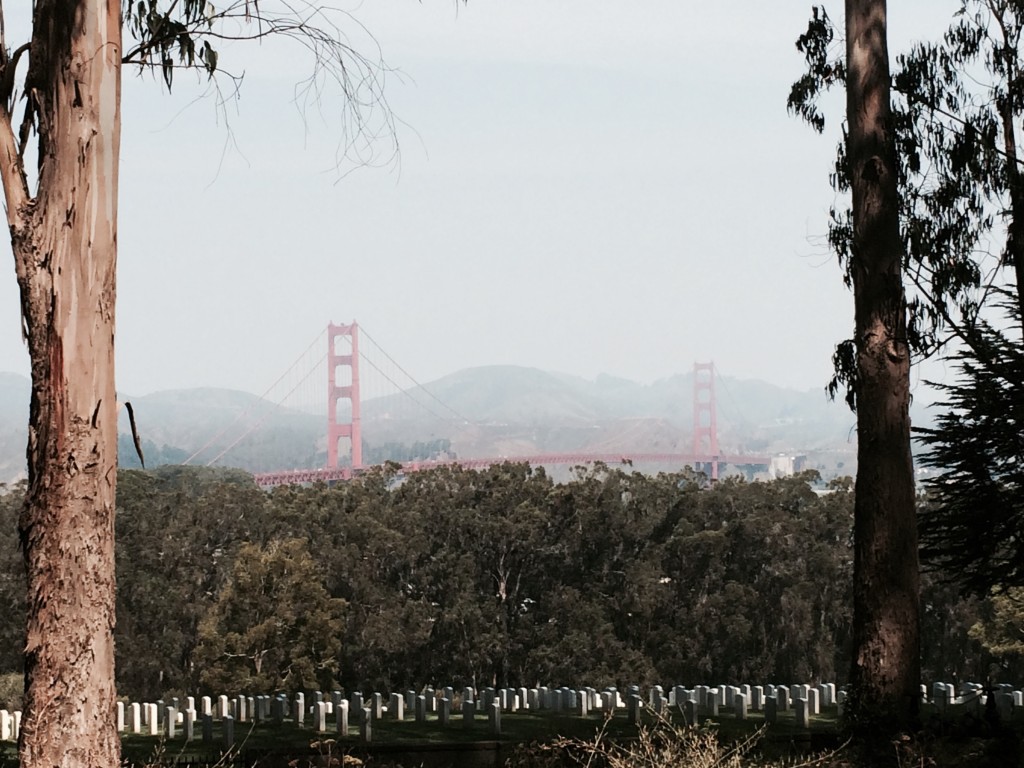
Cemetery & view of Golden Gate Bridge.

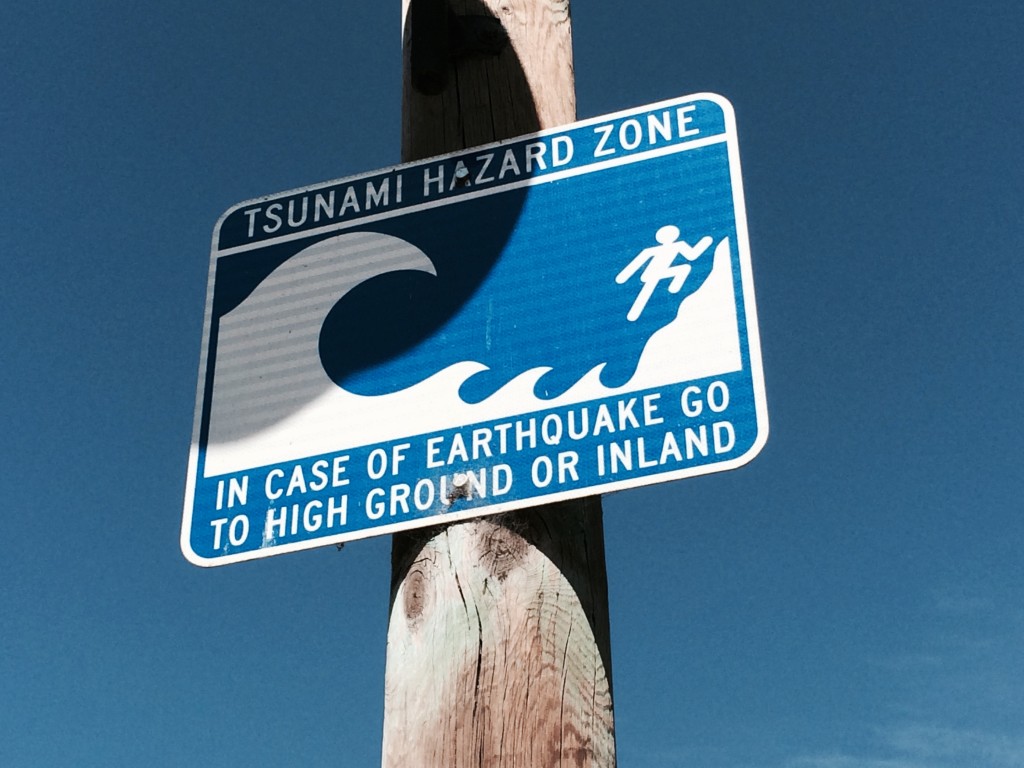
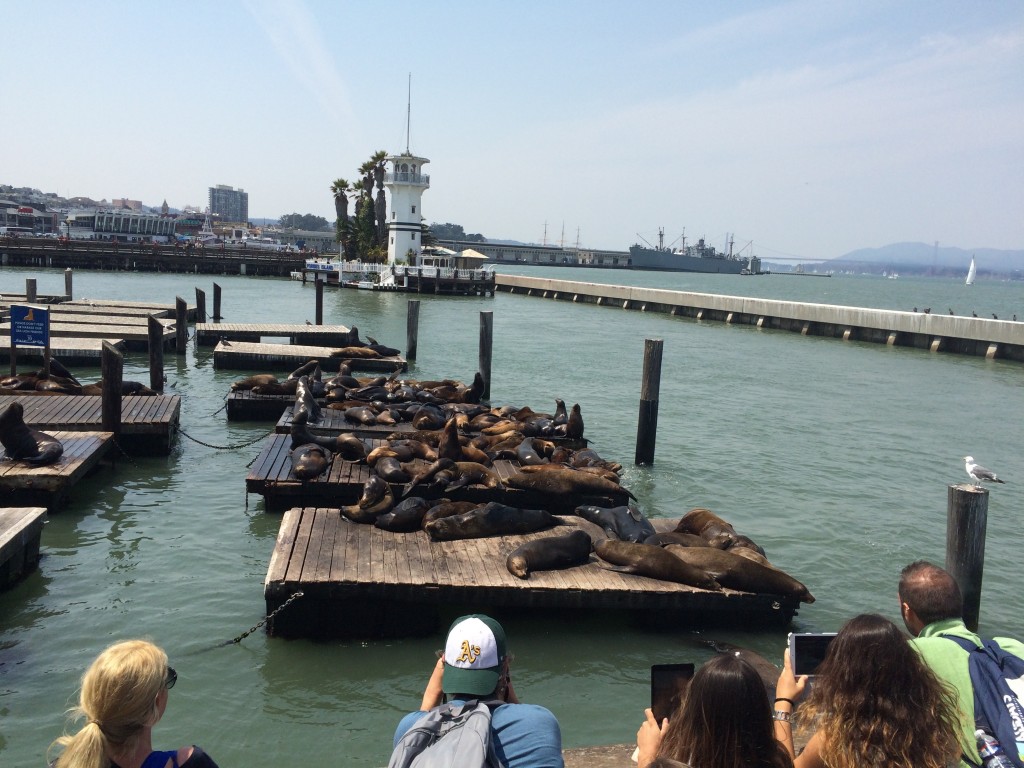
Fisherman’s Wharf & tourist area. Sea lions that weirdly arrived in the harbour just after the 1989 earthquake. Why did they suddenly arrive after the quake? Perhaps their previous social spot had been damaged or something like that. I’m not sure.

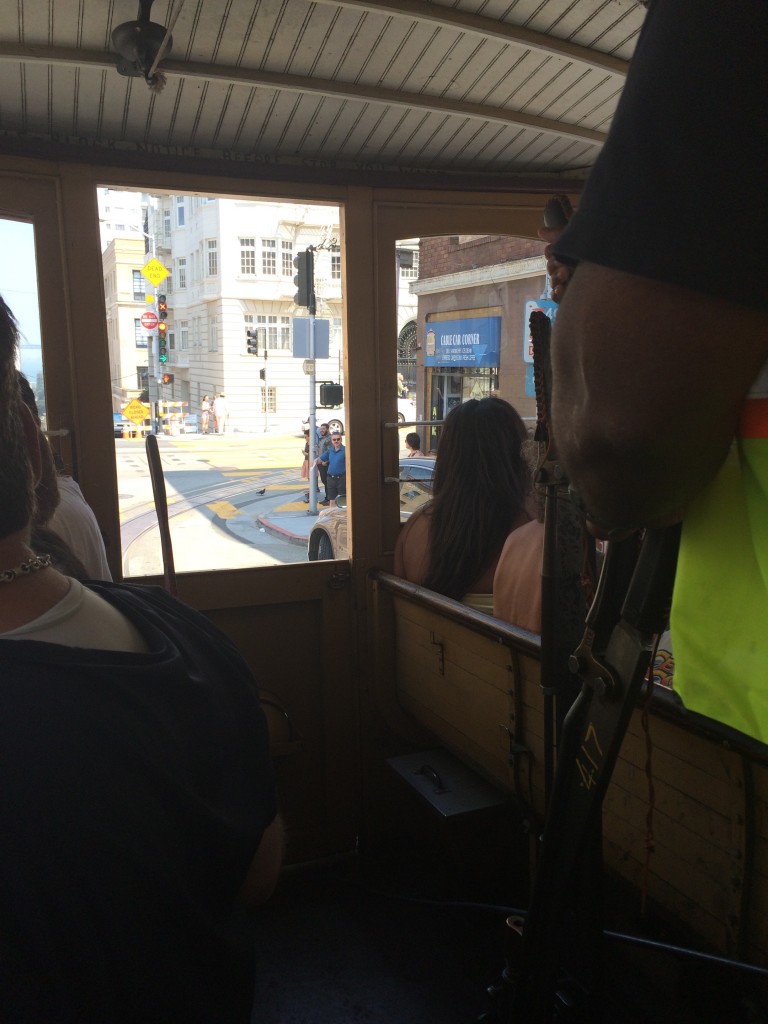
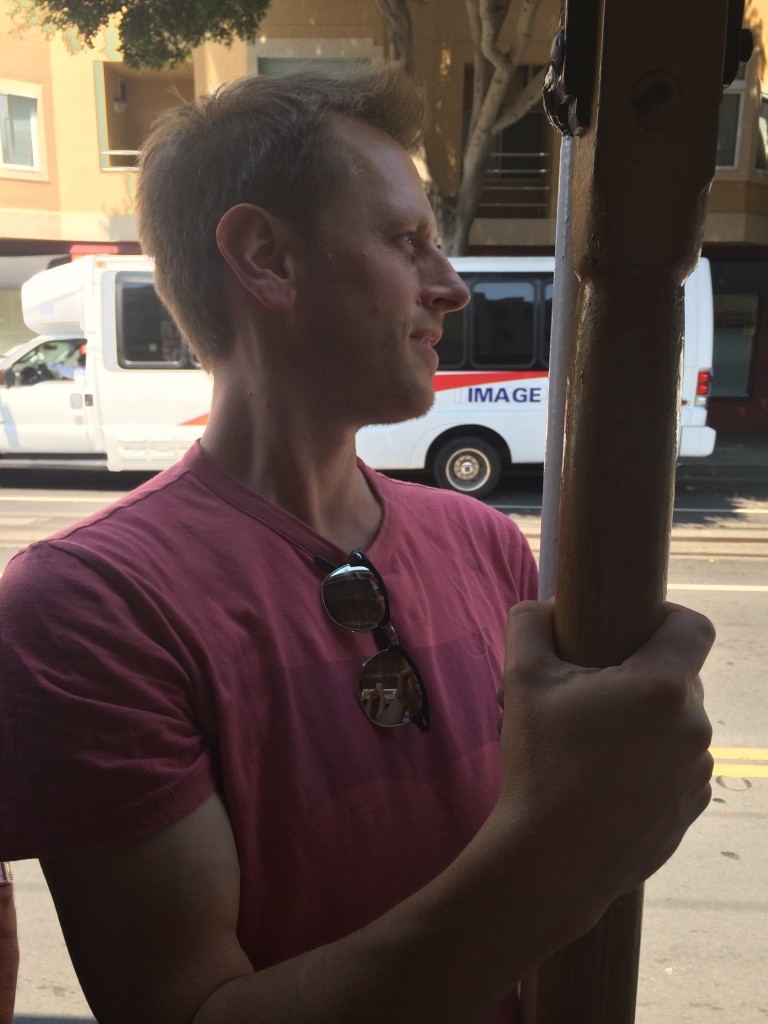
Cable car. Long delay and pretty grumpy service but it’s a great experience, hanging on to the side of the car as the driver pulls various weird levers, making the car move up and along the steep streets. We met an American couple who had been married for over 30 years. The wife did all the talking. Apparently they’d been to a Giants game (baseball) and he had caught a loose ball that had flown into the crowd. Apparently this is quite an honour in the states. You can keep the ball.

I met AJ Hoge in the afternoon. Listen to the previous episode for that interview.

That evening we ate dinner in a really well-reviewed Japanese restaurant just near our hotel – Sanraku – incredible sushi! This is the best Japanese food I’ve ever had outside Japan, and I had a load of sake and a couple of beers. Sake is really nice and a little dangerous to drink because you get drunk without realising it because it has such a light taste.

August 17
Earthquake in the morning!
A bit about earthquakes.
Tectonic plates.
They move against each other. Sometimes they overlap, sometimes they press against each other.
Sometimes pressure builds up and then the plates suddenly move at the fault lines. This causes ripples of movement through the ground, or the whole ground to suddenly shift position. The movements, ripples, vibrations or whatever you want to call them can last some time, and they can cause huge amounts of damage.
If the quake happens off-shore, then there’s likely to be a big tidal wave or tsunami after the event. As the ground is displaced very quickly, it can displace massive amounts of water. For example, it might cause the water level to rise suddenly. Imagine filling a plate with water and then tipping the plate slightly. It would cause some of the water to run off the side of the plate. It’s like that but on a much larger scale of course. The water has so much volume and mass that it is almost impossible to stop. When it reaches the land it carries lots of earth and all kinds of detritus with it, turning the wave into an incredibly powerful and unstoppable wall of destruction. You can see footage of this from the Japanese tsunami of 2011. What a tragedy that was (although the Japanese showed characteristic strength and determination in the way they recovered from it).

It pretty much impossible to predict an earthquake, but it seems that along the San Andreas fault at this particular spot near San Francisco, there is a really big earthquake every 70 years or something, and the big one is long overdue. In fact, the whole region of California is subject to earthquakes quite regularly.

Earthquake Myths and Facts
Here are some myths and facts about earthquakes, from the U.S. Geological Society website.
http://www.usgs.gov/faq/taxonomy/term/9830

San Francisco style
Everyone’s wearing sports gear and they’re all really health conscious. They’re constantly in their gym gear and they look very active and healthy. In fact, being healthy and looking after yourself seem to be important aspects of life in this part of the country.

Acai bowls
My wife persuades me to switch to these instead of the big plates of pancakes and its a good move.
Acai are berries that grow in Brazil and apparently they contain everything you need. Vitamins, nutrients, amino acids and all that stuff. These acai bowls are popular all along the coast. They’re a bit hipsterish, but they’re good. The acai berries are turned into a kind of powder, which is mixed with things like almond milk or hemp milk, and frozen fruits, and then blended to form a sort of sorbet. This is then put into a bowl and mixed with granola, nuts, cut banana and strawberry, and is topped with coconut flakes or other things. They’re really good and they keep you going for ages without making you feel bloated. In fact, you don’t feel that full, but you’re not hungry either, and it gives you plenty of energy and no guilt.

My wife is now on a mission to make acai bowls popular in Paris!

Haight Ashbury
We then walked towards the Haight Ashbury area. The plan is to walk all the way over to that part of town, picking up some coffee on route. Then we’d walk through HA, pick up lunch at Wholefoods there, and eat a picnic in Golden Gate Park where apparently there is live music every Sunday. I’m quite curious about Haight Ashbury, because I’ve heard about it and read about it so many times, especially in documentaries about music and art from the 1960s.

History of Haight Ashbury & the Hippy Movement
What happened in Haight Ashbury in the 60s? What was the hippy movement all about?

There was a counterculture movement, a youth movement in the USA (and in many other places of course) that started in the late 1950s but really gathered momentum in the 1960s, seemed to peak in the middle of that decade, and was pretty much over by the early 1970s. I’m sure you know what I’m talking about, as I know that a lot of you listening to this are fans of the music that we associate with that time, and you may well know as much about this subject as I do, but nevertheless here is a brief history of the hippy movement.

This was a subculture and ideological movement which started with the beatniks earlier in the decade. “Beatniks” – that’s kind of a nickname given to the movement that came before the hippies. The beatniks were writers, artists, intellectuals and radicals who were united in a general feeling of dissatisfaction with the status quo. They rejected materialism (e.g. the idea that happiness in the USA can be found by marrying, getting a steady job, buying the right home with the right car, and the right modern accessories in your home and all that kind of square thinking). The Beats were more interested in soul-searching and trying to find some deeper meaning to life. This seems pretty normal now, and part of the dominant culture these days. Everyone has their soul-searching teenage period where they write a diary, write poetry and get all deep and meaningful. Well, that was common for teenagers of my generation in the UK, who got into indie music, started dressing like goths and smoked self-rolled cigarettes. The beats were the first to do that (although I expect there were other movements in Europe that did essentially the same thing, like the Bohemians). The Beats were heavily inspired by jazz musicians like Charlie Parker and Miles Davis and like this kind of jazz music, life for the Beats was a free-form search for truth and inspiration in the creative process. It was like a big improvisation with no boundaries. Sounds pretty groovy, hip and cool right? In fact those are words that come out of that time. All of them were probably coined by jazz musicians, but the beat generation appropriated them, or at least used them too. So, if things were good they were ‘cool’, or ‘hip’. You ‘dig’ things which are ‘cool’. The opposite of ‘cool’ was ‘square’.

We associate the Beat movement with certain writers, who are called the Beat writers, or Beat poets. These are people like Jack Kerouac, Allan Ginsberg, William S Burroughs and Ken Kesey. Some of the beats were into buddhism, sexual liberation and drug use. Out of this subculture came the hippies, who pretty much based their whole way of life on the ethos of the beat generation, and used books like “On the Road” by Jack Kerouac as a starting point for their own rejection of materialism and ‘normal’ life.

The word ‘hippie’ comes from the word ‘hip’, meaning ‘cool’ or in tune with this way of thinking. People also used the word ‘hipster’, but now we know we use the word ‘hipster’ for another kind of modern subculture – those uber-cool people who you find in East London who grow their own denim butter, have long beards and skinny jeans, use no electricity, ride fixie bikes, reject mainstream products in favour of vintage or handmade stuff, reject the dominant political system, and live in an apartment paid for by their rich parents. They’re similar to the beat generation or the hippies but today’s hipsters just seem to be more interested in just being cooler and more culturally aware than everyone else, and don’t have the same sort of communal spirit or mission as the hippies did.

Anyway, a whole generation of young people in the USA and in other parts of the world in the 1960s were really influenced by the beat generation and took on their values, and pushed them further – not everyone did this – not everyone at the time was a hippie. No, it was a subculture after all, but enough people lived the lifestyle for it to be a significant cultural movement. The hippies took it a bit further and embraced the whole concept, forming communes (shared living communities) in certain places – notably Haight Ashbury in SF and Greenwich Village in NYC (where the likes of Bob Dylan were playing protest songs and folk music in cafes).

The introduction of certain drugs, especially LSD into these communities really accelerated the whole movement, along with certain key events like the escalating conflict in Vietnam and the release of records like Bob Dylan’s first album, and albums by the Beatles. LSD was a drug that was created by accident by a pharmacist/chemist. It ended up being appropriated by the hippie movement because of the way it gave users incredibly transcendent mind trips, which made the hippies feel like they were experiencing things on a whole new level of consciousness. The innocence, youth, energy and vitality of this movement peaked in 1966/1967 particularly in the community of Haight Ashbury where, according to the accounts of lots of people, there were all kinds of open, free gatherings of people who took LSD, danced, made love and generally were very peaceful and transcendent, when they weren’t organising protests against the Vietnam war or other injustices. The hippies were for harmony with nature, sexual liberation, the use of drugs for mental liberation (aka consciousness revolution), peace, free love, communal living and eastern influenced spirituality. For the hippies, their immense optimism, fuelled by psychedelic drugs and perhaps a certain amount of naive idealism created the feeling that their love was going to change the world, and that there would be a sort of consciousness revolution which would cause the whole world to realise a totally new way of thinking and to start living in peace. The soundtrack to this period was albums like Sargent Pepper’s Lonely Heart’s Club Band by the Beatles. The thing is though, all the drug taking and free love did not come without a price, and it was naive of the hippies to think that their lifestyle was sustainable. True spiritual transcendence could not be achieved by simply taking a 2 dollar hit of acid, and many people just ended up mentally damaged by their use of LSD, and when harder and more addictive drugs like heroin arrived, the scene became much darker. In fact, hard drugs and other things like the later threat of AIDS pretty much killed the innocence and youthful spirit of the movement.

The optimism of the hippie movement and its decline were really well described by writer Hunter S. Thompson in his book Fear & Loathing in Las Vegas. There is one particularly famous passage in which he describes the essence of the movement as like a wave that travelled across the country, then broke and flowed back again, leaving a sort of cultural high-water mark, or a cultural mark on the country. This is probably Thompson’s most celebrated bit of writing. There is a film version of the book, directed by Terry Gilliam and starring Johnny Depp, who does an amazing acting performance in the role of the main character, who is a version of Hunter S. Thompson. Let’s listen to the scene from the film when Thompson talks about Haight Ashbury and the hippie movement. This is Hunter S. Thompson, played by Depp, in 1971, looking back at the previous 5 or 6 years, surveying what had happened before.

Fear & Loathing In Las Vegas – The High Water Mark

The Woodstock Music Festival was probably the culmination of this whole movement. It didn’t take place in San Francisco, but near New York. That was a massive happening, with hundreds of thousands of people who gathered together to celebrate love and peace, with some of the great bands and musicians of the time, like The Who, Jimi Hendrix and Crosby, Stills & Nash playing the soundtrack.

The end of the dream came with a few events that showed the dark side of all that drug taking and chaos – Charles Manson, Altamont (a Rolling Stones concert that involved the Hell’s Angels who killed a guy), hard drugs and their damaging effects, AIDs.

How does this relate to that Eagles song? They’re singing about people damaged by loss of innocence – the same people who used to be idealistic, but ended up lost in decadence and the temptations of sex, drugs and rock & roll.

Talking of rock & roll, let’s listen to George Harrison, who of course was a member of the Beatles and someone who was at the heart of this whole scene. Here he is from the Beatles Anthology documentary talking about how he visited Haight Ashbury in 1968 expecting it to be a kind of hippie heaven of peace and love, but in fact by 1968 it had become quite a scary place with lots of people just living in the street, begging and taking hard drugs (he described them as ‘bums’). I think it was quite a shock to him and that’s when he decided to stop taking LSD and he sort of rejected the hippie movement and instead chose to embrace Indian transcendental meditation – a much more disciplined and well-established form of spiritual exercise.

George Harrison (originally from Liverpool, UK) – Haight Ashbury 1968

What’s Haight Ashbury like now?
It still has that general atmosphere, but the original feeling is long gone I think. But it’s still a really cool place, and I was very interested in visiting it in order to see what it was really like. Now it’s artisanal coffee shops, a mix of branded clothing stores and unique clothing boutiques. Really it’s just another tourist destination where you can buy Bob Marley posters, hippie clothing, bongs, pipes and fake retro t-shirts. It’s a bit like Camden Town or something. It’s not a genuine place of consciousness revolution any more although there are still some communes of hippies living there and I think that there’s a lot of housing which is offered to homeless people, or people of no fixed address. In the surrounding streets I saw quite a few homeless people, or homeless looking people and people who seemed to be suffering from mental illness, or on medication for drug addiction. You also find some interesting murals painted on the walls with anti-capitalist messages written on them. That’s partly the feeling of the area, but also there’s a sense that the place is a bit of a tourist attraction. There’s Nike store there for example, which is like a temple to individualism and materialism.

Many people think that the place is not what it used to be. I can’t help feeling a bit sad about this, because the hippies were onto something good. Their intentions were good, but maybe they were idealistic and naive. Maybe they were reckless with their drug use and their free sex, or maybe their movement got crushed by the establishment. Anyway, now in Haight Ashbury there are just remnants of those old values. Lots of organic shops and incense and stuff like that, and certainly some people who believe in ethical and sustainable living, but still a sense of increasing commercialisation. I wonder about some of the locals who have lived in the area for a long time and who now find themselves living in a commercialised tourist attraction.

I think I may have come across one of these people during a visit to CVS – a chain of pharmacies that you find all over the USA. We went in to buy some bottled water. We chose one bottle of Californian water and one bottle of Fiji Water, which is bottled in Fiji and then shipped to shops around the world, including California. We got to the counter to pay and the middle-aged woman who served us just said, in a very passive aggressive manner, “Yeah, why NOT buy bottled water from the other side of the world”.

I recognised the sarcasm, and immediately felt judged. What was she really saying?

Guilt trip! This made me feel pretty bad for a while, until I snapped out of it.

What do you think? I expect most of you are thinking – ignore her, she was being really rude! And you’re right, but…

I think she had a point to be honest, but I’m not sure if she made it in the right way. (I mean, giving someone a guilt trip about a product they are selling someone may not be the best way to get your message across, or maybe it is – it had an effect on me!) The woman was certainly rude to me, but does that matter if her point is valid? I wonder what it must be like for her working in CVS, while having these values. Maybe she doesn’t have to work there, maybe she has no choice. Who knows. I don’t even know her background, but just that one comment tells me a lot. What do you think? Did she have a point? Is it wrong to buy bottled water which is sourced in another country? Should the woman have said something to me? Is she a hypocrite for working in the shop even when she disagrees with some of the products it sells? Let me know your thoughts as usual.

I did have another couple of experiences with slightly passive aggressive, weird behaviour.
Another guy by the side of the road who seems to be homeless, tried to attract my attention: “Oh did you drop something…hey!” I just kind of shook my head and smiled a bit, but said no. He said “oh no it’s just my brain entrails you’re stepping on” There is a slightly bad vibe from some of these old hippies, but nothing more than that really. I didn’t feel unsafe there or anything, just a bit freaked out by some of these people.

In the park there was a guy who could have been homeless, or mentally ill, I’m not sure really. He was busking, and by busking in this case I mean playing classic American songs, like Motown, The Beach Boys, Elvis on a loud tape player and just singing along – loudly and badly, like a bad public version of karaoke that nobody wanted to listen to. There were three youngish people sitting on the bench next to him, looking pretty awkward because this guy was pretty loud and acting quite crazily and I think it was a bit off-putting for them. After a while they got up to leave and didn’t really acknowledge him or give him any money, and he said “Hey, thanks for the tip!” – A pretty passive aggressive comment considering they hadn’t given him a tip. I think they were a bit put off and possibly slightly scared of him, and they didn’t respond but kept walking away. He repeated, louder and louder “Hey, thanks for the TIP!! HEY THANKS FOR THE TIP!!!” – a slightly disturbing moment, but nothing bad actually happened.

Despite some of these little scenes had a really nice relaxing time in Golden Gate Park, even though there was no music when we were there, except for the “thanks for the tip” guy. We lay on the grass reading and napping a bit, digesting our food.

More Audiobook Recommendations – www.audibletrial.com/teacherluke
Let’s continue to look at a few recommendations for California-related audiobooks you could download free by going to www.audibletrial.com/teacherluke

The two books I’d like to recommend are associated with the Beat movement of American literature, which was so important to the values of the later hippy movement.

“On The Road” by Jack Kerouac
This is probably the book which inspired the hippy movement more than any other. This is what is written in the summary for this book on audible.com: Few novels have had as profound an impact on American culture as On the Road. Pulsating with the rhythms of 1950s underground America, jazz, sex, illicit drugs, and the mystery and promise of the open road, Kerouac’s classic novel of freedom and longing defined what it meant to be “beat” and has inspired generations of writers, musicians, artists, poets, and seekers who cite their discovery of the book as the event that “set them free”.

Do you fancy listening to an actor read that book to you? Visit www.audibletrial.com/teacherluke to sign up to a trial membership. You can download any audiobook you want, and then either cancel your membership and keep the audiobook, or continue as a member and enjoy more audiobooks every month.

“One Flew Over The Cuckoo’s Nest” by Ken Kesey
Ken Kesey was part of a group of writers called The Merry Pranksters, which also included a man called Neal Cassady who was one of the inspirations for a principle character in On The Road. Kesey and the Merry Pranksters were a group who advocated a particular way of life that inspired the hippy movement. The Merry Pranksters sounded like a cool and funny bunch of people. They drove around America in a big bus. That was the inspiration for The Beatles “Magical Mystery Tour” film. Basically, Ken Kesey is a very important figure in the American counter cultural movement of the 1960s. A key writer in the Beat generation. Beat writers like Kesey influenced so many important cultural figures that followed them, including pretty much all of the famous rock musicians who emerged from the 60s and 70s, including The Beatles, The Rolling Stones, The Doors, The Byrds, Neil Young and everyone else basically. They’re the ones who defined that whole lifestyle that is now so globally pervasive.

“One Flew Over the Cuckoo’s Nest” is the story of a charismatic criminal who ends up in a mental hospital when he’s not really mentally ill. He fakes it in order to avoid prison, thinking it will be much easier. What he discovers is that the mental institute is far more sinister than he’d imagined, and he ends up in a great mental power struggle against the strict nurse who runs the hospital. It’s all about the corrupting nature of power, about fighting against the establishment, about the fine line between sanity and insanity, and the idea there is something rotten at the heart of the American administration. What’s more, it’s just a great dramatic story, terrifically well written with some fantastic surprises. The main character is a lot of fun, and the evil Nurse Ratched is a great villain.
It’s sad, joyful, moving, and powerful, particularly at the end. There’s also a great film of this book, starring Jack Nicholson.
You can download the original version, narrated by Kesey himself (abridged and only 3-4 hours), but I recommend the 50th Anniversary Edition read by actor John C. Reilly (who I’m sure you’d recognise if you saw him – he’s a brilliant actor, with a really distinctive voice). It’s unabridged, so you get the whole book which comes to 10+ hours of audio.

End of Part 7. Part 8 coming soon, and I’m sure it will be the final chapter in this series. :)
Haight Ashbury

293. California Road Trip (Part 6) San Francisco / AJ Hoge Interview / UK & US English

Welcome to episode 293, which is in fact part 6 in this mini series based around my recent trip to California. There’s still a lot to talk about, and in this episode I’ll tell you about our time spent in San Francisco and that’s going to include these things – my interview with AJ Hoge the well-known online English teacher, more British and American English, earthquakes, a short biography of Robin Williams, a history of the peace & love movement in San Francisco, more descriptions of our trip down the west coast of California, and some more tips about how to talk to waiters and customer service staff.

Small Donate Button[DOWNLOAD]
It seems pretty obvious to me that this is too much for one episode, so I think there will probably be a part 7 to this series, and after that we’ll return to normal podcasting and English teaching, with perhaps some more UK oriented topics in future episodes, and more episodes featuring authentic unscripted conversations with my friends Amber and Paul.

Video
Here’s a video of the Periscope live feed I did while recording this episode. Watch the video for about 20 minutes of extra video content, and to watch me recording this episode.

AJ Hoge Interview

I think I should start this episode with my interview with AJ Hoge. This took place in San Francisco in the lobby of the hotel where we were staying.

Who is AJ? http://ajhoge.com and http://effortlessenglishclub.com
AJ is an American-born English teacher who started his career as a social worker (what’s a social worker?) before going into English language teaching. He taught English abroad in Thailand, Japan, Korea and other places, and at home in San Francisco before becoming an independent self-employed teacher on the internet. He has created his own online English teaching courses and has written a book about learning English, and he sells all those things on his websites (see links above). He’s also a public speaker who has been booked to do conferences, speeches and presentations about learning English, sometimes to thousands of people at a time. He’s probably the most well-known English teacher on the internet (yes – more well-known than me – he’s good at marketing himself!) and I’m sure that you’ve come across him. I’m very impressed by what he’s achieved as an independent teacher and it was really interesting to meet him and find out about his work. I recorded our conversation and I’m going to play it to you right now.

Unfortunately I had a bit of a technical problem during my meeting with AJ. I was using a new portable audio recorder and for some unknown reason it kept turning itself off during our conversation, which was very frustrating indeed. So unfortunately some parts of our conversation are lost. That explains why the conversation cuts out a couple of times, particularly at the end. Fortunately, the main part of our conversation was recorded, so let’s listen to it now!

Part 1 – You’ll hear an introduction, but then the recorder switched itself off after a couple of minutes, which is why the conversation stops abruptly.

Part 2 – I started again after discovering that the recorder in my hand had in fact switched itself off again. We spoke for another 20 minutes or so and then the recorder switched itself off again! This is why the conversation stops abruptly before I had the chance to say thanks and goodbye to AJ. We plan to stay in touch though, and we might talk again via Skype in a future episode of the podcast.

More British and American English Vocabulary (Part 3) – Clothing
Trousers – Pants Clothing
Nappy – Diaper Babycare
Jumper – Sweater Clothing
Tights – Pantyhose Clothing
Waistcoat – Vest Clothing
Trainers – Sneakers Footwear
Braces – Suspenders Clothing
Dinner Jacket – Tuxedo Clothing
Polo neck (sweater) – Turtleneck Clothing
Wellington Boots (Wellies) – Galoshes Footwear

August 14
Let’s go back to the day we left Yosemite, before I met AJ in San Fransisco. Remember that this is after we had our long hike in the mountains and my wife sprained her ankle and had to use crutches to walk down.

In the morning my wife tentatively tries walking a bit on her ankle and thankfully seems ok after all that rest, and because she managed to keep her weight off it during the rest of trek with the help of the crutches. She’ll be able to rest it even more in the car, and take it easy for the whole day as we won’t do much walking.

We drive out of Yosemite. It’s a bit of a pity to be leaving all these huge rock formations like El Capitan and the Half Dome. We’ve got to know them quite well, and it’s always an exciting surprise to see them through the gaps in the trees. They’re like the big celebrities in this park and whenever you see them they dazzle you with their charisma and charm. As we’re driving out of the valley we stop a few times to just stare up at them for a while, particularly El Capitan, which I think is one of the biggest vertical rock faces in the world. Rock climbers enjoy climbing it, but it can take 4-5 days to go up the whole thing. The climbers actually sleep on ledges on the rock face, or they set up beds which hang from hooks in the rock face. Imagine sleeping on a tiny camping bed, hanging from the cliff, with thousands of feet of air below you. I’d never be able to sleep in those conditions! But it must be an incredibly thrilling way to enjoy the place.

We’re going to miss these mountains and rock formations, but it’s time to drive to our next stop – a place we’re looking forward to very much. San Francisco.

As I outlined in the second part of this series when I talked about California’s history, SF was originally a Spanish settlement for missionaries, but then when gold was discovered at almost exactly the same time that California became part of the United States, the city grew really fast to be a gold rush town, with thousands and thousands of people moving into the area, including many Americans, but also Europeans and Asians. That multicultural mix is still evident today.

SF is also known for its earthquakes. There was a big one in 1906 that destroyed large parts of the city, but it rose again, like a phoenix from the ashes. In fact, the flag for San Francisco shows a picture of a rising phoenix to commemorate the city’s recovery. There have been a few big earthquakes here over the years, including another one in 1989. The city is still expecting another really big earthquake to hit at any time, which is a bit of a worrying thought, and one that I suppose the residents of the city don’t think about too much. Does that idea give San Francisco a kind of laid back and open-minded atmosphere? Possibly. I suppose if you know in the back of your mind that everything could be destroyed any minute by a big earthquake, it makes you a bit more philosophical, or it makes you enjoy every moment while it lasts. That feeling does pervade the place a bit. It’s got a peaceful, meditative and bohemian atmosphere which is really refreshing.

San Francisco is also known for being the focal point of the beatnik and hippie movements of the 1960s. Haight Ashbury in particular is the district that was associated with those movements. More on that later.

Long drive to SF.
First views, Bay Bridge.
Obligatory Wholefoods stop.
Our hotel and the area. Polk Street. Home for the next few days.
We’re staying near a place called “Nob Hill”. In fact our area is known as “tender nob”, which I found particularly funny, because ‘tender’ means soft, and a ‘nob’, well, it’s a bit rude – it’s a willy, a penis… So…

Being in SF was like being back to civilisation, and a really great kind of civilisation. A really bohemian and cool atmosphere, with interesting places, loads of originality, lots of good little shops, cafes and bars with long lists of local beers, coffees, wines and ciders. We pretty instantly fall in love with the whole Russian Hill/Polk Street area. We walk up the street looking for places to have dinner and breakfast the next day.

Bookshops, bars, cafes, the boardgames shop (Sherlock Holmes boardgame) and pizza & beer. Settle in nicely.

August 15
Next day, explore. Russian Hill, Pacific Heights. Those hilly streets and amazing views!

Have breakfast in a place called “Toast” which seems to me like the most American breakfast place ever, and I order a big American breakfast plate loaded with pancakes and fruit, with butter and maple syrup. It’s absolutely delicious, but later that day I feel like my blood-sugar levels are such a mess that I really shouldn’t eat more food like that and decide to try to be more healthy.
Again, I’m reminded of films which are set here, including Dirty Harry and Bullitt.
Beautiful multicolour houses and quirky doorways. Very expensive neighbourhood.
We come across a tribute to Robin Williams outside a house where they filmed Mrs Doubtfire. It’s exactly one year since he died. We hang around there, thinking about Robin Williams.

Who Was Robin Williams, and What Happened to Him?
Let me give you a brief history of the life and death of this great comedian.
Trained at Juilliard School.
Had a particular gift for improvisational comedy.
Became famous in Mork & Mindy.
Also did stand-up.
Had big problems with alcohol and substance addictions, particularly cocaine.
He managed to quit when his first child was born. Lived as a recovering alcoholic.
Went on to do some very popular movies, in both comic and straight roles.
Won an oscar for his role as a psychiatrist in Matt Damon and Ben Affleck’s film Good Will Hunting.
Apparently he was a very sweet, very generous and warm guy, but he was affected by bouts of depression.
As a performer I find him incredibly versatile and animated. His comedy seems almost to be compulsive in its nature. He’s a whirlwind when in front of an audience, full of impressions, different voices and many bizarre tangents which are often dialogues between different characters, all played by him at break-neck speed.
In interviews he seemed to occupy two modes – the first was the extrovert comedian, the other was the sweet and sincere actor. He seemed a bit bipolar. I guess part of his talent was that wildly free sense of instant creativity, but it might have been quite difficult for him to deal with on his own.
He fell off the wagon (began drinking again) in 2006 while filming in Alaska. It’s kind of understandable that he turned to alcohol again considering the circumstances – I mean, he was in Alaska. (just kidding)
He went into Rehab but I think the return to alcohol was a symptom of a difficult time in his life.
He later had heart surgery which involved part of his heart being replaced, and apparently this affected him quite badly as his physical and mental condition seemed to get worse and apparently from that time forwards he suffered from depression, anxiety and paranoia. He was wrongly diagnosed with Parkinson’s too, and given medication and treatment that didn’t help the real condition that he was experiencing, which is called Lewy Body Dementia, a degenerative condition in which nerves cells in the brain are blocked by protein clumps (bodies) that interfere with function. Apparently the Parkinson’s medication made the Lewy Body Dementia worse and may have exacerbated his low state of mind, pushing him to suicide.
He killed himself almost exactly a year ago to the day that we found ourselves at the shrine to his memory on this San Francisco street.

I couldn’t help feeling a bit sad about this because I really enjoyed Robin William’s comedy, but also it’s just such a pity that he had to go through such misery, and that anyone has to go through any kind of misery caused by physical and mental conditions. I hope with more research and the right kinds of treatment, this sort of thing can be prevented in the future.

Anyway, I just wanted to mention Robin Williams there, as a sort of tribute.

SF continued…
Korean Barbecue

End of Part 6 (Oh my goodness, will I ever finish this series!?) Part 7 coming soon…
Robin4

292. California Road Trip (Part 5) Scientology / Meeting a Bear in Yosemite / The Trek Gone Wrong! 

Hi listeners, I hope all’s well. Here’s part 5 in this series which I’m doing about my California road trip. In this episode I’m hoping to talk about these things: The Church of Scientology, Yosemite National Park and our slightly dramatic adventure there, more British and American English, and if time I’ll talk to you about San Francisco, where among other things I met and interviewed AJ Hoge. So let’s get started. [In fact I only managed to talk about Scientology and the Yosemite experience – British & American English, and AJ Hoge will be in the next episode].

[DOWNLOAD]
Small Donate ButtonPeriscope Live Broadcast
While recording this I’m also doing a live-stream on Periscope. You might be thinking – oh, I wish I’d known about that, I would have watched it! You can watch the videos of the live feed here: (and there’s about 45 minutes of extra stuff in the videos that you don’t hear on the podcast)


The Road Trip Continues… 11 August
Prepare to drive to Yosemite – we go to CVS and stock up on water and other supplies, program the SatNav (GPS) to take us via Bakersfield and Fresno, then up Highway 41 into Yosemite, where we have managed to book a spot in a camping ground. We’re both really looking forward to being in the fresh air in the mountains.

Before leaving we stop for breakfast in a recommended cafe where they do awesome pancakes with whipped cream, maple syrup and free refills of coffee. We park the car and walk up the street and then suddenly come across a huge imposing blue building. It’s massive and weirdly painted bright blue. It’s the headquarters of the Church of Scientology. At this point I’d like to talk a little bit about Scientology, which I consider to be a fascinating and (here’s that word again) mysterious aspect of California life.

What’s the Church of Scientology?
Here’s a recording I made at that moment.
Play the first recording.

It’s a religion, and quite a controversial one. Some people call it a cult. Some of its members are famous celebrities like Tom Cruise and John Travolta. Apparently the church has a lot of influence in Hollywood, and lots of people think it’s really weird and secretive. There are even suggestions that the church has been involved in criminal activity, threats – again these are just allegations, but it’s pretty mysterious and fascinating, like something from a mystery novel.

I recently saw a really interesting documentary about Scientology, called “Going Clear” in which lots of ex-members (people who decided to leave) of the church explain what it’s really like, and they don’t say very positive things. In fact the documentary seems to suggest that it’s a power-hungry cult which takes money from its members and threatens them with retribution if they try to leave. There are also suggestions that the church committed crimes like burglary, theft and intimidation in order to avoid having to pay a huge tax bill to the US government. Bold claims indeed. What’s really going on in this blue building?

A brief history of Scientology
This time I’m going to paraphrase a summary of Scientology that I’ve found on the “For Dummies” website. “For Dummies” is a series of books that help to explain various complex subjects in simple terms. You might know the series – they have distinctive yellow covers. It’s a really good series and they have books on almost every subject. A quick look at the For Dummies series on Audible shows titles like… (read some titles).

Recently I’ve been listening to the audiobook version of “British History for Dummies”, and it’s really good and yes I got that from Audible. You can get it too if you want – just click an audible button on my site or go to www.audibletrial.com/teacherluke and sign up for a trial and you can get a free audiobook. You could choose one of the “For Dummies…” books. Just search Audible for “For Dummies” and you can see all the books available.

Anyway, For Dummies also have a website with clear and fairly brief summaries. So, let’s check out the summary for Scientology. You can check the link here: http://www.dummies.com/how-to/content/what-is-scientology.html
So, what I’m about to say is based on information in that summary, but also what I learned from the Scientology pamphlets I’ve read and what I learned from several documentaries I’ve seen.

The church was set up in 1953 by a writer called L. Ron Hubbard. Hubbard was already fairly successful as a writer of both science fiction stories, and then self-help books. His most successful self-help book explored the relationship between body and mind, and he called it Dianetics. This book became the basis of the religion he then set up called Scientology. Some critics say that Diabetics is just quackery (not proper science or psychiatry) he only set this up as a religion because it was a tax-dodge. In the USA religions don’t have to pay tax, so Hubbard is criticised for having a cynical reason for making his religion in the first place – so that he could make money, or worse – that he was just power-hungry. Whatever the reason, Scientology was set up as a religion in the USA.

Hubbard is loved by the Scientologists, but viewed with a lot more suspicion by many non-members of the church. For example, the French government, who considered him to be a fraudster and tried to convict him of customs violations in the 1970s. “Britain, Greece, Spain, Portugal, and Venezuela all closed their ports to his fleet in the 70s. At one point, a court in Australia revoked the church’s status as a religion.” (Wikipedia page https://en.wikipedia.org/wiki/L._Ron_Hubbard#Life_in_hiding) These are all reasons why he went into hiding in 1970. To go into hiding means to leave the place where you live and go to a place where nobody can find you. He was the leader of the church right up until he died in 1986.

What do Scientologists do?
You can walk into a Scientology centre in many cities in the world now, and have a counselling session. In fact you might be invited in for one. When I used to live in London I used to walk past the Scientology centre in central London and they would sometimes as me if I wanted a stress-test. I always said no because I felt it was just a way for them to get me into the centre. I imagined it would be like this:
“Hi, are you feeling a bit stressed today? Would you like a free stress test?”
and then you go in and they check you out and tell you that you’re feeling all stressed out and that stress is really harmful and that they have all the solutions to how to combat stress and live a more effective life – and it’s Scientology. “Here’s a leaflet” or “Would you like to sign up to a course?” and then you’re in.

Sounds okay doesn’t it? I expect it is helpful at the beginning, for many people. It’s just not for me.

A counselling session at the church is called an audit. Essentially, this is a bit like a psychotherapy session. You’re invited to share deeply personal things in order to free yourself from emotional burdens. It sounds a bit like Freudian psychoanalysis doesn’t it? In fact Scientology completely rejects psychoanalysis. Apparently, Scientology is the only way. During these auditing sessions you are hooked up to a machine which is called an E-meter. According to scientology this can measure your thoughts, well – it’s not just as simple as ‘thoughts’ – apparently it’s related to immortal spirits from space which inhabit our bodies and prevent us from living a healthy and happy life. Auditing allows us to set these spirits free, which makes us feel better. Critics say the e-meter just measures electromagnetic energy in your hands and is no more revealing about your mind than a crude lie detector test. But, according to Scientology if an e-meter is used by a Scientology minster then it really works. Freeing yourself from levels of emotional burden in these auditing sessions is called going clear, and there are different stages of clarity. In order to achieve those levels of clarity you need to do more and more audits, share more and more personal problems, and also contribute more and more things to the church. This costs quite a lot of money as courses of auditing are not cheap, and all of this goes to the church, and also all the private and personal things you’ve said in auditing sessions are recorded and kept by the church. The aim is to free yourself of all your emotional burdens and achieve a state of perfect clarity. Apparently the church of Scientology is very rich as they have purchased some incredible pieces of real estate around the world, such as this massive building in Los Angeles. It’s not clear exactly how much power they have. Some say they exert some influence in Hollywood’s entertainment industry.

What do Scientologists believe?
Scientologists believe that people are in fact just receptacles for immortal spirits which came down to earth many years ago. The church doesn’t like it if these spirits are called aliens. Because, it sounds bad if you believe in aliens. It sounds a bit mad doesn’t it. So let’s not call them aliens. Apparently, these immortal ‘spirits’ live within us. They’re trapped inside us, and they can only be freed by going through auditing sessions, until you get to the top of level of clarity when I guess the aliens, sorry spirits go somewhere else. I’m not sure of the details of what happens to the spirits, or if we are the spirits, or what they look like.

OK, fair enough I suppose! We’re all entitled to our beliefs. What’s so controversial about them?
Here’s what’s written on the page from Scientology for Dummies, by Scott Barnes: http://www.dummies.com/how-to/content/what-is-scientology.html

Scientology is one of the most controversial religious movements of our time. Many people reduce their world view to nothing more than a cult that brainwashes its members and then fleeces (cons) them by charging outrageous fees for some auditing classes. Critics lambast the church for its rejection of established psychiatry, and many people take issue with the church’s “Celebrity Centres,” which are facilities that are technically open to the public but primarily serve the most famous Scientologists in the arts, sports, and government (think Tom Cruise, Isaac Hayes, and Nancy Cartwright).

Reports from some who have left the Church of Scientology are even more incriminating and include stories of church members being held for years against their wills at “rehabilitation camps” for violating certain policies, or sending members to go through the trash of the church’s critics and former members to find material to blackmail them into silence. In 1979, several Scientology members were convicted for participating in the largest theft of government documents in U.S. history. Scientologists have also been accused of tampering with witnesses in court cases and even murder.

In response to these claims, Scientologists state that their religion is genuine and that the movement has been distorted, and that they are being persecuted.

Among the criticisms are: Scientology preys upon people who want to make it in Hollywood by suggesting that they can help, then they force them to stay in the church with the suggestion that they can harm their careers due to their extensive connections in the business, they illegally resisted an investigation into their accounts by the IRS (the US tax office), they bully their members and they blackmail high-profile members like Tom Cruise and John Travolta into staying in the church – remember the church has recordings of all those extensive and deeply personal auditing sessions. These are all allegations and criticisms which have been made against the church – not necessarily my thoughts. I haven’t decided what I think of them yet and I’m just curious.

Is it possible that all of this sinister stuff is going in within these imposing blue buildings that we saw? I wonder…

Play the second recording.

I decided I’d try and talk to someone. I felt a bit excited and a bit nervous because I know the church can be a bit touchy about people doing recordings or making documentaries about them, which I guess is understandable. Anyway, I decided that I wanted to talk to someone so I went over to some of the people in uniform who were walking around the building. I spoke to a woman who was very nice and normal, of course. I told her I was making a holiday diary, and that I had just come across the building and wanted to interview someone about it. She took me into the building and I spoke to someone in reception. I made a recording afterwards.

Play the third recording.

What do you think about Scientology?
The woman I spoke to seemed very happy and proud to be working at the organisation. The place looked very smart and clean. Many members of the church say that it has helped them a lot. But what about all these allegations? Tell me what you think? Is the church a cult? Is it a force for good? Is there a church of Scientology in your country? What do you think?

Yosemite National Park
Yosemite is a huge national park, and probably one of the most stunning parks in the world. Most of the tourism there is centred on Yosemite Valley, which is full of meadows, a river and pine trees, and some accommodation and camping grounds. Around the valley you have incredible granite rock formations including stunning mountains. There are granite rock faces like El Capitan, Half Dome, Sentinel Dome and so on, also some of the highest waterfalls in the world. The whole thing combines to be a stunning place to spend time camping, cycling, hiking or rock climbing and it is visited by about 5 million people per year. There are a few roads that go round the central part of the park surrounding the valley. 95% of the park is wilderness and hardly any people go there except experienced hikers, climbers and campers. You might know Yosemite from the Apple Mac operating system. At the time I’m recording this podcast, the most recent OS for mac is Yosemite (I believe the next one is called El Capitan – also a rock face in Yosemite National Park). So if you have a Mac with Yosemite, you’ve probably seem desktop images of the place. It’s absolutely stunning. Being there is a bit like being inside your own Apple Mac, but obviously much much better than that because nothing can compare to seeing it with your own eyes.

We drove out of LA and the through back end of the Hollywood hills. Handsome countryside with a highway which is great for driving. But the land soon becomes flat boring farmland. The driving is fun in the Camaro, which comes into its own on the open highway (which is rarely open because of all the cars). I realise that I’ve hardly put my for down the whole time. Most of the driving in LA has been slow cruising or edging forwards in traffic.
I floor the Camaro with some space ahead and it reveals masses of hidden power, roaring and leaping forwards with yet more revs all the time. It seems to have about 9 gears and they’re all RAAAAA!
We eat up the highway and eventually arrive in Fresno after about 4 hours. Fresno, aka Mall-land. It seems to be one giant shopping mall. I guess we’re in the commercial district but there is just open mall after open mall. We pick one with a Wholefoods and get sushi, which is not that great. Wholefoods is like Mecca to us. London has a few, Paris none.
What’s great about Wholefoods?
They’re normal in USA but this one isn’t that great, or maybe the expectation was too high.
It’s freezing inside and boiling outside.
We wander around mall-land looking for supplies.
Then the drive to Yosemite in the mid/late afternoon. A couple of hours.
The landscape gets more and more interesting as we climb up and up the winding highway. Wonderful driving and lovely smell of pine cones and pine trees. We drive with the windows open and the sun on our faces through the trees.
Eventually we’re in Yosemite and we glimpse views of stunning granite formations but keep going. We go into a tunnel and on the other side (tunnel view) the whole valley opens out on the left side. It’s my Mac desktop but we’re actually there. Can’t see properly from the Camaro. Terrible visibility.
After an hour of driving in a daze we arrive at our campsite.
Describe the tents.
Friendly atmosphere. Our tent is situated pretty well.
There are strict regulations about bears.

Black Bears in Yosemite
This is bear country and they are all around the park. They come out at night to go on missions into the valley to get food.
Apparently they have over 2x the sense of smell of a bloodhound, are very intelligent and more curious and confident than dogs, they have huge claws and padded hairy feet which make them silent. You must not keep any food or scented products in the tent or car. Everything has to be in the bear boxes which are very sturdy, made of metal and bolted to the ground. Apparently if you leave food out and then turn your back, they can appear and start feeding. Apparently at night, all the black bears head down into the valley under the cover of darkness. Slightly scary.
Naturally it’s pretty exciting to be sleeping in a basic hut with just a curtain separating us in bed and the bears which I imagine to be wandering around our tents at night.
I don’t have to imagine much because that night a bear has a go at the bear box just next to our tent. I hear it trying to open the box before moving on to try another one and another one. I later hear two people walking past talking about the bear they’ve seen. I was frozen solid in bed the whole time.
Apparently if you come across one you should shout at it angrily to try and scare it away.
I wonder what I would shout at it.
What should you say to a bear? What’s the appropriate thing?
I wouldn’t want to be too rude but at the same time it would be necessary to talk in rather strong terms.
I suppose indirect language wouldn’t work.
You have to be direct and clear, yet reasonable.
I’m joking of course. I think I would just scream at it and swear and say any old nonsense.
I imagine some of you would be a bit cooler.
Not me – I’m from the UK. We killed all our bears years ago, and made them fight dogs and other cruel things.
I imagine that any bear meeting me and hearing my London accent would not be that friendly.
So, no need to be cool. Freaking out and panicking is the order of the day here.
The place has a lovely summer camp, hippie Boy Scout feel to it, although it’s a bit crowded and there are lots of kids. It would be nice to have the place to ourselves of course but that’s impossible.
Dinner in the Yosemite Lodge down the road. Modest canteen food. Bought some tourist stuff like a cap and some playing cards.
Then bed after making sure all food and smelly stuff is in the reinforced box, then draw the canvas curtains – definitely not reinforced. Tie them with a good knot. Will it make a difference?
Of course bears won’t be interested in us, but apparently they’re really curious. We’re wearing mosquito repellent coil things. They’re quite interesting and smelly. Maybe a bear will find it interesting.
I would. “Oh what’s that on your wrist” – would the bear equivalent of that be “roar! Let me poke my head into your tent and bite your arm off, or just maul you a bit (because that’s what large dangerous animals do, they maul you).
Slept pretty well in the open air, despite these thoughts in my head and an actual bear or two outside the tent. Had to go to the loo in the night. I did so, noisily, checking the toilet quickly for any bears that might be in there hanging out or whatever. I did my business and had to look over the top of the door before leaving the cubicle, just to make sure there wasn’t a huge bear waiting for me. But it’s all fine.

12 August 
Breakfast in the canteen and then a day in the park.
Stayed on the valley floor on bikes. Packed lunches. Wanted to hike but closed. Apparently there was a fire up there.
Amazing seeing the granite up there. Gave me the desire to climb, but that’s not an option without climbing buddies, and my wife hasn’t really done it before. Bikes are a bit awkward – beach cruiser type things. Mountain bikes would have been better. Still, it’s very peaceful and incredibly fresh. Sunshine and cycling are quite tiring so we end up chilling by the river.
I’m a bit worried about tomorrow. What can we do that’s fun and takes advantage of the proper rugged landscape without being too challenging?

That night I drive us back up to Tunnel Point to see the sunset. We end up staying to look up at the stars, lying on our backs. It’s immensely beautiful as there is hardly any light pollution, so the stars are all revealed in their glory. Millions and millions of tiny points of light. Our galaxy the milky way is so rich that it appears to be like a mist across the sky, but in fact it’s a dense collection of many many stars. We see constellations like Orion’s belt and the plough. Driving back through the valley my wife sleeps in the passenger seat and I stop the car again to lie on the bonnet and look up at the stars some more, but I get totally freaked out by the total darkness around me! We sleep soundly that night, ready for a pretty early start in the morning.

13 August
Early start.
Big breakfast.
Coach trip up to Granite Point. Driver very amusing. 26 years and he has perfected his routine. Full of jokes and dry humour and the story of Yosemite. (What’s the story)
Native Americans.
Granite Point.
Panoramic views and start hike.
Some concern over the preparedness, but in fact we’re well prepared. Our shoes are not climbing shoes, but I think some of that is just marketing, and anyway some of the more recent climbing shoes don’t have ankle protection. 8 miles of hike, mostly downhill. Some uphill bits. Some tricky steps. Should take 4-6 hours.
We do the first 3-4 miles without problem except my wife rolls her heel slightly on a rock. As she’s walking she steps on a small rock, and her heel flexes a bit to the right as her foot slips slightly. I worry for a moment if she’s sprained it but she says she’s fine and carries on.
Amazing views.
Stop at Nevada falls, dip our feet in the pools of cold water, chill out and eat sandwiches.
Time to leave and my wife’s ankle has ceased up completely.
Very painful to walk on and we face 5 miles of downhill trekking. Should take a couple of hours normally but it takes us about half and hour to do about half a mile. She’s holding my hand and using me as a crutch. We have to stop. We’re stuck.
Lots of people stop to ask if we’re ok. People are amazingly nice.
Two women called Jenny and Susan stop. Apparently they’ve just done a training course in safety and first aid.

They take our situation seriously and give us water and food, and then call search and rescue for us. I feel bad for not having done this earlier. Anyway, search and rescue take a full description of the injury and say they’ve sent a ranger up to meet us. Suddenly we’re in a kind of emergency rescue situation with the authorities involved. My wife in particular is gutted and embarrassed. They tell us not to move. We wait for about an hour and then the ranger arrives. Apparently he was on the trail already but he made good time to get to us. I’ve bound my wife’s leg in a bandage given to us J and S. The ranger has crutches and more supplies of water and food. He also has material to give the foot support with a splint.

According to him we should climb back up and then down another way. We realise this is going to take us hours and hours of slow and painful movement for my wife. She’s really pissed off and sorry. So am I.

We walk back the way we’ve come, up to the waterfalls again and it’s slow going. Poor wife has to struggle with crutches or one crutch and my shoulder. Very slow. A 2-3 hour trek looks set to take 5-6 hours. That’s a long time for my wife to hobble along a rocky trail up and downhill on crutches with one ankle in pain and unable to take her weight.
But she’s brave and determined. Every time Josh or I asks if she wants to take a break she says “non!”
She’s determined to get down the trail to the bottom, as quickly as possible.

Describe the trail and the things we saw.
Peregrine Falcons nesting above us.
We talk to Josh and he tells us various things:
There are about 5 fatalities from accidents per year.
That sounds like a lot, as if it’s a really dangerous place, but when you consider that about 5 million people visit every year it’s only 1 in a million who die. Imagine London with its 7 million residents. How many deaths are there in London per year? A lot more. So which is the more dangerous – trekking in Yosemite or cycling to work in London?
Nevertheless, there have been some pretty gruesome accidents, usually as a result of stupid tourists who have no sense of safety or no respect for the nature of the park.
Apparently one of the most common forms of death by accident is from people falling over the waterfalls and falling hundreds of feet to their death on the rocks below.
Apparently they jump around on the huge boulders at the edge of the waterfalls with their cameras and selfie sticks, edging forward trying to get the perfect photo or selfie and they edge forward a little too far and suddenly they’re over the edge.

What happens when a tourist falls off one of the highest waterfalls in the world and lands on granite rocks?
Apparently the rangers have nicknamed it the human water balloon. You can imagine what that looks like to the other trekkers and tourists who witness it happening.

Josh tells us other tales of tourists who are unprepared for the wilderness of Yosemite, even though there are numerous warnings written all over the park.

People who attempt to scale the half dome – a huge granite dome thousands of feet above the valley floor with a sheer vertical drop on one side. It takes at least 12 hours to climb up. Most do it over several days. It’s a proper climb for experienced people and it ends with a long ascent up the dome at a 45 degree angle. To get up there you have to hold onto steel cables which have been bolted into the rock, and use crude wooden blocks also bolted to the granite. Some people lose their grip and down they go. Others lose their cool and panic, with the same result. They fall all the way down to the bottom.
The search and rescue Rangers are called up to the mountainside every day. Sometimes it’s necessary to do helicopter rescues.
According to Josh, this year a woman fell from the half dome but didn’t fall to her death. Instead her shirt got caught on a sharp bit of rock and she hung there for two hours before being rescued.

Earlier that day, Josh had to rescue a guy who had fallen out of a tree. Apparently he was climbing the tree, messing around and he fell out and landed badly on a rock. His ribs broke and pierced his lungs. Josh thinks he probably didn’t make it.

This puts things in perspective somewhat. But still, the crutches and the assisted descent are definitely necessary and we count our lucky stars that it’s not worse. Josh tells us that we’re well prepared with water, food and a torch. Yesterday he rescued a Chinese couple who had tried to climb the half dome without knowing what they were doing. It’s at least a 12 hour climb, often more. They’d started after lunch and were quite high up, coming back down when they realised they would never get to the bottom before sunset and then they’d be stranded in total darkness on the trail. Not fun spending a night out there without food or shelter, especially when you know there are bears around, even 9 foot long mountain lions, although they are rare.
Josh heard the couple screaming for help on the trail, and assisted them to the bottom.
Again, 5 million people enter the park every year. Not all of them know what they’re doing.

We continue to make very slow progress down the trail. My wife is in a lot of discomfort, but mainly she’s frustrated at not being able to go faster. Each step is a mini challenge because of the crutches – she has to place them carefully, and then place her foot carefully too, making sure she doesn’t have to put her weight on the bad ankle.
On the plus side, we get to walk with a ranger and we get the sunset on the trail, with magnificent views of the half dome and other domes in the valley. Again, this all seems so familiar to me because of a computer game – this time it’s Red Dead Redemption, which is set over 100 years ago, and you’re basically a cowboy gunslinger in the wild west. The landscape is very faithfully reproduced in the game, and there is a mountainous area with bears which is really similar to the landscape in Yosemite.

As the sun stretches through the trees onto the trail we are basically alone at this point as it gets to about 8pm. We should have been back 3 hours ago but we still have a long way to go. In this quiet I keep expecting to see a bear cross the path in front of us. Everything seems so still and peaceful that I’m sure any moment now we’re going to come across a bear.
Anyway, the main challenge is to get down the mountain, never mind bears and lions. It’s very rocky, there are lots of steps and boulders and so on. It goes on and on forever until eventually we’re walking in the total darkness with torches on our heads.
I carry my wife for some sections, and it’s a chance to go much faster.

Eventually, after ages and ages, we finally get to the end of the trail at a huge water tank, which is like some massive UFO looming out of the darkness. From there we’re all picked up by a local police officer in his 4×4, which is absolutely huge, like many of the cars. It’s giant, with massive tyres. My wife sits in the cab with the police officer. Between them there is a gun rack with several massive semi-automatic rifles, a shotgun and a few handguns. A typical American cop car! Not only is it a tremendous relief to be off the trail and back in civilisation, but we get a ride in what feels like a tank! The police officer drives us through the forests in the closed area of the park, back to where our car is parked at Yosemite Lodge. We stop at the police station and Josh goes in to get us some food. It’s 11 o’clock and we haven’t eaten since the sandwiches at the waterfall. Josh comes out with two US Army meal rations. These are field packs for soldiers and they contain everything for a full meal including macaroni cheese, tea, coffee, a fruit desert, bread, salt, pepper, butter and the whole things heats themselves up without needing fire. Bonus!

In the end, we are completely knackered and go straight to bed, exhausted after I carefully inspect my wife’s ankle. Thankfully it’s not too swollen or discoloured. In fact, I think she escaped bad injury and her ankle will be fine if she rests it. The next 36 hours will be pretty inactive, with a long sleep and then a fairly long car journey so she can rest it.

End of Part 5! Part 6 coming soon…
Granite Point View